Prospectus |
Schwab Funds®
As filed with the Securities and Exchange Commission on February 26, 2026
File Nos. 033-62470
811-07704
SECURITIES AND EXCHANGE COMMISSION
Washington, D.C. 20549
FORM
REGISTRATION STATEMENT
UNDER
THE SECURITIES ACT OF 1933
Post-Effective Amendment No. 238 ☒
and
REGISTRATION STATEMENT
UNDER
THE INVESTMENT COMPANY ACT OF 1940
Amendment No. 239 ☒
(Exact Name of Registrant as Specified in Charter)
9800 Schwab Way
Lone Tree, Colorado 80124
(Address of Principal Executive Offices)
(800) 648-5300
(Registrant’s Telephone Number, including Area Code)
Catherine M. MacGregor, Esq.
9800 Schwab Way
Lone Tree, Colorado 80124
(Name and Address of Agent for Service)
Copies of communications to:
Douglas P. Dick, Esq. Dechert LLP 1900 K Street, N.W. Washington, DC 20006 | Gregory C. Davis, Esq. Ropes & Gray LLP Three Embarcadero Center San Francisco, CA 94111-4006 |
It is proposed that this filing will become effective (check appropriate box):
☒ Immediately upon filing pursuant to paragraph (b)
On (date) pursuant to paragraph (b)
60 days after filing pursuant to paragraph (a)(1)
On (date) pursuant to paragraph (a)(1)
75 days after filing pursuant to paragraph (a)(2)
On (date) pursuant to paragraph (a)(2) of Rule 485
If appropriate, check the following box:
This post-effective amendment designates a new effective date for a previously filed post-effective amendment.
| Prospectus | | |
Schwab Funds® | ||
Schwab® Active Equity Funds
Schwab® Large-Cap Growth Fund | SWLSX |
Schwab® Core Equity Fund | SWANX |
Schwab® International Core Equity Fund | SICNX |
Schwab® Dividend Equity Fund | SWDSX |
Schwab® Small-Cap Equity Fund | SWSCX |
Schwab® Health Care Fund | SWHFX |
As with all mutual funds, the Securities and Exchange Commission (SEC) has not approved these securities or passed on whether the information in this prospectus is adequate and accurate. Anyone who indicates otherwise is committing a federal crime. |
Schwab Active Equity Funds
Table of Contents
Fund Summaries
Ticker Symbol: SWLSX |
The fund seeks long-term capital growth.
This table describes the fees and expenses you may pay if you buy, hold and sell shares of the fund. You may pay other fees, such as brokerage commissions and other fees to financial intermediaries, which are not reflected in the table and Example below.
| ||
|
| |
|
|
|
Management Fees | ||
Distribution (12b-1) fees | | |
Other Expenses | ||
|
|
|
Total annual fund operating expenses | ||
Less expense reduction | ( | |
Total annual fund operating
expenses after expense | ||
(1) | The investment adviser and its affiliates have agreed to limit the total annual fund operating expenses (excluding interest, taxes and certain non-routine expenses) of the fund to 0.99% for so long as the investment adviser serves as the adviser to the fund. This agreement may only be amended or terminated with the approval of the fund’s Board of Trustees. |
This example is intended to help you compare the cost of investing in the fund with the cost of investing in other funds. The example assumes that you invest $10,000 in the fund for the time periods indicated and then redeem all of your shares at the end of those time periods. The example also assumes that your investment has a 5% return each year and that the fund’s operating expenses remain the same. The figures are based on total annual fund operating expenses after any expense reduction. Your actual costs may be higher or lower.
|
|
| |||||
| 1 Year |
| 3 Years |
| 5 Years |
| 10 Years |
| $ |
| $ |
| $ |
| $ |
The fund pays transaction costs, such as commissions, when
it buys and sells securities (or “turns over” its portfolio). A higher portfolio turnover may indicate
higher transaction costs and may result in higher taxes when fund shares are held in a taxable account.
These costs, which are not reflected in the annual fund operating expenses or in the example, affect
the fund’s performance. During the most recent fiscal year, the fund’s portfolio turnover rate was
To pursue its investment objective, the fund invests primarily in U.S. common stocks. Under normal circumstances, the fund invests at least 80% of its net assets (including, for this purpose, any borrowings for investment purposes) in large-cap stocks of U.S. companies. The fund will notify its shareholders at least 60 days before changing this policy. Large-cap stocks generally are those with market capitalizations within the universe of the Russell 1000® Index at the time of purchase by the fund. The market capitalization range of the Russell 1000 Index was $228 million to $3.8 trillion, as of June 27, 2025 (the most recent index reconstitution date), and will change as market conditions change. The Russell 1000® Growth Index (the Index), the fund’s comparative index, includes those Russell 1000 Index companies with higher price-to-book ratios and higher forecasted values. The fund invests its assets in companies it believes to have above-average growth potential. Growth may be measured by factors such as earnings or revenue. Companies with high growth potential tend to have higher than average price/earnings (P/E) or price/book (P/B) ratios. Companies with strong growth potential often have new products, technologies, or other opportunities, or have a strong industry or market position. The stocks of these companies are often called “growth” stocks.
The fund actively selects portfolio securities. To aid its stock selection, the fund uses Schwab Equity Ratings®, a model that assigns ratings to approximately 3,000 U.S.-traded stocks. In addition to using Schwab Equity Ratings, the portfolio managers utilize investment data and other analytics to help manage the fund’s portfolio. Generally, when constructing the portfolio, the portfolio managers invest in stocks that are highly rated by Schwab Equity Ratings. As part of the portfolio construction process, the portfolio managers may also purchase lower-rated stocks or stocks that are not rated by Schwab Equity Ratings. This investment approach under normal conditions will result in a portfolio that maintains an overall weighting toward highly-rated stocks. For more information on Schwab Equity Ratings, please see the “More About Schwab’s Research” section in the prospectus.
When constructing the portfolio, the portfolio managers apply a research-driven, “bottom-up” approach focusing primarily on individual securities. Using both quantitative and qualitative techniques, the portfolio managers seek to identify attractive securities for equity investments. The companies are analyzed with respect to business quality, future return potential, and valuation. The portfolio managers assess the portfolio’s risk through a variety
Schwab Large-Cap Growth Fund | Fund Summary | 1 |
of quantitative and qualitative measures, as well as relative to the Index.
The fund may use a portfolio optimization process to assist in constructing the portfolio. A portfolio optimization process seeks to provide an optimal balance between risk and expected return, given parameters such as the number of stocks desired in the portfolio, the level of portfolio turnover, industry and sector diversification, and volatility considerations.
The fund may invest in derivatives, principally futures contracts, primarily to seek returns on the fund’s otherwise uninvested cash assets. A futures contract is a contract to buy or sell a specific financial instrument at a specified price at a specific future time. By using these instruments, the fund potentially can offset the impact on its performance of keeping some assets in cash.
The fund may invest in exchange-traded funds (ETFs) and stocks of real estate investment trusts (REITs). The fund also may lend portfolio securities to earn additional income. Any income realized through securities lending may help fund performance.
For temporary defensive purposes during unusual economic or market conditions or for liquidity purposes, the fund may invest up to 100% of its assets in cash, money market instruments, repurchase agreements and other short-term obligations. The fund also may invest in these types of securities or hold cash while looking for suitable investment opportunities. When the fund engages in such activities, it may not achieve its investment objective.
Market Risk — Financial markets rise and fall in response to a variety of factors, sometimes rapidly and unpredictably. Markets may be impacted by economic, political, regulatory, and other conditions, including economic sanctions, tariffs, and other government actions. In addition, the occurrence of global events, such as war, terrorism, environmental disasters, natural disasters and epidemics, may also negatively affect the financial markets. As with any investment whose performance is tied to these markets, the value of an investment in the fund will fluctuate, which means that an investor could lose money over short or long periods.
Management Risk — The investment techniques, risk analyses and portfolio optimization process the investment adviser may use in constructing the fund’s portfolio do not assure successful investment outcomes. Securities selected with the assistance of the investment process may be negatively impacted by factors or events not foreseen in developing the process. The portfolio optimization process and Schwab Equity Ratings may not adequately take into account certain factors or may rely on inaccurate data inputs, may contain design flaws or faulty assumptions, and may rely on incomplete or inaccurate data inputs. The fund’s investment adviser may make investment decisions using historical information that may not produce the desired results in the future. As a result, the fund may have a lower return than if it were managed using another process or strategy.
Equity Risk — The prices of equity securities rise and fall daily. These price movements may result from factors affecting individual companies, industries or the securities market as a whole. In addition, equity markets tend to move in cycles, which may cause stock prices to fall over short or extended periods of time.
Market Capitalization Risk — Securities issued by companies of different market capitalizations tend to go in and out of favor based on market and economic conditions. During a period when securities of a particular market capitalization fall behind other types of investments, the fund’s performance could be impacted.
Large-Cap Company Risk — Large-cap companies are generally more mature and the securities issued by these companies may not be able to reach the same levels of growth as the securities issued by small- or mid-cap companies.
Growth Investing Risk — Growth stocks can be volatile. Growth companies usually invest a high portion of earnings in their businesses and may lack the dividends of value stocks that can cushion stock prices in a falling market. The prices of growth stocks are based largely on projections of the issuer’s future earnings and revenues. If a company’s earnings or revenues fall short of expectations, its stock price may fall dramatically. Growth stocks may also be more expensive relative to their earnings or assets compared to value or other stocks.
Derivatives Risk — The fund’s use of derivative instruments involves risks different from, or possibly greater than, the risks associated with investing directly in securities and other traditional investments. The fund’s use of derivatives could reduce the fund’s performance, increase the fund’s volatility, and could cause the fund to lose more than the initial amount invested. In addition, investments in derivatives may involve leverage, which means a small percentage of assets invested in derivatives can have a disproportionately large impact on the fund.
Exchange-Traded Fund (ETF) Risk — When the fund invests in an ETF, it will bear a proportionate share of the ETF’s expenses. In addition, lack of liquidity in the market for an ETF’s shares can result in its value being more volatile than the underlying portfolio of securities.
Securities Lending Risk — Securities lending involves the risk of loss of rights in, or delay in recovery of, the loaned securities if the borrower fails to return the security loaned or becomes insolvent.
Real Estate Investment Trusts (REITs) Risk — The fund’s investments in REITs will be subject to the risks associated with the direct ownership of real estate, including fluctuations in the value of underlying properties, defaults by borrowers or tenants, changes in interest rates and risks related to general or local economic conditions. REITs are also subject to certain additional risks, for example, REITs are dependent upon specialized management skills and cash flows, and may have their investments in relatively few properties, a small geographic area or a single
2 | Schwab Large-Cap Growth Fund | Fund Summary |
property type. Failure of a company to qualify as a REIT under federal tax law may have adverse consequences on the fund. In addition, REITs have their own expenses, and the fund will bear a proportionate share of those expenses.
Liquidity Risk — The fund may be unable to sell certain securities, such as illiquid securities, readily at a favorable time or price, or the fund may have to sell them at a loss.
Portfolio Turnover Risk — The fund buys and sells portfolio securities actively. This may cause the fund’s portfolio turnover rate and transaction costs to rise, which may lower the fund’s performance and may increase the likelihood of capital gains distributions.
For more information on the risks of investing in the fund, please see the “Fund Details” section in the prospectus.
|
|
|
|
|
|
| ||||
|
|
|
|
|
|
|
|
|
|
|
|
| 1 Year |
|
| 5 Years |
|
| 10 Years | ||
|
|
|
|
| ||||||
|
|
|
|
| ||||||
|
|
|
|
|
|
|
| |||
of shares |
|
|
|
|
| |||||
Comparative Indices (reflects no |
|
|
|
|
|
|
|
| ||
deduction for fees,
expenses, or |
|
|
|
|
|
|
|
| ||
|
|
|
|
| ||||||
|
|
|
|
| ||||||
|
|
|
|
|
|
|
|
|
|
|
Charles Schwab Investment Management, Inc., dba Schwab Asset Management®
Bill McMahon, CFA, Managing Director and Chief Investment Officer of Active Equity Strategies, is responsible for the day-to-day co-management of the fund. He has managed the fund since 2021.
Gretchen Novak, CFA, Senior Portfolio Manager, is responsible for the day-to-day co-management of the fund. She has managed the fund since 2021.
Holly Emerson, CFA, Senior Portfolio Manager, is responsible for the day-to-day co-management of the fund. She has managed the fund since 2017.
The fund is open for business each day that the New York Stock Exchange (NYSE) is open. If the NYSE is closed due to weather or other extenuating circumstances on a day it would typically be open for business, or the NYSE has an unscheduled early closing on a day it has opened for business, the fund reserves the right to treat such day as a business day and accept purchase and redemption orders and calculate its share price as of the normally scheduled close of regular trading on the NYSE for that day.
Investors may only invest in the fund through an account at Charles Schwab & Co., Inc. (Schwab) or another financial intermediary. When you place orders to purchase, exchange or redeem fund shares through an account at Schwab or another financial intermediary, you must follow Schwab’s or the other financial intermediary’s transaction procedures.
There is no minimum initial investment for the fund.
Schwab Large-Cap Growth Fund | Fund Summary | 3 |
Dividends and capital gains distributions received from the fund will generally be taxable as ordinary income or capital gains, unless you are investing through an IRA, 401(k) or other tax-advantaged account (in which case you may be taxed later, upon withdrawal of your investment from such account).
If you purchase shares of the fund through a broker-dealer or other financial intermediary (such as a bank), the fund and its related companies may pay the intermediary for the sale of fund shares and related services. These payments may create a conflict of interest by influencing the broker-dealer or other financial intermediary and your salesperson to recommend the fund over another investment. Ask your salesperson or visit your financial intermediary’s website for more information.
4 | Schwab Large-Cap Growth Fund | Fund Summary |
Ticker Symbol: SWANX |
The fund seeks long-term capital growth.
This table describes the fees and expenses you may pay if you buy, hold and sell shares of the fund. You may pay other fees, such as brokerage commissions and other fees to financial intermediaries, which are not reflected in the table and Example below.
| ||
|
| |
|
|
|
Management Fees | ||
Distribution (12b-1) fees | | |
Other Expenses | ||
|
|
|
Total annual fund operating expenses | ||
This example is intended to help you compare the cost of investing in the fund with the cost of investing in other funds. The example assumes that you invest $10,000 in the fund for the time periods indicated and then redeem all of your shares at the end of those time periods. The example also assumes that your investment has a 5% return each year and that the fund’s operating expenses remain the same. Your actual costs may be higher or lower.
|
|
| |||||
| 1 Year |
| 3 Years |
| 5 Years |
| 10 Years |
| $ |
| $ |
| $ |
| $ |
The fund pays transaction costs, such as commissions, when
it buys and sells securities (or “turns over” its portfolio). A higher portfolio turnover may indicate
higher transaction costs and may result in higher taxes when fund shares are held in a taxable account.
These costs, which are not reflected in the annual fund operating expenses or in the example, affect
the fund’s performance. During the most recent fiscal year, the fund’s portfolio turnover rate was
To pursue its investment objective, the fund invests primarily in U.S. stocks. Under normal circumstances, the fund pursues its goal by investing at least 80% of its net assets (including, for this purpose, any borrowings for investment purposes) in equity securities of U.S. companies. The fund will notify its shareholders at least 60 days before changing this policy. The fund typically invests in common stocks of U.S. companies that have market capitalizations of approximately $500 million or more at the time of purchase. The fund seeks to assemble a portfolio with long-term performance that will exceed that of the S&P 500® Index (the Index). The Index includes the common stocks of 500 leading U.S. publicly-traded companies from a broad range of industries.
The fund actively selects portfolio securities. To aid its stock selection, the fund uses Schwab Equity Ratings®, a model that assigns ratings to approximately 3,000 U.S.-traded stocks. In addition to using Schwab Equity Ratings, the portfolio managers utilize investment data and other analytics to help manage the fund’s portfolio.
Generally, when constructing the portfolio, the portfolio managers invest in stocks that are highly rated by Schwab Equity Ratings. As part of the portfolio construction process, the portfolio managers may also purchase lower-rated stocks or stocks that are not rated by Schwab Equity Ratings. This investment approach under normal conditions will result in a portfolio that maintains an overall weighting toward highly-rated stocks. For more information on Schwab Equity Ratings, please see the “More About Schwab’s Research” section in the prospectus.
When constructing the portfolio, the portfolio managers apply a research-driven, “bottom-up” approach focusing primarily on individual securities. Using both quantitative and qualitative techniques, the portfolio managers seek to identify attractive securities for equity investments. The companies are analyzed with respect to business quality, future return potential, and valuation. The portfolio managers assess the portfolio’s risk through a variety of quantitative and/or qualitative measures, as well as relative to the Index.
The fund may use a portfolio optimization process to assist in constructing the portfolio. A portfolio optimization process seeks to provide an optimal balance between risk and expected return, given parameters such as the number of stocks desired in the portfolio, the level of portfolio turnover, industry and sector diversification, and volatility considerations.
The fund may invest in derivatives, principally futures contracts, primarily to seek returns on the fund’s otherwise uninvested cash assets. A futures contract is a contract to buy or sell a specific financial instrument at a specified price at a specific future time. By using these instruments, the fund potentially can offset the impact on its performance of keeping some assets in cash.
The fund may invest in exchange-traded funds (ETFs) and stocks of real estate investment trusts (REITs). The fund also may lend
Schwab Core Equity Fund | Fund Summary | 5 |
portfolio securities to earn additional income. Any income realized through securities lending may help fund performance.
For temporary defensive purposes during unusual economic or market conditions or for liquidity purposes, the fund may invest up to 100% of its assets in cash, money market instruments, repurchase agreements and other short-term obligations. The fund also may invest in these types of securities or hold cash while looking for suitable investment opportunities. When the fund engages in such activities, it may not achieve its investment objective.
Market Risk — Financial markets rise and fall in response to a variety of factors, sometimes rapidly and unpredictably. Markets may be impacted by economic, political, regulatory, and other conditions, including economic sanctions, tariffs, and other government actions. In addition, the occurrence of global events, such as war, terrorism, environmental disasters, natural disasters and epidemics, may also negatively affect the financial markets. As with any investment whose performance is tied to these markets, the value of an investment in the fund will fluctuate, which means that an investor could lose money over short or long periods.
Management Risk — The investment techniques, risk analyses and portfolio optimization process the investment adviser may use in constructing the fund’s portfolio do not assure successful investment outcomes. Securities selected with the assistance of the investment process may be negatively impacted by factors or events not foreseen in developing the process. The portfolio optimization process and Schwab Equity Ratings may not adequately take into account certain factors or may rely on inaccurate data inputs, may contain design flaws or faulty assumptions, and may rely on incomplete or inaccurate data inputs. The fund’s investment adviser may make investment decisions using historical information that may not produce the desired results in the future. As a result, the fund may have a lower return than if it were managed using another process or strategy.
Equity Risk — The prices of equity securities rise and fall daily. These price movements may result from factors affecting individual companies, industries or the securities market as a whole. In addition, equity markets tend to move in cycles, which may cause stock prices to fall over short or extended periods of time.
Market Capitalization Risk — Securities issued by companies of different market capitalizations tend to go in and out of favor based on market and economic conditions. During a period when securities of a particular market capitalization fall behind other types of investments, the fund’s performance could be impacted.
Large-Cap Company Risk — Large-cap companies are generally more mature and the securities issued by these companies may not be able to reach the same levels of growth as the securities issued by small- or mid-cap companies.
Mid-Cap Company Risk — Mid-cap companies may be more vulnerable to adverse business or economic events than larger, more established companies and the value of securities issued by these companies may move sharply.
Small-Cap Company Risk — Securities issued by small-cap companies may be riskier than those issued by larger companies, and their prices may move sharply, especially during market upturns and downturns.
Derivatives Risk — The fund’s use of derivative instruments involves risks different from, or possibly greater than, the risks associated with investing directly in securities and other traditional investments. The fund’s use of derivatives could reduce the fund’s performance, increase the fund’s volatility, and could cause the fund to lose more than the initial amount invested. In addition, investments in derivatives may involve leverage, which means a small percentage of assets invested in derivatives can have a disproportionately large impact on the fund.
Exchange-Traded Fund (ETF) Risk — When the fund invests in an ETF, it will bear a proportionate share of the ETF’s expenses. In addition, lack of liquidity in the market for an ETF’s shares can result in its value being more volatile than the underlying portfolio of securities.
Securities Lending Risk — Securities lending involves the risk of loss of rights in, or delay in recovery of, the loaned securities if the borrower fails to return the security loaned or becomes insolvent.
Real Estate Investment Trusts (REITs) Risk — The fund’s investments in REITs will be subject to the risks associated with the direct ownership of real estate, including fluctuations in the value of underlying properties, defaults by borrowers or tenants, changes in interest rates and risks related to general or local economic conditions. REITs are also subject to certain additional risks, for example, REITs are dependent upon specialized management skills and cash flows, and may have their investments in relatively few properties, a small geographic area or a single property type. Failure of a company to qualify as a REIT under federal tax law may have adverse consequences on the fund. In addition, REITs have their own expenses, and the fund will bear a proportionate share of those expenses.
Liquidity Risk — The fund may be unable to sell certain securities, such as illiquid securities, readily at a favorable time or price, or the fund may have to sell them at a loss.
Portfolio Turnover Risk — The fund buys and sells portfolio securities actively. This may cause the fund’s portfolio turnover rate and transaction costs to rise, which may lower the fund’s performance and may increase the likelihood of capital gains distributions.
For more information on the risks of investing in the fund, please see the “Fund Details” section in the prospectus.
6 | Schwab Core Equity Fund | Fund Summary |
|
|
|
|
|
|
| ||||
|
|
|
|
|
|
|
|
|
|
|
|
| 1 Year |
|
| 5 Years |
|
| 10 Years | ||
|
|
|
|
| ||||||
|
|
|
|
| ||||||
|
|
|
|
|
|
|
| |||
of shares |
|
|
|
|
| |||||
Comparative Index (reflects no |
|
|
|
|
|
|
|
| ||
deduction for fees,
expenses, or |
|
|
|
|
|
|
|
| ||
|
|
|
|
| ||||||
|
|
|
|
|
|
|
|
|
|
|
Charles Schwab Investment Management, Inc., dba Schwab Asset Management®
Bill McMahon, CFA, Managing Director and Chief Investment Officer of Active Equity Strategies, is responsible for the day-to-day co-management of the fund. He has managed the fund since 2021.
Iain Clayton, CFA, FRM, Senior Portfolio Manager, is responsible for the day-to-day co-management of the fund. He has managed the fund since 2015.
Brian Hillburn, CFA, Senior Portfolio Manager, is responsible for the day-to-day co-management of the fund. He has managed the fund since 2021.
The fund is open for business each day that the New York Stock Exchange (NYSE) is open. If the NYSE is closed due to weather or other extenuating circumstances on a day it would typically be open for business, or the NYSE has an unscheduled early closing on a day it has opened for business, the fund reserves the right to treat such day as a business day and accept purchase and redemption orders and calculate its share price as of the normally scheduled close of regular trading on the NYSE for that day.
Investors may only invest in the fund through an account at Charles Schwab & Co., Inc. (Schwab) or another financial intermediary. When you place orders to purchase, exchange or redeem fund shares through an account at Schwab or another financial intermediary, you must follow Schwab’s or the other financial intermediary’s transaction procedures.
There is no minimum initial investment for the fund.
Dividends and capital gains distributions received from the fund will generally be taxable as ordinary income or capital gains, unless you are investing through an IRA, 401(k) or other tax-advantaged account (in which case you may be taxed later, upon withdrawal of your investment from such account).
If you purchase shares of the fund through a broker-dealer or other financial intermediary (such as a bank), the fund and its related companies may pay the intermediary for the sale of fund shares and related services. These payments may create a conflict of interest by influencing the broker-dealer or other financial intermediary and your salesperson to recommend the fund over another investment. Ask your salesperson or visit your financial intermediary’s website for more information.
Schwab Core Equity Fund | Fund Summary | 7 |
Ticker Symbol: SICNX |
The fund seeks long-term capital growth.
This table describes the fees and expenses you may pay if you buy, hold and sell shares of the fund. You may pay other fees, such as brokerage commissions and other fees to financial intermediaries, which are not reflected in the table and Example below.
| ||
|
| |
|
|
|
Management Fees | ||
Distribution (12b-1) fees | | |
Other Expenses | ||
|
|
|
Total annual fund operating expenses | ||
Less expense reduction | ( | |
Total annual fund operating
expenses after expense | ||
(1) | The investment adviser and its affiliates have agreed to limit the total annual fund operating expenses (excluding interest, taxes and certain non-routine expenses) of the fund to 0.86% for so long as the investment adviser serves as the adviser to the fund. This agreement may only be amended or terminated with the approval of the fund’s Board of Trustees. |
This example is intended to help you compare the cost of investing in the fund with the cost of investing in other funds. The example assumes that you invest $10,000 in the fund for the time periods indicated and then redeem all of your shares at the end of those time periods. The example also assumes that your investment has a 5% return each year and that the fund’s operating expenses remain the same. The figures are based on total annual fund operating expenses after any expense reduction. Your actual costs may be higher or lower.
|
|
| |||||
| 1 Year |
| 3 Years |
| 5 Years |
| 10 Years |
| $ |
| $ |
| $ |
| $ |
The fund pays transaction costs, such as commissions, when
it buys and sells securities (or “turns over” its portfolio). A higher portfolio turnover may indicate
higher transaction costs and may result in higher taxes when fund shares are held in a taxable account.
These costs, which are not reflected in the annual fund operating expenses or in the example, affect
the fund’s performance. During the most recent fiscal year, the fund’s portfolio turnover rate was
To pursue its investment objective, the fund invests primarily in the stocks of publicly traded companies located in developed market countries excluding the United States, however, the fund may also invest in stocks issued by companies located in emerging markets. Developed market countries include, but are not limited to, Australia, Austria, Belgium, Canada, Denmark, Finland, France, Germany, Hong Kong, Ireland, Italy, Japan, Netherlands, New Zealand, Norway, Singapore, Spain, Sweden, Switzerland, and the United Kingdom. The fund considers any country that is not a developed market country to be an emerging market country.
Under normal circumstances, the fund invests at least 80% of its net assets (including, for this purpose, any borrowings for investment purposes) in equity securities. The fund will notify its shareholders at least 60 days before changing this policy. The fund typically invests a majority of its assets in the stocks of large-cap and mid-cap companies, but may invest a portion of its assets in small-cap companies. In addition, the portfolio managers seek to allocate the fund’s investments across different countries and geographic regions in an effort to manage the economic and socio-political risks associated with investing in a single country or limited number of countries. The fund generally does not intend to hedge its exposure to foreign currencies.
The fund seeks to assemble a portfolio with long-term performance that will exceed that of the MSCI EAFE® Index (the Index). The Index includes over 600 securities listed on the stock exchanges of certain developed market countries in Europe, Australia, Asia, and the Far East. The fund approaches risk management from the perspective of the Index. The portfolio managers seek to keep the fund’s volatility similar to that of the Index.
The fund uses a portfolio optimization process to assist in constructing the portfolio. The portfolio managers use the portfolio optimization process to seek to build a portfolio they believe will provide the optimal balance between risk and expected return, subject to parameters such as the number of stocks desired in the portfolio, the level of portfolio turnover, country and sector diversification, and volatility considerations.
The fund actively selects portfolio securities. To aid its stock selection, the fund uses Schwab Equity Ratings International®, a model that ranks stocks of foreign companies headquartered and trading in certain foreign countries. The stocks are ranked based on factors that Schwab believes to be indicative of stocks’
8 | Schwab International Core Equity Fund | Fund Summary |
performance potential. The fund may also use additional research as a component of its overall stock selection process. This research may incorporate the analysis of factors including, but not limited to, valuation, balance sheet strength, future earnings power and trading activity to identify companies expected to outperform the broader equity market. Generally, when constructing the portfolio, the portfolio managers invest in stocks that are highly rated by Schwab Equity Ratings International. As part of the portfolio construction process, the portfolio managers may also purchase lower-rated stocks or stocks that are not rated by Schwab Equity Ratings International. This investment approach under normal conditions will result in a portfolio that maintains an overall weighting toward highly-rated stocks. For more information about Schwab Equity Ratings International, please see the “More About Schwab’s Research” section in the prospectus.
The fund may invest in derivatives, principally futures contracts, primarily to seek returns on the fund’s otherwise uninvested cash assets. A futures contract is a contract to buy or sell a specific financial instrument at a specified price at a specific future time. By using these instruments, the fund potentially can offset the impact on its performance of keeping some assets in cash. The fund may invest in exchange-traded funds (ETFs) and stocks of real estate investment trusts (REITs). The fund may also invest in depository receipts evidencing ownership of shares of foreign issuers, including American Depositary Receipts (ADRs), Global Depositary Receipts (GDRs), and European Depositary Receipts (EDRs). The fund also may lend portfolio securities to earn additional income. Any income realized through securities lending may help fund performance.
For temporary defensive purposes during unusual economic or market conditions or for liquidity purposes, the fund may invest up to 100% of its assets in cash, money market instruments, repurchase agreements and other short-term obligations. The fund also may invest in these types of securities or hold cash while looking for suitable investment opportunities. When the fund engages in such activities, it may not achieve its investment objective.
Market Risk — Financial markets rise and fall in response to a variety of factors, sometimes rapidly and unpredictably. Markets may be impacted by economic, political, regulatory, and other conditions, including economic sanctions, tariffs, and other government actions. In addition, the occurrence of global events, such as war, terrorism, environmental disasters, natural disasters and epidemics, may also negatively affect the financial markets. As with any investment whose performance is tied to these markets, the value of an investment in the fund will fluctuate, which means that an investor could lose money over short or long periods.
Management Risk — The fund’s investment adviser makes investment decisions for the fund using a strategy based largely on historical information. There is no guarantee that a strategy based on historical information will produce the desired results in the future. In addition, the portfolio optimization process used by the fund to assist in constructing the fund’s portfolio does not assure successful investment due to factors or events not foreseen in developing the process. The portfolio optimization process and Schwab Equity Ratings International may not adequately take into account certain factors or may rely on inaccurate data inputs, and may contain design flaws or faulty assumptions. As a result, the fund may have a lower return than if it were managed using another process or strategy.
Equity Risk — The prices of equity securities rise and fall daily. These price movements may result from factors affecting individual companies, industries or the securities market as a whole. In addition, equity markets tend to move in cycles, which may cause stock prices to fall over short or extended periods of time.
Market Capitalization Risk — Securities issued by companies of different market capitalizations tend to go in and out of favor based on market and economic conditions. During a period when securities of a particular market capitalization fall behind other types of investments, the fund’s performance could be impacted.
Foreign Investment Risk — The fund’s investments in securities of foreign issuers involve certain risks that may be greater than those associated with investments in securities of U.S. issuers. These include risks of adverse changes in foreign economic, political, regulatory and other conditions; changes in currency exchange rates or exchange control regulations (including limitations on currency movements and exchanges); the imposition of economic sanctions or other government restrictions; differing accounting, auditing, financial reporting and legal standards and practices; differing securities market structures; and higher transaction costs. These risks may negatively impact the value or liquidity of the fund’s investments and could impair the fund’s ability to meet its investment objective or invest in accordance with its investment strategy. There is a risk that investments in securities denominated in, and/or receiving revenues in, foreign currencies will decline in value relative to the U.S. dollar. Foreign securities also include American Depositary Receipts (ADRs), Global Depositary Receipts (GDRs), and European Depositary Receipts (EDRs), which may be less liquid than the underlying shares in their primary trading market, and GDRs, in particular, many of which are issued by companies in emerging markets, may be more volatile. To the extent the fund’s investments in a single country or a limited number of countries represent a large percentage of the fund’s assets, the fund’s performance may be adversely affected by the economic, political, regulatory, and social conditions in those countries, and the fund’s price may be more volatile than the price of a fund that is geographically diversified.
Emerging Markets Risk — Emerging market countries may be more likely to experience political turmoil or rapid changes in market or economic conditions than more developed countries. Emerging market countries often have less uniformity in accounting, auditing, financial reporting and recordkeeping requirements and greater risk associated with the custody of securities. In addition,
Schwab International Core Equity Fund | Fund Summary | 9 |
the financial stability of issuers (including governments) in emerging market countries may be more precarious than in developed countries. As a result, there may be an increased risk of illiquidity and price volatility associated with the fund’s investments in emerging market countries, which may be magnified by currency fluctuations relative to the U.S. dollar, and, at times, it may be difficult to value such investments.
Derivatives Risk — The fund’s use of derivative instruments involves risks different from, or possibly greater than, the risks associated with investing directly in securities and other traditional investments. The fund’s use of derivatives could reduce the fund’s performance, increase the fund’s volatility, and could cause the fund to lose more than the initial amount invested. In addition, investments in derivatives may involve leverage, which means a small percentage of assets invested in derivatives can have a disproportionately large impact on the fund.
Exchange-Traded Fund (ETF) Risk — When the fund invests in an ETF, it will bear a proportionate share of the ETF’s expenses. In addition, lack of liquidity in the market for an ETF’s shares can result in its value being more volatile than the underlying portfolio of securities.
Securities Lending Risk — Securities lending involves the risk of loss of rights in, or delay in recovery of, the loaned securities if the borrower fails to return the security loaned or becomes insolvent.
Real Estate Investment Trusts (REITs) Risk — The fund’s investments in REITs will be subject to the risks associated with the direct ownership of real estate, including fluctuations in the value of underlying properties, defaults by borrowers or tenants, changes in interest rates and risks related to general or local economic conditions. REITs are also subject to certain additional risks, for example, REITs are dependent upon specialized management skills and cash flows, and may have their investments in relatively few properties, a small geographic area or a single property type. Failure of a company to qualify as a REIT under federal tax law may have adverse consequences on the fund. In addition, REITs have their own expenses, and the fund will bear a proportionate share of those expenses.
Liquidity Risk — The fund may be unable to sell certain securities, such as illiquid securities, readily at a favorable time or price, or the fund may have to sell them at a loss.
Portfolio Turnover Risk — The fund buys and sells portfolio securities actively. This may cause the fund’s portfolio turnover rate and transaction costs to rise, which may lower the fund’s performance and may increase the likelihood of capital gains distributions.
For more information on the risks of investing in the fund, please see the “Fund Details” section in the prospectus.
|
|
|
|
|
|
| ||||
|
|
|
|
|
|
|
|
|
|
|
|
| 1 Year |
|
| 5 Years |
|
| 10 Years | ||
|
|
|
|
| ||||||
|
|
|
|
| ||||||
|
|
|
|
|
|
|
| |||
of shares |
|
|
|
|
| |||||
Comparative Index (reflects no |
|
|
|
|
|
|
|
| ||
deduction for fees,
expenses, or |
|
|
|
|
|
|
|
| ||
|
|
|
|
| ||||||
|
|
|
|
|
|
|
|
|
|
|
|
|
|
|
|
|
|
|
|
|
|
(1) | The net version of the index reflects reinvested dividends net of withholding taxes, but reflects no deductions for expenses or other taxes. | |||||||||
Charles Schwab Investment Management, Inc., dba Schwab Asset Management®
Iain Clayton, CFA, FRM, Senior Portfolio Manager, is responsible for the day-to-day co-management of the fund. He has managed the fund since 2015.
10 | Schwab International Core Equity Fund | Fund Summary |
Wei Li, Ph.D., CFA, Senior Portfolio Manager, is responsible for the day-to-day co-management of the fund. She has managed the fund since 2013.
Elizabeth Xie, Ph.D., CFA, Senior Portfolio Manager, is responsible for the day-to-day co-management of the fund. She has managed the fund since 2025.
The fund is open for business each day that the New York Stock Exchange (NYSE) is open. If the NYSE is closed due to weather or other extenuating circumstances on a day it would typically be open for business, or the NYSE has an unscheduled early closing on a day it has opened for business, the fund reserves the right to treat such day as a business day and accept purchase and redemption orders and calculate its share price as of the normally scheduled close of regular trading on the NYSE for that day.
Investors may only invest in the fund through an account at Charles Schwab & Co., Inc. (Schwab) or another financial intermediary. When you place orders to purchase, exchange or redeem fund shares through an account at Schwab or another financial intermediary, you must follow Schwab’s or the other financial intermediary’s transaction procedures.
There is no minimum initial investment for the fund.
Dividends and capital gains distributions received from the fund will generally be taxable as ordinary income or capital gains, unless you are investing through an IRA, 401(k) or other tax-advantaged account (in which case you may be taxed later, upon withdrawal of your investment from such account).
If you purchase shares of the fund through a broker-dealer or other financial intermediary (such as a bank), the fund and its related companies may pay the intermediary for the sale of fund shares and related services. These payments may create a conflict of interest by influencing the broker-dealer or other financial intermediary and your salesperson to recommend the fund over another investment. Ask your salesperson or visit your financial intermediary’s website for more information.
Schwab International Core Equity Fund | Fund Summary | 11 |
Ticker Symbol: SWDSX |
The fund seeks current income and capital appreciation.
This table describes the fees and expenses you may pay if you buy, hold and sell shares of the fund. You may pay other fees, such as brokerage commissions and other fees to financial intermediaries, which are not reflected in the table and Example below.
| ||
|
| |
|
|
|
Management Fees | ||
Distribution (12b-1) fees | | |
Other Expenses | ||
|
|
|
Total annual fund operating expenses | ||
This example is intended to help you compare the cost of investing in the fund with the cost of investing in other funds. The example assumes that you invest $10,000 in the fund for the time periods indicated and then redeem all of your shares at the end of those time periods. The example also assumes that your investment has a 5% return each year and that the fund’s operating expenses remain the same. Your actual costs may be higher or lower.
|
|
| |||||
| 1 Year |
| 3 Years |
| 5 Years |
| 10 Years |
| $ |
| $ |
| $ |
| $ |
The fund pays transaction costs, such as commissions, when
it buys and sells securities (or “turns over” its portfolio). A higher portfolio turnover may indicate
higher transaction costs and may result in higher taxes when fund shares are held in a taxable account.
These costs, which are not reflected in the annual fund operating expenses or in the example, affect
the fund’s performance. During the most recent fiscal year, the fund’s portfolio turnover rate was
Under normal circumstances, the fund invests at least 80% of its net assets (including, for this purpose, any borrowings for investment purposes) in dividend paying common and preferred stocks. The fund will notify its shareholders at least 60 days before changing this policy. Dividend paying stocks are those stocks that historically have paid, or the portfolio managers anticipate will pay, a dividend. The fund seeks to assemble a portfolio that provides a higher dividend yield than the fund’s comparative index, the Russell 1000® Value Index (the Index). The fund seeks to provide current income from dividends that are eligible for the reduced tax rate on qualified dividend income. The fund also seeks to provide capital appreciation. The fund may invest in companies of all sizes.
The fund primarily invests in U.S. companies, but may invest up to 20% of its net assets in the stocks of publicly traded companies located in countries other than the United States. The fund’s international investments will primarily be in stocks issued by companies located in developed market countries; however, it may also invest in stocks issued by companies located in emerging markets. The fund generally does not intend to hedge its exposure to foreign currencies.
The fund actively selects portfolio securities. To aid its U.S. stock selection, the fund uses Schwab Equity Ratings®, a model that assigns ratings to approximately 3,000 U.S.-traded stocks. To aid its international stock selection, the fund uses Schwab Equity Ratings International®, a model that ranks stocks of foreign companies headquartered and trading in certain foreign countries. In addition to using Schwab Equity Ratings and Schwab Equity Ratings International, the portfolio managers utilize investment data and other analytics to help manage the fund’s portfolio.
Generally, when constructing the portfolio, the portfolio managers invest in stocks that are highly rated by Schwab Equity Ratings or by Schwab Equity Ratings International. As part of the portfolio construction process, the portfolio managers may also purchase lower-rated stocks or stocks that are not rated by Schwab Equity Ratings or by Schwab Equity Ratings International. This investment approach under normal conditions will result in a portfolio that maintains an overall weighting toward highly-rated stocks. For more information on Schwab Equity Ratings and Schwab Equity Ratings International, please see the “More About Schwab’s Research” section in the prospectus.
When constructing the portfolio, the portfolio managers apply a research-driven, “bottom-up” approach focusing primarily on individual securities. Using both quantitative and qualitative techniques, the portfolio managers seek to identify attractive dividend paying equity securities. Companies are analyzed with respect to business quality, future return potential and valuation. Particular attention is paid to a company’s track record of dividend payment and dividend growth, its current dividend policy and its potential to increase dividends in the future.
The fund may use a portfolio optimization process to assist in constructing the portfolio. A portfolio optimization process seeks to provide an optimal balance between risk and expected return,
12 | Schwab Dividend Equity Fund | Fund Summary |
given parameters such as the number of stocks desired in the portfolio, the level of portfolio turnover, industry and sector diversification, and volatility considerations.
The fund may invest in derivatives, principally futures contracts, primarily to seek returns on the fund’s otherwise uninvested cash assets. A futures contract is a contract to buy or sell a specific financial instrument at a specified price at a specific future time. By using these instruments, the fund potentially can offset the impact on its performance of keeping some assets in cash.
The fund may invest in exchange-traded funds (ETFs) and stocks of real estate investment trusts (REITs). The fund may also invest in depositary receipts evidencing ownership of shares of foreign issuers, including American Depositary Receipts (ADRs), Global Depositary Receipts (GDRs), and European Depositary Receipts (EDRs). The fund also may lend portfolio securities to earn additional income. Any income realized through securities lending may help fund performance.
For temporary defensive purposes during unusual economic or market conditions or for liquidity purposes, the fund may invest up to 100% of its assets in cash, money market instruments, repurchase agreements and other short-term obligations. The fund also may invest in these types of securities or hold cash while looking for suitable investment opportunities. When the fund engages in such activities, it may not achieve its investment objective.
Market Risk — Financial markets rise and fall in response to a variety of factors, sometimes rapidly and unpredictably. Markets may be impacted by economic, political, regulatory, and other conditions, including economic sanctions, tariffs, and other government actions. In addition, the occurrence of global events, such as war, terrorism, environmental disasters, natural disasters and epidemics, may also negatively affect the financial markets. As with any investment whose performance is tied to these markets, the value of an investment in the fund will fluctuate, which means that an investor could lose money over short or long periods.
Management Risk — The investment techniques, risk analyses and portfolio optimization process the investment adviser may use in constructing the fund’s portfolio do not assure successful investment outcomes. Securities selected with the assistance of the investment process may be negatively impacted by factors or events not foreseen in developing the process. The portfolio optimization process, Schwab Equity Ratings and Schwab Equity Ratings International may not adequately take into account certain factors or may rely on inaccurate data inputs, may contain design flaws or faulty assumptions, and may rely on incomplete or inaccurate data inputs. The fund’s investment adviser may make investment decisions using historical information that may not produce the desired results in the future. As a result, the fund may have a lower return than if it were managed using another process or strategy.
Equity Risk — The prices of equity securities rise and fall daily. These price movements may result from factors affecting individual companies, industries or the securities market as a whole. In addition, equity markets tend to move in cycles, which may cause stock prices to fall over short or extended periods of time.
Investment Style Risk — The fund primarily invests in dividend paying stocks. As a result, fund performance will correlate with the performance of the dividend paying stock segment of the stock market, and the fund may underperform funds that do not limit their investments to dividend paying stocks. If stocks held by the fund reduce or stop paying dividends, the fund’s ability to generate income may be affected.
Market Capitalization Risk — Securities issued by companies of different market capitalizations tend to go in and out of favor based on market and economic conditions. During a period when securities of a particular market capitalization fall behind other types of investments, the fund’s performance could be impacted.
Large-Cap Company Risk — Large-cap companies are generally more mature and the securities issued by these companies may not be able to reach the same levels of growth as the securities issued by small- or mid-cap companies.
Mid-Cap Company Risk — Mid-cap companies may be more vulnerable to adverse business or economic events than larger, more established companies and the value of securities issued by these companies may move sharply.
Foreign Investment Risk — The fund’s investments in securities of foreign issuers involve certain risks that may be greater than those associated with investments in securities of U.S. issuers. These include risks of adverse changes in foreign economic, political, regulatory and other conditions; changes in currency exchange rates or exchange control regulations (including limitations on currency movements and exchanges); the imposition of economic sanctions or other government restrictions; differing accounting, auditing, financial reporting and legal standards and practices; differing securities market structures; and higher transaction costs. These risks may negatively impact the value or liquidity of the fund’s investments and could impair the fund’s ability to meet its investment objective or invest in accordance with its investment strategy. There is a risk that investments in securities denominated in, and/or receiving revenues in, foreign currencies will decline in value relative to the U.S. dollar. Foreign securities also include American Depositary Receipts (ADRs), Global Depositary Receipts (GDRs), and European Depositary Receipts (EDRs), which may be less liquid than the underlying shares in their primary trading market, and GDRs, in particular, many of which are issued by companies in emerging markets, may be more volatile. To the extent the fund’s investments in a single country or a limited number of countries represent a large percentage of the fund’s assets, the fund’s performance may be adversely affected by the economic, political, regulatory, and social conditions in those
Schwab Dividend Equity Fund | Fund Summary | 13 |
countries, and the fund’s price may be more volatile than the price of a fund that is geographically diversified.
Emerging Markets Risk — Emerging market countries may be more likely to experience political turmoil or rapid changes in market or economic conditions than more developed countries. Emerging market countries often have less uniformity in accounting, auditing, financial reporting and recordkeeping requirements and greater risk associated with the custody of securities. In addition, the financial stability of issuers (including governments) in emerging market countries may be more precarious than in developed countries. As a result, there may be an increased risk of illiquidity and price volatility associated with the fund’s investments in emerging market countries, which may be magnified by currency fluctuations relative to the U.S. dollar, and, at times, it may be difficult to value such investments.
Derivatives Risk — The fund’s use of derivative instruments involves risks different from, or possibly greater than, the risks associated with investing directly in securities and other traditional investments. The fund’s use of derivatives could reduce the fund’s performance, increase the fund’s volatility, and could cause the fund to lose more than the initial amount invested. In addition, investments in derivatives may involve leverage, which means a small percentage of assets invested in derivatives can have a disproportionately large impact on the fund.
Exchange-Traded Fund (ETF) Risk — When the fund invests in an ETF, it will bear a proportionate share of the ETF’s expenses. In addition, lack of liquidity in the market for an ETF’s shares can result in its value being more volatile than the underlying portfolio of securities.
Securities Lending Risk — Securities lending involves the risk of loss of rights in, or delay in recovery of, the loaned securities if the borrower fails to return the security loaned or becomes insolvent.
Real Estate Investment Trusts (REITs) Risk — The fund’s investments in REITs will be subject to the risks associated with the direct ownership of real estate, including fluctuations in the value of underlying properties, defaults by borrowers or tenants, changes in interest rates and risks related to general or local economic conditions. REITs are also subject to certain additional risks, for example, REITs are dependent upon specialized management skills and cash flows, and may have their investments in relatively few properties, a small geographic area or a single property type. Failure of a company to qualify as a REIT under federal tax law may have adverse consequences on the fund. In addition, REITs have their own expenses, and the fund will bear a proportionate share of those expenses.
Liquidity Risk — The fund may be unable to sell certain securities, such as illiquid securities, readily at a favorable time or price, or the fund may have to sell them at a loss.
Portfolio Turnover Risk — The fund buys and sells portfolio securities actively. This may cause the fund’s portfolio turnover rate and transaction costs to rise, which may lower the fund’s performance and may increase the likelihood of capital gains distributions.
For more information on the risks of investing in the fund, please see the “Fund Details” section in the prospectus.
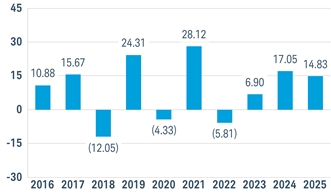
|
|
|
|
|
|
| ||||
|
|
|
|
|
|
|
|
|
|
|
|
| 1 Year |
|
| 5 Years |
|
| 10 Years | ||
|
|
|
|
| ||||||
|
|
|
|
| ||||||
|
|
|
|
|
|
|
| |||
of shares |
|
|
|
|
| |||||
Comparative Indices (reflects no |
|
|
|
|
|
|
|
| ||
deduction for fees,
expenses, or |
|
|
|
|
|
|
|
| ||
|
|
|
|
| ||||||
|
|
|
|
| ||||||
|
|
|
|
|
|
|
|
|
|
|
14 | Schwab Dividend Equity Fund | Fund Summary |
Charles Schwab Investment Management, Inc., dba Schwab Asset Management®
Bill McMahon, CFA, Managing Director and Chief Investment Officer of Active Equity Strategies, is responsible for the day-to-day co-management of the fund. He has managed the fund since 2021.
Wei Li, Ph.D., CFA, Senior Portfolio Manager, is responsible for the day-to-day co-management of the fund. She has managed the fund since 2013.
Jim Serhant, CFA, Senior Portfolio Manager, is responsible for the day-to-day co-management of the fund. He has managed the fund since 2021.
The fund is open for business each day that the New York Stock Exchange (NYSE) is open. If the NYSE is closed due to weather or other extenuating circumstances on a day it would typically be open for business, or the NYSE has an unscheduled early closing on a day it has opened for business, the fund reserves the right to treat such day as a business day and accept purchase and redemption orders and calculate its share price as of the normally scheduled close of regular trading on the NYSE for that day.
Investors may only invest in the fund through an account at Charles Schwab & Co., Inc. (Schwab) or another financial intermediary. When you place orders to purchase, exchange or redeem fund shares through an account at Schwab or another financial intermediary, you must follow Schwab’s or the other financial intermediary’s transaction procedures.
There is no minimum initial investment for the fund.
Dividends and capital gains distributions received from the fund will generally be taxable as ordinary income or capital gains, unless you are investing through an IRA, 401(k) or other tax-advantaged account (in which case you may be taxed later, upon withdrawal of your investment from such account).
If you purchase shares of the fund through a broker-dealer or other financial intermediary (such as a bank), the fund and its related companies may pay the intermediary for the sale of fund shares and related services. These payments may create a conflict of interest by influencing the broker-dealer or other financial intermediary and your salesperson to recommend the fund over another investment. Ask your salesperson or visit your financial intermediary’s website for more information.
Schwab Dividend Equity Fund | Fund Summary | 15 |
Ticker Symbol: SWSCX |
The fund seeks long-term capital growth.
This table describes the fees and expenses you may pay if you buy, hold and sell shares of the fund. You may pay other fees, such as brokerage commissions and other fees to financial intermediaries, which are not reflected in the table and Example below.
| ||
|
| |
|
|
|
Management Fees | ||
Other Expenses | ||
|
|
|
Total annual fund operating expenses | ||
This example is intended to help you compare the cost of investing in the fund with the cost of investing in other funds. The example assumes that you invest $10,000 in the fund for the time periods indicated and then redeem all of your shares at the end of those time periods. The example also assumes that your investment has a 5% return each year and that the fund’s operating expenses remain the same. Your actual costs may be higher or lower.
|
|
| |||||
| 1 Year |
| 3 Years |
| 5 Years |
| 10 Years |
| $ |
| $ |
| $ |
| $ |
The fund pays transaction costs, such as commissions, when
it buys and sells securities (or “turns over” its portfolio). A higher portfolio turnover may indicate
higher transaction costs and may result in higher taxes when fund shares are held in a taxable account.
These costs, which are not reflected in the annual fund operating expenses or in the example, affect
the fund’s performance. During the most recent fiscal year, the fund’s portfolio turnover rate was
Under normal circumstances, the fund invests at least 80% of its net assets (including, for this purpose, any borrowings for investment purposes) in small-cap equity securities. The fund will notify its shareholders at least 60 days before changing this policy. Small-cap equity securities generally are securities with market capitalizations within the universe of the Russell 2000® Index (the Index) at the time of purchase by the fund. The market capitalization range of the Index was $2 million to $18 billion as of June 27, 2025 (the most recent index reconstitution date), and will change as market conditions change. The fund seeks to assemble a portfolio with long-term performance that will exceed that of the Index.
The fund approaches risk management from the perspective of the Index. The Index measures the performance of the 2,000 smallest companies (based on total market capitalization) in the Russell 3000® Index, which represents approximately 10% of the total market capitalization of the Russell 3000 Index. The portfolio managers seek to keep the fund’s volatility similar to that of the Index.
The fund actively selects portfolio securities. To aid its stock selection, the fund uses Schwab Equity Ratings®, a model that assigns ratings to approximately 3,000 of the largest (by market cap) U.S.-traded stocks. In addition to using Schwab Equity Ratings, the portfolio managers utilize investment data and other analytics to help manage the fund’s portfolio.
Generally, when constructing the portfolio, the portfolio managers invest in stocks that are highly rated by Schwab Equity Ratings. As part of the portfolio construction process, the portfolio managers may also purchase lower-rated stocks or stocks that are not rated by Schwab Equity Ratings. This investment approach under normal conditions will result in a portfolio that maintains an overall weighting toward highly-rated stocks. For more information on Schwab Equity Ratings, please see the “More About Schwab’s Research” section in the prospectus.
The fund uses a portfolio optimization process to assist in constructing the portfolio. The portfolio managers use the portfolio optimization process to seek to build a portfolio they believe will provide the optimal balance between risk and expected return, subject to parameters such as the number of stocks desired in the portfolio, the level of portfolio turnover, industry and sector diversification, and volatility considerations.
The fund may invest in derivatives, principally futures contracts, primarily to seek returns on the fund’s otherwise uninvested cash assets. A futures contract is a contract to buy or sell a specific financial instrument at a specified price at a specific future time. By using these instruments, the fund potentially can offset the impact on its performance of keeping some assets in cash. The fund may invest in exchange-traded funds (ETFs) and stocks of real estate investment trusts (REITs). The fund also may lend portfolio securities to earn additional income. Any income realized through securities lending may help fund performance.
16 | Schwab Small-Cap Equity Fund | Fund Summary |
For temporary defensive purposes during unusual economic or market conditions or for liquidity purposes, the fund may invest up to 100% of its assets in cash, money market instruments, repurchase agreements and other short-term obligations. The fund also may invest in these types of securities or hold cash while looking for suitable investment opportunities. When the fund engages in such activities, it may not achieve its investment objective.
Market Risk — Financial markets rise and fall in response to a variety of factors, sometimes rapidly and unpredictably. Markets may be impacted by economic, political, regulatory, and other conditions, including economic sanctions, tariffs, and other government actions. In addition, the occurrence of global events, such as war, terrorism, environmental disasters, natural disasters and epidemics, may also negatively affect the financial markets. As with any investment whose performance is tied to these markets, the value of an investment in the fund will fluctuate, which means that an investor could lose money over short or long periods.
Management Risk — The fund’s investment adviser makes investment decisions for the fund using a strategy based largely on historical information. There is no guarantee that a strategy based on historical information will produce the desired results in the future. In addition, the portfolio optimization process used by the fund to assist in constructing the fund’s portfolio does not assure successful investment due to factors or events not foreseen in developing the process. The portfolio optimization process and Schwab Equity Ratings may not adequately take into account certain factors or may rely on inaccurate data inputs, and may contain design flaws or faulty assumptions. As a result, the fund may have a lower return than if it were managed using another process or strategy.
Equity Risk — The prices of equity securities rise and fall daily. These price movements may result from factors affecting individual companies, industries or the securities market as a whole. In addition, equity markets tend to move in cycles, which may cause stock prices to fall over short or extended periods of time.
Market Capitalization Risk — Securities issued by companies of different market capitalizations tend to go in and out of favor based on market and economic conditions. During a period when securities of a particular market capitalization fall behind other types of investments, the fund’s performance could be impacted.
Small-Cap Company Risk — Securities issued by small-cap companies may be riskier than those issued by larger companies, and their prices may move sharply, especially during market upturns and downturns.
Derivatives Risk — The fund’s use of derivative instruments involves risks different from, or possibly greater than, the risks associated with investing directly in securities and other traditional investments. The fund’s use of derivatives could reduce the fund’s performance, increase the fund’s volatility, and could cause the fund to lose more than the initial amount invested. In addition, investments in derivatives may involve leverage, which means a small percentage of assets invested in derivatives can have a disproportionately large impact on the fund.
Exchange-Traded Fund (ETF) Risk — When the fund invests in an ETF, it will bear a proportionate share of the ETF’s expenses. In addition, lack of liquidity in the market for an ETF’s shares can result in its value being more volatile than the underlying portfolio of securities.
Securities Lending Risk — Securities lending involves the risk of loss of rights in, or delay in recovery of, the loaned securities if the borrower fails to return the security loaned or becomes insolvent.
Real Estate Investment Trusts (REITs) Risk — The fund’s investments in REITs will be subject to the risks associated with the direct ownership of real estate, including fluctuations in the value of underlying properties, defaults by borrowers or tenants, changes in interest rates and risks related to general or local economic conditions. REITs are also subject to certain additional risks, for example, REITs are dependent upon specialized management skills and cash flows, and may have their investments in relatively few properties, a small geographic area or a single property type. Failure of a company to qualify as a REIT under federal tax law may have adverse consequences on the fund. In addition, REITs have their own expenses, and the fund will bear a proportionate share of those expenses.
Liquidity Risk — The fund may be unable to sell certain securities, such as illiquid securities, readily at a favorable time or price, or the fund may have to sell them at a loss.
Portfolio Turnover Risk — The fund buys and sells portfolio securities actively. This may cause the fund’s portfolio turnover rate and transaction costs to rise, which may lower the fund’s performance and may increase the likelihood of capital gains distributions.
For more information on the risks of investing in the fund, please see the “Fund Details” section in the prospectus.
Schwab Small-Cap Equity Fund | Fund Summary | 17 |
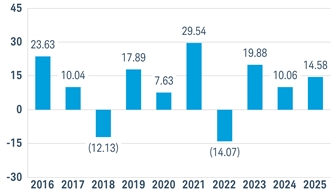
|
|
|
|
|
|
| ||||
|
|
|
|
|
|
|
|
|
|
|
|
| 1 Year |
|
| 5 Years |
|
| 10 Years | ||
|
|
|
|
| ||||||
|
|
|
|
| ||||||
|
|
|
|
|
|
|
| |||
of shares |
|
|
|
|
| |||||
Comparative Indices (reflects no |
|
|
|
|
|
|
|
| ||
deduction for fees,
expenses, or |
|
|
|
|
|
|
|
| ||
|
|
|
|
| ||||||
|
|
|
|
| ||||||
|
|
|
|
|
|
|
|
|
|
|
Charles Schwab Investment Management, Inc., dba Schwab Asset Management®
Iain Clayton, CFA, FRM, Senior Portfolio Manager, is responsible for the day-to-day co-management of the fund. He has managed the fund since 2022.
Wei Li, Ph.D., CFA, Senior Portfolio Manager, is responsible for the day-to-day co-management of the fund. She has managed the fund since 2013.
Holly Emerson, CFA, Senior Portfolio Manager, is responsible for the day-to-day co-management of the fund. She has managed the fund since 2022.
The fund is open for business each day that the New York Stock Exchange (NYSE) is open. If the NYSE is closed due to weather or other extenuating circumstances on a day it would typically be open for business, or the NYSE has an unscheduled early closing on a day it has opened for business, the fund reserves the right to treat such day as a business day and accept purchase and redemption orders and calculate its share price as of the normally scheduled close of regular trading on the NYSE for that day.
Investors may only invest in the fund through an account at Charles Schwab & Co., Inc. (Schwab) or another financial intermediary. When you place orders to purchase, exchange or redeem fund shares through an account at Schwab or another financial intermediary, you must follow Schwab’s or the other financial intermediary’s transaction procedures.
There is no minimum initial investment for the fund.
Dividends and capital gains distributions received from the fund will generally be taxable as ordinary income or capital gains, unless you are investing through an IRA, 401(k) or other tax-advantaged account (in which case you may be taxed later, upon withdrawal of your investment from such account).
If you purchase shares of the fund through a broker-dealer or other financial intermediary (such as a bank), the fund and its related companies may pay the intermediary for the sale of fund shares and related services. These payments may create a conflict of interest by influencing the broker-dealer or other financial intermediary and your salesperson to recommend the fund over another investment. Ask your salesperson or visit your financial intermediary’s website for more information.
18 | Schwab Small-Cap Equity Fund | Fund Summary |
Ticker Symbol: SWHFX |
The fund seeks long-term capital growth.
This table describes the fees and expenses you may pay if you buy, hold and sell shares of the fund. You may pay other fees, such as brokerage commissions and other fees to financial intermediaries, which are not reflected in the table and Example below.
| ||
|
| |
|
|
|
Management Fees | ||
Distribution (12b-1) fees | | |
Other Expenses | ||
|
|
|
Total annual fund operating expenses | ||
This example is intended to help you compare the cost of investing in the fund with the cost of investing in other funds. The example assumes that you invest $10,000 in the fund for the time periods indicated and then redeem all of your shares at the end of those time periods. The example also assumes that your investment has a 5% return each year and that the fund’s operating expenses remain the same. Your actual costs may be higher or lower.
|
|
| |||||
| 1 Year |
| 3 Years |
| 5 Years |
| 10 Years |
| $ |
| $ |
| $ |
| $ |
The fund pays transaction costs, such as commissions, when
it buys and sells securities (or “turns over” its portfolio). A higher portfolio turnover may indicate
higher transaction costs and may result in higher taxes when fund shares are held in a taxable account.
These costs, which are not reflected in the annual fund operating expenses or in the example, affect
the fund’s performance. During the most recent fiscal year, the fund’s portfolio turnover rate was
To pursue its goal, the fund primarily invests in equity securities issued by companies in the health care sector. The health care sector may include, for example, pharmaceutical and biotechnology companies, health care facilities operations, medical product manufacturers and suppliers, medical providers and medical services firms. It is the fund’s policy that under normal circumstances it will invest at least 80% of its net assets (including, for this purpose, any borrowings for investment purposes) in these securities; typically, the actual percentage will be higher. The fund will notify its shareholders at least 60 days before changing this policy. The fund will concentrate its investments in securities of companies in the health care sector.
The fund primarily invests in U.S. companies, but may invest up to 25% of its net assets in the stocks of publicly traded companies located in countries other than the United States. The fund’s international investments will primarily be in stocks issued by companies located in developed market countries; however, it may also invest in stocks issued by companies located in emerging markets. The fund generally does not intend to hedge its exposure to foreign currencies. The fund may invest in companies of all sizes.
The fund actively selects portfolio securities. To aid its U.S. stock selection, the fund uses Schwab Equity Ratings®, a model that assigns ratings to approximately 3,000 of the largest (by market cap) U.S.-traded stocks. To aid its international stock selection, the fund uses Schwab Equity Ratings International®, a model that ranks stocks of foreign companies headquartered and trading in certain foreign countries. In addition to using Schwab Equity Ratings and Schwab Equity Ratings International, the portfolio managers utilize investment data and other analytics to help manage the fund’s portfolio.
Generally, when constructing the portfolio, the portfolio managers invest in stocks that are highly rated by Schwab Equity Ratings or by Schwab Equity Ratings International. As part of the portfolio construction process, the portfolio managers may also purchase lower-rated stocks or stocks that are not rated by Schwab Equity Ratings or by Schwab Equity Ratings International. This investment approach under normal conditions will result in a portfolio that maintains an overall weighting toward highly-rated stocks. For more information on Schwab Equity Ratings and Schwab Equity Ratings International, please see the “More About Schwab’s Research” section in the prospectus.
The fund uses a portfolio optimization process to assist in constructing the portfolio. The portfolio managers use the portfolio optimization process to seek to build a portfolio they believe will provide the optimal balance between risk and expected return, subject to parameters such as the number of stocks desired in the portfolio, the level of portfolio turnover, industry diversification, and volatility considerations.
The fund may invest in derivatives, principally futures contracts, primarily to seek returns on the fund’s otherwise uninvested cash
Schwab Health Care Fund | Fund Summary | 19 |
assets. A futures contract is a contract to buy or sell a specific financial instrument at a specified price at a specific future time. By using these instruments, the fund potentially can offset the impact on its performance of keeping some assets in cash. The fund may invest in exchange-traded funds (ETFs) and stocks of real estate investment trusts (REITs). The fund may also invest in depository receipts evidencing ownership of shares of foreign issuers, including American Depositary Receipts (ADRs), Global Depositary Receipts (GDRs), and European Depositary Receipts (EDRs). The fund also may lend portfolio securities to earn additional income. Any income realized through securities lending may help fund performance.
For temporary defensive purposes during unusual economic or market conditions or for liquidity purposes, the fund may invest up to 100% of its assets in cash, money market instruments, repurchase agreements and other short-term obligations. The fund also may invest in these types of securities or hold cash while looking for suitable investment opportunities. When the fund engages in such activities, it may not achieve its investment objective.
Market Risk — Financial markets rise and fall in response to a variety of factors, sometimes rapidly and unpredictably. Markets may be impacted by economic, political, regulatory, and other conditions, including economic sanctions, tariffs, and other government actions. In addition, the occurrence of global events, such as war, terrorism, environmental disasters, natural disasters and epidemics, may also negatively affect the financial markets. As with any investment whose performance is tied to these markets, the value of an investment in the fund will fluctuate, which means that an investor could lose money over short or long periods.
Management Risk — The fund’s investment adviser makes investment decisions for the fund using a strategy based largely on historical information. There is no guarantee that a strategy based on historical information will produce the desired results in the future. In addition, the portfolio optimization process used by the fund to assist in constructing the fund’s portfolio does not assure successful investment due to factors or events not foreseen in developing the process. The portfolio optimization process, Schwab Equity Ratings, and Schwab Equity Ratings International may not adequately take into account certain factors or may rely on inaccurate data inputs, and may contain design flaws or faulty assumptions. As a result, the fund may have a lower return than if it were managed using another process or strategy.
Equity Risk — The prices of equity securities rise and fall daily. These price movements may result from factors affecting individual companies, industries or the securities market as a whole. In addition, equity markets tend to move in cycles, which may cause stock prices to fall over short or extended periods of time.
Concentration Risk — Because the fund’s investments are concentrated in issuers doing business in the same sector, the companies in which the fund invests will be affected by many of the same factors, such as legislative or regulatory changes, intense competition for market share and other competitive challenges. In addition, stocks of health care companies may underperform other segments of the equity market or stock market as a whole and are likely to have above-average volatility.
Foreign Investment Risk — The fund’s investments in securities of foreign issuers involve certain risks that may be greater than those associated with investments in securities of U.S. issuers. These include risks of adverse changes in foreign economic, political, regulatory and other conditions; changes in currency exchange rates or exchange control regulations (including limitations on currency movements and exchanges); the imposition of economic sanctions or other government restrictions; differing accounting, auditing, financial reporting and legal standards and practices; differing securities market structures; and higher transaction costs. These risks may negatively impact the value or liquidity of the fund’s investments and could impair the fund’s ability to meet its investment objective or invest in accordance with its investment strategy. There is a risk that investments in securities denominated in, and/or receiving revenues in, foreign currencies will decline in value relative to the U.S. dollar. Foreign securities also include American Depositary Receipts (ADRs), Global Depositary Receipts (GDRs), and European Depositary Receipts (EDRs), which may be less liquid than the underlying shares in their primary trading market, and GDRs, in particular, many of which are issued by companies in emerging markets, may be more volatile. To the extent the fund’s investments in a single country or a limited number of countries represent a large percentage of the fund’s assets, the fund’s performance may be adversely affected by the economic, political, regulatory, and social conditions in those countries, and the fund’s price may be more volatile than the price of a fund that is geographically diversified.
Emerging Markets Risk — Emerging market countries may be more likely to experience political turmoil or rapid changes in market or economic conditions than more developed countries. Emerging market countries often have less uniformity in accounting, auditing, financial reporting and recordkeeping requirements and greater risk associated with the custody of securities. In addition, the financial stability of issuers (including governments) in emerging market countries may be more precarious than in developed countries. As a result, there may be an increased risk of illiquidity and price volatility associated with the fund’s investments in emerging market countries, which may be magnified by currency fluctuations relative to the U.S. dollar, and, at times, it may be difficult to value such investments.
Market Capitalization Risk — Securities issued by companies of different market capitalizations tend to go in and out of favor based on market and economic conditions. During a period when securities of a particular market capitalization fall behind other types of investments, the fund’s performance could be impacted.
20 | Schwab Health Care Fund | Fund Summary |
Derivatives Risk — The fund’s use of derivative instruments involves risks different from, or possibly greater than, the risks associated with investing directly in securities and other traditional investments. The fund’s use of derivatives could reduce the fund’s performance, increase the fund’s volatility, and could cause the fund to lose more than the initial amount invested. In addition, investments in derivatives may involve leverage, which means a small percentage of assets invested in derivatives can have a disproportionately large impact on the fund.
Exchange-Traded Fund (ETF) Risk — When the fund invests in an ETF, it will bear a proportionate share of the ETF’s expenses. In addition, lack of liquidity in the market for an ETF’s shares can result in its value being more volatile than the underlying portfolio of securities.
Securities Lending Risk — Securities lending involves the risk of loss of rights in, or delay in recovery of, the loaned securities if the borrower fails to return the security loaned or becomes insolvent.
Real Estate Investment Trusts (REITs) Risk — The fund’s investments in REITs will be subject to the risks associated with the direct ownership of real estate, including fluctuations in the value of underlying properties, defaults by borrowers or tenants, changes in interest rates and risks related to general or local economic conditions. REITs are also subject to certain additional risks, for example, REITs are dependent upon specialized management skills and cash flows, and may have their investments in relatively few properties, a small geographic area or a single property type. Failure of a company to qualify as a REIT under federal tax law may have adverse consequences on the fund. In addition, REITs have their own expenses, and the fund will bear a proportionate share of those expenses.
Liquidity Risk — The fund may be unable to sell certain securities, such as illiquid securities, readily at a favorable time or price, or the fund may have to sell them at a loss.
Portfolio Turnover Risk — The fund buys and sells portfolio securities actively. This may cause the fund’s portfolio turnover rate and transaction costs to rise, which may lower the fund’s performance and may increase the likelihood of capital gains distributions.
For more information on the risks of investing in the fund, please see the “Fund Details” section in the prospectus.
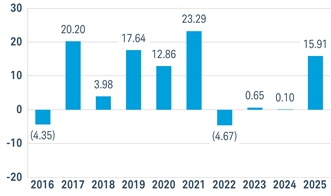
|
|
|
|
|
|
| ||||
|
|
|
|
|
|
|
|
|
|
|
|
| 1 Year |
|
| 5 Years |
|
| 10 Years | ||
|
|
|
|
| ||||||
|
|
|
|
| ||||||
|
|
|
|
|
|
|
| |||
of shares |
|
|
|
|
| |||||
Comparative Indices (reflects no |
|
|
|
|
|
|
|
| ||
deduction for fees,
expenses, or |
|
|
|
|
|
|
|
| ||
|
|
|
|
| ||||||
|
|
|
|
| ||||||
|
|
|
|
|
|
|
|
|
|
|
Charles Schwab Investment Management, Inc., dba Schwab Asset Management®
Iain Clayton, CFA, FRM, Senior Portfolio Manager, is responsible for the day-to-day co-management of the fund. He has managed the fund since 2015.
Wei Li, Ph.D., CFA, Senior Portfolio Manager, is responsible for the day-to-day co-management of the fund. She has managed the fund since 2013.
Schwab Health Care Fund | Fund Summary | 21 |
The fund is open for business each day that the New York Stock Exchange (NYSE) is open. If the NYSE is closed due to weather or other extenuating circumstances on a day it would typically be open for business, or the NYSE has an unscheduled early closing on a day it has opened for business, the fund reserves the right to treat such day as a business day and accept purchase and redemption orders and calculate its share price as of the normally scheduled close of regular trading on the NYSE for that day.
Investors may only invest in the fund through an account at Charles Schwab & Co., Inc. (Schwab) or another financial intermediary. When you place orders to purchase, exchange or redeem fund shares through an account at Schwab or another financial intermediary, you must follow Schwab’s or the other financial intermediary’s transaction procedures.
There is no minimum initial investment for the fund.
Dividends and capital gains distributions received from the fund will generally be taxable as ordinary income or capital gains, unless you are investing through an IRA, 401(k) or other tax-advantaged account (in which case you may be taxed later, upon withdrawal of your investment from such account).
If you purchase shares of the fund through a broker-dealer or other financial intermediary (such as a bank), the fund and its related companies may pay the intermediary for the sale of fund shares and related services. These payments may create a conflict of interest by influencing the broker-dealer or other financial intermediary and your salesperson to recommend the fund over another investment. Ask your salesperson or visit your financial intermediary’s website for more information.
22 | Schwab Health Care Fund | Fund Summary |
There can be no assurance that a fund will achieve its investment objective. Except as explicitly described otherwise, the investment strategies and policies of each fund may be changed without shareholder approval.
The principal investment strategies and the main risks associated with investing in each fund are summarized in the fund summaries at the front of this prospectus. This section takes a more detailed look at some of the types of securities, the associated risks, and the various investment strategies that may be used in the day-to-day portfolio management of the funds, as described below. In addition to the particular types of securities and strategies that are described in this prospectus, each fund may use strategies that are not described herein in support of its overall investment goal. These additional strategies and the risks associated with them are described in the “Investment Strategies, Securities and Risks” section in the Statement of Additional Information (SAI).
Investment Objective
The fund seeks long-term capital growth.
More Information About Principal Investment Risks
The fund is subject to risks, any of which could cause an investor to lose money.
Market Risk — Financial markets rise and fall in response to a variety of factors, sometimes rapidly and unpredictably. Markets may be impacted by economic, political, regulatory and other conditions, including economic sanctions, tariffs, and other government actions. In addition, the occurrence of global events, such as war, terrorism, environmental disasters, natural disasters and epidemics, may also negatively affect the financial markets. These events could reduce consumer demand or economic output; result in market closures, changes in interest rates, inflation/deflation, travel restrictions or quarantines; and significantly adversely impact the economy. Governmental and quasi-governmental authorities and regulators throughout the world have in the past often responded to serious economic disruptions with a variety of significant fiscal and monetary policy changes which could have an unexpected impact on financial markets and the fund’s investments. As with any investment whose performance is tied to financial markets, the value of an investment in the fund will fluctuate, which means that an investor could lose money over short or long periods.
Management Risk — The investment techniques, risk analyses and portfolio optimization process the investment adviser may use in constructing the fund’s portfolio do not assure successful investment outcomes. Securities selected with the assistance of the investment process, including the use of Schwab Equity Ratings, may be negatively impacted by factors or events not foreseen in developing the process. The portfolio optimization process and Schwab Equity Ratings may not adequately take into account certain factors, may contain design flaws or faulty assumptions, and may rely on incomplete or inaccurate data, any of which may result in a decline in the value of an investment in the fund. If Schwab Equity Ratings rely on inaccurate data, incorrect or incomplete algorithms, or inaccurate assumptions, or if prices of individual rated securities are affected by factors not considered in developing the ratings, any decisions or investments made in reliance thereon expose the fund to additional risks. The fund’s investment adviser may make investment decisions using historical information that may not produce the desired results in the future and, if market dynamics change, the effectiveness of the strategy may be limited. As a result, the fund may have a lower return than if it were managed using another process or strategy. These risks may cause the fund to underperform its comparative index or other funds with a similar investment objective. The fund may invest in stocks that have not received a rating from Schwab Equity Ratings and stocks that have received a lower rating from Schwab Equity Ratings, and these stocks may underperform the fund’s stocks that receive a rating from Schwab Equity Ratings and stocks that receive a higher rating from Schwab Equity Ratings, respectively.
Equity Risk — The prices of equity securities rise and fall daily. These price movements may result from factors affecting individual companies, industries or the securities market as a whole. Individual companies may report poor results or be negatively affected by industry and/or economic trends and developments. The prices of securities issued by such companies may suffer a decline in response. Governmental action, including the imposition of trade embargoes or tariffs, may also impact individual companies or markets as a whole. In addition, equity markets tend to move in cycles, which may cause stock prices to fall over short or extended periods of time.
Market Capitalization Risk — Securities issued by companies of different market capitalizations tend to go in and out of favor based on market and economic conditions. In addition, there may be less trading volume in securities issued by mid- and small-cap companies than
Schwab Active Equity Funds | Fund Details | 23 |
those issued by larger companies and, as a result, trading volatility may have a greater impact on the value of securities of mid- and small-cap companies. Securities issued by large-cap companies, on the other hand, may not be able to attain the high growth rates of some mid- and small-cap companies. During a period when securities of a particular market capitalization fall behind other types of investments, the fund’s performance could be impacted.
Large-Cap Company Risk — Large-cap companies are generally more mature than smaller companies. They also may have fewer new market opportunities for their products or services, may focus resources on maintaining their market share, and may be unable to respond quickly to new competitive challenges. As a result, the securities issued by these companies may not be able to reach the same levels of growth as the securities issued by small- or mid-cap companies.
Growth Investing Risk — The fund pursues a “growth style” of investing. Growth investing focuses on a company’s prospects for growth of revenue and earnings. If a company’s earnings or revenues fall short of expectations, its stock price may fall dramatically. Growth stocks also can perform differently from the market as a whole and other types of stocks and can be more volatile than other types of stocks. Since growth companies usually invest a high portion of earnings in their businesses, they may lack the dividends of value stocks that can cushion stock prices in a falling market. Growth stocks may also be more expensive relative to their earnings or assets compared to value or other stocks
Derivatives Risk — The principal type of derivative used by the fund is a futures contract. A futures contract is an agreement to buy or sell a financial instrument at a specific price on a specific day. The use of derivatives that are subject to regulation by the Commodity Futures Trading Commission (CFTC) could cause the fund to become a commodity pool, which would require the fund to comply with certain CFTC rules.
The fund’s use of derivative instruments involves risks different from or possibly greater than the risks associated with investing directly in securities and other traditional investments. Certain of these risks, such as liquidity risk, market risk, and management risk, are discussed elsewhere in this prospectus. The fund’s use of derivatives is also subject to lack of availability risk, counterparty risk, leverage risk, valuation risk, correlation risk, tax risk, and operational risk. Lack of availability risk is the risk that suitable derivative transactions may not be available in all circumstances for risk management or other purposes. Counterparty risk is the risk that the counterparty to a derivatives transaction may not fulfill its obligations either because the financial condition of the counterparty declines, or because the counterparty is otherwise unable or unwilling to perform under the contract. Leverage risk is the risk that a small percentage of assets invested in derivatives can have a disproportionately large impact on the fund. Valuation risk is the risk that a particular derivative may be valued incorrectly. Correlation risk is the risk that changes in the value of the derivative may not correlate perfectly with the underlying asset, rate or index. Tax risk is the risk that the use of derivatives may cause the fund to realize higher amounts of short-term capital gains. Operational risk is the risk related to operational issues, including documentation issues, settlement issues, systems failures, inadequate controls, and human error. The fund’s use of derivatives could reduce the fund’s performance, increase its volatility, and could cause the fund to lose more than the initial amount invested. The fund’s use of derivatives also could create a risk of counterparty default under certain transactions, risks that the fund would need to liquidate portfolio positions when it may not be advantageous to do so in order to meet margin and payment obligations, and legal risks relating to insufficient documentation, insufficient capacity or authority of a counterparty, or legality or enforceability of a contract.
Exchange-Traded Fund (ETF) Risk — When the fund invests in an ETF, in addition to directly bearing the expenses associated with its own operations, it will bear a proportionate share of the ETF’s expenses. Therefore, it may be more costly to own an ETF than to own the underlying securities directly. In addition, while the risks of owning shares of an ETF generally reflect the risks of owning the underlying securities the ETF holds, lack of liquidity in the market for an ETF’s shares can result in its value being more volatile than the underlying portfolio of securities.
Securities Lending Risk — The fund may lend its portfolio securities to brokers, dealers, and other financial institutions provided a number of conditions are satisfied, including that the loan is fully collateralized. When the fund lends portfolio securities, its investment performance will continue to reflect changes in the value of the securities loaned, and the fund will also receive a fee or interest on the collateral. Securities lending involves the risk of loss of rights in, or delay in recovery of, the loaned securities if the borrower fails to return the security loaned or becomes insolvent. The fund will also bear the risk of any decline in value of securities acquired with cash collateral. The fund may pay lending fees to a party arranging the loan.
Real Estate Investment Trusts (REITs) Risk — The fund’s investments in REITs will be subject to the risks associated with the direct ownership of real estate. Risks commonly associated with the direct ownership of real estate include fluctuations in the value of underlying properties, defaults by borrowers or tenants, access to capital, increases in property taxes and operating expenses, changes in zoning laws, overbuilding, extended vacancies of properties, changes in interest rates and risks related to general or local economic conditions. In addition to the risks associated with investing in securities of real estate companies and real estate related companies, REITs are subject to certain additional risks. Equity REITs may be affected by changes in the value of the underlying properties owned by the trusts, and mortgage REITs may be affected by the quality of any credit extended. Further, REITs are dependent upon specialized management skills
24 | Schwab Active Equity Funds | Fund Details |
and may have their investments in relatively few properties, or in a small geographic area or a single property type. REITs are also subject to heavy cash flow dependency, defaults by borrowers and self-liquidation. The value of a REIT will also rise and fall in response to the creditworthiness of the issuer. In particular, the value of these securities may be affected by changes in interest rates. In addition, REITs could possibly fail to qualify for tax free pass-through of income under the Internal Revenue Code of 1986, as amended (Internal Revenue Code), or to maintain their exemptions from registration under the Investment Company Act of 1940, as amended (the 1940 Act). The failure of a company to qualify as a REIT under federal tax law may have adverse consequences to the fund. The above factors may also adversely affect a borrower’s or a lessee’s ability to meet its obligations to the REIT. In the event of a default by a borrower or lessee, the REIT may experience delays in enforcing its rights as a mortgagee or lessor and may incur substantial costs associated with protecting its investments. In addition, REITs have their own expenses, and the fund will bear a proportionate share of those expenses. Additionally, dividends paid by REITs are taxed as ordinary income and generally do not qualify for the preferential rate applicable to qualified dividend income. REITs may be more volatile and/or more illiquid than other types of securities.
Liquidity Risk — Liquidity risk exists when particular investments may be difficult to purchase, sell or value, especially during stressed market conditions. The market for certain investments may become illiquid due to specific adverse changes in the conditions of a particular issuer or under adverse market or economic conditions independent of the issuer. In addition, limited dealer inventories of certain securities could potentially lead to decreased liquidity. In such cases, the fund, due to limitations on investments in illiquid securities and the difficulty in readily purchasing and selling such securities at favorable times or prices, may decline in value, experience lower returns and/or be unable to achieve its desired level of exposure to a certain issuer or sector. Further, transactions in illiquid securities may entail transaction costs that are higher than those for transactions in liquid securities. Liquidity risk also includes the risk that market conditions or large shareholder redemptions, which may occur rapidly or unexpectedly, may impact the ability of the fund to meet redemption requests within the required time period. In order to meet such redemption requests, the fund may be forced to sell securities at inopportune times or prices.
Investment Objective
The fund seeks long-term capital growth.
More Information About Principal Investment Risks
The fund is subject to risks, any of which could cause an investor to lose money.
Market Risk — Financial markets rise and fall in response to a variety of factors, sometimes rapidly and unpredictably. Markets may be impacted by economic, political, regulatory and other conditions, including economic sanctions, tariffs, and other government actions. In addition, the occurrence of global events, such as war, terrorism, environmental disasters, natural disasters and epidemics, may also negatively affect the financial markets. These events could reduce consumer demand or economic output; result in market closures, changes in interest rates, inflation/deflation, travel restrictions or quarantines; and significantly adversely impact the economy. Governmental and quasi-governmental authorities and regulators throughout the world have in the past often responded to serious economic disruptions with a variety of significant fiscal and monetary policy changes which could have an unexpected impact on financial markets and the fund’s investments. As with any investment whose performance is tied to financial markets, the value of an investment in the fund will fluctuate, which means that an investor could lose money over short or long periods.
Management Risk — The investment techniques, risk analyses and portfolio optimization process the investment adviser may use in constructing the fund’s portfolio do not assure successful investment outcomes. Securities selected with the assistance of the investment process, including the use of Schwab Equity Ratings, may be negatively impacted by factors or events not foreseen in developing the process. The portfolio optimization process and Schwab Equity Ratings may not adequately take into account certain factors, may contain design flaws or faulty assumptions, and may rely on incomplete or inaccurate data, any of which may result in a decline in the value of an investment in the fund. If Schwab Equity Ratings rely on inaccurate data, incorrect or incomplete algorithms, or inaccurate assumptions, or if prices of individual rated securities are affected by factors not considered in developing the ratings, any decisions or investments made in reliance thereon expose the fund to additional risks. The fund’s investment adviser may make investment decisions using historical information that may not produce the desired results in the future and, if market dynamics change, the effectiveness of the strategy may be limited. As a result, the fund may have a lower return than if it were managed using another process or strategy. These risks may cause the fund to underperform its comparative index or other funds with a similar investment objective. The fund may invest in stocks that have not received a rating from Schwab Equity Ratings and stocks that have received a lower rating from Schwab Equity Ratings, and these stocks may underperform the fund’s stocks that receive a rating from Schwab Equity Ratings and stocks that receive a higher rating from Schwab Equity Ratings, respectively.
Schwab Active Equity Funds | Fund Details | 25 |
Equity Risk — The prices of equity securities rise and fall daily. These price movements may result from factors affecting individual companies, industries or the securities market as a whole. Individual companies may report poor results or be negatively affected by industry and/or economic trends and developments. The prices of securities issued by such companies may suffer a decline in response. Governmental action, including the imposition of trade embargoes or tariffs, may also impact individual companies or markets as a whole. In addition, equity markets tend to move in cycles, which may cause stock prices to fall over short or extended periods of time.
Market Capitalization Risk — Securities issued by companies of different market capitalizations tend to go in and out of favor based on market and economic conditions. In addition, there may be less trading volume in securities issued by mid- and small-cap companies than those issued by larger companies and, as a result, trading volatility may have a greater impact on the value of securities of mid- and small-cap companies. Securities issued by large-cap companies, on the other hand, may not be able to attain the high growth rates of some mid- and small-cap companies. During a period when securities of a particular market capitalization fall behind other types of investments, the fund’s performance could be impacted.
Large-Cap Company Risk — Large-cap companies are generally more mature than smaller companies. They also may have fewer new market opportunities for their products or services, may focus resources on maintaining their market share, and may be unable to respond quickly to new competitive challenges. As a result, the securities issued by these companies may not be able to reach the same levels of growth as the securities issued by small- or mid-cap companies.
Mid-Cap Company Risk — Mid-cap companies may be more vulnerable to adverse business or economic events than larger, more established companies and their securities may be riskier than those issued by large-cap companies. The value of securities issued by mid-cap companies may be based in substantial part on future expectations rather than current achievements and their prices may move sharply, especially during market upturns and downturns
Small-Cap Company Risk — Small-cap companies may be more vulnerable to adverse business or economic events than larger, more established companies and their securities may be riskier than those issued by larger companies. The value of securities issued by small-cap companies may be based in substantial part on future expectations rather than current achievements and their prices may move sharply, especially during market upturns and downturns. In addition, small-cap companies may have limited financial resources, management experience, product lines and markets, and their securities may trade less frequently and in more limited volumes than the securities of larger companies. Further, small-cap companies may have less publicly available information and such information may be inaccurate or incomplete.
Derivatives Risk — The principal type of derivative used by the fund is a futures contract. A futures contract is an agreement to buy or sell a financial instrument at a specific price on a specific day. The use of derivatives that are subject to regulation by the CFTC could cause the fund to become a commodity pool, which would require the fund to comply with certain CFTC rules.
The fund’s use of derivative instruments involves risks different from or possibly greater than the risks associated with investing directly in securities and other traditional investments. Certain of these risks, such as liquidity risk, market risk, and management risk, are discussed elsewhere in this prospectus. The fund’s use of derivatives is also subject to lack of availability risk, counterparty risk, leverage risk, valuation risk, correlation risk, tax risk, and operational risk. Lack of availability risk is the risk that suitable derivative transactions may not be available in all circumstances for risk management or other purposes. Counterparty risk is the risk that the counterparty to a derivatives transaction may not fulfill its obligations either because the financial condition of the counterparty declines, or because the counterparty is otherwise unable or unwilling to perform under the contract. Leverage risk is the risk that a small percentage of assets invested in derivatives can have a disproportionately large impact on the fund. Valuation risk is the risk that a particular derivative may be valued incorrectly. Correlation risk is the risk that changes in the value of the derivative may not correlate perfectly with the underlying asset, rate or index. Tax risk is the risk that the use of derivatives may cause the fund to realize higher amounts of short-term capital gains. Operational risk is the risk related to operational issues, including documentation issues, settlement issues, systems failures, inadequate controls, and human error. The fund’s use of derivatives could reduce the fund’s performance, increase its volatility, and could cause the fund to lose more than the initial amount invested. The fund’s use of derivatives also could create a risk of counterparty default under certain transactions, risks that the fund would need to liquidate portfolio positions when it may not be advantageous to do so in order to meet margin and payment obligations, and legal risks relating to insufficient documentation, insufficient capacity or authority of a counterparty, or legality or enforceability of a contract.
Exchange-Traded Fund (ETF) Risk — When the fund invests in an ETF, in addition to directly bearing the expenses associated with its own operations, it will bear a proportionate share of the ETF’s expenses. Therefore, it may be more costly to own an ETF than to own the underlying securities directly. In addition, while the risks of owning shares of an ETF generally reflect the risks of owning the underlying securities the ETF holds, lack of liquidity in the market for an ETF’s shares can result in its value being more volatile than the underlying portfolio of securities.
26 | Schwab Active Equity Funds | Fund Details |
Securities Lending Risk — The fund may lend its portfolio securities to brokers, dealers, and other financial institutions provided a number of conditions are satisfied, including that the loan is fully collateralized. When the fund lends portfolio securities, its investment performance will continue to reflect changes in the value of the securities loaned, and the fund will also receive a fee or interest on the collateral. Securities lending involves the risk of loss of rights in, or delay in recovery of, the loaned securities if the borrower fails to return the security loaned or becomes insolvent. The fund will also bear the risk of any decline in value of securities acquired with cash collateral. The fund may pay lending fees to a party arranging the loan.
Real Estate Investment Trusts (REITs) Risk — The fund’s investments in REITs will be subject to the risks associated with the direct ownership of real estate. Risks commonly associated with the direct ownership of real estate include fluctuations in the value of underlying properties, defaults by borrowers or tenants, access to capital, increases in property taxes and operating expenses, changes in zoning laws, overbuilding, extended vacancies of properties, changes in interest rates and risks related to general or local economic conditions. In addition to the risks associated with investing in securities of real estate companies and real estate related companies, REITs are subject to certain additional risks. Equity REITs may be affected by changes in the value of the underlying properties owned by the trusts, and mortgage REITs may be affected by the quality of any credit extended. Further, REITs are dependent upon specialized management skills and may have their investments in relatively few properties, or in a small geographic area or a single property type. REITs are also subject to heavy cash flow dependency, defaults by borrowers and self-liquidation. The value of a REIT will also rise and fall in response to the creditworthiness of the issuer. In particular, the value of these securities may be affected by changes in interest rates. In addition, REITs could possibly fail to qualify for tax free pass-through of income under the Internal Revenue Code, or to maintain their exemptions from registration under the 1940 Act. The failure of a company to qualify as a REIT under federal tax law may have adverse consequences to the fund. The above factors may also adversely affect a borrower’s or a lessee’s ability to meet its obligations to the REIT. In the event of a default by a borrower or lessee, the REIT may experience delays in enforcing its rights as a mortgagee or lessor and may incur substantial costs associated with protecting its investments. In addition, REITs have their own expenses, and the fund will bear a proportionate share of those expenses. Additionally, dividends paid by REITs are taxed as ordinary income and generally do not qualify for the preferential rate applicable to qualified dividend income. REITs may be more volatile and/or more illiquid than other types of securities.
Liquidity Risk — Liquidity risk exists when particular investments may be difficult to purchase, sell or value, especially during stressed market conditions. The market for certain investments may become illiquid due to specific adverse changes in the conditions of a particular issuer or under adverse market or economic conditions independent of the issuer. In addition, limited dealer inventories of certain securities could potentially lead to decreased liquidity. In such cases, the fund, due to limitations on investments in illiquid securities and the difficulty in readily purchasing and selling such securities at favorable times or prices, may decline in value, experience lower returns and/or be unable to achieve its desired level of exposure to a certain issuer or sector. Further, transactions in illiquid securities may entail transaction costs that are higher than those for transactions in liquid securities. Liquidity risk also includes the risk that market conditions or large shareholder redemptions, which may occur rapidly or unexpectedly, may impact the ability of the fund to meet redemption requests within the required time period. In order to meet such redemption requests, the fund may be forced to sell securities at inopportune times or prices.
Schwab International Core Equity Fund
Investment Objective
The fund seeks long-term capital growth.
More Information About Principal Investment Risks
The fund is subject to risks, any of which could cause an investor to lose money.
Market Risk — Financial markets rise and fall in response to a variety of factors, sometimes rapidly and unpredictably. Markets may be impacted by economic, political, regulatory and other conditions, including economic sanctions, tariffs, and other government actions. In addition, the occurrence of global events, such as war, terrorism, environmental disasters, natural disasters and epidemics, may also negatively affect the financial markets. These events could reduce consumer demand or economic output; result in market closures, changes in interest rates, inflation/deflation, travel restrictions or quarantines; and significantly adversely impact the economy. Governmental and quasi-governmental authorities and regulators throughout the world have in the past often responded to serious economic disruptions with a variety of significant fiscal and monetary policy changes which could have an unexpected impact on financial markets and the fund’s investments. As with any investment whose performance is tied to financial markets, the value of an investment in the fund will fluctuate, which means that an investor could lose money over short or long periods.
Management Risk — The fund’s investment adviser makes investment decisions for the fund using a strategy based largely on historical information. There is no guarantee that a strategy based on historical information will produce the desired results in the future and, if market dynamics change, the effectiveness of the strategy may be limited. In addition, the portfolio optimization process used by the fund to
Schwab Active Equity Funds | Fund Details | 27 |
assist in constructing the fund’s portfolio does not assure successful investment. Securities selected with the assistance of the investment process, including the use of Schwab Equity Ratings International, may be negatively impacted by factors or events not foreseen in developing the process. The portfolio optimization process and Schwab Equity Ratings International may not adequately take into account certain factors, may contain design flaws or faulty assumptions, and may rely on incomplete or inaccurate data, any of which may result in a decline in the value of an investment in the fund. If Schwab Equity Ratings International rely on inaccurate data, incorrect or incomplete algorithms, or inaccurate assumptions, or if prices of individual rated securities are affected by factors not considered in developing the ratings, any decisions or investments made in reliance thereon expose the fund to additional risks. As a result, the fund may have a lower return than if it were managed using another process or strategy. These risks may cause the fund to underperform its comparative index or other funds with a similar investment objective. The fund may invest in stocks that have not received a rating from Schwab Equity Ratings International and stocks that have received lower ratings from Schwab Equity Ratings International, and these stocks may underperform the fund’s stocks that receive a rating from Schwab Equity Ratings International and stocks that receive higher ratings from Schwab Equity Ratings International, respectively.
Equity Risk — The prices of equity securities rise and fall daily. These price movements may result from factors affecting individual companies, industries or the securities market as a whole. Individual companies may report poor results or be negatively affected by industry and/or economic trends and developments. The prices of securities issued by such companies may suffer a decline in response. Governmental action, including the imposition of trade embargoes or tariffs, may also impact individual companies or markets as a whole. In addition, equity markets tend to move in cycles, which may cause stock prices to fall over short or extended periods of time.
Market Capitalization Risk — Securities issued by companies of different market capitalizations tend to go in and out of favor based on market and economic conditions. In addition, there may be less trading volume in securities issued by mid- and small-cap companies than those issued by larger companies and, as a result, trading volatility may have a greater impact on the value of securities of mid- and small-cap companies. Securities issued by large-cap companies, on the other hand, may not be able to attain the high growth rates of some mid- and small-cap companies. During a period when securities of a particular market capitalization fall behind other types of investments, the fund’s performance could be impacted.
Large-Cap Company Risk — Large-cap companies are generally more mature than smaller companies. They also may have fewer new market opportunities for their products or services, may focus resources on maintaining their market share, and may be unable to respond quickly to new competitive challenges. As a result, the securities issued by these companies may not be able to reach the same levels of growth as the securities issued by small- or mid-cap companies.
Mid-Cap Company Risk — Mid-cap companies may be more vulnerable to adverse business or economic events than larger, more established companies and their securities may be riskier than those issued by large-cap companies. The value of securities issued by mid-cap companies may be based in substantial part on future expectations rather than current achievements and their prices may move sharply, especially during market upturns and downturns
Small-Cap Company Risk — Small-cap companies may be more vulnerable to adverse business or economic events than larger, more established companies and their securities may be riskier than those issued by larger companies. The value of securities issued by small-cap companies may be based in substantial part on future expectations rather than current achievements and their prices may move sharply, especially during market upturns and downturns. In addition, small-cap companies may have limited financial resources, management experience, product lines and markets, and their securities may trade less frequently and in more limited volumes than the securities of larger companies. Further, small-cap companies may have less publicly available information and such information may be inaccurate or incomplete.
Foreign Investment Risk — The fund’s investments in securities of foreign issuers involve certain risks that may be greater than those associated with investments in securities of U.S. issuers. These include risks of adverse changes in foreign economic, political, regulatory and other conditions; changes in currency exchange rates or exchange control regulations (including limitations on currency movements and exchanges); differing accounting, auditing, financial reporting and legal standards and practices; differing securities market structures; and higher transaction costs. In certain countries, legal remedies available to investors may be more limited than those available with respect to investments in the U.S. These risks may negatively impact the value or liquidity of the fund’s investments and could impair the fund’s ability to meet its investment objective or invest in accordance with its investment strategy. In addition, the fund’s investments in foreign securities may be subject to economic sanctions or other government restrictions, including trade tariffs, embargoes or limitations on trade which could have a significant impact on a country’s markets overall as well as global economies or markets. There also is the risk that the cost of buying, selling, and holding foreign securities, including brokerage, tax, and custody costs, may be higher than those involved in domestic transactions. The securities of some foreign companies may be less liquid and, at times, more volatile than securities of comparable U.S. companies. The fund may also experience more rapid or extreme changes in value as compared to a fund that invests solely in securities of U.S. companies because the securities markets of many foreign countries are relatively small, with a limited number of companies representing a small number of industries. To the extent the fund’s investments in a single country or a limited number of countries
28 | Schwab Active Equity Funds | Fund Details |
represent a large percentage of the fund’s assets, the fund’s performance may be adversely affected by the economic, political, regulatory and social conditions in those countries, and the fund’s price may be more volatile than the price of a fund that is geographically diversified.
Depositary Receipt Risk — Foreign securities also include ADRs, which are U.S. dollar-denominated receipts representing shares of foreign-based corporations. ADRs are issued by U.S. banks or trust companies and entitle the holder to all dividends and capital gains that are paid out on the underlying foreign shares. Foreign securities also include GDRs, which are similar to ADRs, but are shares of foreign-based corporations generally issued by international banks in one or more markets around the world. In addition, foreign securities include EDRs, which are similar to GDRs, but are shares of foreign-based corporations generally issued by European banks that trade on exchanges outside of the bank’s home country. Investment in ADRs, GDRs and EDRs may be less liquid than the underlying shares in their primary trading market and GDRs, many of which are issued by companies in emerging markets, may be more volatile.
Variable Interest Entities (VIEs) Risk — The fund may gain exposure to certain operating companies in China through legal structures known as VIEs. In China, ownership of companies in certain sectors by non-Chinese individuals and entities (including U.S. persons and entities, such as the fund) is prohibited. To facilitate indirect non-Chinese investment, many China-based operating companies have created VIE structures. In a VIE structure, a China-based operating company will establish an entity outside of China that will enter into service and other contracts with the China-based operating company. Shares of the entities established outside of China are often listed and traded on an exchange. Non-Chinese investors (such as the fund) hold equity interests in the entities established outside of China rather than directly in the China-based operating companies. This arrangement allows U.S. investors to obtain economic exposure to the China-based operating company through contractual means rather than through formal equity ownership. An investment in a VIE structure subjects the fund to the risks associated with the underlying China-based operating company. In addition, the fund may be exposed to certain associated risks, including the risks that: the Chinese government could subject the China-based operating company to penalties, revocation of business and operating licenses or forfeiture of ownership interests; the Chinese government may outlaw the VIE structure, which could cause an uncertain negative impact to existing investors in the VIE structure; the contracts underlying the VIE structure may not be enforced by Chinese courts; and shareholders of the China-based operating company may leverage the VIE structure to their benefit and to the detriment of the investors in the VIE structure. If these actions were to occur, the market value of the fund’s investments in the VIE structure would likely fall, causing investment losses, which could be substantial, for the fund.
Emerging Markets Risk — The risks of foreign investments apply to, and may be heightened in connection with, investments in emerging market countries or securities of issuers that conduct their business in emerging markets. Emerging market countries may be more likely to experience political turmoil or rapid changes in market or economic conditions than more developed countries. Emerging market countries often have less uniformity in accounting, auditing, financial reporting and recordkeeping requirements and greater risk associated with the custody of securities. It is sometimes difficult to obtain and enforce court judgments in such countries. Material information about a company in an emerging market country may be unavailable or unreliable, and U.S. regulators may be unable to enforce a company’s regulatory obligations. There is often a greater potential for nationalization, expropriation, confiscatory taxation, government regulation, social instability or diplomatic developments (including war) in emerging market countries, which could adversely affect the economies of, or investments in securities of issuers located in, such countries. In addition, emerging markets are substantially smaller than developed markets, and the financial stability of issuers (including governments) in emerging market countries may be more precarious than in developed countries. As a result, there will tend to be an increased risk of illiquidity and price volatility associated with the fund’s investments in emerging market countries which may be magnified by currency fluctuations relative to the U.S. dollar, and, at times, it may be difficult to value such investments.
Currency Risk — The fund’s investments in securities denominated in, and/or receiving revenues in, foreign currencies, will subject the fund to the risk that those currencies will decline in value relative to the U.S. dollar. In either event, the dollar value of an investment in the fund would be adversely affected. Currency exchange rates may fluctuate in response to factors extrinsic to that country’s economy, which makes the forecasting of currency market movements extremely difficult. Currency rates in foreign countries may fluctuate significantly over short periods of time for a number of reasons, including changes in interest rates; intervention (or failure to intervene) by U.S. or foreign governments, central banks or supranational entities such as the International Monetary Fund; or by the imposition of currency controls or other political developments in the United States or abroad. These can result in losses to the fund if it is unable to deliver or receive currency or monies in settlement of obligations. Forward contracts on foreign currencies are not traded on exchanges; rather, a bank or dealer will act as agent or as principal in order to make or take future delivery of a specified lot of a particular currency for the fund’s account. The fund is subject to the risk of a counterparty’s failure, inability or refusal to perform with respect to such contracts.
Derivatives Risk — The principal type of derivative used by the fund is a futures contract. A futures contract is an agreement to buy or sell a financial instrument at a specific price on a specific day. The use of derivatives that are subject to regulation by the CFTC could cause the fund to become a commodity pool, which would require the fund to comply with certain CFTC rules.
The fund’s use of derivative instruments involves risks different from or possibly greater than the risks associated with investing directly in securities and other traditional investments. Certain of these risks, such as liquidity risk, market risk, and management risk, are discussed elsewhere in this prospectus. The fund’s use of derivatives is also subject to lack of availability risk, counterparty risk, leverage risk,
Schwab Active Equity Funds | Fund Details | 29 |
valuation risk, correlation risk, tax risk, and operational risk. Lack of availability risk is the risk that suitable derivative transactions may not be available in all circumstances for risk management or other purposes. Counterparty risk is the risk that the counterparty to a derivatives transaction may not fulfill its obligations either because the financial condition of the counterparty declines, or because the counterparty is otherwise unable or unwilling to perform under the contract. Leverage risk is the risk that a small percentage of assets invested in derivatives can have a disproportionately large impact on the fund. Valuation risk is the risk that a particular derivative may be valued incorrectly. Correlation risk is the risk that changes in the value of the derivative may not correlate perfectly with the underlying asset, rate or index. Tax risk is the risk that the use of derivatives may cause the fund to realize higher amounts of short-term capital gains. Operational risk is the risk related to operational issues, including documentation issues, settlement issues, systems failures, inadequate controls, and human error. The fund’s use of derivatives could reduce the fund’s performance, increase its volatility, and could cause the fund to lose more than the initial amount invested. The fund’s use of derivatives also could create a risk of counterparty default under certain transactions, risks that the fund would need to liquidate portfolio positions when it may not be advantageous to do so in order to meet margin and payment obligations, and legal risks relating to insufficient documentation, insufficient capacity or authority of a counterparty, or legality or enforceability of a contract.
Exchange-Traded Fund (ETF) Risk — When the fund invests in an ETF, in addition to directly bearing the expenses associated with its own operations, it will bear a proportionate share of the ETF’s expenses. Therefore, it may be more costly to own an ETF than to own the underlying securities directly. In addition, while the risks of owning shares of an ETF generally reflect the risks of owning the underlying securities the ETF holds, lack of liquidity in the market for an ETF’s shares can result in its value being more volatile than the underlying portfolio of securities.
Securities Lending Risk — The fund may lend its portfolio securities to brokers, dealers, and other financial institutions provided a number of conditions are satisfied, including that the loan is fully collateralized. When the fund lends portfolio securities, its investment performance will continue to reflect changes in the value of the securities loaned, and the fund will also receive a fee or interest on the collateral. Securities lending involves the risk of loss of rights in, or delay in recovery of, the loaned securities if the borrower fails to return the security loaned or becomes insolvent. The fund will also bear the risk of any decline in value of securities acquired with cash collateral. The fund may pay lending fees to a party arranging the loan.
Real Estate Investment Trusts (REITs) Risk — The fund’s investments in REITs will be subject to the risks associated with the direct ownership of real estate. Risks commonly associated with the direct ownership of real estate include fluctuations in the value of underlying properties, defaults by borrowers or tenants, access to capital, increases in property taxes and operating expenses, changes in zoning laws, overbuilding, extended vacancies of properties, changes in interest rates and risks related to general or local economic conditions. In addition to the risks associated with investing in securities of real estate companies and real estate related companies, REITs are subject to certain additional risks. Equity REITs may be affected by changes in the value of the underlying properties owned by the trusts, and mortgage REITs may be affected by the quality of any credit extended. Further, REITs are dependent upon specialized management skills and may have their investments in relatively few properties, or in a small geographic area or a single property type. REITs are also subject to heavy cash flow dependency, defaults by borrowers and self-liquidation. The value of a REIT will also rise and fall in response to the creditworthiness of the issuer. In particular, the value of these securities may be affected by changes in interest rates. In addition, REITs could possibly fail to qualify for tax free pass-through of income under the Internal Revenue Code, or to maintain their exemptions from registration under the 1940 Act. The failure of a company to qualify as a REIT under federal tax law may have adverse consequences to the fund. The above factors may also adversely affect a borrower’s or a lessee’s ability to meet its obligations to the REIT. In the event of a default by a borrower or lessee, the REIT may experience delays in enforcing its rights as a mortgagee or lessor and may incur substantial costs associated with protecting its investments. In addition, REITs have their own expenses, and the fund will bear a proportionate share of those expenses. Additionally, dividends paid by REITs are taxed as ordinary income and generally do not qualify for the preferential rate applicable to qualified dividend income. REITs may be more volatile and/or more illiquid than other types of securities.
Liquidity Risk — Liquidity risk exists when particular investments may be difficult to purchase, sell or value, especially during stressed market conditions. The market for certain investments may become illiquid due to specific adverse changes in the conditions of a particular issuer or under adverse market or economic conditions independent of the issuer. In addition, limited dealer inventories of certain securities could potentially lead to decreased liquidity. In such cases, the fund, due to limitations on investments in illiquid securities and the difficulty in readily purchasing and selling such securities at favorable times or prices, may decline in value, experience lower returns and/or be unable to achieve its desired level of exposure to a certain issuer or sector. Further, transactions in illiquid securities may entail transaction costs that are higher than those for transactions in liquid securities. Liquidity risk also includes the risk that market conditions or large shareholder redemptions, which may occur rapidly or unexpectedly, may impact the ability of the fund to meet redemption requests within the required time period. In order to meet such redemption requests, the fund may be forced to sell securities at inopportune times or prices.
30 | Schwab Active Equity Funds | Fund Details |
Investment Objective
The fund seeks current income and capital appreciation.
More Information About Principal Investment Risks
The fund is subject to risks, any of which could cause an investor to lose money.
Market Risk — Financial markets rise and fall in response to a variety of factors, sometimes rapidly and unpredictably. Markets may be impacted by economic, political, regulatory and other conditions, including economic sanctions, tariffs, and other government actions. In addition, the occurrence of global events, such as war, terrorism, environmental disasters, natural disasters and epidemics, may also negatively affect the financial markets. These events could reduce consumer demand or economic output; result in market closures, changes in interest rates, inflation/deflation, travel restrictions or quarantines; and significantly adversely impact the economy. Governmental and quasi-governmental authorities and regulators throughout the world have in the past often responded to serious economic disruptions with a variety of significant fiscal and monetary policy changes which could have an unexpected impact on financial markets and the fund’s investments. As with any investment whose performance is tied to financial markets, the value of an investment in the fund will fluctuate, which means that an investor could lose money over short or long periods.
Management Risk — The investment techniques, risk analyses and portfolio optimization process the investment adviser may use in constructing the fund’s portfolio do not assure successful investment outcomes. Securities selected with the assistance of the investment process, including the use of Schwab Equity Ratings and Schwab Equity Ratings International, may be negatively impacted by factors or events not foreseen in developing the process. The portfolio optimization process and Schwab Equity Ratings and Schwab Equity Ratings International may not adequately take into account certain factors, may contain design flaws or faulty assumptions, and may rely on incomplete or inaccurate data, any of which may result in a decline in the value of an investment in the fund. If Schwab Equity Ratings and Schwab Equity Ratings International rely on inaccurate data, incorrect or incomplete algorithms, or inaccurate assumptions, or if prices of individual rated securities are affected by factors not considered in developing the ratings, any decisions or investments made in reliance thereon expose the fund to additional risks. The fund’s investment adviser may make investment decisions using historical information that may not produce the desired results in the future and, if market dynamics change, the effectiveness of the strategy may be limited. As a result, the fund may have a lower return than if it were managed using another process or strategy. These risks may cause the fund to underperform its comparative index or other funds with a similar investment objective. The fund may invest in stocks that have not received a rating from Schwab Equity Ratings or Schwab Equity Ratings International and stocks that have received a lower rating from Schwab Equity Ratings or Schwab Equity Ratings International, and these stocks may underperform the fund’s stocks that receive a rating from Schwab Equity Ratings or Schwab Equity Ratings International and stocks that receive a higher rating from Schwab Equity Ratings or Schwab Equity Ratings International, respectively.
Equity Risk — The prices of equity securities rise and fall daily. These price movements may result from factors affecting individual companies, industries or the securities market as a whole. Individual companies may report poor results or be negatively affected by industry and/or economic trends and developments. The prices of securities issued by such companies may suffer a decline in response. Governmental action, including the imposition of trade embargoes or tariffs, may also impact individual companies or markets as a whole. In addition, equity markets tend to move in cycles, which may cause stock prices to fall over short or extended periods of time.
Investment Style Risk — In accordance with its income objective, the fund primarily invests in dividend paying stocks. As a result, fund performance will correlate directly with the performance of the dividend paying stock segment of the stock market. This may cause the fund to underperform funds that do not limit their investments to dividend paying stocks. In addition, if stocks held by the fund reduce or stop paying dividends, the fund’s ability to generate income may be affected.
Foreign Investment Risk — The fund’s investments in securities of foreign issuers involve certain risks that may be greater than those associated with investments in securities of U.S. issuers. These include risks of adverse changes in foreign economic, political, regulatory and other conditions; changes in currency exchange rates or exchange control regulations (including limitations on currency movements and exchanges); differing accounting, auditing, financial reporting and legal standards and practices; differing securities market structures; and higher transaction costs. In certain countries, legal remedies available to investors may be more limited than those available with respect to investments in the U.S. These risks may negatively impact the value or liquidity of the fund’s investments and could impair the fund’s ability to meet its investment objective or invest in accordance with its investment strategy. In addition, the fund’s investments in foreign securities may be subject to economic sanctions or other government restrictions, including trade tariffs, embargoes or limitations on trade which could have a significant impact on a country’s markets overall as well as global economies or markets. There also is the risk that the cost of buying, selling, and holding foreign securities, including brokerage, tax, and custody costs, may be higher than those involved in domestic transactions. The securities of some foreign companies may be less liquid and, at times, more volatile than securities of comparable U.S.
Schwab Active Equity Funds | Fund Details | 31 |
companies. The fund may also experience more rapid or extreme changes in value as compared to a fund that invests solely in securities of U.S. companies because the securities markets of many foreign countries are relatively small, with a limited number of companies representing a small number of industries. To the extent the fund’s investments in a single country or a limited number of countries represent a large percentage of the fund’s assets, the fund’s performance may be adversely affected by the economic, political, regulatory and social conditions in those countries, and the fund’s price may be more volatile than the price of a fund that is geographically diversified.
Depositary Receipt Risk — Foreign securities also include ADRs, which are U.S. dollar-denominated receipts representing shares of foreign-based corporations. ADRs are issued by U.S. banks or trust companies and entitle the holder to all dividends and capital gains that are paid out on the underlying foreign shares. Foreign securities also include GDRs, which are similar to ADRs, but are shares of foreign-based corporations generally issued by international banks in one or more markets around the world. In addition, foreign securities include EDRs, which are similar to GDRs, but are shares of foreign-based corporations generally issued by European banks that trade on exchanges outside of the bank’s home country. Investment in ADRs, GDRs and EDRs may be less liquid than the underlying shares in their primary trading market and GDRs, many of which are issued by companies in emerging markets, may be more volatile.
Currency Risk — The fund’s investments in securities denominated in, and/or receiving revenues in, foreign currencies, will subject the fund to the risk that those currencies will decline in value relative to the U.S. dollar. In either event, the dollar value of an investment in the fund would be adversely affected. Currency exchange rates may fluctuate in response to factors extrinsic to that country’s economy, which makes the forecasting of currency market movements extremely difficult. Currency rates in foreign countries may fluctuate significantly over short periods of time for a number of reasons, including changes in interest rates; intervention (or failure to intervene) by U.S. or foreign governments, central banks or supranational entities such as the International Monetary Fund; or by the imposition of currency controls or other political developments in the United States or abroad. These can result in losses to the fund if it is unable to deliver or receive currency or monies in settlement of obligations. Forward contracts on foreign currencies are not traded on exchanges; rather, a bank or dealer will act as agent or as principal in order to make or take future delivery of a specified lot of a particular currency for the fund’s account. The fund is subject to the risk of a counterparty’s failure, inability or refusal to perform with respect to such contracts.
Emerging Markets Risk — The risks of foreign investments apply to, and may be heightened in connection with, investments in emerging market countries or securities of issuers that conduct their business in emerging markets. Emerging market countries may be more likely to experience political turmoil or rapid changes in market or economic conditions than more developed countries. Emerging market countries often have less uniformity in accounting, auditing, financial reporting and recordkeeping requirements and greater risk associated with the custody of securities. It is sometimes difficult to obtain and enforce court judgments in such countries. Material information about a company in an emerging market country may be unavailable or unreliable, and U.S. regulators may be unable to enforce a company’s regulatory obligations. There is often a greater potential for nationalization, expropriation, confiscatory taxation, government regulation, social instability or diplomatic developments (including war) in emerging market countries, which could adversely affect the economies of, or investments in securities of issuers located in, such countries. In addition, emerging markets are substantially smaller than developed markets, and the financial stability of issuers (including governments) in emerging market countries may be more precarious than in developed countries. As a result, there will tend to be an increased risk of illiquidity and price volatility associated with the fund’s investments in emerging market countries which may be magnified by currency fluctuations relative to the U.S. dollar, and, at times, it may be difficult to value such investments.
Market Capitalization Risk — Securities issued by companies of different market capitalizations tend to go in and out of favor based on market and economic conditions. In addition, there may be less trading volume in securities issued by mid- and small-cap companies than those issued by larger companies and, as a result, trading volatility may have a greater impact on the value of securities of mid- and small-cap companies. Securities issued by large-cap companies, on the other hand, may not be able to attain the high growth rates of some mid- and small-cap companies. During a period when securities of a particular market capitalization fall behind other types of investments, the fund’s performance could be impacted.
Large-Cap Company Risk — Large-cap companies are generally more mature than smaller companies. They also may have fewer new market opportunities for their products or services, may focus resources on maintaining their market share, and may be unable to respond quickly to new competitive challenges. As a result, the securities issued by these companies may not be able to reach the same levels of growth as the securities issued by small- or mid-cap companies.
Mid-Cap Company Risk — Mid-cap companies may be more vulnerable to adverse business or economic events than larger, more established companies and their securities may be riskier than those issued by large-cap companies. The value of securities issued by mid-cap companies may be based in substantial part on future expectations rather than current achievements and their prices may move sharply, especially during market upturns and downturns
Derivatives Risk — The principal type of derivative used by the fund is a futures contract. A futures contract is an agreement to buy or sell a financial instrument at a specific price on a specific day. The use of derivatives that are subject to regulation by the CFTC could cause the fund to become a commodity pool, which would require the fund to comply with certain CFTC rules.
32 | Schwab Active Equity Funds | Fund Details |
The fund’s use of derivative instruments involves risks different from or possibly greater than the risks associated with investing directly in securities and other traditional investments. Certain of these risks, such as liquidity risk, market risk, and management risk, are discussed elsewhere in this prospectus. The fund’s use of derivatives is also subject to lack of availability risk, counterparty risk, leverage risk, valuation risk, correlation risk, tax risk, and operational risk. Lack of availability risk is the risk that suitable derivative transactions may not be available in all circumstances for risk management or other purposes. Counterparty risk is the risk that the counterparty to a derivatives transaction may not fulfill its obligations either because the financial condition of the counterparty declines, or because the counterparty is otherwise unable or unwilling to perform under the contract. Leverage risk is the risk that a small percentage of assets invested in derivatives can have a disproportionately large impact on the fund. Valuation risk is the risk that a particular derivative may be valued incorrectly. Correlation risk is the risk that changes in the value of the derivative may not correlate perfectly with the underlying asset, rate or index. Tax risk is the risk that the use of derivatives may cause the fund to realize higher amounts of short-term capital gains. Operational risk is the risk related to operational issues, including documentation issues, settlement issues, systems failures, inadequate controls, and human error. The fund’s use of derivatives could reduce the fund’s performance, increase its volatility, and could cause the fund to lose more than the initial amount invested. The fund’s use of derivatives also could create a risk of counterparty default under certain transactions, risks that the fund would need to liquidate portfolio positions when it may not be advantageous to do so in order to meet margin and payment obligations, and legal risks relating to insufficient documentation, insufficient capacity or authority of a counterparty, or legality or enforceability of a contract.
Exchange-Traded Fund (ETF) Risk — When the fund invests in an ETF, in addition to directly bearing the expenses associated with its own operations, it will bear a proportionate share of the ETF’s expenses. Therefore, it may be more costly to own an ETF than to own the underlying securities directly. In addition, while the risks of owning shares of an ETF generally reflect the risks of owning the underlying securities the ETF holds, lack of liquidity in the market for an ETF’s shares can result in its value being more volatile than the underlying portfolio of securities.
Securities Lending Risk — The fund may lend its portfolio securities to brokers, dealers, and other financial institutions provided a number of conditions are satisfied, including that the loan is fully collateralized. When the fund lends portfolio securities, its investment performance will continue to reflect changes in the value of the securities loaned, and the fund will also receive a fee or interest on the collateral. Securities lending involves the risk of loss of rights in, or delay in recovery of, the loaned securities if the borrower fails to return the security loaned or becomes insolvent. The fund will also bear the risk of any decline in value of securities acquired with cash collateral. The fund may pay lending fees to a party arranging the loan.
Real Estate Investment Trusts (REITs) Risk — The fund’s investments in REITs will be subject to the risks associated with the direct ownership of real estate. Risks commonly associated with the direct ownership of real estate include fluctuations in the value of underlying properties, defaults by borrowers or tenants, access to capital, increases in property taxes and operating expenses, changes in zoning laws, overbuilding, extended vacancies of properties, changes in interest rates and risks related to general or local economic conditions. In addition to the risks associated with investing in securities of real estate companies and real estate related companies, REITs are subject to certain additional risks. Equity REITs may be affected by changes in the value of the underlying properties owned by the trusts, and mortgage REITs may be affected by the quality of any credit extended. Further, REITs are dependent upon specialized management skills and may have their investments in relatively few properties, or in a small geographic area or a single property type. REITs are also subject to heavy cash flow dependency, defaults by borrowers and self-liquidation. The value of a REIT will also rise and fall in response to the creditworthiness of the issuer. In particular, the value of these securities may be affected by changes in interest rates. In addition, REITs could possibly fail to qualify for tax free pass-through of income under the Internal Revenue Code, or to maintain their exemptions from registration under the 1940 Act. The failure of a company to qualify as a REIT under federal tax law may have adverse consequences to the fund. The above factors may also adversely affect a borrower’s or a lessee’s ability to meet its obligations to the REIT. In the event of a default by a borrower or lessee, the REIT may experience delays in enforcing its rights as a mortgagee or lessor and may incur substantial costs associated with protecting its investments. In addition, REITs have their own expenses, and the fund will bear a proportionate share of those expenses. Additionally, dividends paid by REITs are taxed as ordinary income and generally do not qualify for the preferential rate applicable to qualified dividend income. REITs may be more volatile and/or more illiquid than other types of securities.
Liquidity Risk — Liquidity risk exists when particular investments may be difficult to purchase, sell or value, especially during stressed market conditions. The market for certain investments may become illiquid due to specific adverse changes in the conditions of a particular issuer or under adverse market or economic conditions independent of the issuer. In addition, limited dealer inventories of certain securities could potentially lead to decreased liquidity. In such cases, the fund, due to limitations on investments in illiquid securities and the difficulty in readily purchasing and selling such securities at favorable times or prices, may decline in value, experience lower returns and/or be unable to achieve its desired level of exposure to a certain issuer or sector. Further, transactions in illiquid securities may entail transaction costs that are higher than those for transactions in liquid securities. Liquidity risk also includes the risk that market conditions or large shareholder redemptions, which may occur rapidly or unexpectedly, may impact the ability of the fund to meet redemption requests within the required time period. In order to meet such redemption requests, the fund may be forced to sell securities at inopportune times or prices.
Schwab Active Equity Funds | Fund Details | 33 |
Investment Objective
The fund seeks long-term capital growth.
More Information About Principal Investment Risks
The fund is subject to risks, any of which could cause an investor to lose money.
Market Risk — Financial markets rise and fall in response to a variety of factors, sometimes rapidly and unpredictably. Markets may be impacted by economic, political, regulatory and other conditions, including economic sanctions, tariffs, and other government actions. In addition, the occurrence of global events, such as war, terrorism, environmental disasters, natural disasters and epidemics, may also negatively affect the financial markets. These events could reduce consumer demand or economic output; result in market closures, changes in interest rates, inflation/deflation, travel restrictions or quarantines; and significantly adversely impact the economy. Governmental and quasi-governmental authorities and regulators throughout the world have in the past often responded to serious economic disruptions with a variety of significant fiscal and monetary policy changes which could have an unexpected impact on financial markets and the fund’s investments. As with any investment whose performance is tied to financial markets, the value of an investment in the fund will fluctuate, which means that an investor could lose money over short or long periods.
Management Risk — The fund’s investment adviser makes investment decisions for the fund using a strategy based largely on historical information. There is no guarantee that a strategy based on historical information will produce the desired results in the future and, if market dynamics change, the effectiveness of the strategy may be limited. In addition, the portfolio optimization process used by the fund to assist in constructing the fund’s portfolio does not assure successful investment. Securities selected with the assistance of the investment process, including the use of Schwab Equity Ratings, may be negatively impacted by factors or events not foreseen in developing the process. The portfolio optimization process and Schwab Equity Ratings may not adequately take into account certain factors, may contain design flaws or faulty assumptions, and may rely on incomplete or inaccurate data, any of which may result in a decline in the value of an investment in the fund. If Schwab Equity Ratings rely on inaccurate data, incorrect or incomplete algorithms, or inaccurate assumptions, or if prices of individual rated securities are affected by factors not considered in developing the ratings, any decisions or investments made in reliance thereon expose the fund to additional risks. As a result, the fund may have a lower return than if it were managed using another process or strategy. These risks may cause the fund to underperform its comparative index or other funds with a similar investment objective. The fund may invest in stocks that have not received a rating from Schwab Equity Ratings and stocks that have received lower ratings from Schwab Equity Ratings, and these stocks may underperform the fund’s stocks that receive a rating from Schwab Equity Ratings and stocks that receive higher ratings from Schwab Equity Ratings, respectively.
Equity Risk — The prices of equity securities rise and fall daily. These price movements may result from factors affecting individual companies, industries or the securities market as a whole. Individual companies may report poor results or be negatively affected by industry and/or economic trends and developments. The prices of securities issued by such companies may suffer a decline in response. Governmental action, including the imposition of trade embargoes or tariffs, may also impact individual companies or markets as a whole. In addition, equity markets tend to move in cycles, which may cause stock prices to fall over short or extended periods of time.
Market Capitalization Risk — Securities issued by companies of different market capitalizations tend to go in and out of favor based on market and economic conditions. In addition, there may be less trading volume in securities issued by mid- and small-cap companies than those issued by larger companies and, as a result, trading volatility may have a greater impact on the value of securities of mid- and small-cap companies. Securities issued by large-cap companies, on the other hand, may not be able to attain the high growth rates of some mid- and small-cap companies. During a period when securities of a particular market capitalization fall behind other types of investments, the fund’s performance could be impacted.
Small-Cap Company Risk — Small-cap companies may be more vulnerable to adverse business or economic events than larger, more established companies and their securities may be riskier than those issued by larger companies. The value of securities issued by small-cap companies may be based in substantial part on future expectations rather than current achievements and their prices may move sharply, especially during market upturns and downturns. In addition, small-cap companies may have limited financial resources, management experience, product lines and markets, and their securities may trade less frequently and in more limited volumes than the securities of larger companies. Further, small-cap companies may have less publicly available information and such information may be inaccurate or incomplete.
Derivatives Risk — The principal type of derivative used by the fund is a futures contract. A futures contract is an agreement to buy or sell a financial instrument at a specific price on a specific day. The use of derivatives that are subject to regulation by the CFTC could cause the fund to become a commodity pool, which would require the fund to comply with certain CFTC rules.
34 | Schwab Active Equity Funds | Fund Details |
The fund’s use of derivative instruments involves risks different from or possibly greater than the risks associated with investing directly in securities and other traditional investments. Certain of these risks, such as liquidity risk, market risk, and management risk, are discussed elsewhere in this prospectus. The fund’s use of derivatives is also subject to lack of availability risk, counterparty risk, leverage risk, valuation risk, correlation risk, tax risk, and operational risk. Lack of availability risk is the risk that suitable derivative transactions may not be available in all circumstances for risk management or other purposes. Counterparty risk is the risk that the counterparty to a derivatives transaction may not fulfill its obligations either because the financial condition of the counterparty declines, or because the counterparty is otherwise unable or unwilling to perform under the contract. Leverage risk is the risk that a small percentage of assets invested in derivatives can have a disproportionately large impact on the fund. Valuation risk is the risk that a particular derivative may be valued incorrectly. Correlation risk is the risk that changes in the value of the derivative may not correlate perfectly with the underlying asset, rate or index. Tax risk is the risk that the use of derivatives may cause the fund to realize higher amounts of short-term capital gains. Operational risk is the risk related to operational issues, including documentation issues, settlement issues, systems failures, inadequate controls, and human error. The fund’s use of derivatives could reduce the fund’s performance, increase its volatility, and could cause the fund to lose more than the initial amount invested. The fund’s use of derivatives also could create a risk of counterparty default under certain transactions, risks that the fund would need to liquidate portfolio positions when it may not be advantageous to do so in order to meet margin and payment obligations, and legal risks relating to insufficient documentation, insufficient capacity or authority of a counterparty, or legality or enforceability of a contract.
Exchange-Traded Fund (ETF) Risk — When the fund invests in an ETF, in addition to directly bearing the expenses associated with its own operations, it will bear a proportionate share of the ETF’s expenses. Therefore, it may be more costly to own an ETF than to own the underlying securities directly. In addition, while the risks of owning shares of an ETF generally reflect the risks of owning the underlying securities the ETF holds, lack of liquidity in the market for an ETF’s shares can result in its value being more volatile than the underlying portfolio of securities.
Securities Lending Risk — The fund may lend its portfolio securities to brokers, dealers, and other financial institutions provided a number of conditions are satisfied, including that the loan is fully collateralized. When the fund lends portfolio securities, its investment performance will continue to reflect changes in the value of the securities loaned, and the fund will also receive a fee or interest on the collateral. Securities lending involves the risk of loss of rights in, or delay in recovery of, the loaned securities if the borrower fails to return the security loaned or becomes insolvent. The fund will also bear the risk of any decline in value of securities acquired with cash collateral. The fund may pay lending fees to a party arranging the loan.
Real Estate Investment Trusts (REITs) Risk — The fund’s investments in REITs will be subject to the risks associated with the direct ownership of real estate. Risks commonly associated with the direct ownership of real estate include fluctuations in the value of underlying properties, defaults by borrowers or tenants, access to capital, increases in property taxes and operating expenses, changes in zoning laws, overbuilding, extended vacancies of properties, changes in interest rates and risks related to general or local economic conditions. In addition to the risks associated with investing in securities of real estate companies and real estate related companies, REITs are subject to certain additional risks. Equity REITs may be affected by changes in the value of the underlying properties owned by the trusts, and mortgage REITs may be affected by the quality of any credit extended. Further, REITs are dependent upon specialized management skills and may have their investments in relatively few properties, or in a small geographic area or a single property type. REITs are also subject to heavy cash flow dependency, defaults by borrowers and self-liquidation. The value of a REIT will also rise and fall in response to the creditworthiness of the issuer. In particular, the value of these securities may be affected by changes in interest rates. In addition, REITs could possibly fail to qualify for tax free pass-through of income under the Internal Revenue Code, or to maintain their exemptions from registration under the 1940 Act. The failure of a company to qualify as a REIT under federal tax law may have adverse consequences to the fund. The above factors may also adversely affect a borrower’s or a lessee’s ability to meet its obligations to the REIT. In the event of a default by a borrower or lessee, the REIT may experience delays in enforcing its rights as a mortgagee or lessor and may incur substantial costs associated with protecting its investments. In addition, REITs have their own expenses, and the fund will bear a proportionate share of those expenses. Additionally, dividends paid by REITs are taxed as ordinary income and generally do not qualify for the preferential rate applicable to qualified dividend income. REITs may be more volatile and/or more illiquid than other types of securities.
Liquidity Risk — Liquidity risk exists when particular investments may be difficult to purchase, sell or value, especially during stressed market conditions. The market for certain investments may become illiquid due to specific adverse changes in the conditions of a particular issuer or under adverse market or economic conditions independent of the issuer. In addition, limited dealer inventories of certain securities could potentially lead to decreased liquidity. In such cases, the fund, due to limitations on investments in illiquid securities and the difficulty in readily purchasing and selling such securities at favorable times or prices, may decline in value, experience lower returns and/or be unable to achieve its desired level of exposure to a certain issuer or sector. Further, transactions in illiquid securities may entail transaction costs that are higher than those for transactions in liquid securities. Liquidity risk also includes the risk that market conditions or large shareholder redemptions, which may occur rapidly or unexpectedly, may impact the ability of the fund to meet redemption requests within the required time period. In order to meet such redemption requests, the fund may be forced to sell securities at inopportune times or prices.
Schwab Active Equity Funds | Fund Details | 35 |
Investment Objective
The fund seeks long-term capital growth.
More Information About Principal Investment Risks
The fund is subject to risks, any of which could cause an investor to lose money.
Market Risk — Financial markets rise and fall in response to a variety of factors, sometimes rapidly and unpredictably. Markets may be impacted by economic, political, regulatory and other conditions, including economic sanctions, tariffs, and other government actions. In addition, the occurrence of global events, such as war, terrorism, environmental disasters, natural disasters and epidemics, may also negatively affect the financial markets. These events could reduce consumer demand or economic output; result in market closures, changes in interest rates, inflation/deflation, travel restrictions or quarantines; and significantly adversely impact the economy. Governmental and quasi-governmental authorities and regulators throughout the world have in the past often responded to serious economic disruptions with a variety of significant fiscal and monetary policy changes which could have an unexpected impact on financial markets and the fund’s investments. As with any investment whose performance is tied to financial markets, the value of an investment in the fund will fluctuate, which means that an investor could lose money over short or long periods.
Management Risk — The fund’s investment adviser makes investment decisions for the fund using a strategy based largely on historical information. There is no guarantee that a strategy based on historical information will produce the desired results in the future and, if market dynamics change, the effectiveness of the strategy may be limited. In addition, the portfolio optimization process used by the fund to assist in constructing the fund’s portfolio does not assure successful investment. Securities selected with the assistance of the investment process, including the use of Schwab Equity Ratings and Schwab Equity Ratings International, may be negatively impacted by factors or events not foreseen in developing the process. The portfolio optimization process and Schwab Equity Ratings and Schwab Equity Ratings International may not adequately take into account certain factors, may contain design flaws or faulty assumptions, and may rely on incomplete or inaccurate data, any of which may result in a decline in the value of an investment in the fund. If Schwab Equity Ratings and Schwab Equity Ratings International rely on inaccurate data, incorrect or incomplete algorithms, or inaccurate assumptions, or if prices of individual rated securities are affected by factors not considered in developing the ratings, any decisions or investments made in reliance thereon expose the fund to additional risks. As a result, the fund may have a lower return than if it were managed using another process or strategy. These risks may cause the fund to underperform its comparative index or other funds with a similar investment objective. The fund may invest in stocks that have not received a rating from Schwab Equity Ratings and Schwab Equity Ratings International and stocks that have received lower ratings from Schwab Equity Ratings and Schwab Equity Ratings International, and these stocks may underperform the fund’s stocks that receive a rating from Schwab Equity Ratings and Schwab Equity Ratings International and stocks that receive higher ratings from Schwab Equity Ratings and Schwab Equity Ratings International, respectively.
Equity Risk — The prices of equity securities rise and fall daily. These price movements may result from factors affecting individual companies, industries or the securities market as a whole. Individual companies may report poor results or be negatively affected by industry and/or economic trends and developments. The prices of securities issued by such companies may suffer a decline in response. Governmental action, including the imposition of trade embargoes or tariffs, may also impact individual companies or markets as a whole. In addition, equity markets tend to move in cycles, which may cause stock prices to fall over short or extended periods of time.
Concentration Risk — Because the fund’s investments are concentrated in issuers doing business in the health care sector, your investment is exposed to that sector’s risks. The companies in which the fund invests will be affected by many of the same factors, such as legislative or regulatory changes, intense competition for market share and other competitive challenges posed by joint ventures and mergers between U.S. and foreign firms. In addition, the fund is subject to the risks that stocks of health care companies may underperform other segments of the equity market or the stock market as a whole and are likely to have above-average volatility. Health care companies may be adversely affected by changes to the regulation of the health care industry and reimbursement rates, decisions by government agencies to withhold approvals for health care products and services, and patent expirations.
Foreign Investment Risk — The fund’s investments in securities of foreign issuers involve certain risks that may be greater than those associated with investments in securities of U.S. issuers. These include risks of adverse changes in foreign economic, political, regulatory and other conditions; changes in currency exchange rates or exchange control regulations (including limitations on currency movements and exchanges); differing accounting, auditing, financial reporting and legal standards and practices; differing securities market structures; and higher transaction costs. In certain countries, legal remedies available to investors may be more limited than those available with respect to investments in the U.S. These risks may negatively impact the value or liquidity of the fund’s investments and could impair the fund’s ability to meet its investment objective or invest in accordance with its investment strategy. In addition, the fund’s investments in foreign securities may be subject to economic sanctions or other government restrictions, including trade tariffs, embargoes or limitations on trade which
36 | Schwab Active Equity Funds | Fund Details |
could have a significant impact on a country’s markets overall as well as global economies or markets. There also is the risk that the cost of buying, selling, and holding foreign securities, including brokerage, tax, and custody costs, may be higher than those involved in domestic transactions. The securities of some foreign companies may be less liquid and, at times, more volatile than securities of comparable U.S. companies. The fund may also experience more rapid or extreme changes in value as compared to a fund that invests solely in securities of U.S. companies because the securities markets of many foreign countries are relatively small, with a limited number of companies representing a small number of industries. To the extent the fund’s investments in a single country or a limited number of countries represent a large percentage of the fund’s assets, the fund’s performance may be adversely affected by the economic, political, regulatory and social conditions in those countries, and the fund’s price may be more volatile than the price of a fund that is geographically diversified.
Depositary Receipt Risk — Foreign securities also include ADRs, which are U.S. dollar-denominated receipts representing shares of foreign-based corporations. ADRs are issued by U.S. banks or trust companies and entitle the holder to all dividends and capital gains that are paid out on the underlying foreign shares. Foreign securities also include GDRs, which are similar to ADRs, but are shares of foreign-based corporations generally issued by international banks in one or more markets around the world. In addition, foreign securities include EDRs, which are similar to GDRs, but are shares of foreign-based corporations generally issued by European banks that trade on exchanges outside of the bank’s home country. Investment in ADRs, GDRs and EDRs may be less liquid than the underlying shares in their primary trading market and GDRs, many of which are issued by companies in emerging markets, may be more volatile.
Currency Risk — The fund’s investments in securities denominated in, and/or receiving revenues in, foreign currencies, will subject the fund to the risk that those currencies will decline in value relative to the U.S. dollar. In either event, the dollar value of an investment in the fund would be adversely affected. Currency exchange rates may fluctuate in response to factors extrinsic to that country’s economy, which makes the forecasting of currency market movements extremely difficult. Currency rates in foreign countries may fluctuate significantly over short periods of time for a number of reasons, including changes in interest rates; intervention (or failure to intervene) by U.S. or foreign governments, central banks or supranational entities such as the International Monetary Fund; or by the imposition of currency controls or other political developments in the United States or abroad. These can result in losses to the fund if it is unable to deliver or receive currency or monies in settlement of obligations. Forward contracts on foreign currencies are not traded on exchanges; rather, a bank or dealer will act as agent or as principal in order to make or take future delivery of a specified lot of a particular currency for the fund’s account. The fund is subject to the risk of a counterparty’s failure, inability or refusal to perform with respect to such contracts.
Emerging Markets Risk — The risks of foreign investments apply to, and may be heightened in connection with, investments in emerging market countries or securities of issuers that conduct their business in emerging markets. Emerging market countries may be more likely to experience political turmoil or rapid changes in market or economic conditions than more developed countries. Emerging market countries often have less uniformity in accounting, auditing, financial reporting and recordkeeping requirements and greater risk associated with the custody of securities. It is sometimes difficult to obtain and enforce court judgments in such countries. Material information about a company in an emerging market country may be unavailable or unreliable, and U.S. regulators may be unable to enforce a company’s regulatory obligations. There is often a greater potential for nationalization, expropriation, confiscatory taxation, government regulation, social instability or diplomatic developments (including war) in emerging market countries, which could adversely affect the economies of, or investments in securities of issuers located in, such countries. In addition, emerging markets are substantially smaller than developed markets, and the financial stability of issuers (including governments) in emerging market countries may be more precarious than in developed countries. As a result, there will tend to be an increased risk of illiquidity and price volatility associated with the fund’s investments in emerging market countries which may be magnified by currency fluctuations relative to the U.S. dollar, and, at times, it may be difficult to value such investments.
Variable Interest Entities (VIEs) Risk — The fund may gain exposure to certain operating companies in China through legal structures known as VIEs. In China, ownership of companies in certain sectors by non-Chinese individuals and entities (including U.S. persons and entities, such as the fund) is prohibited. To facilitate indirect non-Chinese investment, many China-based operating companies have created VIE structures. In a VIE structure, a China-based operating company will establish an entity outside of China that will enter into service and other contracts with the China-based operating company. Shares of the entities established outside of China are often listed and traded on an exchange. Non-Chinese investors (such as the fund) hold equity interests in the entities established outside of China rather than directly in the China-based operating companies. This arrangement allows U.S. investors to obtain economic exposure to the China-based operating company through contractual means rather than through formal equity ownership. An investment in a VIE structure subjects the fund to the risks associated with the underlying China-based operating company. In addition, the fund may be exposed to certain associated risks, including the risks that: the Chinese government could subject the China-based operating company to penalties, revocation of business and operating licenses or forfeiture of ownership interests; the Chinese government may outlaw the VIE structure, which could cause an uncertain negative impact to existing investors in the VIE structure; the contracts underlying the VIE structure may not be enforced by Chinese courts; and shareholders of the China-based operating company may leverage the VIE structure to their benefit and to the detriment of the investors in the VIE structure. If these actions were to occur, the market value of the fund’s investments in the VIE structure would likely fall, causing investment losses, which could be substantial, for the fund.
Schwab Active Equity Funds | Fund Details | 37 |
Market Capitalization Risk — Securities issued by companies of different market capitalizations tend to go in and out of favor based on market and economic conditions. In addition, there may be less trading volume in securities issued by mid- and small-cap companies than those issued by larger companies and, as a result, trading volatility may have a greater impact on the value of securities of mid- and small-cap companies. Securities issued by large-cap companies, on the other hand, may not be able to attain the high growth rates of some mid- and small-cap companies. During a period when securities of a particular market capitalization fall behind other types of investments, the fund’s performance could be impacted.
Large-Cap Company Risk — Large-cap companies are generally more mature than smaller companies. They also may have fewer new market opportunities for their products or services, may focus resources on maintaining their market share, and may be unable to respond quickly to new competitive challenges. As a result, the securities issued by these companies may not be able to reach the same levels of growth as the securities issued by small- or mid-cap companies.
Mid-Cap Company Risk — Mid-cap companies may be more vulnerable to adverse business or economic events than larger, more established companies and their securities may be riskier than those issued by large-cap companies. The value of securities issued by mid-cap companies may be based in substantial part on future expectations rather than current achievements and their prices may move sharply, especially during market upturns and downturns
Small-Cap Company Risk — Small-cap companies may be more vulnerable to adverse business or economic events than larger, more established companies and their securities may be riskier than those issued by larger companies. The value of securities issued by small-cap companies may be based in substantial part on future expectations rather than current achievements and their prices may move sharply, especially during market upturns and downturns. In addition, small-cap companies may have limited financial resources, management experience, product lines and markets, and their securities may trade less frequently and in more limited volumes than the securities of larger companies. Further, small-cap companies may have less publicly available information and such information may be inaccurate or incomplete.
Derivatives Risk — The principal type of derivative used by the fund is a futures contract. A futures contract is an agreement to buy or sell a financial instrument at a specific price on a specific day. The use of derivatives that are subject to regulation by the CFTC could cause the fund to become a commodity pool, which would require the fund to comply with certain CFTC rules.
The fund’s use of derivative instruments involves risks different from or possibly greater than the risks associated with investing directly in securities and other traditional investments. Certain of these risks, such as liquidity risk, market risk, and management risk, are discussed elsewhere in this prospectus. The fund’s use of derivatives is also subject to lack of availability risk, counterparty risk, leverage risk, valuation risk, correlation risk, tax risk, and operational risk. Lack of availability risk is the risk that suitable derivative transactions may not be available in all circumstances for risk management or other purposes. Counterparty risk is the risk that the counterparty to a derivatives transaction may not fulfill its obligations either because the financial condition of the counterparty declines, or because the counterparty is otherwise unable or unwilling to perform under the contract. Leverage risk is the risk that a small percentage of assets invested in derivatives can have a disproportionately large impact on the fund. Valuation risk is the risk that a particular derivative may be valued incorrectly. Correlation risk is the risk that changes in the value of the derivative may not correlate perfectly with the underlying asset, rate or index. Tax risk is the risk that the use of derivatives may cause the fund to realize higher amounts of short-term capital gains. Operational risk is the risk related to operational issues, including documentation issues, settlement issues, systems failures, inadequate controls, and human error. The fund’s use of derivatives could reduce the fund’s performance, increase its volatility, and could cause the fund to lose more than the initial amount invested. The fund’s use of derivatives also could create a risk of counterparty default under certain transactions, risks that the fund would need to liquidate portfolio positions when it may not be advantageous to do so in order to meet margin and payment obligations, and legal risks relating to insufficient documentation, insufficient capacity or authority of a counterparty, or legality or enforceability of a contract.
Exchange-Traded Fund (ETF) Risk — When the fund invests in an ETF, in addition to directly bearing the expenses associated with its own operations, it will bear a proportionate share of the ETF’s expenses. Therefore, it may be more costly to own an ETF than to own the underlying securities directly. In addition, while the risks of owning shares of an ETF generally reflect the risks of owning the underlying securities the ETF holds, lack of liquidity in the market for an ETF’s shares can result in its value being more volatile than the underlying portfolio of securities.
Securities Lending Risk — The fund may lend its portfolio securities to brokers, dealers, and other financial institutions provided a number of conditions are satisfied, including that the loan is fully collateralized. When the fund lends portfolio securities, its investment performance will continue to reflect changes in the value of the securities loaned, and the fund will also receive a fee or interest on the collateral. Securities lending involves the risk of loss of rights in, or delay in recovery of, the loaned securities if the borrower fails to return the security loaned or becomes insolvent. The fund will also bear the risk of any decline in value of securities acquired with cash collateral. The fund may pay lending fees to a party arranging the loan.
38 | Schwab Active Equity Funds | Fund Details |
Real Estate Investment Trusts (REITs) Risk — The fund’s investments in REITs will be subject to the risks associated with the direct ownership of real estate. Risks commonly associated with the direct ownership of real estate include fluctuations in the value of underlying properties, defaults by borrowers or tenants, access to capital, increases in property taxes and operating expenses, changes in zoning laws, overbuilding, extended vacancies of properties, changes in interest rates and risks related to general or local economic conditions. In addition to the risks associated with investing in securities of real estate companies and real estate related companies, REITs are subject to certain additional risks. Equity REITs may be affected by changes in the value of the underlying properties owned by the trusts, and mortgage REITs may be affected by the quality of any credit extended. Further, REITs are dependent upon specialized management skills and may have their investments in relatively few properties, or in a small geographic area or a single property type. REITs are also subject to heavy cash flow dependency, defaults by borrowers and self-liquidation. The value of a REIT will also rise and fall in response to the creditworthiness of the issuer. In particular, the value of these securities may be affected by changes in interest rates. In addition, REITs could possibly fail to qualify for tax free pass-through of income under the Internal Revenue Code, or to maintain their exemptions from registration under the 1940 Act. The failure of a company to qualify as a REIT under federal tax law may have adverse consequences to the fund. The above factors may also adversely affect a borrower’s or a lessee’s ability to meet its obligations to the REIT. In the event of a default by a borrower or lessee, the REIT may experience delays in enforcing its rights as a mortgagee or lessor and may incur substantial costs associated with protecting its investments. In addition, REITs have their own expenses, and the fund will bear a proportionate share of those expenses. Additionally, dividends paid by REITs are taxed as ordinary income and generally do not qualify for the preferential rate applicable to qualified dividend income. REITs may be more volatile and/or more illiquid than other types of securities.
Liquidity Risk — Liquidity risk exists when particular investments may be difficult to purchase, sell or value, especially during stressed market conditions. The market for certain investments may become illiquid due to specific adverse changes in the conditions of a particular issuer or under adverse market or economic conditions independent of the issuer. In addition, limited dealer inventories of certain securities could potentially lead to decreased liquidity. In such cases, the fund, due to limitations on investments in illiquid securities and the difficulty in readily purchasing and selling such securities at favorable times or prices, may decline in value, experience lower returns and/or be unable to achieve its desired level of exposure to a certain issuer or sector. Further, transactions in illiquid securities may entail transaction costs that are higher than those for transactions in liquid securities. Liquidity risk also includes the risk that market conditions or large shareholder redemptions, which may occur rapidly or unexpectedly, may impact the ability of the fund to meet redemption requests within the required time period. In order to meet such redemption requests, the fund may be forced to sell securities at inopportune times or prices.
The funds use either Schwab Equity Ratings® or Schwab Equity Ratings International® to aid in stock selection (or, in the case of the Schwab Dividend Equity Fund and the Schwab Health Care Fund, both are used).
Schwab Equity Ratings use a scale of A, B, C, D, and F, and are assigned to approximately 3,000 U.S.-traded stocks. The Schwab Equity Ratings model universe is generally composed of the combined set of stocks in the Russell 3000 Index and the Standard & Poor’s (S&P) 500. Schwab’s research outlook is that A-rated stocks, on average, will strongly outperform, and F-rated stocks, on average, will strongly underperform the equities market during the next 12 months.
Schwab Equity Ratings International use a scale of A, B, C, D, and F, and are assigned to approximately 4,000 stocks traded in approximately 25 to 30 foreign equity markets. Stocks are rated relative to other stocks in the country where the company is headquartered, which is generally the country where the stock is traded and the company conducts its primary business operations. Some international stocks may trade in countries other than the country in which they are headquartered. Schwab’s research outlook is that A-rated stocks, on average, will strongly outperform, and F-rated stocks, on average, will strongly underperform, the average stock in the equities market of the country where the company is headquartered and conducts its business operations, over the next 12 months.
Schwab Equity Ratings and Schwab Equity Ratings International are generally updated weekly.
Schwab Equity Ratings are based upon a disciplined, systematic approach that evaluates each stock on the basis of a wide variety of investment criteria from five broad categories: Growth, Quality, Sentiment, Stability and Valuation.
The Growth component underlying the rating is based on several historical growth rates of accounting variables and the estimated growth of other items. Stocks with attributes of high profitability growth, high expected dividend growth but lower expected sales growth tend to have better Growth scores. Highly-rated stocks within this category may have the potential for price appreciation, as investors perceive that the growth potential from these companies are more favorable.
The Quality component underlying the rating is based on a number of operating performance measures derived from recent financial statement data. Stocks with attributes such as high profitability, high earnings quality, conservative investment spending and better
Schwab Active Equity Funds | Fund Details | 39 |
operating efficiency tend to have better Quality scores. Highly-rated stocks within this category may have the potential for price appreciation, as investors perceive that these companies have the financial strength to potentially grow earnings faster than their peers.
The Sentiment component underlying the rating is based on several measures of both long-term and short-term changes in investors’ expectations. Stocks with attributes such as recently improving analysts’ outlooks, strong and consistent price performance, and optimistic trading positions and trends tend to have better Sentiment scores. Highly-rated stocks within this category may have the potential for price appreciation, as investors become more aware of these companies’ improving performance prospects.
The Stability component underlying the rating is based on several performance variability measures derived from both recent financial statements and trading data. Stocks with attributes such as low sales volatilities and low trading volume turnovers tend to have better Stability scores. Highly-rated stocks within this category may have the potential for price appreciation, as investors perceive that these companies deserve a premium for their steady business outcomes.
The Valuation component underlying the rating is based on several value-oriented investment criteria. In general, stocks with attributes such as relatively high levels of free cash flow, operating income and expected future earnings tend to have better Valuation scores. Highly-rated stocks within this category may have the potential for price appreciation, as investors perceive that the current stock prices of these companies are too low relative to measures of investment value.
Schwab Equity Ratings International is based on a disciplined methodology that evaluates each stock on the basis of investment criteria from several broad components: Growth, Quality, Sentiment, Stability and Valuation.
The Growth component underlying the rating is based on several historical growth rates of accounting variables and the estimated growth of other items. Stocks with attributes of high profitability growth, high expected dividend growth but lower expected sales growth tend to have better Growth scores. Highly-rated stocks within this category may have the potential for price appreciation, as investors perceive that the growth potential from these companies are more favorable.
The Quality component underlying the rating is based on a number of operating performance measures derived from recent financial statement data. Stocks with attributes such as high profitability, high earnings quality, conservative investment spending and better operating efficiency tend to have better Quality scores. Highly-rated stocks with such grades may have the potential for price appreciation, as investors perceive that these companies have the financial strength to potentially grow earnings faster than the average stock.
The Sentiment component underlying the rating is based on several measures of both long-term and short-term changes in investors’ expectations. Stocks with attributes such as recently improving analysts’ outlooks, strong and consistent price performance, and optimistic trading positions and trends tend to have better Sentiment scores. Highly-rated stocks with such grades may have the potential for price appreciation, as investors become more aware of these companies’ improving performance prospects.
The Stability component underlying the rating is based on several performance variability measures derived from both recent financial statements and trading data. Stocks with attributes such as low sales volatilities and low trading volume turnovers tend to have better Stability scores. Highly-rated stocks with such grades may have the potential for price appreciation, as investors perceive that these companies offer an attractive risk-versus-return trade-off.
The Valuation component underlying the rating is based upon several value-oriented investment criteria. In general, stocks with attributes such as relatively high levels of free cash flow, operating income and expected future earnings tend to have better Valuation scores. Highly-rated stocks with such grades may have the potential for price appreciation, as investors perceive that the current stock prices of these companies are too low relative to measures of investment value.
From time to time, Schwab may update the research methodology as well as the components underlying each broad category for both Schwab Equity Ratings and Schwab Equity Ratings International. To the extent Schwab makes changes to the methodology or the underlying grading components, the investment adviser will evaluate the impact of those changes on a fund’s portfolio prior to transitioning to the revised research methodology. During this evaluation and transition period, which may last several weeks or longer, the funds may include a higher percentage of lower-rated stocks.
In addition to Schwab Equity Ratings and Schwab Equity Ratings International, the portfolio managers leverage Schwab’s research and portfolio optimization expertise.
More information on Schwab’s ratings methodologies and the components considered by Schwab in assigning a rating is available on schwab.com
40 | Schwab Active Equity Funds | Fund Details |
The funds may make various types of portfolio securities information available to shareholders. The funds post a detailed list of the securities held by each fund at www.schwabassetmanagement.com/prospectus (under “Portfolio Holdings”) as of the most recent calendar quarter-end. This list is generally updated approximately 30 days after the end of each calendar quarter and remains posted for at least the following calendar quarter. The funds also post in the fund summary section of the website and on fund fact sheets certain summary portfolio attributes, including top ten holdings, approximately 5-25 days after the end of each calendar quarter or month. The funds may exclude any portion of these portfolio holdings from publication when deemed in the best interest of a fund. Further information regarding the funds’ policy and procedures on the disclosure of portfolio holdings is available in the SAI.
Schwab Active Equity Funds | Fund Details | 41 |
This section provides further details about each fund’s financial history for the past five years. Certain information reflects financial results for a single fund share. “Total return” shows the percentage that an investor in a fund would have earned or lost during a given period, assuming all distributions were reinvested. The information has been audited by the funds’ independent registered public accounting firm, Deloitte & Touche LLP (Deloitte). Deloitte’s full report is included in each fund’s annual holdings and financial statements, which are included in each fund’s Form N-CSR (see back cover).
| 11/1/24- | 11/1/23- | 11/1/22- | 11/1/21- | 11/1/20- | |||||
|
|
|
|
|
| |||||
Per-Share Data |
|
|
|
|
|
|
|
|
|
|
Net asset value at beginning of period | $34.09 |
| $24.35 |
| $20.80 |
| $28.96 |
| $20.85 |
|
Income (loss) from investment operations: |
|
|
|
|
|
|
|
|
|
|
Net investment income (loss)(1) | (0.14 | ) | (0.05 | ) | 0.01 |
| (0.01 | ) | (0.06 | ) |
Net realized and unrealized gains (losses) | 10.24 |
| 9.80 |
| 3.95 |
| (5.97 | ) | 8.42 |
|
Total from investment operations | 10.10 |
| 9.75 |
| 3.96 |
| (5.98 | ) | 8.36 |
|
Less distributions: |
|
|
|
|
|
|
|
|
|
|
Distributions from net investment income | — |
| (0.01 | ) | (0.00 | )(2) | — |
| — |
|
Distributions from net realized gains | (0.04 | ) | — |
| (0.41 | ) | (2.18 | ) | (0.25 | ) |
Total distributions | (0.04 | ) | (0.01 | ) | (0.41 | ) | (2.18 | ) | (0.25 | ) |
Net asset value at end of period | $44.15 |
| $34.09 |
| $24.35 |
| $20.80 |
| $28.96 |
|
Total return | 29.65 | % | 40.05 | % | 19.37 | % | (22.45 | %) | 40.41 | % |
|
|
|
|
|
|
|
|
|
|
|
Ratios/Supplemental Data |
|
|
|
|
|
|
|
|
|
|
Ratios to average net assets: |
|
|
|
|
|
|
|
|
|
|
Net expenses | 0.99 | % | 0.99 | % | 0.99 | % | 0.99 | %(3) | 0.99 | % |
Total expenses | 1.00 | % | 1.00 | % | 1.01 | % | 1.02 | %(3) | 1.02 | % |
Net investment income (loss) | (0.37 | %) | (0.16 | %) | 0.02 | % | (0.05 | %) | (0.23 | %) |
Portfolio turnover rate | 22 | % | 15 | % | 17 | % | 19 | % | 42 | % |
Net assets, end of period (x 1,000,000) | $617 |
| $465 |
| $282 |
| $218 |
| $292 |
|
(1) | Calculated based on the average shares outstanding during the period. |
(2) | Per-share amount was less than $0.005. |
(3) | Ratio includes less than 0.005% of non-routine proxy expenses. |
42 | Schwab Active Equity Funds | Financial Highlights |
| 11/1/24- | 11/1/23- | 11/1/22- | 11/1/21- | 11/1/20- | |||||
|
|
|
|
|
| |||||
Per-Share Data |
|
|
|
|
|
|
|
|
|
|
Net asset value at beginning of period | $24.41 |
| $18.45 |
| $19.46 |
| $29.22 |
| $22.24 |
|
Income (loss) from investment operations: |
|
|
|
|
|
|
|
|
|
|
Net investment income (loss)(1) | 0.09 |
| 0.13 |
| 0.21 |
| 0.26 |
| 0.21 |
|
Net realized and unrealized gains (losses) | 3.85 |
| 6.41 |
| 1.57 |
| (3.16 | ) | 7.90 |
|
Total from investment operations | 3.94 |
| 6.54 |
| 1.78 |
| (2.90 | ) | 8.11 |
|
Less distributions: |
|
|
|
|
|
|
|
|
|
|
Distributions from net investment income | (0.12 | ) | (0.21 | ) | (0.27 | ) | (0.26 | ) | (0.20 | ) |
Distributions from net realized gains | (1.84 | ) | (0.37 | ) | (2.52 | ) | (6.60 | ) | (0.93 | ) |
Total distributions | (1.96 | ) | (0.58 | ) | (2.79 | ) | (6.86 | ) | (1.13 | ) |
Net asset value at end of period | $26.39 |
| $24.41 |
| $18.45 |
| $19.46 |
| $29.22 |
|
Total return | 16.89 | % | 36.17 | % | 9.99 | % | (13.84 | %) | 37.62 | % |
|
|
|
|
|
|
|
|
|
|
|
Ratios/Supplemental Data |
|
|
|
|
|
|
|
|
|
|
Ratios to average net assets: |
|
|
|
|
|
|
|
|
|
|
Net expenses | N/A |
| N/A |
| 0.73 | %(2) | 0.73 | %(2) | 0.73 | % |
Total expenses | 0.73 | % | 0.72 | % | 0.73 | %(2) | 0.73 | %(2) | 0.73 | % |
Net investment income (loss) | 0.39 | % | 0.57 | % | 1.11 | % | 1.18 | % | 0.81 | % |
Portfolio turnover rate | 20 | % | 30 | % | 14 | % | 28 | % | 86 | % |
Net assets, end of period (x 1,000,000) | $1,549 |
| $1,463 |
| $1,199 |
| $1,268 |
| $1,860 |
|
(1) | Calculated based on the average shares outstanding during the period. |
(2) | Ratio includes less than 0.005% of non-routine proxy expenses. |
Schwab Active Equity Funds | Financial Highlights | 43 |
| 11/1/24- | 11/1/23- | 11/1/22- | 11/1/21- | 11/1/20- | |||||
|
|
|
|
|
| |||||
Per-Share Data |
|
|
|
|
|
|
|
|
|
|
Net asset value at beginning of period | $12.08 |
| $9.84 |
| $8.71 |
| $11.55 |
| $9.11 |
|
Income (loss) from investment operations: |
|
|
|
|
|
|
|
|
|
|
Net investment income (loss)(1) | 0.33 |
| 0.26 |
| 0.27 |
| 0.34 |
| 0.21 |
|
Net realized and unrealized gains (losses) | 3.06 |
| 2.27 |
| 1.18 |
| (2.86 | ) | 2.34 |
|
Total from investment operations | 3.39 |
| 2.53 |
| 1.45 |
| (2.52 | ) | 2.55 |
|
Less distributions: |
|
|
|
|
|
|
|
|
|
|
Distributions from net investment income | (0.30 | ) | (0.29 | ) | (0.32 | ) | (0.32 | ) | (0.11 | ) |
Net asset value at end of period | $15.17 |
| $12.08 |
| $9.84 |
| $8.71 |
| $11.55 |
|
Total return | 28.77 | % | 26.12 | % | 16.74 | % | (22.40 | %) | 28.12 | % |
|
|
|
|
|
|
|
|
|
|
|
Ratios/Supplemental Data |
|
|
|
|
|
|
|
|
|
|
Ratios to average net assets: |
|
|
|
|
|
|
|
|
|
|
Net expenses | 0.86 | % | 0.86 | % | 0.86 | % | 0.86 | %(2) | 0.86 | % |
Total expenses | 0.87 | % | 0.87 | % | 0.87 | % | 0.89 | %(2) | 0.86 | % |
Net investment income (loss) | 2.50 | % | 2.20 | % | 2.65 | % | 3.40 | % | 1.93 | % |
Portfolio turnover rate | 76 | % | 64 | % | 62 | % | 94 | % | 103 | % |
Net assets, end of period (x 1,000,000) | $831 |
| $611 |
| $511 |
| $507 |
| $693 |
|
(1) | Calculated based on the average shares outstanding during the period. |
(2) | Ratio includes less than 0.005% of non-routine proxy expenses. |
44 | Schwab Active Equity Funds | Financial Highlights |
| 11/1/24- | 11/1/23- | 11/1/22- | 11/1/21- | 11/1/20- | |||||
|
|
|
|
|
| |||||
Per-Share Data |
|
|
|
|
|
|
|
|
|
|
Net asset value at beginning of period | $16.46 |
| $12.80 |
| $13.92 |
| $16.92 |
| $12.14 |
|
Income (loss) from investment operations: |
|
|
|
|
|
|
|
|
|
|
Net investment income (loss)(1) | 0.30 |
| 0.30 |
| 0.29 |
| 0.29 |
| 0.31 |
|
Net realized and unrealized gains (losses) | 1.44 |
| 3.68 |
| (0.48 | ) | (0.81 | ) | 4.80 |
|
Total from investment operations | 1.74 |
| 3.98 |
| (0.19 | ) | (0.52 | ) | 5.11 |
|
Less distributions: |
|
|
|
|
|
|
|
|
|
|
Distributions from net investment income | (0.30 | ) | (0.30 | ) | (0.31 | ) | (0.29 | ) | (0.33 | ) |
Distributions from net realized gains | (0.12 | ) | (0.02 | ) | (0.62 | ) | (2.19 | ) | — |
|
Total distributions | (0.42 | ) | (0.32 | ) | (0.93 | ) | (2.48 | ) | (0.33 | ) |
Net asset value at end of period | $17.78 |
| $16.46 |
| $12.80 |
| $13.92 |
| $16.92 |
|
Total return | 10.73 | % | 31.34 | % | (1.74 | %) | (3.96 | %) | 42.38 | % |
|
|
|
|
|
|
|
|
|
|
|
Ratios/Supplemental Data |
|
|
|
|
|
|
|
|
|
|
Ratios to average net assets: |
|
|
|
|
|
|
|
|
|
|
Net expenses | N/A |
| N/A |
| 0.88 | % | 0.89 | %(2) | 0.89 | % |
Total expenses | 0.89 | % | 0.89 | % | 0.88 | % | 0.90 | %(2) | 0.90 | % |
Net investment income (loss) | 1.78 | % | 2.00 | % | 2.17 | % | 1.99 | % | 2.01 | % |
Portfolio turnover rate | 8 | % | 12 | % | 8 | % | 27 | % | 83 | % |
Net assets, end of period (x 1,000,000) | $583 |
| $550 |
| $446 |
| $524 |
| $671 |
|
(1) | Calculated based on the average shares outstanding during the period. |
(2) | Ratio includes less than 0.005% of non-routine proxy expenses. |
Schwab Active Equity Funds | Financial Highlights | 45 |
| 11/1/24- | 11/1/23- | 11/1/22- | 11/1/21- | 11/1/20- | |||||
|
|
|
|
|
| |||||
Per-Share Data |
|
|
|
|
|
|
|
|
|
|
Net asset value at beginning of period | $21.85 |
| $16.60 |
| $18.94 |
| $23.77 |
| $15.02 |
|
Income (loss) from investment operations: |
|
|
|
|
|
|
|
|
|
|
Net investment income (loss)(1) | 0.04 |
| 0.06 |
| 0.07 |
| 0.03 |
| 0.02 |
|
Net realized and unrealized gains (losses) | 2.52 |
| 5.26 |
| (0.71 | ) | (2.27 | ) | 8.76 |
|
Total from investment operations | 2.56 |
| 5.32 |
| (0.64 | ) | (2.24 | ) | 8.78 |
|
Less distributions: |
|
|
|
|
|
|
|
|
|
|
Distributions from net investment income | (0.05 | ) | (0.07 | ) | (0.02 | ) | (0.03 | ) | (0.03 | ) |
Distributions from net realized gains | (2.69 | ) | — |
| (1.68 | ) | (2.56 | ) | — |
|
Total distributions | (2.74 | ) | (0.07 | ) | (1.70 | ) | (2.59 | ) | (0.03 | ) |
Net asset value at end of period | $21.67 |
| $21.85 |
| $16.60 |
| $18.94 |
| $23.77 |
|
Total return | 12.59 | % | 32.12 | % | (3.68 | %) | (10.25 | %) | 58.55 | % |
|
|
|
|
|
|
|
|
|
|
|
Ratios/Supplemental Data |
|
|
|
|
|
|
|
|
|
|
Ratios to average net assets: |
|
|
|
|
|
|
|
|
|
|
Net expenses | N/A |
| N/A |
| 1.09 | %(2) | 1.09 | %(2) | 1.08 | % |
Total expenses | 1.09 | % | 1.08 | % | 1.09 | %(2) | 1.09 | %(2) | 1.08 | % |
Net investment income (loss) | 0.18 | % | 0.31 | % | 0.37 | % | 0.13 | % | 0.11 | % |
Portfolio turnover rate | 108 | % | 106 | % | 43 | % | 74 | % | 84 | % |
Net assets, end of period (x 1,000,000) | $646 |
| $620 |
| $482 |
| $543 |
| $669 |
|
(1) | Calculated based on the average shares outstanding during the period. |
(2) | Ratio includes less than 0.005% of non-routine proxy expenses. |
46 | Schwab Active Equity Funds | Financial Highlights |
| 11/1/24- | 11/1/23- | 11/1/22- | 11/1/21- | 11/1/20- | |||||
|
|
|
|
|
| |||||
Per-Share Data |
|
|
|
|
|
|
|
|
|
|
Net asset value at beginning of period | $27.31 |
| $24.05 |
| $26.08 |
| $30.58 |
| $26.27 |
|
Income (loss) from investment operations: |
|
|
|
|
|
|
|
|
|
|
Net investment income (loss)(1) | 0.22 |
| 0.17 |
| 0.20 |
| 0.20 |
| 0.21 |
|
Net realized and unrealized gains (losses) | (0.28 | ) | 4.00 |
| (1.14 | ) | (1.13 | ) | 7.09 |
|
Total from investment operations | (0.06 | ) | 4.17 |
| (0.94 | ) | (0.93 | ) | 7.30 |
|
Less distributions: |
|
|
|
|
|
|
|
|
|
|
Distributions from net investment income | (0.18 | ) | (0.22 | ) | (0.19 | ) | (0.23 | ) | (0.23 | ) |
Distributions from net realized gains | (2.03 | ) | (0.69 | ) | (0.90 | ) | (3.34 | ) | (2.76 | ) |
Total distributions | (2.21 | ) | (0.91 | ) | (1.09 | ) | (3.57 | ) | (2.99 | ) |
Net asset value at end of period | $25.04 |
| $27.31 |
| $24.05 |
| $26.08 |
| $30.58 |
|
Total return | 0.20 | % | 17.67 | % | (4.04 | %) | (3.82 | %) | 30.02 | % |
|
|
|
|
|
|
|
|
|
|
|
Ratios/Supplemental Data |
|
|
|
|
|
|
|
|
|
|
Ratios to average net assets: |
|
|
|
|
|
|
|
|
|
|
Net expenses | N/A |
| N/A |
| 0.79 | %(2) | 0.80 | %(2) | 0.80 | % |
Total expenses | 0.80 | % | 0.79 | % | 0.79 | %(2) | 0.80 | %(2) | 0.80 | % |
Net investment income (loss) | 0.89 | % | 0.62 | % | 0.79 | % | 0.76 | % | 0.76 | % |
Portfolio turnover rate | 41 | % | 64 | % | 53 | % | 59 | % | 70 | % |
Net assets, end of period (x 1,000,000) | $640 |
| $792 |
| $733 |
| $829 |
| $902 |
|
(1) | Calculated based on the average shares outstanding during the period. |
(2) | Ratio includes less than 0.005% of non-routine proxy expenses. |
Schwab Active Equity Funds | Financial Highlights | 47 |
The investment adviser for the funds is Charles Schwab Investment Management, Inc., dba Schwab Asset Management, 9800 Schwab Way, Lone Tree, CO 80124. The investment adviser was founded in 1989 and as of December 31, 2025, managed approximately $1.6 trillion in assets.
The investment adviser oversees the asset management and administration of the funds. As compensation for these services, the investment adviser receives a management fee from each fund. For the 12 months ended October 31, 2025, these fees were 0.71% for the Schwab Large-Cap Growth Fund, 0.47% for the Schwab Core Equity Fund, 0.57% for the Schwab International Core Equity Fund, 0.62% for the Schwab Dividend Equity Fund, 0.81% for the Schwab Small-Cap Equity Fund and 0.54% for the Schwab Health Care Fund. These figures, which are expressed as a percentage of each fund’s average daily net assets, represent the actual amounts paid, including the effects of reductions.
A discussion regarding the basis for the Board of Trustees’ approval of each fund’s investment advisory agreement is available in each fund’s 2025 annual holdings and financial statements, which are included in each fund’s Form N-CSR and covers the period of November 1, 2024 through October 31, 2025.
Bill McMahon, CFA, Managing Director and Chief Investment Officer of Active Equity Strategies for Schwab Asset Management. He is responsible for investment management, research, and portfolio construction for Schwab Asset Management’s active equity strategies and solutions. Mr. McMahon has more than 20 years of experience in the financial services industry. Prior to his current role, Mr. McMahon was an SVP in Charles Schwab Investment Advisory, Inc. (CSIA), serving as CIO and as a member of the portfolio management team for the ThomasPartners Strategies. Mr. McMahon co-founded ThomasPartners, Inc. in 2001 and served as partner of the firm until its acquisition by the Charles Schwab Corporation in 2012 and subsequent merger with CSIA in 2018.
Iain Clayton, CFA, Senior Portfolio Manager and Head of Quantitative Portfolio Management for Schwab Asset Management. He is responsible for the day-to-day co-management of the Schwab Core Equity Fund, Schwab International Core Equity Fund, Schwab Small-Cap Equity Fund, and Schwab Health Care Fund. Prior to joining Schwab in 2013, Mr. Clayton spent more than five years at SSI Investment Management where he was a portfolio manager and the director of quantitative research. In these roles, Mr. Clayton co-managed multiple investment strategies and developed quantitative models and valuation approaches. From 2004 to 2008, he worked as a portfolio manager and director at RCM Capital Management (now known as Allianz Global Investors) and helped manage various equity portfolios and developed fundamental-based stock selection models. Prior to that, he was a vice president at Eureka Investment Advisors for almost three years and also served as a senior quantitative analyst and assistant portfolio manager. He has also worked as a quantitative research analyst at RCM Capital Management.
Brian Hillburn, CFA, Senior Portfolio Manager and the Director of Fundamental Equity Research for Schwab Asset Management. He is responsible for the day-to-day co-management of the Schwab Core Equity Fund. Mr. Hillburn also provides fundamental equity research coverage for the ThomasPartners Strategies and the Schwab Active Equity Funds. Previously, Mr. Hillburn was a senior equity research analyst for the ThomasPartners Strategies at Schwab Asset Management. Prior to joining the ThomasPartners Strategies, Mr. Hillburn was an equity analyst at Rockland Trust, and earlier positions include equity research analysis roles on mutual fund teams at Wells Capital and Morgan Stanley Investment Management.
Wei Li, Ph.D., CFA, Senior Portfolio Manager for Schwab Asset Management. She is responsible for the day-to-day co-management of the Schwab International Core Equity Fund, Schwab Dividend Equity Fund, Schwab Small-Cap Equity Fund, and Schwab Health Care Fund. Prior to joining Schwab in 2012, Ms. Li spent more than ten years at Barclays Global Investors (now known as BlackRock), where she held a number of positions. From 2001 to 2009, she worked in various roles in the global advanced active group, including portfolio management and quantitative research for both U.S. and international equity markets. After 2009, she worked in the defined contribution research and product development area for almost two years.
Gretchen Novak, CFA, Senior Portfolio Manager for Schwab Asset Management. She is responsible for the day-to-day co-management of the Schwab Large-Cap Growth Fund. Ms. Novak also provides fundamental equity research coverage of certain industry sectors for the ThomasPartners Strategies and the Schwab Active Equity Funds. Previously, Ms. Novak was a director and senior equity research analyst for the ThomasPartners Strategies at Schwab Asset Management. Prior to joining the ThomasPartners Strategies, Ms. Novak was a senior portfolio manager at Mazama Capital Management, Inc., where she oversaw the equity research and portfolio management of the firm’s consumer discretionary and staples sectors. Prior to Mazama Capital, Ms. Novak was an equity analyst at Cramer Rosenthal McGlynn, LLC.
Jim Serhant, CFA, Senior Portfolio Manager for Schwab Asset Management. He is responsible for the day-to-day co-management of the Schwab Dividend Equity Fund and ThomasPartners Balanced Strategies. Mr. Serhant also provides fundamental equity research coverage of certain industry sectors for the ThomasPartners Strategies and the Schwab Active Equity Funds. Prior to joining Schwab in 2016, Mr.
48 | Schwab Active Equity Funds | Fund Management |
Serhant was an executive vice president at Hartford Investment Management where he was the head of high yield and a senior portfolio manager, overseeing the credit research and portfolio management of the firm’s high yield strategies. Previously, he was a fixed income analyst at Delaware Investments and JP Morgan.
Holly Emerson, CFA, Senior Portfolio Manager for Schwab Asset Management. She is responsible for the day-to-day co-management of the Schwab Large-Cap Growth Fund and Schwab Small-Cap Equity Fund. Prior to joining Schwab in 2014, Ms. Emerson spent nearly 10 years at Algert Coldiron Investors LLC (now known as Algert Global), a quantitative market-neutral hedge fund manager. She held a number of positions at Algert, including assistant portfolio manager and director of operations. In her various roles, she acted as the lead portfolio manager for the Canadian fund, conducted macroeconomic research and managed relationships with prime brokerage investment banks.
Elizabeth Xie, Ph.D., CFA, Senior Portfolio Manager for Schwab Asset Management. She is responsible for the day-to-day co-management of the Schwab International Core Equity Fund. Prior to joining Schwab in 2022, Ms. Xie spent 13 years as a global equity portfolio manager and senior quantitative researcher at American Century Investments. Prior to that, she was a research consultant with the ERS Group.
Additional information about the portfolio managers’ compensation, other accounts managed by the portfolio managers and the portfolio managers’ ownership of securities in each fund is available in the SAI.
Schwab Active Equity Funds | Fund Management | 49 |
In this section, you will find information on buying, selling and exchanging shares. Investors may only invest in the funds through an intermediary by placing orders through your brokerage account at Schwab or an account with another broker/dealer, investment adviser, 401(k) plan, employee benefit plan, administrator, bank, or other financial intermediary (intermediary) that is authorized to accept orders on behalf of a fund (intermediary orders). You also will see how to choose a distribution option for your investment. Helpful information on taxes is included as well.
The funds generally are not registered for sale in jurisdictions outside the United States and are intended for purchase by persons residing in the United States. A person is considered resident in the United States if at the time of the investment (i) the account has an address of record in the United States or a U.S. territory (including APO/FPO/DPO) and (ii) all account owners are resident in the United States or a U.S. territory and have a valid U.S. taxpayer identification number. If an existing account is updated to reflect a non-U.S. address, the account may be restricted from making additional investments.
Placing Orders Through Your Intermediary
When you place orders through Schwab or another intermediary, you are not placing your orders directly with the funds, and you must follow Schwab’s or the other intermediary’s transaction procedures. Your intermediary may impose different or additional conditions than the funds on purchases, redemptions and exchanges of fund shares. These differences may include initial, subsequent and maintenance investment requirements, exchange policies, fund choices, cut-off times for investment and trading restrictions. Your intermediary may independently establish and charge its customers transaction fees, account fees and other fees in addition to the fees charged by the funds, and the intermediary may require its customers to pay a commission when transacting in fund shares. These additional fees will vary between intermediaries and may vary over time and would increase the cost of your investment and lower investment returns. You should consult your intermediary directly for information regarding these conditions and fees. The funds are not responsible for the failure of your intermediary to carry out its responsibilities.
Only certain intermediaries are authorized to accept orders on behalf of a fund. If your fund shares are no longer held by an authorized intermediary, a fund may impose restrictions on your ability to manage or maintain your shares. For example, you will not be able to place orders to purchase additional shares. To remove these restrictions, you may move your shares to Schwab or another intermediary that is authorized to accept fund orders.
Buying, Selling, and Exchanging Shares Through an Intermediary
To purchase, redeem or exchange shares held in your Schwab account or in your account at another intermediary, you must place your orders with the intermediary that holds your shares. You may not purchase, redeem or exchange shares held in your intermediary account directly with a fund.
When selling or exchanging shares, you should be aware of the following fund policies:
• For accounts held through a financial intermediary, each fund typically expects to pay sale proceeds to the financial intermediary for payment to redeeming shareholders within two business days following receipt of a shareholder redemption order; however, each fund may take up to seven days to pay sale proceeds.
• Each fund reserves the right to honor redemptions in liquid portfolio securities instead of cash when your redemptions over a 90-day period exceed $250,000 or 1% of the fund’s assets, whichever is less. You may incur transaction expenses and taxable gains in converting these securities to cash. In addition, a redemption in liquid portfolio securities would be treated as a taxable event for you and may result in the recognition of gain or loss for federal income tax purposes.
• Exchange orders are limited to Schwab Funds (that are not Sweep Investments®) and must meet the minimum investment and other requirements for the fund and share class, if applicable, into which you are exchanging.
• You should obtain and read the prospectus for the fund into which you are exchanging prior to placing your order.
50 | Schwab Active Equity Funds | Investing in the Funds |
Placing Direct Orders
Investors generally may not purchase shares directly from the funds’ transfer agent, BNY Mellon Investment Servicing (US) Inc. The funds reserve the right to accept direct purchases from certain eligible shareholders (Eligible Shareholders) and to suspend the privilege of directly purchasing additional shares of the funds at any time.
Financial intermediaries and Eligible Shareholders may contact the transfer agent by telephone at 1-877-332-2371.
The funds are open for business each day that the NYSE is open. Each fund calculates its share price each business day as of the close of the NYSE (generally 4:00 p.m. Eastern Time). If the NYSE is closed due to weather or other extenuating circumstances on a day it would typically be open for business, or the NYSE has an unscheduled early closing on a day it has opened for business, the funds reserve the right to treat such day as a business day and accept purchase and redemption orders and calculate their share prices as of the normally scheduled close of regular trading on the NYSE for that day. A fund’s share price is its net asset value (NAV) per share, which is the fund’s net assets divided by the number of its shares outstanding. Orders received by a fund in good order at or prior to the close of the fund (generally 4:00 p.m. Eastern Time) will be executed at the next share price calculated that day.
If you place an order through your Schwab account or an account at another intermediary, please consult with your intermediary to determine when your order will be executed. Generally, you will receive the share price next calculated after the fund receives your order from your intermediary. However, some intermediaries, such as Schwab, may arrange with the fund for you to receive the share price next calculated after your intermediary has received your order. Some intermediaries may require that they receive orders prior to a specified cut-off time.
The funds’ portfolio securities are valued using market quotations or official closing prices if they are readily available. In cases where market quotations are not readily available or the investment adviser deems them unreliable, the funds’ portfolio securities are valued based on fair values developed following procedures approved by the funds’ Board of Trustees. The Board of Trustees has designated the investment adviser as the valuation designee (Valuation Designee) for the funds to perform the fair value determination relating to all fund investments.
Shareholders of funds that invest in foreign securities as part of their investment strategy, such as the Schwab International Core Equity Fund, Schwab Dividend Equity Fund and Schwab Health Care Fund, should be aware that because foreign markets are often open on weekends and other days when the fund is closed, the value of the fund’s portfolio may change on days when it is not possible to buy or sell shares of the fund.
Each Fund Reserves Certain Rights, Including the Following:
• To materially modify or terminate the exchange privilege upon 60 days’ written notice to shareholders.
• To change or waive a fund’s investment minimums.
• To suspend the right to sell shares back to the fund, and delay sending proceeds, during times when trading on the NYSE is restricted or halted, or otherwise as permitted by the SEC.
• To withdraw or suspend any part of the offering made by this prospectus.
Minimum Investment
None
Options for Fund Distributions
Choose an option for fund distributions. When placing orders through an intermediary, you will select from the options for fund distributions provided by your intermediary. You should consult with your financial intermediary to discuss available options.
Schwab Active Equity Funds | Investing in the Funds | 51 |
Payments by the Investment Adviser or its Affiliates
The investment adviser or its affiliates make payments out of their own resources, or provide products and services at a discount, to certain brokerage firms, banks, insurance companies, retirement plan service providers and other financial intermediaries that perform shareholder, recordkeeping, sub-accounting and other administrative services in connection with investments in fund shares. These payments or discounts are separate from, and may be in addition to, any shareholder service fees or other administrative fees the funds may pay to those intermediaries. The investment adviser or its affiliates also make payments out of their own resources, or provide products and services at a discount, to certain financial intermediaries in connection with certain activities or services which may facilitate, directly or indirectly, investment in the funds. These payments may relate to marketing and/or fund promotion activities and presentations, educational training programs, conferences, the development and support of technology platforms and/or reporting systems, data analytics and support, or making shares of the funds available to their customers. These payments, which may be significant, are paid by the investment adviser or its affiliates out of their own resources and not from the assets of the funds.
Payments to a financial intermediary may create potential conflicts of interest between the intermediary and its clients as the payments may provide such intermediary with an incentive to favor sales of shares of the funds over other investment options they make available to their customers. Please see the SAI for additional information.
Shareholder Servicing Plan
The Board of Trustees has adopted a Shareholder Servicing Plan (the Plan) on behalf of the funds. The Plan enables each fund to bear expenses relating to the provision by financial intermediaries, including Schwab (together, service providers), of certain account maintenance, customer liaison and shareholder services to the current shareholders of the funds.
Pursuant to the Plan, each fund’s shares are subject to an annual shareholder servicing fee up to 0.25%. The shareholder servicing fee paid to a particular service provider is made pursuant to its written agreement with Schwab, as distributor of the funds (or, in the case of payments made to Schwab acting as a service provider, pursuant to Schwab’s written agreement with the funds), and a fund will pay no more than 0.25% of the average annual daily net asset value of the fund shares owned by shareholders holding shares through such service provider. Payments under the Plan are made as described above without regard to whether the fee is more or less than the service provider’s actual cost of providing the services, and if more, such excess may be retained as profit by the service provider.
Policy Regarding Short-Term or Excessive Trading
The funds are intended for long-term investment and not for short-term or excessive trading (collectively market timing). Market timing may adversely impact the funds’ performance by disrupting the efficient management of the funds, increasing fund transaction costs and taxes, causing the funds to maintain higher cash balances, and diluting the value of the funds’ shares.
To discourage market timing, the funds’ Board of Trustees has adopted policies and procedures that are reasonably designed to reduce the risk of market timing by fund shareholders. Each fund seeks to deter market timing through several methods. These methods may include fair value pricing and trade activity monitoring. Fair value pricing is discussed more thoroughly in the subsequent pages of this prospectus and is considered an element of the funds’ policy regarding short-term or excessive trading. Trade activity monitoring is risk based and seeks to identify patterns of activity in amounts that might be detrimental to the funds. Certain trading activity will not be treated as short-term or excessive trading, such as transactions involving in-kind purchases or redemptions of shares of a fund.
The funds and their service providers maintain risk-based surveillance procedures designed to detect market timing in fund shares in amounts that might be detrimental to the fund. Under these procedures, the funds have requested that service providers to the funds monitor transactional activity in amounts and frequency determined by each fund to be significant to the fund and in a pattern of activity that potentially could be detrimental to the fund. Generally, excessive trading activity in a fund is measured by the number of roundtrip transactions in a shareholder’s account. A roundtrip transaction occurs when a shareholder completes a purchase of shares and then sells the same fund’s shares (including exchanges). If an investor engages in multiple roundtrips in a fund within a 60-day period or the fund, in its sole discretion based on these or other factors, determines that a shareholder has engaged in market timing, it may refuse to process future purchases or exchanges into such fund by that shareholder for a period of 90 days. Subsequent violations within a 12-month period will be evaluated to determine whether a permanent block is appropriate. These procedures may be modified from time to time as appropriate to improve the detection of market timing and to comply with applicable laws.
If trades are effected through a financial intermediary, each fund or its service providers will work with the intermediary to monitor possible market timing activity. The funds reserve the right to request that the intermediary provide certain shareholder transaction information to the funds and may require the intermediary to restrict the shareholder from future purchases or exchanges in the funds. Transactions by fund shareholders investing through intermediaries may also be subject to the restrictions of the intermediary’s own frequent trading policies, which may differ from those of the funds. Each fund may defer to an intermediary’s frequent trading policies with respect to those
52 | Schwab Active Equity Funds | Investing in the Funds |
shareholders who invest in the fund through such intermediary if the fund determines that the intermediary’s frequent trading policies are reasonably designed to deter transactional activity in amounts and frequency that are deemed to be significant to the fund and in a pattern of activity that potentially could be detrimental to the fund. Shareholders should consult with their intermediary to determine if additional frequent trading restrictions apply to their fund transactions. A fund’s ability to impose restrictions with respect to accounts traded through particular intermediaries may vary depending on the systems’ capabilities, applicable contractual and legal restrictions and cooperation of those intermediaries.
Although these methods are designed to discourage market timing, there can be no guarantee that the funds will be able to identify and restrict investors that engage in such activities. In addition, some of these methods are inherently subjective and involve judgment in their application. Each fund and its service providers seek to make these judgments and applications uniformly and in a manner that they believe is consistent with interests of the fund’s long-term shareholders. The funds may amend these policies and procedures without prior notice in response to changing regulatory requirements or to enhance the effectiveness of the program.
The funds reserve the right to restrict, reject or cancel within a reasonable time, without prior notice, any purchase or exchange order for any reason.
Fair Value Pricing
The Board of Trustees has approved procedures to fair value the funds’ securities when market prices are not “readily available” or are unreliable. For example, a fund may fair value a security when a security is de-listed or its trading is halted or suspended; when a security’s primary pricing source is unable or unwilling to provide a price; when a security’s primary trading market is closed during regular domestic market hours; or when a security’s value is materially affected by events occurring after the close of the security’s primary trading market.
By fair valuing securities whose prices may have been affected by events occurring after the close of trading of the security’s primary trading market, the funds seek to establish prices that investors might expect to realize upon the current sales of these securities. This methodology is designed to deter “arbitrage” by market timers, who seek to exploit delays between the change in the value of a fund’s portfolio holdings and the net asset value of its shares. The Valuation Designee’s policies and procedures, which govern the selection and application of methodologies for determining the fair value of fund investments, seek to ensure that the prices at which the funds’ shares are purchased and redeemed are fair and do not result in dilution of shareholder interest or other harm to shareholders.
The Valuation Designee makes fair value determinations in good faith and in accordance with the fair value procedures approved by the Board of Trustees. Due to the subjective and variable nature of fair value pricing, there can be no assurance that a fund could obtain the fair value assigned to the security upon the sale of such security.
Methods to Meet Redemptions
Under normal market conditions, each fund expects to meet redemption orders by using holdings of cash/cash equivalents or by the sale of portfolio investments. In unusual or stressed market conditions or as the investment adviser determines appropriate, each fund may borrow through the fund’s bank lines of credit or through the fund’s interfund lending facility to meet redemption requests. Each fund may also utilize its custodian overdraft facility to meet redemptions, if necessary. As noted above, each fund also reserves the right to honor redemptions in liquid portfolio securities instead of cash when your redemptions over a 90-day period exceed $250,000 or 1% of the fund’s assets, whichever is less. You may be subject to market risk and you may incur transaction expenses and taxable gains in converting the securities to cash. In addition, a redemption in liquid portfolio securities would be treated as a taxable event for you and may result in the recognition of gain or loss for federal income tax purposes.
Customer Identification and Verification and Anti-Money Laundering Program
Customer identification and verification is part of each fund’s overall obligation to deter money laundering under federal law. Each fund has adopted an Anti-Money Laundering Compliance Program designed to prevent the fund from being used for money laundering or the financing of terrorist activities. In this regard, the funds reserve the right to (i) refuse, cancel or rescind any purchase or exchange order; (ii) freeze any account and/or suspend account services; or (iii) involuntarily close your account in cases of threatening conduct or suspected fraudulent or illegal activity. These actions will be taken when, in the sole discretion of fund management, they are deemed to be in the best interest of a fund or in cases when a fund is requested or compelled to do so by governmental or law enforcement authority. If your account is closed at the request of governmental or law enforcement authority, you may not receive proceeds of the redemption if a fund is required to withhold such proceeds.
Federal law requires all financial institutions to obtain, verify and record information that identifies each person who opens an account. When you open your account, you will have to provide your name, address, date of birth, identification number and other information that
Schwab Active Equity Funds | Investing in the Funds | 53 |
will allow your financial intermediary to identify you. This information is subject to verification to ensure the identity of all persons opening an account.
Your financial intermediary is required by law to reject your new account application if the required identifying information is not provided. Your financial intermediary may contact you in an attempt to collect any missing information required on the application, and your application may be rejected if they are unable to obtain this information. In certain instances, your financial intermediary is required to collect documents that will be used solely to establish and verify your identity.
Each fund reserves the right to close and/or liquidate your account at the then-current day’s price if the fund or your financial intermediary is unable to verify your identity. As a result, you may be subject to a gain or loss on fund shares and will be subject to corresponding tax consequences.
Any investment in a fund typically involves several tax considerations. The information below is meant as a general summary for U.S. citizens and residents. Please see the SAI for additional information. Because each person’s tax situation is different, you should consult your tax advisor about the tax implications of your investment in a fund. You also can visit the Internal Revenue Service (IRS) website at www.irs.gov.
Every year, each fund distributes to its shareholders substantially all of its net investment income and net capital gains, if any. To receive a dividend distribution, you must be a registered shareholder on the date that dividends are declared. Dividend distributions are paid to shareholders on the payable date. These distributions typically are paid in December to all shareholders of record, except the Schwab Dividend Equity Fund, which typically makes income distributions at the end of each calendar quarter. During the fourth quarter of the year, typically in early November, an estimate of each fund’s capital gains distribution, if any, may be made available on the fund’s website: www.schwabassetmanagement.com.
Unless you are investing through an IRA, 401(k) or other tax-advantaged retirement or savings account, your fund distributions generally have tax consequences. Each fund’s net investment income and short-term capital gains are distributed as dividends and will be taxable as ordinary income or qualified dividend income. Dividends that are reported by a fund as qualified dividend income are eligible for a reduced maximum tax rate for individual investors. Qualified dividend income is, in general, dividend income from taxable domestic corporations and certain foreign corporations. Other capital gains distributions are taxable as long-term capital gains, regardless of how long you have held your shares in a fund. The maximum individual rate applicable to “qualified dividend income” and long-term capital gains is generally either 15% or 20%, depending on whether the individual’s income exceeds certain threshold amounts. Distributions are taxable to shareholders even if they are paid from income or gain earned by the fund before a shareholder’s investment (and thus were included in the price the shareholder paid). Distributions generally are taxable in the tax year in which they are declared, whether you reinvest them or take them in cash.
Generally, any sale or exchange of your shares is a taxable event. For tax purposes, an exchange of your shares for shares of another Schwab Fund is treated the same as a sale. A sale may result in a capital gain or loss for you. The gain or loss generally will be treated as short term if you held the shares for one year or less, long term if you held the shares longer. The maximum individual rate applicable to long-term capital gains is generally either 15% or 20%, depending on whether the individual’s income exceeds certain threshold amounts. Any loss realized upon a taxable disposition of shares held for six months or less will be treated as long-term, rather than short-term, to the extent of any long-term capital gains distributions received (or deemed received) by you with respect to the shares. All or a portion of any loss realized upon a taxable disposition of shares will be disallowed if you purchase other substantially identical shares within 30 days before or after the disposition. In such a case, the basis of the newly purchased shares will be adjusted to reflect the disallowed loss.
An additional 3.8% Medicare tax is imposed on certain net investment income (including ordinary dividends and capital gains distributions received from a fund and net gains from redemptions or other taxable dispositions of fund shares) of U.S. individuals, estates and trusts to the extent that such person’s “modified adjusted gross income” (in the case of an individual) or “adjusted gross income” (in the case of an estate or trust) exceeds a threshold amount.
Shareholders in a fund which invests in non-U.S. securities may have additional tax considerations as a result of foreign tax payments made by the fund. Typically, these payments will reduce the fund’s dividends but if eligible, the fund may elect for these payments to be included in your taxable income. In such event, you may be able to claim a tax credit or deduction for your portion of foreign taxes paid by the fund.
At the beginning of every year, the funds provide shareholders with information detailing the tax status of any distributions a fund paid during the previous calendar year. Schwab customers also receive information on distributions and transactions in their monthly account statements.
54 | Schwab Active Equity Funds | Investing in the Funds |
Prior to January 1, 2012, when shareholders sold fund shares from a taxable account, they typically received information on their tax forms that calculated their gain or loss using the average cost method. This information was not previously reported to the IRS, and shareholders had the option of calculating gains or losses using an alternative IRS permitted method. However, in accordance with legislation passed by Congress in 2008, each fund reports cost basis information to the IRS for shares purchased on or after January 1, 2012 and sold thereafter. Shareholders elect their preferred cost basis method; however, in the absence of an election, a fund will use an average cost basis method. Please consult your tax adviser to determine the appropriate cost basis method for your particular tax situation and to learn more about how the new cost basis reporting laws apply to you and your investments, including investments made prior to January 1, 2012 and sold thereafter.
If you are investing through a taxable account and purchase shares of a fund before it declares a distribution, you may receive a portion of your investment back as a taxable distribution. This is because when a fund makes a distribution, the share price is reduced by the amount of the distribution.
A fund may be required to withhold U.S. federal income tax on all taxable distributions and redemption proceeds payable to shareholders if the shareholders fail to provide the funds with their correct taxpayer identification number or to make required certifications, or if they have been notified by the IRS that they are subject to backup withholding. Backup withholding is not an additional tax. Any amounts withheld may be credited against U.S. federal income tax liability.
Foreign shareholders may be subject to different U.S. federal income tax treatment, including withholding tax at the rate of 30% (unless a lower treaty rate applies) on amounts treated as ordinary dividends from the funds, as discussed in more detail in the SAI. Furthermore, the funds are required to withhold U.S. tax (at a 30% rate) on payments of taxable dividends made to certain non-U.S. entities that fail to comply (or be deemed compliant) with extensive reporting and withholding requirements designed to inform the U.S. Department of the Treasury of U.S.-owned foreign investment accounts. Shareholders may be requested to provide additional information to the funds to enable the funds to determine whether withholding is required.
Schwab Active Equity Funds | Investing in the Funds | 55 |
Prospectus | February 26, 2026 |
Schwab Active Equity Funds |
To Learn More
This prospectus contains important information on the funds and should be read and kept for reference. You also can obtain more information from the following sources:
Additional information about a fund’s investments is available in the fund’s annual and semiannual reports to shareholders, which are sent to current investors, and in Form N-CSR. In a fund’s annual report, you will find a discussion of the market conditions and investment strategies that significantly affected the fund’s performance during its last fiscal year. In Form N-CSR, you will find a fund’s annual and semiannual financial statements.
The Statement of Additional Information (SAI) includes a more detailed discussion of investment policies and the risks associated with various investments. The SAI is incorporated by reference into the prospectus, making it legally part of the prospectus.
For a free copy of any of these documents, to request other information, or ask questions about the funds, call 1-877-824-5615. In addition, you may visit www.schwabassetmanagement.com/prospectus for a free copy of these documents.
The SAI, annual and semiannual reports, holdings and financial statements, and other related materials are available from the EDGAR Database on the SEC’s website (www.sec.gov). You can obtain copies of this information, after paying a duplicating fee, by sending a request by e-mail to publicinfo@sec.gov.
SEC File Number Schwab Capital Trust 811-07704 | REG26571-29 |
| Prospectus | | February 26, 2026 |
Schwab Funds® | ||
Schwab Equity Index Funds®
Schwab® S&P 500 Index Fund | SWPPX |
Schwab 1000 Index® Fund | SNXFX |
Schwab® Small-Cap Index Fund | SWSSX |
Schwab® Total Stock Market Index Fund | SWTSX |
Schwab® U.S. Large-Cap Growth Index Fund | SWLGX |
Schwab® U.S. Large-Cap Value Index Fund | SWLVX |
Schwab® U.S. Mid-Cap Index Fund | SWMCX |
Schwab® International Index Fund | SWISX |
As with all mutual funds, the Securities and Exchange Commission (SEC) has not approved these securities or passed on whether the information in this prospectus is adequate and accurate. Anyone who indicates otherwise is committing a federal crime. |
Schwab Equity Index Funds
Table of Contents
Fund Summaries
Ticker Symbol: SWPPX |
The fund’s goal is to track the total return of the S&P 500® Index.
This table describes the fees and expenses you may pay if you buy, hold and sell shares of the fund. You may pay other fees, such as brokerage commissions and other fees to financial intermediaries, which are not reflected in the table and Example below.
| ||
|
| |
|
|
|
Management Fees | ||
Other Expenses | ||
|
|
|
Total annual fund operating expenses | ||
This example is intended to help you compare the cost of investing in the fund with the cost of investing in other funds. The example assumes that you invest $10,000 in the fund for the time periods indicated and then redeem all of your shares at the end of those time periods. The example also assumes that your investment has a 5% return each year and that the fund’s operating expenses remain the same. Your actual costs may be higher or lower.
|
|
| |||||
| 1 Year |
| 3 Years |
| 5 Years |
| 10 Years |
| $ |
| $ |
| $ |
| $ |
The fund pays transaction costs, such as commissions, when
it buys and sells securities (or “turns over” its portfolio). A higher portfolio turnover may indicate
higher transaction costs and may result in higher taxes when fund shares are held in a taxable account.
These costs, which are not reflected in the annual fund operating expenses or in the example, affect
the fund’s performance. During the most recent fiscal year, the fund’s portfolio turnover rate was
To pursue its goal, the fund generally invests in stocks that are included in the S&P 500 Index†. It is the fund’s policy that under normal circumstances it will invest at least 80% of its net assets (including, for this purpose, any borrowings for investment purposes) in these stocks; typically, the actual percentage is considerably higher. The fund will notify its shareholders at least 60 days before changing this policy.
† Index ownership – “Standard & Poor’s®,” “S&P®,” and “S&P 500®” are registered trademarks of Standard & Poor’s Financial Services LLC (S&P), and “Dow Jones®” is a registered trademark of Dow Jones Trademark Holdings LLC (Dow Jones) and have been licensed for use by S&P Dow Jones Indices LLC and its affiliates and sublicensed for certain purposes by Charles Schwab Investment Management, Inc. The “S&P 500® Index” is a product of S&P Dow Jones Indices LLC or its affiliates, and has been licensed for use by Charles Schwab Investment Management, Inc. The Schwab® S&P 500 Index Fund is not sponsored, endorsed, sold or promoted by S&P Dow Jones Indices LLC, Dow Jones, S&P, or their respective affiliates, and neither S&P Dow Jones Indices LLC, Dow Jones, S&P, nor their respective affiliates make any representation regarding the advisability of investing in the fund. |
The fund generally will seek to replicate the performance of the index by giving the same weight to a given stock as the index does. However, when the investment adviser believes it is in the best interest of the fund, such as to avoid purchasing odd-lots (i.e., purchasing less than the usual number of shares traded for a security), for tax considerations, or to address liquidity considerations with respect to a stock, the investment adviser may cause the fund’s weighting of a stock to be more or less than the index’s weighting of the stock. The fund may sell securities that are represented in the index in anticipation of their removal from the index, or buy securities that are not yet represented in the index in anticipation of their addition to the index.
The S&P 500 Index includes the stocks of 500 leading U.S. publicly traded companies from a broad range of industries. Standard & Poor’s, the company that maintains the index, uses a variety of measures to determine which stocks are listed in the index. Each stock is represented in the index in proportion to its float-adjusted market capitalization.
The fund may invest in derivatives, principally futures contracts, and lend its securities to minimize the gap in performance that naturally exists between any index fund and its corresponding index. This gap occurs mainly because, unlike the index, the fund incurs expenses and must keep a small portion of its assets in cash for business operations. By using futures, the fund potentially can offset a portion of the gap attributable to its cash holdings. In addition, any income realized through securities lending may help reduce the portion of the gap attributable to expenses.
The fund may concentrate its investments (i.e., hold more than 25% of its total assets) in an industry or group of industries to the extent that the index the fund is designed to track is also so concentrated.
The fund may become “non-diversified,” as defined under the Investment Company Act of 1940, as amended, solely as a result of a change in relative market capitalization or index weighting of one
Schwab S&P 500 Index Fund | Fund Summary | 1 |
or more constituents of the index that the fund is designed to track.
Market Risk — Financial markets rise and fall in response to a variety of factors, sometimes rapidly and unpredictably. Markets may be impacted by economic, political, regulatory, and other conditions, including economic sanctions, tariffs, and other government actions. In addition, the occurrence of global events, such as war, terrorism, environmental disasters, natural disasters and epidemics, may also negatively affect the financial markets. As with any investment whose performance is tied to these markets, the value of an investment in the fund will fluctuate, which means that an investor could lose money over short or long periods.
Equity Risk — The prices of equity securities rise and fall daily. These price movements may result from factors affecting individual companies, industries or the securities market as a whole. In addition, equity markets tend to move in cycles, which may cause stock prices to fall over short or extended periods of time.
Non-Diversification Risk — To the extent that the fund becomes non-diversified as necessary to approximate the composition of the index, it may invest in the securities of relatively few issuers. As a result, a single adverse economic or regulatory occurrence may have a more significant effect on the fund’s investments, and the fund may experience increased volatility.
Investment Style Risk — The fund is an index fund. Therefore, the fund follows the securities included in the index during upturns as well as downturns. Because of its indexing strategy, the fund does not take steps to reduce market exposure or to lessen the effects of a declining market. In addition, because of the fund’s expenses, the fund’s performance may be below that of the index. Errors relating to the index may occur from time to time and may not be identified by the index provider for a period of time. In addition, market disruptions could cause delays in the index’s rebalancing schedule. Such errors and/or market disruptions may result in losses for the fund.
Tracking Error and Correlation Risk — As an index fund, the fund seeks to track the performance of the index, although it may not be successful in doing so. Further, there can be no guarantee that the fund will achieve a high degree of correlation between the fund’s performance and that of its index. The correlation between the performance of the fund and that of its index, positive or negative, is called “tracking error.” Tracking error can be caused by many factors and it may be significant.
Market Capitalization Risk — Securities issued by companies of different market capitalizations tend to go in and out of favor based on market and economic conditions. During a period when securities of a particular market capitalization fall behind other types of investments, the fund’s performance could be impacted.
Large-Cap Company Risk — Large-cap companies are generally more mature and the securities issued by these companies may not be able to reach the same levels of growth as the securities issued by small- or mid-cap companies.
Concentration Risk — To the extent that the fund’s or the index’s portfolio is concentrated in the securities of issuers in a particular market, industry, group of industries, sector, or asset class, the fund may be adversely affected by the performance of those securities, may be subject to increased price volatility and may be more vulnerable to adverse economic, market, political or regulatory occurrences affecting that market, industry, group of industries, sector, or asset class.
Derivatives Risk — The fund’s use of derivative instruments involves risks different from, or possibly greater than, the risks associated with investing directly in securities and other traditional investments. The fund’s use of derivatives could reduce the fund’s performance, increase the fund’s volatility, and could cause the fund to lose more than the initial amount invested. In addition, investments in derivatives may involve leverage, which means a small percentage of assets invested in derivatives can have a disproportionately large impact on the fund.
Liquidity Risk — The fund may be unable to sell certain securities, such as illiquid securities, readily at a favorable time or price, or the fund may have to sell them at a loss.
Securities Lending Risk — Securities lending involves the risk of loss of rights in, or delay in recovery of, the loaned securities if the borrower fails to return the security loaned or becomes insolvent.
For more information on the risks of investing in the fund, please see the “Fund Details” section in the prospectus.
2 | Schwab S&P 500 Index Fund | Fund Summary |
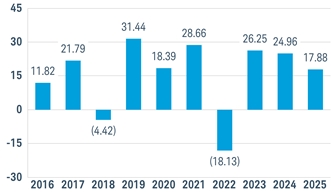
|
|
|
|
|
|
| ||||
|
|
|
|
|
|
|
|
|
|
|
|
| 1 Year |
|
| 5 Years |
|
| 10 Years | ||
|
|
|
|
| ||||||
|
|
|
|
| ||||||
|
|
|
|
|
|
|
| |||
of shares |
|
|
|
|
| |||||
Comparative Index (reflects no |
|
|
|
|
|
|
|
| ||
deduction for fees,
expenses, or |
|
|
|
|
|
|
|
| ||
|
|
|
|
| ||||||
|
|
|
|
|
|
|
|
|
|
|
Charles Schwab Investment Management, Inc., dba Schwab Asset Management®
Christopher Bliss, CFA, Managing Director and Head of Equity Index Strategies, is responsible for the day-to-day co-management of the fund. He has managed the fund since 2017.
Jeremy Brown, CFA, Senior Portfolio Manager, is responsible for the day-to-day co-management of the fund. He has managed the fund since 2019.
Ferian Juwono, CFA, Senior Portfolio Manager, is responsible for the day-to-day co-management of the fund. He has managed the fund since 2013.
Agnes Zau, CFA, Portfolio Manager, is responsible for the day-to-day co-management of the fund. She has managed the fund since 2023.
The fund is open for business each day that the New York Stock Exchange (NYSE) is open. If the NYSE is closed due to weather or other extenuating circumstances on a day it would typically be open for business, or the NYSE has an unscheduled early closing on a day it has opened for business, the fund reserves the right to treat such day as a business day and accept purchase and redemption orders and calculate its share price as of the normally scheduled close of regular trading on the NYSE for that day.
Investors may only invest in the fund through an account at Charles Schwab & Co., Inc. (Schwab) or another financial intermediary. When you place orders to purchase, exchange or redeem fund shares through an account at Schwab or another financial intermediary, you must follow Schwab’s or the other financial intermediary’s transaction procedures.
There is no minimum initial investment for the fund.
Dividends and capital gains distributions received from the fund will generally be taxable as ordinary income or capital gains, unless you are investing through an IRA, 401(k) or other tax-advantaged account (in which case you may be taxed later, upon withdrawal of your investment from such account).
If you purchase shares of the fund through a broker-dealer or other financial intermediary (such as a bank), the adviser and its related companies may pay the intermediary for the sale of fund shares and related services. These payments may create a conflict of interest by influencing the broker-dealer or other financial intermediary and your salesperson to recommend the fund over another investment. Ask your salesperson or visit your financial intermediary’s website for more information.
Schwab S&P 500 Index Fund | Fund Summary | 3 |
Ticker Symbol: SNXFX |
The fund’s goal is to match the total return of the Schwab 1000 Index®.
This table describes the fees and expenses you may pay if you buy, hold and sell shares of the fund. You may pay other fees, such as brokerage commissions and other fees to financial intermediaries, which are not reflected in the table and Example below.
Shareholder Fees (fees paid directly from your investment) |
| |
|
| None |
|
|
|
Annual
Fund Operating Expenses (expenses that you pay each year as a %
| ||
Management Fees | 0.05 | |
Other Expenses | 0.00 | |
|
|
|
Total annual fund operating expenses | 0.05 | |
Example
This example is intended to help you compare the cost of investing in the fund with the cost of investing in other funds. The example assumes that you invest $10,000 in the fund for the time periods indicated and then redeem all of your shares at the end of those time periods. The example also assumes that your investment has a 5% return each year and that the fund’s operating expenses remain the same. Your actual costs may be higher or lower.
Expenses on a $10,000 Investment |
|
|
| ||||
| 1 Year |
| 3 Years |
| 5 Years |
| 10 Years |
| $5 |
| $16 |
| $28 |
| $64 |
Portfolio Turnover
The fund pays transaction costs, such as commissions, when it buys and sells securities (or “turns over” its portfolio). A higher portfolio turnover may indicate higher transaction costs and may result in higher taxes when fund shares are held in a taxable account. These costs, which are not reflected in the annual fund operating expenses or in the example, affect the fund’s performance. During the most recent fiscal year, the fund’s portfolio turnover rate was 3% of the average value of its portfolio.
To pursue its goal, the fund generally invests in stocks that are included in the Schwab 1000 Index. It is the fund’s policy that under normal circumstances it will invest at least 80% of its net assets (including, for this purpose, any borrowings for investment purposes) in these stocks; typically, the actual percentage is considerably higher. The fund will notify its shareholders at least 60 days before changing this policy.
The fund generally will seek to replicate the performance of the index by giving the same weight to a given stock as the index does. However, when the investment adviser believes it is in the best interest of the fund, such as to avoid purchasing odd-lots (i.e., purchasing less than the usual number of shares traded for a security), for tax considerations, or to address liquidity considerations with respect to a stock, the investment adviser may cause the fund’s weighting of a stock to be more or less than the index’s weighting of the stock. The fund may sell securities that are represented in the index in anticipation of their removal from the index, or buy securities that are not yet represented in the index in anticipation of their addition to the index.
The Schwab 1000 Index is a float-adjusted market capitalization weighted index that includes the 1,000 largest stocks of publicly-traded companies in the United States, with size being determined by market capitalization (total market value of all shares outstanding). The index is designed to be a measure of the performance of large- and mid-cap U.S. stocks. The fund may invest in derivatives, principally futures contracts, and lend its securities to minimize the gap in performance that naturally exists between any index fund and its corresponding index. This gap occurs mainly because, unlike the index, the fund incurs expenses and must keep a small portion of its assets in cash for business operations. By using futures, the fund potentially can offset a portion of the gap attributable to its cash holdings. In addition, any income realized through securities lending may help reduce the portion of the gap attributable to expenses.
The fund may concentrate its investments (i.e., hold more than 25% of its total assets) in an industry or group of industries to the extent that the index the fund is designed to track is also so concentrated.
The fund is subject to risks, any of which could cause an investor to lose money. The fund’s principal risks include:
Market Risk — Financial markets rise and fall in response to a variety of factors, sometimes rapidly and unpredictably. Markets may be impacted by economic, political, regulatory, and other conditions, including economic sanctions, tariffs, and other government actions. In addition, the occurrence of global events, such as war, terrorism, environmental disasters, natural disasters and epidemics, may also negatively affect the financial markets. As with any investment whose performance is tied to these markets,
4 | Schwab 1000 Index Fund | Fund Summary |
the value of an investment in the fund will fluctuate, which means that an investor could lose money over short or long periods.
Equity Risk — The prices of equity securities rise and fall daily. These price movements may result from factors affecting individual companies, industries or the securities market as a whole. In addition, equity markets tend to move in cycles, which may cause stock prices to fall over short or extended periods of time.
Investment Style Risk — The fund is an index fund. Therefore, the fund follows the securities included in the index during upturns as well as downturns. Because of its indexing strategy, the fund does not take steps to reduce market exposure or to lessen the effects of a declining market. In addition, because of the fund’s expenses, the fund’s performance may be below that of the index. Errors relating to the index may occur from time to time and may not be identified by the index provider for a period of time. In addition, market disruptions could cause delays in the index’s rebalancing schedule. Such errors and/or market disruptions may result in losses for the fund.
Tracking Error and Correlation Risk — As an index fund, the fund seeks to track the performance of the index, although it may not be successful in doing so. Further, there can be no guarantee that the fund will achieve a high degree of correlation between the fund’s performance and that of its index. The correlation between the performance of the fund and that of its index, positive or negative, is called “tracking error.” Tracking error can be caused by many factors and it may be significant.
Market Capitalization Risk — Securities issued by companies of different market capitalizations tend to go in and out of favor based on market and economic conditions. During a period when securities of a particular market capitalization fall behind other types of investments, the fund’s performance could be impacted.
Large-Cap Company Risk — Large-cap companies are generally more mature and the securities issued by these companies may not be able to reach the same levels of growth as the securities issued by small- or mid-cap companies.
Mid-Cap Company Risk — Mid-cap companies may be more vulnerable to adverse business or economic events than larger, more established companies and the value of securities issued by these companies may move sharply.
Concentration Risk — To the extent that the fund’s or the index’s portfolio is concentrated in the securities of issuers in a particular market, industry, group of industries, sector, or asset class, the fund may be adversely affected by the performance of those securities, may be subject to increased price volatility and may be more vulnerable to adverse economic, market, political or regulatory occurrences affecting that market, industry, group of industries, sector, or asset class.
Derivatives Risk — The fund’s use of derivative instruments involves risks different from, or possibly greater than, the risks associated with investing directly in securities and other traditional investments. The fund’s use of derivatives could reduce the fund’s performance, increase the fund’s volatility, and could cause the fund to lose more than the initial amount invested. In addition, investments in derivatives may involve leverage, which means a small percentage of assets invested in derivatives can have a disproportionately large impact on the fund.
Liquidity Risk — The fund may be unable to sell certain securities, such as illiquid securities, readily at a favorable time or price, or the fund may have to sell them at a loss.
Securities Lending Risk — Securities lending involves the risk of loss of rights in, or delay in recovery of, the loaned securities if the borrower fails to return the security loaned or becomes insolvent.
For more information on the risks of investing in the fund, please see the “Fund Details” section in the prospectus.
The bar chart below shows how the fund’s investment results have varied from year to year, and the following table shows how the fund’s average annual total returns for various periods compared to that of one or more indices. The Russell 1000® Index serves as the fund’s regulatory index and provides a broad measure of market performance. The fund generally invests in securities that are included in the Schwab 1000 Index. The fund does not seek to track the regulatory index. This information provides some indication of the risks of investing in the fund. All figures assume distributions were reinvested. Keep in mind that future performance (both before and after taxes) may differ from past performance. For current performance information, please see www.schwabassetmanagement.com/prospectus.
Annual Total Returns (%) as of 12/31 |
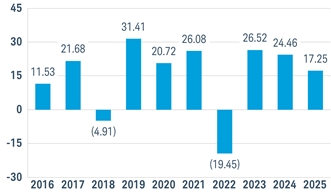
Best Quarter: 21.76% Q2 2020 |
Worst Quarter: (20.24%) Q1 2020 |
Schwab 1000 Index Fund | Fund Summary | 5 |
Average Annual Total Returns as of 12/31/25 |
|
|
|
|
|
|
| |||
|
|
|
|
|
|
|
|
|
|
|
|
| 1 Year |
|
| 5 Years |
|
| 10 Years | ||
Before taxes | 17.25% |
|
| 13.40% |
|
| 14.40% |
| ||
After taxes on distributions | 16.85% |
|
| 12.99% |
|
| 13.66% |
| ||
After taxes on distributions and sale |
|
|
|
|
|
|
|
| ||
of shares | 10.49% |
|
| 10.66% |
|
| 11.85% |
| ||
Comparative Indices (reflects no |
|
|
|
|
|
|
|
| ||
deduction for fees,
expenses, or |
|
|
|
|
|
|
|
| ||
Russell 1000® Index | 17.37% |
|
| 13.59% |
|
| 14.59% |
| ||
Schwab 1000 Index | 17.34% |
|
| 13.45% |
|
| 14.47% |
| ||
|
|
|
|
|
|
|
|
|
|
|
The after-tax figures reflect the highest individual federal income tax rates in effect during the period and do not reflect the impact of state and local taxes. Your actual after-tax returns depend on your individual tax situation. In addition, after-tax returns are not relevant if you hold your fund shares through a tax-deferred arrangement, such as a 401(k) plan, an individual retirement account (IRA) or other tax-advantaged account.
Charles Schwab Investment Management, Inc., dba Schwab Asset Management®
Christopher Bliss, CFA, Managing Director and Head of Equity Index Strategies, is responsible for the day-to-day co-management of the fund. He has managed the fund since 2017.
Jeremy Brown, CFA, Senior Portfolio Manager, is responsible for the day-to-day co-management of the fund. He has managed the fund since 2019.
Ferian Juwono, CFA, Senior Portfolio Manager, is responsible for the day-to-day co-management of the fund. He has managed the fund since 2013.
Agnes Zau, CFA, Portfolio Manager, is responsible for the day-to-day co-management of the fund. She has managed the fund since 2023.
The fund is open for business each day that the New York Stock Exchange (NYSE) is open. If the NYSE is closed due to weather or other extenuating circumstances on a day it would typically be open for business, or the NYSE has an unscheduled early closing on a day it has opened for business, the fund reserves the right to treat such day as a business day and accept purchase and redemption orders and calculate its share price as of the normally scheduled close of regular trading on the NYSE for that day.
Investors may only invest in the fund through an account at Charles Schwab & Co., Inc. (Schwab) or another financial intermediary. When you place orders to purchase, exchange or redeem fund shares through an account at Schwab or another financial intermediary, you must follow Schwab’s or the other financial intermediary’s transaction procedures.
There is no minimum initial investment for the fund.
Dividends and capital gains distributions received from the fund will generally be taxable as ordinary income or capital gains, unless you are investing through an IRA, 401(k) or other tax-advantaged account (in which case you may be taxed later, upon withdrawal of your investment from such account).
If you purchase shares of the fund through a broker-dealer or other financial intermediary (such as a bank), the adviser and its related companies may pay the intermediary for the sale of fund shares and related services. These payments may create a conflict of interest by influencing the broker-dealer or other financial intermediary and your salesperson to recommend the fund over another investment. Ask your salesperson or visit your financial intermediary’s website for more information.
6 | Schwab 1000 Index Fund | Fund Summary |
Ticker Symbol: SWSSX |
The fund’s goal is to track the performance of a benchmark index that measures the total return of small capitalization U.S. stocks.
This table describes the fees and expenses you may pay if you buy, hold and sell shares of the fund. You may pay other fees, such as brokerage commissions and other fees to financial intermediaries, which are not reflected in the table and Example below.
| ||
|
| |
|
|
|
Management Fees | ||
Other Expenses | ||
|
|
|
Total annual fund operating expenses | ||
This example is intended to help you compare the cost of investing in the fund with the cost of investing in other funds. The example assumes that you invest $10,000 in the fund for the time periods indicated and then redeem all of your shares at the end of those time periods. The example also assumes that your investment has a 5% return each year and that the fund’s operating expenses remain the same. Your actual costs may be higher or lower.
|
|
| |||||
| 1 Year |
| 3 Years |
| 5 Years |
| 10 Years |
| $ |
| $ |
| $ |
| $ |
The fund pays transaction costs, such as commissions, when
it buys and sells securities (or “turns over” its portfolio). A higher portfolio turnover may indicate
higher transaction costs and may result in higher taxes when fund shares are held in a taxable account.
These costs, which are not reflected in the annual fund operating expenses or in the example, affect
the fund’s performance. During the most recent fiscal year, the fund’s portfolio turnover rate was
To pursue its goal, the fund generally invests in stocks that are included in the Russell 2000® Index†. It is the fund’s policy that under normal circumstances it will invest at least 80% of its net assets (including, for this purpose, any borrowings for investment purposes) in these stocks; typically, the actual percentage is considerably higher. The fund will notify its shareholders at least 60 days before changing this policy.
† Index ownership – “Russell 2000®” is a registered mark of Frank Russell Company (Russell) and has been licensed for use by the Schwab Small-Cap Index Fund. The Schwab Small-Cap Index Fund is not sponsored, endorsed, sold or promoted by Russell and Russell makes no representation regarding the advisability of investing in the fund. |
The fund generally will seek to replicate the performance of the index by giving the same weight to a given stock as the index does. However, when the investment adviser believes it is in the best interest of the fund, such as to avoid purchasing odd-lots (i.e., purchasing less than the usual number of shares traded for a security), for tax considerations, or to address liquidity considerations with respect to a stock, the investment adviser may cause the fund’s weighting of a stock to be more or less than the index’s weighting of the stock. The fund may sell securities that are represented in the index in anticipation of their removal from the index, or buy securities that are not yet represented in the index in anticipation of their addition to the index.
The fund may invest in derivatives, principally futures contracts, and lend its securities to minimize the gap in performance that naturally exists between any index fund and its corresponding index. This gap occurs mainly because, unlike the index, the fund incurs expenses and must keep a small portion of its assets in cash for business operations. By using futures, the fund potentially can offset a portion of the gap attributable to its cash holdings. In addition, any income realized through securities lending may help reduce the portion of the gap attributable to expenses.
The fund may concentrate its investments (i.e., hold more than 25% of its total assets) in an industry or group of industries to the extent that the index the fund is designed to track is also so concentrated.
Market Risk — Financial markets rise and fall in response to a variety of factors, sometimes rapidly and unpredictably. Markets may be impacted by economic, political, regulatory, and other conditions, including economic sanctions, tariffs, and other government actions. In addition, the occurrence of global events, such as war, terrorism, environmental disasters, natural disasters and epidemics, may also negatively affect the financial markets. As with any investment whose performance is tied to these markets, the value of an investment in the fund will fluctuate, which means
Schwab Small-Cap Index Fund | Fund Summary | 7 |
that an investor could lose money over short or long periods.
Equity Risk — The prices of equity securities rise and fall daily. These price movements may result from factors affecting individual companies, industries or the securities market as a whole. In addition, equity markets tend to move in cycles, which may cause stock prices to fall over short or extended periods of time.
Investment Style Risk — The fund is an index fund. Therefore, the fund follows the securities included in the index, which may include real estate investment trusts, during upturns as well as downturns. Because of its indexing strategy, the fund does not take steps to reduce market exposure or to lessen the effects of a declining market. In addition, because of the fund’s expenses, the fund’s performance may be below that of the index. Errors relating to the index may occur from time to time and may not be identified by the index provider for a period of time. In addition, market disruptions could cause delays in the index’s rebalancing schedule. Such errors and/or market disruptions may result in losses for the fund.
Tracking Error and Correlation Risk — As an index fund, the fund seeks to track the performance of the index, although it may not be successful in doing so. Further, there can be no guarantee that the fund will achieve a high degree of correlation between the fund’s performance and that of its index. The correlation between the performance of the fund and that of its index, positive or negative, is called “tracking error.” Tracking error can be caused by many factors and it may be significant.
Market Capitalization Risk — Securities issued by companies of different market capitalizations tend to go in and out of favor based on market and economic conditions. During a period when securities of a particular market capitalization fall behind other types of investments, the fund’s performance could be impacted.
Small-Cap Company Risk — Securities issued by small-cap companies may be riskier than those issued by larger companies, and their prices may move sharply, especially during market upturns and downturns.
Concentration Risk — To the extent that the fund’s or the index’s portfolio is concentrated in the securities of issuers in a particular market, industry, group of industries, sector, or asset class, the fund may be adversely affected by the performance of those securities, may be subject to increased price volatility and may be more vulnerable to adverse economic, market, political or regulatory occurrences affecting that market, industry, group of industries, sector, or asset class.
Derivatives Risk — The fund’s use of derivative instruments involves risks different from, or possibly greater than, the risks associated with investing directly in securities and other traditional investments. The fund’s use of derivatives could reduce the fund’s performance, increase the fund’s volatility, and could cause the fund to lose more than the initial amount invested. In addition, investments in derivatives may involve leverage, which means a small percentage of assets invested in derivatives can have a disproportionately large impact on the fund.
Liquidity Risk — The fund may be unable to sell certain securities, such as illiquid securities, readily at a favorable time or price, or the fund may have to sell them at a loss.
Securities Lending Risk — Securities lending involves the risk of loss of rights in, or delay in recovery of, the loaned securities if the borrower fails to return the security loaned or becomes insolvent.
For more information on the risks of investing in the fund, please see the “Fund Details” section in the prospectus.
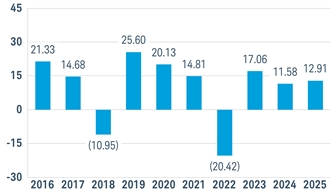
|
|
|
|
|
|
| ||||
|
|
|
|
|
|
|
|
|
|
|
|
| 1 Year |
|
| 5 Years |
|
| 10 Years | ||
|
|
|
|
| ||||||
|
|
|
|
| ||||||
|
|
|
|
|
|
|
| |||
of shares |
|
|
|
|
| |||||
Comparative Indices (reflects no |
|
|
|
|
|
|
|
| ||
deduction for fees,
expenses, or |
|
|
|
|
|
|
|
| ||
|
|
|
|
| ||||||
|
|
|
|
| ||||||
|
|
|
|
|
|
|
|
|
|
|
8 | Schwab Small-Cap Index Fund | Fund Summary |
Charles Schwab Investment Management, Inc., dba Schwab Asset Management®
Christopher Bliss, CFA, Managing Director and Head of Equity Index Strategies, is responsible for the day-to-day co-management of the fund. He has managed the fund since 2017.
Jeremy Brown, CFA, Senior Portfolio Manager, is responsible for the day-to-day co-management of the fund. He has managed the fund since 2019.
Ferian Juwono, CFA, Senior Portfolio Manager, is responsible for the day-to-day co-management of the fund. He has managed the fund since 2013.
Agnes Zau, CFA, Portfolio Manager, is responsible for the day-to-day co-management of the fund. She has managed the fund since 2023.
The fund is open for business each day that the New York Stock Exchange (NYSE) is open. If the NYSE is closed due to weather or other extenuating circumstances on a day it would typically be open for business, or the NYSE has an unscheduled early closing on a day it has opened for business, the fund reserves the right to treat such day as a business day and accept purchase and redemption orders and calculate its share price as of the normally scheduled close of regular trading on the NYSE for that day.
Investors may only invest in the fund through an account at Charles Schwab & Co., Inc. (Schwab) or another financial intermediary. When you place orders to purchase, exchange or redeem fund shares through an account at Schwab or another financial intermediary, you must follow Schwab’s or the other financial intermediary’s transaction procedures.
There is no minimum initial investment for the fund.
Dividends and capital gains distributions received from the fund will generally be taxable as ordinary income or capital gains, unless you are investing through an IRA, 401(k) or other tax-advantaged account (in which case you may be taxed later, upon withdrawal of your investment from such account).
If you purchase shares of the fund through a broker-dealer or other financial intermediary (such as a bank), the adviser and its related companies may pay the intermediary for the sale of fund shares and related services. These payments may create a conflict of interest by influencing the broker-dealer or other financial intermediary and your salesperson to recommend the fund over another investment. Ask your salesperson or visit your financial intermediary’s website for more information.
Schwab Small-Cap Index Fund | Fund Summary | 9 |
Ticker Symbol: SWTSX |
The fund’s goal is to track the total return of the entire U.S. stock market, as measured by the Dow Jones U.S. Total Stock Market IndexSM.
This table describes the fees and expenses you may pay if you buy, hold and sell shares of the fund. You may pay other fees, such as brokerage commissions and other fees to financial intermediaries, which are not reflected in the table and Example below.
| ||
|
| |
|
|
|
Management Fees | ||
Other Expenses | ||
|
|
|
Total annual fund operating expenses | ||
This example is intended to help you compare the cost of investing in the fund with the cost of investing in other funds. The example assumes that you invest $10,000 in the fund for the time periods indicated and then redeem all of your shares at the end of those time periods. The example also assumes that your investment has a 5% return each year and that the fund’s operating expenses remain the same. Your actual costs may be higher or lower.
|
|
| |||||
| 1 Year |
| 3 Years |
| 5 Years |
| 10 Years |
| $ |
| $ |
| $ |
| $ |
The fund pays transaction costs, such as commissions, when
it buys and sells securities (or “turns over” its portfolio). A higher portfolio turnover may indicate
higher transaction costs and may result in higher taxes when fund shares are held in a taxable account.
These costs, which are not reflected in the annual fund operating expenses or in the example, affect
the fund’s performance. During the most recent fiscal year, the fund’s portfolio turnover rate was
To pursue its goal, the fund generally invests in stocks that are included in the Dow Jones U.S. Total Stock Market Index†. It is the fund’s policy that under normal circumstances it will invest at least 80% of its net assets (including, for this purpose, any borrowings for investment purposes) in these stocks; typically, the actual percentage is considerably higher. The fund will notify its shareholders at least 60 days before changing this policy.
† Index ownership – “Standard & Poor’s®” and “S&P®” are registered trademarks of Standard & Poor’s Financial Services LLC (S&P), and “Dow Jones®” is a registered trademark of Dow Jones Trademark Holdings LLC (Dow Jones) and have been licensed for use by S&P Dow Jones Indices LLC and its affiliates and sublicensed for certain purposes by Charles Schwab Investment Management, Inc. The “Dow Jones U.S. Total Stock Market IndexSM” is a product of S&P Dow Jones Indices LLC or its affiliates, and has been licensed for use by Charles Schwab Investment Management, Inc. The Schwab Total Stock Market Index Fund is not sponsored, endorsed, sold or promoted by S&P Dow Jones Indices LLC, Dow Jones, S&P, or their respective affiliates, and neither S&P Dow Jones Indices LLC, Dow Jones, S&P, nor their respective affiliates make any representation regarding the advisability of investing in the fund. |
The fund generally gives the same weight to a given stock as the index does. However, when the investment adviser believes it is in the best interest of the fund, such as to avoid purchasing odd-lots (i.e., purchasing less than the usual number of shares traded for a security), for tax considerations, or to address liquidity considerations with respect to a stock, the investment adviser may cause the fund’s weighting of a stock to be more or less than the index’s weighting of the stock. The fund may sell securities that are represented in the index in anticipation of their removal from the index, or buy securities that are not yet represented in the index in anticipation of their addition to the index.
Because it may not be possible or practical to purchase all of the stocks included in the index, the investment adviser seeks to track the total return of the index by using sampling techniques. These techniques involve investing in a limited number of index securities which, when taken together, are expected to perform similarly to the index as a whole. These techniques are based on a variety of factors, including capitalization, performance attributes, dividend yield, price/earnings ratio, risk factors, industry factors and other characteristics. The fund generally expects that its portfolio will include the largest 2,000 to 2,800 U.S. stocks (measured by the float-adjusted market capitalization), and that its industry weightings, dividend yield and price/earnings ratio will be similar to those of the index.
The fund may invest in derivatives, principally futures contracts, and lend its securities to minimize the gap in performance that naturally exists between any index fund and its corresponding index. This gap occurs mainly because, unlike the index, the fund incurs expenses and must keep a small portion of its assets in cash for business operations. By using futures, the fund potentially can offset a portion of the gap attributable to its cash holdings. In addition, any income realized through securities lending may help
10 | Schwab Total Stock Market Index Fund | Fund Summary |
reduce the portion of the gap attributable to expenses.
The fund may concentrate its investments (i.e., hold more than 25% of its total assets) in an industry or group of industries to approximately the extent that the index the fund is designed to track is also so concentrated.
Market Risk — Financial markets rise and fall in response to a variety of factors, sometimes rapidly and unpredictably. Markets may be impacted by economic, political, regulatory, and other conditions, including economic sanctions, tariffs, and other government actions. In addition, the occurrence of global events, such as war, terrorism, environmental disasters, natural disasters and epidemics, may also negatively affect the financial markets. As with any investment whose performance is tied to these markets, the value of an investment in the fund will fluctuate, which means that an investor could lose money over short or long periods.
Equity Risk — The prices of equity securities rise and fall daily. These price movements may result from factors affecting individual companies, industries or the securities market as a whole. In addition, equity markets tend to move in cycles, which may cause stock prices to fall over short or extended periods of time.
Investment Style Risk — The fund is an index fund. Therefore, the fund follows the securities included in the index during upturns as well as downturns. Because of its indexing strategy, the fund does not take steps to reduce market exposure or to lessen the effects of a declining market. In addition, because of the fund’s expenses, the fund’s performance may be below that of the index. Errors relating to the index may occur from time to time and may not be identified by the index provider for a period of time. In addition, market disruptions could cause delays in the index’s rebalancing schedule. Such errors and/or market disruptions may result in losses for the fund.
Tracking Error and Correlation Risk — As an index fund, the fund seeks to track the performance of the index, although it may not be successful in doing so. Further, there can be no guarantee that the fund will achieve a high degree of correlation between the fund’s performance and that of its index. The correlation between the performance of the fund and that of its index, positive or negative, is called “tracking error.” Tracking error can be caused by many factors and it may be significant.
Sampling Index Tracking Risk — The fund may not fully replicate the index and may hold securities not included in the index. As a result, the fund is subject to the risk that the investment adviser’s investment management strategy, the implementation of which is subject to a number of constraints, may not produce the intended results. Because the fund utilizes a sampling approach it may not track the return of the index as well as it would if the fund purchased all of the securities in the index.
Concentration Risk — To the extent that the fund’s or the index’s portfolio is concentrated in the securities of issuers in a particular market, industry, group of industries, sector, or asset class, the fund may be adversely affected by the performance of those securities, may be subject to increased price volatility and may be more vulnerable to adverse economic, market, political or regulatory occurrences affecting that market, industry, group of industries, sector, or asset class.
Market Capitalization Risk — Securities issued by companies of different market capitalizations tend to go in and out of favor based on market and economic conditions. During a period when securities of a particular market capitalization fall behind other types of investments, the fund’s performance could be impacted.
Large-Cap Company Risk — Large-cap companies are generally more mature and the securities issued by these companies may not be able to reach the same levels of growth as the securities issued by small- or mid-cap companies.
Mid-Cap Company Risk — Mid-cap companies may be more vulnerable to adverse business or economic events than larger, more established companies and the value of securities issued by these companies may move sharply.
Small-Cap Company Risk — Securities issued by small-cap companies may be riskier than those issued by larger companies, and their prices may move sharply, especially during market upturns and downturns.
Derivatives Risk — The fund’s use of derivative instruments involves risks different from, or possibly greater than, the risks associated with investing directly in securities and other traditional investments. The fund’s use of derivatives could reduce the fund’s performance, increase the fund’s volatility, and could cause the fund to lose more than the initial amount invested. In addition, investments in derivatives may involve leverage, which means a small percentage of assets invested in derivatives can have a disproportionately large impact on the fund.
Liquidity Risk — The fund may be unable to sell certain securities, such as illiquid securities, readily at a favorable time or price, or the fund may have to sell them at a loss.
Securities Lending Risk — Securities lending involves the risk of loss of rights in, or delay in recovery of, the loaned securities if the borrower fails to return the security loaned or becomes insolvent.
For more information on the risks of investing in the fund, please see the “Fund Details” section in the prospectus.
Schwab Total Stock Market Index Fund | Fund Summary | 11 |
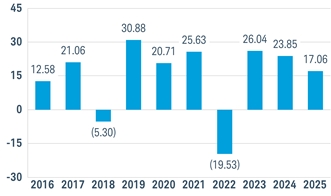
|
|
|
|
|
|
| ||||
|
|
|
|
|
|
|
|
|
|
|
|
| 1 Year |
|
| 5 Years |
|
| 10 Years | ||
|
|
|
|
| ||||||
|
|
|
|
| ||||||
|
|
|
|
|
|
|
| |||
of shares |
|
|
|
|
| |||||
Comparative Index (reflects no |
|
|
|
|
|
|
|
| ||
deduction for fees,
expenses, or |
|
|
|
|
|
|
|
| ||
|
|
|
|
| ||||||
|
|
|
|
|
|
|
|
|
|
|
Charles Schwab Investment Management, Inc., dba Schwab Asset Management®
Christopher Bliss, CFA, Managing Director and Head of Equity Index Strategies, is responsible for the day-to-day co-management of the fund. He has managed the fund since 2017.
Jeremy Brown, CFA, Senior Portfolio Manager, is responsible for the day-to-day co-management of the fund. He has managed the fund since 2019.
Ferian Juwono, CFA, Senior Portfolio Manager, is responsible for the day-to-day co-management of the fund. He has managed the fund since 2013.
Agnes Zau, CFA, Portfolio Manager, is responsible for the day-to-day co-management of the fund. She has managed the fund since 2023.
The fund is open for business each day that the New York Stock Exchange (NYSE) is open. If the NYSE is closed due to weather or other extenuating circumstances on a day it would typically be open for business, or the NYSE has an unscheduled early closing on a day it has opened for business, the fund reserves the right to treat such day as a business day and accept purchase and redemption orders and calculate its share price as of the normally scheduled close of regular trading on the NYSE for that day.
Investors may only invest in the fund through an account at Charles Schwab & Co., Inc. (Schwab) or another financial intermediary. When you place orders to purchase, exchange or redeem fund shares through an account at Schwab or another financial intermediary, you must follow Schwab’s or the other financial intermediary’s transaction procedures.
There is no minimum initial investment for the fund.
Dividends and capital gains distributions received from the fund will generally be taxable as ordinary income or capital gains, unless you are investing through an IRA, 401(k) or other tax-advantaged account (in which case you may be taxed later, upon withdrawal of your investment from such account).
If you purchase shares of the fund through a broker-dealer or other financial intermediary (such as a bank), the adviser and its related companies may pay the intermediary for the sale of fund shares and related services. These payments may create a conflict of interest by influencing the broker-dealer or other financial intermediary and your salesperson to recommend the fund over another investment. Ask your salesperson or visit your financial intermediary’s website for more information.
12 | Schwab Total Stock Market Index Fund | Fund Summary |
Ticker Symbol: SWLGX |
The fund’s goal is to track the performance of a benchmark index that measures the total return of large capitalization U.S. growth stocks.
This table describes the fees and expenses you may pay if you buy, hold and sell shares of the fund. You may pay other fees, such as brokerage commissions and other fees to financial intermediaries, which are not reflected in the table and Example below.
| ||
|
| |
|
|
|
Management Fees | ||
Other Expenses | ||
|
|
|
Total annual fund operating expenses | ||
This example is intended to help you compare the cost of investing in the fund with the cost of investing in other funds. The example assumes that you invest $10,000 in the fund for the time periods indicated and then redeem all of your shares at the end of those time periods. The example also assumes that your investment has a 5% return each year and that the fund’s operating expenses remain the same. Your actual costs may be higher or lower.
|
|
| |||||
| 1 Year |
| 3 Years |
| 5 Years |
| 10 Years |
| $ |
| $ |
| $ |
| $ |
The fund pays transaction costs, such as commissions, when
it buys and sells securities (or “turns over” its portfolio). A higher portfolio turnover may indicate
higher transaction costs and may result in higher taxes when fund shares are held in a taxable account.
These costs, which are not reflected in the annual fund operating expenses or in the example, affect
the fund’s performance. During the most recent fiscal year, the fund’s portfolio turnover rate was
To pursue its goal, the fund generally invests in stocks that are included in the Russell 1000® Growth Index†. The fund attempts to replicate the Russell 1000 Growth Index.
† Index ownership – The Russell 1000® Growth Index is a registered mark of Frank Russell Company (Russell) and has been licensed for use by the Schwab U.S. Large-Cap Growth Index Fund. The Schwab U.S. Large-Cap Growth Index Fund is not sponsored, endorsed, sold or promoted by Russell and Russell makes no representation regarding the advisability of investing in the fund. |
It is the fund’s policy that under normal circumstances it will invest at least 90% of its net assets (including, for this purpose, any borrowings for investment purposes) in securities included in the index. The fund will notify its shareholders at least 60 days before changing this policy. The fund generally will seek to replicate the performance of the index by giving the same weight to a given stock as the index does. However, when the investment adviser believes it is appropriate to do so, such as to avoid purchasing odd-lots (i.e., purchasing less than the usual number of shares traded for a security), for tax considerations, or to address liquidity considerations with respect to a stock, the investment adviser may cause the fund’s weighting of a stock to be more or less than the index’s weighting of the stock. The fund may sell securities that are represented in the index in anticipation of their removal from the index, or buy securities that are not yet represented in the index in anticipation of their addition to the index.
Under normal circumstances, the fund may invest up to 10% of its net assets in securities not included in the index. The principal types of these investments include those that the investment adviser believes will help the fund track the index, such as investments in (a) securities that are not represented in the index but the investment adviser anticipates will be added to the index or as necessary to reflect various corporate actions (such as mergers and spin-offs), (b) other investment companies, and (c) derivatives, principally futures contracts. The fund may use futures contracts and other derivatives primarily to seek returns on the fund’s otherwise uninvested cash assets to help it better track the index. The fund may also invest in cash and cash equivalents, and may lend its securities to minimize the difference in performance that naturally exists between an index fund and its corresponding index. This gap occurs mainly because, unlike the index, the fund incurs expenses and must keep a small portion of its assets in cash for business operations.
The investment adviser typically seeks to track the total return of the index by replicating the index. This means that the fund generally expects that it will hold the same securities as those included in the index. However, the investment adviser may use sampling techniques if the investment adviser believes such use will best help the fund to track the index or is otherwise in the best interest of the fund. Sampling techniques involve investing in a limited number of index securities that, when taken together, are expected to perform similarly to the index as a whole. These techniques are based on a variety of factors, including
Schwab U.S. Large-Cap Growth Index Fund | Fund Summary | 13 |
performance attributes, tax considerations, capitalization, dividend yield, price/earnings ratio, industry factors, risk factors and other characteristics. When the fund uses sampling techniques, the fund generally expects that its portfolio will hold less than the total number of securities in the index, but reserves the right to hold as many securities as it believes necessary to achieve the fund’s investment objective. The fund generally expects that its industry weightings, dividend yield and price/earnings ratio will be similar to those of the index.
The fund will concentrate its investments (i.e., hold more than 25% of its total assets) in a particular industry, group of industries or sector to approximately the same extent that the index is so concentrated.
The fund may become “non-diversified,” as defined under the Investment Company Act of 1940, as amended, solely as a result of a change in relative market capitalization or index weighting of one or more constituents of the index that the fund is designed to track.
Market Risk — Financial markets rise and fall in response to a variety of factors, sometimes rapidly and unpredictably. Markets may be impacted by economic, political, regulatory, and other conditions, including economic sanctions, tariffs, and other government actions. In addition, the occurrence of global events, such as war, terrorism, environmental disasters, natural disasters and epidemics, may also negatively affect the financial markets. As with any investment whose performance is tied to these markets, the value of an investment in the fund will fluctuate, which means that an investor could lose money over short or long periods.
Equity Risk — The prices of equity securities rise and fall daily. These price movements may result from factors affecting individual companies, industries or the securities market as a whole. In addition, equity markets tend to move in cycles, which may cause stock prices to fall over short or extended periods of time.
Investment Style Risk — The fund is an index fund. Therefore, the fund follows the securities included in the index during upturns as well as downturns. Because of its indexing strategy, the fund does not take steps to reduce market exposure or to lessen the effects of a declining market. In addition, because of the fund’s expenses, the fund’s performance may be below that of the index. Errors relating to the index may occur from time to time and may not be identified by the index provider for a period of time. In addition, market disruptions could cause delays in the index’s rebalancing schedule. Such errors and/or market disruptions may result in losses for the fund.
Tracking Error and Correlation Risk — As an index fund, the fund seeks to track the performance of the index, although it may not be successful in doing so. Further, there can be no guarantee that the fund will achieve a high degree of correlation between the fund’s performance and that of its index. The correlation between the performance of the fund and that of its index, positive or negative, is called “tracking error.” Tracking error can be caused by many factors and it may be significant.
Market Capitalization Risk — Securities issued by companies of different market capitalizations tend to go in and out of favor based on market and economic conditions. During a period when securities of a particular market capitalization fall behind other types of investments, the fund’s performance could be impacted.
Large-Cap Company Risk — Large-cap companies are generally more mature and the securities issued by these companies may not be able to reach the same levels of growth as the securities issued by small- or mid-cap companies.
Growth Investing Risk — Growth stocks can be volatile. Growth companies usually invest a high portion of earnings in their businesses and may lack the dividends of value stocks that can cushion stock prices in a falling market. The prices of growth stocks are based largely on projections of the issuer’s future earnings and revenues. If a company’s earnings or revenues fall short of expectations, its stock price may fall dramatically. Growth stocks may also be more expensive relative to their earnings or assets compared to value or other stocks.
Concentration Risk — To the extent that the fund’s or the index’s portfolio is concentrated in the securities of issuers in a particular market, industry, group of industries, sector, or asset class, the fund may be adversely affected by the performance of those securities, may be subject to increased price volatility and may be more vulnerable to adverse economic, market, political or regulatory occurrences affecting that market, industry, group of industries, sector, or asset class.
Sampling Index Tracking Risk — To the extent the fund uses sampling techniques, the fund will not fully replicate the index and may hold securities not included in the index. As a result, the fund will be subject to the risk that the investment adviser’s investment management strategy, the implementation of which is subject to a number of constraints, may not produce the intended results. If the fund utilizes a sampling approach, it may not track the return of the index as well as it would if the fund purchased all of the securities in the index.
Derivatives Risk — The fund’s use of derivative instruments involves risks different from, or possibly greater than, the risks associated with investing directly in securities and other traditional investments. The fund’s use of derivatives could reduce the fund’s performance, increase the fund’s volatility, and could cause the fund to lose more than the initial amount invested. In addition, investments in derivatives may involve leverage, which means a small percentage of assets invested in derivatives can have a disproportionately large impact on the fund.
Liquidity Risk — The fund may be unable to sell certain securities, such as illiquid securities, readily at a favorable time or price, or the fund may have to sell them at a loss.
14 | Schwab U.S. Large-Cap Growth Index Fund | Fund Summary |
Securities Lending Risk — Securities lending involves the risk of loss of rights in, or delay in recovery of, the loaned securities if the borrower fails to return the security loaned or becomes insolvent.
Non-Diversification Risk — To the extent that the fund becomes non-diversified as necessary to approximate the composition of the index, it may invest in the securities of relatively few issuers. As a result, a single adverse economic or regulatory occurrence may have a more significant effect on the fund’s investments, and the fund may experience increased volatility.
For more information on the risks of investing in the fund, please see the “Fund Details” section in the prospectus.
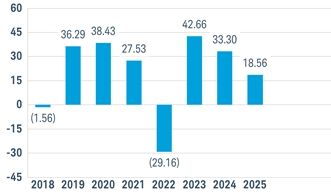
|
|
|
|
|
|
| ||||
|
|
|
|
|
|
|
|
|
|
|
|
| 1 Year |
|
| 5 Years |
|
| Since
| ||
|
|
|
| (1) | ||||||
|
|
|
| (1) | ||||||
|
|
|
|
|
|
|
| |||
of shares |
|
|
|
| (1) | |||||
Comparative Indices (reflects no |
|
|
|
|
|
|
|
| ||
deduction for fees,
expenses, or |
|
|
|
|
|
|
|
| ||
|
|
|
| (1) | ||||||
|
|
|
| (1) | ||||||
|
|
|
|
|
|
|
|
|
|
|
|
|
|
|
|
|
|
|
|
|
|
(1) | Since inception December 20, 2017. | |||||||||
Charles Schwab Investment Management, Inc., dba Schwab Asset Management®
Christopher Bliss, CFA, Managing Director and Head of Equity Index Strategies, is responsible for the day-to-day co-management of the fund. He has managed the fund since 2017.
Jeremy Brown, CFA, Senior Portfolio Manager, is responsible for the day-to-day co-management of the fund. He has managed the fund since 2019.
Ferian Juwono, CFA, Senior Portfolio Manager, is responsible for the day-to-day co-management of the fund. He has managed the fund since 2017.
Agnes Zau, CFA, Portfolio Manager, is responsible for the day-to-day co-management of the fund. She has managed the fund since 2023.
The fund is open for business each day that the New York Stock Exchange (NYSE) is open. If the NYSE is closed due to weather or other extenuating circumstances on a day it would typically be open for business, or the NYSE has an unscheduled early closing on a day it has opened for business, the fund reserves the right to treat such day as a business day and accept purchase and redemption orders and calculate its share price as of the normally scheduled close of regular trading on the NYSE for that day.
Investors may only invest in the fund through an account at Charles Schwab & Co., Inc. (Schwab) or another financial intermediary. When you place orders to purchase, exchange or
Schwab U.S. Large-Cap Growth Index Fund | Fund Summary | 15 |
redeem fund shares through an account at Schwab or another financial intermediary, you must follow Schwab’s or the other financial intermediary’s transaction procedures.
There is no minimum initial investment for the fund.
Dividends and capital gains distributions received from the fund will generally be taxable as ordinary income or capital gains, unless you are investing through an IRA, 401(k) or other tax-advantaged account (in which case you may be taxed later, upon withdrawal of your investment from such account).
If you purchase shares of the fund through a broker-dealer or other financial intermediary (such as a bank), the adviser and its related companies may pay the intermediary for the sale of fund shares and related services. These payments may create a conflict of interest by influencing the broker-dealer or other financial intermediary and your salesperson to recommend the fund over another investment. Ask your salesperson or visit your financial intermediary’s website for more information.
16 | Schwab U.S. Large-Cap Growth Index Fund | Fund Summary |
Ticker Symbol: SWLVX |
The fund’s goal is to track the performance of a benchmark index that measures the total return of large capitalization U.S. value stocks.
This table describes the fees and expenses you may pay if you buy, hold and sell shares of the fund. You may pay other fees, such as brokerage commissions and other fees to financial intermediaries, which are not reflected in the table and Example below.
| ||
|
| |
|
|
|
Management Fees | ||
Other Expenses | ||
|
|
|
Total annual fund operating expenses | ||
This example is intended to help you compare the cost of investing in the fund with the cost of investing in other funds. The example assumes that you invest $10,000 in the fund for the time periods indicated and then redeem all of your shares at the end of those time periods. The example also assumes that your investment has a 5% return each year and that the fund’s operating expenses remain the same. Your actual costs may be higher or lower.
|
|
| |||||
| 1 Year |
| 3 Years |
| 5 Years |
| 10 Years |
| $ |
| $ |
| $ |
| $ |
The fund pays transaction costs, such as commissions, when
it buys and sells securities (or “turns over” its portfolio). A higher portfolio turnover may indicate
higher transaction costs and may result in higher taxes when fund shares are held in a taxable account.
These costs, which are not reflected in the annual fund operating expenses or in the example, affect
the fund’s performance. During the most recent fiscal year, the fund’s portfolio turnover rate was
To pursue its goal, the fund generally invests in stocks that are included in the Russell 1000® Value Index†. The fund attempts to replicate the Russell 1000 Value Index.
† Index ownership – The Russell 1000® Value Index is a registered mark of Frank Russell Company (Russell) and has been licensed for use by the Schwab U.S. Large-Cap Value Index Fund. The Schwab U.S. Large-Cap Value Index Fund is not sponsored, endorsed, sold or promoted by Russell and Russell makes no representation regarding the advisability of investing in the fund. |
It is the fund’s policy that under normal circumstances it will invest at least 90% of its net assets (including, for this purpose, any borrowings for investment purposes) in securities included in the index. The fund will notify its shareholders at least 60 days before changing this policy. The fund generally will seek to replicate the performance of the index by giving the same weight to a given stock as the index does. However, when the investment adviser believes it is appropriate to do so, such as to avoid purchasing odd-lots (i.e., purchasing less than the usual number of shares traded for a security), for tax considerations, or to address liquidity considerations with respect to a stock, the investment adviser may cause the fund’s weighting of a stock to be more or less than the index’s weighting of the stock. The fund may sell securities that are represented in the index in anticipation of their removal from the index, or buy securities that are not yet represented in the index in anticipation of their addition to the index.
Under normal circumstances, the fund may invest up to 10% of its net assets in securities not included in the index. The principal types of these investments include those that the investment adviser believes will help the fund track the index, such as investments in (a) securities that are not represented in the index but the investment adviser anticipates will be added to the index or as necessary to reflect various corporate actions (such as mergers and spin-offs), (b) other investment companies, and (c) derivatives, principally futures contracts. The fund may use futures contracts and other derivatives primarily to seek returns on the fund’s otherwise uninvested cash assets to help it better track the index. The fund may also invest in cash and cash equivalents, and may lend its securities to minimize the difference in performance that naturally exists between an index fund and its corresponding index. This gap occurs mainly because, unlike the index, the fund incurs expenses and must keep a small portion of its assets in cash for business operations.
The investment adviser typically seeks to track the total return of the index by replicating the index. This means that the fund generally expects that it will hold the same securities as those included in the index. However, the investment adviser may use sampling techniques if the investment adviser believes such use will best help the fund to track the index or is otherwise in the best interest of the fund. Sampling techniques involve investing in a limited number of index securities that, when taken together, are expected to perform similarly to the index as a whole. These techniques are based on a variety of factors, including
Schwab U.S. Large-Cap Value Index Fund | Fund Summary | 17 |
performance attributes, tax considerations, capitalization, dividend yield, price/ earnings ratio, industry factors, risk factors and other characteristics. When the fund uses sampling techniques, the fund generally expects that its portfolio will hold less than the total number of securities in the index, but reserves the right to hold as many securities as it believes necessary to achieve the fund’s investment objective. The fund generally expects that its industry weightings, dividend yield and price/earnings ratio will be similar to those of the index.
The fund will concentrate its investments (i.e., hold more than 25% of its total assets) in a particular industry, group of industries or sector to approximately the same extent that the index is so concentrated.
Market Risk — Financial markets rise and fall in response to a variety of factors, sometimes rapidly and unpredictably. Markets may be impacted by economic, political, regulatory, and other conditions, including economic sanctions, tariffs, and other government actions. In addition, the occurrence of global events, such as war, terrorism, environmental disasters, natural disasters and epidemics, may also negatively affect the financial markets. As with any investment whose performance is tied to these markets, the value of an investment in the fund will fluctuate, which means that an investor could lose money over short or long periods.
Equity Risk — The prices of equity securities rise and fall daily. These price movements may result from factors affecting individual companies, industries or the securities market as a whole. In addition, equity markets tend to move in cycles, which may cause stock prices to fall over short or extended periods of time.
Investment Style Risk — The fund is an index fund. Therefore, the fund follows the securities included in the index during upturns as well as downturns. Because of its indexing strategy, the fund does not take steps to reduce market exposure or to lessen the effects of a declining market. In addition, because of the fund’s expenses, the fund’s performance may be below that of the index. Errors relating to the index may occur from time to time and may not be identified by the index provider for a period of time. In addition, market disruptions could cause delays in the index’s rebalancing schedule. Such errors and/or market disruptions may result in losses for the fund.
Tracking Error and Correlation Risk — As an index fund, the fund seeks to track the performance of the index, although it may not be successful in doing so. Further, there can be no guarantee that the fund will achieve a high degree of correlation between the fund’s performance and that of its index. The correlation between the performance of the fund and that of its index, positive or negative, is called “tracking error.” Tracking error can be caused by many factors and it may be significant.
Market Capitalization Risk — Securities issued by companies of different market capitalizations tend to go in and out of favor based on market and economic conditions. During a period when securities of a particular market capitalization fall behind other types of investments, the fund’s performance could be impacted.
Large-Cap Company Risk — Large-cap companies are generally more mature and the securities issued by these companies may not be able to reach the same levels of growth as the securities issued by small- or mid-cap companies.
Value Investing Risk — The fund emphasizes a “value” style of investing, which targets undervalued companies with characteristics for improved valuations. This style of investing is subject to the risk that the valuations never improve or that the returns on “value” securities may not move in tandem with the returns on other styles of investing or the stock market in general.
Concentration Risk — To the extent that the fund’s or the index’s portfolio is concentrated in the securities of issuers in a particular market, industry, group of industries, sector, or asset class, the fund may be adversely affected by the performance of those securities, may be subject to increased price volatility and may be more vulnerable to adverse economic, market, political or regulatory occurrences affecting that market, industry, group of industries, sector, or asset class.
Sampling Index Tracking Risk — To the extent the fund uses sampling techniques, the fund will not fully replicate the index and may hold securities not included in the index. As a result, the fund will be subject to the risk that the investment adviser’s investment management strategy, the implementation of which is subject to a number of constraints, may not produce the intended results. If the fund utilizes a sampling approach, it may not track the return of the index as well as it would if the fund purchased all of the securities in the index.
Derivatives Risk — The fund’s use of derivative instruments involves risks different from, or possibly greater than, the risks associated with investing directly in securities and other traditional investments. The fund’s use of derivatives could reduce the fund’s performance, increase the fund’s volatility, and could cause the fund to lose more than the initial amount invested. In addition, investments in derivatives may involve leverage, which means a small percentage of assets invested in derivatives can have a disproportionately large impact on the fund.
Liquidity Risk — The fund may be unable to sell certain securities, such as illiquid securities, readily at a favorable time or price, or the fund may have to sell them at a loss.
Securities Lending Risk — Securities lending involves the risk of loss of rights in, or delay in recovery of, the loaned securities if the borrower fails to return the security loaned or becomes insolvent.
For more information on the risks of investing in the fund, please see the “Fund Details” section in the prospectus.
18 | Schwab U.S. Large-Cap Value Index Fund | Fund Summary |
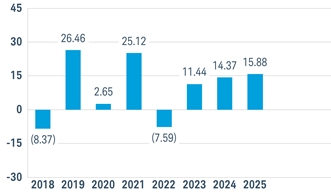
|
|
|
|
|
|
| ||||
|
|
|
|
|
|
|
|
|
|
|
|
| 1 Year |
|
| 5 Years |
|
| Since
| ||
|
|
|
| (1) | ||||||
|
|
|
| (1) | ||||||
|
|
|
|
|
|
|
| |||
of shares |
|
|
|
| (1) | |||||
Comparative Indices (reflects no |
|
|
|
|
|
|
|
| ||
deduction for fees,
expenses, or |
|
|
|
|
|
|
|
| ||
|
|
|
| (1) | ||||||
|
|
|
| (1) | ||||||
|
|
|
|
|
|
|
|
|
|
|
|
|
|
|
|
|
|
|
|
|
|
(1) | Since inception December 20, 2017. | |||||||||
Charles Schwab Investment Management, Inc., dba Schwab Asset Management®
Christopher Bliss, CFA, Managing Director and Head of Equity Index Strategies, is responsible for the day-to-day co-management of the fund. He has managed the fund since 2017.
Jeremy Brown, CFA, Senior Portfolio Manager, is responsible for the day-to-day co-management of the fund. He has managed the fund since 2019.
Ferian Juwono, CFA, Senior Portfolio Manager, is responsible for the day-to-day co-management of the fund. He has managed the fund since 2017.
Agnes Zau, CFA, Portfolio Manager, is responsible for the day-to-day co-management of the fund. She has managed the fund since 2023.
The fund is open for business each day that the New York Stock Exchange (NYSE) is open. If the NYSE is closed due to weather or other extenuating circumstances on a day it would typically be open for business, or the NYSE has an unscheduled early closing on a day it has opened for business, the fund reserves the right to treat such day as a business day and accept purchase and redemption orders and calculate its share price as of the normally scheduled close of regular trading on the NYSE for that day.
Investors may only invest in the fund through an account at Charles Schwab & Co., Inc. (Schwab) or another financial intermediary. When you place orders to purchase, exchange or redeem fund shares through an account at Schwab or another financial intermediary, you must follow Schwab’s or the other financial intermediary’s transaction procedures.
There is no minimum initial investment for the fund.
Dividends and capital gains distributions received from the fund will generally be taxable as ordinary income or capital gains, unless you are investing through an IRA, 401(k) or other tax-advantaged account (in which case you may be taxed later, upon withdrawal of your investment from such account).
If you purchase shares of the fund through a broker-dealer or other financial intermediary (such as a bank), the adviser and its related companies may pay the intermediary for the sale of fund shares and related services. These payments may create a conflict of interest by influencing the broker-dealer or other financial intermediary and your salesperson to recommend the fund over
Schwab U.S. Large-Cap Value Index Fund | Fund Summary | 19 |
another investment. Ask your salesperson or visit your financial intermediary’s website for more information.
20 | Schwab U.S. Large-Cap Value Index Fund | Fund Summary |
Ticker Symbol: SWMCX |
The fund’s goal is to track the performance of a benchmark index that measures the total return of mid capitalization U.S. stocks.
This table describes the fees and expenses you may pay if you buy, hold and sell shares of the fund. You may pay other fees, such as brokerage commissions and other fees to financial intermediaries, which are not reflected in the table and Example below.
| ||
|
| |
|
|
|
Management Fees | ||
Other Expenses | ||
|
|
|
Total annual fund operating expenses | ||
This example is intended to help you compare the cost of investing in the fund with the cost of investing in other funds. The example assumes that you invest $10,000 in the fund for the time periods indicated and then redeem all of your shares at the end of those time periods. The example also assumes that your investment has a 5% return each year and that the fund’s operating expenses remain the same. Your actual costs may be higher or lower.
|
|
| |||||
| 1 Year |
| 3 Years |
| 5 Years |
| 10 Years |
| $ |
| $ |
| $ |
| $ |
The fund pays transaction costs, such as commissions, when
it buys and sells securities (or “turns over” its portfolio). A higher portfolio turnover may indicate
higher transaction costs and may result in higher taxes when fund shares are held in a taxable account.
These costs, which are not reflected in the annual fund operating expenses or in the example, affect
the fund’s performance. During the most recent fiscal year, the fund’s portfolio turnover rate was
To pursue its goal, the fund generally invests in securities that are included in the Russell Midcap® Index†. The fund attempts to replicate the Russell Midcap Index.
† Index ownership – The Russell Midcap® Index is a registered mark of Frank Russell Company (Russell) and has been licensed for use by the Schwab U.S. Mid-Cap Index Fund. The Schwab U.S. Mid-Cap Index Fund is not sponsored, endorsed, sold or promoted by Russell and Russell makes no representation regarding the advisability of investing in the fund. |
It is the fund’s policy that under normal circumstances it will invest at least 90% of its net assets (including, for this purpose, any borrowings for investment purposes) in securities included in the index. The fund will notify its shareholders at least 60 days before changing this policy. The fund generally will seek to replicate the performance of the index by giving the same weight to a given security as the index does. However, when the investment adviser believes it is appropriate to do so, such as to avoid purchasing odd-lots (i.e., purchasing less than the usual number of shares traded for a security), for tax considerations, or to address liquidity considerations with respect to a security, the investment adviser may cause the fund’s weighting of a security to be more or less than the index’s weighting of the security. The fund may sell securities that are represented in the index in anticipation of their removal from the index, or buy securities that are not yet represented in the index in anticipation of their addition to the index.
Under normal circumstances, the fund may invest up to 10% of its net assets in securities not included in the index. The principal types of these investments include those that the investment adviser believes will help the fund track the index, such as investments in (a) securities that are not represented in the index but the investment adviser anticipates will be added to the index or as necessary to reflect various corporate actions (such as mergers and spin-offs), (b) other investment companies, and (c) derivatives, principally futures contracts. The fund may use futures contracts and other derivatives primarily to seek returns on the fund’s otherwise uninvested cash assets to help it better track the index. The fund may also invest in cash and cash equivalents, and may lend its securities to minimize the difference in performance that naturally exists between an index fund and its corresponding index. This gap occurs mainly because, unlike the index, the fund incurs expenses and must keep a small portion of its assets in cash for business operations.
The investment adviser typically seeks to track the total return of the index by replicating the index. This means that the fund generally expects that it will hold the same securities as those included in the index. However, the investment adviser may use sampling techniques if the investment adviser believes such use will best help the fund to track the index or is otherwise in the best interest of the fund. Sampling techniques involve investing in a limited number of index securities that, when taken together, are expected to perform similarly to the index as a whole. These techniques are based on a variety of factors, including
Schwab U.S. Mid-Cap Index Fund | Fund Summary | 21 |
performance attributes, tax considerations, capitalization, dividend yield, price/earnings ratio, industry factors, risk factors and other characteristics. When the fund uses sampling techniques, the fund generally expects that its portfolio will hold less than the total number of securities in the index, but reserves the right to hold as many securities as it believes necessary to achieve the fund’s investment objective. The fund generally expects that its industry weightings, dividend yield and price/earnings ratio will be similar to those of the index.
The fund will concentrate its investments (i.e., hold more than 25% of its total assets) in a particular industry, group of industries or sector to approximately the same extent that the index is so concentrated.
Market Risk — Financial markets rise and fall in response to a variety of factors, sometimes rapidly and unpredictably. Markets may be impacted by economic, political, regulatory, and other conditions, including economic sanctions, tariffs, and other government actions. In addition, the occurrence of global events, such as war, terrorism, environmental disasters, natural disasters and epidemics, may also negatively affect the financial markets. As with any investment whose performance is tied to these markets, the value of an investment in the fund will fluctuate, which means that an investor could lose money over short or long periods.
Equity Risk — The prices of equity securities rise and fall daily. These price movements may result from factors affecting individual companies, industries or the securities market as a whole. In addition, equity markets tend to move in cycles, which may cause stock prices to fall over short or extended periods of time.
Investment Style Risk — The fund is an index fund. Therefore, the fund follows the securities included in the index, which may include real estate investment trusts, during upturns as well as downturns. Because of its indexing strategy, the fund does not take steps to reduce market exposure or to lessen the effects of a declining market. In addition, because of the fund’s expenses, the fund’s performance may be below that of the index. Errors relating to the index may occur from time to time and may not be identified by the index provider for a period of time. In addition, market disruptions could cause delays in the index’s rebalancing schedule. Such errors and/or market disruptions may result in losses for the fund.
Tracking Error and Correlation Risk — As an index fund, the fund seeks to track the performance of the index, although it may not be successful in doing so. Further, there can be no guarantee that the fund will achieve a high degree of correlation between the fund’s performance and that of its index. The correlation between the performance of the fund and that of its index, positive or negative, is called “tracking error.” Tracking error can be caused by many factors and it may be significant.
Market Capitalization Risk — Securities issued by companies of different market capitalizations tend to go in and out of favor based on market and economic conditions. During a period when securities of a particular market capitalization fall behind other types of investments, the fund’s performance could be impacted.
Mid-Cap Company Risk — Mid-cap companies may be more vulnerable to adverse business or economic events than larger, more established companies and the value of securities issued by these companies may move sharply.
Concentration Risk — To the extent that the fund’s or the index’s portfolio is concentrated in the securities of issuers in a particular market, industry, group of industries, sector, or asset class, the fund may be adversely affected by the performance of those securities, may be subject to increased price volatility and may be more vulnerable to adverse economic, market, political or regulatory occurrences affecting that market, industry, group of industries, sector, or asset class.
Sampling Index Tracking Risk — To the extent the fund uses sampling techniques, the fund will not fully replicate the index and may hold securities not included in the index. As a result, the fund will be subject to the risk that the investment adviser’s investment management strategy, the implementation of which is subject to a number of constraints, may not produce the intended results. If the fund utilizes a sampling approach, it may not track the return of the index as well as it would if the fund purchased all of the securities in the index.
Derivatives Risk — The fund’s use of derivative instruments involves risks different from, or possibly greater than, the risks associated with investing directly in securities and other traditional investments. The fund’s use of derivatives could reduce the fund’s performance, increase the fund’s volatility, and could cause the fund to lose more than the initial amount invested. In addition, investments in derivatives may involve leverage, which means a small percentage of assets invested in derivatives can have a disproportionately large impact on the fund.
Liquidity Risk — The fund may be unable to sell certain securities, such as illiquid securities, readily at a favorable time or price, or the fund may have to sell them at a loss.
Securities Lending Risk — Securities lending involves the risk of loss of rights in, or delay in recovery of, the loaned securities if the borrower fails to return the security loaned or becomes insolvent.
For more information on the risks of investing in the fund, please see the “Fund Details” section in the prospectus.
22 | Schwab U.S. Mid-Cap Index Fund | Fund Summary |
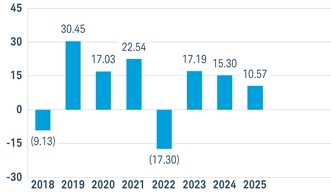
|
|
|
|
|
|
| ||||
|
|
|
|
|
|
|
|
|
|
|
|
| 1 Year |
|
| 5 Years |
|
| Since
| ||
|
|
|
| (1) | ||||||
|
|
|
| (1) | ||||||
|
|
|
|
|
|
|
| |||
of shares |
|
|
|
| (1) | |||||
Comparative Indices (reflects no |
|
|
|
|
|
|
|
| ||
deduction for fees,
expenses, or |
|
|
|
|
|
|
|
| ||
|
|
|
| (1) | ||||||
|
|
|
| (1) | ||||||
|
|
|
|
|
|
|
|
|
|
|
|
|
|
|
|
|
|
|
|
|
|
(1) | Since inception December 20, 2017. | |||||||||
Charles Schwab Investment Management, Inc., dba Schwab Asset Management®
Christopher Bliss, CFA, Managing Director and Head of Equity Index Strategies, is responsible for the day-to-day co-management of the fund. He has managed the fund since 2017.
Jeremy Brown, CFA, Senior Portfolio Manager, is responsible for the day-to-day co-management of the fund. He has managed the fund since 2019.
Ferian Juwono, CFA, Senior Portfolio Manager, is responsible for the day-to-day co-management of the fund. He has managed the fund since 2017.
Agnes Zau, CFA, Portfolio Manager, is responsible for the day-to-day co-management of the fund. She has managed the fund since 2023.
The fund is open for business each day that the New York Stock Exchange (NYSE) is open. If the NYSE is closed due to weather or other extenuating circumstances on a day it would typically be open for business, or the NYSE has an unscheduled early closing on a day it has opened for business, the fund reserves the right to treat such day as a business day and accept purchase and redemption orders and calculate its share price as of the normally scheduled close of regular trading on the NYSE for that day.
Investors may only invest in the fund through an account at Charles Schwab & Co., Inc. (Schwab) or another financial intermediary. When you place orders to purchase, exchange or redeem fund shares through an account at Schwab or another financial intermediary, you must follow Schwab’s or the other financial intermediary’s transaction procedures.
There is no minimum initial investment for the fund.
Dividends and capital gains distributions received from the fund will generally be taxable as ordinary income or capital gains, unless you are investing through an IRA, 401(k) or other tax-advantaged account (in which case you may be taxed later, upon withdrawal of your investment from such account).
If you purchase shares of the fund through a broker-dealer or other financial intermediary (such as a bank), the adviser and its related companies may pay the intermediary for the sale of fund shares and related services. These payments may create a conflict of interest by influencing the broker-dealer or other financial intermediary and your salesperson to recommend the fund over another investment. Ask your salesperson or visit your financial intermediary’s website for more information.
Schwab U.S. Mid-Cap Index Fund | Fund Summary | 23 |
Ticker Symbol: SWISX |
The fund’s goal is to track the performance of a benchmark index that measures the total return of large, publicly traded non-U.S. companies from countries with developed equity markets outside of the United States.
This table describes the fees and expenses you may pay if you buy, hold and sell shares of the fund. You may pay other fees, such as brokerage commissions and other fees to financial intermediaries, which are not reflected in the table and Example below.
| ||
|
| |
|
|
|
Management Fees | ||
Other Expenses | ||
|
|
|
Total annual fund operating expenses | ||
This example is intended to help you compare the cost of investing in the fund with the cost of investing in other funds. The example assumes that you invest $10,000 in the fund for the time periods indicated and then redeem all of your shares at the end of those time periods. The example also assumes that your investment has a 5% return each year and that the fund’s operating expenses remain the same. Your actual costs may be higher or lower.
|
|
| |||||
| 1 Year |
| 3 Years |
| 5 Years |
| 10 Years |
| $ |
| $ |
| $ |
| $ |
The fund pays transaction costs, such as commissions, when
it buys and sells securities (or “turns over” its portfolio). A higher portfolio turnover may indicate
higher transaction costs and may result in higher taxes when fund shares are held in a taxable account.
These costs, which are not reflected in the annual fund operating expenses or in the example, affect
the fund’s performance. During the most recent fiscal year, the fund’s portfolio turnover rate was
To pursue its goal, the fund generally invests in stocks that are included in the MSCI EAFE® Index†.
† Index ownership – “MSCI EAFE®” is a registered mark of MSCI and has been licensed for use by the Schwab International Index Fund. The Schwab International Index Fund is not sponsored, endorsed, sold or promoted by MSCI and MSCI bears no liability with respect to the fund. The Statement of Additional Information contains a more detailed description of the limited relationship MSCI has with the fund. |
It is the fund’s policy that under normal circumstances it will invest at least 80% of its net assets (including, for this purpose, any borrowings for investment purposes) in these stocks; typically, the actual percentage is considerably higher. The fund will notify its shareholders at least 60 days before changing this policy.
The fund generally will seek to replicate the performance of the index by giving the same weight to a given stock as the index does. However, when the investment adviser believes it is in the best interest of the fund, such as to avoid purchasing odd-lots (i.e., purchasing less than the usual number of shares traded for a security), for tax considerations, or to address liquidity considerations with respect to a stock, the investment adviser may cause the fund’s weighting of a stock to be more or less than the index’s weighting of the stock. The fund may sell securities that are represented in the index in anticipation of their removal from the index, or buy securities that are not yet represented in the index in anticipation of their addition to the index. The fund does not hedge its exposure to foreign currencies. However, the fund may use forward contracts to lock in exchange rates for the portfolio securities purchased or sold, but awaiting settlement. These transactions establish a rate of exchange that can be expected to be received upon settlement of the securities.
The fund may invest in derivatives, principally futures contracts, and lend its securities to minimize the gap in performance that naturally exists between any index fund and its corresponding index. This gap occurs mainly because, unlike the index, the fund incurs expenses and must keep a small portion of its assets in cash for business operations. By using futures, the fund potentially can offset a portion of the gap attributable to its cash holdings. In addition, any income realized through securities lending may help reduce the portion of the gap attributable to expenses.
The fund may concentrate its investments (i.e., hold more than 25% of its total assets) in an industry or group of industries to the extent that the index the fund is designed to track is also so concentrated.
24 | Schwab International Index Fund | Fund Summary |
Market Risk — Financial markets rise and fall in response to a variety of factors, sometimes rapidly and unpredictably. Markets may be impacted by economic, political, regulatory, and other conditions, including economic sanctions, tariffs, and other government actions. In addition, the occurrence of global events, such as war, terrorism, environmental disasters, natural disasters and epidemics, may also negatively affect the financial markets. As with any investment whose performance is tied to these markets, the value of an investment in the fund will fluctuate, which means that an investor could lose money over short or long periods.
Equity Risk — The prices of equity securities rise and fall daily. These price movements may result from factors affecting individual companies, industries or the securities market as a whole. In addition, equity markets tend to move in cycles, which may cause stock prices to fall over short or extended periods of time.
Investment Style Risk — The fund is an index fund. Therefore, the fund follows the securities included in the index during upturns as well as downturns. Because of its indexing strategy, the fund does not take steps to reduce market exposure or to lessen the effects of a declining market. In addition, because of the fund’s expenses, the fund’s performance may be below that of the index. Errors relating to the index may occur from time to time and may not be identified by the index provider for a period of time. In addition, market disruptions could cause delays in the index’s rebalancing schedule. Such errors and/or market disruptions may result in losses for the fund.
Market Capitalization Risk — Securities issued by companies of different market capitalizations tend to go in and out of favor based on market and economic conditions. During a period when securities of a particular market capitalization fall behind other types of investments, the fund’s performance could be impacted.
Large-Cap Company Risk — Large-cap companies are generally more mature and the securities issued by these companies may not be able to reach the same levels of growth as the securities issued by small- or mid-cap companies.
Tracking Error and Correlation Risk — As an index fund, the fund seeks to track the performance of the index, although it may not be successful in doing so. Further, there can be no guarantee that the fund will achieve a high degree of correlation between the fund’s performance and that of its index. The correlation between the performance of the fund and that of its index, positive or negative, is called “tracking error.” Tracking error can be caused by many factors and it may be significant.
Foreign Investment Risk — The fund’s investments in securities of foreign issuers involve certain risks that may be greater than those associated with investments in securities of U.S. issuers. These include risks of adverse changes in foreign economic, political, regulatory and other conditions; changes in currency exchange rates or exchange control regulations (including limitations on currency movements and exchanges); the imposition of economic sanctions or other government restrictions; differing accounting, auditing, financial reporting and legal standards and practices; differing securities market structures; and higher transaction costs. These risks may negatively impact the value or liquidity of the fund’s investments and could impair the fund’s ability to meet its investment objective or invest in accordance with its investment strategy. There is a risk that investments in securities denominated in, and/or receiving revenues in, foreign currencies will decline in value relative to the U.S. dollar. Foreign securities also include ADRs, GDRs, and EDRs, which may be less liquid than the underlying shares in their primary trading market, and GDRs, in particular, many of which are issued by companies in emerging markets, may be more volatile.To the extent the fund’s investments in a single country or a limited number of countries represent a large percentage of the fund’s assets, the fund’s performance may be adversely affected by the economic, political, regulatory, and social conditions in those countries, and the fund’s price may be more volatile than the price of a fund that is geographically diversified.
Concentration Risk — To the extent that the fund’s or the index’s portfolio is concentrated in the securities of issuers in a particular market, industry, group of industries, sector, country, or asset class, the fund may be adversely affected by the performance of those securities, may be subject to increased price volatility and may be more vulnerable to adverse economic, market, political or regulatory occurrences affecting that market, industry, group of industries, sector, country, or asset class.
Derivatives Risk — The fund’s use of derivative instruments involves risks different from, or possibly greater than, the risks associated with investing directly in securities and other traditional investments. The fund’s use of derivatives could reduce the fund’s performance, increase the fund’s volatility, and could cause the fund to lose more than the initial amount invested. In addition, investments in derivatives may involve leverage, which means a small percentage of assets invested in derivatives can have a disproportionately large impact on the fund.
Liquidity Risk — The fund may be unable to sell certain securities, such as illiquid securities, readily at a favorable time or price, or the fund may have to sell them at a loss.
Securities Lending Risk — Securities lending involves the risk of loss of rights in, or delay in recovery of, the loaned securities if the borrower fails to return the security loaned or becomes insolvent.
For more information on the risks of investing in the fund, please see the “Fund Details” section in the prospectus.
Schwab International Index Fund | Fund Summary | 25 |
current performance information, please see
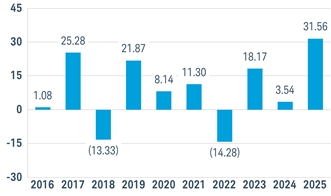
|
|
|
|
|
|
| ||||
|
|
|
|
|
|
|
|
|
|
|
|
| 1 Year |
|
| 5 Years |
|
| 10 Years | ||
|
|
|
|
| ||||||
|
|
|
|
| ||||||
|
|
|
|
|
|
|
| |||
of shares |
|
|
|
|
| |||||
Comparative Index (reflects no |
|
|
|
|
|
|
|
| ||
deduction for fees,
expenses, or |
|
|
|
|
|
|
|
| ||
|
|
|
|
| ||||||
|
|
|
|
|
|
|
|
|
|
|
|
|
|
|
|
|
|
|
|
|
|
(1) | The net version of the index reflects reinvested dividends net of withholding taxes, but reflects no deductions for expenses or other taxes. | |||||||||
Charles Schwab Investment Management, Inc., dba Schwab Asset Management®
Christopher Bliss, CFA, Managing Director and Head of Equity Index Strategies, is responsible for the day-to-day co-management of the fund. He has managed the fund since 2017.
Mariela Jobson, Senior Portfolio Manager, is responsible for the day-to-day co-management of the fund. She has managed the fund since 2025.
Joselle Duncan, CFA, Portfolio Manager, is responsible for the day-to-day co-management of the fund. She has managed the fund since 2024.
David Rios, Senior Portfolio Manager, is responsible for the day-to-day co-management of the fund. He has managed the fund since 2017.
The fund is open for business each day that the New York Stock Exchange (NYSE) is open. If the NYSE is closed due to weather or other extenuating circumstances on a day it would typically be open for business, or the NYSE has an unscheduled early closing on a day it has opened for business, the fund reserves the right to treat such day as a business day and accept purchase and redemption orders and calculate its share price as of the normally scheduled close of regular trading on the NYSE for that day.
Investors may only invest in the fund through an account at Charles Schwab & Co., Inc. (Schwab) or another financial intermediary. When you place orders to purchase, exchange or redeem fund shares through an account at Schwab or another financial intermediary, you must follow Schwab’s or the other financial intermediary’s transaction procedures.
There is no minimum initial investment for the fund.
Dividends and capital gains distributions received from the fund will generally be taxable as ordinary income or capital gains, unless you are investing through an IRA, 401(k) or other tax-advantaged account (in which case you may be taxed later, upon withdrawal of your investment from such account).
If you purchase shares of the fund through a broker-dealer or other financial intermediary (such as a bank), the adviser and its related companies may pay the intermediary for the sale of fund shares and related services. These payments may create a conflict of interest by influencing the broker-dealer or other financial intermediary and your salesperson to recommend the fund over another investment. Ask your salesperson or visit your financial intermediary’s website for more information.
26 | Schwab International Index Fund | Fund Summary |
There can be no assurance that a fund will achieve its investment objective. Except as explicitly described otherwise, the investment strategies and policies of each fund may be changed without shareholder approval. Additionally, the investment objectives of the Schwab U.S. Large-Cap Growth Index Fund, Schwab U.S. Large-Cap Value Index Fund and Schwab U.S. Mid-Cap Index Fund may be changed without shareholder approval.
The principal investment strategies and the main risks associated with investing in each fund are summarized in the fund summaries at the front of this prospectus. This section takes a more detailed look at some of the types of securities, the associated risks, and the various investment strategies that may be used in the day-to-day portfolio management of the funds, as described below. In addition to the particular types of securities and strategies that are described in this prospectus, each fund may use strategies that are not described herein in support of its overall investment goal. These additional strategies and the risks associated with them are described in the “Investment Strategies, Securities and Risks” section in the Statement of Additional Information (SAI).
Investors should be aware that the investments made by the funds and the results achieved by the funds at any given time are not expected to be the same as those made by exchange-traded funds for which Charles Schwab Investment Management, Inc. serves as investment adviser, including exchange-traded funds with names, investment objectives, and policies similar to the funds.
Investment Objective
The fund’s goal is to track the total return of the S&P 500® Index.
Index
The S&P 500 Index includes the stocks of 500 leading U.S. publicly traded companies from a broad range of industries. Standard & Poor’s, the company that maintains the index, uses a variety of measures to determine which stocks are listed in the index. Each stock is represented in the index in proportion to its float-adjusted market capitalization.
Although the 500 companies in the index constitute only about 13% of all the publicly traded companies in the United States, they represent approximately 88% of the total value of the U.S. stock market, as of December 31, 2025. Companies of this size are generally considered large-cap stocks. Their performance is widely followed, and the index itself is popularly seen as a measure of overall U.S. stock market performance. The fund may purchase securities of companies with which it is affiliated to the extent these companies are represented in its index.
Because the index weights a stock according to its market capitalization, larger stocks have more influence on the performance of the index than do the index’s smaller stocks.
More Information About Principal Investment Risks
The fund is subject to risks, any of which could cause an investor to lose money.
Market Risk — Financial markets rise and fall in response to a variety of factors, sometimes rapidly and unpredictably. Markets may be impacted by economic, political, regulatory and other conditions, including economic sanctions, tariffs, and other government actions. In addition, the occurrence of global events, such as war, terrorism, environmental disasters, natural disasters and epidemics, may also negatively affect the financial markets. These events could reduce consumer demand or economic output; result in market closures, changes in interest rates, inflation/deflation, travel restrictions or quarantines; and significantly adversely impact the economy. Governmental and quasi-governmental authorities and regulators throughout the world have in the past often responded to serious economic disruptions with a variety of significant fiscal and monetary policy changes which could have an unexpected impact on financial markets and the fund’s investments. As with any investment whose performance is tied to financial markets, the value of an investment in the fund will fluctuate, which means that an investor could lose money over short or long periods.
Equity Risk — The prices of equity securities rise and fall daily. These price movements may result from factors affecting individual companies, industries or the securities market as a whole. Individual companies may report poor results or be negatively affected by industry and/or economic trends and developments. The prices of securities issued by such companies may suffer a decline in response.
Schwab Equity Index Funds | Fund Details | 27 |
Governmental action, including the imposition of trade embargoes or tariffs, may also impact individual companies or markets as a whole. In addition, equity markets tend to move in cycles, which may cause stock prices to fall over short or extended periods of time.
Investment Style Risk — The fund is an index fund. Therefore, the fund follows the securities included in the index during upturns as well as downturns. Because of its indexing strategy, the fund does not take steps to reduce market exposure or to lessen the effects of a declining market, even though these stocks may go in and out of favor based on market and economic conditions. In addition, because of the fund’s expenses, the fund’s performance may be below that of the index.
A significant percentage of the index may be composed of securities in a single industry or sector of the economy. If the fund is focused in an industry or sector, it may present more risks than if it were broadly diversified over numerous industries and sectors of the economy.
Index-Related Risk — The index provider does not provide any warranty as to the timeliness, accuracy or completeness of any data relating to the index. Errors relating to the index, including index data, computations and/or construction, may occur from time to time and may not be identified by the index provider for a period of time or at all. Losses resulting from index errors may be borne by the fund and its shareholders. In addition, there can be no guarantee that the index will operate as intended during volatile market conditions or over the course of a full market cycle.
In addition, market disruptions could cause delays in the index’s rebalancing schedule which may result in the index and, in turn, the fund experiencing returns different than those that would have been achieved under a normal rebalancing schedule.
Tracking Error and Correlation Risk — As an index fund, the fund seeks to track the performance of the index, although it may not be successful in doing so. The divergence between the performance of the fund and the index, positive or negative, is called “tracking error.” Tracking error can be caused by many factors and it may be significant. For example, the fund may not invest in certain securities in the index, match the securities’ weighting to the index, or the fund may invest in securities not in the index, due to regulatory, operational, custodial or liquidity constraints; corporate transactions; asset valuations; transaction costs and timing; tax considerations; and index rebalancing, which may result in tracking error. The fund may attempt to offset the effects of not being invested in certain index securities by making substitute investments, but these efforts may not be successful. In certain circumstances, the fund may value individual securities based on fair value prices developed using methods approved by the fund’s Board of Trustees. To the extent the fund calculates its net asset value (NAV) based on fair value prices, the fund’s performance may diverge from that of its index. In addition, cash flows into and out of the fund, timing variances, operating expenses and trading costs all affect the ability of the fund to match the performance of the index, because the index does not have to manage cash flows and does not incur any costs. Lastly, differences between the fund’s portfolio and the index resulting from legal restrictions (such as diversification requirements) that apply to the fund but not to the index impact correlation between the performance of the fund and that of its index.
Market Capitalization Risk — Securities issued by companies of different market capitalizations tend to go in and out of favor based on market and economic conditions. In addition, there may be less trading volume in securities issued by mid- and small-cap companies than those issued by larger companies and, as a result, trading volatility may have a greater impact on the value of securities of mid- and small-cap companies. Securities issued by large-cap companies, on the other hand, may not be able to attain the high growth rates of some mid- and small-cap companies. During a period when securities of a particular market capitalization fall behind other types of investments, the fund’s performance could be impacted.
Large-Cap Company Risk — Large-cap companies are generally more mature than smaller companies. They also may have fewer new market opportunities for their products or services, may focus resources on maintaining their market share, and may be unable to respond quickly to new competitive challenges. As a result, the securities issued by these companies may not be able to reach the same levels of growth as the securities issued by small- or mid-cap companies.
Derivatives Risk — The fund may use derivatives to enhance returns or hedge against market declines. Examples of derivatives are options, futures, options on futures and swaps. An option is the right to buy or sell an instrument at a specific price before a specific date. A future is an agreement to buy or sell a financial instrument at a specific price on a specific day. A swap is an agreement whereby two parties agree to exchange payment streams calculated in relation to a rate, index, instrument or certain securities and a predetermined amount. The fund’s use of derivatives that are subject to regulation by the Commodity Futures Trading Commission (CFTC) could cause the fund to become a commodity pool, which would require the fund to comply with certain CFTC rules.
The fund’s use of derivative instruments involves risks different from, or possibly greater than, the risks associated with investing directly in securities and other traditional investments. Certain of these risks, such as liquidity risk and market risk, are discussed elsewhere in this prospectus. The fund’s use of derivatives is also subject to lack of availability risk, credit risk, leverage risk, valuation risk, correlation risk, tax risk, and operational risk. Lack of availability risk is the risk that suitable derivative transactions may not be available in all circumstances for risk management or other purposes. Credit risk is the risk that the counterparty to a derivatives transaction may not fulfill its obligations. Leverage risk is the risk that a small percentage of assets invested in derivatives can have a disproportionately large impact
28 | Schwab Equity Index Funds | Fund Details |
on the fund. Valuation risk is the risk that a particular derivative may be valued incorrectly. Correlation risk is the risk that changes in the value of the derivative may not correlate perfectly with the underlying asset, rate or index. Tax risk is the risk that the use of derivatives may cause the fund to realize higher amounts of short-term capital gains. Operational risk is the risk related to operational issues, including documentation issues, settlement issues, systems failures, inadequate controls, and human error. The fund’s use of derivatives could reduce the fund’s performance, increase the fund’s volatility, and could cause the fund to lose more than the initial amount invested. The fund’s use of derivatives also could create a risk of counterparty default under certain transactions, risks that the fund would need to liquidate portfolio positions when it may not be advantageous to do so in order to meet margin and payment obligations, and legal risks relating to insufficient documentation, insufficient capacity or authority of a counterparty, or legality or enforceability of a contract.
Liquidity Risk — Liquidity risk exists when particular investments may be difficult to purchase, sell or value, especially during stressed market conditions. The market for certain investments may become illiquid due to specific adverse changes in the conditions of a particular issuer or under adverse market or economic conditions independent of the issuer. In addition, limited dealer inventories of certain securities could potentially lead to decreased liquidity. In such cases, the fund, due to limitations on investments in illiquid securities and the difficulty in readily purchasing and selling such securities at favorable times or prices, may decline in value, experience lower returns and/or be unable to achieve its desired level of exposure to a certain issuer or sector. Further, transactions in illiquid securities may entail transaction costs that are higher than those for transactions in liquid securities. Liquidity risk also includes the risk that market conditions or large shareholder redemptions, which may occur rapidly or unexpectedly, may impact the ability of the fund to meet redemption requests within the required time period. In order to meet such redemption requests, the fund may be forced to sell securities at inopportune times or prices.
Securities Lending Risk — The fund may lend its portfolio securities to brokers, dealers, and other financial institutions provided a number of conditions are satisfied, including that the loan is fully collateralized. When the fund lends portfolio securities, its investment performance will continue to reflect changes in the value of the securities loaned, and the fund will also receive a fee or interest on the collateral. Securities lending involves the risk of loss of rights in, or delay in recovery of, the loaned securities if the borrower fails to return the security loaned or becomes insolvent. The fund will also bear the risk of any decline in value of securities acquired with cash collateral. The fund may pay lending fees to a party arranging the loan.
Investment Objective
The fund’s goal is to match the total return of the Schwab 1000 Index®.
Index
The Schwab 1000 Index is a float-adjusted market capitalization weighted index that includes the stocks of the 1,000 largest stocks of publicly traded companies in the United States, with size being determined by market capitalization (total market value of all shares outstanding). The index is designed to be a measure of the performance of large- and mid-cap U.S. stocks.
Although there are currently more than 3,880 total stocks in the United States, the aggregate market capitalization of the stocks included in the Schwab 1000 Index was approximately $71.8 trillion, as of December 31, 2025. This represents approximately 96% of the total market value of all publicly-traded U.S. companies, as represented by the Dow Jones U.S. Total Stock Market Index. These large- and mid-cap stocks cover many industries and represent many sizes. Because large- and mid-cap stocks can perform differently from each other at times, a fund that invests in both categories of stocks may have somewhat different performance than a fund that invests only in large-cap stocks. The fund may purchase securities of companies with which it is affiliated to the extent these companies are represented in its index.
The Schwab 1000 Index was developed by Charles Schwab & Co., Inc. (Schwab) and is maintained by Charles Schwab Investment Management, Inc., dba Schwab Asset Management (investment adviser). The investment adviser and Schwab are separate but affiliated companies and subsidiaries of The Charles Schwab Corporation. In constructing the index, the investment adviser has contracted with S&P Opco, LLC (a subsidiary of S&P Dow Jones Indices LLC) to calculate and maintain the index (index calculation agent). The investment adviser reviews and, as necessary, revises the list of companies whose securities are included in the index, usually annually. The index undergoes a quarterly rebalance to reflect outstanding share changes of the existing index constituents. The investment adviser has entered into an agreement with the fund pursuant to which the investment adviser has granted a license for the index to the fund at no cost to the fund. For more information on the index, including information on the index calculation agent, please refer to the SAI.
More Information About Principal Investment Risks
The fund is subject to risks, any of which could cause an investor to lose money.
Schwab Equity Index Funds | Fund Details | 29 |
Market Risk — Financial markets rise and fall in response to a variety of factors, sometimes rapidly and unpredictably. Markets may be impacted by economic, political, regulatory and other conditions, including economic sanctions, tariffs, and other government actions. In addition, the occurrence of global events, such as war, terrorism, environmental disasters, natural disasters and epidemics, may also negatively affect the financial markets. These events could reduce consumer demand or economic output; result in market closures, changes in interest rates, inflation/deflation, travel restrictions or quarantines; and significantly adversely impact the economy. Governmental and quasi-governmental authorities and regulators throughout the world have in the past often responded to serious economic disruptions with a variety of significant fiscal and monetary policy changes which could have an unexpected impact on financial markets and the fund’s investments. As with any investment whose performance is tied to financial markets, the value of an investment in the fund will fluctuate, which means that an investor could lose money over short or long periods.
Equity Risk — The prices of equity securities rise and fall daily. These price movements may result from factors affecting individual companies, industries or the securities market as a whole. Individual companies may report poor results or be negatively affected by industry and/or economic trends and developments. The prices of securities issued by such companies may suffer a decline in response. Governmental action, including the imposition of trade embargoes or tariffs, may also impact individual companies or markets as a whole. In addition, equity markets tend to move in cycles, which may cause stock prices to fall over short or extended periods of time.
Investment Style Risk — The fund is an index fund. Therefore, the fund follows the securities included in the index during upturns as well as downturns. Because of its indexing strategy, the fund does not take steps to reduce market exposure or to lessen the effects of a declining market, even though these stocks may go in and out of favor based on market and economic conditions. In addition, because of the fund’s expenses, the fund’s performance may be below that of the index.
A significant percentage of the index may be composed of securities in a single industry or sector of the economy. If the fund is focused in an industry or sector, it may present more risks than if it were broadly diversified over numerous industries and sectors of the economy.
Index-Related Risk — The index provider does not provide any warranty as to the timeliness, accuracy or completeness of any data relating to the index. Errors relating to the index, including index data, computations and/or construction, may occur from time to time and may not be identified by the index provider for a period of time or at all. Losses resulting from index errors may be borne by the fund and its shareholders. In addition, there can be no guarantee that the index will operate as intended during volatile market conditions or over the course of a full market cycle.
In addition, market disruptions could cause delays in the index’s rebalancing schedule which may result in the index and, in turn, the fund experiencing returns different than those that would have been achieved under a normal rebalancing schedule.
Tracking Error and Correlation Risk — As an index fund, the fund seeks to track the performance of the index, although it may not be successful in doing so. The divergence between the performance of the fund and the index, positive or negative, is called “tracking error.” Tracking error can be caused by many factors and it may be significant. For example, the fund may not invest in certain securities in the index, match the securities’ weighting to the index, or the fund may invest in securities not in the index, due to regulatory, operational, custodial or liquidity constraints; corporate transactions; asset valuations; transaction costs and timing; tax considerations; and index rebalancing, which may result in tracking error. The fund may attempt to offset the effects of not being invested in certain index securities by making substitute investments, but these efforts may not be successful. In certain circumstances, the fund may value individual securities based on fair value prices developed using methods approved by the fund’s Board of Trustees. To the extent the fund calculates its net asset value (NAV) based on fair value prices, the fund’s performance may diverge from that of its index. In addition, cash flows into and out of the fund, timing variances, operating expenses and trading costs all affect the ability of the fund to match the performance of the index, because the index does not have to manage cash flows and does not incur any costs. Lastly, differences between the fund’s portfolio and the index resulting from legal restrictions (such as diversification requirements) that apply to the fund but not to the index impact correlation between the performance of the fund and that of its index.
Market Capitalization Risk — Securities issued by companies of different market capitalizations tend to go in and out of favor based on market and economic conditions. In addition, there may be less trading volume in securities issued by mid- and small-cap companies than those issued by larger companies and, as a result, trading volatility may have a greater impact on the value of securities of mid- and small-cap companies. Securities issued by large-cap companies, on the other hand, may not be able to attain the high growth rates of some mid- and small-cap companies. During a period when securities of a particular market capitalization fall behind other types of investments, the fund’s performance could be impacted.
Large-Cap Company Risk — Large-cap companies are generally more mature than smaller companies. They also may have fewer new market opportunities for their products or services, may focus resources on maintaining their market share, and may be unable to respond quickly to new competitive challenges. As a result, the securities issued by these companies may not be able to reach the same levels of growth as the securities issued by small- or mid-cap companies.
30 | Schwab Equity Index Funds | Fund Details |
Mid-Cap Company Risk — Mid-cap companies may be more vulnerable to adverse business or economic events than larger, more established companies and their securities may be riskier than those issued by large-cap companies. The value of securities issued by mid-cap companies may be based in substantial part on future expectations rather than current achievements and their prices may move sharply, especially during market upturns and downturns
Derivatives Risk — The fund may use derivatives to enhance returns or hedge against market declines. Examples of derivatives are options, futures, options on futures and swaps. An option is the right to buy or sell an instrument at a specific price before a specific date. A future is an agreement to buy or sell a financial instrument at a specific price on a specific day. A swap is an agreement whereby two parties agree to exchange payment streams calculated in relation to a rate, index, instrument or certain securities and a predetermined amount. The fund’s use of derivatives that are subject to regulation by the Commodity Futures Trading Commission (CFTC) could cause the fund to become a commodity pool, which would require the fund to comply with certain CFTC rules.
The fund’s use of derivative instruments involves risks different from, or possibly greater than, the risks associated with investing directly in securities and other traditional investments. Certain of these risks, such as liquidity risk and market risk, are discussed elsewhere in this prospectus. The fund’s use of derivatives is also subject to lack of availability risk, credit risk, leverage risk, valuation risk, correlation risk, tax risk, and operational risk. Lack of availability risk is the risk that suitable derivative transactions may not be available in all circumstances for risk management or other purposes. Credit risk is the risk that the counterparty to a derivatives transaction may not fulfill its obligations. Leverage risk is the risk that a small percentage of assets invested in derivatives can have a disproportionately large impact on the fund. Valuation risk is the risk that a particular derivative may be valued incorrectly. Correlation risk is the risk that changes in the value of the derivative may not correlate perfectly with the underlying asset, rate or index. Tax risk is the risk that the use of derivatives may cause the fund to realize higher amounts of short-term capital gains. Operational risk is the risk related to operational issues, including documentation issues, settlement issues, systems failures, inadequate controls, and human error. The fund’s use of derivatives could reduce the fund’s performance, increase the fund’s volatility, and could cause the fund to lose more than the initial amount invested. The fund’s use of derivatives also could create a risk of counterparty default under certain transactions, risks that the fund would need to liquidate portfolio positions when it may not be advantageous to do so in order to meet margin and payment obligations, and legal risks relating to insufficient documentation, insufficient capacity or authority of a counterparty, or legality or enforceability of a contract.
Liquidity Risk — Liquidity risk exists when particular investments may be difficult to purchase, sell or value, especially during stressed market conditions. The market for certain investments may become illiquid due to specific adverse changes in the conditions of a particular issuer or under adverse market or economic conditions independent of the issuer. In addition, limited dealer inventories of certain securities could potentially lead to decreased liquidity. In such cases, the fund, due to limitations on investments in illiquid securities and the difficulty in readily purchasing and selling such securities at favorable times or prices, may decline in value, experience lower returns and/or be unable to achieve its desired level of exposure to a certain issuer or sector. Further, transactions in illiquid securities may entail transaction costs that are higher than those for transactions in liquid securities. Liquidity risk also includes the risk that market conditions or large shareholder redemptions, which may occur rapidly or unexpectedly, may impact the ability of the fund to meet redemption requests within the required time period. In order to meet such redemption requests, the fund may be forced to sell securities at inopportune times or prices.
Securities Lending Risk — The fund may lend its portfolio securities to brokers, dealers, and other financial institutions provided a number of conditions are satisfied, including that the loan is fully collateralized. When the fund lends portfolio securities, its investment performance will continue to reflect changes in the value of the securities loaned, and the fund will also receive a fee or interest on the collateral. Securities lending involves the risk of loss of rights in, or delay in recovery of, the loaned securities if the borrower fails to return the security loaned or becomes insolvent. The fund will also bear the risk of any decline in value of securities acquired with cash collateral. The fund may pay lending fees to a party arranging the loan.
Investment Objective
The fund’s goal is to track the performance of a benchmark index that measures the total return of small capitalization U.S. stocks.
Index
The Russell 2000 Index is an established index that measures the performance of the small-cap segment of the U.S. equity market. The Russell 2000 Index is a subset of the Russell 3000 Index, representing approximately the 1,956 smallest issuers and, as of December 31, 2025, approximately 5% of the total market capitalization of the Russell 3000 Index. The fund may purchase securities of companies with which it is affiliated to the extent these companies are represented in its index.
Schwab Equity Index Funds | Fund Details | 31 |
Historically, the performance of small-cap stocks has not always paralleled that of large-cap stocks. For this reason, some investors use them to diversify a portfolio that invests in larger stocks.
More Information About Principal Investment Risks
The fund is subject to risks, any of which could cause an investor to lose money.
Market Risk — Financial markets rise and fall in response to a variety of factors, sometimes rapidly and unpredictably. Markets may be impacted by economic, political, regulatory and other conditions, including economic sanctions, tariffs, and other government actions. In addition, the occurrence of global events, such as war, terrorism, environmental disasters, natural disasters and epidemics, may also negatively affect the financial markets. These events could reduce consumer demand or economic output; result in market closures, changes in interest rates, inflation/deflation, travel restrictions or quarantines; and significantly adversely impact the economy. Governmental and quasi-governmental authorities and regulators throughout the world have in the past often responded to serious economic disruptions with a variety of significant fiscal and monetary policy changes which could have an unexpected impact on financial markets and the fund’s investments. As with any investment whose performance is tied to financial markets, the value of an investment in the fund will fluctuate, which means that an investor could lose money over short or long periods.
Equity Risk — The prices of equity securities rise and fall daily. These price movements may result from factors affecting individual companies, industries or the securities market as a whole. Individual companies may report poor results or be negatively affected by industry and/or economic trends and developments. The prices of securities issued by such companies may suffer a decline in response. Governmental action, including the imposition of trade embargoes or tariffs, may also impact individual companies or markets as a whole. In addition, equity markets tend to move in cycles, which may cause stock prices to fall over short or extended periods of time.
Investment Style Risk — The fund is an index fund. Therefore, the fund follows the securities included in the index, which may include real estate investment trusts, during upturns as well as downturns. Because of its indexing strategy, the fund does not take steps to reduce market exposure or to lessen the effects of a declining market, even though these stocks may go in and out of favor based on market and economic conditions. In addition, because of the fund’s expenses, the fund’s performance may be below that of the index.
A significant percentage of the index may be composed of securities in a single industry or sector of the economy. If the fund is focused in an industry or sector, it may present more risks than if it were broadly diversified over numerous industries and sectors of the economy.
Index-Related Risk — The index provider does not provide any warranty as to the timeliness, accuracy or completeness of any data relating to the index. Errors relating to the index, including index data, computations and/or construction, may occur from time to time and may not be identified by the index provider for a period of time or at all. Losses resulting from index errors may be borne by the fund and its shareholders. In addition, there can be no guarantee that the index will operate as intended during volatile market conditions or over the course of a full market cycle.
In addition, market disruptions could cause delays in the index’s rebalancing schedule which may result in the index and, in turn, the fund experiencing returns different than those that would have been achieved under a normal rebalancing schedule.
Tracking Error and Correlation Risk — As an index fund, the fund seeks to track the performance of the index, although it may not be successful in doing so. The divergence between the performance of the fund and the index, positive or negative, is called “tracking error.” Tracking error can be caused by many factors and it may be significant. For example, the fund may not invest in certain securities in the index, match the securities’ weighting to the index, or the fund may invest in securities not in the index, due to regulatory, operational, custodial or liquidity constraints; corporate transactions; asset valuations; transaction costs and timing; tax considerations; and index rebalancing, which may result in tracking error. The fund may attempt to offset the effects of not being invested in certain index securities by making substitute investments, but these efforts may not be successful. In certain circumstances, the fund may value individual securities based on fair value prices developed using methods approved by the fund’s Board of Trustees. To the extent the fund calculates its net asset value (NAV) based on fair value prices, the fund’s performance may diverge from that of its index. In addition, cash flows into and out of the fund, timing variances, operating expenses and trading costs all affect the ability of the fund to match the performance of the index, because the index does not have to manage cash flows and does not incur any costs. Lastly, differences between the fund’s portfolio and the index resulting from legal restrictions (such as diversification requirements) that apply to the fund but not to the index impact correlation between the performance of the fund and that of its index.
Market Capitalization Risk — Securities issued by companies of different market capitalizations tend to go in and out of favor based on market and economic conditions. In addition, there may be less trading volume in securities issued by mid- and small-cap companies than those issued by larger companies and, as a result, trading volatility may have a greater impact on the value of securities of mid- and small-cap companies. Securities issued by large-cap companies, on the other hand, may not be able to attain the high growth rates of some mid-
32 | Schwab Equity Index Funds | Fund Details |
and small-cap companies. During a period when securities of a particular market capitalization fall behind other types of investments, the fund’s performance could be impacted.
Small-Cap Company Risk — Small-cap companies may be more vulnerable to adverse business or economic events than larger, more established companies and their securities may be riskier than those issued by larger companies. The value of securities issued by small-cap companies may be based in substantial part on future expectations rather than current achievements and their prices may move sharply, especially during market upturns and downturns. In addition, small-cap companies may have limited financial resources, management experience, product lines and markets, and their securities may trade less frequently and in more limited volumes than the securities of larger companies. Further, small-cap companies may have less publicly available information and such information may be inaccurate or incomplete.
Real Estate Investment Risk — Although the fund does not invest directly in real estate, due to the composition of the index, the fund may have exposure to securities of real estate investment trusts (REITs). Equity REITs may be affected by changes in the value of the underlying properties owned by the trusts. Further, REITs are dependent upon specialized management skills and may have their investments in relatively few properties, or in a small geographic area or a single property type. REITs are also subject to heavy cash flow dependency, defaults by borrowers and self-liquidation. The value of a REIT will also rise and fall in response to the creditworthiness of the issuer. In particular, the value of these securities may be affected by changes in interest rates. In addition, REITs could possibly fail to qualify for tax free pass-through of income under the Internal Revenue Code of 1986, as amended, or to maintain their exemptions from registration under the Investment Company Act of 1940, as amended. The failure of a company to qualify as a REIT under federal tax law may have adverse consequences to the fund. The above factors may also adversely affect a borrower’s or a lessee’s ability to meet its obligations to the REIT. In the event of a default by a borrower or lessee, the REIT may experience delays in enforcing its rights as a mortgagee or lessor and may incur substantial costs associated with protecting its investments. In addition, REITs have their own expenses, and the fund will bear a proportionate share of those expenses. Further, dividends paid by REITs are taxed as ordinary income and generally do not qualify for the preferential rate applicable to qualified dividend income. REITs may be more volatile and/or more illiquid than other types of securities.
Derivatives Risk — The fund may use derivatives to enhance returns or hedge against market declines. Examples of derivatives are options, futures, options on futures and swaps. An option is the right to buy or sell an instrument at a specific price before a specific date. A future is an agreement to buy or sell a financial instrument at a specific price on a specific day. A swap is an agreement whereby two parties agree to exchange payment streams calculated in relation to a rate, index, instrument or certain securities and a predetermined amount. The fund’s use of derivatives that are subject to regulation by the Commodity Futures Trading Commission (CFTC) could cause the fund to become a commodity pool, which would require the fund to comply with certain CFTC rules.
The fund’s use of derivative instruments involves risks different from, or possibly greater than, the risks associated with investing directly in securities and other traditional investments. Certain of these risks, such as liquidity risk and market risk, are discussed elsewhere in this prospectus. The fund’s use of derivatives is also subject to lack of availability risk, credit risk, leverage risk, valuation risk, correlation risk, tax risk, and operational risk. Lack of availability risk is the risk that suitable derivative transactions may not be available in all circumstances for risk management or other purposes. Credit risk is the risk that the counterparty to a derivatives transaction may not fulfill its obligations. Leverage risk is the risk that a small percentage of assets invested in derivatives can have a disproportionately large impact on the fund. Valuation risk is the risk that a particular derivative may be valued incorrectly. Correlation risk is the risk that changes in the value of the derivative may not correlate perfectly with the underlying asset, rate or index. Tax risk is the risk that the use of derivatives may cause the fund to realize higher amounts of short-term capital gains. Operational risk is the risk related to operational issues, including documentation issues, settlement issues, systems failures, inadequate controls, and human error. The fund’s use of derivatives could reduce the fund’s performance, increase the fund’s volatility, and could cause the fund to lose more than the initial amount invested. The fund’s use of derivatives also could create a risk of counterparty default under certain transactions, risks that the fund would need to liquidate portfolio positions when it may not be advantageous to do so in order to meet margin and payment obligations, and legal risks relating to insufficient documentation, insufficient capacity or authority of a counterparty, or legality or enforceability of a contract.
Liquidity Risk — Liquidity risk exists when particular investments may be difficult to purchase, sell or value, especially during stressed market conditions. The market for certain investments may become illiquid due to specific adverse changes in the conditions of a particular issuer or under adverse market or economic conditions independent of the issuer. In addition, limited dealer inventories of certain securities could potentially lead to decreased liquidity. In such cases, the fund, due to limitations on investments in illiquid securities and the difficulty in readily purchasing and selling such securities at favorable times or prices, may decline in value, experience lower returns and/or be unable to achieve its desired level of exposure to a certain issuer or sector. Further, transactions in illiquid securities may entail transaction costs that are higher than those for transactions in liquid securities. Liquidity risk also includes the risk that market conditions or large shareholder redemptions, which may occur rapidly or unexpectedly, may impact the ability of the fund to meet redemption requests within the required time period. In order to meet such redemption requests, the fund may be forced to sell securities at inopportune times or prices.
Schwab Equity Index Funds | Fund Details | 33 |
Securities Lending Risk — The fund may lend its portfolio securities to brokers, dealers, and other financial institutions provided a number of conditions are satisfied, including that the loan is fully collateralized. When the fund lends portfolio securities, its investment performance will continue to reflect changes in the value of the securities loaned, and the fund will also receive a fee or interest on the collateral. Securities lending involves the risk of loss of rights in, or delay in recovery of, the loaned securities if the borrower fails to return the security loaned or becomes insolvent. The fund will also bear the risk of any decline in value of securities acquired with cash collateral. The fund may pay lending fees to a party arranging the loan.
Schwab Total Stock Market Index Fund
Investment Objective
The fund’s goal is to track the total return of the entire U.S. stock market, as measured by the Dow Jones U.S. Total Stock Market IndexSM.
Index
The Dow Jones U.S. Total Stock Market Index is designed to measure all publicly traded stocks of companies headquartered in the United States for which pricing information is readily available – the index contains 3,880 stocks, as of December 31, 2025. The index is a float-adjusted market capitalization weighted index that reflects the shares of securities actually available to investors in the marketplace. The fund may purchase securities of companies with which it is affiliated to the extent these companies are represented in its index.
The U.S. stock market is commonly divided into three segments, based on market capitalization. Mid- and small-cap stocks are the most numerous, but make up only about one-third of the total value of the market. In contrast, large-cap stocks are relatively few in number but make up approximately two-thirds of the market’s total value. In fact, the largest 1,000 of the market’s listed stocks represent about 96% of its total value, as of December 31, 2025.
In terms of performance, these segments can behave somewhat differently from each other, over the short-term as well as the long-term. For that reason, the performance of the overall stock market can be seen as a blend of the performance of all three segments.
More Information About Principal Investment Risks
The fund is subject to risks, any of which could cause an investor to lose money.
Market Risk — Financial markets rise and fall in response to a variety of factors, sometimes rapidly and unpredictably. Markets may be impacted by economic, political, regulatory and other conditions, including economic sanctions, tariffs, and other government actions. In addition, the occurrence of global events, such as war, terrorism, environmental disasters, natural disasters and epidemics, may also negatively affect the financial markets. These events could reduce consumer demand or economic output; result in market closures, changes in interest rates, inflation/deflation, travel restrictions or quarantines; and significantly adversely impact the economy. Governmental and quasi-governmental authorities and regulators throughout the world have in the past often responded to serious economic disruptions with a variety of significant fiscal and monetary policy changes which could have an unexpected impact on financial markets and the fund’s investments. As with any investment whose performance is tied to financial markets, the value of an investment in the fund will fluctuate, which means that an investor could lose money over short or long periods.
Equity Risk — The prices of equity securities rise and fall daily. These price movements may result from factors affecting individual companies, industries or the securities market as a whole. Individual companies may report poor results or be negatively affected by industry and/or economic trends and developments. The prices of securities issued by such companies may suffer a decline in response. Governmental action, including the imposition of trade embargoes or tariffs, may also impact individual companies or markets as a whole. In addition, equity markets tend to move in cycles, which may cause stock prices to fall over short or extended periods of time.
Investment Style Risk — The fund is an index fund. Therefore, the fund follows the securities included in the index during upturns as well as downturns. Because of its indexing strategy, the fund does not take steps to reduce market exposure or to lessen the effects of a declining market, even though these stocks may go in and out of favor based on market and economic conditions. In addition, because of the fund’s expenses, the fund’s performance may be below that of the index.
A significant percentage of the index may be composed of securities in a single industry or sector of the economy. If the fund is focused in an industry or sector, it may present more risks than if it were broadly diversified over numerous industries and sectors of the economy.
Index-Related Risk — The index provider does not provide any warranty as to the timeliness, accuracy or completeness of any data relating to the index. Errors relating to the index, including index data, computations and/or construction, may occur from time to time and may not be identified by the index provider for a period of time or at all. Losses resulting from index errors may be borne by the fund and its
34 | Schwab Equity Index Funds | Fund Details |
shareholders. In addition, there can be no guarantee that the index will operate as intended during volatile market conditions or over the course of a full market cycle.
In addition, market disruptions could cause delays in the index’s rebalancing schedule which may result in the index and, in turn, the fund experiencing returns different than those that would have been achieved under a normal rebalancing schedule.
Tracking Error and Correlation Risk — As an index fund, the fund seeks to track the performance of the index, although it may not be successful in doing so. The divergence between the performance of the fund and the index, positive or negative, is called “tracking error.” Tracking error can be caused by many factors and it may be significant. For example, the fund may not invest in all of the securities in the index or may invest in securities not in the index, because the manager may use a sampling technique that is designed to balance the risk of tracking error against the negative effects of transaction costs associated with certain investments. Similarly, the fund may not invest in certain securities in the index, or match the securities’ weighting to the index, due to regulatory, operational, custodial or liquidity constraints; corporate transactions; asset valuations; transaction costs and timing; tax considerations; and index rebalancing, which may result in tracking error. The fund may attempt to offset the effects of not being invested in certain index securities by making substitute investments, but these efforts may not be successful. In certain circumstances, the fund may value individual securities based on fair value prices developed using methods approved by the fund’s Board of Trustees. To the extent the fund calculates its NAV based on fair value prices, the fund’s performance may diverge from that of its index. In addition, cash flows into and out of the fund, timing variances, operating expenses and trading costs all affect the ability of the fund to match the performance of the index, because the index does not have to manage cash flows and does not incur any costs. Lastly, differences between the fund’s portfolio and the index resulting from legal restrictions (such as diversification requirements) that apply to the fund but not to the index impact correlation between the performance of the fund and that of its index.
Market Capitalization Risk — Securities issued by companies of different market capitalizations tend to go in and out of favor based on market and economic conditions. In addition, there may be less trading volume in securities issued by mid- and small-cap companies than those issued by larger companies and, as a result, trading volatility may have a greater impact on the value of securities of mid- and small-cap companies. Securities issued by large-cap companies, on the other hand, may not be able to attain the high growth rates of some mid- and small-cap companies. During a period when securities of a particular market capitalization fall behind other types of investments, the fund’s performance could be impacted.
Large-Cap Company Risk — Large-cap companies are generally more mature than smaller companies. They also may have fewer new market opportunities for their products or services, may focus resources on maintaining their market share, and may be unable to respond quickly to new competitive challenges. As a result, the securities issued by these companies may not be able to reach the same levels of growth as the securities issued by small- or mid-cap companies.
Mid-Cap Company Risk — Mid-cap companies may be more vulnerable to adverse business or economic events than larger, more established companies and their securities may be riskier than those issued by large-cap companies. The value of securities issued by mid-cap companies may be based in substantial part on future expectations rather than current achievements and their prices may move sharply, especially during market upturns and downturns
Small-Cap Company Risk — Small-cap companies may be more vulnerable to adverse business or economic events than larger, more established companies and their securities may be riskier than those issued by larger companies. The value of securities issued by small-cap companies may be based in substantial part on future expectations rather than current achievements and their prices may move sharply, especially during market upturns and downturns. In addition, small-cap companies may have limited financial resources, management experience, product lines and markets, and their securities may trade less frequently and in more limited volumes than the securities of larger companies. Further, small-cap companies may have less publicly available information and such information may be inaccurate or incomplete.
Derivatives Risk — The fund may use derivatives to enhance returns or hedge against market declines. Examples of derivatives are options, futures, options on futures and swaps. An option is the right to buy or sell an instrument at a specific price before a specific date. A future is an agreement to buy or sell a financial instrument at a specific price on a specific day. A swap is an agreement whereby two parties agree to exchange payment streams calculated in relation to a rate, index, instrument or certain securities and a predetermined amount. The fund’s use of derivatives that are subject to regulation by the Commodity Futures Trading Commission (CFTC) could cause the fund to become a commodity pool, which would require the fund to comply with certain CFTC rules.
The fund’s use of derivative instruments involves risks different from, or possibly greater than, the risks associated with investing directly in securities and other traditional investments. Certain of these risks, such as liquidity risk and market risk, are discussed elsewhere in this prospectus. The fund’s use of derivatives is also subject to lack of availability risk, credit risk, leverage risk, valuation risk, correlation risk, tax risk, and operational risk. Lack of availability risk is the risk that suitable derivative transactions may not be available in all circumstances for risk management or other purposes. Credit risk is the risk that the counterparty to a derivatives transaction may not fulfill
Schwab Equity Index Funds | Fund Details | 35 |
its obligations. Leverage risk is the risk that a small percentage of assets invested in derivatives can have a disproportionately large impact on the fund. Valuation risk is the risk that a particular derivative may be valued incorrectly. Correlation risk is the risk that changes in the value of the derivative may not correlate perfectly with the underlying asset, rate or index. Tax risk is the risk that the use of derivatives may cause the fund to realize higher amounts of short-term capital gains. Operational risk is the risk related to operational issues, including documentation issues, settlement issues, systems failures, inadequate controls, and human error. The fund’s use of derivatives could reduce the fund’s performance, increase the fund’s volatility, and could cause the fund to lose more than the initial amount invested. The fund’s use of derivatives also could create a risk of counterparty default under certain transactions, risks that the fund would need to liquidate portfolio positions when it may not be advantageous to do so in order to meet margin and payment obligations, and legal risks relating to insufficient documentation, insufficient capacity or authority of a counterparty, or legality or enforceability of a contract.
Liquidity Risk — Liquidity risk exists when particular investments may be difficult to purchase, sell or value, especially during stressed market conditions. The market for certain investments may become illiquid due to specific adverse changes in the conditions of a particular issuer or under adverse market or economic conditions independent of the issuer. In addition, limited dealer inventories of certain securities could potentially lead to decreased liquidity. In such cases, the fund, due to limitations on investments in illiquid securities and the difficulty in readily purchasing and selling such securities at favorable times or prices, may decline in value, experience lower returns and/or be unable to achieve its desired level of exposure to a certain issuer or sector. Further, transactions in illiquid securities may entail transaction costs that are higher than those for transactions in liquid securities. Liquidity risk also includes the risk that market conditions or large shareholder redemptions, which may occur rapidly or unexpectedly, may impact the ability of the fund to meet redemption requests within the required time period. In order to meet such redemption requests, the fund may be forced to sell securities at inopportune times or prices.
Securities Lending Risk — The fund may lend its portfolio securities to brokers, dealers, and other financial institutions provided a number of conditions are satisfied, including that the loan is fully collateralized. When the fund lends portfolio securities, its investment performance will continue to reflect changes in the value of the securities loaned, and the fund will also receive a fee or interest on the collateral. Securities lending involves the risk of loss of rights in, or delay in recovery of, the loaned securities if the borrower fails to return the security loaned or becomes insolvent. The fund will also bear the risk of any decline in value of securities acquired with cash collateral. The fund may pay lending fees to a party arranging the loan.
Schwab U.S. Large-Cap Growth Index Fund
Investment Objective
The fund’s goal is to track the performance of a benchmark index that measures the total return of large capitalization U.S. growth stocks.
Index
The Russell 1000 Growth Index measures the performance of the large-cap growth segment of the U.S. equity universe. The Russell 1000 Growth Index is a subset of the Russell 1000® Index, representing growth issuers in the Russell 1000 Index. These are companies with higher price-to-book ratios and higher forecasted growth values. The index is constructed to provide a comprehensive and unbiased barometer for the large-cap growth segment. The index is a capped market capitalization weighted index where all companies that have a weight greater than 4.5% in aggregate are no more than 45% of the index, and no individual company in the index has a weight greater than 22.5% of the index. The index is completely reconstituted annually to seek to ensure new and growing equities are included and that the represented companies continue to reflect growth characteristics. As of December 31, 2025, the index was composed of 391 stocks. The fund may purchase securities of companies with which it is affiliated to the extent these companies are represented in its index.
More Information About Principal Investment Risks
The fund is subject to risks, any of which could cause an investor to lose money.
Market Risk — Financial markets rise and fall in response to a variety of factors, sometimes rapidly and unpredictably. Markets may be impacted by economic, political, regulatory and other conditions, including economic sanctions, tariffs, and other government actions. In addition, the occurrence of global events, such as war, terrorism, environmental disasters, natural disasters and epidemics, may also negatively affect the financial markets. These events could reduce consumer demand or economic output; result in market closures, changes in interest rates, inflation/deflation, travel restrictions or quarantines; and significantly adversely impact the economy. Governmental and quasi-governmental authorities and regulators throughout the world have in the past often responded to serious economic disruptions with a variety of significant fiscal and monetary policy changes which could have an unexpected impact on financial markets and the fund’s investments. As with any investment whose performance is tied to financial markets, the value of an investment in the fund will fluctuate, which means that an investor could lose money over short or long periods.
36 | Schwab Equity Index Funds | Fund Details |
Equity Risk — The prices of equity securities rise and fall daily. These price movements may result from factors affecting individual companies, industries or the securities market as a whole. Individual companies may report poor results or be negatively affected by industry and/or economic trends and developments. The prices of securities issued by such companies may suffer a decline in response. Governmental action, including the imposition of trade embargoes or tariffs, may also impact individual companies or markets as a whole. In addition, equity markets tend to move in cycles, which may cause stock prices to fall over short or extended periods of time.
Investment Style Risk — The fund is an index fund. Therefore, the fund follows the securities included in the index during upturns as well as downturns. Because of its indexing strategy, the fund does not take steps to reduce market exposure or to lessen the effects of a declining market, even though these stocks may go in and out of favor based on market and economic conditions. In addition, because of the fund’s expenses, the fund’s performance may be below that of the index.
A significant percentage of the index may be composed of securities in a single industry or sector of the economy. If the fund is focused in an industry or sector, it may present more risks than if it were broadly diversified over numerous industries and sectors of the economy.
Index-Related Risk — The index provider does not provide any warranty as to the timeliness, accuracy or completeness of any data relating to the index. Errors relating to the index, including index data, computations and/or construction, may occur from time to time and may not be identified by the index provider for a period of time or at all. Losses resulting from index errors may be borne by the fund and its shareholders. In addition, there can be no guarantee that the index will operate as intended during volatile market conditions or over the course of a full market cycle.
In addition, market disruptions could cause delays in the index’s rebalancing schedule which may result in the index and, in turn, the fund experiencing returns different than those that would have been achieved under a normal rebalancing schedule.
Tracking Error and Correlation Risk — As an index fund, the fund seeks to track the performance of the index, although it may not be successful in doing so. The divergence between the performance of the fund and the index, positive or negative, is called “tracking error.” Tracking error can be caused by many factors and it may be significant. For example, the fund may not invest in certain securities in the index, match the securities’ weighting to the index, or the fund may invest in securities not in the index, due to regulatory, operational, custodial or liquidity constraints; corporate transactions; asset valuations; transaction costs and timing; tax considerations; and index rebalancing, which may result in tracking error. The fund may attempt to offset the effects of not being invested in certain index securities by making substitute investments, but these efforts may not be successful. In certain circumstances, the fund may value individual securities based on fair value prices developed using methods approved by the fund’s Board of Trustees. To the extent the fund calculates its net asset value (NAV) based on fair value prices, the fund’s performance may diverge from that of its index. In addition, cash flows into and out of the fund, timing variances, operating expenses and trading costs all affect the ability of the fund to match the performance of the index, because the index does not have to manage cash flows and does not incur any costs. Lastly, differences between the fund’s portfolio and the index resulting from legal restrictions (such as diversification requirements) that apply to the fund but not to the index impact correlation between the performance of the fund and that of its index.
Market Capitalization Risk — Securities issued by companies of different market capitalizations tend to go in and out of favor based on market and economic conditions. In addition, there may be less trading volume in securities issued by mid- and small-cap companies than those issued by larger companies and, as a result, trading volatility may have a greater impact on the value of securities of mid- and small-cap companies. Securities issued by large-cap companies, on the other hand, may not be able to attain the high growth rates of some mid- and small-cap companies. During a period when securities of a particular market capitalization fall behind other types of investments, the fund’s performance could be impacted.
Large-Cap Company Risk — Large-cap companies are generally more mature than smaller companies. They also may have fewer new market opportunities for their products or services, may focus resources on maintaining their market share, and may be unable to respond quickly to new competitive challenges. As a result, the securities issued by these companies may not be able to reach the same levels of growth as the securities issued by small- or mid-cap companies.
Growth Investing Risk — The fund pursues a “growth style” of investing. Growth investing focuses on a company’s prospects for growth of revenue and earnings. If a company’s earnings or revenues fall short of expectations, its stock price may fall dramatically. Growth stocks also can perform differently from the market as a whole and other types of stocks and can be more volatile than other types of stocks. Since growth companies usually invest a high portion of earnings in their businesses, they may lack the dividends of value stocks that can cushion stock prices in a falling market. Growth stocks may also be more expensive relative to their earnings or assets compared to value or other stocks
Derivatives Risk — The fund may use derivatives to enhance returns or hedge against market declines. Examples of derivatives are options, futures, options on futures and swaps. An option is the right to buy or sell an instrument at a specific price before a specific date. A future is an agreement to buy or sell a financial instrument at a specific price on a specific day. A swap is an agreement whereby two parties agree to
Schwab Equity Index Funds | Fund Details | 37 |
exchange payment streams calculated in relation to a rate, index, instrument or certain securities and a predetermined amount. The fund’s use of derivatives that are subject to regulation by the Commodity Futures Trading Commission (CFTC) could cause the fund to become a commodity pool, which would require the fund to comply with certain CFTC rules.
The fund’s use of derivative instruments involves risks different from, or possibly greater than, the risks associated with investing directly in securities and other traditional investments. Certain of these risks, such as liquidity risk and market risk, are discussed elsewhere in this prospectus. The fund’s use of derivatives is also subject to lack of availability risk, credit risk, leverage risk, valuation risk, correlation risk, tax risk, and operational risk. Lack of availability risk is the risk that suitable derivative transactions may not be available in all circumstances for risk management or other purposes. Credit risk is the risk that the counterparty to a derivatives transaction may not fulfill its obligations. Leverage risk is the risk that a small percentage of assets invested in derivatives can have a disproportionately large impact on the fund. Valuation risk is the risk that a particular derivative may be valued incorrectly. Correlation risk is the risk that changes in the value of the derivative may not correlate perfectly with the underlying asset, rate or index. Tax risk is the risk that the use of derivatives may cause the fund to realize higher amounts of short-term capital gains. Operational risk is the risk related to operational issues, including documentation issues, settlement issues, systems failures, inadequate controls, and human error. The fund’s use of derivatives could reduce the fund’s performance, increase the fund’s volatility, and could cause the fund to lose more than the initial amount invested. The fund’s use of derivatives also could create a risk of counterparty default under certain transactions, risks that the fund would need to liquidate portfolio positions when it may not be advantageous to do so in order to meet margin and payment obligations, and legal risks relating to insufficient documentation, insufficient capacity or authority of a counterparty, or legality or enforceability of a contract.
Liquidity Risk — Liquidity risk exists when particular investments may be difficult to purchase, sell or value, especially during stressed market conditions. The market for certain investments may become illiquid due to specific adverse changes in the conditions of a particular issuer or under adverse market or economic conditions independent of the issuer. In addition, limited dealer inventories of certain securities could potentially lead to decreased liquidity. In such cases, the fund, due to limitations on investments in illiquid securities and the difficulty in readily purchasing and selling such securities at favorable times or prices, may decline in value, experience lower returns and/or be unable to achieve its desired level of exposure to a certain issuer or sector. Further, transactions in illiquid securities may entail transaction costs that are higher than those for transactions in liquid securities. Liquidity risk also includes the risk that market conditions or large shareholder redemptions, which may occur rapidly or unexpectedly, may impact the ability of the fund to meet redemption requests within the required time period. In order to meet such redemption requests, the fund may be forced to sell securities at inopportune times or prices.
Securities Lending Risk — The fund may lend its portfolio securities to brokers, dealers, and other financial institutions provided a number of conditions are satisfied, including that the loan is fully collateralized. When the fund lends portfolio securities, its investment performance will continue to reflect changes in the value of the securities loaned, and the fund will also receive a fee or interest on the collateral. Securities lending involves the risk of loss of rights in, or delay in recovery of, the loaned securities if the borrower fails to return the security loaned or becomes insolvent. The fund will also bear the risk of any decline in value of securities acquired with cash collateral. The fund may pay lending fees to a party arranging the loan.
Schwab U.S. Large-Cap Value Index Fund
Investment Objective
The fund’s goal is to track the performance of a benchmark index that measures the total return of large capitalization U.S. value stocks.
Index
The Russell 1000 Value Index measures the performance of the large-cap value segment of the U.S. equity universe. The Russell 1000 Value Index is a subset of the Russell 1000® Index, representing value issuers in the Russell 1000 Index. These are companies with lower price-to-book ratios and lower expected growth values. The index is constructed to provide a comprehensive and unbiased barometer for the large-cap value segment. The index is a capped market capitalization weighted index where all companies that have a weight greater than 4.5% in aggregate are no more than 45% of the index, and no individual company in the index has a weight greater than 22.5% of the index. The index is completely reconstituted annually to seek to ensure new and growing equities are included and that the represented companies continue to reflect value characteristics. As of December 31, 2025, the index was composed of 870 stocks. The fund may purchase securities of companies with which it is affiliated to the extent these companies are represented in its index.
More Information About Principal Investment Risks
The fund is subject to risks, any of which could cause an investor to lose money.
38 | Schwab Equity Index Funds | Fund Details |
Market Risk — Financial markets rise and fall in response to a variety of factors, sometimes rapidly and unpredictably. Markets may be impacted by economic, political, regulatory and other conditions, including economic sanctions, tariffs, and other government actions. In addition, the occurrence of global events, such as war, terrorism, environmental disasters, natural disasters and epidemics, may also negatively affect the financial markets. These events could reduce consumer demand or economic output; result in market closures, changes in interest rates, inflation/deflation, travel restrictions or quarantines; and significantly adversely impact the economy. Governmental and quasi-governmental authorities and regulators throughout the world have in the past often responded to serious economic disruptions with a variety of significant fiscal and monetary policy changes which could have an unexpected impact on financial markets and the fund’s investments. As with any investment whose performance is tied to financial markets, the value of an investment in the fund will fluctuate, which means that an investor could lose money over short or long periods.
Equity Risk — The prices of equity securities rise and fall daily. These price movements may result from factors affecting individual companies, industries or the securities market as a whole. Individual companies may report poor results or be negatively affected by industry and/or economic trends and developments. The prices of securities issued by such companies may suffer a decline in response. Governmental action, including the imposition of trade embargoes or tariffs, may also impact individual companies or markets as a whole. In addition, equity markets tend to move in cycles, which may cause stock prices to fall over short or extended periods of time.
Investment Style Risk — The fund is an index fund. Therefore, the fund follows the securities included in the index during upturns as well as downturns. Because of its indexing strategy, the fund does not take steps to reduce market exposure or to lessen the effects of a declining market, even though these stocks may go in and out of favor based on market and economic conditions. In addition, because of the fund’s expenses, the fund’s performance may be below that of the index.
A significant percentage of the index may be composed of securities in a single industry or sector of the economy. If the fund is focused in an industry or sector, it may present more risks than if it were broadly diversified over numerous industries and sectors of the economy.
Index-Related Risk — The index provider does not provide any warranty as to the timeliness, accuracy or completeness of any data relating to the index. Errors relating to the index, including index data, computations and/or construction, may occur from time to time and may not be identified by the index provider for a period of time or at all. Losses resulting from index errors may be borne by the fund and its shareholders. In addition, there can be no guarantee that the index will operate as intended during volatile market conditions or over the course of a full market cycle.
In addition, market disruptions could cause delays in the index’s rebalancing schedule which may result in the index and, in turn, the fund experiencing returns different than those that would have been achieved under a normal rebalancing schedule.
Tracking Error and Correlation Risk — As an index fund, the fund seeks to track the performance of the index, although it may not be successful in doing so. The divergence between the performance of the fund and the index, positive or negative, is called “tracking error.” Tracking error can be caused by many factors and it may be significant. For example, the fund may not invest in certain securities in the index, match the securities’ weighting to the index, or the fund may invest in securities not in the index, due to regulatory, operational, custodial or liquidity constraints; corporate transactions; asset valuations; transaction costs and timing; tax considerations; and index rebalancing, which may result in tracking error. The fund may attempt to offset the effects of not being invested in certain index securities by making substitute investments, but these efforts may not be successful. In certain circumstances, the fund may value individual securities based on fair value prices developed using methods approved by the fund’s Board of Trustees. To the extent the fund calculates its net asset value (NAV) based on fair value prices, the fund’s performance may diverge from that of its index. In addition, cash flows into and out of the fund, timing variances, operating expenses and trading costs all affect the ability of the fund to match the performance of the index, because the index does not have to manage cash flows and does not incur any costs. Lastly, differences between the fund’s portfolio and the index resulting from legal restrictions (such as diversification requirements) that apply to the fund but not to the index impact correlation between the performance of the fund and that of its index.
Market Capitalization Risk — Securities issued by companies of different market capitalizations tend to go in and out of favor based on market and economic conditions. In addition, there may be less trading volume in securities issued by mid- and small-cap companies than those issued by larger companies and, as a result, trading volatility may have a greater impact on the value of securities of mid- and small-cap companies. Securities issued by large-cap companies, on the other hand, may not be able to attain the high growth rates of some mid- and small-cap companies. During a period when securities of a particular market capitalization fall behind other types of investments, the fund’s performance could be impacted.
Large-Cap Company Risk — Large-cap companies are generally more mature than smaller companies. They also may have fewer new market opportunities for their products or services, may focus resources on maintaining their market share, and may be unable to respond quickly to new competitive challenges. As a result, the securities issued by these companies may not be able to reach the same levels of growth as the securities issued by small- or mid-cap companies.
Schwab Equity Index Funds | Fund Details | 39 |
Derivatives Risk — The fund may use derivatives to enhance returns or hedge against market declines. Examples of derivatives are options, futures, options on futures and swaps. An option is the right to buy or sell an instrument at a specific price before a specific date. A future is an agreement to buy or sell a financial instrument at a specific price on a specific day. A swap is an agreement whereby two parties agree to exchange payment streams calculated in relation to a rate, index, instrument or certain securities and a predetermined amount. The fund’s use of derivatives that are subject to regulation by the Commodity Futures Trading Commission (CFTC) could cause the fund to become a commodity pool, which would require the fund to comply with certain CFTC rules.
The fund’s use of derivative instruments involves risks different from, or possibly greater than, the risks associated with investing directly in securities and other traditional investments. Certain of these risks, such as liquidity risk and market risk, are discussed elsewhere in this prospectus. The fund’s use of derivatives is also subject to lack of availability risk, credit risk, leverage risk, valuation risk, correlation risk, tax risk, and operational risk. Lack of availability risk is the risk that suitable derivative transactions may not be available in all circumstances for risk management or other purposes. Credit risk is the risk that the counterparty to a derivatives transaction may not fulfill its obligations. Leverage risk is the risk that a small percentage of assets invested in derivatives can have a disproportionately large impact on the fund. Valuation risk is the risk that a particular derivative may be valued incorrectly. Correlation risk is the risk that changes in the value of the derivative may not correlate perfectly with the underlying asset, rate or index. Tax risk is the risk that the use of derivatives may cause the fund to realize higher amounts of short-term capital gains. Operational risk is the risk related to operational issues, including documentation issues, settlement issues, systems failures, inadequate controls, and human error. The fund’s use of derivatives could reduce the fund’s performance, increase the fund’s volatility, and could cause the fund to lose more than the initial amount invested. The fund’s use of derivatives also could create a risk of counterparty default under certain transactions, risks that the fund would need to liquidate portfolio positions when it may not be advantageous to do so in order to meet margin and payment obligations, and legal risks relating to insufficient documentation, insufficient capacity or authority of a counterparty, or legality or enforceability of a contract.
Liquidity Risk — Liquidity risk exists when particular investments may be difficult to purchase, sell or value, especially during stressed market conditions. The market for certain investments may become illiquid due to specific adverse changes in the conditions of a particular issuer or under adverse market or economic conditions independent of the issuer. In addition, limited dealer inventories of certain securities could potentially lead to decreased liquidity. In such cases, the fund, due to limitations on investments in illiquid securities and the difficulty in readily purchasing and selling such securities at favorable times or prices, may decline in value, experience lower returns and/or be unable to achieve its desired level of exposure to a certain issuer or sector. Further, transactions in illiquid securities may entail transaction costs that are higher than those for transactions in liquid securities. Liquidity risk also includes the risk that market conditions or large shareholder redemptions, which may occur rapidly or unexpectedly, may impact the ability of the fund to meet redemption requests within the required time period. In order to meet such redemption requests, the fund may be forced to sell securities at inopportune times or prices.
Securities Lending Risk — The fund may lend its portfolio securities to brokers, dealers, and other financial institutions provided a number of conditions are satisfied, including that the loan is fully collateralized. When the fund lends portfolio securities, its investment performance will continue to reflect changes in the value of the securities loaned, and the fund will also receive a fee or interest on the collateral. Securities lending involves the risk of loss of rights in, or delay in recovery of, the loaned securities if the borrower fails to return the security loaned or becomes insolvent. The fund will also bear the risk of any decline in value of securities acquired with cash collateral. The fund may pay lending fees to a party arranging the loan.
Schwab U.S. Mid-Cap Index Fund
Investment Objective
The fund’s goal is to track the performance of a benchmark index that measures the total return of mid capitalization U.S. stocks.
Index
The Russell Midcap Index measures the performance of the mid-cap segment of the U.S. equity universe. The Russell Midcap Index is a subset of the Russell 1000 Index, representing the smallest issuers in the Russell 1000 Index. The index is constructed to provide a comprehensive and unbiased barometer for the mid-cap segment. The index is a float-adjusted market capitalization weighted index that is completely reconstituted annually to seek to ensure larger stocks do not distort the performance and characteristics of the true mid-cap opportunity set. As of December 31, 2025, the index was composed of 811 stocks, which represented approximately 21% of the total market capitalization of the Russell 1000 companies. The fund may purchase securities of companies with which it is affiliated to the extent these companies are represented in its index.
More Information About Principal Investment Risks
The fund is subject to risks, any of which could cause an investor to lose money.
40 | Schwab Equity Index Funds | Fund Details |
Market Risk — Financial markets rise and fall in response to a variety of factors, sometimes rapidly and unpredictably. Markets may be impacted by economic, political, regulatory and other conditions, including economic sanctions, tariffs, and other government actions. In addition, the occurrence of global events, such as war, terrorism, environmental disasters, natural disasters and epidemics, may also negatively affect the financial markets. These events could reduce consumer demand or economic output; result in market closures, changes in interest rates, inflation/deflation, travel restrictions or quarantines; and significantly adversely impact the economy. Governmental and quasi-governmental authorities and regulators throughout the world have in the past often responded to serious economic disruptions with a variety of significant fiscal and monetary policy changes which could have an unexpected impact on financial markets and the fund’s investments. As with any investment whose performance is tied to financial markets, the value of an investment in the fund will fluctuate, which means that an investor could lose money over short or long periods.
Equity Risk — The prices of equity securities rise and fall daily. These price movements may result from factors affecting individual companies, industries or the securities market as a whole. Individual companies may report poor results or be negatively affected by industry and/or economic trends and developments. The prices of securities issued by such companies may suffer a decline in response. Governmental action, including the imposition of trade embargoes or tariffs, may also impact individual companies or markets as a whole. In addition, equity markets tend to move in cycles, which may cause stock prices to fall over short or extended periods of time.
Investment Style Risk — The fund is an index fund. Therefore, the fund follows the securities included in the index, which may include real estate investment trusts, during upturns as well as downturns. Because of its indexing strategy, the fund does not take steps to reduce market exposure or to lessen the effects of a declining market, even though these stocks may go in and out of favor based on market and economic conditions. In addition, because of the fund’s expenses, the fund’s performance may be below that of the index.
A significant percentage of the index may be composed of securities in a single industry or sector of the economy. If the fund is focused in an industry or sector, it may present more risks than if it were broadly diversified over numerous industries and sectors of the economy.
Index-Related Risk — The index provider does not provide any warranty as to the timeliness, accuracy or completeness of any data relating to the index. Errors relating to the index, including index data, computations and/or construction, may occur from time to time and may not be identified by the index provider for a period of time or at all. Losses resulting from index errors may be borne by the fund and its shareholders. In addition, there can be no guarantee that the index will operate as intended during volatile market conditions or over the course of a full market cycle.
In addition, market disruptions could cause delays in the index’s rebalancing schedule which may result in the index and, in turn, the fund experiencing returns different than those that would have been achieved under a normal rebalancing schedule.
Tracking Error and Correlation Risk — As an index fund, the fund seeks to track the performance of the index, although it may not be successful in doing so. The divergence between the performance of the fund and the index, positive or negative, is called “tracking error.” Tracking error can be caused by many factors and it may be significant. For example, the fund may not invest in certain securities in the index, match the securities’ weighting to the index, or the fund may invest in securities not in the index, due to regulatory, operational, custodial or liquidity constraints; corporate transactions; asset valuations; transaction costs and timing; tax considerations; and index rebalancing, which may result in tracking error. The fund may attempt to offset the effects of not being invested in certain index securities by making substitute investments, but these efforts may not be successful. In certain circumstances, the fund may value individual securities based on fair value prices developed using methods approved by the fund’s Board of Trustees. To the extent the fund calculates its net asset value (NAV) based on fair value prices, the fund’s performance may diverge from that of its index. In addition, cash flows into and out of the fund, timing variances, operating expenses and trading costs all affect the ability of the fund to match the performance of the index, because the index does not have to manage cash flows and does not incur any costs. Lastly, differences between the fund’s portfolio and the index resulting from legal restrictions (such as diversification requirements) that apply to the fund but not to the index impact correlation between the performance of the fund and that of its index.
Market Capitalization Risk — Securities issued by companies of different market capitalizations tend to go in and out of favor based on market and economic conditions. In addition, there may be less trading volume in securities issued by mid- and small-cap companies than those issued by larger companies and, as a result, trading volatility may have a greater impact on the value of securities of mid- and small-cap companies. Securities issued by large-cap companies, on the other hand, may not be able to attain the high growth rates of some mid- and small-cap companies. During a period when securities of a particular market capitalization fall behind other types of investments, the fund’s performance could be impacted.
Mid-Cap Company Risk — Mid-cap companies may be more vulnerable to adverse business or economic events than larger, more established companies and their securities may be riskier than those issued by large-cap companies. The value of securities issued by mid-cap companies may be based in substantial part on future expectations rather than current achievements and their prices may move sharply, especially during market upturns and downturns
Schwab Equity Index Funds | Fund Details | 41 |
Real Estate Investment Risk — Although the fund does not invest directly in real estate, due to the composition of the index, the fund may have exposure to securities of real estate investment trusts (REITs). Equity REITs may be affected by changes in the value of the underlying properties owned by the trusts. Further, REITs are dependent upon specialized management skills and may have their investments in relatively few properties, or in a small geographic area or a single property type. REITs are also subject to heavy cash flow dependency, defaults by borrowers and self-liquidation. The value of a REIT will also rise and fall in response to the creditworthiness of the issuer. In particular, the value of these securities may be affected by changes in interest rates. In addition, REITs could possibly fail to qualify for tax free pass-through of income under the Internal Revenue Code of 1986, as amended, or to maintain their exemptions from registration under the Investment Company Act of 1940, as amended. The failure of a company to qualify as a REIT under federal tax law may have adverse consequences to the fund. The above factors may also adversely affect a borrower’s or a lessee’s ability to meet its obligations to the REIT. In the event of a default by a borrower or lessee, the REIT may experience delays in enforcing its rights as a mortgagee or lessor and may incur substantial costs associated with protecting its investments. In addition, REITs have their own expenses, and the fund will bear a proportionate share of those expenses. Further, dividends paid by REITs are taxed as ordinary income and generally do not qualify for the preferential rate applicable to qualified dividend income. REITs may be more volatile and/or more illiquid than other types of securities.
Derivatives Risk — The fund may use derivatives to enhance returns or hedge against market declines. Examples of derivatives are options, futures, options on futures and swaps. An option is the right to buy or sell an instrument at a specific price before a specific date. A future is an agreement to buy or sell a financial instrument at a specific price on a specific day. A swap is an agreement whereby two parties agree to exchange payment streams calculated in relation to a rate, index, instrument or certain securities and a predetermined amount. The fund’s use of derivatives that are subject to regulation by the Commodity Futures Trading Commission (CFTC) could cause the fund to become a commodity pool, which would require the fund to comply with certain CFTC rules.
The fund’s use of derivative instruments involves risks different from, or possibly greater than, the risks associated with investing directly in securities and other traditional investments. Certain of these risks, such as liquidity risk and market risk, are discussed elsewhere in this prospectus. The fund’s use of derivatives is also subject to lack of availability risk, credit risk, leverage risk, valuation risk, correlation risk, tax risk, and operational risk. Lack of availability risk is the risk that suitable derivative transactions may not be available in all circumstances for risk management or other purposes. Credit risk is the risk that the counterparty to a derivatives transaction may not fulfill its obligations. Leverage risk is the risk that a small percentage of assets invested in derivatives can have a disproportionately large impact on the fund. Valuation risk is the risk that a particular derivative may be valued incorrectly. Correlation risk is the risk that changes in the value of the derivative may not correlate perfectly with the underlying asset, rate or index. Tax risk is the risk that the use of derivatives may cause the fund to realize higher amounts of short-term capital gains. Operational risk is the risk related to operational issues, including documentation issues, settlement issues, systems failures, inadequate controls, and human error. The fund’s use of derivatives could reduce the fund’s performance, increase the fund’s volatility, and could cause the fund to lose more than the initial amount invested. The fund’s use of derivatives also could create a risk of counterparty default under certain transactions, risks that the fund would need to liquidate portfolio positions when it may not be advantageous to do so in order to meet margin and payment obligations, and legal risks relating to insufficient documentation, insufficient capacity or authority of a counterparty, or legality or enforceability of a contract.
Liquidity Risk — Liquidity risk exists when particular investments may be difficult to purchase, sell or value, especially during stressed market conditions. The market for certain investments may become illiquid due to specific adverse changes in the conditions of a particular issuer or under adverse market or economic conditions independent of the issuer. In addition, limited dealer inventories of certain securities could potentially lead to decreased liquidity. In such cases, the fund, due to limitations on investments in illiquid securities and the difficulty in readily purchasing and selling such securities at favorable times or prices, may decline in value, experience lower returns and/or be unable to achieve its desired level of exposure to a certain issuer or sector. Further, transactions in illiquid securities may entail transaction costs that are higher than those for transactions in liquid securities. Liquidity risk also includes the risk that market conditions or large shareholder redemptions, which may occur rapidly or unexpectedly, may impact the ability of the fund to meet redemption requests within the required time period. In order to meet such redemption requests, the fund may be forced to sell securities at inopportune times or prices.
Securities Lending Risk — The fund may lend its portfolio securities to brokers, dealers, and other financial institutions provided a number of conditions are satisfied, including that the loan is fully collateralized. When the fund lends portfolio securities, its investment performance will continue to reflect changes in the value of the securities loaned, and the fund will also receive a fee or interest on the collateral. Securities lending involves the risk of loss of rights in, or delay in recovery of, the loaned securities if the borrower fails to return the security loaned or becomes insolvent. The fund will also bear the risk of any decline in value of securities acquired with cash collateral. The fund may pay lending fees to a party arranging the loan.
42 | Schwab Equity Index Funds | Fund Details |
Schwab International Index Fund
Investment Objective
The fund’s goal is to track the performance of a benchmark index that measures the total return of large, publicly traded non-U.S. companies from countries with developed equity markets outside of the United States.
Index
The MSCI EAFE Index is an industry-recognized index composed of MSCI country indices representing developed markets outside of North America – Europe, Australasia, and the Far East. The MSCI EAFE Index (Europe, Australasia, Far East) is a free float-adjusted market capitalization index that is designed to measure the equity market performance of developed markets, excluding the US and Canada. As of December 31, 2025, it consisted of the following 21 developed market country indices: Australia, Austria, Belgium, Denmark, Finland, France, Germany, Hong Kong, Ireland, Israel, Italy, Japan, the Netherlands, New Zealand, Norway, Portugal, Singapore, Spain, Sweden, Switzerland, and the United Kingdom. The fund may purchase securities of companies with which it is affiliated to the extent these companies are represented in its index.
Over the past decades, foreign stock markets have grown rapidly. The market value of the index captures approximately 21% of the world’s total market capitalization, as of December 31, 2025.
For some investors, an international index fund represents an opportunity for low-cost access to a variety of world markets in one fund. Others turn to international stocks to diversify a portfolio of U.S. investments, because international stock markets historically have performed somewhat differently from the U.S. market.
More Information About Principal Investment Risks
The fund is subject to risks, any of which could cause an investor to lose money.
Market Risk — Financial markets rise and fall in response to a variety of factors, sometimes rapidly and unpredictably. Markets may be impacted by economic, political, regulatory and other conditions, including economic sanctions, tariffs, and other government actions. In addition, the occurrence of global events, such as war, terrorism, environmental disasters, natural disasters and epidemics, may also negatively affect the financial markets. These events could reduce consumer demand or economic output; result in market closures, changes in interest rates, inflation/deflation, travel restrictions or quarantines; and significantly adversely impact the economy. Governmental and quasi-governmental authorities and regulators throughout the world have in the past often responded to serious economic disruptions with a variety of significant fiscal and monetary policy changes which could have an unexpected impact on financial markets and the fund’s investments. As with any investment whose performance is tied to financial markets, the value of an investment in the fund will fluctuate, which means that an investor could lose money over short or long periods.
Equity Risk — The prices of equity securities rise and fall daily. These price movements may result from factors affecting individual companies, industries or the securities market as a whole. Individual companies may report poor results or be negatively affected by industry and/or economic trends and developments. The prices of securities issued by such companies may suffer a decline in response. Governmental action, including the imposition of trade embargoes or tariffs, may also impact individual companies or markets as a whole. In addition, equity markets tend to move in cycles, which may cause stock prices to fall over short or extended periods of time.
Investment Style Risk — The fund is an index fund. Therefore, the fund follows the securities included in the index during upturns as well as downturns. Because of its indexing strategy, the fund does not take steps to reduce market exposure or to lessen the effects of a declining market, even though these stocks may go in and out of favor based on market and economic conditions. In addition, because of the fund’s expenses, the fund’s performance may be below that of the index.
A significant percentage of the index may be composed of securities in a single industry or sector of the economy. If the fund is focused in an industry or sector, it may present more risks than if it were broadly diversified over numerous industries and sectors of the economy.
Index-Related Risk — The index provider does not provide any warranty as to the timeliness, accuracy or completeness of any data relating to the index. Errors relating to the index, including index data, computations and/or construction, may occur from time to time and may not be identified by the index provider for a period of time or at all. Losses resulting from index errors may be borne by the fund and its shareholders. In addition, there can be no guarantee that the index will operate as intended during volatile market conditions or over the course of a full market cycle.
In addition, market disruptions could cause delays in the index’s rebalancing schedule which may result in the index and, in turn, the fund experiencing returns different than those that would have been achieved under a normal rebalancing schedule.
Schwab Equity Index Funds | Fund Details | 43 |
Market Capitalization Risk — Securities issued by companies of different market capitalizations tend to go in and out of favor based on market and economic conditions. In addition, there may be less trading volume in securities issued by mid- and small-cap companies than those issued by larger companies and, as a result, trading volatility may have a greater impact on the value of securities of mid- and small-cap companies. Securities issued by large-cap companies, on the other hand, may not be able to attain the high growth rates of some mid- and small-cap companies. During a period when securities of a particular market capitalization fall behind other types of investments, the fund’s performance could be impacted.
Large-Cap Company Risk — Large-cap companies are generally more mature than smaller companies. They also may have fewer new market opportunities for their products or services, may focus resources on maintaining their market share, and may be unable to respond quickly to new competitive challenges. As a result, the securities issued by these companies may not be able to reach the same levels of growth as the securities issued by small- or mid-cap companies.
Tracking Error and Correlation Risk — As an index fund, the fund seeks to track the performance of the index, although it may not be successful in doing so. The divergence between the performance of the fund and the index, positive or negative, is called “tracking error.” Tracking error can be caused by many factors and it may be significant. For example, the fund may not invest in certain securities in the index, match the securities’ weighting to the index, or the fund may invest in securities not in the index, due to regulatory, operational, custodial or liquidity constraints; corporate transactions; asset valuations; transaction costs and timing; tax considerations; and index rebalancing, which may result in tracking error. In addition, the fund may not invest in issuers located in certain countries due to these considerations. The fund may attempt to offset the effects of not being invested in certain index securities by making substitute investments, but these efforts may not be successful. In certain circumstances, the fund may value individual securities based on fair value prices developed using methods approved by the fund’s Board of Trustees. To the extent the fund calculates its net asset value (NAV) based on fair value prices, the fund’s performance may diverge from that of its index. In addition, cash flows into and out of the fund, timing variances, operating expenses and trading costs all affect the ability of the fund to match the performance of the index, because the index does not have to manage cash flows and does not incur any costs. Tracking error may also be impacted by timing differences in currency conversions between the fund and the index and by the fund’s use of fair valuation. Lastly, differences between the fund’s portfolio and the index resulting from legal restrictions (such as diversification requirements) that apply to the fund but not to the index impact correlation between the performance of the fund and that of its index.
Foreign Investment Risk — The fund’s investments in securities of foreign issuers involve certain risks that may be greater than those associated with investments in securities of U.S. issuers. These include risks of adverse changes in foreign economic, political, regulatory and other conditions; changes in currency exchange rates or exchange control regulations (including limitations on currency movements and exchanges); differing accounting, auditing, financial reporting and legal standards and practices; differing securities market structures; and higher transaction costs. In certain countries, legal remedies available to investors may be more limited than those available with respect to investments in the U.S. These risks may negatively impact the value or liquidity of the fund’s investments and could impair the fund’s ability to meet its investment objective or invest in accordance with its investment strategy. In addition, the fund’s investments in foreign securities may be subject to economic sanctions or other government restrictions, including trade tariffs, embargoes or limitations on trade which could have a significant impact on a country’s markets overall as well as global economies or markets. There also is the risk that the cost of buying, selling, and holding foreign securities, including brokerage, tax, and custody costs, may be higher than those involved in domestic transactions. The securities of some foreign companies may be less liquid and, at times, more volatile than securities of comparable U.S. companies. The fund may also experience more rapid or extreme changes in value as compared to a fund that invests solely in securities of U.S. companies because the securities markets of many foreign countries are relatively small, with a limited number of companies representing a small number of industries. To the extent the fund’s investments in a single country or a limited number of countries represent a large percentage of the fund’s assets, the fund’s performance may be adversely affected by the economic, political, regulatory and social conditions in those countries, and the fund’s price may be more volatile than the price of a fund that is geographically diversified.
Variable Interest Entities (VIEs) Risk — The fund may gain exposure to certain operating companies in China through legal structures known as VIEs. In China, ownership of companies in certain sectors by non-Chinese individuals and entities (including U.S. persons and entities, such as the fund) is prohibited. To facilitate indirect non-Chinese investment, many China-based operating companies have created VIE structures. In a VIE structure, a China-based operating company will establish an entity outside of China that will enter into service and other contracts with the China-based operating company. Shares of the entities established outside of China are often listed and traded on an exchange. Non-Chinese investors (such as the fund) hold equity interests in the entities established outside of China rather than directly in the China-based operating companies. This arrangement allows U.S. investors to obtain economic exposure to the China-based operating company through contractual means rather than through formal equity ownership. An investment in a VIE structure subjects the fund to the risks associated with the underlying China-based operating company. In addition, the fund may be exposed to certain associated risks, including the risks that: the Chinese government could subject the China-based operating company to penalties, revocation of business and operating licenses or forfeiture of ownership interests; the Chinese government may outlaw the VIE structure, which could cause an uncertain negative impact to existing investors in the VIE structure; the contracts underlying the VIE structure may not be enforced by Chinese courts; and shareholders of the China-based operating company may leverage the VIE structure to their benefit and to the
44 | Schwab Equity Index Funds | Fund Details |
detriment of the investors in the VIE structure. If these actions were to occur, the market value of the fund’s investments in the VIE structure would likely fall, causing investment losses, which could be substantial, for the fund.
Currency Risk — The fund’s investments in securities denominated in, and/or receiving revenues in, foreign currencies, will subject the fund to the risk that those currencies will decline in value relative to the U.S. dollar. In either event, the dollar value of an investment in the fund would be adversely affected. Currency exchange rates may fluctuate in response to factors extrinsic to that country’s economy, which makes the forecasting of currency market movements extremely difficult. Currency rates in foreign countries may fluctuate significantly over short periods of time for a number of reasons, including changes in interest rates; intervention (or failure to intervene) by U.S. or foreign governments, central banks or supranational entities such as the International Monetary Fund; or by the imposition of currency controls or other political developments in the United States or abroad. These can result in losses to the fund if it is unable to deliver or receive currency or monies in settlement of obligations. Forward contracts on foreign currencies are not traded on exchanges; rather, a bank or dealer will act as agent or as principal in order to make or take future delivery of a specified lot of a particular currency for the fund’s account. The fund is subject to the risk of a counterparty’s failure, inability or refusal to perform with respect to such contracts.
Derivatives Risk — The fund may use derivatives to enhance returns or hedge against market declines. Examples of derivatives are options, futures, options on futures and swaps. An option is the right to buy or sell an instrument at a specific price before a specific date. A future is an agreement to buy or sell a financial instrument at a specific price on a specific day. A swap is an agreement whereby two parties agree to exchange payment streams calculated in relation to a rate, index, instrument or certain securities and a predetermined amount. The fund’s use of derivatives that are subject to regulation by the Commodity Futures Trading Commission (CFTC) could cause the fund to become a commodity pool, which would require the fund to comply with certain CFTC rules.
The fund’s use of derivative instruments involves risks different from, or possibly greater than, the risks associated with investing directly in securities and other traditional investments. Certain of these risks, such as liquidity risk and market risk, are discussed elsewhere in this prospectus. The fund’s use of derivatives is also subject to lack of availability risk, credit risk, leverage risk, valuation risk, correlation risk, tax risk, and operational risk. Lack of availability risk is the risk that suitable derivative transactions may not be available in all circumstances for risk management or other purposes. Credit risk is the risk that the counterparty to a derivatives transaction may not fulfill its obligations. Leverage risk is the risk that a small percentage of assets invested in derivatives can have a disproportionately large impact on the fund. Valuation risk is the risk that a particular derivative may be valued incorrectly. Correlation risk is the risk that changes in the value of the derivative may not correlate perfectly with the underlying asset, rate or index. Tax risk is the risk that the use of derivatives may cause the fund to realize higher amounts of short-term capital gains. Operational risk is the risk related to operational issues, including documentation issues, settlement issues, systems failures, inadequate controls, and human error. The fund’s use of derivatives could reduce the fund’s performance, increase the fund’s volatility, and could cause the fund to lose more than the initial amount invested. The fund’s use of derivatives also could create a risk of counterparty default under certain transactions, risks that the fund would need to liquidate portfolio positions when it may not be advantageous to do so in order to meet margin and payment obligations, and legal risks relating to insufficient documentation, insufficient capacity or authority of a counterparty, or legality or enforceability of a contract.
Liquidity Risk — Liquidity risk exists when particular investments may be difficult to purchase, sell or value, especially during stressed market conditions. The market for certain investments may become illiquid due to specific adverse changes in the conditions of a particular issuer or under adverse market or economic conditions independent of the issuer. In addition, limited dealer inventories of certain securities could potentially lead to decreased liquidity. In such cases, the fund, due to limitations on investments in illiquid securities and the difficulty in readily purchasing and selling such securities at favorable times or prices, may decline in value, experience lower returns and/or be unable to achieve its desired level of exposure to a certain issuer or sector. Further, transactions in illiquid securities may entail transaction costs that are higher than those for transactions in liquid securities. Liquidity risk also includes the risk that market conditions or large shareholder redemptions, which may occur rapidly or unexpectedly, may impact the ability of the fund to meet redemption requests within the required time period. In order to meet such redemption requests, the fund may be forced to sell securities at inopportune times or prices.
Securities Lending Risk — The fund may lend its portfolio securities to brokers, dealers, and other financial institutions provided a number of conditions are satisfied, including that the loan is fully collateralized. When the fund lends portfolio securities, its investment performance will continue to reflect changes in the value of the securities loaned, and the fund will also receive a fee or interest on the collateral. Securities lending involves the risk of loss of rights in, or delay in recovery of, the loaned securities if the borrower fails to return the security loaned or becomes insolvent. The fund will also bear the risk of any decline in value of securities acquired with cash collateral. The fund may pay lending fees to a party arranging the loan.
The funds may make various types of portfolio securities information available to shareholders. The funds post a detailed list of the securities held by each fund at www.schwabassetmanagement.com/prospectus (under “Portfolio Holdings”) as of month end. This list is
Schwab Equity Index Funds | Fund Details | 45 |
generally updated approximately 15-20 days after the end of the month and remains posted for at least six months. The funds also post in the fund summary section of the website and on fund fact sheets certain summary portfolio attributes, including top ten holdings, approximately 5-25 days after the end of each calendar quarter or month. The funds may exclude any portion of these portfolio holdings from publication when deemed in the best interest of a fund. Further information regarding the funds’ policy and procedures on the disclosure of portfolio holdings is available in the SAI.
46 | Schwab Equity Index Funds | Fund Details |
This section provides further details about each fund’s financial history for the past five years. Certain information reflects financial results for a single fund share. “Total return” shows the percentage that an investor in a fund would have earned or lost during a given period, assuming all distributions were reinvested. The information has been audited by the funds’ independent registered public accounting firm, Deloitte & Touche LLP (Deloitte). Deloitte’s full report is included in each fund’s annual holdings and financial statements, which are included in each fund’s Form N-CSR (see back cover).
| 11/1/24- | 11/1/23- | 11/1/22- | 11/1/21- | 11/1/20- | |||||
|
|
|
|
|
| |||||
Per-Share Data |
|
|
|
|
|
|
|
|
|
|
Net asset value at beginning of period | $14.73 |
| $10.84 |
| $10.00 |
| $11.87 |
| $8.46 |
|
Income (loss) from investment operations: |
|
|
|
|
|
|
|
|
|
|
Net investment income (loss)(2) | 0.19 |
| 0.19 |
| 0.18 |
| 0.16 |
| 0.15 |
|
Net realized and unrealized gains (losses) | 2.94 |
| 3.88 |
| 0.82 |
| (1.88 | ) | 3.43 |
|
Total from investment operations | 3.13 |
| 4.07 |
| 1.00 |
| (1.72 | ) | 3.58 |
|
Less distributions: |
|
|
|
|
|
|
|
|
|
|
Distributions from net investment income | (0.18 | ) | (0.18 | ) | (0.16 | ) | (0.14 | ) | (0.17 | ) |
Distributions from net realized gains | — |
| — |
| — |
| (0.01 | ) | — |
|
Total distributions | (0.18 | ) | (0.18 | ) | (0.16 | ) | (0.15 | ) | (0.17 | ) |
Net asset value at end of period | $17.68 |
| $14.73 |
| $10.84 |
| $10.00 |
| $11.87 |
|
Total return | 21.43 | % | 37.95 | % | 10.11 | % | (14.63 | %) | 42.89 | % |
|
|
|
|
|
|
|
|
|
|
|
Ratios/Supplemental Data |
|
|
|
|
|
|
|
|
|
|
Ratios to average net assets: |
|
|
|
|
|
|
|
|
|
|
Total expenses | 0.02 | % | 0.02 | % | 0.02 | %(3) | 0.02 | %(3) | 0.02 | % |
Net investment income (loss) | 1.25 | % | 1.41 | % | 1.63 | % | 1.49 | % | 1.42 | % |
Portfolio turnover rate | 3 | % | 2 | % | 2 | %(4) | 2 | % | 3 | % |
Net assets, end of period (x 1,000,000) | $130,454 |
| $104,140 |
| $70,062 |
| $61,068 |
| $67,401 |
|
(1) | Per-Share Data has been retroactively adjusted to reflect a 6-for-1 share split effective after the close of U.S. markets on August 15, 2025. |
(2) | Calculated based on the average shares outstanding during the period. |
(3) | Ratio includes less than 0.005% of non-routine proxy expenses. |
(4) | Portfolio turnover rate excludes in-kind transactions. |
Schwab Equity Index Funds | Financial Highlights | 47 |
| 11/1/24- | 11/1/23- | 11/1/22- | 11/1/21- | 11/1/20- | |||||
|
|
|
|
|
| |||||
Per-Share Data |
|
|
|
|
|
|
|
|
|
|
Net asset value at beginning of period | $12.32 |
| $9.05 |
| $8.40 |
| $10.27 |
| $7.37 |
|
Income (loss) from investment operations: |
|
|
|
|
|
|
|
|
|
|
Net investment income (loss)(2) | 0.16 |
| 0.15 |
| 0.14 |
| 0.13 |
| 0.12 |
|
Net realized and unrealized gains (losses) | 2.43 |
| 3.26 |
| 0.64 |
| (1.82 | ) | 3.01 |
|
Total from investment operations | 2.59 |
| 3.41 |
| 0.78 |
| (1.69 | ) | 3.13 |
|
Less distributions: |
|
|
|
|
|
|
|
|
|
|
Distributions from net investment income | (0.16 | ) | (0.14 | ) | (0.13 | ) | (0.12 | ) | (0.14 | ) |
Distributions from net realized gains | — |
| — |
| — |
| (0.06 | ) | (0.09 | ) |
Total distributions | (0.16 | ) | (0.14 | ) | (0.13 | ) | (0.18 | ) | (0.23 | ) |
Net asset value at end of period | $14.75 |
| $12.32 |
| $9.05 |
| $8.40 |
| $10.27 |
|
Total return | 21.18 | % | 38.17 | % | 9.35 | % | (16.73 | %) | 43.16 | % |
|
|
|
|
|
|
|
|
|
|
|
Ratios/Supplemental Data |
|
|
|
|
|
|
|
|
|
|
Ratios to average net assets: |
|
|
|
|
|
|
|
|
|
|
Total expenses | 0.05 | % | 0.05 | % | 0.05 | % | 0.05 | %(3) | 0.05 | % |
Net investment income (loss) | 1.21 | % | 1.36 | % | 1.57 | % | 1.40 | % | 1.36 | % |
Portfolio turnover rate | 3 | %(4) | 3 | %(4) | 3 | %(4) | 2 | %(4) | 5 | %(4) |
Net assets, end of period (x 1,000,000) | $20,543 |
| $17,357 |
| $12,811 |
| $11,888 |
| $14,222 |
|
(1) | Per-Share Data has been retroactively adjusted to reflect a 10-for-1 share split effective after the close of U.S. markets on August 15, 2025. |
(2) | Calculated based on the average shares outstanding during the period. |
(3) | Ratio includes less than 0.005% of non-routine proxy expenses. |
(4) | Portfolio turnover rate excludes in-kind transactions. |
48 | Schwab Equity Index Funds | Financial Highlights |
| 11/1/24- | 11/1/23- | 11/1/22- | 11/1/21- | 11/1/20- | |||||
|
|
|
|
|
| |||||
Per-Share Data |
|
|
|
|
|
|
|
|
|
|
Net asset value at beginning of period | $35.63 |
| $26.99 |
| $29.87 |
| $39.97 |
| $27.18 |
|
Income (loss) from investment operations: |
|
|
|
|
|
|
|
|
|
|
Net investment income (loss)(1) | 0.45 |
| 0.47 |
| 0.47 |
| 0.40 |
| 0.37 |
|
Net realized and unrealized gains (losses) | 4.67 |
| 8.66 |
| (2.98 | ) | (7.31 | ) | 13.29 |
|
Total from investment operations | 5.12 |
| 9.13 |
| (2.51 | ) | (6.91 | ) | 13.66 |
|
Less distributions: |
|
|
|
|
|
|
|
|
|
|
Distributions from net investment income | (0.59 | ) | (0.49 | ) | (0.37 | ) | (0.42 | ) | (0.38 | ) |
Distributions from net realized gains | — |
| — |
| — |
| (2.77 | ) | (0.49 | ) |
Total distributions | (0.59 | ) | (0.49 | ) | (0.37 | ) | (3.19 | ) | (0.87 | ) |
Net asset value at end of period | $40.16 |
| $35.63 |
| $26.99 |
| $29.87 |
| $39.97 |
|
Total return | 14.50 | % | 34.14 | % | (8.47 | %) | (18.53 | %) | 50.82 | % |
|
|
|
|
|
|
|
|
|
|
|
Ratios/Supplemental Data |
|
|
|
|
|
|
|
|
|
|
Ratios to average net assets: |
|
|
|
|
|
|
|
|
|
|
Total expenses | 0.04 | % | 0.04 | % | 0.04 | % | 0.04 | %(2) | 0.04 | % |
Net investment income (loss) | 1.24 | % | 1.42 | % | 1.60 | % | 1.25 | % | 0.98 | % |
Portfolio turnover rate | 12 | %(3) | 15 | %(3) | 10 | %(3) | 16 | %(3) | 19 | %(3) |
Net assets, end of period (x 1,000,000) | $7,193 |
| $6,330 |
| $4,881 |
| $5,372 |
| $6,587 |
|
(1) | Calculated based on the average shares outstanding during the period. |
(2) | Ratio includes less than 0.005% of non-routine proxy expenses. |
(3) | Portfolio turnover rate excludes in-kind transactions. |
Schwab Equity Index Funds | Financial Highlights | 49 |
| 11/1/24- | 11/1/23- | 11/1/22- | 11/1/21- | 11/1/20- | |||||
|
|
|
|
|
| |||||
Per-Share Data |
|
|
|
|
|
|
|
|
|
|
Net asset value at beginning of period | $13.85 |
| $10.18 |
| $9.55 |
| $11.66 |
| $8.23 |
|
Income (loss) from investment operations: |
|
|
|
|
|
|
|
|
|
|
Net investment income (loss)(2) | 0.18 |
| 0.17 |
| 0.16 |
| 0.15 |
| 0.14 |
|
Net realized and unrealized gains (losses) | 2.69 |
| 3.66 |
| 0.62 |
| (2.09 | ) | 3.44 |
|
Total from investment operations | 2.87 |
| 3.83 |
| 0.78 |
| (1.94 | ) | 3.58 |
|
Less distributions: |
|
|
|
|
|
|
|
|
|
|
Distributions from net investment income | (0.18 | ) | (0.16 | ) | (0.15 | ) | (0.14 | ) | (0.15 | ) |
Distributions from net realized gains | — |
| — |
| — |
| (0.03 | ) | — |
|
Total distributions | (0.18 | ) | (0.16 | ) | (0.15 | ) | (0.17 | ) | (0.15 | ) |
Net asset value at end of period | $16.54 |
| $13.85 |
| $10.18 |
| $9.55 |
| $11.66 |
|
Total return | 20.85 | % | 37.98 | % | 8.38 | % | (16.94 | %) | 44.01 | % |
|
|
|
|
|
|
|
|
|
|
|
Ratios/Supplemental Data |
|
|
|
|
|
|
|
|
|
|
Ratios to average net assets: |
|
|
|
|
|
|
|
|
|
|
Total expenses | 0.03 | % | 0.03 | % | 0.03 | %(3) | 0.03 | %(3) | 0.03 | % |
Net investment income (loss) | 1.22 | % | 1.39 | % | 1.58 | % | 1.44 | % | 1.37 | % |
Portfolio turnover rate | 3 | % | 2 | % | 2 | % | 2 | % | 3 | % |
Net assets, end of period (x 1,000,000) | $31,970 |
| $25,665 |
| $17,787 |
| $16,046 |
| $18,232 |
|
(1) | Per-Share Data has been retroactively adjusted to reflect a 7-for-1 share split effective after the close of U.S. markets on August 15, 2025. |
(2) | Calculated based on the average shares outstanding during the period. |
(3) | Ratio includes less than 0.005% of non-routine proxy expenses. |
50 | Schwab Equity Index Funds | Financial Highlights |
| 11/1/24- | 11/1/23- | 11/1/22- | 11/1/21- | 11/1/20- | |||||
|
|
|
|
|
| |||||
Per-Share Data |
|
|
|
|
|
|
|
|
|
|
Net asset value at beginning of period | $13.90 |
| $9.74 |
| $8.26 |
| $11.15 |
| $7.85 |
|
Income (loss) from investment operations: |
|
|
|
|
|
|
|
|
|
|
Net investment income (loss)(2) | 0.09 |
| 0.09 |
| 0.08 |
| 0.08 |
| 0.07 |
|
Net realized and unrealized gains (losses) | 4.13 |
| 4.15 |
| 1.47 |
| (2.78 | ) | 3.29 |
|
Total from investment operations | 4.22 |
| 4.24 |
| 1.55 |
| (2.70 | ) | 3.36 |
|
Less distributions: |
|
|
|
|
|
|
|
|
|
|
Distributions from net investment income | (0.08 | ) | (0.08 | ) | (0.07 | ) | (0.06 | ) | (0.06 | ) |
Distributions from net realized gains | — |
| — |
| — |
| (0.13 | ) | — |
|
Total distributions | (0.08 | ) | (0.08 | ) | (0.07 | ) | (0.19 | ) | (0.06 | ) |
Net asset value at end of period | $18.04 |
| $13.90 |
| $9.74 |
| $8.26 |
| $11.15 |
|
Total return | 30.44 | % | 43.77 | % | 18.89 | % | (24.63 | %) | 43.14 | % |
|
|
|
|
|
|
|
|
|
|
|
Ratios/Supplemental Data |
|
|
|
|
|
|
|
|
|
|
Ratios to average net assets: |
|
|
|
|
|
|
|
|
|
|
Total expenses | 0.035 | % | 0.035 | % | 0.035 | % | 0.035 | %(3) | 0.035 | % |
Net investment income (loss) | 0.57 | % | 0.69 | % | 0.91 | % | 0.86 | % | 0.73 | % |
Portfolio turnover rate | 16 | %(4) | 17 | % | 20 | %(4) | 18 | % | 18 | % |
Net assets, end of period (x 1,000,000) | $4,565 |
| $2,899 |
| $1,352 |
| $929 |
| $881 |
|
(1) | Per-Share Data has been retroactively adjusted to reflect a 8-for-1 share split effective after the close of U.S. markets on August 15, 2025. |
(2) | Calculated based on the average shares outstanding during the period. |
(3) | Ratio includes less than 0.005% of non-routine proxy expenses. |
(4) | Portfolio turnover rate excludes in-kind transactions. |
Schwab Equity Index Funds | Financial Highlights | 51 |
| 11/1/24- | 11/1/23- | 11/1/22- | 11/1/21- | 11/1/20- | |||||
|
|
|
|
|
| |||||
Per-Share Data |
|
|
|
|
|
|
|
|
|
|
Net asset value at beginning of period | $14.83 |
| $11.63 |
| $11.88 |
| $13.41 |
| $9.52 |
|
Income (loss) from investment operations: |
|
|
|
|
|
|
|
|
|
|
Net investment income (loss)(2) | 0.30 |
| 0.30 |
| 0.28 |
| 0.25 |
| 0.24 |
|
Net realized and unrealized gains (losses) | 1.31 |
| 3.24 |
| (0.25 | ) | (1.14 | ) | 3.87 |
|
Total from investment operations | 1.61 |
| 3.54 |
| 0.03 |
| (0.89 | ) | 4.11 |
|
Less distributions: |
|
|
|
|
|
|
|
|
|
|
Distributions from net investment income | (0.29 | ) | (0.30 | ) | (0.26 | ) | (0.23 | ) | (0.22 | ) |
Distributions from net realized gains | (0.10 | ) | (0.04 | ) | (0.02 | ) | (0.41 | ) | — |
|
Total distributions | (0.39 | ) | (0.34 | ) | (0.28 | ) | (0.64 | ) | (0.22 | ) |
Net asset value at end of period | $16.05 |
| $14.83 |
| $11.63 |
| $11.88 |
| $13.41 |
|
Total return | 11.13 | % | 30.97 | % | 0.11 | % | (7.04 | %) | 43.70 | % |
|
|
|
|
|
|
|
|
|
|
|
Ratios/Supplemental Data |
|
|
|
|
|
|
|
|
|
|
Ratios to average net assets: |
|
|
|
|
|
|
|
|
|
|
Total expenses | 0.035 | % | 0.035 | % | 0.035 | % | 0.035 | %(3) | 0.035 | % |
Net investment income (loss) | 1.97 | % | 2.18 | % | 2.31 | % | 2.05 | % | 1.97 | % |
Portfolio turnover rate | 16 | %(4) | 30 | %(4) | 42 | %(4) | 15 | %(4) | 20 | % |
Net assets, end of period (x 1,000,000) | $919 |
| $763 |
| $593 |
| $648 |
| $576 |
|
(1) | Per-Share Data has been retroactively adjusted to reflect a 4-for-1 share split effective after the close of U.S. markets on August 15, 2025. |
(2) | Calculated based on the average shares outstanding during the period. |
(3) | Ratio includes less than 0.005% of non-routine proxy expenses. |
(4) | Portfolio turnover rate excludes in-kind transactions. |
52 | Schwab Equity Index Funds | Financial Highlights |
| 11/1/24- | 11/1/23- | 11/1/22- | 11/1/21- | 11/1/20- | |||||
|
|
|
|
|
| |||||
Per-Share Data |
|
|
|
|
|
|
|
|
|
|
Net asset value at beginning of period | $13.46 |
| $10.10 |
| $10.37 |
| $12.89 |
| $9.00 |
|
Income (loss) from investment operations: |
|
|
|
|
|
|
|
|
|
|
Net investment income (loss)(2) | 0.21 |
| 0.19 |
| 0.18 |
| 0.16 |
| 0.14 |
|
Net realized and unrealized gains (losses) | 1.22 |
| 3.35 |
| (0.29 | ) | (2.31 | ) | 3.90 |
|
Total from investment operations | 1.43 |
| 3.54 |
| (0.11 | ) | (2.15 | ) | 4.04 |
|
Less distributions: |
|
|
|
|
|
|
|
|
|
|
Distributions from net investment income | (0.19 | ) | (0.18 | ) | (0.15 | ) | (0.13 | ) | (0.15 | ) |
Distributions from net realized gains | (0.16 | ) | — |
| (0.01 | ) | (0.24 | ) | — |
|
Total distributions | (0.35 | ) | (0.18 | ) | (0.16 | ) | (0.37 | ) | (0.15 | ) |
Net asset value at end of period | $14.54 |
| $13.46 |
| $10.10 |
| $10.37 |
| $12.89 |
|
Total return | 10.68 | % | 35.35 | % | (1.03 | %) | (17.15 | %) | 45.35 | % |
|
|
|
|
|
|
|
|
|
|
|
Ratios/Supplemental Data |
|
|
|
|
|
|
|
|
|
|
Ratios to average net assets: |
|
|
|
|
|
|
|
|
|
|
Total expenses | 0.04 | % | 0.04 | % | 0.04 | % | 0.04 | %(3) | 0.04 | % |
Net investment income (loss) | 1.53 | % | 1.57 | % | 1.66 | % | 1.41 | % | 1.19 | % |
Portfolio turnover rate | 11 | %(4) | 13 | %(4) | 8 | %(4) | 11 | %(4) | 14 | % |
Net assets, end of period (x 1,000,000) | $2,209 |
| $1,630 |
| $1,063 |
| $903 |
| $891 |
|
(1) | Per-Share Data has been retroactively adjusted to reflect a 5-for-1 share split effective after the close of U.S. markets on August 15, 2025. |
(2) | Calculated based on the average shares outstanding during the period. |
(3) | Ratio includes less than 0.005% of non-routine proxy expenses. |
(4) | Portfolio turnover rate excludes in-kind transactions. |
Schwab Equity Index Funds | Financial Highlights | 53 |
| 11/1/24- | 11/1/23- | 11/1/22- | 11/1/21- | 11/1/20- | |||||
|
|
|
|
|
| |||||
Per-Share Data |
|
|
|
|
|
|
|
|
|
|
Net asset value at beginning of period | $24.10 |
| $20.39 |
| $18.17 |
| $24.45 |
| $18.56 |
|
Income (loss) from investment operations: |
|
|
|
|
|
|
|
|
|
|
Net investment income (loss)(1) | 0.74 |
| 0.67 |
| 0.63 |
| 0.65 |
| 0.64 |
|
Net realized and unrealized gains (losses) | 4.67 |
| 3.79 |
| 2.13 |
| (6.14 | ) | 5.66 |
|
Total from investment operations | 5.41 |
| 4.46 |
| 2.76 |
| (5.49 | ) | 6.30 |
|
Less distributions: |
|
|
|
|
|
|
|
|
|
|
Distributions from net investment income | (0.74 | ) | (0.75 | ) | (0.54 | ) | (0.79 | ) | (0.41 | ) |
Net asset value at end of period | $28.77 |
| $24.10 |
| $20.39 |
| $18.17 |
| $24.45 |
|
Total return | 23.33 | % | 22.21 | % | 15.30 | % | (23.12 | %) | 34.24 | % |
|
|
|
|
|
|
|
|
|
|
|
Ratios/Supplemental Data |
|
|
|
|
|
|
|
|
|
|
Ratios to average net assets: |
|
|
|
|
|
|
|
|
|
|
Total expenses | 0.06 | % | 0.06 | % | 0.06 | % | 0.06 | %(2) | 0.06 | % |
Net investment income (loss) | 2.87 | % | 2.84 | % | 2.99 | % | 3.12 | % | 2.76 | % |
Portfolio turnover rate | 10 | % | 7 | % | 13 | % | 5 | % | 3 | % |
Net assets, end of period (x 1,000,000) | $12,402 |
| $9,873 |
| $7,952 |
| $7,127 |
| $8,781 |
|
(1) | Calculated based on the average shares outstanding during the period. |
(2) | Ratio includes less than 0.005% of non-routine proxy expenses. |
54 | Schwab Equity Index Funds | Financial Highlights |
The investment adviser for the funds is Charles Schwab Investment Management, Inc., dba Schwab Asset Management, 9800 Schwab Way, Lone Tree, CO 80124. The investment adviser was founded in 1989 and as of December 31, 2025, managed approximately $1.6 trillion in assets.
The investment adviser oversees the asset management and administration of the funds. As compensation for these services, the investment adviser receives a management fee from each fund. For the 12 months ended October 31, 2025, these fees were 0.02% for the Schwab S&P 500 Index Fund, 0.05% for the Schwab 1000 Index Fund, 0.04% for the Schwab Small-Cap Index Fund, 0.03% for the Schwab Total Stock Market Index Fund, 0.035% for the Schwab U.S. Large-Cap Growth Index Fund, 0.035% for the Schwab U.S. Large-Cap Value Index Fund, 0.04% for the Schwab U.S. Mid-Cap Index Fund and 0.06% for the Schwab International Index Fund. These figures, which are expressed as a percentage of each fund’s average daily net assets, represent the actual amounts paid.
Pursuant to an Amended and Restated Investment Advisory and Administration Agreement between the investment adviser and each fund, the investment adviser pays the operating expenses of the funds, excluding acquired fund fees and expenses, taxes, any brokerage expenses, and extraordinary or non-routine expenses.
A discussion regarding the basis for the Board of Trustees’ approval of each fund’s investment advisory agreement is available in each fund’s 2025 annual holdings and financial statements, which are included in each fund’s Form N-CSR and covers the period of November 1, 2024, through October 31, 2025.
Christopher Bliss, CFA, Managing Director and Head of Equity Index Strategies for Schwab Asset Management. Mr. Bliss is responsible for overseeing the investment process, portfolio management of investment strategies for passive equity Schwab Funds and Schwab ETFs, and Schwab Personalized Indexing™ separately managed accounts. Before joining Schwab in 2016, Mr. Bliss spent 12 years at BlackRock (formerly Barclays Global Investors) managing and leading institutional index teams, most recently as a managing director and the head of the Americas institutional index team. In this role, Mr. Bliss was responsible for overseeing a team of portfolio managers managing domestic, developed international and emerging markets index strategies. Prior to BlackRock, he worked as an equity analyst and portfolio manager for Harris Bretall and before that, as a research analyst for JP Morgan.
Jeremy Brown, CFA, Senior Portfolio Manager for Schwab Asset Management, is responsible for the day-to-day co-management of the Schwab S&P 500 Index Fund, Schwab 1000 Index Fund, Schwab Small-Cap Index Fund, Schwab Total Stock Market Index Fund, Schwab U.S. Large-Cap Growth Index Fund, Schwab U.S. Large-Cap Value Index Fund and Schwab U.S. Mid-Cap Index Fund. Prior to joining Schwab in 2017, Mr. Brown spent six years with ALPS Advisors, Inc. in Denver, most recently as a senior analyst on the ETF portfolio management and research team where he performed portfolio management, trading and analytics/research functions for ALPS ETFs and passive funds. Additionally, Mr. Brown led a number of investment research, commentary, industry trend analysis, and sales and marketing support initiatives.
Mariela Jobson, Senior Portfolio Manager for Schwab Asset Management, is responsible for the day-to-day co-management of the Schwab International Index Fund. Prior to joining Schwab in 2023, Ms. Jobson worked at BlackRock (formerly Barclays Global Investors) for 16 years as a lead portfolio manager, where she managed all aspects of iShares exchange traded funds in global equity, preferred equity, and commodities. Most recently, she was responsible for leading a team of portfolio managers who managed domestic, developed, emerging and frontier markets covering market-cap, factor, ESG and thematic index strategies. Prior to BlackRock, Ms. Jobson worked as an associate equity analyst at Wedbush Morgan Securities and as an equity research analyst at ING Investments.
Ferian Juwono, CFA, Senior Portfolio Manager for Schwab Asset Management, is responsible for the oversight and day-to-day co-management of the Schwab S&P 500 Index Fund, Schwab 1000 Index Fund, Schwab Small-Cap Index Fund, Schwab Total Stock Market Index Fund, Schwab U.S. Large-Cap Growth Index Fund, Schwab U.S. Large-Cap Value Index Fund and Schwab U.S. Mid-Cap Index Fund. Prior to joining Schwab in 2010, Mr. Juwono worked at BlackRock (formerly Barclays Global Investors) where he spent more than three years as a portfolio manager, managing equity index funds for institutional clients, and two years as a senior business analyst. Prior to that, Mr. Juwono worked for more than four years as a senior financial analyst with Union Bank of California.
Joselle Duncan, CFA, Portfolio Manager for Schwab Asset Management, is responsible for the day-to-day co-management of the Schwab International Index Fund. Prior to joining Schwab in 2022, Ms. Duncan worked at BlackRock (formerly Barclays Global Investors) for over 20 years as a vice president and portfolio manager focused on international ETFs. Before that, she held several positions at BlackRock including portfolio manager for institutional and mutual funds, securities lending trader, and securities lending product specialist.
David Rios, Senior Portfolio Manager for Schwab Asset Management, is responsible for the day-to-day co-management of the Schwab International Index Fund. Prior to this role, Mr. Rios was an associate portfolio manager on the equity index strategies team for four years.
Schwab Equity Index Funds | Fund Management | 55 |
His first role with Schwab Asset Management was as a trade operations specialist. Prior to joining Schwab in 2008, Mr. Rios was a senior fund accountant at Investors Bank & Trust (subsequently acquired by State Street Corporation).
Agnes Zau, CFA, Portfolio Manager for Schwab Asset Management, is responsible for the day-to-day co-management of the Schwab S&P 500 Index Fund, Schwab 1000 Index Fund, Schwab Small-Cap Index Fund, Schwab Total Stock Market Index Fund, Schwab U.S. Large-Cap Growth Index Fund, Schwab U.S. Large-Cap Value Index Fund and Schwab U.S. Mid-Cap Index Fund. Prior to joining Schwab in 2018, Ms. Zau was at BlackRock for three years, most recently as a multi-asset portfolio investment consultant where she advised institutional clients on asset allocation and strategy, constructed risk decomposition and portfolio optimization, and conducted scenario analyses for the core multi-asset target risk strategies. She spent the preceding three years as a derivatives specialist at Mellon Capital.
Additional information about the portfolio managers’ compensation, other accounts managed by the portfolio managers and the portfolio managers’ ownership of securities in each fund is available in the SAI.
56 | Schwab Equity Index Funds | Fund Management |
In this section, you will find information on buying, selling and exchanging shares. Investors may only invest in the funds through an intermediary by placing orders through your brokerage account at Schwab or an account with another broker/dealer, investment adviser, 401(k) plan, employee benefit plan, administrator, bank, or other financial intermediary (intermediary) that is authorized to accept orders on behalf of a fund (intermediary orders). You also will see how to choose a distribution option for your investment. Helpful information on taxes is included as well.
The funds generally are not registered for sale in jurisdictions outside the United States and are intended for purchase by persons residing in the United States. A person is considered resident in the United States if at the time of the investment (i) the account has an address of record in the United States or a U.S. territory (including APO/FPO/DPO) and (ii) all account owners are resident in the United States or a U.S. territory and have a valid U.S. taxpayer identification number. If an existing account is updated to reflect a non-U.S. address, the account may be restricted from making additional investments.
Placing Orders Through Your Intermediary
When you place orders through Schwab or another intermediary, you are not placing your orders directly with the funds, and you must follow Schwab’s or the other intermediary’s transaction procedures. Your intermediary may impose different or additional conditions than the funds on purchases, redemptions and exchanges of fund shares. These differences may include initial, subsequent and maintenance investment requirements, exchange policies, fund choices, cut-off times for investment and trading restrictions. Your intermediary may independently establish and charge its customers transaction fees, account fees and other fees in addition to the fees charged by the funds, and the intermediary may require its customers to pay a commission when transacting in fund shares. These additional fees will vary between intermediaries and may vary over time and would increase the cost of your investment and lower investment returns. You should consult your intermediary directly for information regarding these conditions and fees. The funds are not responsible for the failure of your intermediary to carry out its responsibilities.
Only certain intermediaries are authorized to accept orders on behalf of a fund. If your fund shares are no longer held by an authorized intermediary, a fund may impose restrictions on your ability to manage or maintain your shares. For example, you will not be able to place orders to purchase additional shares. To remove these restrictions, you may move your shares to Schwab or another intermediary that is authorized to accept fund orders.
Buying, Selling, and Exchanging Shares Through an Intermediary
To purchase, redeem or exchange shares held in your Schwab account or in your account at another intermediary, you must place your orders with the intermediary that holds your shares. You may not purchase, redeem or exchange shares held in your intermediary account directly with a fund.
When selling or exchanging shares, you should be aware of the following fund policies:
• For accounts held through a financial intermediary, each fund typically expects to pay sale proceeds to the financial intermediary for payment to redeeming shareholders within two business days following receipt of a shareholder redemption order; however, each fund may take up to seven days to pay sale proceeds.
• Each fund reserves the right to honor redemptions in liquid portfolio securities instead of cash when your redemptions over a 90-day period exceed $250,000 or 1% of the fund’s assets, whichever is less. You may incur transaction expenses and taxable gains in converting these securities to cash. In addition, a redemption in liquid portfolio securities would be treated as a taxable event for you and may result in the recognition of gain or loss for federal income tax purposes.
• Exchange orders are limited to Schwab Funds (that are not Sweep Investments®) and must meet the minimum investment and other requirements for the fund and share class, if applicable, into which you are exchanging.
• You should obtain and read the prospectus for the fund into which you are exchanging prior to placing your order.
Schwab Equity Index Funds | Investing in the Funds | 57 |
Placing Direct Orders
Investors generally may not purchase shares directly from the funds’ transfer agent, BNY Mellon Investment Servicing (US) Inc. The funds reserve the right to accept direct purchases from certain eligible shareholders (Eligible Shareholders) and to suspend the privilege of directly purchasing additional shares of the funds at any time.
Financial intermediaries and Eligible Shareholders may contact the transfer agent by telephone at 1-877-332-2371.
The funds are open for business each day that the NYSE is open. Each fund calculates its share price each business day as of the close of the NYSE (generally 4:00 p.m. Eastern Time). If the NYSE is closed due to weather or other extenuating circumstances on a day it would typically be open for business, or the NYSE has an unscheduled early closing on a day it has opened for business, the funds reserve the right to treat such day as a business day and accept purchase and redemption orders and calculate their share prices as of the normally scheduled close of regular trading on the NYSE for that day. A fund’s share price is its net asset value (NAV) per share, which is the fund’s net assets divided by the number of its shares outstanding. Orders received by a fund in good order at or prior to the close of the fund (generally 4:00 p.m. Eastern Time) will be executed at the next share price calculated that day.
If you place an order through your Schwab account or an account at another intermediary, please consult with your intermediary to determine when your order will be executed. Generally, you will receive the share price next calculated after the fund receives your order from your intermediary. However, some intermediaries, such as Schwab, may arrange with the fund for you to receive the share price next calculated after your intermediary has received your order. Some intermediaries may require that they receive orders prior to a specified cut-off time.
The funds’ portfolio securities are valued using market quotations or official closing prices if they are readily available. In cases where market quotations are not readily available or the investment adviser deems them unreliable, the funds’ portfolio securities are valued based on fair values developed following procedures approved by the funds’ Board of Trustees. The Board of Trustees has designated the investment adviser as the valuation designee (Valuation Designee) for the funds to perform the fair value determination relating to all fund investments.
Shareholders of funds that invest in foreign securities as part of their investment strategy, such as Schwab International Index Fund, should be aware that because foreign markets are often open on weekends and other days when the fund is closed, the value of the fund’s portfolio may change on days when it is not possible to buy or sell shares of the fund.
Each Fund Reserves Certain Rights, Including the Following:
• To materially modify or terminate the exchange privilege upon 60 days’ written notice to shareholders.
• To change or waive a fund’s investment minimums.
• To suspend the right to sell shares back to the fund, and delay sending proceeds, during times when trading on the NYSE is restricted or halted, or otherwise as permitted by the SEC.
• To withdraw or suspend any part of the offering made by this prospectus.
Minimum Investment
None
Options for Fund Distributions
Choose an option for fund distributions. When placing orders through an intermediary, you will select from the options for fund distributions provided by your intermediary. You should consult with your financial intermediary to discuss available options.
58 | Schwab Equity Index Funds | Investing in the Funds |
Payments by the Investment Adviser or its Affiliates
The investment adviser or its affiliates make payments out of their own resources, or provide products and services at a discount, to certain brokerage firms, banks, insurance companies, retirement plan service providers and other financial intermediaries that perform shareholder, recordkeeping, sub-accounting and other administrative services in connection with investments in fund shares. The investment adviser or its affiliates also make payments out of their own resources, or provide products and services at a discount, to certain financial intermediaries in connection with certain activities or services which may facilitate, directly or indirectly, investment in the funds. These payments may relate to marketing and/or fund promotion activities and presentations, educational training programs, conferences, the development and support of technology platforms and/or reporting systems, data analytics and support, or making shares of the funds available to their customers. These payments, which may be significant, are paid by the investment adviser or its affiliates out of their own resources and not from the assets of the funds.
Payments to a financial intermediary may create potential conflicts of interest between the intermediary and its clients as the payments may provide such intermediary with an incentive to favor sales of shares of the funds over other investment options they make available to their customers. Please see the SAI for additional information.
Policy Regarding Short-Term or Excessive Trading
The funds are intended for long-term investment and not for short-term or excessive trading (collectively market timing). Market timing may adversely impact the funds’ performance by disrupting the efficient management of the funds, increasing fund transaction costs and taxes, causing the funds to maintain higher cash balances, and diluting the value of the funds’ shares.
To discourage market timing, the funds’ Board of Trustees has adopted policies and procedures that are reasonably designed to reduce the risk of market timing by fund shareholders. Each fund seeks to deter market timing through several methods. These methods may include fair value pricing and trade activity monitoring. Fair value pricing is discussed more thoroughly in the subsequent pages of this prospectus and is considered an element of the funds’ policy regarding short-term or excessive trading. Trade activity monitoring is risk based and seeks to identify patterns of activity in amounts that might be detrimental to the funds. Certain trading activity will not be treated as short-term or excessive trading, such as transactions involving in-kind purchases or redemptions of shares of a fund.
The funds and their service providers maintain risk-based surveillance procedures designed to detect market timing in fund shares in amounts that might be detrimental to the fund. Under these procedures, the funds have requested that service providers to the funds monitor transactional activity in amounts and frequency determined by each fund to be significant to the fund and in a pattern of activity that potentially could be detrimental to the fund. Generally, excessive trading activity in a fund is measured by the number of roundtrip transactions in a shareholder’s account. A roundtrip transaction occurs when a shareholder completes a purchase of shares and then sells the same fund’s shares (including exchanges). If an investor engages in multiple roundtrips in a fund within a 60-day period or the fund, in its sole discretion based on these or other factors, determines that a shareholder has engaged in market timing, it may refuse to process future purchases or exchanges into such fund by that shareholder for a period of 90 days. Subsequent violations within a 12-month period will be evaluated to determine whether a permanent block is appropriate. These procedures may be modified from time to time as appropriate to improve the detection of market timing and to comply with applicable laws.
If trades are effected through a financial intermediary, each fund or its service providers will work with the intermediary to monitor possible market timing activity. The funds reserve the right to request that the intermediary provide certain shareholder transaction information to the funds and may require the intermediary to restrict the shareholder from future purchases or exchanges in the funds. Transactions by fund shareholders investing through intermediaries may also be subject to the restrictions of the intermediary’s own frequent trading policies, which may differ from those of the funds. Each fund may defer to an intermediary’s frequent trading policies with respect to those shareholders who invest in the fund through such intermediary if the fund determines that the intermediary’s frequent trading policies are reasonably designed to deter transactional activity in amounts and frequency that are deemed to be significant to the fund and in a pattern of activity that potentially could be detrimental to the fund. Shareholders should consult with their intermediary to determine if additional frequent trading restrictions apply to their fund transactions. A fund’s ability to impose restrictions with respect to accounts traded through particular intermediaries may vary depending on the systems’ capabilities, applicable contractual and legal restrictions and cooperation of those intermediaries.
Although these methods are designed to discourage market timing, there can be no guarantee that the funds will be able to identify and restrict investors that engage in such activities. In addition, some of these methods are inherently subjective and involve judgment in their application. Each fund and its service providers seek to make these judgments and applications uniformly and in a manner that they believe is consistent with interests of the fund’s long-term shareholders. The funds may amend these policies and procedures without prior notice in response to changing regulatory requirements or to enhance the effectiveness of the program.
Schwab Equity Index Funds | Investing in the Funds | 59 |
The funds reserve the right to restrict, reject or cancel within a reasonable time, without prior notice, any purchase or exchange order for any reason.
Fair Value Pricing
The Board of Trustees has approved procedures to fair value the funds’ securities when market prices are not “readily available” or are unreliable. For example, a fund may fair value a security when a security is de-listed or its trading is halted or suspended; when a security’s primary pricing source is unable or unwilling to provide a price; when a security’s primary trading market is closed during regular domestic market hours; or when a security’s value is materially affected by events occurring after the close of the security’s primary trading market.
By fair valuing securities whose prices may have been affected by events occurring after the close of trading of the security’s primary trading market, the funds seek to establish prices that investors might expect to realize upon the current sales of these securities. This methodology is designed to deter “arbitrage” by market timers, who seek to exploit delays between the change in the value of a fund’s portfolio holdings and the net asset value of its shares. The Valuation Designee’s policies and procedures, which govern the selection and application of methodologies for determining the fair value of fund investments, seek to ensure that the prices at which the funds’ shares are purchased and redeemed are fair and do not result in dilution of shareholder interest or other harm to shareholders.
The Valuation Designee makes fair value determinations in good faith and in accordance with the fair value procedures approved by the Board of Trustees. Due to the subjective and variable nature of fair value pricing, there can be no assurance that a fund could obtain the fair value assigned to the security upon the sale of such security.
Methods to Meet Redemptions
Under normal market conditions, each fund expects to meet redemption orders by using holdings of cash/cash equivalents or by the sale of portfolio investments. In unusual or stressed market conditions or as the investment adviser determines appropriate, each fund may borrow through the fund’s bank lines of credit or through the fund’s interfund lending facility to meet redemption requests. Each fund may also utilize its custodian overdraft facility to meet redemptions, if necessary. As noted above, each fund also reserves the right to honor redemptions in liquid portfolio securities instead of cash when your redemptions over a 90-day period exceed $250,000 or 1% of the fund’s assets, whichever is less. You may be subject to market risk and you may incur transaction expenses and taxable gains in converting the securities to cash. In addition, a redemption in liquid portfolio securities would be treated as a taxable event for you and may result in the recognition of gain or loss for federal income tax purposes.
Customer Identification and Verification and Anti-Money Laundering Program
Customer identification and verification is part of each fund’s overall obligation to deter money laundering under federal law. Each fund has adopted an Anti-Money Laundering Compliance Program designed to prevent the fund from being used for money laundering or the financing of terrorist activities. In this regard, the funds reserve the right to (i) refuse, cancel or rescind any purchase or exchange order; (ii) freeze any account and/or suspend account services; or (iii) involuntarily close your account in cases of threatening conduct or suspected fraudulent or illegal activity. These actions will be taken when, in the sole discretion of fund management, they are deemed to be in the best interest of a fund or in cases when a fund is requested or compelled to do so by governmental or law enforcement authority. If your account is closed at the request of governmental or law enforcement authority, you may not receive proceeds of the redemption if a fund is required to withhold such proceeds.
Federal law requires all financial institutions to obtain, verify and record information that identifies each person who opens an account. When you open your account, you will have to provide your name, address, date of birth, identification number and other information that will allow your financial intermediary to identify you. This information is subject to verification to ensure the identity of all persons opening an account.
Your financial intermediary is required by law to reject your new account application if the required identifying information is not provided. Your financial intermediary may contact you in an attempt to collect any missing information required on the application, and your application may be rejected if they are unable to obtain this information. In certain instances, your financial intermediary is required to collect documents that will be used solely to establish and verify your identity.
Each fund reserves the right to close and/or liquidate your account at the then-current day’s price if the fund or your financial intermediary is unable to verify your identity. As a result, you may be subject to a gain or loss on fund shares and will be subject to corresponding tax consequences.
60 | Schwab Equity Index Funds | Investing in the Funds |
Any investment in a fund typically involves several tax considerations. The information below is meant as a general summary for U.S. citizens and residents. Please see the SAI for additional information. Because each person’s tax situation is different, you should consult your tax advisor about the tax implications of your investment in a fund. You also can visit the Internal Revenue Service (IRS) website at www.irs.gov.
Every year, each fund distributes to its shareholders substantially all of its net investment income and net capital gains, if any. To receive a dividend distribution, you must be a registered shareholder on the date that dividends are declared. Dividend distributions are paid to shareholders on the payable date. These distributions typically are paid in December to all shareholders of record. During the fourth quarter of the year, typically in early November, an estimate of each fund’s capital gains distribution, if any, may be made available on the fund’s website: www.schwabassetmanagement.com.
Unless you are investing through an IRA, 401(k) or other tax-advantaged retirement or savings account, your fund distributions generally have tax consequences. Each fund’s net investment income and short-term capital gains are distributed as dividends and will be taxable as ordinary income or qualified dividend income. Dividends that are reported by a fund as qualified dividend income are eligible for a reduced maximum tax rate for individual investors. Qualified dividend income is, in general, dividend income from taxable domestic corporations and certain foreign corporations. Other capital gains distributions are taxable as long-term capital gains, regardless of how long you have held your shares in a fund. The maximum individual rate applicable to “qualified dividend income” and long-term capital gains is generally either 15% or 20%, depending on whether the individual’s income exceeds certain threshold amounts. Distributions are taxable to shareholders even if they are paid from income or gain earned by the fund before a shareholder’s investment (and thus were included in the price the shareholder paid). Distributions generally are taxable in the tax year in which they are declared, whether you reinvest them or take them in cash.
Generally, any sale or exchange of your shares is a taxable event. For tax purposes, an exchange of your shares for shares of another Schwab Fund is treated the same as a sale. A sale may result in a capital gain or loss for you. The gain or loss generally will be treated as short term if you held the shares for one year or less, long term if you held the shares longer. The maximum individual rate applicable to long-term capital gains is generally either 15% or 20%, depending on whether the individual’s income exceeds certain threshold amounts. Any loss realized upon a taxable disposition of shares held for six months or less will be treated as long-term, rather than short-term, to the extent of any long-term capital gains distributions received (or deemed received) by you with respect to the shares. All or a portion of any loss realized upon a taxable disposition of shares will be disallowed if you purchase other substantially identical shares within 30 days before or after the disposition. In such a case, the basis of the newly purchased shares will be adjusted to reflect the disallowed loss.
An additional 3.8% Medicare tax is imposed on certain net investment income (including ordinary dividends and capital gains distributions received from a fund and net gains from redemptions or other taxable dispositions of fund shares) of U.S. individuals, estates and trusts to the extent that such person’s “modified adjusted gross income” (in the case of an individual) or “adjusted gross income” (in the case of an estate or trust) exceeds a threshold amount.
Shareholders in a fund which invests in non-U.S. securities may have additional tax considerations as a result of foreign tax payments made by the fund. Typically, these payments will reduce the fund’s dividends but if eligible, the fund may elect for these payments to be included in your taxable income. In such event, you may be able to claim a tax credit or deduction for your portion of foreign taxes paid by the fund.
At the beginning of every year, the funds provide shareholders with information detailing the tax status of any distributions a fund paid during the previous calendar year. Schwab customers also receive information on distributions and transactions in their monthly account statements.
Prior to January 1, 2012, when shareholders sold fund shares from a taxable account, they typically received information on their tax forms that calculated their gain or loss using the average cost method. This information was not previously reported to the IRS, and shareholders had the option of calculating gains or losses using an alternative IRS permitted method. However, in accordance with legislation passed by Congress in 2008, each fund reports cost basis information to the IRS for shares purchased on or after January 1, 2012 and sold thereafter. Shareholders elect their preferred cost basis method; however, in the absence of an election, a fund will use an average cost basis method. Please consult your tax adviser to determine the appropriate cost basis method for your particular tax situation and to learn more about how the new cost basis reporting laws apply to you and your investments, including investments made prior to January 1, 2012 and sold thereafter.
If you are investing through a taxable account and purchase shares of a fund before it declares a distribution, you may receive a portion of your investment back as a taxable distribution. This is because when a fund makes a distribution, the share price is reduced by the amount of the distribution.
Schwab Equity Index Funds | Investing in the Funds | 61 |
A fund may be required to withhold U.S. federal income tax on all taxable distributions and redemption proceeds payable to shareholders if the shareholders fail to provide the funds with their correct taxpayer identification number or to make required certifications, or if they have been notified by the IRS that they are subject to backup withholding. Backup withholding is not an additional tax. Any amounts withheld may be credited against U.S. federal income tax liability.
Foreign shareholders may be subject to different U.S. federal income tax treatment, including withholding tax at the rate of 30% (unless a lower treaty rate applies) on amounts treated as ordinary dividends from the funds, as discussed in more detail in the SAI. Furthermore, the funds are required to withhold U.S. tax (at a 30% rate) on payments of taxable dividends made to certain non-U.S. entities that fail to comply (or be deemed compliant) with extensive reporting and withholding requirements designed to inform the U.S. Department of the Treasury of U.S.-owned foreign investment accounts. Shareholders may be requested to provide additional information to the funds to enable the funds to determine whether withholding is required.
62 | Schwab Equity Index Funds | Investing in the Funds |
Prospectus | February 26, 2026 |
Schwab Equity Index Funds |
To Learn More
This prospectus contains important information on the funds and should be read and kept for reference. You also can obtain more information from the following sources:
Additional information about a fund’s investments is available in the fund’s annual and semiannual reports to shareholders, which are sent to current investors, and in Form N-CSR. In a fund’s annual report, you will find a discussion of the market conditions and investment strategies that significantly affected the fund’s performance during its last fiscal year. In Form N-CSR, you will find a fund’s annual and semiannual financial statements.
The Statement of Additional Information (SAI) includes a more detailed discussion of investment policies and the risks associated with various investments. The SAI is incorporated by reference into the prospectus, making it legally part of the prospectus.
For a free copy of any of these documents, to request other information, or ask questions about the funds, call 1-877-824-5615. In addition, you may visit www.schwabassetmanagement.com/prospectus for a free copy of these documents.
The SAI, annual and semiannual reports, holdings and financial statements, and other related materials are available from the EDGAR Database on the SEC’s website (www.sec.gov). You can obtain copies of this information, after paying a duplicating fee, by sending a request by e-mail to publicinfo@sec.gov.
SEC File Number Schwab Capital Trust 811-07704 Schwab Investments 811-06200 | REG13644-34 |
| Prospectus | | February 26, 2026 |
Schwab Funds® | ||
Schwab Fundamental Index* Funds
Schwab® Fundamental U.S. Large Company Index Fund | SFLNX |
Schwab® Fundamental U.S. Small Company Index Fund | SFSNX |
Schwab® Fundamental International Equity Index Fund | SFNNX |
Schwab® Fundamental International Small Equity Index Fund | SFILX |
Schwab® Fundamental Emerging Markets Equity Index Fund | SFENX |
As with all mutual funds, the Securities and Exchange Commission (SEC) has not approved these securities or passed on whether the information in this prospectus is adequate and accurate. Anyone who indicates otherwise is committing a federal crime. |
* SCHWAB is a registered trademark of Charles Schwab & Co., Inc. FUNDAMENTAL INDEX is a registered trademark of Research Affiliates LLC. |
Schwab Fundamental Index Funds
Table of Contents
Fund Summaries
Ticker Symbol: SFLNX |
The fund’s goal is to track as closely as possible, before fees and expenses, the total return of an index that measures the performance of large U.S. companies based on their fundamental size and weight.
This table describes the fees and expenses you may pay if you buy, hold and sell shares of the fund. You may pay other fees, such as brokerage commissions and other fees to financial intermediaries, which are not reflected in the table and Example below.
| ||
|
| |
|
|
|
Management Fees | ||
Other Expenses | ||
|
|
|
Total annual fund operating expenses | ||
This example is intended to help you compare the cost of investing in the fund with the cost of investing in other funds. The example assumes that you invest $10,000 in the fund for the time periods indicated and then redeem all of your shares at the end of those time periods. The example also assumes that your investment has a 5% return each year and that the fund’s operating expenses remain the same. Your actual costs may be higher or lower.
|
|
| |||||
| 1 Year |
| 3 Years |
| 5 Years |
| 10 Years |
| $ |
| $ |
| $ |
| $ |
The fund pays transaction costs, such as commissions, when
it buys and sells securities (or “turns over” its portfolio). A higher portfolio turnover may indicate
higher transaction costs and may result in higher taxes when fund shares are held in a taxable account.
These costs, which are not reflected in the annual fund operating expenses or in the example, affect
the fund’s performance. During the most recent fiscal year, the fund’s portfolio turnover rate was
To pursue its goal, the fund generally invests in stocks that are included in the RAFI Fundamental High Liquidity US Large Index†. The index selects, ranks, and weights securities by fundamental measures of company size – adjusted sales, retained operating cash flow, and dividends plus buybacks – rather than market capitalization. The index measures the performance of the large company size segment by fundamental overall company scores (scores), which are created using as the universe the U.S. companies in the RAFI Global Equity Investable Universe (the parent universe). Securities are grouped in order of decreasing score and each company receives a weight based on its percentage of the total scores of the U.S. companies within the parent universe. The index is comprised of the largest U.S. companies by fundamental size. The top 87.5% of the companies by cumulative fundamental score are included in the index. The companies included in the index, and their respective weights, are determined annually and are implemented using a partial quarterly reconstitution methodology in which the index is split into four equal segments and each segment is rebalanced on a rolling quarterly basis. The method of calculating the components of the index is subject to change.
† Index ownership – The RAFI Fundamental High Liquidity US Large Index (the Index) is a service mark of RAFI Indices, LLC or its affiliates (collectively, RAFI) and has been licensed for use by Charles Schwab Investment Management, Inc. The intellectual and other property rights to the Index are owned by or licensed to RAFI. The Schwab Fundamental U.S. Large Company ETF is not sponsored, endorsed, sold or promoted by RAFI, its agents or service providers (collectively, the RAFI Parties). The RAFI Parties: (i) make no representation or warranty as to the results to be obtained from the use of the Index or otherwise; and (ii) shall not be liable (whether in negligence or otherwise) to any person for any error in the Index. For full disclaimer, please see the fund’s statement of additional information. |
It is the fund’s policy that, under normal circumstances, it will invest at least 90% of its net assets (including, for this purpose, any borrowings for investment purposes) in stocks included in the index. The fund will notify its shareholders at least 60 days before changing this policy. The fund will generally seek to replicate the performance of the index by giving the same weight to a given stock as the index does. However, when the investment adviser believes it is in the best interest of the fund, such as to avoid purchasing odd-lots (i.e., purchasing less than the usual number of shares traded for a security), for tax considerations, or to address liquidity considerations with respect to a stock, the investment adviser may cause the fund’s weighting of a stock to be more or less than the index’s weighting of the stock. The fund may sell securities that are represented in the index in anticipation of their removal from the index, or buy securities that are not yet represented in the index in anticipation of their addition to the index.
Under normal circumstances, the fund may invest up to 10% of its net assets in securities not included in the index. The principal types of these investments include, but are not limited to, those that the investment adviser believes will help the fund track the
Schwab Fundamental U.S. Large Company Index Fund | Fund Summary | 1 |
index, such as investments in (a) securities that are not represented in the index but the investment adviser anticipates will be added to the index or as necessary to reflect various corporate actions (such as mergers and spin-offs), (b) other investment companies, and (c) derivatives, principally futures contracts. The fund may use futures contracts and other derivatives primarily to seek returns on the fund’s otherwise uninvested cash assets to help it better track the index. The fund may also invest in cash and cash equivalents, including money market funds, and may lend its securities to minimize the difference in performance that naturally exists between an index fund and its corresponding index.
The fund will concentrate its investments (i.e., hold more than 25% of its assets) in a particular industry, group of industries or sector to approximately the extent that the index the fund is designed to track is also so concentrated.
Market Risk — Financial markets rise and fall in response to a variety of factors, sometimes rapidly and unpredictably. Markets may be impacted by economic, political, regulatory, and other conditions, including economic sanctions, tariffs, and other government actions. In addition, the occurrence of global events, such as war, terrorism, environmental disasters, natural disasters and epidemics, may also negatively affect the financial markets. As with any investment whose performance is tied to these markets, the value of an investment in the fund will fluctuate, which means that an investor could lose money over short or long periods.
Equity Risk — The prices of equity securities rise and fall daily. These price movements may result from factors affecting individual companies, industries or the securities market as a whole. In addition, equity markets tend to move in cycles, which may cause stock prices to fall over short or extended periods of time.
Investment Style Risk — The fund is an index fund. Therefore, the fund follows the securities included in the index during upturns as well as downturns. Because of its indexing strategy, the fund does not take steps to reduce market exposure or to lessen the effects of a declining market. In addition, because of the fund’s expenses, the fund’s performance may be below that of the index. Errors relating to the index may occur from time to time and may not be identified by the index provider for a period of time. In addition, market disruptions could cause delays in the index’s rebalancing schedule. Such errors and/or market disruptions may result in losses for the fund.
Market Capitalization Risk — Securities issued by companies of different market capitalizations tend to go in and out of favor based on market and economic conditions. During a period when securities of a particular market capitalization fall behind other types of investments, the fund’s performance could be impacted.
Large-Cap Company Risk — Large-cap companies are generally more mature and the securities issued by these companies may not be able to reach the same levels of growth as the securities issued by small- or mid-cap companies.
Tracking Error and Correlation Risk — As an index fund, the fund seeks to track the performance of the index, although it may not be successful in doing so. Further, there can be no guarantee that the fund will achieve a high degree of correlation between the fund’s performance and that of its index. The correlation between the performance of the fund and that of its index, positive or negative, is called “tracking error.” Tracking error can be caused by many factors and it may be significant.
Concentration Risk — To the extent that the fund’s or the index’s portfolio is concentrated in the securities of issuers in a particular market, industry, group of industries, sector, or asset class, the fund may be adversely affected by the performance of those securities, may be subject to increased price volatility and may be more vulnerable to adverse economic, market, political or regulatory occurrences affecting that market, industry, group of industries, sector, or asset class.
Derivatives Risk — The fund’s use of derivative instruments involves risks different from, or possibly greater than, the risks associated with investing directly in securities and other traditional investments. The fund’s use of derivatives could reduce the fund’s performance, increase the fund’s volatility, and could cause the fund to lose more than the initial amount invested. In addition, investments in derivatives may involve leverage, which means a small percentage of assets invested in derivatives can have a disproportionately large impact on the fund.
Liquidity Risk — The fund may be unable to sell certain securities, such as illiquid securities, readily at a favorable time or price, or the fund may have to sell them at a loss.
Securities Lending Risk — Securities lending involves the risk of loss of rights in, or delay in recovery of, the loaned securities if the borrower fails to return the security loaned or becomes insolvent.
For more information on the risks of investing in the fund, please see the “Fund Details” section in the prospectus.
2 | Schwab Fundamental U.S. Large Company Index Fund | Fund Summary |
information, please see
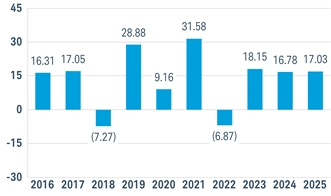
|
|
|
|
|
|
| ||||
|
|
|
|
|
|
|
|
|
|
|
|
| 1 Year |
|
| 5 Years |
|
| 10 Years | ||
|
|
|
|
| ||||||
|
|
|
|
| ||||||
|
|
|
|
|
|
|
| |||
of shares |
|
|
|
|
| |||||
Comparative Indices (reflects no |
|
|
|
|
|
|
|
| ||
deduction for fees,
expenses, or |
|
|
|
|
|
|
|
| ||
|
|
|
|
| ||||||
|
| — |
|
| — |
| ||||
|
|
|
|
| ||||||
|
|
|
|
|
|
|
|
|
|
|
|
|
|
|
|
|
|
|
|
|
|
(1) | The Fundamental US Large Spliced Index is an internally calculated index comprised of the Russell RAFI US Large Company Index from October 19, 2012, until the close of business on June 21, 2024, and the RAFI Fundamental High Liquidity US Large Index from June 22, 2024, forward. | |||||||||
Charles Schwab Investment Management, Inc., dba Schwab Asset Management®
Christopher Bliss, CFA, Managing Director and Head of Equity Index Strategies, is responsible for the day-to-day co-management of the fund. He has managed the fund since 2017.
Jeremy Brown, CFA, Senior Portfolio Manager, is responsible for the day-to-day co-management of the fund. He has managed the fund since 2019.
Ferian Juwono, CFA, Senior Portfolio Manager, is responsible for the day-to-day co-management of the fund. He has managed the fund since 2013.
Agnes Zau, CFA, Portfolio Manager, is responsible for the day-to-day co-management of the fund. She has managed the fund since 2023.
The fund is open for business each day that the New York Stock Exchange (NYSE) is open. If the NYSE is closed due to weather or other extenuating circumstances on a day it would typically be open for business, or the NYSE has an unscheduled early closing on a day it has opened for business, the fund reserves the right to treat such day as a business day and accept purchase and redemption orders and calculate its share price as of the normally scheduled close of regular trading on the NYSE for that day.
Investors may only invest in the fund through an account at Charles Schwab & Co., Inc. (Schwab) or another financial intermediary. When you place orders to purchase, exchange or redeem fund shares through an account at Schwab or another financial intermediary, you must follow Schwab’s or the other financial intermediary’s transaction procedures.
There is no minimum initial investment for the fund.
Dividends and capital gains distributions received from the fund will generally be taxable as ordinary income or capital gains, unless you are investing through an IRA, 401(k) or other tax-advantaged account (in which case you may be taxed later, upon withdrawal of your investment from such account).
If you purchase shares of the fund through a broker-dealer or other financial intermediary (such as a bank), the adviser and its related companies may pay the intermediary for the sale of fund shares and related services. These payments may create a conflict of interest by influencing the broker-dealer or other financial intermediary and your salesperson to recommend the fund over another investment. Ask your salesperson or visit your financial intermediary’s website for more information.
Schwab Fundamental U.S. Large Company Index Fund | Fund Summary | 3 |
Ticker Symbol: SFSNX |
The fund’s goal is to track as closely as possible, before fees and expenses, the total return of an index that measures the performance of small U.S. companies based on their fundamental size and weight.
This table describes the fees and expenses you may pay if you buy, hold and sell shares of the fund. You may pay other fees, such as brokerage commissions and other fees to financial intermediaries, which are not reflected in the table and Example below.
| ||
|
| |
|
|
|
Management Fees | ||
Other Expenses | ||
|
|
|
Total annual fund operating expenses | ||
This example is intended to help you compare the cost of investing in the fund with the cost of investing in other funds. The example assumes that you invest $10,000 in the fund for the time periods indicated and then redeem all of your shares at the end of those time periods. The example also assumes that your investment has a 5% return each year and that the fund’s operating expenses remain the same. Your actual costs may be higher or lower.
|
|
| |||||
| 1 Year |
| 3 Years |
| 5 Years |
| 10 Years |
| $ |
| $ |
| $ |
| $ |
The fund pays transaction costs, such as commissions, when
it buys and sells securities (or “turns over” its portfolio). A higher portfolio turnover may indicate
higher transaction costs and may result in higher taxes when fund shares are held in a taxable account.
These costs, which are not reflected in the annual fund operating expenses or in the example, affect
the fund’s performance. During the most recent fiscal year, the fund’s portfolio turnover rate was
To pursue its goal, the fund generally invests in stocks that are included in the RAFI Fundamental High Liquidity US Small Index†. The index selects, ranks, and weights securities by fundamental measures of company size – adjusted sales, retained operating cash flow, and dividends plus buybacks – rather than market capitalization. The index measures the performance of the small company size segment by fundamental overall company scores (scores), which are created using as the universe the U.S. companies in the RAFI Global Equity Investable Universe (the parent universe). Securities are grouped in order of decreasing score and each company receives a weight based on its percentage of the total scores of the U.S. companies within the parent universe. The index is comprised of the smallest U.S. companies by fundamental size. The bottom 12.5% of the companies by cumulative fundamental score are included in the index. The companies included in the index, and their respective weights, are determined annually and are implemented using a partial quarterly reconstitution methodology in which the index is split into four equal segments and each segment is rebalanced on a rolling quarterly basis. The method of calculating the components of the index is subject to change.
† Index ownership – The RAFI Fundamental High Liquidity US Small Index (the Index) is a service mark of RAFI Indices, LLC or its affiliates (collectively, RAFI) and has been licensed for use by Charles Schwab Investment Management, Inc. The intellectual and other property rights to the Index are owned by or licensed to RAFI. The Schwab Fundamental U.S. Small Company ETF is not sponsored, endorsed, sold or promoted by RAFI, its agents or service providers (collectively, the RAFI Parties). The RAFI Parties: (i) make no representation or warranty as to the results to be obtained from the use of the Index or otherwise; and (ii) shall not be liable (whether in negligence or otherwise) to any person for any error in the Index. For full disclaimer, please see the fund’s statement of additional information. |
It is the fund’s policy that, under normal circumstances, it will invest at least 90% of its net assets (including, for this purpose, any borrowings for investment purposes) in stocks included in the index. The fund will notify its shareholders at least 60 days before changing this policy. The fund will generally seek to replicate the performance of the index by giving the same weight to a given stock as the index does. However, when the investment adviser believes it is in the best interest of the fund, such as to avoid purchasing odd-lots (i.e., purchasing less than the usual number of shares traded for a security), for tax considerations, or to address liquidity considerations with respect to a stock, the investment adviser may cause the fund’s weighting of a stock to be more or less than the index’s weighting of the stock. The fund may sell securities that are represented in the index in anticipation of their removal from the index, or buy securities that are not yet represented in the index in anticipation of their addition to the index.
Under normal circumstances, the fund may invest up to 10% of its net assets in securities not included in the index. The principal types of these investments include, but are not limited to, those that the investment adviser believes will help the fund track the
4 | Schwab Fundamental U.S. Small Company Index Fund | Fund Summary |
index, such as investments in (a) securities that are not represented in the index but the investment adviser anticipates will be added to the index or as necessary to reflect various corporate actions (such as mergers and spin-offs), (b) other investment companies, and (c) derivatives, principally futures contracts. The fund may use futures contracts and other derivatives primarily to seek returns on the fund’s otherwise uninvested cash assets to help it better track the index. The fund may also invest in cash and cash equivalents, including money market funds, and may lend its securities to minimize the difference in performance that naturally exists between an index fund and its corresponding index.
The fund will concentrate its investments (i.e., hold more than 25% of its assets) in a particular industry, group of industries or sector to approximately the extent that the index the fund is designed to track is also so concentrated.
Market Risk — Financial markets rise and fall in response to a variety of factors, sometimes rapidly and unpredictably. Markets may be impacted by economic, political, regulatory, and other conditions, including economic sanctions, tariffs, and other government actions. In addition, the occurrence of global events, such as war, terrorism, environmental disasters, natural disasters and epidemics, may also negatively affect the financial markets. As with any investment whose performance is tied to these markets, the value of an investment in the fund will fluctuate, which means that an investor could lose money over short or long periods.
Equity Risk — The prices of equity securities rise and fall daily. These price movements may result from factors affecting individual companies, industries or the securities market as a whole. In addition, equity markets tend to move in cycles, which may cause stock prices to fall over short or extended periods of time.
Investment Style Risk — The fund is an index fund. Therefore, the fund follows the securities included in the index, which may include real estate investment trusts, during upturns as well as downturns. Because of its indexing strategy, the fund does not take steps to reduce market exposure or to lessen the effects of a declining market. In addition, because of the fund’s expenses, the fund’s performance may be below that of the index. Errors relating to the index may occur from time to time and may not be identified by the index provider for a period of time. In addition, market disruptions could cause delays in the index’s rebalancing schedule. Such errors and/or market disruptions may result in losses for the fund.
Market Capitalization Risk — Securities issued by companies of different market capitalizations tend to go in and out of favor based on market and economic conditions. During a period when securities of a particular market capitalization fall behind other types of investments, the fund’s performance could be impacted.
Small-Cap Company Risk — Securities issued by small-cap companies may be riskier than those issued by larger companies, and their prices may move sharply, especially during market upturns and downturns.
Tracking Error and Correlation Risk — As an index fund, the fund seeks to track the performance of the index, although it may not be successful in doing so. Further, there can be no guarantee that the fund will achieve a high degree of correlation between the fund’s performance and that of its index. The correlation between the performance of the fund and that of its index, positive or negative, is called “tracking error.” Tracking error can be caused by many factors and it may be significant.
Concentration Risk — To the extent that the fund’s or the index’s portfolio is concentrated in the securities of issuers in a particular market, industry, group of industries, sector, or asset class, the fund may be adversely affected by the performance of those securities, may be subject to increased price volatility and may be more vulnerable to adverse economic, market, political or regulatory occurrences affecting that market, industry, group of industries, sector, or asset class.
Derivatives Risk — The fund’s use of derivative instruments involves risks different from, or possibly greater than, the risks associated with investing directly in securities and other traditional investments. The fund’s use of derivatives could reduce the fund’s performance, increase the fund’s volatility, and could cause the fund to lose more than the initial amount invested. In addition, investments in derivatives may involve leverage, which means a small percentage of assets invested in derivatives can have a disproportionately large impact on the fund.
Liquidity Risk — The fund may be unable to sell certain securities, such as illiquid securities, readily at a favorable time or price, or the fund may have to sell them at a loss.
Securities Lending Risk — Securities lending involves the risk of loss of rights in, or delay in recovery of, the loaned securities if the borrower fails to return the security loaned or becomes insolvent.
For more information on the risks of investing in the fund, please see the “Fund Details” section in the prospectus.
Schwab Fundamental U.S. Small Company Index Fund | Fund Summary | 5 |
information, please see
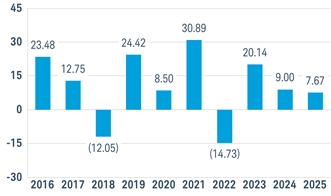
|
|
|
|
|
|
| ||||
|
|
|
|
|
|
|
|
|
|
|
|
| 1 Year |
|
| 5 Years |
|
| 10 Years | ||
|
|
|
|
| ||||||
|
|
|
|
| ||||||
|
|
|
|
|
|
|
| |||
of shares |
|
|
|
|
| |||||
Comparative Indices (reflects no |
|
|
|
|
|
|
|
| ||
deduction for fees,
expenses, or |
|
|
|
|
|
|
|
| ||
|
|
|
|
| ||||||
|
| — |
|
| — |
| ||||
|
|
|
|
| ||||||
|
|
|
|
|
|
|
|
|
|
|
|
|
|
|
|
|
|
|
|
|
|
(1) | The Fundamental US Small Spliced Index is an internally calculated index comprised of the Russell RAFI US Small Company Index from October 19, 2012, until the close of business on June 21, 2024, and the RAFI Fundamental High Liquidity US Small Index from June 22, 2024, forward. | |||||||||
Charles Schwab Investment Management, Inc., dba Schwab Asset Management®
Christopher Bliss, CFA, Managing Director and Head of Equity Index Strategies, is responsible for the day-to-day co-management of the fund. He has managed the fund since 2017.
Jeremy Brown, CFA, Senior Portfolio Manager, is responsible for the day-to-day co-management of the fund. He has managed the fund since 2019.
Ferian Juwono, CFA, Senior Portfolio Manager, is responsible for the day-to-day co-management of the fund. He has managed the fund since 2013.
Agnes Zau, CFA, Portfolio Manager, is responsible for the day-to-day co-management of the fund. She has managed the fund since 2023.
The fund is open for business each day that the New York Stock Exchange (NYSE) is open. If the NYSE is closed due to weather or other extenuating circumstances on a day it would typically be open for business, or the NYSE has an unscheduled early closing on a day it has opened for business, the fund reserves the right to treat such day as a business day and accept purchase and redemption orders and calculate its share price as of the normally scheduled close of regular trading on the NYSE for that day.
Investors may only invest in the fund through an account at Charles Schwab & Co., Inc. (Schwab) or another financial intermediary. When you place orders to purchase, exchange or redeem fund shares through an account at Schwab or another financial intermediary, you must follow Schwab’s or the other financial intermediary’s transaction procedures.
There is no minimum initial investment for the fund.
Dividends and capital gains distributions received from the fund will generally be taxable as ordinary income or capital gains, unless you are investing through an IRA, 401(k) or other tax-advantaged account (in which case you may be taxed later, upon withdrawal of your investment from such account).
If you purchase shares of the fund through a broker-dealer or other financial intermediary (such as a bank), the adviser and its related companies may pay the intermediary for the sale of fund shares and related services. These payments may create a conflict of interest by influencing the broker-dealer or other financial intermediary and your salesperson to recommend the fund over another investment. Ask your salesperson or visit your financial intermediary’s website for more information.
6 | Schwab Fundamental U.S. Small Company Index Fund | Fund Summary |
Ticker Symbol: SFNNX |
The fund’s goal is to track as closely as possible, before fees and expenses, the total return of an index that measures the performance of large non-U.S. developed market companies based on their fundamental size and weight.
This table describes the fees and expenses you may pay if you buy, hold and sell shares of the fund. You may pay other fees, such as brokerage commissions and other fees to financial intermediaries, which are not reflected in the table and Example below.
| ||
|
| |
|
|
|
Management Fees | ||
Other Expenses | ||
|
|
|
Total annual fund operating expenses | ||
This example is intended to help you compare the cost of investing in the fund with the cost of investing in other funds. The example assumes that you invest $10,000 in the fund for the time periods indicated and then redeem all of your shares at the end of those time periods. The example also assumes that your investment has a 5% return each year and that the fund’s operating expenses remain the same. Your actual costs may be higher or lower.
|
|
| |||||
| 1 Year |
| 3 Years |
| 5 Years |
| 10 Years |
| $ |
| $ |
| $ |
| $ |
The fund pays transaction costs, such as commissions, when
it buys and sells securities (or “turns over” its portfolio). A higher portfolio turnover may indicate
higher transaction costs and may result in higher taxes when fund shares are held in a taxable account.
These costs, which are not reflected in the annual fund operating expenses or in the example, affect
the fund’s performance. During the most recent fiscal year, the fund’s portfolio turnover rate was
To pursue its goal, the fund generally invests in stocks that are included in the RAFI Fundamental High Liquidity Developed ex US Large Index†. The index selects, ranks, and weights securities by fundamental measures of company size – adjusted sales, retained operating cash flow, and dividends plus buybacks – rather than market capitalization. The index measures the performance of the large company size segment by fundamental overall company scores (scores), which are created using as the universe the developed ex U.S. companies in the RAFI Global Equity Investable Universe (the parent universe). Securities are grouped in order of decreasing score and each company receives a weight based on its percentage of the total scores of the developed ex U.S. companies within the parent universe. The index is comprised of the largest developed ex U.S. companies by fundamental size. The top 87.5% of the companies by cumulative fundamental score are included in the index. The companies included in the index, and their respective weights, are determined annually and are implemented using a partial quarterly reconstitution methodology in which the index is split into four equal segments and each segment is rebalanced on a rolling quarterly basis. The method of calculating the components of the index is subject to change.
† Index ownership – The RAFI Fundamental High Liquidity Developed ex US Large Index (the Index) is a service mark of RAFI Indices, LLC or its affiliates (collectively, RAFI) and has been licensed for use by Charles Schwab Investment Management, Inc. The intellectual and other property rights to the Index are owned by or licensed to RAFI. The Schwab Fundamental International Equity ETF is not sponsored, endorsed, sold or promoted by RAFI, its agents or service providers (collectively, the RAFI Parties). The RAFI Parties: (i) make no representation or warranty as to the results to be obtained from the use of the Index or otherwise; and (ii) shall not be liable (whether in negligence or otherwise) to any person for any error in the Index. For full disclaimer, please see the fund’s statement of additional information. |
It is the fund’s policy that, under normal circumstances, it will invest at least 90% of its net assets (including, for this purpose, any borrowings for investment purposes) in stocks included in the index, including depositary receipts representing securities of the index; which may be in the form of American Depositary Receipts (ADRs), Global Depositary Receipts (GDRs) and European Depositary Receipts (EDRs). The fund will notify its shareholders at least 60 days before changing this policy. The fund will generally seek to replicate the performance of the index by giving the same weight to a given stock as the index does. However, when the investment adviser believes it is in the best interest of the fund, such as to avoid purchasing odd-lots (i.e., purchasing less than the usual number of shares traded for a security), for tax considerations, or to address liquidity considerations with respect to a stock, the investment adviser may cause the fund’s weighting of a stock to be more or less than the index’s weighting of the stock. The fund may sell securities that are represented in the index in anticipation of their removal from the index, or buy securities that are not yet represented in the index in anticipation of their addition to the index. The fund does not hedge its exposure to foreign currencies. However, the fund may use forward contracts to lock in exchange rates for the portfolio securities
Schwab Fundamental International Equity Index Fund | Fund Summary | 7 |
purchased or sold, but awaiting settlement. These transactions establish a rate of exchange that can be expected to be received upon settlement of the securities.
Under normal circumstances, the fund may invest up to 10% of its net assets in securities not included in the index. The principal types of these investments include, but are not limited to, those that the investment adviser believes will help the fund track the index, such as investments in (a) securities that are not represented in the index but the investment adviser anticipates will be added to the index or as necessary to reflect various corporate actions (such as mergers and spin-offs), (b) other investment companies, and (c) derivatives, principally futures contracts. The fund may use futures contracts and other derivatives primarily to seek returns on the fund’s otherwise uninvested cash assets to help it better track the index. The fund may also invest in cash and cash equivalents, including money market funds, and may lend its securities to minimize the difference in performance that naturally exists between an index fund and its corresponding index.
The fund uses an “indexing” investment approach, which attempts to replicate the performance of the index by purchasing a basket of securities that compose the index. However it may not be possible or practicable for the fund to invest in all of the securities comprising the index or in proportion to their weightings in the index. In these circumstances, it is possible that the investment adviser may use sampling techniques if the investment adviser believes such use will best help the fund to track the index or is otherwise in the best interest of the fund. Sampling techniques involve investing in a limited number of index securities that, when taken together, are expected to perform similarly to the index as a whole. When using sampling techniques, the investment adviser uses quantitative analysis to select stocks from the index universe to obtain a representative sample of stocks that resembles the index in terms of key risk factors, performance attributes and other characteristics. The fund reserves the right to hold as many securities as it believes necessary to achieve the fund’s investment objective.
The fund will concentrate its investments (i.e., hold more than 25% of its assets) in a particular industry, group of industries or sector to approximately the extent that the index the fund is designed to track is also so concentrated.
Market Risk — Financial markets rise and fall in response to a variety of factors, sometimes rapidly and unpredictably. Markets may be impacted by economic, political, regulatory, and other conditions, including economic sanctions, tariffs, and other government actions. In addition, the occurrence of global events, such as war, terrorism, environmental disasters, natural disasters and epidemics, may also negatively affect the financial markets. As with any investment whose performance is tied to these markets, the value of an investment in the fund will fluctuate, which means that an investor could lose money over short or long periods.
Equity Risk — The prices of equity securities rise and fall daily. These price movements may result from factors affecting individual companies, industries or the securities market as a whole. In addition, equity markets tend to move in cycles, which may cause stock prices to fall over short or extended periods of time.
Investment Style Risk — The fund is an index fund. Therefore, the fund follows the securities included in the index during upturns as well as downturns. Because of its indexing strategy, the fund does not take steps to reduce market exposure or to lessen the effects of a declining market. In addition, because of the fund’s expenses, the fund’s performance may be below that of the index. Errors relating to the index may occur from time to time and may not be identified by the index provider for a period of time. In addition, market disruptions could cause delays in the index’s rebalancing schedule. Such errors and/or market disruptions may result in losses for the fund.
Market Capitalization Risk — Securities issued by companies of different market capitalizations tend to go in and out of favor based on market and economic conditions. During a period when securities of a particular market capitalization fall behind other types of investments, the fund’s performance could be impacted.
Large-Cap Company Risk — Large-cap companies are generally more mature and the securities issued by these companies may not be able to reach the same levels of growth as the securities issued by small- or mid-cap companies.
Sampling Index Tracking Risk — To the extent the fund uses sampling techniques, the fund will not fully replicate the index and may hold securities not included in the index. As a result, the fund will be subject to the risk that the investment adviser’s investment management strategy, the implementation of which is subject to a number of constraints, may not produce the intended results. If the fund utilizes a sampling approach, it may not track the return of the index as well as it would if the fund purchased all of the securities in the index.
Tracking Error and Correlation Risk — As an index fund, the fund seeks to track the performance of the index, although it may not be successful in doing so. Further, there can be no guarantee that the fund will achieve a high degree of correlation between the fund’s performance and that of its index. The correlation between the performance of the fund and that of its index, positive or negative, is called “tracking error.” Tracking error can be caused by many factors and it may be significant.
Concentration Risk — To the extent that the fund’s or the index’s portfolio is concentrated in the securities of issuers in a particular market, industry, group of industries, sector, country, or asset class, the fund may be adversely affected by the performance of those securities, may be subject to increased price volatility and may be more vulnerable to adverse economic, market, political or regulatory occurrences affecting that market, industry, group of industries, sector, country, or asset class.
8 | Schwab Fundamental International Equity Index Fund | Fund Summary |
Foreign Investment Risk — The fund’s investments in securities of foreign issuers involve certain risks that may be greater than those associated with investments in securities of U.S. issuers. These include risks of adverse changes in foreign economic, political, regulatory and other conditions; changes in currency exchange rates or exchange control regulations (including limitations on currency movements and exchanges); the imposition of economic sanctions or other government restrictions; differing accounting, auditing, financial reporting and legal standards and practices; differing securities market structures; and higher transaction costs. These risks may negatively impact the value or liquidity of the fund’s investments and could impair the fund’s ability to meet its investment objective or invest in accordance with its investment strategy. There is a risk that investments in securities denominated in, and/or receiving revenues in, foreign currencies will decline in value relative to the U.S. dollar. Foreign securities also include ADRs, GDRs, and EDRs, which may be less liquid than the underlying shares in their primary trading market, and GDRs, in particular, many of which are issued by companies in emerging markets, may be more volatile.To the extent the fund’s investments in a single country or a limited number of countries represent a large percentage of the fund’s assets, the fund’s performance may be adversely affected by the economic, political, regulatory, and social conditions in those countries, and the fund’s price may be more volatile than the price of a fund that is geographically diversified.
Derivatives Risk — The fund’s use of derivative instruments involves risks different from, or possibly greater than, the risks associated with investing directly in securities and other traditional investments. The fund’s use of derivatives could reduce the fund’s performance, increase the fund’s volatility, and could cause the fund to lose more than the initial amount invested. In addition, investments in derivatives may involve leverage, which means a small percentage of assets invested in derivatives can have a disproportionately large impact on the fund.
Liquidity Risk — The fund may be unable to sell certain securities, such as illiquid securities, readily at a favorable time or price, or the fund may have to sell them at a loss.
Securities Lending Risk — Securities lending involves the risk of loss of rights in, or delay in recovery of, the loaned securities if the borrower fails to return the security loaned or becomes insolvent.
For more information on the risks of investing in the fund, please see the “Fund Details” section in the prospectus.
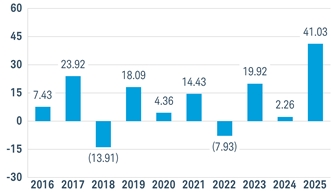
|
|
|
|
|
|
| ||||
|
|
|
|
|
|
|
|
|
|
|
|
| 1 Year |
|
| 5 Years |
|
| 10 Years | ||
|
|
|
|
| ||||||
|
|
|
|
| ||||||
|
|
|
|
|
|
|
| |||
of shares |
|
|
|
|
| |||||
Comparative Indices (reflects no |
|
|
|
|
|
|
|
| ||
deduction for fees,
expenses, or |
|
|
|
|
|
|
|
| ||
|
|
|
|
| ||||||
|
| — |
|
| — |
| ||||
|
|
|
|
| ||||||
|
|
|
|
|
|
|
|
|
|
|
|
|
|
|
|
|
|
|
|
|
|
(1) | The net version of the index reflects reinvested dividends net of withholding taxes, but reflects no deductions for expenses or other taxes. | |||||||||
(2) | The Fundamental Developed ex US Large Spliced Index is an internally calculated index comprised of the Russell RAFI Developed ex US Large Company Index (Net) from October 19, 2012, until the close of business on June 21, 2024, and the RAFI Fundamental High Liquidity Developed ex US Large Index (Net) from June 22, 2024, forward. | |||||||||
Charles Schwab Investment Management, Inc., dba Schwab Asset Management®
Schwab Fundamental International Equity Index Fund | Fund Summary | 9 |
Christopher Bliss, CFA, Managing Director and Head of Equity Index Strategies, is responsible for the day-to-day co-management of the fund. He has managed the fund since 2017.
Mariela Jobson, Senior Portfolio Manager, is responsible for the day-to-day co-management of the fund. She has managed the fund since 2024.
Joselle Duncan, CFA, Portfolio Manager, is responsible for the day-to-day co-management of the fund. She has managed the fund since 2024.
David Rios, Senior Portfolio Manager, is responsible for the day-to-day co-management of the fund. He has managed the fund since 2017.
The fund is open for business each day that the New York Stock Exchange (NYSE) is open. If the NYSE is closed due to weather or other extenuating circumstances on a day it would typically be open for business, or the NYSE has an unscheduled early closing on a day it has opened for business, the fund reserves the right to treat such day as a business day and accept purchase and redemption orders and calculate its share price as of the normally scheduled close of regular trading on the NYSE for that day.
Investors may only invest in the fund through an account at Charles Schwab & Co., Inc. (Schwab) or another financial intermediary. When you place orders to purchase, exchange or redeem fund shares through an account at Schwab or another financial intermediary, you must follow Schwab’s or the other financial intermediary’s transaction procedures.
There is no minimum initial investment for the fund.
Dividends and capital gains distributions received from the fund will generally be taxable as ordinary income or capital gains, unless you are investing through an IRA, 401(k) or other tax-advantaged account (in which case you may be taxed later, upon withdrawal of your investment from such account).
If you purchase shares of the fund through a broker-dealer or other financial intermediary (such as a bank), the adviser and its related companies may pay the intermediary for the sale of fund shares and related services. These payments may create a conflict of interest by influencing the broker-dealer or other financial intermediary and your salesperson to recommend the fund over another investment. Ask your salesperson or visit your financial intermediary’s website for more information.
10 | Schwab Fundamental International Equity Index Fund | Fund Summary |
Ticker Symbol: SFILX |
The fund’s goal is to track as closely as possible, before fees and expenses, the total return of an index that measures the performance of small non-U.S. developed market companies based on their fundamental size and weight.
This table describes the fees and expenses you may pay if you buy, hold and sell shares of the fund. You may pay other fees, such as brokerage commissions and other fees to financial intermediaries, which are not reflected in the table and Example below.
| ||
|
| |
|
|
|
Management Fees | ||
Other Expenses | ||
|
|
|
Total annual fund operating expenses | ||
This example is intended to help you compare the cost of investing in the fund with the cost of investing in other funds. The example assumes that you invest $10,000 in the fund for the time periods indicated and then redeem all of your shares at the end of those time periods. The example also assumes that your investment has a 5% return each year and that the fund’s operating expenses remain the same. Your actual costs may be higher or lower.
|
|
| |||||
| 1 Year |
| 3 Years |
| 5 Years |
| 10 Years |
| $ |
| $ |
| $ |
| $ |
The fund pays transaction costs, such as commissions, when
it buys and sells securities (or “turns over” its portfolio). A higher portfolio turnover may indicate
higher transaction costs and may result in higher taxes when fund shares are held in a taxable account.
These costs, which are not reflected in the annual fund operating expenses or in the example, affect
the fund’s performance. During the most recent fiscal year, the fund’s portfolio turnover rate was
To pursue its goal, the fund generally invests in stocks that are included in the RAFI Fundamental High Liquidity Developed ex US Small Index†. The index selects, ranks, and weights securities by fundamental measures of company size – adjusted sales, retained operating cash flow, and dividends plus buybacks – rather than market capitalization. The index measures the performance of the small company size segment by fundamental overall company scores (scores), which are created using as the universe the developed ex U.S. companies in the RAFI Global Equity Investable Universe (the parent universe). Securities are grouped in order of decreasing score and each company receives a weight based on its percentage of the total scores of the developed ex U.S. companies within the parent universe. The index is comprised of the smallest developed ex U.S. companies by fundamental size. The bottom 12.5% of the companies by cumulative fundamental score are included in the index. The companies included in the index, and their respective weights, are determined annually and are implemented using a partial quarterly reconstitution methodology in which the index is split into four equal segments and each segment is rebalanced on a rolling quarterly basis. The method of calculating the components of the index is subject to change.
† Index ownership – The RAFI Fundamental High Liquidity Developed ex US Small Index (the Index) is a service mark of RAFI Indices, LLC or its affiliates (collectively, RAFI) and has been licensed for use by Charles Schwab Investment Management, Inc. The intellectual and other property rights to the Index are owned by or licensed to RAFI. The Schwab Fundamental International Small Equity ETF is not sponsored, endorsed, sold or promoted by RAFI, its agents or service providers (collectively, the RAFI Parties). The RAFI Parties: (i) make no representation or warranty as to the results to be obtained from the use of the Index or otherwise; and (ii) shall not be liable (whether in negligence or otherwise) to any person for any error in the Index. For full disclaimer, please see the fund’s statement of additional information. |
It is the fund’s policy that, under normal circumstances, it will invest at least 90% of its net assets (including, for this purpose, any borrowings for investment purposes) in stocks included in the index, including depositary receipts representing securities of the index; which may be in the form of American Depositary Receipts (ADRs), Global Depositary Receipts (GDRs) and European Depositary Receipts (EDRs). The fund will notify its shareholders at least 60 days before changing this policy. The fund will generally seek to replicate the performance of the index by giving the same weight to a given stock as the index does. However, when the investment adviser believes it is in the best interest of the fund, such as to avoid purchasing odd-lots (i.e., purchasing less than the usual number of shares traded for a security), for tax considerations, or to address liquidity considerations with respect to a stock, the investment adviser may cause the fund’s weighting of a stock to be more or less than the index’s weighting of the stock. The fund may sell securities that are represented in the index in anticipation of their removal from the index, or buy securities that are not yet represented in the index in anticipation of their addition to the index. The fund does not hedge its exposure to foreign currencies. However, the fund may use forward contracts to lock in exchange rates for the portfolio securities
Schwab Fundamental International Small Equity Index Fund | Fund Summary | 11 |
purchased or sold, but awaiting settlement. These transactions establish a rate of exchange that can be expected to be received upon settlement of the securities.
Under normal circumstances, the fund may invest up to 10% of its net assets in securities not included in the index. The principal types of these investments include, but are not limited to, those that the investment adviser believes will help the fund track the index, such as investments in (a) securities that are not represented in the index but the investment adviser anticipates will be added to the index or as necessary to reflect various corporate actions (such as mergers and spin-offs), (b) other investment companies, and (c) derivatives, principally futures contracts. The fund may use futures contracts and other derivatives primarily to seek returns on the fund’s otherwise uninvested cash assets to help it better track the index. The fund may also invest in cash and cash equivalents, including money market funds, and may lend its securities to minimize the difference in performance that naturally exists between an index fund and its corresponding index.
The fund uses an “indexing” investment approach, which attempts to replicate the performance of the index by purchasing a basket of securities that compose the index. However it may not be possible or practicable for the fund to invest in all of the securities comprising the index or in proportion to their weightings in the index. In these circumstances, it is possible that the investment adviser may use sampling techniques if the investment adviser believes such use will best help the fund to track the index or is otherwise in the best interest of the fund. Sampling techniques involve investing in a limited number of index securities that, when taken together, are expected to perform similarly to the index as a whole. When using sampling techniques, the investment adviser uses quantitative analysis to select stocks from the index universe to obtain a representative sample of stocks that resembles the index in terms of key risk factors, performance attributes and other characteristics. The fund reserves the right to hold as many securities as it believes necessary to achieve the fund’s investment objective.
The fund will concentrate its investments (i.e., hold more than 25% of its assets) in a particular industry, group of industries or sector to approximately the extent that the index the fund is designed to track is also so concentrated.
Market Risk — Financial markets rise and fall in response to a variety of factors, sometimes rapidly and unpredictably. Markets may be impacted by economic, political, regulatory, and other conditions, including economic sanctions, tariffs, and other government actions. In addition, the occurrence of global events, such as war, terrorism, environmental disasters, natural disasters and epidemics, may also negatively affect the financial markets. As with any investment whose performance is tied to these markets, the value of an investment in the fund will fluctuate, which means that an investor could lose money over short or long periods.
Equity Risk — The prices of equity securities rise and fall daily. These price movements may result from factors affecting individual companies, industries or the securities market as a whole. In addition, equity markets tend to move in cycles, which may cause stock prices to fall over short or extended periods of time.
Investment Style Risk — The fund is an index fund. Therefore, the fund follows the securities included in the index, which may include real estate investment trusts, during upturns as well as downturns. Because of its indexing strategy, the fund does not take steps to reduce market exposure or to lessen the effects of a declining market. In addition, because of the fund’s expenses, the fund’s performance may be below that of the index. Errors relating to the index may occur from time to time and may not be identified by the index provider for a period of time. In addition, market disruptions could cause delays in the index’s rebalancing schedule. Such errors and/or market disruptions may result in losses for the fund.
Market Capitalization Risk — Securities issued by companies of different market capitalizations tend to go in and out of favor based on market and economic conditions. During a period when securities of a particular market capitalization fall behind other types of investments, the fund’s performance could be impacted.
Small-Cap Company Risk — Securities issued by small-cap companies may be riskier than those issued by larger companies, and their prices may move sharply, especially during market upturns and downturns.
Sampling Index Tracking Risk — To the extent the fund uses sampling techniques, the fund will not fully replicate the index and may hold securities not included in the index. As a result, the fund will be subject to the risk that the investment adviser’s investment management strategy, the implementation of which is subject to a number of constraints, may not produce the intended results. If the fund utilizes a sampling approach, it may not track the return of the index as well as it would if the fund purchased all of the securities in the index.
Tracking Error and Correlation Risk — As an index fund, the fund seeks to track the performance of the index, although it may not be successful in doing so. Further, there can be no guarantee that the fund will achieve a high degree of correlation between the fund’s performance and that of its index. The correlation between the performance of the fund and that of its index, positive or negative, is called “tracking error.” Tracking error can be caused by many factors and it may be significant.
Concentration Risk — To the extent that the fund’s or the index’s portfolio is concentrated in the securities of issuers in a particular market, industry, group of industries, sector, country, or asset class, the fund may be adversely affected by the performance of those securities, may be subject to increased price volatility and may be more vulnerable to adverse economic, market, political or
12 | Schwab Fundamental International Small Equity Index Fund | Fund Summary |
regulatory occurrences affecting that market, industry, group of industries, sector, country, or asset class.
Foreign Investment Risk — The fund’s investments in securities of foreign issuers involve certain risks that may be greater than those associated with investments in securities of U.S. issuers. These include risks of adverse changes in foreign economic, political, regulatory and other conditions; changes in currency exchange rates or exchange control regulations (including limitations on currency movements and exchanges); the imposition of economic sanctions or other government restrictions; differing accounting, auditing, financial reporting and legal standards and practices; differing securities market structures; and higher transaction costs. These risks may negatively impact the value or liquidity of the fund’s investments and could impair the fund’s ability to meet its investment objective or invest in accordance with its investment strategy. There is a risk that investments in securities denominated in, and/or receiving revenues in, foreign currencies will decline in value relative to the U.S. dollar. Foreign securities also include ADRs, GDRs, and EDRs, which may be less liquid than the underlying shares in their primary trading market, and GDRs, in particular, many of which are issued by companies in emerging markets, may be more volatile.To the extent the fund’s investments in a single country or a limited number of countries represent a large percentage of the fund’s assets, the fund’s performance may be adversely affected by the economic, political, regulatory, and social conditions in those countries, and the fund’s price may be more volatile than the price of a fund that is geographically diversified.
Derivatives Risk — The fund’s use of derivative instruments involves risks different from, or possibly greater than, the risks associated with investing directly in securities and other traditional investments. The fund’s use of derivatives could reduce the fund’s performance, increase the fund’s volatility, and could cause the fund to lose more than the initial amount invested. In addition, investments in derivatives may involve leverage, which means a small percentage of assets invested in derivatives can have a disproportionately large impact on the fund.
Liquidity Risk — The fund may be unable to sell certain securities, such as illiquid securities, readily at a favorable time or price, or the fund may have to sell them at a loss.
Securities Lending Risk — Securities lending involves the risk of loss of rights in, or delay in recovery of, the loaned securities if the borrower fails to return the security loaned or becomes insolvent.
For more information on the risks of investing in the fund, please see the “Fund Details” section in the prospectus.
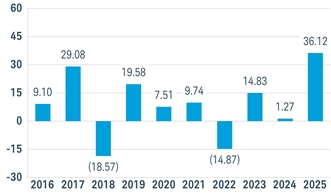
|
|
|
|
|
|
| ||||
|
|
|
|
|
|
|
|
|
|
|
|
| 1 Year |
|
| 5 Years |
|
| 10 Years | ||
|
|
|
|
| ||||||
|
|
|
|
| ||||||
|
|
|
|
|
|
|
| |||
of shares |
|
|
|
|
| |||||
Comparative Indices (reflects no |
|
|
|
|
|
|
|
| ||
deduction for fees,
expenses, or |
|
|
|
|
|
|
|
| ||
|
|
|
|
| ||||||
|
| — |
|
| — |
| ||||
|
|
|
|
| ||||||
|
|
|
|
|
|
|
|
|
|
|
|
|
|
|
|
|
|
|
|
|
|
(1) | The net version of the index reflects reinvested dividends net of withholding taxes, but reflects no deductions for expenses or other taxes. | |||||||||
(2) | The Fundamental Developed ex US Small Spliced Index is an internally calculated index comprised of the Russell RAFI Developed ex US Small Company Index (Net) from October 19, 2012, until the close of business on June 21, 2024, and the RAFI Fundamental High Liquidity Developed ex US Small Index (Net) from June 22, 2024, forward. | |||||||||
Charles Schwab Investment Management, Inc., dba Schwab Asset Management®
Schwab Fundamental International Small Equity Index Fund | Fund Summary | 13 |
Christopher Bliss, CFA, Managing Director and Head of Equity Index Strategies, is responsible for the day-to-day co-management of the fund. He has managed the fund since 2017.
Mariela Jobson, Senior Portfolio Manager, is responsible for the day-to-day co-management of the fund. She has managed the fund since 2024.
Joselle Duncan, CFA, Portfolio Manager, is responsible for the day-to-day co-management of the fund. She has managed the fund since 2024.
David Rios, Senior Portfolio Manager, is responsible for the day-to-day co-management of the fund. He has managed the fund since 2017.
The fund is open for business each day that the New York Stock Exchange (NYSE) is open. If the NYSE is closed due to weather or other extenuating circumstances on a day it would typically be open for business, or the NYSE has an unscheduled early closing on a day it has opened for business, the fund reserves the right to treat such day as a business day and accept purchase and redemption orders and calculate its share price as of the normally scheduled close of regular trading on the NYSE for that day.
Investors may only invest in the fund through an account at Charles Schwab & Co., Inc. (Schwab) or another financial intermediary. When you place orders to purchase, exchange or redeem fund shares through an account at Schwab or another financial intermediary, you must follow Schwab’s or the other financial intermediary’s transaction procedures.
There is no minimum initial investment for the fund.
Dividends and capital gains distributions received from the fund will generally be taxable as ordinary income or capital gains, unless you are investing through an IRA, 401(k) or other tax-advantaged account (in which case you may be taxed later, upon withdrawal of your investment from such account).
If you purchase shares of the fund through a broker-dealer or other financial intermediary (such as a bank), the adviser and its related companies may pay the intermediary for the sale of fund shares and related services. These payments may create a conflict of interest by influencing the broker-dealer or other financial intermediary and your salesperson to recommend the fund over another investment. Ask your salesperson or visit your financial intermediary’s website for more information.
14 | Schwab Fundamental International Small Equity Index Fund | Fund Summary |
Ticker Symbol: SFENX |
The fund’s goal is to track as closely as possible, before fees and expenses, the total return of an index that measures the performance of large sized companies, based on their fundamental size and weight, in emerging market countries.
This table describes the fees and expenses you may pay if you buy, hold and sell shares of the fund. You may pay other fees, such as brokerage commissions and other fees to financial intermediaries, which are not reflected in the table and Example below.
| ||
|
| |
|
|
|
Management Fees | ||
Other Expenses | ||
|
|
|
Total annual fund operating expenses | ||
This example is intended to help you compare the cost of investing in the fund with the cost of investing in other funds. The example assumes that you invest $10,000 in the fund for the time periods indicated and then redeem all of your shares at the end of those time periods. The example also assumes that your investment has a 5% return each year and that the fund’s operating expenses remain the same. Your actual costs may be higher or lower.
|
|
| |||||
| 1 Year |
| 3 Years |
| 5 Years |
| 10 Years |
| $ |
| $ |
| $ |
| $ |
The fund pays transaction costs, such as commissions, when
it buys and sells securities (or “turns over” its portfolio). A higher portfolio turnover may indicate
higher transaction costs and may result in higher taxes when fund shares are held in a taxable account.
These costs, which are not reflected in the annual fund operating expenses or in the example, affect
the fund’s performance. During the most recent fiscal year, the fund’s portfolio turnover rate was
To pursue its goal, the fund generally invests in stocks that are included in the RAFI Fundamental High Liquidity Emerging Markets Index†. The index selects, ranks, and weights securities by fundamental measures of company size – adjusted sales, retained operating cash flow, and dividends plus buybacks – rather than market capitalization. The index measures the performance of the large company size segment by fundamental overall company scores (scores), which are created using as the universe the emerging markets companies in the RAFI Global Equity Investable Universe (the parent universe). Securities are grouped in order of decreasing score and each company receives a weight based on its percentage of the total scores of the emerging markets companies within the parent universe. The index is comprised of the largest emerging markets companies by fundamental size. The top 87.5% of the companies by cumulative fundamental score are included in the index. The companies included in the index, and their respective weights, are determined annually and are implemented using a partial quarterly reconstitution methodology in which the index is split into four equal segments and each segment is rebalanced on a rolling quarterly basis. The method of calculating the components of the index is subject to change.
† Index ownership – The RAFI Fundamental High Liquidity Emerging Markets Index (the Index) is a service mark of RAFI Indices, LLC or its affiliates (collectively, RAFI) and has been licensed for use by Charles Schwab Investment Management, Inc. The intellectual and other property rights to the Index are owned by or licensed to RAFI. The Schwab Fundamental Emerging Markets Equity ETF is not sponsored, endorsed, sold or promoted by RAFI, its agents or service providers (collectively, the RAFI Parties). The RAFI Parties: (i) make no representation or warranty as to the results to be obtained from the use of the Index or otherwise; and (ii) shall not be liable (whether in negligence or otherwise) to any person for any error in the Index. For full disclaimer, please see the fund’s statement of additional information. |
It is the fund’s policy that, under normal circumstances, it will invest at least 80% of its net assets (including, for this purpose, any borrowings for investment purposes) in stocks included in the index, including depositary receipts representing securities of the index; which may be in the form of American Depositary Receipts (ADRs), Global Depositary Receipts (GDRs) and European Depositary Receipts (EDRs). The fund will notify its shareholders at least 60 days before changing this policy. The fund may sell securities that are represented in the index in anticipation of their removal from the index, or buy securities that are not yet represented in the index in anticipation of their addition to the index. The fund does not hedge its exposure to foreign currencies. However, the fund may use forward contracts to lock in exchange rates for the portfolio securities purchased or sold, but awaiting settlement. These transactions establish a rate of exchange that can be expected to be received upon settlement of the securities.
Under normal circumstances, the fund may invest up to 20% of its net assets in securities not included in the index. The principal types of these investments include, but are not limited to, those that the investment adviser believes will help the fund track the index, such as investments in (a) securities that are not
Schwab Fundamental Emerging Markets Equity Index Fund | Fund Summary | 15 |
represented in the index but the investment adviser anticipates will be added to the index or as necessary to reflect various corporate actions (such as mergers and spin-offs), (b) other investment companies, and (c) derivatives, principally futures contracts. The fund may use futures contracts and other derivatives primarily to (a) seek returns on the fund’s otherwise uninvested cash assets to help it better track the index and (b) obtain exposure substantially similar to that provided by certain securities included in the index which the fund may not be able to purchase or hold directly due to restrictions and/or regulations on investments in the applicable local markets. The fund may also invest in cash and cash equivalents, including money market funds, and may lend its securities to minimize the difference in performance that naturally exists between an index fund and its corresponding index.
Because it may not be possible or practicable to purchase all of the stocks in the index, the investment adviser seeks to track the total return of the index by using sampling techniques. Sampling techniques involve investing in a limited number of index securities which, when taken together, are expected to perform similarly to the index as a whole. These techniques are based on a variety of factors, including performance attributes, tax considerations, capitalization, dividend yield, price/earnings ratio, industry factors, risk factors and other characteristics. The fund generally expects that its portfolio will hold less than the total number of securities in the index, but reserves the right to hold as many securities as it believes necessary to achieve the fund’s investment objective. The fund generally expects that its portfolio characteristics will be similar to those of the index.
The fund will concentrate its investments (i.e., hold more than 25% of its assets) in a particular industry, group of industries or sector to approximately the extent that the index the fund is designed to track is also so concentrated.
Market Risk — Financial markets rise and fall in response to a variety of factors, sometimes rapidly and unpredictably. Markets may be impacted by economic, political, regulatory, and other conditions, including economic sanctions, tariffs, and other government actions. In addition, the occurrence of global events, such as war, terrorism, environmental disasters, natural disasters and epidemics, may also negatively affect the financial markets. As with any investment whose performance is tied to these markets, the value of an investment in the fund will fluctuate, which means that an investor could lose money over short or long periods.
Equity Risk — The prices of equity securities rise and fall daily. These price movements may result from factors affecting individual companies, industries or the securities market as a whole. In addition, equity markets tend to move in cycles, which may cause stock prices to fall over short or extended periods of time.
Investment Style Risk — The fund is an index fund. Therefore, the fund follows the securities included in the index during upturns as well as downturns. Because of its indexing strategy, the fund does not take steps to reduce market exposure or to lessen the effects of a declining market. In addition, because of the fund’s expenses, the fund’s performance may be below that of the index. Errors relating to the index may occur from time to time and may not be identified by the index provider for a period of time. In addition, market disruptions could cause delays in the index’s rebalancing schedule. Such errors and/or market disruptions may result in losses for the fund.
Market Capitalization Risk — Securities issued by companies of different market capitalizations tend to go in and out of favor based on market and economic conditions. During a period when securities of a particular market capitalization fall behind other types of investments, the fund’s performance could be impacted.
Large-Cap Company Risk — Large-cap companies are generally more mature and the securities issued by these companies may not be able to reach the same levels of growth as the securities issued by small- or mid-cap companies.
Tracking Error and Correlation Risk — As an index fund, the fund seeks to track the performance of the index, although it may not be successful in doing so. Further, there can be no guarantee that the fund will achieve a high degree of correlation between the fund’s performance and that of its index. The correlation between the performance of the fund and that of its index, positive or negative, is called “tracking error.” Tracking error can be caused by many factors and it may be significant.
Concentration Risk — To the extent that the fund’s or the index’s portfolio is concentrated in the securities of issuers in a particular market, industry, group of industries, sector, country, or asset class, the fund may be adversely affected by the performance of those securities, may be subject to increased price volatility and may be more vulnerable to adverse economic, market, political or regulatory occurrences affecting that market, industry, group of industries, sector, country, or asset class.
Foreign Investment Risk — The fund’s investments in securities of foreign issuers involve certain risks that may be greater than those associated with investments in securities of U.S. issuers. These include risks of adverse changes in foreign economic, political, regulatory and other conditions; changes in currency exchange rates or exchange control regulations (including limitations on currency movements and exchanges); the imposition of economic sanctions or other government restrictions; differing accounting, auditing, financial reporting and legal standards and practices; differing securities market structures; and higher transaction costs. These risks may negatively impact the value or liquidity of the fund’s investments and could impair the fund’s ability to meet its investment objective or invest in accordance with its investment strategy. There is a risk that investments in securities denominated in, and/or receiving revenues in, foreign currencies will decline in value relative to the U.S. dollar. Foreign securities also include ADRs, GDRs, and EDRs, which may be less liquid than the underlying shares in their primary trading market, and GDRs, in
16 | Schwab Fundamental Emerging Markets Equity Index Fund | Fund Summary |
particular, many of which are issued by companies in emerging markets, may be more volatile.Foreign securities may also include investments in variable interest entities (VIEs) structures, which are created by China-based operating companies in jurisdictions outside of China to obtain indirect financing due to Chinese regulations that prohibit non-Chinese ownership of those companies.To the extent the fund’s investments in a single country or a limited number of countries represent a large percentage of the fund’s assets, the fund’s performance may be adversely affected by the economic, political, regulatory, and social conditions in those countries, and the fund’s price may be more volatile than the price of a fund that is geographically diversified.
Emerging Markets Risk — Emerging market countries may be more likely to experience political turmoil or rapid changes in market or economic conditions than more developed countries. Emerging market countries often have less uniformity in accounting, auditing, financial reporting and recordkeeping requirements and greater risk associated with the custody of securities. In addition, the financial stability of issuers (including governments) in emerging market countries may be more precarious than in developed countries. As a result, there may be an increased risk of illiquidity and price volatility associated with the fund’s investments in emerging market countries, which may be magnified by currency fluctuations relative to the U.S. dollar, and, at times, it may be difficult to value such investments.
Derivatives Risk — The fund’s use of derivative instruments involves risks different from, or possibly greater than, the risks associated with investing directly in securities and other traditional investments. The fund’s use of derivatives could reduce the fund’s performance, increase the fund’s volatility, and could cause the fund to lose more than the initial amount invested. In addition, investments in derivatives may involve leverage, which means a small percentage of assets invested in derivatives can have a disproportionately large impact on the fund.
Liquidity Risk — The fund may be unable to sell certain securities, such as illiquid securities, readily at a favorable time or price, or the fund may have to sell them at a loss.
Sampling Index Tracking Risk — The fund may not fully replicate the index and may hold securities not included in the index. As a result, the fund is subject to the risk that the investment adviser’s investment management strategy, the implementation of which is subject to a number of constraints, may not produce the intended results. Because the fund utilizes a sampling approach it may not track the return of the index as well as it would if the fund purchased all of the securities in the index.
Securities Lending Risk — Securities lending involves the risk of loss of rights in, or delay in recovery of, the loaned securities if the borrower fails to return the security loaned or becomes insolvent.
For more information on the risks of investing in the fund, please see the “Fund Details” section in the prospectus.
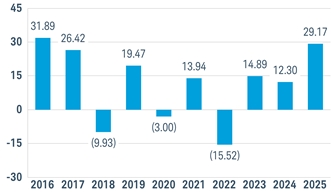
|
|
|
|
|
|
| ||||
|
|
|
|
|
|
|
|
|
|
|
|
| 1 Year |
|
| 5 Years |
|
| 10 Years | ||
|
|
|
|
| ||||||
|
|
|
|
| ||||||
|
|
|
|
|
|
|
| |||
of shares |
|
|
|
|
| |||||
Comparative Indices (reflects no |
|
|
|
|
|
|
|
| ||
deduction for fees,
expenses, or |
|
|
|
|
|
|
|
| ||
|
|
|
|
| ||||||
|
| — |
|
| — |
| ||||
|
|
|
|
| ||||||
|
|
|
|
|
|
|
|
|
|
|
|
|
|
|
|
|
|
|
|
|
|
(1) | The net version of the index reflects reinvested dividends net of withholding taxes, but reflects no deductions for expenses or other taxes. | |||||||||
(2) | The Fundamental Emerging Markets Spliced Index is an internally calculated index comprised of the Russell RAFI Emerging Markets Large Company Index (Net) from October 19, 2012, until the close of business on June 21, 2024, and the RAFI Fundamental High Liquidity Emerging Markets Index (Net) from June 22, 2024, forward. | |||||||||
Schwab Fundamental Emerging Markets Equity Index Fund | Fund Summary | 17 |
Charles Schwab Investment Management, Inc., dba Schwab Asset Management®
Christopher Bliss, CFA, Managing Director and Head of Equity Index Strategies, is responsible for the day-to-day co-management of the fund. He has managed the fund since 2017.
Mariela Jobson, Senior Portfolio Manager, is responsible for the day-to-day co-management of the fund. She has managed the fund since 2024.
Joselle Duncan, CFA, Portfolio Manager, is responsible for the day-to-day co-management of the fund. She has managed the fund since 2024.
David Rios, Senior Portfolio Manager, is responsible for the day-to-day co-management of the fund. He has managed the fund since 2017.
The fund is open for business each day that the New York Stock Exchange (NYSE) is open. If the NYSE is closed due to weather or other extenuating circumstances on a day it would typically be open for business, or the NYSE has an unscheduled early closing on a day it has opened for business, the fund reserves the right to treat such day as a business day and accept purchase and redemption orders and calculate its share price as of the normally scheduled close of regular trading on the NYSE for that day.
Investors may only invest in the fund through an account at Charles Schwab & Co., Inc. (Schwab) or another financial intermediary. When you place orders to purchase, exchange or redeem fund shares through an account at Schwab or another financial intermediary, you must follow Schwab’s or the other financial intermediary’s transaction procedures.
There is no minimum initial investment for the fund.
Dividends and capital gains distributions received from the fund will generally be taxable as ordinary income or capital gains, unless you are investing through an IRA, 401(k) or other tax-advantaged account (in which case you may be taxed later, upon withdrawal of your investment from such account).
If you purchase shares of the fund through a broker-dealer or other financial intermediary (such as a bank), the adviser and its related companies may pay the intermediary for the sale of fund shares and related services. These payments may create a conflict of interest by influencing the broker-dealer or other financial intermediary and your salesperson to recommend the fund over another investment. Ask your salesperson or visit your financial intermediary’s website for more information.
18 | Schwab Fundamental Emerging Markets Equity Index Fund | Fund Summary |
There can be no assurance that a fund will achieve its investment objective. Except as explicitly described otherwise, the investment objectives, strategies, and policies of each fund may be changed without shareholder approval.
The principal investment strategies and the main risks associated with investing in each fund are summarized in the fund summaries at the front of this prospectus. This section takes a more detailed look at some of the types of securities, the associated risks, and the various investment strategies that may be used in the day-to-day portfolio management of the funds, as described below. In addition to the particular types of securities and strategies that are described in this prospectus, each fund may use strategies that are not described herein in support of its overall investment goal. These additional strategies and the risks associated with them are described in the “Investment Strategies, Securities and Risks” section in the Statement of Additional Information (SAI).
Investors should be aware that the investments made by the funds and the results achieved by the funds at any given time are not expected to be the same as those made by exchange-traded funds for which Charles Schwab Investment Management, Inc. serves as investment adviser, including exchange-traded funds with names, investment objectives, and policies similar to the funds.
Schwab Fundamental U.S. Large Company Index Fund
Investment Objective
The fund’s goal is to track as closely as possible, before fees and expenses, the total return of an index that measures the performance of large U.S. companies based on their fundamental size and weight. The fund’s investment objective is not fundamental and therefore may be changed by the fund’s board of trustees without shareholder approval.
Index
As of December 31, 2025, the RAFI Fundamental High Liquidity US Large Index consisted of 718 constituent companies which had an average market capitalization of $684 billion (the market capitalization of the constituent companies ranged from $84 million to $4.5 trillion). The index is owned by RAFI Indices, LLC, a wholly owned subsidiary of Research Affiliates Global Holdings, LLC.
More Information About Principal Investment Risks
The fund is subject to risks, any of which could cause an investor to lose money.
Market Risk — Financial markets rise and fall in response to a variety of factors, sometimes rapidly and unpredictably. Markets may be impacted by economic, political, regulatory and other conditions, including economic sanctions, tariffs, and other government actions. In addition, the occurrence of global events, such as war, terrorism, environmental disasters, natural disasters and epidemics, may also negatively affect the financial markets. These events could reduce consumer demand or economic output; result in market closures, changes in interest rates, inflation/deflation, travel restrictions or quarantines; and significantly adversely impact the economy. Governmental and quasi-governmental authorities and regulators throughout the world have in the past often responded to serious economic disruptions with a variety of significant fiscal and monetary policy changes which could have an unexpected impact on financial markets and the fund’s investments. As with any investment whose performance is tied to financial markets, the value of an investment in the fund will fluctuate, which means that an investor could lose money over short or long periods.
Equity Risk — The prices of equity securities rise and fall daily. These price movements may result from factors affecting individual companies, industries or the securities market as a whole. Individual companies may report poor results or be negatively affected by industry and/or economic trends and developments. The prices of securities issued by such companies may suffer a decline in response. Governmental action, including the imposition of trade embargoes or tariffs, may also impact individual companies or markets as a whole. In addition, equity markets tend to move in cycles, which may cause stock prices to fall over short or extended periods of time.
Investment Style Risk — The fund is an index fund. Therefore, the fund follows the securities included in the index during upturns as well as downturns. Because of its indexing strategy, the fund does not take steps to reduce market exposure or to lessen the effects of a declining market, even though these securities may go in and out of favor based on market and economic conditions. The index does not weigh securities on the basis of investor protection, limitations or differences in the quality of financial reporting or other oversight mechanisms. Therefore, the fund will follow the securities in the index without consideration of these factors. In addition, because of the fund’s expenses, the fund’s performance may be below that of the index.
Schwab Fundamental Index Funds | Fund Details | 19 |
At times the segment of the markets represented by the index may underperform other market segments. A significant percentage of the index may be composed of securities in a single industry or sector of the economy. If the fund is focused in an industry or sector, it may present more risks than if it were broadly diversified over numerous industries and sectors of the economy. Because of the way the index is composed, the index may perform differently or worse than an index that is based solely on market capitalization.
Index-Related Risk — The index provider does not provide any warranty as to the timeliness, accuracy or completeness of any data relating to the index. Errors relating to the index, including index data, computations and/or construction, may occur from time to time and may not be identified by the index provider for a period of time or at all. Losses resulting from index errors may be borne by the fund and its shareholders. In addition, there can be no guarantee that the index will operate as intended during volatile market conditions or over the course of a full market cycle.
In addition, market disruptions could cause delays in the index’s rebalancing schedule which may result in the index and, in turn, the fund experiencing returns different than those that would have been achieved under a normal rebalancing schedule.
Market Capitalization Risk — Securities issued by companies of different market capitalizations tend to go in and out of favor based on market and economic conditions. In addition, there may be less trading volume in securities issued by mid- and small-cap companies than those issued by larger companies and, as a result, trading volatility may have a greater impact on the value of securities of mid- and small-cap companies. Securities issued by large-cap companies, on the other hand, may not be able to attain the high growth rates of some mid- and small-cap companies. During a period when securities of a particular market capitalization fall behind other types of investments, the fund’s performance could be impacted.
Large-Cap Company Risk — Large-cap companies are generally more mature than smaller companies. They also may have fewer new market opportunities for their products or services, may focus resources on maintaining their market share, and may be unable to respond quickly to new competitive challenges. As a result, the securities issued by these companies may not be able to reach the same levels of growth as the securities issued by small- or mid-cap companies.
Tracking Error and Correlation Risk — As an index fund, the fund seeks to track the performance of the index, although it may not be successful in doing so. The divergence between the performance of the fund and the index, positive or negative, is called “tracking error.” Tracking error can be caused by many factors and it may be significant. For example, the fund may not invest in certain securities in the index, match the securities’ weighting to the index, or the fund may invest in securities not in the index, due to regulatory, operational, custodial or liquidity constraints; corporate transactions; asset valuations; transaction costs and timing; tax considerations; and index rebalancing, which may result in tracking error. The fund may attempt to offset the effects of not being invested in certain index securities by making substitute investments, but these efforts may not be successful. In certain circumstances, the fund may value individual securities based on fair value prices developed using methods approved by the fund’s Board of Trustees. To the extent the fund calculates its net asset value (NAV) based on fair value prices, the fund’s performance may diverge from that of its index. In addition, cash flows into and out of the fund, timing variances, operating expenses and trading costs all affect the ability of the fund to match the performance of the index, because the index does not have to manage cash flows and does not incur any costs. Lastly, differences between the fund’s portfolio and the index resulting from legal restrictions (such as diversification requirements) that apply to the fund but not to the index impact correlation between the performance of the fund and that of its index.
Derivatives Risk — The fund may use derivatives to enhance returns or hedge against market declines. Examples of derivatives are options, futures, options on futures and swaps. An option is the right to buy or sell an instrument at a specific price before a specific date. A future is an agreement to buy or sell a financial instrument at a specific price on a specific day. A swap is an agreement whereby two parties agree to exchange payment streams calculated in relation to a rate, index, instrument or certain securities and a predetermined amount. The fund’s use of derivatives that are subject to regulation by the Commodity Futures Trading Commission (CFTC) could cause the fund to become a commodity pool, which would require the fund to comply with certain CFTC rules.
The fund’s use of derivative instruments involves risks different from, or possibly greater than, the risks associated with investing directly in securities and other traditional investments. Certain of these risks, such as liquidity risk and market risk, are discussed elsewhere in this prospectus. The fund’s use of derivatives is also subject to lack of availability risk, credit risk, leverage risk, valuation risk, correlation risk, tax risk, and operational risk. Lack of availability risk is the risk that suitable derivative transactions may not be available in all circumstances for risk management or other purposes. Credit risk is the risk that the counterparty to a derivatives transaction may not fulfill its obligations. Leverage risk is the risk that a small percentage of assets invested in derivatives can have a disproportionately large impact on the fund. Valuation risk is the risk that a particular derivative may be valued incorrectly. Correlation risk is the risk that changes in the value of the derivative may not correlate perfectly with the underlying asset, rate or index. Tax risk is the risk that the use of derivatives may cause the fund to realize higher amounts of short-term capital gains. Operational risk is the risk related to operational issues, including documentation issues, settlement issues, systems failures, inadequate controls, and human error. The fund’s use of derivatives could reduce the fund’s performance, increase the fund’s volatility, and could cause the fund to lose more than the initial amount invested. The fund’s use of derivatives also could create a risk of counterparty default under certain transactions, risks that the fund would need to
20 | Schwab Fundamental Index Funds | Fund Details |
liquidate portfolio positions when it may not be advantageous to do so in order to meet margin and payment obligations, and legal risks relating to insufficient documentation, insufficient capacity or authority of a counterparty, or legality or enforceability of a contract.
Liquidity Risk — Liquidity risk exists when particular investments may be difficult to purchase, sell or value, especially during stressed market conditions. The market for certain investments may become illiquid due to specific adverse changes in the conditions of a particular issuer or under adverse market or economic conditions independent of the issuer. In addition, limited dealer inventories of certain securities could potentially lead to decreased liquidity. In such cases, the fund, due to limitations on investments in illiquid securities and the difficulty in readily purchasing and selling such securities at favorable times or prices, may decline in value, experience lower returns and/or be unable to achieve its desired level of exposure to a certain issuer or sector. Further, transactions in illiquid securities may entail transaction costs that are higher than those for transactions in liquid securities. Liquidity risk also includes the risk that market conditions or large shareholder redemptions, which may occur rapidly or unexpectedly, may impact the ability of the fund to meet redemption requests within the required time period. In order to meet such redemption requests, the fund may be forced to sell securities at inopportune times or prices.
Securities Lending Risk — The fund may lend its portfolio securities to brokers, dealers, and other financial institutions provided a number of conditions are satisfied, including that the loan is fully collateralized. When the fund lends portfolio securities, its investment performance will continue to reflect changes in the value of the securities loaned, and the fund will also receive a fee or interest on the collateral. Securities lending involves the risk of loss of rights in, or delay in recovery of, the loaned securities if the borrower fails to return the security loaned or becomes insolvent. The fund will also bear the risk of any decline in value of securities acquired with cash collateral. The fund may pay lending fees to a party arranging the loan.
Schwab Fundamental U.S. Small Company Index Fund
Investment Objective
The fund’s goal is to track as closely as possible, before fees and expenses, the total return of an index that measures the performance of small U.S. companies based on their fundamental size and weight. The fund’s investment objective is not fundamental and therefore may be changed by the fund’s board of trustees without shareholder approval.
Index
As of December 31, 2025, the RAFI Fundamental High Liquidity US Small Index consisted of 902 constituent companies which had an average market capitalization of $8 billion (the market capitalization of the constituent companies ranged from $18 million to $424 billion). The index is owned by RAFI Indices, LLC, a wholly owned subsidiary of Research Affiliates Global Holdings, LLC.
More Information About Principal Investment Risks
The fund is subject to risks, any of which could cause an investor to lose money.
Market Risk — Financial markets rise and fall in response to a variety of factors, sometimes rapidly and unpredictably. Markets may be impacted by economic, political, regulatory and other conditions, including economic sanctions, tariffs, and other government actions. In addition, the occurrence of global events, such as war, terrorism, environmental disasters, natural disasters and epidemics, may also negatively affect the financial markets. These events could reduce consumer demand or economic output; result in market closures, changes in interest rates, inflation/deflation, travel restrictions or quarantines; and significantly adversely impact the economy. Governmental and quasi-governmental authorities and regulators throughout the world have in the past often responded to serious economic disruptions with a variety of significant fiscal and monetary policy changes which could have an unexpected impact on financial markets and the fund’s investments. As with any investment whose performance is tied to financial markets, the value of an investment in the fund will fluctuate, which means that an investor could lose money over short or long periods.
Equity Risk — The prices of equity securities rise and fall daily. These price movements may result from factors affecting individual companies, industries or the securities market as a whole. Individual companies may report poor results or be negatively affected by industry and/or economic trends and developments. The prices of securities issued by such companies may suffer a decline in response. Governmental action, including the imposition of trade embargoes or tariffs, may also impact individual companies or markets as a whole. In addition, equity markets tend to move in cycles, which may cause stock prices to fall over short or extended periods of time.
Investment Style Risk — The fund is an index fund. Therefore, the fund follows the securities included in the index, which may include real estate investment trusts, during upturns as well as downturns. Because of its indexing strategy, the fund does not take steps to reduce market exposure or to lessen the effects of a declining market, even though these securities may go in and out of favor based on market and economic conditions. The index does not weigh securities on the basis of investor protection, limitations or differences in the quality of
Schwab Fundamental Index Funds | Fund Details | 21 |
financial reporting or other oversight mechanisms. Therefore, the fund will follow the securities in the index without consideration of these factors. In addition, because of the fund’s expenses, the fund’s performance may be below that of the index.
At times the segment of the markets represented by the index may underperform other market segments. A significant percentage of the index may be composed of securities in a single industry or sector of the economy. If the fund is focused in an industry or sector, it may present more risks than if it were broadly diversified over numerous industries and sectors of the economy. Because of the way the index is composed, the index may perform differently or worse than an index that is based solely on market capitalization.
Index-Related Risk — The index provider does not provide any warranty as to the timeliness, accuracy or completeness of any data relating to the index. Errors relating to the index, including index data, computations and/or construction, may occur from time to time and may not be identified by the index provider for a period of time or at all. Losses resulting from index errors may be borne by the fund and its shareholders. In addition, there can be no guarantee that the index will operate as intended during volatile market conditions or over the course of a full market cycle.
In addition, market disruptions could cause delays in the index’s rebalancing schedule which may result in the index and, in turn, the fund experiencing returns different than those that would have been achieved under a normal rebalancing schedule.
Market Capitalization Risk — Securities issued by companies of different market capitalizations tend to go in and out of favor based on market and economic conditions. In addition, there may be less trading volume in securities issued by mid- and small-cap companies than those issued by larger companies and, as a result, trading volatility may have a greater impact on the value of securities of mid- and small-cap companies. Securities issued by large-cap companies, on the other hand, may not be able to attain the high growth rates of some mid- and small-cap companies. During a period when securities of a particular market capitalization fall behind other types of investments, the fund’s performance could be impacted.
Small-Cap Company Risk — Small-cap companies may be more vulnerable to adverse business or economic events than larger, more established companies and their securities may be riskier than those issued by larger companies. The value of securities issued by small-cap companies may be based in substantial part on future expectations rather than current achievements and their prices may move sharply, especially during market upturns and downturns. In addition, small-cap companies may have limited financial resources, management experience, product lines and markets, and their securities may trade less frequently and in more limited volumes than the securities of larger companies. Further, small-cap companies may have less publicly available information and such information may be inaccurate or incomplete.
Real Estate Investment Trusts (REITs) Risk — Although the fund does not invest directly in real estate, due to the composition of the index, the fund may have exposure to securities of REITs. Equity REITs may be affected by changes in the value of the underlying properties owned by the trusts. Further, REITs are dependent upon specialized management skills and may have their investments in relatively few properties, or in a small geographic area or a single property type. REITs are also subject to heavy cash flow dependency, defaults by borrowers and self-liquidation. The value of a REIT will also rise and fall in response to the creditworthiness of the issuer. In particular, the value of these securities may be affected by changes in interest rates. In addition, REITs could possibly fail to qualify for tax free pass-through of income under the Internal Revenue Code of 1986, as amended, or to maintain their exemptions from registration under the Investment Company Act of 1940, as amended. The failure of a company to qualify as a REIT under federal tax law may have adverse consequences to the fund. The above factors may also adversely affect a borrower’s or a lessee’s ability to meet its obligations to the REIT. In the event of a default by a borrower or lessee, the REIT may experience delays in enforcing its rights as a mortgagee or lessor and may incur substantial costs associated with protecting its investments. In addition, REITs have their own expenses, and the fund will bear a proportionate share of those expenses. Further, dividends paid by REITs are taxed as ordinary income and generally do not qualify for the preferential rate applicable to qualified dividend income. REITs may be more volatile and/or more illiquid than other types of securities.
Tracking Error and Correlation Risk — As an index fund, the fund seeks to track the performance of the index, although it may not be successful in doing so. The divergence between the performance of the fund and the index, positive or negative, is called “tracking error.” Tracking error can be caused by many factors and it may be significant. For example, the fund may not invest in certain securities in the index, match the securities’ weighting to the index, or the fund may invest in securities not in the index, due to regulatory, operational, custodial or liquidity constraints; corporate transactions; asset valuations; transaction costs and timing; tax considerations; and index rebalancing, which may result in tracking error. The fund may attempt to offset the effects of not being invested in certain index securities by making substitute investments, but these efforts may not be successful. In certain circumstances, the fund may value individual securities based on fair value prices developed using methods approved by the fund’s Board of Trustees. To the extent the fund calculates its net asset value (NAV) based on fair value prices, the fund’s performance may diverge from that of its index. In addition, cash flows into and out of the fund, timing variances, operating expenses and trading costs all affect the ability of the fund to match the performance of the index, because the index does not have to manage cash flows and does not incur any costs. Lastly, differences between the fund’s portfolio and the index resulting from legal restrictions (such as diversification requirements) that apply to the fund but not to the index impact correlation between the performance of the fund and that of its index.
22 | Schwab Fundamental Index Funds | Fund Details |
Derivatives Risk — The fund may use derivatives to enhance returns or hedge against market declines. Examples of derivatives are options, futures, options on futures and swaps. An option is the right to buy or sell an instrument at a specific price before a specific date. A future is an agreement to buy or sell a financial instrument at a specific price on a specific day. A swap is an agreement whereby two parties agree to exchange payment streams calculated in relation to a rate, index, instrument or certain securities and a predetermined amount. The fund’s use of derivatives that are subject to regulation by the Commodity Futures Trading Commission (CFTC) could cause the fund to become a commodity pool, which would require the fund to comply with certain CFTC rules.
The fund’s use of derivative instruments involves risks different from, or possibly greater than, the risks associated with investing directly in securities and other traditional investments. Certain of these risks, such as liquidity risk and market risk, are discussed elsewhere in this prospectus. The fund’s use of derivatives is also subject to lack of availability risk, credit risk, leverage risk, valuation risk, correlation risk, tax risk, and operational risk. Lack of availability risk is the risk that suitable derivative transactions may not be available in all circumstances for risk management or other purposes. Credit risk is the risk that the counterparty to a derivatives transaction may not fulfill its obligations. Leverage risk is the risk that a small percentage of assets invested in derivatives can have a disproportionately large impact on the fund. Valuation risk is the risk that a particular derivative may be valued incorrectly. Correlation risk is the risk that changes in the value of the derivative may not correlate perfectly with the underlying asset, rate or index. Tax risk is the risk that the use of derivatives may cause the fund to realize higher amounts of short-term capital gains. Operational risk is the risk related to operational issues, including documentation issues, settlement issues, systems failures, inadequate controls, and human error. The fund’s use of derivatives could reduce the fund’s performance, increase the fund’s volatility, and could cause the fund to lose more than the initial amount invested. The fund’s use of derivatives also could create a risk of counterparty default under certain transactions, risks that the fund would need to liquidate portfolio positions when it may not be advantageous to do so in order to meet margin and payment obligations, and legal risks relating to insufficient documentation, insufficient capacity or authority of a counterparty, or legality or enforceability of a contract.
Liquidity Risk — Liquidity risk exists when particular investments may be difficult to purchase, sell or value, especially during stressed market conditions. The market for certain investments may become illiquid due to specific adverse changes in the conditions of a particular issuer or under adverse market or economic conditions independent of the issuer. In addition, limited dealer inventories of certain securities could potentially lead to decreased liquidity. In such cases, the fund, due to limitations on investments in illiquid securities and the difficulty in readily purchasing and selling such securities at favorable times or prices, may decline in value, experience lower returns and/or be unable to achieve its desired level of exposure to a certain issuer or sector. Further, transactions in illiquid securities may entail transaction costs that are higher than those for transactions in liquid securities. Liquidity risk also includes the risk that market conditions or large shareholder redemptions, which may occur rapidly or unexpectedly, may impact the ability of the fund to meet redemption requests within the required time period. In order to meet such redemption requests, the fund may be forced to sell securities at inopportune times or prices.
Securities Lending Risk — The fund may lend its portfolio securities to brokers, dealers, and other financial institutions provided a number of conditions are satisfied, including that the loan is fully collateralized. When the fund lends portfolio securities, its investment performance will continue to reflect changes in the value of the securities loaned, and the fund will also receive a fee or interest on the collateral. Securities lending involves the risk of loss of rights in, or delay in recovery of, the loaned securities if the borrower fails to return the security loaned or becomes insolvent. The fund will also bear the risk of any decline in value of securities acquired with cash collateral. The fund may pay lending fees to a party arranging the loan.
Schwab Fundamental International Equity Index Fund
Investment Objective
The fund’s goal is to track as closely as possible, before fees and expenses, the total return of an index that measures the performance of large non-U.S. developed market companies based on their fundamental size and weight. The fund’s investment objective is not fundamental and therefore may be changed by the fund’s board of trustees without shareholder approval.
Index
As of December 31, 2025, the RAFI Fundamental High Liquidity Developed ex US Large Index consisted of 875 constituent companies which had an average market capitalization of $95 billion (the market capitalization of the constituent companies ranged from $358 million to $552 billion). The index is owned by RAFI Indices, LLC, a wholly owned subsidiary of Research Affiliates Global Holdings, LLC.
More Information About Principal Investment Risks
The fund is subject to risks, any of which could cause an investor to lose money.
Schwab Fundamental Index Funds | Fund Details | 23 |
Market Risk — Financial markets rise and fall in response to a variety of factors, sometimes rapidly and unpredictably. Markets may be impacted by economic, political, regulatory and other conditions, including economic sanctions, tariffs, and other government actions. In addition, the occurrence of global events, such as war, terrorism, environmental disasters, natural disasters and epidemics, may also negatively affect the financial markets. These events could reduce consumer demand or economic output; result in market closures, changes in interest rates, inflation/deflation, travel restrictions or quarantines; and significantly adversely impact the economy. Governmental and quasi-governmental authorities and regulators throughout the world have in the past often responded to serious economic disruptions with a variety of significant fiscal and monetary policy changes which could have an unexpected impact on financial markets and the fund’s investments. As with any investment whose performance is tied to financial markets, the value of an investment in the fund will fluctuate, which means that an investor could lose money over short or long periods.
Equity Risk — The prices of equity securities rise and fall daily. These price movements may result from factors affecting individual companies, industries or the securities market as a whole. Individual companies may report poor results or be negatively affected by industry and/or economic trends and developments. The prices of securities issued by such companies may suffer a decline in response. Governmental action, including the imposition of trade embargoes or tariffs, may also impact individual companies or markets as a whole. In addition, equity markets tend to move in cycles, which may cause stock prices to fall over short or extended periods of time.
Investment Style Risk — The fund is an index fund. Therefore, the fund follows the securities included in the index during upturns as well as downturns. Because of its indexing strategy, the fund does not take steps to reduce market exposure or to lessen the effects of a declining market, even though these securities may go in and out of favor based on market and economic conditions. The index does not weigh securities on the basis of investor protection, limitations or differences in the quality of financial reporting or other oversight mechanisms. Therefore, the fund will follow the securities in the index without consideration of these factors. In addition, because of the fund’s expenses, the fund’s performance may be below that of the index.
At times the segment of the markets represented by the index may underperform other market segments. A significant percentage of the index may be composed of securities in a single industry or sector of the economy. If the fund is focused in an industry or sector, it may present more risks than if it were broadly diversified over numerous industries and sectors of the economy. Because of the way the index is composed, the index may perform differently or worse than an index that is based solely on market capitalization.
Index-Related Risk — The index provider does not provide any warranty as to the timeliness, accuracy or completeness of any data relating to the index. Errors relating to the index, including index data, computations and/or construction, may occur from time to time and may not be identified by the index provider for a period of time or at all. Losses resulting from index errors may be borne by the fund and its shareholders. In addition, there can be no guarantee that the index will operate as intended during volatile market conditions or over the course of a full market cycle.
In addition, market disruptions could cause delays in the index’s rebalancing schedule which may result in the index and, in turn, the fund experiencing returns different than those that would have been achieved under a normal rebalancing schedule.
Market Capitalization Risk — Securities issued by companies of different market capitalizations tend to go in and out of favor based on market and economic conditions. In addition, there may be less trading volume in securities issued by mid- and small-cap companies than those issued by larger companies and, as a result, trading volatility may have a greater impact on the value of securities of mid- and small-cap companies. Securities issued by large-cap companies, on the other hand, may not be able to attain the high growth rates of some mid- and small-cap companies. During a period when securities of a particular market capitalization fall behind other types of investments, the fund’s performance could be impacted.
Large-Cap Company Risk — Large-cap companies are generally more mature than smaller companies. They also may have fewer new market opportunities for their products or services, may focus resources on maintaining their market share, and may be unable to respond quickly to new competitive challenges. As a result, the securities issued by these companies may not be able to reach the same levels of growth as the securities issued by small- or mid-cap companies.
Tracking Error and Correlation Risk — As an index fund, the fund seeks to track the performance of the index, although it may not be successful in doing so. The divergence between the performance of the fund and the index, positive or negative, is called “tracking error.” Tracking error can be caused by many factors and it may be significant. For example, the fund may not invest in certain securities in the index, match the securities’ weighting to the index, or the fund may invest in securities not in the index, due to regulatory, operational, custodial or liquidity constraints; corporate transactions; asset valuations; transaction costs and timing; tax considerations; and index rebalancing, which may result in tracking error. In addition, the fund may not invest in issuers located in certain countries due to these considerations. The fund may attempt to offset the effects of not being invested in certain index securities by making substitute investments, but these efforts may not be successful. In certain circumstances, the fund may value individual securities based on fair value prices developed using methods approved by the fund’s Board of Trustees. To the extent the fund calculates its net asset value (NAV) based on fair value prices, the fund’s performance may diverge from that of its index. In addition, cash flows into and out of the fund, timing
24 | Schwab Fundamental Index Funds | Fund Details |
variances, operating expenses and trading costs all affect the ability of the fund to match the performance of the index, because the index does not have to manage cash flows and does not incur any costs. Tracking error may also be impacted by timing differences in currency conversions between the fund and the index and by the fund’s use of fair valuation. Lastly, differences between the fund’s portfolio and the index resulting from legal restrictions (such as diversification requirements) that apply to the fund but not to the index impact correlation between the performance of the fund and that of its index.
Foreign Investment Risk — The fund’s investments in securities of foreign issuers involve certain risks that may be greater than those associated with investments in securities of U.S. issuers. These include risks of adverse changes in foreign economic, political, regulatory and other conditions; changes in currency exchange rates or exchange control regulations (including limitations on currency movements and exchanges); differing accounting, auditing, financial reporting and legal standards and practices; differing securities market structures; and higher transaction costs. In certain countries, legal remedies available to investors may be more limited than those available with respect to investments in the U.S. These risks may negatively impact the value or liquidity of the fund’s investments and could impair the fund’s ability to meet its investment objective or invest in accordance with its investment strategy. In addition, the fund’s investments in foreign securities may be subject to economic sanctions or other government restrictions, including trade tariffs, embargoes or limitations on trade which could have a significant impact on a country’s markets overall as well as global economies or markets. There also is the risk that the cost of buying, selling, and holding foreign securities, including brokerage, tax, and custody costs, may be higher than those involved in domestic transactions. The securities of some foreign companies may be less liquid and, at times, more volatile than securities of comparable U.S. companies. The fund may also experience more rapid or extreme changes in value as compared to a fund that invests solely in securities of U.S. companies because the securities markets of many foreign countries are relatively small, with a limited number of companies representing a small number of industries. To the extent the fund’s investments in a single country or a limited number of countries represent a large percentage of the fund’s assets, the fund’s performance may be adversely affected by the economic, political, regulatory and social conditions in those countries, and the fund’s price may be more volatile than the price of a fund that is geographically diversified.
Depositary Receipt Risk — Foreign securities also include ADRs, which are U.S. dollar-denominated receipts representing shares of foreign-based corporations. ADRs are issued by U.S. banks or trust companies and entitle the holder to all dividends and capital gains that are paid out on the underlying foreign shares. Foreign securities also include GDRs, which are similar to ADRs, but are shares of foreign-based corporations generally issued by international banks in one or more markets around the world. In addition, foreign securities include EDRs, which are similar to GDRs, but are shares of foreign-based corporations generally issued by European banks that trade on exchanges outside of the bank’s home country. Investment in ADRs, GDRs and EDRs may be less liquid than the underlying shares in their primary trading market and GDRs, many of which are issued by companies in emerging markets, may be more volatile.
Variable Interest Entities (VIEs) Risk — The fund may gain exposure to certain operating companies in China through legal structures known as VIEs. In China, ownership of companies in certain sectors by non-Chinese individuals and entities (including U.S. persons and entities, such as the fund) is prohibited. To facilitate indirect non-Chinese investment, many China-based operating companies have created VIE structures. In a VIE structure, a China-based operating company will establish an entity outside of China that will enter into service and other contracts with the China-based operating company. Shares of the entities established outside of China are often listed and traded on an exchange. Non-Chinese investors (such as the fund) hold equity interests in the entities established outside of China rather than directly in the China-based operating companies. This arrangement allows U.S. investors to obtain economic exposure to the China-based operating company through contractual means rather than through formal equity ownership. An investment in a VIE structure subjects the fund to the risks associated with the underlying China-based operating company. In addition, the fund may be exposed to certain associated risks, including the risks that: the Chinese government could subject the China-based operating company to penalties, revocation of business and operating licenses or forfeiture of ownership interests; the Chinese government may outlaw the VIE structure, which could cause an uncertain negative impact to existing investors in the VIE structure; the contracts underlying the VIE structure may not be enforced by Chinese courts; and shareholders of the China-based operating company may leverage the VIE structure to their benefit and to the detriment of the investors in the VIE structure. If these actions were to occur, the market value of the fund’s investments in the VIE structure would likely fall, causing investment losses, which could be substantial, for the fund.
Currency Risk — The fund’s investments in securities denominated in, and/or receiving revenues in, foreign currencies, will subject the fund to the risk that those currencies will decline in value relative to the U.S. dollar. In either event, the dollar value of an investment in the fund would be adversely affected. Currency exchange rates may fluctuate in response to factors extrinsic to that country’s economy, which makes the forecasting of currency market movements extremely difficult. Currency rates in foreign countries may fluctuate significantly over short periods of time for a number of reasons, including changes in interest rates; intervention (or failure to intervene) by U.S. or foreign governments, central banks or supranational entities such as the International Monetary Fund; or by the imposition of currency controls or other political developments in the United States or abroad. These can result in losses to the fund if it is unable to deliver or receive currency or monies in settlement of obligations. Forward contracts on foreign currencies are not traded on exchanges; rather, a bank or dealer will act as agent or as principal in order to make or take future delivery of a specified lot of a particular currency for the fund’s account. The fund is subject to the risk of a counterparty’s failure, inability or refusal to perform with respect to such contracts.
Schwab Fundamental Index Funds | Fund Details | 25 |
Derivatives Risk — The fund may use derivatives to enhance returns or hedge against market declines. Examples of derivatives are options, futures, options on futures and swaps. An option is the right to buy or sell an instrument at a specific price before a specific date. A future is an agreement to buy or sell a financial instrument at a specific price on a specific day. A swap is an agreement whereby two parties agree to exchange payment streams calculated in relation to a rate, index, instrument or certain securities and a predetermined amount. The fund’s use of derivatives that are subject to regulation by the Commodity Futures Trading Commission (CFTC) could cause the fund to become a commodity pool, which would require the fund to comply with certain CFTC rules.
The fund’s use of derivative instruments involves risks different from, or possibly greater than, the risks associated with investing directly in securities and other traditional investments. Certain of these risks, such as liquidity risk and market risk, are discussed elsewhere in this prospectus. The fund’s use of derivatives is also subject to lack of availability risk, credit risk, leverage risk, valuation risk, correlation risk, tax risk, and operational risk. Lack of availability risk is the risk that suitable derivative transactions may not be available in all circumstances for risk management or other purposes. Credit risk is the risk that the counterparty to a derivatives transaction may not fulfill its obligations. Leverage risk is the risk that a small percentage of assets invested in derivatives can have a disproportionately large impact on the fund. Valuation risk is the risk that a particular derivative may be valued incorrectly. Correlation risk is the risk that changes in the value of the derivative may not correlate perfectly with the underlying asset, rate or index. Tax risk is the risk that the use of derivatives may cause the fund to realize higher amounts of short-term capital gains. Operational risk is the risk related to operational issues, including documentation issues, settlement issues, systems failures, inadequate controls, and human error. The fund’s use of derivatives could reduce the fund’s performance, increase the fund’s volatility, and could cause the fund to lose more than the initial amount invested. The fund’s use of derivatives also could create a risk of counterparty default under certain transactions, risks that the fund would need to liquidate portfolio positions when it may not be advantageous to do so in order to meet margin and payment obligations, and legal risks relating to insufficient documentation, insufficient capacity or authority of a counterparty, or legality or enforceability of a contract.
Liquidity Risk — Liquidity risk exists when particular investments may be difficult to purchase, sell or value, especially during stressed market conditions. The market for certain investments may become illiquid due to specific adverse changes in the conditions of a particular issuer or under adverse market or economic conditions independent of the issuer. In addition, limited dealer inventories of certain securities could potentially lead to decreased liquidity. In such cases, the fund, due to limitations on investments in illiquid securities and the difficulty in readily purchasing and selling such securities at favorable times or prices, may decline in value, experience lower returns and/or be unable to achieve its desired level of exposure to a certain issuer or sector. Further, transactions in illiquid securities may entail transaction costs that are higher than those for transactions in liquid securities. Liquidity risk also includes the risk that market conditions or large shareholder redemptions, which may occur rapidly or unexpectedly, may impact the ability of the fund to meet redemption requests within the required time period. In order to meet such redemption requests, the fund may be forced to sell securities at inopportune times or prices.
Securities Lending Risk — The fund may lend its portfolio securities to brokers, dealers, and other financial institutions provided a number of conditions are satisfied, including that the loan is fully collateralized. When the fund lends portfolio securities, its investment performance will continue to reflect changes in the value of the securities loaned, and the fund will also receive a fee or interest on the collateral. Securities lending involves the risk of loss of rights in, or delay in recovery of, the loaned securities if the borrower fails to return the security loaned or becomes insolvent. The fund will also bear the risk of any decline in value of securities acquired with cash collateral. The fund may pay lending fees to a party arranging the loan.
Schwab Fundamental International Small Equity Index Fund
Investment Objective
The fund’s goal is to track as closely as possible, before fees and expenses, the total return of an index that measures the performance of small non-U.S. developed market companies based on their fundamental size and weight. The fund’s investment objective is not fundamental and therefore may be changed by the fund’s board of trustees without shareholder approval.
Index
As of December 31, 2025, the RAFI Fundamental High Liquidity Developed ex US Small Index consisted of 1,462 constituent companies which had an average market capitalization of $5 billion (the market capitalization of the constituent companies ranged from $243 million to $120 billion). The index is owned by RAFI Indices, LLC, a wholly owned subsidiary of Research Affiliates Global Holdings, LLC.
More Information About Principal Investment Risks
The fund is subject to risks, any of which could cause an investor to lose money.
26 | Schwab Fundamental Index Funds | Fund Details |
Market Risk — Financial markets rise and fall in response to a variety of factors, sometimes rapidly and unpredictably. Markets may be impacted by economic, political, regulatory and other conditions, including economic sanctions, tariffs, and other government actions. In addition, the occurrence of global events, such as war, terrorism, environmental disasters, natural disasters and epidemics, may also negatively affect the financial markets. These events could reduce consumer demand or economic output; result in market closures, changes in interest rates, inflation/deflation, travel restrictions or quarantines; and significantly adversely impact the economy. Governmental and quasi-governmental authorities and regulators throughout the world have in the past often responded to serious economic disruptions with a variety of significant fiscal and monetary policy changes which could have an unexpected impact on financial markets and the fund’s investments. As with any investment whose performance is tied to financial markets, the value of an investment in the fund will fluctuate, which means that an investor could lose money over short or long periods.
Equity Risk — The prices of equity securities rise and fall daily. These price movements may result from factors affecting individual companies, industries or the securities market as a whole. Individual companies may report poor results or be negatively affected by industry and/or economic trends and developments. The prices of securities issued by such companies may suffer a decline in response. Governmental action, including the imposition of trade embargoes or tariffs, may also impact individual companies or markets as a whole. In addition, equity markets tend to move in cycles, which may cause stock prices to fall over short or extended periods of time.
Investment Style Risk — The fund is an index fund. Therefore, the fund follows the securities included in the index, which may include real estate investment trusts, during upturns as well as downturns. Because of its indexing strategy, the fund does not take steps to reduce market exposure or to lessen the effects of a declining market, even though these securities may go in and out of favor based on market and economic conditions. The index does not weigh securities on the basis of investor protection, limitations or differences in the quality of financial reporting or other oversight mechanisms. Therefore, the fund will follow the securities in the index without consideration of these factors. In addition, because of the fund’s expenses, the fund’s performance may be below that of the index.
At times the segment of the markets represented by the index may underperform other market segments. A significant percentage of the index may be composed of securities in a single industry or sector of the economy. If the fund is focused in an industry or sector, it may present more risks than if it were broadly diversified over numerous industries and sectors of the economy. Because of the way the index is composed, the index may perform differently or worse than an index that is based solely on market capitalization.
Index-Related Risk — The index provider does not provide any warranty as to the timeliness, accuracy or completeness of any data relating to the index. Errors relating to the index, including index data, computations and/or construction, may occur from time to time and may not be identified by the index provider for a period of time or at all. Losses resulting from index errors may be borne by the fund and its shareholders. In addition, there can be no guarantee that the index will operate as intended during volatile market conditions or over the course of a full market cycle.
In addition, market disruptions could cause delays in the index’s rebalancing schedule which may result in the index and, in turn, the fund experiencing returns different than those that would have been achieved under a normal rebalancing schedule.
Market Capitalization Risk — Securities issued by companies of different market capitalizations tend to go in and out of favor based on market and economic conditions. In addition, there may be less trading volume in securities issued by mid- and small-cap companies than those issued by larger companies and, as a result, trading volatility may have a greater impact on the value of securities of mid- and small-cap companies. Securities issued by large-cap companies, on the other hand, may not be able to attain the high growth rates of some mid- and small-cap companies. During a period when securities of a particular market capitalization fall behind other types of investments, the fund’s performance could be impacted.
Small-Cap Company Risk — Small-cap companies may be more vulnerable to adverse business or economic events than larger, more established companies and their securities may be riskier than those issued by larger companies. The value of securities issued by small-cap companies may be based in substantial part on future expectations rather than current achievements and their prices may move sharply, especially during market upturns and downturns. In addition, small-cap companies may have limited financial resources, management experience, product lines and markets, and their securities may trade less frequently and in more limited volumes than the securities of larger companies. Further, small-cap companies may have less publicly available information and such information may be inaccurate or incomplete.
Real Estate Investment Trusts (REITs) Risk — Although the fund does not invest directly in real estate, due to the composition of the index, the fund may have exposure to securities of REITs. Equity REITs may be affected by changes in the value of the underlying properties owned by the trusts. Further, REITs are dependent upon specialized management skills and may have their investments in relatively few properties, or in a small geographic area or a single property type. REITs are also subject to heavy cash flow dependency, defaults by borrowers and self-liquidation. The value of a REIT will also rise and fall in response to the creditworthiness of the issuer. In particular, the value of these securities may be affected by changes in interest rates. In addition, REITs could possibly fail to qualify for tax free pass-through of income under the Internal Revenue Code of 1986, as amended, or to maintain their exemptions from registration under the Investment Company
Schwab Fundamental Index Funds | Fund Details | 27 |
Act of 1940, as amended. The failure of a company to qualify as a REIT under federal tax law may have adverse consequences to the fund. The above factors may also adversely affect a borrower’s or a lessee’s ability to meet its obligations to the REIT. In the event of a default by a borrower or lessee, the REIT may experience delays in enforcing its rights as a mortgagee or lessor and may incur substantial costs associated with protecting its investments. In addition, REITs have their own expenses, and the fund will bear a proportionate share of those expenses. Further, dividends paid by REITs are taxed as ordinary income and generally do not qualify for the preferential rate applicable to qualified dividend income. REITs may be more volatile and/or more illiquid than other types of securities.
Tracking Error and Correlation Risk — As an index fund, the fund seeks to track the performance of the index, although it may not be successful in doing so. The divergence between the performance of the fund and the index, positive or negative, is called “tracking error.” Tracking error can be caused by many factors and it may be significant. For example, the fund may not invest in certain securities in the index, match the securities’ weighting to the index, or the fund may invest in securities not in the index, due to regulatory, operational, custodial or liquidity constraints; corporate transactions; asset valuations; transaction costs and timing; tax considerations; and index rebalancing, which may result in tracking error. In addition, the fund may not invest in issuers located in certain countries due to these considerations. The fund may attempt to offset the effects of not being invested in certain index securities by making substitute investments, but these efforts may not be successful. In certain circumstances, the fund may value individual securities based on fair value prices developed using methods approved by the fund’s Board of Trustees. To the extent the fund calculates its net asset value (NAV) based on fair value prices, the fund’s performance may diverge from that of its index. In addition, cash flows into and out of the fund, timing variances, operating expenses and trading costs all affect the ability of the fund to match the performance of the index, because the index does not have to manage cash flows and does not incur any costs. Tracking error may also be impacted by timing differences in currency conversions between the fund and the index and by the fund’s use of fair valuation. Lastly, differences between the fund’s portfolio and the index resulting from legal restrictions (such as diversification requirements) that apply to the fund but not to the index impact correlation between the performance of the fund and that of its index.
Foreign Investment Risk — The fund’s investments in securities of foreign issuers involve certain risks that may be greater than those associated with investments in securities of U.S. issuers. These include risks of adverse changes in foreign economic, political, regulatory and other conditions; changes in currency exchange rates or exchange control regulations (including limitations on currency movements and exchanges); differing accounting, auditing, financial reporting and legal standards and practices; differing securities market structures; and higher transaction costs. In certain countries, legal remedies available to investors may be more limited than those available with respect to investments in the U.S. These risks may negatively impact the value or liquidity of the fund’s investments and could impair the fund’s ability to meet its investment objective or invest in accordance with its investment strategy. In addition, the fund’s investments in foreign securities may be subject to economic sanctions or other government restrictions, including trade tariffs, embargoes or limitations on trade which could have a significant impact on a country’s markets overall as well as global economies or markets. There also is the risk that the cost of buying, selling, and holding foreign securities, including brokerage, tax, and custody costs, may be higher than those involved in domestic transactions. The securities of some foreign companies may be less liquid and, at times, more volatile than securities of comparable U.S. companies. The fund may also experience more rapid or extreme changes in value as compared to a fund that invests solely in securities of U.S. companies because the securities markets of many foreign countries are relatively small, with a limited number of companies representing a small number of industries. To the extent the fund’s investments in a single country or a limited number of countries represent a large percentage of the fund’s assets, the fund’s performance may be adversely affected by the economic, political, regulatory and social conditions in those countries, and the fund’s price may be more volatile than the price of a fund that is geographically diversified.
Depositary Receipt Risk — Foreign securities also include ADRs, which are U.S. dollar-denominated receipts representing shares of foreign-based corporations. ADRs are issued by U.S. banks or trust companies and entitle the holder to all dividends and capital gains that are paid out on the underlying foreign shares. Foreign securities also include GDRs, which are similar to ADRs, but are shares of foreign-based corporations generally issued by international banks in one or more markets around the world. In addition, foreign securities include EDRs, which are similar to GDRs, but are shares of foreign-based corporations generally issued by European banks that trade on exchanges outside of the bank’s home country. Investment in ADRs, GDRs and EDRs may be less liquid than the underlying shares in their primary trading market and GDRs, many of which are issued by companies in emerging markets, may be more volatile.
Variable Interest Entities (VIEs) Risk — The fund may gain exposure to certain operating companies in China through legal structures known as VIEs. In China, ownership of companies in certain sectors by non-Chinese individuals and entities (including U.S. persons and entities, such as the fund) is prohibited. To facilitate indirect non-Chinese investment, many China-based operating companies have created VIE structures. In a VIE structure, a China-based operating company will establish an entity outside of China that will enter into service and other contracts with the China-based operating company. Shares of the entities established outside of China are often listed and traded on an exchange. Non-Chinese investors (such as the fund) hold equity interests in the entities established outside of China rather than directly in the China-based operating companies. This arrangement allows U.S. investors to obtain economic exposure to the China-based operating company through contractual means rather than through formal equity ownership. An investment in a VIE structure subjects the fund to the risks associated with the underlying China-based operating company. In addition, the fund may be exposed to certain associated risks, including the risks that: the Chinese government could subject the China-based operating company to penalties, revocation of business and
28 | Schwab Fundamental Index Funds | Fund Details |
operating licenses or forfeiture of ownership interests; the Chinese government may outlaw the VIE structure, which could cause an uncertain negative impact to existing investors in the VIE structure; the contracts underlying the VIE structure may not be enforced by Chinese courts; and shareholders of the China-based operating company may leverage the VIE structure to their benefit and to the detriment of the investors in the VIE structure. If these actions were to occur, the market value of the fund’s investments in the VIE structure would likely fall, causing investment losses, which could be substantial, for the fund.
Currency Risk — The fund’s investments in securities denominated in, and/or receiving revenues in, foreign currencies, will subject the fund to the risk that those currencies will decline in value relative to the U.S. dollar. In either event, the dollar value of an investment in the fund would be adversely affected. Currency exchange rates may fluctuate in response to factors extrinsic to that country’s economy, which makes the forecasting of currency market movements extremely difficult. Currency rates in foreign countries may fluctuate significantly over short periods of time for a number of reasons, including changes in interest rates; intervention (or failure to intervene) by U.S. or foreign governments, central banks or supranational entities such as the International Monetary Fund; or by the imposition of currency controls or other political developments in the United States or abroad. These can result in losses to the fund if it is unable to deliver or receive currency or monies in settlement of obligations. Forward contracts on foreign currencies are not traded on exchanges; rather, a bank or dealer will act as agent or as principal in order to make or take future delivery of a specified lot of a particular currency for the fund’s account. The fund is subject to the risk of a counterparty’s failure, inability or refusal to perform with respect to such contracts.
Derivatives Risk — The fund may use derivatives to enhance returns or hedge against market declines. Examples of derivatives are options, futures, options on futures and swaps. An option is the right to buy or sell an instrument at a specific price before a specific date. A future is an agreement to buy or sell a financial instrument at a specific price on a specific day. A swap is an agreement whereby two parties agree to exchange payment streams calculated in relation to a rate, index, instrument or certain securities and a predetermined amount. The fund’s use of derivatives that are subject to regulation by the Commodity Futures Trading Commission (CFTC) could cause the fund to become a commodity pool, which would require the fund to comply with certain CFTC rules.
The fund’s use of derivative instruments involves risks different from, or possibly greater than, the risks associated with investing directly in securities and other traditional investments. Certain of these risks, such as liquidity risk and market risk, are discussed elsewhere in this prospectus. The fund’s use of derivatives is also subject to lack of availability risk, credit risk, leverage risk, valuation risk, correlation risk, tax risk, and operational risk. Lack of availability risk is the risk that suitable derivative transactions may not be available in all circumstances for risk management or other purposes. Credit risk is the risk that the counterparty to a derivatives transaction may not fulfill its obligations. Leverage risk is the risk that a small percentage of assets invested in derivatives can have a disproportionately large impact on the fund. Valuation risk is the risk that a particular derivative may be valued incorrectly. Correlation risk is the risk that changes in the value of the derivative may not correlate perfectly with the underlying asset, rate or index. Tax risk is the risk that the use of derivatives may cause the fund to realize higher amounts of short-term capital gains. Operational risk is the risk related to operational issues, including documentation issues, settlement issues, systems failures, inadequate controls, and human error. The fund’s use of derivatives could reduce the fund’s performance, increase the fund’s volatility, and could cause the fund to lose more than the initial amount invested. The fund’s use of derivatives also could create a risk of counterparty default under certain transactions, risks that the fund would need to liquidate portfolio positions when it may not be advantageous to do so in order to meet margin and payment obligations, and legal risks relating to insufficient documentation, insufficient capacity or authority of a counterparty, or legality or enforceability of a contract.
Liquidity Risk — Liquidity risk exists when particular investments may be difficult to purchase, sell or value, especially during stressed market conditions. The market for certain investments may become illiquid due to specific adverse changes in the conditions of a particular issuer or under adverse market or economic conditions independent of the issuer. In addition, limited dealer inventories of certain securities could potentially lead to decreased liquidity. In such cases, the fund, due to limitations on investments in illiquid securities and the difficulty in readily purchasing and selling such securities at favorable times or prices, may decline in value, experience lower returns and/or be unable to achieve its desired level of exposure to a certain issuer or sector. Further, transactions in illiquid securities may entail transaction costs that are higher than those for transactions in liquid securities. Liquidity risk also includes the risk that market conditions or large shareholder redemptions, which may occur rapidly or unexpectedly, may impact the ability of the fund to meet redemption requests within the required time period. In order to meet such redemption requests, the fund may be forced to sell securities at inopportune times or prices.
Securities Lending Risk — The fund may lend its portfolio securities to brokers, dealers, and other financial institutions provided a number of conditions are satisfied, including that the loan is fully collateralized. When the fund lends portfolio securities, its investment performance will continue to reflect changes in the value of the securities loaned, and the fund will also receive a fee or interest on the collateral. Securities lending involves the risk of loss of rights in, or delay in recovery of, the loaned securities if the borrower fails to return the security loaned or becomes insolvent. The fund will also bear the risk of any decline in value of securities acquired with cash collateral. The fund may pay lending fees to a party arranging the loan.
Schwab Fundamental Index Funds | Fund Details | 29 |
Schwab Fundamental Emerging Markets Equity Index Fund
Investment Objective
The fund’s goal is to track as closely as possible, before fees and expenses, the total return of an index that measures the performance of large sized companies, based on their fundamental size and weight, in emerging market countries. The fund’s investment objective is not fundamental and therefore may be changed by the fund’s board of trustees without shareholder approval.
Index
As of December 31, 2025, the RAFI Fundamental High Liquidity Emerging Markets Index consisted of 335 constituent companies which had an average market capitalization of $158 billion (the market capitalization of the constituent companies ranged from $315 million to $1.5 trillion). The index is owned by RAFI Indices, LLC, a wholly owned subsidiary of Research Affiliates Global Holdings, LLC.
More Information About Principal Investment Risks
The fund is subject to risks, any of which could cause an investor to lose money.
Market Risk — Financial markets rise and fall in response to a variety of factors, sometimes rapidly and unpredictably. Markets may be impacted by economic, political, regulatory and other conditions, including economic sanctions, tariffs, and other government actions. In addition, the occurrence of global events, such as war, terrorism, environmental disasters, natural disasters and epidemics, may also negatively affect the financial markets. These events could reduce consumer demand or economic output; result in market closures, changes in interest rates, inflation/deflation, travel restrictions or quarantines; and significantly adversely impact the economy. Governmental and quasi-governmental authorities and regulators throughout the world have in the past often responded to serious economic disruptions with a variety of significant fiscal and monetary policy changes which could have an unexpected impact on financial markets and the fund’s investments. As with any investment whose performance is tied to financial markets, the value of an investment in the fund will fluctuate, which means that an investor could lose money over short or long periods.
Equity Risk — The prices of equity securities rise and fall daily. These price movements may result from factors affecting individual companies, industries or the securities market as a whole. Individual companies may report poor results or be negatively affected by industry and/or economic trends and developments. The prices of securities issued by such companies may suffer a decline in response. Governmental action, including the imposition of trade embargoes or tariffs, may also impact individual companies or markets as a whole. In addition, equity markets tend to move in cycles, which may cause stock prices to fall over short or extended periods of time.
Investment Style Risk — The fund is an index fund. Therefore, the fund follows the securities included in the index during upturns as well as downturns. Because of its indexing strategy, the fund does not take steps to reduce market exposure or to lessen the effects of a declining market, even though these securities may go in and out of favor based on market and economic conditions. The index does not weigh securities on the basis of investor protection, limitations or differences in the quality of financial reporting or other oversight mechanisms. Therefore, the fund will follow the securities in the index without consideration of these factors. In addition, because of the fund’s expenses, the fund’s performance may be below that of the index.
At times the segment of the markets represented by the index may underperform other market segments. A significant percentage of the index may be composed of securities in a single industry or sector of the economy. If the fund is focused in an industry or sector, it may present more risks than if it were broadly diversified over numerous industries and sectors of the economy. Because of the way the index is composed, the index may perform differently or worse than an index that is based solely on market capitalization.
Index-Related Risk — The index provider does not provide any warranty as to the timeliness, accuracy or completeness of any data relating to the index. Errors relating to the index, including index data, computations and/or construction, may occur from time to time and may not be identified by the index provider for a period of time or at all. Losses resulting from index errors may be borne by the fund and its shareholders. In addition, there can be no guarantee that the index will operate as intended during volatile market conditions or over the course of a full market cycle.
In addition, market disruptions could cause delays in the index’s rebalancing schedule which may result in the index and, in turn, the fund experiencing returns different than those that would have been achieved under a normal rebalancing schedule.
Market Capitalization Risk — Securities issued by companies of different market capitalizations tend to go in and out of favor based on market and economic conditions. In addition, there may be less trading volume in securities issued by mid- and small-cap companies than those issued by larger companies and, as a result, trading volatility may have a greater impact on the value of securities of mid- and small-cap companies. Securities issued by large-cap companies, on the other hand, may not be able to attain the high growth rates of some mid-
30 | Schwab Fundamental Index Funds | Fund Details |
and small-cap companies. During a period when securities of a particular market capitalization fall behind other types of investments, the fund’s performance could be impacted.
Large-Cap Company Risk — Large-cap companies are generally more mature than smaller companies. They also may have fewer new market opportunities for their products or services, may focus resources on maintaining their market share, and may be unable to respond quickly to new competitive challenges. As a result, the securities issued by these companies may not be able to reach the same levels of growth as the securities issued by small- or mid-cap companies.
Tracking Error and Correlation Risk — As an index fund, the fund seeks to track the performance of the index, although it may not be successful in doing so. The divergence between the performance of the fund and the index, positive or negative, is called “tracking error.” Tracking error can be caused by many factors and it may be significant. For example, the fund may not invest in certain securities in the index, match the securities’ weighting to the index, or the fund may invest in securities not in the index, due to regulatory, operational, custodial or liquidity constraints; corporate transactions; asset valuations; transaction costs and timing; tax considerations; and index rebalancing, which may result in tracking error. In addition, the fund may not invest in issuers located in certain countries due to these considerations. The fund may attempt to offset the effects of not being invested in certain index securities by making substitute investments, but these efforts may not be successful. In certain circumstances, the fund may value individual securities based on fair value prices developed using methods approved by the fund’s Board of Trustees. To the extent the fund calculates its net asset value (NAV) based on fair value prices, the fund’s performance may diverge from that of its index. In addition, cash flows into and out of the fund, timing variances, operating expenses and trading costs all affect the ability of the fund to match the performance of the index, because the index does not have to manage cash flows and does not incur any costs. Tracking error may also be impacted by timing differences in currency conversions between the fund and the index and by the fund’s use of fair valuation. Lastly, differences between the fund’s portfolio and the index resulting from legal restrictions (such as diversification requirements) that apply to the fund but not to the index impact correlation between the performance of the fund and that of its index.
Foreign Investment Risk — The fund’s investments in securities of foreign issuers involve certain risks that may be greater than those associated with investments in securities of U.S. issuers. These include risks of adverse changes in foreign economic, political, regulatory and other conditions; changes in currency exchange rates or exchange control regulations (including limitations on currency movements and exchanges); differing accounting, auditing, financial reporting and legal standards and practices; differing securities market structures; and higher transaction costs. In certain countries, legal remedies available to investors may be more limited than those available with respect to investments in the U.S. These risks may negatively impact the value or liquidity of the fund’s investments and could impair the fund’s ability to meet its investment objective or invest in accordance with its investment strategy. In addition, the fund’s investments in foreign securities may be subject to economic sanctions or other government restrictions, including trade tariffs, embargoes or limitations on trade which could have a significant impact on a country’s markets overall as well as global economies or markets. There also is the risk that the cost of buying, selling, and holding foreign securities, including brokerage, tax, and custody costs, may be higher than those involved in domestic transactions. The securities of some foreign companies may be less liquid and, at times, more volatile than securities of comparable U.S. companies. The fund may also experience more rapid or extreme changes in value as compared to a fund that invests solely in securities of U.S. companies because the securities markets of many foreign countries are relatively small, with a limited number of companies representing a small number of industries. To the extent the fund’s investments in a single country or a limited number of countries represent a large percentage of the fund’s assets, the fund’s performance may be adversely affected by the economic, political, regulatory and social conditions in those countries, and the fund’s price may be more volatile than the price of a fund that is geographically diversified.
Depositary Receipt Risk — Foreign securities also include ADRs, which are U.S. dollar-denominated receipts representing shares of foreign-based corporations. ADRs are issued by U.S. banks or trust companies and entitle the holder to all dividends and capital gains that are paid out on the underlying foreign shares. Foreign securities also include GDRs, which are similar to ADRs, but are shares of foreign-based corporations generally issued by international banks in one or more markets around the world. In addition, foreign securities include EDRs, which are similar to GDRs, but are shares of foreign-based corporations generally issued by European banks that trade on exchanges outside of the bank’s home country. Investment in ADRs, GDRs and EDRs may be less liquid than the underlying shares in their primary trading market and GDRs, many of which are issued by companies in emerging markets, may be more volatile.
Variable Interest Entities (VIEs) Risk — The fund may gain exposure to certain operating companies in China through legal structures known as VIEs. In China, ownership of companies in certain sectors by non-Chinese individuals and entities (including U.S. persons and entities, such as the fund) is prohibited. To facilitate indirect non-Chinese investment, many China-based operating companies have created VIE structures. In a VIE structure, a China-based operating company will establish an entity outside of China that will enter into service and other contracts with the China-based operating company. Shares of the entities established outside of China are often listed and traded on an exchange. Non-Chinese investors (such as the fund) hold equity interests in the entities established outside of China rather than directly in the China-based operating companies. This arrangement allows U.S. investors to obtain economic exposure to the China-based operating company through contractual means rather than through formal equity ownership. An investment in a VIE structure subjects the fund to the risks associated with the underlying China-based operating company. In addition, the fund may be exposed to certain associated risks, including the risks that: the Chinese government could subject the China-based operating company to penalties, revocation of business and
Schwab Fundamental Index Funds | Fund Details | 31 |
operating licenses or forfeiture of ownership interests; the Chinese government may outlaw the VIE structure, which could cause an uncertain negative impact to existing investors in the VIE structure; the contracts underlying the VIE structure may not be enforced by Chinese courts; and shareholders of the China-based operating company may leverage the VIE structure to their benefit and to the detriment of the investors in the VIE structure. If these actions were to occur, the market value of the fund’s investments in the VIE structure would likely fall, causing investment losses, which could be substantial, for the fund.
Emerging Markets Risk — The risks of foreign investments apply to, and may be heightened in connection with, investments in emerging market countries or securities of issuers that conduct their business in emerging markets. Emerging market countries may be more likely to experience political turmoil or rapid changes in market or economic conditions than more developed countries. Emerging market countries often have less uniformity in accounting, auditing, financial reporting and recordkeeping requirements and greater risk associated with the custody of securities. It is sometimes difficult to obtain and enforce court judgments in such countries. Material information about a company in an emerging market country may be unavailable or unreliable, and U.S. regulators may be unable to enforce a company’s regulatory obligations. There is often a greater potential for nationalization, expropriation, confiscatory taxation, government regulation, social instability or diplomatic developments (including war) in emerging market countries, which could adversely affect the economies of, or investments in securities of issuers located in, such countries. In addition, emerging markets are substantially smaller than developed markets, and the financial stability of issuers (including governments) in emerging market countries may be more precarious than in developed countries. As a result, there will tend to be an increased risk of illiquidity and price volatility associated with the fund’s investments in emerging market countries which may be magnified by currency fluctuations relative to the U.S. dollar, and, at times, it may be difficult to value such investments.
Currency Risk — The fund’s investments in securities denominated in, and/or receiving revenues in, foreign currencies, will subject the fund to the risk that those currencies will decline in value relative to the U.S. dollar. In either event, the dollar value of an investment in the fund would be adversely affected. Currency exchange rates may fluctuate in response to factors extrinsic to that country’s economy, which makes the forecasting of currency market movements extremely difficult. Currency rates in foreign countries may fluctuate significantly over short periods of time for a number of reasons, including changes in interest rates; intervention (or failure to intervene) by U.S. or foreign governments, central banks or supranational entities such as the International Monetary Fund; or by the imposition of currency controls or other political developments in the United States or abroad. These can result in losses to the fund if it is unable to deliver or receive currency or monies in settlement of obligations. Forward contracts on foreign currencies are not traded on exchanges; rather, a bank or dealer will act as agent or as principal in order to make or take future delivery of a specified lot of a particular currency for the fund’s account. The fund is subject to the risk of a counterparty’s failure, inability or refusal to perform with respect to such contracts.
Derivatives Risk — The fund may use derivatives to enhance returns or hedge against market declines. Examples of derivatives are options, futures, options on futures and swaps. An option is the right to buy or sell an instrument at a specific price before a specific date. A future is an agreement to buy or sell a financial instrument at a specific price on a specific day. A swap is an agreement whereby two parties agree to exchange payment streams calculated in relation to a rate, index, instrument or certain securities and a predetermined amount. The fund’s use of derivatives that are subject to regulation by the Commodity Futures Trading Commission (CFTC) could cause the fund to become a commodity pool, which would require the fund to comply with certain CFTC rules.
The fund’s use of derivative instruments involves risks different from, or possibly greater than, the risks associated with investing directly in securities and other traditional investments. Certain of these risks, such as liquidity risk and market risk, are discussed elsewhere in this prospectus. The fund’s use of derivatives is also subject to lack of availability risk, credit risk, leverage risk, valuation risk, correlation risk, tax risk, and operational risk. Lack of availability risk is the risk that suitable derivative transactions may not be available in all circumstances for risk management or other purposes. Credit risk is the risk that the counterparty to a derivatives transaction may not fulfill its obligations. Leverage risk is the risk that a small percentage of assets invested in derivatives can have a disproportionately large impact on the fund. Valuation risk is the risk that a particular derivative may be valued incorrectly. Correlation risk is the risk that changes in the value of the derivative may not correlate perfectly with the underlying asset, rate or index. Tax risk is the risk that the use of derivatives may cause the fund to realize higher amounts of short-term capital gains. Operational risk is the risk related to operational issues, including documentation issues, settlement issues, systems failures, inadequate controls, and human error. The fund’s use of derivatives could reduce the fund’s performance, increase the fund’s volatility, and could cause the fund to lose more than the initial amount invested. The fund’s use of derivatives also could create a risk of counterparty default under certain transactions, risks that the fund would need to liquidate portfolio positions when it may not be advantageous to do so in order to meet margin and payment obligations, and legal risks relating to insufficient documentation, insufficient capacity or authority of a counterparty, or legality or enforceability of a contract.
Liquidity Risk — Liquidity risk exists when particular investments may be difficult to purchase, sell or value, especially during stressed market conditions. The market for certain investments may become illiquid due to specific adverse changes in the conditions of a particular issuer or under adverse market or economic conditions independent of the issuer. In addition, limited dealer inventories of certain securities could potentially lead to decreased liquidity. In such cases, the fund, due to limitations on investments in illiquid securities and the difficulty in readily purchasing and selling such securities at favorable times or prices, may decline in value, experience lower returns and/or be unable to achieve its desired level of exposure to a certain issuer or sector. Further, transactions in illiquid securities may entail transaction
32 | Schwab Fundamental Index Funds | Fund Details |
costs that are higher than those for transactions in liquid securities. Liquidity risk also includes the risk that market conditions or large shareholder redemptions, which may occur rapidly or unexpectedly, may impact the ability of the fund to meet redemption requests within the required time period. In order to meet such redemption requests, the fund may be forced to sell securities at inopportune times or prices.
Securities Lending Risk — The fund may lend its portfolio securities to brokers, dealers, and other financial institutions provided a number of conditions are satisfied, including that the loan is fully collateralized. When the fund lends portfolio securities, its investment performance will continue to reflect changes in the value of the securities loaned, and the fund will also receive a fee or interest on the collateral. Securities lending involves the risk of loss of rights in, or delay in recovery of, the loaned securities if the borrower fails to return the security loaned or becomes insolvent. The fund will also bear the risk of any decline in value of securities acquired with cash collateral. The fund may pay lending fees to a party arranging the loan.
The funds in this prospectus are index funds and share the same basic investment strategy: each of the funds tracks a RAFI™ Fundamental High Liquidity Index which is based on the “Fundamental Index” methodology. This strategy distinguishes an index fund from an “actively managed” fund. Instead of choosing investments for the fund based on portfolio management’s judgment, an index is used to determine which securities the fund should own.
In contrast to most equity indices, which generally are based on market capitalization, the RAFI Fundamental High Liquidity Index Series selects and weights stocks according to fundamental measures of company size: adjusted sales, retained operating cash flow, and dividends plus buybacks. The RAFI Fundamental High Liquidity Index Series determines constituent weights annually in March. The weights are then implemented using a quarterly reconstitution methodology that rebalances four equal segments on a rolling quarterly basis.
Because the composition of an index tends to be comparatively stable, index funds historically have shown low portfolio turnover compared to actively managed funds.
The funds are designed for long-term investors. Their performance will fluctuate over time and, as with all investments, future performance may differ from past performance.
The funds may make various types of portfolio securities information available to shareholders. The funds post a detailed list of the securities held by each fund at www.schwabassetmanagement.com/prospectus (under “Portfolio Holdings”) as of month end. This list is generally updated approximately 15-20 days after the end of the month and remains posted for at least six months. The funds also post in the fund summary section of the website and on fund fact sheets certain summary portfolio attributes, including top ten holdings, approximately 5-25 days after the end of each calendar quarter or month. The funds may exclude any portion of these portfolio holdings from publication when deemed in the best interest of a fund. Further information regarding the funds’ policy and procedures on the disclosure of portfolio holdings is available in the SAI.
Schwab Fundamental Index Funds | Fund Details | 33 |
This section provides further details about each fund’s financial history for the past five years. Certain information reflects financial results for a single fund share. “Total return” shows the percentage that an investor in a fund would have earned or lost during a given period, assuming all distributions were reinvested. The information has been audited by the funds' independent registered public accounting firm, Deloitte & Touche LLP (Deloitte). Deloitte’s full report is included in each fund’s annual holdings and financial statements, which are included in each fund’s Form N-CSR (see back cover).
| 11/1/24- | 11/1/23- | 11/1/22- | 11/1/21- | 11/1/20- | |||||
|
|
|
|
|
| |||||
Per-Share Data |
|
|
|
|
|
|
|
|
|
|
Net asset value at beginning of period | $28.17 |
| $21.69 |
| $21.19 |
| $23.19 |
| $16.28 |
|
Income (loss) from investment operations: |
|
|
|
|
|
|
|
|
|
|
Net investment income (loss)(1) | 0.52 |
| 0.49 |
| 0.45 |
| 0.43 |
| 0.39 |
|
Net realized and unrealized gains (losses) | 3.51 |
| 6.44 |
| 0.49 |
| (1.33 | ) | 7.64 |
|
Total from investment operations | 4.03 |
| 6.93 |
| 0.94 |
| (0.90 | ) | 8.03 |
|
Less distributions: |
|
|
|
|
|
|
|
|
|
|
Distributions from net investment income | (0.50 | ) | (0.45 | ) | (0.44 | ) | (0.40 | ) | (0.44 | ) |
Distributions from net realized gains | — |
| — |
| — |
| (0.70 | ) | (0.68 | ) |
Total distributions | (0.50 | ) | (0.45 | ) | (0.44 | ) | (1.10 | ) | (1.12 | ) |
Net asset value at end of period | $31.70 |
| $28.17 |
| $21.69 |
| $21.19 |
| $23.19 |
|
Total return | 14.48 | % | 32.39 | % | 4.48 | % | (4.18 | %) | 51.33 | % |
|
|
|
|
|
|
|
|
|
|
|
Ratios/Supplemental Data |
|
|
|
|
|
|
|
|
|
|
Ratios to average net assets: |
|
|
|
|
|
|
|
|
|
|
Total expenses | 0.25 | % | 0.25 | % | 0.25 | %(2) | 0.25 | %(2) | 0.25 | % |
Net investment income (loss) | 1.80 | % | 1.89 | % | 2.05 | % | 1.95 | % | 1.87 | % |
Portfolio turnover rate(3) | 10 | % | 8 | % | 7 | % | 13 | % | 16 | % |
Net assets, end of period (x 1,000,000) | $10,559 |
| $9,375 |
| $6,836 |
| $6,460 |
| $6,821 |
|
(1) | Calculated based on the average shares outstanding during the period. |
(2) | Ratio includes less than 0.005% of non-routine proxy expenses. |
(3) | Portfolio turnover rate excludes in-kind transactions. |
34 | Schwab Fundamental Index Funds | Financial Highlights |
| 11/1/24- | 11/1/23- | 11/1/22- | 11/1/21- | 11/1/20- | |||||
|
|
|
|
|
| |||||
Per-Share Data |
|
|
|
|
|
|
|
|
|
|
Net asset value at beginning of period | $17.71 |
| $13.80 |
| $15.22 |
| $19.32 |
| $11.97 |
|
Income (loss) from investment operations: |
|
|
|
|
|
|
|
|
|
|
Net investment income (loss)(1) | 0.24 |
| 0.25 |
| 0.23 |
| 0.22 |
| 0.18 |
|
Net realized and unrealized gains (losses) | 0.85 |
| 3.89 |
| (0.67 | ) | (2.17 | ) | 7.38 |
|
Total from investment operations | 1.09 |
| 4.14 |
| (0.44 | ) | (1.95 | ) | 7.56 |
|
Less distributions: |
|
|
|
|
|
|
|
|
|
|
Distributions from net investment income | (0.30 | ) | (0.23 | ) | (0.17 | ) | (0.24 | ) | (0.21 | ) |
Distributions from net realized gains | — |
| — |
| (0.81 | ) | (1.91 | ) | — |
|
Total distributions | (0.30 | ) | (0.23 | ) | (0.98 | ) | (2.15 | ) | (0.21 | ) |
Net asset value at end of period | $18.50 |
| $17.71 |
| $13.80 |
| $15.22 |
| $19.32 |
|
Total return | 6.16 | % | 30.22 | % | (3.04 | %) | (11.37 | %) | 63.73 | % |
|
|
|
|
|
|
|
|
|
|
|
Ratios/Supplemental Data |
|
|
|
|
|
|
|
|
|
|
Ratios to average net assets: |
|
|
|
|
|
|
|
|
|
|
Total expenses | 0.25 | % | 0.25 | % | 0.25 | % | 0.25 | %(2) | 0.25 | % |
Net investment income (loss) | 1.33 | % | 1.49 | % | 1.56 | % | 1.35 | % | 1.02 | % |
Portfolio turnover rate(3) | 30 | % | 40 | % | 22 | % | 35 | % | 36 | % |
Net assets, end of period (x 1,000,000) | $1,747 |
| $1,746 |
| $1,524 |
| $1,631 |
| $1,945 |
|
(1) | Calculated based on the average shares outstanding during the period. |
(2) | Ratio includes less than 0.005% of non-routine proxy expenses. |
(3) | Portfolio turnover rate excludes in-kind transactions. |
Schwab Fundamental Index Funds | Financial Highlights | 35 |
| 11/1/24- | 11/1/23- | 11/1/22- | 11/1/21- | 11/1/20- | |||||
|
|
|
|
|
| |||||
Per-Share Data |
|
|
|
|
|
|
|
|
|
|
Net asset value at beginning of period | $11.11 |
| $9.59 |
| $8.41 |
| $10.56 |
| $7.51 |
|
Income (loss) from investment operations: |
|
|
|
|
|
|
|
|
|
|
Net investment income (loss)(1) | 0.39 |
| 0.35 |
| 0.33 |
| 0.34 |
| 0.31 |
|
Net realized and unrealized gains (losses) | 2.67 |
| 1.51 |
| 1.11 |
| (2.10 | ) | 2.96 |
|
Total from investment operations | 3.06 |
| 1.86 |
| 1.44 |
| (1.76 | ) | 3.27 |
|
Less distributions: |
|
|
|
|
|
|
|
|
|
|
Distributions from net investment income | (0.37 | ) | (0.34 | ) | (0.26 | ) | (0.39 | ) | (0.22 | ) |
Net asset value at end of period | $13.80 |
| $11.11 |
| $9.59 |
| $8.41 |
| $10.56 |
|
Total return | 28.74 | % | 19.74 | % | 17.40 | % | (17.25 | %) | 44.03 | % |
|
|
|
|
|
|
|
|
|
|
|
Ratios/Supplemental Data |
|
|
|
|
|
|
|
|
|
|
Ratios to average net assets: |
|
|
|
|
|
|
|
|
|
|
Total expenses | 0.25 | % | 0.25 | % | 0.25 | %(2) | 0.25 | %(2) | 0.25 | % |
Net investment income (loss) | 3.25 | % | 3.24 | % | 3.40 | % | 3.56 | % | 3.10 | % |
Portfolio turnover rate | 20 | % | 12 | % | 15 | % | 13 | % | 21 | % |
Net assets, end of period (x 1,000,000) | $3,824 |
| $2,929 |
| $2,085 |
| $1,565 |
| $1,406 |
|
(1) | Calculated based on the average shares outstanding during the period. |
(2) | Ratio includes less than 0.005% of non-routine proxy expenses. |
36 | Schwab Fundamental Index Funds | Financial Highlights |
| 11/1/24- | 11/1/23- | 11/1/22- | 11/1/21- | 11/1/20- | |||||
|
|
|
|
|
| |||||
Per-Share Data |
|
|
|
|
|
|
|
|
|
|
Net asset value at beginning of period | $13.23 |
| $11.35 |
| $10.66 |
| $15.42 |
| $11.46 |
|
Income (loss) from investment operations: |
|
|
|
|
|
|
|
|
|
|
Net investment income (loss)(1) | 0.39 |
| 0.33 |
| 0.30 |
| 0.30 |
| 0.27 |
|
Net realized and unrealized gains (losses) | 3.09 |
| 1.95 |
| 0.95 |
| (4.21 | ) | 3.96 |
|
Total from investment operations | 3.48 |
| 2.28 |
| 1.25 |
| (3.91 | ) | 4.23 |
|
Less distributions: |
|
|
|
|
|
|
|
|
|
|
Distributions from net investment income | (0.44 | ) | (0.40 | ) | (0.23 | ) | (0.41 | ) | (0.27 | ) |
Distributions from net realized gains | (0.14 | ) | — |
| (0.33 | ) | (0.44 | ) | — |
|
Total distributions | (0.58 | ) | (0.40 | ) | (0.56 | ) | (0.85 | ) | (0.27 | ) |
Net asset value at end of period | $16.13 |
| $13.23 |
| $11.35 |
| $10.66 |
| $15.42 |
|
Total return | 27.67 | % | 20.31 | % | 11.76 | % | (26.61 | %) | 37.25 | % |
|
|
|
|
|
|
|
|
|
|
|
Ratios/Supplemental Data |
|
|
|
|
|
|
|
|
|
|
Ratios to average net assets: |
|
|
|
|
|
|
|
|
|
|
Total expenses | 0.39 | % | 0.39 | % | 0.39 | % | 0.39 | %(2) | 0.39 | % |
Net investment income (loss) | 2.78 | % | 2.58 | % | 2.48 | % | 2.37 | % | 1.84 | % |
Portfolio turnover rate | 27 | % | 29 | % | 23 | % | 36 | % | 35 | % |
Net assets, end of period (x 1,000,000) | $666 |
| $576 |
| $524 |
| $530 |
| $708 |
|
(1) | Calculated based on the average shares outstanding during the period. |
(2) | Ratio includes less than 0.005% of non-routine proxy expenses. |
Schwab Fundamental Index Funds | Financial Highlights | 37 |
| 11/1/24- | 11/1/23- | 11/1/22- | 11/1/21- | 11/1/20- | |||||
|
|
|
|
|
| |||||
Per-Share Data |
|
|
|
|
|
|
|
|
|
|
Net asset value at beginning of period | $9.85 |
| $8.02 |
| $7.35 |
| $10.24 |
| $7.51 |
|
Income (loss) from investment operations: |
|
|
|
|
|
|
|
|
|
|
Net investment income (loss)(1) | 0.39 |
| 0.39 |
| 0.39 |
| 0.52 |
| 0.36 |
|
Net realized and unrealized gains (losses) | 1.79 |
| 1.87 |
| 0.71 |
| (2.96 | ) | 2.63 |
|
Total from investment operations | 2.18 |
| 2.26 |
| 1.10 |
| (2.44 | ) | 2.99 |
|
Less distributions: |
|
|
|
|
|
|
|
|
|
|
Distributions from net investment income | (0.43 | ) | (0.43 | ) | (0.43 | ) | (0.45 | ) | (0.26 | ) |
Net asset value at end of period | $11.60 |
| $9.85 |
| $8.02 |
| $7.35 |
| $10.24 |
|
Total return | 23.27 | % | 29.16 | % | 15.14 | % | (24.86 | %) | 40.39 | % |
|
|
|
|
|
|
|
|
|
|
|
Ratios/Supplemental Data |
|
|
|
|
|
|
|
|
|
|
Ratios to average net assets: |
|
|
|
|
|
|
|
|
|
|
Total expenses | 0.39 | % | 0.39 | % | 0.39 | % | 0.39 | %(2) | 0.39 | % |
Net investment income (loss) | 3.85 | % | 4.29 | % | 4.75 | % | 5.83 | % | 3.75 | % |
Portfolio turnover rate | 21 | % | 20 | % | 20 | % | 24 | % | 32 | % |
Net assets, end of period (x 1,000,000) | $1,340 |
| $933 |
| $695 |
| $604 |
| $708 |
|
(1) | Calculated based on the average shares outstanding during the period. |
(2) | Ratio includes less than 0.005% of non-routine proxy expenses. |
38 | Schwab Fundamental Index Funds | Financial Highlights |
The investment adviser for the funds is Charles Schwab Investment Management, Inc., dba Schwab Asset Management, 9800 Schwab Way, Lone Tree, CO 80124. The investment adviser was founded in 1989 and as of December 31, 2025, managed approximately $1.6 trillion in assets.
The investment adviser oversees the asset management and administration of the funds. As compensation for these services, the investment adviser receives a management fee from each fund. For the 12 months ended October 31, 2025, these fees were 0.25% for the Schwab Fundamental U.S. Large Company Index Fund, 0.25% for the Schwab Fundamental U.S. Small Company Index Fund, 0.25% for the Schwab Fundamental International Equity Index Fund, 0.39% for the Schwab Fundamental International Small Equity Index Fund, and 0.39% for the Schwab Fundamental Emerging Markets Equity Index Fund. These figures, which are expressed as a percentage of each fund’s average daily net assets, represent the actual amounts paid.
Pursuant to an Amended and Restated Investment Advisory and Administration Agreement (Amended and Restated Investment Advisory Agreement) between the investment adviser and each fund, the investment adviser pays the operating expenses of each fund, excluding acquired fund fees and expenses, taxes, any brokerage expenses, and extraordinary or non-routine expenses.
A discussion regarding the basis for the Board of Trustees’ approval of each fund’s investment advisory agreement is available in each fund’s 2025 annual holdings and financial statements, which are included in each fund’s Form N-CSR and covers the period of November 1, 2024, through October 31, 2025.
Christopher Bliss, CFA, Managing Director and Head of Equity Index Strategies for Schwab Asset Management. Mr. Bliss is responsible for overseeing the investment process, portfolio management of investment strategies for passive equity Schwab Funds and Schwab ETFs, and Schwab Personalized Indexing™ separately managed accounts. Before joining Schwab in 2016, Mr. Bliss spent 12 years at BlackRock (formerly Barclays Global Investors) managing and leading institutional index teams, most recently as a managing director and the head of the Americas institutional index team. In this role, Mr. Bliss was responsible for overseeing a team of portfolio managers managing domestic, developed international and emerging markets index strategies. Prior to BlackRock, he worked as an equity analyst and portfolio manager for Harris Bretall and before that, as a research analyst for JP Morgan.
Jeremy Brown, CFA, Senior Portfolio Manager for Schwab Asset Management, is responsible for the day-to-day co-management of the Schwab Fundamental U.S. Large Company Index Fund and Schwab Fundamental U.S. Small Company Index Fund. Prior to joining Schwab in 2017, Mr. Brown spent six years with ALPS Advisors, Inc. in Denver, most recently as a senior analyst on the ETF portfolio management and research team where he performed portfolio management, trading and analytics/research functions for ALPS ETFs and passive funds. Additionally, Mr. Brown led a number of investment research, commentary, industry trend analysis, and sales and marketing support initiatives.
Mariela Jobson, Senior Portfolio Manager for Schwab Asset Management, is responsible for the day-to-day co-management of the Schwab Fundamental International Equity Index Fund, Schwab Fundamental International Small Equity Index Fund, and Schwab Fundamental Emerging Markets Equity Index Fund. Prior to joining Schwab in 2023, Ms. Jobson worked at BlackRock (formerly Barclays Global Investors) for 16 years as a lead portfolio manager, where she managed all aspects of iShares exchange traded funds in global equity, preferred equity, and commodities. Most recently, she was responsible for leading a team of portfolio managers who managed domestic, developed, emerging and frontier markets covering market-cap, factor, ESG and thematic index strategies. Prior to BlackRock, Ms. Jobson worked as an associate equity analyst at Wedbush Morgan Securities and as an equity research analyst at ING Investments.
Ferian Juwono, CFA, Senior Portfolio Manager for Schwab Asset Management, is responsible for the oversight and day-to-day co-management of the Schwab Fundamental U.S. Large Company Index Fund and Schwab Fundamental U.S. Small Company Index Fund. Prior to joining Schwab in 2010, Mr. Juwono worked at BlackRock (formerly Barclays Global Investors) where he spent more than three years as a portfolio manager, managing equity index funds for institutional clients, and two years as a senior business analyst. Prior to that, Mr. Juwono worked for more than four years as a senior financial analyst with Union Bank of California.
Joselle Duncan, CFA, Portfolio Manager for Schwab Asset Management, is responsible for the day-to-day co-management of the Schwab Fundamental International Equity Index Fund, Schwab Fundamental International Small Equity Index Fund, and Schwab Fundamental Emerging Markets Equity Index Fund. Prior to joining Schwab in 2022, Ms. Duncan worked at BlackRock (formerly Barclays Global Investors) for over 20 years as a vice president and portfolio manager focused on international ETFs. Before that, she held several positions at BlackRock including portfolio manager for institutional and mutual funds, securities lending trader, and securities lending product specialist.
Schwab Fundamental Index Funds | Fund Management | 39 |
David Rios, Senior Portfolio Manager for Schwab Asset Management, is responsible for the day-to-day co-management of the Schwab Fundamental International Equity Index Fund, Schwab Fundamental International Small Equity Index Fund, and Schwab Fundamental Emerging Markets Equity Index Fund. Prior to this role, Mr. Rios was an associate portfolio manager on the equity index strategies team for four years. His first role with Schwab Asset Management was as a trade operations specialist. Prior to joining Schwab in 2008, Mr. Rios was a senior fund accountant at Investors Bank & Trust (subsequently acquired by State Street Corporation).
Agnes Zau, CFA, Portfolio Manager for Schwab Asset Management, is responsible for the day-to-day co-management of the Schwab Fundamental U.S. Large Company Index Fund and Schwab Fundamental U.S. Small Company Index Fund. Prior to joining Schwab in 2018, Ms. Zau was at BlackRock for three years, most recently as a multi-asset portfolio investment consultant where she advised institutional clients on asset allocation and strategy, constructed risk decomposition and portfolio optimization, and conducted scenario analyses for the core multi-asset target risk strategies. She spent the preceding three years as a derivatives specialist at Mellon Capital.
Additional information about the portfolio managers' compensation, other accounts managed by the portfolio managers and the portfolio managers' ownership of securities in each fund is available in the SAI.
40 | Schwab Fundamental Index Funds | Fund Management |
In this section, you will find information on buying, selling and exchanging shares. Investors may only invest in the funds through an intermediary by placing orders through your brokerage account at Schwab or an account with another broker/dealer, investment adviser, 401(k) plan, employee benefit plan, administrator, bank, or other financial intermediary (intermediary) that is authorized to accept orders on behalf of a fund (intermediary orders). You also will see how to choose a distribution option for your investment. Helpful information on taxes is included as well.
The funds generally are not registered for sale in jurisdictions outside the United States and are intended for purchase by persons residing in the United States. A person is considered resident in the United States if at the time of the investment (i) the account has an address of record in the United States or a U.S. territory (including APO/FPO/DPO) and (ii) all account owners are resident in the United States or a U.S. territory and have a valid U.S. taxpayer identification number. If an existing account is updated to reflect a non-U.S. address, the account may be restricted from making additional investments.
Placing Orders Through Your Intermediary
When you place orders through Schwab or another intermediary, you are not placing your orders directly with the funds, and you must follow Schwab’s or the other intermediary’s transaction procedures. Your intermediary may impose different or additional conditions than the funds on purchases, redemptions and exchanges of fund shares. These differences may include initial, subsequent and maintenance investment requirements, exchange policies, fund choices, cut-off times for investment and trading restrictions. Your intermediary may independently establish and charge its customers transaction fees, account fees and other fees in addition to the fees charged by the funds, and the intermediary may require its customers to pay a commission when transacting in fund shares. These additional fees will vary between intermediaries and may vary over time and would increase the cost of your investment and lower investment returns. You should consult your intermediary directly for information regarding these conditions and fees. The funds are not responsible for the failure of your intermediary to carry out its responsibilities.
Only certain intermediaries are authorized to accept orders on behalf of a fund. If your fund shares are no longer held by an authorized intermediary, a fund may impose restrictions on your ability to manage or maintain your shares. For example, you will not be able to place orders to purchase additional shares. To remove these restrictions, you may move your shares to Schwab or another intermediary that is authorized to accept fund orders.
Buying, Selling, and Exchanging Shares Through an Intermediary
To purchase, redeem or exchange shares held in your Schwab account or in your account at another intermediary, you must place your orders with the intermediary that holds your shares. You may not purchase, redeem or exchange shares held in your intermediary account directly with a fund.
When selling or exchanging shares, you should be aware of the following fund policies:
• For accounts held through a financial intermediary, each fund typically expects to pay sale proceeds to the financial intermediary for payment to redeeming shareholders within two business days following receipt of a shareholder redemption order; however, each fund may take up to seven days to pay sale proceeds.
• Each fund reserves the right to honor redemptions in liquid portfolio securities instead of cash when your redemptions over a 90-day period exceed $250,000 or 1% of the fund’s assets, whichever is less. You may incur transaction expenses and taxable gains in converting these securities to cash. In addition, a redemption in liquid portfolio securities would be treated as a taxable event for you and may result in the recognition of gain or loss for federal income tax purposes.
• Exchange orders are limited to Schwab Funds (that are not Sweep Investments®) and must meet the minimum investment and other requirements for the fund and share class, if applicable, into which you are exchanging.
• You should obtain and read the prospectus for the fund into which you are exchanging prior to placing your order.
Schwab Fundamental Index Funds | Investing in the Funds | 41 |
Placing Direct Orders
Investors generally may not purchase shares directly from the funds' transfer agent, BNY Mellon Investment Servicing (US) Inc. The funds reserve the right to accept direct purchases from certain eligible shareholders (Eligible Shareholders) and to suspend the privilege of directly purchasing additional shares of the funds at any time.
Financial intermediaries and Eligible Shareholders may contact the transfer agent by telephone at 1-877-332-2371.
The funds are open for business each day that the NYSE is open. Each fund calculates its share price each business day as of the close of the NYSE (generally 4:00 p.m. Eastern Time). If the NYSE is closed due to weather or other extenuating circumstances on a day it would typically be open for business, or the NYSE has an unscheduled early closing on a day it has opened for business, the funds reserve the right to treat such day as a business day and accept purchase and redemption orders and calculate their share prices as of the normally scheduled close of regular trading on the NYSE for that day. A fund’s share price is its net asset value (NAV) per share, which is the fund’s net assets divided by the number of its shares outstanding. Orders received by a fund in good order at or prior to the close of the fund (generally 4:00 p.m. Eastern Time) will be executed at the next share price calculated that day.
If you place an order through your Schwab account or an account at another intermediary, please consult with your intermediary to determine when your order will be executed. Generally, you will receive the share price next calculated after the fund receives your order from your intermediary. However, some intermediaries, such as Schwab, may arrange with the fund for you to receive the share price next calculated after your intermediary has received your order. Some intermediaries may require that they receive orders prior to a specified cut-off time.
The funds' portfolio securities are valued using market quotations or official closing prices if they are readily available. In cases where market quotations are not readily available or the investment adviser deems them unreliable, the funds' portfolio securities are valued based on fair values developed following procedures approved by the funds' Board of Trustees. The Board of Trustees has designated the investment adviser as the valuation designee (Valuation Designee) for the funds to perform the fair value determination relating to all fund investments.
Shareholders of funds that invest in foreign securities as part of their investment strategy, such as Schwab Fundamental International Equity Index Fund, Schwab Fundamental International Small Equity Index Fund, and Schwab Fundamental Emerging Markets Equity Index Fund, should be aware that because foreign markets are often open on weekends and other days when the fund is closed, the value of the fund’s portfolio may change on days when it is not possible to buy or sell shares of the fund.
Each Fund Reserves Certain Rights, Including the Following:
• To materially modify or terminate the exchange privilege upon 60 days’ written notice to shareholders.
• To change or waive a fund’s investment minimums.
• To suspend the right to sell shares back to the fund, and delay sending proceeds, during times when trading on the NYSE is restricted or halted, or otherwise as permitted by the SEC.
• To withdraw or suspend any part of the offering made by this prospectus.
Minimum Investment
None
Options for Fund Distributions
Choose an option for fund distributions. When placing orders through an intermediary, you will select from the options for fund distributions provided by your intermediary. You should consult with your financial intermediary to discuss available options.
42 | Schwab Fundamental Index Funds | Investing in the Funds |
Payments by the Investment Adviser or its Affiliates
The investment adviser or its affiliates make payments out of their own resources, or provide products and services at a discount, to certain brokerage firms, banks, insurance companies, retirement plan service providers and other financial intermediaries that perform shareholder, recordkeeping, sub-accounting and other administrative services in connection with investments in fund shares. The investment adviser or its affiliates also make payments out of their own resources, or provide products and services at a discount, to certain financial intermediaries in connection with certain activities or services which may facilitate, directly or indirectly, investment in the funds. These payments may relate to marketing and/or fund promotion activities and presentations, educational training programs, conferences, the development and support of technology platforms and/or reporting systems, data analytics and support, or making shares of the funds available to their customers. These payments, which may be significant, are paid by the investment adviser or its affiliates out of their own resources and not from the assets of the funds.
Payments to a financial intermediary may create potential conflicts of interest between the intermediary and its clients as the payments may provide such intermediary with an incentive to favor sales of shares of the funds over other investment options they make available to their customers. Please see the SAI for additional information.
Policy Regarding Short-Term or Excessive Trading
The funds are intended for long-term investment and not for short-term or excessive trading (collectively market timing). Market timing may adversely impact the funds’ performance by disrupting the efficient management of the funds, increasing fund transaction costs and taxes, causing the funds to maintain higher cash balances, and diluting the value of the funds’ shares.
To discourage market timing, the funds’ Board of Trustees has adopted policies and procedures that are reasonably designed to reduce the risk of market timing by fund shareholders. Each fund seeks to deter market timing through several methods. These methods may include fair value pricing and trade activity monitoring. Fair value pricing is discussed more thoroughly in the subsequent pages of this prospectus and is considered an element of the funds’ policy regarding short-term or excessive trading. Trade activity monitoring is risk based and seeks to identify patterns of activity in amounts that might be detrimental to the funds. Certain trading activity will not be treated as short-term or excessive trading, such as transactions involving in-kind purchases or redemptions of shares of a fund.
The funds and their service providers maintain risk-based surveillance procedures designed to detect market timing in fund shares in amounts that might be detrimental to the fund. Under these procedures, the funds have requested that service providers to the funds monitor transactional activity in amounts and frequency determined by each fund to be significant to the fund and in a pattern of activity that potentially could be detrimental to the fund. Generally, excessive trading activity in a fund is measured by the number of roundtrip transactions in a shareholder’s account. A roundtrip transaction occurs when a shareholder completes a purchase of shares and then sells the same fund’s shares (including exchanges). If an investor engages in multiple roundtrips in a fund within a 60-day period or the fund, in its sole discretion based on these or other factors, determines that a shareholder has engaged in market timing, it may refuse to process future purchases or exchanges into such fund by that shareholder for a period of 90 days. Subsequent violations within a 12-month period will be evaluated to determine whether a permanent block is appropriate. These procedures may be modified from time to time as appropriate to improve the detection of market timing and to comply with applicable laws.
If trades are effected through a financial intermediary, each fund or its service providers will work with the intermediary to monitor possible market timing activity. The funds reserve the right to request that the intermediary provide certain shareholder transaction information to the funds and may require the intermediary to restrict the shareholder from future purchases or exchanges in the funds. Transactions by fund shareholders investing through intermediaries may also be subject to the restrictions of the intermediary’s own frequent trading policies, which may differ from those of the funds. Each fund may defer to an intermediary’s frequent trading policies with respect to those shareholders who invest in the fund through such intermediary if the fund determines that the intermediary’s frequent trading policies are reasonably designed to deter transactional activity in amounts and frequency that are deemed to be significant to the fund and in a pattern of activity that potentially could be detrimental to the fund. Shareholders should consult with their intermediary to determine if additional frequent trading restrictions apply to their fund transactions. A fund’s ability to impose restrictions with respect to accounts traded through particular intermediaries may vary depending on the systems’ capabilities, applicable contractual and legal restrictions and cooperation of those intermediaries.
Although these methods are designed to discourage market timing, there can be no guarantee that the funds will be able to identify and restrict investors that engage in such activities. In addition, some of these methods are inherently subjective and involve judgment in their application. Each fund and its service providers seek to make these judgments and applications uniformly and in a manner that they believe is consistent with interests of the fund’s long-term shareholders. The funds may amend these policies and procedures without prior notice in response to changing regulatory requirements or to enhance the effectiveness of the program.
Schwab Fundamental Index Funds | Investing in the Funds | 43 |
The funds reserve the right to restrict, reject or cancel within a reasonable time, without prior notice, any purchase or exchange order for any reason.
Fair Value Pricing
The Board of Trustees has approved procedures to fair value the funds' securities when market prices are not “readily available” or are unreliable. For example, a fund may fair value a security when a security is de-listed or its trading is halted or suspended; when a security’s primary pricing source is unable or unwilling to provide a price; when a security’s primary trading market is closed during regular domestic market hours; or when a security’s value is materially affected by events occurring after the close of the security’s primary trading market.
By fair valuing securities whose prices may have been affected by events occurring after the close of trading of the security’s primary trading market, the funds seek to establish prices that investors might expect to realize upon the current sales of these securities. This methodology is designed to deter “arbitrage” by market timers, who seek to exploit delays between the change in the value of a fund’s portfolio holdings and the net asset value of its shares. The Valuation Designee’s policies and procedures, which govern the selection and application of methodologies for determining the fair value of fund investments, seek to ensure that the prices at which the funds' shares are purchased and redeemed are fair and do not result in dilution of shareholder interest or other harm to shareholders.
The Valuation Designee makes fair value determinations in good faith and in accordance with the fair value procedures approved by the Board of Trustees. Due to the subjective and variable nature of fair value pricing, there can be no assurance that a fund could obtain the fair value assigned to the security upon the sale of such security.
Methods to Meet Redemptions
Under normal market conditions, each fund expects to meet redemption orders by using holdings of cash/cash equivalents or by the sale of portfolio investments. In unusual or stressed market conditions or as the investment adviser determines appropriate, each fund may borrow through the fund’s bank lines of credit or through the fund’s interfund lending facility to meet redemption requests. Each fund may also utilize its custodian overdraft facility to meet redemptions, if necessary. As noted above, each fund also reserves the right to honor redemptions in liquid portfolio securities instead of cash when your redemptions over a 90-day period exceed $250,000 or 1% of the fund’s assets, whichever is less. You may be subject to market risk and you may incur transaction expenses and taxable gains in converting the securities to cash. In addition, a redemption in liquid portfolio securities would be treated as a taxable event for you and may result in the recognition of gain or loss for federal income tax purposes.
Customer Identification and Verification and Anti-Money Laundering Program
Customer identification and verification is part of each fund’s overall obligation to deter money laundering under federal law. Each fund has adopted an Anti-Money Laundering Compliance Program designed to prevent the fund from being used for money laundering or the financing of terrorist activities. In this regard, the funds reserve the right to (i) refuse, cancel or rescind any purchase or exchange order; (ii) freeze any account and/or suspend account services; or (iii) involuntarily close your account in cases of threatening conduct or suspected fraudulent or illegal activity. These actions will be taken when, in the sole discretion of fund management, they are deemed to be in the best interest of a fund or in cases when a fund is requested or compelled to do so by governmental or law enforcement authority. If your account is closed at the request of governmental or law enforcement authority, you may not receive proceeds of the redemption if a fund is required to withhold such proceeds.
Federal law requires all financial institutions to obtain, verify and record information that identifies each person who opens an account. When you open your account, you will have to provide your name, address, date of birth, identification number and other information that will allow your financial intermediary to identify you. This information is subject to verification to ensure the identity of all persons opening an account.
Your financial intermediary is required by law to reject your new account application if the required identifying information is not provided. Your financial intermediary may contact you in an attempt to collect any missing information required on the application, and your application may be rejected if they are unable to obtain this information. In certain instances, your financial intermediary is required to collect documents that will be used solely to establish and verify your identity.
Each fund reserves the right to close and/or liquidate your account at the then-current day’s price if the fund or your financial intermediary is unable to verify your identity. As a result, you may be subject to a gain or loss on fund shares and will be subject to corresponding tax consequences.
44 | Schwab Fundamental Index Funds | Investing in the Funds |
Any investment in a fund typically involves several tax considerations. The information below is meant as a general summary for U.S. citizens and residents. Please see the SAI for additional information. Because each person’s tax situation is different, you should consult your tax advisor about the tax implications of your investment in a fund. You also can visit the Internal Revenue Service (IRS) website at www.irs.gov.
Every year, each fund distributes to its shareholders substantially all of its net investment income and net capital gains, if any. To receive a dividend distribution, you must be a registered shareholder on the date that dividends are declared. Dividend distributions are paid to shareholders on the payable date. These distributions typically are paid in December to all shareholders of record. During the fourth quarter of the year, typically in early November, an estimate of each fund’s capital gains distribution, if any, may be made available on the fund’s website: www.schwabassetmanagement.com.
Unless you are investing through an IRA, 401(k) or other tax-advantaged retirement or savings account, your fund distributions generally have tax consequences. Each fund’s net investment income and short-term capital gains are distributed as dividends and will be taxable as ordinary income or qualified dividend income. Dividends that are reported by a fund as qualified dividend income are eligible for a reduced maximum tax rate for individual investors. Qualified dividend income is, in general, dividend income from taxable domestic corporations and certain foreign corporations. Other capital gains distributions are taxable as long-term capital gains, regardless of how long you have held your shares in a fund. The maximum individual rate applicable to “qualified dividend income” and long-term capital gains is generally either 15% or 20%, depending on whether the individual’s income exceeds certain threshold amounts. Distributions are taxable to shareholders even if they are paid from income or gain earned by the fund before a shareholder’s investment (and thus were included in the price the shareholder paid). Distributions generally are taxable in the tax year in which they are declared, whether you reinvest them or take them in cash.
Generally, any sale or exchange of your shares is a taxable event. For tax purposes, an exchange of your shares for shares of another Schwab Fund is treated the same as a sale. A sale may result in a capital gain or loss for you. The gain or loss generally will be treated as short term if you held the shares for one year or less, long term if you held the shares longer. The maximum individual rate applicable to long-term capital gains is generally either 15% or 20%, depending on whether the individual’s income exceeds certain threshold amounts. Any loss realized upon a taxable disposition of shares held for six months or less will be treated as long-term, rather than short-term, to the extent of any long-term capital gains distributions received (or deemed received) by you with respect to the shares. All or a portion of any loss realized upon a taxable disposition of shares will be disallowed if you purchase other substantially identical shares within 30 days before or after the disposition. In such a case, the basis of the newly purchased shares will be adjusted to reflect the disallowed loss.
An additional 3.8% Medicare tax is imposed on certain net investment income (including ordinary dividends and capital gains distributions received from a fund and net gains from redemptions or other taxable dispositions of fund shares) of U.S. individuals, estates and trusts to the extent that such person’s “modified adjusted gross income” (in the case of an individual) or “adjusted gross income” (in the case of an estate or trust) exceeds a threshold amount.
Shareholders in a fund which invests in non-U.S. securities may have additional tax considerations as a result of foreign tax payments made by the fund. Typically, these payments will reduce the fund’s dividends but if eligible, the fund may elect for these payments to be included in your taxable income. In such event, you may be able to claim a tax credit or deduction for your portion of foreign taxes paid by the fund.
At the beginning of every year, the funds provide shareholders with information detailing the tax status of any distributions a fund paid during the previous calendar year. Schwab customers also receive information on distributions and transactions in their monthly account statements.
Prior to January 1, 2012, when shareholders sold fund shares from a taxable account, they typically received information on their tax forms that calculated their gain or loss using the average cost method. This information was not previously reported to the IRS, and shareholders had the option of calculating gains or losses using an alternative IRS permitted method. However, in accordance with legislation passed by Congress in 2008, each fund reports cost basis information to the IRS for shares purchased on or after January 1, 2012 and sold thereafter. Shareholders elect their preferred cost basis method; however, in the absence of an election, a fund will use an average cost basis method. Please consult your tax adviser to determine the appropriate cost basis method for your particular tax situation and to learn more about how the new cost basis reporting laws apply to you and your investments, including investments made prior to January 1, 2012 and sold thereafter.
If you are investing through a taxable account and purchase shares of a fund before it declares a distribution, you may receive a portion of your investment back as a taxable distribution. This is because when a fund makes a distribution, the share price is reduced by the amount of the distribution.
Schwab Fundamental Index Funds | Investing in the Funds | 45 |
A fund may be required to withhold U.S. federal income tax on all taxable distributions and redemption proceeds payable to shareholders if the shareholders fail to provide the funds with their correct taxpayer identification number or to make required certifications, or if they have been notified by the IRS that they are subject to backup withholding. Backup withholding is not an additional tax. Any amounts withheld may be credited against U.S. federal income tax liability.
Foreign shareholders may be subject to different U.S. federal income tax treatment, including withholding tax at the rate of 30% (unless a lower treaty rate applies) on amounts treated as ordinary dividends from the funds, as discussed in more detail in the SAI. Furthermore, the funds are required to withhold U.S. tax (at a 30% rate) on payments of taxable dividends made to certain non-U.S. entities that fail to comply (or be deemed compliant) with extensive reporting and withholding requirements designed to inform the U.S. Department of the Treasury of U.S.-owned foreign investment accounts. Shareholders may be requested to provide additional information to the funds to enable the funds to determine whether withholding is required.
46 | Schwab Fundamental Index Funds | Investing in the Funds |
Prospectus | February 26, 2026 |
Schwab Fundamental Index Funds |
To Learn More
This prospectus contains important information on the funds and should be read and kept for reference. You also can obtain more information from the following sources:
Additional information about a fund’s investments is available in the fund’s annual and semiannual reports to shareholders, which are sent to current investors, and in Form N-CSR. In a fund’s annual report, you will find a discussion of the market conditions and investment strategies that significantly affected the fund’s performance during its last fiscal year. In Form N-CSR, you will find a fund’s annual and semiannual financial statements.
The Statement of Additional Information (SAI) includes a more detailed discussion of investment policies and the risks associated with various investments. The SAI is incorporated by reference into the prospectus, making it legally part of the prospectus.
For a free copy of any of these documents, to request other information, or ask questions about the funds, call 1-877-824-5615. In addition, you may visit www.schwabassetmanagement.com/prospectus for a free copy of these documents.
The SAI, annual and semiannual reports, holdings and financial statements, and other related materials are available from the EDGAR Database on the SEC’s website (www.sec.gov). You can obtain copies of this information, after paying a duplicating fee, by sending a request by e-mail to publicinfo@sec.gov.
SEC File Number Schwab Capital Trust 811-07704 | REG37409-23 |
| Statement of Additional Information | | February 26, 2026 |
Schwab Funds® | ||
Schwab® Large-Cap Growth Fund | SWLSX |
Schwab® Core Equity Fund | SWANX |
Schwab® International Core Equity Fund | SICNX |
Schwab® Dividend Equity Fund | SWDSX |
Schwab® Small-Cap Equity Fund | SWSCX |
Schwab® Health Care Fund | SWHFX |
The Statement of Additional Information (SAI) is not a prospectus. It should be read in conjunction with each fund’s prospectus dated February 26, 2026 (as amended from time to time).
The funds’ audited financial statements and the report of the independent registered public accounting firm thereon from the funds’ Form N-CSR for the fiscal year ended October 31, 2025, are incorporated by reference into this SAI.
For a free copy of any of these documents, to request other information, or ask questions about the funds, call 1-877-824-5615. For TDD service, call 1-800-345-2550. In addition, you may visit www.schwabassetmanagement.com/prospectus for a free copy of these documents.
Each fund is a series of Schwab Capital Trust (the Trust). The funds are part of the Schwab complex of funds (Schwab Funds). Charles Schwab Investment Management, Inc., dba Schwab Asset Management®, is the investment adviser to the funds (investment adviser).
REG72270-13
Table of Contents
Purchase, Redemption, Delivery of Shareholder Documents and Pricing of Shares | |
Appendix – Proxy Voting Policy
The Schwab Large-Cap Growth Fund seeks long-term capital growth.
The Schwab Core Equity Fund seeks long-term capital growth.
The Schwab International Core Equity Fund seeks long-term capital growth.
The Schwab Dividend Equity Fund seeks current income and capital appreciation.
The Schwab Small-Cap Equity Fund seeks long-term capital growth.
The Schwab Health Care Fund seeks long-term capital growth.
Change of Investment Objective
The investment objective for each fund may be changed only by vote of a majority of its outstanding voting shares. A majority of the outstanding voting shares of a fund means the affirmative vote of the lesser of: (a) 67% or more of the voting shares represented at the meeting, if more than 50% of the outstanding voting shares of the fund are represented at the meeting or (b) more than 50% of the outstanding voting shares of a fund. There is no guarantee that a fund will achieve its investment objective.
Change to Investment Policy of The Funds
The Schwab Large-Cap Growth Fund will, under normal circumstances, invest at least 80% of its net assets in large-cap stocks of U.S. companies. The fund will notify its shareholders at least 60 days before changing this policy. Large-cap stocks generally are those with market capitalizations within the universe of the Russell 1000® Index at the time of purchase by the fund. The market capitalization range of the Russell 1000 Index was $228 million to $3.8 trillion, as of June 27, 2025 (the most recent index reconstitution date), and will change as market conditions change. For purposes of this policy, net assets mean net assets plus the amount of any borrowings for investment purposes.
The Schwab Core Equity Fund will, under normal circumstances, invest at least 80% of its net assets in equity securities of U.S. companies. The fund will notify its shareholders at least 60 days before changing this policy. For purposes of this policy, net assets mean net assets plus the amount of any borrowings for investment purposes.
The Schwab International Core Equity Fund will, under normal circumstances, invest at least 80% of its net assets in equity securities. The fund will notify its shareholders at least 60 days before changing this policy. For purposes of this policy, net assets mean net assets plus the amount of any borrowings for investment purposes.
The Schwab Dividend Equity Fund will, under normal circumstances, invest at least 80% of its net assets in dividend paying common and preferred stocks. The fund will notify its shareholders at least 60 days before changing this policy. For purposes of this policy, net assets mean net assets plus the amount of any borrowings for investment purposes. Dividend paying stocks are those stocks that historically have paid, or the managers anticipate will pay, a dividend.
The Schwab Small-Cap Equity Fund will, under normal circumstances, invest at least 80% of its net assets in small-cap equity securities. The fund will notify its shareholders at least 60 days before changing this policy. Small-cap equity securities generally are securities with market capitalizations within the universe of the Russell 2000® Index at the time of purchase by the fund. The market capitalization range of the Russell 2000 Index was $2 million to $18 billion, as of June 27, 2025 (the most recent index reconstitution date), and will change as market conditions change. For purposes of this policy, net assets mean net assets plus the amount of any borrowings for investment purposes.
The Schwab Health Care Fund will, under normal circumstances, invest at least 80% of its net assets in equity securities issued by companies in the health care sector. The fund will notify its shareholders at least 60 days before changing this policy. For purposes of this policy, net assets mean net assets plus the amount of any borrowings for investment purposes. The investments may include, for example, pharmaceutical and biotechnology companies, health care facilities operations, medical product manufacturers and suppliers, medical providers and medical services firms.
The different types of investments that the funds typically may invest in, the investment techniques they may use and the risks normally associated with these investments are discussed below. The following investment strategies, securities, risks and limitations supplement those set forth in the prospectus and may be changed without shareholder approval, unless otherwise noted. Also, policies and limitations
1
that state a maximum percentage of assets that may be invested in a security or other asset, or that set forth a quality standard, shall be measured immediately after and as a result of a fund’s acquisition of such security or asset unless otherwise noted. Thus, any subsequent change in values, net assets or other circumstances does not require a fund to sell an investment if it could not then make the same investment. Not all investment securities or techniques discussed below are eligible investments for each fund.
From time to time a fund may hold certain securities not otherwise discussed in this SAI as a permissible investment for the fund. To the extent an investment becomes part of a fund’s investment strategy, the fund will take the necessary steps to identify them as permissible investments. In addition, a fund may receive (i.e., not actively invest) such securities as a result of a corporate action, such as securities dividends, spin-offs or rights issues. In such cases, the fund will not actively add to its position and generally will dispose of the securities as soon as reasonably practicable.
Borrowing — A fund may borrow for temporary or emergency purposes; for example, a fund may borrow at times to meet redemption requests rather than sell portfolio securities to raise the necessary cash. A fund’s borrowings will be subject to interest costs. Borrowing can also involve leveraging when securities are purchased with the borrowed money. Leveraging creates interest expenses that can exceed the income from the assets purchased with the borrowed money. In addition, leveraging may magnify changes in the net asset value (NAV) of a fund’s shares and in its portfolio yield. A fund is required to comply with the asset coverage requirements of the Investment Company Act of 1940, as amended (the 1940 Act), when it engages in borrowing activities. If assets used to secure a borrowing decrease in value, a fund may be required to pledge additional collateral to avoid liquidation of those assets.
A fund may establish lines-of-credit (lines) with certain banks by which it may borrow funds for temporary or emergency purposes. A borrowing is presumed to be for temporary or emergency purposes if it is repaid by a fund within 60 days and is not extended or renewed. Each fund may use the lines to meet large or unexpected redemptions that would otherwise force a fund to liquidate securities under circumstances which are unfavorable to a fund’s remaining shareholders. Each fund will pay fees to the banks for using its lines.
Concentration means that substantial amounts of assets are invested in a particular industry or group of industries. Concentration increases investment exposure to industry risk. For example, the automobile industry may have a greater exposure to a single factor, such as an increase in the price of oil, which may adversely affect the sale of automobiles and, as a result, the value of the industry’s securities. The Schwab Health Care Fund will, under normal conditions, invest 25% or more of its total assets in the industry or group of industries representing the health care sector. The Schwab Core Equity Fund will not concentrate its investments in a particular industry or group of industries, unless the S&P 500® Index, the fund’s comparative index, is so concentrated. Each of the Schwab Dividend Equity Fund, Schwab Large-Cap Growth Fund and Schwab International Core Equity Fund will not concentrate its investments in a particular industry or group of industries. The Schwab Small-Cap Equity Fund will not concentrate its investments in a particular industry or group of industries, unless the Russell 2000 Index, its comparative index, is so concentrated.
Cyber Security Risk — As the use of technology, including cloud-based technology, and the frequency of cyber attacks in the market has become more prevalent, the funds are potentially more susceptible to operational and information security risks resulting from breaches in cybersecurity that may lead to financial losses. A breach in cybersecurity refers to both intentional and unintentional events that may, among other things, cause a fund to lose proprietary information, suffer data corruption and/or destruction or lose operational capacity, or otherwise disrupt normal business operations. This in turn could adversely affect a fund and its shareholders by, among other things, interfering with the processing of shareholder transactions; impeding a fund’s ability to calculate its NAV; causing the release or misuse of confidential fund information or private shareholder information (which may violate privacy and other laws, including those related to identity theft). A cyber attack may cause financial losses by impeding trading, causing reputational damage, and subjecting a fund to regulatory penalties, fines, reimbursement or other compensation costs. Additional compliance costs could be associated with corrective measures and/or cybersecurity risk management. Cybersecurity breaches may involve unauthorized access to a fund’s digital information systems (e.g., through “hacking” or malicious software coding), and may come from multiple sources, including from outside attacks such as denial-of-service attacks (i.e., efforts to make network services unavailable to intended users) or cyber extortion, including exfiltration of data held for ransom and/or “ransomware” attacks that render systems inoperable until ransom is paid, or insider actions (e.g., intentionally or unintentionally harmful acts of adviser personnel). In addition, cybersecurity breaches involving a fund’s third-party service providers (e.g., the funds’ custodian and transfer agent), trading counterparties or issuers in which a fund invests can also subject a fund to many of the same risks associated with direct cybersecurity breaches or extortion of data. Recently, geopolitical tensions may have increased the scale and sophistication of deliberate cybersecurity attacks, particularly those from nation-states or from entities with nation-state backing.
Cybersecurity failures or breaches may result in financial losses to a fund and its shareholders. For example, cybersecurity failures or breaches involving trading counterparties or issuers in which a fund invests could adversely impact such counterparties or issuers and cause a fund’s investment to lose value.
Although the investment adviser has business continuity plans and risk management systems designed to reduce the risks associated with cybersecurity, there are inherent limitations in these plans and systems, including the possibility that certain risks have not been identified, in large part because different or unknown threats may emerge in the future. As such, there is no guarantee that such efforts will succeed, especially because the funds do not directly control the cybersecurity systems of issuers in which a fund may invest, trading counterparties or third-party service providers to the funds. Such entities have experienced cyber attacks and other attempts to gain unauthorized access
2
to systems from time to time, and there is no guarantee that efforts to prevent or mitigate the effects of such attacks or other attempts to gain unauthorized access will be successful. There is also a risk that cybersecurity breaches may not be detected. There can be no assurance that the funds will not suffer losses relating to cyber attacks on the funds, their service providers, trading counterparties or the issuers in which a fund invests.
Debt Securities are obligations issued by domestic and foreign entities, including governments and corporations, in order to raise money. They are basically “IOUs,” but are commonly referred to as bonds or money market securities. These securities normally require the issuer to pay a fixed-, variable- or floating-rate of interest on the amount of money borrowed (the principal) until it is paid back upon maturity.
Debt securities experience price changes when interest rates change. For example, when interest rates fall, the prices of debt securities generally rise. Conversely, when interest rates rise, the prices of debt securities generally fall. Debt securities may also experience price changes when interest rates are anticipated to change. Certain debt securities have call features that allow issuers to redeem their outstanding debts prior to final maturity. Depending on the call feature, an issuer may pre-pay its outstanding debts and issue new ones paying lower interest rates. This is known as prepayment risk and is especially true for bonds with sinking fund provisions, which commit the issuer to set aside a certain amount of money to cover timely repayment of principal and typically allow the issuer to annually repurchase certain of its outstanding bonds from the open market or at a pre-set call price. Prepayments are more likely to occur in a falling interest rate environment. When borrowers pay off their debt securities sooner than expected, a fund would have to reinvest that money at the lower prevailing interest rate, which may reduce the returns of a fund. In a rising interest rate environment, prepayment on outstanding debt securities is less likely to occur. This is known as extension risk and may cause the value of debt securities to depreciate as a result of the higher market interest rates. Typically, longer-maturity securities react to interest rate changes more severely than shorter-term securities (all things being equal), but generally offer greater rates of interest. If an issuer redeems the debt securities prior to final maturity, a fund may have to replace these securities with lower yielding securities, which could result in a lower return.
A change in a central bank’s monetary policy or economic conditions may lead to a change in interest rates, which could have sudden and unpredictable effects on the markets and significantly impact the value of debt securities in which a fund invests. Some debt securities, such as bonds with longer durations, are more sensitive to interest rate changes than others and may experience an immediate and considerable reduction in value if interest rates rise. Longer duration securities tend to be more volatile than shorter duration securities. As the values of debt securities in a fund’s portfolio adjust to a rise in interest rates, a fund’s share price may fall. In the event that a fund holds a large portion of its portfolio in longer duration securities when interest rates increase, the share price of the fund may fall significantly.
Debt securities also are subject to the risk that the issuers will not make timely interest and/or principal payments or fail to make them at all. This is called credit risk. Corporate debt securities (bonds) tend to have higher credit risk generally than U.S. government debt securities. Debt securities also may be subject to price volatility due to market perception of future interest rates, the creditworthiness of the issuer and general market liquidity (market risk). Investment-grade debt securities are considered medium- and/or high-quality securities, although some still possess varying degrees of speculative characteristics and risks. Debt securities rated below investment-grade are riskier, but may offer higher yields. These securities are sometimes referred to as high yield securities or “junk bonds.” The market for these securities has historically been less liquid and more volatile than for investment-grade securities.
Corporate bonds are debt securities issued by corporations. Although a higher return is expected from corporate bonds, these securities, while subject to the same general risks as U.S. government securities, are subject to greater credit risk than U.S. government securities. Their prices may be affected by the perceived credit quality of their issuer.
Depositary Receipts include American Depositary Receipts (ADRs) as well as other “hybrid” forms of ADRs, including European Depositary Receipts (EDRs) and Global Depositary Receipts (GDRs), which are certificates evidencing ownership of shares of a foreign issuer. Depositary receipts may be sponsored or unsponsored. These certificates are issued by depository banks and generally trade on an established market in the United States or elsewhere. The underlying shares are held in trust by a custodian bank or similar financial institution in the issuer’s home country. The depository bank may not have physical custody of the underlying securities at all times and may charge fees for various services, including forwarding dividends and interest and corporate actions. ADRs are alternatives to directly purchasing the underlying foreign securities in their national markets and currencies. However, ADRs continue to be subject to many of the risks associated with investing directly in foreign securities.
Investments in the securities of foreign issuers may subject a fund to investment risks that differ in some respects from those related to investments in securities of U.S. issuers. Such risks include future adverse political and economic developments; withholding taxes on income, or possible imposition of withholding taxes on income; possible seizure, nationalization or expropriation of foreign deposits; possible establishment of exchange controls; or taxation at the source or greater fluctuation in value due to changes in exchange rates. Foreign issuers of securities often engage in business practices different from those of domestic issuers of similar securities, and there may be less information publicly available about foreign issuers. In addition, foreign issuers are, generally speaking, subject to less government supervision and regulation and different accounting treatment than are those in the United States. Please see the section titled “Foreign Securities” for more detail.
3
Although the two types of depositary receipt facilities (unsponsored or sponsored) are similar, there are differences regarding a holder’s rights and obligations and the practices of market participants. A depository may establish an unsponsored facility without participation by (or acquiescence of) the underlying issuer; typically, however, the depository requests a letter of non-objection from the underlying issuer prior to establishing the facility. Holders of unsponsored depositary receipts generally bear all the costs of the facility. The depository usually charges fees upon the deposit and withdrawal of the underlying securities, the conversion of dividends into U.S. dollars or other currency, the disposition of non-cash distributions, and the performance of other services. The depository of an unsponsored facility frequently is under no obligation to distribute shareholder communications received from the underlying issuer or to pass through voting rights to depositary receipt holders with respect to the underlying securities.
Sponsored depositary receipt facilities are created in generally the same manner as unsponsored facilities, except that sponsored depositary receipts are established jointly by a depository and the underlying issuer through a deposit agreement. The deposit agreement sets out the rights and responsibilities of the underlying issuer, the depository, and the depositary receipt holders. With sponsored facilities, the underlying issuer typically bears some of the costs of the depositary receipts (such as dividend payment fees of the depository), although most sponsored depositary receipts holders may bear costs such as deposit and withdrawal fees. Depositories of most sponsored depositary receipts agree to distribute notices of shareholder meetings, voting instructions, and other shareholder communications and information to the depositary receipt holders at the underlying issuer’s request.
Derivative Instruments are commonly defined to include instruments or contracts whose values depend on (or “derive” from) the value of one or more other assets such as securities, currencies, or commodities. These “other assets” are commonly referred to as “underlying assets.” The funds may use derivatives, principally futures contracts, primarily to seek returns on a fund’s otherwise uninvested cash assets.
A derivative instrument generally consists of, is based upon, or exhibits characteristics similar to options or forward contracts. Options and forward contracts are considered to be the basic “building blocks” of derivatives. For example, forward-based derivatives include forward contracts, as well as exchange-traded futures. Option-based derivatives include privately negotiated, over-the-counter (OTC) options (including caps, floors, collars, and options on forward and swap contracts) and exchange-traded options on futures. Diverse types of derivatives may be created by combining options or forward contracts in different ways, and applying these structures to a wide range of underlying assets. Risk management strategies include investment techniques designed to facilitate the sale of portfolio securities, manage the average duration of the portfolio or create or alter exposure to certain asset classes, such as equity, other debt or foreign securities.
In addition to the derivative instruments and strategies described in this SAI, the investment adviser expects to discover additional derivative instruments and other investment, hedging or risk management techniques. The investment adviser may utilize these new derivative instruments and techniques to the extent that they are consistent with a fund’s investment objective and permitted by a fund’s investment limitations, operating policies and applicable regulatory authorities.
A fund’s derivative instruments can create (i) leverage risk, which generally refers to the risk that derivatives transactions can magnify a fund’s gains and losses, (ii) market risk, which generally refers to the risk from potential adverse market movements in relation to a fund’s derivatives positions, or the risk that markets could experience a change in volatility that adversely impacts fund returns and a fund’s obligations and exposures, (iii) counterparty risk, which generally refers to the risk that a counterparty on a derivatives transaction may not be willing or able to perform its obligations under the derivatives contract, and the related risks of having concentrated exposure to such a counterparty, (iv) liquidity risk, which generally refers to the risk involving the liquidity demands that derivatives transactions can create to make payments of margin, collateral, or settlement payments to counterparties, (v) operational risk, which generally refers to the risk related to potential operational issues, including documentation issues, settlement issues, systems failures, inadequate controls, and human error and (vi) legal risk, which generally refers to insufficient documentation, insufficient capacity or authority of the counterparty, or legality or enforceability of a contract. Certain of these risks are described in more detail as they apply to specific derivative instruments in the following sub-sections of this SAI.
Futures Contracts are instruments that represent an agreement between two parties that obligates one party to buy, and the other party to sell, specific instruments at an agreed-upon price on a stipulated future date. In the case of futures contracts relating to an index or otherwise not calling for physical delivery at the close of the transaction, the parties usually agree to deliver the final cash settlement price of the contract. A fund may purchase and sell futures contracts based on securities, securities indices and foreign currencies, interest rates, or any other futures contracts traded on U.S. exchanges or boards of trade that the Commodity Futures Trading Commission (CFTC) licenses and regulates on foreign exchanges. Although positions are usually marked-to-market on a daily basis with an intermediary (executing broker), there remains a credit risk with the futures exchange.
A fund must maintain a small portion of its assets in cash to process shareholder transactions and to pay its expenses. To reduce the effect this otherwise uninvested cash would have on its performance, a fund may purchase futures contracts. Such transactions allow a fund’s cash balance to produce a return similar to that of the underlying security or index on which the futures contract is based. Also, a fund may purchase or sell futures contracts on a specified foreign currency to “fix” the price in U.S. dollars of the foreign security it has acquired or sold or expects to acquire or sell. A fund may enter into futures contracts for other reasons as well.
4
When buying or selling futures contracts, a fund must place a deposit with its broker equal to a fraction of the contract amount. This amount is known as “initial margin” and must be in the form of liquid assets, including cash, cash-equivalents and U.S. government securities. Subsequent payments to and from the broker, known as “variation margin,” may be made daily, if necessary, as the value of the futures contracts fluctuates. This process is known as “marking-to-market.” The initial margin amount will be returned to a fund upon termination of the futures contracts assuming all contractual obligations are satisfied. Because margin requirements are normally only a fraction of the amount of the futures contracts in a given transaction, futures trading can involve a great deal of leverage.
While a fund may purchase and sell futures contracts to simulate full investment, there are risks associated with these transactions. Adverse market movements could cause a fund to experience substantial losses when buying and selling futures contracts. Of course, barring significant market distortions, similar results would have been expected if a fund had instead transacted in the underlying securities directly. There also is the risk of losing any margin payments held by a broker in the event of its bankruptcy. Additionally, a fund incurs transaction costs (e.g., brokerage fees) when engaging in futures trading. To the extent a fund also invests in futures to simulate full investment, these same risks apply.
When interest rates are rising or securities prices are falling, a fund may seek, through the sale of futures contracts, to offset a decline in the value of its current portfolio securities. When interest rates are falling or prices are rising, a fund, through the purchase of futures contracts, may attempt to secure better rates or prices than might later be available in the market when it effects anticipated purchases. Similarly, a fund may sell futures contracts on a specified currency to protect against a decline in the value of that currency and its portfolio securities that are denominated in that currency. A fund may purchase futures contracts on a foreign currency to fix the price in U.S. dollars of a security denominated in that currency that a fund has acquired or expects to acquire.
Futures contracts may require actual delivery or acquisition of an underlying security or cash value of an index on the expiration date of the contract. In most cases, however, the contractual obligation is fulfilled before the date of the contract by buying or selling, as the case may be, identical futures contracts. Such offsetting transactions terminate the original contracts and cancel the obligation to take or make delivery of the underlying securities or cash. There may not always be a liquid secondary market at the time a fund seeks to close out a futures position. If a fund is unable to close out its position and prices move adversely, a fund would have to continue to make daily cash payments to maintain its margin requirements. If a fund had insufficient cash to meet these requirements it may have to sell portfolio securities at a disadvantageous time or incur extra costs by borrowing the cash. Also, a fund may be required to make or take delivery and incur extra transaction costs buying or selling the underlying securities. A fund seeks to reduce the risks associated with futures transactions by buying and selling futures contracts that are traded on national exchanges or for which there appears to be a liquid secondary market.
Derivatives Regulatory Matters — In October 2020, the U.S. Securities and Exchange Commission (SEC) adopted a rule related to the use of derivatives, reverse repurchase agreements and certain other transactions by registered investment companies that rescinded and withdrew the guidance of the SEC and its staff regarding asset segregation and cover transactions previously applicable to a fund’s use of such transactions. The rule requires a fund to trade derivatives and other transactions that create future payment or delivery obligations (except reverse repurchase agreements and similar financing transactions) subject to value-at-risk (VaR) leverage limits and derivatives risk management program and reporting requirements. Generally, these requirements apply unless a fund satisfies a “limited derivatives users” exception that is included in the rule. Under the rule, when a fund trades reverse repurchase agreements or similar financing transactions, including certain tender option bonds, it needs to aggregate the amount of indebtedness associated with the reverse repurchase agreements or similar financing transactions with the aggregate amount of any other senior securities representing indebtedness when calculating a fund’s asset coverage ratio or treat all such transactions as derivatives transactions. Reverse repurchase agreements or similar financing transactions aggregated with other indebtedness do not need to be included in the calculation of whether a fund satisfies the limited derivatives users exception, but for funds subject to the VaR testing requirement, reverse repurchase agreements and similar financing transactions must be included for purposes of such testing whether treated as derivatives transactions or not. The SEC also provided guidance in connection with the rule regarding the use of securities lending collateral that may limit a fund’s securities lending activities. In addition, under the rule, a fund will be permitted to invest in a security on a when-issued or forward-settling basis, or with a non-standard settlement cycle, and the transaction will be deemed not to involve a senior security (as defined under Section 18(g) of the 1940 Act, provided that, (i) the fund intends to physically settle the transaction and (ii) the transaction will settle within 35 days of its trade date (the Delayed-Settlement Securities Provision). A fund may otherwise engage in when-issued, forward-settling and non-standard settlement cycle securities transactions that do not meet the conditions of the Delayed- Settlement Securities Provision so long as the fund treats any such transaction as a “derivatives transaction” for purposes of compliance with the rule. Furthermore, under the rule, a fund will be permitted to enter into an unfunded commitment agreement, and such unfunded commitment agreement will not be subject to the asset coverage requirements under the 1940 Act, if the fund reasonably believes, at the time it enters into such agreement, that it will have sufficient cash and cash equivalents to meet its obligations with respect to all such agreements as they come due. These requirements may limit the ability of a fund to use derivatives, and reverse repurchase agreements and similar financing transactions, when-issued, delayed delivery and forward commitment transactions, and unfunded commitment agreements as part of its investment strategies. These requirements may increase the cost of a fund’s investments and cost of doing business, which could adversely affect investors. The
5
investment adviser cannot predict the effects of these regulations on a fund. The investment adviser seeks to manage the funds in a manner consistent with achieving the funds’ investment objectives, but there can be no assurance that it will be successful in doing so.
The CFTC regulates the trading of commodity interests, including certain futures contracts, options, and swaps in which a fund may invest. A fund that invests in commodity interests will generally be subject to certain CFTC regulatory requirements if it is considered a “commodity pool.” A notice of eligibility for exclusion from the definition of the term “commodity pool operator” (CPO) under the Commodity Exchange Act, as amended (CEA) has been filed, by the funds’ investment adviser, with respect to each fund’s operation. Therefore, each fund and its investment adviser are not subject to registration or regulation as a CPO under the CEA. If a fund’s investment adviser were no longer able to claim the exclusion, the fund’s investment adviser may be required to register as a CPO and the fund and its investment adviser would be subject to regulation as a CPO under the CEA. If a fund or its investment adviser is subject to CFTC regulation, it may incur additional expenses and/or may choose to make changes to its investment strategies.
Diversification involves investing in a wide range of securities and thereby spreading and reducing the risks of investment. Each fund is a series of an open-end investment management company. Each fund is a diversified mutual fund. When formed, the Schwab Health Care Fund was sub-classified as a “non-diversified” fund, as defined in the 1940 Act. However, due to the fund’s principal investment strategy and investment process, it has historically operated as a “diversified” fund. Therefore, the fund will not operate in the future as a “non-diversified” fund without first obtaining shareholder approval, except as allowed pursuant to the 1940 Act and rules or interpretations thereof.
Emerging or Developing Markets exist in countries that are considered to be in the initial stages of industrialization. The risks of investing in these markets are similar to the risks of international investing in general, although the risks are greater in emerging and developing markets. Countries with emerging or developing securities markets tend to have economic structures that are less stable than countries with developed securities markets. This is because their economies may be based on only a few industries and their securities markets may trade a small number of securities. Prices on these exchanges tend to be volatile, and securities in these countries historically have offered greater potential for gain (as well as loss) than securities of companies located in developed countries. There are no strict definitions of what is emerging or developing versus what is considered developed and certain countries are considered emerging or developing in some indices yet developed in others.
A fund’s investments in emerging markets can be considered speculative, and therefore may offer higher potential for gains and losses than investments in developed markets of the world. With respect to an emerging market country, there may be a greater potential for nationalization, expropriation or confiscatory taxation, political changes, government regulation, social instability or diplomatic developments (including war) which could affect adversely the economies of such countries or investments in such countries. The economies of developing countries generally are heavily dependent upon international trade and, accordingly, have been and may continue to be adversely affected by the imposition of sanctions, trade barriers, confiscations, exchange or currency controls, managed adjustments in relative currency values and other protectionist measures or retaliatory actions imposed or negotiated by the countries with which they trade. Countries with emerging or developing securities markets may additionally experience problems with share registration, settlement and custody, which may result in losses to the fund.
In addition to the risks of investing in emerging market country debt securities, a fund’s investment in government or government-related securities of emerging market countries and restructured debt instruments in emerging markets are subject to special risks, including the inability or unwillingness to repay principal and interest, requests to reschedule or restructure outstanding debt, and requests to extend additional loan amounts. A fund may have limited recourse in the event of default on such debt instruments.
Investing in China involves certain additional risks and considerations not typically associated with investing in other more established economies or securities markets. China based companies that incorporate in the People’s Republic of China (PRC) can issue different classes of shares depending on where they are listed and which investors are allowed to own them. These are referred to as Class A Shares, Class B shares, and Class H shares, which are all renminbi-denominated shares that trade in different currencies depending on what stock exchange they are listed on. Class H Shares trade on the Hong Kong Stock Exchange, are quoted and traded in Hong Kong dollars, and have no restrictions on who can trade them. Class B Shares trade on either the Shanghai or Shenzhen stock exchanges and can only be traded by non-residents of the PRC or residents with appropriate foreign currency dealing accounts. They trade in U.S. dollars on the Shanghai exchange and in Hong Kong dollars on the Shenzhen exchange. Class A Shares trade on either the Shanghai or Shenzhen exchanges and are quoted in renminbi. Class A Shares may only be traded by residents of the PRC, or under the Qualified Foreign Institutional Investor (QFII) rules, or through the Stock Connect programs (Shanghai-Hong Kong or Shenzhen-Hong Kong). Finally, China based companies that are controlled by PRC residents or PRC state entities and have a majority of their revenue or assets in the PRC may incorporate outside the PRC and trade on an exchange outside the PRC in the currency of the exchange. These are referred to as “Red Chip” (Hong Kong), “P Chip” (Hong Kong), “S Chip” (Singapore), or “N Shares” (United States). The multiplicity of share classes and various restrictions on ownership, in addition to the ability of Chinese regulatory authorities and Chinese issuers to suspend trading and their willingness to exercise this option in response to market volatility and other events, can significantly impact liquidity and volatility of the Chinese market and the markets for Chinese securities. In addition, to the extent that a fund invests in China A Shares, there may be legal restrictions imposed by the PRC on the repatriation of assets or proceeds from the sale of China A Shares. Further, there are quotas on the amount China A Shares available
6
either to QFIIs or through the Stock Connect programs. These quotas are applicable to the entire market, not to a specific fund, but they impact the ability of a fund to implement its investment strategy.
Certain funds may invest a portion of their assets in certain operating companies in China through legal structures known as variable interest entities (VIEs). In China, ownership of companies in certain sectors by non-Chinese individuals and entities (including U.S. persons and entities, such as the funds) is prohibited. To facilitate indirect foreign investment in these businesses, many Chinese companies have created VIE structures. In such an arrangement, a China-based operating company typically establishes a shell entity in another jurisdiction, such as the Cayman Islands. The shell company enters into service and other contracts with the China-based operating company, and then issues shares on an exchange (such as the New York Stock Exchange or the Hong Kong Stock Exchange). Non-Chinese investors hold stock in the shell entity rather than directly in the China-based operating company. This arrangement allows U.S. investors to obtain economic exposure to the China-based operating company through contractual means rather than through formal equity ownership. The contractual arrangements also permit the VIE to consolidate the China-based operating company into its financial statements.
Although VIE structures are a longstanding industry practice and well known to officials and regulators in China, VIE structures are not formally recognized under Chinese law nor have they been tested in court and it is not clear that the contracts are enforceable or that the structures will otherwise work as intended. As a result, investors face the risk that future actions by the Chinese government, at any time and without advance notice, could significantly affect the China-based operating company’s financial performance and the enforceability of the VIE structure’s contractual arrangements. It is uncertain whether Chinese officials or regulators will withdraw their implicit acceptance of the VIE structure, or whether any new laws, rules or regulations relating to this structure will be adopted (in each case either generally or with respect to specific industries, sectors or companies) and, if adopted, what impact they would have on the interests of shareholders in the VIE structure. Under extreme circumstances, China could prohibit the existence of VIE structures or limit a VIE structure’s ability to pass through economic and governance rights to non-Chinese individuals and entities or otherwise determine that the contractual arrangements as part of the VIE structure are unenforceable or contravene applicable law or regulations. If the Chinese government takes these or similar actions affecting VIE structures, the market value of a fund’s associated portfolio holdings in VIE structures would likely suffer significant, detrimental, and possibly permanent negative effects, which could result in substantial investment losses to the fund (i.e., such investments could become worthless) with no recourse available.
In addition, Chinese companies, including China-based operating companies listed on U.S. exchanges through a VIE structure, are not subject to the same degree of regulatory requirements, accounting standards or auditor oversight as companies based in more developed countries. As a result, information about the Chinese securities and securities in the VIE structure in which a fund invests may be less reliable or complete than investments in other securities. Foreign companies listed on U.S. exchanges, including China-based operating companies that utilize a VIE structure, also could face delisting or other ramifications for failure to meet the requirements of the SEC, the Public Company Accounting Oversight Board or other U.S. regulators. Delisting would significantly decrease the liquidity and value of the securities, decrease the ability of a fund to transact in such securities and may increase the transaction costs of a fund if the fund is required to seek other markets in which to transact in those securities.
Investments involving a VIE structure may also pose additional risks because such investments are made through a company whose interests in the underlying China-based operating company are established through contract rather than through equity ownership. For example, in the event of a dispute, the contractual claims with respect to the China-based operating company may be deemed unenforceable in the PRC, thus limiting (or eliminating) the remedies and rights available to the VIE and its investors. Such legal uncertainty may also be exploited against the interests of the investors in the VIE structure. Further, the interests of the direct equity owners of the China-based operating company may conflict with the interests of the investors in the VIE structure, and the fiduciary duties of the officers and directors of the China-based operating company may differ from, or conflict with, the fiduciary duties of the officers and directors of the shell entity in which a fund invests.
The Chinese government has historically exercised substantial control over the Chinese economy and China-based operating companies, such as through administrative regulation, state ownership and/or other forms of involvement. Actions of the Chinese central and local government authorities continue to have a substantial effect on economic conditions in China and operations of certain China-based operating companies. In addition, the Chinese government has actively intervened in Chinese companies’ operations and structures and taken (and may continue to take) actions that impact such companies’ structures and operations. Also, such governmental action may include ownership or control directly or indirectly by the central, provincial or municipal governments of the People’s Republic of China or by the People’s Liberation Army (the military arm of the Chinese Communist Party) and, thus, a fund’s investments in Chinese companies are subject to increased risks of political changes, social instability and/or regulatory developments. In general, investments in China involve risk of a total loss due to government action or inaction or other adverse circumstances.
There is the potential of increased tariffs and restrictions on trade between the United States and the PRC. An increase in tariffs or trade restrictions, or even the threat of such developments, could lead to a significant reduction in international trade, which could have a negative impact on PRC companies and a commensurately negative impact on a fund. In addition, the U.S. and other nations and international organizations may impose economic sanctions or take other actions that may adversely affect issuers located in certain countries, including China. See “Market Disruptions Risk” and “Foreign Securities” risk.
7
Equity Securities represent ownership interests in a company, and are commonly called “stocks.” Equity securities historically have outperformed most other securities, although their prices can fluctuate based on changes in a company’s financial condition, market conditions and political, economic or even company-specific news. When a stock’s price declines, its market value is lowered even though the intrinsic value of the company may not have changed. Sometimes factors, such as economic conditions or political events, affect the value of stocks of companies of the same or similar industry or group of industries, and may affect the entire stock market.
Types of equity securities include common stocks, preferred stocks, convertible securities, rights and warrants, depositary receipts, and interests in real estate investment trusts and business development companies. (For more information on depositary receipts, see the section titled “Depositary Receipts”).
Common Stocks, which are probably the most recognized type of equity security, represent an equity or ownership interest in an issuer and usually entitle the owner to voting rights in the election of the corporation’s directors and any other matters submitted to the corporation’s shareholders for voting, as well as to receive dividends on such stock. The market value of common stock can fluctuate widely, as it reflects increases and decreases in an issuer’s earnings. In the event an issuer is liquidated or declares bankruptcy, the claims of bond owners, other debt holders and owners of preferred stock take precedence over the claims of common stock owners. Common stocks are typically categorized by their market capitalization as large-, mid- or small-cap.
Small-Cap Stocks include common stocks issued by operating companies with market capitalizations that place them at the lower end of the stock market, as well as the stocks of companies that are determined to be small based on several factors, including the capitalization of the company and the amount of revenues. Historically, small-cap company stocks have been riskier than stocks issued by large- or mid-cap companies for a variety of reasons. Small-cap companies may have less certain growth prospects and are typically less diversified and less able to withstand changing economic conditions than larger capitalized companies. Small-cap companies also may have more limited product lines, markets or financial resources than companies with larger capitalizations, and may be more dependent on a relatively small management group. In addition, small-cap companies may not be well known to the investing public, may not have institutional ownership and may have only cyclical, static or moderate growth prospects. Most small-cap company stocks pay low or no dividends.
These factors and others may cause sharp changes in the value of a small-cap company’s stock, and even cause some small-cap companies to fail. Additionally, small-cap stocks may not be as broadly traded as large- or mid-cap stocks, and a fund’s positions in securities of such companies may be substantial in relation to the market for such securities. Accordingly, it may be difficult for a fund to dispose of securities of these small-cap companies at prevailing market prices in order to meet redemptions. This lower degree of liquidity can adversely affect the value of these securities. For these reasons and others, the value of a fund’s investments in small-cap stocks is expected to be more volatile than other types of investments, including other types of stock investments. While small-cap stocks are generally considered to offer greater growth opportunities for investors, they involve greater risks and the share price of a fund that invests in small-cap stocks may change sharply during the short term and long term.
Convertible Securities are typically preferred stocks or bonds that are exchangeable for a specific number of another form of security (usually the issuer’s common stock) at a specified price or ratio. A convertible security generally entitles the holder to receive interest paid or accrued on bonds or the dividend paid on preferred stock until the convertible security matures or is redeemed, converted or exchanged. A corporation may issue a convertible security that is subject to redemption after a specified date, and usually under certain circumstances. A holder of a convertible security that is called for redemption would be required to tender it for redemption to the issuer, convert it to the underlying common stock or sell it to a third party. The convertible structure allows the holder of the convertible bond to participate in share price movements in the company’s common stock. The actual return on a convertible bond may exceed its stated yield if the company’s common stock appreciates in value and the option to convert to common stocks becomes more valuable.
Convertible securities typically pay a lower interest rate than nonconvertible bonds of the same quality and maturity because of the conversion feature. Convertible securities are also rated below investment grade (high yield) or are not rated, and are subject to credit risk.
Prior to conversion, convertible securities have characteristics and risks similar to nonconvertible debt and equity securities. In addition, convertible securities are often concentrated in economic sectors, which, like the stock market in general, may experience unpredictable declines in value, as well as periods of poor performance, which may last for several years. There may be a small trading market for a particular convertible security at any given time, which may adversely impact market price and a fund’s ability to liquidate a particular security or respond to an economic event, including deterioration of an issuer’s creditworthiness.
Convertible preferred stocks are nonvoting equity securities that pay a fixed dividend. These securities have a conversion feature similar to convertible bonds, but do not have a maturity date. Due to their fixed income features, convertible securities provide higher income potential than the issuer’s common stock, but typically are more sensitive to interest rate changes than the underlying common stock. In the event of a company’s liquidation, bondholders have claims on company assets senior to those of shareholders; preferred shareholders have claims senior to those of common shareholders.
Convertible securities typically trade at prices above their conversion value, which is the current market value of the common stock received upon conversion, because of their higher yield potential than the underlying common stock. The difference between the conversion value
8
and the price of a convertible security will vary depending on the value of the underlying common stock and interest rates. When the underlying value of the common stocks declines, the price of the issuer’s convertible securities will tend not to fall as much because the convertible security’s income potential will act as a price support. While the value of a convertible security also tends to rise when the underlying common stock value rises, it will not rise as much because its conversion value is more narrow. The value of convertible securities also is affected by changes in interest rates. For example, when interest rates fall, the value of convertible securities may rise because of their fixed income component.
Preferred Stocks represent an equity or ownership interest in an issuer but do not ordinarily carry voting rights, though they may carry limited voting rights. Preferred stocks normally have preference over the corporation’s assets and earnings, however. For example, preferred stocks have preference over common stock in the payment of dividends. Preferred stocks normally pay dividends at a specified rate. However, preferred stock may be purchased where the issuer has omitted, or is in danger of omitting, payment of its dividend. Such investments would be made primarily for their capital appreciation potential. In the event an issuer is liquidated or declares bankruptcy, the claims of bond owners take precedence over the claims of preferred and common stock owners. Certain classes of preferred stock are convertible into shares of common stock of the issuer. By holding convertible preferred stock, a fund can receive a steady stream of dividends and still have the option to convert the preferred stock to common stock. Preferred stock is subject to many of the same risks as common stock and debt securities.
Real Estate Investment Trusts (REITs) are pooled investment vehicles, which invest primarily in income producing real estate or real estate related loans or interests and, in some cases, manage real estate. REITs are sometimes referred to as equity REITs, mortgage REITs or hybrid REITs. An equity REIT invests primarily in properties and generates income from rental and lease properties and, in some cases, from the management of real estate. Equity REITs also offer the potential for growth as a result of property appreciation and from the sale of appreciated property. Mortgage REITs invest primarily in real estate mortgages, which may secure construction, development or long-term loans, and derive income for the collection of interest payments. Hybrid REITs may combine the features of equity REITs and mortgage REITs. REITs are generally organized as corporations or business trusts, but are not taxed as a corporation if they meet certain requirements of Subchapter M of the Internal Revenue Code of 1986, as amended (Internal Revenue Code). To qualify, a REIT must, among other things, invest substantially all of its assets in interests in real estate (including other REITs), cash and government securities, distribute at least 90% of its taxable income to its shareholders and receive at least 75% of that income from rents, mortgages and sales of property.
Like any investment in real estate, a REIT’s performance depends on many factors, such as its ability to find tenants for its properties, to renew leases, and to finance property purchases and renovations. In general, REITs may be affected by changes in underlying real estate values, which may have an exaggerated effect to the extent a REIT concentrates its investment in certain regions or property types. For example, rental income could decline because of extended vacancies, increased competition from nearby properties, tenants’ failure to pay rent, or incompetent management. Property values could decrease because of overbuilding, environmental liabilities, uninsured damages caused by natural disasters, a general decline in the neighborhood, losses due to casualty or condemnation, increases in property taxes, or changes in zoning laws. Ultimately, a REIT’s performance depends on the types of properties it owns and how well the REIT manages its properties. Additionally, declines in the market value of a REIT may reflect not only depressed real estate prices, but may also reflect the degree of leverage utilized by the REIT.
In general, during periods of rising interest rates, REITs may lose some of their appeal for investors who may be able to obtain higher yields from other income-producing investments, such as long-term bonds. Higher interest rates also mean that financing for property purchases and improvements is more costly and difficult to obtain. During periods of declining interest rates, certain mortgage REITs may hold mortgages that mortgagors elect to prepay, which can reduce the yield on securities issued by mortgage REITs. Mortgage REITs may be affected by the ability of borrowers to repay debts to the REIT when due and equity REITs may be affected by the ability of tenants to pay rent.
Like small-cap stocks in general, certain REITs have relatively small market capitalizations and their securities can be more volatile than – and at times will perform differently from – large-cap stocks. In addition, because small-cap stocks are typically less liquid than large-cap stocks, REIT stocks may sometimes experience greater share-price fluctuations than the stocks of larger companies. Further, REITs are dependent upon specialized management skills, have limited diversification, and are therefore subject to risks inherent in operating and financing a limited number of projects. By investing in REITs indirectly through a fund, a shareholder will bear indirectly a proportionate share of the REIT’s expenses in addition to their proportionate share of a fund’s expenses. Finally, REITs could possibly fail to qualify for tax-free pass-through of income under the Internal Revenue Code or to maintain their exemptions from registration under the 1940 Act and CFTC regulations.
Rights and Warrants are types of securities that entitle the holder to purchase a proportionate amount of common stock at a specified price for a specific period of time. Rights allow a shareholder to buy more shares directly from the company, usually at a price somewhat lower than the current market price of the outstanding shares. Warrants are usually issued with bonds and preferred stock. Rights and warrants can trade on the market separately from the company’s stock. The prices of rights and warrants do not necessarily move parallel to the prices of the underlying common stock. Rights usually expire within a few weeks of issuance, while warrants may not expire for several
9
years. If a right or warrant is not exercised within the specified time period, it will become worthless and a fund will lose the purchase price it paid for the right or warrant and the right to purchase the underlying security.
Initial Public Offering (IPO) — A fund may purchase shares issued as part of, or a short period after, a company’s IPO, and may at times dispose of those shares shortly after their acquisition. A fund’s purchase of shares issued in IPOs exposes it to the risks associated with companies that have little operating history as public companies, as well as to the risks inherent in those sectors of the market where these new issuers operate. The market for IPO issuers has been volatile, and share prices of newly-public companies have fluctuated significantly over short periods of time.
Master Limited Partnerships (MLPs) are limited partnerships in which the common units are publicly traded. MLP common units are freely traded on a securities exchange or in the over-the-counter market and are generally registered with the SEC. MLPs often own several properties or businesses (or own interests) that are related to real estate development and oil and gas industries, but they also may finance motion pictures, research and development and other projects. MLPs generally have two classes of owners, the general partner and limited partners. The general partner is typically owned by a major energy company, an investment fund, the direct management of the MLP or is an entity owned by one or more of such parties. The general partner may be structured as a private or publicly traded corporation or other entity. The general partner typically controls the operations and management of the MLP through an up to 2% equity interest in the MLP plus, in many cases, ownership of common units and subordinated units. Limited partners own the remainder of the partnership, through ownership of common units, and have a limited role, if any, in the partnership’s operations and management.
MLPs are typically structured such that common units and general partner interests have first priority to receive quarterly cash distributions up to an established minimum amount (minimum quarterly distributions). Common and general partner interests also accrue arrearages in distributions to the extent the minimum quarterly distribution is not paid. Once common and general partner interests have been paid, subordinated units receive distributions of up to the minimum quarterly distribution; however, subordinated units do not accrue arrearages. Distributable cash in excess of the minimum quarterly distribution paid to both common and subordinated units is distributed to both common and subordinated units generally on a pro rata basis. The general partner is also eligible to receive incentive distributions if the general partner operates the business in a manner which results in distributions paid per common unit surpassing specified target levels. As the general partner increases cash distributions to the limited partners, the general partner receives an increasingly higher percentage of the incremental cash distributions. A common arrangement provides that the general partner can reach a tier where it receives 50% of every incremental dollar paid to common and subordinated unit holders. These incentive distributions are intended to encourage the general partner to streamline costs, increase capital expenditures and acquire assets in order to increase the partnership’s cash flow and raise the quarterly cash distribution in order to reach higher tiers. Such results are intended to benefit all security holders of the MLP, however, such incentive distribution payments give rise to potential conflicts of interest between the common unit holders and the general partner.
MLP common units represent a limited partnership interest in the MLP. Common units are listed and traded on U.S. securities exchanges or over-the-counter, with their value fluctuating predominantly based on prevailing market conditions and the success of the MLP. The funds may purchase common units in market transactions as well as directly from the MLP or other parties in private placements. Unlike owners of common stock of a corporation, owners of common units have limited voting rights and have no ability to annually elect directors. MLPs generally distribute all available cash flow (cash flow from operations less maintenance capital expenditures) in the form of quarterly distributions. Common units along with general partner units have first priority to receive quarterly cash distributions up to the minimum quarterly distribution and have arrearage rights. In the event of liquidation, common units have preference over subordinated units, but not debt or preferred units, to the remaining assets of the MLP.
MLP subordinated units are typically issued by MLPs to their original sponsors, such as their founders, corporate general partners of MLPs, entities that sell assets to the MLP, and investors. Subordinated units may be purchased directly from these persons as well as newly-issued subordinated units from MLPs themselves. Subordinated units have similar voting rights as common units and are generally not publicly traded. Once the minimum quarterly distribution on the common units, including any arrearages, has been paid, subordinated units receive cash distributions up to the minimum quarterly distribution prior to any incentive payments to the MLP’s general partner. Unlike common units, subordinated units do not have arrearage rights. In the event of liquidation, common units and general partner interests have priority over subordinated units. Subordinated units are typically converted into common units on a one-to-one basis after certain time periods and/or performance targets have been satisfied. The purchase or sale price of subordinated units is generally tied to the common unit price less a discount. The size of the discount varies depending on the likelihood of conversion, the length of time remaining to conversion, the size of the block purchased relative to trading volumes, and other factors, including smaller capitalization partnerships or companies potentially having limited product lines, markets or financial resources, lacking management depth or experience, and being more vulnerable to adverse general market or economic development than larger more established companies.
General partner interests of MLPs are typically retained by an MLP’s original sponsors, such as its founders, corporate partners, entities that sell assets to the MLP and investors. A holder of general partner interests can be liable under certain circumstances for amounts greater than the amount of the holder’s investment in the general partner interest. General partner interests often confer direct board participation rights and in many cases, operating control, over the MLP. These interests themselves are not publicly traded, although they may be owned by publicly traded entities. General partner interests receive cash distributions, typically 2% of the MLP’s aggregate cash distributions,
10
which are contractually defined in the partnership agreement. In addition, holders of general partner interests typically hold incentive distribution rights, which provide them with a larger share of the aggregate MLP cash distributions as the distributions to limited partner unit holders are increased to prescribed levels. General partner interests generally cannot be converted into common units. The general partner interest can be redeemed by the MLP if the MLP unitholders choose to remove the general partner, typically with a supermajority vote by limited partner unitholders.
Additional risks involved with investing in an MLP are risks associated with the specific industry or industries in which the partnership invests, such as the risks of investing in real estate, or oil and gas industries.
Certain MLPs are dependent on their parent companies or sponsors for a majority of their revenues. Any failure by an MLP’s parents or sponsors to satisfy their payments or obligations would impact the MLP’s revenues and cash flows and ability to make distributions.
Business Development Companies (BDCs) are closed-end investment companies that have elected to be BDCs under the 1940 Act and are taxed as regulated investment companies (RICs) under the Internal Revenue Code. BDCs operate as venture capital companies and typically invest in, lend capital to, and provide significant managerial assistance to developing private companies or thinly-traded public companies. Under the 1940 Act, BDCs are required to invest at least 70% of their total assets primarily in securities of privately-held U.S. companies or thinly-traded U.S. public companies, cash, cash equivalents, U.S. government securities and high-quality debt investments that mature in one year or less. In addition, a BDC may only incur indebtedness in amounts such that the BDC’s coverage ratio of total assets to total senior securities equals 150% or 200%, as applicable.
BDCs generally invest in debt securities that are not rated by a credit rating agency and are considered below investment grade quality (junk bonds). Little public information generally exists for the type of companies in which a BDC may invest and, therefore, there is a risk that investors may not be able to make a fully informed evaluation of the BDC and its portfolio of investments. In addition, investments made by BDCs are typically illiquid and are difficult to value for purposes of determining a BDC’s NAV (for more information on BDCs, see the section titled “Securities of Other Investment Companies”).
Exchange-Traded Funds (ETFs) are investment companies that typically are registered under the 1940 Act as open-end funds or unit investment trusts (UITs). ETFs are actively traded on national securities exchanges and are generally based on specific domestic and foreign market indices. Shares of an ETF may be bought and sold throughout the day at market prices, which may be higher or lower than the shares’ NAV. Market prices of ETF shares will fluctuate, sometimes rapidly and materially, in response to various factors including changes in the ETF’s NAV, the value of ETF holdings, and supply of and demand for ETF shares. Although the creation/redemption feature of ETFs generally makes it more likely that ETF shares will trade close to their NAV, market volatility, lack of an active trading market for ETF shares, disruptions at market participants (such as Authorized Participants or market makers) and any disruptions in the ordinary functioning of the creation/redemption process may result in ETF shares trading significantly above (at a “premium”) or below (at a “discount”) their NAV. An ETF’s investment results are based on the ETF’s daily NAV. Investors transacting in ETF shares in the secondary market, where market prices may differ from NAV, may experience investment results that differ from results based on the ETF’s daily NAV. An “index-based ETF” seeks to track the performance of an index by holding in its portfolio either the contents of the index or a representative sample of the securities in the index. Because ETFs are based on an underlying basket of stocks or an index, they are subject to the same market fluctuations as these types of securities in volatile market swings. ETFs, like mutual funds, have expenses associated with their operation, including advisory fees. When a fund invests in an ETF, in addition to directly bearing expenses associated with its own operations, it will bear a pro rata portion of the ETF’s expenses. As with any exchange listed security, ETF shares purchased in the secondary market are subject to customary brokerage charges.
Foreign Currency Transactions — A fund may invest in foreign currency-denominated securities, purchase and sell foreign currency options and foreign currency futures contracts and related options and engage in foreign currency transactions either on a spot (cash) basis at the rate prevailing in the currency exchange market at the time or through forward currency contracts (forwards) with terms generally of less than one year. A fund may engage in these transactions in order to protect against uncertainty in the level of future foreign exchange rates in the purchase and sale of securities.
A fund may use foreign currency options and foreign currency forward contracts to increase exposure to a foreign currency or to shift exposure to foreign currency fluctuations from one country to another.
A forward involves an obligation to purchase or sell a specific currency at a future date, which may be any fixed number of days from the date of the contract agreed upon by the parties, at a price set at the time of the contract. These contracts may be bought or sold to protect a fund against a possible loss resulting from an adverse change in the relationship between foreign currencies and the U.S. dollar or to increase exposure to a particular foreign currency. Many foreign securities markets do not settle trades within a time frame that would be considered customary in the U.S. stock market. Therefore, a fund may engage in forward foreign currency exchange contracts in order to secure exchange rates for fund securities purchased or sold, but awaiting settlement. These transactions do not seek to eliminate any fluctuations in the underlying prices of the securities involved. Instead, the transactions simply establish a rate of exchange that can be expected when a fund settles its securities transactions in the future. Forwards involve certain risks. For example, if the counterparties to
11
the contracts are unable to meet the terms of the contracts or if the value of the foreign currency changes unfavorably, a fund could sustain a loss.
A fund may engage in forward foreign currency exchange options and contracts to protect the value of specific portfolio positions, which is called “position hedging.” When engaging in position hedging, a fund may enter into forward foreign currency exchange transactions to protect against a decline in the values of the foreign currencies in which portfolio securities are denominated (or against an increase in the value of currency for securities that a fund expects to purchase).
Buying and selling foreign currency exchange options and contracts involves costs and may result in losses. The ability of a fund to engage in these transactions may be limited by tax considerations. Although these techniques tend to minimize the risk of loss due to declines in the value of the hedged currency, they tend to limit any potential gain that might result from an increase in the value of such currency. Transactions in these contracts involve certain other risks. Unanticipated fluctuations in currency prices may result in a poorer overall performance for a fund than if it had not engaged in any such transactions. Moreover, there may be imperfect correlation between a fund’s holdings of securities denominated in a particular currency and forward contracts into which a fund enters. Such imperfect correlation may cause a fund to sustain losses, which will prevent it from achieving a complete hedge or expose it to risk of foreign exchange loss. A fund’s transactions in foreign currency exchange contracts may cause a portion of the fund’s distributions to constitute returns of capital for tax purposes. To the extent a foreign currency transaction involves a derivative instrument, the risks discussed under “Derivative Instruments,” above, also will apply.
Suitable hedging transactions may not be available in all circumstances and there can be no assurance that a fund will engage in such transactions at any given time or from time to time. Also, such transactions may not be successful and may eliminate any chance for a fund to benefit from favorable fluctuations in relevant foreign currencies.
Forwards will be used primarily to adjust the foreign exchange exposure of a fund and a fund might be expected to enter into such contracts under the following circumstances:
Lock In — When the investment adviser desires to lock in the U.S. dollar price on the purchase or sale of a security denominated in a foreign currency.
Cross Hedge — If a particular currency is expected to decrease against another currency, a fund may sell the currency expected to decrease and purchase a currency which is expected to increase against the currency sold in an amount approximately equal to some or all of a fund’s portfolio holdings denominated in the currency sold.
Direct Hedge — If the investment adviser wants to eliminate substantially all of the risk of owning a particular currency, and/or if the investment adviser thinks that a fund can benefit from price appreciation in a given country’s bonds but does not want to hold the currency, it may employ a direct hedge back into the U.S. dollar. In either case, a fund would enter into a forward contract to sell the currency in which a portfolio security is denominated and purchase U.S. dollars at an exchange rate established at the time it initiated the contract. The cost of the direct hedge transaction may offset most, if not all, of the yield advantage offered by the foreign security, but a fund would benefit from an increase in value of the bond.
Proxy Hedge — The investment adviser might choose to use a proxy hedge, which may be less costly than a direct hedge. In this case, a fund, having purchased a security, will sell a currency whose value is believed to be closely linked to the currency in which the security is denominated. Interest rates prevailing in the country whose currency was sold would be expected to be closer to those in the U.S. and lower than those of securities denominated in the currency of the original holding. This type of hedging entails greater risk than a direct hedge because it is dependent on a stable relationship between the two currencies paired as proxies and the relationships can be very unstable at times.
Costs of Hedging — When a fund purchases a foreign bond with a higher interest rate than is available on U.S. bonds of a similar maturity, the additional yield on the foreign bond could be substantially reduced or lost if a fund were to enter into a direct hedge by selling the foreign currency and purchasing the U.S. dollar. This is what is known as the “cost” of hedging. Proxy hedging attempts to reduce this cost through an indirect hedge back to the U.S. dollar. It is important to note that hedging costs are treated as capital transactions and are not, therefore, deducted from a fund’s dividend distribution and are not reflected in its yield. Instead such costs will, over time, be reflected in a fund’s NAV per share.
Tax Consequences of Hedging — Under applicable tax law, a fund may be required to limit its gains from hedging in foreign currency forwards, futures, and options. Although a fund is expected to comply with such limits, the extent to which these limits apply is subject to tax regulations as yet unissued. Hedging may also result in the application of the mark-to-market and straddle provisions of the Internal Revenue Code. Those provisions could result in an increase (or decrease) in the amount of taxable dividends paid by a fund and could affect whether dividends paid by a fund are classified as capital gains or ordinary income.
Foreign Securities — Investments in foreign securities involve additional risks, including foreign currency exchange rate risks, because they are issued by foreign entities, including foreign governments, banks and corporations or because they are traded principally overseas. A
12
fund’s investments in foreign securities may include securities of issuers domiciled in a foreign jurisdiction but which are listed on a U.S. exchange and included in the fund’s index, as well as securities generally available in foreign markets. Foreign securities in which a fund may invest include those issued by foreign entities that are not subject to uniform accounting, auditing and financial reporting standards, practices and requirements comparable to those applicable to U.S. corporations. In addition, there may be less publicly available information about foreign entities. Foreign economic, political and legal developments, a compromise in public health and safety, as well as fluctuating foreign currency exchange rates and withholding taxes, could have more dramatic effects on the value of foreign securities. For example, conditions within and around foreign countries, such as the possibility of expropriation or confiscatory taxation, political or social instability, diplomatic developments, currency blockage, the imposition of sanctions and other similar measures, change of government or war could affect the value of foreign investments. Additionally, a country could experience a public health threat such as an infectious illness which could reduce consumer demand or economic output and/or result in market closures, travel restrictions or quarantines, all of which could affect the value of that country’s securities and impact global markets. Moreover, individual foreign economies may differ favorably or unfavorably from the U.S. economy in such respects as growth of gross national product, rate of inflation, capital reinvestment, resource self-sufficiency and balance of payments position.
Foreign securities typically have less volume and are generally less liquid and more volatile than securities of U.S. companies. Fixed commissions on foreign securities exchanges are generally higher than negotiated commissions on U.S. exchanges, although a fund will endeavor to achieve the most favorable overall results on portfolio transactions. There is generally less government supervision and regulation of foreign securities exchanges, brokers, dealers and listed companies than in the United States, thus increasing the risk of delayed settlements of portfolio transactions or loss of certificates for portfolio securities. There may be difficulties in obtaining or enforcing judgments against foreign issuers as well. Bankruptcy laws in some foreign countries are sometimes biased to the borrowers and against the creditors. These factors and others may increase the risks with respect to the liquidity of a fund, and its ability to meet a large number of shareholder redemption requests.
In addition, a fund’s investments in foreign securities may be subject to economic sanctions or other government restrictions. The type and severity of sanctions and other similar measures, including counter sanctions and other retaliatory actions, that may be imposed could vary broadly in scope, and their impact is difficult to ascertain. These types of measures may include, but are not limited to, banning a sanctioned country or certain persons or entities associated with such country from global payment systems that facilitate cross-border payments, restricting the settlement of securities transactions by certain investors, and freezing the assets of particular countries, entities or persons. The imposition of sanctions and other similar measures could, among other things, result in a decline in the value and/or liquidity of securities issued by the sanctioned country or companies located in or economically tied to the sanctioned country, downgrades in the credit ratings of the sanctioned country’s securities or those of companies located in or economically tied to the sanctioned country, currency devaluation or volatility, and increased market volatility and disruption in the sanctioned country and throughout the world. Sanctions and other similar measures could directly or indirectly limit or prevent a fund from buying and selling securities (in the sanctioned country and other markets), significantly delay or prevent the settlement of securities transactions, and adversely impact a fund’s liquidity and performance. Unilateral actions by a foreign government may also impact a fund’s ability to operate in full conformity with required U.S. regulations. As a result, such restrictions may limit a fund’s ability to meet a large number of shareholder redemption requests.
Foreign markets also have different clearance and settlement procedures and, in certain markets, there have been times when settlements have been unable to keep pace with the volume of securities transactions, making it difficult to conduct such transactions. Such delays in settlement could result in temporary periods when a portion of the assets of a fund is uninvested and no return is earned thereon. The inability to make intended security purchases due to settlement problems could cause a fund to miss attractive investment opportunities. Losses to a fund arising out of the inability to fulfill a contract to sell such securities also could result in potential liability for a fund. Investments in the securities of foreign issuers may be made and held in foreign currencies. In addition, a fund may hold cash investments in foreign currencies. These investments may be affected favorably or unfavorably by changes in currency rates and in exchange control regulations, and may cause a fund to incur costs in connection with conversions between various currencies. The rate of exchange between the U.S. dollar and other currencies is determined by the forces of supply and demand in the foreign exchange market as well as by political and economic factors. Changes in the foreign currency exchange rates also may affect the value of dividends and interest earned, gains and losses realized on the sale of securities, and net investment income and gains, if any, to be distributed to shareholders by a fund.
During the 2008-2009 global financial crisis, financial markets in Europe experienced significant volatility due, in part, to concerns about rising levels of government debt and the prevalence of increased budget deficits. As a result, many economies in the region suffered through prolonged economic downturns. Due to the economic integration of the region, another economic downturn in one European country may have a negative impact on the economies of other European countries.
As a fund may hold investments in issuers that are located in Europe or that depend on revenues generated from operations in Europe, any material negative developments in Europe could have a negative impact on the value and liquidity of these investments, which could harm a fund’s performance.
Foreign Institutions involve additional risks. The funds may invest in U.S. dollar-denominated securities issued by foreign institutions or securities that are subject to credit or liquidity enhancements provided by foreign institutions. Foreign institutions may not be subject to
13
uniform accounting, auditing and financial reporting standards, practices and requirements that are comparable to those applicable to U.S. corporations. In addition, there may be less publicly available information about foreign entities. Foreign economic, political and legal developments could have effects on the value of securities issued or supported by foreign institutions. For example, conditions within and around foreign countries, such as the possibility of expropriation or confiscatory taxation, political or social instability, diplomatic developments, change of government or war could affect the value of these securities. In addition, there may be difficulties in obtaining or enforcing judgments against foreign institutions that issue or support securities in which a fund may invest. These factors and others may increase the risks with respect to the liquidity of a fund, and its ability to meet a large number of shareholder redemption requests.
Illiquid Securities or Investments means any investment that a fund reasonably expects cannot be sold or disposed of in current market conditions in seven calendar days or less without the sale or disposition significantly changing the market value of the investment. The liquidity of a fund’s investments is monitored under the supervision and direction of the Board of Trustees (Board) and is governed by the 1940 Act and rules promulgated thereunder, which provide that a fund may not acquire any illiquid investments if, immediately after the acquisition, the fund would have invested more than 15% of the fund’s net assets in illiquid investments. Investments currently not considered liquid include, among others, repurchase agreements not maturing within seven days that are not subject to a demand feature of seven days or less and certain restricted securities. Any investment may become illiquid at times of market dislocation.
Inflation/Deflation Risk — The funds may be subject to inflation and deflation risk. Inflation risk is the risk that the present value of assets or income from a fund’s investments will be less in the future as inflation decreases the value of money. As inflation increases, the present value of a fund’s assets can decline. Deflation risk is the risk that prices throughout the economy decline over time. Deflation may have an adverse effect on the creditworthiness of issuers and may make issuer default more likely, which may result in a decline in the value of a fund’s assets.
Interfund Borrowing and Lending — The SEC has granted an exemption to the funds that permits the funds to borrow money from and/or lend money to other funds in the Fund Complex as defined under “Management of the Funds.” All loans are for temporary or emergency purposes and the interest rates to be charged will be the average of the overnight repurchase agreement rate and the short-term bank loan rate. All loans are subject to numerous conditions designed to ensure fair and equitable treatment of all participating funds/portfolios. The interfund lending facility is subject to the oversight and periodic review of the Board.
Large Redemption Risk — Certain accounts or Charles Schwab & Co., Inc. (Schwab or the distributor) affiliates may from time to time own (beneficially or of record) or control a significant percentage of a fund’s shares. Redemptions by these shareholders of their holdings in a fund or large redemptions by several shareholders may impact the fund’s liquidity and NAV. These redemptions may also force a fund to sell securities when it would not otherwise do so, which could result in a loss to the fund, negative impact to the fund’s brokerage costs, acceleration of the realization of taxable income if sales of securities result in capital gains or other income (which particularly would impact shareholders who do not hold their fund shares in an IRA, 401(k) plan or other tax-advantaged investment plan), or higher portfolio turnover. Investors should consider whether a fund is an appropriate investment in light of their current financial position and goals.
Market Disruptions Risk — The funds are subject to investment and operational risks associated with financial, economic, and other global market developments and disruptions, including those arising from war, terrorism, market manipulation, government interventions, tariffs, defaults and shutdowns, political changes or diplomatic developments, public health emergencies (such as the spread of infectious diseases, epidemics and pandemics), and natural/environmental disasters, which can all negatively impact the securities markets and cause a fund to lose value. These events can also impair the technology and other operational systems upon which the funds’ service providers, including Schwab Asset Management as the funds’ investment adviser, rely, and could otherwise disrupt the funds’ service providers’ ability to fulfill their obligations to the funds.
A widespread health crisis, such as an infectious disease outbreak, epidemic or pandemic, could cause substantial market volatility, securities exchange suspensions, restrictions or closures, and other deleterious effects, any of which could disrupt fund operations and adversely affect fund performance. For example, the outbreak of COVID-19, a novel coronavirus disease, caused volatility, severe market dislocations and liquidity constraints in many markets, including those in which the funds invest. Efforts to contain the spread of infectious disease could result in travel restrictions and disruptions, closed international borders, enhanced health screenings at ports of entry and elsewhere, disruption of and delays in healthcare service preparation and delivery, quarantines, event and service cancellations or interruptions, disruptions to business operations (including staff reductions), supply chains and consumer activity, as well as general concern and uncertainty that could have negative economic effects. Such disruptions could lead to instability in the market place, including losses and overall volatility. Future health crises could adversely affect economies, the financial performance of individual issuers, borrowers and sectors and the health of the markets generally in potentially significant and unforeseen ways.
A decrease in the share price of issuers in the same or related industries or sectors that comprise a large portion of the overall market or major market indices could disproportionately impact financial markets, even if other industries or sectors are performing well otherwise. To the extent such issuers are financially interconnected or their securities behave similarly, events affecting one issuer or their industry or sector could have an outsized effect.
14
War, terrorism and related responses and events could cause substantial market volatility, disrupt fund operations and adversely affect fund performance. For example, Russia’s military invasion of Ukraine in February 2022, responses by the United States and other countries to the invasion and the potential for wider conflict have increased and may continue to increase volatility and uncertainty in financial markets worldwide. The United States and other countries have imposed broad-ranging economic sanctions on Russia and Russian entities and individuals that, among other restrictions, prohibit companies from doing business with Russia and Russian issuers, and may adversely affect companies with economic or financial exposure to Russia and Russian issuers. The United States and other countries have also imposed economic sanctions on Belarus and may impose sanctions on other countries that support Russia’s military invasion. Additionally, armed conflict between Israel and Hamas and other militant groups in the Middle East and related events could cause significant market disruptions and volatility. These events and other similar events could negatively affect a fund’s performance.
U.S. and global markets have experienced increased volatility in past years, including as a result of the failures of certain U.S. and non-U.S. banks, which could be harmful to the funds and issuers in which they invest. For example, if a bank in which a fund or an issuer has an account fails, any cash or other assets in bank accounts may be temporarily inaccessible or permanently lost by the fund or issuer. If a bank that provides a subscription line credit facility, asset-based facility, other credit facility and/or other services to an issuer fails, the issuer could be unable to draw funds under its credit facilities or obtain replacement credit facilities or other services from other lending institutions with similar terms. Even if banks used by issuers in which the funds invest remain solvent, continued volatility in the banking sector could cause or intensify an economic recession, increase the costs of banking services or result in the issuers being unable to obtain or refinance indebtedness at all or on as favorable terms as could otherwise have been obtained. Conditions in the banking sector are evolving, and the scope of any potential impacts to the funds and issuers, both from market conditions and also potential legislative or regulatory responses, are uncertain. Continued market volatility and uncertainty and/or a downturn in market and economic and financial conditions, as a result of developments in the banking industry or otherwise (including as a result of delayed access to cash or credit facilities), could have an adverse impact on the funds and issuers in which they invest.
International trade tensions may arise from time to time which could result in trade tariffs, embargos or other restrictions or limitations on trade. The imposition of any actions on trade could trigger a significant reduction in international trade, an oversupply of certain manufactured goods, substantial price reductions of goods, possible failure of individual companies or industries, slower economic growth or recession, inflation, increased unemployment or market volatility, any of which could have a negative impact on a fund’s performance. Recently the United States has increased tariffs or threatened to increase tariffs on imports from certain countries and on certain imported goods. An increase in tariffs or trade restrictions, or even the threat of such developments, could lead to retaliatory actions by other countries and an escalation of trade barriers, and could heighten the aforementioned risks to a fund.
The foregoing could lead to a significant economic downturn or recession, increased market volatility, market closures, changes in interest rates, higher default rates and adverse effects on the values and liquidity of securities or other assets. Such impacts, which may vary across asset classes, may adversely affect the performance of the funds. In certain cases, an exchange or market may close or issue trading halts on specific securities or even the entire market, which may result in the funds being, among other things, unable to buy or sell certain securities or financial instruments or to accurately price their investments.
To satisfy any shareholder redemption requests during periods of extreme volatility, it is more likely the funds may be required to dispose of portfolio investments at inopportune times or prices.
Money Market Securities are high-quality, short term debt securities that may be issued by entities such as the U.S. government, corporations and financial institutions (like banks). Money market securities include commercial paper, certificates of deposit, banker’s acceptances, notes and time deposits. Certificates of deposit and time deposits are issued against funds deposited in a banking institution for a specified period of time at a specified interest rate. Banker’s acceptances are credit instruments evidencing a bank’s obligation to pay a draft drawn on it by a customer. These instruments reflect the obligation both of the bank and of the drawer to pay the full amount of the instrument upon maturity. Commercial paper consists of short term, unsecured promissory notes issued to finance short term credit needs.
Money market securities pay fixed-, variable- or floating-rates of interest and are generally subject to credit and interest rate risks. The maturity date or price of and financial assets collateralizing a security may be structured in order to make it qualify as or act like a money market security. These securities may be subject to greater credit and interest rate risks than other money market securities because of their structure. Money market securities may be issued with puts or sold separately; these puts, which are sometimes called demand features or guarantees, are agreements that allow the buyer to sell a security at a specified price and time to the seller or “put provider.” When a fund buys a put, losses could occur as a result of the costs of the put or if it exercises its rights under the put and the put provider does not perform as agreed. Standby commitments are types of puts.
A fund may keep a portion of its assets in cash for business operations. A fund may invest in money market securities to reduce the effect this otherwise uninvested cash would have on its performance. A fund may also invest in money market securities to the extent it is consistent with its investment objective.
15
Banker’s Acceptances or Notes are credit instruments evidencing a bank’s obligation to pay a draft drawn on it by a customer. These instruments reflect the obligation both of the bank and of the drawer to pay the full amount of the instrument upon maturity. A fund will invest only in banker’s acceptances of banks that have capital, surplus and undivided profits in the aggregate in excess of $100 million.
Certificates of Deposit or Time Deposits are issued against funds deposited in a banking institution for a specified period of time at a specified interest rate. A fund will invest only in certificates of deposit of banks that have capital, surplus and undivided profits, in the aggregate, in excess of $100 million.
Commercial Paper consists of short term, promissory notes issued by banks, corporations and other institutions to finance short-term credit needs. These securities generally are discounted but sometimes may be interest bearing. Commercial paper, which also may be unsecured, is subject to credit risk.
Fixed Time Deposits are bank obligations payable at a stated maturity date and bearing interest at a fixed rate. Fixed time deposits may be withdrawn on demand by the investor, but may be subject to early withdrawal penalties, which vary depending upon market conditions and the remaining maturity of the obligation. There are no contractual restrictions on the right to transfer a beneficial interest in a fixed time deposit to a third party, although there is no market for such deposits. A fund will not invest in fixed time deposits, that (1) are not subject to prepayment or (2) provide for withdrawal penalties upon prepayment (other than overnight deposits) if, in the aggregate, more than 15% of its net assets would be invested in such deposits, repurchase agreements maturing in more than seven days and other illiquid assets.
Promissory Notes are written agreements committing the maker or issuer to pay the payee a specified amount either on demand or at a fixed date in the future, with or without interest. These are sometimes called negotiable notes or instruments and are subject to credit risk. Bank notes are notes used to represent obligations issued by banks in large denominations.
Repurchase Agreements are instruments under which a buyer acquires ownership of certain securities (usually U.S. government securities) from a seller who agrees to repurchase the securities at a mutually agreed-upon time and price, thereby determining the yield during the buyer’s holding period. Any repurchase agreements a fund enters into will involve a fund as the buyer and banks or broker-dealers as sellers. The period of repurchase agreements is usually short, from overnight to one week, although the securities collateralizing a repurchase agreement may have longer maturity dates. Default by the seller might cause a fund to experience a loss or delay in the liquidation of the collateral securing the repurchase agreement. A fund also may incur disposition costs in liquidating the collateral. In the event of a bankruptcy or other default of a repurchase agreement’s seller, a fund might incur expenses in enforcing its rights, and could experience losses, including a decline in the value of the underlying securities and loss of income. Certain repurchase agreements a fund may enter into may or may not be subject to an automatic stay in bankruptcy proceedings. A fund will make payment under a repurchase agreement only upon physical delivery or evidence of book entry transfer of the collateral to the account of its custodian bank.
Non-Publicly Traded Securities and Private Placements — A fund may invest in securities that are neither listed on a stock exchange nor traded over-the-counter, including privately placed securities. Such unlisted securities may involve a higher degree of business and financial risk that can result in substantial losses. As a result of the absence of a public trading market for these securities, they may be less liquid than publicly traded securities. Although these securities may be resold in privately negotiated transactions, the prices realized from these sales could be less than those originally paid by a fund or less than what may be considered the fair value of such securities. Furthermore, companies whose securities are not publicly traded may not be subject to the disclosure and other investor protection requirements which might be applicable if their securities were publicly traded. If such securities are required to be registered under the securities laws of one or more jurisdictions before being sold, a fund may be required to bear the expenses of registration.
Operational Risk — Each fund is exposed to operational risk arising from a number of factors, including, but not limited to, human error, processing and communication errors, errors of the fund’s service providers, counterparties or other third parties, failed or inadequate processes and technology or system failures. Each fund seeks to reduce these operational risks through controls and procedures believed to be reasonably designed to address these risks. However, these controls and procedures cannot address every possible risk and may not fully mitigate the risks that they are intended to address.
Restricted Securities are securities that are subject to legal restrictions on their sale. Difficulty in selling restricted securities may result in a loss or be costly to a fund. Restricted securities generally can be sold in privately negotiated transactions, pursuant to an exemption from registration under the Securities Act of 1933, as amended (the 1933 Act), or in a registered public offering. Where registration is required, the holder of a registered security may be obligated to pay all or part of the registration expense and a considerable period may elapse between the time it decides to seek registration and the time it may be permitted to sell a security under an effective registration statement. If, during such a period, adverse market conditions were to develop, the holder might obtain a less favorable price than prevailed when it decided to seek registration of the security. Certain restricted securities, such as tender option bonds, commercial paper, and other promissory notes, may be issued under Section 4(a)(2) of the 1933 Act and may be sold only to qualified institutional buyers, such as a fund, pursuant to Rule 144A under the 1933 Act. Securities purchased through a private placement offering are also restricted securities. These securities may be considered to be liquid if they meet the criteria for liquidity established by the Board. To the extent a fund invests in restricted securities that are deemed liquid, the general level of illiquidity in the fund’s portfolio may be increased if such securities become illiquid or if buyers in that market become unwilling to purchase the securities.
16
Securities Lending of portfolio securities is a common practice in the securities industry. A fund may engage in security lending arrangements. When a fund is lending portfolio securities, the fund may receive cash collateral and may invest it in short-term, interest-bearing obligations, including cash collateral funds, but will do so only to the extent that it will not lose the tax treatment available to regulated investment companies. Lending portfolio securities involves risks that the borrower may fail to return the securities or provide additional collateral. Also, voting rights with respect to the loaned securities may pass with the lending of the securities and efforts to recall such securities promptly may be unsuccessful, especially for foreign securities. Securities lending involves the risk of loss of rights in, or delay in recovery of, the loaned securities, if the borrower fails to return the security loaned or becomes insolvent. A fund will also bear the risk of any decline in value of securities acquired with cash collateral.
A fund may loan portfolio securities to qualified broker-dealers or other institutional investors provided: (1) the loan is secured continuously by collateral consisting of U.S. government securities, letters of credit, cash or cash equivalents or other permitted instruments maintained on a daily marked-to-market basis in an amount at least equal to the current market value of the securities loaned; (2) a fund may at any time call the loan and obtain the return of the securities loaned; (3) a fund will receive payments in lieu of any interest or dividends paid on the loaned securities; and (4) the aggregate market value of securities loaned will not at any time exceed one-third of the total assets of a fund, including collateral received from the loan (at market value computed at the time of the loan).
Although voting rights with respect to loaned securities pass to the borrower, the lender retains the right to recall a security (or terminate a loan) for the purpose of exercising the security’s voting rights. Efforts to recall such securities promptly may be unsuccessful, especially for foreign securities or thinly traded securities such as small-cap stocks. In addition, because recalling a security may involve expenses to a fund, it is expected that a fund will do so only where the items being voted upon are, in the judgment of the investment adviser, either material to the economic value of the security or threaten to materially impact the issuer’s corporate governance policies or structure.
To the extent a fund participates in securities lending under the current securities lending agreements with unaffiliated lending agents, costs and expenses, including agent fees, associated with securities lending activities under the securities lending program paid to the unaffiliated lending agents start at 9% of gross lending revenue, with subsequent breakpoints to a low of 5%. In this context, the gross lending revenue equals the income received from the investment of cash collateral and fees paid by borrowers less any rebates paid to borrowers. Any expenses charged by the cash collateral fund are in addition to these fees. All remaining revenue is retained by a fund, as applicable. No portion of the lending revenue is paid to or retained by Schwab Asset Management or any affiliate of Schwab Asset Management.
Securities of Other Investment Companies — Investment companies generally offer investors the advantages of diversification and professional investment management, by combining shareholders’ money and investing it in securities such as stocks, bonds and money market instruments. Investment companies include: (1) open-end funds (commonly called mutual funds) that issue and redeem their shares on a continuous basis; (2) business development companies that generally invest in, and provide services to, privately-held companies or thinly-traded public companies (see the sub-section titled “Business Development Companies” under “Equity Securities” for more information); (3) closed-end funds that offer a fixed number of shares, and are usually listed on an exchange; (4) unit investment trusts that generally offer a fixed number of redeemable shares; and (5) money market funds that typically seek current income by investing in money market securities (see the section titled “Money Market Securities” for more information). Certain open-end funds, closed-end funds and unit investment trusts are traded on exchanges (see the sub-section titled “Exchange-Traded Funds” under “Equity Securities” for more information).
To the extent a fund invests, or has invested, in shares of other investment companies, including BDCs, during its prior fiscal year, the fund, pursuant to SEC rules, must disclose any material fees and expenses indirectly incurred by the fund as a result of such investments. These indirect fees and expenses, to the extent incurred, will appear in the fee table of the fund’s prospectus as a separate line item captioned “Acquired fund fees and expenses.”
Investment companies may make investments and use techniques designed to enhance their performance. These may include delayed-delivery and when-issued securities transactions; swap agreements; buying and selling futures contracts, illiquid, and/or restricted securities and repurchase agreements; and borrowing or lending money and/or portfolio securities. The risks of investing in a particular investment company will generally reflect the risks of the securities in which it invests and the investment techniques it employs. Also, investment companies charge fees and incur expenses.
The funds may buy securities of other investment companies, including those of foreign issuers, in compliance with the requirements of federal law or any SEC exemptive order. A fund may invest in investment companies that are not registered with the SEC or in privately placed securities of investment companies (which may or may not be registered), such as hedge funds and offshore funds. Unregistered funds are largely exempt from the regulatory requirements that apply to registered investment companies. As a result, unregistered funds may have a greater ability to make investments, or use investment techniques, that offer a higher potential investment return (for example, leveraging), but which may carry high risk. Unregistered funds, while not regulated by the SEC like registered funds, may be indirectly supervised by the financial institutions (e.g., commercial and investment banks) that may provide them with loans or other sources of capital. Investments in unregistered funds may be difficult to sell, which could cause a fund selling an interest in an unregistered fund to lose money. For example, many hedge funds require their investors to hold their investments for at least one year.
17
Federal law restricts the ability of one registered investment company to invest in another. As a result, the extent to which a fund may invest in another investment company may be limited. Except as described below, the 1940 Act currently requires that, as determined immediately after a purchase is made, (i) not more than 5% of the value of a fund’s total assets will be invested in the securities of any one acquired investment company (“acquired fund”), (ii) not more than 10% of the value of its total assets will be invested in the aggregate in securities of acquired funds as a group and (iii) not more than 3% of the outstanding voting stock of any one acquired fund will be owned by a fund.
The limitations described above do not apply to investments in money market funds subject to certain conditions. The funds may invest in affiliated and unaffiliated money market funds without limit under Rule 12d1-1 under the 1940 Act subject to each fund’s investment policies and restrictions and the conditions of the Rule.
Rule 12d1-4 allows a fund to acquire shares of an acquired fund in excess of the limitations currently imposed by the 1940 Act. Fund of funds arrangements relying on Rule 12d1-4 will be subject to several conditions, certain of which are specific to a fund’s position in the arrangement (i.e., as an acquiring or acquired fund). Notable conditions include those relating to: (i) control and voting that prohibit an acquiring fund, its investment adviser (or a sub-adviser) and their respective affiliates from beneficially owning more than 25% of the outstanding voting securities of an unaffiliated acquired fund; (ii) certain required findings relating to complexity, fees and undue influence (among other things); (iii) fund of funds investment agreements; and (iv) general limitations on an acquired fund’s investments in other investment companies and private funds to no more than 10% of the acquired fund’s assets, except in certain circumstances. To the extent a fund is an acquired fund, the limitations placed on acquired funds under Rule 12d1-4 may impact the investments made by a fund.
Short Sales may be used by a fund as part of its overall portfolio management strategies or to offset (hedge) a potential decline in the value of a security. A fund may engage in short sales that are either “against the box” or “uncovered.” A short sale is “against the box” if at all times during which the short position is open, a fund owns at least an equal amount of the securities or securities convertible into, or has the right to acquire, at no added cost, the securities of the same issue as the securities that are sold short. A short sale against the box is a taxable transaction to a fund with respect to the securities that are sold short. “Uncovered” short sales are transactions under which a fund sells a security it does not own. To complete such transaction, a fund may borrow the security through a broker to make delivery to the buyer and, in doing so, a fund becomes obligated to replace the security borrowed by purchasing the security at the market price at the time of the replacement. A fund also may have to pay a fee to borrow particular securities, which would increase the cost of the security. In addition, a fund is often obligated to pay any accrued interest and dividends on the securities until they are replaced. The proceeds of the short sale position will be retained by the broker until a fund replaces the borrowed securities.
A fund will incur a loss if the price of the security sold short increases between the time of the short sale and the time the fund replaces the borrowed security and, conversely, the fund will realize a gain if the price declines. Any gain will be decreased, and any loss increased, by the transaction costs described above. A short sale creates the risk of an unlimited loss, as the price of the underlying securities could theoretically increase without limit, thus increasing the cost of buying those securities to cover the short position. If a fund sells securities short “against the box,” it may protect unrealized gains, but will lose the opportunity to profit on such securities if the price rises. The successful use of short selling as a hedging strategy may be adversely affected by imperfect correlation between movements in the price of the security sold short and the securities being hedged.
A fund’s obligation to replace the securities borrowed in connection with a short sale will be secured by collateral deposited with the broker that consists of cash or other liquid securities.
Temporary Defensive Investments — During unusual economic or market conditions or for temporary defensive or liquidity purposes, each fund may invest up to 100% of its assets in cash, money market instruments, repurchase agreements and other short-term obligations.
U.S. Government Securities are issued by the U.S. Treasury or issued or guaranteed by the U.S. government or any of its agencies or instrumentalities. Not all U.S. government securities are backed by the full faith and credit of the U.S. government. Some U.S. government securities, such as those issued by the Federal National Mortgage Association (Fannie Mae), the Federal Home Loan Mortgage Corporation (Freddie Mac), the Student Loan Marketing Association (Sallie Mae), and the Federal Home Loan Banks (FHLB), are supported by a line of credit the issuing entity has with the U.S. Treasury. Securities issued by other issuers are supported solely by the credit of the issuing agency or instrumentality such as obligations issued by the Federal Farm Credit Banks Funding Corporation. There can be no assurance that the U.S. government will provide financial support to U.S. government securities of its agencies and instrumentalities if it is not obligated to do so under law. U.S. government securities, including U.S. Treasury securities, are among the safest securities; however, not unlike other debt securities, they are still sensitive to interest rate changes, which will cause their yields and prices to fluctuate.
In September 2008, the Federal Housing Finance Agency (FHFA) placed Fannie Mae and Freddie Mac into conservatorship. As the conservator, FHFA succeeded to all rights, titles, powers and privileges of Fannie Mae and Freddie Mac and of any stockholder, officer or director of Fannie Mae and Freddie Mac with respect to Fannie Mae and Freddie Mac and the assets of Fannie Mae and Freddie Mac. In connection with the conservatorship, the U.S. Treasury entered into a Senior Preferred Stock Purchase Agreement (SPA) with each of Fannie Mae and Freddie Mac pursuant to which the U.S. Treasury agreed to purchase up to 1,000,000 shares of senior preferred stock with an aggregate initial liquidation preference of $1 billion and obtained warrants and options for the purchase of common stock of each of Fannie Mae and Freddie Mac. Under the SPAs as currently amended, the U.S. Treasury has pledged to provide financial support to a
18
government-sponsored enterprise (GSE) in any quarter in which the GSE has a net worth deficit as defined in the respective SPA. The SPAs contain various covenants that severely limit each enterprise’s operations.
The conditions attached to entering into the SPAs place significant restrictions on the activities of Freddie Mac and Fannie Mae. Freddie Mac and Fannie Mae must obtain the consent of the U.S. Treasury to, among other things, (i) make any payment to purchase or redeem its capital stock or pay any dividend other than in respect of the senior preferred stock, (ii) issue capital stock of any kind, (iii) terminate the conservatorship of the FHFA except in connection with a receivership, or (iv) increase its debt beyond certain specified levels. Under a letter agreement entered into in January 2021, each enterprise is permitted to retain earnings and raise private capital to enable them to meet the minimum capital requirements under the FHFA’s Enterprise Regulatory Capital Framework (“ERCF”). The letter agreement also permits each enterprise to develop a plan to exit conservatorship, but may not do so until litigation involving the conservatorships is resolved and each enterprise has the minimum capital required by FHFA’s rules. In addition, significant restrictions are placed on the maximum size of each of Freddie Mac’s and Fannie Mae’s respective portfolios of mortgages and mortgage-backed securities, and the purchase agreements entered into by Freddie Mac and Fannie Mae provide that the maximum size of their portfolios of these assets must decrease by a specified percentage each year. The future status and role of Freddie Mac and Fannie Mae could be impacted by (among other things) the actions taken and restrictions placed on Freddie Mac and Fannie Mae by the FHFA in its role as conservator, the restrictions placed on Freddie Mac’s and Fannie Mae’s operations and activities as a result of the senior preferred stock investment made by the U.S. Treasury, market responses to developments at Freddie Mac and Fannie Mae, and future legislative and regulatory action that alters the operations, ownership, structure and/or mission of these institutions, each of which may, in turn, impact the value of, and cash flows on, any mortgage-backed securities guaranteed by Freddie Mac and Fannie Mae, including any such mortgage-backed securities held by a fund.
Fannie Mae and Freddie Mac are continuing to operate as going concerns while in conservatorship and each remain liable for all of its obligations, including its guaranty obligations, associated with its mortgage-backed securities. The SPAs are intended to enhance each of Fannie Mae’s and Freddie Mac’s ability to meet its obligations. The FHFA has indicated that the conservatorship of each enterprise will end when the director of the FHFA determines that the FHFA’s plan to restore the enterprise to a safe and solvent condition has been completed. Under amendments to the ERCF, Fannie Mae and Freddie Mac have published capital disclosures which provide additional information about their capital position and capital requirements on a quarterly basis since the first quarter of 2023 and delivered their first capital plans to FHFA in May 2023. The FHFA finalized amendments to certain provisions of the ERCF in November 2023 that modify various capital requirements for Freddie Mac and Fannie Mae. The FHFA previously announced plans to consider taking Fannie Mae and Freddie Mac out of conservatorship. Should Fannie Mae and Freddie Mac be taken out of conservatorship, it is unclear whether the U.S. Treasury would continue to enforce its rights or perform its obligations under the SPAs. It also is unclear how the capital structure of Fannie Mae and Freddie Mac would be constructed post-conservatorship, and what effects, if any, the privatization of Fannie Mae and Freddie Mac will have on their creditworthiness and guarantees of certain mortgage-backed securities. The ERCF requires Fannie Mae and Freddie Mac, upon exit from conservatorship, to maintain higher levels of capital than prior to conservatorship to satisfy their risk-based capital requirements, leverage ratio requirements and prescribed buffer amounts. Accordingly, should the FHFA take Fannie Mae and Freddie Mac out of conservatorship, there could be an adverse impact on the value of their securities which could cause a fund’s investments to lose value.
A default by the U.S. government on a portfolio investment could cause a fund’s share price or yield to fall. The risk of default on U.S. government securities may be heightened when there is uncertainty relating to negotiations in the U.S. Congress over increasing the statutory debt ceiling or periodic legislation to fund the government. If the U.S. Congress is unable to negotiate an increase to the statutory debt ceiling or pass legislation to fund the government, the U.S. government may default on certain U.S. government securities including those held by a fund, which could have an adverse impact on the fund. In August 2011, the long-term credit rating of the U.S. government was downgraded by a major rating agency as a result of concern about the U.S. government’s budget deficit and rising debt burden. More recently, in August 2023, and in May 2025, two other major rating agencies downgraded the long-term credit rating of the U.S. government due to a combination of expected fiscal deterioration, a high and growing government debt burden, rising interest costs, and an erosion of governance relative to peers. Further downgrades in the future could increase volatility in domestic and foreign financial markets, result in higher interest rates, lower prices of U.S. Treasury securities and increase the costs of different kinds of debt. It is possible that under certain scenarios the U.S. government could default on its debt, including U.S. Treasury securities.
In accordance with recommendations made by the Treasury Market Practices Group, to the extent a fund enters into transactions involving U.S. Treasury securities, agency debt instruments issued by Fannie Mae, Freddie Mac and the FHLB, and agency-pass-through MBS issued or guaranteed by Fannie Mae, Freddie Mac and the Government National Mortgage Association (Ginnie Mae), the fund may pay “fails charges” to or be owed “fails charges” from a counterparty, in connection with certain trade settlement charges.
19
The following investment limitations may be changed only by vote of a majority of each fund’s outstanding voting shares:
Each fund may not:
(1) Purchase or sell commodities or real estate, except to the extent permitted under the 1940 Act, the rules or regulations thereunder or any exemption therefrom, as such statute, rules or regulations may be amended or interpreted from time to time.
(2) Make loans to other persons, except to the extent permitted under the 1940 Act, the rules or regulations thereunder or any exemption therefrom, as such statute, rules or regulations may be amended or interpreted from time to time.
(3) Borrow money, except to the extent permitted under the 1940 Act, the rules or regulations thereunder or any exemption therefrom, as such statute, rules or regulations may be amended or interpreted from time to time.
(4) Issue senior securities, except to the extent permitted under the 1940 Act, the rules or regulations thereunder or any exemption therefrom, as such statute, rules or regulations may be amended or interpreted from time to time.
(5) Underwrite securities issued by other persons, except to the extent permitted under the 1940 Act, the rules or regulations thereunder or any exemption therefrom, as such statute, rules or regulations may be amended or interpreted from time to time.
In addition, each of the Schwab Large-Cap Growth Fund, Schwab Core Equity Fund, Schwab International Core Equity Fund, Schwab Dividend Equity Fund and Schwab Small-Cap Equity Fund may not:
(1) Purchase securities of an issuer, except as consistent with the maintenance of its status as an open-end diversified company under the 1940 Act, the rules or regulations thereunder or any exemption therefrom, as such statute, rules or regulations may be amended or interpreted from time to time.
(2) Concentrate investments in a particular industry or group of industries, as concentration is defined under the 1940 Act, the rules or regulations thereunder or any exemption therefrom, as such statute, rules or regulations may be amended or interpreted from time to time.
In addition, the Schwab Health Care Fund:
(1) Will concentrate its investments in a particular industry or group of industries, as concentration is defined under the 1940 Act, the rules or regulations thereunder or any exemption therefrom, as such statute, rules or regulations may be amended or interpreted from time to time. The Schwab Health Care Fund will concentrate its investments in securities of companies in the health care sector.
The following are non-fundamental investment policies and restrictions, and may be changed by the Board.
Each fund may not:
(1) Sell securities short except as in accordance with current SEC rules and interpretations.
(2) Purchase securities on margin, except such short-term credits as may be necessary for the clearance of purchases and sales of securities and provided that margin deposits in connection with futures contracts, options on futures or other derivative instruments shall not constitute purchasing securities on margin.
(3) Purchase securities of other investment companies, except as permitted by the 1940 Act, the rules or regulations thereunder or any exemption therefrom, as such statute, rules or regulations may be amended or interpreted from time to time.
(4) Purchase or sell commodities, commodity contracts or real estate, including interests in real estate limited partnerships, provided that the fund may (i) purchase securities of companies that deal in real estate or interests therein (including REITs), (ii) purchase or sell futures contracts, options contracts, equity index participations and index participation contracts, and (iii) purchase securities of companies that deal in precious metals or interests therein.
(5) Lend any security or make any other loan if, as a result, more than 33 ⅓% of its total assets would be lent to other parties (this restriction does not apply to purchases of debt securities or repurchase agreements).
In addition, the Schwab Large-Cap Growth Fund, Schwab Core Equity Fund, Schwab International Core Equity Fund, Schwab Dividend Equity Fund, Schwab Small-Cap Equity Fund and Schwab Health Care Fund may not:
(1) Borrow money except that the fund may (i) borrow money from banks or through an interfund lending facility, if any, only for temporary or emergency purposes (and not for leveraging) and (ii) engage in reverse repurchase agreements with any party; provided that (i) and (ii)
20
in combination do not exceed 33 ⅓% of its total assets (any borrowings that come to exceed this amount will be reduced to the extent necessary to comply with the limitation within three business days).
In addition, each of the Schwab Large-Cap Growth Fund, Schwab International Core Equity Fund and Schwab Dividend Equity Fund may not:
(1) Purchase securities (other than securities issued or guaranteed by the U.S. government, its agencies or instrumentalities) if, as a result of such purchase, 25% or more of the value of its total assets would be invested in any industry or group of industries.
In addition, the Schwab Core Equity Fund may not:
(1) Purchase securities (other than securities issued or guaranteed by the U.S. government, its agencies or instrumentalities) if, as a result of such purchase, 25% or more of the value of its total assets would be invested in any industry or group of industries (except that the fund may purchase securities to the extent that the S&P 500® is also so concentrated).
In addition, the Schwab Small-Cap Equity Fund may not:
(1) Purchase securities (other than securities issued or guaranteed by the U.S. government, its agencies or instrumentalities) if, as a result of such purchase, 25% or more of the value of its total assets would be invested in any industry or group of industries (except that the fund may purchase securities to the extent that the Russell 2000® Index is also so concentrated).
The following descriptions of the 1940 Act may assist investors in understanding the above policies and restrictions.
Borrowing – The 1940 Act restricts an investment company from borrowing (including pledging, mortgaging or hypothecating assets) in excess of 33 ⅓% of its total assets (not including temporary borrowings not in excess of 5% of its total assets). Transactions that are entered into in accordance with the conditions to applicable SEC requirements shall not be regarded as borrowings for the purposes of a fund’s investment restriction.
Concentration – The SEC has defined concentration as investing more than 25% of an investment company’s total assets in an industry or group of industries, with certain exceptions such as with respect to investments in obligations issued or guaranteed by the U.S. government or its agencies and instrumentalities, or tax-exempt obligations of state or municipal governments and their political subdivisions.
Diversification – Under the 1940 Act and the rules, regulations and interpretations thereunder, a “diversified company,” as to 75% of its total assets, may not purchase securities of any issuer (other than obligations of, or guaranteed by, the U.S. government or its agencies, or instrumentalities or securities of other investment companies) if, as a result, more than 5% of its total assets would be invested in the securities of such issuer, or more than 10% of the issuer’s voting securities would be held by a fund.
Lending – Under the 1940 Act, an investment company may only make loans if expressly permitted by its investment policies.
Real Estate – The 1940 Act does not directly restrict an investment company’s ability to invest in real estate, but does require that every investment company have a fundamental investment policy governing such investments. Each fund has adopted a fundamental policy that would permit direct investment in real estate. However, each fund has a non-fundamental investment limitation that prohibits it from investing directly in real estate. This non-fundamental policy may be changed only by vote of a fund’s Board.
Senior Securities – Senior securities may include any obligation or instrument issued by an investment company evidencing indebtedness. The 1940 Act generally prohibits each fund from issuing senior securities, although it provides allowances for certain borrowings and certain other investments, such as short sales, reverse repurchase agreements, firm commitment agreements and standby commitments, when such investments are entered into in accordance with the conditions to applicable SEC requirements.
Underwriting – Under the 1940 Act, underwriting securities involves an investment company purchasing securities directly from an issuer for the purpose of selling (distributing) them or participating in any such activity either directly or indirectly. Under the 1940 Act, a diversified fund may not make any commitment as underwriter, if immediately thereafter the amount of its outstanding underwriting commitments, plus the value of its investments in securities of issuers (other than investment companies) of which it owns more than 10% of the outstanding voting securities, exceeds 25% of the value of its total assets. The foregoing restriction does not apply to non-diversified funds.
Policies and investment limitations that state a maximum percentage of assets that may be invested in a security or other asset, or that set forth a quality standard shall be measured immediately after and as a result of a fund’s acquisition of such security or asset, unless otherwise noted. Except with respect to limitations on borrowing and futures and option contracts, any subsequent change in total assets or net assets, as applicable, or other circumstances does not require a fund to sell an investment if it could not then make the same investment.
21
The funds are overseen by a Board of Trustees. The trustees are responsible for protecting shareholder interests. The trustees regularly meet to review the investment activities, contractual arrangements and the investment performance of each fund. The trustees met five times during the most recent fiscal year.
Certain trustees are “interested persons.” A trustee is considered an interested person (Interested Trustee) of the Trust under the 1940 Act if he or she is an officer, director, or an employee of Schwab Asset Management or Schwab. A trustee also may be considered an interested person of the Trust under the 1940 Act if he or she owns stock of The Charles Schwab Corporation (CSC), a publicly traded company and the parent company of Schwab Asset Management and Schwab.
As used herein, the terms “Fund Complex” and “Family of Investment Companies” each refer collectively to The Charles Schwab Family of Funds, Schwab Investments, Schwab Annuity Portfolios, Schwab Capital Trust, Schwab Strategic Trust and Laudus Trust which, as of February 26, 2026, included 111 funds. As used herein, the term “Schwab Funds” refers collectively to The Charles Schwab Family of Funds, Schwab Investments, Schwab Annuity Portfolios and Schwab Capital Trust; and the term “Schwab ETFs” refers to Schwab Strategic Trust.
Each of the officers and/or trustees serves in the same capacity, unless otherwise noted, for The Charles Schwab Family of Funds, Schwab Investments, Schwab Capital Trust, Schwab Annuity Portfolios, Schwab Strategic Trust and Laudus Trust. The tables below provide information about the trustees and officers for the Trust, which includes the funds in this SAI. The address of each individual listed below is 9800 Schwab Way, Lone Tree, CO 80124.
Name,
Year of Birth, and Position(s) | Principal Occupations During the Past Five Years | Number of Portfolios in Fund Complex Overseen by the Trustee | Other
Directorships During | |||||
INDEPENDENT TRUSTEES | ||||||||
Michael J. Beer | Retired. | 111 | None | |||||
Robert
W. Burns | Retired/Private Investor. | 111 | None | |||||
Nancy
F. Heller | Retired. | 111 | None | |||||
David
L. Mahoney | Private Investor. | 111 | Director (2004-present), Corcept Therapeutics Incorporated Director (2009-2021), Adamas Pharmaceuticals, Inc. | |||||
22
Name, Year of Birth, and Position(s) | Principal Occupations During the Past Five Years | Number of Portfolios in Fund Complex Overseen by the Trustee | Other Directorships During | |||||
INDEPENDENT TRUSTEES | ||||||||
Jane
P. Moncreiff | Consultant (2018-present), Fulham Advisers LLC (management consulting). | 111 | None | |||||
Kimberly
S. Patmore | Consultant (2008-present), Patmore Management Consulting (management consulting). | 111 | None | |||||
J.
Derek Penn | Retired. | 111 | None | |||||
Name, Year of Birth, and Position(s) | Principal Occupations During the Past Five Years | Number of Portfolios in Fund Complex Overseen by the Trustee | Other Directorships During the Past Five Years | |||||
INTERESTED TRUSTEES | ||||||||
Omar Aguilar(2) | Director (Oct. 2024-present), Chief Executive Officer (Jan. 2022-present), President (Oct. 2023-present), Chief Investment Officer (Apr. 2011-present) and Senior Vice President (Apr. 2011-Jan. 2022), Charles Schwab Investment Management, Inc.; Director, Chief Executive Officer and President (Oct. 2022-July 2024), Charles Schwab Investment Advisory, Inc.; Chief Executive Officer (Sept. 2023-present), President (Oct. 2023-present), Chief Investment Officer (June 2011-present) and Vice President (June 2011-Sept. 2023), Schwab Funds, Laudus Trust and Schwab ETFs. | 111 | None | |||||
Richard
A. Wurster(2) | Director and Chief Executive Officer (Jan. 2025-present), President (Oct. 2021-present), and Executive Vice President – Schwab Asset Management Solutions (Apr. 2019-Oct. 2021), The Charles Schwab Corporation; President, Director (Nov. 2021-Dec. 2024), Executive Vice President – Schwab Asset Management Solutions (July 2019-Oct. 2021), Charles Schwab & Co., Inc.; President (Nov. 2021-Dec. 2024), Schwab Holdings, Inc.; Director (Oct. 2021-present) and Chief Executive Officer (Nov. 2019-Jan. 2022), Charles Schwab Investment Management, Inc.; Director, Chief Executive Officer and President (Mar. 2018-Oct. 2022), Charles Schwab Investment Advisory, Inc. | 111 | Director (2025-present), The Charles Schwab Corporation | |||||
23
Name, Year of Birth, and Position(s)
with the Trust | Principal Occupations During the Past Five Years | |
OFFICERS | ||
Omar
Aguilar | Director (Oct. 2024-present), Chief Executive Officer (Jan. 2022-present), President (Oct. 2023-present), Chief Investment Officer (Apr. 2011-present) and Senior Vice President (Apr. 2011-Jan. 2022), Charles Schwab Investment Management, Inc.; Director, Chief Executive Officer and President (Oct. 2022-July 2024), Charles Schwab Investment Advisory, Inc.; Trustee (Jan. 2025-present), Chief Executive Officer (Sept. 2023-present), President (Oct. 2023-present), Chief Investment Officer (June 2011-present) and Vice President (June 2011-Sept. 2023), Schwab Funds, Laudus Trust and Schwab ETFs. | |
Jessica Seidlitz | Chief Operating Officer and Chief Financial Officer (Sept. 2024-present), Managing Director (Nov. 2023-present), and Chief Compliance Officer (Nov. 2023-Dec. 2024), Charles Schwab Investment Management, Inc.; Managing Director (Jan. 2019-present), Charles Schwab & Co., Inc.; Chief Compliance Officer (Mar. 2021-June 2023), Schwab Wealth Advisory, Inc.; Chief Operating Officer (Sept. 2024–present), and Chief Compliance Officer (Oct. 2023-Dec. 2024), Schwab Funds, Laudus Trust and Schwab ETFs. | |
Dana Smith | Treasurer and Chief Financial Officer (Jan. 2023-present) and Assistant Treasurer (Dec. 2015-Dec. 2022), Schwab Funds, Laudus Trust and Schwab ETFs; Managing Director (Mar. 2023-present), Vice President (Mar. 2022-Mar. 2023) and Director (Oct. 2015-Mar. 2022), Charles Schwab Investment Management, Inc.; Managing Director (May 2022-present) and Vice President (Apr. 2022-May 2022), Charles Schwab & Co., Inc. | |
Patrick
Cassidy | Chief Investment Officer (Oct. 2023-present) and Vice President (Feb. 2018-present), Schwab Funds, Laudus Trust and Schwab ETFs; Managing Director (Mar. 2023-present), Chief Investment Officer (Oct. 2023-present), and Senior Vice President (Oct. 2012-Mar. 2023), Charles Schwab Investment Management, Inc. | |
William P. McMahon, Jr. | Managing Director (Mar. 2023-present), Senior Vice President (Jan. 2020-Mar. 2023) and Chief Investment Officer (Jan. 2020-present), Charles Schwab Investment Management, Inc.; Vice President and Chief Investment Officer (June 2021-present), Schwab Funds, Laudus Trust and Schwab ETFs. | |
Catherine MacGregor | Chief Legal Officer (Mar. 2022-present), Managing Director (Mar. 2023-present) and Vice President (Sept. 2005-Mar. 2023), Charles Schwab Investment Management, Inc.; Managing Director (May 2022-present) and Vice President (Aug. 2005-May 2022), Charles Schwab & Co., Inc.; Managing Director (Aug. 2025 - present), Charles Schwab Bank, SSB; Vice President (Dec. 2005-present) and Chief Legal Officer and Clerk (Mar. 2007-present), Laudus Trust; Chief Legal Officer and Secretary (Oct. 2021-present), Vice President (Nov. 2005-Oct. 2021) and Assistant Secretary (June 2007-Oct. 2021), Schwab Funds; Chief Legal Officer and Secretary (Oct. 2021-present), Vice President and Assistant Secretary (Oct. 2009-Oct. 2021), Schwab ETFs. | |
(1) Each Trustee shall hold office until the election and qualification of his or her successor, or until he or she dies, resigns or is removed. The retirement policy requires that each independent trustee retire by December 31 of the year in which the Trustee turns 74 or the Trustee’s twentieth year of service as an independent trustee on any trust in the Fund Complex, whichever occurs first.
(2) Mr. Aguilar and Mr. Wurster are Interested Trustees. Mr. Aguilar and Mr. Wurster are Interested Trustees because each owns stock of CSC, the parent company of Schwab Asset Management, the investment adviser for the trusts in the Fund Complex. In addition, Mr. Wurster is an employee of Charles Schwab & Co., Inc., the principal underwriter for The Charles Schwab Family of Funds, Schwab Investments, Schwab Capital Trust, Schwab Annuity Portfolios and Laudus Trust.
(3) The President, Treasurer and Secretary/Clerk hold office until their respective successors are chosen and qualified or until he or she sooner dies, resigns, is removed or becomes disqualified. Each of the other officers serves at the pleasure of the Board.
Board Leadership Structure
The Chairman of the Board, Richard A. Wurster, is Chief Executive Officer and a member of the Board of Directors of CSC and an interested person of the Trust as that term is defined in the 1940 Act. The Board is comprised of a super-majority (78 percent) of trustees who are not interested persons of the Trust (i.e., independent trustees). There are three primary committees of the Board: the Audit, Compliance and
24
Valuation Committee; the Governance Committee; and the Investment Oversight Committee. Each of the Committees is chaired by an independent trustee, and each Committee is currently comprised solely of independent trustees. The Committee chairs preside at Committee meetings, participate in formulating agendas for those meetings, and coordinate with management to serve as a liaison between the independent trustees and management on matters within the scope of the responsibilities of each Committee as set forth in its Board-approved charter. The independent trustees meet regularly in executive session without management. While the Board does not have single lead independent trustee, the chair of the Governance Committee leads executive sessions held by the independent trustees and coordinates responses from the independent trustees to management. The Board has determined that this leadership structure is appropriate given the specific characteristics and circumstances of the Trust. The Board made this determination in consideration of, among other things, the fact that the independent trustees of the Trust constitute a super-majority of the Board, the fact that Committee chairs are independent trustees, the number of funds (and classes) overseen by the Board, and the total number of trustees on the Board.
Board Oversight of Risk Management
Like most investment companies, fund management and its other service providers have responsibility for day-to-day risk management for the funds. The Board’s duties, as part of its risk oversight of the Trust, consist of monitoring risks identified during regular and special reports to the Committees of the Board, as well as regular and special reports to the full Board. In addition to monitoring such risks, the Committees and the Board oversee efforts of fund management and service providers to manage risks to which the funds of the Trust may be exposed. For example, the Investment Oversight Committee meets with portfolio managers and receives regular reports regarding investment risk and credit risk of a fund’s portfolio. The Audit, Compliance and Valuation Committee meets with the funds’ Chief Compliance Officer and Chief Financial Officer and receives regular reports regarding compliance risks, operational risks and risks related to the valuation and liquidity of portfolio securities. From its review of these reports and discussions with management, each Committee receives information about the material risks of the funds of the Trust and about how management and service providers mitigate those risks, enabling the independent Committee chairs and other independent members of the Committees to discuss these risks with the full Board.
The Board recognizes that not all risks that may affect the funds can be identified nor can processes and controls be developed to eliminate or mitigate the occurrence or effects of certain risks; some risks are simply beyond the reasonable control of the funds, their management, and service providers. Although the risk oversight functions of the Board, and the risk management policies of fund management and fund service providers, are designed to be effective, there is no guarantee that they will eliminate or mitigate all risks. In addition, it may be necessary to bear certain risks (such as investment-related risks) to achieve each fund’s investment objective. As a result of the foregoing and other factors, the funds’ ability to manage risk is subject to significant limitations.
Individual Trustee Qualifications
The Board has concluded that each of the trustees should initially and continue to serve on the Board because of (i) his or her ability to review and understand information about the Trust provided to them by management, to identify and request other information they may deem relevant to the performance of their duties, to question management regarding material factors bearing on the management of the Trust, and to exercise their business judgment in a manner that serves the best interests of the Trust’s shareholders and (ii) the trustee’s experience, qualifications, attributes or skills as described below.
The Board has concluded that Mr. Aguilar should serve as trustee of the Trust because of the experience he gained as chief executive officer, chief investment officer, and president of Schwab Asset Management, the Schwab Funds, Schwab ETFs and Laudus Funds, as well as his knowledge of and experience in financial and investment management services.
The Board has concluded that Mr. Beer should serve as trustee of the Trust because of the experience he gained serving as director, president and chief executive officer of Principal Funds and his knowledge and experience in the investment management industry.
The Board has concluded that Mr. Burns should serve as trustee of the Trust because of the experience he gained as managing director of Pacific Investment Management Company, LLC (PIMCO) and president of PIMCO Funds as well as the experience he has gained serving as trustee of the Schwab ETFs since 2009, and the Schwab Funds and Laudus Trust since 2016.
The Board has concluded that Ms. Heller should serve as trustee of the Trust because of the experience she gained as president of TIAA Charitable and as senior managing director at TIAA, the experience she has gained serving on other non-public company boards, her knowledge of and experience in the financial services industry, as well as the experience she has gained serving as trustee of the Schwab Funds and Schwab ETFs since 2018.
The Board has concluded that Mr. Mahoney should serve as trustee of the Trust because of the experience he gained serving as trustee of the Schwab Funds and Laudus Trust since 2011 and Schwab ETFs since 2016, as co-chief executive officer of McKesson Corporation, and his service on other public company boards.
The Board has concluded that Ms. Moncreiff should serve as trustee of the Trust because of the experience she gained as chief investment officer of CareGroup Healthcare System, the experience she has gained serving on other non-public company boards, her knowledge of and
25
experience in the financial services industry, as well as the experience she has gained serving as trustee of the Schwab Funds and Schwab ETFs since 2019.
The Board has concluded that Ms. Patmore should serve as trustee of the Trust because of the experience she gained serving as chief financial officer and executive vice president of First Data Corporation, her knowledge of and experience in management consulting, as well as the experience she has gained serving as trustee of the Schwab Funds and Schwab ETFs since 2016.
The Board has concluded that Mr. Penn should serve as trustee of the Trust because of the experience he gained as head of equity sales and trading of BNY Mellon and his knowledge of and experience in the financial services industry, as well as the experience he has gained serving as trustee of the Schwab Funds and Schwab ETFs since 2021.
The Board has concluded that Mr. Wurster should serve as trustee of the Trust because of the experience he gained leading investment advisory firms and organizations, including Schwab Asset Management, and his knowledge of and experience in the investment management industry.
Trustee Committees
The Board has established certain committees and adopted Committee charters with respect to those committees, each as described below:
· The Audit, Compliance and Valuation Committee reviews the integrity of the Trust’s financial reporting processes and compliance policies, procedures and processes, and the Trust’s overall system of internal controls. The Audit, Compliance and Valuation Committee also reviews and evaluates the qualifications, independence and performance of the Trust’s independent auditors, and the implementation and operation of the Trust’s valuation policy and procedures. This Committee is comprised of at least three independent trustees and currently has the following members: Kimberly S. Patmore (Chair), Michael J. Beer and J. Derek Penn. The Committee met four times during the most recent fiscal year.
· The Governance Committee reviews and makes recommendations to the Board regarding Trust governance-related matters, including but not limited to Board compensation practices, retirement policies and term limits, Board self-evaluations, the effectiveness and allocation of assignments and functions by the Board, the composition of Committees of the Board, and the training of trustees. The Governance Committee is responsible for selecting and nominating candidates to serve as trustees. The Governance Committee does not have a written policy with respect to consideration of candidates for trustee submitted by shareholders. However, if the Governance Committee determined that it would be in the best interests of the Trust to fill a vacancy on the Board, and a shareholder submitted a candidate for consideration by the Board to fill the vacancy, the Governance Committee would evaluate that candidate in the same manner as it evaluates nominees identified by the Governance Committee. Nominee recommendations may be submitted to the Secretary of the Trust at the Trust’s principal business address. This Committee is comprised of at least three independent trustees and currently has the following members: David L. Mahoney (Chair), Robert W. Burns and Kimberly S. Patmore. The Committee met four times during the most recent fiscal year.
· The Investment Oversight Committee reviews the investment activities of the Trust and the performance of the funds’ investment adviser. This Committee is comprised of at least three trustees (at least two-thirds of whom shall be independent trustees) and currently has the following members: Jane P. Moncreiff (Chair), Robert W. Burns, Nancy F. Heller and David L. Mahoney. The Committee met four times during the most recent fiscal year.
Trustee Compensation
The following table provides trustee compensation for the fiscal year ended October 31, 2025, earned with respect to the funds in this SAI and the Fund Complex.
Name of Trustee | Aggregate Compensation | Pension
or Retirement Benefits | Total
Compensation from the Funds | |||
INTERESTED TRUSTEES | ||||||
Omar Aguilar(1) | None | N/A | None | |||
Richard A. Wurster | None | N/A | None | |||
Name of Trustee | Aggregate
Compensation | Pension
or Retirement Benefits | Total
Compensation from the Funds | |||
INDEPENDENT TRUSTEES | ||||||
Michael J. Beer | $6,023 | N/A | $364,375 | |||
Robert W. Burns | $6,023 | N/A | $364,375 | |||
26
Name of Trustee | Aggregate Compensation | Pension
or Retirement Benefits | Total
Compensation from the Funds | |||
INDEPENDENT TRUSTEES | ||||||
Nancy F. Heller | $6,023 | N/A | $364,375 | |||
David L. Mahoney | $6,602 | N/A | $399,375 | |||
Jane P. Moncreiff | $6,436 | N/A | $389,375 | |||
Kimberly S. Patmore | $6,436 | N/A | $389,375 | |||
J. Derek Penn | $6,023 | N/A | $364,375 | |||
(1) Mr. Aguilar joined the Board effective January 1, 2025.
Securities Beneficially Owned by Each Trustee
The following table provides each Trustee’s equity ownership of the funds and ownership of all registered investment companies overseen by each Trustee in the Family of Investment Companies as of December 31, 2025.
Name of Trustee | Dollar Range of Trustee Ownership of the Funds Included in the SAI | Aggregate Dollar Range of Trustee Ownership in the Family of Investment Companies | |
INTERESTED TRUSTEES | |||
Omar Aguilar(1) | Over $100,000 | ||
Schwab Large-Cap Growth Fund | None | ||
Schwab Core Equity Fund | None | ||
Schwab International Core Equity Fund | None | ||
Schwab Dividend Equity Fund | None | ||
Schwab Small-Cap Equity Fund | None | ||
Schwab Health Care Fund | None | ||
Richard A. Wurster | Over $100,000 | ||
Schwab Large-Cap Growth Fund | None | ||
Schwab Core Equity Fund | None | ||
Schwab International Core Equity Fund | None | ||
Schwab Dividend Equity Fund | None | ||
Schwab Small-Cap Equity Fund | None | ||
Schwab Health Care Fund | None |
Name of Trustee | Dollar Range of Trustee Ownership of the Funds Included in the SAI | Aggregate Dollar Range of Trustee Ownership in the Family of Investment Companies | |
INDEPENDENT TRUSTEES | |||
Michael J. Beer | Over $100,000 | ||
Schwab Large-Cap Growth Fund | None | ||
Schwab Core Equity Fund | None | ||
Schwab International Core Equity Fund | None | ||
Schwab Dividend Equity Fund | None | ||
Schwab Small-Cap Equity Fund | None | ||
Schwab Health Care Fund | None | ||
Robert W. Burns | Over $100,000 | ||
Schwab Large-Cap Growth Fund | None | ||
Schwab Core Equity Fund | None | ||
Schwab International Core Equity Fund | None |
27
Name of Trustee | Dollar Range of Trustee Ownership of the Funds Included in the SAI | Aggregate Dollar Range of Trustee Ownership in the Family of Investment Companies | |
INDEPENDENT TRUSTEES | |||
Schwab Dividend Equity Fund | None | ||
Schwab Small-Cap Equity Fund | None | ||
Schwab Health Care Fund | None | ||
Nancy F. Heller | Over $100,000 | ||
Schwab Large-Cap Growth Fund | None | ||
Schwab Core Equity Fund | None | ||
Schwab International Core Equity Fund | None | ||
Schwab Dividend Equity Fund | None | ||
Schwab Small-Cap Equity Fund | None | ||
Schwab Health Care Fund | None | ||
David L. Mahoney | Over $100,000 | ||
Schwab Large-Cap Growth Fund | None | ||
Schwab Core Equity Fund | None | ||
Schwab International Core Equity Fund | None | ||
Schwab Dividend Equity Fund | None | ||
Schwab Small-Cap Equity Fund | None | ||
Schwab Health Care Fund | None | ||
Jane P. Moncreiff | Over $100,000 | ||
Schwab Large-Cap Growth Fund | None | ||
Schwab Core Equity Fund | None | ||
Schwab International Core Equity Fund | None | ||
Schwab Dividend Equity Fund | None | ||
Schwab Small-Cap Equity Fund | None | ||
Schwab Health Care Fund | None | ||
Kimberly S. Patmore | Over $100,000 | ||
Schwab Large-Cap Growth Fund | None | ||
Schwab Core Equity Fund | None | ||
Schwab International Core Equity Fund | None | ||
Schwab Dividend Equity Fund | None | ||
Schwab Small-Cap Equity Fund | None | ||
Schwab Health Care Fund | None | ||
J. Derek Penn | None | ||
Schwab Large-Cap Growth Fund | None | ||
Schwab Core Equity Fund | None | ||
Schwab International Core Equity Fund | None | ||
Schwab Dividend Equity Fund | None | ||
Schwab Small-Cap Equity Fund | None | ||
Schwab Health Care Fund | None |
(1) Mr. Aguilar joined the Board effective January 1, 2025.
As of December 31, 2025, none of the independent trustees or their immediate family members owned beneficially or of record any securities of Schwab Asset Management or Schwab or any sub-advisers or the distributor of the funds, or in a person (other than a registered investment company) directly or indirectly controlling, controlled by or under common control with Schwab Asset Management or Schwab or any sub-advisers or the distributor of the funds.
28
Deferred Compensation Plan
Independent trustees may enter into a fee deferral plan. Under this plan, deferred fees will be credited to an account established by the Trust as of the date that such fees would have been paid to the trustee. The value of this account will equal the value that the account would have if the fees credited to the account had been invested in the shares of Schwab Funds selected by the trustee. Currently, none of the independent trustees has elected to participate in this plan.
Code of Ethics
The funds, the investment adviser and Schwab have adopted a Code of Ethics as required under the 1940 Act. Subject to certain conditions or restrictions, the Code of Ethics permits the trustees, directors, officers or advisory representatives of the funds or the investment adviser or the directors or officers of Schwab to buy or sell directly or indirectly securities for their own accounts. This includes securities that may be purchased or held by the funds. Securities transactions by some of these individuals may be subject to prior approval of the investment adviser’s Chief Compliance Officer or alternate. Most securities transactions are subject to quarterly reporting and review requirements.
29
As of January 30, 2026, the officers and trustees of the Trust, as a group owned, of record or beneficially, less than 1% of the outstanding voting securities of each fund.
As of January 30, 2026, the following persons or entities owned, of record or beneficially, 5% or more of the outstanding voting securities of each fund (a shareholder’s or an entity’s address will be listed once at the first mention and not repeated for future entries):
Fund | Name and Address | Percentage of Ownership | |
Schwab Large-Cap Growth Fund | Charles Schwab & Co., Inc. | 94.05 | % |
Schwab Core Equity Fund | Charles
Schwab & Co., Inc. | 93.89 | % |
Schwab Balanced Fund (SWOBX) | 13.00 | %(1) | |
Schwab International Core Equity Fund | Charles Schwab & Co., Inc. | 94.50 | % |
Schwab Target 2040 Fund (SWERX) | 12.44 | %(1) | |
Schwab Target 2030 Fund (SWDRX) | 7.29 | %(1) | |
Schwab Target 2035 Fund (SWIRX) | 5.69 | %(1) | |
Schwab Dividend Equity Fund | Charles
Schwab & Co., Inc. | 91.81 | % |
Schwab Small-Cap Equity Fund | Charles Schwab & Co., Inc. | 95.64 | % |
Schwab Balanced Fund (SWOBX) | 9.93 | %(1) | |
Schwab Target 2040 Fund (SWERX) | 8.31 | %(1) | |
Schwab Health Care Fund | Charles
Schwab & Co., Inc. | 89.71 | % |
(1) These shares are held within the Charles Schwab & Co., Inc. account listed elsewhere in the table.
Persons who beneficially own more than 25% of a fund may be deemed to control the fund. As a result, it may not be possible for matters subject to a vote of a majority of the outstanding voting securities of such fund to be approved without the affirmative vote of such shareholder, and it may be possible for such matters to be approved by such shareholder without the affirmative vote of any other shareholder.
30
Investment Adviser
Charles Schwab Investment Management, Inc., dba Schwab Asset Management, a wholly owned subsidiary of CSC, 9800 Schwab Way, Lone Tree, CO 80124, serves as each fund’s investment adviser and administrator pursuant to an Investment Advisory and Administration Agreement (Advisory Agreement) between it and the Trust. Schwab is an affiliate of Schwab Asset Management and is the Trust’s distributor. Charles R. Schwab is the founder, Chairman and Director of CSC. As a result of his ownership of and interests in CSC, Mr. Schwab may be deemed to be a controlling person of Schwab Asset Management and Schwab.
Advisory Agreement
The continuation of a fund’s Advisory Agreement must be specifically approved at least annually (1) by the vote of the trustees or by a vote of the shareholders of the fund, and (2) by the vote of a majority of the trustees who are not parties to the investment advisory agreement or “interested persons” of any party (independent trustees), cast in person, except to the extent permitted under the 1940 Act, the rules or regulations thereunder or any exemption therefrom, at a meeting called for the purpose of voting on such approval.
Each year, the Board calls and holds a meeting to decide whether to renew the Advisory Agreement between the Trust and Schwab Asset Management with respect to existing funds in the Trust. In preparation for the meeting, the Board requests and reviews a wide variety of materials provided by Schwab Asset Management, as well as extensive data provided by third parties, and the independent trustees receive advice from counsel to the independent trustees.
As described below, the investment adviser is entitled to receive from each fund an annual fee, payable monthly, for its advisory and administrative services to each fund.
The table below sets forth the advisory fees paid by the funds to the investment adviser for the past three fiscal years. The figures in the “net fees paid” row represent the actual amounts paid to the investment adviser, which include the effect of any reductions due to the application of a fund’s expense limitation (expense cap). The figures in the “gross fees reduced by” row represent the amount, if any, the advisory fees payable to the investment adviser were reduced due to the application of a fund’s expense cap.
The expense cap is not intended to cover all fund expenses, and a fund’s expenses may exceed the expense cap. For example, the expense cap does not cover investment-related expenses, such as brokerage commissions, interest, taxes and the fees and expenses of pooled investment vehicles, such as ETFs, REITs, and other investment companies, that are held by the funds, nor does it cover extraordinary or non-routine expenses, such as shareholder meeting costs.
Fund and Advisory Fee Schedule | 2025 | 2024 | 2023 | Expense Cap | |||||||||
Schwab
Large-Cap Growth Fund | Net fees paid: | $ | 3,685,561 | $ | 2,795,144 | $ | 1,755,383 | 0.99 | % | ||||
Gross fees reduced by: | $ | 33,730 | $ | 27,975 | $ | 53,507 | |||||||
Schwab
Core Equity Fund | Net fees paid: | $ | 6,903,533 | $ | 6,468,353 | $ | 5,921,359 | 0.75 | % | ||||
Gross fees reduced by: | $ | 0 | $ | 0 | $ | 0 | |||||||
Schwab
International Core Equity Fund | Net fees paid: | $ | 4,081,658 | $ | 3,390,369 | $ | 3,414,620 | 0.86 | % | ||||
Gross fees reduced by: | $ | 7,523 | $ | 60,774 | $ | 110,440 | |||||||
Schwab
Dividend Equity Fund | Net fees paid: | $ | 3,413,302 | $ | 3,156,059 | $ | 3,668,947 | 0.89 | % | ||||
Gross fees reduced by: | $ | 0 | $ | 0 | $ | 55,121 | |||||||
Schwab
Small-Cap Equity Fund | Net fees paid: | $ | 4,957,681 | $ | 4,711,320 | $ | 4,823,124 | 1.12 | % | ||||
Gross fees reduced by: | $ | 0 | $ | 0 | $ | 0 | |||||||
Schwab
Health Care Fund | Net fees paid: | $ | 3,649,317 | $ | 4,288,555 | $ | 4,489,115 | 0.82 | % | ||||
Gross fees reduced by: | $ | 0 | $ | 0 | $ | 0 | |||||||
Distributor
Pursuant to a Second Amended and Restated Distribution Agreement between Schwab and the Trust, Schwab, located at 3000 Schwab Way, Westlake, TX 76262, is the principal underwriter for shares of the funds and is the Trust’s agent for the purpose of the continuous offering of the funds’ shares. The funds pay for prospectuses and shareholder reports to be prepared and delivered to existing shareholders.
31
Schwab pays such costs when the described materials are used in connection with the offering of shares to prospective investors and for supplemental sales literature and advertising. Schwab receives no fee under the Distribution Agreement; however, as described below in “Payments to Financial Intermediaries,” Schwab Asset Management compensates Schwab, in its capacity as a financial intermediary and not in its capacity as distributor and principal underwriter for the funds, for providing certain additional services that may be deemed to be distribution-related.
Payments to Financial Intermediaries
Schwab Asset Management and its affiliates make payments to certain broker-dealers, banks, trust companies, insurance companies, retirement plan service providers, consultants and other financial intermediaries (Intermediaries) for services and expenses incurred in connection with certain activities or services which may educate financial advisors or facilitate, directly or indirectly, investment in the funds and other investment companies advised by Schwab Asset Management, including the Schwab ETFs. These payments are made by Schwab Asset Management or its affiliates at their own expense, and not from the assets of the funds. Although a portion of Schwab Asset Management’s and its affiliates’ revenue comes directly or indirectly in part from fees paid by the funds, these payments do not increase the expenses paid by investors for the purchase of fund shares, or the cost of owning a fund.
These payments may relate to educational efforts regarding the funds, or for other activities, such as marketing and/or fund promotion activities and presentations, educational training programs, conferences, data analytics and support, or the development and support of technology platforms and/or reporting systems. In addition, Schwab Asset Management or its affiliates make payments to certain Intermediaries that make shares of the funds available to their customers or otherwise promote the funds, which may include Intermediaries that allow customers to buy and sell fund shares without paying a commission or other transaction charge. Payments of this type are sometimes referred to as revenue-sharing or marketing support.
Payments made to Intermediaries may be significant and may cause an Intermediary to make decisions about which investment options it will recommend or make available to its clients or what services to provide for various products based on payments it receives or is eligible to receive. As a result, these payments could create conflicts of interest between an Intermediary and its clients and these financial incentives may cause the Intermediary to recommend the funds over other investments.
As of February 26, 2026, Schwab Asset Management anticipates that Ascensus, LLC, Envestnet Asset Management, Inc., Fidelity Brokerage Services LLC/National Financial Services LLC, Empower Annuity Insurance Company of America, Morgan Stanley Smith Barney LLC, OneDigital Investment Advisors LLC, Principal Life Insurance Company, Schwab Retirement Plan Services, Inc., Standard Insurance Company and Teachers Insurance and Annuity Association of America will receive these payments. Schwab Asset Management may enter into similar agreements with other FINRA member firms (or their affiliates) in the future. In addition to member firms of FINRA, Schwab Asset Management and its affiliates may also make these payments to certain other financial intermediaries, such as banks, trust companies, insurance companies, and plan administrators and consultants that sell fund shares or provide services to the funds and their shareholders. These firms may not be included in this list. You should ask your financial intermediary if it receives such payments.
Schwab Asset Management also makes payments to Schwab for certain administrative, professional and support services provided by Schwab, in its capacity as an affiliated financial intermediary and not as distributor and principal underwriter of the funds. These payments reimburse Schwab for its charges, costs and expenses of providing Schwab personnel to perform marketing and sales activities under the direction of Schwab Asset Management, such as sales lead generation and sales support, assistance with public relations, marketing and/or advertising activities and presentations, educational training programs, conferences, and data analytics and support. Payments also are made by Schwab Asset Management to Schwab for Schwab Asset Management’s allocated costs of general corporate services provided by Schwab, such as human resources, facilities, project management support and technology.
Shareholder Servicing Plan
The Trust’s Board has adopted a Shareholder Servicing Plan (the Plan) on behalf of the funds. The Plan enables the funds to bear expenses relating to the provision by financial intermediaries, including Schwab (together, service providers), of certain shareholder services to the current shareholders of the funds. Pursuant to the Plan, each fund is subject to an annual shareholder servicing fee, up to the amount set forth below:
Fund | Shareholder Servicing Fee |
Schwab Large-Cap Growth Fund | 0.25% |
Schwab Core Equity Fund | 0.25% |
Schwab International Core Equity Fund | 0.25% |
Schwab Dividend Equity Fund | 0.25% |
Schwab Small-Cap Equity Fund | 0.25% |
Schwab Health Care Fund | 0.25% |
32
Pursuant to the Plan, the funds may pay service providers (including Schwab) that, pursuant to written agreements with Schwab or the Trust, provide certain account maintenance, customer liaison and shareholder services to fund shareholders. The service providers may provide fund shareholders with the following shareholder services, among other shareholder services: (i) maintaining records for shareholders that hold shares of a fund; (ii) communicating with shareholders, including the mailing of regular statements and confirmation statements, distributing fund-related materials, mailing prospectuses and reports to shareholders, and responding to shareholder inquiries; (iii) communicating and processing shareholder purchase, redemption and exchange orders; (iv) communicating mergers, splits or other reorganization activities to fund shareholders; and (v) preparing and filing tax information, returns and reports.
The shareholder servicing fee paid to a particular service provider is calculated at the annual rate set forth in the chart above and is based on the average daily NAV of the fund shares owned by shareholders holding shares through such service provider. Payments under the Plan are made as described above without regard to whether the fee is more or less than the service provider’s actual cost of providing the services, and if more, such excess may be retained as profit by the service provider.
The Plan shall continue in effect for a fund for so long as its continuance is specifically approved at least annually by a vote of the majority of both (i) the Board of the Trust and (ii) the Trustees of the Trust who are not interested persons of the Trust and who have no direct or indirect financial interest in the operation of the Plan or any agreements related to it (the Qualified Trustees). The Plan requires that Schwab or any person authorized to direct the disposition of monies paid or payable by the funds pursuant to the Plan furnish quarterly written reports of amounts spent under the Plan and the purposes of such expenditures to the Board of the Trust for review. All material amendments to the Plan must be approved by votes of the majority of both (i) the Board and (ii) the Qualified Trustees.
Transfer Agent
BNY Mellon Investment Servicing (US) Inc., 4400 Computer Drive, Westborough, MA 01581, serves as the funds’ transfer agent. As part of these services, the firm maintains records pertaining to the sale, redemption and transfer of the funds’ shares.
Custodians and Fund Accountant
Citibank, N.A. (Citibank), 388 Greenwich Street, New York, NY 10013 serves as custodian for the following funds:
Schwab Large-Cap Growth Fund
Schwab Dividend Equity Fund
Schwab Small-Cap Equity Fund
Schwab Health Care Fund
State Street Bank and Trust Company (State Street), One Congress Street, Suite 1, Boston, MA 02114-2016, serves as custodian for the following funds:
Schwab Core Equity Fund
Schwab International Core Equity Fund
State Street also serves as fund accountant for each of the funds.
The custodians are responsible for the daily safekeeping of securities and cash held by the funds. The fund accountant maintains all books and records related to the funds’ transactions.
Independent Registered Public Accounting Firm
The funds’ independent registered public accounting firm, Deloitte & Touche LLP (Deloitte), 1601 Wewatta Street, Suite 400, Denver, CO 80202, audits and reports on the annual financial statements of the funds and reviews certain regulatory reports. Deloitte or one of its affiliates also reviews each fund’s federal income tax returns and performs other professional, accounting, auditing, tax and advisory services when engaged to do so by the Trust.
Other Services
With respect to the Schwab Active Equity Funds, Schwab provides the investment adviser with quantitative analyses of the relative attractiveness of stocks in which these funds might invest. Pursuant to an agreement between the investment adviser and Schwab, the investment adviser pays Schwab a fixed annual fee for these services.
Securities Lending Activities
Citibank is the securities lending agent for the Schwab Large-Cap Growth Fund, Schwab Dividend Equity Fund, Schwab Small-Cap Equity Fund, and Schwab Health Care Fund. Goldman Sachs Bank USA (d/b/a Goldman Sachs Agency Lending) is the securities lending agent for the Schwab Core Equity Fund and Schwab International Core Equity Fund. The securities lending agents provide services to the funds which
33
include the following: locating borrowers, negotiating the loan terms, monitoring the value of loans and collateral on a daily basis, marking each loan to market on a daily basis, coordinating collateral movements, collecting income, monitoring and processing corporate actions, managing recalls of loaned securities and termination of loans, and recordkeeping.
The table(s) below summarizes key information regarding the funds’ securities lending activities to the extent each fund engaged in securities lending during the most recent fiscal year.
Schwab Large-Cap Growth Fund | Schwab Core Equity Fund | Schwab International Core Equity Fund | Schwab Dividend Equity Fund | |||||||||||||
Gross income from securities lending activities | — | $ | 184,161 | $ | 119,562 | — | ||||||||||
Fees and/or compensation paid for securities lending activities and related services: | ||||||||||||||||
Fees paid to securities lending agent from a revenue split | — | $ | 2,996 | $ | 2,959 | — | ||||||||||
Fees paid for any cash collateral management service (including fees deducted from a pooled cash collateral reinvestment vehicle) that are not included in a revenue split | — | $ | 4,427 | $ | 2,800 | — | ||||||||||
Administrative fees not included in revenue split | — | — | — | — | ||||||||||||
Indemnification fees not included in revenue split | — | — | — | — | ||||||||||||
Rebates (paid to borrower) | — | $ | 139,465 | $ | 77,130 | — | ||||||||||
Other fees not included in revenue split | — | — | — | — | ||||||||||||
Aggregate fees/compensation paid for securities lending activities | — | $ | 146,888 | $ | 82,889 | — | ||||||||||
Net income from securities lending activities(1) | — | $ | 37,273 | $ | 36,673 | — | ||||||||||
Schwab Small-Cap Equity Fund | Schwab Health Care Fund | |||||||||||||||
Gross income from securities lending activities | $ | 52,697 | $ | 3,226 | ||||||||||||
Fees and/or compensation paid for securities lending activities and related services: | ||||||||||||||||
Fees paid to securities lending agent from a revenue split | $ | 3,014 | $ | 56 | ||||||||||||
Fees paid for any cash collateral management service (including fees deducted from a pooled cash collateral reinvestment vehicle) that are not included in a revenue split | $ | 556 | $ | 82 | ||||||||||||
Administrative fees not included in revenue split | — | — | ||||||||||||||
Indemnification fees not included in revenue split | — | — | ||||||||||||||
Rebates (paid to borrower) | $ | 9,090 | $ | 2,450 | ||||||||||||
Other fees not included in revenue split | — | — | ||||||||||||||
Aggregate fees/compensation paid for securities lending activities | $ | 12,660 | $ | 2,588 | ||||||||||||
Net income from securities lending activities(1) | $ | 40,037 | $ | 638 | ||||||||||||
(1) “Net income from securities lending activities” may not match the fund’s current financial statements, which may reflect certain accrual adjustments.
34
Other Accounts – In addition to the funds, each portfolio manager (collectively, referred to as the Portfolio Managers) is responsible for the day-to-day management of certain other accounts, as listed below. The accounts listed below are not subject to a performance-based advisory fee. The information below is provided as of October 31, 2025.
Registered
Investment Companies | Other Pooled Investment Vehicles | Other Accounts | ||||||||||||
Name | Number of Accounts | Total Assets | Number of Accounts | Total Assets | Number of Accounts | Total Assets | ||||||||
Bill McMahon | 0 | $ | 0 | 0 | $ | 0 | 48,695 | $ | 20,571,285,31 | |||||
Iain Clayton | 1 | $ | 287,211,111 | 0 | $ | 0 | 0 | $ | 0 | |||||
Brian Hillburn | 0 | $ | 0 | 0 | $ | 0 | 25,354 | $ | 11,475,555,677 | |||||
Wei Li | 1 | $ | 287,211,111 | 0 | $ | 0 | 0 | $ | 0 | |||||
Gretchen Novak | 0 | $ | 0 | 0 | $ | 0 | 25,354 | $ | 11,475,555,677 | |||||
Jim Serhant | 0 | $ | 0 | 0 | $ | 0 | 23,401 | $ | 9,107,863,781 | |||||
Holly Emerson | 1 | $ | 287,211,111 | 0 | $ | 0 | 0 | $ | 0 | |||||
Elizabeth Xie | 1 | $ | 287,211,111 | 0 | $ | 0 | 0 | $ | 0 | |||||
Conflicts of Interest — A Portfolio Manager’s management of other accounts may give rise to potential conflicts of interest in connection with his or her management of a fund’s investments, on the one hand, and the investments of the other accounts, on the other. The other accounts may include separate accounts and other mutual funds and ETFs advised by Schwab Asset Management (collectively, the Other Managed Accounts). The Other Managed Accounts might have similar investment objectives as a fund, track the same index a fund tracks or otherwise hold, purchase, or sell securities that are eligible to be held, purchased, or sold by a fund. While the Portfolio Managers’ management of Other Managed Accounts may give rise to the potential conflicts of interest listed below, Schwab Asset Management does not believe that the conflicts, if any, are material or, to the extent any such conflicts are material, Schwab Asset Management believes it has adopted policies and procedures that are designed to manage those conflicts in an appropriate way.
Knowledge of the Timing and Size of Fund Trades — A potential conflict of interest may arise as a result of the Portfolio Managers’ day-to-day management of the funds. Because of their positions with the funds, the Portfolio Managers know the size, timing, and possible market impact of fund trades. It is theoretically possible that the Portfolio Managers could use this information to the advantage of the Other Managed Accounts they manage and to the possible detriment of a fund. However, Schwab Asset Management has adopted policies and procedures reasonably designed to allocate investment opportunities on a fair and equitable basis over time. Moreover, with respect to an index fund, which seeks to track its index, much of this information is publicly available. When it is determined to be in the best interest of both accounts, the Portfolio Managers or traders may aggregate trade orders for the Other Managed Accounts, excluding separately managed accounts, with those of a fund. All aggregated orders are subject to Schwab Asset Management’s aggregation and allocation policy and procedures, which provide, among other things, that (i) Schwab Asset Management will not receive additional compensation or remuneration of any kind as a result of aggregating transactions; (ii) no account will be favored over any other account; (iii) each account that participates in an aggregated order will participate at the average security price with all transaction costs shared on a pro-rata basis. For equity transactions, if the aggregated order cannot be executed in full, the partial execution is allocated pro-rata among the participating accounts in accordance with the size of each account’s order and round lots. For fixed income transactions, aggregated orders are generally allocated after execution. For fixed income and money market fund accounts that have similar strategies, Schwab Asset Management determines allocations with the general purpose of achieving, as nearly as possible, performance and portfolio characteristic parity/ proportionality among such accounts over time. For fixed income and money market fund accounts that do not have similar strategies, Schwab Asset Management has target ranges for significant portfolio characteristics and determines allocations among such accounts in accordance with the target ranges in effect at the time of the trade. In addition, Schwab Asset Management may follow certain investment priorities to satisfy the investment targets for fixed income and money market funds that have investment mandates related to particular sectors.
Investment Opportunities — A potential conflict of interest may arise as a result of the Portfolio Managers’ management of a fund and Other Managed Accounts which, in theory, may allow them to allocate investment opportunities in a way that favors the Other Managed Accounts over a fund, which conflict of interest may be exacerbated to the extent that Schwab Asset Management or the Portfolio Managers receive, or expect to receive, greater compensation from their management of the Other Managed Accounts than the funds. Notwithstanding this theoretical conflict of interest, it is Schwab Asset Management’s policy to manage each account based on its investment objectives and related restrictions and, as discussed above, Schwab Asset Management has adopted policies and procedures reasonably designed to
35
allocate investment opportunities on a fair and equitable basis over time and in a manner consistent with each account’s investment objectives and related restrictions. For example, while the Portfolio Managers may buy for an Other Managed Account securities that differ in identity or quantity from securities bought for a fund or refrain from purchasing securities for an Other Managed Account that they are otherwise buying for a fund in an effort to outperform its specific benchmark, such an approach might not be suitable for a fund given its investment objectives and related restrictions.
Compensation — During the most recent fiscal year, Portfolio Manager compensation consisted of a fixed annual (base) salary and a discretionary bonus. Portfolio Managers also have the potential to participate in discretionary equity awards. The base salary is determined considering compensation payable for a similar position across the investment management industry and an evaluation of the individual Portfolio Manager’s overall performance such as the Portfolio Manager’s contribution to the investment process, good corporate citizenship, risk management and mitigation, and functioning as an active contributor to the firm’s success. The discretionary bonus is determined in accordance with the relevant Portfolio Manager Incentive Plan (the Plan) as follows:
There are two independent funding components for the Plan:
· a portion based on weighting of Investment Fund Performance and Other Managed Account Performance (if applicable)
· a portion based on corporate results
Investment Fund Performance
At the close of the year, each fund’s performance will be determined by its 1-year, 1- and 2-year, or 1- and 3-year percentile standing (based on pre-tax return before expenses) within its designated benchmark, peer group, or category, depending on the strategy of the fund (i.e., whether the fund is passively or actively managed) using standard statistical methods approved by Schwab Asset Management senior management. Investment Fund Performance measurements may be changed or modified at the discretion of the Schwab Asset Management President and Schwab Asset Management Chief Operating Officer. As each participant may be a member of a team that manages and/or supports a number of funds, there may be several funds and/or Other Managed Accounts considered in arriving at the incentive compensation funding.
Portfolio Managers who are chief investment officers of the investment adviser are covered by a Plan that specifically includes a risk mitigation component in the funding determination.
Certain Portfolio Managers receive a discretionary bonus that is funded based only on corporate results.
Corporate Performance
The Corporate Bonus Plan is an annual bonus plan that provides discretionary awards based on the financial performance of CSC during the annual performance period. Quarterly advances may be paid for the first three quarters. Allocations are discretionary and aligned with CSC and individual performance. Funding for the Plan is determined at the conclusion of the calendar year. Funding will be capped at 200% of target.
Allocation of Discretionary Bonus
At year-end, funding for both components of discretionary bonus is allocated to Plan participants by Schwab Asset Management senior management based on their assessment of a variety of performance factors.
Factors considered in Schwab Asset Management senior management’s allocation process will include objective and subjective factors that will take into consideration total performance and will include, but are not limited to:
· Fund performance relative to performance measure
· Risk management and mitigation
· Individual performance against key objectives
· Contribution to overall group results
· Functioning as an active contributor to the firm’s success
· Team work
· Collaboration between Analysts and Portfolio Managers
· Regulatory/Compliance management
36
The Portfolio Managers’ compensation is neither based on the value of the assets held in a fund’s portfolio or any Other Managed Account, nor flows into a fund’s portfolio or any Other Managed Account.
Ownership of Fund Shares – The following table shows the dollar amount range of the Portfolio Managers’ “beneficial ownership” of shares of the funds they managed as of October 31, 2025. Dollar amount ranges disclosed are established by the SEC. “Beneficial ownership” is determined in accordance with Rule 16a-1(a)(2) under the Securities Exchange Act of 1934, as amended (the 1934 Act).
Portfolio Manager | Fund | Dollar Range of Fund Shares Owned |
Bill McMahon | Schwab Large-Cap Growth Fund | None |
Schwab Core Equity Fund | None | |
Schwab Dividend Equity Fund | None | |
Iain Clayton | Schwab Core Equity Fund | $10,001-$50,000 |
Schwab International Core Equity Fund | $10,001-$50,000 | |
Schwab Small-Cap Equity Fund | None | |
Schwab Health Care Fund | $10,001-$50,000 | |
Brian Hillburn | Schwab Core Equity Fund | $100,001-$500,000 |
Wei Li | Schwab International Core Equity Fund | $1-$10,000 |
Schwab Dividend Equity Fund | $1-$10,000 | |
Schwab Small-Cap Equity Fund | $1-$10,000 | |
Schwab Health Care Fund | None | |
Gretchen Novak | Schwab Large-Cap Growth Fund | $100,001-$500,000 |
Jim Serhant | Schwab Dividend Equity Fund | $10,001-$50,000 |
Holly Emerson | Schwab Large-Cap Growth Fund | None |
Schwab Small-Cap Equity Fund | None | |
Elizabeth Xie | Schwab International Core Equity Fund | None |
37
Portfolio Turnover
For reporting purposes, a fund’s portfolio turnover rate is calculated by dividing the value of purchases or sales of portfolio securities for the fiscal year, whichever is less, by the monthly average value of portfolio securities the fund owned during the fiscal year. When making the calculation, all securities whose maturities at the time of acquisition were one year or less (short-term securities) are excluded. Securities delivered in the processing of in-kind redemptions are also excluded from the calculation.
A 100% portfolio turnover rate would occur, for example, if all portfolio securities (aside from short-term securities) were sold and either repurchased or replaced once during the fiscal year.
Typically, funds with high turnover (such as 100% or more) tend to generate higher capital gains and transaction costs, such as brokerage commissions.
Variations in turnover rate may be due to a fluctuating volume of shareholder purchase and redemption orders, market conditions, and/or changes in the investment adviser’s investment outlook.
The portfolio turnover rate for each fund for the past two fiscal years is as follows.
Fund | 2025 | 2024 | ||
Schwab Large-Cap Growth Fund | 22 | % | 15 | % |
Schwab Core Equity Fund | 20 | % | 30 | % |
Schwab International Core Equity Fund | 76 | % | 64 | % |
Schwab Dividend Equity Fund | 8 | % | 12 | % |
Schwab Small-Cap Equity Fund | 108 | % | 106 | % |
Schwab Health Care Fund | 41 | % | 64 | % |
Portfolio Transactions
The investment adviser makes decisions with respect to the purchase and sale of portfolio securities on behalf of the funds. The investment adviser is responsible for implementing these decisions, including the negotiation of commissions and the allocation of principal business and portfolio brokerage. A fund generally does not incur any commissions or sales charges when it invests in underlying Schwab Funds, but it may incur such costs if it invests directly in other types of securities or in unaffiliated funds. Purchases and sales of securities on a stock exchange, including ETF shares, or certain riskless principal transactions placed on NASDAQ are typically effected through brokers who charge a commission for their services. Purchases and sales of fixed-income securities may be transacted with the issuer, the issuer’s underwriter or a dealer. The funds do not usually pay brokerage commissions on purchases and sales of fixed-income securities, although the price of the securities generally includes compensation, in the form of a spread or a mark-up or mark-down, which is not disclosed separately. The prices the funds pay to underwriters of newly-issued securities usually include a commission paid by the issuer to the underwriter. Transactions placed through dealers who are serving as primary market makers reflect the spread between the bid and asked prices. The money market securities in which the funds may invest are traded primarily in the over-the-counter market on a net basis and do not normally involve either brokerage commissions or transfer taxes. It is expected that the cost of executing portfolio securities transactions of the funds will primarily consist of dealer spreads and brokerage commissions.
The investment adviser seeks to obtain the best execution for the funds’ portfolio transactions. The investment adviser may take a number of factors into account in selecting brokers or dealers to execute these transactions. Such factors may include, without limitation, the following: execution price; brokerage commission or dealer spread; size or type of the transaction; nature or character of the markets; clearance or settlement capability; reputation; financial strength and stability of the broker or dealer; efficiency of execution and error resolution; block trading capabilities; willingness to execute related or unrelated difficult transactions in the future; order of call; ability to facilitate short selling; provision of additional brokerage or research services or products; whether a broker guarantees that a fund will receive, on aggregate, prices at least as favorable as the closing prices on a given day when adherence to “market-on-close” pricing aligns with fund objectives; or whether a broker guarantees that a fund will receive the volume-weighted average price (VWAP) for a security for a given trading day (or portion thereof) when the investment adviser believes that VWAP execution is in a fund’s best interest. In addition, the investment adviser may have incentive sharing arrangements with certain unaffiliated brokers who guarantee market-on-close pricing: on a day when such a broker executes transactions at prices better, on aggregate, than market-on-close prices, that broker may receive, in addition to his or her standard commission, a portion of the net difference between the actual execution prices and corresponding market-on-close prices for that day.
38
The investment adviser may cause a fund to pay a higher commission than otherwise obtainable from other brokers or dealers in return for brokerage or research services or products if the investment adviser believes that such commission is reasonable in relation to the services provided. In addition to agency transactions, the investment adviser may receive brokerage and research services or products in connection with certain riskless principal transactions, in accordance with applicable SEC and other regulatory guidelines. In both instances, these services or products may include: company financial data and economic data (e.g., unemployment, inflation rates and GDP figures), stock quotes, last sale prices and trading volumes, research reports analyzing the performance of a particular company or stock, narrowly distributed trade magazines or technical journals covering specific industries, products, or issuers, seminars or conferences registration fees which provide substantive content relating to eligible research, quantitative analytical software and software that provides analyses of securities portfolios, trading strategies and pre/post trade analytics, discussions with research analysts or meetings with corporate executives which provide a means of obtaining oral advice on securities, markets or particular issuers, short-term custody related to effecting particular transactions and clearance and settlement of those trades, lines between the broker-dealer and order management systems operated by a third party vendor, dedicated lines between the broker-dealer and the investment adviser’s order management system, dedicated lines providing direct dial-up service between the investment adviser and the trading desk at the broker-dealer, message services used to transmit orders to broker-dealers for execution, electronic communication of allocation instructions between institutions and broker-dealers, comparison services required by the SEC or another regulator (e.g., use of electronic confirmation and affirmation of institutional trades), exchange of messages among broker-dealers, custodians, and institutions related to a trade, post-trade matching of trade information, routing settlement instructions to custodian banks and broker-dealers’ clearing agents, software that provides algorithmic trading strategies, and trading software operated by a broker-dealer to route orders to market centers or direct market access systems. The investment adviser may use research services furnished by brokers or dealers in servicing all client accounts, and not all services may necessarily be used in connection with the account that paid commissions or spreads to the broker or dealer providing such services.
The investment adviser may receive a service from a broker or dealer that has both a “research” and a “non-research” use. When this occurs, the investment adviser will make a good faith allocation, under all the circumstances, between the research and non-research uses of the service. The percentage of the service that is used for research purposes may be paid for with client commissions or spreads, while the investment adviser will use its own funds to pay for the percentage of the service that is used for non-research purposes. In making this good faith allocation, the investment adviser faces a potential conflict of interest, but the investment adviser believes that the costs of such services may be appropriately allocated to their anticipated research and non-research uses.
The investment adviser may purchase for the funds, new issues of securities in a fixed price offering. In these situations, the seller may be a member of the selling group that will, in addition to selling securities, provide the investment adviser with research services, in accordance with applicable rules and regulations permitting these types of arrangements. Generally, the seller will provide research “credits” in these situations at a rate that is higher than that which is available for typical secondary market transactions. These arrangements may not fall within the safe harbor of Section 28(e) of the 1934 Act.
The investment adviser may place orders directly with electronic communications networks or other alternative trading systems. Placing orders with electronic communications networks or other alternative trading systems may enable funds to trade directly with other institutional holders. At times, this may allow funds to trade larger blocks than would be possible trading through a single market maker.
The investment adviser may aggregate securities sales or purchases among two or more funds. The investment adviser will not aggregate transactions unless it believes such aggregation is consistent with its duty to seek best execution for each affected fund and is consistent with the terms of the investment advisory agreement for such fund. In any single transaction in which purchases and/or sales of securities of any issuer for the account of a fund are aggregated with other accounts managed by the investment adviser, the actual prices applicable to the transaction will be averaged among the accounts for which the transaction is effected, including the account of the fund.
In determining when and to what extent to use Schwab or any other affiliated broker-dealer as its broker for executing orders for the funds on securities exchanges, the investment adviser follows procedures, adopted by the funds’ Board, that are designed to ensure that affiliated brokerage commissions (if relevant) are reasonable and fair in comparison to unaffiliated brokerage commissions for comparable transactions. The Board reviews the procedures annually and approves and reviews transactions involving affiliated brokers quarterly.
Brokerage Commissions
For the last three fiscal years, the funds paid the following brokerage commissions.
Fund | 2025 | 2024 | 2023 | ||||||
Schwab Large-Cap Growth Fund | $ | 10,295 | $ | 10,337 | $ | 5,694 | |||
Schwab Core Equity Fund | $ | 50,825 | (1) | $ | 80,665 | $ | 72,428 | ||
Schwab International Core Equity Fund | $ | 369,828 | (2) | $ | 252,989 | $ | 241,817 | ||
Schwab Dividend Equity Fund | $ | 7,794 | (3) | $ | 19,947 | $ | 28,035 | ||
39
Schwab Small-Cap Equity Fund | $ | 425,689 | $ | 381,968 | (4) | $ | 173,782 | ||
Schwab Health Care Fund | $ | 112,203 | (3) | $ | 166,578 | $ | 158,235 |
(1) The fund experienced decreased brokerage commissions as a result of lower turnover, which was largely driven by the number of investment opportunities identified by the portfolio management team.
(2) The fund experienced increased brokerage commissions due to the increase in securities transactions from investment activities, driven by transactions in fund shares, index rebalances/annual reconstitution and corporate actions.
(3) The fund experienced decreased brokerage commissions due to the decrease in securities transactions from investment activities.
(4) The fund experienced increased brokerage commissions due to the increase in both purchases and sales of securities from investment activities.
Regular Broker-Dealers
During the fiscal year, certain of the funds held securities issued by their respective “regular broker-dealers” (as defined in Rule 10b-1 under the 1940 Act), indicated below as of October 31, 2025.
Fund | Regular Broker-Dealer | Value of Holdings | |
Schwab Large-Cap Growth Fund | None | N/A | |
Schwab Core Equity Fund | Morgan Stanley & Co. LLC | $ | 13,409,296 |
Schwab International Core Equity Fund | Barclays Capital Inc. | $ | 3,100,526 |
Schwab Dividend Equity Fund | Morgan Stanley & Co. LLC | $ | 22,960,000 |
J.P. Morgan Securities LLC | $ | 28,000,800 | |
Schwab Small-Cap Equity Fund | None | N/A | |
Schwab Health Care Fund | None | N/A | |
40
The Board has delegated the responsibility for voting proxies to Schwab Asset Management, pursuant to the investment adviser’s Proxy Voting Policy with respect to proxies voted on behalf of the various Schwab Funds’ portfolios. A description of such Proxy Voting Policy is included in Appendix – Proxy Voting Policy.
The Trust is required to disclose annually a fund’s complete proxy voting record on Form N-PX. A fund’s proxy voting record for the most recent 12-month period ended June 30th is available by visiting the Schwab Funds’ website at www.schwabassetmanagement.com/prospectus. You can also obtain this information at no cost by calling 1-866-414-6349 or by sending an email request to orders@mysummaryprospectus.com. A fund’s Form N-PX will also be available on the SEC’s website at www.sec.gov.
41
For this section only, the following disclosure relates to The Charles Schwab Family of Funds, Schwab Investments, Schwab Annuity Portfolios, Schwab Capital Trust, Schwab Strategic Trust and Laudus Trust (collectively, the Trusts) and each series thereunder (each a fund and collectively, the funds).
The Trusts’ Board has approved policies and procedures that govern the timing and circumstances regarding the disclosure of fund portfolio holdings information to shareholders and third parties. These policies and procedures are designed to ensure that disclosure of information regarding the funds’ portfolio securities is in the best interests of fund shareholders, and include procedures to address conflicts between the interests of the funds’ shareholders, on the one hand, and those of the funds’ investment adviser, sub-adviser (if applicable), principal underwriter or any affiliated person of a fund, its investment adviser, sub-adviser or principal underwriter, on the other. Pursuant to such procedures, the Board has authorized one of the Chief Executive Officer, President, Chief Operating Officer or Chief Financial Officer of the Trusts (in consultation with a fund’s sub-adviser, if applicable) to authorize the release of the funds’ portfolio holdings prior to regular public disclosure (as outlined in the prospectus and below) or regular public filings, as necessary, in conformity with the foregoing principles.
The Board exercises on-going oversight of the disclosure of fund portfolio holdings by overseeing the implementation and enforcement of the funds’ policies and procedures by the Chief Compliance Officer and by considering reports and recommendations by the Chief Compliance Officer concerning any material compliance matters. The Board will receive periodic updates, at least annually, regarding entities which were authorized to be provided “early disclosure” of the funds’ portfolio holdings information and will periodically review any agreements that the Trusts have entered into to selectively disclose portfolio holdings.
Portfolio holdings may be made available on a selective basis to ratings agencies, certain industry organizations, consultants and other qualified financial professionals when the appropriate officer of the Trusts determines such disclosure meets the requirements noted above and serves a legitimate business purpose. Agreements entered into with such entities will describe the permitted use of portfolio holdings and provide that, among other customary confidentiality provisions: (i) the portfolio holdings will be kept confidential; (ii) the person will not trade on the basis of any material non-public information; and (iii) the information will be used only for the purpose described in the agreement.
The funds’ service providers including, without limitation, the investment adviser, sub-advisers (if applicable), the distributor, the custodian, fund accountant, transfer agent, certain affiliates of the investment adviser or sub-advisers, counsel, auditor, proxy voting service provider, pricing information vendors, trade execution measurement vendors, portfolio management system providers, cloud database providers, securities lending agents, publisher, printer and mailing agent may receive disclosure of portfolio holdings information as frequently as daily in connection with the services they perform for the funds. Schwab Asset Management, any sub-adviser to a fund as disclosed in the most current prospectus, Glass, Lewis & Co., LLC, State Street, Citibank, N.A. and/or Brown Brothers Harriman & Co., as service providers to the funds, are currently receiving this information on a daily basis. Donnelley Financial Solutions, as a service provider to the funds, is currently receiving this information on a quarterly basis. Deloitte, the Transfer Agent, and the Distributor, as service providers to the funds, receive this information on an as-needed basis. Service providers are subject to a duty of confidentiality with respect to any portfolio holdings information they receive whether imposed by the confidentiality provisions of the service providers’ agreements with the Trusts or by the nature of its relationship with the Trusts. Although certain of the service providers are not under formal confidentiality obligations in connection with disclosure of portfolio holdings, a fund will not continue to conduct business with a service provider who the fund believes is misusing the disclosed information.
To the extent that a fund invests in an unaffiliated acquired fund, the Trusts will, when required by Rule 12d1-4, promptly notify the acquired fund, upon causing a fund to acquire more than 3% of the acquired fund’s outstanding shares.
The funds’ policies and procedures prohibit the funds, the funds’ investment adviser or any related party from receiving any compensation or other consideration in connection with the disclosure of portfolio holdings information.
Generally, a complete list of a fund’s portfolio holdings is published on the fund’s website www.schwabassetmanagement.com on the “Prospectus & Reports” tab under “Portfolio Holdings” generally 60-80 days after a fund’s fiscal quarter-end in-line with regulatory filings unless a different timing is outlined in the fund’s prospectus.
Specifically for the Schwab ETFs (other than the Schwab Ariel Opportunities ETF), each Schwab ETF discloses its portfolio holdings each business day on its website before the opening of regular trading on the ETF’s primary listing exchange in accordance with the requirements of Rule 6c-11 under the 1940 Act. Portfolio holdings information made available in connection with the process of purchasing or redeeming Creation Units for the Schwab ETFs may be provided to other entities that provided services to the funds in the ordinary course of business after it has been disseminated to the NSCC.
The Schwab Money Funds have an ongoing arrangement to make available information about the funds’ portfolio holdings and information derived from the funds’ portfolio holdings to iMoneyNet, a rating and ranking organization, which is subject to a confidentiality agreement.
42
Under its arrangement with the funds, iMoneyNet, among other things, receives information concerning the funds’ net assets, yields, maturities and portfolio compositions on a weekly basis, subject to a one business day lag.
On the website, the funds also may provide, on a monthly or quarterly basis, information regarding certain attributes of a fund’s portfolio, such as a fund’s top ten holdings, sector weightings, composition, credit quality and duration and maturity, as applicable. This information is generally updated within 5-25 days after the end of the period. This information on the website is publicly available to all categories of persons.
The funds may disclose non-material information including commentary and aggregate information about the characteristics of a fund in connection with or relating to a fund or its portfolio securities to any person if such disclosure is for a legitimate business purpose, such disclosure does not effectively result in the disclosure of the complete portfolio securities of any fund (which can only be disclosed in accordance with the above requirements), and such information does not constitute material non-public information. Such disclosure does not fall within the portfolio securities disclosure requirements outlined above.
Whether the information constitutes material non-public information will be made on a good faith determination, which involves an assessment of the particular facts and circumstances. In most cases, commentary or analysis would be immaterial and would not convey any advantage to a recipient in making a decision concerning a fund. Commentary and analysis include, but are not limited to, the allocation of a fund’s portfolio securities and other investments among various asset classes, sectors, industries, countries or other relevant category, the characteristics of the stock components and other investments of a fund, the attribution of fund returns by asset class, sector, industry, country or other relevant category, and the volatility characteristics of a fund.
43
Each fund is a series of Schwab Capital Trust, an open-end management investment company organized as a Massachusetts business trust with a Declaration of Trust entered into on May 6, 1993 and filed with the Commonwealth of Massachusetts on May 7, 1993.
The funds may hold special shareholder meetings, which may cause the funds to incur non-routine expenses. These meetings may be called for purposes such as electing trustees, changing fundamental policies and amending management contracts. Shareholders are entitled to one vote for each share owned and may vote by proxy or in person. Proxy materials will be mailed to shareholders prior to any meetings, and will include a voting card and information explaining the matters to be voted upon.
The bylaws of the Trust provide that one-third of shares present in person or represented by proxy and entitled to vote shall be a quorum for the transaction of business at a shareholders’ meeting, except that where any provision of law, or of the Declaration of Trust or of the bylaws permits or requires that (1) holders of any series shall vote as a series, then one-third of the aggregate number of shares of that series present in person or represented by proxy and entitled to vote shall be necessary to constitute a quorum for the transaction of business by that series, or (2) holders of any class shall vote as a class, then one-third of the aggregate number of shares of that class present in person or represented by proxy and entitled to vote shall be necessary to constitute a quorum for the transaction of business by that class. Any meeting of shareholders may be adjourned from time to time by a majority of the votes properly cast upon the question of adjourning a meeting to another date or time, whether or not a quorum is present. Any adjourned session or sessions may be held, within a reasonable time after the date set for the original meeting, without the necessity of further notice. The Declaration of Trust specifically authorizes the Board to terminate the Trust (or any of its funds) by notice to the shareholders without shareholder approval.
Under Massachusetts law, shareholders of a Massachusetts business trust could, under certain circumstances, be held personally liable for the Trust’s obligations. The Declaration of Trust, however, disclaims shareholder liability for the Trust’s acts or obligations and requires that notice of such disclaimer be given in each agreement, obligation or instrument entered into or executed by the Trust or the trustees. In addition, the Declaration of Trust provides for indemnification out of the property of an investment portfolio in which a shareholder owns or owned shares for all losses and expenses of such shareholder or former shareholder if he or she is held personally liable for the obligations of the Trust solely by reason of being or having been a shareholder. Moreover, the Trust will be covered by insurance, which the trustees consider adequate to cover foreseeable tort claims. Thus, the risk of a shareholder incurring financial loss on account of shareholder liability is considered remote, because it is limited to circumstances in which a disclaimer is inoperative and the Trust itself is unable to meet its obligations. There is a remote possibility that a fund could become liable for a misstatement in the prospectus or SAI about another fund.
As more fully described in the Declaration of Trust, the trustees may each year, or more frequently, distribute to the shareholders of each series accrued income less accrued expenses and any net realized capital gains less accrued expenses. Distributions of each year’s income of each series shall be distributed pro rata to shareholders in proportion to the number of shares of each series held by each of them. Distributions will be paid in cash or shares or a combination thereof as determined by the trustees. Distributions paid in shares will be paid at the NAV as determined in accordance with the bylaws.
Any series of the Trust may reorganize or merge with one or more other series of the Trust or of another investment company. Any such reorganization or merger shall be pursuant to the terms and conditions specified in an agreement and plan of reorganization authorized and approved by the trustees and entered into by the relevant series in connection therewith. In addition, such reorganization or merger may be authorized by vote of a majority of the trustees then in office and, to the extent permitted by applicable law and the Declaration of Trust, without the approval of shareholders of any series.
44
Purchasing and Redeeming Shares of the Funds
The funds are open each day that the New York Stock Exchange (NYSE) is open (business days). The NYSE’s trading session is normally conducted from 9:30 a.m. until 4:00 p.m. Eastern Time, Monday through Friday, although some days, such as in advance of and following holidays, the NYSE’s trading session closes early. The NYSE typically observes the following holidays: New Year’s Day, Martin Luther King, Jr. Day, Presidents’ Day, Good Friday, Memorial Day, Juneteenth National Independence Day, Independence Day, Labor Day, Thanksgiving Day and Christmas Day. Although it is expected that the same holidays will be observed in the future, the NYSE may modify its holiday schedule or hours of operation at any time. Orders that are received in good order by a fund’s transfer agent no later than the time specified by the Trust will be executed that day at the fund’s share price calculated that day. On any day that the NYSE closes early, the funds reserve the right to advance the time by which purchase, exchange and redemption orders must be received by the funds in order to be executed that day at that day’s share price. If the NYSE is closed due to weather or other extenuating circumstances on a day it would typically be open for business, or the NYSE has an unscheduled early closing on a day it has opened for business, the funds reserve the right to treat such day as a business day and accept purchase, exchange and redemption orders and calculate their share prices as of the normally scheduled close of regular trading on the NYSE for that day.
The funds have authorized one or more financial intermediaries, including Schwab, to accept on their behalf purchase, exchange and redemption orders. Such financial intermediaries have also been authorized to designate other intermediaries to accept purchase, exchange and redemption orders on the funds’ behalf. The funds will be deemed to have received a purchase, exchange or redemption order when an authorized intermediary or, if applicable, an intermediary’s authorized designee, receives such order. Such orders will be priced at the respective fund’s NAV per share next determined after such orders are received by an authorized intermediary or the intermediary’s authorized designee.
As long as the funds or Schwab follow reasonable procedures to confirm that an investor’s telephone or internet order is genuine, they will not be liable for any losses the investor may experience due to unauthorized or fraudulent instructions. These procedures may include requiring a form of personal identification or other confirmation before acting upon any telephone or internet order, providing written confirmation of telephone or internet orders and tape recording all telephone orders.
Share certificates will not be issued in order to avoid additional administrative costs, however, share ownership records are maintained by Schwab, other authorized financial intermediaries or, for direct shareholders, by the funds’ transfer agent.
The Trust’s Declaration of Trust provides that shares may be automatically redeemed if held by a shareholder in an amount less than the minimum required by each fund. Each fund’s minimum initial investments and minimum balance requirements, if any, are set forth in the prospectus. Currently, each fund does not have an investment minimum. The minimums may be changed without prior notice.
Each fund has made an election with the SEC to pay in cash all redemptions requested by any shareholder of record limited in amount during any 90-day period to the lesser of $250,000 or 1% of its net assets at the beginning of such period. This election is irrevocable without the SEC’s prior approval. Redemption requests in excess of these limits may be paid, in whole or in part, in investment securities or in cash, as the Board may deem advisable. Payment will be made wholly in cash unless the Board believes that economic or market conditions exist that would make such payment a detriment to the best interests of a fund. If redemption proceeds are paid in investment securities, such securities will be valued as set forth in “Pricing of Shares.” A redeeming shareholder would normally incur transaction costs if he or she were to convert the securities to cash.
Each fund is designed for long-term investing. Because short-term trading activities can disrupt the smooth management of a fund and increase its expenses, each fund reserves the right, in its sole discretion, to refuse any purchase or exchange order, including any purchase or exchange order which appears to be associated with short-term trading activities or “market timing.” Because market timing decisions to buy and sell securities typically are based on an individual investor’s market outlook, including such factors as the perceived strength of the economy or the anticipated direction of interest rates, it is difficult for a fund to determine in advance what purchase or exchange orders may be deemed to be associated with market timing or short-term trading activities. More information regarding the funds’ policies regarding “market timing” is included in the funds’ prospectus.
In certain circumstances, shares of a fund may be purchased “in kind” (i.e., in exchange for securities, rather than for cash). The securities tendered as part of an in-kind purchase must be liquid securities that are not restricted as to transfer and have a value that is readily ascertainable as evidenced by a listing on the American Stock Exchange, the NYSE, or NASDAQ. Securities accepted by a fund will be valued, as set forth in the fund’s prospectus, as of the time of the next determination of NAV after such acceptance. The shares of a fund that are issued to the shareholder in exchange for the securities will be determined as of the same time. All dividend, subscription, or other rights that are reflected in the market price of accepted securities at the time of valuation become the property of a fund and must be
45
delivered to the fund by the investor upon receipt from the issuer. A fund will not accept securities in exchange for its shares unless such securities are, at the time of the exchange, eligible to be held by the fund and satisfy such other conditions as may be imposed by the fund’s investment adviser.
Exchanging Shares of the Funds
Methods to purchase and redeem shares are set forth in the funds’ prospectus. An exchange order involves the redemption of all or a portion of the shares of one Schwab Fund and the simultaneous purchase of shares of another Schwab Fund. Exchange orders must meet the minimum investment and any other requirements of the fund or class purchased. Exchange orders may not be executed between shares of Sweep Investments® and shares of non-Sweep Investments. Shares of Sweep Investments may be bought and sold automatically pursuant to the terms and conditions of your Schwab account agreement. In addition, different exchange policies may apply to Schwab Funds that are bought and sold through third-party intermediaries and the exchange privilege between Schwab Funds may not be available through third-party intermediaries.
The funds and Schwab reserve certain rights with regard to exchanging shares of the funds. These rights include the right to: (i) refuse any purchase or exchange order that may negatively impact a fund’s operations; (ii) refuse orders that appear to be associated with short-term trading activities; and (iii) materially modify or terminate the exchange privilege upon 60 days’ written notice to shareholders.
Delivery of Shareholder Documents
Typically once a year, an updated prospectus will be mailed or electronically delivered to shareholders describing each fund’s investment strategies, risks and shareholder policies. Twice a year, financial reports will be mailed or electronically delivered (or a notice will be mailed and financial reports will be made available on the fund’s designated website) to shareholders describing each fund’s performance and investment holdings. In order to eliminate duplicate mailings of shareholder documents, each household may receive one copy of these documents, under certain conditions. This practice is commonly called “householding.” If you want to receive multiple copies, you may write or call your fund at the address or telephone number on the front of this SAI or contact the financial intermediary through which you hold fund shares. Your instructions will be effective within 30 days of receipt by a fund or other date as communicated by the financial intermediary.
Pricing of Shares
Each business day, the funds calculate their share price, NAV per share, as of the close of the NYSE (generally 4:00 p.m. Eastern Time). This means that NAVs are calculated using the values of a fund’s portfolio securities as of the close of the NYSE. Such values are required to be determined in one of two ways: securities for which market quotations are readily available are required to be valued at current market value; and securities for which market quotations are not readily available or that the investment adviser deems to be unreliable are required to be valued at fair value following procedures approved by the Board. If the NYSE is closed due to weather or other extenuating circumstances on a day it would typically be open for business, or the NYSE has an unscheduled early closing on a day it has opened for business, the funds reserve the right to treat such day as a business day and accept purchase and redemption orders and calculate their share prices as of the normally scheduled close of regular trading on the NYSE for that day.
To the extent a fund invests in foreign securities, shareholders should be aware that because foreign markets are often open on weekends and other days when the funds are closed, the value of some of a fund’s securities may change on days when it is not possible to buy or sell shares of the fund.
The funds use approved pricing sources (including pricing services) to provide values for their portfolio securities. Values are generally determined by the approved pricing sources as follows: generally, securities traded on stock exchanges, excluding the NASDAQ National Market System, are valued at the last-quoted sales price on the exchange on which such securities are primarily traded (closing values), or, lacking any sales, at the mean between the bid and ask prices; securities traded in the over-the-counter market are generally valued at an evaluated price using a mid-price supplied by an approved, independent pricing service. The mid-price is the mean of the bid and ask prices as calculated by the pricing service. Generally, securities listed on the NASDAQ National Market System are valued in accordance with the NASDAQ Official Closing Price. In addition, securities that are primarily traded on foreign exchanges are generally valued at the official closing price or last sales price on the exchange where the securities are primarily traded with these values then translated into U.S. dollars at the current exchange rate. Fixed-income securities normally are valued based on valuations provided by approved pricing services. Securities will be fair valued pursuant to procedures approved by the funds’ Board when market quotations are not “readily available” or the investment adviser deems them unreliable. For example, a fund may fair value a security when a security is de-listed or its trading is halted or suspended; when a security’s primary pricing source is unable or unwilling to provide a price; when a security’s primary trading market is closed during regular domestic market hours; or when a security’s value is materially affected by events occurring after the close of the security’s primary trading market. The Board has designated the investment adviser as the valuation designee (Valuation Designee) for the funds to perform the fair value determination relating to all fund investments. The Valuation Designee periodically provides reports to the Board on items related to its fair value of fund investments.
46
This discussion of U.S. federal income tax consequences is based on the Internal Revenue Code and the regulations issued thereunder as in effect on the date of this SAI. New legislation, as well as administrative changes or court decisions, may significantly change the conclusions expressed herein, and may have a retroactive effect with respect to the transactions contemplated herein.
Federal Tax Information for the Funds
It is each fund’s policy to qualify for taxation as a “regulated investment company” (RIC) by meeting the requirements of Subchapter M of the Internal Revenue Code. By qualifying as a RIC, each fund expects to eliminate or reduce to a nominal amount the federal income tax to which it is subject. If a fund does not qualify as a RIC under the Internal Revenue Code, it will be subject to federal income tax on its net investment income and any net realized capital gains. In addition, each fund could be required to recognize unrealized gains, pay substantial taxes and interest, and make substantial distributions before requalifying as a RIC.
Each fund is treated as a separate entity for federal income tax purposes and is not combined with the Trust’s other funds. Each fund intends to qualify as a RIC so that it will be relieved of federal income tax on that part of its income that is distributed to shareholders. In order to qualify for treatment as a RIC, a fund must, among other requirements, distribute annually to its shareholders an amount at least equal to the sum of 90% of its investment company taxable income (generally, net investment income plus the excess, if any, of net short-term capital gain over net long-term capital losses) and 90% of its net tax-exempt income. Among these requirements are the following: (i) at least 90% of a fund’s gross income each taxable year must be derived from dividends, interest, payments with respect to securities loans, and gains from the sale or other disposition of stock, securities or foreign currencies, or other income derived with respect to its business of investing in such stock or securities or currencies and net income derived from an interest in a qualified publicly traded partnership; (ii) at the close of each quarter of a fund’s taxable year, at least 50% of the value of its total assets must be represented by cash and cash items, U.S. government securities, securities of other RICs and other securities, with such other securities limited, in respect of any one issuer, to an amount that does not exceed 5% of the value of a fund’s assets and that does not represent more than 10% of the outstanding voting securities of such issuer; and (iii) at the close of each quarter of a fund’s taxable year, not more than 25% of the value of its assets may be invested in securities (other than U.S. government securities or the securities of other RICs) of any one issuer or of two or more issuers and which are engaged in the same, similar, or related trades or businesses if the fund owns at least 20% of the voting power of such issuers, or the securities of one or more qualified publicly traded partnerships.
Certain master limited partnerships may qualify as “qualified publicly traded partnerships” for purposes of the Subchapter M diversification rules described above. In order to do so, the master limited partnership must satisfy two requirements during the taxable year. First, the interests of such partnership either must be traded on an established securities market or must be readily tradable on a secondary market (or the substantial equivalent thereof). Second, the partnership must meet the 90% gross income requirements for the exception from treatment as a corporation with gross income other than income consisting of dividends, interest, payments with respect to securities loans, or gains from the sale or other disposition of stock or securities or foreign currencies, or other income derived with respect to its business of investing in such stock securities or currencies.
The Internal Revenue Code imposes a non-deductible excise tax on RICs that do not distribute in a calendar year (regardless of whether they otherwise have a non-calendar taxable year) an amount equal to 98% of their “ordinary income” (as defined in the Internal Revenue Code) for the calendar year plus 98.2% of their net capital gain for the one-year period ending on October 31 of such calendar year, plus any undistributed amounts from prior years. The non-deductible excise tax is equal to 4% of the deficiency. For the foregoing purposes, a fund is treated as having distributed any amount on which it is subject to income tax for any taxable year ending in such calendar year and certain amounts with respect to which estimated taxes are paid in such calendar year. A fund may in certain circumstances be required to liquidate fund investments to make sufficient distributions to avoid federal excise tax liability at a time when the investment adviser might not otherwise have chosen to do so, and liquidation of investments in such circumstances may affect the ability of a fund to satisfy the requirements for qualification as a RIC.
A fund’s transactions in futures contracts, forward contracts, foreign currency exchange transactions, options and certain other investment and hedging activities may be restricted by the Internal Revenue Code and are subject to special tax rules. In a given case, these rules may accelerate income to a fund, defer its losses, cause adjustments in the holding periods of a fund’s assets, convert short-term capital losses into long-term capital losses or otherwise affect the character of a fund’s income. These rules could therefore affect the amount, timing and character of distributions to shareholders. Each fund will endeavor to make any available elections pertaining to these transactions in a manner believed to be in the best interest of a fund and its shareholders.
Each fund is required for federal income tax purposes to mark-to-market and recognize as income for each taxable year its net unrealized gains and losses on certain futures contracts as of the end of the year as well as those actually realized during the year. Gain or loss from futures and options contracts on broad-based indexes required to be marked to market will be 60% long-term and 40% short-term capital gain or loss. Application of this rule may alter the timing and character of distributions to shareholders. Each fund may be required to defer
47
the recognition of losses on futures contracts, options contracts and swaps to the extent of any unrecognized gains on offsetting positions held by the fund. It is anticipated that any net gain realized from the closing out of futures or options contracts will be considered gain from the sale of securities and therefore will be qualifying income for purposes of the 90% requirement described above. Each fund distributes to shareholders at least annually any net capital gains which have been recognized for federal income tax purposes, including unrealized gains at the end of the fund’s fiscal year on futures or options transactions. Such distributions are combined with distributions of capital gains realized on the fund’s other investments and shareholders are advised on the nature of the distributions.
With respect to investments in zero coupon or other securities which are sold at original issue discount (OID) and thus do not make periodic cash interest payments, a fund will be required to include as part of its current income the imputed interest on such obligations even though the fund has not received any corresponding interest payments on such obligations during that period. Because each fund distributes all of its net investment income to its shareholders, a fund may have to sell fund securities to distribute such imputed income which may occur at a time when the investment adviser would not have chosen to sell such securities and which may result in taxable gain or loss.
Federal Income Tax Information for Shareholders
The discussion of federal income taxation presented below supplements the discussion in each fund’s prospectus and only summarizes some of the important federal tax considerations generally affecting shareholders of the funds. Accordingly, prospective investors (particularly those not residing or domiciled in the United States) should consult their own tax advisors regarding the consequences of investing in the funds.
Any dividends declared by a fund in October, November or December and paid the following January are treated, for tax purposes, as if they were received by shareholders on December 31 of the year in which they were declared. In general, distributions by a fund of investment company taxable income (including net short-term capital gains), if any, whether received in cash or additional shares, will be taxable to you as ordinary income. A portion of these distributions may be treated as qualified dividend income (eligible for the reduced rates to individuals as described below) to the extent that a fund receives qualified dividend income. Qualified dividend income is, in general, dividend income from taxable domestic corporations and certain foreign corporations (e.g., foreign corporations incorporated in a possession of the United States or in certain countries with a comprehensive tax treaty with the United States, or the stock of which is readily tradable on an established securities market in the United States). A dividend will not be treated as qualified dividend income to the extent that (i) the shareholder has not held the shares of the fund on which the dividend was paid for more than 60 days during the 121-day period that begins on the date that is 60 days before the date on which the shares of the fund become ex-dividend with respect to such dividend (and the fund must also satisfy those holding period requirements with respect to the securities it holds that paid the dividends distributed to the shareholder), (ii) the shareholder is under an obligation (whether pursuant to a short sale or otherwise) to make related payments with respect to substantially similar or related property, or (iii) the shareholder elects to treat such dividend as investment income under section 163(d)(4)(B) of the Internal Revenue Code. Dividends received by each fund from a REIT or another RIC may be treated as qualified dividend income only to the extent the dividend distributions are attributable to qualified dividend income received by such REIT or RIC. It is expected that dividends received by a fund from a REIT and distributed to a shareholder generally will be taxable to the shareholder as ordinary income.
Distributions from net capital gains (if any) that are reported as capital gain dividends are taxable as long-term capital gains without regard to the length of time the shareholder has held shares of a fund. However, if you receive a capital gain dividend with respect to fund shares held for six months or less, any loss on the sale or exchange of those shares shall, to the extent of the capital gain dividend, be treated as a long-term capital loss. The maximum individual rate applicable to “qualified dividend income” and long-term capital gains is generally either 15% or 20%, depending on whether the taxpayer’s income exceeds certain threshold amounts.
An additional 3.8% Medicare tax is imposed on certain net investment income (including ordinary dividends and capital gains distributions received from a fund and net gains from redemptions or other taxable dispositions of fund shares) of U.S. individuals, estates and trusts to the extent that such person’s “modified adjusted gross income” (in the case of an individual) or “adjusted gross income” (in the case of an estate or trust) exceeds a threshold amount.
A fund will inform you of the amount of your ordinary income dividends and capital gains distributions, if any, at the time they are paid and will advise you of their tax status for federal income tax purposes, including what portion of the distributions will be qualified dividend income, shortly after the close of each calendar year. For corporate investors in a fund, dividend distributions the fund reports as dividends received from qualifying domestic corporations will be eligible for the 50% corporate dividends-received deduction to the extent they would qualify if the fund were a regular corporation. Distributions by a fund also may be subject to state, local and foreign taxes, and their treatment under applicable tax laws may differ from the federal income tax treatment.
If a fund makes a distribution to a shareholder in excess of a fund’s current and accumulated earnings and profits in any taxable year, the excess distribution will be treated as a return of capital to the extent of the shareholder’s tax basis in its shares, and thereafter, as capital gain. A return of capital is not taxable, but reduces a shareholder’s tax basis in its shares, thus reducing any loss or increasing any gain on a
48
subsequent taxable disposition by the shareholder of its shares. To the extent that a return of capital distribution exceeds a shareholder’s adjusted basis, the distribution will be treated as gain from the sale of shares.
A fund will be required in certain cases to withhold at the applicable withholding rate and remit to the U.S. Treasury the withheld amount of taxable dividends and redemption proceeds paid to any shareholder who (1) fails to provide a correct taxpayer identification number certified under penalty of perjury; (2) is subject to withholding by the Internal Revenue Service for failure to properly report all payments of interest or dividends; (3) fails to provide a certified statement that he or she is not subject to “backup withholding;” or (4) fails to provide a certified statement that he or she is a U.S. person (including a U.S. resident alien). Backup withholding is not an additional tax and any amounts withheld may be credited against the shareholder’s ultimate U.S. tax liability.
Foreign shareholders (i.e., nonresident alien individuals and foreign corporations, partnerships, trusts and estates) are generally subject to U.S. withholding tax at the rate of 30% (or a lower tax treaty rate) on taxable distributions derived from net investment income and short-term capital gains; provided, however, that U.S. source interest related dividends and short-term capital gain dividends generally are not subject to U.S. withholding taxes if a fund elects to make reports with respect to such dividends. Distributions to foreign shareholders of such short-term capital gain dividends and long-term capital gains, and any gains from the sale or other disposition of shares of a fund, generally are not subject to U.S. taxation, unless the recipient is an individual who either (1) meets the Internal Revenue Code’s definition of “resident alien” or (2) is physically present in the U.S. for 183 days or more per year. Foreign shareholders may also be subject to U.S. estate taxes with respect to shares in a fund. Different tax consequences may result if the foreign shareholder is engaged in a trade or business within the United States. In addition, the tax consequences to a foreign shareholder entitled to claim the benefits of a tax treaty may be different than those described above. Notwithstanding the foregoing, income, if any, derived by a fund from investments in REITs that hold residual interests in real estate mortgage investment conduits (REMICs) may be classified as “excess inclusion income.” With respect to foreign shareholders, no exemption or reduction in withholding tax will apply to such excess inclusion income.
The funds are required to withhold U.S. tax (at a 30% rate) on payments of dividends made to certain non-U.S. entities that fail to comply with extensive reporting and withholding requirements designed to inform the U.S. Department of the Treasury of U.S.-owned foreign investment accounts. Shareholders may be requested to provide additional information to the funds to enable the funds to determine whether withholding is required.
Certain tax-exempt shareholders, including qualified pension plans, individual retirement accounts, salary deferral arrangements, 401(k)s, and other tax-exempt entities, generally are exempt from federal income taxation except with respect to their unrelated business taxable income (UBTI). Under current law, each fund generally serves to block UBTI from being realized by their tax-exempt shareholders. However, notwithstanding the foregoing, a tax-exempt shareholder could realize UBTI by virtue of its investment in a fund where, for example, (i) the fund invests in REITs that hold residual interests in REMICs or (ii) shares in the fund constitute debt-financed property in the hands of the tax-exempt shareholder within the meaning of section 514(b) of the Internal Revenue Code. Charitable remainder trusts are subject to special rules and should consult their tax advisors. There are no restrictions preventing a fund from holding investments in REITs that hold residual interests in REMICs, and a fund may do so. The Internal Revenue Service has issued recent guidance with respect to these issues and prospective shareholders, especially charitable remainder trusts, are strongly encouraged to consult with their tax advisors regarding these issues.
Non-corporate taxpayers generally may deduct 20% of “qualified business income” derived either directly or through partnerships or S corporations. For this purpose, “qualified business income” generally includes ordinary REIT dividends and income derived from MLP investments. A fund is permitted to pass through to shareholders the character of ordinary REIT dividends so as to allow non-corporate shareholders to claim this deduction. There currently is no mechanism for a fund to pass through to non-corporate shareholders the character of income derived from MLP investments or for the funds to pass through to non-corporate shareholders the ability to claim this deduction with respect to income derived from MLP investments.
Income that Schwab International Core Equity Fund, Schwab Dividend Equity Fund or Schwab Health Care Fund receives from sources within various foreign countries may be subject to foreign income taxes withheld at the source. If any of these funds has more than 50% of its assets invested in foreign securities at the end of its taxable year, it may elect to “pass through” to its shareholders the ability to take either the foreign tax credit or the deduction for foreign taxes. Pursuant to this election, U.S. shareholders must include in gross income, even though not actually received, their respective pro rata share of foreign taxes, and may either deduct their pro rata share of foreign taxes (but not for alternative minimum tax purposes) or credit the tax against U.S. income taxes, subject to certain limitations described in Internal Revenue Code sections 901 and 904. A shareholder who does not itemize deductions may not claim a deduction for foreign taxes. It is expected that the Schwab International Core Equity Fund will have more than 50% of the value of its total assets at the close of its taxable year invested in foreign securities, and that it will make this election. It is expected that the Schwab Dividend Equity Fund and the Schwab Health Care Fund will not have more than 50% of their assets invested in foreign securities at the close of their taxable years, and therefore will not be permitted to make this election.
Section 988 of the Internal Revenue Code contains special tax rules applicable to certain foreign currency transactions and instruments that may affect the amount, timing and character of income, gain or loss recognized by a fund. Under these rules, foreign exchange gain or loss realized by a fund with respect to foreign currencies and certain futures and options thereon, foreign currency-denominated debt
49
instruments, foreign currency forward contracts, and foreign currency-denominated payables and receivables will generally be treated as ordinary income or loss, although in some cases elections may be available that would alter this treatment. Foreign currency losses could result in distributions of ordinary income being reclassified as a return of capital for tax purposes.
The Schwab International Core Equity Fund, Schwab Dividend Equity Fund and Schwab Health Care Fund may invest in non-U.S. corporations, which could be treated as a passive foreign investment company (PFIC) or become a PFIC under the Internal Revenue Code. This could result in adverse tax consequences upon the disposition of, or the receipt of “excess distributions” with respect to, such equity investments. To the extent any of these funds do invest in PFICs, they may be eligible to elect to treat the PFIC as a “qualified electing fund” or mark-to-market its investments in PFICs annually. In either case, these funds may be required to distribute amounts in excess of realized income and gains. To the extent these funds do invest in foreign securities which are determined to be PFIC securities and are required to pay a tax on such investments, a credit for this tax would not be allowed to be passed through to the funds’ shareholders. Therefore, the payment of this tax would reduce a fund’s economic return from its PFIC shares, and excess distributions received with respect to such shares are treated as ordinary income rather than capital gains.
Under U.S. Treasury regulations, if a shareholder recognizes a loss of $2 million or more for an individual shareholder or $10 million or more for a corporate shareholder, the shareholder must file with the Internal Revenue Service a disclosure statement on Form 8886. Direct shareholders of portfolio securities are in many cases excepted from this reporting requirement, but under current guidance, shareholders of a RIC such as a fund are not excepted. Future guidance may extend the current exception from this reporting requirement to shareholders of most or all RICs. The fact that a loss is reportable under these regulations does not affect the legal determination of whether the taxpayer’s treatment of the loss is proper. Shareholders should consult their tax advisors to determine the applicability of these regulations in light of their individual circumstances.
Shareholders are urged to consult their tax advisors as to the state and local tax rules affecting investments in a fund.
50
APPENDIX – PROXY VOTING POLICY
The Charles Schwab Family of Funds
Schwab Investments
Schwab Capital Trust
Schwab Annuity Portfolios
Laudus Trust
Schwab Strategic Trust
PROXY VOTING POLICY |
The Boards of Trustees (the “Board”) of The Charles Schwab Family of Funds, Schwab Investments, Schwab Capital Trust, Schwab Annuity Portfolios, and Laudus Trust (“Schwab Funds”) and Schwab Strategic Trust (“Schwab ETFs”; collectively with Schwab Funds, the “Funds”) have delegated to the Funds’ investment adviser, Charles Schwab Investment Management, Inc. (“CSIM”), the responsibility to vote proxies relating to the Funds’ portfolio securities pursuant to CSIM’s Proxy Voting Policy (“CSIM Proxy Policy”). On an annual basis, CSIM will report to the Board any changes to the CSIM Proxy Policy and on the implementation of the CSIM Proxy Policy.
Charles Schwab Investment Management, Inc.
PROXY VOTING POLICY |
I. INTRODUCTION
Charles Schwab Investment Management, Inc. (“CSIM”), as an investment adviser, is responsible for voting proxies with respect to the securities held in accounts of investment companies and other clients that have delegated the authority to vote proxies to CSIM. CSIM’s Proxy Committee exercises and documents CSIM’s responsibility with regard to voting of client proxies, including the review and approval of the Proxy Voting Policy (the “Proxy Policy”). CSIM’s Investment Stewardship Team has the primary responsibility for overseeing that voting is carried out consistent with the Proxy Policy. The Investment Stewardship Team also conducts research into proxy issues and carries out engagement activities with companies. The Proxy Committee receives regular reports from the Investment Stewardship Team on these activities.
II. PHILOSOPHY
As a leading asset manager, it is CSIM’s responsibility to use its proxy votes to encourage transparency, corporate governance structures, and the management of environmental, social and other governance issues that it believes protect and promote shareholder value.
Just as the investors in CSIM’s equity funds generally have a long-term investment horizon, CSIM takes a long-term, measured approach to investment stewardship. CSIM’s client-first philosophy drives all of its efforts, including its approach to decision making. In the investment stewardship context, that unfolds through CSIM’s efforts to appropriately manage risk by encouraging transparency and focusing on corporate governance structures that will help protect and promote shareholder value. CSIM also recognizes that companies can conduct themselves in ways that have important environmental and social consequences. Therefore, CSIM’s focus on maximizing long-term shareholder value includes consideration of potential environmental and social impacts that we believe are relevant to individual companies.
In general, CSIM believes corporate directors, as the elected representatives of all shareholders, are best positioned to oversee the management of their companies. Accordingly, CSIM typically supports a board of directors’ and management’s recommendations on proxy matters. However, CSIM will vote against management’s recommendations when it believes doing so will protect or promote long-term shareholder value.
III. USE OF PROXY ADVISORS
To assist CSIM in its responsibility for voting proxies and the overall proxy voting process, CSIM has retained Glass, Lewis & Co., LLC (“Glass Lewis”) as an expert in the proxy voting and corporate governance area. The services provided by Glass Lewis include in-depth research, global issuer analysis, and voting recommendations as well as vote execution, reporting and record keeping. CSIM has also retained Institutional Shareholder Services Inc. to conduct research and provide voting recommendations on certain topics and may retain additional experts in the proxy voting, corporate governance, and environmental and social areas in the future.
To support CSIM in efficiently executing its votes, Glass Lewis, simultaneously with issuing its voting recommendations, also automatically populates votes based on CSIM’s custom voting guidelines, except for certain ballot items which CSIM elects to vote manually. CSIM’s votes are executed just prior to the vote deadline, which allows CSIM the opportunity to incorporate changes in Glass Lewis voting recommendations or the receipt of additional information from the company or other parties.
IV. PROXY VOTING PRINCIPLES
CSIM invests on behalf of its clients in companies domiciled all over the world. Since corporate governance standards and best practices differ by country and jurisdiction, the market context is taken into account in the analysis of proposals. Furthermore, there are instances where CSIM may determine that voting is not in the best interests of its clients (typically due to costs or to trading restrictions) and will refrain from submitting votes.
The Proxy Committee reviews CSIM’s proxy voting guidelines with input from the Investment Stewardship Team at least annually and evaluates them in light of the long-term best interests of shareholders. In addition, for U.S. companies, contested director elections, “vote no” campaigns, mergers and acquisitions, some executive compensation and election of director proposals, and many shareholder
1
proposals, including environmental, social, and governance-related proposals, such as those requesting additional environmental, social and political disclosures, are voted on a case-by-case basis by the Investment Stewardship Team.
While the voting policy is in place to provide structure and guidance and ensure CSIM’s approach is consistent and repeatable, CSIM recognizes instances may arise that would benefit from additional research and analysis to determine CSIM’s policy recommendation. As such, CSIM reserves the right to use discretion and apply a case-by-case approach when determining its vote decision for any proposal that it believes warrants added scrutiny by the Investment Stewardship Team.
The following is a summary of CSIM’s proxy voting principles which are grouped according to types of proposals usually presented to shareholders in proxy statements.
A. DIRECTORS AND AUDITORS
i. Directors
As a starting point, CSIM expects boards to be composed of at least a majority of independent directors and to be responsive to shareholders. CSIM also expects directors that serve on a company’s nominating, compensation or audit committee to be independent. CSIM believes that diversity of background, experience, and skills contribute to a board’s ability to make effective decisions on behalf of shareholders.
Factors that may result in a vote against one or more directors:
· The board is not majority independent
· A company board is not sufficiently diverse with respect to background, or the board has not provided a reasonable explanation of board diversity or lack thereof
· Non-independent directors serve on the nominating, compensation or audit committees
· A director recently failed to attend at least 75% of meetings or serves on an excessive number of publicly traded company boards
· A director approved executive compensation schemes that appear misaligned with shareholders’ interests
· A director recently acted in a manner inconsistent with this Proxy Policy or failed to be responsive to shareholder concerns
· The company has not provided explicit disclosure of board oversight of material risks
ii. Contested Director Elections
A proxy contest is when a dissident shareholder (or group of shareholders) proposes outside nominees to compete against incumbent directors. A “Vote No” campaign is when an activist shareholder attempts to solicit votes against certain directors. CSIM evaluates proxy contests and Vote No campaigns on a case-by-case basis and votes for the outcome it believes will maximize long-term shareholder value. CSIM considers numerous factors when making its voting decision, including but not limited to the merit of the campaign, the qualifications of director nominees, long-term company performance compared to peers, board oversight of material risks, and, in the case of proxy contests, the dissident’s and management’s strategic plans for driving improvements.
iii. Auditors
CSIM typically supports the ratification of auditors unless CSIM believes that the auditors’ independence may have been compromised.
Factors that may result in a vote against the ratification of auditors:
· Audit-related fees are less than half of the total fees paid by the company to the audit firm
· A recent material restatement of annual financial statements
· A pattern of inaccurate audits or other behavior that may call into question an auditor’s effectiveness
B. BOARD MATTERS
i. Classified Boards
2
CSIM generally does not support classified board proposals unless management has provided valid reasoning for the structure.
ii. Majority Voting
CSIM generally supports majority voting proposals when they call for plurality voting standards in contested elections.
iii. Proxy Access
CSIM typically supports proxy access proposals when the following criteria are met:
· Ownership threshold of at least 3% of the company’s outstanding shares held for at least three years
· Number of nominees is no more than 20% of current board (rounded down to nearest whole number)
· Group size is capped at 20 shareholders
iv. Separation of Chair and CEO role
CSIM believes that boards are typically best positioned to determine their leadership structure. Therefore, CSIM will typically not support shareholder proposals requiring the separation of these roles unless certain circumstances are in place.
Factors that may result in a vote supporting a shareholder proposal requiring the separation of the Chair and CEO roles include:
· The board does not have a lead independent director
· The board is not two-thirds independent
· The company did not implement a shareholder proposal that was passed by shareholders at two previous shareholder meetings
· The company nominated directors for election that did not receive a majority of shareholder support at the previous shareholder meeting
· The company had material financial statement restatements
· The company’s board adopted a Shareholder Rights Plan during the past year and did not submit it to shareholders for approval
· Ongoing executive compensation concerns
· Ongoing financial underperformance
· Lack of robust lead independent director
v. Independent Chair
CSIM believes that boards are typically best positioned to determine their leadership structure. Therefore, CSIM will typically not support shareholder proposals requiring an independent chair unless CSIM has concerns regarding a board’s accountability or responsiveness to shareholders.
Factors that may result in a vote supporting a shareholder proposal requiring an independent chair:
· The board does not have a lead independent director
· The board is not two-thirds independent
· The company did not implement a shareholder proposal that was passed by shareholders at two previous shareholder meetings
· The company nominated directors for election that did not receive a majority of shareholder support at the previous shareholder meeting
· The company had material financial statement restatements
3
· The company’s board adopted a Shareholder Rights Plan during the past year and did not submit it to shareholders for approval
· Ongoing executive compensation concerns
· Ongoing financial underperformance
C. COMPENSATION
i. Advisory Vote on Executive Compensation and Frequency
CSIM generally supports advisory votes on executive compensation (which are proposed by management and are known as “Say- On-Pay”) when the compensation scheme appears aligned with shareholder economic interests and lacks problematic features.
Factors that may result in a vote against a company’s Say-On-Pay proposal:
· There is a disconnect identified between executive pay and company performance
· Executive compensation is out of line with industry peers considering the company’s performance over time
· Executive compensation plan includes significant guaranteed bonuses or has a low amount of compensation at risk
· Executive compensation plan offers excessive one-time payments, perquisites, tax-gross up provisions, or golden parachutes
· Compensation amounts are increased, or goals are lowered without providing a valid explanation
· Executive compensation plan lacks adequate disclosure or rationale for decisions related to goals and amounts
ii. Equity Compensation Plans
CSIM generally supports stock-based compensation plans when they do not overly dilute shareholders by providing participants with excessive awards and lack problematic features.
Factors that may result in a vote against Equity Compensation Plans:
· Plan’s total potential dilution appears excessive
· Plan’s burn rate appears excessive compared to industry peers
· Plan allows for the re-pricing of options without shareholder approval
· Plan has an evergreen feature
iii. Employee Stock Purchase Plans
CSIM supports the concept of broad employee participation in a company’s equity. Therefore, CSIM typically supports employee stock purchase plans when the shares can be purchased at 85% or more of the shares’ market value.
iv. Re-price/Exchange Option Plans
CSIM generally only supports management proposals to re-price options when the plan excludes senior management and directors, does not excessively dilute shareholders, and the company has not significantly underperformed its industry peers over time.
v. Compensation-Related Shareholder Proposals
CSIM generally votes with management on compensation-related shareholder proposals. CSIM believes the responsibility for designing an effective executive compensation program lies with the board’s compensation committee, rather than shareholders. Therefore, rather than supporting policies proposed by shareholders, a more appropriate way for shareholders to express discontent with a company’s policies and practices is through the election of directors, the advisory vote on executive compensation, proposals regarding equity plans and/or other executive compensation specific proposals.
D. ANTI-TAKEOVER
4
i. Shareholder Rights Plans
Shareholder Rights Plans constrain a potential acquirer’s ability to buy shares in a company above a certain threshold without the approval of the company’s board of directors. While such a plan may help a company in achieving a higher bid, it may also entrench the incumbent management and board. CSIM believes that shareholders should have the right to approve a Shareholder Rights Plan within a year of its adoption. CSIM generally votes against such plans if they do not have safeguards to protect shareholder interests.
Factors that may result in a vote against a Shareholder Rights Plan proposal:
· Plan does not expire in a relatively short time horizon
· Plan does not have a well-crafted permitted bid or qualified offer feature that mandates shareholder votes in certain situations
· Plan automatically renews without shareholder approval
· Company’s corporate governance profile is problematic
ii. Right to Call Special Meeting
CSIM generally votes against shareholder proposals asking for shareholders to be given the right to call a special meeting unless the threshold to call a special meeting is 25% or more of shares outstanding to avoid wasting corporate resources.
iii. Right to Act by Written Consent
CSIM generally votes against shareholder proposals asking for shareholders to be given the right to act by written consent if the company already offers shareholders the right to call special meetings. CSIM expects appropriate mechanisms for implementation.
iv. Supermajority Voting
CSIM generally supports the concept of simple majority standards to pass proposals.
E. CAPITAL STRUCTURE, MERGERS AND ACQUISITIONS
i. Increase in Authorized Common Shares
CSIM typically supports proposals to increase the authorized shares unless the company does not sufficiently justify the need for the use of the proposed shares.
ii. Preferred Shares
CSIM generally supports proposals to create a class of preferred shares with specific voting, dividend, conversion and other rights.
iii. Mergers and Acquisitions
CSIM generally supports transactions that appear to maximize shareholder value. CSIM assesses these proposals on a case-by-case basis and considers the proposed transaction’s strategic rationale, the offer premium, the board’s oversight of the sales process, and other pertinent factors.
F. ENVIRONMENTAL AND SOCIAL SHAREHOLDER PROPOSALS
Effective oversight of material environmental and social risks relevant to a company and its business is an essential board function. In CSIM’s view, appropriate risk oversight of environmental and social issues contributes to sustainable long-term value and companies should provide pertinent information on material risks common to their industry and specific to their business. CSIM evaluates, on a case-by-case basis, shareholder proposals regarding environmental and social issues, including those calling for additional disclosure of material risks to a company, with emphasis placed on those risks identified within the framework of the Sustainability Accounting Standards Board (SASB).
CSIM recognizes that financial performance can be impacted by a company’s environmental, social and human capital management policies. CSIM’s case-by-case evaluation of these proposals takes into consideration a company’s current practices, level of reporting, disclosures by its peers, and the existence of controversies or litigation related to the issue.
5
CSIM believes that, in most instances, boards are best positioned to determine their company’s strategy and manage its operations, and generally does not support shareholder proposals seeking a change in business practices.
i. Climate Change Proposals
CSIM believes that companies should provide pertinent information on the management of potential climate change-related risks, with the understanding that the relevance of this disclosure for any specific company will vary depending on its industry and operations. For companies operating in carbon-intensive industries, we believe boards should be considering a range of energy demand scenarios. We generally support proposals requesting additional disclosure on climate change-related impacts when the company’s current reporting is inadequate.
ii. Corporate Political Activity Proposals
CSIM expects boards of directors to have a stated oversight process for political contributions and lobbying activities. CSIM evaluates proposals asking for disclosure of a company’s political contributions and lobbying activities on a case-by-case basis and considers supporting them if there is no evidence of board oversight, a political spending policy and/or a company’s disclosure is deficient and lags that of its peers.
V. ADMINISTRATION
A. CONFLICTS OF INTERESTS
CSIM maintains the following practices that seek to prevent undue influence on its proxy voting activity. Such influence might arise from any relationship between the company holding the proxy (or any shareholder or board member of the company) and CSIM, CSIM’s affiliates, a mutual fund or exchange-traded fund managed by CSIM (“Affiliated Fund”), an affiliate of such Fund, or a CSIM employee. The Proxy Committee has directed that Glass Lewis be instructed to vote any such proxies in the same proportion as the votes of all other shareholders in the fund (i.e., “echo vote”).
With respect to proxies of an underlying Affiliated Fund, the Investment Stewardship Team will ensure that such proxies are “echo voted,” unless otherwise required by law. When required by law or applicable exemptive order, the Investment Stewardship Team will also ensure the “echo voting” of an unaffiliated mutual fund or exchange traded fund. For example, certain exemptive orders issued to a fund by the Securities and Exchange Commission and Section 12(d)(1)(F) of the Investment Company Act of 1940, as amended, require the fund, under certain circumstances, to “echo vote” proxies of registered investment companies that serve as underlying investments of the fund.
In addition, with respect to holdings of The Charles Schwab Corporation (“CSC”) (ticker symbol: SCHW), the Investment Stewardship Team will ensure such proxies are echo-voted, unless otherwise required by law.
Where the Proxy Committee has delegated an item to the Investment Stewardship Team, CSIM has taken certain steps to mitigate perceived or potential conflicts of interest, including, but not limited to, the following:
· maintaining a reporting structure that separates employees with voting authority from those with sales or business relationship authority,
· reporting of potential conflicts to the Proxy Committee to review the conflict and provide final vote determination,
· defaulting to the standard CSIM Proxy Voting Policy.
In all other cases, proxy issues that present material conflicts of interest between CSIM, and/or any of its affiliates, and CSIM’s clients, will be delegated to Glass Lewis to be voted in accordance with CSIM’s Proxy Voting Guidelines which are set each year based on governance criteria and not influenced by any individual issuer or ballot item.
Where CSIM’s Investment Stewardship Team conducts an engagement meeting with a company, CSIM has taken certain steps to mitigate perceived or potential conflicts of interest, including, but not limited to, the following:
· ensuring that no members of the board of (i) CSC or (ii) an Affiliated Fund, which are affiliated with such company, are participants in such meetings.
B. FOREIGN SECURITIES/SHAREBLOCKING
Voting proxies with respect to shares of foreign securities may involve significantly greater effort and corresponding cost than voting proxies with respect to domestic securities due to the variety of regulatory schemes and corporate practices in foreign countries with respect to proxy voting. Problems voting foreign proxies may include the following:
6
· proxy statements and ballots written in a foreign language,
· untimely and/or inadequate notice of shareholder meetings,
· restrictions of foreigner’s ability to exercise votes,
· requirements to vote proxies in person,
· requirements to provide local agents with power of attorney to facilitate CSIM’s voting instructions.
In consideration of the foregoing issues, CSIM, in conjunction with Glass Lewis, uses its best efforts to vote foreign proxies. As part of its ongoing oversight, the Proxy Committee will monitor the voting of foreign proxies to determine whether all reasonable steps are taken to vote foreign proxies. If the Proxy Committee determines that the cost associated with the attempt to vote outweighs the potential benefits clients may derive from voting, the Proxy Committee may decide not to attempt to vote. In addition, certain foreign countries impose restrictions on the sale of securities for a period of time before and/or after the shareholder meeting. To avoid these trading restrictions, the Proxy Committee instructs Glass Lewis not to vote such foreign proxies (share- blocking).
C. SECURITIES LENDING
Certain of the funds managed by CSIM enter into securities lending arrangements with lending agents to generate additional revenue for their portfolios. In securities lending arrangements, any voting rights that accompany the loaned securities generally pass to the borrower of the securities, but the lender retains the right to recall a security and may then exercise the security’s voting rights. In order to vote the proxies of securities out on loan, the securities must be recalled prior to the established record date. CSIM will use its best efforts to recall a fund’s securities on loan when deemed appropriate and in the best interest of shareholders and complies with all reporting requirements.
D. SUB-ADVISORY RELATIONSHIPS
Where CSIM has delegated day-to-day investment management responsibilities to an investment sub-adviser, CSIM may (but generally does not) delegate proxy voting responsibility to such investment sub-adviser. In addition, CSIM may share proxy voting with an investment sub-adviser. Each sub-adviser to whom proxy voting responsibility has been delegated will be required to review all proxy solicitation material and to make voting decisions in the best interest of each investment company and its shareholders, or other client associated with the securities it has been allocated. Each sub-adviser to whom proxy voting has been delegated must inform CSIM of its voting decisions to allow CSIM to implement the votes or in the case of shared voting responsibility, potentially override the sub-adviser’s vote recommendation. Prior to delegating the proxy voting responsibility, CSIM will review each sub-adviser’s proxy voting policy to determine whether it believes that each sub-adviser’s proxy voting policy is generally consistent with the maximization of the value of CSIM’s clients’ investments by protecting the long-term best interest of shareholders.
E. REPORTING AND RECORD RETENTION
CSIM will maintain, or cause Glass Lewis to maintain, records that identify the manner in which proxies have been voted (or not voted) on behalf of CSIM clients. CSIM will comply with all applicable rules and regulations regarding disclosure of its or its clients’ proxy voting records and procedures.
CSIM will retain all proxy voting materials and supporting documentation as required under the Investment Advisers Act of 1940, as amended, and the Investment Company Act of 1940, as amended.
7
| Statement of Additional Information | | February 26, 2026 |
Schwab Funds® | ||
Schwab® S&P 500 Index Fund | SWPPX |
Schwab 1000 Index® Fund | SNXFX |
Schwab® Small-Cap Index Fund | SWSSX |
Schwab® Total Stock Market Index Fund | SWTSX |
Schwab® U.S. Large-Cap Growth Index Fund | SWLGX |
Schwab® U.S. Large-Cap Value Index Fund | SWLVX |
Schwab® U.S. Mid-Cap Index Fund | SWMCX |
Schwab® International Index Fund | SWISX |
The Statement of Additional Information (SAI) is not a prospectus. It should be read in conjunction with each fund’s prospectus dated February 26, 2026 (as amended from time to time).
The funds’ audited financial statements and the report of the independent registered public accounting firm thereon from the funds’ Form N-CSR for the fiscal year ended October 31, 2025, are incorporated by reference into this SAI.
For a free copy of any of these documents, to request other information, or ask questions about the funds, call 1-877-824-5615. For TDD service, call 1-800-345-2550. In addition, you may visit www.schwabassetmanagement.com/prospectus for a free copy of these documents.
Each fund, except for the Schwab 1000 Index Fund, is a series of Schwab Capital Trust, and the Schwab 1000 Index Fund is a series of Schwab Investments (each, a Trust, and collectively, the Trusts). The funds are part of the Schwab complex of funds (Schwab Funds). Charles Schwab Investment Management, Inc., dba Schwab Asset Management®, is the investment adviser to the funds (investment adviser).
REG72271-13
Table of Contents
Purchase, Redemption, Delivery of Shareholder Documents and Pricing of Shares | |
Appendix – Proxy Voting Policy
The Schwab S&P 500 Index Fund’s goal is to track the total return of the Standard & Poor’s 500 Composite Stock Price Index (S&P 500® Index).
The Schwab 1000 Index Fund’s goal is to match the total return of the Schwab 1000 Index®, an index created to represent performance of publicly traded equity securities of the 1,000 largest U.S. companies.
The Schwab Small-Cap Index Fund’s goal is to track the performance of a benchmark index that measures the total return of small capitalization U.S. stocks.
The Schwab Total Stock Market Index Fund’s goal is to track the total return of the entire U.S. stock market, as measured by the Dow Jones U.S. Total Stock Market IndexSM.
The Schwab U.S. Large-Cap Growth Index Fund’s goal is to track the performance of a benchmark index that measures the total return of large capitalization U.S. growth stocks.
The Schwab U.S. Large-Cap Value Index Fund’s goal is to track the performance of a benchmark index that measures the total return of large capitalization U.S. value stocks.
The Schwab U.S. Mid-Cap Index Fund’s goal is to track the performance of a benchmark index that measures the total return of mid capitalization U.S. stocks.
The Schwab International Index Fund’s goal is to track the performance of a benchmark index that measures the total return of large, publicly traded non-U.S. companies from countries with developed equity markets outside of the United States.
Change of Investment Objective
The investment objective for each of the Schwab S&P 500 Index Fund, Schwab 1000 Index Fund, Schwab Small-Cap Index Fund, Schwab Total Stock Market Index Fund and Schwab International Index Fund may be changed only by vote of a majority of its outstanding voting shares. A majority of the outstanding voting shares of a fund means the affirmative vote of the lesser of: (a) 67% or more of the voting shares represented at the meeting, if more than 50% of the outstanding voting shares of the fund are represented at the meeting or (b) more than 50% of the outstanding voting shares of a fund.
The investment objective for each of the Schwab U.S. Large-Cap Growth Index Fund, Schwab U.S. Large-Cap Value Index Fund and Schwab U.S. Mid-Cap Index Fund is not fundamental and therefore may be changed by the fund’s Board of Trustees (the Board) without shareholder approval.
There is no guarantee that a fund will achieve its investment objective.
Change to Investment Policy of the Funds
The Schwab S&P 500 Index Fund will, under normal circumstances, invest at least 80% of its net assets in securities included in the S&P 500 Index. The fund will notify its shareholders at least 60 days before changing this policy. For purposes of this policy, net assets mean net assets plus the amount of any borrowings for investment purposes. The fund may purchase securities of companies with which it is affiliated to the extent these companies are represented in its index.
The S&P 500 Index is generally considered to be representative of the performance of the U.S. stock market. The index consists of 500 stocks chosen for market size, liquidity and industry group representation. It is a market value weighted index (stock price times number of shares outstanding), with each stock’s weight in the index proportionate to its market value. The S&P 500 Index does not contain the 500 largest stocks, as measured by market capitalization. Although many of the stocks in the index are among the largest, it also includes some relatively small companies. Those companies, however, generally are established companies within their industry group. S&P identifies important industry groups within the U.S. economy and then allocates a representative sample of stocks with each group to the S&P 500 Index. There are four major industry sectors within the index: industrials, utilities, financials and transportation.
The Schwab 1000 Index Fund will, under normal circumstances, invest at least 80% of its net assets in securities included in the Schwab 1000 Index. The fund will notify its shareholders at least 60 days before changing this policy. For purposes of this policy, net assets mean net assets plus the amount of any borrowings for investment purposes. The fund may purchase securities of companies with which it is affiliated to the extent these companies are represented in its index.
To be included in the Schwab 1000 Index, a company must satisfy all of the following criteria: (1) it must be an “operating company” (i.e., not an investment company) or real estate investment trust incorporated in the United States, its territories or possessions (depending on business demographics, exception may apply for certain companies incorporated offshore); (2) a liquid market for its common shares must
1
exist on a U.S. exchange; and (3) its market value must place it among the top 1,000 such companies as measured by full float market capitalization (share price times the number of shares outstanding).
The Schwab Small-Cap Index Fund will, under normal circumstances, invest at least 80% of its net assets in securities included in the Russell 2000® Index. The fund will notify its shareholders at least 60 days before changing this policy. For purposes of this policy, net assets mean net assets plus the amount of any borrowings for investment purposes. The fund may purchase securities of companies with which it is affiliated to the extent these companies are represented in its index.
The Schwab Total Stock Market Index Fund will, under normal circumstances, invest at least 80% of its net assets in securities included in the benchmark index. The fund will notify its shareholders at least 60 days before changing this policy. For purposes of this policy, net assets mean net assets plus the amount of any borrowings for investment purposes. The fund may purchase securities of companies with which it is affiliated to the extent these companies are represented in its index.
The Schwab U.S. Large-Cap Growth Index Fund will, under normal circumstances, invest at least 90% of its net assets in securities included in the Russell 1000 Growth® Index. The fund will notify its shareholders at least 60 days before changing this policy. For purposes of this policy, net assets mean net assets plus the amount of any borrowings for investment purposes. The fund may purchase securities of companies with which it is affiliated to the extent these companies are represented in its index.
The Schwab U.S. Large-Cap Value Index Fund will, under normal circumstances, invest at least 90% of its net assets in securities included in the Russell 1000® Value Index. The fund will notify its shareholders at least 60 days before changing this policy. For purposes of this policy, net assets mean net assets plus the amount of any borrowings for investment purposes. The fund may purchase securities of companies with which it is affiliated to the extent these companies are represented in its index.
The Schwab U.S. Mid-Cap Index Fund will, under normal circumstances, invest at least 90% of its net assets in securities included in the Russell Midcap® Index. The fund will notify its shareholders at least 60 days before changing this policy. For purposes of this policy, net assets mean net assets plus the amount of any borrowings for investment purposes. The fund may purchase securities of companies with which it is affiliated to the extent these companies are represented in its index.
The Schwab International Index Fund will, under normal circumstances, invest at least 80% of its net assets in securities included in the MSCI EAFE® Index. The fund will notify its shareholders at least 60 days before changing this policy. For purposes of this policy, net assets mean net assets plus the amount of any borrowings for investment purposes. The fund may purchase securities of companies with which it is affiliated to the extent these companies are represented in its index.
Index Providers and Disclaimers
Description of Schwab 1000 Index. The Schwab 1000 Index was developed by Charles Schwab & Co., Inc. (Schwab). Charles Schwab Investment Management, Inc., dba Schwab Asset Management (the investment adviser), the fund’s investment adviser, and Schwab are separate but affiliated companies and subsidiaries of The Charles Schwab Corporation. In constructing the Schwab 1000 Index, the investment adviser has contracted with S&P Opco, LLC (a subsidiary of S&P Dow Jones Indices LLC) to calculate and maintain the index. The investment adviser has entered into an agreement with the fund pursuant to which the investment adviser has granted a license for the index to the fund at no cost to the fund.
The investment adviser reviews and, as necessary, revises the list of companies whose securities are included in the Schwab 1000 Index, usually annually. Under normal circumstances, the Schwab 1000 Index undergoes a quarterly rebalance to reflect outstanding share changes of the existing constituents. Companies known by the investment adviser to meet or no longer meet the inclusion criteria may be added or deleted as appropriate. The investment adviser also will modify the index as necessary to account for corporate actions (e.g., new issues, repurchases, stock dividends/splits, tenders, mergers, stock swaps, spinoffs or bankruptcy filings made because of a company’s inability to continue operating as a going concern). As a result of corporate actions, the index may be comprised of more or less than 1,000 securities.
A particular stock’s weighting in the Schwab 1000 Index is based on its relative total float-adjusted market value (i.e., its market price per share times the number of free-float shares outstanding), divided by the total float-adjusted market capitalization of the index.
The investment adviser may change the Schwab 1000 Index inclusion criteria if it determines that doing so would cause the index to be more representative of the domestic equity market. The Board may select another index for the Schwab 1000 Index Fund, subject to shareholder approval, should it decide that taking such action would be in the best interest of the fund’s shareholders.
Schwab 1000 Index Disclaimers. Schwab 1000 Index is the property of the investment adviser, which has contracted with S&P Opco, LLC (a subsidiary of S&P Dow Jones Indices LLC) to calculate and maintain the Index. The Index is not sponsored by S&P Dow Jones Indices LLC or its affiliates or its third party licensors, including Standard & Poor’s Financial Services LLC and Dow Jones Trademark Holdings LLC (collectively, “S&P Dow Jones Indices”). S&P Dow Jones Indices will not be liable for any errors or omissions in calculating the Schwab 1000 Index. “Calculated by S&P Dow Jones Indices” and the related stylized mark(s) are service marks of S&P Dow Jones Indices and have been
2
licensed for use by the investment adviser. S&P® is a registered trademark of Standard & Poor’s Financial Services LLC, and Dow Jones® is a registered trademark of Dow Jones Trademark Holdings LLC.
The fund which is based on the Schwab 1000 Index is not sponsored, endorsed, sold or promoted by S&P Dow Jones Indices. S&P Dow Jones Indices does not make any representation or warranty, express or implied, to the owners of the fund or any member of the public regarding the advisability of investing in securities generally or in the Schwab 1000 Index or the fund particularly or the ability of the Schwab 1000 Index or the fund to track general market performance. S&P Dow Jones Indices’ only relationship to the investment adviser with respect to the Schwab 1000 Index is the licensing of the S&P Global BMI Index, certain trademarks, service marks and trade names of S&P Dow Jones Indices, and the provision of the calculation services on behalf of the investment adviser related to the Schwab 1000 Index without regard to the investment adviser or the fund. S&P Dow Jones Indices is not responsible for and has not participated in the creation of the fund, the determination of the prices and amount of the fund or the timing of the issuance or sale of the fund or in the determination or calculation of the equation by which the fund may be converted into cash or other redemption mechanics. S&P Dow Jones Indices has no obligation or liability in connection with the administration, marketing or trading of the fund. There is no assurance that investment products based on the Schwab 1000 Index will accurately track index performance or provide positive investment returns. S&P Dow Jones Indices LLC is not an investment advisor. Inclusion or exclusion of a security within the Schwab 1000 Index is not a recommendation by S&P Dow Jones Indices to buy, sell, or hold such security, nor is it investment advice. S&P Dow Jones Indices does not act nor shall be deemed to be acting as a fiduciary in providing the S&P Global BMI Index.
S&P DOW JONES INDICES DOES NOT GUARANTEE THE ADEQUACY, ACCURACY, TIMELINESS AND/OR THE COMPLETENESS OF THE SCHWAB 1000 INDEX, INTELLECTUAL PROPERTY, SOFTWARE, OR ANY DATA RELATED THERETO, OR ANY COMMUNICATION WITH RESPECT THERETO, INCLUDING, ORAL, WRITTEN, OR ELECTRONIC COMMUNICATIONS. S&P DOW JONES INDICES SHALL NOT BE SUBJECT TO ANY DAMAGES OR LIABILITY FOR ANY ERRORS, OMISSIONS, OR DELAYS THEREIN. S&P DOW JONES INDICES MAKES NO EXPRESS OR IMPLIED WARRANTIES, AND EXPRESSLY DISCLAIMS ALL WARRANTIES OF MERCHANTABILITY OR FITNESS FOR A PARTICULAR PURPOSE OR USE, OR AS TO RESULTS TO BE OBTAINED BY THE INVESTMENT ADVISER, OWNERS OF THE FUND, OR ANY OTHER PERSON OR ENTITY FROM THE USE OF THE SCHWAB 1000 INDEX, INTELLECTUAL PROPERTY, SOFTWARE, OR WITH RESPECT TO ANY DATA RELATED THERETO. WITHOUT LIMITING ANY OF THE FOREGOING, IN NO EVENT WHATSOEVER SHALL S&P DOW JONES INDICES BE LIABLE FOR ANY INDIRECT, SPECIAL, INCIDENTAL, PUNITIVE, OR CONSEQUENTIAL DAMAGES, INCLUDING BUT NOT LIMITED TO, LOSS OF PROFITS, TRADING LOSSES, LOST TIME, OR GOODWILL, EVEN IF THEY HAVE BEEN ADVISED OF THE POSSIBILITY OF SUCH DAMAGES, WHETHER IN CONTRACT, TORT, STRICT LIABILITY, OR OTHERWISE. THERE ARE NO THIRD PARTY BENEFICIARIES OF ANY AGREEMENTS OR ARRANGEMENTS BETWEEN S&P DOW JONES INDICES AND THE INVESTMENT ADVISER, OTHER THAN THE LICENSORS OF S&P DOW JONES INDICES.
Schwab S&P 500 Index Fund - Index Disclaimers - The S&P 500 Index is a product of S&P Dow Jones Indices LLC (SPDJI), and has been licensed for use by Charles Schwab Investment Management, Inc. Standard & Poor’s®, S&P® and S&P 500® are registered trademarks of Standard & Poor’s Financial Services LLC (S&P); Dow Jones® is a registered trademark of Dow Jones Trademark Holdings LLC (Dow Jones); and these trademarks have been licensed for use by SPDJI and sublicensed for certain purposes by Charles Schwab Investment Management.
The Schwab S&P 500 Index Fund is not sponsored, endorsed, sold or promoted by S&P. S&P makes no representation or warranty, express or implied, to the shareholders of the Schwab S&P 500 Index Fund or any member of the public regarding the advisability of investing in securities generally or in the Schwab S&P 500 Index Fund particularly, or the ability of the S&P 500 Index to track general stock market performance. S&P’s only relationship to the Schwab S&P 500 Index Fund is the licensing of certain trademarks and trade names of S&P and of the S&P 500 Index, which is determined, composed and calculated by S&P without regard to the fund. S&P has no obligation to take the needs of the Schwab S&P 500 Index Fund or its shareholders into consideration in determining, composing or calculating the S&P 500 Index. S&P is not responsible for and has not participated in the determination of the prices and amount of Schwab S&P 500 Index Fund shares or in the determination or calculation of the equation by which the fund’s shares are to be converted into cash. S&P has no obligation or liability in connection with the administration, marketing or trading of the fund’s shares.
S&P does not guarantee the accuracy and/or the completeness of the S&P 500 Index or any data included therein, and S&P shall have no liability for any errors, omissions or interruptions therein. S&P makes no warranty, express or implied, as to results to be obtained by the Schwab S&P 500 Index Fund, its shareholders or any other person or entity from the use of the S&P 500 Index or any data therein. S&P makes no express or implied warranties and expressly disclaims all warranties of merchantability or fitness for a particular purpose or use with respect to the S&P 500 Index or any data included therein. Without limiting any of the foregoing, in no event shall S&P have any liability for any special, punitive, indirect or consequential damages (including lost profits), even if notified of the possibility of such damages.
Schwab Total Stock Market Index Fund - Index Disclaimers - “Standard & Poor’s®” and “S&P®” are registered trademarks of Standard & Poor’s Financial Services LLC, and “Dow Jones®” is a registered trademark of Dow Jones Trademark Holdings LLC (Dow Jones) and have been licensed for use by S&P Dow Jones Indices LLC and its affiliates and sublicensed for certain purposes by Charles Schwab Investment Management. The “Dow Jones U.S. Total Stock Market IndexSM” is a product of S&P Dow Jones Indices LLC or its affiliates, and has been licensed for use by Charles Schwab Investment Management. The Schwab Total Stock Market Index Fund is not sponsored, endorsed, sold
3
or promoted by S&P Dow Jones Indices LLC, Dow Jones, S&P, or their respective affiliates, and neither S&P Dow Jones Indices LLC, Dow Jones, S&P, nor their respective affiliates make any representation regarding the advisability of investing in the fund.
S&P Dow Jones Indices LLC, Dow Jones, S&P and their affiliates (collectively, S&PDJI) makes no representation or warranty, express or implied, to the owners of the Schwab Total Stock Market Index Fund or any member of the public regarding the advisability of investing in securities generally or in the Schwab Total Stock Market Index Fund particularly or the ability of the Dow Jones U.S. Total Stock Market Index (the Index) to track general market performance. S&P Dow Jones Indices’ only relationship to Charles Schwab Investment Management with respect to the Index is the licensing of the Index and certain trademarks, service marks and/or trade names of S&P Dow Jones Indices and/or its licensors. The Index is determined, composed and calculated by S&P Dow Jones Indices without regard to Charles Schwab Investment Management or the Schwab Total Stock Market Index Fund. S&PDJI have no obligation to take the needs of Charles Schwab Investment Management or the owners of the Schwab Total Stock Market Index Fund into consideration in determining, composing or calculating the Index. S&PDJI are not responsible for and have not participated in the determination of the prices, and amount of the Schwab Total Stock Market Index Fund or the timing of the issuance or sale of the Schwab Total Stock Market Index Fund or in the determination or calculation of the equation by which the Schwab Total Stock Market Index Fund is to be converted into cash, surrendered or redeemed, as the case may be. S&PDJI have no obligation or liability in connection with the administration, marketing or trading of the Schwab Total Stock Market Index Fund. There is no assurance that investment products based on the Index will accurately track index performance or provide positive investment returns. S&P Dow Jones Indices LLC is not an investment advisor. Inclusion of a security within an index is not a recommendation by S&PDJI to buy, sell, or hold such security, nor is it considered to be investment advice.
S&PDJI do not guarantee the adequacy, accuracy, timeliness and/or the completeness of the Index or any data related thereto or any communication, including, but not limited to, oral or written communication (including electronic communications) with respect thereto. S&PDJI shall not be subject to any damages or liability for any errors, omissions or delays therein. S&PDJI make no express or implied warranties, and expressly disclaim all warranties, of merchantability or fitness for a particular purpose or use or as to the results to be obtained by Charles Schwab Investment Management, owners of the Schwab Total Stock Market Index Fund or any other person or entity from the use of the Index or any data related thereto. Without limiting any of the foregoing, in no event whatsoever shall S&PDJI be liable for any indirect, special, incidental, punitive or consequential damages including, but not limited to, loss of profits, trading losses, lost time or goodwill, even if they have been advise of the possibility of such damages, whether in contract, tort, strict liability or otherwise. There are no third party beneficiaries of any agreements or arrangements between S&P Dow Jones Indices, its affiliates and Charles Schwab Investment Management, other than to the licensors of S&PDJI.
Schwab Small-Cap Index Fund, Schwab U.S. Large-Cap Growth Index Fund, Schwab U.S. Large-Cap Value Index Fund and Schwab U.S. Mid- Cap Index Fund - Index Disclaimers - Charles Schwab Investment Management, the funds’ investment adviser, has entered into an agreement with Frank Russell Company (Russell), pursuant to which, the investment adviser has been granted a license to certain of the Russell indexes and the Russell trademarks, which has in turn been sublicensed to the Schwab Small-Cap Index Fund, Schwab U.S. Large-Cap Growth Index Fund, Schwab U.S. Large-Cap Value Index Fund and Schwab U.S. Mid-Cap Index Fund.
The Schwab Small-Cap Index Fund, Schwab U.S. Large-Cap Growth Index Fund, Schwab Large-Cap Value Index Fund and Schwab U.S. Mid-Cap Index Fund are not promoted, sponsored or endorsed by, nor in any way affiliated with Russell. Russell is not responsible for and has not reviewed the Schwab Small-Cap Index Fund, Schwab U.S. Large-Cap Growth Index Fund, Schwab Large-Cap Value Index Fund and Schwab U.S. Mid-Cap Index Fund nor any associated literature or publications and Russell makes no representation or warranty, express or implied, as to their accuracy, or completeness, or otherwise.
Russell reserves the right, at any time and without notice, to alter, amend, terminate or in any way change the Russell indexes. Russell has no obligation to take the needs of any particular fund or its participants or any other product or person into consideration in determining, composing or calculating any of the Russell indexes.
Russell’s publication of the Russell indexes in no way suggests or implies an opinion by Russell as to the attractiveness or appropriateness of investment in any or all securities upon which the Russell indexes are based. Russell makes no representation, warranty, or guarantee as to the accuracy, completeness, reliability, or otherwise of the Russell indexes or any data included in the Russell indexes. Russell makes no representation, warranty or guarantee regarding the use, or the results of use, of the Russell indexes or any data included therein, or any security (or combination thereof) comprising the Russell indexes. Russell makes no other express or implied warranty, and expressly disclaims any warranty, of any kind, including without limitation, any warranty of merchantability or fitness for a particular purpose with respect to the Russell index(es) or any data or any security (or combination thereof) included therein.
Schwab International Index Fund - Index Disclaimers - The Schwab International Index Fund is not sponsored, endorsed, sold or promoted by MSCI Inc. (MSCI), any of its affiliates, any of its information providers or any other third party involved in, or related to, compiling, computing or creating any MSCI index (collectively, the MSCI Parties). The MSCI indexes are the exclusive property of MSCI. MSCI and the MSCI index names are service mark(s) of MSCI or its affiliates and have been licensed for use for certain purposes by the investment adviser which has in turn been sublicensed to the fund.
4
None of the MSCI Parties makes any representation or warranty, express or implied, to the issuer or owners of the fund or any other person or entity regarding the advisability of investing in funds generally or in the fund particularly or the ability of any MSCI index to track corresponding stock market performance. MSCI or its affiliates are the licensors of certain trademarks, service marks and trade names and of the MSCI indexes which are determined, composed and calculated by MSCI without regard to the fund or the issuer or owners of the fund or any other person or entity. None of the MSCI Parties has any obligation to take the needs of the issuer or owners of the fund or any other person or entity into consideration in determining, composing or calculating the MSCI indexes. None of the MSCI Parties is responsible for or has participated in the determination of the timing of, prices at, or quantities of the fund to be issued or in the determination or calculation of the equation by or the consideration into which the fund is redeemable. Further, none of the MSCI Parties has any obligation or liability to the issuer or owners of the fund or any other person or entity in connection with the administration, marketing or offering of the fund.
Although MSCI shall obtain information for inclusion in or for use in the calculation of the MSCI indexes from sources that MSCI considers reliable, none of the MSCI Parties warrants or guarantees the originality, accuracy and/or the completeness of any MSCI index or any data included therein. None of the MSCI Parties makes any warranty, express or implied, as to results to be obtained by the issuer of the fund, owners of the fund, or any other person or entity, from the use of any MSCI index or any data included therein. None of the MSCI Parties shall have any liability for any errors, omissions or interruptions of or in connection with any MSCI index or any data included therein. Further, none of the MSCI Parties makes any express or implied warranties of any kind, and the MSCI Parties hereby expressly disclaim all warranties of merchantability and fitness for a particular purpose, with respect to each MSCI index and any data included therein. Without limiting any of the foregoing, in no event shall any of the MSCI Parties have any liability for any direct, indirect, special, punitive, consequential or any other damages (including lost profits) even if notified of the possibility of such damages.
The different types of investments that the funds typically may invest in, the investment techniques they may use and the risks normally associated with these investments are discussed below. The following investment strategies, securities, risks and limitations supplement those set forth in the prospectus and may be changed without shareholder approval, unless otherwise noted. Also, policies and limitations that state a maximum percentage of assets that may be invested in a security or other asset, or that set forth a quality standard, shall be measured immediately after and as a result of a fund’s acquisition of such security or asset unless otherwise noted. Thus, any subsequent change in values, net assets or other circumstances does not require a fund to sell an investment if it could not then make the same investment. Not all investment securities or techniques discussed below are eligible investments for each fund.
From time to time a fund may hold certain securities not otherwise discussed in this SAI as a permissible investment for the fund. For example, a fund may invest in certain types of securities to the extent its index does even if the types of securities have not been identified as part of the fund’s investment strategy. To the extent an investment becomes part of a fund’s investment strategy, the fund will take the necessary steps to identify them as permissible investments. In addition, a fund may receive (i.e., not actively invest) such securities as a result of a corporate action, such as securities dividends, spin-offs or rights issues. In such cases, the fund will not actively add to its position and generally will dispose of the securities as soon as reasonably practicable.
Borrowing — A fund may borrow for temporary or emergency purposes; for example, a fund may borrow at times to meet redemption requests rather than sell portfolio securities to raise the necessary cash. A fund’s borrowings will be subject to interest costs. Borrowing can also involve leveraging when securities are purchased with the borrowed money. Leveraging creates interest expenses that can exceed the income from the assets purchased with the borrowed money. In addition, leveraging may magnify changes in the net asset value (NAV) of a fund’s shares and in its portfolio yield. A fund is required to comply with the asset coverage requirements of the Investment Company Act of 1940, as amended (the 1940 Act), when it engages in borrowing activities. If assets used to secure a borrowing decrease in value, a fund may be required to pledge additional collateral to avoid liquidation of those assets.
A fund may establish lines-of-credit (lines) with certain banks by which it may borrow funds for temporary or emergency purposes. A borrowing is presumed to be for temporary or emergency purposes if it is repaid by a fund within 60 days and is not extended or renewed. Each fund may use the lines to meet large or unexpected redemptions that would otherwise force a fund to liquidate securities under circumstances which are unfavorable to a fund’s remaining shareholders. Each fund will pay fees to the banks for using its lines.
Concentration means that substantial amounts of assets are invested in a particular industry or group of industries. Concentration increases investment exposure to industry risk. For example, the automobile industry may have a greater exposure to a single factor, such as an increase in the price of oil, which may adversely affect the sale of automobiles and, as a result, the value of the industry’s securities. A fund will not concentrate its investments in a particular industry or group of industries, unless the index it is designed to track is so concentrated.
Cyber Security Risk — As the use of technology, including cloud-based technology, and the frequency of cyber attacks in the market has become more prevalent, the funds are potentially more susceptible to operational and information security risks resulting from breaches in cybersecurity that may lead to financial losses. A breach in cybersecurity refers to both intentional and unintentional events that may,
5
among other things, cause a fund to lose proprietary information, suffer data corruption and/or destruction or lose operational capacity, or otherwise disrupt normal business operations. This in turn could adversely affect a fund and its shareholders by, among other things, interfering with the processing of shareholder transactions; impeding a fund’s ability to calculate its NAV; causing the release or misuse of confidential fund information or private shareholder information (which may violate privacy and other laws, including those related to identity theft). A cyber attack may cause financial losses by impeding trading, causing reputational damage, and subjecting a fund to regulatory penalties, fines, reimbursement or other compensation costs. Additional compliance costs could be associated with corrective measures and/or cybersecurity risk management. Cybersecurity breaches may involve unauthorized access to a fund’s digital information systems (e.g., through “hacking” or malicious software coding), and may come from multiple sources, including from outside attacks such as denial-of-service attacks (i.e., efforts to make network services unavailable to intended users) or cyber extortion, including exfiltration of data held for ransom and/or “ransomware” attacks that render systems inoperable until ransom is paid, or insider actions (e.g., intentionally or unintentionally harmful acts of adviser personnel). In addition, cybersecurity breaches involving a fund’s third-party service providers (e.g., the funds’ custodian and transfer agent), trading counterparties or issuers in which a fund invests can also subject a fund to many of the same risks associated with direct cybersecurity breaches or extortion of data. Recently, geopolitical tensions may have increased the scale and sophistication of deliberate cybersecurity attacks, particularly those from nation-states or from entities with nation-state backing.
Cybersecurity failures or breaches may result in financial losses to a fund and its shareholders. For example, cybersecurity failures or breaches involving trading counterparties or issuers in which a fund invests could adversely impact such counterparties or issuers and cause a fund’s investment to lose value.
Although the investment adviser has business continuity plans and risk management systems designed to reduce the risks associated with cybersecurity, there are inherent limitations in these plans and systems, including the possibility that certain risks have not been identified, in large part because different or unknown threats may emerge in the future. As such, there is no guarantee that such efforts will succeed, especially because the funds do not directly control the cybersecurity systems of issuers in which a fund may invest, trading counterparties or third-party service providers to the funds. Such entities have experienced cyber attacks and other attempts to gain unauthorized access to systems from time to time, and there is no guarantee that efforts to prevent or mitigate the effects of such attacks or other attempts to gain unauthorized access will be successful. There is also a risk that cybersecurity breaches may not be detected. There can be no assurance that the funds will not suffer losses relating to cyber attacks on the funds, their service providers, trading counterparties or the issuers in which a fund invests.
Debt Securities are obligations issued by domestic and foreign entities, including governments and corporations, in order to raise money. They are basically “IOUs,” but are commonly referred to as bonds or money market securities. These securities normally require the issuer to pay a fixed-, variable- or floating-rate of interest on the amount of money borrowed (the principal) until it is paid back upon maturity.
Debt securities experience price changes when interest rates change. For example, when interest rates fall, the prices of debt securities generally rise. Conversely, when interest rates rise, the prices of debt securities generally fall. Debt securities may also experience price changes when interest rates are anticipated to change. Certain debt securities have call features that allow issuers to redeem their outstanding debts prior to final maturity. Depending on the call feature, an issuer may pre-pay its outstanding debts and issue new ones paying lower interest rates. This is known as prepayment risk and is especially true for bonds with sinking fund provisions, which commit the issuer to set aside a certain amount of money to cover timely repayment of principal and typically allow the issuer to annually repurchase certain of its outstanding bonds from the open market or at a pre-set call price. Prepayments are more likely to occur in a falling interest rate environment. When borrowers pay off their debt securities sooner than expected, a fund would have to reinvest that money at the lower prevailing interest rate, which may reduce the returns of a fund. In a rising interest rate environment, prepayment on outstanding debt securities is less likely to occur. This is known as extension risk and may cause the value of debt securities to depreciate as a result of the higher market interest rates. Typically, longer-maturity securities react to interest rate changes more severely than shorter-term securities (all things being equal), but generally offer greater rates of interest. If an issuer redeems the debt securities prior to final maturity, a fund may have to replace these securities with lower yielding securities, which could result in a lower return.
A change in a central bank’s monetary policy or economic conditions may lead to a change in interest rates, which could have sudden and unpredictable effects on the markets and significantly impact the value of debt securities in which a fund invests. Some debt securities, such as bonds with longer durations, are more sensitive to interest rate changes than others and may experience an immediate and considerable reduction in value if interest rates rise. Longer duration securities tend to be more volatile than shorter duration securities. As the values of debt securities in a fund’s portfolio adjust to a rise in interest rates, a fund’s share price may fall. In the event that a fund holds a large portion of its portfolio in longer duration securities when interest rates increase, the share price of the fund may fall significantly.
Debt securities also are subject to the risk that the issuers will not make timely interest and/or principal payments or fail to make them at all. This is called credit risk. Corporate debt securities (bonds) tend to have higher credit risk generally than U.S. government debt securities. Debt securities also may be subject to price volatility due to market perception of future interest rates, the creditworthiness of the issuer and general market liquidity (market risk). Investment-grade debt securities are considered medium- and/or high-quality securities, although some still possess varying degrees of speculative characteristics and risks. Debt securities rated below
6
investment-grade are riskier, but may offer higher yields. These securities are sometimes referred to as high yield securities or “junk bonds.” The market for these securities has historically been less liquid and more volatile than for investment-grade securities.
Corporate bonds are debt securities issued by corporations. Although a higher return is expected from corporate bonds, these securities, while subject to the same general risks as U.S. government securities, are subject to greater credit risk than U.S. government securities. Their prices may be affected by the perceived credit quality of their issuer.
Depositary Receipts include American Depositary Receipts (ADRs) as well as other “hybrid” forms of ADRs, including European Depositary Receipts (EDRs) and Global Depositary Receipts (GDRs), which are certificates evidencing ownership of shares of a foreign issuer. Depositary receipts may be sponsored or unsponsored. These certificates are issued by depository banks and generally trade on an established market in the United States or elsewhere. The underlying shares are held in trust by a custodian bank or similar financial institution in the issuer’s home country. The depository bank may not have physical custody of the underlying securities at all times and may charge fees for various services, including forwarding dividends and interest and corporate actions. ADRs are alternatives to directly purchasing the underlying foreign securities in their national markets and currencies. However, ADRs continue to be subject to many of the risks associated with investing directly in foreign securities.
Investments in the securities of foreign issuers may subject a fund to investment risks that differ in some respects from those related to investments in securities of U.S. issuers. Such risks include future adverse political and economic developments; withholding taxes on income, or possible imposition of withholding taxes on income; possible seizure, nationalization or expropriation of foreign deposits; possible establishment of exchange controls; or taxation at the source or greater fluctuation in value due to changes in exchange rates. Foreign issuers of securities often engage in business practices different from those of domestic issuers of similar securities, and there may be less information publicly available about foreign issuers. In addition, foreign issuers are, generally speaking, subject to less government supervision and regulation and different accounting treatment than are those in the United States. Please see the section titled “Foreign Securities” for more detail.
Although the two types of depositary receipt facilities (unsponsored or sponsored) are similar, there are differences regarding a holder’s rights and obligations and the practices of market participants. A depository may establish an unsponsored facility without participation by (or acquiescence of) the underlying issuer; typically, however, the depository requests a letter of non-objection from the underlying issuer prior to establishing the facility. Holders of unsponsored depositary receipts generally bear all the costs of the facility. The depository usually charges fees upon the deposit and withdrawal of the underlying securities, the conversion of dividends into U.S. dollars or other currency, the disposition of non-cash distributions, and the performance of other services. The depository of an unsponsored facility frequently is under no obligation to distribute shareholder communications received from the underlying issuer or to pass through voting rights to depositary receipt holders with respect to the underlying securities.
Sponsored depositary receipt facilities are created in generally the same manner as unsponsored facilities, except that sponsored depositary receipts are established jointly by a depository and the underlying issuer through a deposit agreement. The deposit agreement sets out the rights and responsibilities of the underlying issuer, the depository, and the depositary receipt holders. With sponsored facilities, the underlying issuer typically bears some of the costs of the depositary receipts (such as dividend payment fees of the depository), although most sponsored depositary receipts holders may bear costs such as deposit and withdrawal fees. Depositories of most sponsored depositary receipts agree to distribute notices of shareholder meetings, voting instructions, and other shareholder communications and information to the depositary receipt holders at the underlying issuer’s request.
Derivative Instruments are commonly defined to include instruments or contracts whose values depend on (or “derive” from) the value of one or more other assets such as securities, currencies, or commodities. These “other assets” are commonly referred to as “underlying assets.” The funds may use derivatives, principally futures contracts, primarily to seek returns on a fund’s otherwise uninvested cash assets.
A derivative instrument generally consists of, is based upon, or exhibits characteristics similar to options or forward contracts. Options and forward contracts are considered to be the basic “building blocks” of derivatives. For example, forward-based derivatives include forward contracts, as well as exchange-traded futures. Option-based derivatives include privately negotiated, over-the-counter (OTC) options (including caps, floors, collars, and options on forward and swap contracts) and exchange-traded options on futures. Diverse types of derivatives may be created by combining options or forward contracts in different ways, and applying these structures to a wide range of underlying assets. Risk management strategies include investment techniques designed to facilitate the sale of portfolio securities, manage the average duration of the portfolio or create or alter exposure to certain asset classes, such as equity, other debt or foreign securities.
In addition to the derivative instruments and strategies described in this SAI, the investment adviser expects to discover additional derivative instruments and other investment, hedging or risk management techniques. The investment adviser may utilize these new derivative instruments and techniques to the extent that they are consistent with a fund’s investment objective and permitted by a fund’s investment limitations, operating policies and applicable regulatory authorities.
A fund’s derivative instruments can create (i) leverage risk, which generally refers to the risk that derivatives transactions can magnify a fund’s gains and losses, (ii) market risk, which generally refers to the risk from potential adverse market movements in relation to a fund’s
7
derivatives positions, or the risk that markets could experience a change in volatility that adversely impacts fund returns and a fund’s obligations and exposures, (iii) counterparty risk, which generally refers to the risk that a counterparty on a derivatives transaction may not be willing or able to perform its obligations under the derivatives contract, and the related risks of having concentrated exposure to such a counterparty, (iv) liquidity risk, which generally refers to the risk involving the liquidity demands that derivatives transactions can create to make payments of margin, collateral, or settlement payments to counterparties, (v) operational risk, which generally refers to the risk related to potential operational issues, including documentation issues, settlement issues, systems failures, inadequate controls, and human error and (vi) legal risk, which generally refers to insufficient documentation, insufficient capacity or authority of the counterparty, or legality or enforceability of a contract. Certain of these risks are described in more detail as they apply to specific derivative instruments in the following sub-sections of this SAI.
Futures Contracts are instruments that represent an agreement between two parties that obligates one party to buy, and the other party to sell, specific instruments at an agreed-upon price on a stipulated future date. In the case of futures contracts relating to an index or otherwise not calling for physical delivery at the close of the transaction, the parties usually agree to deliver the final cash settlement price of the contract. A fund may purchase and sell futures contracts based on securities, securities indices and foreign currencies, interest rates, or any other futures contracts traded on U.S. exchanges or boards of trade that the Commodity Futures Trading Commission (CFTC) licenses and regulates on foreign exchanges. Although positions are usually marked-to-market on a daily basis with an intermediary (executing broker), there remains a credit risk with the futures exchange.
A fund must maintain a small portion of its assets in cash to process shareholder transactions and to pay its expenses. To reduce the effect this otherwise uninvested cash would have on its performance, a fund may purchase futures contracts. Such transactions allow a fund’s cash balance to produce a return similar to that of the underlying security or index on which the futures contract is based. Also, a fund may purchase or sell futures contracts on a specified foreign currency to “fix” the price in U.S. dollars of the foreign security it has acquired or sold or expects to acquire or sell. A fund may enter into futures contracts for other reasons as well.
When buying or selling futures contracts, a fund must place a deposit with its broker equal to a fraction of the contract amount. This amount is known as “initial margin” and must be in the form of liquid assets, including cash, cash-equivalents and U.S. government securities. Subsequent payments to and from the broker, known as “variation margin,” may be made daily, if necessary, as the value of the futures contracts fluctuates. This process is known as “marking-to-market.” The initial margin amount will be returned to a fund upon termination of the futures contracts assuming all contractual obligations are satisfied. Because margin requirements are normally only a fraction of the amount of the futures contracts in a given transaction, futures trading can involve a great deal of leverage.
While a fund may purchase and sell futures contracts to simulate full investment, there are risks associated with these transactions. Adverse market movements could cause a fund to experience substantial losses when buying and selling futures contracts. Of course, barring significant market distortions, similar results would have been expected if a fund had instead transacted in the underlying securities directly. There also is the risk of losing any margin payments held by a broker in the event of its bankruptcy. Additionally, a fund incurs transaction costs (e.g., brokerage fees) when engaging in futures trading. To the extent a fund also invests in futures to simulate full investment, these same risks apply.
When interest rates are rising or securities prices are falling, a fund may seek, through the sale of futures contracts, to offset a decline in the value of its current portfolio securities. When interest rates are falling or prices are rising, a fund, through the purchase of futures contracts, may attempt to secure better rates or prices than might later be available in the market when it effects anticipated purchases. Similarly, a fund may sell futures contracts on a specified currency to protect against a decline in the value of that currency and its portfolio securities that are denominated in that currency. A fund may purchase futures contracts on a foreign currency to fix the price in U.S. dollars of a security denominated in that currency that a fund has acquired or expects to acquire.
Futures contracts may require actual delivery or acquisition of an underlying security or cash value of an index on the expiration date of the contract. In most cases, however, the contractual obligation is fulfilled before the date of the contract by buying or selling, as the case may be, identical futures contracts. Such offsetting transactions terminate the original contracts and cancel the obligation to take or make delivery of the underlying securities or cash. There may not always be a liquid secondary market at the time a fund seeks to close out a futures position. If a fund is unable to close out its position and prices move adversely, a fund would have to continue to make daily cash payments to maintain its margin requirements. If a fund had insufficient cash to meet these requirements it may have to sell portfolio securities at a disadvantageous time or incur extra costs by borrowing the cash. Also, a fund may be required to make or take delivery and incur extra transaction costs buying or selling the underlying securities. A fund seeks to reduce the risks associated with futures transactions by buying and selling futures contracts that are traded on national exchanges or for which there appears to be a liquid secondary market.
Derivatives Regulatory Matters — In October 2020, the U.S. Securities and Exchange Commission (SEC) adopted a rule related to the use of derivatives, reverse repurchase agreements and certain other transactions by registered investment companies that rescinded and withdrew the guidance of the SEC and its staff regarding asset segregation and cover transactions previously applicable to a fund’s use of such transactions. The rule requires a fund to trade derivatives and other transactions that create future payment or delivery obligations (except reverse repurchase agreements and similar financing transactions) subject to value-at-risk (VaR) leverage limits and derivatives risk
8
management program and reporting requirements. Generally, these requirements apply unless a fund satisfies a “limited derivatives users” exception that is included in the rule. Under the rule, when a fund trades reverse repurchase agreements or similar financing transactions, including certain tender option bonds, it needs to aggregate the amount of indebtedness associated with the reverse repurchase agreements or similar financing transactions with the aggregate amount of any other senior securities representing indebtedness when calculating a fund’s asset coverage ratio or treat all such transactions as derivatives transactions. Reverse repurchase agreements or similar financing transactions aggregated with other indebtedness do not need to be included in the calculation of whether a fund satisfies the limited derivatives users exception, but for funds subject to the VaR testing requirement, reverse repurchase agreements and similar financing transactions must be included for purposes of such testing whether treated as derivatives transactions or not. The SEC also provided guidance in connection with the rule regarding the use of securities lending collateral that may limit a fund’s securities lending activities. In addition, under the rule, a fund will be permitted to invest in a security on a when-issued or forward-settling basis, or with a non-standard settlement cycle, and the transaction will be deemed not to involve a senior security (as defined under Section 18(g) of the 1940 Act, provided that, (i) the fund intends to physically settle the transaction and (ii) the transaction will settle within 35 days of its trade date (the Delayed-Settlement Securities Provision). A fund may otherwise engage in when-issued, forward-settling and non-standard settlement cycle securities transactions that do not meet the conditions of the Delayed- Settlement Securities Provision so long as the fund treats any such transaction as a “derivatives transaction” for purposes of compliance with the rule. Furthermore, under the rule, a fund will be permitted to enter into an unfunded commitment agreement, and such unfunded commitment agreement will not be subject to the asset coverage requirements under the 1940 Act, if the fund reasonably believes, at the time it enters into such agreement, that it will have sufficient cash and cash equivalents to meet its obligations with respect to all such agreements as they come due. These requirements may limit the ability of a fund to use derivatives, and reverse repurchase agreements and similar financing transactions, when-issued, delayed delivery and forward commitment transactions, and unfunded commitment agreements as part of its investment strategies. These requirements may increase the cost of a fund’s investments and cost of doing business, which could adversely affect investors. The investment adviser cannot predict the effects of these regulations on a fund. The investment adviser seeks to manage the funds in a manner consistent with achieving the funds’ investment objectives, but there can be no assurance that it will be successful in doing so.
The CFTC regulates the trading of commodity interests, including certain futures contracts, options, and swaps in which a fund may invest. A fund that invests in commodity interests will generally be subject to certain CFTC regulatory requirements if it is considered a “commodity pool.” A notice of eligibility for exclusion from the definition of the term “commodity pool operator” (CPO) under the Commodity Exchange Act, as amended (CEA) has been filed, by the funds’ investment adviser, with respect to each fund’s operation. Therefore, each fund and its investment adviser are not subject to registration or regulation as a CPO under the CEA. If a fund’s investment adviser were no longer able to claim the exclusion, the fund’s investment adviser may be required to register as a CPO and the fund and its investment adviser would be subject to regulation as a CPO under the CEA. If a fund or its investment adviser is subject to CFTC regulation, it may incur additional expenses and/or may choose to make changes to its investment strategies.
Diversification involves investing in a wide range of securities and thereby spreading and reducing the risks of investment. Each fund is a series of an open-end investment management company. Each fund is a diversified mutual fund.
Schwab S&P 500 Index Fund and Schwab U.S. Large-Cap Growth Index Fund – Each fund may become “non-diversified,” as defined under the 1940 Act, solely as a result of a change in relative market capitalization or index weighting of one or more constituents of the index that the fund is designed to track. A fund that becomes a non-diversified mutual fund means that a relatively high percentage of assets of the fund may be invested in the obligations of a limited number of issuers. The value of shares of each fund may be more susceptible to any single economic, political or regulatory occurrence than the shares of a diversified investment company would be. Each fund intends to be diversified in approximately the same proportion as its index. In addition, each fund intends to diversify its investments to the extent required to qualify as a “regulated investment company” under Subchapter M of the Internal Revenue Code of 1986, as amended (the Internal Revenue Code).
Emerging or Developing Markets exist in countries that are considered to be in the initial stages of industrialization. The risks of investing in these markets are similar to the risks of international investing in general, although the risks are greater in emerging and developing markets. Countries with emerging or developing securities markets tend to have economic structures that are less stable than countries with developed securities markets. This is because their economies may be based on only a few industries and their securities markets may trade a small number of securities. Prices on these exchanges tend to be volatile, and securities in these countries historically have offered greater potential for gain (as well as loss) than securities of companies located in developed countries. There are no strict definitions of what is emerging or developing versus what is considered developed and certain countries are considered emerging or developing in some indices yet developed in others.
A fund’s investments in emerging markets can be considered speculative, and therefore may offer higher potential for gains and losses than investments in developed markets of the world. With respect to an emerging market country, there may be a greater potential for nationalization, expropriation or confiscatory taxation, political changes, government regulation, social instability or diplomatic developments (including war) which could affect adversely the economies of such countries or investments in such countries. The economies of developing countries generally are heavily dependent upon international trade and, accordingly, have been and may continue to be adversely affected by the imposition of sanctions, trade barriers, confiscations, exchange or currency controls, managed adjustments
9
in relative currency values and other protectionist measures or retaliatory actions imposed or negotiated by the countries with which they trade. Countries with emerging or developing securities markets may additionally experience problems with share registration, settlement and custody, which may result in losses to the fund.
In addition to the risks of investing in emerging market country debt securities, a fund’s investment in government or government-related securities of emerging market countries and restructured debt instruments in emerging markets are subject to special risks, including the inability or unwillingness to repay principal and interest, requests to reschedule or restructure outstanding debt, and requests to extend additional loan amounts. A fund may have limited recourse in the event of default on such debt instruments.
Investing in China involves certain additional risks and considerations not typically associated with investing in other more established economies or securities markets. China based companies that incorporate in the People’s Republic of China (PRC) can issue different classes of shares depending on where they are listed and which investors are allowed to own them. These are referred to as Class A Shares, Class B shares, and Class H shares, which are all renminbi-denominated shares that trade in different currencies depending on what stock exchange they are listed on. Class H Shares trade on the Hong Kong Stock Exchange, are quoted and traded in Hong Kong dollars, and have no restrictions on who can trade them. Class B Shares trade on either the Shanghai or Shenzhen stock exchanges and can only be traded by non-residents of the PRC or residents with appropriate foreign currency dealing accounts. They trade in U.S. dollars on the Shanghai exchange and in Hong Kong dollars on the Shenzhen exchange. Class A Shares trade on either the Shanghai or Shenzhen exchanges and are quoted in renminbi. Class A Shares may only be traded by residents of the PRC, or under the Qualified Foreign Institutional Investor (QFII) rules, or through the Stock Connect programs (Shanghai-Hong Kong or Shenzhen-Hong Kong). Finally, China based companies that are controlled by PRC residents or PRC state entities and have a majority of their revenue or assets in the PRC may incorporate outside the PRC and trade on an exchange outside the PRC in the currency of the exchange. These are referred to as “Red Chip” (Hong Kong), “P Chip” (Hong Kong), “S Chip” (Singapore), or “N Shares” (United States). The multiplicity of share classes and various restrictions on ownership, in addition to the ability of Chinese regulatory authorities and Chinese issuers to suspend trading and their willingness to exercise this option in response to market volatility and other events, can significantly impact liquidity and volatility of the Chinese market and the markets for Chinese securities. In addition, to the extent that a fund invests in China A Shares, there may be legal restrictions imposed by the PRC on the repatriation of assets or proceeds from the sale of China A Shares. Further, there are quotas on the amount China A Shares available either to QFIIs or through the Stock Connect programs. These quotas are applicable to the entire market, not to a specific fund, but they impact the ability of a fund to implement its investment strategy.
Certain funds may invest a portion of their assets in certain operating companies in China through legal structures known as variable interest entities (VIEs). In China, ownership of companies in certain sectors by non-Chinese individuals and entities (including U.S. persons and entities, such as the funds) is prohibited. To facilitate indirect foreign investment in these businesses, many Chinese companies have created VIE structures. In such an arrangement, a China-based operating company typically establishes a shell entity in another jurisdiction, such as the Cayman Islands. The shell company enters into service and other contracts with the China-based operating company, and then issues shares on an exchange (such as the New York Stock Exchange or the Hong Kong Stock Exchange). Non-Chinese investors hold stock in the shell entity rather than directly in the China-based operating company. This arrangement allows U.S. investors to obtain economic exposure to the China-based operating company through contractual means rather than through formal equity ownership. The contractual arrangements also permit the VIE to consolidate the China-based operating company into its financial statements.
Although VIE structures are a longstanding industry practice and well known to officials and regulators in China, VIE structures are not formally recognized under Chinese law nor have they been tested in court and it is not clear that the contracts are enforceable or that the structures will otherwise work as intended. As a result, investors face the risk that future actions by the Chinese government, at any time and without advance notice, could significantly affect the China-based operating company’s financial performance and the enforceability of the VIE structure’s contractual arrangements. It is uncertain whether Chinese officials or regulators will withdraw their implicit acceptance of the VIE structure, or whether any new laws, rules or regulations relating to this structure will be adopted (in each case either generally or with respect to specific industries, sectors or companies) and, if adopted, what impact they would have on the interests of shareholders in the VIE structure. Under extreme circumstances, China could prohibit the existence of VIE structures or limit a VIE structure’s ability to pass through economic and governance rights to non-Chinese individuals and entities or otherwise determine that the contractual arrangements as part of the VIE structure are unenforceable or contravene applicable law or regulations. If the Chinese government takes these or similar actions affecting VIE structures, the market value of a fund’s associated portfolio holdings in VIE structures would likely suffer significant, detrimental, and possibly permanent negative effects, which could result in substantial investment losses to the fund (i.e., such investments could become worthless) with no recourse available.
In addition, Chinese companies, including China-based operating companies listed on U.S. exchanges through a VIE structure, are not subject to the same degree of regulatory requirements, accounting standards or auditor oversight as companies based in more developed countries. As a result, information about the Chinese securities and securities in the VIE structure in which a fund invests may be less reliable or complete than investments in other securities. Foreign companies listed on U.S. exchanges, including China-based operating companies that utilize a VIE structure, also could face delisting or other ramifications for failure to meet the requirements of the SEC, the Public Company Accounting Oversight Board or other U.S. regulators. Delisting would significantly decrease the liquidity and value of the
10
securities, decrease the ability of a fund to transact in such securities and may increase the transaction costs of a fund if the fund is required to seek other markets in which to transact in those securities.
Investments involving a VIE structure may also pose additional risks because such investments are made through a company whose interests in the underlying China-based operating company are established through contract rather than through equity ownership. For example, in the event of a dispute, the contractual claims with respect to the China-based operating company may be deemed unenforceable in the PRC, thus limiting (or eliminating) the remedies and rights available to the VIE and its investors. Such legal uncertainty may also be exploited against the interests of the investors in the VIE structure. Further, the interests of the direct equity owners of the China-based operating company may conflict with the interests of the investors in the VIE structure, and the fiduciary duties of the officers and directors of the China-based operating company may differ from, or conflict with, the fiduciary duties of the officers and directors of the shell entity in which a fund invests.
The Chinese government has historically exercised substantial control over the Chinese economy and China-based operating companies, such as through administrative regulation, state ownership and/or other forms of involvement. Actions of the Chinese central and local government authorities continue to have a substantial effect on economic conditions in China and operations of certain China-based operating companies. In addition, the Chinese government has actively intervened in Chinese companies’ operations and structures and taken (and may continue to take) actions that impact such companies’ structures and operations. Also, such governmental action may include ownership or control directly or indirectly by the central, provincial or municipal governments of the People’s Republic of China or by the People’s Liberation Army (the military arm of the Chinese Communist Party) and, thus, a fund’s investments in Chinese companies are subject to increased risks of political changes, social instability and/or regulatory developments. In general, investments in China involve risk of a total loss due to government action or inaction or other adverse circumstances.
There is the potential of increased tariffs and restrictions on trade between the United States and the PRC. An increase in tariffs or trade restrictions, or even the threat of such developments, could lead to a significant reduction in international trade, which could have a negative impact on PRC companies and a commensurately negative impact on a fund. In addition, the U.S. and other nations and international organizations may impose economic sanctions or take other actions that may adversely affect issuers located in certain countries, including China. See “Market Disruptions Risk” and “Foreign Securities” risk.
Equity Securities represent ownership interests in a company, and are commonly called “stocks.” Equity securities historically have outperformed most other securities, although their prices can fluctuate based on changes in a company’s financial condition, market conditions and political, economic or even company-specific news. When a stock’s price declines, its market value is lowered even though the intrinsic value of the company may not have changed. Sometimes factors, such as economic conditions or political events, affect the value of stocks of companies of the same or similar industry or group of industries, and may affect the entire stock market.
Types of equity securities include common stocks, preferred stocks, convertible securities, rights and warrants, depositary receipts, and interests in real estate investment trusts and business development companies. (For more information on depositary receipts, see the section titled “Depositary Receipts”).
Common Stocks, which are probably the most recognized type of equity security, represent an equity or ownership interest in an issuer and usually entitle the owner to voting rights in the election of the corporation’s directors and any other matters submitted to the corporation’s shareholders for voting, as well as to receive dividends on such stock. The market value of common stock can fluctuate widely, as it reflects increases and decreases in an issuer’s earnings. In the event an issuer is liquidated or declares bankruptcy, the claims of bond owners, other debt holders and owners of preferred stock take precedence over the claims of common stock owners. Common stocks are typically categorized by their market capitalization as large-, mid- or small-cap.
Small-Cap Stocks include common stocks issued by operating companies with market capitalizations that place them at the lower end of the stock market, as well as the stocks of companies that are determined to be small based on several factors, including the capitalization of the company and the amount of revenues. Historically, small-cap company stocks have been riskier than stocks issued by large- or mid-cap companies for a variety of reasons. Small-cap companies may have less certain growth prospects and are typically less diversified and less able to withstand changing economic conditions than larger capitalized companies. Small-cap companies also may have more limited product lines, markets or financial resources than companies with larger capitalizations, and may be more dependent on a relatively small management group. In addition, small-cap companies may not be well known to the investing public, may not have institutional ownership and may have only cyclical, static or moderate growth prospects. Most small-cap company stocks pay low or no dividends.
These factors and others may cause sharp changes in the value of a small-cap company’s stock, and even cause some small-cap companies to fail. Additionally, small-cap stocks may not be as broadly traded as large- or mid-cap stocks, and a fund’s positions in securities of such companies may be substantial in relation to the market for such securities. Accordingly, it may be difficult for a fund to dispose of securities of these small-cap companies at prevailing market prices in order to meet redemptions. This lower degree of liquidity can adversely affect the value of these securities. For these reasons and others, the value of a fund’s investments in small-cap stocks is expected to be more volatile than other types of investments, including other types of stock investments. While small-cap stocks are generally considered to
11
offer greater growth opportunities for investors, they involve greater risks and the share price of a fund that invests in small-cap stocks may change sharply during the short term and long term.
Convertible Securities are typically preferred stocks or bonds that are exchangeable for a specific number of another form of security (usually the issuer’s common stock) at a specified price or ratio. A convertible security generally entitles the holder to receive interest paid or accrued on bonds or the dividend paid on preferred stock until the convertible security matures or is redeemed, converted or exchanged. A corporation may issue a convertible security that is subject to redemption after a specified date, and usually under certain circumstances. A holder of a convertible security that is called for redemption would be required to tender it for redemption to the issuer, convert it to the underlying common stock or sell it to a third party. The convertible structure allows the holder of the convertible bond to participate in share price movements in the company’s common stock. The actual return on a convertible bond may exceed its stated yield if the company’s common stock appreciates in value and the option to convert to common stocks becomes more valuable.
Convertible securities typically pay a lower interest rate than nonconvertible bonds of the same quality and maturity because of the conversion feature. Convertible securities are also rated below investment grade (high yield) or are not rated, and are subject to credit risk.
Prior to conversion, convertible securities have characteristics and risks similar to nonconvertible debt and equity securities. In addition, convertible securities are often concentrated in economic sectors, which, like the stock market in general, may experience unpredictable declines in value, as well as periods of poor performance, which may last for several years. There may be a small trading market for a particular convertible security at any given time, which may adversely impact market price and a fund’s ability to liquidate a particular security or respond to an economic event, including deterioration of an issuer’s creditworthiness.
Convertible preferred stocks are nonvoting equity securities that pay a fixed dividend. These securities have a conversion feature similar to convertible bonds, but do not have a maturity date. Due to their fixed income features, convertible securities provide higher income potential than the issuer’s common stock, but typically are more sensitive to interest rate changes than the underlying common stock. In the event of a company’s liquidation, bondholders have claims on company assets senior to those of shareholders; preferred shareholders have claims senior to those of common shareholders.
Convertible securities typically trade at prices above their conversion value, which is the current market value of the common stock received upon conversion, because of their higher yield potential than the underlying common stock. The difference between the conversion value and the price of a convertible security will vary depending on the value of the underlying common stock and interest rates. When the underlying value of the common stocks declines, the price of the issuer’s convertible securities will tend not to fall as much because the convertible security’s income potential will act as a price support. While the value of a convertible security also tends to rise when the underlying common stock value rises, it will not rise as much because its conversion value is more narrow. The value of convertible securities also is affected by changes in interest rates. For example, when interest rates fall, the value of convertible securities may rise because of their fixed income component.
Preferred Stocks represent an equity or ownership interest in an issuer but do not ordinarily carry voting rights, though they may carry limited voting rights. Preferred stocks normally have preference over the corporation’s assets and earnings, however. For example, preferred stocks have preference over common stock in the payment of dividends. Preferred stocks normally pay dividends at a specified rate. However, preferred stock may be purchased where the issuer has omitted, or is in danger of omitting, payment of its dividend. Such investments would be made primarily for their capital appreciation potential. In the event an issuer is liquidated or declares bankruptcy, the claims of bond owners take precedence over the claims of preferred and common stock owners. Certain classes of preferred stock are convertible into shares of common stock of the issuer. By holding convertible preferred stock, a fund can receive a steady stream of dividends and still have the option to convert the preferred stock to common stock. Preferred stock is subject to many of the same risks as common stock and debt securities.
Real Estate Investment Trusts (REITs) are pooled investment vehicles, which invest primarily in income producing real estate or real estate related loans or interests and, in some cases, manage real estate. REITs are sometimes referred to as equity REITs, mortgage REITs or hybrid REITs. An equity REIT invests primarily in properties and generates income from rental and lease properties and, in some cases, from the management of real estate. Equity REITs also offer the potential for growth as a result of property appreciation and from the sale of appreciated property. Mortgage REITs invest primarily in real estate mortgages, which may secure construction, development or long-term loans, and derive income for the collection of interest payments. Hybrid REITs may combine the features of equity REITs and mortgage REITs. REITs are generally organized as corporations or business trusts, but are not taxed as a corporation if they meet certain requirements of Subchapter M of the Internal Revenue Code of 1986, as amended (Internal Revenue Code). To qualify, a REIT must, among other things, invest substantially all of its assets in interests in real estate (including other REITs), cash and government securities, distribute at least 90% of its taxable income to its shareholders and receive at least 75% of that income from rents, mortgages and sales of property.
Like any investment in real estate, a REIT’s performance depends on many factors, such as its ability to find tenants for its properties, to renew leases, and to finance property purchases and renovations. In general, REITs may be affected by changes in underlying real estate values, which may have an exaggerated effect to the extent a REIT concentrates its investment in certain regions or property types. For example, rental income could decline because of extended vacancies, increased competition from nearby properties, tenants’ failure to pay
12
rent, or incompetent management. Property values could decrease because of overbuilding, environmental liabilities, uninsured damages caused by natural disasters, a general decline in the neighborhood, losses due to casualty or condemnation, increases in property taxes, or changes in zoning laws. Ultimately, a REIT’s performance depends on the types of properties it owns and how well the REIT manages its properties. Additionally, declines in the market value of a REIT may reflect not only depressed real estate prices, but may also reflect the degree of leverage utilized by the REIT.
In general, during periods of rising interest rates, REITs may lose some of their appeal for investors who may be able to obtain higher yields from other income-producing investments, such as long-term bonds. Higher interest rates also mean that financing for property purchases and improvements is more costly and difficult to obtain. During periods of declining interest rates, certain mortgage REITs may hold mortgages that mortgagors elect to prepay, which can reduce the yield on securities issued by mortgage REITs. Mortgage REITs may be affected by the ability of borrowers to repay debts to the REIT when due and equity REITs may be affected by the ability of tenants to pay rent.
Like small-cap stocks in general, certain REITs have relatively small market capitalizations and their securities can be more volatile than – and at times will perform differently from – large-cap stocks. In addition, because small-cap stocks are typically less liquid than large-cap stocks, REIT stocks may sometimes experience greater share-price fluctuations than the stocks of larger companies. Further, REITs are dependent upon specialized management skills, have limited diversification, and are therefore subject to risks inherent in operating and financing a limited number of projects. By investing in REITs indirectly through a fund, a shareholder will bear indirectly a proportionate share of the REIT’s expenses in addition to their proportionate share of a fund’s expenses. Finally, REITs could possibly fail to qualify for tax-free pass-through of income under the Internal Revenue Code or to maintain their exemptions from registration under the 1940 Act and CFTC regulations.
Rights and Warrants are types of securities that entitle the holder to purchase a proportionate amount of common stock at a specified price for a specific period of time. Rights allow a shareholder to buy more shares directly from the company, usually at a price somewhat lower than the current market price of the outstanding shares. Warrants are usually issued with bonds and preferred stock. Rights and warrants can trade on the market separately from the company’s stock. The prices of rights and warrants do not necessarily move parallel to the prices of the underlying common stock. Rights usually expire within a few weeks of issuance, while warrants may not expire for several years. If a right or warrant is not exercised within the specified time period, it will become worthless and a fund will lose the purchase price it paid for the right or warrant and the right to purchase the underlying security.
Initial Public Offering (IPO) — A fund may purchase shares issued as part of, or a short period after, a company’s IPO, and may at times dispose of those shares shortly after their acquisition. A fund’s purchase of shares issued in IPOs exposes it to the risks associated with companies that have little operating history as public companies, as well as to the risks inherent in those sectors of the market where these new issuers operate. The market for IPO issuers has been volatile, and share prices of newly-public companies have fluctuated significantly over short periods of time.
Master Limited Partnerships (MLPs) are limited partnerships in which the common units are publicly traded. MLP common units are freely traded on a securities exchange or in the over-the-counter market and are generally registered with the SEC. MLPs often own several properties or businesses (or own interests) that are related to real estate development and oil and gas industries, but they also may finance motion pictures, research and development and other projects. MLPs generally have two classes of owners, the general partner and limited partners. The general partner is typically owned by a major energy company, an investment fund, the direct management of the MLP or is an entity owned by one or more of such parties. The general partner may be structured as a private or publicly traded corporation or other entity. The general partner typically controls the operations and management of the MLP through an up to 2% equity interest in the MLP plus, in many cases, ownership of common units and subordinated units. Limited partners own the remainder of the partnership, through ownership of common units, and have a limited role, if any, in the partnership’s operations and management.
MLPs are typically structured such that common units and general partner interests have first priority to receive quarterly cash distributions up to an established minimum amount (minimum quarterly distributions). Common and general partner interests also accrue arrearages in distributions to the extent the minimum quarterly distribution is not paid. Once common and general partner interests have been paid, subordinated units receive distributions of up to the minimum quarterly distribution; however, subordinated units do not accrue arrearages. Distributable cash in excess of the minimum quarterly distribution paid to both common and subordinated units is distributed to both common and subordinated units generally on a pro rata basis. The general partner is also eligible to receive incentive distributions if the general partner operates the business in a manner which results in distributions paid per common unit surpassing specified target levels. As the general partner increases cash distributions to the limited partners, the general partner receives an increasingly higher percentage of the incremental cash distributions. A common arrangement provides that the general partner can reach a tier where it receives 50% of every incremental dollar paid to common and subordinated unit holders. These incentive distributions are intended to encourage the general partner to streamline costs, increase capital expenditures and acquire assets in order to increase the partnership’s cash flow and raise the quarterly cash distribution in order to reach higher tiers. Such results are intended to benefit all security holders of the MLP, however, such incentive distribution payments give rise to potential conflicts of interest between the common unit holders and the general partner.
13
MLP common units represent a limited partnership interest in the MLP. Common units are listed and traded on U.S. securities exchanges or over-the-counter, with their value fluctuating predominantly based on prevailing market conditions and the success of the MLP. The funds may purchase common units in market transactions as well as directly from the MLP or other parties in private placements. Unlike owners of common stock of a corporation, owners of common units have limited voting rights and have no ability to annually elect directors. MLPs generally distribute all available cash flow (cash flow from operations less maintenance capital expenditures) in the form of quarterly distributions. Common units along with general partner units have first priority to receive quarterly cash distributions up to the minimum quarterly distribution and have arrearage rights. In the event of liquidation, common units have preference over subordinated units, but not debt or preferred units, to the remaining assets of the MLP.
MLP subordinated units are typically issued by MLPs to their original sponsors, such as their founders, corporate general partners of MLPs, entities that sell assets to the MLP, and investors. Subordinated units may be purchased directly from these persons as well as newly-issued subordinated units from MLPs themselves. Subordinated units have similar voting rights as common units and are generally not publicly traded. Once the minimum quarterly distribution on the common units, including any arrearages, has been paid, subordinated units receive cash distributions up to the minimum quarterly distribution prior to any incentive payments to the MLP’s general partner. Unlike common units, subordinated units do not have arrearage rights. In the event of liquidation, common units and general partner interests have priority over subordinated units. Subordinated units are typically converted into common units on a one-to-one basis after certain time periods and/or performance targets have been satisfied. The purchase or sale price of subordinated units is generally tied to the common unit price less a discount. The size of the discount varies depending on the likelihood of conversion, the length of time remaining to conversion, the size of the block purchased relative to trading volumes, and other factors, including smaller capitalization partnerships or companies potentially having limited product lines, markets or financial resources, lacking management depth or experience, and being more vulnerable to adverse general market or economic development than larger more established companies.
General partner interests of MLPs are typically retained by an MLP’s original sponsors, such as its founders, corporate partners, entities that sell assets to the MLP and investors. A holder of general partner interests can be liable under certain circumstances for amounts greater than the amount of the holder’s investment in the general partner interest. General partner interests often confer direct board participation rights and in many cases, operating control, over the MLP. These interests themselves are not publicly traded, although they may be owned by publicly traded entities. General partner interests receive cash distributions, typically 2% of the MLP’s aggregate cash distributions, which are contractually defined in the partnership agreement. In addition, holders of general partner interests typically hold incentive distribution rights, which provide them with a larger share of the aggregate MLP cash distributions as the distributions to limited partner unit holders are increased to prescribed levels. General partner interests generally cannot be converted into common units. The general partner interest can be redeemed by the MLP if the MLP unitholders choose to remove the general partner, typically with a supermajority vote by limited partner unitholders.
Additional risks involved with investing in an MLP are risks associated with the specific industry or industries in which the partnership invests, such as the risks of investing in real estate, or oil and gas industries.
Certain MLPs are dependent on their parent companies or sponsors for a majority of their revenues. Any failure by an MLP’s parents or sponsors to satisfy their payments or obligations would impact the MLP’s revenues and cash flows and ability to make distributions.
Business Development Companies (BDCs) are closed-end investment companies that have elected to be BDCs under the 1940 Act and are taxed as regulated investment companies (RICs) under the Internal Revenue Code. BDCs operate as venture capital companies and typically invest in, lend capital to, and provide significant managerial assistance to developing private companies or thinly-traded public companies. Under the 1940 Act, BDCs are required to invest at least 70% of their total assets primarily in securities of privately-held U.S. companies or thinly-traded U.S. public companies, cash, cash equivalents, U.S. government securities and high-quality debt investments that mature in one year or less. In addition, a BDC may only incur indebtedness in amounts such that the BDC’s coverage ratio of total assets to total senior securities equals 150% or 200%, as applicable.
BDCs generally invest in debt securities that are not rated by a credit rating agency and are considered below investment grade quality (junk bonds). Little public information generally exists for the type of companies in which a BDC may invest and, therefore, there is a risk that investors may not be able to make a fully informed evaluation of the BDC and its portfolio of investments. In addition, investments made by BDCs are typically illiquid and are difficult to value for purposes of determining a BDC’s NAV (for more information on BDCs, see the section titled “Securities of Other Investment Companies”).
Exchange-Traded Funds (ETFs) are investment companies that typically are registered under the 1940 Act as open-end funds or unit investment trusts (UITs). ETFs are actively traded on national securities exchanges and are generally based on specific domestic and foreign market indices. Shares of an ETF may be bought and sold throughout the day at market prices, which may be higher or lower than the shares’ NAV. Market prices of ETF shares will fluctuate, sometimes rapidly and materially, in response to various factors including changes in the ETF’s NAV, the value of ETF holdings, and supply of and demand for ETF shares. Although the creation/redemption feature of ETFs generally makes it more likely that ETF shares will trade close to their NAV, market volatility, lack of an active trading market for ETF shares, disruptions at market participants (such as Authorized Participants or market makers) and any disruptions in the ordinary functioning of the creation/redemption process may result in ETF shares trading significantly above (at a “premium”) or below (at a “discount”) their NAV. An
14
ETF’s investment results are based on the ETF’s daily NAV. Investors transacting in ETF shares in the secondary market, where market prices may differ from NAV, may experience investment results that differ from results based on the ETF’s daily NAV. An “index-based ETF” seeks to track the performance of an index by holding in its portfolio either the contents of the index or a representative sample of the securities in the index. Because ETFs are based on an underlying basket of stocks or an index, they are subject to the same market fluctuations as these types of securities in volatile market swings. ETFs, like mutual funds, have expenses associated with their operation, including advisory fees. When a fund invests in an ETF, in addition to directly bearing expenses associated with its own operations, it will bear a pro rata portion of the ETF’s expenses. As with any exchange listed security, ETF shares purchased in the secondary market are subject to customary brokerage charges.
Foreign Currency Transactions — A fund may invest in foreign currency-denominated securities, purchase and sell foreign currency options and foreign currency futures contracts and related options and engage in foreign currency transactions either on a spot (cash) basis at the rate prevailing in the currency exchange market at the time or through forward currency contracts (forwards) with terms generally of less than one year. A fund may engage in these transactions in order to protect against uncertainty in the level of future foreign exchange rates in the purchase and sale of securities.
A fund may use foreign currency options and foreign currency forward contracts to increase exposure to a foreign currency or to shift exposure to foreign currency fluctuations from one country to another.
A forward involves an obligation to purchase or sell a specific currency at a future date, which may be any fixed number of days from the date of the contract agreed upon by the parties, at a price set at the time of the contract. These contracts may be bought or sold to protect a fund against a possible loss resulting from an adverse change in the relationship between foreign currencies and the U.S. dollar or to increase exposure to a particular foreign currency. Many foreign securities markets do not settle trades within a time frame that would be considered customary in the U.S. stock market. Therefore, a fund may engage in forward foreign currency exchange contracts in order to secure exchange rates for fund securities purchased or sold, but awaiting settlement. These transactions do not seek to eliminate any fluctuations in the underlying prices of the securities involved. Instead, the transactions simply establish a rate of exchange that can be expected when a fund settles its securities transactions in the future. Forwards involve certain risks. For example, if the counterparties to the contracts are unable to meet the terms of the contracts or if the value of the foreign currency changes unfavorably, a fund could sustain a loss.
A fund may engage in forward foreign currency exchange options and contracts to protect the value of specific portfolio positions, which is called “position hedging.” When engaging in position hedging, a fund may enter into forward foreign currency exchange transactions to protect against a decline in the values of the foreign currencies in which portfolio securities are denominated (or against an increase in the value of currency for securities that a fund expects to purchase).
Buying and selling foreign currency exchange options and contracts involves costs and may result in losses. The ability of a fund to engage in these transactions may be limited by tax considerations. Although these techniques tend to minimize the risk of loss due to declines in the value of the hedged currency, they tend to limit any potential gain that might result from an increase in the value of such currency. Transactions in these contracts involve certain other risks. Unanticipated fluctuations in currency prices may result in a poorer overall performance for a fund than if it had not engaged in any such transactions. Moreover, there may be imperfect correlation between a fund’s holdings of securities denominated in a particular currency and forward contracts into which a fund enters. Such imperfect correlation may cause a fund to sustain losses, which will prevent it from achieving a complete hedge or expose it to risk of foreign exchange loss. A fund’s transactions in foreign currency exchange contracts may cause a portion of the fund’s distributions to constitute returns of capital for tax purposes. To the extent a foreign currency transaction involves a derivative instrument, the risks discussed under “Derivative Instruments,” above, also will apply.
Suitable hedging transactions may not be available in all circumstances and there can be no assurance that a fund will engage in such transactions at any given time or from time to time. Also, such transactions may not be successful and may eliminate any chance for a fund to benefit from favorable fluctuations in relevant foreign currencies.
Forwards will be used primarily to adjust the foreign exchange exposure of a fund and a fund might be expected to enter into such contracts under the following circumstances:
Lock In — When the investment adviser desires to lock in the U.S. dollar price on the purchase or sale of a security denominated in a foreign currency.
Cross Hedge — If a particular currency is expected to decrease against another currency, a fund may sell the currency expected to decrease and purchase a currency which is expected to increase against the currency sold in an amount approximately equal to some or all of a fund’s portfolio holdings denominated in the currency sold.
Direct Hedge — If the investment adviser wants to eliminate substantially all of the risk of owning a particular currency, and/or if the investment adviser thinks that a fund can benefit from price appreciation in a given country’s bonds but does not want to hold the currency, it may employ a direct hedge back into the U.S. dollar. In either case, a fund would enter into a forward contract to sell the currency in
15
which a portfolio security is denominated and purchase U.S. dollars at an exchange rate established at the time it initiated the contract. The cost of the direct hedge transaction may offset most, if not all, of the yield advantage offered by the foreign security, but a fund would benefit from an increase in value of the bond.
Proxy Hedge — The investment adviser might choose to use a proxy hedge, which may be less costly than a direct hedge. In this case, a fund, having purchased a security, will sell a currency whose value is believed to be closely linked to the currency in which the security is denominated. Interest rates prevailing in the country whose currency was sold would be expected to be closer to those in the U.S. and lower than those of securities denominated in the currency of the original holding. This type of hedging entails greater risk than a direct hedge because it is dependent on a stable relationship between the two currencies paired as proxies and the relationships can be very unstable at times.
Costs of Hedging — When a fund purchases a foreign bond with a higher interest rate than is available on U.S. bonds of a similar maturity, the additional yield on the foreign bond could be substantially reduced or lost if a fund were to enter into a direct hedge by selling the foreign currency and purchasing the U.S. dollar. This is what is known as the “cost” of hedging. Proxy hedging attempts to reduce this cost through an indirect hedge back to the U.S. dollar. It is important to note that hedging costs are treated as capital transactions and are not, therefore, deducted from a fund’s dividend distribution and are not reflected in its yield. Instead such costs will, over time, be reflected in a fund’s NAV per share.
Tax Consequences of Hedging — Under applicable tax law, a fund may be required to limit its gains from hedging in foreign currency forwards, futures, and options. Although a fund is expected to comply with such limits, the extent to which these limits apply is subject to tax regulations as yet unissued. Hedging may also result in the application of the mark-to-market and straddle provisions of the Internal Revenue Code. Those provisions could result in an increase (or decrease) in the amount of taxable dividends paid by a fund and could affect whether dividends paid by a fund are classified as capital gains or ordinary income.
Foreign Securities — Investments in foreign securities involve additional risks, including foreign currency exchange rate risks, because they are issued by foreign entities, including foreign governments, banks and corporations or because they are traded principally overseas. A fund’s investments in foreign securities may include securities of issuers domiciled in a foreign jurisdiction but which are listed on a U.S. exchange and included in the fund’s index, as well as securities generally available in foreign markets. Foreign securities in which a fund may invest include those issued by foreign entities that are not subject to uniform accounting, auditing and financial reporting standards, practices and requirements comparable to those applicable to U.S. corporations. In addition, there may be less publicly available information about foreign entities. Foreign economic, political and legal developments, a compromise in public health and safety, as well as fluctuating foreign currency exchange rates and withholding taxes, could have more dramatic effects on the value of foreign securities. For example, conditions within and around foreign countries, such as the possibility of expropriation or confiscatory taxation, political or social instability, diplomatic developments, currency blockage, the imposition of sanctions and other similar measures, change of government or war could affect the value of foreign investments. Additionally, a country could experience a public health threat such as an infectious illness which could reduce consumer demand or economic output and/or result in market closures, travel restrictions or quarantines, all of which could affect the value of that country’s securities and impact global markets. Moreover, individual foreign economies may differ favorably or unfavorably from the U.S. economy in such respects as growth of gross national product, rate of inflation, capital reinvestment, resource self-sufficiency and balance of payments position.
Foreign securities typically have less volume and are generally less liquid and more volatile than securities of U.S. companies. Fixed commissions on foreign securities exchanges are generally higher than negotiated commissions on U.S. exchanges, although a fund will endeavor to achieve the most favorable overall results on portfolio transactions. There is generally less government supervision and regulation of foreign securities exchanges, brokers, dealers and listed companies than in the United States, thus increasing the risk of delayed settlements of portfolio transactions or loss of certificates for portfolio securities. There may be difficulties in obtaining or enforcing judgments against foreign issuers as well. Bankruptcy laws in some foreign countries are sometimes biased to the borrowers and against the creditors. These factors and others may increase the risks with respect to the liquidity of a fund, and its ability to meet a large number of shareholder redemption requests.
In addition, a fund’s investments in foreign securities may be subject to economic sanctions or other government restrictions. The type and severity of sanctions and other similar measures, including counter sanctions and other retaliatory actions, that may be imposed could vary broadly in scope, and their impact is difficult to ascertain. These types of measures may include, but are not limited to, banning a sanctioned country or certain persons or entities associated with such country from global payment systems that facilitate cross-border payments, restricting the settlement of securities transactions by certain investors, and freezing the assets of particular countries, entities or persons. The imposition of sanctions and other similar measures could, among other things, result in a decline in the value and/or liquidity of securities issued by the sanctioned country or companies located in or economically tied to the sanctioned country, downgrades in the credit ratings of the sanctioned country’s securities or those of companies located in or economically tied to the sanctioned country, currency devaluation or volatility, and increased market volatility and disruption in the sanctioned country and throughout the world. Sanctions and other similar measures could directly or indirectly limit or prevent a fund from buying and selling securities (in the sanctioned country and other markets), significantly delay or prevent the settlement of securities transactions, and adversely impact a fund’s liquidity
16
and performance. Unilateral actions by a foreign government may also impact a fund’s ability to operate in full conformity with required U.S. regulations. As a result, such restrictions may limit a fund’s ability to meet a large number of shareholder redemption requests.
Foreign markets also have different clearance and settlement procedures and, in certain markets, there have been times when settlements have been unable to keep pace with the volume of securities transactions, making it difficult to conduct such transactions. Such delays in settlement could result in temporary periods when a portion of the assets of a fund is uninvested and no return is earned thereon. The inability to make intended security purchases due to settlement problems could cause a fund to miss attractive investment opportunities. Losses to a fund arising out of the inability to fulfill a contract to sell such securities also could result in potential liability for a fund. Investments in the securities of foreign issuers may be made and held in foreign currencies. In addition, a fund may hold cash investments in foreign currencies. These investments may be affected favorably or unfavorably by changes in currency rates and in exchange control regulations, and may cause a fund to incur costs in connection with conversions between various currencies. The rate of exchange between the U.S. dollar and other currencies is determined by the forces of supply and demand in the foreign exchange market as well as by political and economic factors. Changes in the foreign currency exchange rates also may affect the value of dividends and interest earned, gains and losses realized on the sale of securities, and net investment income and gains, if any, to be distributed to shareholders by a fund.
During the 2008-2009 global financial crisis, financial markets in Europe experienced significant volatility due, in part, to concerns about rising levels of government debt and the prevalence of increased budget deficits. As a result, many economies in the region suffered through prolonged economic downturns. Due to the economic integration of the region, another economic downturn in one European country may have a negative impact on the economies of other European countries.
As a fund may hold investments in issuers that are located in Europe or that depend on revenues generated from operations in Europe, any material negative developments in Europe could have a negative impact on the value and liquidity of these investments, which could harm a fund’s performance.
Foreign Institutions involve additional risks. The funds may invest in U.S. dollar-denominated securities issued by foreign institutions or securities that are subject to credit or liquidity enhancements provided by foreign institutions. Foreign institutions may not be subject to uniform accounting, auditing and financial reporting standards, practices and requirements that are comparable to those applicable to U.S. corporations. In addition, there may be less publicly available information about foreign entities. Foreign economic, political and legal developments could have effects on the value of securities issued or supported by foreign institutions. For example, conditions within and around foreign countries, such as the possibility of expropriation or confiscatory taxation, political or social instability, diplomatic developments, change of government or war could affect the value of these securities. In addition, there may be difficulties in obtaining or enforcing judgments against foreign institutions that issue or support securities in which a fund may invest. These factors and others may increase the risks with respect to the liquidity of a fund, and its ability to meet a large number of shareholder redemption requests.
Illiquid Securities or Investments means any investment that a fund reasonably expects cannot be sold or disposed of in current market conditions in seven calendar days or less without the sale or disposition significantly changing the market value of the investment. The liquidity of a fund’s investments is monitored under the supervision and direction of the Board of Trustees (Board) and is governed by the 1940 Act and rules promulgated thereunder, which provide that a fund may not acquire any illiquid investments if, immediately after the acquisition, the fund would have invested more than 15% of the fund’s net assets in illiquid investments. Investments currently not considered liquid include, among others, repurchase agreements not maturing within seven days that are not subject to a demand feature of seven days or less and certain restricted securities. Any investment may become illiquid at times of market dislocation.
Indexing Strategies involve tracking the securities represented in, and therefore the performance of, an index. Each fund normally will invest primarily in the securities of its index. Moreover, each fund seeks to invest so that its portfolio performs similarly to that of its index. Correlation for each fund is calculated using daily returns, according to a mathematical formula which measures correlation between a fund’s portfolio and index returns. Each fund may rebalance its holdings in order to track its index more closely. A perfect correlation of 1.0 is unlikely as the funds incur operating and trading expenses unlike their indices.
There can be no guarantee that the performance of a fund will achieve a high degree of correlation with that of its index. A number of factors may affect a fund’s ability to achieve a high correlation with its index, including the degree to which the fund utilizes a sampling technique. The correlation between the performance of a fund and its index may also diverge due to transaction costs, asset valuations, corporate actions (such as mergers and spin-offs), timing variances, and differences between the fund’s portfolio and the index resulting from legal restrictions (such as diversification requirements) that apply to the fund but not to the index.
Inflation/Deflation Risk — The funds may be subject to inflation and deflation risk. Inflation risk is the risk that the present value of assets or income from a fund’s investments will be less in the future as inflation decreases the value of money. As inflation increases, the present value of a fund’s assets can decline. Deflation risk is the risk that prices throughout the economy decline over time. Deflation may have an adverse effect on the creditworthiness of issuers and may make issuer default more likely, which may result in a decline in the value of a fund’s assets.
17
Interfund Borrowing and Lending — The SEC has granted an exemption to the funds that permits the funds to borrow money from and/or lend money to other funds in the Fund Complex as defined under “Management of the Funds.” All loans are for temporary or emergency purposes and the interest rates to be charged will be the average of the overnight repurchase agreement rate and the short-term bank loan rate. All loans are subject to numerous conditions designed to ensure fair and equitable treatment of all participating funds/portfolios. The interfund lending facility is subject to the oversight and periodic review of the Board.
Large Redemption Risk — Certain accounts or Charles Schwab & Co., Inc. (Schwab or the distributor) affiliates may from time to time own (beneficially or of record) or control a significant percentage of a fund’s shares. Redemptions by these shareholders of their holdings in a fund or large redemptions by several shareholders may impact the fund’s liquidity and NAV. These redemptions may also force a fund to sell securities when it would not otherwise do so, which could result in a loss to the fund, negative impact to the fund’s brokerage costs, acceleration of the realization of taxable income if sales of securities result in capital gains or other income (which particularly would impact shareholders who do not hold their fund shares in an IRA, 401(k) plan or other tax-advantaged investment plan), or higher portfolio turnover. Investors should consider whether a fund is an appropriate investment in light of their current financial position and goals.
Market Disruptions Risk — The funds are subject to investment and operational risks associated with financial, economic, and other global market developments and disruptions, including those arising from war, terrorism, market manipulation, government interventions, tariffs, defaults and shutdowns, political changes or diplomatic developments, public health emergencies (such as the spread of infectious diseases, epidemics and pandemics), and natural/environmental disasters, which can all negatively impact the securities markets and cause a fund to lose value. These events can also impair the technology and other operational systems upon which the funds’ service providers, including Schwab Asset Management as the funds’ investment adviser, rely, and could otherwise disrupt the funds’ service providers’ ability to fulfill their obligations to the funds.
A widespread health crisis, such as an infectious disease outbreak, epidemic or pandemic, could cause substantial market volatility, securities exchange suspensions, restrictions or closures, and other deleterious effects, any of which could disrupt fund operations and adversely affect fund performance. For example, the outbreak of COVID-19, a novel coronavirus disease, caused volatility, severe market dislocations and liquidity constraints in many markets, including those in which the funds invest. Efforts to contain the spread of infectious disease could result in travel restrictions and disruptions, closed international borders, enhanced health screenings at ports of entry and elsewhere, disruption of and delays in healthcare service preparation and delivery, quarantines, event and service cancellations or interruptions, disruptions to business operations (including staff reductions), supply chains and consumer activity, as well as general concern and uncertainty that could have negative economic effects. Such disruptions could lead to instability in the market place, including losses and overall volatility. Future health crises could adversely affect economies, the financial performance of individual issuers, borrowers and sectors and the health of the markets generally in potentially significant and unforeseen ways.
A decrease in the share price of issuers in the same or related industries or sectors that comprise a large portion of the overall market or major market indices could disproportionately impact financial markets, even if other industries or sectors are performing well otherwise. To the extent such issuers are financially interconnected or their securities behave similarly, events affecting one issuer or their industry or sector could have an outsized effect.
War, terrorism and related responses and events could cause substantial market volatility, disrupt fund operations and adversely affect fund performance. For example, Russia’s military invasion of Ukraine in February 2022, responses by the United States and other countries to the invasion and the potential for wider conflict have increased and may continue to increase volatility and uncertainty in financial markets worldwide. The United States and other countries have imposed broad-ranging economic sanctions on Russia and Russian entities and individuals that, among other restrictions, prohibit companies from doing business with Russia and Russian issuers, and may adversely affect companies with economic or financial exposure to Russia and Russian issuers. The United States and other countries have also imposed economic sanctions on Belarus and may impose sanctions on other countries that support Russia’s military invasion. Additionally, armed conflict between Israel and Hamas and other militant groups in the Middle East and related events could cause significant market disruptions and volatility. These events and other similar events could negatively affect a fund’s performance.
U.S. and global markets have experienced increased volatility in past years, including as a result of the failures of certain U.S. and non-U.S. banks, which could be harmful to the funds and issuers in which they invest. For example, if a bank in which a fund or an issuer has an account fails, any cash or other assets in bank accounts may be temporarily inaccessible or permanently lost by the fund or issuer. If a bank that provides a subscription line credit facility, asset-based facility, other credit facility and/or other services to an issuer fails, the issuer could be unable to draw funds under its credit facilities or obtain replacement credit facilities or other services from other lending institutions with similar terms. Even if banks used by issuers in which the funds invest remain solvent, continued volatility in the banking sector could cause or intensify an economic recession, increase the costs of banking services or result in the issuers being unable to obtain or refinance indebtedness at all or on as favorable terms as could otherwise have been obtained. Conditions in the banking sector are evolving, and the scope of any potential impacts to the funds and issuers, both from market conditions and also potential legislative or regulatory responses, are uncertain. Continued market volatility and uncertainty and/or a downturn in market and economic and financial conditions, as a result of developments in the banking industry or otherwise (including as a result of delayed access to cash or credit facilities), could have an adverse impact on the funds and issuers in which they invest.
18
International trade tensions may arise from time to time which could result in trade tariffs, embargos or other restrictions or limitations on trade. The imposition of any actions on trade could trigger a significant reduction in international trade, an oversupply of certain manufactured goods, substantial price reductions of goods, possible failure of individual companies or industries, slower economic growth or recession, inflation, increased unemployment or market volatility, any of which could have a negative impact on a fund’s performance. Recently the United States has increased tariffs or threatened to increase tariffs on imports from certain countries and on certain imported goods. An increase in tariffs or trade restrictions, or even the threat of such developments, could lead to retaliatory actions by other countries and an escalation of trade barriers, and could heighten the aforementioned risks to a fund.
The foregoing could lead to a significant economic downturn or recession, increased market volatility, market closures, changes in interest rates, higher default rates and adverse effects on the values and liquidity of securities or other assets. Such impacts, which may vary across asset classes, may adversely affect the performance of the funds. In certain cases, an exchange or market may close or issue trading halts on specific securities or even the entire market, which may result in the funds being, among other things, unable to buy or sell certain securities or financial instruments or to accurately price their investments.
To satisfy any shareholder redemption requests during periods of extreme volatility, it is more likely the funds may be required to dispose of portfolio investments at inopportune times or prices.
Mid-Cap Stocks include common stocks issued by operating companies with market capitalizations that place them between the upper and lower end of the stock market, as well as the stocks of companies that are determined to be mid-sized based on several factors, including the capitalization of the company and the amount of revenues. Historically, mid-cap stocks have been riskier than large-cap stocks. Mid-cap companies themselves may be more vulnerable to adverse business or economic events than larger, more established companies. Stock prices of mid-sized companies may be based in substantial part on future expectations rather than current achievements and may move sharply, especially during market upturns and downturns. During a period when mid-cap stocks fall behind other types of investments – large-cap stocks, for instance – a fund’s mid-cap holdings could reduce performance.
Mid-cap companies may have less certain growth prospects and are typically less diversified and less able to withstand changing economic conditions than larger capitalized companies. Mid-cap companies also may have more limited product lines, markets or financial resources than companies with larger capitalizations, and may be more dependent on a relatively smaller management group. In addition, mid-cap companies may not be well known to the investing public, may not have institutional ownership and may have only cyclical, static or moderate growth prospects. Mid-cap company stocks may pay low or no dividends. These factors and others may cause sharp changes in the value of a mid-cap company’s stock, and even cause some mid-cap companies to fail. While mid-cap stocks are generally considered to offer greater growth opportunities for investors than large-cap stocks, they involve greater risks and the share price of a fund that invests in mid-cap stocks may change sharply during the short term and long term.
Money Market Securities are high-quality, short term debt securities that may be issued by entities such as the U.S. government, corporations and financial institutions (like banks). Money market securities include commercial paper, certificates of deposit, banker’s acceptances, notes and time deposits. Certificates of deposit and time deposits are issued against funds deposited in a banking institution for a specified period of time at a specified interest rate. Banker’s acceptances are credit instruments evidencing a bank’s obligation to pay a draft drawn on it by a customer. These instruments reflect the obligation both of the bank and of the drawer to pay the full amount of the instrument upon maturity. Commercial paper consists of short term, unsecured promissory notes issued to finance short term credit needs.
Money market securities pay fixed-, variable- or floating-rates of interest and are generally subject to credit and interest rate risks. The maturity date or price of and financial assets collateralizing a security may be structured in order to make it qualify as or act like a money market security. These securities may be subject to greater credit and interest rate risks than other money market securities because of their structure. Money market securities may be issued with puts or sold separately; these puts, which are sometimes called demand features or guarantees, are agreements that allow the buyer to sell a security at a specified price and time to the seller or “put provider.” When a fund buys a put, losses could occur as a result of the costs of the put or if it exercises its rights under the put and the put provider does not perform as agreed. Standby commitments are types of puts.
A fund may keep a portion of its assets in cash for business operations. A fund may invest in money market securities to reduce the effect this otherwise uninvested cash would have on its performance. A fund may also invest in money market securities to the extent it is consistent with its investment objective.
Banker’s Acceptances or Notes are credit instruments evidencing a bank’s obligation to pay a draft drawn on it by a customer. These instruments reflect the obligation both of the bank and of the drawer to pay the full amount of the instrument upon maturity. A fund will invest only in banker’s acceptances of banks that have capital, surplus and undivided profits in the aggregate in excess of $100 million.
Certificates of Deposit or Time Deposits are issued against funds deposited in a banking institution for a specified period of time at a specified interest rate. A fund will invest only in certificates of deposit of banks that have capital, surplus and undivided profits, in the aggregate, in excess of $100 million.
19
Commercial Paper consists of short term, promissory notes issued by banks, corporations and other institutions to finance short-term credit needs. These securities generally are discounted but sometimes may be interest bearing. Commercial paper, which also may be unsecured, is subject to credit risk.
Repurchase Agreements are instruments under which a buyer acquires ownership of certain securities (usually U.S. government securities) from a seller who agrees to repurchase the securities at a mutually agreed-upon time and price, thereby determining the yield during the buyer’s holding period. Any repurchase agreements a fund enters into will involve a fund as the buyer and banks or broker-dealers as sellers. The period of repurchase agreements is usually short, from overnight to one week, although the securities collateralizing a repurchase agreement may have longer maturity dates. Default by the seller might cause a fund to experience a loss or delay in the liquidation of the collateral securing the repurchase agreement. A fund also may incur disposition costs in liquidating the collateral. In the event of a bankruptcy or other default of a repurchase agreement’s seller, a fund might incur expenses in enforcing its rights, and could experience losses, including a decline in the value of the underlying securities and loss of income. Certain repurchase agreements a fund may enter into may or may not be subject to an automatic stay in bankruptcy proceedings. A fund will make payment under a repurchase agreement only upon physical delivery or evidence of book entry transfer of the collateral to the account of its custodian bank.
Non-Publicly Traded Securities and Private Placements — A fund may invest in securities that are neither listed on a stock exchange nor traded over-the-counter, including privately placed securities. Such unlisted securities may involve a higher degree of business and financial risk that can result in substantial losses. As a result of the absence of a public trading market for these securities, they may be less liquid than publicly traded securities. Although these securities may be resold in privately negotiated transactions, the prices realized from these sales could be less than those originally paid by a fund or less than what may be considered the fair value of such securities. Furthermore, companies whose securities are not publicly traded may not be subject to the disclosure and other investor protection requirements which might be applicable if their securities were publicly traded. If such securities are required to be registered under the securities laws of one or more jurisdictions before being sold, a fund may be required to bear the expenses of registration.
Operational Risk — Each fund is exposed to operational risk arising from a number of factors, including, but not limited to, human error, processing and communication errors, errors of the fund’s service providers, counterparties or other third parties, failed or inadequate processes and technology or system failures. Each fund seeks to reduce these operational risks through controls and procedures believed to be reasonably designed to address these risks. However, these controls and procedures cannot address every possible risk and may not fully mitigate the risks that they are intended to address.
Restricted Securities are securities that are subject to legal restrictions on their sale. Difficulty in selling restricted securities may result in a loss or be costly to a fund. Restricted securities generally can be sold in privately negotiated transactions, pursuant to an exemption from registration under the Securities Act of 1933, as amended (the 1933 Act), or in a registered public offering. Where registration is required, the holder of a registered security may be obligated to pay all or part of the registration expense and a considerable period may elapse between the time it decides to seek registration and the time it may be permitted to sell a security under an effective registration statement. If, during such a period, adverse market conditions were to develop, the holder might obtain a less favorable price than prevailed when it decided to seek registration of the security. Certain restricted securities, such as tender option bonds, commercial paper, and other promissory notes, may be issued under Section 4(a)(2) of the 1933 Act and may be sold only to qualified institutional buyers, such as a fund, pursuant to Rule 144A under the 1933 Act. Securities purchased through a private placement offering are also restricted securities. These securities may be considered to be liquid if they meet the criteria for liquidity established by the Board. To the extent a fund invests in restricted securities that are deemed liquid, the general level of illiquidity in the fund’s portfolio may be increased if such securities become illiquid or if buyers in that market become unwilling to purchase the securities.
Securities Lending of portfolio securities is a common practice in the securities industry. A fund may engage in security lending arrangements. When a fund is lending portfolio securities, the fund may receive cash collateral and may invest it in short-term, interest-bearing obligations, including cash collateral funds, but will do so only to the extent that it will not lose the tax treatment available to regulated investment companies. Lending portfolio securities involves risks that the borrower may fail to return the securities or provide additional collateral. Also, voting rights with respect to the loaned securities may pass with the lending of the securities and efforts to recall such securities promptly may be unsuccessful, especially for foreign securities. Securities lending involves the risk of loss of rights in, or delay in recovery of, the loaned securities, if the borrower fails to return the security loaned or becomes insolvent. A fund will also bear the risk of any decline in value of securities acquired with cash collateral.
A fund may loan portfolio securities to qualified broker-dealers or other institutional investors provided: (1) the loan is secured continuously by collateral consisting of U.S. government securities, letters of credit, cash or cash equivalents or other permitted instruments maintained on a daily marked-to-market basis in an amount at least equal to the current market value of the securities loaned; (2) a fund may at any time call the loan and obtain the return of the securities loaned; (3) a fund will receive payments in lieu of any interest or dividends paid on the loaned securities; and (4) the aggregate market value of securities loaned will not at any time exceed one-third of the total assets of a fund, including collateral received from the loan (at market value computed at the time of the loan).
Although voting rights with respect to loaned securities pass to the borrower, the lender retains the right to recall a security (or terminate a loan) for the purpose of exercising the security’s voting rights. Efforts to recall such securities promptly may be unsuccessful, especially for
20
foreign securities or thinly traded securities such as small-cap stocks. In addition, because recalling a security may involve expenses to a fund, it is expected that a fund will do so only where the items being voted upon are, in the judgment of the investment adviser, either material to the economic value of the security or threaten to materially impact the issuer’s corporate governance policies or structure.
To the extent a fund participates in securities lending under the current securities lending agreements with unaffiliated lending agents, costs and expenses, including agent fees, associated with securities lending activities under the securities lending program paid to the unaffiliated lending agents start at 9% of gross lending revenue, with subsequent breakpoints to a low of 5%. In this context, the gross lending revenue equals the income received from the investment of cash collateral and fees paid by borrowers less any rebates paid to borrowers. Any expenses charged by the cash collateral fund are in addition to these fees. All remaining revenue is retained by a fund, as applicable. No portion of the lending revenue is paid to or retained by Schwab Asset Management or any affiliate of Schwab Asset Management.
Securities of Other Investment Companies — Investment companies generally offer investors the advantages of diversification and professional investment management, by combining shareholders’ money and investing it in securities such as stocks, bonds and money market instruments. Investment companies include: (1) open-end funds (commonly called mutual funds) that issue and redeem their shares on a continuous basis; (2) business development companies that generally invest in, and provide services to, privately-held companies or thinly-traded public companies (see the sub-section titled “Business Development Companies” under “Equity Securities” for more information); (3) closed-end funds that offer a fixed number of shares, and are usually listed on an exchange; (4) unit investment trusts that generally offer a fixed number of redeemable shares; and (5) money market funds that typically seek current income by investing in money market securities (see the section titled “Money Market Securities” for more information). Certain open-end funds, closed-end funds and unit investment trusts are traded on exchanges (see the sub-section titled “Exchange-Traded Funds” under “Equity Securities” for more information).
To the extent a fund invests, or has invested, in shares of other investment companies, including BDCs, during its prior fiscal year, the fund, pursuant to SEC rules, must disclose any material fees and expenses indirectly incurred by the fund as a result of such investments. These indirect fees and expenses, to the extent incurred, will appear in the fee table of the fund’s prospectus as a separate line item captioned “Acquired fund fees and expenses.” Unlike securities of other investment companies, BDCs may be included in various indices by index providers. As a result, particularly to the extent a fund seeks to track the total return of its index by replicating the index (rather than employing sampling techniques), a fund may hold securities of BDCs and may be required to disclose acquired fund fees and expenses.
Investment companies may make investments and use techniques designed to enhance their performance. These may include delayed-delivery and when-issued securities transactions; swap agreements; buying and selling futures contracts, illiquid, and/or restricted securities and repurchase agreements; and borrowing or lending money and/or portfolio securities. The risks of investing in a particular investment company will generally reflect the risks of the securities in which it invests and the investment techniques it employs. Also, investment companies charge fees and incur expenses.
The funds may buy securities of other investment companies, including those of foreign issuers, in compliance with the requirements of federal law or any SEC exemptive order. A fund may invest in investment companies that are not registered with the SEC or in privately placed securities of investment companies (which may or may not be registered), such as hedge funds and offshore funds. Unregistered funds are largely exempt from the regulatory requirements that apply to registered investment companies. As a result, unregistered funds may have a greater ability to make investments, or use investment techniques, that offer a higher potential investment return (for example, leveraging), but which may carry high risk. Unregistered funds, while not regulated by the SEC like registered funds, may be indirectly supervised by the financial institutions (e.g., commercial and investment banks) that may provide them with loans or other sources of capital. Investments in unregistered funds may be difficult to sell, which could cause a fund selling an interest in an unregistered fund to lose money. For example, many hedge funds require their investors to hold their investments for at least one year.
Federal law restricts the ability of one registered investment company to invest in another. As a result, the extent to which a fund may invest in another investment company may be limited. Except as described below, the 1940 Act currently requires that, as determined immediately after a purchase is made, (i) not more than 5% of the value of a fund’s total assets will be invested in the securities of any one acquired investment company (“acquired fund”), (ii) not more than 10% of the value of its total assets will be invested in the aggregate in securities of acquired funds as a group and (iii) not more than 3% of the outstanding voting stock of any one acquired fund will be owned by a fund.
The limitations described above do not apply to investments in money market funds subject to certain conditions. The funds may invest in affiliated and unaffiliated money market funds without limit under Rule 12d1-1 under the 1940 Act subject to each fund’s investment policies and restrictions and the conditions of the Rule.
Rule 12d1-4 allows a fund to acquire shares of an acquired fund in excess of the limitations currently imposed by the 1940 Act. Fund of funds arrangements relying on Rule 12d1-4 will be subject to several conditions, certain of which are specific to a fund’s position in the arrangement (i.e., as an acquiring or acquired fund). Notable conditions include those relating to: (i) control and voting that prohibit an acquiring fund, its investment adviser (or a sub-adviser) and their respective affiliates from beneficially owning more than 25% of the outstanding voting securities of an unaffiliated acquired fund; (ii) certain required findings relating to complexity, fees and undue influence
21
(among other things); (iii) fund of funds investment agreements; and (iv) general limitations on an acquired fund’s investments in other investment companies and private funds to no more than 10% of the acquired fund’s assets, except in certain circumstances. To the extent a fund is an acquired fund, the limitations placed on acquired funds under Rule 12d1-4 may impact the investments made by a fund.
Short Sales may be used by a fund as part of its overall portfolio management strategies or to offset (hedge) a potential decline in the value of a security. A fund may engage in short sales that are either “against the box” or “uncovered.” A short sale is “against the box” if at all times during which the short position is open, a fund owns at least an equal amount of the securities or securities convertible into, or has the right to acquire, at no added cost, the securities of the same issue as the securities that are sold short. A short sale against the box is a taxable transaction to a fund with respect to the securities that are sold short. “Uncovered” short sales are transactions under which a fund sells a security it does not own. To complete such transaction, a fund may borrow the security through a broker to make delivery to the buyer and, in doing so, a fund becomes obligated to replace the security borrowed by purchasing the security at the market price at the time of the replacement. A fund also may have to pay a fee to borrow particular securities, which would increase the cost of the security. In addition, a fund is often obligated to pay any accrued interest and dividends on the securities until they are replaced. The proceeds of the short sale position will be retained by the broker until a fund replaces the borrowed securities.
A fund will incur a loss if the price of the security sold short increases between the time of the short sale and the time the fund replaces the borrowed security and, conversely, the fund will realize a gain if the price declines. Any gain will be decreased, and any loss increased, by the transaction costs described above. A short sale creates the risk of an unlimited loss, as the price of the underlying securities could theoretically increase without limit, thus increasing the cost of buying those securities to cover the short position. If a fund sells securities short “against the box,” it may protect unrealized gains, but will lose the opportunity to profit on such securities if the price rises. The successful use of short selling as a hedging strategy may be adversely affected by imperfect correlation between movements in the price of the security sold short and the securities being hedged.
A fund’s obligation to replace the securities borrowed in connection with a short sale will be secured by collateral deposited with the broker that consists of cash or other liquid securities.
Stock Substitution Strategy is a strategy, whereby each fund may, in certain circumstances, substitute a similar stock for a security in its index.
U.S. Government Securities are issued by the U.S. Treasury or issued or guaranteed by the U.S. government or any of its agencies or instrumentalities. Not all U.S. government securities are backed by the full faith and credit of the U.S. government. Some U.S. government securities, such as those issued by the Federal National Mortgage Association (Fannie Mae), the Federal Home Loan Mortgage Corporation (Freddie Mac), the Student Loan Marketing Association (Sallie Mae), and the Federal Home Loan Banks (FHLB), are supported by a line of credit the issuing entity has with the U.S. Treasury. Securities issued by other issuers are supported solely by the credit of the issuing agency or instrumentality such as obligations issued by the Federal Farm Credit Banks Funding Corporation. There can be no assurance that the U.S. government will provide financial support to U.S. government securities of its agencies and instrumentalities if it is not obligated to do so under law. U.S. government securities, including U.S. Treasury securities, are among the safest securities; however, not unlike other debt securities, they are still sensitive to interest rate changes, which will cause their yields and prices to fluctuate.
In September 2008, the Federal Housing Finance Agency (FHFA) placed Fannie Mae and Freddie Mac into conservatorship. As the conservator, FHFA succeeded to all rights, titles, powers and privileges of Fannie Mae and Freddie Mac and of any stockholder, officer or director of Fannie Mae and Freddie Mac with respect to Fannie Mae and Freddie Mac and the assets of Fannie Mae and Freddie Mac. In connection with the conservatorship, the U.S. Treasury entered into a Senior Preferred Stock Purchase Agreement (SPA) with each of Fannie Mae and Freddie Mac pursuant to which the U.S. Treasury agreed to purchase up to 1,000,000 shares of senior preferred stock with an aggregate initial liquidation preference of $1 billion and obtained warrants and options for the purchase of common stock of each of Fannie Mae and Freddie Mac. Under the SPAs as currently amended, the U.S. Treasury has pledged to provide financial support to a government-sponsored enterprise (GSE) in any quarter in which the GSE has a net worth deficit as defined in the respective SPA. The SPAs contain various covenants that severely limit each enterprise’s operations.
The conditions attached to entering into the SPAs place significant restrictions on the activities of Freddie Mac and Fannie Mae. Freddie Mac and Fannie Mae must obtain the consent of the U.S. Treasury to, among other things, (i) make any payment to purchase or redeem its capital stock or pay any dividend other than in respect of the senior preferred stock, (ii) issue capital stock of any kind, (iii) terminate the conservatorship of the FHFA except in connection with a receivership, or (iv) increase its debt beyond certain specified levels. Under a letter agreement entered into in January 2021, each enterprise is permitted to retain earnings and raise private capital to enable them to meet the minimum capital requirements under the FHFA’s Enterprise Regulatory Capital Framework (“ERCF”). The letter agreement also permits each enterprise to develop a plan to exit conservatorship, but may not do so until litigation involving the conservatorships is resolved and each enterprise has the minimum capital required by FHFA’s rules. In addition, significant restrictions are placed on the maximum size of each of Freddie Mac’s and Fannie Mae’s respective portfolios of mortgages and mortgage-backed securities, and the purchase agreements entered into by Freddie Mac and Fannie Mae provide that the maximum size of their portfolios of these assets must decrease by a specified percentage each year. The future status and role of Freddie Mac and Fannie Mae could be impacted by (among other things) the actions taken and restrictions placed on Freddie Mac and Fannie Mae by the FHFA in its role as conservator, the restrictions placed on Freddie
22
Mac’s and Fannie Mae’s operations and activities as a result of the senior preferred stock investment made by the U.S. Treasury, market responses to developments at Freddie Mac and Fannie Mae, and future legislative and regulatory action that alters the operations, ownership, structure and/or mission of these institutions, each of which may, in turn, impact the value of, and cash flows on, any mortgage-backed securities guaranteed by Freddie Mac and Fannie Mae, including any such mortgage-backed securities held by a fund.
Fannie Mae and Freddie Mac are continuing to operate as going concerns while in conservatorship and each remain liable for all of its obligations, including its guaranty obligations, associated with its mortgage-backed securities. The SPAs are intended to enhance each of Fannie Mae’s and Freddie Mac’s ability to meet its obligations. The FHFA has indicated that the conservatorship of each enterprise will end when the director of the FHFA determines that the FHFA’s plan to restore the enterprise to a safe and solvent condition has been completed. Under amendments to the ERCF, Fannie Mae and Freddie Mac have published capital disclosures which provide additional information about their capital position and capital requirements on a quarterly basis since the first quarter of 2023 and delivered their first capital plans to FHFA in May 2023. The FHFA finalized amendments to certain provisions of the ERCF in November 2023 that modify various capital requirements for Freddie Mac and Fannie Mae. The FHFA previously announced plans to consider taking Fannie Mae and Freddie Mac out of conservatorship. Should Fannie Mae and Freddie Mac be taken out of conservatorship, it is unclear whether the U.S. Treasury would continue to enforce its rights or perform its obligations under the SPAs. It also is unclear how the capital structure of Fannie Mae and Freddie Mac would be constructed post-conservatorship, and what effects, if any, the privatization of Fannie Mae and Freddie Mac will have on their creditworthiness and guarantees of certain mortgage-backed securities. The ERCF requires Fannie Mae and Freddie Mac, upon exit from conservatorship, to maintain higher levels of capital than prior to conservatorship to satisfy their risk-based capital requirements, leverage ratio requirements and prescribed buffer amounts. Accordingly, should the FHFA take Fannie Mae and Freddie Mac out of conservatorship, there could be an adverse impact on the value of their securities which could cause a fund’s investments to lose value.
A default by the U.S. government on a portfolio investment could cause a fund’s share price or yield to fall. The risk of default on U.S. government securities may be heightened when there is uncertainty relating to negotiations in the U.S. Congress over increasing the statutory debt ceiling or periodic legislation to fund the government. If the U.S. Congress is unable to negotiate an increase to the statutory debt ceiling or pass legislation to fund the government, the U.S. government may default on certain U.S. government securities including those held by a fund, which could have an adverse impact on the fund. In August 2011, the long-term credit rating of the U.S. government was downgraded by a major rating agency as a result of concern about the U.S. government’s budget deficit and rising debt burden. More recently, in August 2023, and in May 2025, two other major rating agencies downgraded the long-term credit rating of the U.S. government due to a combination of expected fiscal deterioration, a high and growing government debt burden, rising interest costs, and an erosion of governance relative to peers. Further downgrades in the future could increase volatility in domestic and foreign financial markets, result in higher interest rates, lower prices of U.S. Treasury securities and increase the costs of different kinds of debt. It is possible that under certain scenarios the U.S. government could default on its debt, including U.S. Treasury securities.
In accordance with recommendations made by the Treasury Market Practices Group, to the extent a fund enters into transactions involving U.S. Treasury securities, agency debt instruments issued by Fannie Mae, Freddie Mac and the FHLB, and agency-pass-through MBS issued or guaranteed by Fannie Mae, Freddie Mac and the Government National Mortgage Association (Ginnie Mae), the fund may pay “fails charges” to or be owed “fails charges” from a counterparty, in connection with certain trade settlement charges.
23
The following investment limitations may be changed only by vote of a majority of each fund’s outstanding voting shares:
Each of the Schwab S&P 500 Index Fund, Schwab 1000 Index Fund, Schwab Small-Cap Index Fund, Schwab U.S. Large-Cap Growth Index Fund, Schwab U.S. Large-Cap Value Index Fund, Schwab U.S. Mid-Cap Index Fund and Schwab International Index Fund may not:
(1) Borrow money, except to the extent permitted under the 1940 Act, the rules or regulations thereunder or any exemption therefrom, as such statute, rules or regulations may be amended or interpreted from time to time.
(2) Make loans to other persons, except to the extent permitted under the 1940 Act, the rules or regulations thereunder or any exemption therefrom, as such statute, rules or regulations may be amended or interpreted from time to time.
(3) Issue senior securities, except to the extent permitted under the 1940 Act, the rules or regulations thereunder or any exemption therefrom, as such statute, rules or regulations may be amended or interpreted from time to time.
(4) Purchase securities of an issuer, except as consistent with the maintenance of its status as an open-end diversified company under the 1940 Act, the rules or regulations thereunder or any exemption therefrom, as such statute, rules or regulations may be amended or interpreted from time to time. However, the Schwab S&P 500 Index Fund and the Schwab U.S. Large-Cap Growth Index Fund may become “non-diversified,” as defined under the 1940 Act, with respect to investments in an issuer or several issuers to the extent necessary to approximate the composition of the index each fund seeks to track to the extent permitted by law or regulatory relief.
(5) Purchase or sell commodities or real estate, except to the extent permitted under the 1940 Act, the rules or regulations thereunder or any exemption therefrom, as such statute, rules or regulations may be amended or interpreted from time to time.
(6) Underwrite securities issued by other persons, except to the extent permitted under the 1940 Act, the rules or regulations thereunder or any exemption therefrom, as such statute, rules or regulations may be amended or interpreted from time to time.
In addition, each of the Schwab S&P 500 Index Fund, Schwab 1000 Index Fund, Schwab Small-Cap Index Fund and Schwab International Index Fund may not:
(1) Concentrate investments in a particular industry or group of industries, as concentration is defined under the 1940 Act, the rules or regulations thereunder or any exemption therefrom, as such statute, rules or regulations may be amended or interpreted from time to time.
In addition, each of the Schwab U.S. Large-Cap Growth Index Fund, Schwab U.S. Large-Cap Value Index Fund and Schwab U.S. Mid-Cap Index Fund may not:
(1) Concentrate investments in a particular industry or group of industries, as concentration is defined under the 1940 Act, the rules or regulations thereunder or any exemption therefrom, as such statute, rules or regulations may be amended or interpreted from time to time, except that each fund will concentrate to approximately the same extent that its benchmark index concentrates in the securities of such particular industry or group of industries.
In addition, each of the Schwab S&P 500 Index Fund, Schwab Small-Cap Index Fund and Schwab International Index Fund may not:
(1) Purchase securities of other investment companies, except as permitted by the 1940 Act, including any exemptive relief granted by the SEC.
In addition, the Schwab S&P 500 Index Fund may not:
(1) Pledge, mortgage or hypothecate any of its assets, except as permitted under the 1940 Act, the rules or regulations thereunder or any exemption therefrom, as such statute, rules or regulations may be amended or interpreted from time to time.
In addition, the Schwab 1000 Index Fund may not:
(1) Purchase securities of other investment companies, except as permitted by the 1940 Act.
The Schwab Total Stock Market Index Fund may not:
(1) Purchase securities of any issuer, except as consistent with the maintenance of its status as a diversified company under the 1940 Act.
(2) Concentrate investments in a particular industry or group of industries, except as permitted under the 1940 Act, or the rules or regulations thereunder.
24
(3) (i) Purchase or sell commodities, commodities contracts, futures or real estate; (ii) lend or borrow money; (iii) issue senior securities; (iv) underwrite securities; or (v) pledge, mortgage or hypothecate any of its assets, except as permitted by the 1940 Act, or the rules or regulations thereunder.
The following are non-fundamental investment policies and restrictions, and may be changed by the Board.
Each fund may not:
(1) Sell securities short except as in accordance with current SEC rules and interpretations.
(2) Purchase securities on margin, except such short-term credits as may be necessary for the clearance of purchases and sales of securities and provided that margin deposits in connection with futures contracts, options on futures or other derivative instruments shall not constitute purchasing securities on margin.
(3) Borrow money except that the fund may (i) borrow money from banks or through an interfund lending facility, if any, only for temporary or emergency purposes (and not for leveraging) and (ii) engage in reverse repurchase agreements with any party; provided that (i) and (ii) in combination do not exceed 33 ⅓% of its total assets (any borrowings that come to exceed this amount will be reduced to the extent necessary to comply with the limitation within three business days).
(4) Lend any security or make any other loan if, as a result, more than 33 ⅓% of its total assets would be lent to other parties (this restriction does not apply to purchases of debt securities or repurchase agreements).
(5) Purchase securities (other than securities issued or guaranteed by the U.S. government, its agencies or instrumentalities) if, as a result of such purchase, 25% or more of the value of its total assets would be invested in any industry or group of industries (except that each fund may purchase securities to the extent that its index is also so concentrated).
(6) Purchase or sell commodities, commodity contracts or real estate, including interests in real estate limited partnerships, provided that each fund may (i) purchase securities of companies that deal in real estate or interests therein (including REITs); (ii) purchase or sell futures contracts, options contracts, equity index participations and index participation contracts; and (iii) purchase securities of companies that deal in precious metals or interests therein.
In addition, the Schwab Small-Cap Index Fund
(1) Intends to achieve its investment objective by tracking the price and dividend performance (total return) of the Russell 2000 Index.
In addition, the Schwab International Index Fund
(1) Intends to achieve its investment objective by tracking the price and dividend performance (total return) of the MSCI EAFE Index.
In addition, the Schwab Total Stock Market Index Fund may not:
(1) Purchase securities of other investment companies, except as permitted by the 1940 Act, the rules or regulations thereunder or any exemption therefrom, as such statute, rules or regulations may be amended or interpreted from time to time.
The following descriptions of the 1940 Act may assist investors in understanding the above policies and restrictions.
Borrowing – The 1940 Act restricts an investment company from borrowing (including pledging, mortgaging or hypothecating assets) in excess of 33 ⅓% of its total assets (not including temporary borrowings not in excess of 5% of its total assets). Transactions that are entered into in accordance with the conditions to applicable SEC requirements shall not be regarded as borrowings for the purposes of a fund’s investment restriction.
Concentration – The SEC has defined concentration as investing more than 25% of an investment company’s total assets in an industry or group of industries, with certain exceptions such as with respect to investments in obligations issued or guaranteed by the U.S. government or its agencies and instrumentalities, or tax-exempt obligations of state or municipal governments and their political subdivisions.
Diversification – Under the 1940 Act and the rules, regulations and interpretations thereunder, a “diversified company,” as to 75% of its total assets, may not purchase securities of any issuer (other than obligations of, or guaranteed by, the U.S. government or its agencies, or instrumentalities or securities of other investment companies) if, as a result, more than 5% of its total assets would be invested in the securities of such issuer, or more than 10% of the issuer’s voting securities would be held by a fund.
Lending – Under the 1940 Act, an investment company may only make loans if expressly permitted by its investment policies.
Real Estate – The 1940 Act does not directly restrict an investment company’s ability to invest in real estate, but does require that every investment company have a fundamental investment policy governing such investments. Each fund has adopted a fundamental policy that
25
would permit direct investment in real estate. However, each fund has a non-fundamental investment limitation that prohibits it from investing directly in real estate. This non-fundamental policy may be changed only by vote of a fund’s Board.
Senior Securities – Senior securities may include any obligation or instrument issued by an investment company evidencing indebtedness. The 1940 Act generally prohibits each fund from issuing senior securities, although it provides allowances for certain borrowings and certain other investments, such as short sales, reverse repurchase agreements, firm commitment agreements and standby commitments, when such investments are entered into in accordance with the conditions to applicable SEC requirements.
Underwriting – Under the 1940 Act, underwriting securities involves an investment company purchasing securities directly from an issuer for the purpose of selling (distributing) them or participating in any such activity either directly or indirectly. Under the 1940 Act, a diversified fund may not make any commitment as underwriter, if immediately thereafter the amount of its outstanding underwriting commitments, plus the value of its investments in securities of issuers (other than investment companies) of which it owns more than 10% of the outstanding voting securities, exceeds 25% of the value of its total assets. The foregoing restriction does not apply to non-diversified funds.
Policies and investment limitations that state a maximum percentage of assets that may be invested in a security or other asset, or that set forth a quality standard shall be measured immediately after and as a result of a fund’s acquisition of such security or asset, unless otherwise noted. Except with respect to limitations on borrowing and futures and option contracts, any subsequent change in total assets or net assets, as applicable, or other circumstances does not require a fund to sell an investment if it could not then make the same investment.
26
The funds are overseen by a Board of Trustees. The trustees are responsible for protecting shareholder interests. The trustees regularly meet to review the investment activities, contractual arrangements and the investment performance of each fund. The trustees met five times during the most recent fiscal year.
Certain trustees are “interested persons.” A trustee is considered an interested person (Interested Trustee) of the Trusts under the 1940 Act if he or she is an officer, director, or an employee of Schwab Asset Management or Schwab. A trustee also may be considered an interested person of the Trusts under the 1940 Act if he or she owns stock of The Charles Schwab Corporation (CSC), a publicly traded company and the parent company of Schwab Asset Management and Schwab.
As used herein, the terms “Fund Complex” and “Family of Investment Companies” each refer collectively to The Charles Schwab Family of Funds, Schwab Investments, Schwab Annuity Portfolios, Schwab Capital Trust, Schwab Strategic Trust and Laudus Trust which, as of February 26, 2026, included 111 funds. As used herein, the term “Schwab Funds” refers collectively to The Charles Schwab Family of Funds, Schwab Investments, Schwab Annuity Portfolios and Schwab Capital Trust; and the term “Schwab ETFs” refers to Schwab Strategic Trust.
Each of the officers and/or trustees serves in the same capacity, unless otherwise noted, for The Charles Schwab Family of Funds, Schwab Investments, Schwab Capital Trust, Schwab Annuity Portfolios, Schwab Strategic Trust and Laudus Trust. The tables below provide information about the trustees and officers for the Trusts, which includes the funds in this SAI. The address of each individual listed below is 9800 Schwab Way, Lone Tree, CO 80124.
Name,
Year of Birth, and Position(s) | Principal Occupations During the Past Five Years | Number of Portfolios in Fund Complex Overseen by the Trustee | Other
Directorships During | |||||
INDEPENDENT TRUSTEES | ||||||||
Michael J. Beer | Retired. | 111 | None | |||||
Robert
W. Burns | Retired/Private Investor. | 111 | None | |||||
Nancy
F. Heller | Retired. | 111 | None | |||||
David
L. Mahoney | Private Investor. | 111 | Director (2004-present), Corcept Therapeutics Incorporated Director (2009-2021), Adamas Pharmaceuticals, Inc. | |||||
27
Name, Year of Birth, and Position(s) | Principal Occupations During the Past Five Years | Number of Portfolios in Fund Complex Overseen by the Trustee | Other Directorships During | |||||
INDEPENDENT TRUSTEES | ||||||||
Jane
P. Moncreiff | Consultant (2018-present), Fulham Advisers LLC (management consulting). | 111 | None | |||||
Kimberly
S. Patmore | Consultant (2008-present), Patmore Management Consulting (management consulting). | 111 | None | |||||
J.
Derek Penn | Retired. | 111 | None | |||||
Name, Year of Birth, and Position(s) | Principal Occupations During the Past Five Years | Number of Portfolios in Fund Complex Overseen by the Trustee | Other Directorships During the Past Five Years | |||||
INTERESTED TRUSTEES | ||||||||
Omar Aguilar(2) | Director (Oct. 2024-present), Chief Executive Officer (Jan. 2022-present), President (Oct. 2023-present), Chief Investment Officer (Apr. 2011-present) and Senior Vice President (Apr. 2011-Jan. 2022), Charles Schwab Investment Management, Inc.; Director, Chief Executive Officer and President (Oct. 2022-July 2024), Charles Schwab Investment Advisory, Inc.; Chief Executive Officer (Sept. 2023-present), President (Oct. 2023-present), Chief Investment Officer (June 2011-present) and Vice President (June 2011-Sept. 2023), Schwab Funds, Laudus Trust and Schwab ETFs. | 111 | None | |||||
Richard
A. Wurster(2) | Director and Chief Executive Officer (Jan. 2025-present), President (Oct. 2021-present), and Executive Vice President – Schwab Asset Management Solutions (Apr. 2019-Oct. 2021), The Charles Schwab Corporation; President, Director (Nov. 2021-Dec. 2024), Executive Vice President – Schwab Asset Management Solutions (July 2019-Oct. 2021), Charles Schwab & Co., Inc.; President (Nov. 2021-Dec. 2024), Schwab Holdings, Inc.; Director (Oct. 2021-present) and Chief Executive Officer (Nov. 2019-Jan. 2022), Charles Schwab Investment Management, Inc.; Director, Chief Executive Officer and President (Mar. 2018-Oct. 2022), Charles Schwab Investment Advisory, Inc. | 111 | Director (2025-present), The Charles Schwab Corporation | |||||
28
Name, Year of Birth, and Position(s)
with the Trust | Principal Occupations During the Past Five Years | |
OFFICERS | ||
Omar
Aguilar | Director (Oct. 2024-present), Chief Executive Officer (Jan. 2022-present), President (Oct. 2023-present), Chief Investment Officer (Apr. 2011-present) and Senior Vice President (Apr. 2011-Jan. 2022), Charles Schwab Investment Management, Inc.; Director, Chief Executive Officer and President (Oct. 2022-July 2024), Charles Schwab Investment Advisory, Inc.; Trustee (Jan. 2025-present), Chief Executive Officer (Sept. 2023-present), President (Oct. 2023-present), Chief Investment Officer (June 2011-present) and Vice President (June 2011-Sept. 2023), Schwab Funds, Laudus Trust and Schwab ETFs. | |
Jessica Seidlitz | Chief Operating Officer and Chief Financial Officer (Sept. 2024-present), Managing Director (Nov. 2023-present), and Chief Compliance Officer (Nov. 2023-Dec. 2024), Charles Schwab Investment Management, Inc.; Managing Director (Jan. 2019-present), Charles Schwab & Co., Inc.; Chief Compliance Officer (Mar. 2021-June 2023), Schwab Wealth Advisory, Inc.; Chief Operating Officer (Sept. 2024–present), and Chief Compliance Officer (Oct. 2023-Dec. 2024), Schwab Funds, Laudus Trust and Schwab ETFs. | |
Dana Smith | Treasurer and Chief Financial Officer (Jan. 2023-present) and Assistant Treasurer (Dec. 2015-Dec. 2022), Schwab Funds, Laudus Trust and Schwab ETFs; Managing Director (Mar. 2023-present), Vice President (Mar. 2022-Mar. 2023) and Director (Oct. 2015-Mar. 2022), Charles Schwab Investment Management, Inc.; Managing Director (May 2022-present) and Vice President (Apr. 2022-May 2022), Charles Schwab & Co., Inc. | |
Patrick
Cassidy | Chief Investment Officer (Oct. 2023-present) and Vice President (Feb. 2018-present), Schwab Funds, Laudus Trust and Schwab ETFs; Managing Director (Mar. 2023-present), Chief Investment Officer (Oct. 2023-present), and Senior Vice President (Oct. 2012-Mar. 2023), Charles Schwab Investment Management, Inc. | |
William P. McMahon, Jr. | Managing Director (Mar. 2023-present), Senior Vice President (Jan. 2020-Mar. 2023) and Chief Investment Officer (Jan. 2020-present), Charles Schwab Investment Management, Inc.; Vice President and Chief Investment Officer (June 2021-present), Schwab Funds, Laudus Trust and Schwab ETFs. | |
Catherine MacGregor | Chief Legal Officer (Mar. 2022-present), Managing Director (Mar. 2023-present) and Vice President (Sept. 2005-Mar. 2023), Charles Schwab Investment Management, Inc.; Managing Director (May 2022-present) and Vice President (Aug. 2005-May 2022), Charles Schwab & Co., Inc.; Managing Director (Aug. 2025 - present), Charles Schwab Bank, SSB; Vice President (Dec. 2005-present) and Chief Legal Officer and Clerk (Mar. 2007-present), Laudus Trust; Chief Legal Officer and Secretary (Oct. 2021-present), Vice President (Nov. 2005-Oct. 2021) and Assistant Secretary (June 2007-Oct. 2021), Schwab Funds; Chief Legal Officer and Secretary (Oct. 2021-present), Vice President and Assistant Secretary (Oct. 2009-Oct. 2021), Schwab ETFs. | |
(1) Each Trustee shall hold office until the election and qualification of his or her successor, or until he or she dies, resigns or is removed. The retirement policy requires that each independent trustee retire by December 31 of the year in which the Trustee turns 74 or the Trustee’s twentieth year of service as an independent trustee on any trust in the Fund Complex, whichever occurs first.
(2) Mr. Aguilar and Mr. Wurster are Interested Trustees. Mr. Aguilar and Mr. Wurster are Interested Trustees because each owns stock of CSC, the parent company of Schwab Asset Management, the investment adviser for the trusts in the Fund Complex. In addition, Mr. Wurster is an employee of Charles Schwab & Co., Inc., the principal underwriter for The Charles Schwab Family of Funds, Schwab Investments, Schwab Capital Trust, Schwab Annuity Portfolios and Laudus Trust.
(3) The President, Treasurer and Secretary/Clerk hold office until their respective successors are chosen and qualified or until he or she sooner dies, resigns, is removed or becomes disqualified. Each of the other officers serves at the pleasure of the Board.
Board Leadership Structure
The Chairman of the Board, Richard A. Wurster, is Chief Executive Officer and a member of the Board of Directors of CSC and an interested person of the Trusts as that term is defined in the 1940 Act. The Board is comprised of a super-majority (78 percent) of trustees who are not interested persons of the Trusts (i.e., independent trustees). There are three primary committees of the Board: the Audit, Compliance and
29
Valuation Committee; the Governance Committee; and the Investment Oversight Committee. Each of the Committees is chaired by an independent trustee, and each Committee is currently comprised solely of independent trustees. The Committee chairs preside at Committee meetings, participate in formulating agendas for those meetings, and coordinate with management to serve as a liaison between the independent trustees and management on matters within the scope of the responsibilities of each Committee as set forth in its Board-approved charter. The independent trustees meet regularly in executive session without management. While the Board does not have single lead independent trustee, the chair of the Governance Committee leads executive sessions held by the independent trustees and coordinates responses from the independent trustees to management. The Board has determined that this leadership structure is appropriate given the specific characteristics and circumstances of the Trusts. The Board made this determination in consideration of, among other things, the fact that the independent trustees of the Trusts constitute a super-majority of the Board, the fact that Committee chairs are independent trustees, the number of funds (and classes) overseen by the Board, and the total number of trustees on the Board.
Board Oversight of Risk Management
Like most investment companies, fund management and its other service providers have responsibility for day-to-day risk management for the funds. The Board’s duties, as part of its risk oversight of the Trusts, consist of monitoring risks identified during regular and special reports to the Committees of the Board, as well as regular and special reports to the full Board. In addition to monitoring such risks, the Committees and the Board oversee efforts of fund management and service providers to manage risks to which the funds of the Trusts may be exposed. For example, the Investment Oversight Committee meets with portfolio managers and receives regular reports regarding investment risk and credit risk of a fund’s portfolio. The Audit, Compliance and Valuation Committee meets with the funds’ Chief Compliance Officer and Chief Financial Officer and receives regular reports regarding compliance risks, operational risks and risks related to the valuation and liquidity of portfolio securities. From its review of these reports and discussions with management, each Committee receives information about the material risks of the funds of the Trusts and about how management and service providers mitigate those risks, enabling the independent Committee chairs and other independent members of the Committees to discuss these risks with the full Board.
The Board recognizes that not all risks that may affect the funds can be identified nor can processes and controls be developed to eliminate or mitigate the occurrence or effects of certain risks; some risks are simply beyond the reasonable control of the funds, their management, and service providers. Although the risk oversight functions of the Board, and the risk management policies of fund management and fund service providers, are designed to be effective, there is no guarantee that they will eliminate or mitigate all risks. In addition, it may be necessary to bear certain risks (such as investment-related risks) to achieve each fund’s investment objective. As a result of the foregoing and other factors, the funds’ ability to manage risk is subject to significant limitations.
Individual Trustee Qualifications
The Board has concluded that each of the trustees should initially and continue to serve on the Board because of (i) his or her ability to review and understand information about the Trusts provided to them by management, to identify and request other information they may deem relevant to the performance of their duties, to question management regarding material factors bearing on the management of the Trusts, and to exercise their business judgment in a manner that serves the best interests of the Trusts’ shareholders and (ii) the trustee’s experience, qualifications, attributes or skills as described below.
The Board has concluded that Mr. Aguilar should serve as trustee of the Trusts because of the experience he gained as chief executive officer, chief investment officer, and president of Schwab Asset Management, the Schwab Funds, Schwab ETFs and Laudus Funds, as well as his knowledge of and experience in financial and investment management services.
The Board has concluded that Mr. Beer should serve as trustee of the Trusts because of the experience he gained serving as director, president and chief executive officer of Principal Funds and his knowledge and experience in the investment management industry.
The Board has concluded that Mr. Burns should serve as trustee of the Trusts because of the experience he gained as managing director of Pacific Investment Management Company, LLC (PIMCO) and president of PIMCO Funds as well as the experience he has gained serving as trustee of the Schwab ETFs since 2009, and the Schwab Funds and Laudus Trust since 2016.
The Board has concluded that Ms. Heller should serve as trustee of the Trusts because of the experience she gained as president of TIAA Charitable and as senior managing director at TIAA, the experience she has gained serving on other non-public company boards, her knowledge of and experience in the financial services industry, as well as the experience she has gained serving as trustee of the Schwab Funds and Schwab ETFs since 2018.
The Board has concluded that Mr. Mahoney should serve as trustee of the Trusts because of the experience he gained serving as trustee of the Schwab Funds and Laudus Trust since 2011 and Schwab ETFs since 2016, as co-chief executive officer of McKesson Corporation, and his service on other public company boards.
The Board has concluded that Ms. Moncreiff should serve as trustee of the Trusts because of the experience she gained as chief investment officer of CareGroup Healthcare System, the experience she has gained serving on other non-public company boards, her knowledge of and
30
experience in the financial services industry, as well as the experience she has gained serving as trustee of the Schwab Funds and Schwab ETFs since 2019.
The Board has concluded that Ms. Patmore should serve as trustee of the Trusts because of the experience she gained serving as chief financial officer and executive vice president of First Data Corporation, her knowledge of and experience in management consulting, as well as the experience she has gained serving as trustee of the Schwab Funds and Schwab ETFs since 2016.
The Board has concluded that Mr. Penn should serve as trustee of the Trusts because of the experience he gained as head of equity sales and trading of BNY Mellon and his knowledge of and experience in the financial services industry, as well as the experience he has gained serving as trustee of the Schwab Funds and Schwab ETFs since 2021.
The Board has concluded that Mr. Wurster should serve as trustee of the Trusts because of the experience he gained leading investment advisory firms and organizations, including Schwab Asset Management, and his knowledge of and experience in the investment management industry.
Trustee Committees
The Board has established certain committees and adopted Committee charters with respect to those committees, each as described below:
· The Audit, Compliance and Valuation Committee reviews the integrity of the Trusts’ financial reporting processes and compliance policies, procedures and processes, and the Trusts’ overall system of internal controls. The Audit, Compliance and Valuation Committee also reviews and evaluates the qualifications, independence and performance of the Trusts’ independent auditors, and the implementation and operation of the Trusts’ valuation policy and procedures. This Committee is comprised of at least three independent trustees and currently has the following members: Kimberly S. Patmore (Chair), Michael J. Beer and J. Derek Penn. The Committee met four times during the most recent fiscal year.
· The Governance Committee reviews and makes recommendations to the Board regarding Trust governance-related matters, including but not limited to Board compensation practices, retirement policies and term limits, Board self-evaluations, the effectiveness and allocation of assignments and functions by the Board, the composition of Committees of the Board, and the training of trustees. The Governance Committee is responsible for selecting and nominating candidates to serve as trustees. The Governance Committee does not have a written policy with respect to consideration of candidates for trustee submitted by shareholders. However, if the Governance Committee determined that it would be in the best interests of the Trusts to fill a vacancy on the Board, and a shareholder submitted a candidate for consideration by the Board to fill the vacancy, the Governance Committee would evaluate that candidate in the same manner as it evaluates nominees identified by the Governance Committee. Nominee recommendations may be submitted to the Secretary of the Trusts at the Trusts’ principal business address. This Committee is comprised of at least three independent trustees and currently has the following members: David L. Mahoney (Chair), Robert W. Burns and Kimberly S. Patmore. The Committee met four times during the most recent fiscal year.
· The Investment Oversight Committee reviews the investment activities of the Trusts and the performance of the funds’ investment adviser. This Committee is comprised of at least three trustees (at least two-thirds of whom shall be independent trustees) and currently has the following members: Jane P. Moncreiff (Chair), Robert W. Burns, Nancy F. Heller and David L. Mahoney. The Committee met four times during the most recent fiscal year.
Trustee Compensation
The following table provides trustee compensation for the fiscal year ended October 31, 2025, earned with respect to the funds in this SAI and the Fund Complex. Trustee compensation for the funds is paid by Schwab Asset Management.
Name of Trustee | Aggregate
Compensation | Pension
or Retirement Benefits | Total
Compensation from the Funds | |||
INTERESTED TRUSTEES | ||||||
Omar Aguilar(1) | None | N/A | None | |||
Richard A. Wurster | None | N/A | None | |||
Name of Trustee | Aggregate
Compensation | Pension
or Retirement Benefits | Total
Compensation from the Funds | |||
INDEPENDENT TRUSTEES | ||||||
Michael J. Beer | $49,182 | N/A | $364,375 | |||
Robert W. Burns | $49,182 | N/A | $364,375 | |||
31
Name of Trustee | Aggregate Compensation | Pension
or Retirement Benefits | Total
Compensation from the Funds | |||
INDEPENDENT TRUSTEES | ||||||
Nancy F. Heller | $49,182 | N/A | $364,375 | |||
David L. Mahoney | $53,907 | N/A | $399,375 | |||
Jane P. Moncreiff | $52,557 | N/A | $389,375 | |||
Kimberly S. Patmore | $52,557 | N/A | $389,375 | |||
J. Derek Penn | $49,182 | N/A | $364,375 | |||
(1) Mr. Aguilar joined the Board effective January 1, 2025.
Securities Beneficially Owned by Each Trustee
The following table provides each Trustee’s equity ownership of the funds and ownership of all registered investment companies overseen by each Trustee in the Family of Investment Companies as of December 31, 2025.
Name of Trustee | Dollar Range of Trustee Ownership of the Funds Included in the SAI | Aggregate Dollar Range of Trustee Ownership in the Family of Investment Companies | |
INTERESTED TRUSTEES | |||
Omar Aguilar(1) | Over $100,000 | ||
Schwab S&P 500 Index Fund | $50,001-$100,000 | ||
Schwab 1000 Index Fund | Over $100,000 | ||
Schwab Small-Cap Index Fund | $10,001-$50,000 | ||
Schwab Total Stock Market Index Fund | None | ||
Schwab U.S. Large-Cap Growth Index Fund | None | ||
Schwab U.S. Large-Cap Value Index Fund | None | ||
Schwab U.S. Mid-Cap Index Fund | None | ||
Schwab International Index Fund | $50,001-$100,000 | ||
Richard A. Wurster | Over $100,000 | ||
Schwab S&P 500 Index Fund | None | ||
Schwab 1000 Index Fund | Over $100,000 | ||
Schwab Small-Cap Index Fund | None | ||
Schwab Total Stock Market Index Fund | None | ||
Schwab U.S. Large-Cap Growth Index Fund | None | ||
Schwab U.S. Large-Cap Value Index Fund | None | ||
Schwab U.S. Mid-Cap Index Fund | None | ||
Schwab International Index Fund | Over $100,000 |
Name of Trustee | Dollar Range of Trustee Ownership of the Funds Included in the SAI | Aggregate Dollar Range of Trustee Ownership in the Family of Investment Companies | |
INDEPENDENT TRUSTEES | |||
Michael J. Beer | Over $100,000 | ||
Schwab S&P 500 Index Fund | None | ||
Schwab 1000 Index Fund | None |
32
Name of Trustee | Dollar Range of Trustee Ownership of the Funds Included in the SAI | Aggregate Dollar Range of Trustee Ownership in the Family of Investment Companies | |
INDEPENDENT TRUSTEES | |||
Schwab Small-Cap Index Fund | None | ||
Schwab Total Stock Market Index Fund | None | ||
Schwab U.S. Large-Cap Growth Index Fund | None | ||
Schwab U.S. Large-Cap Value Index Fund | None | ||
Schwab U.S. Mid-Cap Index Fund | None | ||
Schwab International Index Fund | None | ||
Robert W. Burns | Over $100,000 | ||
Schwab S&P 500 Index Fund | None | ||
Schwab 1000 Index Fund | None | ||
Schwab Small-Cap Index Fund | None | ||
Schwab Total Stock Market Index Fund | None | ||
Schwab U.S. Large-Cap Growth Index Fund | None | ||
Schwab U.S. Large-Cap Value Index Fund | None | ||
Schwab U.S. Mid-Cap Index Fund | None | ||
Schwab International Index Fund | None | ||
Nancy F. Heller | Over $100,000 | ||
Schwab S&P 500 Index Fund | None | ||
Schwab 1000 Index Fund | None | ||
Schwab Small-Cap Index Fund | None | ||
Schwab Total Stock Market Index Fund | None | ||
Schwab U.S. Large-Cap Growth Index Fund | None | ||
Schwab U.S. Large-Cap Value Index Fund | None | ||
Schwab U.S. Mid-Cap Index Fund | None | ||
Schwab International Index Fund | None | ||
David L. Mahoney | Over $100,000 | ||
Schwab S&P 500 Index Fund | None | ||
Schwab 1000 Index Fund | None | ||
Schwab Small-Cap Index Fund | $10,001-$50,000 | ||
Schwab Total Stock Market Index Fund | $10,001-$50,000 | ||
Schwab U.S. Large-Cap Growth Index Fund | None | ||
Schwab U.S. Large-Cap Value Index Fund | None | ||
Schwab U.S. Mid-Cap Index Fund | None | ||
Schwab International Index Fund | None | ||
Jane P. Moncreiff | Over $100,000 | ||
Schwab S&P 500 Index Fund | None | ||
Schwab 1000 Index Fund | None | ||
Schwab Small-Cap Index Fund | None | ||
Schwab Total Stock Market Index Fund | None | ||
Schwab U.S. Large-Cap Growth Index Fund | None | ||
Schwab U.S. Large-Cap Value Index Fund | None | ||
Schwab U.S. Mid-Cap Index Fund | None | ||
Schwab International Index Fund | None |
33
Name of Trustee | Dollar Range of Trustee Ownership of the Funds Included in the SAI | Aggregate Dollar Range of Trustee Ownership in the Family of Investment Companies | |
INDEPENDENT TRUSTEES | |||
Kimberly S. Patmore | Over $100,000 | ||
Schwab S&P 500 Index Fund | None | ||
Schwab 1000 Index Fund | None | ||
Schwab Small-Cap Index Fund | None | ||
Schwab Total Stock Market Index Fund | None | ||
Schwab U.S. Large-Cap Growth Index Fund | None | ||
Schwab U.S. Large-Cap Value Index Fund | None | ||
Schwab U.S. Mid-Cap Index Fund | None | ||
Schwab International Index Fund | None | ||
J. Derek Penn | None | ||
Schwab S&P 500 Index Fund | None | ||
Schwab 1000 Index Fund | None | ||
Schwab Small-Cap Index Fund | None | ||
Schwab Total Stock Market Index Fund | None | ||
Schwab U.S. Large-Cap Growth Index Fund | None | ||
Schwab U.S. Large-Cap Value Index Fund | None | ||
Schwab U.S. Mid-Cap Index Fund | None | ||
Schwab International Index Fund | None |
(1) Mr. Aguilar joined the Board effective January 1, 2025.
As of December 31, 2025, none of the independent trustees or their immediate family members owned beneficially or of record any securities of Schwab Asset Management or Schwab or any sub-advisers or the distributor of the funds, or in a person (other than a registered investment company) directly or indirectly controlling, controlled by or under common control with Schwab Asset Management or Schwab or any sub-advisers or the distributor of the funds.
Deferred Compensation Plan
Independent trustees may enter into a fee deferral plan. Under this plan, deferred fees will be credited to an account established by the Trusts as of the date that such fees would have been paid to the trustee. The value of this account will equal the value that the account would have if the fees credited to the account had been invested in the shares of Schwab Funds selected by the trustee. Currently, none of the independent trustees has elected to participate in this plan.
Code of Ethics
The funds, the investment adviser and Schwab have adopted a Code of Ethics as required under the 1940 Act. Subject to certain conditions or restrictions, the Code of Ethics permits the trustees, directors, officers or advisory representatives of the funds or the investment adviser or the directors or officers of Schwab to buy or sell directly or indirectly securities for their own accounts. This includes securities that may be purchased or held by the funds. Securities transactions by some of these individuals may be subject to prior approval of the investment adviser’s Chief Compliance Officer or alternate. Most securities transactions are subject to quarterly reporting and review requirements.
34
As of January 30, 2026, the officers and trustees of the Trusts, as a group owned, of record or beneficially, less than 1% of the outstanding voting securities of each fund.
As of January 30, 2026, the following persons or entities owned, of record or beneficially, 5% or more of the outstanding voting securities of each fund (a shareholder’s or an entity’s address will be listed once at the first mention and not repeated for future entries):
Fund | Name and Address | Percentage of Ownership | |
Schwab S&P 500 Index Fund | Charles
Schwab & Co., Inc. | 84.87 | % |
Charles Schwab Trust Bank | 7.87 | %(1) | |
Schwab 1000 Index Fund | Charles
Schwab & Co., Inc. . | 92.60 | % |
Charles Schwab Trust Bank | 12.84 | %(1) | |
Schwab Small-Cap Index Fund | Charles
Schwab & Co., Inc. . | 75.02 | % |
Kansas
Postsecondary Education Savings Program Attn: SSB&T Custodian | 6.07 | % | |
Donor Advised Charitable Giving Inc. | 8.43 | %(1) | |
Charles Schwab Trust Bank | 6.84 | %(1) | |
Schwab Total Stock Market Index Fund | Charles
Schwab & Co., Inc. . | 91.70 | % |
Donor Advised Charitable Giving Inc. DBA DAFgiving360 | 14.63 | %(1) | |
Schwab U.S. Large-Cap Growth Index Fund | Charles
Schwab & Co., Inc. . | 89.45 | % |
Schwab U.S. Large-Cap Value Index Fund | Charles
Schwab & Co., Inc. . | 92.68 | % |
Charles Schwab Trust Bank | 5.34 | %(1) | |
Schwab U.S. Mid-Cap Index Fund | Charles
Schwab & Co., Inc. . | 85.83 | % |
TIAA
Trust, N.A. | 6.44 | % | |
Charles Schwab Trust Bank | 7.83 | %(1) | |
35
Fund | Name and Address | Percentage of Ownership | |
Schwab International Index Fund | Charles
Schwab & Co., Inc. . | 80.63 | % |
Charles Schwab Trust Bank | 13.90 | %(1) | |
(1) These shares are held within the Charles Schwab & Co., Inc. account listed elsewhere in the table.
Persons who beneficially own more than 25% of a fund may be deemed to control the fund. As a result, it may not be possible for matters subject to a vote of a majority of the outstanding voting securities of such fund to be approved without the affirmative vote of such shareholder, and it may be possible for such matters to be approved by such shareholder without the affirmative vote of any other shareholder.
36
Investment Adviser
Charles Schwab Investment Management, Inc., dba Schwab Asset Management, a wholly owned subsidiary of CSC, 9800 Schwab Way, Lone Tree, CO 80124, serves as each fund’s investment adviser and administrator pursuant to an Investment Advisory and Administration Agreement (Advisory Agreement) between it and the Trusts. Schwab is an affiliate of Schwab Asset Management and is the Trusts’ distributor. Charles R. Schwab is the founder, Chairman and Director of CSC. As a result of his ownership of and interests in CSC, Mr. Schwab may be deemed to be a controlling person of Schwab Asset Management and Schwab.
Advisory Agreement
The continuation of a fund’s Advisory Agreement must be specifically approved at least annually (1) by the vote of the trustees or by a vote of the shareholders of the fund, and (2) by the vote of a majority of the trustees who are not parties to the investment advisory agreement or “interested persons” of any party (independent trustees), cast in person, except to the extent permitted under the 1940 Act, the rules or regulations thereunder or any exemption therefrom, at a meeting called for the purpose of voting on such approval.
Each year, the Board calls and holds a meeting to decide whether to renew the Advisory Agreement between the Trust and Schwab Asset Management with respect to existing funds in the Trust. In preparation for the meeting, the Board requests and reviews a wide variety of materials provided by Schwab Asset Management, as well as extensive data provided by third parties, and the independent trustees receive advice from counsel to the independent trustees.
Pursuant to the Advisory Agreement between the investment adviser and each fund, Schwab Asset Management pays the operating expenses of the funds, excluding acquired fund fees and expenses, taxes, any brokerage expenses, and extraordinary or non-routine expenses.
The investment adviser is entitled to receive a fee from each fund, payable monthly, for its advisory and administrative services to each fund. Under the Advisory Agreement as compensation for these services, Schwab Asset Management receives a management fee from each fund expressed as a percentage of the fund’s average daily net assets, as follows:
Fund | Advisory Fee Schedule |
Schwab S&P 500 Index Fund | 0.02% |
Schwab 1000 Index Fund | 0.05% |
Schwab Small-Cap Index Fund | 0.04% |
Schwab Total Stock Market Index Fund | 0.03% |
Schwab U.S. Large-Cap Growth Index Fund | 0.035% |
Schwab U.S. Large-Cap Value Index Fund | 0.035% |
Schwab U.S. Mid-Cap Index Fund | 0.04% |
Schwab International Index Fund | 0.06% |
The following table shows the advisory fees paid by each fund to the investment adviser for the past three fiscal years.
Fund | 2025 | 2024 | 2023 | ||||||
Schwab S&P 500 Index Fund | $ | 22,994,531 | $ | 18,192,902 | $ | 13,484,296 | |||
Schwab 1000 Index Fund | $ | 9,255,701 | $ | 7,926,411 | $ | 6,377,808 | |||
Schwab Small-Cap Index Fund | $ | 2,624,440 | $ | 2,363,135 | $ | 2,148,087 | |||
Schwab Total Stock Market Index Fund | $ | 8,471,431 | $ | 6,858,876 | $ | 5,260,075 | |||
Schwab U.S. Large-Cap Growth Index Fund | $ | 1,235,933 | $ | 791,262 | $ | 395,924 | |||
Schwab U.S. Large-Cap Value Index Fund | $ | 290,473 | $ | 243,363 | $ | 221,361 | |||
Schwab U.S. Mid-Cap Index Fund | $ | 773,313 | $ | 560,687 | $ | 415,161 | |||
Schwab International Index Fund | $ | 6,571,561 | $ | 5,612,339 | $ | 5,085,069 | |||
37
Distributor
Pursuant to a Second Amended and Restated Distribution Agreement between Schwab and each Trust, Schwab, located at 3000 Schwab Way, Westlake, TX 76262, is the principal underwriter for shares of the funds and is the Trusts’ agent for the purpose of the continuous offering of the funds’ shares. Schwab pays for the costs of delivering prospectus and shareholder reports used in connection with the offering of shares to prospective investors and for supplemental sales literature and advertising. Schwab receives no fee under the Distribution Agreements; however, as described below in “Payments to Financial Intermediaries,” Schwab Asset Management compensates Schwab, in its capacity as a financial intermediary and not in its capacity as distributor and principal under writer for the funds, for providing certain additional services that may be deemed to be distribution-related.
Payments to Financial Intermediaries
Schwab Asset Management and its affiliates make payments to certain broker-dealers, banks, trust companies, insurance companies, retirement plan service providers, consultants and other financial intermediaries (Intermediaries) for services and expenses incurred in connection with certain activities or services which may educate financial advisors or facilitate, directly or indirectly, investment in the funds and other investment companies advised by Schwab Asset Management, including the Schwab ETFs. These payments are made by Schwab Asset Management or its affiliates at their own expense, and not from the assets of the funds. Although a portion of Schwab Asset Management’s and its affiliates’ revenue comes directly or indirectly in part from fees paid by the funds, these payments do not increase the expenses paid by investors for the purchase of fund shares, or the cost of owning a fund.
These payments may relate to educational efforts regarding the funds, or for other activities, such as marketing and/or fund promotion activities and presentations, educational training programs, conferences, data analytics and support, or the development and support of technology platforms and/or reporting systems. In addition, Schwab Asset Management or its affiliates make payments to certain Intermediaries that make shares of the funds available to their customers or otherwise promote the funds, which may include Intermediaries that allow customers to buy and sell fund shares without paying a commission or other transaction charge. Payments of this type are sometimes referred to as revenue-sharing or marketing support.
Payments made to Intermediaries may be significant and may cause an Intermediary to make decisions about which investment options it will recommend or make available to its clients or what services to provide for various products based on payments it receives or is eligible to receive. As a result, these payments could create conflicts of interest between an Intermediary and its clients and these financial incentives may cause the Intermediary to recommend the funds over other investments.
As of February 26, 2026, Schwab Asset Management anticipates that Ascensus, LLC, Envestnet Asset Management, Inc., Fidelity Brokerage Services LLC/National Financial Services LLC, Empower Annuity Insurance Company of America, Morgan Stanley Smith Barney LLC, OneDigital Investment Advisors LLC, Principal Life Insurance Company, Schwab Retirement Plan Services, Inc., Standard Insurance Company and Teachers Insurance and Annuity Association of America will receive these payments. Schwab Asset Management may enter into similar agreements with other FINRA member firms (or their affiliates) in the future. In addition to member firms of FINRA, Schwab Asset Management and its affiliates may also make these payments to certain other financial intermediaries, such as banks, trust companies, insurance companies, and plan administrators and consultants that sell fund shares or provide services to the funds and their shareholders. These firms may not be included in this list. You should ask your financial intermediary if it receives such payments.
Schwab Asset Management also makes payments to Schwab for certain administrative, professional and support services provided by Schwab, in its capacity as an affiliated financial intermediary and not as distributor and principal underwriter of the funds. These payments reimburse Schwab for its charges, costs and expenses of providing Schwab personnel to perform marketing and sales activities under the direction of Schwab Asset Management, such as sales lead generation and sales support, assistance with public relations, marketing and/or advertising activities and presentations, educational training programs, conferences, and data analytics and support. Payments also are made by Schwab Asset Management to Schwab for Schwab Asset Management’s allocated costs of general corporate services provided by Schwab, such as human resources, facilities, project management support and technology.
Transfer Agent
BNY Mellon Investment Servicing (US) Inc., 4400 Computer Drive, Westborough, MA 01581, serves as the funds’ transfer agent. As part of these services, the firm maintains records pertaining to the sale, redemption and transfer of the funds’ shares.
Custodians and Fund Accountant
Citibank, N.A. (Citibank), 388 Greenwich Street, New York, NY 10013 serves as custodian for the following funds:
Schwab Small-Cap Index Fund
Schwab International Index Fund
Citibank and Brown Brothers Harriman & Co., 50 Post Office Square, Boston, MA 02110, serve as custodians for the following funds:
38
Schwab S&P 500 Index Fund
Schwab Total Stock Market Index Fund
State Street Bank and Trust Company (State Street), One Congress Street, Suite 1, Boston, MA 02114-2016, serves as custodian for the following funds:
Schwab 1000 Index Fund
Schwab U.S. Large-Cap Growth Index Fund
Schwab U.S. Large-Cap Value Index Fund
Schwab U.S. Mid-Cap Index Fund
State Street also serves as fund accountant for each of the funds.
The custodians are responsible for the daily safekeeping of securities and cash held by the funds. The fund accountant maintains all books and records related to the funds’ transactions.
Independent Registered Public Accounting Firm
The funds’ independent registered public accounting firm, Deloitte & Touche LLP (Deloitte), 1601 Wewatta Street, Suite 400, Denver, CO 80202, audits and reports on the annual financial statements of the funds and reviews certain regulatory reports. Deloitte or one of its affiliates also reviews each fund’s federal income tax returns and performs other professional, accounting, auditing, tax and advisory services when engaged to do so by the Trusts.
Securities Lending Activities
Citibank is the securities lending agent for the Schwab S&P 500 Index Fund, Schwab Small-Cap Index Fund, Schwab Total Stock Market Index Fund and Schwab International Index Fund. Goldman Sachs Bank USA (d/b/a Goldman Sachs Agency Lending) is the securities lending agent for the Schwab 1000 Index Fund, Schwab U.S. Large-Cap Growth Index Fund, Schwab U.S. Large-Cap Value Index Fund and Schwab U.S. Mid-Cap Index Fund. The securities lending agents provide services to the funds which include the following: locating borrowers, negotiating the loan terms, monitoring the value of loans and collateral on a daily basis, marking each loan to market on a daily basis, coordinating collateral movements, collecting income, monitoring and processing corporate actions, managing recalls of loaned securities and termination of loans, and recordkeeping.
The table(s) below summarizes key information regarding the funds’ securities lending activities to the extent each fund engaged in securities lending during the most recent fiscal year.
Schwab
S&P | Schwab
1000 | Schwab
Small- | Schwab
Total | |||||||||||||
Gross income from securities lending activities | $ | 313,596 | $ | 324,242 | $ | 7,251,397 | $ | 2,878,187 | ||||||||
Fees and/or compensation paid for securities lending activities and related services: | ||||||||||||||||
Fees paid to securities lending agent from a revenue split | $ | 3,517 | $ | 15,644 | $ | 346,714 | $ | 149,231 | ||||||||
Fees paid for any cash collateral management service (including fees deducted from a pooled cash collateral reinvestment vehicle) that are not included in a revenue split | $ | 7,910 | $ | 5,077 | $ | 116,431 | $ | 39,184 | ||||||||
Administrative fees not included in revenue split | ||||||||||||||||
Indemnification fees not included in revenue split | ||||||||||||||||
Rebates (paid to borrower) | $ | 255,429 | $ | 96,954 | $ | 2,181,981 | $ | 707,136 | ||||||||
Other fees not included in revenue split | ||||||||||||||||
Aggregate fees/compensation paid for securities lending activities | $ | 266,856 | $ | 117,675 | $ | 2,645,126 | $ | 895,551 | ||||||||
Net income from securities lending activities(1) | $ | 46,740 | $ | 206,567 | $ | 4,606,271 | $ | 1,982,636 | ||||||||
39
Schwab
U.S. | Schwab U.S. | Schwab
U.S. | Schwab | |||||||||||||
Gross income from securities lending activities | $ | 25,132 | $ | 18,966 | $ | 136,452 | $ | 825,153 | ||||||||
Fees and/or compensation paid for securities lending activities and related services: | ||||||||||||||||
Fees paid to securities lending agent from a revenue split | $ | 900 | $ | 675 | $ | 4,996 | $ | 33,387 | ||||||||
Fees paid for any cash collateral management service (including fees deducted from a pooled cash collateral reinvestment vehicle) that are not included in a revenue split | $ | 576 | $ | 362 | $ | 2,726 | $ | 13,417 | ||||||||
Administrative fees not included in revenue split | ||||||||||||||||
Indemnification fees not included in revenue split | ||||||||||||||||
Rebates (paid to borrower) | $ | 9,674 | $ | 7,894 | $ | 53,934 | $ | 394,395 | ||||||||
Other fees not included in revenue split | ||||||||||||||||
Aggregate fees/compensation paid for securities lending activities | $ | 11,150 | $ | 8,931 | $ | 61,656 | $ | 441,199 | ||||||||
Net income from securities lending activities(1) | $ | 13,982 | $ | 10,035 | $ | 74,796 | $ | 383,954 | ||||||||
(1) “Net income from securities lending activities” may not match the fund’s current financial statements, which may reflect certain accrual adjustments.
40
Other Accounts – In addition to the funds, each portfolio manager (collectively, referred to as the Portfolio Managers) is responsible for the day-to-day management of certain other accounts, as listed below. The accounts listed below are not subject to a performance-based advisory fee. The information below is provided as of October 31, 2025.
Registered
Investment Companies | Other Pooled Investment Vehicles | Other Accounts | ||||||||||||
Name | Number of Accounts | Total Assets | Number of Accounts | Total Assets | Number of Accounts | Total Assets | ||||||||
Christopher Bliss | 27 | $ | 434,056,680,854 | 0 | $ | 0 | 29,014 | $ | 13,704,327,470 | |||||
Jeremy Brown | 15 | $ | 328,000,232,989 | 0 | $ | 0 | 0 | $ | 0 | |||||
Joselle Duncan | 12 | $ | 106,056,447,865 | 0 | $ | 0 | 0 | $ | 0 | |||||
Mariela Jobson | 13 | $ | 107,229,107,378 | 0 | $ | 0 | 0 | $ | 0 | |||||
Ferian Juwono | 15 | $ | 328,000,232,989 | 0 | $ | 0 | 0 | $ | 0 | |||||
David Rios | 13 | $ | 107,229,107,378 | 0 | $ | 0 | 0 | $ | 0 | |||||
Agnes Zau | 15 | $ | 328,000,232,989 | 0 | $ | 0 | 0 | $ | 0 | |||||
Conflicts of Interest — A Portfolio Manager’s management of other accounts may give rise to potential conflicts of interest in connection with his or her management of a fund’s investments, on the one hand, and the investments of the other accounts, on the other. The other accounts may include separate accounts and other mutual funds and ETFs advised by Schwab Asset Management (collectively, the Other Managed Accounts). The Other Managed Accounts might have similar investment objectives as a fund, track the same index a fund tracks or otherwise hold, purchase, or sell securities that are eligible to be held, purchased, or sold by a fund. While the Portfolio Managers’ management of Other Managed Accounts may give rise to the potential conflicts of interest listed below, Schwab Asset Management does not believe that the conflicts, if any, are material or, to the extent any such conflicts are material, Schwab Asset Management believes it has adopted policies and procedures that are designed to manage those conflicts in an appropriate way.
Knowledge of the Timing and Size of Fund Trades — A potential conflict of interest may arise as a result of the Portfolio Managers’ day-to-day management of the funds. Because of their positions with the funds, the Portfolio Managers know the size, timing, and possible market impact of fund trades. It is theoretically possible that the Portfolio Managers could use this information to the advantage of the Other Managed Accounts they manage and to the possible detriment of a fund. However, Schwab Asset Management has adopted policies and procedures reasonably designed to allocate investment opportunities on a fair and equitable basis over time. Moreover, with respect to an index fund, which seeks to track its index, much of this information is publicly available. When it is determined to be in the best interest of both accounts, the Portfolio Managers or traders may aggregate trade orders for the Other Managed Accounts, excluding separately managed accounts, with those of a fund. All aggregated orders are subject to Schwab Asset Management’s aggregation and allocation policy and procedures, which provide, among other things, that (i) Schwab Asset Management will not receive additional compensation or remuneration of any kind as a result of aggregating transactions; (ii) no account will be favored over any other account; (iii) each account that participates in an aggregated order will participate at the average security price with all transaction costs shared on a pro-rata basis. For equity transactions, if the aggregated order cannot be executed in full, the partial execution is allocated pro-rata among the participating accounts in accordance with the size of each account’s order and round lots. For fixed income transactions, aggregated orders are generally allocated after execution. For fixed income and money market fund accounts that have similar strategies, Schwab Asset Management determines allocations with the general purpose of achieving, as nearly as possible, performance and portfolio characteristic parity/ proportionality among such accounts over time. For fixed income and money market fund accounts that do not have similar strategies, Schwab Asset Management has target ranges for significant portfolio characteristics and determines allocations among such accounts in accordance with the target ranges in effect at the time of the trade. In addition, Schwab Asset Management may follow certain investment priorities to satisfy the investment targets for fixed income and money market funds that have investment mandates related to particular sectors.
Investment Opportunities — A potential conflict of interest may arise as a result of the Portfolio Managers’ management of a fund and Other Managed Accounts which, in theory, may allow them to allocate investment opportunities in a way that favors the Other Managed Accounts over a fund, which conflict of interest may be exacerbated to the extent that Schwab Asset Management or the Portfolio Managers receive, or expect to receive, greater compensation from their management of the Other Managed Accounts than the funds. Notwithstanding this theoretical conflict of interest, it is Schwab Asset Management’s policy to manage each account based on its investment objectives and related restrictions and, as discussed above, Schwab Asset Management has adopted policies and procedures reasonably designed to
41
allocate investment opportunities on a fair and equitable basis over time and in a manner consistent with each account’s investment objectives and related restrictions. For example, while the Portfolio Managers may buy for an Other Managed Account securities that differ in identity or quantity from securities bought for a fund or refrain from purchasing securities for an Other Managed Account that they are otherwise buying for a fund in an effort to outperform its specific benchmark, such an approach might not be suitable for a fund given its investment objectives and related restrictions.
Compensation — During the most recent fiscal year, Portfolio Manager compensation consisted of a fixed annual (base) salary and a discretionary bonus. Portfolio Managers also have the potential to participate in discretionary equity awards. The base salary is determined considering compensation payable for a similar position across the investment management industry and an evaluation of the individual Portfolio Manager’s overall performance such as the Portfolio Manager’s contribution to the investment process, good corporate citizenship, risk management and mitigation, and functioning as an active contributor to the firm’s success. The discretionary bonus is determined in accordance with the relevant Portfolio Manager Incentive Plan (the Plan) as follows:
There are two independent funding components for the Plan:
· a portion based on weighting of Investment Fund Performance and Other Managed Account Performance (if applicable)
· a portion based on corporate results
Investment Fund Performance
At the close of the year, each fund’s performance will be determined by its 1-year, 1- and 2-year, or 1- and 3-year percentile standing (based on pre-tax return before expenses) within its designated benchmark, peer group, or category, depending on the strategy of the fund (i.e., whether the fund is passively or actively managed) using standard statistical methods approved by Schwab Asset Management senior management. Investment Fund Performance measurements may be changed or modified at the discretion of the Schwab Asset Management President and Schwab Asset Management Chief Operating Officer. As each participant may be a member of a team that manages and/or supports a number of funds, there may be several funds and/or Other Managed Accounts considered in arriving at the incentive compensation funding.
Portfolio Managers who are chief investment officers of the investment adviser are covered by a Plan that specifically includes a risk mitigation component in the funding determination.
Certain Portfolio Managers receive a discretionary bonus that is funded based only on corporate results.
Corporate Performance
The Corporate Bonus Plan is an annual bonus plan that provides discretionary awards based on the financial performance of CSC during the annual performance period. Quarterly advances may be paid for the first three quarters. Allocations are discretionary and aligned with CSC and individual performance. Funding for the Plan is determined at the conclusion of the calendar year. Funding will be capped at 200% of target.
Allocation of Discretionary Bonus
At year-end, funding for both components of discretionary bonus is allocated to Plan participants by Schwab Asset Management senior management based on their assessment of a variety of performance factors.
Factors considered in Schwab Asset Management senior management’s allocation process will include objective and subjective factors that will take into consideration total performance and will include, but are not limited to:
· Fund performance relative to performance measure
· Risk management and mitigation
· Individual performance against key objectives
· Contribution to overall group results
· Functioning as an active contributor to the firm’s success
· Team work
· Collaboration between Analysts and Portfolio Managers
· Regulatory/Compliance management
42
The Portfolio Managers’ compensation is neither based on the value of the assets held in a fund’s portfolio or any Other Managed Account, nor flows into a fund’s portfolio or any Other Managed Account.
Ownership of Fund Shares – The following table shows the dollar amount range of the Portfolio Managers’ “beneficial ownership” of shares of the funds they managed as of October 31, 2025. Dollar amount ranges disclosed are established by the SEC. “Beneficial ownership” is determined in accordance with Rule 16a-1(a)(2) under the Securities Exchange Act of 1934, as amended (the 1934 Act).
Portfolio Manager | Fund | Dollar Range of Fund Shares Owned |
Christopher Bliss | Schwab S&P 500 Index Fund | None |
Schwab 1000 Index Fund | None | |
Schwab Small-Cap Index Fund | None | |
Schwab Total Stock Market Index Fund | None | |
Schwab U.S. Large-Cap Growth Index Fund | None | |
Schwab U.S. Large-Cap Value Index Fund | None | |
Schwab U.S. Mid-Cap Index Fund | None | |
Schwab International Index Fund | None | |
Jeremy Brown | Schwab S&P 500 Index Fund | None |
Schwab 1000 Index Fund | $1-$10,000 | |
Schwab Small-Cap Index Fund | None | |
Schwab Total Stock Market Index Fund | None | |
Schwab U.S. Large-Cap Growth Index Fund | None | |
Schwab U.S. Large-Cap Value Index Fund | None | |
Schwab U.S. Mid-Cap Index Fund | None | |
Joselle Duncan | Schwab International Index Fund | $50,001-$100,000 |
Mariela Jobson | Schwab International Index Fund | $10,001-$50,000 |
Ferian Juwono | Schwab S&P 500 Index Fund | None |
Schwab 1000 Index Fund | None | |
Schwab Small-Cap Index Fund | None | |
Schwab Total Stock Market Index Fund | None | |
Schwab U.S. Large-Cap Growth Index Fund | None | |
Schwab U.S. Large-Cap Value Index Fund | None | |
Schwab U.S. Mid-Cap Index Fund | None | |
David Rios | Schwab International Index Fund | $100,001-$500,000 |
Agnes Zau | Schwab S&P 500 Index Fund | None |
Schwab 1000 Index Fund | $100,001-$500,000 | |
Schwab Small-Cap Index Fund | None | |
Schwab Total Stock Market Index Fund | None | |
Schwab U.S. Large-Cap Growth Index Fund | None | |
Schwab U.S. Large-Cap Value Index Fund | None | |
Schwab U.S. Mid-Cap Index Fund | None |
43
Portfolio Turnover
For reporting purposes, a fund’s portfolio turnover rate is calculated by dividing the value of purchases or sales of portfolio securities for the fiscal year, whichever is less, by the monthly average value of portfolio securities the fund owned during the fiscal year. When making the calculation, all securities whose maturities at the time of acquisition were one year or less (short-term securities) are excluded. Securities delivered in the processing of in-kind redemptions are also excluded from the calculation.
A 100% portfolio turnover rate would occur, for example, if all portfolio securities (aside from short-term securities) were sold and either repurchased or replaced once during the fiscal year.
Typically, funds with high turnover (such as 100% or more) tend to generate higher capital gains and transaction costs, such as brokerage commissions.
Variations in turnover rate may be due to a fluctuating volume of shareholder purchase and redemption orders, market conditions, and/or changes in the investment adviser’s investment outlook.
The portfolio turnover rate for each fund for the past two fiscal years is as follows.
Fund | 2025 | 2024 | ||
Schwab S&P 500 Index Fund | 3 | % | 2 | % |
Schwab 1000 Index Fund | 3 | % | 3 | % |
Schwab Small-Cap Index Fund | 12 | % | 15 | % |
Schwab Total Stock Market Index Fund | 3 | % | 2 | % |
Schwab U.S. Large-Cap Growth Index Fund | 16 | % | 17 | % |
Schwab U.S. Large-Cap Value Index Fund | 16 | %(1) | 30 | % |
Schwab U.S. Mid-Cap Index Fund | 11 | % | 13 | % |
Schwab International Index Fund | 10 | % | 7 | % |
(1) The fund experienced decreased portfolio turnover as a result of lower index turnover, driven by index rebalances, corporate actions, and transactions in fund shares.
Portfolio Transactions
The investment adviser makes decisions with respect to the purchase and sale of portfolio securities on behalf of the funds. The investment adviser is responsible for implementing these decisions, including the negotiation of commissions and the allocation of principal business and portfolio brokerage. A fund generally does not incur any commissions or sales charges when it invests in underlying Schwab Funds, but it may incur such costs if it invests directly in other types of securities or in unaffiliated funds. Purchases and sales of securities on a stock exchange, including ETF shares, or certain riskless principal transactions placed on NASDAQ are typically effected through brokers who charge a commission for their services. Purchases and sales of fixed-income securities may be transacted with the issuer, the issuer’s underwriter or a dealer. The funds do not usually pay brokerage commissions on purchases and sales of fixed-income securities, although the price of the securities generally includes compensation, in the form of a spread or a mark-up or mark-down, which is not disclosed separately. The prices the funds pay to underwriters of newly-issued securities usually include a commission paid by the issuer to the underwriter. Transactions placed through dealers who are serving as primary market makers reflect the spread between the bid and asked prices. The money market securities in which the funds may invest are traded primarily in the over-the-counter market on a net basis and do not normally involve either brokerage commissions or transfer taxes. It is expected that the cost of executing portfolio securities transactions of the funds will primarily consist of dealer spreads and brokerage commissions.
The investment adviser seeks to obtain the best execution for the funds’ portfolio transactions. The investment adviser may take a number of factors into account in selecting brokers or dealers to execute these transactions. Such factors may include, without limitation, the following: execution price; brokerage commission or dealer spread; size or type of the transaction; nature or character of the markets; clearance or settlement capability; reputation; financial strength and stability of the broker or dealer; efficiency of execution and error resolution; block trading capabilities; willingness to execute related or unrelated difficult transactions in the future; order of call; ability to facilitate short selling; provision of additional brokerage or research services or products; whether a broker guarantees that a fund will receive, on aggregate, prices at least as favorable as the closing prices on a given day when adherence to “market-on-close” pricing aligns with fund objectives; or whether a broker guarantees that a fund will receive the volume-weighted average price (VWAP) for a security for a given trading day (or portion thereof) when the investment adviser believes that VWAP execution is in a fund’s best interest. In addition, the investment adviser may have incentive sharing arrangements with certain unaffiliated brokers who guarantee market-on-close pricing: on a day when such a broker executes transactions at prices better, on aggregate, than market-on-close prices, that broker may receive, in
44
addition to his or her standard commission, a portion of the net difference between the actual execution prices and corresponding market-on-close prices for that day.
The investment adviser may cause a fund to pay a higher commission than otherwise obtainable from other brokers or dealers in return for brokerage or research services or products if the investment adviser believes that such commission is reasonable in relation to the services provided. In addition to agency transactions, the investment adviser may receive brokerage and research services or products in connection with certain riskless principal transactions, in accordance with applicable SEC and other regulatory guidelines. In both instances, these services or products may include: company financial data and economic data (e.g., unemployment, inflation rates and GDP figures), stock quotes, last sale prices and trading volumes, research reports analyzing the performance of a particular company or stock, narrowly distributed trade magazines or technical journals covering specific industries, products, or issuers, seminars or conferences registration fees which provide substantive content relating to eligible research, quantitative analytical software and software that provides analyses of securities portfolios, trading strategies and pre/post trade analytics, discussions with research analysts or meetings with corporate executives which provide a means of obtaining oral advice on securities, markets or particular issuers, short-term custody related to effecting particular transactions and clearance and settlement of those trades, lines between the broker-dealer and order management systems operated by a third party vendor, dedicated lines between the broker-dealer and the investment adviser’s order management system, dedicated lines providing direct dial-up service between the investment adviser and the trading desk at the broker-dealer, message services used to transmit orders to broker-dealers for execution, electronic communication of allocation instructions between institutions and broker-dealers, comparison services required by the SEC or another regulator (e.g., use of electronic confirmation and affirmation of institutional trades), exchange of messages among broker-dealers, custodians, and institutions related to a trade, post-trade matching of trade information, routing settlement instructions to custodian banks and broker-dealers’ clearing agents, software that provides algorithmic trading strategies, and trading software operated by a broker-dealer to route orders to market centers or direct market access systems. The investment adviser may use research services furnished by brokers or dealers in servicing all client accounts, and not all services may necessarily be used in connection with the account that paid commissions or spreads to the broker or dealer providing such services.
The investment adviser may receive a service from a broker or dealer that has both a “research” and a “non-research” use. When this occurs, the investment adviser will make a good faith allocation, under all the circumstances, between the research and non-research uses of the service. The percentage of the service that is used for research purposes may be paid for with client commissions or spreads, while the investment adviser will use its own funds to pay for the percentage of the service that is used for non-research purposes. In making this good faith allocation, the investment adviser faces a potential conflict of interest, but the investment adviser believes that the costs of such services may be appropriately allocated to their anticipated research and non-research uses.
The investment adviser may purchase for the funds, new issues of securities in a fixed price offering. In these situations, the seller may be a member of the selling group that will, in addition to selling securities, provide the investment adviser with research services, in accordance with applicable rules and regulations permitting these types of arrangements. Generally, the seller will provide research “credits” in these situations at a rate that is higher than that which is available for typical secondary market transactions. These arrangements may not fall within the safe harbor of Section 28(e) of the 1934 Act.
The investment adviser may place orders directly with electronic communications networks or other alternative trading systems. Placing orders with electronic communications networks or other alternative trading systems may enable funds to trade directly with other institutional holders. At times, this may allow funds to trade larger blocks than would be possible trading through a single market maker.
The investment adviser may aggregate securities sales or purchases among two or more funds. The investment adviser will not aggregate transactions unless it believes such aggregation is consistent with its duty to seek best execution for each affected fund and is consistent with the terms of the investment advisory agreement for such fund. In any single transaction in which purchases and/or sales of securities of any issuer for the account of a fund are aggregated with other accounts managed by the investment adviser, the actual prices applicable to the transaction will be averaged among the accounts for which the transaction is effected, including the account of the fund.
In determining when and to what extent to use Schwab or any other affiliated broker-dealer as its broker for executing orders for the funds on securities exchanges, the investment adviser follows procedures, adopted by the funds’ Board, that are designed to ensure that affiliated brokerage commissions (if relevant) are reasonable and fair in comparison to unaffiliated brokerage commissions for comparable transactions. The Board reviews the procedures annually and approves and reviews transactions involving affiliated brokers quarterly.
Large Order Notifications – A fund or its agent may from time to time receive advanced notice from an investor of a large trade in a fund's shares that they anticipate placing at some point in the future. A fund may determine to enter into portfolio transactions in anticipation of that order, even though the order will not be placed or processed until a later date, as applicable. This practice provides for a closer correlation between the time shareholders place trade orders and the time a fund enters into portfolio transactions based on those orders, and permits a fund to be more fully invested in investment securities, in the case of purchase orders, and to more orderly liquidate its investment positions, in the case of redemption orders. On the other hand, the investor may not ultimately place or process the order. In this event, a fund may be required to borrow assets to settle the portfolio transactions entered into in anticipation of that order, and would
45
therefore incur borrowing costs. A fund may also suffer investment losses on those portfolio transactions. Conversely, a fund would benefit from any investment gains resulting from such portfolio transactions.
Brokerage Commissions
For the last three fiscal years, the funds paid the following brokerage commissions.
Fund | 2025 | 2024 | 2023 | ||||||
Schwab S&P 500 Index Fund | $ | 608,436 | $ | 769,706 | $ | 514,578 | |||
Schwab 1000 Index Fund | $ | 69,409 | $ | 79,127 | $ | 76,226 | |||
Schwab Small-Cap Index Fund | $ | 750,562 | $ | 844,962 | $ | 734,952 | |||
Schwab Total Stock Market Index Fund | $ | 378,796 | $ | 314,150 | $ | 294,519 | |||
Schwab U.S. Large-Cap Growth Index Fund | $ | 56,007 | $ | 63,239 | (1) | $ | 41,558 | ||
Schwab U.S. Large-Cap Value Index Fund | $ | 17,954 | (2) | $ | 53,125 | $ | 93,424 | ||
Schwab U.S. Mid-Cap Index Fund | $ | 86,333 | (1) | $ | 63,650 | $ | 44,552 | ||
Schwab International Index Fund | $ | 881,577 | (1) | $ | 577,819 | $ | 772,087 | ||
(1) The fund experienced increased brokerage commissions due to the increase in securities transactions from investment activities, driven by transactions in fund shares, index rebalances/annual reconstitution, and corporate actions.
(2) The fund experienced decreased brokerage commissions due to the decrease in securities transactions from investment activities, driven by transactions in fund shares, index rebalances/annual reconstitution, and corporate actions.
Regular Broker-Dealers
During the fiscal year, certain of the funds held securities issued by their respective “regular broker-dealers” (as defined in Rule 10b-1 under the 1940 Act), indicated below as of October 31, 2025.
Fund | Regular Broker-Dealer | Value of Holdings | ||
Schwab S&P 500 Index Fund | J.P. Morgan Securities LLC | $ | 1,907,678,326 | |
BofA Securities, Inc. | $ | 812,190,923 | ||
Goldman Sachs & Co. LLC | $ | 532,851,589 | ||
Morgan Stanley & Co. LLC | $ | 443,675,104 | ||
Citigroup Global Markets Inc. | $ | 415,549,049 | ||
Charles Schwab & Co., Inc. | $ | 357,772,000 | ||
Schwab 1000 Index Fund | J.P. Morgan Securities LLC | $ | 275,139,594 | |
BofA Securities, Inc. | $ | 117,140,272 | ||
Goldman Sachs & Co. LLC | $ | 76,852,274 | ||
Morgan Stanley & Co. LLC | $ | 63,990,176 | ||
Citigroup Global Markets Inc. | $ | 59,933,626 | ||
Charles Schwab & Co., Inc. | $ | 51,552,531 | ||
Jefferies LLC | $ | 2,810,556 | ||
Schwab Small-Cap Index Fund | None | N/A | ||
Schwab Total Stock Market Index Fund | J.P. Morgan Securities LLC | $ | 411,770,742 | |
BofA Securities, Inc. | $ | 175,274,843 | ||
Wells Fargo Securities, LLC | $ | 134,069,821 | ||
Goldman Sachs & Co. LLC | $ | 114,992,264 | ||
Morgan Stanley & Co. LLC | $ | 95,747,300 | ||
Citigroup Global Markets Inc. | $ | 89,677,531 | ||
Charles Schwab & Co., Inc. | $ | 77,110,078 | ||
Jefferies LLC | $ | 4,154,551 | ||
Virtu Americas LLC | $ | 1,353,290 | ||
46
Fund | Regular Broker-Dealer | Value of Holdings | ||
Schwab U.S. Large-Cap Growth Index Fund | Citigroup Global Markets Inc. | $ | 4,647,975 | |
BofA Securities, Inc. | $ | 4,018,799 | ||
Charles Schwab & Co., Inc. | $ | 1,899,568 | ||
Jefferies LLC | $ | 269,169 | ||
Schwab U.S. Large-Cap Value Index Fund | J.P. Morgan Securities LLC | $ | 27,075,218 | |
BofA Securities, Inc. | $ | 10,398,644 | ||
Goldman Sachs & Co. LLC | $ | 7,035,655 | ||
Morgan Stanley & Co. LLC | $ | 5,918,432 | ||
Citigroup Global Markets Inc. | $ | 4,757,810 | ||
Charles Schwab & Co., Inc. | $ | 4,597,264 | ||
Jefferies LLC | $ | 190,822 | ||
Schwab U.S. Mid-Cap Index Fund | Stifel, Nicolaus & Company, Incorporated | $ | 2,085,315 | |
Jefferies LLC | $ | 1,430,901 | ||
Schwab International Index Fund | HSBC Securities (USA) Inc. | $ | 151,728,749 | |
UBS Securities LLC | $ | 75,230,101 | ||
BNP Paribas Securities Corp. | $ | 48,908,966 | ||
Barclays Capital Inc. | $ | 47,056,392 | ||
47
The Board has delegated the responsibility for voting proxies to Schwab Asset Management, pursuant to the investment adviser’s Proxy Voting Policy with respect to proxies voted on behalf of the various Schwab Funds’ portfolios. A description of such Proxy Voting Policy is included in Appendix – Proxy Voting Policy.
The Trusts are required to disclose annually a fund’s complete proxy voting record on Form N-PX. A fund’s proxy voting record for the most recent 12-month period ended June 30th is available by visiting the Schwab Funds’ website at www.schwabassetmanagement.com/prospectus. You can also obtain this information at no cost by calling 1-866-414-6349 or by sending an email request to orders@mysummaryprospectus.com. A fund’s Form N-PX will also be available on the SEC’s website at www.sec.gov.
48
For this section only, the following disclosure relates to The Charles Schwab Family of Funds, Schwab Investments, Schwab Annuity Portfolios, Schwab Capital Trust, Schwab Strategic Trust and Laudus Trust (collectively, the Trusts) and each series thereunder (each a fund and collectively, the funds).
The Trusts’ Board has approved policies and procedures that govern the timing and circumstances regarding the disclosure of fund portfolio holdings information to shareholders and third parties. These policies and procedures are designed to ensure that disclosure of information regarding the funds’ portfolio securities is in the best interests of fund shareholders, and include procedures to address conflicts between the interests of the funds’ shareholders, on the one hand, and those of the funds’ investment adviser, sub-adviser (if applicable), principal underwriter or any affiliated person of a fund, its investment adviser, sub-adviser or principal underwriter, on the other. Pursuant to such procedures, the Board has authorized one of the Chief Executive Officer, President, Chief Operating Officer or Chief Financial Officer of the Trusts (in consultation with a fund’s sub-adviser, if applicable) to authorize the release of the funds’ portfolio holdings prior to regular public disclosure (as outlined in the prospectus and below) or regular public filings, as necessary, in conformity with the foregoing principles.
The Board exercises on-going oversight of the disclosure of fund portfolio holdings by overseeing the implementation and enforcement of the funds’ policies and procedures by the Chief Compliance Officer and by considering reports and recommendations by the Chief Compliance Officer concerning any material compliance matters. The Board will receive periodic updates, at least annually, regarding entities which were authorized to be provided “early disclosure” of the funds’ portfolio holdings information and will periodically review any agreements that the Trusts have entered into to selectively disclose portfolio holdings.
Portfolio holdings may be made available on a selective basis to ratings agencies, certain industry organizations, consultants and other qualified financial professionals when the appropriate officer of the Trusts determines such disclosure meets the requirements noted above and serves a legitimate business purpose. Agreements entered into with such entities will describe the permitted use of portfolio holdings and provide that, among other customary confidentiality provisions: (i) the portfolio holdings will be kept confidential; (ii) the person will not trade on the basis of any material non-public information; and (iii) the information will be used only for the purpose described in the agreement.
The funds’ service providers including, without limitation, the investment adviser, sub-advisers (if applicable), the distributor, the custodian, fund accountant, transfer agent, certain affiliates of the investment adviser or sub-advisers, counsel, auditor, proxy voting service provider, pricing information vendors, trade execution measurement vendors, portfolio management system providers, cloud database providers, securities lending agents, publisher, printer and mailing agent may receive disclosure of portfolio holdings information as frequently as daily in connection with the services they perform for the funds. Schwab Asset Management, any sub-adviser to a fund as disclosed in the most current prospectus, Glass, Lewis & Co., LLC, State Street, Citibank, N.A. and/or Brown Brothers Harriman & Co., as service providers to the funds, are currently receiving this information on a daily basis. Donnelley Financial Solutions, as a service provider to the funds, is currently receiving this information on a quarterly basis. Deloitte, the Transfer Agent, and the Distributor, as service providers to the funds, receive this information on an as-needed basis. Service providers are subject to a duty of confidentiality with respect to any portfolio holdings information they receive whether imposed by the confidentiality provisions of the service providers’ agreements with the Trusts or by the nature of its relationship with the Trusts. Although certain of the service providers are not under formal confidentiality obligations in connection with disclosure of portfolio holdings, a fund will not continue to conduct business with a service provider who the fund believes is misusing the disclosed information.
To the extent that a fund invests in an unaffiliated acquired fund, the Trusts will, when required by Rule 12d1-4, promptly notify the acquired fund, upon causing a fund to acquire more than 3% of the acquired fund’s outstanding shares.
The funds’ policies and procedures prohibit the funds, the funds’ investment adviser or any related party from receiving any compensation or other consideration in connection with the disclosure of portfolio holdings information.
Generally, a complete list of a fund’s portfolio holdings is published on the fund’s website www.schwabassetmanagement.com on the “Prospectus & Reports” tab under “Portfolio Holdings” generally 60-80 days after a fund’s fiscal quarter-end in-line with regulatory filings unless a different timing is outlined in the fund’s prospectus.
Specifically for the Schwab ETFs (other than the Schwab Ariel Opportunities ETF), each Schwab ETF discloses its portfolio holdings each business day on its website before the opening of regular trading on the ETF’s primary listing exchange in accordance with the requirements of Rule 6c-11 under the 1940 Act. Portfolio holdings information made available in connection with the process of purchasing or redeeming Creation Units for the Schwab ETFs may be provided to other entities that provided services to the funds in the ordinary course of business after it has been disseminated to the NSCC.
The Schwab Money Funds have an ongoing arrangement to make available information about the funds’ portfolio holdings and information derived from the funds’ portfolio holdings to iMoneyNet, a rating and ranking organization, which is subject to a confidentiality agreement.
49
Under its arrangement with the funds, iMoneyNet, among other things, receives information concerning the funds’ net assets, yields, maturities and portfolio compositions on a weekly basis, subject to a one business day lag.
On the website, the funds also may provide, on a monthly or quarterly basis, information regarding certain attributes of a fund’s portfolio, such as a fund’s top ten holdings, sector weightings, composition, credit quality and duration and maturity, as applicable. This information is generally updated within 5-25 days after the end of the period. This information on the website is publicly available to all categories of persons.
The funds may disclose non-material information including commentary and aggregate information about the characteristics of a fund in connection with or relating to a fund or its portfolio securities to any person if such disclosure is for a legitimate business purpose, such disclosure does not effectively result in the disclosure of the complete portfolio securities of any fund (which can only be disclosed in accordance with the above requirements), and such information does not constitute material non-public information. Such disclosure does not fall within the portfolio securities disclosure requirements outlined above.
Whether the information constitutes material non-public information will be made on a good faith determination, which involves an assessment of the particular facts and circumstances. In most cases, commentary or analysis would be immaterial and would not convey any advantage to a recipient in making a decision concerning a fund. Commentary and analysis include, but are not limited to, the allocation of a fund’s portfolio securities and other investments among various asset classes, sectors, industries, countries or other relevant category, the characteristics of the stock components and other investments of a fund, the attribution of fund returns by asset class, sector, industry, country or other relevant category, and the volatility characteristics of a fund.
50
Each fund, except the Schwab 1000 Index Fund, is a series of Schwab Capital Trust, an open-end management investment company organized as a Massachusetts business trust with a Declaration of Trust entered into on May 6, 1993 and filed with the Commonwealth of Massachusetts on May 7, 1993. The Schwab 1000 Index Fund is a series of Schwab Investments, an open-end investment management company organized as a Massachusetts business trust with a Declaration of Trust entered into on October 25, 1990 and filed with the Commonwealth of Massachusetts on October 26, 1990.
The funds may hold special shareholder meetings, which may cause the funds to incur non-routine expenses. These meetings may be called for purposes such as electing trustees, changing fundamental policies and amending management contracts. Shareholders are entitled to one vote for each share owned and may vote by proxy or in person. Proxy materials will be mailed to shareholders prior to any meetings, and will include a voting card and information explaining the matters to be voted upon.
The bylaws of each Trust provide that one-third of shares present in person or represented by proxy and entitled to vote shall be a quorum for the transaction of business at a shareholders’ meeting, except that where any provision of law, or of the Declaration of Trust or of the bylaws permits or requires that (1) holders of any series shall vote as a series, then one-third of the aggregate number of shares of that series present in person or represented by proxy and entitled to vote shall be necessary to constitute a quorum for the transaction of business by that series, or (2) holders of any class shall vote as a class, then one-third of the aggregate number of shares of that class present in person or represented by proxy and entitled to vote shall be necessary to constitute a quorum for the transaction of business by that class. Any meeting of shareholders may be adjourned from time to time by a majority of the votes properly cast upon the question of adjourning a meeting to another date or time, whether or not a quorum is present. Any adjourned session or sessions may be held, within a reasonable time after the date set for the original meeting, without the necessity of further notice. Each Declaration of Trust specifically authorizes the Board to terminate the Trust (or any of its funds) by notice to the shareholders without shareholder approval.
Under Massachusetts law, shareholders of a Massachusetts business trust could, under certain circumstances, be held personally liable for the Trust’s obligations. Each Declaration of Trust, however, disclaims shareholder liability for the Trust’s acts or obligations and requires that notice of such disclaimer be given in each agreement, obligation or instrument entered into or executed by the Trust or the trustees. In addition, each Declaration of Trust provides for indemnification out of the property of an investment portfolio in which a shareholder owns or owned shares for all losses and expenses of such shareholder or former shareholder if he or she is held personally liable for the obligations of the Trust solely by reason of being or having been a shareholder. Moreover, each Trust will be covered by insurance, which the trustees consider adequate to cover foreseeable tort claims. Thus, the risk of a shareholder incurring financial loss on account of shareholder liability is considered remote, because it is limited to circumstances in which a disclaimer is inoperative and the Trust itself is unable to meet its obligations. There is a remote possibility that a fund could become liable for a misstatement in the prospectus or SAI about another fund.
As more fully described in each Declaration of Trust, the trustees may each year, or more frequently, distribute to the shareholders of each series accrued income less accrued expenses and any net realized capital gains less accrued expenses. Distributions of each year’s income of each series shall be distributed pro rata to shareholders in proportion to the number of shares of each series held by each of them. Distributions will be paid in cash or shares or a combination thereof as determined by the trustees. Distributions paid in shares will be paid at the NAV as determined in accordance with the bylaws.
Any series of a Trust may reorganize or merge with one or more other series of the Trusts or of another investment company. Any such reorganization or merger shall be pursuant to the terms and conditions specified in an agreement and plan of reorganization authorized and approved by the trustees and entered into by the relevant series in connection therewith. In addition, such reorganization or merger may be authorized by vote of a majority of the trustees then in office and, to the extent permitted by applicable law and the applicable Declaration of Trust, without the approval of shareholders of any series.
51
Purchasing and Redeeming Shares of the Funds
The funds are open each day that the New York Stock Exchange (NYSE) is open (business days). The NYSE’s trading session is normally conducted from 9:30 a.m. until 4:00 p.m. Eastern Time, Monday through Friday, although some days, such as in advance of and following holidays, the NYSE’s trading session closes early. The NYSE typically observes the following holidays: New Year’s Day, Martin Luther King, Jr. Day, Presidents’ Day, Good Friday, Memorial Day, Juneteenth National Independence Day, Independence Day, Labor Day, Thanksgiving Day and Christmas Day. Although it is expected that the same holidays will be observed in the future, the NYSE may modify its holiday schedule or hours of operation at any time. Orders that are received in good order by a fund’s transfer agent no later than the time specified by the Trust will be executed that day at the fund’s share price calculated that day. On any day that the NYSE closes early, the funds reserve the right to advance the time by which purchase, exchange and redemption orders must be received by the funds in order to be executed that day at that day’s share price. If the NYSE is closed due to weather or other extenuating circumstances on a day it would typically be open for business, or the NYSE has an unscheduled early closing on a day it has opened for business, the funds reserve the right to treat such day as a business day and accept purchase, exchange and redemption orders and calculate their share prices as of the normally scheduled close of regular trading on the NYSE for that day.
The funds have authorized one or more financial intermediaries, including Schwab, to accept on their behalf purchase, exchange and redemption orders. Such financial intermediaries have also been authorized to designate other intermediaries to accept purchase, exchange and redemption orders on the funds’ behalf. The funds will be deemed to have received a purchase, exchange or redemption order when an authorized intermediary or, if applicable, an intermediary’s authorized designee, receives such order. Such orders will be priced at the respective fund’s NAV per share next determined after such orders are received by an authorized intermediary or the intermediary’s authorized designee.
As long as the funds or Schwab follow reasonable procedures to confirm that an investor’s telephone or internet order is genuine, they will not be liable for any losses the investor may experience due to unauthorized or fraudulent instructions. These procedures may include requiring a form of personal identification or other confirmation before acting upon any telephone or internet order, providing written confirmation of telephone or internet orders and tape recording all telephone orders.
Share certificates will not be issued in order to avoid additional administrative costs, however, share ownership records are maintained by Schwab, other authorized financial intermediaries or, for direct shareholders, by the funds’ transfer agent.
Each Trust’s Declaration of Trust provides that shares may be automatically redeemed if held by a shareholder in an amount less than the minimum required by each fund. Each fund’s minimum initial investments and minimum balance requirements, if any, are set forth in the prospectus. Currently, each fund does not have an investment minimum. The minimums may be changed without prior notice.
Each fund has made an election with the SEC to pay in cash all redemptions requested by any shareholder of record limited in amount during any 90-day period to the lesser of $250,000 or 1% of its net assets at the beginning of such period. This election is irrevocable without the SEC’s prior approval. Redemption requests in excess of these limits may be paid, in whole or in part, in investment securities or in cash, as the Board may deem advisable. Payment will be made wholly in cash unless the Board believes that economic or market conditions exist that would make such payment a detriment to the best interests of a fund. If redemption proceeds are paid in investment securities, such securities will be valued as set forth in “Pricing of Shares.” A redeeming shareholder would normally incur transaction costs if he or she were to convert the securities to cash.
Each fund is designed for long-term investing. Because short-term trading activities can disrupt the smooth management of a fund and increase its expenses, each fund reserves the right, in its sole discretion, to refuse any purchase or exchange order, including any purchase or exchange order which appears to be associated with short-term trading activities or “market timing.” Because market timing decisions to buy and sell securities typically are based on an individual investor’s market outlook, including such factors as the perceived strength of the economy or the anticipated direction of interest rates, it is difficult for a fund to determine in advance what purchase or exchange orders may be deemed to be associated with market timing or short-term trading activities. More information regarding the funds’ policies regarding “market timing” is included in the funds’ prospectus.
In certain circumstances, shares of a fund may be purchased “in kind” (i.e., in exchange for securities, rather than for cash). The securities tendered as part of an in-kind purchase must be liquid securities that are not restricted as to transfer and have a value that is readily ascertainable as evidenced by a listing on the American Stock Exchange, the NYSE, or NASDAQ. Securities accepted by a fund will be valued, as set forth in the fund’s prospectus, as of the time of the next determination of NAV after such acceptance. The shares of a fund that are issued to the shareholder in exchange for the securities will be determined as of the same time. All dividend, subscription, or other rights that are reflected in the market price of accepted securities at the time of valuation become the property of a fund and must be
52
delivered to the fund by the investor upon receipt from the issuer. A fund will not accept securities in exchange for its shares unless such securities are, at the time of the exchange, eligible to be held by the fund and satisfy such other conditions as may be imposed by the fund’s investment adviser.
Exchanging Shares of the Funds
Methods to purchase and redeem shares are set forth in the funds’ prospectus. An exchange order involves the redemption of all or a portion of the shares of one Schwab Fund and the simultaneous purchase of shares of another Schwab Fund. Exchange orders must meet the minimum investment and any other requirements of the fund or class purchased. Exchange orders may not be executed between shares of Sweep Investments® and shares of non-Sweep Investments. Shares of Sweep Investments may be bought and sold automatically pursuant to the terms and conditions of your Schwab account agreement. In addition, different exchange policies may apply to Schwab Funds that are bought and sold through third-party intermediaries and the exchange privilege between Schwab Funds may not be available through third-party intermediaries.
The funds and Schwab reserve certain rights with regard to exchanging shares of the funds. These rights include the right to: (i) refuse any purchase or exchange order that may negatively impact a fund’s operations; (ii) refuse orders that appear to be associated with short-term trading activities; and (iii) materially modify or terminate the exchange privilege upon 60 days’ written notice to shareholders.
Delivery of Shareholder Documents
Typically once a year, an updated prospectus will be mailed or electronically delivered to shareholders describing each fund’s investment strategies, risks and shareholder policies. Twice a year, financial reports will be mailed or electronically delivered (or a notice will be mailed and financial reports will be made available on the fund’s designated website) to shareholders describing each fund’s performance and investment holdings. In order to eliminate duplicate mailings of shareholder documents, each household may receive one copy of these documents, under certain conditions. This practice is commonly called “householding.” If you want to receive multiple copies, you may write or call your fund at the address or telephone number on the front of this SAI or contact the financial intermediary through which you hold fund shares. Your instructions will be effective within 30 days of receipt by a fund or other date as communicated by the financial intermediary.
Pricing of Shares
Each business day, the funds calculate their share price, NAV per share, as of the close of the NYSE (generally 4:00 p.m. Eastern Time). This means that NAVs are calculated using the values of a fund’s portfolio securities as of the close of the NYSE. Such values are required to be determined in one of two ways: securities for which market quotations are readily available are required to be valued at current market value; and securities for which market quotations are not readily available or that the investment adviser deems to be unreliable are required to be valued at fair value following procedures approved by the Board. If the NYSE is closed due to weather or other extenuating circumstances on a day it would typically be open for business, or the NYSE has an unscheduled early closing on a day it has opened for business, the funds reserve the right to treat such day as a business day and accept purchase and redemption orders and calculate their share prices as of the normally scheduled close of regular trading on the NYSE for that day.
To the extent a fund invests in foreign securities, shareholders should be aware that because foreign markets are often open on weekends and other days when the funds are closed, the value of some of a fund’s securities may change on days when it is not possible to buy or sell shares of the fund.
The funds use approved pricing sources (including pricing services) to provide values for their portfolio securities. Values are generally determined by the approved pricing sources as follows: generally, securities traded on stock exchanges, excluding the NASDAQ National Market System, are valued at the last-quoted sales price on the exchange on which such securities are primarily traded (closing values), or, lacking any sales, at the mean between the bid and ask prices; securities traded in the over-the-counter market are generally valued at an evaluated price using a mid-price supplied by an approved, independent pricing service. The mid-price is the mean of the bid and ask prices as calculated by the pricing service. Generally, securities listed on the NASDAQ National Market System are valued in accordance with the NASDAQ Official Closing Price. In addition, securities that are primarily traded on foreign exchanges are generally valued at the official closing price or last sales price on the exchange where the securities are primarily traded with these values then translated into U.S. dollars at the current exchange rate. Fixed-income securities normally are valued based on valuations provided by approved pricing services. Securities will be fair valued pursuant to procedures approved by the funds’ Board when market quotations are not “readily available” or the investment adviser deems them unreliable. For example, a fund may fair value a security when a security is de-listed or its trading is halted or suspended; when a security’s primary pricing source is unable or unwilling to provide a price; when a security’s primary trading market is closed during regular domestic market hours; or when a security’s value is materially affected by events occurring after the close of the security’s primary trading market. The Board has designated the investment adviser as the valuation designee (Valuation Designee) for the funds to perform the fair value determination relating to all fund investments. The Valuation Designee periodically provides reports to the Board on items related to its fair value of fund investments.
53
This discussion of U.S. federal income tax consequences is based on the Internal Revenue Code and the regulations issued thereunder as in effect on the date of this SAI. New legislation, as well as administrative changes or court decisions, may significantly change the conclusions expressed herein, and may have a retroactive effect with respect to the transactions contemplated herein.
Federal Tax Information for the Funds
It is each fund’s policy to qualify for taxation as a “regulated investment company” (RIC) by meeting the requirements of Subchapter M of the Internal Revenue Code. By qualifying as a RIC, each fund expects to eliminate or reduce to a nominal amount the federal income tax to which it is subject. If a fund does not qualify as a RIC under the Internal Revenue Code, it will be subject to federal income tax on its net investment income and any net realized capital gains. In addition, each fund could be required to recognize unrealized gains, pay substantial taxes and interest, and make substantial distributions before requalifying as a RIC.
Each fund is treated as a separate entity for federal income tax purposes and is not combined with the Trusts’ other funds. Each fund intends to qualify as a RIC so that it will be relieved of federal income tax on that part of its income that is distributed to shareholders. In order to qualify for treatment as a RIC, a fund must, among other requirements, distribute annually to its shareholders an amount at least equal to the sum of 90% of its investment company taxable income (generally, net investment income plus the excess, if any, of net short-term capital gain over net long-term capital losses) and 90% of its net tax-exempt income. Among these requirements are the following: (i) at least 90% of a fund’s gross income each taxable year must be derived from dividends, interest, payments with respect to securities loans, and gains from the sale or other disposition of stock, securities or foreign currencies, or other income derived with respect to its business of investing in such stock or securities or currencies and net income derived from an interest in a qualified publicly traded partnership; (ii) at the close of each quarter of a fund’s taxable year, at least 50% of the value of its total assets must be represented by cash and cash items, U.S. government securities, securities of other RICs and other securities, with such other securities limited, in respect of any one issuer, to an amount that does not exceed 5% of the value of a fund’s assets and that does not represent more than 10% of the outstanding voting securities of such issuer; and (iii) at the close of each quarter of a fund’s taxable year, not more than 25% of the value of its assets may be invested in securities (other than U.S. government securities or the securities of other RICs) of any one issuer or of two or more issuers and which are engaged in the same, similar, or related trades or businesses if the fund owns at least 20% of the voting power of such issuers, or the securities of one or more qualified publicly traded partnerships.
Certain master limited partnerships may qualify as “qualified publicly traded partnerships” for purposes of the Subchapter M diversification rules described above. In order to do so, the master limited partnership must satisfy two requirements during the taxable year. First, the interests of such partnership either must be traded on an established securities market or must be readily tradable on a secondary market (or the substantial equivalent thereof). Second, the partnership must meet the 90% gross income requirements for the exception from treatment as a corporation with gross income other than income consisting of dividends, interest, payments with respect to securities loans, or gains from the sale or other disposition of stock or securities or foreign currencies, or other income derived with respect to its business of investing in such stock securities or currencies.
The Internal Revenue Code imposes a non-deductible excise tax on RICs that do not distribute in a calendar year (regardless of whether they otherwise have a non-calendar taxable year) an amount equal to 98% of their “ordinary income” (as defined in the Internal Revenue Code) for the calendar year plus 98.2% of their net capital gain for the one-year period ending on October 31 of such calendar year, plus any undistributed amounts from prior years. The non-deductible excise tax is equal to 4% of the deficiency. For the foregoing purposes, a fund is treated as having distributed any amount on which it is subject to income tax for any taxable year ending in such calendar year and certain amounts with respect to which estimated taxes are paid in such calendar year. A fund may in certain circumstances be required to liquidate fund investments to make sufficient distributions to avoid federal excise tax liability at a time when the investment adviser might not otherwise have chosen to do so, and liquidation of investments in such circumstances may affect the ability of a fund to satisfy the requirements for qualification as a RIC.
A fund’s transactions in futures contracts, forward contracts, foreign currency exchange transactions, options and certain other investment and hedging activities may be restricted by the Internal Revenue Code and are subject to special tax rules. In a given case, these rules may accelerate income to a fund, defer its losses, cause adjustments in the holding periods of a fund’s assets, convert short-term capital losses into long-term capital losses or otherwise affect the character of a fund’s income. These rules could therefore affect the amount, timing and character of distributions to shareholders. Each fund will endeavor to make any available elections pertaining to these transactions in a manner believed to be in the best interest of a fund and its shareholders.
Each fund is required for federal income tax purposes to mark-to-market and recognize as income for each taxable year its net unrealized gains and losses on certain futures contracts as of the end of the year as well as those actually realized during the year. Gain or loss from futures and options contracts on broad-based indexes required to be marked to market will be 60% long-term and 40% short-term capital gain or loss. Application of this rule may alter the timing and character of distributions to shareholders. Each fund may be required to defer
54
the recognition of losses on futures contracts, options contracts and swaps to the extent of any unrecognized gains on offsetting positions held by the fund. It is anticipated that any net gain realized from the closing out of futures or options contracts will be considered gain from the sale of securities and therefore will be qualifying income for purposes of the 90% requirement described above. Each fund distributes to shareholders at least annually any net capital gains which have been recognized for federal income tax purposes, including unrealized gains at the end of the fund’s fiscal year on futures or options transactions. Such distributions are combined with distributions of capital gains realized on the fund’s other investments and shareholders are advised on the nature of the distributions.
With respect to investments in zero coupon or other securities which are sold at original issue discount (OID) and thus do not make periodic cash interest payments, a fund will be required to include as part of its current income the imputed interest on such obligations even though the fund has not received any corresponding interest payments on such obligations during that period. Because each fund distributes all of its net investment income to its shareholders, a fund may have to sell fund securities to distribute such imputed income which may occur at a time when the investment adviser would not have chosen to sell such securities and which may result in taxable gain or loss.
Federal Income Tax Information for Shareholders
The discussion of federal income taxation presented below supplements the discussion in each fund’s prospectus and only summarizes some of the important federal tax considerations generally affecting shareholders of the funds. Accordingly, prospective investors (particularly those not residing or domiciled in the United States) should consult their own tax advisors regarding the consequences of investing in the funds.
Any dividends declared by a fund in October, November or December and paid the following January are treated, for tax purposes, as if they were received by shareholders on December 31 of the year in which they were declared. In general, distributions by a fund of investment company taxable income (including net short-term capital gains), if any, whether received in cash or additional shares, will be taxable to you as ordinary income. A portion of these distributions may be treated as qualified dividend income (eligible for the reduced rates to individuals as described below) to the extent that a fund receives qualified dividend income. Qualified dividend income is, in general, dividend income from taxable domestic corporations and certain foreign corporations (e.g., foreign corporations incorporated in a possession of the United States or in certain countries with a comprehensive tax treaty with the United States, or the stock of which is readily tradable on an established securities market in the United States). A dividend will not be treated as qualified dividend income to the extent that (i) the shareholder has not held the shares of the fund on which the dividend was paid for more than 60 days during the 121-day period that begins on the date that is 60 days before the date on which the shares of the fund become ex-dividend with respect to such dividend (and the fund must also satisfy those holding period requirements with respect to the securities it holds that paid the dividends distributed to the shareholder), (ii) the shareholder is under an obligation (whether pursuant to a short sale or otherwise) to make related payments with respect to substantially similar or related property, or (iii) the shareholder elects to treat such dividend as investment income under section 163(d)(4)(B) of the Internal Revenue Code. Dividends received by each fund from a REIT or another RIC may be treated as qualified dividend income only to the extent the dividend distributions are attributable to qualified dividend income received by such REIT or RIC. It is expected that dividends received by a fund from a REIT and distributed to a shareholder generally will be taxable to the shareholder as ordinary income.
Distributions from net capital gains (if any) that are reported as capital gain dividends are taxable as long-term capital gains without regard to the length of time the shareholder has held shares of a fund. However, if you receive a capital gain dividend with respect to fund shares held for six months or less, any loss on the sale or exchange of those shares shall, to the extent of the capital gain dividend, be treated as a long-term capital loss. The maximum individual rate applicable to “qualified dividend income” and long-term capital gains is generally either 15% or 20%, depending on whether the taxpayer’s income exceeds certain threshold amounts.
An additional 3.8% Medicare tax is imposed on certain net investment income (including ordinary dividends and capital gains distributions received from a fund and net gains from redemptions or other taxable dispositions of fund shares) of U.S. individuals, estates and trusts to the extent that such person’s “modified adjusted gross income” (in the case of an individual) or “adjusted gross income” (in the case of an estate or trust) exceeds a threshold amount.
A fund will inform you of the amount of your ordinary income dividends and capital gains distributions, if any, at the time they are paid and will advise you of their tax status for federal income tax purposes, including what portion of the distributions will be qualified dividend income, shortly after the close of each calendar year. For corporate investors in a fund, dividend distributions the fund reports as dividends received from qualifying domestic corporations will be eligible for the 50% corporate dividends-received deduction to the extent they would qualify if the fund were a regular corporation. Distributions by a fund also may be subject to state, local and foreign taxes, and their treatment under applicable tax laws may differ from the federal income tax treatment.
If a fund makes a distribution to a shareholder in excess of a fund’s current and accumulated earnings and profits in any taxable year, the excess distribution will be treated as a return of capital to the extent of the shareholder’s tax basis in its shares, and thereafter, as capital gain. A return of capital is not taxable, but reduces a shareholder’s tax basis in its shares, thus reducing any loss or increasing any gain on a
55
subsequent taxable disposition by the shareholder of its shares. To the extent that a return of capital distribution exceeds a shareholder’s adjusted basis, the distribution will be treated as gain from the sale of shares.
A fund will be required in certain cases to withhold at the applicable withholding rate and remit to the U.S. Treasury the withheld amount of taxable dividends and redemption proceeds paid to any shareholder who (1) fails to provide a correct taxpayer identification number certified under penalty of perjury; (2) is subject to withholding by the Internal Revenue Service for failure to properly report all payments of interest or dividends; (3) fails to provide a certified statement that he or she is not subject to “backup withholding;” or (4) fails to provide a certified statement that he or she is a U.S. person (including a U.S. resident alien). Backup withholding is not an additional tax and any amounts withheld may be credited against the shareholder’s ultimate U.S. tax liability.
Foreign shareholders (i.e., nonresident alien individuals and foreign corporations, partnerships, trusts and estates) are generally subject to U.S. withholding tax at the rate of 30% (or a lower tax treaty rate) on taxable distributions derived from net investment income and short-term capital gains; provided, however, that U.S. source interest related dividends and short-term capital gain dividends generally are not subject to U.S. withholding taxes if a fund elects to make reports with respect to such dividends. Distributions to foreign shareholders of such short-term capital gain dividends and long-term capital gains, and any gains from the sale or other disposition of shares of a fund, generally are not subject to U.S. taxation, unless the recipient is an individual who either (1) meets the Internal Revenue Code’s definition of “resident alien” or (2) is physically present in the U.S. for 183 days or more per year. Foreign shareholders may also be subject to U.S. estate taxes with respect to shares in a fund. Different tax consequences may result if the foreign shareholder is engaged in a trade or business within the United States. In addition, the tax consequences to a foreign shareholder entitled to claim the benefits of a tax treaty may be different than those described above. Notwithstanding the foregoing, income, if any, derived by a fund from investments in REITs that hold residual interests in real estate mortgage investment conduits (REMICs) may be classified as “excess inclusion income.” With respect to foreign shareholders, no exemption or reduction in withholding tax will apply to such excess inclusion income.
The funds are required to withhold U.S. tax (at a 30% rate) on payments of dividends made to certain non-U.S. entities that fail to comply with extensive reporting and withholding requirements designed to inform the U.S. Department of the Treasury of U.S.-owned foreign investment accounts. Shareholders may be requested to provide additional information to the funds to enable the funds to determine whether withholding is required.
Certain tax-exempt shareholders, including qualified pension plans, individual retirement accounts, salary deferral arrangements, 401(k)s, and other tax-exempt entities, generally are exempt from federal income taxation except with respect to their unrelated business taxable income (UBTI). Under current law, each fund generally serves to block UBTI from being realized by their tax-exempt shareholders. However, notwithstanding the foregoing, a tax-exempt shareholder could realize UBTI by virtue of its investment in a fund where, for example, (i) the fund invests in REITs that hold residual interests in REMICs or (ii) shares in the fund constitute debt-financed property in the hands of the tax-exempt shareholder within the meaning of section 514(b) of the Internal Revenue Code. Charitable remainder trusts are subject to special rules and should consult their tax advisors. There are no restrictions preventing a fund from holding investments in REITs that hold residual interests in REMICs, and a fund may do so. The Internal Revenue Service has issued recent guidance with respect to these issues and prospective shareholders, especially charitable remainder trusts, are strongly encouraged to consult with their tax advisors regarding these issues.
Non-corporate taxpayers generally may deduct 20% of “qualified business income” derived either directly or through partnerships or S corporations. For this purpose, “qualified business income” generally includes ordinary REIT dividends and income derived from MLP investments. A fund is permitted to pass through to shareholders the character of ordinary REIT dividends so as to allow non-corporate shareholders to claim this deduction. There currently is no mechanism for a fund to pass through to non-corporate shareholders the character of income derived from MLP investments or for the funds to pass through to non-corporate shareholders the ability to claim this deduction with respect to income derived from MLP investments.
Income that the Schwab International Index Fund receives from sources within various foreign countries may be subject to foreign income taxes withheld at the source. If a fund has more than 50% of its assets invested in foreign securities at the end of its taxable year, it may elect to “pass through” to its shareholders the ability to take either the foreign tax credit or the deduction for foreign taxes. Pursuant to this election, U.S. shareholders must include in gross income, even though not actually received, their respective pro rata share of foreign taxes, and may either deduct their pro rata share of foreign taxes (but not for alternative minimum tax purposes) or credit the tax against U.S. income taxes, subject to certain limitations described in Internal Revenue Code sections 901 and 904. A shareholder who does not itemize deductions may not claim a deduction for foreign taxes. It is expected that the Schwab International Index Fund will have more than 50% of the value of its total assets at the close of its taxable year invested in foreign securities, and that it will make this election.
The Schwab International Index Fund may invest in non-U.S. corporations, which could be treated as a passive foreign investment company (PFIC) or become a PFIC under the Internal Revenue Code. This could result in adverse tax consequences upon the disposition of, or the receipt of “excess distributions” with respect to, such equity investments. To the extent a fund does invest in a PFIC, it may be eligible to elect to treat the PFIC as a “qualified electing fund” or mark-to-market its investments in PFICs annually. In either case, the fund may be required to distribute amounts in excess of realized income and gains. To the extent a fund does invest in foreign securities which are determined to be PFIC securities and is required to pay a tax on such investments, a credit for this tax would not be allowed to be passed
56
through to the funds’ shareholders. Therefore, the payment of this tax would reduce a fund’s economic return from its PFIC shares, and excess distributions received with respect to such shares are treated as ordinary income rather than capital gains.
Section 988 of the Internal Revenue Code contains special tax rules applicable to certain foreign currency transactions and instruments that may affect the amount, timing and character of income, gain or loss recognized by a fund. Under these rules, foreign exchange gain or loss realized by a fund with respect to foreign currencies and certain futures and options thereon, foreign currency-denominated debt instruments, foreign currency forward contracts, and foreign currency-denominated payables and receivables will generally be treated as ordinary income or loss, although in some cases elections may be available that would alter this treatment. Foreign currency losses could result in distributions of ordinary income being reclassified as a return of capital for tax purposes.
Under U.S. Treasury regulations, if a shareholder recognizes a loss of $2 million or more for an individual shareholder or $10 million or more for a corporate shareholder, the shareholder must file with the Internal Revenue Service a disclosure statement on Form 8886. Direct shareholders of portfolio securities are in many cases excepted from this reporting requirement, but under current guidance, shareholders of a RIC such as a fund are not excepted. Future guidance may extend the current exception from this reporting requirement to shareholders of most or all RICs. The fact that a loss is reportable under these regulations does not affect the legal determination of whether the taxpayer’s treatment of the loss is proper. Shareholders should consult their tax advisors to determine the applicability of these regulations in light of their individual circumstances.
Shareholders are urged to consult their tax advisors as to the state and local tax rules affecting investments in a fund.
57
APPENDIX – PROXY VOTING POLICY
The Charles Schwab Family of Funds
Schwab Investments
Schwab Capital Trust
Schwab Annuity Portfolios
Laudus Trust
Schwab Strategic Trust
PROXY VOTING POLICY |
The Boards of Trustees (the “Board”) of The Charles Schwab Family of Funds, Schwab Investments, Schwab Capital Trust, Schwab Annuity Portfolios, and Laudus Trust (“Schwab Funds”) and Schwab Strategic Trust (“Schwab ETFs”; collectively with Schwab Funds, the “Funds”) have delegated to the Funds’ investment adviser, Charles Schwab Investment Management, Inc. (“CSIM”), the responsibility to vote proxies relating to the Funds’ portfolio securities pursuant to CSIM’s Proxy Voting Policy (“CSIM Proxy Policy”). On an annual basis, CSIM will report to the Board any changes to the CSIM Proxy Policy and on the implementation of the CSIM Proxy Policy.
Charles Schwab Investment Management, Inc.
PROXY VOTING POLICY |
I. INTRODUCTION
Charles Schwab Investment Management, Inc. (“CSIM”), as an investment adviser, is responsible for voting proxies with respect to the securities held in accounts of investment companies and other clients that have delegated the authority to vote proxies to CSIM. CSIM’s Proxy Committee exercises and documents CSIM’s responsibility with regard to voting of client proxies, including the review and approval of the Proxy Voting Policy (the “Proxy Policy”). CSIM’s Investment Stewardship Team has the primary responsibility for overseeing that voting is carried out consistent with the Proxy Policy. The Investment Stewardship Team also conducts research into proxy issues and carries out engagement activities with companies. The Proxy Committee receives regular reports from the Investment Stewardship Team on these activities.
II. PHILOSOPHY
As a leading asset manager, it is CSIM’s responsibility to use its proxy votes to encourage transparency, corporate governance structures, and the management of environmental, social and other governance issues that it believes protect and promote shareholder value.
Just as the investors in CSIM’s equity funds generally have a long-term investment horizon, CSIM takes a long-term, measured approach to investment stewardship. CSIM’s client-first philosophy drives all of its efforts, including its approach to decision making. In the investment stewardship context, that unfolds through CSIM’s efforts to appropriately manage risk by encouraging transparency and focusing on corporate governance structures that will help protect and promote shareholder value. CSIM also recognizes that companies can conduct themselves in ways that have important environmental and social consequences. Therefore, CSIM’s focus on maximizing long-term shareholder value includes consideration of potential environmental and social impacts that we believe are relevant to individual companies.
In general, CSIM believes corporate directors, as the elected representatives of all shareholders, are best positioned to oversee the management of their companies. Accordingly, CSIM typically supports a board of directors’ and management’s recommendations on proxy matters. However, CSIM will vote against management’s recommendations when it believes doing so will protect or promote long-term shareholder value.
III. USE OF PROXY ADVISORS
To assist CSIM in its responsibility for voting proxies and the overall proxy voting process, CSIM has retained Glass, Lewis & Co., LLC (“Glass Lewis”) as an expert in the proxy voting and corporate governance area. The services provided by Glass Lewis include in-depth research, global issuer analysis, and voting recommendations as well as vote execution, reporting and record keeping. CSIM has also retained Institutional Shareholder Services Inc. to conduct research and provide voting recommendations on certain topics and may retain additional experts in the proxy voting, corporate governance, and environmental and social areas in the future.
To support CSIM in efficiently executing its votes, Glass Lewis, simultaneously with issuing its voting recommendations, also automatically populates votes based on CSIM’s custom voting guidelines, except for certain ballot items which CSIM elects to vote manually. CSIM’s votes are executed just prior to the vote deadline, which allows CSIM the opportunity to incorporate changes in Glass Lewis voting recommendations or the receipt of additional information from the company or other parties.
IV. PROXY VOTING PRINCIPLES
CSIM invests on behalf of its clients in companies domiciled all over the world. Since corporate governance standards and best practices differ by country and jurisdiction, the market context is taken into account in the analysis of proposals. Furthermore, there are instances where CSIM may determine that voting is not in the best interests of its clients (typically due to costs or to trading restrictions) and will refrain from submitting votes.
The Proxy Committee reviews CSIM’s proxy voting guidelines with input from the Investment Stewardship Team at least annually and evaluates them in light of the long-term best interests of shareholders. In addition, for U.S. companies, contested director elections, “vote no” campaigns, mergers and acquisitions, some executive compensation and election of director proposals, and many shareholder
1
proposals, including environmental, social, and governance-related proposals, such as those requesting additional environmental, social and political disclosures, are voted on a case-by-case basis by the Investment Stewardship Team.
While the voting policy is in place to provide structure and guidance and ensure CSIM’s approach is consistent and repeatable, CSIM recognizes instances may arise that would benefit from additional research and analysis to determine CSIM’s policy recommendation. As such, CSIM reserves the right to use discretion and apply a case-by-case approach when determining its vote decision for any proposal that it believes warrants added scrutiny by the Investment Stewardship Team.
The following is a summary of CSIM’s proxy voting principles which are grouped according to types of proposals usually presented to shareholders in proxy statements.
A. DIRECTORS AND AUDITORS
i. Directors
As a starting point, CSIM expects boards to be composed of at least a majority of independent directors and to be responsive to shareholders. CSIM also expects directors that serve on a company’s nominating, compensation or audit committee to be independent. CSIM believes that diversity of background, experience, and skills contribute to a board’s ability to make effective decisions on behalf of shareholders.
Factors that may result in a vote against one or more directors:
· The board is not majority independent
· A company board is not sufficiently diverse with respect to background, or the board has not provided a reasonable explanation of board diversity or lack thereof
· Non-independent directors serve on the nominating, compensation or audit committees
· A director recently failed to attend at least 75% of meetings or serves on an excessive number of publicly traded company boards
· A director approved executive compensation schemes that appear misaligned with shareholders’ interests
· A director recently acted in a manner inconsistent with this Proxy Policy or failed to be responsive to shareholder concerns
· The company has not provided explicit disclosure of board oversight of material risks
ii. Contested Director Elections
A proxy contest is when a dissident shareholder (or group of shareholders) proposes outside nominees to compete against incumbent directors. A “Vote No” campaign is when an activist shareholder attempts to solicit votes against certain directors. CSIM evaluates proxy contests and Vote No campaigns on a case-by-case basis and votes for the outcome it believes will maximize long-term shareholder value. CSIM considers numerous factors when making its voting decision, including but not limited to the merit of the campaign, the qualifications of director nominees, long-term company performance compared to peers, board oversight of material risks, and, in the case of proxy contests, the dissident’s and management’s strategic plans for driving improvements.
iii. Auditors
CSIM typically supports the ratification of auditors unless CSIM believes that the auditors’ independence may have been compromised.
Factors that may result in a vote against the ratification of auditors:
· Audit-related fees are less than half of the total fees paid by the company to the audit firm
· A recent material restatement of annual financial statements
· A pattern of inaccurate audits or other behavior that may call into question an auditor’s effectiveness
B. BOARD MATTERS
i. Classified Boards
2
CSIM generally does not support classified board proposals unless management has provided valid reasoning for the structure.
ii. Majority Voting
CSIM generally supports majority voting proposals when they call for plurality voting standards in contested elections.
iii. Proxy Access
CSIM typically supports proxy access proposals when the following criteria are met:
· Ownership threshold of at least 3% of the company’s outstanding shares held for at least three years
· Number of nominees is no more than 20% of current board (rounded down to nearest whole number)
· Group size is capped at 20 shareholders
iv. Separation of Chair and CEO role
CSIM believes that boards are typically best positioned to determine their leadership structure. Therefore, CSIM will typically not support shareholder proposals requiring the separation of these roles unless certain circumstances are in place.
Factors that may result in a vote supporting a shareholder proposal requiring the separation of the Chair and CEO roles include:
· The board does not have a lead independent director
· The board is not two-thirds independent
· The company did not implement a shareholder proposal that was passed by shareholders at two previous shareholder meetings
· The company nominated directors for election that did not receive a majority of shareholder support at the previous shareholder meeting
· The company had material financial statement restatements
· The company’s board adopted a Shareholder Rights Plan during the past year and did not submit it to shareholders for approval
· Ongoing executive compensation concerns
· Ongoing financial underperformance
· Lack of robust lead independent director
v. Independent Chair
CSIM believes that boards are typically best positioned to determine their leadership structure. Therefore, CSIM will typically not support shareholder proposals requiring an independent chair unless CSIM has concerns regarding a board’s accountability or responsiveness to shareholders.
Factors that may result in a vote supporting a shareholder proposal requiring an independent chair:
· The board does not have a lead independent director
· The board is not two-thirds independent
· The company did not implement a shareholder proposal that was passed by shareholders at two previous shareholder meetings
· The company nominated directors for election that did not receive a majority of shareholder support at the previous shareholder meeting
· The company had material financial statement restatements
3
· The company’s board adopted a Shareholder Rights Plan during the past year and did not submit it to shareholders for approval
· Ongoing executive compensation concerns
· Ongoing financial underperformance
C. COMPENSATION
i. Advisory Vote on Executive Compensation and Frequency
CSIM generally supports advisory votes on executive compensation (which are proposed by management and are known as “Say- On-Pay”) when the compensation scheme appears aligned with shareholder economic interests and lacks problematic features.
Factors that may result in a vote against a company’s Say-On-Pay proposal:
· There is a disconnect identified between executive pay and company performance
· Executive compensation is out of line with industry peers considering the company’s performance over time
· Executive compensation plan includes significant guaranteed bonuses or has a low amount of compensation at risk
· Executive compensation plan offers excessive one-time payments, perquisites, tax-gross up provisions, or golden parachutes
· Compensation amounts are increased, or goals are lowered without providing a valid explanation
· Executive compensation plan lacks adequate disclosure or rationale for decisions related to goals and amounts
ii. Equity Compensation Plans
CSIM generally supports stock-based compensation plans when they do not overly dilute shareholders by providing participants with excessive awards and lack problematic features.
Factors that may result in a vote against Equity Compensation Plans:
· Plan’s total potential dilution appears excessive
· Plan’s burn rate appears excessive compared to industry peers
· Plan allows for the re-pricing of options without shareholder approval
· Plan has an evergreen feature
iii. Employee Stock Purchase Plans
CSIM supports the concept of broad employee participation in a company’s equity. Therefore, CSIM typically supports employee stock purchase plans when the shares can be purchased at 85% or more of the shares’ market value.
iv. Re-price/Exchange Option Plans
CSIM generally only supports management proposals to re-price options when the plan excludes senior management and directors, does not excessively dilute shareholders, and the company has not significantly underperformed its industry peers over time.
v. Compensation-Related Shareholder Proposals
CSIM generally votes with management on compensation-related shareholder proposals. CSIM believes the responsibility for designing an effective executive compensation program lies with the board’s compensation committee, rather than shareholders. Therefore, rather than supporting policies proposed by shareholders, a more appropriate way for shareholders to express discontent with a company’s policies and practices is through the election of directors, the advisory vote on executive compensation, proposals regarding equity plans and/or other executive compensation specific proposals.
D. ANTI-TAKEOVER
4
i. Shareholder Rights Plans
Shareholder Rights Plans constrain a potential acquirer’s ability to buy shares in a company above a certain threshold without the approval of the company’s board of directors. While such a plan may help a company in achieving a higher bid, it may also entrench the incumbent management and board. CSIM believes that shareholders should have the right to approve a Shareholder Rights Plan within a year of its adoption. CSIM generally votes against such plans if they do not have safeguards to protect shareholder interests.
Factors that may result in a vote against a Shareholder Rights Plan proposal:
· Plan does not expire in a relatively short time horizon
· Plan does not have a well-crafted permitted bid or qualified offer feature that mandates shareholder votes in certain situations
· Plan automatically renews without shareholder approval
· Company’s corporate governance profile is problematic
ii. Right to Call Special Meeting
CSIM generally votes against shareholder proposals asking for shareholders to be given the right to call a special meeting unless the threshold to call a special meeting is 25% or more of shares outstanding to avoid wasting corporate resources.
iii. Right to Act by Written Consent
CSIM generally votes against shareholder proposals asking for shareholders to be given the right to act by written consent if the company already offers shareholders the right to call special meetings. CSIM expects appropriate mechanisms for implementation.
iv. Supermajority Voting
CSIM generally supports the concept of simple majority standards to pass proposals.
E. CAPITAL STRUCTURE, MERGERS AND ACQUISITIONS
i. Increase in Authorized Common Shares
CSIM typically supports proposals to increase the authorized shares unless the company does not sufficiently justify the need for the use of the proposed shares.
ii. Preferred Shares
CSIM generally supports proposals to create a class of preferred shares with specific voting, dividend, conversion and other rights.
iii. Mergers and Acquisitions
CSIM generally supports transactions that appear to maximize shareholder value. CSIM assesses these proposals on a case-by-case basis and considers the proposed transaction’s strategic rationale, the offer premium, the board’s oversight of the sales process, and other pertinent factors.
F. ENVIRONMENTAL AND SOCIAL SHAREHOLDER PROPOSALS
Effective oversight of material environmental and social risks relevant to a company and its business is an essential board function. In CSIM’s view, appropriate risk oversight of environmental and social issues contributes to sustainable long-term value and companies should provide pertinent information on material risks common to their industry and specific to their business. CSIM evaluates, on a case-by-case basis, shareholder proposals regarding environmental and social issues, including those calling for additional disclosure of material risks to a company, with emphasis placed on those risks identified within the framework of the Sustainability Accounting Standards Board (SASB).
CSIM recognizes that financial performance can be impacted by a company’s environmental, social and human capital management policies. CSIM’s case-by-case evaluation of these proposals takes into consideration a company’s current practices, level of reporting, disclosures by its peers, and the existence of controversies or litigation related to the issue.
5
CSIM believes that, in most instances, boards are best positioned to determine their company’s strategy and manage its operations, and generally does not support shareholder proposals seeking a change in business practices.
i. Climate Change Proposals
CSIM believes that companies should provide pertinent information on the management of potential climate change-related risks, with the understanding that the relevance of this disclosure for any specific company will vary depending on its industry and operations. For companies operating in carbon-intensive industries, we believe boards should be considering a range of energy demand scenarios. We generally support proposals requesting additional disclosure on climate change-related impacts when the company’s current reporting is inadequate.
ii. Corporate Political Activity Proposals
CSIM expects boards of directors to have a stated oversight process for political contributions and lobbying activities. CSIM evaluates proposals asking for disclosure of a company’s political contributions and lobbying activities on a case-by-case basis and considers supporting them if there is no evidence of board oversight, a political spending policy and/or a company’s disclosure is deficient and lags that of its peers.
V. ADMINISTRATION
A. CONFLICTS OF INTERESTS
CSIM maintains the following practices that seek to prevent undue influence on its proxy voting activity. Such influence might arise from any relationship between the company holding the proxy (or any shareholder or board member of the company) and CSIM, CSIM’s affiliates, a mutual fund or exchange-traded fund managed by CSIM (“Affiliated Fund”), an affiliate of such Fund, or a CSIM employee. The Proxy Committee has directed that Glass Lewis be instructed to vote any such proxies in the same proportion as the votes of all other shareholders in the fund (i.e., “echo vote”).
With respect to proxies of an underlying Affiliated Fund, the Investment Stewardship Team will ensure that such proxies are “echo voted,” unless otherwise required by law. When required by law or applicable exemptive order, the Investment Stewardship Team will also ensure the “echo voting” of an unaffiliated mutual fund or exchange traded fund. For example, certain exemptive orders issued to a fund by the Securities and Exchange Commission and Section 12(d)(1)(F) of the Investment Company Act of 1940, as amended, require the fund, under certain circumstances, to “echo vote” proxies of registered investment companies that serve as underlying investments of the fund.
In addition, with respect to holdings of The Charles Schwab Corporation (“CSC”) (ticker symbol: SCHW), the Investment Stewardship Team will ensure such proxies are echo-voted, unless otherwise required by law.
Where the Proxy Committee has delegated an item to the Investment Stewardship Team, CSIM has taken certain steps to mitigate perceived or potential conflicts of interest, including, but not limited to, the following:
· maintaining a reporting structure that separates employees with voting authority from those with sales or business relationship authority,
· reporting of potential conflicts to the Proxy Committee to review the conflict and provide final vote determination,
· defaulting to the standard CSIM Proxy Voting Policy.
In all other cases, proxy issues that present material conflicts of interest between CSIM, and/or any of its affiliates, and CSIM’s clients, will be delegated to Glass Lewis to be voted in accordance with CSIM’s Proxy Voting Guidelines which are set each year based on governance criteria and not influenced by any individual issuer or ballot item.
Where CSIM’s Investment Stewardship Team conducts an engagement meeting with a company, CSIM has taken certain steps to mitigate perceived or potential conflicts of interest, including, but not limited to, the following:
· ensuring that no members of the board of (i) CSC or (ii) an Affiliated Fund, which are affiliated with such company, are participants in such meetings.
B. FOREIGN SECURITIES/SHAREBLOCKING
Voting proxies with respect to shares of foreign securities may involve significantly greater effort and corresponding cost than voting proxies with respect to domestic securities due to the variety of regulatory schemes and corporate practices in foreign countries with respect to proxy voting. Problems voting foreign proxies may include the following:
6
· proxy statements and ballots written in a foreign language,
· untimely and/or inadequate notice of shareholder meetings,
· restrictions of foreigner’s ability to exercise votes,
· requirements to vote proxies in person,
· requirements to provide local agents with power of attorney to facilitate CSIM’s voting instructions.
In consideration of the foregoing issues, CSIM, in conjunction with Glass Lewis, uses its best efforts to vote foreign proxies. As part of its ongoing oversight, the Proxy Committee will monitor the voting of foreign proxies to determine whether all reasonable steps are taken to vote foreign proxies. If the Proxy Committee determines that the cost associated with the attempt to vote outweighs the potential benefits clients may derive from voting, the Proxy Committee may decide not to attempt to vote. In addition, certain foreign countries impose restrictions on the sale of securities for a period of time before and/or after the shareholder meeting. To avoid these trading restrictions, the Proxy Committee instructs Glass Lewis not to vote such foreign proxies (share- blocking).
C. SECURITIES LENDING
Certain of the funds managed by CSIM enter into securities lending arrangements with lending agents to generate additional revenue for their portfolios. In securities lending arrangements, any voting rights that accompany the loaned securities generally pass to the borrower of the securities, but the lender retains the right to recall a security and may then exercise the security’s voting rights. In order to vote the proxies of securities out on loan, the securities must be recalled prior to the established record date. CSIM will use its best efforts to recall a fund’s securities on loan when deemed appropriate and in the best interest of shareholders and complies with all reporting requirements.
D. SUB-ADVISORY RELATIONSHIPS
Where CSIM has delegated day-to-day investment management responsibilities to an investment sub-adviser, CSIM may (but generally does not) delegate proxy voting responsibility to such investment sub-adviser. In addition, CSIM may share proxy voting with an investment sub-adviser. Each sub-adviser to whom proxy voting responsibility has been delegated will be required to review all proxy solicitation material and to make voting decisions in the best interest of each investment company and its shareholders, or other client associated with the securities it has been allocated. Each sub-adviser to whom proxy voting has been delegated must inform CSIM of its voting decisions to allow CSIM to implement the votes or in the case of shared voting responsibility, potentially override the sub-adviser’s vote recommendation. Prior to delegating the proxy voting responsibility, CSIM will review each sub-adviser’s proxy voting policy to determine whether it believes that each sub-adviser’s proxy voting policy is generally consistent with the maximization of the value of CSIM’s clients’ investments by protecting the long-term best interest of shareholders.
E. REPORTING AND RECORD RETENTION
CSIM will maintain, or cause Glass Lewis to maintain, records that identify the manner in which proxies have been voted (or not voted) on behalf of CSIM clients. CSIM will comply with all applicable rules and regulations regarding disclosure of its or its clients’ proxy voting records and procedures.
CSIM will retain all proxy voting materials and supporting documentation as required under the Investment Advisers Act of 1940, as amended, and the Investment Company Act of 1940, as amended.
7
| Statement of Additional Information | | February 26, 2026 |
Schwab Funds® | ||
Schwab® Fundamental U.S. Large Company Index Fund | SFLNX |
Schwab® Fundamental U.S. Small Company Index Fund | SFSNX |
Schwab® Fundamental International Equity Index Fund | SFNNX |
Schwab® Fundamental International Small Equity Index Fund | SFILX |
Schwab® Fundamental Emerging Markets Equity Index Fund | SFENX |
The Statement of Additional Information (SAI) is not a prospectus. It should be read in conjunction with each fund’s prospectus dated February 26, 2026 (as amended from time to time).
The funds’ audited financial statements and the report of the independent registered public accounting firm thereon from the funds’ Form N-CSR for the fiscal year ended October 31, 2025, are incorporated by reference into this SAI.
For a free copy of any of these documents, to request other information, or ask questions about the funds, call 1-877-824-5615. For TDD service, call 1-800-345-2550. In addition, you may visit www.schwabassetmanagement.com/prospectus for a free copy of these documents.
Each fund is a series of Schwab Capital Trust (the Trust). The funds are part of the Schwab complex of funds (Schwab Funds). Charles Schwab Investment Management, Inc., dba Schwab Asset Management®, is the investment adviser to the funds (investment adviser).
REG70150-16
Table of Contents
Purchase, Redemption, Delivery of Shareholder Documents and Pricing of Shares | |
Appendix – Proxy Voting Policy
The Schwab Fundamental U.S. Large Company Index Fund’s goal is to track as closely as possible, before fees and expenses, the total return of an index that measures the performance of large U.S. companies based on their fundamental size and weight.
The Schwab Fundamental U.S. Small Company Index Fund’s goal is to track as closely as possible, before fees and expenses, the total return of an index that measures the performance of small U.S. companies based on their fundamental size and weight.
The Schwab Fundamental International Equity Index Fund’s goal is to track as closely as possible, before fees and expenses, the total return of an index that measures the performance of large non-U.S. developed market companies based on their fundamental size and weight.
The Schwab Fundamental International Small Equity Index Fund’s goal is to track as closely as possible, before fees and expenses, the total return of an index that measures the performance of small non-U.S. developed market companies based on their fundamental size and weight.
The Schwab Fundamental Emerging Markets Equity Index Fund’s goal is to track as closely as possible, before fees and expenses, the total return of an index that measures the performance of large sized companies, based on their fundamental size and weight, in emerging market countries.
The Schwab Fundamental U.S. Large Company Index Fund, Schwab Fundamental U.S. Small Company Index Fund, Schwab Fundamental International Equity Index Fund, Schwab Fundamental International Small Equity Index Fund, and Schwab Fundamental Emerging Markets Equity Index Fund are collectively referred to as “Fundamental Index Funds.”
Change of Investment Objective
Each fund’s investment objective is not fundamental and therefore may be changed by the fund’s Board of Trustees (the Board) without shareholder approval. There is no guarantee that a fund will achieve its investment objective.
Change to Investment Policy of the Funds
It is the Schwab Fundamental U.S. Large Company Index Fund’s policy that, under normal circumstances, it will invest at least 90% of its net assets in stocks included in the RAFI Fundamental High Liquidity US Large Index. The fund will notify its shareholders at least 60 days before changing this policy. For purposes of this policy, net assets mean net assets plus the amount of any borrowings for investment purposes.
It is the Schwab Fundamental U.S. Small Company Index Fund’s policy that, under normal circumstances, it will invest at least 90% of its net assets in stocks included in the RAFI Fundamental High Liquidity US Small Index. The fund will notify its shareholders at least 60 days before changing this policy. For purposes of this policy, net assets mean net assets plus the amount of any borrowings for investment purposes.
It is the Schwab Fundamental International Equity Index Fund’s policy that, under normal circumstances, it will invest at least 90% of its net assets in stocks included in the RAFI Fundamental High Liquidity Developed ex US Large Index, including depositary receipts representing securities of the index; which may be in the form of American Depositary Receipts, Global Depositary Receipts and European Depositary Receipts. The fund will notify its shareholders at least 60 days before changing this policy. For purposes of this policy, net assets mean net assets plus the amount of any borrowings for investment purposes.
It is the Schwab Fundamental International Small Equity Index Fund’s policy that, under normal circumstances, it will invest at least 90% of its net assets in stocks included in the RAFI Fundamental High Liquidity Developed ex US Small Index, including depositary receipts representing securities of the index; which may be in the form of American Depositary Receipts, Global Depositary Receipts and European Depositary Receipts. The fund will notify its shareholders at least 60 days before changing this policy. For purposes of this policy, net assets mean net assets plus the amount of any borrowings for investment purposes.
It is the Schwab Fundamental Emerging Markets Equity Index Fund’s policy that, under normal circumstances, it will invest at least 80% of its net assets in stocks included in the RAFI Fundamental High Liquidity Emerging Markets Index, including depositary receipts representing securities of the index; which may be in the form of American Depositary Receipts, Global Depositary Receipts and European Depositary Receipts. The fund will notify its shareholders at least 60 days before changing this policy. For purposes of this policy, net assets mean net assets plus the amount of any borrowings for investment purposes.
1
Index Provider and Disclaimers
Description of the RAFI™ Fundamental High Liquidity Index Series. Each RAFI Fundamental High Liquidity Index is part of the RAFI Fundamental High Liquidity Index Series. RAFI Indices, LLC (RAFI) is the creator of the RAFI Fundamental High Liquidity Index Series.
The RAFI Fundamental High Liquidity Index Series is created from the RAFI Global Equity Investable Universe. This RAFI Global Equity Investable Universe consists of all common equity securities traded on primary eligible exchanges, and preferred shares in countries where preferred shares are economically equivalent to common, issued by companies that are assigned to countries classified by RAFI as developed and emerging markets. RAFI assigns companies to countries and promulgates that assignment to securities. The starting rules for country assignment are based on country of primary listing, domicile, and incorporation. If a company’s primary listing is on a stock exchange in the same country as the company is domiciled and incorporated, then the company is assigned to that country. If the country of domicile is different from the country of incorporation and the primary listing is in the country of domicile, then the company is assigned to the country of primary listing and domicile.
If the country of primary listing is different from the country of domicile and the country of primary listing is in the country of incorporation, then the company is assigned to the country of primary listing and incorporation. If the country of domicile is the same as the country of incorporation, but is different from the country of primary listing, then the company is assigned to the country of domicile and incorporation. If the country of primary listing, domicile, and incorporation all differ, and for exceptions to these rules, country assignment is based on other factors including domicile of parent company, management location, source of sales, trading volume, and reporting currency.
Each index in the RAFI Fundamental High Liquidity Index Series selects and weights stocks according to fundamental measures of company size: adjusted sales, retained operating cash flow, and dividends plus buybacks. Constituents are scored (the fundamental score) and weighted based on fundamental measures of company size, then further divided into large company and small company indexes, as applicable. Company size is determined by averaging three key non-price measures using publicly available accounting data from the last five years. The weighting of the constituents by fundamental scores is determined during the annual reconstitution which occurs in March. This annual reconstitution is implemented using a partial quarterly reconstitution methodology in which the index is split into four equal segments and each segment is rebalanced on a rolling quarterly basis. Weights are calculated and assigned by RAFI. The method for calculating the components of each index in the RAFI Fundamental High Liquidity Index Series is subject to change.
The funds’ investment adviser, has entered into an agreement with RAFI, pursuant to which, the investment adviser has been granted a license to certain indexes within the RAFI Fundamental High Liquidity Index Series and the RAFI trademarks, which has in turn been sublicensed to the Fundamental Index Funds. Fees payable under the license agreement are paid by the investment adviser.
Each RAFI Fundamental High Liquidity Index is a service mark of RAFI or its affiliates and are used by the Fundamental Index Funds under license. The intellectual and other property rights to the RAFI Fundamental High Liquidity Indexes are owned by or licensed to RAFI. The Fundamental Index Funds are not sponsored, endorsed, sold or promoted by RAFI or its affiliates, its agents or service providers (including any calculation agent for the RAFI Fundamental High Liquidity Indexes and any data providers, collectively, “RAFI and its agents”).
The content contained in each RAFI Fundamental High Liquidity Index is presented for information purposes only and does not contain or constitute financial or investment advice in any form. The inclusion of a security or other financial instrument in a RAFI Fundamental High Liquidity Index should not be taken as a recommendation to buy, sell or hold such security or financial instrument. RAFI and its agents make no representations or warranties regarding the advisability of investing in the Fundamental Index Funds or the ability of a RAFI Fundamental High Liquidity Index to provide any particular market performance. RAFI is not acting as an investment adviser to any investor and has no fiduciary duties to investors in connection with any RAFI Fundamental High Liquidity Index or the Fundamental Index Funds. RAFI and its agents are not responsible for and have not participated in the development, marketing, issuance or management of the Fundamental Index Funds and will not have any obligation or liability to the shareholders of the Fundamental Index Funds. RAFI reserves the right, at any time and without notice, to alter, amend, terminate or in any way change each RAFI Fundamental High Liquidity Index’s methodology.
RAFI and its agents obtain information from sources they consider reliable but do not guarantee the accuracy, timeliness and/or completeness of any RAFI Fundamental High Liquidity Index or any data included therein (the “RAFI Data”). The RAFI Data is provided “as is” and on an “as available” basis without representation or warranty of any kind, express or implied, that the RAFI Data will be uninterrupted or error-free. RAFI and its agents disclaim all warranties and representations, including any warranties of merchantability, fitness for a particular purpose or use, title or noninfringement, with respect to the RAFI Data. In no event will RAFI and its agents be liable for any damages, including direct, indirect, special, punitive and consequential damages (including lost profits), even if notified of the possibility of such damages. Any decision to purchase or invest in a Fundamental Index Fund is at the risk of each investor.
The different types of investments that the funds typically may invest in, the investment techniques they may use and the risks normally associated with these investments are discussed below. The following investment strategies, securities, risks and limitations supplement
2
those set forth in the prospectus and may be changed without shareholder approval, unless otherwise noted. Also, policies and limitations that state a maximum percentage of assets that may be invested in a security or other asset, or that set forth a quality standard, shall be measured immediately after and as a result of a fund’s acquisition of such security or asset unless otherwise noted. Thus, any subsequent change in values, net assets or other circumstances does not require a fund to sell an investment if it could not then make the same investment. Not all investment securities or techniques discussed below are eligible investments for each fund.
From time to time a fund may hold certain securities not otherwise discussed in this SAI as a permissible investment for the fund. For example, a fund may invest in certain types of securities to the extent its index does even if the types of securities have not been identified as part of the fund’s investment strategy. To the extent an investment becomes part of a fund’s investment strategy, the fund will take the necessary steps to identify them as permissible investments. In addition, a fund may receive (i.e., not actively invest) such securities as a result of a corporate action, such as securities dividends, spin-offs or rights issues. In such cases, the fund will not actively add to its position and generally will dispose of the securities as soon as reasonably practicable.
Borrowing — A fund may borrow for temporary or emergency purposes; for example, a fund may borrow at times to meet redemption requests rather than sell portfolio securities to raise the necessary cash. A fund’s borrowings will be subject to interest costs. Borrowing can also involve leveraging when securities are purchased with the borrowed money. Leveraging creates interest expenses that can exceed the income from the assets purchased with the borrowed money. In addition, leveraging may magnify changes in the net asset value (NAV) of a fund’s shares and in its portfolio yield. A fund is required to comply with the asset coverage requirements of the Investment Company Act of 1940, as amended (the 1940 Act), when it engages in borrowing activities. If assets used to secure a borrowing decrease in value, a fund may be required to pledge additional collateral to avoid liquidation of those assets.
A fund may establish lines-of-credit (lines) with certain banks by which it may borrow funds for temporary or emergency purposes. A borrowing is presumed to be for temporary or emergency purposes if it is repaid by a fund within 60 days and is not extended or renewed. Each fund may use the lines to meet large or unexpected redemptions that would otherwise force a fund to liquidate securities under circumstances which are unfavorable to a fund’s remaining shareholders. Each fund will pay fees to the banks for using its lines.
Concentration means that substantial amounts of assets are invested in a particular industry or group of industries. Concentration increases investment exposure to industry risk. For example, the automobile industry may have a greater exposure to a single factor, such as an increase in the price of oil, which may adversely affect the sale of automobiles and, as a result, the value of the industry’s securities. A fund will not concentrate its investments in a particular industry or group of industries, unless the index it is designed to track is so concentrated.
Cyber Security Risk — As the use of technology, including cloud-based technology, and the frequency of cyber attacks in the market has become more prevalent, the funds are potentially more susceptible to operational and information security risks resulting from breaches in cybersecurity that may lead to financial losses. A breach in cybersecurity refers to both intentional and unintentional events that may, among other things, cause a fund to lose proprietary information, suffer data corruption and/or destruction or lose operational capacity, or otherwise disrupt normal business operations. This in turn could adversely affect a fund and its shareholders by, among other things, interfering with the processing of shareholder transactions; impeding a fund’s ability to calculate its NAV; causing the release or misuse of confidential fund information or private shareholder information (which may violate privacy and other laws, including those related to identity theft). A cyber attack may cause financial losses by impeding trading, causing reputational damage, and subjecting a fund to regulatory penalties, fines, reimbursement or other compensation costs. Additional compliance costs could be associated with corrective measures and/or cybersecurity risk management. Cybersecurity breaches may involve unauthorized access to a fund’s digital information systems (e.g., through “hacking” or malicious software coding), and may come from multiple sources, including from outside attacks such as denial-of-service attacks (i.e., efforts to make network services unavailable to intended users) or cyber extortion, including exfiltration of data held for ransom and/or “ransomware” attacks that render systems inoperable until ransom is paid, or insider actions (e.g., intentionally or unintentionally harmful acts of adviser personnel). In addition, cybersecurity breaches involving a fund’s third-party service providers (e.g., the funds’ custodian and transfer agent), trading counterparties or issuers in which a fund invests can also subject a fund to many of the same risks associated with direct cybersecurity breaches or extortion of data. Recently, geopolitical tensions may have increased the scale and sophistication of deliberate cybersecurity attacks, particularly those from nation-states or from entities with nation-state backing.
Cybersecurity failures or breaches may result in financial losses to a fund and its shareholders. For example, cybersecurity failures or breaches involving trading counterparties or issuers in which a fund invests could adversely impact such counterparties or issuers and cause a fund’s investment to lose value.
Although the investment adviser has business continuity plans and risk management systems designed to reduce the risks associated with cybersecurity, there are inherent limitations in these plans and systems, including the possibility that certain risks have not been identified, in large part because different or unknown threats may emerge in the future. As such, there is no guarantee that such efforts will succeed, especially because the funds do not directly control the cybersecurity systems of issuers in which a fund may invest, trading counterparties or third-party service providers to the funds. Such entities have experienced cyber attacks and other attempts to gain unauthorized access to systems from time to time, and there is no guarantee that efforts to prevent or mitigate the effects of such attacks or other attempts to gain unauthorized access will be successful. There is also a risk that cybersecurity breaches may not be detected. There can be no
3
assurance that the funds will not suffer losses relating to cyber attacks on the funds, their service providers, trading counterparties or the issuers in which a fund invests.
Debt Securities are obligations issued by domestic and foreign entities, including governments and corporations, in order to raise money. They are basically “IOUs,” but are commonly referred to as bonds or money market securities. These securities normally require the issuer to pay a fixed-, variable- or floating-rate of interest on the amount of money borrowed (the principal) until it is paid back upon maturity.
Debt securities experience price changes when interest rates change. For example, when interest rates fall, the prices of debt securities generally rise. Conversely, when interest rates rise, the prices of debt securities generally fall. Debt securities may also experience price changes when interest rates are anticipated to change. Certain debt securities have call features that allow issuers to redeem their outstanding debts prior to final maturity. Depending on the call feature, an issuer may pre-pay its outstanding debts and issue new ones paying lower interest rates. This is known as prepayment risk and is especially true for bonds with sinking fund provisions, which commit the issuer to set aside a certain amount of money to cover timely repayment of principal and typically allow the issuer to annually repurchase certain of its outstanding bonds from the open market or at a pre-set call price. Prepayments are more likely to occur in a falling interest rate environment. When borrowers pay off their debt securities sooner than expected, a fund would have to reinvest that money at the lower prevailing interest rate, which may reduce the returns of a fund. In a rising interest rate environment, prepayment on outstanding debt securities is less likely to occur. This is known as extension risk and may cause the value of debt securities to depreciate as a result of the higher market interest rates. Typically, longer-maturity securities react to interest rate changes more severely than shorter-term securities (all things being equal), but generally offer greater rates of interest. If an issuer redeems the debt securities prior to final maturity, a fund may have to replace these securities with lower yielding securities, which could result in a lower return.
A change in a central bank’s monetary policy or economic conditions may lead to a change in interest rates, which could have sudden and unpredictable effects on the markets and significantly impact the value of debt securities in which a fund invests. Some debt securities, such as bonds with longer durations, are more sensitive to interest rate changes than others and may experience an immediate and considerable reduction in value if interest rates rise. Longer duration securities tend to be more volatile than shorter duration securities. As the values of debt securities in a fund’s portfolio adjust to a rise in interest rates, a fund’s share price may fall. In the event that a fund holds a large portion of its portfolio in longer duration securities when interest rates increase, the share price of the fund may fall significantly.
Debt securities also are subject to the risk that the issuers will not make timely interest and/or principal payments or fail to make them at all. This is called credit risk. Corporate debt securities (bonds) tend to have higher credit risk generally than U.S. government debt securities. Debt securities also may be subject to price volatility due to market perception of future interest rates, the creditworthiness of the issuer and general market liquidity (market risk). Investment-grade debt securities are considered medium- and/or high-quality securities, although some still possess varying degrees of speculative characteristics and risks. Debt securities rated below investment-grade are riskier, but may offer higher yields. These securities are sometimes referred to as high yield securities or “junk bonds.” The market for these securities has historically been less liquid and more volatile than for investment-grade securities.
Corporate bonds are debt securities issued by corporations. Although a higher return is expected from corporate bonds, these securities, while subject to the same general risks as U.S. government securities, are subject to greater credit risk than U.S. government securities. Their prices may be affected by the perceived credit quality of their issuer.
Depositary Receipts include American Depositary Receipts (ADRs) as well as other “hybrid” forms of ADRs, including European Depositary Receipts (EDRs) and Global Depositary Receipts (GDRs), which are certificates evidencing ownership of shares of a foreign issuer. Depositary receipts may be sponsored or unsponsored. These certificates are issued by depository banks and generally trade on an established market in the United States or elsewhere. The underlying shares are held in trust by a custodian bank or similar financial institution in the issuer’s home country. The depository bank may not have physical custody of the underlying securities at all times and may charge fees for various services, including forwarding dividends and interest and corporate actions. ADRs are alternatives to directly purchasing the underlying foreign securities in their national markets and currencies. However, ADRs continue to be subject to many of the risks associated with investing directly in foreign securities.
Investments in the securities of foreign issuers may subject a fund to investment risks that differ in some respects from those related to investments in securities of U.S. issuers. Such risks include future adverse political and economic developments; withholding taxes on income, or possible imposition of withholding taxes on income; possible seizure, nationalization or expropriation of foreign deposits; possible establishment of exchange controls; or taxation at the source or greater fluctuation in value due to changes in exchange rates. Foreign issuers of securities often engage in business practices different from those of domestic issuers of similar securities, and there may be less information publicly available about foreign issuers. In addition, foreign issuers are, generally speaking, subject to less government supervision and regulation and different accounting treatment than are those in the United States. Please see the section titled “Foreign Securities” for more detail.
Although the two types of depositary receipt facilities (unsponsored or sponsored) are similar, there are differences regarding a holder’s rights and obligations and the practices of market participants. A depository may establish an unsponsored facility without participation by (or acquiescence of) the underlying issuer; typically, however, the depository requests a letter of non-objection from the underlying issuer
4
prior to establishing the facility. Holders of unsponsored depositary receipts generally bear all the costs of the facility. The depository usually charges fees upon the deposit and withdrawal of the underlying securities, the conversion of dividends into U.S. dollars or other currency, the disposition of non-cash distributions, and the performance of other services. The depository of an unsponsored facility frequently is under no obligation to distribute shareholder communications received from the underlying issuer or to pass through voting rights to depositary receipt holders with respect to the underlying securities.
Sponsored depositary receipt facilities are created in generally the same manner as unsponsored facilities, except that sponsored depositary receipts are established jointly by a depository and the underlying issuer through a deposit agreement. The deposit agreement sets out the rights and responsibilities of the underlying issuer, the depository, and the depositary receipt holders. With sponsored facilities, the underlying issuer typically bears some of the costs of the depositary receipts (such as dividend payment fees of the depository), although most sponsored depositary receipts holders may bear costs such as deposit and withdrawal fees. Depositories of most sponsored depositary receipts agree to distribute notices of shareholder meetings, voting instructions, and other shareholder communications and information to the depositary receipt holders at the underlying issuer’s request.
Derivative Instruments are commonly defined to include instruments or contracts whose values depend on (or “derive” from) the value of one or more other assets such as securities, currencies, or commodities. These “other assets” are commonly referred to as “underlying assets.” The funds may use derivatives, principally futures contracts, primarily to seek returns on a fund’s otherwise uninvested cash assets.
A derivative instrument generally consists of, is based upon, or exhibits characteristics similar to options or forward contracts. Options and forward contracts are considered to be the basic “building blocks” of derivatives. For example, forward-based derivatives include forward contracts, as well as exchange-traded futures. Option-based derivatives include privately negotiated, over-the-counter (OTC) options (including caps, floors, collars, and options on forward and swap contracts) and exchange-traded options on futures. Diverse types of derivatives may be created by combining options or forward contracts in different ways, and applying these structures to a wide range of underlying assets. Risk management strategies include investment techniques designed to facilitate the sale of portfolio securities, manage the average duration of the portfolio or create or alter exposure to certain asset classes, such as equity, other debt or foreign securities.
In addition to the derivative instruments and strategies described in this SAI, the investment adviser expects to discover additional derivative instruments and other investment, hedging or risk management techniques. The investment adviser may utilize these new derivative instruments and techniques to the extent that they are consistent with a fund’s investment objective and permitted by a fund’s investment limitations, operating policies and applicable regulatory authorities.
A fund’s derivative instruments can create (i) leverage risk, which generally refers to the risk that derivatives transactions can magnify a fund’s gains and losses, (ii) market risk, which generally refers to the risk from potential adverse market movements in relation to a fund’s derivatives positions, or the risk that markets could experience a change in volatility that adversely impacts fund returns and a fund’s obligations and exposures, (iii) counterparty risk, which generally refers to the risk that a counterparty on a derivatives transaction may not be willing or able to perform its obligations under the derivatives contract, and the related risks of having concentrated exposure to such a counterparty, (iv) liquidity risk, which generally refers to the risk involving the liquidity demands that derivatives transactions can create to make payments of margin, collateral, or settlement payments to counterparties, (v) operational risk, which generally refers to the risk related to potential operational issues, including documentation issues, settlement issues, systems failures, inadequate controls, and human error and (vi) legal risk, which generally refers to insufficient documentation, insufficient capacity or authority of the counterparty, or legality or enforceability of a contract. Certain of these risks are described in more detail as they apply to specific derivative instruments in the following sub-sections of this SAI.
Futures Contracts are instruments that represent an agreement between two parties that obligates one party to buy, and the other party to sell, specific instruments at an agreed-upon price on a stipulated future date. In the case of futures contracts relating to an index or otherwise not calling for physical delivery at the close of the transaction, the parties usually agree to deliver the final cash settlement price of the contract. A fund may purchase and sell futures contracts based on securities, securities indices and foreign currencies, interest rates, or any other futures contracts traded on U.S. exchanges or boards of trade that the Commodity Futures Trading Commission (CFTC) licenses and regulates on foreign exchanges. Although positions are usually marked-to-market on a daily basis with an intermediary (executing broker), there remains a credit risk with the futures exchange.
A fund must maintain a small portion of its assets in cash to process shareholder transactions and to pay its expenses. To reduce the effect this otherwise uninvested cash would have on its performance, a fund may purchase futures contracts. Such transactions allow a fund’s cash balance to produce a return similar to that of the underlying security or index on which the futures contract is based. Also, a fund may purchase or sell futures contracts on a specified foreign currency to “fix” the price in U.S. dollars of the foreign security it has acquired or sold or expects to acquire or sell. A fund may enter into futures contracts for other reasons as well.
When buying or selling futures contracts, a fund must place a deposit with its broker equal to a fraction of the contract amount. This amount is known as “initial margin” and must be in the form of liquid assets, including cash, cash-equivalents and U.S. government securities. Subsequent payments to and from the broker, known as “variation margin,” may be made daily, if necessary, as the value of the futures contracts fluctuates. This process is known as “marking-to-market.” The initial margin amount will be returned to a fund upon
5
termination of the futures contracts assuming all contractual obligations are satisfied. Because margin requirements are normally only a fraction of the amount of the futures contracts in a given transaction, futures trading can involve a great deal of leverage.
While a fund may purchase and sell futures contracts to simulate full investment, there are risks associated with these transactions. Adverse market movements could cause a fund to experience substantial losses when buying and selling futures contracts. Of course, barring significant market distortions, similar results would have been expected if a fund had instead transacted in the underlying securities directly. There also is the risk of losing any margin payments held by a broker in the event of its bankruptcy. Additionally, a fund incurs transaction costs (e.g., brokerage fees) when engaging in futures trading. To the extent a fund also invests in futures to simulate full investment, these same risks apply.
When interest rates are rising or securities prices are falling, a fund may seek, through the sale of futures contracts, to offset a decline in the value of its current portfolio securities. When interest rates are falling or prices are rising, a fund, through the purchase of futures contracts, may attempt to secure better rates or prices than might later be available in the market when it effects anticipated purchases. Similarly, a fund may sell futures contracts on a specified currency to protect against a decline in the value of that currency and its portfolio securities that are denominated in that currency. A fund may purchase futures contracts on a foreign currency to fix the price in U.S. dollars of a security denominated in that currency that a fund has acquired or expects to acquire.
Futures contracts may require actual delivery or acquisition of an underlying security or cash value of an index on the expiration date of the contract. In most cases, however, the contractual obligation is fulfilled before the date of the contract by buying or selling, as the case may be, identical futures contracts. Such offsetting transactions terminate the original contracts and cancel the obligation to take or make delivery of the underlying securities or cash. There may not always be a liquid secondary market at the time a fund seeks to close out a futures position. If a fund is unable to close out its position and prices move adversely, a fund would have to continue to make daily cash payments to maintain its margin requirements. If a fund had insufficient cash to meet these requirements it may have to sell portfolio securities at a disadvantageous time or incur extra costs by borrowing the cash. Also, a fund may be required to make or take delivery and incur extra transaction costs buying or selling the underlying securities. A fund seeks to reduce the risks associated with futures transactions by buying and selling futures contracts that are traded on national exchanges or for which there appears to be a liquid secondary market.
Derivatives Regulatory Matters — In October 2020, the U.S. Securities and Exchange Commission (SEC) adopted a rule related to the use of derivatives, reverse repurchase agreements and certain other transactions by registered investment companies that rescinded and withdrew the guidance of the SEC and its staff regarding asset segregation and cover transactions previously applicable to a fund’s use of such transactions. The rule requires a fund to trade derivatives and other transactions that create future payment or delivery obligations (except reverse repurchase agreements and similar financing transactions) subject to value-at-risk (VaR) leverage limits and derivatives risk management program and reporting requirements. Generally, these requirements apply unless a fund satisfies a “limited derivatives users” exception that is included in the rule. Under the rule, when a fund trades reverse repurchase agreements or similar financing transactions, including certain tender option bonds, it needs to aggregate the amount of indebtedness associated with the reverse repurchase agreements or similar financing transactions with the aggregate amount of any other senior securities representing indebtedness when calculating a fund’s asset coverage ratio or treat all such transactions as derivatives transactions. Reverse repurchase agreements or similar financing transactions aggregated with other indebtedness do not need to be included in the calculation of whether a fund satisfies the limited derivatives users exception, but for funds subject to the VaR testing requirement, reverse repurchase agreements and similar financing transactions must be included for purposes of such testing whether treated as derivatives transactions or not. The SEC also provided guidance in connection with the rule regarding the use of securities lending collateral that may limit a fund’s securities lending activities. In addition, under the rule, a fund will be permitted to invest in a security on a when-issued or forward-settling basis, or with a non-standard settlement cycle, and the transaction will be deemed not to involve a senior security (as defined under Section 18(g) of the 1940 Act, provided that, (i) the fund intends to physically settle the transaction and (ii) the transaction will settle within 35 days of its trade date (the Delayed-Settlement Securities Provision). A fund may otherwise engage in when-issued, forward-settling and non-standard settlement cycle securities transactions that do not meet the conditions of the Delayed- Settlement Securities Provision so long as the fund treats any such transaction as a “derivatives transaction” for purposes of compliance with the rule. Furthermore, under the rule, a fund will be permitted to enter into an unfunded commitment agreement, and such unfunded commitment agreement will not be subject to the asset coverage requirements under the 1940 Act, if the fund reasonably believes, at the time it enters into such agreement, that it will have sufficient cash and cash equivalents to meet its obligations with respect to all such agreements as they come due. These requirements may limit the ability of a fund to use derivatives, and reverse repurchase agreements and similar financing transactions, when-issued, delayed delivery and forward commitment transactions, and unfunded commitment agreements as part of its investment strategies. These requirements may increase the cost of a fund’s investments and cost of doing business, which could adversely affect investors. The investment adviser cannot predict the effects of these regulations on a fund. The investment adviser seeks to manage the funds in a manner consistent with achieving the funds’ investment objectives, but there can be no assurance that it will be successful in doing so.
The CFTC regulates the trading of commodity interests, including certain futures contracts, options, and swaps in which a fund may invest. A fund that invests in commodity interests will generally be subject to certain CFTC regulatory requirements if it is considered a “commodity pool.” A notice of eligibility for exclusion from the definition of the term “commodity pool operator” (CPO) under the Commodity Exchange
6
Act, as amended (CEA) has been filed, by the funds’ investment adviser, with respect to each fund’s operation. Therefore, each fund and its investment adviser are not subject to registration or regulation as a CPO under the CEA. If a fund’s investment adviser were no longer able to claim the exclusion, the fund’s investment adviser may be required to register as a CPO and the fund and its investment adviser would be subject to regulation as a CPO under the CEA. If a fund or its investment adviser is subject to CFTC regulation, it may incur additional expenses and/or may choose to make changes to its investment strategies.
Diversification involves investing in a wide range of securities and thereby spreading and reducing the risks of investment. Each fund is a series of an open-end investment management company. Each fund is a diversified mutual fund.
Emerging or Developing Markets exist in countries that are considered to be in the initial stages of industrialization. The risks of investing in these markets are similar to the risks of international investing in general, although the risks are greater in emerging and developing markets. Countries with emerging or developing securities markets tend to have economic structures that are less stable than countries with developed securities markets. This is because their economies may be based on only a few industries and their securities markets may trade a small number of securities. Prices on these exchanges tend to be volatile, and securities in these countries historically have offered greater potential for gain (as well as loss) than securities of companies located in developed countries. There are no strict definitions of what is emerging or developing versus what is considered developed and certain countries are considered emerging or developing in some indices yet developed in others.
A fund’s investments in emerging markets can be considered speculative, and therefore may offer higher potential for gains and losses than investments in developed markets of the world. With respect to an emerging market country, there may be a greater potential for nationalization, expropriation or confiscatory taxation, political changes, government regulation, social instability or diplomatic developments (including war) which could affect adversely the economies of such countries or investments in such countries. The economies of developing countries generally are heavily dependent upon international trade and, accordingly, have been and may continue to be adversely affected by the imposition of sanctions, trade barriers, confiscations, exchange or currency controls, managed adjustments in relative currency values and other protectionist measures or retaliatory actions imposed or negotiated by the countries with which they trade. Countries with emerging or developing securities markets may additionally experience problems with share registration, settlement and custody, which may result in losses to the fund.
In addition to the risks of investing in emerging market country debt securities, a fund’s investment in government or government-related securities of emerging market countries and restructured debt instruments in emerging markets are subject to special risks, including the inability or unwillingness to repay principal and interest, requests to reschedule or restructure outstanding debt, and requests to extend additional loan amounts. A fund may have limited recourse in the event of default on such debt instruments.
Investing in China involves certain additional risks and considerations not typically associated with investing in other more established economies or securities markets. China based companies that incorporate in the People’s Republic of China (PRC) can issue different classes of shares depending on where they are listed and which investors are allowed to own them. These are referred to as Class A Shares, Class B shares, and Class H shares, which are all renminbi-denominated shares that trade in different currencies depending on what stock exchange they are listed on. Class H Shares trade on the Hong Kong Stock Exchange, are quoted and traded in Hong Kong dollars, and have no restrictions on who can trade them. Class B Shares trade on either the Shanghai or Shenzhen stock exchanges and can only be traded by non-residents of the PRC or residents with appropriate foreign currency dealing accounts. They trade in U.S. dollars on the Shanghai exchange and in Hong Kong dollars on the Shenzhen exchange. Class A Shares trade on either the Shanghai or Shenzhen exchanges and are quoted in renminbi. Class A Shares may only be traded by residents of the PRC, or under the Qualified Foreign Institutional Investor (QFII) rules, or through the Stock Connect programs (Shanghai-Hong Kong or Shenzhen-Hong Kong). Finally, China based companies that are controlled by PRC residents or PRC state entities and have a majority of their revenue or assets in the PRC may incorporate outside the PRC and trade on an exchange outside the PRC in the currency of the exchange. These are referred to as “Red Chip” (Hong Kong), “P Chip” (Hong Kong), “S Chip” (Singapore), or “N Shares” (United States). The multiplicity of share classes and various restrictions on ownership, in addition to the ability of Chinese regulatory authorities and Chinese issuers to suspend trading and their willingness to exercise this option in response to market volatility and other events, can significantly impact liquidity and volatility of the Chinese market and the markets for Chinese securities. In addition, to the extent that a fund invests in China A Shares, there may be legal restrictions imposed by the PRC on the repatriation of assets or proceeds from the sale of China A Shares. Further, there are quotas on the amount China A Shares available either to QFIIs or through the Stock Connect programs. These quotas are applicable to the entire market, not to a specific fund, but they impact the ability of a fund to implement its investment strategy.
Certain funds may invest a portion of their assets in certain operating companies in China through legal structures known as variable interest entities (VIEs). In China, ownership of companies in certain sectors by non-Chinese individuals and entities (including U.S. persons and entities, such as the funds) is prohibited. To facilitate indirect foreign investment in these businesses, many Chinese companies have created VIE structures. In such an arrangement, a China-based operating company typically establishes a shell entity in another jurisdiction, such as the Cayman Islands. The shell company enters into service and other contracts with the China-based operating company, and then issues shares on an exchange (such as the New York Stock Exchange or the Hong Kong Stock Exchange). Non-Chinese investors hold stock in the shell entity rather than directly in the China-based operating company. This arrangement allows U.S. investors to obtain economic
7
exposure to the China-based operating company through contractual means rather than through formal equity ownership. The contractual arrangements also permit the VIE to consolidate the China-based operating company into its financial statements.
Although VIE structures are a longstanding industry practice and well known to officials and regulators in China, VIE structures are not formally recognized under Chinese law nor have they been tested in court and it is not clear that the contracts are enforceable or that the structures will otherwise work as intended. As a result, investors face the risk that future actions by the Chinese government, at any time and without advance notice, could significantly affect the China-based operating company’s financial performance and the enforceability of the VIE structure’s contractual arrangements. It is uncertain whether Chinese officials or regulators will withdraw their implicit acceptance of the VIE structure, or whether any new laws, rules or regulations relating to this structure will be adopted (in each case either generally or with respect to specific industries, sectors or companies) and, if adopted, what impact they would have on the interests of shareholders in the VIE structure. Under extreme circumstances, China could prohibit the existence of VIE structures or limit a VIE structure’s ability to pass through economic and governance rights to non-Chinese individuals and entities or otherwise determine that the contractual arrangements as part of the VIE structure are unenforceable or contravene applicable law or regulations. If the Chinese government takes these or similar actions affecting VIE structures, the market value of a fund’s associated portfolio holdings in VIE structures would likely suffer significant, detrimental, and possibly permanent negative effects, which could result in substantial investment losses to the fund (i.e., such investments could become worthless) with no recourse available.
In addition, Chinese companies, including China-based operating companies listed on U.S. exchanges through a VIE structure, are not subject to the same degree of regulatory requirements, accounting standards or auditor oversight as companies based in more developed countries. As a result, information about the Chinese securities and securities in the VIE structure in which a fund invests may be less reliable or complete than investments in other securities. Foreign companies listed on U.S. exchanges, including China-based operating companies that utilize a VIE structure, also could face delisting or other ramifications for failure to meet the requirements of the SEC, the Public Company Accounting Oversight Board or other U.S. regulators. Delisting would significantly decrease the liquidity and value of the securities, decrease the ability of a fund to transact in such securities and may increase the transaction costs of a fund if the fund is required to seek other markets in which to transact in those securities.
Investments involving a VIE structure may also pose additional risks because such investments are made through a company whose interests in the underlying China-based operating company are established through contract rather than through equity ownership. For example, in the event of a dispute, the contractual claims with respect to the China-based operating company may be deemed unenforceable in the PRC, thus limiting (or eliminating) the remedies and rights available to the VIE and its investors. Such legal uncertainty may also be exploited against the interests of the investors in the VIE structure. Further, the interests of the direct equity owners of the China-based operating company may conflict with the interests of the investors in the VIE structure, and the fiduciary duties of the officers and directors of the China-based operating company may differ from, or conflict with, the fiduciary duties of the officers and directors of the shell entity in which a fund invests.
The Chinese government has historically exercised substantial control over the Chinese economy and China-based operating companies, such as through administrative regulation, state ownership and/or other forms of involvement. Actions of the Chinese central and local government authorities continue to have a substantial effect on economic conditions in China and operations of certain China-based operating companies. In addition, the Chinese government has actively intervened in Chinese companies’ operations and structures and taken (and may continue to take) actions that impact such companies’ structures and operations. Also, such governmental action may include ownership or control directly or indirectly by the central, provincial or municipal governments of the People’s Republic of China or by the People’s Liberation Army (the military arm of the Chinese Communist Party) and, thus, a fund’s investments in Chinese companies are subject to increased risks of political changes, social instability and/or regulatory developments. In general, investments in China involve risk of a total loss due to government action or inaction or other adverse circumstances.
There is the potential of increased tariffs and restrictions on trade between the United States and the PRC. An increase in tariffs or trade restrictions, or even the threat of such developments, could lead to a significant reduction in international trade, which could have a negative impact on PRC companies and a commensurately negative impact on a fund. In addition, the U.S. and other nations and international organizations may impose economic sanctions or take other actions that may adversely affect issuers located in certain countries, including China. See “Market Disruptions Risk” and “Foreign Securities” risk.
Equity Securities represent ownership interests in a company, and are commonly called “stocks.” Equity securities historically have outperformed most other securities, although their prices can fluctuate based on changes in a company’s financial condition, market conditions and political, economic or even company-specific news. When a stock’s price declines, its market value is lowered even though the intrinsic value of the company may not have changed. Sometimes factors, such as economic conditions or political events, affect the value of stocks of companies of the same or similar industry or group of industries, and may affect the entire stock market.
Types of equity securities include common stocks, preferred stocks, convertible securities, rights and warrants, depositary receipts, and interests in real estate investment trusts and business development companies. (For more information on depositary receipts, see the section titled “Depositary Receipts”).
8
Common Stocks, which are probably the most recognized type of equity security, represent an equity or ownership interest in an issuer and usually entitle the owner to voting rights in the election of the corporation’s directors and any other matters submitted to the corporation’s shareholders for voting, as well as to receive dividends on such stock. The market value of common stock can fluctuate widely, as it reflects increases and decreases in an issuer’s earnings. In the event an issuer is liquidated or declares bankruptcy, the claims of bond owners, other debt holders and owners of preferred stock take precedence over the claims of common stock owners. Common stocks are typically categorized by their market capitalization as large-, mid- or small-cap.
Small-Cap Stocks include common stocks issued by operating companies with market capitalizations that place them at the lower end of the stock market, as well as the stocks of companies that are determined to be small based on several factors, including the capitalization of the company and the amount of revenues. Historically, small-cap company stocks have been riskier than stocks issued by large- or mid-cap companies for a variety of reasons. Small-cap companies may have less certain growth prospects and are typically less diversified and less able to withstand changing economic conditions than larger capitalized companies. Small-cap companies also may have more limited product lines, markets or financial resources than companies with larger capitalizations, and may be more dependent on a relatively small management group. In addition, small-cap companies may not be well known to the investing public, may not have institutional ownership and may have only cyclical, static or moderate growth prospects. Most small-cap company stocks pay low or no dividends.
These factors and others may cause sharp changes in the value of a small-cap company’s stock, and even cause some small-cap companies to fail. Additionally, small-cap stocks may not be as broadly traded as large- or mid-cap stocks, and a fund’s positions in securities of such companies may be substantial in relation to the market for such securities. Accordingly, it may be difficult for a fund to dispose of securities of these small-cap companies at prevailing market prices in order to meet redemptions. This lower degree of liquidity can adversely affect the value of these securities. For these reasons and others, the value of a fund’s investments in small-cap stocks is expected to be more volatile than other types of investments, including other types of stock investments. While small-cap stocks are generally considered to offer greater growth opportunities for investors, they involve greater risks and the share price of a fund that invests in small-cap stocks may change sharply during the short term and long term.
Convertible Securities are typically preferred stocks or bonds that are exchangeable for a specific number of another form of security (usually the issuer’s common stock) at a specified price or ratio. A convertible security generally entitles the holder to receive interest paid or accrued on bonds or the dividend paid on preferred stock until the convertible security matures or is redeemed, converted or exchanged. A corporation may issue a convertible security that is subject to redemption after a specified date, and usually under certain circumstances. A holder of a convertible security that is called for redemption would be required to tender it for redemption to the issuer, convert it to the underlying common stock or sell it to a third party. The convertible structure allows the holder of the convertible bond to participate in share price movements in the company’s common stock. The actual return on a convertible bond may exceed its stated yield if the company’s common stock appreciates in value and the option to convert to common stocks becomes more valuable.
Convertible securities typically pay a lower interest rate than nonconvertible bonds of the same quality and maturity because of the conversion feature. Convertible securities are also rated below investment grade (high yield) or are not rated, and are subject to credit risk.
Prior to conversion, convertible securities have characteristics and risks similar to nonconvertible debt and equity securities. In addition, convertible securities are often concentrated in economic sectors, which, like the stock market in general, may experience unpredictable declines in value, as well as periods of poor performance, which may last for several years. There may be a small trading market for a particular convertible security at any given time, which may adversely impact market price and a fund’s ability to liquidate a particular security or respond to an economic event, including deterioration of an issuer’s creditworthiness.
Convertible preferred stocks are nonvoting equity securities that pay a fixed dividend. These securities have a conversion feature similar to convertible bonds, but do not have a maturity date. Due to their fixed income features, convertible securities provide higher income potential than the issuer’s common stock, but typically are more sensitive to interest rate changes than the underlying common stock. In the event of a company’s liquidation, bondholders have claims on company assets senior to those of shareholders; preferred shareholders have claims senior to those of common shareholders.
Convertible securities typically trade at prices above their conversion value, which is the current market value of the common stock received upon conversion, because of their higher yield potential than the underlying common stock. The difference between the conversion value and the price of a convertible security will vary depending on the value of the underlying common stock and interest rates. When the underlying value of the common stocks declines, the price of the issuer’s convertible securities will tend not to fall as much because the convertible security’s income potential will act as a price support. While the value of a convertible security also tends to rise when the underlying common stock value rises, it will not rise as much because its conversion value is more narrow. The value of convertible securities also is affected by changes in interest rates. For example, when interest rates fall, the value of convertible securities may rise because of their fixed income component.
Preferred Stocks represent an equity or ownership interest in an issuer but do not ordinarily carry voting rights, though they may carry limited voting rights. Preferred stocks normally have preference over the corporation’s assets and earnings, however. For example, preferred stocks have preference over common stock in the payment of dividends. Preferred stocks normally pay dividends at a specified rate.
9
However, preferred stock may be purchased where the issuer has omitted, or is in danger of omitting, payment of its dividend. Such investments would be made primarily for their capital appreciation potential. In the event an issuer is liquidated or declares bankruptcy, the claims of bond owners take precedence over the claims of preferred and common stock owners. Certain classes of preferred stock are convertible into shares of common stock of the issuer. By holding convertible preferred stock, a fund can receive a steady stream of dividends and still have the option to convert the preferred stock to common stock. Preferred stock is subject to many of the same risks as common stock and debt securities.
Real Estate Investment Trusts (REITs) are pooled investment vehicles, which invest primarily in income producing real estate or real estate related loans or interests and, in some cases, manage real estate. REITs are sometimes referred to as equity REITs, mortgage REITs or hybrid REITs. An equity REIT invests primarily in properties and generates income from rental and lease properties and, in some cases, from the management of real estate. Equity REITs also offer the potential for growth as a result of property appreciation and from the sale of appreciated property. Mortgage REITs invest primarily in real estate mortgages, which may secure construction, development or long-term loans, and derive income for the collection of interest payments. Hybrid REITs may combine the features of equity REITs and mortgage REITs. REITs are generally organized as corporations or business trusts, but are not taxed as a corporation if they meet certain requirements of Subchapter M of the Internal Revenue Code of 1986, as amended (Internal Revenue Code). To qualify, a REIT must, among other things, invest substantially all of its assets in interests in real estate (including other REITs), cash and government securities, distribute at least 90% of its taxable income to its shareholders and receive at least 75% of that income from rents, mortgages and sales of property.
Like any investment in real estate, a REIT’s performance depends on many factors, such as its ability to find tenants for its properties, to renew leases, and to finance property purchases and renovations. In general, REITs may be affected by changes in underlying real estate values, which may have an exaggerated effect to the extent a REIT concentrates its investment in certain regions or property types. For example, rental income could decline because of extended vacancies, increased competition from nearby properties, tenants’ failure to pay rent, or incompetent management. Property values could decrease because of overbuilding, environmental liabilities, uninsured damages caused by natural disasters, a general decline in the neighborhood, losses due to casualty or condemnation, increases in property taxes, or changes in zoning laws. Ultimately, a REIT’s performance depends on the types of properties it owns and how well the REIT manages its properties. Additionally, declines in the market value of a REIT may reflect not only depressed real estate prices, but may also reflect the degree of leverage utilized by the REIT.
In general, during periods of rising interest rates, REITs may lose some of their appeal for investors who may be able to obtain higher yields from other income-producing investments, such as long-term bonds. Higher interest rates also mean that financing for property purchases and improvements is more costly and difficult to obtain. During periods of declining interest rates, certain mortgage REITs may hold mortgages that mortgagors elect to prepay, which can reduce the yield on securities issued by mortgage REITs. Mortgage REITs may be affected by the ability of borrowers to repay debts to the REIT when due and equity REITs may be affected by the ability of tenants to pay rent.
Like small-cap stocks in general, certain REITs have relatively small market capitalizations and their securities can be more volatile than – and at times will perform differently from – large-cap stocks. In addition, because small-cap stocks are typically less liquid than large-cap stocks, REIT stocks may sometimes experience greater share-price fluctuations than the stocks of larger companies. Further, REITs are dependent upon specialized management skills, have limited diversification, and are therefore subject to risks inherent in operating and financing a limited number of projects. By investing in REITs indirectly through a fund, a shareholder will bear indirectly a proportionate share of the REIT’s expenses in addition to their proportionate share of a fund’s expenses. Finally, REITs could possibly fail to qualify for tax-free pass-through of income under the Internal Revenue Code or to maintain their exemptions from registration under the 1940 Act and CFTC regulations.
Rights and Warrants are types of securities that entitle the holder to purchase a proportionate amount of common stock at a specified price for a specific period of time. Rights allow a shareholder to buy more shares directly from the company, usually at a price somewhat lower than the current market price of the outstanding shares. Warrants are usually issued with bonds and preferred stock. Rights and warrants can trade on the market separately from the company’s stock. The prices of rights and warrants do not necessarily move parallel to the prices of the underlying common stock. Rights usually expire within a few weeks of issuance, while warrants may not expire for several years. If a right or warrant is not exercised within the specified time period, it will become worthless and a fund will lose the purchase price it paid for the right or warrant and the right to purchase the underlying security.
Initial Public Offering (IPO) — A fund may purchase shares issued as part of, or a short period after, a company’s IPO, and may at times dispose of those shares shortly after their acquisition. A fund’s purchase of shares issued in IPOs exposes it to the risks associated with companies that have little operating history as public companies, as well as to the risks inherent in those sectors of the market where these new issuers operate. The market for IPO issuers has been volatile, and share prices of newly-public companies have fluctuated significantly over short periods of time.
Master Limited Partnerships (MLPs) are limited partnerships in which the common units are publicly traded. MLP common units are freely traded on a securities exchange or in the over-the-counter market and are generally registered with the SEC. MLPs often own several properties or businesses (or own interests) that are related to real estate development and oil and gas industries, but they also may finance
10
motion pictures, research and development and other projects. MLPs generally have two classes of owners, the general partner and limited partners. The general partner is typically owned by a major energy company, an investment fund, the direct management of the MLP or is an entity owned by one or more of such parties. The general partner may be structured as a private or publicly traded corporation or other entity. The general partner typically controls the operations and management of the MLP through an up to 2% equity interest in the MLP plus, in many cases, ownership of common units and subordinated units. Limited partners own the remainder of the partnership, through ownership of common units, and have a limited role, if any, in the partnership’s operations and management.
MLPs are typically structured such that common units and general partner interests have first priority to receive quarterly cash distributions up to an established minimum amount (minimum quarterly distributions). Common and general partner interests also accrue arrearages in distributions to the extent the minimum quarterly distribution is not paid. Once common and general partner interests have been paid, subordinated units receive distributions of up to the minimum quarterly distribution; however, subordinated units do not accrue arrearages. Distributable cash in excess of the minimum quarterly distribution paid to both common and subordinated units is distributed to both common and subordinated units generally on a pro rata basis. The general partner is also eligible to receive incentive distributions if the general partner operates the business in a manner which results in distributions paid per common unit surpassing specified target levels. As the general partner increases cash distributions to the limited partners, the general partner receives an increasingly higher percentage of the incremental cash distributions. A common arrangement provides that the general partner can reach a tier where it receives 50% of every incremental dollar paid to common and subordinated unit holders. These incentive distributions are intended to encourage the general partner to streamline costs, increase capital expenditures and acquire assets in order to increase the partnership’s cash flow and raise the quarterly cash distribution in order to reach higher tiers. Such results are intended to benefit all security holders of the MLP, however, such incentive distribution payments give rise to potential conflicts of interest between the common unit holders and the general partner.
MLP common units represent a limited partnership interest in the MLP. Common units are listed and traded on U.S. securities exchanges or over-the-counter, with their value fluctuating predominantly based on prevailing market conditions and the success of the MLP. The funds may purchase common units in market transactions as well as directly from the MLP or other parties in private placements. Unlike owners of common stock of a corporation, owners of common units have limited voting rights and have no ability to annually elect directors. MLPs generally distribute all available cash flow (cash flow from operations less maintenance capital expenditures) in the form of quarterly distributions. Common units along with general partner units have first priority to receive quarterly cash distributions up to the minimum quarterly distribution and have arrearage rights. In the event of liquidation, common units have preference over subordinated units, but not debt or preferred units, to the remaining assets of the MLP.
MLP subordinated units are typically issued by MLPs to their original sponsors, such as their founders, corporate general partners of MLPs, entities that sell assets to the MLP, and investors. Subordinated units may be purchased directly from these persons as well as newly-issued subordinated units from MLPs themselves. Subordinated units have similar voting rights as common units and are generally not publicly traded. Once the minimum quarterly distribution on the common units, including any arrearages, has been paid, subordinated units receive cash distributions up to the minimum quarterly distribution prior to any incentive payments to the MLP’s general partner. Unlike common units, subordinated units do not have arrearage rights. In the event of liquidation, common units and general partner interests have priority over subordinated units. Subordinated units are typically converted into common units on a one-to-one basis after certain time periods and/or performance targets have been satisfied. The purchase or sale price of subordinated units is generally tied to the common unit price less a discount. The size of the discount varies depending on the likelihood of conversion, the length of time remaining to conversion, the size of the block purchased relative to trading volumes, and other factors, including smaller capitalization partnerships or companies potentially having limited product lines, markets or financial resources, lacking management depth or experience, and being more vulnerable to adverse general market or economic development than larger more established companies.
General partner interests of MLPs are typically retained by an MLP’s original sponsors, such as its founders, corporate partners, entities that sell assets to the MLP and investors. A holder of general partner interests can be liable under certain circumstances for amounts greater than the amount of the holder’s investment in the general partner interest. General partner interests often confer direct board participation rights and in many cases, operating control, over the MLP. These interests themselves are not publicly traded, although they may be owned by publicly traded entities. General partner interests receive cash distributions, typically 2% of the MLP’s aggregate cash distributions, which are contractually defined in the partnership agreement. In addition, holders of general partner interests typically hold incentive distribution rights, which provide them with a larger share of the aggregate MLP cash distributions as the distributions to limited partner unit holders are increased to prescribed levels. General partner interests generally cannot be converted into common units. The general partner interest can be redeemed by the MLP if the MLP unitholders choose to remove the general partner, typically with a supermajority vote by limited partner unitholders.
Additional risks involved with investing in an MLP are risks associated with the specific industry or industries in which the partnership invests, such as the risks of investing in real estate, or oil and gas industries.
Certain MLPs are dependent on their parent companies or sponsors for a majority of their revenues. Any failure by an MLP’s parents or sponsors to satisfy their payments or obligations would impact the MLP’s revenues and cash flows and ability to make distributions.
11
Business Development Companies (BDCs) are closed-end investment companies that have elected to be BDCs under the 1940 Act and are taxed as regulated investment companies (RICs) under the Internal Revenue Code. BDCs operate as venture capital companies and typically invest in, lend capital to, and provide significant managerial assistance to developing private companies or thinly-traded public companies. Under the 1940 Act, BDCs are required to invest at least 70% of their total assets primarily in securities of privately-held U.S. companies or thinly-traded U.S. public companies, cash, cash equivalents, U.S. government securities and high-quality debt investments that mature in one year or less. In addition, a BDC may only incur indebtedness in amounts such that the BDC’s coverage ratio of total assets to total senior securities equals 150% or 200%, as applicable.
BDCs generally invest in debt securities that are not rated by a credit rating agency and are considered below investment grade quality (junk bonds). Little public information generally exists for the type of companies in which a BDC may invest and, therefore, there is a risk that investors may not be able to make a fully informed evaluation of the BDC and its portfolio of investments. In addition, investments made by BDCs are typically illiquid and are difficult to value for purposes of determining a BDC’s NAV (for more information on BDCs, see the section titled “Securities of Other Investment Companies”).
Exchange-Traded Funds (ETFs) are investment companies that typically are registered under the 1940 Act as open-end funds or unit investment trusts (UITs). ETFs are actively traded on national securities exchanges and are generally based on specific domestic and foreign market indices. Shares of an ETF may be bought and sold throughout the day at market prices, which may be higher or lower than the shares’ NAV. Market prices of ETF shares will fluctuate, sometimes rapidly and materially, in response to various factors including changes in the ETF’s NAV, the value of ETF holdings, and supply of and demand for ETF shares. Although the creation/redemption feature of ETFs generally makes it more likely that ETF shares will trade close to their NAV, market volatility, lack of an active trading market for ETF shares, disruptions at market participants (such as Authorized Participants or market makers) and any disruptions in the ordinary functioning of the creation/redemption process may result in ETF shares trading significantly above (at a “premium”) or below (at a “discount”) their NAV. An ETF’s investment results are based on the ETF’s daily NAV. Investors transacting in ETF shares in the secondary market, where market prices may differ from NAV, may experience investment results that differ from results based on the ETF’s daily NAV. An “index-based ETF” seeks to track the performance of an index by holding in its portfolio either the contents of the index or a representative sample of the securities in the index. Because ETFs are based on an underlying basket of stocks or an index, they are subject to the same market fluctuations as these types of securities in volatile market swings. ETFs, like mutual funds, have expenses associated with their operation, including advisory fees. When a fund invests in an ETF, in addition to directly bearing expenses associated with its own operations, it will bear a pro rata portion of the ETF’s expenses. As with any exchange listed security, ETF shares purchased in the secondary market are subject to customary brokerage charges.
Foreign Currency Transactions — A fund may invest in foreign currency-denominated securities, purchase and sell foreign currency options and foreign currency futures contracts and related options and engage in foreign currency transactions either on a spot (cash) basis at the rate prevailing in the currency exchange market at the time or through forward currency contracts (forwards) with terms generally of less than one year. A fund may engage in these transactions in order to protect against uncertainty in the level of future foreign exchange rates in the purchase and sale of securities.
A fund may use foreign currency options and foreign currency forward contracts to increase exposure to a foreign currency or to shift exposure to foreign currency fluctuations from one country to another.
A forward involves an obligation to purchase or sell a specific currency at a future date, which may be any fixed number of days from the date of the contract agreed upon by the parties, at a price set at the time of the contract. These contracts may be bought or sold to protect a fund against a possible loss resulting from an adverse change in the relationship between foreign currencies and the U.S. dollar or to increase exposure to a particular foreign currency. Many foreign securities markets do not settle trades within a time frame that would be considered customary in the U.S. stock market. Therefore, a fund may engage in forward foreign currency exchange contracts in order to secure exchange rates for fund securities purchased or sold, but awaiting settlement. These transactions do not seek to eliminate any fluctuations in the underlying prices of the securities involved. Instead, the transactions simply establish a rate of exchange that can be expected when a fund settles its securities transactions in the future. Forwards involve certain risks. For example, if the counterparties to the contracts are unable to meet the terms of the contracts or if the value of the foreign currency changes unfavorably, a fund could sustain a loss.
A fund may engage in forward foreign currency exchange options and contracts to protect the value of specific portfolio positions, which is called “position hedging.” When engaging in position hedging, a fund may enter into forward foreign currency exchange transactions to protect against a decline in the values of the foreign currencies in which portfolio securities are denominated (or against an increase in the value of currency for securities that a fund expects to purchase).
Buying and selling foreign currency exchange options and contracts involves costs and may result in losses. The ability of a fund to engage in these transactions may be limited by tax considerations. Although these techniques tend to minimize the risk of loss due to declines in the value of the hedged currency, they tend to limit any potential gain that might result from an increase in the value of such currency. Transactions in these contracts involve certain other risks. Unanticipated fluctuations in currency prices may result in a poorer overall performance for a fund than if it had not engaged in any such transactions. Moreover, there may be imperfect correlation between a fund’s
12
holdings of securities denominated in a particular currency and forward contracts into which a fund enters. Such imperfect correlation may cause a fund to sustain losses, which will prevent it from achieving a complete hedge or expose it to risk of foreign exchange loss. A fund’s transactions in foreign currency exchange contracts may cause a portion of the fund’s distributions to constitute returns of capital for tax purposes. To the extent a foreign currency transaction involves a derivative instrument, the risks discussed under “Derivative Instruments,” above, also will apply.
Suitable hedging transactions may not be available in all circumstances and there can be no assurance that a fund will engage in such transactions at any given time or from time to time. Also, such transactions may not be successful and may eliminate any chance for a fund to benefit from favorable fluctuations in relevant foreign currencies.
Forwards will be used primarily to adjust the foreign exchange exposure of a fund and a fund might be expected to enter into such contracts under the following circumstances:
Lock In — When the investment adviser desires to lock in the U.S. dollar price on the purchase or sale of a security denominated in a foreign currency.
Cross Hedge — If a particular currency is expected to decrease against another currency, a fund may sell the currency expected to decrease and purchase a currency which is expected to increase against the currency sold in an amount approximately equal to some or all of a fund’s portfolio holdings denominated in the currency sold.
Direct Hedge — If the investment adviser wants to eliminate substantially all of the risk of owning a particular currency, and/or if the investment adviser thinks that a fund can benefit from price appreciation in a given country’s bonds but does not want to hold the currency, it may employ a direct hedge back into the U.S. dollar. In either case, a fund would enter into a forward contract to sell the currency in which a portfolio security is denominated and purchase U.S. dollars at an exchange rate established at the time it initiated the contract. The cost of the direct hedge transaction may offset most, if not all, of the yield advantage offered by the foreign security, but a fund would benefit from an increase in value of the bond.
Proxy Hedge — The investment adviser might choose to use a proxy hedge, which may be less costly than a direct hedge. In this case, a fund, having purchased a security, will sell a currency whose value is believed to be closely linked to the currency in which the security is denominated. Interest rates prevailing in the country whose currency was sold would be expected to be closer to those in the U.S. and lower than those of securities denominated in the currency of the original holding. This type of hedging entails greater risk than a direct hedge because it is dependent on a stable relationship between the two currencies paired as proxies and the relationships can be very unstable at times.
Costs of Hedging — When a fund purchases a foreign bond with a higher interest rate than is available on U.S. bonds of a similar maturity, the additional yield on the foreign bond could be substantially reduced or lost if a fund were to enter into a direct hedge by selling the foreign currency and purchasing the U.S. dollar. This is what is known as the “cost” of hedging. Proxy hedging attempts to reduce this cost through an indirect hedge back to the U.S. dollar. It is important to note that hedging costs are treated as capital transactions and are not, therefore, deducted from a fund’s dividend distribution and are not reflected in its yield. Instead such costs will, over time, be reflected in a fund’s NAV per share.
Tax Consequences of Hedging — Under applicable tax law, a fund may be required to limit its gains from hedging in foreign currency forwards, futures, and options. Although a fund is expected to comply with such limits, the extent to which these limits apply is subject to tax regulations as yet unissued. Hedging may also result in the application of the mark-to-market and straddle provisions of the Internal Revenue Code. Those provisions could result in an increase (or decrease) in the amount of taxable dividends paid by a fund and could affect whether dividends paid by a fund are classified as capital gains or ordinary income.
Foreign Securities — Investments in foreign securities involve additional risks, including foreign currency exchange rate risks, because they are issued by foreign entities, including foreign governments, banks and corporations or because they are traded principally overseas. A fund’s investments in foreign securities may include securities of issuers domiciled in a foreign jurisdiction but which are listed on a U.S. exchange and included in the fund’s index, as well as securities generally available in foreign markets. Foreign securities in which a fund may invest include those issued by foreign entities that are not subject to uniform accounting, auditing and financial reporting standards, practices and requirements comparable to those applicable to U.S. corporations. In addition, there may be less publicly available information about foreign entities. Foreign economic, political and legal developments, a compromise in public health and safety, as well as fluctuating foreign currency exchange rates and withholding taxes, could have more dramatic effects on the value of foreign securities. For example, conditions within and around foreign countries, such as the possibility of expropriation or confiscatory taxation, political or social instability, diplomatic developments, currency blockage, the imposition of sanctions and other similar measures, change of government or war could affect the value of foreign investments. Additionally, a country could experience a public health threat such as an infectious illness which could reduce consumer demand or economic output and/or result in market closures, travel restrictions or quarantines, all of which could affect the value of that country’s securities and impact global markets. Moreover, individual foreign economies may differ
13
favorably or unfavorably from the U.S. economy in such respects as growth of gross national product, rate of inflation, capital reinvestment, resource self-sufficiency and balance of payments position.
Foreign securities typically have less volume and are generally less liquid and more volatile than securities of U.S. companies. Fixed commissions on foreign securities exchanges are generally higher than negotiated commissions on U.S. exchanges, although a fund will endeavor to achieve the most favorable overall results on portfolio transactions. There is generally less government supervision and regulation of foreign securities exchanges, brokers, dealers and listed companies than in the United States, thus increasing the risk of delayed settlements of portfolio transactions or loss of certificates for portfolio securities. There may be difficulties in obtaining or enforcing judgments against foreign issuers as well. Bankruptcy laws in some foreign countries are sometimes biased to the borrowers and against the creditors. These factors and others may increase the risks with respect to the liquidity of a fund, and its ability to meet a large number of shareholder redemption requests.
In addition, a fund’s investments in foreign securities may be subject to economic sanctions or other government restrictions. The type and severity of sanctions and other similar measures, including counter sanctions and other retaliatory actions, that may be imposed could vary broadly in scope, and their impact is difficult to ascertain. These types of measures may include, but are not limited to, banning a sanctioned country or certain persons or entities associated with such country from global payment systems that facilitate cross-border payments, restricting the settlement of securities transactions by certain investors, and freezing the assets of particular countries, entities or persons. The imposition of sanctions and other similar measures could, among other things, result in a decline in the value and/or liquidity of securities issued by the sanctioned country or companies located in or economically tied to the sanctioned country, downgrades in the credit ratings of the sanctioned country’s securities or those of companies located in or economically tied to the sanctioned country, currency devaluation or volatility, and increased market volatility and disruption in the sanctioned country and throughout the world. Sanctions and other similar measures could directly or indirectly limit or prevent a fund from buying and selling securities (in the sanctioned country and other markets), significantly delay or prevent the settlement of securities transactions, and adversely impact a fund’s liquidity and performance. Unilateral actions by a foreign government may also impact a fund’s ability to operate in full conformity with required U.S. regulations. As a result, such restrictions may limit a fund’s ability to meet a large number of shareholder redemption requests.
Foreign markets also have different clearance and settlement procedures and, in certain markets, there have been times when settlements have been unable to keep pace with the volume of securities transactions, making it difficult to conduct such transactions. Such delays in settlement could result in temporary periods when a portion of the assets of a fund is uninvested and no return is earned thereon. The inability to make intended security purchases due to settlement problems could cause a fund to miss attractive investment opportunities. Losses to a fund arising out of the inability to fulfill a contract to sell such securities also could result in potential liability for a fund. Investments in the securities of foreign issuers may be made and held in foreign currencies. In addition, a fund may hold cash investments in foreign currencies. These investments may be affected favorably or unfavorably by changes in currency rates and in exchange control regulations, and may cause a fund to incur costs in connection with conversions between various currencies. The rate of exchange between the U.S. dollar and other currencies is determined by the forces of supply and demand in the foreign exchange market as well as by political and economic factors. Changes in the foreign currency exchange rates also may affect the value of dividends and interest earned, gains and losses realized on the sale of securities, and net investment income and gains, if any, to be distributed to shareholders by a fund.
During the 2008-2009 global financial crisis, financial markets in Europe experienced significant volatility due, in part, to concerns about rising levels of government debt and the prevalence of increased budget deficits. As a result, many economies in the region suffered through prolonged economic downturns. Due to the economic integration of the region, another economic downturn in one European country may have a negative impact on the economies of other European countries.
As a fund may hold investments in issuers that are located in Europe or that depend on revenues generated from operations in Europe, any material negative developments in Europe could have a negative impact on the value and liquidity of these investments, which could harm a fund’s performance.
Foreign Institutions involve additional risks. The funds may invest in U.S. dollar-denominated securities issued by foreign institutions or securities that are subject to credit or liquidity enhancements provided by foreign institutions. Foreign institutions may not be subject to uniform accounting, auditing and financial reporting standards, practices and requirements that are comparable to those applicable to U.S. corporations. In addition, there may be less publicly available information about foreign entities. Foreign economic, political and legal developments could have effects on the value of securities issued or supported by foreign institutions. For example, conditions within and around foreign countries, such as the possibility of expropriation or confiscatory taxation, political or social instability, diplomatic developments, change of government or war could affect the value of these securities. In addition, there may be difficulties in obtaining or enforcing judgments against foreign institutions that issue or support securities in which a fund may invest. These factors and others may increase the risks with respect to the liquidity of a fund, and its ability to meet a large number of shareholder redemption requests.
Illiquid Securities or Investments means any investment that a fund reasonably expects cannot be sold or disposed of in current market conditions in seven calendar days or less without the sale or disposition significantly changing the market value of the investment. The liquidity of a fund’s investments is monitored under the supervision and direction of the Board and is governed by the 1940 Act and rules promulgated thereunder, which provide that a fund may not acquire any illiquid investments if, immediately after the acquisition, the fund
14
would have invested more than 15% of the fund’s net assets in illiquid investments. Investments currently not considered liquid include, among others, repurchase agreements not maturing within seven days that are not subject to a demand feature of seven days or less and certain restricted securities. Any investment may become illiquid at times of market dislocation.
Indexing Strategies involve tracking the securities represented in, and therefore the performance of, an index. Each fund normally will invest primarily in the securities of its index. Moreover, each fund seeks to invest so that its portfolio performs similarly to that of its index. Correlation for each fund is calculated using daily returns, according to a mathematical formula which measures correlation between a fund’s portfolio and index returns. Each fund may rebalance its holdings in order to track its index more closely. A perfect correlation of 1.0 is unlikely as the funds incur operating and trading expenses unlike their indices.
There can be no guarantee that the performance of a fund will achieve a high degree of correlation with that of its index. A number of factors may affect a fund’s ability to achieve a high correlation with its index, including the degree to which the fund utilizes a sampling technique. The correlation between the performance of a fund and its index may also diverge due to transaction costs, asset valuations, corporate actions (such as mergers and spin-offs), timing variances, and differences between the fund’s portfolio and the index resulting from legal restrictions (such as diversification requirements) that apply to the fund but not to the index.
Inflation/Deflation Risk — The funds may be subject to inflation and deflation risk. Inflation risk is the risk that the present value of assets or income from a fund’s investments will be less in the future as inflation decreases the value of money. As inflation increases, the present value of a fund’s assets can decline. Deflation risk is the risk that prices throughout the economy decline over time. Deflation may have an adverse effect on the creditworthiness of issuers and may make issuer default more likely, which may result in a decline in the value of a fund’s assets.
Interfund Borrowing and Lending — The SEC has granted an exemption to the funds that permits the funds to borrow money from and/or lend money to other funds in the Fund Complex as defined under “Management of the Funds.” All loans are for temporary or emergency purposes and the interest rates to be charged will be the average of the overnight repurchase agreement rate and the short-term bank loan rate. All loans are subject to numerous conditions designed to ensure fair and equitable treatment of all participating funds/portfolios. The interfund lending facility is subject to the oversight and periodic review of the Board.
Large Redemption Risk — Certain accounts or Charles Schwab & Co., Inc. (Schwab or the distributor) affiliates may from time to time own (beneficially or of record) or control a significant percentage of a fund’s shares. Redemptions by these shareholders of their holdings in a fund or large redemptions by several shareholders may impact the fund’s liquidity and NAV. These redemptions may also force a fund to sell securities when it would not otherwise do so, which could result in a loss to the fund, negative impact to the fund’s brokerage costs, acceleration of the realization of taxable income if sales of securities result in capital gains or other income (which particularly would impact shareholders who do not hold their fund shares in an IRA, 401(k) plan or other tax-advantaged investment plan), or higher portfolio turnover. Investors should consider whether a fund is an appropriate investment in light of their current financial position and goals.
Market Disruptions Risk — The funds are subject to investment and operational risks associated with financial, economic, and other global market developments and disruptions, including those arising from war, terrorism, market manipulation, government interventions, tariffs, defaults and shutdowns, political changes or diplomatic developments, public health emergencies (such as the spread of infectious diseases, epidemics and pandemics), and natural/environmental disasters, which can all negatively impact the securities markets and cause a fund to lose value. These events can also impair the technology and other operational systems upon which the funds’ service providers, including Schwab Asset Management as the funds’ investment adviser, rely, and could otherwise disrupt the funds’ service providers’ ability to fulfill their obligations to the funds.
A widespread health crisis, such as an infectious disease outbreak, epidemic or pandemic, could cause substantial market volatility, securities exchange suspensions, restrictions or closures, and other deleterious effects, any of which could disrupt fund operations and adversely affect fund performance. For example, the outbreak of COVID-19, a novel coronavirus disease, caused volatility, severe market dislocations and liquidity constraints in many markets, including those in which the funds invest. Efforts to contain the spread of infectious disease could result in travel restrictions and disruptions, closed international borders, enhanced health screenings at ports of entry and elsewhere, disruption of and delays in healthcare service preparation and delivery, quarantines, event and service cancellations or interruptions, disruptions to business operations (including staff reductions), supply chains and consumer activity, as well as general concern and uncertainty that could have negative economic effects. Such disruptions could lead to instability in the market place, including losses and overall volatility. Future health crises could adversely affect economies, the financial performance of individual issuers, borrowers and sectors and the health of the markets generally in potentially significant and unforeseen ways.
A decrease in the share price of issuers in the same or related industries or sectors that comprise a large portion of the overall market or major market indices could disproportionately impact financial markets, even if other industries or sectors are performing well otherwise. To the extent such issuers are financially interconnected or their securities behave similarly, events affecting one issuer or their industry or sector could have an outsized effect.
15
War, terrorism and related responses and events could cause substantial market volatility, disrupt fund operations and adversely affect fund performance. For example, Russia’s military invasion of Ukraine in February 2022, responses by the United States and other countries to the invasion and the potential for wider conflict have increased and may continue to increase volatility and uncertainty in financial markets worldwide. The United States and other countries have imposed broad-ranging economic sanctions on Russia and Russian entities and individuals that, among other restrictions, prohibit companies from doing business with Russia and Russian issuers, and may adversely affect companies with economic or financial exposure to Russia and Russian issuers. The United States and other countries have also imposed economic sanctions on Belarus and may impose sanctions on other countries that support Russia’s military invasion. Additionally, armed conflict between Israel and Hamas and other militant groups in the Middle East and related events could cause significant market disruptions and volatility. These events and other similar events could negatively affect a fund’s performance.
U.S. and global markets have experienced increased volatility in past years, including as a result of the failures of certain U.S. and non-U.S. banks, which could be harmful to the funds and issuers in which they invest. For example, if a bank in which a fund or an issuer has an account fails, any cash or other assets in bank accounts may be temporarily inaccessible or permanently lost by the fund or issuer. If a bank that provides a subscription line credit facility, asset-based facility, other credit facility and/or other services to an issuer fails, the issuer could be unable to draw funds under its credit facilities or obtain replacement credit facilities or other services from other lending institutions with similar terms. Even if banks used by issuers in which the funds invest remain solvent, continued volatility in the banking sector could cause or intensify an economic recession, increase the costs of banking services or result in the issuers being unable to obtain or refinance indebtedness at all or on as favorable terms as could otherwise have been obtained. Conditions in the banking sector are evolving, and the scope of any potential impacts to the funds and issuers, both from market conditions and also potential legislative or regulatory responses, are uncertain. Continued market volatility and uncertainty and/or a downturn in market and economic and financial conditions, as a result of developments in the banking industry or otherwise (including as a result of delayed access to cash or credit facilities), could have an adverse impact on the funds and issuers in which they invest.
International trade tensions may arise from time to time which could result in trade tariffs, embargos or other restrictions or limitations on trade. The imposition of any actions on trade could trigger a significant reduction in international trade, an oversupply of certain manufactured goods, substantial price reductions of goods, possible failure of individual companies or industries, slower economic growth or recession, inflation, increased unemployment or market volatility, any of which could have a negative impact on a fund’s performance. Recently the United States has increased tariffs or threatened to increase tariffs on imports from certain countries and on certain imported goods. An increase in tariffs or trade restrictions, or even the threat of such developments, could lead to retaliatory actions by other countries and an escalation of trade barriers, and could heighten the aforementioned risks to a fund.
The foregoing could lead to a significant economic downturn or recession, increased market volatility, market closures, changes in interest rates, higher default rates and adverse effects on the values and liquidity of securities or other assets. Such impacts, which may vary across asset classes, may adversely affect the performance of the funds. In certain cases, an exchange or market may close or issue trading halts on specific securities or even the entire market, which may result in the funds being, among other things, unable to buy or sell certain securities or financial instruments or to accurately price their investments.
To satisfy any shareholder redemption requests during periods of extreme volatility, it is more likely the funds may be required to dispose of portfolio investments at inopportune times or prices.
Mid-Cap Stocks include common stocks issued by operating companies with market capitalizations that place them between the upper and lower end of the stock market, as well as the stocks of companies that are determined to be mid-sized based on several factors, including the capitalization of the company and the amount of revenues. Historically, mid-cap stocks have been riskier than large-cap stocks. Mid-cap companies themselves may be more vulnerable to adverse business or economic events than larger, more established companies. Stock prices of mid-sized companies may be based in substantial part on future expectations rather than current achievements and may move sharply, especially during market upturns and downturns. During a period when mid-cap stocks fall behind other types of investments – large-cap stocks, for instance – a fund’s mid-cap holdings could reduce performance.
Mid-cap companies may have less certain growth prospects and are typically less diversified and less able to withstand changing economic conditions than larger capitalized companies. Mid-cap companies also may have more limited product lines, markets or financial resources than companies with larger capitalizations, and may be more dependent on a relatively smaller management group. In addition, mid-cap companies may not be well known to the investing public, may not have institutional ownership and may have only cyclical, static or moderate growth prospects. Mid-cap company stocks may pay low or no dividends. These factors and others may cause sharp changes in the value of a mid-cap company’s stock, and even cause some mid-cap companies to fail. While mid-cap stocks are generally considered to offer greater growth opportunities for investors than large-cap stocks, they involve greater risks and the share price of a fund that invests in mid-cap stocks may change sharply during the short term and long term.
Money Market Securities are high-quality, short term debt securities that may be issued by entities such as the U.S. government, corporations and financial institutions (like banks). Money market securities include commercial paper, certificates of deposit, banker’s acceptances, notes and time deposits. Certificates of deposit and time deposits are issued against funds deposited in a banking institution for a specified period of time at a specified interest rate. Banker’s acceptances are credit instruments evidencing a bank’s obligation to pay
16
a draft drawn on it by a customer. These instruments reflect the obligation both of the bank and of the drawer to pay the full amount of the instrument upon maturity. Commercial paper consists of short term, unsecured promissory notes issued to finance short term credit needs.
Money market securities pay fixed-, variable- or floating-rates of interest and are generally subject to credit and interest rate risks. The maturity date or price of and financial assets collateralizing a security may be structured in order to make it qualify as or act like a money market security. These securities may be subject to greater credit and interest rate risks than other money market securities because of their structure. Money market securities may be issued with puts or sold separately; these puts, which are sometimes called demand features or guarantees, are agreements that allow the buyer to sell a security at a specified price and time to the seller or “put provider.” When a fund buys a put, losses could occur as a result of the costs of the put or if it exercises its rights under the put and the put provider does not perform as agreed. Standby commitments are types of puts.
A fund may keep a portion of its assets in cash for business operations. A fund may invest in money market securities to reduce the effect this otherwise uninvested cash would have on its performance. A fund may also invest in money market securities to the extent it is consistent with its investment objective.
Banker’s Acceptances or Notes are credit instruments evidencing a bank’s obligation to pay a draft drawn on it by a customer. These instruments reflect the obligation both of the bank and of the drawer to pay the full amount of the instrument upon maturity. A fund will invest only in banker’s acceptances of banks that have capital, surplus and undivided profits in the aggregate in excess of $100 million.
Certificates of Deposit or Time Deposits are issued against funds deposited in a banking institution for a specified period of time at a specified interest rate. A fund will invest only in certificates of deposit of banks that have capital, surplus and undivided profits, in the aggregate, in excess of $100 million.
Commercial Paper consists of short term, promissory notes issued by banks, corporations and other institutions to finance short-term credit needs. These securities generally are discounted but sometimes may be interest bearing. Commercial paper, which also may be unsecured, is subject to credit risk.
Fixed Time Deposits are bank obligations payable at a stated maturity date and bearing interest at a fixed rate. Fixed time deposits may be withdrawn on demand by the investor, but may be subject to early withdrawal penalties, which vary depending upon market conditions and the remaining maturity of the obligation. There are no contractual restrictions on the right to transfer a beneficial interest in a fixed time deposit to a third party, although there is no market for such deposits. A fund will not invest in fixed time deposits, that (1) are not subject to prepayment or (2) provide for withdrawal penalties upon prepayment (other than overnight deposits) if, in the aggregate, more than 15% of its net assets would be invested in such deposits, repurchase agreements maturing in more than seven days and other illiquid assets.
Promissory Notes are written agreements committing the maker or issuer to pay the payee a specified amount either on demand or at a fixed date in the future, with or without interest. These are sometimes called negotiable notes or instruments and are subject to credit risk. Bank notes are notes used to represent obligations issued by banks in large denominations.
Repurchase Agreements are instruments under which a buyer acquires ownership of certain securities (usually U.S. government securities) from a seller who agrees to repurchase the securities at a mutually agreed-upon time and price, thereby determining the yield during the buyer’s holding period. Any repurchase agreements a fund enters into will involve a fund as the buyer and banks or broker-dealers as sellers. The period of repurchase agreements is usually short, from overnight to one week, although the securities collateralizing a repurchase agreement may have longer maturity dates. Default by the seller might cause a fund to experience a loss or delay in the liquidation of the collateral securing the repurchase agreement. A fund also may incur disposition costs in liquidating the collateral. In the event of a bankruptcy or other default of a repurchase agreement’s seller, a fund might incur expenses in enforcing its rights, and could experience losses, including a decline in the value of the underlying securities and loss of income. Certain repurchase agreements a fund may enter into may or may not be subject to an automatic stay in bankruptcy proceedings. A fund will make payment under a repurchase agreement only upon physical delivery or evidence of book entry transfer of the collateral to the account of its custodian bank.
Non-Publicly Traded Securities and Private Placements — A fund may invest in securities that are neither listed on a stock exchange nor traded over-the-counter, including privately placed securities. Such unlisted securities may involve a higher degree of business and financial risk that can result in substantial losses. As a result of the absence of a public trading market for these securities, they may be less liquid than publicly traded securities. Although these securities may be resold in privately negotiated transactions, the prices realized from these sales could be less than those originally paid by a fund or less than what may be considered the fair value of such securities. Furthermore, companies whose securities are not publicly traded may not be subject to the disclosure and other investor protection requirements which might be applicable if their securities were publicly traded. If such securities are required to be registered under the securities laws of one or more jurisdictions before being sold, a fund may be required to bear the expenses of registration.
Operational Risk — Each fund is exposed to operational risk arising from a number of factors, including, but not limited to, human error, processing and communication errors, errors of the fund’s service providers, counterparties or other third parties, failed or inadequate processes and technology or system failures. Each fund seeks to reduce these operational risks through controls and procedures believed to
17
be reasonably designed to address these risks. However, these controls and procedures cannot address every possible risk and may not fully mitigate the risks that they are intended to address.
Restricted Securities are securities that are subject to legal restrictions on their sale. Difficulty in selling restricted securities may result in a loss or be costly to a fund. Restricted securities generally can be sold in privately negotiated transactions, pursuant to an exemption from registration under the Securities Act of 1933, as amended (the 1933 Act), or in a registered public offering. Where registration is required, the holder of a registered security may be obligated to pay all or part of the registration expense and a considerable period may elapse between the time it decides to seek registration and the time it may be permitted to sell a security under an effective registration statement. If, during such a period, adverse market conditions were to develop, the holder might obtain a less favorable price than prevailed when it decided to seek registration of the security. Certain restricted securities, such as tender option bonds, commercial paper, and other promissory notes, may be issued under Section 4(a)(2) of the 1933 Act and may be sold only to qualified institutional buyers, such as a fund, pursuant to Rule 144A under the 1933 Act. Securities purchased through a private placement offering are also restricted securities. These securities may be considered to be liquid if they meet the criteria for liquidity established by the Board. To the extent a fund invests in restricted securities that are deemed liquid, the general level of illiquidity in the fund’s portfolio may be increased if such securities become illiquid or if buyers in that market become unwilling to purchase the securities.
Securities Lending of portfolio securities is a common practice in the securities industry. A fund may engage in security lending arrangements. When a fund is lending portfolio securities, the fund may receive cash collateral and may invest it in short-term, interest-bearing obligations, including cash collateral funds, but will do so only to the extent that it will not lose the tax treatment available to regulated investment companies. Lending portfolio securities involves risks that the borrower may fail to return the securities or provide additional collateral. Also, voting rights with respect to the loaned securities may pass with the lending of the securities and efforts to recall such securities promptly may be unsuccessful, especially for foreign securities. Securities lending involves the risk of loss of rights in, or delay in recovery of, the loaned securities, if the borrower fails to return the security loaned or becomes insolvent. A fund will also bear the risk of any decline in value of securities acquired with cash collateral.
A fund may loan portfolio securities to qualified broker-dealers or other institutional investors provided: (1) the loan is secured continuously by collateral consisting of U.S. government securities, letters of credit, cash or cash equivalents or other permitted instruments maintained on a daily marked-to-market basis in an amount at least equal to the current market value of the securities loaned; (2) a fund may at any time call the loan and obtain the return of the securities loaned; (3) a fund will receive payments in lieu of any interest or dividends paid on the loaned securities; and (4) the aggregate market value of securities loaned will not at any time exceed one-third of the total assets of a fund, including collateral received from the loan (at market value computed at the time of the loan).
Although voting rights with respect to loaned securities pass to the borrower, the lender retains the right to recall a security (or terminate a loan) for the purpose of exercising the security’s voting rights. Efforts to recall such securities promptly may be unsuccessful, especially for foreign securities or thinly traded securities such as small-cap stocks. In addition, because recalling a security may involve expenses to a fund, it is expected that a fund will do so only where the items being voted upon are, in the judgment of the investment adviser, either material to the economic value of the security or threaten to materially impact the issuer’s corporate governance policies or structure.
To the extent a fund participates in securities lending under the current securities lending agreements with unaffiliated lending agents, costs and expenses, including agent fees, associated with securities lending activities under the securities lending program paid to the unaffiliated lending agents start at 9% of gross lending revenue, with subsequent breakpoints to a low of 5%. In this context, the gross lending revenue equals the income received from the investment of cash collateral and fees paid by borrowers less any rebates paid to borrowers. Any expenses charged by the cash collateral fund are in addition to these fees. All remaining revenue is retained by a fund, as applicable. No portion of the lending revenue is paid to or retained by Schwab Asset Management or any affiliate of Schwab Asset Management.
Securities of Other Investment Companies — Investment companies generally offer investors the advantages of diversification and professional investment management, by combining shareholders’ money and investing it in securities such as stocks, bonds and money market instruments. Investment companies include: (1) open-end funds (commonly called mutual funds) that issue and redeem their shares on a continuous basis; (2) business development companies that generally invest in, and provide services to, privately-held companies or thinly-traded public companies (see the sub-section titled “Business Development Companies” under “Equity Securities” for more information); (3) closed-end funds that offer a fixed number of shares, and are usually listed on an exchange; (4) unit investment trusts that generally offer a fixed number of redeemable shares; and (5) money market funds that typically seek current income by investing in money market securities (see the section titled “Money Market Securities” for more information). Certain open-end funds, closed-end funds and unit investment trusts are traded on exchanges (see the sub-section titled “Exchange-Traded Funds” under “Equity Securities” for more information).
To the extent a fund invests, or has invested, in shares of other investment companies, including BDCs, during its prior fiscal year, the fund, pursuant to SEC rules, must disclose any material fees and expenses indirectly incurred by the fund as a result of such investments. These indirect fees and expenses, to the extent incurred, will appear in the fee table of the fund’s prospectus as a separate line item captioned “Acquired fund fees and expenses.” Unlike securities of other investment companies, BDCs may be included in various indices by index
18
providers. As a result, particularly to the extent a fund seeks to track the total return of its index by replicating the index (rather than employing sampling techniques), a fund may hold securities of BDCs and may be required to disclose acquired fund fees and expenses.
Investment companies may make investments and use techniques designed to enhance their performance. These may include delayed-delivery and when-issued securities transactions; swap agreements; buying and selling futures contracts, illiquid, and/or restricted securities and repurchase agreements; and borrowing or lending money and/or portfolio securities. The risks of investing in a particular investment company will generally reflect the risks of the securities in which it invests and the investment techniques it employs. Also, investment companies charge fees and incur expenses.
The funds may buy securities of other investment companies, including those of foreign issuers, in compliance with the requirements of federal law or any SEC exemptive order. A fund may invest in investment companies that are not registered with the SEC or in privately placed securities of investment companies (which may or may not be registered), such as hedge funds and offshore funds. Unregistered funds are largely exempt from the regulatory requirements that apply to registered investment companies. As a result, unregistered funds may have a greater ability to make investments, or use investment techniques, that offer a higher potential investment return (for example, leveraging), but which may carry high risk. Unregistered funds, while not regulated by the SEC like registered funds, may be indirectly supervised by the financial institutions (e.g., commercial and investment banks) that may provide them with loans or other sources of capital. Investments in unregistered funds may be difficult to sell, which could cause a fund selling an interest in an unregistered fund to lose money. For example, many hedge funds require their investors to hold their investments for at least one year.
Federal law restricts the ability of one registered investment company to invest in another. As a result, the extent to which a fund may invest in another investment company may be limited. Except as described below, the 1940 Act currently requires that, as determined immediately after a purchase is made, (i) not more than 5% of the value of a fund’s total assets will be invested in the securities of any one acquired investment company (“acquired fund”), (ii) not more than 10% of the value of its total assets will be invested in the aggregate in securities of acquired funds as a group and (iii) not more than 3% of the outstanding voting stock of any one acquired fund will be owned by a fund.
The limitations described above do not apply to investments in money market funds subject to certain conditions. The funds may invest in affiliated and unaffiliated money market funds without limit under Rule 12d1-1 under the 1940 Act subject to each fund’s investment policies and restrictions and the conditions of the Rule.
Rule 12d1-4 allows a fund to acquire shares of an acquired fund in excess of the limitations currently imposed by the 1940 Act. Fund of funds arrangements relying on Rule 12d1-4 will be subject to several conditions, certain of which are specific to a fund’s position in the arrangement (i.e., as an acquiring or acquired fund). Notable conditions include those relating to: (i) control and voting that prohibit an acquiring fund, its investment adviser (or a sub-adviser) and their respective affiliates from beneficially owning more than 25% of the outstanding voting securities of an unaffiliated acquired fund; (ii) certain required findings relating to complexity, fees and undue influence (among other things); (iii) fund of funds investment agreements; and (iv) general limitations on an acquired fund’s investments in other investment companies and private funds to no more than 10% of the acquired fund’s assets, except in certain circumstances. To the extent a fund is an acquired fund, the limitations placed on acquired funds under Rule 12d1-4 may impact the investments made by a fund.
Short Sales may be used by a fund as part of its overall portfolio management strategies or to offset (hedge) a potential decline in the value of a security. A fund may engage in short sales that are either “against the box” or “uncovered.” A short sale is “against the box” if at all times during which the short position is open, a fund owns at least an equal amount of the securities or securities convertible into, or has the right to acquire, at no added cost, the securities of the same issue as the securities that are sold short. A short sale against the box is a taxable transaction to a fund with respect to the securities that are sold short. “Uncovered” short sales are transactions under which a fund sells a security it does not own. To complete such transaction, a fund may borrow the security through a broker to make delivery to the buyer and, in doing so, a fund becomes obligated to replace the security borrowed by purchasing the security at the market price at the time of the replacement. A fund also may have to pay a fee to borrow particular securities, which would increase the cost of the security. In addition, a fund is often obligated to pay any accrued interest and dividends on the securities until they are replaced. The proceeds of the short sale position will be retained by the broker until a fund replaces the borrowed securities.
A fund will incur a loss if the price of the security sold short increases between the time of the short sale and the time the fund replaces the borrowed security and, conversely, the fund will realize a gain if the price declines. Any gain will be decreased, and any loss increased, by the transaction costs described above. A short sale creates the risk of an unlimited loss, as the price of the underlying securities could theoretically increase without limit, thus increasing the cost of buying those securities to cover the short position. If a fund sells securities short “against the box,” it may protect unrealized gains, but will lose the opportunity to profit on such securities if the price rises. The successful use of short selling as a hedging strategy may be adversely affected by imperfect correlation between movements in the price of the security sold short and the securities being hedged.
A fund’s obligation to replace the securities borrowed in connection with a short sale will be secured by collateral deposited with the broker that consists of cash or other liquid securities.
19
Stock Substitution Strategy is a strategy, whereby each fund may, in certain circumstances, substitute a similar stock for a security in its index.
U.S. Government Securities are issued by the U.S. Treasury or issued or guaranteed by the U.S. government or any of its agencies or instrumentalities. Not all U.S. government securities are backed by the full faith and credit of the U.S. government. Some U.S. government securities, such as those issued by the Federal National Mortgage Association (Fannie Mae), the Federal Home Loan Mortgage Corporation (Freddie Mac), the Student Loan Marketing Association (Sallie Mae), and the Federal Home Loan Banks (FHLB), are supported by a line of credit the issuing entity has with the U.S. Treasury. Securities issued by other issuers are supported solely by the credit of the issuing agency or instrumentality such as obligations issued by the Federal Farm Credit Banks Funding Corporation. There can be no assurance that the U.S. government will provide financial support to U.S. government securities of its agencies and instrumentalities if it is not obligated to do so under law. U.S. government securities, including U.S. Treasury securities, are among the safest securities; however, not unlike other debt securities, they are still sensitive to interest rate changes, which will cause their yields and prices to fluctuate.
In September 2008, the Federal Housing Finance Agency (FHFA) placed Fannie Mae and Freddie Mac into conservatorship. As the conservator, FHFA succeeded to all rights, titles, powers and privileges of Fannie Mae and Freddie Mac and of any stockholder, officer or director of Fannie Mae and Freddie Mac with respect to Fannie Mae and Freddie Mac and the assets of Fannie Mae and Freddie Mac. In connection with the conservatorship, the U.S. Treasury entered into a Senior Preferred Stock Purchase Agreement (SPA) with each of Fannie Mae and Freddie Mac pursuant to which the U.S. Treasury agreed to purchase up to 1,000,000 shares of senior preferred stock with an aggregate initial liquidation preference of $1 billion and obtained warrants and options for the purchase of common stock of each of Fannie Mae and Freddie Mac. Under the SPAs as currently amended, the U.S. Treasury has pledged to provide financial support to a government-sponsored enterprise (GSE) in any quarter in which the GSE has a net worth deficit as defined in the respective SPA. The SPAs contain various covenants that severely limit each enterprise’s operations.
The conditions attached to entering into the SPAs place significant restrictions on the activities of Freddie Mac and Fannie Mae. Freddie Mac and Fannie Mae must obtain the consent of the U.S. Treasury to, among other things, (i) make any payment to purchase or redeem its capital stock or pay any dividend other than in respect of the senior preferred stock, (ii) issue capital stock of any kind, (iii) terminate the conservatorship of the FHFA except in connection with a receivership, or (iv) increase its debt beyond certain specified levels. Under a letter agreement entered into in January 2021, each enterprise is permitted to retain earnings and raise private capital to enable them to meet the minimum capital requirements under the FHFA’s Enterprise Regulatory Capital Framework (“ERCF”). The letter agreement also permits each enterprise to develop a plan to exit conservatorship, but may not do so until litigation involving the conservatorships is resolved and each enterprise has the minimum capital required by FHFA’s rules. In addition, significant restrictions are placed on the maximum size of each of Freddie Mac’s and Fannie Mae’s respective portfolios of mortgages and mortgage-backed securities, and the purchase agreements entered into by Freddie Mac and Fannie Mae provide that the maximum size of their portfolios of these assets must decrease by a specified percentage each year. The future status and role of Freddie Mac and Fannie Mae could be impacted by (among other things) the actions taken and restrictions placed on Freddie Mac and Fannie Mae by the FHFA in its role as conservator, the restrictions placed on Freddie Mac’s and Fannie Mae’s operations and activities as a result of the senior preferred stock investment made by the U.S. Treasury, market responses to developments at Freddie Mac and Fannie Mae, and future legislative and regulatory action that alters the operations, ownership, structure and/or mission of these institutions, each of which may, in turn, impact the value of, and cash flows on, any mortgage-backed securities guaranteed by Freddie Mac and Fannie Mae, including any such mortgage-backed securities held by a fund.
Fannie Mae and Freddie Mac are continuing to operate as going concerns while in conservatorship and each remain liable for all of its obligations, including its guaranty obligations, associated with its mortgage-backed securities. The SPAs are intended to enhance each of Fannie Mae’s and Freddie Mac’s ability to meet its obligations. The FHFA has indicated that the conservatorship of each enterprise will end when the director of the FHFA determines that the FHFA’s plan to restore the enterprise to a safe and solvent condition has been completed. Under amendments to the ERCF, Fannie Mae and Freddie Mac have published capital disclosures which provide additional information about their capital position and capital requirements on a quarterly basis since the first quarter of 2023 and delivered their first capital plans to FHFA in May 2023. The FHFA finalized amendments to certain provisions of the ERCF in November 2023 that modify various capital requirements for Freddie Mac and Fannie Mae. The FHFA previously announced plans to consider taking Fannie Mae and Freddie Mac out of conservatorship. Should Fannie Mae and Freddie Mac be taken out of conservatorship, it is unclear whether the U.S. Treasury would continue to enforce its rights or perform its obligations under the SPAs. It also is unclear how the capital structure of Fannie Mae and Freddie Mac would be constructed post-conservatorship, and what effects, if any, the privatization of Fannie Mae and Freddie Mac will have on their creditworthiness and guarantees of certain mortgage-backed securities. The ERCF requires Fannie Mae and Freddie Mac, upon exit from conservatorship, to maintain higher levels of capital than prior to conservatorship to satisfy their risk-based capital requirements, leverage ratio requirements and prescribed buffer amounts. Accordingly, should the FHFA take Fannie Mae and Freddie Mac out of conservatorship, there could be an adverse impact on the value of their securities which could cause a fund’s investments to lose value.
A default by the U.S. government on a portfolio investment could cause a fund’s share price or yield to fall. The risk of default on U.S. government securities may be heightened when there is uncertainty relating to negotiations in the U.S. Congress over increasing the statutory debt ceiling or periodic legislation to fund the government. If the U.S. Congress is unable to negotiate an increase to the statutory debt ceiling or pass legislation to fund the government, the U.S. government may default on certain U.S. government securities including
20
those held by a fund, which could have an adverse impact on the fund. In August 2011, the long-term credit rating of the U.S. government was downgraded by a major rating agency as a result of concern about the U.S. government’s budget deficit and rising debt burden. More recently, in August 2023, and in May 2025, two other major rating agencies downgraded the long-term credit rating of the U.S. government due to a combination of expected fiscal deterioration, a high and growing government debt burden, rising interest costs, and an erosion of governance relative to peers. Further downgrades in the future could increase volatility in domestic and foreign financial markets, result in higher interest rates, lower prices of U.S. Treasury securities and increase the costs of different kinds of debt. It is possible that under certain scenarios the U.S. government could default on its debt, including U.S. Treasury securities.
In accordance with recommendations made by the Treasury Market Practices Group, to the extent a fund enters into transactions involving U.S. Treasury securities, agency debt instruments issued by Fannie Mae, Freddie Mac and the FHLB, and agency-pass-through MBS issued or guaranteed by Fannie Mae, Freddie Mac and the Government National Mortgage Association (Ginnie Mae), the fund may pay “fails charges” to or be owed “fails charges” from a counterparty, in connection with certain trade settlement charges.
21
The following investment limitations may be changed only by vote of a majority of each fund’s outstanding voting shares:
Each fund may not:
(1) Purchase securities of an issuer, except as consistent with the maintenance of its status as an open-end diversified company under the 1940 Act, the rules or regulations thereunder or any exemption therefrom, as such statute, rules or regulations may be amended or interpreted from time to time.
(2) Concentrate investments in a particular industry or group of industries, as concentration is defined under the 1940 Act, the rules or regulations thereunder or any exemption therefrom, as such statute, rules or regulations may be amended or interpreted from time to time.
(3) Purchase or sell commodities, commodities contracts or real estate, lend or borrow money, issue senior securities, underwrite securities, or pledge, mortgage or hypothecate any of its assets, except as permitted by (or not prohibited by) the 1940 Act or the rules or regulations thereunder or any exemption therefrom, as such statute, rules or regulations may be amended or interpreted from time to time.
The following are non-fundamental investment policies and restrictions, and may be changed by the Board.
Each fund may not:
(1) Purchase securities of other investment companies, except as permitted by the 1940 Act, the rules or regulations thereunder or any exemption therefrom, as such statute, rules or regulations may be amended or interpreted from time to time.
(2) Sell securities short except as in accordance with current SEC rules and interpretations.
(3) Purchase securities on margin, except such short term credits as may be necessary for the clearance of purchases and sales of securities and provided that margin deposits in connection with futures contracts, options on futures or other derivative instruments shall not constitute purchasing securities on margin.
(4) Borrow money except that a fund may (i) borrow money from banks or through an interfund lending facility, if any, only for temporary or emergency purposes (and not for leveraging) and (ii) engage in reverse repurchase agreements with any party; provided that (i) and (ii) in combination do not exceed 33 ⅓% of its total assets (any borrowings that come to exceed this amount will be reduced to the extent necessary to comply with the limitation within three business days).
(5) Lend any security or make any other loan if, as a result, more than 33 ⅓% of its total assets would be lent to other parties (this restriction does not apply to purchases of debt securities or repurchase agreements).
(6) Purchase securities (other than securities issued or guaranteed by the U.S. government, its agencies or instrumentalities) if, as a result of such purchase, 25% or more of the value of its total assets would be invested in any industry or group of industries (except that each fund may purchase securities to the extent that the index the fund is designed to track is also so concentrated).
(7) Purchase or sell commodities, commodity contracts or real estate, including interests in real estate limited partnerships, provided that a fund may (i) purchase securities of companies that deal in real estate or interests therein (including REITs); (ii) purchase or sell futures contracts, options contracts, equity index participations and index participation contracts; and (iii) purchase securities of companies that deal in precious metals or interests therein.
The following descriptions of the 1940 Act may assist investors in understanding the above policies and restrictions.
Borrowing – The 1940 Act restricts an investment company from borrowing (including pledging, mortgaging or hypothecating assets) in excess of 33 ⅓% of its total assets (not including temporary borrowings not in excess of 5% of its total assets). Transactions that are entered into in accordance with the conditions to applicable SEC requirements shall not be regarded as borrowings for the purposes of a fund’s investment restriction.
Concentration – The SEC has defined concentration as investing more than 25% of an investment company’s total assets in an industry or group of industries, with certain exceptions such as with respect to investments in obligations issued or guaranteed by the U.S. government or its agencies and instrumentalities, or tax-exempt obligations of state or municipal governments and their political subdivisions.
Diversification – Under the 1940 Act and the rules, regulations and interpretations thereunder, a “diversified company,” as to 75% of its total assets, may not purchase securities of any issuer (other than obligations of, or guaranteed by, the U.S. government or its agencies, or
22
instrumentalities or securities of other investment companies) if, as a result, more than 5% of its total assets would be invested in the securities of such issuer, or more than 10% of the issuer’s voting securities would be held by a fund.
Lending – Under the 1940 Act, an investment company may only make loans if expressly permitted by its investment policies.
Real Estate – The 1940 Act does not directly restrict an investment company’s ability to invest in real estate, but does require that every investment company have a fundamental investment policy governing such investments. Each fund has adopted a fundamental policy that would permit direct investment in real estate. However, each fund has a non-fundamental investment limitation that prohibits it from investing directly in real estate. This non-fundamental policy may be changed only by vote of a fund’s Board.
Senior Securities – Senior securities may include any obligation or instrument issued by an investment company evidencing indebtedness. The 1940 Act generally prohibits each fund from issuing senior securities, although it provides allowances for certain borrowings and certain other investments, such as short sales, reverse repurchase agreements, firm commitment agreements and standby commitments, when such investments are entered into in accordance with the conditions to applicable SEC requirements.
Underwriting – Under the 1940 Act, underwriting securities involves an investment company purchasing securities directly from an issuer for the purpose of selling (distributing) them or participating in any such activity either directly or indirectly. Under the 1940 Act, a diversified fund may not make any commitment as underwriter, if immediately thereafter the amount of its outstanding underwriting commitments, plus the value of its investments in securities of issuers (other than investment companies) of which it owns more than 10% of the outstanding voting securities, exceeds 25% of the value of its total assets. The foregoing restriction does not apply to non-diversified funds.
Policies and investment limitations that state a maximum percentage of assets that may be invested in a security or other asset, or that set forth a quality standard shall be measured immediately after and as a result of a fund’s acquisition of such security or asset, unless otherwise noted. Except with respect to limitations on borrowing and futures and option contracts, any subsequent change in total assets or net assets, as applicable, or other circumstances does not require a fund to sell an investment if it could not then make the same investment.
23
The funds are overseen by a Board of Trustees. The trustees are responsible for protecting shareholder interests. The trustees regularly meet to review the investment activities, contractual arrangements and the investment performance of each fund. The trustees met five times during the most recent fiscal year.
Certain trustees are “interested persons.” A trustee is considered an interested person (Interested Trustee) of the Trust under the 1940 Act if he or she is an officer, director, or an employee of Schwab Asset Management or Schwab. A trustee also may be considered an interested person of the Trust under the 1940 Act if he or she owns stock of The Charles Schwab Corporation (CSC), a publicly traded company and the parent company of Schwab Asset Management and Schwab.
As used herein, the terms “Fund Complex” and “Family of Investment Companies” each refer collectively to The Charles Schwab Family of Funds, Schwab Investments, Schwab Annuity Portfolios, Schwab Capital Trust, Schwab Strategic Trust and Laudus Trust which, as of February 26, 2026, included 111 funds. As used herein, the term “Schwab Funds” refers collectively to The Charles Schwab Family of Funds, Schwab Investments, Schwab Annuity Portfolios and Schwab Capital Trust; and the term “Schwab ETFs” refers to Schwab Strategic Trust.
Each of the officers and/or trustees serves in the same capacity, unless otherwise noted, for The Charles Schwab Family of Funds, Schwab Investments, Schwab Capital Trust, Schwab Annuity Portfolios, Schwab Strategic Trust and Laudus Trust. The tables below provide information about the trustees and officers for the Trust, which includes the funds in this SAI. The address of each individual listed below is 9800 Schwab Way, Lone Tree, CO 80124.
Name,
Year of Birth, and Position(s) | Principal Occupations During the Past Five Years | Number of Portfolios in Fund Complex Overseen by the Trustee | Other
Directorships During | |||||
INDEPENDENT TRUSTEES | ||||||||
Michael J. Beer | Retired. | 111 | None | |||||
Robert
W. Burns | Retired/Private Investor. | 111 | None | |||||
Nancy
F. Heller | Retired. | 111 | None | |||||
David
L. Mahoney | Private Investor. | 111 | Director (2004-present), Corcept Therapeutics Incorporated Director (2009-2021), Adamas Pharmaceuticals, Inc. | |||||
24
Name, Year of Birth, and Position(s) | Principal Occupations During the Past Five Years | Number of Portfolios in Fund Complex Overseen by the Trustee | Other Directorships During | |||||
INDEPENDENT TRUSTEES | ||||||||
Jane
P. Moncreiff | Consultant (2018-present), Fulham Advisers LLC (management consulting). | 111 | None | |||||
Kimberly
S. Patmore | Consultant (2008-present), Patmore Management Consulting (management consulting). | 111 | None | |||||
J.
Derek Penn | Retired. | 111 | None | |||||
Name, Year of Birth, and Position(s) | Principal Occupations During the Past Five Years | Number of Portfolios in Fund Complex Overseen by the Trustee | Other Directorships During the Past Five Years | |||||
INTERESTED TRUSTEES | ||||||||
Omar Aguilar(2) | Director (Oct. 2024-present), Chief Executive Officer (Jan. 2022-present), President (Oct. 2023-present), Chief Investment Officer (Apr. 2011-present) and Senior Vice President (Apr. 2011-Jan. 2022), Charles Schwab Investment Management, Inc.; Director, Chief Executive Officer and President (Oct. 2022-July 2024), Charles Schwab Investment Advisory, Inc.; Chief Executive Officer (Sept. 2023-present), President (Oct. 2023-present), Chief Investment Officer (June 2011-present) and Vice President (June 2011-Sept. 2023), Schwab Funds, Laudus Trust and Schwab ETFs. | 111 | None | |||||
Richard
A. Wurster(2) | Director and Chief Executive Officer (Jan. 2025-present), President (Oct. 2021-present), and Executive Vice President – Schwab Asset Management Solutions (Apr. 2019-Oct. 2021), The Charles Schwab Corporation; President, Director (Nov. 2021-Dec. 2024), Executive Vice President – Schwab Asset Management Solutions (July 2019-Oct. 2021), Charles Schwab & Co., Inc.; President (Nov. 2021-Dec. 2024), Schwab Holdings, Inc.; Director (Oct. 2021-present) and Chief Executive Officer (Nov. 2019-Jan. 2022), Charles Schwab Investment Management, Inc.; Director, Chief Executive Officer and President (Mar. 2018-Oct. 2022), Charles Schwab Investment Advisory, Inc. | 111 | Director (2025-present), The Charles Schwab Corporation | |||||
25
Name, Year of Birth, and Position(s)
with the Trust | Principal Occupations During the Past Five Years | |
OFFICERS | ||
Omar
Aguilar | Director (Oct. 2024-present), Chief Executive Officer (Jan. 2022-present), President (Oct. 2023-present), Chief Investment Officer (Apr. 2011-present) and Senior Vice President (Apr. 2011-Jan. 2022), Charles Schwab Investment Management, Inc.; Director, Chief Executive Officer and President (Oct. 2022-July 2024), Charles Schwab Investment Advisory, Inc.; Trustee (Jan. 2025-present), Chief Executive Officer (Sept. 2023-present), President (Oct. 2023-present), Chief Investment Officer (June 2011-present) and Vice President (June 2011-Sept. 2023), Schwab Funds, Laudus Trust and Schwab ETFs. | |
Jessica Seidlitz | Chief Operating Officer and Chief Financial Officer (Sept. 2024-present), Managing Director (Nov. 2023-present), and Chief Compliance Officer (Nov. 2023-Dec. 2024), Charles Schwab Investment Management, Inc.; Managing Director (Jan. 2019-present), Charles Schwab & Co., Inc.; Chief Compliance Officer (Mar. 2021-June 2023), Schwab Wealth Advisory, Inc.; Chief Operating Officer (Sept. 2024–present), and Chief Compliance Officer (Oct. 2023-Dec. 2024), Schwab Funds, Laudus Trust and Schwab ETFs. | |
Dana Smith | Treasurer and Chief Financial Officer (Jan. 2023-present) and Assistant Treasurer (Dec. 2015-Dec. 2022), Schwab Funds, Laudus Trust and Schwab ETFs; Managing Director (Mar. 2023-present), Vice President (Mar. 2022-Mar. 2023) and Director (Oct. 2015-Mar. 2022), Charles Schwab Investment Management, Inc.; Managing Director (May 2022-present) and Vice President (Apr. 2022-May 2022), Charles Schwab & Co., Inc. | |
Patrick
Cassidy | Chief Investment Officer (Oct. 2023-present) and Vice President (Feb. 2018-present), Schwab Funds, Laudus Trust and Schwab ETFs; Managing Director (Mar. 2023-present), Chief Investment Officer (Oct. 2023-present), and Senior Vice President (Oct. 2012-Mar. 2023), Charles Schwab Investment Management, Inc. | |
William P. McMahon, Jr. | Managing Director (Mar. 2023-present), Senior Vice President (Jan. 2020-Mar. 2023) and Chief Investment Officer (Jan. 2020-present), Charles Schwab Investment Management, Inc.; Vice President and Chief Investment Officer (June 2021-present), Schwab Funds, Laudus Trust and Schwab ETFs. | |
Catherine MacGregor | Chief Legal Officer (Mar. 2022-present), Managing Director (Mar. 2023-present) and Vice President (Sept. 2005-Mar. 2023), Charles Schwab Investment Management, Inc.; Managing Director (May 2022-present) and Vice President (Aug. 2005-May 2022), Charles Schwab & Co., Inc.; Managing Director (Aug. 2025 - present), Charles Schwab Bank, SSB; Vice President (Dec. 2005-present) and Chief Legal Officer and Clerk (Mar. 2007-present), Laudus Trust; Chief Legal Officer and Secretary (Oct. 2021-present), Vice President (Nov. 2005-Oct. 2021) and Assistant Secretary (June 2007-Oct. 2021), Schwab Funds; Chief Legal Officer and Secretary (Oct. 2021-present), Vice President and Assistant Secretary (Oct. 2009-Oct. 2021), Schwab ETFs. | |
(1) Each Trustee shall hold office until the election and qualification of his or her successor, or until he or she dies, resigns or is removed. The retirement policy requires that each independent trustee retire by December 31 of the year in which the Trustee turns 74 or the Trustee’s twentieth year of service as an independent trustee on any trust in the Fund Complex, whichever occurs first.
(2) Mr. Aguilar and Mr. Wurster are Interested Trustees. Mr. Aguilar and Mr. Wurster are Interested Trustees because each owns stock of CSC, the parent company of Schwab Asset Management, the investment adviser for the trusts in the Fund Complex. In addition, Mr. Wurster is an employee of Charles Schwab & Co., Inc., the principal underwriter for The Charles Schwab Family of Funds, Schwab Investments, Schwab Capital Trust, Schwab Annuity Portfolios and Laudus Trust.
(3) The President, Treasurer and Secretary/Clerk hold office until their respective successors are chosen and qualified or until he or she sooner dies, resigns, is removed or becomes disqualified. Each of the other officers serves at the pleasure of the Board.
Board Leadership Structure
The Chairman of the Board, Richard A. Wurster, is Chief Executive Officer and a member of the Board of Directors of CSC and an interested person of the Trust as that term is defined in the 1940 Act. The Board is comprised of a super-majority (78 percent) of trustees who are not interested persons of the Trust (i.e., independent trustees). There are three primary committees of the Board: the Audit, Compliance and
26
Valuation Committee; the Governance Committee; and the Investment Oversight Committee. Each of the Committees is chaired by an independent trustee, and each Committee is currently comprised solely of independent trustees. The Committee chairs preside at Committee meetings, participate in formulating agendas for those meetings, and coordinate with management to serve as a liaison between the independent trustees and management on matters within the scope of the responsibilities of each Committee as set forth in its Board-approved charter. The independent trustees meet regularly in executive session without management. While the Board does not have single lead independent trustee, the chair of the Governance Committee leads executive sessions held by the independent trustees and coordinates responses from the independent trustees to management. The Board has determined that this leadership structure is appropriate given the specific characteristics and circumstances of the Trust. The Board made this determination in consideration of, among other things, the fact that the independent trustees of the Trust constitute a super-majority of the Board, the fact that Committee chairs are independent trustees, the number of funds (and classes) overseen by the Board, and the total number of trustees on the Board.
Board Oversight of Risk Management
Like most investment companies, fund management and its other service providers have responsibility for day-to-day risk management for the funds. The Board’s duties, as part of its risk oversight of the Trust, consist of monitoring risks identified during regular and special reports to the Committees of the Board, as well as regular and special reports to the full Board. In addition to monitoring such risks, the Committees and the Board oversee efforts of fund management and service providers to manage risks to which the funds of the Trust may be exposed. For example, the Investment Oversight Committee meets with portfolio managers and receives regular reports regarding investment risk and credit risk of a fund’s portfolio. The Audit, Compliance and Valuation Committee meets with the funds’ Chief Compliance Officer and Chief Financial Officer and receives regular reports regarding compliance risks, operational risks and risks related to the valuation and liquidity of portfolio securities. From its review of these reports and discussions with management, each Committee receives information about the material risks of the funds of the Trust and about how management and service providers mitigate those risks, enabling the independent Committee chairs and other independent members of the Committees to discuss these risks with the full Board.
The Board recognizes that not all risks that may affect the funds can be identified nor can processes and controls be developed to eliminate or mitigate the occurrence or effects of certain risks; some risks are simply beyond the reasonable control of the funds, their management, and service providers. Although the risk oversight functions of the Board, and the risk management policies of fund management and fund service providers, are designed to be effective, there is no guarantee that they will eliminate or mitigate all risks. In addition, it may be necessary to bear certain risks (such as investment-related risks) to achieve each fund’s investment objective. As a result of the foregoing and other factors, the funds’ ability to manage risk is subject to significant limitations.
Individual Trustee Qualifications
The Board has concluded that each of the trustees should initially and continue to serve on the Board because of (i) his or her ability to review and understand information about the Trust provided to them by management, to identify and request other information they may deem relevant to the performance of their duties, to question management regarding material factors bearing on the management of the Trust, and to exercise their business judgment in a manner that serves the best interests of the Trust’s shareholders and (ii) the trustee’s experience, qualifications, attributes or skills as described below.
The Board has concluded that Mr. Aguilar should serve as trustee of the Trust because of the experience he gained as chief executive officer, chief investment officer, and president of Schwab Asset Management, the Schwab Funds, Schwab ETFs and Laudus Funds, as well as his knowledge of and experience in financial and investment management services.
The Board has concluded that Mr. Beer should serve as trustee of the Trust because of the experience he gained serving as director, president and chief executive officer of Principal Funds and his knowledge and experience in the investment management industry.
The Board has concluded that Mr. Burns should serve as trustee of the Trust because of the experience he gained as managing director of Pacific Investment Management Company, LLC (PIMCO) and president of PIMCO Funds as well as the experience he has gained serving as trustee of the Schwab ETFs since 2009, and the Schwab Funds and Laudus Trust since 2016.
The Board has concluded that Ms. Heller should serve as trustee of the Trust because of the experience she gained as president of TIAA Charitable and as senior managing director at TIAA, the experience she has gained serving on other non-public company boards, her knowledge of and experience in the financial services industry, as well as the experience she has gained serving as trustee of the Schwab Funds and Schwab ETFs since 2018.
The Board has concluded that Mr. Mahoney should serve as trustee of the Trust because of the experience he gained serving as trustee of the Schwab Funds and Laudus Trust since 2011 and Schwab ETFs since 2016, as co-chief executive officer of McKesson Corporation, and his service on other public company boards.
The Board has concluded that Ms. Moncreiff should serve as trustee of the Trust because of the experience she gained as chief investment officer of CareGroup Healthcare System, the experience she has gained serving on other non-public company boards, her knowledge of and
27
experience in the financial services industry, as well as the experience she has gained serving as trustee of the Schwab Funds and Schwab ETFs since 2019.
The Board has concluded that Ms. Patmore should serve as trustee of the Trust because of the experience she gained serving as chief financial officer and executive vice president of First Data Corporation, her knowledge of and experience in management consulting, as well as the experience she has gained serving as trustee of the Schwab Funds and Schwab ETFs since 2016.
The Board has concluded that Mr. Penn should serve as trustee of the Trust because of the experience he gained as head of equity sales and trading of BNY Mellon and his knowledge of and experience in the financial services industry, as well as the experience he has gained serving as trustee of the Schwab Funds and Schwab ETFs since 2021.
The Board has concluded that Mr. Wurster should serve as trustee of the Trust because of the experience he gained leading investment advisory firms and organizations, including Schwab Asset Management, and his knowledge of and experience in the investment management industry.
Trustee Committees
The Board has established certain committees and adopted Committee charters with respect to those committees, each as described below:
· The Audit, Compliance and Valuation Committee reviews the integrity of the Trust’s financial reporting processes and compliance policies, procedures and processes, and the Trust’s overall system of internal controls. The Audit, Compliance and Valuation Committee also reviews and evaluates the qualifications, independence and performance of the Trust’s independent auditors, and the implementation and operation of the Trust’s valuation policy and procedures. This Committee is comprised of at least three independent trustees and currently has the following members: Kimberly S. Patmore (Chair), Michael J. Beer and J. Derek Penn. The Committee met four times during the most recent fiscal year.
· The Governance Committee reviews and makes recommendations to the Board regarding Trust governance-related matters, including but not limited to Board compensation practices, retirement policies and term limits, Board self-evaluations, the effectiveness and allocation of assignments and functions by the Board, the composition of Committees of the Board, and the training of trustees. The Governance Committee is responsible for selecting and nominating candidates to serve as trustees. The Governance Committee does not have a written policy with respect to consideration of candidates for trustee submitted by shareholders. However, if the Governance Committee determined that it would be in the best interests of the Trust to fill a vacancy on the Board, and a shareholder submitted a candidate for consideration by the Board to fill the vacancy, the Governance Committee would evaluate that candidate in the same manner as it evaluates nominees identified by the Governance Committee. Nominee recommendations may be submitted to the Secretary of the Trust at the Trust’s principal business address. This Committee is comprised of at least three independent trustees and currently has the following members: David L. Mahoney (Chair), Robert W. Burns and Kimberly S. Patmore. The Committee met four times during the most recent fiscal year.
· The Investment Oversight Committee reviews the investment activities of the Trust and the performance of the funds’ investment adviser. This Committee is comprised of at least three trustees (at least two-thirds of whom shall be independent trustees) and currently has the following members: Jane P. Moncreiff (Chair), Robert W. Burns, Nancy F. Heller and David L. Mahoney. The Committee met four times during the most recent fiscal year.
Trustee Compensation
The following table provides trustee compensation for the fiscal year ended October 31, 2025, earned with respect to the funds in this SAI and the Fund Complex. Trustee compensation for the funds is paid by Schwab Asset Management.
Name of Trustee | Aggregate
Compensation | Pension
or Retirement Benefits | Total
Compensation from the Funds | |||
INTERESTED TRUSTEES | ||||||
Omar Aguilar(1) | None | N/A | None | |||
Richard A. Wurster | None | N/A | None | |||
Name of Trustee | Aggregate
Compensation | Pension
or Retirement Benefits | Total
Compensation from the Funds | |||
INDEPENDENT TRUSTEES | ||||||
Michael J. Beer | $7,724 | N/A | $364,375 | |||
Robert W. Burns | $7,724 | N/A | $364,375 | |||
28
Name of Trustee | Aggregate Compensation | Pension
or Retirement Benefits | Total
Compensation from the Funds | |||
INDEPENDENT TRUSTEES | ||||||
Nancy F. Heller | $7,724 | N/A | $364,375 | |||
David L. Mahoney | $8,467 | N/A | $399,375 | |||
Jane P. Moncreiff | $8,255 | N/A | $389,375 | |||
Kimberly S. Patmore | $8,255 | N/A | $389,375 | |||
J. Derek Penn | $7,724 | N/A | $364,375 | |||
(1) Mr. Aguilar joined the Board effective January 1, 2025.
Securities Beneficially Owned by Each Trustee
The following table provides each Trustee’s equity ownership of the funds and ownership of all registered investment companies overseen by each Trustee in the Family of Investment Companies as of December 31, 2025.
Name of Trustee | Dollar Range of Trustee Ownership of the Funds Included in the SAI | Aggregate Dollar Range of Trustee Ownership in the Family of Investment Companies | |
INTERESTED TRUSTEES | |||
Omar Aguilar(1) | Over $100,000 | ||
Schwab Fundamental U.S. Large Company Index Fund | $1-$10,000 | ||
Schwab Fundamental U.S. Small Company Index Fund | $10,001-$50,000 | ||
Schwab Fundamental International Equity Index Fund | $1-$10,000 | ||
Schwab Fundamental International Small Equity Index Fund | None | ||
Schwab Fundamental Emerging Markets Equity Index Fund | None | ||
Richard A. Wurster | Over $100,000 | ||
Schwab Fundamental U.S. Large Company Index Fund | None | ||
Schwab Fundamental U.S. Small Company Index Fund | None | ||
Schwab Fundamental International Equity Index Fund | Over $100,000 | ||
Schwab Fundamental International Small Equity Index Fund | Over $100,000 | ||
Schwab Fundamental Emerging Markets Equity Index Fund | Over $100,000 |
Name of Trustee | Dollar Range of Trustee Ownership of the Funds Included in the SAI | Aggregate Dollar Range of Trustee Ownership in the Family of Investment Companies | |
INDEPENDENT TRUSTEES | |||
Michael J. Beer | Over $100,000 | ||
Schwab Fundamental U.S. Large Company Index Fund | None | ||
Schwab Fundamental U.S. Small Company Index Fund | None | ||
Schwab Fundamental International Equity Index Fund | None | ||
Schwab Fundamental International Small Equity Index Fund | None | ||
Schwab Fundamental Emerging Markets Equity Index Fund | None | ||
Robert W. Burns | Over $100,000 | ||
Schwab Fundamental U.S. Large Company Index Fund | None | ||
Schwab Fundamental U.S. Small Company Index Fund | None |
29
Name of Trustee | Dollar Range of Trustee Ownership of the Funds Included in the SAI | Aggregate Dollar Range of Trustee Ownership in the Family of Investment Companies | |
INDEPENDENT TRUSTEES | |||
Schwab Fundamental International Equity Index Fund | None | ||
Schwab Fundamental International Small Equity Index Fund | None | ||
Schwab Fundamental Emerging Markets Equity Index Fund | None | ||
Nancy F. Heller | Over $100,000 | ||
Schwab Fundamental U.S. Large Company Index Fund | $10,001-$50,000 | ||
Schwab Fundamental U.S. Small Company Index Fund | None | ||
Schwab Fundamental International Equity Index Fund | None | ||
Schwab Fundamental International Small Equity Index Fund | None | ||
Schwab Fundamental Emerging Markets Equity Index Fund | None | ||
David L. Mahoney | Over $100,000 | ||
Schwab Fundamental U.S. Large Company Index Fund | None | ||
Schwab Fundamental U.S. Small Company Index Fund | None | ||
Schwab Fundamental International Equity Index Fund | None | ||
Schwab Fundamental International Small Equity Index Fund | None | ||
Schwab Fundamental Emerging Markets Equity Index Fund | None | ||
Jane P. Moncreiff | Over $100,000 | ||
Schwab Fundamental U.S. Large Company Index Fund | None | ||
Schwab Fundamental U.S. Small Company Index Fund | None | ||
Schwab Fundamental International Equity Index Fund | None | ||
Schwab Fundamental International Small Equity Index Fund | None | ||
Schwab Fundamental Emerging Markets Equity Index Fund | None | ||
Kimberly S. Patmore | Over $100,000 | ||
Schwab Fundamental U.S. Large Company Index Fund | None | ||
Schwab Fundamental U.S. Small Company Index Fund | None | ||
Schwab Fundamental International Equity Index Fund | None | ||
Schwab Fundamental International Small Equity Index Fund | None | ||
Schwab Fundamental Emerging Markets Equity Index Fund | None | ||
J. Derek Penn | None | ||
Schwab Fundamental U.S. Large Company Index Fund | None | ||
Schwab Fundamental U.S. Small Company Index Fund | None | ||
Schwab Fundamental International Equity Index Fund | None | ||
Schwab Fundamental International Small Equity Index Fund | None | ||
Schwab Fundamental Emerging Markets Equity Index Fund | None |
(1) Mr. Aguilar joined the Board effective January 1, 2025.
As of December 31, 2025, none of the independent trustees or their immediate family members owned beneficially or of record any securities of Schwab Asset Management or Schwab or any sub-advisers or the distributor of the funds, or in a person (other than a registered investment company) directly or indirectly controlling, controlled by or under common control with Schwab Asset Management or Schwab or any sub-advisers or the distributor of the funds.
Deferred Compensation Plan
Independent trustees may enter into a fee deferral plan. Under this plan, deferred fees will be credited to an account established by the Trust as of the date that such fees would have been paid to the trustee. The value of this account will equal the value that the account would have if the fees credited to the account had been invested in the shares of Schwab Funds selected by the trustee. Currently, none of the independent trustees has elected to participate in this plan.
30
Code of Ethics
The funds, the investment adviser and Schwab have adopted a Code of Ethics as required under the 1940 Act. Subject to certain conditions or restrictions, the Code of Ethics permits the trustees, directors, officers or advisory representatives of the funds or the investment adviser or the directors or officers of Schwab to buy or sell directly or indirectly securities for their own accounts. This includes securities that may be purchased or held by the funds. Securities transactions by some of these individuals may be subject to prior approval of the investment adviser’s Chief Compliance Officer or alternate. Most securities transactions are subject to quarterly reporting and review requirements.
31
As of January 30, 2026, the officers and trustees of the Trust, as a group owned, of record or beneficially, less than 1% of the outstanding voting securities of each fund.
As of January 30, 2026, the following persons or entities owned, of record or beneficially, 5% or more of the outstanding voting securities of each fund (a shareholder’s or an entity’s address will be listed once at the first mention and not repeated for future entries):
Fund | Name and Address | Percentage of Ownership | |
Schwab Fundamental U.S. Large Company Index Fund | Charles Schwab & Co., Inc. | 66.57 | % |
Charles
Schwab Trust Bank | 6.86 | %(1) | |
Schwab Fundamental U.S. Small Company Index Fund | Charles Schwab & Co., Inc. | 86.73 | % |
Charles Schwab Trust Bank | 19.72 | %(1) | |
Schwab Fundamental International Equity Index Fund | Charles Schwab & Co., Inc. | 65.86 | % |
Charles Schwab Trust Bank | 9.76 | %(1) | |
Schwab Fundamental International Small Equity Index Fund | Charles Schwab & Co., Inc. | 86.75 | % |
Charles Schwab Trust Bank | 12.58 | %(1) | |
Schwab
MarketTrack All Equity Portfolio (SWEGX) | 8.02 | %(1) | |
Schwab
MarketTrack Growth Portfolio (SWHGX) | 5.04 | %(1) | |
Schwab Fundamental Emerging Markets Equity Index Fund | Charles Schwab & Co., Inc. | 73.90 | % |
Wells
Fargo Clearing Services, LLC | 5.06 | % | |
Charles Schwab Trust Bank | 7.84 | %(1) | |
(1) These shares are held within the Charles Schwab & Co., Inc. account listed elsewhere in the table.
Persons who beneficially own more than 25% of a fund may be deemed to control the fund. As a result, it may not be possible for matters subject to a vote of a majority of the outstanding voting securities of such fund to be approved without the affirmative vote of such shareholder, and it may be possible for such matters to be approved by such shareholder without the affirmative vote of any other shareholder.
32
Investment Adviser
Charles Schwab Investment Management, Inc., dba Schwab Asset Management, a wholly owned subsidiary of CSC, 9800 Schwab Way, Lone Tree, CO 80124, serves as each fund’s investment adviser and administrator pursuant to an Amended and Restated Investment Advisory and Administration Agreement (Advisory Agreement) between it and the Trust. Schwab is an affiliate of Schwab Asset Management and is the Trust’s distributor. Charles R. Schwab is the founder, Chairman and Director of CSC. As a result of his ownership of and interests in CSC, Mr. Schwab may be deemed to be a controlling person of Schwab Asset Management and Schwab.
Advisory Agreement
The continuation of a fund’s Advisory Agreement must be specifically approved at least annually (1) by the vote of the trustees or by a vote of the shareholders of the fund, and (2) by the vote of a majority of the trustees who are not parties to the investment advisory agreement or “interested persons” of any party (independent trustees), cast in person, except to the extent permitted under the 1940 Act, the rules or regulations thereunder or any exemption therefrom, at a meeting called for the purpose of voting on such approval.
Each year, the Board calls and holds a meeting to decide whether to renew the Advisory Agreement between the Trust and Schwab Asset Management with respect to existing funds in the Trust. In preparation for the meeting, the Board requests and reviews a wide variety of materials provided by Schwab Asset Management, as well as extensive data provided by third parties, and the independent trustees receive advice from counsel to the independent trustees.
Pursuant to the Advisory Agreement between the investment adviser and each fund, Schwab Asset Management pays the operating expenses of the funds, excluding acquired fund fees and expenses, taxes, any brokerage expenses, and extraordinary or non-routine expenses.
The investment adviser is entitled to receive a fee from each fund, payable monthly, for its advisory and administrative services to each fund. Under the Advisory Agreement as compensation for these services, Schwab Asset Management receives a management fee from each fund expressed as a percentage of the fund’s average daily net assets, as follows:
Fund | Advisory Fee Schedule |
Schwab Fundamental U.S. Large Company Index Fund | 0.25% |
Schwab Fundamental U.S. Small Company Index Fund | 0.25% |
Schwab Fundamental International Equity Index Fund | 0.25% |
Schwab Fundamental International Small Equity Index Fund | 0.39% |
Schwab Fundamental Emerging Markets Equity Index Fund | 0.39% |
The following table shows the advisory fees paid by each fund to Schwab Asset Management for the past three fiscal years.
Fund | 2025 | 2024 | 2023 | ||||||
Schwab Fundamental U.S. Large Company Index Fund | $ | 24,530,589 | $ | 21,169,346 | $ | 17,069,762 | |||
Schwab Fundamental U.S. Small Company Index Fund | $ | 4,371,488 | $ | 4,595,768 | $ | 4,119,154 | |||
Schwab Fundamental International Equity Index Fund | $ | 8,247,882 | $ | 6,529,958 | $ | 4,892,183 | |||
Schwab Fundamental International Small Equity Index Fund | $ | 2,365,972 | $ | 2,254,455 | $ | 2,260,775 | |||
Schwab Fundamental Emerging Markets Equity Index Fund | $ | 4,125,808 | $ | 3,259,416 | $ | 2,792,211 | |||
Distributor
Pursuant to a Second Amended and Restated Distribution Agreement between Schwab and the Trust, Schwab, located at 3000 Schwab Way, Westlake, TX 76262, is the principal underwriter for shares of the funds and is the Trust’s agent for the purpose of the continuous offering of the funds’ shares. Schwab pays for the costs of delivering prospectus and shareholder reports used in connection with the offering of shares to prospective investors and for supplemental sales literature and advertising. Schwab receives no fee under the Distribution Agreement; however, as described below in “Payments to Financial Intermediaries,” Schwab Asset Management compensates Schwab, in its capacity as a financial intermediary and not in its capacity as distributor and principal underwriter for the funds, for providing certain additional services that may be deemed to be distribution-related.
33
Payments to Financial Intermediaries
Schwab Asset Management and its affiliates make payments to certain broker-dealers, banks, trust companies, insurance companies, retirement plan service providers, consultants and other financial intermediaries (Intermediaries) for services and expenses incurred in connection with certain activities or services which may educate financial advisors or facilitate, directly or indirectly, investment in the funds and other investment companies advised by Schwab Asset Management, including the Schwab ETFs. These payments are made by Schwab Asset Management or its affiliates at their own expense, and not from the assets of the funds. Although a portion of Schwab Asset Management’s and its affiliates’ revenue comes directly or indirectly in part from fees paid by the funds, these payments do not increase the expenses paid by investors for the purchase of fund shares, or the cost of owning a fund.
These payments may relate to educational efforts regarding the funds, or for other activities, such as marketing and/or fund promotion activities and presentations, educational training programs, conferences, data analytics and support, or the development and support of technology platforms and/or reporting systems. In addition, Schwab Asset Management or its affiliates make payments to certain Intermediaries that make shares of the funds available to their customers or otherwise promote the funds, which may include Intermediaries that allow customers to buy and sell fund shares without paying a commission or other transaction charge. Payments of this type are sometimes referred to as revenue-sharing or marketing support.
Payments made to Intermediaries may be significant and may cause an Intermediary to make decisions about which investment options it will recommend or make available to its clients or what services to provide for various products based on payments it receives or is eligible to receive. As a result, these payments could create conflicts of interest between an Intermediary and its clients and these financial incentives may cause the Intermediary to recommend the funds over other investments.
As of February 26, 2026, Schwab Asset Management anticipates that Ascensus, LLC, Envestnet Asset Management, Inc., Fidelity Brokerage Services LLC/National Financial Services LLC, Empower Annuity Insurance Company of America, Morgan Stanley Smith Barney LLC, OneDigital Investment Advisors LLC, Principal Life Insurance Company, Schwab Retirement Plan Services, Inc., Standard Insurance Company and Teachers Insurance and Annuity Association of America will receive these payments. Schwab Asset Management may enter into similar agreements with other FINRA member firms (or their affiliates) in the future. In addition to member firms of FINRA, Schwab Asset Management and its affiliates may also make these payments to certain other financial intermediaries, such as banks, trust companies, insurance companies, and plan administrators and consultants that sell fund shares or provide services to the funds and their shareholders. These firms may not be included in this list. You should ask your financial intermediary if it receives such payments.
Schwab Asset Management also makes payments to Schwab for certain administrative, professional and support services provided by Schwab, in its capacity as an affiliated financial intermediary and not as distributor and principal underwriter of the funds. These payments reimburse Schwab for its charges, costs and expenses of providing Schwab personnel to perform marketing and sales activities under the direction of Schwab Asset Management, such as sales lead generation and sales support, assistance with public relations, marketing and/or advertising activities and presentations, educational training programs, conferences, and data analytics and support. Payments also are made by Schwab Asset Management to Schwab for Schwab Asset Management’s allocated costs of general corporate services provided by Schwab, such as human resources, facilities, project management support and technology.
Transfer Agent
BNY Mellon Investment Servicing (US) Inc., 4400 Computer Drive, Westborough, MA 01581, serves as the funds’ transfer agent. As part of these services, the firm maintains records pertaining to the sale, redemption and transfer of the funds’ shares.
Custodians and Fund Accountant
Citibank, N.A. (Citibank), 388 Greenwich Street, New York, NY 10013, and Brown Brothers Harriman & Co., 50 Post Office Square, Boston, MA 02110 serve as custodians for the following funds:
Schwab Fundamental International Equity Index Fund
Schwab Fundamental International Small Equity Index Fund
Schwab Fundamental Emerging Markets Equity Index Fund
State Street Bank and Trust Company (State Street), One Congress Street, Suite 1, Boston, MA 02114-2016, serves as custodian for the following funds:
Schwab Fundamental U.S. Large Company Index Fund
Schwab Fundamental U.S. Small Company Index Fund
State Street also serves as fund accountant for each of the funds.
The custodians are responsible for the daily safekeeping of securities and cash held by the funds. The fund accountant maintains all books and records related to the funds’ transactions.
34
Independent Registered Public Accounting Firm
The funds’ independent registered public accounting firm, Deloitte & Touche LLP (Deloitte), 1601 Wewatta Street, Suite 400, Denver, CO 80202, audits and reports on the annual financial statements of the funds and reviews certain regulatory reports. Deloitte or one of its affiliates also reviews each fund’s federal income tax returns and performs other professional, accounting, auditing, tax and advisory services when engaged to do so by the Trust.
Securities Lending Activities
Citibank is the securities lending agent for the Schwab Fundamental International Equity Index Fund, Schwab Fundamental International Small Equity Index Fund and Schwab Fundamental Emerging Markets Equity Index Fund. Goldman Sachs Bank USA (d/b/a Goldman Sachs Agency Lending) is the securities lending agent for the Schwab Fundamental U.S. Large Company Index Fund and Schwab Fundamental U.S. Small Company Index Fund. The securities lending agents provide services to the funds which include the following: locating borrowers, negotiating the loan terms, monitoring the value of loans and collateral on a daily basis, marking each loan to market on a daily basis, coordinating collateral movements, collecting income, monitoring and processing corporate actions, managing recalls of loaned securities and termination of loans, and recordkeeping.
The table(s) below summarizes key information regarding the funds’ securities lending activities to the extent each fund engaged in securities lending during the most recent fiscal year.
Schwab Fundamental U.S. Large Company Index Fund | Schwab Fundamental U.S. Small Company Index Fund | Schwab Fundamental International Equity Index Fund | Schwab Fundamental International Small Equity Index Fund | |||||||||||||
Gross income from securities lending activities | $ | 668,722 | $ | 430,913 | $ | 636,168 | $ | 264,510 | ||||||||
Fees and/or compensation paid for securities lending activities and related services: | ||||||||||||||||
Fees paid to securities lending agent from a revenue split | $ | 16,449 | $ | 18,615 | $ | 27,565 | $ | 14,372 | ||||||||
Fees paid for any cash collateral management service (including fees deducted from a pooled cash collateral reinvestment vehicle) that are not included in a revenue split | $ | 13,899 | $ | 8,323 | $ | 9,769 | $ | 4,212 | ||||||||
Administrative fees not included in revenue split | — | — | — | — | ||||||||||||
Indemnification fees not included in revenue split | — | — | — | — | ||||||||||||
Rebates (paid to borrower) | $ | 392,100 | 141,811 | $ | 265,432 | $ | 77,164 | |||||||||
Other fees not included in revenue split | — | — | — | — | ||||||||||||
Aggregate fees/compensation paid for securities lending activities | $ | 422,448 | $ | 168,749 | $ | 302,766 | $ | 95,748 | ||||||||
Net income from securities lending activities(1) | $ | 246,274 | $ | 262,164 | $ | 333,402 | $ | 168,762 | ||||||||
Schwab Fundamental Emerging Markets Equity Index Fund | ||||||||||||||||
Gross income from securities lending activities | $ | 353,899 | ||||||||||||||
Fees and/or compensation paid for securities lending activities and related services: | ||||||||||||||||
Fees paid to securities lending agent from a revenue split | $ | 24,183 | ||||||||||||||
Fees paid for any cash collateral management service (including fees deducted from a pooled cash collateral reinvestment vehicle) that are not included in a revenue split | $ | 3,504 | ||||||||||||||
Administrative fees not included in revenue split | — | |||||||||||||||
Indemnification fees not included in revenue split | — | |||||||||||||||
Rebates (paid to borrower) | $ | 33,077 | ||||||||||||||
Other fees not included in revenue split | — | |||||||||||||||
Aggregate fees/compensation paid for securities lending activities | $ | 60,764 | ||||||||||||||
Net income from securities lending activities(1) | $ | 293,135 | ||||||||||||||
(1) “Net income from securities lending activities” may not match the fund’s current financial statements, which may reflect certain accrual adjustments.
35
Other Accounts – In addition to the funds, each portfolio manager (collectively, referred to as the Portfolio Managers) is responsible for the day-to-day management of certain other accounts, as listed below. The accounts listed below are not subject to a performance-based advisory fee. The information below is provided as of October 31, 2025.
Registered
Investment Companies | Other Pooled Investment Vehicles | Other Accounts | ||||||||||||
Name | Number of Accounts | Total Assets | Number of Accounts | Total Assets | Number of Accounts | Total Assets | ||||||||
Christopher Bliss | 34 | $ | 633,769,931,948 | 0 | $ | 0 | 29,014 | $ | 13,704,327,470 | |||||
Jeremy Brown | 20 | $ | 513,566,534,970 | 0 | $ | 0 | 0 | $ | 0 | |||||
Joselle Duncan | 10 | $ | 112,630,245,930 | 0 | $ | 0 | 0 | $ | 0 | |||||
Mariela Jobson | 11 | $ | 113,802,905,442 | 0 | $ | 0 | 0 | $ | 0 | |||||
Ferian Juwono | 20 | $ | 513,566,534,970 | 0 | $ | 0 | 0 | $ | 0 | |||||
David Rios | 11 | $ | 113,802,905,442 | 0 | $ | 0 | 0 | $ | 0 | |||||
Agnes Zau | 20 | $ | 513,566,534,970 | 0 | $ | 0 | 0 | $ | 0 | |||||
Conflicts of Interest — A Portfolio Manager’s management of other accounts may give rise to potential conflicts of interest in connection with his or her management of a fund’s investments, on the one hand, and the investments of the other accounts, on the other. The other accounts may include separate accounts and other mutual funds and ETFs advised by Schwab Asset Management (collectively, the Other Managed Accounts). The Other Managed Accounts might have similar investment objectives as a fund, track the same index a fund tracks or otherwise hold, purchase, or sell securities that are eligible to be held, purchased, or sold by a fund. While the Portfolio Managers’ management of Other Managed Accounts may give rise to the potential conflicts of interest listed below, Schwab Asset Management does not believe that the conflicts, if any, are material or, to the extent any such conflicts are material, Schwab Asset Management believes it has adopted policies and procedures that are designed to manage those conflicts in an appropriate way.
Knowledge of the Timing and Size of Fund Trades — A potential conflict of interest may arise as a result of the Portfolio Managers’ day-to-day management of the funds. Because of their positions with the funds, the Portfolio Managers know the size, timing, and possible market impact of fund trades. It is theoretically possible that the Portfolio Managers could use this information to the advantage of the Other Managed Accounts they manage and to the possible detriment of a fund. However, Schwab Asset Management has adopted policies and procedures reasonably designed to allocate investment opportunities on a fair and equitable basis over time. Moreover, with respect to an index fund, which seeks to track its index, much of this information is publicly available. When it is determined to be in the best interest of both accounts, the Portfolio Managers or traders may aggregate trade orders for the Other Managed Accounts, excluding separately managed accounts, with those of a fund. All aggregated orders are subject to Schwab Asset Management’s aggregation and allocation policy and procedures, which provide, among other things, that (i) Schwab Asset Management will not receive additional compensation or remuneration of any kind as a result of aggregating transactions; (ii) no account will be favored over any other account; (iii) each account that participates in an aggregated order will participate at the average security price with all transaction costs shared on a pro-rata basis. For equity transactions, if the aggregated order cannot be executed in full, the partial execution is allocated pro-rata among the participating accounts in accordance with the size of each account’s order and round lots. For fixed income transactions, aggregated orders are generally allocated after execution. For fixed income and money market fund accounts that have similar strategies, Schwab Asset Management determines allocations with the general purpose of achieving, as nearly as possible, performance and portfolio characteristic parity/ proportionality among such accounts over time. For fixed income and money market fund accounts that do not have similar strategies, Schwab Asset Management has target ranges for significant portfolio characteristics and determines allocations among such accounts in accordance with the target ranges in effect at the time of the trade. In addition, Schwab Asset Management may follow certain investment priorities to satisfy the investment targets for fixed income and money market funds that have investment mandates related to particular sectors.
Investment Opportunities — A potential conflict of interest may arise as a result of the Portfolio Managers’ management of a fund and Other Managed Accounts which, in theory, may allow them to allocate investment opportunities in a way that favors the Other Managed Accounts over a fund, which conflict of interest may be exacerbated to the extent that Schwab Asset Management or the Portfolio Managers receive, or expect to receive, greater compensation from their management of the Other Managed Accounts than the funds. Notwithstanding this theoretical conflict of interest, it is Schwab Asset Management’s policy to manage each account based on its investment objectives and related restrictions and, as discussed above, Schwab Asset Management has adopted policies and procedures reasonably designed to
36
allocate investment opportunities on a fair and equitable basis over time and in a manner consistent with each account’s investment objectives and related restrictions. For example, while the Portfolio Managers may buy for an Other Managed Account securities that differ in identity or quantity from securities bought for a fund or refrain from purchasing securities for an Other Managed Account that they are otherwise buying for a fund in an effort to outperform its specific benchmark, such an approach might not be suitable for a fund given its investment objectives and related restrictions.
Compensation — During the most recent fiscal year, Portfolio Manager compensation consisted of a fixed annual (base) salary and a discretionary bonus. Portfolio Managers also have the potential to participate in discretionary equity awards. The base salary is determined considering compensation payable for a similar position across the investment management industry and an evaluation of the individual Portfolio Manager’s overall performance such as the Portfolio Manager’s contribution to the investment process, good corporate citizenship, risk management and mitigation, and functioning as an active contributor to the firm’s success. The discretionary bonus is determined in accordance with the relevant Portfolio Manager Incentive Plan (the Plan) as follows:
There are two independent funding components for the Plan:
· a portion based on weighting of Investment Fund Performance and Other Managed Account Performance (if applicable)
· a portion based on corporate results
Investment Fund Performance
At the close of the year, each fund’s performance will be determined by its 1-year, 1- and 2-year, or 1- and 3-year percentile standing (based on pre-tax return before expenses) within its designated benchmark, peer group, or category, depending on the strategy of the fund (i.e., whether the fund is passively or actively managed) using standard statistical methods approved by Schwab Asset Management senior management. Investment Fund Performance measurements may be changed or modified at the discretion of the Schwab Asset Management President and Schwab Asset Management Chief Operating Officer. As each participant may be a member of a team that manages and/or supports a number of funds, there may be several funds and/or Other Managed Accounts considered in arriving at the incentive compensation funding.
Portfolio Managers who are chief investment officers of the investment adviser are covered by a Plan that specifically includes a risk mitigation component in the funding determination.
Certain Portfolio Managers receive a discretionary bonus that is funded based only on corporate results.
Corporate Performance
The Corporate Bonus Plan is an annual bonus plan that provides discretionary awards based on the financial performance of CSC during the annual performance period. Quarterly advances may be paid for the first three quarters. Allocations are discretionary and aligned with CSC and individual performance. Funding for the Plan is determined at the conclusion of the calendar year. Funding will be capped at 200% of target.
Allocation of Discretionary Bonus
At year-end, funding for both components of discretionary bonus is allocated to Plan participants by Schwab Asset Management senior management based on their assessment of a variety of performance factors.
Factors considered in Schwab Asset Management senior management’s allocation process will include objective and subjective factors that will take into consideration total performance and will include, but are not limited to:
· Fund performance relative to performance measure
· Risk management and mitigation
· Individual performance against key objectives
· Contribution to overall group results
· Functioning as an active contributor to the firm’s success
· Team work
· Collaboration between Analysts and Portfolio Managers
· Regulatory/Compliance management
37
The Portfolio Managers’ compensation is neither based on the value of the assets held in a fund’s portfolio or any Other Managed Account, nor flows into a fund’s portfolio or any Other Managed Account.
Ownership of Fund Shares – The following table shows the dollar amount range of the Portfolio Managers’ “beneficial ownership” of shares of the funds they managed as of October 31, 2025. Dollar amount ranges disclosed are established by the SEC. “Beneficial ownership” is determined in accordance with Rule 16a-1(a)(2) under the Securities Exchange Act of 1934, as amended (the 1934 Act).
Portfolio Manager | Fund | Dollar Range of Fund Shares Owned |
Christopher Bliss | Schwab Fundamental U.S. Large Company Index Fund | None |
Schwab Fundamental U.S. Small Company Index Fund | None | |
Schwab Fundamental International Equity Index Fund | None | |
Schwab Fundamental International Small Equity Index Fund | None | |
Schwab Fundamental Emerging Markets Equity Index Fund | None | |
Jeremy Brown | Schwab Fundamental U.S. Large Company Index Fund | None |
Schwab Fundamental U.S. Small Company Index Fund | $1-$10,000 | |
Joselle Duncan | Schwab Fundamental International Equity Index Fund | $10,001-$50,000 |
Schwab Fundamental International Small Equity Index Fund | $10,001-$50,000 | |
Schwab Fundamental Emerging Markets Equity Index Fund | $1-$10,000 | |
Mariela Jobson | Schwab Fundamental International Equity Index Fund | $1-$10,000 |
Schwab Fundamental International Small Equity Index Fund | None | |
Schwab Fundamental Emerging Markets Equity Index Fund | None | |
Ferian Juwono | Schwab Fundamental U.S. Large Company Index Fund | None |
Schwab Fundamental U.S. Small Company Index Fund | None | |
David Rios | Schwab Fundamental International Equity Index Fund | $10,001-$50,000 |
Schwab Fundamental International Small Equity Index Fund | None | |
Schwab Fundamental Emerging Markets Equity Index Fund | $1-$10,000 | |
Agnes Zau | Schwab Fundamental U.S. Large Company Index Fund | $10,001-$50,000 |
Schwab Fundamental U.S. Small Company Index Fund | None |
38
Portfolio Turnover
For reporting purposes, a fund’s portfolio turnover rate is calculated by dividing the value of purchases or sales of portfolio securities for the fiscal year, whichever is less, by the monthly average value of portfolio securities the fund owned during the fiscal year. When making the calculation, all securities whose maturities at the time of acquisition were one year or less (short-term securities) are excluded. Securities delivered in the processing of in-kind redemptions are also excluded from the calculation.
A 100% portfolio turnover rate would occur, for example, if all portfolio securities (aside from short-term securities) were sold and either repurchased or replaced once during the fiscal year.
Typically, funds with high turnover (such as 100% or more) tend to generate higher capital gains and transaction costs, such as brokerage commissions.
Variations in turnover rate may be due to a fluctuating volume of shareholder purchase and redemption orders, market conditions, and/or changes in the investment adviser’s investment outlook.
The portfolio turnover rate for each fund for the past two fiscal years is as follows.
Fund | 2025 | 2024 | ||
Schwab Fundamental U.S. Large Company Index Fund | 10 | % | 8 | % |
Schwab Fundamental U.S. Small Company Index Fund | 30 | % | 40 | % |
Schwab Fundamental International Equity Index Fund | 20 | %(1) | 12 | % |
Schwab Fundamental International Small Equity Index Fund | 27 | % | 29 | % |
Schwab Fundamental Emerging Markets Equity Index Fund | 21 | % | 20 | % |
(1) The fund experienced increased portfolio turnover as a result of higher index turnover, driven by index rebalances, corporate actions, and transactions in fund shares.
Portfolio Transactions
The investment adviser makes decisions with respect to the purchase and sale of portfolio securities on behalf of the funds. The investment adviser is responsible for implementing these decisions, including the negotiation of commissions and the allocation of principal business and portfolio brokerage. A fund generally does not incur any commissions or sales charges when it invests in underlying Schwab Funds, but it may incur such costs if it invests directly in other types of securities or in unaffiliated funds. Purchases and sales of securities on a stock exchange, including ETF shares, or certain riskless principal transactions placed on NASDAQ are typically effected through brokers who charge a commission for their services. Purchases and sales of fixed-income securities may be transacted with the issuer, the issuer’s underwriter or a dealer. The funds do not usually pay brokerage commissions on purchases and sales of fixed-income securities, although the price of the securities generally includes compensation, in the form of a spread or a mark-up or mark-down, which is not disclosed separately. The prices the funds pay to underwriters of newly-issued securities usually include a commission paid by the issuer to the underwriter. Transactions placed through dealers who are serving as primary market makers reflect the spread between the bid and asked prices. The money market securities in which the funds may invest are traded primarily in the over-the-counter market on a net basis and do not normally involve either brokerage commissions or transfer taxes. It is expected that the cost of executing portfolio securities transactions of the funds will primarily consist of dealer spreads and brokerage commissions.
The investment adviser seeks to obtain the best execution for the funds’ portfolio transactions. The investment adviser may take a number of factors into account in selecting brokers or dealers to execute these transactions. Such factors may include, without limitation, the following: execution price; brokerage commission or dealer spread; size or type of the transaction; nature or character of the markets; clearance or settlement capability; reputation; financial strength and stability of the broker or dealer; efficiency of execution and error resolution; block trading capabilities; willingness to execute related or unrelated difficult transactions in the future; order of call; ability to facilitate short selling; provision of additional brokerage or research services or products; whether a broker guarantees that a fund will receive, on aggregate, prices at least as favorable as the closing prices on a given day when adherence to “market-on-close” pricing aligns with fund objectives; or whether a broker guarantees that a fund will receive the volume-weighted average price (VWAP) for a security for a given trading day (or portion thereof) when the investment adviser believes that VWAP execution is in a fund’s best interest. In addition, the investment adviser may have incentive sharing arrangements with certain unaffiliated brokers who guarantee market-on-close pricing: on a day when such a broker executes transactions at prices better, on aggregate, than market-on-close prices, that broker may receive, in addition to his or her standard commission, a portion of the net difference between the actual execution prices and corresponding market-on-close prices for that day.
39
The investment adviser may cause a fund to pay a higher commission than otherwise obtainable from other brokers or dealers in return for brokerage or research services or products if the investment adviser believes that such commission is reasonable in relation to the services provided. In addition to agency transactions, the investment adviser may receive brokerage and research services or products in connection with certain riskless principal transactions, in accordance with applicable SEC and other regulatory guidelines. In both instances, these services or products may include: company financial data and economic data (e.g., unemployment, inflation rates and GDP figures), stock quotes, last sale prices and trading volumes, research reports analyzing the performance of a particular company or stock, narrowly distributed trade magazines or technical journals covering specific industries, products, or issuers, seminars or conferences registration fees which provide substantive content relating to eligible research, quantitative analytical software and software that provides analyses of securities portfolios, trading strategies and pre/post trade analytics, discussions with research analysts or meetings with corporate executives which provide a means of obtaining oral advice on securities, markets or particular issuers, short-term custody related to effecting particular transactions and clearance and settlement of those trades, lines between the broker-dealer and order management systems operated by a third party vendor, dedicated lines between the broker-dealer and the investment adviser’s order management system, dedicated lines providing direct dial-up service between the investment adviser and the trading desk at the broker-dealer, message services used to transmit orders to broker-dealers for execution, electronic communication of allocation instructions between institutions and broker-dealers, comparison services required by the SEC or another regulator (e.g., use of electronic confirmation and affirmation of institutional trades), exchange of messages among broker-dealers, custodians, and institutions related to a trade, post-trade matching of trade information, routing settlement instructions to custodian banks and broker-dealers’ clearing agents, software that provides algorithmic trading strategies, and trading software operated by a broker-dealer to route orders to market centers or direct market access systems. The investment adviser may use research services furnished by brokers or dealers in servicing all client accounts, and not all services may necessarily be used in connection with the account that paid commissions or spreads to the broker or dealer providing such services.
The investment adviser may receive a service from a broker or dealer that has both a “research” and a “non-research” use. When this occurs, the investment adviser will make a good faith allocation, under all the circumstances, between the research and non-research uses of the service. The percentage of the service that is used for research purposes may be paid for with client commissions or spreads, while the investment adviser will use its own funds to pay for the percentage of the service that is used for non-research purposes. In making this good faith allocation, the investment adviser faces a potential conflict of interest, but the investment adviser believes that the costs of such services may be appropriately allocated to their anticipated research and non-research uses.
The investment adviser may purchase for the funds, new issues of securities in a fixed price offering. In these situations, the seller may be a member of the selling group that will, in addition to selling securities, provide the investment adviser with research services, in accordance with applicable rules and regulations permitting these types of arrangements. Generally, the seller will provide research “credits” in these situations at a rate that is higher than that which is available for typical secondary market transactions. These arrangements may not fall within the safe harbor of Section 28(e) of the 1934 Act.
The investment adviser may place orders directly with electronic communications networks or other alternative trading systems. Placing orders with electronic communications networks or other alternative trading systems may enable funds to trade directly with other institutional holders. At times, this may allow funds to trade larger blocks than would be possible trading through a single market maker.
The investment adviser may aggregate securities sales or purchases among two or more funds. The investment adviser will not aggregate transactions unless it believes such aggregation is consistent with its duty to seek best execution for each affected fund and is consistent with the terms of the investment advisory agreement for such fund. In any single transaction in which purchases and/or sales of securities of any issuer for the account of a fund are aggregated with other accounts managed by the investment adviser, the actual prices applicable to the transaction will be averaged among the accounts for which the transaction is effected, including the account of the fund.
In determining when and to what extent to use Schwab or any other affiliated broker-dealer as its broker for executing orders for the funds on securities exchanges, the investment adviser follows procedures, adopted by the funds’ Board, that are designed to ensure that affiliated brokerage commissions (if relevant) are reasonable and fair in comparison to unaffiliated brokerage commissions for comparable transactions. The Board reviews the procedures annually and approves and reviews transactions involving affiliated brokers quarterly.
Large Order Notifications – A fund or its agent may from time to time receive advanced notice from an investor of a large trade in a fund's shares that they anticipate placing at some point in the future. A fund may determine to enter into portfolio transactions in anticipation of that order, even though the order will not be placed or processed until a later date, as applicable. This practice provides for a closer correlation between the time shareholders place trade orders and the time a fund enters into portfolio transactions based on those orders, and permits a fund to be more fully invested in investment securities, in the case of purchase orders, and to more orderly liquidate its investment positions, in the case of redemption orders. On the other hand, the investor may not ultimately place or process the order. In this event, a fund may be required to borrow assets to settle the portfolio transactions entered into in anticipation of that order, and would therefore incur borrowing costs. A fund may also suffer investment losses on those portfolio transactions. Conversely, a fund would benefit from any investment gains resulting from such portfolio transactions.
40
Brokerage Commissions
For the last three fiscal years, the funds paid the following brokerage commissions.
Fund | 2025 | 2024 | 2023 | ||||||
Schwab Fundamental U.S. Large Company Index Fund | $ | 269,093 | $ | 264,534 | $ | 208,984 | |||
Schwab Fundamental U.S. Small Company Index Fund | $ | 330,792 | (1) | $ | 456,294 | (2) | $ | 342,269 | |
Schwab Fundamental International Equity Index Fund | $ | 363,017 | $ | 319,786 | $ | 280,913 | |||
Schwab Fundamental International Small Equity Index Fund | $ | 78,506 | $ | 74,101 | $ | 76,272 | |||
Schwab Fundamental Emerging Markets Equity Index Fund | $ | 372,591 | (3) | $ | 203,197 | $ | 173,127 | ||
(1) The fund experienced decreased brokerage commissions due to the decrease in securities transactions from investment activities, driven by transactions in fund shares, index rebalances/annual reconstitution, and corporate actions.
(2) The fund experienced increased brokerage commissions due to the increase in both purchases and sales of securities from investment activities.
(3) The fund experienced increased brokerage commissions due to the increase in securities transactions from investment activities, driven by transactions in fund shares, index rebalances/annual reconstitution, and corporate actions.
Regular Broker-Dealers
During the fiscal year, certain of the funds held securities issued by their respective “regular broker-dealers” (as defined in Rule 10b-1 under the 1940 Act), indicated below as of October 31, 2025.
Fund | Regular Broker-Dealer | Value of Holdings | ||
Schwab Fundamental U.S. Large Company Index Fund | J.P. Morgan Securities LLC | $ | 184,257,087 | |
BofA Securities, Inc. | $ | 115,366,640 | ||
Citigroup Global Markets Inc. | $ | 101,417,174 | ||
Goldman Sachs & Co. LLC | $ | 59,794,778 | ||
Morgan Stanley & Co. LLC | $ | 45,480,152 | ||
Charles Schwab & Co., Inc. | $ | 15,206,094 | ||
Schwab Fundamental U.S. Small Company Index Fund | None | N/A | ||
Schwab Fundamental International Equity Index Fund | HSBC Securities (USA) Inc. | $ | 35,256,124 | |
RBC Capital Markets, LLC | $ | 18,628,176 | ||
BNP Paribas Securities Corp. | $ | 16,434,564 | ||
Barclays Capital Inc. | $ | 14,665,232 | ||
Scotia Capital (USA) Inc. | $ | 13,749,473 | ||
UBS Securities LLC | $ | 9,434,389 | ||
Schwab Fundamental International Small Equity Index Fund | Macquarie Capital (USA) Inc. | $ | 253,503 | |
Schwab Fundamental Emerging Markets Equity Index Fund | None | N/A | ||
41
The Board has delegated the responsibility for voting proxies to Schwab Asset Management, pursuant to the investment adviser’s Proxy Voting Policy with respect to proxies voted on behalf of the various Schwab Funds’ portfolios. A description of such Proxy Voting Policy is included in Appendix – Proxy Voting Policy.
The Trust is required to disclose annually a fund’s complete proxy voting record on Form N-PX. A fund’s proxy voting record for the most recent 12-month period ended June 30th is available by visiting the Schwab Funds’ website at www.schwabassetmanagement.com/prospectus. You can also obtain this information at no cost by calling 1-866-414-6349 or by sending an email request to orders@mysummaryprospectus.com. A fund’s Form N-PX will also be available on the SEC’s website at www.sec.gov.
42
For this section only, the following disclosure relates to The Charles Schwab Family of Funds, Schwab Investments, Schwab Annuity Portfolios, Schwab Capital Trust, Schwab Strategic Trust and Laudus Trust (collectively, the Trusts) and each series thereunder (each a fund and collectively, the funds).
The Trusts’ Board has approved policies and procedures that govern the timing and circumstances regarding the disclosure of fund portfolio holdings information to shareholders and third parties. These policies and procedures are designed to ensure that disclosure of information regarding the funds’ portfolio securities is in the best interests of fund shareholders, and include procedures to address conflicts between the interests of the funds’ shareholders, on the one hand, and those of the funds’ investment adviser, sub-adviser (if applicable), principal underwriter or any affiliated person of a fund, its investment adviser, sub-adviser or principal underwriter, on the other. Pursuant to such procedures, the Board has authorized one of the Chief Executive Officer, President, Chief Operating Officer or Chief Financial Officer of the Trusts (in consultation with a fund’s sub-adviser, if applicable) to authorize the release of the funds’ portfolio holdings prior to regular public disclosure (as outlined in the prospectus and below) or regular public filings, as necessary, in conformity with the foregoing principles.
The Board exercises on-going oversight of the disclosure of fund portfolio holdings by overseeing the implementation and enforcement of the funds’ policies and procedures by the Chief Compliance Officer and by considering reports and recommendations by the Chief Compliance Officer concerning any material compliance matters. The Board will receive periodic updates, at least annually, regarding entities which were authorized to be provided “early disclosure” of the funds’ portfolio holdings information and will periodically review any agreements that the Trusts have entered into to selectively disclose portfolio holdings.
Portfolio holdings may be made available on a selective basis to ratings agencies, certain industry organizations, consultants and other qualified financial professionals when the appropriate officer of the Trusts determines such disclosure meets the requirements noted above and serves a legitimate business purpose. Agreements entered into with such entities will describe the permitted use of portfolio holdings and provide that, among other customary confidentiality provisions: (i) the portfolio holdings will be kept confidential; (ii) the person will not trade on the basis of any material non-public information; and (iii) the information will be used only for the purpose described in the agreement.
The funds’ service providers including, without limitation, the investment adviser, sub-advisers (if applicable), the distributor, the custodian, fund accountant, transfer agent, certain affiliates of the investment adviser or sub-advisers, counsel, auditor, proxy voting service provider, pricing information vendors, trade execution measurement vendors, portfolio management system providers, cloud database providers, securities lending agents, publisher, printer and mailing agent may receive disclosure of portfolio holdings information as frequently as daily in connection with the services they perform for the funds. Schwab Asset Management, any sub-adviser to a fund as disclosed in the most current prospectus, Glass, Lewis & Co., LLC, State Street, Citibank, N.A. and/or Brown Brothers Harriman & Co., as service providers to the funds, are currently receiving this information on a daily basis. Donnelley Financial Solutions, as a service provider to the funds, is currently receiving this information on a quarterly basis. Deloitte, the Transfer Agent, and the Distributor, as service providers to the funds, receive this information on an as-needed basis. Service providers are subject to a duty of confidentiality with respect to any portfolio holdings information they receive whether imposed by the confidentiality provisions of the service providers’ agreements with the Trusts or by the nature of its relationship with the Trusts. Although certain of the service providers are not under formal confidentiality obligations in connection with disclosure of portfolio holdings, a fund will not continue to conduct business with a service provider who the fund believes is misusing the disclosed information.
To the extent that a fund invests in an unaffiliated acquired fund, the Trusts will, when required by Rule 12d1-4, promptly notify the acquired fund, upon causing a fund to acquire more than 3% of the acquired fund’s outstanding shares.
The funds’ policies and procedures prohibit the funds, the funds’ investment adviser or any related party from receiving any compensation or other consideration in connection with the disclosure of portfolio holdings information.
Generally, a complete list of a fund’s portfolio holdings is published on the fund’s website www.schwabassetmanagement.com on the “Prospectus & Reports” tab under “Portfolio Holdings” generally 60-80 days after a fund’s fiscal quarter-end in-line with regulatory filings unless a different timing is outlined in the fund’s prospectus.
Specifically for the Schwab ETFs (other than the Schwab Ariel Opportunities ETF), each Schwab ETF discloses its portfolio holdings each business day on its website before the opening of regular trading on the ETF’s primary listing exchange in accordance with the requirements of Rule 6c-11 under the 1940 Act. Portfolio holdings information made available in connection with the process of purchasing or redeeming Creation Units for the Schwab ETFs may be provided to other entities that provided services to the funds in the ordinary course of business after it has been disseminated to the NSCC.
The Schwab Money Funds have an ongoing arrangement to make available information about the funds’ portfolio holdings and information derived from the funds’ portfolio holdings to iMoneyNet, a rating and ranking organization, which is subject to a confidentiality agreement.
43
Under its arrangement with the funds, iMoneyNet, among other things, receives information concerning the funds’ net assets, yields, maturities and portfolio compositions on a weekly basis, subject to a one business day lag.
On the website, the funds also may provide, on a monthly or quarterly basis, information regarding certain attributes of a fund’s portfolio, such as a fund’s top ten holdings, sector weightings, composition, credit quality and duration and maturity, as applicable. This information is generally updated within 5-25 days after the end of the period. This information on the website is publicly available to all categories of persons.
The funds may disclose non-material information including commentary and aggregate information about the characteristics of a fund in connection with or relating to a fund or its portfolio securities to any person if such disclosure is for a legitimate business purpose, such disclosure does not effectively result in the disclosure of the complete portfolio securities of any fund (which can only be disclosed in accordance with the above requirements), and such information does not constitute material non-public information. Such disclosure does not fall within the portfolio securities disclosure requirements outlined above.
Whether the information constitutes material non-public information will be made on a good faith determination, which involves an assessment of the particular facts and circumstances. In most cases, commentary or analysis would be immaterial and would not convey any advantage to a recipient in making a decision concerning a fund. Commentary and analysis include, but are not limited to, the allocation of a fund’s portfolio securities and other investments among various asset classes, sectors, industries, countries or other relevant category, the characteristics of the stock components and other investments of a fund, the attribution of fund returns by asset class, sector, industry, country or other relevant category, and the volatility characteristics of a fund.
44
Each fund is a series of Schwab Capital Trust, an open-end management investment company organized as a Massachusetts business trust with a Declaration of Trust entered into on May 6, 1993 and filed with the Commonwealth of Massachusetts on May 7, 1993.
The funds may hold special shareholder meetings, which may cause the funds to incur non-routine expenses. These meetings may be called for purposes such as electing trustees, changing fundamental policies and amending management contracts. Shareholders are entitled to one vote for each share owned and may vote by proxy or in person. Proxy materials will be mailed to shareholders prior to any meetings, and will include a voting card and information explaining the matters to be voted upon.
The bylaws of the Trust provide that one-third of shares present in person or represented by proxy and entitled to vote shall be a quorum for the transaction of business at a shareholders’ meeting, except that where any provision of law, or of the Declaration of Trust or of the bylaws permits or requires that (1) holders of any series shall vote as a series, then one-third of the aggregate number of shares of that series present in person or represented by proxy and entitled to vote shall be necessary to constitute a quorum for the transaction of business by that series, or (2) holders of any class shall vote as a class, then one-third of the aggregate number of shares of that class present in person or represented by proxy and entitled to vote shall be necessary to constitute a quorum for the transaction of business by that class. Any meeting of shareholders may be adjourned from time to time by a majority of the votes properly cast upon the question of adjourning a meeting to another date or time, whether or not a quorum is present. Any adjourned session or sessions may be held, within a reasonable time after the date set for the original meeting, without the necessity of further notice. The Declaration of Trust specifically authorizes the Board to terminate the Trust (or any of its funds) by notice to the shareholders without shareholder approval.
Under Massachusetts law, shareholders of a Massachusetts business trust could, under certain circumstances, be held personally liable for the Trust’s obligations. The Declaration of Trust, however, disclaims shareholder liability for the Trust’s acts or obligations and requires that notice of such disclaimer be given in each agreement, obligation or instrument entered into or executed by the Trust or the trustees. In addition, the Declaration of Trust provides for indemnification out of the property of an investment portfolio in which a shareholder owns or owned shares for all losses and expenses of such shareholder or former shareholder if he or she is held personally liable for the obligations of the Trust solely by reason of being or having been a shareholder. Moreover, the Trust will be covered by insurance, which the trustees consider adequate to cover foreseeable tort claims. Thus, the risk of a shareholder incurring financial loss on account of shareholder liability is considered remote, because it is limited to circumstances in which a disclaimer is inoperative and the Trust itself is unable to meet its obligations. There is a remote possibility that a fund could become liable for a misstatement in the prospectus or SAI about another fund.
As more fully described in the Declaration of Trust, the trustees may each year, or more frequently, distribute to the shareholders of each series accrued income less accrued expenses and any net realized capital gains less accrued expenses. Distributions of each year’s income of each series shall be distributed pro rata to shareholders in proportion to the number of shares of each series held by each of them. Distributions will be paid in cash or shares or a combination thereof as determined by the trustees. Distributions paid in shares will be paid at the NAV as determined in accordance with the bylaws.
Any series of the Trust may reorganize or merge with one or more other series of the Trust or of another investment company. Any such reorganization or merger shall be pursuant to the terms and conditions specified in an agreement and plan of reorganization authorized and approved by the trustees and entered into by the relevant series in connection therewith. In addition, such reorganization or merger may be authorized by vote of a majority of the trustees then in office and, to the extent permitted by applicable law and the Declaration of Trust, without the approval of shareholders of any series.
45
Purchasing and Redeeming Shares of the Funds
The funds are open each day that the New York Stock Exchange (NYSE) is open (business days). The NYSE’s trading session is normally conducted from 9:30 a.m. until 4:00 p.m. Eastern Time, Monday through Friday, although some days, such as in advance of and following holidays, the NYSE’s trading session closes early. The NYSE typically observes the following holidays: New Year’s Day, Martin Luther King, Jr. Day, Presidents’ Day, Good Friday, Memorial Day, Juneteenth National Independence Day, Independence Day, Labor Day, Thanksgiving Day and Christmas Day. Although it is expected that the same holidays will be observed in the future, the NYSE may modify its holiday schedule or hours of operation at any time. Orders that are received in good order by a fund’s transfer agent no later than the time specified by the Trust will be executed that day at the fund’s share price calculated that day. On any day that the NYSE closes early, the funds reserve the right to advance the time by which purchase, exchange and redemption orders must be received by the funds in order to be executed that day at that day’s share price. If the NYSE is closed due to weather or other extenuating circumstances on a day it would typically be open for business, or the NYSE has an unscheduled early closing on a day it has opened for business, the funds reserve the right to treat such day as a business day and accept purchase, exchange and redemption orders and calculate their share prices as of the normally scheduled close of regular trading on the NYSE for that day.
The funds have authorized one or more financial intermediaries, including Schwab, to accept on their behalf purchase, exchange and redemption orders. Such financial intermediaries have also been authorized to designate other intermediaries to accept purchase, exchange and redemption orders on the funds’ behalf. The funds will be deemed to have received a purchase, exchange or redemption order when an authorized intermediary or, if applicable, an intermediary’s authorized designee, receives such order. Such orders will be priced at the respective fund’s NAV per share next determined after such orders are received by an authorized intermediary or the intermediary’s authorized designee.
As long as the funds or Schwab follow reasonable procedures to confirm that an investor’s telephone or internet order is genuine, they will not be liable for any losses the investor may experience due to unauthorized or fraudulent instructions. These procedures may include requiring a form of personal identification or other confirmation before acting upon any telephone or internet order, providing written confirmation of telephone or internet orders and tape recording all telephone orders.
Share certificates will not be issued in order to avoid additional administrative costs, however, share ownership records are maintained by Schwab, other authorized financial intermediaries or, for direct shareholders, by the funds’ transfer agent.
The Trust’s Declaration of Trust provides that shares may be automatically redeemed if held by a shareholder in an amount less than the minimum required by each fund. Each fund’s minimum initial investments and minimum balance requirements, if any, are set forth in the prospectus. Currently, each fund does not have an investment minimum. The minimums may be changed without prior notice.
Each fund has made an election with the SEC to pay in cash all redemptions requested by any shareholder of record limited in amount during any 90-day period to the lesser of $250,000 or 1% of its net assets at the beginning of such period. This election is irrevocable without the SEC’s prior approval. Redemption requests in excess of these limits may be paid, in whole or in part, in investment securities or in cash, as the Board may deem advisable. Payment will be made wholly in cash unless the Board believes that economic or market conditions exist that would make such payment a detriment to the best interests of a fund. If redemption proceeds are paid in investment securities, such securities will be valued as set forth in “Pricing of Shares.” A redeeming shareholder would normally incur transaction costs if he or she were to convert the securities to cash.
Each fund is designed for long-term investing. Because short-term trading activities can disrupt the smooth management of a fund and increase its expenses, each fund reserves the right, in its sole discretion, to refuse any purchase or exchange order, including any purchase or exchange order which appears to be associated with short-term trading activities or “market timing.” Because market timing decisions to buy and sell securities typically are based on an individual investor’s market outlook, including such factors as the perceived strength of the economy or the anticipated direction of interest rates, it is difficult for a fund to determine in advance what purchase or exchange orders may be deemed to be associated with market timing or short-term trading activities. More information regarding the funds’ policies regarding “market timing” is included in the funds’ prospectus.
In certain circumstances, shares of a fund may be purchased “in kind” (i.e., in exchange for securities, rather than for cash). The securities tendered as part of an in-kind purchase must be liquid securities that are not restricted as to transfer and have a value that is readily ascertainable as evidenced by a listing on the American Stock Exchange, the NYSE, or NASDAQ. Securities accepted by a fund will be valued, as set forth in the fund’s prospectus, as of the time of the next determination of NAV after such acceptance. The shares of a fund that are issued to the shareholder in exchange for the securities will be determined as of the same time. All dividend, subscription, or other rights that are reflected in the market price of accepted securities at the time of valuation become the property of a fund and must be
46
delivered to the fund by the investor upon receipt from the issuer. A fund will not accept securities in exchange for its shares unless such securities are, at the time of the exchange, eligible to be held by the fund and satisfy such other conditions as may be imposed by the fund’s investment adviser.
Exchanging Shares of the Funds
Methods to purchase and redeem shares are set forth in the funds’ prospectus. An exchange order involves the redemption of all or a portion of the shares of one Schwab Fund and the simultaneous purchase of shares of another Schwab Fund. Exchange orders must meet the minimum investment and any other requirements of the fund or class purchased. Exchange orders may not be executed between shares of Sweep Investments® and shares of non-Sweep Investments. Shares of Sweep Investments may be bought and sold automatically pursuant to the terms and conditions of your Schwab account agreement. In addition, different exchange policies may apply to Schwab Funds that are bought and sold through third-party intermediaries and the exchange privilege between Schwab Funds may not be available through third-party intermediaries.
The funds and Schwab reserve certain rights with regard to exchanging shares of the funds. These rights include the right to: (i) refuse any purchase or exchange order that may negatively impact a fund’s operations; (ii) refuse orders that appear to be associated with short-term trading activities; and (iii) materially modify or terminate the exchange privilege upon 60 days’ written notice to shareholders.
Delivery of Shareholder Documents
Typically once a year, an updated prospectus will be mailed or electronically delivered to shareholders describing each fund’s investment strategies, risks and shareholder policies. Twice a year, financial reports will be mailed or electronically delivered (or a notice will be mailed and financial reports will be made available on the fund’s designated website) to shareholders describing each fund’s performance and investment holdings. In order to eliminate duplicate mailings of shareholder documents, each household may receive one copy of these documents, under certain conditions. This practice is commonly called “householding.” If you want to receive multiple copies, you may write or call your fund at the address or telephone number on the front of this SAI or contact the financial intermediary through which you hold fund shares. Your instructions will be effective within 30 days of receipt by a fund or other date as communicated by the financial intermediary.
Pricing of Shares
Each business day, the funds calculate their share price, NAV per share, as of the close of the NYSE (generally 4:00 p.m. Eastern Time). This means that NAVs are calculated using the values of a fund’s portfolio securities as of the close of the NYSE. Such values are required to be determined in one of two ways: securities for which market quotations are readily available are required to be valued at current market value; and securities for which market quotations are not readily available or that the investment adviser deems to be unreliable are required to be valued at fair value following procedures approved by the Board. If the NYSE is closed due to weather or other extenuating circumstances on a day it would typically be open for business, or the NYSE has an unscheduled early closing on a day it has opened for business, the funds reserve the right to treat such day as a business day and accept purchase and redemption orders and calculate their share prices as of the normally scheduled close of regular trading on the NYSE for that day.
To the extent a fund invests in foreign securities, shareholders should be aware that because foreign markets are often open on weekends and other days when the funds are closed, the value of some of a fund’s securities may change on days when it is not possible to buy or sell shares of the fund.
The funds use approved pricing sources (including pricing services) to provide values for their portfolio securities. Values are generally determined by the approved pricing sources as follows: generally, securities traded on stock exchanges, excluding the NASDAQ National Market System, are valued at the last-quoted sales price on the exchange on which such securities are primarily traded (closing values), or, lacking any sales, at the mean between the bid and ask prices; securities traded in the over-the-counter market are generally valued at an evaluated price using a mid-price supplied by an approved, independent pricing service. The mid-price is the mean of the bid and ask prices as calculated by the pricing service. Generally, securities listed on the NASDAQ National Market System are valued in accordance with the NASDAQ Official Closing Price. In addition, securities that are primarily traded on foreign exchanges are generally valued at the official closing price or last sales price on the exchange where the securities are primarily traded with these values then translated into U.S. dollars at the current exchange rate. Fixed-income securities normally are valued based on valuations provided by approved pricing services. Securities will be fair valued pursuant to procedures approved by the funds’ Board when market quotations are not “readily available” or the investment adviser deems them unreliable. For example, a fund may fair value a security when a security is de-listed or its trading is halted or suspended; when a security’s primary pricing source is unable or unwilling to provide a price; when a security’s primary trading market is closed during regular domestic market hours; or when a security’s value is materially affected by events occurring after the close of the security’s primary trading market. The Board has designated the investment adviser as the valuation designee (Valuation Designee) for the funds to perform the fair value determination relating to all fund investments. The Valuation Designee periodically provides reports to the Board on items related to its fair value of fund investments.
47
This discussion of U.S. federal income tax consequences is based on the Internal Revenue Code and the regulations issued thereunder as in effect on the date of this SAI. New legislation, as well as administrative changes or court decisions, may significantly change the conclusions expressed herein, and may have a retroactive effect with respect to the transactions contemplated herein.
Federal Tax Information for the Funds
It is each fund’s policy to qualify for taxation as a “regulated investment company” (RIC) by meeting the requirements of Subchapter M of the Internal Revenue Code. By qualifying as a RIC, each fund expects to eliminate or reduce to a nominal amount the federal income tax to which it is subject. If a fund does not qualify as a RIC under the Internal Revenue Code, it will be subject to federal income tax on its net investment income and any net realized capital gains. In addition, each fund could be required to recognize unrealized gains, pay substantial taxes and interest, and make substantial distributions before requalifying as a RIC.
Each fund is treated as a separate entity for federal income tax purposes and is not combined with the Trust’s other funds. Each fund intends to qualify as a RIC so that it will be relieved of federal income tax on that part of its income that is distributed to shareholders. In order to qualify for treatment as a RIC, a fund must, among other requirements, distribute annually to its shareholders an amount at least equal to the sum of 90% of its investment company taxable income (generally, net investment income plus the excess, if any, of net short-term capital gain over net long-term capital losses) and 90% of its net tax-exempt income. Among these requirements are the following: (i) at least 90% of a fund’s gross income each taxable year must be derived from dividends, interest, payments with respect to securities loans, and gains from the sale or other disposition of stock, securities or foreign currencies, or other income derived with respect to its business of investing in such stock or securities or currencies and net income derived from an interest in a qualified publicly traded partnership; (ii) at the close of each quarter of a fund’s taxable year, at least 50% of the value of its total assets must be represented by cash and cash items, U.S. government securities, securities of other RICs and other securities, with such other securities limited, in respect of any one issuer, to an amount that does not exceed 5% of the value of a fund’s assets and that does not represent more than 10% of the outstanding voting securities of such issuer; and (iii) at the close of each quarter of a fund’s taxable year, not more than 25% of the value of its assets may be invested in securities (other than U.S. government securities or the securities of other RICs) of any one issuer or of two or more issuers and which are engaged in the same, similar, or related trades or businesses if the fund owns at least 20% of the voting power of such issuers, or the securities of one or more qualified publicly traded partnerships.
Certain master limited partnerships may qualify as “qualified publicly traded partnerships” for purposes of the Subchapter M diversification rules described above. In order to do so, the master limited partnership must satisfy two requirements during the taxable year. First, the interests of such partnership either must be traded on an established securities market or must be readily tradable on a secondary market (or the substantial equivalent thereof). Second, the partnership must meet the 90% gross income requirements for the exception from treatment as a corporation with gross income other than income consisting of dividends, interest, payments with respect to securities loans, or gains from the sale or other disposition of stock or securities or foreign currencies, or other income derived with respect to its business of investing in such stock securities or currencies.
The Internal Revenue Code imposes a non-deductible excise tax on RICs that do not distribute in a calendar year (regardless of whether they otherwise have a non-calendar taxable year) an amount equal to 98% of their “ordinary income” (as defined in the Internal Revenue Code) for the calendar year plus 98.2% of their net capital gain for the one-year period ending on October 31 of such calendar year, plus any undistributed amounts from prior years. The non-deductible excise tax is equal to 4% of the deficiency. For the foregoing purposes, a fund is treated as having distributed any amount on which it is subject to income tax for any taxable year ending in such calendar year and certain amounts with respect to which estimated taxes are paid in such calendar year. A fund may in certain circumstances be required to liquidate fund investments to make sufficient distributions to avoid federal excise tax liability at a time when the investment adviser might not otherwise have chosen to do so, and liquidation of investments in such circumstances may affect the ability of a fund to satisfy the requirements for qualification as a RIC.
A fund’s transactions in futures contracts, forward contracts, foreign currency exchange transactions, options and certain other investment and hedging activities may be restricted by the Internal Revenue Code and are subject to special tax rules. In a given case, these rules may accelerate income to a fund, defer its losses, cause adjustments in the holding periods of a fund’s assets, convert short-term capital losses into long-term capital losses or otherwise affect the character of a fund’s income. These rules could therefore affect the amount, timing and character of distributions to shareholders. Each fund will endeavor to make any available elections pertaining to these transactions in a manner believed to be in the best interest of a fund and its shareholders.
Each fund is required for federal income tax purposes to mark-to-market and recognize as income for each taxable year its net unrealized gains and losses on certain futures contracts as of the end of the year as well as those actually realized during the year. Gain or loss from futures and options contracts on broad-based indexes required to be marked to market will be 60% long-term and 40% short-term capital gain or loss. Application of this rule may alter the timing and character of distributions to shareholders. Each fund may be required to defer
48
the recognition of losses on futures contracts, options contracts and swaps to the extent of any unrecognized gains on offsetting positions held by the fund. It is anticipated that any net gain realized from the closing out of futures or options contracts will be considered gain from the sale of securities and therefore will be qualifying income for purposes of the 90% requirement described above. Each fund distributes to shareholders at least annually any net capital gains which have been recognized for federal income tax purposes, including unrealized gains at the end of the fund’s fiscal year on futures or options transactions. Such distributions are combined with distributions of capital gains realized on the fund’s other investments and shareholders are advised on the nature of the distributions.
With respect to investments in zero coupon or other securities which are sold at original issue discount (OID) and thus do not make periodic cash interest payments, a fund will be required to include as part of its current income the imputed interest on such obligations even though the fund has not received any corresponding interest payments on such obligations during that period. Because each fund distributes all of its net investment income to its shareholders, a fund may have to sell fund securities to distribute such imputed income which may occur at a time when the investment adviser would not have chosen to sell such securities and which may result in taxable gain or loss.
Federal Income Tax Information for Shareholders
The discussion of federal income taxation presented below supplements the discussion in each fund’s prospectus and only summarizes some of the important federal tax considerations generally affecting shareholders of the funds. Accordingly, prospective investors (particularly those not residing or domiciled in the United States) should consult their own tax advisors regarding the consequences of investing in the funds.
Any dividends declared by a fund in October, November or December and paid the following January are treated, for tax purposes, as if they were received by shareholders on December 31 of the year in which they were declared. In general, distributions by a fund of investment company taxable income (including net short-term capital gains), if any, whether received in cash or additional shares, will be taxable to you as ordinary income. A portion of these distributions may be treated as qualified dividend income (eligible for the reduced rates to individuals as described below) to the extent that a fund receives qualified dividend income. Qualified dividend income is, in general, dividend income from taxable domestic corporations and certain foreign corporations (e.g., foreign corporations incorporated in a possession of the United States or in certain countries with a comprehensive tax treaty with the United States, or the stock of which is readily tradable on an established securities market in the United States). A dividend will not be treated as qualified dividend income to the extent that (i) the shareholder has not held the shares of the fund on which the dividend was paid for more than 60 days during the 121-day period that begins on the date that is 60 days before the date on which the shares of the fund become ex-dividend with respect to such dividend (and the fund must also satisfy those holding period requirements with respect to the securities it holds that paid the dividends distributed to the shareholder), (ii) the shareholder is under an obligation (whether pursuant to a short sale or otherwise) to make related payments with respect to substantially similar or related property, or (iii) the shareholder elects to treat such dividend as investment income under section 163(d)(4)(B) of the Internal Revenue Code. Dividends received by each fund from a REIT or another RIC may be treated as qualified dividend income only to the extent the dividend distributions are attributable to qualified dividend income received by such REIT or RIC. It is expected that dividends received by a fund from a REIT and distributed to a shareholder generally will be taxable to the shareholder as ordinary income.
Distributions from net capital gains (if any) that are reported as capital gain dividends are taxable as long-term capital gains without regard to the length of time the shareholder has held shares of a fund. However, if you receive a capital gain dividend with respect to fund shares held for six months or less, any loss on the sale or exchange of those shares shall, to the extent of the capital gain dividend, be treated as a long-term capital loss. The maximum individual rate applicable to “qualified dividend income” and long-term capital gains is generally either 15% or 20%, depending on whether the taxpayer’s income exceeds certain threshold amounts.
An additional 3.8% Medicare tax is imposed on certain net investment income (including ordinary dividends and capital gains distributions received from a fund and net gains from redemptions or other taxable dispositions of fund shares) of U.S. individuals, estates and trusts to the extent that such person’s “modified adjusted gross income” (in the case of an individual) or “adjusted gross income” (in the case of an estate or trust) exceeds a threshold amount.
A fund will inform you of the amount of your ordinary income dividends and capital gains distributions, if any, at the time they are paid and will advise you of their tax status for federal income tax purposes, including what portion of the distributions will be qualified dividend income, shortly after the close of each calendar year. For corporate investors in a fund, dividend distributions the fund reports as dividends received from qualifying domestic corporations will be eligible for the 50% corporate dividends-received deduction to the extent they would qualify if the fund were a regular corporation. Distributions by a fund also may be subject to state, local and foreign taxes, and their treatment under applicable tax laws may differ from the federal income tax treatment.
If a fund makes a distribution to a shareholder in excess of the fund’s current and accumulated earnings and profits in any taxable year, the excess distribution will be treated as a return of capital to the extent of the shareholder’s tax basis in its shares, and thereafter, as capital gain. A return of capital is not taxable, but reduces a shareholder’s tax basis in its shares, thus reducing any loss or increasing any gain on a
49
subsequent taxable disposition by the shareholder of its shares. To the extent that a return of capital distribution exceeds a shareholder’s adjusted basis, the distribution will be treated as gain from the sale of shares.
A fund will be required in certain cases to withhold at the applicable withholding rate and remit to the U.S. Treasury the withheld amount of taxable dividends and redemption proceeds paid to any shareholder who (1) fails to provide a correct taxpayer identification number certified under penalty of perjury; (2) is subject to withholding by the Internal Revenue Service for failure to properly report all payments of interest or dividends; (3) fails to provide a certified statement that he or she is not subject to “backup withholding;” or (4) fails to provide a certified statement that he or she is a U.S. person (including a U.S. resident alien). Backup withholding is not an additional tax and any amounts withheld may be credited against the shareholder’s ultimate U.S. tax liability.
Foreign shareholders (i.e., nonresident alien individuals and foreign corporations, partnerships, trusts and estates) are generally subject to U.S. withholding tax at the rate of 30% (or a lower tax treaty rate) on taxable distributions derived from net investment income and short-term capital gains; provided, however, that U.S. source interest related dividends and short-term capital gains dividends generally are not subject to U.S. withholding taxes if a fund elects to make reports with respect to such dividends. Distributions to foreign shareholders of such short-term capital gains dividends, and long-term capital gains, and any gains from the sale or other disposition of shares of a fund, generally are not subject to U.S. taxation, unless the recipient is an individual who either (1) meets the Internal Revenue Code’s definition of “resident alien” or (2) is physically present in the U.S. for 183 days or more per year. Foreign shareholders may also be subject to U.S. estate taxes with respect to shares in a fund. Different tax consequences may result if the foreign shareholder is engaged in a trade or business within the United States. In addition, the tax consequences to a foreign shareholder entitled to claim the benefits of a tax treaty may be different than those described above. Notwithstanding the foregoing, income, if any, derived by a fund from investments in REITs that hold residual interests in real estate mortgage investment conduits (REMICs) may be classified as “excess inclusion income”. With respect to foreign shareholders, no exception or reduction in withholding tax will apply to such excess inclusion income.
The funds are required to withhold U.S. tax (at a 30% rate) on payments of dividends made to certain non-U.S. entities that fail to comply with extensive reporting and withholding requirements designed to inform the U.S. Department of the Treasury of U.S.-owned foreign investment accounts. Shareholders may be requested to provide additional information to the funds to enable the funds to determine whether withholding is required.
Certain tax-exempt shareholders, including qualified pension plans, individual retirement accounts, salary deferral arrangements, 401(k)s, and other tax-exempt entities, generally are exempt from federal income taxation except with respect to their unrelated business taxable income (UBTI). Under current law, each fund generally serves to block UBTI from being realized by their tax-exempt shareholders. However, notwithstanding the foregoing, a tax-exempt shareholder could realize UBTI by virtue of its investment in a fund where, for example, (i) the fund invests in REITs that hold residual interests in REMICs or (ii) shares in the fund constitute debt-financed property in the hands of the tax-exempt shareholder within the meaning of section 514(b) of the Internal Revenue Code. Charitable remainder trusts are subject to special rules and should consult their tax advisors. There are no restrictions preventing a fund from holding investments in REITs that hold residual interests in REMICs, and a fund may do so. The Internal Revenue Service has issued recent guidance with respect to these issues and prospective shareholders, especially charitable remainder trusts, are strongly encouraged to consult with their tax advisors regarding these issues.
Non-corporate taxpayers generally may deduct 20% of “qualified business income” derived either directly or through partnerships or S corporations. For this purpose, “qualified business income” generally includes ordinary REIT dividends and income derived from MLP investments. A fund is permitted to pass through to shareholders the character of ordinary REIT dividends so as to allow non-corporate shareholders to claim this deduction. There currently is no mechanism for a fund to pass through to non-corporate shareholders the character of income derived from MLP investments or for the funds to pass through to non-corporate shareholders the ability to claim this deduction with respect to income derived from MLP investments.
Income that the Schwab Fundamental International Equity Index Fund, Schwab Fundamental International Small Equity Index Fund, or Schwab Fundamental Emerging Markets Equity Index Fund receives from sources within various foreign countries may be subject to foreign income taxes withheld at the source. If a fund has more than 50% of its assets invested in foreign securities at the end of its taxable year, it may elect to “pass through” to its shareholders the ability to take either the foreign tax credit or the deduction for foreign taxes. Pursuant to this election, U.S. shareholders must include in gross income, even though not actually received, their respective pro rata share of foreign taxes, and may either deduct their pro rata share of foreign taxes (but not for alternative minimum tax purposes) or credit the tax against U.S. income taxes, subject to certain limitations described in Internal Revenue Code sections 901 and 904. A shareholder who does not itemize deductions may not claim a deduction for foreign taxes. It is expected that each of the Schwab Fundamental International Equity Index Fund, Schwab Fundamental International Small Equity Index Fund, and Schwab Fundamental Emerging Markets Equity Index Fund will have more than 50% of the value of its total assets at the close of its taxable year invested in foreign securities, and that it will make this election.
The Schwab Fundamental International Equity Index Fund, Schwab Fundamental International Small Equity Index Fund, and Schwab Fundamental Emerging Markets Equity Index Fund may invest in non-U.S. corporations, which could be treated as a passive foreign investment company (PFIC) or become a PFIC under the Internal Revenue Code. This could result in adverse tax consequences upon the
50
disposition of, or the receipt of “excess distributions” with respect to, such equity investments. To the extent a fund does invest in a PFIC, it may be eligible to elect to treat the PFIC as a “qualified electing fund” or mark-to-market its investments in PFICs annually. In either case, these funds may be required to distribute amounts in excess of realized income and gains. To the extent a fund does invest in foreign securities which are determined to be PFIC securities and is required to pay a tax on such investments, a credit for this tax would not be allowed to be passed through to the funds’ shareholders. Therefore, the payment of this tax would reduce a fund’s economic return from its PFIC shares, and excess distributions received with respect to such shares are treated as ordinary income rather than capital gains.
Section 988 of the Internal Revenue Code contains special tax rules applicable to certain foreign currency transactions and instruments that may affect the amount, timing and character of income, gain or loss recognized by a fund. Under these rules, foreign exchange gain or loss realized by a fund with respect to foreign currencies and certain futures and options thereon, foreign currency-denominated debt instruments, foreign currency forward contracts, and foreign currency-denominated payables and receivables will generally be treated as ordinary income or loss, although in some cases elections may be available that would alter this treatment. Foreign currency losses could result in distributions of ordinary income being reclassified as a return of capital for tax purposes.
Under U.S. Treasury regulations, if a shareholder recognizes a loss of $2 million or more for an individual shareholder or $10 million or more for a corporate shareholder, the shareholder must file with the Internal Revenue Service a disclosure statement on Form 8886. Direct shareholders of portfolio securities are in many cases excepted from this reporting requirement, but under current guidance, shareholders of a RIC such as a fund are not excepted. Future guidance may extend the current exception from this reporting requirement to shareholders of most or all RICs. The fact that a loss is reportable under these regulations does not affect the legal determination of whether the taxpayer’s treatment of the loss is proper. Shareholders should consult their tax advisors to determine the applicability of these regulations in light of their individual circumstances.
Shareholders are urged to consult their tax advisors as to the state and local tax rules affecting investments in a fund.
51
APPENDIX – PROXY VOTING POLICY
The Charles Schwab Family of Funds
Schwab Investments
Schwab Capital Trust
Schwab Annuity Portfolios
Laudus Trust
Schwab Strategic Trust
PROXY VOTING POLICY |
The Boards of Trustees (the “Board”) of The Charles Schwab Family of Funds, Schwab Investments, Schwab Capital Trust, Schwab Annuity Portfolios, and Laudus Trust (“Schwab Funds”) and Schwab Strategic Trust (“Schwab ETFs”; collectively with Schwab Funds, the “Funds”) have delegated to the Funds’ investment adviser, Charles Schwab Investment Management, Inc. (“CSIM”), the responsibility to vote proxies relating to the Funds’ portfolio securities pursuant to CSIM’s Proxy Voting Policy (“CSIM Proxy Policy”). On an annual basis, CSIM will report to the Board any changes to the CSIM Proxy Policy and on the implementation of the CSIM Proxy Policy.
Charles Schwab Investment Management, Inc.
PROXY VOTING POLICY |
I. INTRODUCTION
Charles Schwab Investment Management, Inc. (“CSIM”), as an investment adviser, is responsible for voting proxies with respect to the securities held in accounts of investment companies and other clients that have delegated the authority to vote proxies to CSIM. CSIM’s Proxy Committee exercises and documents CSIM’s responsibility with regard to voting of client proxies, including the review and approval of the Proxy Voting Policy (the “Proxy Policy”). CSIM’s Investment Stewardship Team has the primary responsibility for overseeing that voting is carried out consistent with the Proxy Policy. The Investment Stewardship Team also conducts research into proxy issues and carries out engagement activities with companies. The Proxy Committee receives regular reports from the Investment Stewardship Team on these activities.
II. PHILOSOPHY
As a leading asset manager, it is CSIM’s responsibility to use its proxy votes to encourage transparency, corporate governance structures, and the management of environmental, social and other governance issues that it believes protect and promote shareholder value.
Just as the investors in CSIM’s equity funds generally have a long-term investment horizon, CSIM takes a long-term, measured approach to investment stewardship. CSIM’s client-first philosophy drives all of its efforts, including its approach to decision making. In the investment stewardship context, that unfolds through CSIM’s efforts to appropriately manage risk by encouraging transparency and focusing on corporate governance structures that will help protect and promote shareholder value. CSIM also recognizes that companies can conduct themselves in ways that have important environmental and social consequences. Therefore, CSIM’s focus on maximizing long-term shareholder value includes consideration of potential environmental and social impacts that we believe are relevant to individual companies.
In general, CSIM believes corporate directors, as the elected representatives of all shareholders, are best positioned to oversee the management of their companies. Accordingly, CSIM typically supports a board of directors’ and management’s recommendations on proxy matters. However, CSIM will vote against management’s recommendations when it believes doing so will protect or promote long-term shareholder value.
III. USE OF PROXY ADVISORS
To assist CSIM in its responsibility for voting proxies and the overall proxy voting process, CSIM has retained Glass, Lewis & Co., LLC (“Glass Lewis”) as an expert in the proxy voting and corporate governance area. The services provided by Glass Lewis include in-depth research, global issuer analysis, and voting recommendations as well as vote execution, reporting and record keeping. CSIM has also retained Institutional Shareholder Services Inc. to conduct research and provide voting recommendations on certain topics and may retain additional experts in the proxy voting, corporate governance, and environmental and social areas in the future.
To support CSIM in efficiently executing its votes, Glass Lewis, simultaneously with issuing its voting recommendations, also automatically populates votes based on CSIM’s custom voting guidelines, except for certain ballot items which CSIM elects to vote manually. CSIM’s votes are executed just prior to the vote deadline, which allows CSIM the opportunity to incorporate changes in Glass Lewis voting recommendations or the receipt of additional information from the company or other parties.
IV. PROXY VOTING PRINCIPLES
CSIM invests on behalf of its clients in companies domiciled all over the world. Since corporate governance standards and best practices differ by country and jurisdiction, the market context is taken into account in the analysis of proposals. Furthermore, there are instances where CSIM may determine that voting is not in the best interests of its clients (typically due to costs or to trading restrictions) and will refrain from submitting votes.
The Proxy Committee reviews CSIM’s proxy voting guidelines with input from the Investment Stewardship Team at least annually and evaluates them in light of the long-term best interests of shareholders. In addition, for U.S. companies, contested director elections, “vote no” campaigns, mergers and acquisitions, some executive compensation and election of director proposals, and many shareholder
1
proposals, including environmental, social, and governance-related proposals, such as those requesting additional environmental, social and political disclosures, are voted on a case-by-case basis by the Investment Stewardship Team.
While the voting policy is in place to provide structure and guidance and ensure CSIM’s approach is consistent and repeatable, CSIM recognizes instances may arise that would benefit from additional research and analysis to determine CSIM’s policy recommendation. As such, CSIM reserves the right to use discretion and apply a case-by-case approach when determining its vote decision for any proposal that it believes warrants added scrutiny by the Investment Stewardship Team.
The following is a summary of CSIM’s proxy voting principles which are grouped according to types of proposals usually presented to shareholders in proxy statements.
A. DIRECTORS AND AUDITORS
i. Directors
As a starting point, CSIM expects boards to be composed of at least a majority of independent directors and to be responsive to shareholders. CSIM also expects directors that serve on a company’s nominating, compensation or audit committee to be independent. CSIM believes that diversity of background, experience, and skills contribute to a board’s ability to make effective decisions on behalf of shareholders.
Factors that may result in a vote against one or more directors:
· The board is not majority independent
· A company board is not sufficiently diverse with respect to background, or the board has not provided a reasonable explanation of board diversity or lack thereof
· Non-independent directors serve on the nominating, compensation or audit committees
· A director recently failed to attend at least 75% of meetings or serves on an excessive number of publicly traded company boards
· A director approved executive compensation schemes that appear misaligned with shareholders’ interests
· A director recently acted in a manner inconsistent with this Proxy Policy or failed to be responsive to shareholder concerns
· The company has not provided explicit disclosure of board oversight of material risks
ii. Contested Director Elections
A proxy contest is when a dissident shareholder (or group of shareholders) proposes outside nominees to compete against incumbent directors. A “Vote No” campaign is when an activist shareholder attempts to solicit votes against certain directors. CSIM evaluates proxy contests and Vote No campaigns on a case-by-case basis and votes for the outcome it believes will maximize long-term shareholder value. CSIM considers numerous factors when making its voting decision, including but not limited to the merit of the campaign, the qualifications of director nominees, long-term company performance compared to peers, board oversight of material risks, and, in the case of proxy contests, the dissident’s and management’s strategic plans for driving improvements.
iii. Auditors
CSIM typically supports the ratification of auditors unless CSIM believes that the auditors’ independence may have been compromised.
Factors that may result in a vote against the ratification of auditors:
· Audit-related fees are less than half of the total fees paid by the company to the audit firm
· A recent material restatement of annual financial statements
· A pattern of inaccurate audits or other behavior that may call into question an auditor’s effectiveness
B. BOARD MATTERS
i. Classified Boards
2
CSIM generally does not support classified board proposals unless management has provided valid reasoning for the structure.
ii. Majority Voting
CSIM generally supports majority voting proposals when they call for plurality voting standards in contested elections.
iii. Proxy Access
CSIM typically supports proxy access proposals when the following criteria are met:
· Ownership threshold of at least 3% of the company’s outstanding shares held for at least three years
· Number of nominees is no more than 20% of current board (rounded down to nearest whole number)
· Group size is capped at 20 shareholders
iv. Separation of Chair and CEO role
CSIM believes that boards are typically best positioned to determine their leadership structure. Therefore, CSIM will typically not support shareholder proposals requiring the separation of these roles unless certain circumstances are in place.
Factors that may result in a vote supporting a shareholder proposal requiring the separation of the Chair and CEO roles include:
· The board does not have a lead independent director
· The board is not two-thirds independent
· The company did not implement a shareholder proposal that was passed by shareholders at two previous shareholder meetings
· The company nominated directors for election that did not receive a majority of shareholder support at the previous shareholder meeting
· The company had material financial statement restatements
· The company’s board adopted a Shareholder Rights Plan during the past year and did not submit it to shareholders for approval
· Ongoing executive compensation concerns
· Ongoing financial underperformance
· Lack of robust lead independent director
v. Independent Chair
CSIM believes that boards are typically best positioned to determine their leadership structure. Therefore, CSIM will typically not support shareholder proposals requiring an independent chair unless CSIM has concerns regarding a board’s accountability or responsiveness to shareholders.
Factors that may result in a vote supporting a shareholder proposal requiring an independent chair:
· The board does not have a lead independent director
· The board is not two-thirds independent
· The company did not implement a shareholder proposal that was passed by shareholders at two previous shareholder meetings
· The company nominated directors for election that did not receive a majority of shareholder support at the previous shareholder meeting
· The company had material financial statement restatements
3
· The company’s board adopted a Shareholder Rights Plan during the past year and did not submit it to shareholders for approval
· Ongoing executive compensation concerns
· Ongoing financial underperformance
C. COMPENSATION
i. Advisory Vote on Executive Compensation and Frequency
CSIM generally supports advisory votes on executive compensation (which are proposed by management and are known as “Say- On-Pay”) when the compensation scheme appears aligned with shareholder economic interests and lacks problematic features.
Factors that may result in a vote against a company’s Say-On-Pay proposal:
· There is a disconnect identified between executive pay and company performance
· Executive compensation is out of line with industry peers considering the company’s performance over time
· Executive compensation plan includes significant guaranteed bonuses or has a low amount of compensation at risk
· Executive compensation plan offers excessive one-time payments, perquisites, tax-gross up provisions, or golden parachutes
· Compensation amounts are increased, or goals are lowered without providing a valid explanation
· Executive compensation plan lacks adequate disclosure or rationale for decisions related to goals and amounts
ii. Equity Compensation Plans
CSIM generally supports stock-based compensation plans when they do not overly dilute shareholders by providing participants with excessive awards and lack problematic features.
Factors that may result in a vote against Equity Compensation Plans:
· Plan’s total potential dilution appears excessive
· Plan’s burn rate appears excessive compared to industry peers
· Plan allows for the re-pricing of options without shareholder approval
· Plan has an evergreen feature
iii. Employee Stock Purchase Plans
CSIM supports the concept of broad employee participation in a company’s equity. Therefore, CSIM typically supports employee stock purchase plans when the shares can be purchased at 85% or more of the shares’ market value.
iv. Re-price/Exchange Option Plans
CSIM generally only supports management proposals to re-price options when the plan excludes senior management and directors, does not excessively dilute shareholders, and the company has not significantly underperformed its industry peers over time.
v. Compensation-Related Shareholder Proposals
CSIM generally votes with management on compensation-related shareholder proposals. CSIM believes the responsibility for designing an effective executive compensation program lies with the board’s compensation committee, rather than shareholders. Therefore, rather than supporting policies proposed by shareholders, a more appropriate way for shareholders to express discontent with a company’s policies and practices is through the election of directors, the advisory vote on executive compensation, proposals regarding equity plans and/or other executive compensation specific proposals.
D. ANTI-TAKEOVER
4
i. Shareholder Rights Plans
Shareholder Rights Plans constrain a potential acquirer’s ability to buy shares in a company above a certain threshold without the approval of the company’s board of directors. While such a plan may help a company in achieving a higher bid, it may also entrench the incumbent management and board. CSIM believes that shareholders should have the right to approve a Shareholder Rights Plan within a year of its adoption. CSIM generally votes against such plans if they do not have safeguards to protect shareholder interests.
Factors that may result in a vote against a Shareholder Rights Plan proposal:
· Plan does not expire in a relatively short time horizon
· Plan does not have a well-crafted permitted bid or qualified offer feature that mandates shareholder votes in certain situations
· Plan automatically renews without shareholder approval
· Company’s corporate governance profile is problematic
ii. Right to Call Special Meeting
CSIM generally votes against shareholder proposals asking for shareholders to be given the right to call a special meeting unless the threshold to call a special meeting is 25% or more of shares outstanding to avoid wasting corporate resources.
iii. Right to Act by Written Consent
CSIM generally votes against shareholder proposals asking for shareholders to be given the right to act by written consent if the company already offers shareholders the right to call special meetings. CSIM expects appropriate mechanisms for implementation.
iv. Supermajority Voting
CSIM generally supports the concept of simple majority standards to pass proposals.
E. CAPITAL STRUCTURE, MERGERS AND ACQUISITIONS
i. Increase in Authorized Common Shares
CSIM typically supports proposals to increase the authorized shares unless the company does not sufficiently justify the need for the use of the proposed shares.
ii. Preferred Shares
CSIM generally supports proposals to create a class of preferred shares with specific voting, dividend, conversion and other rights.
iii. Mergers and Acquisitions
CSIM generally supports transactions that appear to maximize shareholder value. CSIM assesses these proposals on a case-by-case basis and considers the proposed transaction’s strategic rationale, the offer premium, the board’s oversight of the sales process, and other pertinent factors.
F. ENVIRONMENTAL AND SOCIAL SHAREHOLDER PROPOSALS
Effective oversight of material environmental and social risks relevant to a company and its business is an essential board function. In CSIM’s view, appropriate risk oversight of environmental and social issues contributes to sustainable long-term value and companies should provide pertinent information on material risks common to their industry and specific to their business. CSIM evaluates, on a case-by-case basis, shareholder proposals regarding environmental and social issues, including those calling for additional disclosure of material risks to a company, with emphasis placed on those risks identified within the framework of the Sustainability Accounting Standards Board (SASB).
CSIM recognizes that financial performance can be impacted by a company’s environmental, social and human capital management policies. CSIM’s case-by-case evaluation of these proposals takes into consideration a company’s current practices, level of reporting, disclosures by its peers, and the existence of controversies or litigation related to the issue.
5
CSIM believes that, in most instances, boards are best positioned to determine their company’s strategy and manage its operations, and generally does not support shareholder proposals seeking a change in business practices.
i. Climate Change Proposals
CSIM believes that companies should provide pertinent information on the management of potential climate change-related risks, with the understanding that the relevance of this disclosure for any specific company will vary depending on its industry and operations. For companies operating in carbon-intensive industries, we believe boards should be considering a range of energy demand scenarios. We generally support proposals requesting additional disclosure on climate change-related impacts when the company’s current reporting is inadequate.
ii. Corporate Political Activity Proposals
CSIM expects boards of directors to have a stated oversight process for political contributions and lobbying activities. CSIM evaluates proposals asking for disclosure of a company’s political contributions and lobbying activities on a case-by-case basis and considers supporting them if there is no evidence of board oversight, a political spending policy and/or a company’s disclosure is deficient and lags that of its peers.
V. ADMINISTRATION
A. CONFLICTS OF INTERESTS
CSIM maintains the following practices that seek to prevent undue influence on its proxy voting activity. Such influence might arise from any relationship between the company holding the proxy (or any shareholder or board member of the company) and CSIM, CSIM’s affiliates, a mutual fund or exchange-traded fund managed by CSIM (“Affiliated Fund”), an affiliate of such Fund, or a CSIM employee. The Proxy Committee has directed that Glass Lewis be instructed to vote any such proxies in the same proportion as the votes of all other shareholders in the fund (i.e., “echo vote”).
With respect to proxies of an underlying Affiliated Fund, the Investment Stewardship Team will ensure that such proxies are “echo voted,” unless otherwise required by law. When required by law or applicable exemptive order, the Investment Stewardship Team will also ensure the “echo voting” of an unaffiliated mutual fund or exchange traded fund. For example, certain exemptive orders issued to a fund by the Securities and Exchange Commission and Section 12(d)(1)(F) of the Investment Company Act of 1940, as amended, require the fund, under certain circumstances, to “echo vote” proxies of registered investment companies that serve as underlying investments of the fund.
In addition, with respect to holdings of The Charles Schwab Corporation (“CSC”) (ticker symbol: SCHW), the Investment Stewardship Team will ensure such proxies are echo-voted, unless otherwise required by law.
Where the Proxy Committee has delegated an item to the Investment Stewardship Team, CSIM has taken certain steps to mitigate perceived or potential conflicts of interest, including, but not limited to, the following:
· maintaining a reporting structure that separates employees with voting authority from those with sales or business relationship authority,
· reporting of potential conflicts to the Proxy Committee to review the conflict and provide final vote determination,
· defaulting to the standard CSIM Proxy Voting Policy.
In all other cases, proxy issues that present material conflicts of interest between CSIM, and/or any of its affiliates, and CSIM’s clients, will be delegated to Glass Lewis to be voted in accordance with CSIM’s Proxy Voting Guidelines which are set each year based on governance criteria and not influenced by any individual issuer or ballot item.
Where CSIM’s Investment Stewardship Team conducts an engagement meeting with a company, CSIM has taken certain steps to mitigate perceived or potential conflicts of interest, including, but not limited to, the following:
· ensuring that no members of the board of (i) CSC or (ii) an Affiliated Fund, which are affiliated with such company, are participants in such meetings.
B. FOREIGN SECURITIES/SHAREBLOCKING
Voting proxies with respect to shares of foreign securities may involve significantly greater effort and corresponding cost than voting proxies with respect to domestic securities due to the variety of regulatory schemes and corporate practices in foreign countries with respect to proxy voting. Problems voting foreign proxies may include the following:
6
· proxy statements and ballots written in a foreign language,
· untimely and/or inadequate notice of shareholder meetings,
· restrictions of foreigner’s ability to exercise votes,
· requirements to vote proxies in person,
· requirements to provide local agents with power of attorney to facilitate CSIM’s voting instructions.
In consideration of the foregoing issues, CSIM, in conjunction with Glass Lewis, uses its best efforts to vote foreign proxies. As part of its ongoing oversight, the Proxy Committee will monitor the voting of foreign proxies to determine whether all reasonable steps are taken to vote foreign proxies. If the Proxy Committee determines that the cost associated with the attempt to vote outweighs the potential benefits clients may derive from voting, the Proxy Committee may decide not to attempt to vote. In addition, certain foreign countries impose restrictions on the sale of securities for a period of time before and/or after the shareholder meeting. To avoid these trading restrictions, the Proxy Committee instructs Glass Lewis not to vote such foreign proxies (share- blocking).
C. SECURITIES LENDING
Certain of the funds managed by CSIM enter into securities lending arrangements with lending agents to generate additional revenue for their portfolios. In securities lending arrangements, any voting rights that accompany the loaned securities generally pass to the borrower of the securities, but the lender retains the right to recall a security and may then exercise the security’s voting rights. In order to vote the proxies of securities out on loan, the securities must be recalled prior to the established record date. CSIM will use its best efforts to recall a fund’s securities on loan when deemed appropriate and in the best interest of shareholders and complies with all reporting requirements.
D. SUB-ADVISORY RELATIONSHIPS
Where CSIM has delegated day-to-day investment management responsibilities to an investment sub-adviser, CSIM may (but generally does not) delegate proxy voting responsibility to such investment sub-adviser. In addition, CSIM may share proxy voting with an investment sub-adviser. Each sub-adviser to whom proxy voting responsibility has been delegated will be required to review all proxy solicitation material and to make voting decisions in the best interest of each investment company and its shareholders, or other client associated with the securities it has been allocated. Each sub-adviser to whom proxy voting has been delegated must inform CSIM of its voting decisions to allow CSIM to implement the votes or in the case of shared voting responsibility, potentially override the sub-adviser’s vote recommendation. Prior to delegating the proxy voting responsibility, CSIM will review each sub-adviser’s proxy voting policy to determine whether it believes that each sub-adviser’s proxy voting policy is generally consistent with the maximization of the value of CSIM’s clients’ investments by protecting the long-term best interest of shareholders.
E. REPORTING AND RECORD RETENTION
CSIM will maintain, or cause Glass Lewis to maintain, records that identify the manner in which proxies have been voted (or not voted) on behalf of CSIM clients. CSIM will comply with all applicable rules and regulations regarding disclosure of its or its clients’ proxy voting records and procedures.
CSIM will retain all proxy voting materials and supporting documentation as required under the Investment Advisers Act of 1940, as amended, and the Investment Company Act of 1940, as amended.
7
Schwab Capital Trust
PEA
No. 238
Part C: Other Information
ITEM 28. | EXHIBITS |
(a) | |
(b) | |
(c)(i) | |
(c)(ii) | |
(d)(i) | |
(d)(i)(a) | |
(d)(i)(b) | |
(d)(i)(c) | |
(d)(ii) | |
(d)(ii)(a) | |
(d)(iii) | |
(d)(iii)(a) | |
(d)(iii)(b) | |
(d)(iv) | |
(d)(v) | |
(d)(vi) |
(d)(vi)(a) | |
(d)(vi)(b) | |
(d)(vii) | |
(d)(viii) | Expense Limitation Agreement by and between Registrant, the Investment Adviser and Charles Schwab & Co., Inc. (Schwab), dated July 1, 2009, is incorporated herein by reference to Exhibit (d)(xxi) of Post-Effective Amendment No. 100 to Registrant’s Registration Statement on Form N-1A (File No. 811-07704) electronically filed with the SEC on December 10, 2009. |
(d)(viii)(a) | |
(d)(viii)(b) | |
(d)(viii)(c) | |
(d)(viii)(d) | |
(e)(i) | |
(e)(i)(a) | |
(f) | Inapplicable. |
(g)(i) | |
(g)(i)(a) | |
(g)(ii) | |
(g)(ii)(a) | |
(g)(ii)(b) | |
(g)(ii)(c) | |
(g)(iii) |
(g)(iii)(a) | |
(h)(i) | |
(h)(ii) | |
(h)(ii)(a) | |
(h)(ii)(b) | |
(h)(ii)(c) | |
(h)(iii) | |
(h)(iii)(a) | |
(h)(iv) | |
(h)(iv)(a) | |
(h)(iv)(b) | |
(h)(iv)(c) | |
(h)(v) | |
(i) | Opinion and Consent of Counsel is filed herein as Exhibit (i). |
(j)(i) | Consent of Deloitte & Touche LLP is filed herein as Exhibit (j)(i). |
(j)(ii) | |
(j)(iii) | |
(j)(iv) | |
(j)(v) | |
(j)(vi) | |
(j)(vii) | |
(j)(viii) | |
(j)(ix) | |
(j)(x) | |
(j)(xi) |
(j)(xii) | |
(k) | Inapplicable. |
(l) | Inapplicable. |
(m) | Inapplicable. |
(n) | Inapplicable. |
(o) | Inapplicable. |
(p)(i) | |
(p)(ii) | |
(p)(iii) | |
(p)(iv) | |
(p)(v) |
ITEM 29. | PERSONS CONTROLLED BY OR UNDER COMMON CONTROL WITH REGISTRANT. |
The Boards of Trustees of the following trusts, The Charles Schwab Family of Funds, Schwab Capital Trust, Schwab Investments, Schwab Strategic Trust, Schwab Annuity Portfolios, and Laudus Trust, are identical. Each such trust has Charles Schwab Investment Management, Inc. as its investment adviser. In addition, the officers of the Registrant are also identical to those of each such other trust. As a result, the above-named trusts may be deemed to be under common control with the Registrant. Nonetheless, the Registrant takes the position that it is not under common control with such other trusts because the power residing in the respective trusts’ boards and officers arises as a result of an official position with each such trust.
ITEM 30. | INDEMNIFICATION. |
Article VIII of Registrant’s Amended and Restated Agreement and Declaration of Trust (Exhibit (a) hereto, which is incorporated by reference) provides in effect that Registrant will indemnify its officers and trustees against all liabilities and expenses, including but not limited to amounts paid in satisfaction of judgments, in compromise, or as fines and penalties, and counsel fees reasonably incurred by any such officer or trustee in connection with the defense or disposition of any action, suit, or other proceeding. However, in accordance with Sections 17(h) and 17(i) of the Investment Company Act of 1940, as amended (1940 Act), and its own terms, said Amended and Restated Agreement and Declaration of Trust does not protect any person against any liability to Registrant or its shareholders to which he or she would otherwise be subject by reason of willful misfeasance, bad faith, gross negligence or reckless disregard of the duties involved in the conduct of his or her office. In any event, Registrant will comply with 1940 Act Releases Nos. 7221 and 11330 respecting the permissible boundaries of indemnification by an investment company of its officers and trustees.
Insofar as indemnification for liability arising under the Securities Act of 1933, as amended (the 1933 Act), may be permitted to trustees, officers and controlling persons of the Registrant pursuant to the foregoing provisions, or otherwise, Registrant has been advised that, in the opinion of the Securities and Exchange Commission, such indemnification is against public policy as expressed in the 1933 Act and is, therefore, unenforceable. In the event that a claim for indemnification against such liabilities (other than the payment by Registrant of expenses incurred or paid by a trustee, officer or controlling person of Registrant in the successful defense of any action, suit or proceeding) is asserted by such trustee, officer or controlling person in connection with the securities being registered, Registrant will, unless in the opinion of its counsel the matter has been settled by controlling precedent, submit to a court of appropriate jurisdiction the question whether such indemnification by it is against public policy as expressed in the 1933 Act and will be governed by the final adjudication of such issue.
ITEM 31. | BUSINESS AND OTHER CONNECTIONS OF INVESTMENT ADVISER. |
The Registrant’s investment adviser is Charles Schwab Investment Management, Inc., dba Schwab Asset Management®, a Delaware corporation, organized in October 1989 with a principal place of business at 9800 Schwab Way, Lone Tree, Colorado 80124. The only
business in which the investment adviser engages is that of investment adviser and administrator to The Charles Schwab Family of Funds, Schwab Investments, Schwab Capital Trust, Schwab Annuity Portfolios and Schwab Strategic Trust; investment adviser to Laudus Trust; investment adviser and/or administrator to any other open-end management investment companies that Schwab may sponsor in the future; and an investment adviser to certain non-investment company clients.
The business, profession, vocation or employment of a substantial nature in which each director and/or senior or executive officer of the investment adviser is or has been engaged during the past two fiscal years is listed below. The name of any company for which any director and/or senior or executive officer of the investment adviser serves as director, officer, employee, partner or trustee is also listed below.
Name and Position with Adviser | Name of Other Company | Capacity |
Omar Aguilar, Director, Chief Executive Officer, President and Chief Investment Officer | Schwab ETFs | Trustee, Chief Executive Officer, President and Chief Investment Officer |
Schwab Funds | Trustee, Chief Executive Officer, President and Chief Investment Officer | |
Laudus Trust | Trustee, Chief Executive Officer, President and Chief Investment Officer | |
Patrick Cassidy, Managing Director and Chief Investment Officer | Schwab ETFs | Vice President and Chief Investment Officer |
Schwab Funds | Vice President and Chief Investment Officer | |
Laudus Trust | Vice President and Chief Investment Officer | |
Mark Hunter, Managing Director and Chief Compliance Officer | Charles Schwab & Co., Inc | Managing Director |
Schwab ETFs | Chief Compliance Officer | |
Schwab Funds | Chief Compliance Officer | |
Laudus Trust | Chief Compliance Officer | |
Catherine MacGregor, Managing Director and Chief Legal Officer | Charles Schwab & Co., Inc | Managing Director |
Charles Schwab Bank, SSB | Managing Director | |
Schwab ETFs | Secretary and Chief Legal Officer | |
Schwab Funds | Secretary and Chief Legal Officer | |
Laudus Trust | Vice President, Chief Legal Officer and Clerk | |
William P. McMahon, Jr., Managing Director and Chief Investment Officer | Schwab ETFs | Vice President and Chief Investment Officer |
Schwab Funds | Vice President and Chief Investment Officer | |
Laudus Trust | Vice President and Chief Investment Officer | |
Jessica Seidlitz, Managing Director, Chief Operating Officer, and Chief Financial Officer | Charles Schwab & Co., Inc | Managing Director |
Schwab ETFs | Chief Operating Officer | |
Schwab Funds | Chief Operating Officer | |
Laudus Trust | Chief Operating Officer | |
Michael D. Verdeschi, Director | The Charles Schwab Corporation | Managing Director and Chief Financial Officer |
Charles Schwab & Co., Inc. | Director, Managing Director and Chief Financial Officer | |
Ameritrade Holding LLC | Manager | |
Schwab Holdings, Inc. | Director | |
Richard A. Wurster, Director | Schwab ETFs | Chairman and Trustee |
Schwab Funds | Chairman and Trustee | |
Laudus Trust | Chairman and Trustee | |
The Charles Schwab Corporation | Director, Chief Executive Officer and President |
ITEM 32. | PRINCIPAL UNDERWRITERS. |
(a) Schwab acts as principal underwriter and distributor of the shares of the following trusts, The Charles Schwab Family of Funds, Schwab Capital Trust, Schwab Investments, Schwab Annuity Portfolios, and Laudus Trust, and may act as such for any other investment company which Schwab may sponsor in the future.
(b) Information with respect to Schwab’s directors and officers is as follows:
Name | Position and Offices with the Underwriter | Position and Offices with the Registrant |
Jonathan M. Craig | President and Director, Managing Director, and Head of Investor Services and Marketing | None |
Steven H. Anderson | Managing Director - Advisor | None |
Chris Bakke | Managing Director and Sarbanes-Oxley Control Officer | None |
Jonathan Beatty | Director, Managing Director, and Head of Advisor Services | None |
Jason C. Clague | Managing Director - Advisor | None |
Glenn Cooper | Managing Director - Corporate Real Estate | None |
Andrew D’Anna | Managing Director and Head of Product | None |
Ryan Doherty | Managing Director, Corporate Compliance and Chief Privacy Officer | None |
Adam Goethe | Managing Director and Treasurer | None |
Stacy S. Hammond | Managing Director and Chief Marketing Officer | None |
Neesha K. Hathi | Managing Director - Wealth and Advice Solutions | None |
Timothy C. Heier | Managing Director and Chief Technology Officer | None |
Dennis W. Howard | Managing Director, Chief Technology, Operations and Data Officer | None |
Lisa K. Hunt | Managing Director and Head of International Services | None |
David J. Johnson | Managing Director, Financial Crimes Risk Management and Bank Secrecy Act Officer | None |
Shannon Jurecka | Managing Director and Chief Administrative Officer | None |
James Kostulias | Managing Director - Trading Services | None |
Mitchell N. Mantua | Managing Director and General Auditor | None |
Peter J. Morgan III | Managing Director, General Counsel and Corporate Secretary | None |
Nigel J. Murtagh | Managing Director and Chief Risk Officer | None |
Chad Nichols | Managing Director and Chief Compliance Officer | None |
Tracy Saale | Managing Director, Financial Crimes Risk Management and Corporate Responsibility Officer | None |
Andrew M. Salesky | Managing Director and Chief Digital Officer | None |
Elizabeth A. Sonders | Managing Director and Chief Investment Strategist | None |
Jeffrey Starr | Managing Director and Head of Operations | None |
Nikhil Sudan | Managing Director, Chief Strategy and Innovation Officer | None |
Kara Suro | Managing Director and Anti-Money Laundering Officer | None |
Kristopher Tate | Managing Director and Assistant Corporate Secretary | None |
Adele Taylor | Managing Director and Head of Workplace Services | None |
F. Aubrey Thacker | Managing Director and Corporate Controller | None |
Michael D.Verdeschi | Director, Managing Director, and Chief Financial Officer | None |
Christopher Wyse | Managing Director and Chief Corporate Affairs Officer | None |
The principal business address of all directors and officers of Schwab is 3000 Schwab Way, Westlake, TX 76262.
(c) None.
ITEM 33. | LOCATION OF ACCOUNTS AND RECORDS. |
All accounts, books and other documents required to be maintained pursuant to Section 31(a) of the 1940 Act, and the Rules thereunder are maintained at the offices of: Registrant and Registrant’s investment adviser and administrator, Charles Schwab Investment Management, Inc., 9800 Schwab Way, Lone Tree, Colorado 80124; Registrant’s principal underwriter, Charles Schwab & Co., Inc., 3000 Schwab Way, Westlake, TX 76262; Registrant’s custodian for certain funds, including Schwab Fundamental Emerging Markets Large Company Index Fund, Citibank, N.A., 388 Greenwich Street, New York, NY 10013; Registrant’s custodian for Schwab Fundamental Emerging Markets Large Company Index Fund, Brown Brothers Harriman & Co., 50 Post Office Square, Boston, MA 02110, Registrant’s custodian for the balance of the funds and fund accountant, State Street Bank and Trust Company, One Congress Street, Suite 1, Boston, MA 02114-2016; Registrant’s transfer agent, BNY Mellon Investment Servicing (US) Inc., 4400 Computer Drive, Westborough, MA 01581; and Registrant’s sub-advisors: American Century Investment Management, Inc., 4500 Main Street, Kansas City, MO 64111; Baillie Gifford Overseas Limited, Calton Square, 1 Greenside Row, Edinburgh EH1 3AN, Scotland; Causeway Capital Management LLC, 11111 Santa Monica Boulevard, 15th Floor, Los Angeles, CA 90025; Columbia Management Investment Advisers, LLC, 290 Congress Street, Boston, MA 02210; Harris Associates L.P., 111 S. Wacker Drive, Suite 4600, Chicago, IL 60606. Terminated sub-advisors are required to hold all previously generated fund records in accordance with the 1940 Act.
ITEM 34. | MANAGEMENT SERVICES. |
None.
ITEM 35. | UNDERTAKINGS. |
Not applicable.
SIGNATURES
Pursuant to the requirements of the Securities Act of 1933, as amended (the “1933 Act”), and the Investment Company Act of 1940, as amended, Registrant certifies that it meets all of the requirements for the effectiveness of this Post-Effective Amendment No. 238 to Registrant’s Registration Statement on Form N-1A pursuant to Rule 485(b) under the 1933 Act and has duly caused this Post-Effective Amendment No. 238 to be signed on its behalf by the undersigned, thereto duly authorized, in the City of Washington in the District of Columbia, on the 25th day of February, 2026.
SCHWAB CAPITAL TRUST Registrant | |
Omar Aguilar * | |
Omar Aguilar, Chief Executive Officer, President and Chief Investment Officer |
Pursuant to the requirements of the 1933 Act, this Post-Effective Amendment No. 238 to Registrant’s Registration Statement on Form N-1A has been signed below by the following persons in the capacities indicated this 25th day of February, 2026.
Signature | Title |
Richard A. Wurster* | Chairman and Trustee |
Richard A. Wurster | |
Michael J. Beer* | Trustee |
Michael J. Beer | |
Nancy F. Heller* | Trustee |
Nancy F. Heller | |
David L. Mahoney* | Trustee |
David L. Mahoney | |
Jane P. Moncreiff* | Trustee |
Jane P. Moncreiff | |
Kimberly S. Patmore* | Trustee |
Kimberly S. Patmore | |
J. Derek Penn* | Trustee |
J. Derek Penn | |
Omar Aguilar* | Trustee, Chief Executive Officer, President and Chief Investment Officer |
Omar Aguilar | |
Dana S. Smith* | Treasurer and Chief Financial Officer |
Dana S. Smith |
*By: | /s/ Douglas P. Dick |
Douglas P. Dick, Attorney-in Fact Pursuant to Power of Attorney |
| 1900 K Street, NW +1 202 261 3300 Main +1 202 261 3333 Fax www.dechert.com |
February 25, 2026
Schwab Capital Trust
9800 Schwab Way
Lone Tree, CO 80124
Dear Ladies and Gentlemen:
We have acted as counsel for Schwab Capital Trust (the “Trust”), a trust duly organized and validly existing under the laws of the Commonwealth of Massachusetts, in connection with Post-Effective Amendment No. 238 to the Trust’s Registration Statement on Form N-1A, together with all Exhibits thereto (the “Registration Statement”), under the Securities Act of 1933, as amended (“1933 Act”), and Amendment No. 239 to the Registration Statement under the Investment Company Act of 1940, as amended. We have examined such governmental and corporate certificates and records as we deemed necessary to render this opinion and we are familiar with the Trust’s Amended and Restated Agreement and Declaration of Trust and its Second Amended and Restated Bylaws, each as amended to date.
Based upon the foregoing, we are of the opinion that the shares proposed to be sold pursuant to the Registration Statement, when paid for as contemplated in the Registration Statement, will be legally and validly issued, fully paid and non-assessable.
We hereby consent to the filing of this opinion as an exhibit to the Registration Statement, to be filed with the U.S. Securities and Exchange Commission, and to the use of our name in the Trust’s Registration Statement to be dated on or about February 26, 2026 and in any revised or amended versions thereof. In giving such consent, however, we do not admit that we are within the category of persons whose consent is required by Section 7 of the 1933 Act and the rules and regulations thereunder.
Very truly yours, |
/s/ Dechert LLP
CONSENT OF INDEPENDENT REGISTERED PUBLIC ACCOUNTING FIRM
We consent to the incorporation by reference in this Post-Effective Amendment to Registration Statement No. 033-62470 on Form N-1A of our reports dated December 16, 2025, relating to the financial statements and financial highlights of Schwab International Index Fund, Schwab Small-Cap Index Fund, Schwab MarketTrack Growth Portfolio, Schwab MarketTrack Balanced Portfolio, Schwab MarketTrack Conservative Portfolio, Schwab MarketTrack All Equity Portfolio, Schwab S&P 500 Index Fund, Schwab Core Equity Fund, Schwab Dividend Equity Fund, Schwab Small-Cap Equity Fund, Schwab Large-Cap Growth Fund, Schwab Total Stock Market Index Fund, Schwab Health Care Fund, Schwab International Opportunities Fund, Schwab Balanced Fund, Schwab Fundamental U.S. Large Company Index Fund, Schwab Fundamental U.S. Small Company Index Fund, Schwab Fundamental International Equity Index Fund, Schwab Fundamental Emerging Markets Equity Index Fund, Schwab Fundamental International Small Equity Index Fund, Schwab International Core Equity Fund, Schwab Target 2010 Fund, Schwab Target 2020 Fund, Schwab Target 2030 Fund, Schwab Target 2040 Fund, Schwab Target 2050 Fund, Schwab Target 2060 Fund, Schwab Target 2015 Fund, Schwab Target 2025 Fund, Schwab Target 2035 Fund, Schwab Target 2045 Fund, Schwab Target 2055 Fund, Schwab Target 2065 Fund, Schwab U.S. Large-Cap Growth Index Fund, Schwab U.S. Large-Cap Value Index Fund, and Schwab U.S. Mid-Cap Index Fund, each a series of Schwab Capital Trust (the “Trust”), appearing in the Annual Reports on Form N-CSR of the Trust for the year ended October 31, 2025, and to the references to us under the headings “Financial Highlights” in the Prospectuses and “Independent Registered Public Accounting Firm” and “Portfolio Holdings Disclosure” in the Statements of Additional Information, which are part of such Registration Statement.
/s/ Deloitte & Touche LLP
Denver, Colorado
February 23, 2026
Form N-1A Cover |
Feb. 26, 2026 |
|---|---|
| Prospectus [Line Items] | |
| Document Type | 485BPOS |
| Amendment Flag | false |
| Registrant Name | SCHWAB CAPITAL TRUST |
| Entity Central Index Key | 0000904333 |
| Entity Investment Company Type | N-1A |
| Document Period End Date | Feb. 26, 2026 |
| Prospectus Date | Feb. 26, 2026 |
| Label | Element | Value |
|---|---|---|
| Risk/Return: | oef_RiskReturnAbstract | |
| Document Type | dei_DocumentType | 485BPOS |
| Document Period End Date | dei_DocumentPeriodEndDate | Feb. 26, 2026 |
| Registrant Name | dei_EntityRegistrantName | SCHWAB CAPITAL TRUST |
| Entity Central Index Key | dei_EntityCentralIndexKey | 0000904333 |
| Amendment Flag | dei_AmendmentFlag | false |
| Document Creation Date | dei_DocumentCreationDate | Feb. 25, 2026 |
| Document Effective Date | dei_DocumentEffectiveDate | Feb. 26, 2026 |
| Entity Investment Company Type | dei_EntityInvCompanyType | N-1A |
| Prospectus Date | oef_ProspectusDate | Feb. 26, 2026 |
Investment Objectives and Goals |
Feb. 26, 2026 |
|---|---|
| Schwab Large-Cap Growth Fund | |
| Prospectus [Line Items] | |
| Risk/Return [Heading] | Schwab® Large-Cap Growth Fund |
| Objective [Heading] | Investment Objective |
| Objective, Primary [Text Block] | The fund seeks long-term capital growth. |
| Schwab Core Equity Fund | |
| Prospectus [Line Items] | |
| Risk/Return [Heading] | Schwab® Core Equity Fund |
| Objective [Heading] | Investment Objective |
| Objective, Primary [Text Block] | The fund seeks long-term capital growth. |
| Schwab International Core Equity Fund | |
| Prospectus [Line Items] | |
| Risk/Return [Heading] | Schwab® International Core Equity Fund |
| Objective [Heading] | Investment Objective |
| Objective, Primary [Text Block] | The fund seeks long-term capital growth. |
| Schwab Dividend Equity Fund | |
| Prospectus [Line Items] | |
| Risk/Return [Heading] | Schwab® Dividend Equity Fund |
| Objective [Heading] | Investment Objective |
| Objective, Primary [Text Block] | The fund seeks current income and capital appreciation. |
| Schwab Small-Cap Equity Fund | |
| Prospectus [Line Items] | |
| Risk/Return [Heading] | Schwab® Small-Cap Equity Fund |
| Objective [Heading] | Investment Objective |
| Objective, Primary [Text Block] | The fund seeks long-term capital growth. |
| Schwab Health Care Fund | |
| Prospectus [Line Items] | |
| Risk/Return [Heading] | Schwab® Health Care Fund |
| Objective [Heading] | Investment Objective |
| Objective, Primary [Text Block] | The fund seeks long-term capital growth. |
| Schwab S&P 500 Index Fund | |
| Prospectus [Line Items] | |
| Risk/Return [Heading] | Schwab® S&P 500 Index Fund |
| Objective [Heading] | Investment Objective |
| Objective, Primary [Text Block] | The fund’s goal is to track the total return of the S&P 500® Index. |
| Schwab Small-Cap Index Fund | |
| Prospectus [Line Items] | |
| Risk/Return [Heading] | Schwab® Small-Cap Index Fund |
| Objective [Heading] | Investment Objective |
| Objective, Primary [Text Block] | The fund’s goal is to track the performance of a benchmark index that measures the total return of small capitalization U.S. stocks. |
| Schwab Total Stock Market Index Fund | |
| Prospectus [Line Items] | |
| Risk/Return [Heading] | Schwab® Total Stock Market Index Fund |
| Objective [Heading] | Investment Objective |
| Objective, Primary [Text Block] | The fund’s goal is to track the total return of the entire U.S. stock market, as measured by the Dow Jones U.S. Total Stock Market IndexSM. |
| Schwab U.S. Large-Cap Growth Index Fund | |
| Prospectus [Line Items] | |
| Risk/Return [Heading] | Schwab® U.S. Large-Cap Growth Index Fund |
| Objective [Heading] | Investment Objective |
| Objective, Primary [Text Block] | The fund’s goal is to track the performance of a benchmark index that measures the total return of large capitalization U.S. growth stocks. |
| Schwab U.S. Large-Cap Value Index Fund | |
| Prospectus [Line Items] | |
| Risk/Return [Heading] | Schwab® U.S. Large-Cap Value Index Fund |
| Objective [Heading] | Investment Objective |
| Objective, Primary [Text Block] | The fund’s goal is to track the performance of a benchmark index that measures the total return of large capitalization U.S. value stocks. |
| Schwab U.S. Mid-Cap Index Fund | |
| Prospectus [Line Items] | |
| Risk/Return [Heading] | Schwab® U.S. Mid-Cap Index Fund |
| Objective [Heading] | Investment Objective |
| Objective, Primary [Text Block] | The fund’s goal is to track the performance of a benchmark index that measures the total return of mid capitalization U.S. stocks. |
| Schwab International Index Fund | |
| Prospectus [Line Items] | |
| Risk/Return [Heading] | Schwab® International Index Fund |
| Objective [Heading] | Investment Objective |
| Objective, Primary [Text Block] | The fund’s goal is to track the performance of a benchmark index that measures the total return of large, publicly traded non-U.S. companies from countries with developed equity markets outside of the United States. |
| Schwab Fundamental U.S. Large Company Index Fund | |
| Prospectus [Line Items] | |
| Risk/Return [Heading] | Schwab® Fundamental U.S. Large Company Index Fund |
| Objective [Heading] | Investment Objective |
| Objective, Primary [Text Block] | The fund’s goal is to track as closely as possible, before fees and expenses, the total return of an index that measures the performance of large U.S. companies based on their fundamental size and weight. |
| Schwab Fundamental U.S. Small Company Index Fund | |
| Prospectus [Line Items] | |
| Risk/Return [Heading] | Schwab® Fundamental U.S. Small Company Index Fund |
| Objective [Heading] | Investment Objective |
| Objective, Primary [Text Block] | The fund’s goal is to track as closely as possible, before fees and expenses, the total return of an index that measures the performance of small U.S. companies based on their fundamental size and weight. |
| Schwab Fundamental International Equity Index Fund | |
| Prospectus [Line Items] | |
| Risk/Return [Heading] | Schwab® Fundamental International Equity Index Fund |
| Objective [Heading] | Investment Objective |
| Objective, Primary [Text Block] | The fund’s goal is to track as closely as possible, before fees and expenses, the total return of an index that measures the performance of large non-U.S. developed market companies based on their fundamental size and weight. |
| Schwab Fundamental International Small Equity Index Fund | |
| Prospectus [Line Items] | |
| Risk/Return [Heading] | Schwab® Fundamental International Small Equity Index Fund |
| Objective [Heading] | Investment Objective |
| Objective, Primary [Text Block] | The fund’s goal is to track as closely as possible, before fees and expenses, the total return of an index that measures the performance of small non-U.S. developed market companies based on their fundamental size and weight. |
| Schwab Fundamental Emerging Markets Equity Index Fund | |
| Prospectus [Line Items] | |
| Risk/Return [Heading] | Schwab® Fundamental Emerging Markets Equity Index Fund |
| Objective [Heading] | Investment Objective |
| Objective, Primary [Text Block] | The fund’s goal is to track as closely as possible, before fees and expenses, the total return of an index that measures the performance of large sized companies, based on their fundamental size and weight, in emerging market countries. |
Fees and Expenses |
Feb. 26, 2026 |
|||||||||||||||||||||||
|---|---|---|---|---|---|---|---|---|---|---|---|---|---|---|---|---|---|---|---|---|---|---|---|---|
| Schwab Large-Cap Growth Fund | ||||||||||||||||||||||||
| Prospectus [Line Items] | ||||||||||||||||||||||||
| Expense Heading [Optional Text] | Fund Fees and Expenses | |||||||||||||||||||||||
| Expense Narrative [Text Block] | This table describes the fees and expenses you may pay if you buy, hold and sell shares of the fund. You may pay other fees, such as brokerage commissions and other fees to financial intermediaries, which are not reflected in the table and Example below. |
|||||||||||||||||||||||
| Shareholder Fees Caption [Optional Text] | Shareholder Fees (fees paid directly from your investment) | |||||||||||||||||||||||
| Shareholder Fees [Table] |
|
|||||||||||||||||||||||
| Operating Expenses Caption [Optional Text] | Annual Fund Operating Expenses (expenses that you pay each year as a % of the value of your investment) | |||||||||||||||||||||||
| Annual Fund Operating Expenses [Table] |
|
|||||||||||||||||||||||
| Expense Example [Heading] | Example | |||||||||||||||||||||||
| Expense Example Narrative [Text Block] | This example is intended to help you compare the cost of investing in the fund with the cost of investing in other funds. The example assumes that you invest $10,000 in the fund for the time periods indicated and then redeem all of your shares at the end of those time periods. The example also assumes that your investment has a 5% return each year and that the fund’s operating expenses remain the same. The figures are based on total annual fund operating expenses after any expense reduction. Your actual costs may be higher or lower. |
|||||||||||||||||||||||
| Expense Example by, Year, Caption [Text] | Expenses on a $10,000 Investment | |||||||||||||||||||||||
| Expense Example, With Redemption [Table] |
|
|||||||||||||||||||||||
| Portfolio Turnover [Heading] | Portfolio Turnover | |||||||||||||||||||||||
| Portfolio Turnover [Text Block] | The fund pays transaction costs, such as commissions, when it buys and sells securities (or “turns over” its portfolio). A higher portfolio turnover may indicate higher transaction costs and may result in higher taxes when fund shares are held in a taxable account. These costs, which are not reflected in the annual fund operating expenses or in the example, affect the fund’s performance. During the most recent fiscal year, the fund’s portfolio turnover rate was 22% of the average value of its portfolio. |
|||||||||||||||||||||||
| Portfolio Turnover, Rate | 22.00% | |||||||||||||||||||||||
| Schwab Core Equity Fund | ||||||||||||||||||||||||
| Prospectus [Line Items] | ||||||||||||||||||||||||
| Expense Heading [Optional Text] | Fund Fees and Expenses | |||||||||||||||||||||||
| Expense Narrative [Text Block] | This table describes the fees and expenses you may pay if you buy, hold and sell shares of the fund. You may pay other fees, such as brokerage commissions and other fees to financial intermediaries, which are not reflected in the table and Example below. |
|||||||||||||||||||||||
| Shareholder Fees Caption [Optional Text] | Shareholder Fees (fees paid directly from your investment) | |||||||||||||||||||||||
| Shareholder Fees [Table] |
|
|||||||||||||||||||||||
| Operating Expenses Caption [Optional Text] | Annual Fund Operating Expenses (expenses that you pay each year as a % of the value of your investment) | |||||||||||||||||||||||
| Annual Fund Operating Expenses [Table] |
|
|||||||||||||||||||||||
| Expense Example [Heading] | Example | |||||||||||||||||||||||
| Expense Example Narrative [Text Block] | This example is intended to help you compare the cost of investing in the fund with the cost of investing in other funds. The example assumes that you invest $10,000 in the fund for the time periods indicated and then redeem all of your shares at the end of those time periods. The example also assumes that your investment has a 5% return each year and that the fund’s operating expenses remain the same. Your actual costs may be higher or lower. |
|||||||||||||||||||||||
| Expense Example by, Year, Caption [Text] | Expenses on a $10,000 Investment | |||||||||||||||||||||||
| Expense Example, With Redemption [Table] |
|
|||||||||||||||||||||||
| Portfolio Turnover [Heading] | Portfolio Turnover | |||||||||||||||||||||||
| Portfolio Turnover [Text Block] | The fund pays transaction costs, such as commissions, when it buys and sells securities (or “turns over” its portfolio). A higher portfolio turnover may indicate higher transaction costs and may result in higher taxes when fund shares are held in a taxable account. These costs, which are not reflected in the annual fund operating expenses or in the example, affect the fund’s performance. During the most recent fiscal year, the fund’s portfolio turnover rate was 20% of the average value of its portfolio. |
|||||||||||||||||||||||
| Portfolio Turnover, Rate | 20.00% | |||||||||||||||||||||||
| Schwab International Core Equity Fund | ||||||||||||||||||||||||
| Prospectus [Line Items] | ||||||||||||||||||||||||
| Expense Heading [Optional Text] | Fund Fees and Expenses | |||||||||||||||||||||||
| Expense Narrative [Text Block] | This table describes the fees and expenses you may pay if you buy, hold and sell shares of the fund. You may pay other fees, such as brokerage commissions and other fees to financial intermediaries, which are not reflected in the table and Example below. |
|||||||||||||||||||||||
| Shareholder Fees Caption [Optional Text] | Shareholder Fees (fees paid directly from your investment) | |||||||||||||||||||||||
| Shareholder Fees [Table] |
|
|||||||||||||||||||||||
| Operating Expenses Caption [Optional Text] | Annual Fund Operating Expenses (expenses that you pay each year as a % of the value of your investment) | |||||||||||||||||||||||
| Annual Fund Operating Expenses [Table] |
|
|||||||||||||||||||||||
| Expense Example [Heading] | Example | |||||||||||||||||||||||
| Expense Example Narrative [Text Block] | This example is intended to help you compare the cost of investing in the fund with the cost of investing in other funds. The example assumes that you invest $10,000 in the fund for the time periods indicated and then redeem all of your shares at the end of those time periods. The example also assumes that your investment has a 5% return each year and that the fund’s operating expenses remain the same. The figures are based on total annual fund operating expenses after any expense reduction. Your actual costs may be higher or lower. |
|||||||||||||||||||||||
| Expense Example by, Year, Caption [Text] | Expenses on a $10,000 Investment | |||||||||||||||||||||||
| Expense Example, With Redemption [Table] |
|
|||||||||||||||||||||||
| Portfolio Turnover [Heading] | Portfolio Turnover | |||||||||||||||||||||||
| Portfolio Turnover [Text Block] | The fund pays transaction costs, such as commissions, when it buys and sells securities (or “turns over” its portfolio). A higher portfolio turnover may indicate higher transaction costs and may result in higher taxes when fund shares are held in a taxable account. These costs, which are not reflected in the annual fund operating expenses or in the example, affect the fund’s performance. During the most recent fiscal year, the fund’s portfolio turnover rate was 76% of the average value of its portfolio. |
|||||||||||||||||||||||
| Portfolio Turnover, Rate | 76.00% | |||||||||||||||||||||||
| Schwab Dividend Equity Fund | ||||||||||||||||||||||||
| Prospectus [Line Items] | ||||||||||||||||||||||||
| Expense Heading [Optional Text] | Fund Fees and Expenses | |||||||||||||||||||||||
| Expense Narrative [Text Block] | This table describes the fees and expenses you may pay if you buy, hold and sell shares of the fund. You may pay other fees, such as brokerage commissions and other fees to financial intermediaries, which are not reflected in the table and Example below. |
|||||||||||||||||||||||
| Shareholder Fees Caption [Optional Text] | Shareholder Fees (fees paid directly from your investment) | |||||||||||||||||||||||
| Shareholder Fees [Table] |
|
|||||||||||||||||||||||
| Operating Expenses Caption [Optional Text] | Annual Fund Operating Expenses (expenses that you pay each year as a % of the value of your investment) | |||||||||||||||||||||||
| Annual Fund Operating Expenses [Table] |
|
|||||||||||||||||||||||
| Expense Example [Heading] | Example | |||||||||||||||||||||||
| Expense Example Narrative [Text Block] | This example is intended to help you compare the cost of investing in the fund with the cost of investing in other funds. The example assumes that you invest $10,000 in the fund for the time periods indicated and then redeem all of your shares at the end of those time periods. The example also assumes that your investment has a 5% return each year and that the fund’s operating expenses remain the same. Your actual costs may be higher or lower. |
|||||||||||||||||||||||
| Expense Example by, Year, Caption [Text] | Expenses on a $10,000 Investment | |||||||||||||||||||||||
| Expense Example, With Redemption [Table] |
|
|||||||||||||||||||||||
| Portfolio Turnover [Heading] | Portfolio Turnover | |||||||||||||||||||||||
| Portfolio Turnover [Text Block] | The fund pays transaction costs, such as commissions, when it buys and sells securities (or “turns over” its portfolio). A higher portfolio turnover may indicate higher transaction costs and may result in higher taxes when fund shares are held in a taxable account. These costs, which are not reflected in the annual fund operating expenses or in the example, affect the fund’s performance. During the most recent fiscal year, the fund’s portfolio turnover rate was 8% of the average value of its portfolio. |
|||||||||||||||||||||||
| Portfolio Turnover, Rate | 8.00% | |||||||||||||||||||||||
| Schwab Small-Cap Equity Fund | ||||||||||||||||||||||||
| Prospectus [Line Items] | ||||||||||||||||||||||||
| Expense Heading [Optional Text] | Fund Fees and Expenses | |||||||||||||||||||||||
| Expense Narrative [Text Block] | This table describes the fees and expenses you may pay if you buy, hold and sell shares of the fund. You may pay other fees, such as brokerage commissions and other fees to financial intermediaries, which are not reflected in the table and Example below. |
|||||||||||||||||||||||
| Shareholder Fees Caption [Optional Text] | Shareholder Fees (fees paid directly from your investment) | |||||||||||||||||||||||
| Shareholder Fees [Table] |
|
|||||||||||||||||||||||
| Operating Expenses Caption [Optional Text] | Annual Fund Operating Expenses (expenses that you pay each year as a % of the value of your investment) | |||||||||||||||||||||||
| Annual Fund Operating Expenses [Table] |
|
|||||||||||||||||||||||
| Expense Example [Heading] | Example | |||||||||||||||||||||||
| Expense Example Narrative [Text Block] | This example is intended to help you compare the cost of investing in the fund with the cost of investing in other funds. The example assumes that you invest $10,000 in the fund for the time periods indicated and then redeem all of your shares at the end of those time periods. The example also assumes that your investment has a 5% return each year and that the fund’s operating expenses remain the same. Your actual costs may be higher or lower. |
|||||||||||||||||||||||
| Expense Example by, Year, Caption [Text] | Expenses on a $10,000 Investment | |||||||||||||||||||||||
| Expense Example, With Redemption [Table] |
|
|||||||||||||||||||||||
| Portfolio Turnover [Heading] | Portfolio Turnover | |||||||||||||||||||||||
| Portfolio Turnover [Text Block] | The fund pays transaction costs, such as commissions, when it buys and sells securities (or “turns over” its portfolio). A higher portfolio turnover may indicate higher transaction costs and may result in higher taxes when fund shares are held in a taxable account. These costs, which are not reflected in the annual fund operating expenses or in the example, affect the fund’s performance. During the most recent fiscal year, the fund’s portfolio turnover rate was 108% of the average value of its portfolio. |
|||||||||||||||||||||||
| Portfolio Turnover, Rate | 108.00% | |||||||||||||||||||||||
| Schwab Health Care Fund | ||||||||||||||||||||||||
| Prospectus [Line Items] | ||||||||||||||||||||||||
| Expense Heading [Optional Text] | Fund Fees and Expenses | |||||||||||||||||||||||
| Expense Narrative [Text Block] | This table describes the fees and expenses you may pay if you buy, hold and sell shares of the fund. You may pay other fees, such as brokerage commissions and other fees to financial intermediaries, which are not reflected in the table and Example below. |
|||||||||||||||||||||||
| Shareholder Fees Caption [Optional Text] | Shareholder Fees (fees paid directly from your investment) | |||||||||||||||||||||||
| Shareholder Fees [Table] |
|
|||||||||||||||||||||||
| Operating Expenses Caption [Optional Text] | Annual Fund Operating Expenses (expenses that you pay each year as a % of the value of your investment) | |||||||||||||||||||||||
| Annual Fund Operating Expenses [Table] |
|
|||||||||||||||||||||||
| Expense Example [Heading] | Example | |||||||||||||||||||||||
| Expense Example Narrative [Text Block] | This example is intended to help you compare the cost of investing in the fund with the cost of investing in other funds. The example assumes that you invest $10,000 in the fund for the time periods indicated and then redeem all of your shares at the end of those time periods. The example also assumes that your investment has a 5% return each year and that the fund’s operating expenses remain the same. Your actual costs may be higher or lower. |
|||||||||||||||||||||||
| Expense Example by, Year, Caption [Text] | Expenses on a $10,000 Investment | |||||||||||||||||||||||
| Expense Example, With Redemption [Table] |
|
|||||||||||||||||||||||
| Portfolio Turnover [Heading] | Portfolio Turnover | |||||||||||||||||||||||
| Portfolio Turnover [Text Block] | The fund pays transaction costs, such as commissions, when it buys and sells securities (or “turns over” its portfolio). A higher portfolio turnover may indicate higher transaction costs and may result in higher taxes when fund shares are held in a taxable account. These costs, which are not reflected in the annual fund operating expenses or in the example, affect the fund’s performance. During the most recent fiscal year, the fund’s portfolio turnover rate was 41% of the average value of its portfolio. |
|||||||||||||||||||||||
| Portfolio Turnover, Rate | 41.00% | |||||||||||||||||||||||
| Schwab S&P 500 Index Fund | ||||||||||||||||||||||||
| Prospectus [Line Items] | ||||||||||||||||||||||||
| Expense Heading [Optional Text] | Fund Fees and Expenses | |||||||||||||||||||||||
| Expense Narrative [Text Block] | This table describes the fees and expenses you may pay if you buy, hold and sell shares of the fund. You may pay other fees, such as brokerage commissions and other fees to financial intermediaries, which are not reflected in the table and Example below. |
|||||||||||||||||||||||
| Shareholder Fees Caption [Optional Text] | Shareholder Fees (fees paid directly from your investment) | |||||||||||||||||||||||
| Shareholder Fees [Table] |
|
|||||||||||||||||||||||
| Operating Expenses Caption [Optional Text] | Annual Fund Operating Expenses (expenses that you pay each year as a % of the value of your investment) | |||||||||||||||||||||||
| Annual Fund Operating Expenses [Table] |
|
|||||||||||||||||||||||
| Expense Example [Heading] | Example | |||||||||||||||||||||||
| Expense Example Narrative [Text Block] | This example is intended to help you compare the cost of investing in the fund with the cost of investing in other funds. The example assumes that you invest $10,000 in the fund for the time periods indicated and then redeem all of your shares at the end of those time periods. The example also assumes that your investment has a 5% return each year and that the fund’s operating expenses remain the same. Your actual costs may be higher or lower. |
|||||||||||||||||||||||
| Expense Example by, Year, Caption [Text] | Expenses on a $10,000 Investment | |||||||||||||||||||||||
| Expense Example, With Redemption [Table] |
|
|||||||||||||||||||||||
| Portfolio Turnover [Heading] | Portfolio Turnover | |||||||||||||||||||||||
| Portfolio Turnover [Text Block] | The fund pays transaction costs, such as commissions, when it buys and sells securities (or “turns over” its portfolio). A higher portfolio turnover may indicate higher transaction costs and may result in higher taxes when fund shares are held in a taxable account. These costs, which are not reflected in the annual fund operating expenses or in the example, affect the fund’s performance. During the most recent fiscal year, the fund’s portfolio turnover rate was 3% of the average value of its portfolio. |
|||||||||||||||||||||||
| Portfolio Turnover, Rate | 3.00% | |||||||||||||||||||||||
| Schwab Small-Cap Index Fund | ||||||||||||||||||||||||
| Prospectus [Line Items] | ||||||||||||||||||||||||
| Expense Heading [Optional Text] | Fund Fees and Expenses | |||||||||||||||||||||||
| Expense Narrative [Text Block] | This table describes the fees and expenses you may pay if you buy, hold and sell shares of the fund. You may pay other fees, such as brokerage commissions and other fees to financial intermediaries, which are not reflected in the table and Example below. |
|||||||||||||||||||||||
| Shareholder Fees Caption [Optional Text] | Shareholder Fees (fees paid directly from your investment) | |||||||||||||||||||||||
| Shareholder Fees [Table] |
|
|||||||||||||||||||||||
| Operating Expenses Caption [Optional Text] | Annual Fund Operating Expenses (expenses that you pay each year as a % of the value of your investment) | |||||||||||||||||||||||
| Annual Fund Operating Expenses [Table] |
|
|||||||||||||||||||||||
| Expense Example [Heading] | Example | |||||||||||||||||||||||
| Expense Example Narrative [Text Block] | This example is intended to help you compare the cost of investing in the fund with the cost of investing in other funds. The example assumes that you invest $10,000 in the fund for the time periods indicated and then redeem all of your shares at the end of those time periods. The example also assumes that your investment has a 5% return each year and that the fund’s operating expenses remain the same. Your actual costs may be higher or lower. |
|||||||||||||||||||||||
| Expense Example by, Year, Caption [Text] | Expenses on a $10,000 Investment | |||||||||||||||||||||||
| Expense Example, With Redemption [Table] |
|
|||||||||||||||||||||||
| Portfolio Turnover [Heading] | Portfolio Turnover | |||||||||||||||||||||||
| Portfolio Turnover [Text Block] | The fund pays transaction costs, such as commissions, when it buys and sells securities (or “turns over” its portfolio). A higher portfolio turnover may indicate higher transaction costs and may result in higher taxes when fund shares are held in a taxable account. These costs, which are not reflected in the annual fund operating expenses or in the example, affect the fund’s performance. During the most recent fiscal year, the fund’s portfolio turnover rate was 12% of the average value of its portfolio. |
|||||||||||||||||||||||
| Portfolio Turnover, Rate | 12.00% | |||||||||||||||||||||||
| Schwab Total Stock Market Index Fund | ||||||||||||||||||||||||
| Prospectus [Line Items] | ||||||||||||||||||||||||
| Expense Heading [Optional Text] | Fund Fees and Expenses | |||||||||||||||||||||||
| Expense Narrative [Text Block] | This table describes the fees and expenses you may pay if you buy, hold and sell shares of the fund. You may pay other fees, such as brokerage commissions and other fees to financial intermediaries, which are not reflected in the table and Example below. |
|||||||||||||||||||||||
| Shareholder Fees Caption [Optional Text] | Shareholder Fees (fees paid directly from your investment) | |||||||||||||||||||||||
| Shareholder Fees [Table] |
|
|||||||||||||||||||||||
| Operating Expenses Caption [Optional Text] | Annual Fund Operating Expenses (expenses that you pay each year as a % of the value of your investment) | |||||||||||||||||||||||
| Annual Fund Operating Expenses [Table] |
|
|||||||||||||||||||||||
| Expense Example [Heading] | Example | |||||||||||||||||||||||
| Expense Example Narrative [Text Block] | This example is intended to help you compare the cost of investing in the fund with the cost of investing in other funds. The example assumes that you invest $10,000 in the fund for the time periods indicated and then redeem all of your shares at the end of those time periods. The example also assumes that your investment has a 5% return each year and that the fund’s operating expenses remain the same. Your actual costs may be higher or lower. |
|||||||||||||||||||||||
| Expense Example by, Year, Caption [Text] | Expenses on a $10,000 Investment | |||||||||||||||||||||||
| Expense Example, With Redemption [Table] |
|
|||||||||||||||||||||||
| Portfolio Turnover [Heading] | Portfolio Turnover | |||||||||||||||||||||||
| Portfolio Turnover [Text Block] | The fund pays transaction costs, such as commissions, when it buys and sells securities (or “turns over” its portfolio). A higher portfolio turnover may indicate higher transaction costs and may result in higher taxes when fund shares are held in a taxable account. These costs, which are not reflected in the annual fund operating expenses or in the example, affect the fund’s performance. During the most recent fiscal year, the fund’s portfolio turnover rate was 3% of the average value of its portfolio. |
|||||||||||||||||||||||
| Portfolio Turnover, Rate | 3.00% | |||||||||||||||||||||||
| Schwab U.S. Large-Cap Growth Index Fund | ||||||||||||||||||||||||
| Prospectus [Line Items] | ||||||||||||||||||||||||
| Expense Heading [Optional Text] | Fund Fees and Expenses | |||||||||||||||||||||||
| Expense Narrative [Text Block] | This table describes the fees and expenses you may pay if you buy, hold and sell shares of the fund. You may pay other fees, such as brokerage commissions and other fees to financial intermediaries, which are not reflected in the table and Example below. |
|||||||||||||||||||||||
| Shareholder Fees Caption [Optional Text] | Shareholder Fees (fees paid directly from your investment) | |||||||||||||||||||||||
| Shareholder Fees [Table] |
|
|||||||||||||||||||||||
| Operating Expenses Caption [Optional Text] | Annual Fund Operating Expenses (expenses that you pay each year as a % of the value of your investment) | |||||||||||||||||||||||
| Annual Fund Operating Expenses [Table] |
|
|||||||||||||||||||||||
| Expense Example [Heading] | Example | |||||||||||||||||||||||
| Expense Example Narrative [Text Block] | This example is intended to help you compare the cost of investing in the fund with the cost of investing in other funds. The example assumes that you invest $10,000 in the fund for the time periods indicated and then redeem all of your shares at the end of those time periods. The example also assumes that your investment has a 5% return each year and that the fund’s operating expenses remain the same. Your actual costs may be higher or lower. |
|||||||||||||||||||||||
| Expense Example by, Year, Caption [Text] | Expenses on a $10,000 Investment | |||||||||||||||||||||||
| Expense Example, With Redemption [Table] |
|
|||||||||||||||||||||||
| Portfolio Turnover [Heading] | Portfolio Turnover | |||||||||||||||||||||||
| Portfolio Turnover [Text Block] | The fund pays transaction costs, such as commissions, when it buys and sells securities (or “turns over” its portfolio). A higher portfolio turnover may indicate higher transaction costs and may result in higher taxes when fund shares are held in a taxable account. These costs, which are not reflected in the annual fund operating expenses or in the example, affect the fund’s performance. During the most recent fiscal year, the fund’s portfolio turnover rate was 16% of the average value of its portfolio. |
|||||||||||||||||||||||
| Portfolio Turnover, Rate | 16.00% | |||||||||||||||||||||||
| Schwab U.S. Large-Cap Value Index Fund | ||||||||||||||||||||||||
| Prospectus [Line Items] | ||||||||||||||||||||||||
| Expense Heading [Optional Text] | Fund Fees and Expenses | |||||||||||||||||||||||
| Expense Narrative [Text Block] | This table describes the fees and expenses you may pay if you buy, hold and sell shares of the fund. You may pay other fees, such as brokerage commissions and other fees to financial intermediaries, which are not reflected in the table and Example below. |
|||||||||||||||||||||||
| Shareholder Fees Caption [Optional Text] | Shareholder Fees (fees paid directly from your investment) | |||||||||||||||||||||||
| Shareholder Fees [Table] |
|
|||||||||||||||||||||||
| Operating Expenses Caption [Optional Text] | Annual Fund Operating Expenses (expenses that you pay each year as a % of the value of your investment) | |||||||||||||||||||||||
| Annual Fund Operating Expenses [Table] |
|
|||||||||||||||||||||||
| Expense Example [Heading] | Example | |||||||||||||||||||||||
| Expense Example Narrative [Text Block] | This example is intended to help you compare the cost of investing in the fund with the cost of investing in other funds. The example assumes that you invest $10,000 in the fund for the time periods indicated and then redeem all of your shares at the end of those time periods. The example also assumes that your investment has a 5% return each year and that the fund’s operating expenses remain the same. Your actual costs may be higher or lower. |
|||||||||||||||||||||||
| Expense Example by, Year, Caption [Text] | Expenses on a $10,000 Investment | |||||||||||||||||||||||
| Expense Example, With Redemption [Table] |
|
|||||||||||||||||||||||
| Portfolio Turnover [Heading] | Portfolio Turnover | |||||||||||||||||||||||
| Portfolio Turnover [Text Block] | The fund pays transaction costs, such as commissions, when it buys and sells securities (or “turns over” its portfolio). A higher portfolio turnover may indicate higher transaction costs and may result in higher taxes when fund shares are held in a taxable account. These costs, which are not reflected in the annual fund operating expenses or in the example, affect the fund’s performance. During the most recent fiscal year, the fund’s portfolio turnover rate was 16% of the average value of its portfolio. |
|||||||||||||||||||||||
| Portfolio Turnover, Rate | 16.00% | |||||||||||||||||||||||
| Schwab U.S. Mid-Cap Index Fund | ||||||||||||||||||||||||
| Prospectus [Line Items] | ||||||||||||||||||||||||
| Expense Heading [Optional Text] | Fund Fees and Expenses | |||||||||||||||||||||||
| Expense Narrative [Text Block] | This table describes the fees and expenses you may pay if you buy, hold and sell shares of the fund. You may pay other fees, such as brokerage commissions and other fees to financial intermediaries, which are not reflected in the table and Example below. |
|||||||||||||||||||||||
| Shareholder Fees Caption [Optional Text] | Shareholder Fees (fees paid directly from your investment) | |||||||||||||||||||||||
| Shareholder Fees [Table] |
|
|||||||||||||||||||||||
| Operating Expenses Caption [Optional Text] | Annual Fund Operating Expenses (expenses that you pay each year as a % of the value of your investment) | |||||||||||||||||||||||
| Annual Fund Operating Expenses [Table] |
|
|||||||||||||||||||||||
| Expense Example [Heading] | Example | |||||||||||||||||||||||
| Expense Example Narrative [Text Block] | This example is intended to help you compare the cost of investing in the fund with the cost of investing in other funds. The example assumes that you invest $10,000 in the fund for the time periods indicated and then redeem all of your shares at the end of those time periods. The example also assumes that your investment has a 5% return each year and that the fund’s operating expenses remain the same. Your actual costs may be higher or lower. |
|||||||||||||||||||||||
| Expense Example by, Year, Caption [Text] | Expenses on a $10,000 Investment | |||||||||||||||||||||||
| Expense Example, With Redemption [Table] |
|
|||||||||||||||||||||||
| Portfolio Turnover [Heading] | Portfolio Turnover | |||||||||||||||||||||||
| Portfolio Turnover [Text Block] | The fund pays transaction costs, such as commissions, when it buys and sells securities (or “turns over” its portfolio). A higher portfolio turnover may indicate higher transaction costs and may result in higher taxes when fund shares are held in a taxable account. These costs, which are not reflected in the annual fund operating expenses or in the example, affect the fund’s performance. During the most recent fiscal year, the fund’s portfolio turnover rate was 11% of the average value of its portfolio. |
|||||||||||||||||||||||
| Portfolio Turnover, Rate | 11.00% | |||||||||||||||||||||||
| Schwab International Index Fund | ||||||||||||||||||||||||
| Prospectus [Line Items] | ||||||||||||||||||||||||
| Expense Heading [Optional Text] | Fund Fees and Expenses | |||||||||||||||||||||||
| Expense Narrative [Text Block] | This table describes the fees and expenses you may pay if you buy, hold and sell shares of the fund. You may pay other fees, such as brokerage commissions and other fees to financial intermediaries, which are not reflected in the table and Example below. |
|||||||||||||||||||||||
| Shareholder Fees Caption [Optional Text] | Shareholder Fees (fees paid directly from your investment) | |||||||||||||||||||||||
| Shareholder Fees [Table] |
|
|||||||||||||||||||||||
| Operating Expenses Caption [Optional Text] | Annual Fund Operating Expenses (expenses that you pay each year as a % of the value of your investment) | |||||||||||||||||||||||
| Annual Fund Operating Expenses [Table] |
|
|||||||||||||||||||||||
| Expense Example [Heading] | Example | |||||||||||||||||||||||
| Expense Example Narrative [Text Block] | This example is intended to help you compare the cost of investing in the fund with the cost of investing in other funds. The example assumes that you invest $10,000 in the fund for the time periods indicated and then redeem all of your shares at the end of those time periods. The example also assumes that your investment has a 5% return each year and that the fund’s operating expenses remain the same. Your actual costs may be higher or lower. |
|||||||||||||||||||||||
| Expense Example by, Year, Caption [Text] | Expenses on a $10,000 Investment | |||||||||||||||||||||||
| Expense Example, With Redemption [Table] |
|
|||||||||||||||||||||||
| Portfolio Turnover [Heading] | Portfolio Turnover | |||||||||||||||||||||||
| Portfolio Turnover [Text Block] | The fund pays transaction costs, such as commissions, when it buys and sells securities (or “turns over” its portfolio). A higher portfolio turnover may indicate higher transaction costs and may result in higher taxes when fund shares are held in a taxable account. These costs, which are not reflected in the annual fund operating expenses or in the example, affect the fund’s performance. During the most recent fiscal year, the fund’s portfolio turnover rate was 10% of the average value of its portfolio. |
|||||||||||||||||||||||
| Portfolio Turnover, Rate | 10.00% | |||||||||||||||||||||||
| Schwab Fundamental U.S. Large Company Index Fund | ||||||||||||||||||||||||
| Prospectus [Line Items] | ||||||||||||||||||||||||
| Expense Heading [Optional Text] | Fund Fees and Expenses | |||||||||||||||||||||||
| Expense Narrative [Text Block] | This table describes the fees and expenses you may pay if you buy, hold and sell shares of the fund. You may pay other fees, such as brokerage commissions and other fees to financial intermediaries, which are not reflected in the table and Example below. |
|||||||||||||||||||||||
| Shareholder Fees Caption [Optional Text] | Shareholder Fees (fees paid directly from your investment) | |||||||||||||||||||||||
| Shareholder Fees [Table] |
|
|||||||||||||||||||||||
| Operating Expenses Caption [Optional Text] | Annual Fund Operating Expenses (expenses that you pay each year as a % of the value of your investment) | |||||||||||||||||||||||
| Annual Fund Operating Expenses [Table] |
|
|||||||||||||||||||||||
| Expense Example [Heading] | Example | |||||||||||||||||||||||
| Expense Example Narrative [Text Block] | This example is intended to help you compare the cost of investing in the fund with the cost of investing in other funds. The example assumes that you invest $10,000 in the fund for the time periods indicated and then redeem all of your shares at the end of those time periods. The example also assumes that your investment has a 5% return each year and that the fund’s operating expenses remain the same. Your actual costs may be higher or lower. |
|||||||||||||||||||||||
| Expense Example by, Year, Caption [Text] | Expenses on a $10,000 Investment | |||||||||||||||||||||||
| Expense Example, With Redemption [Table] |
|
|||||||||||||||||||||||
| Portfolio Turnover [Heading] | Portfolio Turnover | |||||||||||||||||||||||
| Portfolio Turnover [Text Block] | The fund pays transaction costs, such as commissions, when it buys and sells securities (or “turns over” its portfolio). A higher portfolio turnover may indicate higher transaction costs and may result in higher taxes when fund shares are held in a taxable account. These costs, which are not reflected in the annual fund operating expenses or in the example, affect the fund’s performance. During the most recent fiscal year, the fund’s portfolio turnover rate was 10% of the average value of its portfolio. |
|||||||||||||||||||||||
| Portfolio Turnover, Rate | 10.00% | |||||||||||||||||||||||
| Schwab Fundamental U.S. Small Company Index Fund | ||||||||||||||||||||||||
| Prospectus [Line Items] | ||||||||||||||||||||||||
| Expense Heading [Optional Text] | Fund Fees and Expenses | |||||||||||||||||||||||
| Expense Narrative [Text Block] | This table describes the fees and expenses you may pay if you buy, hold and sell shares of the fund. You may pay other fees, such as brokerage commissions and other fees to financial intermediaries, which are not reflected in the table and Example below. |
|||||||||||||||||||||||
| Shareholder Fees Caption [Optional Text] | Shareholder Fees (fees paid directly from your investment) | |||||||||||||||||||||||
| Shareholder Fees [Table] |
|
|||||||||||||||||||||||
| Operating Expenses Caption [Optional Text] | Annual Fund Operating Expenses (expenses that you pay each year as a % of the value of your investment) | |||||||||||||||||||||||
| Annual Fund Operating Expenses [Table] |
|
|||||||||||||||||||||||
| Expense Example [Heading] | Example | |||||||||||||||||||||||
| Expense Example Narrative [Text Block] | This example is intended to help you compare the cost of investing in the fund with the cost of investing in other funds. The example assumes that you invest $10,000 in the fund for the time periods indicated and then redeem all of your shares at the end of those time periods. The example also assumes that your investment has a 5% return each year and that the fund’s operating expenses remain the same. Your actual costs may be higher or lower. |
|||||||||||||||||||||||
| Expense Example by, Year, Caption [Text] | Expenses on a $10,000 Investment | |||||||||||||||||||||||
| Expense Example, With Redemption [Table] |
|
|||||||||||||||||||||||
| Portfolio Turnover [Heading] | Portfolio Turnover | |||||||||||||||||||||||
| Portfolio Turnover [Text Block] | The fund pays transaction costs, such as commissions, when it buys and sells securities (or “turns over” its portfolio). A higher portfolio turnover may indicate higher transaction costs and may result in higher taxes when fund shares are held in a taxable account. These costs, which are not reflected in the annual fund operating expenses or in the example, affect the fund’s performance. During the most recent fiscal year, the fund’s portfolio turnover rate was 30% of the average value of its portfolio. |
|||||||||||||||||||||||
| Portfolio Turnover, Rate | 30.00% | |||||||||||||||||||||||
| Schwab Fundamental International Equity Index Fund | ||||||||||||||||||||||||
| Prospectus [Line Items] | ||||||||||||||||||||||||
| Expense Heading [Optional Text] | Fund Fees and Expenses | |||||||||||||||||||||||
| Expense Narrative [Text Block] | This table describes the fees and expenses you may pay if you buy, hold and sell shares of the fund. You may pay other fees, such as brokerage commissions and other fees to financial intermediaries, which are not reflected in the table and Example below. |
|||||||||||||||||||||||
| Shareholder Fees Caption [Optional Text] | Shareholder Fees (fees paid directly from your investment) | |||||||||||||||||||||||
| Shareholder Fees [Table] |
|
|||||||||||||||||||||||
| Operating Expenses Caption [Optional Text] | Annual Fund Operating Expenses (expenses that you pay each year as a % of the value of your investment) | |||||||||||||||||||||||
| Annual Fund Operating Expenses [Table] |
|
|||||||||||||||||||||||
| Expense Example [Heading] | Example | |||||||||||||||||||||||
| Expense Example Narrative [Text Block] | This example is intended to help you compare the cost of investing in the fund with the cost of investing in other funds. The example assumes that you invest $10,000 in the fund for the time periods indicated and then redeem all of your shares at the end of those time periods. The example also assumes that your investment has a 5% return each year and that the fund’s operating expenses remain the same. Your actual costs may be higher or lower. |
|||||||||||||||||||||||
| Expense Example by, Year, Caption [Text] | Expenses on a $10,000 Investment | |||||||||||||||||||||||
| Expense Example, With Redemption [Table] |
|
|||||||||||||||||||||||
| Portfolio Turnover [Heading] | Portfolio Turnover | |||||||||||||||||||||||
| Portfolio Turnover [Text Block] | The fund pays transaction costs, such as commissions, when it buys and sells securities (or “turns over” its portfolio). A higher portfolio turnover may indicate higher transaction costs and may result in higher taxes when fund shares are held in a taxable account. These costs, which are not reflected in the annual fund operating expenses or in the example, affect the fund’s performance. During the most recent fiscal year, the fund’s portfolio turnover rate was 20% of the average value of its portfolio. |
|||||||||||||||||||||||
| Portfolio Turnover, Rate | 20.00% | |||||||||||||||||||||||
| Schwab Fundamental International Small Equity Index Fund | ||||||||||||||||||||||||
| Prospectus [Line Items] | ||||||||||||||||||||||||
| Expense Heading [Optional Text] | Fund Fees and Expenses | |||||||||||||||||||||||
| Expense Narrative [Text Block] | This table describes the fees and expenses you may pay if you buy, hold and sell shares of the fund. You may pay other fees, such as brokerage commissions and other fees to financial intermediaries, which are not reflected in the table and Example below. |
|||||||||||||||||||||||
| Shareholder Fees Caption [Optional Text] | Shareholder Fees (fees paid directly from your investment) | |||||||||||||||||||||||
| Shareholder Fees [Table] |
|
|||||||||||||||||||||||
| Operating Expenses Caption [Optional Text] | Annual Fund Operating Expenses (expenses that you pay each year as a % of the value of your investment) | |||||||||||||||||||||||
| Annual Fund Operating Expenses [Table] |
|
|||||||||||||||||||||||
| Expense Example [Heading] | Example | |||||||||||||||||||||||
| Expense Example Narrative [Text Block] | This example is intended to help you compare the cost of investing in the fund with the cost of investing in other funds. The example assumes that you invest $10,000 in the fund for the time periods indicated and then redeem all of your shares at the end of those time periods. The example also assumes that your investment has a 5% return each year and that the fund’s operating expenses remain the same. Your actual costs may be higher or lower. |
|||||||||||||||||||||||
| Expense Example by, Year, Caption [Text] | Expenses on a $10,000 Investment | |||||||||||||||||||||||
| Expense Example, With Redemption [Table] |
|
|||||||||||||||||||||||
| Portfolio Turnover [Heading] | Portfolio Turnover | |||||||||||||||||||||||
| Portfolio Turnover [Text Block] | The fund pays transaction costs, such as commissions, when it buys and sells securities (or “turns over” its portfolio). A higher portfolio turnover may indicate higher transaction costs and may result in higher taxes when fund shares are held in a taxable account. These costs, which are not reflected in the annual fund operating expenses or in the example, affect the fund’s performance. During the most recent fiscal year, the fund’s portfolio turnover rate was 27% of the average value of its portfolio. |
|||||||||||||||||||||||
| Portfolio Turnover, Rate | 27.00% | |||||||||||||||||||||||
| Schwab Fundamental Emerging Markets Equity Index Fund | ||||||||||||||||||||||||
| Prospectus [Line Items] | ||||||||||||||||||||||||
| Expense Heading [Optional Text] | Fund Fees and Expenses | |||||||||||||||||||||||
| Expense Narrative [Text Block] | This table describes the fees and expenses you may pay if you buy, hold and sell shares of the fund. You may pay other fees, such as brokerage commissions and other fees to financial intermediaries, which are not reflected in the table and Example below. |
|||||||||||||||||||||||
| Shareholder Fees Caption [Optional Text] | Shareholder Fees (fees paid directly from your investment) | |||||||||||||||||||||||
| Shareholder Fees [Table] |
|
|||||||||||||||||||||||
| Operating Expenses Caption [Optional Text] | Annual Fund Operating Expenses (expenses that you pay each year as a % of the value of your investment) | |||||||||||||||||||||||
| Annual Fund Operating Expenses [Table] |
|
|||||||||||||||||||||||
| Expense Example [Heading] | Example | |||||||||||||||||||||||
| Expense Example Narrative [Text Block] | This example is intended to help you compare the cost of investing in the fund with the cost of investing in other funds. The example assumes that you invest $10,000 in the fund for the time periods indicated and then redeem all of your shares at the end of those time periods. The example also assumes that your investment has a 5% return each year and that the fund’s operating expenses remain the same. Your actual costs may be higher or lower. |
|||||||||||||||||||||||
| Expense Example by, Year, Caption [Text] | Expenses on a $10,000 Investment | |||||||||||||||||||||||
| Expense Example, With Redemption [Table] |
|
|||||||||||||||||||||||
| Portfolio Turnover [Heading] | Portfolio Turnover | |||||||||||||||||||||||
| Portfolio Turnover [Text Block] | The fund pays transaction costs, such as commissions, when it buys and sells securities (or “turns over” its portfolio). A higher portfolio turnover may indicate higher transaction costs and may result in higher taxes when fund shares are held in a taxable account. These costs, which are not reflected in the annual fund operating expenses or in the example, affect the fund’s performance. During the most recent fiscal year, the fund’s portfolio turnover rate was 21% of the average value of its portfolio. |
|||||||||||||||||||||||
| Portfolio Turnover, Rate | 21.00% | |||||||||||||||||||||||
Investment Strategy |
Feb. 26, 2026 |
||
|---|---|---|---|
| Schwab Large-Cap Growth Fund | |||
| Prospectus [Line Items] | |||
| Strategy [Heading] | Principal Investment Strategies | ||
| Strategy Narrative [Text Block] | To pursue its investment objective, the fund invests primarily in U.S. common stocks. Under normal circumstances, the fund invests at least 80% of its net assets (including, for this purpose, any borrowings for investment purposes) in large-cap stocks of U.S. companies. The fund will notify its shareholders at least 60 days before changing this policy. Large-cap stocks generally are those with market capitalizations within the universe of the Russell 1000® Index at the time of purchase by the fund. The market capitalization range of the Russell 1000 Index was $228 million to $3.8 trillion, as of June 27, 2025 (the most recent index reconstitution date), and will change as market conditions change. The Russell 1000® Growth Index (the Index), the fund’s comparative index, includes those Russell 1000 Index companies with higher price-to-book ratios and higher forecasted values. The fund invests its assets in companies it believes to have above-average growth potential. Growth may be measured by factors such as earnings or revenue. Companies with high growth potential tend to have higher than average price/earnings (P/E) or price/book (P/B) ratios. Companies with strong growth potential often have new products, technologies, or other opportunities, or have a strong industry or market position. The stocks of these companies are often called “growth” stocks. The fund actively selects portfolio securities. To aid its stock selection, the fund uses Schwab Equity Ratings®, a model that assigns ratings to approximately 3,000 U.S.-traded stocks. In addition to using Schwab Equity Ratings, the portfolio managers utilize investment data and other analytics to help manage the fund’s portfolio. Generally, when constructing the portfolio, the portfolio managers invest in stocks that are highly rated by Schwab Equity Ratings. As part of the portfolio construction process, the portfolio managers may also purchase lower-rated stocks or stocks that are not rated by Schwab Equity Ratings. This investment approach under normal conditions will result in a portfolio that maintains an overall weighting toward highly-rated stocks. For more information on Schwab Equity Ratings, please see the “More About Schwab’s Research” section in the prospectus. When constructing the portfolio, the portfolio managers apply a research-driven, “bottom-up” approach focusing primarily on individual securities. Using both quantitative and qualitative techniques, the portfolio managers seek to identify attractive securities for equity investments. The companies are analyzed with respect to business quality, future return potential, and valuation. The portfolio managers assess the portfolio’s risk through a variety of quantitative and qualitative measures, as well as relative to the Index. The fund may use a portfolio optimization process to assist in constructing the portfolio. A portfolio optimization process seeks to provide an optimal balance between risk and expected return, given parameters such as the number of stocks desired in the portfolio, the level of portfolio turnover, industry and sector diversification, and volatility considerations. The fund may invest in derivatives, principally futures contracts, primarily to seek returns on the fund’s otherwise uninvested cash assets. A futures contract is a contract to buy or sell a specific financial instrument at a specified price at a specific future time. By using these instruments, the fund potentially can offset the impact on its performance of keeping some assets in cash. The fund may invest in exchange-traded funds (ETFs) and stocks of real estate investment trusts (REITs). The fund also may lend portfolio securities to earn additional income. Any income realized through securities lending may help fund performance. For temporary defensive purposes during unusual economic or market conditions or for liquidity purposes, the fund may invest up to 100% of its assets in cash, money market instruments, repurchase agreements and other short-term obligations. The fund also may invest in these types of securities or hold cash while looking for suitable investment opportunities. When the fund engages in such activities, it may not achieve its investment objective. |
||
| Schwab Core Equity Fund | |||
| Prospectus [Line Items] | |||
| Strategy [Heading] | Principal Investment Strategies | ||
| Strategy Narrative [Text Block] | To pursue its investment objective, the fund invests primarily in U.S. stocks. Under normal circumstances, the fund pursues its goal by investing at least 80% of its net assets (including, for this purpose, any borrowings for investment purposes) in equity securities of U.S. companies. The fund will notify its shareholders at least 60 days before changing this policy. The fund typically invests in common stocks of U.S. companies that have market capitalizations of approximately $500 million or more at the time of purchase. The fund seeks to assemble a portfolio with long-term performance that will exceed that of the S&P 500® Index (the Index). The Index includes the common stocks of 500 leading U.S. publicly-traded companies from a broad range of industries. The fund actively selects portfolio securities. To aid its stock selection, the fund uses Schwab Equity Ratings®, a model that assigns ratings to approximately 3,000 U.S.-traded stocks. In addition to using Schwab Equity Ratings, the portfolio managers utilize investment data and other analytics to help manage the fund’s portfolio. Generally, when constructing the portfolio, the portfolio managers invest in stocks that are highly rated by Schwab Equity Ratings. As part of the portfolio construction process, the portfolio managers may also purchase lower-rated stocks or stocks that are not rated by Schwab Equity Ratings. This investment approach under normal conditions will result in a portfolio that maintains an overall weighting toward highly-rated stocks. For more information on Schwab Equity Ratings, please see the “More About Schwab’s Research” section in the prospectus. When constructing the portfolio, the portfolio managers apply a research-driven, “bottom-up” approach focusing primarily on individual securities. Using both quantitative and qualitative techniques, the portfolio managers seek to identify attractive securities for equity investments. The companies are analyzed with respect to business quality, future return potential, and valuation. The portfolio managers assess the portfolio’s risk through a variety of quantitative and/or qualitative measures, as well as relative to the Index. The fund may use a portfolio optimization process to assist in constructing the portfolio. A portfolio optimization process seeks to provide an optimal balance between risk and expected return, given parameters such as the number of stocks desired in the portfolio, the level of portfolio turnover, industry and sector diversification, and volatility considerations. The fund may invest in derivatives, principally futures contracts, primarily to seek returns on the fund’s otherwise uninvested cash assets. A futures contract is a contract to buy or sell a specific financial instrument at a specified price at a specific future time. By using these instruments, the fund potentially can offset the impact on its performance of keeping some assets in cash. The fund may invest in exchange-traded funds (ETFs) and stocks of real estate investment trusts (REITs). The fund also may lend portfolio securities to earn additional income. Any income realized through securities lending may help fund performance. For temporary defensive purposes during unusual economic or market conditions or for liquidity purposes, the fund may invest up to 100% of its assets in cash, money market instruments, repurchase agreements and other short-term obligations. The fund also may invest in these types of securities or hold cash while looking for suitable investment opportunities. When the fund engages in such activities, it may not achieve its investment objective. |
||
| Schwab International Core Equity Fund | |||
| Prospectus [Line Items] | |||
| Strategy [Heading] | Principal Investment Strategies | ||
| Strategy Narrative [Text Block] | To pursue its investment objective, the fund invests primarily in the stocks of publicly traded companies located in developed market countries excluding the United States, however, the fund may also invest in stocks issued by companies located in emerging markets. Developed market countries include, but are not limited to, Australia, Austria, Belgium, Canada, Denmark, Finland, France, Germany, Hong Kong, Ireland, Italy, Japan, Netherlands, New Zealand, Norway, Singapore, Spain, Sweden, Switzerland, and the United Kingdom. The fund considers any country that is not a developed market country to be an emerging market country. Under normal circumstances, the fund invests at least 80% of its net assets (including, for this purpose, any borrowings for investment purposes) in equity securities. The fund will notify its shareholders at least 60 days before changing this policy. The fund typically invests a majority of its assets in the stocks of large-cap and mid-cap companies, but may invest a portion of its assets in small-cap companies. In addition, the portfolio managers seek to allocate the fund’s investments across different countries and geographic regions in an effort to manage the economic and socio-political risks associated with investing in a single country or limited number of countries. The fund generally does not intend to hedge its exposure to foreign currencies. The fund seeks to assemble a portfolio with long-term performance that will exceed that of the MSCI EAFE® Index (the Index). The Index includes over 600 securities listed on the stock exchanges of certain developed market countries in Europe, Australia, Asia, and the Far East. The fund approaches risk management from the perspective of the Index. The portfolio managers seek to keep the fund’s volatility similar to that of the Index. The fund uses a portfolio optimization process to assist in constructing the portfolio. The portfolio managers use the portfolio optimization process to seek to build a portfolio they believe will provide the optimal balance between risk and expected return, subject to parameters such as the number of stocks desired in the portfolio, the level of portfolio turnover, country and sector diversification, and volatility considerations. The fund actively selects portfolio securities. To aid its stock selection, the fund uses Schwab Equity Ratings International®, a model that ranks stocks of foreign companies headquartered and trading in certain foreign countries. The stocks are ranked based on factors that Schwab believes to be indicative of stocks’ performance potential. The fund may also use additional research as a component of its overall stock selection process. This research may incorporate the analysis of factors including, but not limited to, valuation, balance sheet strength, future earnings power and trading activity to identify companies expected to outperform the broader equity market. Generally, when constructing the portfolio, the portfolio managers invest in stocks that are highly rated by Schwab Equity Ratings International. As part of the portfolio construction process, the portfolio managers may also purchase lower-rated stocks or stocks that are not rated by Schwab Equity Ratings International. This investment approach under normal conditions will result in a portfolio that maintains an overall weighting toward highly-rated stocks. For more information about Schwab Equity Ratings International, please see the “More About Schwab’s Research” section in the prospectus. The fund may invest in derivatives, principally futures contracts, primarily to seek returns on the fund’s otherwise uninvested cash assets. A futures contract is a contract to buy or sell a specific financial instrument at a specified price at a specific future time. By using these instruments, the fund potentially can offset the impact on its performance of keeping some assets in cash. The fund may invest in exchange-traded funds (ETFs) and stocks of real estate investment trusts (REITs). The fund may also invest in depository receipts evidencing ownership of shares of foreign issuers, including American Depositary Receipts (ADRs), Global Depositary Receipts (GDRs), and European Depositary Receipts (EDRs). The fund also may lend portfolio securities to earn additional income. Any income realized through securities lending may help fund performance. For temporary defensive purposes during unusual economic or market conditions or for liquidity purposes, the fund may invest up to 100% of its assets in cash, money market instruments, repurchase agreements and other short-term obligations. The fund also may invest in these types of securities or hold cash while looking for suitable investment opportunities. When the fund engages in such activities, it may not achieve its investment objective. |
||
| Schwab Dividend Equity Fund | |||
| Prospectus [Line Items] | |||
| Strategy [Heading] | Principal Investment Strategies | ||
| Strategy Narrative [Text Block] | Under normal circumstances, the fund invests at least 80% of its net assets (including, for this purpose, any borrowings for investment purposes) in dividend paying common and preferred stocks. The fund will notify its shareholders at least 60 days before changing this policy. Dividend paying stocks are those stocks that historically have paid, or the portfolio managers anticipate will pay, a dividend. The fund seeks to assemble a portfolio that provides a higher dividend yield than the fund’s comparative index, the Russell 1000® Value Index (the Index). The fund seeks to provide current income from dividends that are eligible for the reduced tax rate on qualified dividend income. The fund also seeks to provide capital appreciation. The fund may invest in companies of all sizes. The fund primarily invests in U.S. companies, but may invest up to 20% of its net assets in the stocks of publicly traded companies located in countries other than the United States. The fund’s international investments will primarily be in stocks issued by companies located in developed market countries; however, it may also invest in stocks issued by companies located in emerging markets. The fund generally does not intend to hedge its exposure to foreign currencies. The fund actively selects portfolio securities. To aid its U.S. stock selection, the fund uses Schwab Equity Ratings®, a model that assigns ratings to approximately 3,000 U.S.-traded stocks. To aid its international stock selection, the fund uses Schwab Equity Ratings International®, a model that ranks stocks of foreign companies headquartered and trading in certain foreign countries. In addition to using Schwab Equity Ratings and Schwab Equity Ratings International, the portfolio managers utilize investment data and other analytics to help manage the fund’s portfolio. Generally, when constructing the portfolio, the portfolio managers invest in stocks that are highly rated by Schwab Equity Ratings or by Schwab Equity Ratings International. As part of the portfolio construction process, the portfolio managers may also purchase lower-rated stocks or stocks that are not rated by Schwab Equity Ratings or by Schwab Equity Ratings International. This investment approach under normal conditions will result in a portfolio that maintains an overall weighting toward highly-rated stocks. For more information on Schwab Equity Ratings and Schwab Equity Ratings International, please see the “More About Schwab’s Research” section in the prospectus. When constructing the portfolio, the portfolio managers apply a research-driven, “bottom-up” approach focusing primarily on individual securities. Using both quantitative and qualitative techniques, the portfolio managers seek to identify attractive dividend paying equity securities. Companies are analyzed with respect to business quality, future return potential and valuation. Particular attention is paid to a company’s track record of dividend payment and dividend growth, its current dividend policy and its potential to increase dividends in the future. The fund may use a portfolio optimization process to assist in constructing the portfolio. A portfolio optimization process seeks to provide an optimal balance between risk and expected return, given parameters such as the number of stocks desired in the portfolio, the level of portfolio turnover, industry and sector diversification, and volatility considerations. The fund may invest in derivatives, principally futures contracts, primarily to seek returns on the fund’s otherwise uninvested cash assets. A futures contract is a contract to buy or sell a specific financial instrument at a specified price at a specific future time. By using these instruments, the fund potentially can offset the impact on its performance of keeping some assets in cash. The fund may invest in exchange-traded funds (ETFs) and stocks of real estate investment trusts (REITs). The fund may also invest in depositary receipts evidencing ownership of shares of foreign issuers, including American Depositary Receipts (ADRs), Global Depositary Receipts (GDRs), and European Depositary Receipts (EDRs). The fund also may lend portfolio securities to earn additional income. Any income realized through securities lending may help fund performance. For temporary defensive purposes during unusual economic or market conditions or for liquidity purposes, the fund may invest up to 100% of its assets in cash, money market instruments, repurchase agreements and other short-term obligations. The fund also may invest in these types of securities or hold cash while looking for suitable investment opportunities. When the fund engages in such activities, it may not achieve its investment objective. |
||
| Schwab Small-Cap Equity Fund | |||
| Prospectus [Line Items] | |||
| Strategy [Heading] | Principal Investment Strategies | ||
| Strategy Narrative [Text Block] | Under normal circumstances, the fund invests at least 80% of its net assets (including, for this purpose, any borrowings for investment purposes) in small-cap equity securities. The fund will notify its shareholders at least 60 days before changing this policy. Small-cap equity securities generally are securities with market capitalizations within the universe of the Russell 2000® Index (the Index) at the time of purchase by the fund. The market capitalization range of the Index was $2 million to $18 billion as of June 27, 2025 (the most recent index reconstitution date), and will change as market conditions change. The fund seeks to assemble a portfolio with long-term performance that will exceed that of the Index. The fund approaches risk management from the perspective of the Index. The Index measures the performance of the 2,000 smallest companies (based on total market capitalization) in the Russell 3000® Index, which represents approximately 10% of the total market capitalization of the Russell 3000 Index. The portfolio managers seek to keep the fund’s volatility similar to that of the Index. The fund actively selects portfolio securities. To aid its stock selection, the fund uses Schwab Equity Ratings®, a model that assigns ratings to approximately 3,000 of the largest (by market cap) U.S.-traded stocks. In addition to using Schwab Equity Ratings, the portfolio managers utilize investment data and other analytics to help manage the fund’s portfolio. Generally, when constructing the portfolio, the portfolio managers invest in stocks that are highly rated by Schwab Equity Ratings. As part of the portfolio construction process, the portfolio managers may also purchase lower-rated stocks or stocks that are not rated by Schwab Equity Ratings. This investment approach under normal conditions will result in a portfolio that maintains an overall weighting toward highly-rated stocks. For more information on Schwab Equity Ratings, please see the “More About Schwab’s Research” section in the prospectus. The fund uses a portfolio optimization process to assist in constructing the portfolio. The portfolio managers use the portfolio optimization process to seek to build a portfolio they believe will provide the optimal balance between risk and expected return, subject to parameters such as the number of stocks desired in the portfolio, the level of portfolio turnover, industry and sector diversification, and volatility considerations. The fund may invest in derivatives, principally futures contracts, primarily to seek returns on the fund’s otherwise uninvested cash assets. A futures contract is a contract to buy or sell a specific financial instrument at a specified price at a specific future time. By using these instruments, the fund potentially can offset the impact on its performance of keeping some assets in cash. The fund may invest in exchange-traded funds (ETFs) and stocks of real estate investment trusts (REITs). The fund also may lend portfolio securities to earn additional income. Any income realized through securities lending may help fund performance. For temporary defensive purposes during unusual economic or market conditions or for liquidity purposes, the fund may invest up to 100% of its assets in cash, money market instruments, repurchase agreements and other short-term obligations. The fund also may invest in these types of securities or hold cash while looking for suitable investment opportunities. When the fund engages in such activities, it may not achieve its investment objective. |
||
| Schwab Health Care Fund | |||
| Prospectus [Line Items] | |||
| Strategy [Heading] | Principal Investment Strategies | ||
| Strategy Narrative [Text Block] | To pursue its goal, the fund primarily invests in equity securities issued by companies in the health care sector. The health care sector may include, for example, pharmaceutical and biotechnology companies, health care facilities operations, medical product manufacturers and suppliers, medical providers and medical services firms. It is the fund’s policy that under normal circumstances it will invest at least 80% of its net assets (including, for this purpose, any borrowings for investment purposes) in these securities; typically, the actual percentage will be higher. The fund will notify its shareholders at least 60 days before changing this policy. The fund will concentrate its investments in securities of companies in the health care sector. The fund primarily invests in U.S. companies, but may invest up to 25% of its net assets in the stocks of publicly traded companies located in countries other than the United States. The fund’s international investments will primarily be in stocks issued by companies located in developed market countries; however, it may also invest in stocks issued by companies located in emerging markets. The fund generally does not intend to hedge its exposure to foreign currencies. The fund may invest in companies of all sizes. The fund actively selects portfolio securities. To aid its U.S. stock selection, the fund uses Schwab Equity Ratings®, a model that assigns ratings to approximately 3,000 of the largest (by market cap) U.S.-traded stocks. To aid its international stock selection, the fund uses Schwab Equity Ratings International®, a model that ranks stocks of foreign companies headquartered and trading in certain foreign countries. In addition to using Schwab Equity Ratings and Schwab Equity Ratings International, the portfolio managers utilize investment data and other analytics to help manage the fund’s portfolio. Generally, when constructing the portfolio, the portfolio managers invest in stocks that are highly rated by Schwab Equity Ratings or by Schwab Equity Ratings International. As part of the portfolio construction process, the portfolio managers may also purchase lower-rated stocks or stocks that are not rated by Schwab Equity Ratings or by Schwab Equity Ratings International. This investment approach under normal conditions will result in a portfolio that maintains an overall weighting toward highly-rated stocks. For more information on Schwab Equity Ratings and Schwab Equity Ratings International, please see the “More About Schwab’s Research” section in the prospectus. The fund uses a portfolio optimization process to assist in constructing the portfolio. The portfolio managers use the portfolio optimization process to seek to build a portfolio they believe will provide the optimal balance between risk and expected return, subject to parameters such as the number of stocks desired in the portfolio, the level of portfolio turnover, industry diversification, and volatility considerations. The fund may invest in derivatives, principally futures contracts, primarily to seek returns on the fund’s otherwise uninvested cash assets. A futures contract is a contract to buy or sell a specific financial instrument at a specified price at a specific future time. By using these instruments, the fund potentially can offset the impact on its performance of keeping some assets in cash. The fund may invest in exchange-traded funds (ETFs) and stocks of real estate investment trusts (REITs). The fund may also invest in depository receipts evidencing ownership of shares of foreign issuers, including American Depositary Receipts (ADRs), Global Depositary Receipts (GDRs), and European Depositary Receipts (EDRs). The fund also may lend portfolio securities to earn additional income. Any income realized through securities lending may help fund performance. For temporary defensive purposes during unusual economic or market conditions or for liquidity purposes, the fund may invest up to 100% of its assets in cash, money market instruments, repurchase agreements and other short-term obligations. The fund also may invest in these types of securities or hold cash while looking for suitable investment opportunities. When the fund engages in such activities, it may not achieve its investment objective. |
||
| Schwab S&P 500 Index Fund | |||
| Prospectus [Line Items] | |||
| Strategy [Heading] | Principal Investment Strategies | ||
| Strategy Narrative [Text Block] | To pursue its goal, the fund generally invests in stocks that are included in the S&P 500 Index†. It is the fund’s policy that under normal circumstances it will invest at least 80% of its net assets (including, for this purpose, any borrowings for investment purposes) in these stocks; typically, the actual percentage is considerably higher. The fund will notify its shareholders at least 60 days before changing this policy.
The fund generally will seek to replicate the performance of the index by giving the same weight to a given stock as the index does. However, when the investment adviser believes it is in the best interest of the fund, such as to avoid purchasing odd-lots (i.e., purchasing less than the usual number of shares traded for a security), for tax considerations, or to address liquidity considerations with respect to a stock, the investment adviser may cause the fund’s weighting of a stock to be more or less than the index’s weighting of the stock. The fund may sell securities that are represented in the index in anticipation of their removal from the index, or buy securities that are not yet represented in the index in anticipation of their addition to the index. The S&P 500 Index includes the stocks of 500 leading U.S. publicly traded companies from a broad range of industries. Standard & Poor’s, the company that maintains the index, uses a variety of measures to determine which stocks are listed in the index. Each stock is represented in the index in proportion to its float-adjusted market capitalization. The fund may invest in derivatives, principally futures contracts, and lend its securities to minimize the gap in performance that naturally exists between any index fund and its corresponding index. This gap occurs mainly because, unlike the index, the fund incurs expenses and must keep a small portion of its assets in cash for business operations. By using futures, the fund potentially can offset a portion of the gap attributable to its cash holdings. In addition, any income realized through securities lending may help reduce the portion of the gap attributable to expenses. The fund may concentrate its investments (i.e., hold more than 25% of its total assets) in an industry or group of industries to the extent that the index the fund is designed to track is also so concentrated. The fund may become “non-diversified,” as defined under the Investment Company Act of 1940, as amended, solely as a result of a change in relative market capitalization or index weighting of one or more constituents of the index that the fund is designed to track. |
||
| Schwab Small-Cap Index Fund | |||
| Prospectus [Line Items] | |||
| Strategy [Heading] | Principal Investment Strategies | ||
| Strategy Narrative [Text Block] | To pursue its goal, the fund generally invests in stocks that are included in the Russell 2000® Index†. It is the fund’s policy that under normal circumstances it will invest at least 80% of its net assets (including, for this purpose, any borrowings for investment purposes) in these stocks; typically, the actual percentage is considerably higher. The fund will notify its shareholders at least 60 days before changing this policy.
The fund generally will seek to replicate the performance of the index by giving the same weight to a given stock as the index does. However, when the investment adviser believes it is in the best interest of the fund, such as to avoid purchasing odd-lots (i.e., purchasing less than the usual number of shares traded for a security), for tax considerations, or to address liquidity considerations with respect to a stock, the investment adviser may cause the fund’s weighting of a stock to be more or less than the index’s weighting of the stock. The fund may sell securities that are represented in the index in anticipation of their removal from the index, or buy securities that are not yet represented in the index in anticipation of their addition to the index. The fund may invest in derivatives, principally futures contracts, and lend its securities to minimize the gap in performance that naturally exists between any index fund and its corresponding index. This gap occurs mainly because, unlike the index, the fund incurs expenses and must keep a small portion of its assets in cash for business operations. By using futures, the fund potentially can offset a portion of the gap attributable to its cash holdings. In addition, any income realized through securities lending may help reduce the portion of the gap attributable to expenses. The fund may concentrate its investments (i.e., hold more than 25% of its total assets) in an industry or group of industries to the extent that the index the fund is designed to track is also so concentrated. |
||
| Schwab Total Stock Market Index Fund | |||
| Prospectus [Line Items] | |||
| Strategy [Heading] | Principal Investment Strategies | ||
| Strategy Narrative [Text Block] | To pursue its goal, the fund generally invests in stocks that are included in the Dow Jones U.S. Total Stock Market Index†. It is the fund’s policy that under normal circumstances it will invest at least 80% of its net assets (including, for this purpose, any borrowings for investment purposes) in these stocks; typically, the actual percentage is considerably higher. The fund will notify its shareholders at least 60 days before changing this policy.
The fund generally gives the same weight to a given stock as the index does. However, when the investment adviser believes it is in the best interest of the fund, such as to avoid purchasing odd-lots (i.e., purchasing less than the usual number of shares traded for a security), for tax considerations, or to address liquidity considerations with respect to a stock, the investment adviser may cause the fund’s weighting of a stock to be more or less than the index’s weighting of the stock. The fund may sell securities that are represented in the index in anticipation of their removal from the index, or buy securities that are not yet represented in the index in anticipation of their addition to the index. Because it may not be possible or practical to purchase all of the stocks included in the index, the investment adviser seeks to track the total return of the index by using sampling techniques. These techniques involve investing in a limited number of index securities which, when taken together, are expected to perform similarly to the index as a whole. These techniques are based on a variety of factors, including capitalization, performance attributes, dividend yield, price/earnings ratio, risk factors, industry factors and other characteristics. The fund generally expects that its portfolio will include the largest 2,000 to 2,800 U.S. stocks (measured by the float-adjusted market capitalization), and that its industry weightings, dividend yield and price/earnings ratio will be similar to those of the index. The fund may invest in derivatives, principally futures contracts, and lend its securities to minimize the gap in performance that naturally exists between any index fund and its corresponding index. This gap occurs mainly because, unlike the index, the fund incurs expenses and must keep a small portion of its assets in cash for business operations. By using futures, the fund potentially can offset a portion of the gap attributable to its cash holdings. In addition, any income realized through securities lending may help reduce the portion of the gap attributable to expenses. The fund may concentrate its investments (i.e., hold more than 25% of its total assets) in an industry or group of industries to approximately the extent that the index the fund is designed to track is also so concentrated. |
||
| Schwab U.S. Large-Cap Growth Index Fund | |||
| Prospectus [Line Items] | |||
| Strategy [Heading] | Principal Investment Strategies | ||
| Strategy Narrative [Text Block] | To pursue its goal, the fund generally invests in stocks that are included in the Russell 1000® Growth Index†. The fund attempts to replicate the Russell 1000 Growth Index.
It is the fund’s policy that under normal circumstances it will invest at least 90% of its net assets (including, for this purpose, any borrowings for investment purposes) in securities included in the index. The fund will notify its shareholders at least 60 days before changing this policy. The fund generally will seek to replicate the performance of the index by giving the same weight to a given stock as the index does. However, when the investment adviser believes it is appropriate to do so, such as to avoid purchasing odd-lots (i.e., purchasing less than the usual number of shares traded for a security), for tax considerations, or to address liquidity considerations with respect to a stock, the investment adviser may cause the fund’s weighting of a stock to be more or less than the index’s weighting of the stock. The fund may sell securities that are represented in the index in anticipation of their removal from the index, or buy securities that are not yet represented in the index in anticipation of their addition to the index. Under normal circumstances, the fund may invest up to 10% of its net assets in securities not included in the index. The principal types of these investments include those that the investment adviser believes will help the fund track the index, such as investments in (a) securities that are not represented in the index but the investment adviser anticipates will be added to the index or as necessary to reflect various corporate actions (such as mergers and spin-offs), (b) other investment companies, and (c) derivatives, principally futures contracts. The fund may use futures contracts and other derivatives primarily to seek returns on the fund’s otherwise uninvested cash assets to help it better track the index. The fund may also invest in cash and cash equivalents, and may lend its securities to minimize the difference in performance that naturally exists between an index fund and its corresponding index. This gap occurs mainly because, unlike the index, the fund incurs expenses and must keep a small portion of its assets in cash for business operations. The investment adviser typically seeks to track the total return of the index by replicating the index. This means that the fund generally expects that it will hold the same securities as those included in the index. However, the investment adviser may use sampling techniques if the investment adviser believes such use will best help the fund to track the index or is otherwise in the best interest of the fund. Sampling techniques involve investing in a limited number of index securities that, when taken together, are expected to perform similarly to the index as a whole. These techniques are based on a variety of factors, including performance attributes, tax considerations, capitalization, dividend yield, price/earnings ratio, industry factors, risk factors and other characteristics. When the fund uses sampling techniques, the fund generally expects that its portfolio will hold less than the total number of securities in the index, but reserves the right to hold as many securities as it believes necessary to achieve the fund’s investment objective. The fund generally expects that its industry weightings, dividend yield and price/earnings ratio will be similar to those of the index. The fund will concentrate its investments (i.e., hold more than 25% of its total assets) in a particular industry, group of industries or sector to approximately the same extent that the index is so concentrated. The fund may become “non-diversified,” as defined under the Investment Company Act of 1940, as amended, solely as a result of a change in relative market capitalization or index weighting of one or more constituents of the index that the fund is designed to track. |
||
| Schwab U.S. Large-Cap Value Index Fund | |||
| Prospectus [Line Items] | |||
| Strategy [Heading] | Principal Investment Strategies | ||
| Strategy Narrative [Text Block] | To pursue its goal, the fund generally invests in stocks that are included in the Russell 1000® Value Index†. The fund attempts to replicate the Russell 1000 Value Index.
It is the fund’s policy that under normal circumstances it will invest at least 90% of its net assets (including, for this purpose, any borrowings for investment purposes) in securities included in the index. The fund will notify its shareholders at least 60 days before changing this policy. The fund generally will seek to replicate the performance of the index by giving the same weight to a given stock as the index does. However, when the investment adviser believes it is appropriate to do so, such as to avoid purchasing odd-lots (i.e., purchasing less than the usual number of shares traded for a security), for tax considerations, or to address liquidity considerations with respect to a stock, the investment adviser may cause the fund’s weighting of a stock to be more or less than the index’s weighting of the stock. The fund may sell securities that are represented in the index in anticipation of their removal from the index, or buy securities that are not yet represented in the index in anticipation of their addition to the index. Under normal circumstances, the fund may invest up to 10% of its net assets in securities not included in the index. The principal types of these investments include those that the investment adviser believes will help the fund track the index, such as investments in (a) securities that are not represented in the index but the investment adviser anticipates will be added to the index or as necessary to reflect various corporate actions (such as mergers and spin-offs), (b) other investment companies, and (c) derivatives, principally futures contracts. The fund may use futures contracts and other derivatives primarily to seek returns on the fund’s otherwise uninvested cash assets to help it better track the index. The fund may also invest in cash and cash equivalents, and may lend its securities to minimize the difference in performance that naturally exists between an index fund and its corresponding index. This gap occurs mainly because, unlike the index, the fund incurs expenses and must keep a small portion of its assets in cash for business operations. The investment adviser typically seeks to track the total return of the index by replicating the index. This means that the fund generally expects that it will hold the same securities as those included in the index. However, the investment adviser may use sampling techniques if the investment adviser believes such use will best help the fund to track the index or is otherwise in the best interest of the fund. Sampling techniques involve investing in a limited number of index securities that, when taken together, are expected to perform similarly to the index as a whole. These techniques are based on a variety of factors, including performance attributes, tax considerations, capitalization, dividend yield, price/ earnings ratio, industry factors, risk factors and other characteristics. When the fund uses sampling techniques, the fund generally expects that its portfolio will hold less than the total number of securities in the index, but reserves the right to hold as many securities as it believes necessary to achieve the fund’s investment objective. The fund generally expects that its industry weightings, dividend yield and price/earnings ratio will be similar to those of the index. The fund will concentrate its investments (i.e., hold more than 25% of its total assets) in a particular industry, group of industries or sector to approximately the same extent that the index is so concentrated. |
||
| Schwab U.S. Mid-Cap Index Fund | |||
| Prospectus [Line Items] | |||
| Strategy [Heading] | Principal Investment Strategies | ||
| Strategy Narrative [Text Block] | To pursue its goal, the fund generally invests in securities that are included in the Russell Midcap® Index†. The fund attempts to replicate the Russell Midcap Index.
It is the fund’s policy that under normal circumstances it will invest at least 90% of its net assets (including, for this purpose, any borrowings for investment purposes) in securities included in the index. The fund will notify its shareholders at least 60 days before changing this policy. The fund generally will seek to replicate the performance of the index by giving the same weight to a given security as the index does. However, when the investment adviser believes it is appropriate to do so, such as to avoid purchasing odd-lots (i.e., purchasing less than the usual number of shares traded for a security), for tax considerations, or to address liquidity considerations with respect to a security, the investment adviser may cause the fund’s weighting of a security to be more or less than the index’s weighting of the security. The fund may sell securities that are represented in the index in anticipation of their removal from the index, or buy securities that are not yet represented in the index in anticipation of their addition to the index. Under normal circumstances, the fund may invest up to 10% of its net assets in securities not included in the index. The principal types of these investments include those that the investment adviser believes will help the fund track the index, such as investments in (a) securities that are not represented in the index but the investment adviser anticipates will be added to the index or as necessary to reflect various corporate actions (such as mergers and spin-offs), (b) other investment companies, and (c) derivatives, principally futures contracts. The fund may use futures contracts and other derivatives primarily to seek returns on the fund’s otherwise uninvested cash assets to help it better track the index. The fund may also invest in cash and cash equivalents, and may lend its securities to minimize the difference in performance that naturally exists between an index fund and its corresponding index. This gap occurs mainly because, unlike the index, the fund incurs expenses and must keep a small portion of its assets in cash for business operations. The investment adviser typically seeks to track the total return of the index by replicating the index. This means that the fund generally expects that it will hold the same securities as those included in the index. However, the investment adviser may use sampling techniques if the investment adviser believes such use will best help the fund to track the index or is otherwise in the best interest of the fund. Sampling techniques involve investing in a limited number of index securities that, when taken together, are expected to perform similarly to the index as a whole. These techniques are based on a variety of factors, including performance attributes, tax considerations, capitalization, dividend yield, price/earnings ratio, industry factors, risk factors and other characteristics. When the fund uses sampling techniques, the fund generally expects that its portfolio will hold less than the total number of securities in the index, but reserves the right to hold as many securities as it believes necessary to achieve the fund’s investment objective. The fund generally expects that its industry weightings, dividend yield and price/earnings ratio will be similar to those of the index. The fund will concentrate its investments (i.e., hold more than 25% of its total assets) in a particular industry, group of industries or sector to approximately the same extent that the index is so concentrated. |
||
| Schwab International Index Fund | |||
| Prospectus [Line Items] | |||
| Strategy [Heading] | Principal Investment Strategies | ||
| Strategy Narrative [Text Block] | To pursue its goal, the fund generally invests in stocks that are included in the MSCI EAFE® Index†.
It is the fund’s policy that under normal circumstances it will invest at least 80% of its net assets (including, for this purpose, any borrowings for investment purposes) in these stocks; typically, the actual percentage is considerably higher. The fund will notify its shareholders at least 60 days before changing this policy. The fund generally will seek to replicate the performance of the index by giving the same weight to a given stock as the index does. However, when the investment adviser believes it is in the best interest of the fund, such as to avoid purchasing odd-lots (i.e., purchasing less than the usual number of shares traded for a security), for tax considerations, or to address liquidity considerations with respect to a stock, the investment adviser may cause the fund’s weighting of a stock to be more or less than the index’s weighting of the stock. The fund may sell securities that are represented in the index in anticipation of their removal from the index, or buy securities that are not yet represented in the index in anticipation of their addition to the index. The fund does not hedge its exposure to foreign currencies. However, the fund may use forward contracts to lock in exchange rates for the portfolio securities purchased or sold, but awaiting settlement. These transactions establish a rate of exchange that can be expected to be received upon settlement of the securities. The fund may invest in derivatives, principally futures contracts, and lend its securities to minimize the gap in performance that naturally exists between any index fund and its corresponding index. This gap occurs mainly because, unlike the index, the fund incurs expenses and must keep a small portion of its assets in cash for business operations. By using futures, the fund potentially can offset a portion of the gap attributable to its cash holdings. In addition, any income realized through securities lending may help reduce the portion of the gap attributable to expenses. The fund may concentrate its investments (i.e., hold more than 25% of its total assets) in an industry or group of industries to the extent that the index the fund is designed to track is also so concentrated. |
||
| Schwab Fundamental U.S. Large Company Index Fund | |||
| Prospectus [Line Items] | |||
| Strategy [Heading] | Principal Investment Strategies | ||
| Strategy Narrative [Text Block] | To pursue its goal, the fund generally invests in stocks that are included in the RAFI Fundamental High Liquidity US Large Index†. The index selects, ranks, and weights securities by fundamental measures of company size – adjusted sales, retained operating cash flow, and dividends plus buybacks – rather than market capitalization. The index measures the performance of the large company size segment by fundamental overall company scores (scores), which are created using as the universe the U.S. companies in the RAFI Global Equity Investable Universe (the parent universe). Securities are grouped in order of decreasing score and each company receives a weight based on its percentage of the total scores of the U.S. companies within the parent universe. The index is comprised of the largest U.S. companies by fundamental size. The top 87.5% of the companies by cumulative fundamental score are included in the index. The companies included in the index, and their respective weights, are determined annually and are implemented using a partial quarterly reconstitution methodology in which the index is split into four equal segments and each segment is rebalanced on a rolling quarterly basis. The method of calculating the components of the index is subject to change.
It is the fund’s policy that, under normal circumstances, it will invest at least 90% of its net assets (including, for this purpose, any borrowings for investment purposes) in stocks included in the index. The fund will notify its shareholders at least 60 days before changing this policy. The fund will generally seek to replicate the performance of the index by giving the same weight to a given stock as the index does. However, when the investment adviser believes it is in the best interest of the fund, such as to avoid purchasing odd-lots (i.e., purchasing less than the usual number of shares traded for a security), for tax considerations, or to address liquidity considerations with respect to a stock, the investment adviser may cause the fund’s weighting of a stock to be more or less than the index’s weighting of the stock. The fund may sell securities that are represented in the index in anticipation of their removal from the index, or buy securities that are not yet represented in the index in anticipation of their addition to the index. Under normal circumstances, the fund may invest up to 10% of its net assets in securities not included in the index. The principal types of these investments include, but are not limited to, those that the investment adviser believes will help the fund track the index, such as investments in (a) securities that are not represented in the index but the investment adviser anticipates will be added to the index or as necessary to reflect various corporate actions (such as mergers and spin-offs), (b) other investment companies, and (c) derivatives, principally futures contracts. The fund may use futures contracts and other derivatives primarily to seek returns on the fund’s otherwise uninvested cash assets to help it better track the index. The fund may also invest in cash and cash equivalents, including money market funds, and may lend its securities to minimize the difference in performance that naturally exists between an index fund and its corresponding index. The fund will concentrate its investments (i.e., hold more than 25% of its assets) in a particular industry, group of industries or sector to approximately the extent that the index the fund is designed to track is also so concentrated. |
||
| Schwab Fundamental U.S. Small Company Index Fund | |||
| Prospectus [Line Items] | |||
| Strategy [Heading] | Principal Investment Strategies | ||
| Strategy Narrative [Text Block] | To pursue its goal, the fund generally invests in stocks that are included in the RAFI Fundamental High Liquidity US Small Index†. The index selects, ranks, and weights securities by fundamental measures of company size – adjusted sales, retained operating cash flow, and dividends plus buybacks – rather than market capitalization. The index measures the performance of the small company size segment by fundamental overall company scores (scores), which are created using as the universe the U.S. companies in the RAFI Global Equity Investable Universe (the parent universe). Securities are grouped in order of decreasing score and each company receives a weight based on its percentage of the total scores of the U.S. companies within the parent universe. The index is comprised of the smallest U.S. companies by fundamental size. The bottom 12.5% of the companies by cumulative fundamental score are included in the index. The companies included in the index, and their respective weights, are determined annually and are implemented using a partial quarterly reconstitution methodology in which the index is split into four equal segments and each segment is rebalanced on a rolling quarterly basis. The method of calculating the components of the index is subject to change.
It is the fund’s policy that, under normal circumstances, it will invest at least 90% of its net assets (including, for this purpose, any borrowings for investment purposes) in stocks included in the index. The fund will notify its shareholders at least 60 days before changing this policy. The fund will generally seek to replicate the performance of the index by giving the same weight to a given stock as the index does. However, when the investment adviser believes it is in the best interest of the fund, such as to avoid purchasing odd-lots (i.e., purchasing less than the usual number of shares traded for a security), for tax considerations, or to address liquidity considerations with respect to a stock, the investment adviser may cause the fund’s weighting of a stock to be more or less than the index’s weighting of the stock. The fund may sell securities that are represented in the index in anticipation of their removal from the index, or buy securities that are not yet represented in the index in anticipation of their addition to the index. Under normal circumstances, the fund may invest up to 10% of its net assets in securities not included in the index. The principal types of these investments include, but are not limited to, those that the investment adviser believes will help the fund track the index, such as investments in (a) securities that are not represented in the index but the investment adviser anticipates will be added to the index or as necessary to reflect various corporate actions (such as mergers and spin-offs), (b) other investment companies, and (c) derivatives, principally futures contracts. The fund may use futures contracts and other derivatives primarily to seek returns on the fund’s otherwise uninvested cash assets to help it better track the index. The fund may also invest in cash and cash equivalents, including money market funds, and may lend its securities to minimize the difference in performance that naturally exists between an index fund and its corresponding index. The fund will concentrate its investments (i.e., hold more than 25% of its assets) in a particular industry, group of industries or sector to approximately the extent that the index the fund is designed to track is also so concentrated. |
||
| Schwab Fundamental International Equity Index Fund | |||
| Prospectus [Line Items] | |||
| Strategy [Heading] | Principal Investment Strategies | ||
| Strategy Narrative [Text Block] | To pursue its goal, the fund generally invests in stocks that are included in the RAFI Fundamental High Liquidity Developed ex US Large Index†. The index selects, ranks, and weights securities by fundamental measures of company size – adjusted sales, retained operating cash flow, and dividends plus buybacks – rather than market capitalization. The index measures the performance of the large company size segment by fundamental overall company scores (scores), which are created using as the universe the developed ex U.S. companies in the RAFI Global Equity Investable Universe (the parent universe). Securities are grouped in order of decreasing score and each company receives a weight based on its percentage of the total scores of the developed ex U.S. companies within the parent universe. The index is comprised of the largest developed ex U.S. companies by fundamental size. The top 87.5% of the companies by cumulative fundamental score are included in the index. The companies included in the index, and their respective weights, are determined annually and are implemented using a partial quarterly reconstitution methodology in which the index is split into four equal segments and each segment is rebalanced on a rolling quarterly basis. The method of calculating the components of the index is subject to change.
It is the fund’s policy that, under normal circumstances, it will invest at least 90% of its net assets (including, for this purpose, any borrowings for investment purposes) in stocks included in the index, including depositary receipts representing securities of the index; which may be in the form of American Depositary Receipts (ADRs), Global Depositary Receipts (GDRs) and European Depositary Receipts (EDRs). The fund will notify its shareholders at least 60 days before changing this policy. The fund will generally seek to replicate the performance of the index by giving the same weight to a given stock as the index does. However, when the investment adviser believes it is in the best interest of the fund, such as to avoid purchasing odd-lots (i.e., purchasing less than the usual number of shares traded for a security), for tax considerations, or to address liquidity considerations with respect to a stock, the investment adviser may cause the fund’s weighting of a stock to be more or less than the index’s weighting of the stock. The fund may sell securities that are represented in the index in anticipation of their removal from the index, or buy securities that are not yet represented in the index in anticipation of their addition to the index. The fund does not hedge its exposure to foreign currencies. However, the fund may use forward contracts to lock in exchange rates for the portfolio securities purchased or sold, but awaiting settlement. These transactions establish a rate of exchange that can be expected to be received upon settlement of the securities. Under normal circumstances, the fund may invest up to 10% of its net assets in securities not included in the index. The principal types of these investments include, but are not limited to, those that the investment adviser believes will help the fund track the index, such as investments in (a) securities that are not represented in the index but the investment adviser anticipates will be added to the index or as necessary to reflect various corporate actions (such as mergers and spin-offs), (b) other investment companies, and (c) derivatives, principally futures contracts. The fund may use futures contracts and other derivatives primarily to seek returns on the fund’s otherwise uninvested cash assets to help it better track the index. The fund may also invest in cash and cash equivalents, including money market funds, and may lend its securities to minimize the difference in performance that naturally exists between an index fund and its corresponding index. The fund uses an “indexing” investment approach, which attempts to replicate the performance of the index by purchasing a basket of securities that compose the index. However it may not be possible or practicable for the fund to invest in all of the securities comprising the index or in proportion to their weightings in the index. In these circumstances, it is possible that the investment adviser may use sampling techniques if the investment adviser believes such use will best help the fund to track the index or is otherwise in the best interest of the fund. Sampling techniques involve investing in a limited number of index securities that, when taken together, are expected to perform similarly to the index as a whole. When using sampling techniques, the investment adviser uses quantitative analysis to select stocks from the index universe to obtain a representative sample of stocks that resembles the index in terms of key risk factors, performance attributes and other characteristics. The fund reserves the right to hold as many securities as it believes necessary to achieve the fund’s investment objective. The fund will concentrate its investments (i.e., hold more than 25% of its assets) in a particular industry, group of industries or sector to approximately the extent that the index the fund is designed to track is also so concentrated. |
||
| Schwab Fundamental International Small Equity Index Fund | |||
| Prospectus [Line Items] | |||
| Strategy [Heading] | Principal Investment Strategies | ||
| Strategy Narrative [Text Block] | To pursue its goal, the fund generally invests in stocks that are included in the RAFI Fundamental High Liquidity Developed ex US Small Index†. The index selects, ranks, and weights securities by fundamental measures of company size – adjusted sales, retained operating cash flow, and dividends plus buybacks – rather than market capitalization. The index measures the performance of the small company size segment by fundamental overall company scores (scores), which are created using as the universe the developed ex U.S. companies in the RAFI Global Equity Investable Universe (the parent universe). Securities are grouped in order of decreasing score and each company receives a weight based on its percentage of the total scores of the developed ex U.S. companies within the parent universe. The index is comprised of the smallest developed ex U.S. companies by fundamental size. The bottom 12.5% of the companies by cumulative fundamental score are included in the index. The companies included in the index, and their respective weights, are determined annually and are implemented using a partial quarterly reconstitution methodology in which the index is split into four equal segments and each segment is rebalanced on a rolling quarterly basis. The method of calculating the components of the index is subject to change.
It is the fund’s policy that, under normal circumstances, it will invest at least 90% of its net assets (including, for this purpose, any borrowings for investment purposes) in stocks included in the index, including depositary receipts representing securities of the index; which may be in the form of American Depositary Receipts (ADRs), Global Depositary Receipts (GDRs) and European Depositary Receipts (EDRs). The fund will notify its shareholders at least 60 days before changing this policy. The fund will generally seek to replicate the performance of the index by giving the same weight to a given stock as the index does. However, when the investment adviser believes it is in the best interest of the fund, such as to avoid purchasing odd-lots (i.e., purchasing less than the usual number of shares traded for a security), for tax considerations, or to address liquidity considerations with respect to a stock, the investment adviser may cause the fund’s weighting of a stock to be more or less than the index’s weighting of the stock. The fund may sell securities that are represented in the index in anticipation of their removal from the index, or buy securities that are not yet represented in the index in anticipation of their addition to the index. The fund does not hedge its exposure to foreign currencies. However, the fund may use forward contracts to lock in exchange rates for the portfolio securities purchased or sold, but awaiting settlement. These transactions establish a rate of exchange that can be expected to be received upon settlement of the securities. Under normal circumstances, the fund may invest up to 10% of its net assets in securities not included in the index. The principal types of these investments include, but are not limited to, those that the investment adviser believes will help the fund track the index, such as investments in (a) securities that are not represented in the index but the investment adviser anticipates will be added to the index or as necessary to reflect various corporate actions (such as mergers and spin-offs), (b) other investment companies, and (c) derivatives, principally futures contracts. The fund may use futures contracts and other derivatives primarily to seek returns on the fund’s otherwise uninvested cash assets to help it better track the index. The fund may also invest in cash and cash equivalents, including money market funds, and may lend its securities to minimize the difference in performance that naturally exists between an index fund and its corresponding index. The fund uses an “indexing” investment approach, which attempts to replicate the performance of the index by purchasing a basket of securities that compose the index. However it may not be possible or practicable for the fund to invest in all of the securities comprising the index or in proportion to their weightings in the index. In these circumstances, it is possible that the investment adviser may use sampling techniques if the investment adviser believes such use will best help the fund to track the index or is otherwise in the best interest of the fund. Sampling techniques involve investing in a limited number of index securities that, when taken together, are expected to perform similarly to the index as a whole. When using sampling techniques, the investment adviser uses quantitative analysis to select stocks from the index universe to obtain a representative sample of stocks that resembles the index in terms of key risk factors, performance attributes and other characteristics. The fund reserves the right to hold as many securities as it believes necessary to achieve the fund’s investment objective. The fund will concentrate its investments (i.e., hold more than 25% of its assets) in a particular industry, group of industries or sector to approximately the extent that the index the fund is designed to track is also so concentrated. |
||
| Schwab Fundamental Emerging Markets Equity Index Fund | |||
| Prospectus [Line Items] | |||
| Strategy [Heading] | Principal Investment Strategies | ||
| Strategy Narrative [Text Block] | To pursue its goal, the fund generally invests in stocks that are included in the RAFI Fundamental High Liquidity Emerging Markets Index†. The index selects, ranks, and weights securities by fundamental measures of company size – adjusted sales, retained operating cash flow, and dividends plus buybacks – rather than market capitalization. The index measures the performance of the large company size segment by fundamental overall company scores (scores), which are created using as the universe the emerging markets companies in the RAFI Global Equity Investable Universe (the parent universe). Securities are grouped in order of decreasing score and each company receives a weight based on its percentage of the total scores of the emerging markets companies within the parent universe. The index is comprised of the largest emerging markets companies by fundamental size. The top 87.5% of the companies by cumulative fundamental score are included in the index. The companies included in the index, and their respective weights, are determined annually and are implemented using a partial quarterly reconstitution methodology in which the index is split into four equal segments and each segment is rebalanced on a rolling quarterly basis. The method of calculating the components of the index is subject to change.
It is the fund’s policy that, under normal circumstances, it will invest at least 80% of its net assets (including, for this purpose, any borrowings for investment purposes) in stocks included in the index, including depositary receipts representing securities of the index; which may be in the form of American Depositary Receipts (ADRs), Global Depositary Receipts (GDRs) and European Depositary Receipts (EDRs). The fund will notify its shareholders at least 60 days before changing this policy. The fund may sell securities that are represented in the index in anticipation of their removal from the index, or buy securities that are not yet represented in the index in anticipation of their addition to the index. The fund does not hedge its exposure to foreign currencies. However, the fund may use forward contracts to lock in exchange rates for the portfolio securities purchased or sold, but awaiting settlement. These transactions establish a rate of exchange that can be expected to be received upon settlement of the securities. Under normal circumstances, the fund may invest up to 20% of its net assets in securities not included in the index. The principal types of these investments include, but are not limited to, those that the investment adviser believes will help the fund track the index, such as investments in (a) securities that are not represented in the index but the investment adviser anticipates will be added to the index or as necessary to reflect various corporate actions (such as mergers and spin-offs), (b) other investment companies, and (c) derivatives, principally futures contracts. The fund may use futures contracts and other derivatives primarily to (a) seek returns on the fund’s otherwise uninvested cash assets to help it better track the index and (b) obtain exposure substantially similar to that provided by certain securities included in the index which the fund may not be able to purchase or hold directly due to restrictions and/or regulations on investments in the applicable local markets. The fund may also invest in cash and cash equivalents, including money market funds, and may lend its securities to minimize the difference in performance that naturally exists between an index fund and its corresponding index. Because it may not be possible or practicable to purchase all of the stocks in the index, the investment adviser seeks to track the total return of the index by using sampling techniques. Sampling techniques involve investing in a limited number of index securities which, when taken together, are expected to perform similarly to the index as a whole. These techniques are based on a variety of factors, including performance attributes, tax considerations, capitalization, dividend yield, price/earnings ratio, industry factors, risk factors and other characteristics. The fund generally expects that its portfolio will hold less than the total number of securities in the index, but reserves the right to hold as many securities as it believes necessary to achieve the fund’s investment objective. The fund generally expects that its portfolio characteristics will be similar to those of the index. The fund will concentrate its investments (i.e., hold more than 25% of its assets) in a particular industry, group of industries or sector to approximately the extent that the index the fund is designed to track is also so concentrated. |
Feb. 26, 2026 | ||||||||||||||||||||||||||||||||||||
|---|---|---|---|---|---|---|---|---|---|---|---|---|---|---|---|---|---|---|---|---|---|---|---|---|---|---|---|---|---|---|---|---|---|---|---|---|
| Schwab Large-Cap Growth Fund | ||||||||||||||||||||||||||||||||||||
| ||||||||||||||||||||||||||||||||||||
| Schwab Core Equity Fund | ||||||||||||||||||||||||||||||||||||
| ||||||||||||||||||||||||||||||||||||
| Schwab International Core Equity Fund | ||||||||||||||||||||||||||||||||||||
| ||||||||||||||||||||||||||||||||||||
| Schwab Dividend Equity Fund | ||||||||||||||||||||||||||||||||||||
| ||||||||||||||||||||||||||||||||||||
| Schwab Small-Cap Equity Fund | ||||||||||||||||||||||||||||||||||||
| ||||||||||||||||||||||||||||||||||||
| Schwab Health Care Fund | ||||||||||||||||||||||||||||||||||||
| ||||||||||||||||||||||||||||||||||||
| Schwab S&P 500 Index Fund | ||||||||||||||||||||||||||||||||||||
| ||||||||||||||||||||||||||||||||||||
| Schwab Small-Cap Index Fund | ||||||||||||||||||||||||||||||||||||
| ||||||||||||||||||||||||||||||||||||
| Schwab Total Stock Market Index Fund | ||||||||||||||||||||||||||||||||||||
| ||||||||||||||||||||||||||||||||||||
| Schwab U.S. Large-Cap Growth Index Fund | ||||||||||||||||||||||||||||||||||||
| ||||||||||||||||||||||||||||||||||||
| Schwab U.S. Large-Cap Value Index Fund | ||||||||||||||||||||||||||||||||||||
| ||||||||||||||||||||||||||||||||||||
| Schwab U.S. Mid-Cap Index Fund | ||||||||||||||||||||||||||||||||||||
| ||||||||||||||||||||||||||||||||||||
| Schwab International Index Fund | ||||||||||||||||||||||||||||||||||||
| ||||||||||||||||||||||||||||||||||||
| Schwab Fundamental U.S. Large Company Index Fund | ||||||||||||||||||||||||||||||||||||
| ||||||||||||||||||||||||||||||||||||
| Schwab Fundamental U.S. Small Company Index Fund | ||||||||||||||||||||||||||||||||||||
| ||||||||||||||||||||||||||||||||||||
| Schwab Fundamental International Equity Index Fund | ||||||||||||||||||||||||||||||||||||
| ||||||||||||||||||||||||||||||||||||
| Schwab Fundamental International Small Equity Index Fund | ||||||||||||||||||||||||||||||||||||
| ||||||||||||||||||||||||||||||||||||
| Schwab Fundamental Emerging Markets Equity Index Fund | ||||||||||||||||||||||||||||||||||||
|
Performance Management |
Feb. 26, 2026 |
|||||||||||||||||||||||||||||||||||||||||||||||||
|---|---|---|---|---|---|---|---|---|---|---|---|---|---|---|---|---|---|---|---|---|---|---|---|---|---|---|---|---|---|---|---|---|---|---|---|---|---|---|---|---|---|---|---|---|---|---|---|---|---|---|
| Schwab Large-Cap Growth Fund | ||||||||||||||||||||||||||||||||||||||||||||||||||
| Prospectus [Line Items] | ||||||||||||||||||||||||||||||||||||||||||||||||||
| Bar Chart and Performance Table [Heading] | Performance | |||||||||||||||||||||||||||||||||||||||||||||||||
| Performance Narrative [Text Block] | The bar chart below shows how the fund’s investment results have varied from year to year, and the following table shows how the fund’s average annual total returns for various periods compared to that of one or more indices. The S&P 500® Index serves as the fund’s regulatory index and provides a broad measure of market performance. The Russell 1000 Growth Index is the fund’s additional index and is more representative of the fund’s investment universe than the regulatory index. This information provides some indication of the risks of investing in the fund. All figures assume distributions were reinvested. Keep in mind that future performance (both before and after taxes) may differ from past performance. For current performance information, please see www.schwabassetmanagement.com/prospectus. |
|||||||||||||||||||||||||||||||||||||||||||||||||
| Performance Past Does Not Indicate Future [Text] | Keep in mind that future performance (both before and after taxes) may differ from past performance. | |||||||||||||||||||||||||||||||||||||||||||||||||
| Performance Information Illustrates Variability of Returns [Text] | The bar chart below shows how the fund’s investment results have varied from year to year, and the following table shows how the fund’s average annual total returns for various periods compared to that of one or more indices. | |||||||||||||||||||||||||||||||||||||||||||||||||
| Performance Additional Market Index [Text] | The Russell 1000 Growth Index is the fund’s additional index and is more representative of the fund’s investment universe than the regulatory index. | |||||||||||||||||||||||||||||||||||||||||||||||||
| Bar Chart [Heading] | Annual Total Returns (%) as of 12/31 | |||||||||||||||||||||||||||||||||||||||||||||||||
| Bar Chart Closing [Text Block] |
|
|||||||||||||||||||||||||||||||||||||||||||||||||
| Performance Table Uses Highest Federal Rate | The after-tax figures reflect the highest individual federal income tax rates in effect during the period and do not reflect the impact of state and local taxes. | |||||||||||||||||||||||||||||||||||||||||||||||||
| Performance Table Not Relevant to Tax Deferred | Your actual after-tax returns depend on your individual tax situation. In addition, after-tax returns are not relevant if you hold your fund shares through a tax-deferred arrangement, such as a 401(k) plan, an individual retirement account (IRA) or other tax-advantaged account. | |||||||||||||||||||||||||||||||||||||||||||||||||
| Performance [Table] | ||||||||||||||||||||||||||||||||||||||||||||||||||
| Average Annual Return, Caption [Optional Text] | Average Annual Total Returns as of 12/31/25 | |||||||||||||||||||||||||||||||||||||||||||||||||
| Performance Table Closing [Text Block] | The after-tax figures reflect the highest individual federal income tax rates in effect during the period and do not reflect the impact of state and local taxes. Your actual after-tax returns depend on your individual tax situation. In addition, after-tax returns are not relevant if you hold your fund shares through a tax-deferred arrangement, such as a 401(k) plan, an individual retirement account (IRA) or other tax-advantaged account. |
|||||||||||||||||||||||||||||||||||||||||||||||||
| Performance Availability Website Address [Text] | www.schwabassetmanagement.com/prospectus | |||||||||||||||||||||||||||||||||||||||||||||||||
| Schwab Large-Cap Growth Fund | Schwab Large-Cap Growth Fund | ||||||||||||||||||||||||||||||||||||||||||||||||||
| Prospectus [Line Items] | ||||||||||||||||||||||||||||||||||||||||||||||||||
| Highest Quarterly Return, Label [Optional Text] | Best Quarter: | |||||||||||||||||||||||||||||||||||||||||||||||||
| Highest Quarterly Return | 26.15% | |||||||||||||||||||||||||||||||||||||||||||||||||
| Highest Quarterly Return, Date | Jun. 30, 2020 | |||||||||||||||||||||||||||||||||||||||||||||||||
| Lowest Quarterly Return, Label [Optional Text] | Worst Quarter: | |||||||||||||||||||||||||||||||||||||||||||||||||
| Lowest Quarterly Return | (19.58%) | |||||||||||||||||||||||||||||||||||||||||||||||||
| Lowest Quarterly Return, Date | Jun. 30, 2022 | |||||||||||||||||||||||||||||||||||||||||||||||||
| Schwab Core Equity Fund | ||||||||||||||||||||||||||||||||||||||||||||||||||
| Prospectus [Line Items] | ||||||||||||||||||||||||||||||||||||||||||||||||||
| Bar Chart and Performance Table [Heading] | Performance | |||||||||||||||||||||||||||||||||||||||||||||||||
| Performance Narrative [Text Block] | The bar chart below shows how the fund’s investment results have varied from year to year, and the following table shows how the fund’s average annual total returns for various periods compared to that of an index. This information provides some indication of the risks of investing in the fund. All figures assume distributions were reinvested. Keep in mind that future performance (both before and after taxes) may differ from past performance. For current performance information, please see www.schwabassetmanagement.com/prospectus. |
|||||||||||||||||||||||||||||||||||||||||||||||||
| Performance Past Does Not Indicate Future [Text] | Keep in mind that future performance (both before and after taxes) may differ from past performance. | |||||||||||||||||||||||||||||||||||||||||||||||||
| Performance Information Illustrates Variability of Returns [Text] | The bar chart below shows how the fund’s investment results have varied from year to year, and the following table shows how the fund’s average annual total returns for various periods compared to that of an index. | |||||||||||||||||||||||||||||||||||||||||||||||||
| Bar Chart [Heading] | Annual Total Returns (%) as of 12/31 | |||||||||||||||||||||||||||||||||||||||||||||||||
| Bar Chart Closing [Text Block] |
|
|||||||||||||||||||||||||||||||||||||||||||||||||
| Performance Table Uses Highest Federal Rate | The after-tax figures reflect the highest individual federal income tax rates in effect during the period and do not reflect the impact of state and local taxes. | |||||||||||||||||||||||||||||||||||||||||||||||||
| Performance Table Not Relevant to Tax Deferred | Your actual after-tax returns depend on your individual tax situation. In addition, after-tax returns are not relevant if you hold your fund shares through a tax-deferred arrangement, such as a 401(k) plan, an individual retirement account (IRA) or other tax-advantaged account. | |||||||||||||||||||||||||||||||||||||||||||||||||
| Performance [Table] |
|
|||||||||||||||||||||||||||||||||||||||||||||||||
| Average Annual Return, Caption [Optional Text] | Average Annual Total Returns as of 12/31/25 | |||||||||||||||||||||||||||||||||||||||||||||||||
| Performance Table Closing [Text Block] | The after-tax figures reflect the highest individual federal income tax rates in effect during the period and do not reflect the impact of state and local taxes. Your actual after-tax returns depend on your individual tax situation. In addition, after-tax returns are not relevant if you hold your fund shares through a tax-deferred arrangement, such as a 401(k) plan, an individual retirement account (IRA) or other tax-advantaged account. |
|||||||||||||||||||||||||||||||||||||||||||||||||
| Performance Availability Website Address [Text] | www.schwabassetmanagement.com/prospectus | |||||||||||||||||||||||||||||||||||||||||||||||||
| Schwab Core Equity Fund | Schwab Core Equity Fund | ||||||||||||||||||||||||||||||||||||||||||||||||||
| Prospectus [Line Items] | ||||||||||||||||||||||||||||||||||||||||||||||||||
| Highest Quarterly Return, Label [Optional Text] | Best Quarter: | |||||||||||||||||||||||||||||||||||||||||||||||||
| Highest Quarterly Return | 20.88% | |||||||||||||||||||||||||||||||||||||||||||||||||
| Highest Quarterly Return, Date | Jun. 30, 2020 | |||||||||||||||||||||||||||||||||||||||||||||||||
| Lowest Quarterly Return, Label [Optional Text] | Worst Quarter: | |||||||||||||||||||||||||||||||||||||||||||||||||
| Lowest Quarterly Return | (21.37%) | |||||||||||||||||||||||||||||||||||||||||||||||||
| Lowest Quarterly Return, Date | Mar. 31, 2020 | |||||||||||||||||||||||||||||||||||||||||||||||||
| Schwab International Core Equity Fund | ||||||||||||||||||||||||||||||||||||||||||||||||||
| Prospectus [Line Items] | ||||||||||||||||||||||||||||||||||||||||||||||||||
| Bar Chart and Performance Table [Heading] | Performance | |||||||||||||||||||||||||||||||||||||||||||||||||
| Performance Narrative [Text Block] | The bar chart below shows how the fund’s investment results have varied from year to year, and the following table shows how the fund’s average annual total returns for various periods compared to that of an index. This information provides some indication of the risks of investing in the fund. All figures assume distributions were reinvested. Keep in mind that future performance (both before and after taxes) may differ from past performance. For current performance information, please see www.schwabassetmanagement.com/prospectus. |
|||||||||||||||||||||||||||||||||||||||||||||||||
| Performance Past Does Not Indicate Future [Text] | Keep in mind that future performance (both before and after taxes) may differ from past performance. | |||||||||||||||||||||||||||||||||||||||||||||||||
| Performance Information Illustrates Variability of Returns [Text] | The bar chart below shows how the fund’s investment results have varied from year to year, and the following table shows how the fund’s average annual total returns for various periods compared to that of an index. | |||||||||||||||||||||||||||||||||||||||||||||||||
| Bar Chart [Heading] | Annual Total Returns (%) as of 12/31 | |||||||||||||||||||||||||||||||||||||||||||||||||
| Bar Chart Closing [Text Block] |
|
|||||||||||||||||||||||||||||||||||||||||||||||||
| Performance Table Uses Highest Federal Rate | The after-tax figures reflect the highest individual federal income tax rates in effect during the period and do not reflect the impact of state and local taxes. | |||||||||||||||||||||||||||||||||||||||||||||||||
| Performance Table Not Relevant to Tax Deferred | Your actual after-tax returns depend on your individual tax situation. In addition, after-tax returns are not relevant if you hold your fund shares through a tax-deferred arrangement, such as a 401(k) plan, an individual retirement account (IRA) or other tax-advantaged account. | |||||||||||||||||||||||||||||||||||||||||||||||||
| Performance [Table] |
|
|||||||||||||||||||||||||||||||||||||||||||||||||
| Average Annual Return, Caption [Optional Text] | Average Annual Total Returns as of 12/31/25 | |||||||||||||||||||||||||||||||||||||||||||||||||
| Performance Table Closing [Text Block] | The after-tax figures reflect the highest individual federal income tax rates in effect during the period and do not reflect the impact of state and local taxes. Your actual after-tax returns depend on your individual tax situation. In addition, after-tax returns are not relevant if you hold your fund shares through a tax-deferred arrangement, such as a 401(k) plan, an individual retirement account (IRA) or other tax-advantaged account. |
|||||||||||||||||||||||||||||||||||||||||||||||||
| Performance Availability Website Address [Text] | www.schwabassetmanagement.com/prospectus | |||||||||||||||||||||||||||||||||||||||||||||||||
| Schwab International Core Equity Fund | Schwab International Core Equity Fund | ||||||||||||||||||||||||||||||||||||||||||||||||||
| Prospectus [Line Items] | ||||||||||||||||||||||||||||||||||||||||||||||||||
| Highest Quarterly Return, Label [Optional Text] | Best Quarter: | |||||||||||||||||||||||||||||||||||||||||||||||||
| Highest Quarterly Return | 17.18% | |||||||||||||||||||||||||||||||||||||||||||||||||
| Highest Quarterly Return, Date | Dec. 31, 2022 | |||||||||||||||||||||||||||||||||||||||||||||||||
| Lowest Quarterly Return, Label [Optional Text] | Worst Quarter: | |||||||||||||||||||||||||||||||||||||||||||||||||
| Lowest Quarterly Return | (24.88%) | |||||||||||||||||||||||||||||||||||||||||||||||||
| Lowest Quarterly Return, Date | Mar. 31, 2020 | |||||||||||||||||||||||||||||||||||||||||||||||||
| Schwab Dividend Equity Fund | ||||||||||||||||||||||||||||||||||||||||||||||||||
| Prospectus [Line Items] | ||||||||||||||||||||||||||||||||||||||||||||||||||
| Bar Chart and Performance Table [Heading] | Performance | |||||||||||||||||||||||||||||||||||||||||||||||||
| Performance Narrative [Text Block] | The bar chart below shows how the fund’s investment results have varied from year to year, and the following table shows how the fund’s average annual total returns for various periods compared to that of one or more indices. The S&P 500® Index serves as the fund’s regulatory index and provides a broad measure of market performance. The Russell 1000 Value Index is the fund’s additional index and is more representative of the fund’s investment universe than the regulatory index. This information provides some indication of the risks of investing in the fund. All figures assume distributions were reinvested. Keep in mind that future performance (both before and after taxes) may differ from past performance. For current performance information, please see www.schwabassetmanagement.com/prospectus. |
|||||||||||||||||||||||||||||||||||||||||||||||||
| Performance Past Does Not Indicate Future [Text] | Keep in mind that future performance (both before and after taxes) may differ from past performance. | |||||||||||||||||||||||||||||||||||||||||||||||||
| Performance Information Illustrates Variability of Returns [Text] | The bar chart below shows how the fund’s investment results have varied from year to year, and the following table shows how the fund’s average annual total returns for various periods compared to that of one or more indices. | |||||||||||||||||||||||||||||||||||||||||||||||||
| Performance Additional Market Index [Text] | The Russell 1000 Value Index is the fund’s additional index and is more representative of the fund’s investment universe than the regulatory index. | |||||||||||||||||||||||||||||||||||||||||||||||||
| Bar Chart [Heading] | Annual Total Returns (%) as of 12/31 | |||||||||||||||||||||||||||||||||||||||||||||||||
| Bar Chart Closing [Text Block] |
|
|||||||||||||||||||||||||||||||||||||||||||||||||
| Performance Table Uses Highest Federal Rate | The after-tax figures reflect the highest individual federal income tax rates in effect during the period and do not reflect the impact of state and local taxes. | |||||||||||||||||||||||||||||||||||||||||||||||||
| Performance Table Not Relevant to Tax Deferred | Your actual after-tax returns depend on your individual tax situation. In addition, after-tax returns are not relevant if you hold your fund shares through a tax-deferred arrangement, such as a 401(k) plan, an individual retirement account (IRA) or other tax-advantaged account. | |||||||||||||||||||||||||||||||||||||||||||||||||
| Performance [Table] | ||||||||||||||||||||||||||||||||||||||||||||||||||
| Average Annual Return, Caption [Optional Text] | Average Annual Total Returns as of 12/31/25 | |||||||||||||||||||||||||||||||||||||||||||||||||
| Performance Table Closing [Text Block] | The after-tax figures reflect the highest individual federal income tax rates in effect during the period and do not reflect the impact of state and local taxes. Your actual after-tax returns depend on your individual tax situation. In addition, after-tax returns are not relevant if you hold your fund shares through a tax-deferred arrangement, such as a 401(k) plan, an individual retirement account (IRA) or other tax-advantaged account. |
|||||||||||||||||||||||||||||||||||||||||||||||||
| Performance Availability Website Address [Text] | www.schwabassetmanagement.com/prospectus | |||||||||||||||||||||||||||||||||||||||||||||||||
| Schwab Dividend Equity Fund | Schwab Dividend Equity Fund | ||||||||||||||||||||||||||||||||||||||||||||||||||
| Prospectus [Line Items] | ||||||||||||||||||||||||||||||||||||||||||||||||||
| Highest Quarterly Return, Label [Optional Text] | Best Quarter: | |||||||||||||||||||||||||||||||||||||||||||||||||
| Highest Quarterly Return | 14.34% | |||||||||||||||||||||||||||||||||||||||||||||||||
| Highest Quarterly Return, Date | Dec. 31, 2020 | |||||||||||||||||||||||||||||||||||||||||||||||||
| Lowest Quarterly Return, Label [Optional Text] | Worst Quarter: | |||||||||||||||||||||||||||||||||||||||||||||||||
| Lowest Quarterly Return | (28.36%) | |||||||||||||||||||||||||||||||||||||||||||||||||
| Lowest Quarterly Return, Date | Mar. 31, 2020 | |||||||||||||||||||||||||||||||||||||||||||||||||
| Schwab Small-Cap Equity Fund | ||||||||||||||||||||||||||||||||||||||||||||||||||
| Prospectus [Line Items] | ||||||||||||||||||||||||||||||||||||||||||||||||||
| Bar Chart and Performance Table [Heading] | Performance | |||||||||||||||||||||||||||||||||||||||||||||||||
| Performance Narrative [Text Block] | The bar chart below shows how the fund’s investment results have varied from year to year, and the following table shows how the fund’s average annual total returns for various periods compared to that of one or more indices. The S&P 500® Index serves as the fund’s regulatory index and provides a broad measure of market performance. The Russell 2000 Index is the fund’s additional index and is more representative of the fund’s investment universe than the regulatory index. This information provides some indication of the risks of investing in the fund. All figures assume distributions were reinvested. Keep in mind that future performance (both before and after taxes) may differ from past performance. For current performance information, please see www.schwabassetmanagement.com/prospectus. |
|||||||||||||||||||||||||||||||||||||||||||||||||
| Performance Past Does Not Indicate Future [Text] | Keep in mind that future performance (both before and after taxes) may differ from past performance. | |||||||||||||||||||||||||||||||||||||||||||||||||
| Performance Information Illustrates Variability of Returns [Text] | The bar chart below shows how the fund’s investment results have varied from year to year, and the following table shows how the fund’s average annual total returns for various periods compared to that of one or more indices. | |||||||||||||||||||||||||||||||||||||||||||||||||
| Performance Additional Market Index [Text] | The Russell 2000 Index is the fund’s additional index and is more representative of the fund’s investment universe than the regulatory index. | |||||||||||||||||||||||||||||||||||||||||||||||||
| Bar Chart [Heading] | Annual Total Returns (%) as of 12/31 | |||||||||||||||||||||||||||||||||||||||||||||||||
| Bar Chart Closing [Text Block] |
|
|||||||||||||||||||||||||||||||||||||||||||||||||
| Performance Table Uses Highest Federal Rate | The after-tax figures reflect the highest individual federal income tax rates in effect during the period and do not reflect the impact of state and local taxes. | |||||||||||||||||||||||||||||||||||||||||||||||||
| Performance Table Not Relevant to Tax Deferred | Your actual after-tax returns depend on your individual tax situation. In addition, after-tax returns are not relevant if you hold your fund shares through a tax-deferred arrangement, such as a 401(k) plan, an individual retirement account (IRA) or other tax-advantaged account. | |||||||||||||||||||||||||||||||||||||||||||||||||
| Performance Table Explanation after Tax Higher | In some cases, the return after taxes on distributions and sale of shares may exceed the fund’s other returns due to an assumed benefit from any losses on a sale of shares at the end of the measurement period. | |||||||||||||||||||||||||||||||||||||||||||||||||
| Performance [Table] | ||||||||||||||||||||||||||||||||||||||||||||||||||
| Average Annual Return, Caption [Optional Text] | Average Annual Total Returns as of 12/31/25 | |||||||||||||||||||||||||||||||||||||||||||||||||
| Performance Table Closing [Text Block] | The after-tax figures reflect the highest individual federal income tax rates in effect during the period and do not reflect the impact of state and local taxes. Your actual after-tax returns depend on your individual tax situation. In addition, after-tax returns are not relevant if you hold your fund shares through a tax-deferred arrangement, such as a 401(k) plan, an individual retirement account (IRA) or other tax-advantaged account. In some cases, the return after taxes on distributions and sale of shares may exceed the fund’s other returns due to an assumed benefit from any losses on a sale of shares at the end of the measurement period. |
|||||||||||||||||||||||||||||||||||||||||||||||||
| Performance Availability Website Address [Text] | www.schwabassetmanagement.com/prospectus | |||||||||||||||||||||||||||||||||||||||||||||||||
| Schwab Small-Cap Equity Fund | Schwab Small-Cap Equity Fund | ||||||||||||||||||||||||||||||||||||||||||||||||||
| Prospectus [Line Items] | ||||||||||||||||||||||||||||||||||||||||||||||||||
| Highest Quarterly Return, Label [Optional Text] | Best Quarter: | |||||||||||||||||||||||||||||||||||||||||||||||||
| Highest Quarterly Return | 25.89% | |||||||||||||||||||||||||||||||||||||||||||||||||
| Highest Quarterly Return, Date | Dec. 31, 2020 | |||||||||||||||||||||||||||||||||||||||||||||||||
| Lowest Quarterly Return, Label [Optional Text] | Worst Quarter: | |||||||||||||||||||||||||||||||||||||||||||||||||
| Lowest Quarterly Return | (33.91%) | |||||||||||||||||||||||||||||||||||||||||||||||||
| Lowest Quarterly Return, Date | Mar. 31, 2020 | |||||||||||||||||||||||||||||||||||||||||||||||||
| Schwab Health Care Fund | ||||||||||||||||||||||||||||||||||||||||||||||||||
| Prospectus [Line Items] | ||||||||||||||||||||||||||||||||||||||||||||||||||
| Bar Chart and Performance Table [Heading] | Performance | |||||||||||||||||||||||||||||||||||||||||||||||||
| Performance Narrative [Text Block] | The bar chart below shows how the fund’s investment results have varied from year to year, and the following table shows how the fund’s average annual total returns for various periods compared to that of one or more indices. The S&P 500® Index serves as the fund’s regulatory index and provides a broad measure of market performance. The Dow Jones Global Health Care Index is the fund’s additional index and is more representative of the fund’s investment universe than the regulatory index. This information provides some indication of the risks of investing in the fund. All figures assume distributions were reinvested. Keep in mind that future performance (both before and after taxes) may differ from past performance. For current performance information, please see www.schwabassetmanagement.com/prospectus. |
|||||||||||||||||||||||||||||||||||||||||||||||||
| Performance Past Does Not Indicate Future [Text] | Keep in mind that future performance (both before and after taxes) may differ from past performance. | |||||||||||||||||||||||||||||||||||||||||||||||||
| Performance Information Illustrates Variability of Returns [Text] | The bar chart below shows how the fund’s investment results have varied from year to year, and the following table shows how the fund’s average annual total returns for various periods compared to that of one or more indices. | |||||||||||||||||||||||||||||||||||||||||||||||||
| Performance Additional Market Index [Text] | The Dow Jones Global Health Care Index is the fund’s additional index and is more representative of the fund’s investment universe than the regulatory index. | |||||||||||||||||||||||||||||||||||||||||||||||||
| Bar Chart [Heading] | Annual Total Returns (%) as of 12/31 | |||||||||||||||||||||||||||||||||||||||||||||||||
| Bar Chart Closing [Text Block] |
|
|||||||||||||||||||||||||||||||||||||||||||||||||
| Performance Table Uses Highest Federal Rate | The after-tax figures reflect the highest individual federal income tax rates in effect during the period and do not reflect the impact of state and local taxes. | |||||||||||||||||||||||||||||||||||||||||||||||||
| Performance Table Not Relevant to Tax Deferred | Your actual after-tax returns depend on your individual tax situation. In addition, after-tax returns are not relevant if you hold your fund shares through a tax-deferred arrangement, such as a 401(k) plan, an individual retirement account (IRA) or other tax-advantaged account. | |||||||||||||||||||||||||||||||||||||||||||||||||
| Performance Table Explanation after Tax Higher | In some cases, the return after taxes on distributions and sale of shares may exceed the fund’s other returns due to an assumed benefit from any losses on a sale of shares at the end of the measurement period. | |||||||||||||||||||||||||||||||||||||||||||||||||
| Performance [Table] | ||||||||||||||||||||||||||||||||||||||||||||||||||
| Average Annual Return, Caption [Optional Text] | Average Annual Total Returns as of 12/31/25 | |||||||||||||||||||||||||||||||||||||||||||||||||
| Performance Table Closing [Text Block] | The after-tax figures reflect the highest individual federal income tax rates in effect during the period and do not reflect the impact of state and local taxes. Your actual after-tax returns depend on your individual tax situation. In addition, after-tax returns are not relevant if you hold your fund shares through a tax-deferred arrangement, such as a 401(k) plan, an individual retirement account (IRA) or other tax-advantaged account. In some cases, the return after taxes on distributions and sale of shares may exceed the fund’s other returns due to an assumed benefit from any losses on a sale of shares at the end of the measurement period. |
|||||||||||||||||||||||||||||||||||||||||||||||||
| Performance Availability Website Address [Text] | www.schwabassetmanagement.com/prospectus | |||||||||||||||||||||||||||||||||||||||||||||||||
| Schwab Health Care Fund | Schwab Health Care Fund | ||||||||||||||||||||||||||||||||||||||||||||||||||
| Prospectus [Line Items] | ||||||||||||||||||||||||||||||||||||||||||||||||||
| Highest Quarterly Return, Label [Optional Text] | Best Quarter: | |||||||||||||||||||||||||||||||||||||||||||||||||
| Highest Quarterly Return | 15.30% | |||||||||||||||||||||||||||||||||||||||||||||||||
| Highest Quarterly Return, Date | Jun. 30, 2020 | |||||||||||||||||||||||||||||||||||||||||||||||||
| Lowest Quarterly Return, Label [Optional Text] | Worst Quarter: | |||||||||||||||||||||||||||||||||||||||||||||||||
| Lowest Quarterly Return | (12.09%) | |||||||||||||||||||||||||||||||||||||||||||||||||
| Lowest Quarterly Return, Date | Mar. 31, 2020 | |||||||||||||||||||||||||||||||||||||||||||||||||
| Schwab S&P 500 Index Fund | ||||||||||||||||||||||||||||||||||||||||||||||||||
| Prospectus [Line Items] | ||||||||||||||||||||||||||||||||||||||||||||||||||
| Bar Chart and Performance Table [Heading] | Performance | |||||||||||||||||||||||||||||||||||||||||||||||||
| Performance Narrative [Text Block] | The bar chart below shows how the fund’s investment results have varied from year to year, and the following table shows how the fund’s average annual total returns for various periods compared to that of an index. This information provides some indication of the risks of investing in the fund. All figures assume distributions were reinvested. Keep in mind that future performance (both before and after taxes) may differ from past performance. For current performance information, please see www.schwabassetmanagement.com/prospectus. |
|||||||||||||||||||||||||||||||||||||||||||||||||
| Performance Past Does Not Indicate Future [Text] | Keep in mind that future performance (both before and after taxes) may differ from past performance. | |||||||||||||||||||||||||||||||||||||||||||||||||
| Performance Information Illustrates Variability of Returns [Text] | The bar chart below shows how the fund’s investment results have varied from year to year, and the following table shows how the fund’s average annual total returns for various periods compared to that of an index. | |||||||||||||||||||||||||||||||||||||||||||||||||
| Bar Chart [Heading] | Annual Total Returns (%) as of 12/31 | |||||||||||||||||||||||||||||||||||||||||||||||||
| Bar Chart Closing [Text Block] |
|
|||||||||||||||||||||||||||||||||||||||||||||||||
| Performance Table Uses Highest Federal Rate | The after-tax figures reflect the highest individual federal income tax rates in effect during the period and do not reflect the impact of state and local taxes. | |||||||||||||||||||||||||||||||||||||||||||||||||
| Performance Table Not Relevant to Tax Deferred | Your actual after-tax returns depend on your individual tax situation. In addition, after-tax returns are not relevant if you hold your fund shares through a tax-deferred arrangement, such as a 401(k) plan, an individual retirement account (IRA) or other tax-advantaged account. | |||||||||||||||||||||||||||||||||||||||||||||||||
| Performance [Table] |
|
|||||||||||||||||||||||||||||||||||||||||||||||||
| Average Annual Return, Caption [Optional Text] | Average Annual Total Returns as of 12/31/25 | |||||||||||||||||||||||||||||||||||||||||||||||||
| Performance Table Closing [Text Block] | The after-tax figures reflect the highest individual federal income tax rates in effect during the period and do not reflect the impact of state and local taxes. Your actual after-tax returns depend on your individual tax situation. In addition, after-tax returns are not relevant if you hold your fund shares through a tax-deferred arrangement, such as a 401(k) plan, an individual retirement account (IRA) or other tax-advantaged account. |
|||||||||||||||||||||||||||||||||||||||||||||||||
| Performance Availability Website Address [Text] | www.schwabassetmanagement.com/prospectus | |||||||||||||||||||||||||||||||||||||||||||||||||
| Schwab S&P 500 Index Fund | Schwab S&P 500 Index Fund | ||||||||||||||||||||||||||||||||||||||||||||||||||
| Prospectus [Line Items] | ||||||||||||||||||||||||||||||||||||||||||||||||||
| Highest Quarterly Return, Label [Optional Text] | Best Quarter: | |||||||||||||||||||||||||||||||||||||||||||||||||
| Highest Quarterly Return | 20.55% | |||||||||||||||||||||||||||||||||||||||||||||||||
| Highest Quarterly Return, Date | Jun. 30, 2020 | |||||||||||||||||||||||||||||||||||||||||||||||||
| Lowest Quarterly Return, Label [Optional Text] | Worst Quarter: | |||||||||||||||||||||||||||||||||||||||||||||||||
| Lowest Quarterly Return | (19.60%) | |||||||||||||||||||||||||||||||||||||||||||||||||
| Lowest Quarterly Return, Date | Mar. 31, 2020 | |||||||||||||||||||||||||||||||||||||||||||||||||
| Schwab Small-Cap Index Fund | ||||||||||||||||||||||||||||||||||||||||||||||||||
| Prospectus [Line Items] | ||||||||||||||||||||||||||||||||||||||||||||||||||
| Bar Chart and Performance Table [Heading] | Performance | |||||||||||||||||||||||||||||||||||||||||||||||||
| Performance Narrative [Text Block] | The bar chart below shows how the fund’s investment results have varied from year to year, and the following table shows how the fund’s average annual total returns for various periods compared to that of one or more indices. The S&P 500® Index serves as the fund’s regulatory index and provides a broad measure of market performance. The fund generally invests in securities that are included in the Russell 2000 Index. The fund does not seek to track the regulatory index. This information provides some indication of the risks of investing in the fund. All figures assume distributions were reinvested. Keep in mind that future performance (both before and after taxes) may differ from past performance. For current performance information, please see www.schwabassetmanagement.com/prospectus. |
|||||||||||||||||||||||||||||||||||||||||||||||||
| Performance Past Does Not Indicate Future [Text] | Keep in mind that future performance (both before and after taxes) may differ from past performance. | |||||||||||||||||||||||||||||||||||||||||||||||||
| Performance Information Illustrates Variability of Returns [Text] | The bar chart below shows how the fund’s investment results have varied from year to year, and the following table shows how the fund’s average annual total returns for various periods compared to that of one or more indices. | |||||||||||||||||||||||||||||||||||||||||||||||||
| Performance Additional Market Index [Text] | The fund generally invests in securities that are included in the Russell 2000 Index. | |||||||||||||||||||||||||||||||||||||||||||||||||
| Bar Chart [Heading] | Annual Total Returns (%) as of 12/31 | |||||||||||||||||||||||||||||||||||||||||||||||||
| Bar Chart Closing [Text Block] |
|
|||||||||||||||||||||||||||||||||||||||||||||||||
| Performance Table Uses Highest Federal Rate | The after-tax figures reflect the highest individual federal income tax rates in effect during the period and do not reflect the impact of state and local taxes. | |||||||||||||||||||||||||||||||||||||||||||||||||
| Performance Table Not Relevant to Tax Deferred | Your actual after-tax returns depend on your individual tax situation. In addition, after-tax returns are not relevant if you hold your fund shares through a tax-deferred arrangement, such as a 401(k) plan, an individual retirement account (IRA) or other tax-advantaged account. | |||||||||||||||||||||||||||||||||||||||||||||||||
| Performance [Table] | ||||||||||||||||||||||||||||||||||||||||||||||||||
| Average Annual Return, Caption [Optional Text] | Average Annual Total Returns as of 12/31/25 | |||||||||||||||||||||||||||||||||||||||||||||||||
| Performance Table Closing [Text Block] | The after-tax figures reflect the highest individual federal income tax rates in effect during the period and do not reflect the impact of state and local taxes. Your actual after-tax returns depend on your individual tax situation. In addition, after-tax returns are not relevant if you hold your fund shares through a tax-deferred arrangement, such as a 401(k) plan, an individual retirement account (IRA) or other tax-advantaged account. |
|||||||||||||||||||||||||||||||||||||||||||||||||
| Performance Availability Website Address [Text] | www.schwabassetmanagement.com/prospectus | |||||||||||||||||||||||||||||||||||||||||||||||||
| Schwab Small-Cap Index Fund | Schwab Small-Cap Index Fund | ||||||||||||||||||||||||||||||||||||||||||||||||||
| Prospectus [Line Items] | ||||||||||||||||||||||||||||||||||||||||||||||||||
| Highest Quarterly Return, Label [Optional Text] | Best Quarter: | |||||||||||||||||||||||||||||||||||||||||||||||||
| Highest Quarterly Return | 31.42% | |||||||||||||||||||||||||||||||||||||||||||||||||
| Highest Quarterly Return, Date | Dec. 31, 2020 | |||||||||||||||||||||||||||||||||||||||||||||||||
| Lowest Quarterly Return, Label [Optional Text] | Worst Quarter: | |||||||||||||||||||||||||||||||||||||||||||||||||
| Lowest Quarterly Return | (30.56%) | |||||||||||||||||||||||||||||||||||||||||||||||||
| Lowest Quarterly Return, Date | Mar. 31, 2020 | |||||||||||||||||||||||||||||||||||||||||||||||||
| Schwab Total Stock Market Index Fund | ||||||||||||||||||||||||||||||||||||||||||||||||||
| Prospectus [Line Items] | ||||||||||||||||||||||||||||||||||||||||||||||||||
| Bar Chart and Performance Table [Heading] | Performance | |||||||||||||||||||||||||||||||||||||||||||||||||
| Performance Narrative [Text Block] | The bar chart below shows how the fund’s investment results have varied from year to year, and the following table shows how the fund’s average annual total returns for various periods compared to that of an index. This information provides some indication of the risks of investing in the fund. All figures assume distributions were reinvested. Keep in mind that future performance (both before and after taxes) may differ from past performance. For current performance information, please see www.schwabassetmanagement.com/prospectus. |
|||||||||||||||||||||||||||||||||||||||||||||||||
| Performance Past Does Not Indicate Future [Text] | Keep in mind that future performance (both before and after taxes) may differ from past performance. | |||||||||||||||||||||||||||||||||||||||||||||||||
| Performance Information Illustrates Variability of Returns [Text] | The bar chart below shows how the fund’s investment results have varied from year to year, and the following table shows how the fund’s average annual total returns for various periods compared to that of an index. | |||||||||||||||||||||||||||||||||||||||||||||||||
| Bar Chart [Heading] | Annual Total Returns (%) as of 12/31 | |||||||||||||||||||||||||||||||||||||||||||||||||
| Bar Chart Closing [Text Block] |
|
|||||||||||||||||||||||||||||||||||||||||||||||||
| Performance Table Uses Highest Federal Rate | The after-tax figures reflect the highest individual federal income tax rates in effect during the period and do not reflect the impact of state and local taxes. | |||||||||||||||||||||||||||||||||||||||||||||||||
| Performance Table Not Relevant to Tax Deferred | Your actual after-tax returns depend on your individual tax situation. In addition, after-tax returns are not relevant if you hold your fund shares through a tax-deferred arrangement, such as a 401(k) plan, an individual retirement account (IRA) or other tax-advantaged account. | |||||||||||||||||||||||||||||||||||||||||||||||||
| Performance [Table] | ||||||||||||||||||||||||||||||||||||||||||||||||||
| Average Annual Return, Caption [Optional Text] | Average Annual Total Returns as of 12/31/25 | |||||||||||||||||||||||||||||||||||||||||||||||||
| Performance Table Closing [Text Block] | The after-tax figures reflect the highest individual federal income tax rates in effect during the period and do not reflect the impact of state and local taxes. Your actual after-tax returns depend on your individual tax situation. In addition, after-tax returns are not relevant if you hold your fund shares through a tax-deferred arrangement, such as a 401(k) plan, an individual retirement account (IRA) or other tax-advantaged account. |
|||||||||||||||||||||||||||||||||||||||||||||||||
| Performance Availability Website Address [Text] | www.schwabassetmanagement.com/prospectus | |||||||||||||||||||||||||||||||||||||||||||||||||
| Schwab Total Stock Market Index Fund | Schwab Total Stock Market Index Fund | ||||||||||||||||||||||||||||||||||||||||||||||||||
| Prospectus [Line Items] | ||||||||||||||||||||||||||||||||||||||||||||||||||
| Highest Quarterly Return, Label [Optional Text] | Best Quarter: | |||||||||||||||||||||||||||||||||||||||||||||||||
| Highest Quarterly Return | 22.07% | |||||||||||||||||||||||||||||||||||||||||||||||||
| Highest Quarterly Return, Date | Jun. 30, 2020 | |||||||||||||||||||||||||||||||||||||||||||||||||
| Lowest Quarterly Return, Label [Optional Text] | Worst Quarter: | |||||||||||||||||||||||||||||||||||||||||||||||||
| Lowest Quarterly Return | (20.98%) | |||||||||||||||||||||||||||||||||||||||||||||||||
| Lowest Quarterly Return, Date | Mar. 31, 2020 | |||||||||||||||||||||||||||||||||||||||||||||||||
| Schwab U.S. Large-Cap Growth Index Fund | ||||||||||||||||||||||||||||||||||||||||||||||||||
| Prospectus [Line Items] | ||||||||||||||||||||||||||||||||||||||||||||||||||
| Bar Chart and Performance Table [Heading] | Performance | |||||||||||||||||||||||||||||||||||||||||||||||||
| Performance Narrative [Text Block] | The bar chart below shows how the fund’s investment results have varied from year to year, and the following table shows how the fund’s average annual total returns for various periods compared to that of one or more indices. The S&P 500® Index serves as the fund’s regulatory index and provides a broad measure of market performance. The fund generally invests in securities that are included in the Russell 1000 Growth Index. The fund does not seek to track the regulatory index. This information provides some indication of the risks of investing in the fund. All figures assume distributions were reinvested. Keep in mind that future performance (both before and after taxes) may differ from past performance. For current performance information, please see www.schwabassetmanagement.com/prospectus. |
|||||||||||||||||||||||||||||||||||||||||||||||||
| Performance Past Does Not Indicate Future [Text] | Keep in mind that future performance (both before and after taxes) may differ from past performance. | |||||||||||||||||||||||||||||||||||||||||||||||||
| Performance Information Illustrates Variability of Returns [Text] | The bar chart below shows how the fund’s investment results have varied from year to year, and the following table shows how the fund’s average annual total returns for various periods compared to that of one or more indices. | |||||||||||||||||||||||||||||||||||||||||||||||||
| Performance Additional Market Index [Text] | The fund generally invests in securities that are included in the Russell 1000 Growth Index. | |||||||||||||||||||||||||||||||||||||||||||||||||
| Bar Chart [Heading] | Annual Total Returns (%) as of 12/31 | |||||||||||||||||||||||||||||||||||||||||||||||||
| Bar Chart Closing [Text Block] |
|
|||||||||||||||||||||||||||||||||||||||||||||||||
| Performance Table Uses Highest Federal Rate | The after-tax figures reflect the highest individual federal income tax rates in effect during the period and do not reflect the impact of state and local taxes. | |||||||||||||||||||||||||||||||||||||||||||||||||
| Performance Table Not Relevant to Tax Deferred | Your actual after-tax returns depend on your individual tax situation. In addition, after-tax returns are not relevant if you hold your fund shares through a tax-deferred arrangement, such as a 401(k) plan, an individual retirement account (IRA) or other tax-advantaged account. | |||||||||||||||||||||||||||||||||||||||||||||||||
| Performance [Table] |
|
|||||||||||||||||||||||||||||||||||||||||||||||||
| Average Annual Return, Caption [Optional Text] | Average Annual Total Returns as of 12/31/25 | |||||||||||||||||||||||||||||||||||||||||||||||||
| Performance Table Closing [Text Block] | The after-tax figures reflect the highest individual federal income tax rates in effect during the period and do not reflect the impact of state and local taxes. Your actual after-tax returns depend on your individual tax situation. In addition, after-tax returns are not relevant if you hold your fund shares through a tax-deferred arrangement, such as a 401(k) plan, an individual retirement account (IRA) or other tax-advantaged account. |
|||||||||||||||||||||||||||||||||||||||||||||||||
| Performance Availability Website Address [Text] | www.schwabassetmanagement.com/prospectus | |||||||||||||||||||||||||||||||||||||||||||||||||
| Schwab U.S. Large-Cap Growth Index Fund | Schwab U.S. Large-Cap Growth Index Fund | ||||||||||||||||||||||||||||||||||||||||||||||||||
| Prospectus [Line Items] | ||||||||||||||||||||||||||||||||||||||||||||||||||
| Highest Quarterly Return, Label [Optional Text] | Best Quarter: | |||||||||||||||||||||||||||||||||||||||||||||||||
| Highest Quarterly Return | 27.82% | |||||||||||||||||||||||||||||||||||||||||||||||||
| Highest Quarterly Return, Date | Jun. 30, 2020 | |||||||||||||||||||||||||||||||||||||||||||||||||
| Lowest Quarterly Return, Label [Optional Text] | Worst Quarter: | |||||||||||||||||||||||||||||||||||||||||||||||||
| Lowest Quarterly Return | (20.94%) | |||||||||||||||||||||||||||||||||||||||||||||||||
| Lowest Quarterly Return, Date | Jun. 30, 2022 | |||||||||||||||||||||||||||||||||||||||||||||||||
| Schwab U.S. Large-Cap Value Index Fund | ||||||||||||||||||||||||||||||||||||||||||||||||||
| Prospectus [Line Items] | ||||||||||||||||||||||||||||||||||||||||||||||||||
| Bar Chart and Performance Table [Heading] | Performance | |||||||||||||||||||||||||||||||||||||||||||||||||
| Performance Narrative [Text Block] | The bar chart below shows how the fund’s investment results have varied from year to year, and the following table shows how the fund’s average annual total returns for various periods compared to that of one or more indices. The S&P 500® Index serves as the fund’s regulatory index and provides a broad measure of market performance. The fund generally invests in securities that are included in the Russell 1000 Value Index. The fund does not seek to track the regulatory index. This information provides some indication of the risks of investing in the fund. All figures assume distributions were reinvested. Keep in mind that future performance (both before and after taxes) may differ from past performance. For current performance information, please see www.schwabassetmanagement.com/prospectus. |
|||||||||||||||||||||||||||||||||||||||||||||||||
| Performance Past Does Not Indicate Future [Text] | Keep in mind that future performance (both before and after taxes) may differ from past performance. | |||||||||||||||||||||||||||||||||||||||||||||||||
| Performance Information Illustrates Variability of Returns [Text] | The bar chart below shows how the fund’s investment results have varied from year to year, and the following table shows how the fund’s average annual total returns for various periods compared to that of one or more indices. | |||||||||||||||||||||||||||||||||||||||||||||||||
| Performance Additional Market Index [Text] | The fund generally invests in securities that are included in the Russell 1000 Value Index. | |||||||||||||||||||||||||||||||||||||||||||||||||
| Bar Chart [Heading] | Annual Total Returns (%) as of 12/31 | |||||||||||||||||||||||||||||||||||||||||||||||||
| Bar Chart Closing [Text Block] |
|
|||||||||||||||||||||||||||||||||||||||||||||||||
| Performance Table Uses Highest Federal Rate | The after-tax figures reflect the highest individual federal income tax rates in effect during the period and do not reflect the impact of state and local taxes. | |||||||||||||||||||||||||||||||||||||||||||||||||
| Performance Table Not Relevant to Tax Deferred | Your actual after-tax returns depend on your individual tax situation. In addition, after-tax returns are not relevant if you hold your fund shares through a tax-deferred arrangement, such as a 401(k) plan, an individual retirement account (IRA) or other tax-advantaged account. | |||||||||||||||||||||||||||||||||||||||||||||||||
| Performance [Table] |
|
|||||||||||||||||||||||||||||||||||||||||||||||||
| Average Annual Return, Caption [Optional Text] | Average Annual Total Returns as of 12/31/25 | |||||||||||||||||||||||||||||||||||||||||||||||||
| Performance Table Closing [Text Block] | The after-tax figures reflect the highest individual federal income tax rates in effect during the period and do not reflect the impact of state and local taxes. Your actual after-tax returns depend on your individual tax situation. In addition, after-tax returns are not relevant if you hold your fund shares through a tax-deferred arrangement, such as a 401(k) plan, an individual retirement account (IRA) or other tax-advantaged account. |
|||||||||||||||||||||||||||||||||||||||||||||||||
| Performance Availability Website Address [Text] | www.schwabassetmanagement.com/prospectus | |||||||||||||||||||||||||||||||||||||||||||||||||
| Schwab U.S. Large-Cap Value Index Fund | Schwab U.S. Large-Cap Value Index Fund | ||||||||||||||||||||||||||||||||||||||||||||||||||
| Prospectus [Line Items] | ||||||||||||||||||||||||||||||||||||||||||||||||||
| Highest Quarterly Return, Label [Optional Text] | Best Quarter: | |||||||||||||||||||||||||||||||||||||||||||||||||
| Highest Quarterly Return | 16.24% | |||||||||||||||||||||||||||||||||||||||||||||||||
| Highest Quarterly Return, Date | Dec. 31, 2020 | |||||||||||||||||||||||||||||||||||||||||||||||||
| Lowest Quarterly Return, Label [Optional Text] | Worst Quarter: | |||||||||||||||||||||||||||||||||||||||||||||||||
| Lowest Quarterly Return | (26.79%) | |||||||||||||||||||||||||||||||||||||||||||||||||
| Lowest Quarterly Return, Date | Mar. 31, 2020 | |||||||||||||||||||||||||||||||||||||||||||||||||
| Schwab U.S. Mid-Cap Index Fund | ||||||||||||||||||||||||||||||||||||||||||||||||||
| Prospectus [Line Items] | ||||||||||||||||||||||||||||||||||||||||||||||||||
| Bar Chart and Performance Table [Heading] | Performance | |||||||||||||||||||||||||||||||||||||||||||||||||
| Performance Narrative [Text Block] | The bar chart below shows how the fund’s investment results have varied from year to year, and the following table shows how the fund’s average annual total returns for various periods compared to that of one or more indices. The S&P 500® Index serves as the fund’s regulatory index and provides a broad measure of market performance. The fund generally invests in securities that are included in the Russell Midcap Index. The fund does not seek to track the regulatory index. This information provides some indication of the risks of investing in the fund. All figures assume distributions were reinvested. Keep in mind that future performance (both before and after taxes) may differ from past performance. For current performance information, please see www.schwabassetmanagement.com/prospectus. |
|||||||||||||||||||||||||||||||||||||||||||||||||
| Performance Past Does Not Indicate Future [Text] | Keep in mind that future performance (both before and after taxes) may differ from past performance. | |||||||||||||||||||||||||||||||||||||||||||||||||
| Performance Information Illustrates Variability of Returns [Text] | The bar chart below shows how the fund’s investment results have varied from year to year, and the following table shows how the fund’s average annual total returns for various periods compared to that of one or more indices. | |||||||||||||||||||||||||||||||||||||||||||||||||
| Performance Additional Market Index [Text] | The fund generally invests in securities that are included in the Russell Midcap Index. | |||||||||||||||||||||||||||||||||||||||||||||||||
| Bar Chart [Heading] | Annual Total Returns (%) as of 12/31 | |||||||||||||||||||||||||||||||||||||||||||||||||
| Bar Chart Closing [Text Block] |
|
|||||||||||||||||||||||||||||||||||||||||||||||||
| Performance Table Uses Highest Federal Rate | The after-tax figures reflect the highest individual federal income tax rates in effect during the period and do not reflect the impact of state and local taxes. | |||||||||||||||||||||||||||||||||||||||||||||||||
| Performance Table Not Relevant to Tax Deferred | Your actual after-tax returns depend on your individual tax situation. In addition, after-tax returns are not relevant if you hold your fund shares through a tax-deferred arrangement, such as a 401(k) plan, an individual retirement account (IRA) or other tax-advantaged account. | |||||||||||||||||||||||||||||||||||||||||||||||||
| Performance [Table] |
|
|||||||||||||||||||||||||||||||||||||||||||||||||
| Average Annual Return, Caption [Optional Text] | Average Annual Total Returns as of 12/31/25 | |||||||||||||||||||||||||||||||||||||||||||||||||
| Performance Table Closing [Text Block] | The after-tax figures reflect the highest individual federal income tax rates in effect during the period and do not reflect the impact of state and local taxes. Your actual after-tax returns depend on your individual tax situation. In addition, after-tax returns are not relevant if you hold your fund shares through a tax-deferred arrangement, such as a 401(k) plan, an individual retirement account (IRA) or other tax-advantaged account. |
|||||||||||||||||||||||||||||||||||||||||||||||||
| Performance Availability Website Address [Text] | www.schwabassetmanagement.com/prospectus | |||||||||||||||||||||||||||||||||||||||||||||||||
| Schwab U.S. Mid-Cap Index Fund | Schwab U.S. Mid-Cap Index Fund | ||||||||||||||||||||||||||||||||||||||||||||||||||
| Prospectus [Line Items] | ||||||||||||||||||||||||||||||||||||||||||||||||||
| Highest Quarterly Return, Label [Optional Text] | Best Quarter: | |||||||||||||||||||||||||||||||||||||||||||||||||
| Highest Quarterly Return | 24.55% | |||||||||||||||||||||||||||||||||||||||||||||||||
| Highest Quarterly Return, Date | Jun. 30, 2020 | |||||||||||||||||||||||||||||||||||||||||||||||||
| Lowest Quarterly Return, Label [Optional Text] | Worst Quarter: | |||||||||||||||||||||||||||||||||||||||||||||||||
| Lowest Quarterly Return | (27.07%) | |||||||||||||||||||||||||||||||||||||||||||||||||
| Lowest Quarterly Return, Date | Mar. 31, 2020 | |||||||||||||||||||||||||||||||||||||||||||||||||
| Schwab International Index Fund | ||||||||||||||||||||||||||||||||||||||||||||||||||
| Prospectus [Line Items] | ||||||||||||||||||||||||||||||||||||||||||||||||||
| Bar Chart and Performance Table [Heading] | Performance | |||||||||||||||||||||||||||||||||||||||||||||||||
| Performance Narrative [Text Block] | The bar chart below shows how the fund’s investment results have varied from year to year, and the following table shows how the fund’s average annual total returns for various periods compared to that of an index. This information provides some indication of the risks of investing in the fund. All figures assume distributions were reinvested. Keep in mind that future performance (both before and after taxes) may differ from past performance. For current performance information, please see www.schwabassetmanagement.com/prospectus. |
|||||||||||||||||||||||||||||||||||||||||||||||||
| Performance Past Does Not Indicate Future [Text] | Keep in mind that future performance (both before and after taxes) may differ from past performance. | |||||||||||||||||||||||||||||||||||||||||||||||||
| Performance Information Illustrates Variability of Returns [Text] | The bar chart below shows how the fund’s investment results have varied from year to year, and the following table shows how the fund’s average annual total returns for various periods compared to that of an index. | |||||||||||||||||||||||||||||||||||||||||||||||||
| Bar Chart [Heading] | Annual Total Returns (%) as of 12/31 | |||||||||||||||||||||||||||||||||||||||||||||||||
| Bar Chart Closing [Text Block] |
|
|||||||||||||||||||||||||||||||||||||||||||||||||
| Performance Table Uses Highest Federal Rate | The after-tax figures reflect the highest individual federal income tax rates in effect during the period and do not reflect the impact of state and local taxes. | |||||||||||||||||||||||||||||||||||||||||||||||||
| Performance Table Not Relevant to Tax Deferred | Your actual after-tax returns depend on your individual tax situation. In addition, after-tax returns are not relevant if you hold your fund shares through a tax-deferred arrangement, such as a 401(k) plan, an individual retirement account (IRA) or other tax-advantaged account. | |||||||||||||||||||||||||||||||||||||||||||||||||
| Performance [Table] |
|
|||||||||||||||||||||||||||||||||||||||||||||||||
| Average Annual Return, Caption [Optional Text] | Average Annual Total Returns as of 12/31/25 | |||||||||||||||||||||||||||||||||||||||||||||||||
| Performance Table Closing [Text Block] | The after-tax figures reflect the highest individual federal income tax rates in effect during the period and do not reflect the impact of state and local taxes. Your actual after-tax returns depend on your individual tax situation. In addition, after-tax returns are not relevant if you hold your fund shares through a tax-deferred arrangement, such as a 401(k) plan, an individual retirement account (IRA) or other tax-advantaged account. |
|||||||||||||||||||||||||||||||||||||||||||||||||
| Performance Availability Website Address [Text] | www.schwabassetmanagement.com/prospectus | |||||||||||||||||||||||||||||||||||||||||||||||||
| Schwab International Index Fund | Schwab International Index Fund | ||||||||||||||||||||||||||||||||||||||||||||||||||
| Prospectus [Line Items] | ||||||||||||||||||||||||||||||||||||||||||||||||||
| Highest Quarterly Return, Label [Optional Text] | Best Quarter: | |||||||||||||||||||||||||||||||||||||||||||||||||
| Highest Quarterly Return | 18.19% | |||||||||||||||||||||||||||||||||||||||||||||||||
| Highest Quarterly Return, Date | Dec. 31, 2022 | |||||||||||||||||||||||||||||||||||||||||||||||||
| Lowest Quarterly Return, Label [Optional Text] | Worst Quarter: | |||||||||||||||||||||||||||||||||||||||||||||||||
| Lowest Quarterly Return | (23.21%) | |||||||||||||||||||||||||||||||||||||||||||||||||
| Lowest Quarterly Return, Date | Mar. 31, 2020 | |||||||||||||||||||||||||||||||||||||||||||||||||
| Schwab Fundamental U.S. Large Company Index Fund | ||||||||||||||||||||||||||||||||||||||||||||||||||
| Prospectus [Line Items] | ||||||||||||||||||||||||||||||||||||||||||||||||||
| Bar Chart and Performance Table [Heading] | Performance | |||||||||||||||||||||||||||||||||||||||||||||||||
| Performance Narrative [Text Block] | The bar chart below shows how the fund’s investment results have varied from year to year, and the following table shows how the fund’s average annual total returns for various periods compared to that of one or more indices. The Russell 1000® Index serves as the fund’s regulatory index and provides a broad measure of market performance. The fund generally invests in securities that are included in the RAFI Fundamental High Liquidity US Large Index. The fund does not seek to track the regulatory index. This information provides some indication of the risks of investing in the fund. All figures assume distributions were reinvested. Keep in mind that future performance (both before and after taxes) may differ from past performance. For current performance information, please see www.schwabassetmanagement.com/prospectus. |
|||||||||||||||||||||||||||||||||||||||||||||||||
| Performance Past Does Not Indicate Future [Text] | Keep in mind that future performance (both before and after taxes) may differ from past performance. | |||||||||||||||||||||||||||||||||||||||||||||||||
| Performance Information Illustrates Variability of Returns [Text] | The bar chart below shows how the fund’s investment results have varied from year to year, and the following table shows how the fund’s average annual total returns for various periods compared to that of one or more indices. | |||||||||||||||||||||||||||||||||||||||||||||||||
| Performance Additional Market Index [Text] | The fund generally invests in securities that are included in the RAFI Fundamental High Liquidity US Large Index. | |||||||||||||||||||||||||||||||||||||||||||||||||
| Bar Chart [Heading] | Annual Total Returns (%) as of 12/31 | |||||||||||||||||||||||||||||||||||||||||||||||||
| Bar Chart Closing [Text Block] |
|
|||||||||||||||||||||||||||||||||||||||||||||||||
| Performance Table Uses Highest Federal Rate | The after-tax figures reflect the highest individual federal income tax rates in effect during the period and do not reflect the impact of state and local taxes. | |||||||||||||||||||||||||||||||||||||||||||||||||
| Performance Table Not Relevant to Tax Deferred | Your actual after-tax returns depend on your individual tax situation. In addition, after-tax returns are not relevant if you hold your fund shares through a tax-deferred arrangement, such as a 401(k) plan, an individual retirement account (IRA) or other tax-advantaged account. | |||||||||||||||||||||||||||||||||||||||||||||||||
| Performance [Table] |
|
|||||||||||||||||||||||||||||||||||||||||||||||||
| Average Annual Return, Caption [Optional Text] | Average Annual Total Returns as of 12/31/25 | |||||||||||||||||||||||||||||||||||||||||||||||||
| Performance Table Closing [Text Block] | The after-tax figures reflect the highest individual federal income tax rates in effect during the period and do not reflect the impact of state and local taxes. Your actual after-tax returns depend on your individual tax situation. In addition, after-tax returns are not relevant if you hold your fund shares through a tax-deferred arrangement, such as a 401(k) plan, an individual retirement account (IRA) or other tax-advantaged account. |
|||||||||||||||||||||||||||||||||||||||||||||||||
| Performance Availability Website Address [Text] | www.schwabassetmanagement.com/prospectus | |||||||||||||||||||||||||||||||||||||||||||||||||
| Schwab Fundamental U.S. Large Company Index Fund | Schwab Fundamental U.S. Large Company Index Fund | ||||||||||||||||||||||||||||||||||||||||||||||||||
| Prospectus [Line Items] | ||||||||||||||||||||||||||||||||||||||||||||||||||
| Highest Quarterly Return, Label [Optional Text] | Best Quarter: | |||||||||||||||||||||||||||||||||||||||||||||||||
| Highest Quarterly Return | 18.47% | |||||||||||||||||||||||||||||||||||||||||||||||||
| Highest Quarterly Return, Date | Jun. 30, 2020 | |||||||||||||||||||||||||||||||||||||||||||||||||
| Lowest Quarterly Return, Label [Optional Text] | Worst Quarter: | |||||||||||||||||||||||||||||||||||||||||||||||||
| Lowest Quarterly Return | (26.07%) | |||||||||||||||||||||||||||||||||||||||||||||||||
| Lowest Quarterly Return, Date | Mar. 31, 2020 | |||||||||||||||||||||||||||||||||||||||||||||||||
| Schwab Fundamental U.S. Small Company Index Fund | ||||||||||||||||||||||||||||||||||||||||||||||||||
| Prospectus [Line Items] | ||||||||||||||||||||||||||||||||||||||||||||||||||
| Bar Chart and Performance Table [Heading] | Performance | |||||||||||||||||||||||||||||||||||||||||||||||||
| Performance Narrative [Text Block] | The bar chart below shows how the fund’s investment results have varied from year to year, and the following table shows how the fund’s average annual total returns for various periods compared to that of one or more indices. The S&P 500® Index serves as the fund’s regulatory index and provides a broad measure of market performance. The fund generally invests in securities that are included in the RAFI Fundamental High Liquidity US Small Index. The fund does not seek to track the regulatory index. This information provides some indication of the risks of investing in the fund. All figures assume distributions were reinvested. Keep in mind that future performance (both before and after taxes) may differ from past performance. For current performance information, please see www.schwabassetmanagement.com/prospectus. |
|||||||||||||||||||||||||||||||||||||||||||||||||
| Performance Past Does Not Indicate Future [Text] | Keep in mind that future performance (both before and after taxes) may differ from past performance. | |||||||||||||||||||||||||||||||||||||||||||||||||
| Performance Information Illustrates Variability of Returns [Text] | The bar chart below shows how the fund’s investment results have varied from year to year, and the following table shows how the fund’s average annual total returns for various periods compared to that of one or more indices. | |||||||||||||||||||||||||||||||||||||||||||||||||
| Performance Additional Market Index [Text] | The fund generally invests in securities that are included in the RAFI Fundamental High Liquidity US Small Index. | |||||||||||||||||||||||||||||||||||||||||||||||||
| Bar Chart [Heading] | Annual Total Returns (%) as of 12/31 | |||||||||||||||||||||||||||||||||||||||||||||||||
| Bar Chart Closing [Text Block] |
|
|||||||||||||||||||||||||||||||||||||||||||||||||
| Performance Table Uses Highest Federal Rate | The after-tax figures reflect the highest individual federal income tax rates in effect during the period and do not reflect the impact of state and local taxes. | |||||||||||||||||||||||||||||||||||||||||||||||||
| Performance Table Not Relevant to Tax Deferred | Your actual after-tax returns depend on your individual tax situation. In addition, after-tax returns are not relevant if you hold your fund shares through a tax-deferred arrangement, such as a 401(k) plan, an individual retirement account (IRA) or other tax-advantaged account. | |||||||||||||||||||||||||||||||||||||||||||||||||
| Performance [Table] |
|
|||||||||||||||||||||||||||||||||||||||||||||||||
| Average Annual Return, Caption [Optional Text] | Average Annual Total Returns as of 12/31/25 | |||||||||||||||||||||||||||||||||||||||||||||||||
| Performance Table Closing [Text Block] | The after-tax figures reflect the highest individual federal income tax rates in effect during the period and do not reflect the impact of state and local taxes. Your actual after-tax returns depend on your individual tax situation. In addition, after-tax returns are not relevant if you hold your fund shares through a tax-deferred arrangement, such as a 401(k) plan, an individual retirement account (IRA) or other tax-advantaged account. |
|||||||||||||||||||||||||||||||||||||||||||||||||
| Performance Availability Website Address [Text] | www.schwabassetmanagement.com/prospectus | |||||||||||||||||||||||||||||||||||||||||||||||||
| Schwab Fundamental U.S. Small Company Index Fund | Schwab Fundamental U.S. Small Company Index Fund | ||||||||||||||||||||||||||||||||||||||||||||||||||
| Prospectus [Line Items] | ||||||||||||||||||||||||||||||||||||||||||||||||||
| Highest Quarterly Return, Label [Optional Text] | Best Quarter: | |||||||||||||||||||||||||||||||||||||||||||||||||
| Highest Quarterly Return | 30.57% | |||||||||||||||||||||||||||||||||||||||||||||||||
| Highest Quarterly Return, Date | Dec. 31, 2020 | |||||||||||||||||||||||||||||||||||||||||||||||||
| Lowest Quarterly Return, Label [Optional Text] | Worst Quarter: | |||||||||||||||||||||||||||||||||||||||||||||||||
| Lowest Quarterly Return | (35.51%) | |||||||||||||||||||||||||||||||||||||||||||||||||
| Lowest Quarterly Return, Date | Mar. 31, 2020 | |||||||||||||||||||||||||||||||||||||||||||||||||
| Schwab Fundamental International Equity Index Fund | ||||||||||||||||||||||||||||||||||||||||||||||||||
| Prospectus [Line Items] | ||||||||||||||||||||||||||||||||||||||||||||||||||
| Bar Chart and Performance Table [Heading] | Performance | |||||||||||||||||||||||||||||||||||||||||||||||||
| Performance Narrative [Text Block] | The bar chart below shows how the fund’s investment results have varied from year to year, and the following table shows how the fund’s average annual total returns for various periods compared to that of one or more indices. The MSCI EAFE Index serves as the fund’s regulatory index and provides a broad measure of market performance. The fund generally invests in securities that are included in the RAFI Fundamental High Liquidity Developed ex US Large Index. The fund does not seek to track the regulatory index. This information provides some indication of the risks of investing in the fund. All figures assume distributions were reinvested. Keep in mind that future performance (both before and after taxes) may differ from past performance. For current performance information, please see www.schwabassetmanagement.com/prospectus. |
|||||||||||||||||||||||||||||||||||||||||||||||||
| Performance Past Does Not Indicate Future [Text] | Keep in mind that future performance (both before and after taxes) may differ from past performance. | |||||||||||||||||||||||||||||||||||||||||||||||||
| Performance Information Illustrates Variability of Returns [Text] | The bar chart below shows how the fund’s investment results have varied from year to year, and the following table shows how the fund’s average annual total returns for various periods compared to that of one or more indices. | |||||||||||||||||||||||||||||||||||||||||||||||||
| Performance Additional Market Index [Text] | The fund generally invests in securities that are included in the RAFI Fundamental High Liquidity Developed ex US Large Index. | |||||||||||||||||||||||||||||||||||||||||||||||||
| Bar Chart [Heading] | Annual Total Returns (%) as of 12/31 | |||||||||||||||||||||||||||||||||||||||||||||||||
| Bar Chart Closing [Text Block] |
|
|||||||||||||||||||||||||||||||||||||||||||||||||
| Performance Table Uses Highest Federal Rate | The after-tax figures reflect the highest individual federal income tax rates in effect during the period and do not reflect the impact of state and local taxes. | |||||||||||||||||||||||||||||||||||||||||||||||||
| Performance Table Not Relevant to Tax Deferred | Your actual after-tax returns depend on your individual tax situation. In addition, after-tax returns are not relevant if you hold your fund shares through a tax-deferred arrangement, such as a 401(k) plan, an individual retirement account (IRA) or other tax-advantaged account. | |||||||||||||||||||||||||||||||||||||||||||||||||
| Performance [Table] |
|
|||||||||||||||||||||||||||||||||||||||||||||||||
| Average Annual Return, Caption [Optional Text] | Average Annual Total Returns as of 12/31/25 | |||||||||||||||||||||||||||||||||||||||||||||||||
| Performance Table Closing [Text Block] | The after-tax figures reflect the highest individual federal income tax rates in effect during the period and do not reflect the impact of state and local taxes. Your actual after-tax returns depend on your individual tax situation. In addition, after-tax returns are not relevant if you hold your fund shares through a tax-deferred arrangement, such as a 401(k) plan, an individual retirement account (IRA) or other tax-advantaged account. |
|||||||||||||||||||||||||||||||||||||||||||||||||
| Performance Availability Website Address [Text] | www.schwabassetmanagement.com/prospectus | |||||||||||||||||||||||||||||||||||||||||||||||||
| Schwab Fundamental International Equity Index Fund | Schwab Fundamental International Equity Index Fund | ||||||||||||||||||||||||||||||||||||||||||||||||||
| Prospectus [Line Items] | ||||||||||||||||||||||||||||||||||||||||||||||||||
| Highest Quarterly Return, Label [Optional Text] | Best Quarter: | |||||||||||||||||||||||||||||||||||||||||||||||||
| Highest Quarterly Return | 21.62% | |||||||||||||||||||||||||||||||||||||||||||||||||
| Highest Quarterly Return, Date | Dec. 31, 2020 | |||||||||||||||||||||||||||||||||||||||||||||||||
| Lowest Quarterly Return, Label [Optional Text] | Worst Quarter: | |||||||||||||||||||||||||||||||||||||||||||||||||
| Lowest Quarterly Return | (27.49%) | |||||||||||||||||||||||||||||||||||||||||||||||||
| Lowest Quarterly Return, Date | Mar. 31, 2020 | |||||||||||||||||||||||||||||||||||||||||||||||||
| Schwab Fundamental International Small Equity Index Fund | ||||||||||||||||||||||||||||||||||||||||||||||||||
| Prospectus [Line Items] | ||||||||||||||||||||||||||||||||||||||||||||||||||
| Bar Chart and Performance Table [Heading] | Performance | |||||||||||||||||||||||||||||||||||||||||||||||||
| Performance Narrative [Text Block] | The bar chart below shows how the fund’s investment results have varied from year to year, and the following table shows how the fund’s average annual total returns for various periods compared to that of one or more indices. The MSCI EAFE Index serves as the fund’s regulatory index and provides a broad measure of market performance. The fund generally invests in securities that are included in the RAFI Fundamental High Liquidity Developed ex US Small Index. The fund does not seek to track the regulatory index. This information provides some indication of the risks of investing in the fund. All figures assume distributions were reinvested. Keep in mind that future performance (both before and after taxes) may differ from past performance. For current performance information, please see www.schwabassetmanagement.com/prospectus. |
|||||||||||||||||||||||||||||||||||||||||||||||||
| Performance Past Does Not Indicate Future [Text] | Keep in mind that future performance (both before and after taxes) may differ from past performance. | |||||||||||||||||||||||||||||||||||||||||||||||||
| Performance Information Illustrates Variability of Returns [Text] | The bar chart below shows how the fund’s investment results have varied from year to year, and the following table shows how the fund’s average annual total returns for various periods compared to that of one or more indices. | |||||||||||||||||||||||||||||||||||||||||||||||||
| Performance Additional Market Index [Text] | The fund generally invests in securities that are included in the RAFI Fundamental High Liquidity Developed ex US Small Index. | |||||||||||||||||||||||||||||||||||||||||||||||||
| Bar Chart [Heading] | Annual Total Returns (%) as of 12/31 | |||||||||||||||||||||||||||||||||||||||||||||||||
| Bar Chart Closing [Text Block] |
|
|||||||||||||||||||||||||||||||||||||||||||||||||
| Performance Table Uses Highest Federal Rate | The after-tax figures reflect the highest individual federal income tax rates in effect during the period and do not reflect the impact of state and local taxes. | |||||||||||||||||||||||||||||||||||||||||||||||||
| Performance Table Not Relevant to Tax Deferred | Your actual after-tax returns depend on your individual tax situation. In addition, after-tax returns are not relevant if you hold your fund shares through a tax-deferred arrangement, such as a 401(k) plan, an individual retirement account (IRA) or other tax-advantaged account. | |||||||||||||||||||||||||||||||||||||||||||||||||
| Performance [Table] |
|
|||||||||||||||||||||||||||||||||||||||||||||||||
| Average Annual Return, Caption [Optional Text] | Average Annual Total Returns as of 12/31/25 | |||||||||||||||||||||||||||||||||||||||||||||||||
| Performance Table Closing [Text Block] | The after-tax figures reflect the highest individual federal income tax rates in effect during the period and do not reflect the impact of state and local taxes. Your actual after-tax returns depend on your individual tax situation. In addition, after-tax returns are not relevant if you hold your fund shares through a tax-deferred arrangement, such as a 401(k) plan, an individual retirement account (IRA) or other tax-advantaged account. |
|||||||||||||||||||||||||||||||||||||||||||||||||
| Performance Availability Website Address [Text] | www.schwabassetmanagement.com/prospectus | |||||||||||||||||||||||||||||||||||||||||||||||||
| Schwab Fundamental International Small Equity Index Fund | Schwab Fundamental International Small Equity Index Fund | ||||||||||||||||||||||||||||||||||||||||||||||||||
| Prospectus [Line Items] | ||||||||||||||||||||||||||||||||||||||||||||||||||
| Highest Quarterly Return, Label [Optional Text] | Best Quarter: | |||||||||||||||||||||||||||||||||||||||||||||||||
| Highest Quarterly Return | 18.33% | |||||||||||||||||||||||||||||||||||||||||||||||||
| Highest Quarterly Return, Date | Jun. 30, 2020 | |||||||||||||||||||||||||||||||||||||||||||||||||
| Lowest Quarterly Return, Label [Optional Text] | Worst Quarter: | |||||||||||||||||||||||||||||||||||||||||||||||||
| Lowest Quarterly Return | (28.91%) | |||||||||||||||||||||||||||||||||||||||||||||||||
| Lowest Quarterly Return, Date | Mar. 31, 2020 | |||||||||||||||||||||||||||||||||||||||||||||||||
| Schwab Fundamental Emerging Markets Equity Index Fund | ||||||||||||||||||||||||||||||||||||||||||||||||||
| Prospectus [Line Items] | ||||||||||||||||||||||||||||||||||||||||||||||||||
| Bar Chart and Performance Table [Heading] | Performance | |||||||||||||||||||||||||||||||||||||||||||||||||
| Performance Narrative [Text Block] | The bar chart below shows how the fund’s investment results have varied from year to year, and the following table shows how the fund’s average annual total returns for various periods compared to that of one or more indices. The MSCI Emerging Markets Index serves as the fund’s regulatory index and provides a broad measure of market performance. The fund generally invests in securities that are included in the RAFI Fundamental High Liquidity Emerging Markets Index. The fund does not seek to track the regulatory index. This information provides some indication of the risks of investing in the fund. All figures assume distributions were reinvested. Keep in mind that future performance (both before and after taxes) may differ from past performance. For current performance information, please see www.schwabassetmanagement.com/prospectus. |
|||||||||||||||||||||||||||||||||||||||||||||||||
| Performance Past Does Not Indicate Future [Text] | Keep in mind that future performance (both before and after taxes) may differ from past performance. | |||||||||||||||||||||||||||||||||||||||||||||||||
| Performance Information Illustrates Variability of Returns [Text] | The bar chart below shows how the fund’s investment results have varied from year to year, and the following table shows how the fund’s average annual total returns for various periods compared to that of one or more indices. | |||||||||||||||||||||||||||||||||||||||||||||||||
| Performance Additional Market Index [Text] | The fund generally invests in securities that are included in the RAFI Fundamental High Liquidity Emerging Markets Index. | |||||||||||||||||||||||||||||||||||||||||||||||||
| Bar Chart [Heading] | Annual Total Returns (%) as of 12/31 | |||||||||||||||||||||||||||||||||||||||||||||||||
| Bar Chart Closing [Text Block] |
|
|||||||||||||||||||||||||||||||||||||||||||||||||
| Performance Table Uses Highest Federal Rate | The after-tax figures reflect the highest individual federal income tax rates in effect during the period and do not reflect the impact of state and local taxes. | |||||||||||||||||||||||||||||||||||||||||||||||||
| Performance Table Not Relevant to Tax Deferred | Your actual after-tax returns depend on your individual tax situation. In addition, after-tax returns are not relevant if you hold your fund shares through a tax-deferred arrangement, such as a 401(k) plan, an individual retirement account (IRA) or other tax-advantaged account. | |||||||||||||||||||||||||||||||||||||||||||||||||
| Performance [Table] |
|
|||||||||||||||||||||||||||||||||||||||||||||||||
| Average Annual Return, Caption [Optional Text] | Average Annual Total Returns as of 12/31/25 | |||||||||||||||||||||||||||||||||||||||||||||||||
| Performance Table Closing [Text Block] | The after-tax figures reflect the highest individual federal income tax rates in effect during the period and do not reflect the impact of state and local taxes. Your actual after-tax returns depend on your individual tax situation. In addition, after-tax returns are not relevant if you hold your fund shares through a tax-deferred arrangement, such as a 401(k) plan, an individual retirement account (IRA) or other tax-advantaged account. |
|||||||||||||||||||||||||||||||||||||||||||||||||
| Performance Availability Website Address [Text] | www.schwabassetmanagement.com/prospectus | |||||||||||||||||||||||||||||||||||||||||||||||||
| Schwab Fundamental Emerging Markets Equity Index Fund | Schwab Fundamental Emerging Markets Equity Index Fund | ||||||||||||||||||||||||||||||||||||||||||||||||||
| Prospectus [Line Items] | ||||||||||||||||||||||||||||||||||||||||||||||||||
| Highest Quarterly Return, Label [Optional Text] | Best Quarter: | |||||||||||||||||||||||||||||||||||||||||||||||||
| Highest Quarterly Return | 21.76% | |||||||||||||||||||||||||||||||||||||||||||||||||
| Highest Quarterly Return, Date | Dec. 31, 2020 | |||||||||||||||||||||||||||||||||||||||||||||||||
| Lowest Quarterly Return, Label [Optional Text] | Worst Quarter: | |||||||||||||||||||||||||||||||||||||||||||||||||
| Lowest Quarterly Return | (30.98%) | |||||||||||||||||||||||||||||||||||||||||||||||||
| Lowest Quarterly Return, Date | Mar. 31, 2020 |
| Label | Element | Value | ||||
|---|---|---|---|---|---|---|
| Schwab Large-Cap Growth Fund | ||||||
| Risk/Return: | oef_RiskReturnAbstract | |||||
| Risk/Return [Heading] | oef_RiskReturnHeading | Schwab® Large-Cap Growth Fund | ||||
| Objective [Heading] | oef_ObjectiveHeading | Investment Objective | ||||
| Objective, Primary [Text Block] | oef_ObjectivePrimaryTextBlock | The fund seeks long-term capital growth. |
||||
| Expense Heading [Optional Text] | oef_ExpenseHeading | Fund Fees and Expenses | ||||
| Expense Narrative [Text Block] | oef_ExpenseNarrativeTextBlock | This table describes the fees and expenses you may pay if you buy, hold and sell shares of the fund. You may pay other fees, such as brokerage commissions and other fees to financial intermediaries, which are not reflected in the table and Example below. |
||||
| Shareholder Fees Caption [Optional Text] | oef_ShareholderFeesCaption | Shareholder Fees (fees paid directly from your investment) | ||||
| Operating Expenses Caption [Optional Text] | oef_OperatingExpensesCaption | Annual Fund Operating Expenses (expenses that you pay each year as a % of the value of your investment) | ||||
| Portfolio Turnover [Heading] | oef_PortfolioTurnoverHeading | Portfolio Turnover | ||||
| Portfolio Turnover [Text Block] | oef_PortfolioTurnoverTextBlock | The fund pays transaction costs, such as commissions, when it buys and sells securities (or “turns over” its portfolio). A higher portfolio turnover may indicate higher transaction costs and may result in higher taxes when fund shares are held in a taxable account. These costs, which are not reflected in the annual fund operating expenses or in the example, affect the fund’s performance. During the most recent fiscal year, the fund’s portfolio turnover rate was 22% of the average value of its portfolio. |
||||
| Portfolio Turnover, Rate | oef_PortfolioTurnoverRate | 22.00% | ||||
| Expense Example [Heading] | oef_ExpenseExampleHeading | Example | ||||
| Expense Example Narrative [Text Block] | oef_ExpenseExampleNarrativeTextBlock | This example is intended to help you compare the cost of investing in the fund with the cost of investing in other funds. The example assumes that you invest $10,000 in the fund for the time periods indicated and then redeem all of your shares at the end of those time periods. The example also assumes that your investment has a 5% return each year and that the fund’s operating expenses remain the same. The figures are based on total annual fund operating expenses after any expense reduction. Your actual costs may be higher or lower. |
||||
| Expense Example by, Year, Caption [Text] | oef_ExpenseExampleByYearCaption | Expenses on a $10,000 Investment | ||||
| Strategy [Heading] | oef_StrategyHeading | Principal Investment Strategies | ||||
| Strategy Narrative [Text Block] | oef_StrategyNarrativeTextBlock | To pursue its investment objective, the fund invests primarily in U.S. common stocks. Under normal circumstances, the fund invests at least 80% of its net assets (including, for this purpose, any borrowings for investment purposes) in large-cap stocks of U.S. companies. The fund will notify its shareholders at least 60 days before changing this policy. Large-cap stocks generally are those with market capitalizations within the universe of the Russell 1000® Index at the time of purchase by the fund. The market capitalization range of the Russell 1000 Index was $228 million to $3.8 trillion, as of June 27, 2025 (the most recent index reconstitution date), and will change as market conditions change. The Russell 1000® Growth Index (the Index), the fund’s comparative index, includes those Russell 1000 Index companies with higher price-to-book ratios and higher forecasted values. The fund invests its assets in companies it believes to have above-average growth potential. Growth may be measured by factors such as earnings or revenue. Companies with high growth potential tend to have higher than average price/earnings (P/E) or price/book (P/B) ratios. Companies with strong growth potential often have new products, technologies, or other opportunities, or have a strong industry or market position. The stocks of these companies are often called “growth” stocks. The fund actively selects portfolio securities. To aid its stock selection, the fund uses Schwab Equity Ratings®, a model that assigns ratings to approximately 3,000 U.S.-traded stocks. In addition to using Schwab Equity Ratings, the portfolio managers utilize investment data and other analytics to help manage the fund’s portfolio. Generally, when constructing the portfolio, the portfolio managers invest in stocks that are highly rated by Schwab Equity Ratings. As part of the portfolio construction process, the portfolio managers may also purchase lower-rated stocks or stocks that are not rated by Schwab Equity Ratings. This investment approach under normal conditions will result in a portfolio that maintains an overall weighting toward highly-rated stocks. For more information on Schwab Equity Ratings, please see the “More About Schwab’s Research” section in the prospectus. When constructing the portfolio, the portfolio managers apply a research-driven, “bottom-up” approach focusing primarily on individual securities. Using both quantitative and qualitative techniques, the portfolio managers seek to identify attractive securities for equity investments. The companies are analyzed with respect to business quality, future return potential, and valuation. The portfolio managers assess the portfolio’s risk through a variety of quantitative and qualitative measures, as well as relative to the Index. The fund may use a portfolio optimization process to assist in constructing the portfolio. A portfolio optimization process seeks to provide an optimal balance between risk and expected return, given parameters such as the number of stocks desired in the portfolio, the level of portfolio turnover, industry and sector diversification, and volatility considerations. The fund may invest in derivatives, principally futures contracts, primarily to seek returns on the fund’s otherwise uninvested cash assets. A futures contract is a contract to buy or sell a specific financial instrument at a specified price at a specific future time. By using these instruments, the fund potentially can offset the impact on its performance of keeping some assets in cash. The fund may invest in exchange-traded funds (ETFs) and stocks of real estate investment trusts (REITs). The fund also may lend portfolio securities to earn additional income. Any income realized through securities lending may help fund performance. For temporary defensive purposes during unusual economic or market conditions or for liquidity purposes, the fund may invest up to 100% of its assets in cash, money market instruments, repurchase agreements and other short-term obligations. The fund also may invest in these types of securities or hold cash while looking for suitable investment opportunities. When the fund engages in such activities, it may not achieve its investment objective. |
||||
| Bar Chart and Performance Table [Heading] | oef_BarChartAndPerformanceTableHeading | Performance | ||||
| Performance Narrative [Text Block] | oef_PerformanceNarrativeTextBlock | The bar chart below shows how the fund’s investment results have varied from year to year, and the following table shows how the fund’s average annual total returns for various periods compared to that of one or more indices. The S&P 500® Index serves as the fund’s regulatory index and provides a broad measure of market performance. The Russell 1000 Growth Index is the fund’s additional index and is more representative of the fund’s investment universe than the regulatory index. This information provides some indication of the risks of investing in the fund. All figures assume distributions were reinvested. Keep in mind that future performance (both before and after taxes) may differ from past performance. For current performance information, please see www.schwabassetmanagement.com/prospectus. |
||||
| Performance Information Illustrates Variability of Returns [Text] | oef_PerformanceInformationIllustratesVariabilityOfReturns | The bar chart below shows how the fund’s investment results have varied from year to year, and the following table shows how the fund’s average annual total returns for various periods compared to that of one or more indices. | ||||
| Performance Additional Market Index [Text] | oef_PerformanceAdditionalMarketIndex | The Russell 1000 Growth Index is the fund’s additional index and is more representative of the fund’s investment universe than the regulatory index. | ||||
| Performance Availability Website Address [Text] | oef_PerformanceAvailabilityWebSiteAddress | www.schwabassetmanagement.com/prospectus | ||||
| Performance Past Does Not Indicate Future [Text] | oef_PerformancePastDoesNotIndicateFuture | Keep in mind that future performance (both before and after taxes) may differ from past performance. | ||||
| Bar Chart [Heading] | oef_BarChartHeading | Annual Total Returns (%) as of 12/31 | ||||
| Bar Chart Closing [Text Block] | oef_BarChartClosingTextBlock |
|
||||
| Performance Table Uses Highest Federal Rate | oef_PerformanceTableUsesHighestFederalRate | The after-tax figures reflect the highest individual federal income tax rates in effect during the period and do not reflect the impact of state and local taxes. | ||||
| Performance Table Not Relevant to Tax Deferred | oef_PerformanceTableNotRelevantToTaxDeferred | Your actual after-tax returns depend on your individual tax situation. In addition, after-tax returns are not relevant if you hold your fund shares through a tax-deferred arrangement, such as a 401(k) plan, an individual retirement account (IRA) or other tax-advantaged account. | ||||
| Performance Table Closing [Text Block] | oef_PerformanceTableClosingTextBlock | The after-tax figures reflect the highest individual federal income tax rates in effect during the period and do not reflect the impact of state and local taxes. Your actual after-tax returns depend on your individual tax situation. In addition, after-tax returns are not relevant if you hold your fund shares through a tax-deferred arrangement, such as a 401(k) plan, an individual retirement account (IRA) or other tax-advantaged account. |
||||
| Average Annual Return, Caption [Optional Text] | oef_AverageAnnualReturnCaption | Average Annual Total Returns as of 12/31/25 | ||||
| Schwab Large-Cap Growth Fund | Principal Risks | ||||||
| Risk/Return: | oef_RiskReturnAbstract | |||||
| Risk [Text Block] | oef_RiskTextBlock | Principal Risks The fund is subject to risks, any of which could cause an investor to lose money. The fund’s principal risks include: |
||||
| Schwab Large-Cap Growth Fund | Risk Lose Money [Member] | ||||||
| Risk/Return: | oef_RiskReturnAbstract | |||||
| Risk [Text Block] | oef_RiskTextBlock | The fund is subject to risks, any of which could cause an investor to lose money. | ||||
| Schwab Large-Cap Growth Fund | Market Risk | ||||||
| Risk/Return: | oef_RiskReturnAbstract | |||||
| Risk [Text Block] | oef_RiskTextBlock | Market Risk — Financial markets rise and fall in response to a variety of factors, sometimes rapidly and unpredictably. Markets may be impacted by economic, political, regulatory, and other conditions, including economic sanctions, tariffs, and other government actions. In addition, the occurrence of global events, such as war, terrorism, environmental disasters, natural disasters and epidemics, may also negatively affect the financial markets. As with any investment whose performance is tied to these markets, the value of an investment in the fund will fluctuate, which means that an investor could lose money over short or long periods. |
||||
| Schwab Large-Cap Growth Fund | Management Risk | ||||||
| Risk/Return: | oef_RiskReturnAbstract | |||||
| Risk [Text Block] | oef_RiskTextBlock | Management Risk — The investment techniques, risk analyses and portfolio optimization process the investment adviser may use in constructing the fund’s portfolio do not assure successful investment outcomes. Securities selected with the assistance of the investment process may be negatively impacted by factors or events not foreseen in developing the process. The portfolio optimization process and Schwab Equity Ratings may not adequately take into account certain factors or may rely on inaccurate data inputs, may contain design flaws or faulty assumptions, and may rely on incomplete or inaccurate data inputs. The fund’s investment adviser may make investment decisions using historical information that may not produce the desired results in the future. As a result, the fund may have a lower return than if it were managed using another process or strategy. |
||||
| Schwab Large-Cap Growth Fund | Equity Risk | ||||||
| Risk/Return: | oef_RiskReturnAbstract | |||||
| Risk [Text Block] | oef_RiskTextBlock | Equity Risk — The prices of equity securities rise and fall daily. These price movements may result from factors affecting individual companies, industries or the securities market as a whole. In addition, equity markets tend to move in cycles, which may cause stock prices to fall over short or extended periods of time. |
||||
| Schwab Large-Cap Growth Fund | Market Capitalization Risk | ||||||
| Risk/Return: | oef_RiskReturnAbstract | |||||
| Risk [Text Block] | oef_RiskTextBlock | Market Capitalization Risk — Securities issued by companies of different market capitalizations tend to go in and out of favor based on market and economic conditions. During a period when securities of a particular market capitalization fall behind other types of investments, the fund’s performance could be impacted. |
||||
| Schwab Large-Cap Growth Fund | Large-Cap Company Risk | ||||||
| Risk/Return: | oef_RiskReturnAbstract | |||||
| Risk [Text Block] | oef_RiskTextBlock | Large-Cap Company Risk — Large-cap companies are generally more mature and the securities issued by these companies may not be able to reach the same levels of growth as the securities issued by small- or mid-cap companies. |
||||
| Schwab Large-Cap Growth Fund | Growth Investing Risk | ||||||
| Risk/Return: | oef_RiskReturnAbstract | |||||
| Risk [Text Block] | oef_RiskTextBlock | Growth Investing Risk — Growth stocks can be volatile. Growth companies usually invest a high portion of earnings in their businesses and may lack the dividends of value stocks that can cushion stock prices in a falling market. The prices of growth stocks are based largely on projections of the issuer’s future earnings and revenues. If a company’s earnings or revenues fall short of expectations, its stock price may fall dramatically. Growth stocks may also be more expensive relative to their earnings or assets compared to value or other stocks. |
||||
| Schwab Large-Cap Growth Fund | Derivatives Risk | ||||||
| Risk/Return: | oef_RiskReturnAbstract | |||||
| Risk [Text Block] | oef_RiskTextBlock | Derivatives Risk — The fund’s use of derivative instruments involves risks different from, or possibly greater than, the risks associated with investing directly in securities and other traditional investments. The fund’s use of derivatives could reduce the fund’s performance, increase the fund’s volatility, and could cause the fund to lose more than the initial amount invested. In addition, investments in derivatives may involve leverage, which means a small percentage of assets invested in derivatives can have a disproportionately large impact on the fund. |
||||
| Schwab Large-Cap Growth Fund | Exchange-Traded Fund (ETF) Risk | ||||||
| Risk/Return: | oef_RiskReturnAbstract | |||||
| Risk [Text Block] | oef_RiskTextBlock | Exchange-Traded Fund (ETF) Risk — When the fund invests in an ETF, it will bear a proportionate share of the ETF’s expenses. In addition, lack of liquidity in the market for an ETF’s shares can result in its value being more volatile than the underlying portfolio of securities. |
||||
| Schwab Large-Cap Growth Fund | Securities Lending Risk | ||||||
| Risk/Return: | oef_RiskReturnAbstract | |||||
| Risk [Text Block] | oef_RiskTextBlock | Securities Lending Risk — Securities lending involves the risk of loss of rights in, or delay in recovery of, the loaned securities if the borrower fails to return the security loaned or becomes insolvent. |
||||
| Schwab Large-Cap Growth Fund | Real Estate Investment Trusts (REITs) Risk | ||||||
| Risk/Return: | oef_RiskReturnAbstract | |||||
| Risk [Text Block] | oef_RiskTextBlock | Real Estate Investment Trusts (REITs) Risk — The fund’s investments in REITs will be subject to the risks associated with the direct ownership of real estate, including fluctuations in the value of underlying properties, defaults by borrowers or tenants, changes in interest rates and risks related to general or local economic conditions. REITs are also subject to certain additional risks, for example, REITs are dependent upon specialized management skills and cash flows, and may have their investments in relatively few properties, a small geographic area or a single property type. Failure of a company to qualify as a REIT under federal tax law may have adverse consequences on the fund. In addition, REITs have their own expenses, and the fund will bear a proportionate share of those expenses. |
||||
| Schwab Large-Cap Growth Fund | Liquidity Risk | ||||||
| Risk/Return: | oef_RiskReturnAbstract | |||||
| Risk [Text Block] | oef_RiskTextBlock | Liquidity Risk — The fund may be unable to sell certain securities, such as illiquid securities, readily at a favorable time or price, or the fund may have to sell them at a loss. |
||||
| Schwab Large-Cap Growth Fund | Portfolio Turnover Risk | ||||||
| Risk/Return: | oef_RiskReturnAbstract | |||||
| Risk [Text Block] | oef_RiskTextBlock | Portfolio Turnover Risk — The fund buys and sells portfolio securities actively. This may cause the fund’s portfolio turnover rate and transaction costs to rise, which may lower the fund’s performance and may increase the likelihood of capital gains distributions. |
||||
| Schwab Large-Cap Growth Fund | S&P 500® Index | ||||||
| Risk/Return: | oef_RiskReturnAbstract | |||||
| Average Annual Return, Label [Optional Text] | oef_AverageAnnualReturnLabel | S&P 500® Index | ||||
| Average Annual Return, Percent | oef_AvgAnnlRtrPct | 17.88% | ||||
| Average Annual Return, Percent | oef_AvgAnnlRtrPct | 14.42% | ||||
| Average Annual Return, Percent | oef_AvgAnnlRtrPct | 14.82% | ||||
| Schwab Large-Cap Growth Fund | Russell 1000® Growth Index | ||||||
| Risk/Return: | oef_RiskReturnAbstract | |||||
| Average Annual Return, Label [Optional Text] | oef_AverageAnnualReturnLabel | Russell 1000® Growth Index | ||||
| Average Annual Return, Percent | oef_AvgAnnlRtrPct | 18.56% | ||||
| Average Annual Return, Percent | oef_AvgAnnlRtrPct | 15.32% | ||||
| Average Annual Return, Percent | oef_AvgAnnlRtrPct | 18.13% | ||||
| Schwab Large-Cap Growth Fund | Schwab Large-Cap Growth Fund | ||||||
| Risk/Return: | oef_RiskReturnAbstract | |||||
| Shareholder Fee, Other | oef_ShareholderFeeOther | $ 0 | ||||
| Management Fees (as a percentage of Assets) | oef_ManagementFeesOverAssets | 0.72% | ||||
| Distribution and Service (12b-1) Fees | oef_DistributionAndService12b1FeesOverAssets | 0.00% | ||||
| Other Expenses (as a percentage of Assets): | oef_OtherExpensesOverAssets | 0.28% | ||||
| Expenses (as a percentage of Assets) | oef_ExpensesOverAssets | 1.00% | ||||
| Fee Waiver or Reimbursement | oef_FeeWaiverOrReimbursementOverAssets | (0.01%) | ||||
| Net Expenses (as a percentage of Assets) | oef_NetExpensesOverAssets | 0.99% | [1] | |||
| Expense Example, with Redemption, 1 Year | oef_ExpenseExampleYear01 | $ 101 | ||||
| Expense Example, with Redemption, 3 Years | oef_ExpenseExampleYear03 | 315 | ||||
| Expense Example, with Redemption, 5 Years | oef_ExpenseExampleYear05 | 547 | ||||
| Expense Example, with Redemption, 10 Years | oef_ExpenseExampleYear10 | $ 1,213 | ||||
| Highest Quarterly Return, Label [Optional Text] | oef_HighestQuarterlyReturnLabel | Best Quarter: | ||||
| Highest Quarterly Return, Date | oef_BarChartHighestQuarterlyReturnDate | Jun. 30, 2020 | ||||
| Highest Quarterly Return | oef_BarChartHighestQuarterlyReturn | 26.15% | ||||
| Lowest Quarterly Return, Label [Optional Text] | oef_LowestQuarterlyReturnLabel | Worst Quarter: | ||||
| Lowest Quarterly Return, Date | oef_BarChartLowestQuarterlyReturnDate | Jun. 30, 2022 | ||||
| Lowest Quarterly Return | oef_BarChartLowestQuarterlyReturn | (19.58%) | ||||
| Average Annual Return, Label [Optional Text] | oef_AverageAnnualReturnLabel | Before taxes | ||||
| Average Annual Return, Percent | oef_AvgAnnlRtrPct | 19.69% | ||||
| Average Annual Return, Percent | oef_AvgAnnlRtrPct | 15.11% | ||||
| Average Annual Return, Percent | oef_AvgAnnlRtrPct | 15.59% | ||||
| Annual Return [Percent] | oef_AnnlRtrPct | 4.75% | ||||
| Annual Return [Percent] | oef_AnnlRtrPct | 28.94% | ||||
| Annual Return [Percent] | oef_AnnlRtrPct | (7.71%) | ||||
| Annual Return [Percent] | oef_AnnlRtrPct | 31.02% | ||||
| Annual Return [Percent] | oef_AnnlRtrPct | 29.02% | ||||
| Annual Return [Percent] | oef_AnnlRtrPct | 29.23% | ||||
| Annual Return [Percent] | oef_AnnlRtrPct | (26.99%) | ||||
| Annual Return [Percent] | oef_AnnlRtrPct | 38.27% | ||||
| Annual Return [Percent] | oef_AnnlRtrPct | 29.41344% | ||||
| Annual Return [Percent] | oef_AnnlRtrPct | 19.68553% | ||||
| Schwab Large-Cap Growth Fund | Schwab Large-Cap Growth Fund | After Taxes on Distributions | ||||||
| Risk/Return: | oef_RiskReturnAbstract | |||||
| Average Annual Return, Label [Optional Text] | oef_AverageAnnualReturnLabel | After taxes on distributions | ||||
| Average Annual Return, Percent | oef_AvgAnnlRtrPct | 19.35% | ||||
| Average Annual Return, Percent | oef_AvgAnnlRtrPct | 14.47% | ||||
| Average Annual Return, Percent | oef_AvgAnnlRtrPct | 14.40% | ||||
| Schwab Large-Cap Growth Fund | Schwab Large-Cap Growth Fund | After Taxes on Distributions and Sales | ||||||
| Risk/Return: | oef_RiskReturnAbstract | |||||
| Average Annual Return, Label [Optional Text] | oef_AverageAnnualReturnLabel | After taxes on distributions andsale of shares | ||||
| Average Annual Return, Percent | oef_AvgAnnlRtrPct | 11.89% | ||||
| Average Annual Return, Percent | oef_AvgAnnlRtrPct | 11.97% | ||||
| Average Annual Return, Percent | oef_AvgAnnlRtrPct | 12.60% | ||||
| ||||||
| Label | Element | Value | |||
|---|---|---|---|---|---|
| Schwab Core Equity Fund | |||||
| Risk/Return: | oef_RiskReturnAbstract | ||||
| Risk/Return [Heading] | oef_RiskReturnHeading | Schwab® Core Equity Fund | |||
| Objective [Heading] | oef_ObjectiveHeading | Investment Objective | |||
| Objective, Primary [Text Block] | oef_ObjectivePrimaryTextBlock | The fund seeks long-term capital growth. |
|||
| Expense Heading [Optional Text] | oef_ExpenseHeading | Fund Fees and Expenses | |||
| Expense Narrative [Text Block] | oef_ExpenseNarrativeTextBlock | This table describes the fees and expenses you may pay if you buy, hold and sell shares of the fund. You may pay other fees, such as brokerage commissions and other fees to financial intermediaries, which are not reflected in the table and Example below. |
|||
| Shareholder Fees Caption [Optional Text] | oef_ShareholderFeesCaption | Shareholder Fees (fees paid directly from your investment) | |||
| Operating Expenses Caption [Optional Text] | oef_OperatingExpensesCaption | Annual Fund Operating Expenses (expenses that you pay each year as a % of the value of your investment) | |||
| Portfolio Turnover [Heading] | oef_PortfolioTurnoverHeading | Portfolio Turnover | |||
| Portfolio Turnover [Text Block] | oef_PortfolioTurnoverTextBlock | The fund pays transaction costs, such as commissions, when it buys and sells securities (or “turns over” its portfolio). A higher portfolio turnover may indicate higher transaction costs and may result in higher taxes when fund shares are held in a taxable account. These costs, which are not reflected in the annual fund operating expenses or in the example, affect the fund’s performance. During the most recent fiscal year, the fund’s portfolio turnover rate was 20% of the average value of its portfolio. |
|||
| Portfolio Turnover, Rate | oef_PortfolioTurnoverRate | 20.00% | |||
| Expense Example [Heading] | oef_ExpenseExampleHeading | Example | |||
| Expense Example Narrative [Text Block] | oef_ExpenseExampleNarrativeTextBlock | This example is intended to help you compare the cost of investing in the fund with the cost of investing in other funds. The example assumes that you invest $10,000 in the fund for the time periods indicated and then redeem all of your shares at the end of those time periods. The example also assumes that your investment has a 5% return each year and that the fund’s operating expenses remain the same. Your actual costs may be higher or lower. |
|||
| Expense Example by, Year, Caption [Text] | oef_ExpenseExampleByYearCaption | Expenses on a $10,000 Investment | |||
| Strategy [Heading] | oef_StrategyHeading | Principal Investment Strategies | |||
| Strategy Narrative [Text Block] | oef_StrategyNarrativeTextBlock | To pursue its investment objective, the fund invests primarily in U.S. stocks. Under normal circumstances, the fund pursues its goal by investing at least 80% of its net assets (including, for this purpose, any borrowings for investment purposes) in equity securities of U.S. companies. The fund will notify its shareholders at least 60 days before changing this policy. The fund typically invests in common stocks of U.S. companies that have market capitalizations of approximately $500 million or more at the time of purchase. The fund seeks to assemble a portfolio with long-term performance that will exceed that of the S&P 500® Index (the Index). The Index includes the common stocks of 500 leading U.S. publicly-traded companies from a broad range of industries. The fund actively selects portfolio securities. To aid its stock selection, the fund uses Schwab Equity Ratings®, a model that assigns ratings to approximately 3,000 U.S.-traded stocks. In addition to using Schwab Equity Ratings, the portfolio managers utilize investment data and other analytics to help manage the fund’s portfolio. Generally, when constructing the portfolio, the portfolio managers invest in stocks that are highly rated by Schwab Equity Ratings. As part of the portfolio construction process, the portfolio managers may also purchase lower-rated stocks or stocks that are not rated by Schwab Equity Ratings. This investment approach under normal conditions will result in a portfolio that maintains an overall weighting toward highly-rated stocks. For more information on Schwab Equity Ratings, please see the “More About Schwab’s Research” section in the prospectus. When constructing the portfolio, the portfolio managers apply a research-driven, “bottom-up” approach focusing primarily on individual securities. Using both quantitative and qualitative techniques, the portfolio managers seek to identify attractive securities for equity investments. The companies are analyzed with respect to business quality, future return potential, and valuation. The portfolio managers assess the portfolio’s risk through a variety of quantitative and/or qualitative measures, as well as relative to the Index. The fund may use a portfolio optimization process to assist in constructing the portfolio. A portfolio optimization process seeks to provide an optimal balance between risk and expected return, given parameters such as the number of stocks desired in the portfolio, the level of portfolio turnover, industry and sector diversification, and volatility considerations. The fund may invest in derivatives, principally futures contracts, primarily to seek returns on the fund’s otherwise uninvested cash assets. A futures contract is a contract to buy or sell a specific financial instrument at a specified price at a specific future time. By using these instruments, the fund potentially can offset the impact on its performance of keeping some assets in cash. The fund may invest in exchange-traded funds (ETFs) and stocks of real estate investment trusts (REITs). The fund also may lend portfolio securities to earn additional income. Any income realized through securities lending may help fund performance. For temporary defensive purposes during unusual economic or market conditions or for liquidity purposes, the fund may invest up to 100% of its assets in cash, money market instruments, repurchase agreements and other short-term obligations. The fund also may invest in these types of securities or hold cash while looking for suitable investment opportunities. When the fund engages in such activities, it may not achieve its investment objective. |
|||
| Bar Chart and Performance Table [Heading] | oef_BarChartAndPerformanceTableHeading | Performance | |||
| Performance Narrative [Text Block] | oef_PerformanceNarrativeTextBlock | The bar chart below shows how the fund’s investment results have varied from year to year, and the following table shows how the fund’s average annual total returns for various periods compared to that of an index. This information provides some indication of the risks of investing in the fund. All figures assume distributions were reinvested. Keep in mind that future performance (both before and after taxes) may differ from past performance. For current performance information, please see www.schwabassetmanagement.com/prospectus. |
|||
| Performance Information Illustrates Variability of Returns [Text] | oef_PerformanceInformationIllustratesVariabilityOfReturns | The bar chart below shows how the fund’s investment results have varied from year to year, and the following table shows how the fund’s average annual total returns for various periods compared to that of an index. | |||
| Performance Availability Website Address [Text] | oef_PerformanceAvailabilityWebSiteAddress | www.schwabassetmanagement.com/prospectus | |||
| Performance Past Does Not Indicate Future [Text] | oef_PerformancePastDoesNotIndicateFuture | Keep in mind that future performance (both before and after taxes) may differ from past performance. | |||
| Bar Chart [Heading] | oef_BarChartHeading | Annual Total Returns (%) as of 12/31 | |||
| Bar Chart Closing [Text Block] | oef_BarChartClosingTextBlock |
|
|||
| Performance Table Uses Highest Federal Rate | oef_PerformanceTableUsesHighestFederalRate | The after-tax figures reflect the highest individual federal income tax rates in effect during the period and do not reflect the impact of state and local taxes. | |||
| Performance Table Not Relevant to Tax Deferred | oef_PerformanceTableNotRelevantToTaxDeferred | Your actual after-tax returns depend on your individual tax situation. In addition, after-tax returns are not relevant if you hold your fund shares through a tax-deferred arrangement, such as a 401(k) plan, an individual retirement account (IRA) or other tax-advantaged account. | |||
| Performance Table Closing [Text Block] | oef_PerformanceTableClosingTextBlock | The after-tax figures reflect the highest individual federal income tax rates in effect during the period and do not reflect the impact of state and local taxes. Your actual after-tax returns depend on your individual tax situation. In addition, after-tax returns are not relevant if you hold your fund shares through a tax-deferred arrangement, such as a 401(k) plan, an individual retirement account (IRA) or other tax-advantaged account. |
|||
| Average Annual Return, Caption [Optional Text] | oef_AverageAnnualReturnCaption | Average Annual Total Returns as of 12/31/25 | |||
| Schwab Core Equity Fund | Principal Risks | |||||
| Risk/Return: | oef_RiskReturnAbstract | ||||
| Risk [Text Block] | oef_RiskTextBlock | Principal Risks The fund is subject to risks, any of which could cause an investor to lose money. The fund’s principal risks include: |
|||
| Schwab Core Equity Fund | Risk Lose Money [Member] | |||||
| Risk/Return: | oef_RiskReturnAbstract | ||||
| Risk [Text Block] | oef_RiskTextBlock | The fund is subject to risks, any of which could cause an investor to lose money. | |||
| Schwab Core Equity Fund | Market Risk | |||||
| Risk/Return: | oef_RiskReturnAbstract | ||||
| Risk [Text Block] | oef_RiskTextBlock | Market Risk — Financial markets rise and fall in response to a variety of factors, sometimes rapidly and unpredictably. Markets may be impacted by economic, political, regulatory, and other conditions, including economic sanctions, tariffs, and other government actions. In addition, the occurrence of global events, such as war, terrorism, environmental disasters, natural disasters and epidemics, may also negatively affect the financial markets. As with any investment whose performance is tied to these markets, the value of an investment in the fund will fluctuate, which means that an investor could lose money over short or long periods. |
|||
| Schwab Core Equity Fund | Management Risk | |||||
| Risk/Return: | oef_RiskReturnAbstract | ||||
| Risk [Text Block] | oef_RiskTextBlock | Management Risk — The investment techniques, risk analyses and portfolio optimization process the investment adviser may use in constructing the fund’s portfolio do not assure successful investment outcomes. Securities selected with the assistance of the investment process may be negatively impacted by factors or events not foreseen in developing the process. The portfolio optimization process and Schwab Equity Ratings may not adequately take into account certain factors or may rely on inaccurate data inputs, may contain design flaws or faulty assumptions, and may rely on incomplete or inaccurate data inputs. The fund’s investment adviser may make investment decisions using historical information that may not produce the desired results in the future. As a result, the fund may have a lower return than if it were managed using another process or strategy. |
|||
| Schwab Core Equity Fund | Equity Risk | |||||
| Risk/Return: | oef_RiskReturnAbstract | ||||
| Risk [Text Block] | oef_RiskTextBlock | Equity Risk — The prices of equity securities rise and fall daily. These price movements may result from factors affecting individual companies, industries or the securities market as a whole. In addition, equity markets tend to move in cycles, which may cause stock prices to fall over short or extended periods of time. |
|||
| Schwab Core Equity Fund | Market Capitalization Risk | |||||
| Risk/Return: | oef_RiskReturnAbstract | ||||
| Risk [Text Block] | oef_RiskTextBlock | Market Capitalization Risk — Securities issued by companies of different market capitalizations tend to go in and out of favor based on market and economic conditions. During a period when securities of a particular market capitalization fall behind other types of investments, the fund’s performance could be impacted. |
|||
| Schwab Core Equity Fund | Large-Cap Company Risk | |||||
| Risk/Return: | oef_RiskReturnAbstract | ||||
| Risk [Text Block] | oef_RiskTextBlock | Large-Cap Company Risk — Large-cap companies are generally more mature and the securities issued by these companies may not be able to reach the same levels of growth as the securities issued by small- or mid-cap companies. |
|||
| Schwab Core Equity Fund | Mid-Cap Company Risk | |||||
| Risk/Return: | oef_RiskReturnAbstract | ||||
| Risk [Text Block] | oef_RiskTextBlock | Mid-Cap Company Risk — Mid-cap companies may be more vulnerable to adverse business or economic events than larger, more established companies and the value of securities issued by these companies may move sharply. |
|||
| Schwab Core Equity Fund | Small-Cap Company Risk | |||||
| Risk/Return: | oef_RiskReturnAbstract | ||||
| Risk [Text Block] | oef_RiskTextBlock | Small-Cap Company Risk — Securities issued by small-cap companies may be riskier than those issued by larger companies, and their prices may move sharply, especially during market upturns and downturns. |
|||
| Schwab Core Equity Fund | Derivatives Risk | |||||
| Risk/Return: | oef_RiskReturnAbstract | ||||
| Risk [Text Block] | oef_RiskTextBlock | Derivatives Risk — The fund’s use of derivative instruments involves risks different from, or possibly greater than, the risks associated with investing directly in securities and other traditional investments. The fund’s use of derivatives could reduce the fund’s performance, increase the fund’s volatility, and could cause the fund to lose more than the initial amount invested. In addition, investments in derivatives may involve leverage, which means a small percentage of assets invested in derivatives can have a disproportionately large impact on the fund. |
|||
| Schwab Core Equity Fund | Exchange-Traded Fund (ETF) Risk | |||||
| Risk/Return: | oef_RiskReturnAbstract | ||||
| Risk [Text Block] | oef_RiskTextBlock | Exchange-Traded Fund (ETF) Risk — When the fund invests in an ETF, it will bear a proportionate share of the ETF’s expenses. In addition, lack of liquidity in the market for an ETF’s shares can result in its value being more volatile than the underlying portfolio of securities. |
|||
| Schwab Core Equity Fund | Securities Lending Risk | |||||
| Risk/Return: | oef_RiskReturnAbstract | ||||
| Risk [Text Block] | oef_RiskTextBlock | Securities Lending Risk — Securities lending involves the risk of loss of rights in, or delay in recovery of, the loaned securities if the borrower fails to return the security loaned or becomes insolvent. |
|||
| Schwab Core Equity Fund | Real Estate Investment Trusts (REITs) Risk | |||||
| Risk/Return: | oef_RiskReturnAbstract | ||||
| Risk [Text Block] | oef_RiskTextBlock | Real Estate Investment Trusts (REITs) Risk — The fund’s investments in REITs will be subject to the risks associated with the direct ownership of real estate, including fluctuations in the value of underlying properties, defaults by borrowers or tenants, changes in interest rates and risks related to general or local economic conditions. REITs are also subject to certain additional risks, for example, REITs are dependent upon specialized management skills and cash flows, and may have their investments in relatively few properties, a small geographic area or a single property type. Failure of a company to qualify as a REIT under federal tax law may have adverse consequences on the fund. In addition, REITs have their own expenses, and the fund will bear a proportionate share of those expenses. |
|||
| Schwab Core Equity Fund | Liquidity Risk | |||||
| Risk/Return: | oef_RiskReturnAbstract | ||||
| Risk [Text Block] | oef_RiskTextBlock | Liquidity Risk — The fund may be unable to sell certain securities, such as illiquid securities, readily at a favorable time or price, or the fund may have to sell them at a loss. |
|||
| Schwab Core Equity Fund | Portfolio Turnover Risk | |||||
| Risk/Return: | oef_RiskReturnAbstract | ||||
| Risk [Text Block] | oef_RiskTextBlock | Portfolio Turnover Risk — The fund buys and sells portfolio securities actively. This may cause the fund’s portfolio turnover rate and transaction costs to rise, which may lower the fund’s performance and may increase the likelihood of capital gains distributions. |
|||
| Schwab Core Equity Fund | S&P 500® Index | |||||
| Risk/Return: | oef_RiskReturnAbstract | ||||
| Average Annual Return, Label [Optional Text] | oef_AverageAnnualReturnLabel | S&P 500® Index | |||
| Average Annual Return, Percent | oef_AvgAnnlRtrPct | 17.88% | |||
| Average Annual Return, Percent | oef_AvgAnnlRtrPct | 14.42% | |||
| Average Annual Return, Percent | oef_AvgAnnlRtrPct | 14.82% | |||
| Schwab Core Equity Fund | Schwab Core Equity Fund | |||||
| Risk/Return: | oef_RiskReturnAbstract | ||||
| Shareholder Fee, Other | oef_ShareholderFeeOther | $ 0 | |||
| Management Fees (as a percentage of Assets) | oef_ManagementFeesOverAssets | 0.47% | |||
| Distribution and Service (12b-1) Fees | oef_DistributionAndService12b1FeesOverAssets | 0.00% | |||
| Other Expenses (as a percentage of Assets): | oef_OtherExpensesOverAssets | 0.26% | |||
| Expenses (as a percentage of Assets) | oef_ExpensesOverAssets | 0.73% | |||
| Expense Example, with Redemption, 1 Year | oef_ExpenseExampleYear01 | $ 75 | |||
| Expense Example, with Redemption, 3 Years | oef_ExpenseExampleYear03 | 233 | |||
| Expense Example, with Redemption, 5 Years | oef_ExpenseExampleYear05 | 406 | |||
| Expense Example, with Redemption, 10 Years | oef_ExpenseExampleYear10 | $ 906 | |||
| Highest Quarterly Return, Label [Optional Text] | oef_HighestQuarterlyReturnLabel | Best Quarter: | |||
| Highest Quarterly Return, Date | oef_BarChartHighestQuarterlyReturnDate | Jun. 30, 2020 | |||
| Highest Quarterly Return | oef_BarChartHighestQuarterlyReturn | 20.88% | |||
| Lowest Quarterly Return, Label [Optional Text] | oef_LowestQuarterlyReturnLabel | Worst Quarter: | |||
| Lowest Quarterly Return, Date | oef_BarChartLowestQuarterlyReturnDate | Mar. 31, 2020 | |||
| Lowest Quarterly Return | oef_BarChartLowestQuarterlyReturn | (21.37%) | |||
| Average Annual Return, Label [Optional Text] | oef_AverageAnnualReturnLabel | Before taxes | |||
| Average Annual Return, Percent | oef_AvgAnnlRtrPct | 13.61% | |||
| Average Annual Return, Percent | oef_AvgAnnlRtrPct | 12.87% | |||
| Average Annual Return, Percent | oef_AvgAnnlRtrPct | 12.33% | |||
| Annual Return [Percent] | oef_AnnlRtrPct | 6.93% | |||
| Annual Return [Percent] | oef_AnnlRtrPct | 24.16% | |||
| Annual Return [Percent] | oef_AnnlRtrPct | (9.26%) | |||
| Annual Return [Percent] | oef_AnnlRtrPct | 29.50% | |||
| Annual Return [Percent] | oef_AnnlRtrPct | 11.93% | |||
| Annual Return [Percent] | oef_AnnlRtrPct | 27.55% | |||
| Annual Return [Percent] | oef_AnnlRtrPct | (17.95%) | |||
| Annual Return [Percent] | oef_AnnlRtrPct | 22.79% | |||
| Annual Return [Percent] | oef_AnnlRtrPct | 25.45061% | |||
| Annual Return [Percent] | oef_AnnlRtrPct | 13.60965% | |||
| Schwab Core Equity Fund | Schwab Core Equity Fund | After Taxes on Distributions | |||||
| Risk/Return: | oef_RiskReturnAbstract | ||||
| Average Annual Return, Label [Optional Text] | oef_AverageAnnualReturnLabel | After taxes on distributions | |||
| Average Annual Return, Percent | oef_AvgAnnlRtrPct | 11.94% | |||
| Average Annual Return, Percent | oef_AvgAnnlRtrPct | 9.67% | |||
| Average Annual Return, Percent | oef_AvgAnnlRtrPct | 9.80% | |||
| Schwab Core Equity Fund | Schwab Core Equity Fund | After Taxes on Distributions and Sales | |||||
| Risk/Return: | oef_RiskReturnAbstract | ||||
| Average Annual Return, Label [Optional Text] | oef_AverageAnnualReturnLabel | After taxes on distributions andsale of shares | |||
| Average Annual Return, Percent | oef_AvgAnnlRtrPct | 9.23% | |||
| Average Annual Return, Percent | oef_AvgAnnlRtrPct | 9.34% | |||
| Average Annual Return, Percent | oef_AvgAnnlRtrPct | 9.33% |
| Label | Element | Value | ||||
|---|---|---|---|---|---|---|
| Schwab International Core Equity Fund | ||||||
| Risk/Return: | oef_RiskReturnAbstract | |||||
| Risk/Return [Heading] | oef_RiskReturnHeading | Schwab® International Core Equity Fund | ||||
| Objective [Heading] | oef_ObjectiveHeading | Investment Objective | ||||
| Objective, Primary [Text Block] | oef_ObjectivePrimaryTextBlock | The fund seeks long-term capital growth. |
||||
| Expense Heading [Optional Text] | oef_ExpenseHeading | Fund Fees and Expenses | ||||
| Expense Narrative [Text Block] | oef_ExpenseNarrativeTextBlock | This table describes the fees and expenses you may pay if you buy, hold and sell shares of the fund. You may pay other fees, such as brokerage commissions and other fees to financial intermediaries, which are not reflected in the table and Example below. |
||||
| Shareholder Fees Caption [Optional Text] | oef_ShareholderFeesCaption | Shareholder Fees (fees paid directly from your investment) | ||||
| Operating Expenses Caption [Optional Text] | oef_OperatingExpensesCaption | Annual Fund Operating Expenses (expenses that you pay each year as a % of the value of your investment) | ||||
| Portfolio Turnover [Heading] | oef_PortfolioTurnoverHeading | Portfolio Turnover | ||||
| Portfolio Turnover [Text Block] | oef_PortfolioTurnoverTextBlock | The fund pays transaction costs, such as commissions, when it buys and sells securities (or “turns over” its portfolio). A higher portfolio turnover may indicate higher transaction costs and may result in higher taxes when fund shares are held in a taxable account. These costs, which are not reflected in the annual fund operating expenses or in the example, affect the fund’s performance. During the most recent fiscal year, the fund’s portfolio turnover rate was 76% of the average value of its portfolio. |
||||
| Portfolio Turnover, Rate | oef_PortfolioTurnoverRate | 76.00% | ||||
| Expense Example [Heading] | oef_ExpenseExampleHeading | Example | ||||
| Expense Example Narrative [Text Block] | oef_ExpenseExampleNarrativeTextBlock | This example is intended to help you compare the cost of investing in the fund with the cost of investing in other funds. The example assumes that you invest $10,000 in the fund for the time periods indicated and then redeem all of your shares at the end of those time periods. The example also assumes that your investment has a 5% return each year and that the fund’s operating expenses remain the same. The figures are based on total annual fund operating expenses after any expense reduction. Your actual costs may be higher or lower. |
||||
| Expense Example by, Year, Caption [Text] | oef_ExpenseExampleByYearCaption | Expenses on a $10,000 Investment | ||||
| Strategy [Heading] | oef_StrategyHeading | Principal Investment Strategies | ||||
| Strategy Narrative [Text Block] | oef_StrategyNarrativeTextBlock | To pursue its investment objective, the fund invests primarily in the stocks of publicly traded companies located in developed market countries excluding the United States, however, the fund may also invest in stocks issued by companies located in emerging markets. Developed market countries include, but are not limited to, Australia, Austria, Belgium, Canada, Denmark, Finland, France, Germany, Hong Kong, Ireland, Italy, Japan, Netherlands, New Zealand, Norway, Singapore, Spain, Sweden, Switzerland, and the United Kingdom. The fund considers any country that is not a developed market country to be an emerging market country. Under normal circumstances, the fund invests at least 80% of its net assets (including, for this purpose, any borrowings for investment purposes) in equity securities. The fund will notify its shareholders at least 60 days before changing this policy. The fund typically invests a majority of its assets in the stocks of large-cap and mid-cap companies, but may invest a portion of its assets in small-cap companies. In addition, the portfolio managers seek to allocate the fund’s investments across different countries and geographic regions in an effort to manage the economic and socio-political risks associated with investing in a single country or limited number of countries. The fund generally does not intend to hedge its exposure to foreign currencies. The fund seeks to assemble a portfolio with long-term performance that will exceed that of the MSCI EAFE® Index (the Index). The Index includes over 600 securities listed on the stock exchanges of certain developed market countries in Europe, Australia, Asia, and the Far East. The fund approaches risk management from the perspective of the Index. The portfolio managers seek to keep the fund’s volatility similar to that of the Index. The fund uses a portfolio optimization process to assist in constructing the portfolio. The portfolio managers use the portfolio optimization process to seek to build a portfolio they believe will provide the optimal balance between risk and expected return, subject to parameters such as the number of stocks desired in the portfolio, the level of portfolio turnover, country and sector diversification, and volatility considerations. The fund actively selects portfolio securities. To aid its stock selection, the fund uses Schwab Equity Ratings International®, a model that ranks stocks of foreign companies headquartered and trading in certain foreign countries. The stocks are ranked based on factors that Schwab believes to be indicative of stocks’ performance potential. The fund may also use additional research as a component of its overall stock selection process. This research may incorporate the analysis of factors including, but not limited to, valuation, balance sheet strength, future earnings power and trading activity to identify companies expected to outperform the broader equity market. Generally, when constructing the portfolio, the portfolio managers invest in stocks that are highly rated by Schwab Equity Ratings International. As part of the portfolio construction process, the portfolio managers may also purchase lower-rated stocks or stocks that are not rated by Schwab Equity Ratings International. This investment approach under normal conditions will result in a portfolio that maintains an overall weighting toward highly-rated stocks. For more information about Schwab Equity Ratings International, please see the “More About Schwab’s Research” section in the prospectus. The fund may invest in derivatives, principally futures contracts, primarily to seek returns on the fund’s otherwise uninvested cash assets. A futures contract is a contract to buy or sell a specific financial instrument at a specified price at a specific future time. By using these instruments, the fund potentially can offset the impact on its performance of keeping some assets in cash. The fund may invest in exchange-traded funds (ETFs) and stocks of real estate investment trusts (REITs). The fund may also invest in depository receipts evidencing ownership of shares of foreign issuers, including American Depositary Receipts (ADRs), Global Depositary Receipts (GDRs), and European Depositary Receipts (EDRs). The fund also may lend portfolio securities to earn additional income. Any income realized through securities lending may help fund performance. For temporary defensive purposes during unusual economic or market conditions or for liquidity purposes, the fund may invest up to 100% of its assets in cash, money market instruments, repurchase agreements and other short-term obligations. The fund also may invest in these types of securities or hold cash while looking for suitable investment opportunities. When the fund engages in such activities, it may not achieve its investment objective. |
||||
| Bar Chart and Performance Table [Heading] | oef_BarChartAndPerformanceTableHeading | Performance | ||||
| Performance Narrative [Text Block] | oef_PerformanceNarrativeTextBlock | The bar chart below shows how the fund’s investment results have varied from year to year, and the following table shows how the fund’s average annual total returns for various periods compared to that of an index. This information provides some indication of the risks of investing in the fund. All figures assume distributions were reinvested. Keep in mind that future performance (both before and after taxes) may differ from past performance. For current performance information, please see www.schwabassetmanagement.com/prospectus. |
||||
| Performance Information Illustrates Variability of Returns [Text] | oef_PerformanceInformationIllustratesVariabilityOfReturns | The bar chart below shows how the fund’s investment results have varied from year to year, and the following table shows how the fund’s average annual total returns for various periods compared to that of an index. | ||||
| Performance Availability Website Address [Text] | oef_PerformanceAvailabilityWebSiteAddress | www.schwabassetmanagement.com/prospectus | ||||
| Performance Past Does Not Indicate Future [Text] | oef_PerformancePastDoesNotIndicateFuture | Keep in mind that future performance (both before and after taxes) may differ from past performance. | ||||
| Bar Chart [Heading] | oef_BarChartHeading | Annual Total Returns (%) as of 12/31 | ||||
| Bar Chart Closing [Text Block] | oef_BarChartClosingTextBlock |
|
||||
| Performance Table Uses Highest Federal Rate | oef_PerformanceTableUsesHighestFederalRate | The after-tax figures reflect the highest individual federal income tax rates in effect during the period and do not reflect the impact of state and local taxes. | ||||
| Performance Table Not Relevant to Tax Deferred | oef_PerformanceTableNotRelevantToTaxDeferred | Your actual after-tax returns depend on your individual tax situation. In addition, after-tax returns are not relevant if you hold your fund shares through a tax-deferred arrangement, such as a 401(k) plan, an individual retirement account (IRA) or other tax-advantaged account. | ||||
| Performance Table Closing [Text Block] | oef_PerformanceTableClosingTextBlock | The after-tax figures reflect the highest individual federal income tax rates in effect during the period and do not reflect the impact of state and local taxes. Your actual after-tax returns depend on your individual tax situation. In addition, after-tax returns are not relevant if you hold your fund shares through a tax-deferred arrangement, such as a 401(k) plan, an individual retirement account (IRA) or other tax-advantaged account. |
||||
| Average Annual Return, Caption [Optional Text] | oef_AverageAnnualReturnCaption | Average Annual Total Returns as of 12/31/25 | ||||
| Schwab International Core Equity Fund | Principal Risks | ||||||
| Risk/Return: | oef_RiskReturnAbstract | |||||
| Risk [Text Block] | oef_RiskTextBlock | Principal
Risks The fund is subject to risks, any of which could cause an investor to lose money. The fund’s principal risks include: |
||||
| Schwab International Core Equity Fund | Risk Lose Money [Member] | ||||||
| Risk/Return: | oef_RiskReturnAbstract | |||||
| Risk [Text Block] | oef_RiskTextBlock | The fund is subject to risks, any of which could cause an investor to lose money. | ||||
| Schwab International Core Equity Fund | Market Risk | ||||||
| Risk/Return: | oef_RiskReturnAbstract | |||||
| Risk [Text Block] | oef_RiskTextBlock | Market Risk — Financial markets rise and fall in response to a variety of factors, sometimes rapidly and unpredictably. Markets may be impacted by economic, political, regulatory, and other conditions, including economic sanctions, tariffs, and other government actions. In addition, the occurrence of global events, such as war, terrorism, environmental disasters, natural disasters and epidemics, may also negatively affect the financial markets. As with any investment whose performance is tied to these markets, the value of an investment in the fund will fluctuate, which means that an investor could lose money over short or long periods. |
||||
| Schwab International Core Equity Fund | Management Risk | ||||||
| Risk/Return: | oef_RiskReturnAbstract | |||||
| Risk [Text Block] | oef_RiskTextBlock | Management Risk — The fund’s investment adviser makes investment decisions for the fund using a strategy based largely on historical information. There is no guarantee that a strategy based on historical information will produce the desired results in the future. In addition, the portfolio optimization process used by the fund to assist in constructing the fund’s portfolio does not assure successful investment due to factors or events not foreseen in developing the process. The portfolio optimization process and Schwab Equity Ratings International may not adequately take into account certain factors or may rely on inaccurate data inputs, and may contain design flaws or faulty assumptions. As a result, the fund may have a lower return than if it were managed using another process or strategy. |
||||
| Schwab International Core Equity Fund | Equity Risk | ||||||
| Risk/Return: | oef_RiskReturnAbstract | |||||
| Risk [Text Block] | oef_RiskTextBlock | Equity Risk — The prices of equity securities rise and fall daily. These price movements may result from factors affecting individual companies, industries or the securities market as a whole. In addition, equity markets tend to move in cycles, which may cause stock prices to fall over short or extended periods of time. |
||||
| Schwab International Core Equity Fund | Market Capitalization Risk | ||||||
| Risk/Return: | oef_RiskReturnAbstract | |||||
| Risk [Text Block] | oef_RiskTextBlock | Market Capitalization Risk — Securities issued by companies of different market capitalizations tend to go in and out of favor based on market and economic conditions. During a period when securities of a particular market capitalization fall behind other types of investments, the fund’s performance could be impacted. |
||||
| Schwab International Core Equity Fund | Foreign Investment Risk | ||||||
| Risk/Return: | oef_RiskReturnAbstract | |||||
| Risk [Text Block] | oef_RiskTextBlock | Foreign Investment Risk — The fund’s investments in securities of foreign issuers involve certain risks that may be greater than those associated with investments in securities of U.S. issuers. These include risks of adverse changes in foreign economic, political, regulatory and other conditions; changes in currency exchange rates or exchange control regulations (including limitations on currency movements and exchanges); the imposition of economic sanctions or other government restrictions; differing accounting, auditing, financial reporting and legal standards and practices; differing securities market structures; and higher transaction costs. These risks may negatively impact the value or liquidity of the fund’s investments and could impair the fund’s ability to meet its investment objective or invest in accordance with its investment strategy. There is a risk that investments in securities denominated in, and/or receiving revenues in, foreign currencies will decline in value relative to the U.S. dollar. Foreign securities also include American Depositary Receipts (ADRs), Global Depositary Receipts (GDRs), and European Depositary Receipts (EDRs), which may be less liquid than the underlying shares in their primary trading market, and GDRs, in particular, many of which are issued by companies in emerging markets, may be more volatile. To the extent the fund’s investments in a single country or a limited number of countries represent a large percentage of the fund’s assets, the fund’s performance may be adversely affected by the economic, political, regulatory, and social conditions in those countries, and the fund’s price may be more volatile than the price of a fund that is geographically diversified. |
||||
| Schwab International Core Equity Fund | Emerging Markets Risk | ||||||
| Risk/Return: | oef_RiskReturnAbstract | |||||
| Risk [Text Block] | oef_RiskTextBlock | Emerging Markets Risk — Emerging market countries may be more likely to experience political turmoil or rapid changes in market or economic conditions than more developed countries. Emerging market countries often have less uniformity in accounting, auditing, financial reporting and recordkeeping requirements and greater risk associated with the custody of securities. In addition, the financial stability of issuers (including governments) in emerging market countries may be more precarious than in developed countries. As a result, there may be an increased risk of illiquidity and price volatility associated with the fund’s investments in emerging market countries, which may be magnified by currency fluctuations relative to the U.S. dollar, and, at times, it may be difficult to value such investments. |
||||
| Schwab International Core Equity Fund | Derivatives Risk | ||||||
| Risk/Return: | oef_RiskReturnAbstract | |||||
| Risk [Text Block] | oef_RiskTextBlock | Derivatives Risk — The fund’s use of derivative instruments involves risks different from, or possibly greater than, the risks associated with investing directly in securities and other traditional investments. The fund’s use of derivatives could reduce the fund’s performance, increase the fund’s volatility, and could cause the fund to lose more than the initial amount invested. In addition, investments in derivatives may involve leverage, which means a small percentage of assets invested in derivatives can have a disproportionately large impact on the fund. |
||||
| Schwab International Core Equity Fund | Exchange-Traded Fund (ETF) Risk | ||||||
| Risk/Return: | oef_RiskReturnAbstract | |||||
| Risk [Text Block] | oef_RiskTextBlock | Exchange-Traded Fund (ETF) Risk — When the fund invests in an ETF, it will bear a proportionate share of the ETF’s expenses. In addition, lack of liquidity in the market for an ETF’s shares can result in its value being more volatile than the underlying portfolio of securities. |
||||
| Schwab International Core Equity Fund | Securities Lending Risk | ||||||
| Risk/Return: | oef_RiskReturnAbstract | |||||
| Risk [Text Block] | oef_RiskTextBlock | Securities Lending Risk — Securities lending involves the risk of loss of rights in, or delay in recovery of, the loaned securities if the borrower fails to return the security loaned or becomes insolvent. |
||||
| Schwab International Core Equity Fund | Real Estate Investment Trusts (REITs) Risk | ||||||
| Risk/Return: | oef_RiskReturnAbstract | |||||
| Risk [Text Block] | oef_RiskTextBlock | Real Estate Investment Trusts (REITs) Risk — The fund’s investments in REITs will be subject to the risks associated with the direct ownership of real estate, including fluctuations in the value of underlying properties, defaults by borrowers or tenants, changes in interest rates and risks related to general or local economic conditions. REITs are also subject to certain additional risks, for example, REITs are dependent upon specialized management skills and cash flows, and may have their investments in relatively few properties, a small geographic area or a single property type. Failure of a company to qualify as a REIT under federal tax law may have adverse consequences on the fund. In addition, REITs have their own expenses, and the fund will bear a proportionate share of those expenses. |
||||
| Schwab International Core Equity Fund | Liquidity Risk | ||||||
| Risk/Return: | oef_RiskReturnAbstract | |||||
| Risk [Text Block] | oef_RiskTextBlock | Liquidity Risk — The fund may be unable to sell certain securities, such as illiquid securities, readily at a favorable time or price, or the fund may have to sell them at a loss. |
||||
| Schwab International Core Equity Fund | Portfolio Turnover Risk | ||||||
| Risk/Return: | oef_RiskReturnAbstract | |||||
| Risk [Text Block] | oef_RiskTextBlock | Portfolio Turnover Risk — The fund buys and sells portfolio securities actively. This may cause the fund’s portfolio turnover rate and transaction costs to rise, which may lower the fund’s performance and may increase the likelihood of capital gains distributions. |
||||
| Schwab International Core Equity Fund | MSCI EAFE Index (Net)(1) | ||||||
| Risk/Return: | oef_RiskReturnAbstract | |||||
| Average Annual Return, Label [Optional Text] | oef_AverageAnnualReturnLabel | MSCI EAFE Index (Net)(1) | ||||
| Average Annual Return, Percent | oef_AvgAnnlRtrPct | 31.22% | [1] | |||
| Average Annual Return, Percent | oef_AvgAnnlRtrPct | 8.92% | [1] | |||
| Average Annual Return, Percent | oef_AvgAnnlRtrPct | 8.18% | [1] | |||
| Schwab International Core Equity Fund | Schwab International Core Equity Fund | ||||||
| Risk/Return: | oef_RiskReturnAbstract | |||||
| Shareholder Fee, Other | oef_ShareholderFeeOther | $ 0 | ||||
| Management Fees (as a percentage of Assets) | oef_ManagementFeesOverAssets | 0.58% | ||||
| Distribution and Service (12b-1) Fees | oef_DistributionAndService12b1FeesOverAssets | 0.00% | ||||
| Other Expenses (as a percentage of Assets): | oef_OtherExpensesOverAssets | 0.29% | ||||
| Expenses (as a percentage of Assets) | oef_ExpensesOverAssets | 0.87% | ||||
| Fee Waiver or Reimbursement | oef_FeeWaiverOrReimbursementOverAssets | (0.01%) | ||||
| Net Expenses (as a percentage of Assets) | oef_NetExpensesOverAssets | 0.86% | [2] | |||
| Expense Example, with Redemption, 1 Year | oef_ExpenseExampleYear01 | $ 88 | ||||
| Expense Example, with Redemption, 3 Years | oef_ExpenseExampleYear03 | 274 | ||||
| Expense Example, with Redemption, 5 Years | oef_ExpenseExampleYear05 | 477 | ||||
| Expense Example, with Redemption, 10 Years | oef_ExpenseExampleYear10 | $ 1,061 | ||||
| Highest Quarterly Return, Label [Optional Text] | oef_HighestQuarterlyReturnLabel | Best Quarter: | ||||
| Highest Quarterly Return, Date | oef_BarChartHighestQuarterlyReturnDate | Dec. 31, 2022 | ||||
| Highest Quarterly Return | oef_BarChartHighestQuarterlyReturn | 17.18% | ||||
| Lowest Quarterly Return, Label [Optional Text] | oef_LowestQuarterlyReturnLabel | Worst Quarter: | ||||
| Lowest Quarterly Return, Date | oef_BarChartLowestQuarterlyReturnDate | Mar. 31, 2020 | ||||
| Lowest Quarterly Return | oef_BarChartLowestQuarterlyReturn | (24.88%) | ||||
| Average Annual Return, Label [Optional Text] | oef_AverageAnnualReturnLabel | Before taxes | ||||
| Average Annual Return, Percent | oef_AvgAnnlRtrPct | 38.70% | ||||
| Average Annual Return, Percent | oef_AvgAnnlRtrPct | 11.27% | ||||
| Average Annual Return, Percent | oef_AvgAnnlRtrPct | 8.31% | ||||
| Annual Return [Percent] | oef_AnnlRtrPct | 1.84% | ||||
| Annual Return [Percent] | oef_AnnlRtrPct | 25.45% | ||||
| Annual Return [Percent] | oef_AnnlRtrPct | (18.27%) | ||||
| Annual Return [Percent] | oef_AnnlRtrPct | 19.17% | ||||
| Annual Return [Percent] | oef_AnnlRtrPct | 4.63% | ||||
| Annual Return [Percent] | oef_AnnlRtrPct | 11.01% | ||||
| Annual Return [Percent] | oef_AnnlRtrPct | (15.31%) | ||||
| Annual Return [Percent] | oef_AnnlRtrPct | 19.95% | ||||
| Annual Return [Percent] | oef_AnnlRtrPct | 9.05217% | ||||
| Annual Return [Percent] | oef_AnnlRtrPct | 38.7042% | ||||
| Schwab International Core Equity Fund | Schwab International Core Equity Fund | After Taxes on Distributions | ||||||
| Risk/Return: | oef_RiskReturnAbstract | |||||
| Average Annual Return, Label [Optional Text] | oef_AverageAnnualReturnLabel | After taxes on distributions | ||||
| Average Annual Return, Percent | oef_AvgAnnlRtrPct | 37.16% | ||||
| Average Annual Return, Percent | oef_AvgAnnlRtrPct | 10.54% | ||||
| Average Annual Return, Percent | oef_AvgAnnlRtrPct | 7.74% | ||||
| Schwab International Core Equity Fund | Schwab International Core Equity Fund | After Taxes on Distributions and Sales | ||||||
| Risk/Return: | oef_RiskReturnAbstract | |||||
| Average Annual Return, Label [Optional Text] | oef_AverageAnnualReturnLabel | After taxes on distributions andsale of shares | ||||
| Average Annual Return, Percent | oef_AvgAnnlRtrPct | 24.24% | ||||
| Average Annual Return, Percent | oef_AvgAnnlRtrPct | 8.94% | ||||
| Average Annual Return, Percent | oef_AvgAnnlRtrPct | 6.75% | ||||
| ||||||
| Label | Element | Value | |||
|---|---|---|---|---|---|
| Schwab Dividend Equity Fund | |||||
| Risk/Return: | oef_RiskReturnAbstract | ||||
| Risk/Return [Heading] | oef_RiskReturnHeading | Schwab® Dividend Equity Fund | |||
| Objective [Heading] | oef_ObjectiveHeading | Investment Objective | |||
| Objective, Primary [Text Block] | oef_ObjectivePrimaryTextBlock | The fund seeks current income and capital appreciation. |
|||
| Expense Heading [Optional Text] | oef_ExpenseHeading | Fund Fees and Expenses | |||
| Expense Narrative [Text Block] | oef_ExpenseNarrativeTextBlock | This table describes the fees and expenses you may pay if you buy, hold and sell shares of the fund. You may pay other fees, such as brokerage commissions and other fees to financial intermediaries, which are not reflected in the table and Example below. |
|||
| Shareholder Fees Caption [Optional Text] | oef_ShareholderFeesCaption | Shareholder Fees (fees paid directly from your investment) | |||
| Operating Expenses Caption [Optional Text] | oef_OperatingExpensesCaption | Annual Fund Operating Expenses (expenses that you pay each year as a % of the value of your investment) | |||
| Portfolio Turnover [Heading] | oef_PortfolioTurnoverHeading | Portfolio Turnover | |||
| Portfolio Turnover [Text Block] | oef_PortfolioTurnoverTextBlock | The fund pays transaction costs, such as commissions, when it buys and sells securities (or “turns over” its portfolio). A higher portfolio turnover may indicate higher transaction costs and may result in higher taxes when fund shares are held in a taxable account. These costs, which are not reflected in the annual fund operating expenses or in the example, affect the fund’s performance. During the most recent fiscal year, the fund’s portfolio turnover rate was 8% of the average value of its portfolio. |
|||
| Portfolio Turnover, Rate | oef_PortfolioTurnoverRate | 8.00% | |||
| Expense Example [Heading] | oef_ExpenseExampleHeading | Example | |||
| Expense Example Narrative [Text Block] | oef_ExpenseExampleNarrativeTextBlock | This example is intended to help you compare the cost of investing in the fund with the cost of investing in other funds. The example assumes that you invest $10,000 in the fund for the time periods indicated and then redeem all of your shares at the end of those time periods. The example also assumes that your investment has a 5% return each year and that the fund’s operating expenses remain the same. Your actual costs may be higher or lower. |
|||
| Expense Example by, Year, Caption [Text] | oef_ExpenseExampleByYearCaption | Expenses on a $10,000 Investment | |||
| Strategy [Heading] | oef_StrategyHeading | Principal Investment Strategies | |||
| Strategy Narrative [Text Block] | oef_StrategyNarrativeTextBlock | Under normal circumstances, the fund invests at least 80% of its net assets (including, for this purpose, any borrowings for investment purposes) in dividend paying common and preferred stocks. The fund will notify its shareholders at least 60 days before changing this policy. Dividend paying stocks are those stocks that historically have paid, or the portfolio managers anticipate will pay, a dividend. The fund seeks to assemble a portfolio that provides a higher dividend yield than the fund’s comparative index, the Russell 1000® Value Index (the Index). The fund seeks to provide current income from dividends that are eligible for the reduced tax rate on qualified dividend income. The fund also seeks to provide capital appreciation. The fund may invest in companies of all sizes. The fund primarily invests in U.S. companies, but may invest up to 20% of its net assets in the stocks of publicly traded companies located in countries other than the United States. The fund’s international investments will primarily be in stocks issued by companies located in developed market countries; however, it may also invest in stocks issued by companies located in emerging markets. The fund generally does not intend to hedge its exposure to foreign currencies. The fund actively selects portfolio securities. To aid its U.S. stock selection, the fund uses Schwab Equity Ratings®, a model that assigns ratings to approximately 3,000 U.S.-traded stocks. To aid its international stock selection, the fund uses Schwab Equity Ratings International®, a model that ranks stocks of foreign companies headquartered and trading in certain foreign countries. In addition to using Schwab Equity Ratings and Schwab Equity Ratings International, the portfolio managers utilize investment data and other analytics to help manage the fund’s portfolio. Generally, when constructing the portfolio, the portfolio managers invest in stocks that are highly rated by Schwab Equity Ratings or by Schwab Equity Ratings International. As part of the portfolio construction process, the portfolio managers may also purchase lower-rated stocks or stocks that are not rated by Schwab Equity Ratings or by Schwab Equity Ratings International. This investment approach under normal conditions will result in a portfolio that maintains an overall weighting toward highly-rated stocks. For more information on Schwab Equity Ratings and Schwab Equity Ratings International, please see the “More About Schwab’s Research” section in the prospectus. When constructing the portfolio, the portfolio managers apply a research-driven, “bottom-up” approach focusing primarily on individual securities. Using both quantitative and qualitative techniques, the portfolio managers seek to identify attractive dividend paying equity securities. Companies are analyzed with respect to business quality, future return potential and valuation. Particular attention is paid to a company’s track record of dividend payment and dividend growth, its current dividend policy and its potential to increase dividends in the future. The fund may use a portfolio optimization process to assist in constructing the portfolio. A portfolio optimization process seeks to provide an optimal balance between risk and expected return, given parameters such as the number of stocks desired in the portfolio, the level of portfolio turnover, industry and sector diversification, and volatility considerations. The fund may invest in derivatives, principally futures contracts, primarily to seek returns on the fund’s otherwise uninvested cash assets. A futures contract is a contract to buy or sell a specific financial instrument at a specified price at a specific future time. By using these instruments, the fund potentially can offset the impact on its performance of keeping some assets in cash. The fund may invest in exchange-traded funds (ETFs) and stocks of real estate investment trusts (REITs). The fund may also invest in depositary receipts evidencing ownership of shares of foreign issuers, including American Depositary Receipts (ADRs), Global Depositary Receipts (GDRs), and European Depositary Receipts (EDRs). The fund also may lend portfolio securities to earn additional income. Any income realized through securities lending may help fund performance. For temporary defensive purposes during unusual economic or market conditions or for liquidity purposes, the fund may invest up to 100% of its assets in cash, money market instruments, repurchase agreements and other short-term obligations. The fund also may invest in these types of securities or hold cash while looking for suitable investment opportunities. When the fund engages in such activities, it may not achieve its investment objective. |
|||
| Bar Chart and Performance Table [Heading] | oef_BarChartAndPerformanceTableHeading | Performance | |||
| Performance Narrative [Text Block] | oef_PerformanceNarrativeTextBlock | The bar chart below shows how the fund’s investment results have varied from year to year, and the following table shows how the fund’s average annual total returns for various periods compared to that of one or more indices. The S&P 500® Index serves as the fund’s regulatory index and provides a broad measure of market performance. The Russell 1000 Value Index is the fund’s additional index and is more representative of the fund’s investment universe than the regulatory index. This information provides some indication of the risks of investing in the fund. All figures assume distributions were reinvested. Keep in mind that future performance (both before and after taxes) may differ from past performance. For current performance information, please see www.schwabassetmanagement.com/prospectus. |
|||
| Performance Information Illustrates Variability of Returns [Text] | oef_PerformanceInformationIllustratesVariabilityOfReturns | The bar chart below shows how the fund’s investment results have varied from year to year, and the following table shows how the fund’s average annual total returns for various periods compared to that of one or more indices. | |||
| Performance Additional Market Index [Text] | oef_PerformanceAdditionalMarketIndex | The Russell 1000 Value Index is the fund’s additional index and is more representative of the fund’s investment universe than the regulatory index. | |||
| Performance Availability Website Address [Text] | oef_PerformanceAvailabilityWebSiteAddress | www.schwabassetmanagement.com/prospectus | |||
| Performance Past Does Not Indicate Future [Text] | oef_PerformancePastDoesNotIndicateFuture | Keep in mind that future performance (both before and after taxes) may differ from past performance. | |||
| Bar Chart [Heading] | oef_BarChartHeading | Annual Total Returns (%) as of 12/31 | |||
| Bar Chart Closing [Text Block] | oef_BarChartClosingTextBlock |
|
|||
| Performance Table Uses Highest Federal Rate | oef_PerformanceTableUsesHighestFederalRate | The after-tax figures reflect the highest individual federal income tax rates in effect during the period and do not reflect the impact of state and local taxes. | |||
| Performance Table Not Relevant to Tax Deferred | oef_PerformanceTableNotRelevantToTaxDeferred | Your actual after-tax returns depend on your individual tax situation. In addition, after-tax returns are not relevant if you hold your fund shares through a tax-deferred arrangement, such as a 401(k) plan, an individual retirement account (IRA) or other tax-advantaged account. | |||
| Performance Table Closing [Text Block] | oef_PerformanceTableClosingTextBlock | The after-tax figures reflect the highest individual federal income tax rates in effect during the period and do not reflect the impact of state and local taxes. Your actual after-tax returns depend on your individual tax situation. In addition, after-tax returns are not relevant if you hold your fund shares through a tax-deferred arrangement, such as a 401(k) plan, an individual retirement account (IRA) or other tax-advantaged account. |
|||
| Average Annual Return, Caption [Optional Text] | oef_AverageAnnualReturnCaption | Average Annual Total Returns as of 12/31/25 | |||
| Schwab Dividend Equity Fund | Principal Risks | |||||
| Risk/Return: | oef_RiskReturnAbstract | ||||
| Risk [Text Block] | oef_RiskTextBlock | Principal Risks The fund is subject to risks, any of which could cause an investor to lose money. The fund’s principal risks include: |
|||
| Schwab Dividend Equity Fund | Risk Lose Money [Member] | |||||
| Risk/Return: | oef_RiskReturnAbstract | ||||
| Risk [Text Block] | oef_RiskTextBlock | The fund is subject to risks, any of which could cause an investor to lose money. | |||
| Schwab Dividend Equity Fund | Market Risk | |||||
| Risk/Return: | oef_RiskReturnAbstract | ||||
| Risk [Text Block] | oef_RiskTextBlock | Market Risk — Financial markets rise and fall in response to a variety of factors, sometimes rapidly and unpredictably. Markets may be impacted by economic, political, regulatory, and other conditions, including economic sanctions, tariffs, and other government actions. In addition, the occurrence of global events, such as war, terrorism, environmental disasters, natural disasters and epidemics, may also negatively affect the financial markets. As with any investment whose performance is tied to these markets, the value of an investment in the fund will fluctuate, which means that an investor could lose money over short or long periods. |
|||
| Schwab Dividend Equity Fund | Management Risk | |||||
| Risk/Return: | oef_RiskReturnAbstract | ||||
| Risk [Text Block] | oef_RiskTextBlock | Management Risk — The investment techniques, risk analyses and portfolio optimization process the investment adviser may use in constructing the fund’s portfolio do not assure successful investment outcomes. Securities selected with the assistance of the investment process may be negatively impacted by factors or events not foreseen in developing the process. The portfolio optimization process, Schwab Equity Ratings and Schwab Equity Ratings International may not adequately take into account certain factors or may rely on inaccurate data inputs, may contain design flaws or faulty assumptions, and may rely on incomplete or inaccurate data inputs. The fund’s investment adviser may make investment decisions using historical information that may not produce the desired results in the future. As a result, the fund may have a lower return than if it were managed using another process or strategy. |
|||
| Schwab Dividend Equity Fund | Equity Risk | |||||
| Risk/Return: | oef_RiskReturnAbstract | ||||
| Risk [Text Block] | oef_RiskTextBlock | Equity Risk — The prices of equity securities rise and fall daily. These price movements may result from factors affecting individual companies, industries or the securities market as a whole. In addition, equity markets tend to move in cycles, which may cause stock prices to fall over short or extended periods of time. |
|||
| Schwab Dividend Equity Fund | Investment Style Risk | |||||
| Risk/Return: | oef_RiskReturnAbstract | ||||
| Risk [Text Block] | oef_RiskTextBlock | Investment Style Risk — The fund primarily invests in dividend paying stocks. As a result, fund performance will correlate with the performance of the dividend paying stock segment of the stock market, and the fund may underperform funds that do not limit their investments to dividend paying stocks. If stocks held by the fund reduce or stop paying dividends, the fund’s ability to generate income may be affected. |
|||
| Schwab Dividend Equity Fund | Market Capitalization Risk | |||||
| Risk/Return: | oef_RiskReturnAbstract | ||||
| Risk [Text Block] | oef_RiskTextBlock | Market Capitalization Risk — Securities issued by companies of different market capitalizations tend to go in and out of favor based on market and economic conditions. During a period when securities of a particular market capitalization fall behind other types of investments, the fund’s performance could be impacted. |
|||
| Schwab Dividend Equity Fund | Large-Cap Company Risk | |||||
| Risk/Return: | oef_RiskReturnAbstract | ||||
| Risk [Text Block] | oef_RiskTextBlock | Large-Cap Company Risk — Large-cap companies are generally more mature and the securities issued by these companies may not be able to reach the same levels of growth as the securities issued by small- or mid-cap companies. |
|||
| Schwab Dividend Equity Fund | Mid-Cap Company Risk | |||||
| Risk/Return: | oef_RiskReturnAbstract | ||||
| Risk [Text Block] | oef_RiskTextBlock | Mid-Cap Company Risk — Mid-cap companies may be more vulnerable to adverse business or economic events than larger, more established companies and the value of securities issued by these companies may move sharply. |
|||
| Schwab Dividend Equity Fund | Foreign Investment Risk | |||||
| Risk/Return: | oef_RiskReturnAbstract | ||||
| Risk [Text Block] | oef_RiskTextBlock | Foreign Investment Risk — The fund’s investments in securities of foreign issuers involve certain risks that may be greater than those associated with investments in securities of U.S. issuers. These include risks of adverse changes in foreign economic, political, regulatory and other conditions; changes in currency exchange rates or exchange control regulations (including limitations on currency movements and exchanges); the imposition of economic sanctions or other government restrictions; differing accounting, auditing, financial reporting and legal standards and practices; differing securities market structures; and higher transaction costs. These risks may negatively impact the value or liquidity of the fund’s investments and could impair the fund’s ability to meet its investment objective or invest in accordance with its investment strategy. There is a risk that investments in securities denominated in, and/or receiving revenues in, foreign currencies will decline in value relative to the U.S. dollar. Foreign securities also include American Depositary Receipts (ADRs), Global Depositary Receipts (GDRs), and European Depositary Receipts (EDRs), which may be less liquid than the underlying shares in their primary trading market, and GDRs, in particular, many of which are issued by companies in emerging markets, may be more volatile. To the extent the fund’s investments in a single country or a limited number of countries represent a large percentage of the fund’s assets, the fund’s performance may be adversely affected by the economic, political, regulatory, and social conditions in those countries, and the fund’s price may be more volatile than the price of a fund that is geographically diversified. |
|||
| Schwab Dividend Equity Fund | Emerging Markets Risk | |||||
| Risk/Return: | oef_RiskReturnAbstract | ||||
| Risk [Text Block] | oef_RiskTextBlock | Emerging Markets Risk — Emerging market countries may be more likely to experience political turmoil or rapid changes in market or economic conditions than more developed countries. Emerging market countries often have less uniformity in accounting, auditing, financial reporting and recordkeeping requirements and greater risk associated with the custody of securities. In addition, the financial stability of issuers (including governments) in emerging market countries may be more precarious than in developed countries. As a result, there may be an increased risk of illiquidity and price volatility associated with the fund’s investments in emerging market countries, which may be magnified by currency fluctuations relative to the U.S. dollar, and, at times, it may be difficult to value such investments. |
|||
| Schwab Dividend Equity Fund | Derivatives Risk | |||||
| Risk/Return: | oef_RiskReturnAbstract | ||||
| Risk [Text Block] | oef_RiskTextBlock | Derivatives Risk — The fund’s use of derivative instruments involves risks different from, or possibly greater than, the risks associated with investing directly in securities and other traditional investments. The fund’s use of derivatives could reduce the fund’s performance, increase the fund’s volatility, and could cause the fund to lose more than the initial amount invested. In addition, investments in derivatives may involve leverage, which means a small percentage of assets invested in derivatives can have a disproportionately large impact on the fund. |
|||
| Schwab Dividend Equity Fund | Exchange-Traded Fund (ETF) Risk | |||||
| Risk/Return: | oef_RiskReturnAbstract | ||||
| Risk [Text Block] | oef_RiskTextBlock | Exchange-Traded Fund (ETF) Risk — When the fund invests in an ETF, it will bear a proportionate share of the ETF’s expenses. In addition, lack of liquidity in the market for an ETF’s shares can result in its value being more volatile than the underlying portfolio of securities. |
|||
| Schwab Dividend Equity Fund | Securities Lending Risk | |||||
| Risk/Return: | oef_RiskReturnAbstract | ||||
| Risk [Text Block] | oef_RiskTextBlock | Securities Lending Risk — Securities lending involves the risk of loss of rights in, or delay in recovery of, the loaned securities if the borrower fails to return the security loaned or becomes insolvent. |
|||
| Schwab Dividend Equity Fund | Real Estate Investment Trusts (REITs) Risk | |||||
| Risk/Return: | oef_RiskReturnAbstract | ||||
| Risk [Text Block] | oef_RiskTextBlock | Real Estate Investment Trusts (REITs) Risk — The fund’s investments in REITs will be subject to the risks associated with the direct ownership of real estate, including fluctuations in the value of underlying properties, defaults by borrowers or tenants, changes in interest rates and risks related to general or local economic conditions. REITs are also subject to certain additional risks, for example, REITs are dependent upon specialized management skills and cash flows, and may have their investments in relatively few properties, a small geographic area or a single property type. Failure of a company to qualify as a REIT under federal tax law may have adverse consequences on the fund. In addition, REITs have their own expenses, and the fund will bear a proportionate share of those expenses. |
|||
| Schwab Dividend Equity Fund | Liquidity Risk | |||||
| Risk/Return: | oef_RiskReturnAbstract | ||||
| Risk [Text Block] | oef_RiskTextBlock | Liquidity Risk — The fund may be unable to sell certain securities, such as illiquid securities, readily at a favorable time or price, or the fund may have to sell them at a loss. |
|||
| Schwab Dividend Equity Fund | Portfolio Turnover Risk | |||||
| Risk/Return: | oef_RiskReturnAbstract | ||||
| Risk [Text Block] | oef_RiskTextBlock | Portfolio Turnover Risk — The fund buys and sells portfolio securities actively. This may cause the fund’s portfolio turnover rate and transaction costs to rise, which may lower the fund’s performance and may increase the likelihood of capital gains distributions. |
|||
| Schwab Dividend Equity Fund | S&P 500® Index | |||||
| Risk/Return: | oef_RiskReturnAbstract | ||||
| Average Annual Return, Label [Optional Text] | oef_AverageAnnualReturnLabel | S&P 500® Index | |||
| Average Annual Return, Percent | oef_AvgAnnlRtrPct | 17.88% | |||
| Average Annual Return, Percent | oef_AvgAnnlRtrPct | 14.42% | |||
| Average Annual Return, Percent | oef_AvgAnnlRtrPct | 14.82% | |||
| Schwab Dividend Equity Fund | Russell 1000® Value Index | |||||
| Risk/Return: | oef_RiskReturnAbstract | ||||
| Average Annual Return, Label [Optional Text] | oef_AverageAnnualReturnLabel | Russell 1000® Value Index | |||
| Average Annual Return, Percent | oef_AvgAnnlRtrPct | 15.91% | |||
| Average Annual Return, Percent | oef_AvgAnnlRtrPct | 11.33% | |||
| Average Annual Return, Percent | oef_AvgAnnlRtrPct | 10.53% | |||
| Schwab Dividend Equity Fund | Schwab Dividend Equity Fund | |||||
| Risk/Return: | oef_RiskReturnAbstract | ||||
| Shareholder Fee, Other | oef_ShareholderFeeOther | $ 0 | |||
| Management Fees (as a percentage of Assets) | oef_ManagementFeesOverAssets | 0.62% | |||
| Distribution and Service (12b-1) Fees | oef_DistributionAndService12b1FeesOverAssets | 0.00% | |||
| Other Expenses (as a percentage of Assets): | oef_OtherExpensesOverAssets | 0.27% | |||
| Expenses (as a percentage of Assets) | oef_ExpensesOverAssets | 0.89% | |||
| Expense Example, with Redemption, 1 Year | oef_ExpenseExampleYear01 | $ 91 | |||
| Expense Example, with Redemption, 3 Years | oef_ExpenseExampleYear03 | 284 | |||
| Expense Example, with Redemption, 5 Years | oef_ExpenseExampleYear05 | 493 | |||
| Expense Example, with Redemption, 10 Years | oef_ExpenseExampleYear10 | $ 1,096 | |||
| Highest Quarterly Return, Label [Optional Text] | oef_HighestQuarterlyReturnLabel | Best Quarter: | |||
| Highest Quarterly Return, Date | oef_BarChartHighestQuarterlyReturnDate | Dec. 31, 2020 | |||
| Highest Quarterly Return | oef_BarChartHighestQuarterlyReturn | 14.34% | |||
| Lowest Quarterly Return, Label [Optional Text] | oef_LowestQuarterlyReturnLabel | Worst Quarter: | |||
| Lowest Quarterly Return, Date | oef_BarChartLowestQuarterlyReturnDate | Mar. 31, 2020 | |||
| Lowest Quarterly Return | oef_BarChartLowestQuarterlyReturn | (28.36%) | |||
| Average Annual Return, Label [Optional Text] | oef_AverageAnnualReturnLabel | Before taxes | |||
| Average Annual Return, Percent | oef_AvgAnnlRtrPct | 14.83% | |||
| Average Annual Return, Percent | oef_AvgAnnlRtrPct | 11.63% | |||
| Average Annual Return, Percent | oef_AvgAnnlRtrPct | 8.81% | |||
| Annual Return [Percent] | oef_AnnlRtrPct | 10.88% | |||
| Annual Return [Percent] | oef_AnnlRtrPct | 15.67% | |||
| Annual Return [Percent] | oef_AnnlRtrPct | (12.05%) | |||
| Annual Return [Percent] | oef_AnnlRtrPct | 24.31% | |||
| Annual Return [Percent] | oef_AnnlRtrPct | (4.33%) | |||
| Annual Return [Percent] | oef_AnnlRtrPct | 28.12% | |||
| Annual Return [Percent] | oef_AnnlRtrPct | (5.81%) | |||
| Annual Return [Percent] | oef_AnnlRtrPct | 6.90% | |||
| Annual Return [Percent] | oef_AnnlRtrPct | 17.04563% | |||
| Annual Return [Percent] | oef_AnnlRtrPct | 14.82587% | |||
| Schwab Dividend Equity Fund | Schwab Dividend Equity Fund | After Taxes on Distributions | |||||
| Risk/Return: | oef_RiskReturnAbstract | ||||
| Average Annual Return, Label [Optional Text] | oef_AverageAnnualReturnLabel | After taxes on distributions | |||
| Average Annual Return, Percent | oef_AvgAnnlRtrPct | 13.88% | |||
| Average Annual Return, Percent | oef_AvgAnnlRtrPct | 10.01% | |||
| Average Annual Return, Percent | oef_AvgAnnlRtrPct | 7.17% | |||
| Schwab Dividend Equity Fund | Schwab Dividend Equity Fund | After Taxes on Distributions and Sales | |||||
| Risk/Return: | oef_RiskReturnAbstract | ||||
| Average Annual Return, Label [Optional Text] | oef_AverageAnnualReturnLabel | After taxes on distributions andsale of shares | |||
| Average Annual Return, Percent | oef_AvgAnnlRtrPct | 9.42% | |||
| Average Annual Return, Percent | oef_AvgAnnlRtrPct | 8.91% | |||
| Average Annual Return, Percent | oef_AvgAnnlRtrPct | 6.68% |
| Label | Element | Value | |||
|---|---|---|---|---|---|
| Schwab Small-Cap Equity Fund | |||||
| Risk/Return: | oef_RiskReturnAbstract | ||||
| Risk/Return [Heading] | oef_RiskReturnHeading | Schwab® Small-Cap Equity Fund | |||
| Objective [Heading] | oef_ObjectiveHeading | Investment Objective | |||
| Objective, Primary [Text Block] | oef_ObjectivePrimaryTextBlock | The fund seeks long-term capital growth. |
|||
| Expense Heading [Optional Text] | oef_ExpenseHeading | Fund Fees and Expenses | |||
| Expense Narrative [Text Block] | oef_ExpenseNarrativeTextBlock | This table describes the fees and expenses you may pay if you buy, hold and sell shares of the fund. You may pay other fees, such as brokerage commissions and other fees to financial intermediaries, which are not reflected in the table and Example below. |
|||
| Shareholder Fees Caption [Optional Text] | oef_ShareholderFeesCaption | Shareholder Fees (fees paid directly from your investment) | |||
| Operating Expenses Caption [Optional Text] | oef_OperatingExpensesCaption | Annual Fund Operating Expenses (expenses that you pay each year as a % of the value of your investment) | |||
| Portfolio Turnover [Heading] | oef_PortfolioTurnoverHeading | Portfolio Turnover | |||
| Portfolio Turnover [Text Block] | oef_PortfolioTurnoverTextBlock | The fund pays transaction costs, such as commissions, when it buys and sells securities (or “turns over” its portfolio). A higher portfolio turnover may indicate higher transaction costs and may result in higher taxes when fund shares are held in a taxable account. These costs, which are not reflected in the annual fund operating expenses or in the example, affect the fund’s performance. During the most recent fiscal year, the fund’s portfolio turnover rate was 108% of the average value of its portfolio. |
|||
| Portfolio Turnover, Rate | oef_PortfolioTurnoverRate | 108.00% | |||
| Expense Example [Heading] | oef_ExpenseExampleHeading | Example | |||
| Expense Example Narrative [Text Block] | oef_ExpenseExampleNarrativeTextBlock | This example is intended to help you compare the cost of investing in the fund with the cost of investing in other funds. The example assumes that you invest $10,000 in the fund for the time periods indicated and then redeem all of your shares at the end of those time periods. The example also assumes that your investment has a 5% return each year and that the fund’s operating expenses remain the same. Your actual costs may be higher or lower. |
|||
| Expense Example by, Year, Caption [Text] | oef_ExpenseExampleByYearCaption | Expenses on a $10,000 Investment | |||
| Strategy [Heading] | oef_StrategyHeading | Principal Investment Strategies | |||
| Strategy Narrative [Text Block] | oef_StrategyNarrativeTextBlock | Under normal circumstances, the fund invests at least 80% of its net assets (including, for this purpose, any borrowings for investment purposes) in small-cap equity securities. The fund will notify its shareholders at least 60 days before changing this policy. Small-cap equity securities generally are securities with market capitalizations within the universe of the Russell 2000® Index (the Index) at the time of purchase by the fund. The market capitalization range of the Index was $2 million to $18 billion as of June 27, 2025 (the most recent index reconstitution date), and will change as market conditions change. The fund seeks to assemble a portfolio with long-term performance that will exceed that of the Index. The fund approaches risk management from the perspective of the Index. The Index measures the performance of the 2,000 smallest companies (based on total market capitalization) in the Russell 3000® Index, which represents approximately 10% of the total market capitalization of the Russell 3000 Index. The portfolio managers seek to keep the fund’s volatility similar to that of the Index. The fund actively selects portfolio securities. To aid its stock selection, the fund uses Schwab Equity Ratings®, a model that assigns ratings to approximately 3,000 of the largest (by market cap) U.S.-traded stocks. In addition to using Schwab Equity Ratings, the portfolio managers utilize investment data and other analytics to help manage the fund’s portfolio. Generally, when constructing the portfolio, the portfolio managers invest in stocks that are highly rated by Schwab Equity Ratings. As part of the portfolio construction process, the portfolio managers may also purchase lower-rated stocks or stocks that are not rated by Schwab Equity Ratings. This investment approach under normal conditions will result in a portfolio that maintains an overall weighting toward highly-rated stocks. For more information on Schwab Equity Ratings, please see the “More About Schwab’s Research” section in the prospectus. The fund uses a portfolio optimization process to assist in constructing the portfolio. The portfolio managers use the portfolio optimization process to seek to build a portfolio they believe will provide the optimal balance between risk and expected return, subject to parameters such as the number of stocks desired in the portfolio, the level of portfolio turnover, industry and sector diversification, and volatility considerations. The fund may invest in derivatives, principally futures contracts, primarily to seek returns on the fund’s otherwise uninvested cash assets. A futures contract is a contract to buy or sell a specific financial instrument at a specified price at a specific future time. By using these instruments, the fund potentially can offset the impact on its performance of keeping some assets in cash. The fund may invest in exchange-traded funds (ETFs) and stocks of real estate investment trusts (REITs). The fund also may lend portfolio securities to earn additional income. Any income realized through securities lending may help fund performance. For temporary defensive purposes during unusual economic or market conditions or for liquidity purposes, the fund may invest up to 100% of its assets in cash, money market instruments, repurchase agreements and other short-term obligations. The fund also may invest in these types of securities or hold cash while looking for suitable investment opportunities. When the fund engages in such activities, it may not achieve its investment objective. |
|||
| Bar Chart and Performance Table [Heading] | oef_BarChartAndPerformanceTableHeading | Performance | |||
| Performance Narrative [Text Block] | oef_PerformanceNarrativeTextBlock | The bar chart below shows how the fund’s investment results have varied from year to year, and the following table shows how the fund’s average annual total returns for various periods compared to that of one or more indices. The S&P 500® Index serves as the fund’s regulatory index and provides a broad measure of market performance. The Russell 2000 Index is the fund’s additional index and is more representative of the fund’s investment universe than the regulatory index. This information provides some indication of the risks of investing in the fund. All figures assume distributions were reinvested. Keep in mind that future performance (both before and after taxes) may differ from past performance. For current performance information, please see www.schwabassetmanagement.com/prospectus. |
|||
| Performance Information Illustrates Variability of Returns [Text] | oef_PerformanceInformationIllustratesVariabilityOfReturns | The bar chart below shows how the fund’s investment results have varied from year to year, and the following table shows how the fund’s average annual total returns for various periods compared to that of one or more indices. | |||
| Performance Additional Market Index [Text] | oef_PerformanceAdditionalMarketIndex | The Russell 2000 Index is the fund’s additional index and is more representative of the fund’s investment universe than the regulatory index. | |||
| Performance Availability Website Address [Text] | oef_PerformanceAvailabilityWebSiteAddress | www.schwabassetmanagement.com/prospectus | |||
| Performance Past Does Not Indicate Future [Text] | oef_PerformancePastDoesNotIndicateFuture | Keep in mind that future performance (both before and after taxes) may differ from past performance. | |||
| Bar Chart [Heading] | oef_BarChartHeading | Annual Total Returns (%) as of 12/31 | |||
| Bar Chart Closing [Text Block] | oef_BarChartClosingTextBlock |
|
|||
| Performance Table Uses Highest Federal Rate | oef_PerformanceTableUsesHighestFederalRate | The after-tax figures reflect the highest individual federal income tax rates in effect during the period and do not reflect the impact of state and local taxes. | |||
| Performance Table Not Relevant to Tax Deferred | oef_PerformanceTableNotRelevantToTaxDeferred | Your actual after-tax returns depend on your individual tax situation. In addition, after-tax returns are not relevant if you hold your fund shares through a tax-deferred arrangement, such as a 401(k) plan, an individual retirement account (IRA) or other tax-advantaged account. | |||
| Performance Table Explanation after Tax Higher | oef_PerformanceTableExplanationAfterTaxHigher | In some cases, the return after taxes on distributions and sale of shares may exceed the fund’s other returns due to an assumed benefit from any losses on a sale of shares at the end of the measurement period. | |||
| Performance Table Closing [Text Block] | oef_PerformanceTableClosingTextBlock | The after-tax figures reflect the highest individual federal income tax rates in effect during the period and do not reflect the impact of state and local taxes. Your actual after-tax returns depend on your individual tax situation. In addition, after-tax returns are not relevant if you hold your fund shares through a tax-deferred arrangement, such as a 401(k) plan, an individual retirement account (IRA) or other tax-advantaged account. In some cases, the return after taxes on distributions and sale of shares may exceed the fund’s other returns due to an assumed benefit from any losses on a sale of shares at the end of the measurement period. |
|||
| Average Annual Return, Caption [Optional Text] | oef_AverageAnnualReturnCaption | Average Annual Total Returns as of 12/31/25 | |||
| Schwab Small-Cap Equity Fund | Principal Risks | |||||
| Risk/Return: | oef_RiskReturnAbstract | ||||
| Risk [Text Block] | oef_RiskTextBlock | Principal
Risks The fund is subject to risks, any of which could cause an investor to lose money. The fund’s principal risks include: |
|||
| Schwab Small-Cap Equity Fund | Risk Lose Money [Member] | |||||
| Risk/Return: | oef_RiskReturnAbstract | ||||
| Risk [Text Block] | oef_RiskTextBlock | The fund is subject to risks, any of which could cause an investor to lose money. | |||
| Schwab Small-Cap Equity Fund | Market Risk | |||||
| Risk/Return: | oef_RiskReturnAbstract | ||||
| Risk [Text Block] | oef_RiskTextBlock | Market Risk — Financial markets rise and fall in response to a variety of factors, sometimes rapidly and unpredictably. Markets may be impacted by economic, political, regulatory, and other conditions, including economic sanctions, tariffs, and other government actions. In addition, the occurrence of global events, such as war, terrorism, environmental disasters, natural disasters and epidemics, may also negatively affect the financial markets. As with any investment whose performance is tied to these markets, the value of an investment in the fund will fluctuate, which means that an investor could lose money over short or long periods. |
|||
| Schwab Small-Cap Equity Fund | Management Risk | |||||
| Risk/Return: | oef_RiskReturnAbstract | ||||
| Risk [Text Block] | oef_RiskTextBlock | Management Risk — The fund’s investment adviser makes investment decisions for the fund using a strategy based largely on historical information. There is no guarantee that a strategy based on historical information will produce the desired results in the future. In addition, the portfolio optimization process used by the fund to assist in constructing the fund’s portfolio does not assure successful investment due to factors or events not foreseen in developing the process. The portfolio optimization process and Schwab Equity Ratings may not adequately take into account certain factors or may rely on inaccurate data inputs, and may contain design flaws or faulty assumptions. As a result, the fund may have a lower return than if it were managed using another process or strategy. |
|||
| Schwab Small-Cap Equity Fund | Equity Risk | |||||
| Risk/Return: | oef_RiskReturnAbstract | ||||
| Risk [Text Block] | oef_RiskTextBlock | Equity Risk — The prices of equity securities rise and fall daily. These price movements may result from factors affecting individual companies, industries or the securities market as a whole. In addition, equity markets tend to move in cycles, which may cause stock prices to fall over short or extended periods of time. |
|||
| Schwab Small-Cap Equity Fund | Market Capitalization Risk | |||||
| Risk/Return: | oef_RiskReturnAbstract | ||||
| Risk [Text Block] | oef_RiskTextBlock | Market Capitalization Risk — Securities issued by companies of different market capitalizations tend to go in and out of favor based on market and economic conditions. During a period when securities of a particular market capitalization fall behind other types of investments, the fund’s performance could be impacted. |
|||
| Schwab Small-Cap Equity Fund | Small-Cap Company Risk | |||||
| Risk/Return: | oef_RiskReturnAbstract | ||||
| Risk [Text Block] | oef_RiskTextBlock | Small-Cap Company Risk — Securities issued by small-cap companies may be riskier than those issued by larger companies, and their prices may move sharply, especially during market upturns and downturns. |
|||
| Schwab Small-Cap Equity Fund | Derivatives Risk | |||||
| Risk/Return: | oef_RiskReturnAbstract | ||||
| Risk [Text Block] | oef_RiskTextBlock | Derivatives Risk — The fund’s use of derivative instruments involves risks different from, or possibly greater than, the risks associated with investing directly in securities and other traditional investments. The fund’s use of derivatives could reduce the fund’s performance, increase the fund’s volatility, and could cause the fund to lose more than the initial amount invested. In addition, investments in derivatives may involve leverage, which means a small percentage of assets invested in derivatives can have a disproportionately large impact on the fund. |
|||
| Schwab Small-Cap Equity Fund | Exchange-Traded Fund (ETF) Risk | |||||
| Risk/Return: | oef_RiskReturnAbstract | ||||
| Risk [Text Block] | oef_RiskTextBlock | Exchange-Traded Fund (ETF) Risk — When the fund invests in an ETF, it will bear a proportionate share of the ETF’s expenses. In addition, lack of liquidity in the market for an ETF’s shares can result in its value being more volatile than the underlying portfolio of securities. |
|||
| Schwab Small-Cap Equity Fund | Securities Lending Risk | |||||
| Risk/Return: | oef_RiskReturnAbstract | ||||
| Risk [Text Block] | oef_RiskTextBlock | Securities Lending Risk — Securities lending involves the risk of loss of rights in, or delay in recovery of, the loaned securities if the borrower fails to return the security loaned or becomes insolvent. |
|||
| Schwab Small-Cap Equity Fund | Real Estate Investment Trusts (REITs) Risk | |||||
| Risk/Return: | oef_RiskReturnAbstract | ||||
| Risk [Text Block] | oef_RiskTextBlock | Real Estate Investment Trusts (REITs) Risk — The fund’s investments in REITs will be subject to the risks associated with the direct ownership of real estate, including fluctuations in the value of underlying properties, defaults by borrowers or tenants, changes in interest rates and risks related to general or local economic conditions. REITs are also subject to certain additional risks, for example, REITs are dependent upon specialized management skills and cash flows, and may have their investments in relatively few properties, a small geographic area or a single property type. Failure of a company to qualify as a REIT under federal tax law may have adverse consequences on the fund. In addition, REITs have their own expenses, and the fund will bear a proportionate share of those expenses. |
|||
| Schwab Small-Cap Equity Fund | Liquidity Risk | |||||
| Risk/Return: | oef_RiskReturnAbstract | ||||
| Risk [Text Block] | oef_RiskTextBlock | Liquidity Risk — The fund may be unable to sell certain securities, such as illiquid securities, readily at a favorable time or price, or the fund may have to sell them at a loss. |
|||
| Schwab Small-Cap Equity Fund | Portfolio Turnover Risk | |||||
| Risk/Return: | oef_RiskReturnAbstract | ||||
| Risk [Text Block] | oef_RiskTextBlock | Portfolio Turnover Risk — The fund buys and sells portfolio securities actively. This may cause the fund’s portfolio turnover rate and transaction costs to rise, which may lower the fund’s performance and may increase the likelihood of capital gains distributions. |
|||
| Schwab Small-Cap Equity Fund | S&P 500® Index | |||||
| Risk/Return: | oef_RiskReturnAbstract | ||||
| Average Annual Return, Label [Optional Text] | oef_AverageAnnualReturnLabel | S&P 500® Index | |||
| Average Annual Return, Percent | oef_AvgAnnlRtrPct | 17.88% | |||
| Average Annual Return, Percent | oef_AvgAnnlRtrPct | 14.42% | |||
| Average Annual Return, Percent | oef_AvgAnnlRtrPct | 14.82% | |||
| Schwab Small-Cap Equity Fund | Russell 2000® Index | |||||
| Risk/Return: | oef_RiskReturnAbstract | ||||
| Average Annual Return, Label [Optional Text] | oef_AverageAnnualReturnLabel | Russell 2000® Index | |||
| Average Annual Return, Percent | oef_AvgAnnlRtrPct | 12.81% | |||
| Average Annual Return, Percent | oef_AvgAnnlRtrPct | 6.09% | |||
| Average Annual Return, Percent | oef_AvgAnnlRtrPct | 9.62% | |||
| Schwab Small-Cap Equity Fund | Schwab Small-Cap Equity Fund | |||||
| Risk/Return: | oef_RiskReturnAbstract | ||||
| Shareholder Fee, Other | oef_ShareholderFeeOther | $ 0 | |||
| Management Fees (as a percentage of Assets) | oef_ManagementFeesOverAssets | 0.81% | |||
| Other Expenses (as a percentage of Assets): | oef_OtherExpensesOverAssets | 0.28% | |||
| Expenses (as a percentage of Assets) | oef_ExpensesOverAssets | 1.09% | |||
| Expense Example, with Redemption, 1 Year | oef_ExpenseExampleYear01 | $ 111 | |||
| Expense Example, with Redemption, 3 Years | oef_ExpenseExampleYear03 | 347 | |||
| Expense Example, with Redemption, 5 Years | oef_ExpenseExampleYear05 | 601 | |||
| Expense Example, with Redemption, 10 Years | oef_ExpenseExampleYear10 | $ 1,329 | |||
| Highest Quarterly Return, Label [Optional Text] | oef_HighestQuarterlyReturnLabel | Best Quarter: | |||
| Highest Quarterly Return, Date | oef_BarChartHighestQuarterlyReturnDate | Dec. 31, 2020 | |||
| Highest Quarterly Return | oef_BarChartHighestQuarterlyReturn | 25.89% | |||
| Lowest Quarterly Return, Label [Optional Text] | oef_LowestQuarterlyReturnLabel | Worst Quarter: | |||
| Lowest Quarterly Return, Date | oef_BarChartLowestQuarterlyReturnDate | Mar. 31, 2020 | |||
| Lowest Quarterly Return | oef_BarChartLowestQuarterlyReturn | (33.91%) | |||
| Average Annual Return, Label [Optional Text] | oef_AverageAnnualReturnLabel | Before taxes | |||
| Average Annual Return, Percent | oef_AvgAnnlRtrPct | 14.58% | |||
| Average Annual Return, Percent | oef_AvgAnnlRtrPct | 10.97% | |||
| Average Annual Return, Percent | oef_AvgAnnlRtrPct | 9.82% | |||
| Annual Return [Percent] | oef_AnnlRtrPct | 23.63% | |||
| Annual Return [Percent] | oef_AnnlRtrPct | 10.04% | |||
| Annual Return [Percent] | oef_AnnlRtrPct | (12.13%) | |||
| Annual Return [Percent] | oef_AnnlRtrPct | 17.89% | |||
| Annual Return [Percent] | oef_AnnlRtrPct | 7.63% | |||
| Annual Return [Percent] | oef_AnnlRtrPct | 29.54% | |||
| Annual Return [Percent] | oef_AnnlRtrPct | (14.07%) | |||
| Annual Return [Percent] | oef_AnnlRtrPct | 19.88% | |||
| Annual Return [Percent] | oef_AnnlRtrPct | 10.06478% | |||
| Annual Return [Percent] | oef_AnnlRtrPct | 14.57792% | |||
| Schwab Small-Cap Equity Fund | Schwab Small-Cap Equity Fund | After Taxes on Distributions | |||||
| Risk/Return: | oef_RiskReturnAbstract | ||||
| Average Annual Return, Label [Optional Text] | oef_AverageAnnualReturnLabel | After taxes on distributions | |||
| Average Annual Return, Percent | oef_AvgAnnlRtrPct | 12.46% | |||
| Average Annual Return, Percent | oef_AvgAnnlRtrPct | 8.80% | |||
| Average Annual Return, Percent | oef_AvgAnnlRtrPct | 7.64% | |||
| Schwab Small-Cap Equity Fund | Schwab Small-Cap Equity Fund | After Taxes on Distributions and Sales | |||||
| Risk/Return: | oef_RiskReturnAbstract | ||||
| Average Annual Return, Label [Optional Text] | oef_AverageAnnualReturnLabel | After taxes on distributions andsale of shares | |||
| Average Annual Return, Percent | oef_AvgAnnlRtrPct | 10.18% | |||
| Average Annual Return, Percent | oef_AvgAnnlRtrPct | 8.40% | |||
| Average Annual Return, Percent | oef_AvgAnnlRtrPct | 7.35% |
| Label | Element | Value | |||
|---|---|---|---|---|---|
| Schwab Health Care Fund | |||||
| Risk/Return: | oef_RiskReturnAbstract | ||||
| Risk/Return [Heading] | oef_RiskReturnHeading | Schwab® Health Care Fund | |||
| Objective [Heading] | oef_ObjectiveHeading | Investment Objective | |||
| Objective, Primary [Text Block] | oef_ObjectivePrimaryTextBlock | The fund seeks long-term capital growth. |
|||
| Expense Heading [Optional Text] | oef_ExpenseHeading | Fund Fees and Expenses | |||
| Expense Narrative [Text Block] | oef_ExpenseNarrativeTextBlock | This table describes the fees and expenses you may pay if you buy, hold and sell shares of the fund. You may pay other fees, such as brokerage commissions and other fees to financial intermediaries, which are not reflected in the table and Example below. |
|||
| Shareholder Fees Caption [Optional Text] | oef_ShareholderFeesCaption | Shareholder Fees (fees paid directly from your investment) | |||
| Operating Expenses Caption [Optional Text] | oef_OperatingExpensesCaption | Annual Fund Operating Expenses (expenses that you pay each year as a % of the value of your investment) | |||
| Portfolio Turnover [Heading] | oef_PortfolioTurnoverHeading | Portfolio Turnover | |||
| Portfolio Turnover [Text Block] | oef_PortfolioTurnoverTextBlock | The fund pays transaction costs, such as commissions, when it buys and sells securities (or “turns over” its portfolio). A higher portfolio turnover may indicate higher transaction costs and may result in higher taxes when fund shares are held in a taxable account. These costs, which are not reflected in the annual fund operating expenses or in the example, affect the fund’s performance. During the most recent fiscal year, the fund’s portfolio turnover rate was 41% of the average value of its portfolio. |
|||
| Portfolio Turnover, Rate | oef_PortfolioTurnoverRate | 41.00% | |||
| Expense Example [Heading] | oef_ExpenseExampleHeading | Example | |||
| Expense Example Narrative [Text Block] | oef_ExpenseExampleNarrativeTextBlock | This example is intended to help you compare the cost of investing in the fund with the cost of investing in other funds. The example assumes that you invest $10,000 in the fund for the time periods indicated and then redeem all of your shares at the end of those time periods. The example also assumes that your investment has a 5% return each year and that the fund’s operating expenses remain the same. Your actual costs may be higher or lower. |
|||
| Expense Example by, Year, Caption [Text] | oef_ExpenseExampleByYearCaption | Expenses on a $10,000 Investment | |||
| Strategy [Heading] | oef_StrategyHeading | Principal Investment Strategies | |||
| Strategy Narrative [Text Block] | oef_StrategyNarrativeTextBlock | To pursue its goal, the fund primarily invests in equity securities issued by companies in the health care sector. The health care sector may include, for example, pharmaceutical and biotechnology companies, health care facilities operations, medical product manufacturers and suppliers, medical providers and medical services firms. It is the fund’s policy that under normal circumstances it will invest at least 80% of its net assets (including, for this purpose, any borrowings for investment purposes) in these securities; typically, the actual percentage will be higher. The fund will notify its shareholders at least 60 days before changing this policy. The fund will concentrate its investments in securities of companies in the health care sector. The fund primarily invests in U.S. companies, but may invest up to 25% of its net assets in the stocks of publicly traded companies located in countries other than the United States. The fund’s international investments will primarily be in stocks issued by companies located in developed market countries; however, it may also invest in stocks issued by companies located in emerging markets. The fund generally does not intend to hedge its exposure to foreign currencies. The fund may invest in companies of all sizes. The fund actively selects portfolio securities. To aid its U.S. stock selection, the fund uses Schwab Equity Ratings®, a model that assigns ratings to approximately 3,000 of the largest (by market cap) U.S.-traded stocks. To aid its international stock selection, the fund uses Schwab Equity Ratings International®, a model that ranks stocks of foreign companies headquartered and trading in certain foreign countries. In addition to using Schwab Equity Ratings and Schwab Equity Ratings International, the portfolio managers utilize investment data and other analytics to help manage the fund’s portfolio. Generally, when constructing the portfolio, the portfolio managers invest in stocks that are highly rated by Schwab Equity Ratings or by Schwab Equity Ratings International. As part of the portfolio construction process, the portfolio managers may also purchase lower-rated stocks or stocks that are not rated by Schwab Equity Ratings or by Schwab Equity Ratings International. This investment approach under normal conditions will result in a portfolio that maintains an overall weighting toward highly-rated stocks. For more information on Schwab Equity Ratings and Schwab Equity Ratings International, please see the “More About Schwab’s Research” section in the prospectus. The fund uses a portfolio optimization process to assist in constructing the portfolio. The portfolio managers use the portfolio optimization process to seek to build a portfolio they believe will provide the optimal balance between risk and expected return, subject to parameters such as the number of stocks desired in the portfolio, the level of portfolio turnover, industry diversification, and volatility considerations. The fund may invest in derivatives, principally futures contracts, primarily to seek returns on the fund’s otherwise uninvested cash assets. A futures contract is a contract to buy or sell a specific financial instrument at a specified price at a specific future time. By using these instruments, the fund potentially can offset the impact on its performance of keeping some assets in cash. The fund may invest in exchange-traded funds (ETFs) and stocks of real estate investment trusts (REITs). The fund may also invest in depository receipts evidencing ownership of shares of foreign issuers, including American Depositary Receipts (ADRs), Global Depositary Receipts (GDRs), and European Depositary Receipts (EDRs). The fund also may lend portfolio securities to earn additional income. Any income realized through securities lending may help fund performance. For temporary defensive purposes during unusual economic or market conditions or for liquidity purposes, the fund may invest up to 100% of its assets in cash, money market instruments, repurchase agreements and other short-term obligations. The fund also may invest in these types of securities or hold cash while looking for suitable investment opportunities. When the fund engages in such activities, it may not achieve its investment objective. |
|||
| Bar Chart and Performance Table [Heading] | oef_BarChartAndPerformanceTableHeading | Performance | |||
| Performance Narrative [Text Block] | oef_PerformanceNarrativeTextBlock | The bar chart below shows how the fund’s investment results have varied from year to year, and the following table shows how the fund’s average annual total returns for various periods compared to that of one or more indices. The S&P 500® Index serves as the fund’s regulatory index and provides a broad measure of market performance. The Dow Jones Global Health Care Index is the fund’s additional index and is more representative of the fund’s investment universe than the regulatory index. This information provides some indication of the risks of investing in the fund. All figures assume distributions were reinvested. Keep in mind that future performance (both before and after taxes) may differ from past performance. For current performance information, please see www.schwabassetmanagement.com/prospectus. |
|||
| Performance Information Illustrates Variability of Returns [Text] | oef_PerformanceInformationIllustratesVariabilityOfReturns | The bar chart below shows how the fund’s investment results have varied from year to year, and the following table shows how the fund’s average annual total returns for various periods compared to that of one or more indices. | |||
| Performance Additional Market Index [Text] | oef_PerformanceAdditionalMarketIndex | The Dow Jones Global Health Care Index is the fund’s additional index and is more representative of the fund’s investment universe than the regulatory index. | |||
| Performance Availability Website Address [Text] | oef_PerformanceAvailabilityWebSiteAddress | www.schwabassetmanagement.com/prospectus | |||
| Performance Past Does Not Indicate Future [Text] | oef_PerformancePastDoesNotIndicateFuture | Keep in mind that future performance (both before and after taxes) may differ from past performance. | |||
| Bar Chart [Heading] | oef_BarChartHeading | Annual Total Returns (%) as of 12/31 | |||
| Bar Chart Closing [Text Block] | oef_BarChartClosingTextBlock |
|
|||
| Performance Table Uses Highest Federal Rate | oef_PerformanceTableUsesHighestFederalRate | The after-tax figures reflect the highest individual federal income tax rates in effect during the period and do not reflect the impact of state and local taxes. | |||
| Performance Table Not Relevant to Tax Deferred | oef_PerformanceTableNotRelevantToTaxDeferred | Your actual after-tax returns depend on your individual tax situation. In addition, after-tax returns are not relevant if you hold your fund shares through a tax-deferred arrangement, such as a 401(k) plan, an individual retirement account (IRA) or other tax-advantaged account. | |||
| Performance Table Explanation after Tax Higher | oef_PerformanceTableExplanationAfterTaxHigher | In some cases, the return after taxes on distributions and sale of shares may exceed the fund’s other returns due to an assumed benefit from any losses on a sale of shares at the end of the measurement period. | |||
| Performance Table Closing [Text Block] | oef_PerformanceTableClosingTextBlock | The after-tax figures reflect the highest individual federal income tax rates in effect during the period and do not reflect the impact of state and local taxes. Your actual after-tax returns depend on your individual tax situation. In addition, after-tax returns are not relevant if you hold your fund shares through a tax-deferred arrangement, such as a 401(k) plan, an individual retirement account (IRA) or other tax-advantaged account. In some cases, the return after taxes on distributions and sale of shares may exceed the fund’s other returns due to an assumed benefit from any losses on a sale of shares at the end of the measurement period. |
|||
| Average Annual Return, Caption [Optional Text] | oef_AverageAnnualReturnCaption | Average Annual Total Returns as of 12/31/25 | |||
| Schwab Health Care Fund | Principal Risks | |||||
| Risk/Return: | oef_RiskReturnAbstract | ||||
| Risk [Text Block] | oef_RiskTextBlock | Principal
Risks The fund is subject to risks, any of which could cause an investor to lose money. The fund’s principal risks include: |
|||
| Schwab Health Care Fund | Risk Lose Money [Member] | |||||
| Risk/Return: | oef_RiskReturnAbstract | ||||
| Risk [Text Block] | oef_RiskTextBlock | The fund is subject to risks, any of which could cause an investor to lose money. | |||
| Schwab Health Care Fund | Market Risk | |||||
| Risk/Return: | oef_RiskReturnAbstract | ||||
| Risk [Text Block] | oef_RiskTextBlock | Market Risk — Financial markets rise and fall in response to a variety of factors, sometimes rapidly and unpredictably. Markets may be impacted by economic, political, regulatory, and other conditions, including economic sanctions, tariffs, and other government actions. In addition, the occurrence of global events, such as war, terrorism, environmental disasters, natural disasters and epidemics, may also negatively affect the financial markets. As with any investment whose performance is tied to these markets, the value of an investment in the fund will fluctuate, which means that an investor could lose money over short or long periods. |
|||
| Schwab Health Care Fund | Management Risk | |||||
| Risk/Return: | oef_RiskReturnAbstract | ||||
| Risk [Text Block] | oef_RiskTextBlock | Management Risk — The fund’s investment adviser makes investment decisions for the fund using a strategy based largely on historical information. There is no guarantee that a strategy based on historical information will produce the desired results in the future. In addition, the portfolio optimization process used by the fund to assist in constructing the fund’s portfolio does not assure successful investment due to factors or events not foreseen in developing the process. The portfolio optimization process, Schwab Equity Ratings, and Schwab Equity Ratings International may not adequately take into account certain factors or may rely on inaccurate data inputs, and may contain design flaws or faulty assumptions. As a result, the fund may have a lower return than if it were managed using another process or strategy. |
|||
| Schwab Health Care Fund | Equity Risk | |||||
| Risk/Return: | oef_RiskReturnAbstract | ||||
| Risk [Text Block] | oef_RiskTextBlock | Equity Risk — The prices of equity securities rise and fall daily. These price movements may result from factors affecting individual companies, industries or the securities market as a whole. In addition, equity markets tend to move in cycles, which may cause stock prices to fall over short or extended periods of time. |
|||
| Schwab Health Care Fund | Concentration Risk | |||||
| Risk/Return: | oef_RiskReturnAbstract | ||||
| Risk [Text Block] | oef_RiskTextBlock | Concentration Risk — Because the fund’s investments are concentrated in issuers doing business in the same sector, the companies in which the fund invests will be affected by many of the same factors, such as legislative or regulatory changes, intense competition for market share and other competitive challenges. In addition, stocks of health care companies may underperform other segments of the equity market or stock market as a whole and are likely to have above-average volatility. |
|||
| Schwab Health Care Fund | Foreign Investment Risk | |||||
| Risk/Return: | oef_RiskReturnAbstract | ||||
| Risk [Text Block] | oef_RiskTextBlock | Foreign Investment Risk — The fund’s investments in securities of foreign issuers involve certain risks that may be greater than those associated with investments in securities of U.S. issuers. These include risks of adverse changes in foreign economic, political, regulatory and other conditions; changes in currency exchange rates or exchange control regulations (including limitations on currency movements and exchanges); the imposition of economic sanctions or other government restrictions; differing accounting, auditing, financial reporting and legal standards and practices; differing securities market structures; and higher transaction costs. These risks may negatively impact the value or liquidity of the fund’s investments and could impair the fund’s ability to meet its investment objective or invest in accordance with its investment strategy. There is a risk that investments in securities denominated in, and/or receiving revenues in, foreign currencies will decline in value relative to the U.S. dollar. Foreign securities also include American Depositary Receipts (ADRs), Global Depositary Receipts (GDRs), and European Depositary Receipts (EDRs), which may be less liquid than the underlying shares in their primary trading market, and GDRs, in particular, many of which are issued by companies in emerging markets, may be more volatile. To the extent the fund’s investments in a single country or a limited number of countries represent a large percentage of the fund’s assets, the fund’s performance may be adversely affected by the economic, political, regulatory, and social conditions in those countries, and the fund’s price may be more volatile than the price of a fund that is geographically diversified. |
|||
| Schwab Health Care Fund | Emerging Markets Risk | |||||
| Risk/Return: | oef_RiskReturnAbstract | ||||
| Risk [Text Block] | oef_RiskTextBlock | Emerging Markets Risk — Emerging market countries may be more likely to experience political turmoil or rapid changes in market or economic conditions than more developed countries. Emerging market countries often have less uniformity in accounting, auditing, financial reporting and recordkeeping requirements and greater risk associated with the custody of securities. In addition, the financial stability of issuers (including governments) in emerging market countries may be more precarious than in developed countries. As a result, there may be an increased risk of illiquidity and price volatility associated with the fund’s investments in emerging market countries, which may be magnified by currency fluctuations relative to the U.S. dollar, and, at times, it may be difficult to value such investments. |
|||
| Schwab Health Care Fund | Market Capitalization Risk | |||||
| Risk/Return: | oef_RiskReturnAbstract | ||||
| Risk [Text Block] | oef_RiskTextBlock | Market Capitalization Risk — Securities issued by companies of different market capitalizations tend to go in and out of favor based on market and economic conditions. During a period when securities of a particular market capitalization fall behind other types of investments, the fund’s performance could be impacted. |
|||
| Schwab Health Care Fund | Derivatives Risk | |||||
| Risk/Return: | oef_RiskReturnAbstract | ||||
| Risk [Text Block] | oef_RiskTextBlock | Derivatives Risk — The fund’s use of derivative instruments involves risks different from, or possibly greater than, the risks associated with investing directly in securities and other traditional investments. The fund’s use of derivatives could reduce the fund’s performance, increase the fund’s volatility, and could cause the fund to lose more than the initial amount invested. In addition, investments in derivatives may involve leverage, which means a small percentage of assets invested in derivatives can have a disproportionately large impact on the fund. |
|||
| Schwab Health Care Fund | Exchange-Traded Fund (ETF) Risk | |||||
| Risk/Return: | oef_RiskReturnAbstract | ||||
| Risk [Text Block] | oef_RiskTextBlock | Exchange-Traded Fund (ETF) Risk — When the fund invests in an ETF, it will bear a proportionate share of the ETF’s expenses. In addition, lack of liquidity in the market for an ETF’s shares can result in its value being more volatile than the underlying portfolio of securities. |
|||
| Schwab Health Care Fund | Securities Lending Risk | |||||
| Risk/Return: | oef_RiskReturnAbstract | ||||
| Risk [Text Block] | oef_RiskTextBlock | Securities Lending Risk — Securities lending involves the risk of loss of rights in, or delay in recovery of, the loaned securities if the borrower fails to return the security loaned or becomes insolvent. |
|||
| Schwab Health Care Fund | Real Estate Investment Trusts (REITs) Risk | |||||
| Risk/Return: | oef_RiskReturnAbstract | ||||
| Risk [Text Block] | oef_RiskTextBlock | Real Estate Investment Trusts (REITs) Risk — The fund’s investments in REITs will be subject to the risks associated with the direct ownership of real estate, including fluctuations in the value of underlying properties, defaults by borrowers or tenants, changes in interest rates and risks related to general or local economic conditions. REITs are also subject to certain additional risks, for example, REITs are dependent upon specialized management skills and cash flows, and may have their investments in relatively few properties, a small geographic area or a single property type. Failure of a company to qualify as a REIT under federal tax law may have adverse consequences on the fund. In addition, REITs have their own expenses, and the fund will bear a proportionate share of those expenses. |
|||
| Schwab Health Care Fund | Liquidity Risk | |||||
| Risk/Return: | oef_RiskReturnAbstract | ||||
| Risk [Text Block] | oef_RiskTextBlock | Liquidity Risk — The fund may be unable to sell certain securities, such as illiquid securities, readily at a favorable time or price, or the fund may have to sell them at a loss. |
|||
| Schwab Health Care Fund | Portfolio Turnover Risk | |||||
| Risk/Return: | oef_RiskReturnAbstract | ||||
| Risk [Text Block] | oef_RiskTextBlock | Portfolio Turnover Risk — The fund buys and sells portfolio securities actively. This may cause the fund’s portfolio turnover rate and transaction costs to rise, which may lower the fund’s performance and may increase the likelihood of capital gains distributions. |
|||
| Schwab Health Care Fund | S&P 500® Index | |||||
| Risk/Return: | oef_RiskReturnAbstract | ||||
| Average Annual Return, Label [Optional Text] | oef_AverageAnnualReturnLabel | S&P 500® Index | |||
| Average Annual Return, Percent | oef_AvgAnnlRtrPct | 17.88% | |||
| Average Annual Return, Percent | oef_AvgAnnlRtrPct | 14.42% | |||
| Average Annual Return, Percent | oef_AvgAnnlRtrPct | 14.82% | |||
| Schwab Health Care Fund | Dow Jones Global Health Care Index | |||||
| Risk/Return: | oef_RiskReturnAbstract | ||||
| Average Annual Return, Label [Optional Text] | oef_AverageAnnualReturnLabel | Dow Jones Global Health Care Index | |||
| Average Annual Return, Percent | oef_AvgAnnlRtrPct | 15.10% | |||
| Average Annual Return, Percent | oef_AvgAnnlRtrPct | 5.17% | |||
| Average Annual Return, Percent | oef_AvgAnnlRtrPct | 8.03% | |||
| Schwab Health Care Fund | Schwab Health Care Fund | |||||
| Risk/Return: | oef_RiskReturnAbstract | ||||
| Shareholder Fee, Other | oef_ShareholderFeeOther | $ 0 | |||
| Management Fees (as a percentage of Assets) | oef_ManagementFeesOverAssets | 0.54% | |||
| Distribution and Service (12b-1) Fees | oef_DistributionAndService12b1FeesOverAssets | 0.00% | |||
| Other Expenses (as a percentage of Assets): | oef_OtherExpensesOverAssets | 0.26% | |||
| Expenses (as a percentage of Assets) | oef_ExpensesOverAssets | 0.80% | |||
| Expense Example, with Redemption, 1 Year | oef_ExpenseExampleYear01 | $ 82 | |||
| Expense Example, with Redemption, 3 Years | oef_ExpenseExampleYear03 | 255 | |||
| Expense Example, with Redemption, 5 Years | oef_ExpenseExampleYear05 | 444 | |||
| Expense Example, with Redemption, 10 Years | oef_ExpenseExampleYear10 | $ 990 | |||
| Highest Quarterly Return, Label [Optional Text] | oef_HighestQuarterlyReturnLabel | Best Quarter: | |||
| Highest Quarterly Return, Date | oef_BarChartHighestQuarterlyReturnDate | Jun. 30, 2020 | |||
| Highest Quarterly Return | oef_BarChartHighestQuarterlyReturn | 15.30% | |||
| Lowest Quarterly Return, Label [Optional Text] | oef_LowestQuarterlyReturnLabel | Worst Quarter: | |||
| Lowest Quarterly Return, Date | oef_BarChartLowestQuarterlyReturnDate | Mar. 31, 2020 | |||
| Lowest Quarterly Return | oef_BarChartLowestQuarterlyReturn | (12.09%) | |||
| Average Annual Return, Label [Optional Text] | oef_AverageAnnualReturnLabel | Before taxes | |||
| Average Annual Return, Percent | oef_AvgAnnlRtrPct | 15.91% | |||
| Average Annual Return, Percent | oef_AvgAnnlRtrPct | 6.54% | |||
| Average Annual Return, Percent | oef_AvgAnnlRtrPct | 8.10% | |||
| Annual Return [Percent] | oef_AnnlRtrPct | (4.35%) | |||
| Annual Return [Percent] | oef_AnnlRtrPct | 20.20% | |||
| Annual Return [Percent] | oef_AnnlRtrPct | 3.98% | |||
| Annual Return [Percent] | oef_AnnlRtrPct | 17.64% | |||
| Annual Return [Percent] | oef_AnnlRtrPct | 12.86% | |||
| Annual Return [Percent] | oef_AnnlRtrPct | 23.29% | |||
| Annual Return [Percent] | oef_AnnlRtrPct | (4.67%) | |||
| Annual Return [Percent] | oef_AnnlRtrPct | 0.65% | |||
| Annual Return [Percent] | oef_AnnlRtrPct | 0.10432% | |||
| Annual Return [Percent] | oef_AnnlRtrPct | 15.91297% | |||
| Schwab Health Care Fund | Schwab Health Care Fund | After Taxes on Distributions | |||||
| Risk/Return: | oef_RiskReturnAbstract | ||||
| Average Annual Return, Label [Optional Text] | oef_AverageAnnualReturnLabel | After taxes on distributions | |||
| Average Annual Return, Percent | oef_AvgAnnlRtrPct | 14.46% | |||
| Average Annual Return, Percent | oef_AvgAnnlRtrPct | 4.83% | |||
| Average Annual Return, Percent | oef_AvgAnnlRtrPct | 6.37% | |||
| Schwab Health Care Fund | Schwab Health Care Fund | After Taxes on Distributions and Sales | |||||
| Risk/Return: | oef_RiskReturnAbstract | ||||
| Average Annual Return, Label [Optional Text] | oef_AverageAnnualReturnLabel | After taxes on distributions andsale of shares | |||
| Average Annual Return, Percent | oef_AvgAnnlRtrPct | 10.44% | |||
| Average Annual Return, Percent | oef_AvgAnnlRtrPct | 4.93% | |||
| Average Annual Return, Percent | oef_AvgAnnlRtrPct | 6.23% |
| Label | Element | Value | |||
|---|---|---|---|---|---|
| Schwab S&P 500 Index Fund | |||||
| Risk/Return: | oef_RiskReturnAbstract | ||||
| Risk/Return [Heading] | oef_RiskReturnHeading | Schwab® S&P 500 Index Fund | |||
| Objective [Heading] | oef_ObjectiveHeading | Investment Objective | |||
| Objective, Primary [Text Block] | oef_ObjectivePrimaryTextBlock | The fund’s goal is to track the total return of the S&P 500® Index. |
|||
| Expense Heading [Optional Text] | oef_ExpenseHeading | Fund Fees and Expenses | |||
| Expense Narrative [Text Block] | oef_ExpenseNarrativeTextBlock | This table describes the fees and expenses you may pay if you buy, hold and sell shares of the fund. You may pay other fees, such as brokerage commissions and other fees to financial intermediaries, which are not reflected in the table and Example below. |
|||
| Shareholder Fees Caption [Optional Text] | oef_ShareholderFeesCaption | Shareholder Fees (fees paid directly from your investment) | |||
| Operating Expenses Caption [Optional Text] | oef_OperatingExpensesCaption | Annual Fund Operating Expenses (expenses that you pay each year as a % of the value of your investment) | |||
| Portfolio Turnover [Heading] | oef_PortfolioTurnoverHeading | Portfolio Turnover | |||
| Portfolio Turnover [Text Block] | oef_PortfolioTurnoverTextBlock | The fund pays transaction costs, such as commissions, when it buys and sells securities (or “turns over” its portfolio). A higher portfolio turnover may indicate higher transaction costs and may result in higher taxes when fund shares are held in a taxable account. These costs, which are not reflected in the annual fund operating expenses or in the example, affect the fund’s performance. During the most recent fiscal year, the fund’s portfolio turnover rate was 3% of the average value of its portfolio. |
|||
| Portfolio Turnover, Rate | oef_PortfolioTurnoverRate | 3.00% | |||
| Expense Example [Heading] | oef_ExpenseExampleHeading | Example | |||
| Expense Example Narrative [Text Block] | oef_ExpenseExampleNarrativeTextBlock | This example is intended to help you compare the cost of investing in the fund with the cost of investing in other funds. The example assumes that you invest $10,000 in the fund for the time periods indicated and then redeem all of your shares at the end of those time periods. The example also assumes that your investment has a 5% return each year and that the fund’s operating expenses remain the same. Your actual costs may be higher or lower. |
|||
| Expense Example by, Year, Caption [Text] | oef_ExpenseExampleByYearCaption | Expenses on a $10,000 Investment | |||
| Strategy [Heading] | oef_StrategyHeading | Principal Investment Strategies | |||
| Strategy Narrative [Text Block] | oef_StrategyNarrativeTextBlock | To pursue its goal, the fund generally invests in stocks that are included in the S&P 500 Index†. It is the fund’s policy that under normal circumstances it will invest at least 80% of its net assets (including, for this purpose, any borrowings for investment purposes) in these stocks; typically, the actual percentage is considerably higher. The fund will notify its shareholders at least 60 days before changing this policy.
The fund generally will seek to replicate the performance of the index by giving the same weight to a given stock as the index does. However, when the investment adviser believes it is in the best interest of the fund, such as to avoid purchasing odd-lots (i.e., purchasing less than the usual number of shares traded for a security), for tax considerations, or to address liquidity considerations with respect to a stock, the investment adviser may cause the fund’s weighting of a stock to be more or less than the index’s weighting of the stock. The fund may sell securities that are represented in the index in anticipation of their removal from the index, or buy securities that are not yet represented in the index in anticipation of their addition to the index. The S&P 500 Index includes the stocks of 500 leading U.S. publicly traded companies from a broad range of industries. Standard & Poor’s, the company that maintains the index, uses a variety of measures to determine which stocks are listed in the index. Each stock is represented in the index in proportion to its float-adjusted market capitalization. The fund may invest in derivatives, principally futures contracts, and lend its securities to minimize the gap in performance that naturally exists between any index fund and its corresponding index. This gap occurs mainly because, unlike the index, the fund incurs expenses and must keep a small portion of its assets in cash for business operations. By using futures, the fund potentially can offset a portion of the gap attributable to its cash holdings. In addition, any income realized through securities lending may help reduce the portion of the gap attributable to expenses. The fund may concentrate its investments (i.e., hold more than 25% of its total assets) in an industry or group of industries to the extent that the index the fund is designed to track is also so concentrated. The fund may become “non-diversified,” as defined under the Investment Company Act of 1940, as amended, solely as a result of a change in relative market capitalization or index weighting of one or more constituents of the index that the fund is designed to track. |
|||
| Bar Chart and Performance Table [Heading] | oef_BarChartAndPerformanceTableHeading | Performance | |||
| Performance Narrative [Text Block] | oef_PerformanceNarrativeTextBlock | The bar chart below shows how the fund’s investment results have varied from year to year, and the following table shows how the fund’s average annual total returns for various periods compared to that of an index. This information provides some indication of the risks of investing in the fund. All figures assume distributions were reinvested. Keep in mind that future performance (both before and after taxes) may differ from past performance. For current performance information, please see www.schwabassetmanagement.com/prospectus. |
|||
| Performance Information Illustrates Variability of Returns [Text] | oef_PerformanceInformationIllustratesVariabilityOfReturns | The bar chart below shows how the fund’s investment results have varied from year to year, and the following table shows how the fund’s average annual total returns for various periods compared to that of an index. | |||
| Performance Availability Website Address [Text] | oef_PerformanceAvailabilityWebSiteAddress | www.schwabassetmanagement.com/prospectus | |||
| Performance Past Does Not Indicate Future [Text] | oef_PerformancePastDoesNotIndicateFuture | Keep in mind that future performance (both before and after taxes) may differ from past performance. | |||
| Bar Chart [Heading] | oef_BarChartHeading | Annual Total Returns (%) as of 12/31 | |||
| Bar Chart Closing [Text Block] | oef_BarChartClosingTextBlock |
|
|||
| Performance Table Uses Highest Federal Rate | oef_PerformanceTableUsesHighestFederalRate | The after-tax figures reflect the highest individual federal income tax rates in effect during the period and do not reflect the impact of state and local taxes. | |||
| Performance Table Not Relevant to Tax Deferred | oef_PerformanceTableNotRelevantToTaxDeferred | Your actual after-tax returns depend on your individual tax situation. In addition, after-tax returns are not relevant if you hold your fund shares through a tax-deferred arrangement, such as a 401(k) plan, an individual retirement account (IRA) or other tax-advantaged account. | |||
| Performance Table Closing [Text Block] | oef_PerformanceTableClosingTextBlock | The after-tax figures reflect the highest individual federal income tax rates in effect during the period and do not reflect the impact of state and local taxes. Your actual after-tax returns depend on your individual tax situation. In addition, after-tax returns are not relevant if you hold your fund shares through a tax-deferred arrangement, such as a 401(k) plan, an individual retirement account (IRA) or other tax-advantaged account. |
|||
| Average Annual Return, Caption [Optional Text] | oef_AverageAnnualReturnCaption | Average Annual Total Returns as of 12/31/25 | |||
| Schwab S&P 500 Index Fund | Principal Risks | |||||
| Risk/Return: | oef_RiskReturnAbstract | ||||
| Risk [Text Block] | oef_RiskTextBlock | Principal Risks The fund is subject to risks, any of which could cause an investor to lose money. The fund’s principal risks include: |
|||
| Schwab S&P 500 Index Fund | Risk Lose Money [Member] | |||||
| Risk/Return: | oef_RiskReturnAbstract | ||||
| Risk [Text Block] | oef_RiskTextBlock | The fund is subject to risks, any of which could cause an investor to lose money. | |||
| Schwab S&P 500 Index Fund | Market Risk | |||||
| Risk/Return: | oef_RiskReturnAbstract | ||||
| Risk [Text Block] | oef_RiskTextBlock | Market Risk — Financial markets rise and fall in response to a variety of factors, sometimes rapidly and unpredictably. Markets may be impacted by economic, political, regulatory, and other conditions, including economic sanctions, tariffs, and other government actions. In addition, the occurrence of global events, such as war, terrorism, environmental disasters, natural disasters and epidemics, may also negatively affect the financial markets. As with any investment whose performance is tied to these markets, the value of an investment in the fund will fluctuate, which means that an investor could lose money over short or long periods. |
|||
| Schwab S&P 500 Index Fund | Equity Risk | |||||
| Risk/Return: | oef_RiskReturnAbstract | ||||
| Risk [Text Block] | oef_RiskTextBlock | Equity Risk — The prices of equity securities rise and fall daily. These price movements may result from factors affecting individual companies, industries or the securities market as a whole. In addition, equity markets tend to move in cycles, which may cause stock prices to fall over short or extended periods of time. |
|||
| Schwab S&P 500 Index Fund | Non-Diversification Risk | |||||
| Risk/Return: | oef_RiskReturnAbstract | ||||
| Risk [Text Block] | oef_RiskTextBlock | Non-Diversification Risk — To the extent that the fund becomes non-diversified as necessary to approximate the composition of the index, it may invest in the securities of relatively few issuers. As a result, a single adverse economic or regulatory occurrence may have a more significant effect on the fund’s investments, and the fund may experience increased volatility. |
|||
| Schwab S&P 500 Index Fund | Investment Style Risk | |||||
| Risk/Return: | oef_RiskReturnAbstract | ||||
| Risk [Text Block] | oef_RiskTextBlock | Investment Style Risk — The fund is an index fund. Therefore, the fund follows the securities included in the index during upturns as well as downturns. Because of its indexing strategy, the fund does not take steps to reduce market exposure or to lessen the effects of a declining market. In addition, because of the fund’s expenses, the fund’s performance may be below that of the index. Errors relating to the index may occur from time to time and may not be identified by the index provider for a period of time. In addition, market disruptions could cause delays in the index’s rebalancing schedule. Such errors and/or market disruptions may result in losses for the fund. |
|||
| Schwab S&P 500 Index Fund | Tracking Error and Correlation Risk | |||||
| Risk/Return: | oef_RiskReturnAbstract | ||||
| Risk [Text Block] | oef_RiskTextBlock | Tracking Error and Correlation Risk — As an index fund, the fund seeks to track the performance of the index, although it may not be successful in doing so. Further, there can be no guarantee that the fund will achieve a high degree of correlation between the fund’s performance and that of its index. The correlation between the performance of the fund and that of its index, positive or negative, is called “tracking error.” Tracking error can be caused by many factors and it may be significant. |
|||
| Schwab S&P 500 Index Fund | Market Capitalization Risk | |||||
| Risk/Return: | oef_RiskReturnAbstract | ||||
| Risk [Text Block] | oef_RiskTextBlock | Market Capitalization Risk — Securities issued by companies of different market capitalizations tend to go in and out of favor based on market and economic conditions. During a period when securities of a particular market capitalization fall behind other types of investments, the fund’s performance could be impacted. |
|||
| Schwab S&P 500 Index Fund | Large-Cap Company Risk | |||||
| Risk/Return: | oef_RiskReturnAbstract | ||||
| Risk [Text Block] | oef_RiskTextBlock | Large-Cap Company Risk — Large-cap companies are generally more mature and the securities issued by these companies may not be able to reach the same levels of growth as the securities issued by small- or mid-cap companies. |
|||
| Schwab S&P 500 Index Fund | Concentration Risk | |||||
| Risk/Return: | oef_RiskReturnAbstract | ||||
| Risk [Text Block] | oef_RiskTextBlock | Concentration Risk — To the extent that the fund’s or the index’s portfolio is concentrated in the securities of issuers in a particular market, industry, group of industries, sector, or asset class, the fund may be adversely affected by the performance of those securities, may be subject to increased price volatility and may be more vulnerable to adverse economic, market, political or regulatory occurrences affecting that market, industry, group of industries, sector, or asset class. |
|||
| Schwab S&P 500 Index Fund | Derivatives Risk | |||||
| Risk/Return: | oef_RiskReturnAbstract | ||||
| Risk [Text Block] | oef_RiskTextBlock | Derivatives Risk — The fund’s use of derivative instruments involves risks different from, or possibly greater than, the risks associated with investing directly in securities and other traditional investments. The fund’s use of derivatives could reduce the fund’s performance, increase the fund’s volatility, and could cause the fund to lose more than the initial amount invested. In addition, investments in derivatives may involve leverage, which means a small percentage of assets invested in derivatives can have a disproportionately large impact on the fund. |
|||
| Schwab S&P 500 Index Fund | Liquidity Risk | |||||
| Risk/Return: | oef_RiskReturnAbstract | ||||
| Risk [Text Block] | oef_RiskTextBlock | Liquidity Risk — The fund may be unable to sell certain securities, such as illiquid securities, readily at a favorable time or price, or the fund may have to sell them at a loss. |
|||
| Schwab S&P 500 Index Fund | Securities Lending Risk | |||||
| Risk/Return: | oef_RiskReturnAbstract | ||||
| Risk [Text Block] | oef_RiskTextBlock | Securities Lending Risk — Securities lending involves the risk of loss of rights in, or delay in recovery of, the loaned securities if the borrower fails to return the security loaned or becomes insolvent. |
|||
| Schwab S&P 500 Index Fund | S&P 500® Index | |||||
| Risk/Return: | oef_RiskReturnAbstract | ||||
| Average Annual Return, Label [Optional Text] | oef_AverageAnnualReturnLabel | S&P 500® Index | |||
| Average Annual Return, Percent | oef_AvgAnnlRtrPct | 17.88% | |||
| Average Annual Return, Percent | oef_AvgAnnlRtrPct | 14.42% | |||
| Average Annual Return, Percent | oef_AvgAnnlRtrPct | 14.82% | |||
| Schwab S&P 500 Index Fund | Schwab S&P 500 Index Fund | |||||
| Risk/Return: | oef_RiskReturnAbstract | ||||
| Shareholder Fee, Other | oef_ShareholderFeeOther | $ 0 | |||
| Management Fees (as a percentage of Assets) | oef_ManagementFeesOverAssets | 0.02% | |||
| Other Expenses (as a percentage of Assets): | oef_OtherExpensesOverAssets | 0.00% | |||
| Expenses (as a percentage of Assets) | oef_ExpensesOverAssets | 0.02% | |||
| Expense Example, with Redemption, 1 Year | oef_ExpenseExampleYear01 | $ 2 | |||
| Expense Example, with Redemption, 3 Years | oef_ExpenseExampleYear03 | 6 | |||
| Expense Example, with Redemption, 5 Years | oef_ExpenseExampleYear05 | 11 | |||
| Expense Example, with Redemption, 10 Years | oef_ExpenseExampleYear10 | $ 26 | |||
| Highest Quarterly Return, Label [Optional Text] | oef_HighestQuarterlyReturnLabel | Best Quarter: | |||
| Highest Quarterly Return, Date | oef_BarChartHighestQuarterlyReturnDate | Jun. 30, 2020 | |||
| Highest Quarterly Return | oef_BarChartHighestQuarterlyReturn | 20.55% | |||
| Lowest Quarterly Return, Label [Optional Text] | oef_LowestQuarterlyReturnLabel | Worst Quarter: | |||
| Lowest Quarterly Return, Date | oef_BarChartLowestQuarterlyReturnDate | Mar. 31, 2020 | |||
| Lowest Quarterly Return | oef_BarChartLowestQuarterlyReturn | (19.60%) | |||
| Average Annual Return, Label [Optional Text] | oef_AverageAnnualReturnLabel | Before taxes | |||
| Average Annual Return, Percent | oef_AvgAnnlRtrPct | 17.88% | |||
| Average Annual Return, Percent | oef_AvgAnnlRtrPct | 14.40% | |||
| Average Annual Return, Percent | oef_AvgAnnlRtrPct | 14.78% | |||
| Annual Return [Percent] | oef_AnnlRtrPct | 11.82% | |||
| Annual Return [Percent] | oef_AnnlRtrPct | 21.79% | |||
| Annual Return [Percent] | oef_AnnlRtrPct | (4.42%) | |||
| Annual Return [Percent] | oef_AnnlRtrPct | 31.44% | |||
| Annual Return [Percent] | oef_AnnlRtrPct | 18.39% | |||
| Annual Return [Percent] | oef_AnnlRtrPct | 28.66% | |||
| Annual Return [Percent] | oef_AnnlRtrPct | (18.13%) | |||
| Annual Return [Percent] | oef_AnnlRtrPct | 26.25% | |||
| Annual Return [Percent] | oef_AnnlRtrPct | 24.96457% | |||
| Annual Return [Percent] | oef_AnnlRtrPct | 17.88148% | |||
| Schwab S&P 500 Index Fund | Schwab S&P 500 Index Fund | After Taxes on Distributions | |||||
| Risk/Return: | oef_RiskReturnAbstract | ||||
| Average Annual Return, Label [Optional Text] | oef_AverageAnnualReturnLabel | After taxes on distributions | |||
| Average Annual Return, Percent | oef_AvgAnnlRtrPct | 17.57% | |||
| Average Annual Return, Percent | oef_AvgAnnlRtrPct | 14.03% | |||
| Average Annual Return, Percent | oef_AvgAnnlRtrPct | 14.30% | |||
| Schwab S&P 500 Index Fund | Schwab S&P 500 Index Fund | After Taxes on Distributions and Sales | |||||
| Risk/Return: | oef_RiskReturnAbstract | ||||
| Average Annual Return, Label [Optional Text] | oef_AverageAnnualReturnLabel | After taxes on distributions andsale of shares | |||
| Average Annual Return, Percent | oef_AvgAnnlRtrPct | 10.80% | |||
| Average Annual Return, Percent | oef_AvgAnnlRtrPct | 11.51% | |||
| Average Annual Return, Percent | oef_AvgAnnlRtrPct | 12.33% |
| Label | Element | Value | |||
|---|---|---|---|---|---|
| Schwab Small-Cap Index Fund | |||||
| Risk/Return: | oef_RiskReturnAbstract | ||||
| Risk/Return [Heading] | oef_RiskReturnHeading | Schwab® Small-Cap Index Fund | |||
| Objective [Heading] | oef_ObjectiveHeading | Investment Objective | |||
| Objective, Primary [Text Block] | oef_ObjectivePrimaryTextBlock | The fund’s goal is to track the performance of a benchmark index that measures the total return of small capitalization U.S. stocks. |
|||
| Expense Heading [Optional Text] | oef_ExpenseHeading | Fund Fees and Expenses | |||
| Expense Narrative [Text Block] | oef_ExpenseNarrativeTextBlock | This table describes the fees and expenses you may pay if you buy, hold and sell shares of the fund. You may pay other fees, such as brokerage commissions and other fees to financial intermediaries, which are not reflected in the table and Example below. |
|||
| Shareholder Fees Caption [Optional Text] | oef_ShareholderFeesCaption | Shareholder Fees (fees paid directly from your investment) | |||
| Operating Expenses Caption [Optional Text] | oef_OperatingExpensesCaption | Annual Fund Operating Expenses (expenses that you pay each year as a % of the value of your investment) | |||
| Portfolio Turnover [Heading] | oef_PortfolioTurnoverHeading | Portfolio Turnover | |||
| Portfolio Turnover [Text Block] | oef_PortfolioTurnoverTextBlock | The fund pays transaction costs, such as commissions, when it buys and sells securities (or “turns over” its portfolio). A higher portfolio turnover may indicate higher transaction costs and may result in higher taxes when fund shares are held in a taxable account. These costs, which are not reflected in the annual fund operating expenses or in the example, affect the fund’s performance. During the most recent fiscal year, the fund’s portfolio turnover rate was 12% of the average value of its portfolio. |
|||
| Portfolio Turnover, Rate | oef_PortfolioTurnoverRate | 12.00% | |||
| Expense Example [Heading] | oef_ExpenseExampleHeading | Example | |||
| Expense Example Narrative [Text Block] | oef_ExpenseExampleNarrativeTextBlock | This example is intended to help you compare the cost of investing in the fund with the cost of investing in other funds. The example assumes that you invest $10,000 in the fund for the time periods indicated and then redeem all of your shares at the end of those time periods. The example also assumes that your investment has a 5% return each year and that the fund’s operating expenses remain the same. Your actual costs may be higher or lower. |
|||
| Expense Example by, Year, Caption [Text] | oef_ExpenseExampleByYearCaption | Expenses on a $10,000 Investment | |||
| Strategy [Heading] | oef_StrategyHeading | Principal Investment Strategies | |||
| Strategy Narrative [Text Block] | oef_StrategyNarrativeTextBlock | To pursue its goal, the fund generally invests in stocks that are included in the Russell 2000® Index†. It is the fund’s policy that under normal circumstances it will invest at least 80% of its net assets (including, for this purpose, any borrowings for investment purposes) in these stocks; typically, the actual percentage is considerably higher. The fund will notify its shareholders at least 60 days before changing this policy.
The fund generally will seek to replicate the performance of the index by giving the same weight to a given stock as the index does. However, when the investment adviser believes it is in the best interest of the fund, such as to avoid purchasing odd-lots (i.e., purchasing less than the usual number of shares traded for a security), for tax considerations, or to address liquidity considerations with respect to a stock, the investment adviser may cause the fund’s weighting of a stock to be more or less than the index’s weighting of the stock. The fund may sell securities that are represented in the index in anticipation of their removal from the index, or buy securities that are not yet represented in the index in anticipation of their addition to the index. The fund may invest in derivatives, principally futures contracts, and lend its securities to minimize the gap in performance that naturally exists between any index fund and its corresponding index. This gap occurs mainly because, unlike the index, the fund incurs expenses and must keep a small portion of its assets in cash for business operations. By using futures, the fund potentially can offset a portion of the gap attributable to its cash holdings. In addition, any income realized through securities lending may help reduce the portion of the gap attributable to expenses. The fund may concentrate its investments (i.e., hold more than 25% of its total assets) in an industry or group of industries to the extent that the index the fund is designed to track is also so concentrated. |
|||
| Bar Chart and Performance Table [Heading] | oef_BarChartAndPerformanceTableHeading | Performance | |||
| Performance Narrative [Text Block] | oef_PerformanceNarrativeTextBlock | The bar chart below shows how the fund’s investment results have varied from year to year, and the following table shows how the fund’s average annual total returns for various periods compared to that of one or more indices. The S&P 500® Index serves as the fund’s regulatory index and provides a broad measure of market performance. The fund generally invests in securities that are included in the Russell 2000 Index. The fund does not seek to track the regulatory index. This information provides some indication of the risks of investing in the fund. All figures assume distributions were reinvested. Keep in mind that future performance (both before and after taxes) may differ from past performance. For current performance information, please see www.schwabassetmanagement.com/prospectus. |
|||
| Performance Information Illustrates Variability of Returns [Text] | oef_PerformanceInformationIllustratesVariabilityOfReturns | The bar chart below shows how the fund’s investment results have varied from year to year, and the following table shows how the fund’s average annual total returns for various periods compared to that of one or more indices. | |||
| Performance Additional Market Index [Text] | oef_PerformanceAdditionalMarketIndex | The fund generally invests in securities that are included in the Russell 2000 Index. | |||
| Performance Availability Website Address [Text] | oef_PerformanceAvailabilityWebSiteAddress | www.schwabassetmanagement.com/prospectus | |||
| Performance Past Does Not Indicate Future [Text] | oef_PerformancePastDoesNotIndicateFuture | Keep in mind that future performance (both before and after taxes) may differ from past performance. | |||
| Bar Chart [Heading] | oef_BarChartHeading | Annual Total Returns (%) as of 12/31 | |||
| Bar Chart Closing [Text Block] | oef_BarChartClosingTextBlock |
|
|||
| Performance Table Uses Highest Federal Rate | oef_PerformanceTableUsesHighestFederalRate | The after-tax figures reflect the highest individual federal income tax rates in effect during the period and do not reflect the impact of state and local taxes. | |||
| Performance Table Not Relevant to Tax Deferred | oef_PerformanceTableNotRelevantToTaxDeferred | Your actual after-tax returns depend on your individual tax situation. In addition, after-tax returns are not relevant if you hold your fund shares through a tax-deferred arrangement, such as a 401(k) plan, an individual retirement account (IRA) or other tax-advantaged account. | |||
| Performance Table Closing [Text Block] | oef_PerformanceTableClosingTextBlock | The after-tax figures reflect the highest individual federal income tax rates in effect during the period and do not reflect the impact of state and local taxes. Your actual after-tax returns depend on your individual tax situation. In addition, after-tax returns are not relevant if you hold your fund shares through a tax-deferred arrangement, such as a 401(k) plan, an individual retirement account (IRA) or other tax-advantaged account. |
|||
| Average Annual Return, Caption [Optional Text] | oef_AverageAnnualReturnCaption | Average Annual Total Returns as of 12/31/25 | |||
| Schwab Small-Cap Index Fund | Principal Risks | |||||
| Risk/Return: | oef_RiskReturnAbstract | ||||
| Risk [Text Block] | oef_RiskTextBlock | Principal Risks The fund is subject to risks, any of which could cause an investor to lose money. The fund’s principal risks include: |
|||
| Schwab Small-Cap Index Fund | Risk Lose Money [Member] | |||||
| Risk/Return: | oef_RiskReturnAbstract | ||||
| Risk [Text Block] | oef_RiskTextBlock | The fund is subject to risks, any of which could cause an investor to lose money. | |||
| Schwab Small-Cap Index Fund | Market Risk | |||||
| Risk/Return: | oef_RiskReturnAbstract | ||||
| Risk [Text Block] | oef_RiskTextBlock | Market Risk — Financial markets rise and fall in response to a variety of factors, sometimes rapidly and unpredictably. Markets may be impacted by economic, political, regulatory, and other conditions, including economic sanctions, tariffs, and other government actions. In addition, the occurrence of global events, such as war, terrorism, environmental disasters, natural disasters and epidemics, may also negatively affect the financial markets. As with any investment whose performance is tied to these markets, the value of an investment in the fund will fluctuate, which means that an investor could lose money over short or long periods. |
|||
| Schwab Small-Cap Index Fund | Equity Risk | |||||
| Risk/Return: | oef_RiskReturnAbstract | ||||
| Risk [Text Block] | oef_RiskTextBlock | Equity Risk — The prices of equity securities rise and fall daily. These price movements may result from factors affecting individual companies, industries or the securities market as a whole. In addition, equity markets tend to move in cycles, which may cause stock prices to fall over short or extended periods of time. |
|||
| Schwab Small-Cap Index Fund | Investment Style Risk | |||||
| Risk/Return: | oef_RiskReturnAbstract | ||||
| Risk [Text Block] | oef_RiskTextBlock | Investment Style Risk — The fund is an index fund. Therefore, the fund follows the securities included in the index, which may include real estate investment trusts, during upturns as well as downturns. Because of its indexing strategy, the fund does not take steps to reduce market exposure or to lessen the effects of a declining market. In addition, because of the fund’s expenses, the fund’s performance may be below that of the index. Errors relating to the index may occur from time to time and may not be identified by the index provider for a period of time. In addition, market disruptions could cause delays in the index’s rebalancing schedule. Such errors and/or market disruptions may result in losses for the fund. |
|||
| Schwab Small-Cap Index Fund | Tracking Error and Correlation Risk | |||||
| Risk/Return: | oef_RiskReturnAbstract | ||||
| Risk [Text Block] | oef_RiskTextBlock | Tracking Error and Correlation Risk — As an index fund, the fund seeks to track the performance of the index, although it may not be successful in doing so. Further, there can be no guarantee that the fund will achieve a high degree of correlation between the fund’s performance and that of its index. The correlation between the performance of the fund and that of its index, positive or negative, is called “tracking error.” Tracking error can be caused by many factors and it may be significant. |
|||
| Schwab Small-Cap Index Fund | Market Capitalization Risk | |||||
| Risk/Return: | oef_RiskReturnAbstract | ||||
| Risk [Text Block] | oef_RiskTextBlock | Market Capitalization Risk — Securities issued by companies of different market capitalizations tend to go in and out of favor based on market and economic conditions. During a period when securities of a particular market capitalization fall behind other types of investments, the fund’s performance could be impacted. |
|||
| Schwab Small-Cap Index Fund | Small-Cap Company Risk | |||||
| Risk/Return: | oef_RiskReturnAbstract | ||||
| Risk [Text Block] | oef_RiskTextBlock | Small-Cap Company Risk — Securities issued by small-cap companies may be riskier than those issued by larger companies, and their prices may move sharply, especially during market upturns and downturns. |
|||
| Schwab Small-Cap Index Fund | Concentration Risk | |||||
| Risk/Return: | oef_RiskReturnAbstract | ||||
| Risk [Text Block] | oef_RiskTextBlock | Concentration Risk — To the extent that the fund’s or the index’s portfolio is concentrated in the securities of issuers in a particular market, industry, group of industries, sector, or asset class, the fund may be adversely affected by the performance of those securities, may be subject to increased price volatility and may be more vulnerable to adverse economic, market, political or regulatory occurrences affecting that market, industry, group of industries, sector, or asset class. |
|||
| Schwab Small-Cap Index Fund | Derivatives Risk | |||||
| Risk/Return: | oef_RiskReturnAbstract | ||||
| Risk [Text Block] | oef_RiskTextBlock | Derivatives Risk — The fund’s use of derivative instruments involves risks different from, or possibly greater than, the risks associated with investing directly in securities and other traditional investments. The fund’s use of derivatives could reduce the fund’s performance, increase the fund’s volatility, and could cause the fund to lose more than the initial amount invested. In addition, investments in derivatives may involve leverage, which means a small percentage of assets invested in derivatives can have a disproportionately large impact on the fund. |
|||
| Schwab Small-Cap Index Fund | Liquidity Risk | |||||
| Risk/Return: | oef_RiskReturnAbstract | ||||
| Risk [Text Block] | oef_RiskTextBlock | Liquidity Risk — The fund may be unable to sell certain securities, such as illiquid securities, readily at a favorable time or price, or the fund may have to sell them at a loss. |
|||
| Schwab Small-Cap Index Fund | Securities Lending Risk | |||||
| Risk/Return: | oef_RiskReturnAbstract | ||||
| Risk [Text Block] | oef_RiskTextBlock | Securities Lending Risk — Securities lending involves the risk of loss of rights in, or delay in recovery of, the loaned securities if the borrower fails to return the security loaned or becomes insolvent. |
|||
| Schwab Small-Cap Index Fund | S&P 500® Index | |||||
| Risk/Return: | oef_RiskReturnAbstract | ||||
| Average Annual Return, Label [Optional Text] | oef_AverageAnnualReturnLabel | S&P 500® Index | |||
| Average Annual Return, Percent | oef_AvgAnnlRtrPct | 17.88% | |||
| Average Annual Return, Percent | oef_AvgAnnlRtrPct | 14.42% | |||
| Average Annual Return, Percent | oef_AvgAnnlRtrPct | 14.82% | |||
| Schwab Small-Cap Index Fund | Russell 2000® Index | |||||
| Risk/Return: | oef_RiskReturnAbstract | ||||
| Average Annual Return, Label [Optional Text] | oef_AverageAnnualReturnLabel | Russell 2000® Index | |||
| Average Annual Return, Percent | oef_AvgAnnlRtrPct | 12.81% | |||
| Average Annual Return, Percent | oef_AvgAnnlRtrPct | 6.09% | |||
| Average Annual Return, Percent | oef_AvgAnnlRtrPct | 9.62% | |||
| Schwab Small-Cap Index Fund | Schwab Small-Cap Index Fund | |||||
| Risk/Return: | oef_RiskReturnAbstract | ||||
| Shareholder Fee, Other | oef_ShareholderFeeOther | $ 0 | |||
| Management Fees (as a percentage of Assets) | oef_ManagementFeesOverAssets | 0.04% | |||
| Other Expenses (as a percentage of Assets): | oef_OtherExpensesOverAssets | 0.00% | |||
| Expenses (as a percentage of Assets) | oef_ExpensesOverAssets | 0.04% | |||
| Expense Example, with Redemption, 1 Year | oef_ExpenseExampleYear01 | $ 4 | |||
| Expense Example, with Redemption, 3 Years | oef_ExpenseExampleYear03 | 13 | |||
| Expense Example, with Redemption, 5 Years | oef_ExpenseExampleYear05 | 23 | |||
| Expense Example, with Redemption, 10 Years | oef_ExpenseExampleYear10 | $ 51 | |||
| Highest Quarterly Return, Label [Optional Text] | oef_HighestQuarterlyReturnLabel | Best Quarter: | |||
| Highest Quarterly Return, Date | oef_BarChartHighestQuarterlyReturnDate | Dec. 31, 2020 | |||
| Highest Quarterly Return | oef_BarChartHighestQuarterlyReturn | 31.42% | |||
| Lowest Quarterly Return, Label [Optional Text] | oef_LowestQuarterlyReturnLabel | Worst Quarter: | |||
| Lowest Quarterly Return, Date | oef_BarChartLowestQuarterlyReturnDate | Mar. 31, 2020 | |||
| Lowest Quarterly Return | oef_BarChartLowestQuarterlyReturn | (30.56%) | |||
| Average Annual Return, Label [Optional Text] | oef_AverageAnnualReturnLabel | Before taxes | |||
| Average Annual Return, Percent | oef_AvgAnnlRtrPct | 12.91% | |||
| Average Annual Return, Percent | oef_AvgAnnlRtrPct | 6.14% | |||
| Average Annual Return, Percent | oef_AvgAnnlRtrPct | 9.68% | |||
| Annual Return [Percent] | oef_AnnlRtrPct | 21.33% | |||
| Annual Return [Percent] | oef_AnnlRtrPct | 14.68% | |||
| Annual Return [Percent] | oef_AnnlRtrPct | (10.95%) | |||
| Annual Return [Percent] | oef_AnnlRtrPct | 25.60% | |||
| Annual Return [Percent] | oef_AnnlRtrPct | 20.13% | |||
| Annual Return [Percent] | oef_AnnlRtrPct | 14.81% | |||
| Annual Return [Percent] | oef_AnnlRtrPct | (20.42%) | |||
| Annual Return [Percent] | oef_AnnlRtrPct | 17.06% | |||
| Annual Return [Percent] | oef_AnnlRtrPct | 11.57897% | |||
| Annual Return [Percent] | oef_AnnlRtrPct | 12.90645% | |||
| Schwab Small-Cap Index Fund | Schwab Small-Cap Index Fund | After Taxes on Distributions | |||||
| Risk/Return: | oef_RiskReturnAbstract | ||||
| Average Annual Return, Label [Optional Text] | oef_AverageAnnualReturnLabel | After taxes on distributions | |||
| Average Annual Return, Percent | oef_AvgAnnlRtrPct | 12.51% | |||
| Average Annual Return, Percent | oef_AvgAnnlRtrPct | 5.35% | |||
| Average Annual Return, Percent | oef_AvgAnnlRtrPct | 8.49% | |||
| Schwab Small-Cap Index Fund | Schwab Small-Cap Index Fund | After Taxes on Distributions and Sales | |||||
| Risk/Return: | oef_RiskReturnAbstract | ||||
| Average Annual Return, Label [Optional Text] | oef_AverageAnnualReturnLabel | After taxes on distributions andsale of shares | |||
| Average Annual Return, Percent | oef_AvgAnnlRtrPct | 7.83% | |||
| Average Annual Return, Percent | oef_AvgAnnlRtrPct | 4.63% | |||
| Average Annual Return, Percent | oef_AvgAnnlRtrPct | 7.55% |
| Label | Element | Value | |||
|---|---|---|---|---|---|
| Schwab Total Stock Market Index Fund | |||||
| Risk/Return: | oef_RiskReturnAbstract | ||||
| Risk/Return [Heading] | oef_RiskReturnHeading | Schwab® Total Stock Market Index Fund | |||
| Objective [Heading] | oef_ObjectiveHeading | Investment Objective | |||
| Objective, Primary [Text Block] | oef_ObjectivePrimaryTextBlock | The fund’s goal is to track the total return of the entire U.S. stock market, as measured by the Dow Jones U.S. Total Stock Market IndexSM. |
|||
| Expense Heading [Optional Text] | oef_ExpenseHeading | Fund Fees and Expenses | |||
| Expense Narrative [Text Block] | oef_ExpenseNarrativeTextBlock | This table describes the fees and expenses you may pay if you buy, hold and sell shares of the fund. You may pay other fees, such as brokerage commissions and other fees to financial intermediaries, which are not reflected in the table and Example below. |
|||
| Shareholder Fees Caption [Optional Text] | oef_ShareholderFeesCaption | Shareholder Fees (fees paid directly from your investment) | |||
| Operating Expenses Caption [Optional Text] | oef_OperatingExpensesCaption | Annual Fund Operating Expenses (expenses that you pay each year as a % of the value of your investment) | |||
| Portfolio Turnover [Heading] | oef_PortfolioTurnoverHeading | Portfolio Turnover | |||
| Portfolio Turnover [Text Block] | oef_PortfolioTurnoverTextBlock | The fund pays transaction costs, such as commissions, when it buys and sells securities (or “turns over” its portfolio). A higher portfolio turnover may indicate higher transaction costs and may result in higher taxes when fund shares are held in a taxable account. These costs, which are not reflected in the annual fund operating expenses or in the example, affect the fund’s performance. During the most recent fiscal year, the fund’s portfolio turnover rate was 3% of the average value of its portfolio. |
|||
| Portfolio Turnover, Rate | oef_PortfolioTurnoverRate | 3.00% | |||
| Expense Example [Heading] | oef_ExpenseExampleHeading | Example | |||
| Expense Example Narrative [Text Block] | oef_ExpenseExampleNarrativeTextBlock | This example is intended to help you compare the cost of investing in the fund with the cost of investing in other funds. The example assumes that you invest $10,000 in the fund for the time periods indicated and then redeem all of your shares at the end of those time periods. The example also assumes that your investment has a 5% return each year and that the fund’s operating expenses remain the same. Your actual costs may be higher or lower. |
|||
| Expense Example by, Year, Caption [Text] | oef_ExpenseExampleByYearCaption | Expenses on a $10,000 Investment | |||
| Strategy [Heading] | oef_StrategyHeading | Principal Investment Strategies | |||
| Strategy Narrative [Text Block] | oef_StrategyNarrativeTextBlock | To pursue its goal, the fund generally invests in stocks that are included in the Dow Jones U.S. Total Stock Market Index†. It is the fund’s policy that under normal circumstances it will invest at least 80% of its net assets (including, for this purpose, any borrowings for investment purposes) in these stocks; typically, the actual percentage is considerably higher. The fund will notify its shareholders at least 60 days before changing this policy.
The fund generally gives the same weight to a given stock as the index does. However, when the investment adviser believes it is in the best interest of the fund, such as to avoid purchasing odd-lots (i.e., purchasing less than the usual number of shares traded for a security), for tax considerations, or to address liquidity considerations with respect to a stock, the investment adviser may cause the fund’s weighting of a stock to be more or less than the index’s weighting of the stock. The fund may sell securities that are represented in the index in anticipation of their removal from the index, or buy securities that are not yet represented in the index in anticipation of their addition to the index. Because it may not be possible or practical to purchase all of the stocks included in the index, the investment adviser seeks to track the total return of the index by using sampling techniques. These techniques involve investing in a limited number of index securities which, when taken together, are expected to perform similarly to the index as a whole. These techniques are based on a variety of factors, including capitalization, performance attributes, dividend yield, price/earnings ratio, risk factors, industry factors and other characteristics. The fund generally expects that its portfolio will include the largest 2,000 to 2,800 U.S. stocks (measured by the float-adjusted market capitalization), and that its industry weightings, dividend yield and price/earnings ratio will be similar to those of the index. The fund may invest in derivatives, principally futures contracts, and lend its securities to minimize the gap in performance that naturally exists between any index fund and its corresponding index. This gap occurs mainly because, unlike the index, the fund incurs expenses and must keep a small portion of its assets in cash for business operations. By using futures, the fund potentially can offset a portion of the gap attributable to its cash holdings. In addition, any income realized through securities lending may help reduce the portion of the gap attributable to expenses. The fund may concentrate its investments (i.e., hold more than 25% of its total assets) in an industry or group of industries to approximately the extent that the index the fund is designed to track is also so concentrated. |
|||
| Bar Chart and Performance Table [Heading] | oef_BarChartAndPerformanceTableHeading | Performance | |||
| Performance Narrative [Text Block] | oef_PerformanceNarrativeTextBlock | The bar chart below shows how the fund’s investment results have varied from year to year, and the following table shows how the fund’s average annual total returns for various periods compared to that of an index. This information provides some indication of the risks of investing in the fund. All figures assume distributions were reinvested. Keep in mind that future performance (both before and after taxes) may differ from past performance. For current performance information, please see www.schwabassetmanagement.com/prospectus. |
|||
| Performance Information Illustrates Variability of Returns [Text] | oef_PerformanceInformationIllustratesVariabilityOfReturns | The bar chart below shows how the fund’s investment results have varied from year to year, and the following table shows how the fund’s average annual total returns for various periods compared to that of an index. | |||
| Performance Availability Website Address [Text] | oef_PerformanceAvailabilityWebSiteAddress | www.schwabassetmanagement.com/prospectus | |||
| Performance Past Does Not Indicate Future [Text] | oef_PerformancePastDoesNotIndicateFuture | Keep in mind that future performance (both before and after taxes) may differ from past performance. | |||
| Bar Chart [Heading] | oef_BarChartHeading | Annual Total Returns (%) as of 12/31 | |||
| Bar Chart Closing [Text Block] | oef_BarChartClosingTextBlock |
|
|||
| Performance Table Uses Highest Federal Rate | oef_PerformanceTableUsesHighestFederalRate | The after-tax figures reflect the highest individual federal income tax rates in effect during the period and do not reflect the impact of state and local taxes. | |||
| Performance Table Not Relevant to Tax Deferred | oef_PerformanceTableNotRelevantToTaxDeferred | Your actual after-tax returns depend on your individual tax situation. In addition, after-tax returns are not relevant if you hold your fund shares through a tax-deferred arrangement, such as a 401(k) plan, an individual retirement account (IRA) or other tax-advantaged account. | |||
| Performance Table Closing [Text Block] | oef_PerformanceTableClosingTextBlock | The after-tax figures reflect the highest individual federal income tax rates in effect during the period and do not reflect the impact of state and local taxes. Your actual after-tax returns depend on your individual tax situation. In addition, after-tax returns are not relevant if you hold your fund shares through a tax-deferred arrangement, such as a 401(k) plan, an individual retirement account (IRA) or other tax-advantaged account. |
|||
| Average Annual Return, Caption [Optional Text] | oef_AverageAnnualReturnCaption | Average Annual Total Returns as of 12/31/25 | |||
| Schwab Total Stock Market Index Fund | Principal Risks | |||||
| Risk/Return: | oef_RiskReturnAbstract | ||||
| Risk [Text Block] | oef_RiskTextBlock | Principal Risks The fund is subject to risks, any of which could cause an investor to lose money. The fund’s principal risks include: |
|||
| Schwab Total Stock Market Index Fund | Risk Lose Money [Member] | |||||
| Risk/Return: | oef_RiskReturnAbstract | ||||
| Risk [Text Block] | oef_RiskTextBlock | The fund is subject to risks, any of which could cause an investor to lose money. | |||
| Schwab Total Stock Market Index Fund | Market Risk | |||||
| Risk/Return: | oef_RiskReturnAbstract | ||||
| Risk [Text Block] | oef_RiskTextBlock | Market Risk — Financial markets rise and fall in response to a variety of factors, sometimes rapidly and unpredictably. Markets may be impacted by economic, political, regulatory, and other conditions, including economic sanctions, tariffs, and other government actions. In addition, the occurrence of global events, such as war, terrorism, environmental disasters, natural disasters and epidemics, may also negatively affect the financial markets. As with any investment whose performance is tied to these markets, the value of an investment in the fund will fluctuate, which means that an investor could lose money over short or long periods. |
|||
| Schwab Total Stock Market Index Fund | Equity Risk | |||||
| Risk/Return: | oef_RiskReturnAbstract | ||||
| Risk [Text Block] | oef_RiskTextBlock | Equity Risk — The prices of equity securities rise and fall daily. These price movements may result from factors affecting individual companies, industries or the securities market as a whole. In addition, equity markets tend to move in cycles, which may cause stock prices to fall over short or extended periods of time. |
|||
| Schwab Total Stock Market Index Fund | Investment Style Risk | |||||
| Risk/Return: | oef_RiskReturnAbstract | ||||
| Risk [Text Block] | oef_RiskTextBlock | Investment Style Risk — The fund is an index fund. Therefore, the fund follows the securities included in the index during upturns as well as downturns. Because of its indexing strategy, the fund does not take steps to reduce market exposure or to lessen the effects of a declining market. In addition, because of the fund’s expenses, the fund’s performance may be below that of the index. Errors relating to the index may occur from time to time and may not be identified by the index provider for a period of time. In addition, market disruptions could cause delays in the index’s rebalancing schedule. Such errors and/or market disruptions may result in losses for the fund. |
|||
| Schwab Total Stock Market Index Fund | Tracking Error and Correlation Risk | |||||
| Risk/Return: | oef_RiskReturnAbstract | ||||
| Risk [Text Block] | oef_RiskTextBlock | Tracking Error and Correlation Risk — As an index fund, the fund seeks to track the performance of the index, although it may not be successful in doing so. Further, there can be no guarantee that the fund will achieve a high degree of correlation between the fund’s performance and that of its index. The correlation between the performance of the fund and that of its index, positive or negative, is called “tracking error.” Tracking error can be caused by many factors and it may be significant. |
|||
| Schwab Total Stock Market Index Fund | Sampling Index Tracking Risk | |||||
| Risk/Return: | oef_RiskReturnAbstract | ||||
| Risk [Text Block] | oef_RiskTextBlock | Sampling Index Tracking Risk — The fund may not fully replicate the index and may hold securities not included in the index. As a result, the fund is subject to the risk that the investment adviser’s investment management strategy, the implementation of which is subject to a number of constraints, may not produce the intended results. Because the fund utilizes a sampling approach it may not track the return of the index as well as it would if the fund purchased all of the securities in the index. |
|||
| Schwab Total Stock Market Index Fund | Concentration Risk | |||||
| Risk/Return: | oef_RiskReturnAbstract | ||||
| Risk [Text Block] | oef_RiskTextBlock | Concentration Risk — To the extent that the fund’s or the index’s portfolio is concentrated in the securities of issuers in a particular market, industry, group of industries, sector, or asset class, the fund may be adversely affected by the performance of those securities, may be subject to increased price volatility and may be more vulnerable to adverse economic, market, political or regulatory occurrences affecting that market, industry, group of industries, sector, or asset class. |
|||
| Schwab Total Stock Market Index Fund | Market Capitalization Risk | |||||
| Risk/Return: | oef_RiskReturnAbstract | ||||
| Risk [Text Block] | oef_RiskTextBlock | Market Capitalization Risk — Securities issued by companies of different market capitalizations tend to go in and out of favor based on market and economic conditions. During a period when securities of a particular market capitalization fall behind other types of investments, the fund’s performance could be impacted. |
|||
| Schwab Total Stock Market Index Fund | Large-Cap Company Risk | |||||
| Risk/Return: | oef_RiskReturnAbstract | ||||
| Risk [Text Block] | oef_RiskTextBlock | Large-Cap Company Risk — Large-cap companies are generally more mature and the securities issued by these companies may not be able to reach the same levels of growth as the securities issued by small- or mid-cap companies. |
|||
| Schwab Total Stock Market Index Fund | Mid-Cap Company Risk | |||||
| Risk/Return: | oef_RiskReturnAbstract | ||||
| Risk [Text Block] | oef_RiskTextBlock | Mid-Cap Company Risk — Mid-cap companies may be more vulnerable to adverse business or economic events than larger, more established companies and the value of securities issued by these companies may move sharply. |
|||
| Schwab Total Stock Market Index Fund | Small-Cap Company Risk | |||||
| Risk/Return: | oef_RiskReturnAbstract | ||||
| Risk [Text Block] | oef_RiskTextBlock | Small-Cap Company Risk — Securities issued by small-cap companies may be riskier than those issued by larger companies, and their prices may move sharply, especially during market upturns and downturns. |
|||
| Schwab Total Stock Market Index Fund | Derivatives Risk | |||||
| Risk/Return: | oef_RiskReturnAbstract | ||||
| Risk [Text Block] | oef_RiskTextBlock | Derivatives Risk — The fund’s use of derivative instruments involves risks different from, or possibly greater than, the risks associated with investing directly in securities and other traditional investments. The fund’s use of derivatives could reduce the fund’s performance, increase the fund’s volatility, and could cause the fund to lose more than the initial amount invested. In addition, investments in derivatives may involve leverage, which means a small percentage of assets invested in derivatives can have a disproportionately large impact on the fund. |
|||
| Schwab Total Stock Market Index Fund | Liquidity Risk | |||||
| Risk/Return: | oef_RiskReturnAbstract | ||||
| Risk [Text Block] | oef_RiskTextBlock | Liquidity Risk — The fund may be unable to sell certain securities, such as illiquid securities, readily at a favorable time or price, or the fund may have to sell them at a loss. |
|||
| Schwab Total Stock Market Index Fund | Securities Lending Risk | |||||
| Risk/Return: | oef_RiskReturnAbstract | ||||
| Risk [Text Block] | oef_RiskTextBlock | Securities Lending Risk — Securities lending involves the risk of loss of rights in, or delay in recovery of, the loaned securities if the borrower fails to return the security loaned or becomes insolvent. |
|||
| Schwab Total Stock Market Index Fund | Dow Jones U.S. Total Stock Market Index | |||||
| Risk/Return: | oef_RiskReturnAbstract | ||||
| Average Annual Return, Label [Optional Text] | oef_AverageAnnualReturnLabel | Dow Jones U.S. Total Stock Market Index | |||
| Average Annual Return, Percent | oef_AvgAnnlRtrPct | 17.05% | |||
| Average Annual Return, Percent | oef_AvgAnnlRtrPct | 13.07% | |||
| Average Annual Return, Percent | oef_AvgAnnlRtrPct | 14.21% | |||
| Schwab Total Stock Market Index Fund | Schwab Total Stock Market Index Fund | |||||
| Risk/Return: | oef_RiskReturnAbstract | ||||
| Shareholder Fee, Other | oef_ShareholderFeeOther | $ 0 | |||
| Management Fees (as a percentage of Assets) | oef_ManagementFeesOverAssets | 0.03% | |||
| Other Expenses (as a percentage of Assets): | oef_OtherExpensesOverAssets | 0.00% | |||
| Expenses (as a percentage of Assets) | oef_ExpensesOverAssets | 0.03% | |||
| Expense Example, with Redemption, 1 Year | oef_ExpenseExampleYear01 | $ 3 | |||
| Expense Example, with Redemption, 3 Years | oef_ExpenseExampleYear03 | 10 | |||
| Expense Example, with Redemption, 5 Years | oef_ExpenseExampleYear05 | 17 | |||
| Expense Example, with Redemption, 10 Years | oef_ExpenseExampleYear10 | $ 39 | |||
| Highest Quarterly Return, Label [Optional Text] | oef_HighestQuarterlyReturnLabel | Best Quarter: | |||
| Highest Quarterly Return, Date | oef_BarChartHighestQuarterlyReturnDate | Jun. 30, 2020 | |||
| Highest Quarterly Return | oef_BarChartHighestQuarterlyReturn | 22.07% | |||
| Lowest Quarterly Return, Label [Optional Text] | oef_LowestQuarterlyReturnLabel | Worst Quarter: | |||
| Lowest Quarterly Return, Date | oef_BarChartLowestQuarterlyReturnDate | Mar. 31, 2020 | |||
| Lowest Quarterly Return | oef_BarChartLowestQuarterlyReturn | (20.98%) | |||
| Average Annual Return, Label [Optional Text] | oef_AverageAnnualReturnLabel | Before taxes | |||
| Average Annual Return, Percent | oef_AvgAnnlRtrPct | 17.06% | |||
| Average Annual Return, Percent | oef_AvgAnnlRtrPct | 13.06% | |||
| Average Annual Return, Percent | oef_AvgAnnlRtrPct | 14.18% | |||
| Annual Return [Percent] | oef_AnnlRtrPct | 12.58% | |||
| Annual Return [Percent] | oef_AnnlRtrPct | 21.06% | |||
| Annual Return [Percent] | oef_AnnlRtrPct | (5.30%) | |||
| Annual Return [Percent] | oef_AnnlRtrPct | 30.88% | |||
| Annual Return [Percent] | oef_AnnlRtrPct | 20.71% | |||
| Annual Return [Percent] | oef_AnnlRtrPct | 25.63% | |||
| Annual Return [Percent] | oef_AnnlRtrPct | (19.53%) | |||
| Annual Return [Percent] | oef_AnnlRtrPct | 26.04% | |||
| Annual Return [Percent] | oef_AnnlRtrPct | 23.84534% | |||
| Annual Return [Percent] | oef_AnnlRtrPct | 17.05951% | |||
| Schwab Total Stock Market Index Fund | Schwab Total Stock Market Index Fund | After Taxes on Distributions | |||||
| Risk/Return: | oef_RiskReturnAbstract | ||||
| Average Annual Return, Label [Optional Text] | oef_AverageAnnualReturnLabel | After taxes on distributions | |||
| Average Annual Return, Percent | oef_AvgAnnlRtrPct | 16.74% | |||
| Average Annual Return, Percent | oef_AvgAnnlRtrPct | 12.68% | |||
| Average Annual Return, Percent | oef_AvgAnnlRtrPct | 13.70% | |||
| Schwab Total Stock Market Index Fund | Schwab Total Stock Market Index Fund | After Taxes on Distributions and Sales | |||||
| Risk/Return: | oef_RiskReturnAbstract | ||||
| Average Annual Return, Label [Optional Text] | oef_AverageAnnualReturnLabel | After taxes on distributions andsale of shares | |||
| Average Annual Return, Percent | oef_AvgAnnlRtrPct | 10.30% | |||
| Average Annual Return, Percent | oef_AvgAnnlRtrPct | 10.38% | |||
| Average Annual Return, Percent | oef_AvgAnnlRtrPct | 11.79% |
| Label | Element | Value | ||||
|---|---|---|---|---|---|---|
| Schwab U.S. Large-Cap Growth Index Fund | ||||||
| Risk/Return: | oef_RiskReturnAbstract | |||||
| Risk/Return [Heading] | oef_RiskReturnHeading | Schwab® U.S. Large-Cap Growth Index Fund | ||||
| Objective [Heading] | oef_ObjectiveHeading | Investment Objective | ||||
| Objective, Primary [Text Block] | oef_ObjectivePrimaryTextBlock | The fund’s goal is to track the performance of a benchmark index that measures the total return of large capitalization U.S. growth stocks. |
||||
| Expense Heading [Optional Text] | oef_ExpenseHeading | Fund Fees and Expenses | ||||
| Expense Narrative [Text Block] | oef_ExpenseNarrativeTextBlock | This table describes the fees and expenses you may pay if you buy, hold and sell shares of the fund. You may pay other fees, such as brokerage commissions and other fees to financial intermediaries, which are not reflected in the table and Example below. |
||||
| Shareholder Fees Caption [Optional Text] | oef_ShareholderFeesCaption | Shareholder Fees (fees paid directly from your investment) | ||||
| Operating Expenses Caption [Optional Text] | oef_OperatingExpensesCaption | Annual Fund Operating Expenses (expenses that you pay each year as a % of the value of your investment) | ||||
| Portfolio Turnover [Heading] | oef_PortfolioTurnoverHeading | Portfolio Turnover | ||||
| Portfolio Turnover [Text Block] | oef_PortfolioTurnoverTextBlock | The fund pays transaction costs, such as commissions, when it buys and sells securities (or “turns over” its portfolio). A higher portfolio turnover may indicate higher transaction costs and may result in higher taxes when fund shares are held in a taxable account. These costs, which are not reflected in the annual fund operating expenses or in the example, affect the fund’s performance. During the most recent fiscal year, the fund’s portfolio turnover rate was 16% of the average value of its portfolio. |
||||
| Portfolio Turnover, Rate | oef_PortfolioTurnoverRate | 16.00% | ||||
| Expense Example [Heading] | oef_ExpenseExampleHeading | Example | ||||
| Expense Example Narrative [Text Block] | oef_ExpenseExampleNarrativeTextBlock | This example is intended to help you compare the cost of investing in the fund with the cost of investing in other funds. The example assumes that you invest $10,000 in the fund for the time periods indicated and then redeem all of your shares at the end of those time periods. The example also assumes that your investment has a 5% return each year and that the fund’s operating expenses remain the same. Your actual costs may be higher or lower. |
||||
| Expense Example by, Year, Caption [Text] | oef_ExpenseExampleByYearCaption | Expenses on a $10,000 Investment | ||||
| Strategy [Heading] | oef_StrategyHeading | Principal Investment Strategies | ||||
| Strategy Narrative [Text Block] | oef_StrategyNarrativeTextBlock | To pursue its goal, the fund generally invests in stocks that are included in the Russell 1000® Growth Index†. The fund attempts to replicate the Russell 1000 Growth Index.
It is the fund’s policy that under normal circumstances it will invest at least 90% of its net assets (including, for this purpose, any borrowings for investment purposes) in securities included in the index. The fund will notify its shareholders at least 60 days before changing this policy. The fund generally will seek to replicate the performance of the index by giving the same weight to a given stock as the index does. However, when the investment adviser believes it is appropriate to do so, such as to avoid purchasing odd-lots (i.e., purchasing less than the usual number of shares traded for a security), for tax considerations, or to address liquidity considerations with respect to a stock, the investment adviser may cause the fund’s weighting of a stock to be more or less than the index’s weighting of the stock. The fund may sell securities that are represented in the index in anticipation of their removal from the index, or buy securities that are not yet represented in the index in anticipation of their addition to the index. Under normal circumstances, the fund may invest up to 10% of its net assets in securities not included in the index. The principal types of these investments include those that the investment adviser believes will help the fund track the index, such as investments in (a) securities that are not represented in the index but the investment adviser anticipates will be added to the index or as necessary to reflect various corporate actions (such as mergers and spin-offs), (b) other investment companies, and (c) derivatives, principally futures contracts. The fund may use futures contracts and other derivatives primarily to seek returns on the fund’s otherwise uninvested cash assets to help it better track the index. The fund may also invest in cash and cash equivalents, and may lend its securities to minimize the difference in performance that naturally exists between an index fund and its corresponding index. This gap occurs mainly because, unlike the index, the fund incurs expenses and must keep a small portion of its assets in cash for business operations. The investment adviser typically seeks to track the total return of the index by replicating the index. This means that the fund generally expects that it will hold the same securities as those included in the index. However, the investment adviser may use sampling techniques if the investment adviser believes such use will best help the fund to track the index or is otherwise in the best interest of the fund. Sampling techniques involve investing in a limited number of index securities that, when taken together, are expected to perform similarly to the index as a whole. These techniques are based on a variety of factors, including performance attributes, tax considerations, capitalization, dividend yield, price/earnings ratio, industry factors, risk factors and other characteristics. When the fund uses sampling techniques, the fund generally expects that its portfolio will hold less than the total number of securities in the index, but reserves the right to hold as many securities as it believes necessary to achieve the fund’s investment objective. The fund generally expects that its industry weightings, dividend yield and price/earnings ratio will be similar to those of the index. The fund will concentrate its investments (i.e., hold more than 25% of its total assets) in a particular industry, group of industries or sector to approximately the same extent that the index is so concentrated. The fund may become “non-diversified,” as defined under the Investment Company Act of 1940, as amended, solely as a result of a change in relative market capitalization or index weighting of one or more constituents of the index that the fund is designed to track. |
||||
| Bar Chart and Performance Table [Heading] | oef_BarChartAndPerformanceTableHeading | Performance | ||||
| Performance Narrative [Text Block] | oef_PerformanceNarrativeTextBlock | The bar chart below shows how the fund’s investment results have varied from year to year, and the following table shows how the fund’s average annual total returns for various periods compared to that of one or more indices. The S&P 500® Index serves as the fund’s regulatory index and provides a broad measure of market performance. The fund generally invests in securities that are included in the Russell 1000 Growth Index. The fund does not seek to track the regulatory index. This information provides some indication of the risks of investing in the fund. All figures assume distributions were reinvested. Keep in mind that future performance (both before and after taxes) may differ from past performance. For current performance information, please see www.schwabassetmanagement.com/prospectus. |
||||
| Performance Information Illustrates Variability of Returns [Text] | oef_PerformanceInformationIllustratesVariabilityOfReturns | The bar chart below shows how the fund’s investment results have varied from year to year, and the following table shows how the fund’s average annual total returns for various periods compared to that of one or more indices. | ||||
| Performance Additional Market Index [Text] | oef_PerformanceAdditionalMarketIndex | The fund generally invests in securities that are included in the Russell 1000 Growth Index. | ||||
| Performance Availability Website Address [Text] | oef_PerformanceAvailabilityWebSiteAddress | www.schwabassetmanagement.com/prospectus | ||||
| Performance Past Does Not Indicate Future [Text] | oef_PerformancePastDoesNotIndicateFuture | Keep in mind that future performance (both before and after taxes) may differ from past performance. | ||||
| Bar Chart [Heading] | oef_BarChartHeading | Annual Total Returns (%) as of 12/31 | ||||
| Bar Chart Closing [Text Block] | oef_BarChartClosingTextBlock |
|
||||
| Performance Table Uses Highest Federal Rate | oef_PerformanceTableUsesHighestFederalRate | The after-tax figures reflect the highest individual federal income tax rates in effect during the period and do not reflect the impact of state and local taxes. | ||||
| Performance Table Not Relevant to Tax Deferred | oef_PerformanceTableNotRelevantToTaxDeferred | Your actual after-tax returns depend on your individual tax situation. In addition, after-tax returns are not relevant if you hold your fund shares through a tax-deferred arrangement, such as a 401(k) plan, an individual retirement account (IRA) or other tax-advantaged account. | ||||
| Performance Table Closing [Text Block] | oef_PerformanceTableClosingTextBlock | The after-tax figures reflect the highest individual federal income tax rates in effect during the period and do not reflect the impact of state and local taxes. Your actual after-tax returns depend on your individual tax situation. In addition, after-tax returns are not relevant if you hold your fund shares through a tax-deferred arrangement, such as a 401(k) plan, an individual retirement account (IRA) or other tax-advantaged account. |
||||
| Average Annual Return, Caption [Optional Text] | oef_AverageAnnualReturnCaption | Average Annual Total Returns as of 12/31/25 | ||||
| Schwab U.S. Large-Cap Growth Index Fund | Principal Risks | ||||||
| Risk/Return: | oef_RiskReturnAbstract | |||||
| Risk [Text Block] | oef_RiskTextBlock | Principal Risks The fund is subject to risks, any of which could cause an investor to lose money. The fund’s principal risks include: |
||||
| Schwab U.S. Large-Cap Growth Index Fund | Risk Lose Money [Member] | ||||||
| Risk/Return: | oef_RiskReturnAbstract | |||||
| Risk [Text Block] | oef_RiskTextBlock | The fund is subject to risks, any of which could cause an investor to lose money. | ||||
| Schwab U.S. Large-Cap Growth Index Fund | Market Risk | ||||||
| Risk/Return: | oef_RiskReturnAbstract | |||||
| Risk [Text Block] | oef_RiskTextBlock | Market Risk — Financial markets rise and fall in response to a variety of factors, sometimes rapidly and unpredictably. Markets may be impacted by economic, political, regulatory, and other conditions, including economic sanctions, tariffs, and other government actions. In addition, the occurrence of global events, such as war, terrorism, environmental disasters, natural disasters and epidemics, may also negatively affect the financial markets. As with any investment whose performance is tied to these markets, the value of an investment in the fund will fluctuate, which means that an investor could lose money over short or long periods. |
||||
| Schwab U.S. Large-Cap Growth Index Fund | Equity Risk | ||||||
| Risk/Return: | oef_RiskReturnAbstract | |||||
| Risk [Text Block] | oef_RiskTextBlock | Equity Risk — The prices of equity securities rise and fall daily. These price movements may result from factors affecting individual companies, industries or the securities market as a whole. In addition, equity markets tend to move in cycles, which may cause stock prices to fall over short or extended periods of time. |
||||
| Schwab U.S. Large-Cap Growth Index Fund | Investment Style Risk | ||||||
| Risk/Return: | oef_RiskReturnAbstract | |||||
| Risk [Text Block] | oef_RiskTextBlock | Investment Style Risk — The fund is an index fund. Therefore, the fund follows the securities included in the index during upturns as well as downturns. Because of its indexing strategy, the fund does not take steps to reduce market exposure or to lessen the effects of a declining market. In addition, because of the fund’s expenses, the fund’s performance may be below that of the index. Errors relating to the index may occur from time to time and may not be identified by the index provider for a period of time. In addition, market disruptions could cause delays in the index’s rebalancing schedule. Such errors and/or market disruptions may result in losses for the fund. |
||||
| Schwab U.S. Large-Cap Growth Index Fund | Tracking Error and Correlation Risk | ||||||
| Risk/Return: | oef_RiskReturnAbstract | |||||
| Risk [Text Block] | oef_RiskTextBlock | Tracking Error and Correlation Risk — As an index fund, the fund seeks to track the performance of the index, although it may not be successful in doing so. Further, there can be no guarantee that the fund will achieve a high degree of correlation between the fund’s performance and that of its index. The correlation between the performance of the fund and that of its index, positive or negative, is called “tracking error.” Tracking error can be caused by many factors and it may be significant. |
||||
| Schwab U.S. Large-Cap Growth Index Fund | Market Capitalization Risk | ||||||
| Risk/Return: | oef_RiskReturnAbstract | |||||
| Risk [Text Block] | oef_RiskTextBlock | Market Capitalization Risk — Securities issued by companies of different market capitalizations tend to go in and out of favor based on market and economic conditions. During a period when securities of a particular market capitalization fall behind other types of investments, the fund’s performance could be impacted. |
||||
| Schwab U.S. Large-Cap Growth Index Fund | Large-Cap Company Risk | ||||||
| Risk/Return: | oef_RiskReturnAbstract | |||||
| Risk [Text Block] | oef_RiskTextBlock | Large-Cap Company Risk — Large-cap companies are generally more mature and the securities issued by these companies may not be able to reach the same levels of growth as the securities issued by small- or mid-cap companies. |
||||
| Schwab U.S. Large-Cap Growth Index Fund | Growth Investing Risk | ||||||
| Risk/Return: | oef_RiskReturnAbstract | |||||
| Risk [Text Block] | oef_RiskTextBlock | Growth Investing Risk — Growth stocks can be volatile. Growth companies usually invest a high portion of earnings in their businesses and may lack the dividends of value stocks that can cushion stock prices in a falling market. The prices of growth stocks are based largely on projections of the issuer’s future earnings and revenues. If a company’s earnings or revenues fall short of expectations, its stock price may fall dramatically. Growth stocks may also be more expensive relative to their earnings or assets compared to value or other stocks. |
||||
| Schwab U.S. Large-Cap Growth Index Fund | Concentration Risk | ||||||
| Risk/Return: | oef_RiskReturnAbstract | |||||
| Risk [Text Block] | oef_RiskTextBlock | Concentration Risk — To the extent that the fund’s or the index’s portfolio is concentrated in the securities of issuers in a particular market, industry, group of industries, sector, or asset class, the fund may be adversely affected by the performance of those securities, may be subject to increased price volatility and may be more vulnerable to adverse economic, market, political or regulatory occurrences affecting that market, industry, group of industries, sector, or asset class. |
||||
| Schwab U.S. Large-Cap Growth Index Fund | Sampling Index Tracking Risk | ||||||
| Risk/Return: | oef_RiskReturnAbstract | |||||
| Risk [Text Block] | oef_RiskTextBlock | Sampling Index Tracking Risk — To the extent the fund uses sampling techniques, the fund will not fully replicate the index and may hold securities not included in the index. As a result, the fund will be subject to the risk that the investment adviser’s investment management strategy, the implementation of which is subject to a number of constraints, may not produce the intended results. If the fund utilizes a sampling approach, it may not track the return of the index as well as it would if the fund purchased all of the securities in the index. |
||||
| Schwab U.S. Large-Cap Growth Index Fund | Derivatives Risk | ||||||
| Risk/Return: | oef_RiskReturnAbstract | |||||
| Risk [Text Block] | oef_RiskTextBlock | Derivatives Risk — The fund’s use of derivative instruments involves risks different from, or possibly greater than, the risks associated with investing directly in securities and other traditional investments. The fund’s use of derivatives could reduce the fund’s performance, increase the fund’s volatility, and could cause the fund to lose more than the initial amount invested. In addition, investments in derivatives may involve leverage, which means a small percentage of assets invested in derivatives can have a disproportionately large impact on the fund. |
||||
| Schwab U.S. Large-Cap Growth Index Fund | Liquidity Risk | ||||||
| Risk/Return: | oef_RiskReturnAbstract | |||||
| Risk [Text Block] | oef_RiskTextBlock | Liquidity Risk — The fund may be unable to sell certain securities, such as illiquid securities, readily at a favorable time or price, or the fund may have to sell them at a loss. |
||||
| Schwab U.S. Large-Cap Growth Index Fund | Securities Lending Risk | ||||||
| Risk/Return: | oef_RiskReturnAbstract | |||||
| Risk [Text Block] | oef_RiskTextBlock | Securities Lending Risk — Securities lending involves the risk of loss of rights in, or delay in recovery of, the loaned securities if the borrower fails to return the security loaned or becomes insolvent. |
||||
| Schwab U.S. Large-Cap Growth Index Fund | Non-Diversification Risk | ||||||
| Risk/Return: | oef_RiskReturnAbstract | |||||
| Risk [Text Block] | oef_RiskTextBlock | Non-Diversification Risk — To the extent that the fund becomes non-diversified as necessary to approximate the composition of the index, it may invest in the securities of relatively few issuers. As a result, a single adverse economic or regulatory occurrence may have a more significant effect on the fund’s investments, and the fund may experience increased volatility. |
||||
| Schwab U.S. Large-Cap Growth Index Fund | S&P 500® Index | ||||||
| Risk/Return: | oef_RiskReturnAbstract | |||||
| Average Annual Return, Label [Optional Text] | oef_AverageAnnualReturnLabel | S&P 500® Index | ||||
| Average Annual Return, Percent | oef_AvgAnnlRtrPct | 17.88% | ||||
| Average Annual Return, Percent | oef_AvgAnnlRtrPct | 14.42% | ||||
| Average Annual Return, Percent | oef_AvgAnnlRtrPct | 14.24% | [1] | |||
| Performance Inception Date | oef_PerfInceptionDate | Dec. 20, 2017 | ||||
| Schwab U.S. Large-Cap Growth Index Fund | Russell 1000® Growth Index | ||||||
| Risk/Return: | oef_RiskReturnAbstract | |||||
| Average Annual Return, Label [Optional Text] | oef_AverageAnnualReturnLabel | Russell 1000® Growth Index | ||||
| Average Annual Return, Percent | oef_AvgAnnlRtrPct | 18.56% | ||||
| Average Annual Return, Percent | oef_AvgAnnlRtrPct | 15.32% | ||||
| Average Annual Return, Percent | oef_AvgAnnlRtrPct | 17.97% | [1] | |||
| Performance Inception Date | oef_PerfInceptionDate | Dec. 20, 2017 | ||||
| Schwab U.S. Large-Cap Growth Index Fund | Schwab U.S. Large-Cap Growth Index Fund | ||||||
| Risk/Return: | oef_RiskReturnAbstract | |||||
| Shareholder Fee, Other | oef_ShareholderFeeOther | $ 0 | ||||
| Management Fees (as a percentage of Assets) | oef_ManagementFeesOverAssets | 0.035% | ||||
| Other Expenses (as a percentage of Assets): | oef_OtherExpensesOverAssets | 0.00% | ||||
| Expenses (as a percentage of Assets) | oef_ExpensesOverAssets | 0.035% | ||||
| Expense Example, with Redemption, 1 Year | oef_ExpenseExampleYear01 | $ 4 | ||||
| Expense Example, with Redemption, 3 Years | oef_ExpenseExampleYear03 | 11 | ||||
| Expense Example, with Redemption, 5 Years | oef_ExpenseExampleYear05 | 20 | ||||
| Expense Example, with Redemption, 10 Years | oef_ExpenseExampleYear10 | $ 45 | ||||
| Highest Quarterly Return, Label [Optional Text] | oef_HighestQuarterlyReturnLabel | Best Quarter: | ||||
| Highest Quarterly Return, Date | oef_BarChartHighestQuarterlyReturnDate | Jun. 30, 2020 | ||||
| Highest Quarterly Return | oef_BarChartHighestQuarterlyReturn | 27.82% | ||||
| Lowest Quarterly Return, Label [Optional Text] | oef_LowestQuarterlyReturnLabel | Worst Quarter: | ||||
| Lowest Quarterly Return, Date | oef_BarChartLowestQuarterlyReturnDate | Jun. 30, 2022 | ||||
| Lowest Quarterly Return | oef_BarChartLowestQuarterlyReturn | (20.94%) | ||||
| Average Annual Return, Label [Optional Text] | oef_AverageAnnualReturnLabel | Before taxes | ||||
| Average Annual Return, Percent | oef_AvgAnnlRtrPct | 18.56% | ||||
| Average Annual Return, Percent | oef_AvgAnnlRtrPct | 15.29% | ||||
| Average Annual Return, Percent | oef_AvgAnnlRtrPct | 17.92% | [1] | |||
| Annual Return [Percent] | oef_AnnlRtrPct | (1.56%) | ||||
| Annual Return [Percent] | oef_AnnlRtrPct | 36.29% | ||||
| Annual Return [Percent] | oef_AnnlRtrPct | 38.43% | ||||
| Annual Return [Percent] | oef_AnnlRtrPct | 27.53% | ||||
| Annual Return [Percent] | oef_AnnlRtrPct | (29.16%) | ||||
| Annual Return [Percent] | oef_AnnlRtrPct | 42.66% | ||||
| Annual Return [Percent] | oef_AnnlRtrPct | 33.29531% | ||||
| Annual Return [Percent] | oef_AnnlRtrPct | 18.5587% | ||||
| Performance Inception Date | oef_PerfInceptionDate | Dec. 20, 2017 | ||||
| Schwab U.S. Large-Cap Growth Index Fund | Schwab U.S. Large-Cap Growth Index Fund | After Taxes on Distributions | ||||||
| Risk/Return: | oef_RiskReturnAbstract | |||||
| Average Annual Return, Label [Optional Text] | oef_AverageAnnualReturnLabel | After taxes on distributions | ||||
| Average Annual Return, Percent | oef_AvgAnnlRtrPct | 18.43% | ||||
| Average Annual Return, Percent | oef_AvgAnnlRtrPct | 15.05% | ||||
| Average Annual Return, Percent | oef_AvgAnnlRtrPct | 17.67% | [1] | |||
| Performance Inception Date | oef_PerfInceptionDate | Dec. 20, 2017 | ||||
| Schwab U.S. Large-Cap Growth Index Fund | Schwab U.S. Large-Cap Growth Index Fund | After Taxes on Distributions and Sales | ||||||
| Risk/Return: | oef_RiskReturnAbstract | |||||
| Average Annual Return, Label [Optional Text] | oef_AverageAnnualReturnLabel | After taxes on distributions andsale of shares | ||||
| Average Annual Return, Percent | oef_AvgAnnlRtrPct | 11.08% | ||||
| Average Annual Return, Percent | oef_AvgAnnlRtrPct | 12.27% | ||||
| Average Annual Return, Percent | oef_AvgAnnlRtrPct | 15.03% | [1] | |||
| Performance Inception Date | oef_PerfInceptionDate | Dec. 20, 2017 | ||||
| ||||||
| Label | Element | Value | ||||
|---|---|---|---|---|---|---|
| Schwab U.S. Large-Cap Value Index Fund | ||||||
| Risk/Return: | oef_RiskReturnAbstract | |||||
| Risk/Return [Heading] | oef_RiskReturnHeading | Schwab® U.S. Large-Cap Value Index Fund | ||||
| Objective [Heading] | oef_ObjectiveHeading | Investment Objective | ||||
| Objective, Primary [Text Block] | oef_ObjectivePrimaryTextBlock | The fund’s goal is to track the performance of a benchmark index that measures the total return of large capitalization U.S. value stocks. |
||||
| Expense Heading [Optional Text] | oef_ExpenseHeading | Fund Fees and Expenses | ||||
| Expense Narrative [Text Block] | oef_ExpenseNarrativeTextBlock | This table describes the fees and expenses you may pay if you buy, hold and sell shares of the fund. You may pay other fees, such as brokerage commissions and other fees to financial intermediaries, which are not reflected in the table and Example below. |
||||
| Shareholder Fees Caption [Optional Text] | oef_ShareholderFeesCaption | Shareholder Fees (fees paid directly from your investment) | ||||
| Operating Expenses Caption [Optional Text] | oef_OperatingExpensesCaption | Annual Fund Operating Expenses (expenses that you pay each year as a % of the value of your investment) | ||||
| Portfolio Turnover [Heading] | oef_PortfolioTurnoverHeading | Portfolio Turnover | ||||
| Portfolio Turnover [Text Block] | oef_PortfolioTurnoverTextBlock | The fund pays transaction costs, such as commissions, when it buys and sells securities (or “turns over” its portfolio). A higher portfolio turnover may indicate higher transaction costs and may result in higher taxes when fund shares are held in a taxable account. These costs, which are not reflected in the annual fund operating expenses or in the example, affect the fund’s performance. During the most recent fiscal year, the fund’s portfolio turnover rate was 16% of the average value of its portfolio. |
||||
| Portfolio Turnover, Rate | oef_PortfolioTurnoverRate | 16.00% | ||||
| Expense Example [Heading] | oef_ExpenseExampleHeading | Example | ||||
| Expense Example Narrative [Text Block] | oef_ExpenseExampleNarrativeTextBlock | This example is intended to help you compare the cost of investing in the fund with the cost of investing in other funds. The example assumes that you invest $10,000 in the fund for the time periods indicated and then redeem all of your shares at the end of those time periods. The example also assumes that your investment has a 5% return each year and that the fund’s operating expenses remain the same. Your actual costs may be higher or lower. |
||||
| Expense Example by, Year, Caption [Text] | oef_ExpenseExampleByYearCaption | Expenses on a $10,000 Investment | ||||
| Strategy [Heading] | oef_StrategyHeading | Principal Investment Strategies | ||||
| Strategy Narrative [Text Block] | oef_StrategyNarrativeTextBlock | To pursue its goal, the fund generally invests in stocks that are included in the Russell 1000® Value Index†. The fund attempts to replicate the Russell 1000 Value Index.
It is the fund’s policy that under normal circumstances it will invest at least 90% of its net assets (including, for this purpose, any borrowings for investment purposes) in securities included in the index. The fund will notify its shareholders at least 60 days before changing this policy. The fund generally will seek to replicate the performance of the index by giving the same weight to a given stock as the index does. However, when the investment adviser believes it is appropriate to do so, such as to avoid purchasing odd-lots (i.e., purchasing less than the usual number of shares traded for a security), for tax considerations, or to address liquidity considerations with respect to a stock, the investment adviser may cause the fund’s weighting of a stock to be more or less than the index’s weighting of the stock. The fund may sell securities that are represented in the index in anticipation of their removal from the index, or buy securities that are not yet represented in the index in anticipation of their addition to the index. Under normal circumstances, the fund may invest up to 10% of its net assets in securities not included in the index. The principal types of these investments include those that the investment adviser believes will help the fund track the index, such as investments in (a) securities that are not represented in the index but the investment adviser anticipates will be added to the index or as necessary to reflect various corporate actions (such as mergers and spin-offs), (b) other investment companies, and (c) derivatives, principally futures contracts. The fund may use futures contracts and other derivatives primarily to seek returns on the fund’s otherwise uninvested cash assets to help it better track the index. The fund may also invest in cash and cash equivalents, and may lend its securities to minimize the difference in performance that naturally exists between an index fund and its corresponding index. This gap occurs mainly because, unlike the index, the fund incurs expenses and must keep a small portion of its assets in cash for business operations. The investment adviser typically seeks to track the total return of the index by replicating the index. This means that the fund generally expects that it will hold the same securities as those included in the index. However, the investment adviser may use sampling techniques if the investment adviser believes such use will best help the fund to track the index or is otherwise in the best interest of the fund. Sampling techniques involve investing in a limited number of index securities that, when taken together, are expected to perform similarly to the index as a whole. These techniques are based on a variety of factors, including performance attributes, tax considerations, capitalization, dividend yield, price/ earnings ratio, industry factors, risk factors and other characteristics. When the fund uses sampling techniques, the fund generally expects that its portfolio will hold less than the total number of securities in the index, but reserves the right to hold as many securities as it believes necessary to achieve the fund’s investment objective. The fund generally expects that its industry weightings, dividend yield and price/earnings ratio will be similar to those of the index. The fund will concentrate its investments (i.e., hold more than 25% of its total assets) in a particular industry, group of industries or sector to approximately the same extent that the index is so concentrated. |
||||
| Bar Chart and Performance Table [Heading] | oef_BarChartAndPerformanceTableHeading | Performance | ||||
| Performance Narrative [Text Block] | oef_PerformanceNarrativeTextBlock | The bar chart below shows how the fund’s investment results have varied from year to year, and the following table shows how the fund’s average annual total returns for various periods compared to that of one or more indices. The S&P 500® Index serves as the fund’s regulatory index and provides a broad measure of market performance. The fund generally invests in securities that are included in the Russell 1000 Value Index. The fund does not seek to track the regulatory index. This information provides some indication of the risks of investing in the fund. All figures assume distributions were reinvested. Keep in mind that future performance (both before and after taxes) may differ from past performance. For current performance information, please see www.schwabassetmanagement.com/prospectus. |
||||
| Performance Information Illustrates Variability of Returns [Text] | oef_PerformanceInformationIllustratesVariabilityOfReturns | The bar chart below shows how the fund’s investment results have varied from year to year, and the following table shows how the fund’s average annual total returns for various periods compared to that of one or more indices. | ||||
| Performance Additional Market Index [Text] | oef_PerformanceAdditionalMarketIndex | The fund generally invests in securities that are included in the Russell 1000 Value Index. | ||||
| Performance Availability Website Address [Text] | oef_PerformanceAvailabilityWebSiteAddress | www.schwabassetmanagement.com/prospectus | ||||
| Performance Past Does Not Indicate Future [Text] | oef_PerformancePastDoesNotIndicateFuture | Keep in mind that future performance (both before and after taxes) may differ from past performance. | ||||
| Bar Chart [Heading] | oef_BarChartHeading | Annual Total Returns (%) as of 12/31 | ||||
| Bar Chart Closing [Text Block] | oef_BarChartClosingTextBlock |
|
||||
| Performance Table Uses Highest Federal Rate | oef_PerformanceTableUsesHighestFederalRate | The after-tax figures reflect the highest individual federal income tax rates in effect during the period and do not reflect the impact of state and local taxes. | ||||
| Performance Table Not Relevant to Tax Deferred | oef_PerformanceTableNotRelevantToTaxDeferred | Your actual after-tax returns depend on your individual tax situation. In addition, after-tax returns are not relevant if you hold your fund shares through a tax-deferred arrangement, such as a 401(k) plan, an individual retirement account (IRA) or other tax-advantaged account. | ||||
| Performance Table Closing [Text Block] | oef_PerformanceTableClosingTextBlock | The after-tax figures reflect the highest individual federal income tax rates in effect during the period and do not reflect the impact of state and local taxes. Your actual after-tax returns depend on your individual tax situation. In addition, after-tax returns are not relevant if you hold your fund shares through a tax-deferred arrangement, such as a 401(k) plan, an individual retirement account (IRA) or other tax-advantaged account. |
||||
| Average Annual Return, Caption [Optional Text] | oef_AverageAnnualReturnCaption | Average Annual Total Returns as of 12/31/25 | ||||
| Schwab U.S. Large-Cap Value Index Fund | Principal Risks | ||||||
| Risk/Return: | oef_RiskReturnAbstract | |||||
| Risk [Text Block] | oef_RiskTextBlock | Principal Risks The fund is subject to risks, any of which could cause an investor to lose money. The fund’s principal risks include: |
||||
| Schwab U.S. Large-Cap Value Index Fund | Risk Lose Money [Member] | ||||||
| Risk/Return: | oef_RiskReturnAbstract | |||||
| Risk [Text Block] | oef_RiskTextBlock | The fund is subject to risks, any of which could cause an investor to lose money. | ||||
| Schwab U.S. Large-Cap Value Index Fund | Market Risk | ||||||
| Risk/Return: | oef_RiskReturnAbstract | |||||
| Risk [Text Block] | oef_RiskTextBlock | Market Risk — Financial markets rise and fall in response to a variety of factors, sometimes rapidly and unpredictably. Markets may be impacted by economic, political, regulatory, and other conditions, including economic sanctions, tariffs, and other government actions. In addition, the occurrence of global events, such as war, terrorism, environmental disasters, natural disasters and epidemics, may also negatively affect the financial markets. As with any investment whose performance is tied to these markets, the value of an investment in the fund will fluctuate, which means that an investor could lose money over short or long periods. |
||||
| Schwab U.S. Large-Cap Value Index Fund | Equity Risk | ||||||
| Risk/Return: | oef_RiskReturnAbstract | |||||
| Risk [Text Block] | oef_RiskTextBlock | Equity Risk — The prices of equity securities rise and fall daily. These price movements may result from factors affecting individual companies, industries or the securities market as a whole. In addition, equity markets tend to move in cycles, which may cause stock prices to fall over short or extended periods of time. |
||||
| Schwab U.S. Large-Cap Value Index Fund | Investment Style Risk | ||||||
| Risk/Return: | oef_RiskReturnAbstract | |||||
| Risk [Text Block] | oef_RiskTextBlock | Investment Style Risk — The fund is an index fund. Therefore, the fund follows the securities included in the index during upturns as well as downturns. Because of its indexing strategy, the fund does not take steps to reduce market exposure or to lessen the effects of a declining market. In addition, because of the fund’s expenses, the fund’s performance may be below that of the index. Errors relating to the index may occur from time to time and may not be identified by the index provider for a period of time. In addition, market disruptions could cause delays in the index’s rebalancing schedule. Such errors and/or market disruptions may result in losses for the fund. |
||||
| Schwab U.S. Large-Cap Value Index Fund | Tracking Error and Correlation Risk | ||||||
| Risk/Return: | oef_RiskReturnAbstract | |||||
| Risk [Text Block] | oef_RiskTextBlock | Tracking Error and Correlation Risk — As an index fund, the fund seeks to track the performance of the index, although it may not be successful in doing so. Further, there can be no guarantee that the fund will achieve a high degree of correlation between the fund’s performance and that of its index. The correlation between the performance of the fund and that of its index, positive or negative, is called “tracking error.” Tracking error can be caused by many factors and it may be significant. |
||||
| Schwab U.S. Large-Cap Value Index Fund | Market Capitalization Risk | ||||||
| Risk/Return: | oef_RiskReturnAbstract | |||||
| Risk [Text Block] | oef_RiskTextBlock | Market Capitalization Risk — Securities issued by companies of different market capitalizations tend to go in and out of favor based on market and economic conditions. During a period when securities of a particular market capitalization fall behind other types of investments, the fund’s performance could be impacted. |
||||
| Schwab U.S. Large-Cap Value Index Fund | Large-Cap Company Risk | ||||||
| Risk/Return: | oef_RiskReturnAbstract | |||||
| Risk [Text Block] | oef_RiskTextBlock | Large-Cap Company Risk — Large-cap companies are generally more mature and the securities issued by these companies may not be able to reach the same levels of growth as the securities issued by small- or mid-cap companies. |
||||
| Schwab U.S. Large-Cap Value Index Fund | Value Investing Risk | ||||||
| Risk/Return: | oef_RiskReturnAbstract | |||||
| Risk [Text Block] | oef_RiskTextBlock | Value Investing Risk — The fund emphasizes a “value” style of investing, which targets undervalued companies with characteristics for improved valuations. This style of investing is subject to the risk that the valuations never improve or that the returns on “value” securities may not move in tandem with the returns on other styles of investing or the stock market in general. |
||||
| Schwab U.S. Large-Cap Value Index Fund | Concentration Risk | ||||||
| Risk/Return: | oef_RiskReturnAbstract | |||||
| Risk [Text Block] | oef_RiskTextBlock | Concentration Risk — To the extent that the fund’s or the index’s portfolio is concentrated in the securities of issuers in a particular market, industry, group of industries, sector, or asset class, the fund may be adversely affected by the performance of those securities, may be subject to increased price volatility and may be more vulnerable to adverse economic, market, political or regulatory occurrences affecting that market, industry, group of industries, sector, or asset class. |
||||
| Schwab U.S. Large-Cap Value Index Fund | Sampling Index Tracking Risk | ||||||
| Risk/Return: | oef_RiskReturnAbstract | |||||
| Risk [Text Block] | oef_RiskTextBlock | Sampling Index Tracking Risk — To the extent the fund uses sampling techniques, the fund will not fully replicate the index and may hold securities not included in the index. As a result, the fund will be subject to the risk that the investment adviser’s investment management strategy, the implementation of which is subject to a number of constraints, may not produce the intended results. If the fund utilizes a sampling approach, it may not track the return of the index as well as it would if the fund purchased all of the securities in the index. |
||||
| Schwab U.S. Large-Cap Value Index Fund | Derivatives Risk | ||||||
| Risk/Return: | oef_RiskReturnAbstract | |||||
| Risk [Text Block] | oef_RiskTextBlock | Derivatives Risk — The fund’s use of derivative instruments involves risks different from, or possibly greater than, the risks associated with investing directly in securities and other traditional investments. The fund’s use of derivatives could reduce the fund’s performance, increase the fund’s volatility, and could cause the fund to lose more than the initial amount invested. In addition, investments in derivatives may involve leverage, which means a small percentage of assets invested in derivatives can have a disproportionately large impact on the fund. |
||||
| Schwab U.S. Large-Cap Value Index Fund | Liquidity Risk | ||||||
| Risk/Return: | oef_RiskReturnAbstract | |||||
| Risk [Text Block] | oef_RiskTextBlock | Liquidity Risk — The fund may be unable to sell certain securities, such as illiquid securities, readily at a favorable time or price, or the fund may have to sell them at a loss. |
||||
| Schwab U.S. Large-Cap Value Index Fund | Securities Lending Risk | ||||||
| Risk/Return: | oef_RiskReturnAbstract | |||||
| Risk [Text Block] | oef_RiskTextBlock | Securities Lending Risk — Securities lending involves the risk of loss of rights in, or delay in recovery of, the loaned securities if the borrower fails to return the security loaned or becomes insolvent. |
||||
| Schwab U.S. Large-Cap Value Index Fund | S&P 500® Index | ||||||
| Risk/Return: | oef_RiskReturnAbstract | |||||
| Average Annual Return, Label [Optional Text] | oef_AverageAnnualReturnLabel | S&P 500® Index | ||||
| Average Annual Return, Percent | oef_AvgAnnlRtrPct | 17.88% | ||||
| Average Annual Return, Percent | oef_AvgAnnlRtrPct | 14.42% | ||||
| Average Annual Return, Percent | oef_AvgAnnlRtrPct | 14.24% | [1] | |||
| Performance Inception Date | oef_PerfInceptionDate | Dec. 20, 2017 | ||||
| Schwab U.S. Large-Cap Value Index Fund | Russell 1000® Value Index | ||||||
| Risk/Return: | oef_RiskReturnAbstract | |||||
| Average Annual Return, Label [Optional Text] | oef_AverageAnnualReturnLabel | Russell 1000® Value Index | ||||
| Average Annual Return, Percent | oef_AvgAnnlRtrPct | 15.91% | ||||
| Average Annual Return, Percent | oef_AvgAnnlRtrPct | 11.33% | ||||
| Average Annual Return, Percent | oef_AvgAnnlRtrPct | 9.32% | [1] | |||
| Performance Inception Date | oef_PerfInceptionDate | Dec. 20, 2017 | ||||
| Schwab U.S. Large-Cap Value Index Fund | Schwab U.S. Large-Cap Value Index Fund | ||||||
| Risk/Return: | oef_RiskReturnAbstract | |||||
| Shareholder Fee, Other | oef_ShareholderFeeOther | $ 0 | ||||
| Management Fees (as a percentage of Assets) | oef_ManagementFeesOverAssets | 0.035% | ||||
| Other Expenses (as a percentage of Assets): | oef_OtherExpensesOverAssets | 0.00% | ||||
| Expenses (as a percentage of Assets) | oef_ExpensesOverAssets | 0.035% | ||||
| Expense Example, with Redemption, 1 Year | oef_ExpenseExampleYear01 | $ 4 | ||||
| Expense Example, with Redemption, 3 Years | oef_ExpenseExampleYear03 | 11 | ||||
| Expense Example, with Redemption, 5 Years | oef_ExpenseExampleYear05 | 20 | ||||
| Expense Example, with Redemption, 10 Years | oef_ExpenseExampleYear10 | $ 45 | ||||
| Highest Quarterly Return, Label [Optional Text] | oef_HighestQuarterlyReturnLabel | Best Quarter: | ||||
| Highest Quarterly Return, Date | oef_BarChartHighestQuarterlyReturnDate | Dec. 31, 2020 | ||||
| Highest Quarterly Return | oef_BarChartHighestQuarterlyReturn | 16.24% | ||||
| Lowest Quarterly Return, Label [Optional Text] | oef_LowestQuarterlyReturnLabel | Worst Quarter: | ||||
| Lowest Quarterly Return, Date | oef_BarChartLowestQuarterlyReturnDate | Mar. 31, 2020 | ||||
| Lowest Quarterly Return | oef_BarChartLowestQuarterlyReturn | (26.79%) | ||||
| Average Annual Return, Label [Optional Text] | oef_AverageAnnualReturnLabel | Before taxes | ||||
| Average Annual Return, Percent | oef_AvgAnnlRtrPct | 15.88% | ||||
| Average Annual Return, Percent | oef_AvgAnnlRtrPct | 11.30% | ||||
| Average Annual Return, Percent | oef_AvgAnnlRtrPct | 9.26% | [1] | |||
| Annual Return [Percent] | oef_AnnlRtrPct | (8.37%) | ||||
| Annual Return [Percent] | oef_AnnlRtrPct | 26.46% | ||||
| Annual Return [Percent] | oef_AnnlRtrPct | 2.65% | ||||
| Annual Return [Percent] | oef_AnnlRtrPct | 25.12% | ||||
| Annual Return [Percent] | oef_AnnlRtrPct | (7.59%) | ||||
| Annual Return [Percent] | oef_AnnlRtrPct | 11.44% | ||||
| Annual Return [Percent] | oef_AnnlRtrPct | 14.37241% | ||||
| Annual Return [Percent] | oef_AnnlRtrPct | 15.87981% | ||||
| Performance Inception Date | oef_PerfInceptionDate | Dec. 20, 2017 | ||||
| Schwab U.S. Large-Cap Value Index Fund | Schwab U.S. Large-Cap Value Index Fund | After Taxes on Distributions | ||||||
| Risk/Return: | oef_RiskReturnAbstract | |||||
| Average Annual Return, Label [Optional Text] | oef_AverageAnnualReturnLabel | After taxes on distributions | ||||
| Average Annual Return, Percent | oef_AvgAnnlRtrPct | 15.28% | ||||
| Average Annual Return, Percent | oef_AvgAnnlRtrPct | 10.46% | ||||
| Average Annual Return, Percent | oef_AvgAnnlRtrPct | 8.46% | [1] | |||
| Performance Inception Date | oef_PerfInceptionDate | Dec. 20, 2017 | ||||
| Schwab U.S. Large-Cap Value Index Fund | Schwab U.S. Large-Cap Value Index Fund | After Taxes on Distributions and Sales | ||||||
| Risk/Return: | oef_RiskReturnAbstract | |||||
| Average Annual Return, Label [Optional Text] | oef_AverageAnnualReturnLabel | After taxes on distributions andsale of shares | ||||
| Average Annual Return, Percent | oef_AvgAnnlRtrPct | 9.74% | ||||
| Average Annual Return, Percent | oef_AvgAnnlRtrPct | 8.79% | ||||
| Average Annual Return, Percent | oef_AvgAnnlRtrPct | 7.25% | [1] | |||
| Performance Inception Date | oef_PerfInceptionDate | Dec. 20, 2017 | ||||
| ||||||
| Label | Element | Value | ||||
|---|---|---|---|---|---|---|
| Schwab U.S. Mid-Cap Index Fund | ||||||
| Risk/Return: | oef_RiskReturnAbstract | |||||
| Risk/Return [Heading] | oef_RiskReturnHeading | Schwab® U.S. Mid-Cap Index Fund | ||||
| Objective [Heading] | oef_ObjectiveHeading | Investment Objective | ||||
| Objective, Primary [Text Block] | oef_ObjectivePrimaryTextBlock | The fund’s goal is to track the performance of a benchmark index that measures the total return of mid capitalization U.S. stocks. |
||||
| Expense Heading [Optional Text] | oef_ExpenseHeading | Fund Fees and Expenses | ||||
| Expense Narrative [Text Block] | oef_ExpenseNarrativeTextBlock | This table describes the fees and expenses you may pay if you buy, hold and sell shares of the fund. You may pay other fees, such as brokerage commissions and other fees to financial intermediaries, which are not reflected in the table and Example below. |
||||
| Shareholder Fees Caption [Optional Text] | oef_ShareholderFeesCaption | Shareholder Fees (fees paid directly from your investment) | ||||
| Operating Expenses Caption [Optional Text] | oef_OperatingExpensesCaption | Annual Fund Operating Expenses (expenses that you pay each year as a % of the value of your investment) | ||||
| Portfolio Turnover [Heading] | oef_PortfolioTurnoverHeading | Portfolio Turnover | ||||
| Portfolio Turnover [Text Block] | oef_PortfolioTurnoverTextBlock | The fund pays transaction costs, such as commissions, when it buys and sells securities (or “turns over” its portfolio). A higher portfolio turnover may indicate higher transaction costs and may result in higher taxes when fund shares are held in a taxable account. These costs, which are not reflected in the annual fund operating expenses or in the example, affect the fund’s performance. During the most recent fiscal year, the fund’s portfolio turnover rate was 11% of the average value of its portfolio. |
||||
| Portfolio Turnover, Rate | oef_PortfolioTurnoverRate | 11.00% | ||||
| Expense Example [Heading] | oef_ExpenseExampleHeading | Example | ||||
| Expense Example Narrative [Text Block] | oef_ExpenseExampleNarrativeTextBlock | This example is intended to help you compare the cost of investing in the fund with the cost of investing in other funds. The example assumes that you invest $10,000 in the fund for the time periods indicated and then redeem all of your shares at the end of those time periods. The example also assumes that your investment has a 5% return each year and that the fund’s operating expenses remain the same. Your actual costs may be higher or lower. |
||||
| Expense Example by, Year, Caption [Text] | oef_ExpenseExampleByYearCaption | Expenses on a $10,000 Investment | ||||
| Strategy [Heading] | oef_StrategyHeading | Principal Investment Strategies | ||||
| Strategy Narrative [Text Block] | oef_StrategyNarrativeTextBlock | To pursue its goal, the fund generally invests in securities that are included in the Russell Midcap® Index†. The fund attempts to replicate the Russell Midcap Index.
It is the fund’s policy that under normal circumstances it will invest at least 90% of its net assets (including, for this purpose, any borrowings for investment purposes) in securities included in the index. The fund will notify its shareholders at least 60 days before changing this policy. The fund generally will seek to replicate the performance of the index by giving the same weight to a given security as the index does. However, when the investment adviser believes it is appropriate to do so, such as to avoid purchasing odd-lots (i.e., purchasing less than the usual number of shares traded for a security), for tax considerations, or to address liquidity considerations with respect to a security, the investment adviser may cause the fund’s weighting of a security to be more or less than the index’s weighting of the security. The fund may sell securities that are represented in the index in anticipation of their removal from the index, or buy securities that are not yet represented in the index in anticipation of their addition to the index. Under normal circumstances, the fund may invest up to 10% of its net assets in securities not included in the index. The principal types of these investments include those that the investment adviser believes will help the fund track the index, such as investments in (a) securities that are not represented in the index but the investment adviser anticipates will be added to the index or as necessary to reflect various corporate actions (such as mergers and spin-offs), (b) other investment companies, and (c) derivatives, principally futures contracts. The fund may use futures contracts and other derivatives primarily to seek returns on the fund’s otherwise uninvested cash assets to help it better track the index. The fund may also invest in cash and cash equivalents, and may lend its securities to minimize the difference in performance that naturally exists between an index fund and its corresponding index. This gap occurs mainly because, unlike the index, the fund incurs expenses and must keep a small portion of its assets in cash for business operations. The investment adviser typically seeks to track the total return of the index by replicating the index. This means that the fund generally expects that it will hold the same securities as those included in the index. However, the investment adviser may use sampling techniques if the investment adviser believes such use will best help the fund to track the index or is otherwise in the best interest of the fund. Sampling techniques involve investing in a limited number of index securities that, when taken together, are expected to perform similarly to the index as a whole. These techniques are based on a variety of factors, including performance attributes, tax considerations, capitalization, dividend yield, price/earnings ratio, industry factors, risk factors and other characteristics. When the fund uses sampling techniques, the fund generally expects that its portfolio will hold less than the total number of securities in the index, but reserves the right to hold as many securities as it believes necessary to achieve the fund’s investment objective. The fund generally expects that its industry weightings, dividend yield and price/earnings ratio will be similar to those of the index. The fund will concentrate its investments (i.e., hold more than 25% of its total assets) in a particular industry, group of industries or sector to approximately the same extent that the index is so concentrated. |
||||
| Bar Chart and Performance Table [Heading] | oef_BarChartAndPerformanceTableHeading | Performance | ||||
| Performance Narrative [Text Block] | oef_PerformanceNarrativeTextBlock | The bar chart below shows how the fund’s investment results have varied from year to year, and the following table shows how the fund’s average annual total returns for various periods compared to that of one or more indices. The S&P 500® Index serves as the fund’s regulatory index and provides a broad measure of market performance. The fund generally invests in securities that are included in the Russell Midcap Index. The fund does not seek to track the regulatory index. This information provides some indication of the risks of investing in the fund. All figures assume distributions were reinvested. Keep in mind that future performance (both before and after taxes) may differ from past performance. For current performance information, please see www.schwabassetmanagement.com/prospectus. |
||||
| Performance Information Illustrates Variability of Returns [Text] | oef_PerformanceInformationIllustratesVariabilityOfReturns | The bar chart below shows how the fund’s investment results have varied from year to year, and the following table shows how the fund’s average annual total returns for various periods compared to that of one or more indices. | ||||
| Performance Additional Market Index [Text] | oef_PerformanceAdditionalMarketIndex | The fund generally invests in securities that are included in the Russell Midcap Index. | ||||
| Performance Availability Website Address [Text] | oef_PerformanceAvailabilityWebSiteAddress | www.schwabassetmanagement.com/prospectus | ||||
| Performance Past Does Not Indicate Future [Text] | oef_PerformancePastDoesNotIndicateFuture | Keep in mind that future performance (both before and after taxes) may differ from past performance. | ||||
| Bar Chart [Heading] | oef_BarChartHeading | Annual Total Returns (%) as of 12/31 | ||||
| Bar Chart Closing [Text Block] | oef_BarChartClosingTextBlock |
|
||||
| Performance Table Uses Highest Federal Rate | oef_PerformanceTableUsesHighestFederalRate | The after-tax figures reflect the highest individual federal income tax rates in effect during the period and do not reflect the impact of state and local taxes. | ||||
| Performance Table Not Relevant to Tax Deferred | oef_PerformanceTableNotRelevantToTaxDeferred | Your actual after-tax returns depend on your individual tax situation. In addition, after-tax returns are not relevant if you hold your fund shares through a tax-deferred arrangement, such as a 401(k) plan, an individual retirement account (IRA) or other tax-advantaged account. | ||||
| Performance Table Closing [Text Block] | oef_PerformanceTableClosingTextBlock | The after-tax figures reflect the highest individual federal income tax rates in effect during the period and do not reflect the impact of state and local taxes. Your actual after-tax returns depend on your individual tax situation. In addition, after-tax returns are not relevant if you hold your fund shares through a tax-deferred arrangement, such as a 401(k) plan, an individual retirement account (IRA) or other tax-advantaged account. |
||||
| Average Annual Return, Caption [Optional Text] | oef_AverageAnnualReturnCaption | Average Annual Total Returns as of 12/31/25 | ||||
| Schwab U.S. Mid-Cap Index Fund | Principal Risks | ||||||
| Risk/Return: | oef_RiskReturnAbstract | |||||
| Risk [Text Block] | oef_RiskTextBlock | Principal
Risks The fund is subject to risks, any of which could cause an investor to lose money. The fund’s principal risks include: |
||||
| Schwab U.S. Mid-Cap Index Fund | Risk Lose Money [Member] | ||||||
| Risk/Return: | oef_RiskReturnAbstract | |||||
| Risk [Text Block] | oef_RiskTextBlock | The fund is subject to risks, any of which could cause an investor to lose money. | ||||
| Schwab U.S. Mid-Cap Index Fund | Market Risk | ||||||
| Risk/Return: | oef_RiskReturnAbstract | |||||
| Risk [Text Block] | oef_RiskTextBlock | Market Risk — Financial markets rise and fall in response to a variety of factors, sometimes rapidly and unpredictably. Markets may be impacted by economic, political, regulatory, and other conditions, including economic sanctions, tariffs, and other government actions. In addition, the occurrence of global events, such as war, terrorism, environmental disasters, natural disasters and epidemics, may also negatively affect the financial markets. As with any investment whose performance is tied to these markets, the value of an investment in the fund will fluctuate, which means that an investor could lose money over short or long periods. |
||||
| Schwab U.S. Mid-Cap Index Fund | Equity Risk | ||||||
| Risk/Return: | oef_RiskReturnAbstract | |||||
| Risk [Text Block] | oef_RiskTextBlock | Equity Risk — The prices of equity securities rise and fall daily. These price movements may result from factors affecting individual companies, industries or the securities market as a whole. In addition, equity markets tend to move in cycles, which may cause stock prices to fall over short or extended periods of time. |
||||
| Schwab U.S. Mid-Cap Index Fund | Investment Style Risk | ||||||
| Risk/Return: | oef_RiskReturnAbstract | |||||
| Risk [Text Block] | oef_RiskTextBlock | Investment Style Risk — The fund is an index fund. Therefore, the fund follows the securities included in the index, which may include real estate investment trusts, during upturns as well as downturns. Because of its indexing strategy, the fund does not take steps to reduce market exposure or to lessen the effects of a declining market. In addition, because of the fund’s expenses, the fund’s performance may be below that of the index. Errors relating to the index may occur from time to time and may not be identified by the index provider for a period of time. In addition, market disruptions could cause delays in the index’s rebalancing schedule. Such errors and/or market disruptions may result in losses for the fund. |
||||
| Schwab U.S. Mid-Cap Index Fund | Tracking Error and Correlation Risk | ||||||
| Risk/Return: | oef_RiskReturnAbstract | |||||
| Risk [Text Block] | oef_RiskTextBlock | Tracking Error and Correlation Risk — As an index fund, the fund seeks to track the performance of the index, although it may not be successful in doing so. Further, there can be no guarantee that the fund will achieve a high degree of correlation between the fund’s performance and that of its index. The correlation between the performance of the fund and that of its index, positive or negative, is called “tracking error.” Tracking error can be caused by many factors and it may be significant. |
||||
| Schwab U.S. Mid-Cap Index Fund | Market Capitalization Risk | ||||||
| Risk/Return: | oef_RiskReturnAbstract | |||||
| Risk [Text Block] | oef_RiskTextBlock | Market Capitalization Risk — Securities issued by companies of different market capitalizations tend to go in and out of favor based on market and economic conditions. During a period when securities of a particular market capitalization fall behind other types of investments, the fund’s performance could be impacted. |
||||
| Schwab U.S. Mid-Cap Index Fund | Mid-Cap Company Risk | ||||||
| Risk/Return: | oef_RiskReturnAbstract | |||||
| Risk [Text Block] | oef_RiskTextBlock | Mid-Cap Company Risk — Mid-cap companies may be more vulnerable to adverse business or economic events than larger, more established companies and the value of securities issued by these companies may move sharply. |
||||
| Schwab U.S. Mid-Cap Index Fund | Concentration Risk | ||||||
| Risk/Return: | oef_RiskReturnAbstract | |||||
| Risk [Text Block] | oef_RiskTextBlock | Concentration Risk — To the extent that the fund’s or the index’s portfolio is concentrated in the securities of issuers in a particular market, industry, group of industries, sector, or asset class, the fund may be adversely affected by the performance of those securities, may be subject to increased price volatility and may be more vulnerable to adverse economic, market, political or regulatory occurrences affecting that market, industry, group of industries, sector, or asset class. |
||||
| Schwab U.S. Mid-Cap Index Fund | Sampling Index Tracking Risk | ||||||
| Risk/Return: | oef_RiskReturnAbstract | |||||
| Risk [Text Block] | oef_RiskTextBlock | Sampling Index Tracking Risk — To the extent the fund uses sampling techniques, the fund will not fully replicate the index and may hold securities not included in the index. As a result, the fund will be subject to the risk that the investment adviser’s investment management strategy, the implementation of which is subject to a number of constraints, may not produce the intended results. If the fund utilizes a sampling approach, it may not track the return of the index as well as it would if the fund purchased all of the securities in the index. |
||||
| Schwab U.S. Mid-Cap Index Fund | Derivatives Risk | ||||||
| Risk/Return: | oef_RiskReturnAbstract | |||||
| Risk [Text Block] | oef_RiskTextBlock | Derivatives Risk — The fund’s use of derivative instruments involves risks different from, or possibly greater than, the risks associated with investing directly in securities and other traditional investments. The fund’s use of derivatives could reduce the fund’s performance, increase the fund’s volatility, and could cause the fund to lose more than the initial amount invested. In addition, investments in derivatives may involve leverage, which means a small percentage of assets invested in derivatives can have a disproportionately large impact on the fund. |
||||
| Schwab U.S. Mid-Cap Index Fund | Liquidity Risk | ||||||
| Risk/Return: | oef_RiskReturnAbstract | |||||
| Risk [Text Block] | oef_RiskTextBlock | Liquidity Risk — The fund may be unable to sell certain securities, such as illiquid securities, readily at a favorable time or price, or the fund may have to sell them at a loss. |
||||
| Schwab U.S. Mid-Cap Index Fund | Securities Lending Risk | ||||||
| Risk/Return: | oef_RiskReturnAbstract | |||||
| Risk [Text Block] | oef_RiskTextBlock | Securities Lending Risk — Securities lending involves the risk of loss of rights in, or delay in recovery of, the loaned securities if the borrower fails to return the security loaned or becomes insolvent. |
||||
| Schwab U.S. Mid-Cap Index Fund | S&P 500® Index | ||||||
| Risk/Return: | oef_RiskReturnAbstract | |||||
| Average Annual Return, Label [Optional Text] | oef_AverageAnnualReturnLabel | S&P 500® Index | ||||
| Average Annual Return, Percent | oef_AvgAnnlRtrPct | 17.88% | ||||
| Average Annual Return, Percent | oef_AvgAnnlRtrPct | 14.42% | ||||
| Average Annual Return, Percent | oef_AvgAnnlRtrPct | 14.24% | [1] | |||
| Performance Inception Date | oef_PerfInceptionDate | Dec. 20, 2017 | ||||
| Schwab U.S. Mid-Cap Index Fund | Russell Midcap® Index | ||||||
| Risk/Return: | oef_RiskReturnAbstract | |||||
| Average Annual Return, Label [Optional Text] | oef_AverageAnnualReturnLabel | Russell Midcap® Index | ||||
| Average Annual Return, Percent | oef_AvgAnnlRtrPct | 10.60% | ||||
| Average Annual Return, Percent | oef_AvgAnnlRtrPct | 8.67% | ||||
| Average Annual Return, Percent | oef_AvgAnnlRtrPct | 9.78% | [1] | |||
| Performance Inception Date | oef_PerfInceptionDate | Dec. 20, 2017 | ||||
| Schwab U.S. Mid-Cap Index Fund | Schwab U.S. Mid-Cap Index Fund | ||||||
| Risk/Return: | oef_RiskReturnAbstract | |||||
| Shareholder Fee, Other | oef_ShareholderFeeOther | $ 0 | ||||
| Management Fees (as a percentage of Assets) | oef_ManagementFeesOverAssets | 0.04% | ||||
| Other Expenses (as a percentage of Assets): | oef_OtherExpensesOverAssets | 0.00% | ||||
| Expenses (as a percentage of Assets) | oef_ExpensesOverAssets | 0.04% | ||||
| Expense Example, with Redemption, 1 Year | oef_ExpenseExampleYear01 | $ 4 | ||||
| Expense Example, with Redemption, 3 Years | oef_ExpenseExampleYear03 | 13 | ||||
| Expense Example, with Redemption, 5 Years | oef_ExpenseExampleYear05 | 23 | ||||
| Expense Example, with Redemption, 10 Years | oef_ExpenseExampleYear10 | $ 51 | ||||
| Highest Quarterly Return, Label [Optional Text] | oef_HighestQuarterlyReturnLabel | Best Quarter: | ||||
| Highest Quarterly Return, Date | oef_BarChartHighestQuarterlyReturnDate | Jun. 30, 2020 | ||||
| Highest Quarterly Return | oef_BarChartHighestQuarterlyReturn | 24.55% | ||||
| Lowest Quarterly Return, Label [Optional Text] | oef_LowestQuarterlyReturnLabel | Worst Quarter: | ||||
| Lowest Quarterly Return, Date | oef_BarChartLowestQuarterlyReturnDate | Mar. 31, 2020 | ||||
| Lowest Quarterly Return | oef_BarChartLowestQuarterlyReturn | (27.07%) | ||||
| Average Annual Return, Label [Optional Text] | oef_AverageAnnualReturnLabel | Before taxes | ||||
| Average Annual Return, Percent | oef_AvgAnnlRtrPct | 10.57% | ||||
| Average Annual Return, Percent | oef_AvgAnnlRtrPct | 8.65% | ||||
| Average Annual Return, Percent | oef_AvgAnnlRtrPct | 9.73% | [1] | |||
| Annual Return [Percent] | oef_AnnlRtrPct | (9.13%) | ||||
| Annual Return [Percent] | oef_AnnlRtrPct | 30.45% | ||||
| Annual Return [Percent] | oef_AnnlRtrPct | 17.03% | ||||
| Annual Return [Percent] | oef_AnnlRtrPct | 22.54% | ||||
| Annual Return [Percent] | oef_AnnlRtrPct | (17.30%) | ||||
| Annual Return [Percent] | oef_AnnlRtrPct | 17.19% | ||||
| Annual Return [Percent] | oef_AnnlRtrPct | 15.29843% | ||||
| Annual Return [Percent] | oef_AnnlRtrPct | 10.56996% | ||||
| Performance Inception Date | oef_PerfInceptionDate | Dec. 20, 2017 | ||||
| Schwab U.S. Mid-Cap Index Fund | Schwab U.S. Mid-Cap Index Fund | After Taxes on Distributions | ||||||
| Risk/Return: | oef_RiskReturnAbstract | |||||
| Average Annual Return, Label [Optional Text] | oef_AverageAnnualReturnLabel | After taxes on distributions | ||||
| Average Annual Return, Percent | oef_AvgAnnlRtrPct | 9.95% | ||||
| Average Annual Return, Percent | oef_AvgAnnlRtrPct | 8.05% | ||||
| Average Annual Return, Percent | oef_AvgAnnlRtrPct | 9.15% | [1] | |||
| Performance Inception Date | oef_PerfInceptionDate | Dec. 20, 2017 | ||||
| Schwab U.S. Mid-Cap Index Fund | Schwab U.S. Mid-Cap Index Fund | After Taxes on Distributions and Sales | ||||||
| Risk/Return: | oef_RiskReturnAbstract | |||||
| Average Annual Return, Label [Optional Text] | oef_AverageAnnualReturnLabel | After taxes on distributions andsale of shares | ||||
| Average Annual Return, Percent | oef_AvgAnnlRtrPct | 6.58% | ||||
| Average Annual Return, Percent | oef_AvgAnnlRtrPct | 6.71% | ||||
| Average Annual Return, Percent | oef_AvgAnnlRtrPct | 7.74% | [1] | |||
| Performance Inception Date | oef_PerfInceptionDate | Dec. 20, 2017 | ||||
| ||||||
| Label | Element | Value | ||||
|---|---|---|---|---|---|---|
| Schwab International Index Fund | ||||||
| Risk/Return: | oef_RiskReturnAbstract | |||||
| Risk/Return [Heading] | oef_RiskReturnHeading | Schwab® International Index Fund | ||||
| Objective [Heading] | oef_ObjectiveHeading | Investment Objective | ||||
| Objective, Primary [Text Block] | oef_ObjectivePrimaryTextBlock | The fund’s goal is to track the performance of a benchmark index that measures the total return of large, publicly traded non-U.S. companies from countries with developed equity markets outside of the United States. |
||||
| Expense Heading [Optional Text] | oef_ExpenseHeading | Fund Fees and Expenses | ||||
| Expense Narrative [Text Block] | oef_ExpenseNarrativeTextBlock | This table describes the fees and expenses you may pay if you buy, hold and sell shares of the fund. You may pay other fees, such as brokerage commissions and other fees to financial intermediaries, which are not reflected in the table and Example below. |
||||
| Shareholder Fees Caption [Optional Text] | oef_ShareholderFeesCaption | Shareholder Fees (fees paid directly from your investment) | ||||
| Operating Expenses Caption [Optional Text] | oef_OperatingExpensesCaption | Annual Fund Operating Expenses (expenses that you pay each year as a % of the value of your investment) | ||||
| Portfolio Turnover [Heading] | oef_PortfolioTurnoverHeading | Portfolio Turnover | ||||
| Portfolio Turnover [Text Block] | oef_PortfolioTurnoverTextBlock | The fund pays transaction costs, such as commissions, when it buys and sells securities (or “turns over” its portfolio). A higher portfolio turnover may indicate higher transaction costs and may result in higher taxes when fund shares are held in a taxable account. These costs, which are not reflected in the annual fund operating expenses or in the example, affect the fund’s performance. During the most recent fiscal year, the fund’s portfolio turnover rate was 10% of the average value of its portfolio. |
||||
| Portfolio Turnover, Rate | oef_PortfolioTurnoverRate | 10.00% | ||||
| Expense Example [Heading] | oef_ExpenseExampleHeading | Example | ||||
| Expense Example Narrative [Text Block] | oef_ExpenseExampleNarrativeTextBlock | This example is intended to help you compare the cost of investing in the fund with the cost of investing in other funds. The example assumes that you invest $10,000 in the fund for the time periods indicated and then redeem all of your shares at the end of those time periods. The example also assumes that your investment has a 5% return each year and that the fund’s operating expenses remain the same. Your actual costs may be higher or lower. |
||||
| Expense Example by, Year, Caption [Text] | oef_ExpenseExampleByYearCaption | Expenses on a $10,000 Investment | ||||
| Strategy [Heading] | oef_StrategyHeading | Principal Investment Strategies | ||||
| Strategy Narrative [Text Block] | oef_StrategyNarrativeTextBlock | To pursue its goal, the fund generally invests in stocks that are included in the MSCI EAFE® Index†.
It is the fund’s policy that under normal circumstances it will invest at least 80% of its net assets (including, for this purpose, any borrowings for investment purposes) in these stocks; typically, the actual percentage is considerably higher. The fund will notify its shareholders at least 60 days before changing this policy. The fund generally will seek to replicate the performance of the index by giving the same weight to a given stock as the index does. However, when the investment adviser believes it is in the best interest of the fund, such as to avoid purchasing odd-lots (i.e., purchasing less than the usual number of shares traded for a security), for tax considerations, or to address liquidity considerations with respect to a stock, the investment adviser may cause the fund’s weighting of a stock to be more or less than the index’s weighting of the stock. The fund may sell securities that are represented in the index in anticipation of their removal from the index, or buy securities that are not yet represented in the index in anticipation of their addition to the index. The fund does not hedge its exposure to foreign currencies. However, the fund may use forward contracts to lock in exchange rates for the portfolio securities purchased or sold, but awaiting settlement. These transactions establish a rate of exchange that can be expected to be received upon settlement of the securities. The fund may invest in derivatives, principally futures contracts, and lend its securities to minimize the gap in performance that naturally exists between any index fund and its corresponding index. This gap occurs mainly because, unlike the index, the fund incurs expenses and must keep a small portion of its assets in cash for business operations. By using futures, the fund potentially can offset a portion of the gap attributable to its cash holdings. In addition, any income realized through securities lending may help reduce the portion of the gap attributable to expenses. The fund may concentrate its investments (i.e., hold more than 25% of its total assets) in an industry or group of industries to the extent that the index the fund is designed to track is also so concentrated. |
||||
| Bar Chart and Performance Table [Heading] | oef_BarChartAndPerformanceTableHeading | Performance | ||||
| Performance Narrative [Text Block] | oef_PerformanceNarrativeTextBlock | The bar chart below shows how the fund’s investment results have varied from year to year, and the following table shows how the fund’s average annual total returns for various periods compared to that of an index. This information provides some indication of the risks of investing in the fund. All figures assume distributions were reinvested. Keep in mind that future performance (both before and after taxes) may differ from past performance. For current performance information, please see www.schwabassetmanagement.com/prospectus. |
||||
| Performance Information Illustrates Variability of Returns [Text] | oef_PerformanceInformationIllustratesVariabilityOfReturns | The bar chart below shows how the fund’s investment results have varied from year to year, and the following table shows how the fund’s average annual total returns for various periods compared to that of an index. | ||||
| Performance Availability Website Address [Text] | oef_PerformanceAvailabilityWebSiteAddress | www.schwabassetmanagement.com/prospectus | ||||
| Performance Past Does Not Indicate Future [Text] | oef_PerformancePastDoesNotIndicateFuture | Keep in mind that future performance (both before and after taxes) may differ from past performance. | ||||
| Bar Chart [Heading] | oef_BarChartHeading | Annual Total Returns (%) as of 12/31 | ||||
| Bar Chart Closing [Text Block] | oef_BarChartClosingTextBlock |
|
||||
| Performance Table Uses Highest Federal Rate | oef_PerformanceTableUsesHighestFederalRate | The after-tax figures reflect the highest individual federal income tax rates in effect during the period and do not reflect the impact of state and local taxes. | ||||
| Performance Table Not Relevant to Tax Deferred | oef_PerformanceTableNotRelevantToTaxDeferred | Your actual after-tax returns depend on your individual tax situation. In addition, after-tax returns are not relevant if you hold your fund shares through a tax-deferred arrangement, such as a 401(k) plan, an individual retirement account (IRA) or other tax-advantaged account. | ||||
| Performance Table Closing [Text Block] | oef_PerformanceTableClosingTextBlock | The after-tax figures reflect the highest individual federal income tax rates in effect during the period and do not reflect the impact of state and local taxes. Your actual after-tax returns depend on your individual tax situation. In addition, after-tax returns are not relevant if you hold your fund shares through a tax-deferred arrangement, such as a 401(k) plan, an individual retirement account (IRA) or other tax-advantaged account. |
||||
| Average Annual Return, Caption [Optional Text] | oef_AverageAnnualReturnCaption | Average Annual Total Returns as of 12/31/25 | ||||
| Schwab International Index Fund | Principal Risks | ||||||
| Risk/Return: | oef_RiskReturnAbstract | |||||
| Risk [Text Block] | oef_RiskTextBlock | Principal Risks The fund is subject to risks, any of which could cause an investor to lose money. The fund’s principal risks include: |
||||
| Schwab International Index Fund | Risk Lose Money [Member] | ||||||
| Risk/Return: | oef_RiskReturnAbstract | |||||
| Risk [Text Block] | oef_RiskTextBlock | The fund is subject to risks, any of which could cause an investor to lose money. | ||||
| Schwab International Index Fund | Market Risk | ||||||
| Risk/Return: | oef_RiskReturnAbstract | |||||
| Risk [Text Block] | oef_RiskTextBlock | Market Risk — Financial markets rise and fall in response to a variety of factors, sometimes rapidly and unpredictably. Markets may be impacted by economic, political, regulatory, and other conditions, including economic sanctions, tariffs, and other government actions. In addition, the occurrence of global events, such as war, terrorism, environmental disasters, natural disasters and epidemics, may also negatively affect the financial markets. As with any investment whose performance is tied to these markets, the value of an investment in the fund will fluctuate, which means that an investor could lose money over short or long periods. |
||||
| Schwab International Index Fund | Equity Risk | ||||||
| Risk/Return: | oef_RiskReturnAbstract | |||||
| Risk [Text Block] | oef_RiskTextBlock | Equity Risk — The prices of equity securities rise and fall daily. These price movements may result from factors affecting individual companies, industries or the securities market as a whole. In addition, equity markets tend to move in cycles, which may cause stock prices to fall over short or extended periods of time. |
||||
| Schwab International Index Fund | Investment Style Risk | ||||||
| Risk/Return: | oef_RiskReturnAbstract | |||||
| Risk [Text Block] | oef_RiskTextBlock | Investment Style Risk — The fund is an index fund. Therefore, the fund follows the securities included in the index during upturns as well as downturns. Because of its indexing strategy, the fund does not take steps to reduce market exposure or to lessen the effects of a declining market. In addition, because of the fund’s expenses, the fund’s performance may be below that of the index. Errors relating to the index may occur from time to time and may not be identified by the index provider for a period of time. In addition, market disruptions could cause delays in the index’s rebalancing schedule. Such errors and/or market disruptions may result in losses for the fund. |
||||
| Schwab International Index Fund | Market Capitalization Risk | ||||||
| Risk/Return: | oef_RiskReturnAbstract | |||||
| Risk [Text Block] | oef_RiskTextBlock | Market Capitalization Risk — Securities issued by companies of different market capitalizations tend to go in and out of favor based on market and economic conditions. During a period when securities of a particular market capitalization fall behind other types of investments, the fund’s performance could be impacted. |
||||
| Schwab International Index Fund | Large-Cap Company Risk | ||||||
| Risk/Return: | oef_RiskReturnAbstract | |||||
| Risk [Text Block] | oef_RiskTextBlock | Large-Cap Company Risk — Large-cap companies are generally more mature and the securities issued by these companies may not be able to reach the same levels of growth as the securities issued by small- or mid-cap companies. |
||||
| Schwab International Index Fund | Tracking Error and Correlation Risk | ||||||
| Risk/Return: | oef_RiskReturnAbstract | |||||
| Risk [Text Block] | oef_RiskTextBlock | Tracking Error and Correlation Risk — As an index fund, the fund seeks to track the performance of the index, although it may not be successful in doing so. Further, there can be no guarantee that the fund will achieve a high degree of correlation between the fund’s performance and that of its index. The correlation between the performance of the fund and that of its index, positive or negative, is called “tracking error.” Tracking error can be caused by many factors and it may be significant. |
||||
| Schwab International Index Fund | Foreign Investment Risk | ||||||
| Risk/Return: | oef_RiskReturnAbstract | |||||
| Risk [Text Block] | oef_RiskTextBlock | Foreign Investment Risk — The fund’s investments in securities of foreign issuers involve certain risks that may be greater than those associated with investments in securities of U.S. issuers. These include risks of adverse changes in foreign economic, political, regulatory and other conditions; changes in currency exchange rates or exchange control regulations (including limitations on currency movements and exchanges); the imposition of economic sanctions or other government restrictions; differing accounting, auditing, financial reporting and legal standards and practices; differing securities market structures; and higher transaction costs. These risks may negatively impact the value or liquidity of the fund’s investments and could impair the fund’s ability to meet its investment objective or invest in accordance with its investment strategy. There is a risk that investments in securities denominated in, and/or receiving revenues in, foreign currencies will decline in value relative to the U.S. dollar. Foreign securities also include ADRs, GDRs, and EDRs, which may be less liquid than the underlying shares in their primary trading market, and GDRs, in particular, many of which are issued by companies in emerging markets, may be more volatile.To the extent the fund’s investments in a single country or a limited number of countries represent a large percentage of the fund’s assets, the fund’s performance may be adversely affected by the economic, political, regulatory, and social conditions in those countries, and the fund’s price may be more volatile than the price of a fund that is geographically diversified. |
||||
| Schwab International Index Fund | Concentration Risk | ||||||
| Risk/Return: | oef_RiskReturnAbstract | |||||
| Risk [Text Block] | oef_RiskTextBlock | Concentration Risk — To the extent that the fund’s or the index’s portfolio is concentrated in the securities of issuers in a particular market, industry, group of industries, sector, country, or asset class, the fund may be adversely affected by the performance of those securities, may be subject to increased price volatility and may be more vulnerable to adverse economic, market, political or regulatory occurrences affecting that market, industry, group of industries, sector, country, or asset class. |
||||
| Schwab International Index Fund | Derivatives Risk | ||||||
| Risk/Return: | oef_RiskReturnAbstract | |||||
| Risk [Text Block] | oef_RiskTextBlock | Derivatives Risk — The fund’s use of derivative instruments involves risks different from, or possibly greater than, the risks associated with investing directly in securities and other traditional investments. The fund’s use of derivatives could reduce the fund’s performance, increase the fund’s volatility, and could cause the fund to lose more than the initial amount invested. In addition, investments in derivatives may involve leverage, which means a small percentage of assets invested in derivatives can have a disproportionately large impact on the fund. |
||||
| Schwab International Index Fund | Liquidity Risk | ||||||
| Risk/Return: | oef_RiskReturnAbstract | |||||
| Risk [Text Block] | oef_RiskTextBlock | Liquidity Risk — The fund may be unable to sell certain securities, such as illiquid securities, readily at a favorable time or price, or the fund may have to sell them at a loss. |
||||
| Schwab International Index Fund | Securities Lending Risk | ||||||
| Risk/Return: | oef_RiskReturnAbstract | |||||
| Risk [Text Block] | oef_RiskTextBlock | Securities Lending Risk — Securities lending involves the risk of loss of rights in, or delay in recovery of, the loaned securities if the borrower fails to return the security loaned or becomes insolvent. |
||||
| Schwab International Index Fund | MSCI EAFE Index (Net)(1) | ||||||
| Risk/Return: | oef_RiskReturnAbstract | |||||
| Average Annual Return, Label [Optional Text] | oef_AverageAnnualReturnLabel | MSCI EAFE Index (Net)(1) | ||||
| Average Annual Return, Percent | oef_AvgAnnlRtrPct | 31.22% | [1] | |||
| Average Annual Return, Percent | oef_AvgAnnlRtrPct | 8.92% | [1] | |||
| Average Annual Return, Percent | oef_AvgAnnlRtrPct | 8.18% | [1] | |||
| Schwab International Index Fund | Schwab International Index Fund | ||||||
| Risk/Return: | oef_RiskReturnAbstract | |||||
| Shareholder Fee, Other | oef_ShareholderFeeOther | $ 0 | ||||
| Management Fees (as a percentage of Assets) | oef_ManagementFeesOverAssets | 0.06% | ||||
| Other Expenses (as a percentage of Assets): | oef_OtherExpensesOverAssets | 0.00% | ||||
| Expenses (as a percentage of Assets) | oef_ExpensesOverAssets | 0.06% | ||||
| Expense Example, with Redemption, 1 Year | oef_ExpenseExampleYear01 | $ 6 | ||||
| Expense Example, with Redemption, 3 Years | oef_ExpenseExampleYear03 | 19 | ||||
| Expense Example, with Redemption, 5 Years | oef_ExpenseExampleYear05 | 34 | ||||
| Expense Example, with Redemption, 10 Years | oef_ExpenseExampleYear10 | $ 77 | ||||
| Highest Quarterly Return, Label [Optional Text] | oef_HighestQuarterlyReturnLabel | Best Quarter: | ||||
| Highest Quarterly Return, Date | oef_BarChartHighestQuarterlyReturnDate | Dec. 31, 2022 | ||||
| Highest Quarterly Return | oef_BarChartHighestQuarterlyReturn | 18.19% | ||||
| Lowest Quarterly Return, Label [Optional Text] | oef_LowestQuarterlyReturnLabel | Worst Quarter: | ||||
| Lowest Quarterly Return, Date | oef_BarChartLowestQuarterlyReturnDate | Mar. 31, 2020 | ||||
| Lowest Quarterly Return | oef_BarChartLowestQuarterlyReturn | (23.21%) | ||||
| Average Annual Return, Label [Optional Text] | oef_AverageAnnualReturnLabel | Before taxes | ||||
| Average Annual Return, Percent | oef_AvgAnnlRtrPct | 31.56% | ||||
| Average Annual Return, Percent | oef_AvgAnnlRtrPct | 8.96% | ||||
| Average Annual Return, Percent | oef_AvgAnnlRtrPct | 8.31% | ||||
| Annual Return [Percent] | oef_AnnlRtrPct | 1.08% | ||||
| Annual Return [Percent] | oef_AnnlRtrPct | 25.28% | ||||
| Annual Return [Percent] | oef_AnnlRtrPct | (13.33%) | ||||
| Annual Return [Percent] | oef_AnnlRtrPct | 21.87% | ||||
| Annual Return [Percent] | oef_AnnlRtrPct | 8.14% | ||||
| Annual Return [Percent] | oef_AnnlRtrPct | 11.30% | ||||
| Annual Return [Percent] | oef_AnnlRtrPct | (14.28%) | ||||
| Annual Return [Percent] | oef_AnnlRtrPct | 18.17% | ||||
| Annual Return [Percent] | oef_AnnlRtrPct | 3.54259% | ||||
| Annual Return [Percent] | oef_AnnlRtrPct | 31.56457% | ||||
| Schwab International Index Fund | Schwab International Index Fund | After Taxes on Distributions | ||||||
| Risk/Return: | oef_RiskReturnAbstract | |||||
| Average Annual Return, Label [Optional Text] | oef_AverageAnnualReturnLabel | After taxes on distributions | ||||
| Average Annual Return, Percent | oef_AvgAnnlRtrPct | 30.42% | ||||
| Average Annual Return, Percent | oef_AvgAnnlRtrPct | 8.21% | ||||
| Average Annual Return, Percent | oef_AvgAnnlRtrPct | 7.64% | ||||
| Schwab International Index Fund | Schwab International Index Fund | After Taxes on Distributions and Sales | ||||||
| Risk/Return: | oef_RiskReturnAbstract | |||||
| Average Annual Return, Label [Optional Text] | oef_AverageAnnualReturnLabel | After taxes on distributions andsale of shares | ||||
| Average Annual Return, Percent | oef_AvgAnnlRtrPct | 19.39% | ||||
| Average Annual Return, Percent | oef_AvgAnnlRtrPct | 7.00% | ||||
| Average Annual Return, Percent | oef_AvgAnnlRtrPct | 6.67% | ||||
| ||||||
| Label | Element | Value | ||||
|---|---|---|---|---|---|---|
| Schwab Fundamental U.S. Large Company Index Fund | ||||||
| Risk/Return: | oef_RiskReturnAbstract | |||||
| Risk/Return [Heading] | oef_RiskReturnHeading | Schwab® Fundamental U.S. Large Company Index Fund | ||||
| Objective [Heading] | oef_ObjectiveHeading | Investment Objective | ||||
| Objective, Primary [Text Block] | oef_ObjectivePrimaryTextBlock | The fund’s goal is to track as closely as possible, before fees and expenses, the total return of an index that measures the performance of large U.S. companies based on their fundamental size and weight. |
||||
| Expense Heading [Optional Text] | oef_ExpenseHeading | Fund Fees and Expenses | ||||
| Expense Narrative [Text Block] | oef_ExpenseNarrativeTextBlock | This table describes the fees and expenses you may pay if you buy, hold and sell shares of the fund. You may pay other fees, such as brokerage commissions and other fees to financial intermediaries, which are not reflected in the table and Example below. |
||||
| Shareholder Fees Caption [Optional Text] | oef_ShareholderFeesCaption | Shareholder Fees (fees paid directly from your investment) | ||||
| Operating Expenses Caption [Optional Text] | oef_OperatingExpensesCaption | Annual Fund Operating Expenses (expenses that you pay each year as a % of the value of your investment) | ||||
| Portfolio Turnover [Heading] | oef_PortfolioTurnoverHeading | Portfolio Turnover | ||||
| Portfolio Turnover [Text Block] | oef_PortfolioTurnoverTextBlock | The fund pays transaction costs, such as commissions, when it buys and sells securities (or “turns over” its portfolio). A higher portfolio turnover may indicate higher transaction costs and may result in higher taxes when fund shares are held in a taxable account. These costs, which are not reflected in the annual fund operating expenses or in the example, affect the fund’s performance. During the most recent fiscal year, the fund’s portfolio turnover rate was 10% of the average value of its portfolio. |
||||
| Portfolio Turnover, Rate | oef_PortfolioTurnoverRate | 10.00% | ||||
| Expense Example [Heading] | oef_ExpenseExampleHeading | Example | ||||
| Expense Example Narrative [Text Block] | oef_ExpenseExampleNarrativeTextBlock | This example is intended to help you compare the cost of investing in the fund with the cost of investing in other funds. The example assumes that you invest $10,000 in the fund for the time periods indicated and then redeem all of your shares at the end of those time periods. The example also assumes that your investment has a 5% return each year and that the fund’s operating expenses remain the same. Your actual costs may be higher or lower. |
||||
| Expense Example by, Year, Caption [Text] | oef_ExpenseExampleByYearCaption | Expenses on a $10,000 Investment | ||||
| Strategy [Heading] | oef_StrategyHeading | Principal Investment Strategies | ||||
| Strategy Narrative [Text Block] | oef_StrategyNarrativeTextBlock | To pursue its goal, the fund generally invests in stocks that are included in the RAFI Fundamental High Liquidity US Large Index†. The index selects, ranks, and weights securities by fundamental measures of company size – adjusted sales, retained operating cash flow, and dividends plus buybacks – rather than market capitalization. The index measures the performance of the large company size segment by fundamental overall company scores (scores), which are created using as the universe the U.S. companies in the RAFI Global Equity Investable Universe (the parent universe). Securities are grouped in order of decreasing score and each company receives a weight based on its percentage of the total scores of the U.S. companies within the parent universe. The index is comprised of the largest U.S. companies by fundamental size. The top 87.5% of the companies by cumulative fundamental score are included in the index. The companies included in the index, and their respective weights, are determined annually and are implemented using a partial quarterly reconstitution methodology in which the index is split into four equal segments and each segment is rebalanced on a rolling quarterly basis. The method of calculating the components of the index is subject to change.
It is the fund’s policy that, under normal circumstances, it will invest at least 90% of its net assets (including, for this purpose, any borrowings for investment purposes) in stocks included in the index. The fund will notify its shareholders at least 60 days before changing this policy. The fund will generally seek to replicate the performance of the index by giving the same weight to a given stock as the index does. However, when the investment adviser believes it is in the best interest of the fund, such as to avoid purchasing odd-lots (i.e., purchasing less than the usual number of shares traded for a security), for tax considerations, or to address liquidity considerations with respect to a stock, the investment adviser may cause the fund’s weighting of a stock to be more or less than the index’s weighting of the stock. The fund may sell securities that are represented in the index in anticipation of their removal from the index, or buy securities that are not yet represented in the index in anticipation of their addition to the index. Under normal circumstances, the fund may invest up to 10% of its net assets in securities not included in the index. The principal types of these investments include, but are not limited to, those that the investment adviser believes will help the fund track the index, such as investments in (a) securities that are not represented in the index but the investment adviser anticipates will be added to the index or as necessary to reflect various corporate actions (such as mergers and spin-offs), (b) other investment companies, and (c) derivatives, principally futures contracts. The fund may use futures contracts and other derivatives primarily to seek returns on the fund’s otherwise uninvested cash assets to help it better track the index. The fund may also invest in cash and cash equivalents, including money market funds, and may lend its securities to minimize the difference in performance that naturally exists between an index fund and its corresponding index. The fund will concentrate its investments (i.e., hold more than 25% of its assets) in a particular industry, group of industries or sector to approximately the extent that the index the fund is designed to track is also so concentrated. |
||||
| Bar Chart and Performance Table [Heading] | oef_BarChartAndPerformanceTableHeading | Performance | ||||
| Performance Narrative [Text Block] | oef_PerformanceNarrativeTextBlock | The bar chart below shows how the fund’s investment results have varied from year to year, and the following table shows how the fund’s average annual total returns for various periods compared to that of one or more indices. The Russell 1000® Index serves as the fund’s regulatory index and provides a broad measure of market performance. The fund generally invests in securities that are included in the RAFI Fundamental High Liquidity US Large Index. The fund does not seek to track the regulatory index. This information provides some indication of the risks of investing in the fund. All figures assume distributions were reinvested. Keep in mind that future performance (both before and after taxes) may differ from past performance. For current performance information, please see www.schwabassetmanagement.com/prospectus. |
||||
| Performance Information Illustrates Variability of Returns [Text] | oef_PerformanceInformationIllustratesVariabilityOfReturns | The bar chart below shows how the fund’s investment results have varied from year to year, and the following table shows how the fund’s average annual total returns for various periods compared to that of one or more indices. | ||||
| Performance Additional Market Index [Text] | oef_PerformanceAdditionalMarketIndex | The fund generally invests in securities that are included in the RAFI Fundamental High Liquidity US Large Index. | ||||
| Performance Availability Website Address [Text] | oef_PerformanceAvailabilityWebSiteAddress | www.schwabassetmanagement.com/prospectus | ||||
| Performance Past Does Not Indicate Future [Text] | oef_PerformancePastDoesNotIndicateFuture | Keep in mind that future performance (both before and after taxes) may differ from past performance. | ||||
| Bar Chart [Heading] | oef_BarChartHeading | Annual Total Returns (%) as of 12/31 | ||||
| Bar Chart Closing [Text Block] | oef_BarChartClosingTextBlock |
|
||||
| Performance Table Uses Highest Federal Rate | oef_PerformanceTableUsesHighestFederalRate | The after-tax figures reflect the highest individual federal income tax rates in effect during the period and do not reflect the impact of state and local taxes. | ||||
| Performance Table Not Relevant to Tax Deferred | oef_PerformanceTableNotRelevantToTaxDeferred | Your actual after-tax returns depend on your individual tax situation. In addition, after-tax returns are not relevant if you hold your fund shares through a tax-deferred arrangement, such as a 401(k) plan, an individual retirement account (IRA) or other tax-advantaged account. | ||||
| Performance Table Closing [Text Block] | oef_PerformanceTableClosingTextBlock | The after-tax figures reflect the highest individual federal income tax rates in effect during the period and do not reflect the impact of state and local taxes. Your actual after-tax returns depend on your individual tax situation. In addition, after-tax returns are not relevant if you hold your fund shares through a tax-deferred arrangement, such as a 401(k) plan, an individual retirement account (IRA) or other tax-advantaged account. |
||||
| Average Annual Return, Caption [Optional Text] | oef_AverageAnnualReturnCaption | Average Annual Total Returns as of 12/31/25 | ||||
| Schwab Fundamental U.S. Large Company Index Fund | Principal Risks | ||||||
| Risk/Return: | oef_RiskReturnAbstract | |||||
| Risk [Text Block] | oef_RiskTextBlock | Principal Risks The fund is subject to risks, any of which could cause an investor to lose money. The fund’s principal risks include: |
||||
| Schwab Fundamental U.S. Large Company Index Fund | Risk Lose Money [Member] | ||||||
| Risk/Return: | oef_RiskReturnAbstract | |||||
| Risk [Text Block] | oef_RiskTextBlock | The fund is subject to risks, any of which could cause an investor to lose money. | ||||
| Schwab Fundamental U.S. Large Company Index Fund | Market Risk | ||||||
| Risk/Return: | oef_RiskReturnAbstract | |||||
| Risk [Text Block] | oef_RiskTextBlock | Market Risk — Financial markets rise and fall in response to a variety of factors, sometimes rapidly and unpredictably. Markets may be impacted by economic, political, regulatory, and other conditions, including economic sanctions, tariffs, and other government actions. In addition, the occurrence of global events, such as war, terrorism, environmental disasters, natural disasters and epidemics, may also negatively affect the financial markets. As with any investment whose performance is tied to these markets, the value of an investment in the fund will fluctuate, which means that an investor could lose money over short or long periods. |
||||
| Schwab Fundamental U.S. Large Company Index Fund | Equity Risk | ||||||
| Risk/Return: | oef_RiskReturnAbstract | |||||
| Risk [Text Block] | oef_RiskTextBlock | Equity Risk — The prices of equity securities rise and fall daily. These price movements may result from factors affecting individual companies, industries or the securities market as a whole. In addition, equity markets tend to move in cycles, which may cause stock prices to fall over short or extended periods of time. |
||||
| Schwab Fundamental U.S. Large Company Index Fund | Investment Style Risk | ||||||
| Risk/Return: | oef_RiskReturnAbstract | |||||
| Risk [Text Block] | oef_RiskTextBlock | Investment Style Risk — The fund is an index fund. Therefore, the fund follows the securities included in the index during upturns as well as downturns. Because of its indexing strategy, the fund does not take steps to reduce market exposure or to lessen the effects of a declining market. In addition, because of the fund’s expenses, the fund’s performance may be below that of the index. Errors relating to the index may occur from time to time and may not be identified by the index provider for a period of time. In addition, market disruptions could cause delays in the index’s rebalancing schedule. Such errors and/or market disruptions may result in losses for the fund. |
||||
| Schwab Fundamental U.S. Large Company Index Fund | Market Capitalization Risk | ||||||
| Risk/Return: | oef_RiskReturnAbstract | |||||
| Risk [Text Block] | oef_RiskTextBlock | Market Capitalization Risk — Securities issued by companies of different market capitalizations tend to go in and out of favor based on market and economic conditions. During a period when securities of a particular market capitalization fall behind other types of investments, the fund’s performance could be impacted. |
||||
| Schwab Fundamental U.S. Large Company Index Fund | Large-Cap Company Risk | ||||||
| Risk/Return: | oef_RiskReturnAbstract | |||||
| Risk [Text Block] | oef_RiskTextBlock | Large-Cap Company Risk — Large-cap companies are generally more mature and the securities issued by these companies may not be able to reach the same levels of growth as the securities issued by small- or mid-cap companies. |
||||
| Schwab Fundamental U.S. Large Company Index Fund | Tracking Error and Correlation Risk | ||||||
| Risk/Return: | oef_RiskReturnAbstract | |||||
| Risk [Text Block] | oef_RiskTextBlock | Tracking Error and Correlation Risk — As an index fund, the fund seeks to track the performance of the index, although it may not be successful in doing so. Further, there can be no guarantee that the fund will achieve a high degree of correlation between the fund’s performance and that of its index. The correlation between the performance of the fund and that of its index, positive or negative, is called “tracking error.” Tracking error can be caused by many factors and it may be significant. |
||||
| Schwab Fundamental U.S. Large Company Index Fund | Concentration Risk | ||||||
| Risk/Return: | oef_RiskReturnAbstract | |||||
| Risk [Text Block] | oef_RiskTextBlock | Concentration Risk — To the extent that the fund’s or the index’s portfolio is concentrated in the securities of issuers in a particular market, industry, group of industries, sector, or asset class, the fund may be adversely affected by the performance of those securities, may be subject to increased price volatility and may be more vulnerable to adverse economic, market, political or regulatory occurrences affecting that market, industry, group of industries, sector, or asset class. |
||||
| Schwab Fundamental U.S. Large Company Index Fund | Derivatives Risk | ||||||
| Risk/Return: | oef_RiskReturnAbstract | |||||
| Risk [Text Block] | oef_RiskTextBlock | Derivatives Risk — The fund’s use of derivative instruments involves risks different from, or possibly greater than, the risks associated with investing directly in securities and other traditional investments. The fund’s use of derivatives could reduce the fund’s performance, increase the fund’s volatility, and could cause the fund to lose more than the initial amount invested. In addition, investments in derivatives may involve leverage, which means a small percentage of assets invested in derivatives can have a disproportionately large impact on the fund. |
||||
| Schwab Fundamental U.S. Large Company Index Fund | Liquidity Risk | ||||||
| Risk/Return: | oef_RiskReturnAbstract | |||||
| Risk [Text Block] | oef_RiskTextBlock | Liquidity Risk — The fund may be unable to sell certain securities, such as illiquid securities, readily at a favorable time or price, or the fund may have to sell them at a loss. |
||||
| Schwab Fundamental U.S. Large Company Index Fund | Securities Lending Risk | ||||||
| Risk/Return: | oef_RiskReturnAbstract | |||||
| Risk [Text Block] | oef_RiskTextBlock | Securities Lending Risk — Securities lending involves the risk of loss of rights in, or delay in recovery of, the loaned securities if the borrower fails to return the security loaned or becomes insolvent. |
||||
| Schwab Fundamental U.S. Large Company Index Fund | Russell 1000® Index | ||||||
| Risk/Return: | oef_RiskReturnAbstract | |||||
| Average Annual Return, Label [Optional Text] | oef_AverageAnnualReturnLabel | Russell 1000® Index | ||||
| Average Annual Return, Percent | oef_AvgAnnlRtrPct | 17.37% | ||||
| Average Annual Return, Percent | oef_AvgAnnlRtrPct | 13.59% | ||||
| Average Annual Return, Percent | oef_AvgAnnlRtrPct | 14.59% | ||||
| Schwab Fundamental U.S. Large Company Index Fund | RAFI Fundamental High Liquidity US Large Index | ||||||
| Risk/Return: | oef_RiskReturnAbstract | |||||
| Average Annual Return, Label [Optional Text] | oef_AverageAnnualReturnLabel | RAFI Fundamental High Liquidity US Large Index | ||||
| Average Annual Return, Percent | oef_AvgAnnlRtrPct | 17.28% | ||||
| Schwab Fundamental U.S. Large Company Index Fund | Fundamental US Large Spliced Index(1) | ||||||
| Risk/Return: | oef_RiskReturnAbstract | |||||
| Average Annual Return, Label [Optional Text] | oef_AverageAnnualReturnLabel | Fundamental US Large Spliced Index(1) | ||||
| Average Annual Return, Percent | oef_AvgAnnlRtrPct | 17.28% | [1] | |||
| Average Annual Return, Percent | oef_AvgAnnlRtrPct | 14.90% | [1] | |||
| Average Annual Return, Percent | oef_AvgAnnlRtrPct | 13.65% | [1] | |||
| Schwab Fundamental U.S. Large Company Index Fund | Schwab Fundamental U.S. Large Company Index Fund | ||||||
| Risk/Return: | oef_RiskReturnAbstract | |||||
| Shareholder Fee, Other | oef_ShareholderFeeOther | $ 0 | ||||
| Management Fees (as a percentage of Assets) | oef_ManagementFeesOverAssets | 0.25% | ||||
| Other Expenses (as a percentage of Assets): | oef_OtherExpensesOverAssets | 0.00% | ||||
| Expenses (as a percentage of Assets) | oef_ExpensesOverAssets | 0.25% | ||||
| Expense Example, with Redemption, 1 Year | oef_ExpenseExampleYear01 | $ 26 | ||||
| Expense Example, with Redemption, 3 Years | oef_ExpenseExampleYear03 | 80 | ||||
| Expense Example, with Redemption, 5 Years | oef_ExpenseExampleYear05 | 141 | ||||
| Expense Example, with Redemption, 10 Years | oef_ExpenseExampleYear10 | $ 318 | ||||
| Highest Quarterly Return, Label [Optional Text] | oef_HighestQuarterlyReturnLabel | Best Quarter: | ||||
| Highest Quarterly Return, Date | oef_BarChartHighestQuarterlyReturnDate | Jun. 30, 2020 | ||||
| Highest Quarterly Return | oef_BarChartHighestQuarterlyReturn | 18.47% | ||||
| Lowest Quarterly Return, Label [Optional Text] | oef_LowestQuarterlyReturnLabel | Worst Quarter: | ||||
| Lowest Quarterly Return, Date | oef_BarChartLowestQuarterlyReturnDate | Mar. 31, 2020 | ||||
| Lowest Quarterly Return | oef_BarChartLowestQuarterlyReturn | (26.07%) | ||||
| Average Annual Return, Label [Optional Text] | oef_AverageAnnualReturnLabel | Before taxes | ||||
| Average Annual Return, Percent | oef_AvgAnnlRtrPct | 17.03% | ||||
| Average Annual Return, Percent | oef_AvgAnnlRtrPct | 14.62% | ||||
| Average Annual Return, Percent | oef_AvgAnnlRtrPct | 13.39% | ||||
| Annual Return [Percent] | oef_AnnlRtrPct | 16.31% | ||||
| Annual Return [Percent] | oef_AnnlRtrPct | 17.05% | ||||
| Annual Return [Percent] | oef_AnnlRtrPct | (7.27%) | ||||
| Annual Return [Percent] | oef_AnnlRtrPct | 28.88% | ||||
| Annual Return [Percent] | oef_AnnlRtrPct | 9.16% | ||||
| Annual Return [Percent] | oef_AnnlRtrPct | 31.58% | ||||
| Annual Return [Percent] | oef_AnnlRtrPct | (6.87%) | ||||
| Annual Return [Percent] | oef_AnnlRtrPct | 18.15% | ||||
| Annual Return [Percent] | oef_AnnlRtrPct | 16.77822% | ||||
| Annual Return [Percent] | oef_AnnlRtrPct | 17.03098% | ||||
| Schwab Fundamental U.S. Large Company Index Fund | Schwab Fundamental U.S. Large Company Index Fund | After Taxes on Distributions | ||||||
| Risk/Return: | oef_RiskReturnAbstract | |||||
| Average Annual Return, Label [Optional Text] | oef_AverageAnnualReturnLabel | After taxes on distributions | ||||
| Average Annual Return, Percent | oef_AvgAnnlRtrPct | 16.57% | ||||
| Average Annual Return, Percent | oef_AvgAnnlRtrPct | 13.97% | ||||
| Average Annual Return, Percent | oef_AvgAnnlRtrPct | 12.25% | ||||
| Schwab Fundamental U.S. Large Company Index Fund | Schwab Fundamental U.S. Large Company Index Fund | After Taxes on Distributions and Sales | ||||||
| Risk/Return: | oef_RiskReturnAbstract | |||||
| Average Annual Return, Label [Optional Text] | oef_AverageAnnualReturnLabel | After taxes on distributions andsale of shares | ||||
| Average Annual Return, Percent | oef_AvgAnnlRtrPct | 10.41% | ||||
| Average Annual Return, Percent | oef_AvgAnnlRtrPct | 11.64% | ||||
| Average Annual Return, Percent | oef_AvgAnnlRtrPct | 10.78% | ||||
| ||||||
| Label | Element | Value | ||||
|---|---|---|---|---|---|---|
| Schwab Fundamental U.S. Small Company Index Fund | ||||||
| Risk/Return: | oef_RiskReturnAbstract | |||||
| Risk/Return [Heading] | oef_RiskReturnHeading | Schwab® Fundamental U.S. Small Company Index Fund | ||||
| Objective [Heading] | oef_ObjectiveHeading | Investment Objective | ||||
| Objective, Primary [Text Block] | oef_ObjectivePrimaryTextBlock | The fund’s goal is to track as closely as possible, before fees and expenses, the total return of an index that measures the performance of small U.S. companies based on their fundamental size and weight. |
||||
| Expense Heading [Optional Text] | oef_ExpenseHeading | Fund Fees and Expenses | ||||
| Expense Narrative [Text Block] | oef_ExpenseNarrativeTextBlock | This table describes the fees and expenses you may pay if you buy, hold and sell shares of the fund. You may pay other fees, such as brokerage commissions and other fees to financial intermediaries, which are not reflected in the table and Example below. |
||||
| Shareholder Fees Caption [Optional Text] | oef_ShareholderFeesCaption | Shareholder Fees (fees paid directly from your investment) | ||||
| Operating Expenses Caption [Optional Text] | oef_OperatingExpensesCaption | Annual Fund Operating Expenses (expenses that you pay each year as a % of the value of your investment) | ||||
| Portfolio Turnover [Heading] | oef_PortfolioTurnoverHeading | Portfolio Turnover | ||||
| Portfolio Turnover [Text Block] | oef_PortfolioTurnoverTextBlock | The fund pays transaction costs, such as commissions, when it buys and sells securities (or “turns over” its portfolio). A higher portfolio turnover may indicate higher transaction costs and may result in higher taxes when fund shares are held in a taxable account. These costs, which are not reflected in the annual fund operating expenses or in the example, affect the fund’s performance. During the most recent fiscal year, the fund’s portfolio turnover rate was 30% of the average value of its portfolio. |
||||
| Portfolio Turnover, Rate | oef_PortfolioTurnoverRate | 30.00% | ||||
| Expense Example [Heading] | oef_ExpenseExampleHeading | Example | ||||
| Expense Example Narrative [Text Block] | oef_ExpenseExampleNarrativeTextBlock | This example is intended to help you compare the cost of investing in the fund with the cost of investing in other funds. The example assumes that you invest $10,000 in the fund for the time periods indicated and then redeem all of your shares at the end of those time periods. The example also assumes that your investment has a 5% return each year and that the fund’s operating expenses remain the same. Your actual costs may be higher or lower. |
||||
| Expense Example by, Year, Caption [Text] | oef_ExpenseExampleByYearCaption | Expenses on a $10,000 Investment | ||||
| Strategy [Heading] | oef_StrategyHeading | Principal Investment Strategies | ||||
| Strategy Narrative [Text Block] | oef_StrategyNarrativeTextBlock | To pursue its goal, the fund generally invests in stocks that are included in the RAFI Fundamental High Liquidity US Small Index†. The index selects, ranks, and weights securities by fundamental measures of company size – adjusted sales, retained operating cash flow, and dividends plus buybacks – rather than market capitalization. The index measures the performance of the small company size segment by fundamental overall company scores (scores), which are created using as the universe the U.S. companies in the RAFI Global Equity Investable Universe (the parent universe). Securities are grouped in order of decreasing score and each company receives a weight based on its percentage of the total scores of the U.S. companies within the parent universe. The index is comprised of the smallest U.S. companies by fundamental size. The bottom 12.5% of the companies by cumulative fundamental score are included in the index. The companies included in the index, and their respective weights, are determined annually and are implemented using a partial quarterly reconstitution methodology in which the index is split into four equal segments and each segment is rebalanced on a rolling quarterly basis. The method of calculating the components of the index is subject to change.
It is the fund’s policy that, under normal circumstances, it will invest at least 90% of its net assets (including, for this purpose, any borrowings for investment purposes) in stocks included in the index. The fund will notify its shareholders at least 60 days before changing this policy. The fund will generally seek to replicate the performance of the index by giving the same weight to a given stock as the index does. However, when the investment adviser believes it is in the best interest of the fund, such as to avoid purchasing odd-lots (i.e., purchasing less than the usual number of shares traded for a security), for tax considerations, or to address liquidity considerations with respect to a stock, the investment adviser may cause the fund’s weighting of a stock to be more or less than the index’s weighting of the stock. The fund may sell securities that are represented in the index in anticipation of their removal from the index, or buy securities that are not yet represented in the index in anticipation of their addition to the index. Under normal circumstances, the fund may invest up to 10% of its net assets in securities not included in the index. The principal types of these investments include, but are not limited to, those that the investment adviser believes will help the fund track the index, such as investments in (a) securities that are not represented in the index but the investment adviser anticipates will be added to the index or as necessary to reflect various corporate actions (such as mergers and spin-offs), (b) other investment companies, and (c) derivatives, principally futures contracts. The fund may use futures contracts and other derivatives primarily to seek returns on the fund’s otherwise uninvested cash assets to help it better track the index. The fund may also invest in cash and cash equivalents, including money market funds, and may lend its securities to minimize the difference in performance that naturally exists between an index fund and its corresponding index. The fund will concentrate its investments (i.e., hold more than 25% of its assets) in a particular industry, group of industries or sector to approximately the extent that the index the fund is designed to track is also so concentrated. |
||||
| Bar Chart and Performance Table [Heading] | oef_BarChartAndPerformanceTableHeading | Performance | ||||
| Performance Narrative [Text Block] | oef_PerformanceNarrativeTextBlock | The bar chart below shows how the fund’s investment results have varied from year to year, and the following table shows how the fund’s average annual total returns for various periods compared to that of one or more indices. The S&P 500® Index serves as the fund’s regulatory index and provides a broad measure of market performance. The fund generally invests in securities that are included in the RAFI Fundamental High Liquidity US Small Index. The fund does not seek to track the regulatory index. This information provides some indication of the risks of investing in the fund. All figures assume distributions were reinvested. Keep in mind that future performance (both before and after taxes) may differ from past performance. For current performance information, please see www.schwabassetmanagement.com/prospectus. |
||||
| Performance Information Illustrates Variability of Returns [Text] | oef_PerformanceInformationIllustratesVariabilityOfReturns | The bar chart below shows how the fund’s investment results have varied from year to year, and the following table shows how the fund’s average annual total returns for various periods compared to that of one or more indices. | ||||
| Performance Additional Market Index [Text] | oef_PerformanceAdditionalMarketIndex | The fund generally invests in securities that are included in the RAFI Fundamental High Liquidity US Small Index. | ||||
| Performance Availability Website Address [Text] | oef_PerformanceAvailabilityWebSiteAddress | www.schwabassetmanagement.com/prospectus | ||||
| Performance Past Does Not Indicate Future [Text] | oef_PerformancePastDoesNotIndicateFuture | Keep in mind that future performance (both before and after taxes) may differ from past performance. | ||||
| Bar Chart [Heading] | oef_BarChartHeading | Annual Total Returns (%) as of 12/31 | ||||
| Bar Chart Closing [Text Block] | oef_BarChartClosingTextBlock |
|
||||
| Performance Table Uses Highest Federal Rate | oef_PerformanceTableUsesHighestFederalRate | The after-tax figures reflect the highest individual federal income tax rates in effect during the period and do not reflect the impact of state and local taxes. | ||||
| Performance Table Not Relevant to Tax Deferred | oef_PerformanceTableNotRelevantToTaxDeferred | Your actual after-tax returns depend on your individual tax situation. In addition, after-tax returns are not relevant if you hold your fund shares through a tax-deferred arrangement, such as a 401(k) plan, an individual retirement account (IRA) or other tax-advantaged account. | ||||
| Performance Table Closing [Text Block] | oef_PerformanceTableClosingTextBlock | The after-tax figures reflect the highest individual federal income tax rates in effect during the period and do not reflect the impact of state and local taxes. Your actual after-tax returns depend on your individual tax situation. In addition, after-tax returns are not relevant if you hold your fund shares through a tax-deferred arrangement, such as a 401(k) plan, an individual retirement account (IRA) or other tax-advantaged account. |
||||
| Average Annual Return, Caption [Optional Text] | oef_AverageAnnualReturnCaption | Average Annual Total Returns as of 12/31/25 | ||||
| Schwab Fundamental U.S. Small Company Index Fund | Principal Risks | ||||||
| Risk/Return: | oef_RiskReturnAbstract | |||||
| Risk [Text Block] | oef_RiskTextBlock | Principal Risks The fund is subject to risks, any of which could cause an investor to lose money. The fund’s principal risks include: |
||||
| Schwab Fundamental U.S. Small Company Index Fund | Risk Lose Money [Member] | ||||||
| Risk/Return: | oef_RiskReturnAbstract | |||||
| Risk [Text Block] | oef_RiskTextBlock | The fund is subject to risks, any of which could cause an investor to lose money. | ||||
| Schwab Fundamental U.S. Small Company Index Fund | Market Risk | ||||||
| Risk/Return: | oef_RiskReturnAbstract | |||||
| Risk [Text Block] | oef_RiskTextBlock | Market Risk — Financial markets rise and fall in response to a variety of factors, sometimes rapidly and unpredictably. Markets may be impacted by economic, political, regulatory, and other conditions, including economic sanctions, tariffs, and other government actions. In addition, the occurrence of global events, such as war, terrorism, environmental disasters, natural disasters and epidemics, may also negatively affect the financial markets. As with any investment whose performance is tied to these markets, the value of an investment in the fund will fluctuate, which means that an investor could lose money over short or long periods. |
||||
| Schwab Fundamental U.S. Small Company Index Fund | Equity Risk | ||||||
| Risk/Return: | oef_RiskReturnAbstract | |||||
| Risk [Text Block] | oef_RiskTextBlock | Equity Risk — The prices of equity securities rise and fall daily. These price movements may result from factors affecting individual companies, industries or the securities market as a whole. In addition, equity markets tend to move in cycles, which may cause stock prices to fall over short or extended periods of time. |
||||
| Schwab Fundamental U.S. Small Company Index Fund | Investment Style Risk | ||||||
| Risk/Return: | oef_RiskReturnAbstract | |||||
| Risk [Text Block] | oef_RiskTextBlock | Investment Style Risk — The fund is an index fund. Therefore, the fund follows the securities included in the index, which may include real estate investment trusts, during upturns as well as downturns. Because of its indexing strategy, the fund does not take steps to reduce market exposure or to lessen the effects of a declining market. In addition, because of the fund’s expenses, the fund’s performance may be below that of the index. Errors relating to the index may occur from time to time and may not be identified by the index provider for a period of time. In addition, market disruptions could cause delays in the index’s rebalancing schedule. Such errors and/or market disruptions may result in losses for the fund. |
||||
| Schwab Fundamental U.S. Small Company Index Fund | Market Capitalization Risk | ||||||
| Risk/Return: | oef_RiskReturnAbstract | |||||
| Risk [Text Block] | oef_RiskTextBlock | Market Capitalization Risk — Securities issued by companies of different market capitalizations tend to go in and out of favor based on market and economic conditions. During a period when securities of a particular market capitalization fall behind other types of investments, the fund’s performance could be impacted. |
||||
| Schwab Fundamental U.S. Small Company Index Fund | Small-Cap Company Risk | ||||||
| Risk/Return: | oef_RiskReturnAbstract | |||||
| Risk [Text Block] | oef_RiskTextBlock | Small-Cap Company Risk — Securities issued by small-cap companies may be riskier than those issued by larger companies, and their prices may move sharply, especially during market upturns and downturns. |
||||
| Schwab Fundamental U.S. Small Company Index Fund | Tracking Error and Correlation Risk | ||||||
| Risk/Return: | oef_RiskReturnAbstract | |||||
| Risk [Text Block] | oef_RiskTextBlock | Tracking Error and Correlation Risk — As an index fund, the fund seeks to track the performance of the index, although it may not be successful in doing so. Further, there can be no guarantee that the fund will achieve a high degree of correlation between the fund’s performance and that of its index. The correlation between the performance of the fund and that of its index, positive or negative, is called “tracking error.” Tracking error can be caused by many factors and it may be significant. |
||||
| Schwab Fundamental U.S. Small Company Index Fund | Concentration Risk | ||||||
| Risk/Return: | oef_RiskReturnAbstract | |||||
| Risk [Text Block] | oef_RiskTextBlock | Concentration Risk — To the extent that the fund’s or the index’s portfolio is concentrated in the securities of issuers in a particular market, industry, group of industries, sector, or asset class, the fund may be adversely affected by the performance of those securities, may be subject to increased price volatility and may be more vulnerable to adverse economic, market, political or regulatory occurrences affecting that market, industry, group of industries, sector, or asset class. |
||||
| Schwab Fundamental U.S. Small Company Index Fund | Derivatives Risk | ||||||
| Risk/Return: | oef_RiskReturnAbstract | |||||
| Risk [Text Block] | oef_RiskTextBlock | Derivatives Risk — The fund’s use of derivative instruments involves risks different from, or possibly greater than, the risks associated with investing directly in securities and other traditional investments. The fund’s use of derivatives could reduce the fund’s performance, increase the fund’s volatility, and could cause the fund to lose more than the initial amount invested. In addition, investments in derivatives may involve leverage, which means a small percentage of assets invested in derivatives can have a disproportionately large impact on the fund. |
||||
| Schwab Fundamental U.S. Small Company Index Fund | Liquidity Risk | ||||||
| Risk/Return: | oef_RiskReturnAbstract | |||||
| Risk [Text Block] | oef_RiskTextBlock | Liquidity Risk — The fund may be unable to sell certain securities, such as illiquid securities, readily at a favorable time or price, or the fund may have to sell them at a loss. |
||||
| Schwab Fundamental U.S. Small Company Index Fund | Securities Lending Risk | ||||||
| Risk/Return: | oef_RiskReturnAbstract | |||||
| Risk [Text Block] | oef_RiskTextBlock | Securities Lending Risk — Securities lending involves the risk of loss of rights in, or delay in recovery of, the loaned securities if the borrower fails to return the security loaned or becomes insolvent. |
||||
| Schwab Fundamental U.S. Small Company Index Fund | S&P 500® Index | ||||||
| Risk/Return: | oef_RiskReturnAbstract | |||||
| Average Annual Return, Label [Optional Text] | oef_AverageAnnualReturnLabel | S&P 500® Index | ||||
| Average Annual Return, Percent | oef_AvgAnnlRtrPct | 17.88% | ||||
| Average Annual Return, Percent | oef_AvgAnnlRtrPct | 14.42% | ||||
| Average Annual Return, Percent | oef_AvgAnnlRtrPct | 14.82% | ||||
| Schwab Fundamental U.S. Small Company Index Fund | RAFI Fundamental High Liquidity US Small Index | ||||||
| Risk/Return: | oef_RiskReturnAbstract | |||||
| Average Annual Return, Label [Optional Text] | oef_AverageAnnualReturnLabel | RAFI Fundamental High Liquidity US Small Index | ||||
| Average Annual Return, Percent | oef_AvgAnnlRtrPct | 7.84% | ||||
| Schwab Fundamental U.S. Small Company Index Fund | Fundamental US Small Spliced Index(1) | ||||||
| Risk/Return: | oef_RiskReturnAbstract | |||||
| Average Annual Return, Label [Optional Text] | oef_AverageAnnualReturnLabel | Fundamental US Small Spliced Index(1) | ||||
| Average Annual Return, Percent | oef_AvgAnnlRtrPct | 7.84% | [1] | |||
| Average Annual Return, Percent | oef_AvgAnnlRtrPct | 9.69% | [1] | |||
| Average Annual Return, Percent | oef_AvgAnnlRtrPct | 10.23% | [1] | |||
| Schwab Fundamental U.S. Small Company Index Fund | Schwab Fundamental U.S. Small Company Index Fund | ||||||
| Risk/Return: | oef_RiskReturnAbstract | |||||
| Shareholder Fee, Other | oef_ShareholderFeeOther | $ 0 | ||||
| Management Fees (as a percentage of Assets) | oef_ManagementFeesOverAssets | 0.25% | ||||
| Other Expenses (as a percentage of Assets): | oef_OtherExpensesOverAssets | 0.00% | ||||
| Expenses (as a percentage of Assets) | oef_ExpensesOverAssets | 0.25% | ||||
| Expense Example, with Redemption, 1 Year | oef_ExpenseExampleYear01 | $ 26 | ||||
| Expense Example, with Redemption, 3 Years | oef_ExpenseExampleYear03 | 80 | ||||
| Expense Example, with Redemption, 5 Years | oef_ExpenseExampleYear05 | 141 | ||||
| Expense Example, with Redemption, 10 Years | oef_ExpenseExampleYear10 | $ 318 | ||||
| Highest Quarterly Return, Label [Optional Text] | oef_HighestQuarterlyReturnLabel | Best Quarter: | ||||
| Highest Quarterly Return, Date | oef_BarChartHighestQuarterlyReturnDate | Dec. 31, 2020 | ||||
| Highest Quarterly Return | oef_BarChartHighestQuarterlyReturn | 30.57% | ||||
| Lowest Quarterly Return, Label [Optional Text] | oef_LowestQuarterlyReturnLabel | Worst Quarter: | ||||
| Lowest Quarterly Return, Date | oef_BarChartLowestQuarterlyReturnDate | Mar. 31, 2020 | ||||
| Lowest Quarterly Return | oef_BarChartLowestQuarterlyReturn | (35.51%) | ||||
| Average Annual Return, Label [Optional Text] | oef_AverageAnnualReturnLabel | Before taxes | ||||
| Average Annual Return, Percent | oef_AvgAnnlRtrPct | 7.67% | ||||
| Average Annual Return, Percent | oef_AvgAnnlRtrPct | 9.49% | ||||
| Average Annual Return, Percent | oef_AvgAnnlRtrPct | 10.03% | ||||
| Annual Return [Percent] | oef_AnnlRtrPct | 23.48% | ||||
| Annual Return [Percent] | oef_AnnlRtrPct | 12.75% | ||||
| Annual Return [Percent] | oef_AnnlRtrPct | (12.05%) | ||||
| Annual Return [Percent] | oef_AnnlRtrPct | 24.42% | ||||
| Annual Return [Percent] | oef_AnnlRtrPct | 8.50% | ||||
| Annual Return [Percent] | oef_AnnlRtrPct | 30.89% | ||||
| Annual Return [Percent] | oef_AnnlRtrPct | (14.73%) | ||||
| Annual Return [Percent] | oef_AnnlRtrPct | 20.14% | ||||
| Annual Return [Percent] | oef_AnnlRtrPct | 9.00155% | ||||
| Annual Return [Percent] | oef_AnnlRtrPct | 7.67436% | ||||
| Schwab Fundamental U.S. Small Company Index Fund | Schwab Fundamental U.S. Small Company Index Fund | After Taxes on Distributions | ||||||
| Risk/Return: | oef_RiskReturnAbstract | |||||
| Average Annual Return, Label [Optional Text] | oef_AverageAnnualReturnLabel | After taxes on distributions | ||||
| Average Annual Return, Percent | oef_AvgAnnlRtrPct | 7.32% | ||||
| Average Annual Return, Percent | oef_AvgAnnlRtrPct | 8.26% | ||||
| Average Annual Return, Percent | oef_AvgAnnlRtrPct | 8.71% | ||||
| Schwab Fundamental U.S. Small Company Index Fund | Schwab Fundamental U.S. Small Company Index Fund | After Taxes on Distributions and Sales | ||||||
| Risk/Return: | oef_RiskReturnAbstract | |||||
| Average Annual Return, Label [Optional Text] | oef_AverageAnnualReturnLabel | After taxes on distributions andsale of shares | ||||
| Average Annual Return, Percent | oef_AvgAnnlRtrPct | 4.78% | ||||
| Average Annual Return, Percent | oef_AvgAnnlRtrPct | 7.27% | ||||
| Average Annual Return, Percent | oef_AvgAnnlRtrPct | 7.82% | ||||
| ||||||
| Label | Element | Value | ||||
|---|---|---|---|---|---|---|
| Schwab Fundamental International Equity Index Fund | ||||||
| Risk/Return: | oef_RiskReturnAbstract | |||||
| Risk/Return [Heading] | oef_RiskReturnHeading | Schwab® Fundamental International Equity Index Fund | ||||
| Objective [Heading] | oef_ObjectiveHeading | Investment Objective | ||||
| Objective, Primary [Text Block] | oef_ObjectivePrimaryTextBlock | The fund’s goal is to track as closely as possible, before fees and expenses, the total return of an index that measures the performance of large non-U.S. developed market companies based on their fundamental size and weight. |
||||
| Expense Heading [Optional Text] | oef_ExpenseHeading | Fund Fees and Expenses | ||||
| Expense Narrative [Text Block] | oef_ExpenseNarrativeTextBlock | This table describes the fees and expenses you may pay if you buy, hold and sell shares of the fund. You may pay other fees, such as brokerage commissions and other fees to financial intermediaries, which are not reflected in the table and Example below. |
||||
| Shareholder Fees Caption [Optional Text] | oef_ShareholderFeesCaption | Shareholder Fees (fees paid directly from your investment) | ||||
| Operating Expenses Caption [Optional Text] | oef_OperatingExpensesCaption | Annual Fund Operating Expenses (expenses that you pay each year as a % of the value of your investment) | ||||
| Portfolio Turnover [Heading] | oef_PortfolioTurnoverHeading | Portfolio Turnover | ||||
| Portfolio Turnover [Text Block] | oef_PortfolioTurnoverTextBlock | The fund pays transaction costs, such as commissions, when it buys and sells securities (or “turns over” its portfolio). A higher portfolio turnover may indicate higher transaction costs and may result in higher taxes when fund shares are held in a taxable account. These costs, which are not reflected in the annual fund operating expenses or in the example, affect the fund’s performance. During the most recent fiscal year, the fund’s portfolio turnover rate was 20% of the average value of its portfolio. |
||||
| Portfolio Turnover, Rate | oef_PortfolioTurnoverRate | 20.00% | ||||
| Expense Example [Heading] | oef_ExpenseExampleHeading | Example | ||||
| Expense Example Narrative [Text Block] | oef_ExpenseExampleNarrativeTextBlock | This example is intended to help you compare the cost of investing in the fund with the cost of investing in other funds. The example assumes that you invest $10,000 in the fund for the time periods indicated and then redeem all of your shares at the end of those time periods. The example also assumes that your investment has a 5% return each year and that the fund’s operating expenses remain the same. Your actual costs may be higher or lower. |
||||
| Expense Example by, Year, Caption [Text] | oef_ExpenseExampleByYearCaption | Expenses on a $10,000 Investment | ||||
| Strategy [Heading] | oef_StrategyHeading | Principal Investment Strategies | ||||
| Strategy Narrative [Text Block] | oef_StrategyNarrativeTextBlock | To pursue its goal, the fund generally invests in stocks that are included in the RAFI Fundamental High Liquidity Developed ex US Large Index†. The index selects, ranks, and weights securities by fundamental measures of company size – adjusted sales, retained operating cash flow, and dividends plus buybacks – rather than market capitalization. The index measures the performance of the large company size segment by fundamental overall company scores (scores), which are created using as the universe the developed ex U.S. companies in the RAFI Global Equity Investable Universe (the parent universe). Securities are grouped in order of decreasing score and each company receives a weight based on its percentage of the total scores of the developed ex U.S. companies within the parent universe. The index is comprised of the largest developed ex U.S. companies by fundamental size. The top 87.5% of the companies by cumulative fundamental score are included in the index. The companies included in the index, and their respective weights, are determined annually and are implemented using a partial quarterly reconstitution methodology in which the index is split into four equal segments and each segment is rebalanced on a rolling quarterly basis. The method of calculating the components of the index is subject to change.
It is the fund’s policy that, under normal circumstances, it will invest at least 90% of its net assets (including, for this purpose, any borrowings for investment purposes) in stocks included in the index, including depositary receipts representing securities of the index; which may be in the form of American Depositary Receipts (ADRs), Global Depositary Receipts (GDRs) and European Depositary Receipts (EDRs). The fund will notify its shareholders at least 60 days before changing this policy. The fund will generally seek to replicate the performance of the index by giving the same weight to a given stock as the index does. However, when the investment adviser believes it is in the best interest of the fund, such as to avoid purchasing odd-lots (i.e., purchasing less than the usual number of shares traded for a security), for tax considerations, or to address liquidity considerations with respect to a stock, the investment adviser may cause the fund’s weighting of a stock to be more or less than the index’s weighting of the stock. The fund may sell securities that are represented in the index in anticipation of their removal from the index, or buy securities that are not yet represented in the index in anticipation of their addition to the index. The fund does not hedge its exposure to foreign currencies. However, the fund may use forward contracts to lock in exchange rates for the portfolio securities purchased or sold, but awaiting settlement. These transactions establish a rate of exchange that can be expected to be received upon settlement of the securities. Under normal circumstances, the fund may invest up to 10% of its net assets in securities not included in the index. The principal types of these investments include, but are not limited to, those that the investment adviser believes will help the fund track the index, such as investments in (a) securities that are not represented in the index but the investment adviser anticipates will be added to the index or as necessary to reflect various corporate actions (such as mergers and spin-offs), (b) other investment companies, and (c) derivatives, principally futures contracts. The fund may use futures contracts and other derivatives primarily to seek returns on the fund’s otherwise uninvested cash assets to help it better track the index. The fund may also invest in cash and cash equivalents, including money market funds, and may lend its securities to minimize the difference in performance that naturally exists between an index fund and its corresponding index. The fund uses an “indexing” investment approach, which attempts to replicate the performance of the index by purchasing a basket of securities that compose the index. However it may not be possible or practicable for the fund to invest in all of the securities comprising the index or in proportion to their weightings in the index. In these circumstances, it is possible that the investment adviser may use sampling techniques if the investment adviser believes such use will best help the fund to track the index or is otherwise in the best interest of the fund. Sampling techniques involve investing in a limited number of index securities that, when taken together, are expected to perform similarly to the index as a whole. When using sampling techniques, the investment adviser uses quantitative analysis to select stocks from the index universe to obtain a representative sample of stocks that resembles the index in terms of key risk factors, performance attributes and other characteristics. The fund reserves the right to hold as many securities as it believes necessary to achieve the fund’s investment objective. The fund will concentrate its investments (i.e., hold more than 25% of its assets) in a particular industry, group of industries or sector to approximately the extent that the index the fund is designed to track is also so concentrated. |
||||
| Bar Chart and Performance Table [Heading] | oef_BarChartAndPerformanceTableHeading | Performance | ||||
| Performance Narrative [Text Block] | oef_PerformanceNarrativeTextBlock | The bar chart below shows how the fund’s investment results have varied from year to year, and the following table shows how the fund’s average annual total returns for various periods compared to that of one or more indices. The MSCI EAFE Index serves as the fund’s regulatory index and provides a broad measure of market performance. The fund generally invests in securities that are included in the RAFI Fundamental High Liquidity Developed ex US Large Index. The fund does not seek to track the regulatory index. This information provides some indication of the risks of investing in the fund. All figures assume distributions were reinvested. Keep in mind that future performance (both before and after taxes) may differ from past performance. For current performance information, please see www.schwabassetmanagement.com/prospectus. |
||||
| Performance Information Illustrates Variability of Returns [Text] | oef_PerformanceInformationIllustratesVariabilityOfReturns | The bar chart below shows how the fund’s investment results have varied from year to year, and the following table shows how the fund’s average annual total returns for various periods compared to that of one or more indices. | ||||
| Performance Additional Market Index [Text] | oef_PerformanceAdditionalMarketIndex | The fund generally invests in securities that are included in the RAFI Fundamental High Liquidity Developed ex US Large Index. | ||||
| Performance Availability Website Address [Text] | oef_PerformanceAvailabilityWebSiteAddress | www.schwabassetmanagement.com/prospectus | ||||
| Performance Past Does Not Indicate Future [Text] | oef_PerformancePastDoesNotIndicateFuture | Keep in mind that future performance (both before and after taxes) may differ from past performance. | ||||
| Bar Chart [Heading] | oef_BarChartHeading | Annual Total Returns (%) as of 12/31 | ||||
| Bar Chart Closing [Text Block] | oef_BarChartClosingTextBlock |
|
||||
| Performance Table Uses Highest Federal Rate | oef_PerformanceTableUsesHighestFederalRate | The after-tax figures reflect the highest individual federal income tax rates in effect during the period and do not reflect the impact of state and local taxes. | ||||
| Performance Table Not Relevant to Tax Deferred | oef_PerformanceTableNotRelevantToTaxDeferred | Your actual after-tax returns depend on your individual tax situation. In addition, after-tax returns are not relevant if you hold your fund shares through a tax-deferred arrangement, such as a 401(k) plan, an individual retirement account (IRA) or other tax-advantaged account. | ||||
| Performance Table Closing [Text Block] | oef_PerformanceTableClosingTextBlock | The after-tax figures reflect the highest individual federal income tax rates in effect during the period and do not reflect the impact of state and local taxes. Your actual after-tax returns depend on your individual tax situation. In addition, after-tax returns are not relevant if you hold your fund shares through a tax-deferred arrangement, such as a 401(k) plan, an individual retirement account (IRA) or other tax-advantaged account. |
||||
| Average Annual Return, Caption [Optional Text] | oef_AverageAnnualReturnCaption | Average Annual Total Returns as of 12/31/25 | ||||
| Schwab Fundamental International Equity Index Fund | Principal Risks | ||||||
| Risk/Return: | oef_RiskReturnAbstract | |||||
| Risk [Text Block] | oef_RiskTextBlock | Principal Risks The fund is subject to risks, any of which could cause an investor to lose money. The fund’s principal risks include: |
||||
| Schwab Fundamental International Equity Index Fund | Risk Lose Money [Member] | ||||||
| Risk/Return: | oef_RiskReturnAbstract | |||||
| Risk [Text Block] | oef_RiskTextBlock | The fund is subject to risks, any of which could cause an investor to lose money. | ||||
| Schwab Fundamental International Equity Index Fund | Market Risk | ||||||
| Risk/Return: | oef_RiskReturnAbstract | |||||
| Risk [Text Block] | oef_RiskTextBlock | Market Risk — Financial markets rise and fall in response to a variety of factors, sometimes rapidly and unpredictably. Markets may be impacted by economic, political, regulatory, and other conditions, including economic sanctions, tariffs, and other government actions. In addition, the occurrence of global events, such as war, terrorism, environmental disasters, natural disasters and epidemics, may also negatively affect the financial markets. As with any investment whose performance is tied to these markets, the value of an investment in the fund will fluctuate, which means that an investor could lose money over short or long periods. |
||||
| Schwab Fundamental International Equity Index Fund | Equity Risk | ||||||
| Risk/Return: | oef_RiskReturnAbstract | |||||
| Risk [Text Block] | oef_RiskTextBlock | Equity Risk — The prices of equity securities rise and fall daily. These price movements may result from factors affecting individual companies, industries or the securities market as a whole. In addition, equity markets tend to move in cycles, which may cause stock prices to fall over short or extended periods of time. |
||||
| Schwab Fundamental International Equity Index Fund | Investment Style Risk | ||||||
| Risk/Return: | oef_RiskReturnAbstract | |||||
| Risk [Text Block] | oef_RiskTextBlock | Investment Style Risk — The fund is an index fund. Therefore, the fund follows the securities included in the index during upturns as well as downturns. Because of its indexing strategy, the fund does not take steps to reduce market exposure or to lessen the effects of a declining market. In addition, because of the fund’s expenses, the fund’s performance may be below that of the index. Errors relating to the index may occur from time to time and may not be identified by the index provider for a period of time. In addition, market disruptions could cause delays in the index’s rebalancing schedule. Such errors and/or market disruptions may result in losses for the fund. |
||||
| Schwab Fundamental International Equity Index Fund | Market Capitalization Risk | ||||||
| Risk/Return: | oef_RiskReturnAbstract | |||||
| Risk [Text Block] | oef_RiskTextBlock | Market Capitalization Risk — Securities issued by companies of different market capitalizations tend to go in and out of favor based on market and economic conditions. During a period when securities of a particular market capitalization fall behind other types of investments, the fund’s performance could be impacted. |
||||
| Schwab Fundamental International Equity Index Fund | Large-Cap Company Risk | ||||||
| Risk/Return: | oef_RiskReturnAbstract | |||||
| Risk [Text Block] | oef_RiskTextBlock | Large-Cap Company Risk — Large-cap companies are generally more mature and the securities issued by these companies may not be able to reach the same levels of growth as the securities issued by small- or mid-cap companies. |
||||
| Schwab Fundamental International Equity Index Fund | Sampling Index Tracking Risk | ||||||
| Risk/Return: | oef_RiskReturnAbstract | |||||
| Risk [Text Block] | oef_RiskTextBlock | Sampling Index Tracking Risk — To the extent the fund uses sampling techniques, the fund will not fully replicate the index and may hold securities not included in the index. As a result, the fund will be subject to the risk that the investment adviser’s investment management strategy, the implementation of which is subject to a number of constraints, may not produce the intended results. If the fund utilizes a sampling approach, it may not track the return of the index as well as it would if the fund purchased all of the securities in the index. |
||||
| Schwab Fundamental International Equity Index Fund | Tracking Error and Correlation Risk | ||||||
| Risk/Return: | oef_RiskReturnAbstract | |||||
| Risk [Text Block] | oef_RiskTextBlock | Tracking Error and Correlation Risk — As an index fund, the fund seeks to track the performance of the index, although it may not be successful in doing so. Further, there can be no guarantee that the fund will achieve a high degree of correlation between the fund’s performance and that of its index. The correlation between the performance of the fund and that of its index, positive or negative, is called “tracking error.” Tracking error can be caused by many factors and it may be significant. |
||||
| Schwab Fundamental International Equity Index Fund | Concentration Risk | ||||||
| Risk/Return: | oef_RiskReturnAbstract | |||||
| Risk [Text Block] | oef_RiskTextBlock | Concentration Risk — To the extent that the fund’s or the index’s portfolio is concentrated in the securities of issuers in a particular market, industry, group of industries, sector, country, or asset class, the fund may be adversely affected by the performance of those securities, may be subject to increased price volatility and may be more vulnerable to adverse economic, market, political or regulatory occurrences affecting that market, industry, group of industries, sector, country, or asset class. |
||||
| Schwab Fundamental International Equity Index Fund | Foreign Investment Risk | ||||||
| Risk/Return: | oef_RiskReturnAbstract | |||||
| Risk [Text Block] | oef_RiskTextBlock | Foreign Investment Risk — The fund’s investments in securities of foreign issuers involve certain risks that may be greater than those associated with investments in securities of U.S. issuers. These include risks of adverse changes in foreign economic, political, regulatory and other conditions; changes in currency exchange rates or exchange control regulations (including limitations on currency movements and exchanges); the imposition of economic sanctions or other government restrictions; differing accounting, auditing, financial reporting and legal standards and practices; differing securities market structures; and higher transaction costs. These risks may negatively impact the value or liquidity of the fund’s investments and could impair the fund’s ability to meet its investment objective or invest in accordance with its investment strategy. There is a risk that investments in securities denominated in, and/or receiving revenues in, foreign currencies will decline in value relative to the U.S. dollar. Foreign securities also include ADRs, GDRs, and EDRs, which may be less liquid than the underlying shares in their primary trading market, and GDRs, in particular, many of which are issued by companies in emerging markets, may be more volatile.To the extent the fund’s investments in a single country or a limited number of countries represent a large percentage of the fund’s assets, the fund’s performance may be adversely affected by the economic, political, regulatory, and social conditions in those countries, and the fund’s price may be more volatile than the price of a fund that is geographically diversified. |
||||
| Schwab Fundamental International Equity Index Fund | Derivatives Risk | ||||||
| Risk/Return: | oef_RiskReturnAbstract | |||||
| Risk [Text Block] | oef_RiskTextBlock | Derivatives Risk — The fund’s use of derivative instruments involves risks different from, or possibly greater than, the risks associated with investing directly in securities and other traditional investments. The fund’s use of derivatives could reduce the fund’s performance, increase the fund’s volatility, and could cause the fund to lose more than the initial amount invested. In addition, investments in derivatives may involve leverage, which means a small percentage of assets invested in derivatives can have a disproportionately large impact on the fund. |
||||
| Schwab Fundamental International Equity Index Fund | Liquidity Risk | ||||||
| Risk/Return: | oef_RiskReturnAbstract | |||||
| Risk [Text Block] | oef_RiskTextBlock | Liquidity Risk — The fund may be unable to sell certain securities, such as illiquid securities, readily at a favorable time or price, or the fund may have to sell them at a loss. |
||||
| Schwab Fundamental International Equity Index Fund | Securities Lending Risk | ||||||
| Risk/Return: | oef_RiskReturnAbstract | |||||
| Risk [Text Block] | oef_RiskTextBlock | Securities Lending Risk — Securities lending involves the risk of loss of rights in, or delay in recovery of, the loaned securities if the borrower fails to return the security loaned or becomes insolvent. |
||||
| Schwab Fundamental International Equity Index Fund | MSCI EAFE Index (Net)(1) | ||||||
| Risk/Return: | oef_RiskReturnAbstract | |||||
| Average Annual Return, Label [Optional Text] | oef_AverageAnnualReturnLabel | MSCI EAFE Index (Net)(1) | ||||
| Average Annual Return, Percent | oef_AvgAnnlRtrPct | 31.22% | [1] | |||
| Average Annual Return, Percent | oef_AvgAnnlRtrPct | 8.92% | [1] | |||
| Average Annual Return, Percent | oef_AvgAnnlRtrPct | 8.18% | [1] | |||
| Schwab Fundamental International Equity Index Fund | RAFI Fundamental High Liquidity Developed ex US Large Index (Net)(1) | ||||||
| Risk/Return: | oef_RiskReturnAbstract | |||||
| Average Annual Return, Label [Optional Text] | oef_AverageAnnualReturnLabel | RAFI Fundamental High Liquidity Developed ex US Large Index (Net)(1) | ||||
| Average Annual Return, Percent | oef_AvgAnnlRtrPct | 40.64% | [1] | |||
| Schwab Fundamental International Equity Index Fund | Fundamental Developed ex US Large Spliced Index(1)(2) | ||||||
| Risk/Return: | oef_RiskReturnAbstract | |||||
| Average Annual Return, Label [Optional Text] | oef_AverageAnnualReturnLabel | Fundamental Developed ex US Large Spliced Index(1)(2) | ||||
| Average Annual Return, Percent | oef_AvgAnnlRtrPct | 40.64% | [1],[2] | |||
| Average Annual Return, Percent | oef_AvgAnnlRtrPct | 12.94% | [1],[2] | |||
| Average Annual Return, Percent | oef_AvgAnnlRtrPct | 10.01% | [1],[2] | |||
| Schwab Fundamental International Equity Index Fund | Schwab Fundamental International Equity Index Fund | ||||||
| Risk/Return: | oef_RiskReturnAbstract | |||||
| Shareholder Fee, Other | oef_ShareholderFeeOther | $ 0 | ||||
| Management Fees (as a percentage of Assets) | oef_ManagementFeesOverAssets | 0.25% | ||||
| Other Expenses (as a percentage of Assets): | oef_OtherExpensesOverAssets | 0.00% | ||||
| Expenses (as a percentage of Assets) | oef_ExpensesOverAssets | 0.25% | ||||
| Expense Example, with Redemption, 1 Year | oef_ExpenseExampleYear01 | $ 26 | ||||
| Expense Example, with Redemption, 3 Years | oef_ExpenseExampleYear03 | 80 | ||||
| Expense Example, with Redemption, 5 Years | oef_ExpenseExampleYear05 | 141 | ||||
| Expense Example, with Redemption, 10 Years | oef_ExpenseExampleYear10 | $ 318 | ||||
| Highest Quarterly Return, Label [Optional Text] | oef_HighestQuarterlyReturnLabel | Best Quarter: | ||||
| Highest Quarterly Return, Date | oef_BarChartHighestQuarterlyReturnDate | Dec. 31, 2020 | ||||
| Highest Quarterly Return | oef_BarChartHighestQuarterlyReturn | 21.62% | ||||
| Lowest Quarterly Return, Label [Optional Text] | oef_LowestQuarterlyReturnLabel | Worst Quarter: | ||||
| Lowest Quarterly Return, Date | oef_BarChartLowestQuarterlyReturnDate | Mar. 31, 2020 | ||||
| Lowest Quarterly Return | oef_BarChartLowestQuarterlyReturn | (27.49%) | ||||
| Average Annual Return, Label [Optional Text] | oef_AverageAnnualReturnLabel | Before taxes | ||||
| Average Annual Return, Percent | oef_AvgAnnlRtrPct | 41.03% | ||||
| Average Annual Return, Percent | oef_AvgAnnlRtrPct | 12.75% | ||||
| Average Annual Return, Percent | oef_AvgAnnlRtrPct | 9.91% | ||||
| Annual Return [Percent] | oef_AnnlRtrPct | 7.43% | ||||
| Annual Return [Percent] | oef_AnnlRtrPct | 23.92% | ||||
| Annual Return [Percent] | oef_AnnlRtrPct | (13.91%) | ||||
| Annual Return [Percent] | oef_AnnlRtrPct | 18.09% | ||||
| Annual Return [Percent] | oef_AnnlRtrPct | 4.36% | ||||
| Annual Return [Percent] | oef_AnnlRtrPct | 14.43% | ||||
| Annual Return [Percent] | oef_AnnlRtrPct | (7.93%) | ||||
| Annual Return [Percent] | oef_AnnlRtrPct | 19.92% | ||||
| Annual Return [Percent] | oef_AnnlRtrPct | 2.25979% | ||||
| Annual Return [Percent] | oef_AnnlRtrPct | 41.03282% | ||||
| Schwab Fundamental International Equity Index Fund | Schwab Fundamental International Equity Index Fund | After Taxes on Distributions | ||||||
| Risk/Return: | oef_RiskReturnAbstract | |||||
| Average Annual Return, Label [Optional Text] | oef_AverageAnnualReturnLabel | After taxes on distributions | ||||
| Average Annual Return, Percent | oef_AvgAnnlRtrPct | 39.48% | ||||
| Average Annual Return, Percent | oef_AvgAnnlRtrPct | 11.93% | ||||
| Average Annual Return, Percent | oef_AvgAnnlRtrPct | 9.22% | ||||
| Schwab Fundamental International Equity Index Fund | Schwab Fundamental International Equity Index Fund | After Taxes on Distributions and Sales | ||||||
| Risk/Return: | oef_RiskReturnAbstract | |||||
| Average Annual Return, Label [Optional Text] | oef_AverageAnnualReturnLabel | After taxes on distributions andsale of shares | ||||
| Average Annual Return, Percent | oef_AvgAnnlRtrPct | 25.54% | ||||
| Average Annual Return, Percent | oef_AvgAnnlRtrPct | 10.16% | ||||
| Average Annual Return, Percent | oef_AvgAnnlRtrPct | 8.09% | ||||
| ||||||
| Label | Element | Value | ||||
|---|---|---|---|---|---|---|
| Schwab Fundamental International Small Equity Index Fund | ||||||
| Risk/Return: | oef_RiskReturnAbstract | |||||
| Risk/Return [Heading] | oef_RiskReturnHeading | Schwab® Fundamental International Small Equity Index Fund | ||||
| Objective [Heading] | oef_ObjectiveHeading | Investment Objective | ||||
| Objective, Primary [Text Block] | oef_ObjectivePrimaryTextBlock | The fund’s goal is to track as closely as possible, before fees and expenses, the total return of an index that measures the performance of small non-U.S. developed market companies based on their fundamental size and weight. |
||||
| Expense Heading [Optional Text] | oef_ExpenseHeading | Fund Fees and Expenses | ||||
| Expense Narrative [Text Block] | oef_ExpenseNarrativeTextBlock | This table describes the fees and expenses you may pay if you buy, hold and sell shares of the fund. You may pay other fees, such as brokerage commissions and other fees to financial intermediaries, which are not reflected in the table and Example below. |
||||
| Shareholder Fees Caption [Optional Text] | oef_ShareholderFeesCaption | Shareholder Fees (fees paid directly from your investment) | ||||
| Operating Expenses Caption [Optional Text] | oef_OperatingExpensesCaption | Annual Fund Operating Expenses (expenses that you pay each year as a % of the value of your investment) | ||||
| Portfolio Turnover [Heading] | oef_PortfolioTurnoverHeading | Portfolio Turnover | ||||
| Portfolio Turnover [Text Block] | oef_PortfolioTurnoverTextBlock | The fund pays transaction costs, such as commissions, when it buys and sells securities (or “turns over” its portfolio). A higher portfolio turnover may indicate higher transaction costs and may result in higher taxes when fund shares are held in a taxable account. These costs, which are not reflected in the annual fund operating expenses or in the example, affect the fund’s performance. During the most recent fiscal year, the fund’s portfolio turnover rate was 27% of the average value of its portfolio. |
||||
| Portfolio Turnover, Rate | oef_PortfolioTurnoverRate | 27.00% | ||||
| Expense Example [Heading] | oef_ExpenseExampleHeading | Example | ||||
| Expense Example Narrative [Text Block] | oef_ExpenseExampleNarrativeTextBlock | This example is intended to help you compare the cost of investing in the fund with the cost of investing in other funds. The example assumes that you invest $10,000 in the fund for the time periods indicated and then redeem all of your shares at the end of those time periods. The example also assumes that your investment has a 5% return each year and that the fund’s operating expenses remain the same. Your actual costs may be higher or lower. |
||||
| Expense Example by, Year, Caption [Text] | oef_ExpenseExampleByYearCaption | Expenses on a $10,000 Investment | ||||
| Strategy [Heading] | oef_StrategyHeading | Principal Investment Strategies | ||||
| Strategy Narrative [Text Block] | oef_StrategyNarrativeTextBlock | To pursue its goal, the fund generally invests in stocks that are included in the RAFI Fundamental High Liquidity Developed ex US Small Index†. The index selects, ranks, and weights securities by fundamental measures of company size – adjusted sales, retained operating cash flow, and dividends plus buybacks – rather than market capitalization. The index measures the performance of the small company size segment by fundamental overall company scores (scores), which are created using as the universe the developed ex U.S. companies in the RAFI Global Equity Investable Universe (the parent universe). Securities are grouped in order of decreasing score and each company receives a weight based on its percentage of the total scores of the developed ex U.S. companies within the parent universe. The index is comprised of the smallest developed ex U.S. companies by fundamental size. The bottom 12.5% of the companies by cumulative fundamental score are included in the index. The companies included in the index, and their respective weights, are determined annually and are implemented using a partial quarterly reconstitution methodology in which the index is split into four equal segments and each segment is rebalanced on a rolling quarterly basis. The method of calculating the components of the index is subject to change.
It is the fund’s policy that, under normal circumstances, it will invest at least 90% of its net assets (including, for this purpose, any borrowings for investment purposes) in stocks included in the index, including depositary receipts representing securities of the index; which may be in the form of American Depositary Receipts (ADRs), Global Depositary Receipts (GDRs) and European Depositary Receipts (EDRs). The fund will notify its shareholders at least 60 days before changing this policy. The fund will generally seek to replicate the performance of the index by giving the same weight to a given stock as the index does. However, when the investment adviser believes it is in the best interest of the fund, such as to avoid purchasing odd-lots (i.e., purchasing less than the usual number of shares traded for a security), for tax considerations, or to address liquidity considerations with respect to a stock, the investment adviser may cause the fund’s weighting of a stock to be more or less than the index’s weighting of the stock. The fund may sell securities that are represented in the index in anticipation of their removal from the index, or buy securities that are not yet represented in the index in anticipation of their addition to the index. The fund does not hedge its exposure to foreign currencies. However, the fund may use forward contracts to lock in exchange rates for the portfolio securities purchased or sold, but awaiting settlement. These transactions establish a rate of exchange that can be expected to be received upon settlement of the securities. Under normal circumstances, the fund may invest up to 10% of its net assets in securities not included in the index. The principal types of these investments include, but are not limited to, those that the investment adviser believes will help the fund track the index, such as investments in (a) securities that are not represented in the index but the investment adviser anticipates will be added to the index or as necessary to reflect various corporate actions (such as mergers and spin-offs), (b) other investment companies, and (c) derivatives, principally futures contracts. The fund may use futures contracts and other derivatives primarily to seek returns on the fund’s otherwise uninvested cash assets to help it better track the index. The fund may also invest in cash and cash equivalents, including money market funds, and may lend its securities to minimize the difference in performance that naturally exists between an index fund and its corresponding index. The fund uses an “indexing” investment approach, which attempts to replicate the performance of the index by purchasing a basket of securities that compose the index. However it may not be possible or practicable for the fund to invest in all of the securities comprising the index or in proportion to their weightings in the index. In these circumstances, it is possible that the investment adviser may use sampling techniques if the investment adviser believes such use will best help the fund to track the index or is otherwise in the best interest of the fund. Sampling techniques involve investing in a limited number of index securities that, when taken together, are expected to perform similarly to the index as a whole. When using sampling techniques, the investment adviser uses quantitative analysis to select stocks from the index universe to obtain a representative sample of stocks that resembles the index in terms of key risk factors, performance attributes and other characteristics. The fund reserves the right to hold as many securities as it believes necessary to achieve the fund’s investment objective. The fund will concentrate its investments (i.e., hold more than 25% of its assets) in a particular industry, group of industries or sector to approximately the extent that the index the fund is designed to track is also so concentrated. |
||||
| Bar Chart and Performance Table [Heading] | oef_BarChartAndPerformanceTableHeading | Performance | ||||
| Performance Narrative [Text Block] | oef_PerformanceNarrativeTextBlock | The bar chart below shows how the fund’s investment results have varied from year to year, and the following table shows how the fund’s average annual total returns for various periods compared to that of one or more indices. The MSCI EAFE Index serves as the fund’s regulatory index and provides a broad measure of market performance. The fund generally invests in securities that are included in the RAFI Fundamental High Liquidity Developed ex US Small Index. The fund does not seek to track the regulatory index. This information provides some indication of the risks of investing in the fund. All figures assume distributions were reinvested. Keep in mind that future performance (both before and after taxes) may differ from past performance. For current performance information, please see www.schwabassetmanagement.com/prospectus. |
||||
| Performance Information Illustrates Variability of Returns [Text] | oef_PerformanceInformationIllustratesVariabilityOfReturns | The bar chart below shows how the fund’s investment results have varied from year to year, and the following table shows how the fund’s average annual total returns for various periods compared to that of one or more indices. | ||||
| Performance Additional Market Index [Text] | oef_PerformanceAdditionalMarketIndex | The fund generally invests in securities that are included in the RAFI Fundamental High Liquidity Developed ex US Small Index. | ||||
| Performance Availability Website Address [Text] | oef_PerformanceAvailabilityWebSiteAddress | www.schwabassetmanagement.com/prospectus | ||||
| Performance Past Does Not Indicate Future [Text] | oef_PerformancePastDoesNotIndicateFuture | Keep in mind that future performance (both before and after taxes) may differ from past performance. | ||||
| Bar Chart [Heading] | oef_BarChartHeading | Annual Total Returns (%) as of 12/31 | ||||
| Bar Chart Closing [Text Block] | oef_BarChartClosingTextBlock |
|
||||
| Performance Table Uses Highest Federal Rate | oef_PerformanceTableUsesHighestFederalRate | The after-tax figures reflect the highest individual federal income tax rates in effect during the period and do not reflect the impact of state and local taxes. | ||||
| Performance Table Not Relevant to Tax Deferred | oef_PerformanceTableNotRelevantToTaxDeferred | Your actual after-tax returns depend on your individual tax situation. In addition, after-tax returns are not relevant if you hold your fund shares through a tax-deferred arrangement, such as a 401(k) plan, an individual retirement account (IRA) or other tax-advantaged account. | ||||
| Performance Table Closing [Text Block] | oef_PerformanceTableClosingTextBlock | The after-tax figures reflect the highest individual federal income tax rates in effect during the period and do not reflect the impact of state and local taxes. Your actual after-tax returns depend on your individual tax situation. In addition, after-tax returns are not relevant if you hold your fund shares through a tax-deferred arrangement, such as a 401(k) plan, an individual retirement account (IRA) or other tax-advantaged account. |
||||
| Average Annual Return, Caption [Optional Text] | oef_AverageAnnualReturnCaption | Average Annual Total Returns as of 12/31/25 | ||||
| Schwab Fundamental International Small Equity Index Fund | Principal Risks | ||||||
| Risk/Return: | oef_RiskReturnAbstract | |||||
| Risk [Text Block] | oef_RiskTextBlock | Principal Risks The fund is subject to risks, any of which could cause an investor to lose money. The fund’s principal risks include: |
||||
| Schwab Fundamental International Small Equity Index Fund | Risk Lose Money [Member] | ||||||
| Risk/Return: | oef_RiskReturnAbstract | |||||
| Risk [Text Block] | oef_RiskTextBlock | The fund is subject to risks, any of which could cause an investor to lose money. | ||||
| Schwab Fundamental International Small Equity Index Fund | Market Risk | ||||||
| Risk/Return: | oef_RiskReturnAbstract | |||||
| Risk [Text Block] | oef_RiskTextBlock | Market Risk — Financial markets rise and fall in response to a variety of factors, sometimes rapidly and unpredictably. Markets may be impacted by economic, political, regulatory, and other conditions, including economic sanctions, tariffs, and other government actions. In addition, the occurrence of global events, such as war, terrorism, environmental disasters, natural disasters and epidemics, may also negatively affect the financial markets. As with any investment whose performance is tied to these markets, the value of an investment in the fund will fluctuate, which means that an investor could lose money over short or long periods. |
||||
| Schwab Fundamental International Small Equity Index Fund | Equity Risk | ||||||
| Risk/Return: | oef_RiskReturnAbstract | |||||
| Risk [Text Block] | oef_RiskTextBlock | Equity Risk — The prices of equity securities rise and fall daily. These price movements may result from factors affecting individual companies, industries or the securities market as a whole. In addition, equity markets tend to move in cycles, which may cause stock prices to fall over short or extended periods of time. |
||||
| Schwab Fundamental International Small Equity Index Fund | Investment Style Risk | ||||||
| Risk/Return: | oef_RiskReturnAbstract | |||||
| Risk [Text Block] | oef_RiskTextBlock | Investment Style Risk — The fund is an index fund. Therefore, the fund follows the securities included in the index, which may include real estate investment trusts, during upturns as well as downturns. Because of its indexing strategy, the fund does not take steps to reduce market exposure or to lessen the effects of a declining market. In addition, because of the fund’s expenses, the fund’s performance may be below that of the index. Errors relating to the index may occur from time to time and may not be identified by the index provider for a period of time. In addition, market disruptions could cause delays in the index’s rebalancing schedule. Such errors and/or market disruptions may result in losses for the fund. |
||||
| Schwab Fundamental International Small Equity Index Fund | Market Capitalization Risk | ||||||
| Risk/Return: | oef_RiskReturnAbstract | |||||
| Risk [Text Block] | oef_RiskTextBlock | Market Capitalization Risk — Securities issued by companies of different market capitalizations tend to go in and out of favor based on market and economic conditions. During a period when securities of a particular market capitalization fall behind other types of investments, the fund’s performance could be impacted. |
||||
| Schwab Fundamental International Small Equity Index Fund | Small-Cap Company Risk | ||||||
| Risk/Return: | oef_RiskReturnAbstract | |||||
| Risk [Text Block] | oef_RiskTextBlock | Small-Cap Company Risk — Securities issued by small-cap companies may be riskier than those issued by larger companies, and their prices may move sharply, especially during market upturns and downturns. |
||||
| Schwab Fundamental International Small Equity Index Fund | Sampling Index Tracking Risk | ||||||
| Risk/Return: | oef_RiskReturnAbstract | |||||
| Risk [Text Block] | oef_RiskTextBlock | Sampling Index Tracking Risk — To the extent the fund uses sampling techniques, the fund will not fully replicate the index and may hold securities not included in the index. As a result, the fund will be subject to the risk that the investment adviser’s investment management strategy, the implementation of which is subject to a number of constraints, may not produce the intended results. If the fund utilizes a sampling approach, it may not track the return of the index as well as it would if the fund purchased all of the securities in the index. |
||||
| Schwab Fundamental International Small Equity Index Fund | Tracking Error and Correlation Risk | ||||||
| Risk/Return: | oef_RiskReturnAbstract | |||||
| Risk [Text Block] | oef_RiskTextBlock | Tracking Error and Correlation Risk — As an index fund, the fund seeks to track the performance of the index, although it may not be successful in doing so. Further, there can be no guarantee that the fund will achieve a high degree of correlation between the fund’s performance and that of its index. The correlation between the performance of the fund and that of its index, positive or negative, is called “tracking error.” Tracking error can be caused by many factors and it may be significant. |
||||
| Schwab Fundamental International Small Equity Index Fund | Concentration Risk | ||||||
| Risk/Return: | oef_RiskReturnAbstract | |||||
| Risk [Text Block] | oef_RiskTextBlock | Concentration Risk — To the extent that the fund’s or the index’s portfolio is concentrated in the securities of issuers in a particular market, industry, group of industries, sector, country, or asset class, the fund may be adversely affected by the performance of those securities, may be subject to increased price volatility and may be more vulnerable to adverse economic, market, political or regulatory occurrences affecting that market, industry, group of industries, sector, country, or asset class. |
||||
| Schwab Fundamental International Small Equity Index Fund | Foreign Investment Risk | ||||||
| Risk/Return: | oef_RiskReturnAbstract | |||||
| Risk [Text Block] | oef_RiskTextBlock | Foreign Investment Risk — The fund’s investments in securities of foreign issuers involve certain risks that may be greater than those associated with investments in securities of U.S. issuers. These include risks of adverse changes in foreign economic, political, regulatory and other conditions; changes in currency exchange rates or exchange control regulations (including limitations on currency movements and exchanges); the imposition of economic sanctions or other government restrictions; differing accounting, auditing, financial reporting and legal standards and practices; differing securities market structures; and higher transaction costs. These risks may negatively impact the value or liquidity of the fund’s investments and could impair the fund’s ability to meet its investment objective or invest in accordance with its investment strategy. There is a risk that investments in securities denominated in, and/or receiving revenues in, foreign currencies will decline in value relative to the U.S. dollar. Foreign securities also include ADRs, GDRs, and EDRs, which may be less liquid than the underlying shares in their primary trading market, and GDRs, in particular, many of which are issued by companies in emerging markets, may be more volatile.To the extent the fund’s investments in a single country or a limited number of countries represent a large percentage of the fund’s assets, the fund’s performance may be adversely affected by the economic, political, regulatory, and social conditions in those countries, and the fund’s price may be more volatile than the price of a fund that is geographically diversified. |
||||
| Schwab Fundamental International Small Equity Index Fund | Derivatives Risk | ||||||
| Risk/Return: | oef_RiskReturnAbstract | |||||
| Risk [Text Block] | oef_RiskTextBlock | Derivatives Risk — The fund’s use of derivative instruments involves risks different from, or possibly greater than, the risks associated with investing directly in securities and other traditional investments. The fund’s use of derivatives could reduce the fund’s performance, increase the fund’s volatility, and could cause the fund to lose more than the initial amount invested. In addition, investments in derivatives may involve leverage, which means a small percentage of assets invested in derivatives can have a disproportionately large impact on the fund. |
||||
| Schwab Fundamental International Small Equity Index Fund | Liquidity Risk | ||||||
| Risk/Return: | oef_RiskReturnAbstract | |||||
| Risk [Text Block] | oef_RiskTextBlock | Liquidity Risk — The fund may be unable to sell certain securities, such as illiquid securities, readily at a favorable time or price, or the fund may have to sell them at a loss. |
||||
| Schwab Fundamental International Small Equity Index Fund | Securities Lending Risk | ||||||
| Risk/Return: | oef_RiskReturnAbstract | |||||
| Risk [Text Block] | oef_RiskTextBlock | Securities Lending Risk — Securities lending involves the risk of loss of rights in, or delay in recovery of, the loaned securities if the borrower fails to return the security loaned or becomes insolvent. |
||||
| Schwab Fundamental International Small Equity Index Fund | MSCI EAFE Index (Net)(1) | ||||||
| Risk/Return: | oef_RiskReturnAbstract | |||||
| Average Annual Return, Label [Optional Text] | oef_AverageAnnualReturnLabel | MSCI EAFE Index (Net)(1) | ||||
| Average Annual Return, Percent | oef_AvgAnnlRtrPct | 31.22% | [1] | |||
| Average Annual Return, Percent | oef_AvgAnnlRtrPct | 8.92% | [1] | |||
| Average Annual Return, Percent | oef_AvgAnnlRtrPct | 8.18% | [1] | |||
| Schwab Fundamental International Small Equity Index Fund | RAFI Fundamental High Liquidity Developed ex US Small Index (Net)(1) | ||||||
| Risk/Return: | oef_RiskReturnAbstract | |||||
| Average Annual Return, Label [Optional Text] | oef_AverageAnnualReturnLabel | RAFI Fundamental High Liquidity Developed ex US Small Index (Net)(1) | ||||
| Average Annual Return, Percent | oef_AvgAnnlRtrPct | 36.03% | [1] | |||
| Schwab Fundamental International Small Equity Index Fund | Fundamental Developed ex US Small Spliced Index(1)(2) | ||||||
| Risk/Return: | oef_RiskReturnAbstract | |||||
| Average Annual Return, Label [Optional Text] | oef_AverageAnnualReturnLabel | Fundamental Developed ex US Small Spliced Index(1)(2) | ||||
| Average Annual Return, Percent | oef_AvgAnnlRtrPct | 36.03% | [1],[2] | |||
| Average Annual Return, Percent | oef_AvgAnnlRtrPct | 8.52% | [1],[2] | |||
| Average Annual Return, Percent | oef_AvgAnnlRtrPct | 8.37% | [1],[2] | |||
| Schwab Fundamental International Small Equity Index Fund | Schwab Fundamental International Small Equity Index Fund | ||||||
| Risk/Return: | oef_RiskReturnAbstract | |||||
| Shareholder Fee, Other | oef_ShareholderFeeOther | $ 0 | ||||
| Management Fees (as a percentage of Assets) | oef_ManagementFeesOverAssets | 0.39% | ||||
| Other Expenses (as a percentage of Assets): | oef_OtherExpensesOverAssets | 0.00% | ||||
| Expenses (as a percentage of Assets) | oef_ExpensesOverAssets | 0.39% | ||||
| Expense Example, with Redemption, 1 Year | oef_ExpenseExampleYear01 | $ 40 | ||||
| Expense Example, with Redemption, 3 Years | oef_ExpenseExampleYear03 | 125 | ||||
| Expense Example, with Redemption, 5 Years | oef_ExpenseExampleYear05 | 219 | ||||
| Expense Example, with Redemption, 10 Years | oef_ExpenseExampleYear10 | $ 493 | ||||
| Highest Quarterly Return, Label [Optional Text] | oef_HighestQuarterlyReturnLabel | Best Quarter: | ||||
| Highest Quarterly Return, Date | oef_BarChartHighestQuarterlyReturnDate | Jun. 30, 2020 | ||||
| Highest Quarterly Return | oef_BarChartHighestQuarterlyReturn | 18.33% | ||||
| Lowest Quarterly Return, Label [Optional Text] | oef_LowestQuarterlyReturnLabel | Worst Quarter: | ||||
| Lowest Quarterly Return, Date | oef_BarChartLowestQuarterlyReturnDate | Mar. 31, 2020 | ||||
| Lowest Quarterly Return | oef_BarChartLowestQuarterlyReturn | (28.91%) | ||||
| Average Annual Return, Label [Optional Text] | oef_AverageAnnualReturnLabel | Before taxes | ||||
| Average Annual Return, Percent | oef_AvgAnnlRtrPct | 36.12% | ||||
| Average Annual Return, Percent | oef_AvgAnnlRtrPct | 8.14% | ||||
| Average Annual Return, Percent | oef_AvgAnnlRtrPct | 8.10% | ||||
| Annual Return [Percent] | oef_AnnlRtrPct | 9.10% | ||||
| Annual Return [Percent] | oef_AnnlRtrPct | 29.08% | ||||
| Annual Return [Percent] | oef_AnnlRtrPct | (18.57%) | ||||
| Annual Return [Percent] | oef_AnnlRtrPct | 19.58% | ||||
| Annual Return [Percent] | oef_AnnlRtrPct | 7.51% | ||||
| Annual Return [Percent] | oef_AnnlRtrPct | 9.74% | ||||
| Annual Return [Percent] | oef_AnnlRtrPct | (14.87%) | ||||
| Annual Return [Percent] | oef_AnnlRtrPct | 14.83% | ||||
| Annual Return [Percent] | oef_AnnlRtrPct | 1.26622% | ||||
| Annual Return [Percent] | oef_AnnlRtrPct | 36.12279% | ||||
| Schwab Fundamental International Small Equity Index Fund | Schwab Fundamental International Small Equity Index Fund | After Taxes on Distributions | ||||||
| Risk/Return: | oef_RiskReturnAbstract | |||||
| Average Annual Return, Label [Optional Text] | oef_AverageAnnualReturnLabel | After taxes on distributions | ||||
| Average Annual Return, Percent | oef_AvgAnnlRtrPct | 33.58% | ||||
| Average Annual Return, Percent | oef_AvgAnnlRtrPct | 6.93% | ||||
| Average Annual Return, Percent | oef_AvgAnnlRtrPct | 7.11% | ||||
| Schwab Fundamental International Small Equity Index Fund | Schwab Fundamental International Small Equity Index Fund | After Taxes on Distributions and Sales | ||||||
| Risk/Return: | oef_RiskReturnAbstract | |||||
| Average Annual Return, Label [Optional Text] | oef_AverageAnnualReturnLabel | After taxes on distributions andsale of shares | ||||
| Average Annual Return, Percent | oef_AvgAnnlRtrPct | 23.16% | ||||
| Average Annual Return, Percent | oef_AvgAnnlRtrPct | 6.31% | ||||
| Average Annual Return, Percent | oef_AvgAnnlRtrPct | 6.44% | ||||
| ||||||
| Label | Element | Value | ||||
|---|---|---|---|---|---|---|
| Schwab Fundamental Emerging Markets Equity Index Fund | ||||||
| Risk/Return: | oef_RiskReturnAbstract | |||||
| Risk/Return [Heading] | oef_RiskReturnHeading | Schwab® Fundamental Emerging Markets Equity Index Fund | ||||
| Objective [Heading] | oef_ObjectiveHeading | Investment Objective | ||||
| Objective, Primary [Text Block] | oef_ObjectivePrimaryTextBlock | The fund’s goal is to track as closely as possible, before fees and expenses, the total return of an index that measures the performance of large sized companies, based on their fundamental size and weight, in emerging market countries. |
||||
| Expense Heading [Optional Text] | oef_ExpenseHeading | Fund Fees and Expenses | ||||
| Expense Narrative [Text Block] | oef_ExpenseNarrativeTextBlock | This table describes the fees and expenses you may pay if you buy, hold and sell shares of the fund. You may pay other fees, such as brokerage commissions and other fees to financial intermediaries, which are not reflected in the table and Example below. |
||||
| Shareholder Fees Caption [Optional Text] | oef_ShareholderFeesCaption | Shareholder Fees (fees paid directly from your investment) | ||||
| Operating Expenses Caption [Optional Text] | oef_OperatingExpensesCaption | Annual Fund Operating Expenses (expenses that you pay each year as a % of the value of your investment) | ||||
| Portfolio Turnover [Heading] | oef_PortfolioTurnoverHeading | Portfolio Turnover | ||||
| Portfolio Turnover [Text Block] | oef_PortfolioTurnoverTextBlock | The fund pays transaction costs, such as commissions, when it buys and sells securities (or “turns over” its portfolio). A higher portfolio turnover may indicate higher transaction costs and may result in higher taxes when fund shares are held in a taxable account. These costs, which are not reflected in the annual fund operating expenses or in the example, affect the fund’s performance. During the most recent fiscal year, the fund’s portfolio turnover rate was 21% of the average value of its portfolio. |
||||
| Portfolio Turnover, Rate | oef_PortfolioTurnoverRate | 21.00% | ||||
| Expense Example [Heading] | oef_ExpenseExampleHeading | Example | ||||
| Expense Example Narrative [Text Block] | oef_ExpenseExampleNarrativeTextBlock | This example is intended to help you compare the cost of investing in the fund with the cost of investing in other funds. The example assumes that you invest $10,000 in the fund for the time periods indicated and then redeem all of your shares at the end of those time periods. The example also assumes that your investment has a 5% return each year and that the fund’s operating expenses remain the same. Your actual costs may be higher or lower. |
||||
| Expense Example by, Year, Caption [Text] | oef_ExpenseExampleByYearCaption | Expenses on a $10,000 Investment | ||||
| Strategy [Heading] | oef_StrategyHeading | Principal Investment Strategies | ||||
| Strategy Narrative [Text Block] | oef_StrategyNarrativeTextBlock | To pursue its goal, the fund generally invests in stocks that are included in the RAFI Fundamental High Liquidity Emerging Markets Index†. The index selects, ranks, and weights securities by fundamental measures of company size – adjusted sales, retained operating cash flow, and dividends plus buybacks – rather than market capitalization. The index measures the performance of the large company size segment by fundamental overall company scores (scores), which are created using as the universe the emerging markets companies in the RAFI Global Equity Investable Universe (the parent universe). Securities are grouped in order of decreasing score and each company receives a weight based on its percentage of the total scores of the emerging markets companies within the parent universe. The index is comprised of the largest emerging markets companies by fundamental size. The top 87.5% of the companies by cumulative fundamental score are included in the index. The companies included in the index, and their respective weights, are determined annually and are implemented using a partial quarterly reconstitution methodology in which the index is split into four equal segments and each segment is rebalanced on a rolling quarterly basis. The method of calculating the components of the index is subject to change.
It is the fund’s policy that, under normal circumstances, it will invest at least 80% of its net assets (including, for this purpose, any borrowings for investment purposes) in stocks included in the index, including depositary receipts representing securities of the index; which may be in the form of American Depositary Receipts (ADRs), Global Depositary Receipts (GDRs) and European Depositary Receipts (EDRs). The fund will notify its shareholders at least 60 days before changing this policy. The fund may sell securities that are represented in the index in anticipation of their removal from the index, or buy securities that are not yet represented in the index in anticipation of their addition to the index. The fund does not hedge its exposure to foreign currencies. However, the fund may use forward contracts to lock in exchange rates for the portfolio securities purchased or sold, but awaiting settlement. These transactions establish a rate of exchange that can be expected to be received upon settlement of the securities. Under normal circumstances, the fund may invest up to 20% of its net assets in securities not included in the index. The principal types of these investments include, but are not limited to, those that the investment adviser believes will help the fund track the index, such as investments in (a) securities that are not represented in the index but the investment adviser anticipates will be added to the index or as necessary to reflect various corporate actions (such as mergers and spin-offs), (b) other investment companies, and (c) derivatives, principally futures contracts. The fund may use futures contracts and other derivatives primarily to (a) seek returns on the fund’s otherwise uninvested cash assets to help it better track the index and (b) obtain exposure substantially similar to that provided by certain securities included in the index which the fund may not be able to purchase or hold directly due to restrictions and/or regulations on investments in the applicable local markets. The fund may also invest in cash and cash equivalents, including money market funds, and may lend its securities to minimize the difference in performance that naturally exists between an index fund and its corresponding index. Because it may not be possible or practicable to purchase all of the stocks in the index, the investment adviser seeks to track the total return of the index by using sampling techniques. Sampling techniques involve investing in a limited number of index securities which, when taken together, are expected to perform similarly to the index as a whole. These techniques are based on a variety of factors, including performance attributes, tax considerations, capitalization, dividend yield, price/earnings ratio, industry factors, risk factors and other characteristics. The fund generally expects that its portfolio will hold less than the total number of securities in the index, but reserves the right to hold as many securities as it believes necessary to achieve the fund’s investment objective. The fund generally expects that its portfolio characteristics will be similar to those of the index. The fund will concentrate its investments (i.e., hold more than 25% of its assets) in a particular industry, group of industries or sector to approximately the extent that the index the fund is designed to track is also so concentrated. |
||||
| Bar Chart and Performance Table [Heading] | oef_BarChartAndPerformanceTableHeading | Performance | ||||
| Performance Narrative [Text Block] | oef_PerformanceNarrativeTextBlock | The bar chart below shows how the fund’s investment results have varied from year to year, and the following table shows how the fund’s average annual total returns for various periods compared to that of one or more indices. The MSCI Emerging Markets Index serves as the fund’s regulatory index and provides a broad measure of market performance. The fund generally invests in securities that are included in the RAFI Fundamental High Liquidity Emerging Markets Index. The fund does not seek to track the regulatory index. This information provides some indication of the risks of investing in the fund. All figures assume distributions were reinvested. Keep in mind that future performance (both before and after taxes) may differ from past performance. For current performance information, please see www.schwabassetmanagement.com/prospectus. |
||||
| Performance Information Illustrates Variability of Returns [Text] | oef_PerformanceInformationIllustratesVariabilityOfReturns | The bar chart below shows how the fund’s investment results have varied from year to year, and the following table shows how the fund’s average annual total returns for various periods compared to that of one or more indices. | ||||
| Performance Additional Market Index [Text] | oef_PerformanceAdditionalMarketIndex | The fund generally invests in securities that are included in the RAFI Fundamental High Liquidity Emerging Markets Index. | ||||
| Performance Availability Website Address [Text] | oef_PerformanceAvailabilityWebSiteAddress | www.schwabassetmanagement.com/prospectus | ||||
| Performance Past Does Not Indicate Future [Text] | oef_PerformancePastDoesNotIndicateFuture | Keep in mind that future performance (both before and after taxes) may differ from past performance. | ||||
| Bar Chart [Heading] | oef_BarChartHeading | Annual Total Returns (%) as of 12/31 | ||||
| Bar Chart Closing [Text Block] | oef_BarChartClosingTextBlock |
|
||||
| Performance Table Uses Highest Federal Rate | oef_PerformanceTableUsesHighestFederalRate | The after-tax figures reflect the highest individual federal income tax rates in effect during the period and do not reflect the impact of state and local taxes. | ||||
| Performance Table Not Relevant to Tax Deferred | oef_PerformanceTableNotRelevantToTaxDeferred | Your actual after-tax returns depend on your individual tax situation. In addition, after-tax returns are not relevant if you hold your fund shares through a tax-deferred arrangement, such as a 401(k) plan, an individual retirement account (IRA) or other tax-advantaged account. | ||||
| Performance Table Closing [Text Block] | oef_PerformanceTableClosingTextBlock | The after-tax figures reflect the highest individual federal income tax rates in effect during the period and do not reflect the impact of state and local taxes. Your actual after-tax returns depend on your individual tax situation. In addition, after-tax returns are not relevant if you hold your fund shares through a tax-deferred arrangement, such as a 401(k) plan, an individual retirement account (IRA) or other tax-advantaged account. |
||||
| Average Annual Return, Caption [Optional Text] | oef_AverageAnnualReturnCaption | Average Annual Total Returns as of 12/31/25 | ||||
| Schwab Fundamental Emerging Markets Equity Index Fund | Principal Risks | ||||||
| Risk/Return: | oef_RiskReturnAbstract | |||||
| Risk [Text Block] | oef_RiskTextBlock | Principal Risks The fund is subject to risks, any of which could cause an investor to lose money. The fund’s principal risks include: |
||||
| Schwab Fundamental Emerging Markets Equity Index Fund | Risk Lose Money [Member] | ||||||
| Risk/Return: | oef_RiskReturnAbstract | |||||
| Risk [Text Block] | oef_RiskTextBlock | The fund is subject to risks, any of which could cause an investor to lose money. | ||||
| Schwab Fundamental Emerging Markets Equity Index Fund | Market Risk | ||||||
| Risk/Return: | oef_RiskReturnAbstract | |||||
| Risk [Text Block] | oef_RiskTextBlock | Market Risk — Financial markets rise and fall in response to a variety of factors, sometimes rapidly and unpredictably. Markets may be impacted by economic, political, regulatory, and other conditions, including economic sanctions, tariffs, and other government actions. In addition, the occurrence of global events, such as war, terrorism, environmental disasters, natural disasters and epidemics, may also negatively affect the financial markets. As with any investment whose performance is tied to these markets, the value of an investment in the fund will fluctuate, which means that an investor could lose money over short or long periods. |
||||
| Schwab Fundamental Emerging Markets Equity Index Fund | Equity Risk | ||||||
| Risk/Return: | oef_RiskReturnAbstract | |||||
| Risk [Text Block] | oef_RiskTextBlock | Equity Risk — The prices of equity securities rise and fall daily. These price movements may result from factors affecting individual companies, industries or the securities market as a whole. In addition, equity markets tend to move in cycles, which may cause stock prices to fall over short or extended periods of time. |
||||
| Schwab Fundamental Emerging Markets Equity Index Fund | Investment Style Risk | ||||||
| Risk/Return: | oef_RiskReturnAbstract | |||||
| Risk [Text Block] | oef_RiskTextBlock | Investment Style Risk — The fund is an index fund. Therefore, the fund follows the securities included in the index during upturns as well as downturns. Because of its indexing strategy, the fund does not take steps to reduce market exposure or to lessen the effects of a declining market. In addition, because of the fund’s expenses, the fund’s performance may be below that of the index. Errors relating to the index may occur from time to time and may not be identified by the index provider for a period of time. In addition, market disruptions could cause delays in the index’s rebalancing schedule. Such errors and/or market disruptions may result in losses for the fund. |
||||
| Schwab Fundamental Emerging Markets Equity Index Fund | Market Capitalization Risk | ||||||
| Risk/Return: | oef_RiskReturnAbstract | |||||
| Risk [Text Block] | oef_RiskTextBlock | Market Capitalization Risk — Securities issued by companies of different market capitalizations tend to go in and out of favor based on market and economic conditions. During a period when securities of a particular market capitalization fall behind other types of investments, the fund’s performance could be impacted. |
||||
| Schwab Fundamental Emerging Markets Equity Index Fund | Large-Cap Company Risk | ||||||
| Risk/Return: | oef_RiskReturnAbstract | |||||
| Risk [Text Block] | oef_RiskTextBlock | Large-Cap Company Risk — Large-cap companies are generally more mature and the securities issued by these companies may not be able to reach the same levels of growth as the securities issued by small- or mid-cap companies. |
||||
| Schwab Fundamental Emerging Markets Equity Index Fund | Tracking Error and Correlation Risk | ||||||
| Risk/Return: | oef_RiskReturnAbstract | |||||
| Risk [Text Block] | oef_RiskTextBlock | Tracking Error and Correlation Risk — As an index fund, the fund seeks to track the performance of the index, although it may not be successful in doing so. Further, there can be no guarantee that the fund will achieve a high degree of correlation between the fund’s performance and that of its index. The correlation between the performance of the fund and that of its index, positive or negative, is called “tracking error.” Tracking error can be caused by many factors and it may be significant. |
||||
| Schwab Fundamental Emerging Markets Equity Index Fund | Concentration Risk | ||||||
| Risk/Return: | oef_RiskReturnAbstract | |||||
| Risk [Text Block] | oef_RiskTextBlock | Concentration Risk — To the extent that the fund’s or the index’s portfolio is concentrated in the securities of issuers in a particular market, industry, group of industries, sector, country, or asset class, the fund may be adversely affected by the performance of those securities, may be subject to increased price volatility and may be more vulnerable to adverse economic, market, political or regulatory occurrences affecting that market, industry, group of industries, sector, country, or asset class. |
||||
| Schwab Fundamental Emerging Markets Equity Index Fund | Foreign Investment Risk | ||||||
| Risk/Return: | oef_RiskReturnAbstract | |||||
| Risk [Text Block] | oef_RiskTextBlock | Foreign Investment Risk — The fund’s investments in securities of foreign issuers involve certain risks that may be greater than those associated with investments in securities of U.S. issuers. These include risks of adverse changes in foreign economic, political, regulatory and other conditions; changes in currency exchange rates or exchange control regulations (including limitations on currency movements and exchanges); the imposition of economic sanctions or other government restrictions; differing accounting, auditing, financial reporting and legal standards and practices; differing securities market structures; and higher transaction costs. These risks may negatively impact the value or liquidity of the fund’s investments and could impair the fund’s ability to meet its investment objective or invest in accordance with its investment strategy. There is a risk that investments in securities denominated in, and/or receiving revenues in, foreign currencies will decline in value relative to the U.S. dollar. Foreign securities also include ADRs, GDRs, and EDRs, which may be less liquid than the underlying shares in their primary trading market, and GDRs, in particular, many of which are issued by companies in emerging markets, may be more volatile.Foreign securities may also include investments in variable interest entities (VIEs) structures, which are created by China-based operating companies in jurisdictions outside of China to obtain indirect financing due to Chinese regulations that prohibit non-Chinese ownership of those companies.To the extent the fund’s investments in a single country or a limited number of countries represent a large percentage of the fund’s assets, the fund’s performance may be adversely affected by the economic, political, regulatory, and social conditions in those countries, and the fund’s price may be more volatile than the price of a fund that is geographically diversified. |
||||
| Schwab Fundamental Emerging Markets Equity Index Fund | Emerging Markets Risk | ||||||
| Risk/Return: | oef_RiskReturnAbstract | |||||
| Risk [Text Block] | oef_RiskTextBlock | Emerging Markets Risk — Emerging market countries may be more likely to experience political turmoil or rapid changes in market or economic conditions than more developed countries. Emerging market countries often have less uniformity in accounting, auditing, financial reporting and recordkeeping requirements and greater risk associated with the custody of securities. In addition, the financial stability of issuers (including governments) in emerging market countries may be more precarious than in developed countries. As a result, there may be an increased risk of illiquidity and price volatility associated with the fund’s investments in emerging market countries, which may be magnified by currency fluctuations relative to the U.S. dollar, and, at times, it may be difficult to value such investments. |
||||
| Schwab Fundamental Emerging Markets Equity Index Fund | Derivatives Risk | ||||||
| Risk/Return: | oef_RiskReturnAbstract | |||||
| Risk [Text Block] | oef_RiskTextBlock | Derivatives Risk — The fund’s use of derivative instruments involves risks different from, or possibly greater than, the risks associated with investing directly in securities and other traditional investments. The fund’s use of derivatives could reduce the fund’s performance, increase the fund’s volatility, and could cause the fund to lose more than the initial amount invested. In addition, investments in derivatives may involve leverage, which means a small percentage of assets invested in derivatives can have a disproportionately large impact on the fund. |
||||
| Schwab Fundamental Emerging Markets Equity Index Fund | Liquidity Risk | ||||||
| Risk/Return: | oef_RiskReturnAbstract | |||||
| Risk [Text Block] | oef_RiskTextBlock | Liquidity Risk — The fund may be unable to sell certain securities, such as illiquid securities, readily at a favorable time or price, or the fund may have to sell them at a loss. |
||||
| Schwab Fundamental Emerging Markets Equity Index Fund | Sampling Index Tracking Risk | ||||||
| Risk/Return: | oef_RiskReturnAbstract | |||||
| Risk [Text Block] | oef_RiskTextBlock | Sampling Index Tracking Risk — The fund may not fully replicate the index and may hold securities not included in the index. As a result, the fund is subject to the risk that the investment adviser’s investment management strategy, the implementation of which is subject to a number of constraints, may not produce the intended results. Because the fund utilizes a sampling approach it may not track the return of the index as well as it would if the fund purchased all of the securities in the index. |
||||
| Schwab Fundamental Emerging Markets Equity Index Fund | Securities Lending Risk | ||||||
| Risk/Return: | oef_RiskReturnAbstract | |||||
| Risk [Text Block] | oef_RiskTextBlock | Securities Lending Risk — Securities lending involves the risk of loss of rights in, or delay in recovery of, the loaned securities if the borrower fails to return the security loaned or becomes insolvent. |
||||
| Schwab Fundamental Emerging Markets Equity Index Fund | MSCI Emerging Markets Index (Net)(1) | ||||||
| Risk/Return: | oef_RiskReturnAbstract | |||||
| Average Annual Return, Label [Optional Text] | oef_AverageAnnualReturnLabel | MSCI Emerging Markets Index (Net)(1) | ||||
| Average Annual Return, Percent | oef_AvgAnnlRtrPct | 33.57% | [1] | |||
| Average Annual Return, Percent | oef_AvgAnnlRtrPct | 4.20% | [1] | |||
| Average Annual Return, Percent | oef_AvgAnnlRtrPct | 8.42% | [1] | |||
| Schwab Fundamental Emerging Markets Equity Index Fund | RAFI Fundamental High Liquidity Emerging Markets Index (Net)(1) | ||||||
| Risk/Return: | oef_RiskReturnAbstract | |||||
| Average Annual Return, Label [Optional Text] | oef_AverageAnnualReturnLabel | RAFI Fundamental High Liquidity Emerging Markets Index (Net)(1) | ||||
| Average Annual Return, Percent | oef_AvgAnnlRtrPct | 29.54% | [1] | |||
| Schwab Fundamental Emerging Markets Equity Index Fund | Fundamental Emerging Markets Spliced Index(1)(2) | ||||||
| Risk/Return: | oef_RiskReturnAbstract | |||||
| Average Annual Return, Label [Optional Text] | oef_AverageAnnualReturnLabel | Fundamental Emerging Markets Spliced Index(1)(2) | ||||
| Average Annual Return, Percent | oef_AvgAnnlRtrPct | 29.54% | [1],[2] | |||
| Average Annual Return, Percent | oef_AvgAnnlRtrPct | 10.43% | [1],[2] | |||
| Average Annual Return, Percent | oef_AvgAnnlRtrPct | 11.39% | [1],[2] | |||
| Schwab Fundamental Emerging Markets Equity Index Fund | Schwab Fundamental Emerging Markets Equity Index Fund | ||||||
| Risk/Return: | oef_RiskReturnAbstract | |||||
| Shareholder Fee, Other | oef_ShareholderFeeOther | $ 0 | ||||
| Management Fees (as a percentage of Assets) | oef_ManagementFeesOverAssets | 0.39% | ||||
| Other Expenses (as a percentage of Assets): | oef_OtherExpensesOverAssets | 0.00% | ||||
| Expenses (as a percentage of Assets) | oef_ExpensesOverAssets | 0.39% | ||||
| Expense Example, with Redemption, 1 Year | oef_ExpenseExampleYear01 | $ 40 | ||||
| Expense Example, with Redemption, 3 Years | oef_ExpenseExampleYear03 | 125 | ||||
| Expense Example, with Redemption, 5 Years | oef_ExpenseExampleYear05 | 219 | ||||
| Expense Example, with Redemption, 10 Years | oef_ExpenseExampleYear10 | $ 493 | ||||
| Highest Quarterly Return, Label [Optional Text] | oef_HighestQuarterlyReturnLabel | Best Quarter: | ||||
| Highest Quarterly Return, Date | oef_BarChartHighestQuarterlyReturnDate | Dec. 31, 2020 | ||||
| Highest Quarterly Return | oef_BarChartHighestQuarterlyReturn | 21.76% | ||||
| Lowest Quarterly Return, Label [Optional Text] | oef_LowestQuarterlyReturnLabel | Worst Quarter: | ||||
| Lowest Quarterly Return, Date | oef_BarChartLowestQuarterlyReturnDate | Mar. 31, 2020 | ||||
| Lowest Quarterly Return | oef_BarChartLowestQuarterlyReturn | (30.98%) | ||||
| Average Annual Return, Label [Optional Text] | oef_AverageAnnualReturnLabel | Before taxes | ||||
| Average Annual Return, Percent | oef_AvgAnnlRtrPct | 29.17% | ||||
| Average Annual Return, Percent | oef_AvgAnnlRtrPct | 9.91% | ||||
| Average Annual Return, Percent | oef_AvgAnnlRtrPct | 10.81% | ||||
| Annual Return [Percent] | oef_AnnlRtrPct | 31.89% | ||||
| Annual Return [Percent] | oef_AnnlRtrPct | 26.42% | ||||
| Annual Return [Percent] | oef_AnnlRtrPct | (9.93%) | ||||
| Annual Return [Percent] | oef_AnnlRtrPct | 19.47% | ||||
| Annual Return [Percent] | oef_AnnlRtrPct | (3.00%) | ||||
| Annual Return [Percent] | oef_AnnlRtrPct | 13.94% | ||||
| Annual Return [Percent] | oef_AnnlRtrPct | (15.52%) | ||||
| Annual Return [Percent] | oef_AnnlRtrPct | 14.89% | ||||
| Annual Return [Percent] | oef_AnnlRtrPct | 12.29847% | ||||
| Annual Return [Percent] | oef_AnnlRtrPct | 29.16747% | ||||
| Schwab Fundamental Emerging Markets Equity Index Fund | Schwab Fundamental Emerging Markets Equity Index Fund | After Taxes on Distributions | ||||||
| Risk/Return: | oef_RiskReturnAbstract | |||||
| Average Annual Return, Label [Optional Text] | oef_AverageAnnualReturnLabel | After taxes on distributions | ||||
| Average Annual Return, Percent | oef_AvgAnnlRtrPct | 27.87% | ||||
| Average Annual Return, Percent | oef_AvgAnnlRtrPct | 8.71% | ||||
| Average Annual Return, Percent | oef_AvgAnnlRtrPct | 9.94% | ||||
| Schwab Fundamental Emerging Markets Equity Index Fund | Schwab Fundamental Emerging Markets Equity Index Fund | After Taxes on Distributions and Sales | ||||||
| Risk/Return: | oef_RiskReturnAbstract | |||||
| Average Annual Return, Label [Optional Text] | oef_AverageAnnualReturnLabel | After taxes on distributions andsale of shares | ||||
| Average Annual Return, Percent | oef_AvgAnnlRtrPct | 17.97% | ||||
| Average Annual Return, Percent | oef_AvgAnnlRtrPct | 7.60% | ||||
| Average Annual Return, Percent | oef_AvgAnnlRtrPct | 8.82% | ||||
| ||||||
{
"version": "2.2",
"instance": {
"c485bpos.htm": {
"nsprefix": "cik0000904333",
"nsuri": "http://www.schwabassetmanagement.com/20260226",
"dts": {
"schema": {
"local": [
"c485bpos-20260225.xsd"
],
"remote": [
"http://www.xbrl.org/2003/xbrl-instance-2003-12-31.xsd",
"http://www.xbrl.org/2003/xbrl-linkbase-2003-12-31.xsd",
"http://www.xbrl.org/2003/xl-2003-12-31.xsd",
"http://www.xbrl.org/2003/xlink-2003-12-31.xsd",
"http://www.xbrl.org/2005/xbrldt-2005.xsd",
"http://www.xbrl.org/2006/ref-2006-02-27.xsd",
"http://www.xbrl.org/lrr/arcrole/deprecated-2009-12-16.xsd",
"http://www.xbrl.org/lrr/role/negated-2009-12-16.xsd",
"https://www.xbrl.org/2020/extensible-enumerations-2.0.xsd",
"https://www.xbrl.org/dtr/type/2020-01-21/types.xsd",
"https://www.xbrl.org/dtr/type/2024-01-31/types.xsd",
"https://xbrl.fasb.org/srt/2025/elts/srt-2025.xsd",
"https://xbrl.fasb.org/srt/2025/elts/srt-roles-2025.xsd",
"https://xbrl.fasb.org/srt/2025/elts/srt-types-2025.xsd",
"https://xbrl.fasb.org/us-gaap/2025/elts/us-gaap-2025.xsd",
"https://xbrl.fasb.org/us-gaap/2025/elts/us-roles-2025.xsd",
"https://xbrl.fasb.org/us-gaap/2025/elts/us-types-2025.xsd",
"https://xbrl.sec.gov/country/2025/country-2025.xsd",
"https://xbrl.sec.gov/country/2025/country-2025_def.xsd",
"https://xbrl.sec.gov/dei/2025/dei-2025.xsd",
"https://xbrl.sec.gov/fnd/2025/fnd-2025.xsd",
"https://xbrl.sec.gov/fnd/2025/fnd-2025_lab.xsd",
"https://xbrl.sec.gov/fnd/2025/fnd-oef-2025.xsd",
"https://xbrl.sec.gov/oef/2025/oef-2025.xsd",
"https://xbrl.sec.gov/oef/2025/oef-2025_cal.xsd",
"https://xbrl.sec.gov/oef/2025/oef-2025_lab.xsd",
"https://xbrl.sec.gov/oef/2025/oef-rr-2025.xsd",
"https://xbrl.sec.gov/stpr/2025/stpr-2025.xsd"
]
},
"definitionLink": {
"local": [
"c485bpos-20260225_def.xml"
]
},
"labelLink": {
"local": [
"c485bpos-20260225_lab.xml"
]
},
"presentationLink": {
"local": [
"c485bpos-20260225_pre.xml"
]
},
"inline": {
"local": [
"c485bpos.htm"
]
}
},
"keyStandard": 63,
"keyCustom": 1,
"axisStandard": 4,
"axisCustom": 0,
"memberStandard": 3,
"memberCustom": 95,
"hidden": {
"total": 79,
"http://xbrl.sec.gov/oef/2025": 72,
"http://xbrl.sec.gov/dei/2025": 7
},
"contextCount": 793,
"entityCount": 1,
"segmentCount": 98,
"elementCount": 293,
"unitCount": 2,
"baseTaxonomies": {
"http://xbrl.sec.gov/oef/2025": 1606,
"http://xbrl.sec.gov/dei/2025": 10
},
"report": {
"R1": {
"role": "http://xbrl.sec.gov/rr/role/N1aCover",
"longName": "010000 - Disclosure - Form N-1A Cover",
"shortName": "Form N-1A Cover",
"isDefault": "true",
"groupType": "disclosure",
"subGroupType": "",
"menuCat": "Risk/Return",
"order": "1",
"firstAnchor": {
"contextRef": "Context_20260226_20260226",
"name": "dei:EntityRegistrantName",
"unitRef": null,
"xsiNil": "false",
"lang": "en-US",
"decimals": null,
"ancestors": [
"p",
"body",
"html"
],
"reportCount": 1,
"baseRef": "c485bpos.htm",
"first": true
},
"uniqueAnchor": null
},
"R2": {
"role": "http://www.schwabassetmanagement.com/20260226/role/DocumentAndEntityInformation1",
"longName": "010000 - Document - Document and Entity Information {Elements}",
"shortName": "Document and Entity Information",
"isDefault": "false",
"groupType": "document",
"subGroupType": "",
"menuCat": "Risk/Return",
"order": "2",
"firstAnchor": {
"contextRef": "Context_20260226_20260226",
"name": "dei:EntityRegistrantName",
"unitRef": null,
"xsiNil": "false",
"lang": "en-US",
"decimals": null,
"ancestors": [
"p",
"body",
"html"
],
"reportCount": 1,
"baseRef": "c485bpos.htm",
"first": true
},
"uniqueAnchor": null
},
"R3": {
"role": "http://xbrl.sec.gov/rr/role/RiskReturn",
"longName": "010002 - Disclosure - Investment Objectives and Goals",
"shortName": "Investment Objectives and Goals",
"isDefault": "false",
"groupType": "disclosure",
"subGroupType": "",
"menuCat": "Risk/Return",
"order": "3",
"firstAnchor": {
"contextRef": "Context_20260226_20260226_S000005513Member_S000005513SummaryMember",
"name": "oef:RiskReturnHeading",
"unitRef": null,
"xsiNil": "false",
"lang": "en-US",
"decimals": null,
"ancestors": [
"span",
"p",
"td",
"tr",
"table",
"body",
"html"
],
"reportCount": 1,
"baseRef": "c485bpos.htm",
"first": true
},
"uniqueAnchor": null
},
"R4": {
"role": "http://xbrl.sec.gov/rr/role/FeesAndExpenses",
"longName": "010003 - Disclosure - Fees and Expenses",
"shortName": "Fees and Expenses",
"isDefault": "false",
"groupType": "disclosure",
"subGroupType": "",
"menuCat": "Risk/Return",
"order": "4",
"firstAnchor": {
"contextRef": "Context_20260226_20260226_S000005513Member_S000005513SummaryMember",
"name": "oef:ExpenseHeading",
"unitRef": null,
"xsiNil": "false",
"lang": "en-US",
"decimals": null,
"ancestors": [
"span",
"div",
"div",
"body",
"html"
],
"reportCount": 1,
"baseRef": "c485bpos.htm",
"first": true
},
"uniqueAnchor": null
},
"R5": {
"role": "http://xbrl.sec.gov/rr/role/InvestmentStrategy",
"longName": "010004 - Disclosure - Investment Strategy",
"shortName": "Investment Strategy",
"isDefault": "false",
"groupType": "disclosure",
"subGroupType": "",
"menuCat": "Risk/Return",
"order": "5",
"firstAnchor": {
"contextRef": "Context_20260226_20260226_S000005513Member_S000005513SummaryMember",
"name": "oef:StrategyHeading",
"unitRef": null,
"xsiNil": "false",
"lang": "en-US",
"decimals": null,
"ancestors": [
"span",
"div",
"div",
"body",
"html"
],
"reportCount": 1,
"baseRef": "c485bpos.htm",
"first": true
},
"uniqueAnchor": null
},
"R6": {
"role": "http://www.schwabassetmanagement.com/20260226/role/RRCustomRiskRole38",
"longName": "010004 - Schedule - Investment Risks {Unlabeled}",
"shortName": "Investment Risks",
"isDefault": "false",
"groupType": "",
"subGroupType": "",
"menuCat": "Risk/Return",
"order": "6",
"firstAnchor": {
"contextRef": "Context_20260226_20260226_S000005513Member_S000005513SummaryMember",
"name": "cik0000904333:CustomRisksTableTextBlock",
"unitRef": null,
"xsiNil": "false",
"lang": "en-US",
"decimals": null,
"ancestors": [
"div",
"body",
"html"
],
"reportCount": 1,
"baseRef": "c485bpos.htm",
"first": true,
"unique": true
},
"uniqueAnchor": {
"contextRef": "Context_20260226_20260226_S000005513Member_S000005513SummaryMember",
"name": "cik0000904333:CustomRisksTableTextBlock",
"unitRef": null,
"xsiNil": "false",
"lang": "en-US",
"decimals": null,
"ancestors": [
"div",
"body",
"html"
],
"reportCount": 1,
"baseRef": "c485bpos.htm",
"first": true,
"unique": true
}
},
"R7": {
"role": "http://xbrl.sec.gov/rr/role/PerformanceManagement",
"longName": "010006 - Disclosure - Performance Management",
"shortName": "Performance Management",
"isDefault": "false",
"groupType": "disclosure",
"subGroupType": "",
"menuCat": "Risk/Return",
"order": "7",
"firstAnchor": {
"contextRef": "Context_20260226_20260226_S000005513Member_S000005513SummaryMember",
"name": "oef:BarChartAndPerformanceTableHeading",
"unitRef": null,
"xsiNil": "false",
"lang": "en-US",
"decimals": null,
"ancestors": [
"span",
"div",
"div",
"body",
"html"
],
"reportCount": 1,
"baseRef": "c485bpos.htm",
"first": true
},
"uniqueAnchor": null
},
"R11": {
"role": "http://xbrl.sec.gov/rr/role/BarChartData",
"longName": "020050 - Disclosure - Annual Total Returns",
"shortName": "Annual Total Returns",
"isDefault": "false",
"groupType": "disclosure",
"subGroupType": "",
"menuCat": "Risk/Return",
"order": "8",
"firstAnchor": {
"contextRef": "Context_20251231_20251231_C000015012Member_S000005513Member_S000005513SummaryMember",
"name": "oef:AnnlRtrPct",
"unitRef": "pure",
"xsiNil": "false",
"lang": null,
"decimals": "INF",
"ancestors": [
"div",
"body",
"html"
],
"reportCount": 1,
"baseRef": "c485bpos.htm",
"first": true
},
"uniqueAnchor": null
},
"R31": {
"role": "http://www.schwabassetmanagement.com/20260226/role/RRDetailData2",
"longName": "020102 - Disclosure - Risk/Return Detail Data (Schwab Large-Cap Growth Fund) {Elements}",
"shortName": "Risk/Return Detail Data (Schwab Large-Cap Growth Fund)",
"isDefault": "false",
"groupType": "disclosure",
"subGroupType": "",
"menuCat": "Risk/Return",
"order": "9",
"firstAnchor": {
"contextRef": "Context_20260226_20260226_S000005513Member_S000005513SummaryMember",
"name": "oef:RiskReturnHeading",
"unitRef": null,
"xsiNil": "false",
"lang": "en-US",
"decimals": null,
"ancestors": [
"span",
"p",
"td",
"tr",
"table",
"body",
"html"
],
"reportCount": 1,
"baseRef": "c485bpos.htm",
"first": true
},
"uniqueAnchor": {
"contextRef": "Context_20260226_20260226_S000005513Member_PrincipalRisks2_S000005513SummaryMember",
"name": "oef:RiskTextBlock",
"unitRef": null,
"xsiNil": "false",
"lang": "en-US",
"decimals": null,
"ancestors": [
"body",
"html"
],
"reportCount": 1,
"baseRef": "c485bpos.htm",
"unique": true
}
},
"R32": {
"role": "http://www.schwabassetmanagement.com/20260226/role/RRDetailData4",
"longName": "020104 - Disclosure - Risk/Return Detail Data (Schwab Core Equity Fund) {Elements}",
"shortName": "Risk/Return Detail Data (Schwab Core Equity Fund)",
"isDefault": "false",
"groupType": "disclosure",
"subGroupType": "",
"menuCat": "Risk/Return",
"order": "10",
"firstAnchor": {
"contextRef": "Context_20260226_20260226_S000005514Member_S000005514SummaryMember",
"name": "oef:RiskReturnHeading",
"unitRef": null,
"xsiNil": "false",
"lang": "en-US",
"decimals": null,
"ancestors": [
"span",
"p",
"td",
"tr",
"table",
"body",
"html"
],
"reportCount": 1,
"baseRef": "c485bpos.htm",
"first": true
},
"uniqueAnchor": {
"contextRef": "Context_20260226_20260226_S000005514Member_PrincipalRisks2_S000005514SummaryMember",
"name": "oef:RiskTextBlock",
"unitRef": null,
"xsiNil": "false",
"lang": "en-US",
"decimals": null,
"ancestors": [
"body",
"html"
],
"reportCount": 1,
"baseRef": "c485bpos.htm",
"unique": true
}
},
"R33": {
"role": "http://www.schwabassetmanagement.com/20260226/role/RRDetailData6",
"longName": "020106 - Disclosure - Risk/Return Detail Data (Schwab International Core Equity Fund) {Elements}",
"shortName": "Risk/Return Detail Data (Schwab International Core Equity Fund)",
"isDefault": "false",
"groupType": "disclosure",
"subGroupType": "",
"menuCat": "Risk/Return",
"order": "11",
"firstAnchor": {
"contextRef": "Context_20260226_20260226_S000022039Member_S000022039SummaryMember",
"name": "oef:RiskReturnHeading",
"unitRef": null,
"xsiNil": "false",
"lang": "en-US",
"decimals": null,
"ancestors": [
"span",
"p",
"td",
"tr",
"table",
"body",
"html"
],
"reportCount": 1,
"baseRef": "c485bpos.htm",
"first": true
},
"uniqueAnchor": {
"contextRef": "Context_20260226_20260226_S000022039Member_PrincipalRisks2_S000022039SummaryMember",
"name": "oef:RiskTextBlock",
"unitRef": null,
"xsiNil": "false",
"lang": "en-US",
"decimals": null,
"ancestors": [
"body",
"html"
],
"reportCount": 1,
"baseRef": "c485bpos.htm",
"unique": true
}
},
"R34": {
"role": "http://www.schwabassetmanagement.com/20260226/role/RRDetailData8",
"longName": "020108 - Disclosure - Risk/Return Detail Data (Schwab Dividend Equity Fund) {Elements}",
"shortName": "Risk/Return Detail Data (Schwab Dividend Equity Fund)",
"isDefault": "false",
"groupType": "disclosure",
"subGroupType": "",
"menuCat": "Risk/Return",
"order": "12",
"firstAnchor": {
"contextRef": "Context_20260226_20260226_S000005515Member_S000005515SummaryMember",
"name": "oef:RiskReturnHeading",
"unitRef": null,
"xsiNil": "false",
"lang": "en-US",
"decimals": null,
"ancestors": [
"span",
"p",
"td",
"tr",
"table",
"body",
"html"
],
"reportCount": 1,
"baseRef": "c485bpos.htm",
"first": true
},
"uniqueAnchor": {
"contextRef": "Context_20260226_20260226_S000005515Member_PrincipalRisks2_S000005515SummaryMember",
"name": "oef:RiskTextBlock",
"unitRef": null,
"xsiNil": "false",
"lang": "en-US",
"decimals": null,
"ancestors": [
"body",
"html"
],
"reportCount": 1,
"baseRef": "c485bpos.htm",
"unique": true
}
},
"R35": {
"role": "http://www.schwabassetmanagement.com/20260226/role/RRDetailData10",
"longName": "020110 - Disclosure - Risk/Return Detail Data (Schwab Small-Cap Equity Fund) {Elements}",
"shortName": "Risk/Return Detail Data (Schwab Small-Cap Equity Fund)",
"isDefault": "false",
"groupType": "disclosure",
"subGroupType": "",
"menuCat": "Risk/Return",
"order": "13",
"firstAnchor": {
"contextRef": "Context_20260226_20260226_S000005516Member_S000005516SummaryMember",
"name": "oef:RiskReturnHeading",
"unitRef": null,
"xsiNil": "false",
"lang": "en-US",
"decimals": null,
"ancestors": [
"span",
"p",
"td",
"tr",
"table",
"body",
"html"
],
"reportCount": 1,
"baseRef": "c485bpos.htm",
"first": true
},
"uniqueAnchor": {
"contextRef": "Context_20260226_20260226_S000005516Member_PrincipalRisks2_S000005516SummaryMember",
"name": "oef:RiskTextBlock",
"unitRef": null,
"xsiNil": "false",
"lang": "en-US",
"decimals": null,
"ancestors": [
"body",
"html"
],
"reportCount": 1,
"baseRef": "c485bpos.htm",
"unique": true
}
},
"R36": {
"role": "http://www.schwabassetmanagement.com/20260226/role/RRDetailData12",
"longName": "020112 - Disclosure - Risk/Return Detail Data (Schwab Health Care Fund) {Elements}",
"shortName": "Risk/Return Detail Data (Schwab Health Care Fund)",
"isDefault": "false",
"groupType": "disclosure",
"subGroupType": "",
"menuCat": "Risk/Return",
"order": "14",
"firstAnchor": {
"contextRef": "Context_20260226_20260226_S000005519Member_S000005519SummaryMember",
"name": "oef:RiskReturnHeading",
"unitRef": null,
"xsiNil": "false",
"lang": "en-US",
"decimals": null,
"ancestors": [
"span",
"p",
"td",
"tr",
"table",
"body",
"html"
],
"reportCount": 1,
"baseRef": "c485bpos.htm",
"first": true
},
"uniqueAnchor": {
"contextRef": "Context_20260226_20260226_S000005519Member_PrincipalRisks2_S000005519SummaryMember",
"name": "oef:RiskTextBlock",
"unitRef": null,
"xsiNil": "false",
"lang": "en-US",
"decimals": null,
"ancestors": [
"body",
"html"
],
"reportCount": 1,
"baseRef": "c485bpos.htm",
"unique": true
}
},
"R37": {
"role": "http://www.schwabassetmanagement.com/20260226/role/RRDetailData14",
"longName": "020114 - Disclosure - Risk/Return Detail Data (Schwab S&P 500 Index Fund) {Elements}",
"shortName": "Risk/Return Detail Data (Schwab S&P 500 Index Fund)",
"isDefault": "false",
"groupType": "disclosure",
"subGroupType": "",
"menuCat": "Risk/Return",
"order": "15",
"firstAnchor": {
"contextRef": "Context_20260226_20260226_S000005911Member_S000005911SummaryMember",
"name": "oef:RiskReturnHeading",
"unitRef": null,
"xsiNil": "false",
"lang": "en-US",
"decimals": null,
"ancestors": [
"span",
"p",
"td",
"tr",
"table",
"body",
"html"
],
"reportCount": 1,
"baseRef": "c485bpos.htm",
"first": true
},
"uniqueAnchor": {
"contextRef": "Context_20260226_20260226_S000005911Member_PrincipalRisks2_S000005911SummaryMember",
"name": "oef:RiskTextBlock",
"unitRef": null,
"xsiNil": "false",
"lang": "en-US",
"decimals": null,
"ancestors": [
"body",
"html"
],
"reportCount": 1,
"baseRef": "c485bpos.htm",
"unique": true
}
},
"R38": {
"role": "http://www.schwabassetmanagement.com/20260226/role/RRDetailData16",
"longName": "020116 - Disclosure - Risk/Return Detail Data (Schwab Small-Cap Index Fund) {Elements}",
"shortName": "Risk/Return Detail Data (Schwab Small-Cap Index Fund)",
"isDefault": "false",
"groupType": "disclosure",
"subGroupType": "",
"menuCat": "Risk/Return",
"order": "16",
"firstAnchor": {
"contextRef": "Context_20260226_20260226_S000005912Member_S000005912SummaryMember",
"name": "oef:RiskReturnHeading",
"unitRef": null,
"xsiNil": "false",
"lang": "en-US",
"decimals": null,
"ancestors": [
"span",
"p",
"td",
"tr",
"table",
"body",
"html"
],
"reportCount": 1,
"baseRef": "c485bpos.htm",
"first": true
},
"uniqueAnchor": {
"contextRef": "Context_20260226_20260226_S000005912Member_PrincipalRisks2_S000005912SummaryMember",
"name": "oef:RiskTextBlock",
"unitRef": null,
"xsiNil": "false",
"lang": "en-US",
"decimals": null,
"ancestors": [
"body",
"html"
],
"reportCount": 1,
"baseRef": "c485bpos.htm",
"unique": true
}
},
"R39": {
"role": "http://www.schwabassetmanagement.com/20260226/role/RRDetailData18",
"longName": "020118 - Disclosure - Risk/Return Detail Data (Schwab Total Stock Market Index Fund) {Elements}",
"shortName": "Risk/Return Detail Data (Schwab Total Stock Market Index Fund)",
"isDefault": "false",
"groupType": "disclosure",
"subGroupType": "",
"menuCat": "Risk/Return",
"order": "17",
"firstAnchor": {
"contextRef": "Context_20260226_20260226_S000005913Member_S000005913SummaryMember",
"name": "oef:RiskReturnHeading",
"unitRef": null,
"xsiNil": "false",
"lang": "en-US",
"decimals": null,
"ancestors": [
"span",
"p",
"td",
"tr",
"table",
"body",
"html"
],
"reportCount": 1,
"baseRef": "c485bpos.htm",
"first": true
},
"uniqueAnchor": {
"contextRef": "Context_20260226_20260226_S000005913Member_PrincipalRisks2_S000005913SummaryMember",
"name": "oef:RiskTextBlock",
"unitRef": null,
"xsiNil": "false",
"lang": "en-US",
"decimals": null,
"ancestors": [
"body",
"html"
],
"reportCount": 1,
"baseRef": "c485bpos.htm",
"unique": true
}
},
"R40": {
"role": "http://www.schwabassetmanagement.com/20260226/role/RRDetailData20",
"longName": "020120 - Disclosure - Risk/Return Detail Data (Schwab U.S. Large-Cap Growth Index Fund) {Elements}",
"shortName": "Risk/Return Detail Data (Schwab U.S. Large-Cap Growth Index Fund)",
"isDefault": "false",
"groupType": "disclosure",
"subGroupType": "",
"menuCat": "Risk/Return",
"order": "18",
"firstAnchor": {
"contextRef": "Context_20260226_20260226_S000059731Member_S000059731SummaryMember",
"name": "oef:RiskReturnHeading",
"unitRef": null,
"xsiNil": "false",
"lang": "en-US",
"decimals": null,
"ancestors": [
"span",
"p",
"td",
"tr",
"table",
"body",
"html"
],
"reportCount": 1,
"baseRef": "c485bpos.htm",
"first": true
},
"uniqueAnchor": {
"contextRef": "Context_20260226_20260226_S000059731Member_PrincipalRisks2_S000059731SummaryMember",
"name": "oef:RiskTextBlock",
"unitRef": null,
"xsiNil": "false",
"lang": "en-US",
"decimals": null,
"ancestors": [
"body",
"html"
],
"reportCount": 1,
"baseRef": "c485bpos.htm",
"unique": true
}
},
"R41": {
"role": "http://www.schwabassetmanagement.com/20260226/role/RRDetailData22",
"longName": "020122 - Disclosure - Risk/Return Detail Data (Schwab U.S. Large-Cap Value Index Fund) {Elements}",
"shortName": "Risk/Return Detail Data (Schwab U.S. Large-Cap Value Index Fund)",
"isDefault": "false",
"groupType": "disclosure",
"subGroupType": "",
"menuCat": "Risk/Return",
"order": "19",
"firstAnchor": {
"contextRef": "Context_20260226_20260226_S000059732Member_S000059732SummaryMember",
"name": "oef:RiskReturnHeading",
"unitRef": null,
"xsiNil": "false",
"lang": "en-US",
"decimals": null,
"ancestors": [
"span",
"p",
"td",
"tr",
"table",
"body",
"html"
],
"reportCount": 1,
"baseRef": "c485bpos.htm",
"first": true
},
"uniqueAnchor": {
"contextRef": "Context_20260226_20260226_S000059732Member_PrincipalRisks2_S000059732SummaryMember",
"name": "oef:RiskTextBlock",
"unitRef": null,
"xsiNil": "false",
"lang": "en-US",
"decimals": null,
"ancestors": [
"body",
"html"
],
"reportCount": 1,
"baseRef": "c485bpos.htm",
"unique": true
}
},
"R42": {
"role": "http://www.schwabassetmanagement.com/20260226/role/RRDetailData24",
"longName": "020124 - Disclosure - Risk/Return Detail Data (Schwab U.S. Mid-Cap Index Fund) {Elements}",
"shortName": "Risk/Return Detail Data (Schwab U.S. Mid-Cap Index Fund)",
"isDefault": "false",
"groupType": "disclosure",
"subGroupType": "",
"menuCat": "Risk/Return",
"order": "20",
"firstAnchor": {
"contextRef": "Context_20260226_20260226_S000059733Member_S000059733SummaryMember",
"name": "oef:RiskReturnHeading",
"unitRef": null,
"xsiNil": "false",
"lang": "en-US",
"decimals": null,
"ancestors": [
"span",
"p",
"td",
"tr",
"table",
"body",
"html"
],
"reportCount": 1,
"baseRef": "c485bpos.htm",
"first": true
},
"uniqueAnchor": {
"contextRef": "Context_20260226_20260226_S000059733Member_PrincipalRisks2_S000059733SummaryMember",
"name": "oef:RiskTextBlock",
"unitRef": null,
"xsiNil": "false",
"lang": "en-US",
"decimals": null,
"ancestors": [
"body",
"html"
],
"reportCount": 1,
"baseRef": "c485bpos.htm",
"unique": true
}
},
"R43": {
"role": "http://www.schwabassetmanagement.com/20260226/role/RRDetailData26",
"longName": "020126 - Disclosure - Risk/Return Detail Data (Schwab International Index Fund) {Elements}",
"shortName": "Risk/Return Detail Data (Schwab International Index Fund)",
"isDefault": "false",
"groupType": "disclosure",
"subGroupType": "",
"menuCat": "Risk/Return",
"order": "21",
"firstAnchor": {
"contextRef": "Context_20260226_20260226_S000005914Member_S000005914SummaryMember",
"name": "oef:RiskReturnHeading",
"unitRef": null,
"xsiNil": "false",
"lang": "en-US",
"decimals": null,
"ancestors": [
"span",
"p",
"td",
"tr",
"table",
"body",
"html"
],
"reportCount": 1,
"baseRef": "c485bpos.htm",
"first": true
},
"uniqueAnchor": {
"contextRef": "Context_20260226_20260226_S000005914Member_PrincipalRisks2_S000005914SummaryMember",
"name": "oef:RiskTextBlock",
"unitRef": null,
"xsiNil": "false",
"lang": "en-US",
"decimals": null,
"ancestors": [
"body",
"html"
],
"reportCount": 1,
"baseRef": "c485bpos.htm",
"unique": true
}
},
"R44": {
"role": "http://www.schwabassetmanagement.com/20260226/role/RRDetailData28",
"longName": "020128 - Disclosure - Risk/Return Detail Data (Schwab Fundamental U.S. Large Company Index Fund) {Elements}",
"shortName": "Risk/Return Detail Data (Schwab Fundamental U.S. Large Company Index Fund)",
"isDefault": "false",
"groupType": "disclosure",
"subGroupType": "",
"menuCat": "Risk/Return",
"order": "22",
"firstAnchor": {
"contextRef": "Context_20260226_20260226_S000016766Member_S000016766SummaryMember",
"name": "oef:RiskReturnHeading",
"unitRef": null,
"xsiNil": "false",
"lang": "en-US",
"decimals": null,
"ancestors": [
"span",
"p",
"td",
"tr",
"table",
"body",
"html"
],
"reportCount": 1,
"baseRef": "c485bpos.htm",
"first": true
},
"uniqueAnchor": {
"contextRef": "Context_20260226_20260226_S000016766Member_PrincipalRisks2_S000016766SummaryMember",
"name": "oef:RiskTextBlock",
"unitRef": null,
"xsiNil": "false",
"lang": "en-US",
"decimals": null,
"ancestors": [
"body",
"html"
],
"reportCount": 1,
"baseRef": "c485bpos.htm",
"unique": true
}
},
"R45": {
"role": "http://www.schwabassetmanagement.com/20260226/role/RRDetailData30",
"longName": "020130 - Disclosure - Risk/Return Detail Data (Schwab Fundamental U.S. Small Company Index Fund) {Elements}",
"shortName": "Risk/Return Detail Data (Schwab Fundamental U.S. Small Company Index Fund)",
"isDefault": "false",
"groupType": "disclosure",
"subGroupType": "",
"menuCat": "Risk/Return",
"order": "23",
"firstAnchor": {
"contextRef": "Context_20260226_20260226_S000016767Member_S000016767SummaryMember",
"name": "oef:RiskReturnHeading",
"unitRef": null,
"xsiNil": "false",
"lang": "en-US",
"decimals": null,
"ancestors": [
"span",
"p",
"td",
"tr",
"table",
"body",
"html"
],
"reportCount": 1,
"baseRef": "c485bpos.htm",
"first": true
},
"uniqueAnchor": {
"contextRef": "Context_20260226_20260226_S000016767Member_PrincipalRisks2_S000016767SummaryMember",
"name": "oef:RiskTextBlock",
"unitRef": null,
"xsiNil": "false",
"lang": "en-US",
"decimals": null,
"ancestors": [
"body",
"html"
],
"reportCount": 1,
"baseRef": "c485bpos.htm",
"unique": true
}
},
"R46": {
"role": "http://www.schwabassetmanagement.com/20260226/role/RRDetailData32",
"longName": "020132 - Disclosure - Risk/Return Detail Data (Schwab Fundamental International Equity Index Fund) {Elements}",
"shortName": "Risk/Return Detail Data (Schwab Fundamental International Equity Index Fund)",
"isDefault": "false",
"groupType": "disclosure",
"subGroupType": "",
"menuCat": "Risk/Return",
"order": "24",
"firstAnchor": {
"contextRef": "Context_20260226_20260226_S000016768Member_S000016768SummaryMember",
"name": "oef:RiskReturnHeading",
"unitRef": null,
"xsiNil": "false",
"lang": "en-US",
"decimals": null,
"ancestors": [
"span",
"p",
"td",
"tr",
"table",
"body",
"html"
],
"reportCount": 1,
"baseRef": "c485bpos.htm",
"first": true
},
"uniqueAnchor": {
"contextRef": "Context_20260226_20260226_S000016768Member_PrincipalRisks2_S000016768SummaryMember",
"name": "oef:RiskTextBlock",
"unitRef": null,
"xsiNil": "false",
"lang": "en-US",
"decimals": null,
"ancestors": [
"body",
"html"
],
"reportCount": 1,
"baseRef": "c485bpos.htm",
"unique": true
}
},
"R47": {
"role": "http://www.schwabassetmanagement.com/20260226/role/RRDetailData34",
"longName": "020134 - Disclosure - Risk/Return Detail Data (Schwab Fundamental International Small Equity Index Fund) {Elements}",
"shortName": "Risk/Return Detail Data (Schwab Fundamental International Small Equity Index Fund)",
"isDefault": "false",
"groupType": "disclosure",
"subGroupType": "",
"menuCat": "Risk/Return",
"order": "25",
"firstAnchor": {
"contextRef": "Context_20260226_20260226_S000019901Member_S000019901SummaryMember",
"name": "oef:RiskReturnHeading",
"unitRef": null,
"xsiNil": "false",
"lang": "en-US",
"decimals": null,
"ancestors": [
"span",
"p",
"td",
"tr",
"table",
"body",
"html"
],
"reportCount": 1,
"baseRef": "c485bpos.htm",
"first": true
},
"uniqueAnchor": {
"contextRef": "Context_20260226_20260226_S000019901Member_PrincipalRisks2_S000019901SummaryMember",
"name": "oef:RiskTextBlock",
"unitRef": null,
"xsiNil": "false",
"lang": "en-US",
"decimals": null,
"ancestors": [
"body",
"html"
],
"reportCount": 1,
"baseRef": "c485bpos.htm",
"unique": true
}
},
"R48": {
"role": "http://www.schwabassetmanagement.com/20260226/role/RRDetailData36",
"longName": "020136 - Disclosure - Risk/Return Detail Data (Schwab Fundamental Emerging Markets Equity Index Fund) {Elements}",
"shortName": "Risk/Return Detail Data (Schwab Fundamental Emerging Markets Equity Index Fund)",
"isDefault": "false",
"groupType": "disclosure",
"subGroupType": "",
"menuCat": "Risk/Return",
"order": "26",
"firstAnchor": {
"contextRef": "Context_20260226_20260226_S000019900Member_S000019900SummaryMember",
"name": "oef:RiskReturnHeading",
"unitRef": null,
"xsiNil": "false",
"lang": "en-US",
"decimals": null,
"ancestors": [
"span",
"p",
"td",
"tr",
"table",
"body",
"html"
],
"reportCount": 1,
"baseRef": "c485bpos.htm",
"first": true
},
"uniqueAnchor": {
"contextRef": "Context_20260226_20260226_S000019900Member_PrincipalRisks2_S000019900SummaryMember",
"name": "oef:RiskTextBlock",
"unitRef": null,
"xsiNil": "false",
"lang": "en-US",
"decimals": null,
"ancestors": [
"body",
"html"
],
"reportCount": 1,
"baseRef": "c485bpos.htm",
"unique": true
}
}
},
"tag": {
"oef_AcquiredFundFeesAndExpensesBasedOnEstimates": {
"xbrltype": "stringItemType",
"nsuri": "http://xbrl.sec.gov/oef/2025",
"localname": "AcquiredFundFeesAndExpensesBasedOnEstimates",
"presentation": [
"http://xbrl.sec.gov/rr/role/FeesAndExpenses"
],
"lang": {
"en-us": {
"role": {
"label": "Acquired Fund Fees and Expenses, Based on Estimates [Text]"
}
}
},
"auth_ref": [
"r28"
]
},
"oef_AcquiredFundFeesAndExpensesOverAssets": {
"xbrltype": "nonNegativePure4ItemType",
"nsuri": "http://xbrl.sec.gov/oef/2025",
"localname": "AcquiredFundFeesAndExpensesOverAssets",
"calculation": {
"http://xbrl.sec.gov/rr/role/OperatingExpensesData": {
"parentTag": "oef_ExpensesOverAssets",
"weight": 1.0,
"order": 5.0
}
},
"presentation": [
"http://xbrl.sec.gov/rr/role/OperatingExpensesData"
],
"lang": {
"en-us": {
"role": {
"label": "Acquired Fund Fees and Expenses"
}
}
},
"auth_ref": [
"r27"
]
},
"oef_AfterTaxesOnDistributionsAndSalesMember": {
"xbrltype": "domainItemType",
"nsuri": "http://xbrl.sec.gov/oef/2025",
"localname": "AfterTaxesOnDistributionsAndSalesMember",
"presentation": [
"http://www.schwabassetmanagement.com/20260226/role/RRDetailData10",
"http://www.schwabassetmanagement.com/20260226/role/RRDetailData12",
"http://www.schwabassetmanagement.com/20260226/role/RRDetailData14",
"http://www.schwabassetmanagement.com/20260226/role/RRDetailData16",
"http://www.schwabassetmanagement.com/20260226/role/RRDetailData18",
"http://www.schwabassetmanagement.com/20260226/role/RRDetailData2",
"http://www.schwabassetmanagement.com/20260226/role/RRDetailData20",
"http://www.schwabassetmanagement.com/20260226/role/RRDetailData22",
"http://www.schwabassetmanagement.com/20260226/role/RRDetailData24",
"http://www.schwabassetmanagement.com/20260226/role/RRDetailData26",
"http://www.schwabassetmanagement.com/20260226/role/RRDetailData28",
"http://www.schwabassetmanagement.com/20260226/role/RRDetailData30",
"http://www.schwabassetmanagement.com/20260226/role/RRDetailData32",
"http://www.schwabassetmanagement.com/20260226/role/RRDetailData34",
"http://www.schwabassetmanagement.com/20260226/role/RRDetailData36",
"http://www.schwabassetmanagement.com/20260226/role/RRDetailData4",
"http://www.schwabassetmanagement.com/20260226/role/RRDetailData6",
"http://www.schwabassetmanagement.com/20260226/role/RRDetailData8",
"http://xbrl.sec.gov/rr/role/PerformanceTableData"
],
"lang": {
"en-us": {
"role": {
"terseLabel": "After Taxes on Distributions and Sales",
"label": "After Taxes on Distributions and Sales"
}
}
},
"auth_ref": [
"r48"
]
},
"oef_AfterTaxesOnDistributionsMember": {
"xbrltype": "domainItemType",
"nsuri": "http://xbrl.sec.gov/oef/2025",
"localname": "AfterTaxesOnDistributionsMember",
"presentation": [
"http://www.schwabassetmanagement.com/20260226/role/RRDetailData10",
"http://www.schwabassetmanagement.com/20260226/role/RRDetailData12",
"http://www.schwabassetmanagement.com/20260226/role/RRDetailData14",
"http://www.schwabassetmanagement.com/20260226/role/RRDetailData16",
"http://www.schwabassetmanagement.com/20260226/role/RRDetailData18",
"http://www.schwabassetmanagement.com/20260226/role/RRDetailData2",
"http://www.schwabassetmanagement.com/20260226/role/RRDetailData20",
"http://www.schwabassetmanagement.com/20260226/role/RRDetailData22",
"http://www.schwabassetmanagement.com/20260226/role/RRDetailData24",
"http://www.schwabassetmanagement.com/20260226/role/RRDetailData26",
"http://www.schwabassetmanagement.com/20260226/role/RRDetailData28",
"http://www.schwabassetmanagement.com/20260226/role/RRDetailData30",
"http://www.schwabassetmanagement.com/20260226/role/RRDetailData32",
"http://www.schwabassetmanagement.com/20260226/role/RRDetailData34",
"http://www.schwabassetmanagement.com/20260226/role/RRDetailData36",
"http://www.schwabassetmanagement.com/20260226/role/RRDetailData4",
"http://www.schwabassetmanagement.com/20260226/role/RRDetailData6",
"http://www.schwabassetmanagement.com/20260226/role/RRDetailData8",
"http://xbrl.sec.gov/rr/role/PerformanceTableData"
],
"lang": {
"en-us": {
"role": {
"terseLabel": "After Taxes on Distributions",
"label": "After Taxes on Distributions"
}
}
},
"auth_ref": [
"r48"
]
},
"oef_AllCoregistrantsMember": {
"xbrltype": "domainItemType",
"nsuri": "http://xbrl.sec.gov/oef/2025",
"localname": "AllCoregistrantsMember",
"presentation": [
"http://xbrl.sec.gov/rr/role/BarChartData",
"http://xbrl.sec.gov/rr/role/ExpenseExample",
"http://xbrl.sec.gov/rr/role/ExpenseExampleNoRedemption",
"http://xbrl.sec.gov/rr/role/FeesAndExpenses",
"http://xbrl.sec.gov/rr/role/InvestmentRisks",
"http://xbrl.sec.gov/rr/role/InvestmentStrategy",
"http://xbrl.sec.gov/rr/role/N1aCover",
"http://xbrl.sec.gov/rr/role/N1aSupplement",
"http://xbrl.sec.gov/rr/role/OperatingExpensesData",
"http://xbrl.sec.gov/rr/role/PerformanceManagement",
"http://xbrl.sec.gov/rr/role/PerformanceTableData",
"http://xbrl.sec.gov/rr/role/RiskReturn",
"http://xbrl.sec.gov/rr/role/ShareholderFeesData"
],
"lang": {
"en-us": {
"role": {
"label": "All Coregistrants [Member]"
}
}
},
"auth_ref": [
"r1"
]
},
"oef_AllRisksMember": {
"xbrltype": "domainItemType",
"nsuri": "http://xbrl.sec.gov/oef/2025",
"localname": "AllRisksMember",
"presentation": [
"http://www.schwabassetmanagement.com/20260226/role/RRDetailData10",
"http://www.schwabassetmanagement.com/20260226/role/RRDetailData12",
"http://www.schwabassetmanagement.com/20260226/role/RRDetailData14",
"http://www.schwabassetmanagement.com/20260226/role/RRDetailData16",
"http://www.schwabassetmanagement.com/20260226/role/RRDetailData18",
"http://www.schwabassetmanagement.com/20260226/role/RRDetailData2",
"http://www.schwabassetmanagement.com/20260226/role/RRDetailData20",
"http://www.schwabassetmanagement.com/20260226/role/RRDetailData22",
"http://www.schwabassetmanagement.com/20260226/role/RRDetailData24",
"http://www.schwabassetmanagement.com/20260226/role/RRDetailData26",
"http://www.schwabassetmanagement.com/20260226/role/RRDetailData28",
"http://www.schwabassetmanagement.com/20260226/role/RRDetailData30",
"http://www.schwabassetmanagement.com/20260226/role/RRDetailData32",
"http://www.schwabassetmanagement.com/20260226/role/RRDetailData34",
"http://www.schwabassetmanagement.com/20260226/role/RRDetailData36",
"http://www.schwabassetmanagement.com/20260226/role/RRDetailData4",
"http://www.schwabassetmanagement.com/20260226/role/RRDetailData6",
"http://www.schwabassetmanagement.com/20260226/role/RRDetailData8",
"http://www.schwabassetmanagement.com/20260226/role/RRRiskTable11",
"http://www.schwabassetmanagement.com/20260226/role/RRRiskTable13",
"http://www.schwabassetmanagement.com/20260226/role/RRRiskTable15",
"http://www.schwabassetmanagement.com/20260226/role/RRRiskTable17",
"http://www.schwabassetmanagement.com/20260226/role/RRRiskTable19",
"http://www.schwabassetmanagement.com/20260226/role/RRRiskTable21",
"http://www.schwabassetmanagement.com/20260226/role/RRRiskTable23",
"http://www.schwabassetmanagement.com/20260226/role/RRRiskTable25",
"http://www.schwabassetmanagement.com/20260226/role/RRRiskTable27",
"http://www.schwabassetmanagement.com/20260226/role/RRRiskTable29",
"http://www.schwabassetmanagement.com/20260226/role/RRRiskTable3",
"http://www.schwabassetmanagement.com/20260226/role/RRRiskTable31",
"http://www.schwabassetmanagement.com/20260226/role/RRRiskTable33",
"http://www.schwabassetmanagement.com/20260226/role/RRRiskTable35",
"http://www.schwabassetmanagement.com/20260226/role/RRRiskTable37",
"http://www.schwabassetmanagement.com/20260226/role/RRRiskTable5",
"http://www.schwabassetmanagement.com/20260226/role/RRRiskTable7",
"http://www.schwabassetmanagement.com/20260226/role/RRRiskTable9",
"http://xbrl.sec.gov/rr/role/InvestmentRisks"
],
"lang": {
"en-us": {
"role": {
"terseLabel": "All Risks [Member]",
"label": "All Risks [Member]"
}
}
},
"auth_ref": [
"r37"
]
},
"dei_AmendmentDescription": {
"xbrltype": "stringItemType",
"nsuri": "http://xbrl.sec.gov/dei/2025",
"localname": "AmendmentDescription",
"presentation": [
"http://xbrl.sec.gov/rr/role/N1aCover"
],
"lang": {
"en-us": {
"role": {
"label": "Amendment Description",
"documentation": "Description of changes contained within amended document."
}
}
},
"auth_ref": []
},
"dei_AmendmentFlag": {
"xbrltype": "booleanItemType",
"nsuri": "http://xbrl.sec.gov/dei/2025",
"localname": "AmendmentFlag",
"presentation": [
"http://www.schwabassetmanagement.com/20260226/role/DocumentAndEntityInformation1",
"http://xbrl.sec.gov/rr/role/N1aCover"
],
"lang": {
"en-us": {
"role": {
"label": "Amendment Flag",
"documentation": "Boolean flag that is true when the XBRL content amends previously-filed or accepted submission."
}
}
},
"auth_ref": []
},
"oef_AnnlRtrPct": {
"xbrltype": "pureItemType",
"nsuri": "http://xbrl.sec.gov/oef/2025",
"localname": "AnnlRtrPct",
"presentation": [
"http://www.schwabassetmanagement.com/20260226/role/RRDetailData10",
"http://www.schwabassetmanagement.com/20260226/role/RRDetailData12",
"http://www.schwabassetmanagement.com/20260226/role/RRDetailData14",
"http://www.schwabassetmanagement.com/20260226/role/RRDetailData16",
"http://www.schwabassetmanagement.com/20260226/role/RRDetailData18",
"http://www.schwabassetmanagement.com/20260226/role/RRDetailData2",
"http://www.schwabassetmanagement.com/20260226/role/RRDetailData20",
"http://www.schwabassetmanagement.com/20260226/role/RRDetailData22",
"http://www.schwabassetmanagement.com/20260226/role/RRDetailData24",
"http://www.schwabassetmanagement.com/20260226/role/RRDetailData26",
"http://www.schwabassetmanagement.com/20260226/role/RRDetailData28",
"http://www.schwabassetmanagement.com/20260226/role/RRDetailData30",
"http://www.schwabassetmanagement.com/20260226/role/RRDetailData32",
"http://www.schwabassetmanagement.com/20260226/role/RRDetailData34",
"http://www.schwabassetmanagement.com/20260226/role/RRDetailData36",
"http://www.schwabassetmanagement.com/20260226/role/RRDetailData4",
"http://www.schwabassetmanagement.com/20260226/role/RRDetailData6",
"http://www.schwabassetmanagement.com/20260226/role/RRDetailData8",
"http://xbrl.sec.gov/rr/role/BarChartData"
],
"lang": {
"en-us": {
"role": {
"label": "Annual Return [Percent]"
}
}
},
"auth_ref": [
"r44"
]
},
"oef_AnnualFundOperatingExpensesTableTextBlock": {
"xbrltype": "textBlockItemType",
"nsuri": "http://xbrl.sec.gov/oef/2025",
"localname": "AnnualFundOperatingExpensesTableTextBlock",
"presentation": [
"http://xbrl.sec.gov/rr/role/FeesAndExpenses"
],
"lang": {
"en-us": {
"role": {
"label": "Annual Fund Operating Expenses [Table]"
}
}
},
"auth_ref": [
"r34"
]
},
"oef_AnnualReturnCaption": {
"xbrltype": "stringItemType",
"nsuri": "http://xbrl.sec.gov/oef/2025",
"localname": "AnnualReturnCaption",
"presentation": [
"http://xbrl.sec.gov/rr/role/BarChartData"
],
"lang": {
"en-us": {
"role": {
"label": "Annual Return Caption [Text]"
}
}
},
"auth_ref": [
"r46"
]
},
"oef_AnnualReturnColumnName": {
"xbrltype": "textBlockItemType",
"nsuri": "http://xbrl.sec.gov/oef/2025",
"localname": "AnnualReturnColumnName",
"presentation": [
"http://xbrl.sec.gov/rr/role/BarChartData"
],
"lang": {
"en-us": {
"role": {
"label": "Annual Return, Column [Optional Text]"
}
}
},
"auth_ref": [
"r45"
]
},
"oef_AnnualReturnInceptionDate": {
"xbrltype": "dateItemType",
"nsuri": "http://xbrl.sec.gov/oef/2025",
"localname": "AnnualReturnInceptionDate",
"presentation": [
"http://xbrl.sec.gov/rr/role/BarChartData"
],
"lang": {
"en-us": {
"role": {
"label": "Annual Return, Inception Date"
}
}
},
"auth_ref": [
"r44"
]
},
"oef_AverageAnnualReturnAbstract": {
"xbrltype": "stringItemType",
"nsuri": "http://xbrl.sec.gov/oef/2025",
"localname": "AverageAnnualReturnAbstract",
"lang": {
"en-us": {
"role": {
"label": "Average Annual Return:"
}
}
},
"auth_ref": [
"r48"
]
},
"oef_AverageAnnualReturnCaption": {
"xbrltype": "stringItemType",
"nsuri": "http://xbrl.sec.gov/oef/2025",
"localname": "AverageAnnualReturnCaption",
"presentation": [
"http://www.schwabassetmanagement.com/20260226/role/RRDetailData10",
"http://www.schwabassetmanagement.com/20260226/role/RRDetailData12",
"http://www.schwabassetmanagement.com/20260226/role/RRDetailData14",
"http://www.schwabassetmanagement.com/20260226/role/RRDetailData16",
"http://www.schwabassetmanagement.com/20260226/role/RRDetailData18",
"http://www.schwabassetmanagement.com/20260226/role/RRDetailData2",
"http://www.schwabassetmanagement.com/20260226/role/RRDetailData20",
"http://www.schwabassetmanagement.com/20260226/role/RRDetailData22",
"http://www.schwabassetmanagement.com/20260226/role/RRDetailData24",
"http://www.schwabassetmanagement.com/20260226/role/RRDetailData26",
"http://www.schwabassetmanagement.com/20260226/role/RRDetailData28",
"http://www.schwabassetmanagement.com/20260226/role/RRDetailData30",
"http://www.schwabassetmanagement.com/20260226/role/RRDetailData32",
"http://www.schwabassetmanagement.com/20260226/role/RRDetailData34",
"http://www.schwabassetmanagement.com/20260226/role/RRDetailData36",
"http://www.schwabassetmanagement.com/20260226/role/RRDetailData4",
"http://www.schwabassetmanagement.com/20260226/role/RRDetailData6",
"http://www.schwabassetmanagement.com/20260226/role/RRDetailData8",
"http://xbrl.sec.gov/rr/role/PerformanceManagement"
],
"lang": {
"en-us": {
"role": {
"label": "Average Annual Return, Caption [Optional Text]"
}
}
},
"auth_ref": [
"r48"
]
},
"oef_AverageAnnualReturnColumnName": {
"xbrltype": "textBlockItemType",
"nsuri": "http://xbrl.sec.gov/oef/2025",
"localname": "AverageAnnualReturnColumnName",
"presentation": [
"http://xbrl.sec.gov/rr/role/PerformanceManagement"
],
"lang": {
"en-us": {
"role": {
"label": "Average Annual Return, Column Name [Optional Text]"
}
}
},
"auth_ref": [
"r48"
]
},
"oef_AverageAnnualReturnLabel": {
"xbrltype": "stringItemType",
"nsuri": "http://xbrl.sec.gov/oef/2025",
"localname": "AverageAnnualReturnLabel",
"presentation": [
"http://www.schwabassetmanagement.com/20260226/role/RRDetailData10",
"http://www.schwabassetmanagement.com/20260226/role/RRDetailData12",
"http://www.schwabassetmanagement.com/20260226/role/RRDetailData14",
"http://www.schwabassetmanagement.com/20260226/role/RRDetailData16",
"http://www.schwabassetmanagement.com/20260226/role/RRDetailData18",
"http://www.schwabassetmanagement.com/20260226/role/RRDetailData2",
"http://www.schwabassetmanagement.com/20260226/role/RRDetailData20",
"http://www.schwabassetmanagement.com/20260226/role/RRDetailData22",
"http://www.schwabassetmanagement.com/20260226/role/RRDetailData24",
"http://www.schwabassetmanagement.com/20260226/role/RRDetailData26",
"http://www.schwabassetmanagement.com/20260226/role/RRDetailData28",
"http://www.schwabassetmanagement.com/20260226/role/RRDetailData30",
"http://www.schwabassetmanagement.com/20260226/role/RRDetailData32",
"http://www.schwabassetmanagement.com/20260226/role/RRDetailData34",
"http://www.schwabassetmanagement.com/20260226/role/RRDetailData36",
"http://www.schwabassetmanagement.com/20260226/role/RRDetailData4",
"http://www.schwabassetmanagement.com/20260226/role/RRDetailData6",
"http://www.schwabassetmanagement.com/20260226/role/RRDetailData8",
"http://xbrl.sec.gov/rr/role/PerformanceTableData"
],
"lang": {
"en-us": {
"role": {
"label": "Average Annual Return, Label [Optional Text]"
}
}
},
"auth_ref": [
"r48"
]
},
"oef_AvgAnnlRtrPct": {
"xbrltype": "percentItemType",
"nsuri": "http://xbrl.sec.gov/oef/2025",
"localname": "AvgAnnlRtrPct",
"presentation": [
"http://www.schwabassetmanagement.com/20260226/role/RRDetailData10",
"http://www.schwabassetmanagement.com/20260226/role/RRDetailData12",
"http://www.schwabassetmanagement.com/20260226/role/RRDetailData14",
"http://www.schwabassetmanagement.com/20260226/role/RRDetailData16",
"http://www.schwabassetmanagement.com/20260226/role/RRDetailData18",
"http://www.schwabassetmanagement.com/20260226/role/RRDetailData2",
"http://www.schwabassetmanagement.com/20260226/role/RRDetailData20",
"http://www.schwabassetmanagement.com/20260226/role/RRDetailData22",
"http://www.schwabassetmanagement.com/20260226/role/RRDetailData24",
"http://www.schwabassetmanagement.com/20260226/role/RRDetailData26",
"http://www.schwabassetmanagement.com/20260226/role/RRDetailData28",
"http://www.schwabassetmanagement.com/20260226/role/RRDetailData30",
"http://www.schwabassetmanagement.com/20260226/role/RRDetailData32",
"http://www.schwabassetmanagement.com/20260226/role/RRDetailData34",
"http://www.schwabassetmanagement.com/20260226/role/RRDetailData36",
"http://www.schwabassetmanagement.com/20260226/role/RRDetailData4",
"http://www.schwabassetmanagement.com/20260226/role/RRDetailData6",
"http://www.schwabassetmanagement.com/20260226/role/RRDetailData8",
"http://xbrl.sec.gov/rr/role/PerformanceTableData"
],
"lang": {
"en-us": {
"role": {
"label": "Average Annual Return, Percent"
}
}
},
"auth_ref": [
"r9"
]
},
"oef_BarChartAndPerformanceTableHeading": {
"xbrltype": "stringItemType",
"nsuri": "http://xbrl.sec.gov/oef/2025",
"localname": "BarChartAndPerformanceTableHeading",
"presentation": [
"http://www.schwabassetmanagement.com/20260226/role/RRDetailData10",
"http://www.schwabassetmanagement.com/20260226/role/RRDetailData12",
"http://www.schwabassetmanagement.com/20260226/role/RRDetailData14",
"http://www.schwabassetmanagement.com/20260226/role/RRDetailData16",
"http://www.schwabassetmanagement.com/20260226/role/RRDetailData18",
"http://www.schwabassetmanagement.com/20260226/role/RRDetailData2",
"http://www.schwabassetmanagement.com/20260226/role/RRDetailData20",
"http://www.schwabassetmanagement.com/20260226/role/RRDetailData22",
"http://www.schwabassetmanagement.com/20260226/role/RRDetailData24",
"http://www.schwabassetmanagement.com/20260226/role/RRDetailData26",
"http://www.schwabassetmanagement.com/20260226/role/RRDetailData28",
"http://www.schwabassetmanagement.com/20260226/role/RRDetailData30",
"http://www.schwabassetmanagement.com/20260226/role/RRDetailData32",
"http://www.schwabassetmanagement.com/20260226/role/RRDetailData34",
"http://www.schwabassetmanagement.com/20260226/role/RRDetailData36",
"http://www.schwabassetmanagement.com/20260226/role/RRDetailData4",
"http://www.schwabassetmanagement.com/20260226/role/RRDetailData6",
"http://www.schwabassetmanagement.com/20260226/role/RRDetailData8",
"http://xbrl.sec.gov/rr/role/PerformanceManagement"
],
"lang": {
"en-us": {
"role": {
"label": "Bar Chart and Performance Table [Heading]"
}
}
},
"auth_ref": [
"r42"
]
},
"oef_BarChartClosingTextBlock": {
"xbrltype": "textBlockItemType",
"nsuri": "http://xbrl.sec.gov/oef/2025",
"localname": "BarChartClosingTextBlock",
"presentation": [
"http://www.schwabassetmanagement.com/20260226/role/RRDetailData10",
"http://www.schwabassetmanagement.com/20260226/role/RRDetailData12",
"http://www.schwabassetmanagement.com/20260226/role/RRDetailData14",
"http://www.schwabassetmanagement.com/20260226/role/RRDetailData16",
"http://www.schwabassetmanagement.com/20260226/role/RRDetailData18",
"http://www.schwabassetmanagement.com/20260226/role/RRDetailData2",
"http://www.schwabassetmanagement.com/20260226/role/RRDetailData20",
"http://www.schwabassetmanagement.com/20260226/role/RRDetailData22",
"http://www.schwabassetmanagement.com/20260226/role/RRDetailData24",
"http://www.schwabassetmanagement.com/20260226/role/RRDetailData26",
"http://www.schwabassetmanagement.com/20260226/role/RRDetailData28",
"http://www.schwabassetmanagement.com/20260226/role/RRDetailData30",
"http://www.schwabassetmanagement.com/20260226/role/RRDetailData32",
"http://www.schwabassetmanagement.com/20260226/role/RRDetailData34",
"http://www.schwabassetmanagement.com/20260226/role/RRDetailData36",
"http://www.schwabassetmanagement.com/20260226/role/RRDetailData4",
"http://www.schwabassetmanagement.com/20260226/role/RRDetailData6",
"http://www.schwabassetmanagement.com/20260226/role/RRDetailData8",
"http://xbrl.sec.gov/rr/role/PerformanceManagement"
],
"lang": {
"en-us": {
"role": {
"label": "Bar Chart Closing [Text Block]"
}
}
},
"auth_ref": [
"r44"
]
},
"oef_BarChartDoesNotReflectSalesLoads": {
"xbrltype": "stringItemType",
"nsuri": "http://xbrl.sec.gov/oef/2025",
"localname": "BarChartDoesNotReflectSalesLoads",
"presentation": [
"http://www.schwabassetmanagement.com/20260226/role/RRDetailData10",
"http://www.schwabassetmanagement.com/20260226/role/RRDetailData12",
"http://www.schwabassetmanagement.com/20260226/role/RRDetailData14",
"http://www.schwabassetmanagement.com/20260226/role/RRDetailData16",
"http://www.schwabassetmanagement.com/20260226/role/RRDetailData18",
"http://www.schwabassetmanagement.com/20260226/role/RRDetailData2",
"http://www.schwabassetmanagement.com/20260226/role/RRDetailData20",
"http://www.schwabassetmanagement.com/20260226/role/RRDetailData22",
"http://www.schwabassetmanagement.com/20260226/role/RRDetailData24",
"http://www.schwabassetmanagement.com/20260226/role/RRDetailData26",
"http://www.schwabassetmanagement.com/20260226/role/RRDetailData28",
"http://www.schwabassetmanagement.com/20260226/role/RRDetailData30",
"http://www.schwabassetmanagement.com/20260226/role/RRDetailData32",
"http://www.schwabassetmanagement.com/20260226/role/RRDetailData34",
"http://www.schwabassetmanagement.com/20260226/role/RRDetailData36",
"http://www.schwabassetmanagement.com/20260226/role/RRDetailData4",
"http://www.schwabassetmanagement.com/20260226/role/RRDetailData6",
"http://www.schwabassetmanagement.com/20260226/role/RRDetailData8",
"http://xbrl.sec.gov/rr/role/PerformanceManagement"
],
"lang": {
"en-us": {
"role": {
"label": "Bar Chart Does Not Reflect Sales Loads [Text]"
}
}
},
"auth_ref": [
"r44"
]
},
"oef_BarChartFootnotesTextBlock": {
"xbrltype": "textBlockItemType",
"nsuri": "http://xbrl.sec.gov/oef/2025",
"localname": "BarChartFootnotesTextBlock",
"presentation": [
"http://xbrl.sec.gov/rr/role/PerformanceManagement"
],
"lang": {
"en-us": {
"role": {
"label": "Bar Chart Footnotes [Text Block]"
}
}
},
"auth_ref": [
"r49"
]
},
"oef_BarChartHeading": {
"xbrltype": "stringItemType",
"nsuri": "http://xbrl.sec.gov/oef/2025",
"localname": "BarChartHeading",
"presentation": [
"http://www.schwabassetmanagement.com/20260226/role/RRDetailData10",
"http://www.schwabassetmanagement.com/20260226/role/RRDetailData12",
"http://www.schwabassetmanagement.com/20260226/role/RRDetailData14",
"http://www.schwabassetmanagement.com/20260226/role/RRDetailData16",
"http://www.schwabassetmanagement.com/20260226/role/RRDetailData18",
"http://www.schwabassetmanagement.com/20260226/role/RRDetailData2",
"http://www.schwabassetmanagement.com/20260226/role/RRDetailData20",
"http://www.schwabassetmanagement.com/20260226/role/RRDetailData22",
"http://www.schwabassetmanagement.com/20260226/role/RRDetailData24",
"http://www.schwabassetmanagement.com/20260226/role/RRDetailData26",
"http://www.schwabassetmanagement.com/20260226/role/RRDetailData28",
"http://www.schwabassetmanagement.com/20260226/role/RRDetailData30",
"http://www.schwabassetmanagement.com/20260226/role/RRDetailData32",
"http://www.schwabassetmanagement.com/20260226/role/RRDetailData34",
"http://www.schwabassetmanagement.com/20260226/role/RRDetailData36",
"http://www.schwabassetmanagement.com/20260226/role/RRDetailData4",
"http://www.schwabassetmanagement.com/20260226/role/RRDetailData6",
"http://www.schwabassetmanagement.com/20260226/role/RRDetailData8",
"http://xbrl.sec.gov/rr/role/PerformanceManagement"
],
"lang": {
"en-us": {
"role": {
"label": "Bar Chart [Heading]"
}
}
},
"auth_ref": [
"r44"
]
},
"oef_BarChartHighestQuarterlyReturn": {
"xbrltype": "pureItemType",
"nsuri": "http://xbrl.sec.gov/oef/2025",
"localname": "BarChartHighestQuarterlyReturn",
"presentation": [
"http://www.schwabassetmanagement.com/20260226/role/RRDetailData10",
"http://www.schwabassetmanagement.com/20260226/role/RRDetailData12",
"http://www.schwabassetmanagement.com/20260226/role/RRDetailData14",
"http://www.schwabassetmanagement.com/20260226/role/RRDetailData16",
"http://www.schwabassetmanagement.com/20260226/role/RRDetailData18",
"http://www.schwabassetmanagement.com/20260226/role/RRDetailData2",
"http://www.schwabassetmanagement.com/20260226/role/RRDetailData20",
"http://www.schwabassetmanagement.com/20260226/role/RRDetailData22",
"http://www.schwabassetmanagement.com/20260226/role/RRDetailData24",
"http://www.schwabassetmanagement.com/20260226/role/RRDetailData26",
"http://www.schwabassetmanagement.com/20260226/role/RRDetailData28",
"http://www.schwabassetmanagement.com/20260226/role/RRDetailData30",
"http://www.schwabassetmanagement.com/20260226/role/RRDetailData32",
"http://www.schwabassetmanagement.com/20260226/role/RRDetailData34",
"http://www.schwabassetmanagement.com/20260226/role/RRDetailData36",
"http://www.schwabassetmanagement.com/20260226/role/RRDetailData4",
"http://www.schwabassetmanagement.com/20260226/role/RRDetailData6",
"http://www.schwabassetmanagement.com/20260226/role/RRDetailData8",
"http://xbrl.sec.gov/rr/role/PerformanceManagement"
],
"lang": {
"en-us": {
"role": {
"label": "Highest Quarterly Return"
}
}
},
"auth_ref": [
"r44"
]
},
"oef_BarChartHighestQuarterlyReturnDate": {
"xbrltype": "dateItemType",
"nsuri": "http://xbrl.sec.gov/oef/2025",
"localname": "BarChartHighestQuarterlyReturnDate",
"presentation": [
"http://www.schwabassetmanagement.com/20260226/role/RRDetailData10",
"http://www.schwabassetmanagement.com/20260226/role/RRDetailData12",
"http://www.schwabassetmanagement.com/20260226/role/RRDetailData14",
"http://www.schwabassetmanagement.com/20260226/role/RRDetailData16",
"http://www.schwabassetmanagement.com/20260226/role/RRDetailData18",
"http://www.schwabassetmanagement.com/20260226/role/RRDetailData2",
"http://www.schwabassetmanagement.com/20260226/role/RRDetailData20",
"http://www.schwabassetmanagement.com/20260226/role/RRDetailData22",
"http://www.schwabassetmanagement.com/20260226/role/RRDetailData24",
"http://www.schwabassetmanagement.com/20260226/role/RRDetailData26",
"http://www.schwabassetmanagement.com/20260226/role/RRDetailData28",
"http://www.schwabassetmanagement.com/20260226/role/RRDetailData30",
"http://www.schwabassetmanagement.com/20260226/role/RRDetailData32",
"http://www.schwabassetmanagement.com/20260226/role/RRDetailData34",
"http://www.schwabassetmanagement.com/20260226/role/RRDetailData36",
"http://www.schwabassetmanagement.com/20260226/role/RRDetailData4",
"http://www.schwabassetmanagement.com/20260226/role/RRDetailData6",
"http://www.schwabassetmanagement.com/20260226/role/RRDetailData8",
"http://xbrl.sec.gov/rr/role/PerformanceManagement"
],
"lang": {
"en-us": {
"role": {
"label": "Highest Quarterly Return, Date"
}
}
},
"auth_ref": [
"r44"
]
},
"oef_BarChartLowestQuarterlyReturn": {
"xbrltype": "pureItemType",
"nsuri": "http://xbrl.sec.gov/oef/2025",
"localname": "BarChartLowestQuarterlyReturn",
"presentation": [
"http://www.schwabassetmanagement.com/20260226/role/RRDetailData10",
"http://www.schwabassetmanagement.com/20260226/role/RRDetailData12",
"http://www.schwabassetmanagement.com/20260226/role/RRDetailData14",
"http://www.schwabassetmanagement.com/20260226/role/RRDetailData16",
"http://www.schwabassetmanagement.com/20260226/role/RRDetailData18",
"http://www.schwabassetmanagement.com/20260226/role/RRDetailData2",
"http://www.schwabassetmanagement.com/20260226/role/RRDetailData20",
"http://www.schwabassetmanagement.com/20260226/role/RRDetailData22",
"http://www.schwabassetmanagement.com/20260226/role/RRDetailData24",
"http://www.schwabassetmanagement.com/20260226/role/RRDetailData26",
"http://www.schwabassetmanagement.com/20260226/role/RRDetailData28",
"http://www.schwabassetmanagement.com/20260226/role/RRDetailData30",
"http://www.schwabassetmanagement.com/20260226/role/RRDetailData32",
"http://www.schwabassetmanagement.com/20260226/role/RRDetailData34",
"http://www.schwabassetmanagement.com/20260226/role/RRDetailData36",
"http://www.schwabassetmanagement.com/20260226/role/RRDetailData4",
"http://www.schwabassetmanagement.com/20260226/role/RRDetailData6",
"http://www.schwabassetmanagement.com/20260226/role/RRDetailData8",
"http://xbrl.sec.gov/rr/role/PerformanceManagement"
],
"lang": {
"en-us": {
"role": {
"label": "Lowest Quarterly Return"
}
}
},
"auth_ref": [
"r44"
]
},
"oef_BarChartLowestQuarterlyReturnDate": {
"xbrltype": "dateItemType",
"nsuri": "http://xbrl.sec.gov/oef/2025",
"localname": "BarChartLowestQuarterlyReturnDate",
"presentation": [
"http://www.schwabassetmanagement.com/20260226/role/RRDetailData10",
"http://www.schwabassetmanagement.com/20260226/role/RRDetailData12",
"http://www.schwabassetmanagement.com/20260226/role/RRDetailData14",
"http://www.schwabassetmanagement.com/20260226/role/RRDetailData16",
"http://www.schwabassetmanagement.com/20260226/role/RRDetailData18",
"http://www.schwabassetmanagement.com/20260226/role/RRDetailData2",
"http://www.schwabassetmanagement.com/20260226/role/RRDetailData20",
"http://www.schwabassetmanagement.com/20260226/role/RRDetailData22",
"http://www.schwabassetmanagement.com/20260226/role/RRDetailData24",
"http://www.schwabassetmanagement.com/20260226/role/RRDetailData26",
"http://www.schwabassetmanagement.com/20260226/role/RRDetailData28",
"http://www.schwabassetmanagement.com/20260226/role/RRDetailData30",
"http://www.schwabassetmanagement.com/20260226/role/RRDetailData32",
"http://www.schwabassetmanagement.com/20260226/role/RRDetailData34",
"http://www.schwabassetmanagement.com/20260226/role/RRDetailData36",
"http://www.schwabassetmanagement.com/20260226/role/RRDetailData4",
"http://www.schwabassetmanagement.com/20260226/role/RRDetailData6",
"http://www.schwabassetmanagement.com/20260226/role/RRDetailData8",
"http://xbrl.sec.gov/rr/role/PerformanceManagement"
],
"lang": {
"en-us": {
"role": {
"label": "Lowest Quarterly Return, Date"
}
}
},
"auth_ref": [
"r44"
]
},
"oef_BarChartNarrativeTextBlock": {
"xbrltype": "textBlockItemType",
"nsuri": "http://xbrl.sec.gov/oef/2025",
"localname": "BarChartNarrativeTextBlock",
"presentation": [
"http://www.schwabassetmanagement.com/20260226/role/RRDetailData10",
"http://www.schwabassetmanagement.com/20260226/role/RRDetailData12",
"http://www.schwabassetmanagement.com/20260226/role/RRDetailData14",
"http://www.schwabassetmanagement.com/20260226/role/RRDetailData16",
"http://www.schwabassetmanagement.com/20260226/role/RRDetailData18",
"http://www.schwabassetmanagement.com/20260226/role/RRDetailData2",
"http://www.schwabassetmanagement.com/20260226/role/RRDetailData20",
"http://www.schwabassetmanagement.com/20260226/role/RRDetailData22",
"http://www.schwabassetmanagement.com/20260226/role/RRDetailData24",
"http://www.schwabassetmanagement.com/20260226/role/RRDetailData26",
"http://www.schwabassetmanagement.com/20260226/role/RRDetailData28",
"http://www.schwabassetmanagement.com/20260226/role/RRDetailData30",
"http://www.schwabassetmanagement.com/20260226/role/RRDetailData32",
"http://www.schwabassetmanagement.com/20260226/role/RRDetailData34",
"http://www.schwabassetmanagement.com/20260226/role/RRDetailData36",
"http://www.schwabassetmanagement.com/20260226/role/RRDetailData4",
"http://www.schwabassetmanagement.com/20260226/role/RRDetailData6",
"http://www.schwabassetmanagement.com/20260226/role/RRDetailData8",
"http://xbrl.sec.gov/rr/role/PerformanceManagement"
],
"lang": {
"en-us": {
"role": {
"label": "Bar Chart Narrative [Text Block]"
}
}
},
"auth_ref": [
"r44"
]
},
"oef_BarChartReasonSelectedClassDifferentFromImmediatelyPrecedingPeriod": {
"xbrltype": "stringItemType",
"nsuri": "http://xbrl.sec.gov/oef/2025",
"localname": "BarChartReasonSelectedClassDifferentFromImmediatelyPrecedingPeriod",
"presentation": [
"http://xbrl.sec.gov/rr/role/PerformanceManagement"
],
"lang": {
"en-us": {
"role": {
"label": "Bar Chart, Reason Selected Class Different from Immediately Preceding Period [Text]"
}
}
},
"auth_ref": [
"r47"
]
},
"oef_BarChartReturnsForClassNotOfferedInProspectus": {
"xbrltype": "stringItemType",
"nsuri": "http://xbrl.sec.gov/oef/2025",
"localname": "BarChartReturnsForClassNotOfferedInProspectus",
"presentation": [
"http://xbrl.sec.gov/rr/role/PerformanceManagement"
],
"lang": {
"en-us": {
"role": {
"label": "Bar Chart, Returns for Class Not Offered in Prospectus [Text]"
}
}
},
"auth_ref": [
"r46"
]
},
"oef_BarChartTableAbstract": {
"xbrltype": "stringItemType",
"nsuri": "http://xbrl.sec.gov/oef/2025",
"localname": "BarChartTableAbstract",
"lang": {
"en-us": {
"role": {
"label": "Bar Chart Table:"
}
}
},
"auth_ref": [
"r44"
]
},
"oef_BarChartTableTextBlock": {
"xbrltype": "textBlockItemType",
"nsuri": "http://xbrl.sec.gov/oef/2025",
"localname": "BarChartTableTextBlock",
"presentation": [
"http://xbrl.sec.gov/rr/role/PerformanceManagement"
],
"lang": {
"en-us": {
"role": {
"label": "Bar Chart [Table]"
}
}
},
"auth_ref": [
"r44"
]
},
"oef_BarChartYearToDateReturn": {
"xbrltype": "pureItemType",
"nsuri": "http://xbrl.sec.gov/oef/2025",
"localname": "BarChartYearToDateReturn",
"presentation": [
"http://www.schwabassetmanagement.com/20260226/role/RRDetailData10",
"http://www.schwabassetmanagement.com/20260226/role/RRDetailData12",
"http://www.schwabassetmanagement.com/20260226/role/RRDetailData14",
"http://www.schwabassetmanagement.com/20260226/role/RRDetailData16",
"http://www.schwabassetmanagement.com/20260226/role/RRDetailData18",
"http://www.schwabassetmanagement.com/20260226/role/RRDetailData2",
"http://www.schwabassetmanagement.com/20260226/role/RRDetailData20",
"http://www.schwabassetmanagement.com/20260226/role/RRDetailData22",
"http://www.schwabassetmanagement.com/20260226/role/RRDetailData24",
"http://www.schwabassetmanagement.com/20260226/role/RRDetailData26",
"http://www.schwabassetmanagement.com/20260226/role/RRDetailData28",
"http://www.schwabassetmanagement.com/20260226/role/RRDetailData30",
"http://www.schwabassetmanagement.com/20260226/role/RRDetailData32",
"http://www.schwabassetmanagement.com/20260226/role/RRDetailData34",
"http://www.schwabassetmanagement.com/20260226/role/RRDetailData36",
"http://www.schwabassetmanagement.com/20260226/role/RRDetailData4",
"http://www.schwabassetmanagement.com/20260226/role/RRDetailData6",
"http://www.schwabassetmanagement.com/20260226/role/RRDetailData8",
"http://xbrl.sec.gov/rr/role/PerformanceManagement"
],
"lang": {
"en-us": {
"role": {
"label": "Bar Chart, Year to Date Return"
}
}
},
"auth_ref": [
"r44"
]
},
"oef_BarChartYearToDateReturnDate": {
"xbrltype": "dateItemType",
"nsuri": "http://xbrl.sec.gov/oef/2025",
"localname": "BarChartYearToDateReturnDate",
"presentation": [
"http://www.schwabassetmanagement.com/20260226/role/RRDetailData10",
"http://www.schwabassetmanagement.com/20260226/role/RRDetailData12",
"http://www.schwabassetmanagement.com/20260226/role/RRDetailData14",
"http://www.schwabassetmanagement.com/20260226/role/RRDetailData16",
"http://www.schwabassetmanagement.com/20260226/role/RRDetailData18",
"http://www.schwabassetmanagement.com/20260226/role/RRDetailData2",
"http://www.schwabassetmanagement.com/20260226/role/RRDetailData20",
"http://www.schwabassetmanagement.com/20260226/role/RRDetailData22",
"http://www.schwabassetmanagement.com/20260226/role/RRDetailData24",
"http://www.schwabassetmanagement.com/20260226/role/RRDetailData26",
"http://www.schwabassetmanagement.com/20260226/role/RRDetailData28",
"http://www.schwabassetmanagement.com/20260226/role/RRDetailData30",
"http://www.schwabassetmanagement.com/20260226/role/RRDetailData32",
"http://www.schwabassetmanagement.com/20260226/role/RRDetailData34",
"http://www.schwabassetmanagement.com/20260226/role/RRDetailData36",
"http://www.schwabassetmanagement.com/20260226/role/RRDetailData4",
"http://www.schwabassetmanagement.com/20260226/role/RRDetailData6",
"http://www.schwabassetmanagement.com/20260226/role/RRDetailData8",
"http://xbrl.sec.gov/rr/role/PerformanceManagement"
],
"lang": {
"en-us": {
"role": {
"label": "Bar Chart, Year to Date Return, Date"
}
}
},
"auth_ref": [
"r44"
]
},
"cik0000904333_C000015012Member": {
"xbrltype": "domainItemType",
"nsuri": "http://www.schwabassetmanagement.com/20260226",
"localname": "C000015012Member",
"presentation": [
"http://www.schwabassetmanagement.com/20260226/role/DocumentAndEntityInformation1",
"http://www.schwabassetmanagement.com/20260226/role/RRDetailData2",
"http://xbrl.sec.gov/rr/role/BarChartData",
"http://xbrl.sec.gov/rr/role/ExpenseExample",
"http://xbrl.sec.gov/rr/role/ExpenseExampleNoRedemption",
"http://xbrl.sec.gov/rr/role/FeesAndExpenses",
"http://xbrl.sec.gov/rr/role/OperatingExpensesData",
"http://xbrl.sec.gov/rr/role/PerformanceManagement",
"http://xbrl.sec.gov/rr/role/PerformanceTableData",
"http://xbrl.sec.gov/rr/role/ShareholderFeesData"
],
"lang": {
"en-us": {
"role": {
"label": "C 000015012 [Member]",
"terseLabel": "Schwab Large-Cap Growth Fund",
"documentation": "Schwab Large-Cap Growth Fund"
}
}
},
"auth_ref": []
},
"cik0000904333_C000015013Member": {
"xbrltype": "domainItemType",
"nsuri": "http://www.schwabassetmanagement.com/20260226",
"localname": "C000015013Member",
"presentation": [
"http://www.schwabassetmanagement.com/20260226/role/DocumentAndEntityInformation1",
"http://www.schwabassetmanagement.com/20260226/role/RRDetailData4",
"http://xbrl.sec.gov/rr/role/BarChartData",
"http://xbrl.sec.gov/rr/role/ExpenseExample",
"http://xbrl.sec.gov/rr/role/ExpenseExampleNoRedemption",
"http://xbrl.sec.gov/rr/role/FeesAndExpenses",
"http://xbrl.sec.gov/rr/role/OperatingExpensesData",
"http://xbrl.sec.gov/rr/role/PerformanceManagement",
"http://xbrl.sec.gov/rr/role/PerformanceTableData",
"http://xbrl.sec.gov/rr/role/ShareholderFeesData"
],
"lang": {
"en-us": {
"role": {
"label": "C 000015013 [Member]",
"terseLabel": "Schwab Core Equity Fund",
"documentation": "Schwab Core Equity Fund"
}
}
},
"auth_ref": []
},
"cik0000904333_C000015015Member": {
"xbrltype": "domainItemType",
"nsuri": "http://www.schwabassetmanagement.com/20260226",
"localname": "C000015015Member",
"presentation": [
"http://www.schwabassetmanagement.com/20260226/role/DocumentAndEntityInformation1",
"http://www.schwabassetmanagement.com/20260226/role/RRDetailData8",
"http://xbrl.sec.gov/rr/role/BarChartData",
"http://xbrl.sec.gov/rr/role/ExpenseExample",
"http://xbrl.sec.gov/rr/role/ExpenseExampleNoRedemption",
"http://xbrl.sec.gov/rr/role/FeesAndExpenses",
"http://xbrl.sec.gov/rr/role/OperatingExpensesData",
"http://xbrl.sec.gov/rr/role/PerformanceManagement",
"http://xbrl.sec.gov/rr/role/PerformanceTableData",
"http://xbrl.sec.gov/rr/role/ShareholderFeesData"
],
"lang": {
"en-us": {
"role": {
"label": "C 000015015 [Member]",
"terseLabel": "Schwab Dividend Equity Fund",
"documentation": "Schwab Dividend Equity Fund"
}
}
},
"auth_ref": []
},
"cik0000904333_C000015017Member": {
"xbrltype": "domainItemType",
"nsuri": "http://www.schwabassetmanagement.com/20260226",
"localname": "C000015017Member",
"presentation": [
"http://www.schwabassetmanagement.com/20260226/role/DocumentAndEntityInformation1",
"http://www.schwabassetmanagement.com/20260226/role/RRDetailData10",
"http://xbrl.sec.gov/rr/role/BarChartData",
"http://xbrl.sec.gov/rr/role/ExpenseExample",
"http://xbrl.sec.gov/rr/role/ExpenseExampleNoRedemption",
"http://xbrl.sec.gov/rr/role/FeesAndExpenses",
"http://xbrl.sec.gov/rr/role/OperatingExpensesData",
"http://xbrl.sec.gov/rr/role/PerformanceManagement",
"http://xbrl.sec.gov/rr/role/PerformanceTableData",
"http://xbrl.sec.gov/rr/role/ShareholderFeesData"
],
"lang": {
"en-us": {
"role": {
"label": "C 000015017 [Member]",
"terseLabel": "Schwab Small-Cap Equity Fund",
"documentation": "Schwab Small-Cap Equity Fund"
}
}
},
"auth_ref": []
},
"cik0000904333_C000015021Member": {
"xbrltype": "domainItemType",
"nsuri": "http://www.schwabassetmanagement.com/20260226",
"localname": "C000015021Member",
"presentation": [
"http://www.schwabassetmanagement.com/20260226/role/DocumentAndEntityInformation1",
"http://www.schwabassetmanagement.com/20260226/role/RRDetailData12",
"http://xbrl.sec.gov/rr/role/BarChartData",
"http://xbrl.sec.gov/rr/role/ExpenseExample",
"http://xbrl.sec.gov/rr/role/ExpenseExampleNoRedemption",
"http://xbrl.sec.gov/rr/role/FeesAndExpenses",
"http://xbrl.sec.gov/rr/role/OperatingExpensesData",
"http://xbrl.sec.gov/rr/role/PerformanceManagement",
"http://xbrl.sec.gov/rr/role/PerformanceTableData",
"http://xbrl.sec.gov/rr/role/ShareholderFeesData"
],
"lang": {
"en-us": {
"role": {
"label": "C 000015021 [Member]",
"terseLabel": "Schwab Health Care Fund",
"documentation": "Schwab Health Care Fund"
}
}
},
"auth_ref": []
},
"cik0000904333_C000016166Member": {
"xbrltype": "domainItemType",
"nsuri": "http://www.schwabassetmanagement.com/20260226",
"localname": "C000016166Member",
"presentation": [
"http://www.schwabassetmanagement.com/20260226/role/DocumentAndEntityInformation1",
"http://www.schwabassetmanagement.com/20260226/role/RRDetailData14",
"http://xbrl.sec.gov/rr/role/BarChartData",
"http://xbrl.sec.gov/rr/role/ExpenseExample",
"http://xbrl.sec.gov/rr/role/ExpenseExampleNoRedemption",
"http://xbrl.sec.gov/rr/role/FeesAndExpenses",
"http://xbrl.sec.gov/rr/role/OperatingExpensesData",
"http://xbrl.sec.gov/rr/role/PerformanceManagement",
"http://xbrl.sec.gov/rr/role/PerformanceTableData",
"http://xbrl.sec.gov/rr/role/ShareholderFeesData"
],
"lang": {
"en-us": {
"role": {
"label": "C 000016166 [Member]",
"terseLabel": "Schwab S&P 500 Index Fund",
"documentation": "Schwab S&P 500 Index Fund"
}
}
},
"auth_ref": []
},
"cik0000904333_C000016169Member": {
"xbrltype": "domainItemType",
"nsuri": "http://www.schwabassetmanagement.com/20260226",
"localname": "C000016169Member",
"presentation": [
"http://www.schwabassetmanagement.com/20260226/role/DocumentAndEntityInformation1",
"http://www.schwabassetmanagement.com/20260226/role/RRDetailData16",
"http://xbrl.sec.gov/rr/role/BarChartData",
"http://xbrl.sec.gov/rr/role/ExpenseExample",
"http://xbrl.sec.gov/rr/role/ExpenseExampleNoRedemption",
"http://xbrl.sec.gov/rr/role/FeesAndExpenses",
"http://xbrl.sec.gov/rr/role/OperatingExpensesData",
"http://xbrl.sec.gov/rr/role/PerformanceManagement",
"http://xbrl.sec.gov/rr/role/PerformanceTableData",
"http://xbrl.sec.gov/rr/role/ShareholderFeesData"
],
"lang": {
"en-us": {
"role": {
"label": "C 000016169 [Member]",
"terseLabel": "Schwab Small-Cap Index Fund",
"documentation": "Schwab Small-Cap Index Fund"
}
}
},
"auth_ref": []
},
"cik0000904333_C000016171Member": {
"xbrltype": "domainItemType",
"nsuri": "http://www.schwabassetmanagement.com/20260226",
"localname": "C000016171Member",
"presentation": [
"http://www.schwabassetmanagement.com/20260226/role/DocumentAndEntityInformation1",
"http://www.schwabassetmanagement.com/20260226/role/RRDetailData18",
"http://xbrl.sec.gov/rr/role/BarChartData",
"http://xbrl.sec.gov/rr/role/ExpenseExample",
"http://xbrl.sec.gov/rr/role/ExpenseExampleNoRedemption",
"http://xbrl.sec.gov/rr/role/FeesAndExpenses",
"http://xbrl.sec.gov/rr/role/OperatingExpensesData",
"http://xbrl.sec.gov/rr/role/PerformanceManagement",
"http://xbrl.sec.gov/rr/role/PerformanceTableData",
"http://xbrl.sec.gov/rr/role/ShareholderFeesData"
],
"lang": {
"en-us": {
"role": {
"label": "C 000016171 [Member]",
"terseLabel": "Schwab Total Stock Market Index Fund",
"documentation": "Schwab Total Stock Market Index Fund"
}
}
},
"auth_ref": []
},
"cik0000904333_C000016173Member": {
"xbrltype": "domainItemType",
"nsuri": "http://www.schwabassetmanagement.com/20260226",
"localname": "C000016173Member",
"presentation": [
"http://www.schwabassetmanagement.com/20260226/role/DocumentAndEntityInformation1",
"http://www.schwabassetmanagement.com/20260226/role/RRDetailData26",
"http://xbrl.sec.gov/rr/role/BarChartData",
"http://xbrl.sec.gov/rr/role/ExpenseExample",
"http://xbrl.sec.gov/rr/role/ExpenseExampleNoRedemption",
"http://xbrl.sec.gov/rr/role/FeesAndExpenses",
"http://xbrl.sec.gov/rr/role/OperatingExpensesData",
"http://xbrl.sec.gov/rr/role/PerformanceManagement",
"http://xbrl.sec.gov/rr/role/PerformanceTableData",
"http://xbrl.sec.gov/rr/role/ShareholderFeesData"
],
"lang": {
"en-us": {
"role": {
"label": "C 000016173 [Member]",
"terseLabel": "Schwab International Index Fund",
"documentation": "Schwab International Index Fund"
}
}
},
"auth_ref": []
},
"cik0000904333_C000046821Member": {
"xbrltype": "domainItemType",
"nsuri": "http://www.schwabassetmanagement.com/20260226",
"localname": "C000046821Member",
"presentation": [
"http://www.schwabassetmanagement.com/20260226/role/DocumentAndEntityInformation1",
"http://www.schwabassetmanagement.com/20260226/role/RRDetailData28",
"http://xbrl.sec.gov/rr/role/BarChartData",
"http://xbrl.sec.gov/rr/role/ExpenseExample",
"http://xbrl.sec.gov/rr/role/ExpenseExampleNoRedemption",
"http://xbrl.sec.gov/rr/role/FeesAndExpenses",
"http://xbrl.sec.gov/rr/role/OperatingExpensesData",
"http://xbrl.sec.gov/rr/role/PerformanceManagement",
"http://xbrl.sec.gov/rr/role/PerformanceTableData",
"http://xbrl.sec.gov/rr/role/ShareholderFeesData"
],
"lang": {
"en-us": {
"role": {
"label": "C 000046821 [Member]",
"terseLabel": "Schwab Fundamental U.S. Large Company Index Fund",
"documentation": "Schwab Fundamental U.S. Large Company Index Fund"
}
}
},
"auth_ref": []
},
"cik0000904333_C000046824Member": {
"xbrltype": "domainItemType",
"nsuri": "http://www.schwabassetmanagement.com/20260226",
"localname": "C000046824Member",
"presentation": [
"http://www.schwabassetmanagement.com/20260226/role/DocumentAndEntityInformation1",
"http://www.schwabassetmanagement.com/20260226/role/RRDetailData30",
"http://xbrl.sec.gov/rr/role/BarChartData",
"http://xbrl.sec.gov/rr/role/ExpenseExample",
"http://xbrl.sec.gov/rr/role/ExpenseExampleNoRedemption",
"http://xbrl.sec.gov/rr/role/FeesAndExpenses",
"http://xbrl.sec.gov/rr/role/OperatingExpensesData",
"http://xbrl.sec.gov/rr/role/PerformanceManagement",
"http://xbrl.sec.gov/rr/role/PerformanceTableData",
"http://xbrl.sec.gov/rr/role/ShareholderFeesData"
],
"lang": {
"en-us": {
"role": {
"label": "C 000046824 [Member]",
"terseLabel": "Schwab Fundamental U.S. Small Company Index Fund",
"documentation": "Schwab Fundamental U.S. Small Company Index Fund"
}
}
},
"auth_ref": []
},
"cik0000904333_C000046827Member": {
"xbrltype": "domainItemType",
"nsuri": "http://www.schwabassetmanagement.com/20260226",
"localname": "C000046827Member",
"presentation": [
"http://www.schwabassetmanagement.com/20260226/role/DocumentAndEntityInformation1",
"http://www.schwabassetmanagement.com/20260226/role/RRDetailData32",
"http://xbrl.sec.gov/rr/role/BarChartData",
"http://xbrl.sec.gov/rr/role/ExpenseExample",
"http://xbrl.sec.gov/rr/role/ExpenseExampleNoRedemption",
"http://xbrl.sec.gov/rr/role/FeesAndExpenses",
"http://xbrl.sec.gov/rr/role/OperatingExpensesData",
"http://xbrl.sec.gov/rr/role/PerformanceManagement",
"http://xbrl.sec.gov/rr/role/PerformanceTableData",
"http://xbrl.sec.gov/rr/role/ShareholderFeesData"
],
"lang": {
"en-us": {
"role": {
"label": "C 000046827 [Member]",
"terseLabel": "Schwab Fundamental International Equity Index Fund",
"documentation": "Schwab Fundamental International Equity Index Fund"
}
}
},
"auth_ref": []
},
"cik0000904333_C000055852Member": {
"xbrltype": "domainItemType",
"nsuri": "http://www.schwabassetmanagement.com/20260226",
"localname": "C000055852Member",
"presentation": [
"http://www.schwabassetmanagement.com/20260226/role/DocumentAndEntityInformation1",
"http://www.schwabassetmanagement.com/20260226/role/RRDetailData36",
"http://xbrl.sec.gov/rr/role/BarChartData",
"http://xbrl.sec.gov/rr/role/ExpenseExample",
"http://xbrl.sec.gov/rr/role/ExpenseExampleNoRedemption",
"http://xbrl.sec.gov/rr/role/FeesAndExpenses",
"http://xbrl.sec.gov/rr/role/OperatingExpensesData",
"http://xbrl.sec.gov/rr/role/PerformanceManagement",
"http://xbrl.sec.gov/rr/role/PerformanceTableData",
"http://xbrl.sec.gov/rr/role/ShareholderFeesData"
],
"lang": {
"en-us": {
"role": {
"label": "C 000055852 [Member]",
"terseLabel": "Schwab Fundamental Emerging Markets Equity Index Fund",
"documentation": "Schwab Fundamental Emerging Markets Equity Index Fund"
}
}
},
"auth_ref": []
},
"cik0000904333_C000055855Member": {
"xbrltype": "domainItemType",
"nsuri": "http://www.schwabassetmanagement.com/20260226",
"localname": "C000055855Member",
"presentation": [
"http://www.schwabassetmanagement.com/20260226/role/DocumentAndEntityInformation1",
"http://www.schwabassetmanagement.com/20260226/role/RRDetailData34",
"http://xbrl.sec.gov/rr/role/BarChartData",
"http://xbrl.sec.gov/rr/role/ExpenseExample",
"http://xbrl.sec.gov/rr/role/ExpenseExampleNoRedemption",
"http://xbrl.sec.gov/rr/role/FeesAndExpenses",
"http://xbrl.sec.gov/rr/role/OperatingExpensesData",
"http://xbrl.sec.gov/rr/role/PerformanceManagement",
"http://xbrl.sec.gov/rr/role/PerformanceTableData",
"http://xbrl.sec.gov/rr/role/ShareholderFeesData"
],
"lang": {
"en-us": {
"role": {
"label": "C 000055855 [Member]",
"terseLabel": "Schwab Fundamental International Small Equity Index Fund",
"documentation": "Schwab Fundamental International Small Equity Index Fund"
}
}
},
"auth_ref": []
},
"cik0000904333_C000063316Member": {
"xbrltype": "domainItemType",
"nsuri": "http://www.schwabassetmanagement.com/20260226",
"localname": "C000063316Member",
"presentation": [
"http://www.schwabassetmanagement.com/20260226/role/DocumentAndEntityInformation1",
"http://www.schwabassetmanagement.com/20260226/role/RRDetailData6",
"http://xbrl.sec.gov/rr/role/BarChartData",
"http://xbrl.sec.gov/rr/role/ExpenseExample",
"http://xbrl.sec.gov/rr/role/ExpenseExampleNoRedemption",
"http://xbrl.sec.gov/rr/role/FeesAndExpenses",
"http://xbrl.sec.gov/rr/role/OperatingExpensesData",
"http://xbrl.sec.gov/rr/role/PerformanceManagement",
"http://xbrl.sec.gov/rr/role/PerformanceTableData",
"http://xbrl.sec.gov/rr/role/ShareholderFeesData"
],
"lang": {
"en-us": {
"role": {
"label": "C 000063316 [Member]",
"terseLabel": "Schwab International Core Equity Fund",
"documentation": "Schwab International Core Equity Fund"
}
}
},
"auth_ref": []
},
"cik0000904333_C000195502Member": {
"xbrltype": "domainItemType",
"nsuri": "http://www.schwabassetmanagement.com/20260226",
"localname": "C000195502Member",
"presentation": [
"http://www.schwabassetmanagement.com/20260226/role/DocumentAndEntityInformation1",
"http://www.schwabassetmanagement.com/20260226/role/RRDetailData20",
"http://xbrl.sec.gov/rr/role/BarChartData",
"http://xbrl.sec.gov/rr/role/ExpenseExample",
"http://xbrl.sec.gov/rr/role/ExpenseExampleNoRedemption",
"http://xbrl.sec.gov/rr/role/FeesAndExpenses",
"http://xbrl.sec.gov/rr/role/OperatingExpensesData",
"http://xbrl.sec.gov/rr/role/PerformanceManagement",
"http://xbrl.sec.gov/rr/role/PerformanceTableData",
"http://xbrl.sec.gov/rr/role/ShareholderFeesData"
],
"lang": {
"en-us": {
"role": {
"label": "C 000195502 [Member]",
"terseLabel": "Schwab U.S. Large-Cap Growth Index Fund",
"documentation": "Schwab U.S. Large-Cap Growth Index Fund"
}
}
},
"auth_ref": []
},
"cik0000904333_C000195503Member": {
"xbrltype": "domainItemType",
"nsuri": "http://www.schwabassetmanagement.com/20260226",
"localname": "C000195503Member",
"presentation": [
"http://www.schwabassetmanagement.com/20260226/role/DocumentAndEntityInformation1",
"http://www.schwabassetmanagement.com/20260226/role/RRDetailData22",
"http://xbrl.sec.gov/rr/role/BarChartData",
"http://xbrl.sec.gov/rr/role/ExpenseExample",
"http://xbrl.sec.gov/rr/role/ExpenseExampleNoRedemption",
"http://xbrl.sec.gov/rr/role/FeesAndExpenses",
"http://xbrl.sec.gov/rr/role/OperatingExpensesData",
"http://xbrl.sec.gov/rr/role/PerformanceManagement",
"http://xbrl.sec.gov/rr/role/PerformanceTableData",
"http://xbrl.sec.gov/rr/role/ShareholderFeesData"
],
"lang": {
"en-us": {
"role": {
"label": "C 000195503 [Member]",
"terseLabel": "Schwab U.S. Large-Cap Value Index Fund",
"documentation": "Schwab U.S. Large-Cap Value Index Fund"
}
}
},
"auth_ref": []
},
"cik0000904333_C000195504Member": {
"xbrltype": "domainItemType",
"nsuri": "http://www.schwabassetmanagement.com/20260226",
"localname": "C000195504Member",
"presentation": [
"http://www.schwabassetmanagement.com/20260226/role/DocumentAndEntityInformation1",
"http://www.schwabassetmanagement.com/20260226/role/RRDetailData24",
"http://xbrl.sec.gov/rr/role/BarChartData",
"http://xbrl.sec.gov/rr/role/ExpenseExample",
"http://xbrl.sec.gov/rr/role/ExpenseExampleNoRedemption",
"http://xbrl.sec.gov/rr/role/FeesAndExpenses",
"http://xbrl.sec.gov/rr/role/OperatingExpensesData",
"http://xbrl.sec.gov/rr/role/PerformanceManagement",
"http://xbrl.sec.gov/rr/role/PerformanceTableData",
"http://xbrl.sec.gov/rr/role/ShareholderFeesData"
],
"lang": {
"en-us": {
"role": {
"label": "C 000195504 [Member]",
"terseLabel": "Schwab U.S. Mid-Cap Index Fund",
"documentation": "Schwab U.S. Mid-Cap Index Fund"
}
}
},
"auth_ref": []
},
"oef_ClassAxis": {
"xbrltype": "stringItemType",
"nsuri": "http://xbrl.sec.gov/oef/2025",
"localname": "ClassAxis",
"presentation": [
"http://www.schwabassetmanagement.com/20260226/role/DocumentAndEntityInformation1",
"http://www.schwabassetmanagement.com/20260226/role/RRDetailData10",
"http://www.schwabassetmanagement.com/20260226/role/RRDetailData12",
"http://www.schwabassetmanagement.com/20260226/role/RRDetailData14",
"http://www.schwabassetmanagement.com/20260226/role/RRDetailData16",
"http://www.schwabassetmanagement.com/20260226/role/RRDetailData18",
"http://www.schwabassetmanagement.com/20260226/role/RRDetailData2",
"http://www.schwabassetmanagement.com/20260226/role/RRDetailData20",
"http://www.schwabassetmanagement.com/20260226/role/RRDetailData22",
"http://www.schwabassetmanagement.com/20260226/role/RRDetailData24",
"http://www.schwabassetmanagement.com/20260226/role/RRDetailData26",
"http://www.schwabassetmanagement.com/20260226/role/RRDetailData28",
"http://www.schwabassetmanagement.com/20260226/role/RRDetailData30",
"http://www.schwabassetmanagement.com/20260226/role/RRDetailData32",
"http://www.schwabassetmanagement.com/20260226/role/RRDetailData34",
"http://www.schwabassetmanagement.com/20260226/role/RRDetailData36",
"http://www.schwabassetmanagement.com/20260226/role/RRDetailData4",
"http://www.schwabassetmanagement.com/20260226/role/RRDetailData6",
"http://www.schwabassetmanagement.com/20260226/role/RRDetailData8",
"http://www.schwabassetmanagement.com/20260226/role/RRRiskTable11",
"http://www.schwabassetmanagement.com/20260226/role/RRRiskTable13",
"http://www.schwabassetmanagement.com/20260226/role/RRRiskTable15",
"http://www.schwabassetmanagement.com/20260226/role/RRRiskTable17",
"http://www.schwabassetmanagement.com/20260226/role/RRRiskTable19",
"http://www.schwabassetmanagement.com/20260226/role/RRRiskTable21",
"http://www.schwabassetmanagement.com/20260226/role/RRRiskTable23",
"http://www.schwabassetmanagement.com/20260226/role/RRRiskTable25",
"http://www.schwabassetmanagement.com/20260226/role/RRRiskTable27",
"http://www.schwabassetmanagement.com/20260226/role/RRRiskTable29",
"http://www.schwabassetmanagement.com/20260226/role/RRRiskTable3",
"http://www.schwabassetmanagement.com/20260226/role/RRRiskTable31",
"http://www.schwabassetmanagement.com/20260226/role/RRRiskTable33",
"http://www.schwabassetmanagement.com/20260226/role/RRRiskTable35",
"http://www.schwabassetmanagement.com/20260226/role/RRRiskTable37",
"http://www.schwabassetmanagement.com/20260226/role/RRRiskTable5",
"http://www.schwabassetmanagement.com/20260226/role/RRRiskTable7",
"http://www.schwabassetmanagement.com/20260226/role/RRRiskTable9",
"http://xbrl.sec.gov/rr/role/BarChartData",
"http://xbrl.sec.gov/rr/role/ExpenseExample",
"http://xbrl.sec.gov/rr/role/ExpenseExampleNoRedemption",
"http://xbrl.sec.gov/rr/role/FeesAndExpenses",
"http://xbrl.sec.gov/rr/role/N1aSupplement",
"http://xbrl.sec.gov/rr/role/OperatingExpensesData",
"http://xbrl.sec.gov/rr/role/PerformanceManagement",
"http://xbrl.sec.gov/rr/role/PerformanceTableData",
"http://xbrl.sec.gov/rr/role/ShareholderFeesData"
],
"lang": {
"en-us": {
"role": {
"terseLabel": "Class [Axis]",
"label": "Class [Axis]"
}
}
},
"auth_ref": [
"r4"
]
},
"oef_Component1OtherExpensesOverAssets": {
"xbrltype": "nonNegativePure4ItemType",
"nsuri": "http://xbrl.sec.gov/oef/2025",
"localname": "Component1OtherExpensesOverAssets",
"calculation": {
"http://xbrl.sec.gov/rr/role/OperatingExpensesData": {
"parentTag": "oef_OtherExpensesOverAssets",
"weight": 1.0,
"order": 1.0
}
},
"presentation": [
"http://xbrl.sec.gov/rr/role/OperatingExpensesData"
],
"lang": {
"en-us": {
"role": {
"label": "Component1 Other Expenses"
}
}
},
"auth_ref": [
"r22"
]
},
"oef_Component2OtherExpensesOverAssets": {
"xbrltype": "nonNegativePure4ItemType",
"nsuri": "http://xbrl.sec.gov/oef/2025",
"localname": "Component2OtherExpensesOverAssets",
"calculation": {
"http://xbrl.sec.gov/rr/role/OperatingExpensesData": {
"parentTag": "oef_OtherExpensesOverAssets",
"weight": 1.0,
"order": 2.0
}
},
"presentation": [
"http://xbrl.sec.gov/rr/role/OperatingExpensesData"
],
"lang": {
"en-us": {
"role": {
"label": "Component2 Other Expenses"
}
}
},
"auth_ref": [
"r22"
]
},
"oef_Component3OtherExpensesOverAssets": {
"xbrltype": "nonNegativePure4ItemType",
"nsuri": "http://xbrl.sec.gov/oef/2025",
"localname": "Component3OtherExpensesOverAssets",
"calculation": {
"http://xbrl.sec.gov/rr/role/OperatingExpensesData": {
"parentTag": "oef_OtherExpensesOverAssets",
"weight": 1.0,
"order": 3.0
}
},
"presentation": [
"http://xbrl.sec.gov/rr/role/OperatingExpensesData"
],
"lang": {
"en-us": {
"role": {
"label": "Component3 Other Expenses"
}
}
},
"auth_ref": [
"r22"
]
},
"cik0000904333_ConcentrationRisk2Member": {
"xbrltype": "domainItemType",
"nsuri": "http://www.schwabassetmanagement.com/20260226",
"localname": "ConcentrationRisk2Member",
"presentation": [
"http://www.schwabassetmanagement.com/20260226/role/RRDetailData12",
"http://www.schwabassetmanagement.com/20260226/role/RRDetailData14",
"http://www.schwabassetmanagement.com/20260226/role/RRDetailData16",
"http://www.schwabassetmanagement.com/20260226/role/RRDetailData18",
"http://www.schwabassetmanagement.com/20260226/role/RRDetailData20",
"http://www.schwabassetmanagement.com/20260226/role/RRDetailData22",
"http://www.schwabassetmanagement.com/20260226/role/RRDetailData24",
"http://www.schwabassetmanagement.com/20260226/role/RRDetailData26",
"http://www.schwabassetmanagement.com/20260226/role/RRDetailData28",
"http://www.schwabassetmanagement.com/20260226/role/RRDetailData30",
"http://www.schwabassetmanagement.com/20260226/role/RRDetailData32",
"http://www.schwabassetmanagement.com/20260226/role/RRDetailData34",
"http://www.schwabassetmanagement.com/20260226/role/RRDetailData36",
"http://www.schwabassetmanagement.com/20260226/role/RRRiskTable13",
"http://www.schwabassetmanagement.com/20260226/role/RRRiskTable15",
"http://www.schwabassetmanagement.com/20260226/role/RRRiskTable17",
"http://www.schwabassetmanagement.com/20260226/role/RRRiskTable19",
"http://www.schwabassetmanagement.com/20260226/role/RRRiskTable21",
"http://www.schwabassetmanagement.com/20260226/role/RRRiskTable23",
"http://www.schwabassetmanagement.com/20260226/role/RRRiskTable25",
"http://www.schwabassetmanagement.com/20260226/role/RRRiskTable27",
"http://www.schwabassetmanagement.com/20260226/role/RRRiskTable29",
"http://www.schwabassetmanagement.com/20260226/role/RRRiskTable31",
"http://www.schwabassetmanagement.com/20260226/role/RRRiskTable33",
"http://www.schwabassetmanagement.com/20260226/role/RRRiskTable35",
"http://www.schwabassetmanagement.com/20260226/role/RRRiskTable37"
],
"lang": {
"en-us": {
"role": {
"label": "cik0000904333_ConcentrationRisk2Member [Member]",
"terseLabel": "Concentration Risk",
"documentation": "Concentration Risk"
}
}
},
"auth_ref": []
},
"oef_CoregistrantAxis": {
"xbrltype": "stringItemType",
"nsuri": "http://xbrl.sec.gov/oef/2025",
"localname": "CoregistrantAxis",
"presentation": [
"http://xbrl.sec.gov/rr/role/BarChartData",
"http://xbrl.sec.gov/rr/role/ExpenseExample",
"http://xbrl.sec.gov/rr/role/ExpenseExampleNoRedemption",
"http://xbrl.sec.gov/rr/role/FeesAndExpenses",
"http://xbrl.sec.gov/rr/role/InvestmentRisks",
"http://xbrl.sec.gov/rr/role/InvestmentStrategy",
"http://xbrl.sec.gov/rr/role/N1aCover",
"http://xbrl.sec.gov/rr/role/N1aSupplement",
"http://xbrl.sec.gov/rr/role/OperatingExpensesData",
"http://xbrl.sec.gov/rr/role/PerformanceManagement",
"http://xbrl.sec.gov/rr/role/PerformanceTableData",
"http://xbrl.sec.gov/rr/role/RiskReturn",
"http://xbrl.sec.gov/rr/role/ShareholderFeesData"
],
"lang": {
"en-us": {
"role": {
"label": "Coregistrant [Axis]"
}
}
},
"auth_ref": [
"r1"
]
},
"cik0000904333_CustomRisksTableTextBlock": {
"xbrltype": "textBlockItemType",
"nsuri": "http://www.schwabassetmanagement.com/20260226",
"localname": "CustomRisksTableTextBlock",
"presentation": [
"http://www.schwabassetmanagement.com/20260226/role/RRCustomRiskRole38"
],
"lang": {
"en-us": {
"role": {
"label": "Risks [Table Text Block]",
"terseLabel": "Risks [Table Text Block]"
}
}
},
"auth_ref": []
},
"cik0000904333_DerivativesRisk2Member": {
"xbrltype": "domainItemType",
"nsuri": "http://www.schwabassetmanagement.com/20260226",
"localname": "DerivativesRisk2Member",
"presentation": [
"http://www.schwabassetmanagement.com/20260226/role/RRDetailData10",
"http://www.schwabassetmanagement.com/20260226/role/RRDetailData12",
"http://www.schwabassetmanagement.com/20260226/role/RRDetailData14",
"http://www.schwabassetmanagement.com/20260226/role/RRDetailData16",
"http://www.schwabassetmanagement.com/20260226/role/RRDetailData18",
"http://www.schwabassetmanagement.com/20260226/role/RRDetailData2",
"http://www.schwabassetmanagement.com/20260226/role/RRDetailData20",
"http://www.schwabassetmanagement.com/20260226/role/RRDetailData22",
"http://www.schwabassetmanagement.com/20260226/role/RRDetailData24",
"http://www.schwabassetmanagement.com/20260226/role/RRDetailData26",
"http://www.schwabassetmanagement.com/20260226/role/RRDetailData28",
"http://www.schwabassetmanagement.com/20260226/role/RRDetailData30",
"http://www.schwabassetmanagement.com/20260226/role/RRDetailData32",
"http://www.schwabassetmanagement.com/20260226/role/RRDetailData34",
"http://www.schwabassetmanagement.com/20260226/role/RRDetailData36",
"http://www.schwabassetmanagement.com/20260226/role/RRDetailData4",
"http://www.schwabassetmanagement.com/20260226/role/RRDetailData6",
"http://www.schwabassetmanagement.com/20260226/role/RRDetailData8",
"http://www.schwabassetmanagement.com/20260226/role/RRRiskTable11",
"http://www.schwabassetmanagement.com/20260226/role/RRRiskTable13",
"http://www.schwabassetmanagement.com/20260226/role/RRRiskTable15",
"http://www.schwabassetmanagement.com/20260226/role/RRRiskTable17",
"http://www.schwabassetmanagement.com/20260226/role/RRRiskTable19",
"http://www.schwabassetmanagement.com/20260226/role/RRRiskTable21",
"http://www.schwabassetmanagement.com/20260226/role/RRRiskTable23",
"http://www.schwabassetmanagement.com/20260226/role/RRRiskTable25",
"http://www.schwabassetmanagement.com/20260226/role/RRRiskTable27",
"http://www.schwabassetmanagement.com/20260226/role/RRRiskTable29",
"http://www.schwabassetmanagement.com/20260226/role/RRRiskTable3",
"http://www.schwabassetmanagement.com/20260226/role/RRRiskTable31",
"http://www.schwabassetmanagement.com/20260226/role/RRRiskTable33",
"http://www.schwabassetmanagement.com/20260226/role/RRRiskTable35",
"http://www.schwabassetmanagement.com/20260226/role/RRRiskTable37",
"http://www.schwabassetmanagement.com/20260226/role/RRRiskTable5",
"http://www.schwabassetmanagement.com/20260226/role/RRRiskTable7",
"http://www.schwabassetmanagement.com/20260226/role/RRRiskTable9"
],
"lang": {
"en-us": {
"role": {
"label": "cik0000904333_DerivativesRisk2Member [Member]",
"terseLabel": "Derivatives Risk",
"documentation": "Derivatives Risk"
}
}
},
"auth_ref": []
},
"oef_DistributionAndService12b1FeesOverAssets": {
"xbrltype": "nonNegativePure4ItemType",
"nsuri": "http://xbrl.sec.gov/oef/2025",
"localname": "DistributionAndService12b1FeesOverAssets",
"calculation": {
"http://xbrl.sec.gov/rr/role/OperatingExpensesData": {
"parentTag": "oef_ExpensesOverAssets",
"weight": 1.0,
"order": 2.0
}
},
"presentation": [
"http://www.schwabassetmanagement.com/20260226/role/RRDetailData12",
"http://www.schwabassetmanagement.com/20260226/role/RRDetailData2",
"http://www.schwabassetmanagement.com/20260226/role/RRDetailData4",
"http://www.schwabassetmanagement.com/20260226/role/RRDetailData6",
"http://www.schwabassetmanagement.com/20260226/role/RRDetailData8",
"http://xbrl.sec.gov/rr/role/OperatingExpensesData"
],
"lang": {
"en-us": {
"role": {
"label": "Distribution and Service (12b-1) Fees"
}
}
},
"auth_ref": [
"r19"
]
},
"oef_DistributionOrSimilarNon12b1FeesOverAssets": {
"xbrltype": "nonNegativePure4ItemType",
"nsuri": "http://xbrl.sec.gov/oef/2025",
"localname": "DistributionOrSimilarNon12b1FeesOverAssets",
"calculation": {
"http://xbrl.sec.gov/rr/role/OperatingExpensesData": {
"parentTag": "oef_ExpensesOverAssets",
"weight": 1.0,
"order": 3.0
}
},
"presentation": [
"http://xbrl.sec.gov/rr/role/OperatingExpensesData"
],
"lang": {
"en-us": {
"role": {
"label": "Distribution or Similar (Non 12b-1) Fees"
}
}
},
"auth_ref": [
"r19"
]
},
"dei_DocumentCreationDate": {
"xbrltype": "dateItemType",
"nsuri": "http://xbrl.sec.gov/dei/2025",
"localname": "DocumentCreationDate",
"presentation": [
"http://www.schwabassetmanagement.com/20260226/role/DocumentAndEntityInformation1"
],
"lang": {
"en-us": {
"role": {
"label": "Document Creation Date",
"documentation": "The date the document was made available and submitted, in YYYY-MM-DD format. The date of submission, date of acceptance by the recipient, and the document effective date are all potentially different."
}
}
},
"auth_ref": []
},
"dei_DocumentDomain": {
"xbrltype": "domainItemType",
"nsuri": "http://xbrl.sec.gov/dei/2025",
"localname": "DocumentDomain",
"presentation": [
"http://www.schwabassetmanagement.com/20260226/role/DocumentAndEntityInformation1",
"http://www.schwabassetmanagement.com/20260226/role/RRCustomRiskRole38",
"http://www.schwabassetmanagement.com/20260226/role/RRDetailData10",
"http://www.schwabassetmanagement.com/20260226/role/RRDetailData12",
"http://www.schwabassetmanagement.com/20260226/role/RRDetailData14",
"http://www.schwabassetmanagement.com/20260226/role/RRDetailData16",
"http://www.schwabassetmanagement.com/20260226/role/RRDetailData18",
"http://www.schwabassetmanagement.com/20260226/role/RRDetailData2",
"http://www.schwabassetmanagement.com/20260226/role/RRDetailData20",
"http://www.schwabassetmanagement.com/20260226/role/RRDetailData22",
"http://www.schwabassetmanagement.com/20260226/role/RRDetailData24",
"http://www.schwabassetmanagement.com/20260226/role/RRDetailData26",
"http://www.schwabassetmanagement.com/20260226/role/RRDetailData28",
"http://www.schwabassetmanagement.com/20260226/role/RRDetailData30",
"http://www.schwabassetmanagement.com/20260226/role/RRDetailData32",
"http://www.schwabassetmanagement.com/20260226/role/RRDetailData34",
"http://www.schwabassetmanagement.com/20260226/role/RRDetailData36",
"http://www.schwabassetmanagement.com/20260226/role/RRDetailData4",
"http://www.schwabassetmanagement.com/20260226/role/RRDetailData6",
"http://www.schwabassetmanagement.com/20260226/role/RRDetailData8",
"http://www.schwabassetmanagement.com/20260226/role/RRRiskTable11",
"http://www.schwabassetmanagement.com/20260226/role/RRRiskTable13",
"http://www.schwabassetmanagement.com/20260226/role/RRRiskTable15",
"http://www.schwabassetmanagement.com/20260226/role/RRRiskTable17",
"http://www.schwabassetmanagement.com/20260226/role/RRRiskTable19",
"http://www.schwabassetmanagement.com/20260226/role/RRRiskTable21",
"http://www.schwabassetmanagement.com/20260226/role/RRRiskTable23",
"http://www.schwabassetmanagement.com/20260226/role/RRRiskTable25",
"http://www.schwabassetmanagement.com/20260226/role/RRRiskTable27",
"http://www.schwabassetmanagement.com/20260226/role/RRRiskTable29",
"http://www.schwabassetmanagement.com/20260226/role/RRRiskTable3",
"http://www.schwabassetmanagement.com/20260226/role/RRRiskTable31",
"http://www.schwabassetmanagement.com/20260226/role/RRRiskTable33",
"http://www.schwabassetmanagement.com/20260226/role/RRRiskTable35",
"http://www.schwabassetmanagement.com/20260226/role/RRRiskTable37",
"http://www.schwabassetmanagement.com/20260226/role/RRRiskTable5",
"http://www.schwabassetmanagement.com/20260226/role/RRRiskTable7",
"http://www.schwabassetmanagement.com/20260226/role/RRRiskTable9",
"http://xbrl.sec.gov/rr/role/BarChartData",
"http://xbrl.sec.gov/rr/role/ExpenseExample",
"http://xbrl.sec.gov/rr/role/ExpenseExampleNoRedemption",
"http://xbrl.sec.gov/rr/role/FeesAndExpenses",
"http://xbrl.sec.gov/rr/role/InvestmentRisks",
"http://xbrl.sec.gov/rr/role/InvestmentStrategy",
"http://xbrl.sec.gov/rr/role/N1aCover",
"http://xbrl.sec.gov/rr/role/N1aSupplement",
"http://xbrl.sec.gov/rr/role/OperatingExpensesData",
"http://xbrl.sec.gov/rr/role/PerformanceManagement",
"http://xbrl.sec.gov/rr/role/PerformanceTableData",
"http://xbrl.sec.gov/rr/role/RiskReturn",
"http://xbrl.sec.gov/rr/role/ShareholderFeesData"
],
"lang": {
"en-us": {
"role": {
"terseLabel": "Prospectus",
"label": "Prospectus",
"documentation": "Type of the document as assigned by the filer, corresponding to SEC document naming convention standards."
}
}
},
"auth_ref": []
},
"dei_DocumentEffectiveDate": {
"xbrltype": "dateItemType",
"nsuri": "http://xbrl.sec.gov/dei/2025",
"localname": "DocumentEffectiveDate",
"presentation": [
"http://www.schwabassetmanagement.com/20260226/role/DocumentAndEntityInformation1"
],
"lang": {
"en-us": {
"role": {
"label": "Document Effective Date",
"documentation": "The date when a document, upon receipt and acceptance, becomes officially effective, in YYYY-MM-DD format. Usually it is a system-assigned date time value, but it may be declared by the submitter in some cases."
}
}
},
"auth_ref": []
},
"dei_DocumentInformationDocumentAxis": {
"xbrltype": "stringItemType",
"nsuri": "http://xbrl.sec.gov/dei/2025",
"localname": "DocumentInformationDocumentAxis",
"presentation": [
"http://www.schwabassetmanagement.com/20260226/role/DocumentAndEntityInformation1",
"http://www.schwabassetmanagement.com/20260226/role/RRCustomRiskRole38",
"http://www.schwabassetmanagement.com/20260226/role/RRDetailData10",
"http://www.schwabassetmanagement.com/20260226/role/RRDetailData12",
"http://www.schwabassetmanagement.com/20260226/role/RRDetailData14",
"http://www.schwabassetmanagement.com/20260226/role/RRDetailData16",
"http://www.schwabassetmanagement.com/20260226/role/RRDetailData18",
"http://www.schwabassetmanagement.com/20260226/role/RRDetailData2",
"http://www.schwabassetmanagement.com/20260226/role/RRDetailData20",
"http://www.schwabassetmanagement.com/20260226/role/RRDetailData22",
"http://www.schwabassetmanagement.com/20260226/role/RRDetailData24",
"http://www.schwabassetmanagement.com/20260226/role/RRDetailData26",
"http://www.schwabassetmanagement.com/20260226/role/RRDetailData28",
"http://www.schwabassetmanagement.com/20260226/role/RRDetailData30",
"http://www.schwabassetmanagement.com/20260226/role/RRDetailData32",
"http://www.schwabassetmanagement.com/20260226/role/RRDetailData34",
"http://www.schwabassetmanagement.com/20260226/role/RRDetailData36",
"http://www.schwabassetmanagement.com/20260226/role/RRDetailData4",
"http://www.schwabassetmanagement.com/20260226/role/RRDetailData6",
"http://www.schwabassetmanagement.com/20260226/role/RRDetailData8",
"http://www.schwabassetmanagement.com/20260226/role/RRRiskTable11",
"http://www.schwabassetmanagement.com/20260226/role/RRRiskTable13",
"http://www.schwabassetmanagement.com/20260226/role/RRRiskTable15",
"http://www.schwabassetmanagement.com/20260226/role/RRRiskTable17",
"http://www.schwabassetmanagement.com/20260226/role/RRRiskTable19",
"http://www.schwabassetmanagement.com/20260226/role/RRRiskTable21",
"http://www.schwabassetmanagement.com/20260226/role/RRRiskTable23",
"http://www.schwabassetmanagement.com/20260226/role/RRRiskTable25",
"http://www.schwabassetmanagement.com/20260226/role/RRRiskTable27",
"http://www.schwabassetmanagement.com/20260226/role/RRRiskTable29",
"http://www.schwabassetmanagement.com/20260226/role/RRRiskTable3",
"http://www.schwabassetmanagement.com/20260226/role/RRRiskTable31",
"http://www.schwabassetmanagement.com/20260226/role/RRRiskTable33",
"http://www.schwabassetmanagement.com/20260226/role/RRRiskTable35",
"http://www.schwabassetmanagement.com/20260226/role/RRRiskTable37",
"http://www.schwabassetmanagement.com/20260226/role/RRRiskTable5",
"http://www.schwabassetmanagement.com/20260226/role/RRRiskTable7",
"http://www.schwabassetmanagement.com/20260226/role/RRRiskTable9",
"http://xbrl.sec.gov/rr/role/BarChartData",
"http://xbrl.sec.gov/rr/role/ExpenseExample",
"http://xbrl.sec.gov/rr/role/ExpenseExampleNoRedemption",
"http://xbrl.sec.gov/rr/role/FeesAndExpenses",
"http://xbrl.sec.gov/rr/role/InvestmentRisks",
"http://xbrl.sec.gov/rr/role/InvestmentStrategy",
"http://xbrl.sec.gov/rr/role/N1aCover",
"http://xbrl.sec.gov/rr/role/N1aSupplement",
"http://xbrl.sec.gov/rr/role/OperatingExpensesData",
"http://xbrl.sec.gov/rr/role/PerformanceManagement",
"http://xbrl.sec.gov/rr/role/PerformanceTableData",
"http://xbrl.sec.gov/rr/role/RiskReturn",
"http://xbrl.sec.gov/rr/role/ShareholderFeesData"
],
"lang": {
"en-us": {
"role": {
"terseLabel": "Document [Axis]",
"label": "Document [Axis]",
"documentation": "The axis of a table defines the relationship between the domain members or categories in the table and the line items or concepts that complete the table."
}
}
},
"auth_ref": []
},
"dei_DocumentPeriodEndDate": {
"xbrltype": "dateItemType",
"nsuri": "http://xbrl.sec.gov/dei/2025",
"localname": "DocumentPeriodEndDate",
"presentation": [
"http://www.schwabassetmanagement.com/20260226/role/DocumentAndEntityInformation1",
"http://xbrl.sec.gov/rr/role/N1aCover"
],
"lang": {
"en-us": {
"role": {
"label": "Document Period End Date",
"documentation": "For the EDGAR submission types of Form 8-K: the date of the report, the date of the earliest event reported; for the EDGAR submission types of Form N-1A: the filing date; for all other submission types: the end of the reporting or transition period. The format of the date is YYYY-MM-DD."
}
}
},
"auth_ref": []
},
"dei_DocumentType": {
"xbrltype": "submissionTypeItemType",
"nsuri": "http://xbrl.sec.gov/dei/2025",
"localname": "DocumentType",
"presentation": [
"http://www.schwabassetmanagement.com/20260226/role/DocumentAndEntityInformation1",
"http://xbrl.sec.gov/rr/role/N1aCover"
],
"lang": {
"en-us": {
"role": {
"label": "Document Type",
"documentation": "The type of document being provided (such as 10-K, 10-Q, 485BPOS, etc). The document type is limited to the same value as the supporting SEC submission type, or the word 'Other'."
}
}
},
"auth_ref": []
},
"cik0000904333_DowJonesGlobalHealthCareIndex310Member": {
"xbrltype": "domainItemType",
"nsuri": "http://www.schwabassetmanagement.com/20260226",
"localname": "DowJonesGlobalHealthCareIndex310Member",
"presentation": [
"http://www.schwabassetmanagement.com/20260226/role/RRDetailData12",
"http://xbrl.sec.gov/rr/role/PerformanceTableData"
],
"lang": {
"en-us": {
"role": {
"label": "cik0000904333_DowJonesGlobalHealthCareIndex310Member [Member]",
"terseLabel": "Dow Jones Global Health Care Index",
"documentation": "Dow Jones Global Health Care Index"
}
}
},
"auth_ref": []
},
"cik0000904333_DowJonesUSTotalStockMarketIndex316Member": {
"xbrltype": "domainItemType",
"nsuri": "http://www.schwabassetmanagement.com/20260226",
"localname": "DowJonesUSTotalStockMarketIndex316Member",
"presentation": [
"http://www.schwabassetmanagement.com/20260226/role/RRDetailData18",
"http://xbrl.sec.gov/rr/role/PerformanceTableData"
],
"lang": {
"en-us": {
"role": {
"label": "cik0000904333_DowJonesUSTotalStockMarketIndex316Member [Member]",
"terseLabel": "Dow Jones U.S. Total Stock Market Index",
"documentation": "Dow Jones U.S. Total Stock Market Index"
}
}
},
"auth_ref": []
},
"cik0000904333_EmergingMarketsRisk2Member": {
"xbrltype": "domainItemType",
"nsuri": "http://www.schwabassetmanagement.com/20260226",
"localname": "EmergingMarketsRisk2Member",
"presentation": [
"http://www.schwabassetmanagement.com/20260226/role/RRDetailData12",
"http://www.schwabassetmanagement.com/20260226/role/RRDetailData36",
"http://www.schwabassetmanagement.com/20260226/role/RRDetailData6",
"http://www.schwabassetmanagement.com/20260226/role/RRDetailData8",
"http://www.schwabassetmanagement.com/20260226/role/RRRiskTable13",
"http://www.schwabassetmanagement.com/20260226/role/RRRiskTable37",
"http://www.schwabassetmanagement.com/20260226/role/RRRiskTable7",
"http://www.schwabassetmanagement.com/20260226/role/RRRiskTable9"
],
"lang": {
"en-us": {
"role": {
"label": "cik0000904333_EmergingMarketsRisk2Member [Member]",
"terseLabel": "Emerging Markets Risk",
"documentation": "Emerging Markets Risk"
}
}
},
"auth_ref": []
},
"dei_EntityCentralIndexKey": {
"xbrltype": "centralIndexKeyItemType",
"nsuri": "http://xbrl.sec.gov/dei/2025",
"localname": "EntityCentralIndexKey",
"presentation": [
"http://www.schwabassetmanagement.com/20260226/role/DocumentAndEntityInformation1",
"http://xbrl.sec.gov/rr/role/N1aCover"
],
"lang": {
"en-us": {
"role": {
"label": "Entity Central Index Key",
"documentation": "A unique 10-digit SEC-issued value to identify entities that have filed disclosures with the SEC. It is commonly abbreviated as CIK."
}
}
},
"auth_ref": [
"r0"
]
},
"dei_EntityDomain": {
"xbrltype": "domainItemType",
"nsuri": "http://xbrl.sec.gov/dei/2025",
"localname": "EntityDomain",
"presentation": [
"http://www.schwabassetmanagement.com/20260226/role/DocumentAndEntityInformation1",
"http://www.schwabassetmanagement.com/20260226/role/RRCustomRiskRole38",
"http://www.schwabassetmanagement.com/20260226/role/RRDetailData10",
"http://www.schwabassetmanagement.com/20260226/role/RRDetailData12",
"http://www.schwabassetmanagement.com/20260226/role/RRDetailData14",
"http://www.schwabassetmanagement.com/20260226/role/RRDetailData16",
"http://www.schwabassetmanagement.com/20260226/role/RRDetailData18",
"http://www.schwabassetmanagement.com/20260226/role/RRDetailData2",
"http://www.schwabassetmanagement.com/20260226/role/RRDetailData20",
"http://www.schwabassetmanagement.com/20260226/role/RRDetailData22",
"http://www.schwabassetmanagement.com/20260226/role/RRDetailData24",
"http://www.schwabassetmanagement.com/20260226/role/RRDetailData26",
"http://www.schwabassetmanagement.com/20260226/role/RRDetailData28",
"http://www.schwabassetmanagement.com/20260226/role/RRDetailData30",
"http://www.schwabassetmanagement.com/20260226/role/RRDetailData32",
"http://www.schwabassetmanagement.com/20260226/role/RRDetailData34",
"http://www.schwabassetmanagement.com/20260226/role/RRDetailData36",
"http://www.schwabassetmanagement.com/20260226/role/RRDetailData4",
"http://www.schwabassetmanagement.com/20260226/role/RRDetailData6",
"http://www.schwabassetmanagement.com/20260226/role/RRDetailData8",
"http://www.schwabassetmanagement.com/20260226/role/RRRiskTable11",
"http://www.schwabassetmanagement.com/20260226/role/RRRiskTable13",
"http://www.schwabassetmanagement.com/20260226/role/RRRiskTable15",
"http://www.schwabassetmanagement.com/20260226/role/RRRiskTable17",
"http://www.schwabassetmanagement.com/20260226/role/RRRiskTable19",
"http://www.schwabassetmanagement.com/20260226/role/RRRiskTable21",
"http://www.schwabassetmanagement.com/20260226/role/RRRiskTable23",
"http://www.schwabassetmanagement.com/20260226/role/RRRiskTable25",
"http://www.schwabassetmanagement.com/20260226/role/RRRiskTable27",
"http://www.schwabassetmanagement.com/20260226/role/RRRiskTable29",
"http://www.schwabassetmanagement.com/20260226/role/RRRiskTable3",
"http://www.schwabassetmanagement.com/20260226/role/RRRiskTable31",
"http://www.schwabassetmanagement.com/20260226/role/RRRiskTable33",
"http://www.schwabassetmanagement.com/20260226/role/RRRiskTable35",
"http://www.schwabassetmanagement.com/20260226/role/RRRiskTable37",
"http://www.schwabassetmanagement.com/20260226/role/RRRiskTable5",
"http://www.schwabassetmanagement.com/20260226/role/RRRiskTable7",
"http://www.schwabassetmanagement.com/20260226/role/RRRiskTable9",
"http://xbrl.sec.gov/rr/role/BarChartData",
"http://xbrl.sec.gov/rr/role/ExpenseExample",
"http://xbrl.sec.gov/rr/role/ExpenseExampleNoRedemption",
"http://xbrl.sec.gov/rr/role/FeesAndExpenses",
"http://xbrl.sec.gov/rr/role/InvestmentRisks",
"http://xbrl.sec.gov/rr/role/InvestmentStrategy",
"http://xbrl.sec.gov/rr/role/N1aSupplement",
"http://xbrl.sec.gov/rr/role/OperatingExpensesData",
"http://xbrl.sec.gov/rr/role/PerformanceManagement",
"http://xbrl.sec.gov/rr/role/RiskReturn",
"http://xbrl.sec.gov/rr/role/ShareholderFeesData"
],
"lang": {
"en-us": {
"role": {
"label": "Series",
"documentation": "All the names of the entities being reported upon in a document. Any legal structure used to conduct activities or to hold assets. Some examples of such structures are corporations, partnerships, limited liability companies, grantor trusts, and other trusts. This item does not include business and geographical segments which are included in the geographical or business segments domains."
}
}
},
"auth_ref": []
},
"dei_EntityInvCompanyType": {
"xbrltype": "invCompanyType",
"nsuri": "http://xbrl.sec.gov/dei/2025",
"localname": "EntityInvCompanyType",
"presentation": [
"http://www.schwabassetmanagement.com/20260226/role/DocumentAndEntityInformation1",
"http://xbrl.sec.gov/rr/role/N1aCover"
],
"lang": {
"en-us": {
"role": {
"label": "Entity Investment Company Type",
"documentation": "One of: N-1A (Mutual Fund), N-1 (Open-End Separate Account with No Variable Annuities), N-2 (Closed-End Investment Company), N-3 (Separate Account Registered as Open-End Management Investment Company), N-4 (Variable Annuity UIT Separate Account), N-5 (Small Business Investment Company), N-6 (Variable Life UIT Separate Account), S-1 or S-3 (Face Amount Certificate Company), S-6 (UIT, Non-Insurance Product)."
}
}
},
"auth_ref": [
"r62"
]
},
"dei_EntityRegistrantName": {
"xbrltype": "normalizedStringItemType",
"nsuri": "http://xbrl.sec.gov/dei/2025",
"localname": "EntityRegistrantName",
"presentation": [
"http://www.schwabassetmanagement.com/20260226/role/DocumentAndEntityInformation1",
"http://xbrl.sec.gov/rr/role/N1aCover"
],
"lang": {
"en-us": {
"role": {
"label": "Registrant Name",
"documentation": "The exact name of the entity filing the report as specified in its charter, which is required by forms filed with the SEC."
}
}
},
"auth_ref": [
"r0"
]
},
"cik0000904333_EquityRisk2Member": {
"xbrltype": "domainItemType",
"nsuri": "http://www.schwabassetmanagement.com/20260226",
"localname": "EquityRisk2Member",
"presentation": [
"http://www.schwabassetmanagement.com/20260226/role/RRDetailData10",
"http://www.schwabassetmanagement.com/20260226/role/RRDetailData12",
"http://www.schwabassetmanagement.com/20260226/role/RRDetailData14",
"http://www.schwabassetmanagement.com/20260226/role/RRDetailData16",
"http://www.schwabassetmanagement.com/20260226/role/RRDetailData18",
"http://www.schwabassetmanagement.com/20260226/role/RRDetailData2",
"http://www.schwabassetmanagement.com/20260226/role/RRDetailData20",
"http://www.schwabassetmanagement.com/20260226/role/RRDetailData22",
"http://www.schwabassetmanagement.com/20260226/role/RRDetailData24",
"http://www.schwabassetmanagement.com/20260226/role/RRDetailData26",
"http://www.schwabassetmanagement.com/20260226/role/RRDetailData28",
"http://www.schwabassetmanagement.com/20260226/role/RRDetailData30",
"http://www.schwabassetmanagement.com/20260226/role/RRDetailData32",
"http://www.schwabassetmanagement.com/20260226/role/RRDetailData34",
"http://www.schwabassetmanagement.com/20260226/role/RRDetailData36",
"http://www.schwabassetmanagement.com/20260226/role/RRDetailData4",
"http://www.schwabassetmanagement.com/20260226/role/RRDetailData6",
"http://www.schwabassetmanagement.com/20260226/role/RRDetailData8",
"http://www.schwabassetmanagement.com/20260226/role/RRRiskTable11",
"http://www.schwabassetmanagement.com/20260226/role/RRRiskTable13",
"http://www.schwabassetmanagement.com/20260226/role/RRRiskTable15",
"http://www.schwabassetmanagement.com/20260226/role/RRRiskTable17",
"http://www.schwabassetmanagement.com/20260226/role/RRRiskTable19",
"http://www.schwabassetmanagement.com/20260226/role/RRRiskTable21",
"http://www.schwabassetmanagement.com/20260226/role/RRRiskTable23",
"http://www.schwabassetmanagement.com/20260226/role/RRRiskTable25",
"http://www.schwabassetmanagement.com/20260226/role/RRRiskTable27",
"http://www.schwabassetmanagement.com/20260226/role/RRRiskTable29",
"http://www.schwabassetmanagement.com/20260226/role/RRRiskTable3",
"http://www.schwabassetmanagement.com/20260226/role/RRRiskTable31",
"http://www.schwabassetmanagement.com/20260226/role/RRRiskTable33",
"http://www.schwabassetmanagement.com/20260226/role/RRRiskTable35",
"http://www.schwabassetmanagement.com/20260226/role/RRRiskTable37",
"http://www.schwabassetmanagement.com/20260226/role/RRRiskTable5",
"http://www.schwabassetmanagement.com/20260226/role/RRRiskTable7",
"http://www.schwabassetmanagement.com/20260226/role/RRRiskTable9"
],
"lang": {
"en-us": {
"role": {
"label": "cik0000904333_EquityRisk2Member [Member]",
"terseLabel": "Equity Risk",
"documentation": "Equity Risk"
}
}
},
"auth_ref": []
},
"cik0000904333_Exchange-TradedFundETFRisk2Member": {
"xbrltype": "domainItemType",
"nsuri": "http://www.schwabassetmanagement.com/20260226",
"localname": "Exchange-TradedFundETFRisk2Member",
"presentation": [
"http://www.schwabassetmanagement.com/20260226/role/RRDetailData10",
"http://www.schwabassetmanagement.com/20260226/role/RRDetailData12",
"http://www.schwabassetmanagement.com/20260226/role/RRDetailData2",
"http://www.schwabassetmanagement.com/20260226/role/RRDetailData4",
"http://www.schwabassetmanagement.com/20260226/role/RRDetailData6",
"http://www.schwabassetmanagement.com/20260226/role/RRDetailData8",
"http://www.schwabassetmanagement.com/20260226/role/RRRiskTable11",
"http://www.schwabassetmanagement.com/20260226/role/RRRiskTable13",
"http://www.schwabassetmanagement.com/20260226/role/RRRiskTable3",
"http://www.schwabassetmanagement.com/20260226/role/RRRiskTable5",
"http://www.schwabassetmanagement.com/20260226/role/RRRiskTable7",
"http://www.schwabassetmanagement.com/20260226/role/RRRiskTable9"
],
"lang": {
"en-us": {
"role": {
"label": "cik0000904333_Exchange-TradedFundETFRisk2Member [Member]",
"terseLabel": "Exchange-Traded Fund (ETF) Risk",
"documentation": "Exchange-Traded Fund (ETF) Risk"
}
}
},
"auth_ref": []
},
"oef_ExchangeFee": {
"xbrltype": "nonNegativeMonetaryItemType",
"nsuri": "http://xbrl.sec.gov/oef/2025",
"localname": "ExchangeFee",
"presentation": [
"http://xbrl.sec.gov/rr/role/ShareholderFeesData"
],
"lang": {
"en-us": {
"role": {
"label": "Exchange Fee"
}
}
},
"auth_ref": [
"r13"
]
},
"oef_ExchangeFeeOverRedemption": {
"xbrltype": "nonNegativePure4ItemType",
"nsuri": "http://xbrl.sec.gov/oef/2025",
"localname": "ExchangeFeeOverRedemption",
"presentation": [
"http://xbrl.sec.gov/rr/role/ShareholderFeesData"
],
"lang": {
"en-us": {
"role": {
"label": "Exchange Fee (as a percentage of Amount Redeemed)"
}
}
},
"auth_ref": [
"r13"
]
},
"oef_ExpenseBreakpointDiscounts": {
"xbrltype": "stringItemType",
"nsuri": "http://xbrl.sec.gov/oef/2025",
"localname": "ExpenseBreakpointDiscounts",
"presentation": [
"http://xbrl.sec.gov/rr/role/FeesAndExpenses"
],
"lang": {
"en-us": {
"role": {
"label": "Expense Breakpoint Discounts [Text]"
}
}
},
"auth_ref": [
"r25"
]
},
"oef_ExpenseBreakpointMinimumInvestmentRequiredAmount": {
"xbrltype": "monetaryItemType",
"nsuri": "http://xbrl.sec.gov/oef/2025",
"localname": "ExpenseBreakpointMinimumInvestmentRequiredAmount",
"presentation": [
"http://xbrl.sec.gov/rr/role/FeesAndExpenses"
],
"lang": {
"en-us": {
"role": {
"label": "Expense Breakpoint, Minimum Investment Required [Amount]"
}
}
},
"auth_ref": [
"r12"
]
},
"oef_ExpenseExampleAbstract": {
"xbrltype": "stringItemType",
"nsuri": "http://xbrl.sec.gov/oef/2025",
"localname": "ExpenseExampleAbstract",
"lang": {
"en-us": {
"role": {
"label": "Expense Example:"
}
}
},
"auth_ref": [
"r30"
]
},
"oef_ExpenseExampleByYearCaption": {
"xbrltype": "stringItemType",
"nsuri": "http://xbrl.sec.gov/oef/2025",
"localname": "ExpenseExampleByYearCaption",
"presentation": [
"http://www.schwabassetmanagement.com/20260226/role/RRDetailData10",
"http://www.schwabassetmanagement.com/20260226/role/RRDetailData12",
"http://www.schwabassetmanagement.com/20260226/role/RRDetailData14",
"http://www.schwabassetmanagement.com/20260226/role/RRDetailData16",
"http://www.schwabassetmanagement.com/20260226/role/RRDetailData18",
"http://www.schwabassetmanagement.com/20260226/role/RRDetailData2",
"http://www.schwabassetmanagement.com/20260226/role/RRDetailData20",
"http://www.schwabassetmanagement.com/20260226/role/RRDetailData22",
"http://www.schwabassetmanagement.com/20260226/role/RRDetailData24",
"http://www.schwabassetmanagement.com/20260226/role/RRDetailData26",
"http://www.schwabassetmanagement.com/20260226/role/RRDetailData28",
"http://www.schwabassetmanagement.com/20260226/role/RRDetailData30",
"http://www.schwabassetmanagement.com/20260226/role/RRDetailData32",
"http://www.schwabassetmanagement.com/20260226/role/RRDetailData34",
"http://www.schwabassetmanagement.com/20260226/role/RRDetailData36",
"http://www.schwabassetmanagement.com/20260226/role/RRDetailData4",
"http://www.schwabassetmanagement.com/20260226/role/RRDetailData6",
"http://www.schwabassetmanagement.com/20260226/role/RRDetailData8",
"http://xbrl.sec.gov/rr/role/FeesAndExpenses"
],
"lang": {
"en-us": {
"role": {
"label": "Expense Example by, Year, Caption [Text]"
}
}
},
"auth_ref": [
"r30"
]
},
"oef_ExpenseExampleByYearColumnName": {
"xbrltype": "textBlockItemType",
"nsuri": "http://xbrl.sec.gov/oef/2025",
"localname": "ExpenseExampleByYearColumnName",
"presentation": [
"http://xbrl.sec.gov/rr/role/ExpenseExample"
],
"lang": {
"en-us": {
"role": {
"label": "Expense Example, By Year, Column [Optional Text]"
}
}
},
"auth_ref": [
"r30"
]
},
"oef_ExpenseExampleByYearHeading": {
"xbrltype": "stringItemType",
"nsuri": "http://xbrl.sec.gov/oef/2025",
"localname": "ExpenseExampleByYearHeading",
"presentation": [
"http://xbrl.sec.gov/rr/role/FeesAndExpenses"
],
"lang": {
"en-us": {
"role": {
"label": "Expense Example by Year [Heading]"
}
}
},
"auth_ref": [
"r30"
]
},
"oef_ExpenseExampleClosingTextBlock": {
"xbrltype": "textBlockItemType",
"nsuri": "http://xbrl.sec.gov/oef/2025",
"localname": "ExpenseExampleClosingTextBlock",
"presentation": [
"http://xbrl.sec.gov/rr/role/FeesAndExpenses"
],
"lang": {
"en-us": {
"role": {
"label": "Expense Example Closing [Text Block]"
}
}
},
"auth_ref": [
"r30"
]
},
"oef_ExpenseExampleFootnotesTextBlock": {
"xbrltype": "textBlockItemType",
"nsuri": "http://xbrl.sec.gov/oef/2025",
"localname": "ExpenseExampleFootnotesTextBlock",
"presentation": [
"http://xbrl.sec.gov/rr/role/FeesAndExpenses"
],
"lang": {
"en-us": {
"role": {
"label": "Expense Example Footnotes [Text Block]"
}
}
},
"auth_ref": [
"r30"
]
},
"oef_ExpenseExampleHeading": {
"xbrltype": "stringItemType",
"nsuri": "http://xbrl.sec.gov/oef/2025",
"localname": "ExpenseExampleHeading",
"presentation": [
"http://www.schwabassetmanagement.com/20260226/role/RRDetailData10",
"http://www.schwabassetmanagement.com/20260226/role/RRDetailData12",
"http://www.schwabassetmanagement.com/20260226/role/RRDetailData14",
"http://www.schwabassetmanagement.com/20260226/role/RRDetailData16",
"http://www.schwabassetmanagement.com/20260226/role/RRDetailData18",
"http://www.schwabassetmanagement.com/20260226/role/RRDetailData2",
"http://www.schwabassetmanagement.com/20260226/role/RRDetailData20",
"http://www.schwabassetmanagement.com/20260226/role/RRDetailData22",
"http://www.schwabassetmanagement.com/20260226/role/RRDetailData24",
"http://www.schwabassetmanagement.com/20260226/role/RRDetailData26",
"http://www.schwabassetmanagement.com/20260226/role/RRDetailData28",
"http://www.schwabassetmanagement.com/20260226/role/RRDetailData30",
"http://www.schwabassetmanagement.com/20260226/role/RRDetailData32",
"http://www.schwabassetmanagement.com/20260226/role/RRDetailData34",
"http://www.schwabassetmanagement.com/20260226/role/RRDetailData36",
"http://www.schwabassetmanagement.com/20260226/role/RRDetailData4",
"http://www.schwabassetmanagement.com/20260226/role/RRDetailData6",
"http://www.schwabassetmanagement.com/20260226/role/RRDetailData8",
"http://xbrl.sec.gov/rr/role/FeesAndExpenses"
],
"lang": {
"en-us": {
"role": {
"label": "Expense Example [Heading]"
}
}
},
"auth_ref": [
"r30"
]
},
"oef_ExpenseExampleNarrativeTextBlock": {
"xbrltype": "textBlockItemType",
"nsuri": "http://xbrl.sec.gov/oef/2025",
"localname": "ExpenseExampleNarrativeTextBlock",
"presentation": [
"http://www.schwabassetmanagement.com/20260226/role/RRDetailData10",
"http://www.schwabassetmanagement.com/20260226/role/RRDetailData12",
"http://www.schwabassetmanagement.com/20260226/role/RRDetailData14",
"http://www.schwabassetmanagement.com/20260226/role/RRDetailData16",
"http://www.schwabassetmanagement.com/20260226/role/RRDetailData18",
"http://www.schwabassetmanagement.com/20260226/role/RRDetailData2",
"http://www.schwabassetmanagement.com/20260226/role/RRDetailData20",
"http://www.schwabassetmanagement.com/20260226/role/RRDetailData22",
"http://www.schwabassetmanagement.com/20260226/role/RRDetailData24",
"http://www.schwabassetmanagement.com/20260226/role/RRDetailData26",
"http://www.schwabassetmanagement.com/20260226/role/RRDetailData28",
"http://www.schwabassetmanagement.com/20260226/role/RRDetailData30",
"http://www.schwabassetmanagement.com/20260226/role/RRDetailData32",
"http://www.schwabassetmanagement.com/20260226/role/RRDetailData34",
"http://www.schwabassetmanagement.com/20260226/role/RRDetailData36",
"http://www.schwabassetmanagement.com/20260226/role/RRDetailData4",
"http://www.schwabassetmanagement.com/20260226/role/RRDetailData6",
"http://www.schwabassetmanagement.com/20260226/role/RRDetailData8",
"http://xbrl.sec.gov/rr/role/FeesAndExpenses"
],
"lang": {
"en-us": {
"role": {
"label": "Expense Example Narrative [Text Block]"
}
}
},
"auth_ref": [
"r30"
]
},
"oef_ExpenseExampleNoRedemptionAbstract": {
"xbrltype": "stringItemType",
"nsuri": "http://xbrl.sec.gov/oef/2025",
"localname": "ExpenseExampleNoRedemptionAbstract",
"lang": {
"en-us": {
"role": {
"label": "Expense Example, No Redemption:"
}
}
},
"auth_ref": [
"r31"
]
},
"oef_ExpenseExampleNoRedemptionByYearCaption": {
"xbrltype": "stringItemType",
"nsuri": "http://xbrl.sec.gov/oef/2025",
"localname": "ExpenseExampleNoRedemptionByYearCaption",
"presentation": [
"http://xbrl.sec.gov/rr/role/FeesAndExpenses"
],
"lang": {
"en-us": {
"role": {
"label": "Expense Example, No Redemption, By Year, Caption [Text]"
}
}
},
"auth_ref": [
"r31"
]
},
"oef_ExpenseExampleNoRedemptionByYearColumnName": {
"xbrltype": "textBlockItemType",
"nsuri": "http://xbrl.sec.gov/oef/2025",
"localname": "ExpenseExampleNoRedemptionByYearColumnName",
"presentation": [
"http://xbrl.sec.gov/rr/role/ExpenseExampleNoRedemption"
],
"lang": {
"en-us": {
"role": {
"label": "Expense Example, No Redemption, By Year, Column [Optional Text]"
}
}
},
"auth_ref": [
"r31"
]
},
"oef_ExpenseExampleNoRedemptionNarrativeTextBlock": {
"xbrltype": "textBlockItemType",
"nsuri": "http://xbrl.sec.gov/oef/2025",
"localname": "ExpenseExampleNoRedemptionNarrativeTextBlock",
"presentation": [
"http://xbrl.sec.gov/rr/role/FeesAndExpenses"
],
"lang": {
"en-us": {
"role": {
"label": "Expense Example, No Redemption Narrative [Text Block]"
}
}
},
"auth_ref": [
"r31"
]
},
"oef_ExpenseExampleNoRedemptionTableTextBlock": {
"xbrltype": "textBlockItemType",
"nsuri": "http://xbrl.sec.gov/oef/2025",
"localname": "ExpenseExampleNoRedemptionTableTextBlock",
"presentation": [
"http://xbrl.sec.gov/rr/role/FeesAndExpenses"
],
"lang": {
"en-us": {
"role": {
"label": "Expense Example, No Redemption [Table]"
}
}
},
"auth_ref": [
"r31"
]
},
"oef_ExpenseExampleNoRedemptionYear01": {
"xbrltype": "nonNegativeMonetaryItemType",
"nsuri": "http://xbrl.sec.gov/oef/2025",
"localname": "ExpenseExampleNoRedemptionYear01",
"presentation": [
"http://xbrl.sec.gov/rr/role/ExpenseExampleNoRedemption"
],
"lang": {
"en-us": {
"role": {
"label": "Expense Example, No Redemption, 1 Year"
}
}
},
"auth_ref": [
"r31"
]
},
"oef_ExpenseExampleNoRedemptionYear03": {
"xbrltype": "nonNegativeMonetaryItemType",
"nsuri": "http://xbrl.sec.gov/oef/2025",
"localname": "ExpenseExampleNoRedemptionYear03",
"presentation": [
"http://xbrl.sec.gov/rr/role/ExpenseExampleNoRedemption"
],
"lang": {
"en-us": {
"role": {
"label": "Expense Example, No Redemption, 3 Years"
}
}
},
"auth_ref": [
"r31"
]
},
"oef_ExpenseExampleNoRedemptionYear05": {
"xbrltype": "nonNegativeMonetaryItemType",
"nsuri": "http://xbrl.sec.gov/oef/2025",
"localname": "ExpenseExampleNoRedemptionYear05",
"presentation": [
"http://xbrl.sec.gov/rr/role/ExpenseExampleNoRedemption"
],
"lang": {
"en-us": {
"role": {
"label": "Expense Example, No Redemption, 5 Years"
}
}
},
"auth_ref": [
"r31"
]
},
"oef_ExpenseExampleNoRedemptionYear10": {
"xbrltype": "nonNegativeMonetaryItemType",
"nsuri": "http://xbrl.sec.gov/oef/2025",
"localname": "ExpenseExampleNoRedemptionYear10",
"presentation": [
"http://xbrl.sec.gov/rr/role/ExpenseExampleNoRedemption"
],
"lang": {
"en-us": {
"role": {
"label": "Expense Example, No Redemption, 10 Years"
}
}
},
"auth_ref": [
"r31"
]
},
"oef_ExpenseExampleWithRedemptionTableTextBlock": {
"xbrltype": "textBlockItemType",
"nsuri": "http://xbrl.sec.gov/oef/2025",
"localname": "ExpenseExampleWithRedemptionTableTextBlock",
"presentation": [
"http://xbrl.sec.gov/rr/role/FeesAndExpenses"
],
"lang": {
"en-us": {
"role": {
"label": "Expense Example, With Redemption [Table]"
}
}
},
"auth_ref": [
"r30"
]
},
"oef_ExpenseExampleYear01": {
"xbrltype": "nonNegativeMonetaryItemType",
"nsuri": "http://xbrl.sec.gov/oef/2025",
"localname": "ExpenseExampleYear01",
"presentation": [
"http://www.schwabassetmanagement.com/20260226/role/RRDetailData10",
"http://www.schwabassetmanagement.com/20260226/role/RRDetailData12",
"http://www.schwabassetmanagement.com/20260226/role/RRDetailData14",
"http://www.schwabassetmanagement.com/20260226/role/RRDetailData16",
"http://www.schwabassetmanagement.com/20260226/role/RRDetailData18",
"http://www.schwabassetmanagement.com/20260226/role/RRDetailData2",
"http://www.schwabassetmanagement.com/20260226/role/RRDetailData20",
"http://www.schwabassetmanagement.com/20260226/role/RRDetailData22",
"http://www.schwabassetmanagement.com/20260226/role/RRDetailData24",
"http://www.schwabassetmanagement.com/20260226/role/RRDetailData26",
"http://www.schwabassetmanagement.com/20260226/role/RRDetailData28",
"http://www.schwabassetmanagement.com/20260226/role/RRDetailData30",
"http://www.schwabassetmanagement.com/20260226/role/RRDetailData32",
"http://www.schwabassetmanagement.com/20260226/role/RRDetailData34",
"http://www.schwabassetmanagement.com/20260226/role/RRDetailData36",
"http://www.schwabassetmanagement.com/20260226/role/RRDetailData4",
"http://www.schwabassetmanagement.com/20260226/role/RRDetailData6",
"http://www.schwabassetmanagement.com/20260226/role/RRDetailData8",
"http://xbrl.sec.gov/rr/role/ExpenseExample"
],
"lang": {
"en-us": {
"role": {
"label": "Expense Example, with Redemption, 1 Year"
}
}
},
"auth_ref": [
"r30"
]
},
"oef_ExpenseExampleYear03": {
"xbrltype": "nonNegativeMonetaryItemType",
"nsuri": "http://xbrl.sec.gov/oef/2025",
"localname": "ExpenseExampleYear03",
"presentation": [
"http://www.schwabassetmanagement.com/20260226/role/RRDetailData10",
"http://www.schwabassetmanagement.com/20260226/role/RRDetailData12",
"http://www.schwabassetmanagement.com/20260226/role/RRDetailData14",
"http://www.schwabassetmanagement.com/20260226/role/RRDetailData16",
"http://www.schwabassetmanagement.com/20260226/role/RRDetailData18",
"http://www.schwabassetmanagement.com/20260226/role/RRDetailData2",
"http://www.schwabassetmanagement.com/20260226/role/RRDetailData20",
"http://www.schwabassetmanagement.com/20260226/role/RRDetailData22",
"http://www.schwabassetmanagement.com/20260226/role/RRDetailData24",
"http://www.schwabassetmanagement.com/20260226/role/RRDetailData26",
"http://www.schwabassetmanagement.com/20260226/role/RRDetailData28",
"http://www.schwabassetmanagement.com/20260226/role/RRDetailData30",
"http://www.schwabassetmanagement.com/20260226/role/RRDetailData32",
"http://www.schwabassetmanagement.com/20260226/role/RRDetailData34",
"http://www.schwabassetmanagement.com/20260226/role/RRDetailData36",
"http://www.schwabassetmanagement.com/20260226/role/RRDetailData4",
"http://www.schwabassetmanagement.com/20260226/role/RRDetailData6",
"http://www.schwabassetmanagement.com/20260226/role/RRDetailData8",
"http://xbrl.sec.gov/rr/role/ExpenseExample"
],
"lang": {
"en-us": {
"role": {
"label": "Expense Example, with Redemption, 3 Years"
}
}
},
"auth_ref": [
"r30"
]
},
"oef_ExpenseExampleYear05": {
"xbrltype": "nonNegativeMonetaryItemType",
"nsuri": "http://xbrl.sec.gov/oef/2025",
"localname": "ExpenseExampleYear05",
"presentation": [
"http://www.schwabassetmanagement.com/20260226/role/RRDetailData10",
"http://www.schwabassetmanagement.com/20260226/role/RRDetailData12",
"http://www.schwabassetmanagement.com/20260226/role/RRDetailData14",
"http://www.schwabassetmanagement.com/20260226/role/RRDetailData16",
"http://www.schwabassetmanagement.com/20260226/role/RRDetailData18",
"http://www.schwabassetmanagement.com/20260226/role/RRDetailData2",
"http://www.schwabassetmanagement.com/20260226/role/RRDetailData20",
"http://www.schwabassetmanagement.com/20260226/role/RRDetailData22",
"http://www.schwabassetmanagement.com/20260226/role/RRDetailData24",
"http://www.schwabassetmanagement.com/20260226/role/RRDetailData26",
"http://www.schwabassetmanagement.com/20260226/role/RRDetailData28",
"http://www.schwabassetmanagement.com/20260226/role/RRDetailData30",
"http://www.schwabassetmanagement.com/20260226/role/RRDetailData32",
"http://www.schwabassetmanagement.com/20260226/role/RRDetailData34",
"http://www.schwabassetmanagement.com/20260226/role/RRDetailData36",
"http://www.schwabassetmanagement.com/20260226/role/RRDetailData4",
"http://www.schwabassetmanagement.com/20260226/role/RRDetailData6",
"http://www.schwabassetmanagement.com/20260226/role/RRDetailData8",
"http://xbrl.sec.gov/rr/role/ExpenseExample"
],
"lang": {
"en-us": {
"role": {
"label": "Expense Example, with Redemption, 5 Years"
}
}
},
"auth_ref": [
"r30"
]
},
"oef_ExpenseExampleYear10": {
"xbrltype": "nonNegativeMonetaryItemType",
"nsuri": "http://xbrl.sec.gov/oef/2025",
"localname": "ExpenseExampleYear10",
"presentation": [
"http://www.schwabassetmanagement.com/20260226/role/RRDetailData10",
"http://www.schwabassetmanagement.com/20260226/role/RRDetailData12",
"http://www.schwabassetmanagement.com/20260226/role/RRDetailData14",
"http://www.schwabassetmanagement.com/20260226/role/RRDetailData16",
"http://www.schwabassetmanagement.com/20260226/role/RRDetailData18",
"http://www.schwabassetmanagement.com/20260226/role/RRDetailData2",
"http://www.schwabassetmanagement.com/20260226/role/RRDetailData20",
"http://www.schwabassetmanagement.com/20260226/role/RRDetailData22",
"http://www.schwabassetmanagement.com/20260226/role/RRDetailData24",
"http://www.schwabassetmanagement.com/20260226/role/RRDetailData26",
"http://www.schwabassetmanagement.com/20260226/role/RRDetailData28",
"http://www.schwabassetmanagement.com/20260226/role/RRDetailData30",
"http://www.schwabassetmanagement.com/20260226/role/RRDetailData32",
"http://www.schwabassetmanagement.com/20260226/role/RRDetailData34",
"http://www.schwabassetmanagement.com/20260226/role/RRDetailData36",
"http://www.schwabassetmanagement.com/20260226/role/RRDetailData4",
"http://www.schwabassetmanagement.com/20260226/role/RRDetailData6",
"http://www.schwabassetmanagement.com/20260226/role/RRDetailData8",
"http://xbrl.sec.gov/rr/role/ExpenseExample"
],
"lang": {
"en-us": {
"role": {
"label": "Expense Example, with Redemption, 10 Years"
}
}
},
"auth_ref": [
"r30"
]
},
"oef_ExpenseFootnotesTextBlock": {
"xbrltype": "textBlockItemType",
"nsuri": "http://xbrl.sec.gov/oef/2025",
"localname": "ExpenseFootnotesTextBlock",
"presentation": [
"http://xbrl.sec.gov/rr/role/FeesAndExpenses"
],
"lang": {
"en-us": {
"role": {
"label": "Expense Footnotes [Text Block]"
}
}
},
"auth_ref": [
"r17"
]
},
"oef_ExpenseHeading": {
"xbrltype": "stringItemType",
"nsuri": "http://xbrl.sec.gov/oef/2025",
"localname": "ExpenseHeading",
"presentation": [
"http://www.schwabassetmanagement.com/20260226/role/RRDetailData10",
"http://www.schwabassetmanagement.com/20260226/role/RRDetailData12",
"http://www.schwabassetmanagement.com/20260226/role/RRDetailData14",
"http://www.schwabassetmanagement.com/20260226/role/RRDetailData16",
"http://www.schwabassetmanagement.com/20260226/role/RRDetailData18",
"http://www.schwabassetmanagement.com/20260226/role/RRDetailData2",
"http://www.schwabassetmanagement.com/20260226/role/RRDetailData20",
"http://www.schwabassetmanagement.com/20260226/role/RRDetailData22",
"http://www.schwabassetmanagement.com/20260226/role/RRDetailData24",
"http://www.schwabassetmanagement.com/20260226/role/RRDetailData26",
"http://www.schwabassetmanagement.com/20260226/role/RRDetailData28",
"http://www.schwabassetmanagement.com/20260226/role/RRDetailData30",
"http://www.schwabassetmanagement.com/20260226/role/RRDetailData32",
"http://www.schwabassetmanagement.com/20260226/role/RRDetailData34",
"http://www.schwabassetmanagement.com/20260226/role/RRDetailData36",
"http://www.schwabassetmanagement.com/20260226/role/RRDetailData4",
"http://www.schwabassetmanagement.com/20260226/role/RRDetailData6",
"http://www.schwabassetmanagement.com/20260226/role/RRDetailData8",
"http://xbrl.sec.gov/rr/role/FeesAndExpenses"
],
"lang": {
"en-us": {
"role": {
"label": "Expense Heading [Optional Text]"
}
}
},
"auth_ref": [
"r11"
]
},
"oef_ExpenseNarrativeTextBlock": {
"xbrltype": "textBlockItemType",
"nsuri": "http://xbrl.sec.gov/oef/2025",
"localname": "ExpenseNarrativeTextBlock",
"presentation": [
"http://www.schwabassetmanagement.com/20260226/role/RRDetailData10",
"http://www.schwabassetmanagement.com/20260226/role/RRDetailData12",
"http://www.schwabassetmanagement.com/20260226/role/RRDetailData14",
"http://www.schwabassetmanagement.com/20260226/role/RRDetailData16",
"http://www.schwabassetmanagement.com/20260226/role/RRDetailData18",
"http://www.schwabassetmanagement.com/20260226/role/RRDetailData2",
"http://www.schwabassetmanagement.com/20260226/role/RRDetailData20",
"http://www.schwabassetmanagement.com/20260226/role/RRDetailData22",
"http://www.schwabassetmanagement.com/20260226/role/RRDetailData24",
"http://www.schwabassetmanagement.com/20260226/role/RRDetailData26",
"http://www.schwabassetmanagement.com/20260226/role/RRDetailData28",
"http://www.schwabassetmanagement.com/20260226/role/RRDetailData30",
"http://www.schwabassetmanagement.com/20260226/role/RRDetailData32",
"http://www.schwabassetmanagement.com/20260226/role/RRDetailData34",
"http://www.schwabassetmanagement.com/20260226/role/RRDetailData36",
"http://www.schwabassetmanagement.com/20260226/role/RRDetailData4",
"http://www.schwabassetmanagement.com/20260226/role/RRDetailData6",
"http://www.schwabassetmanagement.com/20260226/role/RRDetailData8",
"http://xbrl.sec.gov/rr/role/FeesAndExpenses"
],
"lang": {
"en-us": {
"role": {
"label": "Expense Narrative [Text Block]"
}
}
},
"auth_ref": [
"r12"
]
},
"oef_ExpensesDeferredChargesTextBlock": {
"xbrltype": "textBlockItemType",
"nsuri": "http://xbrl.sec.gov/oef/2025",
"localname": "ExpensesDeferredChargesTextBlock",
"presentation": [
"http://xbrl.sec.gov/rr/role/FeesAndExpenses"
],
"lang": {
"en-us": {
"role": {
"label": "Expenses Deferred Charges [Text Block]"
}
}
},
"auth_ref": [
"r14"
]
},
"oef_ExpensesExplanationOfNonrecurringAccountFee": {
"xbrltype": "stringItemType",
"nsuri": "http://xbrl.sec.gov/oef/2025",
"localname": "ExpensesExplanationOfNonrecurringAccountFee",
"presentation": [
"http://xbrl.sec.gov/rr/role/FeesAndExpenses"
],
"lang": {
"en-us": {
"role": {
"label": "Expenses Explanation of Nonrecurring Account Fee [Text]"
}
}
},
"auth_ref": [
"r16"
]
},
"oef_ExpensesNotCorrelatedToRatioDueToAcquiredFundFees": {
"xbrltype": "stringItemType",
"nsuri": "http://xbrl.sec.gov/oef/2025",
"localname": "ExpensesNotCorrelatedToRatioDueToAcquiredFundFees",
"presentation": [
"http://xbrl.sec.gov/rr/role/FeesAndExpenses"
],
"lang": {
"en-us": {
"role": {
"label": "Expenses Not Correlated to Ratio Due to Acquired Fund Fees [Text]"
}
}
},
"auth_ref": [
"r29"
]
},
"oef_ExpensesOtherExpensesHadExtraordinaryExpensesBeenIncluded": {
"xbrltype": "stringItemType",
"nsuri": "http://xbrl.sec.gov/oef/2025",
"localname": "ExpensesOtherExpensesHadExtraordinaryExpensesBeenIncluded",
"presentation": [
"http://xbrl.sec.gov/rr/role/FeesAndExpenses"
],
"lang": {
"en-us": {
"role": {
"label": "Expenses Other Expenses Had Extraordinary Expenses Been Included [Text]"
}
}
},
"auth_ref": [
"r21"
]
},
"oef_ExpensesOverAssets": {
"xbrltype": "nonNegativePure4ItemType",
"nsuri": "http://xbrl.sec.gov/oef/2025",
"localname": "ExpensesOverAssets",
"calculation": {
"http://xbrl.sec.gov/rr/role/OperatingExpensesData": {
"parentTag": "oef_NetExpensesOverAssets",
"weight": 1.0,
"order": 1.0
}
},
"presentation": [
"http://www.schwabassetmanagement.com/20260226/role/RRDetailData10",
"http://www.schwabassetmanagement.com/20260226/role/RRDetailData12",
"http://www.schwabassetmanagement.com/20260226/role/RRDetailData14",
"http://www.schwabassetmanagement.com/20260226/role/RRDetailData16",
"http://www.schwabassetmanagement.com/20260226/role/RRDetailData18",
"http://www.schwabassetmanagement.com/20260226/role/RRDetailData2",
"http://www.schwabassetmanagement.com/20260226/role/RRDetailData20",
"http://www.schwabassetmanagement.com/20260226/role/RRDetailData22",
"http://www.schwabassetmanagement.com/20260226/role/RRDetailData24",
"http://www.schwabassetmanagement.com/20260226/role/RRDetailData26",
"http://www.schwabassetmanagement.com/20260226/role/RRDetailData28",
"http://www.schwabassetmanagement.com/20260226/role/RRDetailData30",
"http://www.schwabassetmanagement.com/20260226/role/RRDetailData32",
"http://www.schwabassetmanagement.com/20260226/role/RRDetailData34",
"http://www.schwabassetmanagement.com/20260226/role/RRDetailData36",
"http://www.schwabassetmanagement.com/20260226/role/RRDetailData4",
"http://www.schwabassetmanagement.com/20260226/role/RRDetailData6",
"http://www.schwabassetmanagement.com/20260226/role/RRDetailData8",
"http://xbrl.sec.gov/rr/role/OperatingExpensesData"
],
"lang": {
"en-us": {
"role": {
"label": "Expenses (as a percentage of Assets)",
"totalLabel": "Total Expenses"
}
}
},
"auth_ref": [
"r23"
]
},
"oef_ExpensesRangeOfExchangeFeesTextBlock": {
"xbrltype": "textBlockItemType",
"nsuri": "http://xbrl.sec.gov/oef/2025",
"localname": "ExpensesRangeOfExchangeFeesTextBlock",
"presentation": [
"http://xbrl.sec.gov/rr/role/FeesAndExpenses"
],
"lang": {
"en-us": {
"role": {
"label": "Expenses Range of Exchange Fees [Text Block]"
}
}
},
"auth_ref": [
"r15"
]
},
"oef_ExpensesRestatedToReflectCurrent": {
"xbrltype": "stringItemType",
"nsuri": "http://xbrl.sec.gov/oef/2025",
"localname": "ExpensesRestatedToReflectCurrent",
"presentation": [
"http://xbrl.sec.gov/rr/role/FeesAndExpenses"
],
"lang": {
"en-us": {
"role": {
"label": "Expenses Restated to Reflect Current [Text]"
}
}
},
"auth_ref": [
"r24"
]
},
"oef_FeeWaiverOrReimbursementOverAssets": {
"xbrltype": "percentItemType",
"nsuri": "http://xbrl.sec.gov/oef/2025",
"localname": "FeeWaiverOrReimbursementOverAssets",
"calculation": {
"http://xbrl.sec.gov/rr/role/OperatingExpensesData": {
"parentTag": "oef_NetExpensesOverAssets",
"weight": 1.0,
"order": 2.0
}
},
"presentation": [
"http://www.schwabassetmanagement.com/20260226/role/RRDetailData2",
"http://www.schwabassetmanagement.com/20260226/role/RRDetailData6",
"http://xbrl.sec.gov/rr/role/OperatingExpensesData"
],
"lang": {
"en-us": {
"role": {
"label": "Fee Waiver or Reimbursement",
"negatedLabel": "Fee Waiver or Reimbursement"
}
}
},
"auth_ref": [
"r26"
]
},
"oef_FeeWaiverOrReimbursementOverAssetsDateOfTermination": {
"xbrltype": "stringItemType",
"nsuri": "http://xbrl.sec.gov/oef/2025",
"localname": "FeeWaiverOrReimbursementOverAssetsDateOfTermination",
"presentation": [
"http://xbrl.sec.gov/rr/role/OperatingExpensesData"
],
"lang": {
"en-us": {
"role": {
"label": "Fee Waiver or Reimbursement over Assets, Date of Termination"
}
}
},
"auth_ref": [
"r26"
]
},
"cik0000904333_ForeignInvestmentRisk2Member": {
"xbrltype": "domainItemType",
"nsuri": "http://www.schwabassetmanagement.com/20260226",
"localname": "ForeignInvestmentRisk2Member",
"presentation": [
"http://www.schwabassetmanagement.com/20260226/role/RRDetailData12",
"http://www.schwabassetmanagement.com/20260226/role/RRDetailData26",
"http://www.schwabassetmanagement.com/20260226/role/RRDetailData32",
"http://www.schwabassetmanagement.com/20260226/role/RRDetailData34",
"http://www.schwabassetmanagement.com/20260226/role/RRDetailData36",
"http://www.schwabassetmanagement.com/20260226/role/RRDetailData6",
"http://www.schwabassetmanagement.com/20260226/role/RRDetailData8",
"http://www.schwabassetmanagement.com/20260226/role/RRRiskTable13",
"http://www.schwabassetmanagement.com/20260226/role/RRRiskTable27",
"http://www.schwabassetmanagement.com/20260226/role/RRRiskTable33",
"http://www.schwabassetmanagement.com/20260226/role/RRRiskTable35",
"http://www.schwabassetmanagement.com/20260226/role/RRRiskTable37",
"http://www.schwabassetmanagement.com/20260226/role/RRRiskTable7",
"http://www.schwabassetmanagement.com/20260226/role/RRRiskTable9"
],
"lang": {
"en-us": {
"role": {
"label": "cik0000904333_ForeignInvestmentRisk2Member [Member]",
"terseLabel": "Foreign Investment Risk",
"documentation": "Foreign Investment Risk"
}
}
},
"auth_ref": []
},
"oef_FormN1aAbstract": {
"xbrltype": "stringItemType",
"nsuri": "http://xbrl.sec.gov/oef/2025",
"localname": "FormN1aAbstract",
"lang": {
"en-us": {
"role": {
"label": "Form N-1A:"
}
}
},
"auth_ref": [
"r2"
]
},
"cik0000904333_FundamentalDevelopedexUSLargeSplicedIndex332Member": {
"xbrltype": "domainItemType",
"nsuri": "http://www.schwabassetmanagement.com/20260226",
"localname": "FundamentalDevelopedexUSLargeSplicedIndex332Member",
"presentation": [
"http://www.schwabassetmanagement.com/20260226/role/RRDetailData32",
"http://xbrl.sec.gov/rr/role/PerformanceTableData"
],
"lang": {
"en-us": {
"role": {
"label": "cik0000904333_FundamentalDevelopedexUSLargeSplicedIndex332Member [Member]",
"terseLabel": "Fundamental Developed ex US Large Spliced Index(1)(2)",
"documentation": "Fundamental Developed ex US Large Spliced Index(1)(2)"
}
}
},
"auth_ref": []
},
"cik0000904333_FundamentalDevelopedexUSSmallSplicedIndex335Member": {
"xbrltype": "domainItemType",
"nsuri": "http://www.schwabassetmanagement.com/20260226",
"localname": "FundamentalDevelopedexUSSmallSplicedIndex335Member",
"presentation": [
"http://www.schwabassetmanagement.com/20260226/role/RRDetailData34",
"http://xbrl.sec.gov/rr/role/PerformanceTableData"
],
"lang": {
"en-us": {
"role": {
"label": "cik0000904333_FundamentalDevelopedexUSSmallSplicedIndex335Member [Member]",
"terseLabel": "Fundamental Developed ex US Small Spliced Index(1)(2)",
"documentation": "Fundamental Developed ex US Small Spliced Index(1)(2)"
}
}
},
"auth_ref": []
},
"cik0000904333_FundamentalEmergingMarketsSplicedIndex338Member": {
"xbrltype": "domainItemType",
"nsuri": "http://www.schwabassetmanagement.com/20260226",
"localname": "FundamentalEmergingMarketsSplicedIndex338Member",
"presentation": [
"http://www.schwabassetmanagement.com/20260226/role/RRDetailData36",
"http://xbrl.sec.gov/rr/role/PerformanceTableData"
],
"lang": {
"en-us": {
"role": {
"label": "cik0000904333_FundamentalEmergingMarketsSplicedIndex338Member [Member]",
"terseLabel": "Fundamental Emerging Markets Spliced Index(1)(2)",
"documentation": "Fundamental Emerging Markets Spliced Index(1)(2)"
}
}
},
"auth_ref": []
},
"cik0000904333_FundamentalUSLargeSplicedIndex326Member": {
"xbrltype": "domainItemType",
"nsuri": "http://www.schwabassetmanagement.com/20260226",
"localname": "FundamentalUSLargeSplicedIndex326Member",
"presentation": [
"http://www.schwabassetmanagement.com/20260226/role/RRDetailData28",
"http://xbrl.sec.gov/rr/role/PerformanceTableData"
],
"lang": {
"en-us": {
"role": {
"label": "cik0000904333_FundamentalUSLargeSplicedIndex326Member [Member]",
"terseLabel": "Fundamental US Large Spliced Index(1)",
"documentation": "Fundamental US Large Spliced Index(1)"
}
}
},
"auth_ref": []
},
"cik0000904333_FundamentalUSSmallSplicedIndex329Member": {
"xbrltype": "domainItemType",
"nsuri": "http://www.schwabassetmanagement.com/20260226",
"localname": "FundamentalUSSmallSplicedIndex329Member",
"presentation": [
"http://www.schwabassetmanagement.com/20260226/role/RRDetailData30",
"http://xbrl.sec.gov/rr/role/PerformanceTableData"
],
"lang": {
"en-us": {
"role": {
"label": "cik0000904333_FundamentalUSSmallSplicedIndex329Member [Member]",
"terseLabel": "Fundamental US Small Spliced Index(1)",
"documentation": "Fundamental US Small Spliced Index(1)"
}
}
},
"auth_ref": []
},
"cik0000904333_GrowthInvestingRisk2Member": {
"xbrltype": "domainItemType",
"nsuri": "http://www.schwabassetmanagement.com/20260226",
"localname": "GrowthInvestingRisk2Member",
"presentation": [
"http://www.schwabassetmanagement.com/20260226/role/RRDetailData2",
"http://www.schwabassetmanagement.com/20260226/role/RRDetailData20",
"http://www.schwabassetmanagement.com/20260226/role/RRRiskTable21",
"http://www.schwabassetmanagement.com/20260226/role/RRRiskTable3"
],
"lang": {
"en-us": {
"role": {
"label": "cik0000904333_GrowthInvestingRisk2Member [Member]",
"terseLabel": "Growth Investing Risk",
"documentation": "Growth Investing Risk"
}
}
},
"auth_ref": []
},
"oef_HighestQuarterlyReturnLabel": {
"xbrltype": "stringItemType",
"nsuri": "http://xbrl.sec.gov/oef/2025",
"localname": "HighestQuarterlyReturnLabel",
"presentation": [
"http://www.schwabassetmanagement.com/20260226/role/RRDetailData10",
"http://www.schwabassetmanagement.com/20260226/role/RRDetailData12",
"http://www.schwabassetmanagement.com/20260226/role/RRDetailData14",
"http://www.schwabassetmanagement.com/20260226/role/RRDetailData16",
"http://www.schwabassetmanagement.com/20260226/role/RRDetailData18",
"http://www.schwabassetmanagement.com/20260226/role/RRDetailData2",
"http://www.schwabassetmanagement.com/20260226/role/RRDetailData20",
"http://www.schwabassetmanagement.com/20260226/role/RRDetailData22",
"http://www.schwabassetmanagement.com/20260226/role/RRDetailData24",
"http://www.schwabassetmanagement.com/20260226/role/RRDetailData26",
"http://www.schwabassetmanagement.com/20260226/role/RRDetailData28",
"http://www.schwabassetmanagement.com/20260226/role/RRDetailData30",
"http://www.schwabassetmanagement.com/20260226/role/RRDetailData32",
"http://www.schwabassetmanagement.com/20260226/role/RRDetailData34",
"http://www.schwabassetmanagement.com/20260226/role/RRDetailData36",
"http://www.schwabassetmanagement.com/20260226/role/RRDetailData4",
"http://www.schwabassetmanagement.com/20260226/role/RRDetailData6",
"http://www.schwabassetmanagement.com/20260226/role/RRDetailData8",
"http://xbrl.sec.gov/rr/role/PerformanceManagement"
],
"lang": {
"en-us": {
"role": {
"label": "Highest Quarterly Return, Label [Optional Text]"
}
}
},
"auth_ref": [
"r44"
]
},
"oef_IndexNoDeductionForFeesExpensesTaxes": {
"xbrltype": "stringItemType",
"nsuri": "http://xbrl.sec.gov/oef/2025",
"localname": "IndexNoDeductionForFeesExpensesTaxes",
"presentation": [
"http://xbrl.sec.gov/rr/role/PerformanceManagement"
],
"lang": {
"en-us": {
"role": {
"label": "Index No Deduction for Fees, Expenses, or Taxes [Text]"
}
}
},
"auth_ref": [
"r48"
]
},
"cik0000904333_InvestmentStyleRisk2Member": {
"xbrltype": "domainItemType",
"nsuri": "http://www.schwabassetmanagement.com/20260226",
"localname": "InvestmentStyleRisk2Member",
"presentation": [
"http://www.schwabassetmanagement.com/20260226/role/RRDetailData14",
"http://www.schwabassetmanagement.com/20260226/role/RRDetailData16",
"http://www.schwabassetmanagement.com/20260226/role/RRDetailData18",
"http://www.schwabassetmanagement.com/20260226/role/RRDetailData20",
"http://www.schwabassetmanagement.com/20260226/role/RRDetailData22",
"http://www.schwabassetmanagement.com/20260226/role/RRDetailData24",
"http://www.schwabassetmanagement.com/20260226/role/RRDetailData26",
"http://www.schwabassetmanagement.com/20260226/role/RRDetailData28",
"http://www.schwabassetmanagement.com/20260226/role/RRDetailData30",
"http://www.schwabassetmanagement.com/20260226/role/RRDetailData32",
"http://www.schwabassetmanagement.com/20260226/role/RRDetailData34",
"http://www.schwabassetmanagement.com/20260226/role/RRDetailData36",
"http://www.schwabassetmanagement.com/20260226/role/RRDetailData8",
"http://www.schwabassetmanagement.com/20260226/role/RRRiskTable15",
"http://www.schwabassetmanagement.com/20260226/role/RRRiskTable17",
"http://www.schwabassetmanagement.com/20260226/role/RRRiskTable19",
"http://www.schwabassetmanagement.com/20260226/role/RRRiskTable21",
"http://www.schwabassetmanagement.com/20260226/role/RRRiskTable23",
"http://www.schwabassetmanagement.com/20260226/role/RRRiskTable25",
"http://www.schwabassetmanagement.com/20260226/role/RRRiskTable27",
"http://www.schwabassetmanagement.com/20260226/role/RRRiskTable29",
"http://www.schwabassetmanagement.com/20260226/role/RRRiskTable31",
"http://www.schwabassetmanagement.com/20260226/role/RRRiskTable33",
"http://www.schwabassetmanagement.com/20260226/role/RRRiskTable35",
"http://www.schwabassetmanagement.com/20260226/role/RRRiskTable37",
"http://www.schwabassetmanagement.com/20260226/role/RRRiskTable9"
],
"lang": {
"en-us": {
"role": {
"label": "cik0000904333_InvestmentStyleRisk2Member [Member]",
"terseLabel": "Investment Style Risk",
"documentation": "Investment Style Risk"
}
}
},
"auth_ref": []
},
"cik0000904333_Large-CapCompanyRisk2Member": {
"xbrltype": "domainItemType",
"nsuri": "http://www.schwabassetmanagement.com/20260226",
"localname": "Large-CapCompanyRisk2Member",
"presentation": [
"http://www.schwabassetmanagement.com/20260226/role/RRDetailData14",
"http://www.schwabassetmanagement.com/20260226/role/RRDetailData18",
"http://www.schwabassetmanagement.com/20260226/role/RRDetailData2",
"http://www.schwabassetmanagement.com/20260226/role/RRDetailData20",
"http://www.schwabassetmanagement.com/20260226/role/RRDetailData22",
"http://www.schwabassetmanagement.com/20260226/role/RRDetailData26",
"http://www.schwabassetmanagement.com/20260226/role/RRDetailData28",
"http://www.schwabassetmanagement.com/20260226/role/RRDetailData32",
"http://www.schwabassetmanagement.com/20260226/role/RRDetailData36",
"http://www.schwabassetmanagement.com/20260226/role/RRDetailData4",
"http://www.schwabassetmanagement.com/20260226/role/RRDetailData8",
"http://www.schwabassetmanagement.com/20260226/role/RRRiskTable15",
"http://www.schwabassetmanagement.com/20260226/role/RRRiskTable19",
"http://www.schwabassetmanagement.com/20260226/role/RRRiskTable21",
"http://www.schwabassetmanagement.com/20260226/role/RRRiskTable23",
"http://www.schwabassetmanagement.com/20260226/role/RRRiskTable27",
"http://www.schwabassetmanagement.com/20260226/role/RRRiskTable29",
"http://www.schwabassetmanagement.com/20260226/role/RRRiskTable3",
"http://www.schwabassetmanagement.com/20260226/role/RRRiskTable33",
"http://www.schwabassetmanagement.com/20260226/role/RRRiskTable37",
"http://www.schwabassetmanagement.com/20260226/role/RRRiskTable5",
"http://www.schwabassetmanagement.com/20260226/role/RRRiskTable9"
],
"lang": {
"en-us": {
"role": {
"label": "cik0000904333_Large-CapCompanyRisk2Member [Member]",
"terseLabel": "Large-Cap Company Risk",
"documentation": "Large-Cap Company Risk"
}
}
},
"auth_ref": []
},
"dei_LegalEntityAxis": {
"xbrltype": "stringItemType",
"nsuri": "http://xbrl.sec.gov/dei/2025",
"localname": "LegalEntityAxis",
"presentation": [
"http://www.schwabassetmanagement.com/20260226/role/DocumentAndEntityInformation1",
"http://www.schwabassetmanagement.com/20260226/role/RRCustomRiskRole38",
"http://www.schwabassetmanagement.com/20260226/role/RRDetailData10",
"http://www.schwabassetmanagement.com/20260226/role/RRDetailData12",
"http://www.schwabassetmanagement.com/20260226/role/RRDetailData14",
"http://www.schwabassetmanagement.com/20260226/role/RRDetailData16",
"http://www.schwabassetmanagement.com/20260226/role/RRDetailData18",
"http://www.schwabassetmanagement.com/20260226/role/RRDetailData2",
"http://www.schwabassetmanagement.com/20260226/role/RRDetailData20",
"http://www.schwabassetmanagement.com/20260226/role/RRDetailData22",
"http://www.schwabassetmanagement.com/20260226/role/RRDetailData24",
"http://www.schwabassetmanagement.com/20260226/role/RRDetailData26",
"http://www.schwabassetmanagement.com/20260226/role/RRDetailData28",
"http://www.schwabassetmanagement.com/20260226/role/RRDetailData30",
"http://www.schwabassetmanagement.com/20260226/role/RRDetailData32",
"http://www.schwabassetmanagement.com/20260226/role/RRDetailData34",
"http://www.schwabassetmanagement.com/20260226/role/RRDetailData36",
"http://www.schwabassetmanagement.com/20260226/role/RRDetailData4",
"http://www.schwabassetmanagement.com/20260226/role/RRDetailData6",
"http://www.schwabassetmanagement.com/20260226/role/RRDetailData8",
"http://www.schwabassetmanagement.com/20260226/role/RRRiskTable11",
"http://www.schwabassetmanagement.com/20260226/role/RRRiskTable13",
"http://www.schwabassetmanagement.com/20260226/role/RRRiskTable15",
"http://www.schwabassetmanagement.com/20260226/role/RRRiskTable17",
"http://www.schwabassetmanagement.com/20260226/role/RRRiskTable19",
"http://www.schwabassetmanagement.com/20260226/role/RRRiskTable21",
"http://www.schwabassetmanagement.com/20260226/role/RRRiskTable23",
"http://www.schwabassetmanagement.com/20260226/role/RRRiskTable25",
"http://www.schwabassetmanagement.com/20260226/role/RRRiskTable27",
"http://www.schwabassetmanagement.com/20260226/role/RRRiskTable29",
"http://www.schwabassetmanagement.com/20260226/role/RRRiskTable3",
"http://www.schwabassetmanagement.com/20260226/role/RRRiskTable31",
"http://www.schwabassetmanagement.com/20260226/role/RRRiskTable33",
"http://www.schwabassetmanagement.com/20260226/role/RRRiskTable35",
"http://www.schwabassetmanagement.com/20260226/role/RRRiskTable37",
"http://www.schwabassetmanagement.com/20260226/role/RRRiskTable5",
"http://www.schwabassetmanagement.com/20260226/role/RRRiskTable7",
"http://www.schwabassetmanagement.com/20260226/role/RRRiskTable9",
"http://xbrl.sec.gov/rr/role/BarChartData",
"http://xbrl.sec.gov/rr/role/ExpenseExample",
"http://xbrl.sec.gov/rr/role/ExpenseExampleNoRedemption",
"http://xbrl.sec.gov/rr/role/FeesAndExpenses",
"http://xbrl.sec.gov/rr/role/InvestmentRisks",
"http://xbrl.sec.gov/rr/role/InvestmentStrategy",
"http://xbrl.sec.gov/rr/role/N1aSupplement",
"http://xbrl.sec.gov/rr/role/OperatingExpensesData",
"http://xbrl.sec.gov/rr/role/PerformanceManagement",
"http://xbrl.sec.gov/rr/role/PerformanceTableData",
"http://xbrl.sec.gov/rr/role/RiskReturn",
"http://xbrl.sec.gov/rr/role/ShareholderFeesData"
],
"lang": {
"en-us": {
"role": {
"terseLabel": "Series [Axis]",
"label": "Series [Axis]",
"documentation": "The set of legal entities associated with a report."
}
}
},
"auth_ref": []
},
"cik0000904333_LiquidityRisk2Member": {
"xbrltype": "domainItemType",
"nsuri": "http://www.schwabassetmanagement.com/20260226",
"localname": "LiquidityRisk2Member",
"presentation": [
"http://www.schwabassetmanagement.com/20260226/role/RRDetailData10",
"http://www.schwabassetmanagement.com/20260226/role/RRDetailData12",
"http://www.schwabassetmanagement.com/20260226/role/RRDetailData14",
"http://www.schwabassetmanagement.com/20260226/role/RRDetailData16",
"http://www.schwabassetmanagement.com/20260226/role/RRDetailData18",
"http://www.schwabassetmanagement.com/20260226/role/RRDetailData2",
"http://www.schwabassetmanagement.com/20260226/role/RRDetailData20",
"http://www.schwabassetmanagement.com/20260226/role/RRDetailData22",
"http://www.schwabassetmanagement.com/20260226/role/RRDetailData24",
"http://www.schwabassetmanagement.com/20260226/role/RRDetailData26",
"http://www.schwabassetmanagement.com/20260226/role/RRDetailData28",
"http://www.schwabassetmanagement.com/20260226/role/RRDetailData30",
"http://www.schwabassetmanagement.com/20260226/role/RRDetailData32",
"http://www.schwabassetmanagement.com/20260226/role/RRDetailData34",
"http://www.schwabassetmanagement.com/20260226/role/RRDetailData36",
"http://www.schwabassetmanagement.com/20260226/role/RRDetailData4",
"http://www.schwabassetmanagement.com/20260226/role/RRDetailData6",
"http://www.schwabassetmanagement.com/20260226/role/RRDetailData8",
"http://www.schwabassetmanagement.com/20260226/role/RRRiskTable11",
"http://www.schwabassetmanagement.com/20260226/role/RRRiskTable13",
"http://www.schwabassetmanagement.com/20260226/role/RRRiskTable15",
"http://www.schwabassetmanagement.com/20260226/role/RRRiskTable17",
"http://www.schwabassetmanagement.com/20260226/role/RRRiskTable19",
"http://www.schwabassetmanagement.com/20260226/role/RRRiskTable21",
"http://www.schwabassetmanagement.com/20260226/role/RRRiskTable23",
"http://www.schwabassetmanagement.com/20260226/role/RRRiskTable25",
"http://www.schwabassetmanagement.com/20260226/role/RRRiskTable27",
"http://www.schwabassetmanagement.com/20260226/role/RRRiskTable29",
"http://www.schwabassetmanagement.com/20260226/role/RRRiskTable3",
"http://www.schwabassetmanagement.com/20260226/role/RRRiskTable31",
"http://www.schwabassetmanagement.com/20260226/role/RRRiskTable33",
"http://www.schwabassetmanagement.com/20260226/role/RRRiskTable35",
"http://www.schwabassetmanagement.com/20260226/role/RRRiskTable37",
"http://www.schwabassetmanagement.com/20260226/role/RRRiskTable5",
"http://www.schwabassetmanagement.com/20260226/role/RRRiskTable7",
"http://www.schwabassetmanagement.com/20260226/role/RRRiskTable9"
],
"lang": {
"en-us": {
"role": {
"label": "cik0000904333_LiquidityRisk2Member [Member]",
"terseLabel": "Liquidity Risk",
"documentation": "Liquidity Risk"
}
}
},
"auth_ref": []
},
"oef_LowestQuarterlyReturnLabel": {
"xbrltype": "stringItemType",
"nsuri": "http://xbrl.sec.gov/oef/2025",
"localname": "LowestQuarterlyReturnLabel",
"presentation": [
"http://www.schwabassetmanagement.com/20260226/role/RRDetailData10",
"http://www.schwabassetmanagement.com/20260226/role/RRDetailData12",
"http://www.schwabassetmanagement.com/20260226/role/RRDetailData14",
"http://www.schwabassetmanagement.com/20260226/role/RRDetailData16",
"http://www.schwabassetmanagement.com/20260226/role/RRDetailData18",
"http://www.schwabassetmanagement.com/20260226/role/RRDetailData2",
"http://www.schwabassetmanagement.com/20260226/role/RRDetailData20",
"http://www.schwabassetmanagement.com/20260226/role/RRDetailData22",
"http://www.schwabassetmanagement.com/20260226/role/RRDetailData24",
"http://www.schwabassetmanagement.com/20260226/role/RRDetailData26",
"http://www.schwabassetmanagement.com/20260226/role/RRDetailData28",
"http://www.schwabassetmanagement.com/20260226/role/RRDetailData30",
"http://www.schwabassetmanagement.com/20260226/role/RRDetailData32",
"http://www.schwabassetmanagement.com/20260226/role/RRDetailData34",
"http://www.schwabassetmanagement.com/20260226/role/RRDetailData36",
"http://www.schwabassetmanagement.com/20260226/role/RRDetailData4",
"http://www.schwabassetmanagement.com/20260226/role/RRDetailData6",
"http://www.schwabassetmanagement.com/20260226/role/RRDetailData8",
"http://xbrl.sec.gov/rr/role/PerformanceManagement"
],
"lang": {
"en-us": {
"role": {
"label": "Lowest Quarterly Return, Label [Optional Text]"
}
}
},
"auth_ref": [
"r44"
]
},
"cik0000904333_MSCIEAFEIndexNet323Member": {
"xbrltype": "domainItemType",
"nsuri": "http://www.schwabassetmanagement.com/20260226",
"localname": "MSCIEAFEIndexNet323Member",
"presentation": [
"http://www.schwabassetmanagement.com/20260226/role/RRDetailData26",
"http://xbrl.sec.gov/rr/role/PerformanceTableData"
],
"lang": {
"en-us": {
"role": {
"label": "cik0000904333_MSCIEAFEIndexNet323Member [Member]",
"terseLabel": "MSCI EAFE Index (Net)(1)",
"documentation": "MSCI EAFE Index (Net)(1)"
}
}
},
"auth_ref": []
},
"cik0000904333_MSCIEAFEIndexNet330Member": {
"xbrltype": "domainItemType",
"nsuri": "http://www.schwabassetmanagement.com/20260226",
"localname": "MSCIEAFEIndexNet330Member",
"presentation": [
"http://www.schwabassetmanagement.com/20260226/role/RRDetailData32",
"http://xbrl.sec.gov/rr/role/PerformanceTableData"
],
"lang": {
"en-us": {
"role": {
"label": "cik0000904333_MSCIEAFEIndexNet330Member [Member]",
"terseLabel": "MSCI EAFE Index (Net)(1)",
"documentation": "MSCI EAFE Index (Net)(1)"
}
}
},
"auth_ref": []
},
"cik0000904333_MSCIEAFEIndexNet333Member": {
"xbrltype": "domainItemType",
"nsuri": "http://www.schwabassetmanagement.com/20260226",
"localname": "MSCIEAFEIndexNet333Member",
"presentation": [
"http://www.schwabassetmanagement.com/20260226/role/RRDetailData34",
"http://xbrl.sec.gov/rr/role/PerformanceTableData"
],
"lang": {
"en-us": {
"role": {
"label": "cik0000904333_MSCIEAFEIndexNet333Member [Member]",
"terseLabel": "MSCI EAFE Index (Net)(1)",
"documentation": "MSCI EAFE Index (Net)(1)"
}
}
},
"auth_ref": []
},
"cik0000904333_MSCIEAFEIndexNet34Member": {
"xbrltype": "domainItemType",
"nsuri": "http://www.schwabassetmanagement.com/20260226",
"localname": "MSCIEAFEIndexNet34Member",
"presentation": [
"http://www.schwabassetmanagement.com/20260226/role/RRDetailData6",
"http://xbrl.sec.gov/rr/role/PerformanceTableData"
],
"lang": {
"en-us": {
"role": {
"label": "cik0000904333_MSCIEAFEIndexNet34Member [Member]",
"terseLabel": "MSCI EAFE Index (Net)(1)",
"documentation": "MSCI EAFE Index (Net)(1)"
}
}
},
"auth_ref": []
},
"cik0000904333_MSCIEmergingMarketsIndexNet336Member": {
"xbrltype": "domainItemType",
"nsuri": "http://www.schwabassetmanagement.com/20260226",
"localname": "MSCIEmergingMarketsIndexNet336Member",
"presentation": [
"http://www.schwabassetmanagement.com/20260226/role/RRDetailData36",
"http://xbrl.sec.gov/rr/role/PerformanceTableData"
],
"lang": {
"en-us": {
"role": {
"label": "cik0000904333_MSCIEmergingMarketsIndexNet336Member [Member]",
"terseLabel": "MSCI Emerging Markets Index (Net)(1)",
"documentation": "MSCI Emerging Markets Index (Net)(1)"
}
}
},
"auth_ref": []
},
"oef_ManagementFeesOverAssets": {
"xbrltype": "nonNegativePure4ItemType",
"nsuri": "http://xbrl.sec.gov/oef/2025",
"localname": "ManagementFeesOverAssets",
"calculation": {
"http://xbrl.sec.gov/rr/role/OperatingExpensesData": {
"parentTag": "oef_ExpensesOverAssets",
"weight": 1.0,
"order": 1.0
}
},
"presentation": [
"http://www.schwabassetmanagement.com/20260226/role/RRDetailData10",
"http://www.schwabassetmanagement.com/20260226/role/RRDetailData12",
"http://www.schwabassetmanagement.com/20260226/role/RRDetailData14",
"http://www.schwabassetmanagement.com/20260226/role/RRDetailData16",
"http://www.schwabassetmanagement.com/20260226/role/RRDetailData18",
"http://www.schwabassetmanagement.com/20260226/role/RRDetailData2",
"http://www.schwabassetmanagement.com/20260226/role/RRDetailData20",
"http://www.schwabassetmanagement.com/20260226/role/RRDetailData22",
"http://www.schwabassetmanagement.com/20260226/role/RRDetailData24",
"http://www.schwabassetmanagement.com/20260226/role/RRDetailData26",
"http://www.schwabassetmanagement.com/20260226/role/RRDetailData28",
"http://www.schwabassetmanagement.com/20260226/role/RRDetailData30",
"http://www.schwabassetmanagement.com/20260226/role/RRDetailData32",
"http://www.schwabassetmanagement.com/20260226/role/RRDetailData34",
"http://www.schwabassetmanagement.com/20260226/role/RRDetailData36",
"http://www.schwabassetmanagement.com/20260226/role/RRDetailData4",
"http://www.schwabassetmanagement.com/20260226/role/RRDetailData6",
"http://www.schwabassetmanagement.com/20260226/role/RRDetailData8",
"http://xbrl.sec.gov/rr/role/OperatingExpensesData"
],
"lang": {
"en-us": {
"role": {
"label": "Management Fees (as a percentage of Assets)"
}
}
},
"auth_ref": [
"r18"
]
},
"cik0000904333_ManagementRisk2Member": {
"xbrltype": "domainItemType",
"nsuri": "http://www.schwabassetmanagement.com/20260226",
"localname": "ManagementRisk2Member",
"presentation": [
"http://www.schwabassetmanagement.com/20260226/role/RRDetailData10",
"http://www.schwabassetmanagement.com/20260226/role/RRDetailData12",
"http://www.schwabassetmanagement.com/20260226/role/RRDetailData2",
"http://www.schwabassetmanagement.com/20260226/role/RRDetailData4",
"http://www.schwabassetmanagement.com/20260226/role/RRDetailData6",
"http://www.schwabassetmanagement.com/20260226/role/RRDetailData8",
"http://www.schwabassetmanagement.com/20260226/role/RRRiskTable11",
"http://www.schwabassetmanagement.com/20260226/role/RRRiskTable13",
"http://www.schwabassetmanagement.com/20260226/role/RRRiskTable3",
"http://www.schwabassetmanagement.com/20260226/role/RRRiskTable5",
"http://www.schwabassetmanagement.com/20260226/role/RRRiskTable7",
"http://www.schwabassetmanagement.com/20260226/role/RRRiskTable9"
],
"lang": {
"en-us": {
"role": {
"label": "cik0000904333_ManagementRisk2Member [Member]",
"terseLabel": "Management Risk",
"documentation": "Management Risk"
}
}
},
"auth_ref": []
},
"cik0000904333_MarketCapitalizationRisk2Member": {
"xbrltype": "domainItemType",
"nsuri": "http://www.schwabassetmanagement.com/20260226",
"localname": "MarketCapitalizationRisk2Member",
"presentation": [
"http://www.schwabassetmanagement.com/20260226/role/RRDetailData10",
"http://www.schwabassetmanagement.com/20260226/role/RRDetailData12",
"http://www.schwabassetmanagement.com/20260226/role/RRDetailData14",
"http://www.schwabassetmanagement.com/20260226/role/RRDetailData16",
"http://www.schwabassetmanagement.com/20260226/role/RRDetailData18",
"http://www.schwabassetmanagement.com/20260226/role/RRDetailData2",
"http://www.schwabassetmanagement.com/20260226/role/RRDetailData20",
"http://www.schwabassetmanagement.com/20260226/role/RRDetailData22",
"http://www.schwabassetmanagement.com/20260226/role/RRDetailData24",
"http://www.schwabassetmanagement.com/20260226/role/RRDetailData26",
"http://www.schwabassetmanagement.com/20260226/role/RRDetailData28",
"http://www.schwabassetmanagement.com/20260226/role/RRDetailData30",
"http://www.schwabassetmanagement.com/20260226/role/RRDetailData32",
"http://www.schwabassetmanagement.com/20260226/role/RRDetailData34",
"http://www.schwabassetmanagement.com/20260226/role/RRDetailData36",
"http://www.schwabassetmanagement.com/20260226/role/RRDetailData4",
"http://www.schwabassetmanagement.com/20260226/role/RRDetailData6",
"http://www.schwabassetmanagement.com/20260226/role/RRDetailData8",
"http://www.schwabassetmanagement.com/20260226/role/RRRiskTable11",
"http://www.schwabassetmanagement.com/20260226/role/RRRiskTable13",
"http://www.schwabassetmanagement.com/20260226/role/RRRiskTable15",
"http://www.schwabassetmanagement.com/20260226/role/RRRiskTable17",
"http://www.schwabassetmanagement.com/20260226/role/RRRiskTable19",
"http://www.schwabassetmanagement.com/20260226/role/RRRiskTable21",
"http://www.schwabassetmanagement.com/20260226/role/RRRiskTable23",
"http://www.schwabassetmanagement.com/20260226/role/RRRiskTable25",
"http://www.schwabassetmanagement.com/20260226/role/RRRiskTable27",
"http://www.schwabassetmanagement.com/20260226/role/RRRiskTable29",
"http://www.schwabassetmanagement.com/20260226/role/RRRiskTable3",
"http://www.schwabassetmanagement.com/20260226/role/RRRiskTable31",
"http://www.schwabassetmanagement.com/20260226/role/RRRiskTable33",
"http://www.schwabassetmanagement.com/20260226/role/RRRiskTable35",
"http://www.schwabassetmanagement.com/20260226/role/RRRiskTable37",
"http://www.schwabassetmanagement.com/20260226/role/RRRiskTable5",
"http://www.schwabassetmanagement.com/20260226/role/RRRiskTable7",
"http://www.schwabassetmanagement.com/20260226/role/RRRiskTable9"
],
"lang": {
"en-us": {
"role": {
"label": "cik0000904333_MarketCapitalizationRisk2Member [Member]",
"terseLabel": "Market Capitalization Risk",
"documentation": "Market Capitalization Risk"
}
}
},
"auth_ref": []
},
"oef_MarketIndexPerformanceTableTextBlock": {
"xbrltype": "textBlockItemType",
"nsuri": "http://xbrl.sec.gov/oef/2025",
"localname": "MarketIndexPerformanceTableTextBlock",
"presentation": [
"http://xbrl.sec.gov/rr/role/PerformanceManagement"
],
"lang": {
"en-us": {
"role": {
"label": "Market Index Performance [Table]"
}
}
},
"auth_ref": [
"r48"
]
},
"cik0000904333_MarketRisk2Member": {
"xbrltype": "domainItemType",
"nsuri": "http://www.schwabassetmanagement.com/20260226",
"localname": "MarketRisk2Member",
"presentation": [
"http://www.schwabassetmanagement.com/20260226/role/RRDetailData10",
"http://www.schwabassetmanagement.com/20260226/role/RRDetailData12",
"http://www.schwabassetmanagement.com/20260226/role/RRDetailData14",
"http://www.schwabassetmanagement.com/20260226/role/RRDetailData16",
"http://www.schwabassetmanagement.com/20260226/role/RRDetailData18",
"http://www.schwabassetmanagement.com/20260226/role/RRDetailData2",
"http://www.schwabassetmanagement.com/20260226/role/RRDetailData20",
"http://www.schwabassetmanagement.com/20260226/role/RRDetailData22",
"http://www.schwabassetmanagement.com/20260226/role/RRDetailData24",
"http://www.schwabassetmanagement.com/20260226/role/RRDetailData26",
"http://www.schwabassetmanagement.com/20260226/role/RRDetailData28",
"http://www.schwabassetmanagement.com/20260226/role/RRDetailData30",
"http://www.schwabassetmanagement.com/20260226/role/RRDetailData32",
"http://www.schwabassetmanagement.com/20260226/role/RRDetailData34",
"http://www.schwabassetmanagement.com/20260226/role/RRDetailData36",
"http://www.schwabassetmanagement.com/20260226/role/RRDetailData4",
"http://www.schwabassetmanagement.com/20260226/role/RRDetailData6",
"http://www.schwabassetmanagement.com/20260226/role/RRDetailData8",
"http://www.schwabassetmanagement.com/20260226/role/RRRiskTable11",
"http://www.schwabassetmanagement.com/20260226/role/RRRiskTable13",
"http://www.schwabassetmanagement.com/20260226/role/RRRiskTable15",
"http://www.schwabassetmanagement.com/20260226/role/RRRiskTable17",
"http://www.schwabassetmanagement.com/20260226/role/RRRiskTable19",
"http://www.schwabassetmanagement.com/20260226/role/RRRiskTable21",
"http://www.schwabassetmanagement.com/20260226/role/RRRiskTable23",
"http://www.schwabassetmanagement.com/20260226/role/RRRiskTable25",
"http://www.schwabassetmanagement.com/20260226/role/RRRiskTable27",
"http://www.schwabassetmanagement.com/20260226/role/RRRiskTable29",
"http://www.schwabassetmanagement.com/20260226/role/RRRiskTable3",
"http://www.schwabassetmanagement.com/20260226/role/RRRiskTable31",
"http://www.schwabassetmanagement.com/20260226/role/RRRiskTable33",
"http://www.schwabassetmanagement.com/20260226/role/RRRiskTable35",
"http://www.schwabassetmanagement.com/20260226/role/RRRiskTable37",
"http://www.schwabassetmanagement.com/20260226/role/RRRiskTable5",
"http://www.schwabassetmanagement.com/20260226/role/RRRiskTable7",
"http://www.schwabassetmanagement.com/20260226/role/RRRiskTable9"
],
"lang": {
"en-us": {
"role": {
"label": "cik0000904333_MarketRisk2Member [Member]",
"terseLabel": "Market Risk",
"documentation": "Market Risk"
}
}
},
"auth_ref": []
},
"oef_MaximumAccountFee": {
"xbrltype": "nonNegativeMonetaryItemType",
"nsuri": "http://xbrl.sec.gov/oef/2025",
"localname": "MaximumAccountFee",
"presentation": [
"http://xbrl.sec.gov/rr/role/ShareholderFeesData"
],
"lang": {
"en-us": {
"role": {
"label": "Maximum Account Fee"
}
}
},
"auth_ref": [
"r13"
]
},
"oef_MaximumAccountFeeOverAssets": {
"xbrltype": "nonNegativePure4ItemType",
"nsuri": "http://xbrl.sec.gov/oef/2025",
"localname": "MaximumAccountFeeOverAssets",
"presentation": [
"http://xbrl.sec.gov/rr/role/ShareholderFeesData"
],
"lang": {
"en-us": {
"role": {
"label": "Maximum Account Fee (as a percentage of Assets)"
}
}
},
"auth_ref": [
"r13"
]
},
"oef_MaximumCumulativeSalesChargeOverOfferingPrice": {
"xbrltype": "nonNegativePure4ItemType",
"nsuri": "http://xbrl.sec.gov/oef/2025",
"localname": "MaximumCumulativeSalesChargeOverOfferingPrice",
"presentation": [
"http://xbrl.sec.gov/rr/role/ShareholderFeesData"
],
"lang": {
"en-us": {
"role": {
"label": "Maximum Cumulative Sales Charge (as a percentage of Offering Price)"
}
}
},
"auth_ref": [
"r13"
]
},
"oef_MaximumCumulativeSalesChargeOverOther": {
"xbrltype": "nonNegativePure4ItemType",
"nsuri": "http://xbrl.sec.gov/oef/2025",
"localname": "MaximumCumulativeSalesChargeOverOther",
"presentation": [
"http://xbrl.sec.gov/rr/role/ShareholderFeesData"
],
"lang": {
"en-us": {
"role": {
"label": "Maximum Cumulative Sales Charge (as a percentage)"
}
}
},
"auth_ref": [
"r13"
]
},
"oef_MaximumDeferredSalesChargeOverOfferingPrice": {
"xbrltype": "nonNegativePure4ItemType",
"nsuri": "http://xbrl.sec.gov/oef/2025",
"localname": "MaximumDeferredSalesChargeOverOfferingPrice",
"presentation": [
"http://xbrl.sec.gov/rr/role/ShareholderFeesData"
],
"lang": {
"en-us": {
"role": {
"label": "Maximum Deferred Sales Charge (as a percentage of Offering Price)"
}
}
},
"auth_ref": [
"r13"
]
},
"oef_MaximumDeferredSalesChargeOverOther": {
"xbrltype": "nonNegativePure4ItemType",
"nsuri": "http://xbrl.sec.gov/oef/2025",
"localname": "MaximumDeferredSalesChargeOverOther",
"presentation": [
"http://xbrl.sec.gov/rr/role/ShareholderFeesData"
],
"lang": {
"en-us": {
"role": {
"label": "Maximum Deferred Sales Charge (as a percentage)"
}
}
},
"auth_ref": [
"r13"
]
},
"oef_MaximumSalesChargeImposedOnPurchasesOverOfferingPrice": {
"xbrltype": "nonNegativePure4ItemType",
"nsuri": "http://xbrl.sec.gov/oef/2025",
"localname": "MaximumSalesChargeImposedOnPurchasesOverOfferingPrice",
"presentation": [
"http://xbrl.sec.gov/rr/role/ShareholderFeesData"
],
"lang": {
"en-us": {
"role": {
"label": "Maximum Sales Charge Imposed on Purchases (as a percentage of Offering Price)"
}
}
},
"auth_ref": [
"r13"
]
},
"oef_MaximumSalesChargeOnReinvestedDividendsAndDistributionsOverOther": {
"xbrltype": "nonNegativePure4ItemType",
"nsuri": "http://xbrl.sec.gov/oef/2025",
"localname": "MaximumSalesChargeOnReinvestedDividendsAndDistributionsOverOther",
"presentation": [
"http://xbrl.sec.gov/rr/role/ShareholderFeesData"
],
"lang": {
"en-us": {
"role": {
"label": "Maximum Sales Charge on Reinvested Dividends and Distributions (as a percentage)"
}
}
},
"auth_ref": [
"r13"
]
},
"cik0000904333_Mid-CapCompanyRisk2Member": {
"xbrltype": "domainItemType",
"nsuri": "http://www.schwabassetmanagement.com/20260226",
"localname": "Mid-CapCompanyRisk2Member",
"presentation": [
"http://www.schwabassetmanagement.com/20260226/role/RRDetailData18",
"http://www.schwabassetmanagement.com/20260226/role/RRDetailData24",
"http://www.schwabassetmanagement.com/20260226/role/RRDetailData4",
"http://www.schwabassetmanagement.com/20260226/role/RRDetailData8",
"http://www.schwabassetmanagement.com/20260226/role/RRRiskTable19",
"http://www.schwabassetmanagement.com/20260226/role/RRRiskTable25",
"http://www.schwabassetmanagement.com/20260226/role/RRRiskTable5",
"http://www.schwabassetmanagement.com/20260226/role/RRRiskTable9"
],
"lang": {
"en-us": {
"role": {
"label": "cik0000904333_Mid-CapCompanyRisk2Member [Member]",
"terseLabel": "Mid-Cap Company Risk",
"documentation": "Mid-Cap Company Risk"
}
}
},
"auth_ref": []
},
"oef_MoneyMarketSevenDayTaxEquivalentYield": {
"xbrltype": "pureItemType",
"nsuri": "http://xbrl.sec.gov/oef/2025",
"localname": "MoneyMarketSevenDayTaxEquivalentYield",
"presentation": [
"http://xbrl.sec.gov/rr/role/PerformanceManagement"
],
"lang": {
"en-us": {
"role": {
"label": "Money Market Seven Day Tax Equivalent Yield"
}
}
},
"auth_ref": [
"r51"
]
},
"oef_MoneyMarketSevenDayYield": {
"xbrltype": "pureItemType",
"nsuri": "http://xbrl.sec.gov/oef/2025",
"localname": "MoneyMarketSevenDayYield",
"presentation": [
"http://xbrl.sec.gov/rr/role/PerformanceManagement"
],
"lang": {
"en-us": {
"role": {
"label": "Money Market Seven Day Yield"
}
}
},
"auth_ref": [
"r51"
]
},
"oef_MoneyMarketSevenDayYieldCaption": {
"xbrltype": "stringItemType",
"nsuri": "http://xbrl.sec.gov/oef/2025",
"localname": "MoneyMarketSevenDayYieldCaption",
"presentation": [
"http://xbrl.sec.gov/rr/role/PerformanceManagement"
],
"lang": {
"en-us": {
"role": {
"label": "Money Market Seven Day Yield, Caption [Optional Text]"
}
}
},
"auth_ref": [
"r51"
]
},
"oef_MoneyMarketSevenDayYieldColumnName": {
"xbrltype": "textBlockItemType",
"nsuri": "http://xbrl.sec.gov/oef/2025",
"localname": "MoneyMarketSevenDayYieldColumnName",
"presentation": [
"http://xbrl.sec.gov/rr/role/PerformanceManagement"
],
"lang": {
"en-us": {
"role": {
"label": "Money Market Seven Day Yield Column [Optional Text]"
}
}
},
"auth_ref": [
"r51"
]
},
"oef_MoneyMarketSevenDayYieldPhone": {
"xbrltype": "stringItemType",
"nsuri": "http://xbrl.sec.gov/oef/2025",
"localname": "MoneyMarketSevenDayYieldPhone",
"presentation": [
"http://xbrl.sec.gov/rr/role/PerformanceManagement"
],
"lang": {
"en-us": {
"role": {
"label": "Money Market Seven Day Yield Phone"
}
}
},
"auth_ref": [
"r52"
]
},
"oef_NetExpensesOverAssets": {
"xbrltype": "nonNegativePure4ItemType",
"nsuri": "http://xbrl.sec.gov/oef/2025",
"localname": "NetExpensesOverAssets",
"calculation": {
"http://xbrl.sec.gov/rr/role/OperatingExpensesData": {
"parentTag": null,
"weight": null,
"order": null,
"root": true
}
},
"presentation": [
"http://www.schwabassetmanagement.com/20260226/role/RRDetailData2",
"http://www.schwabassetmanagement.com/20260226/role/RRDetailData6",
"http://xbrl.sec.gov/rr/role/OperatingExpensesData"
],
"lang": {
"en-us": {
"role": {
"label": "Net Expenses (as a percentage of Assets)",
"totalLabel": "Net Expenses"
}
}
},
"auth_ref": [
"r17"
]
},
"fnd_NmRule35d1EightyPctInvstmntPlcyTextBlock": {
"xbrltype": "textBlockItemType",
"nsuri": "http://xbrl.sec.gov/fnd/2025",
"localname": "NmRule35d1EightyPctInvstmntPlcyTextBlock",
"presentation": [
"http://xbrl.sec.gov/rr/role/InvestmentStrategy"
],
"lang": {
"en-us": {
"role": {
"label": "Rule 35d-1 Eighty Percent Investment Policy [Text Block]"
}
}
},
"auth_ref": [
"r59",
"r61"
]
},
"fnd_NmRule35d1TermDfnSmryTextBlock": {
"xbrltype": "textBlockItemType",
"nsuri": "http://xbrl.sec.gov/fnd/2025",
"localname": "NmRule35d1TermDfnSmryTextBlock",
"presentation": [
"http://xbrl.sec.gov/rr/role/InvestmentStrategy"
],
"lang": {
"en-us": {
"role": {
"label": "Summary of Definition of Rule 35d-1 Term in Fund Name [Text Block]"
}
}
},
"auth_ref": [
"r60",
"r61"
]
},
"fnd_NmRule35d1TermSlctnCritSmryTextBlock": {
"xbrltype": "textBlockItemType",
"nsuri": "http://xbrl.sec.gov/fnd/2025",
"localname": "NmRule35d1TermSlctnCritSmryTextBlock",
"presentation": [
"http://xbrl.sec.gov/rr/role/InvestmentStrategy"
],
"lang": {
"en-us": {
"role": {
"label": "Summary of Selection Criteria for Rule 35d-1 Term in Fund Name [Text Block]"
}
}
},
"auth_ref": [
"r60",
"r61"
]
},
"cik0000904333_Non-DiversificationRisk2Member": {
"xbrltype": "domainItemType",
"nsuri": "http://www.schwabassetmanagement.com/20260226",
"localname": "Non-DiversificationRisk2Member",
"presentation": [
"http://www.schwabassetmanagement.com/20260226/role/RRDetailData14",
"http://www.schwabassetmanagement.com/20260226/role/RRDetailData20",
"http://www.schwabassetmanagement.com/20260226/role/RRRiskTable15",
"http://www.schwabassetmanagement.com/20260226/role/RRRiskTable21"
],
"lang": {
"en-us": {
"role": {
"label": "cik0000904333_Non-DiversificationRisk2Member [Member]",
"terseLabel": "Non-Diversification Risk",
"documentation": "Non-Diversification Risk"
}
}
},
"auth_ref": []
},
"oef_ObjectiveHeading": {
"xbrltype": "stringItemType",
"nsuri": "http://xbrl.sec.gov/oef/2025",
"localname": "ObjectiveHeading",
"presentation": [
"http://www.schwabassetmanagement.com/20260226/role/RRDetailData10",
"http://www.schwabassetmanagement.com/20260226/role/RRDetailData12",
"http://www.schwabassetmanagement.com/20260226/role/RRDetailData14",
"http://www.schwabassetmanagement.com/20260226/role/RRDetailData16",
"http://www.schwabassetmanagement.com/20260226/role/RRDetailData18",
"http://www.schwabassetmanagement.com/20260226/role/RRDetailData2",
"http://www.schwabassetmanagement.com/20260226/role/RRDetailData20",
"http://www.schwabassetmanagement.com/20260226/role/RRDetailData22",
"http://www.schwabassetmanagement.com/20260226/role/RRDetailData24",
"http://www.schwabassetmanagement.com/20260226/role/RRDetailData26",
"http://www.schwabassetmanagement.com/20260226/role/RRDetailData28",
"http://www.schwabassetmanagement.com/20260226/role/RRDetailData30",
"http://www.schwabassetmanagement.com/20260226/role/RRDetailData32",
"http://www.schwabassetmanagement.com/20260226/role/RRDetailData34",
"http://www.schwabassetmanagement.com/20260226/role/RRDetailData36",
"http://www.schwabassetmanagement.com/20260226/role/RRDetailData4",
"http://www.schwabassetmanagement.com/20260226/role/RRDetailData6",
"http://www.schwabassetmanagement.com/20260226/role/RRDetailData8",
"http://xbrl.sec.gov/rr/role/RiskReturn"
],
"lang": {
"en-us": {
"role": {
"label": "Objective [Heading]"
}
}
},
"auth_ref": [
"r6"
]
},
"oef_ObjectivePrimaryTextBlock": {
"xbrltype": "textBlockItemType",
"nsuri": "http://xbrl.sec.gov/oef/2025",
"localname": "ObjectivePrimaryTextBlock",
"presentation": [
"http://www.schwabassetmanagement.com/20260226/role/RRDetailData10",
"http://www.schwabassetmanagement.com/20260226/role/RRDetailData12",
"http://www.schwabassetmanagement.com/20260226/role/RRDetailData14",
"http://www.schwabassetmanagement.com/20260226/role/RRDetailData16",
"http://www.schwabassetmanagement.com/20260226/role/RRDetailData18",
"http://www.schwabassetmanagement.com/20260226/role/RRDetailData2",
"http://www.schwabassetmanagement.com/20260226/role/RRDetailData20",
"http://www.schwabassetmanagement.com/20260226/role/RRDetailData22",
"http://www.schwabassetmanagement.com/20260226/role/RRDetailData24",
"http://www.schwabassetmanagement.com/20260226/role/RRDetailData26",
"http://www.schwabassetmanagement.com/20260226/role/RRDetailData28",
"http://www.schwabassetmanagement.com/20260226/role/RRDetailData30",
"http://www.schwabassetmanagement.com/20260226/role/RRDetailData32",
"http://www.schwabassetmanagement.com/20260226/role/RRDetailData34",
"http://www.schwabassetmanagement.com/20260226/role/RRDetailData36",
"http://www.schwabassetmanagement.com/20260226/role/RRDetailData4",
"http://www.schwabassetmanagement.com/20260226/role/RRDetailData6",
"http://www.schwabassetmanagement.com/20260226/role/RRDetailData8",
"http://xbrl.sec.gov/rr/role/RiskReturn"
],
"lang": {
"en-us": {
"role": {
"label": "Objective, Primary [Text Block]"
}
}
},
"auth_ref": [
"r6"
]
},
"oef_ObjectiveSecondaryTextBlock": {
"xbrltype": "textBlockItemType",
"nsuri": "http://xbrl.sec.gov/oef/2025",
"localname": "ObjectiveSecondaryTextBlock",
"presentation": [
"http://xbrl.sec.gov/rr/role/RiskReturn"
],
"lang": {
"en-us": {
"role": {
"label": "Objective, Secondary [Text Block]"
}
}
},
"auth_ref": [
"r6"
]
},
"oef_OperatingExpensesCaption": {
"xbrltype": "stringItemType",
"nsuri": "http://xbrl.sec.gov/oef/2025",
"localname": "OperatingExpensesCaption",
"presentation": [
"http://www.schwabassetmanagement.com/20260226/role/RRDetailData10",
"http://www.schwabassetmanagement.com/20260226/role/RRDetailData12",
"http://www.schwabassetmanagement.com/20260226/role/RRDetailData14",
"http://www.schwabassetmanagement.com/20260226/role/RRDetailData16",
"http://www.schwabassetmanagement.com/20260226/role/RRDetailData18",
"http://www.schwabassetmanagement.com/20260226/role/RRDetailData2",
"http://www.schwabassetmanagement.com/20260226/role/RRDetailData20",
"http://www.schwabassetmanagement.com/20260226/role/RRDetailData22",
"http://www.schwabassetmanagement.com/20260226/role/RRDetailData24",
"http://www.schwabassetmanagement.com/20260226/role/RRDetailData26",
"http://www.schwabassetmanagement.com/20260226/role/RRDetailData28",
"http://www.schwabassetmanagement.com/20260226/role/RRDetailData30",
"http://www.schwabassetmanagement.com/20260226/role/RRDetailData32",
"http://www.schwabassetmanagement.com/20260226/role/RRDetailData34",
"http://www.schwabassetmanagement.com/20260226/role/RRDetailData36",
"http://www.schwabassetmanagement.com/20260226/role/RRDetailData4",
"http://www.schwabassetmanagement.com/20260226/role/RRDetailData6",
"http://www.schwabassetmanagement.com/20260226/role/RRDetailData8",
"http://xbrl.sec.gov/rr/role/FeesAndExpenses"
],
"lang": {
"en-us": {
"role": {
"label": "Operating Expenses Caption [Optional Text]"
}
}
},
"auth_ref": [
"r17"
]
},
"oef_OperatingExpensesColumnName": {
"xbrltype": "textBlockItemType",
"nsuri": "http://xbrl.sec.gov/oef/2025",
"localname": "OperatingExpensesColumnName",
"presentation": [
"http://xbrl.sec.gov/rr/role/OperatingExpensesData"
],
"lang": {
"en-us": {
"role": {
"label": "Operating Expenses Column [Optional Text]"
}
}
},
"auth_ref": [
"r17"
]
},
"oef_OtherExpensesNewFundBasedOnEstimates": {
"xbrltype": "stringItemType",
"nsuri": "http://xbrl.sec.gov/oef/2025",
"localname": "OtherExpensesNewFundBasedOnEstimates",
"presentation": [
"http://xbrl.sec.gov/rr/role/FeesAndExpenses"
],
"lang": {
"en-us": {
"role": {
"label": "Other Expenses, New Fund, Based on Estimates [Text]"
}
}
},
"auth_ref": [
"r33"
]
},
"oef_OtherExpensesOverAssets": {
"xbrltype": "nonNegativePure4ItemType",
"nsuri": "http://xbrl.sec.gov/oef/2025",
"localname": "OtherExpensesOverAssets",
"calculation": {
"http://xbrl.sec.gov/rr/role/OperatingExpensesData": {
"parentTag": "oef_ExpensesOverAssets",
"weight": 1.0,
"order": 4.0
}
},
"presentation": [
"http://www.schwabassetmanagement.com/20260226/role/RRDetailData10",
"http://www.schwabassetmanagement.com/20260226/role/RRDetailData12",
"http://www.schwabassetmanagement.com/20260226/role/RRDetailData14",
"http://www.schwabassetmanagement.com/20260226/role/RRDetailData16",
"http://www.schwabassetmanagement.com/20260226/role/RRDetailData18",
"http://www.schwabassetmanagement.com/20260226/role/RRDetailData2",
"http://www.schwabassetmanagement.com/20260226/role/RRDetailData20",
"http://www.schwabassetmanagement.com/20260226/role/RRDetailData22",
"http://www.schwabassetmanagement.com/20260226/role/RRDetailData24",
"http://www.schwabassetmanagement.com/20260226/role/RRDetailData26",
"http://www.schwabassetmanagement.com/20260226/role/RRDetailData28",
"http://www.schwabassetmanagement.com/20260226/role/RRDetailData30",
"http://www.schwabassetmanagement.com/20260226/role/RRDetailData32",
"http://www.schwabassetmanagement.com/20260226/role/RRDetailData34",
"http://www.schwabassetmanagement.com/20260226/role/RRDetailData36",
"http://www.schwabassetmanagement.com/20260226/role/RRDetailData4",
"http://www.schwabassetmanagement.com/20260226/role/RRDetailData6",
"http://www.schwabassetmanagement.com/20260226/role/RRDetailData8",
"http://xbrl.sec.gov/rr/role/OperatingExpensesData"
],
"lang": {
"en-us": {
"role": {
"label": "Other Expenses (as a percentage of Assets):",
"totalLabel": "Other Expenses"
}
}
},
"auth_ref": [
"r20"
]
},
"oef_PerfInceptionDate": {
"xbrltype": "dateItemType",
"nsuri": "http://xbrl.sec.gov/oef/2025",
"localname": "PerfInceptionDate",
"presentation": [
"http://www.schwabassetmanagement.com/20260226/role/RRDetailData20",
"http://www.schwabassetmanagement.com/20260226/role/RRDetailData22",
"http://www.schwabassetmanagement.com/20260226/role/RRDetailData24",
"http://xbrl.sec.gov/rr/role/PerformanceTableData"
],
"lang": {
"en-us": {
"role": {
"label": "Performance Inception Date"
}
}
},
"auth_ref": [
"r7"
]
},
"oef_PerformanceAdditionalMarketIndex": {
"xbrltype": "stringItemType",
"nsuri": "http://xbrl.sec.gov/oef/2025",
"localname": "PerformanceAdditionalMarketIndex",
"presentation": [
"http://www.schwabassetmanagement.com/20260226/role/RRDetailData10",
"http://www.schwabassetmanagement.com/20260226/role/RRDetailData12",
"http://www.schwabassetmanagement.com/20260226/role/RRDetailData14",
"http://www.schwabassetmanagement.com/20260226/role/RRDetailData16",
"http://www.schwabassetmanagement.com/20260226/role/RRDetailData18",
"http://www.schwabassetmanagement.com/20260226/role/RRDetailData2",
"http://www.schwabassetmanagement.com/20260226/role/RRDetailData20",
"http://www.schwabassetmanagement.com/20260226/role/RRDetailData22",
"http://www.schwabassetmanagement.com/20260226/role/RRDetailData24",
"http://www.schwabassetmanagement.com/20260226/role/RRDetailData26",
"http://www.schwabassetmanagement.com/20260226/role/RRDetailData28",
"http://www.schwabassetmanagement.com/20260226/role/RRDetailData30",
"http://www.schwabassetmanagement.com/20260226/role/RRDetailData32",
"http://www.schwabassetmanagement.com/20260226/role/RRDetailData34",
"http://www.schwabassetmanagement.com/20260226/role/RRDetailData36",
"http://www.schwabassetmanagement.com/20260226/role/RRDetailData4",
"http://www.schwabassetmanagement.com/20260226/role/RRDetailData6",
"http://www.schwabassetmanagement.com/20260226/role/RRDetailData8",
"http://xbrl.sec.gov/rr/role/PerformanceManagement"
],
"lang": {
"en-us": {
"role": {
"label": "Performance Additional Market Index [Text]"
}
}
},
"auth_ref": [
"r43"
]
},
"oef_PerformanceAvailabilityPhone": {
"xbrltype": "stringItemType",
"nsuri": "http://xbrl.sec.gov/oef/2025",
"localname": "PerformanceAvailabilityPhone",
"presentation": [
"http://www.schwabassetmanagement.com/20260226/role/RRDetailData10",
"http://www.schwabassetmanagement.com/20260226/role/RRDetailData12",
"http://www.schwabassetmanagement.com/20260226/role/RRDetailData14",
"http://www.schwabassetmanagement.com/20260226/role/RRDetailData16",
"http://www.schwabassetmanagement.com/20260226/role/RRDetailData18",
"http://www.schwabassetmanagement.com/20260226/role/RRDetailData2",
"http://www.schwabassetmanagement.com/20260226/role/RRDetailData20",
"http://www.schwabassetmanagement.com/20260226/role/RRDetailData22",
"http://www.schwabassetmanagement.com/20260226/role/RRDetailData24",
"http://www.schwabassetmanagement.com/20260226/role/RRDetailData26",
"http://www.schwabassetmanagement.com/20260226/role/RRDetailData28",
"http://www.schwabassetmanagement.com/20260226/role/RRDetailData30",
"http://www.schwabassetmanagement.com/20260226/role/RRDetailData32",
"http://www.schwabassetmanagement.com/20260226/role/RRDetailData34",
"http://www.schwabassetmanagement.com/20260226/role/RRDetailData36",
"http://www.schwabassetmanagement.com/20260226/role/RRDetailData4",
"http://www.schwabassetmanagement.com/20260226/role/RRDetailData6",
"http://www.schwabassetmanagement.com/20260226/role/RRDetailData8",
"http://xbrl.sec.gov/rr/role/PerformanceManagement"
],
"lang": {
"en-us": {
"role": {
"label": "Performance Availability Phone [Text]"
}
}
},
"auth_ref": [
"r43"
]
},
"oef_PerformanceAvailabilityWebSiteAddress": {
"xbrltype": "stringItemType",
"nsuri": "http://xbrl.sec.gov/oef/2025",
"localname": "PerformanceAvailabilityWebSiteAddress",
"presentation": [
"http://www.schwabassetmanagement.com/20260226/role/RRDetailData10",
"http://www.schwabassetmanagement.com/20260226/role/RRDetailData12",
"http://www.schwabassetmanagement.com/20260226/role/RRDetailData14",
"http://www.schwabassetmanagement.com/20260226/role/RRDetailData16",
"http://www.schwabassetmanagement.com/20260226/role/RRDetailData18",
"http://www.schwabassetmanagement.com/20260226/role/RRDetailData2",
"http://www.schwabassetmanagement.com/20260226/role/RRDetailData20",
"http://www.schwabassetmanagement.com/20260226/role/RRDetailData22",
"http://www.schwabassetmanagement.com/20260226/role/RRDetailData24",
"http://www.schwabassetmanagement.com/20260226/role/RRDetailData26",
"http://www.schwabassetmanagement.com/20260226/role/RRDetailData28",
"http://www.schwabassetmanagement.com/20260226/role/RRDetailData30",
"http://www.schwabassetmanagement.com/20260226/role/RRDetailData32",
"http://www.schwabassetmanagement.com/20260226/role/RRDetailData34",
"http://www.schwabassetmanagement.com/20260226/role/RRDetailData36",
"http://www.schwabassetmanagement.com/20260226/role/RRDetailData4",
"http://www.schwabassetmanagement.com/20260226/role/RRDetailData6",
"http://www.schwabassetmanagement.com/20260226/role/RRDetailData8",
"http://xbrl.sec.gov/rr/role/PerformanceManagement"
],
"lang": {
"en-us": {
"role": {
"label": "Performance Availability Website Address [Text]"
}
}
},
"auth_ref": [
"r43"
]
},
"oef_PerformanceInformationIllustratesVariabilityOfReturns": {
"xbrltype": "stringItemType",
"nsuri": "http://xbrl.sec.gov/oef/2025",
"localname": "PerformanceInformationIllustratesVariabilityOfReturns",
"presentation": [
"http://www.schwabassetmanagement.com/20260226/role/RRDetailData10",
"http://www.schwabassetmanagement.com/20260226/role/RRDetailData12",
"http://www.schwabassetmanagement.com/20260226/role/RRDetailData14",
"http://www.schwabassetmanagement.com/20260226/role/RRDetailData16",
"http://www.schwabassetmanagement.com/20260226/role/RRDetailData18",
"http://www.schwabassetmanagement.com/20260226/role/RRDetailData2",
"http://www.schwabassetmanagement.com/20260226/role/RRDetailData20",
"http://www.schwabassetmanagement.com/20260226/role/RRDetailData22",
"http://www.schwabassetmanagement.com/20260226/role/RRDetailData24",
"http://www.schwabassetmanagement.com/20260226/role/RRDetailData26",
"http://www.schwabassetmanagement.com/20260226/role/RRDetailData28",
"http://www.schwabassetmanagement.com/20260226/role/RRDetailData30",
"http://www.schwabassetmanagement.com/20260226/role/RRDetailData32",
"http://www.schwabassetmanagement.com/20260226/role/RRDetailData34",
"http://www.schwabassetmanagement.com/20260226/role/RRDetailData36",
"http://www.schwabassetmanagement.com/20260226/role/RRDetailData4",
"http://www.schwabassetmanagement.com/20260226/role/RRDetailData6",
"http://www.schwabassetmanagement.com/20260226/role/RRDetailData8",
"http://xbrl.sec.gov/rr/role/PerformanceManagement"
],
"lang": {
"en-us": {
"role": {
"label": "Performance Information Illustrates Variability of Returns [Text]"
}
}
},
"auth_ref": [
"r43"
]
},
"oef_PerformanceMeasureAxis": {
"xbrltype": "stringItemType",
"nsuri": "http://xbrl.sec.gov/oef/2025",
"localname": "PerformanceMeasureAxis",
"presentation": [
"http://www.schwabassetmanagement.com/20260226/role/RRDetailData10",
"http://www.schwabassetmanagement.com/20260226/role/RRDetailData12",
"http://www.schwabassetmanagement.com/20260226/role/RRDetailData14",
"http://www.schwabassetmanagement.com/20260226/role/RRDetailData16",
"http://www.schwabassetmanagement.com/20260226/role/RRDetailData18",
"http://www.schwabassetmanagement.com/20260226/role/RRDetailData2",
"http://www.schwabassetmanagement.com/20260226/role/RRDetailData20",
"http://www.schwabassetmanagement.com/20260226/role/RRDetailData22",
"http://www.schwabassetmanagement.com/20260226/role/RRDetailData24",
"http://www.schwabassetmanagement.com/20260226/role/RRDetailData26",
"http://www.schwabassetmanagement.com/20260226/role/RRDetailData28",
"http://www.schwabassetmanagement.com/20260226/role/RRDetailData30",
"http://www.schwabassetmanagement.com/20260226/role/RRDetailData32",
"http://www.schwabassetmanagement.com/20260226/role/RRDetailData34",
"http://www.schwabassetmanagement.com/20260226/role/RRDetailData36",
"http://www.schwabassetmanagement.com/20260226/role/RRDetailData4",
"http://www.schwabassetmanagement.com/20260226/role/RRDetailData6",
"http://www.schwabassetmanagement.com/20260226/role/RRDetailData8",
"http://xbrl.sec.gov/rr/role/PerformanceTableData"
],
"lang": {
"en-us": {
"role": {
"terseLabel": "Performance Measure [Axis]",
"label": "Performance Measure [Axis]"
}
}
},
"auth_ref": [
"r48"
]
},
"oef_PerformanceMeasureDomain": {
"xbrltype": "domainItemType",
"nsuri": "http://xbrl.sec.gov/oef/2025",
"localname": "PerformanceMeasureDomain",
"presentation": [
"http://www.schwabassetmanagement.com/20260226/role/RRDetailData10",
"http://www.schwabassetmanagement.com/20260226/role/RRDetailData12",
"http://www.schwabassetmanagement.com/20260226/role/RRDetailData14",
"http://www.schwabassetmanagement.com/20260226/role/RRDetailData16",
"http://www.schwabassetmanagement.com/20260226/role/RRDetailData18",
"http://www.schwabassetmanagement.com/20260226/role/RRDetailData2",
"http://www.schwabassetmanagement.com/20260226/role/RRDetailData20",
"http://www.schwabassetmanagement.com/20260226/role/RRDetailData22",
"http://www.schwabassetmanagement.com/20260226/role/RRDetailData24",
"http://www.schwabassetmanagement.com/20260226/role/RRDetailData26",
"http://www.schwabassetmanagement.com/20260226/role/RRDetailData28",
"http://www.schwabassetmanagement.com/20260226/role/RRDetailData30",
"http://www.schwabassetmanagement.com/20260226/role/RRDetailData32",
"http://www.schwabassetmanagement.com/20260226/role/RRDetailData34",
"http://www.schwabassetmanagement.com/20260226/role/RRDetailData36",
"http://www.schwabassetmanagement.com/20260226/role/RRDetailData4",
"http://www.schwabassetmanagement.com/20260226/role/RRDetailData6",
"http://www.schwabassetmanagement.com/20260226/role/RRDetailData8",
"http://xbrl.sec.gov/rr/role/PerformanceTableData"
],
"lang": {
"en-us": {
"role": {
"terseLabel": "Before Taxes",
"label": "Before Taxes"
}
}
},
"auth_ref": [
"r48"
]
},
"oef_PerformanceNarrativeTextBlock": {
"xbrltype": "textBlockItemType",
"nsuri": "http://xbrl.sec.gov/oef/2025",
"localname": "PerformanceNarrativeTextBlock",
"presentation": [
"http://www.schwabassetmanagement.com/20260226/role/RRDetailData10",
"http://www.schwabassetmanagement.com/20260226/role/RRDetailData12",
"http://www.schwabassetmanagement.com/20260226/role/RRDetailData14",
"http://www.schwabassetmanagement.com/20260226/role/RRDetailData16",
"http://www.schwabassetmanagement.com/20260226/role/RRDetailData18",
"http://www.schwabassetmanagement.com/20260226/role/RRDetailData2",
"http://www.schwabassetmanagement.com/20260226/role/RRDetailData20",
"http://www.schwabassetmanagement.com/20260226/role/RRDetailData22",
"http://www.schwabassetmanagement.com/20260226/role/RRDetailData24",
"http://www.schwabassetmanagement.com/20260226/role/RRDetailData26",
"http://www.schwabassetmanagement.com/20260226/role/RRDetailData28",
"http://www.schwabassetmanagement.com/20260226/role/RRDetailData30",
"http://www.schwabassetmanagement.com/20260226/role/RRDetailData32",
"http://www.schwabassetmanagement.com/20260226/role/RRDetailData34",
"http://www.schwabassetmanagement.com/20260226/role/RRDetailData36",
"http://www.schwabassetmanagement.com/20260226/role/RRDetailData4",
"http://www.schwabassetmanagement.com/20260226/role/RRDetailData6",
"http://www.schwabassetmanagement.com/20260226/role/RRDetailData8",
"http://xbrl.sec.gov/rr/role/PerformanceManagement"
],
"lang": {
"en-us": {
"role": {
"label": "Performance Narrative [Text Block]"
}
}
},
"auth_ref": [
"r43"
]
},
"oef_PerformanceOneYearOrLess": {
"xbrltype": "stringItemType",
"nsuri": "http://xbrl.sec.gov/oef/2025",
"localname": "PerformanceOneYearOrLess",
"presentation": [
"http://www.schwabassetmanagement.com/20260226/role/RRDetailData10",
"http://www.schwabassetmanagement.com/20260226/role/RRDetailData12",
"http://www.schwabassetmanagement.com/20260226/role/RRDetailData14",
"http://www.schwabassetmanagement.com/20260226/role/RRDetailData16",
"http://www.schwabassetmanagement.com/20260226/role/RRDetailData18",
"http://www.schwabassetmanagement.com/20260226/role/RRDetailData2",
"http://www.schwabassetmanagement.com/20260226/role/RRDetailData20",
"http://www.schwabassetmanagement.com/20260226/role/RRDetailData22",
"http://www.schwabassetmanagement.com/20260226/role/RRDetailData24",
"http://www.schwabassetmanagement.com/20260226/role/RRDetailData26",
"http://www.schwabassetmanagement.com/20260226/role/RRDetailData28",
"http://www.schwabassetmanagement.com/20260226/role/RRDetailData30",
"http://www.schwabassetmanagement.com/20260226/role/RRDetailData32",
"http://www.schwabassetmanagement.com/20260226/role/RRDetailData34",
"http://www.schwabassetmanagement.com/20260226/role/RRDetailData36",
"http://www.schwabassetmanagement.com/20260226/role/RRDetailData4",
"http://www.schwabassetmanagement.com/20260226/role/RRDetailData6",
"http://www.schwabassetmanagement.com/20260226/role/RRDetailData8",
"http://xbrl.sec.gov/rr/role/PerformanceManagement"
],
"lang": {
"en-us": {
"role": {
"label": "Performance One Year or Less [Text]"
}
}
},
"auth_ref": [
"r43"
]
},
"oef_PerformancePastDoesNotIndicateFuture": {
"xbrltype": "stringItemType",
"nsuri": "http://xbrl.sec.gov/oef/2025",
"localname": "PerformancePastDoesNotIndicateFuture",
"presentation": [
"http://www.schwabassetmanagement.com/20260226/role/RRDetailData10",
"http://www.schwabassetmanagement.com/20260226/role/RRDetailData12",
"http://www.schwabassetmanagement.com/20260226/role/RRDetailData14",
"http://www.schwabassetmanagement.com/20260226/role/RRDetailData16",
"http://www.schwabassetmanagement.com/20260226/role/RRDetailData18",
"http://www.schwabassetmanagement.com/20260226/role/RRDetailData2",
"http://www.schwabassetmanagement.com/20260226/role/RRDetailData20",
"http://www.schwabassetmanagement.com/20260226/role/RRDetailData22",
"http://www.schwabassetmanagement.com/20260226/role/RRDetailData24",
"http://www.schwabassetmanagement.com/20260226/role/RRDetailData26",
"http://www.schwabassetmanagement.com/20260226/role/RRDetailData28",
"http://www.schwabassetmanagement.com/20260226/role/RRDetailData30",
"http://www.schwabassetmanagement.com/20260226/role/RRDetailData32",
"http://www.schwabassetmanagement.com/20260226/role/RRDetailData34",
"http://www.schwabassetmanagement.com/20260226/role/RRDetailData36",
"http://www.schwabassetmanagement.com/20260226/role/RRDetailData4",
"http://www.schwabassetmanagement.com/20260226/role/RRDetailData6",
"http://www.schwabassetmanagement.com/20260226/role/RRDetailData8",
"http://xbrl.sec.gov/rr/role/PerformanceManagement"
],
"lang": {
"en-us": {
"role": {
"label": "Performance Past Does Not Indicate Future [Text]"
}
}
},
"auth_ref": [
"r8",
"r43"
]
},
"oef_PerformanceTableClosingTextBlock": {
"xbrltype": "textBlockItemType",
"nsuri": "http://xbrl.sec.gov/oef/2025",
"localname": "PerformanceTableClosingTextBlock",
"presentation": [
"http://www.schwabassetmanagement.com/20260226/role/RRDetailData10",
"http://www.schwabassetmanagement.com/20260226/role/RRDetailData12",
"http://www.schwabassetmanagement.com/20260226/role/RRDetailData14",
"http://www.schwabassetmanagement.com/20260226/role/RRDetailData16",
"http://www.schwabassetmanagement.com/20260226/role/RRDetailData18",
"http://www.schwabassetmanagement.com/20260226/role/RRDetailData2",
"http://www.schwabassetmanagement.com/20260226/role/RRDetailData20",
"http://www.schwabassetmanagement.com/20260226/role/RRDetailData22",
"http://www.schwabassetmanagement.com/20260226/role/RRDetailData24",
"http://www.schwabassetmanagement.com/20260226/role/RRDetailData26",
"http://www.schwabassetmanagement.com/20260226/role/RRDetailData28",
"http://www.schwabassetmanagement.com/20260226/role/RRDetailData30",
"http://www.schwabassetmanagement.com/20260226/role/RRDetailData32",
"http://www.schwabassetmanagement.com/20260226/role/RRDetailData34",
"http://www.schwabassetmanagement.com/20260226/role/RRDetailData36",
"http://www.schwabassetmanagement.com/20260226/role/RRDetailData4",
"http://www.schwabassetmanagement.com/20260226/role/RRDetailData6",
"http://www.schwabassetmanagement.com/20260226/role/RRDetailData8",
"http://xbrl.sec.gov/rr/role/PerformanceManagement"
],
"lang": {
"en-us": {
"role": {
"label": "Performance Table Closing [Text Block]"
}
}
},
"auth_ref": [
"r48"
]
},
"oef_PerformanceTableDoesReflectSalesLoads": {
"xbrltype": "stringItemType",
"nsuri": "http://xbrl.sec.gov/oef/2025",
"localname": "PerformanceTableDoesReflectSalesLoads",
"presentation": [
"http://xbrl.sec.gov/rr/role/PerformanceManagement"
],
"lang": {
"en-us": {
"role": {
"label": "Performance Table Does Reflect Sales Loads"
}
}
},
"auth_ref": [
"r53"
]
},
"oef_PerformanceTableExplanationAfterTaxHigher": {
"xbrltype": "stringItemType",
"nsuri": "http://xbrl.sec.gov/oef/2025",
"localname": "PerformanceTableExplanationAfterTaxHigher",
"presentation": [
"http://www.schwabassetmanagement.com/20260226/role/RRDetailData10",
"http://www.schwabassetmanagement.com/20260226/role/RRDetailData12",
"http://xbrl.sec.gov/rr/role/PerformanceManagement"
],
"lang": {
"en-us": {
"role": {
"label": "Performance Table Explanation after Tax Higher"
}
}
},
"auth_ref": [
"r58"
]
},
"oef_PerformanceTableFootnotesReasonPerformanceInformationForClassDifferentFromImmediatelyPrecedingPeriod": {
"xbrltype": "stringItemType",
"nsuri": "http://xbrl.sec.gov/oef/2025",
"localname": "PerformanceTableFootnotesReasonPerformanceInformationForClassDifferentFromImmediatelyPrecedingPeriod",
"presentation": [
"http://xbrl.sec.gov/rr/role/PerformanceManagement"
],
"lang": {
"en-us": {
"role": {
"label": "Performance Table Footnotes, Reason Performance Information for Class Different from Immediately Preceding Period [Text]"
}
}
},
"auth_ref": [
"r50"
]
},
"oef_PerformanceTableFootnotesTextBlock": {
"xbrltype": "textBlockItemType",
"nsuri": "http://xbrl.sec.gov/oef/2025",
"localname": "PerformanceTableFootnotesTextBlock",
"presentation": [
"http://xbrl.sec.gov/rr/role/PerformanceManagement"
],
"lang": {
"en-us": {
"role": {
"label": "Performance Table Footnotes"
}
}
},
"auth_ref": [
"r48"
]
},
"oef_PerformanceTableHeading": {
"xbrltype": "stringItemType",
"nsuri": "http://xbrl.sec.gov/oef/2025",
"localname": "PerformanceTableHeading",
"presentation": [
"http://xbrl.sec.gov/rr/role/PerformanceManagement"
],
"lang": {
"en-us": {
"role": {
"label": "Performance Table Heading"
}
}
},
"auth_ref": [
"r48"
]
},
"oef_PerformanceTableMarketIndexChanged": {
"xbrltype": "stringItemType",
"nsuri": "http://xbrl.sec.gov/oef/2025",
"localname": "PerformanceTableMarketIndexChanged",
"presentation": [
"http://www.schwabassetmanagement.com/20260226/role/RRDetailData10",
"http://www.schwabassetmanagement.com/20260226/role/RRDetailData12",
"http://www.schwabassetmanagement.com/20260226/role/RRDetailData14",
"http://www.schwabassetmanagement.com/20260226/role/RRDetailData16",
"http://www.schwabassetmanagement.com/20260226/role/RRDetailData18",
"http://www.schwabassetmanagement.com/20260226/role/RRDetailData2",
"http://www.schwabassetmanagement.com/20260226/role/RRDetailData20",
"http://www.schwabassetmanagement.com/20260226/role/RRDetailData22",
"http://www.schwabassetmanagement.com/20260226/role/RRDetailData24",
"http://www.schwabassetmanagement.com/20260226/role/RRDetailData26",
"http://www.schwabassetmanagement.com/20260226/role/RRDetailData28",
"http://www.schwabassetmanagement.com/20260226/role/RRDetailData30",
"http://www.schwabassetmanagement.com/20260226/role/RRDetailData32",
"http://www.schwabassetmanagement.com/20260226/role/RRDetailData34",
"http://www.schwabassetmanagement.com/20260226/role/RRDetailData36",
"http://www.schwabassetmanagement.com/20260226/role/RRDetailData4",
"http://www.schwabassetmanagement.com/20260226/role/RRDetailData6",
"http://www.schwabassetmanagement.com/20260226/role/RRDetailData8",
"http://xbrl.sec.gov/rr/role/PerformanceManagement"
],
"lang": {
"en-us": {
"role": {
"label": "Performance Table Market Index Changed"
}
}
},
"auth_ref": [
"r55"
]
},
"oef_PerformanceTableNarrativeTextBlock": {
"xbrltype": "textBlockItemType",
"nsuri": "http://xbrl.sec.gov/oef/2025",
"localname": "PerformanceTableNarrativeTextBlock",
"presentation": [
"http://xbrl.sec.gov/rr/role/PerformanceManagement"
],
"lang": {
"en-us": {
"role": {
"label": "Performance Table Narrative"
}
}
},
"auth_ref": [
"r53"
]
},
"oef_PerformanceTableNotRelevantToTaxDeferred": {
"xbrltype": "stringItemType",
"nsuri": "http://xbrl.sec.gov/oef/2025",
"localname": "PerformanceTableNotRelevantToTaxDeferred",
"presentation": [
"http://www.schwabassetmanagement.com/20260226/role/RRDetailData10",
"http://www.schwabassetmanagement.com/20260226/role/RRDetailData12",
"http://www.schwabassetmanagement.com/20260226/role/RRDetailData14",
"http://www.schwabassetmanagement.com/20260226/role/RRDetailData16",
"http://www.schwabassetmanagement.com/20260226/role/RRDetailData18",
"http://www.schwabassetmanagement.com/20260226/role/RRDetailData2",
"http://www.schwabassetmanagement.com/20260226/role/RRDetailData20",
"http://www.schwabassetmanagement.com/20260226/role/RRDetailData22",
"http://www.schwabassetmanagement.com/20260226/role/RRDetailData24",
"http://www.schwabassetmanagement.com/20260226/role/RRDetailData26",
"http://www.schwabassetmanagement.com/20260226/role/RRDetailData28",
"http://www.schwabassetmanagement.com/20260226/role/RRDetailData30",
"http://www.schwabassetmanagement.com/20260226/role/RRDetailData32",
"http://www.schwabassetmanagement.com/20260226/role/RRDetailData34",
"http://www.schwabassetmanagement.com/20260226/role/RRDetailData36",
"http://www.schwabassetmanagement.com/20260226/role/RRDetailData4",
"http://www.schwabassetmanagement.com/20260226/role/RRDetailData6",
"http://www.schwabassetmanagement.com/20260226/role/RRDetailData8",
"http://xbrl.sec.gov/rr/role/PerformanceManagement"
],
"lang": {
"en-us": {
"role": {
"label": "Performance Table Not Relevant to Tax Deferred"
}
}
},
"auth_ref": [
"r57"
]
},
"oef_PerformanceTableOneClassOfAfterTaxShown": {
"xbrltype": "stringItemType",
"nsuri": "http://xbrl.sec.gov/oef/2025",
"localname": "PerformanceTableOneClassOfAfterTaxShown",
"presentation": [
"http://www.schwabassetmanagement.com/20260226/role/RRDetailData10",
"http://www.schwabassetmanagement.com/20260226/role/RRDetailData12",
"http://www.schwabassetmanagement.com/20260226/role/RRDetailData14",
"http://www.schwabassetmanagement.com/20260226/role/RRDetailData16",
"http://www.schwabassetmanagement.com/20260226/role/RRDetailData18",
"http://www.schwabassetmanagement.com/20260226/role/RRDetailData2",
"http://www.schwabassetmanagement.com/20260226/role/RRDetailData20",
"http://www.schwabassetmanagement.com/20260226/role/RRDetailData22",
"http://www.schwabassetmanagement.com/20260226/role/RRDetailData24",
"http://www.schwabassetmanagement.com/20260226/role/RRDetailData26",
"http://www.schwabassetmanagement.com/20260226/role/RRDetailData28",
"http://www.schwabassetmanagement.com/20260226/role/RRDetailData30",
"http://www.schwabassetmanagement.com/20260226/role/RRDetailData32",
"http://www.schwabassetmanagement.com/20260226/role/RRDetailData34",
"http://www.schwabassetmanagement.com/20260226/role/RRDetailData36",
"http://www.schwabassetmanagement.com/20260226/role/RRDetailData4",
"http://www.schwabassetmanagement.com/20260226/role/RRDetailData6",
"http://www.schwabassetmanagement.com/20260226/role/RRDetailData8",
"http://xbrl.sec.gov/rr/role/PerformanceManagement"
],
"lang": {
"en-us": {
"role": {
"label": "Performance Table One Class of after Tax Shown [Text]"
}
}
},
"auth_ref": [
"r48",
"r54"
]
},
"oef_PerformanceTableTextBlock": {
"xbrltype": "textBlockItemType",
"nsuri": "http://xbrl.sec.gov/oef/2025",
"localname": "PerformanceTableTextBlock",
"presentation": [
"http://xbrl.sec.gov/rr/role/PerformanceManagement"
],
"lang": {
"en-us": {
"role": {
"label": "Performance [Table]"
}
}
},
"auth_ref": [
"r48"
]
},
"oef_PerformanceTableUsesHighestFederalRate": {
"xbrltype": "stringItemType",
"nsuri": "http://xbrl.sec.gov/oef/2025",
"localname": "PerformanceTableUsesHighestFederalRate",
"presentation": [
"http://www.schwabassetmanagement.com/20260226/role/RRDetailData10",
"http://www.schwabassetmanagement.com/20260226/role/RRDetailData12",
"http://www.schwabassetmanagement.com/20260226/role/RRDetailData14",
"http://www.schwabassetmanagement.com/20260226/role/RRDetailData16",
"http://www.schwabassetmanagement.com/20260226/role/RRDetailData18",
"http://www.schwabassetmanagement.com/20260226/role/RRDetailData2",
"http://www.schwabassetmanagement.com/20260226/role/RRDetailData20",
"http://www.schwabassetmanagement.com/20260226/role/RRDetailData22",
"http://www.schwabassetmanagement.com/20260226/role/RRDetailData24",
"http://www.schwabassetmanagement.com/20260226/role/RRDetailData26",
"http://www.schwabassetmanagement.com/20260226/role/RRDetailData28",
"http://www.schwabassetmanagement.com/20260226/role/RRDetailData30",
"http://www.schwabassetmanagement.com/20260226/role/RRDetailData32",
"http://www.schwabassetmanagement.com/20260226/role/RRDetailData34",
"http://www.schwabassetmanagement.com/20260226/role/RRDetailData36",
"http://www.schwabassetmanagement.com/20260226/role/RRDetailData4",
"http://www.schwabassetmanagement.com/20260226/role/RRDetailData6",
"http://www.schwabassetmanagement.com/20260226/role/RRDetailData8",
"http://xbrl.sec.gov/rr/role/PerformanceManagement"
],
"lang": {
"en-us": {
"role": {
"label": "Performance Table Uses Highest Federal Rate"
}
}
},
"auth_ref": [
"r56"
]
},
"oef_PortfolioTurnoverHeading": {
"xbrltype": "stringItemType",
"nsuri": "http://xbrl.sec.gov/oef/2025",
"localname": "PortfolioTurnoverHeading",
"presentation": [
"http://www.schwabassetmanagement.com/20260226/role/RRDetailData10",
"http://www.schwabassetmanagement.com/20260226/role/RRDetailData12",
"http://www.schwabassetmanagement.com/20260226/role/RRDetailData14",
"http://www.schwabassetmanagement.com/20260226/role/RRDetailData16",
"http://www.schwabassetmanagement.com/20260226/role/RRDetailData18",
"http://www.schwabassetmanagement.com/20260226/role/RRDetailData2",
"http://www.schwabassetmanagement.com/20260226/role/RRDetailData20",
"http://www.schwabassetmanagement.com/20260226/role/RRDetailData22",
"http://www.schwabassetmanagement.com/20260226/role/RRDetailData24",
"http://www.schwabassetmanagement.com/20260226/role/RRDetailData26",
"http://www.schwabassetmanagement.com/20260226/role/RRDetailData28",
"http://www.schwabassetmanagement.com/20260226/role/RRDetailData30",
"http://www.schwabassetmanagement.com/20260226/role/RRDetailData32",
"http://www.schwabassetmanagement.com/20260226/role/RRDetailData34",
"http://www.schwabassetmanagement.com/20260226/role/RRDetailData36",
"http://www.schwabassetmanagement.com/20260226/role/RRDetailData4",
"http://www.schwabassetmanagement.com/20260226/role/RRDetailData6",
"http://www.schwabassetmanagement.com/20260226/role/RRDetailData8",
"http://xbrl.sec.gov/rr/role/FeesAndExpenses"
],
"lang": {
"en-us": {
"role": {
"label": "Portfolio Turnover [Heading]"
}
}
},
"auth_ref": [
"r32"
]
},
"oef_PortfolioTurnoverRate": {
"xbrltype": "pureItemType",
"nsuri": "http://xbrl.sec.gov/oef/2025",
"localname": "PortfolioTurnoverRate",
"presentation": [
"http://www.schwabassetmanagement.com/20260226/role/RRDetailData10",
"http://www.schwabassetmanagement.com/20260226/role/RRDetailData12",
"http://www.schwabassetmanagement.com/20260226/role/RRDetailData14",
"http://www.schwabassetmanagement.com/20260226/role/RRDetailData16",
"http://www.schwabassetmanagement.com/20260226/role/RRDetailData18",
"http://www.schwabassetmanagement.com/20260226/role/RRDetailData2",
"http://www.schwabassetmanagement.com/20260226/role/RRDetailData20",
"http://www.schwabassetmanagement.com/20260226/role/RRDetailData22",
"http://www.schwabassetmanagement.com/20260226/role/RRDetailData24",
"http://www.schwabassetmanagement.com/20260226/role/RRDetailData26",
"http://www.schwabassetmanagement.com/20260226/role/RRDetailData28",
"http://www.schwabassetmanagement.com/20260226/role/RRDetailData30",
"http://www.schwabassetmanagement.com/20260226/role/RRDetailData32",
"http://www.schwabassetmanagement.com/20260226/role/RRDetailData34",
"http://www.schwabassetmanagement.com/20260226/role/RRDetailData36",
"http://www.schwabassetmanagement.com/20260226/role/RRDetailData4",
"http://www.schwabassetmanagement.com/20260226/role/RRDetailData6",
"http://www.schwabassetmanagement.com/20260226/role/RRDetailData8",
"http://xbrl.sec.gov/rr/role/FeesAndExpenses"
],
"lang": {
"en-us": {
"role": {
"label": "Portfolio Turnover, Rate"
}
}
},
"auth_ref": [
"r10",
"r32"
]
},
"cik0000904333_PortfolioTurnoverRisk2Member": {
"xbrltype": "domainItemType",
"nsuri": "http://www.schwabassetmanagement.com/20260226",
"localname": "PortfolioTurnoverRisk2Member",
"presentation": [
"http://www.schwabassetmanagement.com/20260226/role/RRDetailData10",
"http://www.schwabassetmanagement.com/20260226/role/RRDetailData12",
"http://www.schwabassetmanagement.com/20260226/role/RRDetailData2",
"http://www.schwabassetmanagement.com/20260226/role/RRDetailData4",
"http://www.schwabassetmanagement.com/20260226/role/RRDetailData6",
"http://www.schwabassetmanagement.com/20260226/role/RRDetailData8",
"http://www.schwabassetmanagement.com/20260226/role/RRRiskTable11",
"http://www.schwabassetmanagement.com/20260226/role/RRRiskTable13",
"http://www.schwabassetmanagement.com/20260226/role/RRRiskTable3",
"http://www.schwabassetmanagement.com/20260226/role/RRRiskTable5",
"http://www.schwabassetmanagement.com/20260226/role/RRRiskTable7",
"http://www.schwabassetmanagement.com/20260226/role/RRRiskTable9"
],
"lang": {
"en-us": {
"role": {
"label": "cik0000904333_PortfolioTurnoverRisk2Member [Member]",
"terseLabel": "Portfolio Turnover Risk",
"documentation": "Portfolio Turnover Risk"
}
}
},
"auth_ref": []
},
"oef_PortfolioTurnoverTextBlock": {
"xbrltype": "textBlockItemType",
"nsuri": "http://xbrl.sec.gov/oef/2025",
"localname": "PortfolioTurnoverTextBlock",
"presentation": [
"http://www.schwabassetmanagement.com/20260226/role/RRDetailData10",
"http://www.schwabassetmanagement.com/20260226/role/RRDetailData12",
"http://www.schwabassetmanagement.com/20260226/role/RRDetailData14",
"http://www.schwabassetmanagement.com/20260226/role/RRDetailData16",
"http://www.schwabassetmanagement.com/20260226/role/RRDetailData18",
"http://www.schwabassetmanagement.com/20260226/role/RRDetailData2",
"http://www.schwabassetmanagement.com/20260226/role/RRDetailData20",
"http://www.schwabassetmanagement.com/20260226/role/RRDetailData22",
"http://www.schwabassetmanagement.com/20260226/role/RRDetailData24",
"http://www.schwabassetmanagement.com/20260226/role/RRDetailData26",
"http://www.schwabassetmanagement.com/20260226/role/RRDetailData28",
"http://www.schwabassetmanagement.com/20260226/role/RRDetailData30",
"http://www.schwabassetmanagement.com/20260226/role/RRDetailData32",
"http://www.schwabassetmanagement.com/20260226/role/RRDetailData34",
"http://www.schwabassetmanagement.com/20260226/role/RRDetailData36",
"http://www.schwabassetmanagement.com/20260226/role/RRDetailData4",
"http://www.schwabassetmanagement.com/20260226/role/RRDetailData6",
"http://www.schwabassetmanagement.com/20260226/role/RRDetailData8",
"http://xbrl.sec.gov/rr/role/FeesAndExpenses"
],
"lang": {
"en-us": {
"role": {
"label": "Portfolio Turnover [Text Block]"
}
}
},
"auth_ref": [
"r32"
]
},
"cik0000904333_PrincipalRisks2Member": {
"xbrltype": "domainItemType",
"nsuri": "http://www.schwabassetmanagement.com/20260226",
"localname": "PrincipalRisks2Member",
"presentation": [
"http://www.schwabassetmanagement.com/20260226/role/RRDetailData10",
"http://www.schwabassetmanagement.com/20260226/role/RRDetailData12",
"http://www.schwabassetmanagement.com/20260226/role/RRDetailData14",
"http://www.schwabassetmanagement.com/20260226/role/RRDetailData16",
"http://www.schwabassetmanagement.com/20260226/role/RRDetailData18",
"http://www.schwabassetmanagement.com/20260226/role/RRDetailData2",
"http://www.schwabassetmanagement.com/20260226/role/RRDetailData20",
"http://www.schwabassetmanagement.com/20260226/role/RRDetailData22",
"http://www.schwabassetmanagement.com/20260226/role/RRDetailData24",
"http://www.schwabassetmanagement.com/20260226/role/RRDetailData26",
"http://www.schwabassetmanagement.com/20260226/role/RRDetailData28",
"http://www.schwabassetmanagement.com/20260226/role/RRDetailData30",
"http://www.schwabassetmanagement.com/20260226/role/RRDetailData32",
"http://www.schwabassetmanagement.com/20260226/role/RRDetailData34",
"http://www.schwabassetmanagement.com/20260226/role/RRDetailData36",
"http://www.schwabassetmanagement.com/20260226/role/RRDetailData4",
"http://www.schwabassetmanagement.com/20260226/role/RRDetailData6",
"http://www.schwabassetmanagement.com/20260226/role/RRDetailData8",
"http://www.schwabassetmanagement.com/20260226/role/RRRiskTable11",
"http://www.schwabassetmanagement.com/20260226/role/RRRiskTable13",
"http://www.schwabassetmanagement.com/20260226/role/RRRiskTable15",
"http://www.schwabassetmanagement.com/20260226/role/RRRiskTable17",
"http://www.schwabassetmanagement.com/20260226/role/RRRiskTable19",
"http://www.schwabassetmanagement.com/20260226/role/RRRiskTable21",
"http://www.schwabassetmanagement.com/20260226/role/RRRiskTable23",
"http://www.schwabassetmanagement.com/20260226/role/RRRiskTable25",
"http://www.schwabassetmanagement.com/20260226/role/RRRiskTable27",
"http://www.schwabassetmanagement.com/20260226/role/RRRiskTable29",
"http://www.schwabassetmanagement.com/20260226/role/RRRiskTable3",
"http://www.schwabassetmanagement.com/20260226/role/RRRiskTable31",
"http://www.schwabassetmanagement.com/20260226/role/RRRiskTable33",
"http://www.schwabassetmanagement.com/20260226/role/RRRiskTable35",
"http://www.schwabassetmanagement.com/20260226/role/RRRiskTable37",
"http://www.schwabassetmanagement.com/20260226/role/RRRiskTable5",
"http://www.schwabassetmanagement.com/20260226/role/RRRiskTable7",
"http://www.schwabassetmanagement.com/20260226/role/RRRiskTable9"
],
"lang": {
"en-us": {
"role": {
"label": "cik0000904333_PrincipalRisks2Member [Member]",
"terseLabel": "Principal Risks",
"documentation": "Principal Risks"
}
}
},
"auth_ref": []
},
"oef_ProspectusDate": {
"xbrltype": "dateItemType",
"nsuri": "http://xbrl.sec.gov/oef/2025",
"localname": "ProspectusDate",
"presentation": [
"http://www.schwabassetmanagement.com/20260226/role/DocumentAndEntityInformation1",
"http://xbrl.sec.gov/rr/role/N1aCover"
],
"lang": {
"en-us": {
"role": {
"label": "Prospectus Date"
}
}
},
"auth_ref": [
"r5"
]
},
"oef_ProspectusLineItems": {
"xbrltype": "stringItemType",
"nsuri": "http://xbrl.sec.gov/oef/2025",
"localname": "ProspectusLineItems",
"presentation": [
"http://www.schwabassetmanagement.com/20260226/role/RRCustomRiskRole38",
"http://xbrl.sec.gov/rr/role/BarChartData",
"http://xbrl.sec.gov/rr/role/ExpenseExample",
"http://xbrl.sec.gov/rr/role/ExpenseExampleNoRedemption",
"http://xbrl.sec.gov/rr/role/FeesAndExpenses",
"http://xbrl.sec.gov/rr/role/InvestmentRisks",
"http://xbrl.sec.gov/rr/role/InvestmentStrategy",
"http://xbrl.sec.gov/rr/role/N1aCover",
"http://xbrl.sec.gov/rr/role/N1aSupplement",
"http://xbrl.sec.gov/rr/role/OperatingExpensesData",
"http://xbrl.sec.gov/rr/role/PerformanceManagement",
"http://xbrl.sec.gov/rr/role/PerformanceTableData",
"http://xbrl.sec.gov/rr/role/RiskReturn",
"http://xbrl.sec.gov/rr/role/ShareholderFeesData"
],
"lang": {
"en-us": {
"role": {
"label": "Prospectus [Line Items]"
}
}
},
"auth_ref": [
"r3"
]
},
"oef_ProspectusTable": {
"xbrltype": "stringItemType",
"nsuri": "http://xbrl.sec.gov/oef/2025",
"localname": "ProspectusTable",
"presentation": [
"http://xbrl.sec.gov/rr/role/BarChartData",
"http://xbrl.sec.gov/rr/role/ExpenseExample",
"http://xbrl.sec.gov/rr/role/ExpenseExampleNoRedemption",
"http://xbrl.sec.gov/rr/role/FeesAndExpenses",
"http://xbrl.sec.gov/rr/role/InvestmentRisks",
"http://xbrl.sec.gov/rr/role/InvestmentStrategy",
"http://xbrl.sec.gov/rr/role/N1aCover",
"http://xbrl.sec.gov/rr/role/N1aSupplement",
"http://xbrl.sec.gov/rr/role/OperatingExpensesData",
"http://xbrl.sec.gov/rr/role/PerformanceManagement",
"http://xbrl.sec.gov/rr/role/PerformanceTableData",
"http://xbrl.sec.gov/rr/role/RiskReturn",
"http://xbrl.sec.gov/rr/role/ShareholderFeesData"
],
"lang": {
"en-us": {
"role": {
"terseLabel": "Prospectus [Table]",
"label": "Prospectus [Table]"
}
}
},
"auth_ref": [
"r3"
]
},
"cik0000904333_RAFIFundamentalHighLiquidityDevelopedexUSLargeIndexNet331Member": {
"xbrltype": "domainItemType",
"nsuri": "http://www.schwabassetmanagement.com/20260226",
"localname": "RAFIFundamentalHighLiquidityDevelopedexUSLargeIndexNet331Member",
"presentation": [
"http://www.schwabassetmanagement.com/20260226/role/RRDetailData32",
"http://xbrl.sec.gov/rr/role/PerformanceTableData"
],
"lang": {
"en-us": {
"role": {
"label": "cik0000904333_RAFIFundamentalHighLiquidityDevelopedexUSLargeIndexNet331Member [Member]",
"terseLabel": "RAFI Fundamental High Liquidity Developed ex US Large Index (Net)(1)",
"documentation": "RAFI Fundamental High Liquidity Developed ex US Large Index (Net)(1)"
}
}
},
"auth_ref": []
},
"cik0000904333_RAFIFundamentalHighLiquidityDevelopedexUSSmallIndexNet334Member": {
"xbrltype": "domainItemType",
"nsuri": "http://www.schwabassetmanagement.com/20260226",
"localname": "RAFIFundamentalHighLiquidityDevelopedexUSSmallIndexNet334Member",
"presentation": [
"http://www.schwabassetmanagement.com/20260226/role/RRDetailData34",
"http://xbrl.sec.gov/rr/role/PerformanceTableData"
],
"lang": {
"en-us": {
"role": {
"label": "cik0000904333_RAFIFundamentalHighLiquidityDevelopedexUSSmallIndexNet334Member [Member]",
"terseLabel": "RAFI Fundamental High Liquidity Developed ex US Small Index (Net)(1)",
"documentation": "RAFI Fundamental High Liquidity Developed ex US Small Index (Net)(1)"
}
}
},
"auth_ref": []
},
"cik0000904333_RAFIFundamentalHighLiquidityEmergingMarketsIndexNet337Member": {
"xbrltype": "domainItemType",
"nsuri": "http://www.schwabassetmanagement.com/20260226",
"localname": "RAFIFundamentalHighLiquidityEmergingMarketsIndexNet337Member",
"presentation": [
"http://www.schwabassetmanagement.com/20260226/role/RRDetailData36",
"http://xbrl.sec.gov/rr/role/PerformanceTableData"
],
"lang": {
"en-us": {
"role": {
"label": "cik0000904333_RAFIFundamentalHighLiquidityEmergingMarketsIndexNet337Member [Member]",
"terseLabel": "RAFI Fundamental High Liquidity Emerging Markets Index (Net)(1)",
"documentation": "RAFI Fundamental High Liquidity Emerging Markets Index (Net)(1)"
}
}
},
"auth_ref": []
},
"cik0000904333_RAFIFundamentalHighLiquidityUSLargeIndex325Member": {
"xbrltype": "domainItemType",
"nsuri": "http://www.schwabassetmanagement.com/20260226",
"localname": "RAFIFundamentalHighLiquidityUSLargeIndex325Member",
"presentation": [
"http://www.schwabassetmanagement.com/20260226/role/RRDetailData28",
"http://xbrl.sec.gov/rr/role/PerformanceTableData"
],
"lang": {
"en-us": {
"role": {
"label": "cik0000904333_RAFIFundamentalHighLiquidityUSLargeIndex325Member [Member]",
"terseLabel": "RAFI Fundamental High Liquidity US Large Index",
"documentation": "RAFI Fundamental High Liquidity US Large Index"
}
}
},
"auth_ref": []
},
"cik0000904333_RAFIFundamentalHighLiquidityUSSmallIndex328Member": {
"xbrltype": "domainItemType",
"nsuri": "http://www.schwabassetmanagement.com/20260226",
"localname": "RAFIFundamentalHighLiquidityUSSmallIndex328Member",
"presentation": [
"http://www.schwabassetmanagement.com/20260226/role/RRDetailData30",
"http://xbrl.sec.gov/rr/role/PerformanceTableData"
],
"lang": {
"en-us": {
"role": {
"label": "cik0000904333_RAFIFundamentalHighLiquidityUSSmallIndex328Member [Member]",
"terseLabel": "RAFI Fundamental High Liquidity US Small Index",
"documentation": "RAFI Fundamental High Liquidity US Small Index"
}
}
},
"auth_ref": []
},
"cik0000904333_RealEstateInvestmentTrustsREITsRisk2Member": {
"xbrltype": "domainItemType",
"nsuri": "http://www.schwabassetmanagement.com/20260226",
"localname": "RealEstateInvestmentTrustsREITsRisk2Member",
"presentation": [
"http://www.schwabassetmanagement.com/20260226/role/RRDetailData10",
"http://www.schwabassetmanagement.com/20260226/role/RRDetailData12",
"http://www.schwabassetmanagement.com/20260226/role/RRDetailData2",
"http://www.schwabassetmanagement.com/20260226/role/RRDetailData4",
"http://www.schwabassetmanagement.com/20260226/role/RRDetailData6",
"http://www.schwabassetmanagement.com/20260226/role/RRDetailData8",
"http://www.schwabassetmanagement.com/20260226/role/RRRiskTable11",
"http://www.schwabassetmanagement.com/20260226/role/RRRiskTable13",
"http://www.schwabassetmanagement.com/20260226/role/RRRiskTable3",
"http://www.schwabassetmanagement.com/20260226/role/RRRiskTable5",
"http://www.schwabassetmanagement.com/20260226/role/RRRiskTable7",
"http://www.schwabassetmanagement.com/20260226/role/RRRiskTable9"
],
"lang": {
"en-us": {
"role": {
"label": "cik0000904333_RealEstateInvestmentTrustsREITsRisk2Member [Member]",
"terseLabel": "Real Estate Investment Trusts (REITs) Risk",
"documentation": "Real Estate Investment Trusts (REITs) Risk"
}
}
},
"auth_ref": []
},
"oef_RedemptionFee": {
"xbrltype": "nonPositiveMonetaryItemType",
"nsuri": "http://xbrl.sec.gov/oef/2025",
"localname": "RedemptionFee",
"presentation": [
"http://xbrl.sec.gov/rr/role/ShareholderFeesData"
],
"lang": {
"en-us": {
"role": {
"label": "Redemption Fee",
"negatedLabel": "Redemption Fee"
}
}
},
"auth_ref": [
"r13"
]
},
"oef_RedemptionFeeOverRedemption": {
"xbrltype": "nonPositivePure4ItemType",
"nsuri": "http://xbrl.sec.gov/oef/2025",
"localname": "RedemptionFeeOverRedemption",
"presentation": [
"http://xbrl.sec.gov/rr/role/ShareholderFeesData"
],
"lang": {
"en-us": {
"role": {
"label": "Redemption Fee (as a percentage of Amount Redeemed)",
"negatedLabel": "Redemption Fee (as a percentage of Amount Redeemed)"
}
}
},
"auth_ref": [
"r13"
]
},
"oef_RiskAxis": {
"xbrltype": "stringItemType",
"nsuri": "http://xbrl.sec.gov/oef/2025",
"localname": "RiskAxis",
"presentation": [
"http://www.schwabassetmanagement.com/20260226/role/RRDetailData10",
"http://www.schwabassetmanagement.com/20260226/role/RRDetailData12",
"http://www.schwabassetmanagement.com/20260226/role/RRDetailData14",
"http://www.schwabassetmanagement.com/20260226/role/RRDetailData16",
"http://www.schwabassetmanagement.com/20260226/role/RRDetailData18",
"http://www.schwabassetmanagement.com/20260226/role/RRDetailData2",
"http://www.schwabassetmanagement.com/20260226/role/RRDetailData20",
"http://www.schwabassetmanagement.com/20260226/role/RRDetailData22",
"http://www.schwabassetmanagement.com/20260226/role/RRDetailData24",
"http://www.schwabassetmanagement.com/20260226/role/RRDetailData26",
"http://www.schwabassetmanagement.com/20260226/role/RRDetailData28",
"http://www.schwabassetmanagement.com/20260226/role/RRDetailData30",
"http://www.schwabassetmanagement.com/20260226/role/RRDetailData32",
"http://www.schwabassetmanagement.com/20260226/role/RRDetailData34",
"http://www.schwabassetmanagement.com/20260226/role/RRDetailData36",
"http://www.schwabassetmanagement.com/20260226/role/RRDetailData4",
"http://www.schwabassetmanagement.com/20260226/role/RRDetailData6",
"http://www.schwabassetmanagement.com/20260226/role/RRDetailData8",
"http://www.schwabassetmanagement.com/20260226/role/RRRiskTable11",
"http://www.schwabassetmanagement.com/20260226/role/RRRiskTable13",
"http://www.schwabassetmanagement.com/20260226/role/RRRiskTable15",
"http://www.schwabassetmanagement.com/20260226/role/RRRiskTable17",
"http://www.schwabassetmanagement.com/20260226/role/RRRiskTable19",
"http://www.schwabassetmanagement.com/20260226/role/RRRiskTable21",
"http://www.schwabassetmanagement.com/20260226/role/RRRiskTable23",
"http://www.schwabassetmanagement.com/20260226/role/RRRiskTable25",
"http://www.schwabassetmanagement.com/20260226/role/RRRiskTable27",
"http://www.schwabassetmanagement.com/20260226/role/RRRiskTable29",
"http://www.schwabassetmanagement.com/20260226/role/RRRiskTable3",
"http://www.schwabassetmanagement.com/20260226/role/RRRiskTable31",
"http://www.schwabassetmanagement.com/20260226/role/RRRiskTable33",
"http://www.schwabassetmanagement.com/20260226/role/RRRiskTable35",
"http://www.schwabassetmanagement.com/20260226/role/RRRiskTable37",
"http://www.schwabassetmanagement.com/20260226/role/RRRiskTable5",
"http://www.schwabassetmanagement.com/20260226/role/RRRiskTable7",
"http://www.schwabassetmanagement.com/20260226/role/RRRiskTable9",
"http://xbrl.sec.gov/rr/role/InvestmentRisks"
],
"lang": {
"en-us": {
"role": {
"terseLabel": "Risk [Axis]",
"label": "Risk [Axis]"
}
}
},
"auth_ref": [
"r37"
]
},
"oef_RiskLoseMoneyMember": {
"xbrltype": "domainItemType",
"nsuri": "http://xbrl.sec.gov/oef/2025",
"localname": "RiskLoseMoneyMember",
"presentation": [
"http://www.schwabassetmanagement.com/20260226/role/RRDetailData10",
"http://www.schwabassetmanagement.com/20260226/role/RRDetailData12",
"http://www.schwabassetmanagement.com/20260226/role/RRDetailData14",
"http://www.schwabassetmanagement.com/20260226/role/RRDetailData16",
"http://www.schwabassetmanagement.com/20260226/role/RRDetailData18",
"http://www.schwabassetmanagement.com/20260226/role/RRDetailData2",
"http://www.schwabassetmanagement.com/20260226/role/RRDetailData20",
"http://www.schwabassetmanagement.com/20260226/role/RRDetailData22",
"http://www.schwabassetmanagement.com/20260226/role/RRDetailData24",
"http://www.schwabassetmanagement.com/20260226/role/RRDetailData26",
"http://www.schwabassetmanagement.com/20260226/role/RRDetailData28",
"http://www.schwabassetmanagement.com/20260226/role/RRDetailData30",
"http://www.schwabassetmanagement.com/20260226/role/RRDetailData32",
"http://www.schwabassetmanagement.com/20260226/role/RRDetailData34",
"http://www.schwabassetmanagement.com/20260226/role/RRDetailData36",
"http://www.schwabassetmanagement.com/20260226/role/RRDetailData4",
"http://www.schwabassetmanagement.com/20260226/role/RRDetailData6",
"http://www.schwabassetmanagement.com/20260226/role/RRDetailData8",
"http://www.schwabassetmanagement.com/20260226/role/RRRiskTable11",
"http://www.schwabassetmanagement.com/20260226/role/RRRiskTable13",
"http://www.schwabassetmanagement.com/20260226/role/RRRiskTable15",
"http://www.schwabassetmanagement.com/20260226/role/RRRiskTable17",
"http://www.schwabassetmanagement.com/20260226/role/RRRiskTable19",
"http://www.schwabassetmanagement.com/20260226/role/RRRiskTable21",
"http://www.schwabassetmanagement.com/20260226/role/RRRiskTable23",
"http://www.schwabassetmanagement.com/20260226/role/RRRiskTable25",
"http://www.schwabassetmanagement.com/20260226/role/RRRiskTable27",
"http://www.schwabassetmanagement.com/20260226/role/RRRiskTable29",
"http://www.schwabassetmanagement.com/20260226/role/RRRiskTable3",
"http://www.schwabassetmanagement.com/20260226/role/RRRiskTable31",
"http://www.schwabassetmanagement.com/20260226/role/RRRiskTable33",
"http://www.schwabassetmanagement.com/20260226/role/RRRiskTable35",
"http://www.schwabassetmanagement.com/20260226/role/RRRiskTable37",
"http://www.schwabassetmanagement.com/20260226/role/RRRiskTable5",
"http://www.schwabassetmanagement.com/20260226/role/RRRiskTable7",
"http://www.schwabassetmanagement.com/20260226/role/RRRiskTable9",
"http://xbrl.sec.gov/rr/role/InvestmentRisks"
],
"lang": {
"en-us": {
"role": {
"terseLabel": "Risk Lose Money [Member]",
"label": "Risk Lose Money [Member]"
}
}
},
"auth_ref": [
"r36"
]
},
"oef_RiskMoneyMarketFundMayImposeFeesOrSuspendSalesMember": {
"xbrltype": "domainItemType",
"nsuri": "http://xbrl.sec.gov/oef/2025",
"localname": "RiskMoneyMarketFundMayImposeFeesOrSuspendSalesMember",
"presentation": [
"http://xbrl.sec.gov/rr/role/InvestmentRisks"
],
"lang": {
"en-us": {
"role": {
"terseLabel": "Risk Money Market Fund May Impose Fees or Suspend Sales [Member]",
"label": "Risk Money Market Fund May Impose Fees or Suspend Sales [Member]"
}
}
},
"auth_ref": [
"r38"
]
},
"oef_RiskMoneyMarketFundMayNotPreserveDollarMember": {
"xbrltype": "domainItemType",
"nsuri": "http://xbrl.sec.gov/oef/2025",
"localname": "RiskMoneyMarketFundMayNotPreserveDollarMember",
"presentation": [
"http://xbrl.sec.gov/rr/role/InvestmentRisks"
],
"lang": {
"en-us": {
"role": {
"terseLabel": "Risk Money Market Fund May Not Preserve Dollar [Member]",
"label": "Risk Money Market Fund May Not Preserve Dollar [Member]"
}
}
},
"auth_ref": [
"r38"
]
},
"oef_RiskMoneyMarketFundPriceFluctuatesMember": {
"xbrltype": "domainItemType",
"nsuri": "http://xbrl.sec.gov/oef/2025",
"localname": "RiskMoneyMarketFundPriceFluctuatesMember",
"presentation": [
"http://xbrl.sec.gov/rr/role/InvestmentRisks"
],
"lang": {
"en-us": {
"role": {
"terseLabel": "Risk Money Market Fund Price Fluctuates [Member]",
"label": "Risk Money Market Fund Price Fluctuates [Member]"
}
}
},
"auth_ref": [
"r39"
]
},
"oef_RiskMoneyMarketFundSponsorMayNotProvideSupportMember": {
"xbrltype": "domainItemType",
"nsuri": "http://xbrl.sec.gov/oef/2025",
"localname": "RiskMoneyMarketFundSponsorMayNotProvideSupportMember",
"presentation": [
"http://xbrl.sec.gov/rr/role/InvestmentRisks"
],
"lang": {
"en-us": {
"role": {
"terseLabel": "Risk Money Market Fund Sponsor May Not Provide Support [Member]",
"label": "Risk Money Market Fund Sponsor May Not Provide Support [Member]"
}
}
},
"auth_ref": [
"r38"
]
},
"oef_RiskNondiversifiedStatusMember": {
"xbrltype": "domainItemType",
"nsuri": "http://xbrl.sec.gov/oef/2025",
"localname": "RiskNondiversifiedStatusMember",
"presentation": [
"http://xbrl.sec.gov/rr/role/InvestmentRisks"
],
"lang": {
"en-us": {
"role": {
"terseLabel": "Risk Nondiversified Status [Member]",
"label": "Risk Nondiversified Status [Member]"
}
}
},
"auth_ref": [
"r41"
]
},
"oef_RiskNotInsuredDepositoryInstitutionMember": {
"xbrltype": "domainItemType",
"nsuri": "http://xbrl.sec.gov/oef/2025",
"localname": "RiskNotInsuredDepositoryInstitutionMember",
"presentation": [
"http://xbrl.sec.gov/rr/role/InvestmentRisks"
],
"lang": {
"en-us": {
"role": {
"terseLabel": "Risk Not Insured Depository Institution [Member]",
"label": "Risk Not Insured Depository Institution [Member]"
}
}
},
"auth_ref": [
"r40"
]
},
"oef_RiskNotInsuredMember": {
"xbrltype": "domainItemType",
"nsuri": "http://xbrl.sec.gov/oef/2025",
"localname": "RiskNotInsuredMember",
"presentation": [
"http://www.schwabassetmanagement.com/20260226/role/RRDetailData10",
"http://www.schwabassetmanagement.com/20260226/role/RRDetailData12",
"http://www.schwabassetmanagement.com/20260226/role/RRDetailData14",
"http://www.schwabassetmanagement.com/20260226/role/RRDetailData16",
"http://www.schwabassetmanagement.com/20260226/role/RRDetailData18",
"http://www.schwabassetmanagement.com/20260226/role/RRDetailData2",
"http://www.schwabassetmanagement.com/20260226/role/RRDetailData20",
"http://www.schwabassetmanagement.com/20260226/role/RRDetailData22",
"http://www.schwabassetmanagement.com/20260226/role/RRDetailData24",
"http://www.schwabassetmanagement.com/20260226/role/RRDetailData26",
"http://www.schwabassetmanagement.com/20260226/role/RRDetailData28",
"http://www.schwabassetmanagement.com/20260226/role/RRDetailData30",
"http://www.schwabassetmanagement.com/20260226/role/RRDetailData32",
"http://www.schwabassetmanagement.com/20260226/role/RRDetailData34",
"http://www.schwabassetmanagement.com/20260226/role/RRDetailData36",
"http://www.schwabassetmanagement.com/20260226/role/RRDetailData4",
"http://www.schwabassetmanagement.com/20260226/role/RRDetailData6",
"http://www.schwabassetmanagement.com/20260226/role/RRDetailData8",
"http://www.schwabassetmanagement.com/20260226/role/RRRiskTable11",
"http://www.schwabassetmanagement.com/20260226/role/RRRiskTable13",
"http://www.schwabassetmanagement.com/20260226/role/RRRiskTable15",
"http://www.schwabassetmanagement.com/20260226/role/RRRiskTable17",
"http://www.schwabassetmanagement.com/20260226/role/RRRiskTable19",
"http://www.schwabassetmanagement.com/20260226/role/RRRiskTable21",
"http://www.schwabassetmanagement.com/20260226/role/RRRiskTable23",
"http://www.schwabassetmanagement.com/20260226/role/RRRiskTable25",
"http://www.schwabassetmanagement.com/20260226/role/RRRiskTable27",
"http://www.schwabassetmanagement.com/20260226/role/RRRiskTable29",
"http://www.schwabassetmanagement.com/20260226/role/RRRiskTable3",
"http://www.schwabassetmanagement.com/20260226/role/RRRiskTable31",
"http://www.schwabassetmanagement.com/20260226/role/RRRiskTable33",
"http://www.schwabassetmanagement.com/20260226/role/RRRiskTable35",
"http://www.schwabassetmanagement.com/20260226/role/RRRiskTable37",
"http://www.schwabassetmanagement.com/20260226/role/RRRiskTable5",
"http://www.schwabassetmanagement.com/20260226/role/RRRiskTable7",
"http://www.schwabassetmanagement.com/20260226/role/RRRiskTable9",
"http://xbrl.sec.gov/rr/role/InvestmentRisks"
],
"lang": {
"en-us": {
"role": {
"terseLabel": "Risk Not Insured [Member]",
"label": "Risk Not Insured [Member]"
}
}
},
"auth_ref": [
"r38"
]
},
"oef_RiskReturnAbstract": {
"xbrltype": "stringItemType",
"nsuri": "http://xbrl.sec.gov/oef/2025",
"localname": "RiskReturnAbstract",
"presentation": [
"http://www.schwabassetmanagement.com/20260226/role/DocumentAndEntityInformation1",
"http://www.schwabassetmanagement.com/20260226/role/RRDetailData10",
"http://www.schwabassetmanagement.com/20260226/role/RRDetailData12",
"http://www.schwabassetmanagement.com/20260226/role/RRDetailData14",
"http://www.schwabassetmanagement.com/20260226/role/RRDetailData16",
"http://www.schwabassetmanagement.com/20260226/role/RRDetailData18",
"http://www.schwabassetmanagement.com/20260226/role/RRDetailData2",
"http://www.schwabassetmanagement.com/20260226/role/RRDetailData20",
"http://www.schwabassetmanagement.com/20260226/role/RRDetailData22",
"http://www.schwabassetmanagement.com/20260226/role/RRDetailData24",
"http://www.schwabassetmanagement.com/20260226/role/RRDetailData26",
"http://www.schwabassetmanagement.com/20260226/role/RRDetailData28",
"http://www.schwabassetmanagement.com/20260226/role/RRDetailData30",
"http://www.schwabassetmanagement.com/20260226/role/RRDetailData32",
"http://www.schwabassetmanagement.com/20260226/role/RRDetailData34",
"http://www.schwabassetmanagement.com/20260226/role/RRDetailData36",
"http://www.schwabassetmanagement.com/20260226/role/RRDetailData4",
"http://www.schwabassetmanagement.com/20260226/role/RRDetailData6",
"http://www.schwabassetmanagement.com/20260226/role/RRDetailData8",
"http://www.schwabassetmanagement.com/20260226/role/RRRiskTable11",
"http://www.schwabassetmanagement.com/20260226/role/RRRiskTable13",
"http://www.schwabassetmanagement.com/20260226/role/RRRiskTable15",
"http://www.schwabassetmanagement.com/20260226/role/RRRiskTable17",
"http://www.schwabassetmanagement.com/20260226/role/RRRiskTable19",
"http://www.schwabassetmanagement.com/20260226/role/RRRiskTable21",
"http://www.schwabassetmanagement.com/20260226/role/RRRiskTable23",
"http://www.schwabassetmanagement.com/20260226/role/RRRiskTable25",
"http://www.schwabassetmanagement.com/20260226/role/RRRiskTable27",
"http://www.schwabassetmanagement.com/20260226/role/RRRiskTable29",
"http://www.schwabassetmanagement.com/20260226/role/RRRiskTable3",
"http://www.schwabassetmanagement.com/20260226/role/RRRiskTable31",
"http://www.schwabassetmanagement.com/20260226/role/RRRiskTable33",
"http://www.schwabassetmanagement.com/20260226/role/RRRiskTable35",
"http://www.schwabassetmanagement.com/20260226/role/RRRiskTable37",
"http://www.schwabassetmanagement.com/20260226/role/RRRiskTable5",
"http://www.schwabassetmanagement.com/20260226/role/RRRiskTable7",
"http://www.schwabassetmanagement.com/20260226/role/RRRiskTable9"
],
"lang": {
"en-us": {
"role": {
"terseLabel": "Risk/Return:",
"label": "Risk/Return:"
}
}
},
"auth_ref": [
"r2"
]
},
"oef_RiskReturnHeading": {
"xbrltype": "stringItemType",
"nsuri": "http://xbrl.sec.gov/oef/2025",
"localname": "RiskReturnHeading",
"presentation": [
"http://www.schwabassetmanagement.com/20260226/role/RRDetailData10",
"http://www.schwabassetmanagement.com/20260226/role/RRDetailData12",
"http://www.schwabassetmanagement.com/20260226/role/RRDetailData14",
"http://www.schwabassetmanagement.com/20260226/role/RRDetailData16",
"http://www.schwabassetmanagement.com/20260226/role/RRDetailData18",
"http://www.schwabassetmanagement.com/20260226/role/RRDetailData2",
"http://www.schwabassetmanagement.com/20260226/role/RRDetailData20",
"http://www.schwabassetmanagement.com/20260226/role/RRDetailData22",
"http://www.schwabassetmanagement.com/20260226/role/RRDetailData24",
"http://www.schwabassetmanagement.com/20260226/role/RRDetailData26",
"http://www.schwabassetmanagement.com/20260226/role/RRDetailData28",
"http://www.schwabassetmanagement.com/20260226/role/RRDetailData30",
"http://www.schwabassetmanagement.com/20260226/role/RRDetailData32",
"http://www.schwabassetmanagement.com/20260226/role/RRDetailData34",
"http://www.schwabassetmanagement.com/20260226/role/RRDetailData36",
"http://www.schwabassetmanagement.com/20260226/role/RRDetailData4",
"http://www.schwabassetmanagement.com/20260226/role/RRDetailData6",
"http://www.schwabassetmanagement.com/20260226/role/RRDetailData8",
"http://xbrl.sec.gov/rr/role/RiskReturn"
],
"lang": {
"en-us": {
"role": {
"label": "Risk/Return [Heading]"
}
}
},
"auth_ref": [
"r63"
]
},
"oef_RiskTextBlock": {
"xbrltype": "textBlockItemType",
"nsuri": "http://xbrl.sec.gov/oef/2025",
"localname": "RiskTextBlock",
"presentation": [
"http://www.schwabassetmanagement.com/20260226/role/RRDetailData10",
"http://www.schwabassetmanagement.com/20260226/role/RRDetailData12",
"http://www.schwabassetmanagement.com/20260226/role/RRDetailData14",
"http://www.schwabassetmanagement.com/20260226/role/RRDetailData16",
"http://www.schwabassetmanagement.com/20260226/role/RRDetailData18",
"http://www.schwabassetmanagement.com/20260226/role/RRDetailData2",
"http://www.schwabassetmanagement.com/20260226/role/RRDetailData20",
"http://www.schwabassetmanagement.com/20260226/role/RRDetailData22",
"http://www.schwabassetmanagement.com/20260226/role/RRDetailData24",
"http://www.schwabassetmanagement.com/20260226/role/RRDetailData26",
"http://www.schwabassetmanagement.com/20260226/role/RRDetailData28",
"http://www.schwabassetmanagement.com/20260226/role/RRDetailData30",
"http://www.schwabassetmanagement.com/20260226/role/RRDetailData32",
"http://www.schwabassetmanagement.com/20260226/role/RRDetailData34",
"http://www.schwabassetmanagement.com/20260226/role/RRDetailData36",
"http://www.schwabassetmanagement.com/20260226/role/RRDetailData4",
"http://www.schwabassetmanagement.com/20260226/role/RRDetailData6",
"http://www.schwabassetmanagement.com/20260226/role/RRDetailData8",
"http://www.schwabassetmanagement.com/20260226/role/RRRiskTable11",
"http://www.schwabassetmanagement.com/20260226/role/RRRiskTable13",
"http://www.schwabassetmanagement.com/20260226/role/RRRiskTable15",
"http://www.schwabassetmanagement.com/20260226/role/RRRiskTable17",
"http://www.schwabassetmanagement.com/20260226/role/RRRiskTable19",
"http://www.schwabassetmanagement.com/20260226/role/RRRiskTable21",
"http://www.schwabassetmanagement.com/20260226/role/RRRiskTable23",
"http://www.schwabassetmanagement.com/20260226/role/RRRiskTable25",
"http://www.schwabassetmanagement.com/20260226/role/RRRiskTable27",
"http://www.schwabassetmanagement.com/20260226/role/RRRiskTable29",
"http://www.schwabassetmanagement.com/20260226/role/RRRiskTable3",
"http://www.schwabassetmanagement.com/20260226/role/RRRiskTable31",
"http://www.schwabassetmanagement.com/20260226/role/RRRiskTable33",
"http://www.schwabassetmanagement.com/20260226/role/RRRiskTable35",
"http://www.schwabassetmanagement.com/20260226/role/RRRiskTable37",
"http://www.schwabassetmanagement.com/20260226/role/RRRiskTable5",
"http://www.schwabassetmanagement.com/20260226/role/RRRiskTable7",
"http://www.schwabassetmanagement.com/20260226/role/RRRiskTable9",
"http://xbrl.sec.gov/rr/role/InvestmentRisks"
],
"lang": {
"en-us": {
"role": {
"label": "Risk [Text Block]"
}
}
},
"auth_ref": [
"r37"
]
},
"oef_RisksAbstract": {
"xbrltype": "stringItemType",
"nsuri": "http://xbrl.sec.gov/oef/2025",
"localname": "RisksAbstract",
"lang": {
"en-us": {
"role": {
"label": "Risks [Abstract]"
}
}
},
"auth_ref": [
"r36"
]
},
"cik0000904333_Russell1000GrowthIndex318Member": {
"xbrltype": "domainItemType",
"nsuri": "http://www.schwabassetmanagement.com/20260226",
"localname": "Russell1000GrowthIndex318Member",
"presentation": [
"http://www.schwabassetmanagement.com/20260226/role/RRDetailData20",
"http://xbrl.sec.gov/rr/role/PerformanceTableData"
],
"lang": {
"en-us": {
"role": {
"label": "cik0000904333_Russell1000GrowthIndex318Member [Member]",
"terseLabel": "Russell 1000\u00ae Growth Index",
"documentation": "Russell 1000\u00ae Growth Index"
}
}
},
"auth_ref": []
},
"cik0000904333_Russell1000GrowthIndex32Member": {
"xbrltype": "domainItemType",
"nsuri": "http://www.schwabassetmanagement.com/20260226",
"localname": "Russell1000GrowthIndex32Member",
"presentation": [
"http://www.schwabassetmanagement.com/20260226/role/RRDetailData2",
"http://xbrl.sec.gov/rr/role/PerformanceTableData"
],
"lang": {
"en-us": {
"role": {
"label": "cik0000904333_Russell1000GrowthIndex32Member [Member]",
"terseLabel": "Russell 1000\u00ae Growth Index",
"documentation": "Russell 1000\u00ae Growth Index"
}
}
},
"auth_ref": []
},
"cik0000904333_Russell1000Index324Member": {
"xbrltype": "domainItemType",
"nsuri": "http://www.schwabassetmanagement.com/20260226",
"localname": "Russell1000Index324Member",
"presentation": [
"http://www.schwabassetmanagement.com/20260226/role/RRDetailData28",
"http://xbrl.sec.gov/rr/role/PerformanceTableData"
],
"lang": {
"en-us": {
"role": {
"label": "cik0000904333_Russell1000Index324Member [Member]",
"terseLabel": "Russell 1000\u00ae Index",
"documentation": "Russell 1000\u00ae Index"
}
}
},
"auth_ref": []
},
"cik0000904333_Russell1000ValueIndex320Member": {
"xbrltype": "domainItemType",
"nsuri": "http://www.schwabassetmanagement.com/20260226",
"localname": "Russell1000ValueIndex320Member",
"presentation": [
"http://www.schwabassetmanagement.com/20260226/role/RRDetailData22",
"http://xbrl.sec.gov/rr/role/PerformanceTableData"
],
"lang": {
"en-us": {
"role": {
"label": "cik0000904333_Russell1000ValueIndex320Member [Member]",
"terseLabel": "Russell 1000\u00ae Value Index",
"documentation": "Russell 1000\u00ae Value Index"
}
}
},
"auth_ref": []
},
"cik0000904333_Russell1000ValueIndex36Member": {
"xbrltype": "domainItemType",
"nsuri": "http://www.schwabassetmanagement.com/20260226",
"localname": "Russell1000ValueIndex36Member",
"presentation": [
"http://www.schwabassetmanagement.com/20260226/role/RRDetailData8",
"http://xbrl.sec.gov/rr/role/PerformanceTableData"
],
"lang": {
"en-us": {
"role": {
"label": "cik0000904333_Russell1000ValueIndex36Member [Member]",
"terseLabel": "Russell 1000\u00ae Value Index",
"documentation": "Russell 1000\u00ae Value Index"
}
}
},
"auth_ref": []
},
"cik0000904333_Russell2000Index315Member": {
"xbrltype": "domainItemType",
"nsuri": "http://www.schwabassetmanagement.com/20260226",
"localname": "Russell2000Index315Member",
"presentation": [
"http://www.schwabassetmanagement.com/20260226/role/RRDetailData16",
"http://xbrl.sec.gov/rr/role/PerformanceTableData"
],
"lang": {
"en-us": {
"role": {
"label": "cik0000904333_Russell2000Index315Member [Member]",
"terseLabel": "Russell 2000\u00ae Index",
"documentation": "Russell 2000\u00ae Index"
}
}
},
"auth_ref": []
},
"cik0000904333_Russell2000Index38Member": {
"xbrltype": "domainItemType",
"nsuri": "http://www.schwabassetmanagement.com/20260226",
"localname": "Russell2000Index38Member",
"presentation": [
"http://www.schwabassetmanagement.com/20260226/role/RRDetailData10",
"http://xbrl.sec.gov/rr/role/PerformanceTableData"
],
"lang": {
"en-us": {
"role": {
"label": "cik0000904333_Russell2000Index38Member [Member]",
"terseLabel": "Russell 2000\u00ae Index",
"documentation": "Russell 2000\u00ae Index"
}
}
},
"auth_ref": []
},
"cik0000904333_RussellMidcapIndex322Member": {
"xbrltype": "domainItemType",
"nsuri": "http://www.schwabassetmanagement.com/20260226",
"localname": "RussellMidcapIndex322Member",
"presentation": [
"http://www.schwabassetmanagement.com/20260226/role/RRDetailData24",
"http://xbrl.sec.gov/rr/role/PerformanceTableData"
],
"lang": {
"en-us": {
"role": {
"label": "cik0000904333_RussellMidcapIndex322Member [Member]",
"terseLabel": "Russell Midcap\u00ae Index",
"documentation": "Russell Midcap\u00ae Index"
}
}
},
"auth_ref": []
},
"cik0000904333_S000005513Member": {
"xbrltype": "domainItemType",
"nsuri": "http://www.schwabassetmanagement.com/20260226",
"localname": "S000005513Member",
"presentation": [
"http://www.schwabassetmanagement.com/20260226/role/DocumentAndEntityInformation1",
"http://www.schwabassetmanagement.com/20260226/role/RRCustomRiskRole38",
"http://www.schwabassetmanagement.com/20260226/role/RRDetailData2",
"http://www.schwabassetmanagement.com/20260226/role/RRRiskTable3",
"http://xbrl.sec.gov/rr/role/BarChartData",
"http://xbrl.sec.gov/rr/role/ExpenseExample",
"http://xbrl.sec.gov/rr/role/ExpenseExampleNoRedemption",
"http://xbrl.sec.gov/rr/role/FeesAndExpenses",
"http://xbrl.sec.gov/rr/role/InvestmentStrategy",
"http://xbrl.sec.gov/rr/role/OperatingExpensesData",
"http://xbrl.sec.gov/rr/role/PerformanceManagement",
"http://xbrl.sec.gov/rr/role/PerformanceTableData",
"http://xbrl.sec.gov/rr/role/RiskReturn",
"http://xbrl.sec.gov/rr/role/ShareholderFeesData"
],
"lang": {
"en-us": {
"role": {
"label": "S 000005513 [Member]",
"terseLabel": "Schwab Large-Cap Growth Fund",
"documentation": "Schwab Large-Cap Growth Fund"
}
}
},
"auth_ref": []
},
"cik0000904333_S000005513SummaryMember": {
"xbrltype": "domainItemType",
"nsuri": "http://www.schwabassetmanagement.com/20260226",
"localname": "S000005513SummaryMember",
"presentation": [
"http://www.schwabassetmanagement.com/20260226/role/DocumentAndEntityInformation1",
"http://www.schwabassetmanagement.com/20260226/role/RRCustomRiskRole38",
"http://www.schwabassetmanagement.com/20260226/role/RRDetailData2",
"http://www.schwabassetmanagement.com/20260226/role/RRRiskTable3"
],
"lang": {
"en-us": {
"role": {
"label": "S 000005513 Summary [Member]",
"terseLabel": "Prospectus Summary",
"documentation": "Prospectus Summary"
}
}
},
"auth_ref": []
},
"cik0000904333_S000005514Member": {
"xbrltype": "domainItemType",
"nsuri": "http://www.schwabassetmanagement.com/20260226",
"localname": "S000005514Member",
"presentation": [
"http://www.schwabassetmanagement.com/20260226/role/DocumentAndEntityInformation1",
"http://www.schwabassetmanagement.com/20260226/role/RRCustomRiskRole38",
"http://www.schwabassetmanagement.com/20260226/role/RRDetailData4",
"http://www.schwabassetmanagement.com/20260226/role/RRRiskTable5",
"http://xbrl.sec.gov/rr/role/BarChartData",
"http://xbrl.sec.gov/rr/role/ExpenseExample",
"http://xbrl.sec.gov/rr/role/ExpenseExampleNoRedemption",
"http://xbrl.sec.gov/rr/role/FeesAndExpenses",
"http://xbrl.sec.gov/rr/role/InvestmentStrategy",
"http://xbrl.sec.gov/rr/role/OperatingExpensesData",
"http://xbrl.sec.gov/rr/role/PerformanceManagement",
"http://xbrl.sec.gov/rr/role/PerformanceTableData",
"http://xbrl.sec.gov/rr/role/RiskReturn",
"http://xbrl.sec.gov/rr/role/ShareholderFeesData"
],
"lang": {
"en-us": {
"role": {
"label": "S 000005514 [Member]",
"terseLabel": "Schwab Core Equity Fund",
"documentation": "Schwab Core Equity Fund"
}
}
},
"auth_ref": []
},
"cik0000904333_S000005514SummaryMember": {
"xbrltype": "domainItemType",
"nsuri": "http://www.schwabassetmanagement.com/20260226",
"localname": "S000005514SummaryMember",
"presentation": [
"http://www.schwabassetmanagement.com/20260226/role/DocumentAndEntityInformation1",
"http://www.schwabassetmanagement.com/20260226/role/RRCustomRiskRole38",
"http://www.schwabassetmanagement.com/20260226/role/RRDetailData4",
"http://www.schwabassetmanagement.com/20260226/role/RRRiskTable5"
],
"lang": {
"en-us": {
"role": {
"label": "S 000005514 Summary [Member]",
"terseLabel": "Prospectus Summary",
"documentation": "Prospectus Summary"
}
}
},
"auth_ref": []
},
"cik0000904333_S000005515Member": {
"xbrltype": "domainItemType",
"nsuri": "http://www.schwabassetmanagement.com/20260226",
"localname": "S000005515Member",
"presentation": [
"http://www.schwabassetmanagement.com/20260226/role/DocumentAndEntityInformation1",
"http://www.schwabassetmanagement.com/20260226/role/RRCustomRiskRole38",
"http://www.schwabassetmanagement.com/20260226/role/RRDetailData8",
"http://www.schwabassetmanagement.com/20260226/role/RRRiskTable9",
"http://xbrl.sec.gov/rr/role/BarChartData",
"http://xbrl.sec.gov/rr/role/ExpenseExample",
"http://xbrl.sec.gov/rr/role/ExpenseExampleNoRedemption",
"http://xbrl.sec.gov/rr/role/FeesAndExpenses",
"http://xbrl.sec.gov/rr/role/InvestmentStrategy",
"http://xbrl.sec.gov/rr/role/OperatingExpensesData",
"http://xbrl.sec.gov/rr/role/PerformanceManagement",
"http://xbrl.sec.gov/rr/role/PerformanceTableData",
"http://xbrl.sec.gov/rr/role/RiskReturn",
"http://xbrl.sec.gov/rr/role/ShareholderFeesData"
],
"lang": {
"en-us": {
"role": {
"label": "S 000005515 [Member]",
"terseLabel": "Schwab Dividend Equity Fund",
"documentation": "Schwab Dividend Equity Fund"
}
}
},
"auth_ref": []
},
"cik0000904333_S000005515SummaryMember": {
"xbrltype": "domainItemType",
"nsuri": "http://www.schwabassetmanagement.com/20260226",
"localname": "S000005515SummaryMember",
"presentation": [
"http://www.schwabassetmanagement.com/20260226/role/DocumentAndEntityInformation1",
"http://www.schwabassetmanagement.com/20260226/role/RRCustomRiskRole38",
"http://www.schwabassetmanagement.com/20260226/role/RRDetailData8",
"http://www.schwabassetmanagement.com/20260226/role/RRRiskTable9"
],
"lang": {
"en-us": {
"role": {
"label": "S 000005515 Summary [Member]",
"terseLabel": "Prospectus Summary",
"documentation": "Prospectus Summary"
}
}
},
"auth_ref": []
},
"cik0000904333_S000005516Member": {
"xbrltype": "domainItemType",
"nsuri": "http://www.schwabassetmanagement.com/20260226",
"localname": "S000005516Member",
"presentation": [
"http://www.schwabassetmanagement.com/20260226/role/DocumentAndEntityInformation1",
"http://www.schwabassetmanagement.com/20260226/role/RRCustomRiskRole38",
"http://www.schwabassetmanagement.com/20260226/role/RRDetailData10",
"http://www.schwabassetmanagement.com/20260226/role/RRRiskTable11",
"http://xbrl.sec.gov/rr/role/BarChartData",
"http://xbrl.sec.gov/rr/role/ExpenseExample",
"http://xbrl.sec.gov/rr/role/ExpenseExampleNoRedemption",
"http://xbrl.sec.gov/rr/role/FeesAndExpenses",
"http://xbrl.sec.gov/rr/role/InvestmentStrategy",
"http://xbrl.sec.gov/rr/role/OperatingExpensesData",
"http://xbrl.sec.gov/rr/role/PerformanceManagement",
"http://xbrl.sec.gov/rr/role/PerformanceTableData",
"http://xbrl.sec.gov/rr/role/RiskReturn",
"http://xbrl.sec.gov/rr/role/ShareholderFeesData"
],
"lang": {
"en-us": {
"role": {
"label": "S 000005516 [Member]",
"terseLabel": "Schwab Small-Cap Equity Fund",
"documentation": "Schwab Small-Cap Equity Fund"
}
}
},
"auth_ref": []
},
"cik0000904333_S000005516SummaryMember": {
"xbrltype": "domainItemType",
"nsuri": "http://www.schwabassetmanagement.com/20260226",
"localname": "S000005516SummaryMember",
"presentation": [
"http://www.schwabassetmanagement.com/20260226/role/DocumentAndEntityInformation1",
"http://www.schwabassetmanagement.com/20260226/role/RRCustomRiskRole38",
"http://www.schwabassetmanagement.com/20260226/role/RRDetailData10",
"http://www.schwabassetmanagement.com/20260226/role/RRRiskTable11"
],
"lang": {
"en-us": {
"role": {
"label": "S 000005516 Summary [Member]",
"terseLabel": "Prospectus Summary",
"documentation": "Prospectus Summary"
}
}
},
"auth_ref": []
},
"cik0000904333_S000005519Member": {
"xbrltype": "domainItemType",
"nsuri": "http://www.schwabassetmanagement.com/20260226",
"localname": "S000005519Member",
"presentation": [
"http://www.schwabassetmanagement.com/20260226/role/DocumentAndEntityInformation1",
"http://www.schwabassetmanagement.com/20260226/role/RRCustomRiskRole38",
"http://www.schwabassetmanagement.com/20260226/role/RRDetailData12",
"http://www.schwabassetmanagement.com/20260226/role/RRRiskTable13",
"http://xbrl.sec.gov/rr/role/BarChartData",
"http://xbrl.sec.gov/rr/role/ExpenseExample",
"http://xbrl.sec.gov/rr/role/ExpenseExampleNoRedemption",
"http://xbrl.sec.gov/rr/role/FeesAndExpenses",
"http://xbrl.sec.gov/rr/role/InvestmentStrategy",
"http://xbrl.sec.gov/rr/role/OperatingExpensesData",
"http://xbrl.sec.gov/rr/role/PerformanceManagement",
"http://xbrl.sec.gov/rr/role/PerformanceTableData",
"http://xbrl.sec.gov/rr/role/RiskReturn",
"http://xbrl.sec.gov/rr/role/ShareholderFeesData"
],
"lang": {
"en-us": {
"role": {
"label": "S 000005519 [Member]",
"terseLabel": "Schwab Health Care Fund",
"documentation": "Schwab Health Care Fund"
}
}
},
"auth_ref": []
},
"cik0000904333_S000005519SummaryMember": {
"xbrltype": "domainItemType",
"nsuri": "http://www.schwabassetmanagement.com/20260226",
"localname": "S000005519SummaryMember",
"presentation": [
"http://www.schwabassetmanagement.com/20260226/role/DocumentAndEntityInformation1",
"http://www.schwabassetmanagement.com/20260226/role/RRCustomRiskRole38",
"http://www.schwabassetmanagement.com/20260226/role/RRDetailData12",
"http://www.schwabassetmanagement.com/20260226/role/RRRiskTable13"
],
"lang": {
"en-us": {
"role": {
"label": "S 000005519 Summary [Member]",
"terseLabel": "Prospectus Summary",
"documentation": "Prospectus Summary"
}
}
},
"auth_ref": []
},
"cik0000904333_S000005911Member": {
"xbrltype": "domainItemType",
"nsuri": "http://www.schwabassetmanagement.com/20260226",
"localname": "S000005911Member",
"presentation": [
"http://www.schwabassetmanagement.com/20260226/role/DocumentAndEntityInformation1",
"http://www.schwabassetmanagement.com/20260226/role/RRCustomRiskRole38",
"http://www.schwabassetmanagement.com/20260226/role/RRDetailData14",
"http://www.schwabassetmanagement.com/20260226/role/RRRiskTable15",
"http://xbrl.sec.gov/rr/role/BarChartData",
"http://xbrl.sec.gov/rr/role/ExpenseExample",
"http://xbrl.sec.gov/rr/role/ExpenseExampleNoRedemption",
"http://xbrl.sec.gov/rr/role/FeesAndExpenses",
"http://xbrl.sec.gov/rr/role/InvestmentStrategy",
"http://xbrl.sec.gov/rr/role/OperatingExpensesData",
"http://xbrl.sec.gov/rr/role/PerformanceManagement",
"http://xbrl.sec.gov/rr/role/PerformanceTableData",
"http://xbrl.sec.gov/rr/role/RiskReturn",
"http://xbrl.sec.gov/rr/role/ShareholderFeesData"
],
"lang": {
"en-us": {
"role": {
"label": "S 000005911 [Member]",
"terseLabel": "Schwab S&P 500 Index Fund",
"documentation": "Schwab S&P 500 Index Fund"
}
}
},
"auth_ref": []
},
"cik0000904333_S000005911SummaryMember": {
"xbrltype": "domainItemType",
"nsuri": "http://www.schwabassetmanagement.com/20260226",
"localname": "S000005911SummaryMember",
"presentation": [
"http://www.schwabassetmanagement.com/20260226/role/DocumentAndEntityInformation1",
"http://www.schwabassetmanagement.com/20260226/role/RRCustomRiskRole38",
"http://www.schwabassetmanagement.com/20260226/role/RRDetailData14",
"http://www.schwabassetmanagement.com/20260226/role/RRRiskTable15"
],
"lang": {
"en-us": {
"role": {
"label": "S 000005911 Summary [Member]",
"terseLabel": "Prospectus Summary",
"documentation": "Prospectus Summary"
}
}
},
"auth_ref": []
},
"cik0000904333_S000005912Member": {
"xbrltype": "domainItemType",
"nsuri": "http://www.schwabassetmanagement.com/20260226",
"localname": "S000005912Member",
"presentation": [
"http://www.schwabassetmanagement.com/20260226/role/DocumentAndEntityInformation1",
"http://www.schwabassetmanagement.com/20260226/role/RRCustomRiskRole38",
"http://www.schwabassetmanagement.com/20260226/role/RRDetailData16",
"http://www.schwabassetmanagement.com/20260226/role/RRRiskTable17",
"http://xbrl.sec.gov/rr/role/BarChartData",
"http://xbrl.sec.gov/rr/role/ExpenseExample",
"http://xbrl.sec.gov/rr/role/ExpenseExampleNoRedemption",
"http://xbrl.sec.gov/rr/role/FeesAndExpenses",
"http://xbrl.sec.gov/rr/role/InvestmentStrategy",
"http://xbrl.sec.gov/rr/role/OperatingExpensesData",
"http://xbrl.sec.gov/rr/role/PerformanceManagement",
"http://xbrl.sec.gov/rr/role/PerformanceTableData",
"http://xbrl.sec.gov/rr/role/RiskReturn",
"http://xbrl.sec.gov/rr/role/ShareholderFeesData"
],
"lang": {
"en-us": {
"role": {
"label": "S 000005912 [Member]",
"terseLabel": "Schwab Small-Cap Index Fund",
"documentation": "Schwab Small-Cap Index Fund"
}
}
},
"auth_ref": []
},
"cik0000904333_S000005912SummaryMember": {
"xbrltype": "domainItemType",
"nsuri": "http://www.schwabassetmanagement.com/20260226",
"localname": "S000005912SummaryMember",
"presentation": [
"http://www.schwabassetmanagement.com/20260226/role/DocumentAndEntityInformation1",
"http://www.schwabassetmanagement.com/20260226/role/RRCustomRiskRole38",
"http://www.schwabassetmanagement.com/20260226/role/RRDetailData16",
"http://www.schwabassetmanagement.com/20260226/role/RRRiskTable17"
],
"lang": {
"en-us": {
"role": {
"label": "S 000005912 Summary [Member]",
"terseLabel": "Prospectus Summary",
"documentation": "Prospectus Summary"
}
}
},
"auth_ref": []
},
"cik0000904333_S000005913Member": {
"xbrltype": "domainItemType",
"nsuri": "http://www.schwabassetmanagement.com/20260226",
"localname": "S000005913Member",
"presentation": [
"http://www.schwabassetmanagement.com/20260226/role/DocumentAndEntityInformation1",
"http://www.schwabassetmanagement.com/20260226/role/RRCustomRiskRole38",
"http://www.schwabassetmanagement.com/20260226/role/RRDetailData18",
"http://www.schwabassetmanagement.com/20260226/role/RRRiskTable19",
"http://xbrl.sec.gov/rr/role/BarChartData",
"http://xbrl.sec.gov/rr/role/ExpenseExample",
"http://xbrl.sec.gov/rr/role/ExpenseExampleNoRedemption",
"http://xbrl.sec.gov/rr/role/FeesAndExpenses",
"http://xbrl.sec.gov/rr/role/InvestmentStrategy",
"http://xbrl.sec.gov/rr/role/OperatingExpensesData",
"http://xbrl.sec.gov/rr/role/PerformanceManagement",
"http://xbrl.sec.gov/rr/role/PerformanceTableData",
"http://xbrl.sec.gov/rr/role/RiskReturn",
"http://xbrl.sec.gov/rr/role/ShareholderFeesData"
],
"lang": {
"en-us": {
"role": {
"label": "S 000005913 [Member]",
"terseLabel": "Schwab Total Stock Market Index Fund",
"documentation": "Schwab Total Stock Market Index Fund"
}
}
},
"auth_ref": []
},
"cik0000904333_S000005913SummaryMember": {
"xbrltype": "domainItemType",
"nsuri": "http://www.schwabassetmanagement.com/20260226",
"localname": "S000005913SummaryMember",
"presentation": [
"http://www.schwabassetmanagement.com/20260226/role/DocumentAndEntityInformation1",
"http://www.schwabassetmanagement.com/20260226/role/RRCustomRiskRole38",
"http://www.schwabassetmanagement.com/20260226/role/RRDetailData18",
"http://www.schwabassetmanagement.com/20260226/role/RRRiskTable19"
],
"lang": {
"en-us": {
"role": {
"label": "S 000005913 Summary [Member]",
"terseLabel": "Prospectus Summary",
"documentation": "Prospectus Summary"
}
}
},
"auth_ref": []
},
"cik0000904333_S000005914Member": {
"xbrltype": "domainItemType",
"nsuri": "http://www.schwabassetmanagement.com/20260226",
"localname": "S000005914Member",
"presentation": [
"http://www.schwabassetmanagement.com/20260226/role/DocumentAndEntityInformation1",
"http://www.schwabassetmanagement.com/20260226/role/RRCustomRiskRole38",
"http://www.schwabassetmanagement.com/20260226/role/RRDetailData26",
"http://www.schwabassetmanagement.com/20260226/role/RRRiskTable27",
"http://xbrl.sec.gov/rr/role/BarChartData",
"http://xbrl.sec.gov/rr/role/ExpenseExample",
"http://xbrl.sec.gov/rr/role/ExpenseExampleNoRedemption",
"http://xbrl.sec.gov/rr/role/FeesAndExpenses",
"http://xbrl.sec.gov/rr/role/InvestmentStrategy",
"http://xbrl.sec.gov/rr/role/OperatingExpensesData",
"http://xbrl.sec.gov/rr/role/PerformanceManagement",
"http://xbrl.sec.gov/rr/role/PerformanceTableData",
"http://xbrl.sec.gov/rr/role/RiskReturn",
"http://xbrl.sec.gov/rr/role/ShareholderFeesData"
],
"lang": {
"en-us": {
"role": {
"label": "S 000005914 [Member]",
"terseLabel": "Schwab International Index Fund",
"documentation": "Schwab International Index Fund"
}
}
},
"auth_ref": []
},
"cik0000904333_S000005914SummaryMember": {
"xbrltype": "domainItemType",
"nsuri": "http://www.schwabassetmanagement.com/20260226",
"localname": "S000005914SummaryMember",
"presentation": [
"http://www.schwabassetmanagement.com/20260226/role/DocumentAndEntityInformation1",
"http://www.schwabassetmanagement.com/20260226/role/RRCustomRiskRole38",
"http://www.schwabassetmanagement.com/20260226/role/RRDetailData26",
"http://www.schwabassetmanagement.com/20260226/role/RRRiskTable27"
],
"lang": {
"en-us": {
"role": {
"label": "S 000005914 Summary [Member]",
"terseLabel": "Prospectus Summary",
"documentation": "Prospectus Summary"
}
}
},
"auth_ref": []
},
"cik0000904333_S000016766Member": {
"xbrltype": "domainItemType",
"nsuri": "http://www.schwabassetmanagement.com/20260226",
"localname": "S000016766Member",
"presentation": [
"http://www.schwabassetmanagement.com/20260226/role/DocumentAndEntityInformation1",
"http://www.schwabassetmanagement.com/20260226/role/RRCustomRiskRole38",
"http://www.schwabassetmanagement.com/20260226/role/RRDetailData28",
"http://www.schwabassetmanagement.com/20260226/role/RRRiskTable29",
"http://xbrl.sec.gov/rr/role/BarChartData",
"http://xbrl.sec.gov/rr/role/ExpenseExample",
"http://xbrl.sec.gov/rr/role/ExpenseExampleNoRedemption",
"http://xbrl.sec.gov/rr/role/FeesAndExpenses",
"http://xbrl.sec.gov/rr/role/InvestmentStrategy",
"http://xbrl.sec.gov/rr/role/OperatingExpensesData",
"http://xbrl.sec.gov/rr/role/PerformanceManagement",
"http://xbrl.sec.gov/rr/role/PerformanceTableData",
"http://xbrl.sec.gov/rr/role/RiskReturn",
"http://xbrl.sec.gov/rr/role/ShareholderFeesData"
],
"lang": {
"en-us": {
"role": {
"label": "S 000016766 [Member]",
"terseLabel": "Schwab Fundamental U.S. Large Company Index Fund",
"documentation": "Schwab Fundamental U.S. Large Company Index Fund"
}
}
},
"auth_ref": []
},
"cik0000904333_S000016766SummaryMember": {
"xbrltype": "domainItemType",
"nsuri": "http://www.schwabassetmanagement.com/20260226",
"localname": "S000016766SummaryMember",
"presentation": [
"http://www.schwabassetmanagement.com/20260226/role/DocumentAndEntityInformation1",
"http://www.schwabassetmanagement.com/20260226/role/RRCustomRiskRole38",
"http://www.schwabassetmanagement.com/20260226/role/RRDetailData28",
"http://www.schwabassetmanagement.com/20260226/role/RRRiskTable29"
],
"lang": {
"en-us": {
"role": {
"label": "S 000016766 Summary [Member]",
"terseLabel": "Prospectus Summary",
"documentation": "Prospectus Summary"
}
}
},
"auth_ref": []
},
"cik0000904333_S000016767Member": {
"xbrltype": "domainItemType",
"nsuri": "http://www.schwabassetmanagement.com/20260226",
"localname": "S000016767Member",
"presentation": [
"http://www.schwabassetmanagement.com/20260226/role/DocumentAndEntityInformation1",
"http://www.schwabassetmanagement.com/20260226/role/RRCustomRiskRole38",
"http://www.schwabassetmanagement.com/20260226/role/RRDetailData30",
"http://www.schwabassetmanagement.com/20260226/role/RRRiskTable31",
"http://xbrl.sec.gov/rr/role/BarChartData",
"http://xbrl.sec.gov/rr/role/ExpenseExample",
"http://xbrl.sec.gov/rr/role/ExpenseExampleNoRedemption",
"http://xbrl.sec.gov/rr/role/FeesAndExpenses",
"http://xbrl.sec.gov/rr/role/InvestmentStrategy",
"http://xbrl.sec.gov/rr/role/OperatingExpensesData",
"http://xbrl.sec.gov/rr/role/PerformanceManagement",
"http://xbrl.sec.gov/rr/role/PerformanceTableData",
"http://xbrl.sec.gov/rr/role/RiskReturn",
"http://xbrl.sec.gov/rr/role/ShareholderFeesData"
],
"lang": {
"en-us": {
"role": {
"label": "S 000016767 [Member]",
"terseLabel": "Schwab Fundamental U.S. Small Company Index Fund",
"documentation": "Schwab Fundamental U.S. Small Company Index Fund"
}
}
},
"auth_ref": []
},
"cik0000904333_S000016767SummaryMember": {
"xbrltype": "domainItemType",
"nsuri": "http://www.schwabassetmanagement.com/20260226",
"localname": "S000016767SummaryMember",
"presentation": [
"http://www.schwabassetmanagement.com/20260226/role/DocumentAndEntityInformation1",
"http://www.schwabassetmanagement.com/20260226/role/RRCustomRiskRole38",
"http://www.schwabassetmanagement.com/20260226/role/RRDetailData30",
"http://www.schwabassetmanagement.com/20260226/role/RRRiskTable31"
],
"lang": {
"en-us": {
"role": {
"label": "S 000016767 Summary [Member]",
"terseLabel": "Prospectus Summary",
"documentation": "Prospectus Summary"
}
}
},
"auth_ref": []
},
"cik0000904333_S000016768Member": {
"xbrltype": "domainItemType",
"nsuri": "http://www.schwabassetmanagement.com/20260226",
"localname": "S000016768Member",
"presentation": [
"http://www.schwabassetmanagement.com/20260226/role/DocumentAndEntityInformation1",
"http://www.schwabassetmanagement.com/20260226/role/RRCustomRiskRole38",
"http://www.schwabassetmanagement.com/20260226/role/RRDetailData32",
"http://www.schwabassetmanagement.com/20260226/role/RRRiskTable33",
"http://xbrl.sec.gov/rr/role/BarChartData",
"http://xbrl.sec.gov/rr/role/ExpenseExample",
"http://xbrl.sec.gov/rr/role/ExpenseExampleNoRedemption",
"http://xbrl.sec.gov/rr/role/FeesAndExpenses",
"http://xbrl.sec.gov/rr/role/InvestmentStrategy",
"http://xbrl.sec.gov/rr/role/OperatingExpensesData",
"http://xbrl.sec.gov/rr/role/PerformanceManagement",
"http://xbrl.sec.gov/rr/role/PerformanceTableData",
"http://xbrl.sec.gov/rr/role/RiskReturn",
"http://xbrl.sec.gov/rr/role/ShareholderFeesData"
],
"lang": {
"en-us": {
"role": {
"label": "S 000016768 [Member]",
"terseLabel": "Schwab Fundamental International Equity Index Fund",
"documentation": "Schwab Fundamental International Equity Index Fund"
}
}
},
"auth_ref": []
},
"cik0000904333_S000016768SummaryMember": {
"xbrltype": "domainItemType",
"nsuri": "http://www.schwabassetmanagement.com/20260226",
"localname": "S000016768SummaryMember",
"presentation": [
"http://www.schwabassetmanagement.com/20260226/role/DocumentAndEntityInformation1",
"http://www.schwabassetmanagement.com/20260226/role/RRCustomRiskRole38",
"http://www.schwabassetmanagement.com/20260226/role/RRDetailData32",
"http://www.schwabassetmanagement.com/20260226/role/RRRiskTable33"
],
"lang": {
"en-us": {
"role": {
"label": "S 000016768 Summary [Member]",
"terseLabel": "Prospectus Summary",
"documentation": "Prospectus Summary"
}
}
},
"auth_ref": []
},
"cik0000904333_S000019900Member": {
"xbrltype": "domainItemType",
"nsuri": "http://www.schwabassetmanagement.com/20260226",
"localname": "S000019900Member",
"presentation": [
"http://www.schwabassetmanagement.com/20260226/role/DocumentAndEntityInformation1",
"http://www.schwabassetmanagement.com/20260226/role/RRCustomRiskRole38",
"http://www.schwabassetmanagement.com/20260226/role/RRDetailData36",
"http://www.schwabassetmanagement.com/20260226/role/RRRiskTable37",
"http://xbrl.sec.gov/rr/role/BarChartData",
"http://xbrl.sec.gov/rr/role/ExpenseExample",
"http://xbrl.sec.gov/rr/role/ExpenseExampleNoRedemption",
"http://xbrl.sec.gov/rr/role/FeesAndExpenses",
"http://xbrl.sec.gov/rr/role/InvestmentStrategy",
"http://xbrl.sec.gov/rr/role/OperatingExpensesData",
"http://xbrl.sec.gov/rr/role/PerformanceManagement",
"http://xbrl.sec.gov/rr/role/PerformanceTableData",
"http://xbrl.sec.gov/rr/role/RiskReturn",
"http://xbrl.sec.gov/rr/role/ShareholderFeesData"
],
"lang": {
"en-us": {
"role": {
"label": "S 000019900 [Member]",
"terseLabel": "Schwab Fundamental Emerging Markets Equity Index Fund",
"documentation": "Schwab Fundamental Emerging Markets Equity Index Fund"
}
}
},
"auth_ref": []
},
"cik0000904333_S000019900SummaryMember": {
"xbrltype": "domainItemType",
"nsuri": "http://www.schwabassetmanagement.com/20260226",
"localname": "S000019900SummaryMember",
"presentation": [
"http://www.schwabassetmanagement.com/20260226/role/DocumentAndEntityInformation1",
"http://www.schwabassetmanagement.com/20260226/role/RRCustomRiskRole38",
"http://www.schwabassetmanagement.com/20260226/role/RRDetailData36",
"http://www.schwabassetmanagement.com/20260226/role/RRRiskTable37"
],
"lang": {
"en-us": {
"role": {
"label": "S 000019900 Summary [Member]",
"terseLabel": "Prospectus Summary",
"documentation": "Prospectus Summary"
}
}
},
"auth_ref": []
},
"cik0000904333_S000019901Member": {
"xbrltype": "domainItemType",
"nsuri": "http://www.schwabassetmanagement.com/20260226",
"localname": "S000019901Member",
"presentation": [
"http://www.schwabassetmanagement.com/20260226/role/DocumentAndEntityInformation1",
"http://www.schwabassetmanagement.com/20260226/role/RRCustomRiskRole38",
"http://www.schwabassetmanagement.com/20260226/role/RRDetailData34",
"http://www.schwabassetmanagement.com/20260226/role/RRRiskTable35",
"http://xbrl.sec.gov/rr/role/BarChartData",
"http://xbrl.sec.gov/rr/role/ExpenseExample",
"http://xbrl.sec.gov/rr/role/ExpenseExampleNoRedemption",
"http://xbrl.sec.gov/rr/role/FeesAndExpenses",
"http://xbrl.sec.gov/rr/role/InvestmentStrategy",
"http://xbrl.sec.gov/rr/role/OperatingExpensesData",
"http://xbrl.sec.gov/rr/role/PerformanceManagement",
"http://xbrl.sec.gov/rr/role/PerformanceTableData",
"http://xbrl.sec.gov/rr/role/RiskReturn",
"http://xbrl.sec.gov/rr/role/ShareholderFeesData"
],
"lang": {
"en-us": {
"role": {
"label": "S 000019901 [Member]",
"terseLabel": "Schwab Fundamental International Small Equity Index Fund",
"documentation": "Schwab Fundamental International Small Equity Index Fund"
}
}
},
"auth_ref": []
},
"cik0000904333_S000019901SummaryMember": {
"xbrltype": "domainItemType",
"nsuri": "http://www.schwabassetmanagement.com/20260226",
"localname": "S000019901SummaryMember",
"presentation": [
"http://www.schwabassetmanagement.com/20260226/role/DocumentAndEntityInformation1",
"http://www.schwabassetmanagement.com/20260226/role/RRCustomRiskRole38",
"http://www.schwabassetmanagement.com/20260226/role/RRDetailData34",
"http://www.schwabassetmanagement.com/20260226/role/RRRiskTable35"
],
"lang": {
"en-us": {
"role": {
"label": "S 000019901 Summary [Member]",
"terseLabel": "Prospectus Summary",
"documentation": "Prospectus Summary"
}
}
},
"auth_ref": []
},
"cik0000904333_S000022039Member": {
"xbrltype": "domainItemType",
"nsuri": "http://www.schwabassetmanagement.com/20260226",
"localname": "S000022039Member",
"presentation": [
"http://www.schwabassetmanagement.com/20260226/role/DocumentAndEntityInformation1",
"http://www.schwabassetmanagement.com/20260226/role/RRCustomRiskRole38",
"http://www.schwabassetmanagement.com/20260226/role/RRDetailData6",
"http://www.schwabassetmanagement.com/20260226/role/RRRiskTable7",
"http://xbrl.sec.gov/rr/role/BarChartData",
"http://xbrl.sec.gov/rr/role/ExpenseExample",
"http://xbrl.sec.gov/rr/role/ExpenseExampleNoRedemption",
"http://xbrl.sec.gov/rr/role/FeesAndExpenses",
"http://xbrl.sec.gov/rr/role/InvestmentStrategy",
"http://xbrl.sec.gov/rr/role/OperatingExpensesData",
"http://xbrl.sec.gov/rr/role/PerformanceManagement",
"http://xbrl.sec.gov/rr/role/PerformanceTableData",
"http://xbrl.sec.gov/rr/role/RiskReturn",
"http://xbrl.sec.gov/rr/role/ShareholderFeesData"
],
"lang": {
"en-us": {
"role": {
"label": "S 000022039 [Member]",
"terseLabel": "Schwab International Core Equity Fund",
"documentation": "Schwab International Core Equity Fund"
}
}
},
"auth_ref": []
},
"cik0000904333_S000022039SummaryMember": {
"xbrltype": "domainItemType",
"nsuri": "http://www.schwabassetmanagement.com/20260226",
"localname": "S000022039SummaryMember",
"presentation": [
"http://www.schwabassetmanagement.com/20260226/role/DocumentAndEntityInformation1",
"http://www.schwabassetmanagement.com/20260226/role/RRCustomRiskRole38",
"http://www.schwabassetmanagement.com/20260226/role/RRDetailData6",
"http://www.schwabassetmanagement.com/20260226/role/RRRiskTable7"
],
"lang": {
"en-us": {
"role": {
"label": "S 000022039 Summary [Member]",
"terseLabel": "Prospectus Summary",
"documentation": "Prospectus Summary"
}
}
},
"auth_ref": []
},
"cik0000904333_S000059731Member": {
"xbrltype": "domainItemType",
"nsuri": "http://www.schwabassetmanagement.com/20260226",
"localname": "S000059731Member",
"presentation": [
"http://www.schwabassetmanagement.com/20260226/role/DocumentAndEntityInformation1",
"http://www.schwabassetmanagement.com/20260226/role/RRCustomRiskRole38",
"http://www.schwabassetmanagement.com/20260226/role/RRDetailData20",
"http://www.schwabassetmanagement.com/20260226/role/RRRiskTable21",
"http://xbrl.sec.gov/rr/role/BarChartData",
"http://xbrl.sec.gov/rr/role/ExpenseExample",
"http://xbrl.sec.gov/rr/role/ExpenseExampleNoRedemption",
"http://xbrl.sec.gov/rr/role/FeesAndExpenses",
"http://xbrl.sec.gov/rr/role/InvestmentStrategy",
"http://xbrl.sec.gov/rr/role/OperatingExpensesData",
"http://xbrl.sec.gov/rr/role/PerformanceManagement",
"http://xbrl.sec.gov/rr/role/PerformanceTableData",
"http://xbrl.sec.gov/rr/role/RiskReturn",
"http://xbrl.sec.gov/rr/role/ShareholderFeesData"
],
"lang": {
"en-us": {
"role": {
"label": "S 000059731 [Member]",
"terseLabel": "Schwab U.S. Large-Cap Growth Index Fund",
"documentation": "Schwab U.S. Large-Cap Growth Index Fund"
}
}
},
"auth_ref": []
},
"cik0000904333_S000059731SummaryMember": {
"xbrltype": "domainItemType",
"nsuri": "http://www.schwabassetmanagement.com/20260226",
"localname": "S000059731SummaryMember",
"presentation": [
"http://www.schwabassetmanagement.com/20260226/role/DocumentAndEntityInformation1",
"http://www.schwabassetmanagement.com/20260226/role/RRCustomRiskRole38",
"http://www.schwabassetmanagement.com/20260226/role/RRDetailData20",
"http://www.schwabassetmanagement.com/20260226/role/RRRiskTable21"
],
"lang": {
"en-us": {
"role": {
"label": "S 000059731 Summary [Member]",
"terseLabel": "Prospectus Summary",
"documentation": "Prospectus Summary"
}
}
},
"auth_ref": []
},
"cik0000904333_S000059732Member": {
"xbrltype": "domainItemType",
"nsuri": "http://www.schwabassetmanagement.com/20260226",
"localname": "S000059732Member",
"presentation": [
"http://www.schwabassetmanagement.com/20260226/role/DocumentAndEntityInformation1",
"http://www.schwabassetmanagement.com/20260226/role/RRCustomRiskRole38",
"http://www.schwabassetmanagement.com/20260226/role/RRDetailData22",
"http://www.schwabassetmanagement.com/20260226/role/RRRiskTable23",
"http://xbrl.sec.gov/rr/role/BarChartData",
"http://xbrl.sec.gov/rr/role/ExpenseExample",
"http://xbrl.sec.gov/rr/role/ExpenseExampleNoRedemption",
"http://xbrl.sec.gov/rr/role/FeesAndExpenses",
"http://xbrl.sec.gov/rr/role/InvestmentStrategy",
"http://xbrl.sec.gov/rr/role/OperatingExpensesData",
"http://xbrl.sec.gov/rr/role/PerformanceManagement",
"http://xbrl.sec.gov/rr/role/PerformanceTableData",
"http://xbrl.sec.gov/rr/role/RiskReturn",
"http://xbrl.sec.gov/rr/role/ShareholderFeesData"
],
"lang": {
"en-us": {
"role": {
"label": "S 000059732 [Member]",
"terseLabel": "Schwab U.S. Large-Cap Value Index Fund",
"documentation": "Schwab U.S. Large-Cap Value Index Fund"
}
}
},
"auth_ref": []
},
"cik0000904333_S000059732SummaryMember": {
"xbrltype": "domainItemType",
"nsuri": "http://www.schwabassetmanagement.com/20260226",
"localname": "S000059732SummaryMember",
"presentation": [
"http://www.schwabassetmanagement.com/20260226/role/DocumentAndEntityInformation1",
"http://www.schwabassetmanagement.com/20260226/role/RRCustomRiskRole38",
"http://www.schwabassetmanagement.com/20260226/role/RRDetailData22",
"http://www.schwabassetmanagement.com/20260226/role/RRRiskTable23"
],
"lang": {
"en-us": {
"role": {
"label": "S 000059732 Summary [Member]",
"terseLabel": "Prospectus Summary",
"documentation": "Prospectus Summary"
}
}
},
"auth_ref": []
},
"cik0000904333_S000059733Member": {
"xbrltype": "domainItemType",
"nsuri": "http://www.schwabassetmanagement.com/20260226",
"localname": "S000059733Member",
"presentation": [
"http://www.schwabassetmanagement.com/20260226/role/DocumentAndEntityInformation1",
"http://www.schwabassetmanagement.com/20260226/role/RRCustomRiskRole38",
"http://www.schwabassetmanagement.com/20260226/role/RRDetailData24",
"http://www.schwabassetmanagement.com/20260226/role/RRRiskTable25",
"http://xbrl.sec.gov/rr/role/BarChartData",
"http://xbrl.sec.gov/rr/role/ExpenseExample",
"http://xbrl.sec.gov/rr/role/ExpenseExampleNoRedemption",
"http://xbrl.sec.gov/rr/role/FeesAndExpenses",
"http://xbrl.sec.gov/rr/role/InvestmentStrategy",
"http://xbrl.sec.gov/rr/role/OperatingExpensesData",
"http://xbrl.sec.gov/rr/role/PerformanceManagement",
"http://xbrl.sec.gov/rr/role/PerformanceTableData",
"http://xbrl.sec.gov/rr/role/RiskReturn",
"http://xbrl.sec.gov/rr/role/ShareholderFeesData"
],
"lang": {
"en-us": {
"role": {
"label": "S 000059733 [Member]",
"terseLabel": "Schwab U.S. Mid-Cap Index Fund",
"documentation": "Schwab U.S. Mid-Cap Index Fund"
}
}
},
"auth_ref": []
},
"cik0000904333_S000059733SummaryMember": {
"xbrltype": "domainItemType",
"nsuri": "http://www.schwabassetmanagement.com/20260226",
"localname": "S000059733SummaryMember",
"presentation": [
"http://www.schwabassetmanagement.com/20260226/role/DocumentAndEntityInformation1",
"http://www.schwabassetmanagement.com/20260226/role/RRCustomRiskRole38",
"http://www.schwabassetmanagement.com/20260226/role/RRDetailData24",
"http://www.schwabassetmanagement.com/20260226/role/RRRiskTable25"
],
"lang": {
"en-us": {
"role": {
"label": "S 000059733 Summary [Member]",
"terseLabel": "Prospectus Summary",
"documentation": "Prospectus Summary"
}
}
},
"auth_ref": []
},
"cik0000904333_SP500Index311Member": {
"xbrltype": "domainItemType",
"nsuri": "http://www.schwabassetmanagement.com/20260226",
"localname": "SP500Index311Member",
"presentation": [
"http://www.schwabassetmanagement.com/20260226/role/RRDetailData14",
"http://xbrl.sec.gov/rr/role/PerformanceTableData"
],
"lang": {
"en-us": {
"role": {
"label": "cik0000904333_SP500Index311Member [Member]",
"terseLabel": "S&P 500\u00ae Index",
"documentation": "S&P 500\u00ae Index"
}
}
},
"auth_ref": []
},
"cik0000904333_SP500Index314Member": {
"xbrltype": "domainItemType",
"nsuri": "http://www.schwabassetmanagement.com/20260226",
"localname": "SP500Index314Member",
"presentation": [
"http://www.schwabassetmanagement.com/20260226/role/RRDetailData16",
"http://xbrl.sec.gov/rr/role/PerformanceTableData"
],
"lang": {
"en-us": {
"role": {
"label": "cik0000904333_SP500Index314Member [Member]",
"terseLabel": "S&P 500\u00ae Index",
"documentation": "S&P 500\u00ae Index"
}
}
},
"auth_ref": []
},
"cik0000904333_SP500Index317Member": {
"xbrltype": "domainItemType",
"nsuri": "http://www.schwabassetmanagement.com/20260226",
"localname": "SP500Index317Member",
"presentation": [
"http://www.schwabassetmanagement.com/20260226/role/RRDetailData20",
"http://xbrl.sec.gov/rr/role/PerformanceTableData"
],
"lang": {
"en-us": {
"role": {
"label": "cik0000904333_SP500Index317Member [Member]",
"terseLabel": "S&P 500\u00ae Index",
"documentation": "S&P 500\u00ae Index"
}
}
},
"auth_ref": []
},
"cik0000904333_SP500Index319Member": {
"xbrltype": "domainItemType",
"nsuri": "http://www.schwabassetmanagement.com/20260226",
"localname": "SP500Index319Member",
"presentation": [
"http://www.schwabassetmanagement.com/20260226/role/RRDetailData22",
"http://xbrl.sec.gov/rr/role/PerformanceTableData"
],
"lang": {
"en-us": {
"role": {
"label": "cik0000904333_SP500Index319Member [Member]",
"terseLabel": "S&P 500\u00ae Index",
"documentation": "S&P 500\u00ae Index"
}
}
},
"auth_ref": []
},
"cik0000904333_SP500Index31Member": {
"xbrltype": "domainItemType",
"nsuri": "http://www.schwabassetmanagement.com/20260226",
"localname": "SP500Index31Member",
"presentation": [
"http://www.schwabassetmanagement.com/20260226/role/RRDetailData2",
"http://xbrl.sec.gov/rr/role/PerformanceTableData"
],
"lang": {
"en-us": {
"role": {
"label": "cik0000904333_SP500Index31Member [Member]",
"terseLabel": "S&P 500\u00ae Index",
"documentation": "S&P 500\u00ae Index"
}
}
},
"auth_ref": []
},
"cik0000904333_SP500Index321Member": {
"xbrltype": "domainItemType",
"nsuri": "http://www.schwabassetmanagement.com/20260226",
"localname": "SP500Index321Member",
"presentation": [
"http://www.schwabassetmanagement.com/20260226/role/RRDetailData24",
"http://xbrl.sec.gov/rr/role/PerformanceTableData"
],
"lang": {
"en-us": {
"role": {
"label": "cik0000904333_SP500Index321Member [Member]",
"terseLabel": "S&P 500\u00ae Index",
"documentation": "S&P 500\u00ae Index"
}
}
},
"auth_ref": []
},
"cik0000904333_SP500Index327Member": {
"xbrltype": "domainItemType",
"nsuri": "http://www.schwabassetmanagement.com/20260226",
"localname": "SP500Index327Member",
"presentation": [
"http://www.schwabassetmanagement.com/20260226/role/RRDetailData30",
"http://xbrl.sec.gov/rr/role/PerformanceTableData"
],
"lang": {
"en-us": {
"role": {
"label": "cik0000904333_SP500Index327Member [Member]",
"terseLabel": "S&P 500\u00ae Index",
"documentation": "S&P 500\u00ae Index"
}
}
},
"auth_ref": []
},
"cik0000904333_SP500Index33Member": {
"xbrltype": "domainItemType",
"nsuri": "http://www.schwabassetmanagement.com/20260226",
"localname": "SP500Index33Member",
"presentation": [
"http://www.schwabassetmanagement.com/20260226/role/RRDetailData4",
"http://xbrl.sec.gov/rr/role/PerformanceTableData"
],
"lang": {
"en-us": {
"role": {
"label": "cik0000904333_SP500Index33Member [Member]",
"terseLabel": "S&P 500\u00ae Index",
"documentation": "S&P 500\u00ae Index"
}
}
},
"auth_ref": []
},
"cik0000904333_SP500Index35Member": {
"xbrltype": "domainItemType",
"nsuri": "http://www.schwabassetmanagement.com/20260226",
"localname": "SP500Index35Member",
"presentation": [
"http://www.schwabassetmanagement.com/20260226/role/RRDetailData8",
"http://xbrl.sec.gov/rr/role/PerformanceTableData"
],
"lang": {
"en-us": {
"role": {
"label": "cik0000904333_SP500Index35Member [Member]",
"terseLabel": "S&P 500\u00ae Index",
"documentation": "S&P 500\u00ae Index"
}
}
},
"auth_ref": []
},
"cik0000904333_SP500Index37Member": {
"xbrltype": "domainItemType",
"nsuri": "http://www.schwabassetmanagement.com/20260226",
"localname": "SP500Index37Member",
"presentation": [
"http://www.schwabassetmanagement.com/20260226/role/RRDetailData10",
"http://xbrl.sec.gov/rr/role/PerformanceTableData"
],
"lang": {
"en-us": {
"role": {
"label": "cik0000904333_SP500Index37Member [Member]",
"terseLabel": "S&P 500\u00ae Index",
"documentation": "S&P 500\u00ae Index"
}
}
},
"auth_ref": []
},
"cik0000904333_SP500Index39Member": {
"xbrltype": "domainItemType",
"nsuri": "http://www.schwabassetmanagement.com/20260226",
"localname": "SP500Index39Member",
"presentation": [
"http://www.schwabassetmanagement.com/20260226/role/RRDetailData12",
"http://xbrl.sec.gov/rr/role/PerformanceTableData"
],
"lang": {
"en-us": {
"role": {
"label": "cik0000904333_SP500Index39Member [Member]",
"terseLabel": "S&P 500\u00ae Index",
"documentation": "S&P 500\u00ae Index"
}
}
},
"auth_ref": []
},
"cik0000904333_SamplingIndexTrackingRisk2Member": {
"xbrltype": "domainItemType",
"nsuri": "http://www.schwabassetmanagement.com/20260226",
"localname": "SamplingIndexTrackingRisk2Member",
"presentation": [
"http://www.schwabassetmanagement.com/20260226/role/RRDetailData18",
"http://www.schwabassetmanagement.com/20260226/role/RRDetailData20",
"http://www.schwabassetmanagement.com/20260226/role/RRDetailData22",
"http://www.schwabassetmanagement.com/20260226/role/RRDetailData24",
"http://www.schwabassetmanagement.com/20260226/role/RRDetailData32",
"http://www.schwabassetmanagement.com/20260226/role/RRDetailData34",
"http://www.schwabassetmanagement.com/20260226/role/RRDetailData36",
"http://www.schwabassetmanagement.com/20260226/role/RRRiskTable19",
"http://www.schwabassetmanagement.com/20260226/role/RRRiskTable21",
"http://www.schwabassetmanagement.com/20260226/role/RRRiskTable23",
"http://www.schwabassetmanagement.com/20260226/role/RRRiskTable25",
"http://www.schwabassetmanagement.com/20260226/role/RRRiskTable33",
"http://www.schwabassetmanagement.com/20260226/role/RRRiskTable35",
"http://www.schwabassetmanagement.com/20260226/role/RRRiskTable37"
],
"lang": {
"en-us": {
"role": {
"label": "cik0000904333_SamplingIndexTrackingRisk2Member [Member]",
"terseLabel": "Sampling Index Tracking Risk",
"documentation": "Sampling Index Tracking Risk"
}
}
},
"auth_ref": []
},
"cik0000904333_SecuritiesLendingRisk2Member": {
"xbrltype": "domainItemType",
"nsuri": "http://www.schwabassetmanagement.com/20260226",
"localname": "SecuritiesLendingRisk2Member",
"presentation": [
"http://www.schwabassetmanagement.com/20260226/role/RRDetailData10",
"http://www.schwabassetmanagement.com/20260226/role/RRDetailData12",
"http://www.schwabassetmanagement.com/20260226/role/RRDetailData14",
"http://www.schwabassetmanagement.com/20260226/role/RRDetailData16",
"http://www.schwabassetmanagement.com/20260226/role/RRDetailData18",
"http://www.schwabassetmanagement.com/20260226/role/RRDetailData2",
"http://www.schwabassetmanagement.com/20260226/role/RRDetailData20",
"http://www.schwabassetmanagement.com/20260226/role/RRDetailData22",
"http://www.schwabassetmanagement.com/20260226/role/RRDetailData24",
"http://www.schwabassetmanagement.com/20260226/role/RRDetailData26",
"http://www.schwabassetmanagement.com/20260226/role/RRDetailData28",
"http://www.schwabassetmanagement.com/20260226/role/RRDetailData30",
"http://www.schwabassetmanagement.com/20260226/role/RRDetailData32",
"http://www.schwabassetmanagement.com/20260226/role/RRDetailData34",
"http://www.schwabassetmanagement.com/20260226/role/RRDetailData36",
"http://www.schwabassetmanagement.com/20260226/role/RRDetailData4",
"http://www.schwabassetmanagement.com/20260226/role/RRDetailData6",
"http://www.schwabassetmanagement.com/20260226/role/RRDetailData8",
"http://www.schwabassetmanagement.com/20260226/role/RRRiskTable11",
"http://www.schwabassetmanagement.com/20260226/role/RRRiskTable13",
"http://www.schwabassetmanagement.com/20260226/role/RRRiskTable15",
"http://www.schwabassetmanagement.com/20260226/role/RRRiskTable17",
"http://www.schwabassetmanagement.com/20260226/role/RRRiskTable19",
"http://www.schwabassetmanagement.com/20260226/role/RRRiskTable21",
"http://www.schwabassetmanagement.com/20260226/role/RRRiskTable23",
"http://www.schwabassetmanagement.com/20260226/role/RRRiskTable25",
"http://www.schwabassetmanagement.com/20260226/role/RRRiskTable27",
"http://www.schwabassetmanagement.com/20260226/role/RRRiskTable29",
"http://www.schwabassetmanagement.com/20260226/role/RRRiskTable3",
"http://www.schwabassetmanagement.com/20260226/role/RRRiskTable31",
"http://www.schwabassetmanagement.com/20260226/role/RRRiskTable33",
"http://www.schwabassetmanagement.com/20260226/role/RRRiskTable35",
"http://www.schwabassetmanagement.com/20260226/role/RRRiskTable37",
"http://www.schwabassetmanagement.com/20260226/role/RRRiskTable5",
"http://www.schwabassetmanagement.com/20260226/role/RRRiskTable7",
"http://www.schwabassetmanagement.com/20260226/role/RRRiskTable9"
],
"lang": {
"en-us": {
"role": {
"label": "cik0000904333_SecuritiesLendingRisk2Member [Member]",
"terseLabel": "Securities Lending Risk",
"documentation": "Securities Lending Risk"
}
}
},
"auth_ref": []
},
"oef_ShareClassDomain": {
"xbrltype": "domainItemType",
"nsuri": "http://xbrl.sec.gov/oef/2025",
"localname": "ShareClassDomain",
"presentation": [
"http://www.schwabassetmanagement.com/20260226/role/DocumentAndEntityInformation1",
"http://www.schwabassetmanagement.com/20260226/role/RRDetailData10",
"http://www.schwabassetmanagement.com/20260226/role/RRDetailData12",
"http://www.schwabassetmanagement.com/20260226/role/RRDetailData14",
"http://www.schwabassetmanagement.com/20260226/role/RRDetailData16",
"http://www.schwabassetmanagement.com/20260226/role/RRDetailData18",
"http://www.schwabassetmanagement.com/20260226/role/RRDetailData2",
"http://www.schwabassetmanagement.com/20260226/role/RRDetailData20",
"http://www.schwabassetmanagement.com/20260226/role/RRDetailData22",
"http://www.schwabassetmanagement.com/20260226/role/RRDetailData24",
"http://www.schwabassetmanagement.com/20260226/role/RRDetailData26",
"http://www.schwabassetmanagement.com/20260226/role/RRDetailData28",
"http://www.schwabassetmanagement.com/20260226/role/RRDetailData30",
"http://www.schwabassetmanagement.com/20260226/role/RRDetailData32",
"http://www.schwabassetmanagement.com/20260226/role/RRDetailData34",
"http://www.schwabassetmanagement.com/20260226/role/RRDetailData36",
"http://www.schwabassetmanagement.com/20260226/role/RRDetailData4",
"http://www.schwabassetmanagement.com/20260226/role/RRDetailData6",
"http://www.schwabassetmanagement.com/20260226/role/RRDetailData8",
"http://www.schwabassetmanagement.com/20260226/role/RRRiskTable11",
"http://www.schwabassetmanagement.com/20260226/role/RRRiskTable13",
"http://www.schwabassetmanagement.com/20260226/role/RRRiskTable15",
"http://www.schwabassetmanagement.com/20260226/role/RRRiskTable17",
"http://www.schwabassetmanagement.com/20260226/role/RRRiskTable19",
"http://www.schwabassetmanagement.com/20260226/role/RRRiskTable21",
"http://www.schwabassetmanagement.com/20260226/role/RRRiskTable23",
"http://www.schwabassetmanagement.com/20260226/role/RRRiskTable25",
"http://www.schwabassetmanagement.com/20260226/role/RRRiskTable27",
"http://www.schwabassetmanagement.com/20260226/role/RRRiskTable29",
"http://www.schwabassetmanagement.com/20260226/role/RRRiskTable3",
"http://www.schwabassetmanagement.com/20260226/role/RRRiskTable31",
"http://www.schwabassetmanagement.com/20260226/role/RRRiskTable33",
"http://www.schwabassetmanagement.com/20260226/role/RRRiskTable35",
"http://www.schwabassetmanagement.com/20260226/role/RRRiskTable37",
"http://www.schwabassetmanagement.com/20260226/role/RRRiskTable5",
"http://www.schwabassetmanagement.com/20260226/role/RRRiskTable7",
"http://www.schwabassetmanagement.com/20260226/role/RRRiskTable9",
"http://xbrl.sec.gov/rr/role/BarChartData",
"http://xbrl.sec.gov/rr/role/ExpenseExample",
"http://xbrl.sec.gov/rr/role/ExpenseExampleNoRedemption",
"http://xbrl.sec.gov/rr/role/FeesAndExpenses",
"http://xbrl.sec.gov/rr/role/N1aSupplement",
"http://xbrl.sec.gov/rr/role/OperatingExpensesData",
"http://xbrl.sec.gov/rr/role/PerformanceManagement",
"http://xbrl.sec.gov/rr/role/PerformanceTableData",
"http://xbrl.sec.gov/rr/role/ShareholderFeesData"
],
"lang": {
"en-us": {
"role": {
"label": "Share Classes"
}
}
},
"auth_ref": [
"r4"
]
},
"oef_ShareholderFeeOther": {
"xbrltype": "nonNegativeMonetaryItemType",
"nsuri": "http://xbrl.sec.gov/oef/2025",
"localname": "ShareholderFeeOther",
"presentation": [
"http://www.schwabassetmanagement.com/20260226/role/RRDetailData10",
"http://www.schwabassetmanagement.com/20260226/role/RRDetailData12",
"http://www.schwabassetmanagement.com/20260226/role/RRDetailData14",
"http://www.schwabassetmanagement.com/20260226/role/RRDetailData16",
"http://www.schwabassetmanagement.com/20260226/role/RRDetailData18",
"http://www.schwabassetmanagement.com/20260226/role/RRDetailData2",
"http://www.schwabassetmanagement.com/20260226/role/RRDetailData20",
"http://www.schwabassetmanagement.com/20260226/role/RRDetailData22",
"http://www.schwabassetmanagement.com/20260226/role/RRDetailData24",
"http://www.schwabassetmanagement.com/20260226/role/RRDetailData26",
"http://www.schwabassetmanagement.com/20260226/role/RRDetailData28",
"http://www.schwabassetmanagement.com/20260226/role/RRDetailData30",
"http://www.schwabassetmanagement.com/20260226/role/RRDetailData32",
"http://www.schwabassetmanagement.com/20260226/role/RRDetailData34",
"http://www.schwabassetmanagement.com/20260226/role/RRDetailData36",
"http://www.schwabassetmanagement.com/20260226/role/RRDetailData4",
"http://www.schwabassetmanagement.com/20260226/role/RRDetailData6",
"http://www.schwabassetmanagement.com/20260226/role/RRDetailData8",
"http://xbrl.sec.gov/rr/role/ShareholderFeesData"
],
"lang": {
"en-us": {
"role": {
"label": "Shareholder Fee, Other"
}
}
},
"auth_ref": [
"r13"
]
},
"oef_ShareholderFeesAbstract": {
"xbrltype": "stringItemType",
"nsuri": "http://xbrl.sec.gov/oef/2025",
"localname": "ShareholderFeesAbstract",
"lang": {
"en-us": {
"role": {
"label": "Shareholder Fees:"
}
}
},
"auth_ref": [
"r13"
]
},
"oef_ShareholderFeesCaption": {
"xbrltype": "stringItemType",
"nsuri": "http://xbrl.sec.gov/oef/2025",
"localname": "ShareholderFeesCaption",
"presentation": [
"http://www.schwabassetmanagement.com/20260226/role/RRDetailData10",
"http://www.schwabassetmanagement.com/20260226/role/RRDetailData12",
"http://www.schwabassetmanagement.com/20260226/role/RRDetailData14",
"http://www.schwabassetmanagement.com/20260226/role/RRDetailData16",
"http://www.schwabassetmanagement.com/20260226/role/RRDetailData18",
"http://www.schwabassetmanagement.com/20260226/role/RRDetailData2",
"http://www.schwabassetmanagement.com/20260226/role/RRDetailData20",
"http://www.schwabassetmanagement.com/20260226/role/RRDetailData22",
"http://www.schwabassetmanagement.com/20260226/role/RRDetailData24",
"http://www.schwabassetmanagement.com/20260226/role/RRDetailData26",
"http://www.schwabassetmanagement.com/20260226/role/RRDetailData28",
"http://www.schwabassetmanagement.com/20260226/role/RRDetailData30",
"http://www.schwabassetmanagement.com/20260226/role/RRDetailData32",
"http://www.schwabassetmanagement.com/20260226/role/RRDetailData34",
"http://www.schwabassetmanagement.com/20260226/role/RRDetailData36",
"http://www.schwabassetmanagement.com/20260226/role/RRDetailData4",
"http://www.schwabassetmanagement.com/20260226/role/RRDetailData6",
"http://www.schwabassetmanagement.com/20260226/role/RRDetailData8",
"http://xbrl.sec.gov/rr/role/FeesAndExpenses"
],
"lang": {
"en-us": {
"role": {
"label": "Shareholder Fees Caption [Optional Text]"
}
}
},
"auth_ref": [
"r13"
]
},
"oef_ShareholderFeesColumnName": {
"xbrltype": "textBlockItemType",
"nsuri": "http://xbrl.sec.gov/oef/2025",
"localname": "ShareholderFeesColumnName",
"presentation": [
"http://xbrl.sec.gov/rr/role/ShareholderFeesData"
],
"lang": {
"en-us": {
"role": {
"label": "Shareholder Fees Column [Optional Text]"
}
}
},
"auth_ref": [
"r13"
]
},
"oef_ShareholderFeesTableTextBlock": {
"xbrltype": "textBlockItemType",
"nsuri": "http://xbrl.sec.gov/oef/2025",
"localname": "ShareholderFeesTableTextBlock",
"presentation": [
"http://xbrl.sec.gov/rr/role/FeesAndExpenses"
],
"lang": {
"en-us": {
"role": {
"label": "Shareholder Fees [Table]"
}
}
},
"auth_ref": [
"r13"
]
},
"cik0000904333_Small-CapCompanyRisk2Member": {
"xbrltype": "domainItemType",
"nsuri": "http://www.schwabassetmanagement.com/20260226",
"localname": "Small-CapCompanyRisk2Member",
"presentation": [
"http://www.schwabassetmanagement.com/20260226/role/RRDetailData10",
"http://www.schwabassetmanagement.com/20260226/role/RRDetailData16",
"http://www.schwabassetmanagement.com/20260226/role/RRDetailData18",
"http://www.schwabassetmanagement.com/20260226/role/RRDetailData30",
"http://www.schwabassetmanagement.com/20260226/role/RRDetailData34",
"http://www.schwabassetmanagement.com/20260226/role/RRDetailData4",
"http://www.schwabassetmanagement.com/20260226/role/RRRiskTable11",
"http://www.schwabassetmanagement.com/20260226/role/RRRiskTable17",
"http://www.schwabassetmanagement.com/20260226/role/RRRiskTable19",
"http://www.schwabassetmanagement.com/20260226/role/RRRiskTable31",
"http://www.schwabassetmanagement.com/20260226/role/RRRiskTable35",
"http://www.schwabassetmanagement.com/20260226/role/RRRiskTable5"
],
"lang": {
"en-us": {
"role": {
"label": "cik0000904333_Small-CapCompanyRisk2Member [Member]",
"terseLabel": "Small-Cap Company Risk",
"documentation": "Small-Cap Company Risk"
}
}
},
"auth_ref": []
},
"oef_StrategyHeading": {
"xbrltype": "stringItemType",
"nsuri": "http://xbrl.sec.gov/oef/2025",
"localname": "StrategyHeading",
"presentation": [
"http://www.schwabassetmanagement.com/20260226/role/RRDetailData10",
"http://www.schwabassetmanagement.com/20260226/role/RRDetailData12",
"http://www.schwabassetmanagement.com/20260226/role/RRDetailData14",
"http://www.schwabassetmanagement.com/20260226/role/RRDetailData16",
"http://www.schwabassetmanagement.com/20260226/role/RRDetailData18",
"http://www.schwabassetmanagement.com/20260226/role/RRDetailData2",
"http://www.schwabassetmanagement.com/20260226/role/RRDetailData20",
"http://www.schwabassetmanagement.com/20260226/role/RRDetailData22",
"http://www.schwabassetmanagement.com/20260226/role/RRDetailData24",
"http://www.schwabassetmanagement.com/20260226/role/RRDetailData26",
"http://www.schwabassetmanagement.com/20260226/role/RRDetailData28",
"http://www.schwabassetmanagement.com/20260226/role/RRDetailData30",
"http://www.schwabassetmanagement.com/20260226/role/RRDetailData32",
"http://www.schwabassetmanagement.com/20260226/role/RRDetailData34",
"http://www.schwabassetmanagement.com/20260226/role/RRDetailData36",
"http://www.schwabassetmanagement.com/20260226/role/RRDetailData4",
"http://www.schwabassetmanagement.com/20260226/role/RRDetailData6",
"http://www.schwabassetmanagement.com/20260226/role/RRDetailData8",
"http://xbrl.sec.gov/rr/role/InvestmentStrategy"
],
"lang": {
"en-us": {
"role": {
"label": "Strategy [Heading]"
}
}
},
"auth_ref": [
"r35"
]
},
"oef_StrategyNarrativeTextBlock": {
"xbrltype": "textBlockItemType",
"nsuri": "http://xbrl.sec.gov/oef/2025",
"localname": "StrategyNarrativeTextBlock",
"presentation": [
"http://www.schwabassetmanagement.com/20260226/role/RRDetailData10",
"http://www.schwabassetmanagement.com/20260226/role/RRDetailData12",
"http://www.schwabassetmanagement.com/20260226/role/RRDetailData14",
"http://www.schwabassetmanagement.com/20260226/role/RRDetailData16",
"http://www.schwabassetmanagement.com/20260226/role/RRDetailData18",
"http://www.schwabassetmanagement.com/20260226/role/RRDetailData2",
"http://www.schwabassetmanagement.com/20260226/role/RRDetailData20",
"http://www.schwabassetmanagement.com/20260226/role/RRDetailData22",
"http://www.schwabassetmanagement.com/20260226/role/RRDetailData24",
"http://www.schwabassetmanagement.com/20260226/role/RRDetailData26",
"http://www.schwabassetmanagement.com/20260226/role/RRDetailData28",
"http://www.schwabassetmanagement.com/20260226/role/RRDetailData30",
"http://www.schwabassetmanagement.com/20260226/role/RRDetailData32",
"http://www.schwabassetmanagement.com/20260226/role/RRDetailData34",
"http://www.schwabassetmanagement.com/20260226/role/RRDetailData36",
"http://www.schwabassetmanagement.com/20260226/role/RRDetailData4",
"http://www.schwabassetmanagement.com/20260226/role/RRDetailData6",
"http://www.schwabassetmanagement.com/20260226/role/RRDetailData8",
"http://xbrl.sec.gov/rr/role/InvestmentStrategy"
],
"lang": {
"en-us": {
"role": {
"label": "Strategy Narrative [Text Block]"
}
}
},
"auth_ref": [
"r35"
]
},
"oef_StrategyPortfolioConcentration": {
"xbrltype": "stringItemType",
"nsuri": "http://xbrl.sec.gov/oef/2025",
"localname": "StrategyPortfolioConcentration",
"presentation": [
"http://www.schwabassetmanagement.com/20260226/role/RRDetailData10",
"http://www.schwabassetmanagement.com/20260226/role/RRDetailData12",
"http://www.schwabassetmanagement.com/20260226/role/RRDetailData14",
"http://www.schwabassetmanagement.com/20260226/role/RRDetailData16",
"http://www.schwabassetmanagement.com/20260226/role/RRDetailData18",
"http://www.schwabassetmanagement.com/20260226/role/RRDetailData2",
"http://www.schwabassetmanagement.com/20260226/role/RRDetailData20",
"http://www.schwabassetmanagement.com/20260226/role/RRDetailData22",
"http://www.schwabassetmanagement.com/20260226/role/RRDetailData24",
"http://www.schwabassetmanagement.com/20260226/role/RRDetailData26",
"http://www.schwabassetmanagement.com/20260226/role/RRDetailData28",
"http://www.schwabassetmanagement.com/20260226/role/RRDetailData30",
"http://www.schwabassetmanagement.com/20260226/role/RRDetailData32",
"http://www.schwabassetmanagement.com/20260226/role/RRDetailData34",
"http://www.schwabassetmanagement.com/20260226/role/RRDetailData36",
"http://www.schwabassetmanagement.com/20260226/role/RRDetailData4",
"http://www.schwabassetmanagement.com/20260226/role/RRDetailData6",
"http://www.schwabassetmanagement.com/20260226/role/RRDetailData8",
"http://xbrl.sec.gov/rr/role/InvestmentStrategy"
],
"lang": {
"en-us": {
"role": {
"label": "Strategy Portfolio Concentration [Text]"
}
}
},
"auth_ref": [
"r35"
]
},
"oef_SupplementToProspectusTextBlock": {
"xbrltype": "textBlockItemType",
"nsuri": "http://xbrl.sec.gov/oef/2025",
"localname": "SupplementToProspectusTextBlock",
"presentation": [
"http://xbrl.sec.gov/rr/role/N1aSupplement"
],
"lang": {
"en-us": {
"role": {
"label": "Supplement to Prospectus [Text Block]"
}
}
},
"auth_ref": [
"r2"
]
},
"oef_ThirtyDayTaxEquivalentYield": {
"xbrltype": "pureItemType",
"nsuri": "http://xbrl.sec.gov/oef/2025",
"localname": "ThirtyDayTaxEquivalentYield",
"presentation": [
"http://xbrl.sec.gov/rr/role/PerformanceManagement"
],
"lang": {
"en-us": {
"role": {
"label": "Thirty Day Tax Equivalent Yield"
}
}
},
"auth_ref": [
"r52"
]
},
"oef_ThirtyDayYield": {
"xbrltype": "pureItemType",
"nsuri": "http://xbrl.sec.gov/oef/2025",
"localname": "ThirtyDayYield",
"presentation": [
"http://xbrl.sec.gov/rr/role/PerformanceManagement"
],
"lang": {
"en-us": {
"role": {
"label": "Thirty Day Yield"
}
}
},
"auth_ref": [
"r52"
]
},
"oef_ThirtyDayYieldCaption": {
"xbrltype": "stringItemType",
"nsuri": "http://xbrl.sec.gov/oef/2025",
"localname": "ThirtyDayYieldCaption",
"presentation": [
"http://xbrl.sec.gov/rr/role/PerformanceManagement"
],
"lang": {
"en-us": {
"role": {
"label": "Thirty Day Yield Caption [Optional Text]"
}
}
},
"auth_ref": [
"r52"
]
},
"oef_ThirtyDayYieldColumnName": {
"xbrltype": "textBlockItemType",
"nsuri": "http://xbrl.sec.gov/oef/2025",
"localname": "ThirtyDayYieldColumnName",
"presentation": [
"http://xbrl.sec.gov/rr/role/PerformanceManagement"
],
"lang": {
"en-us": {
"role": {
"label": "Thirty Day Yield Column [Optional Text]"
}
}
},
"auth_ref": [
"r52"
]
},
"oef_ThirtyDayYieldPhone": {
"xbrltype": "stringItemType",
"nsuri": "http://xbrl.sec.gov/oef/2025",
"localname": "ThirtyDayYieldPhone",
"presentation": [
"http://xbrl.sec.gov/rr/role/PerformanceManagement"
],
"lang": {
"en-us": {
"role": {
"label": "Thirty Day Yield Phone"
}
}
},
"auth_ref": [
"r52"
]
},
"cik0000904333_TrackingErrorandCorrelationRisk2Member": {
"xbrltype": "domainItemType",
"nsuri": "http://www.schwabassetmanagement.com/20260226",
"localname": "TrackingErrorandCorrelationRisk2Member",
"presentation": [
"http://www.schwabassetmanagement.com/20260226/role/RRDetailData14",
"http://www.schwabassetmanagement.com/20260226/role/RRDetailData16",
"http://www.schwabassetmanagement.com/20260226/role/RRDetailData18",
"http://www.schwabassetmanagement.com/20260226/role/RRDetailData20",
"http://www.schwabassetmanagement.com/20260226/role/RRDetailData22",
"http://www.schwabassetmanagement.com/20260226/role/RRDetailData24",
"http://www.schwabassetmanagement.com/20260226/role/RRDetailData26",
"http://www.schwabassetmanagement.com/20260226/role/RRDetailData28",
"http://www.schwabassetmanagement.com/20260226/role/RRDetailData30",
"http://www.schwabassetmanagement.com/20260226/role/RRDetailData32",
"http://www.schwabassetmanagement.com/20260226/role/RRDetailData34",
"http://www.schwabassetmanagement.com/20260226/role/RRDetailData36",
"http://www.schwabassetmanagement.com/20260226/role/RRRiskTable15",
"http://www.schwabassetmanagement.com/20260226/role/RRRiskTable17",
"http://www.schwabassetmanagement.com/20260226/role/RRRiskTable19",
"http://www.schwabassetmanagement.com/20260226/role/RRRiskTable21",
"http://www.schwabassetmanagement.com/20260226/role/RRRiskTable23",
"http://www.schwabassetmanagement.com/20260226/role/RRRiskTable25",
"http://www.schwabassetmanagement.com/20260226/role/RRRiskTable27",
"http://www.schwabassetmanagement.com/20260226/role/RRRiskTable29",
"http://www.schwabassetmanagement.com/20260226/role/RRRiskTable31",
"http://www.schwabassetmanagement.com/20260226/role/RRRiskTable33",
"http://www.schwabassetmanagement.com/20260226/role/RRRiskTable35",
"http://www.schwabassetmanagement.com/20260226/role/RRRiskTable37"
],
"lang": {
"en-us": {
"role": {
"label": "cik0000904333_TrackingErrorandCorrelationRisk2Member [Member]",
"terseLabel": "Tracking Error and Correlation Risk",
"documentation": "Tracking Error and Correlation Risk"
}
}
},
"auth_ref": []
},
"cik0000904333_ValueInvestingRisk2Member": {
"xbrltype": "domainItemType",
"nsuri": "http://www.schwabassetmanagement.com/20260226",
"localname": "ValueInvestingRisk2Member",
"presentation": [
"http://www.schwabassetmanagement.com/20260226/role/RRDetailData22",
"http://www.schwabassetmanagement.com/20260226/role/RRRiskTable23"
],
"lang": {
"en-us": {
"role": {
"label": "cik0000904333_ValueInvestingRisk2Member [Member]",
"terseLabel": "Value Investing Risk",
"documentation": "Value Investing Risk"
}
}
},
"auth_ref": []
},
"oef_YearToDateReturnLabel": {
"xbrltype": "stringItemType",
"nsuri": "http://xbrl.sec.gov/oef/2025",
"localname": "YearToDateReturnLabel",
"presentation": [
"http://www.schwabassetmanagement.com/20260226/role/RRDetailData10",
"http://www.schwabassetmanagement.com/20260226/role/RRDetailData12",
"http://www.schwabassetmanagement.com/20260226/role/RRDetailData14",
"http://www.schwabassetmanagement.com/20260226/role/RRDetailData16",
"http://www.schwabassetmanagement.com/20260226/role/RRDetailData18",
"http://www.schwabassetmanagement.com/20260226/role/RRDetailData2",
"http://www.schwabassetmanagement.com/20260226/role/RRDetailData20",
"http://www.schwabassetmanagement.com/20260226/role/RRDetailData22",
"http://www.schwabassetmanagement.com/20260226/role/RRDetailData24",
"http://www.schwabassetmanagement.com/20260226/role/RRDetailData26",
"http://www.schwabassetmanagement.com/20260226/role/RRDetailData28",
"http://www.schwabassetmanagement.com/20260226/role/RRDetailData30",
"http://www.schwabassetmanagement.com/20260226/role/RRDetailData32",
"http://www.schwabassetmanagement.com/20260226/role/RRDetailData34",
"http://www.schwabassetmanagement.com/20260226/role/RRDetailData36",
"http://www.schwabassetmanagement.com/20260226/role/RRDetailData4",
"http://www.schwabassetmanagement.com/20260226/role/RRDetailData6",
"http://www.schwabassetmanagement.com/20260226/role/RRDetailData8",
"http://xbrl.sec.gov/rr/role/PerformanceManagement"
],
"lang": {
"en-us": {
"role": {
"label": "Year to Date Return, Label [Optional Text]"
}
}
},
"auth_ref": [
"r44"
]
}
}
}
},
"std_ref": {
"r0": {
"role": "http://www.xbrl.org/2003/role/presentationRef",
"Publisher": "SEC",
"Name": "Exchange Act",
"Number": "240",
"Section": "12",
"Subsection": "b-2"
},
"r1": {
"role": "http://www.xbrl.org/2003/role/presentationRef",
"Publisher": "SEC",
"Name": "Form N-1A"
},
"r2": {
"role": "http://www.xbrl.org/2003/role/presentationRef",
"Publisher": "SEC",
"Name": "Form N-1A",
"Section": "1"
},
"r3": {
"role": "http://www.xbrl.org/2003/role/presentationRef",
"Publisher": "SEC",
"Name": "Form N-1A",
"Section": "1",
"Subsection": "a"
},
"r4": {
"role": "http://www.xbrl.org/2003/role/presentationRef",
"Publisher": "SEC",
"Name": "Form N-1A",
"Section": "1",
"Subsection": "a",
"Paragraph": "1"
},
"r5": {
"role": "http://www.xbrl.org/2003/role/presentationRef",
"Publisher": "SEC",
"Name": "Form N-1A",
"Section": "1",
"Subsection": "a",
"Paragraph": "3"
},
"r6": {
"role": "http://www.xbrl.org/2003/role/presentationRef",
"Publisher": "SEC",
"Name": "Form N-1A",
"Section": "2",
"Subsection": "a"
},
"r7": {
"role": "http://www.xbrl.org/2003/role/presentationRef",
"Publisher": "SEC",
"Name": "Form N-1A",
"Section": "27A",
"Subsection": "d",
"Paragraph": "2",
"Subparagraph": "i"
},
"r8": {
"role": "http://www.xbrl.org/2003/role/presentationRef",
"Publisher": "SEC",
"Name": "Form N-1A",
"Section": "27A",
"Subsection": "d",
"Paragraph": "2",
"Subparagraph": "iiii",
"Clause": "A"
},
"r9": {
"role": "http://www.xbrl.org/2003/role/presentationRef",
"Publisher": "SEC",
"Name": "Form N-1A",
"Section": "27A",
"Subsection": "d",
"Paragraph": "2",
"Subparagraph": "instruction",
"Clause": "7"
},
"r10": {
"role": "http://www.xbrl.org/2003/role/presentationRef",
"Publisher": "SEC",
"Name": "Form N-1A",
"Section": "27A",
"Subsection": "e"
},
"r11": {
"role": "http://www.xbrl.org/2003/role/presentationRef",
"Publisher": "SEC",
"Name": "Form N-1A",
"Section": "3",
"Subsection": "instruction",
"Paragraph": "1"
},
"r12": {
"role": "http://www.xbrl.org/2003/role/presentationRef",
"Publisher": "SEC",
"Name": "Form N-1A",
"Section": "3",
"Subsection": "instruction",
"Paragraph": "1",
"Subparagraph": "b"
},
"r13": {
"role": "http://www.xbrl.org/2003/role/presentationRef",
"Publisher": "SEC",
"Name": "Form N-1A",
"Section": "3",
"Subsection": "instruction",
"Paragraph": "2"
},
"r14": {
"role": "http://www.xbrl.org/2003/role/presentationRef",
"Publisher": "SEC",
"Name": "Form N-1A",
"Section": "3",
"Subsection": "instruction",
"Paragraph": "2",
"Subparagraph": "a",
"Sentence": "i"
},
"r15": {
"role": "http://www.xbrl.org/2003/role/presentationRef",
"Publisher": "SEC",
"Name": "Form N-1A",
"Section": "3",
"Subsection": "instruction",
"Paragraph": "2",
"Subparagraph": "c"
},
"r16": {
"role": "http://www.xbrl.org/2003/role/presentationRef",
"Publisher": "SEC",
"Name": "Form N-1A",
"Section": "3",
"Subsection": "instruction",
"Paragraph": "2",
"Subparagraph": "d"
},
"r17": {
"role": "http://www.xbrl.org/2003/role/presentationRef",
"Publisher": "SEC",
"Name": "Form N-1A",
"Section": "3",
"Subsection": "instruction",
"Paragraph": "3"
},
"r18": {
"role": "http://www.xbrl.org/2003/role/presentationRef",
"Publisher": "SEC",
"Name": "Form N-1A",
"Section": "3",
"Subsection": "instruction",
"Paragraph": "3",
"Subparagraph": "a"
},
"r19": {
"role": "http://www.xbrl.org/2003/role/presentationRef",
"Publisher": "SEC",
"Name": "Form N-1A",
"Section": "3",
"Subsection": "instruction",
"Paragraph": "3",
"Subparagraph": "b"
},
"r20": {
"role": "http://www.xbrl.org/2003/role/presentationRef",
"Publisher": "SEC",
"Name": "Form N-1A",
"Section": "3",
"Subsection": "instruction",
"Paragraph": "3",
"Subparagraph": "c",
"Sentence": "i"
},
"r21": {
"role": "http://www.xbrl.org/2003/role/presentationRef",
"Publisher": "SEC",
"Name": "Form N-1A",
"Section": "3",
"Subsection": "instruction",
"Paragraph": "3",
"Subparagraph": "c",
"Sentence": "ii"
},
"r22": {
"role": "http://www.xbrl.org/2003/role/presentationRef",
"Publisher": "SEC",
"Name": "Form N-1A",
"Section": "3",
"Subsection": "instruction",
"Paragraph": "3",
"Subparagraph": "c",
"Sentence": "iii"
},
"r23": {
"role": "http://www.xbrl.org/2003/role/presentationRef",
"Publisher": "SEC",
"Name": "Form N-1A",
"Section": "3",
"Subsection": "instruction",
"Paragraph": "3",
"Subparagraph": "d"
},
"r24": {
"role": "http://www.xbrl.org/2003/role/presentationRef",
"Publisher": "SEC",
"Name": "Form N-1A",
"Section": "3",
"Subsection": "instruction",
"Paragraph": "3",
"Subparagraph": "d",
"Clause": "B",
"Sentence": "ii"
},
"r25": {
"role": "http://www.xbrl.org/2003/role/presentationRef",
"Publisher": "SEC",
"Name": "Form N-1A",
"Section": "3",
"Subsection": "instruction",
"Paragraph": "3",
"Subparagraph": "d",
"Sentence": "iii"
},
"r26": {
"role": "http://www.xbrl.org/2003/role/presentationRef",
"Publisher": "SEC",
"Name": "Form N-1A",
"Section": "3",
"Subsection": "instruction",
"Paragraph": "3",
"Subparagraph": "e"
},
"r27": {
"role": "http://www.xbrl.org/2003/role/presentationRef",
"Publisher": "SEC",
"Name": "Form N-1A",
"Section": "3",
"Subsection": "instruction",
"Paragraph": "3",
"Subparagraph": "f",
"Sentence": "i"
},
"r28": {
"role": "http://www.xbrl.org/2003/role/presentationRef",
"Publisher": "SEC",
"Name": "Form N-1A",
"Section": "3",
"Subsection": "instruction",
"Paragraph": "3",
"Subparagraph": "f",
"Sentence": "vi"
},
"r29": {
"role": "http://www.xbrl.org/2003/role/presentationRef",
"Publisher": "SEC",
"Name": "Form N-1A",
"Section": "3",
"Subsection": "instruction",
"Paragraph": "3",
"Subparagraph": "f",
"Sentence": "vii"
},
"r30": {
"role": "http://www.xbrl.org/2003/role/presentationRef",
"Publisher": "SEC",
"Name": "Form N-1A",
"Section": "3",
"Subsection": "instruction",
"Paragraph": "4"
},
"r31": {
"role": "http://www.xbrl.org/2003/role/presentationRef",
"Publisher": "SEC",
"Name": "Form N-1A",
"Section": "3",
"Subsection": "instruction",
"Paragraph": "4",
"Subparagraph": "f"
},
"r32": {
"role": "http://www.xbrl.org/2003/role/presentationRef",
"Publisher": "SEC",
"Name": "Form N-1A",
"Section": "3",
"Subsection": "instruction",
"Paragraph": "5"
},
"r33": {
"role": "http://www.xbrl.org/2003/role/presentationRef",
"Publisher": "SEC",
"Name": "Form N-1A",
"Section": "3",
"Subsection": "instruction",
"Paragraph": "6",
"Subparagraph": "a"
},
"r34": {
"role": "http://www.xbrl.org/2003/role/presentationRef",
"Publisher": "SEC",
"Name": "Form N-1A",
"Section": "3",
"Subsection": "instrution",
"Paragraph": "3"
},
"r35": {
"role": "http://www.xbrl.org/2003/role/presentationRef",
"Publisher": "SEC",
"Name": "Form N-1A",
"Section": "4",
"Subsection": "a"
},
"r36": {
"role": "http://www.xbrl.org/2003/role/presentationRef",
"Publisher": "SEC",
"Name": "Form N-1A",
"Section": "4",
"Subsection": "b",
"Paragraph": "1"
},
"r37": {
"role": "http://www.xbrl.org/2003/role/presentationRef",
"Publisher": "SEC",
"Name": "Form N-1A",
"Section": "4",
"Subsection": "b",
"Paragraph": "1",
"Subparagraph": "i",
"Clause": "instruction"
},
"r38": {
"role": "http://www.xbrl.org/2003/role/presentationRef",
"Publisher": "SEC",
"Name": "Form N-1A",
"Section": "4",
"Subsection": "b",
"Paragraph": "1",
"Subparagraph": "ii"
},
"r39": {
"role": "http://www.xbrl.org/2003/role/presentationRef",
"Publisher": "SEC",
"Name": "Form N-1A",
"Section": "4",
"Subsection": "b",
"Paragraph": "1",
"Subparagraph": "ii",
"Clause": "A"
},
"r40": {
"role": "http://www.xbrl.org/2003/role/presentationRef",
"Publisher": "SEC",
"Name": "Form N-1A",
"Section": "4",
"Subsection": "b",
"Paragraph": "1",
"Subparagraph": "iii"
},
"r41": {
"role": "http://www.xbrl.org/2003/role/presentationRef",
"Publisher": "SEC",
"Name": "Form N-1A",
"Section": "4",
"Subsection": "b",
"Paragraph": "1",
"Subparagraph": "iv"
},
"r42": {
"role": "http://www.xbrl.org/2003/role/presentationRef",
"Publisher": "SEC",
"Name": "Form N-1A",
"Section": "4",
"Subsection": "b",
"Paragraph": "2"
},
"r43": {
"role": "http://www.xbrl.org/2003/role/presentationRef",
"Publisher": "SEC",
"Name": "Form N-1A",
"Section": "4",
"Subsection": "b",
"Paragraph": "2",
"Subparagraph": "i"
},
"r44": {
"role": "http://www.xbrl.org/2003/role/presentationRef",
"Publisher": "SEC",
"Name": "Form N-1A",
"Section": "4",
"Subsection": "b",
"Paragraph": "2",
"Subparagraph": "ii"
},
"r45": {
"role": "http://www.xbrl.org/2003/role/presentationRef",
"Publisher": "SEC",
"Name": "Form N-1A",
"Section": "4",
"Subsection": "b",
"Paragraph": "2",
"Subparagraph": "ii",
"Sentence": "instruction",
"Clause": "1",
"Subclause": "a"
},
"r46": {
"role": "http://www.xbrl.org/2003/role/presentationRef",
"Publisher": "SEC",
"Name": "Form N-1A",
"Section": "4",
"Subsection": "b",
"Paragraph": "2",
"Subparagraph": "ii",
"Sentence": "instruction",
"Clause": "3",
"Subclause": "b"
},
"r47": {
"role": "http://www.xbrl.org/2003/role/presentationRef",
"Publisher": "SEC",
"Name": "Form N-1A",
"Section": "4",
"Subsection": "b",
"Paragraph": "2",
"Subparagraph": "ii",
"Sentence": "instruction",
"Clause": "3",
"Subclause": "c"
},
"r48": {
"role": "http://www.xbrl.org/2003/role/presentationRef",
"Publisher": "SEC",
"Name": "Form N-1A",
"Section": "4",
"Subsection": "b",
"Paragraph": "2",
"Subparagraph": "iii"
},
"r49": {
"role": "http://www.xbrl.org/2003/role/presentationRef",
"Publisher": "SEC",
"Name": "Form N-1A",
"Section": "4",
"Subsection": "b",
"Paragraph": "2",
"Subparagraph": "instruction",
"Clause": "3"
},
"r50": {
"role": "http://www.xbrl.org/2003/role/presentationRef",
"Publisher": "SEC",
"Name": "Form N-1A",
"Section": "4",
"Subsection": "b",
"Paragraph": "2",
"Subparagraph": "instruction",
"Clause": "3",
"Subclause": "c"
},
"r51": {
"role": "http://www.xbrl.org/2003/role/presentationRef",
"Publisher": "SEC",
"Name": "Form N-1A",
"Section": "4",
"Subsection": "b",
"Paragraph": "2",
"Subparagraph": "instruction",
"Clause": "a",
"Sentence": "2"
},
"r52": {
"role": "http://www.xbrl.org/2003/role/presentationRef",
"Publisher": "SEC",
"Name": "Form N-1A",
"Section": "4",
"Subsection": "b",
"Paragraph": "2",
"Subparagraph": "instruction",
"Clause": "d",
"Sentence": "2"
},
"r53": {
"role": "http://www.xbrl.org/2003/role/presentationRef",
"Publisher": "SEC",
"Name": "Form N-1A",
"Section": "4",
"Subsection": "b",
"Paragraph": "2",
"Subparagraph": "iv"
},
"r54": {
"role": "http://www.xbrl.org/2003/role/presentationRef",
"Publisher": "SEC",
"Name": "Form N-1A",
"Section": "4",
"Subsection": "b",
"Paragraph": "2",
"Subparagraph": "iv",
"Clause": "C"
},
"r55": {
"role": "http://www.xbrl.org/2003/role/presentationRef",
"Publisher": "SEC",
"Name": "Form N-1A",
"Section": "4",
"Subsection": "b",
"Paragraph": "2",
"Subparagraph": "iv",
"Clause": "c",
"Sentence": "2"
},
"r56": {
"role": "http://www.xbrl.org/2003/role/presentationRef",
"Publisher": "SEC",
"Name": "Form N-1A",
"Section": "4",
"Subsection": "b",
"Paragraph": "2",
"Subparagraph": "iv",
"Sentence": "A"
},
"r57": {
"role": "http://www.xbrl.org/2003/role/presentationRef",
"Publisher": "SEC",
"Name": "Form N-1A",
"Section": "4",
"Subsection": "b",
"Paragraph": "2",
"Subparagraph": "iv",
"Sentence": "B"
},
"r58": {
"role": "http://www.xbrl.org/2003/role/presentationRef",
"Publisher": "SEC",
"Name": "Form N-1A",
"Section": "4",
"Subsection": "b",
"Paragraph": "2",
"Subparagraph": "iv",
"Sentence": "D"
},
"r59": {
"role": "http://www.xbrl.org/2003/role/presentationRef",
"Publisher": "SEC",
"Name": "Form N-1A",
"Section": "Item",
"Subsection": "4",
"Paragraph": "a",
"Subparagraph": "1"
},
"r60": {
"role": "http://www.xbrl.org/2003/role/presentationRef",
"Publisher": "SEC",
"Name": "Form N-1A",
"Section": "Item",
"Subsection": "4",
"Paragraph": "a",
"Subparagraph": "1",
"Sentence": "instruction"
},
"r61": {
"role": "http://www.xbrl.org/2003/role/presentationRef",
"Publisher": "SEC",
"Name": "Investment Company Act",
"Number": "270",
"Section": "35d-1"
},
"r62": {
"role": "http://www.xbrl.org/2003/role/presentationRef",
"Publisher": "SEC",
"Name": "Regulation S-T",
"Number": "232",
"Section": "313"
},
"r63": {
"role": "http://www.xbrl.org/2003/role/presentationRef",
"Publisher": "SEC",
"Section": "2",
"Name": "Form N-1A",
"Subsection": "a"
}
}
}
