f+
UNITED STATES
SECURITIES AND EXCHANGE COMMISSION
Washington, D.C. 20549
Form
(Mark One)
QUARTERLY REPORT PURSUANT TO SECTION 13 OR 15(d) OF THE SECURITIES EXCHANGE ACT OF 1934 |
For the quarterly period ended
or
TRANSITION REPORT PURSUANT TO SECTION 13 OR 15(d) OF THE SECURITIES EXCHANGE ACT OF 1934 |
For the transition period from to
Commission File Number:
(Exact name of registrant as specified in its charter)
(State or other jurisdiction of | (I.R.S. Employer | |
|
|
(Registrant’s telephone number, including area code)
Securities registered pursuant to Section 12(b) of the Act:
Title of each class | Trading Symbol(s) | Name of exchange on which registered | ||
|
Indicate by check mark whether the registrant (1) has filed all reports required to be filed by Section 13 or 15(d) of the Securities Exchange Act of 1934 during the preceding 12 months (or for such shorter period that the registrant was required to file such reports), and (2) has been subject to such filing requirements for the past 90 days.
Indicate by check mark whether the registrant has submitted electronically every Interactive Data File required to be submitted pursuant to Rule 405 of Regulation S-T (§232.405 of this chapter) during the preceding 12 months (or for such shorter period that the registrant was required to submit such files).
Indicate by check mark whether the registrant is a large accelerated filer, an accelerated filer, a non-accelerated filer, a smaller reporting company, or an emerging growth company. See the definitions of “large accelerated filer,” “accelerated filer”, “smaller reporting company” and “emerging growth company” in Rule 12b-2 of the Exchange Act.
Large accelerated filer ☐ | Accelerated filer ☐ | Smaller reporting company | |
Emerging growth company |
If an emerging growth company, indicate by check mark if the registrant has elected not to use the extended transition period for complying with any new or revised financial accounting standards provided pursuant to Section 13(a) of the Exchange Act ☐
Indicate by check mark whether the registrant is a shell company (as defined in Rule 12b-2 of the Exchange Act). Yes
The number of shares outstanding of the registrant’s common stock as of
CAPSTONE GREEN ENERGY CORPORATION
INDEX
2
PART I — FINANCIAL INFORMATION
Item 1. Financial Statements
CAPSTONE GREEN ENERGY CORPORATION AND SUBSIDIARIES
CONDENSED CONSOLIDATED BALANCE SHEETS
(In thousands, except share amounts)
(Unaudited)
| March 31, |
| ||||
2022 |
| 2022 |
| |||
Assets | ||||||
Current Assets: | ||||||
Cash and cash equivalents | $ | | $ | | ||
Accounts receivable, net of allowances of $ |
| |
| | ||
Inventories, net |
| |
| | ||
Prepaid expenses and other current assets |
| |
| | ||
Total current assets |
| |
| | ||
Property, plant, equipment and rental assets, net |
| |
| | ||
Non-current portion of accounts receivable | |
| | |||
Non-current portion of inventories |
| |
| | ||
Other assets |
| |
| | ||
Total assets | $ | | $ | | ||
Liabilities and Stockholders’ Equity | ||||||
Current Liabilities: | ||||||
Accounts payable and accrued expenses | $ | | $ | | ||
Accrued salaries and wages |
| |
| | ||
Accrued warranty reserve |
| |
| | ||
Deferred revenue |
| |
| | ||
Current portion of notes payable and lease obligations |
| |
| | ||
Term note payable | | — | ||||
Total current liabilities |
| |
| | ||
Deferred revenue - non-current | | | ||||
Term note payable | | | ||||
Long-term portion of notes payable and lease obligations |
| |
| | ||
Total liabilities |
| |
| | ||
Commitments and contingencies (Note 14) | ||||||
Stockholders’ Equity: | ||||||
Preferred stock, $ | ||||||
Common stock, $ |
| |
| | ||
Additional paid-in capital |
| |
| | ||
Accumulated deficit |
| ( |
| ( | ||
Treasury stock, at cost; |
| ( |
| ( | ||
Total stockholders’ equity |
| |
| | ||
Total liabilities and stockholders' equity | $ | | $ | | ||
See accompanying notes to condensed consolidated financial statements
3
CAPSTONE GREEN ENERGY CORPORATION AND SUBSIDIARIES
CONDENSED CONSOLIDATED STATEMENTS OF OPERATIONS
(In thousands, except per share data)
(Unaudited)
Three Months Ended | ||||||||||||||||
| ||||||||||||||||
| 2022 |
| 2021 |
| 2022 |
| 2021 |
| ||||||||
Revenue, net: |
| |||||||||||||||
Product and accessories | $ | | $ | | $ | |
| $ | | |||||||
Parts, service and rentals | | | | | ||||||||||||
Total revenue, net | | |||||||||||||||
| | | ||||||||||||||
Cost of goods sold: |
|
| ||||||||||||||
Product and accessories | | | | | ||||||||||||
Parts, service and rentals | | | | | ||||||||||||
Total cost of goods sold | | |
| |
| | ||||||||||
Gross |
| |
| |
| |
| | ||||||||
Operating expenses: | ||||||||||||||||
Research and development |
| |
| |
| |
| | ||||||||
Selling, general and administrative |
| |
| |
| |
| | ||||||||
Total operating expenses |
| |
| |
| |
| | ||||||||
Loss from operations |
| ( | ( |
| ( |
| ( | |||||||||
Other income (expense) |
| |
| ( |
| ( |
| | ||||||||
Interest income |
| | |
| |
| | |||||||||
Interest expense |
| ( |
| ( |
| ( |
| ( | ||||||||
Gain (loss) on debt extinguishment | — | — | — | | ||||||||||||
Loss before provision for income taxes |
| ( |
| ( |
| ( |
| ( | ||||||||
Provision for income taxes |
| |
| |
| |
| | ||||||||
Net loss | ( | ( | ( | ( | ||||||||||||
Less: Deemed dividend on purchase warrant for common shares | | — | | — | ||||||||||||
Net loss attributable to common stockholders | $ | ( | $ | ( | $ | ( | $ | ( | ||||||||
Net loss per common share attributable to common stockholders—basic and diluted | ( | ( | ( | ( | ||||||||||||
Weighted average shares used to calculate basic and diluted net loss per common share attributable to common stockholders |
| |
| |
| |
| | ||||||||
See accompanying notes to condensed consolidated financial statements
4
CAPSTONE GREEN ENERGY CORPORATION AND SUBSIDIARIES
CONDENSED CONSOLIDATED STATEMENTS OF STOCKHOLDERS’ EQUITY
(In thousands, except share amounts)
(Unaudited)
Additional | Total | ||||||||||||||||||||||
Common Stock | Paid-in | Accumulated | Treasury Stock | Stockholders’ | |||||||||||||||||||
| Shares |
| Amount |
| Capital |
| Deficit |
| Shares |
| Amount |
| Equity | ||||||||||
Balance, March 31, 2022 | | $ | | $ | | $ | ( |
| | $ | ( | $ | | ||||||||||
Purchase of treasury stock | — | — |
| — |
| — |
| |
| ( |
| ( | |||||||||||
Vested restricted stock awards | | — |
| |
| — |
| — |
| — |
| | |||||||||||
Stock-based compensation | — | — |
| |
| — |
| — |
| — |
| | |||||||||||
Net loss | — | — |
| — |
| ( |
| — |
| — |
| ( | |||||||||||
Balance, June 30, 2022 | | | | ( |
| | ( | | |||||||||||||||
Purchase of treasury stock | — | — |
| — |
| — |
| |
| ( |
| ( | |||||||||||
Vested restricted stock awards | | — |
| |
| — |
| — |
| — |
| | |||||||||||
Stock-based compensation | — | — |
| |
| — |
| — |
| — |
| | |||||||||||
Stock awards to Board of Directors | | — |
| — |
| — |
| — |
| — |
| — | |||||||||||
Issuance of common stock, net of issuance costs | | | | — | — | — | | ||||||||||||||||
Deemed dividend on purchase warrant for common shares | — | — | | ( | — | — | — | ||||||||||||||||
Net loss | — | — |
| — |
| ( |
| — |
| — |
| ( | |||||||||||
Balance, September 30, 2022 | | | | ( |
| | ( | | |||||||||||||||
Vested restricted stock awards | |
| — |
| — |
| — |
| — |
| — |
| — | ||||||||||
Stock-based compensation | — |
| — |
| |
| — |
| — |
| — |
| | ||||||||||
Net loss | — |
| — |
| — |
| ( |
| — |
| — |
| ( | ||||||||||
Balance, December 31, 2022 | | $ | | $ | | $ | ( |
| | $ | ( | $ | | ||||||||||
Additional | Total | |||||||||||||||||||
Common Stock | Paid-in | Accumulated | Treasury Stock | Stockholders’ | ||||||||||||||||
Shares | Amount | Capital | Deficit | Shares | Amount | Equity | ||||||||||||||
Balance, March 31, 2021 |
| | $ | | $ | | $ | ( |
| | $ | ( | $ | | ||||||
Purchase of treasury stock | — | — | — | — | | ( | ( | |||||||||||||
Vested restricted stock awards | | — | | — | — | — | | |||||||||||||
Stock-based compensation | — | — | | — | — | — | | |||||||||||||
Issuance of common stock, net of issuance costs | | | | — | — | — | | |||||||||||||
Net loss | — | — | — | ( | ( | |||||||||||||||
Balance, June 30, 2021 | | | | ( | | ( | | |||||||||||||
Purchase of treasury stock | — | — | — | — | | ( | ( | |||||||||||||
Vested restricted stock awards | | — | | — | — | — | | |||||||||||||
Stock-based compensation | — | — | | — | — | — | | |||||||||||||
Stock awards to Board of Directors | | — | — | — | — | — | — | |||||||||||||
Issuance of common stock, net of issuance costs | — | — | ( | — | — | — | ( | |||||||||||||
Net loss | — | — | — | ( | — | — | ( | |||||||||||||
Balance, September 30, 2021 | | | | ( | | ( | | |||||||||||||
Purchase of treasury stock | — |
| — |
| — |
| — | |
| ( |
| ( | ||||||||
Vested restricted stock awards | |
| — |
| |
| — | — |
| — |
| | ||||||||
Stock-based compensation | — |
| — |
| |
| — | — |
| — |
| | ||||||||
Net loss | — |
| — |
| — |
| ( | — |
| — |
| ( | ||||||||
Balance, December 31, 2021 | | $ | | $ | | $ | ( | | $ | ( | $ | | ||||||||
See accompanying notes to condensed consolidated financial statements
5
CAPSTONE GREEN ENERGY CORPORATION AND SUBSIDIARIES
CONDENSED CONSOLIDATED STATEMENTS OF CASH FLOWS
(In thousands)
(Unaudited)
| |||||||
| 2022 |
| 2021 |
| |||
Cash Flows from Operating Activities: | |||||||
Net loss | $ | ( | $ | ( | |||
Adjustments to reconcile net loss to net cash used in operating activities: | |||||||
Depreciation and amortization |
| | | ||||
Amortization of financing costs and discounts |
| | | ||||
Amortization of right-of-use assets | | | |||||
— | ( | ||||||
Bad debt expense |
| | — | ||||
Inventory provision |
| | | ||||
Provision for warranty expenses |
| | | ||||
| — | ||||||
Stock-based compensation |
| | | ||||
Changes in operating assets and liabilities: | |||||||
Accounts receivable |
| | ( | ||||
Inventories |
| ( | ( | ||||
Prepaid expenses, other current assets and other assets |
| ( | | ||||
Accounts payable and accrued expenses |
| ( | | ||||
Accrued salaries and wages and long-term liabilities |
| | ( | ||||
Accrued warranty reserve |
| ( | ( | ||||
Deferred revenue |
| | ( | ||||
Net cash used in operating activities |
| ( |
| ( | |||
Cash Flows from Investing Activities: | |||||||
Expenditures for property, plant, equipment and rental assets |
| ( | ( | ||||
Net cash used in investing activities |
| ( |
| ( | |||
Cash Flows from Financing Activities: | |||||||
Repayment of notes payable and lease obligations |
| ( | ( | ||||
Cash used in employee stock-based transactions |
| ( | ( | ||||
Net proceeds from issuance of common stock and warrants |
| | | ||||
Net cash provided by financing activities |
| |
| | |||
Net increase (decrease) in Cash and Cash Equivalents |
| ( |
| ( | |||
Cash and Cash Equivalents, Beginning of Period |
| |
| | |||
Cash and Cash Equivalents, End of Period | $ | | $ | | |||
Supplemental Disclosures of Cash Flow Information: | |||||||
Cash paid during the period for: | |||||||
Interest | $ | | $ | | |||
Income taxes | $ | | $ | | |||
Supplemental Disclosures of Non-Cash Information: | |||||||
Acquisition of property and equipment through accounts payable and notes payable | $ | | $ | | |||
Renewal of insurance contracts financed by notes payable | $ | | $ | | |||
Issuance of common stock for services to be received | $ | — | $ | | |||
Deemed dividend | $ | | $ | — | |||
Right-of-use assets obtained in exchange for lease obligations | $ | | $ | — | |||
See accompanying notes to condensed consolidated financial statements
6
CAPSTONE GREEN ENERGY CORPORATION AND SUBSIDIARIES
NOTES TO CONDENSED CONSOLIDATED FINANCIAL STATEMENTS
(Unaudited)
1. Business and Organization
Capstone Green Energy Corporation (“Capstone”
2. Basis of Presentation and Significant Accounting Policies
The accompanying unaudited condensed consolidated financial statements have been prepared in accordance with accounting principles generally accepted in the United States of America (“generally accepted accounting principles” or “GAAP”) for interim financial information and the instructions to Form 10-Q and Regulation S-X promulgated under the Securities Exchange Act of 1934, as amended (the “Exchange Act”). They do not include all of the information and footnotes required by generally accepted accounting principles for complete financial statements. The condensed consolidated balance sheet at March 31, 2022 was derived from audited consolidated financial statements included in the Company’s Annual Report on Form 10-K for the Fiscal year ended March 31, 2022. Certain information and footnote disclosures normally included in financial statements prepared in accordance with GAAP have been condensed or omitted pursuant to such rules and regulations. In the opinion of management, the interim condensed consolidated financial statements include all adjustments (including normal recurring adjustments) necessary for a fair presentation of the financial condition, results of operations and cash flows for such periods. Results of operations for any interim period are not necessarily indicative of results for any other interim period or for the full year. These condensed consolidated financial statements should be read in conjunction with the consolidated financial statements and notes thereto included in the Company’s Annual Report on Form 10-K for the Fiscal Year 2022 filed with the SEC on July 13, 2022. This Quarterly Report on Form 10-Q (this “Form 10-Q”) refers to the Company’s fiscal years ending March 31 as its “Fiscal” years.
Significant Accounting Policies
Liquidity and Going Concern In connection with the preparation of these condensed consolidated financial statements for the three and
7
alternatives related to the Note Payable as well as to raise incremental capital for general corporate purposes. Greenhill’s refinancing efforts are ongoing as of December 31, 2022. As there is no guarantee that the Company will successfully complete these financing activities, these conditions raise substantial
3. Recently Issued Accounting Pronouncements
Not yet adopted
In June 2016, the FASB issued ASU No. 2016-13, Financial Instruments—Credit Losses (Topic 326): Measurement of Credit Losses on Financial Instruments. The amendments in this ASU provide guidance for estimating credit losses on certain types of financial instruments, including trade receivables, by introducing an approach based on expected losses. The expected loss approach will require entities to incorporate considerations of historical information, current information and reasonable forecasts. With certain exceptions, the transition to the new guidance will be through a cumulative effect adjustment to opening accumulated deficit as of the beginning of the first reporting period in which the guidance is adopted. In November 2019, the FASB issued ASU 2019-10, Financial Instruments - Credit Losses (Topic 326), Derivatives and Hedging (Topic 815), and Leases (Topic 842) (“ASU 2019-10”), which defers the adoption of ASU 2016-13 for Smaller Reporting Companies (“SRCs”) as defined by the SEC for fiscal years beginning after December 15, 2022, including interim periods within those fiscal years. The Company is currently
Management considers the applicability and impact of all Accounting Standards Updates (“ASUs”). The ASUs not listed were assessed and determined by management to be either not applicable or are expected to have minimal impact on the Company’s consolidated financial position and/or results of operations.
4. Customer Concentrations and Accounts Receivable
RSP Systems and Cal Microturbine,
Additionally, E-Finity accounted for
8
5. Inventories
Inventories are valued at the lower of cost (determined on a first in first out (“FIFO”) basis) or net realizable value and consisted of the following (in thousands):
March 31, | |||||||
| 2022 |
| 2022 |
| |||
Raw materials | $ | | $ | | |||
Finished goods | | | |||||
Total | | | |||||
Less: inventory reserve | ( | ( | |||||
Less: non-current portion | ( | ( | |||||
Total inventory, net-current portion | $ | | $ | | |||
The non-current portion of inventories represent the portion of inventories in excess of amounts expected to be sold or used in the next twelve months and is primarily
Non-current Inventory | ||||
| Balance Expected | |||
Expected Period of Use |
| to be Used |
| |
13 to 24 months | $ | | ||
25 to 36 months |
| | ||
Total | $ | |
6. Property, Plant, Equipment and Rental Assets
Property, plant, equipment and rental assets consisted of the following (in thousands):
March 31, | |||||||
| 2022 |
| 2022 |
| |||
Machinery, equipment, automobiles and furniture | $ | | $ | |
| ||
Leasehold improvements |
| |
| |
| ||
Molds and tooling | | | |||||
Rental assets |
| |
| |
| ||
| |
| | ||||
Less: accumulated depreciation |
| ( |
| ( | |||
Total property, plant, equipment and rental assets, net | $ | | $ | | |||
During the
The Company regularly assesses the useful lives of property and equipment and retires assets no longer in service. Depreciation expense for property, plant, equipment and rental assets was $
9
7. Stock-Based Compensation
The following table summarizes, by condensed consolidated statements of operations line item, stock-based compensation expense (in thousands):
Three Months Ended | |||||||||||||
| 2022 |
| 2021 |
| 2022 |
| 2021 |
| |||||
Cost of goods sold | $ | |
| $ | | $ | |
| $ | | |||
Research and development |
| |
| |
| |
| | |||||
Selling, general and administrative |
| |
| |
| |
| | |||||
Stock-based compensation expense | $ | | $ | | $ | | $ | | |||||
Stock Plans
2000 Equity Incentive Plan and 2017 Equity Incentive Plan
In June 2017, the Company’s Board adopted the Capstone Green Energy Corporation 2017 Equity Incentive Plan (the “2017 Plan”), which was approved by the stockholders at the Company’s 2017 annual meeting of stockholders on August 31, 2017 (the “2017 Annual Meeting”). The 2017 Plan initially provided for awards of up to
As of
Restricted Stock Units and Performance Restricted Stock Units
The Company issued restricted stock units under the Company’s 2000 Equity Incentive Plan, as well as issued (and may in the future issue) restricted stock units under the 2017 Plan to employees, non-employee directors and consultants. The restricted stock units are valued based on the closing price of the Company’s Common Stock on the date of issuance, and compensation cost is recorded on a straight-line basis over the vesting period. The restricted stock units issued to employees vest over a period of , or
10
date. The following table summarizes restricted stock unit and performance restricted stock unit (“PRSU”) activity during the
Weighted | ||||||
Average Grant | ||||||
Date Fair | ||||||
Restricted Stock Units and Performance Restricted Stock Units | Shares | Value |
| |||
Non-vested restricted stock units outstanding at March 31, 2022 |
| |
| $ | | |
Granted |
| | | |||
Vested and issued |
| ( | | |||
Forfeited |
| ( | | |||
Non-vested restricted stock units outstanding at |
| | | |||
Restricted stock units expected to vest beyond |
| | $ | | ||
The following table provides additional information on restricted stock units and performance restricted stock units:
Three Months Ended | ||||||||||||
| 2022 |
| 2021 |
| 2022 |
| 2021 | |||||
Restricted stock compensation expense (in thousands) | $ | |
| $ | |
| $ | |
| $ | | |
Aggregate fair value of restricted stock units vested and issued (in thousands) | $ | |
| $ | |
| $ | |
| $ | | |
Weighted average grant date fair value of restricted stock units granted during the period | $ | |
| $ | |
| $ | |
| $ | | |
As of
The Company’s PRSU activity is included in the above restricted stock units tables. The PRSU program has a
During the
The weighted average per share grant date fair value of PRSUs granted during the
11
Stockholder Rights Plan
On May 6, 2019, the Board declared a dividend of one right (a “New Right”) for each of the Company’s issued and outstanding shares of Common Stock. The dividend was paid to the stockholders of record at the close of business on May 16, 2019 (the “Record Date”). Each New Right entitles the registered holder, subject to the terms of the NOL Rights Agreement (as defined below), to purchase from the Company one -thousandth of a share of the Company’s Series B Junior Participating Preferred Stock (the “Preferred Stock”) at a price of $
The NOL Rights Agreement replaced the Company’s Rights Agreement, dated May 6, 2016, by and between the Company and Broadridge Financial Solutions, Inc., as successor-in-interest to Computershare Inc., as rights agent (the “Original Rights Agreement”). The Original Rights Agreement, and the rights thereunder to purchase fractional shares of Preferred Stock, expired at 5:00 p.m., New York City time, on May 6, 2019 and the NOL Rights Agreement was entered into immediately thereafter.
The purpose of the NOL Rights Agreement is to diminish the risk that the Company’s ability to use its net operating losses and certain other tax assets (collectively, “Tax Benefits”) to reduce potential future federal income tax obligations would become subject to limitations by reason of the Company’s experiencing an “ownership change,” as defined in Section 382 of the Internal Revenue Code of 1986, as amended (the “Tax Code”). A company generally experiences such an ownership change if the percentage of its stock owned by its “5-percent shareholders,” as defined in Section 382 of the Tax Code, increases by more than 50 percentage points over a rolling three-year period. The NOL Rights Agreement is designed to reduce the likelihood that the Company will experience an ownership change under Section 382 of the Tax Code by (i) discouraging any person or group from becoming a
The New Rights will not be exercisable until the earlier to occur of (i) the close of business on the tenth business day after a public announcement or filing that a person has, or group of affiliated or associated persons have, become an “Acquiring Person,” which is defined as a person or group of affiliated or associated persons who, at any time after the date of the NOL Rights Agreement, have acquired, or obtained the right to acquire, beneficial ownership of
With respect to certificates representing shares of Common Stock outstanding as of the Record Date, until the Distribution Date, the New Rights will be evidenced by such certificates for shares of Common Stock registered in the names of the holders thereof, and not by separate Rights Certificates, as described further below. With respect to book entry shares of Common Stock outstanding as of the Record Date, until the Distribution Date, the New Rights will be evidenced by the balances indicated in the book entry account system of the transfer agent for the Common Stock. Until the earlier of the Distribution Date and the Expiration Date, as described below, the transfer of any shares of Common Stock outstanding on the Record Date will also constitute the transfer of the New Rights associated with such shares of Common Stock. As soon as practicable after the Distribution Date, separate certificates evidencing the New Rights (“Right Certificates”) will be mailed to holders of record of the Common Stock as of the close of business on the Distribution Date, and such Right Certificates alone will evidence the New Rights.
The New Rights, which are not exercisable until the Distribution Date, will expire prior to the earliest of (i) May 6, 2022 or such later day as may be established by the Board prior to the expiration of the New Rights, provided that the extension is submitted to the Company’s stockholders for ratification at the next annual meeting of stockholders of the Company succeeding such extension; (ii) the time at which the New Rights are redeemed pursuant to the NOL Rights Agreement; (iii) the time at which the New Rights are exchanged pursuant to the NOL Rights Agreement; (iv) the time at which the New Rights are terminated upon the occurrence of certain transactions; (v) the close of business on the first day after the Company’s 2019 annual meeting of stockholders, if approval by the stockholders of the Company of the NOL
12
Rights Agreement has not been obtained on or prior to the close of business on the first day after the Company’s 2019 annual meeting of stockholders; (vi) the close of business on the effective date of the repeal of Section 382 of the Tax Code, if the Board determines that the NOL Rights Agreement is no longer necessary or desirable for the preservation of Tax Benefits; and (vii) the close of business on the first day of a taxable year of the Company to which the Board determines that no Tax Benefits are available to be carried forward, (the earliest of (i), (ii), (iii), (iv), (v), (vi) and (vii) is referred to as the “Expiration Date”).
Each share of Preferred Stock will be entitled, when, as and if declared, to a preferential per share quarterly dividend payment equal to the greater of (i) $
On April 7, 2022, the Board approved an extension of the NOL Rights Agreement from May 6, 2022 to May 6, 2025. This extension was approved by the stockholders at the 2022 annual meeting of stockholders held on September 12, 2022.
8. Offerings of Common Stock and Warrants
Common Stock Offerings
On June 17, 2021, the Company entered into an amended and restated underwriting agreement (the “Wainwright Underwriting Agreement”) with H.C. Wainwright & Co., LLC (”Wainwright”) whereby the Company agreed to sell to Wainwright, and Wainwright agreed to purchase, in a firm commitment underwritten public offering
The Wainwright Offering of the Wainwright Shares was registered pursuant to a shelf registration statement (No. 333-254290) on Form S-3 filed by the Company with the Securities and Exchange Commission on March 22, 2021, and declared effective on April 14, 2021 (the “Registration Statement”), and made pursuant to a prospectus supplement, dated June 17, 2021, and accompanying prospectus that form a part of the Registration Statement relating to the Offering. The Offering closed on June 22, 2021, and the Company received net proceeds of $
On August 18, 2022, the Company entered into an underwriting agreement (the “Lake Street Underwriting Agreement”) with Lake Street Capital Markets, LLC and Joseph Gunnar and Company, LLC (the “Underwriters”) whereby the Company agreed to sell to the Underwriters, and the Underwriters agreed to purchase, in a firm commitment underwritten public offering
The Lake Street Offering of the Lake Street Shares was registered pursuant to the Registration Statement, and made pursuant to a prospectus supplement, dated August 22, 2022, and accompanying prospectus that form a part of the Registration Statement relating to the Lake Street Offering. The Lake Street Offering closed on August 24, 2022, and the Company received net proceeds of $
13
Warrants
Goldman Warrant
On February 4, 2019, the Company sold to Goldman Sachs & Co. LLC (the “Holder”), a Purchase for Common Shares (the “Warrant”) pursuant to which the Holder may purchase shares of the Company’s Common Stock in an aggregate amount of up to
On December 9, 2019, the Company entered into an Amendment No. 1 to the Purchase Warrant for Common Shares (the “Amendment No. 1”) with Special Situations Investing Group II, LLC (as successor in interest to Goldman Sachs & Co. LLC) (the “Warrant Holder”) that amends the Warrant. The Amendment No. 1 amended the Warrant to increase the number of Warrant Shares issuable under the Warrant (on a post-reverse split basis) and to decrease the exercise price from $
On June 16, 2020, the Company entered into an Amendment No. 2 to the Purchase Warrant for Common Shares (“Amendment No. 2”) with the Warrant Holder to increase the number of Warrant Shares (as defined therein) issuable under the Warrant and to decrease the exercise price from $
Goldman “2020 Warrant”
On October 1, 2020, the Company entered into an Amendment No. 3 to the Purchase Warrant for Common Shares (the “Amendment No. 3”) with Special Situations Investing Group II, LLC (as successor in interest to Goldman Sachs & Co. LLC) (the “Warrant Holder”) that amends that certain Purchase Warrant for Common Shares originally issued by the Company to Goldman Sachs & Co. LLC, dated February 4, 2019, as amended (the “Original Warrant”). Amendment No. 3 amends the Original Warrant to amend Section 2.1, Section 2.2(c) and Section 18.1 of the Original Warrant to, among other things, make certain changes necessitated by the issuance of a second
On October 1, 2020, and pursuant to the Company’s entry into the A&R Note Purchase Agreement, the Company sold to the Warrant Holder the 2020 to purchase up to
Risk-free interest rate |
| |
Contractual term |
| |
Expected volatility |
|
Amendment No. 2 also amends the Warrant such that the Per Share Anti-Dilution Price (as defined therein) is equal to the Per Share Warrant Exercise Price as provided in the Amendment No. 2 to the Warrant. As a result of the decrease in exercise price, the Company recorded the change in valuation of $
14
a corresponding entry to additional paid in capital in the condensed consolidated balance sheets and statements of stockholders equity. All other terms and provisions in the Warrant remain in effect.
September 2019 Pre-Funded and Series D Warrants
On September 4, 2019, the Company entered into a Securities Purchase Agreement (the “Securities Purchase Agreement”) with certain institutional and accredited investors pursuant to which the Company agreed to issue and sell in a registered direct offering (the “Registered Direct Offering”) an aggregate of
In a concurrent private placement, the Company issued to the purchasers warrants to purchase
August 2022 Warrants
On August 24, 2022 the Company issued
Stock to Vendors
From time to time, the Company may enter into agreements with vendors for sponsorship, marketing or investor relation services whereby it may agree to compensate the vendor in cash and unregistered shares of Common Stock of the Company. The value of the unregistered shares of Common Stock is recorded as prepaid marketing cost and included in prepaid expenses and other current assets and stockholder’s equity in the Condensed Consolidated Balance Sheets and is amortized in proportion to the terms of their respective agreements.
On February 17, 2021 and April 1, 2021, the Company issued
9. Fair Value Measurements
The FASB has established a framework for measuring fair value using generally accepted accounting principles. That framework provides a fair value hierarchy that prioritizes the inputs to valuation techniques used to measure fair value. The hierarchy gives the highest priority to unadjusted quoted prices in active markets for identical assets or liabilities (level 1 measurements) and the lowest priority to unobservable inputs (level 3 measurements). The three levels of the fair value hierarchy are described as follows:
Level 1. Inputs to the valuation methodology are unadjusted quoted prices for identical assets or liabilities in active markets.
15
Level 2. Inputs to the valuation methodology include:
| ● | Quoted prices for similar assets or liabilities in active markets |
| ● | Quoted prices for identical or similar assets or liabilities in inactive markets |
| ● | Inputs other than quoted prices that are observable for the asset or liability |
| ● | Inputs that are derived principally from or corroborated by observable market data by correlation or other means |
If the asset or liability has a specified (contractual) term, the level 2 input must be observable for substantially the full term of the asset or liability.
Level 3. Inputs to the valuation methodology are unobservable and significant to the fair value measurement.
The asset or liability’s fair value measurement level within the fair value hierarchy is based on the lowest level of any input that is significant to the fair value measurement. Valuation techniques used must maximize the use of observable inputs and minimize the use of unobservable inputs.
Basis for Valuation
The carrying values reported in the condensed consolidated balance sheets for cash and cash equivalents, accounts receivable and accounts payable approximate their fair values because of the immediate or short-term maturities of these financial instruments. The term note payable has been recorded net of a discount based on the fair value of the associated warrant and capitalized debt issuance costs and as of
As of | As of | ||||||||||||
March 31, 2022 | |||||||||||||
Carrying | Estimated | Carrying | Estimated |
| |||||||||
| Value |
| Fair Value |
| Value |
| Fair Value |
| |||||
Term note payable | $ | |
| $ | | $ | |
| $ | | |||
10. Term Note Payable
On
On
The A&R Note Purchase Agreement contains customary covenants, including, among others, covenants that restrict the Company’s ability to incur debt, grant liens, make certain investments and acquisitions, pay dividends,
16
repurchase equity interests, repay certain debt, amend certain contracts, enter into affiliate transactions and asset sales or make certain equity issuances (including equity issuances that would cause an ownership change within the meaning of Section 382 of the Internal Revenue Code), and covenants that require the Company to, among other things, provide annual, quarterly and monthly financial statements, together with related compliance certificates, maintain its property in good condition, maintain insurance and comply with applicable laws. The financial covenants of the A&R Note Purchase Agreement require the Company not to exceed specified levels of Adjusted EBITDA losses relative to its financial model, beginning with the fiscal quarter ending September 30, 2021. Additionally, the Company shall not permit the Company’s minimum consolidated liquidity, which consists of its cash and cash equivalents, to be less than $
On May 13, 2021, the Company and the collateral agent, entered into a First Amendment, dated as of May 13, 2021 (the “Amendment”), to the A&R Note Purchase Agreement. The Amendment amends certain provisions of the A&R Note Purchase Agreement, including to (a) require the Company to expand its Rental Fleet (as defined in the A&R Note Purchase Agreement) by (i) at least
The Company was compliant with the Adjusted EBITDA covenant as of
The Notes have been recorded net of a discount based on the debt issuance costs totaling $
Interest expense related to the Notes payable during the three months ended
17
SBA Paycheck Protection Program Loan
On April 15, 2020, the Company submitted an application to its banking partner Western Alliance Bank, an Arizona corporation (“Western Alliance”) under the Small Business Administration (the “SBA”) Paycheck Protection Program (“PPP”) enabled by the Coronavirus Aid, Relief and Economic Security Act of 2020 (the “CARES Act”). Western Alliance entered into a note on April 24, 2020 with the Company and agreed to make available to the Company a loan in the amount of $
On May 13, 2020, the Company repaid $
In February 2021, the Company applied for forgiveness of the PPP Loan, and the loan was forgiven in full on June 30, 2021 (See “Gain on extinguishment of debt” below).
Gain on extinguishment of debt In June 2021, the Company received notification from Western Alliance that the SBA approved forgiveness of the PPP loan in its entirety. The Company accounted for forgiveness on the PPP Loan in accordance with ASC 470 and recognized a gain on debt extinguishment of $
11. Accrued Warranty Reserve
The Company provides for the estimated costs of warranties at the time revenue is recognized. The specific terms and conditions of those warranties vary depending upon the microturbine product sold and the geography of sale. The Company’s product warranties generally start from the delivery date and continue for up to
Balance, beginning of the period | $ | | ||
Standard warranty provision |
| | ||
Deductions for warranty claims |
| ( | ||
Balance, end of the period | $ | |
During the fourth quarter of Fiscal 2021, the Company recorded a specific $
12. Revenue Recognition
The Company derives its revenues primarily from system sales, service contracts and professional services. Revenues are recognized when control of the systems and services is transferred to the Company’s customers in an amount that reflects the consideration it expects to be entitled to in exchange for those services.
18
The Company determines revenue recognition through the following steps:
| ● | Identification of the contract, or contracts, with a customer |
| ● | Identification of the performance obligations in the contract |
| ● | Determination of the transaction price |
| ● | Allocation of the transaction price to the performance obligations in the contract |
| ● | Recognition of revenue when, or as, the Company satisfies a performance obligation |
The Company recognizes revenue when performance obligations identified under the terms of contracts with its customers are satisfied, which generally occurs, for systems, upon the transfer of control in accordance with the contractual terms and conditions of the sale. The majority of the Company’s revenue associated with systems is recognized at a point in time when the system is shipped to the customer. Revenue from service contracts and post-shipment performance obligations is recognized when or as those obligations are satisfied. The Company primarily offers assurance-type standard warranties that do not represent separate performance obligations and will separately offer and price extended warranties that are separate performance obligations for which the associated revenue is recognized over-time based on the extended warranty period. The Company records amounts billed to customers for reimbursement of shipping and handling costs within revenue. Shipping and handling costs associated with outbound freight after control over a system has transferred to a customer are accounted for as fulfillment costs and are included in cost of goods sold. Sales taxes and other usage-based taxes are excluded from revenue.
Comprehensive Factory Protection Plan (“FPP”) service contracts require payment at the beginning of the contract period. Advance payments are not considered a significant financing component as they are typically received less than one year before the related performance obligations are satisfied. These payments are treated as a contract liability and are classified in deferred revenue in the Condensed Consolidated Balance Sheets. Once control transfers to the customer and the Company meets the revenue recognition criteria, the deferred revenue is recognized in the Condensed Consolidated Statement of Operations. The deferred revenue relating to the annual maintenance service contracts is recognized in the Condensed Consolidated Statement of Operations on a straight-line basis over the expected term of the contract.
Significant Judgments - Contracts with Multiple Performance Obligations
The Company enters into contracts with its customers that often include promises to transfer multiple products, parts, accessories, FPP and services. A performance obligation is a promise in a contract with a customer to transfer products or services that are distinct. Determining whether products and services are distinct performance obligations that should be accounted for separately or combined as one unit of accounting may require significant judgment.
Products, parts and accessories are distinct as such services are often sold separately. In determining whether FPP and service contracts are distinct, the Company considers the following factors for each FPP and services agreement: availability of the services from other vendors, the nature of the services, the timing of when the services contract was signed in comparison to the product delivery date and the contractual dependence of the product on the customer’s satisfaction with the professional services work. To date, the Company has concluded that all of the FPP and services contracts included in contracts with multiple performance obligations are distinct.
The Company allocates the transaction price to each performance obligation on a relative standalone selling price (“SSP”) basis. The SSP is the price at which the Company would sell a promised product or service separately to a customer. Judgment is required to determine the SSP for each distinct performance obligation.
The Company determines SSP by considering its overall pricing objectives and market conditions. Significant pricing practices taken into consideration include the Company’s discounting practices, the size and volume of the Company’s transactions, the customer demographic, the geographic area where systems and services are sold, price lists, its go-to-market strategy, historical sales and contract prices. The determination of SSP is made through consultation with and approval by the Company’s management, taking into consideration the go-to-market strategy. As the Company’s go-to-market strategies evolve, the Company may modify its pricing practices in the future, which could result in changes to SSP.
In certain cases, the Company is able to establish SSP based on observable prices of products or services sold separately in comparable circumstances to similar customers. The Company uses a single amount to estimate SSP when it has observable prices.
19
If SSP is not directly observable, for example when pricing is highly variable, the Company uses a range of SSP. The Company determines the SSP range using information that may include market conditions or other observable inputs. The Company typically has more than one SSP for individual products and services due to the stratification of those products and services by customer size and geography.
The following table presents disaggregated revenue by business group (in thousands):
| 2022 |
| 2021 | |||
Microturbine Products | $ | | $ | | ||
Accessories | | | ||||
Total Product and Accessories | | | ||||
Parts, Service and Rentals |
| |
| | ||
Total Revenue | $ | | $ | | ||
The following table presents disaggregated revenue by geography based on the primary operating location of the Company’s customers (in thousands):
Nine Months Ended December 31, | ||||||
| 2022 |
| 2021 | |||
United States | $ | | $ | | ||
Mexico |
| |
| | ||
All other North America |
| |
| | ||
Total North America |
| |
| | ||
Russia |
| |
| | ||
All other Europe | | | ||||
Total Europe | | | ||||
Asia |
| |
| | ||
Australia |
| |
| | ||
All other |
| |
| | ||
Total Revenue | $ | | $ | | ||
Contract Balances
The Company’s contract liabilities consist of advance payments for systems as well as deferred revenue on service obligations and extended warranties. The current portion of deferred revenue is included in current liabilities under deferred revenue and the non-current portion of deferred revenue is included in deferred revenue non-current liabilities in the Condensed Consolidated Balance Sheets.
As of
FPP Balance, beginning of the period | $ | | ||
FPP Billings |
| | ||
FPP Revenue recognized |
| ( | ||
Balance attributed to FPP contracts |
| | ||
DSS Program | | |||
Deposits |
| | ||
Deferred revenue balance, end of the period | $ | |
Deferred revenue attributed to FPP contracts represents the unearned portion of the Company’s contracts. FPP contracts are generally paid quarterly in advance, with revenue recognized on a straight
20
The DSS program provides additional support for distributor business development activities, customer lead generation, brand awareness and tailored marketing services for each of the Company’s major geography and market vertical. This program is funded by the Company’s distributors and was developed to provide improved worldwide distributor training, sales efficiency, website development, company branding and provide funding for increased strategic marketing activities. DSS program revenue is generally paid quarterly with revenue recognized on a straight-line basis over a calendar year period.
Deposits are primarily non-refundable cash payments from distributors for future orders.
Unsatisfied Performance Obligations
The Company has elected the practical expedient to disclose only the value of unsatisfied performance obligations for contracts with an original expected length greater than
As of
Practical Expedients
The Company applies a practical expedient to expense costs as incurred for costs to obtain a contract when the amortization period would have been
13. Other Assets
The Company was a party to a Development and License Agreement with Carrier Corporation (“Carrier”) regarding the payment of royalties on the sale of each of the Company’s
On September 19, 2018, the Company paid in full the negotiated royalty settlement of $
March 31, | |||||||
| 2022 |
| 2022 |
| |||
Other current assets | $ | | $ | | |||
Other assets | |
| | ||||
Royalty-related assets | $ | | $ | | |||
21
14. Commitments and Contingencies
Purchase Commitments
As of
Lease Commitments
See Note 15 – Leases.
Other Commitments
The Company has agreements with certain of its distributors requiring that, if the Company renders parts obsolete in inventories the distributors own and hold in support of their obligations to serve fielded microturbines, then the Company is required to replace the affected stock at no cost to the distributors. While the Company has never incurred costs or obligations for these types of replacements, it is possible that future changes in the Company’s product technology could result and yield costs to the Company if significant amounts of inventory are held at distributors. As of
Legal Matters
Capstone Turbine Corporation v. Turbine International, LLC.
On February 3, 2020, Capstone Turbine Corporation filed suit against its former distributor, Turbine International, LLC (“Turbine Intl.”), in the Superior Court of California for the County of Los Angeles under the following caption: Capstone Turbine Corporation v. Turbine International, LLC; Case No. 20STCV04372 (“Capstone-Turbine Intl. Litigation”). The Company has alleged claims against Turbine Intl. for breach of contract and for injunctive relief relating to the parties’ prior distributor relationship, which terminated at the end of March
On March 18, 2020, Turbine Intl. filed its answer and cross-claims in the Capstone-Turbine Intl. Litigation. In its cross-claims, Turbine Intl. asserted claims against Capstone, and individually against Mr. James Crouse, Capstone’s Chief Revenue Officer, for breach of contract under the distributor agreement, accounts receivable agreement and promissory note, fraud, breach of the covenant of good faith and fair dealing, unjust enrichment and constructive trust, negligent misrepresentation, violation of the California unfair practices act, violation of racketeer influenced corrupt organizations act, and conspiracy to commit fraud. As remedies for these alleged claims, Turbine Intl. are seeking compensatory, consequential, and punitive damages along with attorney’s fees, interest, and costs. Capstone answered the cross-claims on May 7, 2020.
On June 29, 2020, Capstone filed a motion to file a First Amended Complaint that would add, among other things, a claim for enforcement of a guaranty signed by an entity related to Turbine Intl., Hispania Petroleum, S.A., and personal claims against the principals of Turbine Intl. and Hispania. That motion was granted on August 19, 2020, and the First Amended Complaint (“FAC”) is now on file. All of the new defendants have been served and have filed answers. Discovery is ongoing. The Company has not recorded any liability as of
15. Leases
The Company leases
During Fiscal 2023, the Company entered into several rental agreements, to rent used microturbine equipment from customers where that equipment was not currently in use. The Company is then renting this equipment to end users
22
The components of lease expense were as follows (in thousands):
Three Months Ended | |||||||||||
2022 |
| 2021 |
| 2022 |
| 2021 | |||||
Operating lease | $ | |
| $ | | $ | |
| $ | | |
| 799 | |||||||||||
Finance lease costs | |
| — | |
| — | |||||
Total lease costs | $ | |
| $ | | $ | |
| $ | |
Supplemental balance sheet information related to the leases was as follows (dollars in thousands):
March 31, 2022 | |||||
$ | | $ | | ||
| — | ||||
Total right-of-use assets | $ | | $ | | |
$ | | $ | | ||
| — | ||||
| | ||||
| |
| | ||
Total | $ | | $ | | |
Weighted average remaining lease life |
|
| |||
Weighted average discount rate | |||||
| (1) | Included in property, plant, equipment and rental assets in the Company’s condensed consolidated balance sheets. Also see Note 6 – Property, Plant, Equipment and Rental Assets. |
The Company records its operating lease right-of-use assets within other assets (non-current) and its operating lease liabilities within current and long-term portion of notes payable and lease obligations. As of December 31, 2022, the Company offset $
Supplemental cash flow information related to the leases was as follows (in thousands):
2022 | 2021 | ||||
Cash paid for amounts included in the measurement of lease liabilities |
| ||||
Operating cash flows from operating leases | $ | | $ | | |
Operating cash flows from finance leases | $ | | $ | — | |
Right-of-use assets obtained in exchange for lease obligations | |||||
Operating leases | $ | | $ | | |
Finance leases
$
$
—
23
Maturities of operating lease liabilities as of
Operating | |||
Year Ending March 31, |
| Leases | |
2023 (remainder of fiscal year) | $ | | |
2024 | | ||
2025 |
| | |
2026 |
| | |
2027 |
| | |
Thereafter | | ||
Total lease payments | $ | | |
Less: imputed interest | ( | ||
Present value of operating lease liabilities | $ | | |
16. Net Loss Per Common Share
Basic loss per common share is computed using the weighted-average number of Common Shares outstanding for the period. Diluted loss per share is also computed without consideration to potentially dilutive instruments because the Company incurred losses which would make such instruments anti-dilutive. Outstanding stock options and restricted stock units at
December 31, 2022 and 2021, the number of warrants excluded from diluted net loss per common share computations was approximately
17. Subsequent Events
The Company has evaluated subsequent events through the filing date of this Form 10-Q with the SEC, to ensure that this filing includes all appropriate footnote disclosure of events both recognized in the financial statements as of
24
Item 2. Management’s Discussion and Analysis of Financial Condition and Results of Operations
The following Management’s Discussion and Analysis of Financial Condition and Results of Operations should be read in conjunction with the condensed consolidated financial statements and notes thereto included in this Form 10-Q and in our Annual Report on Form 10-K for Fiscal 2021. All dollar amounts in this Management’s Discussion and Analysis of Financial Condition and Results of Operations are approximate.
Special Note Regarding Forward-Looking Statements
This Form 10-Q includes certain forward-looking statements (as such term is defined in Section 27A of the Securities Act of 1933, as amended (the “Securities Act”) and Section 21E of the Securities Exchange Act of 1934, as amended (the “Exchange Act”)). These statements can be identified by the fact that they do not relate strictly to historical or current facts. Words such as “expect,” “anticipate,” “should,” “believe,” “target,” “project,” “goals,” “estimate,” “potential,” “predict,” “may,” “will,” “might,” “could,” “intend” and variations of these terms and similar expressions are intended to identify these forward-looking statements, although not all forward-looking statements contain these identifying words. These forward-looking statements include, among others, statements relating to our future financial performance, our business prospects and strategy, anticipated financial position, liquidity and capital needs and other similar matters. These forward-looking statements are based on management's current expectations and assumptions about future events, which are inherently subject to uncertainties, risks and changes in circumstances that are difficult to predict.
Our actual results may differ materially from those expressed in, or implied by, the forward-looking statements included in this Form 10-Q as a result of various factors, including, among others:
| ● | the additional covenants imposed by our most recent amendment to the A&R Note Purchase Agreement with Goldman Sachs and our ability to refinance the outstanding indebtedness thereunder; |
| ● | the availability of credit and compliance with the agreements governing our indebtedness; |
| ● | risks related to our history of net losses and ability to raise additional capital and fund future operating requirements; |
| ● | the worldwide supply chain issues that affect our ability get direct material products on a timely and cost-effective basis; |
| ● |
| the development of the market for and customer uses of our microturbines, including our |
| ● | our ability to develop new products and enhance existing products; |
| ● | our ability to produce products on a timely basis in a high quality manner; |
| ● | availability of sources for and costs of component parts; |
| ● | competition in the markets in which we operate; |
| ● | operational interruption by fire, earthquake and other events beyond our control; |
| ● | federal, state and local regulations of our markets and products; |
| ● | usage of our federal and state net operating loss carryforwards; |
| ● | the financial performance of the oil and natural gas industry and other general business, industry and economic conditions applicable to us; |
| ● | changes to international trade regulation, quotas, duties or tariffs, and sanctions caused by the changing U.S. and geopolitical environment, including the ongoing conflict between Russia and the Ukraine; |
| ● | security and cybersecurity risks related to our electronic processing of sensitive and confidential business and product data; |
| ● | the impact of the recent departure of several key management and other employees; |
| ● | our ability to adequately protect our intellectual property rights; |
| ● | the COVID -19 pandemic, which may cyclically continue to adversely affect our business, financial condition and results of operations; |
25
| ● | the |
| ● | the risk that our inventory balances continue to rise due to purchases of long lead time inventory, and the consequences of a backlog of obsolete or excess inventory; |
| ● | the impact of pending or threatened litigation; and |
| ● | other risks and uncertainties discussed in “Item 1A. Risk Factors” included in our Annual Report on Form 10-K for Fiscal 2022 and in ‘Item 1A. Risk Factors” included in this Quarterly Report on Form 10-Q. |
Furthermore, new risks may emerge from time to time and it is not possible for us to predict all risks, nor can we assess the impact of all factors on the business or the extent to which any factor, or combination of factors, may cause actual results, performance or achievement to differ materially from those contained in any forward-looking statements. Forward-looking statements speak only as of the date of this Form 10-Q. Except as expressly required under federal securities laws and the rules and regulations of the Securities and Exchange Commission (the "SEC"), we do not have any obligation, and do not undertake, to update any forward-looking statements to reflect events or circumstances arising after the date of this Form 10-Q, whether as a result of new information or future events or otherwise. Readers should not place undue reliance on the forward-looking statements included in this Form 10-Q or that may be made elsewhere from time to time by us, or on our behalf. All forward-looking statements attributable to us are expressly qualified by these cautionary statements.
Overview
We are the market leader in microturbines based on the number of microturbines sold. Generally, power purchased from the electric utility grid is less costly than power produced by distributed generation technologies. Utilities may also charge fees to interconnect to their power grids. However, we can provide economic benefits to end users in instances where the waste heat from our microturbine has value (CHP and CCHP), where fuel costs are low (renewable energy/renewable fuels), where the costs of connecting to the grid may be high or impractical (such as remote power applications), where reliability and power quality are of critical importance, or in situations where peak shaving could be economically advantageous because of highly variable electricity prices. Our microturbines can be interconnected to other distributed energy resources to form “microgrids” (also called “distribution networks”) located within a specific geographic area and provide power to a group of buildings. Because our microturbines can provide a reliable source of power and can operate on multiple fuel sources, management believes they offer a level of flexibility not currently offered by other technologies such as reciprocating engines. In addition to our existing microturbine products, since September 2020, we have offered additional energy conversion products in the form of Baker Hughes 5 MW, 12 MW, and 16 MW industrial gas turbines, where we will purchase and resell their product (although there was no revenue from sales of additional energy conversion products in the form of Baker Hughes industrial gas turbines for the three and
Our goals for Fiscal 2023 are to:
| ● | expand our EaaS business by growing the long-term rental fleet, |
| ● | focus on growing top line revenue through our new Direct Solutions Sales team and growing the DSS subscription program, |
| ● | broaden our diverse energy products and service offerings, |
| ● | increase aftermarket margins and escalate parts availability, and |
| ● | focus on managing working capital and inventory turns. |
26
primarily the result of a greater contribution from the higher margin rental business, a reduction of operating expenses, partially offset by higher direct material costs and higher interest expense. The improvement in the net loss per share was primarily the result of the $1.1 million improvement noted above and an increase in weighted average shares outstanding to 16.8 million for the nine months ended December 31, 2022 from 14.5 million for the same period of the previous
Our products continue to gain interest in all our major vertical markets (energy efficiency, renewable energy, natural resources, critical power supply, and microgrids). In the energy efficiency market, we continue to expand our market presence in hotels, office buildings, hospitals, retail, and industrial applications globally. The renewable energy
market is fueled by landfill gas, biodiesel, and biogas from sources such as food processing, agricultural waste and livestock manure. Our product sales in the oil and gas and other natural resources market is driven by our microturbines’ reliability, emissions profile and ease of installation. Given the volatility of the oil and gas market, our business strategy is to ensure diversification by also targeting projects within the energy efficiency and renewable energy markets.
We continue to focus on improving our products based on customer input, building brand awareness and new channels to market by developing a diversified network of strategic distribution partners. Our focus is on products and solutions that provide near term opportunities to drive repeatable business rather than discrete projects for niche markets. In addition, management closely monitors operating expenses and strives to improve manufacturing efficiencies while simultaneously lowering direct material costs and increasing average selling prices. The key drivers to our success are revenue growth, higher average selling prices, lower direct material costs, positive new order flow, reduced cash usage and expansion of the EaaS business.
An overview of our direction, targets and key initiatives are as follows:
| 1. | Our Energy Conversion Products business line is driven by our industry-leading, highly efficient, low-emission, resilient microturbine energy systems offering scalable solutions in addition to a broad range of customer-tailored solutions. We target specific market verticals for these products. |
Focus on Vertical Markets Within the distributed generation markets that we serve, we focus on vertical markets that we identify as having the greatest near-term potential. In our primary products and applications (energy efficiency, renewable energy, natural resources, critical power supply, and microgrid products), we identify specific targeted vertical market segments. Within each of these segments, we identify what we believe to be the critical factors to success and base our plans on those factors. Given the volatility of the oil and gas market, we have refocused our business strategy to target projects within the energy efficiency and renewable energy markets.
The following table summarizes our percentage or product revenues by vertical markets for which we had product revenues for the periods presented:
Three Months Ended |
| ||||||||||||||||||
| 2022 |
|
| 2021 |
|
| 2022 |
| 2021 |
|
| ||||||||
Energy efficiency |
| 79 | % | 83 | % | 58 | % | | % | ||||||||||
Natural resources | | % | 4 | % | 28 | % | | % | |||||||||||
Renewable energy | | % | 7 | % | 14 | % | 16 | % | |||||||||||
Microgrid | | % | | % | — | % | 2 | % | |||||||||||
Energy Efficiency—CHP/CCHP
Energy efficiency refers to the proper utilization of both electrical and thermal energies in the power production process. In such applications, our microturbines are able to maximize the availability of usable energy to provide a significant economic advantage to customers while reducing their onsite emissions. CHP and CCHP can improve site economics by capturing the waste heat created from a single combustion process to increase the efficiency of the total system, from approximately 30 percent to 80 percent or more. Compared with more traditional, independent generation sources, the increase in operational efficiency also reduces greenhouse gas emissions through the displacement of other separate systems, which can also reduce operating costs.
27
Natural Resources—Crude Oil, Natural Gas, Shale Gas & Mining
Our microturbines are installed in the natural resource market for use in both onshore and offshore applications, including oil and gas exploration, production, and at compression and transmission sites as a highly efficient and reliable source of power. In some cases, these oil and gas or mining operations have no electric utility grid and rely solely on power generated onsite. There are numerous locations, on a global scale, where the drilling, production, compression and transportation of natural resources and other extraction and production processes create fuel byproducts, which are traditionally burned or released into the atmosphere. Our microturbines can turn these fuel byproducts - flare gas, or associated gas, into a useable fuel to provide prime power to these sites.
Renewable Energy
There is a growing transition to renewable energy sources and technologies on a global scale. Our microturbines run efficiently on renewable fuels such as methane and other biogases from landfills, wastewater treatment facilities and renewable natural gas. They also run efficiently on other small biogas applications like food processing plants, livestock farms and agricultural green waste operations. Microturbines can burn these renewable fuels with minimal emissions, thereby, in some cases, avoiding the imposition of penalties incurred for pollution while simultaneously producing electricity from this “free” renewable fuel source for use at the site or in the surrounding areas. Our microturbines have demonstrated effectiveness in these smaller applications and may outperform conventional combustion engines in some situations, including when the gas contains a high amount of sulfur, as the sulfur can contaminate combustion engines lube oil leading to equipment breakdowns and higher lifecycle costs.
Microgrid
Microgrid is a group of interconnected loads and distributed energy resources that acts as a single controllable energy entity with respect to the grid. Distributed energy resources typically include other dual-mode microturbines, reciprocating engines, solar photovoltaic (PV), wind turbine, fuel cells and battery storage. Microgrids can be connected to larger electricity grids; however, in the event of a widespread outage, the microgrid will disconnect from the main grid and continue to operate independently to maintain the electricity supply to the homes and businesses that are connected to the microgrid’s electricity network. Our microturbines have the ability to meet the needs of microgrid end-users by lowering their overall cost to operate and by providing a versatile dispatchable technology that is fuel flexible and scalable enough to fit a wide variety of applications. We have seen continued development in the microgrid market segment. There was no revenue in the Microgrid market vertical for the three and
Backlog
Net product orders were approximately $
A portion of our backlog is concentrated in the oil and gas market, which may impact the overall timing of shipments or the conversion of backlog to revenue. The timing of the backlog is based on the requirement date indicated by our customers. However, based on historical experience, management expects that a significant portion of our backlog may not be shipped within the next 18 months. Additionally, the timing of shipments is subject to change based on several variables (including customer deposits, payments, availability of credit and customer delivery schedule changes), most of which are not in our control and can affect the timing of our revenue. As a result, management believes the book-to-bill ratio demonstrates the current demand for our products in the given period.
| 2. | Sales and Distribution Channels We seek out distributors that have business experience and capabilities to support our growth plans in our targeted markets. A significant portion of our revenue is derived from sales to distributors that resell our products to end users. We have a total of 66 distributors, OEMs and national accounts. In the United States and Canada, we currently have 10 distributors, OEMs and national accounts. Outside of the |
| United States and Canada, we currently have 56 distributors, OEMs and national accounts. We continue to refine our distribution channels to address our specific targeted markets. |
28
Our Distributor Support System (“DSS program”) provides additional support for distributor business development activities, customer lead generation, brand awareness and tailored marketing services for each of our major geography and market
| 3. | Service As part of our Energy as a Service business line, we provide service primarily through our global distribution network. Together with our global distribution network, we offer a comprehensive factory protection plan for a fixed fee to perform regularly scheduled and unscheduled maintenance as needed. We provide factory and on-site training to certify all personnel that are allowed to perform service on our microturbines. Factory protection plans are generally paid quarterly in advance. |
Our FPP backlog as of
| 4. | Product Robustness and Life Cycle Maintenance Costs We continue to invest in enhancements that relate to high performance and high reliability. An important element of our continued innovation and product strategy is to focus on the engineering of our product hardware and electronics to make them work together more effectively and deliver improved microturbine performance, reliability and low maintenance cost to our customers. |
| 5. | New Product Development Our new product development is targeted specifically to meet the needs of our selected vertical markets. We expect that our existing product platforms, the C65, C200 and C1000 Series microturbines, will be our foundational product lines for the foreseeable future. Our research and development project portfolio is centered on enhancing the features of these base products. |
During Fiscal 2022, we continued to expand and develop our new hydrogen products. In March 2022, we released a commercially available hydrogen-based combined heat and power (CHP) product, which can safely run on a 30% hydrogen-70% natural gas mix. In continuing these efforts, we are testing a 100% hydrogen gas combustion system through our research and development partnership with Argonne National Laboratory.
| 6. | Cost and Core Competencies We believe that the core competencies of our products are air-bearing technology, advanced combustion technology and sophisticated power electronics to form efficient and ultra-low emission electricity and cooling and heat production systems. Our core intellectual property is contained within our air-bearing technology. We continue to review avenues for cost reduction by sourcing |
Our manufacturing designs include the use of conventional technology, which has been proven in high- volume automotive and turbocharger production for many years. Many components used in the manufacture of our products are readily fabricated from commonly available raw materials or off
We believe that effective execution in each of these key areas will be necessary to leverage Capstone’s promising technology and early market leadership into achieving positive cash flow with growing market presence and improving financial performance.
29
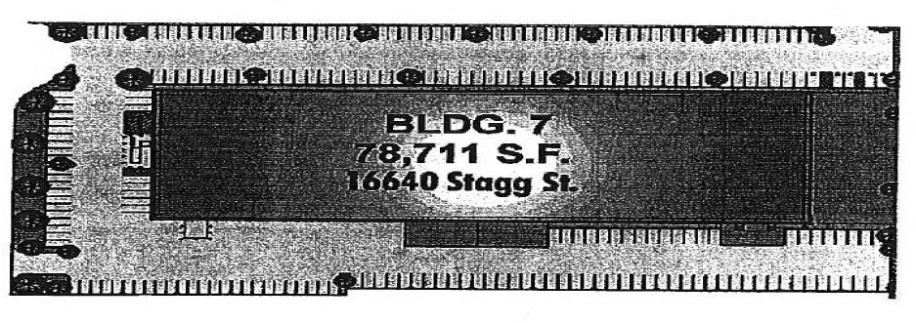
We currently occupy warehouse and office space in Van Nuys, California with a production capacity of approximately 2,000 units per year, depending on product mix
Critical Accounting Policies and Estimates
The preparation of our condensed consolidated financial statements requires management to make estimates and assumptions that affect the reported amounts of assets, liabilities, revenue and expenses. Management believes the most complex and sensitive judgments, because of their significance to the condensed consolidated financial statements, result primarily from the need to make estimates about the effects of matters that are inherently uncertain. Actual results could differ from management’s estimates. Management believes the critical accounting policies listed below affect our more significant accounting judgments and estimates used in the preparation of the condensed consolidated financial statements. These policies are described in greater detail in our Annual Report on Form 10-K for Fiscal 2022 and continue to include the following areas:
| ● | Revenue recognition; |
| ● | Inventory write-downs and classification of inventories; |
| ● | Estimates of warranty obligations; |
| ● | Accounts receivable allowances; |
| ● | Sales return allowances; |
| ● | Deferred tax assets and valuation allowance; |
| ● | Impairment of long-lived assets, including intangible assets with finite lives; and |
| ● | Stock-based compensation expense. |
Results of Operations
Three Months Ended
The following table summarizes our revenue by geographic markets (amounts in millions):
Three Months Ended | |||||||
2022 | 2021 | ||||||
United States and Canada | $ | | $ | | |||
Europe and Russia | 3. | | |||||
Latin America | 2.0 | | |||||
Asia and Australia | | | |||||
Middle East and Africa | | | |||||
Total | $ | | $ | | |||
Revenue for the three months ended
30
The following table summarizes our revenue (revenue amounts in millions):
Three Months Ended | ||||||||||||||
2022 | 2021 | |||||||||||||
| Revenue |
| Megawatts |
| Units |
| Revenue |
| Megawatts |
| Units | |||
Microturbine Product | $ | |
| |
| | $ | |
| |
| | ||
Accessories |
| |
|
| 0. |
| ||||||||
Total Product and Accessories |
| 10. |
|
| |
| ||||||||
Parts, Service and Rentals | | 8. | ||||||||||||
Total | $ | |
| $ | |
| ||||||||
For the three months ended
Parts, service and rentals revenue (which are part of our EaaS business line and includes revenue from our parts shipments, FPP contracts, rentals, Distributor Support Subscription fees, and other service revenue) increased $1.
Sales to RSP Systems
December 31, 2021, respectively.
Gross
Direct material
Warranty expense is a combination of a standard warranty provision recorded at the time revenue is recognized and changes, if any, in estimates for reliability repair programs. Reliability repair programs are based upon estimates that

are recorded in the period that new information becomes available, including design changes, cost of repair and product enhancements, which can include both in-warranty and out-of-warranty systems. The
Production and service center labor and overhead expense increased by $
31
The following table summarizes our gross
Three Months Ended | |||||||
| 2022 |
| 2021 | ||||
Gross | |||||||
Product and accessories | $ | (1. | $ | (0. | |||
As a percentage of product and accessories revenue |
| ( | % |
| ( | % | |
|
| ||||||
Parts, service and rentals | $ | 4. | $ | | |||
As a percentage of parts, service and rentals revenue |
| % |
| % | |||
|
| ||||||
Total Gross | $ | 2. |
| $ | 2. | ||
As a percentage of total revenue | | % | % | ||||
The $1.
Product and accessories gross margin as a percentage of product and accessories revenue decreased to (
Research and Development (“R&D”) Expenses decreased $0.
Selling, General, and Administrative (“SG&A”) Expenses
Interest Expense for the three months ended
The following table summarizes our revenue by geographic markets (amounts in millions):
2022 | 2021 | ||||||
United States and Canada | $ | | $ | | |||
Europe and Russia | | | |||||
Latin America | | | |||||
Asia and Australia | | | |||||
Middle East and Africa | 0.3 | | |||||
Total | $ | | $ | | |||
Revenue for the
32
The following table summarizes our revenue (revenue amounts in millions):
| |||||||||||||||
2022 | 2021 |
| |||||||||||||
| Revenue |
| Megawatts |
| Units |
| Revenue |
| Megawatts |
| Units |
| |||
Microturbine Product | $ | |
| |
| | $ | |
| |
| | |||
Accessories |
| |
|
| 0. |
| |||||||||
Total Product and Accessories |
| |
|
| |
| |||||||||
Parts, Service and Rentals | |
| |
| |||||||||||
Total | $ | |
| $ | |
| |||||||||
For the
Parts, service and rentals revenue (which are part of our EaaS business line and includes revenue from our parts shipments, FPP contracts, rentals, Distributor Support Subscription fees, and other service revenue) increased $
Sales to Cal Microturbine and RSP Systems accounted for
Gross
Direct material
Production and service center labor and overhead expense increased $1.
Inventory charges increased by $0.4 million during the nine months ended December 31, 2022 compared to the nine months ended December 31, 2021 primarily as the result of an increase in the provision for excess and obsolete inventory as we reserved for some older inventory parts.
33
The following table summarizes our gross
| 2022 |
| 2021 | ||||
Gross | |||||||
Product and accessories | $ | ( | $ | ( | |||
As a percentage of product and accessories revenue |
| ( | % |
| ( | % | |
|
| ||||||
Parts, service and rentals | $ | 12.8 | $ | | |||
As a percentage of parts, service and rentals revenue |
| % |
| % | |||
|
| ||||||
Total Gross | $ | 9.6 |
| $ | | ||
As a percentage of total revenue | % | % | |||||
The $
Product and accessories gross margin as a percentage of product and accessories revenue decreased to (
Research and Development (“R&D”) Expenses decreased $0.
Selling, General, and Administrative (“SG&A”) Expenses decreased $1.
Interest Expense for the
Gain on Extinguishment of Debt of approximately $1.9 million during the
Other Income for the
Liquidity and Capital Resources
Cash Flows
Our cash requirements depend on many factors, including the execution of our business strategy and plan. We have invested our cash in institutional funds that invest in high quality short-term money market instruments to provide liquidity for operations and for capital preservation. Our cash and cash equivalents balances
Operating Activities During the
34
million, partially offset by non-cash adjustments (primarily depreciation and amortization, inventory provision, warranty provision and stock based compensation) of $5.3
The following is a summary of the significant sources (uses) of cash from operating activities (amounts in thousands):
| |||||||
| 2022 |
| 2021 |
| |||
Net loss |
| $ | ( |
| $ | ( | |
Non-cash operating activities(1) |
| |
| | |||
Changes in operating assets and liabilities: | |||||||
Accounts receivable |
| |
| ( | |||
Inventories |
| ( |
| ( | |||
Accounts payable and accrued expenses |
| ( |
| | |||
Prepaid expenses, other current assets and other assets | ( | | |||||
Other changes in operating assets and liabilities |
| |
| ( | |||
Net cash provided by (used) in operating activities | $ | ( | $ | ( | |||
| ( | Represents a change in gain on extinguishment of debt, warranty provision, depreciation and amortization, stock-based compensation expense, inventory provision |
The change in non-cash operating activities during the
Investing Activities Net cash used in investing activities of $
Financing Activities During the
At-the-market offerings
On June 7, 2018, we entered into a sales agreement with H.C. Wainwright & Co., LLC (the “Sales Agreement”) with respect to an at-the-market offering program (the “ATM Program”) pursuant to which we may offer and sell, from time to time at our sole discretion, shares of our Common Stock, having an aggregate offering price of up to $25.0 million. We will set the parameters for sales of the shares, including the number to be sold, the time period during which sales are requested to be made, any limitation on the number that may be sold in one trading day and any minimum price below which sales may not be made. On July 15, 2020, we entered into an amendment to the Sales Agreement, which modified
35
the Sales Agreement to, among other things, amend the termination provisions of the Agreement and amend the maximum amount of shares of our Common Stock that we may offer and sell through or to H.C. Wainwright & Co., LLC from time to time under the ATM Program. On March 19, 2021, we entered into a second amendment to the Sales Agreement, which modified the Sales Agreement to, among other things, reflect our filing of a new Registration Statement on Form S-3 with the SEC on March 22, 2021 and set the maximum amount of shares of our Common Stock that we may offer and sell through or to H.C. Wainwright at $50 million from the date of the amendment to the Sales Agreement, subject to certain limitations set forth in the amendment. No shares of our Common Stock under the at-the-market offering program were issued during the
Common Stock Offerings
On June 17, 2021, we entered into an amended and restated underwriting agreement (the “Wainwright Underwriting Agreement”) with H.C. Wainwright & Co., LLC (“Wainwright”) whereby we agreed to sell to Wainwright, and Wainwright agreed to purchase, in a firm commitment underwritten public offering 1,904,763 shares (the “Wainwright Shares”) of our common stock, $0.001 par value per share (the “Wainwright Offering”). The offering price to the public in the Wainwright Offering was $5.25 per share of Common Stock, and Wainwright agreed to purchase the Wainwright Shares from the Company pursuant to the Wainwright Underwriting Agreement at a price of $4.91 per share, representing an underwriting discount of 6.5%. Pursuant to the Wainwright Underwriting Agreement, we also granted Wainwright an option to purchase, for a period of 30 days from the date of the Wainwright Underwriting Agreement, up to an additional 285,714 shares of Common Stock (the “Option Shares”). On June 21, 2021, Wainwright exercised the option in full. The Wainwright Offering closed on June 22, 2021, and we received net proceeds of $10.5 million after deducting $1.0 million in underwriting discounts, commissions and offering expenses paid by the Company.
On August 18, 2022, we entered into an underwriting agreement (the “Lake Street Underwriting Agreement”) with Lake Street Capital Markets, LLC and Joseph Gunnar and Company, LLC (the “Underwriters”) whereby
Warrants
Goldman Warrant
On February 4, 2019, we sold to Goldman Sachs & Co. LLC (the “Holder”), a Purchase Warrant for shares of our Common Stock (the “Warrant”) pursuant to which the Holder may purchase shares of our Common Stock in an aggregate amount of up to 404,634 shares (the “Warrant Shares”). Our Common Stock and warrant transactions during Fiscal 2021 triggered certain anti-dilution provisions in the warrants outstanding. As of
Goldman “2020 Warrant”
On October 1, 2020, we entered into an Amendment No. 3 to the Purchase Warrant for shares of our Common Stock (the “Amendment No. 3”) with Special Situations Investing Group II, LLC (as successor in interest to Goldman Sachs & Co. LLC) (the “Warrant Holder”) that amended that certain Purchase Warrant for shares of our Common Stock originally issued by the Company to Goldman Sachs & Co. LLC, dated February 4, 2019, as amended (the “Original
36
Warrant”). As of December 31, 2022, the holder may purchase shares of our Common Stock in an aggregate amount of up to 291,295 shares at an exercise price of $2.75 per share.
September 2019 Pre-Funded and Series D Warrants
On September 4, 2019, we entered into a Securities Purchase Agreement (the “Securities Purchase Agreement”) with certain institutional and accredited investors pursuant to which we agreed to issue and sell in a registered direct offering (the “Registered Direct Offering”) an aggregate of 580,000 shares of our Common Stock at a negotiated purchase price of $5.00 per share, and pre-funded warrants to purchase up to an aggregate of 440,000 shares of our Common Stock at a negotiated purchase price of $5.00 per Pre-Funded Warrant, for aggregate gross proceeds of approximately $5.1 million (580,000 shares of common stock plus 440,000 pre-funded warrants at a $5.00 per share purchase price), before deducting placement agent fees and other offering expenses.
In a concurrent private placement, we agreed to issue to the purchasers warrants to purchase 765,000 shares of Common Stock, which represent 75% of the number of shares of Common Stock and shares underlying the Pre-Funded Warrants purchased in the Registered Direct Offering, pursuant to the Securities Purchase Agreement. The Common Warrants are exercisable for shares of Common Stock at an initial exercise price of $6.12 per share for a period of five years, starting on April 2, 2020 and expiring on April 2, 2025. In January 2021, three warrant holders exercised their rights to the warrant agreement to exercise on a cashless basis 690,000 Series D warrants at an exercise price of $6.12 per share under the warrant agreement. In accordance with terms of the warrant agreement, after taking into account the shares withheld to satisfy the cashless exercise option, we issued 352,279 shares of Common Stock. As of
August 2022 Warrants
On August 24, 2022 we issued 2,934,498 of common stock warrants with an exercise price of $2.75 in conjunction with the Lake Street Offering.
There were no stock options exercised during the three months ended
Three-year Term Note On February 4, 2019, we entered into a Note Purchase Agreement, by and among us, certain subsidiaries of us as guarantors, Goldman Sachs Specialty Lending Holdings, Inc., as collateral agent and any other Purchasers party thereto from time to time, in connection with the sale of senior secured notes of us in a private placement exempt from registration under the Securities Act of 1933, as amended. Under the Note Purchase Agreement, we sold to the Purchaser $30.0 million aggregate principal amount of senior secured notes (the “Goldman Notes”). The first interest payment on the Notes was on March 31, 2019. On October 1, 2020, pursuant to A&R Note Purchase Agreement, we increased the amount of borrowing under the Notes by $20.0 million to $50.0 million, and all outstanding Notes bear interest at the Adjusted (London Interbank Offer) LIBO Rate (as defined in the A&R Note Purchase Agreement) plus 8.75% per annum. The Notes do not amortize and the entire principal balance is due in a single payment on the maturity date. As of March 31, 2022, $51.0 million in borrowings were outstanding under the Notes, which includes the accrual for an exit fee to be paid at maturity or upon pre-payment. Pursuant to the First Amendment to the A&R Note Purchase dated as of May 13, 2021, the minimum consolidated liquidity requirement increased from $9.0 million to $12.0 million for the period from the Amendment Date to March 31, 2022, and $9.0 million thereafter. The financial covenants of the A&R Note Purchase Agreement require the Company not to exceed specified levels of Adjusted EBITDA losses relative to its financial model, beginning with the fiscal quarter ending September 30, 2021. As of March 31, 2022, we were not in compliance with the Adjusted EBITDA covenant contained in the A&R Note Purchase Agreement and did not cure such non-compliance by prepaying the Notes. As a result, we were in breach of the Adjusted EBITDA covenant as of May 27, 2022. On July 13, 2022 we entered into the A&R NPA Second Amendment with the Purchaser and the Collateral Agent, pursuant to which (i) the Purchaser and the Collateral Agent waived our breach of the Adjusted EBITDA covenant and (ii) the A&R Note
Purchase Agreement has been amended to, among other things, add certain new covenants, including requirements that we use our commercially reasonable best efforts to raise at least $10 million through a sale of our common stock by September 14, 2022 and refinance the Notes by October 1, 2022. As of
37
We were compliant with the Adjusted EBITDA covenant as of
Paycheck Protection Program Loan On April 15, 2020, we applied for an unsecured PPP Loan in the principal amount of $2,610,200 under the Small Business Administration Paycheck Protection Program enabled by the Coronavirus Aid, Relief and Economic Security Act of 2020. On April 24, 2020, we entered into a promissory note with Western Alliance Bank. The Company received the full amount of the PPP Loan on April 24, 2020. In accordance with the requirements of the CARES Act, we used the proceeds from the PPP Loan to support fixed costs such as payroll costs, rent and utilities. On May 13, 2020, we repaid $660,200 of the PPP Loan in accordance with the Fourth Amendment to the Note Purchase Agreement between the Company and Goldman Sachs Specialty Lending Group, L.P.
The advance under the PPP Loan bore interest at a rate per annum of 1%.
In February 2021, the Company applied for forgiveness in full of the original balance of the PPP loan and the loan was forgiven in full on June 30, 2021. The Company received a refund of $660,200 and recorded these amounts within other income on the Company’s Condensed Consolidated Statements of Operations. Management accounted for forgiveness on the PPP Loan in accordance with ASC 470 and recorded a gain on extinguishment of debt on its condensed consolidated financial statements and related footnote disclosures, provided forgiveness be approved by the SBA.
Working Capital and Other Operating Assets and Liabilities Cash
Liquidity and Going Concern In connection with the preparation of these condensed consolidated financial statements for the three and
The Company has taken several steps to reduce operating costs and to conserve cash, including staff reductions, price
Depending on the timing of our future sales and collection of related receivables, managing inventory costs and the timing of inventory purchases and deliveries required to fulfill the backlog, our future working capital requirements may vary materially from those now planned. The amount of capital that we will need in the future to fund our operations will require us to achieve significantly increased sales volume, which is dependent on many factors, including:
| ● |
38
| ● | the market acceptance of our products and services; |
| ● | our business, product and capital expenditure plans; |
| ● | capital improvements to new and existing facilities; |
| ● | our competitors’ response to our products and services; |
| ● | our relationships with customers, distributors, dealers and project resellers; and |
| ● | our customers’ ability to afford and/or finance our products. |
Our accounts receivable balance, net of allowances, was $
No assurance can be given that future bad debt expense will not increase above current operating levels. Increased bad debt expense or delays in collecting accounts receivable could have a material adverse effect on cash flows and results of operations. In addition, our ability to access the capital markets may be severely restricted or made very expensive at a time when we need, or would like, to do so, which could have a material adverse impact on our liquidity and financial resources. Certain industries in which our customers do business and certain geographic areas have been and could continue to be adversely affected by the previously referenced economic and geopolitical considerations.
New Accounting Pronouncements
Refer to Note 3 – Recently Issued Accounting Pronouncements in the Notes to Condensed Consolidated Financial Statements (Part I, Item 1 of this Form 10-Q) for information regarding new accounting standards.
Off-Balance Sheet Arrangements
We do not have any material off-balance sheet arrangements.
Item 4. Controls and
Evaluation of Disclosure Controls and Procedures
Under the supervision and with the participation of our management, including the Chief Executive Officer and Interim Chief Financial Officer, we evaluated the effectiveness of the design and operation of our disclosure controls and procedures, as defined in Rules 13a-15(e) and 15d-15(e) under the Exchange Act, as of the end of the period covered by this report. Based upon that evaluation, our Chief Executive Officer and our Interim Chief Financial Officer concluded that, as of the end of the period covered by this report, our disclosure controls and procedures were effective as of
our Chief Executive Officer and Interim Chief Financial Officer, as appropriate, to allow timely decisions regarding required disclosure.
Changes in Internal Control Over Financial Reporting
There was no change in our internal control over financial reporting (as defined in Rules 13a-15(f) and 15d-15(f) under the Exchange Act) during our most recently completed fiscal quarter that has materially affected, or is reasonably likely to materially affect, our internal control over financial reporting.
39
Inherent limitations of the Effectiveness of Internal Control
A control system, no matter how well conceived and operated, can provide only reasonable, not absolute, assurance that the objectives of the internal control system are met. Because of the inherent limitations of any internal control system, no evaluation of controls can provide absolute assurance that all control issues, if any, within a company have been detected.
PART II — OTHER INFORMATION
Item 1. Legal Proceedings
Refer to Note 14 – Commitments and Contingencies — Legal Matters, in the Notes to Condensed Consolidated Financial Statements (Part I, Item 1 of this Form 10-Q) for information regarding legal proceedings in which we are involved. From time-to-time, we are involved in other pending and threatened litigation in the normal course of business in which claims for monetary damages are asserted. In the opinion of management, the ultimate liability, if any, arising from such pending or threatened litigation is not expected to have a material effect on our results of operations, liquidity, or financial position.
Item 1A. Risk Factors
In addition to the other information set forth in this report, you should carefully consider the factors discussed in the “Risk Factors” section contained in the Company’s Annual Report on Form 10-K for the year ended March 31, 2022, together with the cautionary statement under the caption “Special Note Regarding Forward-Looking Statements” included elsewhere in this Quarterly Report on Form 10-Q. These described risks are not the only risks we face. Additional risks and uncertainties not currently known to us or that we currently deem to be immaterial also may materially adversely affect our business, financial condition and/or operating results.
Our success depends in significant part upon the continuing service of management and key employees, and several key management and other employees have recently left Capstone.
In March 2022, we implemented an expense reduction plan, which included furloughs, employment terminations, pay cuts and the elimination of various management positions. We also recently suffered departures of other key personnel, including in accounting/finance and information technology. This has placed additional strain on the remaining personnel, and we do not expect to replace all of the departed employees, so the increased burdens on the remaining personnel are expected to continue for the foreseeable future. Accordingly, our recent losses of key employees could adversely impact our business, financial condition and results of operations.
SEC regulations limit the amount of funds we can raise during any 12-month period pursuant to our shelf registration statement on Form S-3.
SEC regulations limit the amount that companies with a public float of less than $75 million may raise during any 12-month period pursuant to a shelf registration statement on Form S-3. We are currently subject to General Instruction I.B.6 to Form S-3, or the Baby Shelf Rule. Since the filing of our Annual Report on Form 10-K on July 13, 2022, we have been subject to the Baby Shelf Rule. Under the Baby Shelf Rule the amount of funds we can raise through primary public offerings of securities in any 12-month period using a registration statement on Form S-3 pursuant to the Baby Shelf Rule is limited to one-third of the aggregate market value of the shares of our common stock held by non-affiliates of the Company. Therefore, we will be limited in the amount of proceeds we are able to raise by selling shares of our common stock using our Form S-3 until such time as our public float exceeds $75 million. Prior to such time as our public float exceeds $75 million, if our public float decreases, the amount of securities we may sell under our Form S-3 shelf
40
There is substantial doubt about the Company's ability to continue as a going concern, and this may adversely affect the Company's stock price and the Company's ability to raise capital.
In connection with the preparation of these condensed consolidated financial statements for the three and
The Company has engaged Greenhill and Company, a Global Investment Banking firm, to assist in refinancing the outstanding Notes; however there can be assurance that the Company will be successful in refinancing the Notes. Whether the Company will be able to successfully refinance the Notes will depend on market conditions, the Company’s financial performance and other factors. Any refinancing of the Notes, may also lead to increased costs, increased interest rates, additional financial covenants and other lender protections. The substantial doubt about the Company's ability to continue as a going concern may affect the price of the Company's common stock and the grade of its credit rating, may negatively impact relationships with third parties with whom the Company does business, including customers, vendors and lenders, may impact the Company's ability to raise additional capital or implement its business plan.
The sale of our products typically involves a significant commitment of capital by customers, which can result in the typical delays associated with large capital expenditures. For these and other reasons, the sales cycle associated with our products is typically lengthy and subject to several significant risks over which we have little or no control. We plan our production and inventory levels based on internal forecasts of customer demand, which is highly unpredictable and can fluctuate if sales in any period fall significantly below anticipated levels, our financial condition, results of operations and cash flow would suffer. If demand in any period increases well above anticipated levels, we may have difficulties in responding, incur greater costs to respond, or be unable to fulfill the demand in sufficient time to retain the order, which would negatively impact our operations. In addition, our operating expenses are based on anticipated sales levels, and a high percentage of our expenses are generally fixed in the short term. As a result of these factors, a small fluctuation in timing of sales can cause operating results to vary materially from period to period. Further, our inventory balance as of December 31, 2022 was $25.6 million, compared to $18.5 million as of December 31, 2021. This increase was due to purchases of long lead time inventory, and there is a risk that our inventory balances continue to rise, and consequently see a backlog of obsolete or excess inventory.
Net product orders for Fiscal 2022 were $31.8 million and contributed to an ending backlog of $25.3 million at March 31, 2022. The book-to-bill ratio was 1.1:1 for Fiscal 2022. Net product orders were approximately $1.7 million and $4.5 million for the three months ended December 31, 2022 and 2021, respectively. The gross book-to-bill ratio was 0.8:1 and 0.5:1 for the three months ended December 31, 2022 and 2021, respectively. Book-to-bill ratio is the ratio of new orders we received to units shipped and billed during a period. However, because our backlog represents only the estimated amount of future product revenue to be recognized under negotiated contracts as shipments convert backlog to recognized revenue for accounting purposes, we may not be able to fully realize the revenue value reported in our backlog, and our backlog may not be indicative of future revenues. A portion of our backlog is concentrated in the international oil and gas market which may impact the overall timing of shipments or the conversion of backlog to revenue. The timing of the backlog is based on the requirement date indicated by our customers. Based on historical experience, management expects that a significant portion of our backlog may not be shipped within the next 18 months. The timing of shipments is subject to change based on several variables (including customer deposits, payments, availability of credit and customer delivery schedule changes), most of which are not in our control and can affect the timing of our revenue. As a result, management believes the book-to-bill ratio better demonstrates the current demand for our products in the given period.
41
We may be unable to fund our future operating requirements, which could force us to further curtail our operations; we were in breach of our secured note purchase agreement as of May 27, 2022.
To the extent that the funds we now have on hand are insufficient to fund our future operating requirements, we would need to raise additional funds, through further public or private equity or debt financings depending upon prevailing market conditions. These financings may not be available or, if available, may be on terms that are not favorable to us and could result in dilution to our stockholders and reduction of the trading price of our stock. The state of capital markets when we seek to raise additional capital could also impede our ability to raise additional capital on favorable terms or at all. If adequate capital were not available to us, we likely would be required to significantly curtail our operations or possibly even cease our operations. In March 2022, we implemented an expense reduction plan, which included furloughs, employment terminations and pay cuts. See “— Our recently implemented expenses reduction plan and organizational changes undertaken to align to our focus on our EaaS business and achieving profitability may not be successful.”
We are party to an Amended and Restated Note Purchase Agreement (the “A&R Note Purchase Agreement”) dated October 1, 2020 (the “Closing Date”) among the Company, certain subsidiaries of the Company, Goldman Sachs Specialty Lending Group, L.P. (as successor in interest to Goldman Sachs Specialty Lending Holdings, Inc.), as collateral agent (“Goldman” or the “Collateral Agent”) and the purchasers party thereto (the “Purchasers”). The A&R Note Purchase Agreement amended and restated our Note Purchase Agreement dated February 4, 2019, by and among the Company, certain subsidiaries of the Company, Goldman Sachs Specialty Lending Holdings, Inc. and the purchasers party thereto under which we sold $30.0 million aggregate principal amount of senior secured notes (the “Notes”) bearing an interest of 13.0% per annum. Pursuant to the A&R Note Purchase Agreement, the Company issued $20.0 million in additional Notes and all outstanding Notes under the A&R Note Purchase Agreement bear interest at the Adjusted (London Interbank Offer) LIBO Rate (as defined in the A&R Note Purchase Agreement) plus 8.75% per annum, payable on the last day of each interest period of one-, two-, three- or six-months (but, in the case of a six-month interest period, every three-months). The Notes do not amortize and the entire principal balance is due and payable on October 1, 2023. As of March 31, 2022, $51.0 million in borrowings were outstanding under the Notes, which includes the accrual for an exit fee to be paid at maturity or upon pre-payment. Obligations under the A&R Note Purchase Agreement are secured by all of the Company’s assets, including intellectual property and general intangibles. The A&R Note Purchase Agreement contains customary covenants, including, among others, covenants that restrict our ability to incur debt, grant liens, make certain investments and acquisitions, pay dividends, repurchase equity interests, repay certain debt, amend certain contracts, enter into affiliate transactions and asset sales or make certain equity issuances (including equity issuances that would cause an ownership change within the meaning of Section 382 of the Internal Revenue Code), and covenants that require us to, among other things, provide annual, quarterly and monthly financial statements, together with related compliance certificates, maintain our property in good repair, maintain insurance and comply with applicable laws.
On May 13, 2021, the Company, and the collateral agent, entered into a First Amendment, dated as of May 13, 2021 (the “Amendment”), to the A&R Note Purchase Agreement. The Amendment amended certain provisions of the A&R Note Purchase Agreement, including to (a) require the Company to expand its Rental Fleet (as defined in the A&R Note Purchase Agreement) by (i) at least 2.00 MW by the 9-month anniversary of the Closing Date (instead of 6.25 MW as provided in the A&R Note Purchase Agreement prior to the Amendment), and (ii) at least 12.50 MW by the 18-month anniversary of the Closing Date (which is unchanged from the covenant set forth in the A&R Note Purchase Agreement prior to the Amendment), and (b) increase the Company’s minimum consolidated liquidity requirement from $9 million to $12.2 million, for the period from May 13, 2021 to March 31, 2022, and $9 million thereafter. The financial covenants of the A&R Note Purchase Agreement require the Company not to exceed specified levels of Adjusted EBITDA losses relative to its financial model, beginning with the fiscal quarter ending September 30, 2021. As of March 31, 2022, we were not in compliance with the Adjusted EBITDA covenant contained in the A&R Note Purchase Agreement and did not cure such non-compliance by prepaying the Notes. As a result, we were in breach of the Adjusted EBITDA covenant as of May 27, 2022. On July 13, 2022 we entered into the Second Amendment to the A&R Note Purchase Agreement (the “A&R NPA Second Amendment”) with the purchaser thereunder (the “Purchaser”) and Goldman Sachs Specialty Lending Group, L.P. as collateral agent (the “Collateral Agent”), pursuant to which (i) the Purchaser and the Collateral Agent waived our breach of the Adjusted EBITDA covenant and (ii) the A&R Note Purchase Agreement has been amended to, among other things, add certain new covenants, including requirements that we use our commercially reasonable best efforts to both (a) raise at least $10 million through a sale of our common stock by September 14, 2022 and (b) refinance the Notes by October 1, 2022. See Item 9B “Other Information” for a summary of the A&R NPA Second Amendment. Although we are currently in compliance with the covenants under the A&R Note Purchase Agreement, as we continue to use cash for operations and expansion of our rental fleet, there is the possibility that our consolidated liquidity could fall
42
below the minimum balance required under the A&R Note Purchase Agreement if we do not raise additional capital and/or obtain an adjustment to that covenant.
The A&R Note Purchase Agreement, as amended, also defines an event of default as, among other things, payment default, bankruptcy events, cross defaults, breaches of covenants (including the liquidity covenant) and representations and warranties, changes of control, judgment defaults and an ownership change within the meaning of Section 382 of the Internal Revenue Code. An event of default, if not waived, could have a material adverse effect on us.
Our obligations under the A&R Note Purchase Agreement, as amended, have important consequences, including the following:
| ● | We may have difficulty obtaining additional financing at favorable interest rates to meet our requirements for operations, capital expenditures, general corporate or other purposes. |
| ● | We will be required to dedicate a substantial portion of our cash flow to the payment of principal and interest on the Notes, which will reduce the amount of funds available for operations, capital expenditures and future acquisitions. |
| ● | Goldman Sachs Specialty Lending Holdings, Inc., as collateral agent under the Note Purchase Agreement, may enforce any and all liens and security interests on the collateral we have used to secure the Notes and we may forfeit our right to such collateral. |
| ● | In order to avoid breaches of the Note Purchase Agreement covenant relating to Section 382 changes of ownership, we may be limited in the amount of additional equity securities we are able to sell to raise capital. Accordingly, our desire to preserve our federal and state net operating loss (“NOL”) carryforwards may cause us to forgo otherwise attractive funding opportunities. |
We may be required to repay the Notes immediately if we again default on any of the numerous financial and other covenants contained in the A&R Note Purchase Agreement, including any of those added pursuant to the A&R NPA Second Amendment, and Goldman does not waive such default. It is not certain whether we will have, or will be able to obtain, sufficient funds to make any such accelerated payments. If any outstanding indebtedness under the Notes is accelerated, our assets may not be sufficient to repay such indebtedness.
Item 5. Other Information
On January 25, 2023, we and Prologis, L.P. (“Lessor”) entered into a lease (the “Lease”), pursuant to which we will lease
Item 6. Exhibits
Exhibit |
| Description |
3.1 | ||
3.2 | ||
4.1 | ||
4.2 | ||
4.3 | ||
4.4 | ||
4.5 | ||
10.1 | ||
31.1 | ||
31.2 | ||
32 | ||
101.INS | XBRL Instance Document – the instance document does not appear in the Interactive Data File because its XBRL tags are embedded within the inline XBRL document | |
101.SCH | XBRL Schema Document | |
101.CAL | XBRL Calculation Linkbase Document | |
101.LAB | XBRL Label Linkbase Document | |
101.PRE | XBRL Presentation Linkbase Document | |
101.DEF | XBRL Definition Linkbase Document | |
104 | The cover page from Capstone Green Energy Corporation’s Quarterly Report on Form 10-Q for the quarter ended December 31, 2022, formatted in Inline XBRL and contained in Exhibit 101 |
(a) | Incorporated by reference to Capstone Green Energy Corporation’s Quarterly report on Form 10-Q, filed on November 10, 2021 (File No. 001-15957) |
(b) | Incorporated by reference to Capstone Green Energy Corporation’s Quarterly report on Form 10-Q, filed on August 11, 2021 (File No. 001-15957) |
(c) | Incorporated by reference to Capstone Turbine Corporation’s Current Report on Form 8-K, filed on October 5, 2020 (File No. 001-15957) |
(d) | Incorporated by reference to Capstone Turbine Corporation’s Current Report on Form 8-K, filed on May 14, 2021 (File No. 001-15957) |
(e) | Incorporated by reference to Capstone Green Energy Corporation’s Annual report on Form 10-K, filed on July 13, 2022 (File No. 001-15957) |
(f) | Incorporated by reference to Capstone Green Energy Corporation’s Current Report on Form 8-K, filed on |
(g) | Incorporated by reference to Capstone Green Energy Corporation’s Current Report on Form 8-K, filed on September 15, 2022 (File No. 001-15957) |
Pursuant to the requirements of the Securities Exchange Act of 1934, the registrant has duly caused this report to be signed on its behalf by the undersigned thereunto duly authorized.
CAPSTONE GREEN ENERGY CORPORATION | ||
By: | /s/ SCOTT W. ROBINSON | |
Scott W. Robinson | ||
Interim Chief Financial Officer | ||
(Principal Financial Officer) | ||
Date: | ||
Exhibit 10.1
PROLOGIS CLEAR LEASE
Simplify your lease. Simplify your business.
THIS LEASE is made between Landlord and Tenant as of the Effective Date below.
1. | Defined Terms. |
a)Effective Date: | | | | |
| | 25 January 2023 | | |
| | | | |
b) Landlord: | Prologis, L.P., a Delaware limited partnership | |||
c)Landlord Notice Address: | Prologis 17777 Center Court Dr. N., Suite 100 Cerritos, CA 90703 Attn: Market Officer | With copy to: | Prologis 1800 Wazee Street Suite 500 Denver, CO 80202 Attn. General Counsel | |
d) Tenant: | Capstone Green Energy Corporation, a Delaware corporation | |||
e) Tenant Notice Address: | 16640 Stagg Street Van Nuys, CA 91406 Attn: Celia Fanning Phone: 818.734-5128 Email: cfanning@cgrnenergy.com | | | |
f)Premises: | That portion of the Building containing approximately 78,711 rentable square feet as shown on Exhibit A. | |||
g)Building: | Prologis Van Nuys Distribution Center 1 16640 Stagg Street Van Nuys, CA 91406-1635 | | ||
h) Project: | Prologis Van Nuys Distribution Center | | ||
i) Tenant’s Proportionate Share of Taxes (“Tenant’s Share”): | 100% | | | |
j)Term: | Beginning on the Commencement Date and ending on the day which is thirty- seven (37) full calendar months following the Commencement Date (the “Expiration Date”). | |||
k)Commencement Date: | 03/01/2023 | | | |
l)Monthly Base Rent
Period | Monthly Base Rent | |
03/01/2023 - 03/31/2023 | 1* USD$0.00 | |
04/01/2023 - 02/29/2024 | USD$129,873.15 | |
03/01/2024 - 02/28/2025 | USD$135,068.08 | |
03/01/2025 - 02/28/2026 | USD$140,470.80 | |
03/01/2026 - 03/31/2026 | USD$146,089.63 | |
1* Monthly Base Rent of USD$129,873.15 is abated for this period. | ||
m) Monthly Fixed Operating Expenses (“FOE”): | Operating Expenses: | USD$13,004.88 |
Capital | USD$2,022.87 | |
| Total FOE: | USD$15,027.75 |
| - 1 - |
|
n) Annual FOE Increase: | FOE shall automatically increase during the Term by 4.30% effective on the first ment Date. day of each full calendar year anniversary of the Commence |
o) Monthly Taxes (estimated): | USD$9,012.62 |
p) Security Deposit: | USD$70,000.00, subject to Paragraph 6 |
q) Landlord Broker: | None |
r)Tenant Broker: | None |
s)Exhibits: | Exhibit A- Site Plan Exhibit B- Rules, Regulations, and Legal Requirements Exhibit C- State Specific Provisions |
2.Granting Clause; Quiet Enjoyment. Landlord hereby leases to Tenant, and Tenant hereby leases from Landlord, the Premises for the Term subject to the provisions of this Lease. Tenant shall have peaceful and quiet enjoyment of the Premises during the Term against any person claiming by, through or under Landlord provided no uncured Event of Default (defined below) exists. Tenant shall have access to the Premises 24 hours per day, seven days per week, 365 days per year and the non-exclusive use of the Common Areas (defined below) of the Project for their intended purposes and in accordance with the Rules, Regulations, and Legal Requirements (defined below). The term "Common Areas" means all areas of the Project designated for the common use by tenants.
3.Acceptance of Premises. As of the Commencement Date, Tenant accepts the Premises in its “as-is” condition and waives any implied warranties relating to the Premises. Landlord and Tenant shall conduct a walkthrough of the Premises to identify any existing damage that neither party shall be responsible for repairing. Within 10 days after request, Tenant shall execute and deliver to Landlord a certificate confirming the Commencement Date. Tenant’s use and occupation of the Premises prior to the Commencement Date shall be subject to all Tenant’s obligations hereunder except for the payment of Monthly Base Rent, FOE, and Monthly Taxes.
4.Use. The Premises shall be used only for the purpose of receiving, storing, and shipping products, and for other incidental lawful uses. Tenant’s use of the Project shall comply at all times with all rules, regulations, and Legal Requirements (defined in Exhibit B) established by Landlord (the “Rules, Regulations, and Legal Requirements”). The current Rules, Regulations, and Legal Requirements are attached as Exhibit B. The Rules, Regulations, and Legal Requirements may be amended by Notice to Tenant, provided the amendments do not materially enlarge Tenant’s obligations or limit Tenant’s rights hereunder. Landlord shall have no liability for the breach of any rules or regulations by other tenants.
5.Monthly Rent. Upon Lease execution, Tenant shall pay to Landlord the first installment of Monthly Base Rent, FOE, and Monthly Taxes. Thereafter, Tenant shall make all such payments in advance, without demand, no later than the first day of each calendar month during the Term (prorated for any fractional calendar month). Tenant shall make all payments to Landlord (or to such other party or at such location as Landlord may from time to time specify in writing) by Electronic Fund Transfer or Automated Clearing House. Tenant shall not abate, reduce, or off-set any amounts payable except as otherwise expressly provided herein. Tenant shall pay to Landlord on demand as a late charge, and not a penalty, five percent (5%) of any amount due for more than 4 days after the due date.
FOE represents payment for Landlord’s costs incurred for insurance premiums (see Section 9), Landlord's costs for repair and maintenance (see Section 10), and association and property management fees.
The amount of Monthly Taxes represents one-twelfth (1/12th) of Tenant’s Share of Taxes (see Section 8) as estimated by Landlord from time to time. Tenant shall be responsible only for Tenant’s Share of actual Taxes in any calendar year. Any difference between Tenant’s estimated payments and Tenant’s Share of actual Taxes will be reconciled annually no later than 90 days following the first day of a calendar year by either Landlord or Tenant making payment to the other, as applicable, within 60 days after such determination. Tenant's Share may be proportionately adjusted for changes in the size of the Premises, Building, or Project.
6.Security Deposit. The Security Deposit is due on the Effective Date and shall be held by Landlord as security for Tenant’s performance of its obligations hereunder. The Security Deposit is neither an advance rental deposit, nor a measure of Landlord's damages arising from an Event of Default (defined below). Landlord's obligation with respect to the Security Deposit is that of a debtor, not a trustee. Landlord shall not be required to separate the Security Deposit from its general accounts, and no interest
- 2 -
shall accrue thereon. Upon an Event of Default, Landlord may use the Security Deposit to satisfy Tenant’s delinquent obligations, provided that application of the Security Deposit shall not limit any other remedies available to Landlord. Tenant shall restore the Security Deposit after application within 10 days from Notice. Any portion of the Security Deposit remaining at the end of the Term shall be paid to Tenant within 60 days after fulfillment of Tenant's obligations under this Lease.
Landlord and Tenant hereby acknowledge that Landlord currently holds a certain security deposit in the amount of USD$70,000.00 (“Other Security Deposit”) with respect to the Premises under the Prior Lease (as hereinafter defined), and upon the Commencement Date of this Lease, the Other Security Deposit, or portion thereof as described herein, shall be transferred by Landlord and shall become the Security Deposit under this Lease, except as otherwise provided for herein. The difference between the balance of the Other Security Deposit and the amount of the Security Deposit as set forth in Section 1. of this Lease shall be paid by Tenant to Landlord upon demand so that the Security Deposit under this Lease equals the amount as set forth in Section 1. of this Lease.
7.Utilities. Normal water and sewer services for office, break room and restroom are included in FOE. If Tenant’s use of water and sewer services materially exceeds normal usage, Landlord may, at Tenant’s expense, separately meter and require Tenant to pay the utility provider directly for such services. Tenant shall pay the utility providers directly for all other utilities serving the Premises, along with related taxes, penalties, or surcharges. Landlord may elect to hold utility accounts for the Premises and/or deliver utility services to Tenant directly, or through an intermediary, and charge Tenant for such utility services so long as Landlord’s rates are priced at, or below, local utility provider rates. In such event, Tenant shall pay Landlord for Tenant’s utility consumption within 30 days of Notice.
Upon request, Tenant shall deliver to Landlord data regarding Tenant’s utility usage at the Premises as required by law, or as reasonably required for Landlord to manage the Project. Tenant can satisfy this requirement by either: (a) providing written consent for Landlord to obtain the information directly from the utility or (b) providing the data to Landlord in an acceptable electronic format.
8.Taxes. Landlord shall pay all taxes, assessments, governmental charges, fees or payments to a governmental authority in lieu of taxes that accrue during the Term against the tax parcel on which the Premises is located, as well as reasonable fees payable to tax consultants and attorneys for consultation and contesting taxes, along with any capital levies, franchise, excise, use, margin, transaction, sales or privilege tax, assessment, levy or charge measured by or based upon the value of the Premises and/or the Project, or assessed upon the Base Rent or FOE (collectively, "Taxes"). Tenant shall pay Tenant’s Share of Taxes pursuant to Section 5. Tenant shall not be liable for any gift taxes, estate taxes, or income taxes imposed on Landlord unless such income taxes are in substitution for any Taxes. Tenant shall pay directly to the taxing authority any tax levied or assessed directly against Tenant, its property or fixtures placed in the Premises, or resulting from any Tenant-Made Alterations (defined below), even if levied or assessed against Landlord.
9.Insurance. Landlord shall maintain all risk property insurance covering the Building and improvements placed in the Common Areas by Landlord and commercial general liability insurance in forms and amounts customary for properties substantially similar to the Project. Landlord’s insurance may be included in a blanket policy or captive insurance program.
Without limiting Tenant’s liability under this Lease, Tenant shall maintain the following insurance at Tenant’s expense:
(a)commercial general liability, on an occurrence basis, having a minimum limit of $2,000,000 per occurrence naming Landlord, Prologis, Inc., its affiliates, and property manager (if any) as additional insureds;
(b)all-risk property covering the full replacement cost of all property and improvements placed at the Project by or on behalf of Tenant;
(c) | workers’ compensation as required by applicable state statute; |
(d) | employers liability coverage of $500,000, and |
(e)business automobile liability for owned, hired or non-owned vehicles having a combined single limit of $1,000,000 per occurrence.
Tenant’s insurance shall provide primary and non-contributory coverage to Landlord Parties with respect to Tenant’s indemnity obligations. Tenant’s insurance requirements may be satisfied by a combination of primary and excess policy limits, or an umbrella policy. Tenant shall provide Landlord with certificates of such insurance prior to Tenant taking possession of the Premises, and thereafter prior to the expiration of any insurance coverage or 5 days following Tenant’s receipt of Landlord’s request.
- 3 -
The all-risk property and workers’ compensation insurance shall include a waiver of subrogation in connection with any insured loss by the insurers and all rights based upon an assignment from its insured, against Landlord, its agents, employees, contractors, or property manager (collectively the “Landlord Parties”), or Tenant, its agents, employees, contractors, subtenants, assigns, or invitees (collectively the “Tenant Parties”), as applicable. No Landlord Parties or Tenant Parties shall be liable to any other Landlord Parties or Tenant Parties for any loss coverable by all risk property insurance, and each party waives claims against the Landlord Parties and Tenant Parties (as applicable) for such loss. The failure of either party to insure its property shall not void this waiver. Notwithstanding anything contained herein to the contrary, Tenant shall be solely responsible for all property of any kind, owned or unowned, placed at the Project by or on behalf of Tenant. The Landlord Parties and Tenant Parties waive any claims against the other for business interruption loss from any cause whatsoever, including losses caused in whole or in part, directly or indirectly, by the negligent acts of the other party.
10.Landlord's Repairs and Maintenance. Landlord shall, at Landlord’s sole cost subject to the express terms hereof, maintain, repair, and replace in good working order the (a) structural elements of the Building (including the exterior walls), (b) roof (including roof membrane), (c) Common Areas (including lighting and snow removal to the extent consistent with market practice), (d) Building fire sprinkler system, (e) existing exterior wall windows, (f) exterior personnel doors, (g) office area ceiling tiles, (h) hot water heaters (i) ventilation, and air conditioning units serving the office area of the Premises, and (j) exterior louvers and ventilation fans for standard warehouse air changes, heating and evaporative cooler systems serving the warehouse area of the Premises ((i) and (j) collectively the “Landlord HVAC”). Landlord shall also complete a bi-annual preventative maintenance service of all dock doors, dock levelers, and dock restraints and bumpers serving the Premises. Tenant shall promptly give Landlord Notice of any required repairs hereunder.
Landlord’s obligations hereunder shall expressly exclude any work necessary due to misuse or damage by Tenant Parties or resulting from Tenant-Made Alterations or Tenant’s other improvements to the Premises. Subject to Sections 9 and 15, Tenant shall reimburse Landlord within 30 days of Notice for the cost of any such work described in the preceding sentence.
11.Tenant's Repairs. Subject to Sections 9, 10, and 15, Tenant, at its expense, shall maintain, repair, and replace in good working order all areas, improvements and systems exclusively serving the Premises including dock equipment, non-structural elements of the floor slab, interior doors, above ground water and sewer lines, and Tenant HVAC and related components. “Tenant HVAC” means HVAC systems installed by Tenant, specialty HVAC equipment (including IT room HVAC and for temperature-controlled product), and warehouse air conditioning systems other than Landlord HVAC. If Tenant fails to perform any work required hereunder within 30 days from Notice, Landlord may perform such work and Tenant shall reimburse Landlord for such cost, along with a 5% administrative fee, within 30 days of Notice.
On or about the Commencement Date, the parties shall cause the Landlord HVAC, water heater, office areas ceiling tiles, and restroom and break fixtures, to be inspected by a qualified contractor. In the event that such inspection determines that any maintenance, repairs or replacements are required to be performed, then at Landlord’s option: (a) Tenant shall perform such work, at Tenant’s sole cost and expense, within thirty (30) days after the date of such inspection, (b) Landlord shall perform such work and Tenant shall reimburse Landlord for all costs incurred by Landlord within thirty (30) days after written demand; or (c) defer such work and cause Tenant to pay the costs thereof from any future maintenance, repair or replacement performed by Landlord, such payment to be made within thirty (30) days after written demand from Landlord.
12.Tenant-Made Alterations and Trade Fixtures. All alterations, additions, or improvements made to the Premises by, or on behalf of, Tenant are herein referred to as “Tenant-Made Alterations”. Landlord’s prior written consent is required for Tenant- Made Alterations, provided that Tenant may make interior Tenant-Made Alterations to the Premises up to $25,000 per instance that do not impact the structure or mechanical systems of the Building without Landlord’s consent. Where Landlord's consent is not required, Tenant shall provide Landlord prompt Notice of such Tenant-Made Alterations accompanied by plans and specifications. Upon completion of any Tenant-Made Alterations, Tenant shall deliver to Landlord final lien waivers from all contractors and subcontractors who provided services or materials for the Tenant-Made Alterations and as-built plans (if applicable).
Without Landlord’s approval, Tenant may erect or install shelves, racking, machinery and trade fixtures in the Premises (collectively "Trade Fixtures"), provided such items: (i) do not overload the slab, (ii) may be removed without materially damaging the Premises, and (iii) comply with all Legal Requirements (defined in Exhibit B). Upon Lease termination, Tenant, at its expense, shall remove all Trade Fixtures and Tenant-Made Alterations (except those which Landlord has identified by Notice to Tenant shall
- 4 -
remain as Landlord's property), and repair any damage to the Premises caused by such removal. Upon Tenant's written request, Landlord shall provide Tenant a list of Tenant-Made Alterations which the Landlord will allow to remain upon the Expiration Date.
13.Signs. All exterior signage shall require Landlord’s prior written consent. Tenant, at its expense, shall: (a) comply with Legal Requirements and Landlord’s signage program, and (b) remove all Tenant signage and repair any damaged surfaces upon Lease termination.
14.Parking. Tenant may park vehicles in Common Areas designated for non-reserved parking and may park vehicles and trailers overnight at the docks and in designated trailer parking areas for the Premises. Landlord may allocate parking spaces among Tenant and other tenants of the Project in an equitable manner; provided Landlord shall not allocate any parking spaces to other tenants which may reduce Tenant's pro rata share of the Common Area parking. Landlord is not responsible for enforcing Tenant's parking rights.
15.Restoration. If the Premises is damaged by a casualty (the “Casualty Damage”), Landlord shall notify Tenant of its reasonable estimate for restoration time (the "Restoration Notice") within 60 days of the Casualty Damage. If the restoration time is estimated to exceed 6 months, or if the estimated restoration time exceeds 30 days during the last year of the Term (each a “Casualty Termination Event”), either Landlord or Tenant may elect to terminate this Lease by Notice to the other party delivered within 30 days after the Restoration Notice and Monthly Base Rent, FOE, and Monthly Taxes shall be apportioned as of the termination date. If the Lease is not so terminated, or if there is no Casualty Termination Event, then Landlord shall restore the Premises, excluding any Tenant-Made Alterations and Trade Fixtures. Commencing on the date of the Casualty Damage until the completion of Landlord’s restoration work, Monthly Base Rent, FOE, and Monthly Taxes shall be abated in proportion to the Premises, if any, which is not usable by Tenant. Such abatement is the sole remedy of Tenant, and Tenant waives any right to terminate this Lease by reason of Casualty Damage except as provided above. Notwithstanding anything in this Lease to the contrary, with respect to any damage to the Project caused by Tenant Parties, Tenant shall pay Landlord’s all-risk property insurance deductible, not to exceed $25,000 per occurrence, within 30 days following Notice.
16.Condemnation. If the Premises is taken by eminent domain, or by a purchase in lieu thereof (each a "Taking" or "Taken"), or a portion of the Project is Taken such that Landlord cannot reasonably operate the Project, this Lease shall terminate upon Notice by Landlord and Monthly Base Rent, FOE, and Monthly Taxes shall be apportioned as of the date of such termination. If a portion of the Premises is Taken and: (a) the Lease is not terminated by Landlord; (b) the remaining Premises cannot reasonably be used by Tenant for the uses authorized herein, as determined by Landlord and Tenant, and (c) such area is not replaced by Landlord with reasonably equivalent space in the proximity of the Premises, Tenant shall have the right to terminate this Lease, effective on the date of the Taking, by Notice to Landlord no later than 30 days from Notice of such Taking. If part of the Premises is Taken but the Lease is not terminated, this Lease shall terminate with respect to the portion Taken and Monthly Base Rent and FOE shall be proportionately reduced. Landlord is entitled to the entire purchase price or award from a Taking. Tenant may make a separate claim against the Taking authority (but not Landlord) for such compensation as may be separately awarded or recoverable by Tenant.
17.Assignment and Subletting. Tenant shall not assign, mortgage or pledge its interest in this Lease or sublease the Premises without Landlord’s prior written consent, and any attempt to do so shall be an immediate Event of Default. Any assignment or sublease shall be subject to the terms of this Lease, and Tenant, any guarantor of Tenant's obligations, and Tenant’s successor and assigns shall remain liable for Tenant’s obligations under this Lease. In the event of a proposed assignment or sublease, Tenant shall provide Landlord the proposed assignee or sublessee’s name, a description of its business, its financial information, and such other information as Landlord may reasonably request. A transfer of the ownership interests controlling Tenant shall be deemed an assignment of this Lease unless the interests are publicly traded.
Provided no Event of Default has occurred and is continuing, Tenant may, without Landlord’s prior written consent:
(a)assign this Lease, or sublet the Premises, to any entity controlling Tenant, controlled by Tenant or under common control with Tenant (a "Tenant Affiliate"); or
(b)assign this Lease to any entity into which Tenant is merged or consolidated, or to any entity to which substantially all of Tenant’s stock or assets are transferred, provided the following conditions are met (each a “Permitted Transfer” or a transferee thereof a “Permitted Transferee”):
(i)the Permitted Transfer does not adversely affect the legal existence of the Tenant, or such surviving entity agrees to assume all obligations and liabilities of Tenant under the Lease; and
- 5 -
(ii)the Permitted Transfer does not reduce the tangible net worth of the Tenant hereunder after giving effect to the transfer.
Tenant shall provide prior Notice (together with supporting documentation) to Landlord at least 30 days prior to any assignment or sublease to a Tenant Affiliate or to any Permitted Transfer.
If Tenant delivers Notice to Landlord of a desire to assign this Lease, or sublet a majority the Premises (other than to a Tenant Affiliate or a Permitted Transferee), Landlord may terminate this Lease with respect to the area of the Premises described in Tenant's Notice by Notice sent within 30 days of Landlord’s receipt of the request. Tenant may withdraw its Notice to sublease or assign by notifying Landlord within 10 days after Landlord has given Tenant Notice of such termination, in which case the Lease shall not terminate.
If monthly base rent due from a sublessee exceeds Monthly Base Rent payable hereunder, Tenant shall pay to Landlord 50% of such excess (less Tenant’s reasonable and customary costs with respect to such sublease) within 30 days of receipt. Landlord may collect rent from a subtenant or any occupant and apply the amount collected to the next installment of rent hereunder.
If Tenant receives consideration for an assignment or transfer of this Lease to a third party (excluding Tenant Affiliates and Permitted Transferees), Tenant shall pay Landlord 50% of the value of all such consideration withing 30 days of receipt.
18.Indemnification. Tenant shall indemnify, defend, and hold harmless Landlord Parties from and against all losses, liabilities, damages, costs and expenses (including reasonable attorneys' fees) resulting from third party claims for personal injuries, damage, theft, or loss of property occurring at the Project, or liens which arise from: (a) the use and occupancy of the Premises by Tenant Parties, or (b) any other act or omission of Tenant Parties, except to the extent of the negligence or willful misconduct of Landlord Parties. Tenant’s obligations under this Section shall survive the Expiration Date or earlier Lease termination.
19.Inspection, Data, and Access. Landlord and its designated appointees may enter the Premises at reasonable times to perform its obligations hereunder and for reasonable business purposes (including showing the Premises to potential tenants during the last year of the Term). Landlord shall provide Tenant with at least 24 hours’ telephonic and/or email notice prior to entering the Premises, except in the event of an emergency. Landlord may grant easements, make public dedications, modify the Common Areas, and create restrictions affecting the Project (collectively, “Encumbrances”), provided that the Encumbrances do not materially interfere with Tenant's authorized use of the Premises, or result in additional financial obligations to Tenant. Tenant shall execute reasonable documents necessary for the Encumbrances. Landlord may install sensors, meters, and other devices (collectively “Devices”) in the Premises that collect operational efficiency data for the Project (the “Data”). The Devices shall not:
(a) materially interfere with Tenant's use of the Premises, (b) include cameras, video, or voice recording devices, (c) collect employee data, or (d) track people, equipment, or inventories. Landlord shall own all rights, title and interest in the Data. Upon request, Landlord shall provide Tenant access to the Data.
20.Surrender. On the Expiration Date, or earlier termination of the Lease or Tenant’s right of possession, Tenant shall: (a) surrender the Premises to Landlord in the same condition as received, ordinary wear and tear, casualty loss and condemnation excepted, and (b) remove all Trade Fixtures, Tenant-Made Alterations (except those designated by Landlord to remain), and property placed in the Premises by Tenant. Property not so removed shall be deemed abandoned and may be kept in place, removed and stored, or disposed of at Tenant’s expense. If Tenant fails to comply with this Section, Landlord may complete such obligations, and Tenant shall reimburse Landlord for the costs thereof within 30 days of Notice. Tenant’s obligations under this Lease shall survive the expiration or earlier termination of the Lease.
Landlord and Tenant agree that Tenant has occupied the Premises since 11/17/2000 under the Lease dated 09/25/2000 between Prologis, L.P. and Capstone Turbine Corporation (“Prior Lease”). Notwithstanding the preceding in this Section 20, Tenant shall be required to surrender the Premises to Landlord in compliance with the preceding paragraph in the same condition as received under the Prior Lease, ordinary wear and tear, casualty loss and condemnation excepted, and Tenant’s removal requirements in the preceding paragraph shall also include removal of all Trade Fixtures, Tenant-Made Alterations and property constructed or placed in the Premises during the term of the Prior Lease.
21.Holding Over. Possession of the Premises by Tenant after Lease termination shall not extend the Term and such possession shall be immediately terminable. All terms of this Lease shall be applicable during such holdover period except: (a) any expansion, renewal, or similar option shall be null and void, and (b) Monthly Base Rent shall be 200% of Monthly Base Rent in effect immediately prior to the holdover period. In addition, if Landlord provides Tenant with Notice that Landlord is then in negotiations
- 6 -
with another prospective tenant, Tenant shall be liable for all damages resulting from such holding over. Tenant shall be deemed to be holding over until Landlord has legal possession of the Premises, and Tenant has surrendered the Premises in the condition and repair required by this Lease.
22. | Events of Default. Each of the following shall be an event of default ("Event of Default") by Tenant: |
a)Failure to pay any installment of Monthly Base Rent, FOE, Monthly Taxes, or any other payment, within 5 days after Notice from Landlord.
b)Tenant or any guarantor: (i) makes an assignment for the benefit of creditors; (ii) seeks an order for relief entered on its behalf as a debtor, or to adjudicate it as bankrupt; (iii) seeks reorganization, liquidation, or dissolution of it, or its debts; or
(iv) seeks an appointment of a receiver, trustee, or custodian for it, or its property (collectively a "Proceeding for Relief").
c)Failure to maintain insurance or to timely deliver certificate of insurance, in each case as required by Section 9, shall be an immediate Event of Default.
d)Failure to comply with any other provision of this Lease for more than 30 days after Notice from Landlord, except as otherwise provided herein (said Notice being in lieu of, and not in addition to, any notice required as a prerequisite to a forcible entry, detainer or similar action for possession of the Premises); provided, Tenant shall not be in default under this Section 22(d) as long as Tenant has promptly undertaken cure of such default within the 30 day period, and thereafter continuously pursues to cure such default.
e) | The occurrence of any Event of Default otherwise specifically set forth in this Lease. |
23.Landlord Remedies. Upon an Event of Default, Landlord may elect to: (i) terminate this Lease, (ii) terminate Tenant's right of possession of the Premises (but Tenant shall remain liable as hereinafter provided), and/or (iii) pursue any remedies at law or in equity. Upon Lease termination, or termination of Tenant's right of possession, Landlord may re-enter the Premises by any process authorized by law, and remove Tenant, and all persons and property therefrom.
If Landlord terminates this Lease, Landlord may recover from Tenant the sum of: (a) all Monthly Base Rent, FOE, Monthly Taxes, and all other amounts payable by Tenant which have accrued up to termination; (b) the cost of reletting the Premises, including the unamortized leasing commissions, costs of removing and storing property, and costs of repairing or altering the Premises in order to re-lease the Premises; (c) reasonable attorneys' fees and court costs; and (d) the excess of the then present value of the Monthly Base Rent, Monthly Taxes, FOE, and other amounts payable by Tenant under this Lease applicable to the period following the termination of this Lease through the Expiration Date, over the present value of any amounts which Tenant establishes Landlord can reasonably expect to recover by reletting the Premises during such period, taking into consideration the availability of acceptable tenants consistent with Landlord’s leasing criteria and other market conditions. Such present values shall be calculated at a discount rate equal to the 90-day U.S. Treasury bill rate at the date of the termination.
If Landlord terminates Tenant's right of possession (but not this Lease), Landlord shall use commercially reasonable efforts to relet the Premises without releasing Tenant from any liability hereunder; provided: (a) Landlord shall not be obligated to accept a Tenant-proposed tenant, and (b) Landlord shall have the right to first lease any available space controlled by Landlord, or an affiliate of Landlord. Any reletting of the Premises shall be on terms and conditions acceptable to Landlord in its sole, but reasonable discretion. Subject to the foregoing, Landlord shall not be liable, nor shall Tenant's obligations be reduced, as a result of Landlord not reletting the Premises. Landlord shall have the right to make repairs and alterations to the Premises as Landlord deems necessary in order to relet the Premises. If the Premises is not relet, all amounts accruing under this Lease shall continue to be due and Tenant shall pay to Landlord, as damages, a sum equal to: (1) any Monthly Base Rent, FOE, and Monthly Taxes or other amounts unpaid by Tenant at the time of repossession; (2) the cost of recovering possession of the Premises (including reasonable attorneys' fees and court costs); and (3) costs incurred by Landlord to relet the Premises. If the Premises is relet, and the total rent and expenses payable by such replacement tenant (after first deducting (1) through (3) of the prior sentence) does not equal Monthly Base Rent, FOE, and Monthly Taxes payable by Tenant, Tenant shall immediately pay any such deficiency to Landlord upon Notice. Notwithstanding any reletting without termination, Landlord may elect to terminate this Lease for a previous Event of Default at any time with Notice.
Landlord’s exercise of any remedies shall not be deemed an acceptance of surrender of the Premises or a Lease termination. Neither party’s failure to enforce its rights under this Lease strictly in accordance the terms hereof shall modify this Lease, create a custom contrary to the specific provisions of this Lease or, absent a signed notice, result in a waiver of its rights or remedies in connection with any subsequent Event of Default, even if a party accepts payments with knowledge of the breach. Tenant waives all right of redemption following Lease termination, or Tenant’s right of possession, by a judgment of any court. If Landlord re- enters the Premises, Landlord, at Tenant’s expense, shall have the right to keep in place, remove and store, or dispose of, all property at the Premises.
- 7 -
24.Tenant Remedies. Landlord shall be in default of this Lease if Landlord fails to perform any of its Lease obligations within 30 days after Notice from Tenant specifying such failure; provided, Landlord shall not be in default as long as Landlord has promptly undertaken cure of such default within the 30-day period and thereafter continuously pursues such cure. All Landlord obligations shall be covenants, not conditions. Tenant may not terminate this Lease as a result of a default by Landlord, but Tenant shall be entitled to all remedies available at law or in equity. The term "Landlord" means only the then-current owner of the Premises. In the event of an assignment of the Lease by Landlord, the assignor shall be released from all Landlord’s obligations accruing thereafter under this Lease, and such obligations shall be binding on each new assignee for the duration of such assignee’s ownership. Any liability of Landlord shall be limited solely to its interest in the Building, and in no event shall Tenant have recourse against any other assets of Landlord.
25.Subordination. Tenant's interest under this Lease is subject and subordinate to any lien of an existing or future mortgage to which the Premises is subject, and all amendments thereto, and Tenant shall promptly execute and deliver reasonable instruments to the holders thereof to confirm Tenant’s subordination and attornment. The term "mortgage" as used herein shall include ground leases, deeds of trust, security assignments, and any other encumbrances. Any reference to the "holder" of a mortgage shall include a ground lessor and the beneficiary under a deed of trust. Notwithstanding the foregoing, Tenant shall not be obligated to execute an instrument subordinating this Lease or Tenant's interest in the Premises with respect to a future mortgage unless the holder of such mortgage agrees not to disturb Tenant's possession of the Premises absent an Event of Default.
26.Mechanic's Liens. Tenant shall not allow any lien or encumbrance to be placed upon the Project due to services or materials provided at any Tenant Parties’ request. Tenant shall give Landlord prompt Notice of any such lien or encumbrance and cause the lien or encumbrance to be discharged, or bonded over, within 30 days of the filing or recording thereof. Tenant’s failure to discharge the lien within the 30-day period shall be deemed an immediate Event of Default.
27.Estoppel Certificates. Within 10 days of Landlord’s request Tenant shall execute and deliver to Landlord an estoppel certificate containing customary provisions. Tenant's failure to deliver an estoppel certificate within the 10-day period shall constitute an immediate Event of Default.
28.Environmental Requirements. Tenant shall not and shall not allow any party to introduce, store, use, manufacture, or release any Hazardous Material at the Project without Landlord's prior written consent except for Hazardous Materials contained in: (a) small quantities of (i) cleaning products and (ii) office products; (b) forklift fuel; and (c) products stored in their original, sealed, and unopened containers.
Tenant, at its expense, shall: (i) strictly comply with all Environmental Requirements, including all reporting obligations imposed by applicable Environmental Requirements in the capacity as “operator” of Tenant’s “facility” and the “owner” (as such terms are used in applicable Environmental Requirements) relating to all Hazardous Materials brought onto the Project by Tenant Parties, and the wastes, by-products, or residues resulting therefrom, or extracted from the Project; (ii) promptly provide copies of any documentation relating to Hazardous Materials at the Project which Tenant receives or sends; (iii) promptly and diligently remediate to Landlord’s reasonable satisfaction any Hazardous Materials released on, or from, the Project by Tenant Parties; (iv) promptly notify Landlord in writing of any spill, release, discharge, or disposal of Hazardous Material in, on, or under the Project; and (v) promptly complete and deliver any disclosure or certification requested by Landlord concerning Tenant Parties’ storage, use, manufacture or release of Hazardous Materials in, on, or about the Project. Tenant shall be strictly liable to Landlord for Tenant Parties’ storage, use, manufacturing, or release of Hazardous Materials at the Project without regard to the fault or negligence of any other party. Notwithstanding any Notice and cure periods provided herein, Tenant shall promptly commence and diligently pursue its remediation obligations as provided herein. The term "Environmental Requirements" means all applicable statutes, regulations, ordinances, rules, codes, judgments, orders, or other similar enactments of any governmental authority or agency regulating or relating to health, safety, or environmental conditions, including the following: the Comprehensive Environmental Response, Compensation and Liability Act; the Resource Conservation and Recovery Act; and all state and local counterparts thereto, and any regulations or policies promulgated or issued thereunder. The term "Hazardous Materials" means any substance, material, waste, pollutant, asbestos, radioactive materials, petroleum, or contaminant regulated by any Environmental Requirements.
Tenant shall have no liability to Landlord as to Hazardous Materials on the Project that were caused or permitted by any party other than Tenant Parties except to the extent of any loss, cost, or damage to Landlord arising from Tenant’s exacerbation of same.
- 8 -
If Tenant discovers Hazardous Materials at the Project that are in violation of Environmental Requirements, Tenant shall promptly notify Landlord, and provide all related information with respect to such Hazardous Materials. If the presence of such Hazardous Materials is not the result of Tenant Parties, and such Hazardous Materials violate Environmental Requirements, Landlord shall take commercially reasonable actions, at its expense, to remediate, or cause the responsible party to remediate, such Hazardous Materials in compliance with Environmental Requirements. Once Landlord obtains a letter from a qualified environmental professional, or an appropriate governmental authority, that no further remediation is required for the intended use of the Project, Landlord shall be deemed to have satisfied its obligations under this paragraph.
Tenant shall indemnify, defend, and hold harmless Landlord Parties from and against any and all losses, liabilities, damages, costs and expenses (including reasonable attorney, fees) resulting from any claims, demands, actions, or suits of any kind brought against Landlord which arise from: (a) any release of Hazardous Materials on, or from, the Project by Tenant Parties, or (b) Tenant Parties’ breach of, or noncompliance with, this Section, regardless of whether Tenant had knowledge of such noncompliance. Tenant’s obligations under this Section shall survive the Expiration Date or earlier Lease termination.
29.Force Majeure. Neither party shall be responsible for delays in the performance of its obligations hereunder, whether foreseen or unforeseen, caused by labor disputes, acts of God, inability to obtain labor or materials, governmental restrictions, delay in issuance of permits, civil commotion, casualty, pandemic or epidemic, or other causes beyond the reasonable control of Landlord or Tenant (“Force Majeure”). Force Majeure shall not apply to monetary obligations.
30.Entire Agreement. This Lease, together with the exhibits, constitutes the entire agreement between the parties with respect to this subject. Any prior agreements, promises, negotiations, or representations are superseded. In the event of any conflict between the exhibits and this Lease, the exhibits shall control. This Lease may only be amended in writing signed by both parties.
31.Severability. If any clause of this Lease is deemed to be illegal, invalid or unenforceable, then such clause shall be replaced with a valid clause of similar meaning and the remainder of this Lease shall not be affected.
32.Brokers. Other than the Brokers (if any), no other broker or agent was involved in this transaction. Each party agrees to indemnify and hold the other harmless from and against any claims by any other broker claiming compensation as a result of dealing with the indemnifying party relating to this Lease. Landlord shall pay the Tenant Broker (if any) a leasing commission for this Lease, which shall be paid in accordance with a separate written agreement.
33. | Miscellaneous. |
a) | TIME IS OF THE ESSENCE AS TO THE PERFORMANCE OF TENANT'S AND LANDLORD’S OBLIGATIONS UNDER THIS LEASE. |
b) | Any amounts payable by Tenant to Landlord shall be deemed additional rent. |
c) | Any “Notice” required under this Lease shall be in writing and sent to the addresses in Section 1 by registered or certified mail, return receipt requested, or by a reputable national overnight courier service (postage prepaid), or hand delivery. Notice shall be deemed given upon delivery or refusal of delivery. Either party may change its Notice address(es) upon delivery of Notice. |
d) | Except as otherwise stated herein, where approval or consent is required hereunder, such approval or consent shall not be unreasonably withheld, conditioned or delayed. |
e) | In the event of: (i) an Event of Default or (ii) Landlord’s need to complete financing on, or the sale of, the Project, or (iii) an assignment of the Lease or subletting of the Premises by Tenant, Tenant shall deliver to Landlord complete copies of its most recent annual financial statements prepared by Tenant upon request. |
f) | Neither this Lease, nor a memorandum of lease, shall be recorded by Tenant. |
g) | The laws of the state in which the Project is located shall govern this Lease, without regard to any principles of conflicts of laws. The rule of construction that any ambiguities are to be resolved against the drafting party shall not apply to this Lease. |
h) | This Lease shall not be binding until full execution and delivery of this Lease by both parties. |
i) | Any amount not paid by Tenant when due shall bear interest until paid in full at the lesser of the highest rate permitted by applicable law, or 15 percent per year. |
j) | In the event either party initiates litigation to enforce the terms and provisions of this Lease, the non-prevailing party shall reimburse the prevailing party for its reasonable attorney's fees, filing fees, and court costs. The phrase “prevailing party” includes a party who substantially receives the relief desired whether by dismissal, summary judgment, or otherwise |
k) | Landlord shall have the right to place energy installations, such as a solar system, on the Building or the Project, and to enter into a lease allowing a third party the right to do so provided the energy installation does not adversely impact Tenant’s use of the Premises, or result in additional costs to Tenant. Tenant waives all rights to any environmental attributes or incentives resulting from an energy installation. |
- 9 -
l) | This Lease may be executed in counterparts, each of which shall be considered an original but all of which shall constitute one and the same agreement. The signature of a party transmitted electronically (e.g., e-signature) or by facsimile, PDF and/or other electronic image file format, shall have the same force and effect as an original signature. Following execution, a PDF (or similar image file format) of this Lease (whether signed electronically or in ink) shall be considered to be the original agreement for all purposes. |
m) | Landlord and Tenant each represent to the other that: |
(i) | Neither it, nor any person or entity that directly owns a 10% or greater equity interest in it nor any of its officers, directors or managing members is a person or entity with whom U.S. persons or entities are restricted from doing business under regulations of the Office of Foreign Asset Control (“OFAC”) of the Department of the Treasury, including those parties names on the OFAC’s Specially Designated and Blocked Persons List and those covered pursuant to Executive Order 13224 signed on September 23, 2001, entitled “Blocking Property and Prohibiting Transactions with Persons Who Commit, Threaten to Commit, or Support Terrorism”, or other governmental action; and |
(ii) | Its activities do not violate the International Money Laundering Abatement and Financial Anti-Terrorism Act of 2001 or USA Patriot Act, or the regulations or orders promulgated thereunder (as amended from time to time). |
34.WAIVER OF JURY TRIAL. TENANT AND LANDLORD WAIVE ANY RIGHT TO TRIAL BY JURY, OR TO HAVE A JURY PARTICIPATE, IN RESOLVING ANY DISPUTE ARISING OUT OF THIS LEASE, OR ANY OTHER DOCUMENT, OR AGREEMENT EXECUTED OR DELIVERED IN CONNECTION WITH THIS LEASE
[REMAINDER OF PAGE INTENTIONALLY BLANK; SIGNATURE PAGE FOLLOWS]
- 10 -
IN WITNESS WHEREOF, Landlord and Tenant have executed this Lease as of the Effective Date.
TENANT: |
| LANDLORD: | |||
| | | |||
CAPSTONE GREEN ENERGY CORPORATION a Delaware corporation | | PROLOGIS, L.P. a Delaware limited partnership | |||
| | | | ||
| | By | Prologis, Inc., a Maryland corporation, its general partner | ||
| | | | ||
| | | | ||
By | /s/ Darren Jamison | | | By | /s/ Robert B. Antrobius |
Name | Darren Jamison | | | Name | Robert B. Antrobius |
Title | CEO | | | Title | Senior Vice President-Market Officer LA |
| | | | | |
| | | | | |
| | | | | |
- 11 -
EXHIBIT A: SITE PLAN

- 12 -
EXHIBIT B: RULES, REGULATIONS, AND LEGAL REQUIREMENTS
1. | Tenant shall not conduct any public sale at the Premises, use the Premises as a place of public accommodation under Legal Requirements, permit any nuisance at the Premises, or use the Premises in conflict with any laws, orders, judgments, permits, licenses, and Encumbrances now or hereafter applicable to the Project (collectively, "Legal Requirements"). |
2. | To the extent required or necessitated by Legal Requirements, Tenant shall, at its expense, make all modifications to the Project that are due to Tenant's specific use of the Premises or Tenant-Made Alterations, and Landlord, at Landlord’s expense, shall make all other modifications to the Project. |
3. | Tenant Parties shall not obstruct the sidewalk, entries, and driveways of the Project or use them for any purpose other than ingress and egress to and from the Premises. |
4. | Except as expressly provided in the Lease, Tenant shall not place property in areas outside of its Premises or on the roof of the Building. |
5. | No animals shall be allowed in the Premises except for service dogs. |
6. | Tenant shall not install or operate any steam or gas boiler at the Project. The use of oil, gasoline, or flammable liquids for heating or lighting is expressly prohibited. Explosives or other articles deemed extra hazardous shall not be brought into the Project. |
7. | Parking of recreational vehicles or boats is specifically prohibited at the Project. Parking cars or trucks inside the Building is prohibited. In no event shall inoperable vehicles be parked at the Project, or any vehicles or trailers be parked in a manner that causes interference with access to the Common Areas at the Project, nor shall any "For Sale" sign be displayed on any vehicle. No repair, maintenance or washing of vehicles shall take place on the Project. All vehicles shall be parked in designated parking areas in conformity with all signs and other markings. Failure to comply with any of the parking requirements in this Lease (a “Parking Default”) which continues for more than 3 days from Landlord’s Notice to cease such Parking Default shall result in Landlord having the right to tow non-compliant vehicles at Tenant’s cost without liability to Landlord. Landlord may hire a parking management company to enforce these parking terms. Tenant shall reimburse Landlord for all costs incurred with respect to such Parking Default no later than thirty (30) days from receipt of an invoice for such amount. |
8. | Tenant shall maintain the Premises free from rodents, insects and other pests. |
9. | Landlord reserves the right (but not the obligation) to exclude or expel any person who is intoxicated, under the influence of alcohol or drugs, or that should harass or threaten Landlord’s employees, contractors or other occupants, or who otherwise violates this Exhibit. |
10. | All moveable trash receptacles provided by the trash disposal firm must be kept closed at all times and in designated areas. |
11. | The Premises shall not be used for lodging, sleeping or cooking (other than kitchenette or break room use) or for any immoral or illegal purposes. No gaming devices shall be operated in the Premises. |
12. | Tenant shall not permit marijuana to be grown, sold, dispensed, or consumed at the Project. |
13. | Tenant shall not permit smoking in the Premises. |
14. | Prior to accessing the roof of the Building, Tenant shall notify Landlord of the date of such requested access. During such periods of access, Tenant shall follow all Legal Requirements and use all reasonable and appropriate safety precautions. |
15. | Tenant shall not use any part of the Premises to store or handle firearms, firearms accessories or ammunition. |
16. | Tenant shall not permit any effluent discharge from the Project and shall not engage in any use of the Project that would impact any effluent mitigation system in place at the Project. |
- 13 -
EXHIBIT C: STATE SPECIFIC PROVISIONS
Section 6, captioned "Security Deposit," is revised to include the following:
Tenant waives any limitations set forth in California Civil Code Section 1950.7 limiting the use to which a security deposit may be applied. Landlord shall not be required to keep the Security Deposit separate from its general accounts, and no interest shall accrue thereon.
Section 22, captioned “Events of Default” is revised to include the following:
Tenant agrees that any notice given by Landlord pursuant to this Section of the Lease shall satisfy the requirements for notice under California Code of Civil Procedure Section 1161, and Landlord shall not be required to give any additional notice in order to be entitled to commence an unlawful detainer proceeding.
Section 23, captioned “Landlord Remedies” is revised so that the second and third paragraphs thereof are deleted and replaced with the following:
Except as otherwise provided in the next paragraph, if Tenant breaches this Lease and abandoned the Premises prior to the end of the term hereof, or if Tenant's right to possession is terminated by Landlord because of an Event of Default by Tenant under this Lease, this Lease shall terminate. Upon such termination, Landlord may recover from Tenant the following, as provided in Section 1951.2 of the Civil Code of California: (i) the worth at the time of award of the unpaid Base Rent, Taxes, Monthly FOE, and other charges under this Lease that had been earned at the time of termination; (ii) the worth at the time of award of the amount by which the reasonable value of the unpaid Base Rent, Taxes, Monthly FOE, and other charges under this Lease which would have been earned after termination until the time of award exceeds the amount of such rental loss that Tenant proves could have been reasonable avoided; (iii) the worth at the time of award by which the reasonable value of the unpaid Base Rent, Taxes, Monthly FOE, and other charges under this Lease for the balance of the term of this Lease after the time of award exceeds the amount of such rental loss that Tenant proves could have been reasonably avoided; and (iv) any other amount necessary to compensate Landlord for all the detriment proximately caused by Tenant's failure to perform its obligations under this Lease or that in the ordinary course of things would be likely to result therefrom. As used herein, the following terms are defined: (a) The "worth at the time of award" of the amounts referred to in Sections (i) and (ii) is computed by allowing interest at the lesser of 18 percent per annum or the maximum lawful rate. The "worth at the time of award" of the amount referred to in Section (iii) is computed by discounting such amount at the discount rate of the Federal Reserve Bank of San Francisco at the time of award plus one percent; (b) The "time of award" as used in clauses (i), (ii), and (iii) above is the date on which judgment is entered by a court of competent jurisdiction; (c) The "reasonable value" of the amount referred to in clause (ii) above is computed by determining the mathematical product of (1) the "reasonable annual rental value" (as defined herein) and (2) the number of years, including fractional parts thereof, between the date of termination and the time of award. The "reasonable value" of the amount referred to in clause (iii) is computed by determining the mathematical product of (1) the annual Base Rent, Taxes, Monthly FOE, and other charges under this Lease and (2) the number of years including fractional parts thereof remaining in the balance of the term of this Lease after the time of award. Tenant acknowledges and agrees that the term “detriment proximately caused by Tenant's failure to perform its obligations under this Lease” includes, without limitation, the value of any abated or free rent given to Tenant.
Even though Tenant has breached this Lease and abandoned the Premises, this Lease shall continue in effect for so long as Landlord does not terminate Tenant's right to possession, and Landlord may enforce all its rights and remedies under this Lease, including the right to recover rent as it becomes due. This remedy is intended to be the remedy described in California Civil Code Section 1951.4, and the following provision from such Civil Code Section is hereby repeated: "The Lessor has the remedy described in California Civil Code Section 1951.4 (lessor may continue lease in effect after lessee's breach and abandonment and recover rent as it becomes due, if lessee has right to sublet or assign subject only to reasonable limitations)." Tenant shall immediately pay any such deficiency upon demand. Notwithstanding any reletting without termination, Landlord may elect to terminate this Lease for a previous Event of Default at any time upon written notice.
Section 33, captioned “Miscellaneous” is revised to include the following:
Landlord makes the following statement based on Landlord’s actual knowledge in order to comply with California Civil Code Section 1938: The Building and Premises have not undergone an inspection by a Certified Access Specialist (“CASp”). A CASp
- 14 -
can inspect the subject Premises and determine whether the subject Premises comply with all of the applicable construction- related accessibility standards under state law. Although state law does not require a CASp inspection of the subject Premises, the Landlord may not prohibit the Tenant from obtaining a CASp inspection of the subject Premises for the occupancy or potential occupancy of the Tenant, if requested by the Tenant. The parties shall mutually agree on the arrangements for the time and manner of the CASp inspection, the payment of the fee for the CASp inspection, and the cost of making any repairs necessary to correct violations of construction-related accessibility standards within the Premises. Landlord and Tenant hereby agree that a Tenant-requested CASp inspection shall be at Tenant’s sole cost and expense and that the cost of making any repairs necessary to correct violations of construction-related accessibility standards within the Premises shall be governed by the Rules, Regulations, and Legal Requirements of the Lease.
- 15 -
Exhibit 31.1
CERTIFICATION OF THE CHIEF EXECUTIVE OFFICER
I, Darren R. Jamison, certify that:
1. I have reviewed this quarterly report on Form 10-Q of Capstone Green Energy Corporation;
2. Based on my knowledge, this report does not contain any untrue statement of a material fact or omit to state a material fact necessary to make the statements made, in light of the circumstances under which such statements were made, not misleading with respect to the period covered by this report;
3. Based on my knowledge, the financial statements, and other financial information included in this report, fairly present in all material respects the financial condition, results of operations and cash flows of the registrant as of, and for, the periods presented in this report;
4. The registrant’s other certifying officer and I are responsible for establishing and maintaining disclosure controls and procedures (as defined in Exchange Act Rules 13a-15(e) and 15d-15(e)) and internal control over financial reporting (as defined in Exchange Act Rules 13a-15(f) and 15d-15(f)) for the registrant and have:
(a) Designed such disclosure controls and procedures, or caused such disclosure controls and procedures to be designed under our supervision, to ensure that material information relating to the registrant, including its consolidated subsidiaries, is made known to us by others within those entities, particularly during the period in which this report is being prepared;
(b) Designed such internal control over financial reporting, or caused such internal control over financial reporting to be designed under our supervision, to provide reasonable assurance regarding the reliability of financial reporting and the preparation of financial statements for external purposes in accordance with generally accepted accounting principles;
(c) Evaluated the effectiveness of the registrant’s disclosure controls and procedures and presented in this report our conclusions about the effectiveness of the disclosure controls and procedures, as of the end of the period covered by this report based on such evaluation; and
(d) Disclosed in this report any change in the registrant’s internal control over financial reporting that occurred during the registrant’s most recent fiscal quarter (the registrant’s fourth fiscal quarter in the case of an annual report) that has materially affected, or is reasonably likely to materially affect, the registrant’s internal control over financial reporting; and
5. The registrant’s other certifying officer and I have disclosed, based on our most recent evaluation of internal control over financial reporting, to the registrant’s auditors and the audit committee of the registrant’s board of directors (or persons performing the equivalent functions):
(a) All significant deficiencies and material weaknesses in the design or operation of internal control over financial reporting which are reasonably likely to adversely affect the registrant’s ability to record, process, summarize and report financial information; and
(b) Any fraud, whether or not material, that involves management or other employees who have a significant role in the registrant’s internal control over financial reporting.
Date: | By: | /s/ DARREN R. JAMISON |
| | Darren R. Jamison |
| | President and Chief Executive Officer (Principal Executive Officer) |
Exhibit 31.2
CERTIFICATION OF THE INTERIM CHIEF FINANCIAL OFFICER
I, Scott W. Robinson, certify that:
1. I have reviewed this quarterly report on Form 10-Q of Capstone Green Energy Corporation;
2. Based on my knowledge, this report does not contain any untrue statement of a material fact or omit to state a material fact necessary to make the statements made, in light of the circumstances under which such statements were made, not misleading with respect to the period covered by this report;
3. Based on my knowledge, the financial statements, and other financial information included in this report, fairly present in all material respects the financial condition, results of operations and cash flows of the registrant as of, and for, the periods presented in this report;
4. The registrant’s other certifying officer and I are responsible for establishing and maintaining disclosure controls and procedures (as defined in Exchange Act Rules 13a-15(e) and 15d-15(e)) and internal control over financial reporting (as defined in Exchange Act Rules 13a-15(f) and 15d-15(f)) for the registrant and have:
(a) Designed such disclosure controls and procedures, or caused such disclosure controls and procedures to be designed under our supervision, to ensure that material information relating to the registrant, including its consolidated subsidiaries, is made known to us by others within those entities, particularly during the period in which this report is being prepared;
(b) Designed such internal control over financial reporting, or caused such internal control over financial reporting to be designed under our supervision, to provide reasonable assurance regarding the reliability of financial reporting and the preparation of financial statements for external purposes in accordance with generally accepted accounting principles;
(c) Evaluated the effectiveness of the registrant’s disclosure controls and procedures and presented in this report our conclusions about the effectiveness of the disclosure controls and procedures, as of the end of the period covered by this report based on such evaluation; and
(d) Disclosed in this report any change in the registrant’s internal control over financial reporting that occurred during the registrant’s most recent fiscal quarter (the registrant’s fourth fiscal quarter in the case of an annual report) that has materially affected, or is reasonably likely to materially affect, the registrant’s internal control over financial reporting; and
5. The registrant’s other certifying officer and I have disclosed, based on our most recent evaluation of internal control over financial reporting, to the registrant’s auditors and the audit committee of the registrant’s board of directors (or persons performing the equivalent functions):
(a) All significant deficiencies and material weaknesses in the design or operation of internal control over financial reporting which are reasonably likely to adversely affect the registrant’s ability to record, process, summarize and report financial information; and
(b) Any fraud, whether or not material, that involves management or other employees who have a significant role in the registrant’s internal control over financial reporting.
Date: | By: | /s/ SCOTT W. ROBINSON |
| | Scott W. Robinson |
| | Interim Chief Financial Officer (Principal Financial Officer) |
Exhibit 32
CERTIFICATION OF THE CHIEF EXECUTIVE OFFICER AND INTERIM CHIEF FINANCIAL OFFICER
PURSUANT TO 18 U.S.C. SECTION 1350,
AS ADOPTED PURSUANT TO
SECTION 906 OF THE SARBANES-OXLEY ACT OF 2002
In connection with the quarterly report of Capstone Green Energy Corporation (the “Company”) on Form 10-Q for the quarter ended
1. The Report fully complies with the requirements of Section 13(a) or 15(d) of the Securities Exchange Act of 1934; and
2. The information contained in the Report fairly presents, in all material respects, the financial condition and results of operations of the Company.
| By: | /s/ DARREN R. JAMISON |
| | Darren R. Jamison |
| | President and Chief Executive Officer (Principal Executive Officer) |
| | |
| | |
| By: | /s/ SCOTT W. ROBINSON |
| | Scott W. Robinson |
| | Interim Chief Financial Officer (Principal Financial Officer) |
| | |
Date: | | |