
SECURITIES AND EXCHANGE COMMISSION
Form S-1
TransCore Holdings, Inc.
| Delaware | 7373 | 25-1844371 | ||
| (State or other jurisdiction of incorporation or organization) | (Primary Standard Industrial Classification Code Number) | (I.R.S. Employer Identification Number) |
8158 Adams Drive
Co-Registrants
Joseph S. Grabias
Copies to:
|
Richard J. McMahon, Esq. Toni Burgess, Esq. Blank Rome LLP One Logan Square Philadelphia, Pennsylvania 19103 (215) 569-5500 |
Peter J. Loughran, Esq. Debevoise & Plimpton LLP 919 Third Avenue New York, New York 10022 (212) 909-6000 |
Approximate date of commencement of proposed sale to the public: As soon as practicable after this Registration Statement becomes effective.
If any of the securities being registered on this Form are to be offered on a delayed or continuous basis pursuant to Rule 415 under the Securities Act, check the following box. o
If this Form is filed to register additional securities for an offering pursuant to Rule 462(b) under the Securities Act, please check the following box and list the Securities Act registration statement number of the earlier effective registration statement for the same offering. o
If this Form is a post-effective amendment filed pursuant to Rule 462(c) under the Securities Act, check the following box and list the Securities Act registration statement number of the earlier effective registration statement for the same offering. o
If this Form is a post-effective amendment filed pursuant to Rule 462(d) under the Securities Act, check the following box and list the Securities Act registration statement number of the earlier effective registration statement for the same offering. o
If delivery of the prospectus is expected to be made pursuant to Rule 434 under the Securities Act, check the following box. o
CALCULATION OF REGISTRATION FEE
| Title of Each Class of | Proposed Maximum | Amount of | |||||||
| Securities to be Registered | Aggregate Offering Price(1) | Registration Fee | |||||||
|
Enhanced Yield Securities (EYSs)(2)
|
|||||||||
|
Class A Common Stock, par value
0.01 per share(3)
|
|||||||||
|
% Senior Subordinated Notes(4)(5)
|
|||||||||
|
Subsidiary Guarantees(6)
|
|||||||||
|
Total
|
$375,000,000 | $47,512.50 | |||||||
| (1) | Estimated solely for the purpose of calculating the amount of the registration fee pursuant to Rule 457(o) under the Securities Act of 1933, as amended. |
| (2) | Includes an indeterminate number of EYSs of the same series of the EYSs offered hereby that may be received by holders of EYSs in the future on one or more occasions in replacement of the EYSs offered hereby in the event of a subsequent issuance of EYSs. The EYS units represent shares of class A common stock of TransCore Holdings, Inc. (“TransCore”) and $ million aggregate principal amount of % senior subordinated notes of TransCore, including EYSs subject to the underwriters’ over-allotment option to purchase additional EYSs. Assuming the underwriters’ over-allotment option to purchase additional EYSs is exercised in full, EYSs will be sold to the public in connection with this initial public offering and EYSs will be issued to our existing equityholders in connection with transactions described in the registration statement under “The Transactions.” |
| (3) | Includes shares of class A common stock represented by EYSs subject to the underwriters’ over-allotment option to purchase additional EYSs, shares of class A common stock represented by EYSs that will be sold to the public in connection with this initial public offering and shares of class A common stock represented by EYSs that will be issued to our existing equityholders in connection with the transactions described in the registration statement under “The Transactions.” No separate fee is payable with respect to these securities as they are included in the EYSs being registered herein. |
| (4) | Includes $ million principal amount of notes represented by EYSs subject to the underwriters’ over-allotment option to purchase additional EYSs, $ million aggregate principal amount of notes represented by EYSs that will be sold to the public in connection with this initial public offering and $ million aggregate principal amount of notes represented by EYSs that will be issued to our existing equityholders in connection with the transactions described in this registration statement under “The Transactions.” No separate fee is payable with respect to these securities as these securities are included in the EYSs being registered herein. In addition, $ million aggregate principal amount of notes of the same series will be sold separately (not represented by EYSs) to the public in connection with this initial public offering. |
| (5) | Includes an indeterminate principal amount of notes of the same series as the notes offered hereby that will be received by holders of notes offered hereby in the future on one or more occasions in the event of a subsequent issuance of EYSs or notes of the same series upon an automatic exchange of portions of the notes offered hereby for identical portions of such additional notes. |
| (6) | Each of the subsidiary guarantors listed in the Table of Additional Registrants on the next page will fully and unconditionally guarantee the notes being registered hereby. Pursuant to Rule 457(n), no separate filing fee is payable for the guarantees. |
The Registrants hereby amend this Registration Statement on such date or dates as may be necessary to delay its effective date until the Registrants shall file a further amendment which specifically states that this Registration Statement shall thereafter become effective in accordance with Section 8(a) of the Securities Act of 1933, or until this Registration Statement shall become effective on such date as the Commission, acting pursuant to said Section 8(a), may determine.
Table of Additional Registrants
| Jurisdiction of | Primary Standard | |||||||||||
| Incorporation or | Industrial Code | IRS Employee | ||||||||||
| Name | Organization | Classification Number | Identification Number | |||||||||
|
TransCore, LP
|
Delaware | 7373 | 25-1730334 | |||||||||
|
TransCore Partners, Inc.
|
Delaware | 7373 | 75-2205460 | |||||||||
|
TLP Holdings, LLC
|
Delaware | 7373 | 25-1894329 | |||||||||
|
TransCore Credit Corporation
|
Delaware | 7373 | 42-1632661 | |||||||||
|
Amtech Systems Corporation
|
Delaware | 3629 | 75-2199361 | |||||||||
|
Viastar Properties, Inc.
|
Texas | 7373 | 75-2671258 | |||||||||
|
Amtech World Corporation
|
Delaware | 7373 | 75-2199362 | |||||||||
|
TransCore ITS, Inc.
|
Delaware | 8711 | 94-3198006 | |||||||||
|
TransCore Atlantic, Inc.
|
Delaware | 7373 | 25-1847030 | |||||||||
|
TransCore CNUS, Inc.
|
Delaware | 8999 | 23-3084746 | |||||||||
|
TransCore Commercial Services
|
Delaware | 8999 | 52-2288847 | |||||||||
|
Viastar Services, LP
|
Texas | 8999 | 75-2194869 | |||||||||
The address of the principal executive offices of the additional registrants listed above is: c/o TransCore Holdings, Inc., 8158 Adams Drive, Hummelstown, Pennsylvania 17036 and the telephone number is (717) 561-2400.
|
The information in this
prospectus is not complete and may be changed. We may not sell
these securities until the registration statement filed with the
Securities and Exchange Commission is declared effective. This
prospectus is not an offer to sell these securities and is not
soliciting an offer to buy these securities in any state where
the offer or sale is not permitted. |
Subject to Completion, Dated June 10, 2004
PROSPECTUS
We are offering EYSs. The EYSs represent shares of our class A common stock and $ million aggregate principal amount of our % senior subordinated notes due 2016. Each EYS represents:
| • | one share of our class A common stock; and |
| • | a % senior subordinated note due 2016 with $ principal amount. |
We are also selling separately (not represented by EYSs) $ million aggregate principal amount of our % senior subordinated notes due 2016.
The notes will be fully and unconditionally guaranteed by each of our domestic subsidiaries on an unsecured senior subordinated basis.
This is the initial public offering of our EYSs and notes. We anticipate that the initial public offering price per EYS will be between $ and $ , and the initial public offering price of the notes sold separately (not represented by EYSs) will be % of their stated principal amount.
Holders of EYSs will have the right to separate EYSs into the shares of class A common stock and notes represented thereby at any time after the earlier of 45 days from the closing of this offering or the occurrence of a change of control. Similarly, holders of our class A common stock and notes may, at any time, unless the EYSs have automatically separated, combine the applicable number of shares of class A common stock and principal amount of notes to form EYSs. Separation of EYSs will occur automatically upon the redemption or maturity of the notes.
Upon a subsequent issuance by us of EYSs or notes of the same series (not represented by EYSs), a portion of your notes may be automatically exchanged for an identical principal amount of the notes issued in the subsequent issuance and, in this event, your EYSs or notes will be replaced with new EYSs or new notes, as the case may be. In addition to the notes offered by this prospectus, the registration statement, of which this prospectus is a part, also registers the new notes and new EYSs to be issued to you upon any subsequent issuance. For more information regarding these automatic exchanges and the effect they may have on your investment, see “Risk Factors — Subsequent issuances of notes may cause you to recognize original issue discount and subject you to other adverse consequences” on page 26, “Risk Factors — A subsequent issuance of notes may reduce the amount you can recover upon an acceleration of the payment of principal due on the notes or in the event of our bankruptcy” on page 27, “Description of Notes — Additional Notes” on page 118 and “Material U.S. Federal Income Tax Considerations — Consequences to U.S. Holders — Notes — Additional Issuances of Notes” on page 164.
We intend to apply to list our EYSs on the American Stock Exchange under the trading symbol “ .”
Investing in our EYSs, shares of our class A common stock and/or the notes involves risks.
Neither the Securities and Exchange Commission nor any state securities commission has approved or disapproved of these securities or determined if this prospectus is truthful or complete. Any representation to the contrary is a criminal offense.
| Per | Per | |||||||||||||||
| EYS | Total | Note(1) | Total | |||||||||||||
|
Public offering price
|
$ | $ | % | $ | ||||||||||||
|
Underwriting discount
|
$ | $ | % | $ | ||||||||||||
|
Proceeds to TransCore (before expenses)(2)
|
$ | $ | % | $ | ||||||||||||
| (1) | We are selling $ million aggregate principal amount of notes separately (not represented by EYSs). |
| (2) | Approximately $ of the proceeds from this offering will be paid to current equityholders to redeem and/or repurchase common stock and preferred stock, including common stock and preferred stock issued upon the exercise of certain options and the exchange of certain options and warrants, and to pay accrued dividends on our preferred stock. Of this amount management will receive $ million. See “The Transactions.” |
Certain of our existing equityholders have granted the underwriters an option to purchase up to additional EYSs at the initial public offering price, less the underwriting discount, within 30 days from the date of this prospectus to cover over-allotments. This prospectus also relates to EYSs being issued to our existing equityholders. See “The Transactions.”
The underwriters expect to deliver the EYSs and the notes to purchasers on or about , 2004.
, 2004
[Inside front cover artwork to be provided]
TABLE OF CONTENTS
In making your investment decision, you should rely only on the information contained in this prospectus or to which we have referred you. We have not authorized anyone to provide you with information that is different. If anyone provided you with different or inconsistent information, you should not rely on it. This prospectus may only be used where it is legal to sell these securities. You should assume the information appearing in this prospectus is accurate only as of the date on the front cover of this prospectus. Our business, consolidated financial condition, results of operations, liquidity and prospects may have changed since that date. Neither the delivery of this prospectus, nor any sale made hereunder, shall under any circumstances imply that the information in this prospectus is correct as of any date subsequent to the date on the cover of this prospectus.
Until , 2004, all dealers that buy, sell or trade our EYSs, whether or not participating in this offering, may be required to deliver a prospectus. This requirement is in addition to the dealers’ obligation to deliver a prospectus when acting as underwriters and with respect to their unsold allotments or subscriptions.
Trademark Notice
eGo, GlobalWave, TollTag and TransCore are our registered trademarks and Forté, SmartWatch, TagTeller and TransSuite are a few of our trademarks for which we have filed for registration. This registration statement also refers to trademarks and service marks of other companies, including without limitation, E-Zpass®, Ipass®, SunPass®, and FasTrak®. All other trademarks or service marks appearing in this registration statement are the property of their respective owners.
i
PROSPECTUS SUMMARY
The following is a summary of the principal features of this offering of our EYSs and the notes and should be read together with the more detailed information and financial data and statements contained elsewhere in this prospectus.
Our Company
We are a leading provider of information technology solutions to operators and users of surface transportation infrastructure in targeted markets within the transportation industry. Our software, services and products are designed to improve efficiencies for our customers, primarily toll road authorities, state departments of transportation, trucking companies and freight brokers. We utilize technology to capture, process and distribute data for our customers on a real-time, integrated basis. We serve two markets, Infrastructure-Based services and Mobile Asset-Based services.
In the Infrastructure-Based services market, we provide a broad range of solutions to operators and users of surface transportation infrastructure including:
| • | the design, installation, integration and maintenance of toll collection systems; | |
| • | the design and development of enterprise software for data collection and enforcement of toll transactions; | |
| • | the manufacture and distribution of radio frequency identification, or RFID, toll transponders, or tags, and readers; | |
| • | the outsourcing of customer service centers and violation enforcement support services; and | |
| • | the design, support and integration of intelligent transportation systems, such as systems that monitor and control traffic, to optimize the use of transportation infrastructure. |
We estimate that our customers in this market, which are primarily government entities, collect approximately 60% of the U.S. toll collection revenue and process approximately 14 million toll transactions daily using systems we designed or installed. We service these customers in 24 of the 25 states that have toll roads. We provide our toll collection services to users of electronic toll collection programs, including E-ZPass, IPass, SunPass, TollTag and FasTrak. Our top ten customers in this market have been customers for an average of 20 years. We are the largest manufacturer of RFID tags and readers for transportation-related applications in North America. Our backlog of funded contractual commitments totaled $457.0 million as of January 31, 2004.
In the Mobile Asset-Based services market, we provide freight matching, asset tracking and monitoring services, logistics and operations management software, and outsourced business processing to small and mid-sized trucking companies, freight brokers, third-party logistics providers, shippers, railroads and marine operators. We are the largest provider of freight matching services in North America with more than 18,000 customers. We estimate that our freight matching network facilitates approximately $40 billion worth of freight transactions annually. On an average daily basis, our freight matching network posts approximately 220,000 loads, which we estimate to be over one-half of the total U.S. spot market for truckload shipments.
For the fiscal years ended January 31, 2003 and 2004, we had revenue of $318.3 million and $338.1 million, respectively. For fiscal years 2003 and 2004, 56.5% and 58.6%, respectively, of total company revenue was recurring. Recurring revenue consists of revenue from services. These services are consistently used period-to-period by our customers and include toll operations and maintenance, transaction processing and traffic management revenue generated primarily through multi-year contracts and freight matching, fleet management and asset tracking air time services revenue generated under subscription agreements.
We were formed in 1999 in connection with our management’s leveraged buyout of the company’s business from Science Applications International Corporation, or SAIC. SAIC is the largest employee-owned provider of information technology solutions and systems integration services to government and commercial
1
Competitive Strengths
Strong Recurring Revenue and Cash Flows. The markets in which we operate are characterized by customers whose businesses require information technology solutions that are generally recurring in nature. We provide comprehensive solutions to our broad range of customers and focus on reliable long-term relationships that generate recurring revenue. Our recurring revenue, combined with our low capital expenditures and low corporate overhead, has led to strong gross profit, operating margins and cash flows.
Leading Market Positions. We have leading positions in the major targeted markets that we serve. We offer customers comprehensive integrated solutions, have developed a long successful track record and serve a large and geographically diverse customer base. Our toll collection customers account for an estimated 60% of toll revenue collected in the U.S., and our freight matching network, the largest in North America, consists of more than 18,000 carriers, freight brokers and shippers.
Technology Leadership. We have a strong intellectual property portfolio that includes 104 patents. Our track record of successful research and development initiatives has enabled us to continue to design and develop a diversified portfolio of technologically advanced product and application patents that we believe will provide an effective platform for next generation product development with limited additional research and development cost. Throughout our history, we have leveraged our technologies into numerous industry “firsts,” including the first automatic RFID-based toll collection system in the U.S. and the first open road toll collection system.
Industry-Experienced Management Team with Proven Track Record. Our senior management team has an average of 20 years experience providing comprehensive information technology solutions to the transportation industry, and has successfully executed our business plan by penetrating targeted markets, integrating acquisitions, introducing new solutions and delivering strong recurring revenue and cash flows.
Strategy
Increase Penetration of Recurring Sales to Existing Customers. We will continue to cross-sell our comprehensive integrated solutions to existing customers that currently utilize only a portion of the software, services and products that we offer in an effort to increase recurring revenue and cash flows.
Leverage Our Leading Market Positions to Acquire New Customers. We have leading positions in the major targeted markets that we serve and seek profitable long-term relationships with new customers in each of our markets. We believe our successful track record and high quality reputation in toll services will enable us to take advantage of recent market developments in our targeted markets. We will continue to market our freight matching and other related services, which enable our Mobile Asset-Based customers to earn additional revenue and to realize administrative efficiencies and cost savings.
Maintain Technology Leadership. We remain focused on maintaining our leadership position in the application of information technologies for the surface transportation industry. As a leader in the industry, we are able to consult with a broad range of customers on a regular basis, which enables us to develop practical, customer-oriented solutions. We will continue to take advantage of our ability to identify and develop technology enhancements or refinements necessary to our customers’ businesses.
Pursue Selected Developing Business Opportunities and Develop Strategic Relationships. We will continue to explore and evaluate new business opportunities that leverage our core technologies and capabilities and offer significant growth potential without significant additional investment. To this end, we are currently pursuing several high growth markets and are developing strategic relationships with industry-leading service and technology providers in pursuit of new business opportunities.
2
Make Strategic Acquisitions. We will continue to evaluate potential add-on acquisitions in order to expand our presence in targeted markets, increase our service offerings, enhance our technology capabilities, or provide access to complementary skill sets or customer relationships. We believe that our acquisition strategy will continue to be successful because of our track record of integrating acquisitions and improving operating efficiencies in the businesses we acquire.
Market Opportunity
Infrastructure-Based Services
In the past year, there have been significant positive trends in the market for toll services, tags and readers. Budgetary constraints on states, legislation enabling interstate tolling, increased demands upon the capacity of existing infrastructure and a greater acceptance of infrastructure privatization have all contributed to the potential growth of the market for our Infrastructure-Based products and services. As a result of these trends, substantially all toll authorities in the U.S. have announced plans to upgrade or expand, or are currently upgrading or expanding, their existing revenue collection systems. We believe that over the next two to five years these trends will lead to:
| • | an increase in the number of toll roads; | |
| • | an increase in demand for tags and readers; and | |
| • | an increase in attendant outsourced customer and back-office services, including financial operations and violation enforcement support services. |
Mobile Asset-Based Services
In 2003, total U.S. transportation spending reached $677 billion, of which trucking services accounted for approximately $585 billion, or 86% of total spending. Freight matching offers a compelling value proposition to small and mid-sized trucking companies, freight brokers, third-party logistics providers and shippers as it reduces empty backhauls, eliminates shipping delays due to equipment transportation availability and minimizes back-office administrative expenses. We also offer tractor and trailer tracking and monitoring solutions, as well as asset tracking products for the transportation industry generally. The market for trailer tracking focuses on operators who seek to reduce trailer to tractor ratios, ensure cargo security, increase billing for trailers parked at their customers’ sites and monitor environmental and other conditions of shipments.
Use of Proceeds and Certain Transactions
Concurrently with the closing of this offering, we will enter into a new senior secured $ million credit facility, which we refer to as the new credit facility, consisting of a revolving facility in an aggregate principal amount of up to $ million and a term facility in an aggregate principal amount of $ million. We estimate that we will receive net proceeds from the sale of our EYSs and notes sold separately (not represented by EYSs) of approximately $ million, assuming an initial public offering price of $ per EYS, which represents the mid-point of the range set forth on the cover page of this prospectus, and an initial public offering price of % of the stated principal amount per note sold separately (not represented by EYSs) after deducting underwriting discounts and commissions and other estimated offering expenses payable by us. We will use these net proceeds, together with proceeds of our new credit facility, to:
| • | repay all $ million of outstanding borrowings under, and terminate, our existing credit facility; | |
| • | redeem all shares of our redeemable preferred stock, including shares issued upon the exchange of options, for $ million; | |
| • | repurchase certain shares of our convertible preferred stock and common stock, including shares issued upon the exercise and exchange of options or warrants, for $ million; |
3
| • | pay $ million of accrued dividends on our preferred stock; | |
| • | escrow $ million to make cash payments beginning in November 2004 with respect to cancelled unvested options for preferred stock and common stock; | |
| • | retire our employee retention plan with $ million; | |
| • | pay $ million with respect to amounts owed upon the exercise of stock appreciation rights; and | |
| • | retain $ million to collateralize surety bonds in the future. |
Concurrently with the closing of this offering, the following transactions will occur:
| • | all shares of our convertible preferred stock and common stock, including shares issued upon the exercise or exchange of options or warrants, will be converted into shares of our existing class A common stock; | |
| • | all vested options to purchase our preferred stock or common stock will either be exercised or exchanged, and all unvested options will be cancelled in exchange for the right to receive cash in the future based upon specified vesting dates; | |
| • | all warrants to purchase our common stock will be exchanged for shares of our existing class A common stock; and | |
| • | all of our existing class A common stock will be repurchased, exchanged for class B common stock or exchanged for EYSs. |
Our Investors
Upon the closing of this offering and assuming the exchange of all of our common stock for EYSs, KRG Capital Partners, LLC, together with its institutional co-investors, will own approximately % of our class A common stock.
4
Our Organizational Structure After this Offering
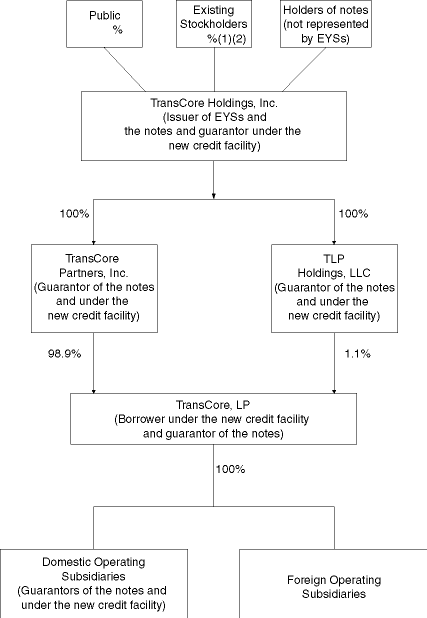
| (1) | Includes class A common stock and class B common stock. Our class A common stock, class B common stock and new class C common stock will vote together as a single class on all matters. |
| (2) | Our directors, our officers named in our management table and our existing 5% holders will beneficially own %. See “Principal Securityholders.” |
5
Where You Can Find Us
We were incorporated in Delaware in 1999. Our principal executive office is located at 8158 Adams Drive, Hummelstown, Pennsylvania 17036 and our telephone number is (717) 561-2400. Our Internet address is http://www.transcore.com. Http://www.transcore.com is a textual reference only, meaning that the information contained on the website is not part of this prospectus and is not incorporated into this prospectus by reference.
Risk Factors
You should carefully consider the information under the heading “Risk Factors” and all other information in this prospectus before investing in our EYSs and shares of our class A common stock and/or the notes.
General Information About This Prospectus
Throughout this prospectus, unless otherwise noted, we have assumed:
| • | no exercise of the underwriters’ over-allotment option; | |
| • | all shares of our redeemable preferred stock, including shares issued upon the exchange of options, will be redeemed; | |
| • | all shares of our convertible preferred stock and common stock, including shares issued upon the exercise or exchange of options or warrants, will be converted into our existing class A common stock; | |
| • | all vested options to purchase our preferred stock or common stock will be either exercised or exchanged; | |
| • | all warrants to purchase our common stock will be exchanged for shares of our existing class A common stock; | |
| • | all of our existing class A common stock will be repurchased, exchanged for class B common stock or exchanged for EYSs; | |
| • | a for split and reclassification of our existing class A common stock that will become effective immediately prior to this offering; and | |
| • | an initial public offering price of $ per EYS, which represents the mid-point of the range set forth on the cover page of this prospectus, and an initial public offering price of % of the stated principal amount per note sold separately (not represented by EYSs), and a closing date of . |
Unless the context otherwise requires, references in this prospectus to this “offering” refer to the offering of EYSs to the public, including the shares of class A common stock and notes represented by such EYSs, and $ million aggregate principal amount of notes offered separately (not represented by EYSs).
6
The Offering
Summary of our EYSs and the Notes
We are offering EYSs at an initial public offering price of $ per EYS, which represents the mid-point of the range set forth on the cover page of this prospectus, and $ million aggregate principal amount of notes sold separately (not represented by EYSs) at an initial public offering price of % of the stated principal amount for each note. As described below, assuming we make our scheduled interest payments and pay dividends in the amounts contemplated by a dividend policy our board of directors will adopt upon the closing of this offering, holders of EYSs will receive in the aggregate approximately $ per year in dividends and interest on the class A common stock and notes represented by each EYS, and holders of our notes will receive $ per year in interest per note. Interest payments on the notes represented by the EYSs may be deferred under certain circumstances and dividends on the class A common stock represented by the EYSs are payable at the discretion of our board of directors and only as permitted by applicable law and the terms of the agreements governing our indebtedness.
What are EYSs?
EYSs are securities comprised of common stock and notes. Each EYS represents:
| • | one share of our class A common stock; and | |
| • | a % senior subordinated note with $ principal amount. |
The ratio of class A common stock to principal amount of notes represented by an EYS is subject to change in the event of a stock split, recombination or reclassification of our class A common stock. For example, if we elect to effect a two-for-one stock split, from and after the effective date of the stock split, each EYS will represent two shares of class A common stock and the same principal amount of notes as it previously represented. Likewise, if we effect a recombination or reclassification of our class A common stock, each EYS will thereafter represent the appropriate number of shares of class A common stock on a recombined or reclassified basis, as applicable, and the same principal amount of notes as it previously represented.
What payments can I expect to receive as a holder of EYS notes?
You will be entitled to receive quarterly interest payments at an annual rate of % of the aggregate principal amount of notes or, in the case of notes represented by your EYSs, approximately $ per EYS per year, subject to our right, under specified circumstances, to defer interest payments. See “Description of Notes — The Notes — Interest Deferral.”
You will also receive quarterly dividends on the shares of our class A common stock represented by your EYSs, if and to the extent dividends are declared by our board of directors and are permitted by applicable law and the terms of our then existing indebtedness. The indenture governing the notes contains restrictions on our ability to declare and pay dividends on our class A common stock. We will adopt a dividend policy that contemplates that initial annual dividends will be approximately $ per share of our class A common stock. However, our board of directors may, in its discretion, modify or repeal our dividend policy. We cannot assure you that we will pay dividends at this level in the future or at all. See “Description of Notes — Certain Covenants.”
We expect to make interest and dividend payments on or about the day of each , , and to holders of record on the day of such month or the immediately preceding business day. The cash used to make the interest and dividend payments is expected to come from distributions by our operating subsidiaries. Our new credit facility will contain limitations on our ability to make interest and dividend payments if we do not meet various financial tests. See “Description of Certain Indebtedness.”
7
What instruments will govern my rights as an EYS holder?
Your rights as an EYS holder will be governed by a global EYS certificate, which includes provisions with respect to the separation, recombination and adjustment of the class A common stock and notes represented by the EYSs. The class A common stock represented by the EYSs will be governed by our restated certificate of incorporation and the notes represented by the EYSs will be governed by the indenture.
Will my rights as a holder of EYSs be any different than the rights of a direct holder of the class A common stock and notes?
No. As a holder of EYSs you are the beneficial owner of the class A common stock and notes represented by your EYSs. As such, you will have exactly the same rights, privileges and preferences, including voting rights, rights to receive distributions, rights and preferences in the event of a default under the notes indenture, ranking upon bankruptcy and rights to receive communications and notices as a direct holder of the class A common stock and notes, as applicable.
Will the terms of the notes represented by EYSs be the same as the terms of the notes sold separately (not represented by EYSs)?
Yes. The terms of the notes sold separately (not represented by EYSs) will be identical to the terms of the notes represented by EYSs and will be part of the same series of notes issued under the same indenture. Accordingly, holders of notes sold separately (not represented by EYSs) and holders of notes represented by EYSs will vote together as a single class, in proportion to the aggregate principal amount of notes they hold, on all matters on which they are eligible to vote under the indenture governing the notes.
Will the EYSs be listed on an exchange?
Yes. We intend to list the EYSs on the American Stock Exchange under the trading symbol “ .”
Will the notes and shares of our class A common stock be listed on an exchange?
The notes will not be listed on any exchange. Our shares of class A common stock will not be listed for separate trading on the American Stock Exchange until the number of shares of our class A common stock held separately and not represented by EYSs is sufficient to satisfy applicable requirements for separate trading on the exchange. If more than such number of our outstanding shares of class A common stock is no longer held in the form of EYSs for a period of 30 consecutive trading days and we otherwise meet the applicable listing requirements, we will apply to list the shares of our class A common stock for separate trading on the American Stock Exchange. The notes and shares of our class A common stock will be freely tradable without restriction or further registration under the Securities Act of 1933, as amended, unless they are purchased by “affiliates” as that term is defined in Rule 144 under the Securities Act.
In what form will EYSs and the securities represented by the EYSs and the notes sold separately be issued?
The EYSs and the securities represented by the EYSs and the notes sold separately (not represented by EYSs) will be issued in book-entry form only. This means that you will not be a registered holder of EYSs or the securities represented by the EYSs or the notes sold separately (not represented by EYSs), and you will not be entitled to receive a certificate for your EYSs or the securities represented by your EYSs or the notes sold separately (not represented by EYSs). You must rely on your broker or other financial institution that will maintain your book-entry position to receive the benefits and exercise the rights of a holder of EYSs or notes.
8
How can I separate my EYSs into shares of class A common stock and notes or combine shares of class A common stock and notes to form EYSs?
Holders of EYSs, whether purchased in this offering or in subsequent offerings of EYSs of the same series, may, at any time after the earlier of 45 days from the closing of this offering or the occurrence of a change of control, through a broker or other financial institution, separate each of their EYSs into the shares of class A common stock and notes represented thereby. Similarly, any holder of shares of our class A common stock and notes, whether represented by EYSs purchased in this offering or a subsequent offering and separated, or purchased separately in the secondary market, may, at any time, through a broker or other financial institution, combine the applicable number of shares of class A common stock and notes to form EYSs, unless the EYSs have previously been automatically separated as a result of the redemption or maturity of any notes or otherwise. Separation and recombination of EYSs will occur promptly in accordance with The Depository Trust Company’s procedures and upon receipt of instructions from your broker and may involve transaction fees charged by your broker and/or other financial intermediaries. Trading in the EYSs will not be suspended as a result of any such separation or recombination of EYSs. See “Description of EYSs — Book Entry, Settlement and Clearance — Separation and Recombination.”
What will happen if we issue additional EYSs or notes of the same series in the future?
We may conduct future financings by selling additional EYSs or notes of the same series. Additional EYSs or notes will have terms that are identical to those of the EYSs or notes being sold in this offering, except that: (i) if additional EYSs are issued 45 days or more after the closing of this offering, they will be immediately separable into the shares of class A common stock and notes represented by such EYSs, whereas the EYSs issued in this offering are not separable for 45 days after the closing of this offering; and (ii) if additional EYSs are issued less than 45 days after the closing of this offering, they will be separable on the same date as the EYSs issued in this offering. If we issue additional EYSs, they also will be comprised of class A common stock and notes in the same proportion as the then outstanding EYSs.
Subsequently issued notes, whether issued separately or as part of an EYS, may be issued with original issue discount, or OID, if they are issued at a discount to their face value (for example, as a result of changes in prevailing interest rates) or if the contingencies relating to the deferral of interest were not treated as “remote” at the time of issuance. The U.S. federal income tax consequences to you of a subsequent issuance of notes (including notes with OID) are unclear. The indenture governing the notes and the agreements with The Depository Trust Company provide that, in the event there is a subsequent issuance of notes having terms substantially identical to the notes issued in this offering, but with a different CUSIP number (or any issuance of notes thereafter), each holder of notes or EYSs (as the case may be) agrees that a portion of such holder’s notes will be automatically exchanged for a portion of the notes acquired by the holders of such subsequently issued notes, and the records of The Depository Trust Company and the trustee will be revised to reflect such exchanges. Consequently, immediately following each such subsequent issuance and exchange, without any further action by such holder, each holder of notes or EYSs (as the case may be) will own an inseparable unit composed of notes of each separate issuance in the same proportion as each other holder. The tax consequences of a subsequent issuance and exchange will affect all of the notes issued in this offering in the same manner, regardless of whether such notes are held as part of an EYS or separately.
The aggregate stated principal amount of notes owned by each holder will not change as a result of such subsequent issuance and exchange. However, under applicable law it is possible that the holders of subsequently issued notes (to the extent issued with OID) will not be entitled to a claim for the portion of their principal amount that is equal to unamortized OID in the event of an acceleration of the notes or a bankruptcy proceeding occurring prior to the maturity of the notes. See “Risk Factors — A subsequent issuance of notes may reduce the amount you can recover upon an acceleration of the payment of principal due on the notes or in the event of our bankruptcy.” Due to a lack of applicable guidance, it is unclear (and our special counsel is unable to opine as to) whether an exchange of notes for subsequently issued notes results in a taxable exchange for U.S. federal income tax purposes, and it is possible that the IRS might successfully assert that such an exchange should be treated as a taxable exchange. If an automatic exchange following a subsequent issuance were treated as a taxable exchange, you would generally recognize gain or
9
Following any such subsequent issuance and exchange, we (and our agents) will report any OID on the subsequently issued notes ratably among all holders of notes and EYSs, and, by acquiring notes or EYSs, you agree to report OID in a manner consistent with this approach. As a result, regardless of whether the exchange is treated as a taxable event, such exchange may have potentially adverse U.S. federal income tax consequences to you because it may result in an increase in the amount of OID that you are required to include in income. Although we will report the OID on all of the notes in the manner described above, the IRS may assert that any OID should be reported only to the persons that initially acquired such subsequently issued notes (and their transferees, but without regard to the automatic exchanges described above) and thus may challenge the holders’ reporting of OID on their tax returns. In such case, the IRS might further assert that, unless a holder can establish that it is not such a person, all of the notes held by such holder have OID. Any of these assertions by the IRS could create significant uncertainties in the pricing of EYSs and notes and could adversely affect the market for EYSs and notes.
We will immediately file a Current Report on Form 8-K (or any other applicable form) to announce and quantify any changes in the ratio of EYS components or changes in OID attributed to the notes.
Because there is no statutory, judicial or administrative authority directly addressing the tax treatment of the EYSs or instruments similar to the EYSs, we urge you to consult your own tax advisor concerning the tax consequences of such an issuance and exchange. See “Material U.S. Federal Income Tax Considerations — Consequences to U.S. Holders — Notes — Additional Issuance of Notes.”
What will be the U.S. federal income tax considerations in connection with an investment in the EYSs?
The purchase price of each EYS will be allocated between the share of class A common stock and the note represented by such EYS in proportion to their respective fair market values at the time of purchase. Such allocation will establish your initial tax bases in the share of class A common stock and the note. We will report the initial fair market value of each share of class A common stock as $ and the initial fair market value of each note as $ , and by purchasing an EYS, you agree to such allocation and that you will not take a contrary position for any purpose, including tax reporting purposes. However, this allocation is not binding on the IRS and the IRS may challenge it. If the IRS successfully challenges this allocation on the basis that the note had, at the time of purchase, a fair market value that is less than that which we allocated to it, it is possible that the note will be treated as having been issued with OID. If the note were treated as being issued with OID, you generally would have to include OID in income in advance of the receipt of cash attributable to that income. If the IRS successfully asserts that the note had, at the time of purchase, a fair market value greater than that allocated to it, it is possible that the note will be treated as having been issued with amortizable bond premium. If the note were treated as having been issued with amortizable bond premium, you may be able to elect to amortize such bond premium over the term of the note. See “Material U.S. Federal Income Tax Considerations — Consequences to U.S. Holders — EYSs — Allocation of Purchase Price” and “Material U.S. Federal Income Tax Considerations — Consequences to Non-U.S. Holders — EYSs — Allocation of Purchase Price.”
Our special counsel is of the opinion that the notes issued in this offering should be treated as debt for U.S. federal income tax purposes. However, due to a lack of direct authority, our special counsel cannot conclude with certainty that the notes issued in this offering will be treated as debt for U.S. federal income tax purposes, and the IRS may successfully challenge this position.
If the notes were treated as equity rather than debt for U.S. federal income tax purposes, then payment of the stated interest on the notes would generally be treated as the payment of dividends to the extent paid out of our current or accumulated earnings and profits (as determined under U.S. federal income tax principles), but those amounts treated as dividends would likely not qualify for the special rate described in the section entitled “Material U.S. Federal Income Tax Considerations — Consequences to U.S. Holders — Class A Common Stock — Dividends.” Furthermore, interest on the notes would not be deductible by us for
10
If we elect to defer the payment of interest on the notes, you may incur OID. See “Material U.S. Federal Income Tax Considerations — Consequences to U.S. Holders — Notes — Stated Interest; Deferral of Interest.” If we issue additional EYSs or notes of the same series in the future, adverse U.S. federal income tax consequences could result. See “What will happen if we issue additional EYSs or notes of the same series in the future?” and “Material U.S. Federal Income Tax Considerations — Consequences to U.S. Holders — Notes — Additional Issuances of Notes.”
11
Summary of Our Class A Common Stock
| Issuer | TransCore Holdings, Inc. | |
| Shares of class A common stock represented by EYSs being offered hereby | shares (or shares if the underwriters’ over-allotment option is exercised in full). Each offered share of class A common stock initially will be represented by EYSs. | |
| Shares of class A common stock outstanding following this offering | shares (or shares assuming exchange of all of our class B common stock for EYSs). | |
| Voting rights | Each outstanding share of our class A common stock will carry one vote per share and will vote as a single class with the holders of our class B common stock and class C common stock. | |
| Dividends | You will receive quarterly distributions on the shares of our class A common stock represented by your EYSs if and to the extent dividends are declared by our board of directors and permitted by applicable law and the terms of our then outstanding indebtedness. Specifically, the indenture governing the notes and the new credit facility both restrict our ability to declare and pay dividends on our class A common stock as described in detail under “Dividend Policies.” Upon the closing of this offering, our board of directors will adopt a dividend policy, which contemplates that, subject to applicable law and the terms of our then existing indebtedness, initial annual dividends will be approximately $ per share of our class A common stock. However, our board of directors may, in its discretion, modify or repeal this dividend policy. We cannot assure that we will pay dividends at this level in the future or at all. | |
| Dividend payment date | If declared, dividends will be paid quarterly on the day of each quarter to holders of record on the or the immediately preceding business day of such quarter. | |
| Listing | Our shares of class A common stock will not be listed for separate trading on the American Stock Exchange until the number of shares of our class A common stock held separately and not represented by EYSs is sufficient to satisfy applicable requirements for separate trading on the American Stock Exchange. Our class A common stock will be freely tradable without restriction or further registration under the Securities Act, unless held by our “affiliates,” as that term is defined in Rule 144 under the Securities Act. |
Summary of Our Notes
| Issuer | TransCore Holdings, Inc. | |
| Notes being offered hereby | • $ million aggregate principal amount of % senior subordinated notes (or $ million aggregate principal amount assuming the underwriters’ over-allotment option is exercised in full) represented by EYSs; and | |
| • $ million aggregate principal amount of % senior subordinated notes sold separately (not represented by EYSs). |
12
| Assuming the exchange of all of our class B common stock for EYSs, $ million aggregate principal amount of notes would be outstanding following this offering. | ||
| Interest rate | % per year. | |
| Interest payment dates | Interest will be paid quarterly in arrears on the day of each , , and , commencing , 2004, to holders of record on the day of each month. | |
| Interest deferral | Prior to , 2009, subject to certain limitations, we may, at our option, defer interest payments on the notes for not more than eight quarters in the aggregate and not beyond , 2009. In addition, after , 2009, subject to certain limitations, we may, at our option, defer interest on the notes on not more than four occasions for not more than two quarters per occasion; provided that no interest deferral period after , 2009 may commence unless and until all deferred interest and accrued interest thereon pursuant to any preceding interest deferral period has been paid in full. | |
| No interest deferral may be commenced, and any ongoing deferral shall cease, if: | ||
| • we are in default under the notes and, if the default is not a payment default, the notes have been accelerated as a result of such default; or | ||
| • there is a default under $ million or more of our other senior subordinated debt or subordinated debt that has resulted in the acceleration of the maturity of such debt. | ||
| Deferred interest on the notes will bear interest at the same rate as stated on the notes, compounded quarterly. We will repay all interest deferred prior to , 2009 (together with accrued interest thereon) on or prior to , 2009. We will repay all interest deferred after , 2009 (together with accrued interest thereon) on or prior to , 2016; provided that we must pay all deferred interest and accrued interest thereon in full with respect to any interest deferral period after , 2009 prior to deferring interest for any subsequent interest deferral period. We may prepay deferred interest at any time, except when an interest deferral period is in effect. | ||
| In the event that interest payments on the notes are deferred, you would be required to include interest in your income for U.S. federal income tax purposes on an economic accrual basis under the original issue discount rules even if you do not receive any cash interest payments. See “Material U.S. Federal Income Tax Considerations — Consequences to U.S. Holders — Notes — Stated Interest; Deferral of Interest.” | ||
| Maturity date | The notes will mature on , 2016. | |
| Ranking | The notes will be general unsecured senior subordinated obligations, will be subordinated in right of payment to all of our existing and future senior indebtedness, will rank equally in right |
13
| of payment with any of our future senior subordinated indebtedness, and will rank senior to all our future subordinated indebtedness. In addition, payments on the notes will be blocked upon the occurrence of certain events of defaults with respect to our senior indebtedness. See “Description of Notes — Subordination.” | ||
| As of January 31, 2004, after giving pro forma effect to the transactions: | ||
| • we would have had approximately $ million of total consolidated indebtedness, of which $ million would have been senior indebtedness under our new credit facility; and | ||
| • our non-guarantor subsidiaries would have had no indebtedness outstanding, other than trade payables. | ||
| Note guarantees | The notes will be fully and unconditionally guaranteed by each of our domestic subsidiaries on an unsecured senior subordinated basis on the terms set forth in the indenture. The note guarantees will be subordinated in right of payment to all existing and future senior indebtedness of the guarantors, including their senior guarantees of indebtedness under our new credit facility. | |
| Optional redemption | The notes will be redeemable, in whole or in part, at our option, at any time on or after , 2009 at the redemption prices set forth herein, plus accrued and unpaid interest to the date of redemption. If the notes are redeemed in whole or in part, the notes and class A common stock represented by each EYS will be automatically separate. See “Description of Notes — Optional Redemption.” | |
| Change of control | Upon the occurrence of a change of control, as defined under “Description of Notes — Repurchase at the Option of Holders — Change of Control,” each holder of the notes will have the right to require us to repurchase that holder’s notes at a price equal to 101% of the principal amount of the notes being repurchased, plus any accrued but unpaid interest to the date of repurchase. In order to exercise this right, a holder must voluntarily separate the notes and class A common stock represented by such holder’s EYS. | |
| Procedures relating to subsequent issuances | The indenture governing the notes will provide that, in the event there is a subsequent issuance of notes by us having substantially identical terms as the notes, but a different CUSIP number, each holder of notes or EYSs (as the case may be) agrees that a portion of such holder’s notes (whether held directly or held as part of EYSs) will be automatically exchanged for a portion of the notes purchased by the holders of such subsequently-issued notes, and the records of The Depository Trust Company will be revised to reflect such exchanges. Consequently, following each such subsequent issuance and automatic exchange, without any action by such holder, each holder of notes or EYSs (as the case may be) will own an inseparable unit composed of notes of each separate issuance in the same proportion as each other holder. However, the aggregate |
14
| stated principal amount of notes owned by each holder will not change as a result of such subsequent issuance and exchange. | ||
| The indenture governing the notes will permit issuances of additional notes, subject to compliance with restrictive covenants contained in the indenture. However, we may not issue additional notes if and for so long as an event of default with respect to the notes has occurred and is continuing. The automatic exchange of notes summarized above should not impair the rights any holder would otherwise have to assert a claim under applicable securities laws against us or any of our agents, including the underwriters, with respect to the full amount of notes purchased by such holder. However, any subsequent issuance of notes by us may adversely affect the tax and non-tax treatment of the holders of notes and EYSs. See “Risk Factors — Subsequent issuances of notes may cause you to recognize original issue discount and subject you to other adverse consequences,” “Risk Factors — A subsequent issuance of notes may reduce the amount you can recover upon an acceleration of the payment of principal due on the notes or in the event of our bankruptcy” and “Material U.S. Federal Income Tax Considerations — Consequences to U.S. Holders — Notes — Additional Issuances of Notes.” | ||
| Restrictive covenants | The indenture governing the notes will contain covenants with respect to us and our restricted subsidiaries that will restrict: | |
| • the incurrence of additional indebtedness and the issuance by our restricted subsidiaries of preferred stock; | ||
| • our ability to incur layered indebtedness; | ||
| • the creation of liens; | ||
| • the payment of dividends on, and purchase or redemption of, capital stock; | ||
| • a number of other restricted payments, including investments; | ||
| • specified sales of assets; | ||
| • the creation of encumbrances or restrictions on the ability of restricted subsidiaries to distribute and advance funds or transfer assets to us or any other restricted subsidiary; | ||
| • specified transactions with affiliates; | ||
| • our ability to designate restricted and unrestricted subsidiaries; | ||
| • our ability to enter lines of business outside those permitted under the indenture governing the notes; and | ||
| • certain consolidations, mergers and sales and transfers of assets by or involving us. | ||
| The limitations and prohibitions described above are subject to a number of other important qualifications and exceptions described under “Description of Notes — Certain Covenants.” | ||
| Listing | We do not anticipate that our notes will be separately listed on any exchange. |
15
Summary Consolidated Financial Information
The following summary consolidated financial data should be read in conjunction with “Selected Historical Consolidated Financial Data,” “Capitalization,” “Management’s Discussion and Analysis of Financial Condition and Results of Operations” and our audited consolidated financial statements and related notes included in this prospectus. Our summary consolidated balance sheet data as of January 31, 2004 and summary consolidated statements of operations data for the fiscal years ended January 31, 2002, 2003 and 2004 have been derived from our audited consolidated financial statements included in this prospectus. The summary as adjusted consolidated balance sheet data as of January 31, 2004, gives effect to the anticipated use of the proceeds of the offering as if it had taken place on January 31, 2004.
| Fiscal Year Ended January 31 | ||||||||||||||
| 2002 | 2003 | 2004 | ||||||||||||
| (in thousands, | ||||||||||||||
| except per share data and ratios) | ||||||||||||||
|
Consolidated Statements of Operations
Data:
|
||||||||||||||
|
Total revenue
|
$ | 323,435 | $ | 318,308 | $ | 338,137 | ||||||||
|
Total gross profit
|
144,371 | 142,903 | 148,884 | |||||||||||
|
Income from continuing operations
|
13,805 | 9,930 | 3,615 | |||||||||||
|
Discontinued operations
|
(17,283 | ) | (1,778 | ) | (3,134 | ) | ||||||||
|
Net (loss) income(1)
|
$ | (3,478 | ) | $ | 8,152 | $ | 481 | |||||||
|
Convertible and redeemable preferred stock
dividends
|
(9,978 | ) | (10,406 | ) | (8,831 | ) | ||||||||
|
Net loss available to common stockholders
|
$ | (13,456 | ) | $ | (2,254 | ) | $ | (8,350 | ) | |||||
|
Net loss per common share
|
||||||||||||||
|
Basic
|
$ | (72.21 | ) | $ | (12.09 | ) | $ | (44.59 | ) | |||||
|
Diluted
|
$ | (72.21 | ) | $ | (12.09 | ) | $ | (44.59 | ) | |||||
|
Weighted average shares outstanding
|
||||||||||||||
|
Basic and diluted
|
186,325 | 186,333 | 187,249 | |||||||||||
|
Other Operating Data:
|
||||||||||||||
|
EBITDA(2)
|
$ | 57,166 | $ | 59,753 | $ | 64,441 | ||||||||
|
Adjusted EBITDA(3)
|
54,941 | 62,014 | 67,486 | |||||||||||
|
Interest expense
|
21,333 | 23,672 | 25,308 | |||||||||||
|
Capital expenditures — property and
equipment
|
$ | 7,941 | $ | 5,210 | $ | 6,306 | ||||||||
|
Ratio of earnings to fixed charges(4)
|
1.42 | x | 1.80 | x | 1.26 | x | ||||||||
|
Consolidated Cash Flow Data:
|
||||||||||||||
|
Net cash provided by operating activities of
continuing operations
|
$ | 18,529 | $ | 45,861 | $ | 18,238 | ||||||||
|
Net cash used in investing activities
|
(160,776 | ) | (16,693 | ) | (12,890 | ) | ||||||||
|
Net cash provided by (used in) financing
activities
|
$ | 151,109 | $ | (22,060 | ) | $ | (5,586 | ) | ||||||
16
| As of January 31, 2004 | ||||||||
| Actual | As Adjusted | |||||||
| (in thousands) | ||||||||
|
Consolidated Balance Sheet Data:
|
||||||||
|
Cash and cash equivalents
|
$ | 896 | $ | |||||
|
Working capital(5)
|
34,814 | |||||||
|
Total assets
|
398,050 | |||||||
|
Total long-term debt and capital lease obligations
|
209,190 | |||||||
|
Redeemable Preferred Stock
|
50,554 | |||||||
|
Convertible Preferred Stock
|
83,117 | |||||||
|
Stockholders’ equity
|
$ | 69,175 | $ | |||||
| (1) | If SFAS No. 142, “Goodwill and Other Intangible Assets,” had been adopted as of February 1, 2001, the absence of goodwill and indefinite lived intangible assets amortization would have resulted in the net income for the fiscal year ended January 31, 2002 of $2,784. |
| (2) | We have included EBITDA because management uses it as a key measure of our operating performance. We define EBITDA as consolidated net income before loss from discontinued operations, provision for income taxes, interest expense, loss on extinguishment of certain debt, depreciation and amortization. EBITDA is not a measure of financial performance under accounting principles generally accepted in the U.S. and should not be considered an alternative to net earnings or any other measure of performance under accounting principles generally accepted in the U.S. or to cash flows from operating, investing or financing activities as an indicator of cash flows or as a measure of liquidity. Our calculation of EBITDA may be different from the calculations used by other companies, and therefore comparability may be limited. Certain financial covenants in the new credit facility and the indenture governing the notes are based on EBITDA, subject to adjustments, and therefore EBITDA for purposes of these financial covenants may be calculated differently from EBITDA as shown above. Depreciation and amortization in this table excludes amortization of deferred financing costs, which is included in interest expense. The following table sets forth a reconciliation of net (loss) income to EBITDA: |
| For the Fiscal Year Ended | ||||||||||||||
| January 31, | ||||||||||||||
| 2002 | 2003 | 2004 | ||||||||||||
| (in thousands) | ||||||||||||||
|
Net (loss) income
|
$ | (3,478 | ) | $ | 8,152 | $ | 481 | |||||||
|
Loss from discontinued operations
|
17,283 | 1,778 | 3,134 | |||||||||||
|
Income tax (benefit) expense
|
(4,754 | ) | 9,242 | 2,950 | ||||||||||
|
Interest expense
|
21,333 | 23,672 | 25,308 | |||||||||||
|
Loss on extinguishment of debt
|
2,432 | — | 11,126 | |||||||||||
|
Depreciation and amortization
|
24,350 | 16,909 | 21,442 | |||||||||||
|
EBITDA
|
$ | 57,166 | $ | 59,753 | $ | 64,441 | ||||||||
| (3) | Covenants in the indenture governing our notes and in our new credit facility will contain ratios based on Adjusted EBITDA. Adjusted EBITDA is defined in the indenture as the sum of consolidated net income, as defined therein, plus the following to the extent deducted from consolidated net income: provision for income taxes, interest expense, depreciation and amortization, certain non-cash, extraordinary and non-recurring items, and specified losses from discontinued operations, investor management fees and retention and stock appreciation rights plans expense; minus (2) non-cash items and extraordinary gains increasing consolidated net income for the period. If our Adjusted EBITDA were to decline below certain levels, covenants in the agreements governing our indebtedness that are based on Adjusted EBITDA, including our fixed charge coverage ratio covenant, may be violated and could cause, among other things, a default or mandatory prepayment under our new credit facility, or result in our inability to pay dividends or a requirement that we defer interest payments on the notes. These covenants are summarized |
17
| under “Description of Notes — Certain Covenants.” A reconciliation of EBITDA to Adjusted EBITDA is as follows: |
| For the Fiscal Year Ended | |||||||||||||
| January 31, | |||||||||||||
| 2002 | 2003 | 2004 | |||||||||||
| (in thousands) | |||||||||||||
|
EBITDA
|
$ | 57,166 | $ | 59,753 | $ | 64,441 | |||||||
|
Investor management fees
|
563 | 555 | 615 | ||||||||||
|
Retention and stock appreciation rights plans
expense
|
1,982 | 1,706 | 1,015 | ||||||||||
|
Fees and expenses related to pursuit of strategic
alternatives
|
— | — | 1,415 | ||||||||||
|
Other income — legal and insurance
settlements
|
(4,770 | ) | — | — | |||||||||
|
Adjusted EBITDA
|
$ | 54,941 | $ | 62,014 | $ | 67,486 | |||||||
| (4) | We have calculated the ratio of earnings to fixed charges by dividing earnings by fixed charges. Where applicable, we have calculated the deficiency in the coverage of earnings to fixed charges by subtracting fixed charges from earnings. For the purpose of these computations, earnings consist of income from continuing operations before income taxes plus charges, excluding capitalized interest. Fixed charges consist of the sum of interest on indebtedness, amortized expenses related to indebtedness, capitalized interest and an interest component of lease rental expense. The pro forma ratio of earnings to fixed charges, after giving effect to this offering and the use of proceeds, would have been for the fiscal year ended January 31, 2004. |
| (5) | Working capital represents current assets minus current liabilities. |
18
RISK FACTORS
An investment in the EYSs and the shares of our class A common stock and/or our notes involves a number of risks. In addition to the other information contained in this prospectus, prospective investors should give careful consideration to the following factors. Any of the following risks could materially and adversely affect our business, consolidated financial conditions, results of operations or liquidity. In such case, you may lose all or part of your original investment. The risks described below are not the only risks facing us. Additional risks and uncertainties not currently known to us or that we currently deem to be immaterial may also materially and adversely affect our business operations.
Risks Relating to the EYSs, the Shares of Class A Common Stock and the Notes
Our substantial indebtedness could restrict our ability to pay interest and principal on the notes and to pay dividends on shares of our class A common stock and have an adverse impact on our financing options and liquidity position.
As of January 31, 2004, after giving pro forma effect to the transactions, we would have had approximately $ million of total consolidated indebtedness. Our substantial indebtedness could have important adverse consequences to the holders of the EYSs and to the holders of the notes, including:
| • | our ability to pay interest and principal on the notes, pay dividends on shares of our class A common stock or make payments in connection with our other obligations, including, under our new credit facility, may be limited; | |
| • | our ability in the future to obtain additional financing for working capital, capital expenditures, acquisitions or surety underwriting may be limited; | |
| • | we may not be able to refinance our indebtedness on terms acceptable to us or at all; | |
| • | our flexibility in planning for, or reacting to, changes in our business and our industry may be limited; | |
| • | a significant portion of our cash flow from operations is likely to be dedicated to the payment of the principal of and interest on our indebtedness, thereby reducing funds available for future operations, acquisitions, dividends on our class A common stock and/or capital expenditures; | |
| • | we may be more vulnerable to economic and industry downturns and conditions, including changes in interest rates; and | |
| • | we may be placed at a competitive disadvantage compared to those of our competitors that have less indebtedness. |
Because of the subordinated nature of the notes and the related note guarantees, holders of our notes may not be entitled to be paid in full in the event of a payment default on our senior indebtedness or senior indebtedness of the subsidiary guarantors or a bankruptcy, liquidation or reorganization or similar proceeding.
As a result of the subordinated nature of our notes and related note guarantees, in the event of a payment default on our senior indebtedness or senior indebtedness of the subsidiary guarantors or upon any distribution to our creditors or the creditors of the subsidiary guarantors in bankruptcy, liquidation or reorganization or similar proceeding relating to us or the subsidiary guarantors or our or their property, the holders of our senior indebtedness and senior indebtedness of the subsidiary guarantors will be entitled to be paid in full in cash before any payment may be made with respect to our notes or the note guarantees.
In the event of a bankruptcy, liquidation or reorganization or similar proceeding relating to us or the subsidiary guarantors, holders of our notes will participate with all other holders of unsecured indebtedness of ours or the subsidiary guarantors similarly subordinated in the assets remaining after we and the subsidiary guarantors have paid all senior indebtedness. However, because of the existence of the subordination provisions, including the requirement that you pay over distributions to holders of senior indebtedness, you may receive less, ratably, than our other unsecured creditors, including trade creditors. In any of these cases,
19
The notes will be our senior subordinated obligations ranking equal in right of payment to all of our existing and future senior subordinated indebtedness, senior to all of our future subordinated indebtedness and junior in right of payment to all of our existing and future senior indebtedness. As of January 31, 2004, on a pro forma basis, we would have had the ability to borrow up to an additional amount of $ million under the new credit facility, which would have ranked senior in right of payment to our notes. See “Description of Certain Indebtedness.” The indenture governing the notes and our new senior credit facility permit us and the guarantors, subject to specified limitations, to incur additional debt, some or all of which may be senior debt. All amounts outstanding from time to time under our new senior credit facility will be designated senior debt.
In addition, the subsidiary guarantors are guarantors under our new credit facility, so any claims of holders of the notes will be subordinated in right of payment to the satisfaction of the claims that the lenders may have under the guarantees granted pursuant to our new credit facility.
The notes will be structurally subordinated to all indebtedness of our subsidiaries that are not guarantors of the notes.
You will not have any claim as a creditor against our subsidiaries that are not guarantors of the notes, and indebtedness and other liabilities, including trade payables, of those subsidiaries will effectively be senior to your claims against those subsidiaries. In the event of a bankruptcy, liquidation or reorganization of any of our non-guarantor subsidiaries, holders of their indebtedness and their trade creditors will generally be entitled to payment on their claims from assets of those subsidiaries before any assets are made available for distribution to us. Under some circumstances, the terms of the notes will permit our non-guarantor subsidiaries to incur additional unspecified indebtedness.
We may incur additional indebtedness ranking equal to the notes.
If we incur any additional indebtedness that ranks equally with the notes, the holders of that debt will be entitled to share ratably with you in any proceeds distributed in connection with any bankruptcy, liquidation, reorganization, dissolution, winding up or other similar proceedings relating to us. This may have the effect of reducing the amount of proceeds paid to you.
Our new credit facility will contain significant limitations on distributions and other payments. In addition, we may amend the terms of our new credit facility, or we may enter into new agreements that govern our senior indebtedness, and the amended terms or new agreements may further significantly affect our ability to pay interest to holders of our EYSs and our notes and dividends to holders of our EYSs.
Our new credit facility contains significant restrictions on our ability to pay interest on the notes and dividends on the shares of class A common stock based on meeting our total leverage ratio, senior secured leverage ratio, interest coverage ratio and compliance with other conditions, as described in detail under “Description of Certain Indebtedness.”
As a result of general economic conditions, conditions in the lending markets, the results of our business or for any other reason, we may elect or be required to amend or refinance our new credit facility, at or prior to maturity, or enter into additional agreements for senior indebtedness. Regardless of any protection you have in the indenture governing the notes, any such amendment, refinancing or additional agreement may contain covenants that could limit, in a significant manner, our ability to pay interest payments and dividends to you.
20
To service our indebtedness, we will require a significant amount of cash. Our ability to generate cash depends on many factors beyond our control. We may not generate sufficient funds from operations to pay interest on the notes, pay dividends with respect to shares of our class A common stock, repay or refinance our indebtedness at maturity or otherwise, or to fund investments and operations.
Our ability to make payments on our indebtedness, including the notes, will depend on our ability to generate cash flow from operations in the future. This ability, to a certain extent, is subject to general economic, financial, competitive, governmental and other factors that are beyond our control. Our business may not be able to generate sufficient cash flow from operations and future borrowings may not be available to us in an amount sufficient to enable us to pay our indebtedness, including the notes, or to fund our other liquidity needs.
A significant portion of our cash flow from operations will be dedicated to capital expenditures and debt service. We may also incur substantial costs in the process of developing new technologies or refining and enhancing our existing technologies to meet current and future technology trends. In addition, we currently expect to distribute a significant portion of any remaining cash earnings to our stockholders in the form of quarterly dividends. Prior to the maturity of our new credit facility and the notes, we will not be required to make any payments of principal on our notes or our new credit facility, and it is not likely that we will generate sufficient funds from operations to repay the principal amount of our indebtedness at maturity. Therefore, we will likely need to refinance our debt, raise additional capital or sell assets and, if we are forced to pursue any of these options under distressed conditions, our business and the value of your investment in our EYSs or notes could be adversely affected. In addition, these alternatives may not be available to us when needed or on satisfactory terms due to prevailing market conditions, a decline in our business, governmental factors or restrictions contained in our senior indebtedness.
In addition, we may seek to raise additional capital to fund our investments and/or operations through public or private equity or debt financing. Additional financing may not be available, if needed, on acceptable terms, or at all. If we raise additional funds by issuing equity securities, our stockholders may experience dilution.
We may not have sufficient funds to purchase the notes upon the exercise by holders of their rights upon a change of control.
Under the indenture governing the notes, upon the occurrence of specified change of control events, we will be required to offer to repurchase all outstanding notes; however, we may not have sufficient funds at the time of the change of control event to make the required repurchase of the notes. In addition, a change of control would require the repayment of all borrowings under our new credit facility. Our failure to make or complete an offer to repurchase the notes would place us in default under the indenture governing the notes. We may therefore need to refinance our debt, raise additional capital or sell assets and, if we are forced to pursue any of these options under distressed conditions, our business and the value of your investment in our EYSs or notes could be adversely affected. In addition, these alternatives may not be available to us when needed or on satisfactory terms due to prevailing market conditions, a decline in our business, legislative and regulatory factors or restrictions contained in our senior indebtedness. You also should be aware that a number of important corporate events, such as leveraged recapitalizations that would increase the level of our indebtedness, would not constitute a change of control under the indenture governing the notes.
We are subject to covenants related to our outstanding debt that limit our business flexibility by imposing operating and financial restrictions on our operations.
Covenants in the indenture governing the notes impose significant operating and financial restrictions on us. These restrictions prohibit or limit, among other things:
| • | the incurrence of additional indebtedness and the issuance by our restricted subsidiaries of preferred stock; | |
| • | the ability to incur layered indebtedness; |
21
| • | a number of other restricted payments, including investments; | |
| • | the creation of liens; | |
| • | the ability of our restricted subsidiaries to guarantee our and their indebtedness; | |
| • | specified sales of assets; | |
| • | the creation of encumbrances or restrictions on the ability of restricted subsidiaries to distribute and advance funds or transfer assets to us or any other restricted subsidiary; | |
| • | specified transactions with affiliates; | |
| • | our ability to designate restricted and unrestricted subsidiaries; | |
| • | our ability to enter lines of business other than that permitted under the indenture governing the notes; and | |
| • | certain consolidations, mergers and sales and transfers of assets by or involving us. |
The new credit facility includes most of these covenants and other and more restrictive covenants and prohibits us from prepaying our other indebtedness, including the notes, while indebtedness under the new credit facility is outstanding. The new credit facility also contains covenants that require us to maintain specified financial ratios and satisfy financial condition tests, including, without limitation, the following: a maximum total leverage ratio, a maximum senior secured leverage ratio and a minimum interest coverage ratio.
If we are unable to comply with the covenants governing our outstanding debt, we could be in default under our indebtedness, which could result in our inability to make payments under the notes or the acceleration of our indebtedness.
Our ability to comply with the ratios or tests may be affected by events beyond our control, including prevailing economic, financial and industry conditions. A breach of any of these covenants, ratios or tests could result in a default under the new credit facility and/or the indenture governing the notes. Certain events of default under the new credit facility would prohibit us from making payments on the notes, including payment of interest when due. In addition, upon the occurrence of an event of default under the new credit facility, the lenders could elect to declare all amounts outstanding under the new credit facility, together with accrued interest, to be immediately due and payable. If we were unable to repay those amounts, the lenders could proceed against the security granted to them to secure that indebtedness. An acceleration by the lenders of payments of indebtedness under the new credit facility may cause an acceleration of amounts outstanding under the notes, which we may not be able to repay. If the lenders accelerate the payment of the indebtedness under the new credit facility, our assets may not be sufficient to repay in full the indebtedness under our new credit facility and our other indebtedness, including the notes.
Subject to certain limitations, we may defer interest at any time at our option. If we defer interest, we will not be permitted to make any payment of dividends so long as any deferred interest or interest on deferred interest remains outstanding.
Prior to , 2009, subject to certain limitations, we may, at our option, defer interest payments on the notes for not more than eight quarters in the aggregate and not beyond , 2009. In addition, after , 2009, subject to certain limitations, we may, at our option, defer interest on the notes on not more than four occasions for not more than two quarters per occasion; provided that no interest deferral period after , 2009 may commence unless and until all deferred interest and accrued interest thereon pursuant to any preceding interest deferral period has been paid in full. After the end of any interest deferral period occurring before , 2009, deferred interest, together with any accrued interest thereon, will be required to be repaid on or prior to , 2009. Consequently, you may be owed a substantial amount of deferred interest that will not be due and payable until such date. All interest deferred after , 2009, together with any accrued interest thereon, must be repaid on or prior to , 2016; provided that we
22
You may not receive the level of dividends provided for in the dividend policies our board of directors is expected to adopt upon the closing of this offering or any dividends at all.
Our board of directors may, in its discretion, amend or repeal the dividend policies it is expected to adopt upon the closing of this offering. Future dividends with respect to shares of our class A common stock, if any, will depend on, among other things, our cash flows, cash requirements, financial condition, contractual restrictions, business opportunities, provisions of applicable law and other factors that our board of directors may deem relevant. Our board of directors may decrease the level of dividends provided for in the dividend policies or entirely discontinue the payment of dividends. The indenture governing our notes and the new credit facility contain significant restrictions on our ability to make dividend payments, including, if we have been required to defer interest on the notes under the new credit facility or the indenture, restrictions on the payment of dividends until we have paid all deferred interest. We cannot assure you that we will generate sufficient cash from continuing operations in the future to pay dividends on our class A common stock in accordance with the dividend policy established by our board of directors.
The indenture governing our notes and our new credit facility permit us to pay a significant portion of our free cash flow to stockholders in the form of dividends.
Our notes and our new credit facility permit us to pay a significant portion of our cash flow to stockholders in the form of dividends and, following completion of this offering, we intend to pay quarterly dividends on our common stock in the aggregate of approximately $ per year. The indenture governing our notes and our new credit facility permit us to pay such dividends as long as we meet specified thresholds. See “Description of Notes — Certain Covenants” and “Description of Certain Indebtedness.” Any amounts paid by us in the form of dividends will not be available in the future to satisfy our obligations under the notes.
Deferral of interest payments would have adverse tax consequences for you and may adversely affect the trading price of the EYSs or the separately held notes.
If interest payments on the notes are deferred, you will be required to recognize interest income for U.S. federal income tax purposes on the notes held by you under the rules relating to OID possibly before you receive any cash attributable to such interest. In addition, you will not receive any interest that has been deferred if you sell the EYSs or the separately held notes, as the case may be, before the end of any deferral period or before the record date relating to interest payments that are to be paid. See “Material U.S. Federal Income Tax Considerations — Consequences to U.S. Holders — Notes — Stated Interest; Deferral of Interest.”
If interest is deferred, the EYSs or the separately held notes may trade at a price that does not fully reflect the value of accrued but unpaid interest on the notes. In addition, the requirement that we defer payments of interest on the notes under certain circumstances may mean that the market price for the EYSs or the separately held notes may be more volatile than other securities that do not have this requirement.
23
If the note guarantees of the notes by the subsidiary guarantors are held to be invalid or unenforceable or are limited in accordance with their terms, the notes also would be structurally subordinated to the debt of the subsidiary guarantors.
Under federal bankruptcy law and comparable provisions of state fraudulent transfer laws, a note guarantee could be voided, or claims in respect of a note guarantee could be subordinated to all other debt of a subsidiary guarantor, if, among other things, the subsidiary guarantor, at the time that it assumed the guarantee:
| • | issued the note guarantee to delay, hinder or defraud present or future creditors; | |
| • | received less than reasonably equivalent value or fair consideration for issuing the note guarantee and at the time it issued the guarantee; | |
| • | was insolvent or rendered insolvent by reason of issuing the note guarantee and the application of the proceeds of the note guarantee; | |
| • | was engaged or about to engage in a business or a transaction for which the subsidiary guarantor’s remaining assets available to carry on its business constituted unreasonably small capital; | |
| • | intended to incur, or believed that it would incur, debts beyond its ability to pay the debts as they mature; or | |
| • | was a defendant in an action for money damages, or had a judgment for money damages docketed against it if, in either case, after final judgment, the judgment is unsatisfied. |
In addition, any payment by a subsidiary guarantor under its note guarantee could be voided and required to be returned to the guarantor or to a fund for the benefit of the creditors of the subsidiary guarantor, or the note guarantee could be subordinated to other debt of the subsidiary guarantor.
The measures of insolvency for the purposes of fraudulent transfer laws vary depending upon the law applied in any proceeding to determine whether a fraudulent transfer has occurred. Generally, an entity would be considered insolvent if, at the time it incurred the debt:
| • | the sum of its debts, including contingent liabilities, was greater than the fair saleable value of its assets; | |
| • | the present fair saleable value of its assets was less than the amount that would be required to pay its probable liability on its existing debts, including contingent liabilities, as they become absolute and mature; or | |
| • | it could not pay its debts as they become due. |
We believe that immediately after the issuance of the notes and the note guarantees, we and each of the subsidiary guarantors will be solvent, will have sufficient capital to carry on their respective businesses and will be able to pay their respective debts as they mature. However, we cannot be sure as to what standard a court would apply in making these determinations or that a court would reach the same conclusions with regard to these issues. Regardless of the standard that the court uses, we cannot be sure that the issuance by the subsidiary guarantors of the note guarantees would not be voided or that the note guarantees would not be subordinated to other debt of the subsidiary guarantors.
The note guarantee of our notes by any subsidiary guarantor could be subject to the claim that, since the note guarantee was incurred for our benefit, and only indirectly for the benefit of the subsidiary guarantor, the obligations of the subsidiary guarantor were incurred for less than fair consideration. If such a claim were successful and it was proven that the subsidiary guarantor was insolvent at the time the note guarantee was issued, a court could void the obligations of the subsidiary guarantor under the note guarantee or subordinate these obligations to the subsidiary guarantor’s other debt or take action detrimental to holders of the notes. If the guarantee of any subsidiary guarantor were voided, the notes would be effectively subordinated to the indebtedness of that subsidiary guarantor.
24
In the event of bankruptcy or insolvency, the notes and guarantees could be adversely affected by principles of equitable subordination or recharacterization.
In the event of bankruptcy or insolvency, a party in interest may seek to subordinate our debt, including the notes or the guarantees, under principles of equitable subordination or to recharacterize the subordinated notes as equity. In the event a court exercised its equitable powers to subordinate the notes or the guarantees, or recharacterizes the notes as equity, you may not recover any amounts owned on the notes or the guarantees and you may be required to return any payments made to you within six years before the bankruptcy on account of the notes or the guarantees. In addition, should the court treat the notes or the guarantees as equity either under principles of equitable subordination or recharacterization, you may not be able to enforce the notes or the guarantees.
Interest on the notes may not be deductible by us for U.S. federal income tax purposes, which could significantly reduce our future cash flow and impact our ability to make interest and dividend payments.
Our special counsel is of the opinion that the notes issued in this offering should be treated as debt for U.S. federal income tax purposes. However, due to a lack of direct authority, our special counsel cannot conclude with certainty that the notes issued in this offering will be treated as debt for U.S. federal income tax purposes, and the IRS may successfully challenge this position.
If the notes were treated as equity rather than debt for U.S. federal income tax purposes, then payment of the stated interest on the notes would generally be treated as the payment of dividends to the extent paid out of our current or accumulated earnings and profits (as determined under U.S. federal income tax principles), but those amounts treated as dividends would likely not qualify for the reduced rate generally applicable to dividends paid to individuals and interest on the notes would not be deductible by us for U.S. federal income tax purposes. Our inability to deduct interest on the notes would materially increase our taxable income and, thus, could increase our U.S. federal income tax liability. Interest payments to Non-U.S. Holders that are treated as dividends for U.S. federal income tax purposes could be subject to U.S. federal withholding taxes and we could be liable for U.S. federal withholding taxes on any such interest payments previously made by us to Non-U.S. Holders. As a result, if the notes were treated as equity for U.S. federal income tax purposes, our after-tax cash flow could be materially reduced, thereby adversely affecting our ability to make payments on the notes and the class A common stock and possibly affecting our ability to continue as a going concern. See “Material U.S. Federal Income Tax Considerations — Consequences to U.S. Holders — Notes — Characterization of Notes” and “Material U.S. Federal Income Tax Considerations — Consequences to Non-U.S. Holders — Notes — Characterization of Notes.”
The allocation of the purchase price of the EYSs may not be respected.
The purchase price of each EYS will be allocated between the share of class A common stock and the note represented by such EYS in proportion to their respective fair market values at the time of purchase. Such allocation will establish your initial tax bases in the share of class A common stock and the note. We will report the initial fair market value of each share of class A common stock as $ and the initial fair market value of each note as $ , and by purchasing an EYS, you agree to such allocation and that you will not take a contrary position for any purpose, including tax reporting purposes. However, this allocation is not binding on the IRS and the IRS may challenge it. If the IRS successfully challenges this allocation on the basis that the note had, at the time of purchase, a fair market value that is less than that which we allocated to it, it is possible that the note will be treated as having been issued with OID. If the note were treated as being issued with OID, you generally would have to include OID in income in advance of the receipt of cash attributable to that income. If the IRS successfully asserts that the note had, at the time of purchase, a fair market value greater than that allocated to it, it is possible that the note will be treated as having been issued with amortizable bond premium. If the note were treated as having been issued with amortizable bond premium, you may be able to elect to amortize such bond premium over the term of the note. See “Material U.S. Federal Income Tax Considerations — Consequences to U.S. Holders — EYSs — Allocation of Purchase
25
We may have to establish a reserve for future tax liabilities, which could adversely affect our ability to make dividend payments on the EYSs.
Even if the IRS does not challenge the tax treatment of the notes, it is possible that as a result of changes in circumstances or facts that come to light after this offering, we will in the future need to change our anticipated accounting treatment and establish a reserve for tax liabilities associated with a disallowance of all or part of the interest deductions on the notes, although our present view is that no such reserve is necessary or appropriate. If we were required to maintain such a reserve, our ability to make dividend payments could be materially impaired and the market for the EYSs or class A common stock would be adversely affected. In addition, any resulting restatement of our financial statements could lead to defaults under our senior credit facilities.
Subsequent issuances of notes may cause you to recognize original issue discount and subject you to other adverse consequences.
Subsequently issued notes may be issued with OID if they are issued at a discount to their face value (for example, as a result of changes in prevailing interest rates) or if the contingencies relating to the deferral of interest were not treated as “remote” at the time of issuance. The U.S. federal income tax consequences to you of a subsequent issuance of notes (including notes with OID) are unclear. The indenture governing the notes and the agreements with The Depository Trust Company provide that, in the event there is a subsequent issuance of notes having terms substantially identical to the notes issued in this offering, but with a different CUSIP number (or any issuance of notes thereafter), each holder of notes or EYSs (as the case may be) agrees that a portion of such holder’s notes will be automatically exchanged for a portion of the notes acquired by the holders of such subsequently issued notes, and the records of The Depository Trust Company and the trustee will be revised to reflect such exchanges. Consequently, immediately following each such subsequent issuance and exchange, without any further action by such holder, each holder of notes or EYSs (as the case may be) will own an inseparable unit composed of notes of each separate issuance in the same proportion as each other holder. The aggregate stated principal amount of notes owned by each holder will not change as a result of such subsequent issuance and exchange. The tax consequences of a subsequent issuance and exchange will affect all of the notes issued in this offering in the same manner, regardless of whether such notes are held as part of an EYS or separately.
Due to a lack of applicable guidance, it is unclear (and our special counsel is unable to opine as to) whether an exchange of notes for subsequently issued notes results in a taxable exchange for U.S. federal income tax purposes, and it is possible that the IRS might successfully assert that such an exchange should be treated as a taxable exchange. If an automatic exchange following a subsequent issuance were treated as a taxable exchange, you would generally recognize gain or loss in an amount equal to the difference between the fair market value of the subsequently issued notes received by you and your tax basis in the notes exchanged by you. However, the IRS might successfully assert that any such loss should be disallowed.
Following any such subsequent issuance and exchange, we (and our agents) will report any OID on the subsequently issued notes ratably among all holders of notes and EYSs, and, by acquiring notes or EYSs, you agree to report OID in a manner consistent with this approach. As a result, regardless of whether the exchange is treated as a taxable event, such exchange may have potentially adverse U.S. federal income tax consequences to you because it may result in an increase in the amount of OID that you are required to include in income. Although we will report the OID on all of the notes in the manner described above, the IRS may assert that any OID should be reported only to the persons that initially acquired such subsequently issued notes (and their transferees, but without regard to the automatic exchanges described above) and thus may challenge the holders’ reporting of OID on their tax returns. In such case, the IRS might further assert that, unless a holder can establish that it is not such a person, all of the notes held by such holder have OID. Any of these assertions by the IRS could create significant uncertainties in the pricing of EYSs and notes and could adversely affect the market for EYSs and notes.
26
Because there is no statutory, judicial or administrative authority directly addressing the tax treatment of the EYSs or instruments similar to the EYSs, we urge you to consult your own tax advisor concerning the tax consequences of such an issuance and exchange. See “Material U.S. Federal Income Tax Considerations — Consequences to U.S. Holders — Notes — Additional Issuance of Notes.”
A subsequent issuance of notes may reduce the amount you can recover upon an acceleration of the payment of principal due on the notes or in the event of our bankruptcy.
Under New York and federal bankruptcy law, holders of subsequently issued notes having original issue discount may not be able to collect the portion of their principal amount that is equal to unamortized original issue discount as of the acceleration or filing date, as the case may be, in the event of an acceleration of the notes or in the event of our bankruptcy prior to the maturity date of the notes. As a result, an automatic exchange that results in a holder receiving a note with original issue discount could have the effect of ultimately reducing the amount such holder can recover from us in the event of an acceleration or bankruptcy.
Before this offering, there has not been a public market for our EYSs, class A common stock or notes, which may cause the price of the EYSs to fluctuate substantially and negatively affect the value of your investment.
None of the EYSs, class A common stock or notes has a public market history. In addition, there has not been an active market in the U.S. for securities similar to the EYSs. An active trading market for the EYSs, shares of our class A common stock or notes may not develop in the future, which may cause the price of the EYSs, shares of our class A common stock or the notes to fluctuate substantially, and we currently do not expect that an active trading market for the shares of our class A common stock will develop until the notes are redeemed or mature. If the notes represented by your EYSs are redeemed or mature, your EYSs will automatically separate and you will then hold the shares of our class A common stock. We will not apply to list our shares of class A common stock on the American Stock Exchange or any other exchange until the number of shares held separately and not represented by EYSs is sufficient to satisfy applicable requirements for separate trading on such exchange. The class A common stock may not be approved for listing at such time. We do not intend to list our notes on any securities exchange. Accordingly, a market for the notes may not develop in the future.
The initial public offering price of the EYSs and the notes sold separately in this offering has been determined by negotiations among us, the existing equity investors and the representatives of the underwriters and may not be indicative of the market price of the EYSs and the notes sold separately in this offering after the offering. Factors such as announcements by us or others, developments affecting us, general interest rate levels and general market volatility could cause the market price of the EYSs and the notes sold separately in this offering to fluctuate significantly.
The limited liquidity of the trading market for the notes sold separately (not represented by EYSs) may adversely affect the trading price of the separate notes.
We are separately selling $ million aggregate principal amount of notes (not represented by EYSs), representing approximately 10% of the total outstanding notes (assuming the underwriters do not exercise their over-allotment option). While the notes sold separately (not represented by EYSs) are part of the same series of notes as, and identical to, the notes represented by the EYSs at the time of the issuance of the separate notes, the notes represented by the EYSs will not be separable for at least 45 days and will not be separately traded until separated. As a result, the initial trading market for the notes sold separately (not represented by EYSs) will be very limited. Even after holders of the EYSs are permitted to separate their EYSs, a sufficient number of holders of EYSs may not separate their EYSs into shares of our class A common stock and notes to create a sizable and more liquid trading market for the notes not represented by EYSs. Therefore, a liquid market for the notes may not develop, which may adversely affect the ability of the holders of the separate notes to sell any of their separate notes and the price at which these holders would be able to sell any of the notes sold separately (not represented by EYSs).
27
If interest rates rise, the trading value of our EYSs or notes or class A common stock represented thereby may decline.
We cannot predict the interest rate environment or guarantee that interest rates will not rise in the near future. Should interest rates rise or should the threat of rising interest rates develop, debt markets may be adversely affected. As a result, the trading value of our EYSs or notes or class common stock represented thereby may decline.
Future sales or the possibility of future sales of a substantial amount of EYSs, shares of our class A common stock or our notes may depress the price of the EYSs and the shares of our class A common stock and our notes.
Future sales or the availability for sale of substantial amounts of EYSs or shares of our class A common stock or a significant principal amount of our notes in the public market could adversely affect the prevailing market price of the EYSs, and the shares of our class A common stock and our notes, and could impair our ability to raise capital through future sales of our securities.
Upon the closing of this offering and assuming the exchange of all of our class B common stock for EYSs, we anticipate that our existing equity investors and management will own % and %, respectively, of the outstanding shares of our class A common stock or % and %, respectively, if the underwriters exercise their over-allotment option in full. Sales by our existing equity investors or management could cause a decline in the market price of the EYSs.
Subject to certain limitations set forth in the new credit facility, the indenture governing the notes and our amended and restated by-laws, we may issue additional shares of our class A common stock and notes, which may be in the form of EYSs or other securities, from time to time, as consideration for future acquisitions and investments. In the event any such acquisition or investment is significant, the number of shares of our class A common stock and the aggregate principal amount of notes, which may be in the form of EYSs, or the number or aggregate principal amount, as the case may be, of other securities that we may issue may in turn be significant. In addition, we may also grant registration rights covering those EYSs, shares of our class A common stock, notes or other securities in connection with any such acquisitions and investments.
Risks Related to Our Business
Our government contracts can be terminated prior to expiration, without cause and without penalty to the contracting government entity.
In fiscal 2004, 77.0% of total company revenue was generated from our Infrastructure-Based customers. Most of our Infrastructure-Based customers are government entities. Our business is subject to the risk that government entities may unilaterally terminate or modify our existing contracts. Government entities can terminate any of their contracts with us without cause and without penalty to the government agency. Termination of these contracts would result in a reduction of our revenue, income and cash flows. Termination without cause generally results in our ability to recover only our costs incurred or committed, settlement expenses and profit on the work completed, prior to termination, but not our anticipated profit. Most of our contracts with government entities contain provisions for a variety of remedies, including liquidated damages, consequential damages, indemnification, warranties and collateralization, for which insurance is largely unavailable.
We derive a significant amount of revenue from a few customers and, therefore, the loss of any of our significant contracts could adversely affect our revenue and cash flows.
In the fiscal years ended January 31, 2002, 2003 and 2004, our top five customers accounted for 33.4%, 37.9% and 35.4%, respectively, of total company revenue. The loss of any of these customers or the reduction in amounts generated under our contracts with these customers could materially reduce our revenue and cash flows.
28
If we fail to accurately estimate our future costs under our government contracts, we could lose money fulfilling our obligations under such contracts.
Our business depends in large part on our ability to efficiently perform our obligations under various government-funded contracts. A significant portion of total company revenue from our Infrastructure-Based services segment is derived from firm-fixed price contracts with federal, state and local government entities and are subject to a number of conditions. A firm-fixed price contract requires that the specified product and/or service be provided for a negotiated price, irrespective of cost. Therefore, the financial success of a firm-fixed price contract is dependent upon the accuracy of our cost estimates made during contract negotiations. Our inability to accurately estimate the cost of providing services under these contracts could have an adverse effect on our profitability and cash flows.
While we obtain some of our business through responses to government requests for proposals, we may not be awarded contracts through this process in the future, and contracts we are awarded may not be profitable.
We obtain, and will continue to seek to obtain, a significant portion of our business in our Infrastructure-Based services segment from state and local government entities. To obtain business from government entities, we are often required to respond to requests for proposals. To effectively respond to requests for proposals, we must accurately estimate our cost structure for servicing a proposed contract and the time required to establish operations. We must also assemble and submit a large volume of information within rigid and often short timetables. If we are unable to respond successfully to requests for proposals, our total company revenue could be adversely impacted. We may not be awarded contracts through the request for proposals process, and our proposals, if we are awarded contracts, may not result in profitable contracts.
We may not be able to obtain surety underwriting at affordable costs, or at all.
Many of our firm-fixed price contracts require that we post bid, performance and payment, also known as surety, bonds that guarantee completion of the work under contract. The surety bond market has been significantly constrained in the past several years resulting in limited capacity, high premiums and collateralization requirements. In addition, the financial tests employed by surety underwriters to determine premiums and collateralization are conservative and heavily dependent upon tangible net worth. Our ability to obtain surety underwriting is often a prerequisite to maintaining and adding government customers. If we are unable to obtain surety underwriting at an affordable cost, or at all, we will not be able to continue to provide services to our government customers, which would reduce our revenue from these types of contracts and could have a materially adverse effect on our business, financial condition and results of operations. To the extent we provide cash collateral to support the surety bonds, we will have less cash available for other purposes, including the payment of dividends.
Many of our contracts are with state and local governments who may not be able to fulfill the terms of our contracts.
A substantial portion of total company revenue is derived from contracts with state and local governments and their agencies, and we are therefore subject to the budget constraints of these governmental entities. Our government agency customers may not have the necessary funds to purchase our products and services. In addition, funds available to the government entities to which we sell our products and services are subject to various economic and political influences, over which we have no control.
As a government contractor, we are subject to an increased risk of litigation and other legal actions and liabilities.
As a government contractor, we are subject to an increased risk of investigation, criminal prosecutions, civil fraud, whistleblower lawsuits and other legal actions and liabilities not often faced by companies that do not provide governmental sponsored services. The occurrence of any of these actions, regardless of the
29
The change in the administration of the government entities with which we conduct business could have a negative impact on our business.
Within our Infrastructure-Based services market, our customers are primarily government entities, and a change of administration within any such governmental entity could delay operations associated with our contracts. Any delay in the government operations associated with our business could have an adverse effect on our ability to obtain contracts, provide the required products and services under contracts, and/or receive payment for products and services that we have already delivered. In addition, a change in administration of a government entity could result in the exercise by such government entity of its rights to terminate its contracts with us for convenience.
We may not be reimbursed for overhead costs on a portion of our government contracts.
A portion of total company revenue from our Infrastructure-Based services segment is derived, and in the future may be derived, from audited cost-reimbursement contracts with government entities. The government, in exchange for paying overhead costs, reserves the right to audit our overhead for costs that are allowable under the applicable acquisition regulations. Some costs are not allowable and are therefore not reimbursable under these contracts. Our inability to receive reimbursement for, or any limit on the amount of, such non-reimbursable overhead costs could have an adverse effect on our cash flows.
Our success depends on our ability to compete effectively in the marketplace.
We compete for customers with a variety of organizations that offer services and products similar to ours. The markets in which we compete are also subject to change and are affected by new service and product introductions and other market activities of our competitors. Some of these companies have greater financial, technical, marketing, name recognition and other resources and a larger number of customers than we do. In addition, some of these companies offer more services and products or features than we do. We have experienced, and expect to continue to experience, competition from new entrants into our markets. Increased competition may result in pricing pressures, loss of market share or loss of customers, any of which could harm our business. We believe the principal competitive factors affecting our markets include the following:
| • | customer service; | |
| • | system functionality and performance; | |
| • | system and service flexibility; | |
| • | breadth of service offering; | |
| • | reputation and experience; and | |
| • | service cost. |
Our inability to compete successfully would harm our business and results of operations.
Economic factors, including, in particular, an increase in the cost of fuel, could have an adverse impact on the financial health of many of our customers which, in turn, could diminish their ability to pay for our products and services.
The majority of our Mobile Asset-Based services segment revenue is derived from the sale of goods and services to small and mid-sized long haul carriers or truckers. These customers typically operate at narrow margins and rising fuel costs have a significant negative impact on their operations. Our products are used for the spot market, and in an environment of rising fuel costs, some carriers will choose to reduce the size of their fleet, or cease using their trucks until fuel costs decrease, thereby reducing the demand for our products.
30
We may not be able to grow or maintain our market share if we fail to adapt to advances in technology. Even if we are able to develop or acquire new technologies in a timely manner, we may incur substantial costs in developing or acquiring new and/or advanced technologies.
Our current position in the market could be impaired if we do not react appropriately to current and future technology trends. The introduction of services with new technologies and the emergence of new industry standards and practices can render existing services obsolete and unmarketable over time. Our future success will depend, in part, on our ability to develop or acquire advanced technologies, enhance our existing services and products with new features, add new services and products in order to meet the sophisticated, varied and changing needs of our customers and respond to technological advances and emerging industry standards and practices on a timely and cost-effective basis. If we cannot meet these needs in a timely manner, our growth may suffer. Even if we are able to develop or acquire new technologies in a timely manner, we may incur substantial costs in developing or acquiring such technologies and in deploying new services and features to our customers, which would negatively impact our cash flows.
Our ability to grow or maintain our market share, satisfactorily provide our core products and services and develop or partner with third parties effectively to provide ancillary services or products for our customers is dependent on our ability to anticipate and adapt to rapid technological changes and introduce, on a timely basis, competitively priced, up-to-date software and systems technology to manage surface transportation systems, assets and transactions. The majority of our business is associated with radio frequency identification products and systems for revenue collection, typically roadway toll systems, and there are other competing products that can be used for the collection of tolls. For example, global positioning systems and video tolling are two alternative technology products that have been used outside of the U.S. for revenue collection. In addition, the Federal Communications Commission, or FCC, has set aside a broadband for transportation safety applications. While there is uncertainty surrounding the nature and timing of the products that will be developed in response to the FCC’s actions, it is likely that these products will enable the live high speed transmission of large quantities of data, will operate in a toll environment and will allow for the collection of toll revenue, resulting in a reduction in the demand for our existing products.
We may incur substantial expenses and divert management resources in prosecuting others for their unauthorized use of our intellectual property rights and defending intellectual property litigation against us.
Our ability to compete and operate successfully in our markets depends in part on our ability to maintain the proprietary nature of our technologies and products. We rely on a combination of patents, copyrights, trade secrets, trademarks, confidentiality agreements, and other contractual provisions to protect our intellectual property, but these measures may provide only limited protection. The markets in which we compete are characterized by frequent litigation regarding patents and other intellectual property rights.
In the future, we also may need to pursue legal actions to enforce our intellectual property rights, to protect our trade secrets, or to determine the validity and scope of the proprietary rights of others. Our failure to enforce and protect our intellectual property rights or obtain from third parties the right to use necessary technology could have a material adverse effect on our business, financial condition, and results of operations. These legal actions, whether successful or unsuccessful, could result in substantial costs and diversion of resources, which could have a material adverse effect on our business, financial condition, and results of operations.
In addition, we cannot be certain that our technologies and products do not and will not infringe upon issued patents or other proprietary rights of others. While we are not currently subject to any infringement claim, any future claim, with or without merit, could result in significant litigation costs and diversion of resources, including the attention of management, and could require us to enter into royalty and licensing
31
Furthermore, parties making such claims could secure a judgment awarding substantial damages, as well as injunctive or other equitable relief that could effectively block our ability to make, use, or sell our products in the U.S. or abroad. Such a judgment would have a material adverse effect on our business, financial condition, and results of operations. In addition, we are obligated under certain agreements to indemnify the other contracting party in connection with any infringement by us of the proprietary rights of third parties. In the event we are required to indemnify parties under these agreements, it could have a material adverse effect on our business, financial condition, and results of operations.
We cannot guarantee the protection of our technology or prevent the development of similar technology by our competitors.
Other companies, including our competitors, may develop technologies that are similar or superior to our technologies, duplicate our technologies or design around our patents, and may have or obtain patents or other proprietary rights that would prevent, limit or interfere with our ability to make, use or sell our products. Our means of protecting our proprietary rights in the U.S. and abroad may not be adequate and competitors may independently develop similar technologies. Effective intellectual property protection may be unavailable or limited in some foreign countries in which we operate.
Our pending patent and trademark applications may not be allowed, or others may challenge the validity or scope of our patents or trademarks, including our patent or trademark applications or registrations. Even if patents or trademark registrations are issued and maintained, these patents or trademarks may not be of adequate scope or benefit to us or may be held invalid and unenforceable against third parties. We have not sought to register the copyrights in our proprietary software.
We claim proprietary rights in various unpatented technologies, copyrightable works, know-how, trade secrets and trademarks relating to our software, services, products and manufacturing processes. We cannot guarantee the adequacy of protection these claims afford. We protect these proprietary rights through contractual obligations, including nondisclosure agreements with our employees and consultants. If these measures do not adequately protect our proprietary rights, third parties could use our technology, and we could lose our competitive advantage.
Attempts may be made to copy or reverse engineer aspects of our products or to obtain and use information that we regard as proprietary. Accordingly, we may not be able to protect our proprietary rights against unauthorized third-party copying or use. Use by others of our proprietary rights would reduce our revenue and could materially harm our business.
If a significant failure occurs with one of our products, which exceeds the limits of our product liability insurance, we would be required to cover the cost of repair.
We extend a limited warranty to our customers for the equipment that we manufacture. As a result, we carry both a warranty service reserve on our balance sheet and product liability insurance in the event a significant failure of any of our equipment occurs. If claims under our products’ warranties or pursuant to a product liability lawsuit are made that exceed our warranty reserves or the limits of our product liability insurance, we would be required to cover the cost of the repairs out of the revenue that we generate.
We face risks associated with acquired businesses.
We have grown our business, in part, through the several acquisitions that we have made since our inception, and we anticipate that we will continue to make strategic acquisitions. The success of these and other acquisitions depends in part on our ability to integrate acquired companies into our business operations. The companies we acquire may not continue to generate income at the same historical levels on which we based our acquisition decisions. As a result, we may not be able to maintain or renew the acquired
32
We face substantial competition in attracting and retaining experienced personnel, and we may be unable to grow our business if we cannot attract and retain qualified employees.
Our success depends to a significant degree on our ability to provide our customers with highly qualified and experienced employees who possess the skills necessary to satisfy our customers’ surface transportation systems needs. These employees are in great demand, particularly in certain geographic areas, and are likely to remain a limited resource for the foreseeable future. Our ability to attract and retain employees with the requisite experience and skill depends on several factors including, but not limited to, our ability to offer competitive wages, benefits and professional growth opportunities. Many of the companies with which we compete for experienced personnel have greater financial resources and name recognition than we do. We may in the future experience difficulty in recruiting sufficient numbers of qualified personnel. In particular, our ability to find RFID engineers is critical to our ability to achieve our growth objectives. Our inability to attract and retain experienced personnel could limit our growth, harm our relationship with existing customers and, therefore, have an adverse effect on our business.
We depend on key personnel for our current and future performance.
Our current and future performance depends to a significant degree upon the continued contributions of our senior management team, including John M. Worthington, our Chairman and Chief Executive Officer, John A. Simler, our Chief Operating Officer, and Kelly P. Gravelle, our Chief Technology Officer. The loss or unavailability to us of any member of our senior management team or a key employee could significantly harm us. We may not be able to locate or employ qualified replacements on acceptable terms to us, which could have a material adverse effect on our results of operations.
Our restated certificate of incorporation and amended and restated by-laws and several other factors could limit another party’s ability to acquire us and deprive our investors of the opportunity to obtain a takeover premium for their securities.
A number of provisions in our restated certificate of incorporation and amended and restated by-laws will make it difficult for another company to acquire us and for you to receive any related takeover premium for your securities. For example, our restated certificate of incorporation provides that certain provisions of our restated certificate of incorporation can only be amended by a vote of at least two-thirds of all the outstanding shares of capital stock. In addition, stockholders generally may not act by written consent and only stockholders representing at least 50% in voting power may request that our board of directors call a special meeting. Our restated certificate of incorporation also provides for a classified board of directors and authorizes the issuance of preferred stock without stockholder approval and upon such terms as the board of directors may determine. The rights of the holders of shares of our class A common stock will be subject to, and may be adversely affected by, the rights of holders of any class or series of preferred stock that may be issued in the future.
33
CAUTIONARY STATEMENT REGARDING FORWARD-LOOKING STATEMENTS
Some statements in this prospectus are known as “forward-looking statements.” Forward-looking statements may relate to, among other things, our dividend policies, future performance generally, the conclusion that the notes should be treated as debt, business development activities, future capital expenditures, financing sources and availability and the effects of competition. Many statements under the captions “Prospectus Summary,” “Risk Factors,” “Dividend Policies,” Use of Proceeds,” “Management’s Discussion and Analysis of Financial Condition and Results of Operations” and “Business” and elsewhere in this prospectus are “forward-looking statements.” These forward-looking statements include, but are not limited to, statements about our plans, objectives, expectations and intentions and other statements contained in the prospectus that are not historical facts.
Factors that could cause actual results to differ materially include, but are not limited to the following, which are discussed more fully under the caption “Risk Factors”:
| • | our contractual relationships with government entities; | |
| • | our loss of key customers or sales; | |
| • | competition in the marketplace; | |
| • | our inability to obtain surety underwriting; | |
| • | our ability to adapt to advances in technology; | |
| • | our ability to protect our intellectual property and control related expenses; | |
| • | the failure of any of our products; | |
| • | our ability to successfully integrate future acquisitions; and | |
| • | our ability to attract and retain personnel and senior management. |
When used in this prospectus, the words “expects,” “anticipates,” “intends,” “plans,” “believes,” “seeks,” “estimates” and similar expressions are generally intended to identify forward-looking statements. Because these forward-looking statements involve risks and uncertainties, there are important factors that could cause actual results to differ materially from those expressed or implied by these forward-looking statements, including our plans, objectives, expectations and intentions and other factors discussed under “Risk Factors” and other parts of this prospectus. You should not place undue reliance on these forward-looking statements, which reflect our management’s view only as of the date of this prospectus.
34
THE TRANSACTIONS
Concurrently with this offering, we will effect the transactions described below. For additional information concerning the transactions, see “Use of Proceeds,” “Description of Certain Indebtedness” and “Capitalization.”
New Credit Facility
We will enter into a new senior secured credit facility consisting of a revolving facility in an aggregate principal amount of $ and a term facility in an aggregate principal amount of $ . While the new credit facility will permit us to pay interest and dividends to EYS holders, it will contain significant restrictions on our ability to make such interest and dividend payments. The revolving facility and the term facility each will have a year maturity.
Repayment of Existing Credit Facility
We will repay all outstanding borrowings under, and terminate, our existing credit facility. As of January 31, 2004, the principal amount outstanding under the existing credit facility was $206.2 million. The terms of the existing credit facility allow us to prepay loans without premium or penalty.
Recapitalization Transactions
We will consummate a number of internal corporate transactions, including a recapitalization of the equity interests of our current equityholders. The recapitalization will consist of the following:
| • | Class A Redeemable Preferred Stock. We expect to redeem all 502,704 shares of our class A redeemable preferred stock at an amount equal to $43.89 per share plus accrued dividends from their respective dates of issuance. | |
| • | Options to Purchase Class A-1 Redeemable Preferred Stock; Class A-1 Redeemable Preferred Stock. We expect that all 24,955 options to purchase shares of our class A-1 redeemable preferred stock will be exchanged for our existing class A common stock. Concurrently with the exchange of such options for our existing class A common stock, we expect to redeem all 257,397 shares of our class A-1 redeemable preferred stock for an amount equal to their respective deemed values on, plus accrued dividends from, their respective dates of issuance. | |
| • | Class B-1 Convertible Preferred Stock. We expect that 80,000 of our 400,000 shares of our class B-1 convertible preferred stock will be converted into 80,000 shares of our existing class A common stock. We expect that the remaining 320,000 shares of class B-1 convertible preferred stock not converted to shares of our existing class A common stock will be repurchased for a price per share equal to $0.01. Of the shares 80,000 of our existing class A common stock received upon the conversion of our class B-1 convertible preferred stock: |
| (i) shares will be repurchased for cash at a purchase price equal to per share; | |
| (ii) shares will be exchanged for shares of our class B common stock; and | |
| (iii) shares will be exchanged for EYSs. |
| • | Class C Convertible Preferred Stock. We expect that all 235,189 shares of our class C convertible preferred stock will be converted into an equal number of shares of our existing class A common stock and we will pay accrued dividends on the class C convertible preferred stock. Of the shares of our existing class A common stock received upon the conversion of our class C convertible preferred stock: |
| (i) shares will be repurchased for cash at a purchase price equal to per share; | |
| (ii) shares will be exchanged for shares of our class B common stock; and | |
| (iii) shares will be exchanged for EYSs. |
35
| • | Options to Purchase Class C-1 Convertible Preferred Stock; Class C-1 Convertible Preferred Stock. We expect that all 45,000 options to purchase shares of our class C-1 convertible preferred stock will be exchanged for 45,000 shares of our class C-1 convertible preferred stock. Concurrently with the exchange of such options, we expect all 924,962 shares of our class C-1 convertible preferred stock will be converted into an equal number of shares of our existing class A common stock, and we will pay accrued dividends on the class C-1 convertible preferred stock. Of the shares of our existing class A common stock received upon the conversion of our class C-1 convertible preferred stock: |
| (i) shares will be repurchased for cash at a purchase price equal to per share; | |
| (ii) shares will be exchanged for shares of our class B common stock; and | |
| (iii) shares will be exchanged for EYSs. |
| • | Warrants to Purchase Class A Common Stock. We expect that all warrants to purchase shares of our existing class A common stock will be exchanged for 418,377 shares of our existing class A common stock. Of the shares of class A common stock received upon the exchange of such warrants: |
| (i) shares will be repurchased for cash at a purchase price equal to per share; | |
| (ii) shares will be exchanged for shares of our class B common stock; and | |
| (iii) shares will be exchanged for EYSs. |
| • | Options to Purchase Existing Class A Common Stock. We expect that the unexercised and vested options to purchase 133,785 shares of our existing class A common stock will be exercised within days of the closing of this offering. The unexercised options will be terminated in exchange for the right to receive cash to be distributed based upon vesting dates specified in the terminated options in an amount equal to the offering price of a share of class A common stock issued in this offering minus the exercise price of the terminated option. Of the shares of our existing class A common stock received upon the exercise of such options: |
| (i) shares will be repurchased for cash at a purchase price equal to per share; | |
| (ii) shares will be exchanged for shares of our class B common stock; and | |
| (iii) shares will be exchanged for EYSs. |
| • | Warrants to Purchase Class B Non-Voting Convertible Common Stock. We expect that the warrants to purchase shares of our class B non-voting convertible common stock will be exchanged for 735,146 shares of our existing class A common stock. Of the 735,146 shares of our existing class A common stock received upon the exchange of such warrants: |
| (i) shares will be repurchased for cash at a purchase price equal to per share; | |
| (ii) shares will be exchanged for shares of our class B common stock; and | |
| (iii) shares will be exchanged for EYSs. |
| • | Exchange of Existing Class A Common Stock. Of the shares of our existing class A common stock, we expect that: |
| (i) shares will be repurchased for cash at a price equal to per share; | |
| (ii) shares will be exchanged for shares of our class B common stock; and | |
| (iii) shares will be exchanged for EYSs. |
Reclassification of Our Equity
To the extent that our existing common stock, preferred stock, options and warrants are not repurchased or redeemed or ultimately exchanged for EYSs or class B common stock in connection with this offering,
36
Payment of Amounts Owed to Participants of Retention Plan.
We will pay all fixed benefits due to participants of our retention plan in an amount equal to approximately $10.9 million, which were originally due to be paid in September 2004.
Payment with Respect to Stock Appreciation Rights Plan.
We will pay amounts due upon exercise of stock appreciation rights issued pursuant to our 1999 Stock Appreciation Rights Plan in an aggregate amount equal to approximately $ million.
We refer to this offering, our entry into the new credit facility and incurrence of the new senior indebtedness, the repayment in full and termination of the existing credit facility, the payment of all amounts owed to participants of our retention plan, the payment of all amounts owed upon exercise of stock appreciation rights issued pursuant to our 1999 Stock Appreciation Rights Plan, the escrow of cash for payments with respect to cancelled unvested options for preferred stock and common stock, and the closing of the internal corporate transactions and recapitalization referenced above collectively as the “transactions.” The closing of this offering is conditioned on the completion of the other transactions (other than the exercise of options after the closing of this offering).
37
USE OF PROCEEDS
We will receive $ million of net proceeds from the sale of our EYSs and the notes sold separately (not represented by EYSs), after deducting underwriting discounts and commissions and estimated offering expenses.
The table below sets forth our estimate of the sources of the funds required to effect the transactions and our uses of such funds, assuming the transactions all occur on , 2004. Actual amounts may vary from the amounts shown below.
|
Sources of Funds:
|
|||||
|
EYSs offered hereby
|
$ | ||||
|
Notes sold separately (not represented by EYSs)
|
|||||
|
New credit facility(1)
|
|||||
|
Total sources of funds
|
$ | ||||
|
Uses of Funds:
|
|||||
|
Repay existing credit facility(2)
|
$ | ||||
|
Repurchase/Redemption of preferred stock from
existing preferred stockholders, including payments of accrued
dividends(3)
|
|||||
|
Repurchase of common stock from existing common
stockholders(4)
|
|||||
|
Retirement of retention plan
|
|||||
|
Pay amounts owed upon exercise of stock
appreciation rights
|
|||||
|
Escrow funds for cash payments with respect to
cancelled unvested options
|
|||||
|
Collateralize surety bonds(5)
|
|||||
|
Fees and expenses(6)
|
|||||
|
Total uses of funds
|
$ | ||||
| (1) | Our new credit facility will consist of a $ million term facility and a $ million revolving credit facility. |
| (2) | Represents all loans under our existing credit facility. All revolving loans under our existing credit facility mature on January 5, 2008 and bear interest per annum at LIBOR plus 3.25%. We used the proceeds from revolving loans to fund acquisitions, capital expenditures and for general corporate purposes. |
| (3) | Includes $ to redeem our existing class A redeemable preferred stock, $ to redeem shares of our class A-1 redeemable preferred stock and $ to repurchase shares of our class B-1 convertible preferred stock. |
| (4) | Includes $ to repurchase shares of our existing class A common stock (including $ to repurchase shares of our existing class A common stock issued upon (i) conversion of class B-1 convertible preferred stock and class C convertible preferred stock and (ii) exercise of certain options and exchange of certain options and warrants). |
| (5) | Represents cash collateral we will use for our surety bonding requirements in the future. See “Management’s Discussion and Analysis of Financial Condition and Results of Operations — Liquidity and Capital Resources — Letters of Credit and Surety Guarantees.” |
| (6) | Includes underwriting discounts of $ million payable to the underwriters in connection with this offering, $ million payable to the providers of our new credit facility and $ million in other professional fees, including fees payable to KRG Capital Partners, LLC. |
38
DIVIDEND POLICIES
Upon the closing of this offering, our board of directors will adopt an initial dividend policy for our class A common stock pursuant to which, in the event and to the extent we have any available cash for distribution to the holders of shares of our class A common stock as of the day of any fiscal quarter, and subject to applicable law and the terms of our new credit facility, the indenture governing our notes and any other then outstanding indebtedness of ours, our board of directors will declare cash dividends on our class A common stock. The expected initial dividend rate on our class A common stock is expected to be equal to $ per share per annum, subject to adjustment. We will pay those dividends on or about the day of each fiscal quarter.
Upon the closing of this offering, our board of directors will also adopt an initial dividend policy for our class B common stock pursuant to which, in the event and to the extent we have any available cash for distribution to the holders of shares of our class B common stock as of the day of any fiscal quarter, and subject to applicable law and the terms of our new credit facility, the indenture governing our notes and any other then outstanding indebtedness of ours, our board of directors will declare cash dividends on our class B common stock. The expected initial dividend rate on our class B common stock is expected to be the weighted average of the coupon on our notes and the dividend yield on our class A common stock represented by the EYSs. We will pay those dividends on or about the day of each fiscal quarter. Our restated certificate of incorporation provides that on and after the second anniversary of the closing date of this offering, the class B common per share stock dividend rate will not exceed the per share dividend rate of the class A common stock under our dividend policy then in effect; provided, that if the exchange of class B common stock for EYSs is not permitted under the indenture governing the notes as of the second anniversary of the closing date of this offering, such limitation will not be effective until the date such exchange is permitted under the indenture governing the notes.
Upon the closing of this offering, our board of directors will adopt an initial dividend policy for our class C common stock pursuant to which, in the event and to the extent we have any available cash for distribution to the holders of shares of our class C common stock as of the day of any fiscal quarter, subject to applicable law and the terms of our new credit facility, the indenture governing our notes and any other then outstanding indebtedness of ours, our board of directors will declare cash dividends on our class C common stock. The expected initial dividend rate on our class C common stock is expected to be equal to $ per share per annum, subject to adjustment. We will pay those dividends on or about the day of each fiscal quarter.
Dividends will be paid on our class A common stock, class B common stock and class C common stock on a pro rata basis based on their respective dividend rates.
If we have any remaining cash after the payment of dividends as contemplated above, our board of directors will, in its sole discretion, decide to use that cash to fund capital expenditures or acquisitions, repay indebtedness, pay additional dividends or for general corporate purposes. If in any fiscal quarter the cash available for distribution is insufficient to pay the dividends on our class A common stock, class B common stock and class C common stock, our restated certificate of incorporation provides that the dividends on each class would be reduced by the same percentage until the aggregate dividends paid in the fiscal quarter equaled the available cash for distribution. In the event that in any fiscal quarter available cash for distribution is greater than the targeted dividends on our class A common stock, class B common stock and class C common stock and our board of directors decides to pay additional dividends, our restated certificate of incorporation provides that the dividends on each class would be increased by the same percentage.
In the event of any change effected by a resolution of our board of directors in the dividend rate on our class A common stock, our restated certificate of incorporation provides that the dividend rate on our class B common stock will automatically be increased or decreased, as applicable, by the same percentage amount.
39
The indenture governing our notes restricts our ability to declare and pay dividends on our common stock as follows:
| • | we may not pay dividends if a default or event of default has occurred and is continuing or would occur as a consequence of such payment; | |
| • | we may not pay dividends if immediately prior to and after giving effect to such payment (a) our fixed charge coverage ratio, as calculated in accordance with the indenture governing the notes, is below to 1.00 from the issue date of the notes through , 20 and to 1.00 from , 20 and thereafter for the last four fiscal quarters preceding the date of such dividend payment, (b) an interest deferral period with respect to the notes is in effect or (c) there is any deferred and unpaid interest on the notes; and | |
| • | we may not pay dividends if the amount of such dividend payment, together with certain other restricted payments, exceeds the sum of (a) our excess cash, as defined in the indenture, (b) the aggregate net proceeds from certain sales of securities, (c) the aggregate net proceeds from the sale or other disposition of certain investments and capital stock of certain subsidiaries and dividends or distributions from certain subsidiaries. |
See “Description of Notes — Certain Covenants — Restricted Payments.”
In addition, our new credit facility will not allow us to pay dividends on our common stock if and for as long as a default or an event of default under our new credit facility has occurred or is continuing; we have any deferred and unpaid interest outstanding on the notes; or our interest coverage ratio is less than the dividend suspension thresholds described under “Description of Certain Indebtedness.”
Our board of directors may, in its discretion, amend or repeal the dividend policy. Our board of directors may decrease the level of dividends provided for in the dividend policy or discontinue entirely the payment of dividends.
Future dividends, if any, with respect to shares of our common stock will depend on, among other things, our results of operations, cash requirements, financial condition, contractual restrictions, provisions of applicable law and other factors that our board of directors may deem relevant. Under Delaware law, our board of directors may declare dividends only to the extent of our “surplus,” which is defined as total assets minus total liabilities, minus statutory capital, or if there is no surplus, out of our net profits for the fiscal year in which the dividend is declared and/or the immediately preceding fiscal year.
We have not paid dividends on our common stock in the past.
40
CAPITALIZATION
The following table sets forth our capitalization as of January 31, 2004:
| • | on an actual basis; and | |
| • | on an adjusted basis to give effect to this offering and the transactions described under “The Transactions” as if they were consummated as of January 31, 2004. |
This table should be read in conjunction with our consolidated financial statements included elsewhere in this prospectus.
| As of January 31, 2004 | |||||||||||
| Actual | As Adjusted | ||||||||||
| (in thousands) | |||||||||||
|
Cash and cash equivalents
|
$ | 896 | $ | ||||||||
|
Long-term debt, including current portion:
|
|||||||||||
|
New credit facility:
|
|||||||||||
|
Term facility
|
|||||||||||
|
Revolving credit facility(1)
|
— | ||||||||||
|
% senior subordinated
notes(2)
|
— | ||||||||||
|
Existing credit facility
|
206,173 | ||||||||||
|
Capital lease and other obligations
|
3,017 | ||||||||||
|
Allocated portion of class B common stock
retained interest(3)
|
— | ||||||||||
|
Class A redeemable preferred stock,
$43.89 par value, authorized 600,000 shares, 502,704
(actual) and 0 (as adjusted) issued and outstanding
|
29,844 | ||||||||||
|
Class A-1 redeemable preferred stock,
43.89 par value, authorized 350,000 shares, 232,712
(actual) and 0 (as adjusted) issued and outstanding
|
21,024 | ||||||||||
|
Notes receivable — arising from
issuance of redeemable preferred stock
|
(314 | ) | |||||||||
|
Class B-1 convertible preferred stock,
$0.01 par value, authorized 400,000 shares, 400,000
(actual) and 0 (as adjusted) issued and outstanding
|
4 | ||||||||||
|
Class C convertible preferred stock,
$0.01 par value, authorized 300,000 shares, 235,189
(actual) and 0 (as adjusted) issued and outstanding
|
17,571 | ||||||||||
|
Class C-1 convertible preferred stock,
$0.01 par value, authorized 1,000,000 shares, 877,285
(actual) and 0 (as adjusted) issued and outstanding
|
65,542 | ||||||||||
|
Class A common stock, $0.001 par value,
authorized 4,000,000 shares, 187,849 (actual) and 0
(as adjusted) issued and outstanding
|
— | ||||||||||
|
Class B non-voting convertible common stock,
$0.01 par value, authorized 1,000,000 shares, 0
(actual) and 0 (as adjusted) issued and outstanding
|
— | ||||||||||
|
Common Stock after this offering:
|
|||||||||||
|
Class A voting, par value $0.01 per
share
|
— | ||||||||||
|
Class B voting, par value $0.01 per
share(4)
|
— | ||||||||||
|
Class C voting, par value $0.01 per
share
|
— | ||||||||||
|
Additional paid-in-capital
|
780 | ||||||||||
|
Accumulated deficit
|
(16,127 | ) | |||||||||
|
Accumulated other comprehensive income
|
1,405 | ||||||||||
|
Total capitalization
|
$ | 328,919 | $ | ||||||||
| (1) | Under the new revolving credit facility, we will have revolving loan availability up to $ million. |
| (2) | Includes notes represented by EYSs and notes sold separately (not represented by EYSs). |
| (3) | Represents the notes underlying the EYSs issuable upon exchange of our class B common stock. |
| (4) | Does not include the portion of class B common stock exchangeable for notes underlying EYSs. |
41
DILUTION
Dilution is the amount by which:
| • | the portion of the offering price paid by the purchasers of the EYSs to be sold in the offering that is allocated to our shares of class A common stock represented by the EYSs, exceeds | |
| • | the net tangible book value or deficiency per share of our class A common stock after the offering. |
Net tangible book value or deficiency per share of our class A common stock is determined at any date by subtracting our total liabilities from our total assets less our intangible assets and dividing the difference by the number of shares of class A common stock deemed to be outstanding at that date.
Our net tangible book value or deficiency as of January 31, 2004 was approximately $ million, or $ per share of class A common stock. After giving effect to our receipt and intended use of approximately $ million of estimated net proceeds (after deducting estimated underwriting discounts and commissions and offering expenses) from our sale of EYSs and notes sold separately (not represented by EYSs) in this offering, and assuming that all of our existing common and preferred stock, stock options, warrants and other outstanding equity interests are exercised and/or exchanged for EYSs, our pro forma as adjusted net tangible book value or deficiency as of January 31, 2004 would have been approximately $ million, or $ per share of class A common stock. This represents an immediate increase in net tangible book value of $ per share of our class A common stock to existing stockholders and an immediate dilution of $ per share of our class A common stock to new investors purchasing EYSs in this offering.
The following table illustrates this substantial and immediate dilution to new investors:
| Per Share of | ||||||||
| Class A Common | ||||||||
| Per Share of | Stock Assuming | |||||||
| Class A | Full Exercise of the | |||||||
| Common | Over-Allotment | |||||||
| Stock | Option | |||||||
|
Portion of the assumed initial public offering
price of $ per EYS allocated
to one share of class A common stock
|
$ | $ | ||||||
|
Net tangible book value (deficiency) per
share as of January 31, 2004
|
||||||||
|
Increase per share attributable to cash payments
made by investors in this offering
|
||||||||
|
Pro forma as adjusted net tangible book value
(deficiency) after this offering
|
$ | $ | ||||||
|
Dilution in net tangible book value per share to
new investors
|
$ | $ | ||||||
The following table sets forth on a pro forma basis as of January 31, 2004, assuming no exercise of the underwriters’ over-allotment option:
| • | the total number of shares of our existing class A common stock owned by our existing investors and the total number of shares of our class A common stock to be owned by the new investors purchasing EYSs in this offering, as represented by the EYSs to be sold in this offering; | |
| • | the total consideration paid by our existing equity investors and to be paid by the new investors purchasing in this offering; and |
42
| • | the average price per share of our existing class A common stock paid by our existing equity investors (cash and stock) and the average price per share of our class A common stock to be paid by new investors purchasing EYSs in this offering: |
| Shares of Class A | Average Price | |||||||||||||||||||
| Common Stock | Per Share of | |||||||||||||||||||
| Purchased | Total Considerations | Class A | ||||||||||||||||||
| Common | ||||||||||||||||||||
| Number | Percent | Amount | Percent | Stock | ||||||||||||||||
|
Existing equity investors
|
% | $ | % | $ | ||||||||||||||||
|
New investors
|
% | % | ||||||||||||||||||
|
Total
|
% | $ | % | $ | ||||||||||||||||
43
SELECTED CONSOLIDATED FINANCIAL AND OPERATING DATA
We were incorporated in September 1999 for the purpose of acquiring the operations of Syntonic Technology, Inc. and JHK & Associates, Inc., both wholly owned subsidiaries of Science Applications International Corporation and did not have any operations prior to September 3, 1999. Selected consolidated financials for the period prior to September 3, 1999 are derived from the combined financial statements of Syntonic Technology, Inc. and JHK & Associates, Inc., which we refer to as the Predecessor Company. The summary consolidated financial data presented as of and for the five months ended January 31, 2000 and the fiscal year ended January 31, 2001 have been derived from audited financial statements that are not included in this prospectus. The summary consolidated financial data presented below for the three-year period ended January 31, 2004 and the balance sheet data at January 31, 2003 and 2004 have been derived from our consolidated financial statements, included herein.
The selected financial data presented below should be read in conjunction with our consolidated financial statements and the notes to our consolidated financial statements included elsewhere in this prospectus and “Management’s Discussion and Analysis of Financial Condition and Results of Operations.”
| Predecessor | |||||||||||||||||||||||||
| Company | TransCore Holdings, Inc. | ||||||||||||||||||||||||
| Seven Months | Five Months | ||||||||||||||||||||||||
| Ended | Ended | Fiscal Year Ended January 31, | |||||||||||||||||||||||
| September 2, | January 31, | ||||||||||||||||||||||||
| 1999 | 2000 | 2001 | 2002 | 2003 | 2004 | ||||||||||||||||||||
| (in thousands, except per share data and ratios) | |||||||||||||||||||||||||
|
Statement of Operations Data:
|
|||||||||||||||||||||||||
|
Revenue
|
$ | 70,904 | $ | 63,219 | $ | 211,695 | $ | 323,435 | $ | 318,308 | $ | 338,137 | |||||||||||||
|
Costs of Revenue
|
61,959 | 43,784 | 135,968 | 179,064 | 175,405 | 189,253 | |||||||||||||||||||
|
Gross Profit
|
8,945 | 19,435 | 76,079 | 144,371 | 142,903 | 148,884 | |||||||||||||||||||
|
Operating Expenses:
|
|||||||||||||||||||||||||
|
Selling, general and administrative
|
4,291 | 14,516 | 61,317 | 115,903 | 99,509 | 105,936 | |||||||||||||||||||
|
Retention and stock appreciation rights plans
expense
|
— | 3,814 | 5,725 | 1,982 | 1,706 | 1,015 | |||||||||||||||||||
|
Total operating expenses
|
4,291 | 18,330 | 67,394 | 117,885 | 101,215 | 106,951 | |||||||||||||||||||
|
Income from Operations
|
4,654 | 1,105 | 8,685 | 26,486 | 41,688 | 41,933 | |||||||||||||||||||
|
Other income and (expense):
|
|||||||||||||||||||||||||
|
Interest expense, net
|
(911 | ) | (1,979 | ) | (9,574 | ) | (21,333 | ) | (23,672 | ) | (25,308 | ) | |||||||||||||
|
Loss on extinguishment of debt
|
— | — | (756 | ) | (2,432 | ) | — | (11,126 | ) | ||||||||||||||||
|
Other income
|
381 | 56 | 807 | 6,330 | 1,156 | 1,066 | |||||||||||||||||||
|
Income (loss) from continuing operations, before
income taxes
|
4,124 | (818 | ) | (838 | ) | 9,051 | 19,172 | 6,565 | |||||||||||||||||
|
Income tax benefit (expense)
|
(1,705 | ) | 232 | 353 | 4,754 | (9,242 | ) | (2,950 | ) | ||||||||||||||||
|
Income (loss) from continuing operations
|
2,419 | (586 | ) | (485 | ) | 13,805 | 9,930 | 3,615 | |||||||||||||||||
|
Discontinued operations
|
— | — | (18,686 | ) | (17,283 | ) | (1,778 | ) | (3,134 | ) | |||||||||||||||
|
Net income (loss)(1)
|
$ | 2,419 | $ | (586 | ) | $ | (19,171 | ) | $ | (3,478 | ) | $ | 8,152 | $ | 481 | ||||||||||
|
Convertible and redeemable preferred stock
dividends
|
— | (720 | ) | (1,765 | ) | (9,978 | ) | (10,406 | ) | (8,831 | ) | ||||||||||||||
|
Net loss available to common stockholders
|
$ | — | $ | (1,306 | ) | (20,936 | ) | $ | (13,456 | ) | $ | (2,254 | ) | $ | (8,350 | ) | |||||||||
|
Basic income (loss) per common share from
continuing operations
|
$ | 5.35 | $ | (7.01 | ) | $ | (112.36 | ) | $ | 20.54 | $ | (2.55 | ) | $ | (27.85 | ) | |||||||||
|
Discontinued operations
|
— | — | — | (92.75 | ) | (9.54 | ) | $ | (16.74 | ) | |||||||||||||||
|
Basic net income (loss) per common share
|
$ | 5.35 | $ | (7.01 | ) | $ | (112.36 | ) | $ | (72.21 | ) | $ | (12.09 | ) | $ | (44.59 | ) | ||||||||
44
| Predecessor | |||||||||||||||||||||||||
| Company | TransCore Holdings, Inc. | ||||||||||||||||||||||||
| Seven Months | Five Months | ||||||||||||||||||||||||
| Ended | Ended | Fiscal Year Ended January 31, | |||||||||||||||||||||||
| September 2, | January 31, | ||||||||||||||||||||||||
| 1999 | 2000 | 2001 | 2002 | 2003 | 2004 | ||||||||||||||||||||
| (in thousands, except per share data and ratios) | |||||||||||||||||||||||||
|
Weighted average basic common shares outstanding
|
452 | 186,325 | 186,325 | 186,325 | 186,333 | 187,249 | |||||||||||||||||||
|
Diluted net income (loss) per common share before
discontinued operations
|
5.35 | (7.01 | ) | $ | (112.36 | ) | $ | 20.54 | $ | (2.55 | ) | $ | (27.85 | ) | |||||||||||
|
Discontinued operations
|
— | — | — | $ | (92.75 | ) | $ | (9.54 | ) | $ | (16.74 | ) | |||||||||||||
|
Diluted net income (loss) per common share
|
$ | 5.35 | $ | (7.01 | ) | $ | (112.36 | ) | (72.21 | ) | (12.09 | ) | (44.59 | ) | |||||||||||
|
Weighted average diluted common shares outstanding
|
452 | 186,325 | 186,325 | 186,325 | 186,333 | 187,249 | |||||||||||||||||||
|
Other Operating Data:
|
|||||||||||||||||||||||||
|
EBITDA(2)
|
$ | 8,025 | $ | 2,823 | $ | 16,786 | $ | 57,166 | $ | 59,753 | $ | 64,441 | |||||||||||||
|
Adjusted EBITDA (3)
|
8,025 | 6,831 | 22,910 | 54,941 | 62,014 | 67,486 | |||||||||||||||||||
|
Interest expense
|
911 | 1,979 | 9,574 | 21,333 | 23,672 | 25,308 | |||||||||||||||||||
|
Capital expenditures — property and
equipment
|
$ | 2,446 | $ | 440 | $ | 3,790 | $ | 7,941 | $ | 5,210 | $ | 6,306 | |||||||||||||
|
Ratio of earnings to fixed charges (4)
|
5.53 | x | 0.59 | x | 0.91 | x | 1.42 | x | 1.80 | x | 1.26 | x | |||||||||||||
|
Consolidated Cash Flow Data:
|
|||||||||||||||||||||||||
|
Net cash provided by operating activities of
continuing operations
|
$ | 988 | $ | 6,346 | $ | 30,756 | $ | 18,529 | $ | 45,861 | $ | 18,238 | |||||||||||||
|
Net cash used in investing activities
|
(2,400 | ) | (66,772 | ) | (101,389 | ) | (160,776 | ) | (16,693 | ) | (12,890 | ) | |||||||||||||
|
Net cash provided by (used in) financing
activities
|
$ | 5,568 | $ | 64,674 | $ | 92,480 | $ | 151,109 | $ | (22,060 | ) | $ | (5,586 | ) | |||||||||||
|
Consolidated Balance Sheet Data:
|
|||||||||||||||||||||||||
|
Cash and cash equivalents
|
$ | 5,319 | $ | 4,248 | $ | 1,475 | $ | 2,175 | $ | 6,011 | $ | 896 | |||||||||||||
|
Working capital (5)
|
27,943 | 21,261 | 31,793 | 26,188 | 32,408 | 34,814 | |||||||||||||||||||
|
Total assets
|
64,162 | 103,223 | 221,881 | 412,903 | 396,032 | 398,050 | |||||||||||||||||||
|
Total long-term debt and capital basic obligations
|
2,592 | 44,965 | 127,970 | 220,620 | 209,343 | 209,190 | |||||||||||||||||||
|
Redeemable preferred stock
|
— | 22,299 | 40,830 | 43,970 | 47,218 | 50,544 | |||||||||||||||||||
|
Convertible preferred stock
|
— | 1 | 2 | 83,299 | 83,148 | 83,117 | |||||||||||||||||||
|
Stockholders’ equity (deficit)
|
$ | 25,733 | $ | (1,286 | ) | $ | (18,388 | ) | $ | 60,787 | $ | 68,230 | $ | 69,175 | |||||||||||
| (1) | If SFAS No. 142, “Goodwill and Other Intangible Assets,” had been adopted as of February 1, 1998, the absence of goodwill and indefinite lived intangible assets amortization would have increased the net income for the seven months ended September 2, 1999, five month period ended January 31, 2000, the fiscal years ended January 31, 2001 and 2002 by $726, $330, $1,650 and $6,262, respectively. |
| (2) | We have included EBITDA because management uses it as a key measure of our operating performance. We define EBITDA as consolidated net income before loss from discontinued operations, provision for income taxes, interest expense, loss on extinguishment of certain debt, depreciation and amortization. EBITDA is not a measure of financial performance under accounting principles generally accepted in the U.S. and should not be considered an alternative to net earnings or any other measure of performance under accounting principles generally accepted in the U.S. or to cash flows from operating, investing or financing activities as an indicator of cash flows or as a measure of liquidity. Our calculation of EBITDA may be different from the calculations used by other companies, and therefore comparability may be limited. Certain financial covenants in the new senior secured credit facility and the indenture governing the notes are based on EBITDA, subject to adjustments, and therefore EBITDA for purposes of these |
45
| financial covenants may be calculated differently from EBITDA as shown above. Depreciation and amortization in this table excludes amortization of deferred financing costs, which is included in interest expense. The following table sets forth a reconciliation of net (loss) income to EBITDA: |
| Predecessor | ||||||||||||||||||||||||||
| Company | TransCore Holdings, Inc. | |||||||||||||||||||||||||
| Seven Months | Five Months | |||||||||||||||||||||||||
| Ended | Ended | Fiscal Year Ended January 31, | ||||||||||||||||||||||||
| September 2, | January 31, | |||||||||||||||||||||||||
| 1999 | 2000 | 2001 | 2002 | 2003 | 2004 | |||||||||||||||||||||
| (in thousands) | ||||||||||||||||||||||||||
|
Net (loss) income
|
$ | 2,419 | $ | (586 | ) | $ | (19,171 | ) | $ | (3,478 | ) | $ | 8,152 | $ | 481 | |||||||||||
|
Loss from discontinued operations
|
— | — | 18,686 | 17,283 | 1,778 | 3,134 | ||||||||||||||||||||
|
Income tax (benefit) expense
|
1,705 | (232 | ) | (353 | ) | (4,754 | ) | 9,242 | 2,950 | |||||||||||||||||
|
Interest expense
|
911 | 1,979 | 9,574 | 21,333 | 23,672 | 25,308 | ||||||||||||||||||||
|
Loss on extinguishment of debt
|
— | — | 756 | 2,432 | — | 11,126 | ||||||||||||||||||||
|
Depreciation and amortization
|
2,990 | 1,702 | 7,294 | 24,350 | 16,909 | 21,442 | ||||||||||||||||||||
|
EBITDA
|
$ | 8,025 | $ | 2,863 | $ | 16,786 | $ | 57,166 | $ | 59,753 | $ | 64,441 | ||||||||||||||
| (3) | Covenants in the indenture governing our notes and in our new credit facility will contain ratios based on Adjusted EBITDA. Adjusted EBITDA is defined in the indenture as the sum of consolidated net income, as defined therein, plus the following to the extent deducted from consolidated net income: provision for income taxes, interest expense, depreciation and amortization, certain non-cash, extraordinary and non-recurring items, and specified losses from discontinued operations, investor management fees and retention and stock appreciation rights plans expense; minus (2) all non-cash items and extraordinary increasing consolidated net income for the period. If our Adjusted EBITDA were to decline below certain levels, covenants in the agreements governing our indebtedness that are based on Adjusted EBITDA, including our fixed charge coverage ratio covenant, may be violated and could cause, among other things, a default or mandatory prepayment under our new credit facility, or result in our inability to pay dividends or a requirement that we defer interest payments on the notes. These covenants are summarized under “Description of Notes — Certain Covenants.” A reconciliation of EBITDA to Adjusted EBITDA is as follows: |
| Predecessor | |||||||||||||||||||||||||
| Company | TransCore Holdings, Inc. | ||||||||||||||||||||||||
| Seven Months | Five Months | ||||||||||||||||||||||||
| Ended | Ended | Fiscal Year Ended January 31, | |||||||||||||||||||||||
| September 2, | January 31, | ||||||||||||||||||||||||
| 1999 | 2000 | 2001 | 2002 | 2003 | 2004 | ||||||||||||||||||||
| (in thousands) | |||||||||||||||||||||||||
|
EBITDA
|
$ | 8,025 | $ | 2,863 | $ | 16,786 | $ | 57,166 | $ | 59,753 | $ | 64,441 | |||||||||||||
|
Investor management fees
|
— | 154 | 399 | 563 | 555 | 615 | |||||||||||||||||||
|
Retention and stock appreciation rights plans
expense
|
— | 3,814 | 5,725 | 1,982 | 1,706 | 1,015 | |||||||||||||||||||
|
Fees and expenses related to pursuit of strategic
alternatives
|
— | — | — | — | — | 1,415 | |||||||||||||||||||
|
Other income — legal and insurance
settlements
|
— | — | (4,770 | ) | — | — | — | ||||||||||||||||||
|
Adjusted EBITDA
|
$ | 8,025 | $ | 6,831 | $ | 22,910 | $ | 54,941 | $ | 62,014 | $ | 67,486 | |||||||||||||
| (4) | We have calculated the ratio of earnings to fixed charges by dividing earnings by fixed charges. Where applicable, we have calculated the deficiency in the coverage of earnings to fixed charges by subtracting fixed charges from earnings. For the purpose of these computations, earnings consist of income from continuing operations before income taxes plus charges, excluding capitalized interest. Fixed charges consist of the sum of interest on indebtedness, amortized expenses related to indebtedness, capitalized interest and an interest component of lease rental expense. The pro forma ratio of earnings to fixed charges, after giving effect to this offering and the use of proceeds, would have been for the fiscal year ended January 31, 2004. |
| (5) | Working capital represents current assets minus current liabilities. |
46
MANAGEMENT’S DISCUSSION AND ANALYSIS OF FINANCIAL
The following discussion should be read in conjunction with “Selected Consolidated Financial and Operating Data” and our consolidated financial statements, including the related notes, appearing elsewhere in this prospectus. The following discussion includes forward-looking statements that involve risks and uncertainties. Our actual results may differ materially from those anticipated in these forward-looking statements as a result of various factors, including those identified under “Risk Factors” and “Cautionary Statement Regarding Forward-Looking Statements.”
Overview
We are a leading provider of information technology solutions to operators and users of surface transportation infrastructure in targeted markets within the transportation industry. Our software, services and products are designed to improve efficiencies for our customers, which include toll road authorities, state departments of transportation, trucking companies and freight brokers. We utilize technology to capture, process and distribute data for our customers on a real-time, integrated basis. Our operations and sales are primarily based in North America. For financial reporting purposes, we report on a January 31 fiscal year and have two business segments: Infrastructure-Based services and Mobile Asset-Based services.
Our Infrastructure-Based services segment accounted for 77.0% of our fiscal 2004 revenue. Our customers in this segment are primarily government entities. The primary factors that impact demand for our solutions in this segment include limitations on the capacity of existing transportation infrastructure, budgetary constraints on states and local governments, legislation enabling interstate tolling and a greater acceptance of infrastructure privatization. A majority of our contracts in this segment are firm fixed-price contracts. As a result, our profitability and operating cash flow depend in large part upon our ability to accurately estimate and control our costs.
Our Mobile Asset-Based services segment accounted for 23.0% of our fiscal 2004 revenue. We are the largest provider of freight matching services in North America with more than 18,000 customers. Demand for our services in this segment is dependant upon our ability to provide solutions that produce cost savings and operating efficiencies for our customers by reducing empty back hauls, eliminating shipping delays due to equipment transportation availability and minimizing back office administration expenses. Economic factors, including the cost of fuel and overall demand for goods, impact the financial health of our customers and affect the timing and frequency of their use of our services and products.
We are focused on continuing to grow recurring revenue. In both our segments, our customers’ businesses require information technology solutions on an ongoing basis. A significant portion of our revenue is generated under multi-year contracts in our Infrastructure-Based services segment and subscription agreements in our Mobile Asset-Based services segment. Recurring revenue consists of revenue from services. These services are consistently used by our customers period-to-period and include toll operations and maintenance, transaction processing and traffic management revenue primarily generated under multi-year contracts and freight matching, fleet management and asset tracking air time services revenue generated under subscription agreements. Recurring revenue accounted for 54.2%, 56.5% and 58.6% of our total company revenue in fiscal 2002, 2003 and 2004, respectively.
Sales of services, products and projects generate different gross margins. Generally, the revenue from sales of services and products have gross margins in excess of 35%. Revenue from projects, including toll integration and installation projects, typically have lower margins. We pursue those projects that we anticipate will serve as a point of entry to our customers and lead to higher margin product and services revenue. Sales of our tags typically increase following implementation of new projects and when incentive or expansion programs are sponsored by toll authorities.
Our Infrastructure-Based services segment historically has produced a strong backlog of contracts that provide significant visibility into future revenue and cash flow. We include in backlog the total value of funded contractual commitments (less amounts recognized to date) and an estimate of our future customer
47
Some of the contracts in our Infrastructure-Based services segment require that we post surety bonds as guarantees of performance. Our ability to obtain surety bonds at an affordable cost could affect our ability to enter into new contracts. We have negotiated lower bonding requirements in our newer contracts as well as the ability to post other forms of collateral. We maintain relationships with various surety underwriters, and we have a line of credit that can be used to collateralize our bonding requirements. We will have a similar line of credit under our new credit facility and will use a portion of the proceeds of this offering as collateral to support our anticipated future bonding needs. See “— Liquidity and Capital Resources — Contractual Obligations and Other Commitments — Letters of Credit and Surety Guarantees.”
Revenue Sources
The following table describes our revenue by segment:
| Year Ended January 31, | |||||||||||||||||||||||||||
| 2002 | 2003 | 2004 | |||||||||||||||||||||||||
| (dollars in millions) | |||||||||||||||||||||||||||
|
Infrastructure-Based:
|
|||||||||||||||||||||||||||
|
Services
|
$ | 112.9 | 34.9 | % | $ | 112.8 | 35.4 | % | $ | 130.2 | 38.5 | % | |||||||||||||||
|
Projects
|
83.5 | 25.8 | 86.0 | 27.0 | 68.9 | 20.4 | |||||||||||||||||||||
|
Products
|
52.4 | 16.2 | 41.6 | 13.1 | 61.3 | 18.1 | |||||||||||||||||||||
|
Segment total
|
$ | 248.8 | 76.9 | $ | 240.4 | 75.5 | $ | 260.4 | 77.0 | ||||||||||||||||||
|
Mobile Asset-Based:
|
|||||||||||||||||||||||||||
|
Services
|
$ | 62.3 | 19.3 | $ | 67.0 | 21.1 | $ | 67.9 | 20.1 | ||||||||||||||||||
|
Products
|
12.3 | 3.8 | 10.9 | 3.4 | 9.8 | 2.9 | |||||||||||||||||||||
|
Segment total
|
$ | 74.6 | 23.1 | $ | 77.9 | 24.5 | $ | 77.7 | 23.0 | ||||||||||||||||||
|
Total
|
$ | 323.4 | 100.0 | % | $ | 318.3 | 100.0 | % | $ | 338.1 | 100.0 | % | |||||||||||||||
| Infrastructure-Based Services |
| Services |
| • | Toll Services. We receive revenue from operations and maintenance services that we provide to toll agencies under contracts generally ranging from three to five years in duration. This revenue includes monthly charges for the maintenance and upgrading of software programs, maintenance of the hardware in toll lanes and management and staffing of customer service centers. We also receive monthly payments and transaction fees for our transaction processing and toll account management services which include the processing of violations and collection of payments from violators. This revenue is recognized over the term of the contracts based upon when products or services are provided. | |
| • | Intelligent Transportation Systems. We receive revenue from the system design and software development for command and control centers, ramp metering, real-time changeable message signs, closed circuit television controls and display management, incident reporting, traffic flow monitoring and traffic signal systems. We contract with state and local governments and receive our revenue through firm-fixed price contracts for integration activities and cost-plus fixed-fee or time and materials contracts for general consulting and design operations activities. This revenue is recognized |
48
| as the costs are incurred for cost-plus fixed-fee contracts and based on the hours performed and applicable billing rates for time and materials contracts. |
| Projects |
| • | Toll Integration and Installation Projects. We receive revenue from the design, installation and integration of toll collection systems, including software implementation and the installation of hardware systems located at toll collection lanes, plazas and operations centers. The design, installation and integration of a full toll system can range from six months to several years, depending on the size and complexity of the system. This revenue is recognized on a percentage of completion basis. | |
| • | Airport Ground Transportation Management. We receive revenue by providing the design, installation and integration of ground transportation management systems in 63 airports in nine countries. This revenue is recognized on a percentage of completion basis. |
| Products |
| • | Tags and Readers. We receive revenue from sales of our proprietary radio frequency identification, or RFID, tags and readers that we manufacture. We sell our products to toll agencies, airport authorities and private parking concerns. This revenue is recognized when our products are received by our customers. |
| Mobile Asset-Based Services |
| Services |
| • | Freight Matching Services. We receive subscription and transaction based fees from customers that utilize our freight matching network. Subscriptions are sold either on an annual or monthly basis. This revenue is recognized in each month the service is provided. Transaction fees are assessed for certain of our freight matching services. This revenue is recognized in the month the transaction occurs. | |
| • | Fleet Management Software and Services. We receive revenue from providing fleet management services such as regulatory compliance, driver compliance and document processing to small and mid-sized trucking companies. Additionally, we receive revenue from providing software applications for operations management, dispatch and accounting functions and asset tracking satellite air time. This revenue includes monthly subscription charges as well as monthly license fees and is recognized accordingly. |
| Products |
| • | Tags and Readers. We receive revenue from the sale of RFID tags and readers that we manufacture to the rail industry in the U.S., Canada, the Peoples Republic of China and other countries. This revenue is recognized when our products are received by our customers. |
Costs of Revenue
We report our costs of revenue by services, projects and products. These costs of revenue consist primarily of direct labor, subcontractor costs, cost of materials, depreciation and amortization, and other direct
49
| Year Ended January 31, | |||||||||||||
| 2002 | 2003 | 2004 | |||||||||||
|
Direct labor
|
30 | % | 30 | % | 33 | % | |||||||
|
Subcontractors
|
16 | 14 | 12 | ||||||||||
|
Materials
|
30 | 32 | 31 | ||||||||||
|
Depreciation
|
4 | 4 | 6 | ||||||||||
|
Other direct costs
|
20 | 20 | 18 | ||||||||||
|
Total
|
100 | % | 100 | % | 100 | % | |||||||
Direct labor costs represent salary, wages and benefits of employees and temporary workers who perform services for our customers and operate our manufacturing facilities, as well as associated overhead. We often hire people on a temporary basis to work on a specific contract or handle peak demand production in our factories. We seek to manage our fixed costs and increase our gross margin by adjusting staffing to meet contract and project requirements. We hire subcontractors to perform specific portions of our work.
We have two types of materials costs: materials that are included as a cost of our manufactured products and materials we utilize in contract performance. The more significant materials cost items in our manufactured products are electronic components such as custom application specific integrated circuits, custom printed circuit boards and batteries. We have improved our efficiency by entering into long-term product purchase contracts, which enable us to manage the manufacturing process on a more predictable and efficient basis. Materials used in contract performance include the hardware and software for installation of the toll system as well as replacement items used during operations and maintenance activities. Examples of materials purchased to satisfy our contracts include traffic controllers, light curtains, treadles, computers, coin machines and sensors.
If a fixed asset is directly related to producing revenue, the depreciation is charged to cost of revenue. We depreciate fixed assets using the straight-line method over the estimated useful life of the assets.
Operating Expenses
| Selling, General and Administrative Expense |
Selling, general and administrative expenses, or SGA, are comprised of the following components:
| • | personnel-related expenses which includes the salaries, wages, benefits and other related expenses of research and development, finance, human resources, marketing and other administrative functions; | |
| • | professional fees which include legal, accounting and insurance; | |
| • | facilities and communications expense; | |
| • | depreciation and amortization on assets that are not directly related to producing revenue; and | |
| • | other indirect costs such as travel, general overhead and marketing expenses. |
50
The components of SGA expense as a percentage of total SGA expense are as follows:
| Year Ended January 31, | |||||||||||||
| 2002 | 2003 | 2004 | |||||||||||
|
Personnel-related
|
44 | % | 52 | % | 46 | % | |||||||
|
Professional fees
|
19 | 15 | 16 | ||||||||||
|
Facilities and communications
|
10 | 12 | 13 | ||||||||||
|
Depreciation and amortization
|
16 | 10 | 11 | ||||||||||
|
Other indirect costs
|
11 | 11 | 14 | ||||||||||
|
Total
|
100 | % | 100 | % | 100 | % | |||||||
| Retention and Stock Appreciation Rights Plans |
We have a retention plan in place that covers certain employees and corporate staff who had unvested options and restricted stock in SAIC, our former parent, at the time of the management led buy-out in fiscal 2000. We commission an annual appraisal of our common equity value and any change in value of our common equity is reflected in retention and stock appreciation rights plans liability. Payments under this plan totaling $0.2 million were made in each of fiscal 2001, 2002, and 2003, and the final payments of approximately $10.9 million are due to be made in the third quarter of fiscal 2005. In addition, under our stock appreciation rights plan, certain employees received stock appreciation rights in our common stock that will pay a cash benefit based on increases in our stock valuation since fiscal 2000. Payments of approximately $ for stock appreciation rights are currently due in the third quarter of fiscal 2005. We expect to make the final payment due under these plans with a portion of the proceeds of this offering.
Depreciation and Amortization
Depreciation and amortization is included in our cost of revenue and SGA expense. The following table describes the amount of depreciation and amortization included in cost of revenue and SGA expense:
| Year Ended January 31, | ||||||||||||||
| 2002 | 2003 | 2004 | ||||||||||||
| (in thousands) | ||||||||||||||
|
Cost of revenue:
|
||||||||||||||
|
Depreciation
|
$ | 6,134 | $ | 6,468 | $ | 10,354 | ||||||||
|
Selling, general and administrative:
|
||||||||||||||
|
Depreciation
|
1,145 | 1,031 | 1,416 | |||||||||||
|
Amortization
|
17,071 | 9,410 | 9,672 | |||||||||||
| 18,216 | 10,441 | 11,088 | ||||||||||||
|
Total
|
$ | 24,350 | $ | 16,909 | $ | 21,442 | ||||||||
SGA amortization expense in fiscal 2002 includes goodwill and indefinite-lived intangibles amortization of $10.1 million. In accordance with SFAS No. 142, Goodwill and Other Intangible Assets, or SFAS No. 142, effective December 30, 2001, we ceased amortization of goodwill at the end of fiscal 2002.
51
Results of Operations
| Fiscal 2004 Compared to Fiscal 2003 |
| Year Ended January 31, | |||||||||||||||||||||||||
| Increase | |||||||||||||||||||||||||
| 2003 | 2004 | (Decrease) | |||||||||||||||||||||||
| In | As % of | In | As % of | In | |||||||||||||||||||||
| Millions | Revenue | Millions | Revenue | Millions | % | ||||||||||||||||||||
|
Revenue
|
$ | 318.3 | 100.0 | % | $ | 338.1 | 100.0 | % | $ | 19.8 | 6.2 | % | |||||||||||||
|
Cost of revenue
|
175.4 | 55.1 | 189.3 | 56.0 | 13.9 | 7.9 | % | ||||||||||||||||||
|
Gross profit
|
142.9 | 44.9 | 148.8 | 44.0 | 5.9 | 4.1 | % | ||||||||||||||||||
|
Operating expenses:
|
|||||||||||||||||||||||||
|
Selling, general and administrative
|
99.5 | 31.3 | 105.9 | 31.3 | 6.4 | 6.4 | % | ||||||||||||||||||
|
Retention/SAR plans
|
1.7 | 0.5 | 1.0 | 0.3 | (0.7 | ) | (41.1 | )% | |||||||||||||||||
|
Operating income
|
41.7 | 13.1 | 41.9 | 12.4 | 0.2 | 0.5 | % | ||||||||||||||||||
|
Interest expense, net
|
23.7 | 7.4 | 25.3 | 7.5 | 1.6 | 6.8 | % | ||||||||||||||||||
|
Loss on extinguishment of debt
|
0.0 | 0.0 | 11.1 | 3.3 | 11.1 | — | |||||||||||||||||||
|
Other income
|
1.2 | 0.4 | 1.1 | 0.3 | (0.1 | ) | (8.3 | )% | |||||||||||||||||
|
Income from continuing operations before income
taxes
|
19.2 | 6.1 | 6.6 | 1.9 | (12.6 | ) | (65.6 | )% | |||||||||||||||||
|
Income tax (expense)
|
(9.2 | ) | (2.9 | ) | (3.0 | ) | (0.9 | ) | 6.2 | 67.4 | % | ||||||||||||||
|
Income from continuing operations
|
10.0 | 3.2 | 3.6 | 1.0 | (6.4 | ) | (64.0 | )% | |||||||||||||||||
|
Discontinued operations, net
|
(1.8 | ) | (0.6 | ) | (3.1 | ) | (0.9 | ) | (1.3 | ) | (72.2 | )% | |||||||||||||
|
Net income
|
$ | 8.2 | 2.6 | % | $ | 0.5 | 0.1 | % | $ | (7.7 | ) | (93.9 | )% | ||||||||||||
| Revenue |
| Year Ended January 31, | |||||||||||||||||||||||||
| 2003 | 2004 | Increase (Decrease) | |||||||||||||||||||||||
| In | As % of | In | As % of | In | |||||||||||||||||||||
| Millions | Revenue | Millions | Revenue | Millions | % | ||||||||||||||||||||
|
Infrastructure-Based:
|
|||||||||||||||||||||||||
|
Services
|
$ | 112.8 | 35.4 | % | $ | 130.2 | 38.5 | % | $ | 17.4 | 15.4 | % | |||||||||||||
|
Projects
|
86.0 | 27.0 | 68.9 | 20.4 | (17.1 | ) | (19.9 | ) | |||||||||||||||||
|
Products
|
41.6 | 13.1 | 61.3 | 18.1 | 19.7 | 47.4 | |||||||||||||||||||
|
Segment total
|
240.4 | 75.5 | 260.4 | 77.0 | 20.0 | 8.3 | |||||||||||||||||||
|
Mobile Asset-Based:
|
|||||||||||||||||||||||||
|
Services
|
67.0 | 21.1 | 67.9 | 20.1 | 0.9 | 1.3 | |||||||||||||||||||
|
Products
|
10.9 | 3.4 | 9.8 | 2.9 | (1.1 | ) | (10.1 | ) | |||||||||||||||||
|
Segment total
|
77.9 | 24.5 | 77.7 | 23.0 | (0.2 | ) | (0.2 | ) | |||||||||||||||||
|
Total
|
$ | 318.3 | 100.0 | % | $ | 338.1 | 100.0 | % | $ | 19.8 | 6.2 | % | |||||||||||||
Infrastructure-Based Services. During fiscal 2004, we maintained substantially all of our existing contracts and increased revenue. The increase in revenue was due primarily to increased tag sales to the Florida Department of Transportation, or the FDOT, principally as a result of incentive initiatives the FDOT conducted to increase usage of its SunPass system. Services revenue also increased, due to the commencement of outsourcing toll violations processing for the Illinois State Toll Highway Authority, or ISTHA, in the fourth quarter of fiscal 2003. Partially offsetting these increases was a decrease in projects
52
Mobile Asset-Based Services. During fiscal 2004, while we maintained our large base of subscribers for our freight matching services, revenue in this segment slightly declined. The decrease in revenue was due primarily to lower products sales of rail tags because of reduced production of rail cars in the United States. This decrease was partially offset by increased revenue from sales of one of our more sophisticated, higher priced freight matching service, as a result of increased sales efforts, and by sales of a new asset tracking product.
| Gross Profit |
| Year Ended January 31, | ||||||||||||||||||||||||||
| Increase (Decrease) | ||||||||||||||||||||||||||
| 2003 | 2004 | |||||||||||||||||||||||||
| Gross | ||||||||||||||||||||||||||
| In | Gross | In | Gross | In | Margin | |||||||||||||||||||||
| Millions | Margin | Millions | Margin | Millions | Percent | |||||||||||||||||||||
|
Infrastructure-Based:
|
||||||||||||||||||||||||||
|
Services
|
$ | 43.2 | 38.3 | % | $ | 46.9 | 36.0 | % | $ | 3.7 | (2.3 | )% | ||||||||||||||
|
Projects
|
22.2 | 25.8 | 12.5 | 18.1 | (9.7 | ) | (7.7 | )% | ||||||||||||||||||
|
Products
|
19.0 | 45.7 | 32.2 | 52.5 | 13.2 | 6.8% | ||||||||||||||||||||
|
Segment total
|
84.4 | 35.1 | 91.6 | 35.2 | 7.2 | 0.1% | ||||||||||||||||||||
|
Mobile Asset-Based:
|
||||||||||||||||||||||||||
|
Services
|
52.5 | 78.4 | 51.7 | 76.1 | (0.8 | ) | (2.3 | )% | ||||||||||||||||||
|
Products
|
6.0 | 55.0 | 5.5 | 56.1 | (0.5 | ) | 1.1% | |||||||||||||||||||
|
Segment total
|
58.5 | 75.1 | 57.2 | 73.6 | (1.3 | ) | (1.5 | )% | ||||||||||||||||||
|
Total
|
$ | 142.9 | 44.9 | % | $ | 148.8 | 44.0 | % | $ | 5.9 | (0.9 | )% | ||||||||||||||
Infrastructure-Based Services. The slight increase in gross margin resulted from higher margin tag sales comprising a larger portion of total Infrastructure-Based revenue in fiscal 2004 than in fiscal 2003. In addition to the change in mix, tag sales had a higher gross margin in fiscal 2004 because of higher production volume that resulted in the production of more units over which manufacturing overhead was allocated. Lower projects and services gross margins partially offset the increase in products gross margin. Services gross margin decreased because of depreciation expense related to equipment purchased in the fourth quarter of fiscal 2003 to provide services under the ISTHA contract. Projects gross margin decreased primarily because of a lower margin toll integration project and installation for the Puerto Rico Highways and Transportation Authority in fiscal 2004. This project has led to a higher margin multi-year maintenance and violation services processing contract.
Mobile Asset-Based Services. The decrease in gross margin resulted from a decrease in services margin due primarily to a shift by some of our customers to a flat-fee freight matching subscription service from a transaction-based fee service. This decrease was partially offset by an increase in products gross margin as a result of a reduction in sales of lower margin readers from fiscal 2003.
| Operating Expenses |
The table below sets forth the components of our operating expenses for fiscal 2004 compared to fiscal 2003.
53
Selling, General and Administrative. The following table sets forth our SGA expenses for fiscal 2003 and 2004:
| Year Ended January 31, | |||||||||||||||||||||||||
| Increase | |||||||||||||||||||||||||
| 2003 | 2004 | (Decrease) | |||||||||||||||||||||||
| In | As % of | In | As % of | In | |||||||||||||||||||||
| Millions | Revenue | Millions | Revenue | Millions | % | ||||||||||||||||||||
|
Infrastructure-Based
|
$ | 38.1 | 12.0 | % | $ | 40.4 | 11.9 | % | $ | 2.3 | 6.0 | % | |||||||||||||
|
Mobile Asset-Based
|
34.2 | 10.8 | 36.1 | 10.7 | 1.9 | 5.6 | % | ||||||||||||||||||
|
Corporate
|
27.2 | 8.5 | 29.4 | 8.7 | 2.2 | 8.1 | % | ||||||||||||||||||
|
Total
|
$ | 99.5 | 31.3 | % | $ | 105.9 | 31.3 | % | $ | 6.4 | 6.4 | % | |||||||||||||
Infrastructure-Based. The increase in SGA expenses in fiscal 2004 was primarily due to additional staffing to expand our marketing and sales functions to pursue new marketing opportunities.
Mobile Asset-Based. The increase in SGA expenses in fiscal 2004 was primarily due to amortization and depreciation of an enterprise resource planning and customer relationship software system and related hardware for our freight-matching business which became operational in the fourth quarter of fiscal 2003.
Corporate. The increase in SGA expenses in fiscal 2004 was due to higher incentive compensation expense in fiscal 2004 as well as increased legal and professional fees incurred as we explored strategic alternatives.
Retention Plan. The decrease in retention plan expense from $1.7 million to $1.0 million was due to a decrease in stock appreciation rights expense in fiscal 2004 because of a smaller increase in the stock valuation in fiscal 2004 compared to fiscal 2003.
| Interest Expenses, net |
The increase in interest expense, net from $23.7 million to $25.3 million was due to the inclusion of dividends on our Class A and Class A-1 redeemable preferred stock treated as interest expense. In accordance with SFAS No. 150, Accounting for Certain Financial Instruments with Characteristics of Both Liabilities and Equity, we recorded $1.6 million in interest expense in the second half of fiscal 2004. Without the effect of this change in accounting principle, interest expense in fiscal 2004 was unchanged from fiscal 2003 as the total amount of debt outstanding and interest rates remained consistent between the periods. On January 5, 2004, we repaid $85.7 million of subordinated debt which bore interest at a rate of between 13.0% and 15.5% with the proceeds of a secured senior credit facility bearing variable rates of interest (between 4.4% and 5.8% in fiscal 2004).
| Loss on Extinguishment of Debt |
In fiscal 2004, we refinanced our subordinated debt to significantly reduce our annual interest expense. In conjunction with this refinancing, we incurred $7.5 million of prepayment penalties. In addition, we expensed $3.6 million of deferred financing costs related to the retired debt.
| Income Tax Expense |
For fiscal 2004, we recorded $3.0 million of tax expense at an effective rate of 44.9%. The effective tax rate exceeded the statutory federal rate primarily because of non-deductible interest expense recorded with respect to our redeemable preferred stock and state income tax expense. For fiscal 2003, we recorded $9.2 million of tax expense at an effective tax rate of 48.2%. The effective rate exceeded the statutory federal rate due to foreign tax expense without the ability to record a benefit for the related foreign tax credits.
| Discontinued Operations |
On January 29, 2002, we decided to discontinue the fuel services division of Viastar Services, Inc., a wholly owned subsidiary. The consolidated financial statements for all periods present the fuel services
54
During fiscal 2004 and 2003, we recorded a $3.1 million loss after taxes ($4.7 million pretax) and $1.8 million loss after taxes ($2.7 million pretax), respectively, from the discontinued operation. Losses in both fiscal years were primarily due to expenses relating to a lawsuit against the sellers of Viastar Services, Inc.
| Fiscal 2003 Compared to Fiscal 2002 |
| Year Ended January 31, | |||||||||||||||||||||||||
| Increase | |||||||||||||||||||||||||
| 2002 | 2003 | (Decrease) | |||||||||||||||||||||||
| In | As % of | In | As % of | In | |||||||||||||||||||||
| Millions | Revenues | Millions | Revenues | Millions | % | ||||||||||||||||||||
|
Revenue
|
$ | 323.4 | 100.0 | % | $ | 318.3 | 100.0 | % | $ | (5.1 | ) | (1.6 | )% | ||||||||||||
|
Cost of revenue
|
179.0 | 55.3 | 175.4 | 55.1 | (3.6 | ) | (2.0 | )% | |||||||||||||||||
|
Gross profit
|
144.4 | 44.7 | 142.9 | 44.9 | (1.5 | ) | (1.0 | )% | |||||||||||||||||
|
Operating expenses:
|
|||||||||||||||||||||||||
|
Selling, general and administrative
|
115.9 | 35.8 | 99.5 | 31.3 | (16.4 | ) | (14.2 | )% | |||||||||||||||||
|
Retention/ SAR plans
|
2.0 | 0.6 | 1.7 | 0.5 | (0.3 | ) | (15.0 | )% | |||||||||||||||||
|
Operating income
|
26.5 | 8.3 | 41.7 | 13.1 | 15.2 | 57.4 | % | ||||||||||||||||||
|
Interest expense, net
|
21.3 | 6.6 | 23.7 | 7.4 | 2.4 | 11.3 | % | ||||||||||||||||||
|
Loss on extinguishment of debt
|
2.4 | 0.7 | 0.0 | 0.0 | (2.4 | ) | (100.0 | )% | |||||||||||||||||
|
Other income
|
6.3 | 1.9 | 1.2 | 0.4 | (5.1 | ) | (81.0 | )% | |||||||||||||||||
|
Income from continuing operations, before income
taxes
|
9.1 | 2.9 | 19.2 | 6.1 | 10.1 | 111.0 | % | ||||||||||||||||||
|
Income tax benefit (expense)
|
4.7 | 1.5 | (9.2 | ) | (2.9 | ) | (13.9 | ) | (295.7 | )% | |||||||||||||||
|
Income from continuing operations
|
13.8 | 4.4 | 10.0 | 3.2 | (3.8 | ) | (27.5 | )% | |||||||||||||||||
|
Discontinued operations, net
|
(17.3 | ) | (5.3 | ) | (1.8 | ) | (0.6 | ) | 15.5 | 89.6 | % | ||||||||||||||
|
Net (loss) income
|
$ | (3.5 | ) | (0.9 | )% | $ | 8.2 | 2.6 | % | $ | 11.7 | 334.3 | % | ||||||||||||
| Revenue |
| Year Ended January 31, 2003 | ||||||||||||||||||||||||||
| Increase | ||||||||||||||||||||||||||
| 2002 | 2003 | (Decrease) | ||||||||||||||||||||||||
| In | As % of | In | As % of | In | ||||||||||||||||||||||
| Millions | Revenue | Millions | Revenue | Millions | % | |||||||||||||||||||||
|
Infrastructure-Based:
|
||||||||||||||||||||||||||
|
Services
|
$ | 112.9 | 34.9 | % | $ | 112.8 | 35.4 | % | $ | (0.1 | ) | (0.1 | )% | |||||||||||||
|
Projects
|
83.5 | 25.8 | 86.0 | 27.0 | 2.5 | 3.0 | % | |||||||||||||||||||
|
Products
|
52.4 | 16.2 | 41.6 | 13.1 | (10.8 | ) | (20.6 | )% | ||||||||||||||||||
|
Segment total
|
248.8 | 76.9 | 240.4 | 75.5 | (8.4 | ) | (3.4 | )% | ||||||||||||||||||
|
Mobile Asset-Based:
|
||||||||||||||||||||||||||
|
Services
|
62.3 | 19.3 | 67.0 | 21.1 | 4.7 | 7.5 | % | |||||||||||||||||||
|
Products
|
12.3 | 3.8 | 10.9 | 3.4 | (1.4 | ) | (11.4 | )% | ||||||||||||||||||
|
Segment total
|
74.6 | 23.1 | 77.9 | 24.5 | 3.3 | 4.4 | % | |||||||||||||||||||
|
Total
|
$ | 323.4 | 100.0 | % | $ | 318.3 | 100.0 | % | $ | (5.1 | ) | (1.6 | )% | |||||||||||||
Infrastructure-Based Services. While we maintained substantially all of our existing contracts during fiscal 2003, revenue for this segment decreased. The decrease was primarily due to several large tag orders in
55
Mobile Asset-Based Services. We maintained our large base of customers for our freight matching and fleet management services, and revenue increased in this segment for fiscal 2003 due primarily to the inclusion of Link Logistics, Ltd., for a full year in fiscal 2003 as compared to six months in fiscal 2002. We acquired Link Logistics, Ltd., a Canadian freight matching company in July 2002. The year to year decrease in products revenue was due to lower rail tag sales, as a result of decreased rail car production and the inclusion in fiscal 2002 of a large sale of tags and readers for use by the Chinese Ministry of Rail.
| Gross Profit |
| Year Ended January 31, | ||||||||||||||||||||||||||
| Increase (Decrease) | ||||||||||||||||||||||||||
| 2002 | 2003 | |||||||||||||||||||||||||
| Gross | ||||||||||||||||||||||||||
| In | Gross | In | Gross | In | Margin | |||||||||||||||||||||
| Millions | Margin | Millions | Margin | Millions | Percent | |||||||||||||||||||||
|
Infrastructure-Based:
|
||||||||||||||||||||||||||
|
Services
|
$ | 43.9 | 38.9 | % | $ | 43.2 | 38.3 | % | $ | (0.7 | ) | (0.6 | )% | |||||||||||||
|
Projects
|
22.0 | 26.3 | 22.2 | 25.8 | 0.2 | (0.5 | ) | |||||||||||||||||||
|
Products
|
24.2 | 46.2 | 19.0 | 45.7 | (5.2 | ) | (0.5 | ) | ||||||||||||||||||
|
Segment total
|
90.1 | 36.2 | 84.4 | 35.1 | (5.7 | ) | (1.1 | ) | ||||||||||||||||||
|
Mobile Asset-Based:
|
||||||||||||||||||||||||||
|
Services
|
47.5 | 76.2 | 52.5 | 78.4 | 5.0 | 2.2 | ||||||||||||||||||||
|
Products
|
6.8 | 55.3 | 6.0 | 55.0 | (0.8 | ) | (0.3 | ) | ||||||||||||||||||
|
Segment total
|
54.3 | 72.8 | 58.5 | 75.1 | 4.2 | 2.3 | ||||||||||||||||||||
|
Total
|
$ | 144.4 | 44.7 | % | $ | 142.9 | 44.9 | % | $ | (1.5 | ) | 0.2% | ||||||||||||||
Infrastructure-Based Services. The decrease in gross margin resulted primarily from higher margin tag sales comprising a lower portion of total Infrastructure-Based revenue in fiscal 2003 than in fiscal 2002. In addition to the change in mix, tag sales had a lower gross margin in fiscal 2003 than fiscal 2002 because of lower production volume which resulted in the production of fewer units over which manufacturing overhead was allocated.
Mobile Asset-Based Services. The increase in gross margin resulted from an increase in services margin primarily due to the inclusion of Link Logistics, Ltd. for the full period. Link Logistics, Ltd. generates higher gross margins as a result of its services mix. Products gross margin slightly declined.
56
| Operating Expenses |
Selling, General and Administrative. The following table sets forth our SGA expenses for fiscal 2002 and 2003:
| Year Ended January 31, | |||||||||||||||||||||||||
| Increase | |||||||||||||||||||||||||
| 2002 | 2003 | (Decrease) | |||||||||||||||||||||||
| In | As % of | In | As % of | In | |||||||||||||||||||||
| Millions | Revenue | Millions | Revenue | Millions | % | ||||||||||||||||||||
|
Infrastructure-Based
|
$ | 42.9 | 13.3 | % | $ | 38.1 | 12.0 | % | $ | (4.8 | ) | (11.2 | )% | ||||||||||||
|
Mobile Asset-Based
|
47.1 | 14.5 | 34.2 | 10.8 | (12.9 | ) | (27.4 | )% | |||||||||||||||||
|
Corporate
|
25.9 | 8.0 | 27.2 | 8.5 | 1.3 | 5.0 | % | ||||||||||||||||||
|
Total
|
$ | 115.9 | 35.8 | % | $ | 99.5 | 31.3 | % | $ | (16.4 | ) | (14.2 | )% | ||||||||||||
Infrastructure-Based. The decrease in SGA expense in fiscal 2003 was primarily due to the cessation of goodwill amortization in fiscal 2002 in accordance with SFAS No. 142.
Mobile Asset-Based. The decrease in SGA expense was due primarily to the cessation of goodwill amortization in fiscal 2002 and expenses in fiscal 2002 related to development of a new freight matching solution.
Corporate. The increase in SGA expense was due primarily to increased health insurance costs and increased legal and professional fees.
Retention Plan. The decrease in retention plan expense from $2.0 million to $1.7 million was due to a decrease in stock appreciation rights expense in fiscal 2003 because of a smaller increase in the stock valuation in fiscal 2003 compared to fiscal 2002.
| Interest Expense, net |
Interest expense for fiscal 2003 increased to $23.7 million from $21.3 million for fiscal 2002 due to additional interest expense, net resulting from swaps in fiscal 2003 of $1.1 million and increased non-cash amortization of debt financing costs resulting from our refinancing of our senior debt in fiscal 2002.
| Loss on Extinguishment of Debt |
In the first quarter of fiscal 2002, we refinanced our existing senior secured credit facility in connection with our acquisition of DAT Services, Inc. In conjunction with this refinancing, we expensed the unamortized financing cost on the retired debt.
| Income Tax Expense |
For fiscal 2003, we recorded tax expense of $9.2 million at an effective tax rate of 48.2%. The effective rate exceeded the statutory federal rate due to foreign tax expense without the ability to record a benefit for the related foreign tax credits. For fiscal 2002, we recorded a benefit from income taxes from continuing operations of $4.7 million. This benefit was primarily due to our receipt of a deduction for worthless stock and bad debts related to an investment in, and loan to, discontinued operations.
| Discontinued Operations |
During fiscal 2003, we recorded a $1.8 million loss after taxes ($2.7 million pretax) from the discontinued operation of Viastar Services, Inc., mainly as a result of an additional provision for uncollectible accounts receivable and legal expenses relating to our lawsuit against the sellers of Viastar Services, Inc. During fiscal 2002, we recorded a $17.3 million loss after taxes ($17.8 million pretax) from the discontinued operation of Viastar Services, Inc. including the write-off of the fuel services assets.
57
Liquidity and Capital Resources
Our short-term and long-term liquidity needs arise primarily from:
| • | interest payments related to our credit facility and our notes, which we expect to total approximately $ million in fiscal 2005 and $ million in fiscal 2006; | |
| • | capital expenditures, which we expect to be approximately $7.0 million in fiscal 2005 and $7.0 million in fiscal 2006; | |
| • | working capital requirements; | |
| • | collateral for surety bonds and contractual obligations; and | |
| • | expenditures for potential add-on acquisitions. |
We expect to pay dividends on our common stock in accordance with the dividend policies adopted by our board of directors, subject to the restrictions contained in our new credit facility and the indenture governing the notes. See “Dividend Policies.”
After the transactions, we intend to fund interest expense, capital expenditures, working capital requirements and dividend payments on our common stock from cash provided by operating activities. Although we are not a party to any binding agreement or letter of intent with respect to a potential material acquisition transaction, we may enter into acquisitions or strategic arrangements in the future that may require us to seek additional debt or equity financing. To fund future acquisitions, we intend to use borrowings under our new revolving facility, or, subject to the restrictions in the new credit facility and the indenture governing our notes, to arrange additional funding through the sale of public or private debt and/or equity securities.
Our ability to service our indebtedness will depend on our ability to generate cash in the future. The first principal payment on our indebtedness will be required to be made beginning . We likely will need to refinance all or a portion of our indebtedness on or before maturity. We may not be able to refinance our indebtedness on commercially reasonable terms or at all.
We will use the net proceeds received from this offering, together with approximately $ million of borrowings under our new credit facility, among other things, to repay our existing credit facility, redeem and/or repurchase outstanding preferred stock and common stock, including common stock and preferred stock issued upon exercise or exchange of options and warrants, pay accrued dividends on our preferred stock, escrow funds to make cash payments with respect to cancelled unvested options for preferred stock and common stock beginning in November 2004, pay all amounts owed upon the exercise of stock appreciation rights, retire our employee retention plan and collateralize surety bonds in the future. See “The Transactions” and “Use of Proceeds.”
We had approximately $25.7 million of unused federal operating loss carryforwards at January 31, 2004, which may be applied against future taxable income and expire through fiscal 2023. We also had approximately $2.4 million of unused federal research and development credits as of January 31, 2004, which may be applied against future federal income tax liability and expire through fiscal 2023. In addition, we estimate that as a result of the transactions, we will generate approximately $45 million of additional deductions that can be used to offset future taxable income through fiscal 2025.
As discussed under “Material U.S. Federal Income Tax Considerations — Consequences to U.S. Holders — Notes — Characterization of Notes,” our special counsel is of the opinion that the notes issued in this offering should be treated as debt for U.S. federal income tax purposes (although we have not sought a ruling from the Internal Revenue Service on this issue) and we intend to annually deduct interest of approximately $ million on such notes for U.S. federal and state income tax purposes. However, due to a lack of direct authority, our special counsel cannot conclude with certainty that the notes issued in this offering will be treated as debt for U.S. federal income tax purposes, and the Internal Revenue Service may successfully challenge this position. If the notes were treated as equity for U.S. federal and state income tax purposes, then payment of interest on such notes would not be deductible for such purposes and as a result, our federal and state taxable income
58
Based on our business plan, we currently project that cash provided by operations will be adequate to meet our anticipated liquidity needs for at least the next 12 months. However, our actual cash needs and the availability of required funding may differ from our expectations and estimates, and those differences could be material. Our future capital requirements will depend on many factors, including, among others, the demand for our products and services in our existing markets and technological and competitive developments.
Historically, we have funded our business primarily through cash flows from operations and have utilized our cash flows, combined with the issuance of subordinated debt, borrowings under our existing credit facility and the issuance of preferred stock, to finance our acquisitions. The following table summarizes our short-term liquidity and sources and uses of cash, as of and for fiscal 2002, 2003 and 2004:
| Year Ended January 31, | |||||||||||||
| 2002 | 2003 | 2004 | |||||||||||
| (in thousands) | |||||||||||||
|
Short-Term Liquidity:
|
|||||||||||||
|
Current assets
|
$ | 115,504 | $ | 98,436 | $ | 106,915 | |||||||
|
Current liabilities
|
(89,316 | ) | (66,028 | ) | (72,101 | ) | |||||||
|
Net working capital
|
$ | 26,188 | $ | 32,408 | $ | 34,814 | |||||||
|
Available revolving credit facility, net of
letters of credit outstanding
|
$ | 14,214 | $ | 47,345 | $ | 30,348 | |||||||
|
Net Cash Provided (Used):
|
|||||||||||||
|
Operating activities of continuing operations
|
$ | 18,529 | $ | 45,861 | $ | 18,238 | |||||||
|
Investing activities
|
(160,776 | ) | (16,693 | ) | (12,890 | ) | |||||||
|
Financing activities
|
151,109 | (22,060 | ) | (5,586 | ) | ||||||||
|
Cash used in discontinued operations
|
(8,106 | ) | (3,301 | ) | (4,999 | ) | |||||||
|
Other
|
(56 | ) | 29 | 122 | |||||||||
|
Net increase (decrease) in cash and cash
equivalents
|
$ | 700 | $ | 3,836 | $ | (5,115 | ) | ||||||
| Cash Provided by Operating Activities |
The table below sets forth the principal components of cash provided by operating activities for fiscal 2002, 2003 and 2004.
| For the Year Ended January 31, | ||||||||||||||
| 2002 | 2003 | 2004 | ||||||||||||
| (in thousands) | ||||||||||||||
|
Net (loss) income
|
$ | (3,478 | ) | $ | 8,152 | $ | 481 | |||||||
|
Loss from discontinued operations, net
|
17,283 | 1,778 | 3,134 | |||||||||||
|
Noncash charges including:
|
||||||||||||||
|
Depreciation and amortization
|
24,350 | 16,909 | 21,442 | |||||||||||
|
Interest Expense
|
3,876 | 1,901 | 8,264 | |||||||||||
|
Deferred taxes
|
(3,955 | ) | 1,132 | (3,511 | ) | |||||||||
|
Other
|
(868 | ) | (461 | ) | (646 | ) | ||||||||
|
Subtotal
|
$ | 37,208 | $ | 29,411 | $ | 29,164 | ||||||||
59
| For the Year Ended January 31, | ||||||||||||
| 2002 | 2003 | 2004 | ||||||||||
| (in thousands) | ||||||||||||
|
Changes in working capital:
|
||||||||||||
|
Accounts Receivable
|
1,606 | 2,435 | (13,001 | ) | ||||||||
|
Inventories
|
(1,015 | ) | 8,512 | 524 | ||||||||
|
Accounts payable and accrued expenses
|
(8,705 | ) | (3,856 | ) | (1,052 | ) | ||||||
|
Recoverable income taxes
|
(4,869 | ) | 6,755 | — | ||||||||
|
Net costs in excess of billings
|
(9,466 | ) | 2,080 | 584 | ||||||||
|
Retention/ SAR plans
|
1,745 | 1,471 | 1,015 | |||||||||
|
Other
|
2,025 | (947 | ) | 1,004 | ||||||||
|
Net cash provided by operating activities
|
$ | 18,529 | $ | 45,861 | $ | 18,238 | ||||||
The fluctuations for fiscal 2003 and 2004 for net cash provided by operating activities primarily resulted from changes in working capital affecting accounts receivable, inventories and recoverable income taxes.
During fiscal 2004, the increase in accounts receivable was primarily attributable to growth in receivables of $4.0 million due to increased revenue for the fourth quarter of fiscal 2004 over fiscal 2003 and a delay in processing payments of almost $6.0 million by two state toll authorities at the end of fiscal 2004. This amount was received subsequent to year end.
During fiscal 2003, inventory decreased by $8.5 million, which was primarily attributable to a $5.5 million transfer of work-in-progress inventory at the end of fiscal 2002 to property and equipment related to property leased to a customer under a one-time special program and a $0.8 million decrease in raw material inventory due to better inventory management.
Also during fiscal 2003, the change in recoverable income taxes was attributable to the receipt of a federal income tax refund of $6.8 million that resulted from a net operating loss carryback claim filed primarily as result of fiscal 2002 discontinued operation losses.
| Cash Used in Investing Activities |
The table below sets forth the components of cash used in investing activities for fiscal 2002, 2003 and 2004:
| Year Ended January 31, | ||||||||||||||
| 2002 | 2003 | 2004 | ||||||||||||
| (in thousands) | ||||||||||||||
|
Capital expenditures:
|
||||||||||||||
|
Infrastructure-Based:
|
||||||||||||||
|
Property and equipment
|
$ | 1,191 | $ | 2,988 | $ | 3,014 | ||||||||
|
Mobile Asset-Based:
|
||||||||||||||
|
Property and equipment
|
6,204 | 2,042 | 1,529 | |||||||||||
|
Corporate
|
546 | 180 | 489 | |||||||||||
|
Subtotal
|
$ | 7,941 | $ | 5,210 | $ | 5,032 | ||||||||
60
| Year Ended January 31, | ||||||||||||||
| 2002 | 2003 | 2004 | ||||||||||||
| (in thousands) | ||||||||||||||
|
Other expenditures:
|
||||||||||||||
|
Infrastructure-Based:
|
||||||||||||||
|
Equipment held for lease
|
— | 7,543 | 5,437 | |||||||||||
|
Mobile Asset-Based:
|
||||||||||||||
|
Internally developed software
|
3,410 | 1,873 | — | |||||||||||
|
Subtotal
|
$ | 3,410 | $ | 9,416 | $ | 5,437 | ||||||||
|
Acquisitions of businesses
|
150,738 | — | 2,217 | |||||||||||
|
Deferred purchase price and noncompete payments
|
— | 2,602 | 843 | |||||||||||
|
Dividends from affiliates
|
(1,313 | ) | (535 | ) | (639 | ) | ||||||||
|
Net cash used in investing activities
|
$ | 160,776 | $ | 16,693 | $ | 12,890 | ||||||||
Capital expenditures of property and equipment were primarily maintenance-related and included the purchase of manufacturing equipment and general corporate assets. Equipment held for lease is equipment purchased and leased back to ISTHA for a specific project at the request of a customer. We anticipate using third party financing in the future to provide leases of this type on behalf of customers. Capital expenditures in the Mobile Asset-Based services segment primarily related to equipment we purchased to support our freight matching network.
We capitalized certain internally developed software costs over a two year period related to an enterprise resource planning and a customer relationship management system that was completed in fiscal 2003.
The $150.7 million in cash used in acquisitions of businesses in fiscal 2002 was due to our acquisition of DAT Services, Inc. in February 2001 and Link Logistics, Ltd. in July 2001. The $2.2 million in cash used in acquisitions of business in fiscal 2004 was due to escrow funding and working capital advances for the Vistar Telecommunications Inc. satellite communications assets acquired subsequent to fiscal 2004.
We expect capital expenditures of leaseholds and property, plant and equipment to be $7.8 million and $7.0 million for fiscal 2005 and 2006, respectively.
Cash Provided by (Used in) Financing Activities
For fiscal 2002, 2003 and 2004, cash provided by (used in) financing activities was $151.1 million, ($22.1) million and $(5.6) million, respectively. On January 5, 2004, we entered into an amended term agreement for an additional $85.0 million senior secured credit facility. With the proceeds of this debt, we paid off our senior and junior subordinated notes, which had been issued in fiscal 2002 and earlier to fund our acquisitions. The net $5.6 million use of cash in financing activities in fiscal 2004 is primarily the result of payments on our term loans while the $22.1 million use of cash in financing activities in fiscal 2003 reflects the refinancing of our prior term loans and revolver with the $125.0 million term loan and a new revolver ($50.0 million). The $151.1 million in cash provided by financing activities in fiscal 2002 were from the issuance of preferred stock, as well as term loan borrowings, proceeds from the issuance of senior and junior subordinated notes, and drawdowns on the term loan facilities.
On January 29, 2002, we discontinued the fuel services division of Viastar Services, Inc., a wholly-owned subsidiary. The consolidated financial statements for all periods present the fuel services as a discontinued operation. Net cash used in discontinued operations was $8.1 million, $3.3 million and $5.0 million in fiscal 2002, 2003 and 2004, respectively. Cash used in fiscal 2002 was primarily due to operating losses and professional fees. Cash used in fiscal 2003 and 2004 was primarily due to expenses related to our lawsuit against the sellers of Viastar Services, Inc.
61
| Contractual Obligations and Other Commitments |
As of January 31, 2004, our future contractual obligations, including payments under capital leases, were as follows:
| Payment Due By Period | ||||||||||||||||||||||||||||
| 2005 | 2006 | 2007 | 2008 | 2009 | Thereafter | Total | ||||||||||||||||||||||
| (in thousands) | ||||||||||||||||||||||||||||
|
Term loans
|
$ | 2,100 | $ | 2,100 | $ | 2,100 | $ | 196,923 | — | — | $ | 203,223 | ||||||||||||||||
|
Revolving credit facility
|
2,950 | — | — | — | — | — | 2,950 | |||||||||||||||||||||
|
Capital lease obligations
|
1,605 | 856 | 494 | 59 | 3 | — | 3,017 | |||||||||||||||||||||
|
Operating leases
|
9,069 | 7,266 | 5,420 | 4,592 | 2,281 | 7,353 | 35,981 | |||||||||||||||||||||
|
Purchase obligations
|
4,987 | — | — | — | — | — | 4,987 | |||||||||||||||||||||
|
Retention plan
|
10,859 | — | — | — | — | — | 10,859 | |||||||||||||||||||||
|
Total contractual obligations
|
$ | 31,570 | $ | 10,222 | $ | 8,014 | $ | 201,574 | $ | 2,284 | $ | 7,353 | $ | 261,017 | ||||||||||||||
After giving effect to this offering, as of January 31, 2004, our future contractual obligations, including payments under capital leases, would have been as follows:
| As Adjusted After Giving Effect to this Offering | ||||||||||||||||||||||||||||
| Payment Due By Period | ||||||||||||||||||||||||||||
| 2005 | 2006 | 2007 | 2008 | 2009 | Thereafter | Total | ||||||||||||||||||||||
| (in thousands) | ||||||||||||||||||||||||||||
|
Term loans
|
||||||||||||||||||||||||||||
|
New credit facility
|
||||||||||||||||||||||||||||
|
Capital lease obligations
|
||||||||||||||||||||||||||||
|
Operating leases
|
||||||||||||||||||||||||||||
|
Purchase obligations
|
||||||||||||||||||||||||||||
|
Total contractual obligations
|
$ | $ | $ | $ | $ | $ | $ | |||||||||||||||||||||
| Existing Credit Facility |
Pursuant to a credit agreement with a syndicate of banks, the administrative agent of which is Harris Trust and Savings Bank, we have a senior credit facility consisting of $210.0 million in term loans ($125.0 million term B and $85.0 million term C) and a $50.0 million revolving credit facility which provides for the issuance of letters of credit. The credit facilities are secured by substantially all our assets. The terms of the existing credit agreement allow us to prepay the credit facilities without premium or penalty upon providing the administrative agent with the requisite prior written notice (five business days for the revolving credit facility and two business days for the term loans). The credit agreement subjects us to various restrictive covenants, including limitations on our ability to incur additional indebtedness and requirements that we maintain specified financial ratios, such as maximum total leverage and minimum fixed charge coverage. Concurrently with this offering, we intend to repay all outstanding borrowings under the existing credit facilities, consisting of $ under the term loans and $ under the revolving credit facility.
| New Credit Facility |
Concurrently with this offering, we will enter into $ million of senior secured debt facilities with a syndicate of financial institutions. We expect the new credit facility will include a $ million senior secured revolving credit facility and a term loan in a total principal amount of $ million. Our principal operating subsidiary will be the borrower under the new credit facility and we and our domestic subsidiaries will guaranty the obligations. The terms of the new credit facility have not yet been agreed upon. Because the terms, conditions and covenants of the proposed new credit facility are subject to negotiation, execution and delivery of definitive loan documents, certain of the actual terms, conditions and covenants of the new credit
62
| Letters of Credit and Surety Guarantees |
Some of our firm fixed-price contracts require that we provide security to guarantee performance of our work under those contracts. Historically, we have provided this security through letters of credit, cash collateral and surety bonds.
We use letters of credit as a collateralization instrument for our contractual and surety obligations. From time to time, we negotiate with our customers to provide letters of credit to secure our obligations to perform under a given contract. Typically, this requirement is in lieu of a surety bond or other form of collateral, is relatively short in duration and represents a small portion of the overall contractual obligation. Additionally, we use letter of credits to post collateral to some of our surety underwriters from time to time.
Some of our customers will require the posting of surety bonds to collateralize some of our contractual obligations. While a few customers have requirements to bond maintenance contracts, the majority of the bonds are associated with new integration projects. As of April 30, 2004, our bond commitments were $98.0 million of which two contracts represented close to half of the portfolio value. We believe that these two large bonds will be released by the end of the year. We work closely with our customers to rationalize the surety requirements for each contract during contract negotiation.
Our outstanding letters of credit and surety guarantees at the end of the last three fiscal years are as follows:
| January 31, | ||||||||||||
| 2002 | 2003 | 2004 | ||||||||||
| (in thousands) | ||||||||||||
|
Letters of credit
|
$ | 386 | $ | 2,655 | $ | 16,702 | ||||||
|
Surety guarantees
|
147,893 | 126,422 | 99,230 | |||||||||
|
Total
|
$ | 148,279 | $ | 129,077 | $ | 115,932 | ||||||
We have entered into bonding arrangements with surety bond underwriters; including an arrangement with a related party to provide up to $60.0 million of surety bonds. However, no surety bond underwriter is contractually committed to provide surety bonds to us, and we may not be able to utilize any of these bonding arrangements to meet our future surety bonding needs.
We will continue to seek additional arrangements with bond underwriters. By utilizing letter of credit availability under our credit facility and cash collateral from the proceeds of this offering, we expect to have sufficient capacity to meet our anticipated surety requirements. We estimate that we will need $60.0 million of new surety bonding capacity each year for the next three to five years, and we expect to maintain an overall surety bond portfolio balance of approximately $100 million.
Viastar Arbitration Proceeds Trust
On May 12, 2002, we filed claims in arbitration against the sellers of and lenders to Viastar Holdings, Inc. The claims are for breach of contract, fraudulent inducement, fraudulent misrepresentations and securities fraud in connection with the stock purchase agreement, dated May 12, 2000, pursuant to which we purchased
63
Critical Accounting Policies and Estimates
The preparation of our consolidated financial statements in conformity with accounting principles generally accepted in the U.S. requires management to make estimates and assumptions about future events that affect the amounts reported in the financial statements and accompanying notes. Future events and their effects cannot be determined with absolute certainty. Therefore, the determination of estimates requires the exercise of judgment. Actual results could differ from those estimates, and such differences may be material to the financial statements. The process of determining significant estimates is fact specific and takes into account factors such as historical experience, current and expected economic conditions and product mix. We evaluate these significant factors as facts and circumstances dictate. Historically, actual results have not differed significantly from those determined using estimates. The following are the accounting policies that most frequently require us to make estimates and judgments and are critical to understanding our financial condition, results of operations and cash flows:
| Revenue and Cost Recognition |
| Services |
We generate revenue from maintenance contracts, operations contracts and equipment leases. Revenue from maintenance contracts are recognized in the month that the services and materials are provided. Operations contracts vary by contract but generally are a fixed monthly component over the life of the contract. Some operations contracts include a per fee transaction and a monthly component. We recognize revenue on the transactions as they are processed. We recognize the monthly component in the month services are provided. We also have cost-plus, fixed price and time and materials contracts. For cost-plus fixed-fee contracts, revenue is recognized as the costs are incurred. For fixed-price contracts, revenue is recognized using the percent-complete method of accounting, recognizing the estimated value of the services that have been performed. For time and materials contracts, revenue is recognized based on the hours performed on the contract and the applicable billing rates associated with those hours. Revenue from equipment leases is recognized on a straight-line basis over the term of the lease.
Mobile Asset-Based services revenue includes subscription and transaction fees. Customers subscribe to the services for a period of time and pay a fee for each transaction they conduct using the service. Subscription revenue is recorded over the subscription period and transaction fees are recorded in the period in which the transaction occurs.
| Projects |
We generate revenue from contract services performed for state and local government agencies and commercial customers under a variety of contracts, some of which provide for reimbursement of cost plus fees and others that are fixed-price contracts. Generally, revenue and fees on these contracts are recognized as services are performed, using the percentage-of-completion method of accounting, primarily based on the estimate of the work provided. The asset, “costs and estimated earnings in excess of billings on uncompleted contracts,” represents revenue recognized in excess of amounts billed on in-progress contracts. The liability, “billings in excess of costs and estimated earnings on uncompleted contracts,” represents billings in excess of revenue recognized on in-progress contracts.
We provide for anticipated gains and losses on contracts by an adjustment to income during the period in which the change is first identified. Unbilled receivables are stated at estimated realizable value. Contract
64
| Products |
Revenue from the sale of manufactured products is recorded when the products are received by and title passes to the customer. We record shipping and handling costs in cost of revenue.
| Impairment of Goodwill and Other Intangible Assets |
We adopted the provisions of Statement of Financial Accounting Standards, or SFAS No. 142. SFAS No. 142 requires companies to perform a transitional test and an annual test to determine if an impairment of goodwill exists. These tests involve determining the estimated fair value of our reporting units by measuring the net present value of their future cash flows. If the net present value of estimated cash flows is less than the book value of the reporting unit we would perform additional analysis, which could result in the write-down of goodwill.
We determined our reporting units for purposes of assessing goodwill impairment under SFAS No. 142 to be the same as our two operating segments: Infrastructure-Based services and Mobile Asset-Based services. As part of the impairment testing, we allocated our goodwill to these reporting units. Goodwill from an acquisition that is specifically associated with a single reporting unit is recorded on the books of that reporting unit. However, when goodwill from a transaction is associated with multiple reporting units it is allocated to the reporting units based upon relative revenue at the time of the acquisition.
We performed the annual test in January 2004 and determined that there is no impairment of goodwill. In performing this test, we used our internal operating budgets, which are based on such assumptions as new product introductions, growth in sales of existing products, margin improvements and operating cost control. We discounted our estimated cash flows using our estimated cost of capital.
| Long-lived Assets |
We review and evaluate our long-lived assets for impairment annually or when events or changes in circumstances indicate the related carrying amounts may not be recoverable. An impairment is considered to exist if total estimated future cash flows on an undiscounted basis are less than the carrying value of the asset. An impairment loss is measured and recorded based on discounted estimated future cash flows or other fair market value techniques. Assumptions underlying future cash flow estimates are subject to risks and uncertainties.
| Income Taxes |
We account for income taxes in accordance with SFAS No. 109, Accounting for Income Taxes, which requires that deferred tax assets and liabilities be recognized using enacted tax rates for the effect of temporary differences between book and tax bases or recorded assets and liabilities. SFAS No. 109 also requires that deferred tax assets be reduced by a valuation allowance, if some portion, or all, of the deferred tax assets will not be recognized.
We calculate the income tax provision and deferred tax assets, along with the related valuation allowances, based upon various estimates and interpretations of income tax laws and regulations. We evaluate on a quarterly basis the realizability of our deferred tax assets by assessing our valuation allowance and by adjusting the amount of such allowance, if necessary. We believe that the current assumptions and other considerations used to estimate the current year and deferred tax positions are appropriate. If the actual outcome of future tax consequences differs from our estimates and assumptions, the resulting change to the provision for income taxes could have a material impact on our consolidated financial statements.
65
| Inventory Obsolescence |
We write-down the value of our inventory by our estimate of the difference between the cost of the inventory (based on the first-in, first-out method) and its net realizable value. Our estimate takes into account projected sales of the inventory on hand and the age of the inventory in stock. In addition, we assess the value of older model products when new product introductions may reduce their net realizable value. If actual future demand or market conditions are less favorable than those projected by management, additional inventory write-downs may be required. The provision for write-down of inventory is recorded in cost of revenue.
| Allowance for Doubtful Accounts |
We maintain an allowance for doubtful accounts for estimated losses resulting from the failure of our customers to make required payments. The allowance is based on historical trends, as well as a review of relevant factors concerning the financial capability of our customers.
| Accounting Treatment of EYS |
We intend to account for our issuance of EYSs in this offering as an issuance of our class A common stock and our notes represented by our EYSs and to allocate the proceeds received for each of our EYSs between our class A common stock and our notes represented by each of our EYSs in the amounts of their respective fair values at the time of issuance. Accordingly, we will account for our notes represented by our EYSs as long-term debt bearing a stated interest rate and maturing on , 2016. As discussed below, based on the opinion of our counsel, we are of the view that our notes issued in this offering should be treated as debt for U.S. federal income tax purposes (although we have not sought a ruling from the Internal Revenue Service on this issue) and we intend to deduct annually interest expense of approximately $ million on the notes represented by our EYSs from taxable income for U.S. federal and state income tax purposes. There can be no assurance that the classification of our notes represented by our EYSs as debt (or the amount of interest expense deducted) will not be challenged by the Internal Revenue Service or will be sustained by a court of law if challenged.
If our treatment of our notes represented by our EYSs as debt is put at risk in the future as a result of a future ruling by the Internal Revenue Service or by a court of law, including an adverse ruling for EYSs (or other similar securities) issued by other companies or as a result of a proposed adjustment by the Internal Revenue Service in an examination of our company or for any other reason, we will need to consider the effect of such developments on the determination of our future tax provisions and obligations. In the event our notes represented by our EYSs are required to be treated as equity for income tax purposes, then the cumulative interest expense associated with our notes for prior tax periods that are open to assessment and for future tax periods would not be deductible from taxable income, and we would be required to recognize additional tax expense and establish a related income tax liability for prior period treatment. The additional tax due to the federal and state authorities would be based on our taxable income or loss for each of the years that we claimed the interest expense deduction and could materially and adversely affect our financial position, cash flow, and liquidity, and could affect our ongoing ability to make interest payments on our notes and dividend payments on the shares of our class A common stock represented by our EYSs and our ability to continue as a going concern to the extent net operating loss carry forwards are unavailable to reduce such increased income tax liabilities.
A factor in the ongoing determination that no contingent liability reserve should be recorded in our financial statements with respect to the deductibility for income tax purposes of the interest on our notes represented by our EYSs is the veracity, at the time of the offering, of the representations that will be delivered by the purchasers of our notes sold separately (not represented by our EYSs), as described under “Underwriting.” Procedures may be conducted in the future to confirm the veracity, at the time of this offering, of the purchaser representations. In addition, other factors indicating the existence, at the time of this offering, of any plan or pre-arrangement described under the heading “Underwriting” may also be relevant to this ongoing determination.
66
Consequently, even if the Internal Revenue Service does not challenge the U.S. federal income tax treatment of our notes represented by our EYSs, it is possible that we will at some point in the future, as a result of the findings of the procedures noted above, or Internal Revenue Service interpretations or other changes in circumstances, conclude that we should establish a reserve for contingent tax liabilities associated with a potential disallowance of all or part of the interest deductions on our notes, although our present view is that no such reserve is necessary or appropriate. If we decide to maintain such a reserve, our income tax provision, and related income tax payable, would be materially impacted. As a result, our ability to pay dividends on the shares of our common stock could be materially impaired and the market price and/or liquidity for our EYSs or our class A common stock would be adversely affected.
For more discussion of our special counsel’s conclusion that the notes issued in this offering should be treated as indebtedness for U.S. federal income tax purposes, see “Material U.S. Federal Income Tax Considerations — Consequences to U.S. Holders — Notes — Characterizations of Notes.”
Our EYSs include our class A common stock, our notes and certain embedded derivative features including a call option and a change of control put option. Generally accepted accounting principles in the U.S. require that the proceeds of this offering be allocated, based on relative fair value to our class A common stock, our notes and to any embedded derivatives which warrant separate accounting under SFAS No. 133 Accounting for Derivative Instruments and Hedging Activities, or SFAS No. 133. We have concluded that the call option and the change of control put option do not warrant separate accounting under SFAS No. 133 because they are clearly and closely related to the economic characteristics of the host debt instrument. Therefore, we expect that we will allocate the entire proceeds of this offering to our class A common stock and our notes.
The class A common stock portion of each or our EYSs will be included in stockholders’ deficit, net of related transaction costs, and dividends paid on the class A common stock will be recorded as an increase to stockholders deficit when declared by us. The notes portion of each of our EYS will be presented as long-term obligations, and the related transaction costs will be capitalized as deferred financing fees and amortized to interest expense over the term of the notes. Interest on the notes will be charged to expense as it is accrued. We intend to determine the fair value of the class A common stock and the notes through the utilization of a third party valuation firm and with reference to the price obtained on the sale of the separate notes which have the same terms as the notes included in our EYSs.
Accounting Treatment for Class B Common Stock
In connection with this offering, we will issue shares of our class B common stock. Under the terms of our restated certificate of incorporation and amended and restated bylaws, these shares will be exchangeable for our EYSs. Dividends on our class B common stock will initially equal the weighted average of the coupon on our notes and the dividend yield on our class A common stock represented by our EYSs, which will cause the initial yield on our class B common stock to approximate the initial yield on our EYSs for which each share of our class B common stock ultimately may be converted.
The shares of our class B common stock will, at the holders’ option, be exchangeable for our EYSs, which will be registered under the Securities Act, upon our liquidation or during specified periods beginning on the second anniversary of the closing date of this offering. Accordingly, at the date of issuance, our class B common stock will be classified as temporary equity in the amount of senior subordinated debt that the holder will receive upon exchange.
We will initially record the portion of class B common stock allocable to the potential debt issuance upon exchange outside stockholders’ equity in the “mezzanine” section of our consolidated balance sheet based upon the principal amount of our notes at original issuance (which will equal our maximum potential cash obligation at the maturity of our notes assuming our notes are originally issued at par value (i.e., the principal amount of our notes)). This obligation will be labeled “Allocated Portion of Class B Common Stock Retained Interest.” For all quarterly periods subsequent to the date of this offering through the date on which there are no longer any shares of our class B common stock outstanding, we will reflect this feature at fair value with changes in fair value recorded in income. This will be reflected as a derivative liability on
67
Dividends on our class B common stock will be considered in the determination of earnings per share, using the two-class method, based on the relative dividend rights of our class A common stock, class B common stock and class C common stock. To the extent that holders exercise their exchange rights, the portion of our class B common stock included in temporary equity will be reclassified to debt and the associated interest payments will be included in interest expense.
Recent Accounting Pronouncements
In May 2003, the FASB issued SFAS No. 150, Accounting for Certain Financial Instruments with Characteristics of both Liabilities and Equity, or SFAS No. 150. This statement establishes standards for accounting for financial instruments with characteristics of liabilities, equity or both. It requires the issuer to classify as a liability a mandatorily redeemable financial instrument that embodies an unconditional obligation requiring the issuer to redeem it by transferring its assets at a specified or determinable date or upon an event that is certain to occur. In addition, it provides guidance on the accounting for costs incurred to issue a financial instrument that has liability or equity characteristics and on the accounting for repayments and conversions of convertible debt. This statement is effective for financial instruments entered into or modified after May 31, 2003 and otherwise is effective at the beginning of the first interim period beginning after June 15, 2003. Prior to the adoption of this statement, we classified mandatorily redeemable preferred stock as mezzanine equity under the provisions of the Emerging Issues Task Force Topic No. D-98, Classification and Measurement of Redeemable Securities. Adoption of SFAS No. 150 on August 1, 2003, resulted in a reclassification of $49.3 million from mezzanine equity to liabilities to reflect the fair value of our mandatorily redeemable preferred stock as of August 1, 2003. Additionally, beginning August 1, 2003 we began to reflect dividends related to the mandatorily redeemable preferred stock as “interest expense” in the consolidated statement of income. In accordance with SFAS No. 150, prior periods were not restated for the effect of adoption. Prior to August 1, 2003, dividends related to the mandatorily redeemable preferred stock were included below net income in the consolidated statements of income to arrive at income available for common stockholders.
In January 2003, the FASB issued Financial Interpretation (FIN) 46, Consolidation of Variable Interest Entities, and Interpretation of ARB No. 51. This Interpretation addresses consolidation by business enterprises of certain variable interest entities. This Interpretation applies immediately to variable interest entities created after January 31, 2003, and to variable interest entities in which an enterprise obtains an interest after that date. It applies to the Company in the first fiscal year beginning after March 15, 2004, to variable interest entities in which the Company holds a variable interest that it acquired before February 1, 2003.
Inflation
We do not believe inflation has a significant effect on our operations.
Quantitative and Qualitative Disclosures about Market Risk
Our short-term excess cash balance is invested in over-night federal reserve fund. We do not have any derivative or commodity type investments. Accordingly, we are subject to minimal market risk on our investments.
68
We are exposed to the impact of interest rate changes. Our objective is to manage the impact of the interest rate changes on earnings and cash flows and on the market value of its borrowings. We entered into interest rate swaps in September 2000 and April 2001. At January 31, 2004, approximately $10,000,000 (notional amount) of the variable credit facility debt was converted to fixed rate. At January 31, 2004, the LIBOR rate was 1.3% and the fixed rate of the swaps were as follows:
| Effective Date | Maturity Date | Notional Amount | Fixed Rate | |||
| (In Thousands) | ||||||
|
April 26, 2001
|
April 26, 2004 | $10,000 | 5.16% |
69
BUSINESS
Our Business
We are a leading provider of information technology solutions to operators and users of surface transportation infrastructure in targeted markets within the transportation industry. Our software, services and products are designed to improve efficiencies for our customers, primarily toll road authorities, state departments of transportation, trucking companies and freight brokers. We utilize technology to capture, process and distribute data for our customers on a real-time, integrated basis. We serve two markets, Infrastructure-Based services and Mobile Asset-Based services.
In the Infrastructure-Based services market, we provide a broad range of solutions to operators and users of surface transportation infrastructure including:
| • | the design, installation, integration and maintenance of toll collection systems; | |
| • | the design and development of enterprise software for data collection and enforcement of toll transactions; | |
| • | the manufacture and distribution of radio frequency identification, or RFID, toll transponders, or tags, and readers; | |
| • | the outsourcing of customer service centers and violation enforcement support services; and | |
| • | the design, support and integration of intelligent transportation systems, such as systems that monitor and control traffic, to optimize the use of transportation infrastructure. |
We estimate that our customers in this market, which are primarily government entities, collect approximately 60% of the U.S. toll collection revenue and process approximately 14 million toll transactions daily using systems we designed or installed. We service these customers in 24 of the 25 states that have toll roads. We provide our toll collection services to users of electronic toll collection programs, including E-ZPass, IPass, SunPass, TollTag and FasTrak. Our top ten customers in this market have been customers for an average of 20 years. We are the largest manufacturer of RFID tags and readers for transportation-related applications in North America. Our backlog of funded contractual commitments totaled $457.0 million as of January 31, 2004.
In the Mobile Asset-Based services market, we provide freight matching, asset tracking and monitoring services, logistics and operations management software, and outsourced business processing to small and mid-sized trucking companies, freight brokers, third-party logistics providers, shippers, railroads and marine operators. We are the largest provider of freight matching services in North America with more than 18,000 customers. We estimate that our freight matching network facilitates approximately $40 billion worth of freight transactions annually. On an average daily basis, our freight matching network posts approximately 220,000 loads, which we estimate to be over one-half of the total U.S. spot market for truckload shipments.
For the fiscal years ended January 31, 2003 and 2004, we had revenue of $318.3 million and $338.1 million, respectively. For fiscal years 2003 and 2004, 56.5% and 58.6%, respectively, of total company revenue was recurring. Recurring revenue consists of revenue from services. These services are consistently used period-to-period by our customers and include toll operations and maintenance, transaction processing and traffic management revenue generated primarily through multi-year contracts and freight matching, fleet management and asset tracking air time services revenue generated under subscription agreements.
We were formed in 1999 in connection with our management’s leveraged buyout of the company’s business from Science Applications International Corporation, or SAIC. SAIC is the largest employee-owned provider of information technology solutions and systems integration services to government and commercial customers. SAIC had acquired a portion of the businesses that comprise our company in 1994 from predecessors that pioneered the business in the 1930s.
70
Competitive Strengths
| Strong Recurring Revenue and Cash Flows |
The markets in which we operate are characterized by customers whose businesses require information technology solutions that are generally recurring in nature. For example, our Infrastructure-Based services customers typically contract with us for operations, maintenance and other recurring services under long-term contracts. These contracts typically average three to five years in length and have renewal provisions. We provide comprehensive solutions to our broad range of customers and focus on reliable long-term relationships that generate recurring revenue. This recurring revenue, combined with our low capital expenditures and low corporate overhead, has led to strong gross profit, operating margins and cash flows. Our strong backlog of funded contractual commitments and our high freight matching revenue retention rates provide us with significant visibility into our revenue and cash flows. For the fiscal 2003 and 2004, we had revenue of $318.3 million and $338.1 million, respectively. Recurring revenue accounted for 56.5% and 58.6% of total company revenue in fiscal 2003 and 2004, respectively. For the fiscal years ended January 31, 2003 and 2004, our operating income was $41.7 million and $41.9 million, respectively, and our EBITDA (as defined) was $59.8 million and $64.4 million, respectively. In addition, our capital expenditures for those periods were $5.2 million and $5.0 million, respectively. See “Selected Consolidated Financial and Operating Data.”
| Leading Market Positions |
We have leading positions in the major targeted markets that we serve. We offer customers comprehensive integrated solutions, have developed a long, successful track record and serve a large and geographically diverse customer base. For example, our toll collection customers account for an estimated 60% of toll revenue collected in the U.S., and our freight matching network, the largest in North America, consists of more than 18,000 carriers, freight brokers and shippers. The breadth of our software, service and product offerings allows operators and users of surface transportation infrastructure to look to us for complete, end-to-end, solutions instead of having to obtain services on a piecemeal basis from several different suppliers. This creates significant opportunities to improve efficiencies in new and existing customers’ businesses, both in terms of up-front acquisition and start-up costs, as well as ongoing maintenance and service expenses. We believe our successful track record and high quality reputation in the toll collection area is particularly important in competing for toll contracts with government agencies and authorities. Our freight matching network is attractive to carriers, freight brokers and shippers because of our network’s broad geographic reach, widely recognized brand name and liquid market of load and truck postings. We believe our network and related integrated service offerings provide significant gains in cost and efficiency to our customers by limiting the number of empty backhaul miles and lessening the time it takes to match a truck with a shipment. In addition, our large customer base allows us to generate incremental revenue associated with technological improvements and refinements.
| Technology Leadership |
We have a strong intellectual property portfolio that includes 104 patents. Our track record of successful research and development initiatives has enabled us to continue to design and develop a diversified portfolio of technologically advanced product and application patents. The development of application patents is one of our core strengths. The RFID tags and readers that we have developed are differentiated from other products in the market by their ability to monitor vehicles moving at high rates of speed accurately. As a result, our technologies may be utilized for advanced applications such as open road tolling, which is tolling at highway speeds without toll plazas. We believe our core technologies provide an effective platform for refinement, enhancement and next generation product development with limited additional research and development costs. Throughout our history, we have leveraged our technologies into numerous industry “firsts,” which has solidified our position as a technology and market leader. These “firsts” include:
| • | first automatic RFID-based toll collection system in the U.S.; | |
| • | first electronic freight matching service; |
71
| • | first electronic border crossing system; | |
| • | first open road toll collection system; and | |
| • | first regional traffic management system that integrates both freeway and arterial roads. |
| Industry-Experienced Management Team with Proven Track Record |
Our senior management team has an average of 20 years experience providing comprehensive information technology solutions to the transportation industry, and has successfully executed our business plan by penetrating targeted markets, integrating acquisitions, introducing new solutions and delivering strong recurring revenue and cash flows. John M. Worthington, our Chairman and Chief Executive Officer, has over 20 years of experience in the transportation industry. Mr. Worthington and several of our key senior managers have been a cohesive team since the late 1980s. John A. Simler, our Chief Operating Officer, has over 15 years of industry experience and Kelly P. Gravelle, our Chief Technology Officer, has over 19 years of industry experience. Our management team brings a disciplined approach to operations through a detailed budgeting process, strict project management controls, ongoing review of our financial and operating results and employee incentive programs to meet operating targets. Historically, our management team has utilized debt and cash flow from operations to finance growth in our business, and has successfully managed our business with a leveraged capital structure. Following this offering, our management team will own common stock representing % of our common stock.
Strategy
| Increase Penetration of Recurring Sales to Existing Customers |
We cross-sell our comprehensive integrated solutions to existing customers that currently utilize only a portion of the software, services and products that we offer in an effort to increase recurring revenue and cash flows. We will continue to cross-sell by marketing customer service centers and violation enforcement support services, as well as other toll-related support services, to our customers who currently only purchase our tags and readers. In addition, we will continue to cross-sell back-office systems support, regulatory services and other related services to carriers, freight brokers and shippers who initially only purchase our freight matching services. We believe that our customers choose our solutions, in part, due to our market leading technologies, and we will continue to enhance and refine our advanced technologies to better respond to specific customer needs and increase recurring sales to our customers. We also will continue to respond to the outsourcing requirements of our customers, particularly in the toll sector, with an emphasis on selling solutions that increase our customers’ administrative efficiencies and cost savings.
| Leverage our Leading Market Positions to Acquire New Customers |
We have leading positions in the major targeted markets that we serve and seek profitable long-term relationships with new customers in each of our markets. We will continue to market our comprehensive integrated solutions to prospective customers as an efficient and cost-saving alternative to piecemeal purchases from several different providers. We believe our successful track record and high quality reputation will enable us take advantage of recent market developments, including legislation enabling interstate tolling, increased demands upon existing transportation infrastructure, and greater acceptance of infrastructure privatization. We believe that these trends will lead to an increase in the number of toll roads and in the demand for our tags, readers and back-office services. We will continue to market our freight matching and other related services by emphasizing our network’s broad geographic reach, widely recognized brand name, and active and liquid market of load and truck postings, which enable our customers to earn additional revenue and to realize administrative efficiencies and cost savings.
| Maintain Technology Leadership |
We remain focused on maintaining our leadership position in the application of information technologies for the surface transportation industry. As a leader in the industry, we are able to consult with a broad range
72
| Pursue Selected Developing Business Opportunities and Develop Strategic Relationships |
We will continue to explore and evaluate new business opportunities that leverage our core technologies and capabilities and offer significant growth potential without significant additional investment. We are pursuing new high growth markets, such as Homeland Security, electronic vehicle registration and RFID supply chain management. We provide solutions to meet U.S. Department of Homeland Security initiatives, including FAST, SENTRI and Operation Safe Commerce, which are focused on border crossing and port protection. Our solutions include software, services and products for vehicular traffic access control and tracking at the U.S. borders. In addition, we are developing strategic relationships with industry-leading service and technology providers in pursuit of new business opportunities. For example, we have developed an RFID-based system with 3M Company that facilitates registration of motor vehicles and associated revenue collection functions, and provides agencies with the necessary tools to increase security and efficiency in accident reporting and in issuing routine traffic citations.
| Make Strategic Acquisitions |
We will continue to evaluate potential add-on acquisitions in order to expand our presence in targeted markets, increase our service offerings, enhance our technology capabilities, or provide access to complementary skill sets or customer relationships. For example, we recently purchased the assets of Vistar Telecommunications Inc. including the GlobalWave Satellite Communication System. This acquisition augments our existing strength in RFID-based asset management applications with Vistar’s satellite-based message and monitoring technologies. We believe that our acquisition strategy will continue to be successful because of our track record of integrating acquisitions and improving operating efficiencies in the businesses we acquire.
Market Opportunity
| Infrastructure-Based Services |
In the past year, there have been significant positive trends in the market for toll services, tags and readers. Budgetary constraints on states, legislation enabling interstate tolling, increased demands upon the capacity of existing infrastructure and a greater acceptance of infrastructure privatization have all contributed to the potential growth of the market for our Infrastructure-Based products and services. Examples of these trends include:
| • | five new toll authorities have been established in Texas with 16 toll road segments encompassing over 2,000 miles of new toll roadway and the first toll authority has been established in North Carolina; | |
| • | Arkansas, Missouri and Tennessee are each in various stages of enacting toll-enabling legislation; | |
| • | formal planning is in process for the tolling of Interstate 81 in Virginia with a dedicated toll lane for truckers, and the tolling of southern portions of Interstate 95; | |
| • | toll roads are being built in Minnesota for the first time, and Georgia is considering the installation of two new toll roads; | |
| • | many jurisdictions have introduced high-occupancy tolling, including nine corridors under development in North Texas. High-occupancy tolling allows vehicles, for a fee, to utilize the high-occupancy vehicle lanes without regard to the number of passengers; and |
73
| • | the U.S. House of Representatives and Senate have each passed highway bills that would repeal the federal restrictions on tolling and violation enforcement support services by authorizing the tolling of federally funded highways. |
As a result of these trends, substantially all toll authorities in the U.S. have announced plans to upgrade or expand, or are currently upgrading or expanding, their existing revenue collection systems. We believe that over the next two to five years these trends will lead to:
| • | an increase in the number of toll roads; | |
| • | an increase in demand for tags and readers; and | |
| • | an increase in attendant outsourced customer and back-office services, including financial operations and violation enforcement support services. |
| Mobile Asset-Based Services |
In 2003, total U.S. transportation spending reached $677 billion of which trucking services accounted for approximately $585 billion, or 86% of total spending. Freight matching offers a compelling value proposition to small and mid-sized trucking companies, freight brokers, third-party logistics providers and shippers as it reduces empty backhauls, eliminates shipping delays due to equipment transportation availability and minimizes back-office administrative expenses. We estimate that empty backhaul miles represent approximately 20% of total miles traveled by typical small to mid-sized trucking companies, and that customers who utilize freight matching services are generally able to significantly increase revenue and profits by decreasing empty miles. By using freight matching networks, small to mid-sized trucking companies are able to increase asset utilization without major technology and systems expenditures.
We focus primarily on the following two distinct segments of the trucking fleet markets for global positioning system and satellite communication products and services: for-hire truckload and less than truckload, or LTL. The for-hire truckload market includes long-haul, irregular route and point-to-point carriers. There are approximately 630,000 for-hire truckload vehicles in the U.S. Of these, approximately 52% have some type of mobile communications and/or global positioning system-based solution. The LTL market is characterized by regional route carriers who have historically been slower to adopt wireless technology because they have more predictable operations and more communications options. However, these customers maintain higher messaging demands and their need for real time pickup/dispatch efficiency makes them a valuable market. According to C.G. Driscoll and Associates, US Fleet System Market and Suppliers, the LTL market is estimated to encompass approximately 210,000 vehicles in the U.S., and mobile communication has reached penetration levels of approximately 38%, or 80,000 vehicles.
We also offer tractor and trailer tracking and monitoring solutions, as well as asset tracking products for the transportation industry generally. The market for trailer tracking focuses on operators who seek to reduce trailer to tractor ratios, ensure cargo security, increase billing for trailers parked at their customers’ sites and monitor environmental and other conditions of shipments. According to the U.S. Department of Transportation, the estimated market for trailer tracking and monitoring solutions includes over 4.6 million trailers, approximately 100,000 of which are currently equipped with a trailer tracking system.
Our RFID technology is the standard for asset tracking in North America and the Peoples Republic of China, as mandated by the Association of American Railroads, or AAR, and the Ministry of Rail, respectively. In 2003, the AAR announced plans to upgrade its existing RFID tag and reader infrastructure. We are working with the AAR on the design of this upgrade. We believe this upgrade will occur within the next three years and is expected to add functionality that will allow the railroad operators to enhance their asset management capabilities.
Services and Products
We deliver our software, services and products primarily to operators of surface transportation infrastructure, such as toll road authorities and state departments of transportation, and major users of this
74
| Infrastructure-Based Services |
Our Infrastructure-Based services are provided by two primary groups, Revenue Management Systems and Intelligent Transportation Systems, or ITS. In the fiscal year ended January 31, 2004, revenue from our Infrastructure-Based services segment totaled $260.4 million, representing 77.0% of total company revenue.
| Revenue Management Systems Group |
Toll Services. Through our predecessor companies, we began servicing toll road customers in the 1930s when we provided communication services during the initial construction of the Pennsylvania Turnpike. Since then, we have become a leader in the integration and operation of systems used in electronic, coin-operated and manual toll collection. We offer comprehensive toll solutions that include:
| • | designing, installing, integrating and maintaining toll collection systems; | |
| • | designing and developing enterprise software for data collection and enforcement transactions; | |
| • | manufacturing and distributing RFID tags and readers; and | |
| • | providing outsourced customer service centers and violation enforcement support services. |
We provide operations and/or maintenance services for over 60% of the toll lanes in the U.S., including the maintenance and upgrading of software programs, maintenance of the physical hardware deployed in a toll lane, back-office maintenance and operation of customer service centers. We employ approximately 400 field technicians throughout the U.S. who are responsible for the maintenance of over 25 toll systems, and approximately 250 software support personnel. Our field technicians are responsible for ensuring the operation of the information systems, as well as the hardware deployed in the lanes at toll plazas and administrative centers. Our software support personnel are responsible for software maintenance and upgrades. We have installed 24 and operate 12 customer service centers, where we employ approximately 500 customer service personnel who are responsible for marketing, registering customers, distributing tags and providing other customer services.
We also design and integrate the hardware systems located at the toll collection lanes, which can include the RFID readers that identify specific travelers, treadles that count axles, light curtains that distinguish between vehicles, printers that print receipts, message signs that indicate whether a tag has been read, scales that weigh vehicles and other electronic sensing devices that are used to identify and classify vehicles. In addition, we assist toll agency customers in outlining the specifications for new projects or system upgrades. Our enterprise software can process in excess of one million transactions per day and accurately produce auditable reports for toll system operators. The design, installation and integration of a full toll system can range from six to 24 months, depending on the size and technical complexity of the system. We are also the leading integrator of RFID products manufactured by us and our largest competitor.
In the early 1990s, we extended our toll services offerings with transaction processing systems and services designed to enable the enforcement of toll violations according to our customers’ business rules. On behalf of our customers, we capture, process, present and store images of violating vehicles. Our systems can then effectively correlate these captured video images with existing toll transaction data to verify toll violations, issue citations in conjunction with local authorities and collect payments. In our toll violations processing centers, we employ approximately 125 people who process and send out violation notices, collect fines and prepare evidence packages for those violators who do not respond to normal collection processes.
We recently developed an automated kiosk for the distribution and account replenishment of toll tags. Our TagTeller kiosk, for which we have a patent application pending, is available 24 hours a day and provides our customers with considerable savings as a single kiosk can greatly reduce the staffing requirements of a customer service center.
75
The following timeline illustrates the spectrum of toll services. We are the only provider of end-to-end, vertically integrated toll services.
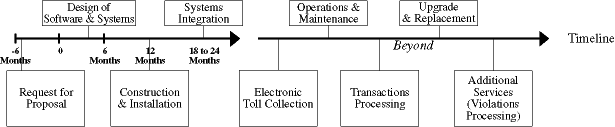
Tags and Readers. We manufacture a full suite of proprietary toll tag and reader products that we sell to toll and other government agencies. As the largest manufacturer of tags and readers for the transportation sector in North America, we offer the most complete line of tag products in the industry. We also produce a full range of RFID reader products, including a multi-protocol reader capable of reading substantially all tags currently in circulation in North America. We are the only provider in our market to offer a full suite of transportation-oriented tag products, including our proprietary read-only, battery-less passive tags, our proprietary battery powered Allegro read/write tags and our eGo tags, a paper thin radio frequency programmable read/write passive tag. In the fiscal year ended January 31, 2004, we manufactured in excess of 2.5 million tags and 6,500 readers. See “— Operations — Technology” section below.
Airport Ground Transportation Management. We have a growing presence in airport ground transportation management. We receive revenue by providing the design, installation and integration of ground transportation management systems in 63 airports in nine countries.
Parking-Related Systems. We provide parking-related access control systems to operators of private and commercial garages. Through the use of our RFID tags and readers and software, parking fees are paid electronically, ensuring a high level of security, convenience and accuracy. Our integrated software and services support tag distribution, payment processing and general account reporting and reconciliation processes. These solutions are capable of supporting multiple locations and have debit and credit card functionality with Internet-accessible account management features.
Intelligent Transportation Systems
Since 1971, through our predecessor companies, we have been providing intelligent transportation solutions that:
| • | monitor and control traffic, including centralized systems for large metropolitan areas, such as Los Angeles and New York City, and decentralized and adaptive control systems for large non-metropolitan areas, such as Oakland County, Michigan; | |
| • | gather and disseminate traveler information through a variety of delivery mechanisms, including dynamic messaging signs and the Internet; and | |
| • | provide command and control centers necessary to effectively manage large transportation organizations and assets. |
Our ITS services include the system design and software development for command and control centers, ramp metering, real-time changeable messaging signs, closed circuit television controls and display management, incident reporting, traffic flow monitoring and traffic signal systems. We contract primarily with state and local governments under fixed-price contracts for integration activities, and cost-plus, fixed-fee or time and materials contracts for general consulting and operations activities. We are one of the largest providers of these services to state and municipal departments of transportation in the U.S. We have also provided specialized ITS services to the three Olympic Games held in the U.S. since 1984 and to the 2000 Summer Olympic Games in Sydney, Australia.
76
Mobile Asset-Based Services
In the Mobile Asset-Based services market, we provide freight matching, asset tracking and monitoring services, logistics and operations management software, and outsourced business processing to a broad customer base consisting primarily of small to mid-sized trucking companies, freight brokers, third-party logistics providers, shippers, railroads and marine operators. These subscription-based and transaction-based services enable our customers to operate and optimize their freight-related business processes. In the fiscal year ended January 31, 2004, revenue from our Mobile Asset-Based services segment totaled approximately $77.7 million, representing 23.0% of total company revenue.
Freight Matching Services
With more than 18,000 customers, we operate North America’s largest freight matching network. Our freight matching network provides an open system through which freight brokers and shippers can post loads that need to be shipped and small to mid-sized trucking companies can identify loads to carry primarily on backhaul runs. Customers access our freight matching service through the Internet, call centers, transportation management systems and a nationwide network of video load monitors at truck stops and travel centers. On a daily basis, our average freight matching network posts 220,000 loads and 36,000 truck listings, enables 182,000 on-line searches and 64,000 Internet trading sessions, and provides access to over 450,000 available trucks.
Through exclusive contracts with operators of truck stops, including three of the largest U.S. truck stop chains, we have direct access to truckers through a national network of 1,200 video load monitors located at truck stops and travel centers throughout the U.S. Our load monitor network is the only significant nationwide video network providing real-time information on load availability, classified advertisements, weather and news for truckers and other travelers. We also use our load monitor network as a distribution channel to provide additional advertising services and functionality, such as traveler information to the thousands of truck drivers and other travelers who have daily access to the network.
Asset Tracking and Monitoring Services
Our RFID technology is the standard for asset tracking in the rail industry in North America and the Peoples Republic of China, as mandated by the AAR and the Ministry of Rail, respectively. Each commercial rail car in North America is equipped with two tags for the purpose of enabling asset tracking, train positioning and automatic equipment monitoring applications. Our RFID rail products are installed in railcars in 24 countries and we are actively pursuing installations in other countries. We are working with the AAR in the design of the next generation RFID products that we expect will provide significant growth driven by replacement sales within the next three years.
Our GlobalWave products and services provide the transportation market access to cost-effective solutions for its global positioning/satellite communication needs. Our GlobalWave MT2000 wireless communication device enables two-way transmission of data to track, monitor and control mobile assets. GlobalWave products are used in trucks and railcars, by commercial fishing fleets and luxury boats and on oil and gas wells and military cargo containers. In addition to operating the GlobalWave positioning and communication service in North America and Europe, we have contracts with regional operators servicing Africa, Mexico, the Middle East and Australia. We expect to expand service, through licensing agreements in China, Indonesia and South America. In addition to providing products and services, we provide satellite communication design services to the Canadian and European space agencies.
We have designed and distributed over 70,000 satellite communication/tracking devices and currently operate ground-based communications centers supporting over 18,000 satellite communication units.
Logistics and Operations Management Software and Services
We offer software and services that provide cost effective outsourced and hosted solutions for carriers and third-party logistic providers. These software-based products provide applications to improve operations
77
We also provide regulatory and driver compliance and document processing services to small and mid-sized trucking companies including electronic fuel and mileage tax reporting, audit consulting, department of transportation driver log auditing and falsification detection, driver compliance notices and violation summaries and vehicle titling, lien and registration service for every state in the U.S.
New Products and Services
We constantly explore and evaluate new business opportunities that will allow us to use our core technologies and capabilities, and offer the potential for significant growth. We have developed several solutions that use our core technologies and intellectual property portfolio to establish strong positions in new high growth markets, such as Homeland Security, electronic vehicle registration and supply chain management.
Homeland Security
In response to the U.S. Department of Homeland Security initiatives, including FAST, SENTRI and Operation SafeCommerce, we are focusing on three solutions that use our existing technologies to provide opportunities to establish significant recurring revenue with new customers and applications. Under our SmartWatch initiative, we provide:
| • | solutions for vehicular traffic control and tracking at the borders of the U.S.; | |
| • | controlled access to high risk facilities, such as power plants, military bases and refineries; and | |
| • | a solution for shipping companies and carriers that is designed to track shipments and ensure chain of custody and freight security. |
Our solutions are currently operating in 22 border locations monitoring 95 traffic lanes, with an additional 29 locations and 44 lanes under contract. We provide access control at four military installations under pilot programs designed to demonstrate feasibility for broader deployment.
Electronic Vehicle Registration
Many state departments of motor vehicles in the U.S. and several Asian and South American countries are seeking technology solutions to increase vehicle registration, safety, insurance and emission compliance. Working with 3M Company, we have developed an RFID-based system that provides agencies with the necessary tools to address these needs. This technology also may be the basis for future electronic tolling and ancillary commercial applications, including parking-related systems, drive-thru purchases and other mobile commerce applications. 3M Company has customer relationships with 49 of the 50 departments of motor vehicles in the U.S.
Supply Chain Management
We currently provide RFID-based and satellite communication-based products and services to our customers that improve operational efficiencies at various points throughout their supply chains. Among many applications, our solutions enable asset tracking, monitoring and management of intermodal containers, maritime vessels, railcars and trucks. In addition, we provide software solutions that optimize dock scheduling, dispatching, backhaul freight movements and other carrier management functions. Recently, Wal-Mart Stores, Inc. and the U.S. Department of Defense issued mandates to their largest suppliers requiring that all delivered products must be RFID-equipped at the pallet level by January 2005. We believe that these recent initiatives will drive market adoption of RFID supply chain management solutions. Given our RFID,
78
Sales and Marketing
Infrastructure-Based Services
Sales of Infrastructure-Based services are handled in several ways:
| • | sales to existing customers are the responsibility of the relevant project or line manager. Each contract has a project manager and each customer is a part of a geographic group served by a line manager. The project manager has frequent contact with the customer and, accordingly, is in the best position to identify and monitor the customer’s needs. The project manager is supported by a group of technical experts to assist in the sale and development process; | |
| • | sales to new customers in our core markets are the responsibility of the line manager who has specific revenue targets. The line manager is supported by a team of experienced business developers, marketing and proposal development personnel to better respond to new opportunities; and | |
| • | sales of new initiatives or strategically critical sales are assigned to one senior individual dedicated to the initiative. In most cases these individuals are members of the executive management team. |
Toll agencies and departments of transportation typically issue requests for proposals to initiate a competitive bid process for contracts. A request for proposal, or RFP, is a detailed description of the services being solicited, a description of the required response and a schedule for submission of the proposal. The agencies and departments award contracts using specific regulatory guidelines and there is generally a three to six month cycle from bid to award. After the initial submission of the proposals, competitors are often asked to refine their technical and cost proposals, which serve as the basis for negotiating contract awards. Contracts that govern the integration of technology typically include warranty and maintenance components. RFPs for operations and maintenance services have a shorter and less complicated proposal process. There are significant regulatory controls on procurement and contracting, and surety performance bonding or other collateral is sometimes required for a portion of state and local government work.
Sales of tags and readers typically require a three to six-month sales cycle. Our Infrastructure-Based services segment derives significant repeat product sales from toll expansion and replacement equipment. We have an in-house sales force and a network of dealer/distributors who distribute RFID products worldwide.
| Mobile Asset-Based Services |
Sales of Mobile Asset-Based services are handled in several ways:
| • | telemarketing is the primary sales method to small and mid-sized customers for our freight matching and satellite tracking services; | |
| • | we employ a direct sales force that is responsible for capturing and servicing larger accounts including sales of freight matching, satellite-based messaging and tracking, rail and intermodal asset management and logistics management; and | |
| • | we employ a small staff that is dedicated to advertising and merchandising sales for the load monitor network. |
The sales force and line managers are active participants in the various trade organizations in which our customers participate. Trade shows and company-sponsored conferences and seminars are used to demonstrate and introduce new products to our customers. In addition, these events are used to solicit customer feedback on the use and quality of our products and services and to garner ideas for new solutions and concepts. As a result, we are able to contact the customer routinely through our telemarketing sales and meet with them periodically in person. We utilize an enterprise-wide customer relationship management system that enables us to more effectively target and track sales and marketing initiatives.
79
Customers
We have a broad base of customers in each of our markets. In fiscal year 2004, 77.0% of total company revenue was generated from our Infrastructure-Based customers. Most of our Infrastructure-Based customers are government entities. Our top 20 customers accounted for 57.6% of total company revenue for the fiscal year 2004, with only the Florida Department of Transportation at 11.0% representing more than 10% of total company revenue. We have been working with a majority of our Infrastructure-Based customers for over ten years.
Our Infrastructure-Based services customers include toll agencies, state and municipal departments of transportation, and other providers of surface transportation infrastructure that use information technology solutions to manage their transportation assets. In fiscal year 2004, our top ten Infrastructure-Based services customers accounted for 47.8% of total company revenue and have been customers for an average of 20 years. These customers include the Florida Department of Transportation, the Illinois State Toll Highway Authority, the Pennsylvania Turnpike Commission, the Massachusetts Turnpike Authority and the Harris County Toll Road Authority (Texas). We enter into long-term, firm-fixed price, cost-plus fixed-fee, and time and material contracts with these customers, with the majority being firm-fixed price contracts.
Our Mobile Asset-Based services customers consisting primarily of more than 18,000 carriers, freight brokers and shippers. The carriers include small to mid-sized trucking companies and individual owner-operators. Carriers rely on our products and services to increase the utilization of their trucks and railcars, reduce shipping delays and minimize back-office administrative costs. Freight brokers use our products and services to secure truck capacity, reduce back-office costs and help manage growth with minimal capital requirements. The shippers consist of a broad range of manufacturers, distributors and wholesalers that rely on our services to provide reliable access to truck capacity and reduce costs by minimizing shipping-related expenses. We sell most of our rail products through distributors to foreign and domestic customers. No one customer of our Mobile Asset-Based services accounted for more than 4% of total company revenue in the fiscal year ended January 31, 2004. We enter into subscription-based and transaction-based contracts with these customers.
Backlog
The majority of our revenue from our Infrastructure-Based services segment is generated from multi-year contracts. With a greater than 60% bid success rate, we have a solid backlog of business and maintain long-term relationships with most of the government agencies that we serve. As of January 31, 2003 and 2004, the backlog of funded contractual commitments in our Infrastructure-Based services segment totaled $422.6 million and $457.0 million, respectively. We expect 43.5% of our January 31, 2004 backlog with be realized in fiscal 2005. In addition, more than half of our backlog consists of long-term operations and maintenance contracts, which represent a stable and predictable source of revenue.
Operations
We provide technical engineering support to our various customers through our 80 offices located in the U.S. and Canada.
Our Infrastructure-Based services teams are located regionally to enable our employees to be in close proximity to our customers, which drives prompt customer responsiveness and efficiency. Our technology development centers, located in San Diego, California, Dallas, Texas, Harrisburg, Pennsylvania, Scottsdale, Arizona and Lisle, Illinois, focus on particular product applications which permits closer collaboration among our software and hardware developers and engineers.
We enhance our longstanding customer relationships by providing on-site direct support to our customers in the Infrastructure-Based services market. We employ approximately 400 highly skilled maintenance technicians who are assigned to support each of our Infrastructure-Based customers generally on a 24 hours a day, seven days a week basis. Approximately one-half of these technicians are dedicated to specific customers and many are co-located with our customers. These technicians provide routine preventive maintenance,
80
In addition to our maintenance technicians, we have approximately 500 personnel providing services in the various customer service centers that support the business operations of our customers. These service centers function as an interface with the public in connection with the issuance of tags, maintenance of customer records and responding to customer needs. Other centers include the administration of the violation enforcement (speed and toll) aspect of the toll system. Our technology captures and our personnel review the video images of toll violations, prepare court packages, issue summons and collect fines on behalf of the toll operator. We also provide the financial reporting and control function of the business operations to deliver a toll authority continual visibility into its revenue. Finally, we provide special customer service functions specific to the unique needs of a particular customer. For example, we operate a bilingual customer service center in Puerto Rico.
Our Mobile Asset-Based services operations centers are located in Beaverton, Oregon, Ennis, Texas, Mississauga, Ontario and Springfield, Missouri. We have two technology development centers, Albuquerque, New Mexico and Kanata, Ottawa, that are focused on the enhancement of and development of our next generation products. Albuquerque focuses on the RFID products and Kanata focuses on the GPS/satellite communication product suite.
| Manufacturing |
We manufacture RFID products in our ISO 9001 certified facility in Albuquerque, New Mexico, which has been updated with new automated pick-and-place, board layout, automated test equipment and soldering machinery necessary to fabricate printed circuit boards. ISO 9001 is a set of standards dealing with quality management systems for quality assurance in design/development, production, installation and servicing by the International Standardization Organization. Some of our products are manufactured exclusively by subcontractors and are shipped to Albuquerque for programming and customization into their final form. Major suppliers of raw materials for these products are battery, chip, circuit board and electronic component vendors. A majority of the products supplied to us are readily available and can be provided by more than one specific supplier. We have never experienced a significant disruption to our business as a result of a supplier/subcontractor issue. We effectively use just-in-time delivery of supplies to reduce raw material inventory costs. In the fiscal year ended January 31, 2004, we manufactured in excess of 2.5 million tags and 6,500 readers.
Our GPS/satellite communication products are manufactured by Solectron Corporation, an electronics outsourcing firm in Canada and are transferred to our facility in Kanata, Ontario where we perform assembly, programming and customization functions and quality assurance tests. The Solectron Corporation plant is located in close proximity to our Kanata facility and the facilities are connected electronically to enable us to monitor their production of our products in real time.
| Technology |
Research and Development Strategy. We maintain a focused approach to investment in research and development. We utilize several technologies in the deployment of software, services and products that we provide to our customers and have had many opportunities to invest in the development of new technologies. Our general approach is to use commercially available technologies. We reserve investment in new technologies for those areas that we expect to yield critical advantages in our product offerings and recurring revenue. We participate in government funded research and development, which minimizes internal research and development funding to deliver new products. This focus enables us to maintain our technological leadership with modest research and development investment. In the fiscal years ended January 31, 2003 and 2004, research and development expenses were 1.7% and 2.2%, respectively, of total company revenue.
81
RFID Technology. We are the only provider in our market to offer a full suite of transportation-oriented tag products, including our proprietary read-only, battery-less passive tags that represent two-thirds of our current volume, our proprietary battery powered Allegro read/write tags, and our eGo tags, a paper thin radio frequency programmable read/write passive tag. We were the first to develop and commercialize RFID-based transportation applications, such as electronic toll collection. Among our current development initiatives are applications using the eGo technology, which include high-speed tolling, access control and parking services. We recently released the latest version of our multi-protocol reader that will read both existing tags, essentially all versions currently used for electronic toll collection in North America, and our next generation eGo tag. This new product can read any two tag protocols at highway speed, which enables:
| • | open road tolling in a mixed population of legacy and next generation tags; | |
| • | an orderly/managed transition from first generation, higher cost tags to lower cost, next generation tag technology; and | |
| • | significantly higher potential for usage of electronic tolling through lower tag costs. |
We believe that our new multi-protocol reader suite and eGo technology will ensure that we are well positioned to capture additional electronic tolling and emerging RFID-based business.
Our next generation Super eGo tags, which are based on our eGo product line, will include a new RFID chip with specific enhancements to further improve multi-lane speed performance, high speed read/write capability and anti-counterfeit, tamper resistant and enhanced memory management features. In addition, the new chip includes our proprietary tag protocol that enables us to produce enhanced products for those markets that are compatible with the existing infrastructure. For example, this new chip will enable us to produce Super eGo sticker format tags that are also compatible with all tags currently used in Texas and provide a series of enhanced, but compatible products to our toll customers.
Satellite Tracking and GPS Technology. Our GlobalWave satellite-based communications and tracking technology is qualified for worldwide use with existing L-band satellites and is suitable for long life, battery operated tracking of and data based communications with transportation assets, such as trucks, truck trailers, railcars and shipping containers. We are implementing an enhanced messaging capability that will permit the timely transmission of larger messages over the network. This will allow us to better compete with existing tracking/messaging services through the full range of data traffic used by commercial operators at a much more attractive cost and with enhanced characteristics relative to what is currently available.
We also are developing a next generation mobile terminal technology which will be smaller, require less power and have a longer battery life. This new mobile terminal is based in part on advanced GPS technology we are developing under two separate government space agency research and development contracts, the results of which we retain the right to exploit commercially. Combined with other innovative design elements, we anticipate that this new terminal will provide significant improvements in GPS fix accuracy and fix time, thus surpassing current competitive offerings and opening new application areas for our services and products.
Application Software. We have also developed a strong base of application software, named Forte, designed to support and enhance our electronic toll collection and traffic management systems. Our toll service software application suite addresses end-to-end life cycle management of toll system operations, including customer service center software, toll violations processing system software, toll management system software, real time lane and plaza controller software and maintenance on-line management system software. Our TransSuite product is an integrated package that assists traffic managers with monitoring traffic conditions by allowing them to look at overall arterial flows as well as conditions on an intersection level. This product uses a combination of geographic information system data and real time traffic data fed from roadside cameras and other collection sources. All of these software modules are tied together with a common architecture to provide customers with a fully integrated enterprise management system.
82
Competition
There is no single company that competes with us across all of our software, service and product offerings. We are an end-to-end, vertically integrated provider of toll services. Our main competitors are Affiliated Computer Services, Inc. in toll services and Mark IV Industries, Inc. in RFID toll manufacturing. In our ITS business, airport and ground transportation markets, numerous small engineering firms and divisions of larger companies compete at the national, regional or local level.
In freight matching, we believe that we are substantially larger than our competitors, which include The Internet Truckstop and Getloaded.com, LLC. We estimate that approximately 80% of our customers name us as their primary freight matching service provider. We differentiate our offerings from our competitors by volume, liquidity and quality of our load and truck postings and breadth and quality of additional services.
Seasonality
Overall, there is very little seasonality in our business. The commercial freight matching market experiences some seasonality with a typical increase in business in the months of September and October followed by a modest decline in revenue in the months of December and January.
Intellectual Property
Our intellectual patent portfolio consists of 104 patents, including 46 U.S. patents.
Our operations are not dependent upon any single trademark or service mark. Some of the more important trademarks and service marks we use are eGo, GlobalWave and TollTag. We have registered these and any other important trademarks in the United States and certain foreign counties. Generally, registered trademarks have a perpetual life, provided they are renewed on a timely basis and continue to be used properly as trademarks. We have not sought to register the copyrights in our proprietary software. We protect our trade secrets with contractual obligations with our employees and consultants. Through our intellectual property portfolio, we protect our product offerings and strong market positions.
Other than licenses with Intermec Technologies Corporation, which relate to the eGo and Super eGo technologies, we do not believe that we have any licenses to intellectual property that, if lost, would have a material adverse effect on our business. Pursuant to a cross-license agreement, Intermec Technologies Corporation granted us a royalty-free, exclusive, perpetual, worldwide license to use certain technologies related to toll tags, and we granted Intermec Technologies Corporation a non-exclusive license to use certain technology that we acquired through the purchase of Amtech Systems Corporation. Under the terms of a technical assistance and license agreement, we have the right to request modifications be made to the base technology. Intermec Technologies Corporation may develop new products as we request, but if we cannot come to terms on such modifications, we have the option to use certain intellectual property of Intermec Technologies Corporation to have such new products made elsewhere or to make them ourselves. In all cases, we own the modifications and improvements generated through such activities and we agreed to pay Intermec a royalty of ten percent of the net sales value of such product until the last patent, under which such product is manufactured, expires in the U.S. Unless earlier terminated, the technical assistance and license agreement continues until the expiration of the last U.S. patent licensed under the agreement.
83
Facilities
We lease substantially all of our operating space. The following table lists our primary facilities.
| Square | Own/ | |||||||||||
| Location | Function | Footage | Lease | |||||||||
|
Albuquerque, NM
|
Manufacturing/Office | 74,747 | Lease | |||||||||
|
Harrisburg, PA(1)
|
Office/Headquarters | 68,800 | Lease | |||||||||
|
San Diego, CA
|
Office | 61,823 | Lease | |||||||||
|
Dallas, TX
|
Office | 60,840 | Lease | |||||||||
|
Beaverton, OR
|
Office | 54,445 | Lease | |||||||||
|
Atlanta, GA
|
Office | 34,000 | Lease | |||||||||
|
Kanata, Ontario
|
Office/Assembly | 25,877 | Lease | |||||||||
|
Orlando, FL
|
Office | 16,142 | Lease | |||||||||
|
Ennis, TX
|
Office | 15,330 | Own | |||||||||
|
Mississauga, Ontario
|
Office | 10,589 | Lease | |||||||||
| (1) | Includes five separate facilities in the Harrisburg area. |
Employees
At January 31, 2004, we had approximately 1,800 employees, of which approximately 1,400 were in our Infrastructure-Based services segment and approximately 400 were in our Mobile Asset-Based services segment. None of our employees are represented by collective bargaining agreements and we consider our relationship with our employees to be good.
Legal Proceedings
Although we are not currently a party to any material litigation, we may from time to time become involved in litigation relating to claims arising from our ordinary course of business. These claims, even if not meritorious, could result in the expenditure of significant financial and managerial resources.
Industry and Market Data
Industry and market data used throughout this prospectus was obtained from our own research, studies conducted by third parties and industry and general publications published by third parties and, in some cases, are management estimates based on its industry and other knowledge. In addition, certain statements included in this prospectus are based on statistics included in a 2001 Martin Labbe Associates report, including our estimate that the average daily postings on our freight matching network is over one-half of the total U.S. spot market for truckload shipments.
84
MANAGEMENT
The following table identifies as of the completion of this offering our directors, director nominees, executive officers and key employees.
| Name | Age | Position | ||||
|
John M. Worthington
|
52 | Chairman of the Board, Chief Executive Officer and President | ||||
|
John A. Simler
|
47 | Director, Executive Vice President and Chief Operating Officer | ||||
|
Joseph S. Grabias
|
54 | Executive Vice President and Chief Financial Officer | ||||
|
Kelly P. Gravelle
|
43 | Executive Vice President and Chief Technology Officer | ||||
|
John H. Foote
|
51 | Executive Vice President | ||||
|
David G. Sparks
|
44 | Executive Vice President | ||||
|
Charles R. Gwirtsman
|
50 | Executive Vice President and Director | ||||
|
Bruce C. Lindsay
|
62 | Director | ||||
|
Charles A. Hamilton
|
55 | Director | ||||
|
Russell S. Lewis
|
49 | Director | ||||
|
Darin R. Winn
|
39 | Director | ||||
|
M. Albin Jubitz
|
59 | Director | ||||
| Director Nominee | ||||||
| Director Nominee | ||||||
The present principal occupations and recent employment history of each of our directors, director nominees, executive officers and key employees listed above is as follows:
Executive Officers
John M. Worthington is our Chairman of our board of directors, Chief Executive Officer and President. Mr. Worthington has served in these capacities since September 3, 1999 when we acquired our predecessor companies. From 1986 to 1999, Mr. Worthington was with Syntonic Technology, Inc., where he held several executive positions, including vice president, president, chief operating officer and chief financial officer. He has served as a director of Weston Solutions, Inc. and is currently a director of Intelligent Transportation Society of America.
John A. Simler joined us in September 1999 and serves as our Executive Vice President and Chief Operating Officer. From 1989 to 1999, Mr. Simler was with Syntonic Technology, Inc where he initially served as the business development officer, and later assumed the program management responsibilities for one of Syntonic’s largest contracts where he executed a successful turnaround, on behalf of SAIC, and subsequently developed the program to technical acclaim. Previously, Mr. Simler was with one of the product manufacturing arms of Johnson & Johnson.
Joseph S. Grabias joined us in May 2002 and serves as our Executive Vice President and Chief Financial Officer. From August 1999 to October 2001, Mr. Grabias served as chief financial officer of LifeMinders, Inc., an Internet-based direct marketing company. From September 1997 to July 1999, he was the chief financial officer of CommSite International Inc., a developer of telecommunication towers. Mr. Grabias is a director of Anspach Effort, Inc., a privately-held surgical instrumentation manufacturing company.
Kelly P. Gravelle joined us in September 1999 when we acquired our predecessor companies and serves as our Executive Vice President and Chief Technology Officer. As a holder of two patents and numerous patents pending, he is an internationally recognized expert in RFID technologies. From June 1997 to September 1999, Mr. Gravelle served as vice president of Syntonic Technology, Inc. From January 1989 to
85
John H. Foote joined us in September 1999 when we acquired our predecessor companies and serves as our Executive Vice President. From 1995 to 1999, Mr. Foote led initiatives with the toll authorities for transaction-based revenue sharing arrangements at Syntonic Technology, Inc. Previously, Mr. Foote was the chairman and chief executive officer of TST International Pty Ltd., an Australian toll services and manufacturing concern.
David G. Sparks joined us in September 1999 when we acquired our predecessor companies and serves as our Executive Vice President. From 1995 to 1999, he served as senior vice president of Syntonic Technology, Inc. From 1991 to 1995, Mr. Sparks was co-managing director of TST International Pty Ltd. Previously, he served as an officer and director of 2M Companies, a private investment firm led by Morton H. Meyerson.
Charles R. Gwirstman joined us in September 1999 and serves as our Executive Vice President and is a member of our board of directors. Mr. Gwirtsman is a co-founder and managing director of KRG Capital Partners, LLC, one of our major stockholders. Mr. Gwirstman is a director of Modtech Holdings Inc., a Nasdaq listed company, and numerous private companies.
Bruce C. Lindsay has served as a member of our board of directors since September 1999. Since 1987, Mr. Lindsay has been and continues to be the chairman and managing director of Brind-Lindsay & Co., Inc. Brind-Lindsay & Co., Inc. provides consulting and other services to CMS Companies, which beneficially owns 7.4% of our common stock. Mr. Lindsay is a director of PNC Financial Services Group, a New York Stock Exchange listed company.
Charles A. Hamilton has served as a member of our board of directors since September 1999. Since June 1999, Mr. Hamilton has served as a managing director with KRG Capital Partners, LLC. Since 1996, Mr. Hamilton has also served as the managing director of First Analysis Corporation. From 1981 to 1999, Mr. Hamilton was a partner and managing director of Robertson, Stephens and Company.
Russell S. Lewis has served as a member of our board of directors since September 1999. Mr. Lewis has served as executive vice president and general manager of Verisign, Inc. since February 2002 and as senior vice president of corporate development from March 2000 to February 2002. From August 1999 to August 2000, he served as president of Lewis Capital Group, LLC. From 1994 to August 1999, he served as president and chief executive officer of Syntonic Technology, Inc. Mr. Lewis also serves as a member of the board of directors of Castle Energy Corporation and of Delta Petroleum Corporation.
Darin R. Winn has served as a member of our board of directors since September 1999. Mr. Winn is a senior vice president and managing director of American Capital Strategies, Ltd. and has been with American Capital Strategies since 1998.
M. Albin Jubitz has served as a member of our board of directors since February 2001. From 1969 to 2003, Mr. Jubitz served as an executive of Jubitz Corporation, and had attained the title, co-president and co-chairman, when he retired from Jubitz Corporation in December 2003.
Composition of the Board of Directors After the Offering
Our restated bylaws provide that the number of directors on our board of directors will be between and as determined by our board of directors. Upon the completion of this offering, our board of directors will be divided into three classes as nearly equal in size as possible, with staggered three year terms: Class 1, whose term will expire at the annual meeting of stockholders to be held in 2005, Class 2, whose term will expire at the annual meeting of stockholders to be held in 2006 and Class 3, whose term will expire at the annual meeting of the stockholders in 2007. The Class 1 directors will be , the Class 2 directors will be and the Class 3 directors will be . At each annual meeting of stockholders, beginning with the 2005 annual meeting, the successors to the directors whose terms will then expire will be elected to serve from the time of their election and qualification until the third annual
86
Committees of the Board
The standing committees of our board of directors will consist of an audit committee, a compensation committee, and a nominating and corporate governance committee.
Audit Committee
The principal duties and responsibilities of our audit committee will be as follows:
| • | to monitor our financial reporting process and internal control system; | |
| • | to appoint and replace our independent outside auditors from time to time, determine their compensation and other terms of engagement, and oversee their work; | |
| • | to oversee the performance of our internal audit function; and | |
| • | to oversee our compliance with legal, ethical and regulatory matters. |
The audit committee will have the power to investigate any matter within the scope of its duties. It will also have the authority to retain counsel and advisors to fulfill its responsibilities and duties.
Messrs. and are members of our audit committee and we plan to appoint a third member within 12 months following this offering.
| Compensation Committee |
The principal duties and responsibilities of the compensation committee will be as follows:
| • | to provide oversight on the development and implementation of the compensation policies, strategies, plans and program for our key employees and outside directors and disclosure relating to these matters; | |
| • | to review and approve the compensation of our chief executive officer and our other executive officers; and | |
| • | to provide oversight concerning selection of officers, management succession planning, performance of individual executives and related matters. |
Messrs. and are members of our compensation committee.
| Nominating and Corporate Governance Committee |
The principal duties and responsibilities of the nominating and corporate governance committee will be as follows:
| • | to establish criteria for board of director and committee membership and recommend to our board of directors proposed nominees for election to the board of directors and for membership on committees of the board of directors; | |
| • | to make recommendations regarding proposals submitted by our stockholders; and | |
| • | to make recommendations to our board of directors regarding corporate governance matters and practices. |
Messrs. and are the members of our nominating and corporate governance committee.
87
Directors’ and Executive Officers’ Compensation
| Compensation of Directors |
The members of our board of directors, other than executive officers, will receive $ annually for serving as directors.
| Compensation of Executive Officers |
The following table sets forth certain information with respect to compensation for the last three fiscal years ended January 31, 2004, January 31, 2003 and January 31, 2002, respectively, earned by our chief executive officer and our four other most highly compensated executive officers as of January 31, 2004. In this prospectus, we refer to these individuals as our named executive officers.
Summary Compensation Table
| Long Term Compensation | |||||||||||||||||||||
| Awards | |||||||||||||||||||||
| Annual Compensation | |||||||||||||||||||||
| Securities Underlying | |||||||||||||||||||||
| Name and Principal | Other Annual | Options/Class B-1 | |||||||||||||||||||
| Position | Year | Salary($) | Bonus($) | Compensation | Redeemable Preferred Stock | ||||||||||||||||
|
John M. Worthington
|
2004 | $ | 230,000 | $ | 460,000 | (1) | $ | 8,400 | 0/33,629 | ||||||||||||
| Chairman, Chief Executive | 2003 | 230,000 | — | 27,202 | 35,000/0 | ||||||||||||||||
| Officer and President | 2002 | 221,554 | — | 16,069 | — | ||||||||||||||||
|
John A. Simler
|
2004 | $ | 200,000 | $ | 400,000 | (1) | $ | 16,092 | 0/25,000 | ||||||||||||
| Executive Vice President and | 2003 | 200,000 | — | 17,365 | 25,000/0 | ||||||||||||||||
| Chief Operating Officer | 2002 | 192,433 | — | 7,060 | — | ||||||||||||||||
|
Kelly P. Gravelle
|
2004 | $ | 176,020 | $ | 320,000 | (1) | $ | 21,324 | 0/17,500 | ||||||||||||
| Executive Vice President and | 2003 | 168,000 | — | 15,681 | 13,000/0 | ||||||||||||||||
| Chief Technology Officer | 2002 | 167,596 | — | 12,527 | — | ||||||||||||||||
|
David G. Sparks
|
2004 | $ | 184,185 | $ | 352,800 | (1) | $ | 8,400 | 0/17,500 | ||||||||||||
| Executive Vice President | 2003 | 184,185 | — | 8,510 | 13,000/0 | ||||||||||||||||
| 2002 | 164,769 | — | 7,223 | — | |||||||||||||||||
|
John H. Foote
|
2004 | $ | 192,937 | $ | 385,874 | (1) | $ | 8,400 | — | ||||||||||||
| Executive Vice President | 2003 | 192,937 | — | 16,080 | — | ||||||||||||||||
| 2002 | 180,216 | — | 8,074 | — | |||||||||||||||||
| (1) | Messrs. Worthington, Simler, Gravelle, Sparks and Foote each received bonuses in fiscal year 2004 that related to their performance in previous fiscal years. |
| Stock Option Grants |
No stock options were granted during the fiscal year ended January 31, 2004 to any of the named executive officers.
| Fiscal Year End Option Values |
The following table provides information concerning each exercise of stock options/SARs during the fiscal year ended January 31, 2004 by each of the named executive officers and the value of unexercised
88
Aggregated Option/SAR Exercises in Last Fiscal Year and FY-End Option/SAR Values
| Number of Securities Underlying | Value of Unexercised | |||||||||||||||||||||||
| Unexercised Options/SARs at | In-the- Money Options/SARs | |||||||||||||||||||||||
| Number of | Aggregate | Fiscal Year-End (#) | at Fiscal Year-End ($)(1) | |||||||||||||||||||||
| Shares | Dollar | |||||||||||||||||||||||
| Acquired on | Value | Exercisable | Unexercisable | Exercisable | Unexercisable/ | |||||||||||||||||||
| Name | Exercise (#) | Realized($) | Options/SARs | Options/SARs | Options/SARs | Options/SARs | ||||||||||||||||||
|
John M. Worthington
|
0 | 0 | 11,501/0 | 31,001/2,279 | ||||||||||||||||||||
|
John A. Simler
|
0 | 0 | 8,000/0 | 22,000/1,512 | ||||||||||||||||||||
|
Kelly P. Gravelle
|
0 | 0 | 4,550/0 | 11,700/2,165 | ||||||||||||||||||||
|
David G. Sparks
|
0 | 0 | 4,850/0 | 11,900/962 | ||||||||||||||||||||
|
John H. Foote
|
0 | 0 | 0/0 | 0/439 | ||||||||||||||||||||
| (1) | Values for “in-the-money” options/ SARs represent the positive spread between the respective exercise/base prices of outstanding options/ SARs and the anticipated initial public offering price of $ per share. |
| Long-Term Incentive Plans-Awards in Last Fiscal Year |
No long term incentive plan awards were made to a named executive officer during the fiscal year ended January 31, 2004.
| Employment Agreements |
We entered into an amended and restated employment agreement with John Worthington as of February 20, 2004. The agreement expires on January 31, 2008 and provides for a minimum base salary, a performance bonus based in part upon our earnings performance and in part in the discretion of the compensation committee of our board of directors, and non-competition, non-solicitation and confidentiality agreements. If Mr. Worthington’s employment is terminated in connection with a change of control, certain equity held by Mr. Worthington, including shares of our class B-1 convertible preferred stock, options and stock appreciation rights, will immediately vest and we will be required to pay Mr. Worthington severance at a rate of one and one-half times his base salary for a 24 month period from the date of termination; provided, however, that if Mr. Worthington rejects employment for the period after the change of control with us or the successor that is either equivalent or superior to the employment existing prior to the change of control, the severance period will be six months from the date of termination, and provide Mr. Worthington with health benefits for the severance period.
In the event that any payment, vesting or distribution by us to or for the benefit of Mr. Worthington would be subject to excise tax under Section 4999 of the Internal Revenue Code of 1986, as amended, Mr. Worthington will be entitled to receive an additional payment in an amount such that after payment by Mr. Worthington of all taxes, including any interest imposed with respect to such taxes, and excise tax imposed on the additional payment, Mr. Worthington retains an amount of the additional payment equal to the excise tax imposed on the original payment.
We also entered into amended and restated employment agreements with each of John Simler, Kelly Gravelle and David Sparks dated as of February 20, 2004, January 31, 2004 and January 31, 2004, respectively. The agreements for Messrs. Simler and Gravelle expire on January 31, 2008 and, in the case of Mr. Sparks, January 31, 2006, subject to successive one-year renewals thereafter upon our mutual agreement with Mr. Sparks. Each of the agreements provides for a minimum base salary, a performance bonus based in part upon our earnings performance and in part in the discretion of the compensation committee of our board of directors, and non-competition, non-solicitation and confidentiality agreements. The agreements contain
89
We also entered into an employment agreement with John H. Foote dated as of September 3, 1999. The agreement expires on September 3, 2004 and provides for a minimum base salary, a performance bonus based upon our earnings performance, and non-competition, non-solicitation and confidentiality agreements. If Mr. Foote’s employment is terminated in connection with a change of control, certain equity held by Mr. Foote will immediately vest and we will be required to pay Mr. Foote severance at a rate of one and one-half times base salary for a 24 month period from the date of termination, and provide Mr. Foote with health benefits for the severance period.
| 1999 Stock Option and Incentive Plan |
Our employees are eligible to participate in the TransCore Holdings, Inc. 1999 Stock Option and Incentive Plan. Grants are made under the plan to attract, retain and motivate highly qualified officers, key employees and other service providers. Pursuant to the plan, we can issue stock options, shares of restricted stock and restricted stock units. A total of 406,804 shares of our existing class A common stock has been authorized for issuance under the plan. Restricted stock issued pursuant to the plan is comprised of shares of our existing class A common stock that are subject to restrictions and to a risk of forfeiture. A restricted stock unit issued pursuant to the plan is a conditional right granted to the participant to receive a share of restricted stock in the future.
The plan is administered by our board of directors. The board of directors designates grantees and determines the number of shares of stock subject to each grant, the exercise price of any options granted, based on the fair market value on the date of grant, vesting, the time and condition of exercise of such option and all other terms and conditions of such option, including the form of the option agreement setting forth the terms and conditions of such options. Our board of directors may grant non-qualified incentive stock options, as defined by the Internal Revenue Code.
All options vest and become immediately exercisable fifteen days prior to the scheduled closing of a change of control and all unexercised options terminate upon the closing of a change of control. Upon a change of control, all outstanding shares of restricted stock and restricted stock units are deemed vested and all restrictions are deemed lapsed. However, the change of control will have no effect on options, restricted stock and restricted stock units if a majority of our board of directors so provides or if provision is made in writing for the continuation of the plan.
As of January 31, 2004, there were a total of 368,091 options outstanding under the plan, of which 133,785 were vested. There are no shares of restricted stock or restricted stock units outstanding under the plan.
Concurrently with the closing of this offering, we expect that all vested options will be exercised or exchanged and all unvested options will be terminated. The holders of unvested options will receive, in exchange for such unvested options, the right to receive cash to be distributed based upon vesting dates under the terminated options in an amount equal to the offering price of a share of class A common stock in this offering minus the exercise price on the terminated options. The plan will be terminated upon the closing of this offering, and we will escrow a portion of the proceeds from this offering to fund cash payments with respect to cancelled unvested options beginning November 2005.
| Deferred Option Plan |
The TransCore Deferred Option Plan was approved by our board of directors in June 2000 to attract and retain highly qualified employees for positions of substantial responsibility and to provide additional incentives to those employees so as to promote our success. Pursuant to the deferred option plan, participants may receive in substitution for bonus compensation a grant of options to purchase shares of our class A-1 redeemable preferred stock, together with warrants to purchase shares of our class B nonvoting convertible common stock. The plan provides that the option price to be paid by a participant will not be
90
Upon the exercise of options to purchase capital stock, the participant may request us to sell or deem to sell a number of shares otherwise deliverable to the participant and attributable to the exercise of the option in order to pay the exercise price of the option. We may also make financing available to the participant in order to facilitate the exercise of the option.
All options granted pursuant to this plan may be exercised immediately upon grant, unless otherwise provided by our board of directors, and, subject to earlier termination of the option in connection with a termination of the participant’s employment with us, may be exercised in full or in part within twenty years from the date of grant, or such shorter period as may be specified by our board of directors in the actual option agreement delivered to the participant. As of January 31, 2004, there were outstanding options to purchase 24,955 shares of our class A-1 redeemable preferred stock under the plan together with warrants to purchase 24,955 shares of our class B non-voting convertible common stock. In addition, in connection with agreements to defer compensation, as of January 31, 2004, there were outstanding options issued under this plan pursuant to which $248,614 will be contributed by us on behalf of applicable participants.
Concurrently with the closing of this offering, we expect that all options issued under this plan to purchase shares of our capital stock will be exchanged for our existing class B common stock. In addition, all warrants issued under the plan granting the holder the right to purchase shares of our existing class B common stock will be exchanged and such shares of our existing class B common stock will be converted into an equal number of shares of our existing class A common stock. We expect to use $ million of the proceeds of this offering to repurchase or redeem our existing class A common stock and the remainder of such class A shares will either be exchanged for EYSs or shares of class B common stock.
| Retention Plans |
Our 1999 Employee Retention Plan A and 1999 Employee Retention Plan B were established to provide certain of our employees who were former employees of SAIC or Syntonic Technology, Inc. with the opportunity to realize the value of unvested benefits that they may have had pursuant to certain benefit plans of SAIC as of the date of our acquisition of Syntonic Technology, Inc. Eligible employees were given the option of electing to receive these benefits under either Retention Plan A or Retention Plan B. For purposes of both Retention Plan A and Retention Plan B, the assumed value of a participant’s unvested benefits under the SAIC benefit plans as of the date of our acquisition of Syntonic Technology, Inc. was determined in accordance with a formula.
All benefits under Retention Plan A have been paid. Under Retention Plan B, participants could receive fixed benefits under this plan to be paid in cash in an amount equal to the aggregate value of their respective unvested benefits under the SAIC benefits plans plus appreciation at a fixed rate of 8% compounded annually on the unpaid balance until the date of payment. Also, we were entitled to issue to a participant stock appreciation rights but no stock appreciation rights were ever issued under the plan.
Subject to the early forfeiture of any unvested benefits upon the termination of a participant’s employment with us, 100% of the fixed benefits under Retention Plan B vested on September 3, 2000. We are required to pay the fixed benefits, equal to approximately $10.5 million as of January 31, 2004, within 45 days of September 3, 2004. Concurrently with the closing of this offering, we expect to use $ million of the proceeds of this offering to retire all retention plan benefits.
| 1999 Stock Appreciation Rights Plan |
We adopted the TransCore Holdings, Inc. 1999 Stock Appreciation Rights Plan, or SAR Plan, on September 3, 1999 in order to attract, retain and motivate highly qualified officers, key employees and other
91
Upon the exercise of a SAR, the holder will receive cash equal to the amount by which the fair market value of our existing class A common stock exceeds the exercise price on the date of exercise.
Our board of directors administers the SAR Plan and has authority to, among other things, designate grantees, determine the type or types of grant, determine the number of shares of stock subject to each grant, determine the terms and conditions of each grant, including the exercise price of each stock appreciation right, and amend, modify or supplement the terms of any outstanding grant subject to the consent of the grantee if such amendment, modification or supplement impairs the rights of the grantee under the outstanding grant.
The SARs are based upon shares of our existing class A common stock. Under the SAR Plan, 84,799 shares of our existing class A common stock may be the basis of awards.
All grantees of awards under the SAR Plan will receive a cash payment for all vested benefits within 45 days of September 2, 2004. The plan indicates that upon the closing of this offering, all SARs issued under this plan fully vest and may be exercised in connection with this offering; provided, however, that any SAR granted, but remaining outstanding and unexercised upon the closing of this offering shall terminate, and we are required to replace such SAR with an option to purchase actual shares of our existing class A common stock, which option shall have terms and economic value equivalent to the terminated SAR. Concurrently with the closing of this offering, we expect that all SARs issued under the plan will be exercised and the plan will be terminated. We expect to use $ million of the proceeds of this offering to pay amounts owed upon exercise of the SARs.
Compensation Committee Interlocks and Inside Participation
For the fiscal year ended January 31, 2004, our compensation committee consisted of Messrs. Gwirtsman, Lewis and Lindsay, who have all served as directors since 1999. None of our executive officers has served as a member of the compensation committee (or other committee serving an equivalent function) of any other entity, whose executive officers served as a director of our company or member of our compensation committee.
92
PRINCIPAL SECURITYHOLDERS
The following table sets forth information regarding beneficial ownership of our equity interests as of January 31, 2004 before and after giving effect to the offering for:
| • | each executive officer named in the “Summary Compensation Table”; | |
| • | each director and director nominee; | |
| • | all of our executive officers and directors as a group; and | |
| • | each person known to us to beneficially own 5% or more of our equity interests. |
The amounts and percentages of common stock beneficially owned are reported on the basis of regulations of the Securities and Exchange Commission governing the determination of beneficial ownership of securities. Under the rules of the Securities and Exchange Commission, a person is deemed to be a “beneficial owner” of a security if that person has or shares “voting power,” which includes the power to vote or to direct the voting of such security, or “investment power,” which includes the power to dispose of or direct the disposition of such security. All persons listed have sole voting and investment power with respect to their shares unless otherwise indicated. We anticipate that our existing class A common stock will be exchanged by the holders thereof for EYSs and/or class B common stock, as the case may be, and the following table gives effect to:
| • | the exercise, exchange and/or cancellation of all options to acquire shares of our capital stock; | |
| • | the exchange of all warrants to acquire shares of our capital stock; | |
| • | the conversion of all of our outstanding convertible preferred stock; and | |
| • | the redemption of all of our outstanding redeemable preferred stock. |
| Shares Beneficially | ||||||||||||||||
| Owned After this | ||||||||||||||||
| Shares Beneficially | Offering Assuming No | |||||||||||||||
| Owned Prior to this | Exercise of the Over- | |||||||||||||||
| Offering(1) | Allotment Option(2)(3) | |||||||||||||||
| Number | % | Number | % | |||||||||||||
|
Executive Officers and Directors:
|
||||||||||||||||
|
John M. Worthington(4)
|
84,740 | 3.2 | ||||||||||||||
|
Charles R. Gwirtsman(5)
|
602,644 | 22.6 | ||||||||||||||
|
John A. Simler(6)
|
44,472 | 1.7 | ||||||||||||||
|
Bruce C. Lindsay(7)
|
2,280 | 0.1 | ||||||||||||||
|
Russell S. Lewis(8)
|
16,306 | 0.6 | ||||||||||||||
|
Charles A. Hamilton(9)
|
682,400 | 25.6 | ||||||||||||||
|
Darin R. Winn(10)
|
233,374 | 8.7 | ||||||||||||||
|
M. Albin Jubitz(11)
|
235,189 | 8.8 | ||||||||||||||
|
David G. Sparks(12)
|
39,931 | 1.5 | ||||||||||||||
|
Joseph S. Grabias(13)
|
14,800 | 0.6 | ||||||||||||||
|
John H. Foote(14)
|
44,591 | 1.7 | ||||||||||||||
|
Kelly P. Gravelle(15)
|
38,031 | 1.4 | ||||||||||||||
|
5% Stockholders:
|
||||||||||||||||
|
KRG Capital Partners, LLC(16)
|
602,644 | 22.6 | ||||||||||||||
|
CMS Companies(17)
|
197,088 | 7.4 | ||||||||||||||
|
AIG Global Investment Corp.(18)
|
273,430 | 10.2 | ||||||||||||||
|
AIG Highstar Capital, L.P.(19)
|
160,055 | 6.0 | ||||||||||||||
|
Saybrook Limited Partnership(20)
|
235,189 | 8.8 | ||||||||||||||
|
New York Life Capital Partners, L.P.(20)
|
123,885 | 4.6 | ||||||||||||||
|
American Capital Strategies, Ltd.(21)
|
233,374 | 8.7 | ||||||||||||||
|
All directors and executive officers as a
group (15 persons)
|
1,436,114 | 53.8 | ||||||||||||||
93
| * | Less than 1%. |
| (1) | Unless otherwise indicated below, the persons and entities named in the table have sole voting and sole investment power with respect to all shares beneficially owned by them, subject to community property laws where applicable. | |
| (2) | Includes class A common stock and class B common stock. See “The Transactions” and “Description of Capital Stock.” | |
| (3) | The percentage of beneficial ownership is based on shares of common stock outstanding as of the closing of this offering. | |
| (4) | Includes (i) 7,091 shares received upon the exchange of warrants to purchase shares of our class B non-voting convertible common stock, and (ii) 11,806 shares received upon the conversion of our class B-1 convertible preferred stock. | |
| (5) | Includes 602,644 shares of common stock owned by KRG Capital Partners, LLC or affiliated entities of which Mr. Gwirtsman is the Managing Director and such shares include (i) 367,678 shares received upon the exchange of warrants to purchase shares of our class B non-voting convertible common stock and (ii) 234,966 shares received upon conversion of shares of our class C-1 convertible preferred stock. | |
| (6) | Includes (i) 6,266 shares received upon the exchange of warrants to purchase shares of our class B non-voting convertible common stock, and (ii) 8,387 shares received upon the conversion of our class B-1 convertible preferred stock. | |
| (7) | Includes 2,280 shares received upon the exchange of warrants to purchase shares of our class B non-voting convertible common stock. | |
| (8) | Includes (i) 6,193 shares received upon the exchange of warrants to purchase shares of our class B non-voting convertible common stock, and (ii) 6,113 shares received upon the conversion of our class B-1 convertible preferred stock. | |
| (9) | Includes 602,644 shares of common stock owned by KRG Capital Partners, LLC or affiliated entities of which Mr. Hamilton is a managing director, of which (a) 367,678 shares were received upon the exchange of warrants to purchase shares of our class B non-voting convertible common stock, (b) 234,966 were received upon the conversion of shares of our class C-1 convertible preferred stock, and (ii) 79,756 shares of common stock owned by First Analysis Corporation, of which Mr. Hamilton is an officer, of which 62,449 shares were received upon exchange of warrants to purchase shares of our class B non-voting convertible common stock, and 17,307 shares were received upon the conversion of shares of our class C-1 convertible preferred stock. |
| (10) | Includes (i) 233,374 shares of common stock owned by American Capital Strategies, Ltd. of which Mr. Winn is a Senior Vice President and for which 15,189 shares were received upon the exchange of warrants to purchase shares of our class B non-voting convertible common stock; (ii) 187,089 shares were received upon the exchange of warrants to purchase shares of our class A common stock; and (iii) 31,096 shares were received upon the conversion of shares of our Class C-1 convertible preferred stock. |
| (11) | Includes (i) 117,595 shares of common stock owned by Saybrook Limited Partnership of which Mr. Jubitz is the Managing Partner and which shares were received upon the conversion of shares of our class C convertible preferred stock; (ii) 51,625 shares of common stock owned by Frederick D. Jubitz, Mr. Jubitz’s brother and which shares were received upon the conversion of shares of our class C convertible preferred stock; and (iii) 65,969 shares of common stock owned by Jubitz Corporation of which Frederick D. Jubitz is an officer and which shares were received upon the conversion of shares of our class C convertible preferred stock. |
| (12) | Includes (i) 2,760 shares received upon exchange of warrants to purchase shares of our class B non-voting convertible common stock; and includes (ii) 5,791 shares received upon the conversion of shares of our class B-1 convertible preferred stock. |
| (13) | Includes 3,000 shares received upon conversion of shares of our class B-1 convertible preferred stock. |
94
| (14) | Includes (i) 6,405 shares received upon the exchange of warrants to purchase shares of our class B non-voting convertible common stock; and (ii) 3,387 shares received upon the conversion of shares of our class B-1 convertible preferred stock. |
| (15) | Includes (i) 2,660 shares received upon the exchange of warrants to purchase shares of our class B non-voting convertible common stock; and (ii) 5,791 shares received upon the conversion of shares of our class B-1 convertible preferred stock. |
| (16) | Includes (i) 367,678 shares received upon the exchange of warrants to purchase shares of our class B non-voting convertible common stock; and (ii) 234,966 shares received upon the conversion of shares of our class C-1 convertible preferred stock. |
| (17) | Includes (i) 159,209 shares received upon the exchange of warrants to purchase shares of our class B non-voting convertible common stock; and (ii) 37,879 shares received upon the conversion of shares of our class C-1 convertible preferred stock. |
| (18) | Includes the following shares held by entities, including AIG Highstar Capital, L.P., of which AIG Global Investment Corp. serves as the investment advisor and may be deemed to indirectly beneficially own: (i) 66,336 shares received upon the exercise of warrants to purchase shares of our class A common stock; (ii) 438 shares received upon the exchange of warrants to purchase shares of our class B non-voting convertible common stock; and (iii) 206,656 shares received upon the conversion of shares of our class C-1 convertible preferred stock. AIG Global Investment Corp. disclaims beneficial ownership of these shares. |
| (19) | Includes (i) 219 shares received upon the exchange of warrants to purchase shares of our class B non-voting convertible common stock; (ii) 103,328 shares received upon the conversion of shares of our class C-1 convertible preferred stock; and (iii) 56,508 shares received upon the exercise of warrants to purchase shares of our class A common stock. |
| (20) | Includes (i) 117,595 shares owned by Saybrook Limited Partnership, which were received upon the conversion of shares of our class C convertible preferred stock; (ii) 51,625 shares owned by Frederick D. Jubitz, brother of M. Albin Jubitz, the general partner of Saybrook Limited Partnership, which were received upon the conversion of shares of our class C convertible preferred stock; and (iii) 65,969 shares owned by Jubitz Corporation, of which Frederick D. Jubitz is an officer, which were received upon the conversion of shares of our class C convertible preferred stock. |
| (21) | Includes (i) 237 shares received upon the exchange of warrants to purchase shares of our class B non-voting convertible common stock; and (ii) 123,648 shares received upon the conversion of shares of our class C-1 convertible preferred stock. |
| (22) | Includes (i) 15,189 shares received upon the exchange of warrants to purchase shares of our class B non-voting convertible common stock; and (ii) 187,089 shares received upon the exchange of warrants to purchase shares of class A common stock and 31,096 shares received upon the conversion of shares of our class C-1 convertible preferred stock. |
The addresses of beneficial owners shown in the table above who are beneficial owners of five percent or more of an equity interest are as follows: (i) KRG Capital Partners, LLC, 1515 Arapahoe Street, Tower One, Suite 1500, Denver, CO 80202; (ii) CMS Companies, One Bala Plaza, Suite 412, Bala Cynwyd, PA 19004; (iii) AIG Global Investment Corp. and AIG Highstar Capital, L.P., 599 Lexington Avenue, 25th Floor, New York, NY 10022; (iv) Saybrook Limited Partnership, 5505 SW Hewett Boulevard, Portland, OR 97221; (v) New York Life Capital Partners, L.P., 51 Madison Avenue Suite 3009, 30th Floor, New York, NY 10010; and (vi) American Capital Strategies, Ltd., 2200 Ross Avenue, Suite 4500W, Dallas, TX 75201.
95
CERTAIN RELATIONSHIPS AND RELATED PARTY TRANSACTIONS
Transactions with ACS, Stratford Capital, L.P. and Stratford Equity, L.P.
Darin Winn, a member of our board of directors, is an officer of American Capital Strategies, Ltd., or ACS. ACS owns 8.7% of our issued and outstanding capital stock on a fully diluted basis.
In connection with the financing of acquisitions, we have obtained subordinated debt financing from certain institutional investors including ACS. Pursuant to an amended and restated note purchase agreement dated February 5, 2001 between us, ACS and certain other institutional lenders, as amended, we have issued promissory notes in an aggregate principal amount of $27 million to ACS that accrued interest at 13% per annum. On January 5, 2004, in connection with a refinancing of our indebtedness, we repaid all subordinated indebtedness, including approximately $27.2 million owed to ACS for the remaining principal balance under the notes, together with all accrued but unpaid interest and prepayment penalties in accordance with the note purchase agreement. Also, in connection with financing acquisitions that we have made, ACS has acquired the following equity securities from us on the following dates:
| • | on September 3, 1999, we issued to ACS 6,836 shares of class A redeemable preferred stock at a purchase price of $43.89 per share, a warrant to purchase 6,836 shares of class B non-voting convertible common stock and a warrant to purchase 66,850 shares of class A common stock. The exercise price of the above warrants is $0.01 per share. | |
| • | on June 30, 2000 we issued to ACS 7,119 shares of class A-1 redeemable preferred stock at a purchase price of $70.23 per share, a warrant to purchase 7,119 shares of class B non-voting convertible common stock and a warrant to purchase 94,689 shares of class A common stock. The exercise price of the above warrants is $0.01 per share. | |
| • | on February 5, 2001 we issued to ACS, (i) warrants to purchase 27,967 shares of class A common stock and (ii) 25,454 shares of class C-1 convertible preferred stock at a purchase price of $74.71 per share. The exercise price for the above warrants is $0.01 per share. | |
| • | on July 20, 2001, we issued to ACS 5,642 shares of class C-1 convertible preferred stock for a purchase price of $74.71 per share. |
We will use $ of the proceeds received from this offering to redeem shares of class A and A-1 preferred stock and existing class A common stock held by ACS.
Pursuant to the note purchase agreement, we issued notes to Stratford Capital Partners, L.P. and Stratford Equity Partners, L.P., collectively referred to herein as Stratford, in an aggregate principal amount of $7 million that accrued interest at a rate of 13% per annum. Stratford owns 4.11% of our issued and outstanding capital stock on a fully diluted basis. On January 5, 2004, in connection with a refinancing of our indebtedness, we repaid all subordinated indebtedness, including approximately $7 million owed to Stratford for the remaining principal balance under the notes, together with all accrued but unpaid interest and prepayment penalties in accordance with the note purchase agreement. In connection with financing acquisitions that we have made, Stratford has acquired the following equity securities from us on the following dates:
| • | on September 3, 1999, we issued to Stratford Capital Partners and its affiliates 22,784 shares of class A redeemable preferred stock at a purchase price of $43.89 per share, a warrant to purchase 22,784 shares of class B non-voting convertible common stock and warrants to purchase 66,850 shares of class A common stock. The exercise price of the above warrants is $0.01 per share. | |
| • | on June 30, 2000, we issued to Stratford Capital Partners, L.P. and its affiliates 10,679 shares of class A-1 redeemable preferred stock at a purchase price of $70.23 per share and a warrant to purchase 10,679 shares of class B non-voting convertible common stock. The exercise price of the above warrants is $0.01 per share. |
96
| • | on February 5, 2001, we issued to Stratford Capital Partners, L.P. and its affiliates warrants to purchase 6,846 shares of class A common stock at an exercise price of $0.01 per share. | |
| • | on July 20, 2001, we issued to Stratford Capital Partners, L.P. and its affiliates 1,504 shares of class C-1 convertible preferred stock for a purchase price of $74.71 per share. |
We will use $ of the proceeds received from this offering to redeem shares of class A and A-1 preferred stock and existing class A common stock held by Stratford.
Pursuant to a warrant purchase agreement dated February 5, 2001, until such time as ACS and Stratford collectively own less than 6% of our outstanding capital stock on a fully diluted basis, we are required, subject to certain limitations, to permit Stratford to designate an individual representative to attend and observe meetings of our board of directors and ACS to elect one member to our board of directors. In addition, ACS and Stratford are parties to our shareholders’ agreement dated September 3, 1999, as amended, and we have agreed to provide registration rights to each of ACS and Stratford pursuant to a registration rights agreement. See “— Amended and Restated Registration Rights Agreement and Class B Common Stock Registration Rights Agreement” below.
Transactions with DLJIP Holdings II, L.P. and Affiliates
DLJIP Holdings II, L.P., or DLJIP, successor to DLJ Investment Partners, L.P., or DLJ has board observer rights described below. DLJIP owns 3.5% of our issued and outstanding capital stock on a fully diluted basis.
Pursuant to the note purchase agreement, we issued notes to DLJ in an aggregate principal amount of approximately $20.5 million, which notes accrued interest at a rate of 14% per annum. Pursuant to the subordinated note purchase agreement dated February 5, 2001, as amended, between us and certain institutional investors including DLJ, we issued notes to DLJ in an aggregate principal amount equal to approximately $16.8 million that accrued interest at a rate of 15.5% per annum. On January 5, 2004, in connection with a refinancing of our indebtedness, we repaid all subordinated indebtedness, including approximately $45.7 million owed to DLJ for the remaining principal balance under the notes, together with all accrued but unpaid interest and prepayment penalties in accordance with the note purchase agreement and Subordinated note purchase agreement. Also, in connection with financing acquisitions that we have made, DLJ has acquired the following equity securities from us on the following dates:
| • | on February 5, 2001, we issued to DLJ and its affiliates warrants to purchase 102,001 shares of class A common stock at an exercise price of $0.01 per share. | |
| • | on July 20, 2001, we issued to DLJ and its affiliates 2,694 shares of class C-1 convertible preferred stock for a purchase price of $74.71 per share. |
We will use $ of the proceeds received from this offering to redeem shares of class A and A-1 preferred stock and existing class A common stock held by DLJ.
Pursuant to the warrant purchase agreement referenced above, until such time as DLJ collectively owns less than 1% of our outstanding capital stock on a fully diluted basis, we are required, subject to certain limitations, to permit DLJ to designate an individual representative to attend and observe meetings of our board of directors. In addition, DLJ is a party to our shareholders’ agreement dated September 3, 1999, as amended, and we have agreed to provide registration rights to DLJ pursuant to a registration rights agreement. See “— Amended and Restated Registration Rights Agreement and Class B Common Stock Registration Rights Agreement” below.
Transactions with AIG and Affiliates
AIG has board representation rights described below. AIG owns 10.2% of our issued and outstanding capital stock on a fully diluted basis.
97
Pursuant to the note purchase agreement, we issued notes to AIG in an aggregate principal amount of $4.4 million that accrued interest at a rate of 14% per annum. Pursuant to the subordinated note purchase agreement, we issued notes to AIG in an aggregate principal amount equal to approximately $3.6 million (which figure includes interest paid in kind on such notes) that accrued interest at a rate of 15.5% per annum. On January 5, 2004, in connection with a refinancing of our indebtedness, we repaid all subordinated indebtedness, including approximately $9.8 million owed to AIG for the remaining principal balance under the notes together with all accrued but unpaid interest and prepayment penalties in accordance with the note purchase agreement and subordinated note purchase agreement. Also, in connection with financing acquisitions that we have made, AIG has acquired the following equity securities from us on the following dates:
| • | on February 5, 2001, we issued to AIG and its affiliates (i) warrants to purchase 21,841 shares of class A common stock and (ii) 200,777 shares of class C-1 convertible preferred stock for a purchase price of $74.71. The exercise price for the above warrants is $0.01 per share. | |
| • | on July 20, 2001 we issued to AIG and its affiliates 5,879 shares of class C-1 convertible preferred stock for a purchase price of $74.71 per share. | |
| • | on October 18, 2002, we issued to AIG Highstar Capital, L.P. warrants to purchase 46,680 shares of class A common stock at an exercise price of $0.01 per share. |
We will use $ of the proceeds received from this offering to redeem shares of class A and class A-1 preferred stock and existing class A common stock held by AIG.
Pursuant to the irrevocable funding, warrant purchase and reimbursement agreement dated October 18, 2002 by and among us, AIG Highstar Capital, L.P. and our subsidiary TransCore Credit Corporation, or TCC, during the period in which AIG has agreed to invest up to $20 million in TCC, our wholly-owned subsidiary, to provide the capital necessary to increase our ability to obtain and deliver surety bonds. TCC creates a first loss indemnity pool of capital to support the issuance of surety bonds on our behalf. We are required, as sole stockholder of TCC and subject to certain limitations, to cause two designees of AIG to be elected to the board of directors of TCC. In addition, AIG is a party to our shareholders’ agreement dated September 3, 1999, as amended, and we have agreed to provide registration rights to AIG pursuant to a registration rights agreement. See “— Amended and Restated Registration Rights Agreement and Class B Common Stock Registration Rights Agreement” below.
Transactions with KRG Capital Partners, LLC
Charles R. Gwirtsman, a member of our board of directors and our executive vice president and assistant secretary, is managing director of KRG Capital Partners, LLC, or KRG, one of our principal stockholders. Charles A. Hamilton, a member of our board of directors, is a managing director of KRG. Finally, Christopher Bock, our executive vice president and assistant secretary, is a partner of KRG. Investment funds managed by KRG own 22.6% of our issued and outstanding capital stock on a fully diluted basis.
In connection with financing acquisitions we have made, investment funds managed by KRG have acquired the following securities from us on the following dates:
| • | on September 3, 1999, we issued to KRG and its affiliates 227,842 shares of class A redeemable preferred stock at a purchase price of $43.89 per share and a warrant to purchase 227,842 shares of class B non-voting convertible common stock at an exercise price equal to $0.01 per share. | |
| • | on June 30, 2000, we issued to KRG and its affiliates 123,172 shares of class A-1 redeemable preferred stock at a purchase price of $70.23 per share and a warrant to purchase 123,172 shares of class B non-voting convertible common stock at an exercise price equal to $0.01 per share. | |
| • | on February 5, 2001, we issued to KRG and its affiliates 219,916 shares of class C-1 convertible preferred stock at a purchase price of $74.71 per share. |
98
| • | on July 20, 2001, we issued to KRG and its affiliates 15,050 shares of class C-1 convertible preferred stock at a purchase price of $74.71 per share. |
We will use $ of the proceeds received from this offering to redeem shares of class A and A-1 preferred stock and existing class A common stock held by KRG.
In addition, KRG is a party to our shareholders’ agreement dated September 3, 1999, as amended, and we have agreed to provide registration rights to KRG pursuant to a registration rights agreement. See “— Amended and Restated Registration Rights Agreement and Class B Common Stock Registration Rights Agreement” below.
Management Agreement with KRG
We and our principal operating subsidiary entered into a management agreement with KRG dated September 3, 1999, as amended. Pursuant to the management agreement, we agreed to engage KRG to provide us with transactional advisory, financial and management consulting services.
Pursuant to this management agreement, we agreed to pay to KRG the following fees:
| • | an annual $400,000 base fee to be paid in 12 equal monthly installments; | |
| • | a transaction closing fee in connection with future acquisitions equal to the greater of (i) $75,000 or (ii) 0.6% of the aggregate of the cash and non-cash consideration paid by us to the applicable seller(s) as well as the value of interest-bearing debt assumed by us in making an acquisition; | |
| • | a $450,000 transaction fee in connection with our acquisition of TransCore, L.P., formerly Syntonic Technology, Inc., in September 1999; and | |
| • | subject to the last sentence of this paragraph, a fee equal to 1% of the cash and non-cash consideration (including the value of interest-bearing debt assumed) paid by a buyer in connection with the sale of us (including any transaction resulting in a person or entity other than KRG owning greater than 50% of our issued and outstanding voting capital stock) where we do not retain an investment banking firm to act on our behalf, or 0.5% of the cash and non-cash consideration paid in connection with the sale of us (including any transaction resulting in a person or entity other than KRG owning greater than 50% of our issued and outstanding voting capital stock) if we do retain an investment banking firm. Pursuant to the terms of the management agreement, this fee in connection with our sale will not exceed $750,000. |
This agreement is to be effective for an initial five year period ending September 2004 and will be renewed automatically thereafter on a year to year basis unless one party provides the other with 30 days prior written notice of its desire not to renew this agreement; provided, however, that this agreement will immediately terminate on the date KRG gives us written notice of termination. Upon the closing of this offering or our future sale, this agreement will automatically renew for an additional five-year term, unless our board indicates, within 60 days after such sale or public offering, its desire not to renew this agreement for such term in which case, this agreement will be terminated. If we terminate this agreement upon the closing of this offering or our future sale, we are required to pay KRG cash in the amount of the value of the then existing base fee for a period of time that is the longer of 2 1/2 years, or the remainder of the term of the agreement. We agreed to indemnify KRG in connection with certain liabilities arising from their performance under this agreement.
Concurrently with the closing of this offering, we expect to terminate this agreement and pay all of the required management and transaction fees, which fees will total $ million.
Transactions with First Analysis Corporation
Charles A. Hamilton, a member of our board of directors, is an officer of First Analysis Corporation. Investment funds managed by First Analysis Corporation own 3.0% of our issued and outstanding capital stock on a fully diluted basis. In connection with financing acquisitions we have made, investment funds
99
| • | on September 3, 1999, we issued to First Analysis Corporation and its affiliates 45,569 shares of class A redeemable preferred stock at a purchase price of $43.89 per share and a warrant to purchase 45,569 shares of class B non-voting convertible common stock at an exercise price equal to $0.01 per share. | |
| • | on June 30, 2000, we issued to First Analysis Corporation and its affiliates 14,237 shares of class A-1 redeemable preferred stock at a purchase price of $70.23 per share and a warrant to purchase 14,237 shares of class B non-voting convertible common stock at an exercise price equal to $0.01 per share. | |
| • | on February 5, 2001, we issued to First Analysis Corporation and its affiliates 17,307 shares of class C-1 convertible preferred stock at a purchase price of $74.71 per share. |
We will use $ of the proceeds received in this offering to redeem shares of class A and A-1 preferred stock and existing class A common stock held by First Analysis Corporation.
In addition, the funds managed by First Analysis Corporation are parties to our shareholders’ agreement dated September 3, 1999, as amended, and we have agreed to provide registration rights to such funds managed by First Analysis Corporation pursuant to a registration rights agreement.
Transactions with M. Albin Jubitz
M. Albin Jubitz, a member of our board of directors, was formerly an officer and principal stockholder of Jubitz Corporation. In addition, M. Albin Jubitz or his affiliates own 8.8% of our issued and outstanding capital stock on a fully diluted basis. In February 2001, we acquired substantially all of the assets of Jubitz Corporation’s DAT Services division and Internet Freight Services division, including all shares and interests in Jubitz Corporation’s affiliates, EuroDAT Services, S.C.A. and EuroDAT, Ltd. At the closing of this acquisition, we made a cash payment to Jubitz Corporation in an amount equal to $140 million as well as we issued to Jubitz Corporation 235,189 shares of class C convertible preferred stock. The price of each share of class C convertible preferred stock issued to Jubitz Corporation was $74.71 and the aggregate purchase price paid for such shares was $17.5 million. In connection with the retirement of M. Albin Jubitz from Jubitz Corporation, 51,625 of the 235,189 shares originally held by Jubitz Corporation were distributed to Frederick Jubitz, the brother of M. Albin Jubitz, and 117,595 shares were transferred to Saybrook Limited Partnership, a limited partnership of which M. Albin Jubitz is the general partner. Jubitz Corporation continues to own 65,969 shares. M. Albin Jubitz and his brother are parties to our shareholders’ agreement dated September 3, 1999, as amended, and we have agreed to provide registration rights to such persons pursuant to a registration rights agreement.
Transaction with John A. Simler
On September 3, 1999, we loaned $80,000 to Mr. Simler in connection with Mr. Simler’s purchase of shares of our class A-1 redeemable preferred stock. Concurrently with the closing of this offering, we expect Mr. Simler to repay this loan in its entirety.
Consulting Arrangement with Russell S. Lewis
Russell S. Lewis has performed consulting services for us since 1999 when we acquired our predecessor companies. For these consulting services, Mr. Lewis has received an annual compensation of $120,000, plus medical care benefits that were discontinued in fiscal 2004. Concurrently with the closing of this offering, the consulting arrangement with Mr. Lewis will be terminated and replaced with the director fees described in “Management — Directors’ and Executive Officers’ Compensation — Compensation of Directors.”
100
Stockholders’ Agreement
We entered into a stockholders’ agreement dated September 3, 1999 with certain of our institutional investors, certain members of our management, certain of our employees and any persons who acquire our capital stock, as amended on June 30, 2000, February 5, 2001 and December 28, 2001. All provisions contained in the agreement (except for those provisions described below in this paragraph) terminate immediately upon the effectiveness of this offering of our securities. Under the agreement, if a stockholder proposes to transfer his or its shares of our common stock, other stockholders who are parties to the agreement may require that the third party purchaser purchase a pro rata portion of each other stockholder’s shares of our common stock. If the owners of greater than 70% of our issued and outstanding common stock approve a sale of the company, subject to certain conditions, such majority stockholders may require the remaining stockholders who are parties to the agreement to approve the proposed sale and, if applicable, to sell all of their shares on the same terms and for the same price as the majority stockholders have agreed. These provisions will terminate 18 months after the effectiveness of this offering.
Registration Rights Agreements
| 1999 Registration Rights Agreement |
We entered into a registration rights agreement dated as of September 3, 1999, or the 1999 Registration Rights Agreement, with certain of our institutional investors, certain members of our management and certain of our employees (including, but not limited to, Bruce C. Lindsay, John M. Worthington, John A. Simler, John H. Foote, David C. Sparks and Kelly P. Gravelle), as amended on June 30, 2000 and February 5, 2001. Under the 1999 Registration Rights Agreement, at any time after the six month anniversary of this offering, certain groups of our stockholders, subject to a number of conditions and limitations, may require us to file a registration statement under the Securities Act to register the sale of shares of our common stock held by them. We may be required to file up to eight registration statements. The 1999 Registration Rights Agreement also provides, subject to a number of conditions and limitations, that if at any time we propose to file or file a registration statement (other than on Form S-4 or S-8 or any successor forms) under the Securities Act with respect to our common stock, we will include in such registration such number of shares held by such stockholders party to the agreement. Under the 1999 Registration Rights Agreement, we will be required to pay all registration expenses. In addition, we are required to indemnify stockholders and they in turn are required to indemnify us with respect to any information they provide against certain liabilities in respect of any registration statement or offering covered by the 1999 Registration Rights Agreement.
| Amended and Restated Registration Rights Agreements and Class B Common Stock Registration Rights Agreement |
Concurrently with the closing of this offering, we will amend and restate our 1999 Registration Rights Agreement. The amended and restated registration rights agreement will require us to use our commercially reasonable efforts to prepare, file and have declared effective by the Securities and Exchange Commission a shelf registration statement covering the EYSs to be held by KRG, certain other significant stockholders and certain members of our management. In addition, concurrently with the closing of this offering, we will enter into a registration rights agreement with holders of our class B common stock. The class B common stock registration rights agreement will require us to use our commercially reasonable efforts to prepare, file and have declared effective by the Securities and Exchange Commission a shelf registration statement covering the EYSs for which the shares of class B common stock are exchangeable. The amended and restated registration rights agreement and the class B common stock registration rights agreement will cover shares of class A common stock represented by such EYSs.
101
DESCRIPTION OF CERTAIN INDEBTEDNESS
New Revolving Credit Facility
Concurrently with the closing of this offering, our primary operating subsidiary will enter into a new secured credit facility that will replace our existing credit facility. We expect that the new credit facility will consist of a credit agreement among us and a syndicate of financial institutions. Our primary operating subsidiary will be the borrower under the new credit facility and we and our domestic subsidiaries will guarantee the obligations under the facility. The terms of the new credit facility have not yet been agreed upon. Because the terms, conditions and covenants of the proposed new credit facility are subject to negotiation, execution and delivery of definitive loan documents, certain of the actual terms, conditions and covenants of the new credit facility may differ from those described below. This offering is conditioned upon the closing of the proposed new credit facility.
We expect that the new credit facility will consist of:
| • | a revolving credit facility, or the new revolver, in a total principal amount of up to $ million; and | |
| • | a term loan, or the new term loan, in a total principal amount of $ million. |
We expect that the new revolver will have a swingline subfacility, in an amount to be determined, and a letter of credit subfacility, in an amount to be determined, which will allow issuances of letters of credit for our contract collateralization needs. The new credit facility will also include interest rate and currency exchange swaps and similar arrangements that we may enter into with the lenders under the new credit agreement.
We expect that the new term loan will be drawn in full upon the closing of this offering. We expect approximately $ million of borrowing capacity under the new revolver upon the closing of this offering. We intend to use the borrowings under the new term loan together with the proceeds of the EYS offering to repay our existing credit facility, redeem and/or repurchase outstanding common stock and preferred stock, including common stock and preferred stock issued upon exercise or exchange of options and warrants, pay all accrued dividends on our preferred stock, escrow funds to make cash payments with respect to cancelled unvested options for preferred stock and common stock beginning in November 2005, pay all amounts owed upon exercise of stock appreciation rights, retire our employee retention plan and collateralize surety bonds in the future. We expect to borrow additional amounts under the new revolver from time to time to provide for working capital and general corporate needs, including to finance permitted acquisitions.
We expect that the new credit facility will mature years after the closing of this offering. We expect that the amounts drawn under the new credit facility will initially bear interest at either a base rate plus margin or LIBOR plus a margin. We will pay customary fees on the unused portion of the new credit facility.
The new credit facility will be secured by first priority liens on substantially all of our assets and our subsidiaries’ assets. The new credit facility will contain a number of negative covenants restricting, among other things, optional payments and modifications of subordinated and other indebtedness; distributions, dividends and repurchases of capital stock and other equity interests (other than the payments of dividends in respect of our class A common stock provided that certain financial ratio tests are satisfied); acquisitions and investments; indebtedness; liens; affiliate transactions; sales of assets; and capital expenditures. The new revolving credit facility will also contain a number of financial covenants requiring, among other things, a minimum interest coverage ratio, a maximum senior leverage ratio and a maximum total leverage ratio. The new revolving credit facility will contain customary events of default.
102
DESCRIPTION OF EYSs
General
This is an offering of EYSs. The EYSs represent shares of our class A common stock being sold by us and the selling securityholders, and $ million aggregate principal amount of the % senior subordinated notes due 2016, subject to extension of maturity as described herein, being sold by us. Each EYS represents:
| • | one share of our class A common stock; and | |
| • | a % senior subordinated note with $ principal amount. |
The EYS will be governed by a global EYS certificate, which includes provisions with respect to the separation, recombination and adjustment of the components underlying the EYSs. The class A common stock represented by the EYSs will be governed by our restated certificate of incorporation and the notes represented by the EYSs will be governed by the indenture.
The ratio of class A common stock to principal amount of notes represented by an EYSs is subject to change in the event of a stock split, recombination or reclassification of our class A common stock. Immediately following the occurrence of any such event, we will file with the Securities and Exchange Commission a Current Report on Form 8-K or any other applicable form, disclosing the changes in the ratio of class A common stock to principal amount of notes as a result of such event.
Holders of EYSs are the beneficial owners of the class A common stock and notes represented by such EYSs and will have exactly the same rights, privileges and preferences, including voting rights, rights to receive distributions, rights and preferences in the event of a default under the notes indenture, ranking upon bankruptcy and rights to receive communications and notices as a direct holder of the class A common stock and notes, as applicable.
The EYSs will be available in book-entry form only. As discussed below under “ — Book-Entry Settlement and Clearance,” a nominee of the book-entry clearing system will be the sole registered holder of the EYSs. That means you will not be a registered holder of EYSs or be entitled to receive a certificate evidencing your EYSs. You must rely on the procedures used by your broker or other financial institution that will maintain your book-entry position to receive the benefits and exercise the rights of a holder of EYSs that are described below. We urge you to consult with your broker or financial institution to find out what those procedures are.
Voluntary Separation
Holders of EYSs, whether purchased in this offering or in subsequent offerings of EYSs of the same series, may, at any time after the earlier of 45 days from the closing of this offering or the occurrence of a change of control under the indenture, through their broker or other financial institution, separate their EYSs into the shares of class A common stock and notes represented thereby. Similarly, any holder of shares of our class A common stock and notes may, at any time, through their broker or other financial institution, combine the applicable number of shares of class A common stock and notes to form EYSs. See “ — Book-Entry Settlement and Clearance” below for more information on the method by which delivery and surrender of EYSs and delivery of shares of class A common stock and our notes will be effected.
Automatic Separation
Upon the occurrence of any of the following, the EYSs will be automatically separated into the shares of class A common stock and notes represented thereby:
| • | exercise by us of our right to redeem all or a portion of the notes, which may be represented by EYSs at the time of such redemption; |
103
| • | the date on which principal on the notes becomes due and payable, whether at the stated maturity date or upon acceleration thereof; or | |
| • | if The Depository Trust Company is unwilling or unable to continue as securities depository with respect to the EYSs or ceases to be a registered clearing agency under the Securities Exchange Act of 1934, as amended, and we are unable to find a successor depository. |
Book-Entry Settlement and Clearance
The Depository Trust Company will act as securities depository for the EYSs, the notes and shares of class A common stock represented by the EYSs, which we refer to collectively as the “securities.” The notes and the shares of our class A common stock represented by the EYSs will be represented by one or more global notes and global stock certificates, respectively. The global notes and global stock certificates will be issued in fully registered form in the name of The Depository Trust Company’s partnership nominee, Cede & Co. Therefore, the only securityholder recognized by us will be Cede & Co.
Book-entry procedures. If you intend to purchase EYSs in the manner provided by this prospectus you must do so through The Depository Trust Company system or through its participants. The Depository Trust Company’s participants include securities brokers and dealers, including the underwriters, banks and trust companies, clearing corporations and certain other organizations. Access to The Depository Trust Company’s system is also available to other indirect participants such as banks, brokers, dealers and trust companies that clear through or maintain a custodial relationship with a participant, either directly or indirectly. The participant that you purchase through will receive a credit for the applicable security on The Depository Trust Company’s records. Your ownership interest as a purchaser of the applicable security, who we refer to as a beneficial owner, will be recorded on the participant’s records. Beneficial owners will not receive written confirmation from The Depository Trust Company of their purchases, but beneficial owners are expected to receive written confirmations providing details of the transaction, as well as periodic statements of their holdings, from The Depository Trust Company participant through which the beneficial owner entered into the transaction.
All interests in the securities will be subject to the operations and procedures of The Depository Trust Company. The operations and procedures of The Depository Trust Company’s settlement system may be changed at any time.
The Depository Trust Company has advised us as follows: The Depository Trust Company is a limited purpose trust company organized under the laws of the State of New York, a “banking organization” within the meaning of the New York State Banking Law, a member of the Federal Reserve System, a “clearing corporation” within the meaning of the Uniform Commercial Code and a “clearing agency” registered under Section 17A of the Exchange Act. The Depository Trust Company was created to hold securities for its participants and to facilitate the clearance and settlement of securities transactions between its participants through electronic book-entry changes to the accounts of its participants. The Depository Trust Company’s participants include securities brokers and dealers, including the underwriters, banks and trust companies, clearing corporations and other organizations. Indirect access to The Depository Trust Company’s system is also available to others such as banks, brokers, dealers and trust companies. These indirect participants clear through or maintain a custodial relationship with The Depository Trust Company participant, either directly or indirectly. The rules that apply to The Depository Trust Company and its participants are on file with the Securities and Exchange Commission.
To facilitate subsequent transfers, all securities deposited by direct participants with The Depository Trust Company are registered in the name of The Depository Trust Company’s partnership nominee, Cede & Co. The deposit of securities with The Depository Trust Company and their registration in the name of Cede & Co. effect no change in beneficial ownership. The Depository Trust Company has no knowledge of the actual beneficial owners of the securities. The Depository Trust Company’s records reflect only the identity of the direct participants to whose accounts such securities are credited, which may or may not be the beneficial owners. The participants will remain responsible for keeping account of their holdings on behalf of their customers.
104
Transfers of ownership interests in the securities are to be accomplished by entries made on the books of participants acting on behalf of beneficial owners. Beneficial owners will not receive certificates representing their ownership interests in the applicable security except in the event that use of the book-entry system for the securities is discontinued.
Separation and Recombination. Holders of EYSs, whether purchased in this offering or in subsequent offerings of EYSs of the same series, may, at any time after 45 days from the closing of this offering or such earlier date upon a change of control, as defined in the indenture, through their broker or other financial institution, separate their EYSs into the shares of class A common stock and notes represented thereby. Similarly, any holder of shares of our class A common stock and notes may, at any time, through their broker or other financial institution, combine the applicable number of shares of class A common stock and notes to form EYSs. Any such separation or recombination will be effective as of the close of business on the trading day that The Depository Trust Company receives such instructions from a participant.
In addition, the EYSs will be automatically separated into the shares of class A common stock and notes represented thereby upon the occurrence of the following:
| • | exercise by us of our right to redeem all or a portion of the notes, which may be represented by EYSs at the time of such redemption; | |
| • | the date on which principal on the notes becomes due and payable, whether at the stated maturity date or upon acceleration thereof; or | |
| • | if The Depository Trust Company is unwilling or unable to continue as securities depository with respect to the EYSs or ceases to be a registered clearing agency under the Securities Exchange Act of 1934 and we are unable to find a successor depository. |
Any voluntary or automatic separation of EYSs and any subsequent combination of EYSs from notes and class A common stock are to be accomplished by entries made by The Depository Trust Company participants acting on behalf of beneficial owners. In any such case, the participant’s account through which a separation or recombination is effected, will be credited and debited for the applicable securities on The Depository Trust Company’s records. The separation and recombination of EYSs will occur promptly in accordance with The Depository Trust Company’s procedures and upon receipt of instructions from your broker. Trading in the EYSs will not be suspended as a result of any such separation or recombination. There may be certain transactional fees imposed upon you by brokers or other financial intermediaries in connection with separation or recombination of EYSs and you are urged to consult your broker regarding any such transactional fees. We have been informed by The Depository Trust Company that the current fee per transaction per participant account for any separation or recombination is $9.50.
Conveyance of notices and other communications, including notices relating to separation and combination of EYSs, between The Depository Trust Company and direct participants, between direct participants and indirect participants, and between participants and beneficial owners will be governed by arrangements among them, subject to any statutory or regulatory requirements as may be in effect from time to time.
Neither The Depository Trust Company nor Cede & Co. will consent or vote with respect to the securities. Under its usual procedures, The Depository Trust Company would mail an omnibus proxy to us as soon as possible after the record date. The omnibus proxy assigns Cede & Co.’s consenting or voting rights to those direct participants to whose accounts the securities are credited on the record date (identified in a listing attached to the Omnibus Proxy).
We will make payments on the notes to the trustee for the notes and payments on our class A common stock to the transfer agent for our class A common stock. The trustee and the transfer agent will in turn make any payments on the securities to The Depository Trust Company. The Depository Trust Company’s practice is to credit direct participants’ accounts on the payment date in accordance with their respective holdings shown on The Depository Trust Company’s records unless The Depository Trust Company has reason to believe that it will not receive payment on the payment date. Payments by participants to beneficial
105
We will be responsible for all payments to the trustee and the transfer agent and they will be responsible for the payment of all amounts to The Depository Trust Company. The Depository Trust Company will be responsible for the disbursement of those payments to its participants, and the participants will be responsible for disbursements of those payments to beneficial owners. We will remain responsible for any actions The Depository Trust Company and participants take in accordance with instructions we provide.
The Depository Trust Company may discontinue providing its service as securities depository with respect to the EYSs, the shares of our class A common stock or our notes at any time by giving reasonable notice to us or the trustee. If The Depository Trust Company discontinues providing its service as securities depository with respect to the EYSs and we are unable to obtain a successor securities depository, you will automatically take a position in the component securities. If The Depository Trust Company discontinues providing its service as securities depository with respect to the shares of our class A common stock or our notes and we are unable to obtain a successor securities depository, we will print and deliver to you certificates for those securities and you will automatically take a position in the other component securities.
Also, in case we decide to discontinue use of the system of book-entry transfers through The Depository Trust Company (or a successor securities depository) we will print and deliver to you certificates for the various certificates of common stock and notes you may own.
The information in this section concerning The Depository Trust Company and The Depository Trust Company’s book-entry system has been obtained from sources that we believe to be reliable, including The Depository Trust Company.
Except for actions taken by The Depository Trust Company in accordance with our instructions, neither we nor any trustee nor the underwriters will have any responsibility or obligation to participants, or the persons for whom they act as nominees, with respect to:
| • | the accuracy of the records of The Depository Trust Company, its nominee, or any participant, any ownership interest in the securities; or | |
| • | any payments to, or the providing of notice, to participants or beneficial owners. |
Any subsequently issued EYSs or notes will have terms that are identical to those of the EYSs and notes, respectively, sold in this offering, except that:
| • | if additional EYSs are issued 45 days or more from the closing of this offering, they will be immediately separable; and | |
| • | if additional EYSs are issued less than 45 days from the closing of this offering, they will be separable on the same date the EYSs issued in this offering may separate. |
Procedures Relating to Subsequent Issuances. The indenture governing the notes and the agreements with The Depository Trust Company will provide that, in the event there is a subsequent issuance of notes which are substantially identical to the notes initially represented by the EYSs but having a different CUSIP number, which is a nine character identifier of a company and the type of securities, each holder of notes or EYSs (as the case may be) agrees that a portion of such holder’s notes (whether held directly in book-entry form, or held as part of EYSs) will be exchanged for a portion of the notes acquired by the holders of such subsequently issued notes.
Therefore, following each such subsequent issuance and exchange, each holder of notes or EYSs, as the case may be, will own notes of each separate issuance in the same proportion as each other holder. Immediately following any exchange resulting from a subsequent offering, a new CUSIP number will be assigned to represent an inseparable unit consisting of the notes outstanding prior to the subsequent issuance and the notes issued in the subsequent issuance.
106
Accordingly, the following will occur upon a subsequent issuance of EYSs and exchange of notes:
| • | immediately following any exchange resulting from a subsequent offering, the EYSs will consist of an inseparable unit representing the proportionate principal amounts of each issuance of notes (but with the same aggregate principal amount as the note or inseparable unit represented by the EYSs immediately prior to such subsequent issuance and exchange) and the class A common stock; | |
| • | all accounts of The Depository Trust Company participants with a position in the securities will be automatically revised to reflect the new CUSIP numbers; and | |
| • | in the event of any voluntary or automatic separation of EYSs following any such automatic exchange, holders will receive the class A common stock and the inseparable notes unit, such automatic exchange of notes should not impair the rights any holder would otherwise have to assert a claim under applicable securities laws against us or any of our agents, including the underwriters, with respect to the full amount of notes purchased by such holder. |
There may be adverse consequences to holders in the event subsequently issued notes are issued with original issue discount. See “Risk Factors — Subsequent issuances of notes may cause you to recognize original issue discount and subject you to other adverse consequences,” “Risk Factors — A subsequent issuance of notes may reduce the amount you can recover upon an acceleration of the payment of principal due on the notes or in the event of our bankruptcy” and “Material U.S. Federal Income Tax Considerations — Consequences to U.S. Holders — Notes — Additional Issuances of Notes.”
Subsequently issued EYSs or notes will have terms that are identical to those of the EYSs and notes, respectively, sold in this offering, except that:
| • | if additional EYSs are issued 45 days or more from the closing of this offering, they will be immediately separable; and | |
| • | if additional EYSs are issued less than 45 days from the closing of this offering, they will be separable on the same date the EYSs issued in this offering may separate. |
There will be no change to the voluntary separation provision of the EYS notes in the event of a subsequent issuance.
EYS Transfer Agent
will be the EYS transfer agent.
107
DESCRIPTION OF CAPITAL STOCK
The following is a description of the terms of our restated certificate of incorporation and amended and restated by-laws, the forms of which have been filed with the Securities and Exchange Commission as exhibits to the registration statement of which this prospectus is part and which will become effective upon the closing of this offering.
Authorized Capitalization
Upon the closing of this offering, our authorized capital stock will consist of:
| • | shares of common stock, par value $0.01 per share, of which shares will be designated class A common stock, shares will be designated class B common stock and shares will be designated class C common stock; and | |
| • | shares of preferred stock, par value $0.01 per share. |
After this offering, and assuming the repurchase or exchange of all of our existing common stock for EYSs and/or class B common stock in connection with this offering, there will be shares of our class A common stock, shares of our class B common stock, no shares of our class C common stock, and no shares of our preferred stock outstanding.
Our class A common stock, class B common stock and class C common stock are identical in all respects and are entitled to the same rights and preferences, except:
| • | as to dividend rights with respect to our class B common stock; | |
| • | that our class B common stock and class C common stock cannot be combined with notes to form EYSs; and | |
| • | that holders of our class B common stock may, subject to certain conditions, exchange their shares of class B common stock for EYSs. |
Class A Common Stock
All shares of class A common stock to be outstanding upon the closing of this offering will be validly issued, fully paid and nonassessable.
Dividends. Holders of shares of our class A common stock will be entitled to receive dividends and other distributions in cash, stock or property of ours as may be declared by our board of directors from time to time out of our assets or funds legally available for dividends or other distributions.
Upon the closing of this offering, our board of directors is expected to adopt a dividend policy pursuant to which, in the event and to the extent we have any cash available for distribution to the holders of shares of our class A common stock as of the day of any fiscal quarter, and subject to applicable law and the terms of our new credit facility, the indenture governing our notes and any other then outstanding indebtedness of ours, our board of directors will declare cash dividends on our class A common stock. The initial dividend rate on our class A common stock is expected to be equal to $ per share per annum, subject to adjustment. We will pay those dividends on or about the day of each fiscal quarter.
In the event that in any fiscal quarter cash available for distribution is insufficient to pay the targeted dividends on our class A common stock, class B common stock and class C common stock, our restated certificate of incorporation will provide that the dividends on each class would be reduced by the same percentage until the aggregate dividends paid in the fiscal quarter equaled the cash available for distribution. In the event that in any fiscal quarter cash available for distribution is greater than the targeted dividends on our class A common stock, class B common stock and class C common stock and our board of directors decides to pay additional dividends, our restated certificate of incorporation will provide that the dividends on each class would be increased by the same percentage.
108
Dividends will be paid on our class A common stock, class B common stock and class C common stock on a pro rata basis based on their respective dividend rates.
Rights Upon Liquidation. In the event of our voluntary or involuntary liquidation, dissolution or winding up, holders of shares of our class A common stock will be entitled to share equally with the holders of our class B common stock and class C common stock in our assets remaining after payment of all debts and other liabilities, subject to the liquidation preference of any outstanding preferred stock.
Voting Rights. Shares of our class A common stock carry one vote per share and shall vote as a single class with holders of our class B common stock and class C common stock. Except as otherwise required by law, holders of our class A common stock are not entitled to vote on any amendment to our restated certificate of incorporation that relates solely to the terms of one or more outstanding series of preferred stock if the holders of the affected shares are entitled to vote on the amendment. Holders of shares of our class A common stock will not be entitled to cumulative voting rights.
Except as otherwise required by the Delaware General Corporation Law and our restated certificate of incorporation and amended and restated by-laws, action requiring stockholder approval may be taken by a vote of the holders of a majority of the common stock at a meeting at which a quorum is present. See “Anti-Takeover Effects of Various Provisions of Delaware Law and Our Restated Certificate of Incorporation and Amended and Restated By-laws.”
Other Rights. Holders of shares of our class A common stock have no preemptive rights. The holders of class A common stock are subject to, and may be adversely affected by, the rights of the holders of shares of any series of preferred stock that we may designate and issue in the future.
Restrictions. Our amended and restated by-laws provide that we may not (i) issue any shares of our class A common stock or securities which, by their terms, are convertible or exchangeable for shares of class A common stock, unless, at or prior to the time of such issuance (or prior to the earliest possible time of any conversion or exchange) we issue a proportionate number of EYSs such that no holder of class A common stock will at any time have the right to hold class A common stock in the form of EYSs unless such EYSs have been issued in transactions that are registered under the Securities Act or under certain other circumstances or (ii) permit any existing holder of shares of class A common stock outstanding after this offering (other than class A common stock represented by EYSs issued in connection with this offering or any other registered offering of EYSs) to combine such shares of class A common stock with outstanding notes to form EYSs.
Class B Common Stock
All shares of class B common stock to be outstanding upon the closing of this offering will be validly issued, fully paid and nonassessable. The shares of our class B common stock to be outstanding upon the closing of this offering, whether or not the underwriters exercise their over-allotment option, will equal or exceed ten percent of our issued and outstanding equity.
Exchange Rights. Our class B common stock will be exchangeable, at the holder’s option, for EYSs that will be registered under the Securities Act, upon our liquidation or during specified periods beginning on the second anniversary of the closing date of this offering subject to certain conditions, including there being no event of default or interest deferral under the notes. The class B common stock will be exchanged for the amounts of EYSs each holder would have received upon exchange of its class A common stock for EYSs upon the closing of this offering.
Dividends. Holders of shares of our class B common stock will be entitled to receive dividends and other distributions in cash, stock or property of ours as may be declared by our board of directors from time to time out of our assets or funds legally available for dividends or other distributions.
Upon closing of this offering, our board of directors is expected to adopt a dividend policy pursuant to which, in the event and to the extent we have any cash available for distribution to the holders of shares of our class B common stock as of the day of any fiscal quarter, and subject to applicable law and the
109
In the event that in any fiscal quarter cash available for distribution is insufficient to pay the targeted dividends on our class A common stock, class B common stock and class C common stock, our restated certificate of incorporation will provide that the dividends on each class would be reduced by the same percentage until the aggregate dividends paid in the fiscal quarter equaled the cash available for distribution. In the event that in any fiscal quarter cash available for distribution is greater than the targeted dividends on our class A common stock, class B common stock and the class C common stock and our board of directors decides to pay additional dividends, our restated certificate of incorporation will provide that the dividends on each class would be increased by the same percentage.
Our restated certificate of incorporation provides that on or after the second anniversary of the closing date of this offering, the per share class B common stock dividend rate will thereafter not exceed the per share dividend rate on our class A common stock under our dividend policy then in effect; provided that if the exchange of class B common stock for EYSs is not permitted under the indenture governing the notes as of the second anniversary of the closing date of the offering, such limitation will not become effective until the date such exchange is permitted under the indenture governing the notes.
Dividends on our class B common stock will be non-cumulative. Therefore, a distribution shortfall on our class B common stock in any year will not increase the dividends payable on the class B common stock in future years.
Dividends will be paid on our class A common stock, class B common stock and class C common stock on a pro rata basis based on their respective dividend rates.
Rights Upon Liquidation. In the event of our voluntary or involuntary liquidation, dissolution or winding up, holders of shares of our class B common stock will be entitled to share equally with the holders of our class A common stock and class C common stock in our assets remaining after payment of all debts and other liabilities, subject to the liquidation preference of any outstanding preferred stock.
Voting Rights. Shares of our class B common stock carry one vote per share and shall vote as a single class with holders of our class A common stock and class C common stock as if such shares of class B common stock had been exchanged for EYSs. Except as otherwise required by law, holders of our class B common stock are not entitled to vote on any amendment to our restated certificate of incorporation that relates solely to the terms of one or more outstanding series of preferred stock if the holders of the affected shares are entitled to vote on the amendment. Holders of shares of our class B common stock will not be entitled to cumulative voting rights.
Except as otherwise required by the Delaware General Corporation Law and our restated certificate of incorporation and amended and restated by-laws, action requiring stockholder approval may be taken by a vote of the holders of a majority of the common stock at a meeting at which a quorum is present. See “Anti-Takeover Effects of Various Provisions of Delaware Law and Our Restated Certificate of Incorporation and Amended and Restated By-laws.”
Transferability. Except in certain limited circumstances, our class B common stock will not be transferable.
Other Rights. Holders of shares of our class B common stock have no preemptive rights. The holders of our class B common stock are subject to, and may be adversely affected by, the rights of the holders of shares of any series of preferred stock that we may designate and issue in the future.
110
Class C Common Stock
All shares of class C common stock, if any, to be outstanding upon the closing of this offering will be validly issued, fully paid and nonassessable. Pursuant to our restated certificate of incorporation, each share of our existing class A common stock that is not exchanged for EYSs in connection with this offering will be reclassified into shares of our class C common stock.
Restriction. Our class C common stock cannot be converted into EYSs.
Dividends. Holders of shares of our class C common stock will be entitled to receive such dividends and other distributions in cash, stock or property of ours as may be declared by our board of directors from time to time out of our assets or funds legally available for dividends or other distributions.
Upon the closing of this offering, our board of directors is expected to adopt a dividend policy pursuant to which, in the event and to the extent we have any cash available for distribution to the holders of shares of our class C common stock as of the day of any fiscal quarter, and subject to applicable law and the terms of our new credit facility, the indenture governing our notes and any other then outstanding indebtedness of ours, our board of directors will declare cash dividends on our class C common stock. The board of directors will adopt the same dividend policy for our class C common stock as our class A common stock. The initial dividend rate on our class C common stock is expected to be equal to $ per share per annum, subject to adjustment. We will pay those dividends on or about the day of each fiscal quarter.
In the event that in any fiscal quarter cash available for distribution is insufficient to pay the targeted dividends on our class A common stock, class B common stock and class C common stock, our restated certificate of incorporation will provide that the dividends on each class would be reduced by the same percentage until the aggregate dividends paid in the fiscal quarter equaled the cash available for distribution. In the event that in any fiscal quarter cash available for distribution is greater than the targeted dividends on our class A common stock, class B common stock and class C common stock and our board of directors decides to pay additional dividends, our restated certificate of incorporation will provide that the dividends on each class would be increased by the same percentage.
Rights Upon Liquidation. In the event of our voluntary or involuntary liquidation, dissolution or winding up, holders of shares of our class C common stock will be entitled to share equally with the holders of our class A common stock and class B common stock in our assets remaining after payment of all debts and other liabilities, subject to the liquidation preference of any outstanding preferred stock.
Voting. Shares of our class C common stock will carry one vote per share and will vote as a class together with the holders of our class A common stock and class B common stock on all matters submitted to a vote of stockholders. Except as otherwise required by law, holders of our class C common stock are not entitled to vote on any amendment to our certificate of incorporation that relates solely to the terms of one or more outstanding series of preferred stock if the holders of the affected shares are entitled to vote on the amendment. Holders of shares of our class C common stock will not be entitled to cumulative voting rights.
Except as required by Delaware General Corporation Law and our restated certificate of incorporation and amended and restated by-laws, action requiring stockholder approval may be taken by a vote of the holders of a majority of the common stock at a meeting at which a quorum is present. See “Our Restated Certificate of Incorporation and Amended and Restated By-laws.”
Transferability. Except in certain limited circumstances, our class C common stock will not be transferable.
Other Rights. Holders of shares of our class C common stock have no preemptive rights. The holders of our class C common stock are subject to, and may be adversely affected by, the rights of the holders of shares of any series of preferred stock that we may designate and issue in the future.
111
Preferred Stock
Our restated certificate of incorporation provides that we may issue up to shares of our preferred stock in one or more series as may be determined by our board of directors.
Our board of directors has broad discretionary authority with respect to the rights of issued series of our preferred stock and may take several actions without any vote or action of the holders of our common stock, including:
| • | determining the number of shares to be included in each series; | |
| • | fixing the designation, powers, preferences and relative rights of the shares of each series and any qualifications, limitations or restrictions with respect to each series, including provisions related to dividends, conversion, voting, redemption and liquidation, which may be superior to those of our common stock; and | |
| • | increasing or decreasing the number of shares of any series. |
The board of directors may authorize, without approval of holders of our common stock, the issuance of preferred stock with voting and conversion rights that could adversely affect the voting power and other rights of holders of our common stock. For example, our preferred stock may rank prior to our common stock as to dividend rights, liquidation preferences or both, may have full or limited voting rights and may be convertible into shares of our common stock. The number of authorized shares of our preferred stock may be increased or decreased, but not below the number of shares then outstanding, by the affirmative vote of the holders of at least a majority of our common stock, without a vote of the holders of any other class or series of our preferred stock unless required by the terms of such class or series of preferred stock.
Our preferred stock could be issued quickly with terms designed to delay or prevent a change in the control of our company or to make the removal of our management more difficult. This could have the effect of discouraging third party bids for our common stock or may otherwise adversely affect the market of our common stock.
We believe that the ability of our board of directors to issue one or more series of our preferred stock will provide us with flexibility in structuring possible future financings and acquisitions, and in meeting other corporate needs that might arise. The authorized shares of our preferred stock, as well as shares of our common stock, will be available for issuance without action by our common stockholders, unless such action is required by applicable law or the rules of any stock exchange or automated quotation system on which our securities may be listed or traded.
Although our board of directors has no intention at the present time of doing so, it could issue a series of our preferred stock that could, depending on the terms of such series, be used to implement a stockholders rights plan or otherwise impede the completion of a merger, tender offer or other takeover attempt of our company. Our board of directors could issue preferred stock having terms that could discourage an acquisition attempt through which an acquiror may be able to change the composition of the board of directors, including a tender offer or other transaction that some, or a majority, of our stockholders might believe to be in their best interests or in which stockholders might receive a premium for their stock over the then current market price.
Anti-Takeover Effects of Various Provisions of Delaware Law and Our Restated Certificate of Incorporation and Amended and Restated By-laws
Provisions of the Delaware General Corporation Law, our restated certificate of incorporation and amended and restated by-laws contain provisions that may have some anti-takeover effects and may delay, defer or prevent a tender offer or takeover attempt that a stockholder might consider in its best interest, including those attempts that might result in a premium over the market price for the shares held by stockholders.
112
| Delaware Anti-Takeover Statute |
We are subject to Section 203 of the Delaware General Corporation Law. Subject to specific exceptions, Section 203 prohibits a publicly held Delaware corporation from engaging in a “business combination” with an “interested stockholder” for a period of three years after the time the person became an interested stockholder, unless:
| • | the business combination, or the transaction in which the stockholder became an interested stockholder, is approved by our board of directors prior to the time the interested stockholder attained that status; | |
| • | upon closing of the transaction that resulted in the stockholder becoming an interested stockholder, the interested stockholder owned at least 85% of the voting stock of the corporation outstanding at the time the transaction commenced, excluding those shares owned by persons who are directors and also officers and by employee stock plans in which employee participants do not have the right to determine confidentially whether shares held subject to the plan will be tendered in a tender or exchange offer; or | |
| • | at or after the time a person became an interested stockholder, the business combination is approved by our board of directors and authorized at an annual or special meeting of stockholders by the affirmative vote of at least two-thirds of the outstanding voting stock that is not owned by the interested stockholder. |
“Business combinations” include mergers, asset sales and other transactions resulting in a financial benefit to the interested stockholder. Subject to various exceptions, in general an “interested stockholder” is a person who, together with his or her affiliates and associates, owns, or within three years did own, 15% or more of the shares of the corporation’s outstanding voting stock. These restrictions could prohibit or delay the accomplishment of mergers or other takeover or change in control attempts with respect to use and, therefore, may discourage attempts to acquire us.
Our Restated Certificate of Incorporation and Amended and Restated By-laws
In addition, provisions of our restated certificate of incorporation and amended and restated by-laws, which are summarized in the following paragraphs, may have an anti-takeover effect.
Classified Board of Directors. Our restated certificate of incorporation provides that our board of directors be divided into three classes of directors, as nearly equal in size as is practicable, serving staggered three-year terms.
Quorum Requirements; Removal of Directors. Our restated certificate of incorporation provides for a minimum quorum of one-third in voting power of the outstanding shares of our capital stock entitled to vote, except that a minimum quorum of a majority in voting power of the outstanding shares of our capital stock entitled to vote is necessary to hold a vote for any director in a contested election, the removal of a director or the filling of a vacancy on our board of directors. Directors may be removed only for cause by the affirmative vote of at least a majority in voting power of the outstanding shares of our capital stock entitled to vote generally in the election.
No Cumulative Voting. The Delaware General Corporation Law provides that stockholders are denied the right to cumulative votes in the election of directors, unless our certificate of incorporation provides otherwise. Our restated certificate of incorporation does not expressly address cumulative voting.
No Stockholder Action by Written Consent; Calling of Special Meeting of Stockholders. Our restated certificate of incorporation prohibits stockholder action by written consent. It and our amended and restated by-laws also provide that special meetings of our stockholders may be called only by (1) our board of directors or the chairman of our board of directors pursuant to a resolution approved by our board of directors or (2) our board of directors upon a request by holders of at least 50% in voting power of all the outstanding shares entitled to vote at that meeting.
113
Advance Notice Requirements for Stockholder Proposals and Director Nominations. Our amended and restated by-laws provide that stockholders seeking to bring business before or to nominate candidates for election as directors at an annual meeting of stockholders must provide timely notice of their proposal in writing to the corporate secretary. To be timely, a stockholder’s notice must be delivered or mailed and received at our principal executive offices not less than 90 nor more than 120 days in advance of the anniversary date of the immediately preceding annual meeting of stockholders. Our amended and restated by-laws also specify requirements as to the form and content of a stockholder’s notice. These provisions may impede stockholders’ ability to bring matters before an annual meeting of stockholders or make nominations for directors at an annual meeting of stockholders. Stockholder nominations for the election of directors at a special meeting must be received by our corporate secretary by the later of 10 days following the day on which notice of the date of the special meeting was mailed or public disclosure of the date of the special meeting was made or 90 days prior to the date that meeting is proposed to be held.
Limitations on Liability and Indemnification of Officers and Directors. The Delaware General Corporation Law authorizes corporations to limit or eliminate the personal liability of directors to corporations and their stockholders for monetary damages for breaches of directors’ fiduciary duties as directors. Our restated certificate of incorporation includes a provision that eliminates the personal liability of directors for monetary damages for actions taken as a director, except for liability:
| • | for breach of duty of loyalty; | |
| • | for acts or omissions not in good faith involving intentional misconduct or knowing violation of law; | |
| • | under Section 174 of the Delaware General Corporation Law (unlawful dividends or stock repurchases); and | |
| • | for transactions from which the director derived improper personal benefit. |
Our restated certificate of incorporate and amended and restated by-laws provide that we must indemnify and advance expenses to our directors and officers to the fullest extent authorized by the Delaware General Corporation Law. We are also expressly authorized to, and do, carry directors’ and officers’ insurance for our directors, officers and certain employees for some liabilities. We believe that these indemnification provisions and insurance are useful to attract and retain qualified directors and executive officers.
The limitation of liability and indemnification provisions in our restated certificate of incorporation and amended and restated by-laws may discourage stockholders from bringing a lawsuit against directors for breach of their fiduciary duty. These provisions may also have the effect of reducing the likelihood of derivative litigation against directors and officers, even though such an action, if successful, might otherwise benefit us and our stockholders. In addition, your investment may be adversely affected to the extent that, in a class action or direct suit, we pay the costs of settlement and damage awards against directors and officers pursuant to these indemnification provisions.
There is currently no pending material litigation or proceeding involving any of our directors, officers or employees for which indemnification is sought.
Authorized but Unissued Shares. Our authorized but unissued shares of common stock and preferred stock will be available for future issuance without your approval. We may use additional shares for a variety of corporate purposes, including future public offerings to raise additional capital, corporate acquisitions and employee benefit plans. The existence of authorized but unissued shares of common stock and preferred stock could render more difficult or discourage an attempt to obtain control of us by means of a proxy contest, tender offer, merger or otherwise.
Supermajority Provisions. The Delaware General Corporation Law provides generally that the affirmative vote of a majority in voting power of the outstanding shares entitled to vote is required to amend a corporation’s certificate of incorporation, unless the certificate of incorporation requires a greater percentage. Our restated certificate of incorporation provides that the following provisions in the restated
114
| • | the prohibition on stockholder action by written consent; | |
| • | the ability to call a special meeting of stockholders being vested solely in (1) our board of directors and the chairman of our board of directors and (2) our board of directors upon a request by holders of at least 50% in voting power of all the outstanding shares entitled to vote at that meeting; | |
| • | the provisions relating to the classification of our board of directors; | |
| • | the provisions relating to the size of our board of directors; | |
| • | the provisions relating to the quorum requirements for stockholder action and the removal of directors; | |
| • | the limitation on the liability of our directors to us and our stockholders; | |
| • | the obligation to indemnify and advance expenses to the directors and officers to the fullest extent authorized by the Delaware General Corporation Law; | |
| • | the provisions granting authority to our board of directors to amend or repeal our by-laws without a stockholder vote, as described in more detail in the next succeeding paragraph; and | |
| • | the supermajority voting requirements listed above. |
In addition, our restated certificate of incorporation grants our board of directors the authority to amend and repeal our by-laws without a stockholder vote in any manner not inconsistent with the laws of the State of Delaware or our restated certificate of incorporation.
Our restated certificate of incorporation provides that our amended and restated by-laws may be amended by stockholders representing no less than two-thirds of the voting power of all the outstanding shares of our capital stock entitled to vote.
Listing
Our shares of class A common stock will not be listed for separate trading on the American Stock Exchange until the number of shares of our class A common stock held separately and not represented by EYSs is sufficient to satisfy applicable requirements for separate trading on the American Stock Exchange.
Our class B common stock and class C common stock will not be listed for separate trading.
Transfer Agent and Registrar
will be the transfer agent and registrar for our common stock.
115
DESCRIPTION OF NOTES
You can find the definitions of certain terms used in this description under the subheading “Certain Definitions.” In this description, the term “Company” refers only to TransCore Holdings, Inc. and not to any of its subsidiaries.
The Company will issue the Notes under an indenture (the “Indenture”), to be dated as of the Issue Date, among the Company, the Subsidiary Guarantors and , as trustee (the “Trustee”). The terms of the Notes include those stated in the Indenture and those made part of the Indenture by reference to the Trust Indenture Act of 1939.
The following description is a summary of the material provisions of the Indenture, a copy of the form of which will be filed with the Securities and Exchange Commission (the “Commission”) as an exhibit to the registration statement of which this prospectus is a part. The following summary of certain provisions of the Indenture is subject to, and is qualified in its entirety by reference to, all the provisions of the Indenture, including the definitions of certain terms therein and those terms made a part thereof by the Trust Indenture Act of 1939, as amended (the “Trust Indenture Act”). We urge you to read the Indenture because it, and not this description, define your rights as holders of the Notes. Certain defined terms used in this description but not defined below under “— Certain Definitions” have the meanings assigned to them in the Indenture.
The registered Holder of a Note will be treated as the owner of it for all purposes. Only registered Holders will have rights under the Indenture. The Notes will be issued in the form of one or more fully registered Notes in global form. See “— Book-Entry Form.”
General
The Notes will be:
| • | general unsecured senior subordinated obligations of the Company; | |
| • | subordinated in right of payment to all existing and future Senior Debt of the Company; | |
| • | pari passu in right of payment with any future Senior Subordinated Debt of the Company; | |
| • | senior in right of payment to all future Subordinated Debt of the Company; and | |
| • | unconditionally guaranteed by the Subsidiary Guarantors on an unsecured senior subordinated basis. |
The Notes will be fully and unconditionally guaranteed on an unsecured senior subordinated basis by each of the Company’s Domestic Subsidiaries (collectively, the “Subsidiary Guarantors”).
Each Note Guarantee will be:
| • | a general unsecured senior subordinated obligation of the applicable Subsidiary Guarantor; | |
| • | subordinated in right of payment to all existing and future Senior Debt of the applicable Subsidiary Guarantor; | |
| • | pari passu in right of payment with any future Guarantor Senior Subordinated Debt; and | |
| • | senior in right of payment to all future Guarantor Subordinated Debt. |
As of , 2004, after giving pro forma effect to the transactions, the Company and its Restricted Subsidiaries would have had total consolidated indebtedness of approximately $ million, including approximately $ million of Senior Debt under the Credit Agreement.
The Notes will not be guaranteed by our non-U.S. Subsidiaries. In the event of a bankruptcy, liquidation or reorganization of any Non-Guarantor Subsidiary, such Non-Guarantor Subsidiary will pay the holders of their Indebtedness and their trade creditors before they will be able to distribute any of their assets to the Company.
116
As of the Issue Date, all of our subsidiaries will be “Restricted Subsidiaries.” However, under the circumstances described below under “— Certain Covenants — Designation of Restricted and Unrestricted Subsidiaries,” we will be permitted to designate certain of our subsidiaries as “Unrestricted Subsidiaries.” The Company’s Unrestricted Subsidiaries will not be subject to many of the restrictive covenants in the Indenture. Our Unrestricted Subsidiaries will not guarantee the Notes.
Although the Indenture will contain limitations on the amount of additional Indebtedness that we and our Restricted Subsidiaries may incur, these limitations are subject to important exceptions and qualifications, and the amount of such additional Indebtedness could be substantial. See “— Certain Covenants — Incurrence of Indebtedness and Issuance of Preferred Stock” below.
The Notes
Principal, Maturity and Interest
The Notes will mature on , 2016. The Notes will initially be issued in an aggregate principal amount of $ million, of which $ million will be represented by EYSs offered by this prospectus and $ million will be sold separately (not in the form of EYSs). The Indenture will provide for the issuance of an unlimited aggregate principal amount of additional Notes having substantially identical terms and conditions to the Notes offered hereby (“Additional Notes”), subject to compliance with the restrictive covenants contained in the Indenture. Additional Notes may not be issued if an Event of Default under the Indenture has occurred and is continuing. Any Additional Notes will be part of the same series as the Notes offered hereby and will vote on all matters with the Notes offered hereby. Any Additional Notes will be deemed to have the same accrued current period interest, deferred interest and defaults as the Notes issued in this offering and will be deemed to have used up Payment Blockage Notice periods and interest deferral periods to the same extent as the Notes issued in this offering. See “— Additional Notes.”
Interest on the Notes will accrue at the rate of % per annum and will be payable quarterly in arrears on , , and , commencing on , 2004. The Company will make each interest payment to the Holders of record on the immediately preceding , , and .
Interest on the Notes will accrue from the date of original issuance or, if interest has already been paid, from the date it was most recently paid. Interest will be computed on the basis of a 360-day year comprised of twelve 30-day months.
Interest Deferral
Prior to , 2009, interest payments on the Notes may be deferred, at the Company’s option, for not more than eight quarters in the aggregate and not beyond , 2009. After , 2009, interest on the Notes may be deferred, at the Company’s option, on not more than four occasions for not more than two quarters per occasion; provided that no interest deferral period after , 2009 may commence unless and until all deferred interest and accrued interest thereon pursuant to any preceding interest deferral period has been paid in full.
In each case, the Company will be required to deliver to the Trustee a copy of a resolution of the Company’s board of directors certified by an Officers’ Certificate of the Company to the effect that, based upon a good faith determination of the Company’s board of directors, such interest deferral is reasonably necessary for bona fide cash management purposes or to reduce the likelihood of or avoid a default on Designated Senior Debt. However, no interest deferral may be commenced, and any ongoing deferral shall cease, if:
| • | there has been a failure to pay interest (other than any deferral of interest payments in accordance with the Indenture), principal or premium, if any, on the Notes and such failure is continuing, or any other Event of Default with respect to the Notes has occurred and is continuing and the Notes have been accelerated as a result of the occurrence of such Event of Default; or |
117
| • | there is a default under any Senior Subordinated Debt (other than the Notes) or Subordinated Debt, in an aggregate amount greater than $ million or its foreign currency equivalent, that has resulted in the acceleration of the maturity of such Debt. |
Deferred interest on the Notes will bear interest at the same rate as stated on the Notes, compounded quarterly, until paid in full. Following the end of any interest deferral period, the Company will be obligated to resume quarterly payments of interest on the Notes, including interest on deferred interest. All interest deferred prior to , 2009 and accrued interest thereon must be repaid on or prior to , 2009. All interest deferred after , 2009 and accrued interest thereon must be repaid on or prior to the maturity of the Notes; provided that the Company must pay in full all deferred interest and accrued interest thereon with respect to any interest deferral period after , 2009 prior to deferring interest for any subsequent interest deferral period.
The Company may prepay all or part of the deferred interest and accrued interest thereon at any time other than during any interest deferral period. If the Company prepays less than all of the deferred interest and accrued interest thereon, the Trustee will apply such prepayment in the order of maturity to the remaining deferred interest payments. During any interest deferral period, or for so long as any deferred interest and accrued interest thereon remains unpaid, the Company will not be permitted to pay any dividends or make any distributions to holders of the Company’s common stock, or make certain other Restricted Payments. See “— Certain Covenants — Restricted Payments.”
If we elect to defer the payment of interest on the Notes, you may incur OID. See “Material U.S. Federal Income Tax Considerations — Consequences to U.S. Holders — Notes — Stated Interest; Deferral of Interest.”
Additional Notes
The Indenture will permit issuances of Additional Notes:
| • | upon exchange of Class B Common Stock issued on the Issue Date for EYSs, subject to compliance with clause (12) of the second paragraph of the covenant described under “— Certain Covenants — Incurrence of Indebtedness and Issuance of Preferred Stock”; and | |
| • | for other purposes, as long as no Event of Default has occurred and is continuing at the time of, or would be caused by, such issuance; the Incurrence of Debt evidenced by such Additional Notes is permitted under the covenant described under “— Certain Covenants — Incurrence of Indebtedness and Issuance of Preferred Stock”; and if such Additional Notes are issued in connection with the issuance of EYSs or Class A Common Stock, the ratio of the aggregate principal amount of such Additional Notes to the number of such additional shares of Class A Common Stock shall be equal to the equivalent ratio with respect to the Notes and Class A Common Stock outstanding immediately after the Issue Date. |
Any Additional Notes will be part of the same series as the Notes offered hereby and will vote on all matters with the Notes offered hereby. The Additional Notes will be deemed to have the same accrued current period interest, deferred interest and defaults as the Notes issued on the Issue Date and will be deemed to have used up Note Payment Blockage Periods and interest deferral periods to the same extent as the Notes issued on the Issue Date.
The Indenture and the agreements with The Depository Trust Company will provide that, in the event there is a subsequent issuance of Additional Notes with a different CUSIP number (or any issuance of Notes thereafter), each holder of the Notes or the EYSs (as the case may be) agrees that a portion of such Holder’s Notes (whether held directly in book-entry form or held as part of EYSs) will be automatically exchanged, without any action by such holder, for a portion of the Additional Notes purchased by the Holders of such Additional Notes, such that following any such additional issuance and automatic exchange, each Holder of the Notes or the EYSs (as the case may be) owns an inseparable unit composed of the Notes and Additional Notes of each issuance in the same proportion as each other holder (and, for any holder of EYSs, such indivisible unit composed of the Notes and Additional Notes will be included in such holder’s EYSs), and the
118
The Company may not issue Additional Notes unless prior to or simultaneously with such issuance it has received (a) an opinion of an independent advisor to the effect that, after giving effect to the Incurrence of Indebtedness evidenced by such Additional Notes and the related Note Guarantees, the Company and the Note Guarantors are solvent and (b) that the Additional Notes should be treated as debt for U.S. federal income tax purposes.
In addition, if such Additional Notes are issued with original issue discount, Holders of such Notes may not be able to recover the portion of their principal amount treated as unaccrued original issue discount in the event of an acceleration of the Notes or a bankruptcy of the Company prior to the maturity of the Notes. See “Risk Factors — Risks Relating to the EYSs, the Shares of Class A Common Stock and the Notes — Subsequent issuances of Notes may cause you to recognize original issue discount and subject you to other adverse consequences” and “Risk Factors — Risks Relating to the EYSs, the Shares of Class A Common Stock and the Notes — A subsequent issuance of notes may reduce the amount you can recover upon an acceleration of the payment of principal due on the notes or in the event of our bankruptcy.”
Note Guarantees
All obligations of the Company under the Indenture and the Notes will be Guaranteed on an unsecured senior subordinated basis by each of the Company’s Domestic Subsidiaries (all such Guarantee obligations by such Subsidiary Guarantors are referred to as the “Note Guarantees”). The Note Guarantees will be joint and several obligations of the Subsidiary Guarantors. Each Note Guarantee will be subordinated to the prior payment in full of all Senior Debt of the applicable Subsidiary Guarantor. The obligations of each Subsidiary Guarantor under its Note Guarantee will be limited to an amount not to exceed the maximum amount that can be Guaranteed by such Subsidiary Guarantor after giving effect to all of its other contingent and fixed liabilities (including all Senior Debt of such Subsidiary Guarantor) without rendering its Note Guarantee voidable under applicable law relating to fraudulent conveyance or fraudulent transfer or similar laws affecting rights of creditors generally. Any Subsidiary that Guarantees Indebtedness of the Company or any Subsidiary Guarantor after the Issue Date will be required to Guarantee the Notes pursuant to the covenant described under “— Certain Covenants — Additional Note Guarantees.”
Each Note Guarantee is a continuing Guarantee and shall remain in full force and effect until payment in full of all the Notes; be binding upon each such Subsidiary Guarantor and its successors; and inure to the benefit of and be enforceable by the Holders, their successors, transferees and assigns.
The Note Guarantee of any Subsidiary Guarantor will be released:
| • | in connection with any sale or other disposition of all or substantially all of the assets of that Subsidiary Guarantor (including by way of merger or consolidation) to a Person that is not (either before or after giving effect to such transaction) a Subsidiary of the Company, if the sale or other disposition complies with the covenant described under “— Repurchase at the Option of Holders — Asset Sales”; | |
| • | in connection with any sale of all of the Capital Stock of a Subsidiary Guarantor to a Person that is not (either before or after giving effect to such transaction) a Subsidiary of the Company, if the sale complies with the covenant described under “— Repurchase at the Option of Holders — Asset Sales”; | |
| • | if the Company designates any Restricted Subsidiary that is a Subsidiary Guarantor as an Unrestricted Subsidiary in accordance with the applicable provisions of the Indenture; or | |
| • | upon legal defeasance or satisfaction and discharge of the Indenture. |
119
Subordination
The payment of principal of and premium, if any, and interest on the Notes will be subordinated in right of payment, as set forth in the Indenture, to the prior payment in full in cash of all Senior Debt of the Company, whether outstanding on the Issue Date or thereafter Incurred.
Upon any distribution to creditors of the Company:
| • | in a liquidation or dissolution of the Company; | |
| • | in a bankruptcy, reorganization, insolvency, receivership or similar proceeding relating to the Company or its property; | |
| • | in an assignment for the benefit of creditors; or | |
| • | in any marshaling of the Company’s assets and liabilities. |
the holders of Senior Debt of the Company will be entitled to receive payment in full in cash of all Obligations due in respect of such Senior Debt (including interest after the commencement of any bankruptcy proceeding at the rate specified in the applicable Senior Debt, whether or not an allowable claim in any such proceeding) before the Holders of Notes will be entitled to receive any payment with respect to the Notes and until all Obligations with respect to such Senior Debt are paid in full in cash, any distribution to which the Holders of Notes would be entitled shall be made to the holders of Senior Debt (except, in each case, that Holders of Notes may receive and retain Permitted Junior Securities and payments made from the trust described under “— Legal Defeasance and Covenant Defeasance”).
The Company also may not make any payment or distribution with respect to the Notes (other than Permitted Junior Securities or from the trust described under “— Legal Defeasance and Covenant Defeasance”) if:
| • | a default in the payment of the principal of and premium, if any, or interest on any Designated Senior Debt occurs and is continuing beyond any applicable grace period; or | |
| • | any other default occurs and is continuing with respect to any Designated Senior Debt that permits holders of the Designated Senior Debt as to which such default relates to accelerate its maturity (or that would permit such holders to accelerate with the giving of notice or the passage of time or both) and the Trustee receives a notice of such default (a “Payment Blockage Notice”) from the Company or the holders of such Designated Senior Debt. |
Payments on the Notes may and will be resumed:
| • | in the case of a payment default, upon the date on which such default is cured or waived; and | |
| • | in the case of a nonpayment default, upon the earlier of (a) the date on which such nonpayment default is cured or waived (so long as no other default exists), (b) 179 days after the date on which the applicable Payment Blockage Notice is received or (c) the date the Trustee receives written notice from the representative of the holders of such Designated Senior Debt rescinding the Payment Blockage Notice, unless the maturity of such Designated Senior Debt has been accelerated. |
No new Payment Blockage Notice may be delivered unless and until:
| • | 360 days have elapsed since the effectiveness of the immediately prior Payment Blockage Notice; and | |
| • | all scheduled payments of principal of premium, if any, and interest on the Notes that have come due have been paid in full in cash. |
No nonpayment default that existed or was continuing on the date of delivery of any Payment Blockage Notice to the Trustee will be, or be made, the basis for a subsequent Payment Blockage Notice unless such default has been cured or waived for a period of not less than 90 days.
In the event that the Trustee or any Holder receives any payment of any Obligations with respect to the Notes (other than Permitted Junior Securities or from the trust described under “— Legal Defeasance and
120
The Indenture further requires the Company to promptly notify holders of Senior Debt if payment of the Notes is accelerated because of an Event of Default.
As a result of the subordination provisions described above, in the event of a bankruptcy, liquidation or reorganization or similar proceeding of the Company, Holders of Notes may recover less ratably than creditors of the Company who are holders of Senior Debt. See “Risk Factors — Risks Relating to the EYSs, the Shares of Class A Common Stock and the Notes — Because of the subordinated nature of the notes and the related note guarantees, holders of our notes may not be entitled to be paid in full, in the event of a payment default on our senior indebtedness or senior indebtedness of the subsidiary guarantors or a bankruptcy, liquidation or reorganization or similar proceeding.”
Payments under the Note Guarantee of each Subsidiary Guarantor will be subordinated to the prior payment in full of all Senior Debt of such Subsidiary Guarantor, including Senior Debt of such Subsidiary Guarantor Incurred after the Issue Date, on the same basis as provided above with respect to the subordination of payments on the Notes.
Optional Redemption
The Notes will not be redeemable at the Company’s option prior to , 2009.
At any time and from time to time on and after , 2009, the Company may redeem all or a part of the Notes upon not less than 30 nor more than 60 days notice, at the redemption prices (expressed as percentages of principal amount) set forth below, plus accrued and unpaid interest on the notes redeemed to the applicable redemption date, if redeemed during the twelve-month period beginning on of the years indicated below, subject to the rights of holders of Notes on the relevant record date to receive interest on the relevant interest payment date:
| Year | Percentage | |||
|
2009
|
% | |||
|
2010
|
% | |||
|
2011
|
% | |||
|
2012 and thereafter
|
% | |||
Notice of any redemption will be mailed at least 30 days but not more than 60 days before the date of redemption to each holder of the Notes to be redeemed.
In the case of any partial redemption, selection of the Notes for redemption will be made by the Trustee on a pro rata basis, by lot or by such other method as the Trustee shall deem fair and appropriate (and in such manner as complies with the applicable legal and regulatory requirements). If any Note is to be redeemed in part only, the notice of redemption relating to such Note shall state the portion of the principal amount thereof to be redeemed. A new Note in principal amount equal to the unredeemed portion thereof will be issued in the name of the holder thereof upon cancellation of the original Note. On and after the date of redemption, interest will cease to accrue on Notes or portions thereof called for redemption, so long as the Company has deposited with the depositary funds sufficient to pay the principal of, plus accrued and unpaid interest (including any deferred interest and accrued interest thereon) on, the Notes to be redeemed.
A full or partial redemption of the Notes will result in an automatic separation of the EYSs. See “Description of EYSs — Automatic Separation.”
Mandatory Redemption
Except as set forth below under “— Repurchase at the Option of Holders,” the Company is not required to make mandatory redemption or sinking fund payments with respect to the Notes.
121
Repurchase at the Option of Holders
| Change of Control |
If a Change of Control occurs, each Holder of Notes will have the right to require the Company to repurchase all or any part (equal to $1,000 or an integral multiple of $1,000) of that Holder’s Notes pursuant to a Change of Control Offer (as defined below) on the terms set forth in the Indenture. Upon the occurrence of a Change of Control, the Company will offer a payment (the “Change of Control Purchase Price”) in cash equal to 101% of the aggregate principal amount of Notes repurchased plus accrued and unpaid interest (including any deferred interest and accrued interest thereon), on the Notes repurchased, to the date of purchase (the “Change of Control Offer”). Within 30 days following any Change of Control, the Company will mail a notice to each Holder describing the transaction or transactions that constitute the Change of Control and offering to repurchase Notes on the Change of Control Payment Date specified in the notice, which date will be no earlier than 30 days and no later than 60 days from the date such notice is mailed, pursuant to the procedures required by the Indenture and described in such notice. In order for a holder of EYSs to exercise its right to require the Company to repurchase its Notes, such holder must voluntarily separate its EYSs representing such Notes.
The Company will comply with the requirements of Rule 14e-1 under the Exchange Act and any other securities laws and regulations thereunder to the extent those laws and regulations are applicable in connection with the repurchase of the Notes as a result of a Change of Control. To the extent that the provisions of any securities laws or regulations conflict with the Change of Control provisions of the Indenture, the Company will comply with the applicable securities laws and regulations and will not be deemed to have breached its obligations under the Change of Control provisions of the Indenture by virtue of such conflict.
On the Change of Control Payment Date, the Company will, to the extent lawful:
| • | accept for payment all Notes or portions of Notes properly tendered pursuant to the Change of Control Offer; | |
| • | deposit with the paying agent an amount equal to the Change of Control Payment in respect of all Notes or portions of Notes properly tendered; and | |
| • | deliver or cause to be delivered to the Trustee the Notes properly accepted together with an Officers’ Certificate stating the aggregate principal amount of Notes or portions of Notes being purchased by the Company. |
The paying agent will promptly mail to each Holder of Notes properly tendered the Change of Control Payment for such Notes, and the Trustee will promptly authenticate and mail (or cause to be transferred by book entry) to each Holder a new Note equal in principal amount to any unpurchased portion of the Notes surrendered, if any; provided that each new Note will be in a principal amount of $1,000 or an integral multiple of $1,000. The Company will publicly announce the results of the Change of Control Offer on or as soon as practicable after the Change of Control Payment Date.
In the event that at the time of such Change of Control the terms of any other Designated Senior Debt restricts or prohibits the repurchase of Notes pursuant to this covenant, then prior to complying with any of the provisions of this “Change of Control” covenant, but in any event within 30 days following a Change of Control, the Company will (i) repay all such outstanding Designated Senior Debt or offer to repay in full all such outstanding Designated Senior Debt and repay the Designated Senior Debt of each lender who has accepted such offer or (ii) obtain the requisite consents, if any, under all agreements governing such outstanding Designated Senior Debt to permit the repurchase of Notes required by this covenant.
The provisions described above that require the Company to make a Change of Control Offer following a Change of Control will be applicable whether or not any other provisions of the Indenture are applicable. Except as described above with respect to a Change of Control, the Indenture does not contain provisions that permit the Holders of the Notes to require that the Company repurchase or redeem the Notes in the event of a takeover, recapitalization or similar transaction.
122
The Company will not be required to make a Change of Control Offer upon a Change of Control if a third party makes the Change of Control Offer in the manner, at the times and otherwise in compliance with the requirements set forth in the Indenture applicable to a Change of Control Offer made by the Company and purchases all Notes properly tendered and not withdrawn under the Change of Control Offer.
The Change of Control repurchase feature is a result of negotiations between the Company and the underwriters. Management has no present intention to engage in a transaction involving a Change of Control, although it is possible that the Company would decide to do so in the future. Subject to certain covenants described below, the Company could, in the future, enter into certain transactions, including acquisitions, refinancings or other recapitalizations, that would not constitute a Change of Control under the Indenture, but that could increase the amount of debt outstanding at such time or otherwise affect the Company’s capital structure or credit ratings.
The definition of Change of Control includes a phrase relating to the direct or indirect sale, lease, transfer, conveyance or other disposition of “all or substantially all” of the properties or assets of the Company and its Subsidiaries taken as a whole. Although there is a limited body of case law interpreting the phrase “substantially all,” there is no precise established definition of the phrase under applicable law. Accordingly, the ability of a Holder of Notes to require the Company to repurchase its Notes as a result of a sale, lease, transfer, conveyance or other disposition of less than all of the assets of the Company and its Subsidiaries taken as a whole to another Person or group may be uncertain.
| Asset Sales |
The Company will not, and will not permit any of its Restricted Subsidiaries to, directly or indirectly, consummate an Asset Sale unless:
| (1) the Company (or the Restricted Subsidiary, as the case may be) receives consideration at the time of the Asset Sale at least equal to the Fair Market Value of the assets or Equity Interests issued or sold or otherwise disposed of; and | |
| (2) at least 75% of the consideration received in the Asset Sale by the Company or such Restricted Subsidiary is in the form of cash. For purposes of this provision, each of the following will be deemed to be cash: |
| (a) Cash Equivalents; | |
| (b) any liabilities, as shown on the Company’s or such Restricted Subsidiary’s most recent balance sheet, of the Company or any Restricted Subsidiary (other than liabilities that are by their terms subordinated to the Notes or any Note Guarantee) that are assumed by the transferee of any such assets and, as a result of such assumptions the Company or such Restricted Subsidiary are released from all liability with respect to such liabilities; and | |
| (c) any securities, notes or other obligations received by the Company or any such Restricted Subsidiary from such transferee that are within 60 days converted by the Company or such Restricted Subsidiary into cash, to the extent of the cash received in that conversion. |
Within 360 days after the receipt of any Net Proceeds from an Asset Sale, the Company may apply those Net Proceeds at its option:
| (1) to repay, prepay, repurchase or otherwise retire Senior Debt of the Company (excluding any Indebtedness owed to the Company or to a Restricted Subsidiary of the Company) and, if the Senior Debt repaid is revolving credit Indebtedness, to correspondingly reduce commitments with respect thereto; | |
| (2) to reinvest in any property or assets that replace the property or assets that were the subject of such Asset Sale; | |
| (3) to reinvest in any property or assets (other than Indebtedness and Capital Stock) to be used by the Company or a Restricted Subsidiary in a Permitted Business; or |
123
| (4) to reinvest in the Capital Stock of a Person that is engaged in a Permitted Business and becomes a Restricted Subsidiary as a result of the acquisition of such Capital Stock by the Company or another Restricted Subsidiary. |
Pending the final application of any Net Proceeds, the Company may temporarily reduce revolving credit borrowings or otherwise invest the Net Proceeds in any manner that is not prohibited by the Indenture.
Any Net Proceeds from Asset Sales that are not applied or invested as provided in the preceding paragraph will constitute “Excess Proceeds.” When the aggregate amount of Excess Proceeds exceeds $ million (taking into account income earned on such Excess Proceeds, if any), the Company will make an Asset Sale Offer to all Holders of Notes and all holders of other Indebtedness that is pari passu with the Notes containing provisions similar to those set forth in the Indenture with respect to offers to purchase or redeem with the proceeds of sales of assets to purchase the maximum principal amount of Notes and such other pari passu Indebtedness that may be purchased out of the Excess Proceeds. The offer price in any Asset Sale Offer will be equal to 100% of principal amount plus accrued and unpaid interest (including any deferred interest and accrued interest thereon), if any, to the date of purchase, and will be payable in cash. If any Excess Proceeds remain after consummation of an Asset Sale Offer, the Company may use those Excess Proceeds for any purpose not otherwise prohibited by the Indenture. If the aggregate principal amount of Notes and other pari passu Indebtedness tendered into such Asset Sale Offer exceeds the amount of Excess Proceeds, the Trustee will select the Notes and such other pari passu Indebtedness to be purchased on a pro rata basis. Upon completion of each Asset Sale Offer, the amount of Excess Proceeds will be reset at zero. In order for a holder of EYSs to exercise its right to require the Company to repurchase its Notes, such Holder must voluntarily separate its EYSs representing such Notes.
The Company will comply with the requirements of Rule 14e-1 under the Exchange Act and any other securities laws and regulations thereunder to the extent those laws and regulations are applicable in connection with each repurchase of Notes pursuant to an Asset Sale Offer. To the extent that the provisions of any securities laws or regulations conflict with the Asset Sale provisions of the Indenture, the Company will comply with the applicable securities laws and regulations and will not be deemed to have breached its obligations under the Asset Sale provisions of the Indenture by virtue of such conflict.
The Credit Agreement will prohibit the Company from purchasing any Notes prior to their Stated Maturity. The Credit Agreement also provides that certain change of control or asset sale events with respect to the Company would constitute a default or require repayment of the Senior Debt thereunder. Any future credit agreements or other agreements relating to Senior Debt of the Company to which the Company becomes a party may contain similar restrictions and provisions. In the event a Change of Control or Asset Sale occurs at a time when the Company is prohibited from purchasing Notes, the Company could seek the consent of its senior lenders to the purchase of Notes or could attempt to refinance the borrowings that contain such prohibition. If the Company does not obtain such a consent or repay such borrowings, the Company will remain prohibited from purchasing Notes. In such case, the Company’s failure to purchase tendered Notes would constitute an Event of Default under the Indenture which would, in turn, constitute a default under the Senior Debt under the Credit Agreement (and may constitute a default under future Indebtedness of the Company). In such circumstances, the subordination provisions in the Indenture would likely restrict payments to the Holders of Notes. The provisions under the Indenture relative to the Company’s obligation to make a Change of Control Offer may be waived or modified (at any time prior to the occurrence of such Change of Control) with the written consent of the Holders of a majority in principal amount of the Notes. See “— Amendment, Supplement and Waiver.”
Certain Covenants
| Restricted Payments |
The Company will not, and will not permit any of its Restricted Subsidiaries to, directly or indirectly:
| (1) declare or pay any dividend or make any other payment or distribution (whether made in cash, securities or other property or assets) on or in respect of the Company’s or any of its Restricted |
124
| Subsidiaries’ Equity Interests (including, without limitation, any payment in connection with any merger or consolidation involving the Company or any of its Restricted Subsidiaries) or to the direct or indirect holders of the Company’s or any of its Restricted Subsidiaries’ Equity Interests in their capacity as such (other than (x) any dividend or distribution made solely in Equity Interests (other than Disqualified Stock) of the Company and (y) any dividend or distribution made solely to the Company or any Restricted Subsidiary of the Company); | |
| (2) purchase, repurchase, redeem or otherwise acquire or retire for value (including, without limitation, in connection with any merger or consolidation involving the Company) any Equity Interests of the Company or any Affiliate of the Company (other than from the Company or a Restricted Subsidiary); | |
| (3) make any payment on or with respect to, or purchase, repurchase, redeem, defease or otherwise acquire or retire for value any Subordinated Debt or Guarantor Subordinated Debt, except a payment of interest or principal at the Stated Maturity thereof; or | |
| (4) make any Restricted Investment (all such payments and other actions set forth in these clauses (1) through (4) above being collectively referred to as “Restricted Payments”), |
unless, at the time of and after giving effect to such Restricted Payment:
| (1) no Default or Event of Default has occurred and is continuing or would occur as a consequence of such Restricted Payment; | |
| (2) immediately prior to and after giving effect to such Restricted Payment (a) no Dividend Suspension Period is in effect, (b) no interest deferral period with respect to the Notes is in effect and (c) there is no deferred and unpaid interest on the Notes; and | |
| (3) such Restricted Payment, together with the aggregate amount of all other Restricted Payments made by the Company and its Restricted Subsidiaries after the Issue Date (excluding Restricted Payments permitted by clauses (2), (3), (7) and (8) of the next succeeding paragraph), is less than the sum, without duplication, of: |
| (a) 100% of Excess Cash of the Company for the period (taken as one accounting period) from the beginning of the first fiscal quarter commencing after the Issue Date to the end of the Company’s most recently ended fiscal quarter for which internal financial statements are available at the time of such Restricted Payment, plus | |
| (b) 100% of the aggregate net cash proceeds (including net cash proceeds from property (other than cash) that is converted into cash within 30 days of its receipt) received by the Company since the Issue Date as a contribution to its common equity capital or from the issue or sale of Equity Interests of the Company (other than Disqualified Stock) or from the issue or sale of convertible or exchangeable Disqualified Stock or convertible or exchangeable debt securities of the Company that have been converted into or exchanged for such Equity Interests (other than Equity Interests (or Disqualified Stock or debt securities) sold to a Subsidiary of the Company), plus | |
| (c) 100% of the aggregate net cash proceeds (including net cash proceeds from property (other than cash) that is converted to cash within 30 days of its receipt) received from (i) the sale or other disposition (other than to the Company or a Subsidiary) of any Restricted Investment and from repurchases and redemptions of any Restricted Investment from the Company and its Restricted Subsidiaries by any Person (other than the Company or any of its Subsidiaries) and from payments of interest on and repayments of loans or advances that constituted Restricted Investments, (ii) the sale (other than to the Company or any of its Subsidiaries) of the Capital Stock of an Unrestricted Subsidiary or (iii) a distribution or dividend from an Unrestricted Subsidiary. |
125
So long as no Default or Event of Default has occurred and is continuing or would be caused thereby, the preceding provisions will not prohibit:
| (1) the payment of any dividend within 60 days after the date of declaration of the dividend, if at the date of declaration the dividend payment would have complied with the provisions of the Indenture; | |
| (2) the redemption, repurchase, retirement, defeasance or other acquisition of any Subordinated Debt or Guarantor Subordinated Debt or of any Equity Interests of the Company in exchange for, or out of the net cash proceeds of the substantially concurrent sale (other than to a Subsidiary of the Company or an employee stock ownership plan or trust established by the Company or any Subsidiary for the benefit of its employees) of, Equity Interests of the Company (other than Disqualified Stock); | |
| (3) the redemption, repurchase, retirement, defeasance or other acquisition of any Subordinated Debt or Guarantor Subordinated Debt with the net cash proceeds from an Incurrence of Permitted Refinancing Indebtedness; | |
| (4) the payment of any dividend or distribution by a Restricted Subsidiary that is not a Wholly Owned Subsidiary to the holders of its Equity Interests on no more than a pro rata basis, or the purchase of Equity Interests of any such Restricted Subsidiary constituting a Permitted Investment; | |
| (5) the repurchase, redemption or other acquisition or retirement for value of any Equity Interests of the Company or any Restricted Subsidiary of the Company held by any employee of the Company or any of its Restricted Subsidiaries pursuant to any equity subscription agreement, stock option agreement or similar agreement approved by the Board of Directors under which such individuals purchase or sell, or are granted the option to purchase or sell, such Equity Interests; provided that the aggregate price paid for all such repurchased, redeemed, acquired or retired Equity Interests may not exceed $ million in any twelve-month period; | |
| (6) the payment of cash to holders of Capital Stock of the Company in lieu of the issuance of fractional shares, not to exceed $ in the aggregate; | |
| (7) the Transactions; | |
| (8) the exchange of any shares of Class B Common Stock issued on the Issue Date for EYS or Class A Common Stock and Notes; and | |
| (9) other Restricted Payments in an aggregate amount since the Issue Date not to exceed $ million. |
The amount of all Restricted Payments (other than cash) will be the Fair Market Value on the date of the Restricted Payment of the asset(s) or securities proposed to be transferred or issued by the Company or such Restricted Subsidiary, as the case may be, pursuant to the Restricted Payment. The Fair Market Value of any assets or securities that are required to be valued by this covenant will be determined by the Board of Directors, whose resolution with respect thereto will be delivered to the Trustee. The Board of Directors’ determination must be based upon an opinion or appraisal issued by an accounting, appraisal or investment banking firm of national standing if the Fair Market Value exceeds $ million. Not later than the date of making any Restricted Payment, the Company will deliver to the Trustee an Officers’ Certificate stating that such Restricted Payment is permitted and setting forth the basis upon which the calculations required by this “Restricted Payments” covenant were computed, together with a copy of any fairness opinion or appraisal required by the Indenture.
| Incurrence of Indebtedness and Issuance of Preferred Stock |
The Company will not, and will not permit any of its Restricted Subsidiaries to, directly or indirectly, Incur any Indebtedness (including Acquired Debt), and the Company will not issue any Disqualified Stock and will not permit any of its Restricted Subsidiaries to issue any shares of Preferred Stock; provided, however, that the Company or any Subsidiary Guarantor may Incur Indebtedness (including Acquired Debt) or the Company may issue Disqualified Stock, if the Fixed Charge Coverage Ratio for the Company’s most
126
The first paragraph of this covenant will not prohibit the Incurrence of any of the following items of Indebtedness (collectively, “Permitted Debt”):
| (1) the Incurrence by the Company and any Subsidiary Guarantor of additional Indebtedness under one or more Credit Facilities in an aggregate principal amount at any one time outstanding under this clause (1) (with letters of credit being deemed to have a principal amount equal to the maximum potential liability of the Company and its Restricted Subsidiaries thereunder) not to exceed $ million, which amount shall be permanently reduced by the aggregate amount of Net Proceeds applied to repay Indebtedness under any Credit Facility since the Issue Date pursuant to the covenant described under “— Repurchase at the Option of Holders–Asset Sales”; | |
| (2) Indebtedness outstanding on the Issue Date; | |
| (3) the Incurrence by the Company and the Subsidiary Guarantors of Indebtedness represented by the Notes issued on the Issue Date and the related Note Guarantees issued on the Issue Date; | |
| (4) the Incurrence by the Company and any of its Restricted Subsidiaries of Indebtedness represented by Capital Lease Obligations, mortgage financings or purchase money obligations, in each case, Incurred for the purpose of financing all or any part of the purchase price or cost of construction or improvement of property, plant or equipment used in the business of the Company or such Restricted Subsidiary; provided that (A) the aggregate principal amount of such Indebtedness does not exceed the Fair Market Value (on the date of the Incurrence thereof) of the property, plant or equipment acquired, constructed or leased and (B) the aggregate principal amount of all Indebtedness Incurred and then outstanding pursuant to this clause (4), including all Permitted Refinancing Indebtedness Incurred to refund, refinance or replace any Indebtedness Incurred pursuant to this clause (4), shall not exceed $ million at any time outstanding; | |
| (5) the Incurrence by the Company or any of its Restricted Subsidiaries of Permitted Refinancing Indebtedness in exchange for, or the net proceeds of which are used to refund, refinance or replace Indebtedness (other than intercompany Indebtedness) that was permitted by the Indenture to be Incurred under the first paragraph of this covenant or clauses (2), (3), (5), (12) and (17) of this paragraph; | |
| (6) the Incurrence by the Company or any of its Restricted Subsidiaries of intercompany Indebtedness between or among the Company and any of its Restricted Subsidiaries; provided, however, that: |
| (a) if the Company or any Subsidiary Guarantor is the obligor on such Indebtedness, such Indebtedness must be expressly subordinated to the prior payment in full in cash of all Obligations with respect to the Notes, in the case of the Company, or the Note Guarantee, in the case of a Subsidiary Guarantor; and | |
| (b) (i) any subsequent issuance or transfer of Equity Interests that results in any such Indebtedness being held by a Person other than the Company or a Restricted Subsidiary of the Company and (ii) any sale or other transfer of any such Indebtedness to a Person that is not either the Company or a Restricted Subsidiary of the Company will be deemed, in each case, to constitute an Incurrence of such Indebtedness by the Company or such Restricted Subsidiary, as the case may be, that was not permitted by this clause (6); |
| (7) the issuance by any of the Company’s Restricted Subsidiaries to the Company or any of its Restricted Subsidiaries of shares of Preferred Stock; provided that (i) any subsequent issuance or transfer of Equity Interests that results in any such Preferred Stock being held by a Person other than the Company or a Restricted Subsidiary of the Company and (ii) any sale or other transfer of any such |
127
| Preferred Stock to a Person that is not either the Company or a Restricted Subsidiary of the Company will be deemed, in each case, to constitute an issuance of such Preferred Stock by such Restricted Subsidiary that was not permitted by this clause (7); | |
| (8) the Incurrence by the Company or any of its Restricted Subsidiaries of Hedging Obligations; | |
| (9) the Guarantee by the Company or any of the Subsidiary Guarantors of Indebtedness of the Company or any Subsidiary Guarantor of the Company that was permitted to be Incurred by another provision of this covenant, and Indebtedness of the Company or any Subsidiary Guarantor arising by reason of any Lien granted by or applicable to the Company or any Subsidiary Guarantor that was permitted to be incurred by another provision of this covenant; | |
| (10) the accrual of interest, the accretion or amortization of original issue discount, the payment of interest on any Indebtedness in the form of additional Indebtedness with the same terms, the reclassification of Preferred Stock as Indebtedness due to a change in accounting principles, and the payment of dividends on Disqualified Stock in the form of additional shares of the same class of Disqualified Stock will not be deemed to be an Incurrence of Indebtedness or an issuance of Disqualified Stock for purposes of this covenant; | |
| (11) the Incurrence by the Company’s Unrestricted Subsidiaries of Non-Recourse Debt, provided, however, that if any such Indebtedness ceases to be Non-Recourse Debt of an Unrestricted Subsidiary, such event will be deemed to constitute an Incurrence of Indebtedness by a Restricted Subsidiary of the Company that was not permitted by this clause (11); | |
| (12) Indebtedness of the Company evidenced by Additional Notes, represented by EYSs to be issued in exchange for Class B Common Stock issued on the Issue Date; provided that at the time of such exchange (a) no Event of Default has occurred and is continuing at the time of, or would be caused by, such issuance and (b) the ratio of the aggregate principal amount of such Additional Notes to the number of such additional shares of Class A Common Stock shall not exceed the equivalent ratio with respect to the EYSs outstanding prior to such issuance, and in each case, the related Note Guarantees; and provided further, that no such issuance of Additional Notes in connection with such an exchange may be made during any interest deferral period with respect to the Notes or, after the end of any such interest deferral period, so long as any deferred interest and accrued interest thereon has not been paid in full; | |
| (13) Indebtedness of the Company or any Restricted Subsidiary consisting of guarantees, indemnities or obligations in respect of earn-outs or other purchase price adjustments Incurred in connection with the acquisition or disposition of any business, assets or Person; | |
| (14) the Incurrence by the Company or any of its Restricted Subsidiaries of obligations in respect of completion guarantees, performance, bid, surety, judgment or appeal bonds, or reimbursement, indemnity or warranty obligations, in each case provided, or relating to liabilities or obligations incurred, in the ordinary course of business; | |
| (15) the Incurrence by the Company or any of its Restricted Subsidiaries of Indebtedness arising from the honoring by a bank or other financial institution of a check, draft or similar instrument inadvertently drawn against insufficient funds as long as any such Indebtedness is extinguished by the end of the fifth Business Day after such Incurrence; | |
| (16) the Incurrence of Indebtedness owed to any Person in connection with worker’s compensation, self-insurance, health, disability or other employee benefits or property, casualty or any liability insurance provided by such Person to the Company or any of its Restricted Subsidiaries, pursuant to reimbursement or indemnification obligations to such Person, in each case, incurred in the ordinary course of business; and | |
| (17) the Incurrence by the Company or any of its Restricted Subsidiaries of additional Indebtedness in an aggregate principal amount (or accreted value, as applicable) at any time outstanding, not to exceed $ million. |
128
For purposes of determining compliance with this “Incurrence of Indebtedness and Issuance of Preferred Stock” covenant, in the event that an item of Indebtedness (including Acquired Debt) meets the criteria of more than one of the categories of Permitted Debt described in clauses (1) through (17) above , or is entitled to be Incurred pursuant to the first paragraph of this covenant, the Company will be permitted to classify (or later classify or reclassify in whole or in part in its sole discretion) such item of Indebtedness in any manner that complies with this covenant. All indebtedness under Credit Facilities on the date hereof shall be considered Incurred under the first paragraph of this covenant. For purposes of determining compliance with any Dollar-denominated restriction on the Incurrence of Indebtedness denominated in a foreign currency, the Dollar-equivalent principal amount of such Indebtedness Incurred pursuant thereto shall be calculated based on the relevant currency exchange rate in effect on the date that such Indebtedness was Incurred; provided that if such Indebtedness is Incurred to refinance other Indebtedness denominated in a foreign currency, and such refinancing would cause the applicable Dollar-denominated restriction to be exceeded if calculated at the relevant currency exchange rate in effect on the date of such refinancing, such Dollar-denominated restriction shall be deemed not to have been exceeded so long as the principal amount of such refinancing Indebtedness does not exceed the principal amount of such Indebtedness being refinanced.
| No Senior Subordinated Debt |
The Company will not Incur any Indebtedness that is subordinate or junior in right of payment to any Senior Debt of the Company unless such Indebtedness so Incurred ranks pari passu in right of payment with, or is expressly subordinate in right of payment to, the Notes. No Subsidiary Guarantor will Incur any Indebtedness that is subordinate or junior in right of payment to the Senior Debt of such Subsidiary Guarantor unless such Indebtedness so Incurred ranks pari passu in right of payment with such Subsidiary Guarantor’s Note Guarantee, or is expressly subordinate in right of payment to such Subsidiary Guarantor’s Note Guarantee. Unsecured Indebtedness is not deemed to be subordinate or junior to secured Indebtedness merely because it is unsecured, and Indebtedness that is not Guaranteed by a particular Person is not deemed to be subordinate or junior to Indebtedness that is so Guaranteed merely because it is not so Guaranteed.
| Liens |
The Company will not, and will not permit or cause any of its Restricted Subsidiaries to, directly or indirectly, create or permit to exist any Lien (other than Permitted Liens) upon any of its property or assets (including Capital Stock of any other Person), whether now owned or hereafter acquired, or any proceeds, income or profits therefrom, securing any Indebtedness of the Company or any Subsidiary Guarantor that is expressly subordinated in right of payment to or ranks pari passu in right of payment with the Notes or such Subsidiary Guarantor’s Note Guarantee (the “Initial Lien”), unless contemporaneously therewith effective provision is made to secure the Indebtedness due under the Indenture and the Notes or, in respect of Liens on any Restricted Subsidiary’s property or assets, any Note Guarantee of such Restricted Subsidiary, equally and ratably with (or on a senior basis to, in the case of Subordinated Debt or Guarantor Subordinated Debt) such obligation for so long as such obligation is so secured by such Initial Lien. Any such Lien thereby created in favor of the Notes or any such Note Guarantee will be automatically and unconditionally released and discharged upon (i) the release and discharge of the Initial Lien to which it relates or (ii) any sale, exchange or transfer to any Person not an Affiliate of the Company of the property or assets secured by such Initial Lien, or of all of the Capital Stock held by the Company or any Restricted Subsidiary in any Restricted Subsidiary creating such Initial Lien.
| Dividend and Other Payment Restrictions Affecting Restricted Subsidiaries |
The Company will not, and will not permit any of its Restricted Subsidiaries to, directly or indirectly, create or permit to exist or become effective any consensual encumbrance or restriction on the ability of any Restricted Subsidiary to:
| (1) pay dividends, in cash or otherwise, or make any other distributions on or in respect of its Capital Stock to the Company or any of its Restricted Subsidiaries, or with respect to any other interest |
129
| or participation in, or measured by, its profits, or pay any Indebtedness or other obligation owed to the Company or any of its Restricted Subsidiaries; | |
| (2) make loans or advances to the Company or any of its Restricted Subsidiaries; or | |
| (3) sell, lease or transfer any of its properties or assets to the Company or any of its Restricted Subsidiaries. |
However, the preceding restrictions will not apply to encumbrances or restrictions existing under or by reason of:
| (1) the Credit Agreement and any other agreement governing Indebtedness outstanding on the Issue Date, in each case as in effect on the Issue Date and any amendments, modifications, restatements, renewals, increases, supplements, refundings, replacements or refinancings of those agreements, provided that the amendments, modifications, restatements, renewals, increases, supplements, refundings, replacement or refinancings are not materially more restrictive, taken as a whole, with respect to such dividend and other payment restrictions than those contained in those agreements on the Issue Date; | |
| (2) the Indenture, the Notes and the Note Guarantees; | |
| (3) applicable law or any applicable rule, regulation or order by any governmental body or regulatory authority having jurisdiction over the Company or any Restricted Subsidiary or any of their businesses; | |
| (4) any agreement or other instrument governing Indebtedness or Capital Stock of a Person acquired by the Company or any of its Restricted Subsidiaries as in effect at the time of such acquisition, which encumbrance or restriction is not applicable to any Person, or the properties or assets of any Person, other than the Person, or the property or assets of the Person, so acquired, provided that such restriction was not created in connection with or in anticipation of any such acquisition; provided further, that, in the case of Indebtedness, such Indebtedness was permitted by the terms of the Indenture to be Incurred; | |
| (5) customary provisions in leases, intellectual property agreements and licenses entered into in the ordinary course of business; | |
| (6) purchase money obligations for property acquired in the ordinary course of business that impose restrictions on that property of the nature described in clause (3) of the preceding paragraph; | |
| (7) any agreement for the sale or other disposition of a Restricted Subsidiary that restricts distributions by that Restricted Subsidiary pending its sale or other disposition; | |
| (8) Permitted Refinancing Indebtedness, provided that the restrictions contained in the agreements governing such Permitted Refinancing Indebtedness are not, in the good faith judgment of the Board of Directors, materially more restrictive, taken as a whole, than those contained in the agreements governing the Indebtedness being refinanced; | |
| (9) Liens securing Indebtedness otherwise permitted to be incurred under the provisions of the covenant described above under “— Liens” that limit the right of the debtor to dispose of the assets subject to such Liens; | |
| (10) provisions with respect to the disposition or distribution of assets or property in joint venture agreements, asset sale agreements, stock sale agreements and other similar agreements entered into in the ordinary course of business; | |
| (11) restrictions on cash or other deposits or net worth imposed by customers under contracts entered into in the ordinary course of business; and | |
| (12) any agreement relating to a Sale and Leaseback Transaction or Capital Lease Obligation, in each case, otherwise permitted by the Indenture, but only on the property subject to such transaction or |
130
| lease and only to the extent that such restrictions or encumbrances are customary with respect to a Sale and Leaseback Transaction or Capital Lease Obligation. |
| Merger, Consolidation or Sale of Assets |
The Company may not, directly or indirectly: (1) consolidate or merge with or into another Person (other than a merger or consolidation of a Restricted Subsidiary with and into the Company), whether or not the Company is the surviving corporation; or (2) sell, assign, transfer, convey or otherwise dispose of all or substantially all of the properties or assets of the Company and its Restricted Subsidiaries taken as a whole, in one or more related transactions, to another Person; unless:
| (1) either: (a) the Company is the surviving corporation; or (b) the Person formed by or surviving any such consolidation or merger (if other than the Company) or to which such sale, assignment, transfer, conveyance or other disposition has been made is (i) a corporation organized or existing under the laws of the United States, any state of the United States or the District of Columbia or (ii) a partnership or limited liability company organized or existing under the laws of the United States, any state of the United States or the District of Columbia that has at least one Restricted Subsidiary that is a corporation organized or existing under the laws of the United States, any state of the United States or the District of Columbia, which corporation becomes the co-issuer of the notes pursuant to a supplemental indenture reasonably satisfactory to the Trustee; | |
| (2) the Person formed by or surviving any such consolidation or merger (if other than the Company) or the Person to which such sale, assignment, transfer, conveyance or other disposition has been made assumes all the obligations of the Company under the Notes and the Indenture pursuant to agreements reasonably satisfactory to the Trustee; | |
| (3) immediately before and after giving pro forma effect to such transaction or series of transactions (and treating, for purposes of this clause (3) and clauses (4) and (5) below, any Indebtedness that becomes, or is anticipated to become, an obligation of the surviving Person or any Restricted Subsidiary as a result of such transaction or series of transactions as having been Incurred by the surviving Person or such Restricted Subsidiary at the time of such transaction or series of transactions), no Default or Event of Default exists; | |
| (4) the Company or the Person formed by or surviving any such consolidation or merger (if other than the Company), or to which such sale, assignment, transfer, conveyance or other disposition has been made will, on the date of such transaction after giving pro forma effect thereto and any related financing transactions as if the same had occurred at the beginning of the applicable four-quarter period, be permitted to Incur at least $1.00 of additional Indebtedness pursuant to the Fixed Charge Coverage Ratio test set forth in the first paragraph of the covenant described above under “— Incurrence of Indebtedness and Issuance of Preferred Stock”; | |
| (5) each Subsidiary Guarantor, unless they are the other party to the transactions described above, shall have by supplemental indenture or other instrument or document reasonably satisfactory to the Trustee confirmed that its Note Guarantee shall apply to the surviving Person’s obligations under the Indenture and the Notes; and | |
| (6) the Company shall have delivered or caused to be delivered to the Trustee, in form and substance reasonably satisfactory to the Trustee, an Officers’ Certificate and an Opinion of Counsel, each stating that such transaction and such supplemental indenture, if any, comply with the Indenture. |
The surviving Person shall succeed to, and be substituted for, and may exercise every right and power of, the Company under the Indenture and the predecessor company shall be released from its obligations under the Indenture and the Notes.
In addition, the Company may not, directly or indirectly, lease all or substantially all of its properties or assets, in one or more related transactions, to any other Person.
131
A Subsidiary Guarantor may not sell or otherwise dispose of all or substantially all of its assets to, or consolidate with or merge with or into (whether or not such Subsidiary Guarantor is the surviving Person), another Person, other than the Company or another Subsidiary Guarantor, unless:
| (1) immediately after giving effect to such transaction, no Default or Event of Default exists; and | |
| (2) either: |
| (a) the Person acquiring the property in any such sale or disposition or the Person formed by or surviving any such consolidation or merger unconditionally assumes all the obligations of that Subsidiary Guarantor, pursuant to a supplemental indenture in form and substance reasonably satisfactory to the Trustee, under the Notes, the Indenture and its Note Guarantee on terms set forth therein; or | |
| (b) the Net Proceeds of such sale or other disposition are applied in accordance with the provisions described under “— Repurchase at the Option of Holders — Asset Sales.” |
| Transactions with Affiliates |
The Company will not, and will not permit any of its Restricted Subsidiaries to, directly or indirectly, make any payment to, or sell, lease, transfer or otherwise dispose of any of its properties or assets to, or purchase any property or assets from, or enter into or make or amend any transaction, contract, agreement, understanding, loan, advance or Guarantee with, or for the benefit of, any Affiliate (each, an “Affiliate Transaction”), unless:
| (1) the terms of such Affiliate Transaction are on terms that are no less favorable to the Company or the relevant Restricted Subsidiary than those that would have been obtained in a comparable transaction by the Company or such Restricted Subsidiary with an unrelated Person; and | |
| (2) the Company delivers to the Trustee: |
| (a) with respect to any Affiliate Transaction or series of related Affiliate Transactions involving aggregate consideration in excess of $ million, a resolution of the Board of Directors set forth in an Officers’ Certificate certifying that such Affiliate Transaction complies with this covenant and that such Affiliate Transaction has been approved by a majority of the disinterested members of the Board of Directors; and | |
| (b) with respect to any Affiliate Transaction or series of related Affiliate Transactions involving aggregate consideration in excess of $ million, an opinion as to the fairness to the holders of such Affiliate Transaction from a financial point of view issued by an accounting, appraisal or investment banking firm of national standing. |
The following items will not be deemed to be Affiliate Transactions and, therefore, will not be subject to the provisions of the prior paragraph:
| (1) any transaction or series of transactions between or among the Company and/or its Restricted Subsidiaries; | |
| (2) reasonable and customary fees and other compensation paid to, and indemnity provided on behalf of, officers, directors and employees of the Company or any Restricted Subsidiary; | |
| (3) sales of Equity Interests (other than Disqualified Stock) or EYSs or Additional Notes, in each case, issued in accordance with the Indenture, to Affiliates of the Company; | |
| (4) Restricted Payments that are permitted by the provisions of the Indenture described above under “— Restricted Payments” or any Permitted Investment; | |
| (5) loans and advances to employees made in the ordinary course of business as long as such loans and advances do not exceed $ million in the aggregate at any one time outstanding; |
132
| (6) maintenance in the ordinary course of business of customary benefit plans, programs or arrangements for employees, officers or directors, including disability, severance, vacation, health insurance, life insurance, deferred compensation, retirement, savings or other similar plans, programs or arrangements; | |
| (7) any transaction or series of transactions between the Company or any Restricted Subsidiary and any Joint Venture; provided that (a) such transaction or series of transactions is in the ordinary course of business between the Company or such Restricted Subsidiary and such Joint Venture and (b) with respect to any such Affiliate Transaction involving aggregate consideration in excess of $ million, such Affiliate Transaction complies with clause (1) of the preceding paragraph and such Affiliate Transaction has been approved by a majority of the Board of Directors of the Company; | |
| (8) any service, purchase, lease, supply or similar agreement entered into in the ordinary course of business between the Company or any Restricted Subsidiary and any Affiliate that is a customer, client, supplier or purchaser or seller of goods or services, so long as the Board of Directors of the Company determines in good faith that any such agreement is on terms no less favorable to the Company or such Restricted Subsidiary than might reasonably be obtained at such time in a comparable arms’-length transaction with an unaffiliated party; | |
| (9) performance of all agreements in existence on the Issue Date and any modification thereto or any transaction contemplated thereby in any replacement agreement therefore so long as such modification or replacement is not materially more disadvantageous to the Company or any of its Restricted Subsidiaries than the original agreement in effect on the Issue Date; and | |
| (10) the Transactions. |
| Designation of Restricted and Unrestricted Subsidiaries |
The Board of Directors may designate any Restricted Subsidiary to be an Unrestricted Subsidiary if that designation would not cause a Default. If a Restricted Subsidiary is designated as an Unrestricted Subsidiary, the aggregate Fair Market Value of all outstanding Investments owned by the Company and its Restricted Subsidiaries in the Subsidiary properly designated will be deemed to be an Investment made as of the time of the designation and will reduce the amount available for Restricted Payments under the first paragraph of the covenant described above under “— Restricted Payments” or Permitted Investments, as determined by the Company. That designation will only be permitted if the Investment would be permitted at that time and if the Restricted Subsidiary otherwise meets the definition of an Unrestricted Subsidiary. The Board of Directors may redesignate any Unrestricted Subsidiary to be a Restricted Subsidiary if the redesignation would not cause a Default.
| Additional Note Guarantees |
If the Company or any of its Restricted Subsidiaries acquires or creates another Domestic Subsidiary after the Issue Date then that newly acquired or created Domestic Subsidiary will become a Subsidiary Guarantor and execute a supplemental indenture and deliver an Opinion of Counsel satisfactory to the Trustee within 10 Business Days of the date on which it was acquired or created; provided, however, that the foregoing shall not apply to Subsidiaries that have properly been designated as Unrestricted Subsidiaries in accordance with the Indenture for so long as they continue to constitute Unrestricted Subsidiaries. For the purposes of this covenant, the Company or any of its Restricted Subsidiaries shall be deemed to have acquired or created a Domestic Subsidiary if the Board of Directors designates any Unrestricted Subsidiary formed under the laws of the United States or any state of the United States or the District of Columbia, a Restricted Subsidiary in accordance with the covenant described under “— Designation of Restricted and Unrestricted Subsidiaries.”
133
| Business Activities |
The Company will not, and will not permit any Restricted Subsidiary to, directly or indirectly, engage in any business other than Permitted Businesses, except to such extent as would not be material to the Company and its Subsidiaries taken as a whole.
| Reports |
Notwithstanding that the Company may not be subject to the reporting requirements of Section 13 or 15(d) of the Exchange Act, the Company shall file with the Commission (unless such filing is not permitted by the Commission) and furnish to the Trustee, within the time periods specified in the Commission’s rules and regulations:
| (1) all quarterly and annual financial information that would be required to be contained in a filing with the Commission on Forms 10-Q and 10-K if the Company were required to file such Forms, including a “Management’s Discussion and Analysis of Financial Condition and Results of Operations” and, with respect to the annual information only, a report on the annual financial statements by the Company’s certified independent accountants; and | |
| (2) all current reports that would be required to be filed with the Commission on Form 8-K if the Company were required to file such reports. |
If the Company has designated any of its Subsidiaries as Unrestricted Subsidiaries, then the quarterly and annual financial information required by the preceding paragraph will include a reasonably detailed presentation, either on the face of the financial statements or in the footnotes thereto, and in Management’s Discussion and Analysis of Financial Condition and Results of Operations, of the financial condition and results of operations of the Company and its Restricted Subsidiaries separate from the financial condition and results of operations of the Unrestricted Subsidiaries of the Company. The Company also will comply with Section 314(a) of the Trust Indenture Act of 1939.
Events of Default and Remedies
Each of the following is an Event of Default:
| (1) default for 30 days in the payment when due of interest on the Notes or interest on any deferred interest whether or not prohibited by the subordination provisions of the Indenture; provided that deferral of interest payments in accordance with the Indenture shall not constitute a default; | |
| (2) default in payment when due of the principal of, or premium, if any, on the Notes, whether or not prohibited by the subordination provisions of the Indenture; | |
| (3) failure to pay any deferred interest or any accrued interest on any deferred interest at the end of any Initial Interest Deferral Period or any Subsequent Interest Deferral Period; | |
| (4) failure by the Company or any of its Restricted Subsidiaries to comply with any of the provisions described under “— Repurchase at the Option of Holders — Change of Control,” “— Repurchase at the Option of Holders — Asset Sales” or “— Certain Covenants — Merger, Consolidation or Sale of Assets”; | |
| (5) failure by the Company or any of its Restricted Subsidiaries for 30 days after notice to the Company by the Trustee or the Holders of at least 25% in principal amount of the outstanding Notes to comply with any of the other agreements in the Indenture; | |
| (6) default under any mortgage, indenture or instrument under which there may be issued or by which there may be secured or evidenced any Indebtedness for money borrowed by the Company or any of its Restricted Subsidiaries (or the payment of which is Guaranteed by the Company or any of its |
134
| Restricted Subsidiaries) whether such Indebtedness or Guarantee now exists, or is created after the Issue Date, if that default: |
| (a) is caused by a failure to pay principal of, or interest or premium, if any, on such Indebtedness prior to the expiration of the grace period provided in such Indebtedness on the date of such default (a “Payment Default”); or | |
| (b) results in the acceleration of such Indebtedness prior to its Stated Maturity, | |
| and, in each case, the principal amount of any such Indebtedness, together with the principal amount of any other such Indebtedness under which there has been a Payment Default or the maturity of which has been so accelerated, aggregates at least $ million (or its foreign currency equivalent at the time); |
| (7) failure by the Company or any of its Subsidiaries to pay final judgments aggregating in excess of $ million (or its foreign currency equivalent at the time), which judgments are not paid, waived, discharged or stayed for any period of 60 consecutive days; | |
| (8) except as permitted by the Indenture, any Note Guarantee shall be held in any judicial proceeding to be unenforceable or invalid or shall cease for any reason to be in full force and effect or any Subsidiary Guarantor, or any Person acting on behalf of any Subsidiary Guarantor, shall deny or disaffirm its obligations under its Note Guarantee; | |
| (9) certain events of bankruptcy or insolvency described in the Indenture with respect to the Company or any of its Significant Subsidiaries or any group of Subsidiaries that, taken as a whole, would constitute a Significant Subsidiary; and | |
| (10) the Company pays any dividend or makes any other payment or distribution on or in respect of, or purchases, redeems or otherwise acquires or retires for value, any Equity Interests of the Company (a) during any interest deferral period with respect to the Notes, (b) if any deferred interest and accrued interest thereon has not been paid in full, (c) during the continuance of an Event of Default or (d) during the continuance of any Dividend Suspension Period. |
The foregoing will constitute Events of Default whatever the reason for any such Event of Default and whether it is voluntary or involuntary or is effected by operation of law or pursuant to any judgment, decree or order of any court or any order, rule or regulation of any administrative or governmental body.
In the case of an Event of Default arising from certain events of bankruptcy or insolvency, with respect to the Company, any Subsidiary that is a Significant Subsidiary or any group of Subsidiaries that, taken together, would constitute a Significant Subsidiary, all outstanding Notes will become due and payable immediately without further action or notice. After any such acceleration, but before a judgment or decree based on acceleration is obtained by the Trustee, the Holders of a majority in aggregate principal amount of the Notes then outstanding may, under certain circumstances, rescind and annul such acceleration and its consequences. If any other Event of Default occurs and is continuing, the Trustee or the Holders of at least 25% in principal amount of the then outstanding Notes may declare all the Notes to be due and payable immediately.
Holders of the Notes may not enforce the Indenture or the Notes except as provided in the Indenture. Subject to certain limitations, Holders of a majority in principal amount of the then outstanding Notes may direct the Trustee in its exercise of any trust or power. The Trustee may withhold from Holders of the Notes notice of any continuing Default or Event of Default if it determines that withholding notice is in the Holders’ interest, except notice with respect to a Default or Event of Default relating to (i) the payment of principal of, or interest or premium, if any, on, the Notes or (ii) an Event of Default under clause (10) above.
The Holders of a majority in aggregate principal amount of the Notes then outstanding by notice to the Trustee may on behalf of the Holders of all of the Notes waive any existing Default or Event of Default and its consequences under the Indenture except (i) a continuing Default or Event of Default in the payment of
135
Subject to the provisions of the Indenture relating to the duties of the Trustee, in case an Event of Default occurs and is continuing, the Trustee will be under no obligation to exercise any of the rights or powers under the Indenture at the request or direction of any of the Holders unless such Holders have offered to the Trustee reasonable indemnity or security against any loss, liability or expense. Except to enforce the right to receive payment of principal of, or interest or premium, if any on the Notes when due, no Holder may pursue any remedy with respect to the Indenture or the Notes unless (i) such Holder has previously given the Trustee notice that an Event of Default is continuing, (ii) Holders of at least 25% (or, in respect of a remedy (other than acceleration) for an Event of Default under clause (10) above, at least 10%) in principal amount of the outstanding Notes have requested the Trustee to pursue such remedy, (iii) such Holders have offered the Trustee reasonable security or indemnity against any loss, liability or expense, (iv) the Trustee has not complied with such request within 60 days after the receipt of the request and the offer of security or indemnity, and (v) except with respect to a remedy (other than acceleration) for an Event of Default under clause (10) above, the Holders of a majority in aggregate principal amount of the outstanding Notes have not given the Trustee a direction inconsistent with such request within such 60-day period.
The Holders of a majority in principal amount of the then outstanding Notes will have the right to direct the time, method and place of conducting any proceeding for exercising any remedy available to the Trustee, subject to certain exceptions. The Indenture provides that in case an Event of Default occurs and is continuing, the Trustee will be required, in the exercise of its power, to use the degree of care of a prudent man in the conduct of his own affairs. Subject to such provisions, the Trustee will be under no obligation to exercise any of its rights or powers under the Indenture at the request of any Holder of Notes, unless such Holder has offered to the Trustee security and indemnity satisfactory to it against any loss, liability or expense.
In the case of any Event of Default occurring by reason of any willful action or inaction taken or not taken by or on behalf of the Company with the intention of avoiding payment of the premium that the Company would have had to pay if the Company then had elected to redeem the Notes pursuant to the optional redemption provisions of the Indenture, an equivalent premium will also become and be immediately due and payable to the extent permitted by law upon the acceleration of the Notes. If an Event of Default occurs prior to , 2009 by reason of any willful action (or inaction) taken (or not taken) by or on behalf of the Company with the intention of avoiding the prohibition on redemption of the Notes prior to that date, then the premium specified in the Indenture with respect to the first year that the Notes may be redeemed at the Company’s option will also become immediately due and payable to the extent permitted by law upon the acceleration of the Notes.
The Company is required to deliver to the Trustee annually a statement regarding compliance with the Indenture. Upon becoming aware of any Default or Event of Default, the Company is required to deliver to the Trustee a statement specifying such Default or Event of Default.
No Personal Liability of Directors, Officers, Employees and Stockholders
No past, present or future director, officer, employee, incorporator or stockholder of the Company or any Subsidiary Guarantor or successor entity, as such, will have any liability for any obligations of the Company or the Subsidiary Guarantors under the Notes, the Indenture, the Note Guarantees, or for any claim based on, in respect of, or by reason of, such obligations or their creation. Each Holder of Notes by accepting a Note waives and releases all such liability. The waiver and release are part of the consideration for issuance of the Notes. The waiver may not be effective to waive liabilities under the federal securities laws.
136
Legal Defeasance and Covenant Defeasance
The Company may, at its option and at any time, elect to have all of its obligations discharged with respect to the outstanding Notes and all obligations of the Subsidiary Guarantors discharged with respect to their Note Guarantees (“Legal Defeasance”) except for:
| (1) the rights of Holders of outstanding Notes to receive payments in respect of the principal of, or interest or premium, if any, on such Notes when such payments are due from the trust referred to below; | |
| (2) the Company’s obligations with respect to the Notes concerning issuing temporary Notes, registration of Notes, mutilated, destroyed, lost or stolen Notes and the maintenance of an office or agency for payment and money for security payments held in trust; | |
| (3) the rights, powers, trusts, duties and immunities of the Trustee, and the Company’s and the Subsidiary Guarantors’ obligations in connection therewith; and | |
| (4) the Legal Defeasance provisions of the Indenture. |
In addition, the Company may, at its option and at any time, elect to have the obligations of the Company and the Subsidiary Guarantors released with respect to certain covenants (including its obligation to make a Change of Control Offer and an Asset Sale Offer) that are described in the Indenture (“Covenant Defeasance”) and thereafter any omission to comply with those covenants will not constitute a Default or Event of Default with respect to the Notes. In the event Covenant Defeasance occurs, certain events (not including non-payment, bankruptcy, receivership, rehabilitation and insolvency events) described under “Events of Default and Remedies” will no longer constitute an Event of Default with respect to the Notes. In the event Legal Defeasance occurs, the events described under “Events of Default and Remedies” will no longer constitute an Event of Default with respect to the Notes. The Company may exercise its Legal Defeasance option notwithstanding its prior exercise of its Covenant Defeasance option.
In order to exercise either Legal Defeasance or Covenant Defeasance:
| (1) the Company must irrevocably deposit with the Trustee, in trust, for the benefit of the Holders of the Notes, cash in U.S. dollars, non-callable Government Securities, or a combination of cash in U.S. dollars and non-callable Government Securities, in amounts as will be sufficient, in the opinion of a nationally recognized firm of independent public accountants, to pay the principal of, or interest and premium, if any, on the outstanding Notes on the Stated Maturity or on the applicable redemption date, as the case may be, and the Company must specify whether the Notes are being defeased to maturity or to a particular redemption date; | |
| (2) in the case of Legal Defeasance, the Company has delivered to the Trustee an Opinion of Counsel reasonably acceptable to the Trustee confirming that: |
| (a) the Company has received from, or there has been published by, the Internal Revenue Service a ruling; or | |
| (b) since the Issue Date, there has been a change in the applicable federal income tax law, in either case to the effect that, and based thereon such opinion of counsel will confirm that, the Holders of the outstanding Notes will not recognize income, gain or loss for federal income tax purposes as a result of such Legal Defeasance and will be subject to federal income tax on the same amounts, in the same manner and at the same times as would have been the case if such Legal Defeasance had not occurred; |
| (3) in the case of Covenant Defeasance, the Company has delivered to the Trustee an Opinion of Counsel reasonably acceptable to the Trustee confirming that the Holders of the outstanding Notes will not recognize income, gain or loss for federal income tax purposes as a result of such Covenant Defeasance and will be subject to federal income tax on the same amounts, in the same manner and at the same times as would have been the case if such Covenant Defeasance had not occurred; |
137
| (4) no Default or Event of Default has occurred and is continuing on the date of such deposit and after giving effect thereto (other than a Default or Event of Default resulting from the borrowing of funds to be applied to such deposit) or insofar as Events of Default from bankruptcy or insolvency events are concerned, at any time in the period ending on the 91st day after the day of deposit; | |
| (5) such Legal Defeasance or Covenant Defeasance will not result in a breach or violation of, or constitute a default under, any other agreement or instrument (including the Credit Agreement) to which the Company or any of its Subsidiaries is a party or by which the Company or any of its Subsidiaries is bound; | |
| (6) the Company must have delivered to the Trustee an Opinion of Counsel to the effect that after the 91st day following the deposit, the trust funds will not be subject to the effect of any applicable bankruptcy, insolvency, reorganization or similar laws affecting creditors’ rights generally; | |
| (7) the Company must deliver to the Trustee an Officers’ Certificate stating that the deposit was not made by the Company with the intent of preferring the Holders of Notes over the other creditors of the Company with the intent of defeating, hindering, delaying or defrauding creditors of the Company or others; and | |
| (8) the Company must deliver to the Trustee an Officers’ Certificate and an Opinion of Counsel, each stating that all conditions precedent relating to the Legal Defeasance or the Covenant Defeasance have been complied with. |
Amendment, Supplement and Waiver
Except as provided in the next two succeeding paragraphs, the Indenture or the Notes may be amended or supplemented with the consent of the Holders of at least a majority in principal amount of the Notes then outstanding (including, without limitation, consents obtained in connection with a purchase of, or tender offer or exchange offer for, Notes), and any existing default or compliance with any provision of the Indenture or the Notes may be waived with the consent of the Holders of a majority in principal amount of the then outstanding Notes (including, without limitation, consents obtained in connection with a purchase of, or tender offer or exchange offer for, Notes).
Without the consent of each Holder affected, an amendment or waiver may not (with respect to any Notes held by a non-consenting Holder):
| (1) reduce the principal amount of Notes whose Holders must consent to an amendment, supplement or waiver; | |
| (2) reduce the principal of or change the Stated Maturity of any Note or reduce the premium payable upon the redemption of any Note or change the time at which any Note may be redeemed (other than provisions relating to the covenants described above under “— Repurchase at the Option of Holders”); | |
| (3) reduce the rate of or change the time for payment of interest on any Note or amend the Company’s right to defer interest on the Notes in a manner adverse to the holders of the Notes; | |
| (4) waive a Default or Event of Default in the payment of principal of, or interest or premium, if any, on the Notes (except a rescission of acceleration of the Notes by the Holders of at least a majority in aggregate principal amount of the Notes and a waiver of the payment default that resulted from such acceleration); | |
| (5) make any note payable in currency other than that stated in the Notes; | |
| (6) make any change in the provisions of the Indenture relating to waivers of past Defaults; | |
| (7) impair the rights of Holders of Notes to receive payments of principal of, or interest or premium, if any, on the Notes or to institute suit for the enforcement of any payment on or with respect to such Holder’s Notes; |
138
| (8) make any change in any Note Guarantee that would adversely affect any Holder or release any Subsidiary Guarantor from any of its obligations under its Note Guarantee or the Indenture, except in accordance with the terms of the Indenture; | |
| (9) make any change to the definition of Dividend Suspension Period to lower the applicable Dividend Suspension Threshold specified therein (except in connection with an offer to purchase all the Notes, in which case the consent of the registered holders of at least a majority in aggregate principal amount of the Notes will be sufficient); | |
| (10) make any change that eliminates the prohibitions in the Indenture on paying dividends and making certain other Restricted Payments while interest on the Notes is being deferred, while any previously deferred interest on the Notes remains unpaid or during the continuance of any Dividend Suspension Period or Event of Default (except in connection with an offer to purchase all the Notes, in which case the consent of the registered holders of at least a majority in aggregate principal amount of the Notes will be sufficient); | |
| (11) waive an Event of Default under clause (10) of the first paragraph of the provisions described under “— Events of Default and Remedies”; or | |
| (12) make any change in the preceding amendment and waiver provisions. |
In addition, any amendment to, or waiver of, the provisions of the Indenture relating to the subordination provisions of the Indenture that adversely affects the rights of the Holders of the Notes will require the consent of the Holders of at least 75% in aggregate principal amount of Notes then outstanding.
Notwithstanding the preceding, without the consent of any Holder of Notes, the Company, the Subsidiary Guarantors and the Trustee may amend or supplement the Indenture or the Notes:
| (1) to cure any ambiguity, defect or inconsistency; | |
| (2) to provide for uncertificated notes in addition to or in place of certificated notes; | |
| (3) to provide for the assumption by a successor corporation, partnership or limited liability company of the obligations of the Company or any Subsidiary Guarantor under the Indenture; | |
| (4) to make any change that would provide any additional rights or benefits to the Holders of notes or that does not adversely affect the legal rights under the Indenture of any such Holder; | |
| (5) to add Guarantees with respect to the Notes, including any Note Guarantee, or to release any Subsidiary Guarantor from its Note Guarantee as provided by the terms of the Indenture; | |
| (6) to secure the Notes; | |
| (7) to make changes to the Indenture to provide for the issuance of Additional Notes; or | |
| (8) to comply with requirements of the Commission in order to effect or maintain the qualification of the Indenture under the Trust Indenture Act. |
The consent of holders of Notes is not necessary under the Indenture to approve the particular form of any proposed amendment. It is sufficient if such consent approves the substance of the proposed amendment.
Satisfaction and Discharge
The Indenture will be discharged and will cease to be of further effect as to all Notes issued thereunder (except as to surviving rights or registration of transfer or exchange of the Notes, as expressly provided for in the Indenture), when:
| (1) either: |
| (a) all Notes that have been authenticated, except lost, stolen or destroyed Notes that have been replaced or paid and Notes for whose payment money has been deposited in trust and thereafter repaid to the Company, have been delivered to the Trustee for cancellation; or |
139
| (b) all Notes that have not been delivered to the Trustee for cancellation have become due and payable or will become due and payable within one year by reason of the mailing of a notice of redemption or otherwise and the Company or any Subsidiary Guarantor has irrevocably deposited or caused to be deposited with the Trustee as trust funds in trust solely for the benefit of the Holders, cash in U.S. dollars, non-callable Government Securities, or a combination of cash in U.S. dollars and non-callable Government Securities, in amounts as will be sufficient without consideration of any reinvestment of interest, to pay and discharge the entire indebtedness on the Notes not delivered to the Trustee for cancellation for principal, premium, if any, and accrued interest to the date of maturity or redemption; |
| (2) no Default or Event of Default has occurred and is continuing on the date of the deposit or will occur as a result of the deposit and the deposit will not result in a breach or violation of, or constitute a default under, any other instrument to which the Company or any Subsidiary Guarantor is a party or by which the Company or any Subsidiary Guarantor is bound; | |
| (3) the Company or any Subsidiary Guarantor has paid or caused to be paid all sums payable by it under the Indenture; and | |
| (4) the Company has delivered irrevocable instructions to the Trustee under the Indenture to apply the deposited money toward the payment of the Notes at maturity or the redemption date, as the case may be. |
In addition, the Company must deliver an Officers’ Certificate and an Opinion of Counsel to the Trustee stating that all conditions precedent to satisfaction and discharge have been satisfied.
Governing Law
The Indenture and the Notes will be governed by, and construed in accordance with, the laws of the State of New York.
Concerning the Trustee
If the Trustee becomes a creditor of the Company or any Subsidiary Guarantor, the Indenture limits its right to obtain payment of claims in certain cases, or to realize on certain property received in respect of any such claim as security or otherwise. The Trustee will be permitted to engage in other transactions; however, if it acquires any conflicting interest it must eliminate such conflict within 90 days, apply to the Commission for permission to continue or resign.
The Trustee will initially act as paying agent and registrar.
Book-Entry Form
The Notes initially will be issued in the form of one or more fully registered Notes in global form (collectively, the “Global Notes”). The Global Notes will be deposited upon issuance with the Trustee as custodian for DTC, and registered in the name of Cede & Co., as DTC’s nominee, in each case for credit to an account of a direct or indirect participant in DTC as described below.
Except as set forth below, record ownership of the Global Notes may be transferred, in whole or in part, only to another nominee of DTC or to a successor of DTC or its nominee. Beneficial interests in the Global Notes may not be exchanged for Notes in certificated form except in limited circumstances described below. See “— Exchange of Book-Entry Notes for Certificated Notes.”
Depositary Procedures
The following description of the operations and procedures of DTC, Euroclear and Clearstream are provided solely as a matter of convenience. These operations and procedures are solely within the control of the respective settlement systems and are subject to changes by them. The Company takes no responsibility
140
DTC has advised the Company as follows: DTC is a limited purpose trust company organized under the New York Banking Law, a “banking organization” within the meaning of the New York Banking Law, a member of the Federal Reserve System, a “clearing corporation” within the meaning of the New York Uniform Commercial Code and a “clearing agency” registered pursuant to the provisions of Section 17A of the Exchange Act. DTC was created to hold securities for its participating organizations (collectively, the “Participants”) and to facilitate the clearance and settlement of securities transactions between Participants through electronic book-entry changes to the accounts of its Participants. Participants include securities brokers and dealers, including the underwriters, banks and trust companies, clearing corporations and other organizations. Indirect access to the DTC system is available to others such as banks, brokers, dealers and trust companies that clear through, or maintain a custodial relationship with, a Participant, either directly or indirectly (collectively, the “Indirect Participants”). Persons who are not Participants may beneficially own securities held by or on behalf of DTC only through the Participants or the Indirect Participants. The ownership interests and transfer of the ownership interests of each actual purchaser of each security held by or on behalf of DTC are recorded on the records of the Participants and Indirect Participants.
Upon issuance of the Global Notes, DTC or its nominee will credit, on its book-entry registration and transfer system, the number of Notes represented by such Global Notes to the accounts of the Participants. The accounts to be credited shall be designated by the underwriters. Ownership of beneficial interests in the Global Notes will be limited to Participants or Indirect Participants. Ownership of beneficial interests in such Global Notes will be shown on, and the transfer of that ownership will be effected only through, records maintained by DTC or its nominee (with respect to Participants’ interests) for such Global Notes, or by Participants or Indirect Participants (with respect to beneficial interests of persons other than Participants).
Investors in the Global Notes may hold their interests therein directly through DTC if they are Participants in such system, or indirectly through organizations which are participants in such system. All interests in a Global Note, including those held through Euroclear or Clearstream, may be subject to the procedures and requirements of DTC. The laws of some states require that certain persons take physical delivery in certificated form of securities that they own. Consequently, the ability to transfer beneficial interests in a Global Note to such persons will be limited to that extent. Because DTC can act only on behalf of Participants, which in turn act on behalf of Indirect Participants and certain banks, the ability of a person having beneficial interests in a Global Note to pledge such interest to persons or entities that do not participate in the DTC system, or otherwise take actions in respect of such interests, may be affected by the lack of physical certificate evidencing such interests.
Except as provided below, owners of beneficial interests in the Global Notes will not be entitled to have such Global Notes, or any Notes represented thereby, registered in their names, will not receive or be entitled to receive physical delivery of certificates in definitive form, and will not be considered the registered owners or holders of such Global Notes, or any Notes represented thereby.
Any payments of principal or interest due on the Notes on any interest payment date or at maturity will be made available by the Company to the Trustee by such date and as soon as possible thereafter will be payable by the Trustee to DTC in its capacity as the registered holder of the Global Notes representing such Notes. The Trustee will treat the persons in whose names the Global Notes are registered as the owners thereof for the purpose of receiving such payments and for any and all other purposes whatsoever. Consequently, neither the Trustee nor any agent thereof nor the Company has or will have any responsibility or liability for (i) any aspect of DTC’s records or any Participant’s or Indirect Participant’s records relating to or payments made on account of beneficial ownership interests in the Global Notes, or for maintaining, supervising or reviewing any of DTC’s records or any Participant’s or Indirect Participant’s records relating to the beneficial ownership interests in the Global Notes or (ii) any other matter relating to the actions and practices of DTC or any of its Participants or Indirect Participants.
DTC has advised the Company that its current practice, upon receipt of any payment in respect of securities, is to credit the accounts of the relevant Participants with the payment on the payment date unless
141
Transfers between Participants in DTC will be effected in accordance with DTC’s procedures, and will be settled in same-day funds.
DTC has advised the Company that it will take any action permitted to be taken by a holder of the Global Notes only at the direction of one or more Participants to whose account with DTC interests in the Global Notes are credited.
Exchange of Book-Entry Notes for Certificated Notes
A Global Note is exchangeable for Notes in registered certificated form if (i) DTC notifies the Company that it is unwilling or unable to continue as depositary for any of the Global Notes or has ceased to be a clearing agency registered under the Exchange Act, and in either case the Company thereupon fails to appoint a successor depositary, (ii) the Company in its sole discretion elects to cause the issuance of the Notes in certificated form or (iii) there shall have occurred and be continuing a Default (as defined in the Indenture). In all cases, certificated securities delivered in exchange for any Global Note or beneficial interests therein will be fully registered and issued without coupons in denominations of $1,000 and integral multiples thereof.
Same-Day Settlement and Payments
The Indenture will require that payments in respect of the Global Notes (including principal, premium and interest (if any)) be made by wire transfer of immediately available funds to the accounts specified by the nominee for DTC. With respect to certificated securities, the Company will make all payments of principal and interest by wire transfer of immediately available funds to the accounts specified by the holders thereof or, if no such account is specified, by mailing a check to each such holder’s registered address.
So long as DTC, or its nominee, is the registered holder of any Global Notes, DTC or such nominee, as the case may be, will be considered the sole legal owner and holder of such Notes represented by such Global Notes for all purposes under the Indenture and the Notes. The Company understands that under existing industry practice, in the event an owner of a beneficial interest in a Global Note desires to take any action that DTC, as the holder of such Global Note, is entitled to take, DTC would authorize the Participants to take such action, and that the Participants would authorize beneficial owners owning through such Participants to take such action or would otherwise act upon the instructions of beneficial owners owning through them.
As long as the Notes are represented by a Global Note, DTC’s nominee will be the holder of the Notes and therefore will be the only entity that can exercise a right to repayment or repurchase of the Notes. Notice of Participants or by owners of beneficial interests in a Global Note held through such Participants of the exercise of the option to elect repayment of beneficial interests in Notes represented by a Global Note must be transmitted to DTC in accordance with its procedures on a form required by DTC and provided to Participants. In order to ensure that DTC’s nominee will timely exercise a right to repayment with respect to a particular Note, the beneficial owner of such Notes must instruct the broker or other Participant to exercise a right to repayment. Different firms have cut-off times for accepting instructions from their customers and, accordingly, each beneficial owner should consult the broker or other Participant through which it holds an interest in a Note in order ascertain the cut-off time by which such an instruction must be given in order for timely notice to be delivered to DTC. The Company will not be liable for any delay in delivery of notices of the exercise of the option to elect repayment.
142
Certain Definitions
Set forth below are certain defined terms used in the Indenture. Reference is made to the Indenture for a full disclosure of all such terms, as well as any other capitalized terms used herein for which no definition is provided.
“Acquired Debt” means, with respect to any specified Person:
| (1) Indebtedness of any other Person existing at the time such other Person is merged with or into or became a Subsidiary of such specified Person, other than Indebtedness Incurred in connection with, or in contemplation of, such other Person merging with or into, or becoming a Subsidiary of, such specified Person; and | |
| (2) Indebtedness secured by a Lien encumbering any asset acquired by such specified Person. |
“Additional Notes” means any Notes issued pursuant to the Indenture in addition to the Notes issued on the Issue Date.
“Adjusted EBITDA” means, with respect to any specified Person for any period, the Consolidated Net Income of such Person for such period plus, without duplication:
| (1) provision for taxes based on income or profits of such Person and its Restricted Subsidiaries for such period, to the extent that such provision for taxes was deducted in computing such Consolidated Net Income; plus | |
| (2) Consolidated Interest Expense of such Person for such period, to the extent that such Consolidated Interest Expense was deducted in computing such Consolidated Net Income; plus | |
| (3) depreciation, amortization (including amortization of intangibles but excluding amortization of prepaid cash expenses that were paid in a prior period) and other non-cash expenses (excluding any such non-cash expense to the extent that it represents an accrual of or reserve for cash expenses in any future period or amortization of a prepaid cash expense that was paid in a prior period) of such Person and its Restricted Subsidiaries for such period to the extent that such depreciation, amortization and other non-cash expenses were deducted in computing such Consolidated Net Income; plus | |
| (4) any net loss realized by such Person or any of its Restricted Subsidiaries in connection with an Asset Sale, to the extent such loss was deducted in computing such Consolidated Net Income; plus | |
| (5) any extraordinary loss and any non-recurring loss, charge or expense, in each case deducted in computing such Consolidated Net Income; plus | |
| (6) any net loss from discontinued operations and any net losses on disposal of discontinued operations, in each case deducted in computing such Consolidated Net Income and relating only to the discontinuance of the fuel services business of Viaster Services, LP; plus | |
| (7) any management or financial advisory fee paid to KRG Capital Partners, LLC pursuant to the Management Agreement, dated September 3, 1999, as amended, between the Company, Transcore, L.P. and KRG Capital Partners, LLC, incurred and deducted in computing such Consolidated Net Income not later than the Issue Date; plus | |
| (8) any expenses related to the Company’s 1999 Employee Retention Plan A, 1999 Employee Retention Plan B and 1999 Stock Appreciation Rights Plan, incurred and deducted in computing such Consolidated Net Income not later than the Issue Date; minus | |
| (9) non-cash items increasing such Consolidated Net Income for such period (other than the accrual of revenue in the ordinary course of business) and any extraordinary gain and any net gain realized by such Person or any of its Restricted Subsidiaries in connection with an Asset Sale, to the extent such gains were added in computing such Consolidated Net Income; |
in each case, on a consolidated basis and determined in accordance with GAAP.
143
“Affiliate” of any specified Person means any other Person directly or indirectly controlling or controlled by or under direct or indirect common control with such specified Person. For purposes of this definition, “control,” as used with respect to any Person, means the possession, directly or indirectly, of the power to direct or cause the direction of the management or policies of such Person, whether through the ownership of voting securities, by agreement or otherwise; provided that beneficial ownership of 10% or more of the Voting Stock of a Person will be deemed to be control. For purposes of this definition, the terms “controlling,” “controlled by” and “under common control with” have correlative meanings.
“Asset Sale” means:
| (1) the sale, lease, conveyance or other disposition of any assets or rights; provided that the sale, lease, conveyance or other disposition of all or substantially all of the assets of the Company and its Restricted Subsidiaries taken as a whole will be governed by the provisions of the Indenture described above under “— Repurchase at the Option of Holders — Change of Control” and/or the provisions described above under “— Certain Covenants — Merger, Consolidation or Sale of Assets” and not by the provisions of the Asset Sale covenant; and | |
| (2) the issuance of Equity Interests in any of the Company’s Restricted Subsidiaries or the sale of Equity Interests in any of its Subsidiaries. |
Notwithstanding the preceding, the following items will not be deemed to be Asset Sales:
| (1) any single transaction or series of related transactions that (a) involves assets having a Fair Market Value of less than $ million or (b) is for aggregate consideration of less than $ million; | |
| (2) a transfer of assets between or among the Company and its Restricted Subsidiaries; | |
| (3) an issuance of Equity Interests by a Restricted Subsidiary to the Company or to another Restricted Subsidiary; | |
| (4) the sale, lease or other disposition or replacement of equipment, inventory, accounts receivable or other assets in the ordinary course of business; | |
| (5) the sale or other disposition of cash or Cash Equivalents; | |
| (6) the grant of Liens not prohibited by the Indenture; | |
| (7) any disposition arising from foreclosure, condemnation or similar action with respect to any property or assets; | |
| (8) a Restricted Payment that is permitted by the covenant described above under “— Certain Covenants — Restricted Payments” or a Permitted Investment; and | |
| (9) any exchange of like-kind property pursuant to Section 1031 of the Code for use in a Permitted Business. |
“Attributable Debt” in respect of a Sale and Leaseback Transaction means, at the time of determination, the present value of the obligation of the lessee for net rental payments during the remaining term of the lease included in such sale and leaseback transaction including any period for which such lease has been extended or may, at the option of the lessor, be extended; provided, however, that if such Sale and Leaseback Transaction results in a Capital Lease Obligation, the amount of Indebtedness represented thereby will be determined in accordance with the definition of “Capital Lease Obligation.” Such present value shall be calculated using a discount rate equal to the rate of interest implicit in such transaction, determined in accordance with GAAP.
“Beneficial Owner” has the meaning assigned to such term in Rule 13d-3 and Rule 13d-5 under the Exchange Act, except that in calculating the beneficial ownership of any particular “person” (as that term is used in Section 13(d)(3) of the Exchange Act), such “person” will be deemed to have beneficial ownership of all securities that such “person” has the right to acquire by conversion or exercise of other securities,
144
“Board of Directors” means:
| (1) with respect to a corporation, the board of directors of the corporation; | |
| (2) with respect to a partnership, the Board of Directors of the general partner of the partnership; and | |
| (3) with respect to any other Person, the board or committee of such Person serving a similar function. |
“Business Day” means each day that is not a Saturday, Sunday or other day on which banking institutions in New York, New York are authorized or required by law to close.
“Capital Expenditures” means, with respect to any Person, all expenditures by such Person which should be capitalized in accordance with GAAP and, without duplication, the amount of Capital Lease Obligations Incurred by such Person.
“Capital Lease Obligation” means, at the time any determination is to be made, the amount of the liability in respect of a capital lease that would at that time be required to be capitalized on a balance sheet in accordance with GAAP.
“Capital Stock” means:
| (1) in the case of a corporation, corporate stock, including, without limitation, the Class A Common Stock, the Class B Common Stock, the Class C Common Stock and Preferred Stock; | |
| (2) in the case of an association or business entity, any and all shares, interests, participations, rights or other equivalents (however designated) of corporate stock; | |
| (3) in the case of a partnership or limited liability company, partnership or membership interests (whether general or limited); and | |
| (4) any other interest or participation that confers on a Person the right to receive a share of the profits and losses of, or distributions of assets of, the issuing Person. |
“Cash Equivalents” means:
| (1) United States dollars; | |
| (2) securities issued or directly and fully Guaranteed or insured by the United States government or any agency or instrumentality of the United States government (provided that the full faith and credit of the United States is pledged in support of those securities) having maturities of not more than six months from the date of acquisition; | |
| (3) certificates of deposit and eurodollar time deposits with maturities of six months or less from the date of acquisition, bankers’ acceptances with maturities not exceeding six months and overnight bank deposits, in each case, with any lender party to the Credit Agreement or with any domestic commercial bank having capital and surplus in excess of $500.0 million and a Thomson Bank Watch Rating of “B” or better; | |
| (4) repurchase obligations with a term of not more than seven days for underlying securities of the types described in clauses (2) and (3) above entered into with any financial institution meeting the qualifications specified in clause (3) above; | |
| (5) commercial paper having the highest rating obtainable from Moody’s Investors Service, Inc. or Standard & Poor’s Rating Services and in each case maturing within six months after the date of acquisition; and |
145
| (6) money market funds at least 95% of the assets of which constitute Cash Equivalents of the kinds described in clauses (1) through (5) of this definition. |
“Change of Control” means the occurrence of any of the following:
| (1) the direct or indirect sale, transfer, conveyance or other disposition (other than by way of merger or consolidation), in one or a series of related transactions, of all or substantially all of the properties or assets of the Company and its Restricted Subsidiaries taken as a whole to any “person” (as that term is used in Section 13(d)(3) of the Exchange Act), other than a Permitted Holder; | |
| (2) the adoption by stockholders of a plan relating to the liquidation or dissolution of the Company; | |
| (3) the consummation of any transaction (including, without limitation, any merger or consolidation) the result of which is that any “person” (as that term is used in Section 13(d)(3) of the Exchange Act), other than a Permitted Holder, becomes the Beneficial Owner, directly or indirectly, of more than 50% of the Voting Stock of the Company, measured by voting power rather than number of shares (other than any transaction pursuant to which the Voting Stock of the Company outstanding immediately prior to such transaction is converted into or exchanged for at least a majority of the Voting Stock (other than Disqualified Stock) of the surviving or transferee Person (immediately after giving effect to such issuance)); or | |
| (4) the first day on which a majority of the members of the Board of Directors of the Company are not Continuing Directors. |
“Class A Common Stock” means the Company’s Class A common stock, par value $0.01 per share.
“Class B Common Stock” means the Company’s Class B common stock, par value $0.01 per share.
“Class C Common Stock” means the Company’s Class C common stock, par value $0.01 per share.
“Code” means the Internal Revenue Code of 1986, as amended.
“Commission” means the Securities Exchange Commission.
“Common Stock” means the Company’s Class A Common Stock, Class B Common Stock and Class C Common Stock.
“Consolidated Interest Expense” means, with respect to any specified Person for any period, the total interest expense, whether paid or accrued and whether or not capitalized, of such Person and its Restricted Subsidiaries, on a consolidated basis, determined in accordance with GAAP (including, without limitation, (a) amortization of debt issuance costs and original issue discount, (b) non-cash interest payments, (c) the interest component of any deferred payment obligations, (d) the interest component of all payments associated with Capital Lease Obligations, (e) imputed interest with respect to Attributable Debt, and (f) commissions, discounts and other fees and charges Incurred in respect of letter of credit or bankers’ acceptance financings), and net of the effect of all payments made or received pursuant to Hedging Obligations, to the extent that any such expense was deducted in computing such Consolidated Net Income.
“Consolidated Net Income” means, with respect to any specified Person for any period, the aggregate of the Net Income of such Person and its Restricted Subsidiaries for such period, on a consolidated basis, determined in accordance with GAAP; provided that:
| (1) the Net Income (but not loss) of any Person that is not a Restricted Subsidiary or that is accounted for by the equity method of accounting will be included only to the extent of the amount of dividends or distributions paid in cash to the specified Person or a Restricted Subsidiary of the Person; | |
| (2) the Net Income of any Restricted Subsidiary will be excluded to the extent that the declaration or payment of dividends or similar distributions by that Restricted Subsidiary of that Net Income is not at the date of determination permitted without any prior governmental approval (that has not been obtained) or, directly or indirectly, by operation of the terms of its charter or any agreement, instrument, |
146
| judgment, decree, order, statute, rule or governmental regulation applicable to that Restricted Subsidiary or its stockholders; and | |
| (3) the cumulative effect of a change in accounting principles will be excluded. |
“Consolidated Tangible Assets” means, as of any date of determination, the total assets less total intangible assets (including, without limitation, goodwill), in each case shown in the consolidated balance sheet of the Company and its Restricted Subsidiaries as of the most recent date for which such a balance sheet is available, determined on a consolidated basis in accordance with GAAP.
“Continuing Directors” means, as of any date of determination, any member of the Board of Directors of the Company who:
| (1) was a member of such Board of Directors on the Issue Date; or | |
| (2) was nominated for election or elected to such Board of Directors with the approval of a majority of the Continuing Directors who were members of such Board at the time of such nomination or election. |
“Credit Agreement” means that certain Credit Agreement, dated as of , 2004, among the Company, the Subsidiaries of the Company party thereto, the lenders parties thereto and Harris Trust and Savings Bank, as administrative agent, including any related Notes, guarantees, collateral documents, instruments and agreements executed in connection therewith, and in each case as amended, modified, restated, renewed, refunded, replaced or refinanced in whole or in part from time to time.
“Credit Facilities” means, one or more debt facilities, (including, without limitation, the Credit Agreement) commercial paper facilities or secured capital markets financing, in each case with banks or other institutional lenders or institutional investors providing for revolving credit loans, term loans, receivables financing, (including through the sale of receivables to such lenders or to special purpose entities formed to borrow from such lenders against such receivables) letters of credit or secured capital markets financing, in each case, as amended, restated, modified, renewed, refunded, replaced or refinanced (including refinancing with any capital markets transaction) in whole or in part from time to time.
“Default” means any event that is, or with the passage of time or the giving of notice or both would be, an Event of Default.
“Designated Senior Debt” means:
| (1) all Obligations (including Hedging Obligations) outstanding under or in respect of the Credit Agreement; and | |
| (2) any other Senior Debt permitted under the Indenture the principal amount of which is $25.0 million or more and that has been designated by the Company as “Designated Senior Debt.” |
“Disqualified Stock” means any Capital Stock that, by its terms (or by the terms of any security into which it is convertible, or for which it is exchangeable, in each case at the option of the holder of the Capital Stock), or upon the happening of any event, matures or is mandatorily redeemable, pursuant to a sinking fund obligation or otherwise, or redeemable at the option of the holder of the Capital Stock, in whole or in part, on or prior to the date that is 91 days after the Stated Maturity of the Notes. Notwithstanding the preceding sentence, any Capital Stock that would constitute Disqualified Stock solely because the holders of the Capital Stock have the right to require the Company to repurchase such Capital Stock upon the occurrence of a change of control or an asset sale will not constitute Disqualified Stock if the terms of such Capital Stock provide that the Company may not repurchase or redeem any such Capital Stock pursuant to such provisions unless such repurchase or redemption complies with the covenant described above under “— Certain Covenants — Restricted Payments.”
147
“Dividend Suspension Period” means any period in which the Fixed Charge Coverage Ratio of the Company for the last four fiscal quarters preceding the date on which such calculation is made for which consolidated financial statements of the Company are available is less than the following applicable threshold:
| Dividend Suspension | |||||
| Period Ended On | Threshold | ||||
|
Issue Date
through ,
20
|
to 1.00 | ||||
|
,
20 and thereafter
|
to 1.00 | ||||
“Domestic Subsidiary” means any Restricted Subsidiary of the Company formed under the laws of the United States or any state of the United States or the District of Columbia.
“Equity Interests” means Capital Stock and all warrants, options or other rights to acquire Capital Stock (but excluding any debt security that is convertible into, or exchangeable for, Capital Stock).
“Equity Offering” means any public or private sale of Capital Stock (other than Disqualified Stock) made for cash on a primary basis by the Company after the Issue Date.
“Event of Default” has the meaning set forth under “— Events of Default”.
“Excess Cash” shall mean, with respect to the Company for any period, Adjusted EBITDA of the Company and its Restricted Subsidiaries for such period, minus the sum of the following, each determined for such period on a consolidated basis:
| (1) Consolidated Interest Expense of the Company (excluding amortization of debt issuance costs and original issue discount and other non-cash interest expense); | |
| (2) deferred interest expense, if any, not otherwise included in clause (1); | |
| (3) all cash taxes paid, net of cash tax refunds and cash tax rebates received by the Company and its Restricted Subsidiaries; | |
| (4) Capital Expenditures of the Company and its Restricted Subsidiaries (except to the extent financed with an Incurrence of long-term Indebtedness, other than under any revolving credit facility); | |
| (5) the aggregate principal amount of any Indebtedness repaid by the Company and its Restricted Subsidiaries (including Indebtedness under any revolving credit facility to the extent that such repayment represents a permanent reduction of commitments under such revolving credit facility), except any such repayment (x) out of the Net Proceeds of an Asset Sale pursuant to the covenant described under “— Repurchase at the Option of the Holders — Asset Sales” (except to the extent such Net Proceeds are included in Adjusted EBITDA) and (y) out of the proceeds of long-term Debt Incurred to refinance such Debt; and | |
| (6) any loss, charge, expense or fee described in clause (5), (6), (7) or (8) of the definition of Adjusted EBITDA that represents a cash payment. |
“Exchange Act” means the Securities Exchange Act of 1934, as amended.
“EYSs” means the Company’s Enhanced Yield Securities, whether issued on the Issue Date or as may be issued from time to time.
“Fair Market Value” means, with respect to any asset or property, the price which could be negotiated in an arm’s-length, free market transaction, for cash, between a willing seller and a willing and able buyer, neither of whom is under undue pressure or compulsion to complete the transaction; as determined in good faith by the Board of Directors of the Company and evidenced by a resolution of the Board of Directors set forth in an Officer’s Certificate delivered to the Trustee.
148
“Fixed Charges” means, with respect to any specified Person for any period, the sum, without duplication, of:
| (1) the Consolidated Interest Expense of such Person for such period; plus | |
| (2) the consolidated interest of such Person and its Restricted Subsidiaries that was capitalized during such period; plus | |
| (3) any interest expense on Indebtedness of another Person that is Guaranteed by such Person or one of its Restricted Subsidiaries or secured by a Lien on assets of such Person or one of its Restricted Subsidiaries, whether or not such Guarantee or Lien is called upon, to the extent that interest in respect of such interest expense is payable by such Person; plus | |
| (4) the product of (a) all dividends, whether paid or accrued and whether or not in cash, on any series of Preferred Stock of such Person or any of its Restricted Subsidiaries, other than dividends on Equity Interests payable solely in Equity Interests of the Company (other than Disqualified Stock) or to the Company or a Restricted Subsidiary of the Company, times (b) a fraction, the numerator of which is one and the denominator of which is one minus the then current combined federal, state and local statutory tax rate of such Person, expressed as a decimal; minus | |
| (5) charges attributable to (a) the amortization of expenses relating to the Transactions and (b) the write-off of deferred financing fees and costs relating to the repayment of Indebtedness as part of the Transactions; |
in each case, on a consolidated basis and in accordance with GAAP.
“Fixed Charge Coverage Ratio” means with respect to any specified Person for any four-quarter reference period, the ratio of the Adjusted EBITDA of such Person for such period to the Fixed Charges of such Person for such period. In the event that the specified Person or any of its Restricted Subsidiaries Incurs, repays, repurchases or redeems any Indebtedness (other than ordinary working capital borrowings) or issues, repurchases or redeems Preferred Stock subsequent to the commencement of the applicable four-quarter reference period and on or prior to the date on which the event for which the calculation of the Fixed Charge Coverage Ratio is made (the “Calculation Date”), then the Fixed Charge Coverage Ratio will be calculated giving pro forma effect to such Incurrence, repayment, repurchase or redemption of Indebtedness, or such issuance, repurchase or redemption of preferred stock, and the use of the proceeds therefrom as if the same had occurred at the beginning of such period.
In addition, for purposes of calculating the Fixed Charge Coverage Ratio:
| (1) acquisitions that have been made by the specified Person or any of its Restricted Subsidiaries, including through mergers or consolidations and including any related financing transactions, subsequent to the commencement of the applicable four-quarter reference period and on or prior to the Calculation Date will be given pro forma effect as if they had occurred on the first day of such period; | |
| (2) the Adjusted EBITDA attributable to discontinued operations, as determined in accordance with GAAP, and operations or businesses disposed of prior to the Calculation Date, will be excluded; and | |
| (3) the Fixed Charges attributable to discontinued operations, as determined in accordance with GAAP, and operations or businesses disposed of prior to the Calculation Date, will be excluded, but only to the extent that the obligations giving rise to such Fixed Charges will not be obligations of the specified Person or any of its Restricted Subsidiaries following the Calculation Date. |
“GAAP” means United States generally accepted accounting principles set forth in the opinions and pronouncements of the Accounting Principles Board of the American Institute of Certified Public Accountants and (b) in the statements and pronouncements of the Financial Accounting Standards Board or in such other statements by such other entity as approved by a significant segment of the accounting profession in the United States.
149
“Guarantee” means any obligation, contingent or otherwise, of any Person directly or indirectly guaranteeing any Indebtedness of any other Person and any obligation, direct or indirect, contingent or otherwise, of such Person (a) to purchase or pay (or advance or supply funds for the purchase or payment of) such Indebtedness of such other Person (whether arising by virtue of partnership arrangements, or by agreements to keep-well, to purchase assets, goods, securities or services, to take-or-pay or to maintain financial statement conditions or otherwise) or (b) entered into for the purpose of assuring in any other manner the obligee against loss in respect thereof (in whole or in part); provided, however, that the term “Guarantee” shall not include (i) endorsements for collection or deposit in the ordinary course of business or (ii) a contractual commitment by one Person to invest in another Person for so long as such Investment is reasonably expected to constitute a Permitted Investment under clause (4) of the definition of Permitted Investments. The term “Guarantee” used as a verb has a corresponding meaning. The term “Guarantor” shall mean any Person Guaranteeing any obligation.
“Guarantor Senior Subordinated Debt” means, with respect to a Subsidiary Guarantor, the obligations of such Subsidiary Guarantor under its Note Guarantee and any other Indebtedness of such Subsidiary Guarantor that specifically provides that such Indebtedness is to rank pari passu in right of payment with the obligations of such Subsidiary Guarantor under its Note Guarantee and is not expressly subordinated by its terms in right of payment to any Indebtedness of such Subsidiary Guarantor that is not Senior Debt of such Subsidiary Guarantor.
“Guarantor Subordinated Debt” means, with respect to a Subsidiary Guarantor, any Indebtedness of such Subsidiary Guarantor (whether outstanding on the Issue Date or thereafter Incurred) that is expressly subordinated in right of payment to the obligations of such Subsidiary Guarantor under its Note Guarantee pursuant to a written agreement to that effect (which shall include the subordination section of any document governing such Indebtedness).
“Hedging Obligations” means, with respect to any specified Person, the obligations of such Person Incurred in the normal course of business and not for speculative purposes under (1) interest rate swap agreements, interest rate cap agreements and interest rate collar agreements, (2) foreign exchange contracts and currency protection agreements, (3) any commodity futures contract, commodity option or other similar agreement or arrangement and (4) other agreements or arrangements designed to protect such person against fluctuations in interest rates or currency exchange rates or commodity prices.
“Incur” means create, incur, issue, assume, Guarantee, or otherwise become liable for; provided, however, that any Indebtedness or Capital Stock of a Person existing at the time such person becomes a Subsidiary (whether by merger, consolidation, acquisition or otherwise) shall be deemed to be Incurred by such person at the time it becomes a Subsidiary.
“Indebtedness” means, with respect to any specified Person, any obligation of such Person, whether or not contingent:
| (1) in respect of borrowed money; | |
| (2) evidenced by bonds, notes, debentures or similar instruments or letters of credit (or reimbursement agreements in respect thereof); | |
| (3) in respect of banker’s acceptances; | |
| (4) representing Capital Lease Obligations and Attributable Debt in respect of Sale and Leaseback Transactions; | |
| (5) representing the balance deferred and unpaid of the purchase price of any property, except any such balance that constitutes an accrued expense or trade payable; or | |
| (6) representing any Hedging Obligations, |
if and to the extent any of the preceding items (other than letters of credit and Hedging Obligations) would appear as a liability upon a balance sheet (excluding the footnotes thereto) of the specified Person prepared in accordance with GAAP. In addition, the term “Indebtedness” includes all Indebtedness of others secured by
150
The amount of any Indebtedness outstanding as of any date will be:
| (1) the accreted value of the Indebtedness, in the case of any Indebtedness issued with original issue discount; and | |
| (2) the principal amount of the Indebtedness, together with any interest on the Indebtedness that is more than 30 days past due, in the case of any other Indebtedness. |
“Investments” means, with respect to any Person, all direct or indirect investments by such Person in other Persons (including Affiliates) in the forms of loans (including Guarantees or other obligations), advances or capital contributions or purchases or other acquisitions for consideration of Indebtedness, Equity Interests or other securities, together with all items that are or would be classified as investments on a balance sheet prepared in accordance with GAAP. If the Company or any Subsidiary of the Company sells or otherwise disposes of any Equity Interests of any direct or indirect Subsidiary of the Company such that, after giving effect to any such sale or disposition, such Person is no longer a Subsidiary of the Company, the Company will be deemed to have made an Investment on the date of any such sale or disposition in an amount equal to the Fair Market Value of the Equity Interests of such Subsidiary not sold or disposed of in an amount determined as provided in the final paragraph of the covenant described above under “— Certain Covenants — Restricted Payments.” The acquisition by the Company or any Subsidiary of the Company of a Person that holds an Investment in a third Person will be deemed to be an Investment made by the Company or such Subsidiary in such third Person in an amount equal to the Fair Market Value of the Investment held by the acquired Person in such third Person on the date of any such acquisition in an amount determined as provided in the final paragraph of the covenant described above under “— Certain Covenants — Restricted Payments.”
“Issue Date” means the date on which the Notes are originally issued under the Indenture.
“Joint Venture” means any joint venture between the Company and/or any Restricted Subsidiary and any other Person if such joint venture is owned 50% or less by the Company and/or any of its Restricted Subsidiaries; and not directly or indirectly controlled by or under direct or indirect common control of the Company and/or any of its Restricted Subsidiaries.
“Lien” means, with respect to any asset, any mortgage, lien, pledge, charge, security interest or encumbrance of any kind in respect of such asset, whether or not filed, recorded or otherwise perfected under applicable law, including any conditional sale or other title retention agreement, any lease in the nature thereof, any option or other agreement to sell or give a security interest in and any filing of or agreement to give any financing statement under the Uniform Commercial Code (or equivalent statutes) of any jurisdiction.
“Net Income” means, with respect to any specified Person, the net income (loss) of such Person, determined in accordance with GAAP and before any reduction in respect of preferred stock dividends, excluding, however:
| (1) any gain (but not loss), together with any related provision for taxes on such gain (but not loss), realized in connection with: (a) any Asset Sale; or (b) the disposition of any securities by such Person or any of its Subsidiaries or the extinguishment of any Indebtedness of such Person or any of its Subsidiaries; and | |
| (2) any extraordinary gain (but not loss), together with any related provision for taxes on such extraordinary gain (but not loss). |
“Net Proceeds” means the aggregate cash proceeds received by the Company or any of its Restricted Subsidiaries in respect of any Asset Sale (including, without limitation, any cash received in respect of or
151
“Non-Guarantor Subsidiary” means any Subsidiary other than a Subsidiary Guarantor.
“Non-Recourse Debt” means Indebtedness:
| (1) as to which neither the Company nor any of its Restricted Subsidiaries (a) provides credit support of any kind (including any undertaking, agreement or instrument that would constitute Indebtedness), (b) is directly or indirectly liable as a Guarantor or otherwise, or (c) is the lender; | |
| (2) no default with respect to which (including any rights that the holders of the Indebtedness may have to take enforcement action against an Unrestricted Subsidiary) would permit upon notice, lapse of time or both any holder of any other Indebtedness (other than the notes) of the Company or any of its Restricted Subsidiaries to declare a default on such other Indebtedness or cause the payment of the Indebtedness to be accelerated or payable prior to its Stated Maturity; and | |
| (3) as to which the lenders have been notified in writing that they will not have any recourse to the stock or assets of the Company or any of its Restricted Subsidiaries. |
“Note Guarantee” means any Guarantee by a Subsidiary Guarantor of the Company’s payment Obligations under the Indenture and on the Notes, executed pursuant to the provisions of the Indenture.
“Notes” means the % Senior Subordinated Notes due 2016 of the Company issued on the Issue Date and any Additional Notes.
“Obligations” means any principal and premium, if any, interest (including interest accruing on or after the filing of any petition in bankruptcy or for reorganization, whether or not a claim for post-filing interest is allowed in such proceeding), penalties, fees, charges, expenses, indemnifications, reimbursement obligations, damages, Guarantees, and other liabilities or amounts payable under the documentation governing any Indebtedness or in respect thereto.
“Officer” means the Chief Executive Officer, the President, the Chief Financial Officer, the Chief Operating Officer or any Vice President of the Company.
“Officers’ Certificate” means a certificate signed by two Officers of the Company, at least one of whom shall be the principal executive officer or principal financial officer of the Company, and delivered to the Trustee.
“Opinion of Counsel” means a written opinion from legal counsel who is acceptable to the Trustee. The counsel may be an employee of or counsel to the Company or the Trustee.
“Permitted Business” means the lines of business conducted by the Company and its Restricted Subsidiaries on Issue Date and any business incidental or reasonably related thereto or which is a reasonable extension thereof as determined in good faith by our Board of Directors and set forth in an Officer’s Certificate delivered to the Trustee.
“Permitted Holders” means KRG Capital Partners, LLC and its Affiliates.
152
“Permitted Investments” means:
| (1) any Investment in the Company or in a Restricted Subsidiary of the Company; | |
| (2) any Investment in existence on the Issue Date; | |
| (3) any Investment in Cash Equivalents; | |
| (4) any Investment by the Company or any Subsidiary of the Company in a Person, if as a result of such Investment such Person becomes a Restricted Subsidiary of the Company or such Person is merged, consolidated or amalgamated with or into, or transfers or conveys substantially all of its assets to, or is liquidated into, the Company or a Restricted Subsidiary of the Company; provided that such Person’s primary business is a Permitted Business; | |
| (5) any Investment made as a result of the receipt of non-cash consideration from sales or dispositions of property or assets, including Asset Sales made in compliance with the covenant described above under “— Repurchase at the Option of Holders — Asset Sales”; | |
| (6) any Investment made using Equity Interests (other than Disqualified Stock) of the Company as consideration; | |
| (7) any Investments received (a) in compromise of obligations of trade creditors or customers that were incurred in the ordinary course of business, including pursuant to any plan of reorganization or similar arrangement upon the bankruptcy or insolvency of any trade creditor or customer, or litigation, arbitration or other disputes with Persons that are not Affiliates or (b) in satisfaction of judgments; | |
| (8) Hedging Obligations permitted to be Incurred under the covenant described under “— Certain Covenants–Incurrence of Indebtedness and Issuance of Preferred Stock”; | |
| (9) loans or advances made to officers or employees of the Company or any Restricted Subsidiary in the ordinary course of business not to exceed $ million in the aggregate outstanding at any one time; | |
| (10) loans or advances made to officers or employees of the Company or any Restricted Subsidiary for business-related travel expenses, moving expenses and other similar expenses, in each case incurred in the ordinary course of business; | |
| (11) accounts receivable owing to the Company or any Restricted Subsidiary, if created or acquired in the ordinary course of business, and loans or advances to customers or suppliers of the Company or any of its Restricted Subsidiaries in the ordinate course of business; | |
| (12) Guarantees or Liens Incurred in compliance with the covenant described under “— Certain Covenants–Incurrence of Indebtedness and Issuance of Preferred Stock”; | |
| (13) Investments under or relating to any Joint Venture the primary business of which is a Permitted Business, in an aggregate amount not to exceed $ million in the aggregate outstanding at any one time; | |
| (14) pledges or deposits described in the definition of “Permitted Liens”; | |
| (15) in addition to the foregoing, other Investments in any Person having an aggregate Fair Market Value (measured on the date each such Investment was made and without giving effect to subsequent changes in value), when taken together with all other Investments made pursuant to this clause (15) that are at the time outstanding, not to exceed % of Consolidated Tangible Assets. |
“Permitted Junior Securities” means:
| (1) Equity Interests in the Company or any Subsidiary Guarantor; or | |
| (2) debt securities that are subordinated to all Senior Debt and any debt securities issued in exchange for Senior Debt to substantially the same extent as, or to a greater extent than, the Notes and the Note Guarantees are subordinated to Senior Debt pursuant to the Indenture. |
153
“Permitted Liens” means:
| (1) Liens existing on the Issue Date, and Liens in favor of the Company or the Subsidiary Guarantors; | |
| (2) Liens on property or assets of a Person existing at the time such Person becomes a Restricted Subsidiary of the Company; provided that such Liens shall not have been not created in anticipation of or in connection with the transaction or series of transactions pursuant to which such Person became a Restricted Subsidiary and may not extend to any other property or assets of the Company or any other Restricted Subsidiary; | |
| (3) Liens on property or assets existing at the time of acquisition of the property or assets by the Company or any Restricted Subsidiary of the Company, including any acquisition by means of a merger or consolidation with or into the Company or any Restricted Subsidiary; provided that such Liens shall not have been not created in anticipation of or in connection with the transaction or series of transactions pursuant to which such property or assets were acquired by the Company or any Restricted Subsidiary and may not extend to any other property or assets of the Company or any Restricted Subsidiary; | |
| (4) Liens, pledges or deposits to secure the performance of bids, tenders, government or other contracts (other than for borrowed money), reimbursement, indemnity or warranty obligations, for utilities or leases, statutory or regulatory obligations, completion guarantees, surety, performance, judgment or appeal bonds, other similar bonds, instruments or obligations, and other obligations of a like nature incurred in the ordinary course of business; | |
| (5) Liens to secure Indebtedness (including Capital Lease Obligations) permitted by clause (4) of the second paragraph of the covenant described under “— Certain Covenants — Incurrence of Indebtedness and Issuance of Preferred Stock,” covering only the assets acquired with such Indebtedness; | |
| (6) Liens for taxes, assessments or governmental charges or claims that are not yet delinquent or that are being contested in good faith and by appropriate proceedings if adequate reserves with respect thereto are maintained on the books of the Company in accordance with GAAP; | |
| (7) Liens arising out of judgments, decrees or awards in respect of which the Company is in good faith prosecuting an appeal or proceedings for review, which appeal or proceedings have not been finally terminated, or if the period within which such appeal or proceedings may be initiated has not expired; | |
| (8) Liens, pledges or deposits in the ordinary course of business in connection with worker’s compensation, unemployment insurance and other social security and similar legislation or other insurance-related obligations; | |
| (9) carriers’, warehousemen’s, mechanics’, landlords’, materialmen’s, repairmen’s or other like Liens arising in the ordinary course of business in respect of sums not yet due or that are being contested in good faith and by appropriate proceedings; | |
| (10) easements, rights-of-way, zoning and similar restrictions, utility agreements, covenants, reservations, restrictions and other similar encumbrances or title defects incurred, or leases or subleases granted to third parties, in the ordinary course of business, which do not materially interfere with the ordinary conduct of the business of the Company or any of its Restricted Subsidiaries; | |
| (11) Liens on Equity Interests of an Unrestricted Subsidiary securing Indebtedness or other obligations of such Unrestricted Subsidiary; | |
| (12) Liens arising out of conditional sale, title retention, consignment or similar arrangements for the sale of goods entered into in the ordinary course of business; | |
| (13) Liens arising by operation of law (or by agreement to the same effect) in the ordinary course of business; |
154
| (14) Liens incurred in the ordinary course of business of the Company or any Subsidiary of the Company with respect to obligations that do not exceed $ million at any one time outstanding; and | |
| (15) Liens securing any refinancing, refunding, extension, renewal or replacement (or successive refinancings, refundings, extensions, renewals or replacements) as a whole, or in part, of any Indebtedness secured by any Lien referred to in the foregoing clauses; provided that (x) such new Lien shall be limited to all or part of the same property that secured the original Lien (plus improvements on such property) and (y) the Indebtedness secured by such Lien at such time is not increased to any amount greater than the sum of (A) the outstanding principal amount or, if greater, committed amount of the Indebtedness described under the foregoing clauses at the time the original Lien became a Permitted Lien under the Indenture and (B) an amount necessary to pay any fees and expenses, including premiums, related to such refinancing, refunding, extension, renewal or replacement. |
“Permitted Refinancing Indebtedness” means any Indebtedness of the Company or any of its Subsidiaries issued in exchange for, or the net proceeds of which are used to extend, refinance, renew, replace, defease or refund other Indebtedness of the Company or any of its Subsidiaries (other than intercompany Indebtedness); provided that:
| (1) the principal amount (or accreted value, if applicable) of such Permitted Refinancing Indebtedness does not exceed the principal amount (or accreted value, if applicable) of the Indebtedness extended, refinanced, renewed, replaced, defeased or refunded (plus all accrued interest on the Indebtedness and the amount of all expenses and premiums Incurred in connection therewith); | |
| (2) such Permitted Refinancing Indebtedness has a final maturity date later than the final maturity date of, and has a Weighted Average Life to Maturity equal to or greater than the Weighted Average Life to Maturity of, the Indebtedness being extended, refinanced, renewed, replaced, defeased or refunded; | |
| (3) if the Indebtedness being extended, refinanced, renewed, replaced, defeased or refunded is subordinated in right of payment to the notes, such Permitted Refinancing Indebtedness is subordinated in right of payment to, the notes on terms at least as favorable to the Holders of Notes as those contained in the documentation governing the Indebtedness being extended, refinanced, renewed, replaced, defeased or refunded; and | |
| (4) such Indebtedness is Incurred either by the Company or by the Subsidiary that is the obligor on the Indebtedness being extended, refinanced, renewed, replaced, defeased or refunded. |
Notwithstanding the foregoing, any debt Incurred under Credit Facilities pursuant to the covenant “Incurrence of Indebtedness and Issuance of Preferred Stock” shall be subject only to the refinancing provision in the definition of Credit Facilities and not pursuant to the requirements set forth in the definition of Permitted Refinancing Indebtedness.
“Person” means any individual, corporation, partnership, joint venture, association, joint-stock company, trust, unincorporated organization, limited liability company or government or other entity.
“Preferred Stock” means any Capital Stock of a Person, however designated, which entitled the holder thereof to a preference with respect to the payment of dividends, or as to the distribution of assets upon any voluntary or involuntary liquidation or dissolution of such Person, over shares of any other class of Capital Stock issued by such Person.
“pro forma” means, with respect to any calculation made or required to be made pursuant to the terms hereof, a calculation performed in accordance with Article 11 of Regulation S-X promulgated under the Securities Act, as interpreted in good faith by the Board of Directors after consultation with the independent certified public accountants of the Company, or otherwise a calculation made in good faith by the Board of Directors after consultation with the independent certified public accountants of the Company.
“Restricted Investment” means an Investment other than a Permitted Investment.
“Restricted Subsidiary” of a Person means any Subsidiary of the referent Person that is not an Unrestricted Subsidiary.
155
“Sale and Leaseback Transaction” means any arrangement relating to Property now owned or hereafter acquired whereby the Company or a Restricted Subsidiary transfers such Property to another Person and the Company or a Restricted Subsidiary, within two years of such transfer, leases it from such Person.
“Senior Debt” means with respect to any Person,
| (1) all Indebtedness of such Person outstanding under any Credit Facilities and all Hedging Obligations; | |
| (2) any other Indebtedness of such Person permitted to be Incurred under the terms of the Indenture, unless the instrument under which such Indebtedness is Incurred expressly provides that it is pari passu with or subordinated in right of payment to the Notes or any Note Guarantee; and | |
| (3) all Obligations with respect to the items listed in the preceding clauses (1) and (2). |
Notwithstanding anything to the contrary in the preceding sentence, Senior Debt, with respect to any Person, will not include:
| (a) any liability for federal, state, foreign, local or other taxes owed or owing by such Person; | |
| (b) any intercompany Indebtedness of such Person or any of its Subsidiaries to the Company or any of its Affiliates; | |
| (c) any trade payables; | |
| (d) any Indebtedness that is Incurred in violation of the Indenture; or | |
| (e) any obligation with respect to any Capital Stock of such Person. |
“Senior Subordinated Debt” means the Notes and any other Indebtedness of the Company that specifically provides that such Indebtedness is to rank pari passu in right of payment with the Notes and is not expressly subordinated by its terms in right of payment to any Indebtedness of the Company that is not Senior Debt of the Company.
“Significant Subsidiary” means any Restricted Subsidiary that would be a “significant subsidiary” as defined in Article 1, Rule 1-02 of Regulation S-X, promulgated pursuant to the Securities Act, as such Regulation is in effect on the date hereof.
“Stated Maturity” means, with respect to any installment of interest or principal on any series of Indebtedness, the date on which the payment of interest or principal was scheduled to be paid in the original documentation governing such Indebtedness, and will not include any contingent obligations to repay, redeem or repurchase any such interest or principal prior to the date originally scheduled for the payment thereof.
“Subordinated Debt” means any Indebtedness of the Company (whether outstanding on the Issue Date or thereafter Incurred) that is expressly subordinated in right of payment to the Notes pursuant to a written agreement to that effect (which shall include the subordination section of any document governing such Indebtedness).
“Subsidiary” means, with respect to any specified Person:
| (1) any corporation, association or other business entity of which more than 50% of the total voting power of shares of Capital Stock entitled (without regard to the occurrence of any contingency) to vote in the election of directors, managers or trustees of the corporation, association or other business entity is at the time owned or controlled, directly or indirectly, by that Person or one or more of the other Subsidiaries of that Person (or a combination thereof); and | |
| (2) any partnership (a) the sole general partner or the managing general partner of which is such Person or a Subsidiary of such Person or (b) the only general partners of which are that Person or one or more Subsidiaries of that Person (or any combination thereof). |
156
“Subsidiary Guarantors” means each of:
| (1) the Company’s Domestic Subsidiaries in existence of the Issue Date; and | |
| (2) any other Subsidiary that executes a Note Guarantee in accordance with the provisions of the Indenture; |
and their respective successors and assigns.
“Transactions” means, collectively, any or all of the following:
| (1) the entry into this Indenture, the offer and issuance of the Notes and the provision of the Note Guarantees by the Subsidiary Guarantors; | |
| (2) the entry into the Credit Agreement and Incurrence of Indebtedness thereunder on the Issue Date by one or more of the Company and its Restricted Subsidiaries; | |
| (3) the repayment of amounts outstanding under any existing credit facility to which the Company is party on the Issue Date and the termination of commitments thereunder; | |
| (4) the payment by the Company of all amounts due upon the exercise of stock appreciation rights issued pursuant to its 1999 Stock Appreciation Rights Plan; | |
| (5) the payment by the Company of all fixed benefits due to participants of its Retention Plan B; | |
| (6) the redemption by the Company of its outstanding (a) class A redeemable preferred stock and (b) class A-1 redeemable preferred stock, including shares of class A-1 redeemable preferred stock issued upon the exercise of options, in each case, plus accrued but unpaid dividends thereon; | |
| (7) the repurchase by the Company of its outstanding class B-1 convertible preferred stock, plus accrued but unpaid dividends thereon; | |
| (8) cash payments made by the Company with respect to unexercised and unvested options for the Company’s preferred and common stock which options are terminated in exchange for the right to receive cash payments in the future based upon specified vesting dates; | |
| (9) the repurchase by the Company of shares of its existing class A common stock, including shares of class A common stock issued upon (a) the exercise of options, (b) the exchange of warrants or (c) the conversion of convertible preferred or common stock; and | |
| (10) all other transactions relating to any of the foregoing (including payment of fees and expenses related to any of the foregoing). |
“Unrestricted Subsidiary” means any Subsidiary of the Company that is designated by the Board of Directors as an Unrestricted Subsidiary pursuant to a Board Resolution, but only to the extent that such Subsidiary:
| (1) has no Indebtedness other than Non-Recourse Debt; | |
| (2) is not party to any agreement, contract, arrangement or understanding with the Company or any Restricted Subsidiary of the Company unless the terms of any such agreement, contract, arrangement or understanding are no less favorable to the Company or such Restricted Subsidiary than those that might be obtained at the time from Persons who are not Affiliates of the Company; | |
| (3) is a Person with respect to which neither the Company nor any of its Restricted Subsidiaries has any direct or indirect obligation (a) to subscribe for additional Equity Interests or (b) to maintain or preserve such Person’s financial condition or to cause such Person to achieve any specified levels of operating results; and | |
| (4) has not Guaranteed or otherwise directly or indirectly provided credit support for any Indebtedness of the Company or any of its Restricted Subsidiaries (including pursuant to a Note Guarantee). |
157
Any designation of a Subsidiary of the Company as an Unrestricted Subsidiary will be evidenced to the trustee by filing with the Trustee a certified copy of the Board Resolution giving effect to such designation and an Officers’ Certificate certifying that such designation complied with the preceding conditions and was permitted by the covenant described above under “— Certain Covenants — Restricted Payments.” If, at any time, any Unrestricted Subsidiary would fail to meet the preceding requirements as an Unrestricted Subsidiary, it will thereafter cease to be an Unrestricted Subsidiary for purposes of the Indenture and any Indebtedness of such Subsidiary will be deemed to be Incurred by a Restricted Subsidiary of the Company as of such date and, if such Indebtedness is not permitted to be Incurred as of such date under the covenant described under “— Certain Covenants — Incurrence of Indebtedness and Issuance of Preferred Stock,” the Company will be in default of such covenant. The Board of Directors of the Company may at any time designate any Unrestricted Subsidiary to be a Restricted Subsidiary; provided that such designation will be deemed to be an Incurrence of Indebtedness by a Restricted Subsidiary of the Company of any outstanding Indebtedness of such Unrestricted Subsidiary and such designation will only be permitted if (1) such Indebtedness is permitted under the covenant described under “— Certain Covenants — Incurrence of Indebtedness and Issuance of Preferred Stock,” calculated on a pro forma basis as if such designation had occurred at the beginning of the four-quarter reference period; and (2) no Default or Event of Default would be in existence following such designation. All Subsidiaries of Unrestricted Subsidiaries shall be automatically deemed to be Unrestricted Subsidiaries.
“Voting Stock” of any Person as of any date means the Capital Stock of such Person that is at the time entitled to vote in the election of the Board of Directors of such Person.
“Weighted Average Life to Maturity” means, when applied to any Indebtedness at any date, the number of years obtained by dividing:
| (1) the sum of the products obtained by multiplying (a) the amount of each then remaining installment, sinking fund, serial maturity or other required payments of principal, including payment at final maturity, in respect of the Indebtedness, by (b) the number of years (calculated to the nearest one-twelfth) that will elapse between such date and the making of such payment; by | |
| (2) the then outstanding principal amount of such Indebtedness. |
“Wholly Owned Subsidiary” means, at any time, a Restricted Subsidiary all the Voting Stock of which (except directors’ qualifying shares) is at such time owned, directly or indirectly, by the Company and its other Wholly Owned Subsidiaries.
158
EYSs ELIGIBLE FOR FUTURE SALE
Future sales or the availability for sale of substantial amounts of EYSs or shares of our class A common stock or a significant principal amount of our notes in the public market could adversely affect prevailing market prices and could impair our ability to raise capital through future sales of our securities. Upon the closing of this offering, we will have EYSs outstanding, in respect of shares of our class A common stock and $ million aggregate principal amount of our notes. All of these EYSs and securities represented thereby will be freely tradable without restriction or further registration under the Securities Act, unless the EYSs or securities represented thereby are held by our “affiliates,” as that term is defined in Rule 144 under the Securities Act of 1933. The amended and restated registration rights agreement will require us to use our commercially reasonable efforts to prepare, file and have declared effective by the Securities and Exchange Commission a shelf registration statement covering the EYSs to be held by KRG, certain other significant stockholders and certain members of our management. In addition, the class B common stock registration rights agreement will require us to use our commercially reasonable efforts to prepare, file and have declared effective by the Securities and Exchange Commission a shelf registration statement covering the EYSs for which the shares of class B common stock are exchangeable. The amended and restated registration rights agreement and the class B common stock registration rights agreement will cover shares of class A common stock represented by such EYSs. Upon the closing of this offering and assuming exchange of all of our class B common stock for EYSs, our existing equity investors and members of management will own shares of class A common stock representing an aggregate % and %, respectively, ownership interest in us after the offering, or % and %, respectively, if the underwriters’ over-allotment option is exercised in full. See “Certain Relationships and Related Party Transactions — Registration Rights Agreements — Amended and Restated Registration Rights Agreement and Class B Common Stock Registration Rights Agreements.”
Subject to certain limitations, we may issue EYSs, notes, or other securities from time to time as consideration for future acquisitions and investments. In the event any such acquisition or investment is significant, the number of shares of our class A common stock or notes, which may be in the form of EYSs, or other securities that we may issue may in turn be significant. In addition, we may also grant registration rights covering those EYSs.
159
MATERIAL U.S. FEDERAL INCOME TAX CONSIDERATIONS
The following discussion describes the material U.S. federal income tax considerations associated with the acquisition, ownership and disposition of EYSs, notes and class A common stock by U.S. Holders (as defined below) and Non-U.S. Holders (as defined below). This disclosure addresses only EYSs, notes and class A common stock held as capital assets by U.S. Holders or Non-U.S. Holders who acquired EYSs upon their original issuance at their initial offering price or notes (not represented by EYSs) upon their original issuance at their initial offering price, in each case issued in this offering. This discussion does not cover all aspects of U.S. federal income taxation that may be relevant to the acquisition, ownership or disposition of EYS, notes and class A common stock by prospective investors in light of their particular circumstances. In particular, this discussion does not address all of the tax considerations that may be relevant to certain types of investors subject to special treatment under U.S. federal income tax laws, such as:
| • | dealers in securities or currencies; | |
| • | financial institutions; | |
| • | regulated investment companies; | |
| • | real estate investment trusts; | |
| • | tax-exempt entities (including private foundations); | |
| • | insurance companies; | |
| • | persons holding EYSs, notes or class A common stock as a part of a hedging, integrated, conversion or constructive sale transaction or a straddle; | |
| • | traders in securities that elect to use a mark-to-market method of accounting; | |
| • | persons liable for alternative minimum tax; | |
| • | investors in pass-through or other entities; | |
| • | U.S. Holders (as defined below) whose “functional currency” is not the U.S. dollar; or | |
| • | U.S. expatriates. |
This discussion is based upon the provisions of the Internal Revenue Code of 1986, as amended (the “Code”), the Treasury regulations promulgated thereunder and administrative and judicial interpretations thereof, all as currently in effect, and all subject to change or differing interpretations, possibly on a retroactive basis. The statements of law and legal conclusions in this discussion constitute the opinion of Blank Rome LLP, our special counsel. Such opinion is based in part on facts described in this prospectus and on various assumptions, representations and determinations. Any alteration or incorrectness of such facts, assumptions, representations or determinations could adversely affect such opinion. This discussion does not address any state, local or non-U.S. tax considerations.
For purposes of this discussion, a “U.S. Holder” means a beneficial owner of EYSs, notes or class A common stock that is for U.S. federal income tax purposes:
| • | an individual citizen or resident of the U.S.; | |
| • | a corporation (or other entity taxable as a corporation) created or organized in or under the laws of the United States or any political subdivision thereof; | |
| • | an estate the income of which is subject to U.S. federal income taxation regardless of its source; or | |
| • | a trust if it (1) is subject to the primary supervision of a court within the U.S. and one or more U.S. persons have the authority to control all substantial decisions of the trust or (2) has a valid election in effect under applicable U.S. Treasury regulations to be treated as a United States person. |
For purposes of this discussion a “Non-U.S. Holder” means a beneficial owner of EYSs, notes or class A common stock, other than an entity or arrangement treated as a partnership for U.S. federal income tax
160
If a partnership or other entity or arrangement treated as a partnership for U.S. federal income tax purposes holds EYSs, notes or class A common stock, the tax treatment of a partner will generally depend upon the status of the partner and the activities of the partnership. If you are a partner of a partnership holding EYSs, notes or class A common stock, we urge you to consult your own tax advisors.
Prior to the subsequent issuance of notes, as more fully described under “Description of Notes-Additional Notes”, we must receive an opinion of counsel to the effect that such subsequently issued notes should be treated as debt for U.S. federal income tax purposes. The remainder of this discussion assumes that any subsequently issued notes will be so treated.
No statutory, administrative or judicial authority directly addresses the treatment of EYSs or instruments similar to EYSs for U.S. federal income tax purposes. As a result, the Internal Revenue Service (“IRS”) or the courts may not agree with the tax consequences described below. Treatment different from that described below could adversely affect the amount, timing and character of income, gain or loss associated with the acquisition, ownership and disposition of the EYSs, notes and class A common stock, and, in the case of Non-U.S. Holders, could subject them to U.S. federal estate taxes and payments to them to U.S. federal withholding taxes. Payments to Non-U.S. Holders would not be grossed-up for any such taxes. In addition, different treatment could result in the loss by us of all or part of our deduction for interest paid on the notes and could result in our being liable for withholding tax on interest paid to Non-U.S. Holders.
PROSPECTIVE PURCHASERS OF EYSs OR NOTES ARE URGED TO CONSULT THEIR OWN TAX ADVISORS CONCERNING THE U.S. FEDERAL INCOME TAX CONSIDERATIONS ASSOCIATED WITH ACQUIRING, OWNING AND DISPOSING OF EYSs, NOTES AND CLASS A COMMON STOCK IN LIGHT OF THEIR PARTICULAR CIRCUMSTANCES, AS WELL AS ANY CONSIDERATIONS ARISING UNDER THE LAWS OF ANY STATE, LOCAL OR OTHER TAXING JURISDICTION.
Consequences to U.S. Holders
The following discussion applies only to U.S. Holders:
EYSs
| Allocation of Purchase Price |
Your acquisition of an EYS should be treated for U.S. federal income tax purposes as the acquisition of the share of class A common stock and the note represented by such EYS. Accordingly, we will treat the acquisition of EYSs in this manner and, by purchasing an EYS, you agree to treat the acquisition of EYSs in this manner. The remainder of this discussion assumes that the acquisition of an EYS will be treated as an acquisition of the share of class A common stock and the note constituting the EYS.
The purchase price of each EYS will be allocated between the share of class A common stock and the note constituting the EYS in proportion to their respective fair market values at the time of purchase. Such allocation will establish your initial tax bases in the share of class A common stock and the note. We will report the initial fair market value of each share of class A common stock as $ and the initial fair market value of each note as $ , and by purchasing an EYS, you agree to such allocation and that you will not take a contrary position for any purpose, including tax reporting purposes. However, this allocation is not binding on the IRS and the IRS may challenge it. If the IRS successfully challenges this allocation on the basis that the note had, at the time of purchase, a fair market value that is less than that which we allocated to it, it is possible that the note will be treated as having been issued with OID. If the note were treated as being issued with OID, you generally would have to include OID in income in advance of the receipt of cash attributable to that income. If the IRS successfully asserts that the note had, at the time of purchase, a fair market value greater than that allocated to it, it is possible that the note will be treated as having been issued with amortizable bond premium. If the note were
161
The remainder of this discussion assumes that our agreed upon allocation of the purchase price will be respected for U.S. federal income tax purposes.
| Separation and Recombination |
If you separate an EYS into a share of class A common stock and a note or recombine a share of class A common stock and a note to form an EYS, you will not recognize gain or loss upon such separation or recombination. You will continue to take into account items of income or deduction otherwise includible or deductible, respectively, with respect to the share of class A common stock and the note, and your tax bases and holding periods in the share of class A common stock and the note will not be affected by such separation or recombination.
Notes
| Characterization of Notes |
As discussed in more detail in the following paragraphs, in the opinion of Blank Rome LLP, our special counsel, the notes issued in this offering should be treated as debt for U.S. federal income tax purposes. A copy of our special counsel’s opinion will be filed as an exhibit to the registration statement of which this prospectus is a part. In addition, the lead underwriters expect to receive an opinion of their counsel substantially to this effect. Such opinions are based in part on facts described in this prospectus and on various assumptions, representations and determinations (including those described below). Any alteration or incorrectness of such facts, assumptions, representations or determinations could adversely affect such opinions. In addition, such opinions are not binding on the IRS or the courts, and no ruling on this issue has been requested from the IRS. The IRS may challenge our position and such challenge may be successful. We will treat, and, by acquiring an EYS or a note (not represented by an EYS), you agree to treat, the notes as our indebtedness for all tax purposes.
The determination of whether an instrument is treated as debt or equity for U.S. federal income tax purposes is based on all relevant facts and circumstances. There is no clear statutory definition of debt and its treatment is governed by principles developed in the case law, which analyzes numerous factors (with no one factor being dispositive) that are intended to identify the economic substance of the investor’s interest in the issuer of the instrument. The opinions of counsel referred to above are based upon the terms of the notes and the EYSs and, in addition, rely upon certain representations and determinations by us, and as an independent appraisal firm. The representations and determinations by us and/or the independent appraisal firm will be substantially to the effect that:
| • | the term, interest rate and other material provisions of the notes are commercially reasonable and are substantially similar to those to which an unrelated third party lender, bargaining at arm’s-length, would reasonably agree; | |
| • | the aggregate principal amount of the notes and our other indebtedness in relation to the aggregate amount of our capital is commercially reasonable under the circumstances; | |
| • | we expect to pay the principal and interest on the notes in full in accordance with their terms; and | |
| • | the ratio of our total outstanding indebtedness to the fair market value of our equity at the completion of this offering will not exceed-to one. |
In light of the representations and determinations described above and their relevance to several of the factors analyzed in the case law, and taking into account the facts and circumstances relating to the issuance of the notes, our special counsel is of the opinion that the notes issued in this offering should be treated as debt for U.S. federal income tax purposes. However, there is no authority that directly addresses the tax treatment of securities with terms substantially similar to the terms of the notes or offered under circumstances such as the offering (i.e., offered as a unit consisting of notes and class A common stock). In
162
If the notes were treated as equity rather than debt for U.S. federal income tax purposes, then payment of the stated interest on the notes would generally be treated as the payment of dividends to the extent paid out of our current or accumulated earnings and profits (as determined under U.S. federal income tax principles), but those amounts treated as dividends would likely not qualify for the special rate described below under “Class A Common Stock — Dividends.” Furthermore, interest on the notes would not be deductible by us for U.S. federal income tax purposes if the notes were treated as equity for such purpose. Our inability to deduct interest on the notes would materially increase our taxable income and, thus, could increase our U.S. federal income tax liability. We could also be liable for withholding taxes on any interest payments previously made by us to Non-U.S. Holders that are treated as dividends for U.S. federal income tax purposes. As a result, if the notes were treated as equity for U.S. federal income tax purposes, our after-tax cash flow could be reduced, thereby adversely affecting our ability to make payments on the notes and the class A common stock.
Except where stated otherwise, the remainder of this discussion assumes the notes will be treated as debt for U.S. federal income tax purposes.
| Sale, Exchange or Other Disposition of Notes |
Upon the sale, exchange or other disposition of an EYS, you will be treated as having sold, exchanged or disposed of the note represented by the EYS. Upon the sale, exchange, or other disposition of a note, you will recognize gain or loss equal to the difference between the portion of the proceeds allocable to your note (less an amount equal to any accrued and unpaid interest which will be treated as a payment of interest for U.S. federal income tax purposes) and your tax basis in the note. As described above under “EYSs — Allocation of Purchase Price,” your tax basis in a note acquired by your purchasing an EYS generally will be the portion of your purchase price for the EYS allocable to the note and your tax basis in a note acquired separately and not represented by an EYS generally will be your purchase price for such note, in each case less any principal payments thereon. Such gain or loss will generally be capital gain or loss. Capital gains of individuals derived with respect to assets held for more than one year are eligible for reduced rates of taxation. The deductibility of capital losses is subject to limitations.
| Stated Interest; Deferral of Interest |
Under applicable Treasury regulations, a “remote” contingency that stated interest will not be timely paid will be ignored in determining whether a debt instrument is issued with OID. Based on our detailed financial forecasts and the fact that we have no present plan or intention to exercise our right to defer interest, we believe that the likelihood of deferral of interest payments on the notes issued in this offering is remote within the meaning of the Treasury regulations. Based on the foregoing determination by us, such notes should not be considered to be issued with OID at the time of their original issuance. Accordingly, stated interest on such notes will generally be included in your gross income as ordinary interest income at the time accrued or received, in accordance with your method of accounting for U.S. federal income tax purposes. It is possible that the IRS could disagree with our view that the likelihood of deferral of interest payments on the notes issued in this offering is “remote”.
Under the Treasury regulations, if deferral of any payment of interest were determined not to be “remote,” or if we actually deferred an interest payment, the notes would be treated as issued with OID at the time of issuance or retired and reissued with OID (solely for this purpose) at the time of such deferral, as the case may be. All stated interest on the notes would thereafter be treated as OID. In such event, all of the taxable interest income relating to the notes would constitute OID that would be included in your income on an economic accrual basis, possibly before the receipt of the cash attributable to the interest, regardless of your method of tax accounting. Actual payments of stated interest would not be reported as taxable income, any amount of OID included in your gross income (whether or not during a deferral period) with respect to the notes would increase your tax basis in such notes, and payments in respect of such accrued OID would
163
| Additional Issuances of Notes |
The indenture governing the notes permits us, from time to time, to issue additional notes having terms that are substantially identical to those of the notes issued in this offering. In particular, additional notes will be issued upon an exchange of class B common stock for EYSs. Such subsequently issued notes may be issued with OID if they are issued at a discount to their face value (for example, as a result of changes in prevailing interest rates) or if the contingencies relating to the deferral of interest were not treated as “remote” at the time of issuance. See above “Stated Interest; Deferral of Interest.” The U.S. federal income tax consequences to you of a subsequent issuance of notes (including notes with OID) are unclear. The indenture governing the notes and the agreements with The Depository Trust Company provide that, in the event there is a subsequent issuance of notes having terms substantially identical to the notes issued in this offering, but with a different CUSIP number (or any issuance of notes thereafter), each holder of notes or EYSs (as the case may be) agrees that a portion of such holder’s notes will be automatically exchanged for a portion of the notes acquired by the holders of such subsequently issued notes, and the records of The Depository Trust Company and the trustee will be revised to reflect such exchanges. Consequently, immediately following each such subsequent issuance and exchange, without any further action by such holder, each holder of notes or EYSs (as the case may be) will own an inseparable unit composed of notes of each separate issuance in the same proportion as each other holder. The tax consequences of a subsequent issuance and exchange will affect all of the notes issued in this offering in the same manner, regardless of whether such notes are held as part of an EYS or separately.
The aggregate stated principal amount of notes owned by each holder will not change as a result of such subsequent issuance and exchange. However, under applicable law it is possible that the holders of subsequently issued notes (to the extent issued with OID) will not be entitled to a claim for the portion of their principal amount that represents unaccrued OID in the event of an acceleration of the notes or a bankruptcy proceeding occurring prior to the maturity of the notes. Whether the receipt of subsequently issued notes in exchange for previously issued notes in this exchange constitutes a taxable exchange for U.S. federal income tax purposes depends on whether the subsequently issued notes are viewed as differing materially from the notes exchanged therefor. Due to a lack of applicable guidance, it is unclear whether the subsequently issued notes would be viewed as differing materially from the previously issued notes for this purpose. Consequently, it is unclear (and our special counsel is unable to opine as to) whether an exchange of notes for subsequently issued notes results in a taxable exchange for U.S. federal income tax purposes, and it is possible that the IRS might successfully assert that such an exchange should be treated as a taxable exchange.
If an automatic exchange following a subsequent issuance were treated as a taxable exchange, you would generally recognize gain or loss in an amount equal to the difference between the fair market value of the subsequently issued notes received by you and your tax basis in the notes exchanged by you. See “Sale, Exchange or Other Disposition of Notes” above. It is also possible that the IRS might successfully assert that any such loss should be disallowed under the “wash sale” rules, in which case your tax basis in the subsequently issued notes would be increased to reflect the amount of the disallowed loss. In the case of a taxable exchange, your initial tax basis in the subsequently issued notes received in the exchange would be the fair market value of such notes on the date of exchange (adjusted to reflect any disallowed loss) and your holding period in such notes would begin on the day after such exchange.
Following any such subsequent issuance and exchange, we (and our agents) will report any OID on the subsequently issued notes ratably among all holders of notes and EYSs, and, by acquiring notes or EYSs, you agree to report OID in a manner consistent with this approach. Consequently, you may be required to report OID as a result of a subsequent issuance of notes (even though pursuant to this offering you purchased notes having no OID). This will generally result in your reporting more interest income over the term of the notes than you would have reported had no such issuance and exchange occurred, and such additional interest income will be reflected as an increase in your tax basis in the notes, which will generally result in a capital
164
Although we will report the OID on all of the notes in the manner described above, the IRS may assert that any OID should be reported only to the persons that initially acquired such subsequently issued notes (and their transferees, but without regard to the automatic exchanges described above) and thus may challenge the holders’ reporting of OID on their tax returns. In such case, the IRS might further assert that, unless a holder can establish that it is not such a person, all of the notes held by such holder have OID. Any of these assertions by the IRS could create significant uncertainties in the pricing of EYSs and notes and could adversely affect the market for EYSs and notes.
It is possible that notes we issue in a subsequent issuance will be issued at a discount to their face value and, accordingly, could have “significant OID” and thus be classified as “applicable high yield discount obligations” (AHYDOs). If any such notes were so classified, a portion of the OID on such notes could be nondeductible by us and the remainder would be deductible only when paid. This treatment would have the effect of increasing our taxable income and may adversely affect our cash flow available to make interest payments on the notes or our class A common stock.
Due to the complexity and uncertainty surrounding the U.S. federal income tax treatment of subsequent issuances and exchanges of notes, prospective investors are urged to consult their own tax advisors regarding the applicable tax consequences to them in light of their particular circumstances.
Class A Common Stock
| Dividends |
The gross amount of distributions to you on a share of class A common stock will be treated as a dividend to the extent paid out of our current or accumulated earnings and profits (as determined under U.S. federal income tax principles). Such dividend will be includible in your gross income on the day received by you. Distributions to you in excess of such earnings and profits will be treated first as a return of capital that reduces your tax basis in such class A common stock, and then as gain from the sale or exchange of such class A common stock. Pursuant to recently enacted legislation, which is scheduled to “sunset” at the end of 2008, dividend income will generally be taxed to individuals at the rates applicable to long-term capital gains, provided that a minimum holding period and other requirements are satisfied. Dividends received after 2008 will be taxed to you at ordinary income rates.
| Sale, Exchange or Other Disposition of Class A Common Stock |
Upon the sale, exchange or other disposition of an EYS, you will be treated as having sold, exchanged or disposed of the share of class A common stock represented by the EYS. Upon the sale, exchange or other disposition of a share of class A common stock, you will recognize gain or loss in an amount equal to the difference between the portion of the proceeds allocable to your share of class A common stock and your tax basis in such share. As described above under “EYS — Allocation of Purchase Price,” your tax basis in a share of class A common stock generally will be the portion of your purchase price for the EYS allocable to such share, less any prior distributions that reduced such basis. Such gain or loss generally will be capital gain or loss. Capital gains of individuals derived with respect to assets held for more than one year are eligible for reduced rates of taxation. The deductibility of capital losses is subject to limitations.
Information Reporting and Backup Withholding
In general, information reporting requirements will apply to payments of principal, interest and dividends on the notes and class A common stock and to the proceeds of sale of EYSs, notes and class A common stock, unless you are an exempt recipient (such as a corporation). A backup withholding tax will apply to such payments if you fail to provide a taxpayer identification number or certification of other exempt status.
165
Consequences to Non-U.S. Holders
The following discussion applies only to Non-U.S. Holders:
EYSs
| Allocation of Purchase Price |
Your acquisition of an EYS should be treated for U.S. federal income tax purposes as an acquisition of the share of class A common stock and the note represented by such EYS. Accordingly, we will treat the acquisition of EYSs in this manner and, by purchasing an EYS, you agree to treat the acquisition of EYSs in this manner. The remainder of this discussion assumes that the acquisition of an EYS will be treated as an acquisition of the share of our class A common stock and the note constituting the EYS.
The purchase price of each EYS will be allocated between the share of class A common stock and the note constituting the EYS in proportion to their respective fair market values at the time of purchase. Such allocation will establish your initial tax bases in the share of class A common stock and the note. We will report the initial fair market value of each share of class A common stock as $ and the initial fair market value of each note as $ , and by purchasing an EYS, you agree to such allocation and that you will not take a contrary position for any purpose, including tax reporting purposes. However, this allocation is not binding on the Internal Revenue Service and the Internal Revenue Service may challenge it.
The remainder of this discussion assumes that our agreed upon allocation of the purchase price will be respected for U.S. federal income tax purposes.
Notes
| Characterization of Notes |
As discussed more fully above under “Consequences to U.S. Holders — Notes — Characterization of Notes,” in the opinion of our special counsel, the notes issued in this offering should be treated as debt for U.S. federal income tax purposes. Such opinions are based in part on facts described in this prospectus and on various assumptions, representations and determinations. Any alteration or incorrectness of such facts, assumptions, representations or determinations could adversely affect such opinions. In addition, such opinions are not binding on the IRS or the courts, and no ruling on this issue has been requested from the IRS. The IRS may challenge our position and such challenge may be successful. We will treat, and by acquiring an EYS or a note (not represented by an EYS), you agree to treat, the notes as our indebtedness for all tax purposes.
If the notes were treated as equity rather than debt for U.S. federal income tax purposes, then the notes would generally be treated in the same manner as shares of class A common stock, as described below under “Class A Common Stock,” and payments on the notes could be subject to U.S. federal withholding taxes. Payments on the notes would not be grossed-up on account of any such taxes. In addition, we could be liable for withholding taxes on any interest payments previously made by us to Non-U.S. Holders that are treated as dividends for U.S. federal income tax purposes. Furthermore, if the notes were treated as equity for such purpose, interest on the notes would be nondeductible by us for U.S. federal income tax purposes. Our inability to deduct interest on the notes would materially increase our taxable income and, thus, could increase our U.S. federal income tax liability. As a result, if the notes were treated as equity for U.S. federal income tax purposes, our after-tax cash flow could be reduced, thereby adversely affecting our ability to make payments on the notes and the class A common stock.
Except where stated otherwise, the remainder of this discussion assumes the notes will be treated as debt for U.S. federal income tax purposes.
166
| U.S. Federal Withholding Tax |
Subject to the discussion below concerning backup withholding, no withholding of U.S. federal income tax should be required with respect to the payment of interest on a note owned by you under the “portfolio interest” exemption, provided that:
| • | you do not actually or constructively own 10% or more of the total combined voting power of all classes of our stock entitled to vote, within the meaning of section 871(h)(3) of the Code; | |
| • | you are not a controlled foreign corporation, within the meaning of section 957(a) of the Code, that is related, within the meaning of section 864(d)(4) of the Code, to us through stock ownership; | |
| • | you are not a bank whose receipt of interest on a note is described in section 881(c)(3)(A) of the Code; and | |
| • | you satisfy the statement requirement (described generally below) set forth in section 871(h) and section 881(c) of the Code and the regulations thereunder. |
To satisfy the statement requirement referred to in the final bullet above, you, or a securities clearing organization, bank or other financial institution that holds customers’ securities in the ordinary course of its trade or business (a “Financial Institution”) holding the note on your behalf, must provide, in accordance with specified procedures, the withholding agent with a statement to the effect that you are not a United States person. Currently, these requirements will be met if (1) you provide your name and address, and certify, under penalties of perjury, that you are not a United States person (which certification may be made on an IRS Form W-8BEN), or (2) a Financial Institution holding the note on your behalf certifies, under penalties of perjury, that such statement has been received by it and furnishes the withholding agent with a copy thereof.
If you cannot satisfy the requirements of the “portfolio interest” exemption described above, payments of interest (including payments in respect of OID) made to you will be subject to a 30% withholding tax, unless you provide the withholding agent with a properly executed:
| • | IRS Form W-8BEN claiming an exemption from or reduction in withholding under an applicable income tax treaty; or | |
| • | IRS Form W-8ECI stating that interest paid on the note is not subject to withholding tax because it is effectively connected with your conduct of a trade or business in the U.S. |
Applicable Treasury Regulations provide alternative methods for satisfying the requirement to provide IRS Forms, as set forth above. Under these Treasury Regulations, in the case of notes held by a foreign intermediary (other than a “qualified intermediary”) or a foreign partnership (other than a “withholding foreign partnership”), the foreign intermediary or partnership, as the case may be, generally must provide an IRS Form W-8IMY and attach thereto an appropriate certification by each beneficial owner or partner.
| U.S. Federal Income Tax |
If you are engaged in a trade or business in the U.S. and interest on a note is effectively connected with the conduct of your trade or business in the U.S., although exempt from the withholding tax discussed above (provided the certification requirements described above are satisfied), you will be subject to U.S. federal income tax on such interest on a net income basis in the same manner as if you were a U.S. Holder. In addition, if you are a foreign corporation, you may be subject to a branch profits tax equal to 30% (or lesser rate under an applicable income tax treaty) of your effectively connected earnings and profits for the taxable year, subject to adjustments.
167
| Sale, Exchange or Other Disposition of Notes |
Upon the sale, exchange, or other disposition of an EYS, you will be treated as having sold, exchanged or disposed of the note represented by the EYS. Any gain realized upon the sale, exchange or other disposition of a note generally will not be subject to U.S. federal income tax unless:
| • | such gain is effectively connected with your conduct of a trade or business in the United States, or | |
| • | you are an individual present in the United States for 183 days or more in the taxable year of such sale, exchange, retirement or other disposition, and you have a “tax home” in the United States. |
If you are an individual and are described in the first bullet above, you will be subject to tax on any gain derived from the sale, exchange or other disposition under regular graduated U.S. federal income tax rates. If you are an individual and are described in the second bullet above, you will be subject to a flat 30% tax on any gain derived from the sale, exchange or other disposition, which may be offset by U.S. source capital losses (even though you are not considered a resident of the U.S.). If you are a corporation and are described in the first bullet above, you will be subject to tax on your gain under regular graduated U.S. federal income tax rates and, in addition, may be subject to the branch profits tax equal to 30% (or lesser rate under an applicable income tax treaty) on your effectively connected earnings and profits for the taxable year, subject to adjustments.
U.S. Federal Estate Tax
If you are an individual, any notes owned by you at the time of your death should not be subject to U.S. federal estate tax, provided that any payment of interest to you on such notes would be eligible for the portfolio interest exemption from the 30% U.S. federal withholding tax under the rules described above under “U.S. Federal Withholding Tax”, without regard to the statement requirement described therein.
Class A Common Stock
Dividends
Dividends paid to you generally will be subject to withholding of U.S. federal income tax at a 30% rate, or such lower rate as may be specified by an applicable income tax treaty, to the extent paid out of our current or accumulated earnings and profits (as determined under U.S. federal income tax principles). However, dividends that are effectively connected with your conduct of a trade or business within the U.S. are not subject to the withholding tax, but instead are subject to U.S. federal income tax on a net income basis at applicable graduated individual or corporate rates. Special certification requirements must be satisfied for effectively connected income to be exempt from withholding. In addition, if you are a foreign corporation with effectively connected dividends, you may be subject to a branch profits tax equal to 30% (or lesser rate under an applicable income tax treaty) of your effectively connected earnings and profits for the taxable year, subject to adjustments.
If you wish to claim the benefit of an applicable treaty rate (and avoid backup withholding as discussed below) for dividends, you must provide the withholding agent with a properly executed IRS Form W-8BEN claiming an exemption from or reduction in withholding under an applicable income tax treaty. Applicable Treasury Regulations provide alternative methods for satisfying this requirement. Under these Treasury Regulations, in the case of class A common stock held by a foreign intermediary (other than a “qualified intermediary”) or a foreign partnership (other than a “withholding foreign partnership”), the foreign intermediary or partnership, as the case may be, generally must provide an IRS Form W-8IMY and attach thereto an appropriate certification by each beneficial owner or partner.
Sale, Exchange or Other Disposition of Class A Common Stock
Upon the sale, exchange or other disposition of an EYS, you will be treated as having sold, exchanged or disposed of the share of class A common stock represented by the EYS. Any gain realized upon the sale,
168
| • | such gain is effectively connected with your conduct of a trade or business in the U.S., | |
| • | you are an individual present in the United States for 183 days or more in the taxable year of such sale, exchange or other disposition, and you have a “tax home” in the U.S., or | |
| • | we are or have been during a specified testing period a “United States real property holding corporation” for U.S. federal income tax purposes. |
We believe we are not currently, and we do not anticipate becoming, a “United States real property holding corporation” for U.S. federal income tax purposes.
If you are an individual and are described in the first bullet above, you will be subject to tax on any gain derived from the sale, exchange or other disposition under regular graduated U.S. federal income tax rates. If you are an individual and are described in the second bullet above, you will be subject to a flat 30% tax on any gain derived from the sale, exchange or other disposition, which may be offset by U.S. source capital losses (even though you are not considered a resident of the U.S.). If you are a corporation and are described in the first bullet above, you will be subject to tax on your gain under regular graduated U.S. federal income tax rates and, in addition, may be subject to the branch profits tax equal to 30% (or lesser rate under an applicable income tax treaty) on your effectively connected earnings and profits for the taxable year, subject to adjustments.
U.S. Federal Estate Tax
If you are an individual, shares of the class A common stock owned by you at the time of your death will be included in your gross estate for U.S. federal estate tax purposes, unless an applicable estate tax treaty provides otherwise.
Information Reporting and Backup Withholding
You may be subject to information reporting requirements and backup withholding with respect to interest, dividend and principal payments on, and the proceeds from dispositions of, EYSs, notes or shares of class A common stock, unless you comply with certain reporting procedures (usually satisfied by providing an IRS Form W-8BEN) or otherwise establish an exemption. Additional information reporting requirements and backup withholding with respect to the payment of proceeds from the disposition of EYSs, notes or shares of class A common stock are as follows:
| • | If the proceeds are paid to or through the U.S. office of a broker, they generally will be subject to backup withholding and information reporting unless you certify that you are not a United States person under penalties of perjury (usually on an IRS Form W-8BEN) or otherwise establish an exemption. | |
| • | If the proceeds are paid to or through a non-U.S. office of a broker that is not a United States person and is not a foreign person with certain specified U.S. connections (a “U.S. Related Person”), they will not be subject to backup withholding or information reporting. | |
| • | If the proceeds are paid to or through a non-U.S. office of a broker that is a United States person or a U.S. Related Person, they generally will be subject to information reporting (but not backup withholding) unless you certify that you are not a United States person under penalties of perjury (usually on an IRS Form W-8BEN) or otherwise establish an exemption. |
In addition, the amount of interest and dividends paid to you and the amount of tax, if any, withheld from such payment must generally be reported annually to you and the IRS. The IRS may make such information available under the provisions of an applicable income tax treaty to the tax authorities in the country in which you are resident.
Any amounts withheld under the backup withholding rules will be allowed as a refund or a credit against your U.S. federal income tax liability, provided the required information is furnished by you to the IRS.
169
UNDERWRITING
Under the terms of an underwriting agreement (the “EYS underwriting agreement”), which is filed as an exhibit to the registration statement relating to this prospectus, each of the underwriters (the “EYS underwriters”) named below, for whom Lehman Brothers Inc. is acting as the representative (the “EYS representatives”), have severally agreed to purchase from us the respective number of EYSs shown opposite their names below. In addition, under the terms of an underwriting agreement (the “note underwriting agreement” and, together with the EYS underwriting agreement, the “underwriting agreements”), which is filed as an exhibit to the registration statement relating to this prospectus, Lehman Brothers Inc. (the “note underwriter” and, together with the EYS underwriters, the “underwriters”) has agreed to purchase from us the aggregate principal amount of our % senior subordinated notes due 2016 shown opposite its name below.
| Number | Principal Amount | |||||||
| Underwriter | of EYSs | of Notes | ||||||
|
Lehman Brothers Inc.
|
||||||||
|
Total
|
||||||||
The EYS offering and notes offering are conditioned upon each other. Each underwriting agreement provides that the underwriters thereunder are obligated to purchase all of the EYSs or notes sold separately (not represented by EYSs), as applicable, offered in the offering if any are purchased, other than, in the case of the EYS underwriting agreement, those EYSs covered by the over-allotment option described below, upon the satisfaction of the conditions contained in the relevant underwriting agreement, including:
| • | the representations and warranties made by us to the underwriters are true; | |
| • | there is no material change in the financial markets; | |
| • | the consummation of the transactions described in this prospectus under “The Transactions” including, without limitation, the closing of the new credit facility; | |
| • | the approval of the EYSs for listing on the American Stock Exchange, subject only to official notice of issuance; | |
| • | the receipt by us of the opinion of Houlihan, Lokey, Howard & Zukin; and | |
| • | the delivery by us of customary closing documents to the underwriters. |
Automatic Exchange
An automatic exchange of notes described elsewhere in this prospectus should not impair the rights any holder would otherwise have to assert a claim under applicable securities laws against us or any of the underwriters with respect to the full amount of notes purchased by such holder. See “Description of EYSs — Book-Entry Settlement and Clearance — Procedures Relating to Subsequent Issuances.”
Commissions and Expenses
The following table summarizes the underwriting discounts and commissions that will be paid to the underwriters. In the case of the EYS offering, these amounts are shown assuming both no exercise and full exercise of the EYS underwriters’ over-allotment option to purchase additional EYSs. The underwriting fee is the difference between the initial price to the public and the amount the underwriters pay to us for the EYSs or notes, as applicable.
170
| EYS Offering | ||||||||||||
| No | Full | Note | ||||||||||
| Exercise | Exercise | Offering | ||||||||||
|
Per EYS
|
$ | |||||||||||
|
Total
|
$ | |||||||||||
|
Per note
|
$ | |||||||||||
|
Total
|
$ | |||||||||||
The EYS representative and the note underwriter have advised us that the EYS underwriters and the note underwriter propose to offer the EYSs and the notes sold separately, respectively, directly to the public at the applicable public offering price on the cover page of this prospectus. In addition, the EYS representative may offer some of the EYSs to selected dealers, who may include the EYS underwriters, at such offering price less a selling concession not in excess of $ per EYS. The EYS underwriters may also allow, and the selected dealers may reallow, a discount not in excess of $ per EYS to other dealers. In addition, the note underwriter may offer some of the notes sold separately to selected dealers at the offering price that appears on the cover page of this prospectus less a selling concession of $ per note and such dealers may reallow a selling concession not in excess of $ per note to other dealers. After the EYSs and the notes sold separately are released for sale to the public, the EYS representative and the note underwriter, as applicable, may change the public offering price and other offering terms.
We estimate that the total expenses of the offering payable by us, excluding underwriting discounts and commissions, will be approximately $ .
Over-Allotment Option
Certain of our existing equityholders have granted to the EYS underwriters an option to purchase up to an aggregate of EYS at the public offering price less underwriting discounts shown on the cover page of this prospectus. The EYS underwriters may exercise this option at any time, and from time to time, until 30 days after the date of the EYS underwriting agreement. The option may be exercised to cover over-allotments, if any, made in connection with the EYS offering. To the extent that this option is exercised, each EYS underwriter will be obligated, subject to certain conditions, to purchase its pro rata portion of these additional EYSs based on the EYS underwriter’s percentage underwriting commitment in the offering as indicated in the preceding table.
Lock-Up Agreements
We have agreed that, without the prior written consent of Lehman Brothers Inc., we will not, directly or indirectly, offer, sell or dispose of any EYSs, class A common stock, or any securities which may be convertible into or exchanged for such securities (other than (1) EYSs issued in the offering (including shares of class A common stock represented thereby) and (2) EYSs issued in connection with the transaction described in this prospectus under “The Transactions” (including shares of class A common stock represented thereby) for a period of 180 days from the date of this prospectus. All of our executive officers and directors, certain other officers and all of our significant EYS holders and all of our class B common stockholders, have agreed under lock-up agreements not to, without the prior written consent of Lehman Brothers Inc., directly or indirectly, offer, sell or otherwise dispose of any EYSs, class A common stock, or any securities which may be converted into or exchanged or exercised for any such securities for a period of 180 days from the date of this prospectus. These lock-up agreements are subject to customary exceptions, including dispositions by gift, will or intestacy; transfers to immediate family members or entities of which the only beneficiaries or beneficial owners are a director, executive officer or stockholder of ours and/or the immediate family members of such person; transfers to entities wholly owned by a director, executive officer or stockholder of ours; dispositions to charitable organizations; and distributions to partners, members or stockholders of our stockholders.
171
Stamp Taxes
Purchasers of the EYSs or separate notes offering by this prospectus may be required to pay stamp taxes and other charges under the laws and practices of the country of purchase, in addition to the offering price listed on the cover of this prospectus. Accordingly, we urge you to consult a tax advisor with respect to whether you may be required to pay those taxes or charges, as well as any other tax consequences that may arise under the laws of the country of purchase
Indemnification
We have agreed to indemnify the underwriters against certain liabilities, including liabilities under the Securities Act and to contribute to payments that the underwriters may be required to make for these liabilities.
Offering Price Determination
Prior to this offering, there has been no public market for the EYSs, the shares of our class A common stock or the notes. The initial public offering price of the EYSs will be determined by negotiation between us and the EYS representative, and the initial public offering price of the notes sold separately will be determined by negotiation between us and the note underwriter based, in each case, on the following factors:
| • | the prevailing market conditions; | |
| • | the prospects for the industry in which we compete; | |
| • | an overall assessment of our management; | |
| • | estimates of our business potential and earning prospects; and | |
| • | the consideration of these factors in relation to market valuation of companies in related businesses. |
We will apply to list the EYSs on the American Stock Exchange under the trading symbol “ .”
The note underwriter has advised us that it intends to make a market in the notes as permitted by applicable law.
Stabilization, Short Positions and Penalty Bids
The EYS representative and the note underwriter may engage in over-allotment, stabilizing transactions, syndicate covering transactions, and penalty bids or purchases for the purpose of pegging, fixing or maintaining the price of the EYSs or the notes sold separately, as applicable, in accordance with Regulation M under the Securities Exchange Act of 1934:
| • | Over-allotment involves sales by the underwriters of securities in excess of the number of EYSs or notes, as applicable, the underwriters are obligated to purchase, which creates a syndicate short position. The short position may, in the case of the EYS underwriters, be either a covered short position or a naked short position and, in the case of the note underwriter, a naked short position. In a covered short position, the number of EYSs over-allotted by the EYS underwriters is not greater than the number of EYSs that they may purchase in the over-allotment option. In a naked short position, the number of EYSs or principal amount of notes, as applicable, involved is greater than, in the case of the EYS underwriter, the number of EYSs in the over-allotment option and, in the case of the note underwriter, the principal amounts of notes to be purchased by the note underwriter. The EYS underwriters may close out any short position by either exercising their over-allotment option and/or purchasing shares in the open market. The EYS underwriters and the note underwriter must close out any naked short position by purchasing EYSs or notes, as applicable, in the open market. | |
| • | Stabilizing transactions permit bids to purchase the underlying security so long as the stabilizing bids do not exceed a specified maximum. |
172
| • | Syndicate covering transactions involve purchases of the common stock in the open market after the distribution has been completed in order to cover syndicate short positions. In determining the source of shares to close out the short position, the underwriters will consider, among other things, the price of shares available for purchase in the open market as compared to the price at which they may purchase shares through the over-allotment option. If the underwriters sell more shares than could be covered by the over-allotment option, a naked short position, the position can only be closed out by buying shares in the open market. A naked short position is more likely to be created if the underwriters are concerned that there could be downward pressure on the price of the shares in the open market after pricing that could adversely affect investors who purchase in the offering. | |
| • | Penalty bids permit the EYS representative to reclaim a selling concession from a syndicate member when the EYSs originally sold by the syndicate member is purchased in a stabilizing or syndicate covering transaction to cover syndicate short positions. Penalty bids permit the note underwriter to reclaim a selling concession from a selling group member when the notes originally sold by the selling group member are purchased in a stabilizing or syndicate covering transaction to cover syndicate short positions. |
These stabilizing transactions, syndicate covering transactions and penalty bids may have the effect of raising or maintaining the market price of our EYSs or notes sold separately, as applicable, or preventing or retarding a decline in the market price of the EYSs or notes, as applicable. As a result, the price of the EYSs or notes sold separately, as applicable, may be higher than the price that might otherwise exist in the open market. These transactions with respect to the EYSs may be effected on the American Stock Exchange or otherwise and, if commenced, may be discontinued at any time.
Neither we nor any of the underwriters make any representation or prediction as to the direction or magnitude of any effect that the transactions described above may have on the price of the EYSs or notes sold separately (not represented by EYSs), as applicable. In addition, neither we nor any of the underwriters make representation that the representatives will engage in these stabilizing transactions or that any transaction, once commenced, will not be discontinued without notice.
Each person purchasing notes sold separately by the note underwriter will be asked to provide a letter in connection with such acquisition of notes representing that:
| • | neither such purchaser nor any entity, investment fund or account over which such purchaser exercises investment control is purchasing EYSs in the EYS offering; | |
| • | neither such purchaser nor any entity, investment fund or account over which such purchaser exercises investment control owns, or has the contractual right to acquire, our equity securities, including securities which are convertible, exchangeable or exercisable into or for our equity or our equity-linked securities (collectively, “Company Equity”); | |
| • | there is no plan or pre-arrangement by which (i) the purchaser or any entity, investment fund or account over which such purchaser exercises investment control will acquire any EYSs or Company Equity or (ii) notes sold separately being acquired by the purchaser will or would be (giving effect to any planned or pre-arranged transfers) owned, directly or indirectly, by any person who, directly or indirectly, owns EYSs or Company Equity; and | |
| • | there is no pre-arrangement by which the purchaser will transfer any economic risk of loss in respect of the notes sold separately to us, the EYS representative or any person who, directly or indirectly, owns EYSs or Company Equity. |
For this purpose, the purchaser shall be deemed to be (1) the person who initially purchases the notes sold separately from the note underwriters in the notes offering and (2) the person(s), if any, pursuant to whose instructions such purchase was made.
173
Discretionary Sales
The underwriters have informed us that they do not intend to confirm sales to discretionary accounts that exceed 5% of the total number of securities offered by them.
Electronic Distribution
A prospectus in electronic format may be made available on the Internet sites or through other online services maintained by one or more of the EYS underwriters and/or selling group members participating in the EYS offering, or by their affiliates. In those cases, prospective investors may view offering terms online and, depending upon the particular underwriter or selling group member, prospective investors may be allowed to place orders online. The EYS underwriters may agree with us to allocate a specific number of EYSs for sale to online brokerage account holders. Any such allocation for online distributions will be made by the EYS representative on the same basis as other allocations.
Other than the prospectus in electronic format, the information on any underwriter’s or selling group member’s web site and any information contained in any other web site maintained by an underwriter or selling group member is not part of the prospectus or the registration statement of which this prospectus forms a part, has not been approved and/or endorsed by us or any underwriter or selling group member in its capacity as underwriter or selling group member and should not be relied upon by investors.
Relationships
The underwriters have provided, and may continue to provide, from time to time, investment banking, commercial banking, advisory and other services to us for customary fees and expenses in the ordinary course of their business.
174
LEGAL MATTERS
The validity of the issuance of the EYSs, the shares of class A common stock and notes offered hereby, as well as the validity of the issuance of the subsidiary guarantees by the subsidiary guarantors, will be passed upon for us by Blank Rome LLP. Certain legal matters relating to the validity of the issuance of the subsidiary guarantees by the subsidiary guarantors will be passed upon for us by . Debevoise & Plimpton LLP, New York, New York is acting as counsel for the underwriters.
EXPERTS
The consolidated financial statements and schedule of TransCore Holdings, Inc. at January 31, 2003 and 2004, and for each of the three years in the period ended January 31, 2004, appearing in this prospectus and registration statement have been audited by Ernst & Young LLP, independent registered public accounting firm, as set forth in their report thereon appearing elsewhere herein, and are included in reliance upon such report given on the authority of such firm as experts in accounting and auditing.
WHERE YOU CAN FIND MORE INFORMATION
We have filed a Registration Statement on Form S-1 with the Securities and Exchange Commission regarding this offering. This prospectus, which is part of the registration statement, does not contain all of the information included in the registration statement, and you should refer to the registration statement and its exhibits to read that information. References in this prospectus to any of our contracts or other documents are not necessarily complete, and you should refer to the exhibits attached to the registration statement for copies of the actual contract or document. Upon completion of this offering, we will be subject to the informational reporting requirements of the Exchange Act of 1934 and, under that Act, we will file reports, proxy statements and other information with the Securities and Exchange Commission. You may read and copy the registration statement, the related exhibits and the reports, proxy statements and other information we file with the Securities and Exchange Commission at the Securities and Exchange Commission’s public reference facilities maintained by the Securities and Exchange Commission at Judiciary Plaza, 450 Fifth Street, N.W., Washington, D.C. 20549. You can also request copies of those documents, upon payment of a duplicating fee, by writing to the Securities and Exchange Commission. Please call the Securities and Exchange Commission at 1-800-SEC-0330 for further information on the operation of the public reference rooms. The Securities and Exchange Commission also maintains an Internet site that contains reports, proxy and information statements and other information regarding issuers that file with the Securities and Exchange Commission. The site’s Internet address is www.sec.gov.
175
INDEX TO CONSOLIDATED FINANCIAL STATEMENTS
CONSOLIDATED FINANCIAL STATEMENTS OF TRANSCORE HOLDINGS, INC.
|
Report of Registered Independent Public
Accounting Firm
|
F-2 | |||
|
Consolidated Balance Sheets
|
F-3 | |||
|
Consolidated Statements of Operations
|
F-4 | |||
|
Consolidated Statements of Changes in Redeemable
Preferred Stock and Stockholders’ Equity
|
F-5 | |||
|
Consolidated Statements of Cash Flows
|
F-6 | |||
|
Notes to Consolidated Financial Statements
|
F-7 | |||
|
Financial Statement Schedule
|
||||
|
Valuation and Qualifying Accounts
|
S-1 | |||
F-1
Report of Registered Independent Public Accounting Firm
Board of Directors
We have audited the accompanying consolidated balance sheets of TransCore Holdings, Inc. as of January 31, 2003 and 2004, and the related consolidated statements of operations, changes in redeemable preferred stock and stockholders’ equity, and cash flows for each of the three years in the period ended January 31, 2004. Our audits also included the financial statement schedule listed in the index at Item 16(b). These financial statements are the responsibility of the Company’s management. Our responsibility is to express an opinion on these financial statements based on our audits.
We conducted our audits in accordance with the standards of the Public Company Accounting Oversight Board (United States). Those standards require that we plan and perform the audit to obtain reasonable assurance about whether the financial statements are free of material misstatement. An audit includes examining, on a test basis, evidence supporting the amounts and disclosures in the financial statements. An audit also includes assessing the accounting principles used and significant estimates made by management, as well as evaluating the overall financial statement presentation. We believe that our audits provide a reasonable basis for our opinion.
In our opinion, the consolidated financial statements referred to above present fairly, in all material respects, the consolidated financial position of TransCore Holdings, Inc. at January 31, 2003 and 2004, and the consolidated results of its operations and its cash flows for each of the three years in the period ended January 31, 2004, in conformity with U.S. generally accepted accounting principles. Also, in our opinion, the financial statement schedule, when considered in relation to the basic financial statements taken as a whole, presents fairly in all material respects the information set forth therein.
As discussed in Note 1 to the consolidated financial statements, effective February 1, 2002, the Company ceased its amortization of goodwill and other indefinite-lived intangible assets in accordance with Statement of Financial Accounting Standards No. 142, Goodwill and Other Intangible Assets. In addition, as discussed in Note 1, effective August 1, 2003, the Company adopted Statement of Financial Accounting Standards No. 150, Accounting for Certain Financial Instruments with Characteristics of both Liabilities and Equity.
| /s/ ERNST & YOUNG LLP |
Philadelphia, Pennsylvania
F-2
TRANSCORE HOLDINGS, INC.
CONSOLIDATED BALANCE SHEETS
| January 31 | |||||||||
| 2003 | 2004 | ||||||||
|
ASSETS
|
|||||||||
|
Current assets:
|
|||||||||
|
Cash and cash equivalents
|
$ | 6,011 | $ | 896 | |||||
|
Accounts receivable, net of allowance for
doubtful accounts of $2,186 and $2,108 in 2003 and 2004,
respectively
|
46,742 | 59,985 | |||||||
|
Inventories
|
15,846 | 15,322 | |||||||
|
Costs and estimated earnings in excess of
billings on uncompleted contracts
|
23,310 | 20,766 | |||||||
|
Deferred income taxes
|
2,776 | 7,168 | |||||||
|
Prepaid expenses
|
3,640 | 2,584 | |||||||
|
Other current assets
|
111 | 194 | |||||||
|
Total current assets
|
98,436 | 106,915 | |||||||
|
Property, buildings and equipment, net
|
25,722 | 27,277 | |||||||
|
Intellectual property and other intangibles, net
|
45,385 | 37,506 | |||||||
|
Goodwill
|
204,550 | 207,535 | |||||||
|
Deferred income taxes
|
7,884 | 5,547 | |||||||
|
Other assets, net
|
14,055 | 13,270 | |||||||
|
Total assets
|
$ | 396,032 | $ | 398,050 | |||||
|
LIABILITIES AND STOCKHOLDERS’
EQUITY
|
|||||||||
|
Current liabilities:
|
|||||||||
|
Current portion of long-term debt and capital
lease obligations
|
$ | 8,056 | $ | 3,670 | |||||
|
Accounts payable
|
23,099 | 19,746 | |||||||
|
Accrued expenses
|
19,898 | 19,146 | |||||||
|
Retention and stock appreciation rights plans
|
— | 13,538 | |||||||
|
Advance billings
|
6,922 | 9,908 | |||||||
|
Billings in excess of costs and estimated
earnings on uncompleted contracts
|
8,053 | 6,093 | |||||||
|
Total current liabilities
|
66,028 | 72,101 | |||||||
|
Long-term debt and capital lease obligations, net
of current portion
|
201,287 | 205,520 | |||||||
|
Retention and stock appreciation rights plans
|
12,523 | — | |||||||
|
Redeemable preferred stock —
Class A, $43.89 per share par value;
600,000 shares authorized; 502,704 shares issued and
outstanding
|
28,079 | 29,844 | |||||||
|
Redeemable preferred stock —
Class A-1, $43.89 per share par value;
350,000 shares authorized; 230,473 and 232,712 shares
issued and outstanding as of January 31, 2003 and 2004,
respectively
|
19,462 | 21,024 | |||||||
|
Notes receivable — related party,
arising from issuance of redeemable preferred stock
|
(323 | ) | (314 | ) | |||||
|
Other long-term liabilities
|
746 | 700 | |||||||
|
Stockholders’ equity:
|
|||||||||
|
Convertible preferred stock —
Class C, $.01 par value, $74.71 per share
liquidation value; 300,000 shares authorized;
235,189 shares issued and outstanding
|
17,571 | 17,571 | |||||||
|
Convertible preferred stock —
Class C-1, $.01 par value, $74.71 per share
liquidation value; 1,000,000 shares authorized; 877,722 and
877,285 shares issued and outstanding as of
January 31, 2003 and 2004, respectively
|
65,574 | 65,542 | |||||||
|
Convertible preferred stock —
Class B-1, $.01 par value; 400,000 shares
authorized; 269,874 and 400,000 shares issued and
outstanding as of January 31, 2003 and 2004, respectively
|
3 | 4 | |||||||
|
Common stock — Class A,
$.001 par value; 4,000,000 shares authorized; 186,345
and 187,749 shares issued and outstanding as of
January 31, 2003 and 2004, respectively
|
— | — | |||||||
|
Additional paid-in capital
|
2,645 | 780 | |||||||
|
Accumulated deficit
|
(15,645 | ) | (16,127 | ) | |||||
|
Accumulated other comprehensive (loss) income
|
(1,918 | ) | 1,405 | ||||||
|
Total stockholders’ equity
|
68,230 | 69,175 | |||||||
|
Total liabilities and stockholders’ equity
|
$ | 396,032 | $ | 398,050 | |||||
See accompanying notes.
F-3
TRANSCORE HOLDINGS, INC.
CONSOLIDATED STATEMENTS OF OPERATIONS
| Year Ended January 31 | |||||||||||||
| 2002 | 2003 | 2004 | |||||||||||
|
Revenue:
|
|||||||||||||
|
Services
|
$ | 175,180 | $ | 179,885 | $ | 198,133 | |||||||
|
Projects
|
83,450 | 86,004 | 68,861 | ||||||||||
|
Products
|
64,805 | 52,419 | 71,143 | ||||||||||
|
Total revenue
|
323,435 | 318,308 | 338,137 | ||||||||||
|
Costs of services
|
83,769 | 84,065 | 99,493 | ||||||||||
|
Costs of projects
|
61,541 | 63,824 | 56,388 | ||||||||||
|
Costs of products
|
33,754 | 27,516 | 33,372 | ||||||||||
|
Total costs of revenue
|
179,064 | 175,405 | 189,253 | ||||||||||
|
Total gross profit
|
144,371 | 142,903 | 148,884 | ||||||||||
|
Operating Expenses:
|
|||||||||||||
|
Selling, general and administrative
|
115,903 | 99,509 | 105,936 | ||||||||||
|
Retention and stock appreciation rights plans
expense
|
1,982 | 1,706 | 1,015 | ||||||||||
|
Total operating expenses
|
117,885 | 101,215 | 106,951 | ||||||||||
|
Income from operations
|
26,486 | 41,688 | 41,933 | ||||||||||
|
Other income and (expense):
|
|||||||||||||
|
Interest expense, net
|
(21,333 | ) | (23,672 | ) | (25,308 | ) | |||||||
|
Loss on extinguishment of debt
|
(2,432 | ) | — | (11,126 | ) | ||||||||
|
Other
|
6,330 | 1,156 | 1,066 | ||||||||||
|
Income from continuing operations, before income
taxes
|
9,051 | 19,172 | 6,565 | ||||||||||
|
Income tax benefit (expense)
|
4,754 | (9,242 | ) | (2,950 | ) | ||||||||
|
Income from continuing operations
|
13,805 | 9,930 | 3,615 | ||||||||||
|
Discontinued operations, net of income tax
benefit of $471, $916 and $1,615 in 2002, 2003, and 2004,
respectively
|
(17,283 | ) | (1,778 | ) | (3,134 | ) | |||||||
|
Net (loss) income
|
$ | (3,478 | ) | $ | 8,152 | $ | 481 | ||||||
|
Convertible and redeemable preferred stock
dividends
|
(9,978 | ) | (10,406 | ) | (8,831 | ) | |||||||
|
Net loss available to common stockholders
|
$ | (13,456 | ) | $ | (2,254 | ) | $ | (8,350 | ) | ||||
|
Per share information:
|
|||||||||||||
|
Basic income (loss) per common share from
continuing operations
|
$ | 20.54 | $ | (2.55 | ) | $ | (27.85 | ) | |||||
|
Discontinued operations
|
(92.75 | ) | (9.54 | ) | (16.74 | ) | |||||||
|
Basic net loss per common share
|
$ | (72.21 | ) | $ | (12.09 | ) | $ | (44.59 | ) | ||||
|
Weighted average basic common shares outstanding
|
186,325 | 186,333 | 187,249 | ||||||||||
|
Diluted loss per common share from continuing
operations
|
$ | 20.54 | $ | (2.55 | ) | $ | (27.85 | ) | |||||
|
Discontinued operations
|
(92.75 | ) | (9.54 | ) | (16.74 | ) | |||||||
|
Diluted net loss per common share
|
$ | (72.21 | ) | $ | (12.09 | ) | $ | (44.59 | ) | ||||
|
Weighted average diluted common shares outstanding
|
186,325 | 186,333 | 187,249 | ||||||||||
See accompanying notes.
F-4
TRANSCORE HOLDINGS, INC.
CONSOLIDATED STATEMENTS OF CHANGES IN REDEEMABLE PREFERRED STOCK
| Stockholders’ Equity | |||||||||||||||||||||||||||||||||||||||||||||||||||||||||||||||||
| Redeemable Preferred Stock | |||||||||||||||||||||||||||||||||||||||||||||||||||||||||||||||||
| Class B-1 | Class C | Class C-1 | |||||||||||||||||||||||||||||||||||||||||||||||||||||||||||||||
| Class A | Class A-1 | Class A | Convertible | Convertible | Convertible | Accumulated | |||||||||||||||||||||||||||||||||||||||||||||||||||||||||||
| Redeemable | Redeemable | Common Stock | Preferred Stock | Preferred Stock | Preferred Stock | Additional | Other | Total | |||||||||||||||||||||||||||||||||||||||||||||||||||||||||
| Preferred | Preferred | Notes | Paid-In | Accumulated | Comprehensive | Stockholders’ | Comprehensive | ||||||||||||||||||||||||||||||||||||||||||||||||||||||||||
| Stock | Stock | Receivable | Shares | Amount | Shares | Amount | Shares | Amount | Shares | Amount | Capital | Deficit | Income (Loss) | Equity | Income (Loss) | ||||||||||||||||||||||||||||||||||||||||||||||||||
|
Balance at January 31, 2001
|
$ | 24,549 | $ | 16,736 | $ | (365 | ) | 186,325 | $ | — | 197,330 | $ | 2 | — | $ | — | — | $ | — | $ | 1,926 | $ | (20,319 | ) | $ | 3 | $ | 18,388 | |||||||||||||||||||||||||||||||||||||
|
Net loss
|
— | — | — | — | — | — | — | — | — | — | — | — | (3,478 | ) | — | $ | (3,478 | ) | |||||||||||||||||||||||||||||||||||||||||||||||
|
Foreign currency translation, net of taxes
|
— | — | — | — | — | — | — | — | — | — | — | — | — | (625 | ) | (625 | ) | ||||||||||||||||||||||||||||||||||||||||||||||||
|
SFAS No. 133 cumulative effect of
change in accounting principle, net of taxes
|
— | — | — | — | — | — | — | — | — | — | — | — | — | (1,070 | ) | (1,070 | ) | ||||||||||||||||||||||||||||||||||||||||||||||||
|
Change in fair value of interest rate swaps, net
of taxes
|
— | — | — | — | — | — | — | — | — | — | — | — | — | (1,176 | ) | (1,176 | ) | ||||||||||||||||||||||||||||||||||||||||||||||||
|
Comprehensive income
|
— | — | — | — | — | — | — | — | — | — | — | — | — | — | $ | (6,349 | ) | ||||||||||||||||||||||||||||||||||||||||||||||||
|
Issuance of Class B-1 convertible preferred
stock
|
— | — | — | — | — | 57,544 | 1 | — | — | — | — | — | — | — | |||||||||||||||||||||||||||||||||||||||||||||||||||
|
Issuance of Class C convertible preferred
stock
|
— | — | — | — | — | — | — | 235,189 | 17,571 | — | — | — | — | — | |||||||||||||||||||||||||||||||||||||||||||||||||||
|
Issuance of Class C-1 convertible preferred
stock
|
— | — | — | — | — | — | — | — | — | 880,399 | 65,775 | — | — | — | |||||||||||||||||||||||||||||||||||||||||||||||||||
|
Restricted stock
|
— | — | — | — | — | — | — | — | — | — | — | (450 | ) | — | — | ||||||||||||||||||||||||||||||||||||||||||||||||||
|
Forfeitures
|
— | — | — | — | — | — | — | — | — | (669 | ) | (50 | ) | — | — | — | |||||||||||||||||||||||||||||||||||||||||||||||||
|
Payment of note receivable
|
— | — | 31 | — | — | — | — | — | — | — | — | — | — | — | |||||||||||||||||||||||||||||||||||||||||||||||||||
|
Issuance of options to purchase Class A-1
redeemable preferred stock
|
— | — | — | — | — | — | — | — | — | — | — | 1,048 | — | — | |||||||||||||||||||||||||||||||||||||||||||||||||||
|
Issuance of warrants
|
— | — | — | — | — | — | — | — | — | — | — | 4,648 | — | — | |||||||||||||||||||||||||||||||||||||||||||||||||||
|
Redeemable preferred stock dividends
|
1,765 | 1,254 | — | — | — | — | — | — | — | — | — | (3,019 | ) | — | — | ||||||||||||||||||||||||||||||||||||||||||||||||||
|
Balance at January 31, 2002
|
26,314 | 17,990 | (334 | ) | 186,325 | — | 254,874 | 3 | 235,189 | 17,571 | 879,730 | 65,725 | 4,153 | (23,797 | ) | (2,868 | ) | 60,787 | |||||||||||||||||||||||||||||||||||||||||||||||
|
Net income
|
— | — | — | — | — | — | — | — | — | — | — | — | 8,152 | — | $ | 8,152 | |||||||||||||||||||||||||||||||||||||||||||||||||
|
Foreign currency translation, net of taxes
|
— | — | — | — | — | — | — | — | — | — | — | — | — | 206 | 206 | ||||||||||||||||||||||||||||||||||||||||||||||||||
|
Change in fair value of interest rate swaps, net
of taxes
|
— | — | — | — | — | — | — | — | — | — | — | — | — | 744 | 744 | ||||||||||||||||||||||||||||||||||||||||||||||||||
|
Comprehensive income
|
— | — | — | — | — | — | — | — | — | — | — | — | — | — | $ | 9,102 | |||||||||||||||||||||||||||||||||||||||||||||||||
|
Exercise of stock options
|
— | — | — | 20 | — | — | — | — | — | — | — | — | — | — | |||||||||||||||||||||||||||||||||||||||||||||||||||
|
Issuance of Class B-1 convertible preferred
stock
|
— | — | — | — | — | 15,000 | — | — | — | — | — | — | — | — | |||||||||||||||||||||||||||||||||||||||||||||||||||
|
Restricted stock
|
— | — | — | — | — | — | — | — | — | — | — | 151 | — | — | |||||||||||||||||||||||||||||||||||||||||||||||||||
|
Forfeitures
|
— | — | — | — | — | — | — | — | — | (2,008 | ) | (151 | ) | — | — | — | |||||||||||||||||||||||||||||||||||||||||||||||||
|
Payment of note receivable
|
— | — | 11 | — | — | — | — | — | — | — | — | — | — | — | |||||||||||||||||||||||||||||||||||||||||||||||||||
|
Exercise of options to purchase Class A-1
redeemable preferred stock
|
— | 185 | — | — | — | — | — | — | — | — | — | (183 | ) | — | — | ||||||||||||||||||||||||||||||||||||||||||||||||||
|
Payment of deferred compensation
|
— | — | — | — | — | — | — | — | — | — | — | (108 | ) | — | — | ||||||||||||||||||||||||||||||||||||||||||||||||||
|
Issuance of warrants
|
— | — | — | — | — | — | — | — | — | — | — | 1,684 | — | — | |||||||||||||||||||||||||||||||||||||||||||||||||||
|
Redeemable preferred stock dividends
|
1,765 | 1,287 | — | — | — | — | — | — | — | — | — | (3,052 | ) | — | — | ||||||||||||||||||||||||||||||||||||||||||||||||||
|
Balance at January 31, 2003
|
28,079 | 19,462 | (323 | ) | 186,345 | — | 269,874 | 3 | 235,189 | 17,571 | 877,722 | 65,574 | 2,645 | (15,645 | ) | (1,918 | ) | 68,230 | |||||||||||||||||||||||||||||||||||||||||||||||
|
Net income
|
— | — | — | — | — | — | — | — | — | — | — | — | 481 | — | $ | 481 | |||||||||||||||||||||||||||||||||||||||||||||||||
|
Foreign currency translation, net of taxes
|
— | — | — | — | — | — | — | — | — | — | — | — | — | 1,874 | 1,874 | ||||||||||||||||||||||||||||||||||||||||||||||||||
|
Change in fair value of interest rate swaps, net
of taxes
|
— | — | — | — | — | — | — | — | — | — | — | — | — | 1,449 | 1,449 | ||||||||||||||||||||||||||||||||||||||||||||||||||
|
Comprehensive income
|
— | — | — | — | — | — | — | — | — | — | — | — | — | — | $ | 3,804 | |||||||||||||||||||||||||||||||||||||||||||||||||
|
Exercise of stock options
|
— | — | — | 1,404 | — | — | — | — | — | — | — | 46 | — | — | |||||||||||||||||||||||||||||||||||||||||||||||||||
|
Issuance of Class B-1 convertible preferred
stock
|
— | — | — | — | — | 130,126 | 1 | — | — | — | — | — | — | — | |||||||||||||||||||||||||||||||||||||||||||||||||||
|
Settlement of warrants and stock related to
subordinated debt
|
— | (2 | ) | — | — | — | — | — | — | — | (437 | ) | (32 | ) | (145 | ) | (963 | ) | — | ||||||||||||||||||||||||||||||||||||||||||||||
|
Payment of note receivable
|
— | — | 9 | — | — | — | — | — | — | — | — | — | — | — | |||||||||||||||||||||||||||||||||||||||||||||||||||
|
Exercise of options to purchase Class A-1
redeemable preferred stock
|
— | 251 | — | — | — | — | — | — | — | — | — | — | — | — | |||||||||||||||||||||||||||||||||||||||||||||||||||
|
Payment of deferred compensation
|
— | — | — | — | — | — | — | — | — | — | — | (287 | ) | — | — | ||||||||||||||||||||||||||||||||||||||||||||||||||
|
Redeemable preferred stock dividends
|
1,765 | 1,313 | — | — | — | — | — | — | — | — | — | (1,479 | ) | — | — | ||||||||||||||||||||||||||||||||||||||||||||||||||
|
Balance at January 31, 2004
|
$ | 29,844 | $ | 21,024 | $ | (314 | ) | 187,749 | $ | — | 400,000 | $ | 4 | 235,189 | $ | 17,571 | 877,285 | $ | 65,542 | $ | 780 | $ | (16,127 | ) | $ | 1,405 | $ | 69,175 | |||||||||||||||||||||||||||||||||||||
See accompanying notes.
F-5
TRANSCORE HOLDINGS, INC.
CONSOLIDATED STATEMENTS OF CASH FLOWS
| Year Ended January 31 | ||||||||||||||
| 2002 | 2003 | 2004 | ||||||||||||
|
Operating activities
|
||||||||||||||
|
Net (loss) income
|
$ | (3,478 | ) | $ | 8,152 | $ | 481 | |||||||
|
Adjustments to reconcile net (loss) income to net
cash provided by operating activities:
|
||||||||||||||
|
Loss from discontinued operations, net of taxes
|
12,199 | — | — | |||||||||||
|
Loss on disposal of discontinued operations, net
of taxes
|
5,084 | 1,778 | 3,134 | |||||||||||
|
Depreciation
|
7,279 | 7,499 | 11,770 | |||||||||||
|
Amortization
|
17,071 | 9,410 | 9,672 | |||||||||||
|
Equity in earnings of affiliates
|
(939 | ) | (846 | ) | (912 | ) | ||||||||
|
Noncash interest expense
|
3,876 | 1,901 | 8,264 | |||||||||||
|
Deferred income taxes
|
(3,955 | ) | 1,132 | (3,511 | ) | |||||||||
|
Loss on sale of assets
|
71 | 385 | 266 | |||||||||||
|
Changes in operating assets and liabilities, net
of effects from acquisition of businesses:
|
||||||||||||||
|
Accounts receivable
|
1,606 | 2,435 | (13,001 | ) | ||||||||||
|
Inventories
|
(1,015 | ) | 8,512 | 524 | ||||||||||
|
Prepaid expenses and other assets
|
2,025 | (947 | ) | 1,004 | ||||||||||
|
Costs and estimated earnings in excess of
billings on uncompleted contracts
|
(4,809 | ) | 2,071 | 2,544 | ||||||||||
|
Accounts payable and accrued expenses
|
(8,705 | ) | (3,856 | ) | (1,052 | ) | ||||||||
|
Retention and stock appreciation rights plans
liability
|
1,745 | 1,471 | 1,015 | |||||||||||
|
Billings in excess of costs and estimated
earnings on uncompleted contracts
|
(4,657 | ) | 9 | (1,960 | ) | |||||||||
|
Recoverable income taxes
|
(4,869 | ) | 6,755 | — | ||||||||||
|
Net cash provided by operating activities of
continuing operations
|
18,529 | 45,861 | 18,238 | |||||||||||
|
Investing activities
|
||||||||||||||
|
Purchases of property and equipment, net
|
(7,941 | ) | (5,210 | ) | (5,032 | ) | ||||||||
|
Purchases of equipment held for lease
|
— | (7,543 | ) | (5,437 | ) | |||||||||
|
Internally developed software costs
|
(3,410 | ) | (1,873 | ) | — | |||||||||
|
Deferred purchase price and noncompete payments
|
— | (2,602 | ) | (843 | ) | |||||||||
|
Acquisition of businesses, net of cash acquired
|
(150,738 | ) | — | (2,217 | ) | |||||||||
|
Dividends from affiliates
|
1,313 | 535 | 639 | |||||||||||
|
Net cash used in investing activities
|
(160,776 | ) | (16,693 | ) | (12,890 | ) | ||||||||
|
Financing activities
|
||||||||||||||
|
Proceeds from issuance of preferred stock
|
$ | 59,997 | $ | — | $ | — | ||||||||
|
Proceeds from term loan borrowings
|
61,500 | 125,000 | 85,000 | |||||||||||
|
Proceeds from subordinated notes
|
44,500 | — | — | |||||||||||
|
Payment of debt issuance costs
|
(3,928 | ) | (3,521 | ) | (768 | ) | ||||||||
|
Payments on capital lease obligations
|
(1,510 | ) | (1,994 | ) | (1,873 | ) | ||||||||
|
Payments on term loan borrowings
|
(10,625 | ) | (106,875 | ) | (6,777 | ) | ||||||||
|
Payment of subordinated notes
|
— | — | (85,177 | ) | ||||||||||
|
Settlement of warrants and stock related to
subordinated notes
|
— | — | (1,142 | ) | ||||||||||
|
Net change in borrowings under revolving credit
facility
|
— | (31,900 | ) | 2,950 | ||||||||||
|
Proceeds (payments) from bank overdrafts
|
2,182 | (2,182 | ) | 2,702 | ||||||||||
|
Other financing activities
|
(1,007 | ) | (588 | ) | (501 | ) | ||||||||
|
Net cash provided by (used in) financing
activities
|
151,109 | (22,060 | ) | (5,586 | ) | |||||||||
|
Effect of exchange rate changes on cash and cash
equivalents
|
(56 | ) | 29 | 122 | ||||||||||
|
Cash used in discontinued operations
|
(8,106 | ) | (3,301 | ) | (4,999 | ) | ||||||||
|
Net increase (decrease) in cash and cash
equivalents
|
700 | 3,836 | (5,115 | ) | ||||||||||
|
Cash and cash equivalents at beginning of fiscal
year
|
1,475 | 2,175 | 6,011 | |||||||||||
|
Cash and cash equivalents at end of fiscal year
|
$ | 2,175 | $ | 6,011 | $ | 896 | ||||||||
|
Supplemental cash flow information
|
||||||||||||||
|
Cash paid for interest
|
$ | 19,682 | $ | 18,721 | $ | 24,435 | ||||||||
|
Cash paid for income taxes
|
$ | 4,563 | $ | 6,773 | $ | 4,771 | ||||||||
|
Cash received for income tax refund
|
$ | — | $ | 7,308 | $ | 358 | ||||||||
|
Assets acquired under capital lease obligations
|
$ | — | $ | 1,499 | $ | 2,029 | ||||||||
See accompanying notes.
F-6
TRANSCORE HOLDINGS, INC.
NOTES TO CONSOLIDATED FINANCIAL STATEMENTS
| 1. | Organization and Accounting Policies |
| Business Description |
TransCore Holdings, Inc. (THI or the Company) was incorporated on September 3, 1999. The Company provides a broad range of software, services and products to operators and users of surface transportation infrastructure. The Company also provides freight matching, asset tracking and monitoring services, logistics and operations management software, and outsourced business processing to brokers, truckers and shippers. At January 31, 2004, the Company operated primarily in the United States and Canada.
| Principles of Consolidation |
The accompanying consolidated financial statements include the accounts of the Company and its subsidiaries. The equity method of accounting is used for investments in which the Company has the ability to exercise significant influence or holds a 20%-50% ownership. All material intercompany transactions have been eliminated in consolidation.
| Cash and Cash Equivalents |
The Company considers investments with an original maturity of three months or less when purchased to be cash equivalents. Cash equivalents are stated at cost, which approximates market value.
| Segments |
The Company has two reportable business segments: Infastructure-Based services and Mobile Asset-Based services. See Note 19.
| Revenue and Cost Recognition |
The Company generates revenue from contract services, recorded as project revenue, performed for state and local government agencies and commercial customers under a variety of contracts, some of which provide for reimbursement of cost plus fees and others that are fixed-price contracts. Generally, revenue and fees on these contracts are recognized as services are performed, using the percentage-of-completion method of accounting, primarily based on contract costs incurred to date compared with total estimated costs at completion. The Company also derives revenue from maintenance contracts and equipment leases. Revenue from maintenance contracts are recognized on a straight-line basis over the term of the respective contracts and are included in service revenue. Revenue from equipment leases are recognized on a straight-line basis over the term of the lease and are included in service revenue. Amounts billed but not recognized as revenue under certain types of contracts are deferred in the accompanying consolidated balance sheets. Revenue from the sale of manufactured products are recorded when the title passes to the customer and are included in product sales. The Company records shipping and handling costs in cost of revenue.
Services revenue includes subscription and transaction fees. Customers subscribe to the services for a prescribed period of time and also may pay a fee for each transaction they conduct using the service. Subscription revenue is recorded over the subscription period and transaction fees are recorded in the period in which the transaction occurs.
The asset, “costs and estimated earnings in excess of billings on uncompleted contracts,” represents revenue recognized in excess of amounts billed on in-progress contracts. The liability, “billings in excess of costs and estimated earnings on uncompleted contracts,” represents billings in excess of revenue recognized on in-progress contracts.
F-7
NOTES TO CONSOLIDATED FINANCIAL STATEMENTS — (Continued)
The Company provides for anticipated losses on contracts by a charge to income during the period in which the losses are first identified. Unbilled receivables are stated at estimated realizable value. Contract costs on some state and local government contracts, including indirect costs, are subject to audit and adjustment by negotiations between the Company and government representatives. Revenue on these contracts have been recorded in amounts that are expected to be realized upon final settlement. Significant changes in estimates and contract terms affecting the results of operations are recorded and recognized in the period in which the revisions are determined.
During fiscal year 2002, revenue from governmental and nongovernmental business units accounted for 75% and 25% of consolidated revenue, respectively. During fiscal year 2003, revenue from governmental and nongovernmental business units accounted for 73% and 27% of consolidated revenue, respectively. During fiscal year 2004, revenue from governmental and nongovernmental business units accounted for 74% and 26% of consolidated revenue, respectively.
| Accounts Receivable |
Accounts receivable are reported net of an allowance for doubtful accounts. The allowance represents management’s estimate of the amount of receivables that will not be collected. Accounts receivable are considered to be past due based on how payments are received compared to the customer’s credit terms. Accounts are written off when management determines the account will not be collected. Finance charges are not assessed on past due accounts.
| Inventories |
Inventories are stated at the lower of cost or market. Cost is determined using the first-in, first-out method.
| Property, Buildings and Equipment |
Property, buildings and equipment are stated on the basis of cost. Depreciation and amortization is computed using the straight-line method over the estimated useful lives of owned assets and over the lease term for assets acquired under capital leases. The estimated useful lives of the various assets are as follows:
|
Buildings
|
20 years | |
|
Leasehold improvements
|
Lesser of remaining life of lease or 20 years | |
|
Computer and office equipment
|
1-8 years | |
|
Furniture and fixtures
|
3-9 years | |
|
Machinery and equipment
|
5-10 years |
Expenditures for maintenance and repairs are charged to expense when incurred.
| Warranties |
Substantially all of the Company’s products are generally warranted for a period of up to one year. As revenue is recognized, the Company accrues for the estimated warranty cost.
| Research and Development |
Research and development costs are charged to expense as incurred. Total expenditures on research and development amounted to $8,930,000, $5,520,000, and $7,331,000 for the fiscal years ended January 31, 2002, 2003, and 2004, respectively, and are included in selling, general, and administrative expenses.
F-8
NOTES TO CONSOLIDATED FINANCIAL STATEMENTS — (Continued)
| Long-Lived Assets |
Statement of Financial Accounting Standards (SFAS) No. 144, Accounting for Impairment or Disposal of Long-Lived Assets, requires that companies consider whether indicators of impairment of long-lived assets held for use are present. If such indicators are present, companies determine whether the sum of the estimated undiscounted future cash flows attributable to such assets is less than their carrying amount, and if so, recognize an impairment loss based on the excess of the carrying amount of the assets over their fair value.
| Software Development Costs |
The Company incurs costs related to the development of software for its internally developed products.
In accordance with the AICPA SOP 98-1, Accounting for the Costs of Computer Software Developed or Obtained for Internal Use, certain external direct costs of materials and services, internal payroll related costs and other qualifying costs incurred in connection with developing or obtaining internal use software are capitalized.
These costs are capitalized and amortized using the straight-line method over the estimated useful life of three years. Accumulated amortization of software development costs amounted to $1,273,000 and $3,031,000 as of January 31, 2003 and 2004, respectively.
| Goodwill and Other Intangible Assets |
Goodwill represents the excess purchase cost over the fair value of net assets acquired. SFAS No. 141, Business Combinations, which addresses financial accounting and reporting for business combinations, requires the use of the purchase method of accounting for business combinations initiated after June 30, 2001 and prohibits the use of the pooling-of-interests method. SFAS No. 141 also includes guidance on the initial recognition and measurement of goodwill and other intangible assets.
On February 1, 2002, the Company adopted SFAS No. 142, Goodwill and Other Intangible Assets, which prohibits the amortization of goodwill and intangible assets with indefinite useful lives and requires that these assets be tested for impairment. Goodwill and indefinite long-lived intangible assets are evaluated for potential impairment annually by comparing the fair value of a reporting unit to its carrying value, including goodwill recorded by the reporting unit. If the carrying value exceeds the fair value, impairment is measured by comparing the derived fair value of goodwill to its carrying value and any impairment determined is recorded in the current period. Intangible assets with finite lives are amortized over their useful lives. The Statement required completion of a transitional impairment test in the fiscal year of adoption. This transitional impairment test resulted in no impairment charge. In accordance with the Statement, the Company did not amortize goodwill or indefinite lived trademarks associated with acquisitions completed subsequent to June 30, 2001.
F-9
NOTES TO CONSOLIDATED FINANCIAL STATEMENTS — (Continued)
The following table reconciles the results of operations for the fiscal year ended January 31, 2002 as if SFAS No. 142 had been adopted as of February 1, 2001 (in thousands, except per share data):
|
Reported net loss
|
$ | (3,478 | ) | ||
|
Add back amortization of goodwill and
indefinite-lived intangibles, net of tax
|
6,262 | ||||
|
Adjusted net income
|
2,784 | ||||
|
Convertible and redeemable preferred stock
dividends
|
(9,978 | ) | |||
|
Adjusted net loss available to common stockholders
|
$ | (7,194 | ) | ||
|
Net loss per share:
|
|||||
|
Basic
|
$ | (38.61 | ) | ||
|
Diluted
|
$ | (38.61 | ) | ||
The Company completed the annual impairment tests as of October 31, 2002 and 2003 and determined there was no impairment of goodwill or indefinite long-lived intangible assets.
The cost of other acquired intangible assets, including subscriber lists, freight exchange network and patents, is amortized on a straight-line basis over the estimated lives of five to 20 years. Amortization of intangibles amounted to $16,628,000, $8,710,000 and $7,879,000 for the fiscal years ended January 31, 2002, 2003, and 2004, respectively. The estimated aggregate amortization expense for each of the five succeeding fiscal years ending January 31 is as follows: $7,422,000 in 2005; $6,873,000 in 2006; $6,873,000 in 2007; $6,873,000 in 2008; and $891,000 in 2009.
In accordance with SFAS No. 142, the Company has identified intangible assets that do not meet the criteria for recognition apart from goodwill. Accordingly, upon adoption of SFAS No. 142, the Company reclassified the unamortized balance of $18,617,000 related to an assembled workforce and customer base to the Company’s goodwill balance.
| Debt Issuance Costs |
Debt issuance costs are amortized on a straight-line basis over the term of the debt, which approximates the effective interest method, and are included in other assets. Accumulated amortization of debt issuance costs amounted to $1,633,000 and $2,171,000 as of January 31, 2003 and 2004, respectively.
| Stock Options |
In December 2002, the Financial Accounting Standards Board (FASB) issued SFAS No. 148, Accounting for Stock-Based Compensation — Transition and Disclosure. SFAS No. 148 amends SFAS No. 123, Accounting for Stock-Based Compensation, to provide alternative methods for a voluntary transition to the fair-value method of accounting for stock-based employee compensation. SFAS No. 148 also amends the disclosure provisions of SFAS No. 123 to require disclosure in the summary of significant accounting policies of the effects of an entity’s accounting policy with respect to stock-based employee compensation on reported net income. The adoption of the standard was effective for fiscal years beginning after December 15, 2002. Rather than adopt the fair-value method of accounting for stock-based compensation, the Company chose to continue accounting for such items using the intrinsic value method.
The Company’s stock-based compensation plan is more fully described in Note 18. The Company uses the accounting method under Accounting Principles Board (APB) Opinion No. 25, Accounting for Stock Issued to Employees, and related interpretations of this plan. Under APB Opinion No. 25, generally, when the exercise price of the Company’s stock options equals the fair market value of the underlying stock on the date of the grant, no compensation expense is recognized. The following table illustrates the effect of net income if the Company had applied the fair value recognition provisions of SFAS No. 123 to its stock-related
F-10
NOTES TO CONSOLIDATED FINANCIAL STATEMENTS — (Continued)
compensation. For purposes of pro forma disclosures, the estimated fair value of the stock options is amortized to expense over their vesting periods.
| Fiscal Year Ended January 31 | ||||||||||||
| 2002 | 2003 | 2004 | ||||||||||
| (In thousands, except | ||||||||||||
| per share data) | ||||||||||||
|
Net loss available to common stockholders, as
reported
|
$ | (13,456 | ) | $ | (2,254 | ) | $ | (8,350 | ) | |||
|
Stock-based employee compensation cost, net of
tax, that would have been included in the determination of net
income if the fair value based method had been applied to all
awards
|
(41 | ) | (118 | ) | (248 | ) | ||||||
|
Net loss available to common stockholders, pro
forma
|
$ | (13,497 | ) | $ | (2,372 | ) | $ | (8,598 | ) | |||
|
Basic net loss per common share, pro forma
|
$ | (72.44 | ) | $ | (12.73 | ) | $ | (45.92 | ) | |||
|
Diluted net loss per common share, pro forma
|
$ | (72.44 | ) | $ | (12.73 | ) | $ | (45.92 | ) | |||
Pro forma information regarding net income required by SFAS No. 123 has been determined as if the Company had accounted for its employee stock options under the fair value method of SFAS No. 123. The fair value of the options granted was estimated at the date of grant using the Black-Scholes option-pricing model with the following assumptions:
| January 31 | ||||||||||||
| 2002 | 2003 | 2004 | ||||||||||
|
Dividend yield
|
0 | % | 0 | % | 0 | % | ||||||
|
Weighted average risk-free interest rate
|
3.9 | % | 3.0 | % | 3.4 | % | ||||||
|
Expected life
|
3 years | 3 years | 3 years | |||||||||
As permitted under the provisions of SFAS No. 123 and based on the historical lack of a public market for the Company’s options, no factor for volatility has been reflected in the option-pricing calculation.
| Income Taxes |
Deferred tax assets and liabilities are recognized for the future tax consequences attributable to temporary differences between the financial statement carrying amounts of existing assets and liabilities and their respective tax bases and are measured using enacted tax rates expected to apply to taxable income in the years in which the temporary differences are expected to reverse.
| Derivatives |
The Company has entered into certain interest rate swap agreements to limit its exposure to changes in interest rates on outstanding debt. The Company does not hold or issue derivative financial instruments for trading or speculative purposes. SFAS No. 133, Accounting for Derivative Instruments and Hedging Activities, as amended, establishes accounting and reporting standards for derivative instruments and hedging activities. The Company recognizes all derivatives as either assets or liabilities in the accompanying consolidated balance sheets and measures those instruments at fair value. Changes in the fair value of those instruments are reported in earnings or other comprehensive income depending on the use of the derivative and whether it qualifies for hedge accounting. The accounting for gains and losses associated with changes in the fair value of the derivative and the effect on the consolidated financial statements depends on its hedge designation and whether the hedge is highly effective in achieving offsetting changes in the fair value of cash flows of the asset or liability hedged. Any deferred gains or losses associated with derivative instruments, which on infrequent occasions may be terminated prior to maturity, are recognized in income in the period in which the
F-11
NOTES TO CONSOLIDATED FINANCIAL STATEMENTS — (Continued)
underlying hedged transaction is recognized. In the event a designated hedged item is sold, extinguished, or matures prior to the termination of the related derivative instrument, such instrument would be closed and the resulting gain or loss would be recognized in income.
All derivatives held by the Company are designated as cash flow hedges. In accordance with SFAS No. 133, the hedges are considered perfectly effective against changes in the fair value of the underlying debt and as a result, there is no need to periodically reassess the effectiveness during the term of the hedge. The Company has entered into interest rate swap agreements to reduce the impact of changes in interest rates on its variable rate long-term debt. Cash flows related to these interest rate swap agreements are included in interest expense over the terms of the agreements. See Note 22 for further disclosure on derivatives.
The fair market values of the interest rate swap agreements, which were obtained from broker quotes, are included on the consolidated balance sheets as of January 31, 2003 and 2004, and the changes in fair market value are reflected in other comprehensive income (loss).
| Foreign Currency Translation |
Results of foreign operations are translated into U.S. dollars using average exchange rates during the period, while assets and liabilities are translated into U.S. dollars using exchange rates in effect at the balance sheet date. The resulting translation adjustments are recorded in other comprehensive income.
| Comprehensive Income (Loss) |
Comprehensive income (loss) is defined as the change in equity of a business enterprise during a period from transactions and other events and circumstances from non-owner sources.
F-12
NOTES TO CONSOLIDATED FINANCIAL STATEMENTS — (Continued)
The components of and changes in accumulated other comprehensive income (loss) are as follows:
| Cumulative | ||||||||||||||||||||||||
| Effect of | Tax | |||||||||||||||||||||||
| Beginning | Accounting | Before-Tax | Benefit | Net-of-Tax | Ending | |||||||||||||||||||
| Balance | Change | Amount | (Expense) | Amount | Balance | |||||||||||||||||||
| (In thousands) | ||||||||||||||||||||||||
|
January 31, 2002
|
||||||||||||||||||||||||
|
Currency translation adjustment
|
$ | 3 | $ | — | $ | (945 | ) | $ | 320 | $ | (625 | ) | $ | (622 | ) | |||||||||
|
Loss on derivative financial instruments
|
— | (1,070 | )(1) | (1,780 | ) | 604 | (1,176 | ) | (2,246 | ) | ||||||||||||||
| $ | 3 | $ | (1,070 | ) | $ | (2,725 | ) | $ | 924 | $ | (1,801 | ) | $ | (2,868 | ) | |||||||||
|
January 31, 2003
|
||||||||||||||||||||||||
|
Currency translation adjustment
|
$ | (622 | ) | $ | — | $ | 312 | $ | (106 | ) | $ | 206 | $ | (416 | ) | |||||||||
|
Gain (loss) on derivative financial instruments
|
(2,246 | ) | — | 1,127 | (383 | ) | 744 | (1,502 | ) | |||||||||||||||
| $ | (2,868 | ) | $ | — | $ | 1,439 | $ | (489 | ) | $ | 950 | $ | (1,918 | ) | ||||||||||
|
January 31, 2004
|
||||||||||||||||||||||||
|
Currency translation adjustment
|
$ | (416 | ) | $ | — | $ | 2,840 | $ | (966 | ) | $ | 1,874 | $ | 1,458 | ||||||||||
|
Gain (loss) on derivative financial instruments
|
(1,502 | ) | 2,195 | (746 | ) | 1,449 | (53 | ) | ||||||||||||||||
| $ | (1,918 | ) | $ | — | $ | 5,035 | $ | (1,712 | ) | $ | 3,323 | $ | 1,405 | |||||||||||
| (1) | Net of taxes of $553 |
| Earnings Per Share |
Basic earnings per common share (EPS) are computed by dividing net earnings available to common stockholders by the weighted average number of common shares outstanding for the period. Redeemable preferred stock dividends prior to August 1, 2003 and convertible preferred stock dividends are recorded as a reduction of income applicable to common stockholders. Diluted EPS reflects the potential dilution that would occur if securities or other contracts to issue common stock were exercised or converted into common stock.
| Use of Estimates |
The preparation of financial statements in conformity with U.S. generally accepted accounting principles requires management to make estimates and assumptions that affect the amounts reported in the financial statements and accompanying notes. Actual future results may differ from such estimates.
| Reclassifications |
Certain amounts for the years ended January 31, 2002 and 2003 in the accompanying consolidated financial statements have been reclassified to conform to the 2004 presentation.
| Recent Accounting Pronouncements |
In May 2003, the FASB issued SFAS No. 150, Accounting for Certain Financial Instruments with Characteristics of both Liabilities and Equity. This statement establishes standards for accounting for financial instruments with characteristics of liabilities, equity or both. It requires the issuer to classify as a liability a
F-13
NOTES TO CONSOLIDATED FINANCIAL STATEMENTS — (Continued)
mandatorily redeemable financial instrument that embodies an unconditional obligation requiring the issuer to redeem it by transferring its assets at a specified or determinable date or upon an event that is certain to occur. In addition, it provides guidance on the accounting for costs incurred to issue a financial instrument that has liability or equity characteristics and on the accounting for repayments and conversions of convertible debt. This statement is effective for financial instruments entered into or modified after May 31, 2003 and otherwise is effective at the beginning of the first interim period beginning after June 15, 2003. Prior to the adoption of this statement, the Company classified mandatorily redeemable preferred stock, described more fully in Note 13, as mezzanine equity under the provisions of the Emerging Issues Task Force (“EITF”) Topic No. D-98, Classification and Measurement of Redeemable Securities. Adoption of SFAS No. 150 on August 1, 2003 resulted in a reclassification of $49,269,000 from mezzanine equity to liabilities to reflect the fair value of the Company’s mandatorily redeemable preferred stock as of August 1, 2003. Additionally, beginning August, 2003 the Company began to reflect interest and dividends related to the mandatorily redeemable preferred stock as “interest expense” in the consolidated statement of income. In accordance with SFAS No. 150, prior periods were not restated for the effect of adoption. Prior to August 1, 2003, interest and dividends related to the mandatorily redeemable preferred stock were included below net income in the consolidated statements of income to arrive at income available for common stockholders.
In January 2003, the FASB issued Financial Interpretation (FIN) 46, Consolidation of Variable Interest Entities, and Interpretation of ARB No. 51. This Interpretation addresses consolidation by business enterprises of certain variable interest entities. This Interpretation applies immediately to variable interest entities created after January 31, 2003, and to variable interest entities in which an enterprise obtains an interest after that date. It applies to the Company in the first fiscal year beginning after March 15, 2004, to variable interest entities in which the Company holds a variable interest that it acquired before February 1, 2003.
| 2. | Acquisitions |
Effective February 1, 2001, the Company acquired DAT Services, Inc. (DAT) and its subsidiary, EuroDAT. DAT and EuroDAT are in the business of providing freight matching services to brokers, truckers and shippers in the United States and Europe. DAT’s name was subsequently changed to TransCore Commercial Services (TCS).
Upon the acquisition of DAT and EuroDAT, the Company committed to and has since completed an exit plan for the EuroDAT operations.
On July 20, 2001, the Company acquired Link Logistics, Ltd. (Link) of Ontario, Canada. Link provides freight matching services to brokers, truckers and shippers in Canada. Link and TCS products are connected to assist cross-border truckers.
On July 23, 2001, the Company acquired DM Computers and Keynet (Keypoint). Keypoint was fully merged into TCS at the acquisition date. Keypoint provides small trucking companies with an information systems product to operate and manage their business. The hardware/ software product is installed at the trucking company, with upgrades and maintenance provided by Keypoint. Keypoint’s revenue comes from both the initial product sale and annual maintenance support.
F-14
NOTES TO CONSOLIDATED FINANCIAL STATEMENTS — (Continued)
Information with respect to businesses acquired in purchase transactions during the fiscal year ended January 31, 2002 is as follows (in thousands):
|
Cash paid including acquisition costs (net of
cash acquired)
|
$ | 150,738 | ||
|
Deferred purchase price
|
4,055 | |||
|
Fair value of preferred stock and warrants issued
|
22,849 | |||
| 177,642 | ||||
|
Liabilities assumed at fair value
|
10,349 | |||
| 187,991 | ||||
|
Fair value of tangible assets acquired,
principally accounts receivable and property and equipment
|
(10,354 | ) | ||
|
Customer base
|
(21,900 | ) | ||
|
Freight matching network
|
(21,400 | ) | ||
|
Trademarks
|
(3,700 | ) | ||
|
Assembled workforce
|
(1,900 | ) | ||
|
Cost in excess of fair value of net assets
acquired (goodwill)
|
$ | 128,737 | ||
All acquisitions were accounted for using the purchase method. The deferred purchase price represents additional consideration earned by and due to the sellers in accordance with a certain purchase agreement at January 31, 2002. Cash totaling $1,845,000 was paid to the sellers in fiscal year 2003.
The operating results of the acquired companies have been included in the accompanying consolidated statements of operations from the respective dates of acquisition.
| 3. | Discontinued Operations |
On January 29, 2002, the Company decided to discontinue the fuel services division of Viastar Services, a wholly owned subsidiary. The consolidated financial statements for all periods present the fuel services division as a discontinued operation.
In connection with the discontinuation of the fuel services business, the Company incurred one-time charges in the fiscal year ended January 31, 2002 of $5,084,000, net of income tax benefits of $2,620,000, related to the write off of the fuel services assets, including fixed assets, accounts receivable and an accrual for estimated losses during the phase-out period. The remaining fuel services segment was discontinued on April 15, 2002.
A portion of the Company’s interest expense was allocated to the fuel services segment during fiscal year 2002 based on the debt balance attributable to that operation. Interest expense allocated to the discontinued fuel services segment totaled $4,206,000 in fiscal 2002. Taxes have been allocated using the same overall rate incurred by the Company in each of the fiscal years presented.
During the fiscal year ended January 31, 2003, the Company incurred $2,694,000 of pretax loss from the discontinued operation, mainly as a result of additional write offs of uncollectible accounts receivable and legal expenses, including $1,000,000 of legal expenses accrued for as of January 31, 2003.
During the fiscal year ended January 31, 2004, the Company incurred $4,749,000 of pretax loss from the discontinued operation, mainly as a result of additional legal expenses including $750,000 of legal expenses accrued for as of January 31, 2004 (see Note 20).
F-15
NOTES TO CONSOLIDATED FINANCIAL STATEMENTS — (Continued)
Total revenue and net losses from the discontinued fuel segment are as follows:
| Year Ended January 31 | ||||||||||||
| 2002 | 2003 | 2004 | ||||||||||
| (In thousands, except per share | ||||||||||||
| data) | ||||||||||||
|
Total revenue
|
$ | 2,646 | $ | — | $ | — | ||||||
|
Pretax loss from discontinued operations
|
$ | (10,050 | ) | $ | (2,694 | ) | $ | (4,749 | ) | |||
|
Pretax loss on disposal of segment
|
(7,704 | ) | — | — | ||||||||
|
Income tax benefit
|
471 | 916 | 1,615 | |||||||||
|
Net losses from discontinued operations
|
$ | (17,283 | ) | $ | (1,778 | ) | $ | (3,134 | ) | |||
|
Basic and diluted net loss per common share
|
$ | (92.75 | ) | $ | (9.54 | ) | $ | (16.74 | ) | |||
| 4. | Related Party Transactions |
KRG Capital Partners, LLC, a stockholder, provides certain management services to the Company. Fees incurred for each of the fiscal years ended January 31, 2002, 2003, and 2004 related to these management services was $399,000, $400,000, and $400,000 respectively.
| 5. | Inventories |
Inventories consist of the following:
| January 31 | ||||||||
| 2003 | 2004 | |||||||
| (In thousands) | ||||||||
|
Raw materials
|
$ | 5,962 | $ | 4,621 | ||||
|
Work-in-progress
|
6,381 | 6,405 | ||||||
|
Finished goods
|
3,503 | 4,296 | ||||||
| $ | 15,846 | $ | 15,322 | |||||
Inventory reserves for obsolescence were $1,566 and $1,630 at January 31, 2003 and 2004, respectively.
| 6. | Costs and Estimated Earnings of Uncompleted Contracts |
Costs and estimated earnings of uncompleted contracts consist of:
| January 31 | ||||||||
| 2003 | 2004 | |||||||
| (In thousands) | ||||||||
|
Costs and estimated earnings on uncompleted
contracts
|
$ | 400,266 | $ | 583,741 | ||||
|
Less billings to date
|
(385,009 | ) | (569,068 | ) | ||||
| $ | 15,257 | $ | 14,673 | |||||
F-16
NOTES TO CONSOLIDATED FINANCIAL STATEMENTS — (Continued)
Costs and estimated earnings of uncompleted contracts are included in the accompanying consolidated balance sheets under the following captions:
| January 31 | ||||||||
| 2003 | 2004 | |||||||
| (In thousands) | ||||||||
|
Costs and estimated earnings in excess of
billings on uncompleted contracts
|
$ | 23,310 | $ | 20,766 | ||||
|
Billings in excess of costs and estimated
earnings on uncompleted contracts
|
8,053 | 6,093 | ||||||
| $ | 15,257 | $ | 14,673 | |||||
Included in accounts receivable are retainages related to uncompleted contracts in the amount of $5,178,000 and $5,642,000 at January 31, 2003 and 2004, respectively. The collection of retainages generally coincides with the final acceptance of the project.
| 7. | Property, Buildings and Equipment |
Property, buildings and equipment consists of the following:
| January 31 | ||||||||
| 2003 | 2004 | |||||||
| (In thousands) | ||||||||
|
Land
|
$ | 69 | $ | 69 | ||||
|
Buildings and Leasehold improvements
|
3,519 | 4,505 | ||||||
|
Machinery and equipment
|
33,162 | 35,709 | ||||||
|
Office furniture and equipment
|
3,276 | 3,534 | ||||||
| 40,026 | 43,817 | |||||||
|
Less accumulated depreciation
|
(14,304 | ) | (16,540 | ) | ||||
| $ | 25,722 | $ | 27,277 | |||||
| 8. | Intangible Assets |
The changes in the carrying amounts of goodwill for the years ended January 31, 2003 and 2004 were as follows (in thousands):
| Fiscal Year Ended January 31 | ||||||||||||||||||||||||
| 2003 | 2004 | |||||||||||||||||||||||
| Infrastructure | Mobile Asset | Infrastructure | Mobile Asset | |||||||||||||||||||||
| -Based | -Based | Total | -Based | -Based | Total | |||||||||||||||||||
|
Balance at beginning of year
|
$ | 81,201 | $ | 122,740 | $ | 203,941 | $ | 81,201 | $ | 123,349 | $ | 204,550 | ||||||||||||
|
Foreign currency translation gain
|
— | 609 | 609 | — | 2,985 | 2,985 | ||||||||||||||||||
|
Balance at end of year
|
$ | 81,201 | $ | 123,349 | $ | 204,550 | $ | 81,201 | $ | 126,334 | $ | 207,535 | ||||||||||||
F-17
NOTES TO CONSOLIDATED FINANCIAL STATEMENTS — (Continued)
Intellectual property and other intangibles were as follows:
| January 31 | |||||||||
| 2003 | 2004 | ||||||||
| (In thousands) | |||||||||
|
Intangible assets subject to amortization:
|
|||||||||
|
Subscriber list
|
$ | 21,900 | $ | 21,900 | |||||
|
Freight exchange network
|
21,400 | 21,400 | |||||||
|
Patents
|
10,855 | 10,855 | |||||||
|
Non-compete agreements
|
3,310 | 3,310 | |||||||
| 57,465 | 57,465 | ||||||||
|
Accumulated amortization:
|
|||||||||
|
Subscriber list
|
(6,257 | ) | (9,386 | ) | |||||
|
Freight exchange network
|
(7,133 | ) | (9,987 | ) | |||||
|
Patents
|
(2,388 | ) | (3,279 | ) | |||||
|
Non-compete agreements
|
(2,179 | ) | (3,184 | ) | |||||
| (17,957 | ) | (25,836 | ) | ||||||
|
Net intangibles assets subject to amortization
|
39,508 | 31,629 | |||||||
|
Trademarks not subject to amortization
(indefinite lived)
|
5,877 | 5,877 | |||||||
| $ | 45,385 | $ | 37,506 | ||||||
| 9. | Investments in Equity Affiliates |
At January 31, 2003 and 2004, the Company’s investments consist of a 19% investment in TransCore Australia Pty Ltd (Australia) and a 30% investment in Autopass (Hong Kong). Equity in earnings of affiliates during the years ended January 31, 2002, 2003, and 2004 was $939,000, $846,000, and $912,000, respectively, and is included in other income in the consolidated statements of operations. Dividends received during the fiscal years ended January 31, 2002, 2003, and 2004 were $1,313,000, $535,000, and $639,000, respectively.
| 10. | Other Assets |
Other long-term assets consist of the following:
| January 31 | ||||||||
| 2003 | 2004 | |||||||
| (In thousands) | ||||||||
|
Debt issuance costs, net
|
$ | 6,576 | $ | 4,373 | ||||
|
Software development costs, net
|
4,970 | 3,213 | ||||||
|
Acquisition-related payments
|
— | 1,967 | ||||||
|
Investments in affiliates
|
1,306 | 1,579 | ||||||
|
Other
|
1,203 | 2,138 | ||||||
| $ | 14,055 | $ | 13,270 | |||||
F-18
NOTES TO CONSOLIDATED FINANCIAL STATEMENTS — (Continued)
| 11. | Accrued Expenses |
Accrued expenses consist of the following:
| January 31 | ||||||||
| 2003 | 2004 | |||||||
| (In thousands) | ||||||||
|
Payroll and benefits
|
$ | 10,001 | $ | 13,655 | ||||
|
Interest rate swap
|
2,185 | 81 | ||||||
|
Reserve for contract losses
|
1,608 | 1,306 | ||||||
|
Other
|
6,104 | 4,104 | ||||||
| $ | 19,898 | $ | 19,146 | |||||
| 12. | Long-Term Debt and Capital Lease Obligations |
The Company’s long-term debt is summarized as follows:
| January 31 | ||||||||
| 2003 | 2004 | |||||||
| (In thousands) | ||||||||
|
Term loan, variable interest rate (5.1% to 6.8%
as of January 31, 2003; 4.4% to 5.8% as of January 31,
2004), due through January 5, 2008
|
$ | 125,000 | $ | 118,436 | ||||
|
Term loan, variable interest rate (4.4% to 5.8%
as of January 31, 2004), due through January 5, 2008
|
— | 84,787 | ||||||
|
Revolving loans, variable interest rate (5.4% to
6.8% as of January 31, 2004), due October 1, 2006
|
— | 2,950 | ||||||
|
Senior subordinated notes, 13% and 14%
|
59,858 | — | ||||||
|
Junior subordinated notes, 15.5%
|
19,834 | — | ||||||
|
Junior subordinated notes, 7%
|
1,789 | — | ||||||
|
Capital lease and other obligations
|
2,862 | 3,017 | ||||||
| 209,343 | 209,190 | |||||||
|
Less current portion
|
(8,056 | ) | (3,670 | ) | ||||
| $ | 201,287 | $ | 205,520 | |||||
On October 18, 2002, the Company entered into a $175,000,000 senior secured credit facility consisting of a $125,000,000 term loan and a revolving credit facility that provides for borrowing up to $50,000,000. Annual fees are 0.5% on the unused portion of the revolving credit facility. Borrowings under the agreement bear interest at rates based on a bank rate or the LIBOR rate plus applicable margins based on financial covenant ratio tests. The credit facility is collateralized by substantially all of the Company’s assets.
On January 5, 2004, the Company entered into an amended term loan agreement for an additional $85,000,000 senior secured credit facility. The term loans and revolving credit facility are collectively referred to as the “credit facility”. With the proceeds of this debt, the Company paid off the Senior and Junior subordinated notes. As a result of the payment of the subordinated notes the Company incurred $7,492,000 of prepayment penalties. These prepayment penalties and $3,634,000 of unaccreted discount on the subordinated debt and unamortized deferred financing fees were charged to loss on extinguishment.
The amended term loan agreement allows for the issuance of up to $50,000,000 in letters of credit. Letters of credit reduce the capacity under the revolving credit facility and bear interest at 3.25%. The
F-19
NOTES TO CONSOLIDATED FINANCIAL STATEMENTS — (Continued)
Company had letters of credit outstanding totaling $2,655,000 and $16,702,000 at January 31, 2003 and 2004, respectively.
The term loans amortize quarterly over a four-year period ($525,000 per quarter) with a final payment due on January 5, 2008. Additional principal payments may be due on the term loans based on excess cash flow of the Company. On an annual basis, the Company is required to pay an amount equal to 50% of the excess cash flow for each year for the term of the debt. An excess cash flow payment of $5,002,000 was paid for year ended January 31, 2003. The excess cash flow payment for fiscal year ended 2004 is waived per the amended debt agreement.
The credit facility contains covenants with respect to the reporting of financial results, as well as the maintenance of certain financial ratios, tangible net worth, and net adjusted cash flow. There are also covenants restricting the Company’s capital expenditures, operating leases, and declarations and payments of dividends.
Capital lease obligations relate to vehicles used in operations and sales. Capitalized lease assets amounted to $4,132,000 and $4,563,000 at January 31, 2003 and 2004, respectively. Total accumulated amortization amounted to $1,317,000 and $1,583,000 at January 31, 2003 and 2004, respectively. Total amortization expense for capitalized leases was $1,486,000, $1,687,000 and $1,775,000 for the fiscal years ended January 31, 2002, 2003, and 2004, respectively, and is included in cost of project revenue in the consolidated statements of operations. Interest paid relating to these capital leases was $306,000, $218,000, and $169,000 for the fiscal years ended January 31, 2002, 2003, and 2004, respectively.
Aggregate annual maturities of long-term debt and capital lease obligations (less amounts representing interest of $163,000) by fiscal year are as follows (in thousands):
|
2005
|
$ | 3,670 | ||
|
2006
|
2,991 | |||
|
2007
|
2,594 | |||
|
2008
|
199,932 | |||
|
2009
|
3 |
| 13. | Redeemable Preferred Stock |
As discussed in Note 1, effective August 1, 2003, the Company adopted Statement of Financial Accounting Standards No. 150, Accounting for Certain Financial Instruments with Characteristics of both Liabilities and Equity.
| Class A Redeemable Preferred Stock |
The Company is authorized to issue 600,000 shares of Class A Voting Redeemable Preferred Stock. There were 502,704 shares issued and outstanding as of January 31, 2003 and 2004, each of which has one vote, accrues a cumulative, noncompounding annual rate of return at a fixed rate of 8% per annum, and is automatically redeemed upon the earlier of September 2, 2009 or a change of ownership or other liquidity event. The Company increases the carrying amount on a quarterly basis for amounts representing dividends not declared or paid, but that are payable under the mandatory redemption features. Increases in the carrying amount of the redeemable preferred stock are effected by charges against additional paid-in capital to the extent available and then against accumulated deficit. Aggregate redemption value at January 31, 2003 and 2004 was $28,079,000 and $29,844,000, respectively. There were no dividends declared or paid for the fiscal years ended January 31, 2002, 2003 and 2004. This stock has an optional redemption clause exercisable by the stockholders in the case of a change in management of the Company and ranks senior to the Common Stock and Class B-1 Convertible Preferred Stock as to dividends, liquidation, and redemption rights.
F-20
NOTES TO CONSOLIDATED FINANCIAL STATEMENTS — (Continued)
| Class A-1 Redeemable Preferred Stock |
The Company is authorized to issue 350,000 shares of Class A-1 Voting Redeemable Preferred Stock. There were 230,473 and 232,712 and shares issued and outstanding as of January 31, 2003 and 2004, respectively. Each share has one vote, accrues a cumulative, noncompounding annual rate of return at a fixed rate of 8% per annum, and is automatically redeemed upon the earlier of September 2, 2009 or a change of ownership or other liquidity event. The Company increases the carrying amount on a quarterly basis for amounts representing dividends not declared or paid, but that are payable under the mandatory redemption features. Increases in the carrying amount of the redeemable preferred stock are effected by charges against additional paid-in capital to the extent available and then against accumulated deficit. Aggregate redemption value at January 31, 2003 and 2004 was $19,462,000 and $21,024,000, respectively. There were no dividends accrued or paid for the fiscal years ended January 31, 2002, 2003 or 2004. This stock has an optional redemption clause exercisable by the stockholders in the case of a change in management of the Company and ranks senior to the Common Stock and Class B-1 Convertible Preferred Stock as to dividend, liquidation, and redemption rights.
14. Stockholders’ Equity
| Class B-1 Convertible Preferred Stock |
The Company is authorized to issue 400,000 shares of convertible, nonvoting, Class B-1 Preferred Stock. There were 269,874 and 400,000 shares issued and outstanding of this stock as of January 31, 2003 and 2004, respectively. Shares of this stock automatically convert into shares of Class A Common Stock pursuant to a conversion ratio based upon Company performance and upon a change in ownership or other liquidity event (the measurement date). The per-share conversion ratio ranges from 0% to 100% based upon defined performance or valuation thresholds. If no conversion has occurred as of September 2, 2004, the B-1 stockholders will receive the defined liquidation value of $.01 per share. No compensation expense has been recognized in the accompanying financial statements, as the ratio of conversion is not yet known.
The Class B-1 Preferred Stock ranks junior to the Class A Redeemable Preferred Stock, and the Class A-1 Redeemable Preferred Stock, Class C Convertible Preferred Stock, and Class C-1 Convertible Preferred Stock, and senior to the Common Stock.
| Class C Convertible Preferred Stock |
The Company is authorized to issue 300,000 shares of Class C Voting Convertible, Preferred Stock. There were 235,189 shares issued and outstanding of this stock as of January 31, 2003 and 2004, each of which has one vote, accrues a cumulative, noncompounding annual rate of return at a fixed rate of 12% per annum, and is automatically convertible upon a change of ownership or other liquidity event. Aggregate liquidation value at January 31, 2004 was $23,873,000. There were no dividends accrued or paid for the fiscal years ended January 31, 2003 or 2004.
At the option of the stockholder, this stock may be converted into shares of Class A Common Stock and ranks senior to the Common Stock and Class B-1 Convertible Preferred Stock as to dividend, liquidation, and conversion rights.
| Class C-1 Convertible Preferred Stock |
The Company is authorized to issue 1,000,000 shares of Class C-1 Voting Convertible Preferred Stock. There were 877,722 and 877,285 shares issued and outstanding as of January 31, 2003 and 2004, respectively. In July 2001, 6,693 shares of Class C-1 Convertible Preferred Stock were issued as restricted stock to the sellers of Keypoint. In accordance with the stock restriction agreement, if target financial results
F-21
NOTES TO CONSOLIDATED FINANCIAL STATEMENTS — (Continued)
are not met as of the defined measurement dates, the sellers shall forfeit the unvested shares. As of January 31, 2004, 6,693 shares were forfeited.
Each share of Class C-1 Voting Convertible Preferred Stock has one vote, accrues a cumulative, noncompounding annual rate of return at a fixed rate of 8% per annum, and is automatically convertible upon a change of ownership or other liquidity event. Aggregate liquidation value at January 31, 2004 was $80,890,000. There were no dividends accrued or paid for the fiscal years ended January 31, 2003 or 2004.
At the option of the stockholder, this stock may be converted into shares of Class A Common Stock and ranks senior to the Common Stock and Class B-1 Convertible Preferred Stock as to dividend, liquidation, and conversion rights.
During the fiscal year ended January 31, 2003, the Company issued 45,000 options to purchase Class C-1 Convertible Preferred Stock. These options vest over a four year period. There were 45,000 options outstanding at January 31, 2003 and 2004.
| Undesignated Preferred Stock |
At January 31, 2003 and 2004, the Company has authorized 400,000 shares of undesignated Preferred Stock. As of January 31, 2004, none of these shares were issued.
| Class A and B Common Stock |
The Company is authorized to issue 4,000,000 shares of Class A, Voting Common Stock. There were 186,345 and 187,749 shares issued and outstanding of this stock as of January 31, 2003 and 2004, respectively.
In addition, the Company has authorized 1,000,000 shares of Class B, Nonvoting Common Stock. As of January 31, 2004, none of these shares were issued.
| Warrants |
The Company has 502,704 warrants outstanding issued in connection with the Class A Redeemable Preferred Stock as of January 31, 2003 and 2004. The warrants are exercisable for one share of Class B Common, or one share of Class A Common upon extinguishment of the Class A Preferred. These warrants are exercisable for a period of ten years at a price of $.01 not to exceed $100 in aggregate per purchaser.
In addition, there are 230,473 warrants outstanding issued in connection with the Class A-1 Redeemable Preferred Stock as of January 31, 2003 and 2004. The warrants are exercisable into one share of Class B Common, or one share of Class A Common upon extinguishment of the Class A-1 Preferred. These warrants are exercisable for a period of ten years at a price of $.01, not to exceed $100 in aggregate per purchaser.
There are 450,292 and 434,203 warrants outstanding issued in connection with the previous outstanding subordinated debt and relating to the Class A Common Stock as of January 31, 2003 and 2004, respectively. On October 16, 2002, the Company issued 46,680 warrants to a related party, in order to support additional bonding capacity.
The fair market value of the warrants as of the date of issuance has been recorded as additional paid-in capital, with a corresponding discount to the related debt, or in the case of the additional bonding capacity, in other assets. These discounts and other assets are accreted or amortized over the life of the loan agreement or bonding arrangement, respectively.
As of January 31, 2003 and 2004, no warrants have been exercised. These warrants are exercisable for a period of ten years at a price of $0.01, not to exceed $100 in aggregate per purchaser.
F-22
NOTES TO CONSOLIDATED FINANCIAL STATEMENTS — (Continued)
| 15. | Income Taxes |
Deferred income taxes reflect the net tax effects of temporary differences between the carrying amounts of assets and liabilities for financial reporting purposes and the amounts used for income tax purposes. Significant components of the Company’s deferred tax assets and liabilities are as follows:
| January 31 | |||||||||
| 2003 | 2004 | ||||||||
| (In thousands) | |||||||||
|
Deferred tax assets:
|
|||||||||
|
Allowance for doubtful accounts
|
$ | 584 | $ | 573 | |||||
|
Nondeductible accruals
|
2,456 | 3,094 | |||||||
|
Nondeductible employee benefit expenses
|
6,684 | 7,373 | |||||||
|
Foreign currency translation
|
214 | — | |||||||
|
Derivative financial instruments
|
774 | 28 | |||||||
|
R&D tax credit
|
1,761 | 2,441 | |||||||
|
Foreign tax credit
|
63 | 2,833 | |||||||
|
State tax net operating loss carryforward
|
2,987 | 4,202 | |||||||
|
Federal tax net operating loss carryforward
|
4,875 | 8,739 | |||||||
|
Total deferred tax assets
|
20,398 | 29,283 | |||||||
|
Valuation allowance
|
(3,938 | ) | (4,923 | ) | |||||
|
Total deferred tax assets
|
16,460 | 24,360 | |||||||
|
Deferred tax liabilities:
|
|||||||||
|
Foreign currency translation
|
— | 751 | |||||||
|
Intangible assets
|
3,632 | 8,184 | |||||||
|
Retainage receivable/payable
|
1,562 | 1,756 | |||||||
|
Contract reserve
|
93 | — | |||||||
|
Depreciation
|
386 | 328 | |||||||
|
Other
|
127 | 626 | |||||||
|
Total deferred tax liabilities
|
5,800 | 11,645 | |||||||
|
Net deferred tax assets
|
$ | 10,660 | $ | 12,715 | |||||
The Company has approximately $13,846,000 and $25,703,000 of unused federal operating loss carryforwards at January 31, 2003 and 2004, respectively, that may be applied against future taxable income and expire through fiscal year 2023. The Company also has approximately $1,761,000 and $2,441,000 of unused federal research and experimentation credits as of January 31, 2003 and 2004, respectively, which may be applied against future federal income tax liability and expire through fiscal year 2023. The Company has recorded a valuation allowance of $3,938,000 and $4,923,000 as of January 31, 2003 and 2004, respectively, which represents a provision for uncertainty as to the realization of certain deferred tax assets including U.S. tax credits and state operating loss carryforwards.
F-23
NOTES TO CONSOLIDATED FINANCIAL STATEMENTS — (Continued)
Significant components of income tax benefit (expense) from continuing operations are as follows:
| Fiscal Year Ended January 31 | |||||||||||||
| 2002 | 2003 | 2004 | |||||||||||
| (In thousands) | |||||||||||||
|
Current (expense) benefit:
|
|||||||||||||
|
Federal
|
$ | 2,153 | $ | (5,526 | ) | $ | (3,762 | ) | |||||
|
State
|
(676 | ) | (465 | ) | 45 | ||||||||
|
Foreign
|
(678 | ) | (2,119 | ) | (2,744 | ) | |||||||
| 799 | (8,110 | ) | (6,461 | ) | |||||||||
|
Deferred (expense) benefit:
|
|||||||||||||
|
Federal
|
3,707 | 108 | 4,236 | ||||||||||
|
State
|
118 | (1,290 | ) | (559 | ) | ||||||||
|
Foreign
|
130 | 50 | (166 | ) | |||||||||
| 3,955 | (1,132 | ) | 3,511 | ||||||||||
|
Income tax benefit (expense)
|
$ | 4,754 | $ | (9,242 | ) | $ | (2,950 | ) | |||||
Income from continuing operations before taxes consists of the following:
| Fiscal Year Ended January 31 | ||||||||||||
| 2002 | 2003 | 2004 | ||||||||||
| (In thousands) | ||||||||||||
|
United States
|
$ | 7,542 | $ | 16,114 | $ | 2,768 | ||||||
|
Canada
|
1,509 | 3,058 | 3,797 | |||||||||
|
Income from continuing operations before taxes
|
$ | 9,051 | $ | 19,172 | $ | 6,565 | ||||||
A reconciliation of income taxes at the statutory rate to the income tax provision is as follows:
| Fiscal Year Ended January 31 | |||||||||||||
| 2002 | 2003 | 2004 | |||||||||||
| (In thousands) | |||||||||||||
|
United States statutory income tax expense (at
34%)
|
$ | 3,077 | $ | 6,519 | $ | 2,232 | |||||||
|
Increase (decrease) resulting from:
|
|||||||||||||
|
State income taxes, net of federal effect
|
368 | 1,158 | 339 | ||||||||||
|
Permanent differences
|
816 | (328 | ) | 140 | |||||||||
|
Foreign tax
|
548 | 2,069 | 2,910 | ||||||||||
|
Non-deductible interest expense
|
— | — | 544 | ||||||||||
|
Worthless stock and bad debt expense
|
(8,765 | ) | — | — | |||||||||
|
Valuation allowance
|
1,400 | 300 | 50 | ||||||||||
|
Tax credits
|
(1,800 | ) | 39 | (3,513 | ) | ||||||||
|
Other
|
(398 | ) | (515 | ) | 248 | ||||||||
| $ | (4,754 | ) | $ | 9,242 | $ | 2,950 | |||||||
F-24
NOTES TO CONSOLIDATED FINANCIAL STATEMENTS — (Continued)
| 16. | Leases |
| As Lessee |
The Company has various leases primarily covering real property and vehicles. Total rent expense amounted to $7,824,000, $7,335,000, and $7,963,000 for the fiscal years ended January 31, 2002, 2003, and 2004, respectively.
Future minimum rental commitments on noncancelable operating leases with initial terms greater than one year as of January 31, 2004 are as follows (in thousands):
|
2005
|
$ | 9,069 | ||
|
2006
|
7,266 | |||
|
2007
|
5,420 | |||
|
2008
|
4,592 | |||
|
2009
|
2,281 | |||
|
Thereafter
|
7,353 | |||
| $ | 35,981 | |||
| As Lessor |
The Company owns certain toll equipment that is leased to various end users. The net book value of this leased equipment, which is included in machinery and equipment, was $8,064,000 and $9,770,000 at January 31, 2003 and 2004, respectively.
Future rental income under long-term leases is as follows (in thousands):
|
2005
|
$ | 8,865 | ||
|
2006
|
6,537 | |||
|
2007
|
3,274 | |||
|
2008
|
2,795 | |||
|
2009
|
407 | |||
|
Thereafter
|
— | |||
| $ | 21,878 | |||
| 17. | Employee Benefits |
| Retirement Plan |
The Company sponsors a 401(k) plan to which all eligible fulltime employees may contribute up to 50% of their pay up to the maximum allowed by law. The Company matches 50% of these contributions on the first 4% of the employee’s salary contributed to the plan. The amount expensed for the Company match provision was $1,175,000, $1,340,000 and $1,301,000 for the fiscal years ended January 31, 2002, 2003, and 2004, respectively.
| Deferred Compensation Plan |
On January 31, 2000, the Company recorded a $1,000,000 charge related to a deferred compensation plan. Payment of the liability occurred on January 24, 2003.
F-25
NOTES TO CONSOLIDATED FINANCIAL STATEMENTS — (Continued)
| Retention and Stock Appreciation Rights Plans |
The Company has a retention plan in place that allows eligible employees to realize the value of unvested shares of stock and options that they owned in SAIC, the former Company owner. Eligible employees were given the option of electing to receive these benefits under either “Plan A” or “Plan B.” Under Plan A, employees vest in the plan over a three-year period and interest on these benefits accrues at 6%. Payouts occurred annually in three equal annual installments. The final payment was made on September 3, 2002. Under Plan B, certain benefits vested on September 3, 2000. Payout on these benefits with 8% interest per annum will occur within 30 days of September 3, 2004. In addition, included with the Plan B is a Stock Appreciation Rights (SAR) Plan where certain individuals were granted rights to receive cash awards based upon future increases in the market value of the Company’s common stock. The rights vest over a four-year period, have a term of ten years, and become payable upon a change in control event, as defined. The total liability related to the SAR plan is approximately $2,758,000 and $3,083,000 as of January 31, 2003 and 2004, respectively.
The portion of the retention Plan B not related to the SAR plan, including future accrued interest, is due in September 2004, and will be approximately $10,859,000. Benefit expense relating to both plans was approximately $1,982,000, $1,706,000, and $1,015,000 for the fiscal years ended January 31, 2002, 2003, and 2004, respectively.
| 18. | Stock Options |
The Company has a stock incentive plan pursuant to which officers, employees, directors, or certain others who provide significant services to the Company can purchase shares of Common Stock upon exercise of stock options. Stock options are granted to employees at a price equal to the fair value of the stock on the date of grant and become exercisable over four years. Unexercised options lapse ten years after the date of grant. The plan reserves 406,804 shares Class A common stock for the grant of various classes of nonqualified stock options as of January 31, 2004.
F-26
NOTES TO CONSOLIDATED FINANCIAL STATEMENTS — (Continued)
The table below summarizes stock option activity for the fiscal years ended January 31, 2002, 2003, and 2004:
| Weighted-Average | |||||||||||||
| Exercise Price Per | |||||||||||||
| Price Per Share | Common Shares | Share | |||||||||||
|
Balance at January 31, 2001
|
$ | 12.33-$23.58 | 157,182 | $ | 16.86 | ||||||||
|
Granted
|
$ | 31.86 | 15,302 | 31.86 | |||||||||
|
Exercised
|
$ | 12.33 | (1,361 | ) | 12.33 | ||||||||
|
Canceled
|
$ | 12.33-$23.58 | (12,323 | ) | 16.80 | ||||||||
|
Balance at January 31, 2002
|
$ | 12.33-$31.86 | 158,800 | 18.34 | |||||||||
|
Granted
|
$ | 36.24 | 254,052 | 36.24 | |||||||||
|
Exercised
|
$ | 12.33-$23.58 | (320 | ) | 16.90 | ||||||||
|
Canceled
|
$ | 12.33-$36.24 | (12,749 | ) | 26.40 | ||||||||
|
Balance at January 31, 2003
|
$ | 12.33-$36.24 | 399,783 | 29.48 | |||||||||
|
Granted
|
$ | 36.46 | 2,750 | 36.46 | |||||||||
|
Exercised
|
$ | 12.33-$23.58 | (1,404 | ) | 19.28 | ||||||||
|
Canceled
|
$ | 12.33-$36.24 | (33,038 | ) | 30.30 | ||||||||
|
Balance at January 31, 2004
|
$ | 12.33-$36.46 | 368,091 | 29.38 | |||||||||
Additional information with respect to the outstanding options as of January 31, 2002, 2003, and 2004 is as follows:
| Exercise Prices | ||||||||||||||||||||
| $12.33 | $23.58 | $31.86 | $36.24 | $36.46 | ||||||||||||||||
|
Number outstanding at January 31, 2002
|
84,727 | 59,392 | 14,681 | — | — | |||||||||||||||
|
Options outstanding weighted-average remaining
contractual life
|
8.26 | 9.00 | 9.40 | — | — | |||||||||||||||
|
Number exercisable
|
17,137 | 11,878 | — | — | — | |||||||||||||||
|
Number outstanding at January 31, 2003
|
82,197 | 55,857 | 7,576 | 254,153 | — | |||||||||||||||
|
Options outstanding weighted-average remaining
contractual life
|
7.26 | 8.00 | 8.35 | 9.59 | — | |||||||||||||||
|
Number exercisable
|
32,975 | 22,454 | 2,199 | — | — | |||||||||||||||
|
Number outstanding at January 31, 2004
|
77,797 | 51,012 | 4,690 | 231,842 | 2,750 | |||||||||||||||
|
Options outstanding weighted-average remaining
contractual life
|
6.37 | 7.00 | 7.28 | 8.62 | 9.08 | |||||||||||||||
|
Number exercisable
|
46,822 | 30,913 | 2,119 | 53,931 | — | |||||||||||||||
The Company also has 45,000 Class C-1 Convertible Preferred Stock options outstanding as of January 31, 2003 and 2004. The options were granted to employees at a price equal to the fair value of the stock on the date of grant. 10,000 of the options become exercisable over four years and the remaining 35,000 options were exercisable immediately. 35,000 and 37,000 options were exercisable as of January 31, 2003 and 2004, respectively. These options expire in ten years.
| Deferred Option Plan |
During the fiscal year ended January 31, 2001, the Company adopted a deferred option plan providing for the grant of options to certain employees to purchase Series A-1 Redeemable Preferred Stock with
F-27
NOTES TO CONSOLIDATED FINANCIAL STATEMENTS — (Continued)
warrants. In accordance with the Deferred Option Plan, certain employees were given the opportunity to receive the options; however, the employees had to forfeit other deferred compensation they had earned, either through the Company’s Retention Plan or the Bonus Plan. These options are vested and exercisable based on the vesting of other deferred compensation being forfeited. The value of the deferred compensation forfeited, which was previously expensed as earned, was used to determine the number of options each individual was eligible to receive. This transaction was accounted for in accordance with APB Opinion No. 25. Since the fair value of the deferred compensation forfeited by the employees in connection with the grant equaled the intrinsic value of the equity instrument received, no additional compensation expense was recorded.
| 19. | Segment Information |
The Company has two reportable business segments: Infrastructure-Based services and Mobile Asset-Based services.
| Mobile Asset | |||||||||||||||||
| Infrastructure | Based | ||||||||||||||||
| Based Services | Services | Corporate | Consolidated | ||||||||||||||
| (In thousands) | |||||||||||||||||
|
Year ended January 31, 2002
|
|||||||||||||||||
|
Total revenue
|
$ | 248,762 | $ | 74,673 | $ | — | $ | 323,435 | |||||||||
|
Income from operations
|
46,896 | 7,290 | (27,700 | ) | 26,486 | ||||||||||||
|
Fixed assets
|
10,376 | 8,457 | 1,490 | 20,323 | |||||||||||||
|
Year ended January 31, 2003
|
|||||||||||||||||
|
Total revenue
|
240,391 | 77,917 | — | 318,308 | |||||||||||||
|
Income from operations
|
45,879 | 24,326 | (28,517 | ) | 41,688 | ||||||||||||
|
Fixed assets
|
17,480 | 7,120 | 1,122 | 25,722 | |||||||||||||
|
Year ended January 31, 2004
|
|||||||||||||||||
|
Total revenue
|
260,425 | 77,712 | — | 338,137 | |||||||||||||
|
Income from operations
|
51,022 | 21,081 | (30,170 | ) | 41,933 | ||||||||||||
|
Fixed assets
|
19,821 | 6,447 | 1,009 | 27,277 | |||||||||||||
F-28
NOTES TO CONSOLIDATED FINANCIAL STATEMENTS — (Continued)
Summarized financial information related to geographic areas in which the Company operated at January 31, 2002, 2003, and 2004 and for each of the years then ended is shown below.
| 2002 | 2003 | 2004 | |||||||||||
| (In thousands) | |||||||||||||
|
Total revenue
|
|||||||||||||
|
United States
|
$ | 319,824 | $ | 310,947 | $ | 328,281 | |||||||
|
Canada
|
3,611 | 7,361 | 9,856 | ||||||||||
| $ | 323,435 | $ | 318,308 | $ | 338,137 | ||||||||
|
Income from operations
|
|||||||||||||
|
United States
|
$ | 24,635 | $ | 37,212 | $ | 36,281 | |||||||
|
Canada
|
1,851 | 4,476 | 5,652 | ||||||||||
| $ | 26,486 | $ | 41,688 | $ | 41,933 | ||||||||
|
Fixed Assets
|
|||||||||||||
|
United States
|
$ | 19,831 | $ | 25,183 | $ | 26,809 | |||||||
|
Canada
|
492 | 539 | 468 | ||||||||||
| $ | 20,323 | $ | 25,722 | $ | 27,277 | ||||||||
| 20. | Commitments and Contingencies |
At January 31, 2004, the Company has outstanding surety bonds of $99,230,000, purchase commitments of $4,987,000 and letters of credit aggregating approximately $16,702,000, principally related to performance and payment type bonds.
On October 16, 2002, the Company entered into a bonding arrangement with a related party to provide up to $60 million of surety bonds. In exchange for securing the bonding arrangement, the Company issued 46,680 warrants for its Class A Common Stock.
The Company is involved in certain investigations, claims, and lawsuits arising in the normal course of business, none of which, in the opinion of the Company’s management, is expected to have a material adverse effect on its consolidated financial position, results of operations, cash flows or ability to conduct business.
The Company is currently pursuing legal remedies against the appropriate parties related to previous accounting irregularities of its former Viastar Services subsidiary; however, no amounts have been recorded in the financial statements for potential recoveries. It is anticipated that any recovery will be paid directly to the stockholders of the Company.
| 21. | Concentrations of Credit Risk |
Financial instruments that potentially subject the Company to significant concentrations of credit risk consist principally of cash and cash equivalents and trade accounts receivable. At times, cash balances in the Company’s accounts may exceed the FDIC insurance limits.
The Company sells its systems and services to various customers in the transportation systems industry. Concentrations of credit risk with respect to trade receivables are limited as a result of the large number of government and commercial entities comprising the Company’s customer base, and their dispersion across geographical regions. The Company performs ongoing credit evaluations of its customers’ financial condition and generally requires no collateral from its customers.
F-29
NOTES TO CONSOLIDATED FINANCIAL STATEMENTS — (Continued)
During the fiscal years ended January 31, 2002, 2003, and 2004, one customer accounted for approximately 11%, 15%, and 9% of consolidated revenue, respectively.
| 22. | Fair Value of Financial Instruments |
Financial instruments include cash and cash equivalents, accounts receivable, long-term debt and preferred stock. The carrying amount of cash and cash equivalents and accounts receivable approximates fair value because of the short-term maturity of these instruments.
Borrowings under the revolving credit facility, which are not subject to the swap, have variable rates that reflect currently available terms and conditions for similar debt. The carrying amount of this debt is a reasonable estimate of fair value.
The Company is exposed to the impact of interest rate changes. The Company’s objective is to manage the impact of the interest rate changes on earnings and cash flows. The Company entered into interest rate swaps in September 2000 and April 2001. At January 31, 2004, approximately $10,000,000 (notional amount) of the variable credit facility debt was converted to fixed rate. At January 31, 2004, the LIBOR rate was 1.46% and the fixed rate of the swap was as follows:
| Effective Date | Maturity Date | Notional Amount | Fixed Rate | |||||||||
| (In thousands) | ||||||||||||
|
April 26, 2001
|
April 26, 2004 | $ | 10,000 | 5.16 | % | |||||||
The differential to be paid or received from the counterparty in the agreement is recorded as interest expense. The net settlements resulted in increases in interest expense of $1,761,000, $2,813,000, and $1,999,000 during fiscal years 2002, 2003, and 2004, respectively. The swap agreements are made with a counterparty of high credit quality; therefore, management considers the risk of nonperformance by the counterparty to be negligible. The fair market value of the swaps recorded as of January 31, 2003 and 2004 was a liability of $2,276,000 and $81,000, respectively.
| 23. | Net Loss Per Share |
The following table sets forth the reconciliation from basic to diluted average common shares and the calculations of net income per common share (dollars in thousands, except share and per share data).
| Fiscal Year Ended January 31 | ||||||||||||
| 2002 | 2003 | 2004 | ||||||||||
| (In thousands, except share and per | ||||||||||||
| share data) | ||||||||||||
|
Net (loss) income
|
$ | (3,478 | ) | $ | 8,152 | $ | 481 | |||||
|
Convertible preferred stock dividends
|
$ | (6,959 | ) | $ | (7,354 | ) | $ | (7,352 | ) | |||
|
Redeemable preferred stock dividends
|
(3,019 | ) | (3,052 | ) | (1,479 | ) | ||||||
|
Total preferred stock dividends
|
(9,978 | ) | (10,406 | ) | (8,831 | ) | ||||||
|
Net loss available to common stockholders
|
$ | (13,456 | ) | $ | (2,254 | ) | $ | (8,350 | ) | |||
F-30
NOTES TO CONSOLIDATED FINANCIAL STATEMENTS — (Continued)
| Fiscal Year Ended January 31 | ||||||||||||
| 2002 | 2003 | 2004 | ||||||||||
| (In thousands, except share and per | ||||||||||||
| share data) | ||||||||||||
|
Average common shares:
|
||||||||||||
|
Basic (weighted-average outstanding shares)
|
186,325 | 186,333 | 187,249 | |||||||||
|
Diluted potential common shares from common and
preferred stock options
|
— | — | — | |||||||||
|
Diluted (weighted-average shares outstanding)
|
186,325 | 186,333 | 187,249 | |||||||||
|
Basic (loss) per common share
|
$ | (72.21 | ) | $ | (12.09 | ) | $ | (44.59 | ) | |||
|
Diluted (loss) per common share
|
$ | (72.21 | ) | $ | (12.09 | ) | $ | (44.59 | ) | |||
|
Antidilutive options and convertible preferred
stock not included in the diluted (loss) income per common share
calculation
|
2,270,456 | 2,359,012 | 2,549,775 | |||||||||
| 24. | Other Income (Expense) |
Other income (expense) consists of the following:
| Fiscal Year Ended January 31 | ||||||||||||
| 2002 | 2003 | 2004 | ||||||||||
| (In thousands) | ||||||||||||
|
Legal and insurance settlements
|
$ | 4,770 | $ | — | $ | — | ||||||
|
Equity in earnings of unconsolidated affiliates
|
939 | 846 | 912 | |||||||||
|
Other
|
621 | 310 | 154 | |||||||||
| $ | 6,330 | $ | 1,156 | $ | 1,066 | |||||||
| 25. | Subsequent Events |
On February 20, 2004, the Company acquired certain assets of Vistar Telecommunications, Inc. for cash consideration of $4,400,000. Vistar provides satellite communication products and services.
F-31
TRANSCORE HOLDINGS, INC.
VALUATION AND QUALIFYING ACCOUNTS
| Balance at | Additions | Balance at | ||||||||||||||||||
| Beginning of | Charged to | End of | ||||||||||||||||||
| Period | Expense | Charge-Offs | Other(1) | Period | ||||||||||||||||
|
Allowance for doubtful accounts
|
||||||||||||||||||||
|
Fiscal year ended January 31, 2002
|
$ | 3,061 | $ | 10,906 | $ | (956 | ) | $ | 211 | $ | 13,222 | |||||||||
|
Fiscal year ended January 31, 2003
|
$ | 13,222 | $ | 980 | $ | (12,016 | ) | $ | — | $ | 2,186 | |||||||||
|
Fiscal year ended January 31, 2004
|
$ | 2,186 | $ | 995 | $ | (1,073 | ) | $ | — | $ | 2,108 | |||||||||
| (1) | Primarily the impact of acquisitions of certain businesses. |
S-1
Enhanced Yield Securities (EYSs)
and
$ % Senior Subordinated Notes
PROSPECTUS
LEHMAN BROTHERS
PART II
INFORMATION NOT REQUIRED IN PROSPECTUS
| Item 13. | Other Expenses of Issuance and Distribution. |
| Amount(1) | ||
|
Securities and Exchange Commission registration
fee
|
$47,512.50 | |
|
NASD filing fee
|
$30,500 | |
|
AMEX filing fee*
|
$ | |
|
AMEX listing fee*
|
$ | |
|
Accounting fees and expenses*
|
$ | |
|
Legal fees and expenses*
|
$ | |
|
Printing and engraving expenses*
|
$ | |
|
Blue Sky qualification fees and expenses*
|
$ | |
|
Transfer agent and registrar fee and expenses*
|
$ | |
|
Miscellaneous expenses*
|
$ | |
|
Total*
|
$ | |
| (1) | All amounts are estimates except the SEC filing fee, the NASD filing fee and the AMEX filing and listing fees. |
| * | To be completed by amendment. |
| Item 14. | Indemnification of Directors and Officers. |
Section 145 of the Delaware General Corporation Law permits a corporation, under specified circumstances, to indemnify its directors, officers, employees or agents against expenses (including attorneys’ fees), judgments, fines and amounts paid in settlements actually and reasonably incurred by them in connection with any action, suit or proceeding brought by third parties by reason of the fact that they were or are directors, officers, employees or agents of the corporation, if such directors, officers, employees or agents acted in good faith and in a manner they reasonably believed to be in or not opposed to the best interests of the corporation and, with respect to any criminal action or proceeding, had no reason to believe their conduct was unlawful. In a derivative action, i.e., one by or in the right of the corporation, indemnification may be made only for expenses actually and reasonably incurred by directors, officers, employees or agents in connection with the defense or settlement of an action or suit, and only with respect to a matter as to which they shall have acted in good faith and in a manner they reasonably believed to be in or not opposed to the best interests of the corporation, except that no indemnification shall be made if such person shall have been adjudged liable to the corporation, unless and only to the extent that the court in which the action or suit was brought shall determine upon application that the defendant directors, officers, employees or agents are fairly and reasonably entitled to indemnity for such expenses despite such adjudication of liability.
Section 102(b)(7) of the Delaware General Corporation Law provides that a certificate of incorporation may contain a provision eliminating or limiting the personal liability of a director to the corporation or its stockholders for monetary damages for breach of fiduciary duty as a director provided that such provision shall not eliminate or limit the liability of a director:
| (1) for any breach of the director’s duty of loyalty to the corporation or its stockholders, | |
| (2) for acts or omissions not in good faith or which involve intentional misconduct or a knowing violation of law, | |
| (3) under Section 174 (relating to liability for unauthorized acquisitions or redemptions of, or dividends on, capital stock) of the Delaware General Corporation Law, or |
II-1
| (4) for any transaction from which the director derived an improper personal benefit. |
Our certificate of incorporation limits the liability of a director as permitted by Section 102(b)(7) of the Delaware General Corporation Law.
Our by-laws provide that we shall, to the fullest extent permitted by Delaware General Corporation Law, indemnify all persons whom we may indemnify under Delaware law.
Our by-laws further provide that:
| • | we are required to indemnify our directors and officers, subject to very limited exceptions; | |
| • | we may indemnify other persons, subject to very limited exceptions; and | |
| • | we are required to advance expenses, as incurred, to our directors and officers in connection with a legal proceeding, subject to very limited exceptions. |
Our restated certificate of incorporation and our amended and restated by-laws, which will be effective upon consummation of this offering, will limit the liability of directors and provide for indemnification to the fullest extent permitted by Delaware General Corporation Law.
Prior to the consummation of this offering, we will obtain an insurance policy providing for indemnification of officers and directors and certain other persons against liabilities and expenses incurred by any of them in certain stated proceedings and conditions.
The indemnification provisions in our restated certificate of incorporation and our amended and restated by-laws may be sufficiently broad to permit indemnification of our directors and officers for liabilities arising under the Securities Act.
The laws of any other state or other jurisdiction of incorporation or organization and the provisions of the articles or certificates of incorporation or organization and/or the by-laws (or their equivalent) of substantially all of the subsidiary guarantors listed in the Table of Additional Registrants included in the registration statement provide indemnification provisions and limitations on the personal liability of directors and officers similar to those described above.
| Item 15. | Recent Sales of Unregistered Securities. |
During the past three years, we have issued and sold unregistered securities in the transactions described below.
| 1. On July 20, 2001, we issued and sold a total of 4,714 shares of our class A-1 redeemable preferred stock to 29 stockholders. The price per share was $75.00. The aggregate purchase price was $353,550. | |
| 2. On July 20, 2001, we issued and sold a total of 2,750 shares of our class A-1 redeemable preferred stock to Ralph Head as a replacement for the class A redeemable preferred stock previously issued to him. The price per share was $75.00. The aggregate purchase price was $206,250. | |
| 3. On July 20, 2001, we issued and sold a total of 70,644 shares of our class C-1 convertible preferred stock to eight stockholders. The price per share was $74.71. The aggregate purchase price was $5,277,813.24. These shares were issued to holders of the stock of Link Logistics Inc. in connection with our acquisition of Link Logistics Inc. | |
| 4. On July 20, 2001, we issued and sold a total of 43,531 shares of our class C-1 convertible preferred stock to 28 investors. The price per share was $74.71. The aggregate purchase price was $3,252,201.01. These shares were sold to fund our acquisition of Link Logistics Inc. | |
| 5. On July 20, 2001, we issued and sold a total of 6,693 shares of our class C-1 convertible preferred stock to two investors. The price per share was $74.71. The aggregate purchase price was $500,034.03. |
II-2
| 6. On July 12, 2002, we issued and sold a total of 15,000 shares of our class B-1 convertible preferred stock to two employee/stockholders. The price per share was $.01. The aggregate purchase price was $150.00. The shares were issued in connection with the exercise of stock options. | |
| 7. On October 18, 2002, we issued a warrant to purchase 46,680 shares of our class A common stock to AIG Highstar Capital, L.P. The exercise price is $.01 per share. | |
| 8. On February 24, 2003, we issued and sold a total of 130,129 shares of our class B-1 convertible preferred stock to nine employee/stockholders. The price per share was $.01. The aggregate purchase price was $1,301.29. The shares were issued in connection with the exercise of stock options. | |
| 9. During the last three years we issued an aggregate of 269,894 options for class A common stock options at exercise prices ranging from $31.86 to $36.46 per share under our 1999 Stock Option and Incentive Plan and 45,000 options for class C-1 preferred stock to employees and consultants at exercise prices ranging from $70.23 to $125.00 per share. | |
| 10. During the last three years we issued an aggregate of 1,724 shares of our class A common stock to employees and consultants upon exercise of options to purchase shares of our stock under our 1999 Stock Option and Incentive Plan at exercise prices ranging from $12.33 to $31.86 per share. |
The sales and issuances of securities in the transactions described above, other than the issuances described in Items 9 and 10, were deemed to be exempt from registration under the Securities Act in reliance upon Section 4(2) of the Securities Act and/or Regulation D promulgated thereunder as transactions by an issuer not involving a public offering, the recipients of securities in each transaction represented their intentions to acquire the securities for investment only and not with a view to or for sale in connection with any distribution thereof and appropriate legends were affixed to the securities issued in such transactions. All recipients had adequate access, through their relationship with us, to information about us. No underwriters were employed in any of the above transactions. The issuances of securities listed above in Items 9 and 10 were deemed to be exempt from registration under the Securities Act by virtue of Rule 701 promulgated under Section 3(b) of the Securities Act, as transactions pursuant to benefits plans and contracts relating to compensation. All of the foregoing securities are deemed restricted securities for purposes of the Securities Act.
| Item 16. | Exhibits And Financial Statement Schedules. |
(a) Exhibits.
| Number | Exhibit Title | |||
| *1.1 | Form of Underwriting Agreement by and between TransCore Holdings, Inc. and Lehman Brothers Inc. | |||
| *3.1 | Form of Restated Certificate of Incorporation of TransCore Holdings, Inc. to be filed with the Delaware Secretary of State upon completion of this offering. | |||
| *3.2 | Form of Amended and Restated By-laws of TransCore Holdings, Inc. to become effective upon completion of this offering. | |||
| 3.3 | Agreement of Limited Partnership of TransCore, L.P. | |||
| 3.4 | Certificate of Limited Partnership of TransCore, L.P., as amended. | |||
| 3.5 | Certificate of Incorporation of TransCore Partners, Inc., as amended. | |||
| 3.6 | Amended and Restated By-laws of TransCore Partners, Inc. | |||
| 3.7 | Limited Liability Company Operating Agreement of TLP Holdings, LLC. | |||
| 3.8 | Certificate of Formation of TLP Holdings, LLC. | |||
| 3.9 | Certificate of Incorporation of TransCore Credit Corporation. | |||
| 3.10 | By-laws of TransCore Credit Corporation. | |||
| 3.11 | Certificate of Incorporation of Amtech Systems Corporation, as amended. | |||
II-3
| Number | Exhibit Title | |||
| 3.12 | Amended and Restated By-laws of Amtech Systems Corporation. | |||
| 3.13 | Certificate of Incorporation of Viastar Properties, Inc., as amended. | |||
| 3.14 | By-laws of Viastar Properties, Inc. | |||
| 3.15 | Certificate of Incorporation of Amtech World Corporation, as amended. | |||
| 3.16 | Amended and Restated By-laws of Amtech World Corporation. | |||
| 3.17 | Certificate of Incorporation of TransCore ITS, Inc., as amended. | |||
| 3.18 | By-laws of TransCore ITS, Inc., as amended. | |||
| 3.19 | Certificate of Incorporation of TransCore Atlantic, Inc. | |||
| 3.20 | By-laws of TransCore Atlantic, Inc. | |||
| 3.21 | Certificate of Incorporation of TransCore CNUS, Inc. | |||
| 3.22 | By-laws of TransCore CNUS, Inc. | |||
| 3.23 | Certificate of Incorporation of TransCore Commercial Services, Inc., as amended. | |||
| 3.24 | By-laws of TransCore Commercial Services, Inc. | |||
| 3.25 | Agreement of Limited Partnership of Viastar Services, L.P. | |||
| 3.26 | Certificate of Limited Partnership of Viastar Services, L.P. | |||
| *4.1 | Form of Indenture among TransCore Holdings, Inc., each subsidiary guarantor named therein and , as trustee. | |||
| *4.2 | Form of Senior Subordinated Note due 2016. | |||
| *4.3 | Specimen of stock certificate of Class A common stock. | |||
| *4.4 | Specimen of stock certificate of Class B common stock. | |||
| *4.5 | Specimen of stock certificate of Class C common stock. | |||
| *4.6 | Specimen of EYS certificate. | |||
| *5.1 | Opinion of Blank Rome LLP regarding legality. | |||
| *8.1 | Opinion of Blank Rome LLP regarding tax matters. | |||
| 10.1 | Amended and Restated Employment Agreement by and between TransCore Holdings, Inc. and John M. Worthington dated as of February 20, 2004. | |||
| 10.2 | Amended and Restated Employment Agreement by and between TransCore Holdings, Inc. and John A. Simler dated as of February 20, 2004. | |||
| 10.3 | Amended and Restated Employment Agreement by and between TransCore Holdings, Inc. and Kelly P. Gravelle dated as of January 31, 2004. | |||
| 10.4 | Amended and Restated Employment Agreement by and between TransCore Holdings, Inc. and David G. Sparks dated as of January 31, 2004. | |||
| 10.5 | Employment Agreement by and between TransCore Holdings, Inc. and John H. Foote dated as of September 3, 1999. | |||
| 10.6 | TransCore Deferred Option Plan, as amended. | |||
| 10.7 | TransCore 1999 Employee Retention Plan B. | |||
| 10.8 | TransCore Holdings, Inc. 1999 Stock Option and Incentive Plan, as amended. | |||
| 10.9 | TransCore Holdings, Inc. 1999 Stock Appreciation Rights Plan. | |||
| 10.10 | Irrevocable Funding, Warrant Purchase and Reimbursement Agreement with AIG Highstar Capital, L.P. dated October 18, 2002. | |||
| *10.11 | Management Agreement with KRG Capital Partners, LLC dated September 3, 1999, as amended. | |||
| *10.12 | Amended and Restated Registration Rights Agreement. | |||
| 12.1 | Statement regarding computation of ratio of earnings to fixed charges. | |||
| 21.1 | Subsidiaries of the TransCore Holdings, Inc. | |||
| 23.1 | Consent of Ernst & Young LLP. | |||
| *23.2 | Consent of Blank Rome LLP (included in Exhibits 5 and 8). | |||
II-4
| Number | Exhibit Title | |||
| 24.1 | Power of Attorney (included on signature page). | |||
| *25.1 | Form T-1 Statement of Eligibility under Trust Indenture Act of 1939, as amended, of , as Trustee for the Senior Subordinated Notes Indenture. | |||
| * | To be filed by amendment. |
(b) Financial Statement Schedules.
| Schedule of Valuation and Qualifying Accounts |
| Item 17. | Undertakings. |
1. The undersigned registrants hereby undertake to provide to the underwriters at the closing specified in the underwriting agreement, certificates in such denominations and registered in such names as required by the underwriters to permit delivery to each purchaser.
2. Insofar as indemnification for liabilities arising under the Securities Act of 1933 may be permitted to directors, officers and controlling persons of the registrants pursuant to the foregoing provisions, or otherwise, the registrants have been advised that in the opinion of the Securities and Exchange Commission such indemnification is against public policy as expressed in the Securities Act of 1933 and is therefore unenforceable. In the event that a claim for indemnification against such liabilities, other than the payment by the registrants of expenses incurred or paid by a director, officer or controlling person of the registrants in the successful defense of any action, suit or proceeding, is asserted by such director, officer or controlling person in connection with the securities being registered, the registrants will, unless in the opinion of its counsel the matter has been settled by controlling precedent, submit to a court of appropriate jurisdiction the question whether such indemnification by it is against public policy as expressed in the Act and will be governed by the final adjudication of such issue.
3. The undersigned registrants hereby undertake that:
| (1) For purposes of determining any liability under the Securities Act of 1933, the information omitted from the form of prospectus filed as part of this registration statement in reliance upon Rule 430A and contained in a form of prospectus filing by the registrants pursuant to Rule 424(b)(1) or (4) or 497(h) under the Securities Act of 1933 shall be deemed to be part of this registration statement as of the time it was declared effective. | |
| (2) For purposes of determining any liability under the Securities Act of 1933, each post-effective amendment that contains a form of prospectus shall be deemed to be a new registration statement relating to the securities offered therein, and the offering of such securities at that time shall be deemed to be the initial bona fide offering thereof. |
II-5
SIGNATURES
Pursuant to the requirements of the Securities Act of 1933, the registrants have duly caused this registration statement to be signed on their behalf by the undersigned, thereunto duly authorized, in the Borough of Hummelstown, Commonwealth of Pennsylvania on June 10, 2004.
| TRANSCORE HOLDINGS, INC. | ||||
|
By:
|
/s/ JOHN M. WORTHINGTON | |||
| Name: | John M. Worthington | |||
| Title: | Chairman, Chief Executive Officer and President | |||
| TRANSCORE, LP by TLP HOLDINGS, LLC, its General Partner | |
| TRANSCORE PARTNERS, INC. | |
| TLP HOLDINGS, LLC | |
| TRANSCORE CREDIT CORPORATION | |
| AMTECH SYSTEMS CORPORATION | |
| VIASTAR PROPERTIES, INC. | |
| AMTECH WORLD CORPORATION | |
| TRANSCORE ITS, INC. | |
| TRANSCORE ATLANTIC, INC. | |
| TRANSCORE CNUS, INC. | |
| TRANSCORE COMMERCIAL SERVICES, INC. | |
| VIASTAR SERVICES, L.P. by TransCore Commercial Services, Inc., its General Partner |
|
By:
|
/s/ CLAUDIA F. WIEGAND | |||
| Name: | Claudia F. Wiegand | |||
| Title: | Executive Vice President | |||
KNOW ALL PERSONS BY THESE PRESENTS, that each person whose signature appears below constitutes and appoints each of John M. Worthington, Joseph S. Grabias and Claudia F. Wiegand his true and lawful attorney-in-fact and agent, each acting alone, with full power of substitution and resubstitution. For him and in his name, place and stead, in any and all capacities, to sign any or all amendments to this registration statement, including post-effective amendments, as well as any related registration statement (or amendment thereto) filed pursuant to Rule 462 promulgated under the Securities Act of 1933, and to file the same, with all exhibits thereto, and other documents in connection therewith, with the Securities and Exchange Commission, granting unto said attorneys-in-fact and agents, and each of them, full power and authority to do and perform each and every act and thing requisite and necessary to be done in and about the premises, as fully to all intents and purposes as he might or could do in person, and hereby ratifies and confirms all that said attorneys-in-fact and agents or any of them or their substitute or substitutes may lawfully do or cause to be done by virtue thereof.
This power of attorney may be executed in multiple counterparts, each of which shall be deemed an original, but which taken together shall constitute one instrument.
II-6
Pursuant to the requirements of the Securities Act of 1933, this registration statement has been signed by the following persons in the capacities and on June 10, 2004.
TRANSCORE HOLDINGS, INC.
| Name | Title | |
|
/s/ JOHN M. WORTHINGTON John M. Worthington |
Chairman, Chief Executive Officer and President (Principal Executive Officer) | |
|
/s/ JOSEPH S. GRABIAS Joseph S. Grabias |
Executive Vice President and Chief Financial Officer (Principal Financial and Accounting Officer) | |
|
/s/ JOHN A. SIMLER John A. Simler |
Director | |
|
/s/ BRUCE C. LINDSAY Bruce C. Lindsay |
Director | |
|
/s/ CHARLES A. HAMILTON Charles A. Hamilton |
Director | |
|
/s/ RUSSELL S. LEWIS Russell S. Lewis |
Director | |
|
/s/ DARIN R. WINN Darin R. Winn |
Director | |
|
/s/ M. ALBIN JUBITZ M. Albin Jubitz |
Director | |
|
/s/ CHARLES R. GWIRTSMAN Charles R. Gwirtsman |
Director | |
II-7
Pursuant to the requirements of the Securities Act of 1933, this registration statement has been signed by the following persons in the capacities and on June 10, 2004.
TRANSCORE PARTNERS, INC.
| Name | Title | |
|
/s/ JOHN A. SIMLER John A. Simler |
President (Principal Executive Officer) | |
|
/s/ CLAUDIA F. WIEGAND Claudia F. Wiegand |
Executive Vice President and Treasurer (Principal Financial and Accounting Officer) | |
|
/s/ JOHN M. WORTHINGTON John. M. Worthington |
Director | |
|
/s/ CLAUDIA F. WIEGAND Claudia F. Wiegand |
Director | |
|
/s/ DAVID G. SPARKS David G. Sparks |
Director | |
II-8
Pursuant to the requirements of the Securities Act of 1933, this registration statement has been signed by the following persons in the capacities and on June 10, 2004.
TLP HOLDINGS, LLC
| Name | Title | |
|
/s/ JOHN A. SIMLER John A. Simler |
President (Principal Executive Officer) | |
|
/s/ GEORGE P. MCGRAW George P. McGraw |
Vice President and Treasurer (Principal Financial
and Accounting Officer) |
|
|
/s/ JOHN M. WORTHINGTON John M. Worthington |
Manager | |
|
/s/ CLAUDIA F. WIEGAND Claudia F. Wiegand |
Manager and Executive Vice President | |
|
/s/ DAVID G. SPARKS David G. Sparks |
Manager | |
II-9
Pursuant to the requirements of the Securities Act of 1933, this registration statement has been signed by the following persons in the capacities and on June 10, 2004.
TRANSCORE CREDIT CORPORATION
| Name | Title | |
|
/s/ JOHN M. WORTHINGTON John M. Worthington |
President (Principal Executive Officer) | |
|
/s/ CLAUDIA F. WIEGAND Claudia F. Wiegand |
Secretary and Treasurer (Principal Financial and Accounting Officer) | |
|
/s/ CHRISTOPHER H. LEE Christopher H. Lee |
Director | |
|
/s/ DAVID G. SPARKS David G. Sparks |
Director | |
|
/s/ MICHAEL WALSH Michael Walsh |
Director | |
II-10
Pursuant to the requirements of the Securities Act of 1933, this registration statement has been signed by the following persons in the capacities and on June 10, 2004.
AMTECH SYSTEMS CORPORATION
| Name | Title | |
|
/s/ JOHN A. SIMLER John A. Simler |
President (Principal Executive Officer) | |
|
/s/ CLAUDIA F. WIEGAND Claudia F. Wiegand |
Executive Vice President, Treasurer and Secretary (Principal Financial and Accounting Officer) | |
|
/s/ JOHN A. SIMLER John A. Simler |
Director | |
|
/s/ GEORGE P. MCGRAW George P. McGraw |
Director | |
|
/s/ THOMAS BOLSON Thomas Bolson |
Director | |
II-11
Pursuant to the requirements of the Securities Act of 1933, this registration statement has been signed by the following persons in the capacities and on June 10, 2004.
VIASTAR PROPERTIES, INC.
| Name | Title | |
|
/s/ CLAUDIA F. WIEGAND Claudia F. Wiegand |
Executive Vice President and Secretary (Principal Executive Officer) | |
|
/s/ JOSEPH S. GRABIAS Joseph S. Grabias |
Executive Vice President and Treasurer (Principal Financial and Accounting Officer) | |
|
/s/ JOHN M. WORTHINGTON John M. Worthington |
Director | |
|
/s/ CLAUDIA F. WIEGAND Claudia F. Wiegand |
Director | |
II-12
Pursuant to the requirements of the Securities Act of 1933, this registration statement has been signed by the following persons in the capacities and on June 10, 2004.
AMTECH WORLD CORPORATION
| Name | Title | |
|
/s/ JOHN M. WORTHINGTON John M. Worthington |
President (Principal Executive Officer) | |
|
/s/ CLAUDIA F. WIEGAND Claudia F. Wiegand |
Executive Vice President, Treasurer and Secretary (Principal Financial and Accounting Officer) | |
|
/s/ CLAUDIA F. WIEGAND Claudia F. Wiegand |
Director | |
|
/s/ DAVID G. SPARKS David G. Sparks |
Director | |
II-13
Pursuant to the requirements of the Securities Act of 1933, this registration statement has been signed by the following persons in the capacities and on June 10, 2004.
TRANSCORE ITS, INC.
| Name | Title | |
|
/s/ JOHN A. SIMLER John A. Simler |
President (Principal Executive Officer) |
|
|
/s/ CLAUDIA F. WIEGAND Claudia F. Wiegand |
Executive Vice President, Treasurer and
Secretary (Principal Financial and Accounting Officer) |
|
|
/s/ MICHAEL F. HOLLING Michael F. Holling |
Director | |
|
/s/ DAVID G. SPARKS David G. Sparks |
Director | |
|
/s/ DOUGLAS C. TERRY Douglas C. Terry |
Director | |
II-14
Pursuant to the requirements of the Securities Act of 1933, this registration statement has been signed by the following persons in the capacities and on June 10, 2004.
TRANSCORE ATLANTIC, INC.
| Name | Title | |
|
/s/ JOHN A. SIMLER John A. Simler |
President (Principal Executive Officer) |
|
|
/s/ CLAUDIA F. WIEGAND Claudia F. Wiegand |
Executive Vice President and Treasurer (Principal Financial and Accounting Officer) |
|
|
/s/ KELLY P. GRAVELLE Kelly P. Gravelle |
Director | |
|
/s/ GEORGE P. MCGRAW George P. McGraw |
Director | |
|
/s/ JOHN A. SIMLER John A. Simler |
Director | |
II-15
Pursuant to the requirements of the Securities Act of 1933, this registration statement has been signed by the following persons in the capacities and on June 10, 2004.
TRANSCORE COMMERCIAL SERVICES, INC.
| Name | Title | |
|
/s/ CLAUDIA F. WIEGAND Claudia F. Wiegand |
Executive Vice President (Principal Executive Officer) |
|
|
/s/ GEORGE P. MCGRAW George P. McGraw |
Treasurer (Principal Financial and Accounting Officer) |
|
|
/s/ JOHN M. WORTHINGTON John M. Worthington |
Director | |
|
/s/ CLAUDIA F. WIEGAND Claudia F. Wiegand |
Director | |
II-16
EXHIBIT INDEX
| Number | Exhibit Title | |||
| *1.1 | Form of Underwriting Agreement by and between TransCore Holdings, Inc. and Lehman Brothers Inc. | |||
| *3.1 | Form of Restated Certificate of Incorporation of TransCore Holdings, Inc. to be filed with the Delaware Secretary of State upon completion of this offering. | |||
| *3.2 | Form of Amended and Restated By-laws of TransCore Holdings, Inc. to become effective upon completion of this offering. | |||
| 3.3 | Agreement of Limited Partnership of TransCore, L.P. | |||
| 3.4 | Certificate of Limited Partnership of TransCore, L.P., as amended. | |||
| 3.5 | Certificate of Incorporation of TransCore Partners, Inc., as amended. | |||
| 3.6 | Amended and Restated By-laws of TransCore Partners, Inc. | |||
| 3.7 | Limited Liability Company Operating Agreement of TLP Holdings, LLC. | |||
| 3.8 | Certificate of Formation of TLP Holdings, LLC. | |||
| 3.9 | Certificate of Incorporation of TransCore Credit Corporation. | |||
| 3.10 | By-laws of TransCore Credit Corporation. | |||
| 3.11 | Certificate of Incorporation of Amtech Systems Corporation, as amended. | |||
| 3.12 | Amended and Restated By-laws of Amtech Systems Corporation. | |||
| 3.13 | Certificate of Incorporation of Viastar Properties, Inc., as amended. | |||
| 3.14 | By-laws of Viastar Properties, Inc. | |||
| 3.15 | Certificate of Incorporation of Amtech World Corporation, as amended. | |||
| 3.16 | Amended and Restated By-laws of Amtech World Corporation. | |||
| 3.17 | Certificate of Incorporation of TransCore ITS, Inc., as amended. | |||
| 3.18 | By-laws of TransCore ITS, Inc., as amended. | |||
| 3.19 | Certificate of Incorporation of TransCore Atlantic, Inc. | |||
| 3.20 | By-laws of TransCore Atlantic, Inc. | |||
| 3.21 | Certificate of Incorporation of TransCore CNUS, Inc. | |||
| 3.22 | By-laws of TransCore CNUS, Inc. | |||
| 3.23 | Certificate of Incorporation of TransCore Commercial Services, Inc., as amended. | |||
| 3.24 | By-laws of TransCore Commercial Services, Inc. | |||
| 3.25 | Agreement of Limited Partnership of Viastar Services, L.P. | |||
| 3.26 | Certificate of Limited Partnership of Viastar Services, L.P. | |||
| *4.1 | Form of Indenture among TransCore Holdings, Inc., each subsidiary guarantor named therein and , as trustee. | |||
| *4.2 | Form of Senior Subordinated Note due 2016. | |||
| *4.3 | Specimen of stock certificate of Class A common stock. | |||
| *4.4 | Specimen of stock certificate of Class B common stock. | |||
| *4.5 | Specimen of stock certificate of Class C common stock. | |||
| *4.6 | Specimen of EYS certificate. | |||
| *5.1 | Opinion of Blank Rome LLP regarding legality. | |||
| *8.1 | Opinion of Blank Rome LLP regarding tax matters. | |||
| 10.1 | Amended and Restated Employment Agreement by and between TransCore Holdings, Inc. and John M. Worthington dated as of February 20, 2004. | |||
| 10.2 | Amended and Restated Employment Agreement by and between TransCore Holdings, Inc. and John A. Simler dated as of February 20, 2004. | |||
II-17
| Number | Exhibit Title | |||
| 10.3 | Amended and Restated Employment Agreement by and between TransCore Holdings, Inc. and Kelly P. Gravelle dated as of January 31, 2004. | |||
| 10.4 | Amended and Restated Employment Agreement by and between TransCore Holdings, Inc. and David G. Sparks dated as of January 31, 2004. | |||
| 10.5 | Employment Agreement by and between TransCore Holdings, Inc. and John H. Foote dated as of September 3, 1999. | |||
| 10.6 | TransCore Deferred Option Plan, as amended. | |||
| 10.7 | TransCore 1999 Employee Retention Plan B. | |||
| 10.8 | TransCore Holdings, Inc. 1999 Stock Option and Incentive Plan, as amended. | |||
| 10.9 | TransCore Holdings, Inc. 1999 Stock Appreciation Rights Plan. | |||
| 10.10 | Irrevocable Funding, Warrant Purchase and Reimbursement Agreement with AIG Highstar Capital, L.P. dated October 18, 2002. | |||
| *10.11 | Management Agreement with KRG Capital Partners, LLC dated September 3, 1999, as amended. | |||
| *10.12 | Amended and Restated Registration Rights Agreement. | |||
| 12.1 | Statement regarding computation of ratio of earnings to fixed charges. | |||
| 21.1 | Subsidiaries of TransCore Holdings, Inc. | |||
| 23.1 | Consent of Ernst & Young LLP. | |||
| *23.2 | Consent of Blank Rome LLP (included in Exhibits 5 and 8). | |||
| 24.1 | Power of Attorney (included on signature page). | |||
| *25.1 | Form T-1 Statement of Eligibility under Trust Indenture Act of 1939, as amended, of , as Trustee for the Senior Subordinated Notes Indenture. | |||
| * | To be filed by amendment. |
II-18
                                                                     EXHIBIT 3.3

                                  TRANSCORE, LP
                        AGREEMENT OF LIMITED PARTNERSHIP

     This partnership agreement of TransCore, LP, a Delaware limited
partnership, is entered into effective as of the 10 day of September, 2001, by
and among TransCore Partners, Inc. (f/k/a AMGT Corporation), a Delaware
Corporation, as the limited partner Partner, and TLP Holdings, LLC, a Delaware
limited liability company, as the General Partner.

                                  BACKGROUND:

     The parties desire to form a limited partnership for the purposes set forth
herein, and to set forth herein their rights and obligations with respect to
such limited partnership.

     NOW, THEREFORE, intending to be legally bound hereby, the parties hereto
agree as follows:

                                    SECTION 1
                     DEFINED TERMS; OPERATION OF PARTNERSHIP

     1.1  DEFINED TERMS. When used in this Agreement, the following capitalized
terms shall have the meanings set forth below:

          "ACT" means the Delaware Revised Uniform Limited Partnership Act.

          "AFFILIATE" means, with respect to any Person, (i) any Person directly
or indirectly controlling, controlled by, or under common control with such
Person, and (ii) any officer, director, general partner, or manager of any
Person described in clause (i) of this sentence. For purposes of this
definition, "controls," "is controlled by," or "is under common control with"
shall mean the possession, direct or indirect, of the power to direct or cause
the direction of the management and policies of a Person, whether through the
ownership of voting securities, by contract, or otherwise.

          "AGREEMENT" means this partnership agreement, as the same may be
amended from time to time.

          "BANKRUPTCY" means, with respect to any Person, (i) the filing of any
petition or answer by such Person seeking to adjudicate it a bankrupt or
insolvent, or seeking for itself any liquidation, winding up, reorganization,
arrangement, adjustment, protection, relief, or composition of such Person or
such Person's debts under any law relating to bankruptcy, insolvency, or
reorganization or relief of debtors, or seeking, consenting to, or acquiescing
in the entry of an order for relief or the appointment of a receiver, trustee,
custodian, or other similar official for such Person for any substantial part of
its property, or (ii) without the consent or acquiescence of such Person, the
entering of an order for relief or approving a petition for relief or
reorganization or any other petition seeking any reorganization, arrangement,
composition, readjustment, liquidation, dissolution, or other


similar relief under any bankruptcy, liquidation, dissolution, or other similar
statute, law, or regulation, or the filing of any such petition against such
Person which petition shall not be dismissed within ninety (90) days, or,
without the consent or acquiescence of such Person, the entering of an order
appointing a trustee, custodian, receiver, or liquidator of such Person of all
or any substantial part of the property of such Person which order shall not be
dismissed within sixty (60) days.

          "CAPITAL CONTRIBUTION" means the amount of money and the fair market
value of any property contributed to the Partnership by a Partner (net of any
liabilities to which such property is subject or that are assumed by the
Partnership in connection with such contribution).

          "CERTIFICATE" means the certificate of limited partnership for the
Partnership, and any amendments thereto.

          "CODE" means the Internal Revenue Code of 1986, as amended.

          "GENERAL PARTNER" means the Person designated as general partner in
Exhibit "A" attached to this Agreement, and any Person subsequently admitted as
a general partner in accordance with the terms of this Agreement.

          "INCAPACITY" means (a) with respect to a natural Person, the
Bankruptcy, death or determination of incompetency or insanity of such Person
and (b) with respect to any other Person, the Bankruptcy, liquidation or
dissolution of such Person.

          "INDEMNIFIED PARTY" means the General Partner and any member, manager,
officer, director, shareholder, employee, or agent of the General Partner.

          "INTEREST" means an ownership interest in the Partnership, including
all of the rights and obligations in connection therewith under this Agreement
and the Act.

          "LIMITED PARTNERS" means the Person designated as the limited partner
in Exhibit "A" attached to this Agreement, and any Person subsequently admitted
as a limited partner in accordance with the terms of this Agreement.

          "LIQUIDATOR" means a Person chosen by the holders of a majority of the
Percentage Interests of the Limited Partners to supervise the liquidation of the
Partnership if there is no General Partner at the time of such liquidation.

          "NET DISTRIBUTABLE PROCEEDS" means gross cash or property received by
the Partnership from all sources other than Capital Contributions, including
reductions in Reserves from prior periods, reduced by the portion used (i) to
pay Partnership expenses, (ii) to make capital expenditures, including for the
acquisition of any additional or replacement property, and (iii) to fund
Reserves.

          "PARTNERS" means the General Partner and the Limited Partner, and any
Person subsequently admitted as a partner in accordance with the terms of this
Agreement.

                                       2


          "PARTNERSHIP" means the limited partnership formed and operated
pursuant to the terms of this Agreement.

          "PERCENTAGE INTEREST" means the percentage determined in accordance
with Section 2.3 of this Agreement.

          "PERSON" means any individual or any partnership, corporation, trust,
limited liability company or other legal entity.

          "REGULATIONS" means the income tax regulations promulgated under the
Code, as such regulations may be amended from time to time.

          "RESERVES" means amounts set aside to pay future costs or expenses
that are anticipated to exceed cash available to pay such costs or expenses when
due, as determined in the sole discretion of the General Partner.

     1.2  FORMATION; NAME. The Partnership was formed by the filing of the
Certificate. The Partners hereby agree to operate the Partnership as a limited
partnership under the Act. The Partnership shall be operated under the name
"TransCore, LP" or such other name as the General Partner shall determine from
time to time. The General Partner shall file such other certificates and
documents as are necessary to qualify the Partnership to conduct business in any
jurisdiction in which the Partnership conducts business. A copy of the
Certificate shall be provided to any Partner on request.

     1.3  REGISTERED AGENT AND OFFICE; PRINCIPAL OFFICE. The registered agent
and office of the Partnership required under the Act shall be as designated in
the Certificate, and may be changed by the General Partner in accordance with
the Act. The principal business office of the Partnership shall be located at
8158 Adams Drive, Liberty Centre, Building 200, Hummelstown, PA 17036, or such
other address as shall be designated by the General Partner.

     1.4  PURPOSE. The purpose and business of the Partnership is to engage in
any lawful act or activity for which limited partnerships may be organized under
the Act, including without limitation, to directly and indirectly conduct
business activities that further the legal and economic interests of the
Partners. The Partnership is authorized to do any and all acts and things
necessary, appropriate, advisable, incidental to, or convenient for the
furtherance and accomplishment of its purposes, and for the protection and
benefit of the Partnership.

     1.5  TERM. The term of the Partnership commenced on the date of filing of
the Certificate (which Certificate was filed along with applicable certificates
of conversion to convert TransCore, Inc., a Delaware corporation, to the
Partnership), and the Partnership shall continue until the Partnership is
terminated in accordance with this Agreement.

     1.6  TITLE TO PROPERTY. All real and personal property owned by the
Partnership shall be owned by the Partnership as an entity and no Partner shall
have any ownership interest in such property in the Partner's individual name or
right, and each Partner's Interest

                                       3


shall be personal property for all purposes. The Partnership shall hold all of
its real and personal property in the name of the Partnership and not in the
name of any Partner.

     1.7  WAIVER OF PARTITION. No Partner shall either directly or indirectly
take any action to require partition or appraisement of the Partnership or of
any of its assets or properties or cause the sale of any Partnership property,
and notwithstanding any provisions of applicable law to the contrary, each
Partner hereby irrevocably waives any and all right to maintain any action for
partition or to compel any sale with respect to such Partner's Interest, or with
respect to any assets or properties of the Partnership, except as expressly
provided in this Agreement.

                                    SECTION 2
                        CAPITAL CONTRIBUTIONS; INTERESTS

     2.1  CAPITAL CONTRIBUTIONS. All Capital Contributions shall be made to the
Partnership in proportion to the Partners' Percentage Interests. The Capital
Contributions of the Partners are set forth in Exhibit "A" attached hereto.

     2.2  ADDITIONAL CAPITAL CONTRIBUTIONS AND LOANS. No Partner shall be
obligated to make any additional Capital Contributions or loans to the
Partnership.

     2.3  PERCENTAGE INTERESTS. Each Partner shall have the Percentage Interest
in the Partnership set forth next to such Partner's name in Exhibit "A" attached
hereto.

     2.4  NO INTEREST. No interest shall be paid on any Capital Contributions of
any Partner.

                                    SECTION 3
                                  DISTRIBUTIONS

     3.1  DISTRIBUTIONS OF NET DISTRIBUTABLE PROCEEDS. Net Distributable
Proceeds shall be distributed among the Partners, at such times as shall be
determined by the General Partner, in accordance with their relative Percentage
Interests.

                                    SECTION 4
                    FEDERAL INCOME TAX STATUS OF PARTNERSHIP

     4.1  ELECTION TO BE TAXED AS CORPORATION. The Partnership shall file an
election under Regulation Section 301.7701-3 to be treated as an association
taxable as a corporation for federal income tax purposes.

                                    SECTION 5
                            MANAGEMENT OF PARTNERSHIP

     5.1  GENERAL PROVISIONS CONCERNING MANAGEMENT. Subject to any express
limitations contained in other provisions of this Agreement, the General Partner
shall have the exclusive right and responsibility to manage the business of the
Partnership and is hereby authorized to take any action of any kind and to do
anything and everything the General

                                       4


Partner deems necessary in connection therewith. The General Partner shall have
all of the rights and powers of a general partner under the Act. No Limited
Partner shall have any right or power to take part in the management or control
of the Partnership or its business and affairs or to act for or bind the
Partnership in any way.

     5.2  CONTRACTS WITH AFFILIATES. The General Partner, on behalf of the
Partnership, may enter into contracts and agreements for property or services in
the ordinary course of business with any Partner or any Affiliate of a Partner.

     5.3  PARTNERSHIP EXPENSES. All expenses of the Partnership shall be billed
directly to and be paid by the Partnership. The General Partner shall be
reimbursed for all expenses incurred by it for or on behalf of the Partnership.

     5.4  MEETINGS AND WRITTEN CONSENTS. Meetings of the Partners may be called
at any time by the General Partner or by the holders of a majority of the
Percentage Interests of the Limited Partners. Any Partner may participate in a
meeting by means of conference telephone or similar communications equipment by
means of which all Persons participating in the meeting can hear and speak to
each other at the same time or in sequence, and participation in a meeting
pursuant to this provision shall constitute presence at the meeting. Any action
required or permitted to be taken at a meeting of the Partners may be taken
without a meeting if a consent, in writing, setting forth the action so taken
shall be signed by the Partners required to approve such action.

                                    SECTION 6
                  BOOKS AND RECORDS; TAX AND FINANCIAL MATTERS

     6.1  BOOKS AND RECORDS. The Partnership books and records shall be
maintained at the principal office of the Partnership. The Partnership books
shall be closed and balanced at the end of each year. The books and records of
the Partnership shall be available for inspection by any Partner at the
principal business office of the Partnership during normal business hours.

     6.2  FISCAL YEAR. The year of the Partnership shall end on the last day of
the month of January each year.

     6.3  TAX MATTERS. Except as provided in Section 4 of this Agreement, all
decisions concerning Partnership tax matters, including all tax elections
concerning the Partnership, shall be made by the General Partner.

     6.4  BANKING. All funds of the Partnership shall be deposited in the name
of the Partnership in such checking account or accounts as shall be designated
by the General Partner. All withdrawals therefrom are to be made upon checks
signed by a Person or Persons authorized by the General Partner.

                                    SECTION 7
                     TRANSFERS, ADMISSIONS, AND WITHDRAWALS

                                       5


     7.1  TRANSFERS. Except as provided in this Agreement, there shall be no
restrictions on the transfer of a Partner's Interest; provided, however, that if
requested by the General Partner, such transfer shall not be valid and effective
unless and until the Partnership receives an opinion of counsel (the cost of
which shall be borne by the transferor), satisfactory in form and substance to
the General Partner, that neither the offering nor the transfer will violate any
federal or state securities law or regulations. Any purported transfer, sale,
assignment, encumbrance, or other disposition in violation of this Agreement
shall be null and void.

     7.2  ADMISSIONS. Except as provided in this Agreement, no transferee of an
Interest shall be admitted as a Partner of the Partnership unless and until the
transferee agrees to be legally bound by this Agreement as a Partner and
executes and delivers to the General Partner such documents and instruments as
are necessary or appropriate in connection with the transferee becoming a
Partner. The transferee shall pay all costs and expenses incurred by the
Partnership in connection with such admission.

     7.3  NO WITHDRAWAL. Except in connection with the transfer of an Interest
in accordance with Sections 7.1 and 7.2 herein, no Limited Partner shall have
the right to withdraw from the Partnership prior to the dissolution and winding
up of the Partnership.

     7.4  INCAPACITY OF LIMITED PARTNER. The Incapacity of a Limited Partner
shall not dissolve or terminate the Partnership. In the event of such
Incapacity, provided the transfer of the Partner's Interest complies with
Section 7.1, the executor, administrator, guardian, trustee or other personal
representative or successor in interest of the Limited Partner affected by such
Incapacity shall be deemed to be the assignee of such Limited Partner's Interest
and may, subject to Section 7.2, become a substituted Limited Partner.

                                    SECTION 8
                           TERMINATION AND DISSOLUTION

     8.1  DISSOLUTION EVENTS. The Partnership shall be terminated and dissolved
upon the earliest to occur of the following events:

          8.1.1 DISSOLUTION EVENT WITH RESPECT TO A GENERAL PARTNER. Any event
with respect to a General Partner that would result in a dissolution of the
Partnership pursuant to the Act, provided, however, that the Partnership shall
not be dissolved if (a) there is at least one remaining General Partner and the
business of the Partnership is carried on by the remaining General Partner(s)
either alone or together with a new General Partner, or, (b) if there is no
remaining General Partner, within ninety (90) days of such event the holders of
a majority of the Percentage Interests of the Limited Partners elect a new
General Partner to continue the business of the Partnership; or

          8.1.2 ELECTION OF GENERAL PARTNER OR LIMITED PARTNERS. The election of
the General Partner or the holders of a majority of the Percentage Interests of
the Limited Partners to dissolve the Partnership; or

          8.1.3 JUDICIAL DISSOLUTION. Entry of a final decree of judicial
dissolution pursuant to the Act.

                                       6


     8.2  LIQUIDATION.

          8.2.1 WINDING UP. Upon the dissolution of the Partnership, the
Partnership's business shall be liquidated in an orderly manner. The General
Partner or Liquidator shall determine which Partnership property shall be
distributed in-kind and which Partnership property shall be liquidated. The
liquidation of Partnership property shall be carried out as promptly as is
consistent with obtaining the fair value thereof.

          8.2.2 PAYMENTS AND DISTRIBUTIONS. Partnership property or the proceeds
therefrom, to the extent sufficient therefor, shall be applied and distributed
in the following order of priority, with no distribution being made in any
category set forth below until each preceding category has been satisfied in
full:

               (a)  To the payment and discharge of all of the Partnership's
debts and liabilities, including any debts and liabilities owed to any Partner,
and to the expenses of liquidation;

               (b)  To the establishment of Reserves (which Reserves, to the
extent determined in the sole discretion of the General Partner to be no longer
needed by the Partnership, shall be distributed in accordance with the order of
priority set forth in Section (c) hereof);

               (c)  To and among the Partners in accordance with Section 3 of
this Agreement.

                                    SECTION 9
                         EXCULPATION AND INDEMNIFICATION

     9.1  EXCULPATION. No Indemnified Party shall be liable, responsible or
accountable in damages or otherwise to the Partnership or any Limited Partner
for any act or omission performed or omitted by the Indemnified Party in a
manner reasonably believed by the Indemnified Party to be in the scope of the
authority granted to the Indemnified Party in accordance with this Agreement,
provided that the act or omission of the Indemnified Party is not determined by
a court to be due to willful misconduct.

     9.2  INDEMNIFICATION. The Partnership shall indemnify and hold harmless
each Indemnified Party against any loss or damage (including attorneys' and
other professional fees) incurred by the Indemnified Party on behalf of the
Partnership or in furtherance of the Partnership's interests, without relieving
the Indemnified Party of liability for willful misconduct. The satisfaction of
any indemnification shall be from and limited to Partnership's assets and no
Partner shall have any liability on account thereof. The right to
indemnification shall include the right to be paid or reimbursed by the
Partnership the reasonable expenses incurred by the Indemnified Party in advance
of the final disposition of any proceeding; provided, however, that the advance
payment of such expenses shall be made only upon delivery to the Partnership of
a written affirmation by such Indemnified Party of such Indemnified Party's good
faith belief that the Indemnified Party has met the standard of conduct
necessary for indemnification under this Agreement and a written


                                       7


undertaking, by or on behalf of such Indemnified Party, to repay all amounts so
advanced if it shall ultimately be determined that such Indemnified Party is not
entitled to be indemnified under this Agreement or otherwise.

                                   SECTION 10
                         REPRESENTATIONS AND WARRANTIES

     10.1 GENERAL. As of the date hereof, each of the Partners makes each of the
representations and warranties applicable to such Partner as set forth in this
Section 10.1, and such representations and warranties shall survive the
execution of this Agreement.

          10.1.1 DUE INCORPORATION OR FORMATION; AUTHORIZATION OF AGREEMENT. If
such Partner is a corporation, partnership, trust, limited liability company, or
other legal entity, it is duly organized or formed, validly existing, and in
good standing under the laws of the jurisdiction of its incorporation or
formation and has the power and authority to own property and carry on its
business as owned and carried on at the date hereof and as contemplated hereby.
Such Partner is duly licensed or qualified to do business and in good standing
in each of the jurisdictions in which the failure to be so licensed or qualified
would have a material adverse effect on its ability to perform its obligations
hereunder, and the execution, delivery, and performance of this Agreement has
been duly authorized by all necessary corporate or partnership or company
action. This Agreement constitutes the legal, valid, and binding obligation of
such Partner.

          10.1.2 NO CONFLICT OR DEFAULT. The execution, delivery, and
performance of this Agreement and the consummation by such Partner of the
transactions contemplated hereby (i) will not conflict with, violate, or result
in a breach of any of the terms, conditions, or provisions of any law,
regulation, order, writ, injunction, decree, determination, or award of any
court, any governmental department, board, agency, or instrumentality, or any
arbitrator, applicable to such Partner, and (ii) will not conflict with,
violate, result in a breach of, or constitute a default under any of the terms,
conditions, or provisions of the articles of incorporation, bylaws, partnership
agreement, or operating agreement of such Partner, or of any material agreement
or instrument to which such Partner is a party or by which such Partner is or
may be bound or to which any of its material properties or assets are or may be
subject.

          10.1.3 GOVERNMENTAL AUTHORIZATIONS. Any registration, declaration or
filing with or consent, approval, license, permit or other authorization or
order by, any governmental or regulatory authority that is required in
connection with the valid execution, delivery, acceptance, and performance by
such Partner under this Agreement or the consummation by such Partner of any
transaction contemplated hereby has been completed, made, or obtained on or
before the effective date of this Agreement.

          10.1.4 LITIGATION. There are no actions, suits, proceedings, or
investigations pending or, to the knowledge of such Partner, threatened against
or affecting such Partner or any of such Partner's properties, assets, or
businesses in any court or before or by any governmental department, board,
agency, instrumentality, or arbitrator which, if adversely determined, could (or
in the case of an investigation could lead to any action, suit,

                                       8


or proceeding which, if adversely determined, could) reasonably be expected to
materially impair such Partner's ability to perform its obligations under this
Agreement.

     10.2 INVESTMENT REPRESENTATIONS. Each Limited Partner represents and
warrants that it has acquired its Interest for its own account as part of a
transaction exempt from registration under the Securities Act of 1933, as
amended, and applicable state law for investment purposes and not with a view to
the resale or distribution thereof, and that it has had access to any and all
information necessary to arrive at its decision to acquire its Interest. In
addition to the restrictions on transfer of Interests otherwise set forth in
this Agreement, no Interest may be sold, transferred, assigned or otherwise
disposed of by any Partner in the absence of registration under the Securities
Act of 1933, as amended, and applicable state law, or an opinion of counsel
experienced in securities matters and satisfactory to the General Partner that
such assignment or other disposition will not be in violation of said Act or
state laws. No Limited Partner shall have any right to require registration of
its Interest under said Securities Act or applicable state law and, in view of
the nature of the Partnership and its business, such registration is neither
contemplated nor likely. Each Limited Partner further acknowledges that it
understands that the effect of the foregoing representation and warranty and
restriction on assignment or other disposition is generally to require that such
Interest be held indefinitely unless it is registered or an exemption from
registration is available.

     10.3 BREACH OF REPRESENTATIONS AND WARRANTIES. Notwithstanding anything to
the contrary contained in Section 9 of this Agreement, if any Partner shall
breach or be in default of any representation or warranty contained in this
Section 10, the breaching Partner shall protect, defend, indemnify and hold
harmless the Partnership and the other Partners against any loss or damage
(including attorneys' fees and other costs and expenses) incurred by such party
as a result of any such breach or default.

                                   SECTION 11
                                  MISCELLANEOUS

     11.1 NOTICES AND CONSENTS. All notices, approvals, consents, requests,
instructions, and other communications (collectively "Communications") required
to be given in writing pursuant to this Agreement shall be validly given, made
or served only if in writing and when delivered personally or by registered or
certified mail, return receipt requested, postage prepaid, or by a reputable
overnight or same day courier, addressed to the Partnership or the Partner at
the address that is on record at the principal office of the Partnership. Any
such Communication shall be treated as given under this Agreement when the
Communication is delivered to such address. The designation of the Person to
receive such Communication on behalf of a Partner or the address of any such
Person for the purposes of such Communication may be changed from time to time
by written notice given to the Partnership pursuant to this Section.

     11.2 SUCCESSORS. This Agreement shall inure to the benefit of and shall be
binding upon all of the parties and their respective heirs, successors and
assigns.

                                       9


     11.3 APPLICABLE LAW. This Agreement and the rights of the parties hereunder
shall be interpreted in accordance with the laws of the State of Delaware,
without regard to any conflicts of law rules or principles of such state.

     11.4 AMENDMENT. No change or modification to this Agreement shall be valid
unless the same be in writing and signed by the General Partner and the holders
of a majority of the Percentage Interests of the Limited Partners.
Notwithstanding the foregoing, the General Partner may amend Exhibit "A" of this
Agreement to reflect transfers of Interests permitted in accordance with this
Agreement.

     11.5 ENTIRE AGREEMENT. This Agreement contains the entire understanding
among the parties with respect to the subject matter hereof and supersedes any
prior written or oral understandings and agreements between them respecting the
subject matter hereof. There are no representations, agreements, arrangements,
or understandings, oral or written, between or among the parties hereto relating
to the subject matter of this Agreement which are not fully expressed herein.

     11.6 SEVERABILITY. If any provision of this Agreement or the application
thereof to any Person or circumstance shall, for any reason and to any extent,
be invalid or unenforceable, the remainder of this Agreement and the application
of such provision to other Persons or circumstances shall not be affected
thereby but rather shall be enforced to the greatest extent permitted by law.

     11.7 COUNTERPARTS. This Agreement may be executed in one or more
counterparts with the same effect as if all of the Partners had signed the same
document. All counterparts shall be construed together and shall constitute one
and the same instrument.

     11.8 CONSTRUCTION. When from the context it appears appropriate, each term
stated either in the singular or the plural shall include the singular and the
plural and pronouns stated either in the masculine, the feminine or the neuter
shall include the masculine, the feminine and the neuter.

     11.9 HEADINGS AND CAPTIONS. The headings and captions contained in this
Agreement are inserted only as a matter of convenience and in no way define,
limit or extend the scope or intent of this Agreement or any provisions hereof.

     11.10 NO WAIVER. The failure of any Partner to insist upon strict
performance of a covenant hereunder or of any obligation hereunder or to
exercise any right or remedy hereunder, regardless of how long such failure
shall continue, shall not be a waiver of such Partner's right to demand strict
compliance therewith in the future unless such waiver is in writing and signed
by the Partner giving the same.

     11.11 OTHER BUSINESS AND INVESTMENT VENTURES. Each Partner and any
Affiliate of a Partner may engage in other business or investment ventures,
including business or investment ventures in competition with the Partnership,
and neither the Partnership nor the other Partners shall have any rights in such
business or investment ventures.

                                       10


     11.12 ADDITIONAL INSTRUMENTS. Each Partner agrees to execute and deliver
such additional agreements, certificates, and other documents as may be
necessary or appropriate to carry out the intent and purposes of this Agreement.

     11.13 POWER OF ATTORNEY. Each Limited Partner, by the execution of this
Agreement, irrevocably constitutes and appoints the General Partner as its true
and lawful attorney-in- fact, with full power and authority in its name, place
and stead to execute, acknowledge, deliver, swear to, file and record at the
appropriate public offices such documents as may be necessary or appropriate to
carry out the provisions of this Agreement. The appointment by each Limited
Partner of the General Partner as attorney-in-fact shall be deemed to be a power
coupled with an interest, in recognition of the fact that each of the Partners
under this Agreement will be relying upon the powers of the General Partner to
act as contemplated by this Agreement, and any filing or any other action on
behalf of the Partnership shall survive the Bankruptcy or death of a Limited
Partner.

                                       11


     IN WITNESS WHEREOF, the parties have executed this Agreement of Limited
Partnership of TransCore, LP as of the day and year first above written.

                                    LIMITED PARTNER:

                                    TRANSCORE PARTNERS, INC. (F/K/A AMGT
                                    CORPORATION)


                                    By: /s/ Claudia F. Wiegand
                                        ----------------------------------------
                                        Name: Claudia F. Wiegand
                                        Title: Executive Vice President

                                    GENERAL PARTNER:

                                    TLP HOLDINGS, LLC

                                    By: /s/ Claudia F. Wiegand
                                        ----------------------------------------
                                        Name: Claudia F. Wiegand
                                        Title: Executive Vice President


                                       12


                                 TRANSCORE, L.P.
                        AGREEMENT OF LIMITED PARTNERSHIP
                                   EXHIBIT "A"

            PARTNERS' CAPITAL CONTRIBUTIONS AND PERCENTAGE INTERESTS

<TABLE>
<CAPTION>
                                        CAPITAL                PERCENTAGE
PARTNERS                              CONTRIBUTION              INTEREST
<S>                                   <C>                   <C>
GENERAL PARTNER:                                             1.136% (4 SHARES)


LIMITED PARTNER:                                            98.864% (348 SHARES)
</TABLE>
                                                                     EXHIBIT 3.4

                                                               State of Delaware
                                                              Secretary of State
                                                        Division of Corporations
                                                       Filed 09:00 AM 09/07/2001
                                                               010444667-2382097

                                STATE OF DELAWARE
                            CERTIFICATE OF CONVERSION
                              FROM A CORPORATION TO
                              A LIMITED PARTNERSHIP
                               PURSUANT TO SECTION
                           266 OF THE DELAWARE GENERAL
                                CORPORATION LAW.

      1.) The name of the corporation immediately prior to filing this
      Certificate is TransCore, Inc.

      2.) The date the Certificate of Incorporation was filed on is March 3,
      1994.

      3.) The original name of the corporation as set forth in the Certificate
      of Incorporation is Syntonic Acquisition Corporation.

      4.) The name of the limited partnership as set forth in the formation is
      TransCore, L.P.

      5.) The conversion has been approved in accordance with the provisions of
      Section 266.

      6.) The Certificate of Conversion shall be effective as of September 10,
      2001.

                                           By: /s/ Claudia F. Wiegand
                                               -------------------------------
                                                 Authorized Officer

                                           Name: Claudia F. Wiegand
                                                 -----------------------------
                                                 Print or Type Signature


                                                               State of Delaware
                                                              Secretary of State
                                                        Division of Corporations
                                                       Filed 09:00 AM 09/07/2001
                                                             010444667 - 2382097

                                  TRANSCORE, LP

                                STATE OF DELAWARE

                       CERTIFICATE OF LIMITED PARTNERSHIP

            The undersigned, desiring to form a limited partnership pursuant to
the Delaware Revised Uniform Limited Partnership Act, 6 Delaware Code, Chapter
17, does hereby certify as follows:

            1.    The name of the limited partnership is TransCore, L.P.

            2.    The name and address of the Registered Agent is The
                  Corporation Trust Company, Corporation Trust Center, 1209
                  Orange Street, Wilmington, New Castle County, Delaware 19801.

            3.    The name and mailing address of each general partner is as
                  follows:

                                               TLP Holdings, LLC
                                                8158 Adams Drive
                                          Liberty Centre, Building 200
                                             Hummelstown, PA 17036

            4.    The Certificate of Limited Partnership shall be effective as
                  of 9/10/01.

            IN WITNESS WHEREOF, the undersigned has executed this Certificate of
Limited Partnership of TransCore, L.P. as of the 31 day of August, 2001.

                                    TRANSCORE, L.P.
                                    By: TLP Holdings, LLC, its General Partner

                                        By: /s/ Claudia F. Wiegand
                                            ------------------------------------
                                        Name: Claudia F. Wiegand
                                        Title: Executive Vice President


                                                               State of Delaware
                                                              Secretary of State
                                                        Division of Corporations
                                                       Filed 09:00 AM 10/02/2001
                                                             010490627 - 2382097

                          Certificate of Correction of
                            Certificate of Conversion

            It is hereby certified that:

            1.    The name of the limited partnership (hereinafter call the
"limited partnership") is TransCore, L.P.

            2.    The Certificate of Conversion of the limited partnership,
which was filed by the Secretary of the State of Delaware on September 7, 2001
is hereby corrected.

            3.    The inaccuracy [defect] to be corrected in said instrument is
as follows: The name of the limited partnership is incorrectly set forth in the
document.

            4.    The portion of the instrument in corrected form is as follows:
"4.) The name of the limited partnership as set forth in the formation is
TransCore, LP."

            IN WITNESS WHEREOF, this Certificate of Correction has been duly
executed by a general partner thereunto duly authorized as of the 2d day of
October, A.D., 2001.

                                    TRANSCORE, L.P.
                                    By: TLP Holdings, LLC
                                    General Partner

                                    By: /s/ Claudia F. Wiegand
                                        ----------------------------------------
                                        Claudia F. Wiegand
                                        Executive Vice President


                                                               State of Delaware
                                                              Secretary of State
                                                        Division of Corporations
                                                       Filed 09:01 AM 10/02/2001
                                                             010490630 - 2382097

                                    Corrected
                       Certificate of Limited Partnership

            It is hereby certified that:

            1.    The name of the limited partnership (hereinafter called the
"limited partnership") is TransCore, L.P.

            2.    The Certificate of Limited Partnership of the limited
partnership, which was filed with the Secretary of State of Delaware on
September 7, 2001, is hereby corrected.

            3.    The name of the limited partnership was incorrectly set forth
throughout the document. The Certificate of Limited Partnership is set forth in
its corrected form as Exhibit A.

            IN WITNESS WHEREOF, this Certificate of Correction has been duly
executed by a general partner thereunto duly authorized as of the 2d day of
October, A.D., 2001.

                                    TRANSCORE, L.P.
                                    By: TLP Holdings, LLC
                                    General Partner

                                    By: /s/ Claudia F. Wiegand
                                        ----------------------------------------
                                        Claudia F. Wiegand
                                        Executive Vice President


                                                                       Exhibit A

                                STATE OF DELAWARE

                       CERTIFICATE OF LIMITED PARTNERSHIP

            The undersigned, desiring to form a limited partnership pursuant to
the Delaware Revised Uniform Limited Partnership Act, 6 Delaware Code, Chapter
17, does hereby certify as follows:

            1.    The name of the limited partnership is TransCore, LP.

            2.    The name and address of the Registered Agent is The
                  Corporation Trust Company, Corporation Trust Center, 1209
                  Orange Street, Wilmington, New Castle County, Delaware 19801.

            3.    The name and mailing address of each general partner is as
                  follows:

                                TLP Holdings, LLC
                                8158 Adams Drive
                          Liberty Centre, Building 200
                              Hummelstown, PA 17036

            4.    The Certificate of Limited Partnership shall be effective as
                  of 9/10/01.

            IN WITNESS WHEREOF, the undersigned has executed this Certificate of
Limited Partnership of TransCore, LP as of the 31 day of August, 2001.

                                    TRANSCORE, LP
                                    By: TLP Holdings, LLC, its General Partner

                                        By: /s/ Claudia F. Wiegand
                                            ------------------------------------
                                        Name: Claudia F. Wiegand
                                        Title: Executive Vice President
                                                                     EXHIBIT 3.5

                          CERTIFICATE OF INCORPORATION
                                       OF
                            AMTECH CREDIT CORPORATION

                                    ARTICLE I

            The name of the Corporation is Amtech Credit corporation.

                                   ARTICLE II

            The name of the corporation's registered agent and the address of
      its registered office in the State of Delaware is The Corporation Trust
      Company, 1209 Orange Street, Wilmington, New Castle County, Delaware
      19801.

                                   ARTICLE III

            The purpose of the Corporation is to engage in any lawful act or
      activity for which corporations may be organized under the Delaware
      General Corporation Law, as the same exists or may hereafter be amended.

                                   ARTICLE IV

            The total number of shares of capital stock which the corporation
      shall have the authority to issue is One Hundred Thousand (100,000) shares
      of Common Stock, $0.01 par value.

                                    ARTICLE V

            The business and affairs of the corporation shall be managed by the
      Board of Directors. The number of directors constituting the initial Board
      of Directors is one (1), and the name of the person who is to serve as
      director until the first annual Meeting of stockholders or until his
      successor is duly elected and qualified is as follows:

<TABLE>
<CAPTION>
                         Director              Address
                         --------              -------
<S>                                       <C>
                      David P. Cook       4514 Cole Avenue
                                          Suite 1200, LB #28
                                          Dallas, Texas 75205
</TABLE>

                                   ARTICLE VI

            In furtherance and not limitation of the powers conferred by the
      Delaware General Corporation Law, the Board of Directors is expressly
      authorized to alter, amend or repeal the bylaws of the Corporation or to
      adopt new bylaws.


                                   ARTICLE VII

            The incorporator is G. Russell Mortenson, whose mailing address is
      4514 Cole Avenue, Suite 1200, LB#28, Dallas, Texas 75205.

                                  ARTICLE VIII

            A director of the Corporation shall not be personally liable to the
      Corporation of its stockholders for monetary damages for breach of
      fiduciary duty as a director, except liability (i) for any breach of the
      director's duty of loyalty to the Corporation or its stockholders, (ii)
      for acts or omissions not in good faith or which involve intentional
      misconduct or a knowing violation of law, (iii) under Section 174 of the
      Delaware General Corporation Law, or (iv) for any transaction from which
      the director derived any improper personal benefit. If the Delaware
      General Corporation Law is amended after the filing of this Certificate of
      Incorporation to authorize corporation action further eliminating or
      limiting the personal liability of directors, then the liability of a
      director of the Corporation shall be eliminated or limited to the fullest
      extent permitted by the Delaware General Corporation Law, as so amended.

            Any repeal or modification of the foregoing paragraph by the
      stockholders of the Corporation shall not adversely affect any right or
      protection of a director of the Corporation existing at the time of such
      repeal or modification.

                                   ARTICLE IX

      A. Each person who was or is made a party or is threatened to be made a
party to or is otherwise involved in any action, suit or proceeding, whether
civil, criminal, administrative or investigative (hereinafter a "proceeding"),
by reason of the fact that he or she, or a person of whom he or she is the legal
representative, is or was a director or officer of the Corporation or is or was
serving at the request of the Corporation as a director or officer of another
corporation or of a partnership, joint venture, trust or other enterprise,
including service with respect to an employee benefit plan (hereinafter an
"indemnitee"), whether the basis of such proceeding is alleged action in an
official capacity as a director or officer or in any other capacity while
serving as a director or officer shall be indemnified and held harmless by the
Corporation to the fullest extent authorized by the Delaware General Corporation
Law, as the same exists or may hereafter be amended (but, in the case of any
such amendment, only to the extent that such amendment permits the Corporation
to provide broader indemnification rights than permitted prior thereto), against
all expense, liability and loss (including, without limitation, attorneys' fees,
judgments, fines, ERISA excise taxes or penalties and amounts paid or to be paid
in settlement) reasonably incurred or suffered by such indemnitee in connection
therewith and such indemnification shall continue as to an indemnitee who has
ceased to be a director or officer and shall inure to the benefit of the
indemnitee's heirs, executors and administrators; provided, however, that,
except for a proceeding brought by an indemnitee to enforce his rights to
indemnification, the Corporation shall indemnify any such indemnitee in
connection with a proceeding (or part thereof) initiated by such indemnitee only
if such proceeding (or part thereof) was


authorized by the board of directors of the Corporation. The right to
indemnification conferred in this Article IX shall be a contract right and shall
include the right to be paid by the Corporation the expenses incurred in
defending any such proceeding in advance of its final disposition (hereinafter
an "advancement of expenses"); provided, however, that, if the Delaware General
Corporation Law requires, an advancement of expenses incurred by an indemnitee
in his or her capacity as a director or officer (and not in any other capacity
in which service was or is rendered by such indemnitee, including, without
limitation, service to an employee benefit plan) shall be made only upon
delivery to the corporation of an undertaking (hereinafter an "undertaking"), by
or on behalf of such indemnitee, to repay all amounts so advanced if it shall
ultimately be determined by final judicial decision from which there is no
further right to appeal (hereinafter a "final adjudication") that such
indemnitee is not entitled to be indemnitee led for such expenses under this
Article or otherwise.

      B. If a claim under this Article is not paid in full by the corporation
within a reasonable time after a written claim has been received by the
Corporation, the indemnitee may at any time thereafter bring suit against the
Corporation to recover the unpaid amount of the claim. If successful in whole or
in part in any such suit, or advancement of expenses pursuant to the terms of an
undertaking, the indemnitee shall be entitled to be paid also the expense of
prosecuting or defending such suit. In (i) any suit brought by the indemnitee to
enforce a right to indemnification hereunder (but not in a suit brought by the
indemnitee to enforce a right to an advancement of expenses) it shall be a
defense that, and (ii) any suit by the corporation to recover an advancement of
expenses pursuant to the terms of an undertaking the Corporation shall be
entitled to recover such expenses upon a final adjudication that, the indemnitee
has not met the applicable standard of conduct set forth in the Delaware General
Corporation Law. Neither the failure of the Corporation (including its board of
directors, independent legal counsel or its stockholders) to have made a
determination prior to the commencement of such suit that indemnification met
the applicable standard of conduct set forth in the Delaware General Corporation
Law, nor an actual determination by the Corporation (including its board of
directors, independent legal counsel, or its stockholders) that the indemnitee
has not met such applicable standard of conduct, shall create a presumption that
the indemnitee has not met the applicable standard of conduct or, in the case of
such a suit brought by the indemnitee, be a defense in such suit. In any suit
brought by the indemnitee to enforce a right to indemnification or to an
advancement of expenses hereunder or by the Corporation to recover an
advancement of expenses pursuant to the terms of an undertaking, the burden of
proving that the indemnitee is not entitled to be indemnified, or to such
advancement of expenses, under this Article or otherwise shall be on the
corporation.

      C. The rights to indemnification and to the advancement of expenses
conferred in this Article IX shall not be exclusive of any other right which any
person may have or hereafter acquire under this Certificate of Incorporation or
any bylaw, agreement, vote of stockholders or disinterested directors or
otherwise.


      D. The Corporation may maintain insurance, at its expense, to protect
itself and any director or officer of the Corporation or another corporation,
partnership, joint venture, trust or other enterprise against any such expense,
liability or loss under the Delaware General Corporation Law.

      E. The Corporation may, to the extent authorized from time to time by the
board of directors, grant rights to indemnification and to the advancement of
expenses to any employee or agent of the corporation to the fullest extent of
the provisions of this Article IX with respect to the indemnification and
advancement of expenses of directors and officers of the Corporation.

                                    ARTICLE X

      No stockholder of the Corporation will be entitled to cumulative voting
with respect to the election of directors or, by reason of his holding shares of
any class of capital stock of the Corporation, have any preferential rights to
purchase or subscribe to any shares of any class of capital stock of the
Corporation, or any notes, debentures, bonds, warrants, options or other
securities of the Corporation, now or hereafter authorized.

                                   ARTICLE XI

      Any amendment to this Certificate of Incorporation, any merger or
consolidation of this Corporation with or into another corporation or
joint-stock or other association, any sale, lease or exchange of all or
substantially all of the assets of this corporation, any dissolution of this
Corporation or any alteration of the powers, preference or special rights of the
shares of any class of the capital stock of this corporation shall require the
affirmative vote of the holders of at least two-thirds of the outstanding shares
entitled to vote thereon.

      IN WITNESS WHEREOF, the undersigned incorporator of the Corporation hereby
certifies that the facts herein stated are true, and accordingly has signed this
instrument this 25th day of November, 1987.

                                           /s/ G. Russell Hortenson
                                           -------------------------------------
                                           G. Russell Hortenson


                                                               STATE OF DELAWARE
                                                              SECRETARY OF STATE
                                                        DIVISION OF CORPORATIONS
                                                       FILED 09:00 AM 12/28/1990
                                                             903625268 - 2144950

                            CERTIFICATE OF AMENDMENT
                                     OF THE
                          CERTIFICATE OF INCORPORATION
                                       OF
                            AMTECH CREDIT CORPORATION

            Pursuant to the provisions of Section 242 of the General Corporation
      Law of Delaware, the undersigned corporation adopts the following
      Certificate of Amendment to the Certificate of Incorporation of Amtech
      Credit Corporation:

                                        I

            The following amendment to the Certificates of Incorporation was
      duly adopted in accordance with Sections 242 and 228 of the General
      Corporation Law of the State of Delaware by unanimous Consent of all
      shareholders of the corporation. The amendment alters Article I of the
      Certificate of Incorporation, and the full text of Article I as amended is
      as follows:

                                   Article I

            The name of the corporation is AMGT Corporation.

                                       II

            The number of shares of voting stock of the corporation outstanding
      at the time of such adoption was:

                                  One Thousand

                                       III

            The holder of all of the shares of voting stock outstanding and
      entitled to vote on said amendments has signed a Consent adopting such
      amendment.

DATED: December 21, 1990.

                                       AMTECH CREDIT CORPORATION

                                            By:      /s/ Steve M. York
                                                     ---------------------------
                                                     Steve M. York
                                                     President and Treasurer

                                            By:      /s/ Cheryl Smith
                                                     ---------------------------
                                                     Cheryl Smith
                                                     Assistant Secretary


STATE OF DELAWARE
SECRETARY OF STATE
DIVISION OF CORPORATIONS
FILED 09:00 AM 03/28/1996
960090412 -2144950

                 CERTIFICATE OF CHANGE OF LOCATION OF REGISTERED

                           OFFICE AND REGISTERED AGENT

                                       OF

                                AMGT CORPORATION

      The Board of Directors of: AMGT CORPORATION a Corporation of the State of
Delaware, on this 1st day of March , A.D. 1996, do hereby resolve and order that
the location of the Registered Office of this Corporation within this State be,
and the same hereby is:
1013 Centre Road, in the City of Wilmington, in the County of New Castle,
Delaware, 19805.

      The name of the Registered Agent therein and in charge thereof upon whom
process against the Corporation may be served, is:
CORPORATION SERVICE COMPANY.

      AMGT CORPORATION a Corporation of the State of Delaware, does hereby
certify that foregoing is a true copy of a resolution adopted by the Board of
Directors at a meeting held as herein stated.

      IN WITNESS WHEREOF, said corporation has caused this Certificate to be
signed by Ronald A. Woessner, Vice President this 18th day of March A.D. 1996.

                                                     AMGT Corporation

                                                     /s/ Ronald A. Woessner
                                                     ---------------------------
                                                     Authorized Officer
                                                     Ronald A. Woessner


                                                               STATE OF DELAWARE
                                                              SECRETARY OF STATE
                                                        DIVISION OF CORPORATIONS
                                                       FILED 09:00 AM 08/13/2001
                                                               010396201-2144950

                            CERTIFICATE OF AMENDMENT
                                     TO THE
                          CERTIFICATE OF INCORPORATION
                                       OF
                                AMGT CORPORATION

      AMGT Corporation, a corporation organized and existing under and by virtue
of the General Corporation Law of the State of Delaware (the "Corporation"),
does hereby certify:

            FIRST: That by written consent of the Board of Directors dated as of
            August 13, 2001, a resolution was duly adopted setting forth a
            proposed amendment to the Certificate of Incorporation of the
            Corporation declaring said amendment to be advisable and calling for
            consideration of said proposed amendment by the sole Stockholder of
            the Corporation. The resolution setting forth the amendment is as
            follows:

                  RESOLVED, that it is hereby proposed that Article FIRST of the
            Certificate of Incorporation of the Corporation be amended so that
            the same as amendment would read as follows:

                  "FIRST. The name of the Corporation is TransCore Partners,
            Inc."

            SECOND: That thereafter, pursuant to the resolution of the Board of
            Directors, the proposed amendment was approved by the sole
            Stockholder of the Corporation by written consent dated as of August
            13, 2001.

            THIRD: That said amendment was duly adopted in accordance with the
            provisions of Sections 242 and 228 of the General Corporation Law of
            the State of Delaware.


      IN WITNESS WHEREOF, the Corporation has caused this Certificate to be
executed as of this 13 day of August, 2001.

                                                     AMGT CORPORATION

                                                     By: /s/ Claudia F. Wiegand
                                                         -----------------------
                                                     Name:  Claudia F. Wiegand
                                                     Title: Vice President
                                                                     EXHIBIT 3.6

                          AMENDED AND RESTATED BY-LAWS

                                       OF

                                AMGT CORPORATION

                                    ARTICLE I

                                     OFFICES

      Section 1. The registered office shall be in the City of Wilmington,
County of New Castle, State of Delaware.

      Section 2. The Corporation may also have offices at such other places both
within and without the State of Delaware as the Board of Directors may from time
to time determine or the business of the Corporation may require.

                                   ARTICLE II

                            MEETINGS OF STOCKHOLDERS

      Section 1. All meetings of the stockholders for the election of directors
shall be held in the City of Beverly Hills, State of California, at such place
as may be fixed from time to time by the Board of Directors, or at such other
place either within or without the State of Delaware as shall be designated from
time to time by the Board of Directors and stated in the notice of the meeting.
Meetings of stockholders for any other purpose may be held at such time and
place, within or without the State of Delaware, as shall be stated in the notice
of the meeting or in a duly executed waiver of notice thereof.

      Section 2. Annual meetings of stockholders shall be held on the second
Thursday of the month of June, if not a legal holiday, and, if a legal holiday,
then on the next secular day following, at 10:00 a.m., or at such other date and
time as shall be designated from time to time by the Board of Directors and
stated in the notice of the meeting, at which they shall elect by a plurality
vote the Board of Directors, and transact such other business as may properly be
brought before the meeting.


      Section 3. Written notice of the annual meeting stating the place, date,
and hour of the meeting shall be given to each stockholder entitled to vote at
such meeting not less than ten, nor more than sixty, days before the date of the
meeting.

      Section 4. The officer who has charge of the stock ledger of the
Corporation shall prepare and make, at least ten days before every meeting of
stockholders, a complete list of the stockholders entitled to vote at the
meeting, arranged in alphabetical order and showing the address of each
stockholder and the number of shares registered in the name of each stockholder.
Such list shall be open to the examination of any stockholder, for any purpose
germane to the meeting, during ordinary business hours, for a period of at least
ten days prior to the meeting, either at a place within the city where the
meeting is to be held, which place shall be specified in the notice of the
meeting, or, if not so specified, at the place where the meeting is to be held.
The list shall also be produced and kept at the time and place of the meeting
during the whole time thereof, and may be inspected by any stockholder who is
present.

      Section 5. Special meetings of the stockholders, for any purpose or
purposes, unless otherwise prescribed by statute or by the Certificate of
Incorporation, may be called by the President and shall be called by the
President or Secretary at the request in writing of two or more members of the
Board of Directors, or at the request in writing of stockholders owning a
majority of the entire common stock of the Corporation issued and outstanding
and entitled to vote. Such request shall state the purpose or purposes of the
proposed meeting.

      Section 6. Written notice of a special meeting stating the place, date,
and hour of the meeting and the purpose or purposes for which the meeting is
called, shall be given not less than ten, nor more than sixty, days before the
date of the meeting, to each stockholder entitled to vote at such meeting.

      Section 7. Business transacted at any special meeting of stockholders
shall be limited to the purposes stated in the notice of the meeting.

      Section 8. The holder or holders of a majority of the stock issued and
outstanding and entitled to vote thereat, present in person or represented by
proxy, shall constitute a quorum at all meetings of the stockholders for the
transaction of business except as otherwise provided by statute or by the
Certificate of Incorporation. If, however, such quorum shall not be present or
represented at any meeting of the stockholders, the stockholders entitled to
vote thereat, present in person or represented by proxy, shall have the power to
adjourn the meeting from time to time, without notice other than announcement at
the meeting, until a quorum shall be present or represented. At such adjourned
meeting at which a quorum shall be present or represented, any business may be
transacted which might have been transacted at the meeting as originally
notified. If the adjournment is for more than thirty days, or if after the
adjournment a new record date is fixed for the adjourned meeting, a notice of
the adjourned meeting shall be given to each stockholder of record entitled to
vote at the meeting.

      Section 9. When a quorum is present at any meeting, the vote of the
holders of a majority of the stock having voting power present in person or
represented by a proxy shall decide any question brought before such meeting,
unless the question is one upon which by express

                                       2


provision of the statutes or of the Certificate of Incorporation, a different
vote is required, in which case such express provision shall govern and control
the decision of such question.

      Section 10. Unless otherwise provided in the Certificate of Incorporation,
each stockholder shall, at every meeting of the stockholders, be entitled to one
vote in person or by proxy for each share of the common stock having voting
power held by such stockholder, but no proxy shall be voted after six months
from its date unless the proxy provides for a longer period.

      Section 11. Unless otherwise provided in the Certificate of Incorporation,
any action required to be taken at any annual or special meeting of stockholders
of the Corporation, or any action which may be taken at any annual or special
meeting of such stockholders, may be taken without a meeting, without prior
notice and without a vote, if a consent in writing, setting forth the action so
taken, shall be signed by the holders of outstanding stock having not less than
the minimum number of votes that would be necessary to authorize or take such
action at a meeting at which all shares entitled to vote thereon were present
and voted. Prompt notice of the taking of the corporate action without a meeting
by less than unanimous written consent shall be given to those stockholders who
have not consented in writing.

                                  ARTICLE III

                                   DIRECTORS

      Section 1. The number of directors shall be fixed from time to time by
resolution of the Board of Directors, but shall be not less than three nor more
than five. The directors shall be elected at the annual meeting of the
stockholders, except as provided in Section 2 of this Article, and each director
elected shall hold office until his or her successor is elected and qualified.
Directors need not be stockholders.

      Section 2. Vacancies and newly created directorships resulting from any
increase in the authorized number of directors may be filled by a majority of
the directors then in office, though less than a quorum, or by a sole remaining
director, and the directors so chosen shall hold office until the next annual
election and until their successors are duly elected and shall qualify, unless
sooner displaced. If there are no directors in office, then an election of
directors may be held in the manner provided by statute.

      Section 3. The business of the Corporation shall be managed by or under
the direction of its Board of Directors which may exercise all such powers of
the Corporation and do all such lawful acts and things as are not by statute or
by the Certificate of Incorporation or by these by-laws directed or required to
be exercised or done by the stockholders.

                       Meetings of the Board of Directors
      Section 4. The Board of Directors of the Corporation may hold meetings,
both regular and special, either within or without the State of Delaware.

      Section 5. The first meeting of each newly elected Board of Directors
shall be held at such time and place as shall be fixed by the vote of the
stockholders at the annual meeting and no notice of such meeting shall be
necessary to the newly elected directors in order legally to

                                       3


constitute the meeting, provided a quorum shall be present. In the event of the
failure of the stockholders to fix the time or place of such first meeting of
the newly elected Board of Directors, or in the event such meeting is not held
at the time and place so fixed by the stockholders, the meeting may be held at
the time and place as shall be specified in a notice given as hereinafter
provided for special meetings of the Board of Directors, or as shall be
specified in a written waiver signed by all the directors.

      Section 6. Regular meetings of the Board of Directors may be held without
notice at such time and at such place as shall from time to time be determined
by the Board.

      Section 7. Special meetings of the Board may be called by the President or
by any two directors on one day's notice to each director; special meetings
shall be called by the President or Secretary in like manner and on like notice
on the written request of two directors unless the Board consists of only one
director; in which case special meetings shall be called by the President or
Secretary in like manner and on like notice on the written request of the sole
director.

      Section 8. At all meetings of the Board, a majority of directors shall
constitute a quorum for the transaction of business, and the act of a majority
of the directors present at any meeting at which there is a quorum shall be the
act of the Board of Directors, except as may be otherwise specifically provided
by statute or by the Certificate of Incorporation, or in Section 2 of Article
Ill hereof. If a quorum shall not be present at any meeting of the Board of
Directors, the directors present thereat may adjourn the meeting from time to
time until a quorum shall be present.

      Section 9. Unless otherwise restricted by the Certificate of Incorporation
or these by-laws, any action required or permitted to be taken at any meeting of
the Board of Directors or of any committee thereof may be taken without a
meeting, if all members of the Board or committee, as the case may be, consent
thereto in writing, and the writing or writings are filed with the minutes of
proceedings of the Board or committee.

      Section 10. Unless otherwise restricted by the Certificate of
Incorporation or these by-laws, members of the Board of Directors, or any
committee designated by the Board of Directors, may participate in a meeting of
the Board of Directors, or any committee, by means of conference telephone or
similar communications equipment by means of which all persons participating in
the meeting can hear each other, and such participation in a meeting shall
constitute presence in person at the meeting.

                             Committees of Directors

      Section 11. The Board of Directors may, by resolution passed by a majority
of the whole Board, designate one or more committees, each committee to consist
of one or more of the directors of the Corporation. The Board may designate one
or more of the directors of the Corporation as members of any committee or
committees of the Board.

      Any such committee, to the extent provided in the resolution of the Board
of Directors, shall have and may exercise all the powers and authority of the
Board of Directors in the management of the business and affairs of the
Corporation and may authorize the seal of the

                                       4


Corporation to be affixed to all papers which may require it, except as limited
by Section 141(c) of the General Corporation Law of Delaware. Such committee or
committees shall have such name or names as may be determined from time to time
by resolution adopted by the Board of Directors.

      Section 12. Each committee shall keep regular minutes of its meetings and
report the same to the Board of Directors when required.

                            Compensation of Directors

      Section 13. The directors shall not receive any stated salary for their
services as directors or members of committees, but by resolution of the Board,
a fixed fee and expenses of attendance may be allowed for attendance at each
meeting. No such payment shall preclude any director from serving the
Corporation in any other capacity and receiving compensation therefor.

                              Removal of Directors

      Section 14. Unless otherwise restricted by the Certificate of
Incorporation or bylaws, any director or the entire Board of Directors may be
removed, with or without cause by the vote of the majority of the stockholders
at the annual or any special meeting of the stockholders or by action taken
pursuant to Section 11 of Article II hereof.

                                   ARTICLE IV

                                     NOTICES

      Section 1. Whenever, under the provisions of the statutes or of the
Certificate of Incorporation or of these by-laws, notice is required to be given
to any director or stockholder, it shall not be construed to mean personal
notice, but such notice may be given in writing, by mail, addressed to such
director or stockholder, at his or her address as it appears on the records of
the Corporation, with postage thereon prepaid. and such notice shall be deemed
to be given at the time when the same shall be deposited in the United States
mail. Notice to directors may also be given by telephone, facsimile, electronic
mail, telegram or telex message, or by courier.

      Section 2. Whenever notice is required to be given under the provisions of
the statutes or of the Certificate of Incorporation or of these by-laws, a
waiver thereof in writing, signed by the person or persons entitled to said
notice, whether before or after the time stated therein, shall be deemed
equivalent thereto.

                                   ARTICLE V

                                    OFFICERS

      Section 1. The officers of the Corporation shall consist of a President, a
Secretary, a Treasurer, and one or more Vice Presidents (one or more of whom may
be designated Executive or Senior Vice President), one or more Assistant
Secretaries, and one or more Assistant Treasurers. Except as may otherwise be
provided in the resolution of the Board of Directors

                                       5


choosing him or her, no officer need be a director. Except as may be limited by
law, any number of offices may be held by the same person.

      Unless otherwise provided for in the resolution choosing him or her, each
officer shall be chosen for a term that shall continue until the meeting of the
Board of Directors following the next annual meeting of stockholders and until
his or her successor shall have been chosen and qualified.

      All officers of the Corporation shall have such authority and perform such
duties as shall be prescribed in the resolutions of the Board of Directors
designating and choosing such officers (except to the extent such resolutions
may be inconsistent with the by-laws), and shall have such additional authority
and duties as are incident to their office and as may be specified in
delegations of authority derived from the Board of Directors. Any officer may be
removed, with or without cause, by the Board of Directors. Any vacancy in any
office may be filled by the Board of Directors.

      Section 2. The Board of Directors may appoint such other officers and
agents as it may deem advisable who shall hold their offices for such terms and
shall exercise such powers and perform such duties as shall be determined from
time to time by the Board of Directors.

                                   ARTICLE VI

                      INDEMNIFICATION; ADVANCE OF EXPENSES

                            Right to Indemnification

      Section 1.A. Each person who was or is made a party or is threatened to be
made a party to or is involved in any action, suit, or proceeding, whether
civil, criminal, administrative, or investigative (hereinafter a "proceeding")
by reason of the fact that he or she or a person of whom he or she is the legal
representative is or was a director or officer of the Corporation or is or was
serving at the request of the Corporation as a director, officer, employee, or
agent of another corporation or of a partnership, joint venture, trust, or other
enterprise, including service with respect to employee benefit plans maintained
or sponsored by the Corporation, whether the basis of such proceeding is alleged
action in an official capacity as a director, officer, employee, or agent or in
any other capacity while serving as a director, officer, employee, or agent,
shall be indemnified and held harmless by the Corporation to the fullest extent
authorized by the General Corporation Law of the State of Delaware as the same
exists or may hereafter be amended (but, in the case of any such amendment, only
to the extent that such amendment permits the Corporation to provide broader
indemnification rights than said law permitted the Corporation to provide prior
to such amendment), against all expense, liability, and loss (including
attorneys' fees, judgments, fines, ERISA excise taxes or penalties, and amounts
paid or to be paid in settlement) reasonably incurred or suffered by such person
in connection therewith and such indemnification shall continue as to a person
who has ceased to be a director, officer, employee, or agent and shall inure to
the benefit of his or her heirs, executors, and administrators; provided,
however, that except as provided in Section 2.B. of this Article VI, the
Corporation shall indemnify any such person seeking indemnification in
connection with a proceeding (or part

                                       6


thereof) initiated by such person only if such proceeding (or part thereof) was
authorized by the Board of Directors.

      Section 1.B. Each person referred to in Section 1.A. of this Article VI
shall be paid by the Corporation the expenses incurred in connection with any
proceeding in advance of its final disposition, such advances to be paid by the
Corporation within 20 days after the receipt by the Corporation of a statement
or statements from the claimant requesting such advance or advances from time to
time; provided, however, that if the General Corporation Law of the State of
Delaware requires, the advancement of such expenses incurred by a director or
officer in his or her capacity as a director or officer (and not in any other
capacity in which service was or is rendered by such person while a director or
officer, including, without limitation, service to an employee benefit plan)
prior to the final disposition of a proceeding, shall be made only upon delivery
to the Corporation of an undertaking by or on behalf of such director or
officer, to repay all amounts so advanced if it shall ultimately be determined
that such director or officer is not entitled to be indemnified under this
Article VI or otherwise.

      Section 1.C. The right to indemnification conferred in this Article VI and
the right to be paid by the Corporation the expenses incurred in connection with
any such proceeding in advance of its final disposition conferred in this
Article VI each shall be a contract right.

                       PROCEDURE TO OBTAIN INDEMNIFICATION

      Section 2.A. To obtain indemnification under this Article VI, a claimant
shall submit to the Corporation a written request, including therein or
therewith such documentation and information as is reasonably available to the
claimant and is reasonably necessary to determine whether and to what extent the
claimant is entitled to indemnification. Upon written request by a claimant for
indemnification pursuant to the first sentence of this Section 2.A., a
determination, if required by applicable law, with respect to the claimant's
entitlement thereto shall be made as follows: (1) if requested by the claimant,
by Independent Counsel (as hereinafter defined) or (2) if no request is made by
the claimant for a determination by Independent Counsel, (a) by the Board of
Directors by a majority vote of a quorum consisting of Disinterested Directors
(as hereinafter defined) or (b) if a quorum of the Board of Directors consisting
of Disinterested Directors is not obtainable or, even if obtainable, such quorum
of Disinterested Directors so directs, by Independent Counsel in a written
opinion to the Board of Directors, a copy of which shall be delivered to the
claimant, or (c) if a quorum of Disinterested Directors so directs, by the
stockholders of the Corporation. In the event the determination of entitlement
to indemnification is to be made by Independent Counsel at the request of the
claimant, the Independent Counsel shall be selected by the Board of Directors.
If it is so determined that the claimant is entitled to indemnification, payment
to the claimant shall be made within 10 days after such determination.

      Section 2.B. If a claim under Section 1 of this Article VI is not paid in
full by the Corporation within 30 days after a written claim pursuant to Section
2.A. of this Article VI has been received by the Corporation or, in the case of
a claim pursuant to Section 1.B., within the 20-day period provided therein, the
claimant may at any time thereafter bring suit against the Corporation to
recover the unpaid amount of the claim and, if successful in whole or in part,
the claimant shall be entitled to be paid also the expense of prosecuting such
claim. It shall be a defense to any such action (other than an action brought to
enforce a claim for expenses incurred

                                       7


in defending any proceeding in advance of its final disposition where the
required undertaking, if any is required, has been tendered to the Corporation)
that the claimant has not met the standard of conduct which makes it permissible
under the General Corporation Law of the State of Delaware for the Corporation
to indemnify the claimant for the amount of the claims, but the burden of
proving such defense shall be on the Corporation. Neither the failure of the
Corporation (including its Board of Directors, Independent Counsel, or
stockholders) to have made a determination prior to the commencement of such
action that indemnification of the claimant is proper in the circumstances
because he or she has met the applicable standard of conduct set forth in the
General Corporation Law of the State of Delaware, nor an actual determination by
the Corporation (including its Board of Directors, Independent Counsel, or
stockholders) that the claimant has not met such applicable standard of conduct,
shall be a defense to the action or create a presumption that the claimant has
not met the applicable standard of conduct.

      Section 2.C. If a determination shall have been made pursuant to Section
2.A. of this Article VI that the claimant is entitled to indemnification, the
Corporation shall be bound by such determination in any judicial proceeding
commenced pursuant to Section 2.B. of this Article VI.

      Section 2.D. The Corporation shall be precluded from asserting in any
judicial proceeding commenced pursuant to Section 2.B. of this Article VI that
the procedures and presumptions of this Article VI are not valid, binding, and
enforceable and shall stipulate in such proceeding that the Corporation is bound
by all the provisions of this Article VI.

                             No Diminution of Rights

      Section 3. The right to indemnification and the payment of expenses
incurred in defending a proceeding in advance of its final disposition conferred
in this Article VI shall not be exclusive of any other right which any person
may have or hereafter acquire under any statute, provision of the Certificate of
Incorporation, By-Laws, agreement, vote of stockholders or Disinterested
Directors, or otherwise. No repeal or modification of this Article VI shall in
any way diminish or adversely affect the rights of any director, officer,
employee, or agent of the Corporation hereunder in respect of any occurrence of
matter arising prior to any such repeal or modification.

                                    Insurance

      Section 4. The Corporation may maintain insurance, at its expense, to
protect itself and any director, officer, employee, or agent of the Corporation
or any person serving at the request of the Corporation as a director, officer,
employee, or agent of another corporation, partnership, joint venture, trust, or
other enterprise against any expense, liability, or loss, whether or not the
Corporation would have the power to indemnify such person against such expense,
liability, or loss under the General Corporation Law of the State of Delaware.
To the extent that the Corporation maintains any policy or policies providing
such insurance, each such director or officer, and each such agent or employee
to which rights to indemnification have been granted as provided in Section 5 of
this Article VI, shall be covered by such policy or policies in accordance with
its or their terms to the maximum extent of the coverage thereunder for any such
director, officer, employee, or agent.

                                       8


                          Discretionary Indemnification

      Section 5. The Corporation may, to the extent authorized from time to time
by the Board of Directors, grant rights to indemnification, and rights to be
paid by the Corporation and the expenses incurred in defending any proceeding in
advance of its final disposition, to any employee or agent of the Corporation to
the fullest extent of the provisions of this Article VI with respect to the
indemnification and advancement of expenses of directors and officers of the
Corporation.

                                 Enforceability

      Section 6. If any provision or provisions of this Article VI shall be held
to be invalid, illegal, or unenforceable for any reason whatsoever: (a) the
validity, legality, and enforceability of the remaining provisions of this
Article VI (including, without limitation, each portion of any section of this
Article VI containing any such provision held to be invalid, illegal, or
unenforceable, that is not itself held to be invalid, illegal, or unenforceable)
shall not in any way be affected or impaired thereby; and (b) to the fullest
extent possible, the provisions of this Article VI (including, without
limitation, each such portion of any section of this Article VI containing any
such provision held to be invalid, illegal, or unenforceable) shall be construed
so as to give effect to the intent manifested by the provision held invalid,
illegal, or unenforceable.

                               Certain Definitions

      Section 7. For purposes of this Article VI:

                  (a) "Disinterested Director" means a director of the
Corporation who is not and was not a party to the matter in respect of which
indemnification is sought by the claimant.

                  (b) "Independent Counsel" means a law firm that is nationally
recognized for its experience in matters of Delaware corporation law and shall
not include any person who, under the applicable standards of professional
conduct then prevailing, would have a conflict of interest in representing
either the Corporation or the claimant in an action to determine the claimant's
rights under this Article VI.

                                     Notices

      Section 8. Any notice, request, or other communication required or
permitted to be given to the Corporation under this Article VI shall be in
writing and either delivered in person or sent by telecopy, telex, telegram,
electronic mail, overnight mail or courier service, or certified or registered
mail, postage prepaid, return receipt requested, to the Secretary of the
Corporation.

                                  ARTICLE VII

                             CERTIFICATES FOR SHARES

                                       9


      Section 1. Every holder of stock in the Corporation shall be entitled to
have a certificate or certificates signed by, or in the name of the Corporation
by, the President or a Vice President and the Treasurer or an Assistant
Treasurer, or the Secretary or an Assistant Secretary of the Corporation,
certifying the number of shares owned by him or her in the Corporation.

      Section 2. Any of or all the signatures on a certificate may be facsimile.
In case any officer, transfer agent, or registrar who has signed or whose
facsimile signature has been placed upon a certificate shall have ceased to be
such officer, transfer agent, or registrar before such certificate is issued, it
may be issued by the Corporation with the same effect as if he or she were such
officer, transfer agent, or registrar at the date of issue.

                                Lost Certificates

      Section 3. The Board of Directors may direct a new certificate or
certificates to be issued in place of any certificate or certificates theretofor
issued by the Corporation alleged to have been lost, stolen, or destroyed, upon
the making of an affidavit of that fact by the person claiming the certificate
of stock to be lost, stolen, or destroyed. When authorizing such issue of a new
certificate or certificates, the Board of Directors may, in its discretion and
as a condition precedent to the issuance thereof, require the owner of such
lost, stolen, or destroyed certificate or certificates, or his or her legal
representative, to advertise the same in such manner as it shall require and/or
to give the Corporation a bond in such sum as it may direct as indemnity against
any claim that may be made against the Corporation with respect to the
certificate alleged to have been lost, stolen, or destroyed.

                                Transfer of Stock

      Section 4. Upon surrender to the Corporation or the transfer agent of the
Corporation of a certificate for shares duly endorsed or accompanied by proper
evidence of succession, assignation or authority to transfer, it shall be the
duty of the Corporation to issue a new certificate to the person entitled
thereto, cancel the old certificate, and record the transaction upon its books.

                               Fixing Record Date

      Section 5. In order that the Corporation may determine the stockholders
entitled to notice of or to vote at any meeting of stockholders or any
adjournment thereof, or to express consent to corporate action in writing
without a meeting, or entitled to receive payment of any dividend or other
distribution or allotment of any rights, or entitled to exercise any rights in
respect of any change, conversion or exchange of stock or for the purpose of any
other awful action, the Board of Directors may fix, in advance, a record date
which shall not be more than sixty, or less than ten, days before the date of
such meeting, nor more than sixty days prior to any other action. A
determination of stockholders of record entitled to notice of or to vote at a
meeting of stockholders shall apply to any adjournment of the meeting; provided
however, that the Board of Directors may fix a new record date for the adjourned
meeting.

                             Registered Stockholders

                                       10


      Section 6. The Corporation shall be entitled to recognize the exclusive
right of a person registered on its books as the owner of shares to receive
dividends, and to vote as such owner, and to hold liable for calls and
assessments a person registered on its books as the owner of shares, and shall
not be bound to recognize any equitable or other claim to or interest in such
share or shares on the part of any person, whether or not it shall have express
or other notice thereof, except as otherwise provided by the laws of Delaware.

                                  ARTICLE VIII

                               GENERAL PROVISIONS

                                    Dividends

      Section 1. Dividends upon the capital stock of the Corporation, subject to
the provisions of the Certificate of Incorporation, if any, may be declared by
the Board of Directors at any regular or special meeting, pursuant to law.
Dividends may be paid in cash, in property, or in shares of the capital stock,
subject to the provisions of the Certificate of Incorporation.

      Section 2. Before payment of any dividend, there may be set aside out of
any funds of the Corporation available for dividends, such sum or sums as the
directors from time to time, in their absolute discretion, think proper as a
reserve or reserves to meet contingencies, or for equalizing dividends, or for
repairing or maintaining any property of the Corporation, or for such other
purpose as the directors shall think conducive to the interest of the
Corporation, and the directors may modify or abolish any such reserve in the
manner in which it was created.

                       Execution and Signing of Documents

      Section 3. Except as otherwise provided by the Board of Directors, deeds,
contracts, leases, agreements, and other documents shall be signed by the
President, or any Vice President and, when a seal is required, sealed with the
Corporation's seal and attested by the Secretary, or any Assistant Secretary, or
the Treasurer, or any Assistant Treasurer.

      Section 4. All checks or demands for money and notes of the Corporation
shall be signed by such officer or officers or such other persons as the Board
of Directors may from time to time authorize or designate.

      Section 5. In any case where the signatures of two officers are required
on any document or other instrument executed on behalf of the Corporation such
signatures must be those of two different persons.

                                       11


                                   Fiscal Year

      Section 6. The fiscal year of the Corporation shall end on December 31 of
each year.

                                      Seal

      Section 7. The corporate seal shall have inscribed thereon the name of the
Corporation, the year of its organization and the words "Corporate Seal,
Delaware." The seal may be used by causing it or a facsimile thereof to be
impressed or affixed or reproduced or otherwise.

                                   ARTICLE IX

                                   AMENDMENTS

      Section 1. These by-laws may be altered, amended, or repealed, or new
bylaws may be adopted by the stockholders or by the Board of Directors, when
such power is conferred upon the Board of Directors by the Certificate of
Incorporation, at any regular meeting of the stockholders or of the Board of
Directors or at any special meeting of the stockholders or of the Board of
Directors if notice of such alteration, amendment, repeal, or adoption of new
by-laws be contained in the notice of such special meeting. If the power to
adopt, amend, or repeal by-laws is conferred upon the Board of Directors by the
Certificate of Incorporation, it shall not divest or limit the power of the
stockholders to adopt, amend, or repeal by-laws.

                                       12
                                                                     EXHIBIT 3.7

                                TLP HOLDINGS, LLC
                  LIMITED LIABILITY COMPANY OPERATING AGREEMENT

     This limited liability company operating agreement of TLP Holdings, LLC, a
Delaware limited liability company, is adopted as of the 14 day of August, 2001,
by TransCore Holdings, Inc., a Delaware corporation, as the sole Member.

                                    SECTION 1
                       DEFINED TERMS; OPERATION OF COMPANY

     1.1  Defined Terms. When used in this Agreement, the following capitalized
terms shall have the meanings set forth below:

          "Act" means the Delaware Limited Liability Company Act.

          "Agreement" means this limited liability company agreement, as the
same may be amended from time to time.

          "Board" means the Company's Board of Managers.

          "Capital Contribution" means the amount of money and the fair market
value of any property contributed to the Company by the Member (net of any
liabilities to which such property is subject or that are assumed by the Company
in connection with such contribution).

          "Certificate" means the certificate of formation for the Company, and
any amendments thereto.

          "Company" means the limited liability company formed and operated
pursuant to the terms of this Agreement.

          "Manager" means any Person hereafter elected to the Board as provided
in this Agreement, but does not include any Person who has ceased to be a member
of the Board.

          "Member" means the Person listed as the Member in the preamble to this
Agreement, and any Person subsequently admitted as a Member in accordance with
the terms of this Agreement.

          "Net Cash Flow" means gross cash proceeds of the Company from all
sources other than Capital Contributions, including reductions in Reserves that
reduced Net Cash Flow for prior periods, reduced by the portion of such cash
proceeds used (i) to pay Company expenses, including debt service, (ii) to
acquire capital improvements, and (iii) to fund Reserves.

          "Person" means any individual or any partnership, corporation, trust,
limited liability company or other legal entity.


          "Profits" and "Losses" mean, for each year or other period, an amount
equal to the Company's federal taxable income or loss for such year or period,
and all corresponding items of income, gain, loss, deduction, and credit.

          "Reserves" means amounts set aside to pay future costs or expenses
that are anticipated to exceed cash available to pay such costs or expenses when
due, as determined in the sole discretion of the Board.

     1.2  Formation; Name. The Company was formed by the filing of the
Certificate. The Company shall be operated as a limited liability company
pursuant to this Agreement and the Act. Whenever the terms of this Agreement
conflict with any provision of the Act, the terms of this Agreement shall
control except to the extent any provision of the Act cannot be waived or
altered by a limited liability company operating agreement. The Company shall be
operated under the name "TLP Holdings, LLC." The Board shall cause an authorized
Person to file such other certificates and documents as are necessary to qualify
the Company to conduct business in any jurisdiction in which the Company
conducts business.

     1.3  Registered Agent and Office; Principal Office. The registered agent
and office of the Company required under the Act shall be as designated in the
Certificate, and may be changed by the Board in accordance with the Act. The
principal business office of the Company shall be at such place as the Board may
designate from time to time which need not be in the State of Delaware and the
Company shall maintain records there.

     1.4  Purpose. The purpose and business of the Company is to engage in any
lawful act or activity for which limited liability companies may be formed under
the Act. The Company is authorized to do any and all acts and things necessary,
appropriate, advisable, incidental to, or convenient for the furtherance and
accomplishment of its purposes, and for the protection and benefit of the
Company.

     1.5  Term. The term of the Company shall commence on the date of filing of
the Certificate, and the Company shall continue until the Company is terminated
in accordance with this Agreement.

                                    SECTION 2
                              CAPITAL CONTRIBUTIONS

     2.1  Capital Contributions. The capital contribution of the Member along
with the shares held by the Member in the Company are as set forth on Exhibit
"A" attached hereto. The Member shall not be obligated to make any additional
Capital Contributions to the Company.

                                    SECTION 3
                                  DISTRIBUTIONS

     3.1  Distributions of Net Cash Flow. All Net Cash Flow shall be distributed
to the Member at such times and in such amounts as shall be determined by the
Board.

                                      -2-


                                    SECTION 4
                               PROFITS AND LOSSES

     4.1  Tax Classification. The Member intends that the Company be a
disregarded entity for federal income tax purposes, in accordance with Treasury
Regulation Section 301.7701-3(b)(ii). All of the Profits and Losses of the
Company shall be reported by the Member in accordance with such classification.

                                    SECTION 5
                              MANAGEMENT OF COMPANY

     5.1  Management. The Managers shall serve as representatives of the Member
for all purposes of this Agreement. Accordingly, except as otherwise expressly
provided by this Agreement or by the Act, (i) the powers of the Company shall be
exercised by or under the authority of, and the business and affairs of the
Company shall be managed under the direction of the Board and (ii) the Board
shall make all decisions and take all actions for the Company.

     5.2  Board of Managers.

          5.2.1 The number and identity of the Managers on the Board shall be as
set forth by the Member from time to time. Initially, the Member shall elect
three (3) persons to constitute the Board of Managers.

          5.2.2 The following is a list of the names of each individual
initially elected to the Board by the Member:

     John M. Worthington
     David G. Sparks
     Claudia F. Wiegand

     5.3  Management by Officers.

          5.3.1. The Board may, from time to time, designate one or more Persons
to be officers of the Company. No officer need be a resident of the State of
Delaware or a Manager. Any officers so designated shall have such authority and
perform such duties as the Board may, from time to time, delegate to them. The
Board may assign titles to particular officers. If such title is one commonly
used for officers of a business corporation formed under the Delaware General
Corporation Law ("DGCL"), the assignment of such title shall constitute the
delegation to such officer of the authority and duties that are normally
associated with that office, subject to any specific delegation of authority and
duties made to such officer by the Board. Each officer shall hold office until
his successor shall be duly designated and shall qualify or until his death or
until he shall resign or shall have been removed in a manner consistent with
this Agreement or the Act. Any number of offices may be held by the same Person.
The salaries or other compensation, if any, of the officers and agents of the
Company shall be fixed from time to time by the Board.

          5.3.2. Any officer may resign as such at any time. Such resignation
shall be made in writing and shall take effect at the time specified therein, or
if no time be specified, at

                                      -3-


the time of its receipt by the Board. The acceptance of a resignation shall not
be necessary to make it effective, unless expressly so provided in the
resignation. Any officer may be removed as such, either with or without cause,
by the Board whenever in its judgement the best interests of the Company will be
served thereby; provided, however, that such removal shall be without prejudice
to the contract rights, if any, of the Person so removed. Designation of an
officer shall not of itself create contract rights. Any vacancy occuring in any
office of the Company may be filled by the Board.

          5.3.3. If required by the Board, any officer shall give the Company a
bond in such sum, and with such surety or sureties as may be satisfactory to the
Board, for the faithful discharge of the duties of his or her office and for the
restoration to the Company, in the case of his or her death, resignation,
retirement or removal from office, of all books, papers, vouchers, money and
other property of whatever kind in his or her possession or under his or her
control belonging to the Company.

     5.4  Company Expenses. All expenses of the Company shall be billed directly
to and paid by the Company. The Managers and officers shall be reimbursed for
all expenses incurred by them for or on behalf of the Company, including travel,
telephone, and secretarial costs. The Managers and officers shall be entitled to
such compensation for services as the Member may determine.

                                   SECTION 6.
                              MEETINGS OF THE BOARD

     6.1  Place of Meetings, Meetings by Telephone. Meetings of the Board shall
be held at the principal place of business of the Company, or at such other
places as a majority of the Board may designate from time to time. Any such
meeting may be held by conference telephone or similar communication equipment
so long as all members of the Board participating in the meeting can hear one
another, and all members of the Board participating by telephone or similar
communication equipment shall be deemed to be present in person at the meeting.

     6.2  Call of Meetings; Minutes. Meetings of the Board may be called at any
time by any member of the Board or by the President of the Company. Written
minutes shall be taken at each meeting of the Board and distributed to the
members of the Board promptly after such meeting and prior to, and for approval
at, the next meeting; provided, however, that any action taken or any matter
agreed upon by the Board at the meeting shall be deemed effective and final,
whether or not written minutes of the meeting have been prepared or formalized.

     6.3  Notice of Meetings of the Board. All notices of meetings of the Board
shall be sent or otherwise given in accordance with Section 6.4; provided,
however, that (i) notice of regular meetings of the Board is not required and
(ii) special meetings of the Board may be called by any Manager on at least 24
hours' notice to each other Manager. The notice shall specify (i) the place,
date and hour of the meeting, and (ii) the general nature of the business to be
transacted.

     6.4  Manner of Giving Notice. Notice of any meeting of the Board shall be
given to each member thereof by first class mail, by telegram or facsimile (or
similar electronic means) or by a nationally recognized overnight courier,
charges prepaid, addressed to that member of the

                                      -4-


Board at the address of that member appearing on the books of the Company or
given by the member to the Company for the purpose of notice. Notice shall be
deemed to have been given at the time when delivered, or within three days of
the time when deposited in the mail or the following day when deposited with a
nationally recognized overnight courier, or the same day when sent by telegram
or facsimile (or similar electronic means).

     6.5  Adjourned Meeting; Notice. Any meeting of the Board, whether or not a
quorum is present, may be adjourned from time to time by the vote of the Board.
When any meeting of the Board is adjourned to another time or place, notice need
not be given of the adjourned meeting, unless the adjournment is for more than
thirty (30) days from the date set for the original meeting, in which case the
Manager calling the original meeting shall give notice in accordance with the
provisions of Sections 6.3 and 6.4 hereof. At the next meeting after an
adjourned meeting, the Company may transact any business that might have been
transacted at the original meeting.

     6.6  Waiver of Notice by Consent of Absent Members of Board. A member of
the Board may waive notice of any meeting either explicitly or by attending a
meeting for which he or she did not receive notice; provided, however, that
attendance at a meeting is not a waiver of receipt of notice if attendance is
made for the purpose of objecting at the beginning of the meeting to the
transaction of any business because the meeting was not lawfully called or
convened; provided further that attendance at a meeting is not a waiver of any
right to object to the consideration of matters not included in the notice of
the meeting if that objection is expressly made at the beginning of the meeting.

     6.7  Board Action by Written Consent Without a Meeting. Any action that may
be taken at any meeting of the Board may be taken without a meeting and without
prior notice if a consent in writing setting forth the action so taken is signed
by the number of Managers that would be necessary to take such action at a
meeting at which all Managers entitled to vote on the action were present and
voted. Any such written consent may be executed and given by telecopy or similar
electronic means. Such consents shall be filed with the Company and shall be
maintained in the Company's records.

     6.8  Quorum; Voting. At any meeting of the Board, a majority of the members
of the Board then serving shall constitute a quorum for the transaction of
business. All matters and all actions taken by the Board shall be determined or
done by consent or vote of a majority of the members of the Board.

                                    SECTION 7
                      BOOKS AND RECORDS; FINANCIAL MATTERS

     7.1  Books and Records. The Company books and records shall be maintained
at the principal office of the Company. The Company books shall be closed and
balanced at the end of each year.

     7.2  Fiscal Year. The fiscal year of the Company shall end on the same day
as the last day of the fiscal year of the Member.

                                      -5-


     7.3  Banking. All funds of the Company shall be deposited in the name of
the Company in such checking account or accounts as shall be designated by the
Board. All withdrawals therefrom are to be made upon checks signed by a Person
or Persons authorized by the Board.

                                    SECTION 8
                            TRANSFERS AND ADMISSIONS

     8.1  Transfers. The Member may transfer, sell, assign, encumber, or
otherwise dispose of all or any portion of the Member's interest in the Company
without the consent of any other Person.

     8.2  Admissions. Any Person may be admitted as an additional or substitute
Member with the consent of the Member, on such terms and conditions as shall be
determined by the Member.

                                    SECTION 9
                           TERMINATION AND DISSOLUTION

     9.1  Dissolution Events. The Company shall be terminated and dissolved at
such time or upon the happening of such events as shall be determined by the
Member.

     9.2  Liquidation.

          9.2.1 Winding Up. Upon the dissolution of the Company, the Company's
business shall be liquidated in an orderly manner. The Board shall determine
which Company property shall be distributed in-kind and which Company property
shall be liquidated. The liquidation of Company property shall be carried out as
promptly as is consistent with obtaining the fair value thereof.

          9.2.2 Payments and Distributions. Company property or the proceeds
therefrom, to the extent sufficient therefor, shall be applied and distributed
in the following order of priority, with no distribution being made in any
category set forth below until each preceding category has been satisfied in
full:

                (a)  To the payment and discharge of all of the Company's debts
and liabilities, and the establishment of Reserves (which Reserves, to the
extent no longer needed by the Company, shall be distributed in accordance with
subsection (b) hereof) ;

                (b)  The balance shall be distributed to the Member.

                                   SECTION 10
                                  MISCELLANEOUS

     10.1 Successors. This Agreement shall inure to the benefit of and shall be
binding upon all of the parties and their respective heirs, successors and
assigns.

                                      -6-


     10.2 Applicable Law. This Agreement and the rights of the parties hereunder
shall be interpreted in accordance with the laws of the State of Delaware.

     10.3 Amendment. No change or modification to this Agreement shall be valid
unless the same be approved by the Member.

     10.4 Severability. If any provision of this Agreement or the application
thereof to any Person or circumstance shall, for any reason and to any extent,
be invalid or unenforceable, the remainder of this Agreement and the application
of such provision to other Persons or circumstances shall not be affected
thereby but rather shall be enforced to the greatest extent permitted by law.

     10.5 Construction. When from the context it appears appropriate, each term
stated either in the singular or the plural shall include the singular and the
plural and pronouns stated either in the masculine, the feminine or the neuter
shall include the masculine, the feminine and the neuter.

     10.6 Headings and Captions. The headings and captions contained in this
Agreement are inserted only as a matter of convenience and in no way define,
limit or extend the scope or intent of this Agreement or any provisions hereof.


                                      -7-


     IN WITNESS WHEREOF, the Member has executed this Operating Agreement of TLP
Holdings, LLC as of the day and year first above written.

                                    MEMBER:

                                    TRANSCORE HOLDINGS, INC.

                                    By: /s/ Claudia F. Wiegand
                                        ----------------------------------------
                                    Name: Claudia F. Wiegand
                                    Title: Executive Vice President

                     [SIGNATURE PAGE TO OPERATING AGREEMENT]

                                      -8-


                                TLP HOLDINGS, LLC
                               OPERATING AGREEMENT
                                   EXHIBIT "A"

                           MEMBER CAPITAL CONTRIBUTION

<TABLE>
<CAPTION>
  CAPITAL              SHARES
CONTRIBUTION            HELD
------------           ------
<S>                    <C>
  $10,000               100
</TABLE>

                                      -9-
                                                                     EXHIBIT 3.8

                                                               State of Delaware
                                                              Secretary of State
                                                        Division of Corporations
                                                       Filed 09:00 AM 08/13/2001
                                                             010396180 - 3425054

                            CERTIFICATE OF FORMATION

                                       OF

                                TLP HOLDINGS, LLC

            In compliance with the requirements of Section 18-201 of the
Delaware Limited Liability Company Act, relating to the formation of a limited
liability company, the undersigned, desiring to form a limited liability
company, hereby certifies that:

            1.    The name of the limited liability company is TLP Holdings,
                  LLC.

            2.    The address of the limited liability company's registered
                  office in the State of Delaware is 1209 Orange Street,
                  Wilmington, New Castle County, Delaware 19801. The name of its
                  registered agent at such address is The Corporation Trust
                  Company.

            IN TESTIMONY WHEREOF, the undersigned has executed this Certificate
of Formation this 13 day of August, 2001.

                                    /s/ Claudia F. Wiegand
                                    --------------------------------------------
                                    Claudia F. Wiegand
                                    Authorized Signatory
EXHIBIT 3.9
STATE OF DELAWARE
SECRETARY OF STATE
DIVISION OF CORPORATIONS
FILED 09:00 AM 10/25/2002
020636513 - 3579801
CERTIFICATE OF INCORPORATION
OF
TRANSCORE CREDIT CORPORATION
1. Name.
The name of the Corporation is TransCore Credit Corporation (the
"Corporation").
2. Registered Office and Agent.
The address of its registered office in the State of Delaware, is
Corporation Trust Center, 1209 Orange Street, Wilmington, New Castle
County, Delaware 19801. The name of its registered agent at such address
is The Corporation Trust Company.
3. Corporate Purposes.
The nature of the businesses or purposes to be conducted or promoted by
the Corporation is to engage exclusively in the following activities:
(a) To act as facilitator of TransCore Holdings, Inc.'s (together with
its subsidiaries and affiliates "TransCore") surety bonds to be
issued in favor of entities in the US and Puerto Rico, primarily
responsible for transportation infrastructure or services, by
providing a dedicated first loss indemnity pool of capital available
for supporting the credit and underwriting of such surety bonds;
(b) To enter into one or more agreements relating to the provision of
first loss indemnification to the issuers of TransCore's surety
bonds;
(c) To execute, deliver and perform agreements evidencing, necessitated
by, or in connection with any and all of the foregoing;
(d) To issue capital stock as provided for herein; and
(e) To engage in any lawful act or activity and to exercise any powers
permitted to corporations organized under the General Corporation
Laws of the State of Delaware that are incidental to and necessary,
suitable or convenient for the accomplishment of the purposes
specified in clauses (a) through (d) above.
1
4. Capital Stock.
(a) The total number of shares of all classes of stock which the
Corporation shall be authorized to issue is one thousand (1,000)
shares, consisting of one thousand (1,000) shares of Common Stock,
$1.00 par value.
(b) Except as otherwise expressly provided by law, all voting rights
shall be vested in the holders of the Common Stock, and at each
meeting of stockholders of the Corporation, each holder of Common
Stock shall be entitled to one vote for each share on each matter to
come before the meeting.
(c) Dividends may be declared upon and paid to the holders of the Common
Stock as the board of directors of the Corporation (the "Board of
Directors") shall determine.
5. Incorporator.
The name and mailing address of the sole incorporator is as follows:
Heather M. Jagaczewski
Stevens & Lee
One Glenhardie Corporate Center
1275 Drummers Lane
P.O. Box 236
Wayne, PA 19087-0236
6. Duration.
The Corporation is to have perpetual existence.
7. Powers of Board of Directors.
In furtherance and not in limitation of the powers conferred by statute,
the Board of Directors is expressly authorized:
(a) To make, alter or repeal the Bylaws of the Corporation, subject to
any limitation set forth in the Bylaws or in this Certificate of
Incorporation.
(b) To set apart out of any of the funds of the Corporation available
for dividends a reserve or reserves for any proper purpose and to
abolish any such reserve in the manner in which it was created.
(c) By a majority of the whole Board, to designate one or more
committees, each committee to consist of one or more of the
Directors of the Corporation. The Board may designate one or more
Directors as alternate members of any committee, who may replace any
absent or disqualified member at any meeting of the committee. The
Bylaws may provide that in the absence or disqualification of a
member of a committee, the member or members thereof present at any
2
meeting and not disqualified from voting, whether or not he, she or
they constitute a quorum, may unanimously appoint another member of
the Board of Directors to act at the meeting in the place of any
such absent or disqualified member. Any such committee, to the
extent provided in the resolution of the Board of Directors, or in
the Bylaws of the Corporation, shall have and may exercise all the
powers and authority of the Board of Directors in the management of
the business and affairs of the Corporation, and may authorize the
seal of the Corporation to be affixed to all papers which may
require it; but no such committee shall have the power or authority
in reference to amending the certificate of incorporation, adopting
an agreement of merger or consolidation, recommending to the
stockholders the sale, lease or exchange of all or substantially all
of the Corporation's property and assets, recommending to the
stockholders a dissolution of the Corporation or a revocation of a
dissolution, or amending the Bylaws of the Corporation; and, unless
the resolution or Bylaws expressly so provide, no such committee
shall have the power or authority to declare a dividend or to
authorize the issuance of stock.
(d) To exercise, in addition to the powers and authorities herein or by
law conferred upon it, any such powers and authorities and do all
such acts and things as may be exercised or done by the Corporation,
subject nevertheless, to the provisions of the laws of the State of
Delaware and of this Certificate of Incorporation and of the Bylaws
of the Corporation.
8. No Director Liability.
(a) To the fullest extent permitted by the General Corporation Law of
Delaware, including, without limitation, as provided in Section
102(b)(7) of the General Corporation Law of Delaware, as the same
exists or may hereafter be amended, a director of this corporation
shall not be personally liable to this corporation or its
stockholders for monetary damages for breach of fiduciary duty as a
director. If the General Corporation Law of Delaware is amended
after approval by the stockholders of this provision to authorize
corporate action further eliminating or limiting the personal
liability of directors, then the liability of a director of this
corporation shall be eliminated or limited to the fullest extent
permitted by the General Corporation Law of Delaware, as so amended.
Any repeal or modification of this Article 8 by the stockholders of
this corporation shall not adversely affect any right or protection
of a director of this corporation existing at the time of such
repeal or modification or with respect to events occurring prior to
such time.
(b) (i) Each person who was or is made a party or is threatened to be
made a party to or is involved in any action, suit or
proceeding, whether civil, criminal, administrative or
investigative (hereinafter a "Proceeding") by reason of the
fact that he or she is or was a director or officer of the
Corporation or is or was serving at the request of the
Corporation as a director, officer, employee or agent of
another corporation or of a partnership, joint venture, trust
or other enterprise, including service with
3
respect to employee benefit plans, whether the basis of such
Proceeding is alleged action in an official capacity as such
director or officer or additionally in the case of another
corporation, as an employee or agent or in any other capacity
while serving as such director, officer, employee, or agent
shall be indemnified and held harmless by the Corporation to
the fullest extent authorized by the General Corporation Law
of the State of Delaware, as the same exists or may hereafter
be amended (but, in the case of any such amendment, only to
the extent that such amendment permits the Corporation to
provide broader indemnification rights than said law permitted
the Corporation to provide prior to such amendment), against
all expense, liability and loss (including attorneys' fees,
judgments, fines, other expenses and losses, amounts paid or
to be paid in settlement, and excise taxes or penalties
arising under the Employee Retirement Income Security Act of
1974) reasonably incurred or suffered by such person in
connection therewith and such indemnification shall continue
as to a person who has ceased to be a director, officer,
employee or agent and shall inure to the benefit of his or her
heirs, executors and administrators; provided, however, that,
except as provided in paragraph (ii) hereof, the Corporation
shall indemnify any such person seeking indemnification in
connection with a Proceeding (or part thereof) initiated by
such person only if such Proceeding (or part thereof) was
authorized by the board of directors of the Corporation and
provided further that the Corporation shall not be obligated
to make any payment under this Article 8 unless and until the
Corporation has funds available to pay any amount under this
Article 8 and such amount shall be payable solely from the
proceeds of insurance maintained by the Corporation. The right
to indemnification conferred in this Article 8 shall be a
contract right and shall include the right to be paid by the
Corporation the expenses (including attorneys' fees) incurred
in defending any such Proceeding in advance of its final
disposition; provided, however, that the payment of such
expenses incurred by a director or officer in his or her
capacity as a director or officer (and not in any other
capacity in which service was or is rendered by such person
while a director or officer including, without limitation,
service to an employee benefit plan) in advance of the final
disposition of a Proceeding, shall be made only upon delivery
to the Corporation of an undertaking, which undertaking shall
itself be sufficient without the need for further evaluation
of any credit aspects of the undertaking or with respect to
such advancement, by or on behalf of such director or officer,
to repay all amounts so advanced if it shall ultimately be
determined by a final, non-appealable order of a court of
competent jurisdiction that such director or officer is not
entitled to be indemnified under this Article 8 or otherwise.
(ii) If a claim under paragraph (i) of this Article 8 is not paid
in full by the Corporation within sixty (60) days after a
written claim, together with reasonable evidence as to the
amount of such expenses, has been received by the Corporation,
except in the case of a claim for advancement of
4
expenses (including attorneys' fees), in which case the
applicable period shall be twenty (20) days, the claimant may
at any time thereafter bring suit against the Corporation to
recover the unpaid amount of the claim and, if successful in
whole or in part, the claimant shall also be entitled to be
paid the expense, including attorneys' fees, of prosecuting
such claim. It shall be a defense to any such action, other
than an action brought to enforce a claim for expenses
(including attorneys' fees) incurred in defending any
Proceeding in advance of its final disposition where the
required undertaking, if any is required, has been tendered to
the Corporation, that the claimant has not met the standards
of conduct which make it permissible under the General
Corporation Law of the State of Delaware for the Corporation
to indemnify the claimant for the amount claimed, but the
burden of proving such defense shall be on the Corporation.
Neither the failure of the Corporation (including its board of
directors or a committee thereof, independent legal counsel,
or its stockholders) to have made a determination prior to the
commencement of such action that indemnification of the
claimant is proper in the circumstances because he or she has
met the applicable standard of conduct set forth in the
General Corporation Law of the State of Delaware, nor an
actual determination by the Corporation (including its board
of directors or a committee thereof, independent legal
counsel, or its stockholders) that the claimant has not met
such applicable standard of conduct, shall be a defense to the
action or create a presumption that the claimant has not met
the applicable standard of conduct. In any suit brought by the
indemnitee to enforce a right to indemnification or to an
advancement of expenses hereunder, or by the Corporation to
recover an advancement of expenses pursuant to the terms of an
undertaking, the burden of proving that the indemnitee is not
entitled to be indemnified, or to such advancement of
expenses, under this Article 8 or otherwise shall be on the
Corporation.
(iii) The right to indemnification and the payment of expenses
incurred in defending a Proceeding in advance of its final
disposition conferred in this Article 8 shall not be exclusive
of any other right which any person may have or hereafter
acquire under any statute, provision of the certificate of
incorporation, bylaw, agreement, vote of stockholders or
disinterested directors or otherwise, it being understood that
such right to indemnification and advancement may be enhanced
but in no event shall be diminished in any way.
(iv) The Corporation may maintain insurance, at its expense, to
protect itself and any director, officer, employee or agent of
the Corporation or another corporation, partnership, joint
venture, trust or other enterprise against any such expense,
liability or loss, whether or not the Corporation would have
the power to indemnify such person against such expense,
liability or loss under the General Corporation Law of the
State of Delaware.
5
9. Stockholder Meetings.
Meetings of the stockholders may be held within or outside of the State of
Delaware, as the Bylaws may provide. The books of the Corporation may be
kept (subject to any provision contained in the statutes) outside the
State of Delaware at such place or places as may be designated from time
to time by the Board of Directors or in the Bylaws of the Corporation.
Elections of the directors need not be by written ballot unless the Bylaws
of the Corporation shall so provide.
10. Corporate Restrictions.
(a) The Corporation shall not, without the affirmative vote of 100% of
the members of the Board of Directors which vote of each such
director shall be in writing and given prior to such action, do any
of the following:
(i) Engage in any business or activity other than those set forth
in Article 3;
(ii) Incur any indebtedness, or assume or guaranty any indebtedness
of any other entity, other than (A) indebtedness arising from
salaries, fees and expenses to its professional advisors and
counsel, directors, officers and employees, (B) other
indebtedness on account of incidentals or services supplied or
furnished to the Corporation, and (C) in the ordinary course
of the Corporation's business as set forth in Article 3;
(iii) Dissolve or liquidate, in whole or in part, consolidate or
merge with or into any other entity or convey or transfer its
properties and assets, substantially as an entirety to any
entity other than as permitted by Article 3 or Article 11(b);
(iv) Institute proceedings to be adjudicated bankrupt or insolvent,
or consent to the institution of bankruptcy or insolvency
proceedings against it or file a petition seeking, or consent
to, reorganization, liquidation or relief under any applicable
federal or state law relating to bankruptcy, insolvency,
reorganization or dissolution, or consent to the appointment
of a receiver, liquidator, assignee, trustee, sequestrator (or
other similar official) of the Corporation or a substantial
part of its property, or make an assignment for the benefit of
creditors, or admit in writing its inability to pay its debts
as they become due, or take corporate action in furtherance of
any such action;
(v) Repeal, amend or otherwise modify any provision of Article 3,
Article 7 or this Article 11 of this Certificate of
Incorporation; or
(vi) Increase or reclassify the capital stock of the Corporation or
issue any additional shares of capital stock of the
Corporation.
(b) The Corporation shall not take any corporate action in connection
with any merger of the Corporation into, or consolidation of the
Corporation with, any
6
other person or entity, or convey, transfer or lease substantially
all of its assets as an entirety to any person or entity unless, the
following conditions are satisfied:
(i) The person or entity surviving such merger or consolidation or
the person or entity which acquires by conveyance, transfer or
lease substantially all of the assets of the Corporation (A)
is organized under the laws of the United States or any state
or the District of Columbia, (B) has immediately following
such merger or consolidation or transfer a net worth at least
equal to that of the Corporation immediately prior to such
merger, consolidation or transfer (or whose obligations are
guaranteed by a person or entity with a net worth at least
equal to that of the Corporation immediately prior to such
merger, consolidation or transfer), (C) expressly assumes all
of the obligations of the Corporation in connection with the
indebtedness of the Corporation and (D) shall have a
certificate of incorporation, or other organizational document
containing provisions substantially similar to the provisions
of Article 3, Article 7 and Article 11 of this Certificate of
Incorporation.
(ii) Immediately after giving effect to such merger, consolidation
or transfer, no default or event of default shall have
occurred and be continuing under any of the surety bonds
issued by TransCore.
(iii) Such merger, consolidation or transfer shall be authorized by
(A) the affirmative vote of 100% of the entire Board of
Directors and (B) the affirmative vote of the holders of
outstanding shares of capital stock of the Corporation
representing 100% of all the votes entitled to be cast
thereon.
(c) The Corporation shall maintain its separate corporate existence and
identity and shall take all steps necessary to make it apparent to
third parties that the Corporation is an entity with assets and
liabilities distinct from those of TransCore or any affiliate of
TransCore. The Corporation shall therefore, at all times: (i)
promptly reimburse TransCore or any affiliate of TransCore for all
reasonable expenses paid or incurred by TransCore, any affiliate or
their personnel for or on behalf of the Corporation, including
appropriate allocations of (x) salaries and benefits of those
personnel performing services for the Corporation and (y) office
space, overhead, computing and other expenses attributable to
services performed for the Corporation, if any; (ii) maintain the
Corporation's books, accounting records and other corporate
documents and records separate from those of TransCore or any other
entity; (iii) prepare any financial statements separately from those
of TransCore and request that TransCore include certain footnotes in
any consolidated financial statements issued by TransCore to the
effect that TransCore contributed certain assets to the Corporation;
(iv) maintain the Corporation's books of account and payroll (if
any) separate from those of TransCore or any affiliate of TransCore;
(v) act solely in its corporate name and through its own authorized
officers and agents, invoices and letterhead; (vi) separately manage
the Corporation's liabilities from those of TransCore or any
affiliate of TransCore and pay its own liabilities, including all
7
administrative expenses, from its own separate assets; (vii) hold
itself out as an entity; separate from TransCore and any affiliate
of TransCore and any other person; (viii) not commingle its assets
with those of TransCore, any affiliate of TransCore or any other
person; (ix) not pledge its assets for the benefit of any other
person or make loans or advances to any other person and (x)
maintain adequate capital in light of its contemplated business
operations. The Corporation shall abide by all corporate
formalities, including the maintenance of current minute books, and
shall cause any financial statements to be prepared in accordance
with generally accepted accounting principles in a manner that
indicates the separate existence of the Corporation and its assets
and liabilities. Other than those liabilities associated with the
issuance of surety bonds on behalf of TransCore, the Corporation
shall not assume the liabilities of TransCore or any affiliate of
TransCore, and shall not guarantee the liabilities of TransCore or
any affiliate of TransCore.
11. Reservation of Right to Amend Certificate of Incorporation.
The Corporation reserves the right to amend, alter, change or repeal any
provision contained in this Certificate of Incorporation, in the manner
now or hereafter prescribed by statute, and all rights conferred upon
stockholders herein are granted subject to this reservation.
12. Initial Directors.
The majority of directors constituting the Board of Directors shall be
representatives of AIG Highstar Capital, L.P. until such time as no AIG
Highstar Payment Commitment (as such term is defined in the Irrevocable
Funding, Warrant Purchase and Reimbursement Agreement dated as of October,
2002, among AIG Highstar Capital, L.P., the Company, and TransCore
Holdings, Inc.) remains outstanding. The number of directors constituting
the Board of Directors shall be and the following persons shall serve as
the initial directors of the Corporation:
<TABLE>
<CAPTION>
Name Address
<S> <C>
David G. Sparks 8158 Adams Drive, Hummelstown, PA 17036
Christopher H. Lee 175 Water Street, 26th Fl., New York, NY 10038
Michael Walsh 175 Water Street, 26th Fl., New York, NY 10038
</TABLE>
8
I, THE UNDERSIGNED, for the purpose of forming a corporation under the
laws of the State of Delaware, do make, file and record this Certificate, and do
certify that the facts herein stated are true, and I have accordingly hereunto
set my hand this 15th day of October, 2002.
________________________________________
Heather M. Jagaczewski, Incorporator
9
                                                                    Exhibit 3.10


                          TRANSCORE CREDIT CORPORATION.

                            (a Delaware corporation)


                                     BYLAWS

                            AS OF SEPTEMBER __, 2002


                                    ARTICLE 1

                                     OFFICES

      SECTION 1.1 REGISTERED OFFICE. The registered office of TransCore Credit
Corporation (the "Corporation") in the State of Delaware shall be at Corporation
Trust Center, 1209 Orange Street, Wilmington, Delaware 19801. The name of the
resident agent in charge thereof shall be The Corporation Trust Company.

      SECTION 1.2 OTHER OFFICES. The Corporation may also have an office or
offices at such other place or places either within or outside of the State of
Delaware as the Board of Directors may from time to time determine or the
business of the Corporation requires.

                                    ARTICLE 2

                            Meetings of Stockholders

      SECTION 2.1 PLACE OF MEETINGS. All meetings of the stockholders of the
Corporation shall be held at such place either within or outside of the State of
Delaware as shall be fixed by the Board of Directors and specified in the
respective notices or waivers of notice of said meetings.

      SECTION 2.2 ANNUAL MEETINGS. (a) The annual meeting of the stockholders
for the election of directors and for the transaction of such other business as
properly may come before the meeting shall be held at the principal office of
the Corporation in the State of Delaware, or such place as shall be fixed by the
Board of Directors, at three o'clock in the afternoon, local time, on the first
Tuesday in June in each year, if not a legal holiday at the place where such
meeting is to be held, and, if a legal holiday, then on the next succeeding
business day not a legal holiday at the same hour. (b) In respect of the annual
meeting for any particular year, the Board of Directors may, by resolution, fix
a different day, time or place (either within or without the State of Delaware)
for the annual meeting. (c) If the election of directors shall not be held on
the day designated herein or the day fixed by the Board, as the case may be, for
any annual meeting, or on the day of any adjourned session thereof, the Board of
Directors shall cause the election to be held at a special meeting as soon
thereafter as may conveniently


                                     Page 1

be scheduled. At such special meeting the stockholders may elect the directors
and transact other business with the same force and effect as at an annual
meeting duly called and held.

      SECTION 2.3 SPECIAL MEETINGS. A special meeting of the stockholders for
any purpose or purposes may be called at any time by the President or by order
of the Board of Directors and must be called by the Secretary upon the request
in writing of a stockholder or stockholders holding of record at least
thirty-five percent 35% of the outstanding shares of stock of the Corporation
entitled to vote at such meeting.

      SECTION 2.4 NOTICE OF MEETINGS. (a) Except as otherwise required by
statute, notice of each annual or special meeting of the stockholders shall be
given to each stockholder of record entitled to vote at such meeting not less
than ten (10) days nor more than sixty (60) days before the day on which the
meeting is to be held by delivering written notice thereof to its offices
personally or by mailing such notice, postage prepaid, addressed to him or her
at his or her post office address last shown in the records of the Corporation
or by transmitting notice thereof to him or her at such address by telephone,
facsimile, electronic mail or any other available method, provided that notice
of a meeting called at the request of a shareholder pursuant to Section 2.3
shall be given not less than twenty (20) days before the day on which the
meeting is to be held. Every such notice shall state the time and place of the
meeting and, in case of a special meeting, shall state briefly the purposes
thereof. (b) Except as otherwise required by statute, notice of any meeting of
stockholders shall not be required to be given to any stockholders who shall
attend such meeting in person or by proxy or who shall, in person or by attorney
thereunto authorized, waive such notice in writing or by telephone, facsimile,
electronic mail or any other available method either before or after such
meeting. Notice of any adjourned meeting of the stockholders shall not be
required to be given except when expressly required by law.

      SECTION 2.5 QUORUM. (a) At each meeting of the stockholders, except where
otherwise provided by statute, the Certificate of Incorporation or these Bylaws,
the holders of record of a majority of the issued and outstanding shares of
stock of the Corporation entitled to vote at such meeting, present in person or
represented by proxy, shall constitute a quorum for the transaction of business.
(b) In the absence of a quorum, a majority in interest of the stockholders of
the Corporation entitled to vote, present in person or represented by proxy or,
in the absence of all such stockholders, any officer entitled to preside at, or
act as secretary of, such meeting, shall have the power to adjourn the meeting
from time to time, until stockholders holding the requisite amount of stock
shall be present or represented.

      SECTION 2.6 ORGANIZATION. At each meeting of the stockholders the
President or, in his or her absence, any Executive, Senior or Vice President or,
in the absence of each of them, a chairman chosen by a majority vote of the
stockholders entitled to vote thereat, present in person or by proxy, shall act
as chairman, and the Secretary or an Assistant Secretary of the Corporation or,
in the absence of the Secretary and all Assistant Secretaries, a person whom the
chairman of such meeting shall appoint shall act as secretary of the meeting and
keep the minutes thereof.


                                     Page 2

      SECTION 2.7 VOTING. (a) Except as otherwise provided by law or by the
Certificate of Incorporation or these Bylaws, at every meeting of the
stockholders each stockholder shall be entitled to one (1) vote, in person or by
proxy, for each share of capital stock of the Corporation registered in its name
on the books of the Corporation:

      (i)   on the date fixed pursuant to Section 8.3 of these Bylaws as the
            record date for the determination of stockholders entitled to vote
            at such meeting; or

      (ii)  if no such record date shall have been fixed, then the record date
            shall be at the close of business on the day next preceding the day
            on which notice of such meeting is given.

      (b) Persons holding stock in a fiduciary capacity shall be entitled to
vote the shares so held. In the case of stock held jointly by two (2) or more
executors, administrators, guardians, conservators, trustees or other
fiduciaries, such fiduciaries shall designate in writing one (1) or more of
their number to represent such stock and vote the shares. No proxy shall be
voted after three (3) years from its date, unless said proxy provides for a
longer period. (c) At all meetings of the stockholders, all matters (except
where other provision is made by law or by the Certificate of Incorporation or
these Bylaws) shall be decided by the vote of a majority in interest of the
stockholders entitled to vote thereon, present in person or by proxy at such
meeting, a quorum being present.

      SECTION 2.8 INSPECTORS. The chairman of the meeting may at any time
appoint two (2) or more inspectors to serve at any meeting of the stockholders.
Such inspectors shall decide upon the qualifications of voters, accept and count
the votes for and against the questions presented, report the results of such
votes, and subscribe and deliver to the secretary of the meeting a certificate
stating the number of shares of stock and outstanding and entitled to vote
thereon and the number of shares voted for and against the questions presented.
The inspectors need not be stockholders of the Corporation, and any director or
officer of the Corporation may be an inspector on any question other than a vote
for or against his or her election to any position with the Corporation or on
any other question in which he or she may be directly interested, Before acting
as herein provided, each inspector shall subscribe an oath faithfully to execute
the duties of an inspector with strict impartiality and according to the best of
his or her ability.

      SECTION 2.9 LIST OF STOCKHOLDERS. (a) It shall be the duty of the
Secretary or other officer of the Corporation who shall have charge of its stock
ledger to prepare and make, or cause to be prepared and made, at least ten (10)
days before every meeting of the stockholders, a complete list of the
stockholders entitled to vote thereat, arranged in alphabetical order and
showing the address of each stockholder and the number of shares registered in
the name of the stockholder. Such list shall be open during ordinary business
hours to the examination of any stockholder for any purpose germane to the
meeting for a period of at least ten (10) days prior to the meeting at the
principal office of the Corporation. (b) Such list shall be produced and kept at
the


                                     Page 3

time and place of the meeting during the whole time thereof, and may be
inspected by any stockholder who is present. (c) The stock ledger shall be
conclusive evidence as to who are the stockholders entitled to examine the stock
ledger and the list of stockholders required by this Section 2.9 on the books of
the Corporation or to vote in person or by proxy at any meeting of stockholders.

                                    ARTICLE 3

                               BOARD OF DIRECTORS

      SECTION 3.1 GENERAL POWERS. The business, property and affairs of the
Corporation shall be managed by or under the direction of the Board of
Directors.

      SECTION 3.2 NUMBER, QUALIFICATIONS AND TERM OF OFFICE. (a) Representatives
of AIG Highstar Capital L.P. shall constitute a majority of the Board of
Directors at all times until such time as no AIG Highstar Payment Commitment (as
such term is defined in the Irrevocable Funding, Warrant Purchase and
Reimbursement Agreement dated as of September __, 2002, among AIG Highstar
Capital, L.P. ("AIG Highstar"), the Company, and TransCore Holdings. Inc. (the
"Irrevocable Funding Agreement")) remains outstanding. (b) The number of
directors of the Corporation which shall constitute the whole Board of Directors
shall be three (3). Each director shall hold office until the annual meeting of
the stockholders next following his or her election and until his or her
successor shall have been elected and shall qualify, or until his or her death,
or until he or she shall resign, or until he or she shall have been removed in
the manner hereinafter provided.

      SECTION 3.3 ELECTION OF DIRECTORS. At each meeting of the stockholders for
the election of directors at which a quorum is present, the persons, not
exceeding the authorized number of directors, receiving the greatest number of
votes of the stockholders entitled to vote thereon, present in person or by
proxy, shall be the directors provided that at all times until such time as no
AIG Highstar Payment Commitment remains outstanding representatives of AIG
Highstar will constitute a majority of the Board of Directors.

      SECTION 3.4 QUORUM AND MANNER OF ACTION. (a) Except as otherwise provided
by statute or by the Certificate of Incorporation, a majority of the directors
at the time in office shall constitute a quorum for the transaction of business
at any meeting and the affirmative action of a majority of the directors present
at any meeting at which a quorum is present shall be required for the taking of
any action by the Board of Directors. (b) In the event the Secretary is informed
that one (1) or more directors will be out of the continental limits of the
United States at the date of any regular or special meeting of the Board, or if
one (1) or more of the directors shall be disqualified to vote at such meeting,
then the required quorum shall be reduced by one (1) for each such director so
absent or disqualified: provided, however, that in no event shall the quorum as
adjusted be less than one third of the total number of directors. (c) In the
absence of a quorum at any meeting of the Board such meeting need not be held,
or a


                                     Page 4

majority of the directors present thereat or, if no director be present. the
Secretary may adjourn such meeting from time to time until a quorum shall be
present. Notice of any adjourned meeting need not be given.

      SECTION 3.5 OFFICES, PLACE OF MEETING AND RECORDS. The Board of Directors
may hold meetings, have an office or offices and keep the books and records of
the Corporation at such place or places within or without the State of Delaware
as the Board may from time to time determine. The place of meeting shall be
specified or fixed in the respective notices or waivers of notice thereof,
except where otherwise provided by statute, by the Certificate of Incorporation
or these Bylaws.

      SECTION 3.6 ANNUAL MEETING. The Board of Directors shall meet for the
purpose of organization, the election of officers and the transaction of other
business, as soon as practicable following each annual election of directors.
Such meeting shall be called and held at the place and time specified in the
notice or waiver of notice thereof as in the case of a special meeting of the
Board of Directors.

      SECTION 3.7 REGULAR MEETINGS. Regular meetings of the Board of Directors
shall be held at such places and at such times as the Board shall from time to
time by resolution determine. If any day fixed for a regular meeting shall be a
legal holiday at the place where the meeting is to be held, then the meeting
which would otherwise be held on that day shall be held at said place at the
same hour on the next succeeding business day. Notice of regular meetings need
not be given.

      SECTION 3.8 SPECIAL MEETINGS: NOTICE. Special meetings of the Board of
Directors shall be held whenever called by the President or by any two of the
directors. Notice of each such meeting shall be mailed to each director,
addressed to him or her at his or her residence or usual place of business, at
least three (3) days before the day on which the meeting is to be held, or shall
be sent to him or her at his or her residence or at such place of business by
facsimile, electronic mail or other available means, or shall be delivered
personally or by telephone, not later than two days before the day on which the
meeting is to be held. Each such notice shall state the time and place of the
meeting but need not state the purposes thereof except as otherwise herein
expressly provided. Notice of any such meeting need not be given to any
director, however, if waived by him or her in writing or by telephone,
facsimile, electronic mail or otherwise, whether before or after such meeting
shall be held, or if he or she shall be present at such meeting.

      SECTION 3.9 ORGANIZATION. At each meeting of the Board of Directors, the
President or, in his absence, a director chosen by a majority of the directors
present shall act as chairman. The Secretary or, in his or her absence an
Assistant Secretary or, in the absence of the Secretary and all Assistant
Secretaries, a person whom the chairman of such meeting shall appoint shall act
as secretary of such meeting and keep the minutes thereof.


                                     Page 5

      SECTION 3.10 ORDER OF BUSINESS. At all meetings of the Board of Directors
business shall be transacted in the order determined by the Board.

      SECTION 3.11 REMOVAL OF DIRECTORS. Subject to the provisions provided in
Section 12 of the Certificate of Incorporation and in Section 3.2 of these
Bylaws, any director may be removed, either with or without cause, at any time,
by the affirmative vote of the holders of record of a majority of the issued and
outstanding stock entitled to vote for the election of directors of the
Corporation given at a special meeting of the stockholders called and held for
the purpose; provided that no such removal shall occur if any AIG Highstar
Payment Commitment remains outstanding and such removal will result in
representatives of AIG Highstar constituting less than a majority of the Board;
and the vacancy in the Board caused by any such removal may be filled by such
stockholders at such meeting in the manner hereinafter provided or, if the
stockholders at such meeting shall fail to fill such vacancy, by the remaining
directors as in these Bylaws provided.

      SECTION 3.12 RESIGNATION. Any director of the Corporation may resign at
any time by giving written notice of his or her resignation to the Board of
Directors, to the President, any Vice President or the Secretary of the
Corporation. Such resignation shall take effect at the date of receipt of such
notice or at any later time specified therein; and, unless otherwise specified
therein, the acceptance of such resignation shall not be necessary to make it
effective.

      SECTION 3.13 VACANCIES. Subject to the provisions in the Certificate of
Incorporation and these Bylaws, any vacancy in the Board of Directors caused by
death, resignation, removal, disqualification, an increase in the number of
directors, or any other cause, may be filled by majority action of the remaining
directors then in office, though less than a quorum, or by the stockholders of
the Corporation at the next annual meeting or any special meeting called for the
purpose, provided that so long as at any time an AIG Highstar Payment Commitment
remains outstanding, representatives of AIG Highstar continue to constitute a
majority of the Board. Each director so elected shall hold office until the next
annual election of directors and until his or her successor shall be duly
elected and qualified, or until his or her death or until he or she shall resign
or shall have been removed in the manner herein provided.

      SECTION 3.14 COMPENSATION. The Board of Directors shall have the authority
to fix the compensation of directors. No such payment shall preclude any
director from serving the Corporation or its subsidiaries in any other capacity
and receiving proper compensation therefor; provided, however, that no officer
or employee of the Corporation or beneficial owner of in excess of 5% of the
outstanding capital stock of the Corporation shall be awarded any compensation
for serving in his or her capacity as a director of the Corporation.


                                     Page 6

                                   ARTICLE 4

                                   COMMITTEES

      SECTION 4.1 STANDING COMMITTEES. The Board of Directors may from time to
time, by resolution passed by a majority of the whole Board, designate one (1)
or more committees which shall be standing in nature, each Standing Committee to
consist of one (1) or more directors and any number of officers of the
Corporation. Any such Standing Committee shall have and may exercise the powers
of the Board of Directors in the management of the business and affairs of the
Corporation for whatever purpose they see fit.

      A majority of all of the members of any such Standing Committee may
determine its action and fix the time and place of its meetings, unless the
Board of Directors shall otherwise provide. The Board of Directors shall have
the power to change the members of any Standing Committee at any time, to fill
vacancies and to discharge any such Standing Committee, either with or without
cause, at any time. The Board of Directors may delegate such power to the
members of any Standing Committee or one (1) or more principal officers.

      SECTION 4.2 ALTERNATES. The Board of Directors may, by resolution passed
by a majority of the whole Board, designate one (1) or more directors as
alternate members of any committee who may replace any absent or disqualified
member at any meeting of the committee; provided, however, that in the absence
of any such designation of alternates the member or members of any committee
present at any meeting and not disqualified from acting, whether or not he, she
or they constitute a quorum, may unanimously appoint another member of the Board
to act at the meeting in the place of any absent or disqualified member.

      SECTION 4.3 ADDITIONAL COMMITTEES. The Board of Directors, any Standing
Committee, or any principal officer or director may from time to time create
such additional committees of directors, officers, employees or other persons
designated by it (or any combination of such persons) for such business purposes
as they deem necessary and for advising with the Board and the principal
officers of the Corporation in all such matters as the Board and the principal
officers shall deem advisable.

      A majority of all the members of any such committee may determine its
action and fix the time and place of its meetings, unless the Board of Directors
or any Standing Committee shall otherwise provide. The Board of Directors, any
Standing Committee, or any principal officer or director shall have power to
change the members of any additional committee at any time, to fill vacancies
and to discharge any such committee, with or without cause, at any time.


                                     Page 7

                                   ARTICLE 5

                         ACTION BY CONSENT OR TELEPHONE

      SECTION 5.1 CONSENT BY DIRECTORS. Any action required or permitted to be
taken at any meeting of the Board of Directors may be taken without a meeting if
prior to such action a written consent thereto is signed by all members of the
Board and such written consent is filed with the minutes of the proceedings of
the Board.

      SECTION 5.2 CONSENT BY STOCKHOLDERS. Any action required or permitted to
be taken at any meeting of the stockholders may be taken without a meeting upon
the written consent of the holders of shares of stock entitled to vote who hold
the number of shares which in the aggregate are at least equal to the percentage
of the total vote required by statute or the Certificate of Incorporation or
these Bylaws for the proposed corporate action.

      SECTION 5.3 TELEPHONE MEETINGS. Members of the Board of Directors may
participate in a meeting of such Board by means of conference telephone or
similar communications equipment by means of which all persons participating in
the meeting can hear each other.

                                    ARTICLE 6

                                    OFFICERS

      SECTION 6.1 NUMBER. The principal officers of the Corporation shall be a
President, one (1) or more Executive, Senior or Vice Presidents (the number
thereof and variations in title to be determined by the Board of Directors), a
Treasurer and a Secretary. In addition, there may be such other or subordinate
officers, agents and employees as may be appointed in accordance with the
provisions of Section 6.3. Any two (2) or more offices, except those of
President and Secretary, may be held by the same person.

      SECTION 6.2 ELECTION, QUALIFICATIONS AND TERM OF OFFICE. Each officer of
the Corporation, except such officers as may be appointed in accordance with the
provisions of Section 6.3, shall be elected annually by the Board of Directors
and shall hold office until his or her successor shall have been duly elected
and qualified, or until his or her death, or until he or she shall have resigned
or shall have been removed in the manner herein provided. Any officer may serve
and remain as director.

      SECTION 6.3 OTHER OFFICERS. The Corporation may have such other officers,
agents, and employees as the Board of Directors may deem necessary, including a
Chairman of the Board, one (1) or more Assistant Vice Presidents, Assistant
Controllers, Assistant Treasurers and Assistant Secretaries, each of whom shall
hold office for such period, have such authority, and perform such duties as the
Board of Directors or the President may from time to time determine. The Board
of Directors may


                                     Page 8

delegate to any principal officer the power to appoint or remove any subordinate
officers, agents or employees.

      SECTION 6.4 REMOVAL. Any officer may be removed, either with or without
cause, by the vote of a majority of the whole Board of Directors or, except in
case of any officer elected by the Board of Directors, by any committee or
officer upon whom the power of removal may be conferred by the Board of
Directors.

      SECTION 6.5 RESIGNATION. Any officer may resign at any time by giving
written notice to the Board of Directors or the President. Any such resignation
shall take effect at the date of receipt of such notice or at any later time
specified therein; and, unless otherwise specified therein, the acceptance of
such resignation shall not be necessary to make it effective.

      SECTION 6.6 VACANCIES. A vacancy in any office because of death,
resignation, removal, disqualification or any other cause shall be filled for
the unexpired portion of the term in the manner prescribed in these Bylaws for
regular election or appointment to such office.

      SECTION 6.7 [Intentionally left blank.]

      SECTION 6.8 PRESIDENT. The President shall be the chief operating officer
of the Corporation and shall have general direction of the operations of the
Corporation, subject to the control of the Board of Directors. The President
shall preside at all meetings of the Board of Directors and at all meetings of
the stockholders and shall have such additional powers and shall perform such
further duties as may from time to time be assigned to him or her by the Board
of Directors.

      SECTION 6.9 EXECUTIVE VICE PRESIDENTS, SENIOR VICE PRESIDENTS AND VICE
PRESIDENTS. Each Executive Vice President, Senior Vice President and Vice
President shall have such powers and perform such duties as the Board of
Directors may from time to time prescribe or as shall be assigned to him or her
by the President.

      SECTION 6.10 TREASURER. The Treasurer shall have charge and custody of,
and be responsible for, all funds and securities of the Corporation, and shall
deposit all such funds to the credit of the Corporation in such banks, trust
companies or other depositories as shall be selected in accordance with the
provisions of these Bylaws; he or she shall disburse the funds of the
Corporation as may be ordered by the Board of Directors, making proper vouchers
for such disbursements, and shall render to the Board of Directors or the
stockholders, whenever the Board may require him or her so to do, a statement of
all his or her transactions as Treasurer or the financial condition of the
Corporation; and, in general, he or she shall perform all the duties incident to
the office of Treasurer and such other duties as from time to time may be
assigned to him or her by the Board of Directors and any committee of the Board
designated by it so to act.

      SECTION 6.11 SECRETARY AND ASSISTANT SECRETARIES. The Secretary shall
record or cause to be recorded in books provided


                                     Page 9

for the purpose the minutes of the meetings of the stockholders, the Board of
Directors, and all committees of which a secretary shall not have been
appointed; shall see that all notices are duly given in accordance with the
provisions of these Bylaws and as required by law; shall be custodian of all
corporate records (other than financial) and of the seal of the Corporation and
see that the seal is affixed to all documents the execution of which on behalf
of the Corporation under its seal is duly authorized in accordance with the
provisions of these Bylaws; shall keep, or cause to be kept, the list of
stockholders as required by Section 2.9, which shall include the post office
addresses of the stockholders and the number of shares held by them,
respectively, and shall make or cause to be made, all proper changes therein;
shall see that the books, reports, statements, certificates and all other
documents and records required by law are properly kept and filed; and, in
general, shall perform all duties incident to the office of Secretary and such
other duties as may from time to time be assigned to him or her by the Board of
Directors.

      The Assistant Secretaries in order of their seniority shall, in the
absence or disability of the Secretary, perform the duties and exercise the
powers of the Secretary and shall perform such other duties as the Board of
Directors shall prescribe.

                                    ARTICLE 7

                 CONTRACTS, CHECKS, DRAFTS, BANK ACCOUNTS, ETC.

      SECTION 7.1 EXECUTION OF CONTRACTS. Unless the Board of Directors shall
otherwise determine, the President, any Executive Vice President, Senior Vice
President, Vice President or the Treasurer and the Secretary or any Assistant
Secretary may enter into any contract or execute any contract or other
instrument, the execution of which is not otherwise specifically provided for,
in the name and on behalf of the Corporation. The Board of Directors, or any
committee designated thereby with power so to act, except as otherwise provided
in these Bylaws, may authorize any other or additional officer or officers,
employees or agent or agents of the Corporation to enter into any contract or
execute and deliver any instrument in the name and on behalf of the Corporation,
and such authority may be general or confined to specific instances. Unless
authorized so to do by these Bylaws or by the Board of Directors or by any such
committee, no officer, agent or employee shall have any power or authority to
bind the Corporation by any contract or engagement or to pledge its credit or to
render it liable pecuniarily for any purpose or to any amount.

      SECTION 7.2 LOANS. No loan shall be contracted on behalf of the
Corporation, and no evidence of indebtedness shall be issued, endorsed or
accepted in its name, unless authorized by the Board of Directors or any
committee designated by the Board so to act. Such authority may be general or
confined to specific instances. When so authorized, the officer or officers
thereunto authorized may effect loans and advances at any time for the
Corporation from any bank, trust company or other institution, or from any firm,
corporation or individual, and for such loans and advances may certify or
execute, in the name of the Board of Directors and pursuant to its prior
authorizing resolution, such other resolutions as may be required by any lender,
may make, execute and deliver promissory notes or other evidences of
indebtedness of the Corporation, and,


                                     Page 10

when authorized as aforesaid, as security for the payment of any and all loans,
advances, indebtedness and liabilities of the Corporation, may mortgage, pledge,
hypothecate or transfer any real or personal property at any time owned or held
by the Corporation, and to that end execute instruments of mortgage or pledge or
otherwise transfer such property.

      SECTION 7.3 CHECKS, DRAFTS, ETC. All checks, drafts, bills of exchange or
other orders for the payment of money, obligations, notes, or other evidences of
indebtedness, bills of lading, warehouse receipts and insurance certificates of
the Corporation, shall be signed or endorsed by such officer or officers, agent
or agents, attorney or attorneys, employee or employees, of the Corporation as
shall from time to time be determined by resolution of the Board of Directors or
any committee designated by the Board so to act.

      SECTION 7.4 DEPOSITS. All funds of the Corporation not otherwise employed
shall be deposited from time to time to the credit of the Corporation in such
banks, trust companies or other depositories as the Board of Directors or any
committee designated by the Board so to act may from time to time designate, or
as may be designated by any officer or officers or agent or agents of the
Corporation to whom such power may be delegated by the Board of Directors or any
committee designated by the Board so to act and for the purpose of such deposit
and for the purposes of collection for the account of the Corporation, all
checks, drafts, and other orders for the payment of money which are payable to
the order of the Corporation may be endorsed, assigned and delivered by any
officer, agent or employee of the Corporation or in such other manner as may
from time to time be designated or determined by resolution of the Board of
Directors or any committee designated by the Board so to act.

      SECTION 7.5 PROXIES IN RESPECT OF SECURITIES OF OTHER CORPORATIONS. Unless
otherwise provided by resolution adopted by the Board of Directors or any
committee so designated to act by the Board, the President or any Executive,
Senior or Vice President may from time to time appoint an attorney or attorneys
or agent or agents of the Corporation, in the name and on behalf of the
Corporation, to cast the votes which the Corporation may be entitled to cast as
the holder of stock or other securities in any other corporation, association or
trust any of whose stock or other securities may be held by the Corporation, at
meetings of the holders of the stock or other securities of such other
corporation, association or trust, or to consent in writing, in the name of the
Corporation as such holder, to any action by such other corporation, association
or trust, and may instruct the person or persons so appointed as to the manner
of casting such votes or giving such consent, and may execute or cause to be
executed in the name and on behalf of the Corporation and under its corporate
seal, or otherwise, all such written proxies or other instruments as he or she
may deem necessary or proper in the premises.


                                     Page 11

                                    ARTICLE 8

                                BOOKS AND RECORDS

      SECTION 8.1 PLACE. The books and records of the Corporation may be kept at
such places within or without the State of Delaware, as the Board of Directors
may from time to time determine. The stock record books and the blank stock
certificate books shall be kept by the Secretary or by any other officer or
agent designated by the Board of Directors.

      SECTION 8.2 ADDRESSES OF STOCKHOLDERS. Each stockholder shall furnish to
the Secretary of the Corporation or to the transfer agent of the Corporation an
address at which notices of meetings and all other corporate notices may he
served upon or mailed to him or her, and if any stockholder shall fail to
designate such address, corporate notices may be served upon him or her by mail,
postage prepaid, to him or her at his or her post office address last known to
the Secretary of the Corporation or to the transfer agent of the Corporation or
by transmitting a notice thereof to him or her at such address by telephone,
facsimile, electronic mail or other available method.

      SECTION 8.3 RECORD DATES. The Board of Directors may fix in advance a
date, not exceeding sixty (60) days preceding the date of any meeting of
stockholders, or the date for the payment of any dividend, or the date for the
allotment of any rights, or the date when any change or conversion or exchange
of capital stock of the Corporation shall go into effect, or a date in
connection with obtaining such consent, as a record date for the determination
of the stockholders entitled to notice of, and to vote at, any such meeting or
any adjournment thereof, or entitled to receive payment of any such dividend, or
to any such allotment of rights, or to exercise the rights in respect of any
change, conversion or exchange of capital stock of the Corporation, or to give
such consent, and in each such case such stockholders and only such stockholders
as shall be stockholders of record on the date so fixed shall be entitled to
notice of, or to vote at, such meeting and any adjournment thereof, or to
receive payment of such dividend, or to receive such allotment of rights, or to
exercise such rights or to give such consent, as the case may be,
notwithstanding any transfer of any stock on the books of the Corporation after
any such record date fixed as aforesaid.

                                    ARTICLE 9

                            SHARES AND THEIR TRANSFER

      SECTION 9.1 CERTIFICATES OF STOCK. Every owner of stock of the Corporation
shall be entitled to have a certificate certifying the number of shares owned by
him or her in the Corporation and designating the class of stock to which such
shares belong, which shall otherwise be in such form as the Board of Directors
shall prescribe. Each such certificate shall be signed by the President or a
Vice President and the Treasurer or the Secretary or any Assistant Secretary of
the Corporation; provided, however, that where such certificate is signed or
countersigned by a transfer agent or registrar the signatures of such officers
of the Corporation and the seal


                                     Page 12

of the Corporation may be in facsimile form. In case any officer or officers who
shall have signed, or whose facsimile signature or signatures shall have been
used on, any such certificate or certificates shall cease to be such officer or
officers of the Corporation, whether because of death, resignation or otherwise,
before such certificate or certificates shall have been delivered by the
Corporation, such certificate or certificates may nevertheless be issued and
delivered by the Corporation as though the person or persons who signed such
certificate or whose facsimile signature or signatures shall have been used
thereon had not ceased to be such officer or officers of the Corporation.

      SECTION 9.2 RECORD. A record shall be kept of the name of the person, firm
or corporation owning the stock represented by each certificate for stock of the
Corporation issued, the number of shares represented by each such certificate,
and the date thereof, and, in the case of cancellation, the date of
cancellation. The person or entity in whose name shares of stock stand on the
books of the Corporation shall be deemed the owner thereof for all purposes as
regards the Corporation.

      SECTION 9.3 TRANSFER OF STOCK. Transfers of shares of the stock of the
Corporation shall be made only on the books of the Corporation by the registered
holder thereof, or by his or her attorney thereunto authorized, and on the
surrender of the certificate or certificates for such shares properly endorsed.

      SECTION 9.4 TRANSFER AGENT AND REGISTRAR; REGULATIONS. The Corporation
shall, if and whenever the Board of Directors shall so determine, maintain one
(1) or more transfer offices or agencies, each in charge of a transfer agent
designated by the Board of Directors, where the shares of the capital stock of
the Corporation shall be directly transferable, and also if and whenever the
Board of Directors shall so determine, maintain one (1) or more registry
offices, each in charge of a registrar designated by the Board of Directors,
where such shares of stock shall be registered. The Board of Directors may make
such rules and regulations as it may deem expedient, not inconsistent with these
Bylaws, concerning the issue, transfer and registration of certificates for
shares of the capital stock of the Corporation.

      SECTION 9.5 LOST, DESTROYED OR MUTILATED CERTIFICATES. In case of the
alleged loss or destruction or the mutilation of a certificate representing
capital stock of the Corporation, a new certificate may be issued in place
thereof, in the manner and upon such terms as the Board of Directors may
prescribe.

                                   ARTICLE 10

                                 CORPORATE SEAL

      The Board of Directors may provide a corporate seal in such form as the
Board of Directors shall determine.


                                     Page 13

                                   ARTICLE 11

                                   FISCAL YEAR

      The fiscal year of the Corporation shall begin at the opening of business
on the first day of January and end at the close of business on the thirty-first
day of January in each year.

                                   ARTICLE 12

                                 INDEMNIFICATION

      SECTION 12.1 RIGHT OF INDEMNIFICATION. Each person who was or is made a
party or is threatened to be made a party to or is involved in any action, suit
or proceeding, whether civil, criminal, administrative or investigative
(hereinafter a "proceeding") by reason of the fact that he or she is or was a
director or officer of the corporation or is or was serving at the request of
the corporation as a director, officer, employee or agent of another corporation
or of a partnership, joint venture, trust or other enterprise, including service
with respect to employee benefit plans, whether the basis of such proceeding is
alleged action in an official capacity as such director, officer, employee or
agent or agent or in any other capacity while serving as such director, officer,
employee or agent shall be indemnified and held harmless by the corporation to
the fullest extent authorized by the General Corporation Law of the State of
Delaware, as the same exists or may hereafter be amended (but, in the case of
any such amendment, only to the extent that such amendment permits the
corporation to provide broader indemnification rights than said law permitted
the corporation to provide prior to such amendment), against all expense,
liability and loss (including attorneys' fees, judgments, fines, other expenses
and losses, amounts paid or to be paid in settlement, and excise taxes or
penalties arising under the Employee Retirement Income Security Act of 1974)
reasonably incurred or suffered by such person in connection therewith and such
indemnification shall continue as to a person who has ceased to be a director,
officer, employee or agent and shall inure to the benefit of his or her heirs,
executors and administrators. The right to indemnification conferred in this
Article XII shall be a contract right and shall include the right of a director
or officer to be paid by the corporation the expenses (including attorney's
fees) incurred in defending any such proceeding in advance of its final
disposition; provided, however, that the payment of such expenses incurred by a
director or officer in his or her capacity as a director or officer (and not in
any other capacity in which service was or is rendered by such person while a
director or officer including, without limitation, service to an employee
benefit plan) in advance of the final disposition of a proceeding, shall be made
only upon delivery to the corporation of an undertaking, which undertaking shall
itself be sufficient without the need for further evaluation of any credit
aspects of the undertaking or with respect to such advancement, by or on behalf
of such director or officer, to repay all amounts so advanced if it shall
ultimately be determined by a final, non-appealable order of a court of
competent jurisdiction that such director or officer is not entitled to be
indemnified under this Article XII or otherwise.


                                     Page 14

      SECTION 12.2 RIGHT OF CLAIMANT TO BRING SUIT. If a claim under Section
12.1 of this Article XII is not paid in full by the corporation within sixty
(60) days after a written claim, together with reasonable evidence as to the
amount such expenses, has been received by the corporation, except in the case
of a claim for advancement of expenses (including attorneys' fees), in which
case the applicable period shall be twenty (20) days, the claimant may at any
time thereafter bring suit against the corporation to recover the unpaid amount
of the claim and, if successful in whole or in part, the claimant shall also be
entitled to be paid the expense, including attorneys' fees, of prosecuting such
claim. It shall be a defense to any such action, other than an action brought to
enforce a claim for expenses (including attorneys' fees) incurred in defending
any proceeding in advance of its final disposition where the required
undertaking, if any is required, has been tendered to the corporation, that the
claimant has not met the standards of conduct which make it permissible under
the General Corporation Law of the State of Delaware for the corporation to
indemnify the claimant for the amount claimed, but the burden of proving such
defense on the corporation. Neither the failure of the corporation (including
its board of directors or a committee thereof, independent legal counsel, or its
stockholders) to have made a determination prior to the commencement of such
action that indemnification of the claimant is proper in the circumstances
because he or she met the applicable standard of conduct set forth in the
General Corporation Law of the State of Delaware, nor an actual determination by
the corporation (including its board of directors or a committee thereof,
independent legal counsel, or its stockholders) that the claimant has not met
such applicable standard of conduct, shall be a defense to the action or create
a presumption that the claimant has not met the applicable standard of conduct.
In any suit brought by the indemnitee to enforce a right to indemnification or
to an advancement of expenses hereunder, or by the corporation to recover an
advancement of expenses pursuant to the terms of an undertaking, the burden of
proving that the indemnitee is not entitled to be indemnified, or to such
advancement of expenses, under this Article XII or otherwise shall be on the
corporation.

      SECTION 12.3 NON-EXCLUSIVITY OF RIGHTS. The right to indemnification and
the payment of expenses incurred in defending a proceeding in advance of its
final disposition conferred in this Article XII shall not be exclusive of any
other right which any person may have or hereafter acquire under any statute,
provision of the certificate of incorporation, bylaw, agreement, vote of
stockholder or disinterested directors or otherwise, it being understood that
such right to indemnification and advancement may be enhanced but in no event
shall be diminished in any way.

      SECTION 12.4 INSURANCE. The corporation may maintain insurance, at its
expense, to protect itself and any director, officer, employee or agent of the
corporation or another corporation, partnership, joint venture, trust or other
enterprise against any such expense, liability or loss, whether or not the
corporation would have the power to indemnify such person against such expense,
liability or loss under the General Corporation Law of the State of Delaware.


                                     Page 15

                                   ARTICLE 13

                                WAIVER OF NOTICE

      Whenever any notice whatever is required to be given by statute, these
Bylaws or the Certificate of Incorporation, a waiver thereof in writing, signed
by the person or persons entitled to said notice, whether before or after the
time stated therein, shall be deemed equivalent thereto.

                                   ARTICLE 14

                                   AMENDMENTS

      Subject to the provisions of the Certificate of Incorporation and Section
3.2(a) of these Bylaws, these Bylaws may be altered, amended or repealed, in
whole or in part, and new Bylaws may be adopted, in whole or in part, by the
affirmative vote of the holders of record of a majority of the outstanding stock
of the Corporation present in person or represented by proxy and entitled to
vote in respect thereof, given at an annual meeting or at any special meeting at
which a quorum shall be present, or by the affirmative vote of a majority of the
whole Board of Directors given at any meeting. Any By-Law made, altered, amended
or repealed by the Board of Directors shall be subject to alteration, amendment
or repeal by vote of stockholders as provided above.


                                     Page 16
                                                                    EXHIBIT 3.11

                          CERTIFICATE OF INCORPORATION
                                       OF
                          AMTECH MARKETING CORPORATION

                                    ARTICLE I

      The name of the Corporation is Amtech Marketing Corporation.

                                   ARTICLE II

      The name of the Corporation's registered agent and the address of its
registered office in the State of Delaware is The Corporation Trust Company,
1209 Orange Street, Wilmington, New Castle County, Delaware 19801.

                                   ARTICLE III

      The purpose of the Corporation is to engage in any lawful act or activity
for which corporations may be organized under the Delaware General Corporation
Law, as the same exists or may hereafter be amended.

                                   ARTICLE IV

      The total number of shares of capital stock which the Corporation shall
have the authority to issue is Ten Thousand (10,000) shares of Common Stock,
$.01 par value.

                                    ARTICLE V

      The business and affairs of the Corporation shall be managed by the Board
of Directors. The number of directors constituting the initial Board of
Directors is one (1), and the name of the person who is to serve as director
until the first annual meeting of stockholders or until his successor is duly
elected and qualified is as follows:

<TABLE>
<CAPTION>
          Director               Address
          --------               -------
       <S>             <C>
       David P. Cook   4514 Cole Avenue, Suite 1200
                       Dallas, Texas  75205
</TABLE>

                                   ARTICLE VI

      In furtherance and not limitation of the powers conferred by the Delaware
General Corporation Law, the Board of Directors is expressly authorized to
alter, amend or repeal the bylaws of the Corporation or to adopt new bylaws.


                                   ARTICLE VII

      The incorporator is William E. Stone, III whose mailing address is 2600
Lincoln Plaza, 500 North Akard, Dallas, Texas 75201.

                                  ARTICLE VIII

      A director of the Corporation shall not be personally liable to the
Corporation or its stockholders for monetary damages for breach of fiduciary
duty as a director, except liability (i) for any breach of the director's duty
of loyalty to the Corporation or its stockholders, (ii) for acts or omissions
not in good faith or which involve intentional misconduct or a knowing violation
of law, (iii) under Section 174 of the Delaware General Corporation Law, or (iv)
for any transaction from which the director derived any improper personal
benefit. If the Delaware General Corporation law is amended after the filing of
this Certificate of Incorporation to authorize corporation action further
eliminating or limiting the personal liability of directors, then the liability
of a director of the Corporation shall be eliminated or limited to the fullest
extent permitted by the Delaware General Corporation Law, as so amended.

      Any repeal or modification of the foregoing paragraph by the stockholders
of the Corporation shall not adversely affect any right or protection of a
director of the Corporation existing at the tine of such repeal of modification.

                                   ARTICLE IX

      A. Each person who was or is made a party or is threatened to be made a
party to or is otherwise involved in any action, suit or proceeding, whether
civil, criminal, administrative or investigative (hereinafter a "proceeding"),
by reason of the fact that he or she, or a person of whom he or she is the legal
representative, is or was a director or officer of the Corporation or is or was
serving at the request of the Corporation as a director or officer of another
corporation or of a partnership, joint venture, trust or other enterprise,
including service with respect to an employee benefit plan (hereinafter an
"indemnitee"), whether the basis of such proceeding is alleged action in an
official capacity as a director or officer or in any other capacity while
serving as a director or officer shall be indemnified and held harmless by the
Corporation to the fullest extent authorized by the Delaware General Corporation
Law, as the same exists or may hereafter be amended (but, in the case of any
such amendment, only to the extent that such amendment permits the Corporation
to provide broader indemnification rights than permitted prior thereto, against
all expense, liability and loss (including, without limitation, attorneys' fees,
judgments, fines, ERISA excise taxes or penalties and amounts paid or to be paid
in settlement) reasonably incurred or suffered by such indemnitee in connection
therewith and such indemnification shall continue as to an indemnitee who has
ceased to be a director or officer and shall inure to the benefit of the
indemnitee's heirs, executors and administrators; provided, however, that,
except for a proceeding brought by an indemnitee to enforce his rights to
indemnification, the Corporation shall indemnify any such indemnitee in
connection with a proceeding (or part thereof) initiated by such indemnitee only
if such proceeding (or part thereof) was authorized by the board of directors of
the Corporation. The right to indemnification conferred in this Article IX shall
be a contract right and shall include the right to be paid by the Corporation
the expenses incurred in defending any such proceeding in advance of its final


disposition (hereinafter an "advancement of expenses"); provided, however, that,
if the Delaware General Corporation Law requires, an advancement of expenses
incurred by an indemnitee in his or her capacity as a director or officer (and
not in any other capacity in which service was or is rendered by such
indemnitee, including, without limitation, service to an employee benefit plan)
shall be made only upon delivery to the Corporation of an undertaking
(hereinafter an "undertaking"), by or on behalf of such indemnitee, to repay all
amounts so advanced if it shall ultimately be determined by final judicial
decision from which there is no further right to appeal (hereinafter a "final
adjudication") that such indemnitee is not entitled to be indemnified for such
expenses under this Article or otherwise.

      B. If a claim under this Article is not paid in full by the Corporation
within a reasonable time after a written claim has been received by the
Corporation, the indemnitee may at any time thereafter bring suit against the
Corporation to recover the unpaid amount of the claim. If successful in whole or
in part in any such suit, or advancement of expenses pursuant to the terms of an
undertaking, the indemnitee shall be entitled to be paid also the expense of
prosecuting or defending such suit. In (i) any suit brought by the indemnitee to
enforce a right to indemnification hereunder (but not in a suit brought by the
indemnitee to enforce a right to an advancement of expenses) it shall be a
defense that, and (ii) any suit by the Corporation to recover an advancement of
expenses pursuant to the terms of an undertaking the Corporation shall be
entitled to recover such expenses upon a final adjudication that, the indemnitee
has not met the applicable standard of conduct set forth in the Delaware General
Corporation Law. Neither the failure of the Corporation (including its board of
directors, independent legal counsel or its stockholders) to have made a
determination prior to the commencement of such suit that indemnification met
the applicable standard of conduct set forth in the Delaware General Corporation
Law, nor an actual determination by the Corporation (including its board of
directors, independent legal counsel, or its stockholder) that the indemnitee
has not met such applicable standard of conduct, shall create a presumption that
the indemnitee has not met the applicable standard of conduct or, in the case of
such a suit brought by the indemnitee, be a defense to such suit. In any suit
brought by the indemnitee to enforce a right to indemnification or to an
advancement of expenses hereunder or by the Corporation to recover an
advancement of expenses pursuant to the terms of an undertaking, the burden of
proving that the indemnitee is not entitled to be indemnified, or to such
advancement of expenses, under this Article or otherwise shall be on the
Corporation.

      C. The rights to indemnification and to the advancement of expenses
conferred in this Article IX shall not be exclusive of any other right which any
person may have or hereafter acquire under this Certificate of Incorporation or
any bylaw, agreement, vote of stockholders or disinterested directors or
otherwise.

      D. The Corporation may maintain insurance, at its expense, to protect
itself and any director or officer of the Corporation or another corporation,
partnership, joint venture, trust or other enterprise against any expense,
liability or loss, whether or not the Corporation would have the power to
indemnify such person against such expense, liability or loss under the Delaware
General Corporation Law.


      E. The Corporation may, to the extent authorized from time to time by the
board of directors, grant rights to indemnification and to the advancement of
expenses to any employee or agent of the Corporation to the fullest extent of
the provisions of this Article IX with respect to the indemnification and
advancement of expenses of directors and officers of the Corporation.

                                    ARTICLE X

      No stockholder of the Corporation will be entitled to cumulative voting
with respect to the election of directors or, by reason of his holding shares of
any class of capital stock of the Corporation, have any preferential rights to
purchase or subscribe to any shares of any class of capital stock of the
Corporation, or any notes, debentures, bonds, warrants, options or other
securities of the Corporation, now or hereafter to be authorized.

                                   ARTICLE XI

      Any amendment to this Certificate of Incorporation, any merger or
consolidation of this Corporation with or into another corporation or
joint-stock or other association, any sale, lease or exchange of all or
substantially all of the assets of this Corporation, any dissolution of this
Corporation or any alteration of the powers, preference or special rights of the
shares of any class of the capital stock of this Corporation shall require the
affirmative vote of the holders of at least two-thirds of the outstanding shares
entitled to vote thereon.

      IN WITNESS WHEREOF, the undersigned incorporator of the Corporation hereby
certifies that the facts herein stated are true, and accordingly has signed this
instrument this 3rd day of November, 1987.

                                                /s/ William E. Stone, III
                                                -------------------------
                                                William E. Stone, III


                              ARTICLES OF AMENDMENT
                       TO THE ARTICLES OF INCORPORATION OF
                          AMTECH MARKETING CORPORATION

      Pursuant to the provisions of Section 241(b) of the General Corporation
Laws of the State of Delaware, the undersigned corporation adopts the following
Articles of Amendment to its Articles of Incorporation which change the name of
the corporation:

            The name of the corporation is Amtech Marketing Corporation.

            The following amendment to the Articles of Incorporation was adopted
by the sole director of the corporation on November 19, 1987, in accordance with
Section 241(b) of the General Corporation Laws of the State of Delaware:

            "Article One of the Articles of Incorporation of the Corporation is
hereby amended in its entirety to read as follows:

                                    ARTICLE I

                        The name of the Corporation is Amtech Systems
Corporation."

            The sole director of the corporation has certified in writing that
the corporation has not received any payment for any of its stock.

            The sole director of the corporation has signed a consent in writing
adopting said amendment.

      DATED: November 19, 1987.

                                        AMTECH MARKETING CORPORATION

                                        By: /s/ David P. Cook
                                            ------------------------------------
                                                David P. Cook
                                                Sole Director

      I, David P. Cook, being the sole director of Amtech Marketing Corporation,
hereby certify that this certificate is executed at the direction of and on
behalf of the corporation, and to the best of my knowledge, it is true, accurate
and complete.

                                            /s/ David P. Cook
                                            ------------------
                                            David P. Cook

      SUBSCRIBED AND SWORN to before me on this 19th day of November 1987.

                                              __________________________________
                                                  Notary Public in and for the
                                                       State of Texas

My Commission Expires:

_______________________


                                                         STATE OF DELAWARE
                                                        SECRETARY OF STATE
                                                     DIVISION OF CORPORATIONS
                                                     FILED 09:00 AM 03/28/1996
                                                        960090517 - 2142690

                                                      DIVISION OF CORPORATIONS
                                                     FILED 09:00 AM 03/28/1996
                                                        960090517 - 2142690

                 CERTIFICATE OF CHANGE OF LOCATION OF REGISTERED

                           OFFICE AND REGISTERED AGENT

                                       OF

                           AMTECH SYSTEMS CORPORATION

      The Board of Directors of: AMTECH SYSTEMS CORPORATION a Corporation of the
State of Delaware, on this 1st day of March, A.D. 1996, do hereby resolve and
order that the location of the Registered Office of this Corporation within this
State be, and the same hereby is: 1013 Centre Road, in the City of Wilmington,
in the County of New Castle, Delaware, 19805.

      The name of the Registered Agent therein and in charge thereof upon whom
process against the Corporation may be served, is: CORPORATION SERVICE COMPANY.

      AMTECH SYSTEMS CORPORATION a Corporation of the State of Delaware, does
hereby certify that the foregoing is a true copy of a resolution adopted by the
Board of Directors at a meeting held as herein stated.

      IN WITNESS WHEREOF, said corporation has caused this Certificate to be
signed by Ronald A. Woessner, Vice President this 18th day of March A.D. 1996.

                                    Amtech Systems Corporation

                                    /s/ Ronald A. Woessner
                                    ----------------------
                                    Authorized Officer
                                    Ronald A. Woessner
                                                                    EXHIBIT 3.12

                          AMENDED AND RESTATED BY-LAWS

                                       OF

                           AMTECH SYSTEMS CORPORATION

                                    ARTICLE I

                                     OFFICES

      SECTION 1. The registered office shall be in the City of Wilmington,
County of New Castle, State of Delaware.

      SECTION 2. The Corporation may also have offices at such other places both
within and without the State of Delaware as the Board of Directors may from time
to time determine or the business of the Corporation may require.

                                   ARTICLE II

                            MEETINGS OF STOCKHOLDERS

      SECTION 1. All meetings of the stockholders for the election of directors
shall be held in the City of Beverly Hills, State of California, at such place
as may be fixed from time to time by the Board of Directors, or at such other
place either within or without the State of Delaware as shall be designated from
time to time by the Board of Directors and stated in the notice of the meeting.
Meetings of stockholders for any other purpose may be held at such time and
place, within or without the State of Delaware, as shall be stated in the notice
of the meeting or in a duly executed waiver of notice thereof.

      SECTION 2. Annual meetings of stockholders shall be held on the second
Thursday of the month of June, if not a legal holiday, and, if a legal holiday,
then on the next secular day following, at 10:00 a. m. , or at such other date
and time as shall be designated from time to time

by the Board of Directors and stated in the notice of the meeting, at which they
shall elect by a plurality vote the Board of Directors, and transact such other
business as may properly be brought before the meeting.

      SECTION 3. Written notice of the annual meeting stating the place, date,
and hour of the meeting shall be given to each stockholder entitled to vote at
such meeting not less than ten, nor more than sixty, days before the date of the
meeting.

      SECTION 4. The officer who has charge of the stock ledger of the
Corporation shall prepare and make, at least ten days before every meeting of
stockholders, a complete list of the stockholders entitled to vote at the
meeting, arranged in alphabetical order and showing the address of each
stockholder and the number of shares registered in the name of each stockholder.
Such list shall be open to the examination of any stockholder, for any purpose
germane to the meeting, during ordinary business hours, for a period of at least
ten days prior to the meeting, either at a place within the city where the
meeting is to be held, which place shall be specified in the notice of the
meeting, or, if not so specified, at the place where the meeting is to be held.
The list shall also be produced and kept at the time and place of the meeting
during the whole time thereof, and may be inspected by any stockholder who is
present.

      SECTION 5. Special meetings of the stockholders, for any purpose or
purposes, unless otherwise prescribed by statute or by the Certificate of
Incorporation, may be called by the President and shall be called by the
President or Secretary at the request in writing of two or more members of the
Board of Directors, or at the request in writing of stockholders owning a
majority of the entire common stock of the Corporation issued and outstanding
and entitled to vote. Such request shall state the purpose or purposes of the
proposed meeting.


                                       2

      SECTION 6. Written notice of a special meeting stating the place, date,
and hour of the meeting and the purpose or purposes for which the meeting is
called, shall be given not less than ten, nor more than sixty, days before the
date of the meeting, to each stockholder entitled to vote at such meeting.

      SECTION 7. Business transacted at any special meeting of stockholders
shall be limited to the purposes stated in the notice of the meeting.

      SECTION 8. The holder or holders of a majority of the stock issued and
outstanding and entitled to vote thereat, present in person or represented by
proxy, shall constitute a quorum at all meetings of the stockholders for the
transaction of business except as otherwise provided by statute or by the
Certificate of Incorporation. If, however, such quorum shall not be present or
represented at any meeting of the stockholders, the stockholders entitled to
vote thereat, present in person or represented by proxy, shall have the power to
adjourn the meeting from time to time, without notice other than announcement at
the meeting, until a quorum shall be present or represented. At such adjourned
meeting at which a quorum shall be present or represented, any business may be
transacted which might have been transacted at the meeting as originally
notified. If the adjournment is for more than thirty days, or if after the
adjournment a new record date is fixed for the adjourned meeting, a notice of
the adjourned meeting shall be given to each stockholder of record entitled to
vote at the meeting.

      SECTION 9. When a quorum is present at any meeting, the vote of the
holders of a majority of the stock having voting power present in person or
represented by a proxy shall decide any question brought before such meeting,
unless the question is one upon which by express provision of the statutes or of
the Certificate of Incorporation, a different vote is


                                       3

required, in which case such express provision shall govern and control the
decision of such question.

      SECTION 10. Unless otherwise provided in the Certificate of Incorporation,
each stockholder shall, at every meeting of the stockholders, be entitled to one
vote in person or by proxy for each share of the common stock having voting
power held by such stockholder, but no proxy shall be voted after six months
from its date unless the proxy provides for a longer period.

      SECTION 11. Unless otherwise provided in the Certificate of Incorporation,
any action required to be taken at any annual or special meeting of stockholders
of the Corporation, or any action which may be taken at any annual or special
meeting of such stockholders may be taken without a meeting, without prior
notice and without a vote, if a consent in writing, setting forth the action so
taken, shall be signed by the holders of outstanding stock having not less than
the minimum number of votes that would be necessary to authorize or take such
action at a meeting at which all shares entitled to vote thereon were present
and voted. Prompt notice of the taking of the corporate action without a meeting
by less than unanimous written consent shall be given to those stockholders who
have not consented in writing.

                                   ARTICLE III

                                    DIRECTORS

      SECTION 1. The number of directors shall be fixed from time to time by
resolution of the Board of Directors, but shall be not less than three nor more
than five. The directors shall be elected at the annual meeting of the
stockholders, except as provided in Section 2 of this Article, and each director
elected shall hold office until his or her successor is elected and qualified.
Directors need not be stockholders.

      SECTION 2. Vacancies and newly created directorships resulting from any
increase in the authorized number of directors may be filled by a majority of
the directors then in office, though


                                       4

less than a quorum, or by a sole remaining director, and the directors so chosen
shall hold office until the next annual election and until their successors are
duly elected and shall qualify, unless sooner displaced. If there are no
directors in office, then an election of directors may be held in the manner
provided by statute.

      SECTION 3. The business of the Corporation shall be managed by or under
the direction of its Board of Directors which may exercise all such powers of
the Corporation and do all such lawful acts and things as are not by statute or
by the Certificate of Incorporation or by these by-laws directed or required to
be exercised or done by the stockholders.

                       MEETINGS OF THE BOARD OF DIRECTORS

      SECTION 4. The Board of Directors of the Corporation may hold meetings,
both regular and special, either within or without the State of Delaware.

      SECTION 5. The first meeting of each newly elected Board of Directors
shall be held at such time and place as shall be fixed by the vote of the
stockholders at the annual meeting and no notice of such meeting shall be
necessary to the newly elected directors in order legally to constitute the
meeting, provided a quorum shall be present. In the event of the failure of the
stockholders to fix the time or place of such first meeting of the newly elected
Board of Directors, or in the event such meeting is not held at the time and
place so fixed by the stockholders, the meeting may be held at the time and
place as shall be specified in a notice given as hereinafter provided for
special meetings of the Board of Directors, or as shall be specified in a
written waiver signed by all the directors.

      SECTION 6. Regular meetings of the Board of Directors may be held without
notice at such time and at such place as shall from time to time be determined
by the Board.

      SECTION 7. Special meetings of the Board may be called by the President or
by any two directors on one day's notice to each director, special meetings
shall be called by the President or


                                       5

Secretary in like manner and on like notice on the written request of two
directors unless the Board consists of only one director, in which case special
meetings shall be called by the President or Secretary in like manner and on
like notice on the written request of the sole director.

      SECTION 8. At all meetings of the Board, a majority of directors shall
constitute a quorum for the transaction of business, and the act of a majority
of the directors present at any meeting at which there is a quorum shall be the
act of the Board of Directors, except as may be otherwise specifically provided
by statute or by the Certificate of Incorporation, or in Section 2 of Article
III hereof. If a quorum shall not be present at any meeting of the Board of
Directors, the directors present thereat may adjourn the meeting from time to
time until a quorum shall be present.

      SECTION 9. Unless otherwise restricted by the Certificate of Incorporation
or these by-laws, any action required or permitted to be taken at any meeting of
the Board of Directors or of any committee thereof may be taken without a
meeting, if all members of the Board or committee, as the case may be, consent
thereto in writing, and the writing or writings are filed with the minutes of
proceedings of the Board or committee.

      SECTION 10. Unless otherwise restricted by the Certificate of
Incorporation or these by-laws, members of the Board of Directors, or any
committee designated by the Board of Directors, may participate in a meeting of
the Board of Directors, or any committee, by means of conference telephone or
similar communications equipment by means of which all persons participating in
the meeting can hear each other, and such participation in a meeting shall
constitute presence in person at the meeting.


                                       6

                             COMMITTEES OF DIRECTORS

      SECTION 11. The Board of Directors may, by resolution passed by a majority
of the whole Board, designate one or more committees, each committee to consist
of one or more of the directors of the Corporation. The Board may designate one
or more of the directors of the Corporation as members of any committee or
committees of the Board.

      Any such committee, to the extent provided in the resolution of the Board
of Directors, shall have and may exercise all the powers and authority of the
Board of Directors in the management of the business and affairs of the
Corporation and may authorize the seal of the Corporation to be affixed to all
papers which may require it, except as limited by Section 141(c) of the General
Corporation Law of Delaware. Such committee or committees shall have such name
or names as may be determined from time to time by resolution adopted by the
Board of Directors.

      SECTION 12. Each committee shall keep regular minutes of its meetings and
report the same to the Board of Directors when required.

                            COMPENSATION OF DIRECTORS

      SECTION 13. The directors shall not receive any stated salary for their
services as directors or members of committees, but by resolution of the Board,
a fixed fee and expenses of attendance may be allowed for attendance at each
meeting. No such payment shall preclude any director from serving the
Corporation in any other capacity and receiving compensation therefor.

                              REMOVAL OF DIRECTORS

      SECTION 14. Unless otherwise restricted by the Certificate of
Incorporation or bylaws, any director or the entire Board of Directors may be
removed, with or without cause by the vote of the majority of the stockholders
at the annual or any special meeting of the stockholders or by action taken
pursuant to Section 11 of Article II hereof.


                                       7

                                   ARTICLE IV

                                     NOTICES

      SECTION 1. Whenever, under the provisions of the statutes or of the
Certificate of Incorporation or of these by-laws, notice is required to be given
to any director or stockholder, it shall not be construed to mean personal
notice, but such notice may be given in writing, by mail, addressed to such
director or stockholder, at his or her address as it appears on the records of
the Corporation, with postage thereon prepaid, and such notice shall be deemed
to be given at the time when the same shall be deposited in the United States
mail. Notice to directors may also be given by telephone, facsimile, electronic
mail, telegram or telex message, or by courier.

      SECTION 2. Whenever notice is required to be given under the provisions of
the statutes or of the Certificate of Incorporation or of these by-laws, a
waiver thereof in writing, signed by the person or persons entitled to said
notice, whether before or after the time stated therein, shall be deemed
equivalent thereto.

                                    ARTICLE V

                                    OFFICERS

      SECTION 1. The officers of the Corporation shall consist of a President, a
Secretary, a Treasurer, and one or more Vice Presidents (one or more of whom may
be designated Executive or Senior Vice President), one or more Assistant
Secretaries, and one or more Assistant Treasurers. Except as may otherwise be
provided in the resolution of the Board of Directors choosing him or her, no
officer need be a director. Except as may be limited by law, any number of
offices may be held by the same person.

      Unless otherwise provided for in the resolution choosing him or her, each
officer shall be chosen for a term that shall continue until the meeting of the
Board of Directors following the


                                       8

next annual meeting of stockholders and until his or her successor shall have
been chosen and qualified.

      All officers of the Corporation shall have such authority and perform such
duties as shall be prescribed in the resolutions of the Board of Directors
designating and choosing such officers (except to the extent such resolutions
may be inconsistent with the by-laws), and shall have such additional authority
and duties as are incident to their office and as may be specified in
delegations of authority derived from the Board of Directors. Any officer may be
removed, with or without cause, by the Board of Directors. Any vacancy in any
office may be filled by the Board of Directors.

      SECTION 2. The Board of Directors may appoint such other officers and
agents as it may deem advisable who shall hold their offices for such terms and
shall exercise such powers and perform such duties as shall be determined from
time to time by the Board of Directors.

                                   ARTICLE VI

                      INDEMNIFICATION: ADVANCE OF EXPENSES

                            RIGHT TO INDEMNIFICATION

      SECTION 1. A. Each person who was or is made a party or is threatened to
be made a party to or is involved in any action, suit, or proceeding, whether
civil, criminal, administrative, or investigative (hereinafter a "proceeding")
by reason of the fact that he or she or a person of whom he or she is the legal
representative is or was a director or officer of the Corporation or is or was
serving at the request of the Corporation as a director, officer, employee, or
agent of another corporation or of a partnership, joint venture, trust, or other
enterprise, including service with respect to employee benefit plans maintained
or sponsored by the Corporation, whether the basis of such proceeding is alleged
action in an official capacity as a director, officer, employee, or agent or in
any other capacity while serving as a director, officer, employee, or agent,
shall be


                                       9

indemnified and held harmless by the Corporation to the fullest extent
authorized by the General Corporation Law of the State of Delaware as the same
exists or may hereafter be amended (but, in the case of any such amendment, only
to the extent that such amendment permits the Corporation to provide broader
indemnification rights than said law permitted the Corporation to provide prior
to such amendment), against all expense, liability, and loss (including
attorneys' fees, judgments, fines, ERISA excise taxes or penalties, and amounts
paid or to be paid in settlement) reasonably incurred or suffered by such person
in connection therewith and such indemnification shall continue as to a person
who has ceased to be a director, officer, employee, or agent and shall inure to
the benefit of his or her heirs, executors, and administrators; provided,
however, that except as provided in Section 2. B. of this Article VI, the
Corporation shall indemnify any such person seeking indemnification in
connection with a proceeding (or part thereof) initiated by such person only if
such proceeding (or part thereof) was authorized by the Board of Directors.

      SECTION 1. B. Each person referred to in Section 1. A. of this Article VI
shall be paid by the Corporation the expenses incurred in connection with any
proceeding in advance of its final disposition, such advances to be paid by the
Corporation within 20 days after the receipt by the Corporation of a statement
or statements from the claimant requesting such advance or advances from time to
time; provided, however, that if the General Corporation Law of the State of
Delaware requires, the advancement of such expenses incurred by a director or
officer in his or her capacity as a director or officer (and not in any other
capacity in which service was or is rendered by such person while a director or
officer, including, without limitation, service to an employee benefit plan)
prior to the final disposition of a proceeding, shall be made only upon delivery
to the Corporation of an undertaking by or on behalf of such director or
officer, to repay


                                       10

all amounts so advanced if it shall ultimately be determined that such director
or officer is not entitled to be indemnified under this Article VI or otherwise.

      SECTION 1. C. The right to indemnification conferred in this Article VI
and the right to be paid by the Corporation the expenses incurred in connection
with any such proceeding in advance of its final disposition conferred in this
Article VI each shall be a contract right.

                       PROCEDURE TO OBTAIN INDEMNIFICATION

      SECTION 2. A. To obtain indemnification under this Article VI, a claimant
shall submit to the Corporation a written request, including therein or
therewith such documentation and information as is reasonably available to the
claimant and is reasonably necessary to determine whether and to what extent the
claimant is entitled to indemnification. Upon written request by a claimant for
indemnification pursuant to the first sentence of this Section 2. A. , a
determination, if required by applicable law, with respect to the claimant's
entitlement thereto shall be made as follows: (1) if requested by the claimant,
by Independent Counsel (as hereinafter defined) or (2) if no request is made by
the claimant for a determination by Independent Counsel, (a) by the Board of
Directors by a majority vote of a quorum consisting of Disinterested Directors
(as hereinafter defined) or (b) if a quorum of the Board of Directors consisting
of Disinterested Directors is not obtainable or, even if obtainable, such quorum
of Disinterested Directors so directs, by Independent Counsel in a written
opinion to the Board of Directors, a copy of which shall be delivered to the
claimant, or (c) if a quorum of Disinterested Directors so directs, by the
stockholders of the Corporation. In the event the determination of entitlement
to indemnification is to be made by Independent Counsel at the request of the
claimant, the Independent Counsel shall be selected by the Board of Directors.
If it is so determined that the claimant is entitled to indemnification, payment
to the claimant shall be made within 10 days after such determination.


                                       11

      SECTION 2. B. If a claim under Section 1 of this Article VI is not paid in
full by the Corporation within 30 days after a written claim pursuant to Section
2. A. of this Article VI has been received by the Corporation or, in the case of
a claim pursuant to Section 1. B. , within the 20-day period provided therein,
the claimant may at any time thereafter bring suit against the Corporation to
recover the unpaid amount of the claim and, if successful in whole or in part,
the claimant shall be entitled to be paid also the expense of prosecuting such
claim. It shall be a defense to any such action (other than an action brought to
enforce a claim for expenses incurred in defending any proceeding in advance of
its final disposition where the required undertaking, if any is required, has
been tendered to the Corporation) that the claimant has not met the standard of
conduct which makes it permissible under the General Corporation Law of the
State of Delaware for the Corporation to indemnify the claimant for the amount
of the claims, but the burden of proving such defense shall be on the
Corporation. Neither the failure of the Corporation (including its Board of
Directors, Independent Counsel, or stockholders) to have made a determination
prior to the commencement of such action that indemnification of the claimant is
proper in the circumstances because he or she has met the applicable standard of
conduct set forth in the General Corporation Law of the State of Delaware, nor
an actual determination by the Corporation (including its Board of Directors,
Independent Counsel, or stockholders) that the claimant has not met such
applicable standard of conduct, shall be a defense to the action or create a
presumption that the claimant has not met the applicable standard of conduct.

      SECTION 2. C. If a determination shall have been made pursuant to Section
2. A. of this Article VI that the claimant is entitled to indemnification, the
Corporation shall be bound by such


                                       12

determination in any judicial proceeding commenced pursuant to Section 2. B. of
this Article VI.

      SECTION 2. D. The Corporation shall be precluded from asserting in any
judicial proceeding commenced pursuant to Section 2. B. of this Article VI that
the procedures and presumptions of this Article VI are not valid, binding, and
enforceable and shall stipulate in such proceeding that the Corporation is bound
by all the provisions of this Article VI.

                             NO DIMINUTION OF RIGHTS

      SECTION 3. The right to indemnification and the payment of expenses
incurred in defending a proceeding in advance of its final disposition conferred
in this Article VI shall not be exclusive of any other right which any person
may have or hereafter acquire under any statute, provision of the Certificate of
Incorporation, By-Laws, agreement, vote of stockholders or Disinterested
Directors, or otherwise. No repeal or modification of this Article VI shall in
any way diminish or adversely affect the rights of any director, officer,
employee, or agent of the Corporation hereunder in respect of any occurrence of
matter arising prior to any such repeal or modification.

                                    INSURANCE

      SECTION 4. The Corporation may maintain insurance, at its expense, to
protect itself and any director, officer, employee, or agent of the Corporation
or any person serving at the request of the Corporation as a director, officer,
employee, or agent of another corporation, partnership, joint venture, trust, or
other enterprise against any expense, liability, or loss, whether or not the
Corporation would have the power to indemnify such person against such expense,
liability, or loss under the General Corporation Law of the State of Delaware.
To the extent that the Corporation maintains any policy or policies providing
such insurance, each such director or officer, and each such agent or employee
to which rights to indemnification have been granted as


                                       13

provided in Section 5 of this Article VI, shall be covered by such policy or
policies in accordance with its or their terms to the maximum extent of the
coverage thereunder for any such director, officer, employee, or agent.

                          DISCRETIONARY INDEMNIFICATION

      SECTION 5. The Corporation may, to the extent authorized from time to time
by the Board of Directors, grant rights to indemnification, and rights to be
paid by the Corporation and the expenses incurred in defending any proceeding in
advance of its final disposition, to any employee or agent of the Corporation to
the fullest extent of the provisions of this Article VI with respect to the
indemnification and advancement of expenses of directors and officers of the
Corporation.

                                 ENFORCEABILITY

      SECTION 6. If any provision or provisions of this Article VI shall be held
to be invalid, illegal, or unenforceable for any reason whatsoever: (a) the
validity, legality, and enforceability of the remaining provisions of this
Article VI (including, without limitation, each portion of any section of this
Article VI containing any such provision held to be invalid, illegal, or
unenforceable, that is not itself held to be invalid, illegal, or unenforceable)
shall not in any way be affected or impaired thereby; and (b) to the fullest
extent possible, the provisions of this Article VI (including, without
limitation, each such portion of any section of this Article VI containing any
such provision held to be invalid, illegal, or unenforceable) shall be construed
so as to give effect to the intent manifested by the provision held invalid,
illegal, or unenforceable.

                               CERTAIN DEFINITIONS

      SECTION 7. For purposes of this Article VI:

            (a) "Disinterested Director" means a director of the Corporation who
is not and was not a party to the matter in respect of which indemnification is
sought by the claimant.


                                       14

            (b) "Independent Counsel" means a law firm that is nationally
recognized for its experience in matters of Delaware corporation law and shall
not include any person who, under the applicable standards of professional
conduct then prevailing, would have a conflict of interest in representing
either the Corporation or the claimant in an action to determine the claimant's
rights under this Article VI.

                                     NOTICES

      SECTION 8. Any notice, request, or other communication required or
permitted to be given to the Corporation under this Article VI shall be in
writing and either delivered in person or sent by telecopy, telex, telegram,
electronic mail, overnight mail or courier service, or certified or registered
mail, postage prepaid, return receipt requested, to the Secretary of the
Corporation.

                                  ARTICLE VII

                             CERTIFICATES FOR SHARES

      SECTION 1. Every holder of stock in the Corporation shall be entitled to
have a certificate or certificates signed by, or in the name of the Corporation
by, the President or a Vice President and the Treasurer or an Assistant
Treasurer, or the Secretary or an Assistant Secretary of the Corporation,
certifying the number of shares owned by him or her in the Corporation.

      SECTION 2. Any of or all the signatures on a certificate may be facsimile.
In case any officer, transfer agent, or registrar who has signed or whose
facsimile signature has been placed upon a certificate shall have ceased to be
such officer, transfer agent, or registrar before such certificate is issued, it
may be issued by the Corporation with the same effect as if he or she were such
officer, transfer agent, or registrar at the date of issue.

                                LOST CERTIFICATES

      SECTION 3. The Board of Directors may direct a new certificate or
certificates to be issued in place of any certificate or certificates theretofor
issued by the Corporation alleged to have


                                       15

been lost, stolen, or destroyed, upon the making of an affidavit of that fact by
the person claiming the certificate of stock to be lost, stolen, or destroyed.
When authorizing such issue of a new certificate or certificates, the Board of
Directors may, in its discretion and as a condition precedent to the issuance
thereof, require the owner of such lost, stolen, or destroyed certificate or
certificates, or his or her legal representative, to advertise the same in such
manner as it shall require and/or to give the Corporation a bond in such sum as
it may direct as indemnity against any claim that may be made against the
Corporation with respect to the certificate alleged to have been lost, stolen,
or destroyed.

                                TRANSFER OF STOCK

      SECTION 4. Upon surrender to the Corporation or the transfer agent of the
Corporation of a certificate for shares duly endorsed or accompanied by proper
evidence of succession, assignation or authority to transfer, it shall be the
duty of the Corporation to issue a new certificate to the person entitled
thereto, cancel the old certificate, and record the transaction upon its books.

                               FIXING RECORD DATE

      SECTION 5. In order that the Corporation may determine the stockholders
entitled to notice of or to vote at any meeting of stockholders or any
adjournment thereof, or to express consent to corporate action in writing
without a meeting, or entitled to receive payment of any dividend or other
distribution or allotment of any rights, or entitled to exercise any rights in
respect of any change, conversion or exchange of stock or for the purpose of any
other lawful action, the Board of Directors may fix, in advance, a record date
which shall not be more than sixty, or less than ten, days before the date of
such meeting, nor more than sixty days prior to any other action. A
determination of stockholders of record entitled to notice of or to vote at a


                                       16

meeting of stockholders shall apply to any adjournment of the meeting; provided
however, that the Board of Directors may fix a new record date for the adjourned
meeting.

                             REGISTERED STOCKHOLDERS

      SECTION 6. The Corporation shall be entitled to recognize the exclusive
right of a person registered on its books as the owner of shares to receive
dividends, and to vote as such owner, and to hold liable for calls and
assessments a person registered on its books as the owner of shares, and shall
not be bound to recognize any equitable or other claim to or interest in such
share or shares on the part of any person, whether or not it shall have express
or other notice thereof, except as otherwise provided by the laws of Delaware.

                                  ARTICLE VIII

                               GENERAL PROVISIONS

                                    DIVIDENDS

      SECTION 1. Dividends upon the capital stock of the Corporation, subject to
the provisions of the Certificate of Incorporation, if any, may be declared by
the Board of Directors at any regular or special meeting, pursuant to law.
Dividends may be paid in cash, in property, or in shares of the capital stock,
subject to the provisions of the Certificate of Incorporation.

      SECTION 2. Before payment of any dividend, there may be set aside out of
any funds of the Corporation available for dividends, such sum or sums as the
directors from time to time, in their absolute discretion, think proper as a
reserve or reserves to meet contingencies, or for equalizing dividends, or for
repairing or maintaining any property of the Corporation, or for such other
purpose as the directors shall think conducive to the interest of the
Corporation, and the directors may modify or abolish any such reserve in the
manner in which it was created.


                                       17

                       EXECUTION AND SIGNING OF DOCUMENTS

      SECTION 3. Except as otherwise provided by the Board of Directors, deeds,
contracts, leases, agreements, and other documents shall be signed by the
President, or any Vice President and, when a seal is required, sealed with the
Corporation's seal and attested by the Secretary, or any Assistant Secretary, or
the Treasurer, or any Assistant Treasurer.

      SECTION 4. All checks or demands for money and notes of the Corporation
shall be signed by such officer or officers or such other persons as the Board
of Directors may from time to time authorize or designate.

      SECTION 5. In any case where the signatures of two officers are required
on any document or other instrument executed on behalf of the Corporation. Such
signatures must be those of two different persons.

                                   FISCAL YEAR

      SECTION 6. The fiscal year of the Corporation shall end on December 31 of
each year.

                                      SEAL

      SECTION 7. The corporate seal shall have inscribed thereon the name of the
Corporation, the year of its organization and the words "Corporate Seal,
Delaware. " The seal may be used by causing it or a facsimile thereof to be
impressed or affixed or reproduced or otherwise,

                                   ARTICLE IX
                                   AMENDMENTS

      SECTION 1. These by-laws may be altered, amended, or repealed, or new
by-laws may be adopted by the stockholders or by the Board of Directors, when
such power is conferred upon the Board of Directors by the Certificate of
Incorporation, at any regular meeting of the stockholders or of the Board of
Directors or at any special meeting of the stockholders or of the Board of
Directors if notice of such alteration, amendment, repeal, or adoption of new
by-laws be


                                       18

contained in the notice of such special meeting. If the power to adopt, amend,
or repeal by-laws is conferred upon the Board of Directors by the Certificate of
Incorporation, it shall not divest or limit the power of the stockholders to
adopt, amend, or repeal by-laws.


                                       19
                                                                    EXHIBIT 3.13

                            ARTICLES OF INCORPORATION
                                       OF
                          ATES-RAYNER PROPERTIES, INC.

      The undersigned natural person of the age of eighteen (18) years or more,
acting as an incorporator of a corporation under the Texas Business Corporation
Act, does hereby adopt the following Articles of Incorporation for such
corporation:

                                   ARTICLE ONE

      The name of the corporation is ATES-RAYNER PROPERTIES, INC.

                                   ARTICLE TWO

      The period of duration of the corporation is perpetual.

                                  ARTICLE THREE

      The purposes for which the corporation is organized is for the transaction
of any or all lawful business for which corporations may be incorporated under
the Texas Business Corporation Act.

                                  ARTICLE FOUR

      The aggregate number of shares which the corporation shall have the
authority to issue is one hundred thousand (100,000) shares of common stock,
each share having a par value of one cent ($.01).

                                  ARTICLE FIVE

      The corporation will not commence business until it has received for the
issuance of its shares consideration of the value of at least One Thousand and
No/100 Dollars ($1,000.00), consisting of money, labor done or property actually
received.

                                   ARTICLE SIX

                                       1


      Preemptive rights are expressly denied.

                                 ARTICLE SEVEN

      Cumulative voting is prohibited.

                                 ARTICLE EIGHT

      The Corporation shall indemnify its officers and directors and may
indemnify its other employees or agents to the full extent permitted by law if
any such person was or is a party, or is threatened to be made a party, to any
threatened, pending or completed action, suit or proceeding, whether civil,
criminal, administrative or investigative, by reason of the fact that he is or
was a director, officer, employee or agent of the corporation, or is or was
serving at the request of the corporation as a director, officer, employee or
agent of another corporation, partnership, joint venture, trust or other
enterprise, against expenses (including attorneys' fees), judgments, fines and
amounts paid in settlement actually and reasonably incurred by him in connection
with such action, suit or proceeding. Such right of indemnification shall not be
deemed exclusive of any other rights to which such person may be entitled under
any bylaws, agreement, vote of shareholders or otherwise.

                                  ARTICLE NINE

      No director of the corporation shall be liable to the corporation or any
of its shareholders or members for monetary damages for an act or omission in
the director's capacity as a director, provided, however, that the limitation of
liability contained in this Article Nine shall not eliminate or limit the
liability of a director for:

      1.    A breach of a director's duty of loyalty to the corporation or its
            shareholders or members;

      2.    An act or omission not in good faith or that involves intentional
            misconduct or a knowing violation of the law;

                                       2


      3.    A transaction from which a director received an improper benefit,
            whether or not the benefit resulted from an action taken within the
            scope of the director's office;

      4.    An act or omission for which the liability of the director is
            expressly provided for by the statute; or

      5.    An act related to an unlawful stock repurchase or payment of a
            dividend.

                                   ARTICLE TEN

      The initial bylaws of this corporation shall be adopted by the Board of
Directors. The power to alter, amend or repeal the bylaws or adopt new bylaws is
reserved to the Board of Directors.

                                 ARTICLE ELEVEN

      The street address of the initial registered office of the corporation is
2700 S. Kaufman, Ennis, Texas 75119; and the name of the initial registered
agent at such address is W. Trent Ates.

                                 ARTICLE TWELVE

      The number of directors constituting the initial board of directors is two
(2), and the names and addresses of the persons who are to serve as the
directors until the first meeting of the shareholders or until their successors
are elected and qualified are W. Trent Ates, 2700 S. Kaufman, Ennis, Texas 75119
and Fred Rayner, 2700 S. Kaufman, Ennis, Texas 75119.

                                ARTICLE THIRTEEN

      The name and address of the incorporator is Norman A. Lofgren, 4100
Thanksgiving Tower, 1601 Elm Street, Dallas, Texas 75201.

                                       3


      IN WITNESS WHEREOF, I have hereunto set my hand, this 20th day of
September, 1996.

                                                 /s/ Norman A. Lofgren
                                                 ---------------------
                                                 INCORPORATOR

                                       4


                          ARTICLES OF AMENDMENT OF THE
                            ARTICLES OF INCORPORATION
                                       OF
                          ATES-RAYNER PROPERTIES, INC.

      Pursuant to the provisions of Article 4.04 of the Texas Business
Corporation Act, as amended, the undersigned corporation adopts the following
Articles of Amendment to its Articles of Incorporation:

                                    ARTICLE I

      The name of the corporation (hereinafter called the "corporation") is
Ates-Rayner Properties, Inc.

                                   ARTICLE II

      The following amendment to the Articles of Incorporation was adopted by
the sole shareholder of the corporation on December 21, 2000. The amendment
changes the name of the corporation.

      The amendment alters or changes Article One of the original Articles of
Incorporation and the full text of the provisions so altered is as follows:

                                   Article One

      The name of the corporation is Viastar Properties, Inc.

                                   ARTICLE III

      The number of shares of the corporation outstanding at the time of such
adoption was 1,000; and the number entitled to vote thereon was 1,000.

                                   ARTICLE IV

      The holders of all of the shares outstanding and entitled to vote on said
amendment have signed a consent in writing pursuant to Article 9.10 adopting
said amendment and any written notice required by Article 9.10 has been given.

Dated: January 2, 2000

                                                    ATES-RAYNER PROPERTIES, INC.

                                                    By:  /s/ W. Trent Ates
                                                         -----------------------
                                                         Name: W. Trent Ates
                                                         Title: President


      The holders of all of the shares outstanding and entitled to vote on said
amendment have signed a consent in writing pursuant to Article 9.10 adopting
said amendment and any written notice required by Article 9.10 has been given.

Dated: January 2, 2000

                                                    ATES-RAYNER PROPERTIES, INC.

                                                    By: /s/ W. Trent Ates
                                                        ------------------------
                                                         Name: W. Trent Ates
                                                         Title: President
EXHIBIT 3.14
BYLAWS
OF
ATES-RAYNER PROPERTIES, INC.
.
.
.
TABLE OF CONTENTS
<TABLE>
<CAPTION>
PAGE
<S> <C>
ARTICLE I...................................................................................................... 1
1.01 Registered Office............................................................................... 1
1.02 Other Offices................................................................................... 1
ARTICLE II MEETINGS OF THE SHAREHOLDERS........................................................................ 1
2.01 Place of Meeting................................................................................ 1
2.02 Annual Meeting.................................................................................. 1
2.03 Special Meeting................................................................................. 1
2.04 Notice of Annual or of Special Meeting.......................................................... 1
2.05 Business at Special Meeting..................................................................... 2
2.06 Quorum of Shareholders.......................................................................... 2
2.07 Voting on Matters Other Than the Election of Directors.......................................... 2
2.08 Voting in the Election of Directors............................................................. 3
2.09 Changes in the Vote Required for Certain Matters................................................ 3
2.10 Voting of Shares................................................................................ 3
2.11 Proxies......................................................................................... 3
2.12 Voting List..................................................................................... 4
2.13 Action by Written Consent Without a Meeting..................................................... 4
2.14 Duration of Written Consent..................................................................... 4
2.15 Notice of Written Consent Without a Meeting..................................................... 5
ARTICLE III BOARD OF DIRECTORS................................................................................. 5
3.01 Powers.......................................................................................... 5
3.02 Number of Directors............................................................................. 5
3.03 Election and Term............................................................................... 5
3.04 Quorum of Directors............................................................................. 5
3.05 Vacancies....................................................................................... 5
3.06 Resignation and Removal......................................................................... 6
3.07 Compensation of Directors....................................................................... 6
3.08 Interested Directors............................................................................ 6
ARTICLE IV MEETINGS OF THE BOARD............................................................................... 7
4.01 First Meeting................................................................................... 7
4.02 Regular Meetings................................................................................ 7
4.03 Special Meetings................................................................................ 7
4.04 Business at Regular or Special Meeting.......................................................... 7
4.05 Quorum of Directors............................................................................. 7
4.06 Act of Directors' Meeting....................................................................... 7
4.07 Action by Written Consent Without a Meeting..................................................... 7
ARTICLE V COMMITTEES........................................................................................... 8
</TABLE>
i
TABLE OF CONTENTS (CONT.)
<TABLE>
<CAPTION>
PAGE
<S> <C>
ARTICLE VI NOTICES............................................................................................ 8
6.01 Methods of Giving Notice....................................................................... 8
6.02 Waiver of Notice............................................................................... 9
6.03 Attendance as Waiver........................................................................... 9
ARTICLE VII ACTION WITHOUT A MEETING BY USE OF CONFERENCE TELEPHONE OR SIMILAR COMMUNICATIONS EQUIPMENT....... 9
ARTICLE VIII OFFICERS......................................................................................... 9
8.01 Executive Officers............................................................................. 9
8.02 Election and Qualification..................................................................... 9
8.03 Other Officers and Agents...................................................................... 10
8.04 Salaries....................................................................................... 10
8.05 Term, Removal and Vacancies.................................................................... 10
8.06 Chief Executive Officer........................................................................ 10
8.07 President...................................................................................... 10
8.08 Vice Presidents................................................................................ 10
8.09 Secretary...................................................................................... 11
8.10 Assistant Secretaries.......................................................................... 11
8.11 Treasurer...................................................................................... 11
8.12 Assistant Treasurers........................................................................... 11
8.13 Officer's Bond................................................................................. 11
ARTICLE IX INDEMNIFICATION OF OFFICERS AND DIRECTORS.......................................................... 12
9.01 General Provision.............................................................................. 12
9.02 Determination.................................................................................. 12
9.03 Successful Officer or Director................................................................. 13
9.04 Limitation..................................................................................... 13
9.05 Liability...................................................................................... 13
9.06 Expenses....................................................................................... 13
9.07 Reimbursement in Advance....................................................................... 13
9.08 Reimbursement.................................................................................. 13
9.09 Shareholder Approval........................................................................... 14
9.10 Insurance...................................................................................... 14
9.11 Indemnification of Others...................................................................... 14
ARTICLE X CERTIFICATES FOR SHARES............................................................................. 14
10.01 Certificates Representing Shares.............................................................. 14
10.02 Restriction on Transfer of Shares............................................................. 15
10.03 Transfer of Shares............................................................................ 16
10.04 Lost, Stolen or Destroyed Certificates........................................................ 16
</TABLE>
ii
TABLE OF CONTENTS (CONT.)
<TABLE>
<CAPTION>
PAGE
<S> <C>
10.05 Registered Holders as Owners.................................................................. 16
10.06 Closing of Share Transfer Records and Fixing Record Date...................................... 17
10.07 Fixing Record Dates for Consents to Action.................................................... 17
ARTICLE XI BOOKS AND RECORDS.................................................................................. 18
11.01 Minutes and Original Issuance Records......................................................... 18
11.02 Demand for Examination........................................................................ 18
11.03 Written Request for Annual Statements......................................................... 18
ARTICLE XII GENERAL PROVISIONS................................................................................ 18
12.01 Distributions................................................................................. 18
12.02 Reserves...................................................................................... 19
12.03 Reports....................................................................................... 19
12.04 Checks........................................................................................ 19
12.05 Fiscal Year................................................................................... 19
12.06 Seal.......................................................................................... 19
ARTICLE XIII AMENDMENTS....................................................................................... 19
</TABLE>
iii
BYLAWS
OF
ATES-RAYNER PROPERTIES, INC.
ARTICLE I
OFFICES
1.01 Registered Office. The registered office shall be located in the
City of Ennis, County of Ellis, State of Texas.
1.02 Other Offices. The corporation also may have offices at such other
places both within and without the State of Texas as the Board of Directors may
from time to time determine or as the business of the Corporation may require.
ARTICLE II
MEETINGS OF THE SHAREHOLDERS
2.01 Place of Meeting. All meetings of shareholders for the election of
directors or for any other proper purpose shall be held in the City of Ennis,
State of Texas, or at such other place within or without the State of Texas, as
the Board of Directors may from time to time designate, as stated in the notice
of such meeting or a duly executed waiver of notice thereof.
2.02 Annual Meeting. An annual meeting of shareholders, commencing in
the year 1997, shall be held at 11:00 a.m. on the last Tuesday of March each
year, unless such day is a legal holiday, in which case such meeting shall be
held at the specified time on the next full business day thereafter which is not
a legal holiday. At such meeting the shareholders entitled to vote thereat shall
elect by a plurality vote a Board of Directors and may transact such other
business as may properly be brought before the meeting.
2.03 Special Meeting. Special meetings of shareholders may be called by
the Chairman of the Board of Directors, the President, the Board of Directors,
or the holders of not less than one-tenth of all shares entitled to vote at the
meeting.
2.04 Notice of Annual or of Special Meeting. Written or printed notice
stating the place, day and hour of the meeting and, in case of a special
meeting, the purpose or purposes for which the meeting is called, shall be
delivered not less than ten (10) nor more than sixty (60) days before the date
of the meeting, either personally or by mail, by or at the direction of the
President, the Secretary, or the officer or person calling the meeting, to each
shareholder entitled to vote at such meeting. If mailed, such notice shall be
deemed to be delivered when deposited in the United States mail, addressed to
the shareholder at his address as it appears on the share transfer records of
the corporation, with postage thereon prepaid. However, no notice need be given
to a shareholder if (i) notice of two consecutive annual meetings and all
notices of meetings held during the period between those annual meetings, if
any, or (ii) all (but in no event less than two) payments (if sent by first
class mail) of distributions or interest on
securities during a twelve (12) month period have been mailed to that person,
addressed at his address as shown on the share transfer records of the
corporation, and have been returned undeliverable. Any action or meeting taken
or held without notice to such person shall have the same force and effect as if
the notice had been duly given and, if the action taken by the corporation is
reflected in any articles or document filed with the Secretary of State, those
articles or that document may state that notice was duly given to all persons to
whom notice was required to be given. If such a person delivers to the
corporation a written notice setting forth his then current address, the
requirement that notice be given to that person shall be reinstated.
2.05 Business at Special Meeting. The business transacted at any
special meeting of shareholders shall be limited to the purposes stated in the
notice thereof.
2.06 Quorum of Shareholders. Unless otherwise provided in the Articles
of Incorporation, the holders of a majority of the shares entitled to vote,
represented in person or by proxy, shall constitute a quorum at a meeting of
shareholders, but in no event shall a quorum consist of the holders of less than
one-third (1/3) of the shares entitled to vote and thus represented at such
meeting. Unless otherwise provided in the Articles of Incorporation, once a
quorum is present at a meeting of shareholders, the shareholders represented in
person or by proxy at the meeting may conduct such business as may be properly
brought before the meeting until it is adjourned, and the subsequent withdrawal
from the meeting of any shareholder or the refusal of any shareholder
represented in person or by proxy to vote shall not affect the presence of a
quorum at the meeting. Unless otherwise provided in the Articles of
Incorporation, the shareholders represented in person or by proxy at a meeting
of shareholders at which a quorum is not present may adjourn the meeting until
such time and to such place as may be determined by a vote of the holders of a
majority of the shares represented in person or by proxy at that meeting.
2.07 Voting on Matters Other Than the Election of Directors. With
respect to any matter, other than the election of directors or a matter for
which the affirmative vote of the holders of a specified portion of the shares
entitled to vote is required by law, the affirmative vote of the holders of a
majority of the shares entitled to vote on that matter and represented in person
or by proxy at a meeting of shareholders at which a quorum is present shall be
the act of the shareholders, unless otherwise provided in the Articles of
Incorporation.
2
2.08 Voting in the Election of Directors. Unless otherwise provided in
the Articles of Incorporation, directors shall be elected by a plurality of the
votes cast by the holders of shares entitled to vote in the election of
directors at a meeting of shareholders at which a quorum is present.
2.09 Changes in the Vote Required for Certain Matters. With respect to
any matter for which the affirmative vote of the holders of a specified portion
of the shares entitled to vote is required by law, the Articles of Incorporation
may provide that the act of the shareholders on that matter shall be the
affirmative vote of the holders of a specified portion, but not less than a
majority, of the shares entitled to vote on that matter, rather than the
affirmative vote otherwise required by law. If any provision of the Articles of
Incorporation provides that the act of the shareholders on any matter shall be
the affirmative vote of the holders of a specified portion of the shares
entitled to vote on that matter that is greater than a majority of the shares so
entitled to vote, that provision of the Articles of Incorporation may not be
amended or modified, directly or indirectly, without the affirmative vote of the
holders of that greater portion of the shares entitled to vote on that matter,
unless otherwise provided in the Articles of Incorporation.
2.10 Voting of Shares. Each outstanding share, regardless of class,
shall be entitled to one vote on each matter, submitted to a vote at a meeting
of shareholders, except to the extent that the voting rights of the shares of
any class are limited or denied by the Articles of Incorporation or are
otherwise provided by law. At each election for directors, every shareholder
entitled to vote at such election shall have the right to vote, in person or by
proxy, the number of shares owned by him for as many persons as there are
directors to be elected and for whose election he has the right to vote, or
unless expressly prohibited by the Articles of Incorporation to cumulate his
votes.
2.11 Proxies. At any meeting of the shareholders, each shareholder
having the right to vote shall be entitled to vote either in person or by proxy
executed in writing by the shareholder. A telegram, telex, cablegram, or similar
transmission by the shareholder, or a photographic, photostatic, facsimile, or
similar reproduction of a writing executed by the shareholder, shall be treated
as an execution in writing for purposes of this section. No proxy shall be valid
after eleven (11) months from the date of its execution unless otherwise
provided in the proxy. Each proxy shall be revocable unless the proxy form
states that the proxy is irrevocable and the proxy is coupled with an interest
and unless otherwise made irrevocable by law. An irrevocable proxy, if noted
conspicuously on the certificate representing the shares that are subject to the
irrevocable proxy shall be specifically enforceable against the holder of those
shares or any successor or transferee of the holder. Unless noted conspicuously
on the certificate representing the shares that are subject to the irrevocable
proxy, an irrevocable proxy, even though otherwise enforceable, is ineffective
against a transferee for value without actual knowledge of the existence of the
irrevocable proxy at the time of the transfer or against any subsequent
transferee (whether or not for value), but such an irrevocable proxy shall be
specifically enforceable against any other person who is not a transferee for
value
3
from and after the time that the person acquires actual knowledge of the
existence of the irrevocable proxy.
2.12 Voting List. The officer or agent having charge of the share
transfer records for shares of the corporation shall make, at least ten (10)
days before each meeting of shareholders, a complete list of the shareholders
entitled to vote at such meeting or any adjournment thereof, arranged in
alphabetical order, with the address of and number of shares held by each
shareholder, which list, for a period of ten (10) days prior to such meeting,
shall be kept on file at the registered office or principal place of business of
the corporation and shall be subject to the inspection by any shareholder at any
time during usual business hours. Such list shall also be produced and kept open
at the time and place of the meeting and shall be subject to the inspection of
any shareholder during the whole time of the meeting. The original share
transfer records shall be prima facie evidence as to who are the shareholders
entitled to examine such list or share transfer records or to vote at any such
meeting of shareholders.
2.13 Action by Written Consent Without a Meeting. Any action required
by law to be taken at any annual or special meeting of shareholders, or any
action which may be taken at any annual or special meeting, of shareholders, may
be taken without a meeting, without prior notice, and without a vote, if a
consent or consents in writing, setting forth the action so taken, shall have
been signed by the holder or holders of all the shares entitled to vote with
respect to the action that is the subject of the consent. The Articles of
Incorporation may provide that any action required by law to be taken at any
annual or special meeting of shareholders, or any action which may be taken at
any annual or special meeting of shareholders, may be taken without a meeting,
without prior notice, and without a vote, if a consent or consents in writing,
setting forth the action so taken, shall be signed by the holder or holders of
shares having not less than the minimum number of votes that would be necessary
to take such action at a meeting at which the holders of all shares entitled to
vote on the action were present and voted.
2.14 Duration of Written Consent. Every written consent shall bear the
date of signature of each shareholder who signs the consent. No written consent
shall be effective to take the action that is the subject of the consent unless,
within sixty (60) days after the date of the earliest dated consent delivered to
the corporation in the manner required by law, a consent or consents signed by
the holder or holders of shares having not less than the minimum number of votes
that would be necessary to take the action that is the subject of the consent
are delivered to the corporation by delivery to its registered office, its
principal place of business, or an officer or agent of the corporation having
custody of the books in which proceedings of meetings of shareholders are
recorded. Delivery shall be by hand or certified or registered mail, return
receipt requested. Delivery to the corporation's principal place of business
shall be addressed to the president or principal executive officer of the
corporation. A telegram, telex, cablegram, or similar transmission by a
shareholder, or a photographic, photostatic, facsimile, or similar reproduction
of a writing signed by a shareholder, shall be regarded as signed by the
shareholder for purposes of Article II.
4
2.15 Notice of Written Consent Without a Meeting. Prompt notice of the
taking of any action by shareholders without a meeting by less than unanimous
written consent shall be given to those shareholders who did not consent in
writing to the action. If any action by shareholders is taken by written
consent, any articles or documents filed with the Secretary of State as a result
of the taking of the action shall state, in lieu of any statement required by
law concerning any vote of shareholders, that written consent has been given in
accordance with the provisions of Article 9.10A. (5) of the TBCA and that any
written notice required by Article 9.10A.(5) of the TBCA has been given.
ARTICLE III
BOARD OF DIRECTORS
3.01 Powers. The business and affairs of the corporation shall be
managed by its Board of Directors which may exercise all such powers of the
corporation and do all such lawful acts and things as are not by law, the
Articles of Incorporation or these Bylaws directed or required to be exercised
and done by the shareholders.
3.02 Number of Directors. The number of directors of the corporation
constituting the Board of Directors shall be not less than one (1) nor more than
seven (7). The first Board shall consist of two (2) director(s); however,
thereafter, the number of directors shall be determined in accordance with these
Bylaws by resolution of the Board of Directors or of the shareholders.
3.03 Election and Term. The directors, other than the first Board of
Directors, shall be elected at the annual meeting of the shareholders, except as
provided in Section 3.05 of this Article, and each director elected shall hold
office until the next succeeding annual meeting and until his successor is
elected and qualified or until his death, resignation or removal. Each member of
the first Board of Directors shall hold office until the first annual meeting of
shareholders and until his successor is elected and qualified or until his
death, resignation or removal. Directors need not be residents of the State of
Texas or shareholders of the corporation.
3.04 Quorum of Directors. Unless otherwise provided in the Articles of
Incorporation, a majority of the number of directors shall constitute a quorum
for the transaction of business unless a greater number is required by law.
3.05 Vacancies. Any vacancy occurring in the Board of Directors may be
filled by the affirmative vote of a majority of the remaining directors although
less than a quorum of the Board of Directors. A director elected to fill a
vacancy shall be elected for the unexpired term of his predecessor in office.
Any directorship to be filled by reason of an increase in the number of
directors shall be filled by election at an annual meeting or at a special
meeting of the shareholders called for that purpose. A director elected to fill
a newly created directorship shall hold office until the next succeeding annual
meeting of shareholders and until his successor is elected and qualified or
until his death, resignation or removal.
5
3.06 Resignation and Removal. Any director may resign at any time upon
giving written notice to the corporation. At any meeting of shareholders called
expressly for the purpose of removing a director or directors, any director or
the entire Board of Directors may be removed, with or without cause, by a vote
of the holders of a majority of the shares then entitled to vote at an election
of directors. If the shareholders of this corporation are entitled to cumulative
voting in the election of directors and if less than the entire Board is to be
removed, no one of the directors may be removed if the votes cast against his
removal would be sufficient to elect him if then cumulatively voted at an
election of the entire Board of Directors, or if there be classes of directors,
at an election of the class of directors of which he is a part.
3.07 Compensation of Directors. As specifically prescribed from time to
time by resolution of the Board of Directors, the directors of the corporation
may be paid their expenses of attendance at each meeting of the Board and may be
paid a fixed sum for attendance at each meeting of the Board or a stated salary
in their capacity as directors. This provision shall not preclude any director
from serving the corporation in any other capacity and receiving compensation
therefor. Members of special or standing committees may be allowed like
compensation for attending committee meetings.
3.08 Interested Directors. No contract or transaction between the
corporation and one or more of its directors or officers or between the
corporation and any other corporation, partnership, association or other
organization in which one or more of its directors or officers are directors or
officers or have a financial interest, shall be void or voidable solely for this
reason, solely because the director or officer is present at or participates in
the meeting of the Board or committee thereof which authorizes the contract or
transaction, or solely because his or their votes are counted for such purpose
if (i) the material facts as to his relationship or interest and as to a
contract or transaction are disclosed or are known to the Board of Directors or
the committee, and the Board or committee in good faith authorizes the contract
or transaction by the affirmative vote of a majority of the disinterested
directors, even though the disinterested directors be less than a quorum; or
(ii) the material facts as to his relationship or interest and as to the
contract or transaction are disclosed or are known to the shareholders entitled
to vote thereon, and the contract or transaction is specifically approved in
good faith by vote of the shareholders; or (iii) the contract or transaction is
fair as to the corporation as of the time it is authorized, approved, or
ratified by the Board of Directors, a committee thereof, or the shareholders.
Common or interested directors may be counted in determining the presence of a
quorum at a meeting of the Board of Directors or of a committee which authorizes
the contract or transaction.
6
ARTICLE IV
MEETINGS OF THE BOARD
4.01 First Meeting. The first meeting of each newly elected Board of
Directors shall be held at such time and place either within or without the
State of Texas as shall be fixed by the vote of the shareholders at the annual
meeting and no notice of such meeting shall be necessary to the newly elected
directors in order legally to constitute the meeting, provided a quorum shall be
present, or the meeting may be convened at such place and time as shall be fixed
by the consent in writing of all the directors.
4.02 Regular Meetings. Regular meetings of the Board of Directors may
be held with or without notice at such time and at such place either within or
without the State of Texas as from time to time shall be prescribed by
resolution of the Board of Directors.
4.03 Special Meetings. Special meetings of the Board of Directors may
be called by the Chairman of the Board of Directors or the President, and shall
be called by the Chairman of the Board of Directors, the President or the
Secretary on the written request of two directors. Written notice of special
meetings of the Board of Directors shall be given to each director at least one
(1) day before the date of the meeting.
4.04 Business at Regular or Special Meeting. Neither the business to be
transacted at, nor the purpose of, any regular or special meeting of the Board
of Directors need be specified in the notice or waiver of notice of such
meeting.
4.05 Quorum of Directors. A majority of the Board of Directors shall
constitute a quorum for the transaction of business, unless a greater number is
required by law or the Articles of Incorporation. If a quorum shall not be
present at any meeting of the Board of Directors, the directors present thereat
may adjourn the meeting from time to time, without notice other than
announcement at the meeting, until a quorum shall be present.
4.06 Act of Directors' Meeting. The act of a majority of the directors
present at a meeting at which a quorum is present shall be the act of the Board
of Directors unless the act of a greater number is required by law or the
Articles of Incorporation.
4.07 Action by Written Consent Without a Meeting. Any action required
or permitted by law, the Articles of Incorporation or these Bylaws to be taken
at a meeting of the Board of Directors or any committee thereof may be taken
without a meeting if a consent in writing, setting forth the action so taken, is
signed by all members of the Board of Directors or committee, as the case may
be. Such consent shall have the same force and effect as a unanimous vote at
such meeting.
7
ARTICLE V
COMMITTEES
The Board of Directors, by resolution adopted by a majority of the full
Board of Directors, may designate from among its members one or more committees,
each of which, to the extent provided in such resolution or in the Articles of
Incorporation or in these Bylaws, shall have and may exercise all of the
authority of, the Board of Directors, except that no such committee shall have
the authority of. the Board of Directors in reference to amending the Articles
of Incorporation, proposing a reduction of the stated capital of the corporation
in the manner permitted by law, approving a plan of merger or share exchange of
the corporation, recommending to the shareholders the sale, lease, or exchange
of all or substantially all of the property and assets of the corporation
otherwise than in the usual and regular course of its business, recommending to
the shareholders a voluntary dissolution of the corporation or a revocation
thereof, amending, altering, or repealing the Bylaws of the corporation or
adopting new Bylaws of the corporation, filling the vacancies in the Board of
Directors or any such committee, electing or removing officers of the
corporation, members of the Board of Directors or members of any such committee,
fixing the compensation of any member of such committee, or altering or
repealing any resolution of the Board of Directors which by its terms provides
that it shall not be so amendable or repealable. No such committee shall have
the power or authority to declare a dividend or to authorize the issuance of
shares of the corporation. Vacancies in the membership of the committee shall be
filled by the Board of Directors at a regular or special meeting of the Board.
The executive committee shall keep regular minutes of its proceedings and report
the same to the Board when required. The designation of such committee and the
delegation thereto of authority shall not operate to relieve the Board of
Directors, or any member thereof, of any responsibility imposed upon it or him
by law.
ARTICLE VI
NOTICES
6.01 Methods of Giving Notice. Whenever any notice is required to be
given to and shareholders or director under the provisions of any statute, the
Articles of Incorporation or these Bylaws, it shall be given in writing and
delivered personally or mailed to such shareholder or director at such address
as appears on the share transfer records of the corporation, and such notice
shall be deemed to be given at the time when the same shall be deposited in the
United States mail with sufficient postage thereon prepaid. Notice to directors
may also be given by telegram, and notice given by such means shall be deemed
given at the time it is delivered to the telegraph office.
8
6.02 Waiver of Notice. Whenever any notice is required to be given to
any shareholder or director under the provisions of any law, the Articles of
Incorporation or these Bylaws, a waiver thereof in writing signed by the person
or persons entitled to such notice, whether before or after the time stated
therein shall be deemed equivalent to the giving of such notice.
6.03 Attendance as Waiver. Attendance of a director at a meeting shall
constitute a waiver of notice of such meeting, except where a director attends a
meeting for the express purpose of objecting to the transaction of any business
on the ground that the meeting is not lawfully called or convened.
ARTICLE VII
ACTION WITHOUT A MEETING BY USE OF
CONFERENCE TELEPHONE
OR SIMILAR COMMUNICATIONS EQUIPMENT
Subject to the provisions required or permitted for notice of meetings,
unless otherwise restricted by the Articles of Incorporation or these Bylaws,
shareholders, members of the Board of Directors or members of any committee
designated by such Board may participate in and hold a meeting of such
shareholders, Board or committee by means of conference telephone or similar
communications equipment by means of which all persons participating in the
meeting can hear each other, and participation in such a meeting shall
constitute presence in person at such meeting, except where a person
participates in the meeting for the express purpose of objecting to the
transaction of any business on the ground that the meeting is not lawfully
called or convened.
ARTICLE VIII
OFFICERS
8.01 Executive Officers. The officers of the corporation shall consist
of a President, one or more Vice Presidents, a Secretary, and a Treasurer, each
of whom shall be elected by the Board of Directors as provided in Section 8.02
of this Article.
8.02 Election and Qualification. The Board of Directors, at its first
meeting after each annual meeting of shareholders, shall choose a President, one
or more Vice Presidents, a Secretary, and a Treasurer, none of whom need be a
member of the Board. The Board also may appoint one of its members Chairman of
the Board and may elect one or more Assistant Secretaries and Assistant
Treasurers.
9
8.03 Other Officers and Agents. The Board of Directors may elect or
appoint such other officers, assistant officers and agents as may be necessary,
who shall hold their offices for such terms and shall exercise such powers and
perform such duties as shall be determined from time to time by the Board.
8.04 Salaries. The salaries of all officers and agents of the
corporation shall be fixed by resolution of the Board of Directors.
8.05 Term, Removal and Vacancies. Each officer of the corporation shall
hold office until his successor is chosen and qualified or until his death,
resignation or removal. Any officer may resign at any time upon giving written
notice to the corporation. Any officer or agent or member of a committee elected
or appointed by the Board of Directors may be removed by the Board of Directors
whenever in its judgment the best interests of the corporation will be served
thereby, but such removal shall be without prejudice to the contract rights, if
any, of the person so removed. Election or appointment of an officer or agent or
member of a committee shall not of itself create contract rights. Any vacancy
occurring in any office of the corporation by death, resignation, removal or
otherwise shall be filled by the Board of Directors.
8.06 Chief Executive Officer. The Board of Directors may designate
whether the Chairman of the Board, if such an officer shall have been appointed,
or the President, shall be the chief executive officer of the corporation. The
officer so designated as the chief executive officer shall preside at all
meetings of the shareholders and the Board of Directors, and shall have such
other powers and duties as usually pertain to such office or as may be delegated
by the Board of Directors. If the Chairman of the Board is not so designated,
the President shall be the chief executive officer of the corporation.
8.07 President. The President shall have such powers and duties as
usually pertain to such office, except as the same may be modified by the Board
of Directors. Unless the Board of Directors shall otherwise delegate such
duties, the President shall be ex-officio a member of all standing committees,
shall have general powers of oversight, supervision and management of the
business and affairs of the corporation, and shall see that all orders and
resolutions of the Board of Directors are carried into effect. He shall execute
bonds, mortgages and other contracts requiring a seal, under the seal of the
corporation, except where required or permitted by law to be otherwise signed
and executed, and except where the signing and execution thereof shall be
expressly delegated by the Board of Directors to some other officer or agent of
the corporation.
8.08 Vice Presidents. The Vice Presidents, in the order of their
seniority, unless otherwise determined by the Board of Directors, shall, in the
absence or disability of the President, perform the duties and exercise the
powers of the President. They shall perform such other duties and have such
other powers as the Board of Directors shall prescribe.
10
8.09 Secretary. The Secretary shall attend all meetings of the Board of
Directors and all meetings of the shareholders, and record all the proceedings
of the meetings of the corporation and of the Board of Directors in a book to be
kept for that purpose, and shall perform like duties for the standing committees
when required. He shall give, or cause to be given, notice of all meetings of
the shareholders and special meetings of the Board of Directors, and shall
perform such other duties as may be prescribed by the Board of Directors or
President, under whose supervision he shall be. He shall keep in safe custody
the seal of the corporation, and, when authorized by the Board of Directors,
affix the same to any instrument requiring it, and, when so affixed, it shall be
attested by his signature or by the signature of the Treasurer or an Assistant
Secretary.
8.10 Assistant Secretaries. The Assistant Secretaries, in the order of
their seniority, unless otherwise determined by the Board of Directors, shall,
in the absence or disability of the Secretary, perform the duties and exercise
the powers of the Secretary. They shall perform such other duties and have such
other powers as the Board of Directors from time to time may prescribe.
8.11 Treasurer. The Treasurer shall have the custody of the corporate
funds and securities, and shall keep full and accurate accounts of receipts and
disbursements in books belonging to the corporation, and shall deposit all
monies and other valuable effects in the name and to the credit of the
corporation in such depositories as may be designated by the Board of Directors.
He shall disburse the funds of the corporation as may be ordered by the Board of
Directors, taking proper vouchers, for such disbursements, and shall render to
the President and the Board of Directors at its regular meetings, or when the
Board of Directors so requires, an account of all his transactions as Treasurer,
and of the financial condition of the corporation.
8.12 Assistant Treasurers. The Assistant Treasurers, in the order of
their seniority, unless otherwise determined by the Board of Directors, shall,
in the absence or disability of the Treasurer, perform the duties and exercise
the powers of the Treasurer. They shall perform such other duties and have such
other powers as the Board of Directors from time to time may prescribe.
8.13 Officer's Bond. If required by the Board of Directors, any officer
so required shall give the corporation a bond (which shall be renewed as the
Board may require) in such sum and with such surety or sureties as shall be
satisfactory to the Board of Directors for the faithful performance of the
duties of his office and for the restoration to the corporation, in case of his
death, resignation, retirement or removal from office, of any and all books,
papers, vouchers, money and other property of whatever kind in his possession or
under his control belonging to the corporation.
11
ARTICLE IX
INDEMNIFICATION OF OFFICERS AND DIRECTORS
9.01 General Provision. The corporation shall indemnify any person who
is or was (i) a director of the corporation, (ii) while a director of the
corporation, serving at the request of the corporation as a director, officer,
partner, venturer, proprietor, trustee, employee, agent or similar functionary
of another foreign or domestic corporation, partnership, joint venture, sole
proprietorship, trust, employee benefit plan or other enterprise or (iii) an
officer of the corporation, against reasonable expenses incurred by them in
connection with the defense of any threatened, pending, or completed action,
suit, or proceeding, whether civil, criminal, administrative, arbitrative, or
investigative, any appeal in such an action, suit, or proceeding, and any
inquiry or investigation that could lead to such an action, suit or proceeding,
where the person who was, is, or is threatened to be made a named defendant or
respondent in a proceeding was named because the person is or was a director or
an officer of the corporation.
9.02 Determination. The indemnification contained in Section 9.01 is
conditioned upon a determination.
(i) by a majority vote of a quorum consisting of directors who
at the time of the vote are not named defendants or respondents in the
proceeding;
(ii) if such a quorum cannot be obtained, by a majority vote
of a committee of the Board of Directors, designated to act in the
matter by a majority vote of all directors, consisting solely of two or
more directors who at the time of the vote are not named defendants or
respondents in the proceeding;
(iii) by special legal counsel selected by the Board of
Directors or a committee of the Board by vote as set forth in
subsection (i) or (ii) hereof, or, if such a quorum cannot be obtained
and such a committee cannot be established, by a majority vote of all
directors; or
(iv) by the shareholders in a vote that excludes the shares
held by directors who are named defendants or respondents in the
proceeding that such person (1) conducted himself in good faith; (2)
reasonably believed, in the case of conduct in his official capacity as
a director or officer of the corporation, that his conduct was in the
corporation's best interest, and in all other cases, that his conduct
was at least not opposed to the corporation's best interest; and (3) in
the case of any criminal proceeding, had no reasonable cause to believe
his conduct was unlawful.
12
9.03 Successful Officer or Director. Notwithstanding Section 9.02, the
corporation shall indemnify each director and officer against reasonable
expenses incurred by him in connection with a proceeding in which he is a party
because he is a director or officer if he has been wholly successful, on the
merits or otherwise, in the defense of the proceeding.
9.04 Limitation. A director or officer, found liable on the basis that
personal benefit was improperly received by him, or found liable to the
corporation may be indemnified but the indemnification is limited to reasonable
expenses actually incurred by the person in connection with the proceeding and
shall not be made in respect of any proceeding in which the person shall have
been found liable for willful or intentional misconduct in the performance of
his duty to the corporation.
9.05 Liability. A person shall be deemed to have been found liable in
respect of any claim, issue or matter only after the person shall have been so
found by a court of competent - jurisdiction after exhaustion of all appeals
therefrom.
9.06 Expenses. "Expenses" as used herein means court costs, attorneys'
fees, judgments, penalties (including excise and similar taxes), fines,
settlements and other reasonable expenditures actually incurred by the person in
connection with the proceeding.
9.07 Reimbursement in Advance. Reasonable expenses incurred by a
director or officer who was, is or is threatened to be named a defendant or
respondent in a proceeding may be paid or reimbursed by the corporation in
advance of the final disposition of the proceeding after (i) the corporation
receives a written affirmation by the director or officer of his good faith
belief that he has met the standard of conduct necessary for indemnification
under this Article IX and a written undertaking by or on behalf of the director
or officer to repay the amount paid or reimbursed if it is ultimately determined
that he has not met that standard or if it is ultimately determined that
indemnification of the director against expenses incurred by him in connection
with that proceeding is prohibited by law and (ii) a determination is made under
Section 9.02 that the facts then known to those making the determination would
not preclude indemnification under this Article IX.
9.08 Reimbursement. The corporation shall pay or reimburse expenses
incurred by a director or officer in connection with his appearance as a witness
or other participant in any threatened, pending or completed action, suit or
proceeding, whether civil, criminal, administrative, arbitrative, or
investigative, any appeal in such action, suit or proceeding, and any inquiry or
investigation that could lead to such an action, suit or proceeding, at a time
when such officer or director is not a named defendant or respondent in the
proceeding.
13
9.09 Shareholder Approval. Any indemnification of or advance of
expenses to a director or officer in accordance with this Article IX shall be
reported in writing to the shareholders of the corporation with or before the
notice or waiver of notice of the next shareholders' meeting or with or before
the next submission to the shareholders of a consent to action without a
meeting, and, in any case, within the twelve (12) month period immediately
following the date of the indemnification or advance.
9.10 Insurance. The corporation may purchase and maintain insurance or
other arrangement on behalf of any person who is or was a director, officer,
employee or agent of the corporation or who is or was serving at the request of
the corporation as a director, officer, partner, venturer, proprietor, trustee,
employee or similar functionary of another foreign or domestic corporation,
partnership, joint venture, sole proprietorship, trust, employee benefit plan or
other enterprise, in accordance with the Texas Business Corporation Act Article
2.02-1.
9.11 Indemnification of Others. The corporation may indemnify, to the
extent of the provisions set forth herein in Section 9.02 through 9.10, any
person, other than an officer or director, who was or is a party, or is
threatened to be made a party, to any threatened, pending or completed action,
suit or proceeding, whether civil, criminal, administrative, arbitrative or
investigative, by reason of the fact that he is or was an employee or agent of
the corporation, or is or was serving at the request of the corporation as an
employee or agent of another corporation, partnership, joint venture, trust or
other enterprise. Any such employee or agent desiring indemnification shall make
written application for such indemnification to the Board of Directors of the
corporation. A special meeting of the Directors shall be called within ten (10)
days after receipt of such application to determine if the person so applying
shall be indemnified, and if so, to what extent.
ARTICLE X
CERTIFICATES FOR SHARES
10.01 Certificates Representing Shares. The corporation shall deliver
certificates representing all shares to which shareholders are entitled. Such
certificates shall be numbered and shall be entered in the books of the
corporation as they are issued, and shall be signed by the President or a Vice
President, and the Secretary or an Assistant Secretary of the corporation, and
may be sealed with the seal of the corporation or a facsimile thereof. The
signatures of the President or Vice President, and the Secretary or Assistant
Secretary, upon a certificate may be facsimiles, if the certificate is
countersigned by a transfer agent or registered by a registrar, either of which
is other than the corporation itself or an employee of the corporation. In case
any officer who has signed or whose facsimile signature has been placed upon
such certificate shall have ceased to be such officer before such certificate is
issued, it may be issued by the corporation with the same effect as if he were
such officer at the date of its issuance. If the corporation is authorized to
issue shares of more than one class, each certificate representing shares issued
by such corporation (1) shall conspicuously set forth on the
14
face or back of the certificate a full statement of (a) all of the designations,
preferences, limitations and relative rights of the shares of each class
authorized to be issued and, (b) if the corporation is authorized to issue
shares of any preferred or special class in series, the variations in the
relative rights and preferences of the shares of each such series to the extent
the same have been fixed and determined and the authority of the Board of
Directors to fix and determine the relative rights and preferences of subsequent
series; or (2) shall conspicuously state on the face or back of the certificate
that (a) such a statement is set forth in the Articles of Incorporation on file
in the office of the Secretary of State of Texas and (b) the corporation will
furnish a copy of such statement to the record holder of the certificate without
charge on written request to the corporation at its principal place of business
or registered office. If the corporation has by its Articles of Incorporation
limited or denied the preemptive rights of shareholders to acquire unissued or
treasury shares of the corporation, each certificate representing shares issued
by such corporation (1) shall conspicuously set forth on the face or back of the
certificate a full statement of the limitation or denial of preemptive rights
contained in the Articles of Incorporation, or (2) shall conspicuously state on
the face or back of the certificate that (a) such a statement is set forth in
the Articles of Incorporation on file in the office of the Secretary of State of
Texas and (b) the corporation will furnish a copy of such statement to the
record holder of the certificate without charge on request to the corporation at
its principal place of business or registered office. Each certificate
representing shares shall state upon the face thereof that the corporation is
organized under the laws of the State of Texas, the name of the person to whom
issued, the number and class of shares and the designation of the series, if
any, which such certificate represents and the par value of each share
represented by such certificate or a statement that the shares are without par
value. No certificate shall be issued for any share until the consideration
therefor, fixed as provided by law, has been fully paid.
10.02 Restriction on Transfer of Shares. If any restriction on the
transfer, or registration of the transfer, of shares shall be imposed or agreed
to by the corporation, as permitted by law, the Articles of Incorporation or
these Bylaws, each certificate representing shares so restricted (1) shall
conspicuously set forth a full or summary statement of the restriction on the
face of the certificate, or (2) shall set forth such statement on the back of
the certificate and conspicuously refer to the same on the face of the
certificate, or (3) shall conspicuously state on the face or back of the
certificate that such a restriction exists pursuant to a specified document and
(a) that the corporation will furnish to the record holder of the certificate
without charge on written request to the corporation at its principal place of
business or registered office a copy of the specified document, or (b) if such
document is one required or permitted to be and has been filed under applicable
law, that such specified document is on file in the Office of the Secretary of
State of Texas and contains a full statement of such restriction. Unless such
document was on file in the Office of the Secretary of State of Texas at the
time of the request, if the corporation fails within a reasonable time to
furnish the record holder of a certificate, upon such request and without
charge, a copy of the specified document, the corporation shall not be permitted
thereafter to enforce its rights under the restriction imposed on the shares
represented by such certificate. Any restriction on the transfer, or
registration of transfer, of shares of the corporation, if reasonable and noted
conspicuously on the certificates representing such shares, shall be
specifically
15
enforceable against the holder of the restricted shares or any successor or
transferee of the holder. Unless noted conspicuously on the certificates
representing such shares, a restriction, even though otherwise enforceable, is
ineffective against a transferee for value without actual knowledge of the
restriction at the time of the transfer or against any subsequent transferee
(whether or not for value), but such a restriction shall be specifically
enforceable against any other person who is not a transferee for value from and
after the time that the person acquires actual knowledge of the existence of the
restriction.
10.03 Transfer of Shares. Upon surrender to the corporation or the
transfer agent of the corporation of a certificate for shares duly endorsed or
accompanied by proper evidence of succession, assignment or authority to
transfer, it shall be the duty of the corporation to issue a new certificate to
the person entitled thereto, cancel the old certificate, and record the
transaction upon its books.
10.04 Lost, Stolen or Destroyed Certificates. The Board of Directors
may direct a new certificate or certificates to be issued in place of any
certificate or certificates theretofore issued by the corporation alleged to
have been lost, stolen or destroyed upon the making of an affidavit of that fact
by the person claiming the certificate of stock to be lost, stolen or destroyed.
When authorizing such issue of a new certificate or certificates, the Board of
Directors, in its discretion and as a condition precedent to the issuance
thereof, may require the owner of such lost, stolen or destroyed certificate or
certificates, or his legal representative, to advertise the same in such manner
as it shall require and/or to give the corporation a bond in such sum as it may
direct, as indemnity against any claim that may be made against the corporation
with respect to the certificate alleged to have been lost, stolen or destroyed.
10.05 Registered Holders as Owners. Unless otherwise provided by law,
the corporation may regard the person in whose name any shares issued by the
corporation are registered in the share transfer records of the corporation at
any particular time (including, without limitation, as of a record date fixed
pursuant to section 10.06) as the owner of those shares at that time for
purposes of voting those shares, receiving distributions thereon or notices in
respect thereof, transferring those shares, exercising rights of dissent with
respect to those shares, exercising or waiving any preemptive right with respect
to those shares, entering into agreements with respect to those shares, or
giving proxies with respect to those shares. Neither the corporation nor any of
its officers, directors, employees, or agents shall be liable for regarding that
person as the owner of those shares at that time for those purposes, regardless
of whether that person does not possess a certificate for those shares.
16
10.06 Closing of Share Transfer Records and Fixing Record Date. For the
purpose of determining shareholders entitled to notice of or to vote at any
meeting of shareholders or any adjournment thereof, or entitled to receive
payment of any dividend, or in order to make a determination of shareholders for
any other proper purpose, the Board of Directors may provide that the share
transfer records shall be closed for a stated period but not to exceed, in any
case, sixty (60) days. If the share transfer records shall be closed for the
purpose of determining shareholders entitled to notice of or to vote at a
meeting of shareholders, such records shall be closed for at least ten (10) days
immediately preceding such meeting. In lieu of closing the share transfer
records, the Board of Directors may fix in advance a date as the record date for
any such determination of shareholders, such date in any case to be not more
than sixty (60) days and, in case of a meeting of shareholders, not less than
ten (10) days prior to the date on which the particular action requiring such
determination of shareholders is to be taken. If the share transfer records are
not closed and no record date is fixed for the determination of -shareholders
entitled to notice of or to vote at a meeting of shareholders, or shareholders
entitled to receive payment of a dividend, the date on which notice of the
meeting is mailed or the date on which the resolution of the Board of Directors
declaring such dividend is adopted, as the case may be, shall be the record date
for such determination of shareholders. When a determination of shareholders
entitled to vote at any meeting of shareholders has been made as provided in
this Section 10.06, such determination shall apply to any adjournment thereof,
except where the determination has been made through the closing of the share
transfer records and the stated period of closing has expired.
10.07 Fixing Record Dates for Consents to Action. Unless a record date
shall have previously been fixed or determined pursuant to this Section,
whenever action by shareholders is proposed to be taken by consent in writing
without a meeting of shareholders, the Board of Directors may fix a record date
for the purpose of determining shareholders entitled to consent to that action,
which record date shall not precede, and shall not be more than ten (10) days
after, the date upon which the resolution fixing the record date is adopted by
the Board of Directors. If no record date has been fixed by the Board of
Directors and the prior action of the Board of Directors is not required by law,
the record date for determining shareholders entitled to consent to action in
writing without a meeting shall be the first date on which a signed written
consent setting forth the action taken or proposed to be taken is delivered to
the corporation by delivery to its registered office, its principal place of
business, or an officer or agent of the corporation having custody of the books
in which proceedings of meetings of shareholders are recorded. Delivery shall be
by hand or by certified or registered mail, return receipt requested. Delivery
to the corporation's principal place of business shall be addressed to the
President or the Principal Executive Officer of the corporation. If no record
date shall have been fixed by the Board of Directors and prior action of the
Board of Directors is required by law, the record date for determining
shareholders entitled to consent to action in writing without a meeting shall be
at the close of business on the date on which the Board of Directors adopts a
resolution taking such prior action.
17
ARTICLE XI
BOOKS AND RECORDS
11.01 Minutes and Original Issuance Records. The corporation shall keep
books and records of account and shall keep minutes of the proceedings of its
shareholders, its Board of Directors, and each committee of its Board of
Directors. The corporation shall keep at its registered office or principal
place of business, or at the office of its transfer agent or registrar, a record
of the original issuance of shares issued by the corporation and a record of
each transfer of those shares that have been presented to the corporation for
registration of transfer. Such records shall contain the names and addresses of
all past and current shareholders of the corporation and the number and class of
shares issued by the corporation held by each of them. Any books, records,
minutes, and share transfer records may be in written form or in any other form
capable of being converted into written form within a reasonable time. The
principal place of business of the corporation, or the office of its transfer
agent or registrar, may be located outside the State of Texas.
11.02 Demand for Examination. Any person who shall have been a
shareholder for at least six (6) months immediately preceding his demand, or
shall be the holder of at least five percent (5%) of all the outstanding shares
of the corporation, upon written demand stating the purpose thereof, shall have
the right to examine, in person or by agent, accountant, or attorney, at any
reasonable time or times, for any proper purpose, its relevant books and records
of account, minutes, and share transfer records, and to make extracts therefrom.
11.03 Written Request for Annual Statements. Upon the written request
of any shareholder of the corporation, the corporation shall mail to such
shareholder its annual statements for its last fiscal year showing in reasonable
detail its assets and liabilities and the results of its operations and the most
recent interim statements, if any, which have been filed in a public record or
otherwise published. The corporation shall be allowed a reasonable time to
prepare such annual statements.
ARTICLE XII
GENERAL PROVISIONS
12.01 Distributions. The Board of Directors from time to time may
authorize, and the corporation make distributions in cash, in property, or in
its own shares, except when the corporation is insolvent or when the payment
thereof would render the corporation insolvent or when the authorization or
payment thereof would be contrary to any restrictions contained in the Articles
of Incorporation. Such distributions may be declared at any regular or special
meeting of the Board, and the authorization and payment shall be subject to all
applicable provisions of law, the Articles of Incorporation and these Bylaws.
18
12.02 Reserves. Before payment of any dividend, there may be set aside
out of any funds of the corporation available for dividends such sum or sums as
the directors from time to time, in their absolute discretion, deem proper as a
reserve fund to meet contingencies, or for equalizing dividends, or for
repairing or maintaining any property of the corporation, or for such other
purpose as the directors shall deem conducive to the interest of the
corporation, and the directors may modify or abolish any such reserve in the
manner in which it was created.
12.03 Reports. The Board of Directors shall, when requested by the
holders of at least a majority of the outstanding shares entitled to vote,
prepare and send to the shareholders a report, not more often than quarterly, of
the amount of business and the financial condition of the corporation.
12.04 Checks. All checks or demands for money and notes of the
corporation shall be signed by such officer or officers or such other person or
persons as the Board of Directors from time to time may designate.
12.05 Fiscal Year. The fiscal year of the corporation shall be fixed by
resolution of the Board of Directors.
12.06 Seal. The corporate seal shall have inscribed thereon the name of
the corporation and may be used by causing it or a facsimile thereof to be
impressed or affixed or in any other manner reproduced.
ARTICLE XIII
AMENDMENTS
The initial Bylaws of the corporation shall be adopted by the Board of
Directors. The power to alter, amend, or repeal the Bylaws or adopt new Bylaws,
subject to repeal or changes by action of the shareholders, is vested in the
Board of Directors. Thus, these Bylaws may be altered, amended, or repealed or
new Bylaws may be adopted at any regular or special meeting of the shareholders
at which a quorum is present or represented, by the affirmative vote of a
majority of the shares entitled to vote at such meeting and present or
represented thereat, provided notice of the proposed repeal or change is
contained in the notice of such meeting of shareholders. The Bylaws may contain
any provision for the regulation and management of the affairs of the
corporation not inconsistent with the law or the Articles of Incorporation.
19
                                                                    EXHIBIT 3.15

                          CERTIFICATE OF INCORPORATION
                                       OF
                            AMTECH WORLD CORPORATION

                                    ARTICLE I

      The name of the Corporation is Amtech World Corporation.

                                   ARTICLE II

      The name of the Corporation's registered agent and the address of its
registered office in the State of Delaware is The Corporation Trust Company,
1209 Orange Street, Wilmington, New Castle County, Delaware 19801.

                                   ARTICLE III

      The purpose of the Corporation is to engage in any lawful act or activity
for which corporations may be organized under the Delaware General Corporation
Law, as the same exists or may hereafter be amended.

                                   ARTICLE IV

      The total number of shares of capital stock which the Corporation shall
have the authority to issue is One Hundred Thousand (100,000) shares of Common
Stock, $.01 par value,

                                    ARTICLE V

      The business and affairs of the Corporation shall be managed by the Board
of Directors. The number of directors constituting the initial Board of
Directors is three (3), and the names of the persons who are to serve as
directors until the first annual meeting of stockholders or until their
successors are duly elected and qualified are as follows:

<TABLE>
<CAPTION>
    Director                     Address
-------------------    ---------------------------
<S>                    <C>
David P. Cook          4514 Cole Ave., Suite 1200
                       Dallas, Texas  75205

Kenneth W. Anderson    4514 Cole Ave., Suite 1200
                       Dallas, Texas  75205

Gary L. Seawright      2530 Camino Entrada
                       Santa Fe, New Mexico  87505
</TABLE>


                                   ARTICLE VI

      In furtherance and not limitation of the powers conferred by the Delaware
General Corporation Law, the Board of Directors is expressly authorized to
alter, amend or repeal the bylaws of the Corporation or to adopt new bylaws.

                                   ARTICLE VII

      The incorporator is William E. Stone, III whose mailing address is 2000
Lincoln Plaza, 500 North Akard, Dallas, Texas 75201.

                                  ARTICLE VIII

      A director of the Corporation shall not be personally liable to the
Corporation or its stockholders for monetary damages for breach of fiduciary
duty as a director, except liability (i) for any breach of the director's duty
of loyalty to the Corporation or its stockholders, (ii) for acts or omissions
not in good faith or which involve intentional misconduct or a knowing violation
of law, (iii) under Section 174 of the Delaware General Corporation Law, or (iv)
for any transaction from which the director derived any improper personal
benefit. If the Delaware General Corporation Law is amended after the filing of
this Certificate of Incorporation to authorize corporate action further
eliminating or limiting the personal liability of directors, then the liability
of a director of the Corporation shall be eliminated or limited to the fullest
extent permitted by the Delaware General Corporation Law, as so amended.

      Any repeal or modification of the foregoing paragraph by the stockholders
of the Corporation shall not adversely affect any right or protection of a
director of the Corporation existing at the time of such repeal of modification.

                                   ARTICLE IX

      A. Each person who was or is made a party or is threatened to be made a
party to or is otherwise involved in any action, suit or proceeding, whether
civil, criminal, administrative or investigative (hereinafter a "proceeding"),
by reason of the fact that he or she, or a person of whom he or she is the legal
representative, is or was a director or officer of the Corporation or is or was
serving at the request of the Corporation as a director or officer of another
corporation or of a partnership, joint venture, trust or other enterprise,
including service with respect to an employee benefit plan (hereinafter an
"indemnitee"), whether the basis of such proceeding is alleged action in an
official capacity as a director or officer or in any other capacity while
serving as a director or officer shall be indemnified and held harmless by the
Corporation to the fullest extent authorized by the Delaware General Corporation
Law, as the same exists or may hereafter be amended (but, in the case of any
such amendment, only to the extent that such amendment permits the Corporation
to provide broader indemnification rights than permitted prior thereto), against
all expense, liability and loss (including, without limitation, attorneys' fees,
judgments, fines, ERISA excise taxes or penalties and amounts paid or to be paid
in settlement) reasonably incurred or suffered by such indemnitee in connection
therewith and such indemnification shall continue as to an indemnitee who has
ceased to be a director or officer and shall inure to the benefit of the
indemnitee's heirs, executors and administrators; provided, however, that,
except for a proceeding brought by an indemnitee to enforce his rights to

                                       2


indemnification, the Corporation shall indemnify any such indemnitee in
connection with a proceeding (or part thereof) initiated by such indemnitee only
if such proceeding (or part thereof) was authorized by the board of directors of
the Corporation. The right to indemnification conferred in this Article IX shall
be a contract right and shall include the right to be paid by the Corporation
the expenses incurred in defending any such proceeding in advance of its final
disposition (hereinafter an "advancement of expenses"); provided, however, that,
if the Delaware General Corporation Law requires, an advancement of expenses
incurred by an indemnitee in his or her capacity as a director or officer (and
not in any other capacity in which service was or is rendered by such
indemnitee, including, without limitation, service to an employee benefit plan)
shall be made only upon delivery to the Corporation of an undertaking
(hereinafter an "undertaking"), by or on behalf of such indemnitee, to repay all
amounts so advanced if it shall ultimately be determined by final judicial
decision from which there is no further right to appeal (hereinafter a "final
adjudication") that such indemnitee is not entitled to be indemnified for such
expenses under this Article or otherwise.

      B. If a claim under this Article is not paid in full by the Corporation
within a reasonable time after a written claim has been received by the
Corporation, the indemnitee may at any time thereafter bring suit against the
Corporation to recover the unpaid amount of the claim. If successful in whole or
in part in any such suit, or advancement of expenses pursuant to the terms of an
undertaking, the indemnitee shall be entitled to be paid also the expense of
prosecuting or defending such suit. In (i) any suit brought by the indemnitee to
enforce a right to indemnification hereunder (but not in a suit brought by the
indemnitee to enforce a right to an advancement of expenses) it shall be a
defense that, and (ii) any suit by the Corporation to recover an advancement of
expenses pursuant to the terms of an undertaking the Corporation shall be
entitled to recover such expenses upon a final adjudication that, the indemnitee
has not met the applicable standard of conduct set forth in the Delaware General
Corporation Law. Neither the failure of the Corporation (including its board of
directors, independent legal counsel or its stockholders) to have made a
determination prior to the commencement of such suit that indemnification met
the applicable standard of conduct set forth in the Delaware General Corporation
Law, nor an actual determination by the Corporation (including its board of
directors, independent legal counsel, or its stockholders) that the indemnitee
has not met such applicable standard of conduct, shall create a presumption that
the indemnitee has not met the applicable standard of conduct or, in the case of
such a suit brought by the indemnitee, be a defense to such suit. In any suit
brought by the indemnitee to enforce a right to indemnification or to an
advancement of expenses hereunder or by the Corporation to recover an
advancement of expenses pursuant to the terms of an undertaking, the burden of
proving that the indemnitee is not entitled to be indemnified, or to such
advancement of expenses, under this Article or otherwise shall be on the
Corporation.

      C. The rights to indemnification and to the advancement of expenses
conferred in this Article IX shall not be exclusive of any other right which any
person may have or hereafter acquire under this Certificate of Incorporation or
any bylaw, agreement, vote of stockholders or disinterested directors or
otherwise.

      D. The Corporation may maintain insurance, at its expense, to protect
itself and any director or officer of the Corporation or another corporation,
partnership, joint venture, trust or other enterprise against any expense,
liability or loss, whether or not the Corporation would have

                                       3


the power to indemnify such person against such expense, liability or loss under
the Delaware General Corporation Law.

      E. The Corporation may, to the extent authorized from time to time by the
board of directors, grant rights to indemnification and to the advancement of
expenses to any employee or agent of the Corporation the fullest extent of the
provisions of this Article IX with respect to the indemnification and
advancement of expenses of directors and officers of the Corporation.

                                    ARTICLE X

      No stockholder of the Corporation will be entitled to cumulative voting
with respect to the election of directors or, by reason of his holding shares of
any class of capital stock of the Corporation, have any preferential rights to
purchase or subscribe to any shares of any class of capital stock of the
Corporation, or any notes, debentures, bonds, warrants, options or other
securities of the Corporation, now or hereafter to be authorized.

                                   ARTICLE XI

      Any amendment to this Certificate of Incorporation, any merger or
consolidation of this Corporation with or into another corporation or
joint-stock or other association, any sale, lease or exchange of all or
substantially all the assets of this Corporation, any dissolution of this
Corporation or any alteration of the powers, preference or special rights of the
shares of any class of the capital stock of this Corporation shall require the
affirmative vote of the holders of at least two-thirds of the outstanding shares
entitled to vote thereon.

      IN WITNESS WHEREOF, the undersigned incorporator of the Corporation hereby
certifies that the facts herein stated are true, and accordingly has signed this
instrument this 21st day of October, 1987.

                                  /s/ William E. Stone, III
                                  -------------------------
                                  William E. Stone, III

                                       4


                 CERTIFICATE OF CHANGE OF LOCATION OF REGISTERED

                           OFFICE AND REGISTERED AGENT

                                       OF

                            AMTECH WORLD CORPORATION

      The Board of Directors of: AMTECH WORLD CORPORATION a Corporation of the
State of Delaware, on this 1st day of March, A.D. 1996, do hereby resolve and
order that the location of the Registered Office of this Corporation within this
State be, and the same hereby is:
1013 Centre Road, in the City of Wilmington, in the County of New Castle,
Delaware, 19805.

      The name of the Registered Agent therein and in charge thereof upon whom
process against the Corporation may be served, is: CORPORATION SERVICE COMPANY.

      AMTECH WORLD CORPORATION a Corporation of the State of Delaware, does
hereby certify that the foregoing is a true copy of a resolution adopted by the
Board of Directors at a meeting held as herein stated.

      IN WITNESS WHEREOF, said corporation has caused this Certificate to be
signed by Ronald A. Woessner , Vice President this 18th day of March A.D. 1996.

                                  Amtech World Corporation

                                  /s/ Ronald W. Woessner
                                  ----------------------
                                  Authorized Officer
                                  Ronald W. Woessner
                                                                    EXHIBIT 3.16

                          AMENDED AND RESTATED BY-LAWS

                                       OF

                            AMTECH WORLD CORPORATION

                                    ARTICLE I

                                     OFFICES

      SECTION 1. The registered office shall be in the City of Wilmington,
County of New Castle, State of Delaware.

      SECTION 2. The Corporation may also have offices at such other places both
within and without the State of Delaware as the Board of Directors may from time
to time determine or the business of the Corporation may require.

                                   ARTICLE II

                            MEETINGS OF STOCKHOLDERS

      SECTION 1. All meetings of the stockholders for the election of directors
shall be held in the City of Beverly Hills, State of California, at such place
as may be fixed from time to time by the Board of Directors, or at such other
place either within or without the State of Delaware as shall be designated from
time to time by the Board of Directors and stated in the notice of the meeting.
Meetings of stockholders for any other purpose may be held at such time and
place, within or without the State of Delaware, as shall be stated in the notice
of the meeting or in a duly executed waiver of notice thereof.

      SECTION 2. Annual meetings of stockholders shall be held on the second
Thursday of the month of June, if not a legal holiday, and, if a legal holiday,
then on the next secular day following, at 10:00 a.m., or at such other date and
time as shall be designated from time to time by the Board of Directors and
stated in the notice of the meeting, at which they shall elect by a plurality
vote the Board of Directors, and transact such other business as may properly be
brought before the meeting.

      SECTION 3. Written notice of the annual meeting stating the place, date,
and hour of the meeting shall be given to each stockholder entitled to vote at
such meeting not less than ten, nor more than sixty, days before the date of the
meeting.

      SECTION 4. The officer who has charge of the stock ledger of the
Corporation shall prepare and make, at least ten days before every meeting of
stockholders, a complete list of the stockholders entitled to vote at the
meeting, arranged in alphabetical order and showing the address of each
stockholder and the number of shares registered in the name of each stockholder.
Such list shall be open to the examination of any stockholder, for any purpose
germane to the meeting, during ordinary business hours, for a period of at least
ten days prior to the meeting, either at a place within the city where the
meeting is to be held, which place shall be specified in the notice of the
meeting, or, if not so specified, at the place where the meeting is to be held.
The list shall also be produced and kept at the time and place of the meeting
during the whole time thereof, and may be inspected by any stockholder who is
present.

      SECTION 5. Special meetings of the stockholders, for any purpose or
purposes, unless otherwise prescribed by statute or by the Certificate of
Incorporation, may be called by the President and shall be called by the
President or Secretary at the request in writing of two or more members of the
Board of Directors, or at the request in writing of stockholders owning a
majority of the entire common stock of the Corporation issued and outstanding
and entitled to vote. Such request shall state the purpose or purposes of the
proposed meeting.

      SECTION 6. Written notice of a special meeting stating the place, date,
and hour of the meeting and the purpose or purposes for which the meeting is
called, shall be given not less than ten, nor more than sixty, days before the
date of the meeting, to each stockholder entitled to vote at such meeting.

      SECTION 7. Business transacted at any special meeting of stockholders
shall be limited to the purposes stated in the notice of the meeting.


                                       2

      SECTION 8. The holder or holders of a majority of the stock issued and
outstanding and entitled to vote thereat, present in person or represented by
proxy, shall constitute a quorum at all meetings of the stockholders for the
transaction of business except as otherwise provided by statute or by the
Certificate of Incorporation. If, however, such quorum shall not be present or
represented at any meeting of the stockholders, the stockholders entitled to
vote thereat, present in person or represented by proxy, shall have the power to
adjourn the meeting from time to time, without notice other than announcement at
the meeting, until a quorum shall be present or represented. At such adjourned
meeting at which a quorum shall be present or represented, any business may be
transacted which might have been transacted at the meeting as originally
notified. If the adjournment is for more than thirty days, or if after the
adjournment a new record date is fixed for the adjourned meeting, a notice of
the adjourned meeting shall be given to each stockholder of record entitled to
vote at the meeting.

      SECTION 9. When a quorum is present at any meeting, the vote of the
holders of a majority of the stock having voting power present in person or
represented by a proxy shall decide any question brought before such meeting,
unless the question is one upon which by express provision of the statutes or of
the Certificate of Incorporation, a different vote is required, in which case
such express provision shall govern and control the decision of such question.

      SECTION 10. Unless otherwise provided in the Certificate of Incorporation,
each stockholder shall, at every meeting of the stockholders, be entitled to one
vote in person or by proxy for each share of the common stock having voting
power held by such stockholder, but no proxy shall be voted after six months
from its date unless the proxy provides for a longer period.

      SECTION 11. Unless otherwise provided in the Certificate of Incorporation,
any action required to be taken at any annual or special meeting of stockholders
of the Corporation, or any action which may be taken at any annual or special
meeting of such stockholders, may be taken without a meeting, without prior
notice and without a vote, if a consent in writing, setting forth the action so
taken, shall be signed by the holders of outstanding stock having not less than
the minimum number of votes that would be necessary to authorize or take such
action at a meeting at which all shares entitled to vote thereon were present
and voted. Prompt notice of the taking


                                       3

of the corporate action without a meeting by less than unanimous written consent
shall be given to those stockholders who have not consented in writing.

                                   ARTICLE III

                                    DIRECTORS

      SECTION 1. The number of directors shall be fixed from time to time by
resolution of the Board of Directors, but shall be not less than three nor more
than five. The directors shall be elected at the annual meeting of the
stockholders, except as provided in Section 2 of this Article, and each director
elected shall hold office until his or her successor is elected and qualified.
Directors need not be stockholders.

      SECTION 2. Vacancies and newly created directorships resulting from any
increase in the authorized number of directors may be filled by a majority of
the directors then in office, though less than a quorum, or by a sole remaining
director, and the directors so chosen shall hold office until the next annual
election and until their successors are duly elected and shall qualify, unless
sooner displaced. If there are no directors in office, then an election of
directors may be held in the manner provided by statute.

      SECTION 3. The business of the Corporation shall be managed by or under
the direction of its Board of Directors which may exercise all such powers of
the Corporation and do all such lawful acts and things as are not by statute or
by the Certificate of Incorporation or by these by-laws directed or required to
be exercised or done by the stockholders.


                                       4

                       MEETINGS OF THE BOARD OF DIRECTORS

      SECTION 4. The Board of Directors of the Corporation may hold meetings,
both regular and special, either within or without the State of Delaware.

      SECTION 5. The first meeting of each newly elected Board of Directors
shall be held at such time and place as shall be fixed by the vote of the
stockholders at the annual meeting and no notice of such meeting shall be
necessary to the newly elected directors in order legally to constitute the
meeting, provided a quorum shall be present. In the event of the failure of the
stockholders to fix the time or place of such first meeting of the newly elected
Board of Directors, or in the event such meeting is not held at the time and
place so fixed by the stockholders, the meeting may be held at the time and
place as shall be specified in a notice given as hereinafter provided for
special meetings of the Board of Directors, or as shall be specified in a
written waiver signed by all the directors.

      SECTION 6. Regular meetings of the Board of Directors may be held without
notice at such time and at such place as shall from time to time be determined
by the Board.

      SECTION 7. Special meetings of the Board may be called by the President or
by any two directors on one day's notice to each director, special meetings
shall be called by the President or Secretary in like manner and on like notice
on the written request of two directors unless the Board consists of only one
director, in which case special meetings shall be called by the President or
Secretary in like manner and on like notice on the written request of the sole
director.

      SECTION 8. At all meetings of the Board, a majority of directors shall
constitute a quorum for the transaction of business, and the act of a majority
of the directors present at any meeting at which there is a quorum shall be the
act of the Board of Directors, except as may be otherwise specifically provided
by statute or by the Certificate of Incorporation, or in Section 2 of Article
Ill hereof. If a quorum shall not be present at any meeting of the Board of
Directors, the directors present thereat may adjourn the meeting from time to
time until a quorum shall be present.


                                       5

      SECTION 9. Unless otherwise restricted by the Certificate of Incorporation
or these by-laws, any action required or permitted to be taken at any meeting of
the Board of Directors or of any committee thereof may be taken without a
meeting, if all members of the Board or committee, as the case may be, consent
thereto in writing, and the writing or writings are filed with the minutes of
proceedings of the Board or committee.

      SECTION 10. Unless otherwise restricted by the Certificate of
Incorporation or these by-laws, members of the Board of Directors, or any
committee designated by the Board of Directors, may participate in a meeting of
the Board of Directors, or any committee, by means of conference telephone or
similar communications equipment by means of which all persons participating in
the meeting can hear each other, and such participation in a meeting shall
constitute presence in person at the meeting.

                             COMMITTEES OF DIRECTORS

      SECTION 11. The Board of Directors may, by resolution passed by a majority
of the whole Board, designate one or more committees, each committee to consist
of one or more of the directors of the Corporation. The Board may designate one
or more of the directors of the Corporation as members of any committee or
committees of the Board.

      Any such committee, to the extent provided in the resolution of the Board
of Directors, shall have and may exercise all the powers and authority of the
Board of Directors in the management of the business and affairs of the
Corporation and may authorize the seal of the Corporation to be affixed to all
papers which may require it, except as limited by Section 141(c) of the General
Corporation Law of Delaware. Such committee or committees shall have such name
or names as may be determined from time to time by resolution adopted by the
Board of Directors.

      SECTION 12. Each committee shall keep regular minutes of its meetings and
report the same to the Board of Directors when required.


                                       6

                            COMPENSATION OF DIRECTORS

      SECTION 13. The directors shall not receive any stated salary for their
services as directors or members of committees, but by resolution of the Board,
a fixed fee and expenses of attendance may be allowed for attendance at each
meeting. No such payment shall preclude any director from serving the
Corporation in any other capacity and receiving compensation therefor.

                              REMOVAL OF DIRECTORS

      SECTION 14. Unless otherwise restricted by the Certificate of
Incorporation or by-laws, any director or the entire Board of Directors may be
removed, with or without cause, by the vote of the majority of the stockholders
at the annual or any special meeting of the stockholders or by action taken
pursuant to Section 11 of Article II hereof.

                                   ARTICLE IV

                                     NOTICES

      SECTION 1. Whenever, under the provisions of the statutes or of the
Certificate of Incorporation or of these by-laws, notice is required to be given
to any director or stockholder, it shall not be construed to mean personal
notice, but such notice may be given in writing, by mail, addressed to such
director or stockholder, at his or her address as it appears on the records of
the Corporation, with postage thereon prepaid, and such notice shall be deemed
to be given at the time when the same shall be deposited in the United States
mail. Notice to directors may also be given by telephone, facsimile, electronic
mail, telegram or telex message, or by courier.

      SECTION 2. Whenever notice is required to be given under the provisions of
the statutes or of the Certificate of Incorporation or of these by-laws, a
waiver thereof in writing, signed by the person or persons entitled to said
notice, whether before or after the time stated therein, shall be deemed
equivalent thereto.


                                       7

                                    ARTICLE V

                                    OFFICERS

      SECTION 1. The officers of the Corporation shall consist of a President, a
Secretary, a Treasurer, and one or more Vice Presidents (one or more of whom may
be designated Executive or Senior Vice President), one or more Assistant
Secretaries, and one or more Assistant Treasurers. Except as may otherwise be
provided in the resolution of the Board of Directors choosing him or her, no
officer need be a director. Except as may be limited by law, any number of
offices may be held by the same person.

      Unless otherwise provided for in the resolution choosing him or her, each
officer shall be chosen for a term that shall continue until the meeting of the
Board of Directors following the next annual meeting of stockholders and until
his or her successor shall have been chosen and qualified.

      All officers of the Corporation shall have such authority and perform such
duties as shall be prescribed in the resolutions of the Board of Directors
designating and choosing such officers (except to the extent such resolutions
may be inconsistent with the by-laws), and shall have such additional authority
and duties as are incident to their office and as may be specified in
delegations of authority derived from the Board of Directors. Any officer may be
removed, with or without cause, by the Board of Directors. Any vacancy in any
office may be filled by the Board of Directors.

      SECTION 2. The Board of Directors may appoint such other officers and
agents as it may deem advisable who shall hold their offices for such terms and
shall exercise such powers and perform such duties as shall be determined from
time to time by the Board of Directors.


                                       8

                                   ARTICLE VI

                      INDEMNIFICATION; ADVANCE OF EXPENSES

                            RIGHT TO INDEMNIFICATION

      SECTION 1. A. Each person who was or is made a party or is threatened to
be made a party to or is involved in any action, suit, or proceeding, whether
civil, criminal, administrative, or investigative (hereinafter a "proceeding")
by reason of the fact that he or she or a person of whom he or she is the legal
representative is or was a director or officer of the Corporation or is or was
serving at the request of the Corporation as a director, officer, employee, or
agent of another corporation or of a partnership, joint venture, trust, or other
enterprise, including service with respect to employee benefit plans maintained
or sponsored by the Corporation, whether the basis of such proceeding is alleged
action in an official capacity as a director, officer, employee, or agent or in
any other capacity while serving as a director, officer, employee, or agent,
shall be indemnified and held harmless by the Corporation to the fullest extent
authorized by the General Corporation Law of the State of Delaware as the same
exists or may hereafter be amended (but, in the case of any such amendment, only
to the extent that such amendment permits the Corporation to provide broader
indemnification rights than said law permitted the Corporation to provide prior
to such amendment), against all expense, liability, and loss (including
attorneys' fees, judgments, fines, ERISA excise taxes or penalties, and amounts
paid or to be paid in settlement) reasonably incurred or suffered by such person
in connection therewith and such indemnification shall continue as to a person
who has ceased to be a director, officer, employee, or agent and shall inure to
the benefit of his or her heirs, executors, and administrators; provided,
however, that except as provided in Section 2.B. of this Article VI, the
Corporation shall indemnify any such person seeking indemnification in
connection with a proceeding (or part thereof) initiated by such person only if
such proceeding (or part thereof) was authorized by the Board of Directors.


                                       9

      SECTION 1. B. Each person referred to in Section 1.A. of this Article VI
shall be paid by the Corporation the expenses incurred in connection with any
proceeding in advance of its final disposition, such advances to be paid by the
Corporation within 20 days after the receipt by the Corporation of a statement
or statements from the claimant requesting such advance or advances from time to
time; provided, however, that if the General Corporation Law of the State of
Delaware requires, the advancement of such expenses incurred by a director or
officer in his or her capacity as a director or officer (and not in any other
capacity in which service was or is rendered by such person while a director or
officer, including, without limitation, service to an employee benefit plan)
prior to the final disposition of a proceeding, shall be made only upon delivery
to the Corporation of an undertaking by or on behalf of such director or
officer, to repay all amounts so advanced if it shall ultimately be determined
that such director or officer is not entitled to be indemnified under this
Article VI or otherwise.

      SECTION 1. C. The right to indemnification conferred in this Article VI
and the right to be paid by the Corporation the expenses incurred in connection
with any such proceeding in advance of its final disposition conferred in this
Article VI each shall be a contract right.

                       PROCEDURE TO OBTAIN INDEMNIFICATION

      SECTION 2. A. To obtain indemnification under this Article VI, a claimant
shall submit to the Corporation a written request, including therein or
therewith such documentation and information as is reasonably available to the
claimant and is reasonably necessary to determine whether and to what extent the
claimant is entitled to indemnification. Upon written request by a claimant for
indemnification pursuant to the first sentence of this Section 2.A., a
determination, if required by applicable law, with respect to the claimant's
entitlement thereto shall be made as follows: (1) if requested by the claimant,
by Independent Counsel (as hereinafter defined) or (2) if no request is made by
the claimant for a determination by Independent Counsel, (a) by the Board of
Directors by a majority vote of a quorum consisting of Disinterested Directors
(as hereinafter defined) or (b) if a quorum of the Board of Directors consisting
of Disinterested Directors is not obtainable or, even if obtainable, such quorum
of Disinterested Directors so directs, by Independent Counsel in a written
opinion to the Board of Directors, a copy of which shall be delivered to the
claimant, or (c) if a quorum of Disinterested Directors so directs, by the


                                       10

stockholders of the Corporation. In the event the determination of entitlement
to indemnification is to be made by Independent Counsel at the request of the
claimant, the Independent Counsel shall be selected by the Board of Directors.
If it is so determined that the claimant is entitled to indemnification, payment
to the claimant shall be made within 10 days after such determination.

      SECTION 2. B. If a claim under Section 1 of this Article VI is not paid in
full by the Corporation within 30 days after a written claim pursuant to Section
2.A. of this Article VI has been received by the Corporation or, in the case of
a claim pursuant to Section 1.B., within the 20-day period provided therein, the
claimant may at any time thereafter bring suit against the Corporation to
recover the unpaid amount of the claim and, if successful in whole or in part,
the claimant shall be entitled to be paid also the expense of prosecuting such
claim. It shall be a defense to any such action (other than an action brought to
enforce a claim for expenses incurred in defending any proceeding in advance of
its final disposition where the required undertaking, if any is required, has
been tendered to the Corporation) that the claimant has not met the standard of
conduct which makes it permissible under the General Corporation Law of the
State of Delaware for the Corporation to indemnify the claimant for the amount
of the claims, but the burden of proving such defense shall be on the
Corporation. Neither the failure of the Corporation (including its Board of
Directors, Independent Counsel, or stockholders) to have made a determination
prior to the commencement of such action that indemnification of the claimant is
proper in the circumstances because he or she has met the applicable standard of
conduct set forth in the General Corporation Law of the State of Delaware, nor
an actual determination by the Corporation (including its Board of Directors,
Independent Counsel, or stockholders) that the claimant has not met such
applicable standard of conduct, shall be a defense to the action or create a
presumption that the claimant has not met the applicable standard of conduct.


                                       11

      SECTION 2. C. If a determination shall have been made pursuant to Section
2.A. of this Article VI that the claimant is entitled to indemnification, the
Corporation shall be bound by such determination in any judicial proceeding
commenced pursuant to Section 2.B. of this Article VI.

      SECTION 2. D. The Corporation shall be precluded from asserting in any
judicial proceeding commenced pursuant to Section 2.B. of this Article VI that
the procedures and presumptions of this Article VI are not valid, binding, and
enforceable and shall stipulate in such proceeding that the Corporation is bound
by all the provisions of this Article VI.

                             NO DIMINUTION OF RIGHTS

      SECTION 3. The right to indemnification and the payment of expenses
incurred in defending a proceeding in advance of its final disposition conferred
in this Article VI shall not be exclusive of any other right which any person
may have or hereafter acquire under any statute, provision of the Certificate of
Incorporation, By-Laws, agreement, vote of stockholders or Disinterested
Directors, or otherwise. No repeal or modification of this Article VI shall in
any way diminish or adversely affect the rights of any director, officer,
employee, or agent of the Corporation hereunder in respect of any occurrence of
matter arising prior to any such repeal or modification.


                                       12

                                    INSURANCE

      SECTION 4. The Corporation may maintain insurance, at its expense, to
protect itself and any director, officer, employee, or agent of the Corporation
or any person serving at the request of the Corporation as a director, officer,
employee, or agent of another corporation, partnership, joint venture, trust, or
other enterprise against any expense, liability, or loss, whether or not the
Corporation would have the power to indemnify such person against such expense,
liability, or loss under the General Corporation Law of the State of Delaware.
To the extent that the Corporation maintains any policy or policies providing
such insurance, each such director or officer, and each such agent or employee
to which rights to indemnification have been granted as provided in Section 5 of
this Article VI, shall be covered by such policy or policies in accordance with
its or their terms to the maximum extent of the coverage thereunder for any such
director, officer, employee, or agent.

                          DISCRETIONARY INDEMNIFICATION

      SECTION 5. The Corporation may, to the extent authorized from time to time
by the Board of Directors, grant rights to indemnification, and rights to be
paid by the Corporation and the expenses incurred in defending any proceeding in
advance of its final disposition, to any employee or agent of the Corporation to
the fullest extent of the provisions of this Article VI with respect to the
indemnification and advancement of expenses of directors and officers of the
Corporation.

                                 ENFORCEABILITY

      SECTION 6. If any provision or provisions of this Article VI shall be held
to be invalid, illegal, or unenforceable for any reason whatsoever: (a) the
validity, legality, and enforceability of the remaining provisions of this
Article VI (including, without limitation, each portion of any section of this
Article VI containing any such provision held to be invalid, illegal, or
unenforceable, that is not itself held to be invalid, illegal, or unenforceable)
shall not in any way be affected or impaired thereby; and (b) to the fullest
extent possible, the provisions of this Article VI (including, without
limitation, each such portion of any section of this Article VI containing any
such provision held to be invalid, illegal, or unenforceable) shall be construed
so as to give effect to the intent manifested by the provision held invalid,
illegal, or unenforceable.


                                       13

                               CERTAIN DEFINITIONS

      SECTION 7. For purposes of this Article VI:

      (a) "Disinterested Director" means a director of the Corporation who is
not and was not a party to the matter in respect of which indemnification is
sought by the claimant.

      (b) "Independent Counsel" means a law firm that is nationally recognized
for its experience in matters of Delaware corporation law and shall not include
any person who, under the applicable standards of professional conduct then
prevailing, would have a conflict of interest in representing either the
Corporation or the claimant in an action to determine the claimant's rights
under this Article VI.

                                     NOTICES

      SECTION 8. Any notice, request, or other communication required or
permitted to be given to the Corporation under this Article VI shall be in
writing and either delivered in person or sent by telecopy, telex, telegram,
electronic mail, overnight mail or courier service, or certified or registered
mail, postage prepaid, return receipt requested, to the Secretary of the
Corporation.


                                       14

                                   ARTICLE VII

                             CERTIFICATES FOR SHARES

      SECTION 1. Every holder of stock in the Corporation shall be entitled to
have a certificate or certificates signed by, or in the name of the Corporation
by, the President or a Vice President and the Treasurer or an Assistant
Treasurer, or the Secretary or an Assistant Secretary of the Corporation,
certifying the number of shares owned by him or her in the Corporation.

      SECTION 2. Any of or all the signatures on a certificate may be facsimile.
In case any officer, transfer agent, or registrar who has signed or whose
facsimile signature has been placed upon a certificate shall have ceased to be
such officer, transfer agent, or registrar before such certificate is issued, it
may be issued by the Corporation with the same effect as if he or she were such
officer, transfer agent, or registrar at the date of issue.

                                LOST CERTIFICATES

      SECTION 3. The Board of Directors may direct a new certificate or
certificates to be issued in place of any certificate or certificates theretofor
issued by the Corporation alleged to have been lost, stolen, or destroyed, upon
the making of an affidavit of that fact by the person claiming the certificate
of stock to be lost, stolen, or destroyed. When authorizing such issue of a new
certificate or certificates, the Board of Directors may, in its discretion and
as a condition precedent to the issuance thereof, require the owner of such
lost, stolen, or destroyed certificate or certificates, or his or her legal
representative, to advertise the same in such manner as it shall require and/or
to give the Corporation a bond in such sum as it may direct as indemnity against
any claim that may be made against the Corporation with respect to the
certificate alleged to have been lost, stolen, or destroyed.

                                TRANSFER OF STOCK

      SECTION 4. Upon surrender to the Corporation or the transfer agent of the
Corporation of a certificate for shares duly endorsed or accompanied by proper
evidence of succession, assignation or authority to transfer, it shall be the
duty of the Corporation to issue a new certificate to the person entitled
thereto, cancel the old certificate, and record the transaction upon its books.


                                       15

                               FIXING RECORD DATE

      SECTION 5. In order that the Corporation may determine the stockholders
entitled to notice of or to vote at any meeting of stockholders or any
adjournment thereof, or to express consent to corporate action in writing
without a meeting, or entitled to receive payment of any dividend or other
distribution or allotment of any rights, or entitled to exercise any rights in
respect of any change, conversion or exchange of stock or for the purpose of any
other lawful action, the Board of Directors may fix, in advance, a record date
which shall not be more than sixty, or less than ten, days before the date of
such meeting, nor more than sixty days prior to any other action. A
determination of stockholders of record entitled to notice of or to vote at a
meeting of stockholders shall apply to any adjournment of the meeting; provided
however, that the Board of Directors may fix a new record date for the adjourned
meeting.

                             REGISTERED STOCKHOLDERS

      SECTION 6. The Corporation shall be entitled to recognize the exclusive
right of a person registered on its books as the owner of shares to receive
dividends, and to vote as such owner, and to hold liable for calls and
assessments a person registered on its books as the owner of shares, and shall
not be bound to recognize any equitable or other claim to or interest in such
share or shares on the part of any person, whether or not it shall have express
or other notice thereof, except as otherwise provided by the laws of Delaware.


                                       16

                                  ARTICLE VIII

                               GENERAL PROVISIONS

                                    DIVIDENDS

      SECTION 1. Dividends upon the capital stock of the Corporation, subject to
the provisions of the Certificate of Incorporation, if any, may be declared by
the Board of Directors at any regular or special meeting, pursuant to law.
Dividends may be paid in cash, in property, or in shares of the capital stock,
subject to the provisions of the Certificate of Incorporation.

      SECTION 2. Before payment of any dividend, there may be set aside out of
any funds of the Corporation available for dividends, such sum or sums as the
directors from time to time, in their absolute discretion, think proper as a
reserve or reserves to meet contingencies, or for equalizing dividends, or for
repairing or maintaining any property of the Corporation, or for such other
purpose as the directors shall think conducive to the interest of the
Corporation, and the directors may modify or abolish any such reserve in the
manner in which it was created.

                       EXECUTION AND SIGNING OF DOCUMENTS

      SECTION 3. Except as otherwise provided by the Board of Directors, deeds,
contracts, leases, agreements, and other documents shall be signed by the
President, or any Vice President and, when a seal is required, sealed with the
Corporation's seal and attested by the Secretary, or any Assistant Secretary, or
the Treasurer, or any Assistant Treasurer.

      SECTION 4. All checks or demands for money and notes of the Corporation
shall be signed by such officer or officers or such other persons as the Board
of Directors may from time to time authorize or designate.


                                       17

      SECTION 5. In any case where the signatures of two officers are required
on any document or other instrument executed on behalf of the Corporation, such
signatures must be those of two different persons.

                                   FISCAL YEAR

      SECTION 6. The fiscal year of the Corporation shall end on December 31 of
each year.

                                      SEAL

      SECTION 7. The corporate seal shall have inscribed thereon the name of the
Corporation, the year of its organization and the words "Corporate Seal,
Delaware." The seal may be used by causing it or a facsimile thereof to be
impressed or affixed or reproduced or otherwise.

                                   ARTICLE IX

                                   AMENDMENTS

      SECTION 1. These by-laws may be altered, amended, or repealed, or new
bylaws may be adopted by the stockholders or by the Board of Directors, when
such power is conferred upon the Board of Directors by the Certificate of
Incorporation, at any regular meeting of the stockholders or of the Board of
Directors or at any special meeting of the stockholders or of the Board of
Directors if notice of such alteration, amendment, repeal, or adoption of new
by-laws be contained in the notice of such special meeting. If the power to
adopt, amend, or repeal by-laws is conferred upon the Board of Directors by the
Certificate of Incorporation, it shall not divest or limit the power of the
stockholders to adopt, amend, or repeal by-laws.


                                       18
                                                                    EXHIBIT 3.17

                          CERTIFICATE OF INCORPORATION

                                       OF

                           JHK ACQUISITION CORPORATION

      1. The name of the corporation is:

            JHK Acquisition Corporation

      2. The address of its registered office in the State of Delaware is
Corporation Trust Center, 1209 Orange Street, in the City of Wilmington, County
of New Castle. The name of its registered agent at such address is The
Corporation Trust Company.

      3. The nature of the business or purposes to be conducted or promoted is
to engage in any lawful act or activity for which corporations may be organized
under the General Corporation Law of Delaware.

      4. The total number of shares of stock which the corporation shall have
authority to issue is One Thousand (1,000) and the par value of each of such
shares is One Cent ($.01) amounting in the aggregate to Ten Dollars ($10.00).

      5. The Board of Directors is authorized to make, alter or repeal the
bylaws of the corporation. Election of directors need not be by written ballot.

      6. The name and mailing address of the incorporator is:

            Steven J. Cox
            Science Applications International Corporation
            10260 Campus Point Drive, MS F-3
            San Diego, CA 92121

      7. The name and mailing address of each person who is to serve as a
director until the first annual meeting of the stockholders or until a successor
is elected and qualified is as follows:

<TABLE>
<CAPTION>
     NAME               MAILING ADDRESS
     ----               ---------------
<S>                 <C>
Steven J. Cox       10260 Campus Point Drive
                    San Diego, CA 92121

H. Thomas Hicks     10260 Campus Point Drive
                    San Diego, CA 92121
</TABLE>

      8. The corporation is to have perpetual existence.


      9. The corporation reserves the right to amend, alter, change or repeal
any provision contained in this Certificate of Incorporation, in the manner now
or hereafter prescribed by statute, and all rights conferred upon stockholders
herein are granted subject to this reservation.

      10. A director of the corporation shall not be personally liable to the
corporation or its stockholders for monetary damages for breach of fiduciary
duty as a director except for liability (i) for any breach of the director's
duty of loyalty to the corporation or its stockholders, (ii) for acts or
omissions not in good faith or which involve intentional misconduct or a knowing
violation of law, (iii) under Section 174 of the Delaware General Corporation
Law, or (iv) for any transaction from which the director derived any improper
personal benefit.

      I, THE UNDERSIGNED, being the incorporator hereinbefore named, for the
purpose of forming a corporation pursuant to the General Corporation Law of
Delaware, do make this certificate, hereby declaring and certifying that this is
my act and deed and the facts herein stated are true, and accordingly have
hereunto set my hand this 20th day of January, 1994.

/s/ Steven J. Cox
-----------------
STEVEN J. COX

                                       2


                    CERTIFICATE OF MERGER OF JHK & ASSOCIATES
                        INTO JHK ACQUISITION CORPORATION
                (Under Section 252 of the General Corporation Law
                            of the State of Delaware)

      JHK Acquisition Corporation hereby certifies that:

      1.    The name and state of incorporation of each of the constituent
            corporations are:

            (a)   JHK & Associates, a California Corporation; and

            (b)   JHK Acquisition Corporation, a Delaware Corporation.

      2.    An Agreement and Plan of Merger has been approved, adopted,
            certified, executed and acknowledged by JHK & Associates, JHK
            Acquisition Corporation and Science Applications International
            Corporation, a Delaware corporation, in accordance with the
            provisions of Section 252 of the General Corporation Law of the
            State of Delaware.

      3.    The name of the surviving corporation is JHK Acquisition
            Corporation. Upon the merger becoming effective, the name of the
            surviving corporation shall be changed to, and its new name shall
            be, JHK & Associates, Inc.

      4.    The Certificate of Incorporation of JHK Acquisition Corporation
            shall be the Certificate of Incorporation of the surviving
            corporation.

      5.    The surviving corporation is a corporation of the State of Delaware.

      6.    The executed Agreement and Plan of Merger is on file at the
            principal place of business of JHK Acquisition Corporation, at 10260
            Campus Point Drive, San Diego, California 92121.

      7.    A copy of the Agreement and Plan of Merger will be furnished by JHK
            Acquisition Corporation on request and without cost, to any
            stockholder of any constituent corporation.

      8.    The authorized capital stock of JHK & Associates consists of
            2,000,000 shares of common stock, par value $.10 per share.


      IN WITNESS WHEREOF, JHK Acquisition Corporation has caused this
Certificate to be signed by H. Thomas Hicks, its President, and Attested to by
Steven J. Cox, its Secretary, on April 1, 1994.

JHK ACQUISITION CORPORATION

By: /s/ H. Thomas Hicks
    -------------------
    H. Thomas Hicks, President

ATTEST:

By: /s/ Steven J. Cox
    -----------------
    Steven J. Cox, Secretary

                                       2


                            CERTIFICATE OF AMENDMENT
                                     TO THE
                          CERTIFICATE OF INCORPORATION
                                       OF
                             JHK & ASSOCIATES, INC.

      John M. Worthington hereby certifies that:

      1. He is the duly elected and acting President of JHK & Associates, Inc.,
a Delaware corporation.

      2. The Certificate of Incorporation of this corporation was originally
filed with the Secretary of State of the State of Delaware on January 21, 1994.

      3. This Certificate of Amendment to the Certificate of Incorporation has
been duly approved by the Board of Directors of this corporation.

      4. This Certificate of Amendment to the Certificate of Incorporation has
been duly adopted in accordance with the provisions of Section 242 of the
General Corporation Law of the State of Delaware by the Board of Directors and
the sole stockholder of this corporation.

      5. Article 1 to the Certificate of Incorporation of this corporation is
hereby amended in its entirety to read as follows:

            "1. The name of the corporation is:

                        TransCore ITS, Inc."

      IN WITNESS WHEREOF, JHK & Associates, Inc. has caused this Certificate of
Amendment to the Certificate of Incorporation to be signed by its President and
attested to by its Secretary this 1st day of February, 2000.

                                      JHK & ASSOCIATES, INC.

                                      /s/ John M. Worthington
                                      -----------------------
                                      John M. Worthington
                                      President

Attest:

By: /s/ Claudia F. Wiegand
    ----------------------
    Claudia F. Weigand
    Secretary
                                                                    EXHIBIT 3.18

                                    BYLAWS OF

                             JHK & ASSOCIATES, INC.

                             A DELAWARE CORPORATION


                                                                               .
                                                                               .
                                                                               .


                                TABLE OF CONTENTS

<TABLE>
<S>      <C>               <C>                                                                                 <C>
ARTICLE I - O ffices..............................................................................................1
         Section 1.1       Registered Office......................................................................1
         Section 1.2       Principal Office.......................................................................1
         Section 1.3       Other Offices..........................................................................1

ARTICLE II - Meetings of Stockholders.............................................................................1
         Section 2.1       Place of Meetings......................................................................1
         Section 2.2       Annual Meetings........................................................................1
         Section 2.3       Special Meetings.......................................................................1
         Section 2.4       Stockholder Lists......................................................................2
         Section 2.5       Notice of Meetings.....................................................................2
         Section 2.6       Quorum and Adjournment.................................................................2
         Section 2.7       Voting.................................................................................3
         Section 2.8       Proxies................................................................................3
         Section 2.9       Judges of Election.....................................................................3
         Section 2.10      Action Without Meeting.................................................................3

ARTICLE III - Directors...........................................................................................3
         Section 3.1       Powers.................................................................................3
         Section 3.2       Number.................................................................................4
         Section 3.3       Nominations............................................................................4
         Section 3.4       Vacancies and Newly Created Directorships..............................................4
         Section 3.5       Meetings...............................................................................5
         Section 3.6       Annual Meeting.........................................................................5
         Section 3.7       Regular Meetings.......................................................................5
         Section 3.8       Special Meetings.......................................................................5
         Section 3.9       Quorum.................................................................................5
         Section 3.10      Fees and Compensation..................................................................5
         Section 3.11      Meetings by Telephonic Communication...................................................5
         Section 3.12      Committees.............................................................................6
         Section 3.13      Action Without Meetings................................................................6
         Section 3.14      Removal................................................................................6

ARTICLE IV - Officers.............................................................................................7
         Section 4.1       Appointment and Salaries...............................................................7
         Section 4.2       Removal and Resignation................................................................7
         Section 4.3       Chairman of the Board..................................................................7
         Section 4.4       President..............................................................................7
         Section 4.5       Vice President.........................................................................7
         Section 4.6       Secretary and Assistant Secretary......................................................8
         Section 4.7       Chief Financial Officer................................................................8
         Section 4.8       Assistant Officers.....................................................................8
         Section 4.9       Washington State Engineering Decisions.................................................8
</TABLE>


                                       i


<TABLE>
<S>      <C>               <C>                                                                                 <C>
ARTICLE V - Seal..................................................................................................9

ARTICLE VI - Form of Stock Certificate............................................................................9

ARTICLE VII - Representation of Shares of Other Corporations......................................................9

ARTICLE VIII - Transfers of Stock................................................................................10

ARTICLE IX - Lost, Stolen or Destroyed Certificates..............................................................10

ARTICLE X - Record Date..........................................................................................10

ARTICLE XI - Registered Stockholders.............................................................................10

ARTICLE XII - Fiscal Year........................................................................................11

ARTICLE XIII - Amendments........................................................................................11

ARTICLE XIV - Dividends..........................................................................................11
         Section 14.1      Declaration...........................................................................11
         Section 14.2      Set Aside Funds.......................................................................11

ARTICLE XV - Indemnification and Insurance.......................................................................11
         Section 15.1      Right to Indemnification..............................................................11
         Section 15.2      Right of Claimant to Bring Suit.......................................................12
         Section 15.3      Non-Exclusivity of Rights.............................................................12
         Section 15.4      Insurance.............................................................................12
         Section 15.5      Expenses as a Witness.................................................................13
         Section 15.6      Indemnity Agreements..................................................................13
</TABLE>


                                       ii


                                     BYLAWS

                             JHK & ASSOCIATES, INC.
                             A DELAWARE CORPORATION

                              ARTICLE I - OFFICES

            SECTION 1.1 REGISTERED OFFICE. The registered office of this
Corporation shall be in the City of Wilmington, County of New Castle, Delaware
and the name of the resident agent in charge thereof is the agent named in the
Certificate of Incorporation until changed by the Board of Directors (the
"Board").

            SECTION 1.2 PRINCIPAL OFFICE. The principal office for the
transaction of the business of the Corporation shall be at such place as may be
established by the Board. The Board is granted full power and authority to
change said principal office from one location to another.

            SECTION 1.3 OTHER OFFICES. The Corporation may also have an office
or offices at such other places, either within or without the State of Delaware,
as the Board may from time to time designate or the business of the Corporation
may require.

                     ARTICLE II - MEETINGS OF STOCKHOLDERS

            SECTION 2.1 PLACE OF MEETINGS. Meetings of stockholders shall be
held at such time and place, within or without the State of Delaware, as shall
be stated in the notice of the meeting or in a duly executed waiver of notice
thereof.

            SECTION 2.2 ANNUAL MEETINGS. Annual meetings of the stockholders of
the Corporation for the purpose of electing directors and for the transaction of
such other proper business as may come before such meetings may be held at such
time, date and place as the Board shall determine by resolution.

            SECTION 2.3 SPECIAL MEETINGS. Special meetings of the stockholders
of the Corporation for any purpose or purposes may be called at any time by the
Board, or by a committee of the Board that has been duly designated by the Board
and whose powers and authority, as provided in a resolution of the Board or in
the bylaws of the Corporation, include the power to call such meetings, and
shall be called by the president or secretary at the request in writing of a
majority of the Board, or at the request in writing of stockholders owning at
least ten percent (10%) of the entire capital stock of the Corporation issued
and outstanding and entitled to vote but such special meetings may not be called
by any other person or persons; provided, however, that if and to the extent
that any special meeting of stockholders may be called by any other person or
persons specified in any provisions of the Certificate of Incorporation or any
amendment thereto, or any certificate filed under Section 151(g) of the Delaware
General Corporation Law (or its successor statute as in effect from time to time
hereafter), then such special meeting may also be called by the person or
persons in the manner, at the times and for the purposes so specified. Business
transacted at any special meeting of stockholders shall be limited to the
purposes stated in the notice.


            SECTION 2.4 STOCKHOLDER LISTS. The officer who has charge of the
stock ledger of the Corporation shall prepare and make, at least ten days before
every meeting of stockholders, a complete list of stockholders entitled to vote
at the meeting, arranged in alphabetical order, and showing the address of each
stockholder and the number of shares registered in the name of each stockholder.
Such list shall be open to the examination of any stockholder, for any purpose
germane to the meeting, during ordinary business hours, for a period of at least
ten days prior to the meeting, either at a place within the city where the
meeting is to be held, which place shall be specified in the notice of the
meeting or at the place of the meeting, and the list shall also be available at
the meeting during the whole time thereof, and may be inspected by any
stockholder who is present.

            SECTION 2.5 NOTICE OF MEETINGS. Notice of each meeting of
stockholders, whether annual or special, stating the place, date and hour of the
meeting and, in the case of a special meeting, the purpose or purposes for which
such meeting has been called, shall be given to each stockholder of record
entitled to vote at such meeting not less than ten or more than sixty days
before the date of the meeting. Except as otherwise expressly required by law,
notice of any adjourned meeting of the stockholders need not be given if the
time and place thereof are announced at the meeting at which the adjournment is
taken.

            Whenever any notice is required to be given under the provisions of
the statutes or of the Certificate of Incorporation or of these bylaws, a waiver
thereof in writing, signed by the person or persons entitled to said notice,
whether before or after the time stated therein, shall be deemed equivalent
thereto. Notice of any meeting of stockholders shall be deemed waived by any
stockholder who shall attend such meeting in person or by proxy, except a
stockholder who shall attend such meeting for the express purpose of objecting,
at the beginning of the meeting, to the transaction of any business because the
meeting is not lawfully called or convened.

            SECTION 2.6 QUORUM AND ADJOURNMENT. The holders of a majority of the
stock issued and outstanding and entitled to vote thereat, present in person or
represented by proxy, shall constitute a quorum for holding all meetings of
stockholders, except as otherwise provided by applicable law or by the
Certificate of Incorporation; provided, however, that the stockholders present
at a duly called or held meeting at which a quorum is present may continue to
transact business until adjournment notwithstanding the withdrawal of enough
stockholders to leave less than a quorum, if any action taken (other than
adjournment) is approved by at least a majority of the shares required to
constitute a quorum. If it shall appear that such quorum is not present or
represented at any meeting of stockholders, the Chairman of the meeting shall
have power to adjourn the meeting from time to time, without notice other than
announcement at the meeting, until a quorum shall be present or represented. At
such adjourned meeting at which a quorum shall be present or represented, any
business may be transacted which might have been transacted at the meeting as
originally noticed. If the adjournment is for more than thirty days, or if after
the adjournment a new record date is fixed for the adjourned meeting, a notice
of the adjourned meeting shall be given to each stockholder of record entitled
to vote at the meeting. The Chairman of the meeting may determine that a quorum
is present based upon any reasonable evidence of the presence in person or by
proxy of shareholders holding a majority of the outstanding votes, including
without limitation, evidence from any record of stockholders who have signed a
register indicating their presence at the meeting.


                                       2


            SECTION 2.7 VOTING. In all matters, when a quorum is present at any
meeting, the vote of the holders of a majority of the capital stock having
voting power present in person or represented by proxy shall decide any question
brought before such meeting, unless the question is one upon which by express
provision of applicable law or of the Certificate of Incorporation, a different
vote is required in which case such express provision shall govern and control
the decision of such question. Such vote may be viva voce or by written ballot;
provided, however, that the Board may, in its discretion, require a written
ballot for any vote, and further provided that all elections for directors must
be by written ballot upon demand made by a stockholder at any election and
before the voting begins.

            Unless otherwise provided in the Certificate of Incorporation, each
stockholder shall at every meeting of the stockholders be entitled to one vote
in person or by proxy for each share of the capital stock having voting power
held by such stockholder.

            SECTION 2.8 PROXIES. Each stockholder entitled to vote at a meeting
of stockholders may authorize in writing another person or persons to act for
such holder by proxy, but no proxy shall be voted or acted upon after three
years from its date, unless the person executing the proxy specifies therein the
period of time for which it is to continue in force.

            SECTION 2.9 JUDGES OF ELECTION. The Board may appoint a Judge or
Judges of Election for any meeting of stockholders. Such Judges shall decide
upon the qualification of the voters and report the number of shares represented
at the meeting and entitled to vote, shall conduct the voting and accept the
votes and when the voting is completed shall ascertain and report the number of
shares voted respectively for and against each position upon which a vote is
taken by ballot. The Judges need not be stockholders, and any officer of the
Corporation may be a Judge or any position other than a vote for or against a
proposal in which such person shall have a material interest.

            SECTION 2.10 ACTION WITHOUT MEETING. Any action of the stockholders
may be taken without a meeting, if a majority of the stockholders consent
thereto in writing, and the writing or writings are filed with the minutes of
the proceedings of stockholders, provided, that, prompt notice of the taking of
the action without a meeting by less than unanimous written consent shall be
given to those stockholders who have not consented in writing.

                            ARTICLE III - DIRECTORS

            SECTION 3.1 POWERS. The Board shall have the power to manage or
direct the management of the property, business and affairs of the Corporation,
and except as expressly limited by law, to exercise all of its corporate powers.
The Board may establish procedures and rules, or may authorize the Chairman of
any meeting of stockholders to establish procedures and rules, for the fair and
orderly conduct of any meeting including, without limitation, registration of
the stockholders attending the meeting, adoption of an agenda, establishing the
order of business at the meeting, recessing and adjourning the meeting for the
purposes of tabulating any votes and receiving the result thereof, the timing of
the opening and closing of the polls, and the physical layout of the facilities
for the meeting.


                                       3


            SECTION 3.2 NUMBER. The Board shall consist of not less than six (6)
nor more than eleven (11) members until changed by amendment of the Certificate
of the Incorporation or by a bylaw or resolution duly adopted by the directors
or stockholders of this Corporation. The exact number of directors shall be
fixed within the limits specified, by the Board or the stockholders in the same
manner provided in the bylaws for the amendment hereof. The exact number of
directors shall be ten (10) until changed as provided in the bylaws of the
Corporation. Directors need not be stockholders, and each director shall serve
until such person's successor is elected and qualified or until such person's
death, retirement, resignation or removal.

            SECTION 3.3 NOMINATIONS. Nominations of candidates for election as
directors of the Corporation may be made by the Board or by any stockholder
entitled to vote at a meeting at which directors are to be elected (an "Election
Meeting").

            Nominations made by the Board shall be made at a meeting of the
Board or by written consent of directors in lieu of a meeting, not less than 30
days prior to the date of an Election Meeting. At the request of the Secretary
of the Corporation, each proposed nominee shall provide the Corporation with
such information concerning himself or herself as is required under the rules of
the Securities and Exchange Commission, to be included in the Corporation's
proxy statement soliciting proxies for his election as a director.

            Not less than 30 days prior to the date of an Election Meeting, any
stockholder who intends to make a nomination at the Election Meeting shall
deliver a notice to the Secretary of the Corporation setting forth (i) the name,
age, business address and residence address of each nominee proposed in such
notice, (ii) the principal occupation or employment of each such nominee, (iii)
the number of shares of capital stock of the Corporation that are beneficially
owned by each such nominee, and (iv) such other information concerning each such
nominee as would be required, under the rules of the Securities and Exchange
Commission, in a proxy statement soliciting proxies for the election of such
nominees. Such notice shall include a signed consent to serve as a director of
the Corporation, if elected, of each such nominee.

            If a person is validly designated as a nominee and shall thereafter
become unable or unwilling to stand for election to the Board, the Board or the
stockholder who proposed such nominee, as the case may be, may designate a
substitute nominee.

            If the chairman of an Election Meeting determines that a nomination
was not made in accordance with the foregoing procedures, such nomination shall
be void.

            SECTION 3.4 VACANCIES AND NEWLY CREATED DIRECTORSHIPS. Any newly
created directorship resulting from an increase in the number of directors may
be filled by a majority of the Board of Directors then in office, provided that
a quorum is present, and any other vacancy on the Board of Directors may be
filled by a majority of the directors then in office, even if less than a
quorum, or by a sole remaining director.


                                       4


            SECTION 3.5 MEETINGS. The Board may hold meetings, both regular and
special, either within or outside the State of Delaware.

            SECTION 3.6 ANNUAL MEETING. The Board shall meet as soon as
practicable after each annual election of directors.

            SECTION 3.7 REGULAR MEETINGS. Regular meetings of the Board shall be
held without call or notice at such time and place as shall from time to time be
determined by resolution of the Board.

            SECTION 3.8 SPECIAL MEETINGS. Special meetings of the Board may be
called at any time, and for any purpose permitted by law, by the Chairman of the
Board (or, if the Board does not appoint a Chairman of the Board, the
President), or by the Secretary on the written request of any two members of the
Board unless the Board consists of only one director, in which case the special
meeting shall be called on the written request of the sole director, which
meetings shall be held at the time and place designated by the person or persons
calling the meeting. Notice of the time, place and purpose of any such meeting
shall be given to the Directors by the Secretary, or in case of the Secretary's
absence, refusal or inability to act, by any other officer. Any such notice may
be given by mail, by telegraph, by telephone, by personal service, or by any
combination thereof as to different Directors. If the notice is by mail, then it
shall be deposited in a United States Post Office at least seventy-two hours
before the time of the meeting; if by telegraph, by deposit of the message with
the telegraph company at least twenty-four hours before the time of the meeting;
if by telephone or by personal service, communicated or delivered at least
twenty-four hours before the time of the meeting.

            SECTION 3.9 QUORUM. At all meetings of the Board, a majority of the
whole Board shall be necessary and sufficient to constitute a quorum for the
transaction of business, and the act of a majority of the Directors present at
any meeting at which there is a quorum shall be the act of the Board, except as
may be otherwise specifically provided by applicable law or by the Certificate
of Incorporation or by these bylaws. Any meeting of the Board may be adjourned
to meet again at a stated day and hour. Even though a quorum is not present, as
required in this Section, a majority of the Directors present at any meeting of
the Board, either regular or special, may adjourn from time to time until a
quorum be had. Notice of any adjourned meeting need not be given.

            SECTION 3.10 FEES AND COMPENSATION. Each Director and each member of
a committee of the Board shall receive such fees and reimbursement of expenses
incurred on behalf of the Corporation or in attending meetings as the Board may
from time to time determine. No such payment shall preclude any Director from
serving the Corporation in any other capacity and receiving compensation
therefor.

            SECTION 3.11 MEETINGS BY TELEPHONIC COMMUNICATION. Members of the
Board or any committee thereof may participate in a regular or special meeting
of such Board or committee by means of conference telephone or similar
communications equipment by means of which all persons participating in the
meeting can hear each other. Participation in a meeting pursuant to this Section
shall constitute presence in person at such meeting.


                                       5


            SECTION 3.12 COMMITTEES. The Board may, by resolution passed by a
majority of the whole Board, designate committees, each committee to consist of
one or more of the Directors of the Corporation. The Board may designate one or
more Directors as alternate members of any committee, who may replace any absent
or disqualified member at any meeting of the committee. Upon the absence or
disqualification or a member of a committee, if the Board has not designated one
or more alternates (or if such alternate(s) are then absent or disqualified),
the member or members thereof present at any meeting and not disqualified from
voting, whether or not such member or members constitute a quorum, may
unanimously appoint another member of the Board to act at the meeting in the
place of any such absent or disqualified member or alternate. Any such
committee, to the extent provided in the resolution of the Board, shall have and
may exercise all the powers and authority of the Board in the management of the
business and affairs of the Corporation, and may authorize the seal of the
Corporation to be affixed to all papers that may require it; but no such
committee shall have the power or authority in reference to: (a) amending the
Certificate of Incorporation (except that a committee may, to the extent
authorized in the resolution or resolutions providing for the issuance of shares
of stock adopted by the Board as provided in Section 151(a) of the Delaware
General Corporation Law, fix the designations and any of the preferences or
rights of such shares relating to dividends, redemption, dissolution, any
distribution of assets of the Corporation or the conversion into, or the
exchange of such shares for, shares of any other class or classes or any other
series of the same or any other class or classes of stock of the Corporation or
fix the number of shares of any series of stock or authorize the increase or
decrease of the shares of any series); (b) adopting an agreement of merger
consolidation under Section 251 or 252 of the Delaware General Corporation Law;
(c) recommending to the stockholders the sale, lease or exchange of all or
substantially all of the Corporation's property and assets; (d) recommending to
the stockholders a dissolution of the Corporation or a revocation of a
dissolution; or (e) amending the bylaws of the Corporation. Unless the
resolution appointing such committee or the Certificate of Incorporation
expressly so provides, no such committee shall have the power or authority to
declare a dividend or to authorize the issuance of stock or to adopt a
certificate of ownership and merger pursuant to Section 253 of the Delaware
General Corporation Law. Each committee shall have such name as may be
determined from time to time by resolution adopted by the Board. Each committee
shall keep minutes of its meetings and report to the Board when required.

            SECTION 3.13 ACTION WITHOUT MEETINGS. Unless otherwise restricted by
applicable law or by the Certificate of Incorporation or by these bylaws, any
action required or permitted to be taken at any meeting of the Board or of any
committee thereof may be taken without a meeting if all members of the Board or
of such committee, as the case may be, consent thereto in writing, and the
writing or writings are filed with the minutes of the proceedings of the Board
or committee.

            SECTION 3.14 REMOVAL. Unless otherwise restricted by the Certificate
of Incorporation or by law, any Director or the entire Board may be removed,
with or without cause, by the holders of a majority of shares entitled to vote
at an election of Directors.


                                       6


                             ARTICLE IV - OFFICERS

            SECTION 4.1 APPOINTMENT AND SALARIES. The officers of the
Corporation shall be appointed by the Board and shall be a President, a
Secretary and a Chief Financial Officer. The Board may also appoint a Chairman
of the Board and one or more Vice Presidents and the Board or the President may
appoint such other officers (including Assistant Secretaries and Assistant
Treasurers) as the Board or the President may deem necessary or desirable. The
officers shall hold their offices for such terms and shall exercise such powers
and perform such duties as shall be determined from time to time by the Board.
The Board shall fix the salaries of all officers appointed by it. Unless
prohibited by applicable law or by the Certificate of Incorporation or by these
bylaws, one person may be elected or appointed to serve in more than one
official capacity. Any vacancy occurring in any office of the Corporation shall
be filled by the Board.

            SECTION 4.2 REMOVAL AND RESIGNATION. Any officer may be removed,
either with or without cause, by the Board or, in the case of an officer not
appointed by the Board, by the President. Any officer may resign at any time by
giving notice to the Board, the President or Secretary. Any such resignation
shall take effect at the date of receipt of such notice or at any later time
specified therein and, unless otherwise specified in such notice, the acceptance
of the resignation shall not be necessary to make it effective.

            SECTION 4.3 CHAIRMAN OF THE BOARD. The Board may, at its election,
appoint a Chairman of the Board. If such an officer be elected, he or she shall,
if present, preside at all meetings of the stockholders and of the Board and
shall have such other powers and duties as may from time to time be assigned to
him or her by the Board.

            SECTION 4.4 PRESIDENT. Subject to such powers, if any, as may be
given by the Board to the Chairman of the Board, if there is such an officer,
the President shall be the chief executive officer of the Corporation with the
powers of general manager, and he or she shall have supervising authority over
and may exercise general executive powers concerning all of the operations and
business of the Corporation, with the authority from time to time to delegate to
other officers such executive and other powers and duties as he or she may deem
advisable. If there be no Chairman of the Board, or in his or her absence, the
President shall preside at all meetings of the stockholders and of the Board,
unless the Board appoints another person who need not be a stockholder, officer
or director of the Corporation, to preside at a meeting of stockholders.

            SECTION 4.5 VICE PRESIDENT. In the absence of the President, or in
the event of the President's inability or refusal to act, the Vice President, if
any, (or if there be more than one Vice President, the Vice Presidents in the
order of their rank or, if of equal rank, then in the order designated by the
Board or the President or, in the absence of any designation, then in the order
of their appointment) shall perform the duties of the President and when so
acting, shall have all the powers of and be subject to all the restrictions upon
the President. The rank of Vice Presidents in descending order shall be
Executive Vice President, Senior Vice President, and Vice President. The Vice
President shall perform such other duties and have such other powers as the
Board may from time to time prescribe.


                                       7


            SECTION 4.6 SECRETARY AND ASSISTANT SECRETARY. The Secretary shall
attend all meetings of the Board (unless the Board shall otherwise determine)
and all meetings of the stockholders and record all the proceedings of the
meetings of the Corporation and of the Board in a book to be kept for that
purpose and shall perform like duties for the committees when required. The
Secretary shall give, or cause to be given, notice of all meetings of
stockholders and special meetings of the Board. The Secretary shall have custody
of the corporate seal of the Corporation and shall (as well as any Assistant
Secretary) have authority to affix the same to any instrument requiring it and
to attest it. The Secretary shall perform such other duties and have such other
powers as the Board or the President may from time to time prescribe.

            SECTION 4.7 CHIEF FINANCIAL OFFICER. The Chief Financial Officer
shall have custody of the corporate funds and securities and shall keep full and
accurate accounts of receipts and disbursements in books belonging to the
Corporation and shall deposit all monies and other valuable effect in the name
and to the credit of the Corporation in such depositories as may be designated
by the Board. The Chief Financial Officer may disburse the funds of the
Corporation as may be ordered by the Board or the President, taking proper
vouchers for such disbursements, and shall render to the Board at its regular
meetings, or when the Board so requires, an account of transactions and of the
financial condition of the Corporation. The Chief Financial Officer shall
perform such other duties and have such other powers as the Board or the
President may from time to time prescribe.

            If required by the Board, the Chief Financial Officer and Assistant
Financial Officers, if any, shall give the Corporation a bond (which shall be
renewed at such times as specified by the Board) in such sum and with such
surety or sureties as shall be satisfactory to the Board for the faithful
performance of the duties of such person's office and for the restoration to the
Corporation, in case of such person's death, resignation, retirement or removal
from office, of all books, papers, vouchers, money and other property of
whatever kind in such person's possession or under such person's control
belonging to the Corporation.

            SECTION 4.8 ASSISTANT OFFICERS. An assistant officer shall, in the
absence of the officer to whom such person is an assistant or in the event of
such officer's inability or refusal to act (or, if there be more than one such
assistant officer, the assistant officers in the order designated by the Board
or the President or, in the absence of any designation, then in the order of
their appointment), perform the duties and exercise the powers of such officer.
An assistant officer shall perform such other duties and have such other powers
as the Board or the President may from time to time prescribe.

            SECTION 4.9 WASHINGTON STATE ENGINEERING DECISIONS. All engineering
decisions pertaining to any project or engineering activities in the State of
Washington shall be made by the designated engineer in responsible charge named
in the resolution of the Board of Directors.


                                       8


                                ARTICLE V - SEAL

            It shall not be necessary to the validity of any instrument executed
by any authorized officer or officers of the Corporation that the execution of
such instrument be evidenced by the corporate seal, and all documents,
instruments, contracts and writings of all kinds signed on behalf of the
Corporation by any authorized officer or officers shall be as effectual and
binding on the Corporation without the corporate seal, as if the execution of
the same had been evidenced by affixing the corporate seal thereto. The Board
may give general authority to any officer to affix the seal of the Corporation
and to attest the affixing by signature.

                     ARTICLE VI - FORM OF STOCK CERTIFICATE

            Every holder of stock in the Corporation shall be entitled to have a
certificate signed by, or in the name of, the Corporation by the Chairman or
Vice-Chairman of the Board of Directors, if any, or by the President or a
Vice-President, and by the Treasurer or an Assistant Treasurer, or the Secretary
or an Assistant Secretary certifying the number of shares owned in the
Corporation. Any or all of the signatures on the certificate may be a facsimile
signature. If any officer, transfer agent, or registrar who has signed or whose
facsimile signature has been placed upon a certificate shall have ceased to be
such officer, transfer agent, or registrar before such certificate is issued, it
may be issued by the Corporation with the same effect as if such person were
such officer, transfer agent, or registrar at the date of the issuance.

            If the Corporation shall be authorized to issue more than one class
of stock or more than one series of any class, the powers, designations,
preferences and relative, participating, optional or other special rights of
each class of stock or series thereof and the qualifications, limitations or
restrictions of such preferences and/or rights shall be set forth in full or
summarized on the face or back of the certificate that the Corporation shall
issue to represent such class or series of stock. Except as otherwise provided
in Section 202 of the Delaware General Corporation Law, in lieu of the foregoing
requirements, there may be set forth on the face or back of the certificate a
statement that the Corporation will furnish without charge to each stockholder
who so requests the powers, designations, preferences and relative,
participating, optional or other special rights of each class of stock or series
thereof and the qualifications, limitations or restrictions of such preferences
and/or rights.

          ARTICLE VII - REPRESENTATION OF SHARES OF OTHER CORPORATIONS

            Any and all shares of any other corporation or corporations standing
in the name of the Corporation shall be voted, and all rights incident thereto
shall be represented and exercised on behalf of the Corporation, as follows: (i)
as the Board of the Corporation may determine from time to time, or (ii) in the
absence of such determination, by the Chairman of the Board, or (iii) if the
Chairman of the Board shall not vote or otherwise act with respect to the
shares, by the President. The foregoing authority may be exercised either by any
such officer in person or by any other person authorized to do so by proxy or
power of attorney duly executed by said officer.


                                       9


                       ARTICLE VIII - TRANSFERS OF STOCK

            Upon surrender of a certificate for shares duly endorsed or
accompanied by proper evidence of succession, assignment or authority to
transfer, it shall be the duty of the Corporation to issue a new certificate to
the person entitled thereto, cancel the old certificate and record the
transaction upon its books.

              ARTICLE IX - LOST, STOLEN OR DESTROYED CERTIFICATES

            The Board may direct a new certificate or certificates be issued in
place of any certificate theretofore issued alleged to have bean lost, stolen or
destroyed, upon the making of an affidavit of the fact by the person claiming
the certificate to be lost, stolen or destroyed. When authorizing such issue of
a new certificate, the Board may, in its discretion and as a condition precedent
to the issuance, require the owner of such certificate or certificates, or such
person's legal representative, to give the Corporation a bond in such sum as it
may direct as indemnity against any claim that may be made against the
Corporation with respect to the lost, stolen or destroyed certificate.

                            ARTICLE X - RECORD DATE

            The Board may fix in advance a date, which shall not be more than
sixty days nor less than ten days preceding the date of any meeting of
stockholders, nor more than 60 days prior to any other action, as a record date
for the determination of stockholders entitled to notice of or to vote at any
such meeting and any adjournment thereof, or to express consent to corporate
action in writing without a meeting, or entitled to receive payment of any
dividend or other distribution or allotment of any rights, or entitled to
exercise the rights in respect of any change, conversion or exchange of stock,
and in such case such stockholders, and only such stockholders as shall be
stockholders of record on the date so fixed shall be entitled to such notice of,
and to vote at, such meeting and any adjournment thereof, or to receive payment
of such dividend, or to receive such allotment of rights, or to exercise such
rights, or to give such consent, as the case may be, notwithstanding any
transfer of any stock on the books of the Corporation after any such record date
fixed as aforesaid.

                      ARTICLE XI - REGISTERED STOCKHOLDERS

            The Corporation shall be entitled to treat the holder of record of
any share or shares of stock of the Corporation as the holder in fact thereof
and shall not be bound to recognize any equitable or other claim to or interest
in such share on the part of any other person, whether or not it shall have
express or other notice thereof, except as expressly provided by applicable law.


                                       10


                           ARTICLE XII - FISCAL YEAR

            The fiscal year of the Corporation shall be fixed by resolution of
the Board.

                           ARTICLE XIII - AMENDMENTS

            Subject to any contrary or limiting provisions contained in the
Certificate of Incorporation, these bylaws may be amended or repealed, or new
bylaws may be adopted (a) by the affirmative vote of the holders of at least a
majority of the Common Stock of the Corporation, or (b) by the affirmative vote
of the majority of the Board at any regular or special meeting. Any bylaws
adopted or amended by the Board may be amended or repealed by the Board or the
stockholders.

                            ARTICLE XIV - DIVIDENDS

            SECTION 14.1 DECLARATION. Dividends on the capital stock of the
Corporation, subject to the provisions of the Certificate of Incorporation, if
any, may be declared by the Board at any regular or special meeting, pursuant to
law, and may be paid in cash, in property, or in shares of capital stock.

            SECTION 14.2 SET ASIDE FUNDS. Before payment of any dividend, there
may be set aside out of any funds of the Corporation available for dividends
such sums as the Directors from time to time, in their absolute discretion,
think proper as a reserve or reserves to meet contingencies, or for equalizing
dividends, or for repairing or maintaining any property of the Corporation, or
for such other purpose as the Directors shall deem to be in the best interest of
the Corporation, and the Directors may modify or abolish any such reserve in the
manner in which it was created.

                   ARTICLE XV - INDEMNIFICATION AND INSURANCE

            SECTION 15.1 RIGHT TO INDEMNIFICATION. Each person who was or is a
party or is threatened to be made a party to or is involved in any action, suit
or proceeding, whether civil, criminal, administrative or investigative
(hereinafter a "proceeding"), by reason of the fact that he or she, or a person
of whom he or she is the legal representative, is or was a director or officer
of the Corporation or is or was serving at the request of the Corporation as a
director, officer, employee or agent of another corporation or of a partnership,
joint venture, trust or other enterprise, including service with respect to
employee benefit plans, whether the basis of such proceeding is alleged action
or inaction in an official capacity or in any other capacity while serving as a
director, officer, employee or agent, shall be indemnified and held harmless by
the Corporation to the fullest extent permitted by the laws of Delaware, as the
same exist or may hereafter be amended, against all costs, charges, expenses,
liabilities and losses (including attorneys' fees, judgments, fines, ERISA
excise taxes or penalties and amounts paid to be paid in settlement) reasonably
incurred or suffered by such person in connection therewith, and such
indemnification shall continue as to the person who has ceased to be a director,
officer, employee or agent and shall inure to the benefit of his or her heirs,
executors and administrators; provided, however, that, except as provided in
Section 15.2 hereof, the Corporation shall indemnify any


                                       11


such person seeking indemnification in connection with a proceeding (or part
thereof) initiated by such person only if such proceeding (or part thereof) was
authorized by the Board of Directors of the Corporation. The right to
indemnification conferred in this Article shall be a contract right and shall
include the right to be paid by the Corporation the expenses incurred in
defending any such proceeding in advance of its final disposition; provided,
however, that, if the Delaware General Corporation Law requires, the payment of
such expenses incurred by a director or officer in his or her capacity as a
director or officer (and not in any other capacity in which service was or is
rendered by such person while a director or officer, including, without
limitation, service to an employee benefit plan) in advance of the final
disposition of a proceeding, shall be made only upon delivery to the Corporation
of an undertaking, by or on behalf of such director or officer, to repay all
amounts so advanced if it shall ultimately be determined that such director or
officer is not entitled to be indemnified under this Section or otherwise. The
Corporation may, by action of its Board of Directors, provide indemnification to
employees and agents of the Corporation with the same scope and effect as the
foregoing indemnification of directors and officers.

            SECTION 15.2 RIGHT OF CLAIMANT TO BRING SUIT. If a claim under
Section 15.1 of this Article is not paid in full by the Corporation within
thirty days after a written claim has been received by the Corporation, the
claimant may at anytime thereafter bring suit against the Corporation to recover
the unpaid amount of the claim and, if successful in whole or in part, the
claimant shall be entitled to be paid also the expense of prosecuting such
claim. It shall be a defense to any such action (other than an action brought to
enforce a claim for expenses incurred in defending any proceeding in advance of
its final disposition where the required undertaking, if any is required, has
been tendered to the Corporation) that the claimant has failed to meet a
standard of conduct which makes it permissible under Delaware Law for the
Corporation to indemnify the claimant for the amount claimed. Neither the
failure of the Corporation (including its Board of Directors, independent legal
counsel, or its stockholders) to have made a determination prior to the
commencement of such action that indemnification of the claimant is permissible
in the circumstances because he or she has met such standard of conduct, nor an
actual determination by the Corporation (including its Board of Directors,
independent legal counsel, or its stockholders) that the claimant has not met
such standard of conduct, shall be a defense to the action or create a
presumption that the claimant has failed to meet such standard of conduct.

            SECTION 15.3 NON-EXCLUSIVITY OF RIGHTS. The right to indemnification
and the payment of expenses incurred in defending a proceeding in advance of its
final disposition conferred in this Article shall not be exclusive of any other
right which any person may have or hereafter acquire under any statute,
provision of the Certificate of Incorporation, bylaw, agreement, vote of
stockholders or disinterested directors or otherwise.

            SECTION 15.4 INSURANCE. The Corporation may maintain insurance, at
its expense, to protect itself and any director, officer, employee or agent of
the Corporation or another corporation, partnership, joint venture, trust or
other enterprise against any such expense, liability or loss, whether or not the
Corporation would have the power to indemnify such person against such expense,
liability or loss under Delaware law.


                                       12


            SECTION 15.5 EXPENSES AS A WITNESS. To the extent that any director,
officer, employee or agent of the Corporation is by reason of such position, or
a position with another entity at the request of the Corporation, a witness in
any action, suit or proceeding, he shall be indemnified against all costs and
expenses actually and reasonably incurred by him or her or on his or her behalf
in connection therewith.

            SECTION 15.6 INDEMNITY AGREEMENTS. The Corporation may enter into
agreements with any director, officer, employee or agent of the Corporation
providing for indemnification to the full extent permitted by Delaware law.


                                       13


                                 WRITTEN CONSENT
                             OF THE SOLE STOCKHOLDER
                            OF JHK & ASSOCIATES, INC.

      The undersigned, being the sole stockholder of JHK & Associates, Inc., a
Delaware corporation, does hereby consent to the adoption of the following
resolutions pursuant to Section 228 of the Delaware General Corporation Law:

      RESOLVED, that the following individuals whose names are set forth below
are elected to serve as the directors of this corporation until their successors
are duly elected and qualified:

                  Owen P. Curtis
                  John E. Glancy
                  Jack Goldstein (Chairman)
                  Jack L. Kay
                  Keith H. Krammes
                  Russell S. Lewis
                  Barry S. Marrus
                  Louis G. Neudorff
                  William A. Roper, Jr.

      RESOLVED FURTHER, that Section 3.2 of Article III, Directors, of the
Bylaws of this Corporation is hereby amended to read as follows:

            Section 3.2 Number. The Board shall consist of not less than six (6)
            nor more than eleven (11) members until changed by amendment of the
            Certificate of Incorporation or by a Bylaw or resolution duly
            adopted by the directors or stockholders of this Corporation.
            Directors need not be stockholders, and each director shall serve
            until such person's successor is elected and qualified or until such
            person's death retirement, resignation or removal.

      IN WITNESS WHEREOF, the undersigned stockholder of this Corporation has
executed this Consent effective May 1, 1996.

                                      SCIENCE APPLICATIONS
                                      INTERNATIONAL CORPORATION


                                      /s/ Lorenz A. Kull
                                      ------------------------------------------
                                      Lorenz A. Kull
                                      President and Chief Operating Officer
                                                                    EXHIBIT 3.19

                                                               State of Delaware
                                                              Secretary of State
                                                        Division of Corporations
                                                       Filed 02:45 PM 10/20/1999
                                                             991444538 - 3113953

                          CERTIFICATE OF INCORPORATION
                                       OF
                            TransCore Atlantic, Inc.

                                    * * * * *


      1. The name of the corporation is TransCore Atlantic, Inc.

      2. The address of its registered office in the State of Delaware is
Corporation Trust Center, 1209 Orange Street, in the City of Wilmington, County
of New Castle. The name of its registered agent at such address is The
Corporation Trust Company.

      3. The nature of the business or purposes to be conducted or promoted is
to engage in any lawful act or activity for which corporations may be organized
under the General Corporation Law of Delaware.

      4. The total number of shares of stock that the corporation shall have
authority to issue is: One Thousand (1,000) and the par value of each of such
share is $.01.

      5. The name and mailing address of each incorporator is as follows:

<TABLE>
<CAPTION>
NAME                                                              MAILING ADDRESS
----                                                              ---------------
<S>                                                               <C>
M. A. Brzoska                                                     1209 Orange Skeet
                                                                  Wilmington, Delaware  19801

D. J. Murphy                                                      1209 Orange Street
                                                                  Wilmington, Delaware  19801

L. J. Vitalo                                                      1209 Orange Street
                                                                  Wilmington, Delaware  19801
</TABLE>

      5A. The name and mailing address of each person who is to serve as a
director until the first annual meeting of the stockholders or until a successor
is elected and qualified, is as follows:

<TABLE>
<CAPTION>
NAME                                                              MAILING ADDRESS
----                                                              ---------------
<S>                                                               <C>
John M. Worthington                                               8158 Adams Drive, Liberty Centre
                                                                  Bldg. 200
</TABLE>

<TABLE>
<S>                                                               <C>
                                                                  Hummelstown, PA  17036

David G. Sparks                                                   8158 Adams Drive, Liberty Centre
                                                                  Bldg. 200
                                                                  Hummelstown, PA  17036
</TABLE>

      6. The corporation is to have perpetual existence.

      7. In furtherance and not in limitation of the powers conferred by
statute, the board of directors is expressly authorized to make, alter or repeal
the by-laws of the corporation.

      8. Elections of directors need not be by written ballot unless the by-laws
of the corporation shall so provide.

      9. The corporation reserves the right to amend, alter, change or repeal
any provision contained in this Certificate of Incorporation, in the manner now
or hereafter prescribed by statute, and all rights conferred upon stockholders
herein are granted subject to this reservation.

      10. A director of the corporation shall not be personally liable to the
corporation or its stockholders for monetary damages for breach of fiduciary
duty as a director except for liability (i) for any breach of the directors duty
of loyalty to the corporation or its stockholders, (ii) for acts or omissions
not in good faith or which involve intentional misconduct or a knowing violation
of law, (iii) under Section 174 of the Delaware General Corporation Law, or (iv)
for any transaction from which the director derived any improper personal
benefit.

      WE, THE UNDERSIGNED, being each of the incorporators hereinbefore named,
for the purpose of forming a corporation pursuant to the General Corporation Law
of the State of Delaware, do make this Certificate, hereby declaring and
certifying that this is our act and deed and the facts herein stated are true,
and accordingly have hereunto set our hands this Twentieth day of October, 1999.

                                    /s/ M.A. Brzoska
                                    ----------------
                                    M.A. Brzoska

                                    /s/ D.J. Murphy
                                    ---------------
                                    D.J. Murphy

                                    /s/ L.J. Vitalo
                                    ----------------
                                    L.J. Vitalo
                                                                    EXHIBIT 3.20

                            TRANSCORE ATLANTIC, INC.

                                     BYLAWS

                                     ADOPTED

                                      AS OF

                                OCTOBER 20, 1999


                                TABLE OF CONTENTS

<TABLE>
<CAPTION>
                                                              Page
                                                              ----
<S>                                                           <C>
1.     OFFICES.............................................    1
       1.1.      Registered Office.........................    1
       1.2.      Other Offices.............................    1
2.     MEETINGS OF STOCKHOLDERS............................    1
       2.1.      Place of Meetings.........................    1
       2.2.      Annual Meetings...........................    1
       2.3.      Special Meetings..........................    1
       2.4.      Notice of Meetings........................    1
       2.5.      Waivers of Notice.........................    2
       2.6.      Business at Special Meetings..............    2
       2.7.      List of Stockholders......................    2
       2.8.      Quorum at Meetings........................    2
       2.9.      Voting and Proxies........................    3
       2.10.     Required Vote.............................    3
       2.11.     Action Without a Meeting..................    3
3.     DIRECTORS...........................................    4
       3.1.      Powers....................................    4
       3.2.      Number and Election.......................    4
       3.3.      Nomination of Directors...................    4
       3.4.      Vacancies.................................    4
       3.5.      Meetings..................................    5
                 3.5.1.    Regular Meetings................    5
                 3.5.2.    Special Meetings................    5
                 3.5.3.    Telephone Meetings..............    6
                 3.5.4.    Action Without Meeting..........    6
                 3.5.5.    Waiver of Notice of Meeting.....    6
       3.6.      Quorum and Vote at Meetings...............    6
       3.7.      Committees of Directors...................    6
       3.8.      Compensation of Directors.................    7
4.     OFFICERS............................................    7
       4.1.      Positions.................................    7
       4.2.      President.................................    8
       4.3.      Executive Vice President; Vice President..    8
       4.4.      Secretary.................................    8
       4.5.      Assistant Secretary.......................    8
       4.6.      Treasurer.................................    9
       4.7.      Assistant Treasurer.......................    9
       4.8.      Term of Office............................    9
       4.9.      Compensation..............................    9
       4.10.     Fidelity Bonds............................    9
</TABLE>

                                       i


<TABLE>
<S>                                                                             <C>
5.     CAPITAL STOCK.........................................................    9
       5.1.      Certificates of Stock.......................................    9
       5.2.      Lost Certificates...........................................   10
       5.3.      Record Date.................................................   10
                 5.3.1.    Actions by Stockholders...........................   10
                 5.3.2.    Payments..........................................   11
       5.4.      Stockholders of Record......................................   11
6.     INDEMNIFICATION; INSURANCE............................................   11
       6.1.      Authorization of Indemnification............................   11
       6.2.      Right of Claimant to Bring Action Against the Corporation...   12
       6.3.      Non-exclusivity.............................................   13
       6.4.      Survival of Indemnification.................................   13
       6.5.      Insurance...................................................   13
7.     GENERAL PROVISIONS....................................................   13
       7.1.      Inspection of Books and Records.............................   13
       7.2.      Dividends...................................................   14
       7.3.      Reserves....................................................   14
       7.4.      Execution of Instruments....................................   14
       7.5.      Fiscal Year.................................................   14
       7.6.      Seal........................................................   14
</TABLE>

                                       ii


                                     BYLAWS

                                       OF

                            TRANSCORE ATLANTIC, INC.

1. OFFICES

      1.1. REGISTERED OFFICE

            The initial registered office of the Corporation shall be in
Wilmington, Delaware, and the initial registered agent in charge thereof shall
be The Corporation Trust Company.

      1.2. OTHER OFFICES

            The Corporation may also have offices at such other places, both
within and without the State of Delaware, as the Board of Directors may from
time to time determine or as may be necessary or useful in connection with the
business of the Corporation.

2. MEETINGS OF STOCKHOLDERS

      2.1. PLACE OF MEETINGS

            All meetings of the stockholders shall be held at such place as may
be fixed from time to time by the Board of Directors or the President.

      2.2. ANNUAL MEETINGS

            The Corporation shall hold annual meetings of stockholders,
commencing with the year 2000, on such date and at such time as shall be
designated from time to time by the Board of Directors or the President, at
which stockholders shall elect a Board of Directors and transact such other
business as may properly be brought before the meeting.

      2.3. SPECIAL MEETINGS

            Special meetings of the stockholders, for any purpose or purposes,
unless otherwise prescribed by statute, may be called by the Board of Directors
or the President.

      2.4. NOTICE OF MEETINGS

            Notice of any meeting of stockholders, stating the place, date and
hour of the meeting, and (if it is a special meeting) the purpose or purposes
for which the meeting is called, shall be given to each stockholder entitled to
vote at such meeting not less than ten nor more than sixty days before the date
of the meeting (except to the extent that such notice is waived or is not
required as provided in the General Corporation Law of the State of Delaware
(the "DELAWARE GENERAL CORPORATION LAW") or these Bylaws). Such notice shall be
given in accordance with, and shall be deemed effective as set forth in, Section
222 (or any successor section) of the Delaware General Corporation Law.


      2.5. WAIVERS OF NOTICE

            Whenever the giving of any notice is required by statute, the
Certificate of Incorporation or these Bylaws, a waiver thereof, in writing and
delivered to the Corporation, signed by the person or persons entitled to said
notice, whether before or after the event as to which such notice is required,
shall be deemed equivalent to notice. Attendance of a stockholder at a meeting
shall constitute a waiver of notice (1) of such meeting, except when the
stockholder at the beginning of the meeting objects to holding the meeting or
transacting business at the meeting, and (2) (if it is a special meeting) of
consideration of a particular matter at the meeting that is not within the
purpose or purposes described in the meeting notice, unless the stockholder
objects to considering the matter at the beginning of the meeting, or, if later,
when such matter comes before the meeting.

      2.6. BUSINESS AT SPECIAL MEETINGS

            Business transacted at any special meeting of stockholders shall be
limited to the purposes stated in the notice (except to the extent that such
notice is waived or is not required as provided in the Delaware General
Corporation Law or these Bylaws).

      2.7. LIST OF STOCKHOLDERS

            After the record date for a meeting of stockholders has been fixed,
at least ten days before such meeting, the officer who has charge of the stock
ledger of the Corporation shall make a list of all stockholders entitled to vote
at the meeting, arranged in alphabetical order and showing the address of each
stockholder and the number of shares registered in the name of each stockholder.
Such list shall be open to the examination of any stockholder for any purpose
germane to the meeting, during ordinary business hours, for a period of at least
ten days prior to the meeting, either at a place in the city where the meeting
is to be held, which place is to be specified in the notice of the meeting, or
at the place where the meeting is to be held. Such list shall also, for the
duration of the meeting, be produced and kept open to the examination of any
stockholder who is present at the time and place of the meeting.

      2.8. QUORUM AT MEETINGS

            Stockholders may take action on a matter at a meeting only if a
quorum exists with respect to that matter. Except as otherwise provided by
statute or by the Certificate of Incorporation, the holders of a majority of the
shares entitled to vote at the meeting, and who are present in person or
represented by proxy, shall constitute a quorum at all meetings of the
stockholders for the transaction of business. Where a separate vote by a class
or classes is required, a majority of the outstanding shares of such class or
classes, present in person or represented by proxy, shall constitute a quorum
entitled to take action with respect to that vote on that matter. Once a share
is represented for any purpose at a meeting (other than solely to object (1) to
holding the meeting or transacting business at the meeting, or (2) (if it is a
special meeting) to consideration of a particular matter at the meeting that is
not within the purpose or purposes described in the meeting notice), it is
deemed present for quorum purposes for the remainder of the meeting and for any
adjournment of that meeting unless a new record date is or

                                       2


must be set for the adjourned meeting. The holders of a majority of the voting
shares represented at a meeting, whether or not a quorum is present, may adjourn
such meeting from time to time.

      2.9. VOTING AND PROXIES

            Unless otherwise provided in the Delaware General Corporation Law or
in the Corporation's Certificate of Incorporation, and subject to the other
provisions of these Bylaws, each stockholder shall be entitled to one vote on
each matter, in person or by proxy, for each share of the Corporation's capital
stock that has voting power and that is held by such stockholder. No proxy shall
be voted or acted upon after three years from its date, unless the proxy
provides for a longer period. A duly executed appointment of proxy shall be
irrevocable if the appointment form states that it is irrevocable and if, and
only as long as, it is coupled with an interest sufficient in law to support an
irrevocable power.

      2.10. REQUIRED VOTE

           When a quorum is present at any meeting of stockholders, all matters
shall be determined, adopted and approved by the affirmative vote (which need
not be by ballot) of the holders of a majority of the shares present in person
or represented by proxy at the meeting and entitled to vote with respect to the
matter, unless the proposed action is one upon which, by express provision of
statutes or of the Certificate of Incorporation, a different vote is specified
and required, in which case such express provision shall govern and control with
respect to that vote on that matter. Where a separate vote by a class or classes
is required, the affirmative vote of the holders of a majority of the shares of
such class or classes present in person or represented by proxy at the meeting
shall be the act of such class. Notwithstanding the foregoing, directors shall
be elected by a plurality of the votes of the shares present in person or
represented by proxy at the meeting and entitled to vote on the election of
directors.

      2.11. ACTION WITHOUT A MEETING

            Any action required or permitted to be taken at a stockholders'
meeting may be taken without a meeting, without prior notice and without a vote,
if the action is taken by persons who would be entitled to vote at a meeting and
who hold shares having voting power equal to not less than the minimum number of
votes that would be necessary to authorize or take the action at a meeting at
which all shares entitled to vote were present and voted. The action must be
evidenced by one or more written consents describing the action taken, signed by
the stockholders entitled to take action without a meeting, and delivered to the
Corporation in the manner prescribed by the Delaware General Corporation Law for
inclusion in the minute book. No consent shall be effective to take the
corporate action specified unless the number of consents required to take such
action are delivered to the Corporation within sixty days of the delivery of the
earliest-dated consent. Written notice of the action taken shall be given in
accordance with the Delaware General Corporation Law to all stockholders who do
not participate in taking the action who would have been entitled to notice if
such action had been taken at a meeting having a record date on the date that
written consents signed by a sufficient number of holders to take the action
were delivered to the Corporation.

                                       3


3. DIRECTORS

      3.1. POWERS

            The business and affairs of the Corporation shall be managed by or
under the direction of the Board of Directors, which may exercise all such
powers of the Corporation and do all such lawful acts and things, subject to any
limitation set forth in the Certificate of Incorporation or as otherwise may be
provided in the Delaware General Corporation Law.

      3.2. NUMBER AND ELECTION

            The number of directors which shall constitute the whole board shall
not be fewer than two directors nor more than nine directors until changed by
amendment of the Certificate of Incorporation or by a bylaw or resolution duly
adopted by the directors or stockholders of this Corporation. The exact number
of directors shall be fixed within the limits specified, by the Board or by the
stockholders, in the manner provided in the bylaws for the amendment thereof.
Directors need not, be stockholders, and each director shall serve until such
person's successor is elected and qualified or until such person's death,
retirement, resignation or removal.

      3.3. NOMINATION OF DIRECTORS

            The Board of Directors shall, subject to any shareholder or voting
agreements, nominate candidates to stand for election as directors; and other
candidates also may be nominated by any Corporation stockholder, provided such
other nomination(s) are submitted in writing to the Secretary of the Corporation
no later than 90 days prior to the meeting of stockholders at which such
directors are to be elected, together with the identity of the nominator and the
number of shares of the Corporation's stock owned, directly or indirectly, by
the nominator. The directors shall be elected at the annual meeting of the
stockholders, except as provided in SECTION 3.4 hereof, and each director
elected shall hold office until such director's successor is elected and
qualified or until the director's earlier death, resignation or removal.
Directors need not be stockholders.

      3.4. VACANCIES

            Subject in each case to any shareholder or voting agreements:

            (a) Vacancies and newly created directorships resulting from any
increase in the authorized number of directors elected by all of the
stockholders having the right to vote as a single class may be filled by the
affirmative vote of a majority of the directors then in office, although fewer
than a quorum, or by a sole remaining director.

                                       4


            (b) Whenever the holders of any class or classes of stock or series
thereof are entitled to elect one or more directors by the provisions of the
Certificate of Incorporation, vacancies and newly created directorships of such
class or classes or series may be filled by the affirmative vote of a majority
of the directors elected by such class or classes or series thereof then in
office, or by a sole remaining director so elected. Each director so chosen
shall hold office until the next election of directors of the class to which
such director was appointed, and until such director's successor is elected and
qualified, or until the director's earlier death, resignation or removal.

            (c) In the event that one or more directors resign from the Board,
effective at a future date, a majority of the directors then in office,
including those who have so resigned, shall have power to fill such vacancy or
vacancies, the vote thereon to take effect when such resignation or resignations
shall become effective, and each director so chosen shall hold office until the
next election of directors, and until such director's successor is elected and
qualified, or until the director's earlier death, resignation or removal.

      3.5. MEETINGS

            3.5.1. REGULAR MEETINGS

            Regular meetings of the Board of Directors may be held without
notice at such time and at such place as shall from time to time be determined
by the Board of Directors; provided, that for so long as any notes issued under
the Note Purchase Agreement, dated September 3, 1999, among TransCore Holdings,
Inc., American Capital Strategies, Ltd., Stratford Capital Partners, L.P. and
Stratford Equity Partners, L.P., are outstanding, written notice of any such
meeting shall be given at least 10 days in advance of any such meeting at which
directors must attend in person, and three days notice for each meeting which
directors may attend telephonically

            3.5.2. SPECIAL MEETINGS

            Special meetings of the Board may be called by the President on one
day's notice to each director, either personally or by telephone, express
delivery service (so that the scheduled delivery date of the notice is at least
one day in advance of the meeting), telegram or facsimile transmission, and on
five days' notice by mail (effective upon deposit of such notice in the mail);
provided, that for so long as any notes issued under the Note Purchase
Agreement, dated September 3, 1999, among TransCore Holdings, Inc., American
Capital Strategies, Ltd., Stratford Capital Partners, L.P. and Stratford Equity
Partners, L.P., are outstanding, written notice of any such meeting shall be
given at least 10 days in advance of any such meeting at which directors must
attend in person, and three days notice for each meeting which directors may
attend telephonically. The notice need not describe the purpose of a special
meeting.

                                       5


            3.5.3. TELEPHONE MEETINGS

            Members of the Board of Directors may participate in a meeting of
the board by any communication by means of which all participating directors can
simultaneously hear each other during the meeting. A director participating in a
meeting by this means is deemed to be present in person at the meeting.

            3.5.4. ACTION WITHOUT MEETING

            Any action required or permitted to be taken at any meeting of the
Board of Directors may be taken without a meeting if the action is taken by all
members of the Board. The action must be evidenced by one or more written
consents describing the action taken, signed by each director, and delivered to
the Corporation for inclusion in the minute book.

            3.5.5. WAIVER OF NOTICE OF MEETING

            A director may waive any notice required by statute, the Certificate
of Incorporation or these Bylaws before or after the date and time stated in the
notice. Except as set forth below, the waiver must be in writing, signed by the
director entitled to the notice, and delivered to the Corporation for inclusion
in the minute book. Notwithstanding the foregoing, a director's attendance at or
participation in a meeting waives any required notice to the director of the
meeting unless the director at the beginning of the meeting objects to holding
the meeting or transacting business at the meeting and does not thereafter vote
for or assent to action taken at the meeting.

      3.6. QUORUM AND VOTE AT MEETINGS

            At all meetings of the board and for so long as there are seven
directors, a quorum of the Board of Directors consists of five directors. The
vote of a majority of the directors present at any meeting at which there is a
quorum shall be the act of the Board of Directors, except as may be otherwise
specifically provided by statute or by the Certificate of Incorporation or by
these Bylaws.

      3.7. COMMITTEES OF DIRECTORS

            The Board of Directors may designate one or more committees, each
committee to consist of one or more directors. The Board may designate one or
more directors as alternate members of any committee, who may replace any absent
or disqualified member at any meeting of the committee. If a member of a
committee shall be absent from any meeting, or disqualified from voting thereat,
the remaining member or members present and not disqualified from voting,
whether or not such member or members constitute a quorum, may, by unanimous
vote, appoint another member of the Board of Directors to act at the meeting in
the place of such absent or disqualified member. Any such committee, to the
extent provided in the resolution of the Board of Directors, shall have and may
exercise all the powers and authority of the Board of Directors in the
management of the business and affairs of the Corporation, and may authorize the
seal of the Corporation to be affixed to all papers which may require it; but no
such committee shall have the power or authority in reference to approving or
adopting, or recommending to the stockholders, any action or matter expressly
required by the Delaware General Corporation Law

                                       6


to be submitted to stockholders for approval or adopting, amending or repealing
any bylaw of the Corporation; and provided further, that no such committee shall
have the power or authority to declare a dividend, to authorize the issuance of
stock, to adopt a certificate of ownership and merger pursuant to Section 253 of
the Delaware General Corporation Law or to otherwise take any action that would
require the approval of a supermajority of the Board of Directors in accordance
with Section 6.3 of the Certificate of Incorporation unless the Board of
Directors expressly authorizes the committee to take such action by a vote of
the Board of Directors that would have been required for the Board of Directors
to take such action and then only to the extent of such express authorization.
Such committee or committees shall have such name or names as may be determined
from time to time by resolution adopted by the Board of Directors. Each
committee shall keep regular minutes of its meetings and report the same to the
Board of Directors, when required. Unless otherwise specified in the Board
resolution appointing the Committee, all provisions of the Delaware General
Corporation Law and these Bylaws relating to meetings, action without meetings,
notice (and waiver thereof), and quorum and voting requirements of the Board of
Directors apply, as well, to such committees and their members.

      3.8. COMPENSATION OF DIRECTORS

            The Board of Directors shall have the authority to fix the
compensation of directors. No such payment shall preclude any director from
serving the Corporation in any other capacity and receiving compensation
therefor; provided, however, that no officer or employee of the Corporation or
beneficial owner of in excess of 5% of the outstanding capital stock or senior
or mezzanine indebtedness of the Corporation shall be awarded any compensation
for serving in his or her capacity as a director of the Corporation.

4. OFFICERS

      4.1. POSITIONS

            The officers of the Corporation shall be a President, a Secretary
and a Treasurer, and such other officers as the Board of Directors (or an
officer authorized by the Board of Directors) from time to time may appoint,
including one or more Executive Vice Presidents, Vice Presidents, Assistant
Secretaries and Assistant Treasurers. Each such officer shall exercise such
powers and perform such duties as shall be set forth below and such other powers
and duties as from time to time may be specified by the Board of Directors or by
any officer(s) authorized by the Board of Directors to prescribe the duties of
such other officers. Any number of offices may be held by the same person,
except that in no event shall the President and the Secretary be the same
person. As set forth below, each of the President or any Executive Vice
President or Vice President may execute bonds, mortgages and other contracts
under the seal of the Corporation, if required, except where required or
permitted by law to be otherwise executed and except where the execution thereof
shall be expressly delegated by the Board of Directors to some other officer or
agent of the Corporation.

                                       7


      4.2. PRESIDENT

            The President shall be the chief executive and chief operating
officer of the Corporation and shall have full responsibility and authority for
management of the day-to-day operations of the Corporation, subject to the
authority of the Board of Directors. The President may execute bonds, mortgages
and other contracts, under the seal of the Corporation, if required, except
where required or permitted by law to be otherwise signed and executed and
except where the signing and execution thereof shall be expressly delegated by
the Board of Directors to some other officer or agent of the Corporation.

      4.3. EXECUTIVE VICE PRESIDENT; VICE PRESIDENT

            In the absence of the President or in the event of the President's
inability or refusal to act, the Executive Vice President (or in the event there
be more than one Executive Vice President, the Executive Vice Presidents in the
order designated, or in the absence of any designation, then in the order of
their election), or in the absence of the President and any Executive Vice
Presidents, the Vice President (or in the event there be more than one Vice
President, the Vice Presidents in the order designated, or in the absence of any
designation, then in the order of their election) shall perform the duties of
the President, and when so acting shall have all the powers of, and be subject
to all the restrictions upon, the President.

      4.4. SECRETARY

            The Secretary shall have responsibility for preparation of minutes
of meetings of the Board of Directors and of the stockholders and for
authenticating records of the Corporation. The Secretary shall give, or cause to
be given, notice of all meetings of the stockholders and special meetings of the
Board of Directors. The Secretary or an Assistant Secretary may also attest all
instruments signed by any other officer of the Corporation.

      4.5. ASSISTANT SECRETARY

            The Assistant Secretary, or if there be more than one, the Assistant
Secretaries in the order determined by the Board of Directors (or if there shall
have been no such determination, then in the order of their election), shall, in
the absence of the Secretary or in the event of the Secretary's inability or
refusal to act, perform the duties and exercise the powers of the Secretary.

                                       8


      4.6. TREASURER

            The Treasurer shall be the chief financial officer, the Vice
President of Finance or such other officer as the President may designate and
shall have responsibility for the custody of the corporate funds and securities
and shall see to it that full and accurate accounts of receipts and
disbursements are kept in books belonging to the Corporation. The Treasurer
shall render to the President and the Board of Directors, upon request, an
account of all financial transactions and of the financial condition of the
Corporation.

      4.7. ASSISTANT TREASURER

            The Assistant Treasurer, or if there shall be more than one, the
Assistant Treasurers in the order determined by the Board of Directors (or if
there shall have been no such determination, then in the order of their
election), shall, in the absence of the Treasurer or in the event of the
Treasurer's inability or refusal to act, perform the duties and exercise the
powers of the Treasurer.

      4.8. TERM OF OFFICE

            The officers of the Corporation shall hold office until their
successors are chosen and qualify or until their earlier resignation or removal.
Any officer may resign at any time upon written notice to the Corporation. Any
officer elected or appointed by the Board of Directors may be removed at any
time, with or without cause, by the affirmative vote of a majority of the Board
of Directors. Any such resignation or removal will not affect or impair the
rights of any officer under his or her employment or other agreements with the
Corporation.

      4.9. COMPENSATION

            The compensation of officers of the Corporation shall be fixed by
the Board of Directors or by any officer(s) authorized by the Board of Directors
to prescribe the compensation of such other officers.

      4.10. FIDELITY BONDS

            The Corporation may secure the fidelity of any or all of its
officers or agents by bond or otherwise.

5. CAPITAL STOCK

      5.1. CERTIFICATES OF STOCK

            The shares of the Corporation shall be represented by certificates.
Every holder of stock represented by certificates shall be entitled to have a
certificate (representing the number of shares registered in certificate form)
signed in the name of the Corporation by the President or any Executive Vice
President or Vice President, and by the Treasurer, Secretary or any Assistant
Treasurer or Assistant Secretary of the Corporation. Any or all the signatures
on the certificate may be facsimile. In case any officer, transfer agent or
registrar whose signature or facsimile signature appears on a certificate shall
have ceased to be such officer, transfer agent or registrar

                                       9


before such certificate is issued, it may be issued by the Corporation with the
same effect as if such person were such officer, transfer agent or registrar at
the date of issue.

      5.2. LOST CERTIFICATES

            The Board of Directors, President or Secretary may direct a new
certificate of stock to be issued in place of any certificate theretofore issued
by the Corporation and alleged to have been lost, stolen or destroyed, upon the
making of an affidavit of that fact by the person claiming that the certificate
of stock has been lost, stolen or destroyed. When authorizing such issuance of a
new certificate, the board or any such officer may, as a condition precedent to
the issuance thereof, require the owner of such lost, stolen or destroyed
certificate or certificates, or such owner's legal representative, to advertise
the same in such manner as the board or such officer shall require and/or to
give the Corporation a bond or indemnity, in such sum or on such terms and
conditions as the board or such officer may direct, as indemnity against any
claim that may be made against the Corporation on account of the certificate
alleged to have been lost, stolen or destroyed or on account of the issuance of
such new certificate.

      5.3. RECORD DATE

            5.3.1. ACTIONS BY STOCKHOLDERS

            In order that the Corporation may determine the stockholders
entitled to notice of or to vote at any meeting of stockholders, the Board of
Directors may fix a record date, which record date shall not precede the date
upon which the resolution fixing the record date is adopted by the Board of
Directors, and which record date shall not be more than sixty days nor less than
ten days before the date of such meeting. If no record date is fixed by the
Board of Directors, the record date for determining stockholders entitled to
notice of or to vote at a meeting of stockholders shall be the close of business
on the day next preceding the day on which notice is given, or, if notice is
waived, at the close of business on the day next preceding the day on which the
meeting is held. A determination of stockholders of record entitled to notice of
or to vote at a meeting of stockholders shall apply to any adjournment of the
meeting, unless the Board of Directors fixes a new record date for the adjourned
meeting.

            In order that the Corporation may determine the stockholders
entitled to consent to corporate action in writing without a meeting, the Board
of Directors may fix a record date, which record date shall not precede the date
upon which the resolution fixing the record date is adopted by the Board of
Directors, and which record date shall not be more than ten days after the date
upon which the resolution fixing the record date is adopted by the Board of
Directors. If no record date has been fixed by the Board of Directors, the
record date for determining stockholders entitled to consent to corporate action
in writing without a meeting, when no prior action by the Board of Directors is
required by the Delaware General Corporation Law, shall be the first date on
which a signed written consent setting forth the action taken or proposed to be
taken is delivered to the Corporation in the manner prescribed by Section 213(b)
of the Delaware General Corporation Law. If no record date has been fixed by the
Board of Directors and prior action by the Board of Directors is required by the
Delaware General Corporation Law, the record date for determining stockholders
entitled to consent to corporate action in writing

                                       10


without a meeting shall be at the close of business on the day on which the
Board of Directors adopts the resolution taking such prior action.

            5.3.2. PAYMENTS

            In order that the Corporation may determine the stockholders
entitled to receive payment of any dividend or other distribution or allotment
of any rights or the stockholders entitled to exercise any rights in respect of
any change, conversion or exchange of stock, or for the purpose of any other
lawful action, the Board of Directors may fix a record date, which record date
shall not precede the date upon which the resolution fixing the record date is
adopted, and which record date shall be not more than sixty days prior to such
action. If no record date is fixed, the record date for determining stockholders
for any such purpose shall be at the close of business on the day on which the
Board of Directors adopts the resolution relating thereto.

      5.4. STOCKHOLDERS OF RECORD

            The Corporation shall be entitled to recognize the exclusive right
of a person registered on its books as the owner of shares to receive dividends,
to receive notifications, to vote as such owner, and to exercise all the rights
and powers of an owner. The Corporation shall not be bound to recognize any
equitable or other claim to or interest in such share or shares on the part of
any other person, whether or not it shall have express or other notice thereof,
except as otherwise may be provided by the Delaware General Corporation Law.

6. INDEMNIFICATION; INSURANCE

      6.1. AUTHORIZATION OF INDEMNIFICATION

            Each person who was or is a party or is threatened to be made a
party to or is involved in any threatened, pending or completed action, suit or
proceeding, whether civil, criminal, administrative or investigative and whether
by or in the right of the Corporation or otherwise (a "proceeding"), by reason
of the fact that he or she, or a person of whom he or she is the legal
representative, is or was a director or officer of the Corporation or is or was
serving at the request of the Corporation (any service to an affiliate of the
Corporation or any benefit plan of the Corporation or any of its affiliates
shall be deemed to be at the request of the Corporation for purposes of this
SECTION 6.1), as a director, officer, employee, partner (limited or general) or
agent of another corporation or of a partnership, joint venture, limited
liability company, trust or other enterprise, including service with respect to
an employee benefit plan, shall be (and shall be deemed to have a contractual
right to be) indemnified and held harmless by the Corporation (and any successor
to the Corporation by merger or otherwise) to the fullest extent authorized by,
and subject to the conditions and (except as provided herein) procedures set
forth in the Delaware General Corporation Law, as the same exists or may
hereafter be amended (but any such amendment shall not be deemed to limit or
prohibit the rights of indemnification hereunder for past acts or omissions of
any such person insofar as such amendment limits or prohibits the
indemnification rights that said law permitted the Corporation to provide prior
to such amendment), against all expenses, liabilities and losses (including
attorneys' fees, judgments, fines, ERISA taxes or penalties and amounts paid or
to be paid in settlement) reasonably incurred or suffered by such person in
connection therewith; provided, however, that the Corporation shall

                                       11


indemnify any such person seeking indemnification in connection with a
proceeding (or part thereof) initiated by such person (except for a suit or
action pursuant to SECTION 6.2 hereof) only if such proceeding (or part thereof)
was authorized by the Board of Directors of the Corporation. Persons who are not
directors or officers of the Corporation and are not so serving at the request
of the Corporation may be similarly indemnified in respect of such service to
the extent authorized at any time by the Board of Directors of the Corporation.
The indemnification conferred in this SECTION 6.1 also shall include the right
to be paid by the Corporation (and such successor) the expenses (including
attorneys' fees) incurred in the defense of or other involvement in any such
proceeding in advance of its final disposition; provided, however, that, if and
to the extent the Delaware General Corporation Law requires, the payment of such
expenses (including attorneys' fees) incurred by a director or officer in
advance of the final disposition of a proceeding shall be made only upon
delivery to the Corporation of an undertaking by or on behalf of such director
or officer to repay all amounts so paid in advance if it shall ultimately be
determined that such director or officer is not entitled to be indemnified under
this SECTION 6.1 or otherwise; and provided further, that, such expenses
incurred by other employees and agents may be so paid in advance upon such terms
and conditions, if any, as the Board of Directors deems appropriate.

      6.2. RIGHT OF CLAIMANT TO BRING ACTION AGAINST THE CORPORATION

            If a claim under SECTION 6.1 is not paid in full by the Corporation
within sixty days after a written claim has been received by the Corporation,
the claimant may at any time thereafter bring an action against the Corporation
to recover the unpaid amount of the claim and, if successful in whole or in
part, the claimant shall be entitled to be paid also the expense of prosecuting
such action. It shall be a defense to any such action (other than an action
brought to enforce a claim for expenses incurred in connection with any
proceeding in advance of its final disposition where the required undertaking,
if any is required, has been tendered to the Corporation) that the claimant has
not met the standards of conduct which make it permissible under the Delaware
General Corporation Law for the Corporation to indemnify the claimant for the
amount claimed or is otherwise not entitled to indemnification under SECTION
6.1, but the burden of proving such defense shall be on the Corporation. The
failure of the Corporation (in the manner provided under the Delaware General
Corporation Law) to have made a determination prior to or after the commencement
of such action that indemnification of the claimant is proper in the
circumstances because he or she has met the applicable standard of conduct set
forth in the Delaware General Corporation Law shall not be a defense to the
action or create a presumption that the claimant has not met the applicable
standard of conduct. Unless otherwise specified in an agreement with the
claimant, an actual determination by the Corporation (in the manner provided
under the Delaware General Corporation Law) after the commencement of such
action that the claimant has not met such applicable standard of conduct shall
not be a defense to the action, but shall create a presumption that the claimant
has not met the applicable standard of conduct.

                                       12


      6.3. NON-EXCLUSIVITY

            The rights to indemnification and advance payment of expenses
provided by SECTION 6.1 hereof shall not be deemed exclusive of any other rights
to which those seeking indemnification and advance payment of expenses may be
entitled under any bylaw, agreement, vote of stockholders or disinterested
directors or otherwise, both as to action in his or her official capacity and as
to action in another capacity while holding such office.

      6.4. SURVIVAL OF INDEMNIFICATION

            The indemnification and advance payment of expenses and rights
thereto provided by, or granted pursuant to, SECTION 6.1 hereof shall continue
as to a person who has ceased to be a director, officer, employee, partner or
agent and shall inure to the benefit of the personal representatives, heirs,
executors and administrators of such person. Any amendments or modifications to
the provisions of this SECTION 6.4 may only be made in a prospective manner.

      6.5. INSURANCE

            The Corporation shall have power to purchase and maintain insurance
on behalf of any person who is or was a director, officer, employee or agent of
the Corporation, or is or was serving at the request of the Corporation as a
director, officer, employee, partner (limited or general) or agent of another
corporation or of a partnership, joint venture, limited liability company, trust
or other enterprise, against any liability asserted against such person or
incurred by such person in any such capacity, or arising out of such person's
status as such, and related expenses, whether or not the Corporation would have
the power to indemnify such person against such liability under the provisions
of the Delaware General Corporation Law.

7. GENERAL PROVISIONS

      7.1. INSPECTION OF BOOKS AND RECORDS

            Any stockholder, in person or by attorney or other agent, shall,
upon written demand under oath stating the purpose thereof, have the right
during the usual hours for business to inspect for any proper purpose the
Corporation's stock ledger, a list of its stockholders, and its other books and
records, and to make copies or extracts therefrom. A proper purpose shall mean a
purpose reasonably related to such person's interest as a stockholder. In every
instance where an attorney or other agent shall be the person who seeks the
right to inspection, the demand under oath shall be accompanied by a power of
attorney or such other writing which authorizes the attorney or other agent to
so act on behalf of the stockholder. The demand under oath shall be directed to
the Corporation at its registered office or at its principal place of business.

                                       13


      7.2. DIVIDENDS

            The Board of Directors may declare dividends upon the capital stock
of the Corporation, subject to the provisions of the Certificate of
Incorporation and the laws of the State of Delaware.

      7.3. RESERVES

            The directors of the Corporation may set apart, out of the funds of
the Corporation available for dividends, a reserve or reserves for any proper
purpose and may abolish any such reserve.

      7.4. EXECUTION OF INSTRUMENTS

            All checks, drafts or other orders for the payment of money, and
promissory notes of the Corporation shall be signed by such officer or officers
or such other person or persons as the Board of Directors may from time to time
designate.

      7.5. FISCAL YEAR

            The fiscal year of the Corporation shall be fixed by resolution of
the Board of Directors.

      7.6. SEAL

            The corporate seal shall be in such form as the Board of Directors
shall approve. The seal may be used by causing it or a facsimile thereof to be
impressed or affixed or otherwise reproduced.

                                  * * * * * * *

                                       14


            The foregoing Bylaws were adopted by the Board of Directors on
November 11, 1999.

                                  /s/ Claudia F. Wiegand
                                  ___________________________________________
                                  Secretary
                                                                    EXHIBIT 3.21

                          CERTIFICATE OF INCORPORATION
                                       OF
                              TRANSCORE CNUS, INC.

          FIRST: The name of the Corporation is TransCore CNUS, Inc.

          SECOND: The address of its registered office in the state of Delaware
is 15 E. North Street, Dover, Delaware 19903, Kent County.

          The name of its registered agent at such address is Incorporating
Services, Ltd.

          THIRD: The nature of the business or purposes to be conducted or
promoted are: To engage in any lawful act or activity for which corporations may
be organized under the General Corporation Law of Delaware.

          FOURTH: The total number of shares of stock which the Corporation
shall have authority to issue is 1,000 shares of Common Stock, $.0001 par value.

          FIFTH: The name and mailing address of the sole incorporator is as
follows:

                               Claudia F. Wiegand
                      8614 Westwood Center Drive, Suite 310
                                Vienna, VA 22182

          The undersigned, being the sole incorporator hereinbefore named, for
the purpose of forming a corporation pursuant to the General Corporation Law of
the State of Delaware, does make this certificate and does hereby declare and
certify that it is his act and deed and the facts stated herein are true, and
accordingly does hereunto set his hand this 4th day of June, 2001.

                                                Claudia F. Wiegand, Incorporator

                                                /s/ Claudia F. Wiegand
                                                ----------------------
                                                                    Exhibit 3.22

                                     BY-LAWS

                                       OF

                              TRANSCORE CNUS, INC.

                               ARTICLE I - OFFICES

          Section 1. The registered office of the corporation in the State of
Delaware shall be at Corporation Trust Center, 1209 Orange Street, Wilmington,
Delaware, 19801.

          The name of the registered agent of the corporation shall be The
Corporation Trust Company.

          Section 2. The corporation may also have offices at such other places
as the Board of Directors may from time to time appoint or the business of the
corporation may require.

                                ARTICLE II - SEAL

          The corporate seal shall have inscribed thereon the name of the
corporation, the year of its organization and the words "Corporate Seal,
Delaware".

                      ARTICLE III - STOCKHOLDERS' MEETINGS

          Section 1. Place of Meetings: Meetings of stockholders shall be held
at the registered office of the corporation in this state or at such place,
either within or without this state, as may be selected from time to time by the
Board of Directors.

          Section 2. Annual Meetings: The annual meeting of the stockholders
shall be held on such date and at such time and place as may be determined by
the Board of Directors. The stockholders shall elect a Board of Directors and
transact such other business as may properly be brought before the meeting. If
the annual meeting for election of directors is not held on the date designated
therefor, the directors shall cause the meeting to be held as soon thereafter as
convenient.

          Section 3. Election of Directors: Elections of the directors of the
corporation need not be by written ballot.


          Section 4. Special Meetings: Special meetings of the stockholders may
be called at any time by the President, or the Board of Directors, or
stockholders entitled to cast at least 25% of the votes which all stockholders
are entitled to cast at the particular meeting. At any time, upon written
request of any person or persons who have duly called a special meeting, it
shall be the duty of the Secretary to fix the date of the meeting, to be held
not more than sixty days after receipt of the request, and to give due notice
thereof. If the Secretary shall neglect or refuse to fix the date of the meeting
and give notice thereof, the person or persons calling the meeting may do so.

          Business transacted at all special meetings shall be confined to the
objects stated in the call and matters germane thereto, unless all stockholders
entitled to vote are present and consent.

          Written notice of a special meeting of stockholders stating the time
and place and purpose or purposes thereof, shall be given to each stockholder
entitled to vote thereat in accordance with Article III, Section 7 hereof.

          Section 5. Quorum and Voting: A majority of the outstanding shares of
the corporation entitled to vote, represented in person or by proxy, shall
constitute a quorum at a meeting of stockholders. If less than a majority of the
outstanding shares entitled to vote is represented at a meeting, a majority of
the shares so represented may adjourn the meeting from time to time without
further notice. At such adjourned meeting at which a quorum shall be present or
represented, any business may be transacted which might have been transacted at
the meeting as originally noticed. The stockholders present at a duly organized
meeting may continue to transact business until adjournment, notwithstanding the
withdrawal of enough stockholders to leave less than a quorum. Every stockholder
of record who is entitled to vote shall at every meeting of the stockholders be
entitled to one vote for each share of stock held by him on the record date. At
all meetings of the stockholders at which a quorum is present, all matters shall
be decided by a majority vote of the shares of stock present in person or by
proxy and entitled to vote thereon, except as otherwise required by law or the
Certificate of Incorporation.

          Section 6. Proxies: Each stockholder entitled to vote at a meeting of
stockholders or to express consent or dissent to corporate action in writing
without a meeting may authorize another person or persons to act for him by
proxy, but no such proxy shall be voted or acted upon after three years from its
date, unless the proxy provides for a longer period.

          A duly executed proxy shall be irrevocable if it states that it is
irrevocable and if, and only as long as, it is coupled with an interest
sufficient in law to support an irrevocable power. A proxy may be made
irrevocable regardless of whether the interest with which it is coupled is an
interest in the stock itself or an interest in the corporation generally. All
proxies shall be filed with the Secretary of the meeting before being voted
upon.

                                       2


          Section 7. Notice of Meetings: Whenever stockholders are required or
permitted to take any action at a meeting, a written notice of the meeting shall
be given which shall state the place, date and hour of the meeting, and, in the
case of a special meeting, the purpose or purposes for which the meeting is
called.

          Unless otherwise provided by law, written notice of any meeting shall
be given not less than ten nor more than sixty days before the date of the
meeting to each stockholder entitled to vote at such meeting.

          Section 8. Consent in Lieu of Meetings: Any action required to be
taken at any annual or special meeting of stockholders of the corporation, or
any action which may be taken at any annual or special meeting of such
stockholders, may be taken without a meeting, without prior notice and without a
vote, if a consent or consents in writing, setting forth the action so taken,
shall be signed by the holders of outstanding stock having not less than the
minimum number of votes that would be necessary to authorize or take such action
at a meeting at which all shares entitled to vote thereon were present and voted
and shall be delivered to the corporation by delivery to its registered office
in this State, its principal place of business, or an officer or agent of the
corporation having custody of the book in which proceedings of meetings of
stockholders are recorded. Delivery made to the corporation's registered office
shall be by hand or by certified or registered mail, return receipt requested.
Every written consent shall bear the date of signature of each stockholder who
signs the consent and no written consent shall be effective to take the
corporate action referred to therein unless, within sixty days of the earliest
dated consent delivered in the manner required by this Section to the
corporation, written consents signed by a sufficient number of holders to take
action are delivered to the corporation by delivery to its registered office in
this state, its principal place of business, or an officer or agent of the
corporation having custody of the book in which proceedings of meetings of
stockholders are recorded. Delivery made to the corporation's registered office
shall be by hand or by certified or registered mail, return receipt requested.
Prompt notice of the taking of the corporate action without a meeting by less
than unanimous written consent shall be given to those stockholders who have not
consented in writing.

          Section 9. List of Stockholders: The officer who has charge of the
stock ledger of the corporation shall prepare and make, at least ten days before
every meeting of stockholders, a complete list of the stockholders entitled to
vote at the meeting, arranged in alphabetical order, and showing the address of
each stockholder and the number of shares registered in the name of each
stockholder. No share of stock upon which any installment is due and unpaid
shall be voted at any meeting. The list shall be open to the examination of any
stockholder, for any purpose germane to the meeting, during ordinary business
hours, for a period of at least ten days prior to the meeting, either at a place
within the city where the meeting is to be held, which place shall be specified
in the notice of the meeting, or, if not so specified, at the place where the
meeting is to be held. The list shall also be produced and kept at the time and
place of the meeting during the whole time thereof, and may be inspected by any
stockholder who is present.

                                       3


                             ARTICLE IV - DIRECTORS

          Section 1. Powers: The business and affairs of this corporation shall
be managed by its Board of Directors.

          Section 2. Election and Term: The directors shall be elected by the
stockholders at the annual meeting of stockholders of the corporation.

          Section 3. Number: The Board of Directors shall consist of no less
than one and no more than nine directors. The number of directors to be elected,
subject to the foregoing limits, shall be determined by resolution of the Board
of Directors. The directors shall be elected by the stockholders at the annual
meeting of stockholders to serve until the next annual meeting of stockholders.
Each director shall serve until his successor shall have been elected and shall
qualify, even though his term of office as herein provided has otherwise
expired, except in the event of his earlier resignation or removal.

          Section 4. Regular Meetings: Regular meetings of the Board of
Directors shall be held without notice at the registered office of the
corporation, or at such other time and place as shall be determined by the Board
of Directors.

          Section 5. Special Meetings: Special Meetings of the Board of
Directors may be called by the President on not less than two business days
notice to each director, either personally, by mail, by telegram or by telecopy;
special meetings shall be called by the President or Secretary in like manner
and on like notice on the written request of a majority of the directors in
office.

          Section 6. Quorum and Manner of Acting: A majority of the total number
of directors shall constitute a quorum for the transaction of business. At all
meetings of directors at which a quorum is present, all matters shall be decided
by the affirmative vote of a majority of the directors present, except as
otherwise required by law.

          Section 7. Consent in Lieu of Meeting: Any action required or
permitted to be taken at any meeting of the Board of Directors, or of any
committee thereof, may be taken without a meeting if all members of the Board of
Directors or committee, as the case may be, consent thereto in writing, and the
writing or writings are filed with the minutes of proceedings of the Board of
Directors or the committee. The Board of Directors may hold its meetings, and
have an office or offices, outside of this State.

          Section 8. Conference Telephone: One or more directors may participate
in a meeting of the Board of Directors, of a committee of the Board of Directors
or of the stockholders, by means of conference telephone or similar
communications equipment by means of which all persons

                                       4


participating in the meeting can hear each other; participation in this manner
shall constitute presence in person at such meeting.

          Section 9. Compensation: Directors as such, shall not receive any
stated salary for their services, but by resolution of the Board of Directors, a
fixed sum and expenses of attendance, if any, may be allowed for attendance at
each regular or special meeting of the Board of Directors; provided that nothing
herein contained shall be construed to preclude any director from serving the
corporation in any other capacity and receiving compensation therefor. Members
of special or standing committees may be allowed like compensation for attending
committee meetings.

          Section 10. Removal: Any director or the entire Board of Directors may
be removed, with or without cause, by the holders of a majority of the shares
then entitled to vote at an election of directors, except as otherwise required
by law.

          Section 11. Nominations: Nominations for directors to be elected at an
annual meeting of stockholders shall be made exclusively by the Board of
Directors or the Nominating Committee, if any, of the Board of Directors. At any
time prior to the election of directors at a meeting of stockholders, the Board
of Directors may designate a substitute nominee for another nominee who was
nominated as set forth above and who, for any reason, becomes unavailable for
election as a director.

                             ARTICLE V - COMMITTEES

          Section 1. Committees: The Board of Directors may, by resolution
passed by a majority of the entire Board of Directors, designate one or more
committees, each committee to consist of one or more of the directors of the
corporation, which, to the extent provided in the resolution and permitted by
law, shall have and may exercise the powers of the Board of Directors in the
management of the business and affairs of the corporation and may authorize the
seal of the corporation to be affixed to all papers which may require it. The
Board of Directors may designate one or more directors as alternate members at
any meeting of the committee. Such committee or committees shall have such name
or names as may be determined from time to time by resolution adopted by the
Board of Directors. Each committee shall keep regular minutes of its meetings
and report the same to the Board of Directors when required.

          Section 2. Appointment of Additional Members to Committees: In the
absence or disqualification of any member of such committee or committees, the
member or members thereof present at any meeting and not disqualified from
voting, whether or not he or they constitute a quorum, may unanimously appoint
another director to act at the meeting in the place of any such absent or
disqualified member.

                              ARTICLE VI - OFFICERS

                                       5


          Section 1. Officers: The executive officers of the corporation shall
be chosen by the Board of Directors and shall be a President, Secretary and
Treasurer. The Board of Directors may also choose a Chairman, one or more Vice
Presidents and such other officers as it shall deem necessary. Any number of
offices may be held by the same person.

          Section 2. Salaries: The salaries and compensation of all officers and
agents of the corporation, except the Chairman of the Board and President,
elected by the Board of Directors shall be fixed by the Compensation Committee
of the Board of Directors, and in the absence of a Compensation Committee, by
the President of the corporation.

          Section 3. Term of Office: The officers of the corporation shall hold
office for one year and until their successors are chosen and have qualified.
Any officer or agent elected or appointed by the Board of Directors may be
removed at any time by the Board of Directors with or without cause.

          Section 4. President: Subject to such supervisory powers, if any, as
may be given by the Board of Directors to the Chairman of the Board, if there be
such an officer, the President shall be the Chief Executive Officer of the
corporation; he or she shall preside at all meetings of the stockholders and
directors; he shall have general and active management of the business of the
corporation, shall see that all orders and resolutions of the Board of Directors
are carried into effect, subject, however, to the right of the directors to
delegate any specific powers, except such as may be by statute exclusively
conferred on the President, to any other officer or officers of the corporation.
He or she shall execute bonds, mortgages and other contracts requiring a seal,
under the seal of the corporation. He or she shall be ex-officio a member of all
committees, and shall have the general power and duties of supervision and
management usually vested in the office of President of a corporation.

          Section 5. Vice President: A Vice President, if there be one, shall
have the powers and duties as may be delegated to him or her by the Board of
Directors. One or more Vice President shall be designated by the Board of
Directors to perform the duties and exercise the powers of the President in the
event of the President's absence or disability.

          Section 6. Secretary: The Secretary shall attend all sessions of the
Board and all meetings of the stockholders and act as clerk thereof, and record
all the votes of the corporation and the minutes of all its transactions in a
book to be kept for that purpose, and shall perform like duties for all
committees of the Board of Directors when required. He or she shall give, or
cause to be given, notice of all meetings of the stockholders and of the Board
of Directors, and shall perform such other duties as may be prescribed by the
Board of Directors or President, and under whose supervision he or she shall be.
He or she shall keep in safe custody the corporate seal of the corporation, and
when authorized by the Board of Directors, affix the same to any instrument
requiring it.

                                       6


          Section 7. Treasurer: The Treasurer shall have custody of the
corporate funds and securities and shall keep full and accurate accounts of
receipts and disbursements in books belonging to the corporation, and shall keep
the moneys of the corporation in a separate account to the credit of the
corporation. He or she shall disburse the funds of the corporation as may be
ordered by the Board of Directors, taking proper vouchers for such
disbursements, and shall render to the President and directors, at the regular
meetings of the Board of Directors, or whenever they may require it, an account
of all his transactions as Treasurer and of the financial condition of the
corporation.

          Section 8. Assistant Officers: Any assistant officers elected by the
Board of Directors shall have such duties as may be prescribed by the Board of
Directors, the Chairman of the Board, the President, or the officer to whom they
are an assistant. Assistant officers shall perform the duties and have the power
of the officer to whom they are an assistant in the event of such officer's
absence or disability.

                             ARTICLE VII - VACANCIES

          Section 1. Vacancies: Any vacancy occurring in any office of the
corporation by death, resignation, removal or otherwise, shall be filled by the
Board of Directors. Vacancies and newly created directorships resulting from any
increase in the authorized number of directors may be filled by a majority of
the directors then in office, although less than a quorum, or by a sole
remaining director. If at any time, by reason of death or resignation or other
cause, the corporation should have no directors in office, then any officer or
any stockholder or an executor, administrator, trustee or guardian of a
stockholder, or other fiduciary entrusted with like responsibility for the
person or estate of a stockholder, may call a special meeting of stockholders in
accordance with the provisions of these By-Laws.

          Section 2. Resignations Effective at Future Date: When one or more
directors shall resign from the Board of Directors, effective at a future date,
a majority of the directors then in office, including those who have so
resigned, shall have power to fill such vacancy or vacancies, the vote thereon
to take effect when such resignation or resignations shall become effective.

                         ARTICLE VIII - INDEMNIFICATION

          Section 1. General: Every person who was or is a director, officer,
employee or agent of the corporation or of any other corporation, partnership,
joint venture, trust or other enterprise, in which he served as such at the
request of the corporation, and in which the corporation owned or owns stocks or
other beneficial or legal interests or of which the corporation is a creditor,
may be indemnified by the corporation to the fullest extent allowed by the
Delaware General Corporation Law, as amended from time to time, against any and
all liability and reasonable expense (which terms include, but are not limited
to, counsel fees, disbursements and the amount of judgments, fines and penalties
against, and amounts paid in settlement by, such person) incurred by him in


                                       7


connection with or resulting from any civil or criminal claim, action, suit or
proceeding, whether brought by or in the right of the corporation or such other
Corporation, partnership, joint venture, trust or enterprise, in which he may be
involved as a party or otherwise by reason of his being or having been such
director, officer or employee if he acted in good faith and in a manner he
reasonably believed to be in or not opposed to the best interests of the
corporation and, in a criminal action or proceeding, if he had no reasonable
cause to believe his conduct was unlawful. The termination of any action, suit
or proceeding by judgment, order, settlement, conviction or upon a plea of nolo
contendere or its equivalent shall not, of itself, create a presumption that the
person did not act in good faith and in a manner which he reasonably believed to
be in or not opposed to the best interests of the corporation or that he had
reasonable cause to believe his conduct was unlawful. Indemnification as
provided by this Section shall be made by the corporation only as authorized in
the specific case, and only upon a determination that the person claiming
indemnification met the applicable standards of conduct set forth herein. Such
determination shall be made in the manner provided by the Delaware General
Corporation Law.

          Section 2. Advancing Expenses: Expenses incurred in connection with a
claim, suit or proceeding may be paid by the corporation in advance of the final
disposition thereof if authorized by the Board of Directors in the specific case
upon receipt of an undertaking by or on behalf of a person who may be entitled
to indemnification to repay such expenses unless he is ultimately determined to
be entitled to indemnification.

          Section 3. Benefit to Survive: The rights of indemnification provided
herein shall survive the death of the person otherwise entitled thereto and
shall extend to his legal representatives and heirs.

          Section 4. General Provisions:

               (a)  The term "to the fullest extent permitted by applicable
law," as used in this Article, shall mean the maximum extent permitted by public
policy, common law or statute. Any person covered by Section 1 hereof may, to
the fullest extent permitted by applicable law, elect to have the right to
indemnification or to advancement or reimbursement of expenses, interpreted, at
such person's option, (i) on the basis of the applicable law on the date this
Article was approved by stockholders, or (ii) on the basis of the applicable law
in effect at the time of the occurrence of the event or events giving rise to
the action, suit or proceeding, or (iii) on the basis of the applicable law in
effect at the time indemnification is sought.

               (b)  The indemnification and advancement or reimbursement of
expenses provided by, or granted pursuant to, this Article shall not be deemed
exclusive of any other rights to which those seeking indemnification or
advancement or reimbursement of expenses may be entitled under any By-law,
agreement, vote of stockholders or directors or otherwise, both as to action in
such official capacity and as to action in another capacity while holding that
office.

                                       8


               (c)  The provisions of this Article may, at any time (and whether
before or after there is any basis for a claim for indemnification or for the
advancement or reimbursement of expenses pursuant hereto), be amended,
supplemented, waived, or terminated, in whole or in part, with respect to any
person covered by Section 1 hereof by a written agreement signed by the
corporation and such person.

               (d)  The corporation shall have the right to appoint the attorney
for a person covered by Section 1 hereof, provided such appointment is not
unreasonable under the circumstances.

          Section 5. Optional Indemnification: The corporation may, to the
fullest extent permitted by applicable law, indemnify, and advance or reimburse
expenses for, persons in all situations other than that covered by this Article.

                         ARTICLE IX - CORPORATE RECORDS

          Any stockholder of record, in person or by attorney or other agent,
shall, upon written demand under oath stating the purpose thereof, have the
right during the usual hours for business to inspect for any proper purpose the
corporation's stock ledger, a list of its stockholders, and its other books and
records, and to make copies or extracts therefrom. A proper purpose shall mean a
purpose reasonably related to such person's interest as a stockholder. In every
instance where an attorney or other agent shall be the person who seeks the
right to inspection, the demand under oath shall be accompanied by a power of
attorney or such other writing which authorizes the attorney or other agent to
so act on behalf of the stockholder. The demand under oath shall be directed to
the corporation at its registered office in this state or at its principal place
of business.

                 ARTICLE X - STOCK CERTIFICATES, DIVIDENDS, ETC.

          Section 1. Stock Certificates: The stock certificates of the
corporation shall be numbered and registered in the share ledger and transfer
books of the corporation as they are issued. They shall bear the corporate seal
and shall be signed by the President and Secretary.

          Section 2. Transfers: Transfers of shares shall be made on the books
of the corporation upon surrender of the certificates therefor, endorsed by the
person named in the certificate or by attorney, lawfully constituted in writing.
No transfer shall be made which is inconsistent with law. The corporation may
appoint, or authorize any principal officer or officers to appoint, one or more
transfer clerks or one or more transfer agents and one or more registrars, and
may require all certificates of stock to bear the signature or signatures of any
of them.

          Section 3. Lost Certificate: The corporation may issue a new
certificate of stock in the place of any certificate theretofore signed by it,
alleged to have been lost, stolen, mutilated or destroyed, and the corporation
may require the owner of the lost, stolen, mutilated or destroyed

                                       9


certificate, or his legal representative to give the corporation a bond
sufficient to indemnify it against any claim that may be made against it on
account of the alleged loss, theft, mutilation or destruction of any such
certificate or the issuance of such new certificate.

          Section 4. Record Date: In order that the corporation may determine
the stockholders entitled to notice of or to vote at any meeting of
stockholders, or to receive payment of any dividend or other distribution or
allotment of any rights or to exercise any rights in respect of any change,
conversion or exchange of stock or for the purpose of any other lawful action,
the Board of Directors may fix a record date, which record date shall not
precede the date on which the resolution fixing the record date is adopted and
which record date shall not be more than sixty nor less than ten days before the
date of any meeting of stockholders, nor more than sixty days prior to the time
for such other action as hereinbefore described; provided, however, that if no
record date is fixed by the Board of Directors, the record date for determining
stockholders entitled to notice of or to vote at a meeting of stockholders shall
be at the close of business on the day next preceding the day on which notice is
given or, if notice is waived, at the close of business on the day next
preceding the day on which the meeting is held, and, for determining
stockholders entitled to receive payment of any dividend or other distribution
or allotment of rights or to exercise any rights of change, conversion or
exchange of stock or for any other purpose, the record date shall be at the
close of business on the day on which the Board of Directors adopts a resolution
relating thereto.

          A determination of stockholders of record entitled to notice of or to
vote at a meeting of stockholders shall apply to any adjournment of the meeting;
provided, however, that the Board of Directors may fix a new record date for the
adjourned meeting.

          In order that the corporation may determine the stockholders entitled
to consent to corporate action in writing without a meeting, the Board of
Directors may fix a record date, which shall not precede the date upon which the
resolution fixing the record date is adopted by the Board of Directors, and
which record date shall be not more than ten days after the date upon which the
resolution fixing the record date is adopted. If no record date has been fixed
by the Board of Directors and no prior action by the Board of Directors is
required by the Delaware General Corporation Law, the record date shall be the
first date on which a signed written consent setting forth the action taken or
proposed to be taken is delivered to the corporation in the manner prescribed by
Article III, Section 8 hereof. If no record date has been fixed by the Board of
Directors and prior action by the Board of Directors is required by the Delaware
General Corporation Law with respect to the proposed action by written consent
of the stockholders, the record date for determining stockholders entitled to
consent to corporate action in writing shall be at the close of business on the
day on which the Board of Directors adopts the resolution taking such prior
action.

          Section 5. Dividends: The Board of Directors may declare and pay
dividends upon the outstanding shares of the corporation, from time to time and
to such extent as they deem

                                       10


advisable, in the manner and upon the terms and conditions provided by statute
and the Certificate of Incorporation.

                      ARTICLE XI - MISCELLANEOUS PROVISIONS

          Section 1. Checks: All checks or demands for money and notes of the
corporation shall be signed by such officer or officers as the Board of
Directors may from time to time designate.

          Section 2. Fiscal Year: The fiscal year of the corporation shall begin
on January 1 of each year.

          Section 3. Resignations: Any director or other officer may resign at
anytime, such resignation to be in writing, and to take effect from the time of
its receipt by the corporation, unless some time be fixed in the resignation and
then from that date. The acceptance of a resignation shall not be required to
make it effective.

          Section 4. Emergency By-laws: In the event of any emergency resulting
from an attack on the United States or on a locality in which the corporation
conducts its business or customarily holds meetings of its Board of Directors or
its stockholders, or during any nuclear or atomic disaster, or during the
existence of any catastrophe, or other similar emergency condition, as a result
of which a quorum of the Board of Directors or a standing committee thereof
cannot readily be convened for action, the Board of Directors may adopt
emergency by-laws subject to repeal or change by action of the stockholders. The
emergency by-laws may make any provision that may be practical and necessary for
the circumstances of the emergency, including provisions that:

               (a)  A meeting of the Board of Directors or of any committee
thereof may be called by any officer or director in such manner and under such
condition as shall be prescribed in the emergency by-laws and notice of any
meeting of the Board of Directors during an emergency may be given only to such
of the directors as it may be feasible to reach at the time and by such means as
may be feasible at the time, including publication or radio;

               (b)  The director or directors in attendance at the meeting of
the Board of Directors or of any committee thereof, or any greater number fixed
by the emergency by-laws, shall constitute a quorum;

               (c)  The officers or other persons designated on a list approved
by the Board of Directors before the emergency, all in such order of priority
and subject to such conditions and for such period of time (not longer than
reasonably necessary after the termination of the emergency) as may be provided
in the emergency by-laws or in the resolution approving the list, shall, to the
extent required to provide a quorum at any meeting of the Board of Directors, be
deemed directors for such meeting;

                                       11


               (d)  The Board of Directors, either before or during any such
emergency, may provide, and from time to time modify, lines of succession in the
event that during such emergency any or all officers or agents of the
corporation shall for any reason be rendered incapable of discharging their
duties;

               (e)  The Board of Directors, either before or during any such
emergency, may, effective in the emergency, change the head office or designate
several alternative head offices or regional offices, or authorize the officers
so to do;

               (f)  No officer, director or employee acting in accordance with
any emergency by-laws shall be liable except for wilful misconduct; and

               (g)  To the extent not inconsistent with any emergency by-laws so
adopted, these By-laws of the corporation shall remain in effect during any
emergency and upon its termination the emergency by-laws shall cease to be
operative.

          Section 5. Severability: If any provision of these By-laws is illegal
or unenforceable as such, such illegality or unenforceability shall not affect
any other provision of these By-laws and such other provisions shall continue in
full force and effect.

                            ARTICLE XII - AMENDMENTS

          These By-Laws may be amended or repealed, in whole or in part, by the
Board of Directors at any regular or special meeting of the Board of Directors
or by the vote of stockholders of record entitled to cast at least a majority of
the votes which all stockholders are entitled to cast thereon, at any regular or
special meeting of the stockholders, duly convened after notice to the
stockholders of that purpose. By-laws, whether made or altered by the
stockholders or the Board of Directors, shall be subject to amendment or repeal
by the stockholders as provided in this Article XII. The text of all amendments
and repeals to these By-laws shall be attached to the By-laws with a notation of
the date of each such amendment or repeal and a notation of whether such
amendment or repeal was adopted by the Board of Directors or the stockholders.

                                  ARTICLE XIII

                             APPROVAL OF BY-LAWS AND
                        RECORD OF AMENDMENTS AND REPEALS

          Section 1. Approval and Effective Date: These By-laws have been
approved as the By-laws of the corporation as of the 7th day of June, 2001, and
shall be effective as of said date.

                                       12


          Section 2. Amendments or Repeals:

<TABLE>
<CAPTION>
                            Date Amended or
Section Involved               Repealed              Approved By
----------------               --------              -----------
<S>                         <C>                      <C>
</TABLE>


                                       13
                                                                    EXHIBIT 3.23

                                                               State of Delaware
                                                              Secretary of State
                                                        Division of Corporations
                                                       Filed 09:00 AM 12/18/2000
                                                             001632105 - 3331167

                          CERTIFICATE OF INCORPORATION
                                       OF
                              DAT ACQUISITION CORP.

      FIRST: The name of the Corporation is DAT Acquisition Corp.

      SECOND: The address of its registered office in the State of Delaware is
15 E. North Street, Dover, Delaware 19903, Kent County.

      THIRD: The nature of the business or purposes to be conducted or promoted
are: To engage in any lawful act or activity for which corporations may be
organized under the General Corporation Law of Delaware.

      FOURTH: The total number of shares of stock which the Corporation shall
have authority to issue is 1,000 shares of Common Stock, $.0001 par value.

      FIFTH: The name and mailing address of the sole incorporator is as
follows:

                        Steven H. Dubow, Esquire
                        Blank Rome Comisky & McCayley LLP
                        One Logan Square
                        Philadelphia, PA 17101

      The undersigned, being the sole incorporator hereinbefore named, for the
purpose of forming a corporation pursuant to the General Corporation Law of the
State of Delaware, does make this certificate and does hereby declare and
certify that it is his act and deed and the facts stated herein are true, and
accordingly does hereunto set his hand this 18 day of December, 2000.

                                               /s/ Steven H. Dubow
                                               ---------------------
                                               Steven H. Dubow, Esquire
                                               Incorporator

                                                               State of Delaware
                                                              Secretary of State
                                                        Division of Corporations
                                                       Filed 09:00 AM 03/08/2001
                                                             010116192 - 3331167

                            CERTIFICATE OF AMENDMENT
                                     TO THE
                          CERTIFICATE OF INCORPORATION
                                       OF
                             DAT ACQUISITION CORP.

                    ----------------------------------------

            DAT Acquisition Corp., a corporation organized and existing under
and by virtue of the General Corporation Law of the State of Delaware (the
"Corporation"), does hereby certify:

      FIRST: That by written consent of the Board of Directors dated as of March
      8, 2001, a resolution was duly adopted setting forth a proposed amendment
      to the Certificate of Incorporation of the Corporation, declaring said
      amendment to be advisable and calling for consideration of said proposed
      amendment by the sole Stockholder of the Corporation. The resolution
      setting forth the amendment is as follows:

            RESOLVED, that it is hereby proposed that Article FIRST of the
      Certificate of Incorporation of the Corporation be amended so that the
      same as amended would read as follows:

            "FIRST. The name of the Corporation is TransCore Commercial
            Services, Inc."

      SECOND: That thereafter, pursuant to the resolution of the Board of
      Directors, the proposed amendment was approved by the sole Stockholder of
      the Corporation by written consent dated as of March 8, 2001.

      THIRD: That said amendment was duly adopted in accordance with the
      provisions of Sections 242 and 228 of the General Corporation Law of the
      State of Delaware.

            IN WITNESS WHEREOF, the Corporation has caused this Certificate to
be executed as of this 8th day of March, 2001.

                                                DAT ACQUISITION CORP.

                                                By: /s/ Claudia F. Wiegand
                                                    ----------------------
                                                Name:  Claudia F. Wiegand
                                                Title: Vice President
                                                                    EXHIBIT 3.24

                                     BY-LAWS

                                       OF

                             DAT ACQUISITION CORP.

                               ARTICLE I - OFFICES

          Section 1. The registered office of the corporation in the State of
Delaware shall be at 15 E. North Street, Dover, Delaware 19903.

          The name of the registered agent of the corporation shall be
Incorporating Services, Ltd.

          Section 2. The corporation may also have offices at such other places
as the Board of Directors may from time to time appoint or the business of the
corporation may require.

                                ARTICLE II - SEAL

          The corporate seal shall have inscribed thereon the name of the
corporation, the year of its organization and the words "Corporate Seal,
Delaware".

                      ARTICLE III - STOCKHOLDERS' MEETINGS

          Section 1. Place of Meetings: Meetings of stockholders shall be held
at the registered office of the corporation in this state or at such place,
either within or without this state, as may be selected from time to time by the
Board of Directors.

          Section 2. Annual Meetings: The annual meeting of the stockholders
shall be held on such date and at such time and place as may be determined by
the Board of Directors. The stockholders shall elect a Board of Directors and
transact such other business as may properly be brought before the meeting. If
the annual meeting for election of directors is not held on the date designated
therefor, the directors shall cause the meeting to be held as soon thereafter as
convenient.

          Section 3. Election of Directors: Elections of the directors of the
corporation need not be by written ballot.


          Section 4. Special Meetings: Special meetings of the stockholders may
be called at any time by the President, or the Board of Directors, or
stockholders entitled to cast at least 25% of the votes which all stockholders
are entitled to cast at the particular meeting. At any time, upon written
request of any person or persons who have duly called a special meeting, it
shall be the duty of the Secretary to fix the date of the meeting, to be held
not more than sixty days after receipt of the request, and to give due notice
thereof. If the Secretary shall neglect or refuse to fix the date of the meeting
and give notice thereof, the person or persons calling the meeting may do so.

          Business transacted at all special meetings shall be confined to the
objects stated in the call and matters germane thereto, unless all stockholders
entitled to vote are present and consent.

          Written notice of a special meeting of stockholders stating the time
and place and purpose or purposes thereof, shall be given to each stockholder
entitled to vote thereat in accordance with Article III, Section 7 hereof.

          Section 5. Quorum and Voting: A majority of the outstanding shares of
the corporation entitled to vote, represented in person or by proxy, shall
constitute a quorum at a meeting of stockholders. If less than a majority of the
outstanding shares entitled to vote is represented at a meeting, a majority of
the shares so represented may adjourn the meeting from time to time without
further notice. At such adjourned meeting at which a quorum shall be present or
represented, any business may be transacted which might have been transacted at
the meeting as originally noticed. The stockholders present at a duly organized
meeting may continue to transact business until adjournment, notwithstanding the
withdrawal of enough stockholders to leave less than a quorum. Every stockholder
of record who is entitled to vote shall at every meeting of the stockholders be
entitled to one vote for each share of stock held by him on the record date. At
all meetings of the stockholders at which a quorum is present, all matters shall
be decided by a majority vote of the shares of stock present in person or by
proxy and entitled to vote thereon, except as otherwise required by law or the
Certificate of Incorporation.

          Section 6. Proxies: Each stockholder entitled to vote at a meeting of
stockholders or to express consent or dissent to corporate action in writing
without a meeting may authorize another person or persons to act for him by
proxy, but no such proxy shall be voted or acted upon after three years from its
date, unless the proxy provides for a longer period.

          A duly executed proxy shall be irrevocable if it states that it is
irrevocable and if, and only as long as, it is coupled with an interest
sufficient in law to support an irrevocable power. A proxy may be made
irrevocable regardless of whether the interest with which it is coupled is an
interest in the stock itself or an interest in the corporation generally. All
proxies shall be filed with the Secretary of the meeting before being voted
upon.


          Section 7. Notice of Meetings: Whenever stockholders are required or
permitted to take any action at a meeting, a written notice of the meeting shall
be given which shall state the place, date and hour of the meeting, and, in the
case of a special meeting, the purpose or purposes for which the meeting is
called.

          Unless otherwise provided by law, written notice of any meeting shall
be given not less than ten nor more than sixty days before the date of the
meeting to each stockholder entitled to vote at such meeting.

          Section 8. Consent in Lieu of Meetings: Any action required to be
taken at any annual or special meeting of stockholders of the corporation, or
any action which may be taken at any annual or special meeting of such
stockholders, may be taken without a meeting, without prior notice and without a
vote, if a consent or consents in writing, setting forth the action so taken,
shall be signed by the holders of outstanding stock having not less than the
minimum number of votes that would be necessary to authorize or take such action
at a meeting at which all shares entitled to vote thereon were present and voted
and shall be delivered to the corporation by delivery to its registered office
in this State, its principal place of business, or an officer or agent of the
corporation having custody of the book in which proceedings of meetings of
stockholders are recorded. Delivery made to the corporation's registered office
shall be by hand or by certified or registered mail, return receipt requested.
Every written consent shall bear the date of signature of each stockholder who
signs the consent and no written consent shall be effective to take the
corporate action referred to therein unless, within sixty days of the earliest
dated consent delivered in the manner required by this Section to the
corporation, written consents signed by a sufficient number of holders to take
action are delivered to the corporation by delivery to its registered office in
this state, its principal place of business, or an officer or agent of the
corporation having custody of the book in which proceedings of meetings of
stockholders are recorded. Delivery made to the corporation's registered office
shall be by hand or by certified or registered mail, return receipt requested.
Prompt notice of the taking of the corporate action without a meeting by less
than unanimous written consent shall be given to those stockholders who have not
consented in writing.

          Section 9. List of Stockholders: The officer who has charge of the
stock ledger of the corporation shall prepare and make, at least ten days before
every meeting of stockholders, a complete list of the stockholders entitled to
vote at the meeting, arranged in alphabetical order, and showing the address of
each stockholder and the number of shares registered in the name of each
stockholder. No share of stock upon which any installment is due and unpaid
shall be voted at any meeting. The list shall be open to the examination of any
stockholder, for any purpose germane to the meeting, during ordinary business
hours, for a period of at least ten days prior to the meeting, either at a place
within the city where the meeting is to be held, which place shall be specified
in the notice of the meeting, or, if not so specified, at the place where the
meeting is to be held. The list shall also be produced and kept at the time and
place of the meeting during the whole time thereof, and may be inspected by any
stockholder who is present.

                                       3


                             ARTICLE IV - DIRECTORS

          Section 1. Powers: The business and affairs of this corporation shall
be managed by its Board of Directors.

          Section 2. Election and Term: The directors shall be elected by the
stockholders at the annual meeting of stockholders of the corporation.

          Section 3. Number: The Board of Directors shall consist of no less
than one and no more than nine directors. The number of directors to be elected,
subject to the foregoing limits, shall be determined by resolution of the Board
of Directors. The directors shall be elected by the stockholders at the annual
meeting of stockholders to serve until the next annual meeting of stockholders.
Each director shall serve until his successor shall have been elected and shall
qualify, even though his term of office as herein provided has otherwise
expired, except in the event of his earlier resignation or removal.

          Section 4. Regular Meetings: Regular meetings of the Board of
Directors shall be held without notice at the registered office of the
corporation, or at such other time and place as shall be determined by the Board
of Directors.

          Section 5. Special Meetings: Special Meetings of the Board of
Directors may be called by the President on not less than two business days
notice to each director, either personally, by mail, by telegram or by telecopy;
special meetings shall be called by the President or Secretary in like manner
and on like notice on the written request of a majority of the directors in
office.

          Section 6. Quorum and Manner of Acting: A majority of the total number
of directors shall constitute a quorum for the transaction of business. At all
meetings of directors at which a quorum is present, all matters shall be decided
by the affirmative vote of a majority of the directors present, except as
otherwise required by law.

          Section 7. Consent in Lieu of Meeting: Any action required or
permitted to be taken at any meeting of the Board of Directors, or of any
committee thereof, may be taken without a meeting if all members of the Board of
Directors or committee, as the case may be, consent thereto in writing, and the
writing or writings are filed with the minutes of proceedings of the Board of
Directors or the committee. The Board of Directors may hold its meetings, and
have an office or offices, outside of this State.

          Section 8. Conference Telephone: One or more directors may participate
in a meeting of the Board of Directors, of a committee of the Board of Directors
or of the stockholders, by means of conference telephone or similar
communications equipment by means of which all persons participating in the
meeting can hear each other; participation in this manner shall constitute
presence in person at such meeting.

                                       4


          Section 9. Compensation: Directors as such, shall not receive any
stated salary for their services, but by resolution of the Board of Directors, a
fixed sum and expenses of attendance, if any, may be allowed for attendance at
each regular or special meeting of the Board of Directors; provided that nothing
herein contained shall be construed to preclude any director from serving the
corporation in any other capacity and receiving compensation therefor. Members
of special or standing committees may be allowed like compensation for attending
committee meetings.

          Section 10. Removal: Any director or the entire Board of Directors may
be removed, with or without cause, by the holders of a majority of the shares
then entitled to vote at an election of directors, except as otherwise required
by law.

          Section 11. Nominations: Nominations for directors to be elected at an
annual meeting of stockholders shall be made exclusively by the Board of
Directors or the Nominating Committee, if any, of the Board of Directors. At any
time prior to the election of directors at a meeting of stockholders, the Board
of Directors may designate a substitute nominee for another nominee who was
nominated as set forth above and who, for any reason, becomes unavailable for
election as a director.

                             ARTICLE V - COMMITTEES

          Section 1. Committees: The Board of Directors may, by resolution
passed by a majority of the entire Board of Directors, designate one or more
committees, each committee to consist of one or more of the directors of the
corporation, which, to the extent provided in the resolution and permitted by
law, shall have and may exercise the powers of the Board of Directors in the
management of the business and affairs of the corporation and may authorize the
seal of the corporation to be affixed to all papers which may require it. The
Board of Directors may designate one or more directors as alternate members at
any meeting of the committee. Such committee or committees shall have such name
or names as may be determined from time to time by resolution adopted by the
Board of Directors. Each committee shall keep regular minutes of its meetings
and report the same to the Board of Directors when required.

          Section 2. Appointment of Additional Members to Committees: In the
absence or disqualification of any member of such committee or committees, the
member or members thereof present at any meeting and not disqualified from
voting, whether or not he or they constitute a quorum, may unanimously appoint
another director to act at the meeting in the place of any such absent or
disqualified member.

                              ARTICLE VI - OFFICERS

          Section 1. Officers: The executive officers of the corporation shall
be chosen by the Board of Directors and shall be a President, Secretary and
Treasurer. The Board of Directors

                                       5


may also choose a Chairman, one or more Vice Presidents and such other officers
as it shall deem necessary. Any number of offices may be held by the same
person.

          Section 2. Salaries: The salaries and compensation of all officers and
agents of the corporation, except the Chairman of the Board and President,
elected by the Board of Directors shall be fixed by the Compensation Committee
of the Board of Directors, and in the absence of a Compensation Committee, by
the President of the corporation.

          Section 3. Term of Office: The officers of the corporation shall hold
office for one year and until their successors are chosen and have qualified.
Any officer or agent elected or appointed by the Board of Directors may be
removed at any time by the Board of Directors with or without cause.

          Section 4. President: Subject to such supervisory powers, if any, as
may be given by the Board of Directors to the Chairman of the Board, if there be
such an officer, the President shall be the Chief Executive Officer of the
corporation; he or she shall preside at all meetings of the stockholders and
directors; he shall have general and active management of the business of the
corporation, shall see that all orders and resolutions of the Board of Directors
are carried into effect, subject, however, to the right of the directors to
delegate any specific powers, except such as may be by statute exclusively
conferred on the President, to any other officer or officers of the corporation.
He or she shall execute bonds, mortgages and other contracts requiring a seal,
under the seal of the corporation. He or she shall be ex-officio a member of all
committees, and shall have the general power and duties of supervision and
management usually vested in the office of President of a corporation.

          Section 5. Vice President: A Vice President, if there be one, shall
have the powers and duties as may be delegated to him or her by the Board of
Directors. One Vice President shall be designated by the Board of Directors to
perform the duties and exercise the powers of the President in the event of the
President's absence or disability.

          Section 6. Secretary: The Secretary shall attend all sessions of the
Board and all meetings of the stockholders and act as clerk thereof, and record
all the votes of the corporation and the minutes of all its transactions in a
book to be kept for that purpose, and shall perform like duties for all
committees of the Board of Directors when required. He or she shall give, or
cause to be given, notice of all meetings of the stockholders and of the Board
of Directors, and shall perform such other duties as may be prescribed by the
Board of Directors or President, and under whose supervision he or she shall be.
He or she shall keep in safe custody the corporate seal of the corporation, and
when authorized by the Board of Directors, affix the same to any instrument
requiring it.

          Section 7. Treasurer: The Treasurer shall have custody of the
corporate funds and securities and shall keep full and accurate accounts of
receipts and disbursements in books belonging to the corporation, and shall keep
the moneys of the corporation in a separate account

                                       6


to the credit of the corporation. He or she shall disburse the funds of the
corporation as may be ordered by the Board of Directors, taking proper vouchers
for such disbursements, and shall render to the President and directors, at the
regular meetings of the Board of Directors, or whenever they may require it, an
account of all his transactions as Treasurer and of the financial condition of
the corporation.

          Section 8. Assistant Officers: Any assistant officers elected by the
Board of Directors shall have such duties as may be prescribed by the Board of
Directors, the Chairman of the Board, the President, or the officer to whom they
are an assistant. Assistant officers shall perform the duties and have the power
of the officer to whom they are an assistant in the event of such officer's
absence or disability.

                             ARTICLE VII - VACANCIES

          Section 1. Vacancies: Any vacancy occurring in any office of the
corporation by death, resignation, removal or otherwise, shall be filled by the
Board of Directors. Vacancies and newly created directorships resulting from any
increase in the authorized number of directors may be filled by a majority of
the directors then in office, although less than a quorum, or by a sole
remaining director. If at any time, by reason of death or resignation or other
cause, the corporation should have no directors in office, then any officer or
any stockholder or an executor, administrator, trustee or guardian of a
stockholder, or other fiduciary entrusted with like responsibility for the
person or estate of a stockholder, may call a special meeting of stockholders in
accordance with the provisions of these By-Laws.

          Section 2. Resignations Effective at Future Date: When one or more
directors shall resign from the Board of Directors, effective at a future date,
a majority of the directors then in office, including those who have so
resigned, shall have power to fill such vacancy or vacancies, the vote thereon
to take effect when such resignation or resignations shall become effective.

                         ARTICLE VIII - INDEMNIFICATION

          Section 1. General: Every person who was or is a director, officer,
employee or agent of the corporation or of any other corporation, partnership,
joint venture, trust or other enterprise, in which he served as such at the
request of the corporation, and in which the corporation owned or owns stocks or
other beneficial or legal interests or of which the corporation is a creditor,
may be indemnified by the corporation to the fullest extent allowed by the
Delaware General Corporation Law, as amended from time to time, against any and
all liability and reasonable expense (which terms include, but are not limited
to, counsel fees, disbursements and the amount of judgments, fines and penalties
against, and amounts paid in settlement by, such person) incurred by him in
connection with or resulting from any civil or criminal claim, action, suit or
proceeding, whether brought by or in the right of the corporation or such other
Corporation, partnership, joint venture, trust or enterprise, in which he may be
involved as a party or otherwise by reason of his being or having been such
director, officer or employee if he acted in

                                       7


good faith and in a manner he reasonably believed to be in or not opposed to the
best interests of the corporation and, in a criminal action or proceeding, if he
had no reasonable cause to believe his conduct was unlawful. The termination of
any action, suit or proceeding by judgment, order, settlement, conviction or
upon a plea of nolo contendere or its equivalent shall not, of itself, create a
presumption that the person did not act in good faith and in a manner which he
reasonably believed to be in or not opposed to the best interests of the
corporation or that he had reasonable cause to believe his conduct was unlawful.
Indemnification as provided by this Section shall be made by the corporation
only as authorized in the specific case, and only upon a determination that the
person claiming indemnification met the applicable standards of conduct set
forth herein. Such determination shall be made in the manner provided by the
Delaware General Corporation Law.

          Section 2. Advancing Expenses: Expenses incurred in connection with a
claim, suit or proceeding may be paid by the corporation in advance of the final
disposition thereof if authorized by the Board of Directors in the specific case
upon receipt of an undertaking by or on behalf of a person who may be entitled
to indemnification to repay such expenses unless he is ultimately determined to
be entitled to indemnification.

          Section 3. Benefit to Survive: The rights of indemnification provided
herein shall survive the death of the person otherwise entitled thereto and
shall extend to his legal representatives and heirs.

          Section 4. General Provisions:

               (a)  The term "to the fullest extent permitted by applicable
law," as used in this Article, shall mean the maximum extent permitted by public
policy, common law or statute. Any person covered by Section 1 hereof may, to
the fullest extent permitted by applicable law, elect to have the right to
indemnification or to advancement or reimbursement of expenses, interpreted, at
such person's option, (i) on the basis of the applicable law on the date this
Article was approved by stockholders, or (ii) on the basis of the applicable law
in effect at the time of the occurrence of the event or events giving rise to
the action, suit or proceeding, or (iii) on the basis of the applicable law in
effect at the time indemnification is sought.

               (b)  The indemnification and advancement or reimbursement of
expenses provided by, or granted pursuant to, this Article shall not be deemed
exclusive of any other rights to which those seeking indemnification or
advancement or reimbursement of expenses may be entitled under any By-law,
agreement, vote of stockholders or directors or otherwise, both as to action in
such official capacity and as to action in another capacity while holding that
office.

               (c)  The provisions of this Article may, at any time (and whether
before or after there is any basis for a claim for indemnification or for the
advancement or reimbursement of expenses pursuant hereto), be amended,
supplemented, waived, or terminated, in whole or in

                                       8


part, with respect to any person covered by Section 1 hereof by a written
agreement signed by the corporation and such person.

               (d)  The corporation shall have the right to appoint the attorney
for a person covered by Section 1 hereof, provided such appointment is not
unreasonable under the circumstances.

          Section 5. Optional Indemnification: The corporation may, to the
fullest extent permitted by applicable law, indemnify, and advance or reimburse
expenses for, persons in all situations other than that covered by this Article.

                         ARTICLE IX - CORPORATE RECORDS

          Any stockholder of record, in person or by attorney or other agent,
shall, upon written demand under oath stating the purpose thereof, have the
right during the usual hours for business to inspect for any proper purpose the
corporation's stock ledger, a list of its stockholders, and its other books and
records, and to make copies or extracts therefrom. A proper purpose shall mean a
purpose reasonably related to such person's interest as a stockholder. In every
instance where an attorney or other agent shall be the person who seeks the
right to inspection, the demand under oath shall be accompanied by a power of
attorney or such other writing which authorizes the attorney or other agent to
so act on behalf of the stockholder. The demand under oath shall be directed to
the corporation at its registered office in this state or at its principal place
of business.

                 ARTICLE X - STOCK CERTIFICATES, DIVIDENDS, ETC.

          Section 1. Stock Certificates: The stock certificates of the
corporation shall be numbered and registered in the share ledger and transfer
books of the corporation as they are issued. They shall bear the corporate seal
and shall be signed by the President and Secretary.

          Section 2. Transfers: Transfers of shares shall be made on the books
of the corporation upon surrender of the certificates therefor, endorsed by the
person named in the certificate or by attorney, lawfully constituted in writing.
No transfer shall be made which is inconsistent with law. The corporation may
appoint, or authorize any principal officer or officers to appoint, one or more
transfer clerks or one or more transfer agents and one or more registrars, and
may require all certificates of stock to bear the signature or signatures of any
of them.

          Section 3. Lost Certificate: The corporation may issue a new
certificate of stock in the place of any certificate theretofore signed by it,
alleged to have been lost, stolen, mutilated or destroyed, and the corporation
may require the owner of the lost, stolen, mutilated or destroyed certificate,
or his legal representative to give the corporation a bond sufficient to
indemnify it against any claim that may be made against it on account of the
alleged loss, theft, mutilation or destruction of any such certificate or the
issuance of such new certificate.

                                       9


          Section 4. Record Date: In order that the corporation may determine
the stockholders entitled to notice of or to vote at any meeting of
stockholders, or to receive payment of any dividend or other distribution or
allotment of any rights or to exercise any rights in respect of any change,
conversion or exchange of stock or for the purpose of any other lawful action,
the Board of Directors may fix a record date, which record date shall not
precede the date on which the resolution fixing the record date is adopted and
which record date shall not be more than sixty nor less than ten days before the
date of any meeting of stockholders, nor more than sixty days prior to the time
for such other action as hereinbefore described; provided, however, that if no
record date is fixed by the Board of Directors, the record date for determining
stockholders entitled to notice of or to vote at a meeting of stockholders shall
be at the close of business on the day next preceding the day on which notice is
given or, if notice is waived, at the close of business on the day next
preceding the day on which the meeting is held, and, for determining
stockholders entitled to receive payment of any dividend or other distribution
or allotment of rights or to exercise any rights of change, conversion or
exchange of stock or for any other purpose, the record date shall be at the
close of business on the day on which the Board of Directors adopts a resolution
relating thereto.

          A determination of stockholders of record entitled to notice of or to
vote at a meeting of stockholders shall apply to any adjournment of the meeting;
provided, however, that the Board of Directors may fix a new record date for the
adjourned meeting.

          In order that the corporation may determine the stockholders entitled
to consent to corporate action in writing without a meeting, the Board of
Directors may fix a record date, which shall not precede the date upon which the
resolution fixing the record date is adopted by the Board of Directors, and
which record date shall be not more than ten days after the date upon which the
resolution fixing the record date is adopted. If no record date has been fixed
by the Board of Directors and no prior action by the Board of Directors is
required by the Delaware General Corporation Law, the record date shall be the
first date on which a signed written consent setting forth the action taken or
proposed to be taken is delivered to the corporation in the manner prescribed by
Article III, Section 8 hereof. If no record date has been fixed by the Board of
Directors and prior action by the Board of Directors is required by the Delaware
General Corporation Law with respect to the proposed action by written consent
of the stockholders, the record date for determining stockholders entitled to
consent to corporate action in writing shall be at the close of business on the
day on which the Board of Directors adopts the resolution taking such prior
action.

          Section 5. Dividends: The Board of Directors may declare and pay
dividends upon the outstanding shares of the corporation, from time to time and
to such extent as they deem advisable, in the manner and upon the terms and
conditions provided by statute and the Certificate of Incorporation.

                      ARTICLE XI - MISCELLANEOUS PROVISIONS

                                       10


          Section 1. Checks: All checks or demands for money and notes of the
corporation shall be signed by such officer or officers as the Board of
Directors may from time to time designate.

          Section 2. Fiscal Year: The fiscal year of the corporation shall begin
on January 1 of each year.

          Section 3. Resignations: Any director or other officer may resign at
anytime, such resignation to be in writing, and to take effect from the time of
its receipt by the corporation, unless some time be fixed in the resignation and
then from that date. The acceptance of a resignation shall not be required to
make it effective.

          Section 4. Emergency By-laws: In the event of any emergency resulting
from an attack on the United States or on a locality in which the corporation
conducts its business or customarily holds meetings of its Board of Directors or
its stockholders, or during any nuclear or atomic disaster, or during the
existence of any catastrophe, or other similar emergency condition, as a result
of which a quorum of the Board of Directors or a standing committee thereof
cannot readily be convened for action, the Board of Directors may adopt
emergency by-laws subject to repeal or change by action of the stockholders. The
emergency by-laws may make any provision that may be practical and necessary for
the circumstances of the emergency, including provisions that:

               (a)  A meeting of the Board of Directors or of any committee
thereof may be called by any officer or director in such manner and under such
condition as shall be prescribed in the emergency by-laws and notice of any
meeting of the Board of Directors during an emergency may be given only to such
of the directors as it may be feasible to reach at the time and by such means as
may be feasible at the time, including publication or radio;

               (b)  The director or directors in attendance at the meeting of
the Board of Directors or of any committee thereof, or any greater number fixed
by the emergency by-laws, shall constitute a quorum;

               (c)  The officers or other persons designated on a list approved
by the Board of Directors before the emergency, all in such order of priority
and subject to such conditions and for such period of time (not longer than
reasonably necessary after the termination of the emergency) as may be provided
in the emergency by-laws or in the resolution approving the list, shall, to the
extent required to provide a quorum at any meeting of the Board of Directors, be
deemed directors for such meeting;

               (d)  The Board of Directors, either before or during any such
emergency, may provide, and from time to time modify, lines of succession in the
event that during such emergency any or all officers or agents of the
corporation shall for any reason be rendered incapable of discharging their
duties;

                                       11


               (e)  The Board of Directors, either before or during any such
emergency, may, effective in the emergency, change the head office or designate
several alternative head offices or regional offices, or authorize the officers
so to do;

               (f)  No officer, director or employee acting in accordance with
any emergency by-laws shall be liable except for wilful misconduct; and

               (g)  To the extent not inconsistent with any emergency by-laws so
adopted, these By-laws of the corporation shall remain in effect during any
emergency and upon its termination the emergency by-laws shall cease to be
operative.

          Section 5. Severability: If any provision of these By-laws is illegal
or unenforceable as such, such illegality or unenforceability shall not affect
any other provision of these By-laws and such other provisions shall continue in
full force and effect.

                            ARTICLE XII - AMENDMENTS

          These By-Laws may be amended or repealed, in whole or in part, by the
Board of Directors at any regular or special meeting of the Board of Directors
or by the vote of stockholders of record entitled to cast at least a majority of
the votes which all stockholders are entitled to cast thereon, at any regular or
special meeting of the stockholders, duly convened after notice to the
stockholders of that purpose. By-laws, whether made or altered by the
stockholders or the Board of Directors, shall be subject to amendment or repeal
by the stockholders as provided in this Article XII. The text of all amendments
and repeals to these By-laws shall be attached to the By-laws with a notation of
the date of each such amendment or repeal and a notation of whether such
amendment or repeal was adopted by the Board of Directors or the stockholders.

                                  ARTICLE XIII

                             APPROVAL OF BY-LAWS AND
                        RECORD OF AMENDMENTS AND REPEALS

          Section 1. Approval and Effective Date: These By-laws have been
approved as the By- laws of the corporation as of the day of January, 2001, and
shall be effective as of said date.

          Section 2. Amendments or Repeals:

<TABLE>
<CAPTION>
                       Date Amended or
Section Involved           Repealed              Approved By
----------------       ---------------           -----------
<S>                    <C>                       <C>
</TABLE>

                                       12
                                                                    EXHIBIT 3.25

                              VIASTAR SERVICES, LP
                        AGREEMENT OF LIMITED PARTNERSHIP

          This partnership agreement of Viastar Services, LP, a Texas limited
partnership, is entered into effective as of the 10 day of September, 2001, by
and among TransCore Commercial Services, Inc. (f/k/a Dat Acquisition Corp.), a
Delaware corporation ("TCSI"), as the General Partner, and TransCore, LP, a
Delaware limited partnership, as the Limited Partner.

                                  BACKGROUND:

          The parties desire to form a limited partnership for the purposes set
forth herein, and to set forth herein their rights and obligations with respect
to such limited partnership.

          NOW, THEREFORE, intending to be legally bound hereby, the parties
hereto agree as follows:

                                    SECTION 1
                     DEFINED TERMS; OPERATION OF PARTNERSHIP

          1.1  DEFINED TERMS. When used in this Agreement, the following
capitalized terms shall have the meanings set forth below:

               "ACT" means the Texas Revised Limited Partnership Act.

               "AFFILIATE" means, with respect to any Person, (i) any Person
directly or indirectly controlling, controlled by, or under common control with
such Person, and (ii) any officer, director, general partner, or manager of any
Person described in clause (i) of this sentence. For purposes of this
definition, "controls," "is controlled by," or "is under common control with"
shall mean the possession, direct or indirect, of the power to direct or cause
the direction of the management and policies of a Person, whether through the
ownership of voting securities, by contract, or otherwise.

               "AGREEMENT" means this partnership agreement, as the same may be
amended from time to time.

               "BANKRUPTCY" means, with respect to any Person, (i) the filing of
any petition or answer by such Person seeking to adjudicate it a bankrupt or
insolvent, or seeking for itself any liquidation, winding up, reorganization,
arrangement, adjustment, protection, relief, or composition of such Person or
such Person's debts under any law relating to bankruptcy, insolvency, or
reorganization or relief of debtors, or seeking, consenting to, or acquiescing
in the entry of an order for relief or the appointment of a receiver, trustee,
custodian, or other similar official for such Person for any substantial part of
its property, or (ii) without the consent or acquiescence of such Person, the
entering of an order for relief or approving a petition for relief or
reorganization or any other petition seeking any


reorganization, arrangement, composition, readjustment, liquidation,
dissolution, or other similar relief under any bankruptcy, liquidation,
dissolution, or other similar statute, law, or regulation, or the filing of any
such petition against such Person which petition shall not be dismissed within
ninety (90) days, or, without the consent or acquiescence of such Person, the
entering of an order appointing a trustee, custodian, receiver, or liquidator of
such Person of all or any substantial part of the property of such Person which
order shall not be dismissed within sixty (60) days.

               "CAPITAL CONTRIBUTION" means the amount of money and the fair
market value of any property contributed to the Partnership by a Partner (net of
any liabilities to which such property is subject or that are assumed by the
Partnership in connection with such contribution).

               "CERTIFICATE" means the certificate of limited partnership for
the Partnership, and any amendments thereto.

               "CODE" means the Internal Revenue Code of 1986, as amended.

               "GENERAL PARTNER" means the Person designated as general partner
in Exhibit "A" attached to this Agreement, and any Person subsequently admitted
as a general partner in accordance with the terms of this Agreement.

               "INCAPACITY" means (a) with respect to a natural Person, the
Bankruptcy, death or determination of incompetency or insanity of such Person
and (b) with respect to any other Person, the Bankruptcy, liquidation or
dissolution of such Person.

               "INDEMNIFIED PARTY" means the General Partner and any member,
manager, officer, director, shareholder, employee, or agent of the General
Partner.

               "INTEREST" means an ownership interest in the Partnership,
including all of the rights and obligations in connection therewith under this
Agreement and the Act.

               "LIMITED PARTNERS" means the Person designated as the limited
partner in Exhibit "A" attached to this Agreement, and any Person subsequently
admitted as a limited partner in accordance with the terms of this Agreement.

               "LIQUIDATOR" means a Person chosen by the holders of a majority
of the Percentage Interests of the Limited Partners to supervise the liquidation
of the Partnership if there is no General Partner at the time of such
liquidation.

               "NET DISTRIBUTABLE PROCEEDS" means gross cash or property
received by the Partnership from all sources other than Capital Contributions,
including reductions in Reserves from prior periods, reduced by the portion used
(i) to pay Partnership expenses, (ii) to make capital expenditures, including
for the acquisition of any additional or replacement property, and (iii) to fund
Reserves.

               "PARTNERS" means the General Partner and the Limited Partner, and
any Person subsequently admitted as a partner in accordance with the terms of
this Agreement.

                                       2


               "PARTNERSHIP" means the limited partnership formed and operated
pursuant to the terms of this Agreement.

               "PERCENTAGE INTEREST" means the percentage determined in
accordance with Section 2.3 of this Agreement.

               "PERSON" means any individual or any partnership, corporation,
trust, limited liability company or other legal entity.

               "REGULATIONS" means the income tax regulations promulgated under
the Code, as such regulations may be amended from time to time.

               "RESERVES" means amounts set aside to pay future costs or
expenses that are anticipated to exceed cash available to pay such costs or
expenses when due, as determined in the sole discretion of the General Partner.

          1.2  FORMATION; NAME. The Partnership was formed by the filing of the
Certificate. The Partners hereby agree to operate the Partnership as a limited
partnership under the Act. The Partnership shall be operated under the name
"Viastar Services, LP" or such other name as the general partner may determine
from time to time. The General Partner shall file such other certificates and
documents as are necessary to qualify the Partnership to conduct business in any
jurisdiction in which the Partnership conducts business. A copy of the
Certificate shall be provided to any Partner on request.

          1.3  REGISTERED AGENT AND OFFICE; PRINCIPAL OFFICE. The registered
agent and office of the Partnership required under the Act shall be as
designated in the Certificate, and may be changed by the General Partner in
accordance with the Act. The principal business office of the Partnership shall
be located at 8158 Adams Drive, Liberty Centre, Building 200, Hummelstown, PA
17036, or such other address as shall be designated by the General Partner.

          1.4  PURPOSE. The purpose and business of the Partnership is to engage
in any lawful act or activity for which limited partnerships may be organized
under the Act, including without limitation, to directly and indirectly conduct
business activities that further the legal and economic interests of the
Partners. The Partnership is authorized to do any and all acts and things
necessary, appropriate, advisable, incidental to, or convenient for the
furtherance and accomplishment of its purposes, and for the protection and
benefit of the Partnership.

          1.5  TERM. The term of the Partnership commenced on the date of filing
of the Certificate (which Certificate was filed along with applicable articles
of conversion to convert Viastar Services Corporation, a Texas corporation, to
the Partnership), and the Partnership shall continue until the Partnership is
terminated in accordance with this Agreement.

          1.6  TITLE TO PROPERTY. All real and personal property owned by the
Partnership shall be owned by the Partnership as an entity and no Partner shall
have any ownership interest in such property in the Partner's individual name or
right, and each Partner's Interest

                                       3


shall be personal property for all purposes. The Partnership shall hold all of
its real and personal property in the name of the Partnership and not in the
name of any Partner.

          1.7  WAIVER OF PARTITION. No Partner shall either directly or
indirectly take any action to require partition or appraisement of the
Partnership or of any of its assets or properties or cause the sale of any
Partnership property, and notwithstanding any provisions of applicable law to
the contrary, each Partner hereby irrevocably waives any and all right to
maintain any action for partition or to compel any sale with respect to such
Partner's Interest, or with respect to any assets or properties of the
Partnership, except as expressly provided in this Agreement.

                                    SECTION 2
                        CAPITAL CONTRIBUTIONS; INTERESTS

          2.1  CAPITAL CONTRIBUTIONS. All Capital Contributions shall be made to
the Partnership in proportion to the Partners' Percentage Interests. The Capital
Contributions of the Partners are set forth in Exhibit "A" attached hereto.

          2.2  ADDITIONAL CAPITAL CONTRIBUTIONS AND LOANS. No Partner shall be
obligated to make any additional Capital Contributions or loans to the
Partnership.

          2.3  PERCENTAGE INTERESTS. Each Partner shall have the Percentage
Interest in the Partnership set forth next to such Partner's name in Exhibit "A"
attached hereto.

          2.4  NO INTEREST. No interest shall be paid on any Capital
Contributions of any Partner.

                                    SECTION 3
                                  DISTRIBUTIONS

          3.1  DISTRIBUTIONS OF NET DISTRIBUTABLE PROCEEDS. Net Distributable
Proceeds shall be distributed among the Partners, at such times as shall be
determined by the General Partner, in accordance with their relative Percentage
Interests.

                                    SECTION 4
                    FEDERAL INCOME TAX STATUS OF PARTNERSHIP

          4.1  ELECTION TO BE TAXED AS CORPORATION. The Partnership shall file
an election under Regulation Section 301.7701-3 to be treated as an association
taxable as a corporation for federal income tax purposes.

                                    SECTION 5
                            MANAGEMENT OF PARTNERSHIP

          5.1  GENERAL PROVISIONS CONCERNING MANAGEMENT. Subject to any express
limitations contained in other provisions of this Agreement, the General Partner
shall have the exclusive right and responsibility to manage the business of the
Partnership and is hereby authorized to take any action of any kind and to do
anything and everything the General

                                       4


Partner deems necessary in connection therewith. The General Partner shall have
all of the rights and powers of a general partner under the Act. No Limited
Partner shall have any right or power to take part in the management or control
of the Partnership or its business and affairs or to act for or bind the
Partnership in any way.

          5.2  CONTRACTS WITH AFFILIATES. The General Partner, on behalf of the
Partnership, may enter into contracts and agreements for property or services in
the ordinary course of business with any Partner or any Affiliate of a Partner.

          5.3  PARTNERSHIP EXPENSES. All expenses of the Partnership shall be
billed directly to and be paid by the Partnership. The General Partner shall be
reimbursed for all expenses incurred by it for or on behalf of the Partnership.

          5.4  MEETINGS AND WRITTEN CONSENTS. Meetings of the Partners may be
called at any time by the General Partner or by the holders of a majority of the
Percentage Interests of the Limited Partners. Any Partner may participate in a
meeting by means of conference telephone or similar communications equipment by
means of which all Persons participating in the meeting can hear and speak to
each other at the same time or in sequence, and participation in a meeting
pursuant to this provision shall constitute presence at the meeting. Any action
required or permitted to be taken at a meeting of the Partners may be taken
without a meeting if a consent, in writing, setting forth the action so taken
shall be signed by the Partners required to approve such action.

                                    SECTION 6
                  BOOKS AND RECORDS; TAX AND FINANCIAL MATTERS

          6.1  BOOKS AND RECORDS. The Partnership books and records shall be
maintained at the principal office of the Partnership. The Partnership books
shall be closed and balanced at the end of each year. The books and records of
the Partnership shall be available for inspection by any Partner at the
principal business office of the Partnership during normal business hours.

          6.2  FISCAL YEAR. The year of the Partnership shall end on the last
day of the month of January each year.

          6.3  TAX MATTERS. Except as provided in Section 4 of this Agreement,
all decisions concerning Partnership tax matters, including all tax elections
concerning the Partnership, shall be made by the General Partner.

          6.4  BANKING. All funds of the Partnership shall be deposited in the
name of the Partnership in such checking account or accounts as shall be
designated by the General Partner. All withdrawals therefrom are to be made upon
checks signed by a Person or Persons authorized by the General Partner.

                                    SECTION 7
                     TRANSFERS, ADMISSIONS, AND WITHDRAWALS

                                       5


          7.1  TRANSFERS. Except as provided in this Agreement, there shall be
no restrictions on the transfer of a Partner's Interest; provided, however, that
if requested by the General Partner, such transfer shall not be valid and
effective unless and until the Partnership receives an opinion of counsel (the
cost of which shall be borne by the transferor), satisfactory in form and
substance to the General Partner, that neither the offering nor the transfer
will violate any federal or state securities law or regulations. Any purported
transfer, sale, assignment, encumbrance, or other disposition in violation of
this Agreement shall be null and void.

          7.2  ADMISSIONS. Except as provided in this Agreement, no transferee
of an Interest shall be admitted as a Partner of the Partnership unless and
until the transferee agrees to be legally bound by this Agreement as a Partner
and executes and delivers to the General Partner such documents and instruments
as are necessary or appropriate in connection with the transferee becoming a
Partner. The transferee shall pay all costs and expenses incurred by the
Partnership in connection with such admission.

          7.3  NO WITHDRAWAL. Except in connection with the transfer of an
Interest in accordance with Sections 7.1 and 7.2 herein, no Limited Partner
shall have the right to withdraw from the Partnership prior to the dissolution
and winding up of the Partnership.

          7.4  INCAPACITY OF LIMITED PARTNER. The Incapacity of a Limited
Partner shall not dissolve or terminate the Partnership. In the event of such
Incapacity, provided the transfer of the Partner's Interest complies with
Section 7.1, the executor, administrator, guardian, trustee or other personal
representative or successor in interest of the Limited Partner affected by such
Incapacity shall be deemed to be the assignee of such Limited Partner's Interest
and may, subject to Section 7.2, become a substituted Limited Partner.

                                    SECTION 8
                           TERMINATION AND DISSOLUTION

          8.1  DISSOLUTION EVENTS. The Partnership shall be terminated and
dissolved upon the earliest to occur of the following events:

               8.1.1 DISSOLUTION EVENT WITH RESPECT TO A GENERAL PARTNER. Any
event with respect to a General Partner that would result in a dissolution of
the Partnership pursuant to the Act, provided, however, that the Partnership
shall not be dissolved if (a) there is at least one remaining General Partner
and the business of the Partnership is carried on by the remaining General
Partner(s) either alone or together with a new General Partner, or, (b) if there
is no remaining General Partner, within ninety (90) days of such event the
holders of a majority of the Percentage Interests of the Limited Partners elect
a new General Partner to continue the business of the Partnership; or

               8.1.2 ELECTION OF GENERAL PARTNER OR LIMITED PARTNERS. The
election of the General Partner or the holders of a majority of the Percentage
Interests of the Limited Partners to dissolve the Partnership; or

               8.1.3 JUDICIAL DISSOLUTION. Entry of a final decree of judicial
dissolution pursuant to the Act.

                                       6


          8.2  LIQUIDATION.

               8.2.1 WINDING UP. Upon the dissolution of the Partnership, the
Partnership's business shall be liquidated in an orderly manner. The General
Partner or Liquidator shall determine which Partnership property shall be
distributed in-kind and which Partnership property shall be liquidated. The
liquidation of Partnership property shall be carried out as promptly as is
consistent with obtaining the fair value thereof.

               8.2.2 PAYMENTS AND DISTRIBUTIONS. Partnership property or the
proceeds therefrom, to the extent sufficient therefor, shall be applied and
distributed in the following order of priority, with no distribution being made
in any category set forth below until each preceding category has been satisfied
in full:

                    (a)  To the payment and discharge of all of the
Partnership's debts and liabilities, including any debts and liabilities owed to
any Partner, and to the expenses of liquidation;

                    (b)  To the establishment of Reserves (which Reserves, to
the extent determined in the sole discretion of the General Partner to be no
longer needed by the Partnership, shall be distributed in accordance with the
order of priority set forth in Section (c) hereof);

                    (c)  To and among the Partners in accordance with Section 3
of this Agreement.


                                    SECTION 9
                         EXCULPATION AND INDEMNIFICATION

          9.1  EXCULPATION. No Indemnified Party shall be liable, responsible or
accountable in damages or otherwise to the Partnership or any Limited Partner
for any act or omission performed or omitted by the Indemnified Party in a
manner reasonably believed by the Indemnified Party to be in the scope of the
authority granted to the Indemnified Party in accordance with this Agreement,
provided that the act or omission of the Indemnified Party is not determined by
a court to be due to willful misconduct.

          9.2  INDEMNIFICATION. The Partnership shall indemnify and hold
harmless each Indemnified Party against any loss or damage (including attorneys'
and other professional fees) incurred by the Indemnified Party on behalf of the
Partnership or in furtherance of the Partnership's interests, without relieving
the Indemnified Party of liability for willful misconduct. The satisfaction of
any indemnification shall be from and limited to Partnership's assets and no
Partner shall have any liability on account thereof. The right to
indemnification shall include the right to be paid or reimbursed by the
Partnership the reasonable expenses incurred by the Indemnified Party in advance
of the final disposition of any proceeding; provided, however, that the advance
payment of such expenses shall be made only upon delivery to the Partnership of
a written affirmation by such Indemnified Party of such Indemnified Party's good
faith belief that the Indemnified Party has met the standard of conduct
necessary for indemnification under this Agreement and a written

                                       7


undertaking, by or on behalf of such Indemnified Party, to repay all amounts so
advanced if it shall ultimately be determined that such Indemnified Party is not
entitled to be indemnified under this Agreement or otherwise.

                                   SECTION 10
                         REPRESENTATIONS AND WARRANTIES

          10.1 GENERAL. As of the date hereof, each of the Partners makes each
of the representations and warranties applicable to such Partner as set forth in
this Section 10.1, and such representations and warranties shall survive the
execution of this Agreement.

               10.1.1 DUE INCORPORATION OR FORMATION; AUTHORIZATION OF
AGREEMENT. If such Partner is a corporation, partnership, trust, limited
liability company, or other legal entity, it is duly organized or formed,
validly existing, and in good standing under the laws of the jurisdiction of its
incorporation or formation and has the power and authority to own property and
carry on its business as owned and carried on at the date hereof and as
contemplated hereby. Such Partner is duly licensed or qualified to do business
and in good standing in each of the jurisdictions in which the failure to be so
licensed or qualified would have a material adverse effect on its ability to
perform its obligations hereunder, and the execution, delivery, and performance
of this Agreement has been duly authorized by all necessary corporate or
partnership or company action. This Agreement constitutes the legal, valid, and
binding obligation of such Partner.

               10.1.2 NO CONFLICT OR DEFAULT. The execution, delivery, and
performance of this Agreement and the consummation by such Partner of the
transactions contemplated hereby (i) will not conflict with, violate, or result
in a breach of any of the terms, conditions, or provisions of any law,
regulation, order, writ, injunction, decree, determination, or award of any
court, any governmental department, board, agency, or instrumentality, or any
arbitrator, applicable to such Partner, and (ii) will not conflict with,
violate, result in a breach of, or constitute a default under any of the terms,
conditions, or provisions of the articles of incorporation, bylaws, partnership
agreement, or operating agreement of such Partner, or of any material agreement
or instrument to which such Partner is a party or by which such Partner is or
may be bound or to which any of its material properties or assets are or may be
subject.

               10.1.3 GOVERNMENTAL AUTHORIZATIONS. Any registration, declaration
or filing with or consent, approval, license, permit or other authorization or
order by, any governmental or regulatory authority that is required in
connection with the valid execution, delivery, acceptance, and performance by
such Partner under this Agreement or the consummation by such Partner of any
transaction contemplated hereby has been completed, made, or obtained on or
before the effective date of this Agreement.

               10.1.4 LITIGATION. There are no actions, suits, proceedings, or
investigations pending or, to the knowledge of such Partner, threatened against
or affecting such Partner or any of such Partner's properties, assets, or
businesses in any court or before or by any governmental department, board,
agency, instrumentality, or arbitrator which, if adversely determined, could (or
in the case of an investigation could lead to any action, suit,

                                       8


or proceeding which, if adversely determined, could) reasonably be expected to
materially impair such Partner's ability to perform its obligations under this
Agreement.

          10.2 INVESTMENT REPRESENTATIONS. Each Limited Partner represents and
warrants that it has acquired its Interest for its own account as part of a
transaction exempt from registration under the Securities Act of 1933, as
amended, and applicable state law for investment purposes and not with a view to
the resale or distribution thereof, and that it has had access to any and all
information necessary to arrive at its decision to acquire its Interest. In
addition to the restrictions on transfer of Interests otherwise set forth in
this Agreement, no Interest may be sold, transferred, assigned or otherwise
disposed of by any Partner in the absence of registration under the Securities
Act of 1933, as amended, and applicable state law, or an opinion of counsel
experienced in securities matters and satisfactory to the General Partner that
such assignment or other disposition will not be in violation of said Act or
state laws. No Limited Partner shall have any right to require registration of
its Interest under said Securities Act or applicable state law and, in view of
the nature of the Partnership and its business, such registration is neither
contemplated nor likely. Each Limited Partner further acknowledges that it
understands that the effect of the foregoing representation and warranty and
restriction on assignment or other disposition is generally to require that such
Interest be held indefinitely unless it is registered or an exemption from
registration is available.

          10.3 BREACH OF REPRESENTATIONS AND WARRANTIES. Notwithstanding
anything to the contrary contained in Section 9 of this Agreement, if any
Partner shall breach or be in default of any representation or warranty
contained in this Section 10, the breaching Partner shall protect, defend,
indemnify and hold harmless the Partnership and the other Partners against any
loss or damage (including attorneys' fees and other costs and expenses) incurred
by such party as a result of any such breach or default.

                                   SECTION 11
                                  MISCELLANEOUS

          11.1 NOTICES AND CONSENTS. All notices, approvals, consents, requests,
instructions, and other communications (collectively "Communications") required
to be given in writing pursuant to this Agreement shall be validly given, made
or served only if in writing and when delivered personally or by registered or
certified mail, return receipt requested, postage prepaid, or by a reputable
overnight or same day courier, addressed to the Partnership or the Partner at
the address that is on record at the principal office of the Partnership. Any
such Communication shall be treated as given under this Agreement when the
Communication is delivered to such address. The designation of the Person to
receive such Communication on behalf of a Partner or the address of any such
Person for the purposes of such Communication may be changed from time to time
by written notice given to the Partnership pursuant to this Section.

          11.2 SUCCESSORS. This Agreement shall inure to the benefit of and
shall be binding upon all of the parties and their respective heirs, successors
and assigns.

                                       9


          11.3 APPLICABLE LAW. This Agreement and the rights of the parties
hereunder shall be interpreted in accordance with the laws of the State of
Texas, without regard to any conflicts of law rules or principles of such state.

          11.4 AMENDMENT. No change or modification to this Agreement shall be
valid unless the same be in writing and signed by the General Partner and the
holders of a majority of the Percentage Interests of the Limited Partners.
Notwithstanding the foregoing, the General Partner may amend Exhibit "A" of this
Agreement to reflect transfers of Interests permitted in accordance with this
Agreement.

          11.5 ENTIRE AGREEMENT. This Agreement contains the entire
understanding among the parties with respect to the subject matter hereof and
supersedes any prior written or oral understandings and agreements between them
respecting the subject matter hereof. There are no representations, agreements,
arrangements, or understandings, oral or written, between or among the parties
hereto relating to the subject matter of this Agreement which are not fully
expressed herein.

          11.6 SEVERABILITY. If any provision of this Agreement or the
application thereof to any Person or circumstance shall, for any reason and to
any extent, be invalid or unenforceable, the remainder of this Agreement and the
application of such provision to other Persons or circumstances shall not be
affected thereby but rather shall be enforced to the greatest extent permitted
by law.

          11.7 COUNTERPARTS. This Agreement may be executed in one or more
counterparts with the same effect as if all of the Partners had signed the same
document. All counterparts shall be construed together and shall constitute one
and the same instrument.

          11.8 CONSTRUCTION. When from the context it appears appropriate, each
term stated either in the singular or the plural shall include the singular and
the plural and pronouns stated either in the masculine, the feminine or the
neuter shall include the masculine, the feminine and the neuter.

          11.9 HEADINGS AND CAPTIONS. The headings and captions contained in
this Agreement are inserted only as a matter of convenience and in no way
define, limit or extend the scope or intent of this Agreement or any provisions
hereof.

          11.10 NO WAIVER. The failure of any Partner to insist upon strict
performance of a covenant hereunder or of any obligation hereunder or to
exercise any right or remedy hereunder, regardless of how long such failure
shall continue, shall not be a waiver of such Partner's right to demand strict
compliance therewith in the future unless such waiver is in writing and signed
by the Partner giving the same.

          11.11 OTHER BUSINESS AND INVESTMENT VENTURES. Each Partner and any
Affiliate of a Partner may engage in other business or investment ventures,
including business or investment ventures in competition with the Partnership,
and neither the Partnership nor the other Partners shall have any rights in such
business or investment ventures.

                                       10


          11.12 ADDITIONAL INSTRUMENTS. Each Partner agrees to execute and
deliver such additional agreements, certificates, and other documents as may be
necessary or appropriate to carry out the intent and purposes of this Agreement.

          11.13 POWER OF ATTORNEY. Each Limited Partner, by the execution of
this Agreement, irrevocably constitutes and appoints the General Partner as its
true and lawful attorney-in- fact, with full power and authority in its name,
place and stead to execute, acknowledge, deliver, swear to, file and record at
the appropriate public offices such documents as may be necessary or appropriate
to carry out the provisions of this Agreement. The appointment by each Limited
Partner of the General Partner as attorney-in-fact shall be deemed to be a power
coupled with an interest, in recognition of the fact that each of the Partners
under this Agreement will be relying upon the powers of the General Partner to
act as contemplated by this Agreement, and any filing or any other action on
behalf of the Partnership shall survive the Bankruptcy or death of a Limited
Partner.

                                       11


     IN WITNESS WHEREOF, the parties have executed this Agreement of
Limited Partnership of Viastar Services, LP as of the day and year first above
written.

                                    GENERAL PARTNER:

                                    TRANSCORE COMMERCIAL SERVICES, INC.

                                    By: /s/ Claudia F. Wiegand
                                        ----------------------------------------
                                    Name: Claudia F. Wiegand
                                    Title: Vice President

                                    LIMITED PARTNER:

                                    TRANSCORE, LP

                                    By: TLP Holdings, LLC, its General Partner

                                    By: /s/ Claudia F. Wiegand
                                        ----------------------------------------
                                    Name: Claudia F. Wiegand
                                    Title: Executive Vice President

                                       12


                              VIASTAR SERVICES, LP
                        AGREEMENT OF LIMITED PARTNERSHIP
                                   EXHIBIT "A"

            PARTNERS' CAPITAL CONTRIBUTIONS AND PERCENTAGE INTERESTS

<TABLE>
<CAPTION>
                                        CAPITAL                PERCENTAGE
PARTNERS                              CONTRIBUTION              INTEREST
<S>                                   <C>                   <C>
GENERAL PARTNER:                                             1% (5,000 SHARES)

LIMITED PARTNER:                                            99% (495,000 SHARES)
</TABLE>
                                                                    EXHIBIT 3.26

                          VIASTAR SERVICES CORPORATION

                             ARTICLES OF CONVERSION

      Pursuant to the provisions of Article 5.17 of the Texas Business
Corporation Act and Section 2.15 of the Texas Revised Limited Partnership Act,
the undersigned converting entity certifies the following Articles of Conversion
adopted for the purpose of effecting a conversion in accordance with the
provisions of the Texas Business Corporation Act and the Texas Revised Limited
Partnership Act.

      1. A Plan of Conversion was approved and adopted in accordance with the
provisions of Article 5.03 of the Texas Business Corporation Act providing for
the conversion of Viastar Services Corporation, a corporation incorporated under
the Texas Business Corporation Act to Viastar Services, LP, a Texas Limited
Partnership.

      2. An executed Plan of Conversion is on file at the principal place of
business of the converting entity at 2700 S. Kaufman, Ennis, TX 75119 and, from
and after the conversion, an executed Plan of Conversion will be on file at the
principal place of business of the converted entity at 8158 Adams Drive, Liberty
Centre, Building 200, Hummelstown PA 17036.

      3. A copy of the Plan of Conversion will be furnished by the converting
entity (prior to the conversion) or by the converted entity (after the
conversion) on written request and without cost to any shareholder or member of
the converting entity or the converted entity.

      4. The approval of the Plan of Conversion was duly authorized by all
action required by the laws under which Viastar Services Corporation is
incorporated and by its constituent documents. The number of outstanding shares
of each class or series of stock of Viastar Services Corporation entitled to
vote, with other shares or as a class, on the Plan of Conversion are as follows:

<TABLE>
<CAPTION>
NUMBER OF SHARES OUTSTANDING     CLASS OR SERIES    NUMBER OF SHARES ENTITLED TO VOTE
                                                    AS A CLASS OR SERIES
<S>                              <C>                <C>
500,000                             Common                500,000
</TABLE>

      5. The number of shares, not entitled to vote only as a class, voted for
and against the Plan of Conversion, respectively, and, if the shares of any
class or series are entitled to vote as a class, the number of shares of each
such class or series voted for and against the Plan of Conversion, are as
follows:

<TABLE>
<CAPTION>
                                                              NUMBER OF SHARES ENTITLED
                                                              TO VOTE AS A CLASS OR SERIES
TOTAL VOTED FOR   TOTAL VOTED AGAINST    CLASS OR SERIES     VOTED FOR      VOTED AGAINST
<S>               <C>                    <C>                 <C>            <C>
500,000                      0               Common               0                0
</TABLE>

      6. Two copies of the Certificate of Limited Partnership of Viastar
Services, LP which is to be created pursuant to the Plan of Conversion are being
filed with the Secretary of State with the Articles of Conversion.

      7. The converted entity, Viastar Services, LP, will be responsible for the
payment of all fees and taxes of the converting entity, Viastar Services
Corporation, hereunder and the converted entity will be obligated to pay such
fees and franchise taxes if the same are not timely paid.

      8. The conversion shall be effective on September 10, 2001.


            [The remainder of this page is intentionally left blank]

      IN WITNESS WHEREOF, the undersigned has executed these Articles of
Conversion of Viastar Services Corporation on the 31st day of August, 2001

                                      VIASTAR SERVICES CORPORATION

                                      By:  /s/ Claudia F. Wiegand
                                           -----------------------
                                      Name: Claudia F. Wiegand
                                      Title: Vice President

                   [SIGNATURE PAGE TO ARTICLES OF CONVERSION]

                     OFFICE OF THE SECRETARY OF STATE
                     CORPORATIONS SECTION
                     P.O. BOX 13697
                     AUSTIN, TEXAS 78711-3697

                       CERTIFICATE OF LIMITED PARTNERSHIP

      1.    The name of the limited partnership is Viastar Services, LP.

      2.    The street address of its proposed registered office in Texas is (a
            P.O. Box is not sufficient) 350 N. St. Paul Street, Dallas, TX 75201
            and the name of its proposed registered agent in Texas at such
            address is CT Corporation System.

      3.    The address of the principal office in the United States where
            records of the partnership are to be kept or made available is 8158
            Adams Drive, Liberty Centre, Building 200, Hummelstown, PA 17036.

      4.    The name, the mailing address, and the street address of the
            business or residence of each general partner is as follows:

<TABLE>
<CAPTION>
            NAME                   MAILING ADDRESS               STREET ADDRESS
                                   (include city,               (include city,
                                   state, zip code)             state, zip code)
<S>                                <C>                          <C>
            TransCore Commercial   11000 SW Stratus, Suite 100        Same
            Services, Inc.         Beaverton, OR 97008
</TABLE>

      5.    The filing of the Certificate of Limited Partnership shall become
            effective on September 10, 2001.

            Dated Signed: 9/6, 2001      VIASTAR SERVICES, LP
                                         By: TransCore Commercial Services,
                                             Inc.

                                             By: /s/ Claudia F. Wiegand
                                                 ----------------------
                                                 Claudia F. Wiegand, Vice
                                                 President

      6.    The Converting Entity is Viastar Services Corporation at 2700 S.
            Kaufman, Ennis, TX 75119, which was a corporation incorporated under
            the Texas Business Corporation Act. Viastar Services Corporation is
            a Texas Corporation organized on 09/30/1987.

      7.    The converted entity is being created pursuant to the plan of
            conversion.
                                                                    EXHIBIT 10.1

                    AMENDED AND RESTATED EMPLOYMENT AGREEMENT

     This AMENDED AND RESTATED EMPLOYMENT AGREEMENT (this "Agreement") is
entered into as of February 20, 2004 by and between TransCore Holdings, Inc., a
Delaware corporation (the "Company"), and John M. Worthington, an individual
resident of the Commonwealth of Pennsylvania ("Employee").

                                    RECITALS

     A.   The Company and Employee are parties to that certain Employment
Agreement dated September 3, 1999 (the "1999 Agreement"), pursuant to which the
Company has employed Employee as its President and Chief Executive Officer.

     B.   Each of the Company and Employee desires to amend and restate the 1999
Agreement as set forth in this Agreement.

     C.   The term "TransCore Entities" shall mean collectively the Company and
its direct and indirect subsidiaries; and each of the TransCore Entities, a
"TransCore Entity").

     NOW, THEREFORE, in consideration of the mutual covenants contained herein
and other good and valuable consideration, the receipt and sufficiency of which
are hereby acknowledged, the parties hereto, intending to be legally bound,
agree as follows:

          1.   Employment. The Company shall employ Employee, and Employee
accepts employment with the Company, upon the terms and conditions set forth in
this Agreement for the period beginning on the date hereof and ending as
provided in Section 4 hereof (the "Employment Period").

          2.   Position and Duties.

               a.   Service with Company. During the Employment Period, Employee
shall serve as President and Chief Executive Officer of the Company (and any
other TransCore Entity as the Board of Directors of the Company (the "Board")
may request from time to time), and shall have the normal and reasonable duties,
responsibilities and authorization commensurate with such position. Employee's
services pursuant to this Agreement shall be performed at the Company's place of
business in Hummelstown, Pennsylvania or at such other facilities of the Company
as the Company and the Employee may agree from time to time; provided, however,
that Employee may refuse in his sole and absolute discretion any change in
location of such facilities by more than 20 miles from the Company's facilities
located at 8158 Adams Drive, Liberty Centre, Building 200, Hummelstown, PA
17036.

               b.   Performance of Duties.

                    i.   Employee agrees to perform Employee's duties and
responsibilities to the best of Employee's abilities in a reasonably diligent,
trustworthy and


businesslike manner. Employee further agrees to devote such business time,
attention and effort to the business and affairs of the TransCore Entities as
the Employee and the Board mutually agree is sufficient to perform Employee's
duties. Employee hereby confirms that he is under no contractual commitments
inconsistent with his obligations set forth in this Agreement and that during
the term of this Agreement, he will not render or perform services for any other
corporation, firm, entity or person which are inconsistent with the provisions
of this Agreement. Nothing herein shall prevent Employee from serving from time
to time as a board member, officer or trustee of (x) any charitable organization
or (y) any other entity that does not compete with the Company or its
subsidiaries (within the meaning of Section 7 below); provided that Employee's
time commitments to any such charitable organization or other entity do not
materially impact on Employee's abilities to perform his duties hereunder.

                    ii.  The Company shall use best efforts to cause its
business to be operated in a professional and ethical manner and in accordance
with all applicable laws. The Company shall treat Employee in a fair and
nondiscriminatory manner, and shall provide Employee with such amenities (e.g.,
office, furnishings, and staff) as are commensurate with his position.

          3.   Compensation.

               a.   Base Salary. Effective as of November 1, 2003, Employee's
base salary shall be $350,000 per annum, increased by a factor which reflects
the greater of (i) the rate of change in the Consumer Price Index for all Urban
Consumers (CPI-U, U.S. City Average, All Items) issued by the United States
Department of Labor, Bureau of Labor Statistics, for the preceding twelve months
or (ii) the average annual percentage increase in salaries included in the
preparation of the Company's annual budget (as adjusted, the "Base Salary") (it
being the intent of the parties that the Company shall pay to Employee as soon
as practicable after the date hereof an amount equal to the difference between
(i) Employee's base salary actually received for the period beginning November
1, 2003 and ending the date hereof and (ii) the amount that would have been paid
to Employee over such period had his annualized base salary for such period
(such annualized base salary for such prior period to be referred to herein as
the "Former Base Salary") been $350,000 as of November 1, 2003); provided,
however, that the maximum amount by which the Base Salary may be increased
pursuant to this first sentence of Section 3(a) shall not exceed five percent
(5%) per annum. The Base Salary shall be paid in regular installments in
accordance with the Company's general payroll practices, including those related
to withholding for taxes, insurance and similar items. The compensation payable
to Employee during each subsequent year during the Employment Period shall be
established by the Board following an annual performance review, but in no event
shall the Base Salary for any subsequent year be less than the Base Salary in
effect for the prior year.

               b.   Bonus for fiscal year ended January 31, 2004. Subject to the
criteria set forth in this Section 3(b) below, Employee shall be paid a bonus
(the "Initial Performance Bonus") with respect to the fiscal year ended January
31, 2004 equal to an aggregate of up to 100% of Employee's Former Base Salary
based on the extent to which the Company's EBITDA (as defined in Section 3(d)
below) after giving effect to the payment of all Performance Bonuses to the Core
Management Team (as hereinafter defined) meets or exceeds

                                       2


95% of its Initial EBITDA Target. For purposes of this Agreement, the Initial
EBITDA Target shall mean $61,453,176 as more fully described on Exhibit A
attached hereto. The Initial Performance Bonus shall be determined as follows:

                    i.   In the event the EBITDA for the fiscal year ended
January 31, 2004 after giving effect to the payment of all Performance Bonuses
to the Core Management Team (the "Initial Actual EBITDA") is less than or equal
to 95% of the Initial EBITDA Target, no Initial Performance Bonus shall be
payable.

                    ii.  In the event the Initial Actual EBITDA is greater than
95% of the Initial EBITDA Target but less than or equal to 100% of the Initial
EBITDA Target, the Initial Performance Bonus shall be payable in an amount to be
calculated using the following formula:

Initial Performance Bonus = [Former Base Salary / 3] x {[(Initial Actual EBITDA
/ Initial Target EBITDA) - 0.95] / 0.05}.

                    iii. In the event the Initial Actual EBITDA is greater than
100% of the Initial EBITDA Target, the Initial Performance Bonus shall be
payable in amount equal to the sum of (a) 33.33% of Former Base Salary plus (b)
an amount to be determined by the following formula:

          .50 x (Initial Actual EBITDA - Initial Target EBITDA) x Employee's
Percentage

For purposes of this Agreement, Employee's Percentage shall mean the percentage
computed by a fraction, the numerator of which shall be Employee's Base Salary
for the given fiscal year (but for the fiscal year ended January 31, 2004, such
Employee's Former Base Salary) and the denominator of which shall be Employee's
Base Salary (but with respect to the fiscal year ended January 31, 2004, the
Employee's Former Base Salary) for such fiscal year plus the Base Salaries in
such fiscal year (but in the fiscal year ended January 31, 2004, the Former Base
Salaries) of Messrs. Simler, Foote, Sparks and Gravelle (being together with
Employee the "Core Management Team"), together with any other person that at
least four members of the Core Management Team expressly consents (which consent
may be granted or withheld in Employee's sole and absolute discretion) to
participation in this bonus program and such other person's participation is
approved by the Board. In no event shall the Initial Performance Bonus exceed,
in the aggregate, 100% of Employee's Former Base Salary.

               c.   Bonus for each fiscal year ended on and after January 31,
2005. Subject to the criteria set forth in this Section 3(c) below, Employee
shall be paid a bonus (each, a "Subsequent Performance Bonus", and together with
the Initial Performance Bonus, the "Performance Bonus") with respect to each
fiscal year ending on and after January 31, 2005 (provided, however, that in the
event the Company's fiscal year is changed, the Performance Bonus amount,
targets and objectives shall (i) be pro-rated for the number of months in any
partial year and (ii) proportionately increased to the extent such change in
fiscal year results in the last day of a given fiscal year being greater than 12
months after the last day of the preceding fiscal year) equal to up to but not
in excess of 80% of Employees' Base Salary for such fiscal

                                       3


year, one-half (the "Objectives Component") of which shall be based upon
objectives jointly agreed to by the Compensation Committee of the Board and
Employee (provided, however, that if Employee and the Compensation Committee of
the Board are unable to agree on such objectives, the determination of the
Compensation Committee of the Board shall be determinative with respect to the
objectives), and one-half (the "EBITDA Component") of which (with the full 40%
of Employee's Base Salary being referred to as the "Maximum EBITDA Component")
shall be based on the extent to which the Company meets or exceeds a specified
percentage of its EBITDA targets (after giving effect to the payment of all
Performance Bonuses) for the applicable fiscal year, such targets to be
determined annually in writing (and attached hereto as a substitute Exhibit A
and made a part hereof and binding on the parties hereto) in advance of each
such fiscal year based upon the EBITDA targets set forth in the Company's annual
business plan for the applicable fiscal year (as presented by senior management
of the Company and approved by the Board (the "EBITDA Target"). The EBITDA
Component of each Subsequent Performance Bonus shall be determined as follows:

                    i.   In the event the EBITDA for the applicable fiscal year
after giving effect to the payment of all Performance Bonuses to the Core
Management Team (the "Actual EBITDA") is less than 95% of the EBITDA Target, no
EBITDA Component of the Subsequent Performance Bonus shall be payable.

                    ii.  Subject to the chart immediately below in this Section
3(c)(ii), in the event the Actual EBITDA after giving effect to the payment of
all Performance Bonuses to the Core Management Team is greater than or equal to
95% of the EBITDA Target, the EBITDA Component shall be equal to 50% of the
Maximum EBITDA Component. The portion of the Maximum EBITDA Component for which
Employee is entitled shall be increased to 60%, 70%, 80%, 90% or 100% to the
extent the percentage by which the Actual EBITDA bares to the EBITDA Target (the
"Actual EBITDA Percentage") is increased to 96%, 97%, 98%, 99% and 100%,
respectively. To illustrate the two previous sentences, the EBITDA Component of
the Subsequent Performance Bonus shall be payable in amount to be calculated
using the following formulas:

<TABLE>
<CAPTION>
ACTUAL EBITDA
 PERCENTAGE                                 FORMULA
 ----------                                 -------
<S>                                 <C>
    95%                             (Base Salary x .40) x .50
    96%                             (Base Salary x .40) x .60
    97%                             (Base Salary x .40) x .70
    98%                             (Base Salary x .40) x .80
    99%                             (Base Salary x .40) x .90
   100%                             Base Salary x .40
</TABLE>

                    iii. In the event the Actual EBITDA is greater than 100% of
the EBITDA Target, subject to the cap on any Subsequent Performance Bonus to 80%
of Employee's Base Salary, the EBITDA Component of the Performance Bonus shall
be payable in an amount greater than the Maximum EBITDA Component solely in the
discretion of the

                                       4


Compensation Committee; provided, however, that in the event the Actual EBITDA
is greater than or equal to 102% of the EBITDA Target, subject to the cap on any
Subsequent Performance Bonus of 80% of Employee's Base Salary, Employee shall be
entitled, in addition to the Maximum EBITDA Component, to an amount equal to
Employee's Base Salary multiplied by .10.

In no event shall (i) any Objectives Component exceed 40% of Employee's Base
Salary and (ii) any Subsequent Performance Bonus exceed, in the aggregate, 80%
of Employee's Base Salary.

               d.   EBITDA Defined; Time of Bonus Payment; Other Discretionary
Bonus. The Performance Bonus contemplated by Sections 3(b) and 3(c) shall be
paid to Employee not later than 5 days following the issuance of audited
financial statements of the Company for the end of the fiscal year for which the
Performance Bonus relates. For purposes of this Agreement, EBITDA shall mean
earnings before interest, taxes, depreciation and amortization, all as
determined in accordance with GAAP consistently applied, but without including
as expenses (a) any bank fees, expenses or charges related to any loan or credit
facility (including, without limitation, any fees, expenses or charges
attributable to bank monitoring or auditing), (b) any fees or charges paid or
owed to KRG Capital Partners or its affiliates or any affiliates of the other
"Investors" or any other intercompany charges, (c) expenses related to (i)
extraordinary business acquisition transactions (by merger or otherwise) or
sales of the business of any TransCore entity (by merger or otherwise) and (ii)
discontinued operations or (d) expenses which are similar to those contemplated
by (a) through (c) of this sentence as reasonably and mutually agreed upon by
the parties (including, without limitation, for purposes of the fiscal year
ended January 31, 2004, the "Additional Board Fees", "Viastar Subdebt Escrow"
expenses and "Earnouts for commissions" reflected on Exhibit A attached hereto
for such fiscal year ended January 31, 2004). In addition, the Employee shall be
entitled to such additional bonus amounts as the Board of Directors of the
Company from time to time in its sole discretion deems appropriate.

               e.   Participation in Benefit Plans. During the Employment
Period, Employee shall be entitled to participate in all of the Company's normal
benefit plans ("Benefits") which have been established for the other employees
of the Company, including, without limitation, health, dental, life, disability,
vacation, sick leave and other benefits. For purposes of calculating
participation and level of benefits for all Benefits which are based on years of
service, Employee shall receive credit for all prior service with the Company
and its subsidiaries as well as services prior to September 3, 1999 with
TransCore, LP, a Delaware limited partnership f/k/a Syntonic Technology, Inc., a
Delaware corporation (and its predecessors, including Syntonic Technology, Inc.,
a Pennsylvania corporation, and Toll Systems Technology International), and
Science Applications International Corporation; provided, however, that such
service prior to September 3, 1999 and any contracts or agreements relating
thereto shall not be applicable for, and Employee shall have no right to receive
any payments from any TransCore Entity with respect to, any severance
arrangements other than pursuant to Section 4(f) hereof.

               f.   Expenses and Allowances. During the Employment Period, the
Company shall reimburse Employee for all reasonable out-of-pocket expenses
incurred in the

                                       5


course of performing his duties under this Agreement in accordance with the
Company's customary and normal practices, but subject to the presentment of
appropriate vouchers in accordance with the Company's normal policies for
expense verification. In addition to the foregoing, Employee shall have an
unaccountable expense allowance of $15,000 per annum. Employee shall be entitled
to participate in the TransCore Holdings, Inc. 1999 Stock Option and Incentive
Plan.

          4.   Term.

               a.   Duration of Employment. The Employee shall be employed for
an initial period commencing on the date hereof and ending January 31, 2008 (the
"Extended Term"). The Employment Period shall terminate prior to the expiration
of the Extended Term in the event that at any time during such term:

                    i.   Employee dies;

                    ii.  Employee becomes "disabled" (as defined in Section
4(d)) and the Board notifies Employee in writing of its election to terminate
this Agreement;

                    iii. The Board elects to terminate this Agreement for
"cause" and notifies Employee in writing of such election and any cure period,
if applicable, shall have expired, without cure by Employee;

                    iv.  The Board elects to terminate this Agreement without
"cause" and notifies Employee in writing of such election, Employee has been
"constructively terminated" or a Change of Control has occurred (as defined in
Section 12(f) below);

                    v.   Employee elects to terminate this Agreement as a result
of (x) the Company's breach in any material respect of its duties hereunder or
under any other material agreement between the Employee on the one hand and any
TransCore Entity on the other, including, without limitation, Company's failure
to pay to Employee any amounts due hereunder or any stock appreciation rights or
amounts due to Employee pursuant to any "Fixed Benefit", "Phantom Stock Options"
as such terms are defined in the TransCore 1999 Employee Retention Plan B or
Company's change in the location where Employee is to perform services in
violation of Section 2(a) above, and failure of the appropriate person to cure
such default, if capable of cure, within 180 days if caused by default (or an
effort to avoid default) under any bank facilities of the TransCore Entities or
otherwise within 30 days of receipt of notice from Employee of such breach or
(y) Company's (or one or more of its significant subsidiaries) filing for
bankruptcy protection, reorganization, insolvency, or similar laws or the
Company's assignment for the benefit of its creditors; provided, however, that
Employee may not terminate this agreement under this Section 4(a)(v)(y) if the
Company files for Chapter 11 bankruptcy proceedings and within 90 days
thereafter affirms its obligations under this Agreement; or

                    vi.  Employee elects to terminate this Agreement for any
other reason or for no reason, and notifies the Company in writing of such
election.

                                       6


     If this Agreement is terminated pursuant to subsections (i) or (ii) of this
Section 4(a) or pursuant to subsections (iii) or (v) where no rights or ability
to cure exists, such termination shall be effective immediately, subject to the
survival of certain provisions identified herein, including, without limitation,
those provisions in Section 4(f) below. If this Agreement is terminated pursuant
to subsection (iii) or (v) of this Section 4(a) where notice is required with an
opportunity to cure, such termination shall be effective thirty (30) days after
delivery of the notice of termination if such breach has not been cured. In all
other cases, the agreement shall terminate on the date specified in the notice
of termination, but not earlier than thirty (30) days following delivery of such
notice.

               b.   "Cause" Defined. As used in this Agreement, the term "cause"
shall mean:

                    i.   Employee has breached the provisions of Sections 5, 6,
7 or 8 of this Agreement in any material respect, which is likely to have a
material adverse impact on the Company;

                    ii.  Employee has engaged in willful and material
misconduct, including willful and material failure to perform Employee's duties
as an employee of the Company as required under this Agreement and has failed to
"cure" such default within thirty (30) days after receipt by Employee of written
notice from the Company specifying in reasonable detail Employee's failure or
misconduct;

                    iii. Employee has committed fraud, willful and material
misappropriation which would have a material adverse affect on any TransCore
Entity, or embezzlement in connection with the business of the TransCore
Entities; or

                    iv.  Employee has been convicted of or has pleaded nolo
contendere to a felony involving moral turpitude, which shall not include any
traffic related felonies.

     In the event that the Company terminates Employee's employment for "cause"
pursuant to subsection (iii) of Section 4(a) and Employee objects in writing to
the Board's determination that there was proper "cause" for such termination
within thirty (30) days after Employee is notified of such termination, the
matter shall be resolved by arbitration in accordance with the provisions of
Section 9(a). If Employee fails to object to any such determination of "cause"
by the Company in writing within such thirty (30) day period, he shall be deemed
to have waived his right to object to that determination. If such arbitration
determines that there was not proper "cause" for termination, such termination
shall be deemed to be a termination pursuant to subsection (iv) of Section 4(a).

               c.   Effect of Termination. Notwithstanding any termination of
this Agreement, Employee, in consideration of his employment hereunder to the
date of such termination, shall remain bound by the provisions of this Agreement
which specifically relate to periods, activities or obligations upon or
subsequent to the termination of Employee's employment.

                                       7


                    i.   If this Agreement terminates by reason of Section
4(a)(ii), Company shall pay to Employee all monies owing to Employee in
accordance with Section 4(f)(i) below for the Non-Competition Period and
Employee shall be bound by the provisions of Sections 7 and 8 of this Agreement
during the Non-Competition Period.

                    ii.  If this Agreement terminates by reason of Section
4(a)(iv) or (v), Company shall pay to Employee all monies owing to Employee in
accordance with Section 4(f)(ii) or (iii) below, as applicable, and Employee
shall be bound by the provisions of Sections 7 and 8 for the same period in
which Employee is entitled to and paid severance hereunder in accordance with
Sections 4(f)(ii) or (iii), as the case may be.

                    iii. If this Agreement shall expire in accordance with its
terms without renewal and Employee elects to terminate his employment under
Section 4(f)(iv)(y) below, Company shall pay to Employee all monies owing to
Employee in accordance with Section 4(f)(iv) below and Employee shall be bound
by the provisions of Sections 7 and 8 for the same period in which Employee is
entitled to and paid severance hereunder.

                    iv.  If this Agreement terminates by reason of Section
4(a)(i), (iii) or (vi), Company shall pay to Employee all monies owing to
Employee in accordance with Section 4(f)(v) below, and if such termination is by
reason of Section 4(a)(iii) or (vi) Employee shall be bound by the provisions of
Sections 7 and 8 during the Non-Competition Period.

If the Company or any of its subsidiaries or affiliates fails to make any
payments owed to Employee under this Agreement or any other agreement subsequent
to termination, within 10 business days of the due date of any such payment, or
the Company fails to provide the Benefits to Employee required hereunder
following termination and fails to reinstate such Benefits retroactively within
15 business days of receipt by Company of notice from Employee describing same,
Employee may, in his sole and absolute discretion, pursue all legal and
equitable rights and remedies against the Company or any of its subsidiaries or
affiliates, as the case may be, to collect such payments which shall accelerate
and be due immediately and enforce such Benefits; provided further, that in
addition to and not in lieu of the other remedies set forth herein, Employee
shall not be bound by the provisions of Sections 7 and 8 of this Agreement
during any period where the Company is in default under one or more payment
obligations hereunder equal to at least $5,000 in the aggregate.

               d.   "Disabled" Defined. As used in this Agreement, the term
"disabled" means any mental or physical condition which renders Employee unable
to perform the essential functions of his position, with reasonable
accommodation, for a period in excess of 180 consecutive days or more than 270
days during any period of 365 calendar days.

               e.   Surrender of Records and Property. Upon termination of
Employee's employment with the Company, Employee shall deliver promptly to the
Company all records, manuals, books, blank forms, documents, letters, memoranda,
notes, notebooks, reports, data, tables, calculations or copies thereof, which
are the property of any TransCore Entity or which relate in any way to the
business, products, practices or techniques of any TransCore Entity, and all
other property, trade secrets and confidential information of the

                                       8


TransCore Entities, including but not limited to, all documents which in whole
or in part contain any trade secrets or confidential information of any
TransCore Entity, which in any of these cases are in Employee's possession or
under Employee's control.

               f.   Wage Continuation.


                    i.   If Employee's employment with the Company is terminated
pursuant to subsection (ii) of Section 4(a), the Company shall (x) continue to
pay to Employee his Base Salary (less any payments received by Employee or his
beneficiaries from any disability income provided to him by the Company) and any
Performance Bonus for all periods prior to termination (pro rated for such year)
and continuing with respect to the Base Salary through the Non-Competition
Period (as defined below), and (y) continue to provide health insurance (the
extension of which shall limit or remove any COBRA obligations to the extent the
traditional terms thereunder are reduced by such additional benefit), dental,
disability and all other Benefits existing on the date of termination (on
substantially the same terms as those in place at termination) for Employee
through the Non-Competition Period.

                    ii.  If Employee's employment with the Company is terminated
pursuant to subsection (iv) or (v) of Section 4(a) (other than as the result of
a Change of Control), the Company shall continue to pay to Employee his Base
Salary and any Performance Bonus for all periods prior to termination (pro rated
for such year) and continue to pay Employee at a rate of two times his Base
Salary for a period of 24 months following Employee's termination, and the
Company shall continue to provide health insurance (the extension of which shall
limit or remove any COBRA obligations to the extent the traditional terms
thereunder are reduced by such additional benefit), dental, disability and all
other Benefits existing on the date of termination (on substantially the same
terms as those in place at termination) for Employee for a period of 24 months
following Employee's termination.

                    iii. If Employee's employment with the Company is terminated
pursuant to Section 4(a)(iv) as the result of a Change of Control, the Company
shall (i) continue to pay to Employee his Base Salary and any Performance Bonus
for all periods prior to termination (pro rated for such year) and continue to
pay Employee at a rate of one and one-half times his Base Salary until, and
terminate upon, the 24 month anniversary of the date of such termination;
provided, however, that if Employee rejects continued or new employment, as the
case may be, with the Company or the acquirer thereof, where such continued or
new employment is equivalent or superior to the employment contemplated
hereunder (it being the intent of the parties that factors to be considered in
evaluating the meaning of equivalent or superior employment shall include, in
addition to compensation and job duties, the nature of the contractual
protections of the employer and Employee, and whether such contractual
protections are, on the whole (including a comparison of severance and
restrictive covenants), equivalent or superior from the viewpoint of Employee to
those contained in this Agreement), the Company shall continue to pay Employee
at a rate of one and one-half times his Base Salary until, and terminate upon,
the six month anniversary of the date of such termination and (ii) the Company
shall continue to provide health insurance (the extension of which shall limit
or remove any COBRA obligations to the extent the traditional terms thereunder
are reduced by such additional benefit), dental, disability and all other
Benefits existing on the date of termination (on

                                       9


substantially the same terms as those in place at termination) for Employee for
the appropriate period contemplated in clause (i) of this Section 4(f)(iii)
above.

                    iv.  If this Agreement shall expire in accordance with its
terms without renewal, the Company shall continue to pay to Employee his Base
Salary and any Performance Bonus for all periods prior to termination (pro rated
for such year) and Employee may elect, within 30 days subsequent to the
expiration of this Agreement, either to (x) continue with the Company as an "at
will" employee upon terms mutually acceptable to Employee and the Company in
which event Employee will have no obligations under Sections 7 or 8 of this
Agreement or (y) terminate his employment with the Company, in which case the
Company shall continue to pay Employee at a rate of one and one-half times his
Base Salary for a period of 6 months following Employee's termination. In the
event of termination under Section (4)(f)(iv)(y), Employee shall be bound by the
provisions of Sections 7 and 8 for a period of 6 months following the date of
such termination.

                    v.   If this Agreement is terminated pursuant to subsection
(i), (iii) or (vi) of Section 4(a), Employee's right to his Base Salary,
Performance Bonuses for all periods after termination and benefits shall
terminate on the effective date of termination, except as may otherwise be
required by applicable law; provided that any amounts owed to Employee on that
date for Base Salary and Performance Bonuses shall be paid to Employee within
thirty (30) days of termination.

               g.   Other Benefits. All of Employee's rights to any other
employee benefit hereunder (except as described above or pursuant to law)
accruing after the termination of the Employment Period shall cease upon such
termination. Upon termination of this Agreement for any reason whatsoever,
Employee shall have the right to receive any accrued but unused comprehensive
leave or vacation time and any and all Benefits and expense reimbursements due
employee pursuant to Sections 3(e) and 3(f) as of termination.

               h.   Notice of Intent to Renew. Not later than two hundred
seventy (270) days prior to the expiration of this Agreement by its terms, the
Company shall notify Employee in writing of its intent to negotiate an extension
or new agreement with Employee.

               i.   "Constructive Termination" Defined. For purposes of this
Agreement, "constructive termination" shall mean the assignment to Employee of
any duties inconsistent in any respect with Employee's position (including
status, offices, titles and reporting requirements), authority, duties or
responsibilities as contemplated by Section 2(a) of this Agreement, or any other
action by the Company which results in a diminution in such position, authority,
duties or responsibilities, excluding for this purpose an isolated,
insubstantial and inadvertent action not taken in bad faith and which is
remedied by the Company promptly after receipt of notice thereof given by
Employee.

               j.   Vesting. Any shares of Class B-1 Convertible Preferred Stock
of the Company (the "Class B Shares") held by Employee shall vest (A) 100% at
the time of termination of employment pursuant to Section 4(a)(iv) or (v), and
(B) partially on a pro rata basis in the event of termination of employment
pursuant to Sections 4(a)(i), 4(a)(ii), 4(a)(iii) or

                                       10


4(a)(vi) hereof, but in each case as follows: In the event of Employee's
termination of service to Company and/or its subsidiaries contemplated hereunder
prior to the Measurement Date (as defined below), on Employee's date of
termination a portion of the Class B Shares held by Employee shall vest equal to
the product (rounded to the nearest whole number) of (1) the number of Class B
Shares held by Employee multiplied by (2) a fraction, the numerator of which
shall be the number of weeks of service provided by Employee to the Company
hereunder and under the 1999 Agreement between the date of grant of the Class B
Shares to Employee and the date of termination of Employee and the denominator
of which shall be the number of weeks between the date of grant of the Class B
Shares to Employee and the Measurement Date. The "Measurement Date" shall mean
the earlier of (x) the closing of a "Public Offering" as defined in the
Certificate of Designation for the Class B Shares, (y) the closing of a
"Fundamental Change," a "Change of Ownership" or a "Liquidation Event," each as
defined in the Certificate of Designation for the Class B Shares or (z) five
years from the date of grant of the Class B Shares to Employee. All stock
options granted to Employee under the TransCore Holdings, Inc. 1999 Stock Option
and Incentive Plan (the "SOP") shall vest (A) 100% at the time of termination of
employment pursuant to Section 4(a)(iv) or (v), and (B) in all other situations
shall remain vested in accordance with the terms of such SOP. All stock
appreciation rights, fixed benefits or similar options, warrants or rights to be
granted to Employee under the TransCore 1999 Employee Retention Plan B or the
Transcore Holdings, Inc. 1999 Stock Appreciation Rights Plan (collectively, the
"Other Plans") (other than the Class B Shares and stock options previously
described above) will vest (A) 100% at the time of termination of employment
pursuant to Section 4(a)(i), (ii), (iv) or (v), and (B) partially on a pro rata
basis in the event of termination of employment pursuant to Section 4(a)(iii) or
(vi). In addition, if Employee is entitled to terminate his employment pursuant
to Section 4(a)(v) above, all stock options, stock appreciation rights, fixed
benefits or similar options, warrants or rights granted to Employee under any of
the Other Plans, the SOP or the Restricted Stock Agreement of even date herewith
between the Company and the Employee (the "Restricted Stock Agreement"),
including the Class B Shares, shall vest 100% upon occurrence of the event
outlined in Section 4(a)(v). The vesting provisions in this Employment Agreement
shall control to the extent that the provisions hereof are inconsistent with any
other vesting provisions under the SOP, the Other Plans or the Restricted Stock
Agreement. The provisions of this Section shall survive termination of this
Agreement for any reason. Except as expressly set forth herein with respect to
the Class B Shares, no vested options, stock appreciation rights, phantom stock
options or similar rights or options granted under the Other Plans, the SOP or
the Restricted Stock Agreement will be subject to forfeiture.

          5.   Confidential Information. As used herein, the term "Confidential
Information" shall mean all information disclosed to Employee or known by
Employee as a consequence of or through Employee's employment by the Company
hereunder (including, without limitation, information belonging to third parties
or companies affiliated with or related to the TransCore Entities in any
TransCore Entity's possession) not generally known in the trade or industry in
which such information is used, about any TransCore Entity's products,
processes, services, customers, marketing strategy and business plans. Employee
agrees that it will not disclose any Confidential Information to any
unauthorized person without the prior written consent of the Board except (i) as
required by law, (ii) to professionals engaged by the TransCore Entities, such
as attorneys, accountants or other advisors, (iii) as required by court order,
(iv) in the ordinary course of the TransCore Entities' business to a third
party, including,

                                       11


without limitation, to the TransCore Entities' customers under appropriate
confidentiality provisions or (v) to a regulatory or governmental agency or
authority in connection with the TransCore Entities' business. Confidential
Information shall not include matters which become generally known in the trade
or industry in which such information is used other than as a result of
Employee's acts or omissions to act. Employee shall deliver to the Company at
the termination of the Employment Period, or at any other time as the Company
may request, all memoranda, notes, plans, records, computer tapes and software
and other documents and data (and copies thereof) relating to the Confidential
Information or the business of the TransCore Entities which Employee may then
possess or have under Employee's control.

          6.   Ventures. If during the Employment Period Employee is engaged in
or associated with the planning or implementing of any project, program or
venture involving any TransCore Entity and a third party or parties, all rights
in such project, program or venture shall belong to such TransCore Entity.
Except as formally approved by the Board, Employee shall not be entitled to any
interest in such project, program or venture or to any commission, finder's fee
or other remuneration in connection therewith other than the compensation to be
paid to Employee as provided in this Agreement.

          7.   Covenant not to Compete.

               a.   Agreement Not to Compete. During the period of time
commencing on the date hereof and continuing until the earlier to occur of (a)
the second annual anniversary of the end of the Employment Period or (b) any
shorter period as prescribed by the subparagraphs of Section 4(c) or 4(f)(iv)
hereof (the "Non-Competition Period"), Employee agrees not to, directly or
indirectly, engage in competition with the Company or any of its subsidiaries in
any manner or capacity (e.g., as an advisor, principal, agent, partner, officer,
director, stockholder, employee, or otherwise) in the provisioning and support
of services, software, systems and products for sale for (i) toll collection,
(ii) traffic management and violation enforcement, (iii) radio frequency
identification (RFID) based rail, truck and intermodal container asset tracking,
(iv) parking, (v) access control, (vi) airport ground transportation, (vii)
mCommerce utilizing vehicle based RFID devices, (viii) homeland security data
capture applications and processing for borders, facilities and for tracking and
sealing the transport of freight, (ix) electronic vehicle registration, (x) load
matching truck freight, (xi) freight exchange for transportation by truck, (xii)
transportation management for brokers, carriers and thirty party logistic
providers, and (xiii) commercial carrier compliance with fuel tax, titling and
driver log regulations (collectively, the "Business"); provided, however, that
such definition of "Business" shall be reviewed by the parties on an annual
basis and adjusted upon such review for new business areas of or acquisitions
made by the Company. Notwithstanding the foregoing, Employee shall not be in
violation of this Section 7(a) in the event Employee becomes an advisor, agent,
officer, employee or otherwise assumes a role or position with a third party
which engages in competition with the Company (a "Third Party Competitor") that
would, if such competitive activity was undertaken directly by Employee, result
in a violation of this Section 7(a) if (x) the business or operations of such
Third Party Competitor that would, if undertaken directly by Employee, be in
violation of this Section 7(a) (the "Competitive Operations") is responsible for
producing less than 10% of the total revenues or net income of such Third Party
Competitor and (y) Employee is not employed by or engaged by and otherwise

                                       12


does not provide any work for or services to the Competitive Operations of such
Third Party Competitor.

               b.   Geographic Extent of Covenant. The obligations of Employee
under Section 7(a) shall apply to any geographic area in which the Company or
any subsidiary has engaged in business during the Employment Period through
customer relations, production, promotional, sales or marketing activity, or
otherwise.

               c.   Limitation on Covenant. Ownership by Employee, as a passive
investment, of less than five percent (5%) of the outstanding shares of capital
stock of any corporation listed on a national securities exchange or publicly
traded in the over-the-counter market shall not constitute a breach of this
Section 7.

               d.   Indirect Competition. During the Non-Competition Period,
Employee agrees not to, directly or indirectly, assist or encourage any other
person in carrying out, directly or indirectly, any activity that would be
prohibited by the above provisions of this Section 7 if such activity were
carried out by Employee, either directly or indirectly; and in particular,
Employee agrees not to, directly or indirectly, induce any employee of the
Company or any subsidiary of the Company to carry out, directly or indirectly,
any such activity.

          8.   Non-Solicitation. During the Non-Competition Period Employee
agrees not to, in any capacity (including as owner, member, partner,
shareholder, consultant, advisor, financier, agent, employee, officer, director,
manager or otherwise), whether directly, indirectly or through affiliates, for
its or his own account or for the benefit of any person or entity:

               a.   Solicit, contract, engage, retain, divert, induce (or
attempt to induce) or accept business from or otherwise take away or interfere
with any customer of any TransCore Entity or any prospective customer of any
TransCore Entity with which any TransCore Entity has had a substantial business
contact during the Non-Competition Period for the purpose of providing the same
or similar services or goods as that of any TransCore Entity; and/or

               b.   Solicit, divert or induce (or attempt to induce) any of the
employees of any TransCore Entity to leave or to work for Employee or any person
or entity with which Employee is connected or otherwise hire, engage, employ or
retain any such employee(s).

               c.   (i) Induce (or attempt to induce) any of the consultants of
any TransCore Entity to terminate or modify adversely their respective
relationships with such TransCore Entity or (ii) solicit, divert or induce (or
attempt to induce) any of such consultants to work, consult and/or otherwise
perform services for Employee (or any person or entity with which Employee is
connected) for the purpose of supporting Employee (or such person or entity with
which Employee is connected) in the provision of the same or similar services as
provided by any TransCore Entity.

Notwithstanding the foregoing, nothing herein shall preclude Employee from
pursuing

                                       13


opportunities with another senior officer of any TransCore Entity in the event
(i) Employee is terminated pursuant to Section 4(a)(iv) or Employee terminates
his or her employment pursuant to Sections 4(a)(iv) or 4(a)(v) and (ii) such
other senior officer is terminated without cause or terminates his employment as
the result of a "change of control" (where equivalent or superior employment is
not offered to such senior officer) or "constructive termination" pursuant to
the terms of such senior officer's employment agreement with the Company (a
"Terminated Officer Employment Agreement") or such senior officer terminates his
or her employment following a breach by the applicable TransCore Entity, as the
case may be, of the terms of such senior officer's Terminated Officer Employment
Agreement for which any opportunity for cure has expired.

          9.   Settlement of Disputes.

               a.   Arbitration. The parties shall use their best efforts to
amicably resolve any disputes, controversies or misunderstandings concerning the
terms and provisions of this Agreement prior to seeking arbitration pursuant to
this Section. Should the parties be unable to amicably resolve such disputes,
controversies or controversies concerning this Agreement, except as provided in
Section 9(c), any such claims or disputes of any nature between the Company and
Employee arising from or related to the performance, breach, termination,
expiration, application, or meaning of this Agreement or any matter relating to
Employee's employment and the termination of that employment by the Company
shall be resolved exclusively by arbitration in Philadelphia, Pennsylvania, in
accordance with the Commercial Arbitration Rules of JAMS/Endispute sitting in
Philadelphia, Pennsylvania (the "JAMS"). The arbitration will be conducted by
one arbitrator to be mutually agreed upon by Employee and the Company. If
Employee and the Company are unable to agree upon such arbitrator within 30 days
of the initiation of proceedings, the JAMS will select such arbitrator at
random. The fees of the arbitrator and other costs incurred by Employee and the
Company in connection with such arbitration shall be paid by the party who is
unsuccessful in such arbitration. The parties may obtain discovery in aid of the
arbitration to the fullest extent permitted under Law. All discovery disputes
shall be resolved by the arbitrator.

               b.   Binding Effect. The decision of the arbitrator shall be
final and binding upon both parties. Judgment of the award rendered by the
arbitrator may be entered in any court having jurisdiction thereof. In the event
of a submission of any dispute to arbitration, each party shall, not later than
thirty (30) days prior to the date set for hearing, provide to the other party
and to the arbitrator a copy of all exhibits upon which the party intends to
rely at the hearing and a list of all persons each party intends to call at the
hearing.

               c.   Resolution of Certain Claims - Injunctive Relief. Section
9(a) shall have no application to claims by the Company asserting a violation of
Sections 5, 6, 7 or 8 or seeking to enforce, by injunction or otherwise, the
terms of Sections 5, 6, 7 or 8. Such claims may be maintained by the Company in
a lawsuit subject to the terms of this Section 9(c). Employee agrees that, in
addition to, but not to the exclusion of any other available remedy, the Company
shall have the right to enforce the provisions of Sections 5, 6, 7 or 8 by
applying for and obtaining temporary and permanent restraining orders or
injunctions from a court of competent jurisdiction without the necessity of
filing a bond therefor, and the prevailing party in

                                       14


any such litigation shall be entitled to recover its reasonable attorneys' fees
and costs from the non-prevailing party.

               d.   Venue. Any action at law, suit in equity, or judicial
proceeding arising directly, indirectly, or otherwise in connection with, out
of, related to or from this Agreement or any provision hereof, shall be
litigated only in Philadelphia, Pennsylvania. Employee waives any right the
Employee may have to transfer or change the venue of any litigation brought
against Employee by the Company.

               e.   Severability. To the extent any provision of this Agreement
shall be invalid or unenforceable, it shall be considered deleted herefrom and
the remainder of such provision and of this Agreement shall be unaffected and
shall continue in full force and effect. In furtherance and not in limitation of
the foregoing, should the restrictions stated herein, or the duration or
geographical extent of, or business activities covered by any provision of this
Agreement be in excess of that which is valid and enforceable under applicable
law, then the parties hereto agree that the maximum period, scope or
geographical area reasonable under such circumstances shall be substituted for
the stated period, scope or area. Employee acknowledges the uncertainty of the
law in this respect and expressly stipulates that this Agreement be given the
construction which rendered its provisions valid and enforceable to the maximum
extent (not exceeding its express terms) possible under applicable law.

          10.  Parachute Limitations.

               a.   Certain Additional Payments by the Company. Anything in this
Agreement to the contrary notwithstanding and except as set forth below, in the
event it shall be determined that any payment, vesting or distribution by the
Company to or for the benefit of the Employee (whether paid or payable, vesting
or distributed or distributable pursuant to the terms of this Agreement, the
SOP, any Other Plan, the Restricted Stock Agreement or otherwise, but determined
without regard to any additional payments required under this Section 10) (a
"Payment") would be subject to the excise tax imposed by Section 4999 of the
Code or any interest or penalties are incurred by the Employee with respect to
such excise tax (such excise tax, together with any such interest and penalties,
are hereinafter collectively referred to as the "Excise Tax"), then the Employee
shall be entitled to receive an additional payment (a "Gross-Up Payment") in an
amount such that after payment by the Employee of all taxes (including any
interest or penalties imposed with respect to such taxes), including, without
limitation, any income taxes (and any interest and penalties imposed with
respect thereto) and Excise Tax imposed upon the Gross-Up Payment, the Employee
retains an amount of the Gross-Up Payment equal to the Excise Tax imposed upon
the Payments. This Agreement expressly modifies or excludes application of
Section 8 of the Stock Appreciation Rights Agreement of the Company and Section
8 of the Restricted Stock Agreement and any similar provision of the SOP, Other
Plans, and any other agreement. The provisions of this Section shall survive
termination of this Agreement for any reason.

               b.   Determination of Payments. Subject to the provisions of
Section 10(c), all determinations required to be made under this Section 10,
including whether and when a Gross-Up Payment is required and the amount of such
Gross-Up Payment and the assumptions

                                       15


to be utilized in arriving at such determination, shall be made by, such
certified public accounting firm as may be designated by the Company (the
"Accounting Firm") which shall provide detailed supporting calculations both to
the Company and the Employee within 15 business days of the receipt of notice
from the Employee that there has been a Payment, or such earlier time as is
requested by the Company. All fees and expenses of the Accounting Firm shall be
borne solely by the Company. Any Gross-Up Payment, as determined pursuant to
this Section 10, shall be paid by the Company to the Employee within five days
of the receipt of the Accounting Firm's determination. Any determination by the
Accounting Firm shall be binding upon the Company and the Employee. As a result
of the uncertainty in the application of Section 4999 of the Code at the time of
the initial determination by the Accounting Firm hereunder, it is possible that
Gross-Up Payments which will not have been made by the Company should have been
made ("Underpayment"), consistent with the calculations required to be made
hereunder. In the event that the Company exhausts its remedies pursuant to
Section 10(c) and the Employee thereafter is required to make a payment of any
Excise Tax, the Accounting Firm shall determine the amount of the Underpayment
that has occurred and any such Underpayment plus interest, penalties and federal
and state income taxes thereon shall be promptly paid by the Company to or for
the benefit of the Employee.

               c.   Procedures re the Internal Revenue Service. In the event the
Internal Revenue Service ("IRS") subsequently challenges the Excise Tax
computation herein described, then the Employee shall notify the Company in
writing of any claim by the IRS that, if successful, would require the payment
by the Employee of additional Excise Taxes. Such notification shall be given no
later than ten days after the Employee receives written notice of such claim
(provided, however, that failure to provide such notice to Company within such
ten-day period will not relieve the Company of its obligations under this
section 10 except to the extent such failure prejudices Company's rights
hereunder). The Employee shall not pay such claim prior to the expiration of the
30-day period following the date on which the Employee gives notice to the
Company (or such shorter period ending on the date that any payment of taxes
with respect to such claim is due). If the Company notifies the Employee in
writing prior to the expiration of such period that it desires to contest such
claim and that it will bear the costs and provide the indemnification as
required by this Section, the Employee shall cooperate with the Company in good
faith in order effectively to contest such claim and permit the Company to
participate in any proceedings relating to such claim. In the event a final
determination is made with respect to the IRS claim, or in the event the Company
chooses not to further challenge such claim, then the Company shall reimburse
the Employee for the additional Excise Tax owed to the IRS in excess of the
Excise Tax calculated by the Accounting Firm. The Company shall also reimburse
the Employee for all interest and penalties related to the underpayment of such
Excise Tax. The Company will also reimburse the Employee for all federal and
state income tax and employment taxes thereon.

          11.  Representations.

               a.   Employee's Representations. Employee hereby represents and
warrants to the Company that (i) the execution, delivery and performance of this
Agreement by Employee does not and will not conflict with, breach, violate or
cause a default under any contract, agreement, instrument, order, judgment or
decree to which Employee is a party or by

                                       16

\
which Employee is bound, (ii) Employee is not a party to or bound by any
employment agreement, covenant not to compete or confidentiality agreement other
than those relating to the Company or its subsidiaries or affiliates with any
other person or entity, and (iii) upon the execution and delivery of this
Agreement by the Company, this Agreement shall be the valid and binding
obligation of Employee, enforceable in accordance with its terms.

               b.   Company's Representations. Company hereby represents and
warrants to the Employee that (i) the execution, delivery and performance of
this Agreement by the Company does not and will not conflict with, breach,
violate or cause a default under any contract, agreement, instrument, order,
judgment, or decree to which the Company is a party or by which the Company is
bound, and (ii) upon the execution and delivery of this Agreement by the
Employee, this Agreement shall be the valid and binding obligation of the
Company, enforceable in accordance with its terms.

          12.  Miscellaneous.

               a.   Governing Law. This Agreement is made under and shall be
governed by and construed in accordance with the laws of the Commonwealth of
Pennsylvania, without regard to conflict of law principles.

               b.   Prior Agreements. This Agreement contains the entire
agreement of the parties relating to the employment of Employee by the Company
and the ancillary matters discussed herein and supersedes all prior agreements
and understandings with respect to such matters, and the parties hereto have
made no agreements, representations or warranties relating to such employment or
ancillary matters which are not set forth herein.

               c.   Withholding Taxes. The Company may withhold from any
benefits payable under this Agreement all federal, state, city or other taxes as
shall be required pursuant to any law or governmental regulation or ruling.

               d.   Amendments. No amendment or modification of this Agreement
shall be deemed effective unless made in writing and signed by the parties
hereto.

               e.   No Waiver. No term or conditions of this Agreement shall be
deemed to have been waived, nor shall there by any estoppel to enforce any
provisions of this Agreement, except by a statement in writing signed by the
party against whom enforcement of the waiver or estoppel is sought. Any written
waiver shall not be deemed a continuing waiver unless specifically stated, shall
operate only as to the specific term or condition waived and shall not
constitute a waiver of such term or condition for the future or as to any act
other than that specifically waived.

               f.   Assignment; "Change of Control" Defined This Agreement shall
not be assignable, in whole or in part, by either party without the written
consent of the other party. A "Change in Control" shall be deemed an assignment
of this Agreement without the prior written consent of Employee specifically
referencing this Section 12(f), which consent may be granted or withheld in
Employee's sole and absolute discretion. For purposes of this Agreement, a
"Change in Control" shall mean (i) except for the transaction contemplated by

                                       17


(iv)(z) below, the acquisition, directly or indirectly, of 50% or more of the
common stock or preferred stock of the Company by a person or affiliated group
other than a person controlled by KRG Capital Partners, L.L.C. (together with
its affiliates, "KRG"), (ii) except for the transaction contemplated by (iv)(z)
below, the sale, disposition or other transfer by KRG, directly or indirectly,
of 33.33% or more of its equity ownership position in the Company as of the date
of this Agreement (based upon actual shares of capital stock held and not
relative ownership percentage), (iii) the cessation of the ability of KRG to
designate at least Four members of the Board (assuming the number of members of
the Board of Directors remains at nine), or (iv) consummation by the Company or
Transcore of a reorganization, merger or consolidation or sale or other
disposition of all or substantially all of the assets of any of the Company,
TransCore, LP or TransCore Commercial Services, Inc. (a "Corporate
Transaction"); excluding, however, a Corporate Transaction (x) pursuant to which
all or substantially all of the original investors and/or their affiliates will
beneficially own, directly or indirectly, more than 50% of the outstanding
shares of common or preferred stock of any surviving entity resulting from the
Corporate Transaction or (y) any Corporate Transaction approved by a majority of
the Core Management Team; provided, however, that the approval of such Corporate
Transaction by any member of the Core Management Team in such member's capacity
as a director or shareholder of the Company shall not be considered for purposes
of the approval contemplated by this subsection (y), or (z) any liquidation on a
pro-rata basis (in one transaction or a series of related transactions) by KRG
and the Founding Shareholders (as defined in the Company's Shareholder's
Agreement) of less than or equal to 40% of their respective ownership positions
in the Company as of the date of this Agreement (based upon actual shares of
capital stock held and not relative ownership percentages, but adjusted for
stock dividends, stock splits, any reclassification or other similar transaction
affecting the number of outstanding shares of the Company's capital stock) so
long as the Core Management Team is offered participation in such transaction or
series of related transactions on a "pari passu" basis with KRG and such
Founding Shareholders.

               g.   Notices. Any notice provided for in this Agreement shall be
in writing and shall be personally delivered by nationally recognized overnight
courier service to the recipient at the address indicated below.

               Notices to Employee:

               John M. Worthington
               2445 East Bayberry Drive
               Harrisburg, PA 17112

               Notices to the Company:

               TransCore Holdings, Inc.
               c/o KRG Capital Partners, LLC
               1515 Arapahoe Street
               Tower One, Suite 1500
               Denver, Colorado 80202

                                       18


               Attention: Charles R. Gwirtsman, Managing Director

or such other address or to the attention of such person as the recipient party
shall have specified by prior written notice to the sending party. Any notice
under this Agreement shall be deemed to have been given one (1) business day
after the date such notice was properly deposited, prepaid, with such overnight
courier service for delivery the following business day. Any notice of
termination of Employee's employment by the Company shall indicate the specific
termination provision in this Agreement relied upon and shall set forth in
reasonable detail the facts and circumstances claimed to provide a basis for
termination of the Employee's employment under the provision so indicated.

               h.   Counterparts; Facsimile. This Agreement may be
simultaneously executed in any number of counterparts, including by facsimile,
and such counterparts executed and delivered, each as an original, shall
constitute one and the same instrument.

               i.   Captions and Headings. The captions and paragraph headings
used in this Agreement are for convenience of reference only, and shall not
affect the construction or interpretation of this Agreement or any of the
provisions hereof.

               j.   Expenses. The Company shall reimburse Employee for all
reasonable legal fees and expenses of Employee associated with the negotiation,
execution and delivery of this Agreement and any other documents between
Employee on the one hand and any TransCore Entity on the other; provided,
however, that "reasonable legal fees and expenses" of the Employee shall be
based on the understanding that Employee (in conjunction with certain other key
employees of the Company or its subsidiaries) have collectively engaged one law
firm for its legal advice an the matters and documentation referred to above and
any additional counsel shall be approved by the Company in advance.

                                       19


     IN WITNESS WHEREOF, Employee and the Company have executed this Agreement
as of the date set forth in the first paragraph above.

                                               THE COMPANY:

                                               TRANSCORE HOLDINGS, INC.

                                               By:    /s/ Charles S. Gwirtsman
                                                  ------------------------------
                                               Name:  Charles S. Gwirtsman
                                               Title: Executive Vice President
                                                      and Director

                                               EMPLOYEE:

                                               /s/ John M. Worthington
                                               ---------------------------------
                                               John M. Worthington

                                       20
                                                                    EXHIBIT 10.2

                    AMENDED AND RESTATED EMPLOYMENT AGREEMENT

     This AMENDED AND RESTATED EMPLOYMENT AGREEMENT (this "Agreement") is
entered into as of February 20, 2004 by and between TransCore Holdings, Inc., a
Delaware corporation (the "Company"), and John A. Simler, an individual resident
of the State of Florida ("Employee").

                                    RECITALS

     A.   The Company and Employee are parties to that certain Employment
Agreement dated September 3, 1999 (the "1999 Agreement"), pursuant to which the
Company has employed Employee as its Executive Vice President and Chief
Operating Officer.

     B.   Each of the Company and Employee desires to amend and restate the 1999
Agreement as set forth in this Agreement.

     C.   The term "TransCore Entities" shall mean collectively the Company and
its direct and indirect subsidiaries; and each of the TransCore Entities, a
"TransCore Entity").

     NOW, THEREFORE, in consideration of the mutual covenants contained herein
and other good and valuable consideration, the receipt and sufficiency of which
are hereby acknowledged, the parties hereto, intending to be legally bound,
agree as follows:

          1.   Employment. The Company shall employ Employee, and Employee
accepts employment with the Company, upon the terms and conditions set forth in
this Agreement for the period beginning on the date hereof and ending as
provided in Section 4 hereof (the "Employment Period").

          2.   Position and Duties.

               a.   Service with Company. During the Employment
Period, Employee shall serve as Executive Vice President and Chief Operating
Officer of the Company (and any other TransCore Entity as the Board of Directors
of the Company (the "Board") may request from time to time), and shall have the
normal and reasonable duties, responsibilities and authorization commensurate
with such position. Employee's services pursuant to this Agreement shall be
performed at the Company's place of business in Coral Springs, Florida or at
such other facilities of the Company as the Company and the Employee may agree
from time to time; provided, however, that Employee may refuse in his sole and
absolute discretion any change in location of such facilities by more than 20
miles from the Company's facilities located at 11471 West Sample Road, Coral
Springs, FL 33065.

               b.   Performance of Duties.

                    i.   Employee agrees to perform Employee's duties and
responsibilities to the best of Employee's abilities in a reasonably diligent,
trustworthy and


businesslike manner. Employee further agrees to devote such business time,
attention and effort to the business and affairs of the TransCore Entities as
the Employee and the Board mutually agree is sufficient to perform Employee's
duties. Employee hereby confirms that he is under no contractual commitments
inconsistent with his obligations set forth in this Agreement and that during
the term of this Agreement, he will not render or perform services for any other
corporation, firm, entity or person which are inconsistent with the provisions
of this Agreement. Nothing herein shall prevent Employee from serving from time
to time as a board member, officer or trustee of (x) any charitable organization
or (y) any other entity that does not compete with the Company or its
subsidiaries (within the meaning of Section 7 below); provided that Employee's
time commitments to any such charitable organization or other entity do not
materially impact on Employee's abilities to perform his duties hereunder.

                    ii.  The Company shall use best efforts to cause its
business to be operated in a professional and ethical manner and in accordance
with all applicable laws. The Company shall treat Employee in a fair and
nondiscriminatory manner, and shall provide Employee with such amenities (e.g.,
office, furnishings, and staff) as are commensurate with his position.

          3.   Compensation.

               a.   Base Salary. Effective as of November 1, 2003, Employee's
base salary shall be $280,000 per annum, increased by a factor which reflects
the greater of (i) the rate of change in the Consumer Price Index for all Urban
Consumers (CPI-U, U.S. City Average, All Items) issued by the United States
Department of Labor, Bureau of Labor Statistics, for the preceding twelve months
or (ii) the average annual percentage increase in salaries included in the
preparation of the Company's annual budget (as adjusted, the "Base Salary") (it
being the intent of the parties that the Company shall pay to Employee as soon
as practicable after the date hereof an amount equal to the difference between
(i) Employee's base salary actually received for the period beginning November
1, 2003 and ending the date hereof and (ii) the amount that would have been paid
to Employee over such period had his annualized base salary for such period
(such annualized base salary for such prior period to be referred to herein as
the "Former Base Salary") been $280,000 as of November 1, 2003); provided,
however, that the maximum amount by which the Base Salary may be increased
pursuant to this first sentence of Section 3(a) shall not exceed five percent
(5%) per annum. The Base Salary shall be paid in regular installments in
accordance with the Company's general payroll practices, including those related
to withholding for taxes, insurance and similar items. The compensation payable
to Employee during each subsequent year during the Employment Period shall be
established by the Board following an annual performance review, but in no event
shall the Base Salary for any subsequent year be less than the Base Salary in
effect for the prior year.

               b.   Bonus for fiscal year ended January 31, 2004. Subject to the
criteria set forth in this Section 3(b) below, Employee shall be paid a bonus
(the "Initial Performance Bonus") with respect to the fiscal year ended January
31, 2004 equal to an aggregate of up to 100% of Employee's Former Base Salary
based on the extent to which the Company's EBITDA (as defined in Section 3(d)
below) after giving effect to the payment of all Performance Bonuses to the Core
Management Team (as hereinafter defined) meets or exceeds

                                       2


95% of its Initial EBITDA Target. For purposes of this Agreement, the Initial
EBITDA Target shall mean $61,126,588 as more fully described on Exhibit A
attached hereto. The Initial Performance Bonus shall be determined as follows:

                    i.   In the event the EBITDA for the fiscal year ended
January 31, 2004 after giving effect to the payment of all Performance Bonuses
to the Core Management Team (the "Initial Actual EBITDA") is less than or equal
to 95% of the Initial EBITDA Target, no Initial Performance Bonus shall be
payable.

                    ii.  In the event the Initial Actual EBITDA is greater than
95% of the Initial EBITDA Target but less than or equal to 100% of the Initial
EBITDA Target, the Initial Performance Bonus shall be payable in an amount to be
calculated using the following formula:

Initial Performance Bonus = [Former Base Salary / 3] x {[(Initial Actual EBITDA
/ Initial Target EBITDA) - 0.95] / 0.05}.

                    iii. In the event the Initial Actual EBITDA is greater than
100% of the Initial EBITDA Target, the Initial Performance Bonus shall be
payable in amount equal to the sum of (a) 33.33% of Former Base Salary plus (b)
an amount to be determined by the following formula:

     .50 x (Initial Actual EBITDA - Initial Target EBITDA) x Employee's
Percentage

For purposes of this Agreement, Employee's Percentage shall mean the percentage
computed by a fraction, the numerator of which shall be Employee's Base Salary
for the given fiscal year (but for the fiscal year ended January 31, 2004, such
Employee's Former Base Salary) and the denominator of which shall be Employee's
Base Salary (but with respect to the fiscal year ended January 31, 2004, the
Employee's Former Base Salary) for such fiscal year plus the Base Salaries in
such fiscal year (but in the fiscal year ended January 31, 2004, the Former Base
Salaries) of Messrs. Simler, Foote, Sparks and Gravelle (being together with
Employee the "Core Management Team"), together with any other person that at
least four members of the Core Management Team expressly consents (which consent
may be granted or withheld in Employee's sole and absolute discretion) to
participation in this bonus program and such other person's participation is
approved by the Board. In no event shall the Initial Performance Bonus exceed,
in the aggregate, 100% of Employee's Former Base Salary.

               c.   Bonus for each fiscal year ended on and after January 31,
2005. Subject to the criteria set forth in this Section 3(c) below, Employee
shall be paid a bonus (each, a "Subsequent Performance Bonus", and together with
the Initial Performance Bonus, the "Performance Bonus") with respect to each
fiscal year ending on and after January 31, 2005 (provided, however, that in the
event the Company's fiscal year is changed, the Performance Bonus amount,
targets and objectives shall (i) be pro-rated for the number of months in any
partial year and (ii) proportionately increased to the extent such change in
fiscal year results in the last day of a given fiscal year being greater than 12
months after the last day of the preceding fiscal year) equal to up to but not
in excess of 80% of Employees' Base Salary for such fiscal

                                       3


year, one-half (the "Objectives Component") of which shall be based upon
objectives jointly agreed to by the Compensation Committee of the Board and
Employee (provided, however, that if Employee and the Compensation Committee of
the Board are unable to agree on such objectives, the determination of the
Compensation Committee of the Board shall be determinative with respect to the
objectives), and one-half (the "EBITDA Component") of which (with the full 40%
of Employee's Base Salary being referred to as the "Maximum EBITDA Component")
shall be based on the extent to which the Company meets or exceeds a specified
percentage of its EBITDA targets (after giving effect to the payment of all
Performance Bonuses) for the applicable fiscal year, such targets to be
determined annually in writing (and attached hereto as a substitute Exhibit A
and made a part hereof and binding on the parties hereto) in advance of each
such fiscal year based upon the EBITDA targets set forth in the Company's annual
business plan for the applicable fiscal year (as presented by senior management
of the Company and approved by the Board (the "EBITDA Target"). The EBITDA
Component of each Subsequent Performance Bonus shall be determined as follows:

                    i.   In the event the EBITDA for the applicable fiscal year
after giving effect to the payment of all Performance Bonuses to the Core
Management Team (the "Actual EBITDA") is less than 95% of the EBITDA Target, no
EBITDA Component of the Subsequent Performance Bonus shall be payable.

                    ii.  Subject to the chart immediately below in this Section
3(c)(ii), in the event the Actual EBITDA after giving effect to the payment of
all Performance Bonuses to the Core Management Team is greater than or equal to
95% of the EBITDA Target, the EBITDA Component shall be equal to 50% of the
Maximum EBITDA Component. The portion of the Maximum EBITDA Component for which
Employee is entitled shall be increased to 60%, 70%, 80%, 90% or 100% to the
extent the percentage by which the Actual EBITDA bares to the EBITDA Target (the
"Actual EBITDA Percentage") is increased to 96%, 97%, 98%, 99% and 100%,
respectively. To illustrate the two previous sentences, the EBITDA Component of
the Subsequent Performance Bonus shall be payable in amount to be calculated
using the following formulas:

<TABLE>
<CAPTION>
ACTUAL EBITDA
 PERCENTAGE                                 FORMULA
-------------                               -------
<S>                                <C>
95%                                (Base Salary x .40) x .50
96%                                (Base Salary x .40) x .60
97%                                (Base Salary x .40) x .70
98%                                (Base Salary x .40) x .80
99%                                (Base Salary x .40) x .90
100%                               Base Salary x .40
</TABLE>

                    iii. In the event the Actual EBITDA is greater than 100% of
the EBITDA Target, subject to the cap on any Subsequent Performance Bonus to 80%
of Employee's Base Salary, the EBITDA Component of the Performance Bonus shall
be payable in an amount greater than the Maximum EBITDA Component solely in the
discretion of the

                                       4


Compensation Committee; provided, however, that in the event the Actual EBITDA
is greater than or equal to 102% of the EBITDA Target, subject to the cap on any
Subsequent Performance Bonus of 80% of Employee's Base Salary, Employee shall be
entitled, in addition to the Maximum EBITDA Component, to an amount equal to
Employee's Base Salary multiplied by .10.

In no event shall (i) any Objectives Component exceed 40% of Employee's Base
Salary and (ii) any Subsequent Performance Bonus exceed, in the aggregate, 80%
of Employee's Base Salary.

               d.   EBITDA Defined; Time of Bonus Payment; Other Discretionary
Bonus. The Performance Bonus contemplated by Sections 3(b) and 3(c) shall be
paid to Employee not later than 5 days following the issuance of audited
financial statements of the Company for the end of the fiscal year for which the
Performance Bonus relates. For purposes of this Agreement, EBITDA shall mean
earnings before interest, taxes, depreciation and amortization, all as
determined in accordance with GAAP consistently applied, but without including
as expenses (a) any bank fees, expenses or charges related to any loan or credit
facility (including, without limitation, any fees, expenses or charges
attributable to bank monitoring or auditing), (b) any fees or charges paid or
owed to KRG Capital Partners or its affiliates or any affiliates of the other
"Investors" or any other intercompany charges, (c) expenses related to (i)
extraordinary business acquisition transactions (by merger or otherwise) or
sales of the business of any TransCore entity (by merger or otherwise) and (ii)
discontinued operations or (d) expenses which are similar to those contemplated
by (a) through (c) of this sentence as reasonably and mutually agreed upon by
the parties (including, without limitation, for purposes of the fiscal year
ended January 31, 2004, the "Additional Board Fees", "Viastar Subdebt Escrow"
expenses and "Earnouts for commissions" reflected on Exhibit A attached hereto
for such fiscal year ended January 31, 2004). In addition, the Employee shall be
entitled to such additional bonus amounts as the Board of Directors of the
Company from time to time in its sole discretion deems appropriate.

               e.   Participation in Benefit Plans. During the Employment
Period, Employee shall be entitled to participate in all of the Company's normal
benefit plans ("Benefits") which have been established for the other employees
of the Company, including, without limitation, health, dental, life, disability,
vacation, sick leave and other benefits. For purposes of calculating
participation and level of benefits for all Benefits which are based on years of
service, Employee shall receive credit for all prior service with the Company
and its subsidiaries as well as services prior to September 3, 1999 with
TransCore, LP, a Delaware limited partnership f/k/a Syntonic Technology, Inc., a
Delaware corporation (and its predecessors, including Syntonic Technology, Inc.,
a Pennsylvania corporation, and Toll Systems Technology International), and
Science Applications International Corporation; provided, however, that such
service prior to September 3, 1999 and any contracts or agreements relating
thereto shall not be applicable for, and Employee shall have no right to receive
any payments from any TransCore Entity with respect to, any severance
arrangements other than pursuant to Section 4(f) hereof.

               f.   Expenses and Allowances. During the Employment Period, the
Company shall reimburse Employee for all reasonable out-of-pocket expenses
incurred in the

                                       5


course of performing his duties under this Agreement in accordance with the
Company's customary and normal practices, but subject to the presentment of
appropriate vouchers in accordance with the Company's normal policies for
expense verification. In addition to the foregoing, Employee shall have an
unaccountable expense allowance of $15,000 per annum. Employee shall be entitled
to participate in the TransCore Holdings, Inc. 1999 Stock Option and Incentive
Plan.

          4.   Term.

               a.   Duration of Employment. The Employee shall be employed for
an initial period commencing on the date hereof and ending January 31, 2008 (the
"Extended Term"). The Employment Period shall terminate prior to the expiration
of the Extended Term in the event that at any time during such term:

                    i.   Employee dies;

                    ii.  Employee becomes "disabled" (as defined in Section
4(d)) and the Board notifies Employee in writing of its election to terminate
this Agreement;

                    iii. The Board elects to terminate this Agreement for
"cause" and notifies Employee in writing of such election and any cure period,
if applicable, shall have expired, without cure by Employee;

                    iv.  The Board elects to terminate this Agreement without
"cause" and notifies Employee in writing of such election, Employee has been
"constructively terminated" or a Change of Control has occurred (as defined in
Section 12(f) below);

                    v.   Employee elects to terminate this Agreement as a result
of (x) the Company's breach in any material respect of its duties hereunder or
under any other material agreement between the Employee on the one hand and any
TransCore Entity on the other, including, without limitation, Company's failure
to pay to Employee any amounts due hereunder or any stock appreciation rights or
amounts due to Employee pursuant to any "Fixed Benefit", "Phantom Stock Options"
as such terms are defined in the TransCore 1999 Employee Retention Plan B or
Company's change in the location where Employee is to perform services in
violation of Section 2(a) above, and failure of the appropriate person to cure
such default, if capable of cure, within 180 days if caused by default (or an
effort to avoid default) under any bank facilities of the TransCore Entities or
otherwise within 30 days of receipt of notice from Employee of such breach or
(y) Company's (or one or more of its significant subsidiaries) filing for
bankruptcy protection, reorganization, insolvency, or similar laws or the
Company's assignment for the benefit of its creditors; provided, however, that
Employee may not terminate this agreement under this Section 4(a)(v)(y) if the
Company files for Chapter 11 bankruptcy proceedings and within 90 days
thereafter affirms its obligations under this Agreement; or

                    vi.  Employee elects to terminate this Agreement for any
other reason or for no reason, and notifies the Company in writing of such
election.

                                       6


         If this Agreement is terminated pursuant to subsections (i) or (ii) of
this Section 4(a) or pursuant to subsections (iii) or (v) where no rights or
ability to cure exists, such termination shall be effective immediately, subject
to the survival of certain provisions identified herein, including, without
limitation, those provisions in Section 4(f) below. If this Agreement is
terminated pursuant to subsection (iii) or (v) of this Section 4(a) where notice
is required with an opportunity to cure, such termination shall be effective
thirty (30) days after delivery of the notice of termination if such breach has
not been cured. In all other cases, the agreement shall terminate on the date
specified in the notice of termination, but not earlier than thirty (30) days
following delivery of such notice.

               b.   "Cause" Defined. As used in this Agreement, the term
"cause" shall mean:

                    i.   Employee has breached the provisions of Sections 5, 6,
7 or 8 of this Agreement in any material respect, which is likely to have a
material adverse impact on the Company;

                    ii.  Employee has engaged in willful and material
misconduct, including willful and material failure to perform Employee's duties
as an employee of the Company as required under this Agreement and has failed to
"cure" such default within thirty (30) days after receipt by Employee of written
notice from the Company specifying in reasonable detail Employee's failure or
misconduct;

                    iii. Employee has committed fraud, willful and material
misappropriation which would have a material adverse affect on any TransCore
Entity, or embezzlement in connection with the business of the TransCore
Entities; or

                    iv.  Employee has been convicted of or has pleaded nolo
contendere to a felony involving moral turpitude, which shall not include any
traffic related felonies.

     In the event that the Company terminates Employee's employment for "cause"
pursuant to subsection (iii) of Section 4(a) and Employee objects in writing to
the Board's determination that there was proper "cause" for such termination
within thirty (30) days after Employee is notified of such termination, the
matter shall be resolved by arbitration in accordance with the provisions of
Section 9(a). If Employee fails to object to any such determination of "cause"
by the Company in writing within such thirty (30) day period, he shall be deemed
to have waived his right to object to that determination. If such arbitration
determines that there was not proper "cause" for termination, such termination
shall be deemed to be a termination pursuant to subsection (iv) of Section 4(a).

               c.   Effect of Termination. Notwithstanding any termination of
this Agreement, Employee, in consideration of his employment hereunder to the
date of such termination, shall remain bound by the provisions of this Agreement
which specifically relate to periods, activities or obligations upon or
subsequent to the termination of Employee's employment.

                                       7


                    i.   If this Agreement terminates by reason of Section
4(a)(ii), Company shall pay to Employee all monies owing to Employee in
accordance with Section 4(f)(i) below for the Non-Competition Period and
Employee shall be bound by the provisions of Sections 7 and 8 of this Agreement
during the Non-Competition Period.

                    ii.  If this Agreement terminates by reason of Section
4(a)(iv) or (v), Company shall pay to Employee all monies owing to Employee in
accordance with Section 4(f)(ii) or (iii) below, as applicable, and Employee
shall be bound by the provisions of Sections 7 and 8 for the same period in
which Employee is entitled to and paid severance hereunder in accordance with
Sections 4(f)(ii) or (iii), as the case may be.

                    iii. If this Agreement shall expire in accordance with its
terms without renewal and Employee elects to terminate his employment under
Section 4(f)(iv)(y) below, Company shall pay to Employee all monies owing to
Employee in accordance with Section 4(f)(iv) below and Employee shall be bound
by the provisions of Sections 7 and 8 for the same period in which Employee is
entitled to and paid severance hereunder.

                    iv.  If this Agreement terminates by reason of Section
4(a)(i), (iii) or (vi), Company shall pay to Employee all monies owing to
Employee in accordance with Section 4(f)(v) below, and if such termination is by
reason of Section 4(a)(iii) or (vi) Employee shall be bound by the provisions of
Sections 7 and 8 during the Non-Competition Period.

If the Company or any of its subsidiaries or affiliates fails to make any
payments owed to Employee under this Agreement or any other agreement subsequent
to termination, within 10 business days of the due date of any such payment, or
the Company fails to provide the Benefits to Employee required hereunder
following termination and fails to reinstate such Benefits retroactively within
15 business days of receipt by Company of notice from Employee describing same,
Employee may, in his sole and absolute discretion, pursue all legal and
equitable rights and remedies against the Company or any of its subsidiaries or
affiliates, as the case may be, to collect such payments which shall accelerate
and be due immediately and enforce such Benefits; provided further, that in
addition to and not in lieu of the other remedies set forth herein, Employee
shall not be bound by the provisions of Sections 7 and 8 of this Agreement
during any period where the Company is in default under one or more payment
obligations hereunder equal to at least $5,000 in the aggregate.

               d.   "Disabled" Defined. As used in this Agreement, the term
"disabled" means any mental or physical condition which renders Employee unable
to perform the essential functions of his position, with reasonable
accommodation, for a period in excess of 180 consecutive days or more than 270
days during any period of 365 calendar days.

               e.   Surrender of Records and Property. Upon termination of
Employee's employment with the Company, Employee shall deliver promptly to the
Company all records, manuals, books, blank forms, documents, letters, memoranda,
notes, notebooks, reports, data, tables, calculations or copies thereof, which
are the property of any TransCore Entity or which relate in any way to the
business, products, practices or techniques of any TransCore Entity, and all
other property, trade secrets and confidential information of the

                                       8


TransCore Entities, including but not limited to, all documents which in whole
or in part contain any trade secrets or confidential information of any
TransCore Entity, which in any of these cases are in Employee's possession or
under Employee's control.

               f.   Wage Continuation.

                    i.   If Employee's employment with the Company is terminated
pursuant to subsection (ii) of Section 4(a), the Company shall (x) continue to
pay to Employee his Base Salary (less any payments received by Employee or his
beneficiaries from any disability income provided to him by the Company) and any
Performance Bonus for all periods prior to termination (pro rated for such year)
and continuing with respect to the Base Salary through the Non-Competition
Period (as defined below), and (y) continue to provide health insurance (the
extension of which shall limit or remove any COBRA obligations to the extent the
traditional terms thereunder are reduced by such additional benefit), dental,
disability and all other Benefits existing on the date of termination (on
substantially the same terms as those in place at termination) for Employee
through the Non-Competition Period.

                    ii.  If Employee's employment with the Company is terminated
pursuant to subsection (iv) or (v) of Section 4(a) (other than as the result of
a Change of Control), the Company shall continue to pay to Employee his Base
Salary and any Performance Bonus for all periods prior to termination (pro rated
for such year) and continue to pay Employee at a rate of two times his Base
Salary for a period of 24 months following Employee's termination, and the
Company shall continue to provide health insurance (the extension of which shall
limit or remove any COBRA obligations to the extent the traditional terms
thereunder are reduced by such additional benefit), dental, disability and all
other Benefits existing on the date of termination (on substantially the same
terms as those in place at termination) for Employee for a period of 24 months
following Employee's termination.

                    iii. If Employee's employment with the Company is terminated
pursuant to Section 4(a)(iv) as the result of a Change of Control, the Company
shall (i) continue to pay to Employee his Base Salary and any Performance Bonus
for all periods prior to termination (pro rated for such year) and continue to
pay Employee at a rate of one and one-half times his Base Salary until, and
terminate upon, the 24 month anniversary of the date of such termination;
provided, however, that if Employee rejects continued or new employment, as the
case may be, with the Company or the acquirer thereof, where such continued or
new employment is equivalent or superior to the employment contemplated
hereunder (it being the intent of the parties that factors to be considered in
evaluating the meaning of equivalent or superior employment shall include, in
addition to compensation and job duties, the nature of the contractual
protections of the employer and Employee, and whether such contractual
protections are, on the whole (including a comparison of severance and
restrictive covenants), equivalent or superior from the viewpoint of Employee to
those contained in this Agreement), the Company shall continue to pay Employee
at a rate of one and one-half times his Base Salary until, and terminate upon,
the six month anniversary of the date of such termination and (ii) the Company
shall continue to provide health insurance (the extension of which shall limit
or remove any COBRA obligations to the extent the traditional terms thereunder
are reduced by such additional benefit), dental, disability and all other
Benefits existing on the date of termination (on

                                       9


substantially the same terms as those in place at termination) for Employee for
the appropriate period contemplated in clause (i) of this Section 4(f)(iii)
above.

                    iv.  If this Agreement shall expire in accordance with its
terms without renewal, the Company shall continue to pay to Employee his Base
Salary and any Performance Bonus for all periods prior to termination (pro rated
for such year) and Employee may elect, within 30 days subsequent to the
expiration of this Agreement, either to (x) continue with the Company as an "at
will" employee upon terms mutually acceptable to Employee and the Company in
which event Employee will have no obligations under Sections 7 or 8 of this
Agreement or (y) terminate his employment with the Company, in which case the
Company shall continue to pay Employee at a rate of one and one-half times his
Base Salary for a period of 6 months following Employee's termination. In the
event of termination under Section (4)(f)(iv)(y), Employee shall be bound by the
provisions of Sections 7 and 8 for a period of 6 months following the date of
such termination.

                    v.   If this Agreement is terminated pursuant to subsection
(i), (iii) or (vi) of Section 4(a), Employee's right to his Base Salary,
Performance Bonuses for all periods after termination and benefits shall
terminate on the effective date of termination, except as may otherwise be
required by applicable law; provided that any amounts owed to Employee on that
date for Base Salary and Performance Bonuses shall be paid to Employee within
thirty (30) days of termination.

               g.   Other Benefits. All of Employee's rights to any other
employee benefit hereunder (except as described above or pursuant to law)
accruing after the termination of the Employment Period shall cease upon such
termination. Upon termination of this Agreement for any reason whatsoever,
Employee shall have the right to receive any accrued but unused comprehensive
leave or vacation time and any and all Benefits and expense reimbursements due
employee pursuant to Sections 3(e) and 3(f) as of termination.

               h.   Notice of Intent to Renew. Not later than two hundred
seventy (270) days prior to the expiration of this Agreement by its terms, the
Company shall notify Employee in writing of its intent to negotiate an extension
or new agreement with Employee.

               i.   "Constructive Termination" Defined. For purposes of this
Agreement, "constructive termination" shall mean the assignment to Employee of
any duties inconsistent in any respect with Employee's position (including
status, offices, titles and reporting requirements), authority, duties or
responsibilities as contemplated by Section 2(a) of this Agreement, or any other
action by the Company which results in a diminution in such position, authority,
duties or responsibilities, excluding for this purpose an isolated,
insubstantial and inadvertent action not taken in bad faith and which is
remedied by the Company promptly after receipt of notice thereof given by
Employee.

               j.   Vesting. Any shares of Class B-1 Convertible Preferred Stock
of the Company (the "Class B Shares") held by Employee shall vest (A) 100% at
the time of termination of employment pursuant to Section 4(a)(iv) or (v), and
(B) partially on a pro rata basis in the event of termination of employment
pursuant to Sections 4(a)(i), 4(a)(ii), 4(a)(iii) or

                                       10


4(a)(vi) hereof, but in each case as follows: In the event of Employee's
termination of service to Company and/or its subsidiaries contemplated hereunder
prior to the Measurement Date (as defined below), on Employee's date of
termination a portion of the Class B Shares held by Employee shall vest equal to
the product (rounded to the nearest whole number) of (1) the number of Class B
Shares held by Employee multiplied by (2) a fraction, the numerator of which
shall be the number of weeks of service provided by Employee to the Company
hereunder and under the 1999 Agreement between the date of grant of the Class B
Shares to Employee and the date of termination of Employee and the denominator
of which shall be the number of weeks between the date of grant of the Class B
Shares to Employee and the Measurement Date. The "Measurement Date" shall mean
the earlier of (x) the closing of a "Public Offering" as defined in the
Certificate of Designation for the Class B Shares, (y) the closing of a
"Fundamental Change," a "Change of Ownership" or a "Liquidation Event," each as
defined in the Certificate of Designation for the Class B Shares or (z) five
years from the date of grant of the Class B Shares to Employee. All stock
options granted to Employee under the TransCore Holdings, Inc. 1999 Stock Option
and Incentive Plan (the "SOP") shall vest (A) 100% at the time of termination of
employment pursuant to Section 4(a)(iv) or (v), and (B) in all other situations
shall remain vested in accordance with the terms of such SOP. All stock
appreciation rights, fixed benefits or similar options, warrants or rights to be
granted to Employee under the TransCore 1999 Employee Retention Plan B or the
Transcore Holdings, Inc. 1999 Stock Appreciation Rights Plan (collectively, the
"Other Plans") (other than the Class B Shares and stock options previously
described above) will vest (A) 100% at the time of termination of employment
pursuant to Section 4(a)(i), (ii), (iv) or (v), and (B) partially on a pro rata
basis in the event of termination of employment pursuant to Section 4(a)(iii) or
(vi). In addition, if Employee is entitled to terminate his employment pursuant
to Section 4(a)(v) above, all stock options, stock appreciation rights, fixed
benefits or similar options, warrants or rights granted to Employee under any of
the Other Plans, the SOP or the Restricted Stock Agreement of even date herewith
between the Company and the Employee (the "Restricted Stock Agreement"),
including the Class B Shares, shall vest 100% upon occurrence of the event
outlined in Section 4(a)(v). The vesting provisions in this Employment Agreement
shall control to the extent that the provisions hereof are inconsistent with any
other vesting provisions under the SOP, the Other Plans or the Restricted Stock
Agreement. The provisions of this Section shall survive termination of this
Agreement for any reason. Except as expressly set forth herein with respect to
the Class B Shares, no vested options, stock appreciation rights, phantom stock
options or similar rights or options granted under the Other Plans, the SOP or
the Restricted Stock Agreement will be subject to forfeiture.

          5.   Confidential Information. As used herein, the term "Confidential
Information" shall mean all information disclosed to Employee or known by
Employee as a consequence of or through Employee's employment by the Company
hereunder (including, without limitation, information belonging to third parties
or companies affiliated with or related to the TransCore Entities in any
TransCore Entity's possession) not generally known in the trade or industry in
which such information is used, about any TransCore Entity's products,
processes, services, customers, marketing strategy and business plans. Employee
agrees that it will not disclose any Confidential Information to any
unauthorized person without the prior written consent of the Board except (i) as
required by law, (ii) to professionals engaged by the TransCore Entities, such
as attorneys, accountants or other advisors, (iii) as required by court order,
(iv) in the ordinary course of the TransCore Entities' business to a third
party, including,

                                       11


without limitation, to the TransCore Entities' customers under appropriate
confidentiality provisions or (v) to a regulatory or governmental agency or
authority in connection with the TransCore Entities' business. Confidential
Information shall not include matters which become generally known in the trade
or industry in which such information is used other than as a result of
Employee's acts or omissions to act. Employee shall deliver to the Company at
the termination of the Employment Period, or at any other time as the Company
may request, all memoranda, notes, plans, records, computer tapes and software
and other documents and data (and copies thereof) relating to the Confidential
Information or the business of the TransCore Entities which Employee may then
possess or have under Employee's control.

          6.   Ventures. If during the Employment Period Employee is engaged in
or associated with the planning or implementing of any project, program or
venture involving any TransCore Entity and a third party or parties, all rights
in such project, program or venture shall belong to such TransCore Entity.
Except as formally approved by the Board, Employee shall not be entitled to any
interest in such project, program or venture or to any commission, finder's fee
or other remuneration in connection therewith other than the compensation to be
paid to Employee as provided in this Agreement.

          7.   Covenant not to Compete.

               a.   Agreement Not to Compete. During the period of time
commencing on the date hereof and continuing until the earlier to occur of (a)
the second annual anniversary of the end of the Employment Period or (b) any
shorter period as prescribed by the subparagraphs of Section 4(c) or 4(f)(iv)
hereof (the "Non-Competition Period"), Employee agrees not to, directly or
indirectly, engage in competition with the Company or any of its subsidiaries in
any manner or capacity (e.g., as an advisor, principal, agent, partner, officer,
director, stockholder, employee, or otherwise) in the provisioning and support
of services, software, systems and products for sale for (i) toll collection,
(ii) traffic management and violation enforcement, (iii) radio frequency
identification (RFID) based rail, truck and intermodal container asset tracking,
(iv) parking, (v) access control, (vi) airport ground transportation, (vii)
mCommerce utilizing vehicle based RFID devices, (viii) homeland security data
capture applications and processing for borders, facilities and for tracking and
sealing the transport of freight, (ix) electronic vehicle registration, (x) load
matching truck freight, (xi) freight exchange for transportation by truck, (xii)
transportation management for brokers, carriers and thirty party logistic
providers, and (xiii) commercial carrier compliance with fuel tax, titling and
driver log regulations (collectively, the "Business"); provided, however, that
such definition of "Business" shall be reviewed by the parties on an annual
basis and adjusted upon such review for new business areas of or acquisitions
made by the Company. Notwithstanding the foregoing, Employee shall not be in
violation of this Section 7(a) in the event Employee becomes an advisor, agent,
officer, employee or otherwise assumes a role or position with a third party
which engages in competition with the Company (a "Third Party Competitor") that
would, if such competitive activity was undertaken directly by Employee, result
in a violation of this Section 7(a) if (x) the business or operations of such
Third Party Competitor that would, if undertaken directly by Employee, be in
violation of this Section 7(a) (the "Competitive Operations") is responsible for
producing less than 10% of the total revenues or net income of such Third Party
Competitor and (y) Employee is not employed by or engaged by and otherwise

                                       12


does not provide any work for or services to the Competitive Operations of such
Third Party Competitor.

               b.   Geographic Extent of Covenant. The obligations of Employee
under Section 7(a) shall apply to any geographic area in which the Company or
any subsidiary has engaged in business during the Employment Period through
customer relations, production, promotional, sales or marketing activity, or
otherwise.

               c.   Limitation on Covenant. Ownership by Employee, as a passive
investment, of less than five percent (5%) of the outstanding shares of capital
stock of any corporation listed on a national securities exchange or publicly
traded in the over-the-counter market shall not constitute a breach of this
Section 7.

               d.   Indirect Competition. During the Non-Competition Period,
Employee agrees not to, directly or indirectly, assist or encourage any other
person in carrying out, directly or indirectly, any activity that would be
prohibited by the above provisions of this Section 7 if such activity were
carried out by Employee, either directly or indirectly; and in particular,
Employee agrees not to, directly or indirectly, induce any employee of the
Company or any subsidiary of the Company to carry out, directly or indirectly,
any such activity.

          8.   Non-Solicitation. During the Non-Competition Period Employee
agrees not to, in any capacity (including as owner, member, partner,
shareholder, consultant, advisor, financier, agent, employee, officer, director,
manager or otherwise), whether directly, indirectly or through affiliates, for
its or his own account or for the benefit of any person or entity:

               a.   Solicit, contract, engage, retain, divert, induce (or
attempt to induce) or accept business from or otherwise take away or interfere
with any customer of any TransCore Entity or any prospective customer of any
TransCore Entity with which any TransCore Entity has had a substantial business
contact during the Non-Competition Period for the purpose of providing the same
or similar services or goods as that of any TransCore Entity; and/or

               b.   Solicit, divert or induce (or attempt to induce) any of the
employees of any TransCore Entity to leave or to work for Employee or any person
or entity with which Employee is connected or otherwise hire, engage, employ or
retain any such employee(s).

               c.   (i) Induce (or attempt to induce) any of the consultants of
any TransCore Entity to terminate or modify adversely their respective
relationships with such TransCore Entity or (ii) solicit, divert or induce (or
attempt to induce) any of such consultants to work, consult and/or otherwise
perform services for Employee (or any person or entity with which Employee is
connected) for the purpose of supporting Employee (or such person or entity with
which Employee is connected) in the provision of the same or similar services as
provided by any TransCore Entity.

Notwithstanding the foregoing, nothing herein shall preclude Employee from
pursuing

                                       13


opportunities with another senior officer of any TransCore Entity in the event
(i) Employee is terminated pursuant to Section 4(a)(iv) or Employee terminates
his or her employment pursuant to Sections 4(a)(iv) or 4(a)(v) and (ii) such
other senior officer is terminated without cause or terminates his employment as
the result of a "change of control" (where equivalent or superior employment is
not offered to such senior officer) or "constructive termination" pursuant to
the terms of such senior officer's employment agreement with the Company (a
"Terminated Officer Employment Agreement") or such senior officer terminates his
or her employment following a breach by the applicable TransCore Entity, as the
case may be, of the terms of such senior officer's Terminated Officer Employment
Agreement for which any opportunity for cure has expired.

          9.   Settlement of Disputes.

          a.   Arbitration. The parties shall use their best efforts to amicably
resolve any disputes, controversies or misunderstandings concerning the terms
and provisions of this Agreement prior to seeking arbitration pursuant to this
Section. Should the parties be unable to amicably resolve such disputes,
controversies or controversies concerning this Agreement, except as provided in
Section 9(c), any such claims or disputes of any nature between the Company and
Employee arising from or related to the performance, breach, termination,
expiration, application, or meaning of this Agreement or any matter relating to
Employee's employment and the termination of that employment by the Company
shall be resolved exclusively by arbitration in Philadelphia, Pennsylvania, in
accordance with the Commercial Arbitration Rules of JAMS/Endispute sitting in
Philadelphia, Pennsylvania (the "JAMS"). The arbitration will be conducted by
one arbitrator to be mutually agreed upon by Employee and the Company. If
Employee and the Company are unable to agree upon such arbitrator within 30 days
of the initiation of proceedings, the JAMS will select such arbitrator at
random. The fees of the arbitrator and other costs incurred by Employee and the
Company in connection with such arbitration shall be paid by the party who is
unsuccessful in such arbitration. The parties may obtain discovery in aid of the
arbitration to the fullest extent permitted under Law. All discovery disputes
shall be resolved by the arbitrator.

          b.   Binding Effect. The decision of the arbitrator shall be final and
binding upon both parties. Judgment of the award rendered by the arbitrator may
be entered in any court having jurisdiction thereof. In the event of a
submission of any dispute to arbitration, each party shall, not later than
thirty (30) days prior to the date set for hearing, provide to the other party
and to the arbitrator a copy of all exhibits upon which the party intends to
rely at the hearing and a list of all persons each party intends to call at the
hearing.

          c.   Resolution of Certain Claims - Injunctive Relief. Section 9(a)
shall have no application to claims by the Company asserting a violation of
Sections 5, 6, 7 or 8 or seeking to enforce, by injunction or otherwise, the
terms of Sections 5, 6, 7 or 8. Such claims may be maintained by the Company in
a lawsuit subject to the terms of this Section 9(c). Employee agrees that, in
addition to, but not to the exclusion of any other available remedy, the Company
shall have the right to enforce the provisions of Sections 5, 6, 7 or 8 by
applying for and obtaining temporary and permanent restraining orders or
injunctions from a court of competent jurisdiction without the necessity of
filing a bond therefor, and the prevailing party in

                                       14


any such litigation shall be entitled to recover its reasonable attorneys' fees
and costs from the non-prevailing party.

               d.   Venue. Any action at law, suit in equity, or judicial
proceeding arising directly, indirectly, or otherwise in connection with, out
of, related to or from this Agreement or any provision hereof, shall be
litigated only in Philadelphia, Pennsylvania. Employee waives any right the
Employee may have to transfer or change the venue of any litigation brought
against Employee by the Company.

               e.   Severability. To the extent any provision of this Agreement
shall be invalid or unenforceable, it shall be considered deleted herefrom and
the remainder of such provision and of this Agreement shall be unaffected and
shall continue in full force and effect. In furtherance and not in limitation of
the foregoing, should the restrictions stated herein, or the duration or
geographical extent of, or business activities covered by any provision of this
Agreement be in excess of that which is valid and enforceable under applicable
law, then the parties hereto agree that the maximum period, scope or
geographical area reasonable under such circumstances shall be substituted for
the stated period, scope or area. Employee acknowledges the uncertainty of the
law in this respect and expressly stipulates that this Agreement be given the
construction which rendered its provisions valid and enforceable to the maximum
extent (not exceeding its express terms) possible under applicable law.

          10.  Parachute Limitations.

               a.   Certain Additional Payments by the Company. Anything in this
Agreement to the contrary notwithstanding and except as set forth below, in the
event it shall be determined that any payment, vesting or distribution by the
Company to or for the benefit of the Employee (whether paid or payable, vesting
or distributed or distributable pursuant to the terms of this Agreement, the
SOP, any Other Plan, the Restricted Stock Agreement or otherwise, but determined
without regard to any additional payments required under this Section 10) (a
"Payment") would be subject to the excise tax imposed by Section 4999 of the
Code or any interest or penalties are incurred by the Employee with respect to
such excise tax (such excise tax, together with any such interest and penalties,
are hereinafter collectively referred to as the "Excise Tax"), then the Employee
shall be entitled to receive an additional payment (a "Gross-Up Payment") in an
amount such that after payment by the Employee of all taxes (including any
interest or penalties imposed with respect to such taxes), including, without
limitation, any income taxes (and any interest and penalties imposed with
respect thereto) and Excise Tax imposed upon the Gross-Up Payment, the Employee
retains an amount of the Gross-Up Payment equal to the Excise Tax imposed upon
the Payments. This Agreement expressly modifies or excludes application of
Section 8 of the Stock Appreciation Rights Agreement of the Company and Section
8 of the Restricted Stock Agreement and any similar provision of the SOP, Other
Plans, and any other agreement. The provisions of this Section shall survive
termination of this Agreement for any reason.

               b.   Determination of Payments. Subject to the provisions of
Section 10(c), all determinations required to be made under this Section 10,
including whether and when a Gross-Up Payment is required and the amount of such
Gross-Up Payment and the assumptions

                                       15


to be utilized in arriving at such determination, shall be made by, such
certified public accounting firm as may be designated by the Company (the
"Accounting Firm") which shall provide detailed supporting calculations both to
the Company and the Employee within 15 business days of the receipt of notice
from the Employee that there has been a Payment, or such earlier time as is
requested by the Company. All fees and expenses of the Accounting Firm shall be
borne solely by the Company. Any Gross-Up Payment, as determined pursuant to
this Section 10, shall be paid by the Company to the Employee within five days
of the receipt of the Accounting Firm's determination. Any determination by the
Accounting Firm shall be binding upon the Company and the Employee. As a result
of the uncertainty in the application of Section 4999 of the Code at the time of
the initial determination by the Accounting Firm hereunder, it is possible that
Gross-Up Payments which will not have been made by the Company should have been
made ("Underpayment"), consistent with the calculations required to be made
hereunder. In the event that the Company exhausts its remedies pursuant to
Section 10(c) and the Employee thereafter is required to make a payment of any
Excise Tax, the Accounting Firm shall determine the amount of the Underpayment
that has occurred and any such Underpayment plus interest, penalties and federal
and state income taxes thereon shall be promptly paid by the Company to or for
the benefit of the Employee.

               c.   Procedures re the Internal Revenue Service. In the event the
Internal Revenue Service ("IRS") subsequently challenges the Excise Tax
computation herein described, then the Employee shall notify the Company in
writing of any claim by the IRS that, if successful, would require the payment
by the Employee of additional Excise Taxes. Such notification shall be given no
later than ten days after the Employee receives written notice of such claim
(provided, however, that failure to provide such notice to Company within such
ten-day period will not relieve the Company of its obligations under this
section 10 except to the extent such failure prejudices Company's rights
hereunder). The Employee shall not pay such claim prior to the expiration of the
30-day period following the date on which the Employee gives notice to the
Company (or such shorter period ending on the date that any payment of taxes
with respect to such claim is due). If the Company notifies the Employee in
writing prior to the expiration of such period that it desires to contest such
claim and that it will bear the costs and provide the indemnification as
required by this Section, the Employee shall cooperate with the Company in good
faith in order effectively to contest such claim and permit the Company to
participate in any proceedings relating to such claim. In the event a final
determination is made with respect to the IRS claim, or in the event the Company
chooses not to further challenge such claim, then the Company shall reimburse
the Employee for the additional Excise Tax owed to the IRS in excess of the
Excise Tax calculated by the Accounting Firm. The Company shall also reimburse
the Employee for all interest and penalties related to the underpayment of such
Excise Tax. The Company will also reimburse the Employee for all federal and
state income tax and employment taxes thereon.

     11. Representations.

               a.   Employee's Representations. Employee hereby represents and
warrants to the Company that (i) the execution, delivery and performance of this
Agreement by Employee does not and will not conflict with, breach, violate or
cause a default under any contract, agreement, instrument, order, judgment or
decree to which Employee is a party or by

                                       16


which Employee is bound, (ii) Employee is not a party to or bound by any
employment agreement, covenant not to compete or confidentiality agreement other
than those relating to the Company or its subsidiaries or affiliates with any
other person or entity, and (iii) upon the execution and delivery of this
Agreement by the Company, this Agreement shall be the valid and binding
obligation of Employee, enforceable in accordance with its terms.

               b.   Company's Representations. Company hereby represents and
warrants to the Employee that (i) the execution, delivery and performance of
this Agreement by the Company does not and will not conflict with, breach,
violate or cause a default under any contract, agreement, instrument, order,
judgment, or decree to which the Company is a party or by which the Company is
bound, and (ii) upon the execution and delivery of this Agreement by the
Employee, this Agreement shall be the valid and binding obligation of the
Company, enforceable in accordance with its terms.

     12. Miscellaneous.

               a.   Governing Law. This Agreement is made under and shall be
governed by and construed in accordance with the laws of the Commonwealth of
Pennsylvania, without regard to conflict of law principles.

               b.   Prior Agreements. This Agreement contains the entire
agreement of the parties relating to the employment of Employee by the Company
and the ancillary matters discussed herein and supersedes all prior agreements
and understandings with respect to such matters, and the parties hereto have
made no agreements, representations or warranties relating to such employment or
ancillary matters which are not set forth herein.

               c.   Withholding Taxes. The Company may withhold from any
benefits payable under this Agreement all federal, state, city or other taxes as
shall be required pursuant to any law or governmental regulation or ruling.

               d.   Amendments. No amendment or modification of this Agreement
shall be deemed effective unless made in writing and signed by the parties
hereto.

               e.   No Waiver. No term or conditions of this Agreement shall be
deemed to have been waived, nor shall there by any estoppel to enforce any
provisions of this Agreement, except by a statement in writing signed by the
party against whom enforcement of the waiver or estoppel is sought. Any written
waiver shall not be deemed a continuing waiver unless specifically stated, shall
operate only as to the specific term or condition waived and shall not
constitute a waiver of such term or condition for the future or as to any act
other than that specifically waived.

               f.   Assignment; "Change of Control" Defined This Agreement shall
not be assignable, in whole or in part, by either party without the written
consent of the other party. A "Change in Control" shall be deemed an assignment
of this Agreement without the prior written consent of Employee specifically
referencing this Section 12(f), which consent may be granted or withheld in
Employee's sole and absolute discretion. For purposes of this Agreement, a
"Change in Control" shall mean (i) except for the transaction contemplated by

                                       17


(iv)(z) below, the acquisition, directly or indirectly, of 50% or more of the
common stock or preferred stock of the Company by a person or affiliated group
other than a person controlled by KRG Capital Partners, L.L.C. (together with
its affiliates, "KRG"), (ii) except for the transaction contemplated by (iv)(z)
below, the sale, disposition or other transfer by KRG, directly or indirectly,
of 33.33% or more of its equity ownership position in the Company as of the date
of this Agreement (based upon actual shares of capital stock held and not
relative ownership percentage), (iii) the cessation of the ability of KRG to
designate at least Four members of the Board (assuming the number of members of
the Board of Directors remains at nine), or (iv) consummation by the Company or
Transcore of a reorganization, merger or consolidation or sale or other
disposition of all or substantially all of the assets of any of the Company,
TransCore, LP or TransCore Commercial Services, Inc. (a "Corporate
Transaction"); excluding, however, a Corporate Transaction (x) pursuant to which
all or substantially all of the original investors and/or their affiliates will
beneficially own, directly or indirectly, more than 50% of the outstanding
shares of common or preferred stock of any surviving entity resulting from the
Corporate Transaction or (y) any Corporate Transaction approved by a majority of
the Core Management Team; provided, however, that the approval of such Corporate
Transaction by any member of the Core Management Team in such member's capacity
as a director or shareholder of the Company shall not be considered for purposes
of the approval contemplated by this subsection (y), or (z) any liquidation on a
pro-rata basis (in one transaction or a series of related transactions) by KRG
and the Founding Shareholders (as defined in the Company's Shareholder's
Agreement) of less than or equal to 40% of their respective ownership positions
in the Company as of the date of this Agreement (based upon actual shares of
capital stock held and not relative ownership percentages, but adjusted for
stock dividends, stock splits, any reclassification or other similar transaction
affecting the number of outstanding shares of the Company's capital stock) so
long as the Core Management Team is offered participation in such transaction or
series of related transactions on a "pari passu" basis with KRG and such
Founding Shareholders.

               g.   Notices. Any notice provided for in this Agreement shall be
in writing and shall be personally delivered by nationally recognized overnight
courier service to the recipient at the address indicated below.

               Notices to Employee:

               John A. Simler
               10020 NW 60th Court
               Parkland, FL 33076

               Notices to the Company:

               TransCore Holdings, Inc.
               c/o KRG Capital Partners, LLC
               1515 Arapahoe Street
               Tower One, Suite 1500
               Denver, Colorado 80202

                                       18


               Attention: Charles R. Gwirtsman, Managing Director

or such other address or to the attention of such person as the recipient party
shall have specified by prior written notice to the sending party. Any notice
under this Agreement shall be deemed to have been given one (1) business day
after the date such notice was properly deposited, prepaid, with such overnight
courier service for delivery the following business day. Any notice of
termination of Employee's employment by the Company shall indicate the specific
termination provision in this Agreement relied upon and shall set forth in
reasonable detail the facts and circumstances claimed to provide a basis for
termination of the Employee's employment under the provision so indicated.

               h.   Counterparts; Facsimile. This Agreement may be
simultaneously executed in any number of counterparts, including by facsimile,
and such counterparts executed and delivered, each as an original, shall
constitute one and the same instrument.

               i.   Captions and Headings. The captions and paragraph headings
used in this Agreement are for convenience of reference only, and shall not
affect the construction or interpretation of this Agreement or any of the
provisions hereof.

               j.   Expenses. The Company shall reimburse Employee for all
reasonable legal fees and expenses of Employee associated with the negotiation,
execution and delivery of this Agreement and any other documents between
Employee on the one hand and any TransCore Entity on the other; provided,
however, that "reasonable legal fees and expenses" of the Employee shall be
based on the understanding that Employee (in conjunction with certain other key
employees of the Company or its subsidiaries) have collectively engaged one law
firm for its legal advice an the matters and documentation referred to above and
any additional counsel shall be approved by the Company in advance.

                                       19


     IN WITNESS WHEREOF, Employee and the Company have executed this Agreement
as of the date set forth in the first paragraph above.

                                          THE COMPANY:

                                          TRANSCORE HOLDINGS, INC.

                                          By:    /s/ Charles R. Gwirtsman
                                                 -------------------------------
                                          Name:  Charles R. Gwirtsman
                                          Title: Executive V.P. and Director

                                          EMPLOYEE:

                                          /s/ John A. Simler
                                          --------------------------------------
                                          John A. Simler

                                       20
                                                                    EXHIBIT 10.3


                    AMENDED AND RESTATED EMPLOYMENT AGREEMENT

     This AMENDED AND RESTATED EMPLOYMENT AGREEMENT (this "Agreement") is
entered into as of January 31, 2004 by and between TransCore Holdings, Inc., a
Delaware corporation (the "Company"), and Kelly P. Gravelle, an individual
resident of the State of California ("Employee").

                                    RECITALS

     A.   The Company and Employee are parties to that certain Employment
Agreement dated September 3, 1999 (the "1999 Agreement"), pursuant to which the
Company has employed Employee as an Executive Vice President.

     B.   Each of the Company and Employee desires to amend and restate the 1999
Agreement as set forth in this Agreement.

     C.   The term "TransCore Entities" shall mean collectively the Company and
its direct and indirect subsidiaries; and each of the TransCore Entities, a
"TransCore Entity").

     NOW, THEREFORE, in consideration of the mutual covenants contained herein
and other good and valuable consideration, the receipt and sufficiency of which
are hereby acknowledged, the parties hereto, intending to be legally bound,
agree as follows:

          1.   Employment. The Company shall employ Employee, and Employee
accepts employment with the Company, upon the terms and conditions set forth in
this Agreement for the period beginning on the date hereof and ending as
provided in Section 4 hereof (the "Employment Period").

          2.   Position and Duties.

               a.   Service with Company. During the Employment Period, Employee
shall serve as an Executive Vice President of the Company (and any other
TransCore Entity as the Board of Directors of the Company (the "Board") may
request from time to time), and shall have the normal and reasonable duties,
responsibilities and authorization commensurate with such position. Employee's
services pursuant to this Agreement shall be performed at the Company's place of
business in San Diego, California or at such other facilities of the Company as
the Company and the Employee may agree from time to time; provided, however,
that Employee may refuse in his sole and absolute discretion any change in
location of such facilities by more than 20 miles from the current location of
the Company's facilities in San Diego, California.

               b.   Performance of Duties.


                    i.   Employee agrees to perform Employee's duties and
responsibilities to the best of Employee's abilities in a reasonably diligent,
trustworthy and businesslike manner. Employee further agrees to devote such
business time, attention and effort to the business and affairs of the TransCore
Entities as the Employee and the Board mutually agree is sufficient to perform
Employee's duties. Employee hereby confirms that he is under no contractual
commitments inconsistent with his obligations set forth in this Agreement and
that during the term of this Agreement, he will not render or perform services
for any other corporation, firm, entity or person which are inconsistent with
the provisions of this Agreement. Nothing herein shall prevent Employee from
serving from time to time as a board member, officer or trustee of (x) any
charitable organization or (y) any other entity that does not compete with the
Company or its subsidiaries (within the meaning of Section 7 below); provided
that Employee's time commitments to any such charitable organization or other
entity do not materially impact on Employee's abilities to perform his duties
hereunder.

                    ii.  The Company shall use best efforts to cause its
business to be operated in a professional and ethical manner and in accordance
with all applicable laws. The Company shall treat Employee in a fair and
nondiscriminatory manner, and shall provide Employee with such amenities (e.g.,
office, furnishings, and staff) as are commensurate with his position.

          3.   Compensation.

               a.   Base Salary. Effective as of November 1, 2003, Employee's
base salary shall be $225,000 per annum, increased by a factor which reflects
the greater of (i) the rate of change in the Consumer Price Index for all Urban
Consumers (CPI-U, U.S. City Average, All Items) issued by the United States
Department of Labor, Bureau of Labor Statistics, for the preceding twelve months
or (ii) the average annual percentage increase in salaries included in the
preparation of the Company's annual budget (as adjusted, the "Base Salary") (it
being the intent of the parties that the Company shall pay to Employee as soon
as practicable after the date hereof an amount equal to the difference between
(i) Employee's base salary actually received for the period beginning November
1, 2003 and ending the date hereof and (ii) the amount that would have been paid
to Employee over such period had his annualized base salary for such period
(such annualized base salary for such prior period to be referred to herein as
the "Former Base Salary") been $225,000 as of November 1, 2003); provided,
however, that the maximum amount by which the Base Salary may be increased
pursuant to this first sentence of Section 3(a) shall not exceed five percent
(5%) per annum. The Base Salary shall be paid in regular installments in
accordance with the Company's general payroll practices, including those related
to withholding for taxes, insurance and similar items. The compensation payable
to Employee during each subsequent year during the Employment Period shall be
established by the Board following an annual performance review, but in no event
shall the Base Salary for any subsequent year be less than the Base Salary in
effect for the prior year.

               b.   Bonus for fiscal year ended January 31, 2004. Subject to the
criteria set forth in this Section 3(b) below, Employee shall be paid a bonus
(the "Initial Performance Bonus") with respect to the fiscal year ended January
31, 2004 equal to an aggregate of up to 100% of Employee's Former Base Salary
based on the extent to which the

                                       2


Company's EBITDA (as defined in Section 3(d) below) after giving effect to the
payment of all Performance Bonuses to the Core Management Team (as hereinafter
defined) meets or exceeds 95% of its Initial EBITDA Target. For purposes of this
Agreement, the Initial EBITDA Target shall mean $61,453,176 as more fully
described on Exhibit A attached hereto. The Initial Performance Bonus shall be
determined as follows:

                    i.   In the event the EBITDA for the fiscal year ended
January 31, 2004 after giving effect to the payment of all Performance Bonuses
to the Core Management Team (the "Initial Actual EBITDA") is less than or equal
to 95% of the Initial EBITDA Target, no Initial Performance Bonus shall be
payable.

                    ii.  In the event the Initial Actual EBITDA is greater than
95% of the Initial EBITDA Target but less than or equal to 100% of the Initial
EBITDA Target, the Initial Performance Bonus shall be payable in an amount to be
calculated using the following formula:

Initial Performance Bonus = [Former Base Salary / 3] x {[(Initial Actual EBITDA
/ Initial Target EBITDA) - 0.95] / 0.05}.

                    iii. In the event the Initial Actual EBITDA is greater than
100% of the Initial EBITDA Target, the Initial Performance Bonus shall be
payable in amount equal to the sum of (a) 33.33% of Former Base Salary plus (b)
an amount to be determined by the following formula:

     .50 x (Initial Actual EBITDA - Initial Target EBITDA) x Employee's
Percentage

For purposes of this Agreement, Employee's Percentage shall mean the percentage
computed by a fraction, the numerator of which shall be Employee's Base Salary
for the given fiscal year (but for the fiscal year ended January 31, 2004, such
Employee's Former Base Salary) and the denominator of which shall be Employee's
Base Salary (but with respect to the fiscal year ended January 31, 2004, the
Employee's Former Base Salary) for such fiscal year plus the Base Salaries in
such fiscal year (but in the fiscal year ended January 31, 2004, the Former Base
Salaries) of Messrs. Simler, Foote, Sparks and Gravelle (being together with
Employee the "Core Management Team"), together with any other person that at
least four members of the Core Management Team expressly consents (which consent
may be granted or withheld in Employee's sole and absolute discretion) to
participation in this bonus program and such other person's participation is
approved by the Board. In no event shall the Initial Performance Bonus exceed,
in the aggregate, 100% of Employee's Former Base Salary.

               c.   Bonus for each fiscal year ended on and after January 31,
2005. Subject to the criteria set forth in this Section 3(c) below, Employee
shall be paid a bonus (each, a "Subsequent Performance Bonus", and together with
the Initial Performance Bonus, the "Performance Bonus") with respect to each
fiscal year ending on and after January 31, 2005 (provided, however, that in the
event the Company's fiscal year is changed, the Performance Bonus amount,
targets and objectives shall (i) be pro-rated for the number of months in any
partial year and (ii) proportionately increased to the extent such change in
fiscal year results in

                                       3


the last day of a given fiscal year being greater than 12 months after the last
day of the preceding fiscal year) equal to up to but not in excess of 80% of
Employees' Base Salary for such fiscal year, one-half (the "Objectives
Component") of which shall be based upon objectives jointly agreed to by the
Compensation Committee of the Board and Employee (provided, however, that if
Employee and the Compensation Committee of the Board are unable to agree on such
objectives, the determination of the Compensation Committee of the Board shall
be determinative with respect to the objectives), and one-half (the "EBITDA
Component") of which (with the full 40% of Employee's Base Salary being referred
to as the "Maximum EBITDA Component") shall be based on the extent to which the
Company meets or exceeds a specified percentage of its EBITDA targets (after
giving effect to the payment of all Performance Bonuses) for the applicable
fiscal year, such targets to be determined annually in writing (and attached
hereto as a substitute Exhibit A and made a part hereof and binding on the
parties hereto) in advance of each such fiscal year based upon the EBITDA
targets set forth in the Company's annual business plan for the applicable
fiscal year (as presented by senior management of the Company and approved by
the Board (the "EBITDA Target"). The EBITDA Component of each Subsequent
Performance Bonus shall be determined as follows:

                    i.   In the event the EBITDA for the applicable fiscal year
after giving effect to the payment of all Performance Bonuses to the Core
Management Team (the "Actual EBITDA") is less than 95% of the EBITDA Target, no
EBITDA Component of the Subsequent Performance Bonus shall be payable.

                    ii.  Subject to the chart immediately below in this Section
3(c)(ii), in the event the Actual EBITDA after giving effect to the payment of
all Performance Bonuses to the Core Management Team is greater than or equal to
95% of the EBITDA Target, the EBITDA Component shall be equal to 50% of the
Maximum EBITDA Component. The portion of the Maximum EBITDA Component for which
Employee is entitled shall be increased to 60%, 70%, 80%, 90% or 100% to the
extent the percentage by which the Actual EBITDA bares to the EBITDA Target (the
"Actual EBITDA Percentage") is increased to 96%, 97%, 98%, 99% and 100%,
respectively. To illustrate the two previous sentences, the EBITDA Component of
the Subsequent Performance Bonus shall be payable in amount to be calculated
using the following formulas:

<TABLE>
<CAPTION>
ACTUAL EBITDA
 PERCENTAGE                                 FORMULA
 ----------                                 -------
<S>                                <C>
95%                                (Base Salary x .40) x .50
96%                                (Base Salary x .40) x .60
97%                                (Base Salary x .40) x .70
98%                                (Base Salary x .40) x .80
99%                                (Base Salary x .40) x .90
100%                               Base Salary x .40
</TABLE>

                    iii. In the event the Actual EBITDA is greater than 100% of
the EBITDA Target, subject to the cap on any Subsequent Performance Bonus to 80%
of

                                       4


Employee's Base Salary, the EBITDA Component of the Performance Bonus shall
be payable in an amount greater than the Maximum EBITDA Component solely in the
discretion of the Compensation Committee; provided, however, that in the event
the Actual EBITDA is greater than or equal to 102% of the EBITDA Target, subject
to the cap on any Subsequent Performance Bonus of 80% of Employee's Base Salary,
Employee shall be entitled, in addition to the Maximum EBITDA Component, to an
amount equal to Employee's Base Salary multiplied by .10.

In no event shall (i) any Objectives Component exceed 40% of Employee's Base
Salary and (ii) any Subsequent Performance Bonus exceed, in the aggregate, 80%
of Employee's Base Salary.

               d.   EBITDA Defined; Time of Bonus Payment; Other Discretionary
Bonus. The Performance Bonus contemplated by Sections 3(b) and 3(c) shall be
paid to Employee not later than 5 days following the issuance of audited
financial statements of the Company for the end of the fiscal year for which the
Performance Bonus relates. For purposes of this Agreement, EBITDA shall mean
earnings before interest, taxes, depreciation and amortization, all as
determined in accordance with GAAP consistently applied, but without including
as expenses (a) any bank fees, expenses or charges related to any loan or credit
facility (including, without limitation, any fees, expenses or charges
attributable to bank monitoring or auditing), (b) any fees or charges paid or
owed to KRG Capital Partners or its affiliates or any affiliates of the other
"Investors" or any other intercompany charges, (c) expenses related to (i)
extraordinary business acquisition transactions (by merger or otherwise) or
sales of the business of any TransCore entity (by merger or otherwise) and (ii)
discontinued operations or (d) expenses which are similar to those contemplated
by (a) through (c) of this sentence as reasonably and mutually agreed upon by
the parties (including, without limitation, for purposes of the fiscal year
ended January 31, 2004, the "Additional Board Fees", "Viastar Subdebt Escrow"
expenses and "Earnouts for commissions" reflected on Exhibit A attached hereto
for such fiscal year ended January 31, 2004). In addition, the Employee shall be
entitled to such additional bonus amounts as the Board of Directors of the
Company from time to time in its sole discretion deems appropriate.

               e.   Participation in Benefit Plans. During the Employment
Period, Employee shall be entitled to participate in all of the Company's normal
benefit plans ("Benefits") which have been established for the other employees
of the Company, including, without limitation, health, dental, life, disability,
vacation, sick leave and other benefits. For purposes of calculating
participation and level of benefits for all Benefits which are based on years of
service, Employee shall receive credit for all prior service with the Company
and its subsidiaries as well as services prior to September 3, 1999 with
TransCore, LP, a Delaware limited partnership f/k/a Syntonic Technology, Inc., a
Delaware corporation (and its predecessors, including Syntonic Technology, Inc.,
a Pennsylvania corporation, and Toll Systems Technology International), and
Science Applications International Corporation; provided, however, that such
service prior to September 3, 1999 and any contracts or agreements relating
thereto shall not be applicable for, and Employee shall have no right to receive
any payments from any TransCore Entity with respect to, any severance
arrangements other than pursuant to Section 4(f) hereof.

                                       5


               f.   Expenses and Allowances. During the Employment Period, the
Company shall reimburse Employee for all reasonable out-of-pocket expenses
incurred in the course of performing his duties under this Agreement in
accordance with the Company's customary and normal practices, but subject to the
presentment of appropriate vouchers in accordance with the Company's normal
policies for expense verification. In addition to the foregoing, Employee shall
have an unaccountable expense allowance of $15,000 per annum. Employee shall be
entitled to participate in the TransCore Holdings, Inc. 1999 Stock Option and
Incentive Plan.

          4.   Term.

               a.   Duration of Employment. The Employee shall be employed for
an initial period commencing on the date hereof and ending January 31, 2008 (the
"Extended Term"). The Employment Period shall terminate prior to the expiration
of the Extended Term in the event that at any time during such term:

                    i.   Employee dies;

                    ii.  Employee becomes "disabled" (as defined in Section
4(d)) and the Board notifies Employee in writing of its election to terminate
this Agreement;

                    iii. The Board elects to terminate this Agreement for
"cause" and notifies Employee in writing of such election and any cure period,
if applicable, shall have expired, without cure by Employee;

                    iv.  The Board elects to terminate this Agreement without
"cause" and notifies Employee in writing of such election, Employee has been
"constructively terminated" or a Change of Control has occurred (as defined in
Section 12(f) below);

                    v.   Employee elects to terminate this Agreement as a result
of (x) the Company's breach in any material respect of its duties hereunder or
under any other material agreement between the Employee on the one hand and any
TransCore Entity on the other, including, without limitation, Company's failure
to pay to Employee any amounts due hereunder or any stock appreciation rights or
amounts due to Employee pursuant to any "Fixed Benefit", "Phantom Stock Options"
as such terms are defined in the TransCore 1999 Employee Retention Plan B or
Company's change in the location where Employee is to perform services in
violation of Section 2(a) above, and failure of the appropriate person to cure
such default, if capable of cure, within 180 days if caused by default (or an
effort to avoid default) under any bank facilities of the TransCore Entities or
otherwise within 30 days of receipt of notice from Employee of such breach or
(y) Company's (or one or more of its significant subsidiaries) filing for
bankruptcy protection, reorganization, insolvency, or similar laws or the
Company's assignment for the benefit of its creditors; provided, however, that
Employee may not terminate this agreement under this Section 4(a)(v)(y) if the
Company files for Chapter 11 bankruptcy proceedings and within 90 days
thereafter affirms its obligations under this Agreement; or

                    vi.  Employee elects to terminate this Agreement for any
other

                                       6


reason or for no reason, and notifies the Company in writing of such election.

     If this Agreement is terminated pursuant to subsections (i) or (ii) of this
Section 4(a) or pursuant to subsections (iii) or (v) where no rights or ability
to cure exists, such termination shall be effective immediately, subject to the
survival of certain provisions identified herein, including, without limitation,
those provisions in Section 4(f) below. If this Agreement is terminated pursuant
to subsection (iii) or (v) of this Section 4(a) where notice is required with an
opportunity to cure, such termination shall be effective thirty (30) days after
delivery of the notice of termination if such breach has not been cured. In all
other cases, the agreement shall terminate on the date specified in the notice
of termination, but not earlier than thirty (30) days following delivery of such
notice.

               b.   "Cause" Defined. As used in this Agreement, the term "cause"
shall mean:

                    i.   Employee has breached the provisions of Sections 5, 6,
7 or 8 of this Agreement in any material respect, which is likely to have a
material adverse impact on the Company;

                    ii.  Employee has engaged in willful and material
misconduct, including willful and material failure to perform Employee's duties
as an employee of the Company as required under this Agreement and has failed to
"cure" such default within thirty (30) days after receipt by Employee of written
notice from the Company specifying in reasonable detail Employee's failure or
misconduct;

                    iii. Employee has committed fraud, willful and material
misappropriation which would have a material adverse affect on any TransCore
Entity, or embezzlement in connection with the business of the TransCore
Entities; or

                    iv.  Employee has been convicted of or has pleaded nolo
contendere to a felony involving moral turpitude, which shall not include any
traffic related felonies.

     In the event that the Company terminates Employee's employment for "cause"
pursuant to subsection (iii) of Section 4(a) and Employee objects in writing to
the Board's determination that there was proper "cause" for such termination
within thirty (30) days after Employee is notified of such termination, the
matter shall be resolved by arbitration in accordance with the provisions of
Section 9(a). If Employee fails to object to any such determination of "cause"
by the Company in writing within such thirty (30) day period, he shall be deemed
to have waived his right to object to that determination. If such arbitration
determines that there was not proper "cause" for termination, such termination
shall be deemed to be a termination pursuant to subsection (iv) of Section 4(a).

               c.   Effect of Termination. Notwithstanding any termination of
this Agreement, Employee, in consideration of his employment hereunder to the
date of such termination, shall remain bound by the provisions of this Agreement
which specifically relate to

                                       7


periods, activities or obligations upon or subsequent to the termination of
Employee's employment.

                    i.   If this Agreement terminates by reason of Section
4(a)(ii), Company shall pay to Employee all monies owing to Employee in
accordance with Section 4(f)(i) below for the Non-Competition Period and
Employee shall be bound by the provisions of Sections 7 and 8 of this Agreement
during the Non-Competition Period.

                    ii.  If this Agreement terminates by reason of Section
4(a)(iv) or (v), Company shall pay to Employee all monies owing to Employee in
accordance with Section 4(f)(ii) or (iii) below, as applicable, and Employee
shall be bound by the provisions of Sections 7 and 8 for the same period in
which Employee is entitled to and paid severance hereunder in accordance with
Sections 4(f)(ii) or (iii), as the case may be.

                    iii. If this Agreement shall expire in accordance with its
terms without renewal and Employee elects to terminate his employment under
Section 4(f)(iv)(y) below, Company shall pay to Employee all monies owing to
Employee in accordance with Section 4(f)(iv) below and Employee shall be bound
by the provisions of Sections 7 and 8 for the same period in which Employee is
entitled to and paid severance hereunder.

                    iv.  If this Agreement terminates by reason of Section
4(a)(i), (iii) or (vi), Company shall pay to Employee all monies owing to
Employee in accordance with Section 4(f)(v) below, and if such termination is by
reason of Section 4(a)(iii) or (vi) Employee shall be bound by the provisions of
Sections 7 and 8 during the Non-Competition Period.

If the Company or any of its subsidiaries or affiliates fails to make any
payments owed to Employee under this Agreement or any other agreement subsequent
to termination, within 10 business days of the due date of any such payment, or
the Company fails to provide the Benefits to Employee required hereunder
following termination and fails to reinstate such Benefits retroactively within
15 business days of receipt by Company of notice from Employee describing same,
Employee may, in his sole and absolute discretion, pursue all legal and
equitable rights and remedies against the Company or any of its subsidiaries or
affiliates, as the case may be, to collect such payments which shall accelerate
and be due immediately and enforce such Benefits; provided further, that in
addition to and not in lieu of the other remedies set forth herein, Employee
shall not be bound by the provisions of Sections 7 and 8 of this Agreement
during any period where the Company is in default under one or more payment
obligations hereunder equal to at least $5,000 in the aggregate.

               d.   "Disabled" Defined. As used in this Agreement, the term
"disabled" means any mental or physical condition which renders Employee unable
to perform the essential functions of his position, with reasonable
accommodation, for a period in excess of 180 consecutive days or more than 270
days during any period of 365 calendar days.

               e.   Surrender of Records and Property. Upon termination of
Employee's employment with the Company, Employee shall deliver promptly to the
Company all records, manuals, books, blank forms, documents, letters, memoranda,
notes, notebooks,

                                       8


reports, data, tables, calculations or copies thereof, which are the property of
any TransCore Entity or which relate in any way to the business, products,
practices or techniques of any TransCore Entity, and all other property, trade
secrets and confidential information of the TransCore Entities, including but
not limited to, all documents which in whole or in part contain any trade
secrets or confidential information of any TransCore Entity, which in any of
these cases are in Employee's possession or under Employee's control.

               f.   Wage Continuation.

                    i.   If Employee's employment with the Company is terminated
pursuant to subsection (ii) of Section 4(a), the Company shall (x) continue to
pay to Employee his Base Salary (less any payments received by Employee or his
beneficiaries from any disability income provided to him by the Company) and any
Performance Bonus for all periods prior to termination (pro rated for such year)
and continuing with respect to the Base Salary through the Non-Competition
Period (as defined below), and (y) continue to provide health insurance (the
extension of which shall limit or remove any COBRA obligations to the extent the
traditional terms thereunder are reduced by such additional benefit), dental,
disability and all other Benefits existing on the date of termination (on
substantially the same terms as those in place at termination) for Employee
through the Non-Competition Period.

                    ii.  If Employee's employment with the Company is terminated
pursuant to subsection (iv) or (v) of Section 4(a) (other than as the result of
a Change of Control), the Company shall continue to pay to Employee his Base
Salary and any Performance Bonus for all periods prior to termination (pro rated
for such year) and continue to pay Employee at a rate of two times his Base
Salary for a period of 24 months following Employee's termination, and the
Company shall continue to provide health insurance (the extension of which shall
limit or remove any COBRA obligations to the extent the traditional terms
thereunder are reduced by such additional benefit), dental, disability and all
other Benefits existing on the date of termination (on substantially the same
terms as those in place at termination) for Employee for a period of 24 months
following Employee's termination.

                    iii. If Employee's employment with the Company is terminated
pursuant to Section 4(a)(iv) as the result of a Change of Control, the Company
shall (i) continue to pay to Employee his Base Salary and any Performance Bonus
for all periods prior to termination (pro rated for such year) and continue to
pay Employee at a rate of one and one-half times his Base Salary until, and
terminate upon, the 24 month anniversary of the date of such termination;
provided, however, that if Employee rejects continued or new employment, as the
case may be, with the Company or the acquirer thereof, where such continued or
new employment is equivalent or superior to the employment contemplated
hereunder (it being the intent of the parties that factors to be considered in
evaluating the meaning of equivalent or superior employment shall include, in
addition to compensation and job duties, the nature of the contractual
protections of the employer and Employee, and whether such contractual
protections are, on the whole (including a comparison of severance and
restrictive covenants), equivalent or superior from the viewpoint of Employee to
those contained in this Agreement), the Company shall continue to pay Employee
at a rate of one and one-half times his Base Salary until, and terminate upon,
the six month anniversary of the date of such termination and (ii) the Company

                                       9


shall continue to provide health insurance (the extension of which shall limit
or remove any COBRA obligations to the extent the traditional terms thereunder
are reduced by such additional benefit), dental, disability and all other
Benefits existing on the date of termination (on substantially the same terms as
those in place at termination) for Employee for the appropriate period
contemplated in clause (i) of this Section 4(f)(iii) above.

                    iv.  If this Agreement shall expire in accordance with its
terms without renewal, the Company shall continue to pay to Employee his Base
Salary and any Performance Bonus for all periods prior to termination (pro rated
for such year) and Employee may elect, within 30 days subsequent to the
expiration of this Agreement, either to (x) continue with the Company as an "at
will" employee upon terms mutually acceptable to Employee and the Company in
which event Employee will have no obligations under Sections 7 or 8 of this
Agreement or (y) terminate his employment with the Company, in which case the
Company shall continue to pay Employee at a rate of one and one-half times his
Base Salary for a period of 6 months following Employee's termination. In the
event of termination under Section (4)(f)(iv)(y), Employee shall be bound by the
provisions of Sections 7 and 8 for a period of 6 months following the date of
such termination.

                    v.   If this Agreement is terminated pursuant to subsection
(i), (iii) or (vi) of Section 4(a), Employee's right to his Base Salary,
Performance Bonuses for all periods after termination and benefits shall
terminate on the effective date of termination, except as may otherwise be
required by applicable law; provided that any amounts owed to Employee on that
date for Base Salary and Performance Bonuses shall be paid to Employee within
thirty (30) days of termination.

               g.   Other Benefits. All of Employee's rights to any other
employee benefit hereunder (except as described above or pursuant to law)
accruing after the termination of the Employment Period shall cease upon such
termination. Upon termination of this Agreement for any reason whatsoever,
Employee shall have the right to receive any accrued but unused comprehensive
leave or vacation time and any and all Benefits and expense reimbursements due
employee pursuant to Sections 3(e) and 3(f) as of termination.

               h.   Notice of Intent to Renew. Not later than two hundred
seventy (270) days prior to the expiration of this Agreement by its terms, the
Company shall notify Employee in writing of its intent to negotiate an extension
or new agreement with Employee.

               i.   "Constructive Termination" Defined. For purposes of this
Agreement, "constructive termination" shall mean the assignment to Employee of
any duties inconsistent in any respect with Employee's position (including
status, offices, titles and reporting requirements), authority, duties or
responsibilities as contemplated by Section 2(a) of this Agreement, or any other
action by the Company which results in a diminution in such position, authority,
duties or responsibilities, excluding for this purpose an isolated,
insubstantial and inadvertent action not taken in bad faith and which is
remedied by the Company promptly after receipt of notice thereof given by
Employee.

               j.   Vesting. Any shares of Class B-1 Convertible Preferred Stock
of

                                       10


the Company (the "Class B Shares") held by Employee shall vest (A) 100% at the
time of termination of employment pursuant to Section 4(a)(iv) or (v), and (B)
partially on a pro rata basis in the event of termination of employment pursuant
to Sections 4(a)(i), 4(a)(ii), 4(a)(iii) or 4(a)(vi) hereof, but in each case as
follows: In the event of Employee's termination of service to Company and/or its
subsidiaries contemplated hereunder prior to the Measurement Date (as defined
below), on Employee's date of termination a portion of the Class B Shares held
by Employee shall vest equal to the product (rounded to the nearest whole
number) of (1) the number of Class B Shares held by Employee multiplied by (2) a
fraction, the numerator of which shall be the number of weeks of service
provided by Employee to the Company hereunder and under the 1999 Agreement
between the date of grant of the Class B Shares to Employee and the date of
termination of Employee and the denominator of which shall be the number of
weeks between the date of grant of the Class B Shares to Employee and the
Measurement Date. The "Measurement Date" shall mean the earlier of (x) the
closing of a "Public Offering" as defined in the Certificate of Designation for
the Class B Shares, (y) the closing of a "Fundamental Change," a "Change of
Ownership" or a "Liquidation Event," each as defined in the Certificate of
Designation for the Class B Shares or (z) five years from the date of grant of
the Class B Shares to Employee. All stock options granted to Employee under the
TransCore Holdings, Inc. 1999 Stock Option and Incentive Plan (the "SOP") shall
vest (A) 100% at the time of termination of employment pursuant to Section
4(a)(iv) or (v), and (B) in all other situations shall remain vested in
accordance with the terms of such SOP. All stock appreciation rights, fixed
benefits or similar options, warrants or rights to be granted to Employee under
the TransCore 1999 Employee Retention Plan B or the Transcore Holdings, Inc.
1999 Stock Appreciation Rights Plan (collectively, the "Other Plans") (other
than the Class B Shares and stock options previously described above) will vest
(A) 100% at the time of termination of employment pursuant to Section 4(a)(i),
(ii), (iv) or (v), and (B) partially on a pro rata basis in the event of
termination of employment pursuant to Section 4(a)(iii) or (vi). In addition, if
Employee is entitled to terminate his employment pursuant to Section 4(a)(v)
above, all stock options, stock appreciation rights, fixed benefits or similar
options, warrants or rights granted to Employee under any of the Other Plans,
the SOP or the Restricted Stock Agreement of even date herewith between the
Company and the Employee (the "Restricted Stock Agreement"), including the Class
B Shares, shall vest 100% upon occurrence of the event outlined in Section
4(a)(v). The vesting provisions in this Employment Agreement shall control to
the extent that the provisions hereof are inconsistent with any other vesting
provisions under the SOP, the Other Plans or the Restricted Stock Agreement. The
provisions of this Section shall survive termination of this Agreement for any
reason. Except as expressly set forth herein with respect to the Class B Shares,
no vested options, stock appreciation rights, phantom stock options or similar
rights or options granted under the Other Plans, the SOP or the Restricted Stock
Agreement will be subject to forfeiture.

          5.   Confidential Information. As used herein, the term "Confidential
Information" shall mean all information disclosed to Employee or known by
Employee as a consequence of or through Employee's employment by the Company
hereunder (including, without limitation, information belonging to third parties
or companies affiliated with or related to the TransCore Entities in any
TransCore Entity's possession) not generally known in the trade or industry in
which such information is used, about any TransCore Entity's products,
processes, services, customers, marketing strategy and business plans. Employee
agrees that it will not disclose any Confidential Information to any
unauthorized person without the prior written

                                       11


consent of the Board except (i) as required by law, (ii) to professionals
engaged by the TransCore Entities, such as attorneys, accountants or other
advisors, (iii) as required by court order, (iv) in the ordinary course of the
TransCore Entities' business to a third party, including, without limitation, to
the TransCore Entities' customers under appropriate confidentiality provisions
or (v) to a regulatory or governmental agency or authority in connection with
the TransCore Entities' business. Confidential Information shall not include
matters which become generally known in the trade or industry in which such
information is used other than as a result of Employee's acts or omissions to
act. Employee shall deliver to the Company at the termination of the Employment
Period, or at any other time as the Company may request, all memoranda, notes,
plans, records, computer tapes and software and other documents and data (and
copies thereof) relating to the Confidential Information or the business of the
TransCore Entities which Employee may then possess or have under Employee's
control.

          6.   Ventures. If during the Employment Period Employee is engaged in
or associated with the planning or implementing of any project, program or
venture involving any TransCore Entity and a third party or parties, all rights
in such project, program or venture shall belong to such TransCore Entity.
Except as formally approved by the Board, Employee shall not be entitled to any
interest in such project, program or venture or to any commission, finder's fee
or other remuneration in connection therewith other than the compensation to be
paid to Employee as provided in this Agreement.

          7.   Covenant not to Compete.

               a.   Agreement Not to Compete. During the period of time
commencing on the date hereof and continuing until the earlier to occur of (a)
the second annual anniversary of the end of the Employment Period or (b) any
shorter period as prescribed by the subparagraphs of Section 4(c) or 4(f)(iv)
hereof (the "Non-Competition Period"), Employee agrees not to, directly or
indirectly, engage in competition with the Company or any of its subsidiaries in
any manner or capacity (e.g., as an advisor, principal, agent, partner, officer,
director, stockholder, employee, or otherwise) in the provisioning and support
of services, software, systems and products for sale for (i) toll collection,
(ii) traffic management and violation enforcement, (iii) radio frequency
identification (RFID) based rail, truck and intermodal container asset tracking,
(iv) parking, (v) access control, (vi) airport ground transportation, (vii)
mCommerce utilizing vehicle based RFID devices, (viii) homeland security data
capture applications and processing for borders, facilities and for tracking and
sealing the transport of freight, (ix) electronic vehicle registration, (x) load
matching truck freight, (xi) freight exchange for transportation by truck, (xii)
transportation management for brokers, carriers and thirty party logistic
providers, and (xiii) commercial carrier compliance with fuel tax, titling and
driver log regulations (collectively, the "Business"); provided, however, that
such definition of "Business" shall be reviewed by the parties on an annual
basis and adjusted upon such review for new business areas of or acquisitions
made by the Company. Notwithstanding the foregoing, Employee shall not be in
violation of this Section 7(a) in the event Employee becomes an advisor, agent,
officer, employee or otherwise assumes a role or position with a third party
which engages in competition with the Company (a "Third Party Competitor") that
would, if such competitive activity was undertaken directly by Employee, result
in a violation of this Section 7(a) if (x) the business or operations of such
Third Party Competitor that would, if

                                       12


undertaken directly by Employee, be in violation of this Section 7(a) (the
"Competitive Operations") is responsible for producing less than 10% of the
total revenues or net income of such Third Party Competitor and (y) Employee is
not employed by or engaged by and otherwise does not provide any work for or
services to the Competitive Operations of such Third Party Competitor.

               b.   Geographic Extent of Covenant. The obligations of Employee
under Section 7(a) shall apply to any geographic area in which the Company or
any subsidiary has engaged in business during the Employment Period through
customer relations, production, promotional, sales or marketing activity, or
otherwise.

               c.   Limitation on Covenant. Ownership by Employee, as a passive
investment, of less than five percent (5%) of the outstanding shares of capital
stock of any corporation listed on a national securities exchange or publicly
traded in the over-the-counter market shall not constitute a breach of this
Section 7.

               d.   Indirect Competition. During the Non-Competition Period,
Employee agrees not to, directly or indirectly, assist or encourage any other
person in carrying out, directly or indirectly, any activity that would be
prohibited by the above provisions of this Section 7 if such activity were
carried out by Employee, either directly or indirectly; and in particular,
Employee agrees not to, directly or indirectly, induce any employee of the
Company or any subsidiary of the Company to carry out, directly or indirectly,
any such activity.

          8.   Non-Solicitation. During the Non-Competition Period Employee
agrees not to, in any capacity (including as owner, member, partner,
shareholder, consultant, advisor, financier, agent, employee, officer, director,
manager or otherwise), whether directly, indirectly or through affiliates, for
its or his own account or for the benefit of any person or entity:

               a.   Solicit, contract, engage, retain, divert, induce (or
attempt to induce) or accept business from or otherwise take away or interfere
with any customer of any TransCore Entity or any prospective customer of any
TransCore Entity with which any TransCore Entity has had a substantial business
contact during the Non-Competition Period for the purpose of providing the same
or similar services or goods as that of any TransCore Entity; and/or

               b.   Solicit, divert or induce (or attempt to induce) any of the
employees of any TransCore Entity to leave or to work for Employee or any person
or entity with which Employee is connected or otherwise hire, engage, employ or
retain any such employee(s).

               c.   (i) Induce (or attempt to induce) any of the consultants of
any TransCore Entity to terminate or modify adversely their respective
relationships with such TransCore Entity or (ii) solicit, divert or induce (or
attempt to induce) any of such consultants to work, consult and/or otherwise
perform services for Employee (or any person or entity with which Employee is
connected) for the purpose of supporting Employee (or such person or entity with
which Employee is connected) in the provision of the same or similar services as
provided

                                       13


by any TransCore Entity.

Notwithstanding the foregoing, nothing herein shall preclude Employee from
pursuing opportunities with another senior officer of any TransCore Entity in
the event (i) Employee is terminated pursuant to Section 4(a)(iv) or Employee
terminates his or her employment pursuant to Sections 4(a)(iv) or 4(a)(v) and
(ii) such other senior officer is terminated without cause or terminates his
employment as the result of a "change of control" (where equivalent or superior
employment is not offered to such senior officer) or "constructive termination"
pursuant to the terms of such senior officer's employment agreement with the
Company (a "Terminated Officer Employment Agreement") or such senior officer
terminates his or her employment following a breach by the applicable TransCore
Entity, as the case may be, of the terms of such senior officer's Terminated
Officer Employment Agreement for which any opportunity for cure has expired.

          9.   Settlement of Disputes.

               a.   Arbitration. The parties shall use their best efforts to
amicably resolve any disputes, controversies or misunderstandings concerning the
terms and provisions of this Agreement prior to seeking arbitration pursuant to
this Section. Should the parties be unable to amicably resolve such disputes,
controversies or controversies concerning this Agreement, except as provided in
Section 9(c), any such claims or disputes of any nature between the Company and
Employee arising from or related to the performance, breach, termination,
expiration, application, or meaning of this Agreement or any matter relating to
Employee's employment and the termination of that employment by the Company
shall be resolved exclusively by arbitration in Philadelphia, Pennsylvania, in
accordance with the Commercial Arbitration Rules of JAMS/Endispute sitting in
Philadelphia, Pennsylvania (the "JAMS"). The arbitration will be conducted by
one arbitrator to be mutually agreed upon by Employee and the Company. If
Employee and the Company are unable to agree upon such arbitrator within 30 days
of the initiation of proceedings, the JAMS will select such arbitrator at
random. The fees of the arbitrator and other costs incurred by Employee and the
Company in connection with such arbitration shall be paid by the party who is
unsuccessful in such arbitration. The parties may obtain discovery in aid of the
arbitration to the fullest extent permitted under Law. All discovery disputes
shall be resolved by the arbitrator.

               b.   Binding Effect. The decision of the arbitrator shall be
final and binding upon both parties. Judgment of the award rendered by the
arbitrator may be entered in any court having jurisdiction thereof. In the event
of a submission of any dispute to arbitration, each party shall, not later than
thirty (30) days prior to the date set for hearing, provide to the other party
and to the arbitrator a copy of all exhibits upon which the party intends to
rely at the hearing and a list of all persons each party intends to call at the
hearing.

               c.   Resolution of Certain Claims - Injunctive Relief. Section
9(a) shall have no application to claims by the Company asserting a violation of
Sections 5, 6, 7 or 8 or seeking to enforce, by injunction or otherwise, the
terms of Sections 5, 6, 7 or 8. Such claims may be maintained by the Company in
a lawsuit subject to the terms of this Section 9(c). Employee agrees that, in
addition to, but not to the exclusion of any other available remedy, the

                                       14


Company shall have the right to enforce the provisions of Sections 5, 6, 7 or 8
by applying for and obtaining temporary and permanent restraining orders or
injunctions from a court of competent jurisdiction without the necessity of
filing a bond therefor, and the prevailing party in any such litigation shall be
entitled to recover its reasonable attorneys' fees and costs from the
non-prevailing party.

               d.   Venue. Any action at law, suit in equity, or judicial
proceeding arising directly, indirectly, or otherwise in connection with, out
of, related to or from this Agreement or any provision hereof, shall be
litigated only in Philadelphia, Pennsylvania. Employee waives any right the
Employee may have to transfer or change the venue of any litigation brought
against Employee by the Company.

               e.   Severability. To the extent any provision of this Agreement
shall be invalid or unenforceable, it shall be considered deleted herefrom and
the remainder of such provision and of this Agreement shall be unaffected and
shall continue in full force and effect. In furtherance and not in limitation of
the foregoing, should the restrictions stated herein, or the duration or
geographical extent of, or business activities covered by any provision of this
Agreement be in excess of that which is valid and enforceable under applicable
law, then the parties hereto agree that the maximum period, scope or
geographical area reasonable under such circumstances shall be substituted for
the stated period, scope or area. Employee acknowledges the uncertainty of the
law in this respect and expressly stipulates that this Agreement be given the
construction which rendered its provisions valid and enforceable to the maximum
extent (not exceeding its express terms) possible under applicable law.

          10.  Parachute Limitations.

               a.   Certain Additional Payments by the Company. Anything in this
Agreement to the contrary notwithstanding and except as set forth below, in the
event it shall be determined that any payment, vesting or distribution by the
Company to or for the benefit of the Employee (whether paid or payable, vesting
or distributed or distributable pursuant to the terms of this Agreement, the
SOP, any Other Plan, the Restricted Stock Agreement or otherwise, but determined
without regard to any additional payments required under this Section 10) (a
"Payment") would be subject to the excise tax imposed by Section 4999 of the
Code or any interest or penalties are incurred by the Employee with respect to
such excise tax (such excise tax, together with any such interest and penalties,
are hereinafter collectively referred to as the "Excise Tax"), then the Employee
shall be entitled to receive an additional payment (a "Gross-Up Payment") in an
amount such that after payment by the Employee of all taxes (including any
interest or penalties imposed with respect to such taxes), including, without
limitation, any income taxes (and any interest and penalties imposed with
respect thereto) and Excise Tax imposed upon the Gross-Up Payment, the Employee
retains an amount of the Gross-Up Payment equal to the Excise Tax imposed upon
the Payments. This Agreement expressly modifies or excludes application of
Section 8 of the Stock Appreciation Rights Agreement of the Company and Section
8 of the Restricted Stock Agreement and any similar provision of the SOP, Other
Plans, and any other agreement. The provisions of this Section shall survive
termination of this Agreement for any reason.

                                       15


               b.   Determination of Payments. Subject to the provisions of
Section 10(c), all determinations required to be made under this Section 10,
including whether and when a Gross-Up Payment is required and the amount of such
Gross-Up Payment and the assumptions to be utilized in arriving at such
determination, shall be made by, such certified public accounting firm as may be
designated by the Company (the "Accounting Firm") which shall provide detailed
supporting calculations both to the Company and the Employee within 15 business
days of the receipt of notice from the Employee that there has been a Payment,
or such earlier time as is requested by the Company. All fees and expenses of
the Accounting Firm shall be borne solely by the Company. Any Gross-Up Payment,
as determined pursuant to this Section 10, shall be paid by the Company to the
Employee within five days of the receipt of the Accounting Firm's determination.
Any determination by the Accounting Firm shall be binding upon the Company and
the Employee. As a result of the uncertainty in the application of Section 4999
of the Code at the time of the initial determination by the Accounting Firm
hereunder, it is possible that Gross-Up Payments which will not have been made
by the Company should have been made ("Underpayment"), consistent with the
calculations required to be made hereunder. In the event that the Company
exhausts its remedies pursuant to Section 10(c) and the Employee thereafter is
required to make a payment of any Excise Tax, the Accounting Firm shall
determine the amount of the Underpayment that has occurred and any such
Underpayment plus interest, penalties and federal and state income taxes thereon
shall be promptly paid by the Company to or for the benefit of the Employee.

               c.   Procedures re the Internal Revenue Service. In the event the
Internal Revenue Service ("IRS") subsequently challenges the Excise Tax
computation herein described, then the Employee shall notify the Company in
writing of any claim by the IRS that, if successful, would require the payment
by the Employee of additional Excise Taxes. Such notification shall be given no
later than ten days after the Employee receives written notice of such claim
(provided, however, that failure to provide such notice to Company within such
ten-day period will not relieve the Company of its obligations under this
section 10 except to the extent such failure prejudices Company's rights
hereunder). The Employee shall not pay such claim prior to the expiration of the
30-day period following the date on which the Employee gives notice to the
Company (or such shorter period ending on the date that any payment of taxes
with respect to such claim is due). If the Company notifies the Employee in
writing prior to the expiration of such period that it desires to contest such
claim and that it will bear the costs and provide the indemnification as
required by this Section, the Employee shall cooperate with the Company in good
faith in order effectively to contest such claim and permit the Company to
participate in any proceedings relating to such claim. In the event a final
determination is made with respect to the IRS claim, or in the event the Company
chooses not to further challenge such claim, then the Company shall reimburse
the Employee for the additional Excise Tax owed to the IRS in excess of the
Excise Tax calculated by the Accounting Firm. The Company shall also reimburse
the Employee for all interest and penalties related to the underpayment of such
Excise Tax. The Company will also reimburse the Employee for all federal and
state income tax and employment taxes thereon.

          11.  Representations.

               a.   Employee's Representations. Employee hereby represents and

                                       16


warrants to the Company that (i) the execution, delivery and performance of this
Agreement by Employee does not and will not conflict with, breach, violate or
cause a default under any contract, agreement, instrument, order, judgment or
decree to which Employee is a party or by which Employee is bound, (ii) Employee
is not a party to or bound by any employment agreement, covenant not to compete
or confidentiality agreement other than those relating to the Company or its
subsidiaries or affiliates with any other person or entity, and (iii) upon the
execution and delivery of this Agreement by the Company, this Agreement shall be
the valid and binding obligation of Employee, enforceable in accordance with its
terms.

               b.   Company's Representations. Company hereby represents and
warrants to the Employee that (i) the execution, delivery and performance of
this Agreement by the Company does not and will not conflict with, breach,
violate or cause a default under any contract, agreement, instrument, order,
judgment, or decree to which the Company is a party or by which the Company is
bound, and (ii) upon the execution and delivery of this Agreement by the
Employee, this Agreement shall be the valid and binding obligation of the
Company, enforceable in accordance with its terms.

        12. Miscellaneous.

               a.   Governing Law. This Agreement is made under and shall be
governed by and construed in accordance with the laws of the Commonwealth of
Pennsylvania, without regard to conflict of law principles.

               b.   Prior Agreements. This Agreement contains the entire
agreement of the parties relating to the employment of Employee by the Company
and the ancillary matters discussed herein and supersedes all prior agreements
and understandings with respect to such matters, and the parties hereto have
made no agreements, representations or warranties relating to such employment or
ancillary matters which are not set forth herein.

               c.   Withholding Taxes. The Company may withhold from any
benefits payable under this Agreement all federal, state, city or other taxes as
shall be required pursuant to any law or governmental regulation or ruling.

               d.   Amendments. No amendment or modification of this Agreement
shall be deemed effective unless made in writing and signed by the parties
hereto.

               e.   No Waiver. No term or conditions of this Agreement shall be
deemed to have been waived, nor shall there by any estoppel to enforce any
provisions of this Agreement, except by a statement in writing signed by the
party against whom enforcement of the waiver or estoppel is sought. Any written
waiver shall not be deemed a continuing waiver unless specifically stated, shall
operate only as to the specific term or condition waived and shall not
constitute a waiver of such term or condition for the future or as to any act
other than that specifically waived.

               f.   Assignment; "Change of Control" Defined This Agreement shall
not be assignable, in whole or in part, by either party without the written
consent of the other party. A "Change in Control" shall be deemed an assignment
of this Agreement without the

                                       17


prior written consent of Employee specifically referencing this Section 12(f),
which consent may be granted or withheld in Employee's sole and absolute
discretion. For purposes of this Agreement, a "Change in Control" shall mean (i)
except for the transaction contemplated by (iv)(z) below, the acquisition,
directly or indirectly, of 50% or more of the common stock or preferred stock of
the Company by a person or affiliated group other than a person controlled by
KRG Capital Partners, L.L.C. (together with its affiliates, "KRG"), (ii) except
for the transaction contemplated by (iv)(z) below, the sale, disposition or
other transfer by KRG, directly or indirectly, of 33.33% or more of its equity
ownership position in the Company as of the date of this Agreement (based upon
actual shares of capital stock held and not relative ownership percentage),
(iii) the cessation of the ability of KRG to designate at least Four members of
the Board (assuming the number of members of the Board of Directors remains at
nine), or (iv) consummation by the Company or Transcore of a reorganization,
merger or consolidation or sale or other disposition of all or substantially all
of the assets of any of the Company, TransCore, LP or TransCore Commercial
Services, Inc. (a "Corporate Transaction"); excluding, however, a Corporate
Transaction (x) pursuant to which all or substantially all of the original
investors and/or their affiliates will beneficially own, directly or indirectly,
more than 50% of the outstanding shares of common or preferred stock of any
surviving entity resulting from the Corporate Transaction or (y) any Corporate
Transaction approved by a majority of the Core Management Team; provided,
however, that the approval of such Corporate Transaction by any member of the
Core Management Team in such member's capacity as a director or shareholder of
the Company shall not be considered for purposes of the approval contemplated by
this subsection (y), or (z) any liquidation on a pro-rata basis (in one
transaction or a series of related transactions) by KRG and the Founding
Shareholders (as defined in the Company's Shareholder's Agreement) of less than
or equal to 40% of their respective ownership positions in the Company as of the
date of this Agreement (based upon actual shares of capital stock held and not
relative ownership percentages, but adjusted for stock dividends, stock splits,
any reclassification or other similar transaction affecting the number of
outstanding shares of the Company's capital stock) so long as the Core
Management Team is offered participation in such transaction or series of
related transactions on a "pari passu" basis with KRG and such Founding
Shareholders.

               g.   Notices. Any notice provided for in this Agreement shall be
in writing and shall be personally delivered by nationally recognized overnight
courier service to the recipient at the address indicated below.

               Notices to Employee:

               Kelly P. Gravelle
               11685 Via Tavito
               San Diego, CA  92128

               Notices to the Company:

               TransCore Holdings, Inc.
               c/o KRG Capital Partners, LLC
               1515 Arapahoe Street

                                       18


               Tower One, Suite 1500
               Denver, Colorado 80202
               Attention: Charles R. Gwirtsman, Managing Director

or such other address or to the attention of such person as the recipient party
shall have specified by prior written notice to the sending party. Any notice
under this Agreement shall be deemed to have been given one (1) business day
after the date such notice was properly deposited, prepaid, with such overnight
courier service for delivery the following business day. Any notice of
termination of Employee's employment by the Company shall indicate the specific
termination provision in this Agreement relied upon and shall set forth in
reasonable detail the facts and circumstances claimed to provide a basis for
termination of the Employee's employment under the provision so indicated.

               h.   Counterparts; Facsimile. This Agreement may be
simultaneously executed in any number of counterparts, including by facsimile,
and such counterparts executed and delivered, each as an original, shall
constitute one and the same instrument.

               i.   Captions and Headings. The captions and paragraph headings
used in this Agreement are for convenience of reference only, and shall not
affect the construction or interpretation of this Agreement or any of the
provisions hereof.

               j.   Expenses. The Company shall reimburse Employee for all
reasonable legal fees and expenses of Employee associated with the negotiation,
execution and delivery of this Agreement and any other documents between
Employee on the one hand and any TransCore Entity on the other; provided,
however, that "reasonable legal fees and expenses" of the Employee shall be
based on the understanding that Employee (in conjunction with certain other key
employees of the Company or its subsidiaries) have collectively engaged one law
firm for its legal advice an the matters and documentation referred to above and
any additional counsel shall be approved by the Company in advance.

                                       19


         IN WITNESS WHEREOF, Employee and the Company have executed this
Agreement as of the date set forth in the first paragraph above.

                                          THE COMPANY:

                                          TRANSCORE HOLDINGS, INC.

                                          By:    /s/ Charles R. Gwirtsman
                                                 -------------------------------
                                          Name:  Charles R. Gwirtsman
                                          Title: Executive V.P. and Director

                                          EMPLOYEE:

                                          /s/ Kelly P. Gravelle
                                          --------------------------------------
                                          Kelly P. Gravelle

                                       20
                                                                    EXHIBIT 10.4

                    AMENDED AND RESTATED EMPLOYMENT AGREEMENT

     This AMENDED AND RESTATED EMPLOYMENT AGREEMENT (this "Agreement") is
entered into as of January 31, 2004 by and between TransCore Holdings, Inc., a
Delaware corporation (the "Company"), and David G. Sparks, an individual
resident of the State of Wyoming ("Employee").

                                    RECITALS

     A.   The Company and Employee are parties to that certain Employment
Agreement dated September 3, 1999 (the "1999 Agreement"), pursuant to which the
Company has employed Employee as an Executive Vice President.

     B.   Each of the Company and Employee desires to amend and restate the 1999
Agreement as set forth in this Agreement.

     C.   The term "TransCore Entities" shall mean collectively the Company and
its direct and indirect subsidiaries; and each of the TransCore Entities, a
"TransCore Entity").

     NOW, THEREFORE, in consideration of the mutual covenants contained herein
and other good and valuable consideration, the receipt and sufficiency of which
are hereby acknowledged, the parties hereto, intending to be legally bound,
agree as follows:

          1.   Employment. The Company shall employ Employee, and Employee
accepts employment with the Company, upon the terms and conditions set forth in
this Agreement for the period beginning on the date hereof and ending as
provided in Section 4 hereof (the "Employment Period").

          2.   Position and Duties.

               a.   Service with Company. During the Employment Period, Employee
shall serve as Executive Vice President of the Company (and any other TransCore
Entity as the Board of Directors of the Company (the "Board") may request from
time to time), and shall have the normal and reasonable duties, responsibilities
and authorization commensurate with such position. Employee's services pursuant
to this Agreement shall be performed at the Company's place of business in
Jackson, Wyoming or at such other facilities of the Company as the Company and
the Employee may agree from time to time; provided, however, that Employee may
refuse in his sole and absolute discretion any change in location of such
facilities by more than 20 miles from the current location of the Company's
facilities in Jackson, Wyoming.

               b.   Performance of Duties.

                    i.   Employee agrees to perform Employee's duties and
responsibilities to the best of Employee's abilities in a reasonably diligent,
trustworthy and


businesslike manner. Employee further agrees to devote such business time,
attention and effort to the business and affairs of the TransCore Entities as
the Employee and the Board mutually agree is sufficient to perform Employee's
duties. Employee hereby confirms that he is under no contractual commitments
inconsistent with his obligations set forth in this Agreement and that during
the term of this Agreement, he will not render or perform services for any other
corporation, firm, entity or person which are inconsistent with the provisions
of this Agreement. Nothing herein shall prevent Employee from serving from time
to time as a board member, officer or trustee of (x) any charitable organization
or (y) any other entity that does not compete with the Company or its
subsidiaries (within the meaning of Section 7 below); provided that Employee's
time commitments to any such charitable organization or other entity do not
materially impact on Employee's abilities to perform his duties hereunder.

                    ii.  The Company shall use best efforts to cause its
business to be operated in a professional and ethical manner and in accordance
with all applicable laws. The Company shall treat Employee in a fair and
nondiscriminatory manner, and shall provide Employee with such amenities (e.g.,
office, furnishings, and staff) as are commensurate with his position.

          3.   Compensation.

               a.   Base Salary. Effective as of November 1, 2003, Employee's
base salary shall be $200,000 per annum, increased by a factor which reflects
the greater of (i) the rate of change in the Consumer Price Index for all Urban
Consumers (CPI-U, U.S. City Average, All Items) issued by the United States
Department of Labor, Bureau of Labor Statistics, for the preceding twelve months
or (ii) the average annual percentage increase in salaries included in the
preparation of the Company's annual budget (as adjusted, the "Base Salary") (it
being the intent of the parties that the Company shall pay to Employee as soon
as practicable after the date hereof an amount equal to the difference between
(i) Employee's base salary actually received for the period beginning November
1, 2003 and ending the date hereof and (ii) the amount that would have been paid
to Employee over such period had his annualized base salary for such period
(such annualized base salary for such prior period to be referred to herein as
the "Former Base Salary") been $200,000 as of November 1, 2003); provided,
however, that the maximum amount by which the Base Salary may be increased
pursuant to this first sentence of Section 3(a) shall not exceed five percent
(5%) per annum. The Base Salary shall be paid in regular installments in
accordance with the Company's general payroll practices, including those related
to withholding for taxes, insurance and similar items. The compensation payable
to Employee during each subsequent year during the Employment Period shall be
established by the Board following an annual performance review, but in no event
shall the Base Salary for any subsequent year be less than the Base Salary in
effect for the prior year.

               b.   Bonus for fiscal year ended January 31, 2004. Subject to the
criteria set forth in this Section 3(b) below, Employee shall be paid a bonus
(the "Initial Performance Bonus") with respect to the fiscal year ended January
31, 2004 equal to an aggregate of up to 100% of Employee's Former Base Salary
based on the extent to which the Company's EBITDA (as defined in Section 3(d)
below) after giving effect to the payment of all Performance Bonuses to the Core
Management Team (as hereinafter defined) meets or exceeds

                                       2


95% of its Initial EBITDA Target. For purposes of this Agreement, the Initial
EBITDA Target shall mean $61,453,176 as more fully described on Exhibit A
attached hereto. The Initial Performance Bonus shall be determined as follows:

                    i.   In the event the EBITDA for the fiscal year ended
January 31, 2004 after giving effect to the payment of all Performance Bonuses
to the Core Management Team (the "Initial Actual EBITDA") is less than or equal
to 95% of the Initial EBITDA Target, no Initial Performance Bonus shall be
payable.

                    ii.  In the event the Initial Actual EBITDA is greater than
95% of the Initial EBITDA Target but less than or equal to 100% of the Initial
EBITDA Target, the Initial Performance Bonus shall be payable in an amount to be
calculated using the following formula:

Initial Performance Bonus = [Former Base Salary / 3] x {[(Initial Actual EBITDA
/ Initial Target EBITDA) - 0.95] / 0.05}.

                    iii. In the event the Initial Actual EBITDA is greater than
100% of the Initial EBITDA Target, the Initial Performance Bonus shall be
payable in amount equal to the sum of (a) 33.33% of Former Base Salary plus (b)
an amount to be determined by the following formula:

     .50 x (Initial Actual EBITDA - Initial Target EBITDA) x Employee's
Percentage

For purposes of this Agreement, Employee's Percentage shall mean the percentage
computed by a fraction, the numerator of which shall be Employee's Base Salary
for the given fiscal year (but for the fiscal year ended January 31, 2004, such
Employee's Former Base Salary) and the denominator of which shall be Employee's
Base Salary (but with respect to the fiscal year ended January 31, 2004, the
Employee's Former Base Salary) for such fiscal year plus the Base Salaries in
such fiscal year (but in the fiscal year ended January 31, 2004, the Former Base
Salaries) of Messrs. Simler, Foote, Sparks and Gravelle (being together with
Employee the "Core Management Team"), together with any other person that at
least four members of the Core Management Team expressly consents (which consent
may be granted or withheld in Employee's sole and absolute discretion) to
participation in this bonus program and such other person's participation is
approved by the Board. In no event shall the Initial Performance Bonus exceed,
in the aggregate, 100% of Employee's Former Base Salary.

               c.   Bonus for each fiscal year ended on and after January 31,
2005. Subject to the criteria set forth in this Section 3(c) below, Employee
shall be paid a bonus (each, a "Subsequent Performance Bonus", and together with
the Initial Performance Bonus, the "Performance Bonus") with respect to each
fiscal year ending on and after January 31, 2005 (provided, however, that in the
event the Company's fiscal year is changed, the Performance Bonus amount,
targets and objectives shall (i) be pro-rated for the number of months in any
partial year and (ii) proportionately increased to the extent such change in
fiscal year results in the last day of a given fiscal year being greater than 12
months after the last day of the preceding fiscal year) equal to up to but not
in excess of 80% of Employees' Base Salary for such fiscal

                                       3


year, 75% (the "Objectives Component") of which shall be based upon objectives
jointly agreed to by the Compensation Committee of the Board and Employee
(provided, however, that if Employee and the Compensation Committee of the Board
are unable to agree on such objectives, the determination of the Compensation
Committee of the Board shall be determinative with respect to the objectives),
and 25% (the "EBITDA Component") of which (with the full 20% of Employee's Base
Salary being referred to as the "Maximum EBITDA Component") shall be based on
the extent to which the Company meets or exceeds a specified percentage of its
EBITDA targets (after giving effect to the payment of all Performance Bonuses)
for the applicable fiscal year, such targets to be determined annually in
writing (and attached hereto as a substitute Exhibit A and made a part hereof
and binding on the parties hereto) in advance of each such fiscal year based
upon the EBITDA targets set forth in the Company's annual business plan for the
applicable fiscal year (as presented by senior management of the Company and
approved by the Board (the "EBITDA Target"). The EBITDA Component of each
Subsequent Performance Bonus shall be determined as follows:

                    i.   In the event the EBITDA for the applicable fiscal year
after giving effect to the payment of all Performance Bonuses to the Core
Management Team (the "Actual EBITDA") is less than 95% of the EBITDA Target, no
EBITDA Component of the Subsequent Performance Bonus shall be payable.

                    ii.  Subject to the chart immediately below in this Section
3(c)(ii), in the event the Actual EBITDA after giving effect to the payment of
all Performance Bonuses to the Core Management Team is greater than or equal to
95% of the EBITDA Target, the EBITDA Component shall be equal to 50% of the
Maximum EBITDA Component. The portion of the Maximum EBITDA Component for which
Employee is entitled shall be increased to 60%, 70%, 80%, 90% or 100% to the
extent the percentage by which the Actual EBITDA bares to the EBITDA Target (the
"Actual EBITDA Percentage") is increased to 96%, 97%, 98%, 99% and 100%,
respectively. To illustrate the two previous sentences, the EBITDA Component of
the Subsequent Performance Bonus shall be payable in amount to be calculated
using the following formulas:

<TABLE>
<CAPTION>
ACTUAL EBITDA
 PERCENTAGE                                 FORMULA
 ----------                                 -------
<S>                                <C>
95%                                (Base Salary x .20) x .50
96%                                (Base Salary x .20) x .60
97%                                (Base Salary x .20) x .70
98%                                (Base Salary x .20) x .80
99%                                (Base Salary x .20) x .90
100%                               Base Salary x .20
</TABLE>

                    iii. In the event the Actual EBITDA is greater than 100% of
the EBITDA Target, subject to the cap on any Subsequent Performance Bonus to 80%
of Employee's Base Salary, the EBITDA Component of the Performance Bonus shall
be payable in an amount greater than the Maximum EBITDA Component solely in the
discretion of the

                                       4


Compensation Committee; provided, however, that in the event the Actual EBITDA
is greater than or equal to 102% of the EBITDA Target, subject to the cap on any
Subsequent Performance Bonus of 80% of Employee's Base Salary, Employee shall be
entitled, in addition to the Maximum EBITDA Component, to an amount equal to
Employee's Base Salary multiplied by .10.

In no event shall (i) any Objectives Component exceed 60% of Employee's Base
Salary and (ii) any Subsequent Performance Bonus exceed, in the aggregate, 80%
of Employee's Base Salary.

               d.   EBITDA Defined; Time of Bonus Payment; Other Discretionary
Bonus. The Performance Bonus contemplated by Sections 3(b) and 3(c) shall be
paid to Employee not later than 5 days following the issuance of audited
financial statements of the Company for the end of the fiscal year for which the
Performance Bonus relates. For purposes of this Agreement, EBITDA shall mean
earnings before interest, taxes, depreciation and amortization, all as
determined in accordance with GAAP consistently applied, but without including
as expenses (a) any bank fees, expenses or charges related to any loan or credit
facility (including, without limitation, any fees, expenses or charges
attributable to bank monitoring or auditing), (b) any fees or charges paid or
owed to KRG Capital Partners or its affiliates or any affiliates of the other
"Investors" or any other intercompany charges, (c) expenses related to (i)
extraordinary business acquisition transactions (by merger or otherwise) or
sales of the business of any TransCore entity (by merger or otherwise) and (ii)
discontinued operations or (d) expenses which are similar to those contemplated
by (a) through (c) of this sentence as reasonably and mutually agreed upon by
the parties (including, without limitation, for purposes of the fiscal year
ended January 31, 2004, the "Additional Board Fees", "Viastar Subdebt Escrow"
expenses and "Earnouts for commissions" reflected on Exhibit A attached hereto
for such fiscal year ended January 31, 2004). In addition, the Employee shall be
entitled to such additional bonus amounts as the Board of Directors of the
Company from time to time in its sole discretion deems appropriate.

               e.   Participation in Benefit Plans. During the Employment
Period, Employee shall be entitled to participate in all of the Company's normal
benefit plans ("Benefits") which have been established for the other employees
of the Company, including, without limitation, health, dental, life, disability,
vacation, sick leave and other benefits. For purposes of calculating
participation and level of benefits for all Benefits which are based on years of
service, Employee shall receive credit for all prior service with the Company
and its subsidiaries as well as services prior to September 3, 1999 with
TransCore, LP, a Delaware limited partnership f/k/a Syntonic Technology, Inc., a
Delaware corporation (and its predecessors, including Syntonic Technology, Inc.,
a Pennsylvania corporation, and Toll Systems Technology International), and
Science Applications International Corporation; provided, however, that such
service prior to September 3, 1999 and any contracts or agreements relating
thereto shall not be applicable for, and Employee shall have no right to receive
any payments from any TransCore Entity with respect to, any severance
arrangements other than pursuant to Section 4(f) hereof.

               f.   Expenses and Allowances. During the Employment Period, the
Company shall reimburse Employee for all reasonable out-of-pocket expenses
incurred in the

                                       5


course of performing his duties under this Agreement in accordance with the
Company's customary and normal practices, but subject to the presentment of
appropriate vouchers in accordance with the Company's normal policies for
expense verification. In addition to the foregoing, Employee shall have an
unaccountable expense allowance of $15,000 per annum. Employee shall be entitled
to participate in the TransCore Holdings, Inc. 1999 Stock Option and Incentive
Plan.

          4.   Term.

               a.   Duration of Employment. The Employee shall be employed for
an initial period commencing on the date hereof and ending January 31, 2006, and
thereafter renewed for successive one year periods upon the mutual agreement of
the Company and Employee (with the initial period and each successive period
being referred to herein as an "Extended Term"). The Employment Period shall
terminate prior to the expiration of the Extended Term in the event that at any
time during such term:

                    i.   Employee dies;

                    ii.  Employee becomes "disabled" (as defined in Section
4(d)) and the Board notifies Employee in writing of its election to terminate
this Agreement;

                    iii. The Board elects to terminate this Agreement for
"cause" and notifies Employee in writing of such election and any cure period,
if applicable, shall have expired, without cure by Employee;

                    iv.  The Board elects to terminate this Agreement without
"cause" and notifies Employee in writing of such election, Employee has been
"constructively terminated" or a Change of Control has occurred (as defined in
Section 12(f) below);

                    v.   Employee elects to terminate this Agreement as a result
of (x) the Company's breach in any material respect of its duties hereunder or
under any other material agreement between the Employee on the one hand and any
TransCore Entity on the other, including, without limitation, Company's failure
to pay to Employee any amounts due hereunder or any stock appreciation rights or
amounts due to Employee pursuant to any "Fixed Benefit", "Phantom Stock Options"
as such terms are defined in the TransCore 1999 Employee Retention Plan B or
Company's change in the location where Employee is to perform services in
violation of Section 2(a) above, and failure of the appropriate person to cure
such default, if capable of cure, within 180 days if caused by default (or an
effort to avoid default) under any bank facilities of the TransCore Entities or
otherwise within 30 days of receipt of notice from Employee of such breach or
(y) Company's (or one or more of its significant subsidiaries) filing for
bankruptcy protection, reorganization, insolvency, or similar laws or the
Company's assignment for the benefit of its creditors; provided, however, that
Employee may not terminate this agreement under this Section 4(a)(v)(y) if the
Company files for Chapter 11 bankruptcy proceedings and within 90 days
thereafter affirms its obligations under this Agreement; or

                    vi.  Employee elects to terminate this Agreement for any
other

                                       6


reason or for no reason, and notifies the Company in writing of such election.

     If this Agreement is terminated pursuant to subsections (i) or (ii) of this
Section 4(a) or pursuant to subsections (iii) or (v) where no rights or ability
to cure exists, such termination shall be effective immediately, subject to the
survival of certain provisions identified herein, including, without limitation,
those provisions in Section 4(f) below. If this Agreement is terminated pursuant
to subsection (iii) or (v) of this Section 4(a) where notice is required with an
opportunity to cure, such termination shall be effective thirty (30) days after
delivery of the notice of termination if such breach has not been cured. In all
other cases, the agreement shall terminate on the date specified in the notice
of termination, but not earlier than thirty (30) days following delivery of such
notice.

               b.   "Cause" Defined. As used in this Agreement, the term "cause"
shall mean:

                    i.   Employee has breached the provisions of Sections 5, 6,
7 or 8 of this Agreement in any material respect, which is likely to have a
material adverse impact on the Company;

                    ii.  Employee has engaged in willful and material
misconduct, including willful and material failure to perform Employee's duties
as an employee of the Company as required under this Agreement and has failed to
"cure" such default within thirty (30) days after receipt by Employee of written
notice from the Company specifying in reasonable detail Employee's failure or
misconduct;

                    iii. Employee has committed fraud, willful and material
misappropriation which would have a material adverse affect on any TransCore
Entity, or embezzlement in connection with the business of the TransCore
Entities; or

                    iv.  Employee has been convicted of or has pleaded nolo
contendere to a felony involving moral turpitude, which shall not include any
traffic related felonies.

     In the event that the Company terminates Employee's employment for "cause"
pursuant to subsection (iii) of Section 4(a) and Employee objects in writing to
the Board's determination that there was proper "cause" for such termination
within thirty (30) days after Employee is notified of such termination, the
matter shall be resolved by arbitration in accordance with the provisions of
Section 9(a). If Employee fails to object to any such determination of "cause"
by the Company in writing within such thirty (30) day period, he shall be deemed
to have waived his right to object to that determination. If such arbitration
determines that there was not proper "cause" for termination, such termination
shall be deemed to be a termination pursuant to subsection (iv) of Section 4(a).

               c.   Effect of Termination. Notwithstanding any termination of
this Agreement, Employee, in consideration of his employment hereunder to the
date of such termination, shall remain bound by the provisions of this Agreement
which specifically relate to

                                       7


periods, activities or obligations upon or subsequent to the termination of
Employee's employment.

                    i.   If this Agreement terminates by reason of Section
4(a)(ii), Company shall pay to Employee all monies owing to Employee in
accordance with Section 4(f)(i) below for the Non-Competition Period and
Employee shall be bound by the provisions of Sections 7 and 8 of this Agreement
during the Non-Competition Period.

                    ii.  If this Agreement terminates by reason of Section
4(a)(iv) or (v), Company shall pay to Employee all monies owing to Employee in
accordance with Section 4(f)(ii) or (iii) below, as applicable, and Employee
shall be bound by the provisions of Sections 7 and 8 for the same period in
which Employee is entitled to and paid severance hereunder in accordance with
Sections 4(f)(ii) or (iii), as the case may be.

                    iii. If this Agreement shall expire in accordance with its
terms without renewal and Employee elects to terminate his employment under
Section 4(f)(iv)(y) below, Company shall pay to Employee all monies owing to
Employee in accordance with Section 4(f)(iv) below and Employee shall be bound
by the provisions of Sections 7 and 8 for the same period in which Employee is
entitled to and paid severance hereunder.

                    iv.  If this Agreement terminates by reason of Section
4(a)(i), (iii) or (vi), Company shall pay to Employee all monies owing to
Employee in accordance with Section 4(f)(v) below, and if such termination is by
reason of Section 4(a)(iii) or (vi) Employee shall be bound by the provisions of
Sections 7 and 8 during the Non-Competition Period.

If the Company or any of its subsidiaries or affiliates fails to make any
payments owed to Employee under this Agreement or any other agreement subsequent
to termination, within 10 business days of the due date of any such payment, or
the Company fails to provide the Benefits to Employee required hereunder
following termination and fails to reinstate such Benefits retroactively within
15 business days of receipt by Company of notice from Employee describing same,
Employee may, in his sole and absolute discretion, pursue all legal and
equitable rights and remedies against the Company or any of its subsidiaries or
affiliates, as the case may be, to collect such payments which shall accelerate
and be due immediately and enforce such Benefits; provided further, that in
addition to and not in lieu of the other remedies set forth herein, Employee
shall not be bound by the provisions of Sections 7 and 8 of this Agreement
during any period where the Company is in default under one or more payment
obligations hereunder equal to at least $5,000 in the aggregate.

               d.   "Disabled" Defined. As used in this Agreement, the term
"disabled" means any mental or physical condition which renders Employee unable
to perform the essential functions of his position, with reasonable
accommodation, for a period in excess of 180 consecutive days or more than 270
days during any period of 365 calendar days.

               e.   Surrender of Records and Property. Upon termination of
Employee's employment with the Company, Employee shall deliver promptly to the
Company all records, manuals, books, blank forms, documents, letters, memoranda,
notes, notebooks,

                                       8


reports, data, tables, calculations or copies thereof, which are the property of
any TransCore Entity or which relate in any way to the business, products,
practices or techniques of any TransCore Entity, and all other property, trade
secrets and confidential information of the TransCore Entities, including but
not limited to, all documents which in whole or in part contain any trade
secrets or confidential information of any TransCore Entity, which in any of
these cases are in Employee's possession or under Employee's control.

               f.   Wage Continuation.

                    i.   If Employee's employment with the Company is terminated
pursuant to subsection (ii) of Section 4(a), the Company shall (x) continue to
pay to Employee his Base Salary (less any payments received by Employee or his
beneficiaries from any disability income provided to him by the Company) and any
Performance Bonus for all periods prior to termination (pro rated for such year)
and continuing with respect to the Base Salary through the Non-Competition
Period (as defined below), and (y) continue to provide health insurance (the
extension of which shall limit or remove any COBRA obligations to the extent the
traditional terms thereunder are reduced by such additional benefit), dental,
disability and all other Benefits existing on the date of termination (on
substantially the same terms as those in place at termination) for Employee
through the Non-Competition Period.

                    ii.  If Employee's employment with the Company is terminated
pursuant to subsection (iv) or (v) of Section 4(a) (other than as the result of
a Change of Control), the Company shall continue to pay to Employee his Base
Salary and any Performance Bonus for all periods prior to termination (pro rated
for such year) and continue to pay Employee at a rate of two times his Base
Salary for a period of 24 months following Employee's termination, and the
Company shall continue to provide health insurance (the extension of which shall
limit or remove any COBRA obligations to the extent the traditional terms
thereunder are reduced by such additional benefit), dental, disability and all
other Benefits existing on the date of termination (on substantially the same
terms as those in place at termination) for Employee for a period of 24 months
following Employee's termination.

                    iii. If Employee's employment with the Company is terminated
pursuant to Section 4(a)(iv) as the result of a Change of Control, the Company
shall (i) continue to pay to Employee his Base Salary and any Performance Bonus
for all periods prior to termination (pro rated for such year) and continue to
pay Employee at a rate of one and one-half times his Base Salary until, and
terminate upon, the 24 month anniversary of the date of such termination;
provided, however, that if Employee rejects continued or new employment, as the
case may be, with the Company or the acquirer thereof, where such continued or
new employment is equivalent or superior to the employment contemplated
hereunder (it being the intent of the parties that factors to be considered in
evaluating the meaning of equivalent or superior employment shall include, in
addition to compensation and job duties, the nature of the contractual
protections of the employer and Employee, and whether such contractual
protections are, on the whole (including a comparison of severance and
restrictive covenants), equivalent or superior from the viewpoint of Employee to
those contained in this Agreement), the Company shall continue to pay Employee
at a rate of one and one-half times his Base Salary until, and terminate upon,
the six month anniversary of the date of such termination and (ii) the Company

                                       9


shall continue to provide health insurance (the extension of which shall limit
or remove any COBRA obligations to the extent the traditional terms thereunder
are reduced by such additional benefit), dental, disability and all other
Benefits existing on the date of termination (on substantially the same terms as
those in place at termination) for Employee for the appropriate period
contemplated in clause (i) of this Section 4(f)(iii) above.

                    iv.  If this Agreement shall expire in accordance with its
terms without renewal, the Company shall continue to pay to Employee his Base
Salary and any Performance Bonus for all periods prior to termination (pro rated
for such year) and Employee may elect, within 30 days subsequent to the
expiration of this Agreement, either to (x) continue with the Company as an "at
will" employee upon terms mutually acceptable to Employee and the Company in
which event Employee will have no obligations under Sections 7 or 8 of this
Agreement or (y) terminate his employment with the Company, in which case the
Company shall continue to pay Employee at a rate of one and one-half times his
Base Salary for a period of 6 months following Employee's termination. In the
event of termination under Section (4)(f)(iv)(y), Employee shall be bound by the
provisions of Sections 7 and 8 for a period of 6 months following the date of
such termination.

                    v.   If this Agreement is terminated pursuant to subsection
(i), (iii) or (vi) of Section 4(a), Employee's right to his Base Salary,
Performance Bonuses for all periods after termination and benefits shall
terminate on the effective date of termination, except as may otherwise be
required by applicable law; provided that any amounts owed to Employee on that
date for Base Salary and Performance Bonuses shall be paid to Employee within
thirty (30) days of termination.

               g.   Other Benefits. All of Employee's rights to any other
employee benefit hereunder (except as described above or pursuant to law)
accruing after the termination of the Employment Period shall cease upon such
termination. Upon termination of this Agreement for any reason whatsoever,
Employee shall have the right to receive any accrued but unused comprehensive
leave or vacation time and any and all Benefits and expense reimbursements due
employee pursuant to Sections 3(e) and 3(f) as of termination.

               h.   Notice of Intent to Renew. Not later than two hundred
seventy (270) days prior to the expiration of the applicable Extended Term (as
defined in Section 4(a) hereof, the Company shall notify Employee in writing of
its intent to negotiate an extension or new agreement with Employee.

               i.   "Constructive Termination" Defined. For purposes of this
Agreement, "constructive termination" shall mean the assignment to Employee of
any duties inconsistent in any respect with Employee's position (including
status, offices, titles and reporting requirements), authority, duties or
responsibilities as contemplated by Section 2(a) of this Agreement, or any other
action by the Company which results in a diminution in such position, authority,
duties or responsibilities, excluding for this purpose an isolated,
insubstantial and inadvertent action not taken in bad faith and which is
remedied by the Company promptly after receipt of notice thereof given by
Employee.

                                       10


               j.   Vesting. Any shares of Class B-1 Convertible Preferred Stock
of the Company (the "Class B Shares") held by Employee shall vest (A) 100% at
the time of termination of employment pursuant to Section 4(a)(iv) or (v), and
(B) partially on a pro rata basis in the event of termination of employment
pursuant to Sections 4(a)(i), 4(a)(ii), 4(a)(iii) or 4(a)(vi) hereof, but in
each case as follows: In the event of Employee's termination of service to
Company and/or its subsidiaries contemplated hereunder prior to the Measurement
Date (as defined below), on Employee's date of termination a portion of the
Class B Shares held by Employee shall vest equal to the product (rounded to the
nearest whole number) of (1) the number of Class B Shares held by Employee
multiplied by (2) a fraction, the numerator of which shall be the number of
weeks of service provided by Employee to the Company hereunder and under the
1999 Agreement between the date of grant of the Class B Shares to Employee and
the date of termination of Employee and the denominator of which shall be the
number of weeks between the date of grant of the Class B Shares to Employee and
the Measurement Date. The "Measurement Date" shall mean the earlier of (x) the
closing of a "Public Offering" as defined in the Certificate of Designation for
the Class B Shares, (y) the closing of a "Fundamental Change," a "Change of
Ownership" or a "Liquidation Event," each as defined in the Certificate of
Designation for the Class B Shares or (z) five years from the date of grant of
the Class B Shares to Employee. All stock options granted to Employee under the
TransCore Holdings, Inc. 1999 Stock Option and Incentive Plan (the "SOP") shall
vest (A) 100% at the time of termination of employment pursuant to Section
4(a)(iv) or (v), and (B) in all other situations shall remain vested in
accordance with the terms of such SOP. All stock appreciation rights, fixed
benefits or similar options, warrants or rights to be granted to Employee under
the TransCore 1999 Employee Retention Plan B or the Transcore Holdings, Inc.
1999 Stock Appreciation Rights Plan (collectively, the "Other Plans") (other
than the Class B Shares and stock options previously described above) will vest
(A) 100% at the time of termination of employment pursuant to Section 4(a)(i),
(ii), (iv) or (v), and (B) partially on a pro rata basis in the event of
termination of employment pursuant to Section 4(a)(iii) or (vi). In addition, if
Employee is entitled to terminate his employment pursuant to Section 4(a)(v)
above, all stock options, stock appreciation rights, fixed benefits or similar
options, warrants or rights granted to Employee under any of the Other Plans,
the SOP or the Restricted Stock Agreement of even date herewith between the
Company and the Employee (the "Restricted Stock Agreement"), including the Class
B Shares, shall vest 100% upon occurrence of the event outlined in Section
4(a)(v). The vesting provisions in this Employment Agreement shall control to
the extent that the provisions hereof are inconsistent with any other vesting
provisions under the SOP, the Other Plans or the Restricted Stock Agreement. The
provisions of this Section shall survive termination of this Agreement for any
reason. Except as expressly set forth herein with respect to the Class B Shares,
no vested options, stock appreciation rights, phantom stock options or similar
rights or options granted under the Other Plans, the SOP or the Restricted Stock
Agreement will be subject to forfeiture.

          5.   Confidential Information. As used herein, the term "Confidential
Information" shall mean all information disclosed to Employee or known by
Employee as a consequence of or through Employee's employment by the Company
hereunder (including, without limitation, information belonging to third parties
or companies affiliated with or related to the TransCore Entities in any
TransCore Entity's possession) not generally known in the trade or industry in
which such information is used, about any TransCore Entity's products,
processes, services, customers, marketing strategy and business plans. Employee
agrees that it will not

                                       11


disclose any Confidential Information to any unauthorized person without the
prior written consent of the Board except (i) as required by law, (ii) to
professionals engaged by the TransCore Entities, such as attorneys, accountants
or other advisors, (iii) as required by court order, (iv) in the ordinary course
of the TransCore Entities' business to a third party, including, without
limitation, to the TransCore Entities' customers under appropriate
confidentiality provisions or (v) to a regulatory or governmental agency or
authority in connection with the TransCore Entities' business. Confidential
Information shall not include matters which become generally known in the trade
or industry in which such information is used other than as a result of
Employee's acts or omissions to act. Employee shall deliver to the Company at
the termination of the Employment Period, or at any other time as the Company
may request, all memoranda, notes, plans, records, computer tapes and software
and other documents and data (and copies thereof) relating to the Confidential
Information or the business of the TransCore Entities which Employee may then
possess or have under Employee's control.

          6.   Ventures. If during the Employment Period Employee is engaged in
or associated with the planning or implementing of any project, program or
venture involving any TransCore Entity and a third party or parties, all rights
in such project, program or venture shall belong to such TransCore Entity.
Except as formally approved by the Board, Employee shall not be entitled to any
interest in such project, program or venture or to any commission, finder's fee
or other remuneration in connection therewith other than the compensation to be
paid to Employee as provided in this Agreement.

          7.   Covenant not to Compete.

               a.   Agreement Not to Compete. During the period of time
commencing on the date hereof and continuing until the earlier to occur of (a)
the second annual anniversary of the end of the Employment Period or (b) any
shorter period as prescribed by the subparagraphs of Section 4(c) or 4(f)(iv)
hereof (the "Non-Competition Period"), Employee agrees not to, directly or
indirectly, engage in competition with the Company or any of its subsidiaries in
any manner or capacity (e.g., as an advisor, principal, agent, partner, officer,
director, stockholder, employee, or otherwise) in the provisioning and support
of services, software, systems and products for sale for (i) toll collection,
(ii) traffic management and violation enforcement, (iii) radio frequency
identification (RFID) based rail, truck and intermodal container asset tracking,
(iv) parking, (v) access control, (vi) airport ground transportation, (vii)
mCommerce utilizing vehicle based RFID devices, (viii) homeland security data
capture applications and processing for borders, facilities and for tracking and
sealing the transport of freight, (ix) electronic vehicle registration, (x) load
matching truck freight, (xi) freight exchange for transportation by truck, (xii)
transportation management for brokers, carriers and thirty party logistic
providers, and (xiii) commercial carrier compliance with fuel tax, titling and
driver log regulations (collectively, the "Business"); provided, however, that
such definition of "Business" shall be reviewed by the parties on an annual
basis and adjusted upon such review for new business areas of or acquisitions
made by the Company. Notwithstanding the foregoing, Employee shall not be in
violation of this Section 7(a) in the event Employee becomes an advisor, agent,
officer, employee or otherwise assumes a role or position with a third party
which engages in competition with the Company (a "Third Party Competitor") that
would, if such competitive activity was undertaken directly by Employee, result
in a violation of this

                                       12


Section 7(a) if (x) the business or operations of such Third Party Competitor
that would, if undertaken directly by Employee, be in violation of this Section
7(a) (the "Competitive Operations") is responsible for producing less than 10%
of the total revenues or net income of such Third Party Competitor and (y)
Employee is not employed by or engaged by and otherwise does not provide any
work for or services to the Competitive Operations of such Third Party
Competitor.

               b.   Geographic Extent of Covenant. The obligations of Employee
under Section 7(a) shall apply to any geographic area in which the Company or
any subsidiary has engaged in business during the Employment Period through
customer relations, production, promotional, sales or marketing activity, or
otherwise.

               c.   Limitation on Covenant. Ownership by Employee, as a passive
investment, of less than five percent (5%) of the outstanding shares of capital
stock of any corporation listed on a national securities exchange or publicly
traded in the over-the-counter market shall not constitute a breach of this
Section 7.

               d.   Indirect Competition. During the Non-Competition Period,
Employee agrees not to, directly or indirectly, assist or encourage any other
person in carrying out, directly or indirectly, any activity that would be
prohibited by the above provisions of this Section 7 if such activity were
carried out by Employee, either directly or indirectly; and in particular,
Employee agrees not to, directly or indirectly, induce any employee of the
Company or any subsidiary of the Company to carry out, directly or indirectly,
any such activity.

          8.   Non-Solicitation. During the Non-Competition Period Employee
agrees not to, in any capacity (including as owner, member, partner,
shareholder, consultant, advisor, financier, agent, employee, officer, director,
manager or otherwise), whether directly, indirectly or through affiliates, for
its or his own account or for the benefit of any person or entity:

               a.   Solicit, contract, engage, retain, divert, induce (or
attempt to induce) or accept business from or otherwise take away or interfere
with any customer of any TransCore Entity or any prospective customer of any
TransCore Entity with which any TransCore Entity has had a substantial business
contact during the Non-Competition Period for the purpose of providing the same
or similar services or goods as that of any TransCore Entity; and/or

               b.   Solicit, divert or induce (or attempt to induce) any of the
employees of any TransCore Entity to leave or to work for Employee or any person
or entity with which Employee is connected or otherwise hire, engage, employ or
retain any such employee(s).

               c.   (i) Induce (or attempt to induce) any of the consultants of
any TransCore Entity to terminate or modify adversely their respective
relationships with such TransCore Entity or (ii) solicit, divert or induce (or
attempt to induce) any of such consultants to work, consult and/or otherwise
perform services for Employee (or any person or entity with which Employee is
connected) for the purpose of supporting Employee (or such person or entity

                                       13


with which Employee is connected) in the provision of the same or similar
services as provided by any TransCore Entity.

Notwithstanding the foregoing, nothing herein shall preclude Employee from
pursuing opportunities with another senior officer of any TransCore Entity in
the event (i) Employee is terminated pursuant to Section 4(a)(iv) or Employee
terminates his or her employment pursuant to Sections 4(a)(iv) or 4(a)(v) and
(ii) such other senior officer is terminated without cause or terminates his
employment as the result of a "change of control" (where equivalent or superior
employment is not offered to such senior officer) or "constructive termination"
pursuant to the terms of such senior officer's employment agreement with the
Company (a "Terminated Officer Employment Agreement") or such senior officer
terminates his or her employment following a breach by the applicable TransCore
Entity, as the case may be, of the terms of such senior officer's Terminated
Officer Employment Agreement for which any opportunity for cure has expired.

          9.   Settlement of Disputes.

               a.   Arbitration. The parties shall use their best efforts to
amicably resolve any disputes, controversies or misunderstandings concerning the
terms and provisions of this Agreement prior to seeking arbitration pursuant to
this Section. Should the parties be unable to amicably resolve such disputes,
controversies or controversies concerning this Agreement, except as provided in
Section 9(c), any such claims or disputes of any nature between the Company and
Employee arising from or related to the performance, breach, termination,
expiration, application, or meaning of this Agreement or any matter relating to
Employee's employment and the termination of that employment by the Company
shall be resolved exclusively by arbitration in Philadelphia, Pennsylvania, in
accordance with the Commercial Arbitration Rules of JAMS/Endispute sitting in
Philadelphia, Pennsylvania (the "JAMS"). The arbitration will be conducted by
one arbitrator to be mutually agreed upon by Employee and the Company. If
Employee and the Company are unable to agree upon such arbitrator within 30 days
of the initiation of proceedings, the JAMS will select such arbitrator at
random. The fees of the arbitrator and other costs incurred by Employee and the
Company in connection with such arbitration shall be paid by the party who is
unsuccessful in such arbitration. The parties may obtain discovery in aid of the
arbitration to the fullest extent permitted under Law. All discovery disputes
shall be resolved by the arbitrator.

               b.   Binding Effect. The decision of the arbitrator shall be
final and binding upon both parties. Judgment of the award rendered by the
arbitrator may be entered in any court having jurisdiction thereof. In the event
of a submission of any dispute to arbitration, each party shall, not later than
thirty (30) days prior to the date set for hearing, provide to the other party
and to the arbitrator a copy of all exhibits upon which the party intends to
rely at the hearing and a list of all persons each party intends to call at the
hearing.

               c.   Resolution of Certain Claims - Injunctive Relief. Section
9(a) shall have no application to claims by the Company asserting a violation of
Sections 5, 6, 7 or 8 or seeking to enforce, by injunction or otherwise, the
terms of Sections 5, 6, 7 or 8. Such claims may be maintained by the Company in
a lawsuit subject to the terms of this Section 9(c).

                                       14


Employee agrees that, in addition to, but not to the exclusion of any other
available remedy, the Company shall have the right to enforce the provisions of
Sections 5, 6, 7 or 8 by applying for and obtaining temporary and permanent
restraining orders or injunctions from a court of competent jurisdiction without
the necessity of filing a bond therefor, and the prevailing party in any such
litigation shall be entitled to recover its reasonable attorneys' fees and costs
from the non-prevailing party.

               d.   Venue. Any action at law, suit in equity, or judicial
proceeding arising directly, indirectly, or otherwise in connection with, out
of, related to or from this Agreement or any provision hereof, shall be
litigated only in Philadelphia, Pennsylvania. Employee waives any right the
Employee may have to transfer or change the venue of any litigation brought
against Employee by the Company.

               e.   Severability. To the extent any provision of this Agreement
shall be invalid or unenforceable, it shall be considered deleted herefrom and
the remainder of such provision and of this Agreement shall be unaffected and
shall continue in full force and effect. In furtherance and not in limitation of
the foregoing, should the restrictions stated herein, or the duration or
geographical extent of, or business activities covered by any provision of this
Agreement be in excess of that which is valid and enforceable under applicable
law, then the parties hereto agree that the maximum period, scope or
geographical area reasonable under such circumstances shall be substituted for
the stated period, scope or area. Employee acknowledges the uncertainty of the
law in this respect and expressly stipulates that this Agreement be given the
construction which rendered its provisions valid and enforceable to the maximum
extent (not exceeding its express terms) possible under applicable law.

          10.  Parachute Limitations.

               a.   Certain Additional Payments by the Company. Anything in this
Agreement to the contrary notwithstanding and except as set forth below, in the
event it shall be determined that any payment, vesting or distribution by the
Company to or for the benefit of the Employee (whether paid or payable, vesting
or distributed or distributable pursuant to the terms of this Agreement, the
SOP, any Other Plan, the Restricted Stock Agreement or otherwise, but determined
without regard to any additional payments required under this Section 10) (a
"Payment") would be subject to the excise tax imposed by Section 4999 of the
Code or any interest or penalties are incurred by the Employee with respect to
such excise tax (such excise tax, together with any such interest and penalties,
are hereinafter collectively referred to as the "Excise Tax"), then the Employee
shall be entitled to receive an additional payment (a "Gross-Up Payment") in an
amount such that after payment by the Employee of all taxes (including any
interest or penalties imposed with respect to such taxes), including, without
limitation, any income taxes (and any interest and penalties imposed with
respect thereto) and Excise Tax imposed upon the Gross-Up Payment, the Employee
retains an amount of the Gross-Up Payment equal to the Excise Tax imposed upon
the Payments. This Agreement expressly modifies or excludes application of
Section 8 of the Stock Appreciation Rights Agreement of the Company and Section
8 of the Restricted Stock Agreement and any similar provision of the SOP, Other
Plans, and any other agreement. The provisions of this Section shall survive
termination of this Agreement for any reason.

                                       15


               b.   Determination of Payments. Subject to the provisions of
Section 10(c), all determinations required to be made under this Section 10,
including whether and when a Gross-Up Payment is required and the amount of such
Gross-Up Payment and the assumptions to be utilized in arriving at such
determination, shall be made by, such certified public accounting firm as may be
designated by the Company (the "Accounting Firm") which shall provide detailed
supporting calculations both to the Company and the Employee within 15 business
days of the receipt of notice from the Employee that there has been a Payment,
or such earlier time as is requested by the Company. All fees and expenses of
the Accounting Firm shall be borne solely by the Company. Any Gross-Up Payment,
as determined pursuant to this Section 10, shall be paid by the Company to the
Employee within five days of the receipt of the Accounting Firm's determination.
Any determination by the Accounting Firm shall be binding upon the Company and
the Employee. As a result of the uncertainty in the application of Section 4999
of the Code at the time of the initial determination by the Accounting Firm
hereunder, it is possible that Gross-Up Payments which will not have been made
by the Company should have been made ("Underpayment"), consistent with the
calculations required to be made hereunder. In the event that the Company
exhausts its remedies pursuant to Section 10(c) and the Employee thereafter is
required to make a payment of any Excise Tax, the Accounting Firm shall
determine the amount of the Underpayment that has occurred and any such
Underpayment plus interest, penalties and federal and state income taxes thereon
shall be promptly paid by the Company to or for the benefit of the Employee.

               c.   Procedures re the Internal Revenue Service. In the event the
Internal Revenue Service ("IRS") subsequently challenges the Excise Tax
computation herein described, then the Employee shall notify the Company in
writing of any claim by the IRS that, if successful, would require the payment
by the Employee of additional Excise Taxes. Such notification shall be given no
later than ten days after the Employee receives written notice of such claim
(provided, however, that failure to provide such notice to Company within such
ten-day period will not relieve the Company of its obligations under this
section 10 except to the extent such failure prejudices Company's rights
hereunder). The Employee shall not pay such claim prior to the expiration of the
30-day period following the date on which the Employee gives notice to the
Company (or such shorter period ending on the date that any payment of taxes
with respect to such claim is due). If the Company notifies the Employee in
writing prior to the expiration of such period that it desires to contest such
claim and that it will bear the costs and provide the indemnification as
required by this Section, the Employee shall cooperate with the Company in good
faith in order effectively to contest such claim and permit the Company to
participate in any proceedings relating to such claim. In the event a final
determination is made with respect to the IRS claim, or in the event the Company
chooses not to further challenge such claim, then the Company shall reimburse
the Employee for the additional Excise Tax owed to the IRS in excess of the
Excise Tax calculated by the Accounting Firm. The Company shall also reimburse
the Employee for all interest and penalties related to the underpayment of such
Excise Tax. The Company will also reimburse the Employee for all federal and
state income tax and employment taxes thereon.

          11.  Representations.

               a.   Employee's Representations. Employee hereby represents and

                                       16


warrants to the Company that (i) the execution, delivery and performance of this
Agreement by Employee does not and will not conflict with, breach, violate or
cause a default under any contract, agreement, instrument, order, judgment or
decree to which Employee is a party or by which Employee is bound, (ii) Employee
is not a party to or bound by any employment agreement, covenant not to compete
or confidentiality agreement other than those relating to the Company or its
subsidiaries or affiliates with any other person or entity, and (iii) upon the
execution and delivery of this Agreement by the Company, this Agreement shall be
the valid and binding obligation of Employee, enforceable in accordance with its
terms.

               b.   Company's Representations. Company hereby represents and
warrants to the Employee that (i) the execution, delivery and performance of
this Agreement by the Company does not and will not conflict with, breach,
violate or cause a default under any contract, agreement, instrument, order,
judgment, or decree to which the Company is a party or by which the Company is
bound, and (ii) upon the execution and delivery of this Agreement by the
Employee, this Agreement shall be the valid and binding obligation of the
Company, enforceable in accordance with its terms.

          12.  Miscellaneous.

               a.   Governing Law. This Agreement is made under and shall be
governed by and construed in accordance with the laws of the Commonwealth of
Pennsylvania, without regard to conflict of law principles.

               b.   Prior Agreements. This Agreement contains the entire
agreement of the parties relating to the employment of Employee by the Company
and the ancillary matters discussed herein and supersedes all prior agreements
and understandings with respect to such matters, and the parties hereto have
made no agreements, representations or warranties relating to such employment or
ancillary matters which are not set forth herein.

               c.   Withholding Taxes. The Company may withhold from any
benefits payable under this Agreement all federal, state, city or other taxes as
shall be required pursuant to any law or governmental regulation or ruling.

               d.   Amendments. No amendment or modification of this Agreement
shall be deemed effective unless made in writing and signed by the parties
hereto.

               e.   No Waiver. No term or conditions of this Agreement shall be
deemed to have been waived, nor shall there by any estoppel to enforce any
provisions of this Agreement, except by a statement in writing signed by the
party against whom enforcement of the waiver or estoppel is sought. Any written
waiver shall not be deemed a continuing waiver unless specifically stated, shall
operate only as to the specific term or condition waived and shall not
constitute a waiver of such term or condition for the future or as to any act
other than that specifically waived.

               f.   Assignment; "Change of Control" Defined This Agreement shall
not be assignable, in whole or in part, by either party without the written
consent of the other party. A "Change in Control" shall be deemed an assignment
of this Agreement without the

                                       17


prior written consent of Employee specifically referencing this Section 12(f),
which consent may be granted or withheld in Employee's sole and absolute
discretion. For purposes of this Agreement, a "Change in Control" shall mean (i)
except for the transaction contemplated by (iv)(z) below, the acquisition,
directly or indirectly, of 50% or more of the common stock or preferred stock of
the Company by a person or affiliated group other than a person controlled by
KRG Capital Partners, L.L.C. (together with its affiliates, "KRG"), (ii) except
for the transaction contemplated by (iv)(z) below, the sale, disposition or
other transfer by KRG, directly or indirectly, of 33.33% or more of its equity
ownership position in the Company as of the date of this Agreement (based upon
actual shares of capital stock held and not relative ownership percentage),
(iii) the cessation of the ability of KRG to designate at least Four members of
the Board (assuming the number of members of the Board of Directors remains at
nine), or (iv) consummation by the Company or Transcore of a reorganization,
merger or consolidation or sale or other disposition of all or substantially all
of the assets of any of the Company, TransCore, LP or TransCore Commercial
Services, Inc. (a "Corporate Transaction"); excluding, however, a Corporate
Transaction (x) pursuant to which all or substantially all of the original
investors and/or their affiliates will beneficially own, directly or indirectly,
more than 50% of the outstanding shares of common or preferred stock of any
surviving entity resulting from the Corporate Transaction or (y) any Corporate
Transaction approved by a majority of the Core Management Team; provided,
however, that the approval of such Corporate Transaction by any member of the
Core Management Team in such member's capacity as a director or shareholder of
the Company shall not be considered for purposes of the approval contemplated by
this subsection (y), or (z) any liquidation on a pro-rata basis (in one
transaction or a series of related transactions) by KRG and the Founding
Shareholders (as defined in the Company's Shareholder's Agreement) of less than
or equal to 40% of their respective ownership positions in the Company as of the
date of this Agreement (based upon actual shares of capital stock held and not
relative ownership percentages, but adjusted for stock dividends, stock splits,
any reclassification or other similar transaction affecting the number of
outstanding shares of the Company's capital stock) so long as the Core
Management Team is offered participation in such transaction or series of
related transactions on a "pari passu" basis with KRG and such Founding
Shareholders.

               g.   Notices. Any notice provided for in this Agreement shall be
in writing and shall be personally delivered by nationally recognized overnight
courier service to the recipient at the address indicated below.

               Notices to Employee:

               David G. Sparks
               1515 Clyesdale
               Rafter J
               Jackson, Wyoming 82001

                                       18


               Notices to the Company:

               TransCore Holdings, Inc.
               c/o KRG Capital Partners, LLC
               1515 Arapahoe Street
               Tower One, Suite 1500
               Denver, Colorado 80202
               Attention: Charles R. Gwirtsman, Managing Director

or such other address or to the attention of such person as the recipient party
shall have specified by prior written notice to the sending party. Any notice
under this Agreement shall be deemed to have been given one (1) business day
after the date such notice was properly deposited, prepaid, with such overnight
courier service for delivery the following business day. Any notice of
termination of Employee's employment by the Company shall indicate the specific
termination provision in this Agreement relied upon and shall set forth in
reasonable detail the facts and circumstances claimed to provide a basis for
termination of the Employee's employment under the provision so indicated.

               h.   Counterparts; Facsimile. This Agreement may be
simultaneously executed in any number of counterparts, including by facsimile,
and such counterparts executed and delivered, each as an original, shall
constitute one and the same instrument.

               i.   Captions and Headings. The captions and paragraph headings
used in this Agreement are for convenience of reference only, and shall not
affect the construction or interpretation of this Agreement or any of the
provisions hereof.

               j.   Expenses. The Company shall reimburse Employee for all
reasonable legal fees and expenses of Employee associated with the negotiation,
execution and delivery of this Agreement and any other documents between
Employee on the one hand and any TransCore Entity on the other; provided,
however, that "reasonable legal fees and expenses" of the Employee shall be
based on the understanding that Employee (in conjunction with certain other key
employees of the Company or its subsidiaries) have collectively engaged one law
firm for its legal advice an the matters and documentation referred to above and
any additional counsel shall be approved by the Company in advance.

                                       19


         IN WITNESS WHEREOF, Employee and the Company have executed this
Agreement as of the date set forth in the first paragraph above.

                                            THE COMPANY:

                                            TRANSCORE HOLDINGS, INC.

                                            By:    /s/ Charles R. Gwirtsman
                                                   -----------------------------

                                            Name:  Charles R. Gwirtsman
                                            Title: Executive V.P. and Director

                                            EMPLOYEE:

                                            /s/ David G. Sparks
                                            ------------------------------------
                                            David G. Sparks

                                       20
                                                                    EXHIBIT 10.5

                              EMPLOYMENT AGREEMENT

      This EMPLOYMENT AGREEMENT (this "Agreement") is entered into as of
September 3, 1999 by and between TransCore Holdings, Inc., a Delaware
corporation ("Company") and John H. Foote, an individual resident of the
Commonwealth of Massachusetts ("Employee").

                                    RECITALS

      A. Company has entered into a Stock Purchase Agreement (the "Stock
Purchase Agreement") pursuant to which, concurrently with the execution of this
Agreement, the Company is acquiring all of the outstanding capital stock of
Syntonic Technology, Inc., a Delaware corporation d/b/a "Transcore"
("Transcore").

      B. The execution of this Agreement is a condition to the closing of the
transactions contemplated by the Stock Purchase Agreement (the "Closing").

      NOW, THEREFORE, in consideration of the mutual covenants contained herein
and other good and valuable consideration, the receipt and sufficiency of which
are hereby acknowledged, the parties hereto, intending to be legally bound,
agree as follows:

            1. Employment. The Company shall employ Employee, and Employee
accepts employment with the Company, upon the terms and conditions set forth in
this Agreement for the period beginning on the date of the Closing and ending as
provided in Section 4 hereof (the "Employment Period").

            2. Position and Duties.

                  a. Service with Company. During the Employment Period,
Employee shall serve as Executive Vice President and Assistant Secretary of the
Company and Transcore, and shall have the normal and reasonable duties,
responsibilities and authorization commensurate with such position. Employee's
services pursuant to this Agreement shall be performed at the Company's place of
business in Harrisburg, Pennsylvania or at such other facilities of the Company
as the Company and the Employee may agree from time to time; provided, however,
that Employee may refuse in his sole and absolute discretion any change in
location of such facilities by more than 20 miles from the Company's present
Southborough, MA facilities.

                  b. Performance of Duties.

                        i. Employee agrees to perform Employee's duties and
responsibilities to the best of Employee's abilities in a reasonably diligent,
trustworthy and businesslike manner. Employee further agrees to devote such
business time, attention and effort to the business and affairs of the Company
as the Employee and the board of directors of the Company (the "Board") mutually
agree is sufficient to perform Employee's duties. Employee hereby confirms that
he is under no contractual commitments inconsistent with his obligations set
forth in this Agreement and that during the term of this Agreement, he will not
render or

perform services for any other corporation, firm, entity or person which are
inconsistent with the provisions of this Agreement. Nothing herein shall prevent
Employee from serving from time to time as a board member, officer or trustee of
(x) any charitable organization or (y) after the first anniversary of the date
hereof, of any other entity that does not compete with the Company or Transcore
(within the meaning of Section 7 below); provided that Employee's time
commitments to any such charitable organization or other entity do not
materially impact on Employee's abilities to perform his duties hereunder.

                        ii. The Company shall use best efforts to cause its
business to be operated in a professional and ethical manner and in accordance
with all applicable laws. The Company shall treat Employee in a fair and
nondiscriminatory manner, and shall provide Employee with such amenities (e.g.,
office, furnishings, and staff) as are commensurate with his position.

            3. Compensation.

                  a. Base Salary and Bonus. During the Employment Period,
Employee's base salary shall be $175,000 per annum, increased by a factor which
reflects the greater of (i) the rate of change in the Consumer Price Index for
all Urban Consumers (CPI-U, U.S. City Average, All Items) issued by the United
States Department of Labor, Bureau of Labor Statistics, for the preceding twelve
months or (ii) the average annual percentage increase in salaries included in
the preparation of the Company's or Transcore's annual budget (as adjusted, the
"Base Salary"); provided, however, that the maximum amount by which the Base
Salary may be increased pursuant to this first sentence of Section 3(a) shall
not exceed five percent (5%) per annum. The Base Salary shall be paid in regular
installments in accordance with the Company's general payroll practices,
including those related to withholding for taxes, insurance and similar items.
The compensation payable to Employee during each subsequent year during the
Employment Period shall be established by the Board following an annual
performance review, but in no event shall the Base Salary for any subsequent
year be less than the Base Salary in effect for the prior year. Subject to the
criteria set forth below, Employee shall be paid a bonus (the "Performance
Bonus") each year equal to up to but not in excess of 100% of Employees' Base
Salary based on the extent to which the Company meets or exceeds 95% of its
EBITDA targets (after giving effect to the payment of all Performance Bonuses)
for the applicable fiscal year, such targets to be determined annually based
upon the EBITDA targets set forth in the Company's annual business plan for the
applicable fiscal year (as presented by senior management of and approved by the
Board of Directors of the Company (the "EBITDA Target"). The Performance Bonus
shall be paid to Employee which shall be determined by the following criteria:

                        i. In the event the EBITDA for the applicable fiscal
year after giving effect to the payment of all Performance Bonuses (the "Actual
EBITDA") is less than or equal to 95% of the EBITDA Target, no Performance Bonus
shall be payable.

                        ii. In the event the Actual EBITDA is greater than 95%
of the EBITDA Target but less than or equal to 100% of the EBITDA Target, the
Performance Bonus shall be payable in amount to be calculated using the
following formula:


                                       2

Performance Bonus = [Base Salary /3] x {[(Actual EBITDA / Target EBITDA) - 0.95]
/ 0.05 }.

                        iii. In the event the Actual EBITDA is greater than 100%
of the EBITDA Target, the Performance Bonus shall be payable in amount equal to
the sum of (a) 33.33% of Base Salary plus (b) an amount to be determined by the
following formula:

      .50 x (Actual EBITDA - Target EBITDA) x Employee's Percentage

Employee's Percentage shall be a fraction, the numerator of which shall be
Employee's Base Salary and the denominator of which shall be Employee's Base
Salary plus the Base Salaries of Messrs. Simler, Worthington, Sparks and
Gravelle (being together with Employee the "Core Management Team"), together
with any other person that at least four members of the Core Management Team
expressly consents (which consent may be granted or withheld in Employee's sole
and absolute discretion) to participation in this bonus program and such other
person's participation is approved by the Board of Directors of the Company. In
no event shall the Performance Bonus exceed, in the aggregate, 100% of
Employee's Base Salary.

The Performance Bonus shall be paid to Employee not later than 5 days following
the issuance of audited financial statements for the end of the fiscal year for
which the Performance Bonus relates. For purposes of this Agreement, EBITDA
shall mean earnings before interest, taxes, depreciation and amortization, all
as determined in accordance with GAAP consistently applied, but without
including as expenses (a) any bank fees, expenses or charges related to any loan
or credit facility (including, without limitation, any fees, expenses or charges
attributable to bank monitoring or auditing), (b) any fees or charges paid or
owed to Science Applications International Corporation for periods prior to the
Closing or KRG Capital Partners or it affiliates or any affiliates of the other
"Investors" or any other intercompany charges or (c) all transaction fees and
expenses related to the transactions contemplated by the Stock Purchase
Agreement, including, without limitation, accounting and due diligence fees and
expenses. In addition, the Employee shall be entitled to such additional bonus
amounts as the Board of Directors of the Company from time to time in its sole
discretion deems appropriate. The EBITDA Target for the Company's fiscal year
ending January 31, 2000 shall be $13,570,000.

                  b. Participation in Benefit Plans. During the Employment
Period, Employee shall be entitled to participate in all of the Company's normal
benefit plans ("Benefits") which have been established for the other employees
of the Company, including, without limitation, health, dental, life, disability,
vacation, sick leave and other benefits. For purposes of calculating
participation and level of benefits for all Benefits which are based on years of
service, Employee shall receive credit for all prior service with other
employers that has been recognized by Transcore or its parent, Science
Applications International Corporation; provided, however, that such prior
service and any contracts or agreements relating thereto shall not be applicable
for, and Employee shall have no right to receive any payments from the Company
or Transcore with respect to, any severance arrangements other than pursuant to
Section 4(f) hereof. Such Benefits will not vary materially and adversely to
Benefits provided to Employee by Transcore (directly or by means of its parent
company Science Applications International Corporation) prior to the date
hereof.


                                       3

                  c. Expenses and Allowances. During the Employment Period, the
Company shall reimburse Employee for all reasonable out-of-pocket expenses
incurred in the course of performing his duties under this Agreement in
accordance with the Company's customary and normal practices, but subject to the
presentment of appropriate vouchers in accordance with the Company's normal
policies for expense verification. In addition to the foregoing, Employee shall
have an unaccountable expense allowance of $5,000 per annum. Employee shall be
entitled to participate in the TransCore Holdings, Inc. 1999 Stock Option and
Incentive Plan in substantially the amounts presented to the Company
simultaneous with the execution hereof and the Company shall make such awards to
Employee on or before the first anniversary of the date hereof.

            4. Term.

                  a. Duration of Employment. The Employee shall be employed for
an initial period commencing on the date of the Closing and ending on the fifth
anniversary of the Closing (the "Original Term"). The Employment Period shall
terminate prior to the expiration of the Original Term in the event that at any
time during such term:

                        i. Employee dies;

                        ii. Employee becomes "disabled" (as defined in Section
4(d)) and the Board notifies Employee in writing of its election to terminate
this Agreement;

                        iii. The Board elects to terminate this Agreement for
"cause" and notifies Employee in writing of such election and any cure period,
if applicable, shall have expired, without cure by Employee;

                        iv. The Board elects to terminate this Agreement without
"cause" and notifies Employee in writing of such election, Employee has been
"constructively terminated" or a Change of Control has occurred (as defined in
Section 12(f) below);

                        v. Employee elects to terminate this Agreement as a
result of (x) the Company's breach in any material respect of its duties
hereunder or under any other material agreement between the Employee on the one
hand and the Company or Transcore or any of their affiliates on the other,
including, without limitation, Company's failure to pay to Employee any amounts
due hereunder or any stock appreciation rights or amounts due to Employee
pursuant to any "Fixed Benefit", "Phantom Stock Options" as such terms are
defined in the TransCore 1999 Employee Retention Plan B or Company's change in
the location where Employee is to perform services in violation of Section 2(a)
above, and failure of the appropriate person to cure such default, if capable of
cure, within 180 days if caused by default (or an effort to avoid default) under
any of the Company or Transcore's bank facilities or otherwise within 30 days of
receipt of notice from Employee of such breach or (y) Company's filing for
bankruptcy protection, reorganization, insolvency, or similar laws or the
Company's assignment for the benefit of its creditors; provided, however, that
Employee may not terminate this agreement under this Section 4(a)(v)(y) if the
Company or Transcore files for Chapter 11 bankruptcy proceedings and within 90
days thereafter affirms its obligations under this Agreement; or


                                       4

                        vi. Employee elects to terminate this Agreement for any
other reason or for no reason, and notifies the Company in writing of such
election.

      If this Agreement is terminated pursuant to subsections (i) or (ii) of
this Section 4(a) or pursuant to subsections (iii) or (v) where no rights or
ability to cure exists, such termination shall be effective immediately, subject
to the survival of certain provisions identified herein, including, without
limitation, those provisions in Section 4(f) below. If this Agreement is
terminated pursuant to subsection (iii) or (v) of this Section 4(a) where notice
is required with an opportunity to cure, such termination shall be effective
thirty (30) days after delivery of the notice of termination if such breach has
not been cured. In all other cases, the agreement shall terminate on the date
specified in the notice of termination, but not earlier than thirty (30) days
following delivery of such notice.

                  b. "Cause" Defined. As used in this Agreement, the term
"cause" shall mean:

                        i. Employee has breached the provisions of Sections 5,
6, 7 or 8 of this Agreement in any material respect, which is likely to have a
material adverse impact on the Company;

                        ii. Employee has engaged in willful and material
misconduct, including willful and material failure to perform Employee's duties
as an employee of the Company as required under this Agreement and has failed to
"cure" such default within thirty (30) days after receipt by Employee of written
notice from the Company specifying in reasonable detail Employee's failure or
misconduct;

                        iii. Employee has committed fraud, willful and material
misappropriation which would have a material adverse affect on the Company, or
embezzlement in connection with the Company's business; or

                        iv. Employee has been convicted of or has pleaded nolo
contendere to a felony involving moral turpitude, which shall not include any
traffic related felonies.

      In the event that the Company terminates Employee's employment for "cause"
pursuant to subsection (iii) of Section 4(a) and Employee objects in writing to
the Board's determination that there was proper "cause" for such termination
within thirty (30) days after Employee is notified of such termination, the
matter shall be resolved by arbitration in accordance with the provisions of
Section 9(a). If Employee fails to object to any such determination of "cause"
by the Company in writing within such thirty (30) day period, he shall be deemed
to have waived his right to object to that determination, If such arbitration
determines that there was not proper "cause" for termination, such termination
shall be deemed to be a termination pursuant to subsection (iv) of Section 4(a).

                  c. Effect of Termination. Notwithstanding any termination of
this Agreement, Employee, in consideration of his employment hereunder to the
date of such termination, shall remain bound by the provisions of this Agreement
which specifically relate to


                                       5

periods, activities or obligations upon or subsequent to the termination of
Employee's employment.

                        i. If this Agreement terminates by reason of Section
4(a)(ii), Company shall pay to Employee all monies owing to Employee in
accordance with Section 4(f)(i) below for the Non-Competition Period and
Employee shall be bound by the provisions of Sections 7 and 8 of this Agreement
during the Non-Competition Period.

                        ii. If this Agreement terminates by reason of Section
4(a)(iv) or (v), Company shall pay to Employee all monies owing to Employee in
accordance with Section 4(f) (ii) or (iii) below, as applicable, and Employee
shall be bound by the provisions of Sections 7 and 8 for a period of 24 months
following the date of termination.

                        iii. If this Agreement shall expire in accordance with
its terms without renewal and Employee elects to terminate his employment under
Section 4(f)(iv)(y) below, Company shall pay to Employee all monies owing to
Employee in accordance with Section 4(f)(iv) below and Employee shall be bound
by the provisions of Sections 7 and 8 for a period of 12 months following the
date of termination.

                        iv. If this Agreement terminates by reason of Section
4(a)(i), (iii) or (vi), Company shall pay to Employee all monies owing to
Employee in accordance with Section 4(f)(v) below, and if such termination is by
reason of Section 4(a)(iii) or (vi) Employee shall be bound by the provisions of
Sections 7 and 8 during the Non-Competition Period.

If the Company, Transcore or any of their affiliates fail to make any payments
owed to Employee under this Agreement or any other agreement subsequent to
termination, within 10 business days of the due date of any such payment, or the
Company fails to provide the Benefits to Employee required hereunder following
termination and fails to reinstate such Benefits retroactively within 15
business days of receipt by Company of notice from Employee describing same,
Employee may, in his sole and absolute discretion, pursue all legal and
equitable rights and remedies against the Company, Transcore or any of their
affiliates, as the case may be, to collect such payments which shall accelerate
and be due immediately and enforce such Benefits; provided further, that in
addition to and not in lieu of the other remedies set forth herein, Employee
shall not be bound by the provisions of Sections 7 and 8 of this Agreement
during any period where the Company is in default under any of its payment
obligations hereunder.

                  d. "Disabled" Defined. As used in this Agreement, the term
"disabled" means any mental or physical condition which renders Employee unable
to perform the essential functions of his position, with reasonable
accommodation, for a period in excess of 180 consecutive days or more than 270
days during any period of 365 calendar days.

                  e. Surrender of Records and Property. Upon termination of
Employee's employment with the Company, Employee shall deliver promptly to the
Company all records, manuals, books, blank forms, documents, letters, memoranda,
notes, notebooks, reports, data, tables, calculations or copies thereof, which
are the property of the Company or which relate in any way to the business,
products, practices or techniques of the Company, and all other property, trade
secrets and confidential information of the Company, including but not


                                       6

limited to, all documents which in whole or in part contain any trade secrets or
confidential information of the Company, which in any of these cases are in
Employee's possession or under Employee's control.

                  f. Wage Continuation.

                        i. If Employee's employment with the Company is
terminated pursuant to subsection (ii) of Section 4(a), the Company shall
continue to pay to Employee his Base Salary (less any payments received by
Employee or his beneficiaries from any disability income provided to him by the
Company) and any Performance Bonus for all periods prior to termination (pro
rated for such year) and continuing with respect to the Base Salary through the
Non-Competition Period (as defined below), and the Company shall continue to
provide health insurance (the extension of which shall limit or remove any COBRA
obligations to the extent the traditional terms thereunder are reduced by such
additional benefit), dental, disability and all other Benefits existing on the
date of termination (on substantially the same terms as those in place at
termination) for Employee until the Final Payment Date. For purposes of this
Agreement, "Final Payment Date" shall mean the earlier of (a) two (2) years from
the date of termination of employment, or (b) the end of the Original Term or
any extension term, if agreed.

                        ii. If Employee's employment with the Company is
terminated pursuant to subsection (iv) or (v) of Section 4(a) (other than as the
result of a Change of Control), the Company shall continue to pay to Employee
his Base Salary and any Performance Bonus for all periods prior to termination
(pro rated for such year) and continue to pay Employee at a rate of two times
his Base Salary for a period of 24 months following Employee's termination, and
the Company shall continue to provide health insurance (the extension of which
shall limit or remove any COBRA obligations to the extent the traditional terms
thereunder are reduced by such additional benefit), dental, disability and all
other Benefits existing on the date of termination (on substantially the same
terms as those in place at termination) for Employee for a period of 24 months
following Employee's termination.

                        iii. If Employee's employment with the Company is
terminated pursuant to Section 4(a)(iv) as the result of a Change of Control,
the Company shall continue to pay to Employee his Base Salary and any
Performance Bonus for all periods prior to termination (pro rated for such year)
and continue to pay Employee at a rate of one and one-half times his Base Salary
for a period of 24 months following Employee's termination, and the Company
shall continue to provide health insurance (the extension of which shall limit
or remove any COBRA obligations to the extent the traditional terms thereunder
are reduced by such additional benefit), dental, disability and all other
Benefits existing on the date of termination (on substantially the same terms as
those in place at termination) for Employee for a period of 24 months following
Employee's termination.

                        iv. If this Agreement shall expire in accordance with
its terms without renewal, the Company shall continue to pay to Employee his
Base Salary and any Performance Bonus for all periods prior to termination (pro
rated for such year) and Employee may elect, within 30 days subsequent to the
expiration of this Agreement, either to (x) continue with the Company as an "at
will" employee upon terms mutually acceptable to Employee and the


                                       7

Company in which event Employee will have no obligations under Sections 7 or 8
of this Agreement or (y) terminate his employment with the Company, in which
case the Company shall continue to pay Employee at a rate of one and one-half
times his Base Salary for a period of 6 months following Employee's termination.
In the event of termination under Section (4)(f)(iv)(y), Employee shall be bound
by the provisions of Sections 7 and 8 for a period of 12 months following the
date of such termination.

                        v. If this Agreement is terminated pursuant to
subsection (i), (iii) or (vi) of Section 4(a), Employee's right to his Base
Salary, Performance Bonuses for all periods after termination and benefits shall
terminate on the effective date of termination, except as may otherwise be
required by applicable law; provided that any amounts owed to Employee on that
date for Base Salary and Performance Bonuses shall be paid to Employee within
thirty (30) days of termination.

                  g. Other Benefits. All of Employee's rights to any other
employee benefit hereunder (except as described above or pursuant to law)
accruing after the termination of the Employment Period shall cease upon such
termination. Upon termination of this Agreement for any reason whatsoever,
Employee shall have the right to receive any accrued but unused comprehensive
leave or vacation time and any and all Benefits and expense reimbursements due
employee pursuant to Sections 3(b) and 3(c) as of termination.

0                  h. Notice of Intent to Renew. Not later than twelve 12 months
prior to the expiration of this Agreement by its terms, the Company shall notify
Employee in writing of its intent to negotiate an extension or new agreement
with Employee.

                  i. "Constructive Termination" Defined. For purposes of this
Agreement, "constructive termination" shall mean the assignment to Employee of
any duties inconsistent in any respect with Employee's position (including
status, offices, titles and reporting requirements), authority, duties or
responsibilities as contemplated by Section 2(a) of this Agreement, or any other
action by the Company which results in a diminution in such position, authority,
duties or responsibilities, excluding for this purpose an isolated,
insubstantial and inadvertent action not taken in bad faith and which is
remedied by the Company promptly after receipt of notice thereof given by
Employee.

                  j. Vesting. Any shares of Class B-1 Convertible Preferred
Stock of the Company (the "Class B Shares") held by Employee shall vest (A) 100%
at the time of termination of employment pursuant to Section 4(a)(iv) or (v),
and (B) partially on a pro rata basis in the event of termination of employment
pursuant to Sections 4(a)(i) or (ii) or in the event such termination occurs
after the second anniversary of the date hereof Sections 4(a) (iii) or (vi), in
each case as follows: In the event of Employee's termination of service to
Company or any of its Affiliates prior to the Measurement Date (as defined
below), on Employee's date of termination a portion of the Class B Shares held
by Employee shall vest equal to the product (rounded to the nearest whole
number) of (l) the number of Class B Shares held by Employee multiplied by (2) a
fraction, the numerator of which shall be the number of weeks of service
provided by Employee to the Company or any of its Affiliates between the date of
grant of the Class B Shares to Employee and the date of termination of Employee
and the denominator of which shall be the number of weeks between the date of
grant of the Class B Shares to Employee


                                       8

and the Measurement Date. The "Measurement Date" shall mean the earlier of (x)
the closing of a "Public Offering" as defined in the Certificate of Designation
for the Class B Shares, (y) a "Fundamental Change," a "Change of Ownership" or a
"Liquidation Event," each as defined in the Certificate of Designation for the
Class B Shares or (z) five years from the date of grant of the Class B Shares to
Employee. In the event of termination of employment pursuant to Sections
4(a)(iii) or (vi) prior to the second anniversary of the date hereof, none of
the Class B Shares held by Employee shall vest. All stock options granted to
Employee under the Transcore Holdings, Inc. 1999 Stock Option and Incentive Plan
(the "SOP") shall vest (A) 100% at the time of termination of employment
pursuant to Section 4(a)(iv) or (v), and (B) in all other situations shall
remain vested in accordance with the terms of such SOP. All stock appreciation
rights, fixed benefits or similar options, warrants or rights to be granted to
Employee under the Transcore 1999 Employee Retention Plan B or the Transcore
Holdings, Inc. 1999 Stock Appreciation Rights Plan (collectively, the "Other
Plans") (other than the Class B Shares and stock options previously described
above) will vest (A) 100% at the time of termination of employment pursuant to
Section 4(a)(i), (ii), (iv) or (v), and (B) partially on a pro rata basis in the
event of termination of employment pursuant to Section 4(a)(iii) or (vi). In
addition, if Employee is entitled to terminate his employment pursuant to
Section 4(a)(v) above, all stock options, stock appreciation rights, fixed
benefits or similar options, warrants or rights granted to Employee under any of
the Other Plans, the SOP or the Restricted Stock Agreement of even date herewith
between the Company and the Employee (the "Restricted Stock Agreement"),
including the Class B Shares, shall vest 100% upon occurrence of the event
outlined in Section 4(a)(v). The vesting provisions in this Employment Agreement
shall control to the extent that the provisions hereof are inconsistent with any
other vesting provisions under the SOP, the Other Plans or the Restricted Stock
Agreement. The provisions of this Section shall survive termination of this
Agreement for any reason. Except as expressly set forth herein with respect to
the Class B Shares, no vested options, stock appreciation rights, phantom stock
options or similar rights or options granted under the Other Plans, the SOP or
the Restricted Stock Agreement will be subject to forfeiture.

            5. Confidential Information. As used herein, the term "Confidential
Information" shall mean all information disclosed to Employee or known by
Employee as a consequence of or through Employee's employment by the Company
(including, without limitation, information belonging to third parties or
companies affiliated with or related to the Company in the Company's possession)
not generally known in the trade or industry in which such information is used,
about the Company's products, processes, services, customers, marketing strategy
and business plans. Employee agrees that it will not disclose any Confidential
Information to any unauthorized person without the prior written consent of the
Board except (i) as required by law, (ii) to professionals engaged by the
Company or TransCore, such as attorneys, accountants or other advisors, (iii) as
required by court order, (iv) in the ordinary course of the Company's business
to a third party, including, without limitation, to the Company's customers
under appropriate confidentiality provisions or (v) to a regulatory or
governmental agency or authority in connection with the Company's business.
Confidential Information shall not include matters which become generally known
in the trade or industry in which such information is used other than as a
result of Employee's acts or omissions to act. Employee shall deliver to the
Company at the termination of the Employment Period, or at any other time as the
Company may request, all memoranda, notes, plans, records, computer tapes and
software and other documents and data (and copies thereof) relating to the
Confidential


                                       9

Information or the business of the Company, or any subsidiary of the Company,
which Employee may then possess or have under Employee's control.

            6. Ventures. If during the Employment Period Employee is engaged in
or associated with the planning or implementing of any project, program or
venture involving the Company and a third party or parties, all rights in such
project, program or venture shall belong to the Company. Except as formally
approved by the Board, Employee shall not be entitled to any interest in such
project, program or venture or to any commission, finder's fee or other
remuneration in connection therewith other than the compensation to be paid to
Employee as provided in this Agreement.

            7. Covenant not to Compete.

                  a. Agreement Not to Compete. During the period of time
commencing on the Closing and continuing until the earlier to occur of (i) the
second anniversary of the end of the Employment Period or (ii) any shorter
period as prescribed by the subparagraphs of Section 4(c) or 4(f)(iv) hereof
(the "Non-Competition Period"), Employee agrees not to, directly or indirectly,
engage in competition with the Company in any manner or capacity (e.g., as an
advisor, principal, agent, partner, officer, director, stockholder, employee, or
otherwise) in the toll collection systems, traffic management systems or any
other business operated or conducted by TransCore during the term of Employee's
employment principally involved in serving or supporting the transportation
market; provided, however, that the effectiveness of this Section 7 shall be
conditioned upon the payment by the Company to the Employee of any amounts
prescribed in a subparagraph to Section 4(f), to the extent applicable.
Notwithstanding the foregoing, Employee shall not be in violation of this
Section 7(a) in the event Employee becomes an advisor, agent, officer, employee
or otherwise assumes a role or position with a third party which engages in
competition with the Company (a "Third Party Competitor") that would, if such
competitive activity was undertaken directly by Employee, result in a violation
of this Section 7(a) if (x) the business or operations of such Third Party
Competitor that would, if undertaken directly by Employee, be in violation of
this Section 7(a) (the "Competitive Operations") is responsible for producing
less than 10% of the total revenues or net income of such Third Party Competitor
and (y) Employee is not employed by or engaged by and otherwise does not provide
any work for or services to the Competitive Operations of such Third Party
Competitor.

                  b. Geographic Extent of Covenant. The obligations of Employee
under Section 7(a) shall apply to any geographic area in which the Company has
engaged in business during the Employment Period through customer relations,
production, promotional, sales or marketing activity, or otherwise.

                  c. Limitation on Covenant. Ownership by Employee, as a passive
investment, of less than five percent (5%) of the outstanding shares of capital
stock of any corporation listed on a national securities exchange or publicly
traded in the over-the-counter market shall not constitute a breach of this
Section 7.

                  d. Indirect Competition. During the Non-Competition Period,
Employee agrees not to, directly or indirectly, assist or encourage any other
person in carrying


                                       10

out, directly or indirectly, any activity that would be prohibited by the above
provisions of this Section 7 if such activity were carried out by Employee,
either directly or indirectly; and in particular, Employee agrees not to,
directly or indirectly, induce any employee of the Company to carry out,
directly or indirectly, any such activity.

            8. Non-Solicitation. During the Non-Competition Period Employee
agrees not to, directly or indirectly:

                  a. induce or attempt to induce any employee of the Company or
any subsidiary to leave the employ of the Company or such subsidiary;

                  b. hire any person who was one of the twenty most senior
employees (based on rank and responsibility) of the Company (on a consolidated
basis accounting for all subsidiaries of the Company) at any time during the
Employment Period if such person was employed by the Company or a subsidiary of
the Company at any time during the one year period prior to such hiring;

                  c. induce or attempt to induce any customer, supplier,
licensee or other business relation of the Company or any subsidiary to
withdraw, curtail or cease doing business with the Company or any such
subsidiary.

Notwithstanding the foregoing, nothing herein shall preclude Employee from
pursuing opportunities with another senior officer of the Company or TransCore
in the event (i) Employee is terminated pursuant to Section 4(a)(iv) or Employee
terminates his or her employment pursuant to Sections 4(a)(iv) or 4(a)(v) and
(ii) such other senior officer is terminated without cause or terminates his
employment as the result of a "change of control" or "constructive termination"
pursuant to the terms of such senior officer's employment agreement with the
Company (a "Terminated Officer Employment Agreement") or such senior officer
terminates his or her employment following a breach by the Company or TransCore,
as the case may be, of the terms of such senior officer's Terminated Officer
Employment Agreement for which any opportunity for cure has expired.

            9. Settlement of Disputes.

                  a. Arbitration. Except as provided in Section 9(c), any claims
or disputes of any nature between the Company and Employee arising from or
related to the performance, breach, termination, expiration, application, or
meaning of this Agreement or any matter relating to Employee's employment and
the termination of that employment by the Company shall be resolved exclusively
by arbitration in Philadelphia, Pennsylvania, in accordance with the Commercial
Arbitration Rules of the American Arbitration Association sitting in
Philadelphia, Pennsylvania (the "AAA"). The arbitration will be conducted by
three persons, one to be selected by Employee, one to be selected by the Company
and the other to be selected by the two arbitrators selected by the Employee and
the Company. Each party will select their arbitrator within 30 days of the
initiation of proceedings or the AAA will select an arbitrator for that person
at random. The fees of the arbitrators and other costs incurred by Employee and
the Company in connection with such arbitration shall be paid by the party who
is unsuccessful in such arbitration.


                                       11

                  b. Binding Effect. The decision of the arbitrators shall be
final and binding upon both parties. Judgment of the award rendered by the
arbitrators may be entered in any court having jurisdiction thereof. In the
event of a submission of any dispute to arbitration, each party shall, not later
than thirty (30) days prior to the date set for hearing, provide to the other
party and to the arbitrators a copy of all exhibits upon which the party intends
to rely at the hearing and a list of all persons each party intends to call at
the hearing.

                  c. Resolution of Certain Claims - Injunctive Relief. Section
9(a) shall have no application to claims by the Company asserting a violation of
Sections 5, 6, 7 or 8 or seeking to enforce, by injunction or otherwise, the
terms of Sections 5, 6, 7 or 8. Such claims may be maintained by the Company in
a lawsuit subject to the terms of this Section 9(c). Employee agrees that, in
addition to, but not to the exclusion of any other available remedy, the Company
shall have the right to enforce the provisions of Sections 5, 6, 7 or 8 by
applying for and obtaining temporary and permanent restraining orders or
injunctions from a court of competent jurisdiction without the necessity of
filing a bond therefor, and the prevailing party in any such litigation shall be
entitled to recover its reasonable attorneys' fees and costs from the
non-prevailing party.

                  d. Venue. Any action at law, suit in equity, or judicial
proceeding arising directly, indirectly, or otherwise in connection with, out
of, related to or from this Agreement or any provision hereof, shall be
litigated only in Philadelphia, Pennsylvania. Employee waives any right the
Employee may have to transfer or change the venue of any litigation brought
against Employee by the Company.

                  e. Severability. To the extent any provision of this Agreement
shall be invalid or unenforceable, it shall be considered deleted herefrom and
the remainder of such provision and of this Agreement shall be unaffected and
shall continue in full force and effect. In furtherance and not in limitation of
the foregoing, should the restrictions stated herein, or the duration or
geographical extent of, or business activities covered by any provision of this
Agreement be in excess of that which is valid and enforceable under applicable
law, then the parties hereto agree that the maximum period, scope or
geographical area reasonable under such circumstances shall be substituted for
the stated period, scope or area. Employee acknowledges the uncertainty of the
law in this respect and expressly stipulates that this Agreement be given the
construction which rendered its provisions valid and enforceable to the maximum
extent (not exceeding its express terms) possible under applicable law.

            10. Parachute Limitations

                  a. Certain Additional Payments by the Company. Anything in
this Agreement to the contrary notwithstanding and except as set forth below, in
the event it shall be determined that any payment, vesting or distribution by
the Company to or for the benefit of the Employee (whether paid or payable,
vesting or distributed or distributable pursuant to the terms of this Agreement,
the SOP, any Other Plan, the Restricted Stock Agreement or otherwise, but
determined without regard to any additional payments required under this Section
10) (a "Payment") would be subject to the excise tax imposed by Section 4999 of
the Code or any interest or penalties are incurred by the Employee with respect
to such excise tax (such excise tax, together with any such interest and
penalties, are hereinafter collectively referred to as the


                                       12

"Excise Tax"), then the Employee shall be entitled to receive an additional
payment (a "Gross-Up Payment") in an amount such that after payment by the
Employee of all taxes (including any interest or penalties imposed with respect
to such taxes), including, without limitation, any income taxes (and any
interest and penalties imposed with respect thereto) and Excise Tax imposed upon
the Gross-Up Payment, the Employee retains an amount of the Gross-Up Payment
equal to the Excise Tax imposed upon the Payments. This Agreement expressly
modifies or excludes application of Section 8 of the Stock Appreciation Rights
Agreement and Section 8 of the Restricted Stock Agreement and any similar
provision of the SOP, Other Plans, and any other agreement. The provisions of
this Section shall survive termination of this Agreement for any reason.

                  b. Determination of Payments. Subject to the provisions of
Section 10(c), all determinations required to be made under this Section 10,
including whether and when a Gross-Up Payment is required and the amount of such
Gross-Up Payment and the assumptions to be utilized in arriving at such
determination, shall be made by such certified public accounting firm as may be
designated by the Company (the "Accounting Firm") which shall provide detailed
supporting calculations both to the Company and the Employee within 15 business
days of the receipt of notice from the Employee that there has been a Payment,
or such earlier time as is requested by the Company. All fees and expenses of
the Accounting Firm shall be borne solely by the Company. Any Gross-Up Payment,
as determined pursuant to this Section 10, shall be paid by the Company to the
Employee within five days of the receipt of the Accounting Firm's determination.
Any determination by the Accounting Firm shall be binding upon the Company and
the Employee. As a result of the uncertainty in the application of Section 4999
of the Code at the time of the initial determination by the Accounting Firm
hereunder, it is possible that Gross-Up Payments which will not have been made
by the Company should have been made ("Underpayment"), consistent with the
calculations required to be made hereunder. In the event that the Company
exhausts its remedies pursuant to Section 10(c) and the Employee thereafter is
required to make a payment of any Excise Tax, the Accounting Firm shall
determine the amount of the Underpayment that has occurred and any such
Underpayment plus interest, penalties and federal and state income taxes thereon
shall be promptly paid by the Company to or for the benefit of the Employee.

                  c. Procedures re the Internal Revenue Service. In the event
the Internal Revenue Service ("IRS") subsequently challenges the Excise Tax
computation herein described, then the Employee shall notify the Company in
writing of any claim by the IRS that, if successful, would require the payment
by the Employee of additional Excise Taxes. Such notification shall be given no
later than ten days after the Employee receives written notice of such claim
(provided, however, that failure to provide such notice to Company within such
ten-day period will not relieve the Company of its obligations under this
Section 10 except to the extent such failure prejudices Company's rights
hereunder). The Employee shall not pay such claim prior to the expiration of the
30-day period following the date on which the Employee gives notice to the
Company (or such shorter period ending on the date that any payment of taxes
with respect to such claim is due). If the Company notifies the Employee in
writing prior to the expiration of such period that it desires to contest such
claim and that it will bear the costs and provide the indemnification as
required by this Section, the Employee shall cooperate with the Company in good
faith in order effectively to contest such claim and permit the Company to
participate in any proceedings relating to such claim. In the event a final
determination is made


                                       13

with respect to the IRS claim, or in the event the Company chooses not to
further challenge such claim, then the Company shall reimburse the Employee for
the additional Excise Tax owed to the IRS in excess of the Excise Tax calculated
by the Accounting Firm. The Company shall also reimburse the Employee for all
interest and penalties related to the underpayment of such Excise Tax. The
Company will also reimburse the Employee for all federal and state income tax
and employment taxes thereon.

            11. Representations.

                  a. Employee's Representations. Employee hereby represents and
warrants to the Company that (i) the execution, delivery and performance of this
Agreement by Employee does not and will not conflict with, breach, violate or
cause a default under any contract, agreement, instrument, order, judgment or
decree to which Employee is a party or by which Employee is bound, (ii) Employee
is not a party to or bound by any employment agreement, covenant not to compete
or confidentiality agreement other than those relating to Transcore or its
affiliates with any other person or entity, and (iii) upon the execution and
delivery of this Agreement by the Company, this Agreement shall be the valid and
binding obligation of Employee, enforceable in accordance with its terms.

                  b. Company's Representations. Company hereby represents and
warrants to the Employee that (i) the execution, delivery and performance of
this Agreement by the Company does not and will not conflict with, breach,
violate or cause a default under any contract, agreement, instrument, order,
judgment, or decree to which the Company is a party or by which the Company is
bound, and (ii) upon the execution and delivery of this Agreement by the
Employee, this Agreement shall be the valid and binding obligation of the
Company, enforceable in accordance with its terms.

            12. Miscellaneous.

                  a. Governing Law. This Agreement is made under and shall be
governed by and construed in accordance with the laws of the Commonwealth of
Pennsylvania, without regard to conflict of law principles.

                  b. Prior Agreements. This Agreement contains the entire
agreement of the parties relating to the employment of Employee by the Company
and the ancillary matters discussed herein and supersedes all prior agreements
and understandings with respect to such matters, and the parties hereto have
made no agreements, representations or warranties relating to such employment or
ancillary matters which are not set forth herein.

                  c. Withholding Taxes. The Company may withhold from any
benefits payable under this Agreement all federal, state, city or other taxes as
shall be required pursuant to any law or governmental regulation or ruling.

                  d. Amendments. No amendment or modification of this Agreement
shall be deemed effective unless made in writing and signed by the parties
hereto.

                  e. No Waiver. No term or conditions of this Agreement shall be
deemed to have been waived, nor shall there by any estoppel to enforce any
provisions of this


                                       14

Agreement, except by a statement in writing signed by the party against whom
enforcement of the waiver or estoppel is sought. Any written waiver shall not be
deemed a continuing waiver unless specifically stated, shall operate only as to
the specific term or condition waived and shall not constitute a waiver of such
term or condition for the future or as to any act other than that specifically
waived.

                  f. Assignment; "Change of Control" Defined. This Agreement
shall not be assignable, in whole or in part, by either party without the
written consent of the other party. A "Change in Control" shall be deemed an
assignment of this Agreement without the prior written consent of Employee
specifically referencing this Section 12(f), which consent may be granted or
withheld in Employee's sole and absolute discretion. For purposes of this
Agreement, a "Change in Control" shall mean (i) the acquisition, directly or
indirectly, of 50% or more of the common stock or preferred stock of the Company
or Transcore by a person or affiliated group other than a person controlled by
KRG Capital Partners, L.L.C. (together with its affiliates, "KRG"), (ii) the
sale, disposition or other transfer by KRG, directly or indirectly, of 33.33% or
more of its equity ownership position in the Company as of the date of this
Agreement (based upon actual shares of capital stock held and not relative
ownership percentage), (iii) the cessation of the ability of KRG to designate at
least three members of the Board of Directors of the Company (assuming the
number of members of the Board of Directors remains at seven), or (iv)
consummation by the Company or Transcore of a reorganization, merger or
consolidation or sale or other disposition of all or substantially all of the
assets of the Company or Transcore (a "Corporate Transaction"); excluding,
however, a Corporate Transaction (x) pursuant to which all or substantially all
of the original investors and/or their affiliates will beneficially own,
directly or indirectly, more than 50% of the outstanding shares of common or
preferred stock of any surviving entity resulting from the Corporate Transaction
or (y) any Corporate Transaction approved by a majority of the Core Management
Team.

                  g. Notices. Any notice provided for in this Agreement shall be
in writing and shall be personally delivered by nationally recognized overnight
courier service to the recipient at the address indicated below.

                           Notices to Employee:

                           John H. Foote
                           111 Robbins Road
                           Watertown, MA 02172

                           Notices to the Company:

                           TransCore Holdings, Inc.
                           c/o KRG Capital Corporation
                           1515 Arapahoe Street,
                           Tower One, Suite 1500
                           Denver, Colorado 80202
                           Attention:  Charles R. Gwirtsman, Managing Director


                                       15

or such other address or to the attention of such person as the recipient party
shall have specified by prior written notice to the sending party. Any notice
under this Agreement shall be deemed to have been given one (1) business day
after the date such notice was properly deposited, prepaid, with such overnight
courier service for delivery the following business day. Any notice of
termination of Employee's employment by the Company shall indicate the specific
termination provision in this Agreement relied upon and shall set forth in
reasonable detail the facts and circumstances claimed to provide a basis for
termination of the Employee's employment under the provision so indicated.

                  h. Counterparts. This Agreement may be simultaneously executed
in any number of counterparts, and such counterparts executed and delivered,
each as an original, shall constitute one and the same instrument.

                  i. Captions and Headings. The captions and paragraph headings
used in this Agreement are for convenience of reference only, and shall not
affect the construction or interpretation of this Agreement or any of the
provisions hereof.

                  j. Expenses. The Company shall reimburse Employee for all
reasonable legal fees and expenses of Employee associated with the negotiation,
execution and delivery of this Agreement and any other documents between
Employee on the one hand and Company, Transcore or any of their affiliates on
the other; provided, however, that "reasonable legal fees and expenses" of the
Employee shall be based on the understanding that Employee (in conjunction with
certain other key employees of Transcore) have collectively engaged one law firm
for its legal advice an the matters and documentation referred to above and any
additional counsel shall be approved by the Company in advance.


                            [SIGNATURE PAGE FOLLOWS]


                                       16

      IN WITNESS WHEREOF, Employee and the Company have executed this Agreement
as of the date set forth in the first paragraph above.

                                        THE COMPANY

                                        TRANSCORE HOLDINGS, INC.


                                        By:      /s/
                                                 -------------------------------
                                                 Name:
                                                      --------------------------
                                                 Title:
                                                       -------------------------


                                        EMPLOYEE:

                                        /s/ John H. Foote
                                        -----------------
                                        John H. Foote
EXHIBIT 10.6
TRANSCORE DEFERRED OPTION PLAN
1. Purpose of the Plan. This plan shall be known as the TransCore
Deferred Option Plan. The purpose of the Plan is to attract,
retain and motivate the highest quality employees for
positions of substantial responsibility and to provide
additional incentives to those employees so as to promote the
success of the Company.
2. Definitions. As used herein, the following definitions shall
apply:
(a) "Administrator" shall mean the Board, or the person or
persons appointed by Board to serve under paragraph 15,
below.
(b) "Award Date" shall mean the effective date of the
Participant's Option Agreement.
(c) "Board" shall mean the Board of Directors of the Company.
(d) "Code" shall mean the Internal Revenue Code of 1986, as
amended.
(f) "Company" shall mean TransCore.
(g) "Employee" shall mean any employee of the Company or its
subsidiaries.
(h) "Option" shall mean an option granted pursuant to this
Plan to purchase one or more Shares.
(i) "Option Agreement" means a written agreement evidencing
the award of an Option under the Plan.
(j) "Participant" shall mean any Employee who receives an
Option under the Plan, as evidenced by an Option Agreement
entered into between such Employee and the Company.
(k) "Plan" shall mean the TransCore Deferred Option Plan, as
amended from time to time.
(l) "Shares" shall mean the shares of mutual funds, shares of
common or preferred stock of a corporation listed or
reported on a national securities exchange or quotation
system, or shares of a regulated investment company, as
designated and amended by the Board and referenced in
Appendix A. Shares may also include common or preferred
stock or preferred stock with
warrants of the Company. In no way, however, may Shares
include units of any money market funds or other cash
equivalents. Shares subject to purchase pursuant to any
Option shall also include any earnings on such shares
subsequent to the Award Date.
(m) "Termination of Employment" shall mean the date on which
the employee ceases to perform services for the Company.
3. Term of Plan. The Plan shall become effective on the date it
is adopted by the Board and shall continue in effect until
terminated pursuant to paragraph 13.
4. Shares Subject to the Option. The aggregate number and type of
Shares subject to Options as approved by the Board will be
fully described in each Option Agreement.
5. Eligibility. Select Employees of the Company who meet the
participation guidelines as established by the Board are
eligible to receive Options under the Plan. Any criteria for
performance awards may be adopted in conjunction with this
Plan as long as such criteria meets the needs of the business
and is aligned with the strategic goals and objectives of the
business.
6. Grant of Options. The Board shall determine the number of
Shares to be offered from time to time and grant Options under
the Plan. The grant of Options shall be evidenced by written
Option Agreements containing such terms and provisions as
approved by the Board.
7. Time of Grant of Options. The date of Grant of an Option under
the Plan shall, for all purposes, be the date on which the
Board awards the Option, as evidenced by the execution of an
Option Agreement.
8. Option Price. The Option Price for each Share shall be
expressed in each Option Agreement, provided, however, the
Option Price shall be no lower than twenty-five percent (25%)
of the fair market value of a Share on the date of grant of
the Option. "Fair Market Value" means the value of a share of
Stock, determined as follows: if on the Grant Date or other
determination date the Stock is listed on an established
national or regional stock exchange, is admitted to quotation
on the NASDAQ National Market, or is publicly traded on an
established securities market, the Fair Market Value of a
share of Stock shall be the closing price of the Stock on such
exchange or in such market (the highest such closing price if
there is more than one such exchange or market) on the Grant
Date or such other determination date (or if there is no such
reported closing price, the Fair Market Value shall be the
mean between the highest bid and lowest asked prices or
between the high and low sale prices on such trading day) or,
if no sale of Stock is reported for such trading day, on the
next preceding day on which any sale shall
TransCore Deferred Option Plan
Page 2 of 8
have been reported. If the Stock is not listed on such an
exchange, quoted on such system or traded on such a market,
Fair Market Value shall mean the Fair Market Value of the
Stock [a] as determined by the Board to be equal to the share
price realized from the most recent private placement of
shares that are subject to an option grant hereunder, or [b]
as determined at least annually by a nationally recognized
appraiser or an appraiser with expertise in the industry in
which the Company operates (the "Appraiser"), who shall be
selected by the Board. The Board may require that the
Appraiser update its determination of the Fair Market Value in
the event the Board determines in good faith that the Fair
Market Value has changed materially since the then most recent
private placement or appraisal was concluded. The Company
shall be responsible for the fees and expenses incurred with
respect to any update to the most recent appraisal.
9. Exercise. Except as otherwise provided in an Option Agreement,
all Options granted under the Plan will be vested at grant and
therefore may be exercisable immediately, unless stated
otherwise by the Board.
The Option may be exercised in full or in part within twenty
years from the date on which options are granted, or such
shorter period as may be specified by the Board in the Option
Agreement.
Reinvested dividends shall be attributed proportionally to the
property subject to the Option awards and will be deemed
exercised when the underlying award is exercised. For example,
if an original grant of an Option to purchase 500 shares
generated 100 shares from reinvested dividends, an exercise of
one-fourth of the originally granted options will result in
the purchase of 150 shares in order to proportionally include
the resulting reinvested dividends.
The Participant shall have the right to receive in-kind
distributions upon exercise as the ordinary means of
distribution. Other means of distribution such as cash may be
authorized by the Board on a case-by-case basis.
In addition, all Options granted under the Plan may only be
exercised subject to any other terms specified in the Option
Agreement and if such terms conflict with the terms of this
Plan, the terms of the Option Agreement control.
10. Limitations on Option Disposition. Any Option granted under
the Plan and the rights and privileges conferred therewith
shall not be sold, transferred, encumbered, hypothecated or
otherwise alienated by the Participant other than by gift or
will or the laws of descent and distribution. Options shall
not be subject to, in whole or in part, the debts, contracts,
liabilities, or torts of the Participant, nor shall they be
subject to garnishment, attachment, execution, levy or other
legal or equitable process.
TransCore Deferred Option Plan
Page 3 of 8
11. Limitations on Option Exercise and Distribution. In the event
that the listing, registration or qualification of an Option
or Shares on any securities exchange or under any state or
federal law, or the consent of approval of any governmental
regulatory body, or the availability of any exemption
therefrom, is necessary as a condition of, or in connection
with, the exercise of an Option, then the Option shall not be
exercised in whole or in part until such listing,
registration, qualification, consent or approval has been
effected or obtained. Notwithstanding any provision of the
Plan to the contrary, the Company shall have no obligation or
liability to deliver any Shares under the Plan unless such
delivery would comply with all applicable laws and all
applicable requirements of any securities exchange or similar
entity
12. Withholding of Taxes. The Board may make such provisions and
take such steps as it may deem necessary or appropriate for
the withholding of any taxes which the Company is required by
any law or regulation of any governmental authority, whether
federal, state or local, domestic or foreign, to withhold in
connection with any Option issued under the Plan including,
but not limited to, the withholding of the issuance of all or
any portion of such Shares until the Participant reimburses
the Company for the amount the Company is required to withhold
with respect to such taxes, canceling any portion of such
issuance in an amount sufficient to reimburse itself for the
amount it is required to so withhold, or taking any other
action reasonably required to satisfy the Company's
withholding obligation.
13. Modification of Option or Plan. The Board may, at any time and
from time to time, amend, suspend or terminate the Plan as to
any shares of Stock as to which Grants have not been made.
Except as permitted under this Section 16 hereof, no
amendment, suspension or termination of the Plan shall,
without the consent of the Grantee, alter or impair rights or
obligations under any Grant awarded under the Plan.
14. Substitution of Option. If a Participant has been granted an
Option to purchase Shares under an Option Agreement, then
except as limited by the terms of the Option Agreement or
Plan, the Participant may direct that the Option be converted
into an Option to purchase other Shares as permitted by the
Option Agreement with written consent of the Board. Such
substitution shall only be allowed to the extent that,
immediately following the substitution, the difference between
the fair market value of the Shares subject to the substituted
Option and the exercise price of the substituted Option is no
greater than the difference which existed immediately prior to
the substitution between the fair market value of the Shares
subject to the original Option and the exercise price of the
original Option. In no event shall a participant be permitted
to make substitutions more often than annually.
TransCore Deferred Option Plan
Page 4 of 8
15. Administration of the Plan. The Board, in its sole discretion,
is authorized to select the Employees who will receive Options
and to determine the number of Options and the number of
Shares under each Option. The Board, or the person or persons
appointed by the Board to serve as Administrator, shall be the
Administrator of the Plan. The Administrator, in its sole
discretion, is authorized to interpret the Plan, to prescribe,
amend and rescind rules and regulations relating to the Plan
and to the Options granted under the Plan, to determine the
form and content of Options to be issued under the Plan, and
to make such other determinations and exercise such other
power and authority as may be necessary or advisable for the
administration of the Plan. No fee or compensation shall be
paid to any person for services as the Administrator. The
Administrator in its sole discretion may delegate and pay
compensation for services rendered relating to the ministerial
duties of plan administration including, but not limited to,
selection of investments available under the Plan. Any
determination made by the Administrator pursuant to the powers
set forth herein are final, binding and conclusive upon each
Participant and upon any other person affected by such
decision, subject to the claims procedure hereinafter set
forth. The Administrator shall decide any question which may
arise regarding the rights of employees, Participants and
beneficiaries, and the amounts of their respective interests,
adopt such rules and to exercise such powers as the
Administrator may deem necessary for the administration of the
Plan, and exercise any other rights, powers or privileges
granted to the Administrator by the terms of the Plan. The
Administrator shall maintain full and complete records of its
decisions. Its records shall contain all relevant data
pertaining to the Participant and his rights and duties under
the Plan. The Administrator shall have the duty to maintain
Account records or all Participants. The Administrator shall
cause the principal provisions of the Plan to be communicated
to the Participants and a copy of the Plan and other documents
shall be available at the principal office of the Company for
inspection by Participants at reasonable times determined by
the Administrator.
16. Continued Employment Not Presumed. Nothing in the Plan or any
document describing it nor the grant of an Option via an
Option Agreement shall give any Participant the right to
continue in employment with the Company or affect the right of
the Company to terminate the employment of any such person
with or without cause.
17. Governing Law. The Plan shall be governed by and construed in
accordance with the laws of Pennsylvania.
18. Severability of Provisions. Should any provision of the Plan
be determined to be invalid, illegal or unenforceable, such
invalidity, illegality or unenforceability shall not affect
the remaining provisions of the Plan, but shall be fully
severable, and the Plan shall be construed and enforced as if
such provision had never been inserted herein.
TransCore Deferred Option Plan
Page 5 of 8
19. Hedge of Liability Created by the Option Plan. At the sole
discretion of the Board, the liability created by the exercise
of the Options issued pursuant to the Option Plan may be
offset by the Company entering into a hedging transaction. The
hedging transaction may consist of the Company purchasing all
or part of the Shares subject to the Options issued pursuant
to the Plan, at date of grant of the Options or at any time
during the Option exercise period.
20. Claims Procedure. In general, any claim for benefits under the
Plan shall be filed by the Participant or beneficiary
("claimant") on the form prescribed for such purpose with the
Administrator. If a claim for benefits under the Plan is
wholly or partially denied, notice of the decision shall be
furnished to the claimant by the Administrator within a
reasonable period of time after receipt of the claim by the
Administrator. The claims procedure shall be as follows:
(a) Any claimant who is denied a claim for
benefits shall be furnished written notice
setting forth:
(i) the specific reason or reasons for the
denial;
(ii) specific reference to the pertinent
provision of the Plan upon which the
denial is based;
(iii) a description of any additional
material or information necessary for
the claimant to perfect the claim; and
(iv) an explanation of the claim review
procedure under the Plan.
(b) In order that a claimant may appeal a denial
of a claim, the claimant or the claimant's
duly authorized representative may:
(i) request a review by written
application to the Administrator, or
its designate, no later than sixty
(60) days after receipt by the
claimant of written notification of
denial of a claim;
(ii) review pertinent documents; and
(iii) submit issues and comments in writing.
(c) A decision on review of a denied claim shall
be made not later than sixty (60) days after
receipt of a request for review, unless
special circumstances require an extension
of time for processing, in which case a
decision shall be rendered within a
reasonable period of time, but not later
than one hundred and twenty (120) days after
receipt of a request for review. The
decision on a review shall be in writing and
shall include the specific reason(s) for the
decision and the specific reference(s) to
the pertinent provisions of the Plan on
which the decision is based.
22. Designation of Beneficiary. A Participant, by filing the
prescribed form with the Administrator (See Exhibit B), may
designate one or more beneficiaries and
TransCore Deferred Option Plan
Page 6 of 8
successor beneficiaries who shall be given the right to
exercise Options in accordance with the terms of the Plan in
the event of the Participant's death. In the event the
Participant does not file a form designating one or more
beneficiaries, or no designated beneficiary survives the
Participant, the Option shall be exercisable by the individual
to whom such right passes by will or the laws or descent and
distribution.
23. Intent. The Plan is intended to be unfunded and maintained by
the Company solely to provide options to a select group of
management or highly compensated employees as such group is
described under Sections 201(2), 301(a)(3), and 401(a)(1) of
the Employee Retirement Income Security Act of 1974 ("ERISA")
as interpreted by the U.S. Department of Labor. The Plan is
not intended to be a plan described in Sections 401(a) or 457
of the Code. The obligation of the Company to deliver Shares
subject to the Options granted under this Plan constitutes
nothing more than an unsecured promise of the Company to
fulfill such obligations and any property of the Company that
may be set aside to permit it to fulfill such obligations
under the Plan shall, in the event of the Company's bankruptcy
or insolvency, remain subject to the claims of the Company's
general creditors until such Options are exercised. At the
discretion of the Administrator, the individual assets of the
Plan for any or all Participants may be placed in a rabbi
trust, which meets the guidelines of Revenue Procedure 92-64.
24. Option Financing. Upon the exercise of any Option granted
under the Plan, the Participant may request that the Company
sell or deem to sell a number of Shares otherwise deliverable
to the Participant and attributable to the exercise of the
Option in order to pay the exercise price of the Option. The
Board may, in its sole discretion, make financing available to
the Participant to facilitate the exercise of the Option,
subject to such terms as the Board may specify.
******************
As evidence of its adoption of the Plan, TransCore has caused this
instrument to be signed by its officer of representative duly authorized on this
28th day of June, 2000.
TransCore
By: /s/ DAVID SPARKS
_________________________
Title: EXECUTIVE VICE PRESIDENT
_________________________
TransCore Deferred Option Plan
Page 7 of 8
APPENDIX A
SHARES AVAILABLE TO THE COMPANY FOR GRANT OR SUBSTITUTION
Description
TransCore Series A-1 Preferred Shares with warrants
TransCore Deferred Option Plan
Page 8 of 8
FIRST AMENDMENT
TO THE
TRANSCORE DEFERRED OPTION PLAN
WHEREAS, TransCore (hereinafter referred to as the "Employer") maintains the
TransCore Deferred Option Plan (hereinafter referred to as the "Plan") as
effective June 28, 2000; and
WHEREAS, the Employer desired to amend the Plan to revise the terms and
conditions of the Plan.
NOW THEREFORE, pursuant to Section 13 of the Plan, the Plan is hereby amended as
follows:
Section 10 shall read:
Succession and Transferability. Except as otherwise provided in this
paragraph, the Option and the rights and privileges conferred herewith
shall not be sold, transferred, encumbered, hypothecated or otherwise
anticipated by the Participant other than by will or the laws of descent
and distribution, and during the Participant's life, may be exercised only
by the Participant. However, the Participant, with the Approval of the
Committee, may transfer by gift any Option or part thereof to (a) a member
or members of the Participant's Immediate Family and/or to a trust
established for the benefit of an Immediate Family member or members, or
(b) a charitable organization described in Section 170(c) of the Internal
Revenue Code of 1986, as amended from time to time, provided such transfer
is irrevocable, is made without consideration, and each Option so
transferred by the Participant remains subject after transfer to the
provisions of the Plan. The term "Immediate Family" shall mean the
Participant's spouse, parents, children, stepchildren, adoptive
relationships, sisters, brothers and grandchildren. This Option is not
liable for or subject to, in whole or in part, the debts, contract,
liabilities or torts of the Participant, nor shall it be subject to
garnishment, attachment, execution, levy or other legal or equitable
process. Following transfer, any such Options shall continue to be subject
to the same terms and conditions as were applicable immediately prior to
the transfer. The provisions with respect to termination of employment set
forth in Section 16 shall continue to apply with respect to the
Participant, in which event the Options shall be exercisable by the
transferee only to the extent and for the periods specified herein. The
participant will remain subject to withholding taxes upon exercise of any
such Option by the transferee. The Company shall have no obligation
whatsoever to provide notice to any transferee of any matter, including
without limitation, early termination of an Option on account of
termination of employment of the participant.
IN WITNESS WHEREOF, the Employer has executed and adopted this First Amendment
on this day of _____________, 2002.
TRANSCORE:
BY: /s/ Claudia F. Wiegand
TITLE: Executive Vice President
                                                                    EXHIBIT 10.7

                    TRANSCORE 1999 EMPLOYEE RETENTION PLAN B

      This TransCore 1999 Employee Retention Plan B (the "PLAN") is adopted as
of the Effective Date, as defined below, with reference to the following facts:

                                    RECITALS

      A. Science Applications International Corporation, a Delaware corporation
("SAIC"), has agreed to sell Syntonic Technology, Inc., a Delaware corporation
doing business as "TransCore" ("SYNTONIC"), JHK & Associates, Inc. and certain
other assets and operations currently owned by SAIC (collectively, "TRANSCORE"),
to TransCore Holdings, Inc., a Delaware corporation ("BUYER"), pursuant to a
Stock Purchase Agreement dated September 2, 1999, among SAIC, Syntonic and Buyer
("STOCK PURCHASE AGREEMENT").

      B. Prior to the sale of TransCore, certain employees and consultants of
TransCore (collectively, the "EMPLOYEES") were granted awards of vesting shares
of SAIC's class A common stock ("SAIC STOCK"), vesting options to purchase SAIC
Stock, "Share Unit" interests in SAIC Stock, or some combination of the
foregoing, among other things, under certain benefit plans established and
maintained by SAIC.

      C. As a result of the sale of TransCore to Buyer and TransCore's
termination of affiliation with SAIC, Employees with unvested benefits under the
benefit plans adopted by SAIC will not vest in such unvested benefits under such
benefit plans after the closing date of the sale.

      D. To motivate and reward future efforts of TransCore Employees, TransCore
desires to provide for the payment of certain benefits to Employees who will not
acquire vested rights in certain benefit plans established and maintained by
SAIC, all on the terms and conditions set forth in this Plan.

                                      PLAN

      1.    Definitions.

            (a) Covered SAIC Plans. "COVERED SAIC PLANS" shall mean:

                  (i) SAIC 1984 Bonus Compensation Plan, as amended and restated
on April 2, 1991 and July 9, 1999;


                  (ii) SAIC Stock Compensation Plans, consisting of the Stock
Compensation Plan and the Management Stock Compensation Plan;

                  (iii) SAIC 1992 Stock Option Plan;

                  (iv) SAIC 1995 Stock Option Plan; and

                  (v) SAIC 1998 Stock Option Plan.

            (b) Effective Date. The "EFFECTIVE DATE" of this Plan shall mean the
date immediately following the date SAIC transfers legal and beneficial title to
the stock of TransCore to Buyer in accordance with the Stock Purchase Agreement.

            (c) Eligible Participants. The "ELIGIBLE PARTICIPANTS" shall mean
those Employees of TransCore or its affiliates or subsidiaries as of the
Effective Date who have been granted, but not yet vested in, benefits under any
of the Covered SAIC Plans. Notwithstanding the foregoing, Eligible Participants
shall exclude any individual participating in the TransCore 1999 Employee
Retention Plan A.

            (d) Fixed Benefit. The "FIXED BENEFIT" shall mean the cash benefit
described in Section 2(a).

            (e) Payment Date. The "PAYMENT DATE" shall mean the date which is
five years after the Effective Date.

            (f) Phantom Share Value. The "PHANTOM SHARE VALUE" shall mean the
fair market value of a share of common stock of TransCore, determined by the
Board of Directors of TransCore in its discretion.

            (g) Phantom Stock Option. A "PHANTOM STOCK OPTION" shall mean a
right to receive from TransCore, in exchange for a designated exercise price, a
cash payment based on the Phantom Share Value.

            (h) Plan Benefits. "PLAN BENEFITS" shall mean the benefits payable
to Eligible Participants arising under Section 2 hereof, which shall consist of
Fixed Benefits and Phantom Stock Options.

            (i) Fundamental Change in Ownership. A "FUNDAMENTAL CHANGE IN
OWNERSHIP" shall mean (A) any sale or transfer of more than 50% of the assets of
Buyer and its subsidiaries on a consolidated basis (measured either by book
value in accordance with generally accepted accounting principles consistently
applied or by fair market value determined in the reasonable good faith judgment
of the Board of Directors of Buyer) in any transaction or series of transactions
(other than sales in the ordinary course of business), and (B) any merger or
consolidation to which Buyer is a party, except for a merger in which

                                        2


Buyer is the surviving corporation, the terms of the Preferred Stock are not
changed and the Preferred Stock are not exchanged for cash, securities or other
property, and after giving effect to such merger, the holders of Buyer's
outstanding capital stock possessing a majority of the voting power (under
ordinary circumstances) to elect a majority of Buyer's Board of Directors
immediately prior to the merger shall continue to own Buyer's outstanding
capital stock possessing the voting power (under ordinary circumstances) to
elect a majority of Buyer's Board of Directors.

            (j) Public Offering. A "PUBLIC OFFERING" shall mean any bona fide,
firm commitment underwritten offering by Buyer of its capital stock or equity
securities to the public pursuant to an effective registration statement under
the Securities Act of 1933, as then in effect, or any comparable statement under
any similar federal statute then in force which results in net proceeds in
excess of $20,000,000 and results in a market capitalization of Buyer of not
less than $50,000,000.

            (k) Organic Change. An "ORGANIC CHANGE" shall mean any
recapitalization, reorganization, reclassification, consolidation, merger, sale
of all or substantially all of Buyer's assets to another Person or other
transaction which is effected in such a way that holders of Common Stock are
entitled to receive (either directly or upon subsequent liquidation) stock,
securities or assets with respect to or in exchange for Common Stock.

            (l) Liquidation Event. A "LIQUIDATION EVENT" shall mean any
liquidation, dissolution or winding up of Buyer (whether voluntary or
involuntary).

            (m) Person. A "PERSON" shall mean an individual, a partnership, a
corporation, a limited liability company, a limited liability partnership, an
association, a joint stock company, a trust, a joint venture, an unincorporated
organization and a governmental entity or any department, agency or political
subdivision thereof.

            (n) Common Stock and Preferred Stock. "COMMON STOCK" shall mean the
Class A Common Stock, par value of $0.001 per share and the Class B Common
Stock, par value of $0.001 per share of Buyer and "PREFERRED STOCK" shall mean
the Class A Redeemable Preferred Stock, having a par value of as set forth in
the certificate of designation filed to establish such series of Buyer the Class
B-1 Convertible Preferred Stock, having a par value of as set forth in the
certificate of designation filed to establish such series.

      2. Calculation of Plan Benefits. The Plan Administrator (which shall be
TransCore or a committee, individual or corporate designee appointed by
TransCore) shall determine the Plan Benefits payable to each Eligible
Participant. Except as provided in Section 13, the Plan Administrator's
determination of such Plan Benefits shall be final and conclusive.

                                       3


            (a) Fixed Benefits. The amount of Fixed Benefits payable to an
Eligible Participants shall be calculated as the sum of the assumed values
determined under Sections 2(a)(i), (ii) and (iii) below ("ASSUMED VALUE"), plus
eight percent (8%) interest compounded annually on the unpaid balance until the
Payment Date:

                  (i) Stock Options. The value of each unvested option to
purchase SAIC Stock granted to such Eligible Participant under any Covered SAIC
Plan, calculated as the sum of: (1) the excess of (i) the formula price per
share of SAIC Stock in effect on the Effective Date over (ii) the exercise price
with respect to such unvested option and (2) the present value, as of the
Effective Date, of the potential future appreciation of such unvested option
determined by assuming that, from the Effective Date until the expiration date
of such option, the price per share of SAIC Stock will appreciate six percent
(6%) per annum and, for purposes of such present value calculation, utilizing a
discount rate of six percent (6%).

                  (ii) Bonus Compensation Plan Stock. The value of all unvested
shares of SAIC Stock granted to such Eligible Participant under the SAIC 1984
Bonus Compensation Plan (as amended), calculated as (i) the number of unvested
shares held by such Eligible Participant multiplied by (ii) the formula price
per share of SAIC Stock in effect on the Effective Date.

                  (iii) Stock Compensation Plans. The value of such Eligible
Participant's unvested balances in the SAIC Management Stock Compensation Plan
or the SAIC Stock Compensation Plan (as applicable), calculated as (i) the
number of Share Units (as that term is defined in such SAIC Stock Compensation
Plan) attributable to such Eligible Participant multiplied by (ii) the formula
price per share of SAIC Stock in effect on the Effective Date.

            (b) Phantom Stock Options.

                  (i) Phantom Stock Options shall permit an Eligible Participant
to receive, on or after the Payment Date, in exchange for payment of the
Exercise Price, a payment in cash equal to the Phantom Share Value for each
Phantom Stock Option granted hereunder.

                  (ii) The number of Phantom Stock Options granted to an
Eligible Participant shall be equal to 1 for each $100 of Assumed Value as
determined in 2(a) above. The exercise price of each Phantom Stock Option shall
be $0.10 ("EXERCISE PRICE"). Both the Exercise Price and number of Phantom Stock
Options awarded to an Eligible Participant shall be appropriately adjusted in
the discretion of the Board of Directors of TransCore, in the event of certain
changes in capitalization of TransCore including a change in the number of
shares of common stock resulting from a stock split, stock dividend, combination
of shares or other change, or any exchange for other

                                       4


securities or any reclassification, reorganization, redesignation or otherwise.
Any such adjustment made by the Board of Directors shall be final and
conclusive.

                  (iii) All Phantom Stock Options shall fully vest and may be
exercised in connection with a Fundamental Change in Ownership, Public Offering,
Organic Change or Liquidation Event.

                  (iv) Effective upon the closing of a Public Offering of
TransCore shares, TransCore shall substitute options to purchase actual
TransCore shares for all outstanding but unexercised Phantom Stock Options. Such
substitution shall not impair an Eligible Participant's right to exercise any or
all of the outstanding but unexercised Phantom Stock Options granted to the
Eligible Participant hereunder, which shall be 100% vested pursuant to Section
2(b)(iii) above, prior to the closing of the Public Offering.

      3. Vesting of Plan Benefits. Vesting in Plan Benefits shall be as follows:

            (a) Fixed Benefits. Fixed Benefits shall become 100% vested on the
first anniversary of the Effective Date or, if earlier, upon the death or
permanent disability of the Eligible Participant or as may be set forth in an
Eligible Participant's written employment agreement.

            (b) Phantom Stock Options. Phantom Stock Options shall vest 20% on
each of the first, second and third anniversaries of the Effective Date, and
forty percent (40%) on the fourth anniversary of the Effective Date.
Notwithstanding the foregoing to the contrary, Phantom Stock Options shall
become 100% vested upon the death or permanent disability of the Eligible
Participant or vest in such other manner as may be set forth in an Eligible
Participant's written employment agreement (which agreement shall control to the
extent inconsistent with the vesting provisions herein).

            (c) Continuous Employment. Plan Benefits (whether Fixed Benefits or
Phantom Stock Options) shall be paid only to Eligible Participants who are
continuously employed by TransCore or its affiliates or subsidiaries at all
times after the Effective Date through and including the relevant anniversary as
specified in Sections 3(a) and (b) above. Any Plan Benefits which have not
vested shall be forfeited if an Eligible Participant's continuous employment
terminates. For purposes of determining whether Plan Benefits are vested, death,
permanent disability, or approved military, family or medical leave by an
Eligible Participant shall be deemed part of continuous employment solely for
purposes of the immediately preceding sentence. Except as may be set forth in an
Eligible Participant's written employment agreement, any other termination of
employment, whether voluntary or otherwise, shall result in forfeiture of any
unvested Plan Benefits.

                                       5


      4. Time of Payment of Plan Benefits. Fixed Benefits payable hereunder
shall be paid within 45 days after the fifth anniversary of the Effective Date.
Phantom Stock Options shall be payable in accordance with their terms.

      5. Form of Payment. All payments of Plan Benefits shall be made in cash,
subject to applicable deductions, tax and other withholdings and other
adjustments.

      6. Payment to Guardian. If at any time an Eligible Participant is the
subject of a conservatorship or other fiduciary responsible for the management
and control of such person's financial affairs, amounts payable to such person
shall be paid to such conservator or fiduciary until such person is no longer
the subject of such conservatorship or fiduciary.

      7. Payment Upon Death.

            (a) Beneficiary Designations. Upon forms provided by TransCore, each
Eligible Participant shall designate in writing the beneficiary or beneficiaries
whom such Eligible Participant desires to receive the Plan Benefits payable
under the Plan, if any, in the event of the death of an Eligible Participant. An
Eligible Participant may change his or her designated beneficiary or
beneficiaries from time to time without the consent of such beneficiary or
beneficiaries by filing a new designation in writing with TransCore on forms
prescribed for that purpose, provided, however, that if a married Eligible
Participant desires to designate an individual other than his or her spouse as
beneficiary, such designation shall not be effective unless consented to in
writing by such Eligible Participant's spouse. Notwithstanding the foregoing,
spousal consent shall not be necessary if it is established to the satisfaction
of TransCore that there is no spouse of the Eligible Participant or that the
required consent cannot be obtained because the spouse cannot be located or is
legally incompetent. TransCore may rely upon the designation of beneficiary or
beneficiaries last filed by the Eligible Participant in accordance with this
Plan.

            (b) Default Beneficiaries. If the designated beneficiary does not
survive the Eligible Participant, or if there is not valid beneficiary
designation, amounts payable under the Plan shall be paid to the Eligible
Participant's spouse, or if there is not a surviving spouse, then to the duly
appointed and currently acting personal representative of the Eligible
Participant's estate. If there is no personal representative of the
Participant's estate duly appointed, then payments under the Plan shall be made
to the person or persons who can verify by affidavit or court order to the
satisfaction of TransCore that they are legally entitled to receive the benefits
specified hereunder pursuant to the laws of intestate succession or other
statutory provision in effect at the Eligible Participant's death in the state
in which the Eligible Participant resides.

      8. No Enlargement of Employment Rights.

                                       6


            (a) Voluntary Plan. This Plan is a strictly voluntary undertaking on
the part of TransCore and shall not be deemed to be consideration for, or an
inducement to, or a condition of, the employment of any Employee.

            (b) No Continued Employment Right. Nothing in this Plan shall confer
upon any Employee any right to continue in the employment or affiliation with
TransCore nor constitute any promise or commitment by TransCore regarding future
positions, work assignments, compensation or any other term or condition of
employment or affiliation.

            (c) No Other Rights. No person shall have any rights under this Plan
except as specifically provided herein and, with respect to vesting, as may be
set forth in an employment agreement. No Eligible Participant shall have any
rights under this Plan to receive any benefit or other rights, except a payment
in cash on the terms set forth herein.

      9. No Tax Advice. TransCore makes no representation regarding taxation to
any Eligible Participant of any payments provided under this Plan.

      10. Delivery of Payments. All payment under this Plan shall be delivered
in person or mailed to the last address of the Eligible Participant (or in the
case of the death or conservatorship of the Eligible Participant, to the address
of the person entitled thereto as shown on the records of TransCore). Each
Eligible Participant shall be responsible for furnishing TransCore with his or
her current address and the correct current name and address of any Beneficiary
or Beneficiaries.

      11. Plan Amendments. The Plan Benefits provided hereunder may not be
withdrawn, revoked or modified in any manner which alters the eligibility
provisions hereof in any manner detrimental to a TransCore employee, reduces
Plan Benefits or delays the time for payment of Plan Benefits hereunder without
the affected Eligible Participant's prior written consent.

      12. Governing Law. This Plan and all questions arising thereunder shall be
interpreted in accordance with the laws of the State of Delaware, without regard
to the doctrine of conflicts of law.

      13. Records. The records of (i) TransCore and SAIC with respect to
eligibility to participate in this Plan and (ii) of SAIC with regard to the
calculation of the Plan Benefits payable hereunder shall be binding and
conclusive on all Eligible Participants, beneficiaries and all other persons
whomsoever.

      14. Severability. If any particular provision of this Plan shall be found
to be illegal or unenforceable, such provision shall not affect the other
provisions of the Plan, but the Plan shall be interpreted in all respects as if
such invalid provision were omitted.

                                       7


                                      * * *

      The Plan was duly adopted and approved by the Board of Directors of the
Company as of the 3rd day of September, 1999, to be effective as of September 4,
1999.

                                    /s/ Claudia F. Wiegand
                                    --------------------------------------------
                                    Secretary

                                       8
EXHIBIT 10.8
TRANSCORE HOLDINGS, INC.
1999 STOCK OPTION AND INCENTIVE PLAN
.
.
.
TABLE OF CONTENTS
<TABLE>
<CAPTION>
PAGE
----
<S> <C>
1. PURPOSE.............................................................. 1
2. DEFINITIONS.......................................................... 1
3. ADMINISTRATION OF THE PLAN........................................... 4
3.1. Board........................................................... 4
3.2. Committee....................................................... 5
3.3. Grants.......................................................... 5
3.4. No Liability.................................................... 6
4. STOCK SUBJECT TO THE PLAN............................................ 6
5. EFFECTIVE DATE AND TERM OF THE PLAN.................................. 6
5.1. Effective Date.................................................. 6
5.2. Term............................................................ 6
6. OPTION GRANTS........................................................ 6
6.1. Company or Subsidiary Employees; Service Providers.............. 6
6.2. Successive Grants............................................... 6
7. LIMITATIONS ON GRANTS................................................ 7
7.1. Limitations on Incentive Stock Options.......................... 7
7.2. Limitation on Shares of Stock Subject to Grants................. 7
8. AWARD AGREEMENT...................................................... 7
9. OPTION PRICE......................................................... 7
10. VESTING, TERM AND EXERCISE OF OPTIONS................................ 8
10.1.Vesting and Option Period....................................... 8
10.2.Term............................................................ 8
10.3.Acceleration.................................................... 8
10.4.Termination of Employment or Other Relationship................. 8
10.5.Rights in the Event of Death.................................... 9
10.6.Rights in the Event of Disability............................... 9
10.7.Limitations on Exercise of Option............................... 10
10.8.Method of Exercise.............................................. 10
10.9.Delivery of Stock Certificates.................................. 11
11. TRANSFERABILITY OF OPTIONS........................................... 11
11.1.Transferability of Options...................................... 11
11.2.Transfers....................................................... 11
12. RESTRICTED STOCK..................................................... 11
12.1.Grant of Restricted Stock or Restricted Stock Units............. 11
12.2.Restrictions.................................................... 12
12.3.Restricted Stock Certificates................................... 12
12.4.Rights of Holders of Restricted Stock........................... 12
12.5.Rights of Holders of Restricted Stock Units..................... 13
12.6.Termination of Employment or Other Relationship................. 13
12.7.Rights in the Event of Death.................................... 13
12.8.Delivery of Stock and Payment Therefor.......................... 13
13. NONTRANSFERABLITY OF SHARES; REPURCHASE RIGHTS....................... 14
13.1.Nontransferability of Shares.................................... 14
</TABLE>
i
<TABLE>
<S> <C>
13.2.Repurchase Rights............................................... 14
13.3.Installment Payments............................................ 15
13.4.Publicly Traded Stock........................................... 15
13.5.Legend.......................................................... 15
14. CERTAIN PROVISIONS APPLICABLE TO GRANTS.............................. 16
14.1.Stand-Alone, Additional, Tandem, and Substitute Grants.......... 16
14.2.Form and Timing of Payment Under Grants; Deferrals.............. 16
15. PARACHUTE LIMITATIONS................................................ 16
16. REQUIREMENTS OF LAW.................................................. 17
16.1.General......................................................... 17
16.2.Rule 16b-3...................................................... 18
17. AMENDMENT AND TERMINATION OF THE PLAN................................ 18
18. EFFECT OF CHANGES IN CAPITALIZATION.................................. 19
18.1.Changes in Stock................................................ 19
18.2.Reorganization in Which the Company Is the Surviving
Entity and in Which No Change of Control Occurs................. 19
18.3.Reorganization, Sale of Assets or Sale of Stock Which
Involves a Change of Control.................................... 19
18.4.Adjustments..................................................... 20
18.5.No Limitations on Company....................................... 20
19. DISCLAIMER OF RIGHTS................................................. 20
20. NONEXCLUSIVITY OF THE PLAN........................................... 21
21. WITHHOLDING TAXES.................................................... 21
22. CAPTIONS............................................................. 22
23. OTHER PROVISIONS..................................................... 22
24. NUMBER AND GENDER.................................................... 22
25. SEVERABILITY......................................................... 22
26. POOLING.............................................................. 22
27. BLUE SKY PROVISIONS.................................................. 23
27.1.California Provisions........................................... 23
27.2.Florida, Virginia and Missouri Provisions....................... 24
28. GOVERNING LAW........................................................ 25
</TABLE>
ii
TRANSCORE HOLDINGS, INC.
1999 STOCK OPTION AND INCENTIVE PLAN
TransCore Holdings, Inc., a Delaware corporation (the "Company"), sets
forth herein the terms of its 1999 Stock Option and Incentive Plan (the "Plan")
as follows:
1. PURPOSE
The Plan is intended to enhance the Company's and its affiliates' (as
defined herein) ability to attract and retain highly qualified officers, key
employees, and other persons, and to motivate such officers, key employees, and
other persons to serve the Company and its affiliates and to expend maximum
effort to improve the business results and earnings of the Company, by providing
to such officers, key employees and other persons an opportunity to acquire or
increase a direct proprietary interest in the operations and future success of
the Company. To this end, the Plan provides for the grant of stock options,
restricted stock and restricted stock units in accordance with the terms hereof.
Stock options granted under the Plan may be non-qualified stock options or
incentive stock options, as provided herein.
2. DEFINITIONS
For purposes of interpreting the Plan and related documents (including
Award Agreements), the following definitions shall apply:
2.1. "Affiliate" of, or person "affiliated" with, a person means any
company or other trade or business that controls, is controlled by or is under
common control with such person within the meaning of Rule 405 of Regulation C
under the Securities Act.
2.2. "Award Agreement" means the stock option agreement, restricted stock
agreement, restricted stock unit agreement, or other written agreement between
the Company and a Grantee that evidences and sets out the terms and conditions
of a Grant.
2.3. "Benefit Arrangement" shall have the meaning set forth in SECTION 15
hereof.
2.4. "Board" means the Board of Directors of the Company.
2.5. "Change of Control" means (i) the dissolution or liquidation of the
Company or a merger, consolidation, or reorganization of the Company with one or
more other entities in which the Company is not the surviving entity, (ii) a
sale of substantially all of the assets of the Company to another entity, or
(iii) any transaction (including without limitation a merger or reorganization
in which the Company is the surviving entity) which results in any person or
entity (other than persons who are shareholders or affiliates of the Company at
the time the Plan is approved by the Company's shareholders) owning 50% or more
of the combined voting power of all classes of stock of the Company.
1
2.6. "Code" means the Internal Revenue Code of 1986, as now in effect or
as hereafter amended.
2.7. "Committee" means a committee of, and designated from time to time by
resolution of, the Board, which shall consist of no fewer than two members of
the Board, none of whom shall be an officer or other salaried employee of the
Company or any affiliate of the Company.
2.8. "Company" means TransCore Holdings, Inc.
2.9. "Effective Date" means September 3, 1999, the effective date approved
by the Board.
2.10. "Exchange Act" means the Securities Exchange Act of 1934, as now in
effect or as hereafter amended.
2.11. "Fair Market Value" means the value of a share of Stock, determined
as follows: if on the Grant Date or other determination date the Stock is listed
on an established national or regional stock exchange, is admitted to quotation
on the NASDAQ National Market, or is publicly traded on an established
securities market, the Fair Market Value of a share of Stock shall be the
closing price of the Stock on such exchange or in such market (the highest such
closing price if there is more than one such exchange or market) on the Grant
Date or such other determination date (or if there, is no such reported closing
price, the Fair Market Value shall be the mean between the highest bid and
lowest asked prices or between the high and low sale prices on such trading day)
or, if no sale of Stock is reported for such trading day, on the next preceding
day on which any sale shall have been reported. If the Stock is not listed on
such an exchange, quoted on such system or traded on such a market, Fair Market
Value shall mean the Fair Market Value of the Stock as determined, at least
annually by a nationally recognized appraiser or an appraiser with expertise in
the industry in which the Company operates (which shall include Houlihan, Lokey,
Howard & Zukin, Duff & Phelps or Willamette Management Associates) (the
"Appraiser"), who shall be selected by the Board of Directors of the Company.
The Board of Directors of the Company may require that the Appraiser update its
determination of Fair Market Value in the event the Board determines in good
faith that the Fair Market Value has changed materially since the then most
recent appraisal was concluded. The Company shall be responsible for the fees
and expenses incurred with respect to any update to the most recent appraisal.
2.12. "Family Member" means a person who is a spouse, child, stepchild,
grandchild, parent, stepparent, grandparent, niece, nephew, mother-in-law,
father-in-law, son-in-law, daughter-in-law, brother-in-law, or sister-in-law,
including adoptive relationships, of the Grantee, any person sharing the
Grantee's household (other than a tenant or employee), a trust in which these
persons have more than fifty percent of the beneficial interest, a foundation in
which these persons (or the Grantee) control the management of assets, and any
other entity in which these persons (or the Grantee) own more than fifty percent
of the voting interests.
2
2.13. "Grant" means an award of an Option, Restricted Stock, or Restricted
Stock Units under the Plan.
2.14. "Grant Date" means, as determined by the Board or authorized
Committee, (i) the date as of which the Board or such Committee approves a
Grant, (ii) the date on which the recipient of a Grant first becomes eligible to
receive a Grant under Section 6 hereof, or (iii) such other date as may be
specified by the Board or such Committee.
2.15. "Grantee" means a person who receives or holds an Option, Restricted
Stock, or Restricted Stock Units under the Plan.
2.16. "Incentive Stock Option" means an "incentive stock option" within
the meaning of Section 422 of the Code, or the corresponding provision of any
subsequently enacted tax statute, as amended from time to time.
2.17. "Option" means an option to purchase one or more shares of Stock
pursuant to the Plan.
2.18. "Option Period" means the period during which Options may be
exercised as set forth in SECTION 10 hereof.
2.19. "Option Price" means the purchase price for each share of Stock
subject to an Option.
2.20. "Other Agreement" shall have the meaning set forth in SECTION 15
hereof.
2.21. "Plan" means this TransCore Holdings, Inc. 1999 Stock Option and
Incentive Plan.
2.22. "Reporting Person" means a person who is required to file reports
under Section 16(a) of the Exchange Act.
2.23. "Restricted Period" means the period during which Restricted Stock
or Restricted Stock Units are subject to restrictions or conditions pursuant to
SECTION 12.2 hereof.
2.24. "Restricted Stock" means shares of Stock, awarded to a Grantee
pursuant to SECTION 12 hereof, that are subject to restrictions and to a risk of
forfeiture.
2.25. "Restricted Stock Unit" means a unit awarded to a Grantee pursuant
to SECTION 12 hereof, which represents a conditional right to receive a share of
Stock in the future, and which is subject to restrictions and to a risk of
forfeiture.
3
2.26. "Securities Act" means the Securities Act of 1933, as now in effect
or as hereafter amended.
2.27. "Service Provider" means a director, consultant or adviser to the
Company, a manager of the Company's properties or affairs, or other similar
service provider or affiliate of the Company, and employees of any of the
foregoing, as such persons may be designated from time to time by the Board
pursuant to Section 6 hereof.
2.28. "Stock" means the Class A Common Stock, par value $0.00l per share,
of the Company.
2.29. "Subsidiary" means any "subsidiary corporation" of the Company
within the meaning of Section 424(f) of the Code.
2.30. "Termination Date" means the date upon which an Option shall
terminate or expire, as set forth in SECTION 10.2 hereof.
3. ADMINISTRATION OF THE PLAN
3.1. BOARD.
The Board shall have such powers and authorities related to the
administration of the Plan as are consistent with the Company's certificate of
incorporation and by-laws and applicable law. The Board shall have full power
and authority to take all actions and to make all determinations required or
provided for under the Plan, any Grant or any Award Agreement, and shall have
full power and authority to take all such other actions and make all such other
determinations not inconsistent with the specific terms and provisions of the
Plan that the Board deems to be necessary or appropriate to the administration
of the Plan, any Grant or any Award Agreement. All such actions and
determinations shall be by the affirmative vote of a majority of the members of
the Board present at a meeting or by unanimous consent of the Board executed in
writing in accordance with the Company's certificate of incorporation and
by-laws and applicable law. The interpretation and construction by the Board of
any provision of the Plan, any Grant or any Award Agreement shall be final and
conclusive. As permitted by law, the Board may delegate its authority under the
Plan to a member of the Board of Directors or an executive officer of the
Company.
4
3.2. COMMITTEE.
The Board from time to time may delegate to a Committee such powers and
authorities related to the administration and implementation of the Plan, as set
forth in Section 3.1 above and in other applicable provisions, as the Board
shall determine, consistent with the certificate of incorporation and by-laws of
the Company and applicable law. In the event that the Plan, any Grant or any
Award Agreement entered into hereunder provides for any action to be taken by or
determination to be made by the Board, such action may be taken by or such
determination may be made by the Committee if the power and authority to do so
has been delegated to the Committee by the Board as provided for in this
Section. Unless otherwise expressly determined by the Board, any such action or
determination by the Committee shall be final, binding and Conclusive. As
permitted by law, the Committee may delegate its authority under the Plan to a
member of the Board of Directors or an executive officer of the Company.
3.3. GRANTS.
Subject to the other terms and conditions of the Plan, the Board shall
have full and final authority (i) to designate Grantees, (ii) to determine the
type or types of Grant to be made to a Grantee, (iii) to determine the number of
shares of Stock to be subject to a Grant, (iv) to establish the terms and
conditions of each Grant (including, but not limited to, the exercise price of
any Option, the nature and duration of any restriction or condition (or
provision for lapse thereof) relating to the vesting, exercise, transfer, or
forfeiture of a Grant or the shares of Stock subject thereto, and any terms or
conditions that may be necessary to qualify Options as Incentive Stock Options),
(v) to prescribe the form of each Award Agreement evidencing a Grant, and (vi)
to amend, modify, or supplement the terms of any outstanding Grant. Such
authority specifically includes the authority, in order to effectuate the
purposes of the Plan but without amending the Plan, to modify Grants to eligible
individuals who are foreign nationals or are individuals who are employed
outside the United States to recognize differences in local law, tax policy, or
custom. As a condition to any Grant, the Board shall have the right, at its
discretion, to require Grantees to return to the Company Grants previously
awarded under the Plan. Subject to the terms and conditions of the Plan, any
such subsequent Grant shall be upon such terms and conditions as are specified
by the Board at the time the new Grant is made.
5
3.4. NO LIABILITY.
No member of the Board or of the Committee shall be liable for any action
or determination made in good faith with respect to the Plan or any Grant or
Award Agreement.
4. STOCK SUBJECT TO THE PLAN
Subject to adjustment as provided in SECTION 18 hereof, the number of
shares of Stock available for issuance under the Plan shall be 100,000. Stock
issued or to be issued under the Plan shall be authorized but unissued shares.
If any shares covered by a Grant are not purchased or are forfeited, or if a
Grant otherwise terminates without delivery of any Stock subject thereto, then
the number of shares of Stock counted against the aggregate number of shares
available under the Plan with respect to such Grant shall, to the extent of any
such forfeiture or termination, again be available for making Grants under the
Plan.
5. EFFECTIVE DATE AND TERM OF THE PLAN
5.1. EFFECTIVE DATE.
The Plan shall be effective as of the Effective Date, subject to approval
of the Plan within one year of the Effective Date, by a majority of the votes
cast on the proposal at a meeting of shareholders, provided that a quorum is
present or by the written consent of the holders of a majority, of the Company's
shares of Stock entitled to vote.
5.2. TERM.
The Plan has no termination date; however, no Incentive Stock Option may
be granted under the Plan on or after the tenth anniversary of the Effective
Date.
6. OPTION GRANTS
6.1. COMPANY OR SUBSIDIARY EMPLOYEES; SERVICE PROVIDERS.
Grants (including Grants of Incentive Stock Options) may be made under the
Plan to any employee of, or Service Provider providing, or who has provided,
services to, the Company or any Subsidiary, including any such employee who is
an officer or director of the Company or of any Subsidiary, as the Board shall
determine and designate from time to time.
6.2. SUCCESSIVE GRANTS.
An eligible person may receive more than one Grant, subject to such
restrictions as are provided herein.
6
7. LIMITATIONS ON GRANTS
7.1. LIMITATIONS ON INCENTIVE STOCK OPTIONS.
An Option shall constitute an Incentive Stock Option only (i) if the
Grantee of such Option is an employee of the Company or any Subsidiary of the
Company; (ii) to the extent specifically provided in the related Award
Agreement; and (iii) to the extent that the aggregate Fair Market Value
(determined at the time the Option is granted) of the shares of Stock with
respect to which all Incentive Stock Options held by such Grantee become
exercisable for the first time during any calendar year (under the Plan and all
other plans of the Grantee's employer and its affiliates) does not exceed
$100,000. This limitation shall be applied by taking Options into account in the
order in which they were granted.
7.2. LIMITATION ON SHARES OF STOCK SUBJECT TO GRANTS
During any time when the Company has a class of equity security registered
under Section 12 of the Exchange Act, the maximum number of shares of Stock
subject to Options that can be awarded under the Plan to any person eligible for
a Grant under Section 6 hereof is fifty thousand (50,000) per year. During any
time when the Company has a class of equity security registered under Section 12
of the Exchange Act, the maximum number of shares that can be awarded under the
Plan, other than pursuant to an Option to any person eligible for a Grant under
the Plan is twenty five thousand (25,000) per year.
8. AWARD AGREEMENT
Each Grant pursuant to the Plan shall be evidenced by an Award Agreement,
in such form or forms as the Board shall from time to time determine. Award
Agreements granted from time to time or at the same time need not contain
similar provisions but shall be consistent with the terms of the Plan. Each
Award Agreement evidencing a Grant of Options shall specify whether such Options
are intended to be non-qualified stock options or Incentive Stock Options, and
in the absence of such specification such options shall be deemed non-qualified
stock options.
9. OPTION PRICE
The Option Price of each Option shall be fixed by the Board and stated in
the Award Agreement evidencing such Option. The Option Price shall be the Fair
Market Value on the Grant Date of a share of Stock; provided, however, that in
the event that a Grantee would otherwise be ineligible to receive an Incentive
Stock Option by reason of the provisions of Sections 422(b)(6) and 424(d) of the
Code (relating to ownership of more than ten percent of the Company's
outstanding shares of Stock), the Option Price of an Option granted to such
Grantee that is intended to be an Incentive Stock Option shall be not less than
the greater of the par value or 110 percent of the Fair Market Value of a share
of Stock on the Grant Date. In no case shall the Option Price of any Option be
less than the par value of a share of Stock.
7
10. VESTING, TERM AND EXERCISE OF OPTIONS
10.1. VESTING AND OPTION PERIOD.
Subject to SECTIONS 10.2 and 18.3 hereof, each Option granted under the
Plan shall become exercisable at such times and under such conditions as shall
be determined by the Board and stated in the Award Agreement (or, if applicable,
an employment agreement). For purposes of this SECTION 10.1, fractional numbers
of shares of Stock subject to an Option shall be rounded down to the next
nearest whole number. The period during which any Option shall be exercisable
shall constitute the "Option Period" with respect to such Option.
10.2. TERM.
Each Option granted under the Plan shall terminate, and all rights to
purchase shares of Stock thereunder shall cease, upon the expiration of ten
years from the date such Option is granted, or under such circumstances and on
such date prior thereto as is set forth in the Plan or as may be fixed by the
Board and stated in the Award Agreement relating to such Option; provided,
however, that in the event that the Grantee would otherwise be ineligible to
receive an Incentive Stock Option by reason of the provisions of Sections
422(b)(6) and 424(d) of the Code (relating to ownership of more than ten percent
of the outstanding shares of Stock), an Option granted to such Grantee that is
intended to be an Incentive Stock Option shall not be exercisable after the
expiration of five years from its Grant Date.
10.3. ACCELERATION.
Any limitation on the exercise of an Option contained in any Award
Agreement may be rescinded, modified or waived by the Board, in its sole
discretion, at any time and from time to time after the Grant Date of such
Option, so as to accelerate the time at which the Option may be exercised.
Notwithstanding any other provision of the Plan, no Option shall be exercisable
in whole or in part prior to the date the Plan is approved by the shareholders
of the Company as provided in SECTION 5.1 hereof.
10.4. TERMINATION OF EMPLOYMENT OR OTHER RELATIONSHIP.
Unless otherwise provided by the Board or in a separate agreement
(including an employment agreement), upon the termination of a Grantee's
employment or other relationship with the Company, including by reason of death
or "permanent and total disability" (within the meaning of Section 22(e)(3) of
the Code), any Option or portion thereof held by such Grantee that has not
vested in accordance with the provisions of SECTION 10.1 hereof shall terminate
immediately, and any Option or portion thereof that has vested in accordance
with the provisions of SECTION 10.1 hereof but has not been exercised shall,
except as provided by SECTION 10.5 or SECTION 10.6, terminate at the close of
business on the 90th day following the Grantee's termination of employment or
other relationship (or, if such 90th day is a Saturday, Sunday or holiday, at
the close of business on the next preceding day that is not a Saturday, Sunday
or holiday). Upon termination of an Option or portion thereof, the Grantee shall
have no further right to
8
purchase shares of Stock pursuant to such Option or portion thereof. Whether a
termination of employment or other relationship shall have occurred for purposes
of the Plan shall be determined by the Board, which determination shall be final
and conclusive. For purposes of the Plan, a termination of employment, service
or other relationship shall not be deemed to occur if the Grantee is immediately
thereafter a director of the Company.
10.5. RIGHTS IN THE EVENT OF DEATH.
Notwithstanding any other provision of this Plan, if a Grantee dies while
employed by or providing services to the Company, the executors or
administrators or legatees or distributes of such Grantee's estate shall have
the right, at any time within one year after the date of such Grantee's death
(or such longer period as the Board, in its discretion, may determine prior to
the expiration of such one year period) and prior to termination of the Option
pursuant to SECTION 10.2 above, to exercise any Options held by such Grantee at
the date of such Grantee's death to the extent they are vested. At the end of
such one year period (or such longer period as determined by the Board), any
Option held by a Grantee at the date of such Grantee's death shall terminate.
10.6. RIGHTS IN THE EVENT OF DISABILITY.
Notwithstanding any other provision of this Plan, if a Grantee's
employment or other relationship with the Company is terminated by reason of the
"permanent and total disability" (within the meaning of Section 22(e)(3) of the
Code) of such Grantee, such Grantee shall have the right, at any time within one
year after the date of such Grantee's permanent and total disability (or such
longer period as the Board, in its discretion, may determine prior to the
expiration of such one year period) and prior to termination of the Option
pursuant to SECTION 10.2 above, to exercise any Options held by such Grantee at
the date of such termination to the extent they are vested. At the end of such
one year period (or such longer period as determined by the Board), any Option
held by a Grantee at the date of such Grantee's termination by reason of
permanent and total disability shall terminate. Whether a termination of
employment or service is to be considered by reason of "permanent and total
disability" for purposes of the Plan shall be determined by the Board, which
determination shall be final and conclusive.
9
10.7. LIMITATIONS ON EXERCISE OF OPTION.
Notwithstanding any other provision of the Plan, in no event may any
Option be exercised, in whole or in part, prior to the date the Plan is approved
by the shareholders of the Company as provided herein, or after ten years
following the date upon which the Option is granted, or after the occurrence of
an event referred to in Section 18 hereof which results in termination of the
Option.
10.8. METHOD OF EXERCISE.
An Option that is exercisable may be exercised by the Grantee's delivery
to the Company of written notice of exercise on any business day, at the
Company's principal office, addressed to the attention of the Board. Such notice
shall specify the number of shares of Stock with respect to which the Option is
being exercised and shall be accompanied by payment in full of the Option Price
of the shares for which the Option is being exercised. The minimum number of
shares of Stock with respect to which an Option may be exercised, in whole or in
part, at any time shall be the lesser of (i) 100 shares or such lesser number
set forth in the applicable Award Agreement and (ii) the maximum number of
shares available for purchase under the Option at the time of exercise. Payment
of the Option Price for the shares purchased pursuant to the exercise of an
Option shall be made (i) in cash or in cash equivalents acceptable to the
Company; (ii) to the extent permitted by law and at the Board's discretion,
through the tender to the Company of shares of Stock, which shares, if acquired
from the Company, shall have been held for at least six months at the time of
tender and which shall be valued, for purposes of determining the extent to
which the Option Price has been paid thereby, at their Fair Market Value on the
date of exercise; or (iii) to the extent permitted by law and at the Board's
discretion, by a combination of the methods described in (i) and (ii). The Board
may provide, by inclusion of appropriate language in an Award Agreement, that
payment in full of the Option Price need not accompany the written notice of
exercise provided that the notice of exercise directs that the certificate or
certificates for the shares of Stock for which the Option is exercised be
delivered to a licensed broker acceptable to the Company as the agent for the
individual exercising the Option and, at the time such certificate or
certificates are delivered, the broker tenders to the Company cash (or cash
equivalents acceptable to the Company) equal to the Option Price for the shares
of Stock purchased pursuant to the exercise of the Option plus the amount (if
any) of federal and/or other taxes which the Company may in its judgment, be
required to withhold with respect to the exercise of the Option. An attempt to
exercise any Option granted hereunder other than as set forth above shall be
invalid and of no force and effect. Unless otherwise stated in the applicable
Award Agreement, an individual holding or exercising an Option shall have none
of the rights of a shareholder (for example, the right to receive cash or
dividend payments or distributions attributable to the subject shares of Stock
or to direct the voting of the subject shares of Stock) until the shares of
Stock covered thereby are fully paid and issued to such individual. Except as
provided in SECTION 18 hereof, no adjustment shall be made for dividends,
distributions or other rights for which the record date is prior to the date of
such issuance.
10
10.9. DELIVERY OF STOCK CERTIFICATES.
Promptly after the exercise of an Option by a Grantee and the payment in
full of the Option Price, such Grantee shall be entitled to the issuance of a
stock certificate or certificates evidencing such Grantee's ownership of the
shares of Stock subject to the Option.
11. TRANSFERABILITY OF OPTIONS
11.1. TRANSFERABILITY OF OPTIONS
Except as provided in SECTION 11.2, during the lifetime of a Grantee, only
the Grantee (or, in the event of legal incapacity or in competency, the
Grantee's guardian or legal representative) may exercise an Option. Except as
provided in SECTION 11.2, no Option shall be assignable or transferable by the
Grantee to whom it is granted, other than by will or the laws of descent and
distribution.
11.2. TRANSFERS.
If authorized in the applicable Award Agreement, a Grantee may transfer,
not for value, all or part of an Option which is not an Incentive Option to any
Family Member. For the purpose of this SECTION 11.2, a "not for value" transfer
is a transfer which is (i) a gift, (ii) a transfer under a domestic relations
order in settlement of marital property rights; or (iii) a transfer to an entity
in which more than fifty percent of the voting interests are owned by Family
Members (or the Grantee) in exchange for an interest in that entity. Following a
transfer under this SECTION 11.2, any such Option shall continue to be subject
to the same terms and conditions as were applicable immediately prior to
transfer. Subsequent transfers of transferred Options are prohibited except to
Family Members of the original Grantee in accordance with this SECTION 11.2 or
by will or the laws of descent and distribution. The events of termination of
employment or other relationship of SECTION 10.4 hereof shall continue to be
applied with respect to the original Grantee, following which the Option shall
be exercisable by the transferee only to the extent, and for the periods
specified in SECTIONS 10.4, 10.5, or 10.6.
12. RESTRICTED STOCK
12.1. GRANT OF RESTRICTED STOCK OR RESTRICTED STOCK UNITS.
The Board may from time to time grant Restricted Stock or Restricted Stock
Units to persons eligible to receive Grants under Section 6 hereof, subject to
such restrictions, conditions and other terms as the Board may determine.
11
12.2. RESTRICTIONS.
At the time a Grant of Restricted Stock or Restricted Stock Units is made,
the Board shall establish a period of time (the "Restricted Period") applicable
to such Restricted Stock or Restricted Stock Units. Each Grant of Restricted
Stock or Restricted Stock Units may be subject to a different Restricted Period.
The Board may, in its sole discretion, at the time a Grant of Restricted Stock
or Restricted Stock Units is made, prescribe restrictions in addition to or
other than the expiration of the Restricted Period, including the satisfaction
of corporate or individual performance objectives, which may be applicable to
all or any portion of the Restricted Stock or Restricted Stock Units. Such
performance objectives shall be established in writing by the Board prior to the
ninetieth day of the year in which the Grant is made and while the outcome is
substantially uncertain. Performance objectives shall be based on a number of
factors including, but not limited to, Stock price, market share, sales,
earnings per share, return on equity or costs. Performance objectives may
include positive results, maintaining the status quo or limiting economic
losses. Subject to the third sentence of this SECTION 12.2, the Board also may,
in its sole discretion, shorten or terminate the Restricted Period or waive any
other restrictions applicable to all or a portion of the Restricted Stock or
Restricted Stock Units. Neither Restricted Stock nor Restricted Stock Units may
be sold, transferred, assigned, pledged or otherwise encumbered or disposed of
during the Restricted Period or prior to the satisfaction of any other
restrictions prescribed by the Board with respect to such Restricted Stock or
Restricted Stock Units.
12.3. RESTRICTED STOCK CERTIFICATES.
The Company shall issue, in the name of each Grantee to whom Restricted
Stock has been granted, stock certificates representing the total number of
shares of Restricted Stock granted to the Grantee, as soon as reasonably
practicable after the Grant Date. The Secretary of the Company shall hold such
certificates for the Grantee's benefit until such time as the Restricted Stock
is forfeited to the Company, or the restrictions lapse.
12.4. RIGHTS OF HOLDERS OF RESTRICTED STOCK.
Unless the Board otherwise provides in an Award Agreement, holders of
Restricted Stock shall have the right to vote such Stock and the right to
receive any dividends declared or paid with respect to such Stock. The Board may
provide that any dividends paid on Restricted Stock must be reinvested in shares
of Stock, which may or may not be subject to the same vesting conditions and
restrictions applicable to such Restricted Stock. All distributions, if any,
received by a Grantee with respect to Restricted Stock as a result of any stock
split, stock dividend, combination of shares, or other similar transaction shall
be subject to the restrictions applicable to the original Grant.
12
12.5. RIGHTS OF HOLDERS OF RESTRICTED STOCK UNITS.
Unless the Board otherwise provides in an Award Agreement, holders of
Restricted Stock Units shall have no rights as stockholders of the Company. The
Board may provide in an Award Agreement evidencing a Grant of Restricted Stock
Units that the holder of such Restricted Stock Units shall be entitled to
receive, upon the Company's payment of a cash dividend on its outstanding Stock,
a cash payment for each Restricted Stock Unit held equal to the per-share
dividend paid on the Stock. Such Award Agreement may also provide that such cash
payment will be deemed reinvested in additional Restricted Stock Units at a
price per unit equal to the Fair Market Value of a share of Stock on the date
that such dividend is paid.
12.6. TERMINATION OF EMPLOYMENT OR OTHER RELATIONSHIP.
Unless otherwise provided by the Board or in a separate agreement
(including an employment agreement), upon the termination of a Grantee's
employment or other relationship with the Company or an affiliate including by
reason of death or "permanent and total disability" (within the meaning of
Section 22(e)(3) of the Code), any shares of Restricted Stock or Restricted
Stock Units held by such Grantee that have not vested, or with respect to which
all applicable restrictions and conditions have not lapsed, shall immediately be
deemed forfeited. Upon forfeiture of Restricted Stock or Restricted Stock Units,
the Grantee shall have no further rights with respect to such Grant, including
but not limited to any right to vote Restricted Stock or any right to receive
dividends with respect to shares of Restricted Stock or Restricted Stock Units.
Whether a termination of employment or other relationship shall have occurred
for purposes of the Plan shall be determined by the Board, which determination
shall be final and conclusive. For purposes of the Plan, a termination of
employment, service or other relationship shall not be deemed to occur if the
Grantee is immediately thereafter a director of the Company.
12.7. RIGHTS IN THE EVENT OF DEATH.
Notwithstanding any other provision of this Agreement, if a Grantee dies
while employed by the Company or an affiliate, all shares of Stock represented
by Restricted Stock or Restricted Stock Units granted to such Grantee that shall
have vested on or prior to the date of death shall be deliverable in accordance
with the terms of the Plan to the executors, administrators, legatees or
distributees of the Grantee's estate.
12.8. DELIVERY OF STOCK AND PAYMENT THEREFOR.
Upon the expiration or termination of the Restricted Period and the
satisfaction of any other conditions prescribed by the Board, the restrictions
applicable to shares of Restricted Stock or Restricted Stock Units shall lapse,
and, upon payment by the Grantee to the Company, in cash or by check, of the
greater of (i) the aggregate par value of the shares of Stock represented by
such Restricted Stock or Restricted Stock Units or (ii) the purchase price, if
any, specified in the Award agreement relating to such Restricted Stock or
Restricted Stock Units, a stock certificate for such shares shall be delivered,
free of all such restrictions, to the Grantee or the Grantee's beneficiary or
estate, as the case may be.
13
13. NONTRANSFERABLITY OF SHARES; REPURCHASE RIGHTS
13.1. NONTRANSFERABILITY OF SHARES
Subject to SECTION 13.4 below, a Grantee (or such other individual who is
entitled to exercise an Option or otherwise acquire shares pursuant to a Grant)
shall not sell, pledge, assign, gift, transfer, or otherwise dispose of any
shares of Stock acquired pursuant to a Grant to any person or entity without
first offering such shares to the Company for purchase on the same terms and
conditions as those offered the proposed transferee. The Company may assign its
right of first refusal under this SECTION 13.1 in whole or in part, to (1) any
holder of stock or other securities of the Company (a "Stockholder"), (2) any
affiliate or (3) any other person or entity that the Board of Directors of the
Company determines has a sufficient relationship with or interest in the
Company. The Company shall give reasonable written notice to the Grantee of any
such assignment of its rights. The restrictions of this SECTION 13.1 apply to
any person to whom Stock that was originally acquired pursuant to a Grant is
sold, pledged, assigned, bequeathed, gifted, transferred or otherwise disposed
of, without regard to the number of such subsequent transferees or the manner in
which they acquire the Stock, but the restrictions of this SECTION 13.1 do not
apply to a transfer of Stock that occurs as a result of' the death of the
Grantee or of any subsequent transferee (but shall apply to the executor, the
administrator or personal representative, the estate, and the legatees,
beneficiaries and assigns thereof).
13.2. REPURCHASE RIGHTS.
Subject to SECTION 13.4 below, upon the termination of a Grantee's
employment or other relationship with the Company or an affiliate (whether as an
employee, a director, an independent contractor providing services to the
Company, a Subsidiary or an affiliate, or otherwise), the Company shall have the
right, for a period of up to twelve months following such termination, to
repurchase any or all of the shares of Stock acquired by the individual pursuant
to this Plan under a Grant (including shares of Stock that were previously
transferred pursuant to SECTIONS 11.1, 11.2 or 13.1 above, unless otherwise
specified in the Award Agreement), at a price equal to the Fair Market Value of
such shares of Stock on the date of termination. Upon the exercise of an Option
following termination of a Grantee's employment or other relationship with the
Company or an affiliate (whether as an employee, a director, an independent
contractor providing services to the Company, a Subsidiary or any affiliate, or
otherwise), the Company shall have the right, for a period of up to twelve
months following such exercise, to repurchase any or all such shares of Stock
acquired by the Grantee pursuant to such exercise of such Option at a price that
is equal to the fair market value of such shares (including shares that were
previously transferred pursuant to SECTIONS 11.1, 11.2 or 13.1 above) on the
date of exercise (or at such other price or the Fair Market Value on such other
date as shall have been specified by the Board at the time of grant and set out
in the appropriate Award Agreement with respect to the grant). In the event that
the Company determines that it cannot or will not exercise its rights to
purchase Stock under this Section 13.2 and the applicable Award Agreement, in
whole or in part, the Company may assign its rights, in whole or in part, to (1)
any Stockholder (2) any affiliate or (3) any other person or
14
entity that the Board of Directors of the Company determines has a sufficient
relationship with or interest in the Company. The Company shall give reasonable
written notice to the individual of any assignment of its rights.
13.3. INSTALLMENT PAYMENTS
In the case of any purchase of Stock or an Option under this SECTION 13,
the Company or its permitted assignee may pay the Grantee, transferee of the
Option or other registered Owner of the Stock the purchase price in three or
fewer annual installments. Interest shall be credited on the installments at the
applicable federal rate (as determined for purposes of Section 1274 of the Code)
in effect on the date on which the purchase is made. The Company or its
permitted assignee shall pay at least one-third of the total purchase price each
year, plus interest on the unpaid balance, with the first payment being made on
or before the 60th day after the purchase.
13.4. PUBLICLY TRADED STOCK
If the Stock is listed on an established national or regional stock
exchange or is admitted to quotation on the National Association of Securities
Dealers Automated Quotation System, or is publicly traded in an established
securities market, the foregoing transfer restrictions of SECTIONS 13.1 and 13.2
shall terminate as of the first date that the Stock is so listed, quoted or
publicly traded.
13.5. LEGEND
In order to enforce the restrictions imposed upon shares of Stock under
this Plan or as provided in an Award Agreement, the Board may cause a legend or
legends to be placed on any certificate representing shares issued pursuant to
this Plan that complies with the applicable securities laws and regulations and
makes appropriate reference to the restrictions imposed under it.
15
14. CERTAIN PROVISIONS APPLICABLE TO GRANTS
14.1. STAND-ALONE, ADDITIONAL, TANDEM, AND SUBSTITUTE GRANTS
Grants granted under the Plan may, in the discretion of the Board, be
granted either alone or in addition to, in tandem with, or in substitution or
exchange for, any other Grant or any award granted under another plan of the
Company, any Subsidiary, or any business entity to be acquired by the Company or
a Subsidiary, or any other right of a Grantee to receive payment from the
Company or any Subsidiary. Such additional, tandem, and substitute or exchange
Grants may be granted at any time. If a Grant is made in substitution or
exchange for another Grant or award, the Board shall require the surrender of
such other Grant or award in consideration for the new Grant. In addition,
Grants may be made in lieu of cash compensation, including in lieu of cash
amounts payable under other plans of the Company or any Subsidiary, in which the
value of Stock subject to the Grant is equivalent in value to the cash
compensation, or in which the exercise price, grant price or purchase price of
the Grant in the nature of a right that may be exercised is equal to the Fair
Market Value of the underlying Stock minus the value of the cash compensation
surrendered.
14.2. FORM AND TIMING OF PAYMENT UNDER GRANTS; DEFERRALS
Subject to the terms of the Plan and any applicable Award Agreement,
payments to be made by the Company or a Subsidiary upon the exercise of a Grant
or settlement of a Grant may be made in such forms as the Board shall determine,
Including, without limitation, cash, Stock, other Grants or other property, and
may be made in a single payment or transfer, in installments, or on a deferred
basis. The settlement of any Grant may be accelerated, and cash paid in lieu of
Stock in connection with such settlement, in the discretion of the Board or upon
occurrence of one or more specified events. Installment or deferred payments may
be required by the Board or permitted at the election of the Grantee on terms
and conditions established by the Board. Payments may include, without
limitation, provisions for the payment or crediting of a reasonable interest
rate on installment or deferred payments or the grant or crediting of Dividend
Equivalents or other amounts in respect of installment or deferred payments
denominated in Stock.
15. PARACHUTE LIMITATIONS
Notwithstanding any other provision of this Plan or of any other
agreement, contract, or understanding heretofore or hereafter entered into by a
Grantee with the Company or any Subsidiary, except an agreement, contract, or
understanding that expressly modifies or excludes application of this paragraph
(an "Other Agreement"), and notwithstanding any formal or informal plan or other
arrangement for the direct or indirect provision of compensation to the Grantee
(including groups or classes of participants or beneficiaries of which the
Grantee is a member), whether or not such compensation is deferred, is in cash,
or is in the form of a benefit to or for the Grantee (a "Benefit Arrangement"),
if the Grantee is a "disqualified individual," as defined in Section 280G(c) of
the Code, any Grant held by that Grantee and, any right to receive any
16
payment or other benefit under this Plan shall not become exercisable or vested
(i) to the extent that such right to exercise, vesting, payment, or benefit,
taking into account all other rights, payments, or benefits to or for the
Grantee under this Plan, all Other Agreements, and all Benefit Arrangements,
would cause any payment or benefit to the Grantee under this Plan to be
considered a "parachute payment" within the meaning of Section 280G(b)(2) of the
Code as then in effect (a "Parachute Payment") and (ii) if, as a result of
receiving a Parachute Payment, the aggregate after-tax amounts received by the
Grantee from the Company under this Plan, all Other Agreements, and all Benefit
Arrangements would be less than the maximum after-tax amount that could be
received by the Grantee without causing any such payment or benefit to be
considered a Parachute Payment. In the event that the receipt of any such right
to exercise, vesting, payment, or benefit under this Plan, in conjunction with
all other rights, payments, or benefits to or for the Grantee under any Other
Agreement or any Benefit Arrangement would cause the Grantee to be considered to
have received a Parachute Payment under this Plan that would have the effect of
decreasing the after-tax amount received by the Grantee as described in clause
(ii) of the preceding sentence, then the Grantee shall have the right, in the
Grantee's sole discretion, to designate those rights, payments, or benefits
under this Plan, any Other Agreements, and any Benefit Arrangements that should
be reduced or eliminated so as to avoid having the payment or benefit to the
Grantee under this Plan be deemed to be a Parachute Payment.
16. REQUIREMENTS OF LAW
16.1. GENERAL.
The Company shall not be required to sell or issue any shares of Stock
under any Grant if the sale or issuance of such shares would constitute a
violation by the Grantee, any other individual exercising a right emanating from
such Grant, or the Company of any provision of any law or regulation of any
governmental authority, including without limitation any federal or state
securities laws or regulations. If at any time the Company shall determine, in
its discretion, that the listing, registration or qualification of any shares
subject to a Grant upon any securities exchange or under any governmental
regulatory body is necessary or desirable as a condition of, or in connection
with, the issuance or purchase of shares hereunder, no shares of Stock may be
issued or sold to the Grantee or any other individual exercising or holding a
Grant unless such listing, registration, qualification, consent or approval
shall, have been effected or obtained free of any conditions not acceptable to
the Company, and any delay caused thereby shall in no way affect the date of
termination of the Grant. Specifically, in connection with the Securities Act,
upon the exercise of any right emanating from such Grant or the delivery of any
shares of Restricted Stock or Stock underlying Restricted Stock Units, unless a
registration statement under such Act is in effect with respect to the shares of
Stock covered by such Grant, the Company shall not be required to sell or issue
such shares unless the Board has received evidence satisfactory to it that the
Grantee or any other individual exercising or holding a Grant may acquire such
shares pursuant to an exemption from registration under the Securities Act. Any
determination in this connection by the Board shall be final, binding, and
conclusive. The Company may, but shall in no event be obligated to, register any
securities covered hereby pursuant to the
17
Securities Act. The Company shall not be obligated to take any affirmative
action in order to cause the exercise of an Option or the issuance of shares of
Stock pursuant to the Plan to comply with any law or regulation of any
governmental authority. As to any jurisdiction that expressly imposes the
requirement that an Option shall not be exercisable until the shares of Stock
covered by such Option are registered or are exempt from registration, the
exercise of such Option (under circumstances in which the laws of such
jurisdiction apply) shall be deemed conditioned upon the effectiveness of such
registration or the availability of such an exemption.
16.2. RULE 16B-3.
During any time when the Company has a class of equity security registered
under Section 12 of the Exchange Act, it is the intent of the Company that
Grants pursuant to the Plan and the exercise of Options granted hereunder will
qualify for the exemption provided by Rule 16b-3 under the Exchange Act. To the
extent that any provision of the Plan or action by the Board does not comply
with the requirements of Rule 16b-3, it shall be deemed inoperative to the
extent permitted by law and deemed advisable by the Board, and shall not affect
the validity of the Plan. In the event that Rule 16b-3 is revised or replaced,
the Board may exercise its discretion to modify this Plan in any respect
necessary to satisfy the requirements of, or to take advantage of any features
of, the revised exemption or its replacement.
17. AMENDMENT AND TERMINATION OF THE PLAN
The Board may, at any time and from time to time, amend, suspend, or
terminate the Plan as to any shares of Stock as to which Grants have not been
made; provide, however, that the Board shall not, without approval of the
Company's shareholders, amend the Plan such that it does not comply with the
Code. Except as permitted under this SECTION 17 or SECTION 18 hereof, no
amendment, suspension, or termination of the Plan shall, without the consent of
the Grantee, alter or impair rights or obligations under any Grant theretofore
awarded under the Plan.
18
18. EFFECT OF CHANGES IN CAPITALIZATION
18.1. CHANGES IN STOCK.
If the number of outstanding shares of Stock is increased or decreased or
the shares of Stock are changed into or exchanged for a different number or kind
of shares or other securities of the Company on account of any recapitalization,
reclassification, stock split, reverse split, combination of shares, exchange of
shares, stock dividend or other distribution payable in capital stock, or other
increase or decrease in such shares effected without receipt of consideration by
the Company occurring after the Effective Date, the number and kinds of shares
for which Grants may be made under the Plan shall be adjusted proportionately
and accordingly by the Company. In addition, the number and kind of shares for
which Grants are outstanding shall be adjusted proportionately and accordingly
so that the proportionate interest of the Grantee immediately following such
event shall, to the extent practicable, be the same as immediately before such
event. Any such adjustment in outstanding Options shall not change the aggregate
Option Price payable with respect to shares that are subject to the unexercised
portion of an Option outstanding but shall include a corresponding proportionate
adjustment in the Option Price per share. The conversion of any convertible
securities of the Company shall not be treated as an increase in shares effected
without receipt of consideration.
18.2. REORGANIZATION IN WHICH THE COMPANY IS THE SURVIVING ENTITY AND IN
WHICH NO CHANGE OF CONTROL OCCURS.
Subject to SECTION 18.3 hereof, if the Company shall be the surviving
entity in any reorganization, merger, or consolidation of the Company with one
or more other entities and in which no Change in Control occurs, any Grant
theretofore granted pursuant to the Plan shall pertain to and apply to the
securities to which a holder of the number of shares of Stock subject to such
Grant would have been entitled immediately following such reorganization,
merger, or consolidation, with a corresponding proportionate adjustment of the
Option Price per share so that the aggregate Option Price thereafter shall be
the same as the aggregate Option Price of the shares remaining subject to the
Grant immediately prior to such reorganization, merger, or consolidation.
Subject to any contrary language in an Award Agreement evidencing a Grant of
Restricted Stock, any restrictions applicable to such Restricted Stock shall
apply as well to any replacement shares received by the Grantee as a result of
the reorganization, merger or consolidation.
18.3. REORGANIZATION, SALE OF ASSETS OR SALE OF STOCK WHICH INVOLVES A
CHANGE OF CONTROL.
Subject to the exceptions set forth in the last sentence of this SECTION
18.3, (i) upon the occurrence of a Change of Control, all outstanding shares of
Restricted Stock and Restricted Stock Units shall be deemed to have vested, and
all restrictions Sand conditions applicable to such shares of Restricted Stock
and Restricted, Stock Units shall be deemed to have lapsed, immediately prior to
the occurrence of such Change of Control, and (ii) fifteen days prior to the
scheduled consummation of a Change of Control, all Options outstanding hereunder
shall become immediately exercisable and
19
shall remain exercisable for a period of fifteen days. Any exercise of an Option
during such fifteen-day period shall be conditioned upon the consummation of the
event and shall be effective only immediately before the consummation of the
event. Upon consummation of any Change of Control, the Plan and all outstanding
but unexercised Options shall terminate. The Board shall send written notice of
an event that will result in such a termination to all individuals who hold
Options not later than the time at which the Company gives notice thereof to its
shareholders. This SECTION 18.3 shall not apply to any Change of Control to the
extent that (A) provision is made in writing in connection with such Change of
Control for the continuation of the Plan or the assumption of the Options,
Restricted Stock and Restricted Stock Units theretofore granted, or for the
substitution for such Options, Restricted Stock and Restricted Stock Units of
new options, restricted stock and restricted stock units covering the stock of a
successor entity, or a parent or subsidiary thereof, with appropriate
adjustments as to the number and kinds of shares or units and exercise prices,
in which event the Plan and Options, Restricted Stock and Restricted Stock Units
theretofore granted shall continue in the manner and under the terms so provided
or (B) a majority of the full Board determines that such Change of Control shall
not trigger application of the provisions of this SECTION 18.3 subject to
SECTION 26.
18.4. ADJUSTMENTS.
Adjustments under this SECTION 18 related to shares of Stock or securities
of the Company shall be made by the Board, whose determination in that respect
shall be final, binding and conclusive. No fractional shares or other securities
shall be issued pursuant to any such adjustment, and any fractions resulting
from any such adjustment shall be eliminated in each case by rounding downward
to the nearest whole share.
18.5. NO LIMITATIONS ON COMPANY.
The making of Grants pursuant to the Plan shall not affect or limit in any
way the right or power of the Company to make adjustments, reclassifications,
reorganizations, or changes of its capital or business structure or to merge,
consolidate, dissolve, or liquidate, or to sell or transfer all or any part of
its business or assets.
19. DISCLAIMER OF RIGHTS
No provision in the Plan or in any Grant or Award Agreement shall be
construed to confer upon any individual the right to remain in the employ or
service of the Company or any affiliates, or to interfere in any way with any
contractual or other right or authority of the Company either to increase or
decrease the compensation or other payments to any individual at any time, or to
terminate any employment or other relationship between any individual and the
Company. In addition, notwithstanding anything contained in the Plan to the
contrary, unless otherwise stated in the applicable Award Agreement, no Grant
awarded under the Plan shall be affected by any change of duties or position of
the Grantee, so long as such Grantee continues to be a director, officer,
consultant or employee of the Company. The obligation of the Company to pay any
benefits pursuant to this Plan shall be interpreted as a contractual obligation
to pay
20
only those amounts described herein, in the manner and under the conditions
prescribed herein. The Plan shall in no way be interpreted to require the
Company to transfer any amounts to a third party trustee or otherwise hold any
amounts in trust or escrow for payment to any participant or beneficiary under
the terms of the Plan. No Grantee shall have any of the rights of a shareholder
with respect to the shares of Stock subject to an Option except to the extent
the certificates for such shares of Stock shall have been issued upon the
exercise of the Option.
20. NONEXCLUSIVITY OF THE PLAN
Neither the adoption of the Plan nor the submission of the Plan to the
shareholders of the Company for approval shall be construed as creating any
limitations upon the right and authority of the Board to adopt such other
incentive compensation arrangements (which arrangements may be applicable either
generally to a class or classes of individuals or specifically to a particular
individual or particular individuals) as the Board in its discretion determines
desirable, including, without limitation, the granting of stock options
otherwise than under the Plan.
21. WITHHOLDING TAXES
The Company or a Subsidiary, as the case may be, shall have the right to
deduct from payments of any kind otherwise due to a Grantee any Federal, state,
or local taxes of any kind required by law to be withheld with respect to the
vesting of or other lapse of restrictions applicable to Restricted Stock or
Restricted Stock Units or upon the issuance of any shares of Stock upon the
exercise of an Option or other Grant. At the time of such vesting, lapse, or
exercise, the Grantee shall pay to the Company or the Subsidiary, as the case
may be, any amount that the Company or the Subsidiary may reasonably determine
to be necessary to satisfy such withholding obligation. Subject to the prior
approval of the Company or the Subsidiary, which may be withheld by the Company
or the Subsidiary, as the case may be, in its sole discretion, the Grantee may
elect to satisfy such obligations, in whole or in part, (i) by causing the
Company or the Subsidiary to withhold shares of Stock otherwise issuable to the
Grantee or (ii) by delivering to the Company or the Subsidiary shares of Stock
already owned by the Grantee. The shares of Stock so delivered or withheld shall
have an aggregate Fair Market Value equal to such withholding obligations. The
Fair Market Value of the shares of Stock used to satisfy such withholding
obligation shall be determined by the Company or the Subsidiary as of the date
that the amount of tax to be withheld is to be determined. A Grantee who has
made an election pursuant to this Section 21 may satisfy his or her withholding
obligation only with shares of Stock that are not subject to any repurchase,
forfeiture, unfulfilled vesting, or other similar requirements.
21
22. CAPTIONS
The use of captions in this Plan or any Award Agreement is for the
convenience of reference only and shall not affect the meaning of any provision
of the Plan or such Award Agreement.
23. OTHER PROVISIONS
Each Grant awarded under the Plan may contain such other terms and
conditions not inconsistent with, the Plan as may be determined by the Board, in
its sole discretion.
24. NUMBER AND GENDER
With respect to words used in this Plan, the singular form shall include
the plural form, the masculine gender shall include the feminine gender, etc.,
as the context requires.
25. SEVERABILITY
If any provision of the Plan or any Award Agreement shall be determined to
be illegal or unenforceable by any court of law in any jurisdiction, the
remaining provisions hereof and thereof shall be severable and enforceable in
accordance with their terms, and all provisions shall remain enforceable in any
other jurisdiction.
26. POOLING
In the event any provision of the Plan or the Award Agreement would
prevent the use of pooling of interests accounting in a corporate transaction
involving the Company and such transaction is contingent upon pooling of
interests accounting, then that provision shall be deemed amended or revoked to
the extent required to preserve such pooling of interests. The Company may
require in an Award Agreement that a Grantee who receives a Grant under the Plan
shall, upon advice from the Company, take (or refrain from taking, as
appropriate) all actions necessary or desirable to ensure that pooling of
interests accounting is available.
22
27. BLUE SKY PROVISIONS
27.1. CALIFORNIA PROVISIONS
Notwithstanding the foregoing sections, any Grant made under the Plan to a
Grantee who is a resident of the state of California on the Grant Date shall be
subject to the following additional terms and conditions:
A. For the purpose of Grants which are not Incentive Stock Options,
Fair Market Value shall be determined in a manner not inconsistent
with Section 260.140.50 of the California Code of Regulations or any
successor statute.
B. Grants may not be made under the Plan to Grantees ten years after
the earlier of: (i) the date the Plan was adopted by the Board or
(ii) the date the Plan was approved by the shareholders of the
Company.
C. An Option granted under the Plan to a Grantee who is a person who
owns stock possessing more than ten percent of, the combined voting
power of all classes of stock of the Company or its parent or its
Subsidiary corporations shall have an Option Price of at least 110%
of the Fair Market Value of a share of Stock on the Grant Date.
D. Any Option granted under the Plan to a Grantee who is not an
officer, director, or consultant of the Company or its affiliates
shall become exercisable at a rate of at least twenty percent (20%)
of the shares of Stock subject to such Grant per year for a period
of five years from the Grant Date; provided, that, such Option shall
be subject to such reasonable forfeiture conditions as the Board may
choose to impose and which are not inconsistent with Section
260.140.41 of the California Code of Regulations or any successor
statute.
E. The Company shall deliver to the Grantee financial statements on an
annual basis regarding the Company. The financial statements so
provided shall comply with Section 260.140.46 of the California Code
of Regulations or any successor statute, but need not comply with
Section 260.613 of the California Code of Regulations or any
successor statute.
F. Any transfer of an Option granted under the Plan authorized by the
Board in an Award Agreement must comply with Section 260.140.41(d)
of the California Code of Regulations or any successor statute.
G. A grant which authorizes a Grantee to purchase Stock under the Plan
(other than a non-incentive stock option) shall not be transferable
other than by will or the laws of descent and distribution.
H. Unless a Grantee's employment is terminated for cause as defined by
applicable law, the Grantee shall have the right to exercise an
Option,
23
prior to the termination of the Option in accordance with Section 10
and only to the extent that the Grantee was entitled to exercise
such Option on the date employment terminates, as follows: (i) at
least six (6) months from the date of termination if the termination
was caused by the Grantee's death or "permanent and total
disability" (within the meaning of Section 22(e)(3) of the Code),
and (ii) at least thirty (30) days from the date of termination if
termination was caused by other than death or "permanent and total
disability" (within the meaning of Section 22(e)(3) of the Code) of
the Grantee.
I. The purchase price for a grant of Restricted Stock or Restricted
Stock Units shall be at least 85% of the Fair Market Value of the
Stock on the Grant Date and at least 100% of the Fair Market Value
of Stock on the Grant Date in the case of a person who owns stock
possessing more than ten percent of the combined voting power of all
classes of stock of the Company or its parent or its Subsidiary
corporations.
J. At no time shall the total number of shares of Stock issuable upon
exercise of all outstanding Options and the total number of shares
provided for under all stock bonus or similar plans of the Company
exceed the applicable percentage as calculated in accordance with
the conditions and exclusions of Section 260.140.45 of the
California Code of Regulations or any successor statute.
If the Stock is listed on an established national or regional stock
exchange or is admitted to quotation on the National Association of Securities
Dealers Automated Quotation System, or is publicly traded in an established,
securities market, the restrictions of this SECTION 27.1 shall terminate as of
the first date that the Stock is so listed, quoted or publicly traded.
27.2. FLORIDA, VIRGINIA AND MISSOURI PROVISIONS
Notwithstanding SECTION 6.1, a resident of Florida, Virginia, or Missouri
who is not an employee of the Company or an employee of any wholly-owned
subsidiary of the Company shall not be eligible to receive an Award under the
Plan.
24
28. GOVERNING LAW
The validity and construction of this Plan and the instruments evidencing
the Grants awarded hereunder shall be governed by the laws of the State of
Delaware (excluding the choice of law rules thereof).
* * *
25
The Plan was duly adopted and approved by the Board of Directors of the
Company on the 3rd day of September, 1999.
/s/ David G. Sparks
------------------------------------------
David G. Sparks
Secretary
The Plan was duly approved by the shareholders of the Company on the 3rd
day of September, 1999.
/s/ David G. Sparks
------------------------------------------
David G. Sparks
Secretary
26
AMENDMENT NO. 1 TO TRANSCORE HOLDINGS, INC.
1999 STOCK OPTION AND INCENTIVE PLAN
This Amendment No. 1 to the TransCore Holdings, Inc. 1999 Stock Option and
Incentive Plan shall be effective as of May 12, 2000.
The first sentence of Section 4 is hereby amended to read as follows:
"Subject to adjustment as provided in Section 18 hereof, the number
of shares of Stock available for issuance under the Plan shall be
102,457."
This Amendment No. 1 to the Plan was duly adopted and approved by the Board of
Directors of the Company and its stockholders as of May 12, 2000.
/s/ Claudia Wiegand
------------------------------------------
Claudia Wiegand
Executive Vice President
27
AMENDMENT NO, 2 TO TRANSCORE HOLDINGS, INC.
1999 STOCK OPTION AND INCENTIVE PLAN
This Amendment No. 2 to the TransCore Holdings, Inc. 1999 Stock Option and
Incentive Plan (the "Plan") shall be effective as of June 30, 2000.
The first sentence of Section 4 is hereby amended to read as follows:
"Subject to adjustment as provided in Section 18 hereof, the number
of shares of Stock available for issuance under the Plan shall be
185,472."
This Amendment No. 2 to the Plan was duly adopted and approved by the Board of
Directors of the Company and its stockholders as of June 30, 2000.
/s/ Claudia Wiegand
------------------------------------------
Claudia Wiegand
Executive Vice President
28
AMENDMENT NO. 3 TO TRANSCORE HOLDINGS, INC.
1999 STOCK OPTION AND INCENTIVE PLAN
This Amendment No. 3 to the TransCore Holdings, Inc. 1999 Stock Option and
Incentive Plan (the "Plan") shall be effective as of February 2, 2001.
The first sentence of Section 4 is hereby amended to read as follows:
"Subject to adjustment as provided in Section 18 hereof, the number
of shares of Stock available for issuance under the Plan shall be
380,472."
This Amendment No. 3 to the Plan was duly adopted and approved by the Board of
Directors of the Company and its stockholders as of January 18, 2001.
/s/ Claudia Wiegand
------------------------------------------
Claudia Wiegand
Executive Vice President
29
                                                                    EXHIBIT 10.9

                            TRANSCORE HOLDINGS, INC.

                       1999 STOCK APPRECIATION RIGHTS PLAN


                                                                               .
                                                                               .
                                                                               .

                                TABLE OF CONTENTS

<TABLE>
<CAPTION>
                                                                                                            PAGE
                                                                                                            ----
<S>                                                                                                         <C>
1. PURPOSE...........................................................................................         1
2. DEFINITIONS.......................................................................................         1
3. ADMINISTRATION OF THE PLAN........................................................................         4
      3.1. Board.....................................................................................         4
      3.2. Committee.................................................................................         4
      3.3. Grants....................................................................................         5
      3.4. No Liability..............................................................................         5
4. STOCK SUBJECT TO THE PLAN.........................................................................         5
5. EFFECTIVE DATE AND TERM OF THE PLAN...............................................................         5
      5.1. Effective Date............................................................................         5
      5.2. Term......................................................................................         5
6. STOCK APPRECIATION RIGHTS.........................................................................         5
7. AWARD AGREEMENT...................................................................................         6
8. VESTING, TERM AND EXERCISE OF STOCK APPRECIATION RIGHTS...........................................         6
      8.1. Vesting and SAR Period....................................................................         6
      8.2. Term......................................................................................         6
      8.3. Acceleration..............................................................................         7
      8.4. Termination of Employment or Other Relationship...........................................         7
      8.5. Rights in the Event of Death..............................................................         7
      8.6. Rights in the Event of Disability.........................................................         7
      8.7. Limitations on Exercise of SARs...........................................................         8
      8.8. Method of Exercise........................................................................         8
9. DIVIDEND EQUIVALENT RIGHTS........................................................................         8
      9.1. Dividend Equivalent Rights................................................................         8
      9.2. Interest Equivalents......................................................................         9
      9.3. Termination...............................................................................         9
10. CERTAIN PROVISIONS APPLICABLE TO GRANTS..........................................................         9
      10.1. Stand-Alone, Additional, Tandem, and Substitute Grants...................................         9
      10.2. Term of Grants...........................................................................         9
      10.3. Form and Timing of Payment Under Grants; Deferrals.......................................        10
11. AMENDMENT AND TERMINATION OF THE PLAN............................................................        10
12. EFFECT OF CHANGES IN CAPITALIZATION..............................................................        10
      12.1. Changes in Stock.........................................................................        10
      12.2. Reorganization in Which the Company Is the Surviving Entity and in Which No
             Change of Control Occurs................................................................        10
      12.3. Reorganization, Sale of Assets or Sale of Stock Which Involves a Change of Control.......        11
      12.4. Adjustments..............................................................................        11
</TABLE>

                                      - i -


<TABLE>
<S>                                                                                                          <C>
      12.5. No Limitations on Company................................................................        11
13. DISCLAIMER OF RIGHTS.............................................................................        12
14. NONEXCLUSIVITY OF THE PLAN.......................................................................        12
15. WITHHOLDING TAXES................................................................................        12
16. CAPTIONS.........................................................................................        13
17. OTHER PROVISIONS.................................................................................        13
18. NUMBER AND GENDER................................................................................        13
19. SEVERABILITY.....................................................................................        13
20. GOVERNING LAW....................................................................................        13
</TABLE>

                                     - ii -


                            TRANSCORE HOLDINGS, INC.

                       1999 STOCK APPRECIATION RIGHTS PLAN

      TransCore Holdings, Inc., a Delaware corporation (the "Company"), sets
forth herein the terms of its 1999 Stock Appreciation Rights Plan (the "Plan")
as follows:

1.    PURPOSE

      The Plan is intended to enhance the Company's ability to attract and
retain highly qualified officers, key employees, and other persons, and to
motivate such officers, key employees, and other persons to serve the Company
and its Affiliates (as defined herein) and to expend maximum effort to improve
the business results and earnings of the Company, by providing to such officers,
key employees and other persons an opportunity to acquire or increase an
interest in the operations and future success of the Company and with other
financial incentives. To this end, the Plan provides for the grant of stock
appreciation rights and dividend equivalent rights.

2.    DEFINITIONS

      For purposes of interpreting the Plan and related documents (including
Award Agreements), the following definitions shall apply:

      2.1   "Affiliate" of, or person "affiliated" with, a person means any
company or other trade or business that controls, is controlled by or is under
common control with such person within the meaning of Rule 405 of Regulation C
under the Securities Act.

      2.2   "Award Agreement" means the stock appreciation rights agreement,
dividend equivalent rights agreement or other written agreement between the
Company and a Grantee that evidences and sets out the terms and conditions of a
Grant.

      2.3   "Board" means the Board of Directors of the Company.

      2.4   "Code" means the Internal Revenue Code of 1986, as now in effect or
as hereafter amended.

      2.5   "Committee" means a committee of, and designated from time to time
by resolution of, the Board, which shall consist of no fewer than two members of
the Board, none of whom shall be an officer or other salaried employee of the
Company or any affiliate of the Company.

      2.6   "Company" means TransCore Holdings, Inc.

                                     - 1 -


      2.7   "Dividend Equivalent Rights" means a right, granted to a Grantee
under SECTION 9 hereof, to receive cash, Stock, other Grants or other property
equal in value to dividends paid with respect to a specified number of shares of
Stock, or other periodic payments.

      2.8   "Effective Date" means September 3, 1999, the date on which the Plan
was adopted by the Board.

      2.9   "Exchange Act" means the Securities Exchange Act of 1934, as now in
effect or as hereafter amended.

      2.10  "Fair Market Value" means the value of a share of Stock, determined
as follows: if on the Grant Date or other determination date the Stock is listed
on an established national or regional stock exchange, is admitted to quotation
on the NASDAQ National Market, or is publicly traded on an established
securities market, the Fair Market Value of a share of Stock shall be the
closing price of the Stock on such exchange or in such market (the highest such
closing price if there is more than one such exchange or market) on the Grant
Date or such other determination date (or if there is no such reported closing
price, the Fair Market Value shall be the mean between the highest bid and
lowest asked prices or between the high and low sale prices on such trading day)
or, if no sale of Stock is reported for such trading day, on the next preceding
day on which any sale shall have been reported. If the Stock is not listed on
such an exchange, quoted on such system or traded on such a market, Fair Market
Value shall mean the Fair Market Value of the Stock as at least annually
determined by a nationally recognized appraiser or an appraiser with expertise
in the industry in which the Company operates (which shall include Houlihan,
Lokey, Howard & Zukin, Duff & Phelps or Willamette Management Associates) (the
"Appraiser"), who shall be selected by the Board of Directors of the Company in
accordance with Section 6.3 of the Company's Certificate of Incorporation. The
Board of Directors of the Company may require that the Appraiser update its
determination of Fair Market Value in the event that the Board of Directors
determines in good faith that the Fair Market Value has changed materially since
the then most recent appraisal was concluded. The Company shall be responsible
for the fees and expenses incurred with respect to any update to the most recent
appraisal.

      2.11  "Fundamental Change in Ownership" shall mean (A) any sale or
transfer of more than 50% of the assets of the Company and its subsidiaries on a
consolidated basis (measured either by book value in accordance with generally
accepted accounting principles consistently applied or by fair market value
determined in the reasonable good faith judgment of the Board) in any
transaction or series of transactions (other than sales in the ordinary course
of business), and (B) any merger or consolidation to which the Company is a
party, except for a merger in which the Company is the surviving corporation,
the terms of the Stock are not changed and the Stock is not exchanged for cash,
securities or other property, and after giving effect to such merger, the
holders of the Company's outstanding capital stock possessing a majority of the
voting power (under ordinary circumstances) to elect a majority of the Company's
Board immediately prior to the merger shall continue to own the Company's
outstanding capital stock possessing the voting power (under ordinary
circumstances) to elect a majority of the Company's Board.

                                     - 2 -


      2.12  "Grant" means an award of a Stock Appreciation Right or Dividend
Equivalent Right under the Plan.

      2.13  "Grant Date" means, as determined by the Board or authorized
Committee, the date as of which the Board or such Committee approves a Grant or,
if later, (i) the date on which the recipient of such Grant first becomes an
employee of or otherwise enters into a relationship with the Company or an
affiliate of the Company or (ii) such other date as may be specified by the
Board or such Committee in its approval of the Grant.

      2.14  "Grantee" means a person who receives or holds a Stock Appreciation
Right or Dividend Equivalent Right under the Plan.

      2.15  "Liquidation Event" shall mean any liquidation, dissolution or
winding up of the Company (whether voluntary or involuntary).

      2.16  "Major Event" shall have the meaning set forth in Section 8.3.

      2.17  "Organic Change" shall mean any recapitalization, reorganization,
reclassification, consolidation, merger, sale of all or substantially all of the
Company's assets to another Person or other transaction which is effected in
such a way that holders of Stock are entitled to receive (either directly or
upon subsequent liquidation) stock, securities or assets with respect to or in
exchange for Stock.

      2.18  "Person" shall mean an individual, a partnership, a corporation, a
limited liability company, a limited liability partnership, an association, a
joint stock company, a trust, a joint venture, an unincorporated organization
and a governmental entity or any department, agency or political subdivision
thereof.

      2.19  "Plan" means this TransCore Holdings, Inc. 1999 Stock Appreciation
Rights Plan.

      2.20  "Public Offering" shall mean any bona fide, firm commitment
underwritten offering by the Company of its capital stock or equity securities
to the public pursuant to an effective registration statement under the
Securities Act of 1933, as then in effect, or any comparable statement under any
similar federal statute then in force which results in net proceeds in excess of
$20,000,000 and results in a market capitalization of the Company of not less
than $50,000,000.

      2.21  "Securities Act" means the Securities Act of 1933, as now in effect
or as hereafter amended.

      2.22  "Service Provider" means a consultant or adviser to the Company, a
manager of the Company's properties or affairs, or other similar service
provider or affiliate of the Company, and employees of any of the foregoing, as
such persons may be designated from time to time by the Board pursuant to
SECTION 6 hereof.

                                     - 3 -


      2.23  "Stock" means the Class A Common Stock, par value $0.001 per share,
of the Company.

      2.24  "Stock Appreciation Rights" or "SAR" means a right granted to a
Grantee under SECTION 6 hereof.

      2.25  "Subsidiary" means any "subsidiary corporation" of the Company
within the meaning of Section 424(f) of the Code.

      2.26  "Termination Date" shall be the date upon which a Grant shall
terminate or expire, as set forth in SECTION 8.2 hereof.

3.    ADMINISTRATION OF THE PLAN

      3.1.  BOARD

      The Board shall have such powers and authorities related to the
administration of the Plan as are consistent with the Company's certificate of
incorporation and by-laws and applicable law. The Board shall have full power
and authority to take all actions and to make all determinations required or
provided for under the Plan, any Grant or any Award Agreement, and shall have
full power and authority to take all such other actions and make all such other
determinations not inconsistent with the specific terms and provisions of the
Plan that the Board deems to be necessary or appropriate to the administration
of the Plan, any Grant or any Award Agreement. All such actions and
determinations shall be by the affirmative vote of a majority (or higher
percentage if required under the Company's certificate of incorporation) of the
members of the Board present at a meeting or by unanimous consent of the Board
executed in writing in accordance with the Company's certificate of
incorporation and by-laws and applicable law. The interpretation and
construction by the Board of any provision of the Plan, any Grant or any Award
Agreement shall be final and conclusive. As permitted by law, the Board may
delegate its authority under the Plan to a member of the Board of Directors or
an executive officer of the Company.

      3.2.  COMMITTEE.

      The Board from time to time may delegate to a Committee such powers and
authorities related to the administration and implementation of the Plan, as set
forth in SECTION 3.1 above and in other applicable provisions, as the Board
shall determine, consistent with the certificate of incorporation and by-laws of
the Company and applicable law. In the event that the Plan, any Grant or any
Award Agreement entered into hereunder provides for any action to be taken by or
determination to be made by the Board, such action may be taken by or such
determination may be made by the Committee if the power and authority to do so
has been delegated to the Committee by the Board as provided for in this
Section. Unless otherwise expressly determined by the Board, any such action or
determination by the Committee shall be final, binding and conclusive. As
permitted by law, the Committee may delegate its authority under the Plan to a
member of the Board of Directors or an executive officer of the Company.

                                     - 4 -


      3.3.  GRANTS.

      Subject to the other terms and conditions of the Plan, the Board shall
have full and final authority (i) to designate Grantees, (ii) to determine the
type or types of Grant to be made to a Grantee, (iii) to determine the number of
shares of Stock to be subject to a Grant, (iv) to establish the terms and
conditions of each Grant (including, but not limited to, the exercise price of
any SAR, the nature and duration of any restriction or condition (or provision
for lapse thereof) relating to the vesting, exercise, transfer, or forfeiture of
a Grant), (v) to prescribe the form of each Award Agreement evidencing a Grant,
and (vi) to amend, modify, or supplement the terms of any outstanding Grant
(subject to the consent of the Grantee if such amendment, modification or
supplement impairs the rights of the Grantee under the outstanding Grant). Such
authority specifically includes the authority, in order to effectuate the
purposes of the Plan but without amending the Plan, to modify Grants to eligible
individuals who are foreign nationals or are individuals who are employed
outside the United States to recognize differences in local law, tax policy, or
custom. As a condition to any subsequent Grant, the Board shall have the right,
at its discretion, to require Grantee to return to the Company Grants previously
awarded under the Plan. Subject to the terms and conditions of the Plan, any
such new Grant shall be upon such terms and conditions as are specified by the
Board at the time the new Grant is made.

      3.4.  NO LIABILITY.

      No member of the Board or of the Committee shall be liable for any action
or determination made in good faith with respect to the Plan or any Grant or
Award Agreement.

4.    STOCK SUBJECT TO THE PLAN

      Subject to adjustment as provided in SECTION 12 hereof, the number of
shares of Stock which may be the basis of awards under the Plan shall be one
share for every $100 of Fixed Benefits Assumed Value payable to Eligible
Participants, as such terms are defined in the TransCore 1999 Employee Retention
Plan B.

5.    EFFECTIVE DATE AND TERM OF THE PLAN

      5.1.  EFFECTIVE DATE.

      The Plan shall be effective as of the Effective Date.

      5.2.  TERM.

      The Plan has no termination date.

6.    STOCK APPRECIATION RIGHTS

      Grants may be made under the Plan to any employee of, or a Service
Provider providing services to, the Company or of any Subsidiary, including any
such employee who is an officer or director of the Company or of any Subsidiary,
as the Board shall determine and designate from time to time. An eligible person
may receive more than one Grant, subject to such restrictions as are provided
herein. The Board is authorized to grant SARs to Grantees on the following terms
and

                                     - 5 -


conditions: A SAR shall confer on the Grantee to whom it is granted a right to
receive, upon exercise thereof, the excess of (A) the Fair Market Value of one
share of Stock on the date of exercise over (B) the grant price of the SAR as
determined by the Board. The grant price of an SAR shall not be less than the
Fair Market Value of a share of Stock on the date of grant except that Grants
may be made at less than Fair Market Value as provided in SECTION 10.1. Any SARs
which are forfeited by reason of termination of employment for any reason shall
be and remain part of the Plan (the "Forfeited SARs"). Upon the earlier of the
fifth anniversary of the Effective Date or acceleration of vesting of the SARs
as required in SECTION 8.3 below (the "Reallocation Date"), any Forfeited SARs
will be reallocated among the Grantees who are employed by or providing services
to the Company or any of its Subsidiaries on the Reallocation Date (the
"Remaining Grantees") on a pro rata basis based on each Remaining Grantee's
Fixed Benefits Assumed Value relative to the total of all Remaining Grantees'
Fixed Benefits Assumed Value on that date. The Exercise Price for the Forfeited
SARs will remain the Exercise Price of such SARs on the original Grant Date.

7.    AWARD AGREEMENT

      Each Grant pursuant to the Plan shall be evidenced by an Award Agreement,
to be executed by the Company and by the Grantee, in such form or forms as the
Board shall from time to time determine. Award Agreements granted from time to
time or at the same time need not contain similar provisions but shall be
consistent with the terms of the Plan.

8.    VESTING, TERM AND EXERCISE OF STOCK APPRECIATION RIGHTS

      8.1.  VESTING AND SAR PERIOD.

      Subject to SECTIONS 8.2, 8.3 and 12.3 hereof, each Grant under the Plan
shall become exercisable at such times and under such conditions as shall be
determined by the Board and stated in the Award Agreement (as modified by the
terms set forth in any written employment agreement, it being understood and
agreed that the terms of such employment agreement to the extent inconsistent
with the terms hereof or the Award Agreement shall control). The period during
which any SAR shall be exercisable shall constitute the "SAR Period" with
respect to such SAR.

      8.2.  TERM.

      Each SAR granted under the Plan shall terminate, and all rights to
payments thereunder shall cease, upon the expiration of ten years from the date
such SAR is granted, or under such circumstances and on such date prior thereto
as is set forth in the Plan or as may be fixed by the Board and stated in the
Award Agreement relating to such SAR (the "Termination Date"); provided,
further, that any SAR granted under the Plan which remains outstanding but
unexercised upon the closing of a Public Offering (as defined in SECTION 8.3
below) shall terminate and the Company shall replace such SAR with an option to
purchase Stock (the "Replacement Option"). The replacement of such SAR shall in
no way impair a Grantee's right to exercise the SAR prior to the closing of the
Public Offering, and such SAR shall be fully vested pursuant to SECTION 8.3
below. The Replacement Option shall have substantially similar terms and an
economic value equivalent to the terminated SAR.

                                     - 6 -


      8.3.  ACCELERATION.

      Any limitation on the exercise of an SAR contained in any Award Agreement
may be rescinded, modified or waived by the Board, in its sole discretion, at
any time and from time to time after the Grant Date of such SAR, so as to
accelerate the time at which the SAR may be exercised. All SARs shall fully vest
and may be exercised in connection with a Fundamental Change in Ownership,
Public Offering, Organic Change or Liquidation Event (each a "Major Event").

      8.4.  TERMINATION OF EMPLOYMENT OR OTHER RELATIONSHIP.

      Upon the termination of a Grantee's employment or other relationship with
the Company except by reason of death or "permanent and total disability"
(within the meaning of Section 22(e)(3) of the Code) which are covered by
SECTIONS 8.5 and 8.6 below, any SAR or portion thereof held by such Grantee that
has not vested in accordance with the provisions of SECTION 8.1, the Award
Agreement or an employment agreement (it being understood and agreed that the
terms of such employment agreement to the extent inconsistent with the terms
hereof or the Award Agreement shall control) shall terminate immediately, and
any SAR or portion thereof that has vested in accordance with the provisions of
SECTION 8.1 hereof, the Award Agreement or an employment agreement (it being
understood and agreed that the terms of such employment agreement to the extent
inconsistent with the terms hereof or the Award Agreement shall control), may be
exercised during the period commencing on the fifth anniversary of the Effective
Date and continuing until the later of (i) the 90th day following the Grantee's
termination of employment or other relationship, unless the Board, in its
discretion, extends the period during which the SAR may be exercised and (ii)
the 90th day following the fifth anniversary of the Effective Date, but in any
event not later than the Termination Date. At the end of such exercise period,
any SAR held by a Grantee as of the date of Grantee's termination of employment
and not so exercised shall terminate. A leave of absence or leave on military or
government service shall not constitute a termination of employment or other
relationship for purposes of the Plan. For purposes of the Plan, a termination
of employment, service or other relationship shall not be deemed to occur if the
Grantee is immediately thereafter a director of the Company or a Subsidiary or
Affiliate.

      8.5.  RIGHTS IN THE EVENT OF DEATH.

      Notwithstanding any other provision of this Plan, if a Grantee dies while
employed by or providing services to the Company, the executors, legatees or
distributees of such Grantee's estate shall have the right, during the period
commencing on the fifth anniversary of the Effective Date and continuing until
the later of (i) the one year anniversary of the date of such Grantee's death
(or such longer period as the Board, in its discretion, may determine prior to
the expiration of such one-year period) and (ii) the 90th day following the
fifth anniversary of the Effective Date, but in any event not later than the
Termination Date, to exercise any SARs held by such Grantee at the date of such
Grantee's death. At the end of such exercise period, any SAR held by a Grantee
at the date of such Grantee's death and not so exercised shall terminate.

      8.6.  RIGHTS IN THE EVENT OF DISABILITY.

      Notwithstanding any other provision of this Plan, if a Grantee or the
Company terminates Grantee's employment or other relationship with the Company
by reason of the "permanent and

                                     - 7 -


total disability" (within the meaning of Section 22(e)(3) of the Code) or by
reason of disability pursuant to the terms of any employment agreement, such
Grantee's SARs shall be exercisable during the period commencing on the fifth
anniversary of the Effective Date and continuing until the later of the (i) 90th
day following the fifth anniversary of the Effective Date or (ii) the one year
anniversary of the date of Grantee's termination (or such longer period as the
Board, in its discretion, may determine prior to the expiration of such one-year
period), but in any event not later than the Termination Date. At the end of
such exercise period, any SAR held by a Grantee at the date of such Grantee's
termination of employment or service and not so exercised shall terminate.
Whether a termination of employment or service is to be considered by reason of
"permanent and total disability" for purposes of the Plan shall be determined by
the Board, which determination shall be final and conclusive (unless otherwise
provided in an employment agreement, it being understood and agreed that the
terms of such employment agreement to the extent inconsistent with the terms
hereof or the Award Agreement shall control).

      8.7.  LIMITATIONS ON EXERCISE OF SARs.

      Notwithstanding any other provision of the Plan, in no event may any SAR
be exercised, in whole or in part, after ten years following the date upon which
the SAR is granted.

      8.8.  METHOD OF EXERCISE.

      An SAR that is exercisable may be exercised by the Grantee's delivery to
the Company of written notice of exercise on any business day, at the Company's
principal office, addressed to the attention of the Board. Such notice shall
specify the number of shares of Stock with respect to which the SAR is being
exercised. An attempt to exercise any SAR granted hereunder other than as set
forth above shall be invalid and of no force and effect. Unless otherwise stated
in the applicable Award Agreement an individual holding or exercising an SAR
shall have none of the rights of a shareholder (for example, the right to
receive cash or dividend payments or distributions attributable to the subject
shares of Stock or to direct the voting of the subject shares of Stock). Except
as provided in SECTION 12 hereof, no adjustment shall be made for dividends,
distributions or other rights for which the record date is prior to the date of
such issuance.

9.    DIVIDEND EQUIVALENT RIGHTS

      9.1.  DIVIDEND EQUIVALENT RIGHTS.

      A Dividend Equivalent Right is a Grant entitling the recipient to receive
credits based on cash distributions that would have been paid on the shares of
Stock specified in the Dividend Equivalent Right (or other award to which it
relates) if such shares had been issued to and held by the recipient. A Dividend
Equivalent Right may be granted hereunder to any Grantee as a component of
another Grant or as a freestanding award. The terms and conditions of Dividend
Equivalent Rights shall be specified in the grant. Dividend Equivalents credited
to the holder of a Dividend Equivalent Right may be paid currently or may be
deemed to be reinvested in additional shares of Stock, which may thereafter
accrue additional equivalents. Any such reinvestment shall be at Fair Market
Value on the date of reinvestment. Dividend Equivalent Rights may be settled in
cash or Stock or a combination thereof, in a single installment or installments,
all determined in the sole discretion of the Board. A Dividend Equivalent Right

                                     - 8 -


granted as a component of another Grant may provide that such Dividend
Equivalent Right shall be settled upon exercise, settlement, or payment of, or
lapse of restrictions on, such other award, and that such Dividend Equivalent
Right shall expire or be forfeited or annulled under the same conditions as such
other award. A Dividend Equivalent Right granted as a component of another Grant
may also contain terms and conditions different from such other award.

      9.2.  INTEREST EQUIVALENTS.

      Any Grant under this Plan that is settled in whole or in part in cash on a
deferred basis shall provide in the grant for interest equivalents to be
credited with respect to such cash payment. Interest equivalents may be
compounded and shall be paid upon such terms and conditions as may be specified
by the grant; provided, however, that the rate of interest paid shall not be
less than the applicable Federal rate provided under the Code for the term of
the deferral.

      9.3.  TERMINATION.

      Except as may otherwise be provided by the Board either in the Award
Agreement or in writing after the Award Agreement is issued, a Grantee's rights
in all Dividend Equivalent Rights or interest equivalents shall automatically
terminate upon the Grantee's termination of employment or other relationship
with the Company and its Subsidiaries for any reason, provided that the Grantee
shall retain a fully vested interest in, and shall be entitled to receive, all
distributions paid or accrued, and any interest equivalents thereon, under such
Dividend Equivalent Rights prior to the date of the Grantee's termination of
employment.

10.   CERTAIN PROVISIONS APPLICABLE TO GRANTS

      10.1. STAND-ALONE, ADDITIONAL, TANDEM, AND SUBSTITUTE GRANTS

      Grants granted under the Plan may, in the discretion of the Board, be
granted either alone or in addition to, in tandem with, or in substitution or
exchange for, any other Grant or any award granted under another plan of the
Company, any Subsidiary, or any business entity to be acquired by the Company or
a Subsidiary, or any other right of a Grantee to receive payment from the
Company or any Subsidiary. Such additional, tandem, and substitute or exchange
Grants may be granted at any time. If a Grant is made in substitution or
exchange for another Grant or award, the Board shall require the surrender of
such other Grant or award in consideration for the new Grant. In addition,
Grants may be made in lieu of cash compensation (but only if the Grantee
consents), including in lieu of cash amounts payable under other plans of the
Company or any Subsidiary, in which the value of Stock subject to the Grant is
equivalent in value to the cash compensation.

      10.2. TERM OF GRANTS

      The term of each Grant shall be for such period as may be determined by
the Board; provided that in no event shall the term of any SAR exceed a period
of ten years.

                                     - 9 -


      10.3. FORM AND TIMING OF PAYMENT UNDER GRANTS; DEFERRALS

      Subject to the terms of the Plan and any applicable Award Agreement,
payments to be made by the Company or a Subsidiary upon the exercise of an SAR
or other Grant or settlement of a Grant may be made in cash (or if consented to
by the Grantee in Stock) and, if paid in cash, may be made in a single payment
or in installments, on a deferred basis. The settlement of any Grant may be
accelerated, and cash paid in lieu of Stock in connection with such settlement,
in the discretion of the Board or upon occurrence of one or more specified
events. Deferred installment payments may be permitted at the election of the
Grantee on terms and conditions established by the Board and acceptable to the
Grantee. Any deferred payment arrangement shall include, without limitation,
provisions for the payment or crediting of a reasonable interest rate on
deferred installment payments, which interest rate shall not be less than the
applicable Federal rate provided under the Code for the term of the deferral.

11.   AMENDMENT AND TERMINATION OF THE PLAN

      Without the written consent of the Grantee and except as provided in
SECTION 12, the Board may not amend, suspend, or terminate the Plan in such a
way that impairs a Grantee's rights under any Grant theretofore awarded under
the Plan or any potential right of a Grantee to any Forfeited Shares.

12.   EFFECT OF CHANGES IN CAPITALIZATION

      12.1. CHANGES IN STOCK.

            If the outstanding shares of Stock are increased or decreased or
changed into or exchanged for a different number or kind of shares or other
securities of the Company by reason of any recapitalization, reclassification,
stock split-up, combination of shares, exchange of shares, stock dividend or
other distribution payable in capital stock, or other increase or decrease in
such shares effected without receipt of consideration by the Company occurring
after the date the SARs are granted, a proportionate and appropriate adjustment
shall be made by the Company in the number and kind of shares subject to the
SARs, so that the proportionate interest of the Grantee immediately following
such event shall, to the extent practicable, be the same as immediately before
such event. Any such adjustment in the SARs shall not change the total Exercise
Price with respect to the unexercised portion of the SARs but shall include a
corresponding proportionate adjustment in the Exercise Price per share.

      12.2. REORGANIZATION IN WHICH THE COMPANY IS THE SURVIVING ENTITY AND IN
            WHICH NO CHANGE OF CONTROL OCCURS.

      Subject to SECTION 12.3 hereof, if the Company shall be the surviving
Company in any reorganization, merger, or consolidation of the Company with one
or more other Companies, the SARs shall pertain to and apply to the securities
to which a holder of the number of shares of stock subject to the SARs would
have been entitled immediately following such reorganization, merger, or
consolidation, with a corresponding proportionate adjustment of the Exercise
Price per share so that the aggregate Exercise Price thereafter shall be the
same as the aggregate

                                     - 10 -


Exercise Price of the shares remaining subject to the SARs immediately prior to
such reorganization, merger or consolidation.

      12.3. REORGANIZATION, SALE OF ASSETS OR SALE OF STOCK WHICH INVOLVES A
            CHANGE OF CONTROL.

            The SARs shall terminate (i) upon the dissolution or liquidation of
the Company, or (ii) upon a merger, consolidation, or reorganization of the
Company with one or more other Companies in which the Company is not the
surviving Company, or (iii) upon a sale of substantially all of the assets of
the Company to another person or entity, or (iv) upon a merger, consolidation or
reorganization (or other transaction if so determined by the Board in its sole
discretion) in which the Company is the surviving Company, that is approved by
the Board and that results in any person or entity (other than persons who are
holders of Stock of the Company) owning 80 percent or more of the combined
voting power of all classes of stock of the Company, except to the extent
provision is made in writing in connection with any such transaction covered by
clauses (i) through (iv) for the assumption of the SARs or for the substitution
for the SARs of new SARs covering the stock of a successor Company, or a parent
or subsidiary thereof, with appropriate adjustments as to the number and kind of
shares and exercise prices, in which event the SARs theretofore granted shall
continue in the manner and under the terms so provided. In the event of any such
termination of the SARs, the Grantee shall have the right (subject to the
general limitations on exercise set forth in SECTION 8), during such period
occurring before such termination as the Board in its sole discretion shall
determine and designate, and in any event immediately before the occurrence of
such termination, to exercise such SARs in whole or in part, whether or not such
SARs were otherwise exercisable at the time such termination occurs. Any
exercise of an SAR in connection with a transaction described in the prior
sentence will be conditioned on such transaction occurring and if for any reason
such event does not occur all rights of the Grantee under the Plan and the
applicable Award Agreement shall continue in accordance with their terms. The
Company shall send written notice of a transaction or event that will result in
such a termination to Grantee not later than the time at which the Company gives
notice thereof to its stockholders.

      12.4. ADJUSTMENTS.

      Adjustments under this SECTION 12 related to shares of Stock or securities
of the Company shall be made by the Board, whose determination in that respect
shall be final, binding and conclusive. Any such fractional adjustment shall be
eliminated in each case by rounding downward to the nearest whole share.

      12.5. NO LIMITATIONS ON COMPANY.

      The making of Grants pursuant to the Plan shall not affect or limit in any
way the right or power of the Company to make adjustments, reclassifications,
reorganizations, or changes of its capital or business structure or to merge,
consolidate, dissolve, or liquidate, or to sell or transfer all or any part of
its business or assets.

                                     - 11 -


13.   DISCLAIMER OF RIGHTS

      No provision in the Plan or in any Grant or Award Agreement shall be
construed to confer upon any individual the right to remain in the employ or
service of the Company or any affiliate, or to interfere in any way with any
contractual or other right or authority of the Company either to increase or
decrease the compensation or other payments to any individual at any time, or to
terminate any employment or other relationship between any individual and the
Company. In addition, notwithstanding anything contained in the Plan to the
contrary, unless otherwise stated in the applicable Award Agreement or in an
employment agreement, no Grant awarded under the Plan shall be affected by any
change of duties or position of the Grantee. The obligation of the Company to
pay any benefits pursuant to this Plan shall be interpreted as a contractual
obligation to pay only those amounts described herein, in the manner and under
the conditions prescribed herein, in the Award Agreement and as may be modified
by any employment agreement, it being understood and agreed that the terms of
such employment agreement to the extent inconsistent with the terms hereof or
the Award Agreement shall control. The Plan shall in no way be interpreted to
require the Company to transfer any amounts to a third party trustee or
otherwise hold any amounts in trust or escrow for payment to any Grantee or
beneficiary under the terms of the Plan. No Grantee shall have any of the rights
of a shareholder with respect to the shares of Stock subject to an SAR.

14.   NONEXCLUSIVITY OF THE PLAN

      Neither the adoption of the Plan nor the submission of the Plan to the
shareholders of the Company for approval shall be construed as creating any
limitations upon the right and authority of the Board to adopt such other
incentive compensation arrangements (which arrangements may be applicable either
generally to a class or classes of individuals or specifically to a particular
individual or particular individuals) as the Board in its discretion determines
desirable, including, without limitation, the granting of SARs otherwise than
under the Plan.

15.   WITHHOLDING TAXES

      The Company or a Subsidiary, as the case may be, shall have the right to
deduct from payments of any kind otherwise due to a Grantee any Federal, state,
or local taxes of any kind required by law to be withheld with respect to the
vesting of or other lapse of restrictions applicable to a Grant. At the time of
such vesting, lapse, or exercise, the Grantee shall pay to the Company or the
Subsidiary, as the case may be, any amount that the Company or the Subsidiary
may reasonably determine to be necessary to satisfy such withholding obligation
to the extent such amounts were not otherwise withheld from any payments due to
the Grantee.

                                     - 12 -


16.   CAPTIONS

      The use of captions in this Plan or any Award Agreement is for the
convenience of reference only and shall not affect the meaning of any provision
of the Plan or such Award Agreement.

17.   OTHER PROVISIONS

      Each Grant awarded under the Plan may contain such other terms and
conditions not inconsistent with the Plan as may be determined by the Board, in
its sole discretion.

18.   NUMBER AND GENDER

      With respect to words used in this Plan, the singular form shall include
the plural form, the masculine gender shall include the feminine gender, etc.,
as the context requires.

19.   SEVERABILITY

      If any provision of the Plan or any Award Agreement shall be determined to
be illegal or unenforceable by any court of law in any jurisdiction, the
remaining provisions hereof and thereof shall be severable and enforceable in
accordance with their terms, and all provisions shall remain enforceable in any
other jurisdiction.

20.   GOVERNING LAW

      The validity and construction of this Plan and the instruments evidencing
the Grants awarded hereunder shall be governed by the laws of Delaware (without
giving effect to the choice of law provisions thereof).

                                      * * *

      The Plan was duly adopted and approved by the Board of Directors of the
Company as of the 3rd day of September, 1999.

                                   /s/ David G. Sparks
                                   ____________________________________________
                                   Secretary

                                     - 13 -
EXHIBIT 10.10
IRREVOCABLE FUNDING, WARRANT PURCHASE AND
REIMBURSEMENT AGREEMENT
Dated: October 18, 2002
Among
AIG Highstar Capital, L.P.
and
TransCore Holdings, Inc.
and
TransCore Credit Corporation
IRREVOCABLE FUNDING, WARRANT PURCHASE AND
REIMBURSEMENT AGREEMENT
AGREEMENT made this 18th day of October 2002 by and between AIG HIGHSTAR
CAPITAL, L.P., a Delaware limited partnership ("AIG Highstar"), having an office
at 175 Water Street, 26th Floor, New York, New York 10038, TRANSCORE HOLDINGS,
INC., a Delaware corporation ("TransCore") having an office at 8158 Adams Drive,
Liberty Center - Building 200, Hummelstown, Pennsylvania 17036, and TRANS CORE
CREDIT CORPORATION, a Delaware corporation and wholly owned subsidiary of
TransCore ("TCC"), having an office at 8158 Adams Drive, Liberty Center -
Building 200, Hummelstown, Pennsylvania 17036.
BACKGROUND
TransCore, among other things, provides technology-based services to
entities to manage ground transportation systems, assets and transactions.
As a routine part of its business and to secure its obligations under
contracts, TransCore must deliver to its customers surety bonds issued by
licensed surety companies.
In a typical surety bond arrangement, the surety company issues its bond
to an obligee guaranteeing TransCore's performance under a contract in exchange
for a premium and a contractual undertaking by TransCore, as principal, to
reimburse the surety company if it is required to perform under the bond.
TransCore has experienced rapid growth and an accompanying need for
additional capacity to obtain and deliver surety bonds.
In order to support additional bonding capacity, TransCore is seeking to
establish a dedicated first loss indemnity pool of capital to support the
underwriting and issuance of surety bonds by surety companies on behalf of
TransCore.
AIG Highstar is an existing investor in TransCore and holds 218 shares of
TransCore Class A preferred stock, 103,328 shares of Class C-1 convertible
preferred stock, $2,200,000 of subordinated debt, a warrant to acquire 10,920.5
shares of TransCore Class A Common Stock and a warrant to acquire 219 shares of
Class B Common Stock.
AIG Highstar has agreed, in consideration for a Warrant to purchase 46,680
shares of TransCore Class A Common Stock at a price of $.01 per share and
certain other consideration, to invest up to $20 million in a bankruptcy remote
subsidiary of TransCore to provide the capital necessary to increase the ability
of TransCore to obtain and deliver surety bonds.
1
TransCore has formed TCC as a bankruptcy remote, wholly owned subsidiary
solely for the purpose of entering into this Agreement (along with any necessary
supporting agreements) and creating a first loss indemnity pool of capital to
support the issuance of surety bonds on behalf of TransCore and related
activities.
TransCore has agreed to reimburse AIG Highstar for any payments made by
AIG Highstar to TCC on behalf of TransCore under the terms of this Agreement.
AGREEMENT
SECTION 1. DEFINITIONS
1.1. General Provisions. Unless expressly provided otherwise in
this Agreement, or unless the context requires otherwise:
(a) all accounting terms used in this Agreement shall have
the meanings ascribed to them in accordance with GAAP;
(b) all terms used herein that are defined in the UCC, shall
have the meanings set forth therein;
(c) all capitalized terms defined in this Agreement shall
have the same defined meanings when used in any other documents made
or delivered pursuant to this Agreement;
(d) the singular shall include the plural, the plural shall
include the singular, and the use of any gender shall include all
genders;
(e) all references to any particular party defined herein
shall be deemed to refer to each and every person defined herein as
such party individually, and to all of them, collectively, jointly
and severally, as though each were named wherever the applicable
defined term is used;
(f) all references to "Sections," "Subsections,"
"Paragraphs" and "Subparagraphs" shall refer to provisions of this
Agreement;
(g) all references to time herein shall mean Eastern
Standard Time or Eastern Daylight Time, as then in effect; and
(h) all references to sections, subsections, paragraphs or
other provisions of statutes or regulations shall be deemed to
include successor, amended, renumbered and
2
replacement provisions.
1.2. Defined Terms. As used herein, the following terms shall have
the meanings indicated, unless the context otherwise requires:
"Additional Letter of Credit" shall mean a direct pay, standby
letter of credit issued in favor of TCC for the account of TransCore or an
Affiliate by a financial institution that is rated at least A+ by Standard &
Poor's Corporation, or its equivalent by Moody's Investor Services, Inc., and
containing terms that are substantially the same as the terms of any related TCC
Obligation to such Issuer; provided that the aggregate amount of all such
Additional Letters of Credit when combined with the aggregate amount of the AIG
Highstar Payment Commitment shall at no time exceed $40 million.
"Affiliate" shall mean, with respect to any applicable Person, any
other Person that directly or indirectly through one or more intermediaries,
controls, is controlled by, or is under common control with, such Person. For
purposes of this definition, "control" of a Person shall mean the power,
directly or indirectly, either to (i) vote five percent (5%) or more of the
capital stock having ordinary voting power for the election of directors of such
Person (or similar ownership interests in voting power in the case of control of
a Person other than a corporation), or (ii) direct or cause the direction of the
management and policies of such Person, whether by contract or otherwise;
provided, however, that AIG Highstar shall not be deemed to be an Affiliate of
TCC or TransCore for any purpose.
"Agreement" shall mean this Irrevocable Funding, Warrant Purchase
and Reimbursement Agreement and any future amendments, restatements,
modifications or supplements hereof or hereto.
"AIG Highstar Payment" shall mean a payment made by AIG Highstar to
TCC in respect of a TCC Obligation that is not promptly reimbursed by TransCore
pursuant to the terms of this Agreement.
"AIG Highstar Payment Certificate" shall mean a certificate in the
form of Exhibit E attached hereto and made a part hereof executed by an
Authorized Officer of TCC certifying as to the matters therein described and
requesting payment from AIG Highstar pursuant to Section 5.1.
"AIG Highstar Payment Commitment" shall mean the irrevocable
commitment set forth in Section 3.1 of this Agreement by AIG Highstar to TCC
that guarantees payment to TCC of any TCC Obligation, up to a maximum amount
equal to the AIG Highstar Payment Limit, subject to the terms and conditions of
this Agreement.
"AIG Highstar Payment Commitment Period" shall mean the period
beginning on the date hereof and continuing until the earlier of: (i) November
16, 2006, (ii) the occurrence of a Change in Control; provided, that the AIG
Highstar Commitment Period shall be suspended during the continuance of a
TransCore Default; provided that any such commitment shall not be used by TCC to
support a surety bond or letter of credit obligation extending beyond November
16, 2006.
"AIG Highstar Payment Limit" shall mean: (i) on or before December
31, 2004, $20 million, and (ii) after December 31, 2004 and on or before
November 16, 2006, $4 million; provided, however, that in the aggregate the AIG
Highstar Payment Limit shall at no time exceed $20 million.
3
"AIG Surety Agreement" shall mean collectively (i) the Indemnity
Agreement dated on or after the date hereof and on or before October 31, 2002
among TransCore and its Affiliates and insurance companies forming a part of
American International Group, Inc. family of insurance companies ("AIG Surety")
and any future amendments, restatements, modifications or supplements thereof or
thereto relating to the issuance of surety bonds by AIG Surety on behalf of
TransCore, and (ii) the Commitment Letter.
"Authorized Officer" shall mean, collectively, the President, Chief
Financial Officer, individual General Partner or Managing Member or any other
officer of any Person designated as an Authorized Officer in writing.
"Bankruptcy Code" shall mean the United States Bankruptcy Code,
Title 11 of the United States Code, as amended, or any successor law thereto,
and any rules promulgated in connection therewith.
"Business Day" shall mean a day other than (i) a Saturday or Sunday,
(ii) a legal holiday on which banking institutions in the State of New York are
authorized or required by law to close, or (iii) a day on which the New York
Stock Exchange is closed.
"Capital Stock" shall mean as to any Person, its shares and any
shares of common or preferred stock or other Capital Stock of such Person
authorized from time to time, and any other shares, options, interest,
participations, or other equivalents (however designated) of or in such Person,
whether voting or non-voting, including, without limitation, common stock,
options, warrants, phantom stock, stock appreciation rights, preferred stock,
convertible notes or debentures, stock purchase rights, and all agreements,
instruments, documents and securities convertible, exercisable, or exchangeable,
in whole or in part, into any one or more of the foregoing.
"Change in Control" shall mean (a) prior to a Qualified IPO, the
Founding Shareholders and AIG Highstar and their respective Affiliates cease to
collectively control capital stock of TransCore representing at least 51% of the
voting power of TransCore capital stock; provided, however, that no Change of
Control would be deemed to have occurred if the Founding Shareholders and AIG
Highstar and their respective Affiliates cease to collectively control capital
stock of TransCore representing at least 51% of the voting power of TransCore
capital stock by reason of the issuance of capital stock of TransCore
representing 30% or less of the voting power of TransCore capital stock on a
fully diluted basis to effect an acquisition or series of acquisitions, or (b)
after a Qualified IPO, any "person" or "group" as such terms are used in
Sections 13(d) and 14(d) of the Securities Exchange Act of 1934, as amended (the
"Exchange Act"), is or becomes the "beneficial owner" (as defined in Rules 13d-5
under the Exchange Act except that a person shall be deemed to have "beneficial
ownership" of all securities that such person has the right to acquire, whether
such right is exercisable immediately or only after the passage of time),
directly or indirectly, of more than fifty percent (50%) of the total voting
power of the issued and outstanding voting capital stock of TransCore normally
entitled to vote in the election of directors of TransCore.
"Charter Documents" shall mean the articles or certificates of
incorporation, the bylaws and any certificate of designation of preferred stock
of any Person.
4
"Closing Date" shall mean the date hereof.
"Commitment Letter" shall mean the letter dated on or after the date
hereof and on or before October 31, 2002 from AIG Surety to TransCore and any
future amendments, restatements, modifications or supplements thereof or thereto
relating to the issuance of surety bonds by AIG Surety on behalf of TransCore.
"Eligible Bond" shall mean any bond outstanding as of the date
hereof: (i) that was (A) issued to an Eligible Obligee, (B) identified in the
AIG Surety Agreement as entitled to seek reimbursement from TCC, and (C) set
forth on Schedule 1.2 hereof, and (ii) with respect to which any letter of
credit issued on behalf of TransCore to secure such bond has been or is
hereafter released. An Eligible Bond also shall mean any bond that (x) will be
issued to an Eligible Obligee (A) on or between the date hereof and October 31,
2003, or (B) after October 31, 2003 if such surety bond is scheduled to be
released on or before October 31, 2004, (y) will be issued pursuant to a Surety
Bond Agreement by an Issuer to an Eligible Obligee on behalf of TransCore or its
Affiliates, and (z) contains customary terms and conditions, including standard
subrogation and other rights, and guaranteeing to the Eligible Obligee payment
or performance by TransCore or its Affiliates under a contract between TransCore
or its Affiliates and the Eligible Obligee; provided, however, that a bond that
does not meet the requirements of paragraph (x) of this sentence but that does
meet the requirements of paragraphs (y) and (z) of this sentence will be deemed
to be an Eligible Bond if TransCore delivers to TCC an Additional Letter of
Credit in an amount equal to one-third (1/3) of the amount of the bond; provided
further, that notwithstanding the terms of any such surety bond, the AIG
Highstar Payment Commitment shall, in all cases, be subject to the AIG Highstar
Payment Limit as provided herein and the AIG Highstar Payment Commitment shall
be further limited by the application of Section 5.5 hereof.
"Eligible Obligee" shall mean entities located in the United States,
Puerto Rico or other United States possessions that are primarily responsible
for transportation infrastructure systems and services, and transactions related
to the operation of such systems and services.
"Environmental Laws" shall mean any US federal, foreign, state, or
local statute, law, rule, regulation, ordinance, code, policy, or rule of common
law now or hereafter in effect and any judicial or administrative interpretation
thereof, including any judicial or administrative order, consent, decree or
judgment relating to any omissions, releases, or discharges of Hazardous
Materials into ambient air, surface water, ground water or land or otherwise
relating to the manufacturing process, distribution, use, treatment, storage,
disposal, transport, handling, clean up or control of Hazardous Materials or
other exposure or impact on worker health and safety.
"ERISA" shall mean the Employee Retirement Income Security Act of
1974, as the same may from time to time be amended, and the rules and
regulations of any governmental agency or authority, as from time to time in
effect, promulgated thereunder.
"Founding Shareholders" shall have the meaning given to such term in
the Shareholders' Agreement.
"GAAP" shall mean, at any particular time, United States generally
accepted accounting principles as in effect at such time, provided, however,
that, if employment of more than one principle
5
shall be permissible at such time in respect of a particular accounting matter,
"GAAP" shall refer to the principle which is then employed by TransCore or TCC
with the agreement of its independent certified public accountants.
"Hazardous Material" shall mean (a) any asbestos, PCBs or dioxins or
insulation or other material composed of or containing asbestos, PCBs or dioxins
and (b) any petroleum products and any chemical, material, or other substance
defined as a "hazardous substance," "hazard waste" "toxic substance" or "toxic
waste" under any Environmental Law.
"Issuer" shall mean an insurance company that possesses a
certificate of authority to issue Surety Bonds and does so on behalf of
TransCore or its Affiliates.
"Lien" shall mean any security interest, pledge, bailment, mortgage,
deed of trust, conditional sales and title retention agreement (including any
lease in the nature thereof), charge, encumbrance or other similar arrangement
or interest in real or personal property, whether such interest is based on
common law, statute or contract.
"Material Adverse Effect" shall mean any act, omission, event or
undertaking which would, singly or in the aggregate, have a materially adverse
effect on the business, assets, properties, liabilities, condition (financial or
otherwise), results of operations or business prospects of TransCore or any of
its Subsidiaries taken as a whole, the respective ability of TransCore or any of
its Subsidiaries (or any other obligor) to perform any obligations under the
Transaction Documents or the legality, validity, binding effect, enforceability
or admissibility into evidence of the Transaction Documents or the ability of
AIG Highstar to enforce any rights or remedies under or in connection with the
Transaction Documents.
"Multi-employer Plan" shall mean a multi-employer plan (within the
meaning of Section 3(37) of ERISA) that is maintained for the benefit of the
employees of TransCore or its Subsidiaries.
"Note Purchase Agreement" shall mean that certain Subordinated Note
Purchase Agreement dated as of February 5, 2001, among TransCore and various
purchasers, as amended from time to time.
"Notification of Substitute Letter of Credit Draw" shall mean the
form of notice of draw in substantially the form attached as Exhibit A to the
form of Substitute Letter of Credit attached hereto as Exhibit C pursuant to
which TCC makes a draw under a Substitute Letter of Credit pursuant to Section
6.1 of this Agreement.
"Permitted Liens" has the meaning assigned to such term in Section
7.2(b) of the Note Purchase Agreement.
"Person" shall mean an individual, a corporation, a partnership, a
joint venture, a trust or unincorporated organization, a joint stock company or
other similar organization, a government or any political subdivision thereof,
or any other legal entity.
"Plan" shall mean any employee benefit plan (within the meaning of
Section 3(3) of ERISA), other than a Multi-employer Plan, established or
maintained by TransCore or its Subsidiaries.
6
"Proprietary Rights" shall mean all patents, patent applications,
trademarks, trade names, service marks, copyrights, inventions, production
methods, formulas, know-how and trade secrets.
"Qualified IPO" shall mean any bona fide firm commitment
underwritten offering by TransCore of its Class A Common Stock to the public
pursuant to an effective registration statement under the Securities Act of
1933, as amended, or any comparable statement under any similar federal statute
then in force, which results in net proceeds in excess of $90,000,000 and
results in a market capitalization of TransCore of not less than $250,000,000.
"Reportable Event" shall mean any of the events which are reportable
under Section 4043 of ERISA and the regulations promulgated thereunder, other
than an occurrence for which the 30-day notice contained in 29 C.F.R. Section
2615(a) is waived.
"Shareholders' Agreement" shall mean that certain Shareholders'
Agreement to which TransCore and AIG Highstar are parties dated as of September
3, 1999, as amended by Amendment No. 1 thereto dated as of June 30, 2000, as
further amended by Amendment No. 2 thereto dated as of February 5, 2001.
"Subsidiary" shall mean any corporation more than fifty percent (50%) of
the outstanding shares of capital stock of which (except for directors'
qualifying shares, if required by law) are at the time owned by TransCore and/or
one or more Subsidiaries.
"Substitute Letter of Credit" shall mean a letter of credit substantially
in the form attached hereto as Exhibit C delivered by AIG Highstar to TCC or an
Issuer pursuant to Section 3.4 of this Agreement at the request of TCC and in
substitution for the AIG Highstar Payment Commitment.
"Substitute Letter of Credit Notice" shall mean a notice substantially in
the form attached hereto as Exhibit B delivered by TCC to AIG Highstar pursuant
to Section 3.4 of this Agreement notifying AIG Highstar that an Issuer, as a
condition to issuance of an Eligible Bond, requires a Substitute Letter of
Credit.
"Surety Bond Agreement" shall mean the AIG Surety Agreement and any
agreement among an Issuer, TCC, TransCore or its Affiliate pursuant to which the
Issuer agrees to issue an Eligible Bond and TCC, as first loss indenmitor, and
TransCore or its Affiliates agree to reimburse the Issuer for any amount paid by
the Issuer in respect of such Eligible Bond to the Eligible Obligee thereunder.
"TCC Commitment" shall mean the irrevocable commitment set forth in
Section 2.1 of this Agreement by TCC to TransCore that guarantees payment to an
Issuer of any TCC Obligation during the TCC Obligation Period.
"TCC Obligation" shall mean the amount of any commitment made by TCC
during the TCC Obligation Period to indemnify an Issuer if the Issuer is
required to make any payment to an Eligible Obligee, or incur any expense on
behalf of an Eligible Obligee, under an Eligible Bond, which obligation shall
exist immediately upon execution of the related Surety Bond Agreement.
7
"TCC Obligation Notice" shall mean a written notice, in the form attached
hereto as Exhibit A, delivered by TCC to AIG Highstar and an Issuer and setting
forth the amount and material terms of any TCC Obligation.
"TCC Obligation Period" shall mean the period beginning on the date hereof
and continuing until the earlier of: (i) September 30, 2007, (ii) the occurrence
of a Change in Control, or (iii) a TransCore Default.
"TCC Payment" shall mean a payment made by TCC to an Issuer in respect of
a TCC Obligation.
"TCC Payment Certificate" shall mean a certificate in the form of Exhibit
B attached hereto and made a part hereof executed by an Authorized Officer of
TransCore certifying as to the matters therein described and requesting payment
from TCC pursuant to Section 4.1.
"Transaction Documents" shall mean this Agreement, the Warrant and all
other documents executed in connection with this Agreement and the Warrant.
"Transaction" shall mean the transactions contemplated by this Agreement
and the Warrant.
"TransCore Default" shall mean an uncured, material default by TransCore
under any of the TransCore Credit Documents that has not been: (i) waived by the
applicable lender; or (ii) cured within the applicable cure period provided in
the TransCore Credit Documents; provided, however, that any such default shall
be reported to AIG Highstar within five (5) Business Days after TransCore
becomes aware of such default.
"TransCore Credit Documents" shall mean: (i) that certain Second Amended
and Restated Loan and Security Agreement dated as of February 5, 2001, (as
amended by the First Amendment to the Second Amended and Restated Loan and
Security Agreement dated as of July 20, 2001, the Second Amendment to the Second
Amended and Restated Loan and Security Agreement dated as of September 10, 2001,
the Third Amendment to Second Amended and Restated Loan and Security Agreement,
Temporary Waiver and Consent dated as of February 15, 2002, the Fourth Amendment
to Second Amended and Restated Loan and Security Agreement and Waiver dated as
of May 31, 2002 and the Fifth Amendment to Second Amended and Restated Loan and
Security Agreement dated as of August 21, 2002 and as further amended, restated,
supplemented or otherwise modified from time to time) (ii) that certain Amended
and Restated Note Purchase Agreement dated as of February 5, 2001, (as amended
by that certain First Amendment thereto dated as of July 20, 2001, that Second
Amendment thereto dated as of September 7, 2001, that certain Third Amendment to
the Amended and Restated Note Purchase Agreement, Temporary Waiver and Consent
dated as of February 15, 2002, and that certain Fourth Amendment to the Amended
and Restated Note Purchase Agreement and Waiver dated May 31, 2002, as amended,
restated, supplemented, or otherwise modified from time to time) and (iii) that
certain Loan and Security Agreement dated as of October 17, 2002.
"TransCore Payment Certificate" shall mean a certificate in the form of
Exhibit F attached hereto and made a part hereof executed by an Authorized
Officer of AIG Highstar certifying as to the matters therein described and
requesting payment from TransCore pursuant to Section 6.2.
8
"UCC" shall mean the New York Uniform Commercial Code, as modified,
amended, revised, supplemented and restated from time to time.
"Warrant" shall mean that certain Warrant to acquire 46,680 shares of
Class A Common Stock of TransCore at a price of $.01 per share dated as of the
date hereof and issued by TransCore to AIG Highstar.
SECTION 2. AMOUNT AND TERMS OF TCC COMMITMENT
2.1. Issuance of TCC Commitment. Subject to the terms of this
Agreement, TCC hereby issues to TransCore the TCC Commitment.
2.2. Amount of TCC Commitment. The TCC Commitment, in the
aggregate, shall be the sum of all TCC Obligations.
2.3. Creation and Amount of TCC Obligations. A TCC Obligation shall
be created upon execution of a Surety Bond Agreement. No TCC Obligation
shall be created after September 30, 2007, each TCC Obligation shall
expire upon expiration of the related Eligible Bond, and all TCC
Obligations shall expire at the end of the TCC Obligation Period.
SECTION 3. AMOUNT AND TERMS OF AIG HIGHSTAR PAYMENT COMMITMENT
3.1. Issuance of AIG Highstar Payment Commitment
Subject to the terms of this Agreement, AIG Highstar hereby
issues to TCC the AIG Highstar Payment Commitment with respect to all TCC
Obligations, such AIG Highstar Payment Commitment not to exceed the AIG Highstar
Payment Limit.
3.2. Adjustment of AIG Highstar Payment Commitment
(a) As of the date hereof, the AIG Highstar Payment
Commitment shall equal the AIG Highstar Payment Limit.
(b) As of any date prior to the expiration of the AIG
Highstar Payment Commitment Period the AIG Highstar Payment
Commitment shall be the AIG Highstar Payment Limit less the sum of
the then existing or outstanding: (i) AIG Highstar Payments, and
(ii) the stated amount of any outstanding Substitute Letters of
Credit. Accordingly, the AIG Highstar Payment Commitment may vary in
amount based on amounts, if any, outstanding under (i) and (ii),
provided it shall never exceed the AIG Highstar Payment Limit.
9
(c) After the expiration of the AIG Highstar Payment
Commitment Period, the AIG Highstar Payment Commitment shall be zero
and no portion of the AIG Highstar Payment Commitment shall be used
in respect of a TCC Obligation that extends beyond the AIG Highstar
Payment Commitment Period.
3.3. Identification of TCC Obligations. TCC shall identify each TCC
Obligation by delivery to AIG Highstar and the Issuer of a TCC Obligation
Notice in the form attached as Exhibit A hereto. Each TCC Obligation
Notice shall be delivered by TCC to AIG Highstar and the Issuer within ten
(10) Business Days after the issuance date of the Surety Bond Agreement to
which it relates.
3.4. Substitute Letters of Credit; Letter of Credit Fee.
Notwithstanding anything contained herein to the contrary, upon the
written request of an Issuer to TransCore or TCC, and delivery of a
Substitute Letter of Credit Notice from TCC to AIG Highstar in the form
attached hereto as Exhibit B, AIG Highstar shall deliver to TCC a
Substitute Letter of Credit in substantially the form attached hereto as
Exhibit C within twelve (12) Business Days of such request. The amount of
the AIG Highstar Payment Commitment shall be reduced by the stated amount
of the Substitute Letter of Credit for so long as such Substitute Letter
of Credit is outstanding. Such delivery shall occur contemporaneously with
the execution of a Surety Bond Agreement by TCC and the Issuer and the
creation of a TCC Obligation. If AIG Highstar is required to issue to TCC
a Substitute Letter of Credit, TransCore shall pay to AIG Highstar an
amount equal to 1.25% per annum of the aggregate amount of any such
Substitute Letters of Credit issued and outstanding, payable quarterly in
arrears.
3.5. Non-exclusive Bonding Facility. Nothing contained in this
Agreement shall in any way require that TransCore cannot satisfy its
bonding requirements directly or in any other manner that TransCore, in
its sole discretion, shall determine.
SECTION 4. TCC PAYMENTS
4.1. Demand for Payment. Upon payment by an Issuer to an Eligible
Obligee in connection with an Eligible Bond, TransCore shall make a demand
for a TCC Payment by delivery to TCC of a written TCC Payment Certificate
signed by an Authorized Officer of TransCore in the form attached hereto
as Exhibit D. The TCC Payment Certificate shall reference the Surety Bond
Agreement previously executed by TCC related to the Eligible Bond under
which payment was made by the Issuer to an Eligible Obligee and state that
TCC, as first loss indemnitor under such Surety Bond Agreement, is
obligated to make a payment to the Issuer referenced in such Surety Bond
Agreement and shall specify the amount of such payment. In the event that
the TCC Payment Certificate is for an amount less than the amount
specified in the original TCC Obligation related to such Surety Bond
Agreement, such TCC Obligation immediately shall be reduced by the amount
specified in the TCC Payment Certificate paid by TCC.
10
4.2. Presentation. Presentation of a TCC Payment Certificate shall
be made in writing at the offices of TCC or at any other office that may
be designated by TCC by written notice to TransCore.
4.3. Time of Payment. Demands for payment by TCC to an Issuer may
be made under this Agreement during business hours on a Business Day. If a
TCC Payment Certificate is delivered by TransCore to TCC at or prior to
12:00 noon (Eastern Time) on a Business Day, the TCC Payment requested to
be made in such TCC Payment Certificate will be honored by TCC by 12:00
noon (Eastern Time) on the eleventh (11th) succeeding Business Day. If a
TCC Payment Certificate is delivered by TransCore to TCC after 12:00 noon
(Eastern Time) on a Business Day, the TCC Payment requested to be made in
such TCC Payment Certificate will be honored by TCC on the twelfth (12th)
succeeding Business Day. Payment against any TCC Payment Certificate
indicating a payment date which is not a Business Day will be effected on
the next succeeding Business Day. If a TCC Payment Certificate hereunder
does not, in any instance, conform to the terms and conditions of this
Agreement, TCC shall give TransCore prompt notice that the purported TCC
Payment Certificate was not effected in accordance with the terms and
conditions of this Agreement, stating the reasons therefor and that TCC is
holding any document or is returning the same to TransCore, as it may
elect. Upon being notified that the purported TCC Payment Certificate was
not effected in conformity with the Agreement, TransCore may attempt to
correct any such nonconforming TCC Payment Certificate if, and to the
extent that, TransCore is able to do so.
4.4. Method of Payment. Each TCC Payment shall be made by wire
transfer of immediately available funds to an account designated by
TransCore by written notice to TCC.
4.5. Limitation on TCC Payment Obligation. Notwithstanding any
provision of this Agreement to the contrary, TCC shall have no obligation
to make any TCC Payment unless TCC is (i) the beneficiary under any
Additional Letter of Credit that has not been fully drawn upon pursuant to
its terms, or (ii) TCC receives an AIG Highstar Payment pursuant to, and
as defined in, this Agreement. Any TCC Payment shall be made first from
the proceeds of any Additional Letter of Credit that has not been fully
drawn, and second from an AIG Highstar Payment made pursuant to Section
5.1 of this Agreement.
SECTION 5. AIG HIGHSTAR PAYMENTS
5.1. Demand for Payment. TCC shall make a demand for an AIG
Highstar Payment by delivery to (i) AIG Highstar of a written AIG Highstar
Payment Certificate signed by an Authorized Officer of TCC in the form
attached hereto as Exhibit E or (ii) the issuing bank of a Substitute
Letter of Credit of a written Notification of Substitute Letter of Credit
Draw signed by an Authorized Officer of TCC substantially in the form
attached as Exhibit "A" to Exhibit "C" hereof, with a copy to AIG
Highstar. The AIG Highstar Payment Certificate or Notification of
Substitute Letter of Credit Draw shall reference a TCC Obligation Notice
previously delivered to AIG Highstar and state that TCC is obligated to
make a payment to the Issuer referenced in the TCC Obligation Notice and
specify the amount of such payment. In the event that the AIG
11
Highstar Payment Certificate or Notification of Substitute Letter of
Credit Draw is for an amount less than the amount specified in the
original TCC Obligation Notice, such TCC Obligation Notice immediately
shall be reduced by the amount set forth in the AIG Highstar Payment
Certificate or Notification of Substitute Letter of Credit Draw paid by
the issuing bank.
5.2. Presentation. Presentation of a AIG Highstar Payment
Certificate shall be made in writing at the offices of AIG Highstar, 175
Water Street, 26th Floor, New York, New York 10038, Attention: Christopher
H. Lee or Michael Walsh, telephone number (212) 458-2338, telecopier
number (212) 458-2222, or at any other office that may be designated by
AIG Highstar by written notice to TCC.
5.3. Time of Payment. Demands for payment by AIG Highstar to TCC
may be made under this Agreement during business hours on a Business Day.
If an AIG Highstar Payment Certificate is delivered by TCC at or prior to
12:00 noon (Eastern Time) on a Business Day, such AIG Highstar Payment
Certificate will be honored by AIG Highstar by 12:00 noon (Eastern Time)
on the eleventh (11th) succeeding Business Day. If an AIG Highstar Payment
Certificate is delivered by TCC after 12:00 noon (Eastern Time) on a
Business Day, such AIG Highstar Payment Certificate will be honored by AIG
Highstar on the twelfth (12th) succeeding Business Day. Payment against
any AIG Highstar Payment Certificate indicating a payment date which is
not a Business Day will be effected on the next succeeding Business Day.
If an AIG Highstar Payment Certificate hereunder does not, in any
instance, conform to the terms and conditions of this Agreement, AIG
Highstar shall give TCC prompt notice that the purported AIG Highstar
Payment Certificate was not effected in accordance with the terms and
conditions of this Agreement, stating the reasons therefor and that AIG
Highstar is holding any document or is returning the same to TCC, as it
may elect. Upon being notified that the purported AIG Highstar Payment
Certificate was not effected in conformity with the Agreement, TCC may
attempt to correct any such nonconforming AIG Highstar Payment Certificate
if, and to the extent that, TCC is able to do so.
5.4. Method of Payment. Each AIG Highstar Payment shall be made by
wire transfer of immediately available funds to an account designated by
TCC by written notice to AIG Highstar.
5.5. Additional Letters of Credit. In addition to the AIG Payment
Commitment set forth in this Agreement, TCC may also obtain one or more
Additional Letters of Credit to further support TransCore bonding
requirements. Notwithstanding any provision of this Agreement to the
contrary, AIG Highstar shall have no obligation to make any AIG Highstar
Payment until any and all Additional Letters of Credit have been fully
drawn upon pursuant to their terms.
SECTION 6. REIMBURSEMENT OBLIGATION
6.1. Reimbursement for Payment of AIG Highstar Payments. TransCore
shall reimburse AIG Highstar for all payments made by AIG Highstar (a) to
TCC pursuant to an AIG
12
Highstar Payment Certificate issued by TCC to AIG Highstar, or (b) to TCC
or an Issuer under a Substitute Letter of Credit under which TCC has made
a draw by delivery to AIG Highstar of a Notification of Substitute Letter
of Credit Draw.
6.2. Demand for Payment. AIG Highstar shall make a demand for
reimbursement from TransCore by delivery to TransCore of a written
TransCore Payment Certificate signed by an Authorized Officer of AIG
Highstar in the form attached hereto as Exhibit F. The TransCore Payment
Certificate shall reference a TCC Obligation Notice previously delivered
to AIG Highstar and state that AIG Highstar has made a payment to TCC
pursuant to a AIG Highstar Payment Certificate and the amount of such
payment or that a draw has been made under a Substitute Letter of Credit
and the amount of such draw. All reimbursement payments due under this
Section 6.2 from TransCore to AIG Highstar must be made by TransCore in
cash within five (5) business days of receipt by TransCore of a TransCore
Payment Certificate.
6.3. Presentation. Presentation of a TransCore Payment Certificate
shall be made in writing at the offices of TransCore or at any other
office that may be designated by TransCore by written notice to AIG
Highstar.
6.4. Method of Payment. Each payment by TransCore to AIG Highstar
shall be made by wire transfer of immediately available funds to an
account designated by AIG Highstar by written notice to TransCore.
SECTION 7. WARRANT
7.1. Issuance of Warrant. In consideration for the execution of
this Agreement, including the representations and warranties of AIG
Highstar contained herein, and the performance by AIG Highstar of its
obligations hereunder, TransCore hereby issues to AIG Highstar the
Warrant.
SECTION 8. CONDITIONS AND DELIVERIES
8.1. Conditions to AIG Highstar Obligations.
AIG Highstar shall have no obligation to TransCore and TCC under
this Agreement until TransCore and TCC deliver, or cause to be delivered,
to AIG Highstar:
(a) the Warrant;
(b) An opinion of Stevens & Lee, counsel to TCC and
TransCore, in the form attached hereto as Exhibit G;
13
(c) A Closing Certificate signed by an Authorized Officer of
TransCore in the form attached hereto as Exhibit H that, among other
things, shall affirm that no default or event of default has
occurred that has not been waived under the TransCore Credit
Documents or the Note Purchase Agreement, and such waived defaults
shall be summarized in an attachment to such certificate;
(d) A Closing Certificate signed by an Authorized Officer of
TCC in the form attached hereto as Exhibit I; and
(e) If but only if TransCore and AIG Surety have not
executed the AIG Surety Agreement, then, as a further condition to
the effectiveness of this Agreement and the issuance of the Warrant,
TransCore shall provide satisfactory evidence to AIG Highstar of
TransCore's delivery to TCC of matching Additional Letters of Credit
having a stated amount equal to one-third (1/3) of the outstanding
dollar amount of each of the bonds listed on Schedule 1.2, provided,
however, that the dollar amount of matching letters of credit issued
and outstanding on behalf of TransCore in respect of the bonds
listed on Schedule 1.2 that name AIG Surety as the beneficiary shall
be credited against such obligation in an amount up to one-third
(1/3) of the outstanding dollar amount of each such bond.
8.2. CONDITIONS TO TRANSCORE'S AND TCC'S OBLIGATIONS.
Neither TransCore nor TCC shall have any obligation to AIG Highstar
under this Agreement until AIG Highstar delivers, or causes to be
delivered, to TransCore and TCC:
(a) an opinion of Milbank, Tweed, Hadley &McCloy, LLP,
counsel to AIG Highstar, in the form attached hereto as Exhibit J;
and
(b) A Closing Certificate signed by an Authorized Officer of
AIG Highstar in the form attached hereto as Exhibit K.
SECTION 9. REPRESENTATIONS AND WARRANTIES OF TCC
To induce AIG Highstar and TransCore to enter into this Agreement,
TCC represents and warrants to AIG Highstar and TransCore that:
9.1. Organization and Qualification. TCC is a corporation duly
organized, validly existing and in good standing under the laws of the
jurisdiction of its incorporation and is duly qualified as a foreign
corporation and in good standing under the laws of each jurisdiction in
which the conduct of its business or the ownership of its assets requires
such qualification and in which the failure to so qualify could reasonably
be expected to have a material adverse effect.
14
9.2. Power and Authority. TCC has the corporate power to execute,
deliver and perform its obligations under this Agreement and has taken all
necessary corporate action to authorize this Agreement and the execution
and delivery of, and performance of its obligations under this Agreement.
No consent of any other party (including stockholders of TCC) and no
consent, license, approval or authorization of, or registration or
declaration with, any governmental authority, bureau or agency is required
in connection with the execution, delivery, performance, validity or
enforceability of this Agreement.
9.3. Enforceability. This Agreement, when executed and delivered to
AIG Highstar and TransCore, will constitute valid obligations of TCC
legally binding upon it and enforceable in accordance with its terms,
except as enforceability of the foregoing may be limited by bankruptcy,
insolvency or other laws of general application relating to or affecting
the enforcement of creditors' rights.
9.4. Conflict with Other Instruments. The execution and delivery
of, and performance of its obligations under, this Agreement will not
violate or contravene any provision of any existing law or regulation or
decree of any court, governmental authority, bureau or agency having
jurisdiction over TCC or of the Certificate of Incorporation or the
By-Laws of TCC or any mortgage, indenture, security agreement, contract,
undertaking or other agreement to which TCC is a party or which purports
to be binding upon it or any of its properties or assets, and will not
result in the creation or imposition of any lien on or in any of its
properties or assets pursuant to the provisions of any such mortgage,
indenture, security agreement, contract, undertaking or other agreement.
9.5. Litigation. No actions, suits or proceedings before any court
or governmental department or agency (whether or not purportedly on behalf
of TCC) are pending or, to the knowledge of TCC, threatened (a) with
respect to any of the transactions contemplated by this Agreement or (b)
against or affecting TCC or any of its properties that, if adversely
determined, could reasonably be expected to have a material adverse effect
on TCC.
SECTION 10. REPRESENTATIONS AND WARRANTIES OF AIG HIGHSTAR
To induce TransCore and TCC to enter into this Agreement, AIG
Highstar represents and warrants to TransCore and TCC that:
10.1. Organization and Qualification. AIG Highstar is a limited
partnership duly organized, validly existing and in good standing under
the laws of the jurisdiction of its formation and is duly qualified as a
foreign limited partnership and in good standing under the laws of each
jurisdiction in which the conduct of its business or the ownership of its
assets requires such qualification and in which the failure to so qualify
could reasonably be expected to have a material adverse effect.
15
10.2. Power and Authority. AIG Highstar has the partnership power to
execute, deliver and perform its obligations under this Agreement and has
taken all necessary partnership action to authorize this Agreement and the
execution and delivery of, and performance of its obligations under this
Agreement. No consent of any other party (including general or limited
partners of AIG Highstar) and no consent, license, approval or
authorization of, or registration or declaration with, any governmental
authority, bureau or agency is required in connection with the execution,
delivery, performance, validity or enforceability of this Agreement.
10.3. Enforceability. This Agreement, when executed and delivered to
TransCore and TCC, will constitute valid obligations of AIG Highstar
legally binding upon it and enforceable in accordance with its terms,
except as enforceability of the foregoing may be limited by bankruptcy,
insolvency or other laws of general application relating to or affecting
the enforcement of creditors' rights.
10.4. Conflict with Other Instruments. The execution and delivery
of, and performance of its obligations under, this Agreement will not
violate or contravene any provision of any existing law or regulation or
decree of any court, governmental authority, bureau or agency having
jurisdiction over AIG Highstar or of the Certificate of Limited
Partnership of AIG Highstar or any mortgage, indenture, security
agreement, contract, undertaking or other agreement to which AIG Highstar
is a party or which purports to be binding upon it or any of its
properties or assets, and will not result in the creation or imposition of
any lien on or in any of its properties or assets pursuant to the
provisions of any such mortgage, indenture, security. agreement, contract,
undertaking or other agreement.
10.5. Litigation. No actions, suits or proceedings before any court
or governmental department or agency (whether or not purportedly on behalf
of AIG Highstar) are pending or, to the knowledge of AIG Highstar,
threatened (a) with respect to any of the transactions contemplated by
this Agreement or (b) against or affecting AIG Highstar or any of its
properties that, if adversely determined, could reasonably be expected to
have a material adverse effect on AIG Highstar.
10.6. Purchase for Investment. AIG Highstar is acquiring the Warrant
pursuant to Section 7.1 hereof with the following understanding:
(a) AIG Highstar understands that the Warrant and the Class
A Common Stock acquirable upon exercise of the Warrant have not been
registered under the Securities Act of 1933, as amended (the
"Securities Act"), or under applicable state securities laws (the
"Blue Sky Laws"), in reliance upon exemptions contained in the
Securities Act and Blue Sky Laws and any applicable regulations
promulgated thereunder or interpretations thereof, and cannot be
offered for sale, sold or otherwise transferred unless, among other
things, such Warrant or Class A Common Stock is subsequently
registered or qualified for exemption under the Securities Act and
Blue Sky Laws, and that the certificates representing the Warrant
and the Class A Common Stock shall bear a legend noting such
restrictions;
16
(b) That the Warrant is being acquired under this Agreement
by AIG Highstar in good faith solely for its own account, for
investment and not with a view toward resale or other distribution
within the meaning of the Securities Act, and that such securities
will not be offered for sale, sold or otherwise transferred without
either registration or exemption from registration under the
Securities Act and Blue Sky Laws;
(c) AIG Highstar has such knowledge and experience in
financial and business matters that AIG Highstar is capable of
evaluating the merits and risks of its investment in the Warrant and
AIG Highstar understands and is able to bear any economic risks
associated with such investment (including the inherent risk of
losing all or part of its investment in the Warrant); and
(d) AIG Highstar is directly familiar with the business that
is conducted and intended to be conducted by TransCore, including
financial matters related to such business, has been given the
opportunity to ask questions of, and receive answers from, the
directors and principal officers of TransCore concerning the
business and financial affairs of TransCore, and the terms and
conditions of its purchase of the Warrant, and has had further
opportunity to obtain any additional information desired (including
information necessary to verify the accuracy of the foregoing).
10.7. Delivery of Substitute Letters of Credit. AIG Highstar has the
financial standing and credit worthiness that will permit it to deliver a
Substitute Letter of Credit pursuant to Section 3.4 of this Agreement.
SECTION 11. REPRESENTATIONS OF TRANSCORE
To induce AIG Highstar and TCC to enter into this Agreement,
TransCore represents and warrants to AIG Highstar and TCC that:
11.1. Organization and Corporate Power. Each of TransCore and its
Subsidiaries is duly organized, validly existing and in good standing
under the laws of the jurisdiction of its formation and is qualified to do
business in the jurisdictions listed on the attached "Qualifications
Schedule," except as noted therein, which list includes every jurisdiction
where the failure to so qualify might reasonably be expected to have a
Material Adverse Effect. Each of TransCore and its Subsidiaries has the
requisite power and authority to execute, deliver and carry out its
respective obligations under each of the Transaction Documents. Each of
TransCore and its Subsidiaries has all requisite power and authority and
all material licenses, permits and authorizations necessary to own and
operate its respective properties, to carry on its respective businesses
as now conducted and presently proposed to be conducted and to carry out
the Transaction. The copies of each of TransCore's and its Subsidiaries'
Charter Documents which have been furnished to AIG Highstar reflect all
amendments made thereto at any time prior to the date of this Agreement
and are correct and complete.
17
11.2. Capital Stock and Related Matters.
(a) As of the Closing and immediately thereafter, the
authorized Capital Stock of TransCore is as set forth on the
attached "Capitalization Schedule." As of the Closing, TransCore
will not be subject to any obligation (contingent or otherwise) to
repurchase or otherwise acquire or retire any shares of its Capital
Stock, (including the Schedules hereto), except as set forth in the
Shareholders' Agreement or the Charter Documents of TransCore. As of
the Closing, all of the outstanding shares of TransCore's Capital
Stock will be validly issued, fully paid and non-assessable.
(b) TransCore has not violated any applicable federal or
state securities laws in connection with the offer, sale or issuance
of any of its Capital Stock, or the offer, sale and issuance of the
Warrant to AIG Highstar pursuant to and in the manner contemplated
by this Agreement and such issuance does not and will not, require
registration under the Securities Act of 1933, as amended, or any
applicable state securities laws. Except as set forth in the
Shareholders' Agreement, there are no agreements between TransCore's
shareholders with respect to the voting or transfer of TransCore's
Capital Stock.
11.3. Subsidiary. Except for the Subsidiaries set forth on the
"Subsidiaries Schedule" hereto, TransCore does not hold any rights to
acquire any shares of stock or any other security or interest in any other
Person.
11.4. Authorization; No Breach. TransCore has duly authorized the
execution, delivery and performance of its obligations under the
Transaction Documents. The execution and delivery by TransCore of the
Transaction Documents does not and will not (i) conflict with or result in
a breach of the terms, conditions or provisions of, or (ii) result in the
creation of any lien, security interest, charge or encumbrance upon any of
TransCore's capital stock, assets or property now owned or hereafter
acquired, or (iii) give any third party the right to accelerate any
obligation, or (iv) result in a violation of, or (v) require any
authorization, consent, approval, exemption or other action by or notice
to any court or administrative or governmental body pursuant to the
Charter Documents of TransCore, or any law, statute, rule or regulation to
which TransCore is subject, or any agreement, instrument, order, judgment
or decree to which TransCore is a party or to which it or its assets are
subject.
11.5. Governmental Approval. No registration with or consent or
approval of, or other action by, any federal, state or other governmental
agency, authority or regulatory body is or will be required in connection
with the consummation of the Transaction by TransCore or its Subsidiaries.
11.6. Enforceability. This Agreement, when executed and delivered to
AIG Highstar and TCC, will constitute valid obligations of TransCore
legally binding upon it and enforceable in accordance with its terms,
except as enforceability of the foregoing may be limited by bankruptcy,
insolvency or other laws of general application relating to or affecting
the
18
enforcement of creditors' rights.
11.7. Financial Matters. TransCore has furnished to AIG Highstar a
copy of (i) the consolidated audited balance sheet of TransCore and its
Subsidiaries for the fiscal year ending on January 31, 2002 and the
related statement of income and (ii) the consolidated unaudited balance
sheet of TransCore and its Subsidiaries as of July 31, 2002, and the
related statement of income for the six-month period then ended. Such
financial statements present fairly in accordance with GAAP, the financial
position of TransCore at the date thereof and the results of operations of
TransCore for the periods then ended, subject to normal year-end
adjustments. Except as disclosed or reflected in such financial
statements, neither TransCore nor any of its Subsidiaries had any material
liabilities, contingent or otherwise, and there were no material
unrealized or anticipated losses of TransCore or any of its Subsidiaries.
11.8. No Material Adverse Change. Since January 31, 2002, there has
been no event or occurrence that would reasonably be expected to have a
Material Adverse Effect, provided, however, that neither the accounting
irregularities heretofore disclosed with respect to the acquired
subsidiary Viastar Holdings, Inc. nor the inability to secure surety bonds
as of the date of this Agreement shall be deemed to be a Material Adverse
Effect.
11.9. Litigation. Except as described in the "Litigation Schedule",
no actions, suits or proceedings before any court or governmental
department or agency (whether or not purportedly on behalf of TransCore)
are pending or, to the knowledge of TransCore, threatened (a) with respect
to any of the transactions contemplated by this Agreement or (b) against
or affecting TransCore or any of its properties that, if adversely
determined, could reasonably be expected to have a material adverse effect
on TransCore.
11.10. Compliance with Laws. TransCore and its Subsidiaries are not
in violation in any material respect of any applicable law, rule or
regulation, including but not limited to, any Environmental Law. TransCore
and its Subsidiaries are not in default with respect to any judgment,
writ, injunction, decree, rule or regulation of any court or governmental
agency or instrumentality. During the past ten (10) years, none of the
current officers, directors or management of TransCore or any of its
Subsidiaries have been arrested or convicted of any material crime nor
have any of them been bankrupt or, except as disclosed on the attached
"Compliance with Laws Schedule," an officer or director of a bankrupt
company.
11.11. Environmental Protection. Except as specified in the
"Environmental Schedule" and after giving effect to the Transactions: (a)
TransCore and its Subsidiaries, the methods and means employed by them in
the operation thereof (including all operations and conditions at or in
the properties of TransCore), and the assets owned, leased, held or
operated by them, comply in all material respects with all applicable
laws, rules, regulations, ordinances and codes of every kind, including
Environmental Laws; (b) TransCore and its Subsidiaries have obtained all
permits under Environmental Laws necessary to their operations other than
such permits the absence of which could not, individually or in the
aggregate, result in a Material Adverse Effect, and all such permits are
in good standing and they are in compliance with all material terms and
conditions of
19
such permits; and (c) neither TransCore nor any of its Subsidiaries has
received (i) any claim or notice of violation, lien, complaint, suit,
order or other claim or notice to the effect that they are or may be
liable to any Person as a result of (A) the environmental condition of any
of their respective properties or any other property, or (B) the release
or threatened release of any Hazardous Materials, or (ii) any letter or
request for information under Section 104 of the Comprehensive
Environmental Response, Compensation and Liability Act of 1980, as amended
(42 U.S.C.Section 9604), or comparable state laws, and to the best of
TransCore's knowledge, none of the operations of TransCore or its
Subsidiaries are the subject of any Federal or state investigation
evaluating whether any remedial action is needed to respond to a release
or threatened release of any Hazardous Material at TransCore's or any of
its Subsidiaries' properties or at any other location, including any
location to which TransCore or its Subsidiaries has transported, or
arranged for the transportation of, any Hazardous Materials.
11.12. Taxes. TransCore and its Subsidiaries have filed or caused to
be filed all federal, state and local tax returns which are required to be
filed by it, and have paid or caused to be paid all taxes shown to be due
and payable on such returns or on any assessments received by it,
including payroll taxes.
11.13. Labor and Employment. TransCore, its Subsidiaries and each
Plan is in compliance in all material respects with those provisions of
ERISA, the Internal Revenue Code, the Age Discrimination in Employment
Act, and the regulations and published interpretations thereunder which
are applicable to TransCore, its Subsidiaries or such Plan. As of the date
hereof, no Reportable Event has occurred with respect to any Plan as to
which TransCore or its Subsidiaries was required to file a report with the
Pension Benefit Guaranty Corporation. No Plan has any material amount of
unfunded benefit liabilities (within the meaning of Section 4001 (a)(I 8)
of ERISA) or any accumulated funding deficiency (within the meaning of
Section 302 (a)(2) of ERISA), whether or not waived, and neither TransCore
nor any of its Subsidiaries has incurred or expects to incur any material
withdrawal liability under Subtitle E of Title IV of ERISA to a
Multi-employer Plan. No Plan of TransCore or its Subsidiaries obligates it
to provide post-retirement medical benefits, except as may be required by
the Consolidated Omnibus Budget Reconciliation Act of 1986. TransCore and
its Subsidiaries are in compliance in all material respects with all labor
and employment laws, rules, regulations and requirements of all applicable
domestic and foreign jurisdictions. There are no pending or threatened
labor disputes, work stoppages or strikes.
11.14. Investment Company Act; Public Utility Holding Company Act.
Neither TransCore nor any of its Subsidiaries is (a) an "investment
company" within the meaning of the Investment Company Act of 1940, as
amended or (b) a "holding company" or a "subsidiary company" of a "holding
company" or an "affiliate" of a "holding company" or of a "subsidiary
company" of a "holding company," within the meaning of the Public Utility
Holding Company Act of 1935, as amended.
11.15. Properties; Security Interests. TransCore and its
Subsidiaries have good title to, or valid leasehold interests in all of
the material assets and properties reflected in the balance
20
sheet of TransCore as of January 31, 2001 delivered by TransCore to AIG
Highstar, except for such properties as have been disposed of in the
ordinary course of business, subject to no Liens except for Permitted
Liens. All such assets and properties are in good repair, working order
and condition and all such assets and properties are owned by TransCore
free and clear of all Liens except for Permitted Liens. All real estate
owned or leased by TransCore is listed on the attached "Properties
Schedule."
11.16. Intellectual Property; Licenses. TransCore and its
Subsidiaries possess all Proprietary Rights necessary to conduct their
business as heretofore conducted. All Proprietary Rights registered in the
name of TransCore or any Subsidiary and applications therefor filed by
TransCore or any Subsidiary are listed on the "Intellectual Property
Schedule." No event has occurred that permits, or after notice or lapse of
time or both would permit, the revocation or termination of any of the
foregoing which taken in isolation or when considered with all other such
revocations or terminations could result in a Material Adverse Effect.
TransCore does not have notice or knowledge of any facts or any past,
present or threatened occurrence that could preclude or impair TransCore's
or any of its Subsidiaries' ability to retain or obtain any authorization
necessary for the operation of its business.
11.17. Solvency. Except as set forth in the "Solvency Schedule"
attached to this Agreement, after giving effect to this Agreement, neither
TransCore nor its Subsidiaries will be insolvent. TransCore and its
Subsidiaries will be able to pay their debts as they become due and mature
and are current on all debts, accounts payable and leases as of the date
hereof other than such debts as are currently being disputed in good faith
and which are disclosed on the attached "Solvency Schedule".
11.18. Complete Disclosure. All factual information furnished by or
on behalf of TransCore to AIG Highstar and TCC for purposes of or in
connection with this Agreement is, and all other such factual information
hereafter furnished by or on behalf of TransCore will be, true and
accurate in all material respects on the date as of which such information
is furnished and not incomplete by omitting to state any fact necessary to
make such information not misleading at such time in light of the
circumstances under which such information was provided.
11.19. Side Agreements. Except as disclosed on the attached "Side
Agreements Schedule," neither TransCore nor any Affiliate nor any
director, officer or employee of TransCore or any Affiliate has entered
into, as of the date hereof, any side agreement, either oral or written,
with any individual or business, pursuant to which the director, officer,
employee, Company or such Affiliate has agreed to do anything beyond the
requirements of the formal, written contracts executed by TransCore.
11.20. Size of Board of Directors of TCC. The number of members of
the board of directors of TCC is three (3). Representatives of AIG
Highstar shall constitute a majority of TCC's board of directors.
21
SECTION 12. COVENANTS OF TRANSCORE AND TCC
12.1. TCC Obligation Report. Within ten (10) days after the end of
each month TransCore shall cause TCC to deliver to AIG Highstar a monthly
report listing each TCC Obligation Notice delivered to AIG Highstar, the
related amount of the TCC Obligation and the Eligible Bond, a brief
description of the project that is the subject of the TCC Obligation, the
expiry date of the TCC Obligation and the related Eligible Bond, and the
identity of the Issuer.
12.2. Notices. TransCore or TCC, as the case may be, shall promptly
give notice in writing to AIG Highstar of the occurrence of any of the
following:
(a) any uncured material event of default by TransCore under
any contract or other agreement that is the subject of an Eligible
Bond and that could entitle an Eligible Obligee to accelerate the
maturity of any obligation of TransCore or to exercise any other
remedy against TransCore;
(b) the commencement of any material litigation, proceeding
or dispute affecting TransCore or TCC, or any dispute between
TransCore or TCC, and any Person, under any Surety Bond Agreement,
Eligible Bond or contract or agreement that is the subject of an
Eligible Bond;
(c) any material and adverse change in the financial
position, operations, business or prospects of TransCore or TCC;
(d) any default or event of default under the TransCore
Credit Documents; and
(e) any Change in Control of TransCore.
12.3. Books and Records. Each of TransCore and TCC will maintain
accurate and complete records and books of account with respect to all
their operations in accordance with GAAP, and, upon two Business Day's
notice, will permit officers or representatives of AIG Highstar to examine
and make excerpts from such books and records at all reasonable times.
SECTION 13. ADDITIONAL COVENANTS OF TCC
13.1. Prohibited Activities. TCC shall not, without the affirmative
consent of AIG Highstar do any of the following:
(a) Engage in any business or activities other than those
set forth in TCC's Certificate of Incorporation;
22
(b) Incur any indebtedness, or assume or guaranty any
indebtedness of any other entity, other than (i) indebtedness
arising from salaries, fees and expenses to its professional
advisors and counsel, directors, officers and employees, (ii) other
indebtedness on account of incidentals or services supplied or
furnished to TCC, (iii) TCC Obligations, (iv) Additional Letters of
Credit, and (v) in the ordinary course of TCC's business as set
forth in its Certificate of Incorporation;
(c) Dissolve or liquidate, in whole or in part, consolidate
or merge with or into any other entity or convey or transfer its
properties and assets, substantially as an entirety to any entity
other than as permitted by its Certificate of Incorporation;
(d) Institute proceedings to be adjudicated bankrupt or
insolvent, or consent to the institution of bankruptcy or insolvency
proceedings against it or file a petition seeking, or consent to,
reorganization, liquidation or relief under the Bankruptcy Code or
state law relating to bankruptcy, insolvency, reorganization or
dissolution, or consent to the appointment of a receiver,
liquidator, assignee, trustee, sequestrator (or other similar
official) of TCC or a substantial part of its property, or make an
assignment for the benefit of creditors, or admit in writing its
inability to pay its debts as they become due, or take corporate
action in furtherance of any such action;
(e) Repeal, amend or otherwise modify any provision of its
Certificate of Incorporation or By-laws; or
(f) Increase or reclassify the capital stock of TCC or issue
any additional shares of capital stock of TCC.
13.2. Separate Existence. TCC shall maintain its separate corporate
existence and identity and shall take all steps necessary to make it
apparent to third parties that TCC is an entity with assets and
liabilities distinct from those of TransCore or any Affiliate of
TransCore. TCC shall therefore, at all times: (i) promptly reimburse
TransCore or any Affiliate of TransCore for all reasonable expenses paid
or incurred by TransCore, any Affiliate or their personnel for or on
behalf of TCC, including appropriate allocations of(x) salaries and
benefits of those personnel performing services for TCC and (y) office
space, overhead, computing and other expenses attributable to services
performed for TCC, if any; (ii) maintain TCC's books, accounting records
and other corporate documents and records separate from those of TransCore
or any other entity; (iii) prepare any financial statements separately
from those of TransCore and request that TransCore include certain
footnotes in any consolidated financial statements issued by TransCore to
the effect that TransCore contributed certain assets to TCC; (iv) maintain
TCC's books of account and payroll (if any) separate from those of
TransCore or any Affiliate of TransCore; (v) act solely in its corporate
name and through its own authorized officers and. agents, invoices and
letterhead; (vi) separately manage TCC's liabilities from those of
TransCore or any Affiliate of TransCore and pay its own liabilities,
including all administrative expenses, from its own separate assets; (vii)
hold itself out as an entity; separate from TransCore and any Affiliate of
TransCore
23
and any other person; (viii) not commingle its assets with those of
TransCore, any Affiliate of TransCore or any other person; and (ix) not
pledge its assets for the benefit of any other person or make loans or
advances to any other person. TCC shall abide by all corporate
formalities, including the maintenance of current minute books, and shall
cause any financial statements to be prepared in accordance with GAAP in a
manner that indicates the separate existence of TCC and its assets and
liabilities. Other than those liabilities associated with the issuance of
Eligible Bonds, TCC shall not assume the liabilities of TransCore or any
Affiliate of TransCore, and shall not guarantee the liabilities of
TransCore or any Affiliate of TransCore.
SECTION 14. ADDITIONAL COVENANTS OF TRANSCORE
14.1. Members of the Board of Directors. Upon execution of this
Agreement, and during the term of this Agreement, TransCore, as sole
shareholder of TCC, shall cause two (2) persons designated by AIG Highstar
to be appointed to the Board of Directors of TCC. In the event of a
vacancy on the Board of Directors during the term of this Agreement caused
by the resignation, withdrawal, or removal of any person designated by AIG
Highstar to serve as a member of such Board of Directors, TransCore shall
cause a person designated by AIG Highstar to replace such member.
14.2. Size of Board of Directors. TransCore shall not increase the
size of the board of directors of TCC to a number of members greater than
three (3).
14.3. Company Board of Directors. TransCore shall appoint one of the
following individuals: F.I. Chong, Christopher H. Lee, Larry Mellinger, or
David Pinkerton, as designated by AIG Highstar, to the TransCore Board of
Directors and as a member of the audit committee thereof to serve until
the earlier of (i) the termination or release of the AIG Highstar Payment
Limit, including through 100% collateralization by TransCore of the AIG
Payment Limit by delivery of Additional Letters of Credit, or (ii) a
Qualified IPO.
14.4. Operating Expenses. Other than the TCC Obligations, TransCore
irrevocably agrees to pay all approved operating expenses of TCC,
including, without limitation, any expenses that TCC may incur under its
certificate of incorporation or bylaws regarding indemnification of
directors and officers and advancement of expenses in connection with any
action or proceeding in which indemnification may be available. A budget
for operating expenses shall be approved on a quarterly basis by the Board
of Directors of TCC and submitted to TransCore for review and approval not
later than ten (10) Business Days before the beginning of each quarter.
TransCore shall have the sole authority to approve or disapprove the
annual operating budget and shall do so before the beginning of each year.
14.5. Modification. Without the prior written consent of TCC and AIG
Highstar, which consent shall not be unreasonably withheld, TransCore may
not modify any Surety Bond Agreement with any Issuer, including, without
limitation, modification of any reimbursement obligation, or modify the
related Eligible Bond, except for any such modification that: (i) reduces
24
the amount of the Eligible Bond, or (ii) alters the maturity of the
Eligible Bond or the reimbursement obligation in the Surety Bond Agreement
in a manner that, if such alterations were the original terms, the surety
bond would not fail to qualify as an Eligible Bond. Notwithstanding the
foregoing, AIG Highstar may withhold its consent to any such modification
where such modification, in the sole judgment of AIG Highstar, may have a
material adverse effect on AIG Highstar's rights hereunder.
SECTION 15. INDEMNIFICATION.
15.1. Indemnification by TransCore. TransCore hereby agrees to
indemnify, defend and hold harmless AIG Highstar and TCC and their
respective officers, directors, employees, agents and representatives
("Representatives"), and their respective successors and assigns in
connection with any losses, claims, damages, liabilities and expenses,
including AIG Highstar Payments, TCC Payments or reasonable attorneys'
fees, to which AIG Highstar or TCC or their respective Representatives may
become subject (other than as a result of the willful misconduct of any
such Person), insofar as such, losses, claims, damages or liabilities (or
actions in respect thereof) arise out of payment by AIG Highstar of any
AIG Highstar Payment, payment by TCC of any TCC Obligation, material
breach of any Environmental Law or by reason of any investigation,
litigation or other proceedings related to or resulting from any act o1 or
omission by, TransCore or its Affiliates or any TransCore or Affiliate
Representative with respect to the Transaction or the Transaction
Documents and to reimburse AIG Highstar, TCC and each such Person and
Affiliate, upon demand, for any legal or other expenses incurred in
connection with investigating or defending any such loss, claim, damage,
liability, expense, or action. To the extent that the foregoing
undertakings may be unenforceable for any reason, TransCore agrees to make
the maximum contribution to the payment and satisfaction of indemnified
liabilities set forth in this Section 15.1 which is permissible under
applicable law. This indemnity and agreement to defend and hold harmless
shall survive the termination of this Agreement or any other circumstances
which might otherwise constitute a legal or equitable release or
discharge, in whole or in part, of TransCore under this Agreement.
SECTION 16. MISCELLANEOUS
16.1. No Third Party Beneficiaries. The parties do not intend the
benefits of this Agreement to inure to any third party. Notwithstanding
anything contained herein or any conduct or course of conduct by any or
all of the parties hereto, or their respective affiliated companies,
agents or employees, before or after signing this Agreement, this
Agreement shall not be construed as creating any rights, claims or causes
of action against AIG Highstar or TCC, or any of their respective
directors, officers, agents or employees in favor of any of creditors of
TransCore.
16.2. Survival of Representations and Warranties. All
representations, warranties, covenants and agreements made in this
Agreement and in any certificates delivered pursuant thereto shall survive
the execution and delivery of this Agreement.
25
16.3. Participations. AIG Highstar reserves the absolute right to
assign all or any portion of its interests in this Agreement or to
participate with other institutions in this Agreement on such terms and at
such times as AIG Highstar may determine from time to time, all without
any consent thereto or notice thereof by or to TCC; provided, however,
that no assignment or participation of this Agreement by AIG Highstar
shall relieve AIG Highstar of any liability hereunder.
16.4. Miscellaneous. No failure by a party to comply with any
provision or provisions of this Agreement, and no waiver on the part of
any party in exercising any rights hereunder, shall operate as a waiver of
any rights of such party. Tardiness in enforcing any provision hereof
shall not be set up as a waiver by a party of any of its rights hereunder
and all covenants on the part of the parties hereunder to be kept and
performed may be enforced at any time.
16.5. Notices. All notices and other communications shall have been
duly given and shall be effective (i) when hand delivered, (ii) when
transmitted via telecopy (or other facsimile device) to the numbers set
forth below, (iii) the Business Day following the day on which the same
has been delivered prepaid via a reputable national overnight air courier
service, or (iv) the third Business Day following the day on which the
same is sent by certified or registered mail, post prepaid, in each case
to the respective parties at the address or telecopy number set forth
below, or at such other address or telecopy number as such party may
hereafter specify by written notice to the other party hereof:
TRANSCORE/TCC: TRANSCORE HOLDINGS, INC
TRANS CORE CREDIT CORPORATION
8158 Adams Drive
Liberty Center - Building 200
Hummelstown, Pennsylvania 17036
Facsimile No. (717) 561-5919
Attention: David Sparks
with a copy to: 8158 Adams Drive
Liberty Center - Building 200
Hummelstown, Pennsylvania 17036
Facsimile No. (717) 561-5919
Attention: Connie Wilson, Esquire
AIG Highstar AIG HIGHSTAR CAPITAL, L.P.
175 Water Street
26th Floor
New York, New York 10038
Facsimile No. (212) 458-2222
Attention: Christopher H. Lee
with a copy to: Milbank, Tweed, Hadley & McCloy LLP
26
One Chase Manhattan Plaza
New York, New York 10005
Facsimile No. (212) 822-5106
Attention: Joris Hogan, Esquire
16.6. Conflicts Between Instruments. In the event of any conflict
between the provisions of this Agreement and any other Transaction
Document or any other document executed and/or delivered in connection
with this Agreement, the provisions of this Agreement shall prevail,
notwithstanding any provision in any other document to the effect that
such other document shall be deemed controlling.
16.7. Binding Effect. This Agreement shall be binding upon and inure
to the benefit of the parties hereto and their respective successors and
assigns, except that neither TransCore or TCC may assign nor transfer
their respective rights hereunder without the prior written consent of AIG
Highstar (which consent may be granted or withheld in AIG Highstar's sole
and absolute discretion).
16.8. Construction. This Agreement, and the rights and obligations
of the parties hereunder, shall be governed by and construed and
interpreted in accordance with, the domestic internal laws of the State of
New York without regard to its rules pertaining to conflict of laws. The
Section headings contained in this Agreement are for reference purposes
only and shall not affect in any way the meaning or interpretation of this
Agreement.
16.9. Severability. Any provision contained in this Agreement that
is prohibited or unenforceable in any jurisdiction shall, as to such
jurisdiction, be ineffective to the extent of such prohibition or
unenforceability without invalidating the remaining provisions hereof, and
any such prohibition or unenforceability in any jurisdiction shall not
invalidate or render unenforceable such provision in any other
jurisdiction.
16.10. Dispute Resolution.
(a) Any and all disputes arising out of or in connection
with the interpretation, performance, nonperformance or termination
of this Agreement (a "Dispute"), in the first instance if possible,
shall be settled by negotiation between the parties set forth in
Section 16.5 of this Agreement, or their designee. To initiate
Dispute resolution, a party shall send written notice describing the
dispute to the other party ("Dispute Notice"). If the parties are
unable to resolve the Dispute, it shall be submitted to mediation
administered by the American Arbitration Association ("AAA") under
its Commercial Mediation Rules, before resorting to arbitration or
any other form of dispute resolution.
(b) In the event any Dispute among the parties is not
resolved under the
27
process set forth in paragraph (a) of this Agreement:
A. The Dispute shall be submitted by the parties to
arbitration under the Commercial Arbitration Rules of the American Arbitration
Association ("AAA Rules"). Judgment rendered by the arbitrators may be entered
in any court having jurisdiction thereof.
B. Apply the substantive law of the State of New
York;
C. Be conducted in New York, New York unless the
parties agree upon a different location;
D. Be conducted by one neutral arbitrator selected by
mutual agreement of the parties; if the parties cannot agree upon an arbitrator,
the arbitrator shall be selected as set forth in the AAA Rules.
E. The parties shall participate in a pre-hearing
exchange of information by the parties, including, without limitation,
production of requested documents, exchanging of summaries of testimony of
proposed witnesses and examination by deposition of parties, limited to no
longer than 6 hours per deponent absent agreement of the parties. This
pre-hearing exchange of information shall be governed by the Federal Rules of
Civil Procedure.
F. Each party shall bear its individual costs, such
as, but not limited to, travel, to the arbitration, witness fees and expenses,
and legal representation at the arbitration. All other expenses of the
arbitration shall be borne equally by the parties;
G. The arbitrator's award shall be in writing and
shall specify the factual and legal bases for the award;
H. The arbitrator will have no authority to issue an
injunction or to award punitive or other damages not measured by the prevailing
party's actual damages and may not, in any event, make any ruling, finding, or
award that does not conform to the terms and conditions of this Agreement and
any other related contract.
I. Each party to this Agreement agrees to maintain
the confidentiality of any mediation or arbitration proceedings, including the
existence of any such proceeding and all aspects of matters considered therein,
to the maximum extent permitted by law. In the event of any court or other
public proceeding involving matters subject to an arbitration or mediation, the
parties agree to take all procedural actions to maintain the confidentiality of
documents relating to the arbitration or mediation.
(c) Appeal Rights:
28
A. Any party may appeal the arbitrator's award to an
appellate arbitrator by filing with the AAA, within twenty days after
transmittal of the award, a written brief, not to exceed twenty pages, stating
the reasons why the panel's decision should be reversed or modified. The
opposing party shall file with the AAA and serve on the appealing party, within
twenty days after receiving the appeal brief, an opposition brief, not to exceed
twenty pages.
B. The appellate arbitrator shall be appointed
directly by the AAA, without submission of lists of proposed arbitrators, and
shall be a retired judge of a court of record in the state in which the
arbitration was held.
C. Any party may request oral argument, which must be
conducted within fourteen days following the submission of the final brief. The
appellate arbitration shall be based only on the record of the initial hearing
and oral argument, if any. The appellate arbitrator shall render a written
decision affirming, reversing, modifying, or remanding the arbitrator's decision
within twenty days after receiving the final appellate submissions. The
appellate arbitrator may reverse, modify, or remand the matter for further
proceedings by the arbitrator only on one of the following grounds:
i. any ground specified in 9 U.S.C.Section 10
or 11;
ii. if the award contains material errors of
applicable law; or
iii. if the award is arbitrary or capricious.
D. The appellate arbitrator may render a final
decision on the appeal or remand the matter for further proceedings by the
arbitrator.
(d) Upon the application of any party, and whether or not an
arbitration proceeding has been initiated, all courts having
jurisdiction are authorized to:
A. Issue and enforce in any lawful manner such
temporary restraining orders, preliminary injunctions and other interim measures
of relief as may be necessary to prevent harm to a party's interests or as
otherwise may be appropriate pending the conclusion of arbitration proceedings
pursuant to this Agreement; and/or
B. Enter and enforce in any lawful manner such
judgment for permanent equitable relief as may be necessary to prevent harm to a
party's interest or as otherwise may be appropriate following the issuance of
the arbitrators awards pursuant to this Agreement.
16.11. Attorneys Fees. In the event any action or lawsuit is brought
by either party in connection with this Agreement, the prevailing party in
such proceeding shall be entitled to receive its costs, expert witness
fees and reasonable attorneys' fees.
29
16.12. Counterparts. This Agreement may be executed in any number of
counterparts with the same effect as if the signatures thereto and hereto
were upon the same instrument, but all of such counterparts taken together
shall be deemed to constitute one and the same instrument.
16.13. Further Actions. Each party shall execute and deliver such
documents and instruments, and take such other actions, as the other
parties deem necessary to consummate the transactions described in this
Agreement and carry out the purpose thereof, including providing any
requested information or certification as an Issuer may reasonably
request. In addition, upon reduction of the AIG Highstar Payment
Commitment from $20 million to $4 million, TransCore shall take all
actions necessary to obtain Additional Letters of Credit to secure TCC
Obligations that are no longer secured by the AIG Highstar Payment
Commitment.
16.14. Entire Agreement. This Agreement represents the entire
agreement between TransCore, TCC and AIG Highstar with respect to the
transactions to which they relate, and cannot be changed or amended except
by an agreement in writing signed by the party against whom enforcement of
the change or amendment is sought.
16.15. Confidentiality. Neither the form, substance nor existence of
this Agreement shall be revealed to any Person other than KRG Capital
Partners, L.L.C., members of the board of directors of TransCore, holders
of TransCore's Senior Funded Indebtedness (as defined in the TransCore
Credit Documents) and Subordinated Indebtedness (as defined in the
TransCore Credit Documents), shareholders of TransCore, insurers,
sureties, investment bankers, securities and debt analysts, persons
involved in the marketing and sale of TransCore securities, prospective
investors in TransCore, potential acquirers of TransCore, and the parties
hereto and their respective advisors, except as may be required to fulfill
any regulatory disclosure requirements in connection with a Qualified IPO,
subsequent securities law disclosure obligations or as otherwise required
by law or as may be required in connection with the preparation of
TransCore's financial statements in accordance with GAAP. This Agreement
also may be disclosed to other parties with a business need to know of its
existence and terms provided the party seeking to disclose this Agreement
obtains the written consent of the other parties to this Agreement, which
consent shall not be unreasonably withheld.
[THE REMAINDER OF THIS PAGE HAS INTENTIONALLY BEEN LEFT BLANK]
30
IN WITNESS WHEREOF the parties have caused this Agreement to be duly
executed and delivered by their proper and duly authorized officers as of the
day and year first above
AIG HIGHSTAR CAPITAL L.P.
By: AIG Highstar Capital GP, L.P., its
general partner
By: AIG Highstar Capital Management LLC, its
general partner
By: AIG Global Investment Corp., a member
By:___________________________________________
Managing Partner
TRANSCORE HOLDINGS, INC.
By: /s/ David G. Sparks
------------------------------------------
David G. Sparks, Executive Vice President
TRANSCORE CREDIT CORPORATION
By: /s/ David G. Sparks
------------------------------------------
David G. Sparks, Vice President
31
IN WITNESS WHEREOF the parties have caused this Agreement to be duly executed
and delivered by their proper and duly authorized officers as of the day and
year first above
AIG HIGHSTAR CAPITAL L.P.
By: AIG Highstar Capital GP, L.P., its
general partner
By: AIG Highstar Capital Management LLC, its
general partner
By: AIG Global Investment Corp., a member
By: /s/_______________________________________
Managing Partner
TRANSCORE HOLDINGS, INC.
By: __________________________________________
David G. Sparks, Executive Vice President
TRANSCORE CREDIT CORPORATION
By:
David G. Sparks, Vice President
32
EXHIBIT A
TRANSCORE CREDIT CORPORATION OBLIGATION NOTICE NUMBER _________
AIG Highstar Capital L. P.
175 Water Street
26th Floor
New York, New York 10038
Attention: Christopher H. Lee
(INSERT ADDRESS OF ISSUER)
Ladies and Gentlemen:
Reference is made to the Irrevocable Funding, Warrant Purchase and
Reimbursement Agreement dated as of October __, 2002 among AIG Highstar Capital
L. P, TransCore Holdings, Inc. and TransCore Credit Corporation (the
"Agreement"). All capitalized terms used herein and not defined shall have the
meaning ascribed to such term in the Agreement.
A TCC Obligation in the amount of $____________ has been created by
execution of a Surety Bond Agreement among _____________, as Issuer, TransCore
and TCC and the related issuance of an Eligible Bond of like amount to
__________________, as Eligible Obligee. The expiry date of the TCC Obligation
and the related Eligible Bond is ______________, 200_.
Very truly yours,
TRANSCORE CREDIT CORPORATION
By:________________________
(Signature by Authorized Officer)
EXHIBIT B
SUBSTITUTE LETTER OF CREDIT NOTICE
AIG Highstar Capital L. P.
175 Water Street
26th Floor
New York, New York 10038
Attention: Christopher H. Lee
(INSERT ADDRESS OF ISSUER)
Ladies and Gentlemen:
Reference is made to the Irrevocable Funding, Warrant Purchase and
Reimbursement Agreement dated as of October_, 2002 among AIG Highstar Capital L.
P., TransCore Holdings, Inc. and TransCore Credit Corporation (the "Agreement").
All capitalized terms used herein and not defined shall have the meaning
ascribed to such term in the Agreement.
Pursuant to Section 3.4 of the Agreement, ______________, a proposed
Issuer of an Eligible Bond, has made a written request for a Substitute Letter
of Credit in the stated amount of $___________________ which is equal to or less
than the amount of the proposed Eligible Bond. Please cause a Substitute Letter
of Credit in such amount to be delivered on or before ________, 200_ [12
Business Days from the date hereof] to the undersigned naming [the
undersigned]/[the Issuer] as beneficiary.
Very truly yours,
TRANSCORE CREDIT CORPORATION
By:__________________________________
(Signature by Authorized Officer)
EXHIBIT C
FORM OF LETTER OF CREDIT
<TABLE>
<CAPTION>
LETTER OF
OUR CREDIT NO. ISSUE DATE EXPIRY DATE CREDIT AMOUNT
-------------- ---------- ----------- -------------
<S> <C> <C> <C>
__________, 200_ $____________
BENEFICIARY APPLICANT
[TransCore Credit Corporation]/[Issuer] AIG Highstar Capital, L. P.
</TABLE>
Dear Beneficiary:
At the request, on the instructions and for the account of our customer
AIG Highstar Capital L. P., a Delaware limited partnership ("AIG Highstar"),
with a business address at 175 Water Street, 26th Floor, New York, New York
10036, we (the "Bank") hereby establish our Irrevocable Letter of Credit No.
_______ (the "Letter of Credit") in your favor, pursuant to Section 3.4 of the
Irrevocable Funding, Warrant Purchase and Reimbursement Agreement dated as of
October __, 2002 among AIG Highstar, TransCore Holdings, Inc. and TransCore
Credit Corporation (the "Agreement"). This Letter of Credit is irrevocable and
issued with respect to the surety bond issued by
_________________________________ (the "Issuer") in the amount of
_______________________ (the "Eligible Bond").
This Irrevocable Letter of Credit is issued in the aggregate initial
amount of ________ Million _________ Hundred ___________ Thousand __________
Hundred ____________ Dollars ($_______________) (such amount, as reduced and
reinstated from time to time in accordance with the provisions hereof, the
"Stated Amount") may be drawn upon immediately and shall expire on _____________
(the "Expiration Date").
Subject to the foregoing and the further provisions of this Letter of
Credit, a demand for payment may be made by you under this Letter of Credit
against your sight draft(s) drawn on us, signed by an Authorized Officer stating
on its face the clause, "Drawn under ________Bank, Irrevocable Letter of Credit
No. _______"and accompanied by your written certificate in the form of Exhibit A
attached hereto appropriately completed and signed by an Authorized Officer.
Presentation of such sight draft and certificate shall be made by writing
(including telecopier) at our office located at
__________________________________, Attention: _______________________ or at any
other office that may be designated by us by written notice delivered to you.
Demands for payment may be made by you under this Letter of Credit on or
prior to the expiration hereof at any time during our business hours on a
Business Day at the address at which your sight draft(s) is (are) to be
presented in accordance with the terms hereof. As used herein the term "Business
Day" means any day other than (i) a Saturday or Sunday, (ii) a legal holiday on
which banking institutions in the State of New York are authorized or required
by law to close, or (iii) a day on which the
New York Stock Exchange is closed. If your sight draft accompanied by documents
conforming to the terms and conditions of this Letter of Credit is made by you
at or prior to 12:00 noon (Eastern Time) on a Business Day, such draft will be
honored by us by 12:00 noon (Eastern Time) on the next succeeding Business Day.
If your sight draft accompanied by documents conforming to the terms and
conditions of this Letter of Credit is made by you after 12:00 noon (Eastern
Time) on a Business Day, such draft will be honored by us by 12:00 noon (Eastern
Time) on the second succeeding Business Day. Payment of any draft indicating a
payment date which is not a Business Day as defined herein will be effected the
next succeeding Business Day. If a demand for payment made by you hereunder does
not, in any instance, conform to the terms and conditions of this Letter of
Credit, we shall give you prompt notice that the purported negotiation was not
effected in accordance with the terms and conditions of this Letter of Credit,
stating the reasons therefor and that we are holding any documents at your
disposal or are returning the same to you, as we may elect. Upon being notified
that the purported negotiation was not effected in conformity with this Letter
of Credit, you may attempt to correct any such nonconforming demand for payment
if, and to the extent that, you are entitled (without regard to the provisions
of this sentence) and able to do so.
Demands for payment hereunder honored by us shall not, in the aggregate,
exceed the Stated Amount, as the Stated Amount may have been reduced by us or
reinstated by us as provided below. Subject to the reinstatement effected in
accordance with the terms hereof, each drawing honored by the Bank hereunder
shall reduce the Stated Amount, it being understood that after the effectiveness
of any such reduction you shall no longer have any right to make a drawing
hereunder in respect of the amount corresponding thereto.
Upon reimbursement to us of any drawing hereunder by AIG Highstar of all
amounts paid by us pursuant to such drawing, a like amount of this Letter of
Credit shall be reinstated.
Only you may make a drawing under this Letter of Credit. Upon the payment
to you, to your designee or to your order of the amount specified in a sight
draft drawn, we shall not thereafter be obligated to make any further payments
under this Letter of Credit with respect to such sight draft to you or any other
person. By paying to you an amount demanded in accordance herewith, we make no
representation as to the correctness of the amount demanded.
Payments made by us hereunder will be made to you in immediately available
funds and out of our funds, and not, directly or indirectly, out of funds or
other assets of AIG Highstar.
This Letter of Credit shall automatically terminate and be delivered to
the Bank for cancellation, at 4 p.m. (Eastern Time) on the date which is the
earliest of (i) upon receipt of your certificate in the form of Exhibit B signed
by an Authorized Officer and the honoring by us of the final drawing available
to be made hereunder, (ii) five calendar days after the date upon which we
receive your certificate in the form of Exhibit B signed by an Authorized
Officer with respect to receipt of a replacement letter of credit, and (iii)
______________, _________, the stated Expiration Date. This Letter of Credit
shall be promptly surrendered to us by you upon such termination.
Communications with respect to this Letter of Credit shall be in writing
and shall be addressed to us at _______________________________, Attention:
Standby Letter of Credit Department, __________________________________,
specifically referring thereon to this Letter of Credit by number.
2
As used herein "Authorized Officer" shall mean any person signing as your
President, or one of your Vice Presidents. Other capitalized terms used herein
but not defined herein shall have the same meanings as in the Agreement.
This Letter of Credit sets forth in full our undertaking, and such
undertaking shall not in any way be modified, amended, amplified or limited by
reference to any document, instrument or agreement referred to herein, except
only the certificate(s) and sight draft(s) referred to herein; and any such
reference shall not be deemed to incorporate herein by reference any document,
instrument or agreement except for such certificate(s) and such sight draft(s).
To the extent not inconsistent with the express terms of this Letter of
Credit, this Letter of Credit shall be governed by, and construed in accordance
with, the International Standby Practices (1998), International Chamber of
Commerce Publication No. 590 ("ISP98"). As to matters not covered by the ISP98,
this Letter of Credit shall be governed by the laws of the State of New York,
including, to the extent not inconsistent with the lSP98, the Uniform Commercial
Code as in effect in the State of New York.
Very truly yours,
3
EXHIBIT A TO EXHIBIT C
CERTIFICATE FOR DRAWING
[Date]
________________________
________________________
________________________
Attention: Standby Letter of Credit Department
Re: Irrevocable Letter of Credit No.
The undersigned, a duly authorized officer of TransCore Credit Corporation
("TCC"), hereby certifies to ___________ Bank (the "Bank") with reference to the
Bank's Irrevocable Letter of Credit No. _______ (the "Letter of Credit") (any
capitalized terms used herein and not defined shall have its respective meaning
as set forth in the Letter of Credit issued by the Bank in favor of TCC or the
Agreement defined therein) that:
TCC is making a drawing under the above-referenced Letter of Credit in the
amount of $ ________ with respect to payment of a TCC Obligation pursuant to
Section 4.01 of the Agreement.
The amount of the sight draft accompanying this certificate hereby does not
exceed the Stated Amount or the amount available on the date hereof to be drawn
under the above-referenced Letter of Credit in respect of the Eligible Bond to
which it relates.
Upon receipt by the undersigned of the amount demanded hereby, (a) the
undersigned will transfer such amount to the Issuer of the Eligible Bond
pursuant to the Agreement, (b) no portion of said amount shall be applied by the
undersigned for any other purpose and (c) no portion of said amount shall be
commingled with other funds held by the undersigned.
IN WITNESS WHEREOF, TCC has executed and delivered this Certificate as of
the __________ day of __________________, 20__.
TRANS CORE CREDIT CORPORATION
By:__________________________________
Title:
EXHIBIT B TO EXHIBIT C
__________Bank
Irrevocable Letter of Credit
No. _____
TERMINATION CERTIFICATE
The undersigned, a duly authorized officer of TransCore Credit Corporation
("TCC"), hereby certifies as follows to ____________ Bank, as issuer of the
above-referenced letter of credit (the "Letter of Credit").
SECTION 1. ALL TERMS DEFINED IN THE LETTER OF CREDIT ARE USED HEREIN WITH
THE SAME MEANINGS.
SECTION 2. WE HEREBY REQUEST TERMINATION OF THE LETTER OF CREDIT SUBMITTED
HEREWITH FOR THE FOLLOWING REASON [STATE ONE OF THE FOLLOWING]:
2.1. The draft or demand accompanying this Certificate is the final draft
or demand to be drawn under the Letter of Credit and, upon the honoring of such
draft or demand, we will surrender the Letter of Credit to the Bank for
cancellation;
2.2. The conditions precedent to the acceptance of a replacement letter
of credit have been satisfied and we have has accepted the replacement letter of
credit; or
2.3. The Eligible Bond to which this Letter of Credit relates no longer
remains outstanding.
Dated:__________________ TRANSCORE CREDIT CORPORATION
By:__________________________________
Title:
EXHIBIT D
TRANSCORE CREDIT CORPORATION PAYMENT CERTIFICATE
TransCore Credit Corporation
8158 Adams Drive
Liberty Center-Building 200
Hummelstown, Pennsylvania 17036
Attention: Mr. David Sparks
Ladies and Gentlemen:
Reference is made to the Irrevocable Funding, Warrant Purchase and
Reimbursement Agreement dated as of October __, , 2002 among AIG Highstar
Capital, L. P., TransCore Holdings, Inc. and TransCore Credit Corporation (the
"Agreement") and the Surety Bond Agreement dated _________ among _________, as
Issuer, TransCore and TCC. All capitalized terms used herein and not defined
shall have the meaning ascribed to such term in the Agreement. __________, as
Issuer, has made a payment, or is obligated to make a payment, to ___________,
as Eligible Obligee under the Eligible Bond in the amount of $____________ .
Pursuant to Section 4.1 of the Agreement, TransCore hereby makes demand for
payment from TCC in the amount of $___________. In accordance with the terms of
Sections 4.3 and 4.4 of the Agreement, please wire funds for the account of
TransCore to ______________________[Insert financial institution and account
number].
Very truly yours,
TRANSCORE HOLDINGS, [NC.
By: _________________________________
(Signature by Authorized Officer)
EXHIBIT E
AIG HIGHSTAR CAPITAL L.P. PAYMENT CERTIFICATE
AIG Highstar Capital L. P.
175 Water Street
26th Floor
New York, New York 10038
Attention: Christopher H. Lee
Ladies and Gentlemen:
Reference is made to the Irrevocable Funding, Warrant Purchase and
Reimbursement Agreement dated as of October __, 2002 among AIG Highstar Capital
L. P, TransCore Holdings, Inc. and TransCore Credit Corporation (the
"Agreement") and TransCore Credit Corporation Obligation Notice Number __. All
capitalized terms used herein and hot defined shall have the meaning ascribed to
such term in the Agreement or TransCore Credit Corporation Obligation Notice
Number __, as the context may require.
_________, as Issuer, has made a payment, or is obligated to make a
payment, to _________, as Eligible Obligee under the Eligible Bond in the amount
of $__________. TCC is obligated to make a payment to the Issuer (or the
Eligible Obligee as the Issuer's assignee) in the amount of $_____________. All
Additional Letters of Credit have been fully drawn upon in accordance with their
terms. Therefore, pursuant to Section 5.1 of the Agreement, TCC hereby makes
demand for payment from AIG Highstar in the amount of $___________. In
accordance with the terms of Sections 5.3 and 5.4 of the Agreement, please wire
funds for the account of TCC to ______________________[Insert financial
institution and account number].
Very truly yours,
TRANSCORE CREDIT CORPORATION
By:__________________________________
(Signature by Authorized Officer)
EXHIBIT F
TRANSCORE PAYMENT CERTIFICATE
TransCore Holdings, Inc.
8158 Adams Drive
Liberty Center-Building 200
Hummelstown, Pennsylvania 17036
Attention: Mr. David Sparks
Ladies and Gentlemen:
Reference is made to the Irrevocable Funding, Warrant Purchase and
Reimbursement Agreement dated as of October __, 2002 among AIG Highstar Capital,
L. P., TransCore Holdings, Inc. and TransCore Credit Corporation (the
"Agreement") and the Surety Bond Agreement dated _________ among _________, as
Issuer, TransCore and TCC. All capitalized terms used herein and not defined
shall have the meaning ascribed to such term in the Agreement.
AIG Highstar has made an AIG Highstar Payment to TCC pursuant to Section 5.1 of
the Agreement. Pursuant to Section 6.2 of the Agreement, AIG Highstar hereby
makes demand for payment from TransCore in the amount of $__________. In
accordance with the terms of Section 6.4 of the Agreement, please wire funds for
the account of AIG Highstar to ______________________[Insert financial
institution and account number].
Very truly yours,
AIG HIGHSTAR CAPITAL, L. P.
By: _________________________________
(Signature by Authorized Officer)
EXHIBIT G
CLOSING CERTIFICATE
I, Claudia F. Wiegand, hereby certify that I am the duly appointed
Executive Vice President of TRANSCORE HOLDINGS, INC., a Delaware corporation
(the "Corporation"), and I am delivering this Certificate to AIG HIGHSTAR
CAPITAL, L.P. ("AIG Highstar"), in my capacity as Executive Vice President of
the Corporation pursuant to that certain Irrevocable Funding, Warrant Purchase
and Reimbursement Agreement dated October __, 2002, by and among the
Corporation, TransCore Credit Corporation and AIG Highstar (the "Irrevocable
Funding Agreement") and hereby certify to AIG Highstar that:
1. TransCore has discovered accounting irregularities at the time of
the acquisition of Viastar Holdings, Inc. ("Viastar") and for the
fiscal years ending January 31, 2001 and January 31, 2002 in the
accounts receivable, accounts payable, cash and possibly other
balance sheet accounts of Viastar (the "Irregularities"). TransCore,
for accounting purposes, has now treated Viastar as a discontinued
operation and incurred a charge of approximately $40 million (the
"Discontinued Operations Charge"). The Senior Lender and Purchasers
(as defined under the Note Purchase Agreement) have waived any
Default or Event of Default caused by the breach of any
representation or warranty made in either the Credit Agreement or
Sub-Debt Note Purchase Agreements, as the case may be, to the extent
such breach is due solely to the Irregularities or the Discontinued
Operations Charge.
IN WITNESS WHEREOF, the undersigned has executed this Officer's
Certificate this _st day of October, 2002.
__________________________
Name:
Title: President
I, _________________, as Secretary of TRANSCORE CREDIT CORPORATION, a Delaware
corporation, hereby certify that appearing above is a true and correct signature
of ___________, the President of TRANSCORE CREDIT CORPORATION.
Dated this __ day of October, 2002.
____________________________
Name:
Title: Secretary
                                                                               .
                                                                               .
                                                                               .

                                                                    EXHIBIT 12.1

                            TRANSCORE HOLDINGS INC.
                COMPUTATION OF RATIO OF EARNINGS TO FIXED CHARGES

<TABLE>
<CAPTION>

                     PREDECESSOR                           TRANSCORE HOLDINGS, INC.
                     -----------     --------------------------------------------------------------------
                     SEVEN MONTHS    FIVE MONTHS
                        ENDED          ENDED                     FISCAL YEAR ENDED JANUARY 31,
                      SEPTEMBER 2,   JANUARY 31,       --------------------------------------------------
                        1999           2000            2001           2002            2003          2004
                        ----           ----            ----           ----            ----          ----
                                                                               (IN THOUSANDS)
<S>                  <C>            <C>           <C>             <C>              <C>            <C>
Income (loss) from
  continuing
  operations,
  before income
  taxes               $  4,124      $   (818)      $   (838)       $  9,051        $ 19,172      $  6,565

 Interest expense(1)       911         1,979          9,574          21,333          23,672        25,308

 Interest component
 of lease rental
 expense                    --            --             --             245             218           169
                      --------      --------       --------        --------        --------      --------
Income as adjusted    $  5,035      $  1,161       $  8,736        $ 30,629        $ 43,062      $ 32,042
                      ========      ========       ========        ========        ========      ========
FIXED CHARGES
 Interest expense     $    911      $  1,979       $  9,574        $ 21,333        $ 23,672      $ 25,308

 Interest component
 of lease rental
 expense                    --            --             --             245             218           169
                      --------      --------       --------        --------        --------      --------
Total fixed charges   $    911      $  1,979       $  9,574        $ 21,578        $ 23,890      $ 25,477
                      ========      ========       ========        ========        ========      ========

Ratio of earnings
to fixed charges          5.53x          .59x           .91x           1.42x           1.80x         1.26x

Deficit of earnings
to fixed charges            --          (818)          (838)             --            --              --
                      --------      --------       --------        --------        --------      --------
</TABLE>

(1) includes amortization of decreased financing costs
                                                                               .
                                                                               .
                                                                               .

                                                                    EXHIBIT 21.1

<TABLE>
<CAPTION>
                       NAME                         JURISDICTION OF INCORPORATION OR ORGANIZATION
------------------------------------------------    ----------------------------------------------
<S>                                                 <C>
TransCore, LP...................................                      Delaware
TransCore Partners, Inc.........................                      Delaware
TLP Holdings, LLC...............................                      Delaware
TransCore Credit Corporation....................                      Delaware
Amtech Systems Corporation......................                      Delaware
TransCore Commercial Services...................                      Delaware
Viastar Services, LP............................                        Texas
Viastar Properties, Inc.........................                        Texas
Amtech World Corporation........................                      Delaware
TransCore ITS, Inc..............................                      Delaware
TransCore ITS-Michigan, P.C.....................                      Michigan
JHK Engineering PC..............................                      New York
TransCore Atlantic, Inc.........................                      Delaware
TransCore CNUS, Inc.............................                      Delaware
TC (Bermuda) Finance, Ltd.......................                       Bermuda
TC (Bermuda) License, Ltd.......................                       Bermuda
TransCore Link Logistics Corporation............                     Nova Scotia
</TABLE>
                                                                    Exhibit 23.1


            CONSENT OF REGISTERED INDEPENDENT PUBLIC ACCOUNTING FIRM

We consent to the reference to our firm under the captions "Experts", and to the
use of our report dated April 2, 2004, in the Registration Statement (Form S-1
No. 333-XXXXX) and related Prospectus of TransCore Holdings, Inc. dated June 10,
2004.

                                                      /s/ Ernst & Young LLP


Philadelphia, PA
June 9, 2004