As filed with the U.S. Securities and Exchange Commission on June 13, 2024.
Registration No. 333-263755
UNITED STATES
SECURITIES AND EXCHANGE COMMISSION
WASHINGTON, D.C. 20549
Amendment No. 19
to
FORM F-1
REGISTRATION STATEMENT
UNDER
THE SECURITIES ACT OF 1933
J-Star Holding Co., Ltd.
(Exact name of Registrant as specified in its charter)
Not Applicable
(Translation of Registrant’s name into English)
| Cayman Islands | 3949 | Not Applicable | ||
| (State
or other jurisdiction of incorporation or organization) |
(Primary
Standard Industrial Classification Code Number) |
(I.R.S.
Employer Identification Number) |
7/F-1, No. 633, Sec. 2, Taiwan Blvd.,
Xitun District, Taichung City 407,
Taiwan
(R.O.C.)
Tel: + 886-423229900
(Address, including zip code, and telephone number, including area code, of Registrant’s principal executive offices)
Puglisi & Associates
850 Library Avenue, Suite 204
Newark, DE19711
Tel:
(302) 738-6680
(Name, address, including zip code, and telephone number, including area code, of agent for service)
| Copies to: | ||
Lawrence S. Venick, Esq. Loeb & Loeb LLP 10100 Santa Monica Boulevard Suite 2200 Los Angeles, CA 90067 Telephone: (310) 282-2000 Facsimile: (310) 282-2200 |
William S. Rosenstadt, Esq. Mengyi “Jason” Ye, Esq. Yarona Yieh, Esq. Ortoli Rosenstadt LLP 366 Madison Avenue, 3rd Floor New York, NY 10017 Tel: +1 (212) 588-0022 | |
Approximate date of commencement of proposed sale to the public: as soon as practicable after the effective date of this registration statement.
If any of the securities being registered on this Form are to be offered on a delayed or continuous basis pursuant to Rule 415 under the Securities Act of 1933, check the following box. ☒
If this Form is filed to register additional securities for an offering pursuant to Rule 462(b) under the Securities Act, please check the following box and list the Securities Act registration statement number of the earlier effective registration statement for the same offering. ☐
If this Form is a post-effective amendment filed pursuant to Rule 462(c) under the Securities Act, check the following box and list the Securities Act registration statement number of the earlier effective registration statement for the same offering. ☐
If this Form is a post-effective amendment filed pursuant to Rule 462(d) under the Securities Act, check the following box and list the Securities Act registration statement number of the earlier effective registration statement for the same offering. ☐
Indicate by check mark whether the registrant is an emerging growth company as defined in Rule 405 of the Securities Act of 1933.
Emerging growth company. ☒
If an emerging growth company that prepares its financial statements in accordance with U.S. GAAP, indicate by check mark if the registrant has elected not to use the extended transition period for complying with any new or revised financial accounting standards† provided pursuant to Section 7(a)(2)(B) of the Securities Act. ☐
The Registrant hereby amends this Registration Statement on such date or dates as may be necessary to delay its effective date until the Registrant shall file a further amendment which specifically states that this Registration Statement shall thereafter become effective in accordance with Section 8(a) of the Securities Act of 1933, as amended, or until the Registration Statement shall become effective on such date as the Securities and Exchange Commission, acting pursuant to such Section 8(a), may determine.
The information in this preliminary prospectus is not complete and may be changed. We may not sell these securities until the registration statement filed with the Securities and Exchange Commission is effective. This preliminary prospectus is not an offer to sell these securities and we are not soliciting offers to buy these securities in any jurisdiction where the offer or sale is not permitted.
| PRELIMINARY PROSPECTUS (Subject to Completion) | Dated JUNE 13, 2024 |
2,000,000 Ordinary Shares
J-Star Holding Co., Ltd.
(incorporated in the Cayman Islands with limited liability)
This is the initial public offering of the ordinary shares of J-Star Holding Co., Ltd. We are offering 2,000,000 of our ordinary shares, par value $0.50 per share, on a firm commitment basis. We expect the initial public offering price of our ordinary shares to be in the range of $4.00 to $5.00 per share. Currently, no public market exists for our ordinary shares. We have applied to have our ordinary shares listed on the Nasdaq Capital Market, or Nasdaq, under the symbol “YMAT.” We cannot guarantee that we will be successful in listing our ordinary shares on the Nasdaq; however, we will not complete this offering unless we are so listed.
J-Star Holding Co., Ltd. is an exempted company with limited liability incorporated under the laws of the Cayman Islands. As J-Star is a holding company with no material operations of its own, our operations are conducted through our subsidiaries in Taiwan, Hong Kong and Samoa with our headquarters in Taiwan, and also, for the years ended December 31, 2022 and 2021 and until April 2023, through our subsidiaries in the People’s Republic of China (the “PRC”). Such structure involves unique risks to investors, as the Chinese government may exercise significant oversight and discretion over the conduct of our business and may intervene in or influence our operations at any time. Such governmental actions:
| ● | could disallow our corporate structure; | |
| ● | could result in a material change in our operations; | |
| ● | could hinder our ability to continue to offer securities to investors; and | |
| ● | may cause the value of our securities to significantly decline or be worthless. |
We are aware that in recent years, the Chinese government initiated a series of regulatory actions and statements to regulate business operations in China with little advance notice, including cracking down on illegal activities in the securities market, enhancing supervision over China-based companies listed overseas using variable interest entity (“VIE”) structure, adopting new measures to extend the scope of cybersecurity reviews, and expanding the efforts in anti-monopoly enforcement. Since these regulatory actions and statements are new, it is highly uncertain how soon legislative or administrative regulation making bodies will respond and what existing or new laws or regulations or detailed implementations and interpretations will be modified or promulgated, if any, and the potential impact such modified or new laws and regulations will have on our business operations in China, the ability to accept foreign investments and list on a U.S. or other foreign exchange. Although currently our business of carbon fiber composite products is not affected under these regulatory actions, however, if the legislative or administrative regulation making bodies change their focus to the sector which we operate in, it may impact our ability to conduct our business, accept foreign investments, or list on a U.S. or other foreign exchange.
As of the date of this prospectus, we are also aware that the China Security Regulatory Commission, or CSRC, promulgated the Trial Administrative Measures of Overseas Securities Offering and Listing by Domestic Companies, or the Trial Measures, and five supporting guidelines thereto, which came into effect on March 31, 2023 and request that the domestic companies that seek to offer or list securities overseas, both directly and indirectly, shall complete filing procedures with the CSRC within three working days following its submission of confidential or public registration statement for initial public offerings or listing. Pursuant to the Trial Measures, the filing will be completed within twenty working days if the application documents are all in order. In the event that the application documents are incomplete or not in conformity with the requirements of the Trial Measures and the five supporting guidelines, then within five working days upon receipt of the application documents, the CSRC will inform the issuer to submit supplementary materials and the issuer shall provide such supplementary materials within thirty working days. In the process of the filing, the CSRC may also solicit the opinions of the competent department of the State Council for such filing. The time for submitting supplementary materials and soliciting opinions shall not be counted in the statutory time limit for filing (i.e., the foregoing twenty working days). According to the legal opinions issued by our PRC counsel, L&L-Leaven, Attorneys-at-Law, based on our disposal of the 80.5% equity interests in each of our two PRC operating subsidiaries, namely, YMA Composite Materials (DG) Co. Ltd. (“Dongguan YMA”) and Forwell Sports Equipment Co. Ltd (“Dongguan Forwell”), in April 2023, the remaining interests in Dongguan YMA and Dongguan Forwell are deemed to be equity investments (the “PRC Investments”) and the Group no longer has control over such two PRC operating entities. Further, Bohong Technology Jiangsu Co., Ltd. (“Bohong Technology”) and Dongguan Changrong New Material Technology Co., Ltd (“Dongguan Changrong”) are the only remaining PRC subsidiaries (“PRC Subsidiaries”) controlled by the Group. However, Bohong Technology and Dongguan Changrong are currently non-operating subsidiaries. In light of the foregoing, we are relying on the legal opinions of our PRC counsel, L&L-Leaven, Attorneys-at-Law, in determining that we are not required to obtain approval or clearance from the CSRC as the listing of our ordinary shares on Nasdaq does not constitute an “indirect overseas offering and listing by PRC domestic companies” and that we are not required to complete the filing procedures as stipulated by the Trial Measures because the Company’s majority business activities are neither carried out in Mainland China since our disposals of the 80.5% equity interests in each of Dongguan YMA and Dongguan Forwell in April 2023, nor is its main place of business located in Mainland China, and none of the members of the senior management team in charge of our business operation are Chinese citizens or domiciled in Mainland China. However, if our assessment that we are not required to complete the filing procedures as stipulated by the Trial Measures is incorrect, and if the Trial Measures do eventually apply to us, we cannot assure you that we will be able to receive the clearance of filing procedures under the Trial Measures on a timely basis, or at all. Any failure by us to fully comply with new regulatory requirements, including but limited to the failure to complete the filing procedures with the CSRC if required, may significantly limit or completely hinder our ability to offer or continue to offer our ordinary shares, cause significant disruption to our business operations, and severely damage our reputation, which would materially and adversely affect our financial condition and results of operations and cause our ordinary shares to significantly decline in value or become worthless. For a detailed description of the risks related to doing business in the PRC and Taiwan, and the offering, see “Risks Related to Conducting Operations in PRC and Hong Kong”, “Risks Related to Doing Business in Taiwan” and “Risks Related to this Offering and Ownership of Our Ordinary Shares” in the Risk Factors section. Unless otherwise stated, as used in this prospectus, “we,” “us,” “our company,” the “Company,” “our,” “our group,” or the “Group” refers to J-Star Holding Co., Ltd., together with its subsidiaries, and also in the context of describing our operations and consolidated financial information. To specifically indicate any of the subsidiaries under J-Star Holding Co., Ltd, separated definition of each subsidiary is adopted as defined below in order to refer to the same.
Regarding the cash transfer throughout our organization, within the organization, approximately 80% of our customer cash inflows have been received by our order-taking subsidiary in Hong Kong, and approximately 20% of our customer cash inflows have been received by our subsidiary in Taiwan. Our Hong Kong subsidiary purchases goods and services from our Taiwan subsidiary and then pays into Dongguan YMA and Dongguan Forwell; or our Taiwan subsidiary purchases goods from Dongguan YMA and Dongguan Forwell and then pays for such merchandise accordingly; and/or our Samoa subsidiary will receive payments on the goods and services provided to Dongguan YMA and Dongguan Forwell. Our management team expects this arrangement to continue after the disposals of equity interests in Dongguan YMA and Dongguan Forwell and the entry of OEM/ODM agreements and their respective supplemental agreement with Dongguan YMA and Dongguan Forwell in April 2023. As such, each of our Hong Kong subsidiary, PRC Investments and/or Samoa subsidiary is funded by its own cash inflows or by our Taiwan subsidiary. As of the date of this prospectus, none of our subsidiaries have ever faced difficulties or limitations on the ability to transfer cash to another subsidiary. We have implemented cash management policies for all of our subsidiaries, which require the relevant financial staff to verify that the relevant documents issued by the requesting staff with the approval of the competent supervisor are qualified, and then transfer the payment to the cashier upon competent supervisor of the relevant financial staff. Any voucher will be stamped after payment and the payee will sign the request for payment as receipt. In addition, all payments shall be made by remittance, crossed and stamped non-endorsed transfer cheques except for certain specified cash payables. When transferring any inter-group funds, the cash management procedures are the same as the cash management policies for external payment as set out above. For a detailed description on the transfer of cash through our organization and details on the aggregate intra-group cash flow for the years ended December 31, 2022 and 2023, see “Organizational Structure and Cash Flow” in the Prospectus Summary section.
Our group intends to retain all available funds and future earnings, if any, for the operation and expansion of our business and does not anticipate declaring or paying any dividends in the foreseeable future. We also intend to settle amounts owned under our operating structure through bank loans and loans from related parties. We currently do not have any dividend policy, and any future determination will be made at the discretion of our board of directors after considering our financial condition, results of operations, capital requirements, business prospects and other factors the board of directors deems relevant, and subject to the restrictions contained in any future financing instruments. In or around July 2017, J-Star declared NTD61.5 million (approximately $2.2 million) of dividends to the then shareholders. For the years ended December 31, 2022 and 2023, we did not pay any dividends to our shareholders. As of the date of this prospectus, neither we nor any of our subsidiaries have ever paid dividends or made distributions to U.S. investors. Save as disclosed, there were no other transfers, dividends or distributions which have been made between our holding company, our subsidiaries or to our investors. If we determine to pay dividends on any of our ordinary shares in the future, as a holding company, we will be dependent on receipt of funds from our operating subsidiaries in Hong Kong and Taiwan. Although we did not rely on our PRC Investments (previously, our PRC subsidiaries) for dividends or other distributions on equity in the past, we may rely on dividends and other distributions on equity paid by our PRC Investments for our cash and financing requirements in the future, including the funds necessary to pay dividends and other cash distributions to our shareholders or to service any debt we may incur. If any of our PRC Investments incurs debt on its own behalf in the future, the instruments governing such debt may restrict their ability to pay dividends to us. To date, there have not been any such dividends or other distributions from our PRC Investments to our subsidiaries located outside of China. In addition, save as disclosed above, as of the date of this prospectus, none of our subsidiaries nor investments have ever issued any dividends or distributions to us or their respective shareholders outside of China. For a detailed description on our intentions to distribute earnings or settle amounts owed and any transfers, dividends or distributions made to date, see “Dividends and other distributions” in the Prospectus Summary Section.
Pursuant to the Holding Foreign Companies Accountable Act (the “HFCAA”), the Public Company Accounting Oversight Board (the “PCAOB”) issued a Determination Report on December 16, 2021 which found that the PCAOB is unable to inspect or investigate completely registered public accounting firms headquartered in: (1) mainland China of the PRC, and (2) Hong Kong, because of positions taken by the PRC authorities in those jurisdictions. In addition, the PCAOB’s report identified the specific registered public accounting firms which are subject to these determinations. Our auditors have been inspected by the PCAOB on a periodic basis. Therefore, our auditors were not identified in this report as a firm subject to the PCAOB’s determination. On August 26, 2022, the CSRC, the Ministry of Finance of the PRC, and the PCAOB signed a Statement of Protocol, or the Protocol, governing inspections and investigations of audit firms based in China and Hong Kong. Pursuant to the Protocol, the PCAOB shall have independent discretion to select any issuer audits for inspection or investigation and has the unfettered ability to transfer information to the SEC. However, whether the PCAOB will continue to be able to satisfactorily conduct inspections of PCAOB-registered public accounting firms headquartered in mainland China and Hong Kong is subject to uncertainty and depends on a number of factors out of our control. On December 15, 2022, the PCAOB announced that it was able to secure complete access to inspect and investigate PCAOB-registered public accounting firms headquartered in mainland China and Hong Kong in 2022, and the PCAOB Board vacated its previous determinations that the PCAOB was unable to inspect or investigate completely registered public accounting firms headquartered in mainland China and Hong Kong. However, whether the PCAOB will continue to be able to satisfactorily conduct inspections of PCAOB-registered public accounting firms headquartered in mainland China and Hong Kong is subject to uncertainty and depends on a number of factors out of our control. The PCAOB continues to demand complete access in mainland China and Hong Kong moving forward and has resumed regular inspections since March 2023. The PCAOB is continuing pursuing ongoing investigations and may initiate new investigations as needed. The PCAOB has indicated that it will act immediately to consider the need to issue new determinations with the HFCAA if needed. As such, trading in our securities may be prohibited under the HFCAA if we appoint an auditor that the PCAOB determines that it cannot inspect or investigate completely, and as a result our securities may be delisted. On December 23, 2022, the Accelerating Holding Foreign Companies Accountable Act (“AHFCAA”) was enacted, which amended the HFCAA by requiring the SEC to prohibit an issuer’s securities from trading on any U.S. stock exchanges if its auditor is not subject to PCAOB inspections for two consecutive years instead of three. On December 29, 2022, a legislation entitled “Consolidated Appropriations Act, 2023” (the “Consolidated Appropriations Act”) was signed into law by President Biden, which contained, among other things, an identical provision to AHFCAA and amended the HFCAA by requiring the SEC to prohibit an issuer’s securities from trading on any U.S. stock exchanges if its auditor is not subject to PCAOB inspections for two consecutive years instead of three, thus reducing the time before a Company’s securities may be prohibited from trading or delisted. See “Risk Factors – Risks Related to Our Corporate Structure – There is no assurance that future audit reports will be prepared by auditors able to be inspected or investigated completely by the PCAOB and our ordinary shares may be prohibited from being traded on a national exchange under the HFCAA. The delisting of our ordinary shares, or the threat of being delisted, may materially and adversely affect the value of your investment.” for more information.
We are an “emerging growth company,” as that term is used in the Jumpstart Our Business Startups Act of 2012, and will be subject to reduced public company reporting requirements. See “Prospectus Summary — Implications of Being an Emerging Growth Company.”
Investing in our ordinary shares is highly speculative and involves a significant degree of risk. See “Risk Factors” beginning on page 14 of this prospectus for a discussion of information that should be considered before making a decision to purchase our ordinary shares. As of the date of this prospectus, since J-Star is a holding company with no material operations of its own, we conduct our operations through our subsidiaries in Taiwan, Hong Kong and Samoa with our headquarters in Taiwan. Our ordinary shares offered in this prospectus are shares of our Cayman Islands holding company.
Neither the Securities and Exchange Commission nor any state securities commission has approved or disapproved of these securities or passed upon the accuracy or adequacy of this prospectus. Any representation to the contrary is a criminal offense.
| Per Share | Total | |||||||
| Public offering price | $ | $ | ||||||
| Underwriting discount and commissions (1) | $ |
| $ |
| ||||
| Proceeds to us, before expenses | $ |
| $ | |||||
| (1) | EF Hutton LLC as representative to the underwriters (the “Representative”) will receive compensation in addition to the underwriting discount, as set forth in the section entitled “Underwriting” beginning on page 143 upon the closing of this offering. We have also agreed to reimburse the Representative for non-accountable expenses and certain expenses incurred in connection with this offering. See “Underwriting” for additional information. |
This offering is being conducted on a firm commitment basis. The underwriters are obligated to take and pay for all of the shares if any such shares are taken. We have granted the underwriters an option, exercisable in whole or in part, to purchase up to 300,000 additional ordinary shares (being 15.0% of the total number of our ordinary shares to be offered by us pursuant to this offering) from us at the public offering price, less the underwriting discounts and commissions, within 45 days from the date of this prospectus to cover over-allotments, if any. If the underwriters exercise the option in full, the total underwriting discounts and commissions payable will be $720,000 based on an assumed initial public offering price of $4.50 per ordinary share, which is the midpoint of the estimated initial public offering price range set forth on the cover page of this prospectus, and the total proceeds to us, before expenses, will be $9,522,000.
The underwriters expect to deliver the ordinary shares to purchasers in the offering on or about [____], 2024.

EF Hutton LLC
The date of this prospectus is [_____], 2024.
TABLE OF CONTENTS
You should rely only on the information contained in this prospectus or in any related free-writing prospectus. We have not authorized anyone to provide you with information different from that contained in this prospectus. We are offering to sell, and seeking offers to buy, the ordinary shares only in jurisdictions where offers and sales are permitted. Unless otherwise stated, the information contained in this prospectus is current only as of the date of this prospectus, regardless of the time of delivery of this prospectus or of any sale of the ordinary shares.
We have not taken any action to permit a public offering of the ordinary shares outside the United States or to permit the possession or distribution of this prospectus outside the United States. Persons outside the United States who come into possession of this prospectus must inform themselves about and observe any restrictions relating to the offering of the ordinary shares and the distribution of the prospectus outside the United States.
Until , 2024 (the 25th day after the date of this prospectus), all dealers that buy, sell or trade ordinary shares, whether or not participating in this offering, may be required to deliver a prospectus. This is in addition to the obligation of dealers to deliver a prospectus when acting as underwriters and with respect to their unsold allotments or subscriptions.
| 1 |
The following summary is qualified in its entirety by, and should be read in conjunction with, the more detailed information and financial statements appearing elsewhere in this prospectus. In addition to this summary, we urge you to read the entire prospectus carefully, especially the risks of investing in our ordinary shares discussed under “Risk Factors,” before deciding whether to buy our ordinary shares.
All references to “we,” “us,” “our,” “our company,” the “Company,” “our group,” the “Group” or similar terms used in this prospectus refer to J-Star Holding Co., Ltd., an exempted company with limited liability incorporated under the laws of the Cayman Islands, including its consolidated subsidiaries, unless the context otherwise indicates. To specifically indicate any of the subsidiaries under J-Star Holding Co., Ltd, separated definition of each subsidiary is adopted as defined below in order to refer to the same.
“Bohong Technology” refers to Bohong Technology Jiangsu Co., Ltd.
“Companies Act” means the Companies Act (Revised) of the Cayman Islands, as may be amended from time to time.
“HKD” refers to the legal currency of Hong Kong Special Administrative Region of the People’s Republic of China.
“Hong Kong” or “HK” refers to the Hong Kong Special Administrative Region of the People’s Republic of China.
“J-Star” refers to J-Star Holding Co., Ltd.
“NTD” refers to the New Taiwan dollar, the legal currency of Taiwan.
“PRC” or “China” refers to the People’s Republic of China, including, for the purpose of this prospectus only, Hong Kong and Macau, but excluding, Taiwan, unless the context otherwise indicates.
“Predecessor Group” refers to the companies comprising Yuan Min An Enterprises Co., Ltd., Skyfort International PTE. Ltd., YMA Corporation (formerly known as Yuan Chuan International Co., Ltd.), Dongguan Yuantai Sports Equipment Co., Ltd., Forwell Sports Equipment Co., Ltd. and Time Yield Limited.
“RMB” or “Renminbi” refers to the legal currency of China.
“$,” “US$,” “USD” or “U.S. Dollars” refers to the legal currency of the United States.
“share capital” or “shares in the capital of” or similar expressions include a reference to shares in a company that does not have a share capital under its governing law, but which is authorized to issue a maximum or unlimited number of shares.
“Taiwan” refers to Taiwan, Republic of China.
Unless the context indicates otherwise, all information in this prospectus assumes no exercise by the underwriters of their over-allotment option.
Business Overview
Our Predecessor Group was established in 1970 and we have accumulated over 50 years of know-how in the material composite industry. We develop and commercialize the technology on carbon reinforcement and resin systems. With decades of experience and knowledge in composites and materials, we are able to apply our expertise and technology on designing and manufacturing a great variety of lightweight, high-performance carbon composite products, ranging from key structural parts of electric bicycles and sports bicycles, rackets, automobile parts to healthcare products. According to the industry report commissioned by us and prepared by Frost & Sullivan, we are one of the major global leading players in the carbon fiber bicycle parts industry and carbon fiber racket parts industry.
As our business is technology-driven, our vision is to offer cutting-edge technology and manufacturing expertise in carbon composite to our customers. Our carbon composite products deliver substantial weight savings, endurance and stiffness comparing to those constructed from conventional materials, such as steel and aluminum, and in doing so, our products offer remarkable and valuable efficiency and performance benefits to our customers in various applications. While our technology has potential applications over a broad range of industries, we currently have our main focus on the sporting goods industry and we prioritize the electric bicycle market to commercialize our technology.
| 2 |
We are based in Taiwan with our headquarters, research and development (“R&D”) center and material laboratory located in Taichung, Taiwan. The R&D center in Taichung focuses on resin material applications, new product development, production process enhancement, structural design of products, testing on product performance and enhancement on strength and stiffness of products. Our business focuses on the research and development to provide wide range of carbon composite products solutions. As of April 18, 2023, (i) with respect to manufacturing, we outsourced our manufacturing to a number of factories in the PRC and will gradually expand such outsourced factories to the U.S. and Europe; and (ii) with respect to R&D, we have retained at least 10 engineers from the PRC to assist our R&D center in Taiwan to build a prototype line which we will implement in our upcoming production plants in the U.S. and Europe.
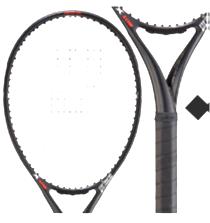
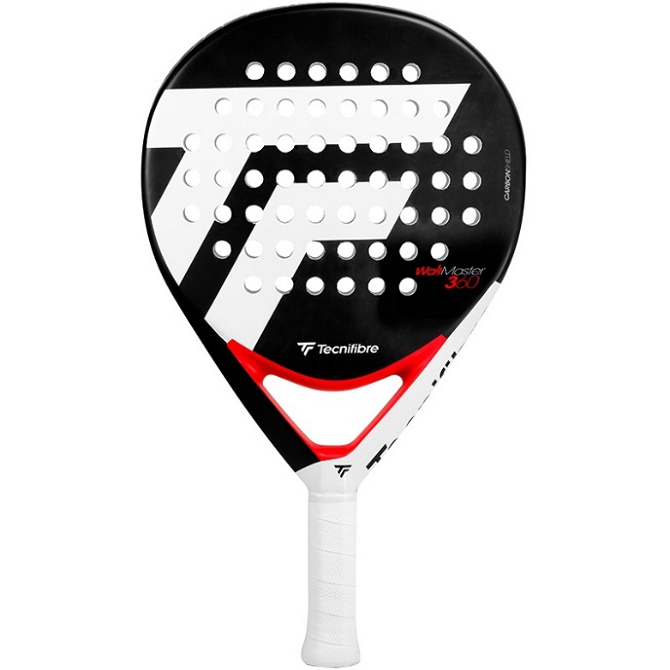
We primarily generate revenue through three divisions and revenue streams, namely (i) sales of bicycles parts of sports bicycles and electric bicycles; (ii) sales of paddle rackets for use in racket games such as tennis, badminton, squash and beach tennis; and (iii) sales of other products, which mainly include structural parts of automobiles, other sporting goods and healthcare products. Our bicycle parts and rackets are mainly supplied directly or indirectly to customers located in Switzerland, France, Italy, the Netherlands, Germany and Japan and they market and distribute their products worldwide. Other customers which rely on our new products, such as automobile parts and healthcare products, are mainly located in Australia, Canada and Japan.
Advanced carbon composite materials offer a number of advantages relative to traditional materials, including light weight, high strength to weight ratio, high stiffness, and improved resistance to heat, corrosion and fatigue. Nonetheless, different products require different degrees and combinations of such properties according to their functions. Carbon composite materials are formed by combining carbon fibers and resins. The properties of carbon composite materials could vary largely due to different systems of resin and structural arrangement. Differing from our competitors in the industry, instead of using preset formulas of resins with lower degrees of flexibility, we have our own R&D center to develop our own resin systems and formulas according to the product requirements. Therefore, we are able to incorporate customized resin systems that can be optimized for specific parameters, such as durability, temperature performance, cure times and viscosity. This not only allows us to present to clients our products with high precision to customers’ specifications from outsourced factories, but also offers us flexibility in developing a greater variety of new products in the future. Thus, we believe that the parallel development of our complex product and process technology has resulted in our competitive advantage which makes it difficult for our competitor to replicate.
In April 2023, we disposed of our 80.5% equity interests in each of our two PRC operating subsidiaries, namely, Dongguan YMA and Dongguan Forwell. Prior to the disposals, products under the original equipment manufacturing (“OEM”) and the original design manufacturing (“ODM”) business models were manufactured by both Dongguan YMA and Dongguan Forwell in our production plant in Dongguan, the PRC. After the disposals, we will continue to utilize Dongguan YMA and Dongguan Forwell to manufacture products under the ODM and OEM business models for the next two years, as we have entered into OEM/ODM agreements and their respective supplemental agreements with the two entities in April 2023. Our management team believes that the foregoing disposals will not materially impact our ODM and OEM models as we will procure and/or provide the raw materials (carbon fiber yarn from our Japan supplier) utilizing our in-house resin technologies for manufacturing that are required under the ODM and OEM models, and thus, we will continue to control the quality of the raw materials. Under both business models, our sales team or R&D team will oversee product development processes and conduct quality control on the semi-finished products and the finished products, as has been our practice in the past. Simultaneously, we will also build our production bases in USA and Europe regions to diversify our production.
Our total revenue for the years ended December 31, 2022 and 2023 amounted to $39.4 million and $23.8 million, respectively. Our sales of bicycle parts accounted for approximately 63.2% and 64.0% of our total revenues for the years ended December 31, 2022 and 2023, respectively. Our sales from our rackets business segment brought us considerable revenue for the years ended December 31, 2022 and 2023, which accounted for approximately 33.7% and 29.6%, respectively, of our total revenues. Our sales of other products accounted for approximately 3.1% and 6.4%, respectively, of our total revenues for the years ended December 31, 2022 and 2023.
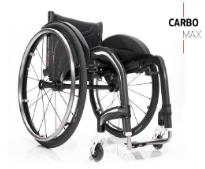
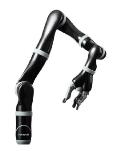
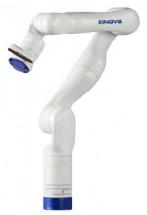
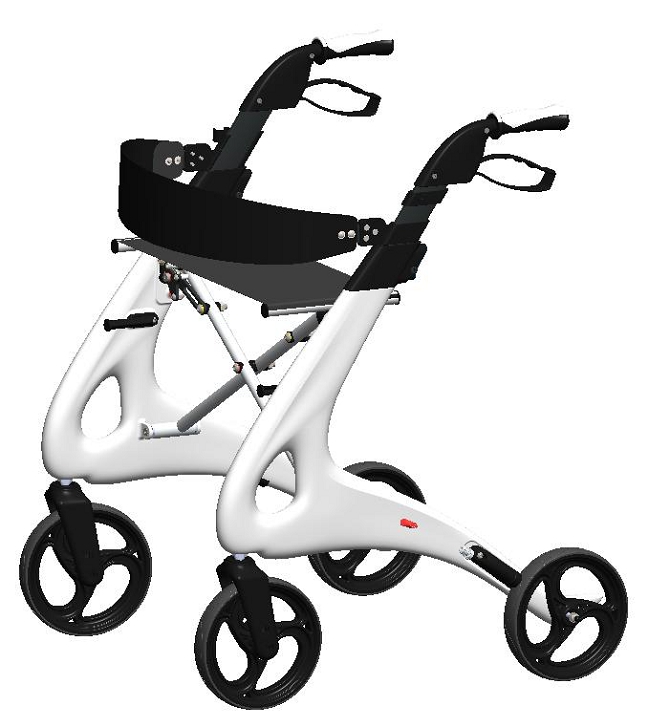
While having our main focus on development and sales of key structural parts of bicycles and rackets in the past years, we would not limit ourselves to the existing scope of products. We intend to extend our product spectrum by launching new products, such as sporting goods for new sports such as paddles for racket sports and mast foils for surfing, and further expand our production on relatively new existing products that are emerging in the market, including key structural parts of electric bicycles, automobile and robotic arms, bicycle crank sets and other healthcare products, such as wheelchairs and senior walkers.
We target to achieve growth in terms of both scale and scope. To expand our scale, we have identified strategic investments. First, in October 2022, we entered into a non-binding memorandum of understanding with an Abu Dhabi company to build and operate a carbon fiber bicycle manufacturing facility in Khalifa Industrial Zone, Abu Dhabi, United Arab Emirates, to serve the European market through acquisition, joint venture and/or co-branding production. Second, in April 2023, we entered into a non-binding memorandum of understanding with a potential partner, a French based manufacturing company, to form a partnership to build a carbon fiber racquet brand and manufacturing factory in France. Lastly, in April 2023, we entered into a non-binding memorandum of understanding with a potential acquisition target, a United Kingdom based bicycle company engaging in sales marketing and distribution in the bicycle and sporting goods trade, to acquire not less than 30% of the potential acquisition target’s shareholding. As such, this will enable us to diversify our business operations into the retail bicycle market industry and to invest in the micro factory and R&D center (as discussed below) in Houston to serve the U.S. market.
As for growth in terms of scope, we anticipate that, by the third quarter of 2025, we will launch our own brand on electric bicycle and sporting goods, and will establish sales and administration offices in the U.S., which will work closely with our office in Taiwan in U.S. market sales and expansion, and in the Netherlands, which will be handling sales on our online business platform. We also expect to further extend our production of automobile parts so as to leverage on the surging market demand for electric vehicles. By December 2025, we expect to launch our micro factory and R&D center in the U.S., with a view to developing automation of our production process and integrating the most advanced technology to our production. In this regard, we intend to invest in a manufacturer of carbon fiber products in the U.S. We have been in contact with several potential target companies in the U.S., one of which is a U.S.-based aerospace composite parts manufacturer. We also plan to establish our second R&D center in Houston, Texas and our initial plan is to hire 4 to 6 employees for developing composite material and conducting research on chemical interactions.
| 3 |
Summary of Risks Affecting Our Company
Our business is subject to numerous risks described in the section titled “Risk Factors” and elsewhere in this prospectus. The main risks set forth below and others you should consider are discussed more fully in the section entitled “Risk Factors – Risks Related to Conducting Operations in PRC and Hong Kong,” “Risk Factors – Risks Related to Our Business and Industry,” “Risks Related to Our Corporate Structure,” “Risk Factors – Risks Related to Doing Business in Taiwan,” and “Risks Related to this Offering and Ownership of Our Ordinary Shares” which you should read in its entirety starting from page 14.
Risks Related to Conducting Operations in PRC and Hong Kong
Currently, part of our operations are based in the PRC due to our PRC Investments. Because of such ties to China, we may be subjected to the laws, rules and regulations of the PRC. For more detailed description of the below risks and other risks related to acquiring and operating business in China and Hong Kong, see “Risk Factors — Risks Related to Conducting Operations in PRC and Hong Kong” beginning on page 14. These risks include, but are not limited to, the following:
| ● | A downturn in the PRC or global economy, and economic and political policies of the PRC could materially and adversely affect our business and financial condition. For more detailed discussion of this risk, please refer to “Risks Factors – Risks Related to Conducting Operations in PRC and Hong Kong - A downturn in the PRC or global economy, and economic and political policies of the PRC could materially and adversely affect our business and financial condition” on page 14. | |
| ● | Uncertainties with respect to the PRC legal system could adversely affect us. For more detailed discussion of this risk, please refer to “Risks Factors – Risks Related to Conducting Operations in PRC and Hong Kong - Uncertainties with respect to the PRC legal system could adversely affect us” on page 14. | |
| ● | As most of our products are manufactured in the PRC, we are subject to certain legal and operational risks associated with our PRC outsourced productions. Changes in the policies, regulations, rules, and the enforcement of laws of the PRC government may be quick with little advance notice and could have a significant impact upon our ability to operate profitably in the PRC and the value of our securities. For more detailed discussion of this risk, please refer to “Risks Factors – Risks Related to Conducting Operations in PRC and Hong Kong - Changes in the policies, regulations, rules, and the enforcement of laws of the PRC government may be quick with little advance notice and could have a significant impact upon our ability to operate profitably in the PRC and may cause the value of our securities to significantly decline or be worthless” on page 14. | |
| ● | The Chinese government may exercise significant oversight and discretion over the conduct of business in the PRC and may intervene in or influence our operations at any time, which could result in a material change in our operations and/or the value of our securities. We are currently not required to obtain any pre-approval or fulfill other filing and reporting obligation from or to Chinese authorities to list on U.S. exchanges; however, if we are required to obtain approval or fulfill the filing and reporting in the future and are denied permission from Chinese authorities to list on U.S. exchanges, we will not be able to continue listing on U.S. exchange, which would materially affect the interest of the investors. For more detailed discussion of this risk, please refer to “Risks Factors – Risks Related to Conducting Operations in PRC and Hong Kong - The Chinese government may exercise significant oversight and discretion over the conduct of business in the PRC and may intervene in or influence our operations at any time, which could result in a material change in our operations and/or the value of our securities. We are currently not required to obtain any pre-approval or fulfill other filing and reporting obligation from or to Chinese authorities to list on U.S. exchanges; however, if we are required to obtain approval or fulfill the filing and reporting in the future and are denied permission from Chinese authorities to list on U.S. exchanges, we will not be able to continue listing on U.S. exchange, which would materially affect the interest of the investors” on page 15. | |
| ● | The Chinese government may intervene in or influence our business operations at any time or may exert more control over offerings conducted overseas and foreign investment in China based issuers, which could result in a material change in our business operations and significantly and adversely impact the value of our securities. Additionally, the governmental and regulatory interference could significantly limit or completely hinder our ability to offer or continue to offer securities to investors and cause the value of such securities to significantly decline or be worthless. For more detailed discussion of this risk, please refer to “Risks Factors – Risks Related to Conducting Operations in PRC and Hong Kong - The Chinese government may intervene in or influence our business operations at any time or may exert more control over offerings conducted overseas and foreign investment in China based issuers, which could result in a material change in our business operations and significantly and adversely impact the value of our securities. Additionally, the governmental and regulatory interference could significantly limit or completely hinder our ability to offer or continue to offer securities to investors and cause the value of such securities to significantly decline or be worthless” on page 15. | |
| ● | The approval of the CSRC or other Chinese regulatory agencies may be required in connection with this offering under Chinese law. For more detailed discussion of this risk, please refer to “Risks Factors – Risks Related to Conducting Operations in PRC and Hong Kong - The approval of the CSRC or other Chinese regulatory agencies may be required in connection with this offering under Chinese law” on page 17. | |
| ● | Compliance with China’s new Data Security Law, Cybersecurity Review Measures, Personal Information Protection Law, regulations and guidelines relating to the multi-level protection scheme and any other future laws and regulations may entail significant expenses and could materially affect our business. For more detailed discussion of this risk, please refer to “Risks Factors – Risks Related to Conducting Operations in PRC and Hong Kong - Compliance with China’s new Data Security Law, Cybersecurity Review Measures, Personal Information Protection Law, regulations and guidelines relating to the multi-level protection scheme and any other future laws and regulations may entail significant expenses and could materially affect our business” on page 18. | |
| ● | Failure to comply with regulations related to export of processed materials may result in fines and legal or administrative actions. For more detailed discussion of this risk, please refer to “Risks Factors – Risks Related to Conducting Operations in PRC and Hong Kong - Failure to comply with regulations related to export of processed materials may result in fines and legal or administrative actions” on page 20. | |
| ● | Any lack of requisite approvals, licenses, permits or filings or failure to comply with any requirements of PRC laws, regulations and policies may materially and adversely affect our daily operations. For more detailed discussion of this risk, please refer to “Risks Factors – Risks Related to Conducting Operations in PRC and Hong Kong - Any lack of requisite approvals, licenses, permits or filings or failure to comply with any requirements of PRC laws, regulations and policies may materially and adversely affect our daily operations” on page 20. | |
| ● | We may be subject to additional contributions under various employee benefits plans and late payments and fines imposed by relevant governmental authorities. For more detailed discussion of this risk, please refer to “Risks Factors – Risks Related to Conducting Operations in PRC and Hong Kong - We may be subject to additional contributions under various employee benefits plans and late payments and fines imposed by relevant governmental authorities” on page 21. | |
| ● | Failure to comply with PRC laws and regulations on employees’ overtime wages payment may expose us to potential compensations. For more detailed discussion of this risk, please refer to “Risks Factors – Risks Related to Conducting Operations in PRC and Hong Kong - Failure to comply with PRC laws and regulations on employees’ overtime wages payment may expose us to potential compensations” on page 22. | |
| ● | Existing and future environmental laws and regulations could result in increased compliance costs or additional operating costs or construction costs and restrictions. Failure to comply with such laws and regulations may result in substantial fines or other limitations that may adversely impact our financial condition or results of operation. For more detailed discussion of this risk, please refer to “Risks Factors – Risks Related to Conducting Operations in PRC and Hong Kong - Existing and future environmental laws and regulations could result in increased compliance costs or additional operating costs or construction costs and restrictions. Failure to comply with such laws and regulations may result in substantial fines or other limitations that may adversely impact our financial condition or results of operation” on page 28. | |
| ● | Failure to comply with regulations related to production safety may result in fines and legal or administrative actions. For more detailed discussion of this risk, please refer to “Risks Factors – Risks Related to Conducting Operations in PRC and Hong Kong - Failure to comply with regulations related to production safety may result in fines and legal or administrative actions” on page 28. |
| 4 |
Risks Related to Our Business and Industry
| ● | We rely on raw materials supplied by our suppliers for the production of our products which exposes us to risk of production shortages and fluctuations in prices of raw materials. | |
| ● | If we fail to adopt new technologies or adapt our products to evolving customer requirements, our business may be materially and adversely affected. | |
| ● | We recorded a negative cash flow for the year ended December 31, 2023. The situation may occur in the future if we continue to grow significantly or conduct exceptional activities, which consume cash outside of the normal course of operations, or if we incur operating losses. | |
| ● | We rely on lines of credit from bank loans to fund our business operations, which exposes us to liquidity risk if we are not able to renew or extend the credit lines when they are expired. | |
| ● | We may incur losses in the future. | |
| ● | The production capacity may not correspond precisely to our production demands, and intended economic results may not be achieved if there is any significant increase in production demand which exceeds our production capacity or any idle or unutilized production capacity during any particular period. | |
| ● | We may not receive full payments from our equity interests disposals of our two PRC operating subsidiaries. | |
| ● | Our success depends on our ability to attract, retain and motivate members of senior leadership, technical personnel and other employees. | |
| ● | Our failure to comply with data protection laws and regulations could lead to government enforcement actions and significant penalties against us, and adversely impact our operating results. | |
Risks Related to Our Corporate Structure | ||
| ● | We are a holding company and our sole material asset after completion of this offering will be our equity interest in our subsidiaries. Accordingly, we will depend on distributions from our subsidiaries to pay dividends and cover our corporate and other expenses. | |
| ● | There is no assurance that future audit reports will be prepared by auditors able to be inspected or investigated completely by the PCAOB, and if they are not, our ordinary shares may be prohibited from being traded on a national exchange under the HFCAA. The delisting of our ordinary shares, or the threat of being delisted, may materially and adversely affect the value of your investment. | |
| ● | We may rely on dividends and other distributions on equity paid by our PRC Investments to fund any cash and financing requirements we may have, and any limitation on the ability of our PRC Investments to make payments to us could have a material and adverse effect on our ability to conduct our business. | |
Risks Related to Doing Business in Taiwan
| ||
| ● | We face economic and political risks associated with doing business in Taiwan, particularly due to the geopolitical tension between Taiwan and China that could negatively affect our business and hence the value of your investment. | |
| ● | The imposition of foreign exchange restrictions in Taiwan may have an adverse effect on foreign investors’ abilities to acquire securities of a Taiwan company, including the shares of our subsidiaries in Taiwan, or to repatriate the interest, dividends or sale proceeds from those securities. | |
|
Risks Related to this Offering and Ownership of Our Ordinary Shares
| ||
| ● | The joint statement by the SEC and the PCAOB, proposed rule changes submitted by Nasdaq, and the HFCAA all call for additional and more stringent criteria to be applied to emerging market companies upon assessing the qualification of their auditors, especially the non-U.S. auditors who are not inspected by the PCAOB. | |
| ● | There has been no public market for our ordinary shares prior to this offering, and you may not be able to resell our ordinary shares at or above the price you paid, or at all. | |
| ● | We will only consummate this offering if we are able to list our ordinary shares on Nasdaq, however, upon consummation of this offering, Nasdaq may delist our securities from trading on its exchange, which could limit investors’ ability to make transactions in our securities and subject us to additional trading restrictions. | |
| ● | Certain recent initial public offerings of companies with public floats comparable to our anticipated public float have experienced extreme volatility that was seemingly unrelated to the underlying performance of the respective company. We may experience similar volatility, which may make it difficult for prospective investors to assess the value of our ordinary shares. | |
| 5 |
Legal and Operational Risks Related to Operations in PRC
For the years ended December 31, 2022 and 2021 and until April 2023, we conducted certain operations through our subsidiaries in PRC and we also had direct and indirect wholly-owned subsidiaries with some operations in the PRC. As of the date of the prospectus, we do not have any PRC operating subsidiary. The Chinese government has exercised and continues to exercise substantial control over virtually every sector of the Chinese economy through regulations and state ownership. Our ability to conduct business may be harmed by changes in its laws and regulations, including those relating to taxation, environmental regulations, property and other matters. Also, economic, political and legal developments in the PRC will affect our business, financial condition, results of operations and prospects. Policies, regulations, rules, and the enforcement of laws of the PRC government can have significant effects on economic conditions in the PRC and the ability of business to operate profitably. Our ability to operate profitably in the PRC may be adversely affected by changes in policies by the PRC government, including changes in laws, regulations or their interpretation, particularly those dealing with the Internet, including censorship and other restriction on material which can be transmitted over the Internet, security, intellectual property, money laundering, taxation and other laws that affect our ability to operate our business in China. As such, these may result in a material change in our operations and/or the value of the securities we are registering for sale or could significantly limit or completely hinder our ability to offer or continue to offer securities to investors and cause the value of such securities to significantly decline or be worthless.
Regulatory Actions and Statements to Regulate Business Operation in PRC
We are aware that recently, the Chinese government initiated a series of regulatory actions and statements to regulate business operations in China with little advance notice, including cracking down on illegal activities in the securities market, enhancing supervision over China-based companies listed overseas using VIE structures, adopting new measures to extend the scope of cybersecurity reviews, and expanding the efforts in anti-monopoly enforcement. Since these regulatory actions and statements are new, it is highly uncertain how soon legislative or administrative regulation making bodies will respond and what existing or new laws or regulations or detailed implementations and interpretations will be modified or promulgated, if any, and the potential impact such modified or new laws and regulations will have on our business operations in China, the ability to accept foreign investments and list on a U.S. or other foreign exchange. Although currently our business of carbon fiber composite products is not affected under these regulatory actions, however, if the legislative or administrative regulation making bodies change their focus to the sector which we operate in, it may impact our ability to conduct our business, accept foreign investments, or list on a U.S. or other foreign exchange. Any future action by the Chinese government expanding the categories of industries and companies whose foreign securities offerings are subject to government review could significantly limit or completely hinder our ability to offer or continue to offer securities to investors and could cause the value of such securities to significantly decline or be worthless. For a detailed description of the risks related to doing business in the PRC and Taiwan, and the offering, see “Risks Related to Conducting Operations in PRC and Hong Kong”, “Risks Related to Doing Business in Taiwan” and “Risks Related to this Offering and Ownership of Our Ordinary Shares” in the Risk Factors section.
PRC Approvals
On July 6, 2021, the relevant Chinese government authorities published the Opinions on Strictly Cracking Down Illegal Securities Activities in Accordance with the Law. These opinions call for strengthened regulation over illegal securities activities and increased supervision of overseas listings by China-based companies, and propose to take effective measures, such as promoting the construction of relevant regulatory systems to regulate the risks and incidents faced by China-based overseas-listed companies. As of the date of this prospectus, no official guidance or related implementation rules have been issued in relation to these recently issued opinions and the interpretation and implementation of these opinions remain unclear at this stage. On December 24, 2021, the State Council published the Provisions on the Administration of Overseas Securities Offering and Listing by Domestic Companies (draft for consultation, “Draft Administration Provisions”), as well as the Administrative Measures for the Filing of Overseas Securities Offering and Listing by Domestic Companies (draft for consultation, “Draft Administration Measures”). Under the Draft Administration Provisions, a filing-based regulatory system will be introduced to cover both direct and indirect overseas issuance and listing of securities. The Draft Administration Measures further provide the scope of activities subject to the filing requirement, and relevant criteria for determining whether an activity falls within the scope. Pursuant to the Draft Administration Measures, the determination as to whether a PRC domestic company is indirectly offering and listing securities in an overseas stock market shall be made on a substance over form basis. If the issuer meets the following conditions, the offering and listing shall be determined as an indirect overseas offering and listing by a domestic company: (1) the total assets, net assets, revenues or profits of the domestic operating entity of the issuer in the most recent accounting year account for more than 50% of the corresponding figure in the issuer’s audited consolidated financial statements for the same period; and (2) the senior management in charge of business operation and management of the issuer are mostly Chinese citizens or have domicile in China, and the issuer’s main places of business are located in China or main business activities are conducted in China. The Draft Administration Provisions and the Draft Administration Measures were released for public comment only, and the draft provisions and anticipated adoption or effective date are subject to changes and thus its interpretation and implementation remain substantially uncertain.
On February 17, 2023, the CSRC promulgated the Trial Measures, and five supporting guidelines, which came into effect on March 31, 2023. Pursuant to the Trial Measures, domestic companies that seek to offer or list securities overseas, both directly and indirectly, shall complete filing procedures with the CSRC pursuant to the requirements of the Trial Measures within three working days following its submission of confidential or public registration statement for initial public offerings or listing. If a domestic company fails to complete required filing procedures, conceals any material fact or falsifies any major content in its filing documents, such domestic company may be subject to administrative penalties, such as order to rectify, warnings, fines, and its controlling shareholders, actual controllers, the person directly in charge and other directly liable persons may also be subject to administrative penalties, such as warnings and fines.
On February 24, 2023, the CSRC, together with Ministry of Finance of the PRC, National Administration of State Secrets Protection and National Archives Administration of China, revised the Provisions on Strengthening Confidentiality and Archives Administration for Overseas Securities Offering and Listing which was issued by the CSRC, National Administration of State Secrets Protection and National Archives Administration of China in 2009, or the Provisions. The revised Provisions is issued under the title the Provisions on Strengthening Confidentiality and Archives Administration of Overseas Securities Offering and Listing by Domestic Companies, and came into effect on March 31, 2023 together with the Trial Measures. One of the major revisions to the revised Provisions is expanding its application to cover indirect overseas offering and listing, as is consistent with the Trial Measures. The revised Provisions require that, including but not limited to (a) a domestic company that plans to, either directly or indirectly through its overseas listed entity, publicly disclose or provide to relevant individuals or entities including securities companies, securities service providers and overseas regulators, any documents and materials that contain state secrets or working secrets of government agencies, shall first obtain approval from competent authorities according to law, and file with the secrecy administrative department at the same level; and (b) domestic company that plans to, either directly or indirectly through its overseas listed entity, publicly disclose or provide to relevant individuals and entities including securities companies, securities service providers and overseas regulators, any other documents and materials that, if leaked, will be detrimental to national security or public interest, shall strictly fulfill relevant procedures stipulated by applicable national regulations.
As of the date of this prospectus, the revised Provisions have come into effect. On or after March 31, 2023, in the event that the offering is determined as an “indirect overseas offering and listing by a PRC domestic company” under the Trial Measures, any failure or perceived failure by the Company or PRC Subsidiaries to comply with the above confidentiality and archives administration requirements under the revised Provisions and other PRC laws and regulations may result in that the relevant entities would be held legally liable by competent authorities, and referred to the judicial organ to be investigated for criminal liability if suspected of committing a crime.
| 6 |
According to the legal opinions issued by our PRC counsel, L&L-Leaven, Attorneys-at-Law, based on our disposal of the 80.5% equity interests in each of our two PRC operating subsidiaries, namely, Dongguan YMA and Dongguan Forwell, in April 2023, the remaining interests in Dongguan YMA and Dongguan Forwell are deemed to be equity investments and the Group no longer has control over such two PRC operating entities. Further, Bohong Technology and Dongguan Changrong are the only remaining PRC Subsidiaries controlled by the Group. However, Bohong Technology and Dongguan Changrong are currently non-operating subsidiaries. In light of the foregoing, we are relying on the legal opinions of our PRC counsel, L&L-Leaven, Attorneys-at-Law, in determining that we are not required to obtain approval or clearance from the CSRC as the listing of our ordinary shares on Nasdaq does not constitute an “indirect overseas offering and listing by PRC domestic companies” and that we are not required to complete the filing procedures as stipulated by the Trial Measures because the Company’s majority business activities are not carried out in Mainland China since our disposals of the 80.5% equity interests in each of Dongguan YMA and Dongguan Forwell in April 2023, nor is its main place of business located in Mainland China, and none of the members of the senior management team in charge of our business operation are Chinese citizens or domiciled in Mainland China.
As J-Star is a holding company with no material operations of its own, our operations are conducted through our subsidiaries in Taiwan, Hong Kong and Samoa with our headquarters in Taiwan, and we have non-operating subsidiaries in China, which may subject us to certain laws and regulations in China. Our business is subject to various government regulations and regulatory interference. As of the date of this prospectus, we have been advised by L&L-Leaven, Attorneys-at-Law, our counsel as to PRC law, that our PRC Subsidiaries have received all requisite permissions and approvals from the Chinese authorities for the operation of its business in the PRC, including but not limited to the business license from the State Administration for Market Regulation (“SAMR”), and the business licenses are valid and have not been revoked. Based on the PRC laws and regulations currently effective, we have been advised by L&L-Leaven, Attorneys-at-Law that we, including our PRC Subsidiaries, are not subject to any other pre-approval requirement, filing or reporting from Chinese authorities, including the Cybersecurity Administration Committee, or CAC, to conduct this offering or list on U.S. exchanges or issue securities to foreign investors or to obtain any further permissions to conduct our current business in the PRC in addition to the permits currently held by us to operate our general business activities. Nevertheless, we may incur increased costs necessary to comply with existing and newly adopted laws and regulations or penalties for any failure to comply. Furthermore, given recent statements by the Chinese government indicating an intent to exert more oversight and control over offerings that are conducted overseas and there are uncertainties with respect to the Chinese legal system and changes in laws, regulations and policies, including how those laws and regulations will be interpreted or implemented, although as of the date of this prospectus, we have not been involved in any investigations initiated by the applicable government regulatory authorities, nor have we received any inquiry, notice, warning or sanction in such respect, it is uncertain whether or when we might be subject to such requirements, permission and approval from any related PRC government to list our shares on Nasdaq in the future. If approval is required in the future and we were denied permission from Chinese authorities to list on U.S. exchanges, we will not be able to continue listing on U.S. exchange or it may adversely affect our business and results of operation, which would materially affect the interest of the investors. It is uncertain when and whether the Company will be required to obtain permission from the PRC government to continue to list on U.S. exchanges or to conduct our current business in the future, and even when such permission is obtained, whether it will be denied or rescinded. Although we are advised by L&L-Leaven, Attorneys-at-Law, that we are currently not required to obtain any other pre-approval requirement from any of the PRC central or local government and we have not received any denial to conduct this offering, to list on the U.S. exchange or to conduct our current business, our operations may be adversely affected in the future, directly or indirectly, by existing or future PRC laws and regulations if PRC regulatory authorities do not take the same view as us. We could be subject to additional requirements that we obtain pre-approval or fulfill the filing and reporting obligation to pursue this offering or any future offerings from potentially other regulatory authorities. Although we believe the approval from other PRC governmental agencies is not required for the listing and trading of our ordinary shares on Nasdaq in the context of this offering, we cannot assure you that relevant PRC governmental agencies would reach the same conclusion as we do. If other regulatory agencies later promulgate new rules or explanations requiring that we obtain their approvals for this offering and any follow-on offering, we may be unable to obtain such approvals which could significantly limit or completely hinder our ability to offer or continue to offer securities to our investors. The other PRC regulatory agencies may also take actions requiring us, or making it advisable for us, to halt this offering before the settlement and delivery of the ordinary shares that we are offering. Consequently, if you engage in market trading or other activities in anticipation of and prior to the settlement and delivery of the ordinary shares we are offering, you would be doing so at the risk that the settlement and delivery may not occur. Any uncertainties or negative publicity regarding such approval requirements could have a material adverse effect on our ability to complete this offering or any follow-on offering of our securities or the market for and market price of our ordinary shares. However, we are not required to obtain additional permission or approval from Chinese authorities, including the CAC, to either approve our PRC Investments’ operation or to offer the securities being registered to foreign investors. For more detailed information, see “Risk Factors — Risks Related to Conducting Operations in PRC and Hong Kong — The approval of the CSRC or other Chinese regulatory agencies may be required in connection with this offering under Chinese law,” “Risks Factor — Risks Related to Conducting Operations in PRC and Hong Kong — The Chinese government may exercise significant oversight and discretion over the conduct of business in the PRC and may intervene in or influence our operations at any time, which could result in a material change in our operations and/or the value of our securities. We are currently not required to obtain any pre-approval or fulfill other filing and reporting obligations from or to Chinese authorities to list on U.S. exchanges, however, if we are required to obtain approval in the future and are denied permission from Chinese authorities to list on U.S. exchanges, we will not be able to continue listing on U.S. exchange, which would materially affect the interest of the investors” and “Risks Factors — The Chinese government may intervene in or influence our business operations at any time or may exert more control over offerings conducted overseas and foreign investment in China based issuers, which could result in a material change in our business operations and significantly and adversely impact the value of our securities. Additionally, the governmental and regulatory interference could significantly limit or completely hinder our ability to offer or continue to offer securities to investors and cause the value of such securities to significantly decline or be worthless.”
However, to operate the general business activities currently conducted in China, each of our PRC Subsidiaries is required to obtain a business license from the SAMR. Each of our PRC Subsidiaries has obtained a valid business license from the SAMR, and no application for any such license has been denied.
| 7 |
PRC Cybersecurity Measures
The amendment to the Cybersecurity Review Measures published by CAC on December 28, 2021, which has become effective on February 15, 2022 replaced the former Cybersecurity Review Measures. On November 14, 2021, the CAC released a draft of the Administrative Regulations on Network Data Security, or Draft Regulations, for public comments. The amended Cybersecurity Review Measures stipulate that, among other items, if an issuer is classified as a “network platform operator” and such issuer possesses personal information of more than one million users and intends to be listed on a securities exchange in a foreign country, it must complete a cybersecurity review. Alternatively, relevant governmental authorities in China may initiate a cybersecurity review if such governmental authorities determine an operator’s cyber products or services, data processing or potential listing in a foreign country affect or may affect national security. The Draft Regulations also stipulate that, among other items, for any listing to be done on a securities exchange in a foreign country involving a “data processing operator” with personal information of more than one million users, such “data processing operator” shall report to the CAC for a cybersecurity review. The Draft Regulations were released for public comment only, and the draft provisions and anticipated adoption or effective date are subject to changes and thus its interpretation and implementation remain substantially uncertain. We cannot predict the impact of the draft measures, if any, on the operations of our Company at this stage.
“Data processing operators” is defined under the Draft Regulations as “any individual or organization that autonomously determines the purpose and manner of the processing of network data” and “network platform operators” is not defined under the amended Cybersecurity Review Measures. While the exact scope of “network platform” and “data processing operators” remains unclear, the Chinese government authorities may have wide discretion in the interpretation and enforcement of these laws. Currently, the draft amended Cybersecurity Review Measures and the Draft Regulations have not materially affected our business and operations and we do not believe our business activities affect or may be interpreted to affect PRC’s national security. We have been advised by L&L-Leaven, Attorneys-at-Law, our counsel as to PRC law, that we are not subject to pre-approval requirement, filing or reporting from CAC to conduct this offering or list on U.S. exchanges or issue securities to foreign investors. As of the date of this prospectus, we have not been informed by any relevant Chinese government authorities that we are identified as or considered a “network platform operator” or “data processing operator.” We are not aware of any requirement that we should file for a cybersecurity review, nor have we received any inquiry, notice, warning, sanction in such respect or any regulatory objections to this offering. However, in anticipation of the strengthened implementation of cybersecurity laws and regulations, there can be no assurance that we will not be deemed as a network platform operator or data processing operator under the Chinese cybersecurity laws and regulations in the future, or that the amended Cybersecurity Review Measures and the Draft Regulations will not be further amended or other laws or regulations will not be promulgated to subject us to the cybersecurity review or other compliance requirements. In such case, we may face challenges in addressing such enhanced regulatory requirements. For additional information, see “Risk Factors––Risks related to Our Business and Industry—Our failure to comply with data protection laws and regulations could lead to government enforcement actions and significant penalties against us, and adversely impact our operating results,” “Risk Factors — Risks Related to Conducting Operations in PRC —Compliance with China’s new Data Security Law, Cybersecurity Review Measures, Personal Information Protection Law, regulations and guidelines relating to the multi-level protection scheme and any other future laws and regulations may entail significant expenses and could materially affect our business,” and “Risk Factors — Risks Related to Conducting Operations in PRC and Hong Kong — The approval of the CSRC or other Chinese regulatory agencies may be required in connection with this offering under Chinese law.”
History and Corporate Structure
Our History
Our Predecessor Group commenced a wood composite manufacturing and sports equipment processing business in 1970 and was one of the earliest private enterprises to manufacture wood composite in Taiwan. However, due to changes in the product development in the sporting goods industry, with higher product requirements on weight-saving, endurance and stiffness, our Predecessor Group gradually shifted its focus from wood composite manufacturing to carbon composite product manufacturing starting in 1980. Our Predecessor Group launched the carbon composite business line in 1980, targeting sporting goods, such as rackets. In 2005, our Predecessor Group launched the bicycle business line in order to expand our scope of carbon composite sporting goods to sports bicycles. In 2017, we produced our first electric bicycle frame. In 2018, in light of the prevalence of and favorable government policies toward electric bicycles around the world, while continuing our development and sales of sports bicycles, we have in parallel strategically expanded further on the development and production of electric bicycles. We also developed our first carbon fiber robotic arm and other health care products in 2018. In 2019, we expanded our R&D team focused the design and production of electric bicycles by addition of personnel. Through our R&D center in Taiwan, we have continued to upgrade and enhance our material technology, product structural design and production process technology, in order to uplift our product quality, product performance, production efficiency and expand our product spectrum.
Corporate Structure
On May 24, 2016, J-Star Holding Co., Ltd. (“J-Star”) was incorporated as an exempted company with limited liability under the laws of the Cayman Islands as our holding company. J-Star directly holds all the share capital of (i) Goal Beyond Limited (“Goal Beyond”), which is an International Company incorporated in Samoa on April 13, 2016, (ii) Star Leader Trading Limited (“Star Leader Trading”), which was incorporated in Hong Kong on May 30, 2016 as a limited company, and (iii) Bohong Technology, which was incorporated in the PRC on October 9, 2018. Our wholly owned subsidiary Goal Beyond, in turn, holds all the share capital of (i) YMA Corporation (“TW YMA”), which was incorporated in Taiwan on July 17, 2015, (ii) Time Yield Limited (“Time Yield”), which was incorporated in Samoa on January 30, 2013, and (iii) Dongguan Changrong, which was incorporated in the PRC on December 4, 2023. As at the date of this prospectus, Bohong and Dongguan Changrong are currently non-operating PRC Subsidiaries. On July 31, 2023 and August 22, 2023, Premium Quest International Limited and Star Leader Trading Private Limited were formed, respectively, which are our wholly owned subsidiaries in the British Virgin Islands and Singapore, respectively. In turn, Premium Quest International Limited holds all of the share capital of Litzmo B.V., which was incorporated in the Netherlands on December 13, 2023.
| 8 |
Organizational Structure and Cash Flow
The following diagram depicts our current corporate structure. As of the date of this prospectus, the shares of each of our subsidiaries are 100% owned by the respective entity displayed immediately above that subsidiary. Currently, our corporate structure contains no variable interest entities (“VIE”) and we do not intend to enter into any contractual arrangements to establish a VIE structure with any entity in the PRC. For the defined term of each subsidiary of our Group, please refer to the paragraph headed “Prospectus Summary – History and Corporate Structure - Corporate Structure”.
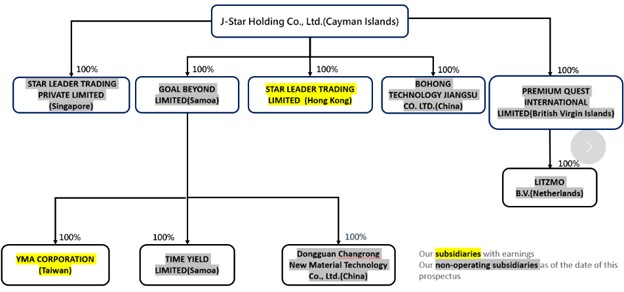
Within the organization, approximately 80% of our customer cash inflows have been received by Star Leader Trading, our order-taking subsidiary in Hong Kong, and approximately 20% of our customer cash inflows have been received by TW YMA, our subsidiary in Taiwan. Time Yield is our subsidiary in Samoa mainly involved in the supportive services of procurement of raw material and it does not have any sales to external customers. As of the date of this prospectus, our subsidiaries in Samoa and the PRC, Goal Beyond and Bohong Technology, do not have any operating business activities.
Our Hong Kong subsidiary purchases goods and services from our Taiwan subsidiary and then pays into Dongguan YMA and Dongguan Forwell, or our Taiwan subsidiary purchases goods from Dongguan YMA and Dongguan Forwell and then pays for such merchandise accordingly, and/or Time Yield will receive payments on the goods and services provided to Dongguan YMA and Dongguan Forwell. Our management team expects this arrangement to continue after the disposals of equity interests in Dongguan YMA and Dongguan Forwell and the entry of OEM/ODM agreements and their respective supplemental agreement with Dongguan YMA and Dongguan Forwell in April 2023. As such, our Hong Kong subsidiary, PRC Investments and/or Samoa subsidiary are funded by their own cash inflows or by our Taiwan subsidiary. As of the date of this prospectus, none of our subsidiaries have ever faced difficulties or limitations on the ability to transfer cash to another subsidiary. We have implemented cash management policies for all of our subsidiaries, which require the relevant financial staff to verify that the relevant documents issued by the requesting staff with the approval of the competent supervisor are qualified, and then transfer the payment to the cashier upon competent supervisor of the relevant financial staff. Any voucher will be stamped after payment and the payee will sign the request for payment as receipt. In addition, all payments shall be made by remittance, crossed and stamped non-endorsed transfer cheques except for certain specified cash payables. When transferring any inter-group funds, the cash management procedures is the same as the cash management policies for external payment as set out above.
The following are the aggregate intra-group cash flow for the years ended December 31, 2022 and 2023:
|
From |
To | For the Year Ended December 31, 2022 |
For the Year Ended December 31, 2023 |
|||||||
| Star Leader Trading | TW YMA | $ | 35,267,800 | $ | 9,823,500 | |||||
| Star Leader Trading | Time Yield | $ | 80,000 | $ | 0 | |||||
| TW YMA | Star Leader Trading | $ | 67,000 | $ | 320,000 | |||||
| TW YMA | Dongguan YMA | $ | 18,372,100 | $ | 8,457,500 | |||||
| TW YMA | Dongguan Forwell | $ | 10,068,700 | $ | 6,055,200 | |||||
| Dongguan YMA* | Time Yield | $ | 0 | $ | 0 | |||||
| Dongguan Forwell* | Time Yield | $ | 615,000 | $ | 388,700 | |||||
* The Group disposed 80.5% equity interests in each of our two PRC operating subsidiaries, namely, Dongguan YMA and Dongguan Forwell, in April 2023, the remaining interests in Dongguan YMA and Dongguan Forwell are deemed to be equity investments and the Group no longer has control over such two PRC operating entities.
Dividends and other distributions
J-Star was incorporated in Cayman Islands on May 24, 2016, to be the ultimate parent company of the Group. As a holding company with no material operations of our own, our operations are currently conducted through our subsidiaries in Taiwan, Hong Kong and Samoa with our headquarters in Taiwan. Our outsourced productions in the PRC Investments may also subject us to certain laws and regulations in China. J-Star is permitted under the laws of Cayman Islands to provide funding to our subsidiaries in Taiwan, Hong Kong and Samoa through loans or capital contributions without restrictions on the amount of the funds provided such arrangement is in the best interests of the Company.
Our operating subsidiaries in Hong Kong and Taiwan are permitted under the laws of Hong Kong and Taiwan, respectively, to provide direct or indirect funding to J-Star, the holding company incorporated in the Cayman Islands, through dividend distributions. Our Group currently intends to retain all available funds and future earnings, if any, for the operation and expansion of our business, and we do not anticipate declaring or paying any dividends in the foreseeable future. We also intend to settle amounts owed under our operating structure through bank loans and loans from related parties. We currently do not have any dividend policy, and any future determination as to dividends will be made at the discretion of our board of directors after considering our financial condition, results of operations, capital requirements, contractual requirements, business prospects and other factors the board of directors deems relevant, and subject to the restrictions contained in any future financing instruments.
| 9 |
Subject to the Companies Act (Revised) of the Cayman Islands and our post-offering amended and restated memorandum and articles of association, our board of directors may authorize and declare a dividend to shareholders (including shareholders who are based in the U.S.) from time to time out of the profits from the Company, realized or unrealized, or out of the share premium account, provided that the Company will remain solvent, meaning the Company is able to pay its debts as they come due in the ordinary course of business. There is no further Cayman Islands statutory restriction on the amount of funds which may be distributed by us in the form of dividends.
In or around July 2017, J-Star declared NTD61.5 million (approximately $2.2 million) of dividends to its then shareholders. For the years ended December 31, 2021, 2022 and 2023, we did not pay any dividends to our shareholders. As of the date of this prospectus, neither we nor any of our subsidiaries have ever paid dividends or made distributions to U.S. investors. Except for the foregoing, no other transfers, dividends or distributions have been made between or among our holding company, our subsidiaries or to our investors. If we determine to pay dividends on any of our ordinary shares in the future, as a holding company, we will be dependent on receipt of funds from our operating subsidiaries in Hong Kong and Taiwan. Under the current practice of the Inland Revenue Department of Hong Kong, no tax is payable in Hong Kong in respect of dividends paid by us, and under the current laws of Taiwan, dividends (whether in cash or shares) declared by TW YMA out of its retained earnings and distributed to Goal Beyond are subject to Taiwan withholding tax, currently at the rate of 21% on the amount of the distribution (in the case of cash dividends) or on the par value of the shares (in the case of stock dividends).
There are no restrictions or limitations under the laws of Hong Kong imposed on the conversion of HK dollars into foreign currencies and the remittance of currencies out of Hong Kong, nor is there any restriction on any foreign exchange to transfer cash between the Company and its subsidiaries, across borders and to investors outside of PRC, nor is there any restrictions and limitations to distribute earnings from the subsidiaries, to the Company and investors outside of PRC and amounts owed. There are no exchange controls in Cayman Islands.
All cash dividends declared and payable on the shares of TW YMA may be paid by TW YMA to Goal Beyond (as a foreign corporate shareholder) in NTD that, so long as Goal Beyond maintains its status as a foreign investor as approved by the Department of Investment Review, Ministry of Economic Affairs of Taiwan, may be converted into foreign currency and freely transferred out of Taiwan without the necessity of obtaining any additional Taiwan governmental approvals.
Under current Taiwan Foreign Exchange Control Law and regulations, foreign currency earned from exports of merchandise and services may be retained and used freely by exporters, and all foreign currency needed for the importation of merchandise and services may be purchased freely from the designated foreign exchange banks. Apart from trade-related or service-related foreign exchange transactions, Taiwan companies may, without foreign exchange approval, remit to and from Taiwan foreign currency in each calendar year of up to US$50 million (or such other amount as determined by Taiwan’s Central Bank from time to time at its discretion in consideration of Taiwan’s economic and financial conditions or the needs to maintain the order of foreign exchange market in Taiwan). The above limits apply to remittances involving either a conversion of NTD into a foreign currency or a conversion of foreign currency into NTD. For further details, please refer to “Regulations – Regulations in Taiwan – Regulations Relating to Foreign Exchange”.
Although we did not rely on our PRC Investments (previously PRC subsidiaries) for dividends or other distributions on equity in the past, we may rely on dividends and other distributions on equity paid by our PRC Investments for our cash and financing requirements in the future, including the funds necessary to pay dividends and other cash distributions to our shareholders or to service any debt we may incur. If any of our PRC Investments incurs debt on its own behalf in the future, the instruments governing such debt may restrict their ability to pay dividends to us. To date, there have not been any such dividends or other distributions from our PRC Investments to our subsidiaries located outside of China. In addition, save as disclosed above, as of the date of this prospectus, none of our subsidiaries have ever issued any dividends or distributions to us or their respective shareholders outside of China. As of the date of this prospectus, neither we nor any of our subsidiaries have ever paid dividends or made distributions to U.S. investors.
| 10 |
According to the Foreign Investment Law of the People’s Republic of China and its implementing rules, which jointly established the legal framework for the administration of foreign-invested companies, a foreign investor may, in accordance with other applicable laws, freely transfer into or out of China its contributions, profits, capital earnings, income from asset disposal, intellectual property rights royalties acquired, compensation or indemnity legally obtained, and income from liquidation, made or derived within the territory of China in RMB or any foreign currency, and any entity or individual shall not illegally restrict such transfer in terms of the currency, amount and frequency.
Renminbi is not freely convertible into other currencies. As result, any restriction on currency exchange may limit the ability of our PRC Investments to use their potential future Renminbi revenues to pay dividends to us. The Chinese government imposes controls on the convertibility of Renminbi into foreign currencies and, in certain cases, the remittance of currency out of China. Shortages in availability of foreign currency may then restrict the ability of our PRC Subsidiaries to remit sufficient foreign currency to our offshore entities for our offshore entities to pay dividends or make other payments or otherwise to satisfy our foreign-currency-denominated obligations. The Renminbi is currently convertible under the “current account,” which includes dividends, trade and service-related foreign exchange transactions, without the need of the approval of the State Administration of Foreign Exchange of China (“SAFE”). By contrast, the Renminbi under the “capital account,” which includes foreign direct investment and foreign currency debt, including loans we may secure for our onshore subsidiaries, may be converted into other currencies upon the approval of the SAFE and the conversion is also subject to other restrictions or limitations, e.g., control of a Chinese entity’s foreign debt quota. Currently, our PRC Subsidiaries may purchase foreign currency for settlement of “current account transactions,” including payment of dividends to us, without the approval of the SAFE by complying with certain procedural requirements. However, the relevant Chinese governmental authorities may limit or eliminate our ability to purchase foreign currencies in the future for current account transactions. The Chinese government may continue to strengthen its capital controls, and additional restrictions and substantial vetting processes may be instituted by SAFE for cross-border transactions falling under both the current account and the capital account. Any existing and future restrictions on currency exchange may limit our ability to utilize revenue generated in Renminbi to fund our business activities outside of China or pay dividends in foreign currencies to holders of our securities. Foreign exchange transactions under the capital account remain subject to limitations and require approvals from, or registration with, SAFE and other relevant Chinese governmental authorities. This could affect our ability to obtain foreign currency through debt or equity financing for our PRC Subsidiaries. In addition, shareholders may potentially be subject to Chinese taxes on dividends paid by us in the event we are deemed a Chinese resident enterprise for Chinese tax purposes. See “Taxation— People’s Republic of China Taxation” for more details.
Foreign Private Issuer Status
We are a foreign private issuer within the meaning of the rules under the Securities Exchange Act of 1934, as amended (the “Exchange Act”). As such, we are exempt from certain provisions applicable to United States domestic public companies. For example:
| ● | we are not required to provide as many Exchange Act reports, or as frequently, as a domestic public company; | |
| ● | for interim reporting, we are permitted to comply solely with our home country requirements, which are less rigorous than the rules that apply to domestic public companies; | |
| ● | we are not required to provide the same level of disclosure on certain issues, such as executive compensation; | |
| ● | we are exempt from provisions of Regulation FD aimed at preventing issuers from making selective disclosures of material information; | |
| ● | we are not required to comply with the sections of the Exchange Act regulating the solicitation of proxies, consents or authorizations in respect of a security registered under the Exchange Act; and | |
| ● | we are not required to comply with Section 16 of the Exchange Act requiring insiders to file public reports of their share ownership and trading activities and establishing insider liability for profits realized from any “short-swing” trading transaction. |
| 11 |
Implications of Being an Emerging Growth Company
As a company with less than US$1.235 billion in revenue for the last fiscal year, we qualify as an “emerging growth company” pursuant to the Jumpstart Our Business Startups Act of 2012 (as amended by the Fixing America’s Surface Transportation Act of 2015) (the “JOBS Act”). An emerging growth company may take advantage of specified reduced reporting and other requirements that are otherwise applicable generally to public companies. These provisions include exemption from the auditor attestation requirement under Section 404 of the Sarbanes-Oxley Act of 2002, or Section 404, in the assessment of the emerging growth company’s internal control over financial reporting. The JOBS Act also provides that an emerging growth company that prepares its financial statements in accordance with generally accepted accounting principles in the United States (“U.S. GAAP”), does not need to comply with any new or revised financial accounting standards until such date that a private company is otherwise required to comply with such new or revised accounting standards. Because we prepare our financial statements in accordance with International Financial Reporting Standards (“IFRS”), we are unable to take advantage of the aforementioned provision.
We may take advantage of these provisions until the last day of our fiscal year following the fifth anniversary of the date of the first sale of our ordinary shares pursuant to this offering. However, if certain events occur before the end of such five-year period, including if we become a “large accelerated filer,” our annual gross revenues exceed $1.235 billion or we issue more than $1.0 billion of non-convertible debt in any three-year period, we will cease to be an emerging growth company before the end of such five-year period.
In addition, Section 107 of the JOBS Act provides that an “emerging growth company” can take advantage of the extended transition period provided in Section 7(a)(2)(B) of the Securities Act of 1933, as amended (the “Securities Act”), for complying with new or revised accounting standards. The extended transition period provision only applies to companies preparing financial statements under U.S. GAAP. Because we prepare our financial statements in accordance with IFRS, we are unable to take advantage of the aforementioned provision.
We will remain an emerging growth company until the earliest of (i) the last day of our fiscal year during which we have total annual gross revenues of at least US$1.235 billion; (ii) the last day of our fiscal year following the fifth anniversary of the completion of this offering; (iii) the date on which we have, during the previous three year period, issued more than US$1.0 billion in non-convertible debt; or (iv) the date on which we are deemed to be a “large accelerated filer” under the Exchange Act, which would occur if the market value of our ordinary shares that are held by non-affiliates exceeds US$700 million as of the last business day of our most recently completed second fiscal quarter and we have been publicly reporting for at least 12 months. Once we cease to be an emerging growth company, we will not be entitled to the exemptions provided in the JOBS Act discussed above.
Corporate Information
Our principal executive offices in Taiwan are located at 7F-1, No. 633, Sec. 2, Taiwan Blvd., Xitun District, Taichung City 407, Taiwan (R.O.C.). Our telephone number at this address is +886-423229900. Our registered agent in Cayman Islands is Portcullis (Cayman) Ltd of The Grand Pavilion Commercial Centre, Oleander Way, 802 West Bay Road, P.O. Box 32052, Grand Cayman, KY1-1208, Cayman Islands. Investors should submit any inquiries to the address and telephone number of our principal executive offices.
Our principal website is www.ymaunivers.com. The information contained on this website is not a part of this prospectus. Our agent for service of process in the United States is Puglisi & Associates, located at 850 Library Avenue, Suite 204, Newark, Delaware 19711.
Conventions that Apply to this Prospectus
This prospectus contains information and statistics relating to Taiwan and the PRC’s economy and the industries in which we operate derived from various publications issued by market research companies and Taiwan and the PRC governmental entities, which have not been independently verified by us, the underwriters or any of our affiliates or advisers including Frost & Sullivan, an independent market research and consulting firm with respect to information on the global carbon fiber industry, global carbon fiber bicycle parts industry, global carbon fiber racket parts industry and other carbon fiber sectors industry. The information in such sources may not be consistent with other information compiled in or outside Taiwan and the PRC.
Unless otherwise noted, all translations from NTD to U.S. Dollars and from U.S. Dollars to NTD or from RMB to U.S. Dollars and from U.S. Dollars to RMB in this prospectus are made at a rate of NTD31.15 to US$1.00 and RMB7.08 to US$1.00, respectively, the exchange rate in effect as of December 31, 2023 as set forth in the H.10 statistical release of The Board of Governors of the Federal Reserve System. We make no representation that any NTD or RMB or U.S. Dollar amounts or could have been, or could be, converted into U.S. dollars or NTD or RMB, as the case may be, at any particular rate, or at all.
| 12 |
The Offering
| Shares being offered: | 2,000,000 ordinary shares on a firm commitment basis. |
| Initial offering price: | We currently estimate that the initial public offering price will be in the range of $4.00 to $5.00 per share. |
| Number of ordinary shares outstanding before the offering: | 15,762,887 ordinary shares are outstanding as of December 31, 2023. |
| Number of ordinary shares outstanding after the offering: | 17,762,887 ordinary shares (or 18,062,887 ordinary shares if the underwriters exercise their over-allotment option in full) and excluding 100,000 ordinary shares (equal to 5% of the aggregate number of ordinary shares sold in this offering) underlying the Representative’s warrants (or 115,000 ordinary shares underlying the Representative’s warrants assuming the exercise of the underwriters’ over-allotment option in full). |
| Underwriters’ over-allotment option: | We have granted the underwriters an option for a period of up to 45 days to purchase up to 300,000 additional ordinary shares (equal to the 15% of the total number of shares to be offered in this offering). |
| Use of proceeds: | We expect that we will receive net proceeds of approximately US$8,280,000 from this offering or approximately US$9,522,000 if the underwriters exercise their over-allotment option in full, assuming an initial public offering price of US$4.50 per share, which is the midpoint of the estimated initial public offering price range set forth on the cover page of this prospectus, after deducting underwriting discounts and commissions.
We plan to use the net proceeds of this offering as follows:
● approximately 40% for acquiring and investing in a production plant (the micro factory) in the U.S. for the production of electric bicycles;
● approximately 10% for purchasing equipment for our trial automation production line at our Taiwan laboratory for the production of key structural parts of electric bicycle, robotic arms, automobile and prepreg material;
● approximately 15% for making strategic investments through acquisition, joint venture and/or co-branding production;
● approximately 15% for establishing our R&D center in Houston, the U.S., for developing automation and advanced composite material and chemical technologies;
● approximately 15% for general administration and working capital expansion; and
● approximately 5% for establishing our sales and administration office in Houston, the U.S., to closely work with our office in Taiwan on U.S. market sales and expansion, and for establishing our sales and administration office in the Netherlands to handle sales on our online business platform which is expected to be launched around the third quarter of 2025.
See “Use of Proceeds.” |
| Representative’s warrants: | We are obligated to issue the Representative at the closing of this offering warrants to purchase the number of ordinary shares equal to 5% of the aggregate number of ordinary shares sold in this offering. The Representative’s warrants will be exercisable at any time beginning six months after the effective date of the registration statement related to this offering, and will expire five years after the effective date of the registration statement of which this prospectus forms a part. The exercise price of the Representative’s warrants will equal 110% of the public offering price. |
| Lock-up: | We have agreed with the underwriters not to sell, transfer or dispose of, directly or indirectly, any of our ordinary shares or securities convertible into or exercisable or exchangeable for our ordinary shares for a period of twelve (12) months from the closing of this offering. All of our directors and officers and any other holders of the outstanding ordinary shares as of the effective date of the registration statement have agreed with the underwriters not to sell, transfer or dispose of, directly or indirectly, any of our ordinary shares or securities convertible into or exercisable or exchangeable for our ordinary shares for a period of six (6) months from the closing of this offering. See “Shares Eligible for Future Sale” and “Underwriting” for more information. |
| Listing: | We have applied to have our ordinary shares listed on the Nasdaq Capital Market, or Nasdaq. We cannot guarantee that we will be successful in listing our ordinary shares on the Nasdaq; however, we will not complete this offering unless we are so listed. |
| Proposed Nasdaq symbol: | YMAT. |
| Risk factors: | Investing in our ordinary shares is highly speculative and involves a significant degree of risk. As an investor, you should be able to bear a complete loss of your investment. You should carefully consider the information set forth in the “Risk Factors” section. |
| 13 |
An investment in our ordinary shares involves significant risks. You should carefully consider all of the information in this prospectus, including the risks and uncertainties described below, before making an investment in our ordinary shares. Any of the following risks could have a material adverse effect on our business, financial condition and results of operations. In any such case, the market price of our ordinary shares could decline, and you may lose all or part of your investment.
Risks Related to Conducting Operations in PRC and Hong Kong
A downturn in the PRC or global economy, and economic and political policies of the PRC could materially and adversely affect our business and financial condition.
We conduct certain operations through our Hong Kong subsidiary and we also have two subsidiaries remaining in the PRC and the PRC Investments. Furthermore, most of our products are manufactured in the PRC through outsourcing. Accordingly, our business, prospects, financial condition and results of operations may be influenced to a significant degree by political, economic and social conditions in the PRC generally and by continued economic growth in the PRC as a whole. The Chinese economy differs from the economies of most developed countries in many respects, including the amount of government involvement, level of development, growth rate, control of foreign exchange and allocation of resources. While the Chinese economy has experienced significant growth over the past decades, growth has been uneven, both geographically and among various sectors of the economy. The Chinese government has implemented various measures to encourage economic growth and guide the allocation of resources. Some of these measures may benefit the overall Chinese economy, but may have a negative effect on us.
Economic conditions in China are sensitive to global economic conditions. Any prolonged slowdown in the global or Chinese economy may affect potential clients’ confidence in financial market as a whole and have a negative impact on our business, results of operations and financial condition. Additionally, continued turbulence in the international markets may adversely affect our ability to access the capital markets to meet liquidity needs.
Uncertainties with respect to the PRC legal system could adversely affect us.
We conduct certain operations through our Hong Kong subsidiary and we also have two subsidiaries remaining in the PRC and the PRC Investments. PRC companies are generally subject to laws and regulations applicable to foreign investments in China and, in particular, laws and regulations applicable to wholly foreign-owned enterprises. The PRC legal system is based on statutes. Prior court decisions may be cited for reference but have limited precedential value.
Since 1979, PRC legislation and regulations have significantly enhanced the protections afforded to various forms of foreign investments in China. However, China has not developed a fully integrated legal system and recently enacted laws and regulations may not sufficiently cover all aspects of economic activities in China. In particular, because these laws and regulations are relatively new, and because of the limited volume of published decisions and their nonbinding nature, the interpretation and enforcement of these laws and regulations involve uncertainties. In addition, the PRC legal system is based in part on government policies and internal rules (some of which are not published on a timely basis or at all) that may have a retroactive effect. As a result, we may not be aware of our violation of these policies and rules until sometime after the violation. In addition, any litigation in China may be protracted and result in substantial costs and diversion of resources and management attention.
Changes in the policies, regulations, rules, and the enforcement of laws of the PRC government may be quick with little advance notice and could have a significant impact upon our ability to operate profitably in the PRC and may cause the value of our securities to significantly decline or be worthless.
We conduct certain operations through our Hong Kong subsidiary and we also have two subsidiaries remaining in China and the PRC Investments, which may subject us to certain laws and regulations in the PRC. Accordingly, economic, political and legal developments in the PRC will affect our business, financial condition, results of operations and prospects. Policies, regulations, rules, and the enforcement of laws of the PRC government can have significant effects on economic conditions in the PRC and the ability of businesses to operate profitably. Our ability to operate profitably in the PRC may be adversely affected by changes in policies by the PRC government, including changes in laws, regulations or their interpretation, particularly those dealing with the Internet, including censorship and other restriction on material which can be transmitted over the Internet, security, intellectual property, money laundering, taxation and other laws that affect our ability to operate our business.
Additionally, most of our products are manufactured in the PRC, and we are subject to certain legal and operational risks associated with our PRC outsourced productions. We are aware of the recent regulatory actions and statements initiated by the PRC government to regulate business operations in certain areas in PRC with little advance notice, such as regulatory actions targeting certain sectors of the for-profit education sector and technology and gaming platforms that have a quantitatively significant number of users located in PRC. There was also introduction of new legislative and regulatory proposals in PRC concerning data protection, see “Risk Factors – Our failure to comply with data protection laws and regulations could lead to government enforcement actions and significant penalties against us, and adversely impact our operating results”. Although our business of carbon fiber composite products is not affected under these regulatory actions, it is highly uncertain if the legislative or administrative regulation making bodies will change their focus to the sector which we operate in. It is also highly uncertain if, in the case we are subject to new laws and regulations, it will result in a material change in our operations and/or the value of our securities or if such modified or new laws and regulations could significantly limit or completely hinder our ability to offer or continue to offer securities to investors and cause the value of our securities to significantly decline or be worthless.
| 14 |
The Chinese government may exercise significant oversight and discretion over the conduct of business in the PRC and may intervene in or influence our operations at any time, which could result in a material change in our operations and/or the value of our securities. We are currently not required to obtain any pre-approval or fulfill other filing or reporting obligations from or to Chinese authorities to list on U.S. exchanges, however, if we are required to obtain approval in the future and are denied permission from Chinese authorities to list on U.S. exchanges, we will not be able to continue listing on U.S. exchange, which would materially affect the interest of the investors.
Since our operations are conducted through our subsidiaries in Taiwan, Hong Kong and Samoa with our headquarters in Taiwan, and we also have PRC Investments, this may subject us to certain laws and regulations in China. The Chinese government has exercised and continues to exercise substantial control over virtually every sector of the Chinese economy through regulation and state ownership. Our ability to conduct our current business may be harmed by changes in its laws and regulations, including those relating to taxation, environmental regulations, property and other matters. The central or local governments of these jurisdictions may impose new, stricter regulations or interpretations of existing regulations that would require additional expenditures and efforts on our part to ensure our compliance with such regulations or interpretations. Accordingly, government actions in the future, including any decision not to continue to support recent economic reforms and to return to a more centrally planned economy or regional or local variations in the implementation of economic policies, could have a significant effect on economic conditions in China or particular regions thereof, and could require us to divest ourselves of any interest we then hold in Chinese properties.
For example, the Chinese cybersecurity regulator announced on July 2, 2021 that it had begun an investigation of Didi Global Inc. (NYSE: DIDI) and two days later ordered that the company’s app be removed from smartphone app stores. On July 24, 2021, the General Office of the Communist Party of China Central Committee and the General Office of the State Council jointly released the Guidelines for Further Easing the Burden of Excessive Homework and Off-campus Tutoring for Students at the Stage of Compulsory Education, pursuant to which foreign investment in such firms via mergers and acquisitions, franchise development, and variable interest entities are banned from this sector.
As such, we could be subject to regulations by various political and regulatory entities, including various local and municipal agencies and government sub-divisions, and these regulations may be interpreted and applied inconsistently by different agencies or authorities. We may incur increased costs necessary to comply with existing and newly adopted laws and regulations or penalties for any failure to comply, and such compliance or any associated inquiries or investigations or any other government actions may:
| ● | delay or impede our development; | |
| ● | result in negative publicity or increase our operating costs; | |
| ● | require significant management time and attention; and | |
| ● | subject our Company to remedies, administrative penalties and even criminal liabilities that may harm our business, including fines assessed for our current or historical operations, or demands or orders that we modify or even cease our business practices. |
Further, our business is subject to various government regulations and regulatory interference. As of the date of this prospectus, our PRC Subsidiaries have received all requisite permissions and approvals from the Chinese authorities for the operation of its business in the PRC, including but not limited to the business licenses from the SAMR, and the business licenses are valid and have not been revoked. Based on the PRC laws and regulations currently effective we, including our PRC Subsidiaries, are not subject to any other pre-approval requirement, filing or reporting from Chinese authorities, including the Cybersecurity Administration Committee, or CAC, to conduct this offering or list on U.S. exchanges or issue securities to foreign investors or to obtain any further permissions to conduct our current business in the PRC in addition to the permits currently held by us to operate our general business activities. Nevertheless, we may incur increased costs necessary to comply with existing and newly adopted laws and regulations or penalties for any failure to comply. Furthermore, given recent statements by the Chinese government indicating an intent to exert more oversight and control over offerings that are conducted overseas and there are uncertainties with respect to the Chinese legal system and changes in laws, regulations and policies, including how those laws and regulations will be interpreted or implemented, although as of the date of this prospectus, we have not been involved in any investigations initiated by the applicable government regulatory authorities, nor have we received any inquiry, notice, warning or sanction in such respect, it is uncertain whether or when we might be subject to such requirements, permission and approval from any related PRC government to list our shares on Nasdaq in the future . If approval is required in the future and we were denied permission from Chinese authorities to list on U.S. exchanges, we will not be able to continue listing on U.S. exchange or it may adversely affect our business and results of operation, which would materially affect the interest of the investors. Although we are currently not required to obtain any other pre-approval requirement from any of the PRC central or local government and we have not received any denial to conduct this offering, to list on the U.S. exchange or to conduct our current business, our operations may be adversely affected in the future, directly or indirectly, by existing or future PRC laws and regulations if PRC regulatory authorities do not take the same view as us. If other regulatory agencies later promulgate new rules or explanations requiring that we obtain their approvals for this offering and any follow-on offering, we may be unable to obtain such approvals which could significantly limit or completely hinder our ability to offer or continue to offer securities to our investors. The other PRC regulatory agencies may also take actions requiring us, or making it advisable for us, to halt this offering before the settlement and delivery of the ordinary shares that we are offering. Consequently, if you engage in market trading or other activities in anticipation of and prior to the settlement and delivery of the ordinary shares we are offering, you would be doing so at the risk that the settlement and delivery may not occur. Any uncertainties or negative publicity regarding such approval requirements could have a material adverse effect on our ability to complete this offering or any follow-on offering of our securities or the market for and market price of our ordinary shares. However, currently, we are not required to obtain additional permission or approval from Chinese authorities, including the CAC, to either approve our PRC Investments’ operation or to offer the securities being registered to foreign investors.
It is uncertain when and whether we will be required to obtain any pre-approval or fulfill other filing or reporting obligation from or to the PRC government to list on U.S. exchanges or to obtain any further permissions to conduct our current business operation in the PRC in addition to the permits currently held by us to operate our general business activities, and even when such pre-approval or permission is obtained, whether it will be denied or rescinded. Further, the promulgation of new laws or regulations, or the new interpretation of existing laws and regulations, in each case that restrict or otherwise unfavorably may impact the ability or the way we may conduct our business and could require us to change certain aspects of our business to ensure compliance, which could decrease demand for our products or services, reduce revenues, increase costs, require us to obtain more licenses, permits, approvals or certificates, or subject it to additional liabilities. As such, our operations could be adversely affected, directly or indirectly, by existing or future PRC laws and regulations relating to its business or industry, which could result in a material adverse change in the value of our ordinary shares, potentially rendering it worthless. As a result, both you and us face uncertainty about future actions by the PRC government that could significantly affect our ability to offer or continue to offer securities to investors and cause the value of our securities to significantly decline or be worthless.
The Chinese government may intervene in or influence our business operations at any time or may exert more control over offerings conducted overseas and foreign investment in China based issuers, which could result in a material change in our business operations and significantly and adversely impact the value of our securities. Additionally, the governmental and regulatory interference could significantly limit or completely hinder our ability to offer or continue to offer securities to investors and cause the value of such securities to significantly decline or be worthless.
| 15 |
The Chinese government has significant oversight and discretion over the conduct of our business and may intervene or influence our operations as the government deems appropriate to further regulatory, political and societal goals. The Chinese government has recently published new policies that significantly affected certain industries such as the education and internet industries, and we cannot rule out the possibility that it will in the future release regulations or policies regarding our industry that could require us to seek permission from Chinese authorities to continue to operate our business, which may adversely affect our business, financial condition and results of operations. Furthermore, recent statements made by the Chinese government have indicated an intent to increase the government’s oversight and control over offerings of companies with significant operations in China that are to be conducted in foreign markets, as well as foreign investment in China-based issuers like us. Any such action, once taken by the Chinese government, could significantly limit or completely hinder our ability to offer or continue to offer ordinary shares to our investors, and could cause the value of our ordinary shares to significantly decline or become worthless.
Statements by the Chinese government have indicated an intent to exert more oversight and control over offerings that are conducted overseas and/or foreign investments in China-based issuers. On July 6, 2021, the General Office of the Central Committee of the Communist Party of China and the General Office of the State Council jointly promulgated the Opinions on Strictly Cracking Down on Illegal Securities Activities in Accordance with the Law, pursuant to which Chinese regulators are required to accelerate rulemaking related to the overseas issuance and listing of securities, and update the existing laws and regulations related to data security, cross-border data flow, and management of confidential information. On December 24, 2021, the State Council published the Provisions on the Administration of Overseas Securities Offering and Listing by Domestic Companies, or Draft Administration Provisions, as well as the Administrative Measures for the Filing of Overseas Securities Offering and Listing by Domestic Companies, or Draft Administration Measures, for public comments. Under the Draft Administration Provisions, a filing-based regulatory system will be introduced to cover both direct and indirect overseas issuance and listing of securities. The Draft Administration Measures further provide the scope of activities subject to the filing requirement, and relevant criteria for determining whether an activity falls within the scope. Pursuant to the Draft Administration Measures, the determination as to whether a PRC domestic company is indirectly offering and listing securities in an overseas stock market shall be made on a substance over form basis. If the issuer meets the following conditions, the offering and listing shall be determined as an indirect overseas offering and listing by a domestic company: (1) the total assets, net assets, revenues or profits of the domestic operating entity of the issuer in the most recent accounting year account for more than 50% of the corresponding figure in the issuer’s audited consolidated financial statements for the same period; and (2) the senior management in charge of business operation and management of the issuer are mostly Chinese citizens or have domicile in China, and the issuer’s main places of business are located in China or main business activities are conducted in China. The PRC has recently published new rules that require companies collecting or holding large amounts of data to undergo a cybersecurity review prior to listing in foreign countries. Pursuant to Article 7 of the Measures for Cybersecurity Review published by the CAC on December 28, 2021 and became effective on February 15, 2022, if an issuer is classified as a “network platform operator” and such issuer possesses personal information of more than 1 million users must now apply for cybersecurity approval when seeking listings in other nations due to the risk that such data and personal information could be “affected, controlled, and maliciously exploited by foreign governments.”
As J-Star is a holding company with no material operations of its own, our operations are conducted through our subsidiaries in Taiwan, Hong Kong and Samoa with our headquarters in Taiwan, and we also have PRC Investments, which may subject us to certain laws and regulations in China. As such, we may collect certain personal data from our customers in connection with our business and operations and we are subject to various regulatory requirements relating to the security and privacy of data in various jurisdictions, as our customers are worldwide and are mostly based in Europe. However, we do not hold personal information of more than one million users and we believe that this offering is not subject to PRC cybersecurity review. In addition, as of the date of this prospectus, we have not received any notice of and is not currently subject to any proceedings initiated by the CAC or any other PRC regulatory authority. Nonetheless, we may be subject to heightened regulatory scrutiny from PRC governmental authorities in the future. As there remains significant uncertainty in the interpretation and enforcement of the Data Security Law and the Personal Information Protection Law, we cannot assure you that we will comply with such regulations in all respects. Any non-compliance with these laws and regulations may subject us to fines, orders to rectify or terminate any actions that are deemed illegal by regulatory authorities, other penalties, including but not limited to reputational damage or legal proceedings against us, which may affect our business, financial condition or results of operations.
| 16 |
Notwithstanding the foregoing, as of the date of this prospectus, there are no PRC laws and regulations in force explicitly requiring that we obtain any pre-approval from PRC authorities to issue securities to foreign investors, and we have not received any inquiry, notice, warning, sanction or any regulatory objection to this offering from the CSRC, the CAC or any other PRC authorities that have jurisdiction over our operations. Based on our understanding of the PRC laws and regulations currently in effect as of the date of this prospectus, our registered public offering in the U.S. is not subject to the review or prior approval of the CAC or the CSRC. However, there remains uncertainty as to the enactment, interpretation and implementation of regulatory requirements related to overseas securities offering and other capital markets activities and due to the possibility that laws, regulations, or policies in the PRC could change rapidly in the future. Any future action by the PRC government expanding the categories of industries and companies whose foreign securities offerings are subject to review by the CSRC, the CAC or other PRC regulatory authorities could significantly limit or completely hinder our ability to offer or continue to offer securities to investors and could cause the value of such securities to significantly decline or be worthless.
The approval of the CSRC or other Chinese regulatory agencies may be required in connection with this offering under Chinese law.
The Regulations on Mergers and Acquisitions of Domestic Enterprises by Foreign Investors (the “M&A Rules”) purport to require offshore special purpose vehicles that are controlled by Chinese companies or individuals and that have been formed for the purpose of seeking a public listing on an overseas stock exchange through acquisitions of Chinese domestic companies or assets in exchange for the shares of the offshore special purpose vehicles shall obtain CSRC approval prior to publicly listing their securities on an overseas stock exchange.
Furthermore, on July 6, 2021, the General Office of the Central Committee of the Communist Party of China and the General Office of the State Council jointly promulgated the Opinions on Strictly Cracking Down on Illegal Securities Activities in Accordance with the Law, pursuant to which Chinese regulators are required to accelerate rulemaking related to the overseas issuance and listing of securities, and update the existing laws and regulations related to data security, cross-border data flow, and management of confidential information. On December 24, 2021, the State Council published the Provisions on the Administration of Overseas Securities Offering and Listing by Domestic Companies, or Draft Administration Provisions, as well as the Administrative Measures for the Filing of Overseas Securities Offering and Listing by Domestic Companies, or Draft Administration Measures, for public comments. Under the Draft Administration Provisions, a filing-based regulatory system will be introduced to cover both direct and indirect overseas issuance and listing of securities. The Draft Administration Measures further provide the scope of activities subject to the filing requirement, and relevant criteria for determining whether an activity falls within the scope. Pursuant to the Draft Administration Measures, the determination as to whether a PRC domestic company is indirectly offering and listing securities in an overseas stock market shall be made on a substance over form basis. If the issuer meets the following conditions, the offering and listing shall be determined as an indirect overseas offering and listing by a domestic company: (1) the total assets, net assets, revenues or profits of the domestic operating entity of the issuer in the most recent accounting year account for more than 50% of the corresponding figure in the issuer’s audited consolidated financial statements for the same period; and (2) the senior management in charge of business operation and management of the issuer are mostly Chinese citizens or have domicile in China, and the issuer’s main places of business are located in China or main business activities are conducted in China. Numerous regulations, guidelines and other measures have been or are expected to be adopted under the umbrella of or in addition to the Cyber Security Law and Data Security Law. As there are still uncertainties regarding the interpretation and implementation of such regulatory guidance, we cannot assure you that we will be able to comply with new regulatory requirements relating to our future overseas capital-raising activities and we may become subject to more stringent requirements with respect to matters including data privacy and cross-border investigation and enforcement of legal claims. Notwithstanding the foregoing, as of the date of this prospectus, we are not aware of any Chinese laws or regulations in effect requiring that we obtain permission from any Chinese authority to issue securities to foreign investors, and we have not received any inquiry, notice, warning, sanction or any regulatory objection to this offering from the CSRC, the CAC or any other Chinese authorities that have jurisdiction over our operations.
On February 17, 2023, the CSRC promulgated the Trial Measures, and five supporting guidelines, which came into effect on March 31, 2023. Pursuant to the Trial Measures, domestic companies that seek to offer or list securities overseas, both directly and indirectly, shall complete filing procedures with the CSRC pursuant to the requirements of the Trial Measures within three working days following its submission of confidential or public registration statement for initial public offerings or listing. The determination as to whether a domestic company is indirectly offering and listing securities in an overseas stock market shall be made on a substantial basis. If the issuer meets all of the conditions set out in Article 15 of the Trial Measures, the offering and listing shall be determined as an indirect overseas offering and listing by a domestic company and the issuer shall be required to file with the CSRC for the offering. If a domestic company fails to complete required filing procedures, conceals any material fact or falsifies any major content in its filing documents, such domestic company may be subject to administrative penalties, such as order to rectify, warnings, fines, and its controlling shareholders, actual controllers, the person directly in charge and other directly liable persons may also be subject to administrative penalties, such as warnings and fines. See “Regulations— Regulations Related to Mergers and Acquisitions and Overseas Listings.”
On February 24, 2023, the CSRC, together with Ministry of Finance of the PRC, National Administration of State Secrets Protection and National Archives Administration of China, revised the Provisions on Strengthening Confidentiality and Archives Administration for Overseas Securities Offering and Listing which was issued by the CSRC, National Administration of State Secrets Protection and National Archives Administration of China in 2009, or the Provisions. The revised Provisions is issued under the title the Provisions on Strengthening Confidentiality and Archives Administration of Overseas Securities Offering and Listing by Domestic Companies, and came into effect on March 31, 2023 together with the Trial Measures. One of the major revisions to the revised Provisions is expanding its application to cover indirect overseas offering and listing, as is consistent with the Trial Measures. The revised Provisions require that, including but not limited to (a) a domestic company that plans to, either directly or indirectly through its overseas listed entity, publicly disclose or provide to relevant individuals or entities including securities companies, securities service providers and overseas regulators, any documents and materials that contain state secrets or working secrets of government agencies, shall first obtain approval from competent authorities according to law, and file with the secrecy administrative department at the same level; and (b) domestic company that plans to, either directly or indirectly through its overseas listed entity, publicly disclose or provide to relevant individuals and entities including securities companies, securities service providers and overseas regulators, any other documents and materials that, if leaked, will be detrimental to national security or public interest, shall strictly fulfill relevant procedures stipulated by applicable national regulations.
As of the date of this prospectus, the revised Provisions have come into effect. On or after March 31, 2023, in the event that the offering is determined as an “indirect overseas offering and listing by a PRC domestic company” under the Trial Measures, any failure or perceived failure by the Company or our PRC Subsidiaries to comply with the above confidentiality and archives administration requirements under the revised Provisions and other PRC laws and regulations may result in that the relevant entities would be held legally liable by competent authorities, and referred to the judicial organ to be investigated for criminal liability if suspected of committing a crime.
According to the legal opinions issued by our PRC counsel, L&L-Leaven, Attorneys-at-Law, based on our disposal of the 80.5% equity interests in each of our two PRC operating subsidiaries, namely, Dongguan YMA and Dongguan Forwell, in April 2023, the remaining interests in Dongguan YMA and Dongguan Forwell are deemed to be equity investments and the Group no longer has control over such two PRC operating entities. Further, Bohong Technology and Dongguan Changrong are the only remaining PRC Subsidiaries controlled by the Group. However, Bohong Technology and Dongguan Changrong are currently non-operating subsidiaries. In light of the foregoing, we are relying on the legal opinions of our PRC counsel, L&L-Leaven, Attorneys-at-Law, in determining that we are not required to obtain approval or clearance from the CSRC as the listing of our ordinary shares on Nasdaq does not constitute an “indirect overseas offering and listing by PRC domestic companies” and that we are not required to complete the filing procedures as stipulated by the Trial Measures because the Company’s majority business activities are not carried out in Mainland China since our disposals of the 80.5% equity interests in each of Dongguan YMA and Dongguan Forwell in April 2023, nor is its main place of business located in Mainland China, and none of the members of the senior management team in charge of our business operation are Chinese citizens or domiciled in Mainland China.
As there are still uncertainties regarding the interpretation and implementation of such regulatory guidance, if the Trial Measures do eventually apply to us, we cannot assure you that we will be able to receive the clearance of filing procedures under the Trial Measures on a timely basis, or at all. Any failure by us to fully comply with new regulatory requirements, including but limited to the failure to complete the filing procedures with the CSRC if required, may significantly limit or completely hinder our ability to offer or continue to offer our ordinary shares, cause significant disruption to our business operations, and severely damage our reputation, which would materially and adversely affect our financial condition and results of operations and cause our ordinary shares to significantly decline in value or become worthless. We also cannot assure you that we will not be required to comply with new regulatory requirements relating to our future overseas capital-raising activities and we may become subject to more stringent requirements with respect to matters including data privacy and cross-border investigation and enforcement of legal claims. Notwithstanding the foregoing, as of the date of this prospectus, we are not aware of any Chinese laws or regulations in effect requiring that we obtain permission from any Chinese authority to issue securities to foreign investors, and we have not received any inquiry, notice, warning, sanction or any regulatory objection to this offering from the CSRC, the Cyberspace Administration of China, or the CAC, or any other Chinese authorities that have jurisdiction over our operations.
Our business is subject to various government regulations and regulatory interference. As of the date of this prospectus, our PRC Subsidiaries have received all requisite permissions and approvals from the Chinese authorities for the operation of its business in the PRC, including but not limited to the business licenses from the SAMR, and the business licenses are valid and have not been revoked. Based on the PRC laws and regulations currently effective, we, including our PRC Subsidiaries, are not subject to any other pre-approval requirement, filing or reporting from Chinese authorities, including the Cybersecurity Administration Committee, or CAC, to conduct this offering or list on U.S. exchanges or issue securities to foreign investors or to obtain any further permissions to conduct our current business in the PRC in addition to the permits currently held by us to operate our general business activities. Nevertheless, we may incur increased costs necessary to comply with existing and newly adopted laws and regulations or penalties for any failure to comply. Furthermore, given recent statements by the Chinese government indicating an intent to exert more oversight and control over offerings that are conducted overseas and there are uncertainties with respect to the Chinese legal system and changes in laws, regulations and policies, including how those laws and regulations will be interpreted or implemented, although as of the date of this prospectus, we have not been involved in any investigations initiated by the applicable government regulatory authorities, nor have we received any inquiry, notice, warning or sanction in such respect, it is uncertain whether or when we might be subject to such requirements, permission and approval from any related PRC government to list our shares on Nasdaq in the future. If approval is required in the future and we were denied permission from Chinese authorities to list on U.S. exchanges, we will not be able to continue listing on U.S. exchange or it may adversely affect our business and results of operation, which would materially affect the interest of the investors. It is uncertain when and whether the Company will be required to obtain permission from the PRC government to continue to list on U.S. exchanges or to conduct our current business in the future, and even when such permission is obtained, whether it will be denied or rescinded. Although we are currently not required to obtain any other pre-approval requirement from any of the PRC central or local government and we have not received any denial to conduct this offering, to list on the U.S. exchange or to conduct our current business, our operations may be adversely affected in the future, directly or indirectly, by existing or future PRC laws and regulations if PRC regulatory authorities do not take the same view as us. If other regulatory agencies later promulgate new rules or explanations requiring that we obtain their approvals for this offering and any follow-on offering, we may be unable to obtain such approvals which could significantly limit or completely hinder our ability to offer or continue to offer securities to our investors. The other PRC regulatory agencies may also take actions requiring us, or making it advisable for us, to halt this offering before the settlement and delivery of the ordinary shares that we are offering. Consequently, if you engage in market trading or other activities in anticipation of and prior to the settlement and delivery of the ordinary shares we are offering, you would be doing so at the risk that the settlement and delivery may not occur. Any uncertainties or negative publicity regarding such approval requirements could have a material adverse effect on our ability to complete this offering or any follow-on offering of our securities or the market for and market price of our ordinary shares. However, currently, we are not required to obtain additional permission or approval from Chinese authorities, including the CAC, to either approve our PRC Investments’ operations or to offer the securities being registered to foreign investors.
| 17 |
Based on the above and our understanding of the Chinese laws and regulations currently in effect as of the date of this prospectus, we are not required to submit an application to the CAC for the approval of this offering and the listing and trading of our ordinary shares on the Nasdaq. However, there remains significant uncertainty as to the enactment, interpretation and implementation of regulatory requirements related to overseas securities offerings and other capital markets activities. If it is determined in the future that the approval or filing of the CAC or any other regulatory authority is required for this offering, we may face sanctions by the CAC or other Chinese regulatory agencies. These regulatory agencies may impose fines and penalties on our operations in China, limit our ability to pay dividends outside of China, limit our operations in China, delay or restrict the repatriation of the proceeds from this offering into China or take other actions that could have a material adverse effect on our business, financial condition, results of operations and prospects, as well as the trading price of our ordinary shares. The CAC or other Chinese regulatory agencies may take actions requiring us, or making it advisable for us, to halt this offering before settlement and delivery of the ordinary shares. Consequently, if you engage in market trading or other activities in anticipation of and prior to settlement and delivery, you do so at the risk that settlement and delivery may not occur. In addition, if the CAC or other regulatory agencies later promulgate new rules requiring that we obtain their approvals for this offering, we may be unable to obtain a waiver of such approval requirements, if and when procedures are established to obtain such a waiver. Any uncertainties and/or negative publicity regarding such an approval requirement could have a material adverse effect on the trading price of the ordinary shares.
Compliance with China’s new Data Security Law, Cybersecurity Review Measures, Personal Information Protection Law, regulations and guidelines relating to the multi-level protection scheme and any other future laws and regulations may entail significant expenses and could materially affect our business.
China has implemented or will implement rules and is considering a number of additional proposals relating to data protection. China’s new Data Security Law took effect in September 2021. The Data Security Law provides that the data processing activities must be conducted based on “data classification and hierarchical protection system” for the purpose of data protection and prohibits entities in China from transferring data stored in China to foreign law enforcement agencies or judicial authorities without prior approval by the Chinese government.
Additionally, China’s Cyber Security Law requires companies to take certain organizational, technical and administrative measures and other necessary measures to ensure the security of their networks and data stored on their networks. Specifically, the Cyber Security Law provides that China adopt a multi-level protection scheme (MLPS), under which network operators are required to perform obligations of security protection to ensure that the network is free from interference, disruption or unauthorized access, and prevent network data from being disclosed, stolen or tampered. Under the MLPS, entities operating information systems must have a thorough assessment of the risks and the conditions of their information and network systems to determine the level to which the entity’s information and network systems belong-from the lowest Level 1 to the highest Level 5 pursuant to a series of national standards on the grading and implementation of the classified protection of cyber security. The grading result will determine the set of security protection obligations that entities must comply with. Entities classified as Level 2 or above should report the grade to the relevant government authority for examination and approval.
| 18 |
Recently, the Cyberspace Administration of China has taken action against several Chinese internet companies in connection with their initial public offerings on U.S. securities exchanges, for alleged national security risks and improper collection and use of the personal information of Chinese data subjects. According to the official announcement, the action was initiated based on the National Security Law, the Cyber Security Law and the Cybersecurity Review Measures, which are aimed at “preventing national data security risks, maintaining national security and safeguarding public interests.” On December 28, 2021, the CAC published an amendment to the Cybersecurity Review Measures which have been in effect since June 1, 2020 and became effective on February 15, 2022, expanding the cybersecurity review to network platform operators in possession of personal information of over 1 million users if the operators intend to list their securities in a foreign country.
It is unclear at the present time how widespread the cybersecurity review requirement and the enforcement action will be and what effect they will have on the manufacturing and healthcare sectors generally and the Company in particular. China’s regulators may impose penalties for non-compliance ranging from fines or suspension of operations, and this could lead to us delisting from the U.S. stock market.
The National People’s Congress released the Personal Information Protection Law, which has become effective on November 1, 2021. The Personal Information Protection Law provides a comprehensive set of data privacy and protection requirements that apply to the processing of personal information and expands data protection compliance obligations to cover the processing of personal information of persons by organizations and individuals in China, and the processing of personal information of persons in China outside of China if such processing is for purposes of providing products and services to, or analyzing and evaluating the behavior of, persons in China. The Personal Information Protection Law also provides that critical information infrastructure operators and personal information processing entities who process personal information meeting a volume threshold to be set by Chinese cyberspace regulators are also required to store in China personal information generated or collected in China, and to pass a security assessment administered by Chinese cyberspace regulators for any export of such personal information. Lastly, the Personal Information Protection Law contains proposals for significant fines for serious violations of up to RMB50 million (approximately $7.0 million) or 5% of annual revenues from the prior year and may also be ordered to suspend any related activity by competent authorities.
On February 24, 2023, the CAC published Measures on Standard Contracts for the Outbound Cross-Border Transfer of Personal Information (“SC Measures”), together with the Standard Contract for the Outbound Cross-Border Transfer of Personal Information (“Standard Contract”), which become effective on June 1, 2023. The CAC highlighted that the SC Measures apply to personal information processors who provide personal information outside the PRC by concluding a standard personal information export contract with an overseas recipient. More specifically, the measures provide that personal information processors providing information overseas by means of Standard Contract must meet the following conditions: (i) be considered as non-critical information infrastructure operators; (ii) handle the personal information of less than one million people; (iii) have provided the personal information abroad of fewer than 100,000 people since January 1 of the previous year; and (iv) have provided the sensitive personal information abroad of fewer than 10,000 people since January 1 of the previous year. The SC Measures requires personal information processors providing information overseas by means of a standard contract to complete execution of Standard Contracts with overseas recipients and filing of Standard Contracts and personal information impact assessment prior to outbound cross-border transfer of personal information.
On March 22, 2024, the CAC published and implemented the Provisions on Promoting and Regulating Cross- Border Data Flow, aiming to loosen data protection burdens faced by the country’s foreign investment environment and address compliance difficulties faced by businesses under the current legal regime. Several circumstances are identified where cross-border data transfers would not require going through any of the following data export procedures, i.e. personal information impact assessments, personal information certification, or Standard Contracts filing, which include: (i) data transfers related to international trade and transportation, academic cooperation, cross-border manufacturing or marketing that do not contain personal information or important data; (ii) necessary transfers for performance of contracts involving natural persons; (iii) transfer of employee data in line with labor policies and collective contracts; (ⅳ) transfer of personal information by non-critical information infrastructure operators involving fewer than 100,000 individuals’ personal information accumulatively (excluding sensitive personal information) since January 1 of the given year; (ⅴ) transfer of personal information not collected or generated within the PRC; (ⅵ) transfers necessary for protecting health and safety in emergencies; and (ⅶ) data transfers by entities incorporated within China Free Trade Zones that involve data not included on negative data lists to be promulgated by such Free Trade Zones.
Interpretation, application and enforcement of these laws, rules and regulations evolve from time to time and their scope may change, through new legislation, amendments to existing legislation or changes in enforcement. Compliance with the Cyber Security Law and the Data Security Law could significantly increase the cost to us of providing our service offerings, require significant changes to our operations or even prevent us from providing certain service offerings in jurisdictions in which we currently operate or in which we may operate in the future. Despite our efforts to comply with applicable laws, regulations and other obligations relating to privacy, data protection and information security, it is possible that our practices, offerings or platform could fail to meet all of the requirements imposed on us by the Cyber Security Law, the Data Security Law and/or related implementing regulations. Any failure on our part to comply with such law or regulations or any other obligations relating to privacy, data protection or information security, or any compromise of security that results in unauthorized access, use or release of personally identifiable information or other data, or the perception or allegation that any of the foregoing types of failure or compromise has occurred, could damage our reputation, discourage new and existing counterparties from contracting with us or result in investigations, fines, suspension or other penalties by Chinese government authorities and private claims or litigation, any of which could materially adversely affect our business, financial condition and results of operations. Even if our practices are not subject to legal challenge, the perception of privacy concerns, whether or not valid, may harm our reputation and brand and adversely affect our business, financial condition and results of operations. Moreover, the legal uncertainty created by the Data Security Law and the recent Chinese government actions could materially adversely affect our ability, on favorable terms, to raise capital, including engaging in follow-on offerings of our securities in the U.S. market once we are a public company.
In addition, on February 24, 2023, the CSRC, together with Ministry of Finance of the PRC, National Administration of State Secrets Protection and National Archives Administration of China, revised the Provisions on Strengthening Confidentiality and Archives Administration for Overseas Securities Offering and Listing which was issued by the CSRC, National Administration of State Secrets Protection and National Archives Administration of China in 2009, or the Provisions. The revised Provisions is issued under the title the Provisions on Strengthening Confidentiality and Archives Administration of Overseas Securities Offering and Listing by Domestic Companies, and came into effect on March 31, 2023 together with the Trial Measures. One of the major revisions to the revised Provisions is expanding its application to cover indirect overseas offering and listing, as is consistent with the Trial Measures. The revised Provisions require that, including but not limited to (a) a domestic company that plans to, either directly or indirectly through its overseas listed entity, publicly disclose or provide to relevant individuals or entities including securities companies, securities service providers and overseas regulators, any documents and materials that contain state secrets or working secrets of government agencies, shall first obtain approval from competent authorities according to law, and file with the secrecy administrative department at the same level; and (b) domestic company that plans to, either directly or indirectly through its overseas listed entity, publicly disclose or provide to relevant individuals and entities including securities companies, securities service providers and overseas regulators, any other documents and materials that, if leaked, will be detrimental to national security or public interest, shall strictly fulfill relevant procedures stipulated by applicable national regulations.
As of the date of this prospectus, the revised Provisions have come into effect. On or after March 31, 2023, in the event that the offering is determined as an “indirect overseas offering and listing by a PRC domestic company” under the Trial Measures, any failure or perceived failure by the Company or PRC Subsidiaries to comply with the above confidentiality and archives administration requirements under the revised Provisions and other PRC laws and regulations may result in that the relevant entities would be held legally liable by competent authorities, and referred to the judicial organ to be investigated for criminal liability if suspected of committing a crime.
| 19 |
Failure to comply with regulations related to export of processed materials may result in fines and legal or administrative actions.
During the years ended December 31, 2023 and 2022, our products were exported from PRC to branded customers around the world, especially in Switzerland, France, Italy, the Netherlands, Germany and Japan. Pursuant to the Regulation of the PRC on the Implementation of Customs Administrative Punishment, for a PRC entity managing businesses such as the transportation, storage, processing, assembly, consignment sale and exhibition of goods under customs supervision, if it fails to provide justifiable reasons for the relevant goods that are lost or short in quantity or whose records are untrue, a fine of 5% up to 30% the value of goods may be imposed upon, and the illegal gains shall be confiscated. During the year ended December 31, 2018, due to administrative oversight, one of our previous PRC subsidiaries (currently, one of our PRC Investments), Dongguan Forwell, arbitrarily supplied the bonded materials which it imported for third party use (including for the use of Dongguan Yuantai Sports Equipment Co., Ltd., as Dongguan Forwell’s affiliate at that time); as a result, the short of bonded materials was identified and a fine of RMB492,500 (approximately $70,358) was imposed upon Dongguan Forwell, and the fine was duly paid by Dongguan Forwell.
As we aim to increase our presence in overseas markets, we are subject to a variety of risks and uncertainties associated with exporting of goods, such as compliance with foreign laws and regulatory requirements, foreign taxes and trade barriers. Any failure to comply with regulations related to import of raw materials or export of processed materials may result in fines and legal or administrative actions, which may have material adverse impact on our financial condition, results of operations and prospects.
Any lack of requisite approvals, licenses, permits or filings or failure to comply with any requirements of PRC laws, regulations and policies may materially and adversely affect our daily operations.
In accordance with the relevant PRC laws and regulations, we are required to maintain various approvals, licenses, permits and filings to operate our business, including but not limited to business license, sewage discharge permits, pollution discharge registration of stationary pollution source, customs registration certificate for customs declaration entities, record-filing form for entry-exit inspection and quarantine for declaration enterprise, food operation permit, and those with respect to environment protection and fire safety inspection. The obtaining of these approvals, licenses, permits and filings are subject to satisfactory compliance with, among other things, the applicable laws and regulations.
| 20 |
Furthermore, uncertainties exist with respect to the interpretation of relevant legal requirements regarding certain licenses and permits. In practice, relevant government authorities may take the view that certain license is not required for operating our business though there may be different interpretations with respect to the licensing requirements. We cannot assure you that relevant government authorities’ interpretation on such licensing requirements will remain the same in the future. If we are required to obtain relevant licenses, we will have to obtain those licenses in a timely manner. In addition, government authorities may impose additional licenses or permits or provides more strict supervision requirements when we make application, extension or renewal of licenses or permits. There is no guarantee that we would be able to obtain such licenses or permits or meet all the supervision requirements in a timely manner, or at all, or that they will not be subsequently revoked by relevant authorities. If we are unable to obtain any of such licenses and permits or extend or renew any of our current licenses or permits upon their expirations, or if we are required to incur significant additional costs to obtain or renew these licenses, permits and approvals, our daily operations could be materially and adversely affected.
We may be subject to additional contributions under various employee benefits plans and late payments and fines imposed by relevant governmental authorities.
Companies operating in PRC are required to participate in various government-sponsored employee benefit plans, including certain social insurance, housing provident funds and other welfare-oriented payment obligations, and contribute to the plans in amounts equal to certain percentages of salaries, including bonuses and allowances, of employees up to a maximum amount specified by the local government from time to time at locations where our employees are based.
Our PRC Investments (previously PRC subsidiaries), Dongguan YMA and Dongguan Forwell, did not make adequate contributions for the social insurance premiums, consisting of pension premium, medical insurance premium, work-related injury insurance premium, unemployment insurance premium and maternity insurance premium, for our employees in accordance with the statutory payment base required by the relevant PRC laws during the financial reporting periods. Our failure in paying the social insurance premiums may subject us to any order to pay the shortfall of the social security insurance premiums within the prescribed time limited by the relevant PRC governmental authority. As of December 31, 2021 and 2022, we provided a reserve in the sum of approximately RMB7.6 million (approximately $1.1 million) and RMB7.5 million (approximately $1.1 million) for the underpaid social insurance premiums, respectively. However, since we have disposed the PRC Investments, the payment of social securities in the PRC is no longer our Group’s obligations.
Furthermore, Dongguan YMA and Dongguan Forwell may be liable for a late fee of 0.5% per day of the underpaid amount, calculated from the original due date of such underpaid amount. In the event that Dongguan YMA and Dongguan Forwell failed to pay the underpaid amount within the period specified by the PRC authority, a fine of no less than one time and up to three times of the aggregate unpaid amount may be imposed. Furthermore, the relevant PRC governmental authority may apply the relevant administrative department for a decision on the allocation of the social insurance premium and notify the bank in writing for the allocation of the social insurance premium from Dongguan YMA’s and Dongguan Forwell’s bank accounts. If the balance of the bank account of Dongguan YMA and Dongguan Forwell is insufficient to cover the underpaid amount, the relevant PRC governmental authority may order Dongguan YMA and Dongguan Forwell to offer guarantee. If Dongguan YMA and Dongguan Forwell still fail to pay the social insurance premium in full amount and do not provide guarantee, the relevant PRC governmental authority may apply to competent people’s court for compulsory enforcement.
In addition, Dongguan YMA and Dongguan Forwell did not make adequate contributions for the housing provident fund for certain employees or pay such fund for our employees in accordance with the statutory payment base required by the relevant PRC laws. The reason for Dongguan YMA’s and Dongguan Forwell’s failure to pay the housing provident fund for part of their employees is that those employees are not willing to participate in the housing provident fund scheme and pay the housing provident fund. In this regard, Dongguan YMA and Dongguan Forwell may be ordered to pay the housing provident fund by the relevant PRC governmental authority. As of December 31, 2021 and 2022, we had provided reserve in the sum of approximately RMB6.0 million (approximately $0.9 million) and RMB5.6 million (approximately $0.8 million) for the underpaid housing provident fund, respectively. However, since we have disposed the PRC Investments, any contributions for the housing provident fund in the PRC is no longer our Group’s obligations.
| 21 |
Failure to comply with PRC laws and regulations on employees’ overtime wages payment may expose us to potential compensations.
From time to time, we are under tight production schedule in order to meet customers’ requested timeline in different projects, and this, we may require employees to work overtime in order to fulfill the tight production schedule. Under the PRC labor law and regulations, employers are required to pay overtime wages to employees for the extended working hours. According to the PRC Labor Law, wage payments to an employee shall be no less than 150% of his/her wage if such employee is required to work longer hours during business days; wage payments to an employee shall be no less than 200% of his/her wages if such employee is required to work on days off and no rest can be arranged ex post facto; and wage payments to an employee shall be no less than 300% of his/her wages if such employee is required to work on national holidays. Our PRC Investments (previously, our PRC subsidiaries), Dongguan YMA and Dongguan Forwell, have not formulated an employee overtime system and did not pay overtime wages to their employees for the extended working hours as they made payment to the employees on a piecework basis. There exists the circumstance that Dongguan YMA and Dongguan Forwell requested their employees to work overtime but did not pay overtime wages to such employees. Failure to make overtime wages payment to employees may lead to the relevant PRC governmental authority’s order on Dongguan YMA and Dongguan Forwell to pay overtime wages to employees who worked overtime within a prescribed time limit. If Dongguan YMA or Dongguan Forwell failed to do so, it may be ordered to pay a compensation of not less than fifty percent and up to one time the aggregate unpaid amount to the employees.
In addition, there can be no assurance that there will be additional or new labor laws, rules and regulations in the PRC, which may lead to potential increases in the labor costs with our employees. In such events, our business, financial condition and results of operations may be materially and adversely affected.
Uncertainties in the interpretation and enforcement of PRC laws and regulations could limit the legal protections available to you and us.
We operate through our subsidiaries in PRC, Taiwan, Hong Kong and Samoa with our headquarters in Taiwan for the years ended December 31, 2021 and 2022 and until April 2023. In April 2023, we disposed 80.5% equity interests in each of our two PRC operating subsidiaries, namely, Dongguan YMA and Dongguan Forwell. After the disposals, we will continue to utilize Dongguan YMA and Dongguan Forwell to manufacture products under the ODM and OEM business models for the next five years, as we have entered into OEM/ODM agreements and their respective supplemental agreement with the two entities in April 2023. Further, Bohong Technology and Dongguan Changrong are the only PRC subsidiaries controlled by the Group. Because of such ties to PRC, our Group and our PRC Subsidiaries may be governed by various PRC laws and regulations generally applicable to companies in the PRC. The PRC legal system is based on written statutes. Unlike common law systems, it is a system in which legal cases have limited value as precedents. In the late 1970s, the PRC government began to promulgate a comprehensive system of laws and regulations governing economic matters in general. The overall effect of legislation over the past four decades has significantly increased the protections afforded to various forms of foreign or private-sector investment in the PRC.
As relevant laws and regulations are relatively new and the PRC legal system continues to rapidly evolve, the interpretations of many laws, regulations and rules are not always uniform and enforcement of these laws, regulations and rules involve uncertainties.
From time to time, we may have to resort to administrative and court proceedings to enforce our legal rights. However, since PRC administrative and court authorities have significant discretion in interpreting and implementing statutory and contractual terms, it may be more difficult to evaluate the outcome of administrative and court proceedings and the level of legal protection we enjoy than in more developed legal systems. Furthermore, the PRC legal system is based in part on government policies and internal rules (some of which are not published in a timely manner or at all) that may have retroactive effect. As a result, we may not be aware of our violation of these policies and rules until sometime after the violation. Such uncertainties, including uncertainty over the scope and effect of our contractual, property (including intellectual property) and procedural rights, and any failure to respond to changes in the regulatory environment in the PRC could materially and adversely affect our business and impede our ability to continue our operations.
| 22 |
The enforcement of the PRC Labor Contract Law and other labor-related regulations in the PRC may adversely affect our business and our results of operations.
The PRC Labor Law and the Labor Contract Law require that employers must execute written employment contracts with full-time employees. All employers must compensate their employees with wages equal to at least the local minimum wage standards. Violations of the PRC Labor Law and the Labor Contract Law may result in the imposition of fines, compensations and other administrative sanctions, and serious violations may constitute criminal offenses.
The PRC Labor Contract Law became effective and was implemented on January 1, 2008, which was amended on December 28, 2012. It has reinforced the protection of employees who, under the PRC Labor Contract Law, have the right, among others, to enter into written labor contracts, to enter into labor contracts with no fixed terms under certain circumstances, to receive overtime wages and to terminate or alter terms in labor contracts. According to the PRC Social Insurance Law, which became effective on July 1, 2011, and was amended on December 29, 2018, and the Administrative Regulations on the Housing Provident Funds, companies operating in PRC are required to participate in pension insurance, work-related injury insurance, medical insurance, unemployment insurance, maternity insurance and housing provident funds plans, and the employers must pay all or a portion of the social insurance premiums and housing provident funds for their employees.
As the interpretation and implementation of these laws and regulations are still evolving, our employment practice may not at all times be deemed in compliance with the new laws and regulations. If we are subject to severe penalties or incur significant liabilities in connection with labor disputes or investigations, our business and results of operations may be adversely affected.
Changes in PRC’s economic, political or social conditions or government policies could have a material adverse effect on our business and operations.
Currently, most of our products are manufactured in the PRC through outsourcing. Further, we operate through our subsidiaries in Taiwan, Hong Kong and Samoa with our headquarters in Taiwan, and we also have PRC Investments. Because of such ties to PRC, accordingly, our business, financial condition, results of operations and prospects may be influenced to a significant degree by political, economic and social conditions in PRC generally and by continued economic growth in PRC as a whole.
PRC’s economy differs from the economies of most developed countries in many respects, including the level of government involvement, level of development, growth rate, control of foreign exchange and allocation of resources. Although the PRC government has implemented measures since the late 1970’s emphasizing the utilization of market forces for economic reform, the reduction of state ownership of productive assets, and the establishment of improved corporate governance in business enterprises, which are generally viewed as a positive development for foreign business investment, a substantial portion of productive assets in PRC is still owned by the PRC government. In addition, the PRC government continues to play a significant role in regulating industry development by imposing industrial policies. The PRC government also exercises significant control over the PRC economic growth through allocating resources, controlling payments of foreign currency-denominated obligations, setting monetary policy, and providing preferential treatment to particular industries or companies.
While PRC’s economy has experienced significant growth over the past decades, growth has been uneven, both geographically and among various sectors of the economy, and the rate of growth has been slowing down. Some of the governmental measures may benefit the overall Chinese economy, but may have a negative effect on us. For example, our financial condition and results of operations may be adversely affected by government control over capital investments or changes in tax regulations. Any stimulus measures designed to boost the Chinese economy may contribute to higher inflation, which could adversely affect our results of operations and financial condition. For example, certain operating costs and expenses, such as employee compensation and office operating expenses, may increase as a result of higher inflation. In addition, the PRC government has implemented in the past certain measures to control the pace of economic growth. These measures may cause decreased economic activity, which in turn could lead to a reduction in demand for our products and services, and consequently have a material adverse effect on our businesses, financial condition and results of operations.
Fluctuations in exchange rates could result in foreign currency exchange losses to us.
The value of the Renminbi against the U.S. dollar and other currencies may fluctuate and is affected by, among other things, changes in political and economic conditions and the foreign exchange policy adopted by the PRC government. In August 2015, the People’s Bank of China, or PBOC, changed the way it calculates the mid-point price of Renminbi against the U.S. dollar, requiring the market-makers who submit for reference rates to consider the previous day’s closing spot rate, foreign-exchange demand and supply as well as changes in major currency rates. In 2017, the value of the Renminbi appreciated by approximately 6.3% against the U.S. dollar; and in 2018, the Renminbi depreciated by approximately 5.7% against the U.S. dollar. From the end of 2018 through June 30, 2023, the value of the Renminbi depreciated by approximately 4.65% against the U.S. dollar. It is difficult to predict how market forces or PRC or U.S. government policy, including any interest rate increases by the Federal Reserve, may impact the exchange rate between the Renminbi and the U.S. dollar in the future. There remains significant international pressure on the PRC government to adopt a more flexible currency policy, including from the U.S. government, which has threatened to label China as a “currency manipulator,” which could result in greater fluctuation of the Renminbi against the U.S. dollar.
| 23 |
Governmental control of currency conversion may limit our ability to utilize our net revenues effectively and affect the value of your investment.
The PRC government imposes controls on the convertibility of the Renminbi into foreign currencies and, in certain cases, the remittance of currency into or out of China, which essentially may restrict the ability to transfer funds into or out of China. We receive part of our revenues in Renminbi. Under existing PRC foreign exchange regulations, payments of current account items, including profit distributions, interest payments and trade and service-related foreign exchange transactions, can be made in foreign currencies without prior approval of the SAFE by complying with certain procedural requirements. Specifically, under the existing exchange restrictions, without prior approval of SAFE, cash generated from the operations of our PRC Investments and PRC Subsidiaries in China may be used to pay dividends to our company during the financial reporting periods. However, approval from or registration with appropriate government authorities is required where Renminbi is to be converted into foreign currency and remitted out of China to pay capital expenses such as the repayment of loans denominated in foreign currencies. As a result, after the disposal of equity interests in Dongguan YMA and Dongguan Forwell in April 2023, we do not need to obtain SAFE approval to use cash from our PRC Subsidiaries to pay off their respective debt in a currency other than Renminbi owed to entities outside China, or to make other capital expenditure payments outside China in a currency other than Renminbi. The PRC government may at its discretion restrict access to foreign currencies for current account transactions in the future. If the foreign exchange control system prevents us from obtaining sufficient foreign currencies to satisfy our foreign currency demands, we may not be able to pay dividends in foreign currencies to our shareholders.
Our PRC Investments and PRC Subsidiaries are subject to restrictions on paying dividends or making other payments to us, which may restrict our ability to satisfy our liquidity requirements.
We are an exempted company with limited liability incorporated under the laws of the Cayman Islands structured as a holding company. We may need dividends and other distributions on equity from our PRC Investments and PRC Subsidiaries to satisfy our liquidity requirements. Current PRC regulations permit our PRC Investments and PRC Subsidiaries to pay dividends to their respective shareholders only out of their accumulated profits, if any, determined in accordance with PRC accounting standards and regulations. In addition, each of PRC Investments and PRC Subsidiaries is required to set aside at least 10% of its accumulated profits each year, if any, to fund certain reserve funds until the total amount set aside reaches 50% of its registered capital. Each of our PRC Investments and PRC Subsidiaries may also, at its discretion, allocate a portion of its after-tax profits based on its articles of association and PRC accounting standards to certain reserve funds. These reserves are not distributable as cash dividends. Furthermore, if our PRC Investments and PRC Subsidiaries incur debt on their own behalf in the future, the instruments governing the debt may restrict their ability to pay dividends or make other payments to us. Any limitation on the ability of our PRC Investments and PRC Subsidiaries to distribute dividends or to make payments to us may restrict our ability to satisfy our liquidity requirements.
In addition, the Enterprise Income Tax Law and its implementation rules provide that a withholding tax rate of up to 10% will be applicable to dividends payable by Chinese companies to non-PRC-resident enterprises unless otherwise exempted or reduced according to treaties or arrangements between the PRC central government and governments of other countries or regions where the non-PRC-resident enterprises are incorporated.
In practice, paying dividends or making other payments to an offshore shareholder of a PRC entity is subject to the completion of the foreign exchange registrations for foreign direct investment. The direct shareholder of Bohong Technology failed to complete the necessary foreign exchange registration for their foreign investment in accordance with regulatory requirements. Consequently, the direct shareholder may be unable to contribute any capital to Bohong Technology, and Bohong Technology may be unable to distribute dividends to its shareholder until the foreign exchange registrations are completed.
PRC regulation on loans to, and direct investment in, PRC entities by offshore holding companies and governmental control in currency conversion may delay or prevent us from using the proceeds of our initial public offering to make loans to or make additional capital contributions to our PRC Subsidiaries, which could materially and adversely affect our liquidity and our ability to fund and expand our business
We are an exempted company with limited liability incorporated under the laws of the Cayman Islands structured as a holding company conducting our partial operations in Hong Kong through our Hong Kong subsidiary, and we also have PRC Subsidiaries and PRC Investments. As permitted under PRC laws and regulations, in utilizing the proceeds of our initial public offering, we may make loans to our PRC Subsidiaries subject to the approval from governmental authorities and limitation of amount, or we may make additional capital contributions to our PRC Subsidiaries. Furthermore, loans by us to our PRC Subsidiaries to finance their activities cannot exceed the difference between their respective total project investment amount and registered capital or 2.5 times of their net worth and capital contributions to our PRC Subsidiaries are subject to the requirement of making necessary filings in the Foreign Investment Comprehensive Management Information System and registration with other governmental authorities in China.
| 24 |
The SAFE promulgated the Notice of the State Administration of Foreign Exchange on Reforming the Administration of Foreign Exchange Settlement of Capital of Foreign-invested Enterprises, or SAFE Circular 19, effective on June 1, 2015 and amended on December 30, 2019, in replacement of the Circular on the Relevant Operating Issues Concerning the Improvement of the Administration of the Payment and Settlement of Foreign Currency Capital of Foreign-Invested Enterprises, the Notice from the State Administration of Foreign Exchange on Relevant Issues Concerning Strengthening the Administration of Foreign Exchange Businesses, and the Circular on Further Clarification and Regulation of the Issues Concerning the Administration of Certain Capital Account Foreign Exchange Businesses. According to SAFE Circular 19, the flow and use of the RMB capital converted from foreign currency-denominated registered capital of a foreign-invested company is regulated such that RMB capital may not be used for the issuance of RMB entrusted loans, the repayment of inter-enterprise loans or the repayment of bank loans that have been transferred to a third party. Although SAFE Circular 19 allows RMB capital converted from foreign currency-denominated registered capital of a foreign-invested enterprise to be used for equity investments within the PRC, it also reiterates the principle that RMB converted from the foreign currency-denominated capital of a foreign-invested company may not be directly or indirectly used for purposes beyond its business scope. Thus, it is unclear whether the SAFE will permit such capital to be used for equity investments in the PRC in actual practice. The SAFE promulgated the Notice of the State Administration of Foreign Exchange on Reforming and Standardizing the Foreign Exchange Settlement Management Policy of Capital Account, or SAFE Circular 16, effective on June 9, 2016, which reiterates some of the rules set forth in SAFE Circular 19, but changes the prohibition against using RMB capital converted from foreign currency-denominated registered capital of a foreign-invested company to issue RMB entrusted loans to a prohibition against using such capital to grant loans to non-associated enterprises. Violations of SAFE Circular 19 and SAFE Circular 16 could result in administrative penalties. SAFE Circular 19 and SAFE Circular 16 may significantly limit our ability to transfer any foreign currency we hold, including the net proceeds from our initial public offering, to our PRC Subsidiaries, which may adversely affect our liquidity and our ability to fund and expand our business in the PRC.
In light of the various requirements imposed by PRC regulations on loans to, and direct investment in, PRC entities by offshore holding companies, we cannot assure you that we will be able to complete the necessary government registrations or obtain the necessary government approvals on a timely basis, if at all, with respect to future loans by us to our PRC Subsidiaries or with respect to future capital contributions by us to our PRC Subsidiaries. If we fail to complete such registrations or obtain such approvals, our ability to use the proceeds from our initial public offering and to capitalize or otherwise fund our PRC operations may be negatively affected, which could materially and adversely affect our liquidity and our ability to fund and expand our business.
Certain PRC regulations may make it more difficult for us to pursue growth through acquisitions.
Among other things, the M&A Rules, adopted by six PRC regulatory agencies in 2006 and amended in 2009, established additional procedures and requirements that could make merger and acquisition activities by foreign investors more time-consuming and complex. Such regulation requires, among other things, that the Ministry of Commerce of the PRC, or the MOFCOM, be notified in advance of any change-of-control transaction in which a foreign investor acquires control of a PRC domestic enterprise or a foreign company with substantial PRC operations, if certain thresholds under the Provisions on Thresholds for Prior Notification of Concentrations of Undertakings, issued by the State Council in 2008, are triggered. Moreover, the Anti-Monopoly Law promulgated by the Standing Committee of the National People’s Congress which became effective in 2008 and was amended on June 24, 2022 requires that transactions which are deemed concentrations and involve parties with specified turnover thresholds must be cleared by the Anti-Monopoly Bureau of State Administration for Market Regulation, or the Anti-Monopoly Bureau before they can be completed. In addition, PRC national security review rules which became effective in September 2011 require acquisitions by foreign investors of PRC companies engaged in military related or certain other industries that are crucial to national security be subject to security review before consummation of any such acquisition. We may pursue potential strategic acquisitions that are complementary to our business and operations. Complying with the requirements of these regulations to complete such transactions could be time-consuming, and any required approval processes, including obtaining approval or clearance from the MOFCOM or the Anti-Monopoly Bureau or its local counterparts, may delay or inhibit our ability to complete such transactions, which could affect our ability to expand our business or maintain our market share.
Enhanced scrutiny over acquisition transactions by the PRC tax authorities may have a negative impact on potential acquisitions we may pursue in the future.
Pursuant to the Notice on Strengthening Administration of Enterprise Income Tax for Share Transfers by Non-PRC Resident Enterprises, or SAT Circular 698, issued by China’s State Administration of Taxation (“SAT”) on December 10, 2009, where a foreign investor transfers the equity interests of a resident enterprise indirectly via disposition of the equity interests of an overseas holding company, or an “indirect transfer,” and such overseas holding company is located in a tax jurisdiction that (i) has an effective tax rate less than 12.5% or (ii) does not tax foreign income of its residents, the foreign investor shall report the indirect transfer to the competent PRC tax authority. The PRC tax authority will examine the true nature of the indirect transfer, and if the tax authority considers that the foreign investor has adopted an “abusive arrangement” in order to avoid PRC tax, it may disregard the existence of the overseas holding company and re-characterize the indirect transfer and as a result, gains derived from such indirect transfer may be subject to PRC withholding tax at a rate of up to 10%.
| 25 |
On February 3, 2015, the SAT issued the Announcement of the State Administration of Taxation on Several Issues Concerning the Enterprise Income Tax on Indirect Property Transfer by Non-Resident Enterprises, or SAT Bulletin 7, to supersede existing provisions in relation to the “indirect transfer” as set forth in SAT Circular 698, while the other provisions of SAT Circular 698 remain in force. Pursuant to SAT Bulletin 7, where a non-resident enterprise indirectly transfers properties such as equity in PRC resident enterprises without any justifiable business purposes and aiming to avoid the payment of enterprise income tax, such indirect transfer must be reclassified as a direct transfer of equity in PRC resident enterprise. To assess whether an indirect transfer of PRC taxable properties has reasonable commercial purposes, all arrangements related to the indirect transfer must be considered comprehensively and factors set forth in SAT Bulletin 7 must be comprehensively analyzed in light of the actual circumstances. SAT Bulletin 7 also provides that, where a non-PRC resident enterprise transfers its equity interests in a resident enterprise to its related parties at a price lower than the fair market value, the competent tax authority has the power to make a reasonable adjustment to the taxable income of the transaction.
On October 17, 2017, the SAT issued the Announcement of the State Administration of Taxation on Matters Concerning Withholding of Income Tax of Non-resident Enterprises as Source, or SAT Bulletin 37, which repealed the entire SAT Circular 698 and the provision in relation to the time limit for the withholding agent to declare to the competent tax authority for payment of such tax of SAT Bulletin 7. Pursuant to SAT Bulletin 37, the income from a property transfer, as stipulated in the second item under Article 19 of the Enterprise Income Tax Law, shall include the income derived from transferring such equity investment assets as stock equity. The balance of deducting the equity’s net value from the total income from equity transfer shall be taxable income from equity transfer. Where a withholding agent enters into a business contract, involving the income specified in the third paragraph of Article 3 in the Enterprise Income Tax Law, with a non-resident enterprise, the tax-excluding income of the non-resident enterprise will be treated as the tax-including income, based on which the tax payment will be calculated and remitted, if it is agreed in the contract that the withholding agent shall assume the tax payable.
During the effective period of SAT Circular 698 and by the application of SAT Bulletin 7 and SAT Bulletin 37, some intermediary holding companies were actually looked through by the PRC tax authorities, and consequently the non-PRC resident investors were deemed to have transferred the PRC subsidiaries and PRC corporate taxes were assessed accordingly. It is possible that we or our non-PRC resident investors may become at risk of being taxed under SAT Bulletin 7 and SAT Bulletin 37 and may be required to expend valuable resources to comply with SAT Bulletin 7 and SAT Bulletin 37 or to establish that we or our non-PRC resident investors should not be taxed under SAT Bulletin 7 and SAT Bulletin 37, which may have an adverse effect on our financial condition and results of operations or such non-PRC resident investors’ investment in us.
It may be difficult for overseas shareholders and/or regulators to conduct investigation or collect evidence within PRC.
Shareholder claims or regulatory investigation that are common in the U.S. generally are difficult to pursue as a matter of law or practicality in PRC. For example, in PRC, there are significant legal and other obstacles to providing information needed for regulatory investigations or litigation initiated outside PRC or otherwise with respect to foreign entities. Although the authorities in PRC may establish a regulatory cooperation mechanism with the securities regulatory authorities of another country or region to implement cross-border supervision and administration, such cooperation with the securities regulatory authorities in the Unities States may not be efficient in the absence of mutual and practical cooperation mechanism. Furthermore, according to Article 177 of the PRC Securities Law, which became effective in March 2020, or Article 177, the securities regulatory authority of the State Council may collaborate with securities regulatory authorities of other countries or regions in order to monitor and oversee cross border securities activities. Article 177 further provides that no overseas securities regulator is allowed to directly conduct investigation or evidence collection activities within the territory of the PRC, and that any Chinese entities and individuals are not allowed to provide documents or materials related to securities business activities to overseas agencies without prior consent of the securities regulatory authority of the State Council and the competent departments of the State Council. While detailed interpretation of or implementation rules under Article 177 have yet to be promulgated, the inability for an overseas securities regulator to directly conduct investigation or evidence collection activities within PRC may further increase difficulties faced by you in protecting your interests.
Notwithstanding the foregoing, on February 24, 2023, the CSRC, together with Ministry of Finance of the PRC, National Administration of State Secrets Protection and National Archives Administration of China, revised the Provisions. The revised Provisions is issued under the title the Provisions on Strengthening Confidentiality and Archives Administration of Overseas Securities Offering and Listing by Domestic Companies, and came into effect on March 31, 2023 together with the Trial Measures. One of the major revisions to the revised Provisions is expanding its application to cover indirect overseas offering and listing, as is consistent with the Trial Measures. The revised Provisions require that, including but not limited to (a) a domestic company that plans to, either directly or indirectly through its overseas listed entity, publicly disclose or provide to relevant individuals or entities including securities companies, securities service providers and overseas regulators, any documents and materials that contain state secrets or working secrets of government agencies, shall first obtain approval from competent authorities according to law, and file with the secrecy administrative department at the same level; and (b) domestic company that plans to, either directly or indirectly through its overseas listed entity, publicly disclose or provide to relevant individuals and entities including securities companies, securities service providers and overseas regulators, any other documents and materials that, if leaked, will be detrimental to national security or public interest, shall strictly fulfill relevant procedures stipulated by applicable national regulations.
| 26 |
You may experience difficulties in effecting service of legal process, enforcing foreign judgments or bringing actions in PRC against us or our directors and officers based on foreign laws.
We are an exempted company with limited liability incorporated under the laws of the Cayman Islands, and we conduct substantially all of our operations in Taiwan and PRC and substantially all of our assets are located in Taiwan and PRC for the years ended December 31, 2022 and 2021 and up until April 2023. Since April 2023, substantially all of our assets are located in Taiwan. In addition, certain of our directors and officers reside outside the U.S. As a result, it may be difficult for you to effect service of process within the U.S. or elsewhere outside PRC upon us or those persons. In addition, there is uncertainty as to whether the courts of PRC would recognize or enforce judgments of U.S. courts against us or such persons predicated upon the civil liability provisions of the securities laws of the U.S. or any state.
The recognition and enforcement of foreign judgments are provided for under the PRC Civil Procedures Law. PRC courts may recognize and enforce foreign judgments in accordance with the requirements of the PRC Civil Procedures Law based either on treaties between PRC and the country where the judgment is made or on principles of reciprocity between jurisdictions. PRC does not have any treaties or other forms of written arrangement with the U.S. that provide for the reciprocal recognition and enforcement of foreign judgments. In addition, according to the PRC Civil Procedures Law, the PRC courts will not enforce a foreign judgment against us if they decide that the judgment violates the basic principles of PRC laws or national sovereignty, security or public interest. As a result, it is uncertain whether and on what basis a PRC court would enforce a judgment rendered by a court in the U.S.
Existing and future environmental laws and regulations could result in increased compliance costs or additional operating costs or construction costs and restrictions. Failure to comply with such laws and regulations may result in substantial fines or other limitations that may adversely impact our financial condition or results of operation.
The operations of our PRC Investments are subject to certain environmental laws and regulations, including laws related to the use, handling, storage, transportation and disposal of hazardous substances and wastes. These laws may require our PRC Investments to comply with procedures that impose various restrictions and obligations that may have material effects on our PRC Investments’ operations. If operational requirements cannot be met in a manner satisfactory for our PRC Investments’ operations, it may adversely impact our business.
During the year ended December 31, 2021, due to administrative oversight, one of our PRC Investments (previously, one of our PRC subsidiaries), Dongguan Forwell, piled up general industrial solid wastes and hazardous wastes generated in the production process in an open air area but failed to build a storage facilities and site as required by law; as a result, Dongguan Forwell was imposed upon a fine of RMB200,000 (approximately $28,572) by Dongguan Bureau of Ecology and Environment on December 21, 2021. Such fine was paid up and the non-compliance was rectified by Dongguan Forwell.
Environmental laws and regulations can be complex and may be subject to change, such as through new requirements enacted at the supranational, national, sub-national and/or local level or new or modified regulations that may be implemented under existing law. The nature and extent of any changes in these laws, rules, regulations and permits may be unpredictable and may have material effects on our business. Future legislation and regulations or changes in existing legislation and regulations, or interpretations thereof, including those relating to disposal of hazardous substances and wastes, could cause additional expenditures and restrictions in connection with our operations.
Failure to comply with regulations related to production safety may result in fines and legal or administrative actions.
Pursuant to the Production Safety Law of the PRC, or the Production Safety Law, which took effect on November 1, 2002, amended on August 31, 2014 and June 10, 2021, respectively, the entities that are engaged in production and business operation activities must implement national industrial standards which guarantee the production safety and comply with production safety requirements provided by the laws, administrative regulations and national or industrial standards. An entity must take effective measures for safety production, maintain safety facilities, examine the safety production procedures, educate and train employees and take any other measures to ensure the safety of its employees and the public. An entity or its relevant persons-in-charge which has failed to perform such safety production liabilities will be required to make amends within a time limit or face administrative penalties. If it fails to amend within the prescribed time limit, the production and business operation entity may be ordered to suspend business for rectification, and serious violations may result in criminal liabilities.
| 27 |
During the year ended December 31, 2021, due to administrative oversight, one of our PRC Investments (previously, one of our PRC subsidiaries), Dongguan YMA, failed to adopt relevant safety precautions as required by the Production Safety Law; as a result, the violation of the Production Safety Law was identified and a fine of RMB48,000 (approximately $6,858) was imposed upon Dongguan YMA by Dongguan Emergency Management Bureau on December 31, 2021. The fine was paid up and the non-compliance was rectified by Dongguan YMA.
Any failure to comply with regulations related to production safety may result in fines and legal or administrative actions, which may have material adverse impact on our results of operations and prospects. As the Company has disposed its PRC Investments, the risk related to production safety no longer applies to our Group.
Risks Related to Our Business and Industry
We rely on raw materials supplied by our suppliers for the production of our products which exposes us to risk of production shortages and fluctuations in prices of raw materials.
Our major raw materials comprise carbon fiber yarn and resin. We generally purchase carbon fiber yarn and resin from independent suppliers in Japan. The procurement of such raw materials required to manufacture carbon fiber composite material, which is a key component of our products, represents a major component of our cost of sales. Any failure to secure adequate supplies of such raw materials or any interruptions in any part of the supply chain may disrupt our operations. During the years ended December 31, 2022 and 2023, the purchases from our top supplier accounted for approximately 30.3% and 42.1% of our total purchases, respectively. We cannot assure you that our relationship with our top supplier will continue to be as stable, or that our current supplier will continue to supply products to us on terms acceptable to us, or that we will be able to establish new or extend current supplier relationships to ensure a steady supply in a timely and cost-efficient manner. If our relationships with our important suppliers are terminated, interrupted, or modified in any way adverse to us, our business, financial condition and results of operations could be adversely affected.
In addition, these raw materials used in our manufacturing are subject to price volatility caused by external conditions, such as market supply and demand, commodity price fluctuations, government control, business performance and operational needs (such as scheduled maintenance shutdowns) of the suppliers, which are beyond our control. For instance, there was certain price volatility for carbon fiber yarn during the year ended December 31, 2020 due to regulatory investigation on a carbon fiber supplier in Japan, who is one of our carbon fiber suppliers, by the Japanese government. The said carbon fiber supplier exported a portion of carbon fiber products, which had been transferred to third parties to which such supplier had no license to export the products. In this regard, the Ministry of Economy Trade and Industry of Japan has issued a warning to request the said supplier to implement recurrence prevention measures and strict security export control. Such event raised concern in the market as to the stable supply of carbon fiber by such supplier for a short period of time. As such, our supplier base has ever since been diversified to include more suppliers in Taiwan. However, if any price volatility occurs again and we fail to effectively manage the price fluctuations in our raw materials or transfer the increased costs to our customers or modify our products or adjust our procurement strategy, any significant increase in the prices of our major raw materials would affect our profit margin and more generally, our business, financial condition and prospect.
If we fail to adopt new technologies or adapt our products to evolving customer requirements, our business may be materially and adversely affected.
Our edge lies in our carbon fiber composite materials, which as a key structural component is used or featured in electric bicycles, sports bicycles, rackets, other sporting goods, automobile and healthcare products for its light, stiff and durable qualities. As such it is crucial that the functionality, compatibility and quality of our carbon fiber composite materials can be designed and manufactured in a manner effective for and compatible to the respective purpose of electric bicycles, rackets, other sporting goods, automobile, healthcare products and any other new products our customers request us to co-design or co-develop.
As the developments of certain of these goods and products, or goods and products that carbon fiber composite materials are increasingly used or featured in (such as electric vehicles), are evolving and speeding up at a rapid pace, we prioritize and invest heavily in the research and development of new technologies to enhance the qualities of lightweight and durability in our products. We need to continue to enhance and improve by adopting new technologies, as well as adapt our products to the evolving customer requirements and preferences so as to keep up with the market trends and industry competition. If we are unable to anticipate the evolving customer requirements and preferences or the market trends and respond effectively and timely, our business, prospects, financial condition and results of operations may be materially and adversely affected.
| 28 |
We recorded a negative cash flow for the year ended December 31, 2023. The situation may occur in the future if we continue to grow significantly or conduct exceptional activities, which consume cash outside of the normal course of operations, or if we incur operating losses.
We recorded a negative cash flow from operating activities of approximately $0.5 million for the year ended December 31, 2023. For the main reason leading to the negative cash flow from operating activities for the year ended December 31, 2023, please see “Management’s Discussion and Analysis of Financial Condition and Results of Operations — Cash Flows.” Although we seek to manage our working capital from time to time and we have unused credit lines from bank loans of the Group, we cannot assure you that we will be able to match the timing and amounts of our cash inflows with the timing and amounts of our payment obligations and other cash outflows. As a result, there could be a period during which we experience net cash outflow from operating activities. Net cash outflow from operating activities may impact our business growth and adversely affect our financial condition and results of operations.
We rely on lines of credit from bank loans to fund our business operations, which exposes us to liquidity risk if we are not able to renew or extend the credit lines when they are expired.
We had used and unused lines of credit from bank loans amounted to $6,060,372 and $1,294,467, respectively, as of February 29, 2024, and the lines of credit would expire in March 2024, August 2024, September 2025 and September 2027. The breakdown of the used and unused lines of credit from bank loans as of February 29, 2024 is as follows:
| March 2024 | August 2024 | September 2025 | September 2027 | Total | ||||||||||||||||
| unused lines of credit | $ | 819,643 | $ | 360,000 | $ | 114,824 | $ | 0 | $ | 1,294,467 | ||||||||||
| used lines of credit | 3,857,776 | 1,462,581 | 94,854 | 645,161 | 6,060,372 | |||||||||||||||
| $ | 4,677,419 | $ | 1,822,581 | $ | 209,678 | $ | 645,161 | $ | 7,354,839 | |||||||||||
As of the date of this prospectus, we reached an agreement with the banks to extend the lines of credit expired in March 2024 through March 2025 to September 2027.
Our management believes that we will be able to continue extending and/or renew the loans in the next twelve months from the issuance date of our consolidated financial statements after negotiating with the banks based on our past experience as well as the commitment from our key management personnel to continue providing guarantees on the loans over the next twelve months.
We cannot assure you that we will continue to be able to renew or extend the credit lines. If we are not able to renew or extend the credit lines when they are expired, our business, financial condition and liquidity condition may be adversely affected as we rely on lines of credit from bank loans to fund our business operations.
We may incur losses in the future.
We had a net income of approximately $0.1 million for the fiscal year ended December 31, 2022. We had a net income of approximately $1.4 million for the fiscal year ended December 31, 2023. As a growing public company, we anticipate that our operating expenses might increase in the foreseeable future as we seek to maintain and continue to grow our business, attract potential customers and further enhance our product offering. These efforts may prove more expensive than we currently anticipate, and we may not succeed in increasing our revenue sufficiently to offset these higher expenses. As a result of the foregoing and other factors, we may incur net losses in the future and may be unable to achieve or maintain profitability on a quarterly or annual basis for the foreseeable future.
The production capacity may not correspond precisely to our demands, and intended economic results may not be achieved if there is any significant increase in demand which exceeds our production capacity or any idle or unutilized production capacity during any particular period.
For the years ended December 31, 2022 and 2021 and until April 2023, we had two production lines for the manufacture of different types of carbon fiber composite, and all of the carbon fiber composites are applied as key structural parts of electric bicycles and sports bicycles, rackets, automobile and healthcare products, and which are custom-made to the requests of our customers. As our production demands depend on the specific orders of our customers, our actual production volume varies with various factors such as customers’ preferences, market trends, economic conditions, industry competitors’ pricing strategies or any other factors beyond our control. As a result, our production capacity may not correspond precisely to our production demands. If there is any significant increase in demand which exceeds our total outsourced production capacity, we will seek for more outsourcing factories that meet our standard to produce for us.
In April 2023, we disposed 80.5% equity interests in each of our two PRC operating subsidiaries, namely, Dongguan YMA and Dongguan Forwell. Prior to the disposals, products under the ODM and OEM business models were manufactured by both Dongguan YMA and Dongguan Forwell in our production plant in Dongguan, the PRC. After the disposals, we will continue to utilize Dongguan YMA and Dongguan Forwell to manufacture products under the ODM and OEM business models for the next five years, as we have entered into OEM/ODM agreements and their respective supplemental agreement with the two entities in April 2023. However, although we have OEM/ODM agreements and their respective supplemental agreement in place, there is no assurance that the two entities will continue supply the manufactured products in the quantities and timeframes required by us to meet the needs of our customers. If Dongguan YMA and Dongguan Forwell do not supply products to us in a timely manner or in sufficient quantities, our business, financial condition and operating results may be materially and adversely affected.
We may not receive full payments from our equity interests disposals of our two PRC operating subsidiaries.
In April 2023, we disposed 80.5% equity interests in each of our two PRC operating subsidiaries, namely, Dongguan YMA and Dongguan Forwell. Under the supplemental agreements dated April 27, 2023 to the equity transfer agreements entered into on April 1, 2023, the respective considerations for Dongguan YMA and Dongguan Forwell will be paid by three individuals (the “Buyers”) in three installments. The specific installment payment dates are December 31, 2023, December 31, 2024, and December 31, 2025. As of the date of this prospectus, the Buyers deposited an amount totaling $3,600,000 or equivalent Renminbi (the “Escrow Amount”) into an escrow account established or maintained by the escrow and settlement service institution designated and agreed by both parties (the “Escrow Account”). Such Escrow Amount shall remain in the Escrow Account until the last installment payment date. If the Buyers fail to make any payment within the agreed specific installment payment date, Goal Beyond shall have the right to deduct the payment directly from the Escrow Account. Although we have such escrow arrangement in place, due to the respective considerations for Dongguan YMA and Dongguan Forwell being installments and that the Escrow Account has not yet been funded as of the date of this prospectus, there is no assurance that the Buyers will have sufficient capital to meet the consideration payable on the installment payment dates. If we do not receive the payments in a timely manner, our business, financial condition and operating results may be materially and adversely affected.
Our success depends on our ability to attract, retain and motivate members of senior leadership, technical personnel and other employees.
Our success and growth are, to a large extent, attributable to our experienced talent pool of senior management with strong execution capabilities, our highly skilled technical personnel who keep pace with the latest developments and manufacturing technologies in the carbon fiber composite industry, as well as our other committed and qualified employees. Given the technology-driven nature of our business, as of the date of this prospectus, we have over 10 technical personnel who are responsible for research and development of new technologies and manufacturing technologies in relation to carbon fiber composite materials, and we have made continued and substantial investment in our technical personnel by providing them with training and various types of incentives.
| 29 |
Notwithstanding our efforts to reward them for their services and contributions, there is no assurance that our compensation packages will attract and retain our senior management team, technical personnel and employees. In particular, we may not be able to recruit talent upon any unanticipated departure of members of our senior management team or key technical personnel. In addition, to keep pace with our anticipated growth, we may need to recruit additional personnel with necessary industry expertise, and such candidates may not be readily available. Therefore, any failure to attract, retain and motivate senior leadership, technical personnel and other employees may impact our competitiveness and our ability to meet our growth targets, and this in turn may have an adverse impact on our business operations and profitability.
Our failure to comply with data protection laws and regulations could lead to government enforcement actions and significant penalties against us, and adversely impact our operating results.
The regulatory framework for the collection, use, safeguarding, sharing, transfer and other processing of personal information worldwide is rapidly evolving and is likely to remain uncertain for the foreseeable future. Regulatory authorities in virtually every jurisdiction in which we operate in Greater China and other Asian markets have implemented and are considering a number of legislative and regulatory proposals concerning personal data protection.
Regulatory authorities in China have implemented and are considering a number of legislative and regulatory proposals concerning data protection. For example, the Cyber Security Law of the People’s Republic of China (the “Cyber Security Law”), which became effective in June 2017, created China’s first national-level data protection regime for “network operators,” which may include all organizations in China that provide services over the internet or other information network.
Under the Cyber Security Law, the transmission of certain personal information and important data outside of China is only permitted upon the completion of a security assessment conducted by or as determined by the Chinese government. Certain draft regulations, including the Measures for Security Assessment for Cross-border Transfer of Personal Information and Important Data (Draft for Comment), published in 2017, and the Measures for Security Assessment for Cross-border Transfer of Personal Information (Draft for Comment), published in 2019, have been proposed by the Chinese government that specify the procedures and stipulate more detailed compliance requirements relating to such assessment, and in certain circumstances, government approval, prior to the transmission of such information and data outside of China. In addition to the foregoing draft regulations relating to security assessment, the Cyberspace Administration of China issued and implemented the Measures for Security Assessment of Cross-border Transfer of Data effective on September 1, 2022, which provides the conditions, application procedures and required materials for security assessment through the local provincial cyberspace administration before the transmission of personal information and important data outside of China.
On December 8, 2022, the Ministry of Industry and Information Technology of China promulgated the Administrative Measures for Data Security in the Field of Industry and Information Technology (for Trial Implementation) effective from January 1, 2023, which regulate the data processing activities in the field of industry and information technology conducted within the territory of the PRC. Under the foregoing measures, “data in the field of industry and information technology” includes industrial data, telecommunications data and radio data; among others, “industrial data” means data produced and collected in the course of research and development, design, production and manufacturing, business management, operating maintenance, and platform operation in various sectors and fields of industry. A data processor in the field of industry and information technology in the PRC shall submit its catalogue of important data and core data to the local industrial regulatory department for recordation. For transmission of such important data and core outside of China, a security assessment of cross-border data transfer shall be conducted in accordance with the applicable laws and regulations.
In addition, the Standing Committee of the National People’s Congress of the People’s Republic of China (“SCNPC”) promulgated the Data Security Law of the People’s Republic of China (the “Data Security Law”) on June 10, 2021, which became effective on September 1, 2021. The Data Security Law imposes data security and privacy obligations on entities and individuals carrying out data processing activities, and introduces a data classification and hierarchical protection system. The classification of data is based on its importance in economic and social development, as well as the degree of harm expected to be caused to national security, public interests, or legitimate rights and interests of individuals or organizations if such data is tampered with, destroyed, leaked, or illegally acquired or used. The security assessment mechanism was also included in the Personal Information Protection Law (the “Personal Information Protection Law”), which was promulgated in August 2021 and became effective on November 1, 2021, for the Chinese government to supervise certain cross-border transfers of personal information.
Under the Cyber Security Law and Data Security Law, we are required to establish and maintain a comprehensive data and network security management system that will enable us to monitor and respond appropriately to data security and network security risks. We will need to classify and take appropriate measures to address risks created by our data processing activities and use of networks. We will be obligated to notify affected individuals and appropriate Chinese regulators of and respond to any data security and network security incidents. Establishing and maintaining such systems takes substantial time, effort and cost, and we may not be able to establish and maintain such systems fully as needed to ensure compliance with our legal obligations. Despite our investment, such systems may not fully guard us or enable us to appropriately respond to or mitigate all data security and network security risks or incidents we face. Furthermore, under the Data Security Law, data categorized as “important data,” which will be determined by governmental authorities in the form of catalogs, is to be processed and handled with a higher level of protection. The notion of important data is not clearly defined by the Cyber Security Law or the Data Security Law. In order to comply with the statutory requirements, we will need to determine whether we possess important data, monitor the important data catalogs that are expected to be published by local governments and departments, perform risk assessments and ensure we are complying with reporting obligations to applicable regulators. We may also be required to disclose to regulators business-sensitive or network security-sensitive details regarding our processing of important data, and may need to pass the government security review or obtain government approval in order to share important data with offshore recipients, which can include foreign licensors, or share data stored in China with judicial and law enforcement authorities outside of China. If judicial and law enforcement authorities outside China require us to provide data stored in China, and we are not able to pass any required government security review or obtain any required government approval to do so, we may not be able to meet the foreign authorities’ requirements. The potential conflicts in legal obligations could have adverse impact on our operations in and outside of China.
| 30 |
Furthermore, on November 14, 2021, the CAC released a draft of the Administrative Regulations on Network Data Security, or Draft Regulations, for public comments. On December 28, 2021, the Cybersecurity Administration of China, China’s top cyberspace regulator, issued an amendment to the Cybersecurity Review Measures which have been in effect since June 1, 2020 and became effective on February 15, 2022. Under the amended Cybersecurity Review Measures, the scope of entities required to undergo cybersecurity review to assess national security risks that arise from data processing activities would be expanded to include all critical information infrastructure operators who purchase network products and services and all network platform operator carrying out data processing activities that affect or may affect national security. In addition, the amended Cybersecurity Review Measures stipulates that all network platform operators that maintain or store the personal information of more than 1 million users and undertake a public listing of securities in a foreign country would be required to pass cybersecurity review, which would focus on the potential risk of core data, important data, or a large amount of personal information being stolen, leaked, destroyed, illegally used or exported out of China, or critical information infrastructure being affected, controlled or maliciously used by foreign governments after such a listing. The Draft Regulations also stipulate that, among other items, for any listing to be done on a security exchange in a foreign country involving a “data processing operator” with personal information of more than one million users, such “data processing operator” shall report to the CAC for a cybersecurity review. The Draft Regulations were released for public comment only, and the draft provisions and anticipated adoption or effective date are subject to changes and thus its interpretation and implementation remain substantially uncertain. We cannot predict the impact of the Draft Regulations, if any, on our operations at this stage.
On February 24, 2023, the CAC published the SC Measures, together with the Standard Contract, which became effective on June 1, 2023. The CAC highlighted that the SC Measures apply to personal information processors who provide personal information outside the PRC by concluding a standard personal information export contract with an overseas recipient. More specifically, the measures provide that personal information processors providing information overseas by means of Standard Contract must meet the following conditions: (i) be considered as non-critical information infrastructure operators; (ii) handle the personal information of less than one million people; (iii) have provided the personal information abroad of fewer than 100,000 people since January 1 of the previous year; and (iv) have provided the sensitive personal information abroad of fewer than 10,000 people since January 1 of the previous year. The SC Measures requires personal information processors providing information overseas by means of a standard contract to complete execution of Standard Contracts with overseas recipients and filing of Standard Contracts and personal information impact assessment prior to outbound cross-border transfer of personal information.
On March 22, 2024, the CAC published and implemented the Provisions on Promoting and Regulating Cross- Border Data Flow, aiming to loosen data protection burdens faced by the country’s foreign investment environment and address compliance difficulties faced by businesses under the current legal regime. Several circumstances are identified where cross-border data transfers would not require going through any of the following data export procedures, i.e. personal information impact assessments, personal information certification, or Standard Contracts filing, which include: (i) data transfers related to international trade and transportation, academic cooperation, cross-border manufacturing or marketing that do not contain personal information or important data; (ii) necessary transfers for performance of contracts involving natural persons; (iii) transfer of employee data in line with labor policies and collective contracts; (ⅳ) transfer of personal information by non-critical information infrastructure operators involving fewer than 100,000 individuals’ personal information accumulatively (excluding sensitive personal information) since January 1 of the given year; (ⅴ) transfer of personal information not collected or generated within the PRC; (ⅵ) transfers necessary for protecting health and safety in emergencies; and (ⅶ) data transfers by entities incorporated within China Free Trade Zones that involve data not included on negative data lists to be promulgated by such Free Trade Zones.
The national security legal regime imposes strict data localization requirements on personal information and requires us to undergo cybersecurity or other security review, obtain government approval or certification, or put in place certain contractual protections before transferring personal information out of China, as applicable. As a result, personal information and important data that we or our customers, suppliers, and other third parties collect, generate or process in China may be subject to such data localization requirements and heightened regulatory oversight and controls. To comply with these requirements, maintaining local data centers in China, conducting security assessments or obtaining the requisite approvals from the Chinese government for the transmission outside of China of such controlled information and data could significantly increase our operating costs or cause delays or disruptions in our business operations in and outside China. We expect that the evolving regulatory interpretation and enforcement of the national security legal regime will lead to increased operational and compliance costs and will require us to continually monitor and, where necessary, make changes to our operations, policies, and procedures. If our operations, licensees or partners, are found to be in violation of these requirements, we may suffer loss or use of data, suffer a delay in obtaining regulatory approval for our products, be unable to transfer data out of China, be unable to comply with our contractual requirements, suffer reputational harm or be subject to penalties, including administrative, civil and criminal penalties, damages, fines and the curtailment or restructuring of our operations. If any of these were to occur, it could adversely affect our ability to operate our business and our financial results.
In addition, in the United States, at both the federal and state levels, and in territories outside of China, including Taiwan and Hong Kong, we are subject to laws and regulations that address privacy, personal information protection and data security. Numerous laws and regulations, including security breach notification laws and consumer protection laws, govern the collection, use, disclosure and protection of personal information. Given the variability and evolving state of these laws, we face uncertainty as to the exact interpretation of the new requirements, and we may be unsuccessful in implementing all measures required by regulators or courts in their interpretation.
We expect that these data protection and transfer laws and regulations will receive greater attention and focus from regulators going forward, and we will continue to face uncertainty as to whether our efforts to comply with evolving obligations under data protection, privacy and security laws in China, the United States and other countries where we plan or conduct business will be sufficient.
Any failure or perceived failure by us to comply with applicable laws and regulations could result in reputational damage or proceedings or actions against us by governmental entities, individuals or others. These proceedings or actions could subject us to significant civil or criminal penalties and negative publicity, result in the delayed or halted transfer or confiscation of certain personal information, result in the suspension of ongoing clinical trials or ban on initiation of new trials, require us to change our business practices, increase our costs and materially harm our business, prospects, financial condition and results of operations. In addition, our current and future relationships with customers, suppliers and other third parties could be negatively affected by any proceedings or actions against us or current or future data protection obligations imposed on them under applicable law, including the European Union General Data Protection Regulation and Cyber Security Law. In addition, a data breach affecting personal information, or a failure to comply with applicable requirements could result in significant management resources, legal and financial exposure and reputational damage that could potentially have a material adverse effect on our business and results of operations.
| 31 |
We may be exposed to product returns and product liability claims and latent defect liability claims.
Our products are used as key components in electric bicycles and sports bicycle parts, rackets, automobile parts and healthcare products of our customers who will, after assembling various parts of and packaging the products, provide such products to the end-users. We are exposed to potential product returns, product liability claims and latent defect liability claims from our customers and the end-users of goods and products. Although we have put in place stringent quality control measures, including the setting up of different teams for incoming quality control, quality control and quality assurance which monitor the quality of our raw materials, semi-finished products as well as finished products, there may be undetected flaws, manufacturing defects or other irregularities that may be subsequently detected at any point in the life of our products. We have adopted return policy on products with manufacturing defects to accommodate our customers. If after any checkup or analysis by our laboratory the defect of a product is found to be manufacturing defect, a return and replacement of products will be made. Therefore, if undetected flaws or manufacturing defects or other irregularities from either the design or manufacture of our products are to occur, additional costs and expenses which we may not recoup may incur and our revenue and costs control can be negatively impacted.
In addition, if our defective or sub-standard products cause bodily injuries or property damage, we as the manufacturer may face product liability claims or latent defect liability claims from our customers or the end-users of goods and products made with our products and regardless of the merits or the outcome of these claims, we may be required to address and, if necessary, defend ourselves against such claims, which may incur substantial legal costs and divert management attention and other resources from our business and operations. We may also face adverse publicity associated with such claims, which could have an adverse effect on our business, results of operations and financial condition.
As we target to increase U.S. market exposure, if relations between the United States and PRC worsen, our business plan and operating results may be adversely impacted.
During the years ended December 31, 2023 and 2022, our products were supplied to customers in Europe, Japan and U.S. and we target to increase our U.S. market exposure as we see growing demand in the U.S. markets. However, the U.S. government and Chinese government have in recent years made respective statements and taken respective actions that signal changes to its global trade policies and trade protection measures, including trade restriction or tariffs which affect certain products manufactured in the PRC and exported to the U.S. As our production is based in PRC through our PRC Investments, the export of our products may be affected by adverse changes and developments in such global trade policies and trade protection measures, such as the imposition of new trade barriers, sanctions, boycotts and other measures, which are beyond our control. It is unknown whether and to what extent new tariffs (or other new laws or regulations) will be adopted, or the effect that any such actions would have on us or our industry and users. Any trade restrictions imposed by the U.S. government or tariffs imposed by the PRC could significantly affect our gross profit margin if our products manufactured in PRC are subject to the trade restriction or tariffs or could disrupt our plan to increase U.S. market exposure, and in turn, have an adverse effect on our business plan, financial condition and results of operations.
We may not be able to obtain, maintain and protect our intellectual property rights and proprietary information, which could harm our business and competitive position.
The protection of our intellectual property rights, including trade secrets, trademarks, patents, domain names and other technical and proprietary know-how is critical to our success as we operate in an industry where technological innovation and technical capabilities and knowledge are the key to remain competitive. As of the date of this prospectus, we have obtained 30 registered patents related to our bicycle, racket and manufacturing process (with 7 invention patents, 14 utility model patents and 9 design patents) in Taiwan, PRC, Japan, Europe and the U.S. and 12 trademarks in PRC and Taiwan. We have also applied for the registration of 6 invention patents in Taiwan, PRC, Vietnam, Cambodia and Germany. See “Business – Intellectual Property.”
| 32 |
We rely on, and expect to continue to rely on, a combination of intellectual property laws and contractual arrangements, including confidentiality agreements and non-compete covenants with our employees and independent parties which we have business relationships with, to protect our intellectual property and proprietary rights. We also have security system in place to ensure that access to the manufacturing process will not be misappropriated. For instance, we have 24 hour door security at the laboratory in Taiwan, our computer server is safeguarded as external partners’ access is not permitted, and our backup computer server is located in Taichung, Taiwan. However, there is no assurance that such efforts, policies and precautions are either sufficient or effective. As a result, our intellectual property rights may be infringed, misappropriated, or challenged. Legal proceedings involving intellectual property rights are generally costly and time consuming, and may divert management attention and other resources from our business and operations. Further, our computer server is also vulnerable to damage or interruption from catastrophic occurrences such as earthquakes, floods, fires, power loss, telecommunication failures, cybersecurity threats, terrorist attacks, natural disasters, public health crises such as the COVID-19 pandemic, geopolitical and similar events, or acts of misconduct. Despite any precautions we may take, the occurrence of a catastrophic disaster or other unanticipated problems at our facilities, or within our systems, could result in interruptions, performance problems, or failure of our infrastructure, technology, or platforms, which may adversely impact our business. In addition, our ability to conduct normal business operations could be severely affected. In the event of significant physical damage to our facilities, it may take a significant period of time to achieve full resumption of our operations, and our disaster recovery planning may not account for all eventualities. In addition, any negative publicity arising from these disruptions and any failure in protecting or enforcing our intellectual property rights could harm our reputation and brand and adversely affect our business.
In February 2022, the Russian Federation commenced a military invasion of Ukraine, and Russian actions with respect to Ukraine have resulted in certain broad sanctions being imposed by the United States, the European Union, the United Kingdom and other international authorities. We cannot predict the impact of Russian actions in Ukraine or the reaction to such actions by the United States, the European Union, the United Kingdom or other international authorities. In connection with the aforesaid military invasion, cybersecurity experts anticipate a meaningful increase in cyberattack and cybercrime activity in connection with the Russian invasion of Ukraine around the globe. However, as of the date of this prospectus, we believe that Russia’s invasion of Ukraine has not created any new or heightened risk of potential cyberattacks by state actors or others on our Company.
We may be subject to third-party intellectual property infringement claims.
We depend, to a large extent, on our ability to effectively develop and maintain intellectual property rights relating to our business. However, we cannot assure you that third parties will not put forward claims that our business infringes upon or otherwise violates patents, copyrights or other intellectual property rights which they hold, whether such claims are valid or otherwise. We may face allegations that we have infringed the trademarks, copyrights, patents and other intellectual property rights of third parties, including our competitors, or allegations that we are involved in unfair trade practice. If we are found to have violated the intellectual property rights of others, we may be subject to liability for our infringement activities or may be prohibited from using such intellectual property, and any such liability or prohibition may materially and adversely affect our business, financial condition and results of operations.
Our profitability, financial condition and results of operations may be adversely affected by a downturn in the global economies.
Our products are supplied directly or indirectly to branded customers around the world, especially in Switzerland, France, Italy, the Netherlands, Germany and Japan. Sales attributable to the markets in Europe are substantial; the revenue from customers in Italy, Switzerland, Spain and Germany represented approximately 41.1%, 6.2%, 0.8%, and 12.7%, respectively, of our total revenue for the year ended December 31, 2023, and the revenue from customers in Italy, Switzerland, Spain and Germany represented approximately 21.8%, 16.6%, 14.7%, and 13.4%, respectively, of our total revenue for the year ended December 31, 2022. We estimate our sales to markets in Europe will continue to be our major source of income in the foreseeable future. Therefore, our results of operations are largely affected by the level of demand for our products from our customers located in Europe which is in turn influenced by various factors which are beyond our control, including, among others, general economic conditions. We cannot predict the timing, magnitude or duration of any economic downturn. These and other economic factors may have a negative impact on our profitability, financial condition and results of operations.
Our insurance coverage may not be adequate to cover all the risks related to our business and operations.
We maintain commercial fire insurance for our headquarters, R&D center and warehouses in Taiwan and public general liability insurance in Taiwan. In addition, we purchase cargo transportation insurance to insure the risks and liabilities in relation to the shipping of our products and raw materials between our warehouse in Taiwan, and delivery points designated by customers. We also maintain credit insurance in respect of debts arising in the course of business activity and from the trading of products and performance of services under TW YMA. We also maintain commercial general liability insurance with products liability coverage in respect of the bicycle parts products, senior walker products, motorcycle handler and prepreg materials manufactured or distributed by us and exported or sold worldwide.
We had not made any material claims under our insurance policies. However, there is no assurance that injuries or casualties or similar or other accidents will not occur or that our insurance coverage would be adequate to cover all our potential losses associated with serious or major accidents. If we were subject to substantial liabilities that were not covered by our insurance, we may suffer loss that may adversely affect our business, financial condition and results of operations.
| 33 |
We are exposed to various risks associated with our business and operations, and we have limited liability insurance coverage. A successful liability claim against us due to injuries or damages suffered by our users could materially and adversely affect our reputation, results of operations and financial conditions. Even if unsuccessful, such a claim could cause us adverse publicity, require substantial costs to defend, and divert the time and attention of our management. In addition, we do not have any business disruption insurance. Any business disruption event could result in substantial costs to us and a diversion of our resources.
Our operations and financial condition have been and may continue to be affected by the COVID-19 pandemic.
The COVID-19 pandemic and the measures imposed to contain the pandemic disrupted our operation and business in early 2020. As the pandemic continues to rapidly evolve around the world, with several new COVID-19 variants discovered in recent months, we cannot anticipate with any certainty the length or severity of the effects of the removal of zero-COVID policy to the Company and global economy. As of the date of this prospectus, our business has been affected by COVID-19 pandemic primarily in the following aspects:
| ● | Operations: Our production plant in Dongguan, the PRC, suspended work for approximately one month in 2020 which adversely affected our production schedules, despite that the operation of our headquarters and offices in Taiwan remained unaffected. The pandemic also casted minor negative impacts on our supply chain such as manufacturing, warehousing and shipping of our products. | |
| ● |
Financial conditions: The COVID-19 pandemic has resulted in shortages of shipping containers and international shipment delays which caused us to hold a higher level of inventories on hand for the fiscal year 2021. With the gradual relief of the shipping containers shortage and international shipment delays starting in the second quarter of 2022 in conjunction with the de-invest of the PRC Investments, we have been reducing our inventories which resulted in an approximate 0.8% of our sales revenue for the year ended December 31, 2023 as compared to 48.6% of sales revenues for the year ended December 31, 2022. |
Furthermore, the COVID-19 pandemic has resulted in, and may intensify, economic distress in different countries, and the duration and extent of the impact of the COVID-19 outbreak is still uncertain at this time. If the COVID-19 pandemic cannot be contained and it subsequently results in greater global economic distress, there may be reduced consumer confidence and spending cut backs, which may result in reduced demand for our products and in which case our business and results of operations would be adversely affected.
In addition, the situation will deteriorate if the spread of COVID-19 intensifies and more tightening measures are implemented. In such event, the supply chain for our products will be adversely affected as there would be a shortage of shipping containers and delays in international shipments, and suppliers of raw materials also may have to temporarily suspend the operation of their production plants or factories. As a result, if the shortage of shipping containers and delays in international shipment worsen in the near future, that may continue to have a negative impact on our liquidity and we may be required to raise additional funds from bank financing or issuance of equity to fund our operations. Also, our costs for purchase of raw materials may increase. If we are unable to find similar supplies at similar prices within a reasonable time, our production schedule may be affected, which will in turn delay the delivery of products to our customers. Under such circumstances, our customers’ loyalty and confidence may be reduced and they may bring civil claims against us. In such event, we may incur substantial amount of litigation cost and utilize our internal resources that adversely affect our financial conditions and results of operations. In addition, in the event there are transportation bans or restrictions following the escalation of the spread of COVID-19, our logistics expenses may increase. All the foregoing may in turn materially and adversely affect our business and results of operations.
The occurrence of force majeure events and natural disasters may adversely affect our business, financial condition and results of operations.
The occurrence of force majeure events and natural disasters, including hurricanes, floods, earthquakes, tornadoes, fires and pandemics may adversely affect our business, financial condition or results of operations. For instance, in 2019, there was an outbreak of COVID-19 in PRC, resulting in the taking of emergency public health policies and measures such as suspension of work, travel restrictions and/or traffic control measures in various cities in PRC. For instance, our previously indirectly owned production plant suspended work for approximately one month in 2020 in light of such policies and measures. Additionally, some regions in Taiwan, including certain cities in which we have operations, are under the threat of flood, earthquake, fire and drought.
The potential impact of a force majeure event or natural disaster on our results of operations and financial position is speculative and would depend on numerous factors. The impact and severity of these natural disasters determines their effect on each given economy. Where there is an outbreak or a recurrence of such force majeure event or natural disaster which are beyond our control, this could result in disruption to our business or that of our customers, which could in turn materially and adversely affect our business, financial condition and results of operations.
Any labor shortage or unrest or increased labor cost may adversely affect our business, financial condition and results of operations.
Most of our products are manufactured in the PRC through outsourcing. Some of our manufacturing processes, such as lamination and decals, are labor intensive and cannot be completely replaced by automation technology at this time. At the same time, there have been labor shortages from time to time in certain cities in the PRC. Although we did not experience material operational difficulty due to labor shortages in the past, there is no assurance that there will be no labor shortage for our production in the future. In addition, although we have not experienced any labor unrest in the past, any future labor unrest will disrupt our production or pose threat to our properties. Therefore, any labor shortage or unrest or increased labor cost may adversely affect our business, financial condition and results of operations.
| 34 |
If we fail to implement and maintain an effective system of internal controls or fail to remediate the material weaknesses in our internal control over financial reporting that has been identified, we may be unable to accurately report our results of operations or prevent fraud or fail to meet our reporting obligations, and investor confidence and the market price of our ordinary shares may be materially and adversely affected.
Prior to this offering, we were a private company with limited accounting personnel and other resources with which to address our internal controls and procedures. Our independent registered public accounting firm has not conducted an audit of our internal control over financial reporting. However, in preparing our consolidated financial statements as of and for the years ended December 31, 2022 and 2023, we and our independent registered public accounting firms identified weaknesses in our internal control over financial reporting, as defined in the standards established by the PCAOB. The material weakness identified arose from our lack of an effective financial reporting oversight process for our period-end financial reporting as well as our lack of policies and procedures over evaluation of significant complex transactions and evaluation of certain general ledger accounts. Following the identification of the material weakness, we have taken and plan to continue to take remedial measures to remedy the weakness. For details of these remedies, see “Management’s Discussion and Analysis of Financial Condition and Results of Operations—Internal Control over Financial Reporting.” However, the implementation of these measures may not fully address the material weakness in our internal control over financial reporting, and we cannot conclude that they have been fully remedied. Our failure to correct these material weakness or our failure to discover and address any other material weakness or control deficiencies could result in inaccuracies in our financial statements and could also impair our ability to comply with applicable financial reporting requirements and related regulatory filings on a timely basis. As a result, our business, financial condition, results of operations and prospects, as well as the trading price of our ordinary shares may be materially and adversely affected. Moreover, ineffective internal control over financial reporting significantly hinders our ability to prevent fraud.
Furthermore, it is possible that, had our independent registered public accounting firm conducted an audit of our internal control over financial reporting, such firm might have identified additional material weakness and deficiencies. Upon completion of this offering, we will become a public company in the United States subject to the Sarbanes-Oxley Act of 2002. Section 404 of the Sarbanes-Oxley Act of 2002, or Section 404, will require that we include a report of management on our internal control over financial reporting in our annual report on Form 20-F beginning with our annual report for the fiscal year ending December 31, 2025. In addition, once we cease to be an “emerging growth company” as such term is defined in the JOBS Act, our independent registered public accounting firm must attest to and report on the effectiveness of our internal control over financial reporting. Our management may conclude that our internal control over financial reporting is not effective. Moreover, even if our management concludes that our internal control over financial reporting is effective, our independent registered public accounting firm, after conducting its own independent testing, may issue a report that is qualified if it is not satisfied with our internal controls or the level at which our controls are documented, designed, operated or reviewed, or if it interprets the relevant requirements differently from us. In addition, after we become a public company, our reporting obligations may place a significant strain on our management, operational and financial resources and systems for the foreseeable future. We may be unable to timely complete our evaluation testing and any required remediation.
During the course of documenting and testing our internal control procedures, in order to satisfy the requirements of Section 404, we may identify other weaknesses and deficiencies in our internal control over financial reporting. In addition, if we fail to maintain the adequacy of our internal control over financial reporting, as these standards are modified, supplemented or amended from time to time, we may not be able to conclude on an ongoing basis that we have effective internal control over financial reporting in accordance with Section 404. If we fail to achieve and maintain an effective internal control environment, we could suffer material misstatements in our financial statements and fail to meet our reporting obligations, which would likely cause investors to lose confidence in our reported financial information. This could in turn limit our access to capital markets, harm our results of operations, and lead to a decline in the trading price of our ordinary shares. Additionally, ineffective internal control over financial reporting could expose us to increased risk of fraud or misuse of corporate assets and subject us to potential delisting from the stock exchange on which we list, regulatory investigations and civil or criminal sanctions. We may also be required to restate our financial statements from prior periods.
| 35 |
We adopt a cost-plus pricing approach as our general pricing model and the results of our operations are dependent on the ability to remain cost competitive.
We adopt a cost-plus pricing approach as our general pricing model. The unit price of our products is determined by reference to various factors, including the technical complexity of the product, the volume of the order, estimated material cost, labor cost and production overhead. Our ability to continue to implement our pricing model and maintain our margins will depend on our ability to remain cost competitive, which means we will have to actively manage our cost of sales, and in particular, our cost of materials, labor costs and product development costs.
Historically, we have been able to pass any increases in material cost and/or labor cost onto our customers as we generally negotiate and agree on the estimated unit price of a product prior to confirming the purchase orders from customers. However, if there is sudden and significant increase in such costs after the purchase orders are confirmed, we will not be able to pass such increased costs onto our customers. In such event, if we are not able to lower other costs in amounts sufficient to compensate such increased costs, our margins would be negatively impacted which could have a material and adverse effect on our results of operations.
We face risks related to the ongoing Russian invasion of Ukraine and any other conflicts that may arise on a global or regional scale which could adversely affect our business and results of operations.
On February 24, 2022, the Russian Federation launched an invasion of Ukraine that has had an immediate impact on the global economy resulting in higher energy prices and higher prices for certain raw materials and goods and services, which in turn is contributing to higher inflation in the United States and other countries across the globe with significant disruption to financial markets and supply and distribution chains for certain raw materials and goods and services on an unprecedented scale. The impact of the sanctions imposed on Russia has also included disruptions to financial markets, an inability to complete financial or banking transactions, restrictions on travel and an inability to service existing or new customers in a timely manner in the affected areas of Europe. The Russian Federation could resort to cyberattacks and other actions that impact businesses across the United States, the European Union, and other nations across the globe including those without any direct business ties to the Russian Federation. The Russian invasion of Ukraine has continued to escalate without any resolution of the conflict foreseeable in the near future, and with the short and long-term impact on financial and business conditions in Europe remaining highly uncertain.
The U.S. and the European Union responded to Russia’s invasion of Ukraine by imposing various economic sanctions on the Russian Federation to which the Russian Federation has responded in kind. The United Kingdom, Japan, South Korea, Australia and other countries across the globe have imposed their own sanctions on the Russian Federation. The United States, the European Union and such other countries acting together or separately could impose wider sanctions or take further actions against the Russian Federation if the conflict continues to escalate. Multinational corporations and entities with business and financial ties to the Russian Federation have either reduced or eliminated their ties to the Russian Federation in a manner that often exceeds what is required pursuant to these sanctions. While we do not have any direct business or financial ties to the Russian Federation as part of our own business, the impact of higher energy prices and higher prices for certain raw materials and goods and services resulting in higher inflation and disruptions to financial markets and disruptions to manufacturing and supply and distribution chains for certain raw materials and goods and services across the globe may impact our business in the future. We will assess and respond where appropriate to any direct or indirect impact that the Russian invasion of Ukraine has on the availability or pricing of the raw materials for our products, manufacturing and supply and distribution chains for our products and on the pricing and demand for our products.
Reduced availability or higher prices for the raw materials used in manufacturing our products, other higher costs and expenses associated with the manufacturing of our products, disruptions to manufacturing of our products and supply and distribution chains and other factors that may result in higher prices or lower demand for our products arising directly or indirectly from the continuing impact of the ongoing Russian invasion of Ukraine or other conflicts that may arise on a global or regional scale could result in decreases from any projections of sales and margins for our business, making past performance less predictive of the future performance of our business. In addition, any deterioration in credit markets resulting directly or indirectly from the ongoing Russian invasion of Ukraine could limit our ability to obtain external financing to fund our operations and capital expenditures. We may experience losses on our holdings of cash and investments due to failures of financial institutions and other parties. Adverse economic conditions may also result in a higher rate of losses on accounts receivable that we accrue in the future due to credit defaults. As a result, a downturn in the worldwide economy resulting from the Russian invasion of Ukraine and other conflicts with a global impact that may arise from time to time could have a material adverse effect on our business, results of operations, and/or financial condition.
Risks Related to Our Corporate Structure
We are a holding company and our sole material asset after completion of this offering will be our equity interest in our subsidiaries. Accordingly, we will depend on distributions from our subsidiaries to pay dividends and cover our corporate and other expenses.
We are a holding company and will have no material assets other than our equity interest in our subsidiaries. Because we will have no independent means of generating revenue, our ability to pay dividends, if any, and cover our corporate and other expenses is dependent on the ability of our subsidiaries to generate revenue to pay such dividends and expenses and then distribute them up to us. The ability of our subsidiaries to make any distributions will be subject, among others, to restrictions in our exiting or future credit facilities or other debt instruments and applicable law and regulations, which could impose withholding taxes on internal distributions. Our existing credit facilities, for example, significantly restrict our ability to pay dividends. To the extent that we need funds and our subsidiaries are restricted from making such distributions or payments under the terms of any financing arrangements or under applicable law or regulation, or otherwise are unable to provide such funds, our liquidity and financial condition could be materially adversely affected. We are also subject to the risks of uncertainty about any future actions of the PRC government or authorities which could disallow our corporate structure, which would likely result in a material change in our operations and the value of our securities may significantly decline or be worthless.
| 36 |
There is no assurance that future audit reports will be prepared by auditors able to be inspected or investigated completely by the PCAOB, and if they are not, our ordinary shares may be prohibited from being traded on a national exchange under the HFCAA. The delisting of our ordinary shares, or the threat of being delisted, may materially and adversely affect the value of your investment.
Auditors of companies that are registered with the Securities and Exchange Commission (the “SEC”) and traded publicly in the United States, including our independent registered public accounting firm, must be registered with the PCAOB, and are subject to laws in the United States pursuant to which the PCAOB conducts regular inspections to assess their compliance with the relevant professional standards.
On March 24, 2021, the SEC adopted interim final rules relating to the implementation of certain disclosure and documentation requirements of the HFCAA. A company will be required to comply with these rules if the SEC identifies it as having a having a “non-inspection” year under a process to be subsequently established by the SEC. On September 22, 2021, the PCAOB adopted a final rule implementing the HFCAA, which provides a framework for the PCAOB to use when determining, as contemplated under the HFCAA, whether the PCAOB is unable to inspect or investigate registered public accounting firms located in a foreign jurisdiction because of a position taken by one or more authorities in that jurisdiction. On December 2, 2021, the SEC issued amendments to finalize rules implementing the submission and disclosure requirements in the HFCAA. The rules apply to registrants that the SEC identifies as having filed an annual report with an audit report issued by a registered public accounting firm that is located in a foreign jurisdiction and that the PCAOB is unable to inspect or investigate completely because of a position taken by an authority in foreign jurisdictions. On December 16, 2021, the PCAOB issued a Determination Report which found that the PCAOB was unable to inspect or investigate registered public accounting firms headquartered in: (1) mainland China, and (2) Hong Kong. In addition, the PCAOB’s report identified the specific registered public accounting firms which are subject to these determinations.
On August 26, 2022, the CSRC, the Ministry of Finance of the PRC, and the PCAOB signed a Statement of Protocol, or the Protocol, governing inspections and investigations of audit firms based in China and Hong Kong. Pursuant to the Protocol, the PCAOB has independent discretion to select any issuer audits for inspection or investigation and has the unfettered ability to transfer information to the SEC. On December 15, 2022, the PCAOB announced that it was able to secure complete access to inspect and investigate PCAOB-registered public accounting firms headquartered in mainland China and Hong Kong in 2022, and the PCAOB Board vacated its previous determinations that the PCAOB was unable to inspect or investigate completely registered public accounting firms headquartered in mainland China and Hong Kong. However, there is no assurance that future audit reports will be prepared by auditors able to be inspected by the PCAOB and therefore, in the future, investors may be deprived of the benefits of such inspection. As such, trading in our securities may be prohibited under the HFCAA if the PCAOB determines that it cannot inspect or investigate completely our auditor, and as a result our securities may be delisted. On December 23, 2022, the AHFCAA was enacted, which amended the HFCAA by requiring the SEC to prohibit an issuer’s securities from trading on any U.S. stock exchanges if its auditor is not subject to PCAOB inspections for two consecutive years instead of three. On December 29, 2022, the Consolidated Appropriations Act was signed into law by President Biden, which contained, among other things, an identical provision to AHFCAA and amended the HFCAA by requiring the SEC to prohibit an issuer’s securities from trading on any U.S. stock exchanges if its auditor is not subject to PCAOB inspections for two consecutive years instead of three, thus reducing the time before your securities may be prohibited from trading or delisted.
| 37 |
Our auditors are not subject to the determinations announced by the PCAOB on December 16, 2021, and are currently subject to inspection by the PCAOB.
The PCAOB’s inspections of other firms outside China have identified deficiencies in those firms’ audit procedures and quality control procedures, which may be addressed as part of the inspection process to improve future audit quality. If the PCAOB were unable to conduct inspections or full investigations of our auditor, we and investors in our securities would be deprived of the benefits of such PCAOB inspections. In addition, the inability of the PCAOB to conduct inspections or full investigations of auditors would make it more difficult to evaluate the effectiveness of our independent registered public accounting firm’s audit procedures or quality control procedures as compared to auditors that are subject to the PCAOB inspections, which could cause investors and potential investors to lose confidence in the audit procedures and reported financial information and the quality of our financial statements.
Our auditors are registered with the PCAOB and have been inspected by the PCAOB on a regular basis, there is no assurance that future audit reports will be prepared by auditors able to be inspected by the PCAOB and therefore, in the future, you may be deprived of the benefits of such inspection. As such, trading in our securities may be prohibited under the HFCAA if the PCAOB determines that it cannot inspect or investigate completely our auditor, and as a result our securities may be delisted.
It remains unclear what further actions the SEC, the PCAOB or Nasdaq will take to address these issues and what impact those actions will have on companies that have significant operations in the PRC and have securities listed on a U.S. stock exchange (including a national securities exchange or over-the-counter stock market). In addition, the above amendments and any additional actions, proceedings, or new rules resulting from these efforts to increase U.S. regulatory access to audit information could create some uncertainty for investors, the market price of our ordinary shares could be adversely affected, and we could be delisted if we and our auditor are unable to meet the PCAOB inspection requirement or being required to engage a new audit firm, which would require significant expense and management time. Furthermore, there have been recent media reports on deliberations within the U.S. government regarding potentially limiting or restricting China-based companies from accessing U.S. capital markets. If any such deliberations were to materialize, the resulting legislation may have material and adverse impact on the stock performance of China-based issuers listed in the United States.
| 38 |
Risks Related to Doing Business in Taiwan
We face economic and political risks associated with doing business in Taiwan, particularly due to the geopolitical tension between Taiwan and PRC that could negatively affect our business and hence the value of your investment.
As we supply our products to customers around the globe, our performance is affected by global economic conditions as well as geopolitical issues and other conditions with global reach. Macroeconomic weakness and uncertainty make it more difficult for us to manage our operations and accurately forecast financial result. As a result of the recent movement of Russian military units into provinces in Ukraine, the United States, the European Union, the United Kingdom and other jurisdictions have imposed sanctions on certain Russian and Ukrainian persons and entities, including certain Russian banks, energy companies and defense companies, and have imposed restrictions on exports of various items to Russian and certain regions of Ukraine (including the self-proclaimed Donetsk People’s Republic and Luhansk People’s Republic and Crimea). Moreover, on February 22, 2022, the Office of Foreign Assets Control of the United States issued sanctions aimed at limiting Russia’s ability to raise funds through sovereign debt. Such ongoing events between Ukraine and Russia could also increase China/Taiwan political tensions and U.S./China trade and other relations. These geopolitical issues have resulted in increasing global tensions and create uncertainty for global commerce. Any or all of these factors could negatively affect demand for our products and our business, financial condition and result of operations. In addition, new requirements or restrictions could come into effect which might increase the scrutiny on our business or result in one or more of our business activities being deemed to have violated sanctions. Our business and reputation could be adversely affected if the authorities of United States, the European Union, the United Nations, Taiwan or other jurisdictions were to determine that any of our activities constitutes a violation of the sanctions they impose or provides a basis for a sanctions designation of us.
Further, our headquarters, R&D center and material laboratory are located in Taiwan. Accordingly, our business, financial condition and results of operations and the market price of our ordinary shares may be affected by changes in governmental policies, taxation, growth rate, inflation rate or interest rates and by social instability and diplomatic and social developments in or affecting Taiwan. In particular, the unique political status of Taiwan and its internal political movement cause sustained tension between PRC and Taiwan. Past developments related to the interactions between PRC and Taiwan, especially in relation to trade activities such as bans on exports of goods from time to time, have on occasion depressed the transactions and business operations of certain Taiwanese companies and overall economic environment. We cannot predict whether there will be escalation of the tensions between PRC and Taiwan which would lead to new bans or tariffs on exports or even conflict. Any conflict which threatens the military, political or economic stability in Taiwan could have a material adverse effect on our current or future business and financial condition and results of operations.
The imposition of foreign exchange restrictions in Taiwan may have an adverse effect on foreign investors’ abilities to acquire securities of a Taiwan company, including the shares of our subsidiaries in Taiwan, or to repatriate the interest, dividends or sale proceeds from those securities.
The Taiwan government may impose foreign exchange restrictions in certain emergency situations, including situations where there are sudden fluctuations in interest rates or exchange rates, where the Taiwan government experiences extreme difficulty in stabilizing the balance of payments or where there are substantial disturbances in the financial and capital markets in Taiwan. These restrictions may require foreign investors to obtain the Taiwan government’s approval before acquiring securities of a Taiwan company, including the shares of our subsidiaries in Taiwan, repatriating the interest or dividends from those securities or repatriating the proceeds from the sale of those securities.
Risks Related to this Offering and Ownership of Our Ordinary Shares
The joint statement by the SEC and the PCAOB, proposed rule changes submitted by Nasdaq, and the HFCAA all call for additional and more stringent criteria to be applied to emerging market companies upon assessing the qualification of their auditors, especially the non-U.S. auditors who are not inspected by the PCAOB.
The AHFCAA was enacted on December 23, 2022. The AHFCAA states that if the SEC determines that an issuer has filed audit reports issued by a registered public accounting firm that has not been subject to inspection by the PCAOB for two consecutive years, the SEC shall prohibit the securities of the issuer from being traded on a national securities exchange or in the over-the-counter trading market in the United States.
| 39 |
On November 5, 2021, the PCAOB approved a new rule, PCAOB Rule 6100, Board Determinations Under the HFCAA, to provide a framework for its determinations under the HFCAA that the PCAOB is unable to inspect or investigate completely registered public accounting firms located in a foreign jurisdiction because of a position taken by one or more authorities in that jurisdiction. The rule establishes the manner of the PCAOB’s determinations; the factors the PCAOB will evaluate and the documents and information the PCAOB will consider when assessing whether a determination is warranted; the form, public availability, effective date, and duration of such determinations; and the process by which the Board will reaffirm, modify, or vacate any such determinations.
In December 2021, the SEC adopted amendments to finalize rules implementing the submission and disclosure requirements in the HFCAA. Also, on December 16, 2021, pursuant to the HFCAA, the PCAOB issued a Determination Report which determined that the PCAOB is unable to inspect or investigate completely registered public accounting firms headquartered in mainland China and in Hong Kong, a Special Administrative Region of PRC, because of positions taken by PRC authorities in those jurisdictions. In addition, the PCAOB’s report identified the specific registered public accounting firms which are subject to these determinations.
On August 26, 2022, the CSRC, the Ministry of Finance of the PRC, and the PCAOB signed a Statement of Protocol, or the Protocol, governing inspections and investigations of audit firms based in China and Hong Kong. Pursuant to the Protocol, the PCAOB shall have independent discretion to select any issuer audits for inspection or investigation and has the unfettered ability to transfer information to the SEC.
On December 15, 2022, the PCAOB announced that it was able to secure complete access to inspect and investigate PCAOB-registered public accounting firms headquartered in mainland China and Hong Kong in 2022, and the PCAOB Board vacated its previous determinations that the PCAOB was unable to inspect or investigate completely registered public accounting firms headquartered in mainland China and Hong Kong. However, whether the PCAOB will continue to be able to satisfactorily conduct inspections of PCAOB-registered public accounting firms headquartered in mainland China and Hong Kong is subject to uncertainty and depends on a number of factors out of our control. The PCAOB continues to demand complete access in mainland China and Hong Kong moving forward and has resumed regular inspections since March 2023. The PCAOB is continuing pursuing ongoing investigations and may initiate new investigations as needed. The PCAOB has indicated that it will act immediately to consider the need to issue new determinations with the HFCAA if needed.
On December 23, 2022, the AHFCAA was enacted, which amended the HFCAA by requiring the SEC to prohibit an issuer’s securities from trading on any U.S. stock exchanges if its auditor is not subject to PCAOB inspections for two consecutive years instead of three. On December 29, 2022, the Consolidated Appropriations Act was signed into law by President Biden, which contained, among other things, an identical provision to AHFCAA and amended the HFCAA by requiring the SEC to prohibit an issuer’s securities from trading on any U.S. stock exchanges if its auditor is not subject to PCAOB inspections for two consecutive years instead of three, thus reducing the time before a Company’s securities may be prohibited from trading or delisted.
Our auditors are currently subject to inspection by the PCAOB. However, there is no assurance that future audit reports will be prepared by auditors able to be inspected by the PCAOB and therefore, in the future, you may be deprived of the benefits of such inspection. As such, trading in our securities may be prohibited under the HFCAA if the PCAOB determines that it cannot inspect or investigate completely our auditor, and as a result our securities may be delisted.
There has been no public market for our ordinary shares prior to this offering, and you may not be able to resell our ordinary shares at or above the price you paid, or at all.
Prior to this initial public offering, there has been no public market for our ordinary shares. We have applied to list our ordinary shares on Nasdaq under the symbol “YMAT.” If an active trading market for our ordinary shares does not develop after this offering, the market price and liquidity of our ordinary shares will be materially and adversely affected. Negotiations with the underwriters determine the initial public offering price for our ordinary shares which may bear no relationship to their market price after the initial public offering. We cannot assure you that an active trading market for our ordinary shares will develop or that the market price of our ordinary shares will not decline below the initial public offering price.
| 40 |
We will only consummate this offering if we are able to list our ordinary shares on Nasdaq, however, upon consummation of this offering, Nasdaq may delist our securities from trading on its exchange, which could limit investors’ ability to make transactions in our securities and subject us to additional trading restrictions.
We cannot assure you that our securities will continue to be listed on Nasdaq after our initial public offering. In order to continue listing our securities on Nasdaq, we must maintain certain financial, distribution and share price levels. In general, we must maintain a minimum bid price of $1.00 per share, a minimum amount in shareholders’ equity (generally $2,500,000) and a minimum of 300 round lot holders. We cannot assure you that we will be able to meet those continued listing requirements.
If Nasdaq delists our securities from trading on its exchange and we are not able to list our securities on another national securities exchange, we expect our securities could be quoted on an over-the-counter market. If this were to occur, we could face significant material adverse consequences, including:
| ● | a limited availability of market quotations for our securities; | |
| ● | reduced liquidity for our securities; | |
| ● | a determination that our ordinary shares is a “penny stock” which will require brokers trading in our ordinary shares to adhere to more stringent rules and possibly result in a reduced level of trading activity in the secondary trading market for our securities; | |
| ● | a limited amount of news and analyst coverage; and | |
| ● | a decreased ability to issue additional securities or obtain additional financing in the future. |
The National Securities Markets Improvement Act of 1996, which is a federal statute, prevents or preempts the states from regulating the sale of certain securities, which are referred to as “covered securities.” Because we expect that our ordinary shares will be listed on Nasdaq, our ordinary shares will be covered securities. Although the states are preempted from regulating the sale of our securities, the federal statute does allow the states to investigate companies if there is a suspicion of fraud, and, if there is a finding of fraudulent activity, then the states can regulate or bar the sale of covered securities in a particular case. While we are not aware of a state having used these powers to prohibit or restrict the sale of securities issued by blank check companies, other than the State of Idaho, certain state securities regulators view blank check companies unfavorably and might use these powers, or threaten to use these powers, to hinder the sale of securities of blank check companies in their states. Further, if we were no longer listed on Nasdaq, our securities would not be covered securities and we would be subject to regulation in each state in which we offer our securities.
If a limited number of participants in this offering purchase a significant percentage of the offering, the effective public float may be smaller than anticipated and the price of our ordinary shares may be volatile.
As a company conducting a relatively modest public offering, we are subject to the risk that a small number of investors will purchase a high percentage of the offering. If this were to happen, investors could find our ordinary shares to be more volatile than they might otherwise anticipate. Companies that experience such volatility in their stock price may be more likely to be the subject of securities litigation. In addition, if a large portion of our public float were to be held by a few investors, smaller investors may find it more difficult to sell their shares.
| 41 |
Certain recent initial public offerings of companies with public floats comparable to our anticipated public float have experienced extreme volatility that was seemingly unrelated to the underlying performance of the respective company. We may experience similar volatility, which may make it difficult for prospective investors to assess the value of our Ordinary Shares.
In addition to the risks addressed below in “— The market price for our ordinary shares may be volatile, which could result in substantial losses to investors,” our ordinary shares may be subject to extreme volatility that is seemingly unrelated to the underlying performance of our business. Recently, companies with comparable public floats and initial public offering sizes have experienced instances of extreme stock price run-ups followed by rapid price declines, and such stock price volatility was seemingly unrelated to the respective company’s underlying performance. Although the specific cause of such volatility is unclear, our anticipated public float may amplify the impact the actions taken by a few shareholders have on the price of our ordinary shares, which may cause our share price to deviate, potentially significantly, from a price that better reflects the underlying performance of our business. Should our ordinary shares experience run-ups and declines that are seemingly unrelated to our actual or expected operating performance and financial condition or prospects, prospective investors may have difficulty assessing the rapidly changing value of our ordinary shares. In addition, investors of our ordinary shares may experience losses, which may be material, if the price of our ordinary shares declines after this offering or if such investors purchase shares of our ordinary shares prior to any price decline.
Holders of our ordinary shares may also not be able to readily liquidate their investment or may be forced to sell at depressed prices due to low volume trading. Broad market fluctuations and general economic and political conditions may also adversely affect the market price of our ordinary shares. As a result of this volatility, investors may experience losses on their investment in our ordinary shares. Furthermore, the potential extreme volatility may confuse the public investors of the value of our stock, distort the market perception of our stock price and our Company’s financial performance and public image and negatively affect the long-term liquidity of our ordinary shares, regardless of our actual or expected operating performance. If we encounter such volatility, including any rapid stock price increases and declines seemingly unrelated to our actual or expected operating performance and financial condition or prospects, it will likely make it difficult and confusing for prospective investors to assess the rapidly changing value of our ordinary shares and understand the value thereof.
The market price for our ordinary shares may be volatile, which could result in substantial losses to investors.
The trading prices of our ordinary shares are likely to be volatile and could fluctuate widely due to factors beyond our control. This may happen because of broad market and industry factors, like the performance and fluctuation in the market prices or the underperformance or deteriorating financial results of companies based in Taiwan that have listed their securities in the United States in recent years. The securities of some of these companies have experienced significant volatility since their initial public offerings, including, in some cases, substantial decline in their trading prices. The trading performances of other Taiwan companies’ securities after their offerings may affect the attitudes of investors toward Taiwan companies listed in the United States, which consequently may impact the trading performance of our ordinary shares, regardless of our actual operating performance. In addition, securities markets may from time to time experience significant price and volume fluctuations that are not related to our operating performance, which may have a material adverse effect on the market price of our ordinary shares. In addition to the above factors, the price and trading volume of our ordinary shares may be highly volatile due to multiple factors, including the following:
| ● | regulatory developments affecting us, our customers, or our industry; | |
| ● | announcements of studies and reports relating to our service offerings or those of our competitors; | |
| ● | actual or anticipated fluctuations in our results of operations and changes or revisions of our expected results; | |
| ● | changes in financial estimates by securities research analysts; | |
| ● | announcements by us or our competitors of new product and service offerings, acquisitions, strategic relationships, joint ventures or capital commitments; | |
| ● | additions to or departures of our senior management; | |
| ● | detrimental negative publicity about us, our management or our industry; | |
| ● | fluctuations of exchange rates between the NTD, Renminbi and the U.S. dollar; | |
| ● | release or expiry of lock-up or other transfer restrictions on our outstanding ordinary shares; and | |
| ● | sales or perceived potential sales of additional ordinary shares. |
The trading price of our ordinary shares following this offering may be subject to rapid and substantial price volatility that may be unrelated to our actual or expected operating performance and financial condition or prospects, making it difficult for prospective investors to assess the rapidly changing value of our ordinary shares.
The trading price of our ordinary shares following this offering may be subject to rapid and substantial price volatility that may be unrelated to our actual or expected operating performance and financial condition or prospects, making it difficult for prospective investors to assess the rapidly changing value of our ordinary shares. Our ordinary shares may trade at prices higher or lower than the offering price. There have been recent instances of extreme share price run-ups followed by rapid price declines following initial public offerings, with share price volatility seemingly unrelated to company performance, particularly among companies with relatively smaller public floats, and we expect that such instances may continue and/or increase in the future. Contributing to this risk of volatility are a number of factors. We anticipate our ordinary shares will initially be held by a relatively limited number of shareholders and thus, are likely to be more sporadically and thinly traded than that of larger, more established companies. As a consequence of this lack of liquidity, the trading of relatively small quantities of Shares by our shareholders may disproportionately influence the price of those Shares in either direction. The price of our ordinary shares could, for example, decline precipitously in the event that a large number of our Shares are sold on the market without commensurate demand as compared to a seasoned issuer that could better absorb those sales without adverse impact on its share price. As a consequence of this enhanced risk, more risk-adverse investors may, under the fear of losing all or most of their investment in the event of negative news or lack of progress, be more inclined to sell their Shares on the market more quickly and at greater discounts than would be the case with the shares of a larger, more established company that has a relatively large public float.
Many of these factors are beyond our control and may decrease the market price of our ordinary shares. Such volatility, including any stock run-ups, may be unrelated or disproportionate to our actual or expected operating performance and financial condition or prospects, making it difficult for prospective investors to assess the rapidly changing value of our ordinary shares. Accordingly, you could lose all or part of your investment.
Shares eligible for future sale may adversely affect the market price of our ordinary shares, as the future sale of a substantial amount of outstanding ordinary shares in the public marketplace could reduce the price of our ordinary shares.
The market price of our ordinary shares could decline as a result of sales of substantial amounts of our ordinary shares in the public market, or the perception that these sales could occur. In addition, these factors could make it more difficult for us to raise through future offerings of our ordinary shares. An aggregate of 15,762,887 ordinary shares were outstanding before the consummation of this offering and 17,762,887 ordinary shares (or 18,062,887 ordinary shares if the underwriters exercise their over-allotment option in full) will be outstanding immediately after this offering. All of the shares sold in the offering will be freely transferable without restriction or further registration under the Securities Act. The majority of remaining shares will be “restricted securities” as defined in Rule 144. These shares may be sold in the future without registration under the Securities Act to the extent permitted by Rule 144 or other exemptions under the Securities Act.
You will experience immediate and substantial dilution.
The initial public offering price of our ordinary shares is expected to be substantially higher than the pro forma net tangible book value per share of our ordinary shares. Assuming the completion of the offering, if you purchase shares in this offering, you will incur immediate dilution of approximately $3.46 or approximately 77% in the pro forma net tangible book value per share from the price per share that you pay for the shares. Accordingly, if you purchase shares in this offering, you will incur immediate and substantial dilution of your investment. See “Dilution.”
| 42 |
As an exempted company with limited liability incorporated under the laws of the Cayman Islands, we are permitted to adopt certain home country practices in relation to corporate governance matters that differ significantly from Nasdaq corporate governance listing standards. These practices may afford less protection to shareholders than they would enjoy if we complied fully with Nasdaq corporate governance listing standards.
As a Cayman Islands company that is expected to be listed on Nasdaq, we are subject to Nasdaq corporate governance listing standards. However, Nasdaq rules permit a foreign private issuer like us to follow the corporate governance practices of its home country. Certain corporate governance practices in the Cayman Islands, which is our home country, may differ significantly from Nasdaq corporate governance listing standards. For example, neither the Companies Act nor our post-offering amended and restated memorandum and articles of association requires a majority of our board of directors to be independent and we could include non-independent directors as members of our compensation committee and nominating committee and our independent directors would not necessarily hold regular scheduled meetings at which only independent directors are present. In addition, we will be able to follow our home country law instead of the Nasdaq listing rules that require us to obtain shareholder approval for certain dilutive events, such as certain transactions other than a public offering involving issuances of a 20% or greater interest in the company, and acquisitions of the stock or assets of another company. If we choose to follow home country practice in the future, our shareholders may be afforded less protection than they otherwise would under Nasdaq’s corporate governance listing standards applicable to U.S. domestic issuers.
Our management has a certain level of discretion over use of proceeds of this offering.
While we have identified the priorities to which we expect to put the proceeds of this offering, our management will have considerable discretion in the application of the net proceeds received by us. Specifically, we intend to use the net proceeds from this offering to upgrade our facility and equipment in Taiwan, in particular, an automation production line at our Taiwan laboratory, to make strategic investments through acquisition, joint venture and/or co-branding production, and for working capital and general corporate purposes. We have reserved the right to re-allocate funds currently allocated to that purpose to our general working capital. If that were to happen, then our management would have significant discretion over even more of the net proceeds to be received by our company in this offering. You will not have the opportunity, as part of your investment decision, to assess whether the proceeds are being used appropriately. You must rely on the judgment of our management regarding the application of the net proceeds of this offering. The net proceeds may be used for corporate purposes that do not improve our efforts to achieve profitability or increase our stock price. The net proceeds from this offering may be placed in investments that do not produce profit or increase value. See “Use of Proceeds.”
We are an exempted company with limited liability incorporated under the laws of the Cayman Islands and, because judicial precedent regarding the rights of shareholders is more limited under Cayman Islands law than under U.S. law, you may have less protection for your shareholder rights than you would under U.S. law.
Upon closing of the offering, our corporate affairs will be governed by our post-offering amended and restated memorandum and articles of association as amended from time to time, the Companies Act and the common law of the Cayman Islands. The rights of shareholders to take action against the directors, actions by minority shareholders and the fiduciary responsibilities of our directors to us under Cayman Islands law are to a large extent governed by the common law of the Cayman Islands. The common law of the Cayman Islands is derived in part from comparatively limited judicial precedent in the Cayman Islands as well as that from English common law, which has persuasive, but not binding, authority on a court in the Cayman Islands. The rights of our shareholders and the fiduciary responsibilities of our directors under Cayman Islands law may not be as clearly established as they would be under statutes or judicial precedent in some jurisdictions in the United States. In particular, the Cayman Islands has a less developed body of securities laws than the United States. Some U.S. states, such as Delaware, have more fully developed and judicially interpreted bodies of corporate law than the Cayman Islands. In addition, Cayman Islands companies may not have standing to initiate a shareholder derivative action in a federal court of the United States.
Shareholders of Cayman Islands exempted companies like us have no general rights under Cayman Islands law to inspect corporate records or to obtain copies of lists of shareholders of these companies (other than copies of our memorandum and articles of association, as amended, and register of mortgages and charges). Under Cayman Islands law, the names of our current directors can be obtained from a search conducted at the Registrar of Companies. Our directors have discretion under our post-offering amended and restated memorandum and articles of association to determine whether or not, and under what conditions, our corporate records may be inspected by our shareholders, but are not obliged to make them available to our shareholders. This may make it more difficult for you to obtain the information needed to establish any facts necessary for a shareholder motion or to solicit proxies from other shareholders in connection with a proxy contest.
| 43 |
As a company incorporated in the Cayman Islands, we are permitted to adopt certain home country practices in relation to corporate governance matters that differ from the Nasdaq corporate governance requirements; these practices may afford less protection to shareholders than they otherwise would under rules and regulations applicable to United States domestic issuers.
As a result of all of the above, our public shareholders may encounter different issues in protecting their interests in the face of actions taken by management, members of the board of directors or controlling shareholders than they would as shareholders of a U.S. public company.
We are a foreign private issuer and, as a result, will not be subject to U.S. proxy rules and will be subject to more lenient and less frequent Exchange Act reporting obligations than a U.S. issuer.
Upon consummation of this offering, we will report under the Securities Exchange Act as a foreign private issuer. Because we qualify as a foreign private issuer under the Exchange Act, we will be exempt from certain provisions of the Exchange Act that are applicable to U.S. public companies, including:
| ● | the sections of the Exchange Act that regulate the solicitation of proxies, consents or authorizations in respect of a security registered under the Exchange Act; | |
| ● | the sections of the Exchange Act that require insiders to file public reports of their stock ownership and trading activities and impose liability on insiders who profit from trades made in a short period of time; and | |
| ● | the rules under the Exchange Act that require the filing of quarterly reports on Form 10-Q containing unaudited financial and other specified information and current reports on Form 8-K upon the occurrence of specified significant events. |
In addition, foreign private issuers are not required to file their annual report on Form 20-F until 120 days after the end of each fiscal year, while U.S. domestic issuers that are not large accelerated filers or accelerated filers are required to file their annual report on Form 10-K within 90 days after the end of each fiscal year. Foreign private issuers are also exempt from Regulation FD, aimed at preventing issuers from making selective disclosures of material information. As a result, you may not have the same protections afforded to shareholders of companies that are not foreign private issuers.
We will incur increased costs as a result of being a public company, particularly after we cease to qualify as an “emerging growth company.”
Upon completion of this offering, we will become a public company and expect to incur significant legal, accounting and other expenses that we did not incur as a private company. The Sarbanes-Oxley Act of 2002, as well as rules subsequently implemented by the SEC and Nasdaq, impose various requirements on the corporate governance practices of public companies. As a company with less than US$1.235 billion in revenues for our last fiscal year, we qualify as an “emerging growth company” pursuant to the JOBS Act. An emerging growth company may take advantage of specified reduced reporting and other requirements that are otherwise applicable generally to public companies. These provisions include exemption from the auditor attestation requirement under Section 404 of the Sarbanes-Oxley Act of 2002 in the assessment of the emerging growth company’s internal control over financial reporting and permission to delay adopting new or revised accounting standards until such time as those standards apply to private companies.
We expect these rules and regulations to increase our legal and financial compliance costs and to make some corporate activities more time-consuming and costly. After we are no longer an “emerging growth company,” we expect to incur significant expenses and devote substantial management effort toward ensuring compliance with the requirements of Section 404 of the Sarbanes-Oxley Act of 2002 and the other rules and regulations of the SEC. For example, as a result of becoming a public company, we will need to increase the number of independent directors and adopt policies regarding internal controls and disclosure controls and procedures. We also expect that operating as a public company will make it more difficult and more expensive for us to obtain director and officer liability insurance, and we may be required to accept reduced policy limits and coverage or incur substantially higher costs to obtain the same or similar coverage. In addition, we will incur additional costs associated with our public company reporting requirements. It may also be more difficult for us to find qualified persons to serve on our board of directors or as executive officers. We are currently evaluating and monitoring developments with respect to these rules and regulations, and we cannot predict or estimate with any degree of certainty the amount of additional costs we may incur or the timing of such costs.
| 44 |
In the past, shareholders of a public company often brought securities class action suits against the company following periods of instability in the market price of that company’s securities. If we were involved in a class action suit, it could divert a significant amount of our management’s attention and other resources from our business and operations, which could harm our results of operations and require us to incur significant expenses to defend the suit. Any such class action suit, whether or not successful, could harm our reputation and restrict our ability to raise capital in the future. In addition, if a claim is successfully made against us, we may be required to pay significant damages, which could have a material adverse effect on our financial condition and results of operations.
We may lose our foreign private issuer status in the future, which could result in significant additional costs and expenses.
As discussed above, we are a foreign private issuer, and therefore, we are not required to comply with all of the periodic disclosure and current reporting requirements of the Exchange Act. The determination of foreign private issuer status is made annually on the last business day of an issuer’s most recently completed second fiscal quarter. In the future, we would lose our foreign private issuer status if (1) more than 50% of our outstanding voting securities are owned by U.S. residents and (2) a majority of our directors or executive officers are U.S. citizens or residents, or we fail to meet additional requirements necessary to avoid loss of foreign private issuer status. If we lose our foreign private issuer status, we will be required to file with the SEC periodic reports and registration statements on U.S. domestic issuer forms, which are more detailed and extensive than the forms available to a foreign private issuer. We will also have to mandatorily comply with U.S. federal proxy requirements, and our officers, directors and principal shareholders will become subject to the short-swing profit disclosure and recovery provisions of Section 16 of the Exchange Act. In addition, we will lose our ability to rely upon exemptions from certain corporate governance requirements under the listing rules of the Nasdaq. As a U.S. listed public company that is not a foreign private issuer, we will incur significant additional legal, accounting and other expenses that we will not incur as a foreign private issuer.
There can be no assurance that we will not be a passive foreign investment company, or PFIC, for United States federal income tax purposes for any taxable year, which could subject United States investors in our ordinary shares to significant adverse United States income tax consequences.
A non-United States corporation, such as our company, will be classified as a PFIC, for U.S. federal income tax purposes for any taxable year, if either (i) 75% or more of its gross income for such year consists of certain types of “passive” income or (ii) 50% or more of the value of its assets (determined on the basis of a quarterly average) during such year is attributable to assets that produce or are held for the production of passive income.
Based on our current composition of assets, subsidiaries and market capitalization (which will fluctuate from time to time), we do not expect to be or become a PFIC for U.S. federal income tax purposes. However, the determination of whether we will be or become a PFIC will depend, in part, upon the value of our goodwill and other unbooked intangibles. Furthermore, the determination of whether we will be or become a PFIC will depend, in part, on the composition of our income and assets. Fluctuations in the market price of our ordinary shares may cause us to become a PFIC for the current or subsequent taxable years. The composition of our income and assets may also be affected by how, and how quickly, we use our liquid assets and the cash raised in this offering. In addition, because there are uncertainties in the application of the relevant rules, it is possible that the Internal Revenue Service may challenge our classification of certain income and assets as non-passive or our valuation of our tangible and intangible assets.
Because determination of PFIC status is a fact-intensive inquiry made on an annual basis that depends upon the composition of our assets and income, no assurance can be given that we are not or will not become classified as a PFIC. If we were to be or become classified as a PFIC in any taxable year, a U.S. Holder (as defined in “Taxation—United States Federal Income Taxation”) may incur significantly increased U.S. federal income tax on gain recognized on the sale or other disposition of our ordinary shares and on the receipt of distributions on the ordinary shares to the extent such gain or distributions is treated as an “excess distribution” under the U.S. federal income tax rules. Further, if we are classified as a PFIC for any year during which a U.S. Holder holds our ordinary shares, we generally will continue to be treated as a PFIC for all succeeding years during which such U.S. Holder holds our ordinary shares. You are urged to consult your tax advisor concerning the United States federal income tax consequences of acquiring, holding, and disposing of ordinary shares if we are or become classified as a PFIC. For more information, see “Taxation— Certain United States Federal Income Tax Considerations.”
| 45 |
If securities or industry analysts do not publish research or publish inaccurate or unfavorable research about our business, the market price for our ordinary shares and trading volume could decline.
The trading market for our ordinary shares will depend in part on the research and reports that securities or industry analysts publish about us or our business. If research analysts do not establish and maintain adequate research coverage or if one or more of the analysts who cover us downgrade our ordinary shares or publish inaccurate or unfavorable research about our business, the market price for our ordinary shares would likely decline. If one or more of these analysts cease coverage of our company or fail to publish reports on us regularly, we could lose visibility in the financial markets, which, in turn, could cause the market price or trading volume for our ordinary shares to decline.
You may face difficulties in protecting your interests, and your ability to protect your rights through U.S. courts may be limited, because we are incorporated under Cayman Islands law and all of our officers are nationals or residents of jurisdictions other than the U.S.
We are an exempted company with limited liability incorporated under the laws of the Cayman Islands and all of our officers and directors are nationals or residents of Taiwan or India, being jurisdictions outside the United States. As all of our officers are nationals or residents of jurisdictions other than the United States, a substantial portion of their assets are located outside the United States. As a result, there may be difficulty of bringing actions against our officers and directors, for instance, it may be difficult for investors to effect service of process within the United States upon our directors or executive officers, and it may be difficult to enforce judgments obtained in the United States courts against our directors or officers.
Our corporate affairs will be governed by our post-offering amended and restated memorandum and articles of association as amended from time to time, the Companies Act and the common law of the Cayman Islands. The rights of shareholders to take legal action against our directors and us, actions by minority shareholders and the fiduciary responsibilities of our directors to us under Cayman Islands law are to a large extent governed by the common law of the Cayman Islands. The common law of the Cayman Islands is derived in part from comparatively limited judicial precedent in the Cayman Islands as well as that from English common law, which has persuasive, but not binding authority on a court in the Cayman Islands. The rights of our shareholders and the fiduciary responsibilities of our directors under Cayman Islands law may not be as clearly established as they would be under statutes or judicial precedent in some jurisdictions in the United States. In particular, the Cayman Islands has a less developed body of securities laws as compared to the United States, and some states, such as Delaware, have more fully developed and judicially interpreted bodies of corporate law than the Cayman Islands. In addition, Cayman Islands companies may not have standing to initiate a shareholder derivative action in a federal court of the United States.
We have been advised by our Cayman Islands legal counsel, Ogier, that there is uncertainty as to whether the courts of the Cayman Islands would:
| ● | recognize or enforce against us judgments of courts of the United States based on certain civil liability provisions of U.S. securities laws; and | |
| ● | entertain original actions brought in each respective jurisdiction against us or our directors or officers predicated upon the securities laws of the United States or any state in the United States. |
There is no statutory enforcement in the Cayman Islands of judgments obtained in the United States, although the courts of the Cayman Islands will in certain circumstances recognize and enforce a foreign judgment, without any re-examination or re-litigation of matters adjudicated upon, provided such judgment:
| (a) | is given by a foreign court of competent jurisdiction; | |
| (b) | imposes on the judgment debtor a liability to pay a liquidated sum for which the judgment has been given; | |
| (c) | is final; |
| 46 |
| (d) | is not in respect of taxes, a fine or a penalty; | |
| (e) | was not obtained by fraud; and | |
| (f) | is not of a kind the enforcement of which is contrary to natural justice or the public policy of the Cayman Islands. |
Subject to the above limitations, in appropriate circumstances, a Cayman Islands court may give effect in the Cayman Islands to other kinds of final foreign judgments such as declaratory orders, orders for performance of contracts and injunctions.
As a result of all of the above, public shareholders may have more difficulty in protecting their interests in the face of actions taken by our board of directors, management or controlling shareholders than they would as public shareholders of a U.S. company. For a discussion of certain differences between the provisions of the Companies Act, remedies available to shareholders and the laws applicable to companies incorporated in the United States and their shareholders, see “Enforceability of Civil Liabilities” and “Description of Securities.”
Judgments obtained against us by our shareholders may not be enforceable.
We are a Cayman Islands company and substantially all of our assets are located outside of the United States. Substantially all of our current operations are conducted in Taiwan and/or PRC for the years ended December 31, 2022 and 2021 and up until April 2023. Since April 2023, substantially all of our assets are located in Taiwan. In addition, certain of our directors and officers reside outside the United States. As a result, it may be difficult for you to effect service of process within the United States or elsewhere outside Taiwan and/or PRC upon these persons. It may also be difficult for you to enforce in Taiwan and/or PRC or Cayman Islands courts judgments obtained in U.S. courts based on the civil liability provisions of the U.S. federal securities laws against us and our officers and directors, most of whom are not residents in the United States and the substantial majority of whose assets are located outside of the United States. It may be difficult or impossible for you to bring an action against us in the Cayman Islands if you believe your rights under the U.S. securities laws have been infringed. In addition, there is uncertainty as to whether the courts of the Cayman Islands or Taiwan and/or PRC would recognize or enforce judgments of U.S. courts against us or such persons predicated upon the civil liability provisions of the securities laws of the United States or any state and it is uncertain whether such Cayman Islands or Taiwan and/or PRC courts would hear original actions brought in the Cayman Islands or Taiwan and/or PRC against us or such persons predicated upon the securities laws of the United States or any state. See “Enforceability of Civil Liabilities.”
Provisions in our post-offering amended and stated memorandum and articles of association may inhibit a takeover of us, which could limit the price investors might be willing to pay in the future for our ordinary shares and could entrench management.
Our post-offering amended and restated memorandum and articles of association will contain provisions that may discourage unsolicited takeover proposals that shareholders may consider to be in their best interests. These provisions include a staggered board of directors and the ability of the board of directors to designate the terms of and issue new series of preferred shares, which may make the removal of management more difficult and may discourage transactions that otherwise could involve payment of a premium over prevailing market prices for our ordinary shares.
We are subject to changing law and regulations regarding regulatory matters, corporate governance and public disclosure that have increased both our costs and the risk of non-compliance.
We are subject to rules and regulations by various governing bodies, including, for example, the SEC, which are charged with the protection of investors and the oversight of companies whose securities are publicly traded, and to new and evolving regulatory measures under applicable law. Our efforts to comply with new and changing laws and regulations have resulted in and are likely to continue to result in, increased general and administrative expenses and a diversion of management time and attention from revenue generating activities to compliance activities.
Moreover, because these laws, regulations and standards are subject to varying interpretations, their application in practice may evolve over time as new guidance becomes available. This evolution may result in continuing uncertainty regarding compliance matters and additional costs necessitated by ongoing revisions to our disclosure and governance practices. If we fail to address and comply with these regulations and any subsequent changes, we may be subject to penalty and our business may be harmed.
| 47 |
SPECIAL NOTE REGARDING FORWARD-LOOKING STATEMENTS
This prospectus contains forward-looking statements that involve risks and uncertainties. All statements other than statements of historical facts are forward-looking statements. These statements involve known and unknown risks, uncertainties and other factors that may cause our actual results, performance or achievements to be materially different from those expressed or implied by the forward-looking statements.
You can identify these forward-looking statements by words or phrases such as “may,” “will,” “expect,” “anticipate,” “aim,” “estimate,” “intend,” “plan,” “believe,” “likely to” or other similar expressions. We have based these forward-looking statements largely on our current expectations and projections about future events and financial trends that we believe may affect our financial condition, results of operations, business strategy and financial needs. These forward-looking statements include, but are not limited to, statements about:
| ● | our goals and growth strategies; | |
| ● | our expectations regarding demand for and market acceptance of our products and services; | |
| ● | our future business development, results of operations and financial condition; | |
| ● | competition in our industry; | |
| ● | the expected growth of, and trends in, the markets for our products and services; | |
| ● | government policies and regulations relating to our corporate structure, business and industry; | |
| ● | our expectation regarding the use of proceeds from this offering; | |
| ● | our ability to comply with the continued listing standards on the exchange or trading market on which our ordinary shares is listed for trading; | |
| ● | the possibility that COVID-19 may adversely affect our results of operations, financial position and cash flows; | |
| ● | general economic and business condition in Taiwan and elsewhere; and | |
| ● | assumptions underlying or related to any of the foregoing. |
You should read thoroughly this prospectus and the documents that we refer to in this prospectus with the understanding that our actual future results may be materially different from and worse than what we expect. Other sections of this prospectus include additional factors which could adversely impact our business and financial performance. Moreover, we operate in an evolving environment. New risk factors and uncertainties emerge from time to time and it is not possible for our management to predict all risk factors and uncertainties, nor can we assess the impact of all factors on our business or the extent to which any factor, or combination of factors, may cause actual results to differ materially from those contained in any forward-looking statements. We qualify all of our forward-looking statements by these cautionary statements.
You should not rely upon forward-looking statements as predictions of future events. We undertake no obligation to update or revise any forward-looking statements, whether as a result of new information, future events or otherwise, after the date on which the statements are made or to reflect the occurrence of unanticipated events. You should read this prospectus and the documents that we refer to in this prospectus and have filed as exhibits to the registration statement, of which this prospectus is a part, completely and with the understanding that our actual future results may be materially different from what we expect.
| 48 |
After deducting the estimated underwriters’ discount and offering expenses payable by us, we expect to receive net proceeds of approximately $8,280,000 (or $9,522,000 if the underwriters exercise their over-allotment option in full) in the aggregate from this offering, based on an assumed initial public offering price of $4.50 per share, which is the midpoint of the estimated initial public offering price range set forth on the cover page of this prospectus. The net proceeds from this offering must be remitted to Taiwan before we will be able to use the funds to grow our business.
We intend to use the net proceeds of this offering as follows, after we complete the remittance process:
| ● | approximately 40% for acquiring and investing in a production plant (the “micro factory”) in the U.S. for the production of electric bicycles; | |
| ● | approximately 10% for purchasing equipment of our trial automation production line at our Taiwan laboratory, for the production of key structural parts of electric bicycles, robotic arms, automobile and prepreg material; | |
| ● | approximately 15% for making strategic investments through acquisition, joint venture and/or co-branding production; | |
| ● | approximately 15% for establishing our R&D center in Houston, the U.S., for developing automation and advanced composite material and chemical technologies; | |
| ● | approximately 15% for general administration and working capital; and | |
| ● | approximately 5% for establishing our sales and administration office in Houston, the U.S., to closely work with our office in Taiwan on U.S. market sales and expansion, and for establishing our sales and administration office in the Netherlands to handle sales on our online business platform which is expected to be launched around the third quarter of 2025. |
We carefully plan for the use of proceeds from this offering, not only to support our existing growth, but also build a road map for our future development. Regarding the acquisition and investment in production plant in the U.S., we will co-operate with the local bicycle assembly house in the U.S. and the investment amount will be capped at approximately 40% of the proceeds in respect of the infrastructure construction and machinery procurement. Regarding the construction of a trial automation production line our Taiwan laboratory, approximately 10% of the proceeds is intended to be used for purchasing equipment for production only. We also intend to invest approximately 15% of the proceeds to make strategic investments by acquisition, joint venture and/or co-branding production. We have identified three potential strategic investments: (i) investment in a factory in a Abu Dhabi to serve the European market through acquisition, joint venture and/or co-branding production; (ii) investment in a carbon fiber racquet brand and manufacturing factory in France through joint venture, and (iii) diversification our business operations into the retail bicycle market industry and invest in our micro factory and R&D center in Houston to serve the U.S. market through acquisition:
| ● | In October 2022, we entered into a non-binding memorandum of understanding with an Abu Dhabi company to build and operate a carbon fiber bicycle manufacturing facility in Khalifa Industrial Zone, Abu Dhabi, United Arab Emirates; | |
| ● | In April 2023, we entered into a memorandum of understanding with a French based manufacturing company, to form a partnership to build a carbon fiber racquet brand and manufacturing factory in France, and such memorandum of understanding will remain in effect until modified or terminated by mutual consent; and. | |
| ● | In April 2023, we entered into a memorandum of understanding with a potential acquisition target, a United Kingdom based bicycle company engaging in sales marketing and distribution in the bicycle and sporting goods trade, to acquire not less than 30% of the potential acquisition target’s shareholding. Such memorandum of understanding will remain in effect until modified or terminated by mutual consent. |
With regard to the R&D center in Houston, the U.S., we estimate that approximately 15% of the proceeds shall be sufficient for us to establish our R&D center in the U.S. as the major role of the R&D center in the U.S. is to guide our R&D center in Taiwan with their more innovative technology. For setting up our sales and administration office in Houston, the U.S. and the Netherlands, we consider that approximately 5% of the proceeds shall be sufficient for us to rent offices in Houston and the Netherlands and hire staff for operation. We intend that our office in the U.S. will be a hub in coordinating all our business activities in the U.S. Based on the abovementioned, we believe that the proceeds from this offering shall be sufficient to accomplish each purpose. If in any circumstances we require additional funding, we will build lines of credit with financial institutions in the U.S. Further, we intend our office in the Netherlands will be handling sales on our online business platform which is expected to be launched around the third quarter of 2025.
The precise amounts and percentage of proceeds we devote to particular categories of activity, and their priority of use, will depend on prevailing market and business conditions as well as on the nature of particular opportunities that may arise from time to time. Accordingly, we reserve the right to change the use of proceeds that we presently anticipate and describe herein.
The foregoing is set forth based on the order of priority of each purpose and represents our current intentions based upon our present plans and business conditions to use and allocate the net proceeds of this offering. Our management, however, will have significant flexibility and discretion to apply the net proceeds of this offering. If an unforeseen event occurs or business conditions change, we may use the proceeds of this offering differently than as described in this prospectus.
| 49 |
The following tables set forth our cash and cash equivalents and capitalization as of December 31, 2023:
| ● | on an actual basis; and |
| ● | on a pro forma as adjusted basis to reflect the issuance and sale of 2,000,000 shares at an assumed initial public offering price of $4.50 per share, which is the midpoint of the estimated initial public offering price range set forth on the cover page of this prospectus, after deducting the underwriting discounts and commissions and estimated offering expenses payable by us. |
You should read the tables together with our consolidated financial statements and the related notes included elsewhere in this prospectus and the information under “Management’s Discussion and Analysis of Financial Condition and Results of Operations.”
| As of December 31, 2023 | ||||||||
| Actual | As Adjusted | |||||||
| (in US$) | ||||||||
| Current: | ||||||||
| Cash and cash equivalents | 559,462 | 8,839,462 | ||||||
| Current: | ||||||||
| Short-term loans | 6,964,927 | 6,964,927 | ||||||
| Current portion of long-term loans | 59,659 | 59,659 | ||||||
| Subtotal | 7,024,586 | 7,024,586 | ||||||
| Non-current: | ||||||||
| Long-term loans | 920,541 | 920,541 | ||||||
| Subtotal | 920,541 | 920,541 | ||||||
| Total interest-bearing loans and borrowings | 7,945,127 | 7,945,127 | ||||||
| Equity: | ||||||||
| Ordinary shares, $0.50 par value, 35,000,000 shares authorized, 15,762,887 ordinary shares outstanding on an actual basis; and 17,762,887 ordinary shares outstanding on an as adjusted basis | 7,881,444 | 8,881,444 | ||||||
| Additional paid-in capital (1) | 7,716,034 | 13,852,658 | ||||||
| Accumulated other comprehensive loss | 596,363 |
596,363 | ||||||
| Retained earnings | (4,341,593 | ) | (4,341,593 | ) | ||||
| Total equity | 11,852,248 | 18,988,872 | ||||||
| Total capitalization | 19,797,375 | 26,933,999 | ||||||
The as adjusted information set forth in the table above excludes warrants to purchase up to 300,000 ordinary shares issuable to the underwriter in connection with this offering.
| (1) | Additional paid in capital reflects the net proceeds we expect to receive, after deducting underwriting fee, Representative’s expense allowance and other expenses. We expect to receive net proceeds of approximately $8,280,000 (offering proceeds of $9,000,000 based on an assumed initial public offering price of $4.50 per share, which is the midpoint of the estimated initial public offering price range set forth on the cover page of this prospectus, less underwriting discounts of $720,000, and offering expenses of $1,143,376). The additional paid in capital reflects the net proceeds we expect to receive, after deducting underwriting discounts, Representative’s expense allowance and other expenses. |
| 50 |
If you invest in our ordinary shares, you will incur immediate dilution since the public offering price per share you will pay in this offering is more than the net tangible book value per ordinary share immediately after this offering.
The net tangible book value of our ordinary shares as of December 31, 2023 was $10,257,745, or $0.65 per share, based upon 15,762,887 ordinary shares outstanding. Net tangible book value per share represents the amount of our total tangible assets reduced by the amount of our total liabilities, divided by the total number of ordinary shares outstanding. Tangible assets equal our total assets less intangible assets, deferred tax assets and deferred offering cost.
The dilution in net tangible book value per share to new investors, represents the difference between the amount per share paid by purchasers of shares in this offering and the pro forma net tangible book value per share immediately after completion of this offering. After giving effect to the sale of the 2,000,000 shares being sold pursuant to the expected offering price of $4.50 per share, which is the midpoint of the estimated initial public offering price range set forth on the cover page of this prospectus, and after deducting underwriters’ discount and commission payable by us in the amount of $800,000, our pro forma net tangible book value would be approximately $18,537,754, or $1.04 per ordinary share. This represents an immediate increase in net tangible book value of $0.39 per share to existing shareholders and an immediate decrease in net tangible book value of $2.96 dilution per share to new investors purchasing the shares in this offering.
The following table illustrates this per share dilution:
As of December 31, 2023 | ||||
| Public offering price per ordinary share | $ | 4.50 | ||
| Net tangible book value per share as of December 31, 2023 | $ | 0.65 | ||
| Increase in net tangible book value per share attributable to existing shareholders | $ | 0.39 | ||
| Pro forma net tangible book value per share after this offering | $ | 1.04 | ||
| Dilution per share to new investors | $ | 3.46 | ||
A $1.00 change in the assumed public offering price of $4.50 per ordinary share, which is based on the estimated public offering price set forth on the cover page of this prospectus, would increase (decrease), in the case of an increase (decrease), our pro forma as adjusted net tangible book value after giving effect to this offering by approximately $1,840,000, the pro forma as adjusted net tangible book value per ordinary share after giving effect to this offering by $0.11 per ordinary share and the dilution in pro forma as adjusted net tangible book value per ordinary share to new investors in this offering by $1.15 per ordinary share, assuming no change to the number of ordinary shares offered by us as set forth on the cover page of this prospectus, and after deducting the underwriters’ discounts and commissions and other offering expenses.
We may also increase or decrease the number of ordinary shares that we are offering. An increase of 100,000 ordinary shares offered by us would increase the pro forma as adjusted net tangible book value per share after this offering by approximately $414,000 and decrease the dilution per share to new investors participating in this offering by $0.02, assuming no change in the assumed public offering price and after deducting the estimated discounts and commissions and estimated offering expenses payable by us to the underwriter. A decrease of 100,000 ordinary shares offered by us would decrease the as adjusted net tangible book value per share after this offering by approximately $414,000 and increase the dilution per share to new investors participating in this offering by $0.01 assuming no change in the assumed public offering price and after deducting the estimated discounts and commissions and estimated offering expenses payable by us to the underwriters.
Our adjusted pro forma net tangible book value after the offering, and the decrease to new investors in the offering, will change from the amounts shown above if the underwriters’ over-allotment option is exercised.
The following table sets forth, on a pro forma as adjusted basis as of December 31, 2023, the difference between the number of ordinary shares purchased from us, the total cash consideration paid, and the average price per share paid by our existing shareholders and by new public investors before deducting estimated underwriters’ discounts and commissions and estimated offering expenses payable by us, using an assumed public offering price of $4.50 per ordinary share, which is the midpoint of the estimated initial public offering price range set forth on the cover page of this prospectus:
| Shares Purchased | Total Cash Consideration | Average Price Per | ||||||||||||||||||
| Number | Percent | Amount | Percent | Share | ||||||||||||||||
| Existing shareholders | 15,762,887 | 88.74 | % | $ | 11,048,366 | 55.11 | % | $ | 0.70 | |||||||||||
| New investors from public offering | 2,000,000 | 11.26 | % | $ | 9,000,000 | 44.89 | % | $ | 4.50 | |||||||||||
| Total | 17,762,887 | 100.00 | % | $ | 20,048,366 | 100 | % | $ | 1.13 | |||||||||||
The pro forma as adjusted information discussed above is illustrative only. Our net tangible book value following the completion of this offering is subject to adjustment based on the actual initial public offering price of our ordinary shares and other terms of this offering determined at pricing.
| 51 |
ENFORCEABILITY OF CIVIL LIABILITIES
We are incorporated under the laws of the Cayman Islands as an exempted company with limited liability in order to enjoy the following benefits:
| ● | political and economic stability; | |
| ● | an effective judicial system; | |
| ● | a favorable tax system; | |
| ● | the absence of foreign exchange control or currency restrictions; and | |
| ● | the availability of professional and support services. |
However, certain disadvantages accompany incorporation in the Cayman Islands. These disadvantages include, but are not limited to, the following:
| ● | the Cayman Islands has a less developed body of securities laws as compared to the United States and these securities laws provide significantly less protection to investors; and | |
| ● | Cayman Islands companies may not have standing to sue before the federal courts of the United States. |
Currently, substantially all of our operations are conducted outside the United States, and substantially all of our assets are located outside the United States. Our directors and officers are nationals or residents of Taiwan or India. As all of our officers are nationals or residents of jurisdictions other than the United States, a substantial portion of their assets are located outside the United States. As a result, it may be difficult for a shareholder to effect service of process within the United States upon these persons, or to enforce against us or them judgments obtained in United States courts, including judgments predicated upon the civil liability provisions of the securities laws of the United States or any state in the United States.
We have appointed Puglisi & Associates, located at 850 Library Avenue, Suite 204, Newark, DE19711, as our agent upon whom process may be served in any action brought against us under the securities laws of the United States.
Ogier, our counsel as to Cayman Islands law, Lee and Li, Attorneys-at-Law, our counsel as to Taiwan law, and L&L-Leaven, Attorneys-at-Law, our counsel as to PRC law, have advised us, respectively, that there is uncertainty as to whether the courts of the Cayman Islands, Taiwan and China, respectively, would:
| ● | recognize or enforce judgments of U.S. courts obtained against us or our directors or officers predicated upon the civil liability provisions of securities laws of the United States or any state in the United States; or | |
| ● | entertain original actions brought in each respective jurisdiction against us or our directors or officers predicated upon the securities laws of the United States or any state in the United States. |
Ogier has informed us that it is uncertain whether the courts of the Cayman Islands will allow shareholders of our company to originate actions in the Cayman Islands based upon securities laws of the United States. In addition, there is uncertainty with regard to Cayman Islands law related to whether a judgment obtained from the U.S. courts under civil liability provisions of U.S. securities laws will be determined by the courts of the Cayman Islands as penal or punitive in nature. If such a determination is made, the courts of the Cayman Islands will not recognize or enforce the judgment against a Cayman Islands company, such as our company. As the courts of the Cayman Islands have yet to rule on making such a determination in relation to judgments obtained from U.S. courts under civil liability provisions of U.S. securities laws, it is uncertain whether such judgments would be enforceable in the Cayman Islands. Ogier has further advised us that although there is no statutory enforcement in the Cayman Islands of judgments obtained in the United States, the courts of the Cayman Islands will recognize and enforce a foreign judgement, without any re-examination or re-litigation of matters adjudicated upon, provided such judgment:
| (a) | is given by a foreign court of competent jurisdiction; |
| 52 |
| (b) | imposes on the judgment debtor a liability to pay a liquidated sum for which the judgment has been given; | |
| (c) | is final; | |
| (d) | is not in respect of taxes, a fine or a penalty; | |
| (e) | was not obtained by fraud; and | |
| (f) | is not of a kind the enforcement of which is contrary to natural justice or the public policy of the Cayman Islands. |
Our Taiwan counsel, Lee and Li, Attorneys-at-Law, has advised us that any United States judgments obtained against us will be enforced by courts in Taiwan without further review of the merits only if the court of Taiwan in which enforcement is sought is satisfied with the following:
| ● | the court rendering the judgment has jurisdiction over the subject matter according to the laws of Taiwan; | |
| ● | if the judgment was rendered by default by the court rendering the judgment, (i) we were duly served within a reasonable period of time within the jurisdiction of such court in accordance with the laws and regulations of such jurisdiction, or (ii) process was served on us with judicial assistance of Taiwan; | |
| ● | the judgment and the court procedures resulting in the judgment are not contrary to the public order or good morals of Taiwan; and | |
| ● | judgments of the courts of Taiwan are recognized in the jurisdiction of the court rendering the judgment on a reciprocal basis. |
Our PRC counsel, L&L-Leaven, Attorneys-at-Law, has advised us that the recognition and enforcement of foreign judgments are subject to compliance with the PRC Civil Procedures Law and relevant civil procedure requirements in the PRC. PRC courts may recognize and enforce foreign judgments in accordance with the requirements of PRC Civil Procedures Law based either on treaties between China and the country where the judgment is made or on reciprocity between jurisdictions. China does not have any treaties or other form of reciprocity with the United States or the Cayman Islands that provide for the reciprocal recognition and enforcement of foreign judgments. In addition, according to the PRC Civil Procedures Law, courts in the PRC will not enforce a foreign judgment against us or our directors and officers if they decide that the judgment violates the basic principles of PRC law or national sovereignty, security or public interest. As a result, it is uncertain whether and on what basis a PRC court would enforce a judgment rendered by a court in the United States or in the Cayman Islands.
As a result of all of the above, public shareholders may have more difficulty in protecting their interests in the face of actions taken by management, members of the board of directors or controlling shareholders than they would as public shareholders of a U.S. company.
| 53 |
On May 24, 2016, J-Star Holding Co., Ltd was incorporated as an exempted company with limited liability in the Cayman Islands as our holding company. J-Star directly holds all the share capital of (i) Star Leader Trading, which was incorporated in Hong Kong on May 30, 2016 as a limited company; (ii) Goal Beyond, which was incorporated as an international company in Samoa on April 13, 2016; and (iii) Bohong Technology, which was incorporated in the PRC on October 9, 2018. Our wholly-owned subsidiary Goal Beyond, in turn, holds all the share capital of (i) TW YMA, which was incorporated in Taiwan on July 17, 2015; and (ii) Time Yield, which was incorporated in Samoa on January 30, 2013, and (iii) Dongguan Changrong, which was incorporated in the PRC on December 4, 2023. As at the date of this prospectus, Bohong and Dongguan Changrong are currently non-operating PRC Subsidiaries. On July 31, 2023 and August 22, 2023, Premium Quest International Limited and Star Leader Trading Private Limited were formed, respectively, which are our wholly owned subsidiaries in the British Virgin Islands and Singapore, respectively. In turn, Premium Quest International Limited holds all of the share capital of Litzmo B.V., which was incorporated in the Netherlands on December 13, 2023. As described below, J-Star, through a series of transactions which is accounted for as a reorganization of entities under common control (the “Reorganization”), became the ultimate parent entity of its subsidiaries.
The diagram below shows our corporate structure subsequent to the completion of the Reorganization:
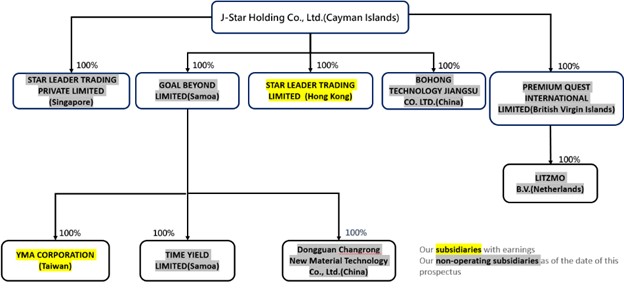
The Reorganization
The Reorganization involved (i) the incorporation of J-Star under the laws of the Cayman Islands on May 24, 2016; (ii) the incorporation of J-Star’s wholly-owned subsidiary, Star Leader Trading, under the laws of Hong Kong on May 30, 2016; (iii) the transfer of all equity ownership of Goal Beyond to J-Star from the former shareholders on August 31, 2016; (iv) the transfer of all equity ownership of Bohong Technology to J-Star from the former shareholders on December 7, 2021; (v) the transfer of all equity ownership of TW YMA to Goal Beyond from the former shareholders on August 16, 2016; (vi) the transfer of all equity ownership of Time Yield to Goal Beyond from the former shareholders on July 6, 2016; (vii) the incorporation of Dongguan YMA, a wholly-owned subsidiary of Goal Beyond, under the laws of PRC on September 30, 2018; (viii) the disposal of all equity ownership of Dongguan Yuantai Sports Equipment Co., Ltd. (“Dongguan Yuantai”), a company incorporated under the laws of PRC, by Skyfort International Pte. Limited (“Skyfort International”), a former wholly-owned subsidiary of Goal Beyond incorporated under the laws of Singapore, on April 3, 2019; (ix) the transfer of all equity ownership of Dongguan Forwell to Goal Beyond from the former shareholder on January 17, 2020; (x) the deregistration of Skyfort International on February 13, 2020; (xi) the transfer of 80.5% of equity ownership of Dongguan YMA from Goal Beyond to three individuals on April 1 2023; and (xii) the transfer of 80.5% of equity ownership of Dongguan Forwell from Goal Beyond to three individuals on April 1, 2023.
| 54 |
On July 6, 2016, Mr. Kuo-Pin Yu and Mr. Hsiu-Shan Chao transferred all of their respective shares of Time Yield to Goal Beyond, through a share purchase agreement dated June 1, 2016, for a total consideration of $1,000,000. After the transfer, Goal Beyond owns 100% equity interests of Time Yield.
On August 31, 2016, Mr. Jing-Bin Chiang, Mr. Kuo-Pin Yu, New Moon Corporation, Star Centurion Limited, Radian Faith Limited, Glitter Group Ltd., Colossal City Limited and Vantage Wave Limited (the “Goal Beyond Former Shareholders”), being the former shareholders of Goal Beyond transferred all of their respective shares of Goal Beyond to J-Star, through a share subscription agreement entered into between each of the Goal Beyond Former Shareholders, J-Star and Goal Beyond on June 1, 2016, for the subscription of J-Star’s newly-issued shares by Goal Beyond Former Shareholders through contributing all of their respective shares of Goal Beyond to J-Star to offset the obligation on the subscription payment. After the transfer, J-Star owns 100% equity interests of Goal Beyond.
On August 16, 2016, Mr. Kuo-Pin Yu and Ms. Hsiu-Shan Chao transferred all of their respective shares of TW YMA to Goal Beyond, through share transfer agreements dated July 27, 2016, in a total consideration of NTD1,000,000. After the transfer, Goal Beyond owns 100% equity interests of TW YMA.
Under a share transfer agreement dated August 14, 2018 (“Yuantai Share Transfer Agreement”), Skyfort International agreed to sell and Shenzhen Meishangsheng Technology Co., Ltd. (“Shenzhen Meishangsheng”), an independent third party, among others, agreed to purchase 100% equity ownership of Dongguan Yuantai, in a total consideration of RMB142.0 million, of which RMB12.0 million were agreed to be paid to certain independent third parties as agency commission fee under a separate undertaking dated May 29, 2018. Through the disposal of Dongguan Yuantai, the Group disposed of the ownership of two parcels of land in Dongguan, the PRC (“Dongguan Land”) held by Dongguan Yuantai, including the constructions and equipment implanted thereon, without disposing the assets and liabilities, production plant and products held under Dongguan Yuantai. Lease back arrangement has been made, in which Dongguan Yuantai (as lessor) leases out part of Dongguan Land (the “Leased Back Portions”) to Dongguan YMA (as lessee), and part of the consideration under Yuantai Share Transfer Agreement has been set off by rent of the Leased Back Portion for the lease period from July 2019 to June 2021. For further details on the lease concerning the Leased Back Portions, please refer to the two leased properties in Dongguan, the PRC, summarized under “Business – Properties.” The transfer of 50% equity ownership of Dongguan Yuantai to Shenzhen Meishangsheng was completed on November 13, 2018 and the transfer of another 50% of equity ownership of Dongguan Yuantai was completed on April 3, 2019. The assets and liabilities under Dongguan Yuantai were then transferred to Dongguan YMA on September 30, 2018.
On January 17, 2020, Goal Beyond acquired 100% equity ownership of Dongguan Forwell from Skyfort International Pte. Limited in a total consideration of HKD20.0 million through a share transfer agreement dated November 20, 2019. After the transfer, Goal Beyond owns 100% equity interests of Dongguan Forwell.
On December 30, 2020, J-Star, New Moon Corporation, Barium Glory Financial Ltd., Sendai Investments entered into a share swap agreement, whereby J-Star would acquire all share capital of Bohong Technology from New Moon Corporation, Barium Glory Financial Ltd., Sendai Investments, being the former shareholders of Bohong Technology, by a share swap of 838,053 treasury shares of J-Star. After the transfer, J-Star owns 100% equity interests of Bohong Technology.
On April 23, 2021, J-Star, Mr. Frédéric Sallet, Mr. Christophe Quiniou, Le Gallion and 6ème Sens Immobilier entered into an investment agreement, whereby the Group agreed to invest in 19.5% of the equity interest in Cycles Services Loire, a bicycle assembly house in France engaging in the assembly and trading of bicycles, bicycle accessories and other leisure products, in consideration of 19,500 euros, and the Group intended to invest further in Cycles Services Loire, in the amount of 40,500 euros, by the first quarter of 2024 with a view to expanding our market in Europe and enhancing our proximity with customers in Europe.
On April 1, 2023, Goal Beyond entered into an agreement to transfer 30.5%, 25% and 25% of its shares of Dongguan YMA to three individuals who are independent third parties and former employees of the Group respectively, in a total consideration of $3,674,219. After the transfer on April 17, 2023, J-Star indirectly owns 19.5% equity interests of Dongguan YMA and Dongguan YMA ceases to be a subsidiary of J-Star.
On April 1, 2023, Goal Beyond entered into an agreement to transfer 30.5%, 25% and 25% of its shares of Dongguan Forwell to three individuals who are independent third parties and former employees of the Group respectively, in a total consideration of $1,558,281. After the transfer on April 14, 2023, J-Star indirectly owns 19.5% equity interests of Dongguan Forwell and Dongguan Forwell ceases to be a subsidiary of J-Star.
Under the supplemental agreements dated April 27, 2023 to the equity transfer agreements entered into on April 1, 2023 for Dongguan YMA and Dongguan Forwell, the respective considerations will be paid by the Buyers in three installments. The specific installment payment dates are December 31, 2023, December 31, 2024, and December 31, 2025. Further, as of the date of this prospectus, the Buyers deposited the Escrow Amount into the Escrow Account. Such Escrow Amount shall remain in the Escrow Account until the last installment payment date. If the Buyers fail to make any payment within each agreed specific installment payment dates, Goal Beyond shall have the right to deduct the payment directly from the Escrow Account. Through the disposals of Dongguan YMA and Dongguan Forwell, the financial statements of Dongguan YMA and Dongguan Forwell will not be expected to be consolidated into the Group’s consolidated financial statements upon the completion of the disposals of the two entities. Through the disposal of Dongguan YMA and Dongguan Forwell, the Group disposed mainly of the ownership of inventories, property, plant and equipment and right-of-use assets etc. You should refer to “Unaudited Pro Forma Financial Information” for additional information to reflect on the impact of the sales of Dongguan YMA and Dongguan Forwell.
| 55 |
UNAUDITED PRO FORMA FINANCIAL INFORMATION
On April 1, 2023, Goal Beyond entered into the Agreement with the Buyers. Under the terms of the Agreement, Goal Beyond sold 80.5% of its equity interests of Dongguan YMA and Dongguan Forwell to certain buyers (the “Buyers”) in a total consideration of US$5,232,500 (the “Disposition”).
The registration changes in equity interest of Dongguan Forwell and Dongguan YMA were completed on April 14, 2023 and April 17, 2023, respectively. The effect of disposal is already reflected in the consolidated balance sheets as of December 31, 2023, unaudited pro forma condensed consolidated statements of comprehensive income for the year ended December 31, 2023.
The following unaudited pro forma condensed consolidated income statement and condensed combined financial information are derived from the historical financial statements of J-Star and subsidiaries and have been prepared on the assumption that the Disposition was consummated on January 1, 2023.
These unaudited pro forma condensed consolidated financial statements should be read in conjunction with the notes hereto and the consolidated financial statements and notes thereto, each as filed by J-Star.
The preparation of the unaudited pro forma financial information is based on Article 11 of Regulation S-X, based on information (i.e., the consolidated financial statements of the Company) prepared using IFRS. These principles require the use of estimates that affect the reported amounts of revenues and expenses. Actual results may differ from those estimates. However, the pro forma adjustments reflected in the accompanying unaudited pro forma condensed consolidated financial statements reflect estimates, including assumptions that J-Star’s management believes to be reasonable.
The unaudited pro forma financial information is for reference only and may not accurately reflect the actual financial condition or operational performance that J-Star obtained from the disposition on specific dates.
| 56 |
J-STAR HOLDING CO., LTD. AND SUBSIDIARIES
UNAUDITED PRO FORMA CONSOLIDATED STATEMENTS OF COMPREHENSIVE INCOME
FOR THE YEAR ENDED DECEMBER 31, 2023
(Expressed in United States dollars)
| Historical | Adjustments | Pro Forma | ||||||||||||
| Amount | Amount | Note | Amount | |||||||||||
| Operating revenue | $ | 23,777,952 | $ | (428,974 | ) | a | $ | 23,348,978 | ||||||
| Cost of revenue | (20,855,842 | ) | 405,450 | a | (19,676,841 | ) | ||||||||
| 773,551 | b | |||||||||||||
| Gross profit from operations | 2,922,110 | 750,027 | 3,672,137 | |||||||||||
| Operating expenses | ||||||||||||||
| Selling expenses | (1,167,991 | ) | 30,792 | c | (1,137,199 | ) | ||||||||
| Administrative expenses | (1,822,574 | ) | 360,009 | d | (1,462,565 | ) | ||||||||
| Research and development expenses | (737,363 | ) | 119,257 | e | (618,106 | ) | ||||||||
| Expected credit losses | (81,842 | ) | - | (81,842 | ) | |||||||||
| Operating expenses | (3,809,770 | ) | 510,058 | (3,299,712 | ) | |||||||||
| Net operating (loss) income | (887,660 | ) | 1,260,085 | 372,425 | ||||||||||
| Non-operating income and expenses | ||||||||||||||
| Interest income | 336,375 | (621 | ) | f | 335,754 | |||||||||
| Other income | 909,346 | - | 909,346 | |||||||||||
| Other gains, net | 363,269 | (41,427 | ) | g | 321,842 | |||||||||
| Finance costs | (808,681 | ) | 18,922 | i | (789,759 | ) | ||||||||
| Disposal of investment gain | 1,122,946 | (1,122,946 | ) | h | - | |||||||||
| Non-operating income and expenses | 1,923,255 | (1,146,072 | ) | 777,183 | ||||||||||
| Profit Before income tax | 1,035,595 | 114,013 | 1,149,608 | |||||||||||
| Income tax credit | 383,048 | - | 383,048 | |||||||||||
| Profit after income tax | $ | 1,418,643 | $ | 114,013 | $ | 1,532,656 | ||||||||
| Basic and diluted | ||||||||||||||
| Earnings per share | $ | 0.09 | $ | 0.01 | j | $ | 0.10 | |||||||
See Notes to Unaudited Pro Forma Condensed Consolidated Financial Statements.
| 57 |
J-STAR HOLDING CO., LTD. AND SUBSIDIARIES
NOTES TO UNAUDITED PRO FORMA CONSOLIDATED FINANCIAL STATEMENTS
1. Basis of Presentation
On April 1, 2023, Goal Beyond entered into the Agreement with the Buyers. Under the terms of the Purchase Agreement, Goal Beyond sold 80.5% of its equity interests of Dongguan YMA and Dongguan Forwell to the Buyers in a total consideration of $5,232,500.
Under the supplemental agreements to the Agreement entered into on April 1, 2023, the respective considerations will be paid by the Buyers in three installments. The specific installment payment dates are December 31, 2023, December 31, 2024, and December 31, 2025. Further, as at the date of this prospectus, the Buyers deposited the Escrow Amount into the Escrow Account. Such Escrow Amount shall remain in the Escrow Account until the last installment payment date. If the Buyers fails to make any payment within each agreed specific installment payment dates, Goal Beyond shall have the right to deduct the payment directly from the Escrow Account.
The registration changes in equity interest of Dongguan Forwell and Dongguan YMA were completed on April 14, 2023 and April 17, 2023, respectively. The effect of disposal is already reflected in the consolidated balance sheets as of December 31, 2023, unaudited pro forma condensed consolidated statements of comprehensive income for the year ended December 31, 2023.
The following unaudited pro forma condensed consolidated comprehensive income and condensed combined financial information are derived from the historical financial statements of J-Star and subsidiaries and have been prepared on the assumption that the Disposition was consummated on January 1, 2023.
The pro forma adjustments are based on information available to management at the time these unaudited pro forma condensed consolidated financial statements were prepared. J-Star believes the estimates, including estimates of post-closing adjustments, and assumptions used are reasonable and the significant effects of the Disposition are properly reflected.
The unaudited pro forma financial information is for reference only and may not accurately reflect the actual financial condition or operational performance that J-Star obtained from the disposition on specific dates.
| 58 |
2. Pro Forma Adjustments
Unaudited Pro Forma Consolidated Statements of comprehensive income for the year ended December 31, 2023.
(a) Adjusted to eliminate operating revenue of $428,974 and relevant cost of revenue of $405,450 recognized from selling to third parties that were historically recorded by Dongguan YMA and Dongguan Forwell from January 1, 2023 until the date ending prior to the Disposition.
(b) Adjusted to reflect the actual outsourced production prices, the adjustment of $773,551 represents revenue and operating expenses recorded historically by Dongguan YMA and Dongguan Forwell from January 1, 2023 until the date ending prior to the Disposition.
(c) Adjusted to eliminate selling expenses recognized mainly resulted from freight expenses and and import and export declaration expenses inside mainland China by Dongguan YMA and Dongguan Forwell from January 1, 2023 until the date ending prior to the Disposition.
(d) Adjusted to eliminate administrative expenses recognized mainly from depreciation expenses caused by right-of-use assets of the plant lease and employee benefit expense related to administrative function by Dongguan YMA and Dongguan Forwell from 2023 until the completion of the disposition.
(e) Adjusted to eliminate research and development expenses, total research and development expenses recorded by Dongguan YMA and Dongguan Forwell and included in the historical amount were $119,257 from January 1, 2023 until the completion of the disposition.
(f) Adjusted to eliminate interest income generated from bank deposits of Dongguan YMA and Dongguan Forwell from January 1, 2023 until the completion of the disposition.
(g) Adjusted to account for foreign exchange losses due to the depreciation of USD against RMB, incurred by Dongguan YMA and Dongguan Forwell from January 1, 2023 until the completion of the disposition.
(h) Adjusted to eliminate the gain on disposal investment recognized following the disposals of 80.5% equity interests of Dongguan YMA and Dongguan Forwell.
(i) Adjusted to eliminate finance costs incurred of Dongguan YMA and Dongguan Forwell from January 1, 2023 until the completion of the disposition.
(j) Adjusted to reflect the earnings per share calculated by adjustments of profit after income tax divided by weighted average numbers of ordinary shares outstanding in 2023 of 15,762,887 assuming the Disposition of Dongguan YMA and Dongguan Forwell was completed on January 1, 2023.
| 59 |
SELECTED CONSOLIDATED FINANCIAL DATA
The following selected consolidated statements of operation data for the years ended December 31, 2023 and 2022 selected consolidated balance sheets data as of December 31, 2023 and 2022 and selected consolidated statements of cash flow data for the years ended December 31, 2023 and 2022 have been derived from our audited consolidated financial statements included elsewhere in this prospectus. Our annual consolidated financial statements are prepared and presented in accordance with IFRS. Our historical results are not necessarily indicative of results expected for future periods. You should read this Selected Consolidated Financial Data section together with our consolidated financial statements and the related notes and “Management’s Discussion and Analysis of Financial Condition and Results of Operations” included elsewhere in this prospectus.
Selected Consolidated Statements of Operation:
For the Year Ended December 31, | ||||||||
| 2023 | 2022 | |||||||
| USD | USD | |||||||
| Operating revenue | $ | 23,777,952 | $ | 39,379,369 | ||||
| Gross profit from operations | $ | 2,922,110 | $ | 9,083,338 | ||||
| Operating expenses | $ | (3,809,770 | ) | $ | (9,063,363 | ) | ||
| Other income and expenses | $ | - | $ | 68,621 | ||||
| Net operating (loss) income | $ | (887,660 | ) | $ | 88,596 | |||
| Income taxes credit (expense) | $ | 383,048 | (133,382 | ) | ||||
| Profit from continuing operations | $ | 1,418,643 | $ | 124,305 | ||||
| Total comprehensive income | $ | 2,177,589 | 500,634 | |||||
| Profit from continuing operations per ordinary share: | ||||||||
| Basic and diluted | $ | 0.09 | $ | 0.01 | ||||
About calculation of profit from continuing operations per ordinary share, the weighted average numbers of ordinary shares outstanding in 2022 and 2023 have been retrospectively adjusted and calculated weighted averagely by considering the reverse stock split conducted by the Company in March 2022.
Selected Consolidated Balance Sheets Data:
| As of December 31, | ||||||||
| 2023 | 2022 | |||||||
| USD | USD | |||||||
| Current assets | $ | 6,493,994 | $ | 29,434,896 | ||||
| Total assets | $ | 21,088,906 | $ | 40,744,997 | ||||
| Current liabilities | $ | 8,295,712 | $ | 28,109,472 | ||||
| Total liabilities | $ | 9,236,658 | $ | 30,840,892 | ||||
| Total equity | $ | 11,852,248 | $ | 9,904,105 | ||||
Selected Consolidated Statements of Cash Flow Data:
| For the Year
Ended December 31, | ||||||||
| 2023 | 2022 | |||||||
| USD | USD | |||||||
| Net cash (used in) from operating activities | $ | (1,990,254 | ) | $ | 4,043,499 | |||
| Net cash from (used in) investing activities | $ | 457,461 | $ | (2,018,473 | ) | |||
| Net cash used in financing activities | $ | (780,437 | ) | $ | (2,031,167 | ) | ||
| Effect of foreign exchange rate changes on cash and cash equivalents | $ | (76,416 | ) | $ | 104,432 | |||
| Net (decrease) increase in cash, cash equivalents | $ | (2,389,646 | ) | $ | 98,291 | |||
| Cash, cash equivalents at beginning of year | $ | 2,949,108 | $ | 2,850,817 | ||||
| Cash, cash equivalents at end of year | $ | 559,462 | $ | 2,949,108 | ||||
| 60 |
MANAGEMENT’S
DISCUSSION AND ANALYSIS OF FINANCIAL
CONDITION AND RESULTS OF OPERATIONS
The following management’s discussion and analysis of financial condition and results of operations contains forward-looking statements which involve risks and uncertainties. Our actual results could differ materially from those anticipated in these forward-looking statements as a result of certain factors, including those set forth under “Risk Factors” and elsewhere in this prospectus. We assume no obligation to update forward-looking statements or the risk factors. You should read the following discussion in conjunction with our consolidated financial statements and related notes included elsewhere in this prospectus.
Overview
Our Predecessor Group was established in 1970 and we have accumulated over 50 years of know-how in the material composite industry. We currently develop and commercialize the technology on carbon reinforcement and resin systems. With decades of experience and knowledge in composites and materials, we are able to apply our expertise and technology on designing and manufacturing a great variety of lightweight, high-performance carbon composite products, ranging from key structural parts of electric bicycles and sports bicycles, rackets, automobile parts to healthcare products. According to the industry report commissioned by us and prepared by Frost & Sullivan, we are one of the major global leading players in the carbon fiber bicycle parts industry and carbon fiber racket parts industry.
As our business is technology-driven, our vision is to offer cutting edge technology and manufacturing expertise in carbon composites to our customers, and many of our products are directly or indirectly supplied to different renowned international sports brand owners. Our carbon composite products deliver substantial weight savings, endurance and stiffness comparing to those constructed from conventional materials, such as steel and aluminum, and in doing so, our products offer remarkable and valuable efficiency and performance benefits to our customers in various applications. While our technology has potential applications over a broad range of industries, we currently have our main focus on the sporting goods industry and we prioritize the electric bicycle market to commercialize our technology.
We are based in Taiwan with our headquarters, R&D center and material laboratory located in Taichung, Taiwan. The R&D center in Taichung focuses on resin material application, new product development, production process enhancement, structural design of products, testing on product performance and enhancement on strength and stiffness of products. Our business focuses on the research and development to provide wide range of carbon composite products solutions. As of April 18, 2023, with respect to manufacturing, we outsourced our manufacturing to a number of factories in the PRC and will gradually expand such outsourced factories to the U.S. and Europe. We primarily generate revenue through three divisions and revenue streams, namely (i) sales of bicycles parts of sports bicycles and electric bicycles; (ii) sales of rackets for use in tennis, badminton, squash and beach tennis; and (iii) sales of other products, which mainly include structural parts of automobile, other sporting goods and healthcare products. Our bicycle parts and rackets are mainly supplied directly or indirectly to branded customers located in Switzerland, France, Italy, the Netherlands, Germany and Japan and they primarily market and distribute their products worldwide. Other customers which rely on our new products, such as healthcare products, are mainly located in Australia, Canada and Japan.
Advanced carbon composite materials offer a number of advantages relative to traditional materials, including light weight, high strength to weight ratio, high stiffness, and improved resistance to heat, corrosion and fatigue. Nonetheless, different products require different degrees and combinations of such properties according to their functions. For instance, automobile parts, such as hoods and seatback, require higher heat resistance, while bicycle frames require greater degree of stiffness. Hence, material application technology plays an important role in refining the production of different types of carbon composite products. Carbon composite materials are formed by combining carbon fibers and resins. The properties of carbon composite materials could vary largely due to different systems of resin and structural arrangement. Differing from our competitors in the industry, instead of using preset formulas of resins with lower degree of flexibility, we have our own R&D center to develop our own resin systems and formulas according to the product requirements. Therefore, we are able to incorporate customized resin systems that can be optimized for specific parameters, such as durability, temperature performance, cure times and viscosity. This not only allows us to present to clients our products with high precision to customers’ specifications from outsourced factories, but also offers us flexibility in developing a greater variety of new products in the future. Apart from our advanced material application technology, our R&D team is also experienced in providing technical recommendations and solutions to and respond to feedback from our customers regarding the structural design of product. Our advanced material application technology and expertise in product design and development complement each other. Thus, we believe that the parallel development of our complex product and process technology has resulted in our competitive advantage which makes it difficult for our competitor to replicate.
| 61 |
Our total revenue for the years ended December 31, 2023 and 2022 amounted to $23.8 million and $39.4 million, respectively. Our sales of bicycle parts accounted for approximately 64.0% and 63.2% of our total revenue for the years ended December 31, 2023 and 2022, respectively. Our sales from our rackets business segment brought us considerable revenue for the years ended December 31, 2023 and 2022, which accounted for approximately 29.6% and 33.7%, respectively, of our total revenues. Our sales of other products accounted for approximately 6.4% and 3.1%, respectively, of our total revenues for the years ended December 31, 2023 and 2022, respectively.
While having our main focus on development and sales of key structural parts of bicycles and rackets in the past years, we would not limit ourselves to the existing scope of product. We intend to extend our product spectrum by launching new products, such as sporting goods for new sports such as paddles for racket sports and mast foils for surfing, and further expand our production on relatively new existing products that are emerging in the market, including key structural parts of electric bicycles, automobile and robotic arms, bicycle crank sets and other healthcare products, such as wheelchairs and senior walkers.
For the years ended December 31, 2022 and 2021 and until April 2023, our production plant was located in Dongguan in the PRC with two production lines in place. Though we had disposed our PRC Investments, we entered into OEM/ODM agreements and their respective supplemental agreement with the two entities in April 2023. As such, we will continue to use them as our main suppliers in manufacturing under the ODM and OEM business models for the next five years for our customers due to their geographical proximity to Hong Kong which favors the shipping of products and its strong labor supply in the region. In the future, we intend to outsource more labor intensive production activities to reliable factories in the PRC.
In April 2023, we disposed 80.5% equity interests in each of our two PRC operating subsidiaries, namely, Dongguan YMA and Dongguan Forwell. Prior to the disposals, products under the ODM and OEM business models were manufactured by both Dongguan YMA and Dongguan Forwell in our production plant in Dongguan, the PRC. After the disposals, we will continue to utilize Dongguan YMA and Dongguan Forwell to manufacture products under the ODM and OEM business models for the next five years, as we entered into OEM/ODM agreements and their respective supplemental agreement with the two entities in April 2023. Our management team believes that the foregoing disposals will not materially impact our ODM and OEM models as we will procure and/or provide the raw materials (carbon fiber yarn from our Japan supplier) utilizing our in-house resin technologies for manufacturing that are required under the ODM and OEM models, and thus, we will continue to control the quality of the raw materials. Under both business models, our sales team or R&D team will oversee product development processes and conduct quality control on the semi-finished products and the finished products, as has been our practice in the past. Simultaneously, we will also build our production bases in the United States and Europe regions to diversify as stated previously.
In March 2020, the World Health Organization declared the outbreak of the COVID-19 pandemic. Countries across Asia, North America, Europe have continued to report increases in COVID-19 infections, which has resulted in governments implementing travel bans, lockdowns, quarantines and social distancing measures in those countries in an effort to contain the virus. In response to the outbreak of pandemic, in January 2020, the People’s Government of Guangdong Province announced certain measures to prevent continuing widespread of the disease in the community, among others, corporates were not allowed to resume operation before February 10, 2020. In compliance with the government instructions, we temporarily suspended the operation of our previously owned production plant in Dongguan, the PRC, from February 3, 2020 to February 26, 2020, which was then fully resumed on March 9, 2020 and has remained normal thereafter. In this regard, we had arranged for tighter a production schedule from June 2020 to December 2020 to make up for the suspension of operation of our previously owned production plant in February 2020.
Key Factors that Affect Operating Results
We believe the following key factors may affect our financial condition and results of operations:
| ● | our ability to increase our bicycle parts sales volume; | |
| ● | our ability to increase our rackets sales volume; | |
| ● | our ability to increase our other products sales volume; | |
| ● | our ability to enhance our operational efficiency; and | |
| ● | our ability to research and develop new products. |
COVID-19
The outbreak of novel coronavirus (COVID-19) began in December 2019 and was declared as a pandemic on March 11, 2020 by the World Health Organization. Subsequent to the outbreak, COVID-19 has spread rapidly to many parts of China and other parts of the world. The pandemic has resulted in quarantines, travel restrictions, and the temporary closure of stores and facilities in China and elsewhere.
As our production plant is located in China, the COVID-19 pandemic has adversely affected our business operations and financial condition, operating results and cash flow during its initial outbreak, including but not limited to adverse impacts to our production pipeline and total revenue. However, we have developed corresponding systems in response to COVID-19 to relieve its impact based on past experience. There is no further impact to our operation in response to COVID-19 any further from January 1st, 2023.
Results of Operations
Years Ended December 31, 2023 and 2022
Operating revenues
The following table identifies the disaggregation of our revenue from continuing operations by reportable segments for the years ended December 31, 2023 and 2022, respectively:
| For the Year Ended December 31, | Change | |||||||||||||||||||||||
| Segment | 2023 | % | 2022 | % | Amount | % | ||||||||||||||||||
| Bicycle parts | $ | 15,219,005 | 64.0 | $ | 24,877,271 | 63.2 | $ | (9,658,266 | ) | (38.8 | ) | |||||||||||||
| Racket | 7,042,493 | 29.6 | 13,265,777 | 33.7 | (6,223,284 | ) | (46.9 | ) | ||||||||||||||||
| Others | 1,516,454 | 6.4 | 1,236,321 | 3.1 | 280,133 | 22.7 | ||||||||||||||||||
| Revenue from contracts with customers | $ | 23,777,952 | 100 | $ | 39,379,369 | 100 | $ | (15,601,417 | ) | (39.62 | ) | |||||||||||||
| 62 |
Our operating revenue for the years ended December 31, 2023 and 2022 were $23,777,952 and $39,379,269, respectively, representing a decrease of approximately 39.6% from December 31, 2022 to December 31, 2023. The decrease in revenues was mainly driven by the disposals of Dongguan YMA and Dongguan Forwell in April 2023 as our customers are motivated to reduce pricing for low margin product so chose to deal with PRC factories directly for and the revenues for PRC operation is not to be consolidated in our group revenues. The impact of such disposals was reflected as the decrease of sales on bicycle parts and racket. The revenue from sales of bicycle parts for the year ended December 31, 2023 was $15,219,005, as compared to $24,887,271 for the year ended December 31, 2022. The revenue from sales of rackets for the year ended December 31, 2023 was $7,042,493, as compared to $13,265,777 for the year ended December 31, 2022. The revenue from sales of rackets decreased by $6,223,284, which was mainly due to the disposals of Dongguan YMA and Dongguan Forwell.
Cost of revenue
Cost of revenue consists primarily of cost of goods sold. Our cost of revenue decreased by $9,440,189, or approximately 31.16%, to $20,885,842 for the year ended December 31, 2023 from $30,296,031 for the year ended December 31, 2022, which was primarily due to the disposals of Dongguan YMA and Dongguan Forwell and customers are willing to deal directly with China factories for low margin products. The raw materials costs are not expected to increase significantly as the price situation appears to be more stable in 2023.
Gross profit
Gross profit for the years ended December 31, 2023 and 2022 were $2,922,110 and $9,083,338, respectively, representing 12.29% and 23.07%, respectively, of operating revenue. Gross profit as a percentage of operating revenue decreased for the year ended December 31, 2023 as compared to December 31, 2022 was predominately due to the disposals of Dongguan YMA and Dongguan Forwell as the disposal considerations were set in the beginning of 2023 and the disposal occurred in April 2023.
Operating expenses
Our operating expenses primarily consist of (i) selling expenses; (ii) administrative expenses; (iii) research and development expenses; and (iv) expected credit gains or losses. Our administrative expenses decreased by $4,371,702 from $6,194,276 for the year ended December 31, 2022 to $1,822,574 for the year ended December 31, 2023. Such decrease was primarily due to the disposals of Dongguan YMA and Dongguan Forwell.
Other expenses, net
We recorded other expense of $0 for the year ended December 31, 2023 while we incurred other expenses of $68,621 for the year ended December 31, 2022. The change was mainly due to the decrease in loss on disposals of property, plant and equipment the year ended December 31, 2022.
Non-operating income and expenses
Our non-operating income and expenses consist primarily of (i) Other income; (ii) Disposal of investment gain. We incurred non-operating income of $1,923,255 for the year ended December 31, 2023 while we recorded non-operating income of $169,091 for the year ended December 31, 2022. Our other income, increased by $909,346 from the year ended December 31, 2022 to 2023. Such increase was primarily due to renegotiate professional service fees upon disposal of PRC investment in April 2023 and accordingly recorded as other income. Disposal of investment gain recognized for the amount of $1,122,946 in reflecting the disposals of Dongguan YMA and Dongguan Forwell.
Income tax expense
We recorded income tax credit (expense) of $383,048 and $(133,382) for the years ended December 31, 2023 and 2022, respectively.
The effective tax rate was (36.99%) and 51.76% for the years ended December 31, 2023 and 2022, respectively. The decrease in effective tax rate was mainly due to the effects from adjustments based on tax regulation of our HK subsidiaries. We recognized unused tax losses for the year ended December 31, 2023.
Profit after income tax
Our profit after income tax for the year ended December 31, 2023 was $1,418,643, while we incur profit after income tax of $124,305 for the year ended December 31, 2022.
Exchange differences on translation of foreign operations
We recorded an exchange loss of $74,641 for the year ended December 31, 2023 and an exchange gain of $376,329 for the year ended December 31, 2022. The decrease in exchange gain and loss was due to the significant appreciation of USD compared to NTD, which are our main currency exposures.
We do not currently engage in currency hedging activities in order to reduce our currency exposure.
Unrealized gains from financial assets measured at fair value through other comprehensive income
We continue to hold an equity interest of 19.5% in Dongguan YMA and Dongguan Forwell in manufacturing bicycles parts in PRC, which the Group does not have a controlling interest or significant influence. The investment was recorded at fair value.
Total comprehensive income
As a result of the foregoing, our total comprehensive income for the year ended December 31, 2023 and 2022 were $2,177,589 and $500,634, respectively.
| 63 |
Liquidity and Capital Resources
Our primary sources of liquidity consist of existing cash balances, cash flows from our operating activities and availability under our loan arrangements with banks. As of December 31, 2023, we had outstanding short-term loans with aggregate principal amount of $6,964,927 and $980,200 of long-term loans (including current portion), respectively. The short-term loans had floating interest rate between 2.30% to 7.86%. Long-term bank loans, however, had floating interest rate between 1.60% to 3.40%, and other long-term loans have interest rate is 11.64%. As of December 31, 2023, we had cash and cash equivalents of $559,462 and working capital of $(1,801,718). We also had unused credit lines from bank loans of $2,355,022 which expires from one year as of December 31, 2023. As of December 31, 2022, we had outstanding short-term loans with aggregate principal amount of $6,328,892 and $1,223,636 of long-term loans (including current portion), respectively. The short-term loans had floating interest rate between 2.20% to 6.00%. Long-term bank loans, however, had floating interest rate between 2.44% to 3.28%, and other long-term loans have interest rate ranging from 9.92% to 10.62%. As of December 31, 2022, we had cash and cash equivalents of $2.949,108 and working capital of $1,325,424. We also had unused credit lines from bank loans of $4,457,203, of which $2,002,609 expires from one year as of December 31, 2022. On April 1, 2023, we entered into agreements to transfer 30.5%, 25% and 25% each of our shares of Dongguan YMA and Dongguan Forwell to three individuals who are independent third parties and former employees of the Group respectively, in a total consideration of $5,232,500. The total consideration will be paid by cash and in three installments. The specific installment payment dates are December 31, 2023, December 31, 2024, and December 31, 2025. Further, as of the date of this prospectus, the Buyers deposited the Escrow Amount into the Escrow Account. Such Escrow Amount shall remain in the Escrow Account until the last installment payment date. If the three individuals fails to make any payment within each agreed specific installment payment dates, the Company shall have the right to deduct the payment directly from the Escrow Account. Through the disposal of Dongguan YMA and Dongguan Forwell, we retained cash and cash equivalents of $1,496,406, inventories of $514,006 and unused credit terms of $4,457,203 as of December 31, 2022. As of December 31, 2023, we had cash and cash equivalents of $1,722 deposited inside and $557,740 deposited outside mainland China. As of December 31, 2022, we had cash and cash equivalents of $450 deposited inside and $1,495,956 deposited outside mainland China. We also retain long-term receivables from related parties of $9,028,904 and no other payables to related parties as of December 31, 2023 and as of December 31,2022, we retained accounts receivable due from related parties of $4,111,935 and other payables to related parties of $533,050 as of December 31, 2022, which will be received from or paid to Dongguan YMA or Dongguan Forwell with a credit term 60 days in consistent with market practice.
As of December 31, 2023, we had cash and cash equivalents of $559,462, unused credit terms of $2,459,356, and profit after income tax of $1,418,643 and positive cash used in operating activities of $1,990,254. We had cash and cash equivalents of $1,722 deposited inside and $557,740 deposited outside mainland China. Until April 2023, Dongguan YMA and Dongguan Forwell were our manufacturing center, and therefore, a higher level of cash resource is held under Dongguan YMA and Dongguan Forwell. Previously, our Taiwan headquarter monitors and remits funds to Dongguan YMA and Dongguan Forwell in China as needed and funds their day to day operation needs. In April 2023, we disposed 80.5% equity interests in each of our two PRC operating subsidiaries, namely, Dongguan YMA and Dongguan Forwell. We also had inventories of $187,602 as of December 31, 2023 which represents approximately 0.79% of the Company’s sales revenue for the year ended December 31, 2023.
Due to the relief of shipping containers shortage as well as the relief of international shipment delays in 2022 as result of relief of COVID-19 in 2022, inventories level of the Company has decreased. However, the significant decrease of inventory from $19,150,760 as of December 31, 2022 to $187,602 as of December 31, 2023 was mainly due to the disposal of our PRC investments. Accordingly, as of December 31, 2023, we had inventories of $187,602 which represents approximately 0.79% of our sales revenue for the year ended December 31, 2023.
In addition, on June 1, 2022, we entered into a contract to acquire a building (land included) in Taichung, Taiwan as our new headquarters. The total price amounted to NTD128,000,000 (US$4,111,789). As of December 31, 2023, we had paid 10% of total price as a deposit with the remaining 90% amounted to NTD115,200,000 (US$3,700,610) to be paid when the transaction is completed. The transaction is expected to be completed with remaining payment to be paid and the transaction is expected to be completed in July 2024. We have obtained mortgage loans that are subject to closing on the purchase of the building amounting to NTD73,000,000 (US$ 2,345,005). The maturity of the mortgage loans is 20 years, and the interest of the mortgage loans would be paid monthly while the principal would be repaid averagely on an annual basis. Considering the 10% deposit of total price and the mortgage loans from the bank, we are required to pay the unfunded portion of total price amounted to NTD42,200,000 (US$1,355,605) from working capital or unused credit lines from bank loans to complete the transaction. If the transaction is ultimately not completed by the Group, the deposit paid may be deemed as liquidated damages and forfeited, with a maximum liquidated damages of 15% of the total contract value.
If the orders from our customers are cancelled in the near future, it may have negative impact on our liquidity and we may be required to raise additional funds from bank financing or issuance of equity to fund our operations. As of February 29, 2024, and the lines of credit would expire in March 2024, August 2024, September 2025 and September 2027. The breakdown of the used and unused lines of credit from bank loans as of February 29, 2024 is as follows:
| March 2024 | August 2024 | September 2025 | September 2027 | Total | ||||||||||||||||
| unused lines of credit | $ | 819,643 | $ | 360,000 | $ | 114,824 | $ | 0 | $ | 1,294,467 | ||||||||||
| used lines of credit | 3,857,776 | 1,462,581 | 94,854 | 645,161 | 6,060,372 | |||||||||||||||
| $ | 4,677,419 | $ | 1,822,581 | $ | 209,678 | $ | 645,161 | $ | 7,354,839 | |||||||||||
As of the date of this prospectus, we reached an agreement with the banks to extend the lines of credit expired in March 2024 through March 2025 to September 2027.
Our management believes that we will be able to continue extending and/or renew the loans in the next twelve months from the issuance date of our consolidated financial statements after negotiating with the banks based on our past experience as well as the commitment from our key management personnel to continue providing guarantees on the loans over the next twelve months.
We had taken certain actions to manage the level of inventories held by us, increase the price of our products as a result of increased raw materials costs and negotiating new credit terms with the customers (for example, we requested our customers to shorten the payment terms to support our operations) to ensure sufficient liquidity and capital resources. Since the disposals of the PRC operating subsidiaries, we are only managing our inventory in Taiwan.
To date, we have financed our operations primarily through capital contributions, bank borrowings and from operations. Based on the actions taken by our management, we are able to renew and extend bank loans after negotiating with the banks of those loans falling due within one year and our ability to liquidate inventory building up to meet orders and to collect account receivables related to these orders, our management believes that our cash and cash equivalents are sufficient to fund our operating expenses and meet our obligations for at least the next twelve months from the issuance date of our consolidated financial statements. Accordingly, the financial statements have been prepared on a basis that assumes we will continue as a going concern and which contemplates the realization of assets, the renewal of bank loans and lines of credit and satisfaction of liabilities and commitments in the ordinary course of business.
| 64 |
Current foreign exchange and other regulations in the PRC may restrict our PRC Subsidiaries in its ability to transfer their net assets to us and our subsidiary. However, we have no present plans to declare dividend and we plan to retain our retained earnings to continue to grow our business.
We are permitted under PRC laws and regulations to provide funding to our PRC Subsidiaries only through loans or capital contributions, and only if we satisfy the applicable government registration and approval requirements. The relevant filing and registration processes for capital contributions to our PRC Subsidiaries typically take approximately eight weeks to complete. The filing and registration processes for loans either to our PRC Subsidiaries typically take approximately four weeks or longer to complete. While we currently see no material obstacles to completing the filing and registration procedures with respect to future capital contributions to our PRC Subsidiaries and loans to our PRC Subsidiaries, we cannot assure you that we will be able to complete these filings and registrations on a timely basis, or at all. See “Risk Factors—Risks Related to Conducting Operations in PRC and Hong Kong —Governmental control of currency conversion may limit our ability to utilize our net revenues effectively and affect the value of your investment.’’ Additionally, while there is no statutory limit on the amount of capital contribution that we can make to our PRC Subsidiaries, loans provided to our PRC Subsidiaries are subject to certain statutory limits. We are able to use all of the net proceeds from this offering for investment in our PRC operations by funding our PRC Subsidiaries through capital contributions which is not subject to any statutory limit on the amount under PRC laws and regulations. We expect the net proceeds from our initial public offering to be used in the PRC will be in the form of Renminbi and, therefore, our PRC Subsidiaries will need to convert any capital contributions or loans from U.S. dollars into Renminbi in accordance with applicable PRC laws and regulations.
Cash Flows
Years Ended December 31, 2023 and 2022
The following table summarizes our cash flows for the periods indicated:
| For
the Year Ended December 31, |
||||||||
| 2023 | 2022 | |||||||
| USD | USD | |||||||
| Net cash (used in) from operating activities | $ | (1,990,254) | $ | 4,043,499 | ||||
| Net cash from (used in) investing activities | $ | 457,461 | $ | (2,018,473 | ) | |||
| Net cash used in financing activities | $ | (780,437 | ) | $ | (2,031,167 | ) | ||
| Effect of foreign exchange rate changes | $ | (76,416) | $ | 104,432 | ||||
| Net (decrease) increase in cash, cash equivalents | $ | (2,389,646) | $ | 98,291 | ||||
| Cash, cash equivalents at beginning of year | $ | 2,949,108 | $ | 2,850,817 | ||||
| Cash, cash equivalents at end of year | $ | 559,462 | $ | 2,949,108 | ||||
| 65 |
Operating Activities
Net cash used in operating activities was $1,990,254 for the year ended December 31, 2023 adjusted mainly by (a) the increase in long-term receivable – related parties of $9,028,904; (b) the decrease in other payables of $1,713,448.; (c) Increase of Non-current assets $1,697,807 and (d) decrease of other liabilities $3,700,296.
Net cash from operating activities was $4,043,499 for the year ended December 31, 2022, primarily derived from profit before tax of $257,687, adjusted mainly by (a) the decrease in inventories of $3,511,903; and (b) the decrease in accounts receivable of $789,936 as a result of factoring accounts receivable to the bank.
Investing Activities
For the year ended December 31, 2023, net cash from investing activities was $457,461, mainly for (i) Cash outflow due to reduction in consolidated entities of $2,807,668; (ii) proceeds from the disposals of right-of-use assets of $1,093,203; and (iii) proceeds from the disposal of Dongguan YMA and Dongguan Forwell of $1,744,168.
For the year ended December 31, 2022, net cash used in investing activities was $2,018,473, mainly for (i) acquisition of property, plant and equipment of $1,212,275; (ii) increase in guarantee deposits paid of $152,369; and (iii) increase in financial assets at amortized cost of $642,039.
Financing Activities
For the year ended December 31, 2023, net cash used in financing activities was $780,437, mainly consisted of an increase of (i) short-term bank loans of $636,035 and (ii) initial public offering cost of $1,143,376.
For the year ended December 31, 2022, net cash used in financing activities was $2,031,167, mainly consisted of (i) proceeds from short-term bank loans of $8,968,775 offset by payments on short-term bank loans of $7,879,602; (ii) payments on long-term bank loans of $1,228,456 offset by proceeds from long-term bank loans of $211,623; and (iii) payments on lease liabilities of $2,024,041.
Trend Information
With the relief of shipping containers shortage and delays in international shipments for the year ended December 31, 2023 and disposal of our PRC Investments, our inventories had decreased as compared to December 31, 2022. We have taken certain actions to manage the level of inventories held by us, increase the price of our products and negotiating new credit terms with some of our customers (for example, we requested our customers to pay a part in advance or shorten the payment terms to support our operations) to further mitigate the uncertainties in the near future. Other than as disclosed in “Risk Factors - Our operations have been and may continue to be affected by the COVID-19 pandemic” and “Risk Factors—Risks Related to Our Business and Industry—The occurrence of force majeure events and natural disasters may adversely affect our business, financial condition and results of operations” in this prospectus, Other than comparing the past two years, our management believes the trend in 2024 is that the market is running a gradual pace in returning to the level of strong demands during 2022, we are not aware of any trends, uncertainties, demands, commitments or events that are reasonably likely to have a material effect on our operating revenue, income from continuing operations, profitability, liquidity or capital resources, or that would cause reported financial information not necessarily to be indicative of future operating results or financial condition.
Off-Balance Sheet Arrangements
We did not have during the periods presented, any off-balance sheet financing arrangements or any relationships with unconsolidated entities or financial partnerships, including entities sometimes referred to as structured finance or special purpose entities, that were established for the purpose of facilitating off-balance sheet arrangements or other contractually narrow or limited purposes. However, as a result of our disposal of our majority equity interests in Dongguan YMA and Dongguan Forwell in April 2023 to three individuals, we expect to receive consideration for the transaction in three installments on December 31, 2023, December 31, 2024, and December 31, 2025. As of the date of this prospectus, we received the first installment of the Escrow Amount and the Buyers deposited the Escrow Amount into the Escrow Account . Such Escrow Amount shall remain in the Escrow Account until the last installment payment date. If the three individuals fail to make any payment within the agreed specific installment payment dates, Goal Beyond shall have the right to deduct the payment directly from the Escrow Account.
| 66 |
Internal Control Over Financial Reporting
Prior to this offering, we were a private company with limited accounting personnel and other resources to address our internal control over financial reporting. Our independent registered public accounting firm has not conducted an audit of our internal control over financial reporting. However, in preparing our consolidated financial statements as of and for the years ended December 31, 2023 and 2022, we and our independent registered public accounting firms identified material weaknesses in our internal control over financial reporting as of December 31, 2023 and 2022, defined in accordance with the standards established by the PCAOB. As defined in standards established by the PCAOB, a “material weakness” is a deficiency, or combination of deficiencies, in internal control over financial reporting, such that there is a reasonable possibility that a material misstatement of the annual or interim financial statements will not be prevented or detected on a timely basis.
The material weaknesses identified arose from our lack of effective financial reporting oversight process for our period-end financial reporting as well as our lack of policies and procedures over evaluation of significant complex transactions and evaluation of certain general ledger accounts. Following the identification of the material weaknesses, we have taken and plan to continue to take remedial measures to remedy the material weaknesses. Neither we nor our independent registered public accounting firm undertook a comprehensive assessment of our internal control over financial reporting under the Sarbanes-Oxley Act for purposes of identifying and reporting any weakness or significant deficiency in our internal control over financial reporting, as we and they will be required to do so once we become a public company. Had we performed a formal assessment of our internal control over financial reporting or had our independent registered public accounting firm performed an audit of our internal control over financial reporting, additional control deficiencies may have been identified.
To remedy our identified material weaknesses, we are in the process of adopting several measures that will improve our internal control over financial reporting, including: (i) recruiting a chief financial officer with extensive financial reporting experience to effectively oversight our financial reporting process; (ii) establishing a comprehensive accounting policies and procedures manual, which document the current IFRS accounting policies and technical accounting guidance and are tailored to the Company’s business; (iii) establishing an ongoing program to provide sufficient and additional appropriate training to its accounting staff, especially trainings related to IFRSs and SEC financial reporting requirements; and (iv) implementing internal controls over financial reporting to ensure our controls over accounting policies and procedures are operating effectively.
We expect to complete the measures above as soon as practicable and we will continue to implement measures to remedy our internal control deficiencies in order to meet the deadline imposed under Section 404 of the Sarbanes-Oxley Act. The process of designing and implementing an effective financial reporting system is a continuous effort that requires us to anticipate and react to changes in our business and the economic and regulatory environments and to expend significant resources to maintain a financial reporting system that is adequate to satisfy our reporting obligations. If we fail to develop or maintain an effective system of internal controls over our financial reporting, we may not be able to accurately report our financial results, prevent fraud or meet our reporting obligations. As a result, investor confidence and the market price of our ordinary shares may be materially and adversely affected. See “Risk Factors—Risks Related to Our Business and Industry—If we fail to implement and maintain an effective system of internal controls or fail to remediate the material weaknesses in our internal control over financial reporting that has been identified, we may be unable to accurately report our results of operations or prevent fraud or fail to meet our reporting obligations, and investor confidence and the market price of our ordinary shares may be materially and adversely affected.”
For the Critical Accounting Policies, please refer to Note 4 “Summary of significant accounting policies” of our consolidated financial statements.
| 67 |
Quantitative and Qualitative Disclosures about Market Risks
Market Risks
Our exposure to financial market risks relates primarily to changes in foreign exchange rates and interest rates. We don’t do derivative financial instruments instead, we adjust our currency position to indulge nature hedge.
Foreign Currency Exchange Rate Risks
Our foreign currency exposure gives rise to market risks associated with exchange rate movements against the NT dollar, the RMB, the HKD and the US dollar. As of December 31, 2023, we did not hold or issue any derivative for trading purposes or to hedge against fluctuations in foreign exchange rates. We mitigated this risk by conducting sales and purchases transactions in the same currency. Doing so helped to reduce, but has not eliminated, the impact of foreign currency exchange rate movements. An average appreciation of the US dollar against all other relevant foreign currencies of 5% would increase our exchange loss by US$286,402, based on our outstanding assets and liabilities denominated in foreign currencies as of December 31, 2023. As of December 31, 2023, we had no outstanding forward exchange or foreign currency option contracts.
See Note 35 of our audited consolidated financial statements for additional information on financial risk management.
Interest Rate Risks
As of December 31, 2023, we had aggregate debts outstanding of US$7,945,127, which was incurred for capital expenditure and general operating expenses. Of our outstanding debts as of December 31, 2023, 76.84% bore interest at variable rates. The interest rate for the majority of our variable rate debts varies based on a fixed percentage spread over the prime rate established by our lenders. Our variable rate debts had an annual interest rate between 1.60% to 11.64% as of December 31, 2023. Accordingly, we have cash flows and earnings exposure due to market interest rate changes for our variable rate debts. An increase in interest rates of 1% would increase our annual interest charge by US$61,050, based on our outstanding floating rate indebtedness as of December 31, 2023.
As of December 31, 2023 and 2022, we had no interest rate swap agreements outstanding.
| 68 |
The information presented in this section has been derived from an industry report commissioned by us and prepared by Frost & Sullivan, an independent research firm, regarding our industry and our market position around the world.
Global Carbon Fiber Industry Overview
Carbon fiber is a kind of fiber material with a carbon content of more than 90%. Because of its fibrous shape and softness, it can be processed into various fabrics. It is usually combined with resin, metal and ceramic materials to make advanced composite materials. Carbon fiber is widely used in many fields because of its high specific strength, high specific modulus, corrosion resistance, high-temperature tolerance, friction resistance, good electrical conductivity and low thermal expansion coefficient. The figure below summarizes the classification of carbon fiber.
Figure 1: Overview of classification of carbon fiber
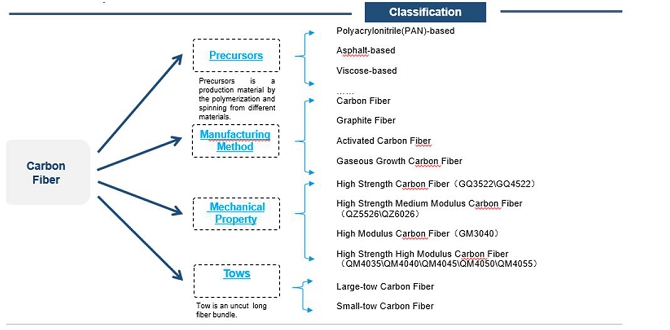
Source: Frost & Sullivan
As shown in the figure below, the carbon fiber industry chain is divided into upstream, midstream and downstream, in which the production process of carbon fiber in midstream is complex. The precursors are obtained after a series of treatment processes which include polymerization and spinning process by raw material. Then, applying the pre-oxidation and carbonization process on precursors to obtain carbon fiber. To meet different requirements, carbon fiber is processed together with other materials like resin, metal and ceramic to composite material parts, which are used in downstream products. For instance, because of its lightweight, high rigidity and other advantages, carbon fiber is used instead of wood in sports goods like golf clubs, hockey clubs, ski clubs, tennis rackets, badminton rackets, bicycles, fishing rods and bows.
| 69 |
Figure 2: Overview of the industry chain of carbon fiber
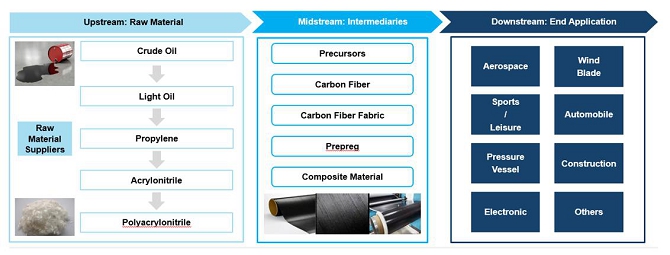
Source: Frost & Sullivan
Market Size
The concept of carbon fiber has appeared for many years and carbon fiber products have increased market presence over the past few years. As shown in Figure 3, the market size of the global carbon fiber industry increased from approximately USD2,114.7 million in 2016 and reached approximately USD2,630.0 million in 2020 at a Compound Annual Growth Rate (“CAGR”) of approximately 5.6%. In 2020, carbon fiber is mainly used in aerospace (38%), wind blade (17%) and sports/leisure (14%), which shows major application markets of carbon fiber are for commercial and industrial use (Figure 4). At present, there is a fierce competition in the low-end carbon fiber market with low profit margins. There is still a large profit margin in the mid-end and high-end carbon fiber markets. However, in the future, the demands of carbon fiber products for consumption use will continue to be released. With the development of technology, there will be increasing application of carbon fiber for new purposes and uses, and the cost of carbon fiber products will be reduced. It is expected that these factors will enable a higher margin for the manufacturers and promote people’s willingness to buy carbon fiber sports and leisure products. Therefore, the global carbon fiber industry market size is expected to maintain a CAGR of approximately 10.1%, reaching approximately USD4,117.6 million by 2025 from approximately USD2,806.2 million in 2021. In the future, long-term low-price competition will force low-end carbon fiber products manufacturers to face business transformation. However, manufacturers who develop mid-end and high-end products will maintain their first-mover advantages through resource accumulation and research and development capability and maintain a leading position in the industry.
| 70 |
Figure 3: Market Size of Global Carbon Fiber Industry, 2016-2025E
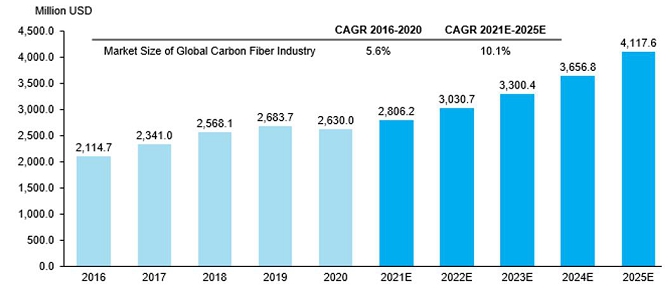
Source: Frost & Sullivan
Figure 4: Breakdown by Application Segments of Global Carbon Fiber Market, 2020
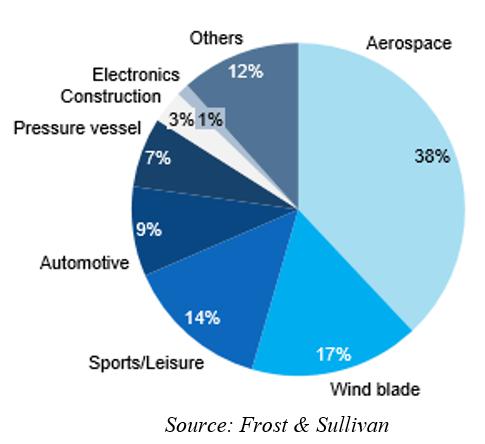
Source: Frost & Sullivan
Market Drivers and Development Trends
Favorable policies
The global major countries and regions pay attention to the development of carbon fiber industry and have launched relevant policies to stimulate the development of carbon fiber industry. For example, the “Going Climate Neutral” by 2050 which issued by European Commission calls for the study of carbon fiber products to reduce costs. The “Research and Development of Innovative Structural Materials” from the New Energy and Industrial Technology Development Organization aim to develop new carbon fiber precursor compounds, clarified the formation mechanism of carbonization structure and standardize evaluation methods for carbon fibers. There are not only policies to encourage R&D, but also many policies to encourage industrialization and capacity improvement. Policy support will provide a good external environment for the development of the carbon fiber industry, which is conducive to the rapid development of the industry.
| 71 |
Strong downstream demand
With the release of the National Fitness Plan (2021-2025), China will focus on promoting table tennis, badminton, cycling and other sports in the next five years. The plan will also focus on supporting research and development of fitness equipment and manufacturing enterprises. With the promotion of policies and the continuous integration of outdoor sports and tourism, more people will participate in these sports activities, which will directly promote the development of related equipment. In addition, with the increasing influence of cycling events such as the Tour de France, the Tour of Italy, the Tour of Spain, and the Crossing the U.S. Cycling Race, the number of cyclists in Europe and the United States is also increasing, which will also push up the demands for sports and fitness equipment. As important equipment for sports such as bicycles, tennis, badminton and surfing, carbon fiber products will have greater market demand in the future.
High-end products
Europe attaches importance to the application of carbon fiber in the aerospace field and emphasizes the use of carbon fiber composite aerospace materials to reduce the generation of waste in “Horizon 2020” released by the European Commission. American companies such as SpaceX, Blue Origin and Boeing also use carbon fiber materials in their products in the aerospace field. Compared with the foreign carbon fiber market, domestic carbon fiber is mainly concentrated in low value-added areas, which results in competitive pressure on the price. At the same time, key technologies of China’s carbon fiber industry lag behind developed countries, which leads to the limitation of carbon fiber materials in high value-added fields such as aviation manufacturing. With policy support and the pursuit of high value-added products, more domestic enterprises will invest in the research and development of high-end carbon fiber so that the products of the whole industry will develop into a high-end trend.
Global Carbon Fiber Bicycle Parts Industry Overview
The carbon fiber bicycle is the second largest segment of the sports/leisure market. Major components of bicycles made of carbon fiber (CF) composite materials include bicycle frame, fork, wheelset, pedal, seat post, and so forth. Since the 1970s, carbon fiber has become the material for bicycle frames on account of its lightweight, ease of shaping, high strength, high stiffness, and so forth, and has been mainly used in mid-to-high-end products for professional athletes or bicycle enthusiasts. Compared with traditional racing bicycles made of aluminum alloys, carbon fiber bicycles could remarkably reduce the extra energy consumption of athletes due to the lightweight of the bicycle and reduce bendability occurred by accidental collision. Carbon fiber and its composite materials have now become mainstream materials for racing bicycles and high-end bicycle products (including electric bicycles). Figure 5 below shows the comparison of features between regular bicycles and carbon bicycles and Figure 6 below shows different types of carbon fiber composite bicycles.
| 72 |
As shown in Figure 7 below, the carbon fiber bicycle is the second largest segment of the sports/leisure market, which accounts for around 25.0% of the market share in the global carbon fiber demand in sports/leisure market in 2020. Major components of bicycles made of carbon fiber composite materials include bicycle frame, fork, wheelset, pedal, seat post, and so forth. Since the 1970s, carbon fiber has become the material for bicycle frames on account of its lightweight, ease of shaping, high strength, high rigidity, and so forth, and has been mainly used in mid-to-high-end products for professional athletes or bicycle enthusiasts. Compared with traditional racing bicycles made of aluminum alloys, carbon fiber bicycles could remarkably reduce the extra energy consumption of athletes due to the lightweight of the bicycle and reduce bendability occurred by accidental collision. Up to date, carbon fiber and its composite materials have now become mainstream materials for racing bicycles and high-end bicycle products (including electric bicycles).
Figure 5: Comparison of Regular Bicycles and Carbon Bicycles
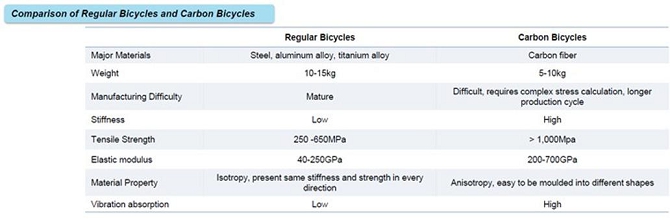
Source: Frost & Sullivan
Figure 6: Types of Carbon Fiber Composite Bicycles

Source: Frost & Sullivan
Figure 7: Global Carbon Fiber Demand in Sports/Leisure Market, 2020
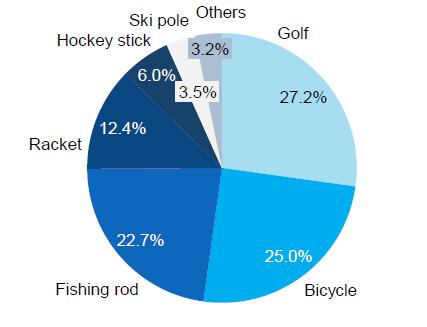
Source: Frost & Sullivan
| 73 |
Market Size
As shown in Figure 8 below, in recent years, the global carbon fiber bicycle parts market experienced moderate growth, increasing from approximately USD288.0 million in 2016 to USD462.0 million in 2020, registering a CAGR of 12.5%. Driven by improving people’s living standards, transformation of consumers’ lifestyle and technology development, the market size of the global carbon fiber bicycle parts industry is expected to increase from approximately USD522.1 million in 2021 to USD945.0 million in 2025, representing a CAGR of 16.0%. The penetration of carbon fiber in professional-grade bicycles is expected to further grow due to its outstanding physical performance, while as the manufacturing process becomes mature, carbon fiber or carbon fiber composite materials are expected to expand its application in regular bicycles and electric bicycles.
Followed by the implementation of policies in the U.S. and Europe and the other countries to encourage replacement of public transportation by bicycle, such as addition of bicycle lanes and other bicycle-related infrastructures, the market demand for electric bicycles increased, which recorded an annual growth rate of 23.4% from January 2020 to May 2020. The pandemic in 2020 has changed people’s commuting behavior in Europe and the U.S. Government’s policies and subsidies on encouraging the use of bicycles also contribute to the increasing market demand for electric bicycles.
Figure 8: Market Size of Global Carbon Fiber Bicycle Parts Industry, 2016-2025E
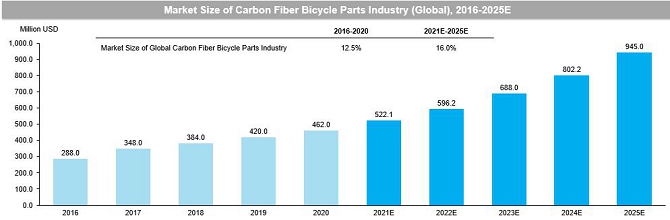
Source: Frost & Sullivan
As shown in Figure 9 below, the global electric bicycle market size reached approximately USD40.5 billion in 2020, and is expected to further increase to approximately USD68.3 billion in 2025, with a CAGR of 10.5% from 2021 to 2025. Compared with other public transportation systems, the electric bicycle has advantages of affordability and convenience. Most countries are working on boosting electric bicycles to reduce the stress on public transportation systems. Driven by the growing urbanization, traffic congestion in the city, as well as support and initiatives from governments, the demand for electric bicycles is expected to further expand.
| 74 |
Figure 9: Market Size of Global Electric Bicycle Industry, 2016-2025E
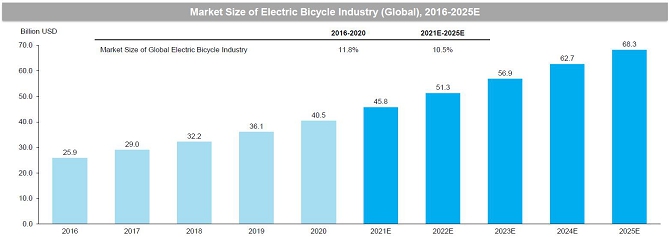
Source: Frost & Sullivan
Market Drivers and Development Trends
Sustainable Cooperation with Cycling Brands
As bicycle parts manufacturers, companies who have established expansive and stable client networks with well-known cycling brands may stand out in the competition globally. For example, for racing bicycles, carbon fiber bicycle parts manufacturers produce frames, wheelsets, forks, cranks according to specifications and functions required by racing bicycle brands. Thus, carbon fiber bicycle parts are highly customized products, and reliable bicycle parts manufacturers which can design and manufacture products that meet or exceed the requirement would be a determining success factor for carbon fiber bicycle brand customers in their operation. Besides, brand spillover effects could increase the market visibility of carbon fiber bicycle parts companies due to supplier relationships with award-winning racing bicycles.
Technology Upgrade of Manufacturing
With the development of carbon fiber and composite materials manufacturing technology, as well as the decreasing manufacturing cost, carbon fiber has been applied in regular bicycles and emerging electric bicycles. Some leading companies in the industry have set up the prototyping center for manufacturing carbon fiber frames, and applied automated painting technology to continuously optimize the production process and enhance manufacturing efficiency. Additionally, the state-of-the-art technology includes vacuum forming, plasma surface treatment technology, and so forth. Companies who own strong R&D capabilities, ability to design resin formulas and diverse product portfolios are more likely to stand out in the global competition. The disruptive technology innovation is conducive to elevating the industrialization of carbon fiber bicycle parts to a new level, increasing production capacities and expanding downstream applications.
Growing Consumer Demand for Carbon Fiber Bicycles
As consumers’ health awareness rises around the globe, cycling is considered a new symbol of a healthy lifestyle. The outbreak of COVID-19 in 2020 has greatly impacted consumers’ perceptions of health and fitness, which is reflected by the increasing number of road and mountain bicycle enthusiasts, not only for races but also for tour or leisure purposes. Besides, more and more people have chosen cycling as a fast, flexible and reliable method of transport, which spurs the demand for carbon fiber bicycle parts.
Currently, major consumers of high-end bicycles are located in Europe and North America, while it is expected that Asia-Pacific area will become the next promising carbon fiber bicycle market. Thus, the global carbon fiber bicycle parts market is expected to embrace growth opportunities in the next few years.
| 75 |
Increasing Environmental Awareness
In recent years, the environmental awareness of people around the globe is growing. In April 2018, the United Nations General Assembly declared June 3 as International World Bicycle Day to foster environmental stewardship and health. In 2020, due to the impact of the COVID-19, the European and American governments have begun to encourage people to walk or ride bicycles in order to prevent people from using public transportation, which might in turn cause group infections, and at the same time to avoid traffic jams. Countries such as the U.K., France and Italy have also expanded bicycle lanes and provided subsidies on purchasing bicycles, in order to encourage citizens to opt for zero-carbon bicycles, which has also led to a rapid growth in bicycle sales. Bicycles contribute to cleaner air, reduce congestion and make education, health care and other social services more accessible to the most vulnerable populations. A sustainable transport system that promotes economic growth reduces inequalities while bolstering the fight against climate change is critical to achieving sustainable development goals. Copenhagen and Amsterdam are considered as bicycle capitals in the world, which have been building their bicycle infrastructure since the 1970s and fostered a sustainable lifestyle. Therefore, the growing environmental consciousness is conducive to the development of carbon bicycle industry and related upstream industries.
Vertical Integration
At present, many carbon fiber composite material manufacturers purchase yarns and resin raw materials from suppliers, and then produce prepreg according to a specific ratio, followed by laminating, molding, heat treatment and other processes. However, the material properties cannot be standardized, which prolongs the product launch period and raises production costs. Many industry-leading players proactively extend their business to the upstream industry, including establishing their own material research centers, investing material analysis instruments and equipment, and recruiting technical talents to develop differentiated products by self-developed resin formations, which reduces production costs and capture a larger portion of the value chain. On the other hand, some carbon bicycle parts manufacturers step into the manufacturing of carbon bicycles business by providing bicycle assembly service or cooperating with renowned carbon bicycle brands to achieve vertical integration, which expands business portfolio and increases brand awareness.
Favorable Government Policies
Electric Bicycle Incentive Kickstart for the Environment (E-BIKE) Act
In 2021, the Senate and House of Representatives of the United States issued the Electric Bicycle Incentive Kickstart for the Environment (E-BIKE) Act, which encourages the use of electric bicycles through a consumer tax credit. Due to the distance, speed and ease by which they can travel, electric bicycles will help replace vehicle trips and commutes and reduce carbon emissions. If the E-BIKE Act is passed, it would create a consumer tax credit that (i) covers 30% of the cost of the electric bicycle, up to a US$1,500 credit, (ii) applies to new electric bicycles that cost less than US$8,000, and (iii) is fully refundable, which allows lower-income workers to claim the credit.
Recommendations for Delivering Green Growth and an Effective Mobility in 2030
In 2020, the European Commission issued Recommendations for Delivering Green Growth and an Effective Mobility in 2030, in which recommends that cycling should be an equal partner in the mobility system. It suggests that there is an increase in use of bicycle in European Union by 50% in average in 2019-2020 and expects that such trend will be continued until 2030. It also indicates that the European Union investment in cycling will be raised to 3 billion Euros from 2021 to 2027 and 6 billion Euros from 2028 to 2034.
Bicycle Sports Industry Development Plan
In 2018, the General Administration of Sports and Development and Reform Commission in China issued the Bicycle Sports Industry Development Plan. It takes the supply-side structural reform of the bicycle sports industry as the main line, focusing on consolidating the foundation of the bicycle sports industry, improving the ability and quality of the supply of bicycle sports products and services, promoting industrial agglomeration and integration, and promoting the marketization, standardization and branding of bicycle sports in China. It also promotes the healthy and sustainable development of the bicycle sports industry and provides solid and stable support for expanding sports consumption and demand, realizing the transformation and upgrading the sports industry in China.
| 76 |
Light Industry Development Plan
In 2016, the Ministry of Industry and Information Technology in China issued the Light Industry Development Plan. It is pointed out that the bicycle industry should be promoted in the direction of lightweight, diversified, fashionable and intelligent. Such plan accelerates the research and development and application of high-strength lightweight materials, transmissions, transmission systems, new energy, smart sensing technologies and Internet of Things technologies. The Light Industry Development Plan also focus on the development of diversified bicycles such as fashion leisure, sports fitness, long-distance cross-country and high-performance folding, as well as standard-compliant lithium-ion battery electric bicycles and smart electric bicycles.
E-bike Subsidy Schemes by European Cyclists’ Federation in 2016
In 2016, the European Commission set up the E-bike Subsidy Schemes, in which subsidies aimed at cycling can be provided to encourage uptake or an increase in cycle use through providing a financial benefit. Using a subsidy to encourage cycling can take one of two forms: providing a financial benefit for commuters to switch to cycling by paying for km travelled or subsidizing the untaxed purchase of equipment through employee schemes.
Competitive Landscape - Competitor Profiles
The table below shows the major global leading players in the carbon fiber bicycle parts industry:
| Company Name | Listed or Unlisted | Year Established and Headquarters | Business Introduction | Major
| ||||
| YMA Corporation | Unlisted | 2015, Taichung City, Taiwan | YMA Corporation, a subsidiary of J-Star, is principally engaged in the R&D, manufacture and processing and trading of carbon fiber composite materials. YMA has reached the production capacity of about 100,000 carbon bicycle frames per year and 200,000 carbon forks per year. YMA has established cooperation with multiple renowned bicycle brands, including Conalgo, and so forth. YMA has obtained many patents regarding bicycle products, which are well recognized by global athletes and cycling enthusiasts; for example, Thomas Pidcock won the MTB World Cup championship on a YMA-built Lightrider Worldcup (EST-MS-08) frame in 2021. | Tennis rackets parts, badminton rackets parts, road bicycle parts, mountain bicycle parts, electric bicycle parts, automotive parts, healthcare products, and so forth. | ||||
| Topkey Group | Listed
(4536 .TPE) | 1980, Taichung City, Taiwan | Topkey Group is principally engaged in the manufacture, processing and trading of carbon fiber materials in sports and leisure products and aerospace medical equipment. | Tennis rackets parts, helmets parts, bicycle racks and aerospace materials, and so forth. | ||||
| XDS Shenzhen Xidesheng Bicycles Co., Ltd. | Unlisted | 1995, Shenzhen City, Guangdong | As the largest manufacturer of carbon-fiber bicycles in the world, XDS specializes in the integration of R&D, manufacturing, sales and services of bicycles. | Parts of mountain bicycles, road bicycles, electric bicycles, folding bicycles, city bicycles, and so forth. | ||||
| Tentech Composite Technology Co., Ltd | Unlisted | 2003, Dongguan City, Guangdong | Tentech is principally engaged in the manufacture, processing and trading of carbon fiber composite products. | Bicycle frames, accessories, modules, and so forth. |
Source: Frost & Sullivan
| 77 |
Global Carbon Fiber Racket Parts Industry Overview
Carbon fiber is widely used in tennis and badminton rackets due to its excellent performance. With the gradual development of material technology, rackets have gradually evolved from traditional wooden rackets and metal rackets (such as iron and aluminum) to aluminum alloy and carbon fiber materials. Carbon fiber is the high-end material of the current racket frame, and is mainly used in sports events and professional or amateurish training. Compared with aluminum alloy rackets, carbon fiber rackets have the characteristics of light weight, good mechanical properties, good impact resistance and good damping properties. The carbon fiber racket has low vibration, which can provide better hitting feel and ball control without hurting the wrist, but the price of carbon fiber racket is still high; while the aluminum alloy racket has a simple production process and lower production cost, its weight is high and the damping property is poor, and hence, players’ wrist is easily injured. In addition, in order to further improve the performance of the racket, some leading companies produce hybrid carbon fiber rackets by adding high-performance materials such as graphite and glass fiber. At present, the U.S., Europe and Japan markets are the major consumer markets of rackets.
Market Size
Driven by the higher requirements on the mechanical properties of rackets and increasing purchasing ability of high-end sports goods customers, as shown in Figure 9 below, the market size by revenue of global carbon fiber applied in rackets has witnessed a steady growth, increasing from $194.1 million in 2016 to $242.6 million in 2019. The outbreak of the COVID-19 has caused a negative impact in the carbon fiber racket parts industry due to the limited sports events and reduced daily sports activities around the world. As a result, the sales revenue of global carbon fiber racket parts declined to USD230.5 million in 2020.
Looking forward, as the pandemic is gradually controlled, the carbon fiber racket parts industry is expected to recover from 2021. Promoted by the increasing health awareness post-pandemic, encouraging policies of sports activities in developing countries, as well as progressed carbon fiber manufacturing techniques, it is estimated that the demand of carbon fiber applied in the rackets will further rise and the market size by revenue of carbon fiber racket parts will increase from USD243.9 million in 2021 to USD332.4 million in 2025, representing a CAGR of approximately 8.0%.
| 78 |
Figure 10: Market Size of Global Carbon Fiber Racket Parts Industry, 2016-2025E
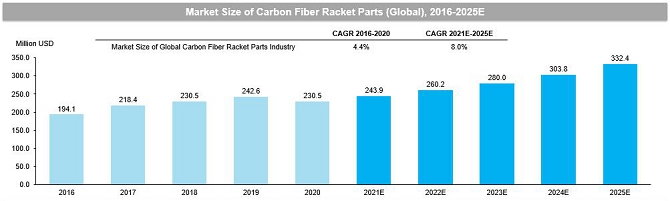
Source: Frost & Sullivan
Market Drivers and Development Trends
Increasing Tennis and Badminton Participants
Driven by the supportive policies on sports activities, the number of people participating in tennis and badminton is increasing all over the world. In 2019, the State Council of China issued the “outline of building a sports power” and stated the target that the proportion of people who regularly participate in physical exercise will reach more than 45%, and the per capita sports area will reach 2.5 square meters in 2035. In Japan, facing issues such as aging problem and declining birth rates, the Japanese government has successively promulgated the “Basic Sports Law” and “Basic Sports Plan,” emphasizing the right of everyone to participate in sports, and promoting the development of “sports for all” by holding the international events such as the Olympic Games. In the United States, a new iteration of “Healthy People” initiative is launched at the beginning of every decade to set measurable objectives to improve the health and well-being of people nationwide. According to the “2021 Physical Activity Council’s Overview Report on U.S. Participation” released by the Physical Activity Council (PAC), around 75.6% of people in the U.S. regularly participate in sports, and the penetration rate of racket sports has increased from 12.4% in 2013 to 13.9% in 2020. In Europe, voluntary sports clubs are promoted by many countries to support mass sports participation. According to the data released by European Union, there were over 320,000 people employed in the sports and fitness sector in the European Union in 2020. Under the continuous publicity, public health awareness is also increasing year by year. Besides, with the investment of various government agencies, the construction of sports facilities is gradually improved and sports events are more abundant. Meanwhile, the emergence of many badminton and tennis superstars has further stimulated people’s enthusiasm for participating in these two sports. Badminton has become an extremely popular sport, which is played regularly by over 300 million people around the world. It is particularly popular in Asia, with many of the best players ever to grace the game hailing from the continent. The number of global tennis players reached 87 million in 2019, of which China accounted for the highest of 22.5%, according to the report released by the ITF (International Tennis Association). Therefore, the increasing participants of tennis and badminton are expected to drive the demand for relevant sports equipment such as carbon fiber rackets.
Application of Carbon Fiber Rackets Expanding from Professional Events to the Public
From 2016 to 2020, the global per capita GDP increased from USD10,365.2 to USD10,953.6 at a CAGR of 1.4%. Driven by the growing economy, people’s health awareness and average purchasing ability on sports equipment are rising as well, especially in developing countries like China. For example, the overall sales value of sports equipment in China increased from RMB12.0 billion in 2016 to RMB13.9 billion in 2019, representing a CAGR of 5.1%. In addition, the sport industry in the developed world has also experienced a continuous growth. Taking Switzerland as an example, a recent report published by Federal Department of Defense, Civil Protection and Sport shows that Switzerland has witnessed a rapid increase of sport over the past few years as increasing sports events are hold in the country (e.g., European Athletics Championships, the Youth Olympic Games and the World Road Cycling Championships), with the estimated turnover of sport sector in Switzerland reaching 22.2 billion francs in 2017, increasing by 31% from 2005. Besides, the media strengthened the promotion and marketing of carbon fiber rackets such as the excellent properties of the carbon fiber material, which enhanced consumers’ recognition and demand for carbon fiber rackets. Some racket manufacturers also launch co-branding carbon fiber rackets with other famous brands or IPs and promoting the same racket models used by sports stars to attract customers. As result, carbon fiber rackets are not just limited to the professional market. It is expected that increasing amateurs will be willing to purchase carbon fiber rackets in the future.
| 79 |
Technology Breakthrough of Carbon Fiber Racket Parts
Among high-end rackets, major brands have strong brand recognition and brand loyalty, and hence, well-known brands. Under the absolute leadership of brand manufacturers, there are fewer tennis racket manufacturers developing their own brands, and most of them adopt OEM or ODM business models. As one of the key competitive factors of carbon fiber manufacturers, technological upgrade accelerates the production speed of carbon fiber rackets and improves the quality of finished products. The carbon fiber racket is composed of a carbon fiber composite racket frame which is made of a racket surface interlaced with mesh and a resin material skeleton wrapped with carbon fiber belt. For most players in the carbon fiber racket parts industry, the carbon fiber used to make rackets is purchased from upstream suppliers, but the resin formula is the secret and R&D focus of each company. Our breakthrough nanoresin formula and patented technology are the key to improve the performance and durability of the carbon fiber rackets. After years of accumulation of technology and experience, leading companies in the industry continue to improve resin formulations and produce prepreg materials according to product characteristics and customer needs. In addition, driven by the improving automation level, emerging moulding technologies can improve the product quality and production efficiency of carbon fiber rackets. Some leading carbon fiber racket manufacturers have made great efforts in core technology development such as microscopic analysis of material, product structure design, module design, tooling design and customized process design, and so on. In the future, with further maturity of material technology and production techniques, the price of carbon fiber rackets will gradually decrease, attracting more consumers.
Competitive Landscape – Competitor Profiles
The table below shows the major global leading players in the carbon fiber racket parts industry:
| Company Name | Listed
or | Year Established and Headquarters | Business Introduction | Major | ||||
| Topkey Group | Listed
(4536 .TPE) | 1980, Taichung City, Taiwan | Topkey Group is principally engaged in the manufacture, processing and trading of sports and leisure products and aerospace medical equipment. | Tennis rackets, helmets, bicycle racks and aerospace materials, and so forth. | ||||
| OTIS Co., Ltd. | Unlisted | 2002, Dongguan, Guangdong | The company is a Taiwan-funded enterprise, mainly engaged in the production, sales and processing of carbon fiber composite materials. In 2017, the company became a partner supplier of Decathlon, participating in the R&D and production of carbon fiber related sports products. It is a cooperative manufacturer of many sports goods companies in Europe and America. | Carbon Fiber parts of tennis rackets, badminton rackets, squash rackets, beach rackets, paddles, hockey sticks, fishing rods, arrow shafts, golf clubs, and so forth. |
| 80 |
| Forwell Sports Equipment Co., Ltd. | Unlisted | 2003, Dongguan, Guangdong | As a subsidiary of J-Star, the company is a Taiwan-funded enterprise with more than 20 years of professional carbon fiber bicycle and racket manufacturing experience. The company has built a wide customer network of many world-renowned brands such as Tecnifiber, and so forth. Its products are exported to Europe, America, Asia and other countries and has supported many athletes to win the champion in the international competitions. | Golf clubs, ice hockey sticks, carbon bicycle tubes, bicycle accessories, shoe accessories, composite products, rackets, and so forth. | ||||
| Bonny Worldwide Co., Ltd. | Listed
(8467 .TPE) | 1982, Taichung City, Taiwan | The company is a professional manufacturer of carbon fiber rackets OEM and ODM and related sports goods. The company has developed a variety of new deceleration patents, and many all-carbon fiber rackets with novel and unique designs and shapes. The company has become an important partner of many well-known international companies, and its products are sold all over the world. | Carbon fiber parts products of hockey sticks, tennis rackets, badminton rackets, and so forth. | ||||
| Long Yi Industrial (Huizhou) Co., Ltd. | Unlisted | 2004, Huizhou, Guangdong | The company is a wholly foreign-owned manufacturing enterprise focusing on the development and production of carbon fiber tennis racket sports goods series and carbon fiber tube sheet industrial products series. The company is currently one of the largest and most prominent enterprises in the international high-end carbon fiber tennis racket industry. | Carbon fiber parts products in the fields of tennis rackets, badminton rackets, golf clubs, water skis, bicycles, automobiles, home appliances, and medical applications, and so forth. | ||||
| Xiamen Keentech Composite Technology Co., Ltd. | Unlisted | 1988, Xiamen, Fujian | As a subsidiary of Topkey Group, the company is engaged in the development and manufacturing of advanced carbon fiber composite products. The company’s R&D and production in the application of composite materials ranks the highest level in the world. It cooperates with many world-renowned brand manufacturers and sells its products to Europe, America, Japan and other countries. | Carbon fiber tennis rackets, badminton rackets, racing helmets, bicycle racks, aviation knots, medical equipment, and so forth. | ||||
| Xiamen Leader Sporting Goods Co., Ltd. | Unlisted | 1988, Xiamen, Fujian | Affiliated with Lianjie Group, Xiamen Leader Sporting Goods Co., Ltd. is a Hong Kong-invested enterprise having been specialized in the R&D and manufacture of carbon fiber composite products for 25 years, being one of the largest professional manufacturers of composite products. | Frame of mountain bicycle, frame of road bicycle, front fork of road bicycle, tennis racket, pelota racket, squash racket, bow and arrow, badminton racket, baseball bat, and so forth. |
Source: Frost & Sullivan
| 81 |
Other Global Carbon Fiber Sectors Industry Overview
Automobile
Compared to metals, carbon fiber composite materials applied in some car parts such as chassis, car roof, cockpits, interior accessories and the car body could reduce the weight by approximately 10%. Simultaneously, the lighter the vehicle, the higher fuel efficiency, the lower volume of carbon dioxide emissions. Due to the integration, designability, high vibration damping, carbon fiber composite materials could make vehicles lighter, which accelerates the development of anti-pollution and lower fuel consumption. For example, Volkswagen’s “2L car” CC1 used carbon material as 45% of its car body. The market size of global carbon fiber automotive parts industry is USD1,147.5 million in 2020 and is expected to increase from 1,319.6 million in 2021 to USD2,044.8 million in 2025, registering a CAGR of 11.6%.
Foil Masts and Paddle Rackets
With the increasing popularity of surfing and paddle games around the world, the foil masts made of carbon fiber are coming into people’s spotlight. Carbon foil masts have unique advantages compared to aluminum foil masts due to the high strength, corrosion resistance, strong seismic performance, good balance, and high flexibility. Carbon foil masts enable surfers to maintain stability and avoid damage when riding big waves or immersing in seawater for a long period, achieving protection for surfers. The market size of global carbon fiber foil mast parts industry is expected to reach over USD30 million in 2025 with a CAGR of 10.4% from 2021 to 2025.
The excellent performance of carbon paddle rackets is widely recognized by athletes and the public. Paddle rackets made of carbon fiber are lighter, more durable and can withstand high temperature. For athletes, carbon fiber rackets can reduce the load on the arm during long rallies and improve the speed and efficiency when hitting the ball. The market size of global carbon fiber paddle racket parts industry is expected to reach over USD35 million in 2025 with a CAGR of 9.2% from 2021 to 2025.
Healthcare Products
Carbon fiber is widely applied in healthcare products. Due to the lightweight, high stability, high strength and fatigue resistance, carbon fiber is generally used in wheelchairs, senior walkers and other medical equipment. Carbon fiber is usually used in the chassis and backrest frame of wheelchairs and the body of senior walkers, featuring lightness, stiffness and exceptional durability. The stability and biocompatibility of carbon fiber materials have attracted extensive attention in medical devices and biomaterials. With the average expenditure on health care in China increasing from RMB1,307 in 2016 to RMB1,843 in 2020, as well as population ageing, healthcare products made of carbon fiber are expected to fulfill growth potential in the future. In developed countries, per capita healthcare spending in the US, the UK, Denmark and Japan were USD10,948, USD4,500, USD5,47 and USD4,691 in 2019. The global market size of medical device in 2019 is USD445.93 billion and is expected to increase to USD587.41 in 2024, registering a CAGR of 5.7%. The market size of global carbon fiber healthcare product parts industry is expected to reach over USD300 million in 2025 with a CAGR of 19.0% from 2021 to 2025.
| 82 |
Robotic Arm
With the continuous improvement of carbon fiber production and processing technology, carbon fiber has gained more market share in robotic arms, particularly industrial robots. Compared to traditional robotic arms made of aluminum alloy and alloy steel, carbon fiber robotic arms have higher flexibility, fracture resistance and a longer service life. Also, the vibration dampening of carbon fiber robotic arms allows for precise control and positioning, enhancing working speed and efficiency of robots. With the accelerated automation process and wide application of industrial robotics, carbon fiber is expected to develop further and be favored by downstream customers. The global robotic arm market is expected to grow at a CAGR of approximately 14.0% during the forecast period, growing from USD24.9 billion in 2021 to USD42.0 billion by 2025.
Aerospace
Carbon fiber composite materials are widely applied in aircraft and aerospace fields, such as civil and military aircraft, rockets for space development and artificial satellites, and so forth. Subject to a harsh operating environment, aerospace equipment is usually required to have high tensile and compression performance, high impact and fatigue resistance, and so forth. Thus, the carbon fiber product in aerospace is on the high end of the quality and cost spectrum. In recent years, the proportion of carbon fiber composite materials employed in aircraft has increased, which could significantly reduce the weight of the plane body, improve aeroelasticity and enhance the overall performance. Therefore, the square, weight and parts of carbon fiber composite materials used in aircraft are forecast to grow in the next few years.
Electronics
Driven by the lightweight of consumer electronics, carbon fiber is gradually applied in 3C products. For example, Lenovo, a leading PC brand, released the YOGA Pro 13s Carbon 2021 laptop in 2020, with its body made of carbon fiber and magnesium alloy, weighing only 966 grams. Chopped carbon fiber reinforced plastic with anti-static, electromagnetic shielding and other functions in copiers, printers, digital cameras, data transmission cable connectors and other products has been applied in different products. Compared with other similar materials such as carbon black and metal, carbon fiber with reinforced plastic has a more affordable price, which raises the demand for the market.
| 83 |
Overview
Our Predecessor Group was established in 1970 and we have accumulated over 50 years of know-how in the material composite industry. We currently develop and commercialize the technology on carbon reinforcement and resin systems. With decades of experience and knowledge in composites and materials, we are able to apply our expertise and technology on designing and manufacturing a great variety of lightweight, high-performance carbon composite products, ranging from key structural parts of electric bicycles and sports bicycles, rackets, automobile parts to healthcare products. According to the industry report commissioned by us and prepared by Frost & Sullivan, we are one of the major global leading players in the carbon fiber bicycle parts industry and carbon fiber racket parts industry.
As our business is technology-driven, our vision is to offer cutting edge technology and manufacturing expertise in carbon composites to our customers, and many of our products are directly or indirectly supplied to different renowned international sports brand owners. Our carbon composite products deliver substantial weight savings, endurance and stiffness comparing to those constructed from conventional materials, such as steel and aluminum, and in doing so, our products offer remarkable and valuable efficiency and performance benefits to our customers in various applications. While our technology has potential applications over a broad range of industries, we currently have our main focus on the sporting goods industry and we prioritize the electric bicycle market to commercialize our technology.
We are based in Taiwan with our headquarters, R&D center and material laboratory located in Taichung, Taiwan. The R&D center in Taichung focuses on resin material application, new product development, production process enhancement, structural design of products, testing on product performance and enhancement on strength and stiffness of products. Our business focuses on the research and development to provide wide range of carbon composite products solutions. As of April 18, 2023, with respect to manufacturing, we outsourced our manufacturing to a number of factories in the PRC and will gradually expand such outsourced factories to the U.S. and Europe. We primarily generate revenue through three divisions and revenue streams, namely (i) sales of bicycles parts of sports bicycles and electric bicycles; (ii) sales of rackets for use in tennis, badminton, squash and beach tennis; and (iii) sales of other products, which mainly include structural parts of automobile, other sporting goods and healthcare products. Our bicycle parts and rackets are mainly supplied directly or indirectly to branded customers located in Switzerland, France, Italy, the Netherlands, Germany and Japan and they primarily market and distribute their products worldwide. Other customers which rely on our new products, such as healthcare products, are mainly located in Australia, Canada and Japan.
Advanced carbon composite materials offer a number of advantages relative to traditional materials, including light weight, high strength to weight ratio, high stiffness, and improved resistance to heat, corrosion and fatigue. Nonetheless, different products require different degrees and combinations of such properties according to their functions. For instance, automobile parts, such as hoods and seatback, require higher heat resistance, while bicycle frames require greater degree of stiffness. Hence, material application technology plays an important role in refining the production of different types of carbon composite products. Carbon composite materials are formed by combining carbon fibers and resins. The properties of carbon composite materials could vary largely due to different systems of resin and structural arrangement. Differing from our competitors in the industry, instead of using preset formulas of resins with lower degree of flexibility, we have our own R&D center to develop our own resin systems and formulas according to the product requirements. Therefore, we are able to incorporate customized resin systems that can be optimized for specific parameters, such as durability, temperature performance, cure times and viscosity. This not only allows us to present to clients our products with high precision to customers’ specifications from outsourced factories, but also offers us flexibility in developing a greater variety of new products in the future. Apart from our advanced material application technology, our R&D team is also experienced in providing technical recommendations and solutions to and respond to feedback from our customers regarding the structural design of product. Our advanced material application technology and expertise in product design and development complement each other. Thus, we believe that the parallel development of our complex product and process technology has resulted in our competitive advantage which makes it difficult for our competitor to replicate.
| 84 |
Our total revenue for the years ended December 31, 2023 and 2022 amounted to $23.8 million and $39.4 million, respectively. Our sales of bicycle parts accounted for approximately 64.0% and 63.2% of our total revenue for the years ended December 31, 2023 and 2022, respectively. Our sales from our rackets business segment brought us considerable revenue for the years ended December 31, 2023 and 2022, which accounted for approximately 29.6% and 33.7%, respectively, of our total revenues. Our sales of other products accounted for approximately 6.4% and 3.1%, respectively, of our total revenues for the years ended December 31, 2023 and 2022, respectively.
While having our main focus on development and sales of key structural parts of bicycles and rackets in the past years, we would not limit ourselves to the existing scope of product. We intend to extend our product spectrum by launching new products, such as sporting goods for new sports such as paddles for racket sports and mast foils for surfing, and further expand our production on relatively new existing products that are emerging in the market, including key structural parts of electric bicycles, automobile and robotic arms, bicycle crank sets and other healthcare products, such as wheelchairs and senior walkers.
For the years ended December 31, 2022 and 2021 and until April 2023, our production plant was located in Dongguan in the PRC with two production lines in place. Though we had disposed our PRC Investments, we entered into OEM/ODM agreements and their respective supplemental agreement with the two entities in April 2023. As such, we will continue to use them as our main suppliers in manufacturing under the ODM and OEM business models for the next five years for our customers due to their geographical proximity to Hong Kong which favors the shipping of products and its strong labor supply in the region. In the future, we intend to outsource more labor intensive production activities to reliable factories in the PRC.
In April 2023, we disposed 80.5% equity interests in each of our two PRC operating subsidiaries, namely, Dongguan YMA and Dongguan Forwell. Prior to the disposals, products under the ODM and OEM business models were manufactured by both Dongguan YMA and Dongguan Forwell in our production plant in Dongguan, the PRC. After the disposals, we will continue to utilize Dongguan YMA and Dongguan Forwell to manufacture products under the ODM and OEM business models for the next five years, as we entered into OEM/ODM agreements and their respective supplemental agreement with the two entities in April 2023. Our management team believes that the foregoing disposals will not materially impact our ODM and OEM models as we will procure and/or provide the raw materials (carbon fiber yarn from our Japan supplier) utilizing our in-house resin technologies for manufacturing that are required under the ODM and OEM models, and thus, we will continue to control the quality of the raw materials. Under both business models, our sales team or R&D team will oversee product development processes and conduct quality control on the semi-finished products and the finished products, as has been our practice in the past. Simultaneously, we will also build our production bases in the United States and Europe regions to diversify as stated previously.
In March 2020, the World Health Organization declared the outbreak of the COVID-19 pandemic. Countries across Asia, North America, Europe have continued to report increases in COVID-19 infections, which has resulted in governments implementing travel bans, lockdowns, quarantines and social distancing measures in those countries in an effort to contain the virus. In response to the outbreak of pandemic, in January 2020, the People’s Government of Guangdong Province announced certain measures to prevent continuing widespread of the disease in the community, among others, corporates were not allowed to resume operation before February 10, 2020. In compliance with the government instructions, we temporarily suspended the operation of our previously owned production plant in Dongguan, the PRC, from February 3, 2020 to February 26, 2020, which was then fully resumed on March 9, 2020 and has remained normal thereafter. In this regard, we had arranged for tighter a production schedule from June 2020 to December 2020 to make up for the suspension of operation of our previously owned production plant in February 2020.
| 85 |
History and Milestones
Our Predecessor Group commenced its wood composite manufacturing and sports equipment processing business in 1970 and was one of the earliest private enterprises to manufacture wood composites in Taiwan. However, due to changes the product development in the sporting goods industry with higher product requirements for weight-saving, endurance and stiffness, our Predecessor Group gradually shifted its focus from wood composite manufacturing to carbon composite product manufacturing starting in 1980. Our Predecessor Group launched the carbon composite business line in 1980, targeting sporting goods, such as rackets. In 2005, our Predecessor Group launched the bicycle business line in order to expand the scope of carbon composite sporting goods to sports bicycles. In 2017, we launched our first electric bicycle. In 2018, in light of the prevalence of and favorable government policies toward electric bicycles around the world, while continuing our development and sales of sports bicycles, we have in parallel strategically expanded further on the development and production of electric bicycles. We also developed our first carbon fiber robotic arm and other health care products in 2018. In 2019, we expanded our R&D team for the design and production of electric bicycles by the addition of personnel. Through our R&D center in Taiwan, we have continued to upgrade and enhance our material technology, product structural design and production process technology, in order to uplift our product quality, product performance, production efficiency and expand our product spectrum.
We target to achieve growth in terms of both scale and scope. To expand our scale, we have identified strategic investments. First, in October 2022, we entered into a non-binding memorandum of understanding with an Abu Dhabi company to build and operate a carbon fiber bicycle manufacturing facility in Khalifa Industrial Zone, Abu Dhabi, United Arab Emirates, to serve the European market through acquisition, joint venture and/or co-branding production. Second, in April 2023, we entered into a non-binding memorandum of understanding with a potential partner, a French based manufacturing company, to form a partnership to build a carbon fiber racquet brand and manufacturing factory in France. Lastly, in April 2023, we entered into a non-binding memorandum of understanding with the potential acquisition target, a United Kingdom based bicycle company engaging in sales marketing and distribution in the bicycle and sporting goods trade, to acquire not less than 30% of the potential acquisition target’s shareholding. As such, this will enable us to diversify our business operations into the retail bicycle market industry and to invest in a micro factory and R&D center in Houston to serve the USA market.
As for growth in terms of scope, we anticipate that, by the third quarter of 2024 we will launch our own brand of electric bicycles and sporting goods and will establish a sales and administration offices in the U.S. and the Netherlands. In addition, we intend to add a U.S. sales and administration office in Houston, Texas, which will work closely with our office in Taiwan on U.S. market sales and expansion, while our sales and administration office in the Netherlands will be handling sales on our online business platform expected to be launched around the third quarter of 2024. By December 2025, we expect to launch our micro factory and R&D center in the U.S., with a view to developing automation of our production process and integrating the most advanced technology to our production. In this regard, we intend to invest in a manufacturer of carbon fiber products in the U.S. We have been in contact with several potential target companies in the U.S., one of which is a U.S.-based aerospace composite parts manufacturer. We also plan to establish our second R&D center in Houston, Texas and our initial plan is to hire 4 to 6 employees for developing composite material and conducting research on chemical interactions.
The following events are our key business developments and milestones:
| Year | Event | |
| 1970 | Our Predecessor Group commenced business of manufacturing and trading of wood composite products and processing of sports equipment. Our Predecessor Group developed our first wooden racket and commenced production for wooden composite rackets in Taiwan. | |
| 1978 | Our Predecessor Group commenced graphite or wood composite processing for rackets. |
| 86 |
| 1980 | Our Predecessor Group established carbon composite production line and developed our first carbon fiber racket, ski stick and golf shaft. | |
| 1990 | Our Predecessor Group established the first production plant in Dongguan, the PRC for manufacturing of rackets. | |
| 1992 | Our Predecessor Group developed our first full carbon racket. | |
| 2000 | Our Predecessor Group acquired the hot-melt prepreg technology and applied the technology to the production. | |
| 2005 | Our Predecessor Group established the bicycle business line and the second production plant in Dongguan, the PRC, for the production of carbon fiber bicycles. Our Predecessor Group then developed our first carbon fiber bicycle. | |
| 2012 | Our Predecessor Group applied for numerous patents on manufacturing of a variety of carbon fiber products. | |
| 2016 | We produced our first Olympic Champion badminton racket used by Misaki Matsutomo in winning her champion in the badminton women’s doubles tournament at 2016 Summer Olympics. | |
| 2017 | We established our R&D center and material laboratory in Taiwan. We also produced our first electric bicycle frame. | |
| 2018 | We developed our first carbon fiber automobile parts, robotic arm and other health care products, such as wheelchairs and senior walkers. | |
| 2019 | We expanded our R&D team on the design and production
of key structural parts of electric bicycles. | |
| 2021 | We produced key structural parts of Colnago 2021 V3-R, which is the racing bicycle model ridden by Tadej Pogacar in winning his championship in Tour de France 2021. | |
| 2022 | We won the design award sfrom both IF and Red Dot Design by using our in house developed bicycles. | |
| 2023 | Disposals of our PRC investment and divert our efforts to branding, outsourcing OEM and R&D in Taiwan. |
| 87 |
Our Business Model
We are engaged in the design, development, manufacturing and sale of carbon fiber composite products, with our main focus on key structural bicycle parts and racket products, on an OEM and an ODM basis. For our OEM model, we manufacture our products in accordance with the customer’s specifications and are marketed under the customer’s own brand names. Our products are mainly supplied directly or indirectly to international sports brand owners. We secure sales contracts with customers on project basis.

During the financial reporting periods, our ODM business begins with receiving customer’s request in designing and developing a new product. After our sales team communicates client’s requests with our R&D team, our R&D team will then consult with our procurement team and production team on our production capacity in order to assess the production timeline and make price quotations. The product design and development process will be commenced once our customers have confirmed our quotation. Our sales team is responsible for preparing the project summary which lists out the customer’s specifications on the new product, including but not limited to requirements on physical properties of product material, special features on the design of product, product performance, accessories, outlook, the brand name to be used and expected size of order, and so forth. Our R&D team will then work on the structural design and composite material formula design based on the specifications required by our customers. Throughout the entire process of design, customization and modification of product, we communicate and receive feedback from our customers and provide various technical solutions in response to customers’ feedback regarding the product design and development. We will then deliver a prototype to our customers for their review and confirmation. Meanwhile, we will also conduct preliminary product testing with our in-house testing equipment or recognized independent third party institutions on the prototype to ensure that the product meets our customers’ required standard.
After the product development process is completed, the customers will place purchase orders with us according to their needs. We will then arrange for procurement of raw materials and commence production. We will conduct quality control on the raw materials, semi-finished product and the finished product. We have our technical staff on-site to provide supervision and technical support in the production plant of our PRC Investments in Dongguan, the PRC. We also have quality control staff on-site to monitor the production process. The finished products will then be delivered to designated place agreed with our customers. For example, for bicycle parts, we will send them to customer’s designated bicycle assembly house for assembly, while for racket products, we will send them to our customers directly.
In April 2023, we disposed 80.5% equity interests in each of our two PRC operating subsidiaries, namely, Dongguan YMA and Dongguan Forwell. Prior to the disposals, products under the ODM and OEM business models were manufactured by both Dongguan YMA and Dongguan Forwell in our production plant in Dongguan, the PRC. After the disposals, we will continue to utilize Dongguan YMA and Dongguan Forwell to manufacture products under the ODM and OEM business models for the next five years, as we entered into OEM/ODM agreements and their respective supplemental agreement with the two entities in April 2023. Our management team believes that the foregoing disposals will not materially impact our ODM and OEM models as we will procure and/or provide the raw materials (carbon fiber yarn from our Japan supplier) utilizing our in-house resin technologies for manufacturing that are required under the ODM and OEM models, and thus, we will continue to control the quality of the raw materials. Under both business models, our sales team or R&D team will oversee product development processes and conduct quality control on the semi-finished products and the finished products, as has been our practice in the past. Simultaneously, we will also build our production bases in the United States and Europe regions to diversify as stated previously.
Competitive Strengths
We attribute our success to the following key competitive strengths:
Strong research and products development capabilities
With over 50 years of composite product manufacturing experience accumulated from our Predecessor Group and our continuous commitment to enhance our composite material application technologies and production process, we pride ourselves on our accumulated know-how and research and development capabilities focused on the development of new products and the improvement of our production process. For instance, our resin technologies allow for pre-pregging of our carbon fiber composite and creating higher ratio of strength and stiffness with lower weight. Some of the bicycle and racket products we co-designed and developed with our customer had been used by players in the Olympic Games and international tournaments, who have won championships. We believe our accumulated composite material application know-how and continuous dedication to research and product development has enabled us to increase our product quality, production efficiency, technical expertise, ability to tailor-make products to meet customer specifications and reduce costs, which in turn help us retain and attract customers who demand precise, reliable and high quality composite products and obtain higher profit margin. We also believe that our strong research and development ability will widen our product types to effectively satisfy customers’ changing needs, which in turn will enhance our organic growth.
| 88 |
Our research and development primarily focuses on product development, new application discovery and production process improvement. Our objectives in research and development are to promote innovation, automation and differentiation in our production and enhance our product quality. Our investments in research and development are significant. From January 2019 to December 2023, our continued expenditure in research and development has amounted to approximately $7.1 million. We had an R&D team of 19 personnel as of December 31, 2023. The majority of our R&D team members also have over 10 years of experience in industries relevant to our business. Our R&D center has successfully developed and improved various composite materials formulas and application as well as the production process. In addition, we have also undertaken leading research and development projects on resins formulas and production processes, such as formulas on highly heat resistant resins, formulas on biomass materials, vacuum forming technology and waterborne paint technology, which could enhance the performance, cleanliness and durability of our products, as well as satisfy our customers’ particular requirements on different products. As of the date of this prospectus, we have registered 7 invention patents, 9 design patents and 14 utility model patents, including but not limited to patents on structure of bicycle frames, structure and design of rackets and manufacturing process of carbon fiber products, in Taiwan, PRC, Japan, Europe and the U.S. We have also applied for the registration of 6 invention patents. We also work with research institutes to improve our production process, to discover new product applications, and to develop our material technologies. We believe that the above research efforts will give us synergy and allow us to focus on the development of high-value and cost-effective products.
We have been devoting research and development efforts in respect of our carbon composite technology and application. In particular, we developed new resins systems, Nano-CT and Nano-GS, which are applied to our bicycle frame and racket products. We are also developing resins with higher degree of heat resistance and strength which are applicable to carrier plates of furnace and bicycle wheels, and halogen-free resins with higher degree of strength and transparency which are applicable to the exhaust pipe, engine protector and brake disc of automobiles.
We have optimized our production processes through our research and development efforts. We applied our vacuum forming technology in the production process to maintain the strength and quality of our products. We also developed and applied our waterborne paint technology to our bicycle frames, air intakes and automobile engine rods. We also introduced automated painting technology with robotic arms in order to promote automation in the painting process of our products, which in turn improves cost efficiency in our production process. With a view to further upgrading our production process, we commenced our major research and development projects on resins rapid curing technology, which not only could boost the production efficiency by speeding up the curing process, but also could enhance the strength, malleability and manufacturability of material. Being one of the major global leading players in the carbon fiber bicycle parts industry and the carbon fiber racket parts, we believe we have been able to capture the relevant technology and know-how in advance of our competitors in the industry.
In order to optimize the research and development effort, we have set up an R&D center in Taiwan, which includes a laboratory, focuses on resin material application, new product development, production process enhancement, and also structural design of products, testing on product performance and enhancement on strength and stiffness of products. Under such arrangement, research and development in Taiwan can adopt a more experimental and innovative oriented approach, which can be quickly implemented and tested in the outsourced production plant. We intend to establish our second R&D center in the U.S. to carry out research on automation of production processes.
| 89 |
Quality product and comprehensive services which cater our customers’ needs
Leveraging on our solid experience and expertise in research and development, we are able to develop and produce high quality products satisfying our customers’ specific requirements. Depending on the needs of our customers, we also offer comprehensive services covering the processes of product analysis, product design and development; processing and manufacturing; product testing and adjustment; trial production of final products; and after sales services. Our product development team and our sales team work closely with our branded customers to understand their needs and make recommendations to them. Our product development team assists our customers in either (i) advising on the product designs; or (ii) designing products based on the customers’ ideas, concepts or specifications, with a view to enhancing the product efficiency, functionality and endurance.
Our quality control team at our Taiwan R&D center is responsible for developing and implementing our quality control policy, specifying various quality control procedures for different kinds of products. We will produce a prototype as part of the product development process and perform a series of tests on the prototype to ensure it performs as designed. Before packing and shipment, our quality control team will conduct a final check on the products so as to ascertain that the quality of our products complies with the specifications and standards of our customers.
We have a stringent quality control team to ensure adherence to and consistency in the quality of our products. Our quality control team check the outsourced factories based on the following standards: ISO9001, IATF 16949, and the EFBE standards. The EFBE test standards are testing standards specific to the bicycle and electric bicycle industry and they are compatible with ISO 4210 and European standard EN15194.
We believe our ability to provide customized composite products of quality to meet customers’ requirements in a timely and cost-efficient manner enables us to develop strong customer relationship and reputation, which are crucial for our long-term growth.
Strong presence in the carbon composite application industry and sporting goods industry with long operating history and strong production capabilities
The history of our Predecessor Group can be traced back to over 50 years ago when it was established in 1970. We have been applying our material technology, which we have accumulated over decades, in manufacturing a great variety of composite products, which are mainly sports equipment, such as bicycles and rackets, and we have extensive industry experience in respect of the design, research and development of carbon composite products. We have established a strong reputation in the carbon composite application industry and sporting goods industry as a result of the long operating history and establishment of our Predecessor Group in the industry. Such reputation has attracted various renowned brand owners (including their distributors) to procure our products directly or indirectly, including Colnago, Tecnifibre and Groupe Magellan SA, the distributor of an American branded global manufacturer of tennis rackets in France. According to the industry report commissioned by us and prepared by Frost & Sullivan, we are one of the major global leading players in the carbon fiber bicycle parts industry and the carbon fiber racket parts industry. Based on our successful track record, we believe we are positioned to capture market opportunities in the future.
| 90 |
As of the date of this prospectus, we have identified three potential strategic investments: (i) investment in a factory in a Abu Dhabi to serve the European market through acquisition, joint venture and/or co-branding production; (ii) investment in a carbon fiber racquet brand and manufacturing factory in France through joint venture, and (iii) diversification our business operations into the retail bicycle market industry and invest in a micro factory and R&D center in Houston to serve the U.S. market through acquisition:
| ● | In October 2022, we entered into a non-binding memorandum of understanding with an Abu Dhabi company to build and operate a carbon fiber bicycle manufacturing facility in Khalifa Industrial Zone, Abu Dhabi, United Arab Emirates; | |
| ● | In April 2023, we entered into a memorandum of understanding with a French based manufacturing company, to form a partnership to build a carbon fiber racquet brand and manufacturing factory in France, and such memorandum of understanding will remain in effect until modified or terminated by mutual consent; and | |
| ● | In April 2023, we entered into a memorandum of understanding with a potential acquisition target, a United Kingdom based bicycle company engaging in sales marketing and distribution in the bicycle and sporting goods trade, to acquire not less than 30% of the potential acquisition target’s shareholding. Such memorandum of understanding will remain in effect until modified or terminated by mutual consent. |
Well-established relationship with customers and diversified customer base
We had established strong and long-standing business relationships with our key customers through our Predecessor Group, which connect us to internationally reputed sports brands (including their distributors), such as Colnago, Tecnifibre and Groupe Magellan SA, the distributor of an American branded global manufacturer of tennis rackets in France. We believe that our good business relationships, connected directly or indirectly with internationally well-known sports brand operators, are a recognition of the high standards of our quality and services. We believe that such relationships help us enhance our reputation in the industry and attract new customers with profiles similar to our existing branded customers. We mainly acquire customers by referrals from our existing customers, through direct approaches by potential customers after learning our industry reputation and our current customer base, and through direct approaches by bicycle assembly houses which connect us to branded customers. We also approach potential customers directly through phone call and email. With our long-standing reputation, we are able to secure numerous new customers from different countries, including but not limited to Australia, Canada, the U.S., Spain and the PRC, which helps us maintain diversified base of customers. We believe these strong and extensive relationships enable us to establish and maintain market leadership in the carbon composite application industry. We believe that in addition to our reliable and high-quality products, our customers are satisfied with our dedicated customer services. We have adopted a return policy on products with manufacturing defects to accommodate our customers. If after any checkup or analysis by our laboratory the defect of a product is found to be manufacturing defect, return and replacement of products will be made.
We also capitalize on our experiences from our current business operations to further expand into the European and US markets. In January 2021, we invested in 19.5% equity ownership of a bicycle assembly house in France, which is a newly established pre-revenue company, in consideration of 19,500 Euros (approximately $23,100), to enhance our presence in Europe. We believe such measured business expansion strategy will help to further diversify our customer base and market recognition effectively.
Our Strategies
Our principal goal is to offer cutting edge technology and manufacturing expertise in carbon composite to customers in the international market and from different industries.
Enhance our research and development capabilities and enrich our product portfolio
We believe that it is essential for us to continue to strengthen our R&D team in order to improve our product quality, range of product and production efficiency. We intend to expand our research and development capabilities by setting up an R&D center in the U.S. to develop automation of our production process, integrate the most advanced technology to our production and acquire talents from around the globe with a view to enhancing our perspective and innovation in research and development. We believe that development on automation of production process would greatly enhance the efficiency of production and minimize the occurrence of human errors. We also believe that global talents with extensive industry experience would lead us to explore and develop the continuous innovation in technology research and development. To capitalize on the market opportunities, we intend to enrich our product portfolio to increase our profitability. Hence, we intend to further research and develop our material technology such that our product can be applied to a greater variety of industries, such as the electric vehicle and aerospace industries. Currently, we are also expanding our scope of sporting goods products. For instance, our projects on producing crank sets for major crank sets players commenced production in the third quarter of 2023 and will launch in the third quarter of 2024. Further, in view of the growing market trend on electric vehicles, we plan to open up separate production line on automobile parts, supported by a local U.S. carbon fiber products manufacturer which we will invest in, in order to extend our production on key structural components for electric motorcycle and electric automobile in support of local U.S. manufacturer. We also intend to expand our business to the electric vehicle market once we have developed appropriate scale and manufacturing automation capacity and have established a strong presence in the U.S., so as to open up opportunities in public transport, freight and logistics vehicles. We intend to further improve our production efficiency by developing new production technologies and keeping abreast of latest developments and growth trends in the industry. We also encourage our R&D personnel to participate in training provided by external research institutions in order to maintain our capabilities in developing new technologies and equipment.
| 91 |
Expand our customer base and extend our sales to global market
We intend to continue to leverage on our experience in the carbon composite application industry to expand our market share and continue to identify new customers in these industries so as to diversify our customer base. In the years ended December 31, 2022 and 2023, our sales were made primarily to the Asia and Europe markets, which accounted for approximately 44.2% and 48.4% of our revenue for the year ended December 31, 2022, and approximately 5.9% and 85.2% of our revenue for the year ended December 31, 2023, respectively. Our strategy is to further increase our market presence in Europe and the U.S. and expand our business in the PRC and other overseas markets. In addition to our investment in 19.5% equity ownership of a bicycle assembly house in France, we plan to penetrate the Europe and U.S. markets by investing in other suitable local bicycle assembly houses and setting up sales and administration offices in Europe and the U.S., in order to provide total solutions to our existing customers and enhance our presence in the U.S. and Europe markets by having direct access to each market.
In addition, we also plan to build alliances with partners in different nations by firstly building up business relationships with potential customers from different countries progressively, and then discussing investment plans with these customers after cooperating with them for a sufficient period of time, in order to enter other overseas markets. In view of the fast growing trend of the electric bicycle industry in the PRC, we plan to expand our business in the PRC market by promoting our electric bicycle products under our co-owned brand in Europe to local retail stores in China to attract domestic customers as end-users in the PRC. Further, we plan to expand our customer base and market sales by organizing and participating in different product exhibitions in the U.S. and the PRC. Apart from maintaining our strong and long-standing relationships with existing customers, we also intend to diversify our customer base, with a view to diverting our operational risks and to enhance the sustainability of our business.
Vertically expand our business by establishing our own brand
We believe that our success is driven by our ability to adapt swiftly to market demand and seamlessly cater to the needs of our customers. According to the industry report commissioned by us and prepared by Frost & Sullivan, the global expected CAGR of the carbon fiber bicycle parts industry from 2021 to 2025 is 16.0%. With the anticipation of further future growth of demand for bicycles, in particular electric bicycles, we believe that sales of our carbon composite electric bicycle and sporting goods will continue to grow in the coming years. The industry report prepared by Frost & Sullivan also reveals that the market size by revenue of carbon fiber racket parts will increase from US$243.9 million in 2021 to US$332.4 million in 2025, representing a CAGR of approximately 8.0%. To capitalize on the market opportunities, we established our co-owned electric bicycle brand, Imagine Bikes, in Europe in July 2021. In addition, we also plan to expand our business vertically by establishing and launching our own brand in the U.S. upon listing on Nasdaq for carbon composite electric bicycles and sporting goods, with products ranging from electric bicycles, bicycle crank sets, paddle rackets and mast foils, and we intend to offer such products via online stores and distributing agents. Our brand will target end-consumers, who seek sporting goods of excellent quality and performance at reasonable prices. We aim to set up a sales and administration office in the U.S. for selling products under our electric bicycles and sporting goods brand after listing. We believe that setting up a sales and administration office in the U.S. will help us further explore new areas of customer demand and drive the growth of our sales and enhance our brand recognition. We are also in the process of setting up our sales and administration office in the Netherlands and it will be handling sales on our online business platform which is expected to be launched around the third quarter of 2025.
Expand our production plant and capabilities
We expect the market demand for sports bicycles, electric bicycles, mast foils and paddle rackets to increase in the near future, as there are rising number of inquiries on these products from our potential customers. We expect to capture the market growth and also increase our market share through our equipment upgrade and capacity expansion. According to the industry report prepared by Frost & Sullivan, the global carbon fiber bicycle parts market experienced moderate growth in recent years, increasing from approximately US$288 million in 2016 to US$462 million in 2020, registering a CAGR of 12.5%. Driven by improving living standards, and by the transformation of consumers, lifestyle and technology development, the market size of the global carbon fiber bicycle parts industry is expected to increase from approximately US$522 million in 2021 to US$945 million in 2025, representing a CAGR of 16.0%. The penetration of carbon fiber professional-grade bicycles is expected to further grow due to its outstanding physical performance, while wider application of carbon fiber composite materials in the market on regular bicycles and electric bicycles is also expected. Referring to the industry report of Frost & Sullivan, the popularity of surfing and paddle games is increasing around the world and the foil mast made of carbon fiber are coming into people’s spotlight as carbon fiber foil masts enable surfers to maintain stability and avoid damage when riding big waves or immersing in seawater for a long period, which provides protection for surfers. The excellent performance of carbon fiber paddle rackets is also widely recognized by athletes and the public as carbon fiber rackets can reduce the load on the arm during long rallies and improve the speed and efficiency when hitting the ball. In April 2023, our Group divested from the production plan through its disposal of 80.5% equity interests in each of our two PRC operating subsidiaries, namely, Dongguan YMA and Dongguan Forwell. After the disposals, we will continue to utilize Dongguan YMA and Dongguan Forwell to manufacture products for the next five years. Due the limited production capacity of the existing production plant, we currently outsource certain production processes that require less technical skills, such as painting, cosmetic and sanding. Since April 2023, we increased two more outsourced factories in the PRC and one in Taiwan to better serve our clients. However, we still focus on our competencies on those key production processes, including structure design, lamination, formation and quality control. In order to accommodate our expected growth in sales and increase our production capacity, we plan to outsource our production in the PRC and set up a micro factory in the U.S. by channeling our know-how from our production in China to the U.S. factory. We also plan to set up our sales and administration office in the U.S. by the third quarter of 2025 and establish our micro factory in the U.S. by December 2025. Simultaneously, we will also build production bases in Europe and Abu Dhabi regions to diversify. Going forward, we will divert our efforts to branding, outsourcing OEM and R&D in Taiwan.
| 92 |
Our Products and Services
We are principally engaged in offering cutting edge technology and manufacturing expertise in carbon composite products, focusing on products in electric bicycle industry, sports bicycle industry, sporting goods industry, automobile industry and healthcare industry. Our products include carbon fiber electric bicycle and sports bicycle parts, rackets, automobile parts, medical robotic arms and healthcare products. Carbon fiber composite products are remarkable in their properties of high strength, durability, light weight, high stiffness and corrosion resistance. We aim at offering our customers superior levels of performance and efficiency on our products. Our carbon fiber composite products are also custom-made to meet our customers’ specifications and requirements. The life span and prices of composite products we manufacture varies depending on the specifications of the product.
Bicycle parts
Our bicycle-related products include key structural parts of electric bicycles and sports bicycles, such as the bicycle frame, seat post, front fork, paddle, crank and handlebar and so on. As an important underpinning structure, bicycle frames are mostly made of Carbon Fiber Reinforced Polymers (CFRP) or carbon fiber composite materials, which have high rigidity, flexibility, durability and are lightweight, determined by its fabric property, which is impregnated with a glue called resin that allows shaping and joining of the materials. The great advantage is that carbon fiber can be fine-tuned to provide any ride qualities that riders desire. A bicycle fork is the part of a bicycle that holds the front wheel, which is commonly made of steel, aluminum, carbon fiber, titanium and other materials. Since the material of the forks can noticeably affect the feel and handling of the bicycle, forks of road bicycles and touring bicycles are usually made of carbon fiber to lessen and absorb vibrations from the road surface. Carbon crank wholly made of carbon fiber can minimize the weight of the bicycle while maintaining a smooth appearance; while handlebar made of carbon fiber can absorb vibrations and deliver outstanding strength-to-weight ratio, which is commonly applied in mountain bicycles and racing bicycles.
The figure below shows the key structural parts of a bicycle:
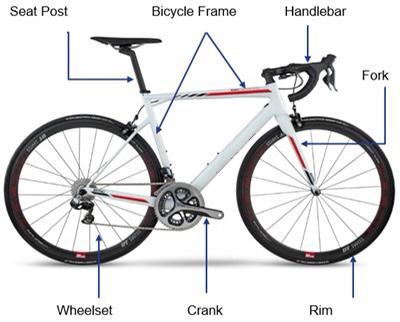
Source: Frost & Sullivan
We realized revenue of approximately $15.2 million and $24.9 million from our sales of bicycle parts for the years ended December 31, 2023 and 2022, which accounted for approximately 64.0% and 63.2%, respectively, of our revenue for the corresponding periods. In the future, we will continue to engage in and focus on our sales of bicycle parts, in particular electric bicycles, in light of the expected market growth the electric bicycle industry.
| 93 |
We believe that there is a strong market demand for sports bicycles and electric bicycles in the global market. According to the industry report prepared by Frost & Sullivan, such increasing trend on the demand for bicycle products is mainly attributable to the change in people’s habits toward pursuing a healthier lifestyle and the implementation of government policies on supporting environmentally friendly transportation or vehicles. Additionally, in the aftermath of the outbreak of COVID-19, the market demand for bicycle products is likely to grow as people are spending more time on outdoor activities domestically owing to the travel restrictions implemented globally. In light of the increasing market demand for bicycle products, in the future, we will focus on sales of bicycle products and continue to enhance the quality and modify the design of our sports bicycle and electric bicycle products. For further details in respect of the industry report prepared by Frost & Sullivan, see the section “Industry” of this prospectus.
With our direction focused on commercializing and popularizing more bicycle products, including both electric bicycles and sports bicycles, in the future, we continuously design and develop new models of bicycle products. In 2021, we launched 28 new bicycle models, in 2022, we launched 31 new models of bicycles, and in 2023, we launched 25 new models of bicycles. We expect to launch an aggregate of 26 new premium bicycle models by the end of 2024. We combined our competitive strengths on material technology and structural design expertise in the development of our new electric bicycle models under the concerted effort of our R&D teams in Taichung, Taiwan and Dongguan, the PRC. Distinguished from other electric bicycles available in the market, our new electric bicycle model adopts minimalistic and stylish structural design, which is able to hide the battery in a less visible manner. Its key components are made of our developed nano resins, which boosts its level of stiffness and weight savings, such that these new models could offer smoother and more cozy commuting experience to customers.
Below are some of the electric bicycle and sports bicycle models that we co-designed with customers and manufactured their carbon fiber parts:

One of the most requested carbon full suspension electric bicycles in market launched under a reputed Swiss-based bicycle brand.
The entire frame of this electric bicycle is constructed of carbon fiber, which keeps its weight down to 20.54kg and it won acclaim internationally for its lightness, agility and directness on trails.
| 94 |

YMA 2017 B-01
The first carbon electric mountain bicycle open model launched by us.
A lightweight carbon-fiber electric mountain bicycle with the improved vehicle weight to a new level. This open model carbon frame is made with more concise appearance design, pull-up battery extraction and higher frame strength. The geometric design of this bicycle is compatible with 500W & 600W battery.

YMA 2017 S-01
The first carbon electric mountain bicycle open model launched and its carbon fiber frame is manufactured to fulfill the industry standard weight.
| 95 |

Colnago 2017 V2-R
This racing bicycle is launched by Colnago, a prominent high-end road-racing bicycle brand based in Italy. The seat post clamp of Colnago 2017 V2-R is designed to boost the aero efficiency of the bicycle.

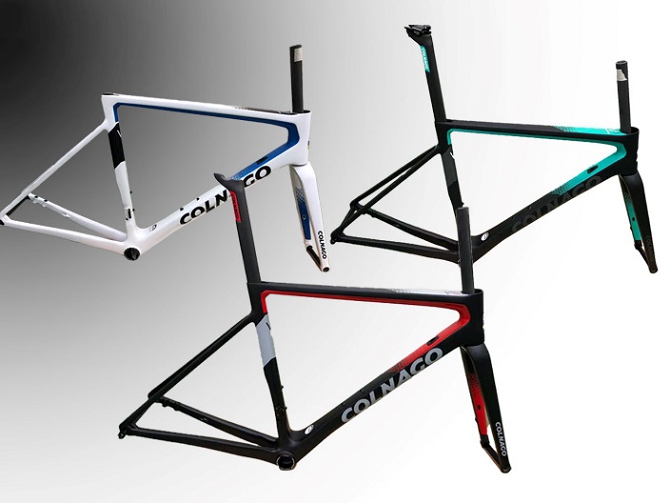
Colnago 2021 V3-R
This racing bicycle is also launched by Colnago and is an upgraded version of Colnago 2017 V2-R. The V3Rs Capsule Collection represents excellence in terms of technological innovation, performance and style. We used a new type of carbon fiber that allows Colnago V3Rs to significantly increase the rigidity to lateral flexions. Tadej Pogacar rode Colnago V3R in winning his championship in Tour de France 2021. The ability to absorb vertical shocks has improved significantly, which translates into greater comfort. Colnago 2021 V3-R is fast on long climbs, in windy plains, on big tours and in stages and its design improves the concepts of lightness and aerodynamics of its road frames.
| 96 |

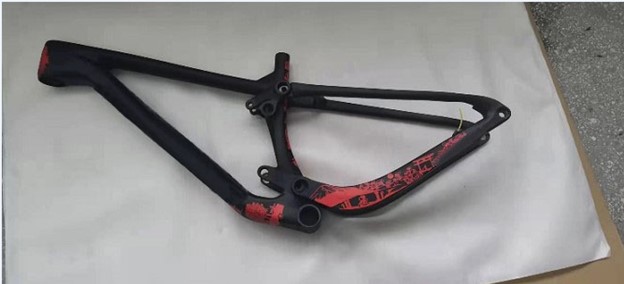
A mountain bicycle launched by a reputed Swiss-based bicycle brand that is reliable in all conditions and surfaces and allows world-class performance.
Manufactured with high-strength and modular high-end carbon fibers, the frame is controlled at a light weight combined with the low frame weight give this bicycle an enormous amount of propulsion.
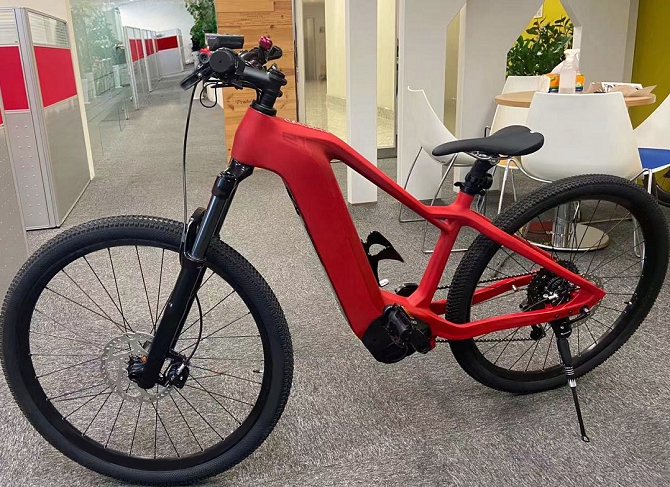
One of the most desirable urban electric bicycles in the market launched by a reputed Swiss-based bicycle brand. With our carbon fiber frame adopted, this electric bicycle weights lighter than a typical electric bicycle. On the road, this electric bicycle is extremely good-natured and predictable, making it the perfect companion for the next city adventure.
Rackets
Our racket products include carbon fiber tennis rackets, badminton rackets, squash rackets and beach tennis rackets. We also provide racket stringing services upon customers’ requests. Based on our customers’ requirements and specifications, our racket development team provides product design that could enhance products’ efficiency, endurance and functionalities. Mass production of racket products will only be carried out after the prototype has passed our product tests in our test center. Racket products are usually delivered to customers’ warehouse around the world through free on board (FOB) in Hong Kong.
According to the industry report prepared by Frost & Sullivan, driven by the higher requirements on the mechanical properties of rackets and increasing purchasing ability of high-end sports goods customers, the market size by revenue of global carbon fiber applied in rackets has witnessed a steady growth, increasing from US$194.1 million in 2016 to US$242.6 million in 2019. Promoted by the increasing health awareness post-pandemic, encouraging policies of sports activities in developing countries, as well as progress made in carbon fiber manufacturing techniques, it is estimated that the demand for carbon fiber applied in rackets will further rise and the market size by revenue of carbon fiber racket parts will increase from US$243.9 million in 2021 to US$332.4 million in 2025, representing a CAGR of approximately 8.0%. In light of the increasing market demand for racket products, in the future, we will focus on sales of racket products and continue to enhance the quality and modify the design of our racket products. For further details in respect of the industry report prepared by Frost & Sullivan, see the section “Industry” of this prospectus.
We generated revenue of approximately $7.0 million and $13.3 million from our sales of racket for the years ended December 31, 2023 and 2022, which accounted for approximately 29.6% and 33.7%, respectively, of our revenue for the corresponding periods. In the future, we will continue to engage in our sales of racket products and we expect that our sales of rackets will remain stable in 2024.
| 97 |
Below are some of the championship rackets we co-designed with our customers and manufactured their carbon fiber parts:
|
Twistpower X100
Twistpower X100 is a product under an American branded global manufacturer of tennis rackets distributed by Groupe Magellan S.A. Twistpower X100 is a light and speedy player’s racket that rewards full swings with a great combination of spin, power and precision. It has uniquely good feel and pocketing, which comes in part from a twisted shaft design which helps the racket bend optimally at impact. |
TECNIFIBRE CARBOFLEX 125S
Carboflex 125S is a squash racket launched by Tecnifibre, a French brand of sporting equipment, specializing in tennis and squash. Carboflex 125S is used by Mohamed El Shorbagy, the world number one squash player in 2020. It offers quick response, great maneuverability and high swing speed. | |
|
Pro Rebel 950 Pro Rebel 950 is a squash racket product under an American branded global manufacturer of tennis rackets distributed by Groupe Magellan S.A. It offers an excellent accuracy and unique maneuverability for players seeking for enhanced performance with lightweight power. Pro Rebel 950 is endorsed by Ramy Ashour, a former worldclass professional squash player.
|
TECNIFIBRE Wall Master 360 PHD Wall Master 360 PHD is the paddle dedicated to club players and it has been engineered with a round head shop to optimize precision and control. Its light weight also allows easier maneuverability. |
| 98 |
Other products
Other products include automobile parts, healthcare products, prepreg sheets and carbon fiber boards.
We generated revenue of $1,516,454 and $1,236,321 from our sales of other products for the years ended December 31, 2023 and 2022, respectively, which accounted for approximately 6.4% and 3.1% of our revenue for the corresponding periods. Despite that our revenue from our sales of other products accounts for a relatively small portion of our total revenue for the years ended December 31, 2023 and 2022, we intend to expand and develop our products on automobile parts, healthcare products and raw materials. We are currently in discussion with a number of customers concerning new projects on certain healthcare products and motorcycle parts.
| (i) | Automobile parts |
Our automobile-related products include carbon fiber parts of automobile, such as air intakes, air-collecting hoods, engine rods, seat back, windshield, handlebar, and so on. Similar to the production model of our bicycle products, our automobile parts development team will first discuss with our customers on the design and specification of the automobile parts. Our R&D team will then commence the product development process based on our customers’ specific requirements.
The electric vehicle market is showing a pattern of continued growth and such trend is pushed forward by the favorable government policies on promoting the use of electric vehicles in different countries, such as providing tax incentives and subsidies. Due to the light-weight property, strength and stiffness of carbon composite, it is commonly used as the major material for producing key components of electric vehicles, such as air intake and seatback. In order to seize market opportunities, we have been preparing the know-how to produce carbon fiber automobile parts since 2019 and have expanded our R&D on technology of producing carbon fiber automobile parts. Although our revenue from sales of automobile parts is yet to be significant in the years ended December 31, 2023 and 2022, we received numerous inquiries from customers in the electric vehicle industry and we expect that there will be more upcoming projects on automobile parts in the future.
Below are some of the carbon fiber automobile parts manufactured by us:
|
Air intake of automobile |
Air intake of automobile
| |
|
Air-collecting hoods of automobile |
Wind shield of motorcycle
| |
|
cover sets of motor cycle |
Seat back of automobile
| |
|
Engine rod of automobile |
Handlebar of motorcycle |
| (ii) | Healthcare and other products |
We had also manufactured carbon fiber healthcare products and other parts, which include carbon fiber senior walker, wheelchair, medical robotic arm, electric wheelchair robotic arm and drone parts. We adopt the same ODM model in respect of the production of health care and other products.
According to the industry report prepared by Frost & Sullivan, carbon fiber is usually used in the chassis and backrest frame of wheelchairs, featuring lightness, stiffness and exceptional durability. The stability and biocompatibility of carbon fiber materials have attracted extensive attention in medical devices and biomaterials. In addition, with the continuous improvement of carbon fiber production and processing technology, carbon fiber has gained market share in robotic arms, particularly industrial robots. Compared to traditional robotic arms made of aluminum alloy and alloy steel, carbon fiber robotic arms have higher flexibility, fracture resistance and a longer service life. Also, the vibration dampening of carbon fiber robotic arms allows for precise control and positioning, enhancing working speed and efficiency of robots. With the accelerated automation process and wide application of industrial robotics, carbon fiber is expected to develop further and be favored by downstream customers. Therefore, we intended to further expand our production on healthcare products and we are currently in discussion with a number of customers concerning new projects on certain healthcare products. For further details in respect of the industry report prepared by Frost & Sullivan, see the section “Industry” of this prospectus.
| 99 |
Below are some of the healthcare products and other products we co-designed with our customers and manufactured their carbon fiber parts:
|
Rollator |
Wheelchair
|
|
Medical robotic arm |
Electric wheelchair robotic arm
|
|
Medical robotic arm |
Rollator |
Research and Development
From January 2019 to December 2023, our continued expenditure in research and development has amounted to an aggregate of approximately $7.1 million. We had an R&D team of 19 personnel as of December 31, 2023. The majority of our R&D team members have over 10 years of experience in industries relevant to our business. Our R&D members predominately are focused on developing know-how for the carbon fiber & resin application technology and carbon fiber & resin processing technology. We obtained a number of patents in this area. For more details on our patents, see the paragraph “Intellectual Property” in this section.
| 100 |
Our R&D center in Taichung focuses on resin material applications, new product development and production process enhancement. We invested $4.1 million in our R&D in Taiwan to develop our resin technology between January 2019 and December 2023, and we have various resin recipes for applications on different scope of products. Meanwhile, our previously owned R&D center in Dongguan, the PRC, focuses on structural design of products, testing on product performance and enhancement on strength and stiffness of products. After the disposal of our PRC Investments in April 2023, we plan to retain at least 5 engineers from the PRC after this offering to assist our R&D center in Taiwan to build a prototype line which we will implement in our upcoming production plants in the U.S. and Europe.
In the future, as part of our use of proceeds, we intend to open up a new R&D center in the U.S. in order to focus on our research and development on automation of production processes. For more details on our use of proceeds, see “Use of Proceeds” section.
Raw Materials and Suppliers
Our major raw materials mainly include carbon fiber yarn and resin, which are the major components for manufacturing carbon composite material of our products. Typically, our purchases are made based on the purchase orders we receive from our customers and their annual forecasts. We mainly purchase top-grade carbon fiber yarn and resin from independent suppliers in Japan, Taiwan and PRC. To procure carbon fiber yarn from Japan, we are required to obtain a Special General Bulk Export License from the Japanese government in order to comply with regulations from the Security Export Control implemented in Japan. In order to avoid over-reliance on a single source of supply, we will continue to maintain more than one supplier for each category of our major raw materials. For instance, we have been sourcing quality carbon fiber yarn not only from Japan and Taiwan, but also from certain reliable suppliers in PRC. During the years ended December 31, 2023 and 2022, we had not encountered any material shortage, delay or major difficulty in the procurement of raw materials from our suppliers. Further, as of the date of this prospectus, to the best knowledge of the Company, we do not have any direct business or contracts with any Russian entity as a supplier, but we do not have any knowledge as to whether any our suppliers have any direct business or contracts with any Russian entity.
Customers
We supply our products directly or indirectly to reputed branded customers predominantly engaged in the electric bicycle industry, sports bicycle industry, sporting goods industry, automobile industry and healthcare industry, most of which are based in European countries. Our customers include Colnago, an international high-end road-racing bicycle manufacturer and trader based in Italy, and Tecnifibre, a well-known French brand of sporting equipment specializing in tennis and squash. We usually supply our products on an order basis and we do not have formal contracts or agreements with our customers. Hence, sales terms and arrangements are made through purchase orders from the customers and accepted by us.
We are currently diversifying our customer base in order to lower our exposure to risks relating to reliance on any one single customer. Leveraging our substantial experience and expertise in the carbon composite application industry and sporting goods industry, we believe we are positioned to maintain our relationship with our current customers, and further expand our customer base in the future. However, as of the date of this prospectus, to the best knowledge of the Company, we do not have any direct business or contracts with any Russian entity as a customer, but we do not have any knowledge as to whether any our customers have any direct business or contracts with any Russian entity.
Sales and Marketing
We primarily acquire our customers by the following means: (i) referrals from our existing customers; (ii) direct approaches to potential customers through phone calls or emails; (iii) direct approaches by potential customers after learning our industry reputation and our current customer base; and (iv) direct approaches by bicycle assembly houses which connect us to branded customers. Our sales and marketing team is responsible for handling purchase orders received from our customers, coordinating with our outsourced production plant for execution of purchasing orders, communicating with customers on their requests and feedback, and developing relationship with customers. We generally market and tailor-make products for our branded customers. We seek opportunities to expand our customer base while maintain our business relationship with our existing customers. We conduct visits to and meet with our existing major customers from time to time with a view to securing existing business, promoting our scope of business and our range of products, and increasing the chance that they will engage in new projects with us. Our customers will also regularly visit our Taichung headquarters and our outsourced Dongguan production plant to discuss ongoing projects, explore opportunities for new projects and share business and market information. For example, in 2018, we had our anniversary celebrations and we invited our customers, suppliers and other stakeholders to attend our celebration, during which we introduced the history and development of our Group, our major products and new products to be launched. In terms of after-sales service, our sales and marketing team gathers feedback from our customers regarding our products from time to time. We visit our customers on a periodic basis to discuss the quality of our products and services.
| 101 |
Seasonality
Our products and services have no obvious seasonal characteristics. We generally record relatively stable sales revenue around the year. We only experience production declines during the first two months of the year due to the Chinese New Year holidays. To overcome the seasonality effect on production, we encourage our manufacturing employees to take early leave for the Chinese New Year and resume work as soon as possible in February.
Quality Control
We place great emphasis on the quality of our products. We have adopted stringent quality procedures throughout each stage in the entire production process from the inspection of raw materials, production of prototypes, manufacturing processes to finished products. We have our internal quality control room for testing the quality of the incoming raw materials We also have our reliability test laboratory and in-house testing equipment so we can continuously monitor the reliability and functional stability of our products. Our quality control team is responsible for developing and implementing our quality control policy, which specifies various quality control steps for different products at different stages.
We have a stringent management system to ensure adherence to and consistency in the quality of our products so that we are capable of quickly running our own in-house tests from Taiwan. We did not experience any significant quality defects or product claims or refunds or returns from our customers or remedies in respect of our products which materially and adversely affected our business, operations or financial conditions during the years ended December 31, 2023 and 2022 and up to the date of this prospectus.
Intellectual Property
We regard our patents, copyrights, trademarks, trade secrets and other intellectual property rights as critical to our success. We rely on a combination of patent, copyright, trademark and trade secret laws and restrictions on disclosure to protect our intellectual property rights. Our intellectual property portfolio as of the date of this prospectus included the following:
Patents: We have 30 registered patents in Taiwan, PRC, Japan, Europe and the U.S., among which 7 of them are invention patents, 14 of them are utility model patents and 9 of them are design patents). The registered patents cover bicycle, racket and manufacturing process of carbon fiber products. Details of the 30 registered patents are as follows:
| No. | Patent Description | Holder | Place of Registration | Patent Type | Patent Number | Duration | ||||||
| 1 | Carbon-fiber product forming device | Star Leader Trading | Taiwan | Utility Model | M538875 | April 1, 2017 – August 4, 2026 | ||||||
| 2 | Carbon-fiber product forming device | Star Leader Trading | PRC | Utility Model | ZL201620845839.X | August 5, 2016 – August 5, 2026 | ||||||
| 3 | Carbon-fiber product forming device | Star Leader Trading | Japan | Utility Model | 3208329 | October 24, 2016 – October 24, 2026 | ||||||
| 4 | Apparatus of manufacturing carbon fiber prepreg | TW YMA | Taiwan | Utility Model | M567260 | September 21, 2018 – May 17, 2028 | ||||||
| 5 | Carbon fiber prepreg material preparation equipment | TW YMA | PRC | Utility Model | ZL201821112561.0 | July 13, 2018 – July 13, 2028 | ||||||
| 6 | Twisted bicycle frame | TW YMA | PRC | Utility Model | ZL201821587258.6 | September 28, 2018 – September 28, 2028 | ||||||
| 7 | Tennis racket with padding material | TW YMA | Taiwan | Utility Model | M581924 | August 11, 2019 - January 28, 2029 | ||||||
| 8 | Lightweight pike racket | TW YMA | Taiwan | Utility Model | M581926 | August 11, 2019 - January 28, 2029 | ||||||
| 9 | Lightweight pike racket | TW YMA | PRC | Utility Model | ZL201920211539.X | February 19, 2019 - February 19, 2029 | ||||||
| 10 | Tennis racket with packing material | TW YMA | Japan | Utility Model | 3221292 | February 27, 2019 - February 27, 2029 | ||||||
| 11 | Racket frame with shock absorption effect | TW YMA | PRC | Utility Model | ZL201921038799.8 | July 4, 2019 - July 4, 2029 | ||||||
| 12 | The badminton racket frame has functions of adjusting shock absorption effect and changing gravity center position | TW YMA | PRC | Utility Model | ZL201921033514.1 | July 4, 2019 - July 4, 2029 | ||||||
| 13 | The racket frame having a vibration absorbing effect | TW YMA | Japan | Utility Model | 3223222 | July 12, 2019 - July 12, 2029 | ||||||
| 14 | Badminton racket that can adjust vibration absorption effect and change the center of gravity position | TW YMA | Japan | Utility Model | 3223277 | July 18, 2019 - July 18, 2029 |
| 102 |
| 15 | Racket with replaceable grip sleeve | TW YMA | the U.S. | Invention | US8579738B2 | May 11, 2012 – June 5, 2032 | ||||||
| 16 | Weight changeable racket | TW YMA | the U.S. | Invention | US8721478B2 | May 11, 2012 – August 9, 2032 | ||||||
| 17 | Weighting device and racket equipped with the same | TW YMA | the U.S. | Invention | US8758175B2 | May 22, 2012 – January 26, 2033 | ||||||
| 18 | Shock-absorbing seat stay for bicycle | TW YMA | the U.S. | Invention | US8894085B2 | April 16, 2013 – April 16, 2033 | ||||||
| 19 | Twisted tennis racket frame | TW YMA | Europe | Invention | EP3056249B1 | December 28, 2015 – December 28, 2035 | ||||||
| 20 | Device method forming carbon-fiber product | Star Leader | Europe | Invention | EP3278965 | November 7, 2016 – November 7, 2036 | ||||||
| 21 | Method of forming carbon-fiber product and implementation device thereof | Star Leader Trading | the U.S. | Invention | US10500798B2 | November 16, 2016 – August 25, 2037 | ||||||
| 22 | Squash racket | TW YMA | Europe | Design | 005804630-0001 | October 23, 2018 - October 23, 2043 | ||||||
| 23 | Squash frame | TW YMA | PRC | Design | ZL201830591835.8 | October 23, 2018 - October 23, 2028 | ||||||
| 24 | Badminton racket frame | TW YMA | PRC | Design | ZL201930062297.8 | February 12, 2019 - February 12, 2029 | ||||||
| 25 | Badminton racket frame | TW YMA | PRC | Design | ZL201930062298.2 | February 12, 2019 - February 12, 2029 | ||||||
| 26 | Squash racket | TW YMA | the U.S. | Design | USD876562S | February 25, 2020 - February 25, 2035 | ||||||
| 27 | Badminton racket frame | TW YMA | Japan | Design | 1643801 | January 31, 2019 – January 31, 2039 | ||||||
| 28 | Badminton racket frame | TW YMA | Japan | Design | 1643802 | January 31, 2019 – January 31, 2039 | ||||||
| 29 | Tennis Racket Frame | TW YMA | the U.S. | Design | USD813962S | March 27, 2018 – March 27, 2033 | ||||||
| 30 | Tennis Racket Frame | TW YMA | the U.S. | Design | USD777859S | January 31, 2017 – January 31, 2032 |
| 103 |
We had applied for the registration of 6 patents in Taiwan, PRC, Vietnam, Cambodia and Germany, covering carbon-fiber products manufacturing, parts manufacturing and prepreg production equipment. Details of the 6 patent applications are as follows:
| No. | Patent Description | Holder | Place of Application | Patent Type | Application Number | Date of Application | ||||||
| 1 | Manufacturing method of bicycle parts | TW YMA | Taiwan | Invention | 109110056 | March 25, 2020 | ||||||
| 2 | Manufacturing method of parts | TW YMA | Taiwan | Invention | 109144726 | December 17, 2020 | ||||||
| 3 | Manufacturing method of parts | TW YMA | PRC | Invention | 202011642889.5 | December 30, 2020 | ||||||
| 4 | Carbon-fiber prepreg producing equipment | TW YMA | Vietnam | Invention | VN 1-2018-05804 | December 21, 2018 | ||||||
| 5 | Carbon-fiber prepreg producing equipment | TW YMA | Cambodia | Invention | KH/P/2018/00062 | December 6, 2018 | ||||||
| 6 | Equipment for the production of carbo fiber prepreg materials | TW YMA | Germany | Invention | 102018221759.9 | December 14, 2018 |
| ● | Trademarks: We owned a total of 12 registered trademarks in PRC and Taiwan. Our trademarks include the combination of graphs and names for TW YMA: |

| ● | Domain name: We have 2 registered domain names in the U.S., which are www.ymaunivers.com and www.j-starholding.com. |
In addition to the foregoing protections, we generally control access to and use of our proprietary and other confidential information through the use of internal and external controls. For example, for external controls, we enter into non-disclosure agreements or agree to confidentiality clauses with our customers and, for internal controls, we adopt and maintain policies governing the operation and maintenance of our systems and the management of user-generated data, and enter into standard confidentiality and intellectual property agreements with our key employees.
| 104 |
Competition
According to the industry report commissioned by us and prepared by Frost & Sullivan, at present, there is fierce competition in the low-end carbon fiber market with low profit margins. There is still a large profit margin in the mid-end and high-end carbon fiber markets. However, in the future, the demand for carbon fiber products for consumption will continue to grow. With the development of technology, there will be more applications of carbon fiber for new purposes and uses, and the cost of carbon fiber is expected to decrease over time. It is expected that these factors will enable a higher margin for the manufacturers and promote people’s willingness to buy carbon fiber based sports and leisure products. In the future, long-term low-price competition will force low-end carbon fiber products manufacturers to face business transformation. However, manufacturers who develop mid-end and high-end products will maintain their first mover advantages through resource accumulation and research and development capability and maintain a leading position in the industry.
Our ability to remain competitive will largely depend on our business model, the quality of our products and services, the effectiveness of our sales and marketing efforts and our ability to enhance the features and functionality of our products to satisfy our customers’ needs.
We believe that the principal competitive factors in our market are:
| ● | core competence in providing high-standard customized products according to customers’ specifications; | |
| ● | quality of technologies and, as a result, research and development capabilities; | |
| ● | ability to innovate and respond rapidly to customer needs; | |
| ● | strategic expansion of production capacity and quality management; | |
| ● | ability to control costs; | |
| ● | sufficient capital support; and | |
| ● | brand awareness and reputation of the Company. |
Employees
We had 65 full-time employees as of December 31, 2023. As of the date of this prospectus, our employees are based in Taiwan and PRC. In order to address the development, attraction and retention of personnel, we have made continued and substantial investment in our technical personnel by providing them with training and various types of incentives so as to reward them for their services and contributions.
The following table provides the number of our employees by function, as of December 31, 2023:
| Function | Number of Full-Time Employees | |||
| R&D | 19 | |||
| Quality control | 7 | |||
| Business development | 18 | |||
| Procurement | 5 | |||
| Management | 2 | |||
| Accounting & finance | 8 | |||
| Production | 0 | |||
| Human resources, I.T. & Administration | 6 | |||
| Total | 65 | |||
| 105 |
As required by the laws of the PRC, we participate in various employee social security plans that are organized by municipal and provincial governments for our PRC-based full-time employees, including pension, unemployment insurance, childbirth insurance, work-related injury insurance and medical insurance. We are required under PRC law to make contributions monthly at specified percentages of the salaries, bonuses and certain allowances of our PRC-based full-time employees, up to maximum amounts specified by applicable local governments. For risks relating to our failure to make adequate contributions for social insurance premiums for our employees in accordance with the statutory payment base required by the relevant PRC laws, see “Risk Factors – Risks Related to Conducting Operations in PRC and Hong Kong – We may be subject to additional contributions under various employee benefits plans and late payments and fines imposed by relevant government authority.”
We have a defined contribution pension plan under Taiwan’s Labor Pension Act covering all Taiwan employees. We contribute 6% of an employee’s monthly wages to the personal pension account of such employee each month with the Bureau of Labor Insurance of Taiwan.
We enter into labor contracts and standard confidentiality with our key employees. Before we disposed our PRC Investments in PRC factories operation, we were involved in 9 legal proceedings in relation to labor disputes during the years ended December 31, 2023 and 2022, all of which have been duly settled. None of our employees are represented by labor unions.
Inventory
We generally maintain limited inventory. We order materials for our projects on an as-needed basis. Where our proprietary products are needed, we place orders with our suppliers for raw materials and commence our production upon receipt of orders from our customers.
We held total inventory of $187,602 and $19,150,760 as of December 31, 2023 and 2022, respectively. The lower level of total inventory on December 31, 2023 as compared to December 31, 2022 was mainly due to the management team’s continuous effort and the disposal of our PRC Investments. Due to the disposal of our PRC Investments, the higher level of inventory in the year ended December 31, 2023 may not be indicative of our future inventory levels.
Properties
Our headquarters are located in 7/F-1, No.633, Sec. 2, Taiwan Blvd., Xitun District, Taichung City 407, Taiwan (the “Taichung headquarters”), and we maintain an R&D center with material laboratory in Taichung. As of December 31, 2023, we had land use rights to one property of approximately 64,851 square meters (approximately 698,050 square feet) at the development zones for new and high technology industries in Yangzhou, the PRC (the “Yangzhou Property”), which would be used for building a new production plant in Yangzhou. However, due to the impact of COVID-19, our management decided to make the best use of capital instead of holding the parcel of land. We disposed the Yangzhou property back to Yangzhou government in September 2023. As a result, we will not be subject to any penalties for failure to fully comply with the previous land use rights contract. We have leased 3 properties with an aggregate of approximately 14,175 square meters (approximately 152,582 square feet) in Taiwan. On June 1, 2022, we entered into a contract to acquire a building (land included) in Taichung, Taiwan as our new headquarters. This transaction is expected to be completed in June 2024. Details as to all our properties are as follows:
| 106 |
| Address | Size | Rent | Expiration | |||
Flat 1 & 2, 7th Floor, No. 633, Section 2, Taiwan Blvd., Xitun District, Taichung City, Taiwan |
approximately 696.5 square meters (approximately 7,497.1 square feet) | NTD214,870 per month (approximately $7,692) | December 31, 2024 | |||
No. 18, 1 Shude Lane, South District, Taichung City, Taiwan |
approximately 696.9 square meters (approximately 7,501.4 square feet) | NTD204,336 per month (approximately $7,321) | December 31, 2024 | |||
Car Park Space B4-72, 73, 74, 75 & 76, No. 633, Section 2, Taiwan Blvd., Xitun District, Taichung City, Taiwan |
N/A | NTD15,000 per month (approximately $537) | December 31, 2024 |
Insurance
We maintain commercial fire insurance for our headquarters, R&D center and warehouse in Taiwan and public general liability insurance in Taiwan. We also maintain credit insurance in respect of debts arising in the course of business activity and from the trading of products and performance of services under TW YMA. In addition, we purchase cargo transportation insurance to insure the risks and liabilities in relation to the shipping of our products and raw materials between our warehouse in Taiwan, our outsourced production plant and warehouse in the PRC and delivery points designated by customers. We also maintain commercial general liability insurance with products liability coverage in respect of the bicycle parts products, senior walker products, motorcycle handler and prepreg materials manufactured or distributed by us and exported or sold worldwide. We consider our insurance coverage to be consistent with customary industry standards adopted by other companies in the same industry and of similar size.
Legal Proceedings
We were involved in 9 legal proceedings in relation to labor disputes during the years ended December 31, 2023 and 2022, all of which have been duly settled. As of the date of this prospectus, we are not a party to, nor are we aware of, any legal proceedings, investigations or claims which, in the opinion of our management, are likely to have a material adverse effect on our business, financial condition or results of operations.
Recent Developments
In October 2022, the Company entered into a non-binding memorandum of understanding with an Abu Dhabi company to build and operate a carbon fiber bicycle manufacturing facility in Khalifa Industrial Zone, Abu Dhabi, United Arab Emirates (the “Project”) to serve the European market through acquisition, joint venture and/or co-branding production. Both parties will jointly conduct a feasibility study prior to the commencement of the Project. In April 2023, we (i) entered into a memorandum of understanding with a French based manufacturing company, to form a partnership to build a carbon fiber racquet brand and manufacturing factory in France, and such memorandum of understanding will remain in effect until modified or terminated by mutual consent; and (ii) entered into a memorandum of understanding with a potential acquisition target, a United Kingdom based bicycle company engaging in sales marketing and distribution in the bicycle and sporting goods trade.
In April 2023, we disposed 80.5% equity interests in each of our two PRC operating subsidiaries, namely, Dongguan YMA and Dongguan Forwell. Prior to the disposals, products under the ODM and OEM business models were manufactured by both Dongguan YMA and Dongguan Forwell in our production plant in Dongguan, the PRC. After the disposals, we will continue to utilize Dongguan YMA and Dongguan Forwell to manufacture products under the ODM and OEM business models for the next five years, as we entered into OEM/ODM agreements and their respective supplemental agreement with the two entities in April 2023. The term of the OEM/ODM agreement (as supplemented by a supplemental agreement) is five years from April 18, 2023 and will be automatically renewed with the same terms for one year unless YMA Corporation (“Party A”) or any of the PRC Investments (“Party B”) notifies the other party in writing of the termination of the agreement 90 days before the expiration date. Under the OEM/ODM agreement, Party A has entrusted the manufacturing of products including but not limited to prototypes and mold fixtures to Party B. Upon instructions by Party A, Party B shall purchase the designated semi-finished products, spare parts, raw materials, etc., from a supplier designated by Party A for manufacturing. Party B shall then provide the manufactured finished products to Party A based on the agreed delivery schedule. Party A shall pay the OEM/ODM manufacturing costs to Party B. Both parties agreed that the payment terms shall be monthly settlement within 60 days from the settlement date, being the 25th of each month. Both parties agreed that the products and any intellectual property rights involved in the OEM/ODM manufacturing process shall belong to Party B. The acceptance of the final product is based on an inspection of the product by Party A. If the inspection fails, Party B shall ratify and Party A shall be entitled to three further inspections. If the further inspections fail, Party A may notify Party B of the termination of the OEM/ODM agreement.
| 107 |
Our business operations are primarily in Taiwan and the PRC for the reporting financial periods and up until April 2023, and we are primarily subject to Taiwan and the PRC laws and regulations. This section sets forth a summary of the most significant regulations or requirements that affect our business activities in Taiwan and PRC or our shareholders’ rights to receive dividends and other distributions from us.
Regulations in Taiwan
Regulations Relating to Foreign Exchange
Taiwan Foreign Exchange Control Law and regulations provide that all foreign exchange transactions must be executed by banks designated by Taiwan’s Financial Supervisory Commission and the Central Bank of the Republic of China (Taiwan) to engage in such transactions. Current regulations favor trade-related or service-related foreign exchange transactions. Consequently, foreign currency earned from exports of merchandise and services may now be retained and used freely by exporters, and all foreign currency needed for the importation of merchandise and services may be purchased freely from the designated foreign exchange banks.
Apart from trade-related or service-related foreign exchange transactions, Taiwan companies and individual residents reaching the age of 18 may, without foreign exchange approval, remit foreign currency of up to US$50 million (or its equivalent) and US$5 million (or its equivalent) to and from Taiwan (or such other amount as determined by the Central Bank of the Republic of China (Taiwan) from time to time at its discretion in consideration of Taiwan’s economic and financial conditions or the needs to maintain the order of foreign exchange market in Taiwan), respectively, in each calendar year. The above limits apply to remittances involving either a conversion of NTD into a foreign currency or a conversion of foreign currency into NTD. In addition, a requirement is also imposed on all enterprises to register medium- and long-term foreign debt with the Central Bank of the Republic of China (Taiwan).
Subject to specified requirements but without foreign exchange approval of the Central Bank of the Republic of China (Taiwan), foreign persons may remit to and from Taiwan foreign currencies of up to US$100,000 (or its equivalent) per remittance if the required documentation is provided to the authorities in Taiwan. The above limit applies to remittances involving either a conversion of NTD into a foreign currency or a conversion of foreign currency into NTD.
Regulations Relating to Dividend Distributions
Except under limited circumstances, a Taiwanese company will not be permitted to distribute dividends or make other distributions to shareholders in any given year in which it did not record net income or retained earnings (excluding reserves). The Taiwan Company Act requires that 10% of annual net income (less prior years’ losses, if any, and applicable income taxes) be set aside as a legal reserve until the accumulated legal reserve equals the paid-in capital of the company. The company will be permitted to make distributions to its shareholders in cash or in the form of ordinary shares from legal reserves if it has no accumulated loss, provided that the distribution payable out of the company’s legal reserve can only come from the amount exceeding 25% of the total paid-in capital.
The articles of incorporation of TW YMA provide that its net profit after tax shall be distributed first for making up accumulated losses, and then setting aside 10% as legal reserve, unless the accumulated legal reserve equals the paid-in capital. The remaining earnings along with the undistributed earnings at the beginning of the period are considered as accumulated distributable earnings. The shareholders’ dividends are appropriated based on the accumulated distributable earnings. The dividend payout ratio is proposed by TW YMA’s board of directors and approved by its shareholder(s) at the shareholders’ meeting.
| 108 |
According to the articles of incorporation of TW YMA, upon the final settlement of accounts, if there is any surplus profit (meaning the net profit before tax before deduction of employees’ remuneration), TW YMA shall set aside at least 10% of the surplus profit as employees’ remuneration, and set aside certain amount as the remuneration of directors and supervisors; provided that if TW YMA has accumulated losses, it shall reserve an amount thereof for making up the losses. Employees’ remuneration may be in the form of cash or shares. Employees (including those of TW YMA’s controlling companies or subsidiaries) entitled to such remuneration or other employee incentive programs shall meet certain requirements, and such requirements shall be determined by the board of directors of TW YMA.
Regulations Relating to Preemptive Rights
Under Taiwan Company Act, when a Taiwan company issues new shares for cash, the company’s employees, whether they are shareholders of the company or not, have rights to subscribe for 10% to 15% of the new issue, and existing shareholders who are listed on the shareholders’ register as of the record date have a preemptive right to acquire the remaining 85% to 90% of the issue; provided that pursuant to the Statute For Investment By Foreign Nationals, such employee preemptive rights may be excluded if 45% or more of the company’s total capital is owned by foreign investors.
Regulations on Taxation
Effective from 2018, Taiwan’s Income Tax Law abolished the imputation system, raised the corporate income tax rate from 17% to 20%, and reduced the rate of surtax imposed on unappropriated earnings from 10% to 5%. Effective from 2020, Taiwan’s Statute for Industrial Innovation extended the tax incentive by 10 years for R&D expenditure. In addition, if a company uses its undistributed earnings to construct or purchase buildings, software or hardware equipment, or technology for use in production or operation, such investment amounts may be deducted from the undistributed earnings in calculation of the current year’s undistributed earnings for assessment of surtax imposed on undistributed earnings from the year 2018.
The alternative minimum tax (“AMT”) imposed under Taiwan’s AMT Act is a supplemental income tax which applies if the amount of regular income tax calculated pursuant to Taiwan’s Income Tax Law and relevant laws and regulations is below the amount of basic tax prescribed under the AMT Act. The taxable income for calculating AMT includes most income that is exempt from income tax under various regulations, such as tax holidays. The prevailing AMT rate for business entities is 12%.
Regulations in PRC
Regulations on Foreign Currency Exchange
The principal regulations governing foreign currency exchange in China are the Foreign Exchange Administration Regulations, most recently amended in 2008. Under PRC foreign exchange regulations, payments of current account items, such as profit distributions, interest payments and trade and service-related foreign exchange transactions, can be made in foreign currencies without prior approval from the SAFE, by complying with certain procedural requirements. By contrast, approval from or registration with appropriate government authorities is required where RMB is to be converted into foreign currency and remitted out of China to pay capital account items, such as direct investments, repayment of foreign currency-denominated loans, repatriation of investments and investments in securities outside of China.
In 2012, SAFE promulgated the Circular of Further Improving and Adjusting Foreign Exchange Administration Policies on Foreign Direct Investment, or Circular 59, as amended in May 2015, which substantially amends and simplifies the foreign exchange procedure. Pursuant to Circular 59, the opening of various special purpose foreign exchange accounts, such as pre-establishment expenses accounts, foreign exchange capital accounts and guarantee accounts, the reinvestment of Renminbi proceeds derived by foreign investors in the PRC, and remittance of foreign exchange profits and dividends by a foreign-invested enterprise, or FIE to its foreign shareholders no longer require the approval or verification of SAFE. In February 2015, SAFE promulgated the Notice on Further Simplifying and Improving the Administration of the Foreign Exchange Concerning Direct Investment, or SAFE Notice 13. Instead of applying for approvals regarding foreign exchange registrations of foreign direct investment and overseas direct investment from SAFE, entities and individuals may apply for such foreign exchange registrations from qualified banks. The qualified banks, under the supervision of SAFE, may directly review the applications and conduct the registration.
| 109 |
In addition, the PRC governmental authorities have gradually relaxed restrictions on the settlement of the foreign exchange capitals of FIEs in recent years. In March 2015, SAFE promulgated SAFE Circular 19, which expands a pilot reform of the administration of the settlement of the foreign exchange capitals of FIEs nationwide. SAFE Circular 19 replaced both the Circular of the SAFE on Issues Relating to the Improvement of Business Operations with Respect to the Administration of Foreign Exchange Capital Payment and Settlement of Foreign- invested Enterprises, or SAFE Circular 142, and the Circular of the SAFE on Issues concerning the Pilot Reform of the Administrative Approach Regarding the Settlement of the Foreign Exchange Capitals of Foreign-invested Enterprises in Certain Areas, or SAFE Circular 36. SAFE Circular 19 allows all FIEs established in the PRC to settle their foreign exchange capital on a discretionary basis according to the actual needs of their business operation, provides the procedures for foreign invested companies to use Renminbi converted from foreign currency-denominated capital for equity investments and removes certain other restrictions that had been provided in SAFE Circular 142. However, SAFE Circular 19 continues to prohibit FIEs from, among other things, using Renminbi funds converted from their foreign exchange capital for expenditure beyond their business scope and providing entrusted loans or repaying loans between non-financial enterprises. SAFE promulgated the SAFE Circular 16, effective June 2016, which reiterates some of the rules set forth in SAFE Circular 19. SAFE Circular 16 provides that discretionary foreign exchange settlement applies to foreign exchange capital, foreign debt offering proceeds and remitted foreign listing proceeds, and the corresponding Renminbi capital converted from foreign exchange may be used to extend loans to related parties or repay inter-company loans (including advances by third parties). On October 23, 2019, SAFE further issued Circular of the State Administration of Foreign Exchange on Further Promoting the Facilitation of Cross-border Trade and Investment, or SAFE Circular 28, which took effect on the same day. SAFE Circular 28 allows non-investment FIEs to use their capital funds to make equity investments in China as long as such investments do not violate the Negative List and the target investment projects are genuine and in compliance with laws. In addition, SAFE Circular 28 stipulates that qualified enterprises in certain pilot areas may use their capital income from registered capital, foreign debt and overseas listing for the purpose of domestic payments without providing authenticity certifications to the relevant banks in advance for those domestic payments.
Regulations Relating to Dividend Distributions
The principal laws, rules and regulations governing dividend distributions by FIEs in the PRC are the PRC Company Law, promulgated in 1993 and last amended in 2023 with the amendments to be effective from July 1, 2024 and the Foreign Investment Law and its Implementing Regulations, both came into effect on January 1, 2020. Under these requirements, FIEs may pay dividends only out of their accumulated after-tax profit, if any, as determined in accordance with PRC accounting standards and regulations. In addition, a PRC company, including FIEs in the PRC, is required to allocate at least 10% of its accumulated after-tax profit each year, if any, to fund the statutory reserve fund until the aggregate amount of the reserve fund has reached 50% of its registered capital. A PRC company may, at its discretion, allocate a portion of its after-tax profits based on its articles of association and PRC accounting standards to certain reserve funds. These reserves can only be used for specific purposes and are not distributable as cash dividends. A PRC company is not permitted to distribute any profits until any losses from prior fiscal years have been offset. Profits retained from prior fiscal years may be distributed together with distributable profits from the current fiscal year.
Regulations on Foreign Exchange Registration of Overseas Investment by PRC Residents
In 2014, SAFE issued the SAFE Circular on Relevant Issues Relating to Domestic Resident’s Investment and Financing and Roundtrip Investment through Special Purpose Vehicles, or SAFE Circular 37, replacing the SAFE Circular on Issues Concerning the Regulation of Foreign Exchange in Equity Finance and Return Investments by Domestic Residents through Offshore Special Purpose Vehicles, or SAFE Circular 75. SAFE Circular 37 regulates foreign exchange matters in relation to the use of special purpose vehicles by PRC residents or entities to seek offshore investment and financing or conduct round trip investment in China. Under SAFE Circular 37, a “special purpose vehicle” refers to an offshore entity established or controlled, directly or indirectly, by PRC residents or entities for the purpose of seeking offshore financing or making offshore investment, using legitimate onshore or offshore assets or interests, while “round trip investment” refers to direct investment in the PRC by PRC residents or entities through special purpose vehicles, namely, establishing FIEs to obtain ownership, control rights and management rights. SAFE Circular 37 provides that, before making a contribution into a special purpose vehicle, PRC residents or entities are required to complete foreign exchange registration with SAFE or its local branch.
| 110 |
In 2015, SAFE promulgated SAFE Notice 13, which amended SAFE Circular 37 by requiring PRC residents or entities to register with qualified banks rather than SAFE or its local branch in connection with their establishment or control of an offshore entity established for the purpose of overseas investment or financing. PRC residents or entities who had contributed legitimate onshore or offshore interests or assets to special purpose vehicles but had not registered as required before the implementation of SAFE Circular 37 must register their ownership interests or control in the special purpose vehicles with qualified banks. An amendment to the registration is required if there is a material change with respect to the special purpose vehicle registered, such as any change of basic information (including change of PRC residents, name and operation term), increases or decreases in investment amount, transfers or exchanges of shares, and mergers or divisions.
Failure to comply with the registration procedures set forth in SAFE Circular 37 and the subsequent notice, or making misrepresentations or failing to disclose the control of the FIE that is established through round-trip investment, may result in restrictions being imposed on the foreign exchange activities of the relevant FIEs, including payment of dividends and other distributions, such as proceeds from any reduction in capital, share transfer or liquidation, to its offshore parent or affiliate, and the capital inflow from the offshore parent, and may also subject relevant PRC residents or entities to penalties under PRC foreign exchange administration.
Regulations on Taxation
Enterprise Income Tax
On March 16, 2007, the National People’s Congress promulgated the PRC Enterprise Income Tax Law, which was amended on February 24, 2017 and December 29, 2018. On December 6, 2007, the State Council enacted the Regulations for the Implementation of the Enterprise Income Tax Law, which became effective on January 1, 2008 and was amended on April 23, 2019. Under the Enterprise Income Tax Law and the relevant implementing regulations, both resident enterprises and non-resident enterprises are subject to tax in the PRC. Resident enterprises are defined as enterprises that are established in the PRC in accordance with PRC laws, or that are established in accordance with the laws of foreign countries but are actually or in effect controlled from within China. Non-resident enterprises are defined as enterprises that are organized under the laws of foreign countries and whose actual management is conducted outside the PRC, but have established institutions or premises in the PRC, or have no such established institutions or premises but have income generated from inside the PRC. Under the Enterprise Income Tax Law and relevant implementing regulations, a uniform corporate income tax rate of 25% is applied. However, if non-resident enterprises have not formed permanent establishments or premises in the PRC, or if they have formed permanent establishments or premises in the PRC but there is no actual relationship between the relevant income derived in the PRC and the established institutions or premises set up by them, withholding income tax is set at the rate of 10% with respect to their income sourced from inside the PRC.
Value-Added Tax
The PRC Provisional Regulations on Value-Added Tax were promulgated by the State Council on December 13, 1993, became effective on January 1, 1994, and were subsequently amended from time to time. The Detailed Rules for the Implementation of the PRC Provisional Regulations on Value-Added Tax (2011 Revision) were promulgated by the Ministry of Finance on December 25, 1993 and subsequently amended in 2008 and 2011. On November 19, 2017, the State Council promulgated the Decisions on Abolishing the PRC Provisional Regulations on Business Tax and Amending the PRC Provisional Regulations on Value-Added Tax. Pursuant to these regulations, rules and decisions, all enterprises and individuals engaged in sale of goods, provision of processing, repair, and replacement services, sales of services, intangible assets, real property, and the importation of goods within the PRC are value-added tax, or VAT taxpayers. On March 20, 2019, the Ministry of Finance, the State Administration of Taxation, or SAT, and the General Administration of Customs jointly issued the Announcement on Relevant Policies on Deepening the Reform of Value-Added Tax. Pursuant to this announcement, the generally applicable VAT rates are simplified as 13%, 9%, 6%, and 0%, which became effective on April 1, 2019, and the VAT rate applicable to the small-scale taxpayers is 3%. If a small-scale taxpayer’s total monthly sales amount does not exceed RMB100 thousand and its quarterly sales volume does not exceed RMB300 thousand, the VAT will be exempted.
| 111 |
Dividend Withholding Tax
The Enterprise Income Tax Law and its implementation rules provide that since January 1, 2008, an income tax rate of 10% will normally apply to dividends declared to non-PRC resident investors that do not have an establishment or place of business in the PRC, or that have such establishment or place of business but the relevant income is not effectively connected with the establishment or place of business, to the extent such dividends are derived from sources within the PRC.
Tax on Indirect Transfer
On February 3, 2015, SAT issued the Bulletin on Issues of Enterprise Income Tax on Indirect Transfers of Assets by Non PRC Resident Enterprises, or SAT Bulletin 7. Pursuant to SAT Bulletin 7, an “indirect transfer” of assets, including equity interests in a PRC resident enterprise, by non-PRC resident enterprises, may be recharacterized and treated as a direct transfer of PRC taxable assets, if such arrangement does not have a reasonable commercial purpose and was established for the purpose of avoiding payment of PRC enterprise income tax. As a result, gains derived from such indirect transfer may be subject to PRC enterprise income tax. When determining whether there is a “reasonable commercial purpose” in the transaction arrangement, features to be taken into consideration include, inter alia, whether the main value of the equity interest of the relevant offshore enterprise derives directly or indirectly from PRC taxable assets; whether the assets of the relevant offshore enterprise mainly consists of direct or indirect investment in China or if its income is mainly derived from China; and whether the offshore enterprise and its subsidiaries directly or indirectly holding PRC taxable assets have a real commercial nature which is evidenced by their actual function and risk exposure. SAT Bulletin 7 does not apply to transactions of sale of shares by investors through a public stock exchange where such shares are acquired on a public stock exchange. On October 17, 2017, SAT issued the Announcement of the State Administration of Taxation on Issues Concerning the Withholding of Non- resident Enterprise Income Tax at Source, or SAT Bulletin 37, which was amended by the Announcement of the State Administration of Taxation on Revising Certain Taxation Normative Documents issued on June 15, 2018 by SAT. SAT Bulletin 37 further elaborates the relevant implemental rules regarding the calculation, reporting, and payment obligations of the withholding tax by the non-resident enterprises. Nonetheless, there remain uncertainties as to the interpretation and application of SAT Bulletin 7. SAT Bulletin 7 may be determined by the tax authorities to be applicable to our offshore transactions or sale of our shares or those of our offshore subsidiaries where non-resident enterprises, being the transferors, are involved.
Regulation of Foreign Investment
The PRC Company Law or Company Law was promulgated on December 29, 1993, which became effective on July 1, 1994, and was subsequently revised on December 25, 1999, August 28, 2004, October 27, 2005, December 28, 2013, October 26, 2018, and on December 29, 2023 with the latest amendments to be effective from July 1, 2024. Limited liability companies and companies limited by shares established in China shall be subject to the Company Law. Each company has the status of a legal person and owns its own assets. Assets of a company may be used in full for the company’s liability. Foreign-invested companies are also subject to the Company Law, except as otherwise provided in the foreign investment laws including the Law of the PRC on Wholly Foreign-owned Enterprise.
Pursuant to the Law of the PRC on Wholly Foreign-owned Enterprise, which was adopted on April 12, 1986, amended on October 31, 2000 and September 2016, and abolished on January 1, 2020, the establishment and subsequent changes of a wholly foreign-owned enterprise is subject to the approval by the authority in charge of commerce or foreign trade and investment and registration with the relevant administration for industry and commerce. The investor of the wholly foreign-owned enterprise must make payment or subscribe for the registered capital according to its articles of association.
| 112 |
On March 15, 2019, the National People’s Congress approved the Foreign Investment Law, which came into effect on January 1, 2020 and replace the trio of existing laws regulating foreign investment in China, namely, the Sino-foreign Equity Joint Venture Enterprise Law, the Sino-foreign Cooperative Joint Venture Enterprise Law and the Wholly Foreign-invested Enterprise Law, together with their implementation rules and ancillary regulations. The organization form, organization and activities of foreign-invested enterprises shall be governed, among others, by the Company Law and the PRC Partnership Enterprise Law. Foreign-invested enterprises established before the implementation of the Foreign Investment Law may retain the original business organization and so on within five years after the implementation of this law. Foreign investors’ investment, earnings and other legitimate rights and interests within the territory of China shall be protected in accordance with the law, and all national policies on supporting the development of enterprises shall equally apply to foreign-invested enterprises. Among others, the state guarantees that foreign-invested enterprises participate in the formulation of standards in an equal manner and that foreign-invested enterprises participate in government procurement activities through fair competition in accordance with the law. Further, the state shall not expropriate any foreign investment except under special circumstances. In special circumstances, the state may levy or expropriate the investment of foreign investors in accordance with the law for the needs of the public interest. The expropriation and requisition shall be conducted in accordance with legal procedures and timely and reasonable compensation shall be given.
The Foreign Investment Law is formulated to further expand opening-up, vigorously promote foreign investment and protect the legitimate rights and interests of foreign investors. According to the Foreign Investment Law, foreign investments are entitled to pre-entry national treatment and are subject to negative list management system. The pre-entry national treatment means that the treatment given to foreign investors and their investments at the stage of investment access shall not be less favorable than that of domestic investors and their investments. The negative list management system means that the state implements special administrative measures for access of foreign investment in specific fields. The Foreign Investment Law does not mention the relevant concept and regulatory regime of contractual arrangement structures. However, since it is relatively new, uncertainties still exist in relation to its interpretation and implementation.
On December 26, 2019, the State Council promulgated the Implementing Regulations of the Foreign Investment Law of the PRC, or the Implementing Regulations of the Foreign Investment Law, which became effective on January 1, 2020. The Implementing Regulations of the Foreign Investment Law strictly implement the legislative principles and purpose of the Foreign Investment Law, emphasize on promoting and protecting the foreign investment, and refine the specific measures. At the same day, the Supreme People’s Court issued an Interpretation on the Application of the Foreign Investment law, which also came into effect on January 1, 2020. This interpretation shall apply to any contractual dispute arising from the acquisition of the relevant rights and interests by a foreign investor by way of, among other things, gift, division of property, merger of enterprises, or division of enterprises.
Furthermore, foreign investments in China are subject to investment information reporting obligations under the foreign investment laws, which is further stipulated in the Measures for Reporting of Foreign Investment Information, or the Foreign Investment Reporting Measures, that were jointly promulgated by the MOFCOM and the State Administration for Market Regulation on December 30, 2019 and became effective on January 1, 2020. Pursuant to the Foreign Investment Reporting Measures, foreign investors and foreign-invested enterprises are obligated to submit investment information reports in regard with their direct or indirect investment activities in China through the Enterprise Registration System and the National Enterprise Credit Information Publicity System, commencing from January 1, 2020. Such reports include preliminary report relating to establishment, modification report, deregistration report, and annual report.
Negative List of Foreign Investment
The current regulation regime of foreign investment in the PRC, setting aside special arrangements adopted in pilot free trade zones, preliminarily consists of two principal legal documents, i.e. the Catalogue of Industries for Encouraged Foreign Investment (2022 Edition), or the 2022 Encouraged Catalogue, which was promulgated jointly by the Ministry of Commerce and the National Development and Reform Commission (or NDRC), on October 26, 2022 and became effective on January 1, 2023 and the Special Administrative Measures for Access of Foreign Investment (Negative List) (2021 Edition), or the 2021 Negative List, which was promulgated jointly by the Ministry of Commerce and the NDRC, on December 27, 2021 and became effective on January 1, 2022.
| 113 |
The 2022 Encouraged Catalogue and the 2021 Negative List govern investment activities in the PRC by foreign investors and classify industries into three categories with regard to foreign investment: “encouraged,” “restricted” and “prohibited.” Industries not listed in the Catalogue are generally deemed as falling into a fourth category, “permitted,” unless specifically restricted by other PRC laws. For some restricted industries, foreign investors can only conduct investment activities through equity or contractual joint ventures, while in other cases PRC partners are required to hold the majority interests in such joint ventures. In addition, some projects in the restricted category are subject to higher-level governmental approvals. Foreign investors are not allowed to invest in industries in the prohibited category.
Regulations Related to Mergers and Acquisitions and Overseas Listings
On August 8, 2006, six PRC governmental and regulatory agencies, including MOFCOM and the China Securities Regulatory Commission, or the CSRC, promulgated the M&A Rules, governing the mergers and acquisitions of domestic enterprises by foreign investors that became effective on September 8, 2006 and was revised on June 22, 2009. The M&A Rules, among other things, requires that offshore special purpose vehicles that are controlled by PRC companies or individuals and that have been formed for overseas listing purposes through acquisitions of PRC domestic interest held by such PRC companies or individuals, to obtain the approval of the CSRC prior to publicly listing their securities on an overseas stock exchange.
On July 6, 2021, the State Council and General Office of the of the Communist Party China Central Committee issued Opinions on Strictly Cracking Down Illegal Securities Activities in Accordance with the Law, which steps-up scrutiny of overseas listings by companies and calls for strengthening cooperation in cross-border regulation, improving relevant laws and regulations on cyber security, cross-border data transmission and confidential information management, including the confidentiality requirement and file management related to the issuance and listing of securities overseas, enforcing the primary responsibility of the enterprises for information security of China based overseas listed companies and promoting the construction of relevant regulatory systems to deal with the risks and incidents faced by China-based overseas-listed companies. Furthermore, establishing and improving a system of extraterritorial application of laws in the capital market are also mentioned, judicial interpretations and supporting rules for extraterritorial application provisions of the Securities Law shall be formulated as soon as possible.
On February 17, 2023, with the approval of the State Council, the CSRC promulgated the Trial Measures, and five supporting guidelines, which came into effect on March 31, 2023. Pursuant to the Trial Measures, (1) domestic companies that seek to offer or list securities overseas, both directly and indirectly, shall complete filing procedures with the CSRC pursuant to the requirements of the Trial Measures within three working days following its submission of confidential or public registration statement for initial public offerings or listing. If a domestic company fails to complete required filing procedures, conceals any material fact or falsifies any major content in its filing documents, such domestic company may be subject to administrative penalties, such as order to rectify, warnings, fines, and its controlling shareholders, actual controllers, the person directly in charge and other directly liable persons may also be subject to administrative penalties, such as warnings and fines; (2) if the issuer meets both of the following criteria, the overseas offering and listing conducted by such issuer shall be deemed as indirect overseas offering and listing by a PRC domestic company: (i) 50% or more of any of the issuer’s operating revenue, total profit, total assets or net assets as documented in its audited consolidated financial statements for the most recent fiscal year were derived from PRC domestic companies; and (ii) the majority of the issuer’s business activities are carried out in mainland China, or its main place(s) of business are located in mainland China, or the majority of senior management team in charge of its business operations and management are PRC citizens or have their principal of residence located in mainland China; and (3) where PRC domestic companies seeking indirect overseas offering and listing in an overseas market, the issuer shall designate a major domestic operating entity responsible for all filing procedures with the CSRC, and where an issuer makes an application for initial public offerings or listings in an overseas market, the issuer shall submit filings with the CSRC within three business days after such application is submitted. Based on the foregoing, we plan to complete necessary filing procedures after the Trial Measures come into effect. Pursuant to the Trial Measures, the filing will be completed within twenty working days if the application documents are all in order. In the event that the application documents are incomplete or not in conformity with the requirements of the Trial Measures and the five supporting guidelines, then within five working days upon receipt of the application documents, the CSRC will inform the issuer to submit supplementary materials and the issuer shall provide such supplementary materials within thirty working days. In the process of the filing, the CSRC may also solicit the opinions of the competent department of the State Council for such filing. The time for submitting supplementary materials and soliciting opinions shall not be counted in the statutory time limit for filing (i.e., the foregoing twenty working days).
On February 24, 2023, the CSRC, together with Ministry of Finance of the PRC, National Administration of State Secrets Protection and National Archives Administration of China, revised the Provisions on Strengthening Confidentiality and Archives Administration for Overseas Securities Offering and Listing which was issued by the CSRC, National Administration of State Secrets Protection and National Archives Administration of China in 2009, or the Provisions. The revised Provisions is issued under the title the Provisions on Strengthening Confidentiality and Archives Administration of Overseas Securities Offering and Listing by Domestic Companies, and came into effect on March 31, 2023 together with the Trial Measures. One of the major revisions to the revised Provisions is expanding its application to cover indirect overseas offering and listing, as is consistent with the Trial Measures. The revised Provisions require that, including but not limited to (a) a domestic company that plans to, either directly or indirectly through its overseas listed entity, publicly disclose or provide to relevant individuals or entities including securities companies, securities service providers and overseas regulators, any documents and materials that contain state secrets or working secrets of government agencies, shall first obtain approval from competent authorities according to law, and file with the secrecy administrative department at the same level; and (b) domestic company that plans to, either directly or indirectly through its overseas listed entity, publicly disclose or provide to relevant individuals and entities including securities companies, securities service providers and overseas regulators, any other documents and materials that, if leaked, will be detrimental to national security or public interest, shall strictly fulfill relevant procedures stipulated by applicable national regulations.
As of the date of this prospectus, the revised Provisions came into effect. On or after March 31, 2023, in the event that the offering is determined as an “indirect overseas offering and listing by a PRC domestic company” under the Trial Measures, any failure or perceived failure by the Company or PRC Subsidiaries to comply with the above confidentiality and archives administration requirements under the revised Provisions and other PRC laws and regulations may result in that the relevant entities would be held legally liable by competent authorities, and referred to the judicial organ to be investigated for criminal liability if suspected of committing a crime.
According to the legal opinions issued by our PRC counsel, L&L-Leaven, Attorneys-at-Law, based on our disposal of the 80.5% equity interests in each of our two PRC operating subsidiaries, namely, Dongguan YMA and Dongguan Forwell, in April 2023, the remaining interests in Dongguan YMA and Dongguan Forwell are deemed to be equity investments and the Group no longer has control over such two PRC operating entities. Further, Bohong Technology and Dongguan Changrong are the only remaining PRC Subsidiaries controlled by the Group. However, Bohong Technology and Dongguan Changrong are currently non-operating subsidiaries. In light of the foregoing, we are relying on the legal opinions of our PRC counsel, L&L-Leaven, Attorneys-at-Law, in determining that we are not required to obtain approval or clearance from the CSRC as the listing of our ordinary shares on Nasdaq does not constitute an “indirect overseas offering and listing by PRC domestic companies” and that we are not required to complete the filing procedures as stipulated by the Trial Measures because the Company’s majority business activities are not carried out in Mainland China since our disposals of the 80.5% equity interests in each of Dongguan YMA and Dongguan Forwell in April 2023, nor is its main place of business located in Mainland China, and none of the members of the senior management team in charge of our business operation are Chinese citizens or domiciled in Mainland China.
Regulation of the Production of Electric Bicycles
On June 24, 2017, the State Council of the PRC issued the Decision on Adjusting the Catalogue for the Administration of Production Permits for Industrial Products and on Trying out the Simplification of Approval Procedures, or the Decision. Pursuant to the Decision, the production license for electric bicycles was cancelled and was changed to implement mandatory product certification management. On July 2, 2018, the Announcement on the Arrangements for the Transfer of Electric Bicycle Products from Licensing to CCC Certification Management or Announcement was jointly promulgated by the State Administration for Market Regulation and the Certification and Accreditation Administration of the PRC, or the CNCA. According to the Announcement, electric bicycle products without CCC certification shall not be delivered, sold, imported or used in other business activities commencing from April 15, 2019. On July 19, 2018, the CNCA issued the Implementation Rules for Compulsory Product Certification of Electric Bicycles (CNCA-C11-16: 2018) which came into effect on August 1, 2018. On June 23, 2021, the CNCA issued the amended Implementation Rules for Compulsory Product Certification of Electric Bicycles (CNCA-C11-16: 2021), which has become effective on July 1, 2021, replacing the Implementation Rules for Compulsory Product Certification of Electric Bicycles (CNCA-C11-16: 2018). On September 14, 2023, the CNCA issued the amended Implementation Rules for Compulsory Product Certification of Electric Bicycles (CNCA-C11-16: 2023), which has become effective on September 14, 2023, replacing the Implementation Rules for Compulsory Product Certification of Electric Bicycles (CNCA-C11-16: 2021).
On May 15, 2018, the Safety Technical Specification for Electric Bicycle (GB 17761-2018), or the New National Standards, were promulgated by the State Administration for Market Regulation and the National Standardization Management Committee and became effective on April 15, 2019. The New National Standards replace the General Technical Requirements for Electric Bicycles (GB 17761-1999) which were issued on May 28, 1999.
Regulation of the Registration of Electric Bicycles
Pursuant to the Road Traffic Safety Law of the PRC (revised in 2021), a non-motorized vehicle which ought to be lawfully registered shall be deemed street-illegal until it has been registered with the local traffic administrative department. In addition, the categories of such non-motorized vehicles shall be determined by provincial governments in light of their respective actual local situation and shall consist of technical standards in terms of overall weight, braking performance, overall size and reflectors, which all non-motorized vehicles should abide by. Pursuant to the Circular on Strengthening the Management of Electric Bicycles, promulgated on March 18, 2011, any non-compliant vehicle may not be registered as a non-motorized vehicle, which in turn means it shall be deemed street-illegal.
| 114 |
Regulations Relating to Production Safety
Pursuant to the Production Safety Law of the PRC, or the Production Safety Law, which took effect on November 1, 2002, amended on August 31, 2014 and June 10, 2021, respectively, the entities that are engaged in production and business operation activities must implement national industrial standards which guarantee the production safety and comply with production safety requirements provided by the laws, administrative regulations and national or industrial standards. An entity must take effective measures for safety production, maintain safety facilities, examine the safety production procedures, educate and train employees and take any other measures to ensure the safety of its employees and the public. An entity or its relevant persons-in-charge which has failed to perform such safety production liabilities will be required to make amends within a time limit or face administrative penalties. If it fails to amend within the prescribed time limit, the production and business operation entity may be ordered to suspend business for rectification, and serious violations may result in criminal liabilities.
Regulations Relating to Product Quality
The Product Quality Law of the PRC was promulgated on February 22, 1993, amended on July 8, 2000, August 27, 2009 and December 29, 2018, respectively. The Product Quality Law applies to anyone who manufactures or sells any product within the territory of the PRC. It is prohibited from producing or selling counterfeit products in any form, including counterfeit brands, or providing false information about the product manufacturers. Violation of national or industrial standards may result in civil liability and administrative penalties such as compensation, fines, suspension of business and confiscation of illegal income, and serious violations may result in criminal liabilities.
Regulations Relating to Intellectual Property Rights
Patent
Pursuant to the Patent Law of the PRC, which was promulgated by the Standing Committee of the National People’s Congress on March 12, 1984 and became effective from April 1, 1985, and was most recently amended on October 17, 2020, and became effective on June 1, 2021, patents in China are classified into three categories, namely, inventions, utility models and designs. A patentable invention, utility model or design must meet three conditions: novelty, inventiveness and practical applicability. Patents cannot be granted for scientific discoveries, rules and methods for intellectual activities, methods used to diagnose or treat diseases, animal and plant breeds or substances obtained by means of nuclear transformation. The Patent Office under the China National Intellectual Property Administration is responsible for receiving, examining and approving patent applications. A patent is valid for a twenty-year term for an invention and a ten-year term for a utility model or design, starting from the application date. After the grant of the patent right for an invention or utility model, except where otherwise provided for in the Patent Law of the PRC, no entity or individual may, without the authorization of the patent owner, exploit the patent, that is, make, use, offer to sell, sell or import the patented product, or use the patented process, or use, offer to sell, sell or import any product which is a direct result of the use of the patented process, for production or business purposes. And after a patent right is granted for a design, no entity or individual shall, without the permission of the patent owner, exploit the patent, that is, for production or business purposes, manufacture, offer to sell, sell, or import any product containing the patented design.
Copyright
Pursuant to the Copyright Law of the PRC, which was first promulgated by the Standing Committee of the National People’s Congress on September 7, 1990 and became effective from June 1, 1991, and was last amended on November 11, 2020 and became effective as of June 1, 2021, copyrights include personal rights such as the right of publication and that of attribution as well as property rights such as the right of production and that of distribution. Reproducing, distributing, performing, projecting, broadcasting or compiling a work or communicating the same to the public via an information network without permission from the owner of the copyright therein, unless otherwise provided in the Copyright Law of the PRC, constitute infringements of copyrights. The amended Copyright Law of the PRC extends copyright protection to Internet activities, products disseminated over the Internet and software products. In addition, there is a voluntary registration system administered by the China Copyright Protection Center.
In order to further implement the Computer Software Protection Regulations, promulgated by the State Council on June 4, 1991 and amended on January 30, 2013, the National Copyright Administration issued the Measures for Computer Software Copyright Registration on April 6, 1992 and amended on February 20, 2002 and July 1, 2004, which specify detailed procedures and requirements with respect to the registration of software copyrights; however, the Measures for Computer Software Copyright Registration were abolished on May 7, 2009. The China Copyright Protection Center shall grant registration certificates to the computer software copyrights applicants which meet the requirements of the computer software protection regulations.
| 115 |
Trademark
Pursuant to the Trademark Law of the PRC, or the Trademark Law, which was first promulgated by the Standing Committee of the National People’s Congress on August 23, 1982 and became effective from March 1, 1983, and was most recently amended on April 23, 2019 and became effective on November 1, 2019, the right to exclusive use of a registered trademark shall be limited to trademarks which have been approved for registration and to goods and/or services for which the use of such trademark has been approved. The period of validity of a registered trademark shall be ten years, counted from the day the registration is approved, and may be renewed for another ten years provided relevant application procedures have been completed within twelve months before the end of the validity period. According to this law, using a trademark that is identical to or similar to a registered trademark in connection with the same or similar goods and/or services without the authorization of the owner of the registered trademark constitutes an infringement of the exclusive right to use a registered trademark.
The Implementation Regulation for the Trademark Law promulgated by the State Council came into effect on September 15, 2002 and was further amended on April 29, 2014. Under the Trademark Law and the implementing regulation, the Trademark Office of the State Administration for Market Regulation, or the Trademark Office, is responsible for the registration and administration of trademarks. The Trademark Office handles trademark registrations. As with patents, China has adopted a “first-to-file” principle for trademark registration. If two or more applicants apply for registration of identical or similar trademarks for the same or similar commodities, the application that was filed first will receive preliminary approval and will be publicly announced. A registrant may apply to renew a registration within twelve months before the expiration date of the registration. If the registrant fails to apply in a timely manner, a grace period of six additional months may be granted. If the registrant fails to apply before the grace period expires, the registered trademark shall be deregistered. Renewed registrations are valid for ten years.
In addition to the above, a Trademark Review and Adjudication Board was established for resolving trademark disputes. According to the Trademark Law, within three months since the date of the announcement of a preliminarily validated trademark, if a titleholder is of the view that such trademark in application is identical or similar to its registered trademark for the same type of commodities or similar commodities which violates relevant provisions of the Trademark Law, such titleholder may raise an objection to the Trademark Office within the aforesaid period. In such event, the Trademark Office shall consider the facts and grounds submitted by both the dissenting party and the party being challenged and shall decide on whether the registration is allowed within twelve months upon the expiration of the announcement after investigation and verification, and notify the dissenting party and the person challenged in writing.
Domain Names
Pursuant to the Administrative Measures on Internet Domain Names, which was amended by the Ministry of Industry and Information Technology on August 24, 2017 and became effective on November 1, 2017, “domain name” shall refer to the character mark of hierarchical structure, which identifies and locates a computer on the internet and corresponds to the internet protocol (IP) address of that computer. The principle of “first come, first serve” is followed for the domain name registration service. Applicants for registration of domain names shall provide the true, accurate and complete information of their identifications to domain name registration service institutions. After completing the domain name registration, the applicant becomes the holder of the domain name registered by him/it. Furthermore, the holder shall pay operation fees for registered domain names on schedule. If the domain name holder fails to pay the corresponding fees as required, the original domain name registrar shall write it off and notify the holder of the domain name in written form.
| 116 |
Regulation of Employment and Social Welfare
Labor Laws
Companies in the PRC are subject to the PRC Labor Law which was promulgated on July 5, 1994, became effective on January 1, 1995 and was further amended on August 27, 2009 and December 29, 2018, PRC Labor Contract Law which was promulgated on June 29, 2007, became effective on January 1, 2008 and was further amended on December 28, 2012, and the Implementation Regulations of the PRC Labor Contract Law which was promulgated by the State Council on September 18, 2008 and became effective on the same date, as well as other related regulations, rules and provisions promulgated by the relevant government authorities from time to time. Compared to previous PRC laws and regulations, the PRC Labor Contract Law imposes stricter requirements in such respects as signing of labor contracts with employees, stipulation of probation period and violation penalties, termination of labor contracts, payment of remuneration and economic compensation, use of labor dispatches as well as social security premiums.
According to the PRC Labor Law and the PRC Labor Contract Law, a labor contract in writing shall be concluded when a labor relationship is to be established between an employer and an employee. An employer shall pay an employee two times of his/her salary for each month in the circumstance where the employer fails to enter a written labor contract with the employee for more than a month but less than a year; where such period exceeds one year, the parities are deemed to have entered an unfixed-term labor contract. Employers shall pay wages that are not lower than the local minimum wage standards to the employees. Employers are also required to establish labor safety and sanitation systems in compliance with PRC rules and standards, and to provide relevant training to the employees.
Social Insurance and Housing Provident Funds
According to the Temporary Regulations on the Collection and Payment of Social Insurance Premium, the Regulations on Work Injury Insurance, the Regulations on Unemployment Insurance and the Trial Measures on Employee Maternity Insurance of Enterprises, enterprises in the PRC must provide beneficial plans for their employees, that include basic pension insurance, unemployment insurance, maternity insurance, work-related injury insurance and medical insurance. An enterprise must also provide social insurance by processing social insurance registration with local social insurance agencies, and must pay or withhold relevant social insurance premiums for or on behalf of the employees. The Law on Social Insurance, which was promulgated on October 28, 2010 and came into effect on July 1, 2011 and was amended on December 29, 2018, regulates basic pension insurance, unemployment insurance, maternity insurance, work injury insurance and medical insurance, and has elaborated in detail the legal obligations and liabilities of employers who do not comply with relevant laws and regulations on social insurance. The Administrative Regulations on the Housing Provident Funds, which was promulgated and came into effect on April 3, 1999, and was amended on March 24, 2002 and March 24, 2019, provides that housing provident fund contributions paid by an individual employee and housing provident fund contributions paid by his or her employer all belong to the individual employee.
Regulation under PRC Securities Law
The PRC Securities Law was promulgated in December 1998 and was subsequently revised in August 2004, October 2005, June 2013, August 2019 and December 2019. According to Article 177 of the PRC Securities Law, or Article 177, which became effective in March 2020, the securities regulatory authority of the State Council may collaborate with securities regulatory authorities of other countries or regions in order to monitor and oversee cross border securities activities. Article 177 further provides that no overseas securities regulator is allowed to directly conduct investigation or evidence collection activities within the territory of the PRC, and that any Chinese entities and individuals are not allowed to provide documents or materials related to securities business activities to overseas agencies without prior consent of the securities regulatory authority of the State Council and the competent departments of the State Council. While there is no detailed interpretation regarding the rule implementation under Article 177, it will be difficult for an overseas securities regulator to conduct investigation or evidence collection activities in China.
Notwithstanding the foregoing, on February 24, 2023, the CSRC, together with Ministry of Finance of the PRC, National Administration of State Secrets Protection and National Archives Administration of China, revised the Provisions. The revised Provisions is issued under the title the Provisions on Strengthening Confidentiality and Archives Administration of Overseas Securities Offering and Listing by Domestic Companies, and came into effect on March 31, 2023 together with the Trial Measures. One of the major revisions to the revised Provisions is expanding its application to cover indirect overseas offering and listing, as is consistent with the Trial Measures. The revised Provisions require that, including but not limited to (a) a domestic company that plans to, either directly or indirectly through its overseas listed entity, publicly disclose or provide to relevant individuals or entities including securities companies, securities service providers and overseas regulators, any documents and materials that contain state secrets or working secrets of government agencies, shall first obtain approval from competent authorities according to law, and file with the secrecy administrative department at the same level; and (b) domestic company that plans to, either directly or indirectly through its overseas listed entity, publicly disclose or provide to relevant individuals and entities including securities companies, securities service providers and overseas regulators, any other documents and materials that, if leaked, will be detrimental to national security or public interest, shall strictly fulfill relevant procedures stipulated by applicable national regulations.
Regulations on Loans to and Direct Investment in the PRC Entities by Offshore Holding Companies
According to the Interim Measures on the Management of Foreign Debts promulgated by SAFE, the NDRC and the Ministry of Finance of the PRC effective from March 1, 2003 and further amended and being effective from September 1, 2022, loans by foreign companies to their subsidiaries in China, which accordingly are FIEs, are considered foreign debt, and such loans must be registered with the local branches of the SAFE. Under the provisions, the total amount of accumulated medium-term and long-term foreign debt and the balance of short-term debt borrowed by a FIE is limited to the difference between the total investment and the registered capital of the foreign invested enterprise.
| 117 |
On January 11, 2017, the PBOC promulgated the Circular of the People’s Bank of China on Matters relating to the Macro-prudential Management of Comprehensive Cross-border Financing, or PBOC Circular 9, which took effect on the same date. The PBOC Circular 9 established a capital or net assets-based constraint mechanism for cross-border financing. Under such mechanism, a company may carry out cross-border financing in Renminbi or foreign currencies at their own discretion. The total cross-border financing of a company shall be calculated using a risk-weighted approach and shall not exceed an upper limit. The upper limit is calculated as capital or assets multiplied by a cross-border financing leverage ratio and multiplied by a macro-prudential regulation parameter.
In addition, according to PBOC Circular 9, as of the date of the promulgation of PBOC Circular 9, a transition period of one year is set for foreign-invested enterprises and during such transition period, FIEs may apply either the current cross-border financing management mode, namely the mode provided by Implementation Rules for the Provisional Regulations on Statistics and Supervision of Foreign Debt and the Interim Provisions on the Management of Foreign Debts, or the mode in this PBOC Circular 9 at its sole discretion. After the end of the transition period, the cross-border financing management mode for FIEs will be determined by the People’s Bank of China and SAFE after assessment based on the overall implementation of this PBOC Circular 9. However, although the transitional period ended on January 10, 2018, as of the date of this prospectus, neither PBOC nor SAFE has issued any new regulations regarding the appropriate means of calculating the maximum amount of foreign debt for foreign-invested enterprises. Domestic-invested enterprises, have only been subject to the net assets limit in calculating the maximum amount of foreign debt they may hold from the date of promulgation of PBOC Circular 9.
Laws and Regulations on the Protection of Consumer Rights and Interests
Business operators in the business of supplying and selling manufactured goods or services to consumers, shall comply with the Law of the PRC on the Protection of Consumer Rights and Interests, or the Consumer Rights Protection Law, promulgated by the Standing Committee of the National People’s Congress on October 31, 1993, and effective as of January 1, 1994, and revised on August 27, 2009 and October 25, 2013.
According to the Consumer Rights Protection Law, business operators must ensure that the goods or services provided by them meet the requirements for safeguarding personal and property safety. For goods and services that may endanger personal and property safety, consumers should be provided with a true description and an explicit warning, as well as a description and indication of the proper way to use the goods or accept the services and the methods of preventing the occurrence of a hazard. If the goods or services provided by the business operators cause personal injuries to consumers or third parties, the business operators shall compensate the injured parties for their losses.
Laws on Contracts
On May 28, 2020, the Civil Code of the PRC was issued by the National People’s Congress and became effective on January 1, 2021 and replaced the General Principles of the Civil Law of the PRC, the Security Law of the PRC, the Contract Law of the PRC, the Real Right Law of PRC, the General Rules of the Civil Law of the PRC and several other basic civil laws in the PRC. Under the Civil Code of the PRC, a natural person, legal person or other legally established organization shall have full capacity of civil right and civil conduct in order to enter into a valid contract. Except as otherwise required by other laws and regulations, the formation, validity, performance, modification, assignment, termination, and liability for breach of a contract are governed by the Civil Code of the PRC. A contracting party who fails to perform or fails to fulfill its contractual obligation shall bear the responsibility of a continued duty to perform or to provide remedies and compensation as provided by PRC laws.
Standardization Law of the People’s Republic of China
Standardization Law of the People’s Republic of China was passed by the fifth session of the Standing Committee of the Seventh National People’s Congress on December 29, 1988, and revised on November 4, 2017. This law is formulated for the purposes of enhancing standardization work, promoting scientific and technological advancement, improving the quality of products and services, safeguarding personal health and life and property security, protecting state security and ecological environmental security, raising the level of economic and social development. This law applies to technical requirements that need to be unified for agricultural field, industrial field, service industry, social undertakings industry, and others. Enterprises which manufacture, sell, import products or provide services that fail to meet the mandatory standards, and enterprises which manufacture products or provide services that fail to meet the technical requirements under their publicized standardization, shall undertake civil liabilities.
Regulations of the People’s Republic of China on Certification and Accreditation
Regulations of the People’s Republic of China on Certification and Accreditation became effective as of November 1, 2003, and was revised on February 6, 2016, November 29, 2020 and July 20, 2023. This regulation is formulated for the purposes of standardizing certification and accreditation, improving the quality of products and services and management standard. This regulation applies to all certification agencies, certification services and accreditation services in the PRC, excluding certification on quality management standardization of enterprises engaging in pharmaceutical productions and/or operations, certification on quality of laboratory animals, certification of military products, accreditation on laboratories and personnel engaging in the calibration and testing of military products.
Regulations in the U.S.
Inflation Reduction Act
On August 16, 2022, the Inflation Reduction Act of 2022 (“IRA”) was enacted into law and is effective for taxable years beginning after December 31, 2022, and remains subject to future guidance releases. The IRA includes multiple incentives to promote clean energy, electric vehicles, battery and energy storage manufacture or purchase, including through providing tax credits to consumers. The IRA implements a new 15% corporate minimum tax based on modified U.S. financial statement net income that is effective beginning in 2023. The IRA also modified climate and clean energy corporate tax provisions, including the consumer credit for EV purchases, and beginning in 2023, new tax credits for commercial EV purchases and investments in clean energy production, supply chains and manufacturing facilities became effective. The IRA includes three sets of requirements related to vehicle components and assembly for EV models to qualify for tax credits. The three sets of requirements are as follows: (i) assembly in North America; (ii) critical minerals and battery components; and (iii) entities of concern. With respect to (i), final assembly of electric vehicle models must occur in North America to be eligible, effective immediately after the enactment of the legislation; and with respect to (iii), starting in 2024, vehicles with any battery components manufactured or assembled in an “entity of concern” are not eligible for the tax credit. Beginning in 2025, vehicles with critical minerals extracted, processed, or recycled by entities of concern will not qualify. Entities of concern include China and Russia. With respect to (ii) , the Notice (as defined below) defines the conditions under which clean energy investors and producers can get additional subsidies if their supply chains are “Made in America.”
On May 12, 2023, the Department of the Treasury (“Treasury”) and the Internal Revenue Service (“IRS”) released Notice 2023-38 (the “Notice”) to provide guidance on the domestic content requirements under relevant Internal Revenue Code (“IRC”) sections. The Notice was developed in partnership with the Department of Energy and Department of Transportation to provide initial guidance on rules that taxpayers must satisfy to qualify for domestic content bonus credit amounts prior to the issuance of forthcoming Treasury Regulations. The Notice requires a sophisticated analysis to determine qualification, including compliance with sourcing regulations, and a minimum percentage of domestic content for steel, iron and manufactured products. Renewable energy and battery storage projects that satisfy the domestic content requirements can be eligible for bonus tax credits under the applicable IRC provisions. The domestic content bonus is either 2% or 10% depending on whether the renewable energy project also satisfies certain wage and apprenticeship requirements. The domestic content requirements are also important to the direct pay provision of the relevant IRC section available to certain tax exempt or government entities. The Notice generally requires a taxpayer to certify that any steel, iron or manufactured product that is a component of the renewable energy project upon completion of construction was produced in the United States. Manufactured products are deemed to have been produced in the United States if all of the primary components are manufactured in the United States. Alternatively, if the project contains certain manufactured products that do not meet the requirement, then all of the manufactured products would still be deemed to have been produced in the U.S. if 40–55% of the total combined costs of all manufactured products (depending on the year construction begins) are attributed to components mined, produced or manufactured in the United States.
| 118 |
Directors and Executive Officers
The following table sets forth information regarding our executive officers and directors as of the date of this prospectus:
| Directors and Executive Officers | Age | Position/Title | ||
| Jing-Bin Chiang | 58 | Chairman, Chief Executive Officer and Director | ||
| Abraham Pullolickel Ittycheriah | 51 | Chief Financial Officer | ||
| Ting-Pang Sung | 68 | Director | ||
| Ching-Chou Huang | 67 | Independent Director | ||
| Shen-Huei Wang | 69 | Independent Director | ||
| Ping-Hong Lin | 65 | Independent Director |
Jing-Bin Chiang has been appointed as our Chief Executive Officer since May 2016 and as our Chairman of the Board since July 2021. Prior to that, Mr. Chiang had been acting as representative of one of our former corporate directors as Chairman from February 2017 to July 2021. For our subsidiary TW YMA, Mr. Chiang has been serving as the chairman of the board since its incorporation date. Mr. Chiang is responsible for the overall strategic planning, corporate management and business development of our day-to-day operation as well as the overall accounting management. Mr. Chiang has approximately 18 years of experience in the composite material application industry. From November 2003 to August 2009, Mr. Chiang worked as chief financial officer and vice president in finance in LCY Elastomers LP, a thermoplastic rubber manufacturer with factory in Houston. From September 2010 to February 2015, Mr. Chiang worked as vice president in Coretronic Corporation (TWO: 5371), a company which develops, manufactures and markets liquid crystal display (LCD). Mr. Chiang received a bachelor’s degree in business administration from Tunghai University in Taiwan in June 1990 and a master’s degree in Accountancy and Financial Information System from Cleveland State University in the United States in March 1995. Mr. Chiang has been admitted as a certified public accountant of Washington State Board of Accountancy since February 1997. Mr. Chiang has also been admitted as a certified internal auditor of The Institute of Internal Auditors since May 2000. We believe Mr. Chiang is well qualified to serve on our Board due to his experience and expertise in the industry.
Abraham Pullolickel Ittycheriah has been serving as our Chief Financial Officer since February 2022. Mr. Ittycheriah has over 39 years of professional experience in accounting and auditing. Mr. Ittycheriah has been acting as finance manager in Qatar Fuel Additives Company, a company engaged in production and export of methanol and other chemicals, since June 1998. From February 1986 to May 1998, Mr. Ittycheriah served as supervising senior in Deloitte & Touche. From January 1982 to November 1985, he served as audit executive in P.R. Narayanan Nair & Co, a chartered accounting firm based in India. Mr. Ittycheriah obtained his bachelor’s degree in science from University of Kerala in April 1978. Mr. Ittycheriah has been admitted as a certified public accountant in India in July 1985.
Ting-Pang Sung has been serving as our Director since July 2021. Mr. Sung is responsible for our formulation of business strategies and supervision on daily operation. Mr. Sung holds various management positions in different companies, and among others, he served as the Methanol/Solvent Business Unit Vice President of LCY Chemical Corp., a company engaged in manufacturing various chemical products, including but not limited to TPE and copper foil, from May 2012 to November 2016, and has subsequently been serving as the Performance Plastics Business Unit Senior Vice President since November 2016. He has been serving as the director of LCY Technology Corp. (TW: 4989), a company engaging in the manufacturing of copper foil used in electronic products, such as computer, since June 2020. Mr. Sung has also been serving as a director of Global Rubber Corp., a company engaging in the manufacture and export of conveyor belts, transmission belts and rubber hoses, since December 2019. He served as a chairman of Zhenjiang LCY Warehousing & Storage Co., Ltd., a company providing import or export storage, blending packaging and transportation services from August 2015 to February 2017, and has subsequently been serving as a director since then. From August 2015 to February 2017, Mr. Sung also served as a chairman of Zhenjiang Lee Chang Yung General Chemical Co., Ltd, a company engaging in the manufacture and distribution of chemical products, and has then been serving as a director since February 2017. Mr. Sung received a bachelor’s degree of science from Tamkang University in June 1982 and an executive master of business administration from National Chengchi University in March 2012. We believe Mr. Sung is well qualified to serve on our Board due to his experience and expertise in the industry.
| 119 |
Ching-Chou Huang has been serving as our independent Director since February 2017 and will be the chairman of the compensation committee and nominating and corporate governance committee effective upon the SEC’s declaration of effectiveness of our registration statement on Form F-1. Since June 2015, Mr. Huang has been serving as the Chairman of Young Optics, Inc. (TW: 3504), a company which develops, designs and retails optical engineering parts. From November 2008 to November 2013, Mr. Huang served as the director of Chung Tsen Investment Corp., an investment company, and he subsequently served as the chairman from November 2013 to June 2020. From February 2011 to June 2020, he also served as a director of Coretronic Venture Capital Co., Ltd. an investment company. Mr. Huang is a graduate of Chien Hsin University of Science and Technology (formerly known as Chien Hsin Industrial Specialized Private School) in electrical engineering in June 1978 and he also obtained a master’s degree in industrial engineering from National Tsing Hua University in January 2005. We believe Mr. Huang is well qualified to serve on our Board due to his experience and expertise.
Shen-Huei Wang has been serving as our independent Director since February 2017. Since June 2020, Mr. Wang has been serving as an independent director of Welldone Company (TWO: 6170), a company engaging in foreign workers’ internet fund transfers and shopping services, including pre-paid phone card and wifi machine leasing service at the airport. From October 2001 to May 2016, Mr. Wang worked as general manager in the assets management department of Coretronic Corporation, a company providing innovative display solution. Mr. Wang received a bachelor’s degree in electrical engineering from National Taiwan University in June 1977 and a master’s degree in science from Virginia Polytechnic Institute and State University in December 1981. We believe Mr. Wang is well qualified to serve on our Board due to his experience and expertise.
Ping-Hong Lin has been serving as our independent Director since July 2021 and will be the chairman of the audit committee effective upon the SEC’s declaration of effectiveness of our registration statement on Form F-1. Since February 2012, Mr. Lin has been serving as the general manager of Taiwan Copper Foils Co., Ltd., an electrodeposited copper foil manufacturer to supply for the printed circuit board industry. From 2004 to 2009, Mr. Lin served as finance manager in Qatar Fuel Additives Co., Ltd., a company engaged in production and export of methanol and other chemicals. Mr. Lin obtained a master of business administration from the University of Akron in January 1991. We believe Mr. Lin is well qualified to serve on our Board due to his experience and expertise.
Family Relationships
There is no family relationship among any of our directors or executive officers.
Employment Agreements, Director Agreements and Indemnification
We have entered into employment agreements with each of our executive officers. Under these agreements, each of our executive officers is employed for an initial term of three years. The executive officers are entitled to a fixed salary and other company benefits, each as determined by the Board from time to time. We may terminate an executive officer’s employment under Cayman Law and under other applicable laws and regulations.
Each executive officer has agreed to hold, at all times during and after the termination or expiry of his or her employment agreement, in strict confidence and not to use, except as required in the performance of his or her duties in connection with the employment or pursuant to applicable law, any of our confidential information, or the confidential or proprietary information disclosed to the executive officer by or obtained by the executive officer from us either directly or indirectly in writing, orally or otherwise, if specifically indicated to be confidential or reasonably expected to be confidential.
| 120 |
We have also entered into director agreements with each of our directors which agreements set forth the terms and provisions of their engagement.
Under the employment agreements and director agreements, we have agreed to indemnify our directors and executive officers against certain liabilities and expenses incurred by such persons in connection with claims made by reason of their being a director or officer of our company.
Board of Directors
Duties of Directors
Under Cayman Islands law, our board of directors has the powers necessary for managing, and for directing and supervising, our business affairs. The functions and powers of our board of directors include, among others:
| ● | convening shareholders’ annual and extraordinary general meetings and reporting its work to shareholders at such meetings; | |
| ● | declaring dividends and distributions; | |
| ● | appointing officers and determining the term of office of the officers; | |
| ● | exercising the borrowing powers of our company and mortgaging the property of our company; and | |
| ● | approving the transfer of shares in our company, including the registration of such shares in our share register. |
Under Cayman Islands law, directors owe the following fiduciary duties: (i) duty to act in good faith in what the director believes to be in the best interests of the company as a whole; (ii) duty to exercise powers for the purposes for which those powers were conferred and not for a collateral purpose; (iii) directors should not improperly fetter the exercise of future discretion; (iv) duty not to put themselves in a position in which there is a conflict between their duty to the company and their personal interests; and (v) duty to exercise independent judgment. In addition to the above, directors also owe a duty to act with skill, care and diligence. This duty has been defined as a requirement to act as a reasonably diligent person having both the general knowledge, skill and experience that may reasonably be expected of a person carrying out the same functions as are carried out by that director in relation to the company and the general knowledge skill and experience which that director has. As set out above, directors have a duty not to put themselves in a position of conflict and this includes a duty not to engage in self-dealing, or to otherwise benefit as a result of their position. However, in some instances what would otherwise be a breach of this duty can be forgiven and/or authorized in advance by the shareholders provided that there is full disclosure by the directors. This can be done by way of permission granted in the post-offering amended and restated memorandum and articles of association or alternatively by shareholder approval at general meetings. You should refer to “Description of Securities—Differences in Corporate Law” for additional information on our standard of corporate governance under Cayman Islands law.
Composition of our Board of Directors
Our board of directors consists of five (5) directors. A director is not required to hold any shares in our Company to qualify to serve as a director. Subject to making appropriate disclosures to the board of directors in accordance with our post-offering amended and restated memorandum and articles of association, a director may vote with respect to any contract, proposed contract, or arrangement in which he or she is interested, in voting in respect of any such matter, such director should take into account his or her directors duties. A director may exercise all the powers of the company to borrow money, mortgage its business, property and uncalled capital, and issue debentures or other securities whenever money is borrowed or as security for any obligation of the company or of any third party.
| 121 |
Committees of the Board of Directors
We plan to establish an audit committee, a compensation committee and a nominating and corporate governance committee under the board of directors upon the effectiveness of the registration statement of which this prospectus forms a part. We will adopt a charter for each of the three committees. Each committee’s members and functions are described below.
Audit Committee. Our audit committee will consist of Ching-Chou Huang, Shen-Huei Wang and Ping-Hong Lin and will be chaired by Ping-Hong Lin. We have determined that each of these directors satisfies the “independence” requirements of the Nasdaq Listing Rules and meet the independence standards under Rule 10A-3 under the Exchange Act. We have determined that Ping-Hong Lin qualifies as an “audit committee financial expert.” The audit committee oversees our accounting and financial reporting processes and the audits of our financial statements. The audit committee is responsible for, among other things:
| ● | selecting the independent registered public accounting firm and pre-approving all auditing and non-auditing services permitted to be performed by the independent registered public accounting firm; | |
| ● | reviewing with the independent registered public accounting firm any audit problems or difficulties and management’s response; | |
| ● | reviewing and approving all proposed related party transactions, as defined in Item 404 of Regulation S-K under the Securities Act; | |
| ● | discussing the annual audited financial statements with management and the independent registered public accounting firm; | |
| ● | reviewing the adequacy and effectiveness of our accounting and internal control policies and procedures and any special steps taken to monitor and control major financial risk exposures; | |
| ● | annually reviewing and reassessing the adequacy of our audit committee charter; | |
| ● | meeting separately and periodically with management and the independent registered public accounting firm; | |
| ● | monitoring compliance with our code of business conduct and ethics, including reviewing the adequacy and effectiveness of our procedures to ensure proper compliance; and | |
| ● | reporting regularly to the board. |
Compensation Committee. Our compensation committee will consist of Ching-Chou Huang, Shen-Huei Wang and Ping-Hong Lin, and will be chaired by Ching-Chou Huang. We have determined that each of these directors satisfies the “independence” requirements of the Nasdaq Listing Rules. The compensation committee assists the board in reviewing and approving the compensation structure, including all forms of compensation, relating to our directors and executive officers. Our chief executive officer may not be present at any committee meeting during which their compensation is deliberated upon. The compensation committee is responsible for, among other things:
| ● | reviewing and approving, or recommending to the board for its approval, the compensation for our chief executive officer and other executive officers; | |
| ● | reviewing and recommending to the board for determination with respect to the compensation of our non-employee directors; | |
| ● | reviewing periodically and approving any incentive compensation or equity plans, programs or other similar arrangements; and | |
| ● | selecting compensation consultant, legal counsel or other adviser only after taking into consideration all factors relevant to that person’s independence from management. |
| 122 |
Nominating and Corporate Governance Committee. Our nominating and corporate governance committee will consist of Ching-Chou Huang, Shen-Huei Wang and Ping-Hong Lin and will be chaired by Ching-Chou Huang. We have determined that each of these directors satisfies the “independence” requirements of the Nasdaq Listing Rules. The nominating and corporate governance committee assists the board in selecting individuals qualified to become our directors and in determining the composition of the board and its committees. The nominating and corporate governance committee is responsible for, among other things:
| ● | recommending nominees to the board for election or re-election to the board, or for appointment to fill any vacancy on the board; | |
| ● | reviewing annually with the board the current composition of the board with regards to characteristics such as independence, knowledge, skills, experience, expertise, diversity and availability of service to us; | |
| ● | selecting and recommending to the board the names of directors to serve as members of the audit committee and the compensation committee, as well as of the nominating and corporate governance committee itself; | |
| ● | developing and reviewing the corporate governance principles adopted by the board and advising the board with respect to significant developments in the law and practice of corporate governance and our compliance with such laws and practices; and | |
| ● | evaluating the performance and effectiveness of the board as a whole. |
Code of Business Conduct and Ethics and Executive Compensation Recovery Policy
In connection with this offering, we adopted (i) a code of business conduct and ethics, which is applicable to all of our directors, executive officers and employees and (ii) an executive compensation recovery policy that applies to our officers, and employees, including our chief executive officer, chief financial officer, principal accounting officer or controller or persons performing similar functions, (collectively the “Policies”). We intend to disclose any amendments to the Policies, and any waivers of the Policies for our Directors, executive officers and senior finance executives, on our website to the extent required by applicable U.S. federal securities laws and the corporate governance rules of Nasdaq.
Terms of Directors and Officers
Upon our post-offering amended and restated memorandum and articles of association having taken effect, our board of directors will be divided into three classes with only one class of directors being elected in each year and each class (except for those directors appointed prior to our first annual meeting of shareholders) serving a three-year term. The term of office of the first class of directors, consisting of Ching-Chou Huang, will expire at our first annual meeting of shareholders. The term of office of the second class of directors, consisting of Shen-Huei Wang and Ping-Hong Lin, will expire at the second annual meeting of shareholders. The term of office of the third class of directors, consisting of Jing-Bin Chiang and Ting-Pang Sung, will expire at the third annual meeting of shareholders.
Our officers are elected by the board of directors and serve at the discretion of the board of directors, rather than for specific terms of office. Our board of directors is authorized to appoint persons to the offices set forth in our post-offering amended and restated memorandum and articles of association as it deems appropriate.
Compensation of Directors and Executive Officers
For the years ended December 31, 2021, 2022 and 2023, we paid an aggregate of $624,468, $657,591 and $689,882, respectively, in cash and benefits in-kind granted to or accrued on behalf of all of our directors and members of senior management for their services, in all capacities, and we did not pay any additional compensation to our directors and members of senior management. We have not set aside or accrued any amount to provide pension, retirement or other similar benefits to our executive officers and directors. Our PRC Investments are required by law to make contributions equal to certain percentages of each full-time employee’s salary for his or her pension insurance, medical insurance, unemployment insurance, work-related injury insurance and maternity insurance and a housing provident fund.
Equity Compensation Plan Information
We have not adopted any equity compensation plans.
Outstanding Equity Awards at Fiscal Year-End
On August 28, 2020, New Moon Corporation (“New Moon”), a shareholder of the Company, an employee of the Company and the Company signed a tripartite talent award agreement. Under the agreement, the Company provides NTD10,000,000 (US$327,600) to the employee for the purchase of 1,000,000 ordinary shares of the Company owned by New Moon at NTD10 per share. The employee must return the payment to the Company if the acquisition of the shares cannot be completed within thirty days after the payment is made therefor. Also, the employee must return the shares to New Moon if the employee resigns within five years from the date of the agreement; in such event, New Moon must also return the consideration received from the employee to the Company.
The aforementioned bonus shares settled by a shareholder of the Company cannot be transferred during the five year vesting period, but voting rights and dividend rights are not restricted. The employee is required to return the shares to the shareholder but not required to return the dividends received if she resigns during the vesting period.
The Company accounted for the shares contributed by New Moon as share-based payment arrangement settled by equity. The NTD10,000,000 (US$327,600) contributed by the Company is accounted for as a prepaid cash incentive to the employee and is amortized over the contract period which is five years.
| 123 |
The following table sets forth information regarding the beneficial ownership of our ordinary shares as of the date of this prospectus by our officers, directors, and 5% or greater beneficial owners of ordinary shares. There is no other person or group of affiliated persons known by us to beneficially own more than 5% of our ordinary shares. The following table assumes that none of our officers, directors or 5% or greater beneficial owners of our ordinary shares will purchase shares in this offering. In addition, the following table assumes that the over-allotment option has not been exercised. Holders of our ordinary shares are entitled to one (1) vote per share and vote on all matters submitted to a vote of our shareholders, except as may otherwise be required by law.
We have determined beneficial ownership in accordance with the rules of the SEC. These rules generally attribute beneficial ownership of securities to persons who possess sole or shared voting power or investment power with respect to those securities. The person is also deemed to be a beneficial owner of any security of which that person has a right to acquire beneficial ownership within 60 days. Unless otherwise indicated, the person identified in this table has sole voting and investment power with respect to all shares shown as beneficially owned by him, subject to applicable community property laws. Unless otherwise noted, the business address for each of our directors and executive officers is 7F-1, No. 633, Sec. 2, Taiwan Blvd., Xitun District, Taichung City 407, Taiwan (R.O.C.).
Ordinary Shares Beneficially Owned Prior to The Offering(1) |
Ordinary Shares Beneficially Owned After The Offering(2) |
|||||||||||||||
| Name of Beneficial Owners | Number | % | Number | % | ||||||||||||
| Directors, Executive Officers and over 5% Shareholders: | ||||||||||||||||
| Jing-Bin Chiang(3) | 6,097,183 | 38.68 | % | 6,097,183 | 33.39 | % | ||||||||||
| Ting-Pang Sung | - | - | - | - | ||||||||||||
| Abraham Pullolickel Ittycheriah | - | - | - | - | ||||||||||||
| Ching-Chou Huang | - | - | - | - | ||||||||||||
| Shen-Huei Wang | - | - | - | - | ||||||||||||
| Ping-Hong Lin | - | - | - | - | ||||||||||||
| All directors and executive officers as a group (6 persons) | 6,097,183 | 38.68 | % | 6,097,183 | 33.39 | % | ||||||||||
| NEW MOON CORPORATION(4) | 4,888,092 | 31.01 | % | 4,888,092 | 26.77 | % | ||||||||||
| Lee Bo-Wei(5) | 3,031,869 | 19.23 | % | 3,031,869 | 16.60 | % | ||||||||||
| RADIANT FAITH LIMITED(6) | 2,700,000 | 17.13 | % | 2,700,000 | 14.78 | % | ||||||||||
| STAR CENTURION LIMITED(7) | 1,719,835 | 10.91 | % | 1,719,835 | 9.42 |
% | ||||||||||
| Barium Glory Financial Ltd.(8) | 1,500,849 | 9.52 | % | 1,500,849 | 8.22 | % | ||||||||||
* Less than 1%
| (1) | Applicable percentage of ownership is based on 15,762,887 ordinary shares outstanding as of the date of this prospectus. |
| (2) | Applicable percentage of ownership is based on 17,762,887 ordinary shares outstanding immediately after the offering. |
| (3) | Jing-Bin Chiang is the sole shareholder of NEW MOON CORPORATION and holds the voting and dispositive power over the ordinary shares held by such entity. Jing-Bin Chiang also directly holds 1,209,091 ordinary shares of J-Star. |
| (4) | The registered address of NEW MOON CORPORATION, a British Virgin Islands company, is OMC Chambers, Wickhams Cay 1, Road Town, Tortola, British Virgin Islands. 4,888,092 ordinary shares directly held by NEW MOON CORPORATION of which Jing-Bin Chiang is the sole shareholder and holds the voting and dispositive power over the ordinary shares held by such entity. |
| (5) | Lee Bo-Wei is the sole shareholder of Barium Glory Financial Ltd., which directly holds 1,500,849 ordinary shares of J-Star, and he holds the voting and dispositive power over the ordinary shares held by such entity. Lee Bo-Wei is also the sole shareholder of Sendai Investments Company Inc., which directly holds 631,020 ordinary shares of J-Star, and he holds the voting and dispositive power over the ordinary shares held by such entity. Lee Bo-Wei also directly holds 900,000 ordinary shares of J-Star. |
| (6) | The registered address of RADIANT FAITH LIMITED, a Samoa company, is Offshore Chambers, P.O. Box 217, Apia, Samoa. 2,700,000 ordinary shares directly held by RADIANT FAITH LIMITED of which Chiang Yu-Ning is the sole shareholder and holds the voting and dispositive power over the ordinary shares held by such entity. |
| (7) | The registered address of STAR CENTURION LIMITED, a Republic of Seychelles company, is P.O. Box 1239, Offshore Incorporations Centre, Victoria, Maché, Republic of Seychelles. 1,719,835 ordinary shares directly held by STAR CENTURION LIMITED of which Yu Li-Hsin is the sole shareholder and holds the voting and dispositive power over the ordinary shares held by such entity. |
| (8) | The registered address of Barium Glory Financial Ltd., a British Virgin Islands company, is Nerine Chambers, P.O. Box 905, Road Town, Tortola, British Virgin Islands. 1,500,849 ordinary shares directly held by Barium Glory Financial Ltd. of which Lee Bo-Wei is the sole shareholder and holds the voting and dispositive power over the ordinary shares held by such entity. |
| 124 |
Transactions with Certain Related Parties
Set forth below are our related party transactions that occurred since the beginning of our preceding three fiscal years up to the date of December 31, 2021 and from January 1, 2023 to the date of this prospectus. The “related party transactions” are transactions identified in accordance with the rules prescribed under Part I, Item 7B of SEC Form 20-F.
Under Part I, Item 7B of Form 20-F, the Company is required to disclose any transaction occurring since the beginning of the Company’s preceding two financial years, with respect to transactions or loans between the Company and (a) enterprises that directly or indirectly through one or more intermediaries, control or are controlled by, or are under common control with, the Company; (b) associates; (c) individuals owning, directly or indirectly, an interest in the voting power of the Company that gives them significant influence over the Company, and close members of any such individual’s family; (d) key management personnel, that is, those persons having authority and responsibility for planning, directing and controlling the activities of the Company, including directors and senior management of companies and close members of such individuals’ families; and (e) enterprises in which a substantial interest in the voting power is owned, directly or indirectly, by any person described in (c) or (d) or over which such a person is able to exercise significant influence.
Before the completion of this offering, we intend to adopt an audit committee charter, which will require the committee to review all related party transactions on an ongoing basis and all such transactions be approved by the audit committee. In determining whether to approve a related party transaction, the audit committee shall consider, among other factors, the following factors to the extent relevant to the related party transaction:
| ● | whether the terms of the related party transaction are fair to the Company and on the same basis as would apply if the transaction did not involve a related party; | |
| ● | whether there are business reasons for the Company to enter into the related party transaction; | |
| ● | whether the related party transaction would impair the independence of an outside director; | |
| ● | whether the related party transaction would present an improper conflict of interest for any director or executive officer of the Company, taking into account the size of the transaction, the overall financial position of the director, executive officer or the related party, the direct or indirect nature of the director’s, executive officer’s or the related party’s interest in the transaction and the ongoing nature of any proposed relationship, and any other factors the audit committee deems relevant; and | |
| ● | any pre-existing contractual obligations. |
| 125 |
During the years ended December 31, 2021, 2022 and 2023 to the date of prospectus, we had the following material related party transactions:
For the year ended December 31, | ||||||||||||||||||
| Related Parties | Nature | 2021 | 2022 | 2023 | June 13, 2024 | |||||||||||||
| New Moon Corporation | Interest expense from a related party loan | $ | - | - | - | - | ||||||||||||
| Jiang Ke Composite Materials (DG) Co., Ltd. (“Jiang Ke”) | Sales of goods to related parties | $ | 624,003 | $ | 3,244 | $ | - | - | ||||||||||
| Key management including Chiang, Jing-Bin and Chiang, Yu-Ning | Interest expense from a related party loan | $ | 4,085 | $ | - | - | - | |||||||||||
| Key management including Chiang, Jing-Bin and Chiang, Yu-Ning | Compensation including salaries and other short-term benefits, post-employment benefits and share-based payment | $ | 620,365 | $ | 657,591 | $ | 708,464 | 725,648 | ||||||||||
| YMA DG | Service revenue: (shown as “deductions of cost of sales”) | - | - | 280,231 | - | |||||||||||||
| Forwell | Service revenue: (shown as “deductions of cost of sales”) | - | - | $ | 45,139 | - | ||||||||||||
| YMA DG | Purchase of goods: | - | - | $ | 10,438,247 | 5,247635 | ||||||||||||
| Forwell | Purchase of goods: | - | - | 3,989,255 | 1,527463 | |||||||||||||
| Endorsement fee | - | $ | 226,668 | $ | 471,574 | 265,473 | ||||||||||||
As of December 31, 2021, 2022 and 2023 to the date of prospectus, we had the following material related party balances:
| As of December 31, | ||||||||||||||||
| 2021 | 2022 | 2023 | June 13, 2024 | |||||||||||||
| Receivables from related parties | ||||||||||||||||
| Jiang Ke | $ | 144,538 | $ | - | $ | - | - | |||||||||
| YMADG | - | - | 6,755,968 | 5,324,715 | ||||||||||||
| FORWELL | - | 2,272,936 | 2,135,742 | |||||||||||||
| Total | $ | 144,538 | $ | $ | 9,028,904 | 7,460,457 | ||||||||||
| Other payables to related parties | ||||||||||||||||
| Ke-Chung Teng (1) | $ | 1,844,400 | $ | - | $ | - | - | |||||||||
| Yuan Fu (2) | $ | 989,704 | $ | - | $ | - | - | |||||||||
| New Moon Corporation | $ | 79,466 | $ | - | $ | - | - | |||||||||
| YMADG | ||||||||||||||||
| FORWELL | - | - | - | - | ||||||||||||
| Total | $ | 2,913,570 | $ | - | $ | - | - | |||||||||
| Amounts due to related parties - current | ||||||||||||||||
| Key management including Chiang, Jing-Bin and Chiang, Yu-Ning | $ | - | $ | - | $ | - | - | |||||||||
| Total | $ | - | $ | - | $ | - | - | |||||||||
| Endorsements and guarantees provided by related parties: | ||||||||||||||||
| Key management including Chiang, Jing-Bin and Chiang, Yu-Ning (3) | $ | 8,835,229 | $ | 7,552,528 | $ | 7,945,127 | 7,253,647 | |||||||||
| Total | $ | 8,835,229 | $ | 7,552,528 | $ | 7,945,127 | 7,253,647 | |||||||||
| (1) | As Ke-Chung Teng was appointed as general manager of YMA Composite Materials (DG) Co., Ltd. in October 2021 and resigned in April 2022, we presented the professional service fees payable to Ke-Chung Teng amounted to $1,844,400 under “Other payables to related parties” as of December 31, 2021 and presented under “Other payables” as of December 31, 2022. |
| (2) | As the key management of Forwell Sports Equipment Co., Ltd. was appointed as chairman of Yuan Fu in October 2021 and resigned in May 2022, we presented processing cost payable to Yuan Fu Sports Equipment Co., Ltd amounted to $989,704 under “Other payables to related parties” as of December 31, 2021 and presented under “Other payables” as of December 31, 2022. |
| (3) | All short-term loans and long-term loans were guaranteed by key management personnel. The provision of guarantees by key management as of December 31, 2021, 2022 and 2023 was inclusive of unused credit lines from bank loans. We have obtained the commitments from the key management to provide the guarantees for at least the next 12 months as of the issuance date of these consolidated financial statements. The endorsements and guarantees fee were charged by key management from July 2022 to June 13, 2024 at 5% of total endorsements and guarantees provided amounting to $963,715. |
Share Based Payment
a) For the years ended December 31, 2021, 2022 and 2023, the Group’s share-based payment arrangement was as follows:
| Quantity granted | Fair value | Contract | Vesting | |||||||
| Type of arrangement | Grant date | (shares) | per unit | period | conditions | |||||
| Bonus shares | August 28, 2020 | 1,000,000 | 1.02 | 5 years | 5 years’ service |
| 126 |
On August 28, 2020, New Moon, a shareholder of the Company, an employee of the Company and the Company signed a tripartite talent award agreement. Under the agreement, the Company provides NTD10,000,000 (US$327,600) to the employee for the purchase of 1,000,000 ordinary shares of the Company owned by New Moon at NTD10 per share. The employee must return the payment to the Company if the acquisition of the shares cannot be completed within thirty days after the payment is made therefor. Also, the employee must return the shares to New Moon if the employee resigns within five years from the date of the agreement; in such event, New Moon must also return the consideration received from the employee to the Company.
The aforementioned bonus shares settled by a shareholder of the Company cannot be transferred during the five year vesting period, but voting rights and dividend rights are not restricted. The employee is required to return the shares to the shareholder but not required to return the dividends received if she resigns during the vesting period.
The Company accounted for the shares contributed by New Moon as a share-based payment arrangement settled by equity. The NTD10,000,000 (US$327,600) contributed by the Company is accounted for as prepaid cash incentive to the employee and is amortized over the contract period which is five years.
b) The expenses incurred on share-based payment transactions for the years ended December 31, 2021, 2022 and 2023 were $131,712, $131,712, and $131,172, respectively.
Share Swap
On December 25, 2020, the Board of Directors resolved to issue 838,053 shares (3.4% of the total ordinary share capital issued) from the treasury shares repurchased by the Company in 2019 (with book value of $1,344,734) to the shareholders of Bohong Technology to obtain 100% of its ordinary shares through a share swap. On December 30, 2020, the Group signed the share swap agreement with the shareholders of Bohong Technology. The ordinary shares issued have the same rights as other shares in issue. Bohong Technology was a company that only held land use rights without any operations, and did not have an organized workforce or manufacturing equipment. As a result, the Group treated this transaction as an asset acquisition. The fair value of the land use right amounted to $1,415,559. As of December 31, 2022 and June 30, 2023, the issued shares were shown as other non-current assets as long-term prepayments for investments since the share swap registration of the shareholders of Bohong Technology was not yet completed. The shareholder registration was completed and approved by relevant government authority on December 7, 2021.
Disposals of Equity Interest in Dongguan YMA and Dongguan Forwell
In April 2023, Goal Beyond disposed its 80.5% equity interests in each of the Group’s two PRC operating subsidiaries, namely, Dongguan YMA and Dongguan Forwell. Under the supplemental agreements dated April 27, 2023 to the equity transfer agreements entered into on April 1, 2023, the respective considerations for Dongguan YMA and Dongguan Forwell will be paid by the Buyers in three installments. The specific installment payment dates are December 31, 2023, December 31, 2024, and December 31, 2025. Further, as of the date of this prospectus, the Buyers deposited the Escrow Amount into the Escrow Account. Such Escrow Amount shall remain in the Escrow Account until the last installment payment date. If the Buyers fail to make any payment within the agreed specific installment payment date, Goal Beyond shall have the right to deduct the payment directly from the Escrow Account.
Prior to the disposals, products under the OEM and the ODM business models were manufactured by both Dongguan YMA and Dongguan Forwell in the production plant in Dongguan, the PRC. After the disposals, the Group will continue to utilize Dongguan YMA and Dongguan Forwell to manufacture products under the ODM and OEM business models for the next two years, as TW YMA have entered into OEM/ODM agreements and their respective supplemental agreement with the two entities in April 2023. The Company retains material beneficial ownership in Dongguan YMA and Dongguan Forwell and continues to conduct business with them; the Company does not represent that these will be arm’s length transactions.
| 127 |
We are an exempted company with limited liability incorporated under the laws of the Cayman Islands and upon closing of the offering, our affairs will be governed by our post-offering amended and restated memorandum and articles of association, as amended from time to time and the Companies Act, and the common law of the Cayman Islands.
The share capital of the Company consists of ordinary shares. As of the date hereof, our authorized share capital is US$17,500,000 divided into 35,000,000 ordinary shares of par value US$0.50 each. As of December 31, 2023, 15,762,887 ordinary shares were issued and outstanding. We will issue 2,000,000 ordinary shares in this offering. The following are summaries of material provisions of our post-offering amended and restated memorandum and articles of association (which will become effective immediately prior to completion of this offering) and the Companies Act insofar as they relate to the material terms of our ordinary shares.
Ordinary Shares
General. Upon the completion of this offering, our authorized share capital is US$17,500,000 divided into 35,000,000 ordinary shares of par value US$0.50 each. All of our outstanding ordinary shares are fully paid and non-assessable. Certificates representing the ordinary shares are issued in registered form. Our shareholders, whether or not they are non-residents of the Cayman Islands, may freely hold and transfer their ordinary shares in accordance with our post-offering amended and restated memorandum and articles of association.
Dividends. The holders of our ordinary shares are entitled to such dividends as may be declared by our board of directors. Our post-offering amended and restated articles of association provide that our board of directors may declare and pay dividends if justified by our financial position and permitted by law.
Voting Rights. Holders of our ordinary shares vote on all matters submitted to a vote of our shareholders, except as may otherwise be required by law. In respect of matters requiring shareholders’ vote, each ordinary share is entitled to one vote. At any general meeting a resolution put to the vote of the meeting shall be decided on a show of hands unless voting by poll is required by Nasdaq rules or demanded by the chairman of the meeting or by shareholder(s) together holding not less than 10% of the total voting rights of all our shareholders having the right to vote at such general meeting. A quorum required for a meeting of shareholders consists of one shareholder who holds at least one-third of our issued voting shares. Shareholders’ meetings may be held annually. Each general meeting, other than an annual general meeting, shall be an extraordinary general meeting. Extraordinary general meetings may be called by our board of directors or upon a requisition of any one or more shareholders holding not less than 10% of the right to vote at a general meeting, in which case on advance notice of at least 7 clear days is required for the convening of our annual general meeting and other general meetings by requisition of our shareholders.
Any ordinary resolution to be made by the shareholders requires the affirmative vote of a simple majority of the votes attaching to the ordinary shares cast in a meeting, while a special resolution requires the affirmative vote of no less than two-thirds of the votes attaching to the ordinary shares cast in a meeting.
A special resolution will be required for important matters such as amending our memorandum and articles of association or changing the name of the Company.
There are no limitations on non-residents or foreign shareholders in the post-offering amended and restated memorandum and articles of association to hold or exercise voting rights on the ordinary shares imposed by foreign law or by the charter or other constituent document of our company. However, no person will be entitled to vote at any general meeting or at any separate meeting of the holders of the ordinary shares unless the person is registered as of the record date for such meeting and unless all calls or other sums presently payable by the person in respect of ordinary shares in the Company have been paid.
Winding Up; Liquidation. Subject to any special rights, privileges or restrictions as to the distribution of available surplus assets on liquidation applicable to any class or classes of shares (1) if we are wound up and the assets available for distribution among our shareholders are more than sufficient to repay the whole of the capital paid up at the commencement of the winding up, the excess shall be distributed pari passu among our shareholders in proportion to the amount paid up at the commencement of the winding up on the shares held by them, respectively, and (2) if we are wound up and the assets available for distribution among our shareholders as such are insufficient to repay the whole of the paid-up capital, those assets shall be distributed so that, as nearly as may be, the losses shall be borne by our shareholders in proportion to the capital paid up, or which ought to have been paid up, at the commencement of the winding up on the shares held by them, respectively.
| 128 |
Calls on Ordinary Shares and Forfeiture of Ordinary Shares. Our directors may from time to time make calls on our shareholders in respect of any moneys unpaid on their shares including any premium in a notice served to such shareholders at least 14 clear days prior to the specified time of payment. Any ordinary shares that have been called upon and remain unpaid are subject to forfeiture.
Redemption of Ordinary Shares. The Companies Act and our post-offering amended and restated memorandum and articles of association permit us to purchase our own shares. In accordance with our post-offering amended and restated articles of association, provided the necessary shareholders or board approval have been obtained and requirements under the Companies Act have been satisfied, we may issue shares on terms that are subject to redemption at our option on such terms and in such manner as may be determined by our board of directors.
Inspection of Books and Records. Holders of our ordinary shares have no general right under our post-offering amended and restated articles of association to inspect or obtain copies of our list of shareholders or our corporate records. However, we will provide our shareholders with annual audited financial statements. See “Where You Can Find Additional Information.”
Issuance of Additional Shares. Our post-offering amended and restated memorandum and articles of association authorize our board of directors to issue additional ordinary shares from time to time as our board of directors shall determine, to the extent of available authorized but unissued shares. Issuance of these shares may dilute the voting power of holders of ordinary shares.
Anti-Takeover Provisions. Some provisions of our post-offering amended and restated memorandum and articles of association may discourage, delay or prevent a change of control of our company or management that shareholders may consider favorable. Our authorized, but unissued ordinary shares are available for future issuance without shareholders’ approval and could be utilized for a variety of corporate purposes, including future offerings to raise addition capital, acquisitions and employee benefit plans. The existence of authorized but unissued and unreserved ordinary shares could render more difficult or discourage an attempt to obtain control of us by means of a proxy contest, tender offer, merger or otherwise.
Exempted Company. We are an exempted company with limited liability under the Companies Act. The Companies Act distinguishes between ordinary resident companies and exempted companies. Any company that is registered in the Cayman Islands but conducts business mainly outside of the Cayman Islands may apply to be registered as an exempted company. The requirements for an exempted company are essentially the same as for an ordinary company except that an exempted company:
| ● | does not have to file an annual return of its shareholders with the Registrar of Companies; | |
| ● | is not required to open its register of members for inspection; | |
| ● | does not have to hold an annual general meeting; | |
| ● | may not issue negotiable or bearer shares, but may issue shares with no par value; | |
| ● | may obtain an undertaking against the imposition of any future taxation (such undertakings are usually given for 20 years in the first instance); | |
| ● | may register by way of continuation in another jurisdiction and be deregistered in the Cayman Islands; | |
| ● | may register as a limited duration company; and | |
| ● | may register as a segregated portfolio company. |
“Limited liability” means that the liability of each shareholder is limited to the amount unpaid by the shareholder on the shares of the company.
| 129 |
Anti-Money Laundering — Cayman Islands
In order to comply with legislation or regulations aimed at the prevention of money laundering, we are required to adopt and maintain anti-money laundering procedures, and may require subscribers to provide evidence to verify their identity and source of funds. Where permitted, and subject to certain conditions, we may also delegate the maintenance of our anti-money laundering procedures (including the acquisition of due diligence information) to a suitable person.
We reserve the right to request such information as is necessary to verify the identity of a subscriber. In some cases the directors may be satisfied that no further information is required since an exemption applies under the Anti-Money Laundering Regulations (Revised) of the Cayman Islands, as amended and revised from time to time (the “Regulations”) or any other applicable law. Depending on the circumstances of each application, a detailed verification of identity might not be required where:
| (a) | the subscriber makes the payment for their investment from an account held in the subscriber’s name at a recognized financial institution; or | |
| (b) | the subscriber is regulated by a recognized regulatory authority and is based or incorporated in, or formed under the law of, a recognized jurisdiction; or | |
| (c) | the application is made through an intermediary which is regulated by a recognized regulatory authority and is based in or incorporated in, or formed under the law of a recognized jurisdiction and an assurance is provided in relation to the procedures undertaken on the underlying investors. |
For the purposes of these exceptions, recognition of a financial institution, regulatory authority or jurisdiction will be determined in accordance with the Regulations by reference to those jurisdictions recognized by the Cayman Islands Monetary Authority as having equivalent anti-money laundering regulations.
In the event of delay or failure on the part of the subscriber in producing any information required for verification purposes, we may refuse to accept the application, in which case any funds received will be returned without interest to the account from which they were originally debited.
We also reserve the right to refuse to make any payment to a shareholder if our directors or officers suspect or are advised that the payment to such shareholder might result in a breach of applicable anti-money laundering or other laws or regulations by any person in any relevant jurisdiction, or if such refusal is considered necessary or appropriate to ensure our compliance with any such laws or regulations in any applicable jurisdiction.
If any person in the Cayman Islands knows or suspects or has reasonable grounds for knowing or suspecting that another person is engaged in criminal conduct or money laundering or is involved with terrorism or terrorist financing and property and the information for that knowledge or suspicion came to their attention in the course of business in the regulated sector, or other trade, profession, business or employment, the person will be required to report such knowledge or suspicion to (i) the Financial Reporting Authority (“FRA”) of the Cayman Islands, pursuant to the Proceeds of Crime Act (Revised) of the Cayman Islands if the disclosure relates to criminal conduct or money laundering, or (ii) a police officer of the rank of constable or higher, or the FRA, pursuant to the Terrorism Act (Revised) of the Cayman Islands, if the disclosure relates to involvement with terrorism or terrorist financing and property. Such a report shall not be treated as a breach of confidence or of any restriction upon the disclosure of information imposed by any enactment or otherwise.
Data Protection in the Cayman Islands – Privacy Notice
This privacy notice explains the manner in which the company collects, processes and maintains personal data about investors of the company pursuant to the Data Protection Act, 2017 of the Cayman Islands, as amended from time to time and any regulations, codes of practice or orders promulgated pursuant thereto (“DPA”).
The company is committed to processing personal data in accordance with the DPA. In its use of personal data, the company will be characterized under the DPA as a “data controller”, whilst certain of the company’s service providers, affiliates and delegates may act as “data processors” under the DPA. These service providers may process personal information for their own lawful purposes in connection with services provided to the company.
This privacy notice puts our shareholders on notice that, by virtue of making an investment in the company, the company and certain of the company’s service providers may collect, record, store, transfer and otherwise process personal data by which individuals may be directly or indirectly identified.
| 130 |
Your personal data will be processed fairly and for lawful purposes, including (a) where the processing is necessary for the company to perform a contract to which you are a party or for taking pre-contractual steps at your request (b) where the processing is necessary for compliance with any legal, tax or regulatory obligation to which the company is subject or (c) where the processing is for the purposes of legitimate interests pursued by the company or by a service provider to whom the data are disclosed. As a data controller, we will only use your personal data for the purposes for which we collected it. If we need to use your personal data for an unrelated purpose, we will contact you.
We anticipate that we will share your personal data with the company’s service providers for the purposes set out in this privacy notice. We may also share relevant personal data where it is lawful to do so and necessary to comply with our contractual obligations or your instructions or where it is necessary or desirable to do so in connection with any regulatory reporting obligations. In exceptional circumstances, we will share your personal data with regulatory, prosecuting and other governmental agencies or departments, and parties to litigation (whether pending or threatened), in any country or territory including to any other person where we have a public or legal duty to do so (e.g. to assist with detecting and preventing fraud, tax evasion and financial crime or compliance with a court order).
Your personal data shall not be held by the company for longer than necessary with regard to the purposes of the data processing.
We will not sell your personal data. Any transfer of personal data outside of the Cayman Islands shall be in accordance with the requirements of the DPA. Where necessary, we will ensure that separate and appropriate legal agreements are put in place with the recipient of that data.
The company will only transfer personal data in accordance with the requirements of the DPA, and will apply appropriate technical and organizational information security measures designed to protect against unauthorized or unlawful processing of the personal data and against the accidental loss, destruction or damage to the personal data.
If you are a natural person, this will affect you directly. If you are a corporate investor (including, for these purposes, legal arrangements such as trusts or exempted limited partnerships) that provides us with personal data on individuals connected to you for any reason in relation to your investment into the company, this will be relevant for those individuals and you should inform such individuals of the content.
You have certain rights under the DPA, including (a) the right to be informed as to how we collect and use your personal data (and this privacy notice fulfills the Company’s obligation in this respect); (b) the right to obtain a copy of your personal data; (c) the right to require us to stop direct marketing; (d) the right to have inaccurate or incomplete personal data corrected; (e) the right to withdraw your consent and require us to stop processing or restrict the processing, or not begin the processing of your personal data; (f) the right to be notified of a data breach (unless the breach is unlikely to be prejudicial); (g) the right to obtain information as to any countries or territories outside the Cayman Islands to which we, whether directly or indirectly, transfer, intend to transfer or wish to transfer your personal data, general measures we take to ensure the security of personal data and any information available to us as to the source of your personal data; (h) the right to complain to the Office of the Ombudsman of the Cayman Islands; and (i) the right to require us to delete your personal data in some limited circumstances.
If you consider that your personal data has not been handled correctly, or you are not satisfied with the company’s responses to any requests you have made regarding the use of your personal data, you have the right to complain to the Cayman Islands’ Ombudsman. The Ombudsman can be contacted by calling +1 (345) 946-6283 or by email at info@ombudsman.ky.
Differences in Corporate Law
The Companies Act is modeled after that of English law but does not follow many recent English law statutory enactments. In addition, the Companies Act differs from laws applicable to United States corporations and their shareholders. Set forth below is a summary of some of the significant differences between the provisions of the Companies Act applicable to us and the laws applicable to companies incorporated in the State of Delaware.
Mergers and Similar Arrangements. The Companies Act permits merger and consolidations between Cayman Islands companies and between Cayman Islands companies and non-Cayman Islands companies. For these purposes, a “merger” means the merging of two or more constituent companies and the vesting of their undertaking, property and liabilities in one of such companies as the surviving company, and a “consolidation” means the combination of two or more constituent companies into a consolidated company and the vesting of the undertaking, property and liabilities of such companies to the consolidated company.
| 131 |
In order to effect a merger or consolidation, the directors of each constituent company must approve a written plan of merger or consolidation, which must then be authorized by a special resolution of the shareholders of each constituent company, and such other authorization, if any, as may be specified in such constituent company’s articles of association. A merger between a Cayman Islands parent company and its Cayman Islands subsidiary or subsidiaries does not require authorization by a resolution of shareholders of that Cayman Islands subsidiary if a copy of the plan of merger is given to every member of that Cayman Islands subsidiary to be merged unless that member agrees otherwise. For this purpose, a subsidiary is a company of which at least ninety percent (90%) of the issued shares entitled to vote are owned by the parent company.
The plan of merger or consolidation must be filed with the Registrar of Companies of the Cayman Islands together with a declaration as to the solvency of the consolidated or surviving company, a list of the assets and liabilities of each constituent company and an undertaking that a copy of the certificate of merger or consolidation will be given to the members and creditors of each constituent company and that notification of the merger and consolidation will be published in the Cayman Islands Gazette. Dissenting shareholders have the right to be paid the fair value of their shares if they follow the required procedures under the Companies Act subject to certain exceptions. The fair value of the shares will be determined by the Cayman Islands court if it cannot be agreed among the parties. Court approval is not required for a merger or consolidation effected in compliance with these statutory procedures.
In addition, there are statutory provisions that facilitate the reconstruction and amalgamation of companies, provided that the arrangement is approved by seventy-five percent (75%) in value of class of shareholders, as the case may be, that are present and voting either in person or by proxy at a meeting, or meetings, convened for that purpose. The convening of the meetings and subsequently the arrangement must be sanctioned by the Grand Court of the Cayman Islands. While a dissenting shareholder has the right to express to the court the view that the transaction ought not to be approved, the court can be expected to approve the arrangement if it determines that:
| ● | the statutory provisions as to the required majority vote have been met; | |
| ● | the shareholders have been fairly represented at the meeting in question; | |
| ● | the arrangement is such that an intelligent and honest man of that class acting in respect of his interest would reasonably approve; and | |
| ● | the arrangement is not one that would more properly be sanctioned under some other provision of the Companies Act. |
When a takeover offer is made and accepted by holders of not less than 90.0% of the shares within four months, the offeror may, within a two-month period commencing on the expiration of such four month period, give notice to require the holders of the remaining shares to transfer such shares on the terms of the offer. An objection can be made to the Grand Court of the Cayman Islands by a dissenting shareholder within one month from the date on which the notice was given but this is unlikely to succeed unless there is evidence of fraud, bad faith or collusion.
If an arrangement and reconstruction is thus approved, the dissenting shareholder would have no rights comparable to appraisal rights, which would otherwise ordinarily be available to dissenting shareholders of Delaware corporations, providing rights to receive payment in cash for the judicially determined value of the shares.
| 132 |
Shareholders’ Suits. In principle, we will normally be the proper plaintiff and as a general rule a derivative action may not be brought by a minority shareholder. However, based on English authorities, which would in all likelihood be of persuasive authority in the Cayman Islands, there are exceptions to the foregoing principle, including when:
| ● | a company acts or proposes to act illegally or ultra vires and is therefore incapable of ratification by the shareholders; | |
| ● | the act complained of, although not ultra vires, could only be effected duly if authorized by more than a simple majority vote that has not been obtained; and | |
| ● | those who control the company are perpetrating a “fraud on the minority.” |
Indemnification of Directors and Executive Officers and Limitation of Liability. The Companies Act does not limit the extent to which a company’s memorandum and articles of association may provide for indemnification of officers and directors, except to the extent any such provision may be held by the Cayman Islands courts to be contrary to public policy, such as to provide indemnification against civil fraud or the consequences of committing a crime. Our post-offering amended and restated memorandum and articles of association provide that that we shall indemnify each existing or former secretary, director (including alternate director), and any of our other officers (including an investment adviser or an administrator or liquidator) and their personal representatives against (a) all actions, proceedings, costs, charges, expenses, losses, damages or liabilities incurred or sustained by the existing or former director (including alternate director), secretary or officer in or about the conduct of our company’s business or affairs or in the execution or discharge of the existing or former director (including alternate director), secretary’s or officer’s duties, powers, authorities or discretions; and (b) without limitation to paragraph (a) above, all costs, expenses, losses or liabilities incurred by the existing or former director (including alternate director), secretary or officer in defending (whether successfully or otherwise) any civil, criminal, administrative or investigative proceedings (whether threatened, pending or completed) concerning us or our affairs in any court or tribunal, whether in the Cayman Islands or elsewhere. This standard of conduct is generally the same as permitted under the Delaware General Corporation Law for a Delaware corporation. Insofar as indemnification for holder to a refund, provided that certain required information is timely furnished to the IRS. Holders are urged to consult their own tax advisors regarding the application of backup withholding and the availability of a procedure for obtaining an exemption from backup withholding in their particular circumstances.
Directors’ Fiduciary Duties. Under Delaware General Corporation Law, a director of a Delaware corporation has a fiduciary duty to the corporation and its shareholders. This duty has two components: the duty of care and the duty of loyalty. The duty of care requires that a director act in good faith, with the care that an ordinarily prudent person would exercise under similar circumstances. Under this duty, a director must inform himself of, and disclose to shareholders, all material information reasonably available regarding a significant transaction. The duty of loyalty requires that a director acts in a manner he reasonably believes to be in the best interests of the corporation. He must not use his corporate position for personal gain or advantage. This duty prohibits self-dealing by a director and mandates that the best interest of the corporation and its shareholders take precedence over any interest possessed by a director, officer or controlling shareholder and not shared by the shareholders generally. In general, actions of a director are presumed to have been made on an informed basis, in good faith and in the honest belief that the action taken was in the best interests of the corporation. However, this presumption may be rebutted by evidence of a breach of one of the fiduciary duties. Should such evidence be presented concerning a transaction by a director, the director must prove the procedural fairness of the transaction, and that the transaction was of fair value to the corporation.
As a matter of Cayman Islands law, a director of a Cayman Islands company is in the position of a fiduciary with respect to the company and therefore it is considered that he or she owes the following duties to the company—a duty to act bona fide in the best interests of the company, a duty not to make a profit based on his or her position as director (unless the company permits him or her to do so) and a duty not to put himself or herself in a position where the interests of the company conflict with his or her personal interest or his or her duty to a third party. A director of a Cayman Islands company owes to the company a duty to act with skill and care. It was previously considered that a director need not exhibit in the performance of his or her duties a greater degree of skill than may reasonably be expected from a person of his or her knowledge and experience. However, English and Commonwealth courts have moved toward an objective standard with regard to the required skill and care and these authorities are likely to be followed in the Cayman Islands.
Shareholder Action by Written Consent. Under the Delaware General Corporation Law, a corporation may eliminate the right of shareholders to act by written consent by amendment to its certificate of incorporation. Cayman Islands law and our post-offering amended and restated articles of association provide that shareholders may approve corporate matters by way of a unanimous written resolution signed by or on behalf of each shareholder who would have been entitled to vote on such matter at a general meeting without a meeting being held.
| 133 |
Shareholder Proposals. Under the Delaware General Corporation Law, a shareholder has the right to put any proposal before the annual meeting of shareholders, provided it complies with the notice provisions in the governing documents. A special meeting may be called by the board of directors or any other person authorized to do so in the governing documents, but shareholders may be precluded from calling special meetings.
Cayman Islands law does not provide shareholders any right to put proposals before a meeting or requisition a general meeting. However, these rights may be provided in articles of association. Our post-offering amended and restated articles of association allow our shareholders holding not less than one-tenth of all voting power of our share capital in issue to requisition a shareholder’s meeting. Other than this right to requisition a shareholders’ meeting, our post-offering amended and restated articles of association do not provide our shareholders other right to put proposal before a meeting. As an exempted Cayman Islands company, we are not obliged by law to call shareholders’ annual general meetings.
Cumulative Voting. Under the Delaware General Corporation Law, cumulative voting for elections of directors is not permitted unless the corporation’s certificate of incorporation specifically provides for it. Cumulative voting potentially facilitates the representation of minority shareholders on a board of directors since it permits the minority shareholder to cast all the votes to which the shareholder is entitled on a single director, which increases the shareholder’s voting power with respect to electing such director. There are no prohibitions in relation to cumulative voting under the Companies Act but our post-offering amended and restated articles of association do not provide for cumulative voting.
Removal of Directors. Under the Delaware General Corporation Law, a director of a corporation with a classified board may be removed only for cause with the approval of a majority of the outstanding shares entitled to vote, unless the certificate of incorporation provides otherwise. Under our post-offering amended and restated articles of association, directors may be removed with or without cause, by an ordinary resolution of our shareholders.
Transactions with Interested Shareholders. The Delaware General Corporation Law contains a business combination statute applicable to Delaware corporations whereby, unless the corporation has specifically elected not to be governed by such statute by amendment to its certificate of incorporation, it is prohibited from engaging in certain business combinations with an “interested shareholder” for three years following the date that such person becomes an interested shareholder. An interested shareholder generally is a person or a group who or which owns or owned 15% or more of the target’s outstanding voting share within the past three years. This has the effect of limiting the ability of a potential acquirer to make a two-tiered bid for the target in which all shareholders would not be treated equally. The statute does not apply if, among other things, prior to the date on which such shareholder becomes an interested shareholder, the board of directors approves either the business combination or the transaction which resulted in the person becoming an interested shareholder. This encourages any potential acquirer of a Delaware corporation to negotiate the terms of any acquisition transaction with the target’s board of directors.
The Cayman Islands has no comparable statute. As a result, we cannot avail ourselves of the types of protections afforded by the Delaware business combination statute. However, although Cayman Islands law does not regulate transactions between a company and its significant shareholders, it does provide that such transactions must be entered into bona fide in the best interests of the company and for a proper corporate purpose and not with the effect of constituting a fraud on the minority shareholders.
Dissolution; Winding up. Under the Delaware General Corporation Law, unless the board of directors approves the proposal to dissolve, dissolution must be approved by shareholders holding 100% of the total voting power of the corporation. Only if the dissolution is initiated by the board of directors may it be approved by a simple majority of the corporation’s outstanding shares. Delaware law allows a Delaware corporation to include in its certificate of incorporation a supermajority voting requirement in connection with dissolutions initiated by the board. Under the Companies Act, a company may be wound up by either an order of the courts of the Cayman Islands or by a special resolution of its members or, if the company is unable to pay its debts as they fall due, by an ordinary resolution of its members. The court has authority to order winding up in a number of specified circumstances including where it is, in the opinion of the court, just and equitable to do so. Under the Companies Act and our post-offering amended and restated articles of association, our company may be dissolved, liquidated or wound up by a special resolution of our shareholders.
Variation of Rights of Shares. Under the Delaware General Corporation Law, a corporation may vary the rights of a class of shares with the approval of a majority of the outstanding shares of such class, unless the certificate of incorporation provides otherwise. Under the Companies Act and our post-offering amended and restated articles of association, if our share capital is divided into more than one class of shares, we may vary the rights attached to any class with the written consent of the three-fourths of the issued shares of that class or with the sanction of a resolution passed by not less than three-fourths of such holders of the shares of that class.
Amendment of Governing Documents. Under the Delaware General Corporation Law, a corporation’s governing documents may be amended with the approval of a majority of the outstanding shares entitled to vote, unless the certificate of incorporation provides otherwise. As permitted by the Companies Act, our memorandum and articles of association may only be amended with a special resolution of our shareholders.
Rights of Non-resident or Foreign Shareholders. There are no limitations imposed by our post-offering amended and restated memorandum and articles of association on the rights of non-resident or foreign shareholders to hold or exercise voting rights on our shares. In addition, there are no provisions in our post-offering amended and restated memorandum and articles of association governing the ownership threshold above which shareholder ownership must be disclosed.
| 134 |
SHARES ELIGIBLE FOR FUTURE SALE
Prior to this offering, there was no established public trading market for our ordinary shares. We cannot assure you that a liquid trading market for our ordinary shares will develop on Nasdaq or be sustained after this offering. Future sales of substantial amounts of ordinary shares in the public market, or the perception that such sales may occur, could adversely affect the market price of our ordinary shares. Further, since a large number of our ordinary shares will not be available for sale shortly after this offering because of the contractual and legal restrictions on resale described below, sales of substantial amounts of our ordinary shares in the public market after these restrictions lapse, or the perception that such sales may occur, could adversely affect the prevailing market price and our ability to raise equity capital in the future.
Upon completion of this offering and assuming the issuance of 2,000,000 ordinary shares offered hereby, we will have an aggregate of 17,762,887 ordinary shares outstanding. Upon completion of this offering and assuming the exercise of the underwriters’ over-allotment option and the issuance of 2,300,000 ordinary shares offered hereby, we will have an aggregate of 18,062,887 ordinary shares outstanding. All of the ordinary shares sold in this offering will be freely transferable by persons other than our “affiliates” without restriction or further registration under the Securities Act. Sales of substantial amounts of our ordinary shares in the public market could adversely affect prevailing market prices of our ordinary shares. Prior to this offering, there has been no public market for our ordinary shares, and while we intend to submit application for the ordinary shares to be listed on Nasdaq, we cannot assure you that a regular trading market will develop in the ordinary shares.
Lock-Up Agreements
We have agreed that we will not, for a period of twelve (12) months after the closing of this offering, (i) offer, pledge, sell, contract to sell, sell any option or contract to purchase, purchase any option or contract to sell, grant any option, right or warrant to purchase, lend, or otherwise transfer or dispose of, directly or indirectly, any shares of capital stock of the Company or any securities convertible into or exercisable or exchangeable for shares of capital stock of the Company; (ii) file or caused to be filed any registration statement with the Commission relating to the offering of any shares of capital stock of the Company or any securities convertible into or exercisable or exchangeable for shares of capital stock of the Company; (iii) complete any offering of debt securities of the Company, other than entering into a line of credit with a traditional bank, or (iv) enter into any swap or other arrangement that transfers to another, in whole or in part, any of the economic consequences of ownership of capital stock of the Company, whether any such transaction described in clause (i), (ii), (iii) or (iv) above is to be settled by delivery of shares of capital stock of the Company or such other securities, in cash or otherwise.
Our directors, officers and any other shareholders of our ordinary shares as of the effective date of the registration statement of which this prospectus forms a part have agreed that, subject to certain exceptions, for a period of six (6) months after the closing of this offering, they will not, without the prior written consent of the Representative, offer, pledge, sell, contract to sell, sell any option or contract to purchase, purchase any option or contract to sell, grant any option, right or warrant to purchase, lend, or otherwise transfer or dispose of directly or indirectly, any shares of capital stock of the Company or any securities convertible into or exercisable or exchangeable for shares of capital stock of the Company. The Representative has no present intention to waive or shorten the lock-up period, although it may, in its discretion, waive the terms of the lock-up agreements at any time. In determining whether to waive the terms of the lock-up agreements, the Representative may base its decision on its assessment of the relative strengths of the securities markets and companies similar to the Company in general, and the trading pattern of, and demand for, the Company’s securities in general.
Regulation S
Regulation S under the Securities Act provides an exemption from registration requirements in the United States for offers and sales of securities that occur outside the United States. Rule 903 of Regulation S provides the conditions to the exemption for a sale by an issuer, a distributor, their respective affiliates or anyone acting on their behalf, while Rule 904 of Regulation S provides the conditions to the exemption for a resale by persons other than those covered by Rule 903. In each case, any sale must be completed in an offshore transaction, as that term is defined in Regulation S, and no directed selling efforts, as that term is defined in Regulation S, may be made in the United States.
We are a foreign issuer as defined in Regulation S. As a foreign issuer, securities that we sell outside the United States pursuant to Regulation S are not considered to be restricted securities under the Securities Act, and are freely tradable without registration or restrictions under the Securities Act, unless the securities are held by our affiliates. Generally, subject to certain limitations, holders of our restricted shares who are not our affiliates or who are our affiliates solely by virtue of their status as an officer or director of us may, under Regulation S, resell their restricted shares in an “offshore transaction” if none of the seller, its affiliate nor any person acting on their behalf engages in directed selling efforts in the United States and, in the case of a sale of our restricted shares by an officer or director who is an affiliate of us solely by virtue of holding such position, no selling commission, fee or other remuneration is paid in connection with the offer or sale other than the usual and customary broker’s commission that would be received by a person executing such transaction as agent. Additional restrictions are applicable to a holder of our restricted shares who will be an affiliate of us other than by virtue of his or her status as an officer or director of us.
We are not claiming the potential exemption offered by Regulation S in connection with the offering of newly issued shares outside the United States and will register all of the newly issued shares under the Securities Act.
| 135 |
Rule 144
The majority of our ordinary shares outstanding prior to this offering are “restricted shares” as that term is defined in Rule 144 under the Securities Act and may be sold publicly in the United States only if they are subject to an effective registration statement under the Securities Act or pursuant to an exemption from the registration requirements. Under Rule 144 as currently in effect, a person who has beneficially owned our restricted shares for at least six months is generally entitled to sell the restricted securities without registration under the Securities Act beginning 90 days after the date of this prospectus, subject to certain additional restrictions.
Our affiliates may sell within any three-month period a number of restricted shares that does not exceed the greater of the following:
| ● | 1% of the then outstanding ordinary shares of the same class, which will equal approximately 182,628 ordinary shares immediately after this offering assuming the over-allotment option is not exercised and 186,378 ordinary shares assuming the over-allotment option is exercised in full; or | |
| ● | the average weekly trading volume of our ordinary shares on Nasdaq during the four calendar weeks preceding the date on which notice of the sale is filed with the SEC. |
Affiliates who sell restricted securities under Rule 144 may not solicit orders or arrange for the solicitation of orders, and they are also subject to notice requirements and the availability of current public information about us.
Persons who are not our affiliates are only subject to one of these additional restrictions, the requirement of the availability of current public information about us, and this additional restriction does not apply if they have beneficially owned our restricted shares for more than one year.
Rule 701
In general, under Rule 701 of the Securities Act as currently in effect, each of our employees, consultants or advisors who purchases our ordinary shares from us in connection with a compensatory stock or option plan or other written agreement relating to compensation is eligible to resell such ordinary shares 90 days after we became a reporting company under the Exchange Act in reliance on Rule 144, but without compliance with some of the restrictions, including the holding period, contained in Rule 144. However, these shares would remain subject to lock-up arrangements and would only become eligible for sale when the lock-up period expires.
| 136 |
The following discussion of material Cayman Islands, Taiwan, PRC and United States federal income tax consequences of an investment in our ordinary shares is based upon laws and relevant interpretations thereof in effect as of the date of this prospectus, all of which are subject to change. This discussion does not deal with all possible tax consequences relating to an investment in our ordinary shares, such as the tax consequences under state, local and other tax laws. Unless otherwise noted in the following discussion, this section is the opinion of Lee and Li, Attorneys-at-Law, insofar as it relates to legal conclusions with respect to matters of Taiwan tax law, and of L&L-Leaven, Attorneys-at-Law, insofar as it relates to legal conclusions with respect to matters of PRC tax law, and of Ogier, insofar as it relates to legal conclusions with respect to matters of Cayman Islands tax law.
Cayman Islands Taxation
The following is a discussion on certain Cayman Islands income tax consequences of an investment in our securities. The discussion is a general summary of present law, which is subject to prospective and retroactive change. It is not intended as tax advice, does not consider any investor’s particular circumstances, and does not consider tax consequences other than those arising under Cayman Islands law.
Payments of dividends and capital in respect of our securities will not be subject to taxation in the Cayman Islands and no withholding will be required on the payment of a dividend or capital to any holder of the securities nor will gains derived from the disposal of the securities be subject to Cayman Islands income or corporation tax.
The Cayman Islands currently levies no taxes on individuals or corporations based upon profits, income, gains or appreciation and there is no taxation in the nature of inheritance tax or estate duty. There are no other taxes likely to be material to us levied by the Government of the Cayman Islands except for stamp duties which may be applicable on instruments executed in, or brought within, the jurisdiction of the Cayman Islands. The Cayman Islands is not party to any double tax treaties. There are no exchange control regulations or currency restrictions in the Cayman Islands. No stamp duty is payable in respect of the issue of our securities or on an instrument of transfer in respect of our securities.
Taiwan Taxation
The following is a general summary of the principal Taiwan tax consequences of the ownership and disposition of our ordinary shares by and to a non-resident individual or non-resident entity holder (referred to herein as a “Non-Taiwan Holder”). As used in the preceding sentence, a “non-resident individual” is a foreign national who owns our ordinary shares and is not physically present in Taiwan for 183 days or more during any calendar year, and a “non-resident entity” is a corporation or a non-corporate body that owns our ordinary shares and is organized under the laws of a jurisdiction other than Taiwan.
Holders should consult their tax advisors concerning the Taiwan tax consequences of holding our ordinary shares and the laws of any relevant taxing jurisdiction to which they are subject.
Capital gains from the sale or disposal of our ordinary shares
Sale or disposal of our ordinary shares is not regarded as the sale of Taiwan securities; thus, any gains generated therefrom by Non-Taiwan Holders are not subject to Taiwan income tax.
Securities Transaction Tax
Sale of our ordinary shares by Non-Taiwan Holders is not subject to Taiwan securities transaction tax.
| 137 |
People’s Republic of China Taxation
According to the Enterprise Income Tax Law of the PRC (the “Income Tax Law”) and the Implementation Regulations of Enterprise Income Tax Law of the PRC, the enterprise income tax for both domestic and foreign-invested enterprises are unified at 25%.
According to the Income Tax Law, income such as dividends, rental, interest and royalty from the PRC derived by a non-resident enterprise which has no establishment in the PRC or has establishment but the income has no relationship with such establishment is subject to a 10% withholding tax, which may be reduced if the foreign jurisdiction of incorporation has a tax treaty with the PRC that provides for a different withholding arrangement, unless the relevant income is specifically exempted from tax under the applicable income tax laws, regulations, notices and decisions which relate to foreign invested enterprises and their investors.
According to the Notice of the State Administration of Taxation on Issues Relating to the Administration of the Dividend Provision in Tax Treaties, the corporate recipients of dividends distributed by PRC enterprises must satisfy the direct ownership thresholds at all times during the twelve (12) consecutive months preceding the receipt of the dividends.
Certain United States Federal Income Tax Considerations
The following discussion is a summary of U.S. federal income tax considerations generally applicable to U.S. Holders (as defined below) of the ownership and disposition of our ordinary shares. This summary applies only to U.S. Holders that hold our ordinary shares as capital assets (generally, property held for investment) and that have the U.S. dollar as their functional currency. This summary is based on U.S. federal tax laws in effect as of the date of this prospectus, on U.S. Treasury regulations in effect or, in some cases, proposed as of the date of this prospectus, and judicial and administrative interpretations thereof available on or before such date. All of the foregoing authorities are subject to change, which could apply retroactively and could affect the tax consequences described below. No ruling has been sought from the Internal Revenue Service (“IRS”) with respect to any U.S. federal income tax considerations described below, and there can be no assurance that the IRS or a court will not take a contrary position. Moreover, this summary does not address the U.S. federal estate, gift, backup withholding, and alternative minimum tax considerations, or any state, local, and non-U.S. tax considerations, relating to the ownership and disposition of our ordinary shares. The following summary does not address all aspects of U.S. federal income taxation that may be important to particular investors in light of their individual circumstances or to persons in special tax situations such as:
| ● | financial institutions or financial services entities; | |
| ● | insurance companies; | |
| ● | pension plans; | |
| ● | cooperatives; | |
| ● | regulated investment companies; | |
| ● | real estate investment trusts; | |
| ● | broker-dealers; | |
| ● | traders that elect to use a mark-to-market method of accounting; | |
| ● | governments or agencies or instrumentalities thereof; | |
| ● | certain former U.S. citizens or long-term residents; | |
| ● | tax-exempt entities (including private foundations); | |
| ● | persons liable for alternative minimum tax; |
| 138 |
| ● | persons holding stock as part of a straddle, hedging, conversion or other integrated transaction; | |
| ● | persons whose functional currency is not the U.S. dollar; | |
| ● | passive foreign investment companies; | |
| ● | controlled foreign corporations; | |
| ● | persons that actually or constructively own 5% or more of the total combined voting power of all classes of our voting stock; or | |
| ● | partnerships or other entities taxable as partnerships for U.S. federal income tax purposes, or persons holding ordinary shares through such entities. |
PROSPECTIVE INVESTORS ARE URGED TO CONSULT THEIR OWN TAX ADVISORS REGARDING THE APPLICATION OF U.S. FEDERAL TAXATION TO THEIR PARTICULAR CIRCUMSTANCES, AND THE STATE, LOCAL, NON-U.S., OR OTHER TAX CONSEQUENCES OF THE OWNERSHIP AND DISPOSITION OF OUR ORDINARY SHARES.
For purposes of this discussion, a “U.S. Holder” is a beneficial owner of our ordinary shares that is, for U.S. federal income tax purposes:
| ● | an individual who is a citizen or resident of the United States; | |
| ● | a corporation (or other entity taxable as a corporation for U.S. federal income tax purposes) created or organized in the United States or under the laws of the United States, any state thereof or the District of Columbia; | |
| ● | an estate, the income of which is subject to U.S. federal income taxation regardless of its source; or | |
| ● | a trust that (1) is subject to the primary supervision of a court within the United States and the control of one or more U.S. persons for all substantial decisions, or (2) has a valid election in effect under applicable U.S. Treasury regulations to be treated as a U.S. person. |
If a partnership (or other entity treated as a partnership for U.S. federal income tax purposes) is a beneficial owner of our ordinary shares, the tax treatment of a partner in the partnership will generally depend upon the status of the partner and the activities of the partnership. Partnerships holding our ordinary shares and their partners are urged to consult their tax advisors regarding an investment in our ordinary shares.
Taxation of Dividends and Other Distributions on Our Ordinary Shares
Subject to the discussion below under “Passive Foreign Investment Company Rules,” any cash distributions (including the amount of any PRC tax withheld) paid on our ordinary shares out of our current or accumulated earnings and profits, as determined under U.S. federal income tax principles, will generally be includible in the gross income of a U.S. Holder as dividend income on the day actually or constructively received by the U.S. Holder. Because we do not intend to determine our earnings and profits on the basis of U.S. federal income tax principles, any distribution we pay will generally be treated as a “dividend” for U.S. federal income tax purposes. A non-corporate U.S. Holder will be subject to tax on dividend income from a “qualified foreign corporation” at a lower applicable capital gains rate rather than the marginal tax rates generally applicable to ordinary income provided that certain holding period requirements are met. A non-U.S. corporation (other than a corporation that is classified as a PFIC for the taxable year in which the dividend is paid or the preceding taxable year) will generally be considered to be a qualified foreign corporation (i) if it is eligible for the benefits of a comprehensive tax treaty with the United States that the U.S. Secretary of Treasury determines is satisfactory for purposes of this provision and includes an exchange of information program, or (ii) with respect to any dividend it pays on stock that is readily tradable on an established securities market in the United States, including Nasdaq. It is unclear whether dividends that we pay on our ordinary shares will meet the conditions required for the reduced tax rate. However, in the event that we are deemed to be a PRC resident enterprise under the PRC Enterprise Income Tax Law, we may be eligible for the benefits of the United States-PRC income tax treaty. If we are eligible for such benefits, dividends we pay on our ordinary shares, would be eligible for the reduced rates of taxation described in this paragraph. You are urged to consult your tax advisor regarding the availability of the lower rate for dividends paid with respect to our ordinary shares. Dividends received on our ordinary shares will not be eligible for the dividends-received deduction allowed to corporations.
| 139 |
Dividends will generally be treated as income from foreign sources for U.S. foreign tax credit purposes and will generally constitute passive category income. Depending on the U.S. Holder’s individual facts and circumstances, a U.S. Holder may be eligible, subject to a number of complex limitations, to claim a foreign tax credit not in excess of any applicable treaty rate in respect of any foreign withholding taxes imposed on dividends received on our ordinary shares. A U.S. Holder who does not elect to claim a foreign tax credit for foreign tax withheld may instead claim a deduction, for U.S. federal income tax purposes, in respect of such withholding, but only for a year in which such U.S. Holder elects to do so for all creditable foreign income taxes. The rules governing the foreign tax credit are complex and their outcome depends in large part on the U.S. Holder’s individual facts and circumstances. Accordingly, U.S. Holders are urged to consult their tax advisors regarding the availability of the foreign tax credit under their particular circumstances.
Taxation of Sale or Other Disposition of Ordinary Shares
Subject to the discussion below under “Passive Foreign Investment Company Rules,” a U.S. Holder will generally recognize capital gain or loss upon the sale or other disposition of ordinary shares in an amount equal to the difference between the amount realized upon the disposition and the U.S. Holder’s adjusted tax basis in such ordinary shares. Any capital gain or loss will be long term if the ordinary shares have been held for more than one year and will generally be U.S.-source gain or loss for U.S. foreign tax credit purposes. Long-term capital gains of non-corporate taxpayers are currently eligible for reduced rates of taxation. In the event that gain from the disposition of the ordinary shares is subject to tax in the PRC, such gain may be treated as PRC-source gain under the United States-PRC income tax treaty. The deductibility of a capital loss may be subject to limitations. U.S. Holders are urged to consult their tax advisors regarding the tax consequences if a foreign tax is imposed on a disposition of our ordinary shares, including the availability of the foreign tax credit under their particular circumstances.
Passive Foreign Investment Company Rules
A non-U.S. corporation, such as our company, will be classified as a PFIC, for U.S. federal income tax purposes for any taxable year, if either (i) 75% or more of its gross income for such year consists of certain types of “passive” income or (ii) 50% or more of the value of its assets (determined on the basis of a quarterly average) during such year is attributable to assets that produce or are held for the production of passive income. For this purpose, cash and cash equivalents are categorized as passive assets and the company’s goodwill and other unbooked intangibles are taken into account as non-passive assets. Passive income generally includes, among other things, dividends, interest, rents, royalties, and gains from the disposition of passive assets. We will be treated as owning a proportionate share of the assets and earning a proportionate share of the income of any other corporation in which we own, directly or indirectly, more than 25% (by value) of the stock.
Based on our current composition of assets, subsidiaries and market capitalization (which will fluctuate from time to time), we do not expect to be or become a PFIC for U.S. federal income tax purposes. However, no assurance can be given in this regard because the determination of whether we will be or become a PFIC is a factual determination made annually that will depend, in part, upon the composition of our income and assets. Furthermore, the composition of our income and assets may also be affected by how, and how quickly, we use our liquid assets and the cash raised in this offering. Under circumstances where our revenue from activities that produce passive income significantly increase relative to our revenue from activities that produce non-passive income, or where we determine not to deploy significant amounts of cash for active purposes, our risk of becoming classified as a PFIC may substantially increase. In addition, because there are uncertainties in the application of the relevant rules, it is possible that the Internal Revenue Service may challenge our classification of certain income and assets as non-passive or our valuation of our tangible and intangible assets, each of which may result in our becoming a PFIC for the current or subsequent taxable years. If we were classified as a PFIC for any year during which a U.S. Holder held our ordinary shares, we generally would continue to be treated as a PFIC for all succeeding years during which such U.S. Holder held our ordinary shares even if we cease to be a PFIC in subsequent years, unless certain elections are made.
| 140 |
If we are classified as a PFIC for any taxable year during which a U.S. Holder holds our ordinary shares, and unless the U.S. Holder makes a mark-to-market election (as described below), the U.S. Holder will generally be subject to special tax rules that have a penalizing effect, regardless of whether we remain a PFIC, on (i) any excess distribution that we make to the U.S. Holder (which generally means any distribution paid during a taxable year to a U.S. Holder that is greater than 125 percent of the average annual distributions paid in the three preceding taxable years or, if shorter, the U.S. Holder’s holding period for the ordinary shares), and (ii) any gain realized on the sale or other disposition of ordinary shares. Under these rules,
| ● | the U.S. Holder’s gain or excess distribution will be allocated ratably over the U.S. Holder’s holding period for the ordinary shares; | |
| ● | the amount allocated to the current taxable year and any taxable years in the U.S. Holder’s holding period prior to the first taxable year in which we are classified as a PFIC (each, a “pre-PFIC year”), will be taxable as ordinary income; | |
| ● | the amount allocated to each prior taxable year, other than a pre-PFIC year, will be subject to tax at the highest tax rate in effect for individuals or corporations, as appropriate, for that year; and | |
| ● | an additional tax equal to the interest charge generally applicable to underpayments of tax will be imposed in respect of the tax attributable to each prior taxable year, other than a pre-PFIC year, of the U.S. Holder. |
If we are treated as a PFIC for any taxable year during which a U.S. Holder holds our ordinary shares, or if any of our subsidiaries is also a PFIC, such U.S. Holder would be treated as owning a proportionate amount (by value) of the shares of any lower-tier PFICs for purposes of the application of these rules. U.S. Holders are urged to consult their tax advisors regarding the application of the PFIC rules to any of our subsidiaries.
As an alternative to the foregoing rules, a U.S. Holder of “marketable stock” in a PFIC may make a mark-to-market election with respect to such stock, provided that such stock is “regularly traded” within the meaning of applicable U.S. Treasury regulations. If our ordinary shares qualify as being regularly traded, and an election is made, the U.S. Holder will generally (i) include as ordinary income for each taxable year that we are a PFIC the excess, if any, of the fair market value of ordinary shares held at the end of the taxable year over the adjusted tax basis of such ordinary shares and (ii) deduct as an ordinary loss the excess, if any, of the adjusted tax basis of the ordinary shares over the fair market value of such ordinary shares held at the end of the taxable year, but such deduction will only be allowed to the extent of the amount previously included in income as a result of the mark-to-market election. The U.S. Holder’s adjusted tax basis in the ordinary shares would be adjusted to reflect any income or loss resulting from the mark-to-market election. If a U.S. Holder makes a mark-to-market election in respect of a corporation classified as a PFIC and such corporation ceases to be classified as a PFIC, the U.S. Holder will not be required to take into account the gain or loss described above during any period that such corporation is not classified as a PFIC. If a U.S. Holder makes a mark-to-market election, any gain such U.S. Holder recognizes upon the sale or other disposition of our ordinary shares in a year when we are a PFIC will be treated as ordinary income and any loss will be treated as ordinary loss, but such loss will only be treated as ordinary loss to the extent of the net amount previously included in income as a result of the mark-to-market election.
Because a mark-to-market election cannot be made for any lower-tier PFICs that we may own, a U.S. Holder may continue to be subject to the PFIC rules with respect to such U.S. Holder’s indirect interest in any investments held by us that are treated as an equity interest in a PFIC for U.S. federal income tax purposes.
Furthermore, as an alternative to the foregoing rules, a U.S. Holder that owns stock of a PFIC generally may make a “qualified electing fund” election regarding such corporation to elect out of the PFIC rules described above regarding excess distributions and recognized gains. However, we do not intend to provide information necessary for U.S. Holders to make qualified electing fund elections which, if available, would result in tax treatment different from the general tax treatment for PFICs described above.
| 141 |
If a U.S. Holder owns our ordinary shares during any taxable year that we are a PFIC, the U.S. Holder must generally file an annual Internal Revenue Service Form 8621 and provide such other information as may be required by the U.S. Treasury Department, whether or not a mark-to-market election is or has been made. If we are or become a PFIC, you should consult your tax advisor regarding any reporting requirements that may apply to you.
You should consult your tax advisors regarding how the PFIC rules apply to your investment in our ordinary shares.
Non-U.S. Holders
Cash dividends paid or deemed paid to a Non-U.S. Holder with respect to the ordinary shares generally will not be subject to U.S. federal income tax unless such dividends are effectively connected with the Non-U.S. Holder’s conduct of a trade or business within the United States (and, if required by an applicable income tax treaty, are attributable to a permanent establishment or fixed base that such holder maintains or maintained in the United States).
In addition, a Non-U.S. Holder generally will not be subject to U.S. federal income tax on any gain attributable to a sale or other taxable disposition of the ordinary shares unless such gain is effectively connected with its conduct of a trade or business in the United States (and, if required by an applicable income tax treaty, is attributable to a permanent establishment or fixed base that such holder maintains or maintained in the United States) or the Non-U.S. Holder is an individual who is present in the United States for 183 days or more in the taxable year of such sale or other disposition and certain other conditions are met (in which case, such gain from U.S. sources generally is subject to U.S. federal income tax at a 30% rate or a lower applicable tax treaty rate).
Cash dividends and gains that are effectively connected with the Non-U.S. Holder’s conduct of a trade or business in the United States (and, if required by an applicable income tax treaty, are attributable to a permanent establishment or fixed base that such holder maintains or maintained in the United States) generally will be subject to regular U.S. federal income tax at the same regular U.S. federal income tax rates as applicable to a comparable U.S. Holder and, in the case of a Non-U.S. Holder that is a corporation for U.S. federal income tax purposes, may also be subject to an additional branch profits tax at a 30% rate or a lower applicable tax treaty rate.
Information Reporting and Backup Withholding
Certain U.S. Holders are required to report information to the Internal Revenue Service relating to an interest in “specified foreign financial assets,” including shares issued by a non-United States corporation, for any year in which the aggregate value of all specified foreign financial assets exceeds $50,000 (or a higher dollar amount prescribed by the Internal Revenue Service), subject to certain exceptions (including an exception for shares held in custodial accounts maintained with a U.S. financial institution). These rules also impose penalties if a U.S. Holder is required to submit such information to the Internal Revenue Service and fails to do so.
In addition, dividend payments with respect to our ordinary shares and proceeds from the sale, exchange or redemption of our ordinary shares may be subject to additional information reporting to the IRS and possible U.S. backup withholding. Backup withholding will not apply, however, to a U.S. Holder who furnishes a correct taxpayer identification number and makes any other required certification on IRS Form W-9 or who is otherwise exempt from backup withholding. U.S. Holders who are required to establish their exempt status generally must provide such certification on IRS Form W-9. U.S. Holders are urged to consult their tax advisors regarding the application of the U.S. information reporting and backup withholding rules.
Backup withholding is not an additional tax. Amounts withheld as backup withholding may be credited against your U.S. federal income tax liability, and you may obtain a refund of any excess amounts withheld under the backup withholding rules by filing the appropriate claim for refund with the IRS and furnishing any required information. We do not intend to withhold taxes for individual shareholders. However, transactions effected through certain brokers or other intermediaries may be subject to withholding taxes (including backup withholding), and such brokers or intermediaries may be required by law to withhold such taxes.
THE PRECEDING DISCUSSION OF U.S. FEDERAL TAX CONSIDERATIONS IS FOR GENERAL INFORMATION PURPOSES ONLY. IT IS NOT TAX ADVICE. EACH PROSPECTIVE INVESTOR SHOULD CONSULT ITS OWN TAX ADVISOR REGARDING THE PARTICULAR U.S. FEDERAL, STATE, LOCAL AND FOREIGN TAX CONSEQUENCES OF PURCHASING, HOLDING AND DISPOSING OF OUR ORDINARY SHARES, INCLUDING THE CONSEQUENCES OF ANY PROPOSED CHANGE IN APPLICABLE LAWS.
| 142 |
EF Hutton LLC is acting as the Representative of the underwriters (collectively referred to herein as the “underwriters”), and we have entered into an underwriting agreement with the Representative on the date of this prospectus. The Representative may retain other brokers or dealers to act as sub-agents or selected dealers on its behalf in connection with this offering and may pay any sub-agent a solicitation fee with respect to any securities placed by it. Subject to the terms and conditions of the underwriting agreement, we have agreed to sell to the underwriters and the underwriters have agreed to purchase from us, on a firm commitment basis, the number of ordinary shares set forth opposite its name below, at the public offering price per share less the underwriting discounts set forth on the cover page of this prospectus:
| Underwriters | Number of Shares | |||
| EF Hutton LLC | ||||
| Total | 2,000,000 | |||
The underwriters are committed to purchase all the ordinary shares offered by this prospectus if they purchase any ordinary shares. The underwriters are not obligated to purchase the ordinary shares covered by the underwriter’s over-allotment option to purchase ordinary shares as described below. The underwriters are offering the ordinary shares, subject to prior sale, when, as and if issued to and accepted by them, subject to approval of legal matters by their counsel, and other conditions contained in the underwriting agreement, such as the receipt by the underwriters of officer’s certificates and legal opinions. The underwriters reserve the right to withdraw, cancel or modify offers to the public and to reject orders in whole or in part.
The underwriters will offer the ordinary shares to the public at the initial public offering price set forth on the cover of this prospectus and to selected dealers at the initial public offering price less a selling concession not in excess of $[*] per ordinary share. After this offering, the initial public offering price, concession, and reallowance to dealers may be reduced by the underwriters. No change in those terms will change the amount of proceeds to be received by us as set forth on the cover page of this prospectus. The securities are offered by the underwriters as stated herein, subject to receipt and acceptance by them and subject to their right to reject any order in whole or in part.
Over-allotment Option
We have granted the underwriters an option, exercisable in whole or in part, to purchase up to 300,000 additional ordinary shares (being 15.0% of the total number of our ordinary shares to be offered by us pursuant to this offering, excluding shares subject to this option) from us at the public offering price, less the underwriting discounts and commissions, within 45 days from the date of this prospectus to cover over-allotments, if any. The option may be exercised only to cover any over-allotments made in connection with the offering contemplated by this prospectus.
Discount, Commissions and Expenses
The underwriters’ discounts are eight percent (8.0%) of the initial public offering price set forth on the cover of this prospectus, regardless of whether the investors who participate in the offering are introduced by us or the underwriters. If all of the ordinary shares offered by us are not sold at the public offering price, the underwriters may change the public offering price and other selling terms by means of a supplement to this prospectus.
The following table shows the price per share and total initial public offering price, underwriting discounts and commissions, and proceeds before expenses to us. These amounts are shown assuming both no exercise and full exercise of the underwriters’ option to purchase up to an additional 300,000 ordinary shares.
| Per Share | Total Without Exercise of Over-allotment Option | Total With Full Exercise of Over-allotment Option | ||||||||||
| Initial public offering price | $ | $ | $ | |||||||||
| Underwriting discounts and commissions (8.0%)(1) | $ | $ | $ | |||||||||
| Proceeds, before expenses, to us | $ | $ | $ | |||||||||
(1) We have agreed to pay to the underwriters discounts of eight percent (8.0%) of the of the initial public offering price set forth on the cover of this prospectus. The fees do not include the expense reimbursement as described below.
Additionally, we have agreed to pay to the underwriters reasonable out-of-pocket expenses relating to the offering, including but not limited to: (a) all filing fees and expenses relating to the registration of the ordinary shares with the U.S. Securities and Exchange Commission; (b) all fees and expenses relating to the listing of the ordinary shares on a national exchange; (c) all fees, expenses and disbursements relating to the registration or qualification of the ordinary shares under the “blue sky” securities laws of such states and other jurisdictions as the Representative may reasonably designate (including, without limitation, all filing and registration fees, and the reasonable fees and disbursements of the Company’s “blue sky” counsel, which will be the Representative’s counsel) unless such filings are not required in connection with the Company’s proposed listing on a national exchange; (d) all fees, expenses and disbursements relating to the registration, qualification or exemption of the ordinary shares under the securities laws of such foreign jurisdictions as the Representative may reasonably designate; (e) the costs of all mailing and printing of the offering documents; (f) transfer and/or stamp taxes if any, payable upon the transfer of ordinary shares from the Company to the Representative; (g) the fees and expenses of the Company’s accountants; (h) all filing fees and communication expenses associated with the review of the offering by FINRA; (i) up to $20,000 of the Representative’s actual accountable road show expenses for the offering; (j) the $29,500 cost associated with the Representative’s use of Ipreo’s book building, prospectus tracking and compliance software for the offering; (k) the costs associated with bound volumes of the offering materials as well as commemorative mementos and lucite tombstones in an aggregate amount not to exceed $5,000; and (l) the fees for the Representative’s legal counsel, in an amount not to exceed $250,000.
We have paid an expense advance of $100,000 to the Representative as of the date hereof. Any expenses advancement will be returned to us to the extent the Representative’s out-of-pocket accountable expenses are not actually incurred in accordance with FINRA Rule 5110(g)(4)(A).
In addition to the cash commission, we will also reimburse the Representative for its non-accountable expenses of one percent (1.0%) of the gross proceeds of the offering.
We will bear all of our fees, disbursements and expenses in connection with this offering. We estimate that the total expenses of the offering payable by us, excluding the underwriting discounts and commissions, will be approximately $2,259,964.
The underwriters intend to offer our ordinary shares to their retail customers only in states in which we are permitted to offer our ordinary shares. We have relied on an exemption to the blue sky registration requirements afforded to “covered securities.” Securities listed on a National Securities Exchange are “covered securities.” If we were unable to meet a National Securities Exchange listing standards, then we would be unable to rely on the covered securities exemption to blue sky registration requirements and we would need to register the offering in each state in which we planned to sell shares. Consequently, we will not complete this offering unless we meet a National Securities Exchange’s listing requirements and our application to list on the exchange is approved.
The foregoing does not purport to be a complete statement of the terms and conditions of the underwriting agreement and subscription agreement. A form of the underwriting agreement is included as an exhibit to the registration statement of which this prospectus forms a part.
| 143 |
Representative’s Warrants
We have also agreed to issue to the Representative (or their permitted assignees) the warrants to purchase a number of our ordinary shares equal to an aggregate of five percent (5.0%) of the total number of ordinary shares sold in this offering (the “Representative’s Warrants”). The Representative’s Warrants will have an exercise price equal to 110% of the offering price of the ordinary shares sold in this offering and may be exercised on a cashless basis. The Representative’s Warrants are exercisable at any time and from time to time, in whole or in part, during the four and a half-year period commencing six (6) months from the effective date of the registration statement of which this prospectus forms a part. The Representative’s Warrants and the shares underlying the warrants have been deemed compensation by FINRA and are therefore subject to a 180-day lock-up pursuant to FINRA Rule 5110(e)(1)(A). The Representative (or permitted assignees under the FINRA Rule 5110(e)) may not sell, transfer, assign, pledge, or hypothecate the Representative’s Warrants or the shares underlying the Representative’s Warrants, nor will they engage in any hedging, short sale, derivative, put, or call transaction that would result in the effective economic disposition of the Representative’s Warrants or the underlying shares for a period of 180 days following the date of commencement of sales of the securities issued in this offering except as permitted by FINRA Rule 5110(e)(2), except that (i) they may be transferred, in whole or in part, to any member participating in the offering and its officers or partners, its registered persons or affiliates, if all transferred securities remain subject to the lock-up restriction for the remainder of the 180-day lock-up period pursuant to FINRA Rule 5110(e)(2)(B)(i), (ii) they may be exercised or converted, in whole or in part, if all securities received remain subject to the lock-up restriction for the remainder of the 180-day lock-up period, (iii) they may be transferred back to the issuer in a transaction exempt from registration with the SEC, or other exceptions as provided under FIRNA Rule 5110(e)(2). The Representative or its designees will also be entitled to a one-time demand registration of the sale of the shares underlying the Representative’s Warrants at the Company’s expense and unlimited “piggyback” registration rights at the Company’s expense during the four and a half-year period commencing six (6) months from the effective date of the registration statement of which this prospectus forms a part. The Representative’s Warrants will provide for adjustment in the number and price of such warrants and the shares underlying such warrants in the event of dividends, share splits, recapitalization, merger, or other structural transaction to prevent mechanical dilution. The piggyback registration right provided will not be greater than seven years from the date of commencement of sales of the offering in compliance with FINRA Rule 5110(g)(8)(D).
Lock-up Agreements
We have agreed that we will not, for a period of twelve (12) months after the closing of this offering, (i) offer, pledge, sell, contract to sell, sell any option or contract to purchase, purchase any option or contract to sell, grant any option, right or warrant to purchase, lend, or otherwise transfer or dispose of, directly or indirectly, any shares of capital stock of the Company or any securities convertible into or exercisable or exchangeable for shares of capital stock of the Company; (ii) file or caused to be filed any registration statement with the Commission relating to the offering of any shares of capital stock of the Company or any securities convertible into or exercisable or exchangeable for shares of capital stock of the Company; (iii) complete any offering of debt securities of the Company, other than entering into a line of credit with a traditional bank, or (iv) enter into any swap or other arrangement that transfers to another, in whole or in part, any of the economic consequences of ownership of capital stock of the Company, whether any such transaction described in clause (i), (ii), (iii) or (iv) above is to be settled by delivery of shares of capital stock of the Company or such other securities, in cash or otherwise.
Our directors, officers and any other holders of the outstanding ordinary shares as of the effective date of the registration statement of which this prospectus forms a part have agreed that, subject to customary exceptions, for a period of six (6) months after the closing of this offering, they will not, without the prior written consent of the Representative, offer, pledge, sell, contract to sell, sell any option or contract to purchase, purchase any option or contract to sell, grant any option, right or warrant to purchase, lend, or otherwise transfer or dispose of directly or indirectly, any shares of capital stock of the Company or any securities convertible into or exercisable or exchangeable for shares of capital stock of the Company. The Representative has no present intention to waive or shorten the lock-up period, although it may, in its discretion, waive the terms of the lock-up agreements at any time. In determining whether to waive the terms of the lock-up agreements, the Representative may base its decision on its assessment of the relative strengths of the securities markets and companies similar to the Company in general, and the trading pattern of, and demand for, the Company’s securities in general.
| 144 |
Pricing of the Offering
Prior to this offering, there has been no public market for our securities. The initial public offering price has been negotiated between us and the Representative. In determining the initial public offering price of our ordinary shares, the Representative considered:
| ● | the prospects for the industry in which we compete; |
| ● | our financial information; |
| ● | the ability of our management and our business potential and earning prospects; |
| ● | the prevailing securities markets at the time of this offering; and |
| ● | the recent market prices of, and the demand for, publicly traded shares of generally comparable companies. |
Application for Nasdaq Market Listing
We have applied to list our ordinary shares on the Nasdaq Capital Market under the symbol “YMAT.” There is no assurance that such application will be approved, and if our application is not approved, this offering may not be completed.
Indemnification
We have agreed to indemnify the several underwriters against certain liabilities, including liabilities under the Securities Act, liabilities arising from breaches of the representations and warranties contained in the underwriting agreement and to contribute to payments that the underwriters may be required to make for these liabilities.
Price Stabilization
In connection with the offering the underwriters may engage in stabilizing transactions, over-allotment transactions, syndicate covering transactions and penalty bids in accordance with Regulation M under the Exchange Act.
| ● | Stabilizing transactions permit bids to purchase the underlying security so long as the stabilizing bids do not exceed a specified maximum. |
| ● | Over-allotment involves sales by the underwriters of shares in excess of the number of shares the underwriters are obligated to purchase, which creates a syndicate short position. The short position may be either a covered short position or a naked short position. In a covered short position, the number of shares over-allotted by the underwriters is not greater than the number of shares that they may purchase in the over-allotment option. In a naked short position, the number of shares involved is greater than the number of shares in the over-allotment option. The underwriters may close out any covered short position by either exercising their over-allotment option and/or purchasing shares in the open market. |
| ● | Syndicate covering transactions involve purchases of the ordinary shares in the open market after the distribution has been completed in order to cover syndicate short positions. In determining the source of shares to close out the short position, the underwriters will consider, among other things, the price of shares available for purchase in the open market as compared to the price at which they may purchase shares through the over-allotment option. If the underwriters sell more shares than could be covered by the over-allotment option, a naked short position, the position can only be closed out by buying shares in the open market. A naked short position is more likely to be created if the underwriters are concerned that there could be downward pressure on the price of the shares in the open market after pricing that could adversely affect investors who purchase in the offering. |
| ● | Penalty bids permit the Representative to reclaim a selling concession from a syndicate member when the ordinary shares originally sold by the syndicate member is purchased in a stabilizing or syndicate covering transaction to cover syndicate short positions. |
These stabilizing transactions, syndicate covering transactions and penalty bids may have the effect of raising or maintaining the market price of our ordinary shares or preventing or retarding a decline in the market price of the ordinary shares. As a result, the price of our ordinary shares may be higher than the price that might otherwise exist in the open market. These transactions may be effected on the Nasdaq or otherwise and, if commenced, may be discontinued at any time.
| 145 |
Electronic Distribution
A prospectus in electronic format may be made available on the web sites maintained by one or more of the underwriters, or selling group members, if any, participating in this offering and one or more of the underwriters participating in this offering may distribute prospectuses electronically. The Representative may agree to allocate a number of shares to underwriters and selling group members for sale to their online brokerage account holders. Internet distributions will be allocated by the underwriters and selling group members that will make internet distributions on the same basis as other allocations.
Tail Fee
We have also agreed to pay the Representative, subject to certain exceptions, a cash fee equal to eight percent (8.0%) of the gross proceeds received by the Company from the sale of any equity, debt and/or equity derivative instruments to any investor actually introduced by the Representative to the Company during the period from the date the Representative was engaged until the final closing of this offering (the “Engagement Period”), in connection with any public or private financing or capital raise (each a “Tail Financing”), and such Tail Financing is consummated at any time during the Engagement Period or within the twenty-four (24) month period following the expiration or termination of the Engagement Period (the “Tail Period”), provided that such Tail Financing is by a party actually introduced to the Company in an offering in which the Company has direct knowledge of such party’s participation.
The right to receive a fee in connection with the Tail Financing shall be subject to FINRA Rule 5110(g)(5), and the Company shall have a right of termination for cause, which includes that the Company may terminate the Representative’s engagement upon the representative’s material failure to provide the underwriting services required by the underwriting agreement. The Company’s exercise of the right of termination for cause will eliminate any obligations with respect to the payment of any termination fee or provision of any tail financing fee, including the tail financing set forth above.
Selling Restrictions
This prospectus does not constitute an offer to sell to, or a solicitation of an offer to buy from, anyone in any country or jurisdiction (i) in which such an offer or solicitation is not authorized, (ii) in which any person making such offer or solicitation is not qualified to do so or (iii) in which any such offer or solicitation would otherwise be unlawful. No action has been taken that would, or is intended to, permit a public offer of the securities or possession or distribution of this prospectus or any other offering or publicity material relating to the securities in any country or jurisdiction (other than the United States) where any such action for that purpose is required. Accordingly, the underwriters have undertaken that they will not, directly or indirectly, offer or sell any securities or have in its possession, distribute or publish any prospectus, form of application, advertisement or other document or information in any country or jurisdiction except under circumstances that will, to the best of its knowledge and belief, result in compliance with any applicable laws and regulations and all offers and sales of securities by it will be made on the same terms.
European Economic Area
In relation to each Member State of the European Economic Area (each a “Relevant Member State”), an offer to the public of our ordinary shares may not be made in that Relevant Member State, except that an offer to the public in that Relevant Member State of our ordinary shares may be made at any time:
| ● | To any legal entity which is a qualified investor as defined in as defined under Article 2 of the Prospectus Regulation; | |
| ● | To fewer than 150 natural or legal persons (other than qualified investors as defined under Article 2 of the Prospectus Regulation), subject to obtaining the prior consent of the Representative for any such offer; or | |
| ● | In any other circumstances falling within Article 1(4) of the Prospectus Regulation, |
provided that no such offer or our ordinary shares shall result in a requirement for the publication by us or any placement agent of a prospectus pursuant to Article 3 of the Prospectus Regulation.
For the purposes of this provision, the expression an “offer to public” in relation to our ordinary shares in any Relevant Member State means the communication in any form and by any means of sufficient information on the terms of the offer and our ordinary shares to be offered so as to enable an investor to decide to purchase our ordinary shares, and the expression “Prospectus Regulation” means Regulation (EU) 2017/1129.
This European Economic Area selling restriction is in addition to any other selling restrictions set out below.
United Kingdom
None of our ordinary shares have been offered or will be offered to the public in the United Kingdom except that our ordinary shares may be offered to the public in the United Kingdom at any time:
| ● | To any legal entity which is a qualified investor as defined in as defined under Article 2 of the UK Prospectus Regulation; | |
| ● | To fewer than 150 natural or legal persons (other than qualified investors as defined under Article 2 of the UK Prospectus Regulation), subject to obtaining the prior consent of the Representative for any such offer; or | |
| ● | In any other circumstances falling within Section 86 of the FSMA, |
Provided that no such offer or our ordinary shares shall result in a requirement for the publication by us or any placement agent of a prospectus pursuant to Section 85 of the FSMA.
For the purposes of this provision, the expression an “offer to public” in relation to our ordinary shares in any Relevant Member State means the communication in any form and by any means of sufficient information on the terms of the offer and our ordinary shares to be offered so as to enable an investor to decide to purchase our ordinary shares, and the expression “UK Prospectus Regulation” means Regulation (EU) 2017/1129 as it forms part of domestic law by virtue of the European Union (Withdrawal) Act 2018, and the expression “FSMA” means the Financial Services and Markets Act 2000.
In addition, in the United Kingdom, this prospectus is only addressed to and directed as qualified investors who are (i) investment professionals falling within Article 19(5) of the Financial Services and Markets Act 2000 (Financial Promotion) Order 2005, or the Order or (ii) high net worth entities and other persons to whom it may lawfully be communicated, falling within Article 49(2)(a) to (d) of the Order, with all such persons together being referred to as relevant persons. Any investment or investment activity to which this prospectus relates is available only to relevant persons and will only be engaged with relevant persons. Any person who is not a relevant person should not act or rely on this prospectus or any of its contents.
| 146 |
Canada
The securities may be sold in Canada only to purchasers purchasing, or deemed to be purchasing, as principal that are accredited investors, as defined in National Instrument 45-106 Prospectus Exemptions or subsection 73.3(1) of the Securities Act (Ontario), and are permitted clients, as defined in National Instrument 31-103 Registration Requirements, Exemptions, and Ongoing Registrant Obligations. Any resale of the securities must be made in accordance with an exemption from, or in a transaction not subject to, the prospectus requirements of applicable securities laws.
Securities legislation in certain provinces or territories of Canada may provide a purchaser with remedies for rescission or damages if this prospectus (including any amendment thereto) contains a misrepresentation, provided that the remedies for rescission or damages are exercised by the purchaser within the time limit prescribed by the securities legislation of the purchaser’s province or territory. The purchaser should refer to any applicable provisions of the securities legislation of the purchaser’s province or territory for particulars of these rights or consult with a legal advisor.
Pursuant to section 3A.3 of National Instrument 33-105 Underwriting Conflicts (NI 33-105), the underwriters are not required to comply with the disclosure requirements of NI 33-105 regarding underwriter conflicts of interest in connection with this offering.
Australia
No placement document, prospectus, product disclosure statement or other disclosure document has been lodged with the Australian Securities and Investments Commission in relation to the offering. This prospectus does not constitute a prospectus, product disclosure statement or other disclosure document under the Corporations Act 2001, or the Corporations Act, and does not purport to include the information required for a prospectus, product disclosure statement or other disclosure document under the Corporations Act.
Any offer in Australia of the securities may only be made to persons, or the Exempt Investors, who are “sophisticated investors” (within the meaning of section 708(8) of the Corporations Act), “professional investors” (within the meaning of section 708(11) of the Corporations Act) or otherwise pursuant to one or more exemptions contained in section 708 of the Corporations Act so that it is lawful to offer the securities without disclosure to investors under Chapter 6D of the Corporations Act.
The securities applied for by Exempt Investors in Australia must not be offered for sale in Australia in the period of 12 months after the date of allotment under the offering, except in circumstances where disclosure to investors under Chapter 6D of the Corporations Act would not be required pursuant to an exemption under section 708 of the Corporations Act or otherwise or where the offer is pursuant to a disclosure document which complies with Chapter 6D of the Corporations Act. Any person acquiring securities must observe such Australian on-sale restrictions.
This prospectus contains general information only and does not take account of the investment objectives, financial situation or needs of any particular person. It does not contain any securities recommendations or financial product advice. Before making an investment decision, investors need to consider whether the information in this prospectus is appropriate to their needs, objectives and circumstances and, if necessary, seek expert advice on those matters.
Switzerland
The securities may not be publicly offered in Switzerland and will not be listed on the SIX Swiss Exchange, or SIX, or on any other stock exchange or regulated trading facility in Switzerland. This document has been prepared without regard to the disclosure standards for issuance prospectuses under art. 652a or art. 1156 of the Swiss Code of Obligations or the disclosure standards for listing prospectuses under art. 27 ff. of the SIX Listing Rules or the listing rules of any other stock exchange or regulated trading facility in Switzerland. Neither this document nor any other offering or marketing material relating to the securities or the offering may be publicly distributed or otherwise made publicly available in Switzerland.
Neither this document nor any other offering or marketing material relating to the offering, or the securities have been or will be filed with or approved by any Swiss regulatory authority. This document will not be filed with, and the offer of securities will not be supervised by, the Swiss Financial Market Supervisory Authority FINMA, and the offer of securities has not been and will not be authorized under the Swiss Federal Act on Collective Investment Schemes, or CISA. The investor protection afforded to acquirers of interests in collective investment schemes under the CISA does not extend to acquirers of securities.
Dubai International Financial Centre (“DIFC”)
This prospectus relates to an Exempt Offer as that term is defined in Article 14(3)(a) of the DIFC Markets Law 2012 (as amended) and Rule 2.3 of the Markets Rulebook of the Dubai Financial Services Authority (“DFSA”). This prospectus is intended for distribution only to persons of a type specified in Rules 2.3.1(a) and 2.3.1(b) of the DFSA Markets Rulebook. It must not be delivered to, or relied on by, any other person. The DFSA has no responsibility for reviewing or verifying any documents relating to Exempt Offers. The DFSA has not approved this prospectus nor taken steps to verify the information set forth herein and has no responsibility for the prospectus. The securities to which this prospectus relates may be illiquid and/or subject to restrictions on their resale. Prospective purchasers of the securities offered should conduct their own due diligence on the securities. If you do not understand the contents of this prospectus, you should consult an authorized financial advisor.
Hong Kong
The securities have not been offered or sold and will not be offered or sold in Hong Kong, by means of any document, other than (a) to “professional investors” as defined in the Securities and Futures Ordinance (Cap. 571) of Hong Kong and any rules made under that Ordinance or (b) in other circumstances which do not result in the document being a “prospectus” as defined in the Companies Ordinance (Cap. 32) of Hong Kong or which do not constitute an offer to the public within the meaning of that Ordinance. No advertisement, invitation or document relating to the securities has been or may be issued or has been or may be in the possession of any person for the purposes of issue, whether in Hong Kong or elsewhere, which is directed at, or the contents of which are likely to be accessed or read by, the public of Hong Kong (except if permitted to do so under the securities laws of Hong Kong) other than with respect to securities which are or are intended to be disposed of only to persons outside Hong Kong or only to “professional investors” as defined in the Securities and Futures Ordinance and any rules made under that Ordinance.
| 147 |
Japan
The securities have not been and will not be registered under the Financial Instruments and Exchange Law of Japan (Law No. 25 of 1948, as amended) and, accordingly, will not be offered or sold, directly or indirectly, in Japan, or for the benefit of any Japanese Person or to others for re-offering or resale, directly or indirectly, in Japan or to any Japanese Person, except in compliance with all applicable laws, regulations and ministerial guidelines promulgated by relevant Japanese governmental or regulatory authorities in effect at the relevant time. For the purposes of this paragraph, “Japanese Person” shall mean any person resident in Japan, including any corporation or other entity organized under the laws of Japan.
Russian Federation
This prospectus or information contained therein is not an offer, or an invitation to make offers, sell, purchase, exchange or transfer any securities in the Russian Federation to or for the benefit of any Russian person or entity, and does not constitute an advertisement or offering of any securities in the Russian Federation within the meaning of Russian securities laws. Information contained in this prospectus is not intended for any persons in the Russian Federation who are not “qualified investors” within the meaning of Article 51.2 of the Federal Law no. 39-FZ dated 22 April 1996 “On the securities market” (as amended) (“Russian QIs”) and must not be distributed or circulated into the Russian Federation or made available in the Russian Federation to any persons who are not Russian QIs, unless and to the extent they are otherwise permitted to access such information under Russian law.
Kazakhstan
This prospectus does not constitute an offer, or an invitation to make offers, to sell, purchase, exchange or otherwise transfer shares in Kazakhstan to or for the benefit of any Kazakhstan person or entity, except for those persons or entities that are capable to do so under the legislation of the Republic of Kazakhstan and any other laws applicable to such capacity of such persons or entities. This prospectus shall not be construed as an advertisement (i.e., information intended for an unlimited group of persons which is distributed and placed in any form and aimed to create or maintain interest in the Company and its merchandise, trademarks, works, services and/or its securities and promote their sales) in, and for the purpose of the laws of, Kazakhstan, unless such advertisement is in full compliance with Kazakhstan laws.
Israel
In the State of Israel this prospectus shall not be regarded as an offer to the public to purchase shares under the Israeli Securities Law, 5728—1968, which requires a prospectus to be published and authorized by the Israel Securities Authority, if it complies with certain provisions of Section 15 of the Israeli Securities Law, 5728—1968, including, inter alia, if: (i) the offer is made, distributed or directed to not more than 35 investors, subject to certain conditions (the “Addressed Investors”) or (ii) the offer is made, distributed or directed to certain qualified investors defined in the First Addendum of the Israeli Securities Law, 5728—1968, subject to certain conditions (the “Qualified Investors”). The Qualified Investors shall not be taken into account in the count of the Addressed Investors and may be offered to purchase securities in addition to the 35 Addressed Investors. The Company has not and will not take any action that would require it to publish a prospectus in accordance with and subject to the Israeli Securities Law, 5728—1968. We have not and will not distribute this prospectus or make, distribute or direct an offer to subscribe for our shares to any person within the State of Israel, other than to Qualified Investors and up to 35 Addressed Investors.
Qualified Investors may have to submit written evidence that they meet the definitions set out in of the First Addendum to the Israeli Securities Law, 5728—1968. In particular, we may request, as a condition to be offered shares, that each Qualified Investor will represent, warrant and certify to us and/or to anyone acting on our behalf: (i) that it is an investor falling within one of the categories listed in the First Addendum to the Israeli Securities Law, 5728—1968; (ii) which of the categories listed in the First Addendum to the Israeli Securities Law, 5728—1968 regarding Qualified Investors is applicable to it; (iii) that it will abide by all provisions set forth in the Israeli Securities Law, 5728—1968 and the regulations promulgated thereunder in connection with the offer to be issued shares; (iv) that the shares that it will be issued are, subject to exemptions available under the Israeli Securities Law, 5728—1968: (a) for its own account; (b) for investment purposes only; and (c) not issued with a view to resale within the State of Israel, other than in accordance with the provisions of the Israeli Securities Law, 5728—1968; and (v) that it is willing to provide further evidence of its Qualified Investor status. Addressed Investors may have to submit written evidence in respect of their identity and may have to sign and submit a declaration containing, inter alia, the Addressed Investor’s name, address and passport number or Israeli identification number.
United Arab Emirates Outside of the DIFC and the ADGM
This prospectus has not been reviewed, approved, or licensed by the Securities and Commodities Authority (“SCA”) and does not constitute a public offering of securities in the UAE as that term is defined in SCA Chairman Resolution No. 13/R.M. of 2021 Concerning the Regulations Manual of the Financial Activities and Status Regularization Mechanisms Rulebook (“SCA Rulebook”). This prospectus will only be made available on an exempt Private Offering basis pursuant to Article 6, Chapter 5, of Section 3 of the SCA Rulebook to Professional Investors or Counterparties, as each of the terms is defined in the SCA Rulebook, respectively, or on a reverse solicitation basis. Nothing in this prospectus constitutes the provision of any type of financial service engagement in any of the financial activities set out in Article 1, Chapter 2 of the SCA Rulebook.
The SCA accepts no liability in relation to the marketing, issuance and/or sale of the shares and is not making any recommendation with respect to any investment. Nothing contained in this prospectus is intended to constitute UAE investment, legal, tax, accounting or other professional advice. This prospectus is for the information of prospective investors only and nothing in this prospectus is intended to endorse or recommend a particular course of action. Prospective investors should consult with an appropriate professional for specific advice rendered on the basis of their situation.
Abu Dhabi Global Market (“ADGM”)
This prospectus relates to an Exempt Offer as that term is defined in Rule 4.3.1 of the Markets Rulebook of the Financial Services Regulatory Authority (“FSRA”). This prospectus is intended for distribution only to persons of a type specified in 4.3.1 of the FSRA Markets Rulebook. It must not be delivered to, or relied on by, any other person. The FSRA has no responsibility for reviewing or verifying any documents in connection with Exempt Offers. The FSRA has not approved this prospectus nor taken steps to verify the information set forth herein and has no responsibility for this prospectus. The ordinary shares to which this prospectus relates may be illiquid and/or subject to restrictions on their resale. Prospective purchasers of the ordinary shares offered should conduct their own due diligence on the ordinary shares. If you do not understand the contents of this prospectus, you should consult an authorized financial advisor.
| 148 |
EXPENSES RELATING TO THIS OFFERING
Set forth below is an itemization of the total expenses, excluding underwriting discounts and commissions, that we expect to incur in connection with this offering. With the exception of the SEC registration fee, the Nasdaq listing fee and the filing fee payable to FINRA all amounts are estimates.
| SEC Registration Fee | $ | 2,522 | ||
| Nasdaq Listing Fee | $ | 5,000 | ||
| FINRA filing fee | $ | 4,394 | ||
| Legal Fees and Expenses | $ | 812,687 | ||
| Accounting Fees and Expenses | $ | 850,054 | ||
| Printing and Engraving Expenses | $ | 4,995 | ||
| Miscellaneous Expenses | $ | 580,312 | ||
| Total | $ | 2,259,964 |
We are being represented by Loeb & Loeb LLP, New York, with respect to certain legal matters as to United States federal securities and New York State law. The validity of the ordinary shares offered by this prospectus and legal matters as to Cayman Islands law will be passed upon for us by Ogier. Legal matters as to PRC law will be passed upon for us by L&L-Leaven, Attorneys-at-Law. Legal matters as to Taiwan law will be passed upon for us by Lee and Li, Attorneys-at-Law. Loeb & Loeb LLP may rely upon Ogier with respect to matters governed by Cayman Islands law, L&L-Leaven, Attorneys-at-Law with respect to matters governed by PRC law and Lee and Li, Attorneys-at-Law with respect to matters governed by Taiwan law. Ortoli Rosenstadt LLP is acting as U.S. counsel for the Representative.
| 149 |
The consolidated financial statements as of December 31, 2022, and for the year ended December 31, 2022, included in this Prospectus have been so included in reliance on the report of PricewaterhouseCoopers, Taiwan, an independent registered public accounting firm, given on the authority of said firm as experts in auditing and accounting.
The consolidated financial statements as of December 31, 2023, and for the period ended December 31, 2023, included in this Prospectus have been so included in reliance on the report of WWC, P.C., an independent registered public accounting firm, given on the authority of said firm as experts in auditing and accounting.
The registered office address of WWC, P.C. is 2010 Pioneer Court, San Mateo, CA 94403, U.S.A and the registered business address of PricewaterhouseCoopers, Taiwan is 27F, No. 333, Sec. 1, Keelung Rd., Xinyi Dist., Taipei 11012, Taiwan.
CHANGE IN REGISTRANT’S CERTIFYING ACCOUNTANT
On October 6, 2023, J-Star Holding Co., Ltd. (the “Company”) dismissed PricewaterhouseCoopers, Taiwan (“PwC”) as its independent registered public accounting firm. The Company’s Board of Directors participated in and approved the decision to change the Company’s independent registered public accounting firm.
During the fiscal years ended December 31, 2022 and 2021 and the subsequent interim period through October 6, 2023, there have been no disagreements with PwC on any matter of accounting principles or practices, financial statement disclosure, or auditing scope or procedure, which disagreements, if not resolved to the satisfaction of PwC, would have caused them to make reference thereto in their reports on the financial statements for such years.
During the fiscal years ended December 31, 2022 and 2021 and the subsequent interim period through October 6, 2023, there were “reportable events” as that term is defined in Item 16F(a)(1)(v)(A)-(D) of Form 20-F, as follows: material weaknesses were identified that related to (i) lack of an effective financial reporting oversight process over period-end financial reporting, and (ii) lack of policies and procedures over evaluation of significant complex transactions and certain general ledger accounts.
The reports of PwC on the Company’s financial statements for the fiscal years ended December 31, 2022 and 2021 contained no adverse opinion or disclaimer of opinion and were not qualified or modified as to uncertainty, audit scope or accounting principle.
We provided PwC with a copy of the above disclosures and requested that PwC furnish us with a letter addressed to the SEC stating whether or not it agrees with the statements made above. A copy of PwC’s letter is filed as Exhibit 16.1 to this registration statement and incorporated herein by reference. PwC is in agreement with the statements contained under this section pertaining to them.
On October 6, 2023, we engaged WWC, P.C.to be our independent registered public accounting firm for the fiscal year ended December 31, 2023, which is to include interim review for the six months ended June 2023. Prior to October 6, 2023, neither the Company nor anyone on its behalf consulted with WWC regarding: (i) the application of accounting principles to any specified transaction, either completed or proposed or the type of audit opinion that might be rendered on our financial statements, and neither a written report nor oral advice was provided to us that WWC concluded was an important factor considered by us in reaching a decision as to any accounting, auditing, or financial reporting issue; or (ii) any matter that was either the subject of a “disagreement,” as defined in Item 304(a)(1)(iv) of Regulation S-K, or a “reportable event,” as defined in Item 304(a)(1)(v) of Regulation S-K.
WHERE YOU CAN FIND ADDITIONAL INFORMATION
We have filed with the SEC a registration statement on Form F-1 under the Securities Act with respect to the ordinary shares described herein. This prospectus, which constitutes part of the registration statement, does not include all of the information contained in the registration statement. You should refer to the registration statement and its exhibits for additional information. Whenever we make reference in this prospectus to any of our contracts, agreements or other documents, the references are not necessarily complete and you should refer to the exhibits attached to the registration statement for copies of the actual contract, agreement or other document. We anticipate making these documents publicly available, free of charge, on our website at www.ymaunivers.com as soon as reasonably practicable after filing such documents with the SEC. The information on our website is not incorporated by reference into this prospectus and should not be considered to be a part of this prospectus. We have included our website address as an inactive textual reference only.
You can read the registration statement and our future filings with the SEC, over the Internet at the SEC’s web site at http://www.sec.gov.
Please call the SEC at 1-800-SEC-0330 for further information on the operation of the public reference room.
| 150 |
INDEX TO CONSOLIDATED FINANCIAL STATEMENTS
J-STAR HOLDING CO., LTD. AND SUBSIDIARIES CONSOLIDATED FINANCIAL STATEMENTS AND REPORT OF INDEPENDENT REGISTERED PUBLIC ACCOUNTING FIRM FOR THE YEARS ENDED DECEMBER 31, 2023 AND 2022
| F-1 |
Report of Independent Registered Public Accounting Firm
To the Board of Directors and Shareholders of J-Star Holding Co., Ltd.
Opinion on the Financial Statements
We have audited the consolidated balance sheet of J-Star Holding Co., Ltd. and its subsidiaries (the “Company”) as of December 31, 2022, and the related consolidated statements of comprehensive loss, of changes in equity and of cash flows for the year ended December 31, 2022, including the related notes (collectively referred to as the “consolidated financial statements”). In our opinion, the consolidated financial statements present fairly, in all material respects, the financial position of the Company as of December 31, 2022, and the results of its operations and its cash flows for the year ended December 31, 2022 in conformity with International Financial Reporting Standards as issued by the International Accounting Standards Board.
Basis for Opinion
These consolidated financial statements are the responsibility of the Company’s management. Our responsibility is to express an opinion on the Company’s consolidated financial statements based on our audit. We are a public accounting firm registered with the Public Company Accounting Oversight Board (United States) (PCAOB) and are required to be independent with respect to the Company in accordance with the U.S. federal securities laws and the applicable rules and regulations of the Securities and Exchange Commission and the PCAOB.
We conducted our audit of these consolidated financial statements in accordance with the standards of the PCAOB. Those standards require that we plan and perform the audit to obtain reasonable assurance about whether the consolidated financial statements are free of material misstatement, whether due to error or fraud.
Our audit included performing procedures to assess the risks of material misstatement of the consolidated financial statements, whether due to error or fraud, and performing procedures that respond to those risks. Such procedures included examining, on a test basis, evidence regarding the amounts and disclosures in the consolidated financial statements. Our audit also included evaluating the accounting principles used and significant estimates made by management, as well as evaluating the overall presentation of the consolidated financial statements. We believe that our audit provides a reasonable basis for our opinion.
/s/ PricewaterhouseCoopers, Taiwan
Taipei, Taiwan
Republic of China
May 3, 2023
We served as the Company’s auditor from 2020 to 2023.
| F-2 |

REPORT OF INDEPENDENT REGISTERED PUBLIC ACCOUNTING FIRM
| To: | The Board of Directors and Shareholders of |
| J-Star Holding Co., Ltd. |
Opinion on the Financial Statements
We have audited the accompanying consolidated balance sheets of J-Star Holding Co., Ltd. and its subsidiaries (collectively the “Group”) as of December 31, 2023 and the related consolidated statements of comprehensive income, changes in equity, and cash flows for the year ended December 31, 2023 and the related notes (collectively referred to as the “consolidated financial statements”). In our opinion, the consolidated financial statements present fairly, in all material respects, the financial position of the Group as of December 31, 2023, and the results of its operations and its cash flows for the year ended December 31, 2023, in conformity with International Financial Reporting Standards as issued by the International Accounting Standards Board.
Emphasis of Matter
In April of 2023, the Company sold 80.5% of its equity interest in each of its two former operating subsidiaries located in China, namely YMA Composite Materials (DG) Co. Ltd. (“Dongguan YMA”) and Forwell Sports Equipment Co. Ltd (“Dongguan Forwell”), and as a result relinquished its control in those two entities. As of December 31, 2023, the Company still retained an investment interest of 19.5% in Dongguan YMA and Dongguan Forwell for which at that time, the fair value was $1,791,262. The Company received sales proceeds from the disposition of $5,232,500. As a result of these disposition transactions, total assets decreased by $36,018,067 from $53,339,844 to $17,321,777, and total liabilities decreased by $31,218,494 from $43,402,798 to $12,184,304. The buyers of Dongguan YMA and Dongguan Forwell signed the equity transfer agreements with those entities on April 1, 2023. The net book value of these entities was de-recognized upon the completion of disposal and related gain of $1,122,946 was recognized.
Basis for Opinion
These consolidated financial statements are the responsibility of the Company’s management. Our responsibility is to express an opinion on our consolidated financial statements based on our audit. We are a public accounting firm registered with the Public Company Accounting Oversight Board (United States) (PCAOB) and are required to be independent with respect to the Company in accordance with the U.S. federal securities laws and the applicable rules and regulations of the Securities and Exchange Commission and the PCAOB.
We conducted our audit in accordance with the standards of the PCAOB. Those standards require that we plan and perform the audit to obtain reasonable assurance about whether the consolidated financials are free of material misstatement, whether due to error or fraud. The Group is not required to have, nor were we engagement to perform, an audit of its internal control over financial reporting. As part of our audits, we are required to obtain an understanding of internal control over financial reporting, but not for the purpose of expressing an opinion on the effectiveness of our internal control over financial reporting. Accordingly, we do not express such an opinion.
Our audit included performing procedures to assess the risks of material misstatement of the consolidated financial statements, whether due to error or fraud, and performing procedures that respond to those risks. Such procedures included examining, on a test basis, evidence regarding the amounts and disclosure in the consolidated financial statements. Our audits also included evaluating the accounting principles used and significant estimates made by management, as well as evaluating the overall presentation of the consolidated financial statements. We believe that our audits provide a reasonable basis for our opinion.
/s/ WWC, P.C.
WWC, P.C.
Certified Public Accountants
PCAOB ID NO. 1171
We have served as our auditor since 2023.
San Mateo, California
June 13, 2024

| F-3 |
J-Star Holding Co., Ltd. and Subsidiaries
Consolidated Balance Sheets
December 31, 2023 and 2022
Expressed in United States Dollars
| As of December 31, | As of December 31, | |||||||||
| Assets | Note | 2023 | 2022 | |||||||
| Current assets | ||||||||||
| Cash and cash equivalents | 5 | $ | 559,462 | $ | 2,949,108 | |||||
| Current financial assets at amortized cost | 6 | 361,249 | 866,105 | |||||||
| Notes receivable, net | - | 554 | ||||||||
| Accounts receivable, net | 7 | 2,291,640 | 4,251,142 | |||||||
| Other receivables | 1,696,897 | 224,070 | ||||||||
| Inventories, net | 8 | 187,602 | 19,150,760 | |||||||
| Prepayments | 9 | 1,397,144 | 1,933,351 | |||||||
| Other current assets | - | 59,806 | ||||||||
| Current assets | 6,493,994 | 29,434,896 | ||||||||
| Non-current assets | ||||||||||
| Non-current financial assets at fair value through other comprehensive income | 10 | 1,791,262 | 21,758 | |||||||
| Non-current financial assets at amortized cost | 6 | - | 48,938 | |||||||
| Long-term receivables | 27 | 1,631,438 | - | |||||||
| Long-term receivables-related parties | 32 | 9,028,904 | - | |||||||
| Property, plant, and equipment, net | 11 | 550,594 | 3,470,590 | |||||||
| Right-of-use assets, net | 12 | 105,079 | 5,686,271 | |||||||
| Intangible assets, net | 11,766 | 12,609 | ||||||||
| Deferred tax assets, net | 28 | 439,361 | 399,321 | |||||||
| Other non-current assets | 13 | 1,036,508 | 1,670,614 | |||||||
| Non-current assets | 14,594,912 | 11,310,101 | ||||||||
| Total assets | $ | 21,088,906 | $ | 40,744,997 | ||||||
| Liabilities and Equity | ||||||||||
| Current liabilities | ||||||||||
| Short-term loans | 14 | $ | 6,964,927 | $ | 6,328,892 | |||||
| Current contract liabilities | 22 | 276,210 | 647,308 | |||||||
| Notes payable | - | 2,639 | ||||||||
| Accounts payable | 193,767 | 5,145,407 | ||||||||
| Other payables | 15 | 522,786 | 10,807,728 | |||||||
| Current tax liabilities | - | 1,805,509 | ||||||||
| Current lease liabilities | 12 | 105,745 | 2,106,722 | |||||||
| Long-term loans due within one year | 16 | 59,659 | - | |||||||
| Other current liabilities | 16 | 172,618 | 1,265,267 | |||||||
| Current liabilities | 8,295,712 | 28,109,472 | ||||||||
| Non-current liabilities | ||||||||||
| Long-term loans | 16 | 920,541 | 339,145 | |||||||
| Deferred tax liabilities | 28 | 20,405 | 7,501 | |||||||
| Non-current lease liabilities | - | 2,384,774 | ||||||||
| Non-current liabilities | 940,946 | 2,731,420 | ||||||||
| Total liabilities | 9,236,658 | 30,840,892 | ||||||||
| Equity | ||||||||||
| Equity attributable to owners of parent | ||||||||||
| Ordinary shares | 19 | 7,881,444 | 7,881,444 | |||||||
| Capital surplus | 20 | 7,716,034 | 7,584,322 | |||||||
| Accumulated deficit | 21 | (4,341,593 | ) | (5,760,236 | ) | |||||
| Accumulated other comprehensive income | 596,363 | 198,575 | ||||||||
| Total equity | 11,852,248 | 9,904,105 | ||||||||
| Total liabilities and equity | $ | 21,088,906 | $ | 40,744,997 | ||||||
The accompanying notes are an integral part of these consolidated financial statements.
| F-4 |
J-Star Holding Co., Ltd. and Subsidiaries
Consolidated Statements of Comprehensive Income
December 31, 2023 and 2022
Expressed in United States Dollars
| For the years ended December 31 | ||||||||||
| Note | 2023 | 2022 | ||||||||
| Operating revenue | 22 | $ | 23,777,952 | $ | 39,379,369 | |||||
| Cost of revenue | 8、23 | (20,855,842 | ) | (30,296,031 | ) | |||||
| Gross profit from operations | 2,922,110 | 9,083,338 | ||||||||
| Operating expenses | ||||||||||
| Selling expenses | (1,167,991 | ) | (1,467,905 | ) | ||||||
| Administrative expenses | (1,822,574 | ) | (6,194,276 | ) | ||||||
| Research and development expenses | (737,363 | ) | (1,391,245 | ) | ||||||
| Expected credit losses | (81,842 | ) | (9,937 | ) | ||||||
| Operating expenses | 23 | (3,809,770 | ) | (9,063,363 | ) | |||||
| Other expenses | - | 68,621 | ||||||||
| Net operating (loss) income | (887,660 | ) | 88,596 | |||||||
| Non-operating income and expenses | ||||||||||
| Interest income | 26 | 336,375 | 12,249 | |||||||
| Other income | 23 | 909,346 | - | |||||||
| Other gains, net | 363,269 | 479,601 | ||||||||
| Finance costs | 25 | (808,681 | ) | (322,759 | ) | |||||
| Disposal of investment gain | 27 | 1,122,946 | - | |||||||
| Non-operating income and expenses | 1,923,255 | 169,091 | ||||||||
| Profit Before income tax | 1,035,595 | 257,687 | ||||||||
| Income tax credit (expense) | 28 | 383,048 | (133,382 | ) | ||||||
| Profit after income tax | $ | 1,418,643 | $ | 124,305 | ||||||
| Components of other comprehensive income that will be reclassified to profit or loss | ||||||||||
| Unrealized gains from financial assets measured at fair value through other comprehensive income | 833,587 | - | ||||||||
| Exchange differences on translation of foreign operations | (74,641 | ) | 376,329 | |||||||
| Total comprehensive income | $ | 2,177,589 | $ | 500,634 | ||||||
| Basic and diluted | ||||||||||
| Basic and diluted | ||||||||||
| Earnings per share | 29 | $ | 0.09 | $ | 0.01 | |||||
The accompanying notes are an integral part of these consolidated financial statements.
| F-5 |
J-Star Holding Co., Ltd. and Subsidiaries
Consolidated Statements of Changes in Equity
December 31, 2023 and 2022
Expressed in United States Dollars
| Accumulated | ||||||||||||||||||||||
| Other | ||||||||||||||||||||||
| Ordinary | Capital | Accumulated | Comprehensive | Total | ||||||||||||||||||
| Note | Share | Surplus | Deficit | Gains(losses) | Equity | |||||||||||||||||
| Year 2022 | ||||||||||||||||||||||
| Balance at January 1, 2022 | $ | 6,805,098 | $ | 8,528,956 | $ | (5,884,541 | ) | $ | (177,754 | ) | $ | 9,271,759 | ||||||||||
| Change of par value | 19,20 | 1,076,346 | (1,076,346 | ) | - | - | 0 | |||||||||||||||
| Share-based payments | 18,20 | - | 131,712 | - | - | 131,712 | ||||||||||||||||
| Profit for the year | - | - | 124,305 | - | 124,305 | |||||||||||||||||
| Financial statements translation differences of foreign operation | - | - | - | 376,329 | 376,329 | |||||||||||||||||
| Balance at December 31, 2022 | $ | 7,881,444 | $ | 7,584,322 | $ | (5,760,236 | ) | $ | 198,575 | $ | 9,904,105 | |||||||||||
| Year 2023 | ||||||||||||||||||||||
| Balance at January 1, 2023 | 19 | $ | 7,881,444 | $ | 7,584,322 | $ | (5,760,236 | ) | $ | 198,575 | $ | 9,904,105 | ||||||||||
| Reduction in consolidated entities | - | - | - | (361,158 | ) | (361,158 | ) | |||||||||||||||
| Share based payments | 18,20 | - | 131,712 | - | - | 131,712 | ||||||||||||||||
| Profit for the year | - | - | 1,418,643 | - | 1,418,643 | |||||||||||||||||
| Unrealized gain on FVTOCI financial assets | - | - | - | 833,587 | 833,587 | |||||||||||||||||
| Financial statements translation differences of foreign operation | - | - | - | (74,641 | ) | (74,641 | ) | |||||||||||||||
| Balance at December 31, 2023 | $ | 7,881,444 | $ | 7,716,034 | $ | (4,341,593 | ) | $ | 596,363 | $ | 11,852,248 | |||||||||||
The accompanying notes are an integral part of these consolidated financial statements.
| F-6 |
J-Star Holding Co., Ltd. and Subsidiaries
Consolidated Statements of Cash Flows
December 31, 2023 and 2022
Expressed in United States Dollars
| For the years ended December 31 | ||||||||||
| Note | 2023 | 2022 | ||||||||
| Cash flows from operating activities | ||||||||||
| Profit before tax | $ | 1,035,595 | $ | 257,687 | ||||||
| Adjustments | ||||||||||
| Adjustments to reconcile profit | ||||||||||
| Depreciation expenses | 11 | 250,228 | 1,036,688 | |||||||
| Depreciation expenses-Right-of-use assets | 12 | 718,635 | 1,911,376 | |||||||
| Amortization expenses | 17,655 | 16,259 | ||||||||
| Expected credit losses | 81,842 | 9,937 | ||||||||
| Cost of share-based payment | 18,24 | 131,712 | 131,712 | |||||||
| Interest income | 26 | (336,375 | ) | (12,249 | ) | |||||
| Interest expense | 808,681 | 322,759 | ||||||||
| Loss on disposal of property, plant and equipment | - | 53,362 | ||||||||
| Changes in operating assets and liabilities | ||||||||||
| Changes in operating assets | ||||||||||
| Accounts receivable | 1,700,993 | (22,927 | ) | |||||||
| Other receivables | 266,750 | 70,723 | ||||||||
| Inventories | 326,405 | 3,511,903 | ||||||||
| Prepayments | 102,062 | 445,178 | ||||||||
| Other current asset | (1,083,570 | ) | 324 | |||||||
| Long-term receivable – related parties | (9,028,904 | ) | - | |||||||
| Other non-current assets | 1,697,807 | 73,902 | ||||||||
| Changes in operating liabilities | ||||||||||
| Current contract liabilities | (367,315 | ) | 267,037 | |||||||
| Notes payable | - | 2,639 | ||||||||
| Accounts payable | 193,767 | (963,849 | ) | |||||||
| Other payables | (1,713,448 | ) | (2,547,118 | ) | ||||||
| Other current liabilities | 3,700,296 | (30,792 | ) | |||||||
| Non-current provisions | - | (38,911 | ) | |||||||
| Cash flows from operations | (1,497,184 | ) | 4,495,640 | |||||||
| Interest received | 336,375 | 12,249 | ||||||||
| Interest paid | (808,681 | ) | (317,390 | ) | ||||||
| Income tax paid | (20,764 | ) | (147,000 | ) | ||||||
| Net cash flows (used in) from operating activities | (1,990,254 | ) | 4,043,499 | |||||||
The accompanying notes are an integral part of these consolidated financial statements.
| F-7 |
J-Star Holding Co., Ltd. and Subsidiaries
Consolidated Statements of Cash Flows
December 31, 2023 and 2022
Expressed in United States Dollars
| For the years ended December 31 | ||||||||||
| Note | 2023 | 2022 | ||||||||
| Cash flows from investing activities | ||||||||||
| Decrease in financial assets at amortized cost | 234,394 | (642,039 | ) | |||||||
| Decrease in guarantee deposits paid | 303,686 | (152,369 | ) | |||||||
| Acquisition of property, plant and equipment | 30 | (93,510 | ) | (1,212,275 | ) | |||||
| Proceeds from disposal of property, plant and equipment | - | 3,940 | ||||||||
| Acquisition of intangible assets | (16,812 | ) | (15,730 | ) | ||||||
| Proceeds from disposal of right-of-use assets | 1,093,203 | - | ||||||||
| Proceeds from disposal of consolidated entities | 1,744,168 | - | ||||||||
| Cash outflow due to reduction in consolidated entities | (2,807,668 | ) | - | |||||||
| Net cash flows from (used in) investing activities | 457,461 | (2,018,473 | ) | |||||||
| Cash flows from financing activities | ||||||||||
| Cash flows from financing activities | ||||||||||
| Proceeds from short-term bank loans-slow turnover | 31 | - | 8,968,775 | |||||||
| Payments from short-term bank loans-slow turnover | 31 | - | (7,879,602 | ) | ||||||
| Increase in short-term bank loans-fast turnover | 31 | 636,035 | - | |||||||
| Payment on lease liabilities | 31 | (206,147 | ) | (2,024,041 | ) | |||||
| Proceeds from long-term bank loans | 31 | 642,467 | 211,623 | |||||||
| Payments on long-term bank loans | 31 | (709,416 | ) | (1,228,456 | ) | |||||
| Decrease in other payables to related parties | 31 | - | (79,466 | ) | ||||||
| Deferred IPO cost | (1,143,376 | ) | - | |||||||
| Net cash flows used in financing activities | (780,437 | ) | (2,031,167 | ) | ||||||
| Effect of foreign exchange rate changes | (76,416 | ) | 104,432 | |||||||
| Net (decrease) increase in cash | (2,389,646 | ) | 98,291 | |||||||
| Cash and cash equivalents at beginning of year | 2,949,108 | 2,850,817 | ||||||||
| Cash and cash equivalents at end of year | $ | 559,462 | $ | 2,949,108 | ||||||
The accompanying notes are an integral part of these consolidated financial statements.
| F-8 |
J-Star Holding Co., Ltd. and Subsidiaries
Notes to the Consolidated Financial Statements
For the Year Ended December 31, 2023 and 2022
| 1. | Corporate and group information |
J-Star Holding Co., Ltd. (the “Company”) was incorporated in the Cayman Islands in May 2016. The Company and its subsidiaries (collectively referred herein as the “Group”) are primarily engaged in manufacturing and trading business of bicycles, sports accessories and carbon fiber composite products.
| 2. | The authorization of the consolidated financial statements |
The accompanying consolidated financial statements were authorized for issuance by the Board of Directors on June 11, 2024.
| 3. | Application of new and revised International Financial Reporting Standards (“IFRS”), International Accounting Standards (“IAS”), International Financial Reporting Interpretations Committee (“IFRIC”) Interpretations and Standing Interpretations Committee (“SIC”) Interpretations issued by the International Accounting Standards Board (“IASB”), (collectively, “IFRSs”) |
| a) | Amendments to IFRSs and the new interpretation that are mandatorily effective for the current year |
| New standards, interpretations, and amendments | Effective
date issued by IASB | ||
| IFRS 17 | Insurance contracts | January 1, 2023 | |
| Amendments to IFRS 17 | Insurance Contracts | January 1, 2023 | |
| Amendments to IFRS 17 | Initial application of IFRS 17 and IFRS 9 — comparative information | January 1, 2023 | |
| Amendments to IAS 1 | Disclosure of accounting policies | January 1, 2023 | |
| Amendments to IAS 8 | Definition of accounting estimates | January 1, 2023 | |
| Amendments to IAS 12 | Deferred tax related to assets and liabilities arising from a single transaction | January 1, 2023 | |
The Group has adopted the above new standards, interpretations and amendments as of the effective date. Based on the Group’s assessment, the above standards and interpretations have no significant impact on the Group’s financial position and financial performance.
| b) | New standards, interpretations and amendments in issue but not yet effective |
| Not Yet Effective Standards, Interpretations, and Amendments | Effective
date issued by IASB | ||
| Amendments to IFRS 10 | Sale
or contribution of assets between an investor and its associate or joint venture |
To
be determined by IASB | |
| Amendments to IAS 28 | |||
| Amendments to IAS 1 | Classification of liabilities as current or non-current | January 1, 2024 | |
| Amendments to IFRS 16 | Lease liability in a sale and leaseback | January 1, 2024 | |
| Amendments to IAS 1 | Non-current liabilities with covenants | January 1, 2024 | |
The Group expects to adopt the above new standards, interpretations and amendments as of the effective date and expects no significant impact on the Group’s audited consolidated financial statements based on the Group’s assessment.
| 4. | Summary of significant accounting policies |
The principal accounting policies applied in the preparation of these consolidated financial statements are set out below. These policies have been consistently applied to all the periods presented, unless otherwise stated.
| a) | Statement of compliance |
The consolidated financial statements of the Group have been prepared in accordance with IFRSs as issued by the IASB.
| b) | Basis of preparation |
| (a) | Except for the financial assets at fair value through other comprehensive income, the consolidated financial statements have been prepared under the historical cost convention. |
| F-9 |
| (b) | The preparation of the consolidated financial statements in conformity with IFRSs requires the use of certain critical accounting estimates. It also requires management to exercise its judgement in the process of applying the Group’s accounting policies. |
| (c) | These consolidated financial statements are presented in U.S. dollars (“$”), which is the Company’s functional currency. |
| c) | Basis of consolidation |
| (a) | Basis for preparation of consolidated financial statements: |
| i) | All subsidiaries are included in the Group’s consolidated financial statements. Subsidiaries are all entities controlled by the Group. The Group controls an entity when the Group is exposed, or has rights, to variable returns from its involvement with the entity and has the ability to affect those returns through its power over the entity. Consolidation of subsidiaries begins from the date the Group obtains control of the subsidiaries and ceases when the Group loses control of the subsidiaries. |
| ii) | Inter-company transactions, balances and unrealized gains or losses on transactions between companies within the Group are eliminated. Accounting policies of subsidiaries have been adjusted where necessary to ensure consistency with the policies adopted by the Group. |
| (b) | Subsidiaries included in the consolidated financial statements: |
| Percentage of | ||||||||||||||
| Ownership (%) | ||||||||||||||
| Name of investor | Name of investee | Main business | Location | December 31, 2023 | December 31, 2022 | |||||||||
| The Company | GOAL BEYOND LIMITED (GOAL BEYOND) | Holding company | Samoa | 100 | 100 | |||||||||
| The Company | STAR LEADER TRADING LIMITED (STAR LEADER) | Sales of bicycle, racket, and other carbon fiber composite products | Hong Kong | 100 | 100 | |||||||||
| The Company | Bohong Technology Jiangsu Co., Ltd. (Bohong) | Manufacturing bicycle, racket and other carbon fiber composite products | Jiangsu, People’s Republic of China (“PRC”) | 100 | 100 | |||||||||
| GOAL BEYOND | YMA CORPORATION (YMA) | Product development, design, manufacturing and sales of carbon fiber composite products | Republic of China (“ROC”) | 100 | 100 | |||||||||
| GOAL BEYOND | TIME YIELD LIMITED (TIME YIELD) | Purchasing | Samoa | 100 | 100 | |||||||||
| GOAL BEYOND | Forwell Sports Equipment Co., Ltd. (Forwell) | Manufacturing bicycle, racket and other carbon fiber composite products | Dongguan, PRC | i | 100 | |||||||||
| GOAL BEYOND | YMA Composite Materials (DG) Co., Ltd. (YMA DG) | Manufacturing bicycle, racket and other carbon fiber composite products | Dongguan, PRC | i | 100 | |||||||||
| The Company | PREMIUM QUEST INTERNATIONAL LIMITED (PREMIUM QUEST) | Holding company | British Virgin Islands | ii | None | |||||||||
| The Company | STAR LEADER TRADING PRIVATE LIMITED (STAR LEADER SG) | Sales of bicycle, racket, and other carbon fiber composite products | Singapore | ii | None | |||||||||
| GOAL BEYOND | Dongguan Changrong New Material Technology Co., Ltd | Sales of bicycle, racket, and other carbon fiber composite products | Dongguan, PRC | ii | None | |||||||||
| PREMIUM QUEST | LITZMO B.V. | Sales of bicycle, racket, and other carbon fiber composite products | Netherlands | ii | None | |||||||||
| F-10 |
| i) | YMA DG and Forwell were both wholly-owned subsidiaries of the Group as of March 31, 2023. On April 1, 2023, the Group entered into an agreement with the Buyers, selling 80.5% of its equity interests in both YMA DG and Forwell to their respective management teams in a management buyout transaction. As a result, YMA DG and Forwell were excluded from the consolidated financial statements. |
| ii) | Each of the newly incorporated companies has not yet received its registered capital as of December 31, 2023. Therefore, they have not allocated any funds, commenced operations, or entered into any contracts with any parties. |
| (c) | Subsidiaries not included in the consolidated financial statements: None. |
| (d) | Adjustments for subsidiaries with different statements of financial position dates: Not applicable. |
| (e) | Significant restrictions: None. |
| (f) | Subsidiaries that have non-controlling interests that are material to the Group: None. |
| d) | Foreign currency translation |
Items included in the financial statements of each of the Group’s entities are measured using the currency of the primary economic environment in which the entity operates (the “functional currency”). The consolidated financial statements are presented in US$, which is the Company’s functional and the Group’s presentation currency.
| (a) | Foreign currency transactions and balances |
| i) | Foreign currency transactions are translated into the functional currency using the exchange rates prevailing at the dates of the transactions or valuation where items are remeasured. Therefore, foreign exchange differences resulting from the settlement of such transactions are recognized in profit or loss in the period in which they arise. | |
| ii) | Monetary assets and liabilities denominated in foreign currencies at the period end are re-translated at the exchange rates prevailing at the balance sheet date. Exchange differences arising upon re-translation at the balance sheet date are recognized in profit or loss. | |
| iii) | Non-monetary assets and liabilities denominated in foreign currencies held at fair value through profit or loss are re-translated at the exchange rates prevailing at the balance sheet date; their translation differences are recognized in profit or loss within foreign exchange gains. Non-monetary assets and liabilities denominated in foreign currencies held at fair value through other comprehensive income are re-translated at the exchange rates prevailing at the balance sheet date; their translation differences are recognized in other comprehensive income. However, non-monetary assets and liabilities denominated in foreign currencies that are not measured at fair value are translated using the historical exchange rates at the dates of the initial transactions. | |
| iv) | All foreign exchange gains and losses are presented in the statement of comprehensive income within ‘other gains and losses, net’. |
| (b) | Translation of foreign operations |
The operating results and financial position of all the group entities, associates that have a functional currency different from the presentation currency are translated into the presentation currency as follows:
| i) | Assets and liabilities for each balance sheet presented are translated at the closing exchange rate at the date of that balance sheet; | |
| ii) | Income and expenses for each statement of comprehensive income are translated at exchange rates of that period; and | |
| iii) | All resulting exchange differences are recognized in other comprehensive income. |
| e) | Classification of current and non-current items |
| (a) | Assets that meet one of the following criteria are classified as current assets; otherwise they are classified as non-current assets: |
| i) | Assets arising from operating activities that are expected to be realized, or are intended to be sold or consumed within the normal operating cycle; |
| F-11 |
| ii) | Assets held mainly for trading purposes; | |
| iii) | Assets that are expected to be realized within twelve months from the balance sheet date; | |
| iv) | Cash and cash equivalents, excluding restricted cash and cash equivalents and those that are to be exchanged or used to settle liabilities more than twelve months after the balance sheet date. |
| (b) | Liabilities that meet one of the following criteria are classified as current liabilities; otherwise they are classified as non-current liabilities: |
| i) | Liabilities that are expected to be settled within the normal operating cycle; | |
| ii) | Liabilities arising mainly from trading activities; | |
| iii) | Liabilities that are to be settled within twelve months from the balance sheet date; | |
| iv) | Liabilities for which the repayment date cannot be extended unconditionally to more than twelve months after the balance sheet date. Terms of a liability that could, at the option of the counterparty, result in its settlement by the issue of equity instruments do not affect its classification. |
| f) | Cash equivalents |
Cash equivalents refer to short-term, highly liquid investments that are readily convertible to known amounts of cash and which are subject to an insignificant risk of changes in value (including time deposits with less than 3 months contract period from date of acquisition). Time deposits that meet the definition above and are held for the purpose of meeting short-term cash commitments in operations are classified as cash equivalents.
| g) | Financial assets at fair value through other comprehensive income |
| (a) | Financial assets at fair value through other comprehensive income comprise equity securities which are not held for trading, and for which the Group has made an irrevocable election at initial recognition to recognize changes in fair value in other comprehensive income. | |
| (b) | On a regular way purchase or sale basis, financial assets at fair value through other comprehensive income are recognized and derecognized using trade date accounting | |
| (c) | At initial recognition, the Group measures the financial assets at fair value plus transaction costs. The Group subsequently measures the financial assets at fair value, the changes in fair value of equity investments that were recognized in other comprehensive income are reclassified to retained earnings and are not reclassified to profit or loss following the derecognition of the investment. Dividends are recognized as revenue when the right to receive payment is established, future economic benefits associated with the dividend will flow to the Group and the amount of the dividend can be measured reliably. |
| h) | Financial assets at amortized cost |
| (a) | Financial assets at amortized cost are those that meet all of the following criteria: |
| i) | The objective of the Group’s business model is achieved by collecting contractual cash flows. | |
| ii) | The assets’ contractual cash flows represent solely payments of principal and interest. |
| (b) | At initial recognition, the Group measures the financial assets at fair value plus transaction costs. Interest income from these financial assets is included in finance income using the effective interest method. A gain or loss is recognized in profit or loss when the asset is derecognized or impaired. | |
| (c) | The Group’s time deposits which do not fall under cash equivalents are those with a short maturity period and are measured at initial investment amount as the effect of discounting is immaterial. |
| i) | Accounts and notes receivable |
| (a) | Accounts and notes receivable entitle the Group a legal right to receive consideration in exchange for transferred goods or rendered services. |
| F-12 |
| (b) | The short-term accounts and notes receivable without bearing interest are subsequently measured at initial invoice amount as the effect of discounting is immaterial. | |
| (c) | The Group’s operating pattern of accounts receivable that are expected to be factored is for the purpose of receiving contract cash flow and selling, and the accounts receivable are subsequently measured at fair value, with any changes in fair value recognized in other comprehensive income. |
| j) | Impairment of financial assets |
For financial assets at amortized cost, at each reporting date, the Group recognizes the impairment provision for 12 months expected credit losses if there has not been a significant increase in credit risk since initial recognition or recongnizes the impairment provision for the lifetime expected credit losses if such credit risk has increased since initial recognition after taking into consideration all reasonable and verifiable information that includes forecasts. On the other hand, for accounts receivable that do not contain a significant financing component, the Group recognizes the impairment provision for lifetime expected credit losses.
| k) | Derecognition of financial assets |
The Group derecognizes a financial asset when one of the following conditions is met:
| (a) | The contractual rights to receive the cash flows from the financial asset expire. | |
| (b) | The contractual rights to receive cash flows of the financial asset have been transferred and the Group has transferred substantially all risks and rewards of ownership of the financial asset. |
| l) | Inventories |
Inventories are stated at the lower of cost and net realizable value. Cost is determined using the weighted-average method. The cost of finished goods and work in progress comprises raw materials, direct labor, other direct costs and related production overheads (allocated based on normal operating capacity). It excludes borrowing costs. The item by item is approach is used in applying the lower of cost and net realizable value.
Net realizable value is estimated selling price in the ordinary course of business, less the estimated costs of completion and the estimated costs necessary to make the sale. The amount of any write-down of inventories to net realizable value and all losses of inventories are recognized as an expense in the period the write-down or loss occurs. The reversal of inventory valuations should not be more than historical cost.
| m) | Transaction costs to be deducted from equity (included in prepayments, refer to Note 9) |
Pursuant to IAS 32 paragraph 37 , IPO costs directly attributable to an offering of equity securities are deferred and would be charged against the gross proceeds of the offering as a reduction of additional paid-in capital. These costs include the registration drafting and counsel, the SEC filing and print related costs. As of December 31, 2023, the Company did not conclude its IPO. During the year ended December 31, 2023, the Company recorded a charge of 849,724 related to the IPO. As of December 31, 2022 and December 31, 2023, the accumulated deferred IPO costs was 293,652 and 1,143,376, respectively.
| n) | Property, plant and equipment |
| (a) | Property, plant and equipment are initially recorded at cost. Borrowing costs incurred during the construction period are capitalised. | |
| (b) | Subsequent costs are included in the asset’s carrying amount or recognized as a separate asset, as appropriate, only when it is probable that future economic benefits associated with the item will flow to the Group and the cost of the item can be measured reliably. The carrying amount of the replaced part is derecognized. All other repairs and maintenance are charged to profit or loss during the financial period in which they are incurred. | |
| (c) | Plant and equipment apply cost model and are depreciated using the straight-line method to allocate their cost over their estimated useful lives. Each part of an item of property, plant, and equipment with a cost that is significant in relation to the total cost of the item must be depreciated separately. | |
| (d) | The assets’ residual values, useful lives and depreciation methods are reviewed, and adjusted if appropriate, at each financial year-end. If expectations for the assets’ residual values and useful lives differ from previous estimates or the patterns of consumption of the assets’ future economic benefits embodied in the assets have changed significantly, any change is accounted for as a change in estimate under IAS 8, ‘Accounting Policies, Changes in Accounting Estimates and Errors’, from the date of the change. The estimated useful lives of property, plant and equipment are as follows: |
| F-13 |
| property, plant and equipment | estimated useful lives | |
| Leasehold improvement | 2 ~ 5 years | |
| Machinery and equipment | 3 ~ 10 years | |
| Molding equipment | 2 ~ 5 years | |
| Others | 2 ~ 10 years |
| o) | Leasing arrangements (lessee) right of use assets/ lease liabilities |
| (a) | Leases are recognized as a right-of-use asset and a corresponding lease liability at the date at which the leased asset is available for use by the Group. For short-term leases or leases of low-value assets, lease payments are recognized as an expense on a straight-line basis over the lease term. | |
| (b) | Lease liabilities include the net present value of the remaining lease payments at the commencement date, discounted using the incremental borrowing interest rate. |
Lease payments are fixed payments, less any lease incentives receivable.
The Group subsequently measures the lease liability at amortized cost using the interest method and recognizes interest expense over the lease term. The lease liability is remeasured and the amount of remeasurement is recognized as an adjustment to the right-of-use asset when there are changes in the lease term or lease payments and such changes do not arise from contract modifications.
| (c) | At the commencement date, the right-of-use asset is stated at the amount of the initial measurement of lease liability. The right-of-use asset is measured subsequently using the cost model and is depreciated from the commencement date to the earlier of the end of the asset’s useful life or the end of the lease term. When the lease liability is remeasured, the amount of remeasurement is recognized as an adjustment to the right-of-use asset. |
| p) | Intangible assets |
Computer software
Computer software is stated at cost and amortized on a straight-line basis over its estimated useful life of 3 to 5 years.
| q) | Impairment of non-financial assets |
The Group assesses at each balance sheet date the recoverable amounts of those assets where there is an indication that they are impaired. An impairment loss is recognized for the amount by which the asset’s carrying amount exceeds its recoverable amount. The recoverable amount is the higher of an asset’s fair value less costs to sell or value in use. When the circumstances or reasons for recognizing impairment loss for an asset in prior years no longer exist or diminish, the impairment loss is reversed. The increased carrying amount due to reversal should not be more than what the depreciated or amortized historical cost would have been if the impairment had not been recognized.
| r) | Loans |
Loans comprise long-term and short-term loans. Loans are recognized initially at fair value, net of transaction costs incurred. Loans are subsequently stated at amortized cost; any difference between the proceeds (net of transaction costs) and the redemption value is recognized as interest expense in profit or loss over the period of the loans using the effective interest method.
| s) | Notes and accounts payable |
| (a) | Accounts payable are liabilities for purchases of raw materials, goods or services and notes payable are those resulting from operating and non-operating activities. | |
| (b) | The short-term notes and accounts payable without bearing interest are subsequently measured at initial invoice amount as the effect of discounting is immaterial. |
| t) | Derecognition of financial liabilities |
| (a) | A financial liability is derecognized when the obligation specified in the contract is either discharged or cancelled or expires. | |
| (b) | Where the terms of a financial liability are renegotiated and the Group issues equity instruments to a creditor to extinguish all or part of the liability (debt for equity swap), a gain or loss is recognized in profit or loss, which is measured as the difference between the carrying amount of the financial liability and the fair value of the equity instruments issued. |
| F-14 |
| u) | Employee benefits |
| (a) | Short-term employee benefits |
Short-term employee benefits are measured at the undiscounted amount of the benefits expected to be paid in respect of service rendered by employees and should be recognized as expenses when the employees render service.
| (b) | Pensions |
Defined contribution plans
For defined contribution plans, the contributions are recognized as pension expenses when they are due on an accrual basis. Prepaid contributions are recognized as an asset to the extent of a cash refund or a reduction in future payments.
| (c) | Employees’ compensation and directors’ remuneration |
Employees’ compensation and directors’ remuneration are recognized as expenses and liabilities, provided that such recognition is required under legal obligation or constructive obligation and those amounts can be reliably estimated. Any difference between the resolved amounts and the subsequently actual distributed amounts is accounted for as changes in estimates. If employee compensation is paid by shares, the Company calculates the number of shares based on the closing price at the previous day of the board meeting resolution.
| v) | Employee share-based payment |
For the equity-settled share-based payment arrangements, the employee services received are measured at the fair value of the equity instruments granted at the grant date, and are recognized as compensation cost over the vesting period, with a corresponding adjustment to equity. The fair value of the equity instruments granted shall reflect the impact of market vesting conditions and non-vesting conditions. Compensation cost is subject to adjustment based on the service conditions that are expected to be satisfied and the estimates of the number of equity instruments that are expected to vest under the non-market vesting conditions at each balance sheet date. Ultimately, the amount of compensation cost recognized is based on the number of equity instruments that eventually vest.
| w) | Income taxes |
| (a) | The income tax expense for the period comprises current and deferred tax. Income tax is recognized in profit or loss, except to the extent that it relates to items recognized in other comprehensive income or items recognized directly in equity, in which cases the income tax is recognized in other comprehensive income or equity. | |
| (b) | The current income tax expense is calculated on the basis of the tax laws enacted or substantially enacted at the balance sheet date in the countries where the Group and its subsidiaries operate and generate taxable income. Management periodically evaluates positions taken in tax returns with respect to situations in accordance with applicable tax regulations. It establishes provisions where appropriate based on the amounts expected to be paid to the tax authorities. An additional tax is levied on the unappropriated retained earnings and is recorded as income tax expense in the year the profit generated. | |
| (c) | Deferred tax is recognized, using the balance sheet liability method, on temporary differences arising between the tax bases of assets and liabilities and their carrying amounts in the consolidated balance sheet. However, the deferred tax is not accounted for if it arises from initial recognition of goodwill or of an asset or liability in a transaction other than a business combination that at the time of the transaction affects neither accounting nor taxable profit or loss. Deferred tax is provided on temporary differences arising on investments in subsidiaries and associates, except where the timing of the reversal of the temporary difference is controlled by the Group and it is probable that the temporary difference will not reverse in the foreseeable future. Deferred tax is determined using tax rates (and laws) that have been enacted or substantially enacted by the balance sheet date and are expected to apply when the related deferred tax asset is realized or the deferred tax liability is settled. | |
| (d) | Deferred tax assets are recognized only to the extent that it is probable that future taxable profit will be available against which the temporary differences can be utilized. At each balance sheet date, unrecognized and recognized deferred tax assets are reassessed. | |
| (e) | Current income tax assets and liabilities are offset and the net amount reported in the balance sheet when there is a legally enforceable right to offset the recognized amounts and there is an intention to settle on a net basis or realize the asset and settle the liability simultaneously. Deferred tax assets and liabilities are offset on the balance sheet when the entity has the legally enforceable right to offset current tax assets against current tax liabilities and they are levied by the same taxation authority on either the same entity or different entities that intend to settle on a net basis or realize the asset and settle the liability simultaneously. | |
| (f) | A deferred tax asset shall be recognized for the carryforward of unused tax credits resulting from acquisitions of equipment or technology, research and development expenditures and equity investments to the extent that it is possible that future taxable profit will be available against which the unused tax credits can be utilized. | |
| (g) | If a change in tax rate is enacted or substantively enacted, the Group recognizes the effect of the change immediately in the period in which the change occurs. The effect of the change on items recognized outside profit or loss is recognized in other comprehensive income or equity while the effect of the change on items recognized in profit or loss is recognized in profit or loss. |
| F-15 |
| x) | Share capital |
| (a) | Ordinary shares are classified as equity. Incremental costs directly attributable to the issue of new shares are shown in equity as a deduction. | |
| (b) | Where the Company repurchases the Company’s equity share capital that has been issued, the consideration paid, including any directly attributable incremental costs (net of income taxes) is deducted from equity attributable to the Company’s equity holders. Where such shares are subsequently reissued, the difference between their book value and any consideration received, net of any directly attributable incremental transaction costs and the related income tax effects, is included in equity attributable to the Company’s equity holders. |
| y) | Revenue recognition |
| (a) | The Group manufactures and sells prepreg and spare parts such as bicycle frame and racket. Sales are recognized when control of the products has transferred, being when the products are delivered to the customers. Delivery occurs when the products have been shipped to the specific location, the risks of obsolescence and loss have been transferred to the customers, and either the customers accepted the products in accordance with the sales contract, or the Group has objective evidence that all criteria for acceptance have been satisfied. | |
| (b) | A receivable is recognized when the goods are delivered as this is the point in time that the consideration is unconditional because only the passage of time is required before the payment is due. | |
| (c) | Sales revenue was recognized based on the contract price net of sales discount. Accumulated experience is used to estimate and provide for the sales discounts and allowances. The sales usually are made with a credit term of 30 to 90 days after monthly billings which is consistent with market practice. As the time interval between the transfer of committed goods and the payment of customer does not exceed one year, the Group does not adjust the transaction price to reflect the time value of money. |
| z) | Government grants |
Government grants are recognized at their fair value only when there is reasonable assurance that the Group will comply with any conditions attached to the grants and the grants will be received. Government grants are recognized in profit or loss on a systematic basis over the periods in which the Group recognizes expenses for the related costs for which the grants are intended to compensate. Government grants related to right-of-use assets are presented by deducing the grants from the asset’s carrying amount and are amortized to profit or loss over the estimated useful lives of the related assets as reduced depreciation expenses.
| aa) | Business combinations determination of business |
The Group shall determine whether a transaction or other event is a business combinations, which requires that the assets acquired and liabilities assumed constitute a business. A business consists of inputs and processes applied to those inputs that have the ability to contribute to the creation of outputs. If the assets acquired are not a business, the Group shall account for the transaction or other event as an asset acquisition. If the assets acquired are a business, the Group shall account for each business combination by applying the acquisition method.
| bb) | Operating segments |
Operating segments are reported in a manner consistent with the internal reporting provided to the chief operating decision maker. The Group’s chief operating decision maker, who is responsible for allocating resources and assessing performance of the operating segments, has been identified as the Board of Directors that makes strategic decisions.
| cc) | Critical accounting judgments, estimates and key sources of assumption uncertainty |
| (a) | Valuation of allowance for accounts receivable |
In the process of assessing uncollectible accounts, the Group must use judgements and assumptions to determine the collectability of accounts receivable. The collectability is affected by various factors: customers’ financial conditions, the Company’s internal credit ratings, historical experience, current economic conditions, etc. When sales are not expected to be collected, the Group recognizes a specific allowance for doubtful receivables after the assessment. The assumptions and estimates of allowance for uncollectible accounts are based on concerning future events as that on the balance sheet date. Assumptions and estimates may differ from the actual results which may result in a material adjustment.
| (b) | Evaluation of inventories |
As inventories are stated at the lower of cost and net realizable value, the Group must determine the net realizable value of inventories on balance sheet date using judgements and estimates. Due to the net rapid technology innovation, the Group evaluates the amounts of normal inventory consumption, obsolete inventories or inventories without market selling value on balance sheet date, and writes down the cost of inventories to the net realizable value. The evaluation of inventories is principally based on the unit price of the sales order as the basis of the estimate. Therefore, there might be material changes to the evaluation.
| F-16 |
| 5. | Cash and cash equivalents |
| As of | As of | |||||||
| December 31, 2023 | December 31, 2022 | |||||||
| Cash on hand and petty cash | $ | 2,468 | $ | 6,570 | ||||
| Checking accounts and demand deposits | 556,994 | 2,942,538 | ||||||
| $ | 559,462 | $ | 2,949,108 | |||||
| a) | The Group transacts with a variety of financial institutions all with high credit quality to disperse credit risk, so it expects that the probability of counterparty default is remote. | |
| b) | No cash and cash equivalents of the Group were pledged to others. |
| 6. | Financial assets at amortized cost |
| As of | As of | |||||||
| December 31, 2023 | December 31, 2022 | |||||||
| Current items: | ||||||||
| Restricted time deposits | $ | 311,825 | $ | 302,228 | ||||
| Restricted demand deposits | 49,424 | 563,877 | ||||||
| $ | 361,249 | $ | 866,105 | |||||
| Non-Current items: | ||||||||
| Restricted demand deposits | $ | - | $ | 48,938 | ||||
| a) | Without taking into account any collateral held or other credit enhancements, the maximum exposure to credit risk in respect of the amount that best represents the financial assets at amortized cost held by the Group is the carrying amount at the end of each reporting period. | |
| b) | Information about the financial assets at amortized cost that were pledged to others as collateral is provided in Note 14, 16 and 33. | |
| c) | Information relating to credit risk of financial assets at amortized cost is provided in Note 37 c). |
| 7. | Accounts receivable, net |
| As of | As of | |||||||
| December 31, 2023 | December 31, 2022 | |||||||
| Accounts receivable | $ | 2,388,972 | $ | 4,278,242 | ||||
| Less: Loss allowance | (97,332 | ) | (27,100 | ) | ||||
| $ | 2,291,640 | $ | 4,251,142 | |||||
| a) | The Group’s credit term granted to customers is 30 to 90 days or partial receipt in advance. Receivables do not bear interest. The loss allowance is determined based on the credit quality of customers. | |
| b) | The below aging analysis was based on past due date: |
| As of | As of | |||||||
| December 31, 2023 | December 31, 2022 | |||||||
| Not past due | $ | 2,272,329 | $ | 2,986,988 | ||||
| Up to 30 days | 8,485 | 1,095,381 | ||||||
| 31 to 90 days | 14,539 | 168,090 | ||||||
| 91 to 180 days | 33,571 | 1,303 | ||||||
| Over 180 days | 60,048 | 26,480 | ||||||
| $ | 2,388,972 | $ | 4,278,242 | |||||
| c) | As of December 31, 2023 and 2022, accounts receivable were all from contracts with customers. | |
| d) | Transferred financial assets that are derecognized in their entirety. |
| (a) | The Group entered into a factoring agreement with ChinaTrust Commercial Bank to sell its accounts receivable of one of the Group’s customers with total limits of $1,000,000. Under the agreement, when the Group sells account receivable to ChinaTrust Commercial Bank, the bank prepays approximately 80% of accounts receivable to the Group, and the remaining 20% will be paid to the Group until the bank collects all the accounts receivable. |
The Group is not obligated to bear the default risk of the transferred accounts receivable, but is liable for the losses incurred on any business dispute. The Group does not have any continuing involvement in the transferred accounts receivable. Thus, the Group derecognized the transferred accounts receivable, and the related information is as follows:
December 31, 2023 : None
| December 31, 2022 | ||||||||||||||
| Purchaser of accounts receivable | Accounts receivable derecognized | Amount advanced | Amount available for advance | Interest rate of amount advanced | ||||||||||
| China Trust Commercial Bank | $ | 900,000 | $ | 789,936 | $ | 110,064 | 6.30% - 6.53% | |||||||
Amount available for advance that funds retained by the bank to secure factored receivables.
| F-17 |
| (b) | The Group transacts with the financial institution with high credit quality to disperse credit risk, so it expects that the probability of counterparty default is remote. |
| e) | Without taking into account of any collateral held or other credit enhancements, the amount that best reflects the Group’s maximum exposure to credit risk in respect of the accounts receivable is the carrying amount at the end of each reporting year. | |
| f) | No accounts receivable of the Group were pledged to others. | |
| g) | As of December 31, 2023 and 2022, the Group’s accounts receivable that are expected to be factored were classified as financial assets at fair value through other comprehensive income in the amounts of $0 and $634,224, respectively, and recorded as ‘accounts receivable’. The Group considered IFRS9 - Financial instruments but didn’t recognize the amounts of fair value changes recognized in other comprehensive income for the year ended December 31, 2023 and 2022 as the amounts were considered immaterial. |
| 8. | Inventories, net |
| As of December 31, 2023 | ||||||||||||
| Allowance for | ||||||||||||
| Cost | valuation loss | Book value | ||||||||||
| Merchandise inventory | $ | 189,930 | $ | (2,328 | ) | $ | 187,602 | |||||
| As of December 31, 2022 | ||||||||||||
| Allowance for | ||||||||||||
| Cost | valuation loss | Book value | ||||||||||
| Raw materials | $ | 4,125,986 | $ | (204,976 | ) | $ | 3,921,010 | |||||
| Work in progress | 12,173,657 | (565,540 | ) | 11,608,117 | ||||||||
| Finished goods | 4,136,635 | (515,002 | ) | 3,621,633 | ||||||||
| $ | 20,436,278 | $ | (1,285,518 | ) | $ | 19,150,760 | ||||||
The cost of inventories recognized for the year:
| As of | As of | |||||||
| December 31, 2023 | December 31, 2022 | |||||||
| Cost of goods sold | $ | 20,893,411 | $ | 30,805,501 | ||||
| Loss on physical inventory | - | (5,671 | ) | |||||
| Reversal of on inventory valuation | (37,569 | ) | (503,799 | ) | ||||
| $ | 20,855,842 | $ | 30,296,031 | |||||
| a) | Reversal of allowance for inventory valuation and obsolescence loss was recognized due to disposal of certain inventories which were previously provided with allowance for valuation loss. | |
| b) | No inventories of the Group were pledged to others. | |
| c) | The effects from disposal of investments resulted in the allowance for valuation loss decreases $1,245,621 in 2023, refer to Note 27. |
| 9. | Prepayments |
| As of | As of | |||||||
| December 31, 2023 | December 31, 2022 | |||||||
| Prepayment for purchases | $ | 43,481 | $ | 580,247 | ||||
| Prepaid sales tax | 42,629 | 879,601 | ||||||
| Professional service fees prepayments | 1,143,376 | 293,652 | ||||||
| Other prepayments | 167,658 | 179,851 | ||||||
| $ | 1,397,144 | $ | 1,933,351 | |||||
Professional service fees prepayments are offering costs related to the registration drafting and counsel, the SEC filing and print related costs.
| 10. | Non-current financial assets at fair value through other comprehensive income |
| As of | As of | |||||||
| December 31, 2023 | December 31, 2022 | |||||||
| Dongguan YMA | $ | 983,121 | $ | - | ||||
| Dongguan Forwell | 808,141 | - | ||||||
| Cycle Services Loire | - | 21,758 | ||||||
| $ | 1,791,262 | $ | 21,758 | |||||
| F-18 |
| a) | The Company holds an investment of 19.5% interest of equity security in Dongguan YMA and Dongguan Forwell in manufacturing bicycles parts in PRC and in which the Company does not have a controlling interest or significant influence. The investment is recorded at fair value, The Company holds an investment of 19.5% interest of $1,791,262 and nil as of December 31,2023 and December 31,2022, respectively. | |
| b) | The Group invests in 19.5% of the equity interest in Cycles Services Loire, a bicycle assembly house in France engaging in the assembly and trading of bicycles, bicycle accessories and other leisure products. As of December 31, 2023 the Group has recognized full impairment loss according to the operating strategy. |
| 11. | Property, plant and equipment, net |
| 2023 | ||||||||||||||||||||||||
| Machinery and equipment | Leasehold improvement | Molding equipment | Others | In progress and to be inspected | Total | |||||||||||||||||||
| At January 1 | ||||||||||||||||||||||||
| Cost | $ | 3,660,055 | $ | 496,298 | $ | 2,634,910 | $ | 285,593 | $ | 341,829 | $ | 7,418,685 | ||||||||||||
| Accumulated depreciation | (2,077,712 | ) | (245,546 | ) | (1,378,204 | ) | (246,633 | ) | - | (3,948,095 | ) | |||||||||||||
| $ | 1,582,343 | $ | 250,752 | $ | 1,256,706 | $ | 38,960 | $ | 341,829 | $ | 3,470,590 | |||||||||||||
| January 1 | $ | 1,582,343 | $ | 250,752 | $ | 1,256,706 | $ | 38,960 | $ | 341,829 | $ | 3,470,590 | ||||||||||||
| Additions | 148,812 | - | - | 5,782 | - | 154,594 | ||||||||||||||||||
| Effects from disposal of investments | (1,453,049 | ) | (173,333 | ) | (1,174,197 | ) | (22,048 | ) | - | (2,822,627 | ) | |||||||||||||
| Depreciation expenses | (117,805 | ) | (34,701 | ) | (82,503 | ) | (15,219 | ) | - | (250,228 | ) | |||||||||||||
| Reclassifications | 341,829 | - | - | - | (341,829 | ) | - | |||||||||||||||||
| Exchange adjustment | (650 | ) | (875 | ) | (6 | ) | (204 | ) | - | (1,735 | ) | |||||||||||||
| December 31 | $ | 501,480 | $ | 41,843 | $ | - | $ | 7,271 | $ | - | $ | 550,594 | ||||||||||||
| At December 31 | ||||||||||||||||||||||||
| Cost | $ | 1,089,957 | $ | 270,497 | $ | 26,971 | $ | 104,485 | $ | - | $ | 1,491,910 | ||||||||||||
| Accumulated depreciation | (588,477 | ) | (228,654 | ) | (26,971 | ) | (97,214 | ) | - | (941,316 | ) | |||||||||||||
| $ | 501,480 | $ | 41,843 | $ | - | $ | 7,271 | $ | - | $ | 550,594 | |||||||||||||
| 2022 | ||||||||||||||||||||||||
| Machinery and equipment | Leasehold improvement | Molding equipment | Others | In progress and to be inspected | Total | |||||||||||||||||||
| At January 1 | ||||||||||||||||||||||||
| Cost | $ | 4,072,254 | $ | 547,792 | $ | 2,291,770 | $ | 311,253 | $ | 82,325 | $ | 7,305,394 | ||||||||||||
| Accumulated depreciation | (2,055,785 | ) | (235,566 | ) | (789,841 | ) | (256,940 | ) | - | (3,338,132 | ) | |||||||||||||
| $ | 2,016,469 | $ | 312,226 | $ | 1,501,929 | $ | 54,313 | $ | 82,325 | $ | 3,967,262 | |||||||||||||
| January 1 | $ | 2,016,469 | $ | 312,226 | $ | 1,501,929 | $ | 54,313 | $ | 82,325 | $ | 3,967,262 | ||||||||||||
| Additions | 90,564 | - | 574,510 | 10,740 | 294,307 | 970,121 | ||||||||||||||||||
| Disposals | (58,307 | ) | - | - | (302 | ) | - | (58,609 | ) | |||||||||||||||
| Depreciation expenses | (302,656 | ) | (33,948 | ) | (679,076 | ) | (21,008 | ) | - | (1,036,688 | ) | |||||||||||||
| Exchange adjustment | (163,727 | ) | (27,526 | ) | (140,657 | ) | (4,783 | ) | (34,803 | ) | (371,496 | ) | ||||||||||||
| December 31 | $ | 1,582,343 | $ | 250,752 | $ | 1,256,706 | $ | 38,960 | $ | 341,829 | $ | 3,470,590 | ||||||||||||
| At December 31 | ||||||||||||||||||||||||
| Cost | $ | 3,660,055 | $ | 496,298 | $ | 2,634,910 | $ | 285,593 | $ | 341,829 | $ | 7,418,685 | ||||||||||||
| Accumulated depreciation | (2,077,712 | ) | (245,546 | ) | (1,378,204 | ) | (246,633 | ) | - | (3,948,095 | ) | |||||||||||||
| $ | 1,582,343 | $ | 250,752 | $ | 1,256,706 | $ | 38,960 | $ | 341,829 | $ | 3,470,590 | |||||||||||||
Some of the property, plant and equipment were pledged as collateral.
| F-19 |
| 12. | Leasing arrangements-lessee |
| a) | The Group leases various assets including land and buildings. Rental contracts are typically made for periods of 2 to 3 years. Lease terms are negotiated on an individual basis and contain a wide range of different terms and conditions. The lease agreements do not impose covenants, but leased assets may not be used as security for borrowing purposes. | |
| b) | The carrying amount of right-of-use assets are as follows: |
| As of | As of | |||||||
| December 31, 2023 | December 31, 2022 | |||||||
| Right-of-use Land | $ | - | $ | 1,206,360 | ||||
| Right-of-use Buildings | 105,079 | 4,479,911 | ||||||
| $ | 105,079 | $ | 5,686,271 | |||||
The Group sold the land back to the government on September 27, 2023. Any contingent liability associated with the development of land has been de-recognized.
| c) | The depreciation amount of right-of-use assets are as follows: |
| Year ended December 31, 2023 | Year ended December 31, 2022 | |||||||
| Depreciation expenses-right-of-use Land | $ | 25,166 | $ | 36,497 | ||||
| Depreciation expenses-right-of-use Buildings | 693,469 | 1,874,879 | ||||||
| $ | 718,635 | $ | 1,911,376 | |||||
| d) | The information on profit and loss accounts relating to lease contracts is as follows: |
| Year ended December 31, 2023 | Year ended December 31, 2022 | |||||||
| Items affecting profit or loss | ||||||||
| Interest expense on lease liabilities | $ | 17,474 | $ | 69,233 | ||||
| e) | For the years ended December 31, 2023 and 2022, the Group’s total cash outflow for leases were $223,621 and $2,093,274 respectively. |
| 13. | Other non-current assets, others |
| As of | As of | |||||||
| December 31, 2023 | December 31, 2022 | |||||||
| Guarantee deposits paid | $ | 625,330 | $ | 929,015 | ||||
| Prepaid on property, plant and equipment | 411,178 | 626,179 | ||||||
| Prepaid cash incentive to the employee | - | 115,420 | ||||||
| $ | 1,036,508 | $ | 1,670,614 | |||||
| F-20 |
| 14. | Short-term loans |
| As of | Interest rate range | |||||||
| Type of loans | December 31, 2023 | (Floating rate) | Collateral | |||||
| Bank loans | $ | 5,124,658 | 2.30% - 6.55% | Restricted deposit | ||||
| Other loans | 1,840,269 | 7.57% - 7.86% | Guarantee deposit | |||||
| $ | 6,964,927 | |||||||
| As of | Interest rate range | |||||||
| Type of loans | December 31, 2022 | (Floating rate) | Collateral | |||||
| Bank secured loans | $ | 5,405,785 | 2.20% - 5.75% | Restricted demand deposit Restricted time deposit | ||||
| Bank unsecured loans | 923,107 | 2.60% - 6.00% | ||||||
| $ | 6,328,892 | |||||||
| a) | All short-term loans were guaranteed by key management. | |
| b) | As of December 31, 2023, most of the short-term loans that have expired have been renewed. |
| 15. | Other payables |
| As of | As of | |||||||
| December 31, 2023 | December 31, 2022 | |||||||
| Salaries and bonuses payable | $ | 264,178 | $ | 2,077,722 | ||||
| Processing cost payable | - | 956,729 | ||||||
| Social security and provident fund payable | - | 1,891,528 | ||||||
| Mold and toolings payable | - | 1,370,528 | ||||||
| Professional service fees payable | 140,000 | 2,551,316 | ||||||
| Payment payable on equipment | 12,140 | - | ||||||
| Other expense payable | 106,468 | 1,959,905 | ||||||
| $ | 522,786 | $ | 10,807,728 | |||||
Other expenses payable include commission fees, listing fees, and other miscellaneous items.
| 16. | Long-term loans |
| Type of loans | Period and payment term | Interest rate range | Collateral | As of December 31, 2023 | ||||||
| Long-term bank loans | ||||||||||
| Bank loans | Borrowing period is from March 16, 2022 to September 16, 2025; interest is repayable monthly; principal is repayable monthly | 3.40 | % | Restricted deposit | 104,401 | |||||
| Bank loans | Borrowing period is from September 01, 2023 to September 01, 2027 interest is repayable monthly; principal is repayable monthly | 1.60 | % | Restricted deposit | 642,467 | |||||
| Other long-term loans | ||||||||||
| Other loans | Borrowing period is from April 9, 2021 to April 9, 2024; interest is repayable monthly; principal is repayable quarterly | 11.64 | % | Guarantee deposit | 233,332 | |||||
| $ | 980,200 | |||||||||
| Less: Current portion | (59,659) | |||||||||
| $ | 920,541 | |||||||||
| F-21 |
| Type of loans | Period and payment term | Interest rate range | Collateral | As of December 31, 2022 | ||||||
| Long-term bank loans | ||||||||||
| Bank loans | Borrowing period is from October 12, 2020 to October 12, 2023; interest is repayable monthly; principal is repayable monthly | 2.44 | % | - | $ | 180,874 | ||||
| Bank loans | Borrowing period is from March 16, 2022 to September 16, 2025; interest is repayable monthly; principal is repayable monthly | 3.28 | % | Restricted deposit | 166,276 | |||||
| Other long-term loans | ||||||||||
| Other loans | Borrowing period is from April 9, 2021 to April 9, 2024; interest is repayable monthly; principal is repayable quarterly | 9.92 | % | Guarantee deposit | 700,000 | |||||
| Other loans | Borrowing period is from June 30, 2021 to May 31, 2023; interest is repayable monthly; principal is repayable monthly | 10.62 | % | Guarantee
deposit Property, plant and equipment |
124,131 | |||||
| Other loans | Borrowing period is from June 30, 2021 to May 31, 2023; interest is repayable monthly; principal is repayable monthly | 10.14 | % | Guarantee
deposit Property, plant and equipment |
52,355 | |||||
| $ | 1,223,636 | |||||||||
| Less: Current portion | (884,491) | |||||||||
| $ | 339,145 | |||||||||
Current portions refer to long-term loans due within oner year and all long-term loans were guaranteed by key management.
| 17. | Pensions |
| Year ended December 31, 2023 | Year ended December 31, 2022 | |||||||
| Pensions cost | $ | 71,180 | $ | 1,031,526 | ||||
| a) | The Company’s subsidiaries in Taiwan have established a defined contribution pension plan (the “New Plan”) under the Labor Pension Act (the “Act”), covering all regular employees with ROC nationality. Under the New Plan, the Company’s Taiwan subsidiaries contribute monthly an amount based on 6% of the employees’ monthly salaries and wages to the employees’ individual pension accounts at the Bureau of Labor Insurance. | |
| b) | The subsidiaries in mainland China have defined contribution pension plans (the “PRC Plan”) and contribute monthly an amount equal to 13% of employees’ monthly salaries and wages to an independent fund administered by a government agency. The PRC Plan is administered by the government of mainland China. | |
| c) | Both the New Plan and PRC Plan, Other than the monthly contributions, the Group does not have further pension liabilities. |
| 18. | Share-based payment |
| a) | For the year ended December 31, 2023 and 2022, the Group’s share-based payment arrangements was as follows: |
| Type of arrangement | Grant date | Quantity granted (shares) | Fair value per unit | Contract period | Vesting conditions | |||||||||||||
| Bonus shares | August 28,2020 | 720,000 | US$ | 1.02 | 5 years | 5 years’ service | ||||||||||||
| F-22 |
| b) | For the year ended December 31, 2023 and 2022, The share-based payment transactions were as follows: |
| Year ended December 31, 2023 | Year ended December 31, 2022 | |||||||
| Share-based payment | $ | 131,712 | $ | 131,712 | ||||
| c) | On August 28, 2020, New Moon Corporation (New Moon), a shareholder of the Company, an employee of the Company and the Company signed a tripartite talent award agreement. Under the agreement, the Company provides $327,600 (NT$10,000,000) to the employee for the purchase of 1,000,000 shares of the Company owned by New Moon at NT$10 per share. The shares would be cliff vested after 5 years. The employee should return the payment to the Company if the acquisition of the shares could not be completed in thirty days after the payment. Also, the employee should return the shares to New Moon if the employee resigned within five years from the date of the agreement. New Moon should also return the consideration received from the employee to the Company. | |
| d) | The number of shares reflect the reverse stock split, as disclosed in Note 19 b). | |
| e) | The aforementioned bonus shares settled by a shareholder of the Company cannot be transferred during the vesting period, but voting right and dividend right are not restricted. The employee is required to return the shares to the shareholder but not required to return the dividends received if she resigns during the vesting period. | |
| f) | The Company accounted for the shares contributed by New Moon as share-based payment arrangement settled by equity. The $ 327,600 (NT$ 10,000,000) contributed by the Company is accounted for as prepaid cash incentive to the employee and is amortized over the contract period which is five years. |
| 19. | Ordinary shares |
| 2023 | 2022 | |||||||
| January 1 | 15,762,887 | 21,892,899 | ||||||
| Reverse stock split | - | (6,130,012 | ) | |||||
| December 31 | 15,762,887 | 15,762,887 | ||||||
| a) | As of December 31, 2023, the Company’s authorized capital was $17,500,000, consisting of 35,000,000 ordinary shares. And the paid-in capital was $7,881,444 with a par value of $0.50 in US dollars per share, consisting of 15,762,887 ordinary shares. All proceeds from shares issued have been collected. | |
| b) | On March 4, 2022, the Company made the following changes in its share capital: |
| (a) | For every 25 issued and unissued ordinary shares of US$ 0.36 par value, that were reversed split into 18 shares of US$ 0.50 par value each. | |
| (b) | The authorized share capital of the Company was increased by US$ 4,900,000 from US$ 12,600,000 to US$ 17,500,000 through the issuance of 9,800,000 new ordinary shares with US$ 0.50 par value each. |
| 20. | Capital surplus |
| 2023 | |||||||||||||
| Share premium | Share-based payments | Total | |||||||||||
| January 1 | $ | 7,273,954 | $ | 310,368 | $ | 7,584,322 | |||||||
| Employee bonus shares | - | 131,712 | 131,712 | ||||||||||
| December 31 | $ | 7,273,954 | $ | 442,080 | $ | 7,716,034 | |||||||
| 2022 | |||||||||||||
| Share premium | Share-based payments | Total | |||||||||||
| January 1 | $ | 8,350,300 | $ | 178,656 | $ | 8,528,956 | |||||||
| Employee bonus shares | - | 131,712 | 131,712 | ||||||||||
| Change of par value | (1,076,346 | ) | - | (1,076,346 | ) | ||||||||
| December 31 | $ | 7,273,954 | $ | 310,368 | $ | 7,584,322 | |||||||
| F-23 |
| a) | Pursuant to the Cayman Islands Company Act, capital surplus arising from paid-in capital in excess of par value on issuance of common stocks and donations can be used to cover accumulated deficit or to issue new stocks or cash to shareholders in proportion to their share ownership, provided that the Company has no accumulated deficit. | |
| b) | However, the capital surplus should not be used to cover accumulated deficit unless the legal reserve is insufficient. |
| 21. | Accumulated deficit |
| a) | In accordance with the Articles of Incorporation of the Company, the Directors may declare dividends and distributions on Shares in issue and authorize payment of the dividends or distributions out of the funds of the Company lawfully available therefor. | |
| b) | The Board of Directors may from time to time declare interim dividends to the shareholders. | |
| c) | Before the declaration of an additional dividend distribution, the Board of Directors may set aside provision from the earnings to pay any unforeseen expense or to adjust dividends or for any other purpose to be met by using the earnings. | |
| d) | Before such use, the provision may, be used temporarily in the business of the Company or to invest in such investments as the Board of Directors may at any time. | |
| e) | As of December 31, 2023 and 2022, the Directors had not declared any dividends and distributions. |
| F-24 |
| 22. | Operating revenue |
| Year ended December 31, 2023 | Year ended December 31, 2022 | |||||||
| Revenue from contracts with customers | ||||||||
| Good sales | $ | 23,777,952 | $ | 39,379,369 | ||||
| a) | Disaggregation of revenue from contracts with customers |
The Group derives revenue from the transfer of goods and services at a point in time in the following major product lines and geographical regions:
| Europe | Other area | Total | ||||||||||||||||||||||||||||||
| December 31, 2023 | Bicycle frame | Racket | Bicycle frame | Racket | Others | Bicycle frame | Racket | Others | ||||||||||||||||||||||||
| Revenue from external customer contracts | $ | 14,675,036 | $ | 5,381,594 | $ | 543,969 | $ | 1,660,899 | $ | 1,516,454 | $ | 15,219,005 | $ | 7,042,493 | $ | 1,516,454 | ||||||||||||||||
| $ | 20,056,630 | $ | 2,204,868 | $ | 1,516,454 | $ | 23,777,952 | |||||||||||||||||||||||||
| Europe | US | Asia | ||||||||||||||||||||||||||||||
| December 31, 2022 | Bicycle frame | Racket | Bicycle frame | Racket | Bicycle frame | Racket | Others | Total | ||||||||||||||||||||||||
| Revenue from external customer contracts | $ | 13,091,755 | $ | 6,928,943 | $ | 7,478 | $ | 1,861,445 | $ | 11,778,038 | $ | 4,475,389 | $ | 1,236,321 | $ | 39,379,369 | ||||||||||||||||
| b) | Contract liabilities |
| (a) | The Group has recognized the following revenue-related contract liabilities: |
| As of | As of | |||||||
| December 31, 2023 | December 31, 2022 | |||||||
| Contract liabilities - receipts in advance | $ | 276,210 | $ | 647,308 | ||||
| (b) | Revenue recognized that was included in the contract liability balance at the beginning of the year: |
| Year ended December 31, 2023 | Year ended December 31, 2022 | |||||||
| Revenue recognized from beginning contract liabilities | $ | 506,917 | $ | 321,838 | ||||
| 23. | Expenses by nature |
| a) | The group’s total expenses of cost of goods sold and operating expenses are as follows: |
| Year ended December 31, 2023 | Year ended December 31, 2022 | |||||||
| Cost of revenue | $ | 20,855,842 | $ | 30,296,031 | ||||
| Operating expenses | 3,809,770 | 9,063,363 | ||||||
| $ | 24,665,612 | $ | 39,359,394 | |||||
| F-25 |
| b) | The group’s total expenses by nature are as follows: |
| Year ended December 31, 2023 | Year ended December 31, 2022 | |||||||
| Purchase and sale of merchandise inventory | $ | 8,387,054 | $ | - | ||||
| Raw materials and supplies used | 5,840,152 | 11,916,952 | ||||||
| Change in inventory of finished goods and work in process | 1,561,187 | 3,126,522 | ||||||
| Processing cost | 422,862 | 2,523,836 | ||||||
| Loss on physical inventory observation | - | (5,671 | ) | |||||
| Loss on inventory valuation | 55,137 | (503,799 | ) | |||||
| Employee benefit expenses | 3,951,664 | 14,014,585 | ||||||
| Fuel and utility expense | 354,419 | 2,019,248 | ||||||
| Freight expenses | 335,441 | 859,179 | ||||||
| Professional service expenses | 633,648 | 1,869,800 | ||||||
| Expected credit losses | 81,842 | 9,937 | ||||||
| Depreciation expenses | 250,228 | 1,036,688 | ||||||
| Depreciation expenses-right-of-use assets | 718,635 | 1,911,376 | ||||||
| Amortization expenses | 17,655 | 16,259 | ||||||
| Other expenses | 2,055,688 | 564,482 | ||||||
| $ | 24,665,612 | $ | 39,359,394 | |||||
| c) | The Group incurred the professional service fees in operating expenses in 2020 and reversed $909,346 shown as other income after the obligation of payment was eliminated. |
| 24. | Employee benefit expenses |
| Year ended December 31, 2023 | Year ended December 31, 2022 | |||||||
| Wages and salaries | $ | 3,222,565 | $ | 12,014,810 | ||||
| Labor and health insurance fees | 393,472 | 316,640 | ||||||
| Pension | 71,180 | 1,031,526 | ||||||
| Share-based payments | 131,712 | 131,712 | ||||||
| Other personnel expenses | 132,735 | 519,897 | ||||||
| $ | 3,951,664 | $ | 14,014,585 | |||||
| 25. | Finance costs |
| Year ended December 31, 2023 | Year ended December 31, 2022 | |||||||
| Finance costs from | ||||||||
| Loans | $ | 319,633 | $ | 253,526 | ||||
| Lease liabilities | 17,474 | 69,233 | ||||||
| Guarantees fee | 471,574 | - | ||||||
| $ | 808,681 | $ | 322,759 | |||||
The guarantee fees were charged by key management provide total endorsements and guarantees.
| F-26 |
| 26. | Interest income |
| Year ended December 31, 2023 | Year ended December 31, 2022 | |||||||
| Interest income from | ||||||||
| bank deposits | $ | 19,582 | $ | 12,249 | ||||
| Long-term receivables (including current portion) | 316,793 | - | ||||||
| $ | 336,375 | $ | 12,249 | |||||
| 27. | Gain on disposal investment |
| a) | Net asset Sold |
| Amount | ||||
| Net asset of disposition the group’s two former operating subsidiaries | $ | 4,799,573 | ||
| Sold percent | 80.50 | % | ||
| $ | 3,863,656 | |||
| b) | Net Price |
| Amount | |||||
| Sales price | $ | 5,232,500 | |||
| Discount | (647,687 | ) | |||
| $ | 4,584,813 | ||||
| c) | Gain on disposal investment |
| Amount | ||||
| Net price | $ | 4,584,813 | ||
| Net asset sold | (3,863,656 | ) | ||
| Cumulative translation adjustment | 401,789 | |||
| $ | 1,122,946 | |||
On April 1, 2023, the Group entered into an agreement with the Buyers, selling 80.5% of its equity interests in both YMA DG and Forwell to their respective management teams in a management buyout transaction. As of December 31, 2023, the Group has collected partial consideration amounted to $1,744,168, the remaining amount $3,488,332 is recorded as other receivables and long-term receivables based on the term of equity transfer agreement.
| 28. | Income tax |
| a) | Components of income tax (credit) expense: |
| Year ended December 31, 2023 | Year ended December 31, 2022 | |||||||
| Current income tax (credit) expense: | ||||||||
| Current income tax on profits (losses) for the year | $ | 3 | $ | (32,994 | ) | |||
| Tax on unappropriated retained earnings | 1,377 | 4,524 | ||||||
| Prior year income tax under (over) estimation | 19,588 | (5,907 | ) | |||||
| Total current income tax | 20,968 | (34,377 | ) | |||||
| Deferred income tax: | ||||||||
| Origination and reversal of temporary differences | (404,016 | ) | 167,759 | |||||
| Income tax (credit) expense | $ | (383,048 | ) | $ | 133,382 | |||
Tax (credit) expenses were computed based on the rates applicable in the respective countries where the Group entities operate.
| F-27 |
| b) | Reconciliation between income tax (credit) expense and accounting profit: |
| Year ended December 31, 2023 | Year ended December 31, 2022 | |||||||
| Tax calculated based on profit before tax and statutory tax rate | $ | 28,055 | $ | 86,202 | ||||
| Effects from adjustments based on tax regulation | - | 156,166 | ||||||
| Change in assessment of realization of deferred tax assets | (432,068 | ) | (107,603 | ) | ||||
| Prior year income tax under (over) estimation | 19,588 | (5,907 | ) | |||||
| Tax on unappropriated retained earnings | 1,377 | 4,524 | ||||||
| Income tax (credit) expense | $ | (383,048 | ) | $ | 133,382 | |||
Effect from adjustments based on tax regulation for the years ended December 31, 2022 was mainly due to provisions or additional taxable income recognized for transfer pricing arrangement and non-taxable income and expenses disallowed by tax regulation.
| c) | Amounts of deferred tax assets or liabilities as a result of temporary differences and tax losses are as follows: |
| 2023 | ||||||||||||||||
| January 1 | Effects from disposal of investments | Recognized in profit or loss | December 31 | |||||||||||||
| Deferred tax assets | ||||||||||||||||
| Allowance for bad debts | $ | 72,530 | $ | (69,490 | ) | $ | 45 | $ | 3,085 | |||||||
| Loss on inventories | 319,368 | (311,427 | ) | (7,474 | ) | 467 | ||||||||||
| Unused vacation bonus | 4,445 | (59 | ) | (645 | ) | 3,741 | ||||||||||
| Unrealize exchange losses | 2,978 | (2,978 | ) | - | - | |||||||||||
| unused tax losses | - | - | 432,068 | 432,068 | ||||||||||||
| $ | 399,321 | $ | (383,954 | ) | $ | 423,994 | $ | 439,361 | ||||||||
| Deferred tax liabilities | ||||||||||||||||
| Unrealized exchange gain | $ | (7,501 | ) | $ | 7,074 | $ | (19,978 | ) | $ | (20,405 | ) | |||||
| $ | (7,501 | ) | $ | 7,074 | $ | (19,978 | ) | $ | (20,405 | ) | ||||||
| 2022 | ||||||||||||||||
| January 1 | Effects from disposal of investments | Recognized in profit or loss | December 31 | |||||||||||||
| Deferred tax assets | ||||||||||||||||
| Allowance for bad debts | $ | 79,640 | $ | - | $ | (7,110 | ) | $ | 72,530 | |||||||
| Loss on inventories | 473,362 | - | (153,994 | ) | 319,368 | |||||||||||
| Unused vacation bonus | 4,929 | - | (484 | ) | 4,445 | |||||||||||
| Unrealize exchange losses | 51,116 | - | (48,138 | ) | 2,978 | |||||||||||
| $ | 609,047 | $ | - | $ | (209,726 | ) | $ | 399,321 | ||||||||
| Deferred tax liabilities | ||||||||||||||||
| Unrealized exchange gain | $ | (49,468 | ) | $ | - | $ | 41,967 | $ | (7,501 | ) | ||||||
| $ | (49,468 | ) | $ | - | $ | 41,967 | $ | (7,501 | ) | |||||||
| d) | Tax losses incurrence and expiration date, deferred tax assets filed and unused amounts, are as follows: |
| 2023 | |||||||||||
| Year incurred | Amount filed | Unused amount | Expiry year | ||||||||
| 2019 | $ | 329,329 | $ | 278,255 | no limit | ||||||
| 2021 | 21,834 | 21,834 | no limit | ||||||||
| 2023 | 22,191 | 22,191 | no limit | ||||||||
| 2023 | 109,788 | 109,788 | 2033 | ||||||||
| $ | 483,142 | $ | 432,068 | ||||||||
| F-28 |
| 2022 | |||||||||||||
| Year incurred | Amount filed | Unused amount | Expiry year | ||||||||||
| 2019 | $ | 2,009,273 | $ | 1,731,957 | 2029 | ||||||||
| 2021 | 132,464 | 132,464 | 2031 | ||||||||||
| $ | 2,141,737 | $ | 1,864,421 | ||||||||||
| e) | The Company’s foreign subsidiaries file income tax returns in the countries where their operations are located. Recent income tax returns were submitted in Taiwan (2022), Hong Kong (2022), and China (2022). | |
| f) | The Group principally operates business in Taiwan, Hong Kong and China. The tax rate for above countries was 20%, 16.5% and 25%, respectively. | |
| g) | As of December 31, 2023 and 2022, the amounts of deductible temporary difference that are not recognized as deferred tax assets were $0 and $275,433, respectively. | |
| h) | As of December 31, 2023 and 2022, the amounts of temporary difference unrecognized as deferred tax liabilities were $0 and $1,715,837, respectively. The Company has not recognized taxable temporary differences associated with investment in subsidiaries as deferred tax liabilities in 2022. |
| 29. | Earnings per share |
| Year ended December 31, 2023 | ||||||||||||
| Amount after income tax | Weighted average number of ordinary shares outstanding | Earnings per share (in dollars) | ||||||||||
| Profit attributable to the parent | $ | 1,418,643 | 15,762,887 | $ | 0.09 | |||||||
| Year ended December 31, 2022 | ||||||||||||
| Amount after income tax | Weighted average number of ordinary shares outstanding | Earnings per share (in dollars) | ||||||||||
| Profit attributable to the parent | $ | 124,305 | 15,762,887 | $ | 0.01 | |||||||
| a) | The reverse stock split conducted by the Company in March 2022. Refer to Note 19. | |
| b) | There were no potentially dilutive instruments in 2023 and 2022. |
| 30. | Investing activities with partial cash payments |
| Year ended December 31, 2023 | Year ended December 31, 2022 | |||||||
| Purchase of property, plant and equipment | $ | 154,594 | $ | 970,121 | ||||
| Add: Opening balance of payable on equipment | 278,011 | 1,065 | ||||||
| Less: Ending balance of payable on equipment | (12,140 | ) | (278,011 | ) | ||||
| Less: Opening balance of prepaid on property, plant and equipment | (626,179 | ) | (107,079 | ) | ||||
| Add: Ending balance of prepaid on property, plant and equipment | 411,178 | 626,179 | ||||||
| Effects from disposal of investments | (111,954 | ) | - | |||||
| Cash paid during the year | $ | 93,510 | $ | 1,212,275 | ||||
| 31. | Changes in liabilities from financing activities |
| 2023 | ||||||||||||||||||||
| Short-term loans | Other payables to related parties | Long-term loans (including current portion) | Lease liabilities | Total liabilities from financing activities | ||||||||||||||||
| January 1 | $ | 6,328,892 | $ | - | $ | 1,223,636 | $ | 4,491,496 | $ | 12,044,024 | ||||||||||
| Effects from disposal of investments | - | - | (176,487 | ) | (4,261,578 | ) | (4,438,065 | ) | ||||||||||||
| Net cash flow from financing activities | 636,035 | - | - | (206,147 | ) | 429,888 | ||||||||||||||
| Proceeds from long-term loans | - | - | 642,467 | - | 642,467 | |||||||||||||||
| Payments on long-term loans | - | - | (709,416 | ) | - | (709,416 | ) | |||||||||||||
| Changes from other activities | - | - | - | 81,974 | 81,974 | |||||||||||||||
| December 31 | $ | 6,964,927 | $ | - | $ | 980,200 | $ | 105,745 | $ | 8,050,872 | ||||||||||
| F-29 |
| a) | Net cash flow of short-term loans represents the renewal of short-term loans that have expired. | |
| b) | Net cash flow of lease liabilities represents the payment of lease rentals. | |
| c) | Changes in lease liabilities are due from right-of-use assets. |
| 2022 | ||||||||||||||||||||
| Short-term loans | Other payables to related parties | Long-term loans (including current portion) | Lease liabilities | Total liabilities from financing activities | ||||||||||||||||
| January 1 | $ | 5,707,934 | $ | 79,466 | $ | 2,349,536 | $ | 498,280 | $ | 8,635,216 | ||||||||||
| Cash inflow generated from financing activities | 8,968,775 | 211,623 | 9,180,398 | |||||||||||||||||
| Cash outflow from financing activities | (7,879,602 | ) | (79,466 | ) | (1,228,456 | ) | (2,024,041 | ) | (11,211,565 | ) | ||||||||||
| Changes in additions to right-of-use assets | - | - | - | 6,040,790 | 6,040,790 | |||||||||||||||
| Exchange difference | (468,215 | ) | - | (109,067 | ) | (23,533 | ) | (600,815 | ) | |||||||||||
| December 31 | $ | 6,328,892 | $ | - | $ | 1,223,636 | $ | 4,491,496 | $ | 12,044,024 | ||||||||||
| F-30 |
| 32. | Related party transactions |
| a) | Parent and ultimate controlling party |
The Group is controlled by Jing-Bin Chiang and his family who directly and indirectly owns 55.81% equity interest in the Company as of December 31, 2023 and 2022.
| b) | Names of related parties and relationship |
| Names of related parties | Relationship with the Company | Notes | ||||
| YMA Composite Materials (DG) Co., Ltd. (YMA DG) | The Company is the shareholder of YMA DG | i | ||||
| Forwell Sports Equipment Co., Ltd. (Forwell) | The Company is the shareholder of Forwell | i | ||||
| Jing-Bin Chiang | Key management | |||||
| Yu-Ning Chiang | Key management | |||||
| Jiang Ke Composite Materials (DG) Co., Ltd (Jiang Ke) | The Chairman of Jiang Ke is key management of YMA DG | ii | ||||
| Yuan Fu Sport Equipment Co., Ltd (Yuan Fu) | The Chairman of Juan Fu is key management of Forwell | iii |
| i) | YMA DG and Forwell were both wholly-owned subsidiaries of the Group as of December 31, 2022. On April 1, 2023, the Group entered into an agreement with the Buyers, selling 80.5% of its equity interests in both YMA DG and Forwell to their respective management teams in a management buyout transaction. As a result, YMA DG and Forwell were excluded from the consolidated financial statements. |
| ii) | The Chairman of Jiang Ke was appointed as general manager of YMA DG in October 2021 and resigned in April 2022. |
| iii) | The key management of Forwell was appointed as chairman of Yuan Fu in October 2021 and resigned in May 2022. |
| c) | Significant related party transactions |
| (a) | Operating revenue |
| Year ended December 31, 2023 | Year ended December 31, 2022 | |||||||
| Sales of goods | ||||||||
| Jiang Ke | $ | - | $ | 3,244 | ||||
| (b) | Service revenue: (shown as “deductions of cost of sales”) |
| Year ended December 31, 2023 | Year ended December 31, 2022 | |||||||
| Service revenue | ||||||||
| YMA DG | $ | 280,231 | $ | - | ||||
| Forwell | 45,139 | - | ||||||
| $ | 325,370 | $ | - | |||||
Service revenues are based on the prices and terms that would be available to third parties.
| (c) | Purchase of goods |
| Year ended December 31, 2023 | Year ended December 31, 2022 | |||||||
| Purchase of goods | ||||||||
| YMA DG | $ | 10,438,247 | $ | - | ||||
| Forwell | 3,989,255 | - | ||||||
| $ | 14,427,502 | $ | - | |||||
Goods are purchased based on the prices and terms that would be available to third parties.
| F-31 |
| (d) | Long-term receivables-related parties |
| As of | As of | |||||||
| December 31, 2023 | December 31, 2022 | |||||||
| Long-term receivables from related parties | ||||||||
| YMA DG | $ | 6,755,968 | $ | - | ||||
| Forwell | 2,272,936 | - | ||||||
| $ | 9,028,904 | $ | - | |||||
On May 14, 2024, the Group has signed supplementary agreement related to equity transfer agreement signed on April 1, 2023 about the Group has renegotiated with the YMA DG and Forwell that the debts will be repaid in full in three installments on December 31, 2024, December 31, 2025 and December 31, 2026 and the above-mentioned repayment amount of each installment will be adjusted based on subsequent relevant business transactions. As of December 31, 2023, these debts have been recorded as non-current accounts and there is no subsequent collection from YMA DG and Forwell as of the signed date of this financial report.
| d) | Endorsements and guarantees provided by related parties |
| (a) | The provision of credit lines used from loans guaranteed by key management is as follows: |
| As of | ||||
| December 31, 2023 | ||||
| Guaranteed by key management | ||||
| Short-term loans | $ | 6,964,927 | ||
| Long-term loans | 980,200 | |||
| $ | 7,945,127 | |||
| As of | ||||
| December 31, 2022 | ||||
| Guaranteed by key management | $ | 12,009,731 | ||
All short-term and long-term loans were guaranteed by key management.
| (b) | Endorsement and guarantee fees are as follows: |
| Year ended December 31, 2023 | Year ended December 31, 2022 | |||||||
| Guarantees fee | ||||||||
| Key management | $ | 471,574 | $ | 226,668 | ||||
The endorsements and guarantees fee were charged by key management from July to December 2022 and 2023 the whole year at 5% of total endorsements and guarantees provided.
| e) | Key management compensation |
| Year ended December 31, 2023 | Year ended December 31, 2022 | |||||||
| compensation | ||||||||
| Salaries and other short-term employee benefits | $ | 566,945 | $ | 516,202 | ||||
| Post-employment benefits | 9,807 | 9,677 | ||||||
| Share-based payments | 131,712 | 131,712 | ||||||
| $ | 708,464 | $ | 657,591 | |||||
| F-32 |
| 33. | Pledged assets |
The Group’s assets pledged as collateral are as follows:
| As of | As of | |||||||||
| Pledged assets | December 31, 2023 | December 31, 2022 | Purpose | |||||||
| Financial assets at amortized cost | $ | 361,249 | $ | 915,043 | Short-term loans, Long-term loans, Guarantee to suppliers | |||||
| Property, plant and equipment | - | 775,568 | Long-term loans | |||||||
| Guarantee deposits paid (included in other non-current assets) | 369,694 | 365,776 | Long-term loans | |||||||
| $ | 730,943 | $ | 2,056,387 | |||||||
| 34. | Significant contingent liabilities and unrecognized contract commitments |
On June 1, 2022, the Company entered into a contract to acquire a building (land included) in Taichung, Taiwan as its new headquarter. The total price amounted to $4,109,149 (NT$ 128,000,000).
As of December 31, 2023, the Company had paid 10% of the total price as deposit and the remaining 90% amounted to $3,698,234 (NT$ 115,200,000) , will be paid when the transaction is completed.
| 35. | Significant events after the reporting period |
On June 1, 2022, the Company entered into a contract to acquire a building (land included) in Taichung, Taiwan for its new headquarter. The total price amounted to $4,109,149 (NT$ 128,000,000) . As of December 31, 2023, the Company had paid 10% of the total price as deposit and obtained a mortgage of $2,343,499 (NT$ 73,000,000), the remaining will be paid when the transaction is completed by July 2024. Besides, the Contract indicates that if the transaction is ultimately not completed by the Company, the deposit paid may be deemed as liquidated damages and forfeited, with a maximum liquidated damages of 15% of the total contract value.
On May 14, 2024, the Company has signed supplementary agreement related to equity transfer agreement, refer to Note 32 d) for more details.
The Group has assessed all events from December 31, 2023 up through June 13, 2024, which is the date that these consolidated financial statements are available to be issued, unless as disclosed above, there are not any material subsequent events that require disclosure in these consolidated financial statements.
| 36. | Capital management |
The Group’s objectives when managing capital are to safeguard the Group’s ability to continue as a going concern in order to provide returns for shareholders and to maintain an optimal capital structure to reduce the cost of capital. In order to maintain or adjust the capital structure, the Group may adjust the amount of dividends paid to shareholders, return capital to shareholders, issue new shares or sell assets to reduce debt.
The Group monitors capital on the basis of the gearing ratio. This ratio is calculated as net debt divided by total capital. Net debt is calculated as total loans (including ‘current and non-current loans’ as shown in the consolidated balance sheet) less cash and cash equivalents. Total capital is calculated as ‘equity’ as shown in the consolidated balance sheet plus net debt.
The Group’s strategy, which is unchanged for the reporting periods, is to maintain a reasonable ratio in order to raise capital at reasonable cost.
The debt to capital ratios as of December 31, 2023 and 2022 were as follows:
| As of | As of | |||||||
| December 31, 2023 | December 31, 2022 | |||||||
| Total borrowings | $ | 7,945,127 | $ | 7,552,528 | ||||
| Less: Cash and cash equivalents | (559,462 | ) | (2,949,108 | ) | ||||
| Net debt | 7,385,665 | 4,603,420 | ||||||
| Total equity | 11,852,248 | 9,904,105 | ||||||
| Total capital | $ | 19,237,913 | $ | 14,507,525 | ||||
| Gearing ratio | 38 | % | 32 | % | ||||
| F-33 |
| 37. | Financial instruments |
| a) | Financial instruments by category |
| As of | As of | |||||||
| December 31, 2023 | December 31, 2022 | |||||||
| Financial assets | ||||||||
| Financial assets at amortized cost | ||||||||
| Cash and cash equivalents | $ | 559,462 | $ | 2,949,108 | ||||
| Financial assets at amortized cost | 361,249 | 915,043 | ||||||
| Notes receivable | - | 554 | ||||||
| Accounts receivable | 2,291,640 | 4,251,142 | ||||||
| Other receivables | 1,696,897 | 224,070 | ||||||
| Long-term receivables | 1,631,438 | - | ||||||
| Long-term receivables-related parties | 9,028,904 | - | ||||||
| Guarantee deposits paid | 625,330 | 929,015 | ||||||
| $ | 16,194,920 | $ | 9,268,932 | |||||
| Financial liability | ||||||||
| Financial liabilities at amortized cost | ||||||||
| Short-term loans | $ | 6,964,927 | $ | 6,328,892 | ||||
| Notes payable | - | 2,639 | ||||||
| Accounts payable | 193,767 | 5,145,407 | ||||||
| Other payables | 522,786 | 10,807,728 | ||||||
| Long-term loans (including current portion) | 980,200 | 1,223,636 | ||||||
| $ | 8,661,680 | $ | 23,508,302 | |||||
| Lease liability | $ | 105,745 | $ | 4,491,496 | ||||
| b) | Financial risk management policies |
| (a) | The Group’s activities expose it to a variety of financial risks: market risk (including foreign exchange risk, interest rate risk and price risk), credit risk and liquidity risk. | |
| (b) | Risk management is carried out by a central treasury department (Group treasury) under policies approved by the Board of Directors. Group treasury identifies, evaluates, and hedges financial risks in close co-operation with the Group’s operating units. The Board provides written principles for overall risk management, as well as written policies covering specific areas and matters, such as foreign exchange risk, interest rate risk, credit risk, use of derivative financial instruments and non-derivative financial instruments, and investment of excess liquidity. |
| c) | Significant financial risks and degrees of financial risks |
| (a) | Market risk |
| i) | Foreign exchange risk |
| (i) | The Group operates internationally and is exposed to foreign exchange risk arising from the transactions of the Company and its subsidiaries used in various functional currency, primarily with respect to the USD. Foreign exchange risk arises from future commercial transactions and recognized assets and liabilities. |
| F-34 |
| (ii) | Management has set up a policy to require group companies to manage their foreign exchange risk against their functional currency. Exchange rate risk arising from the difference between various functional currencies and the reporting currency in the consolidated financial statements is centrally managed by the Group’s finance department. | |
| (iii) | The Group’s businesses involve some non-functional currency operations (the Company’s and certain subsidiaries’ functional currency: USD; other certain subsidiaries’ functional currency: NTD, RMB and HKD). The information on assets and liabilities denominated in foreign currencies whose values would be materially affected by the exchange rate fluctuations is as follows: |
| December 31, 2023 | ||||||||||||
| Foreign currency amount | Exchange rate | Book value (USD) | ||||||||||
| Foreign currency: functional currency | ||||||||||||
| Financial assets | ||||||||||||
| Monetary items | ||||||||||||
| USD:NTD | $ | 6,489,271 | 31.15 | $ | 6,489,271 | |||||||
| Financial liabilities | ||||||||||||
| Monetary items | ||||||||||||
| USD:NTD | $ | 761,248 | 31.15 | $ | 761,248 | |||||||
| December 31, 2022 | ||||||||||||
| Foreign currency amount | Exchange rate | Book value (USD) | ||||||||||
| Foreign currency: functional currency | ||||||||||||
| Financial assets | ||||||||||||
| Monetary items | ||||||||||||
| USD:NTD | $ | 5,547,134 | 30.72 | $ | 5,547,134 | |||||||
| Financial liabilities | ||||||||||||
| Monetary items | ||||||||||||
| USD:NTD | $ | 405,426 | 30.72 | $ | 405,426 | |||||||
| USD:RMB | $ | 4,481,745 | 7.00 | $ | 4,481,745 | |||||||
| iv) | Total exchange gain, including realized and unrealized, arising from significant foreign exchange variation on the monetary items held by the Group are as follow: |
| Year ended December 31, 2023 | Year ended December 31, 2022 | |||||||
| Foreign exchange gains | $ | 434,151 | $ | 479,601 | ||||
| v) | Analysis of foreign currency market risk arising from significant foreign exchange variation: |
| Sensitivity analysis | ||||||||||||
| December 31, 2023 | ||||||||||||
| Degree of variation | Effect on profit or loss | Effect on other comprehensive income | ||||||||||
| Foreign currency: functional currency | ||||||||||||
| Financial assets | ||||||||||||
| Monetary items | ||||||||||||
| USD:NTD | 5 | % | $ | 324,464 | $ | - | ||||||
| Financial liabilities | ||||||||||||
| Monetary items | ||||||||||||
| USD:NTD | 5 | % | $ | 38,062 | $ | - | ||||||
| F-35 |
| Sensitivity analysis | ||||||||||||
| December 31, 2022 | ||||||||||||
| Degree of variation | Effect on profit or loss | Effect on other comprehensive income | ||||||||||
| Foreign currency: functional currency | ||||||||||||
| Financial assets | ||||||||||||
| Monetary items | ||||||||||||
| USD:NTD | 5 | % | $ | 277,357 | $ | - | ||||||
| Financial liabilities | ||||||||||||
| Monetary items | ||||||||||||
| USD:NTD | 5 | % | $ | 20,271 | $ | - | ||||||
| USD:NTD | 5 | % | $ | 224,087 | $ | - | ||||||
| ii) | Cash flow interest rate risk |
| (i) | The Group’s main interest rate risk arises from short-term loans and long-term loans with variable rates, which expose the Group to cash flow interest rate risk. |
For the years ended December 31, 2023 and 2022, the Group’s loans at variable rate were mainly denominated in NTD and USD.
| (ii) | The Group’s loans are measured at amortized cost. The loans are periodically contractually repriced and to that extent are also exposed to the risk of future changes in market interest rates. |
| (iii) | If the borrowing interest rate had increased/decreased by 1% with all other variables held constant, profit would have increased/decreased as follow: |
| Year ended December 31, 2023 | Year ended December 31, 2022 | |||||||
| Profit increased/decreased | $ | 79,451 | $ | 73,760 | ||||
The main factor is that changes in interest expense result in floating-rate loans.
| (b) | Credit risk |
| (i) | Credit risk refers to the risk of financial loss to the Group arising from default by the clients or counterparties of financial instruments on the contract obligations. |
The main factor is that counterparties could not repay in full the accounts receivable based on the agreed terms, and the contract cash flows of debt instruments stated at amortized cost.
| (ii) | The Group manages their credit risk, taking into consideration the entire group’s concern. According to the Group’s credit policy, each local entity in the Group is responsible for managing and analyzing the credit risk for each of their new clients before standard payment and delivery terms and conditions are offered. |
Internal risk control assesses the credit quality of the customers, taking into account their financial position, past experience and other factors. Individual risk limits are set based on internal or external ratings in accordance with limits set by the Board of Directors.
The utilization of credit limits is regularly monitored.
| (iii) | In line with credit risk management procedure, when the contract payments of the counterparty were past due over 360 days and after repeatedly asking for payment over 360 days, the default has occurred. | |
| (iv) | The Group adopts the following assumptions under IFRS 9 to assess whether there has been a significant increase in credit risk on that instrument since initial recognition: |
If the contract payments were past due over 30 days based on the terms, there has been a significant increase in credit risk on that instrument since initial recognition.
| (v) | The Group classifies customer’s accounts receivable in accordance with credit risk on trade and customer type. The Group applies the modified approach using a provision matrix based on the loss rate methodology to estimate expected credit loss under the provision matrix basis. | |
| (vi) | The Group wrote-off the financial assets, which cannot be reasonably expected to be recovered, after initiating recourse procedures. However, the Group will continue executing the recourse procedures to secure their rights. |
| F-36 |
| (vii) | The Group used the forecast ability to adjust historical and timely information to assess the default possibility of accounts receivable. The loss rate methodology is as follows: |
| Not past due | Up to 30 days past due | 31 to 90 days past due | 91 to 180 days past due | Over 180 days past due | Total | |||||||||||||||||||
| At December 31, 2023 | ||||||||||||||||||||||||
| Expected loss rate | 0.01 | % | 0.01 | % | 72.55 | % | 80.91 | % | 99.08 | % | ||||||||||||||
| Total book value | $ | 2,272,329 | $ | 8,485 | $ | 14,539 | $ | 33,571 | $ | 60,048 | $ | 2,388,972 | ||||||||||||
| Loss allowance | $ | 126 | $ | 1 | $ | 10,548 | $ | 27,163 | $ | 59,494 | $ | 97,332 | ||||||||||||
| Not past due | Up to 30 days past due | 31 to 90 days past due | 91 to 180 days past due | Over 180 days past due | Total | |||||||||||||||||||
| At December 31, 2022 | ||||||||||||||||||||||||
| Expected loss rate | 0%-0.01 | % | 0.03 | % | 0.18 | % | 0.61 | % | 99.72 | % | ||||||||||||||
| Total book value | $ | 2,986,988 | $ | 1,095,381 | $ | 168,090 | $ | 1,303 | $ | 26,480 | $ | 4,278,242 | ||||||||||||
| Loss allowance | $ | 96 | $ | 293 | $ | 298 | $ | 8 | $ | 26,405 | $ | 27,100 | ||||||||||||
| (viii) | Movements in relation to the Group applying the modified approach to provide loss allowance for accounts receivable, contract assets and lease payments receivable are as follows: |
| 2023 | 2022 | |||||||
| Loss allowance | Loss allowance | |||||||
| At January 1 | $ | 27,100 | $ | 124,436 | ||||
| Provision for impairment | 81,561 | 9,937 | ||||||
| Write-offs | (11,110 | ) | (105,837 | ) | ||||
| Effect of foreign exchange | (219 | ) | (1,436 | ) | ||||
| At December 31 | $ | 97,332 | $ | 27,100 | ||||
| (ix) | For investments in debt instruments at amortized cost, the credit rating levels are presented below: |
| 2023 | ||||||||||||||||
| Lifetime | ||||||||||||||||
| 12 months | Significant increase in credit risk | Impairment of credit | Total | |||||||||||||
| Financial assets at amortized cost | $ | 361,249 | $ | - | $ | - | $ | 361,249 | ||||||||
| Other receivables (including Long-term receivables) | $ | 3,331,465 | $ | - | $ | - | $ | 3,331,465 | ||||||||
| Guarantee deposits paid | $ | 625,330 | $ | - | $ | - | $ | 625,330 | ||||||||
| 2022 | ||||||||||||||||
| Lifetime | ||||||||||||||||
| 12 months | Significant increase in credit risk | Impairment of credit | Total | |||||||||||||
| Financial assets at amortized cost | $ | 915,043 | $ | - | $ | - | $ | 915,043 | ||||||||
| Other receivables | $ | 224,070 | $ | - | $ | - | $ | 224,070 | ||||||||
| Guarantee deposits paid | $ | 929,015 | $ | - | $ | - | $ | 929,015 | ||||||||
| F-37 |
| (c) | Liquidity risk |
| (i) | Cash flow forecasting is performed in the operating entities of the Group and aggregated by Group treasury. Group treasury monitors rolling forecasts of the Group’s liquidity requirements to ensure it has sufficient cash to meet operational needs. | |
| (ii) | Surplus cash held by the operating entities over and above balance required for working capital management are transferred to the Group treasury. Group treasury invests surplus cash in interest bearing current accounts, time deposits, money market deposits, choosing instruments with appropriate maturities or sufficient liquidity to provide sufficient head-room as determined by the above-mentioned forecasts. | |
| (iii) | The unused credit lines from bank loans of the Group as of December 31, 2023 and 2022 are $4,802,855 and $4,457,203,respectively. |
| As of | As of | |||||||
| December 31, 2023 | December 31, 2022 | |||||||
| Floating rate: | ||||||||
| Expiring within one year | $ | 2,355,022 | $ | 2,002,609 | ||||
| Expiring beyond one year | 104,334 | 45,348 | ||||||
| $ | 2,459,356 | $ | 2,047,957 | |||||
To acquire building and land as headquarter, the Group has obtained credit lines of mortgage loans amounted to $2,343,499(NT$73,000,000) and $2,409,246 as of December 31, 2023 and 2022, respectively. If the credit lines are used, the maturity of the mortgage loans is 20 years.
| (iv) | The table below analyses the Group’s non-derivative financial liabilities into relevant maturity groupings based on the remaining period at the balance sheet date to the contractual maturity date for non-derivative financial liabilities. The amounts disclosed in the table are the contractual undiscounted cash flows. |
| December 31, 2023 | Less than 1 year | Between 1 year and 3 years | Total | |||||||||
| Non-derivative financial liabilities | ||||||||||||
| Short-term loans | $ | 6,964,927 | $ | - | $ | 6,964,927 | ||||||
| Accounts payable | 193,767 | - | 193,767 | |||||||||
| Other payables | 522,786 | - | 522,786 | |||||||||
| Lease liabilities | 105,745 | - | 105,745 | |||||||||
| Long-term loans (including current portion) | 59,659 | 920,541 | 980,200 | |||||||||
| December 31, 2022 | Less than 1 year | Between
1 year and 2 years | Over 2 years | Total | ||||||||||||
| Non-derivative financial liabilities | ||||||||||||||||
| Short-term loans | $ | 6,358,418 | $ | - | $ | - | $ | 6,358,418 | ||||||||
| Notes payable | 2,639 | - | 2,639 | |||||||||||||
| Accounts payable | 5,145,407 | - | - | 5,145,407 | ||||||||||||
| Other payables | 10,807,728 | - | - | 10,807,728 | ||||||||||||
| Lease liabilities | 2,207,355 | 2,090,381 | 333,309 | 4,631,045 | ||||||||||||
| Long-term loans (including current portion) | 919,123 | 305,058 | 45,964 | 1,270,145 | ||||||||||||
| 38. | Fair value information |
| a) | The different levels that the inputs to valuation techniques are used to measure fair value of financial and non-financial instruments have been defined as follows: |
| (a) | Level 1: Quoted prices (unadjusted) in active markets for identical assets or liabilities that the entity can access at the measurement date. A market is regarded as active where a market in which transactions for the asset or liability take place with sufficient frequency and volume to provide pricing information on an ongoing basis. | |
| (b) | Level 2: Inputs other than quoted prices included within Level 1 that are observable for the asset or liability, either directly or indirectly. | |
| (c) | Level 3: Unobservable inputs for the asset or liability. |
| F-38 |
| b) | The related information of financial and non-financial instruments measured at fair value by level on the basis of the nature, characteristics and risks of the assets and liabilities as follows: |
| Level 1 | Level 2 | Level 3 | Total | |||||||||||||
| December 31, 2023 | ||||||||||||||||
| Recurring fair value measurements | ||||||||||||||||
| Other receivables (including Long-term receivables) | $ | - | $ | 3,157,438 | $ | - | $ | 3,157,438 | ||||||||
| Financial assets at FVOCI | - | - | 1,791,262 | 1,791,262 | ||||||||||||
| $ | - | $ | 3,157,438 | $ | 1,791,262 | $ | 4,948,700 | |||||||||
| Level 1 | Level 2 | Level 3 | Total | |||||||||||||
| December 31, 2022 | ||||||||||||||||
| Recurring fair value measurements | ||||||||||||||||
| Account receivable that are expected to be factored | $ | - | $ | 634,224 | $ | - | $ | 634,224 | ||||||||
The fair value of other receivables (including Long-term receivables) classified as at fair value through other comprehensive income is determined by the present value of future cash flows based on the discount rate that reflects the credit risk of counterparties.
| c) | Financial instruments not measured at fair value |
The carrying amounts of cash and cash equivalents, current financial assets at amortized cost, notes receivable, accounts receivable, other receivables, other receivables due from related parties, guarantee deposits paid, long-term receivables, long-term receivables from related parties, short-term loans, current contract liabilities, notes payable, accounts payable, other payables, other payables to related parties, long-term loans (including current portion), long-term notes and accounts payable to related parties and guarantee deposits received are approximate to their fair values.
| 39. | Segment Information |
| a) | General information |
After April 1, 2023, the Group disposed of two PRC subsidiaries, YMA Composite Materials (DG) Co., Ltd. and Forwell Sports Equipment Co., Ltd (Forwell). As a result, the Group operates as a single reporting segment, primarily engaged in bicycle, racket, and other businesses.
| b) | Information about segment profit or loss |
At December 31, 2023, the information on segment profit or loss, assets, and liabilities is consistent with the information in the consolidated financial statements; please refer to the consolidated balance sheets and consolidated statements of comprehensive income.
Revenue of the group in bicycle, racket, and other businesses at December 31, 2023 is as follows:
| Bicycle frame | Racket | Others | Total | |||||||||||||
| December 31, 2023 | ||||||||||||||||
| Revenue | ||||||||||||||||
| External customers | $ | 15,219,005 | $ | 7,042,493 | $ | 1,516,454 | $ | 23,777,952 | ||||||||
The segment information provided to the chief operating decision-maker for the reportable segments at December 31, 2022 is as follows:
| Bicycle frame | Racket | Others | Total | |||||||||||||
| December 31, 2022 | ||||||||||||||||
| Revenue | ||||||||||||||||
| External customers | $ | 24,877,271 | $ | 13,265,777 | $ | 1,236,321 | $ | 39,379,369 | ||||||||
| Profit before income tax | $ | 910,762 | $ | (280,577 | ) | $ | (372,498 | ) | $ | 257,687 | ||||||
| Depreciation expenses | $ | 2,022,926 | $ | 861,611 | $ | 63,527 | $ | 2,948,064 | ||||||||
| Share-based payment expense | - | - | 131,712 | 131,712 | ||||||||||||
| Interest income | 7,795 | 4,097 | 357 | 12,249 | ||||||||||||
| Finance costs | (207,741 | ) | (106,397 | ) | (8,621 | ) | (322,759 | ) | ||||||||
| F-39 |
| c) | Information on products |
Revenue of the group in bicycle, racket, and other businesses at December 31, 2023 and 2022 is as follows:
| Bicycle frame | Racket | Others | Total | ||||||||||||||
| December 31, 2023 | |||||||||||||||||
| Revenue | $ | 15,219,005 | $ | 7,042,493 | $ | 1,516,454 | $ | 23,777,952 | |||||||||
| Bicycle frame | Racket | Others | Total | ||||||||||||||
| December 31, 2022 | |||||||||||||||||
| Revenue | $ | 24,877,271 | $ | 13,265,777 | $ | 1,236,321 | $ | 39,379,369 | |||||||||
| d) | Geographical information |
The Group’s revenue from external customers by location of operations and information about its noncurrent assets by location of assets are as follows:
| Year ended December 31, 2023 | Year ended December 31, 2022 | ||||||||||||||||
| Revenue | Non-current assets | Revenue | Non-current assets | ||||||||||||||
| Taiwan | $ | 114,961 | $ | 1,008,887 | $ | 11,893,870 | $ | 809,622 | |||||||||
| China | - | - | 1,115,033 | 9,649,457 | |||||||||||||
| Others | 23,662,991 | 2,326,498 | 26,370,466 | 381,005 | |||||||||||||
| $ | 23,777,952 | $ | 3,335,385 | $ | 39,379,369 | $ | 10,840,084 | ||||||||||
Non-current assets do not include Non-current financial assets at fair value through other comprehensive income, Non-current financial assets at amortized cost, and Deferred tax assets, net.
| e) | Major customer information |
Major customer representing at least 10% of net revenue of the Group for the years ended December 31, 2023 and 2022 is as follows:
| Year ended December 31, 2023 | Year ended December 31, 2022 | ||||||||||||
| Revenue | Segment | Revenue | Segment | ||||||||||
| A | $ | 9,654,223 | Bicycle frame | $ | 5,352,426 | Bicycle frame | |||||||
| B | (i) | 5,117,842 | Bicycle frame | ||||||||||
| C | 2,401,287 | Bicycle frame | 4,462,760 | Bicycle frame | |||||||||
| D | 3,481,345 | Racket | (i) | ||||||||||
| $ | 15,536,855 | $ | 14,933,028 | ||||||||||
| (i) | Income does not reach 10% of net revenue of the Group, not applicable to disclosure standards. |
| F-40 |
| 40. | Restrictions and parent company financial information |
Under existing foreign exchange regulations of the People’s Republic of China (“PRC”), payments of current account items, including profit distributions, interest payments and trade and service related foreign exchange transactions, can be made in foreign currencies without prior approval of the State Administration of Foreign Exchange (“SAFE”) by complying with certain procedural requirements. However, approval from or registration or fillings with competent government authorities is required where Renminbi is to be converted into foreign currency and remitted out of China to pay capital expenses such as the repayment of loans denominated in foreign currencies.
J-Star Holding Co., Ltd. Is the holding company of the J-Star Group (the “Group”). After April 1, 2023, the Group disposed of two PRC subsidiaries, YMA Composite Materials (DG) Co., Ltd. and Forwell Sports Equipment Co., Ltd (Forwell). As a result, the Group principal activities Is the holding of investments in entities involved mainly in manufacturing and trading business in Hong Kong and Taiwan, exclude China.
The following tables for Bohong set forth our cash and cash equivalents and payable as of December 31, 2023:
| As of | ||||
| December 31, 2023 | ||||
| Current assets | ||||
| Cash and cash equivalents | $ | 1,722 | ||
| Current liabilities | ||||
| Other payables | $ | (15,726 | ) | |
| Net | $ | (14,004 | ) | |
That no restriction on the flow of cash from the Subsidiaries to the group.
| F-41 |
Until [●], 2024 (twenty-five (25) days after the date of this prospectus), all dealers that effect transactions in these securities, whether or not participating in this offering, may be required to deliver a prospectus. This is in addition to the dealers’ obligation to deliver a prospectus when acting as underwriters and with respect to their unsold allotments or subscriptions.
2,000,000 Ordinary Shares
J-Star Holding Co., Ltd.

Prospectus dated [●], 2024
PART II
INFORMATION NOT REQUIRED IN PROSPECTUS
ITEM 6. INDEMNIFICATION OF DIRECTORS AND OFFICERS.
We are a Cayman Islands company. Cayman Islands law does not limit the extent to which a company’s memorandum and articles of association may provide for indemnification of officers and directors, except to the extent any such provision may be held by the Cayman Islands courts to be contrary to public policy, such as to provide indemnification against civil fraud, the consequences of committing a crime, or against the indemnified person’s own fraud, dishonesty or willful default. Our post-offering amended and restated articles of association will provide for indemnification of our officers and directors to the maximum extent permitted by law, including for any liability incurred in their capacities as such, except through their own actual fraud, willful default or dishonesty.
Insofar as indemnification for liabilities arising under the Securities Act may be permitted to directors, officers or persons controlling us pursuant to the foregoing provisions, we have been informed that in the opinion of the Securities and Exchange Commission such indemnification is against public policy as expressed in the Securities Act and is therefore unenforceable.
ITEM 7. RECENT SALES OF UNREGISTERED SECURITIES.
During the past three years, we have issued the following securities. We believe that each of the following issuances was exempt from registration under the Securities Act pursuant to Section 4(a)(2) of the Securities Act regarding transactions not involving a public offering or in reliance on Regulation S under the Securities Act regarding sales by an issuer in offshore transactions. No underwriters were involved in these issuances of securities and no underwriting commissions were paid in connection therewith.
| Purchaser | Date of Issuance | Number of Securities | Consideration | Underwriting Discount and Commission | ||||
| NEW MOON CORPORATION | September 30, 2019 | 10,251,947 | Nil | - | ||||
| NEW MOON CORPORATION | January 10, 2020 | 5,252,500 | Nil | - | ||||
| NEW MOON CORPORATION | August 12, 2020 | 2,863,840 | Nil | - | ||||
| NEW MOON CORPORATION | August 20, 2020 | 1,856,598 | Nil | - | ||||
| NEW MOON CORPORATION | September 30, 2020 | 856,598 | Nil | - | ||||
| NEW MOON CORPORATION | December 30, 2020 | 377,124 | USD585,000.00 from total paid-in capital of USD1,300,000.00 in Bohong Technology | - | ||||
| CHIANG Jing-Bin | November 6, 2020 | 1,054,293 | NTD51,133,251 | - | ||||
| CHIANG Jing-Bin | December 18, 2020 | 375,000 | Nil | - | ||||
| STAR CENTURION LIMITED | August 15, 2020 | 2,388,660 | Nil | - | ||||
| RADIANT FAITH LIMITED | August 20, 2020 | 2,500,000 | Nil | - | ||||
| GLITTER GROUP CO., LTD | August 12, 2020 | 2,388,660 | Nil | - | ||||
| ABICO ASIA Capital Corporation | December 18, 2020 | 975,000 | Nil | - | ||||
| Sendai Investments Company Inc. | December 30, 2020 | 251,416 | USD390,000.00 from total paid-in capital of USD1,300,000.00 in Bohong Technology | - | ||||
| Barium Glory Financial Ltd. | December 30, 2020 | 209,513 | USD325,000 from total paid-in capital of USD1,300,000.00 in Bohong Technology | - | ||||
| J-Star Holding Co., Ltd. | January 10, 2020 | 4,999,447 | Nil | - | ||||
| J-Star Holding Co., Ltd. | November 6, 2020 | 3,945,154 | Nil | - | ||||
| J-Star Holding Co., Ltd. | December 30, 2020 | 3,107,101 | Nil | - | ||||
| HSU Chung-Haw | August 20, 2020 | 100,000 | Nil | - | ||||
| CHEN Shu-Jhen | August 20, 2020 | 1,000,000 | Nil | - | ||||
| CHAN CHIH LIMITED | September 30, 2020 | 1,000,000 | Nil | - | ||||
| NEW MOON CORPORATION | March 4, 2022 | 4,888,092 | Nil | - | ||||
| STAR CENTURION LIMITED | March 4, 2022 | 1,719,835 | Nil | - | ||||
| RADIANT FAITH LIMITED | March 4, 2022 | 2,700,000 | Nil | - | ||||
| ABICO ASIA Capital Corporation | March 4, 2022 | 702,000 | Nil | - | ||||
| Barium Glory Financial Ltd. | March 4, 2022 | 1,500,849 | Nil | - | ||||
| Sendai Investments Company Inc. | March 4, 2022 | 631,020 | Nil | - | ||||
| CHAN CHIH LIMITED | March 4, 2022 | 720,000 | Nil | - | ||||
| CHIANG Jing-Bin | March 4, 2022 | 1,209,091 | Nil | - | ||||
| LEE Bo-Wei | March 4, 2022 | 900,000 | Nil | - | ||||
| HSU Chung-Haw | March 4, 2022 | 72,000 | Nil | - | ||||
| CHEN Shu-Jhen | March 4, 2022 | 720,000 | Nil | - |
ITEM 8. EXHIBITS AND FINANCIAL STATEMENT SCHEDULES.
(a) Exhibits
See Exhibit Index of this registration statement.
The agreements included as exhibits to this registration statement contain representations and warranties by each of the parties to the applicable agreement. These representations and warranties were made solely for the benefit of the other parties to the applicable agreement and (i) were not intended to be treated as categorical statements of fact, but rather as a way of allocating the risk to one of the parties if those statements prove to be inaccurate; (ii) may have been qualified in such agreement by disclosures that were made to the other party in connection with the negotiation of the applicable agreement; (iii) may apply contract standards of “materiality” that are different from “materiality” under the applicable securities laws; and (iv) were made only as of the date of the applicable agreement or such other date or dates as may be specified in the agreement.
We acknowledge that, notwithstanding the inclusion of the foregoing cautionary statements, we are responsible for considering whether additional specific disclosures of material information regarding material contractual provisions are required to make the statements in this registration statement not misleading.
(b) Financial Statement Schedules
Schedules have been omitted because the information required to be set forth therein is not applicable or is shown in the Consolidated Financial Statements or the Notes thereto.
| II-1 |
ITEM 9. UNDERTAKINGS.
(1) To file, during any period in which offers or sales are being made, a post-effective amendment to this registration statement:
i. To include any prospectus required by Section 10(a)(3) of the Securities Act;
ii. To reflect in the prospectus any facts or events arising after the effective date of the registration statement (or the most recent post-effective amendment thereof) which, individually or in the aggregate, represent a fundamental change in the information set forth in the registration statement. Notwithstanding the foregoing, any increase or decrease in volume of securities offered (if the total dollar value of securities offered would not exceed that which was registered) and any deviation from the low or high end of the estimated maximum offering range may be reflected in the form of prospectus filed with the SEC pursuant to Rule 424(b) if, in the aggregate, the changes in volume and price represent no more than a 20% change in the maximum aggregate offering price set forth in the “Calculation of Registration Fee” table in the effective Registration Statement;
iii. To include any material information with respect to the plan of distribution not previously disclosed in the registration statement or any material change to such information in the registration statement.
(2) That, for the purpose of determining any liability under the Securities Act, each such post-effective amendment shall be deemed to be a new registration statement relating to the securities offered therein, and the offering of such securities at that time shall be deemed to be the initial bona fide offering thereof;
(3) To remove from registration by means of a post-effective amendment any of the securities being registered which remain unsold at the termination of the offering.
(4) To file a post-effective amendment to the registration statement to include any financial statements required by “Item 8.A. of Form 20-F” at the start of any delayed offering or throughout a continuous offering. Financial statements and information otherwise required by Section 10(a)(3) of the Act need not be furnished, provided that the registrant includes in the prospectus, by means of a post-effective amendment, financial statements required pursuant to this paragraph (4) and other information necessary to ensure that all other information in the prospectus is at least as current as the date of those financial statements.
(5) That, for purposes of determining any liability under the Securities Act, the information omitted from the form of prospectus filed as part of this registration statement in reliance upon Rule 430A and contained in a form of prospectus filed by the registrant pursuant to Rule 424(b) (1) or (4) or 497(h) under the Securities Act shall be deemed to be part of this registration statement as of the time it was declared effective.
(6) For the purpose of determining any liability under the Securities Act, each post-effective amendment that contains a form of prospectus shall be deemed to be a new registration statement relating to the securities offered therein, and the offering of such securities at that time shall be deemed to be the initial bona fide offering thereof.
(7) That, for the purpose of determining liability under the Securities Act to any purchaser:
| II-2 |
Each prospectus filed by the registrant pursuant to Rule 424(b) as part of a registration statement relating to an offering, other than registration statements relying on Rule 430B or other than prospectuses filed in reliance on Rule 430A, shall be deemed to be part of and included in the registration statement as of the date it is first used after effectiveness. Provided, however, that no statement made in a registration statement or prospectus that is part of the registration statement or made in a document incorporated or deemed incorporated by reference into the registration statement or prospectus that is part of the registration statement will, as to a purchaser with a time of contract of sale prior to such first use, supersede or modify any statement that was made in the registration statement or prospectus that was part of the registration statement or made in any such document immediately prior to such date of first use.
Insofar as indemnification for liabilities arising under the Securities Act may be permitted to directors, officers and controlling persons of the small business issuer pursuant to the foregoing provisions, or otherwise, the small business issuer has been advised that in the opinion of the Securities and Exchange Commission such indemnification is against public policy as expressed in the Act and is, therefore, unenforceable. In the event that a claim for indemnification against such liabilities (other than the payment by the small business issuer of expenses incurred or paid by a director, officer or controlling person of the small business issuer in the successful defense of any action, suit or proceeding) is asserted by such director, officer or controlling person in connection with the securities being registered, the small business issuer will, unless in the opinion of its counsel the matter has been settled by controlling precedent, submit to a court of appropriate jurisdiction the question whether such indemnification by it is against public policy as expressed in the Act and will be governed by the final adjudication of such issue.
(8) That, for the purpose of determining liability of the registrant under the Securities Act to any purchaser in the initial distribution of the securities:
The undersigned registrant undertakes that in a primary offering of securities of the undersigned registrant pursuant to this registration statement, regardless of the placement method used to sell the securities to the purchaser, if the securities are offered or sold to such purchaser by means of any of the following communications, the undersigned registrant will be a seller to the purchaser and will be considered to offer or sell such securities to such purchaser:
(i) Any preliminary prospectus or prospectus of the undersigned registrant relating to the offering required to be filed pursuant to Rule 424;
(ii) Any free writing prospectus relating to the offering prepared by or on behalf of the undersigned registrant or used or referred to by the undersigned registrant;
(iii) The portion of any other free writing prospectus relating to the offering containing material information about the undersigned registrant or its securities provided by or on behalf of the undersigned registrant; and
(iv) Any other communication that is an offer in the offering made by the undersigned registrant to the purchaser.
| II-3 |
EXHIBIT INDEX
| * | Filed herein. |
| ** | Filed previously. |
| II-4 |
SIGNATURES
Pursuant to the requirements of the Securities Act of 1933, as amended, the registrant certifies that it has reasonable grounds to believe that it meets all of the requirements for filing on Form F-1 and has duly caused this registration statement to be signed on its behalf by the undersigned, thereunto duly authorized, in Taichung City, Taiwan, on June 13, 2024.
| J-Star Holding Co., Ltd. |
| By: | /s/ Jing-Bin Chiang | |
| Name: | Jing-Bin Chiang | |
| Title: | Chief Executive Officer |
Pursuant to the requirements of the Securities Act of 1933, this Registration Statement, as amended, has been signed by the following persons in the capacities and on the dates indicated.
| Signature | Title | Date | ||
| /s/ Jing-Bin Chiang | Chairman, Chief Executive Officer | June 13, 2024 | ||
| Jing-Bin Chiang | (Principal Executive Officer) and Director | |||
| /s/ Abraham Pullolickel Ittycheriah | Chief Financial Officer | June 13, 2024 | ||
Abraham Pullolickel Ittycheriah |
(Principal Financial and Accounting Officer) | |||
| /s/ Ting-Pang Sung | Director | June 13, 2024 | ||
| Ting-Pang Sung | ||||
| /s/ Ching-Chou Huang | Independent Director | June 13, 2024 | ||
| Ching-Chou Huang | ||||
| /s/ Shen-Huei Wang | Independent Director | June 13, 2024 | ||
| Shen-Huei Wang | ||||
| /s/ Ping-Hong Lin | Independent Director | June 13, 2024 | ||
| Ping-Hong Lin |
SIGNATURE OF AUTHORIZED REPRESENTATIVE IN THE UNITED STATES
Pursuant to the Securities Act of 1933, as amended, the undersigned, the duly authorized representative in the United States of J-Star Holding Co., Ltd. has signed this registration statement or amendment thereto in City of Newark, State of Delaware on June 13, 2024.
| PUGLISI & ASSOCIATES |
| By: | /s/ Donald J. Puglisi | |
| Name: | Donald J. Puglisi | |
| Title: | Managing Director |
| II-5 |
Exhibit 1.1
J-STAR HOLDING CO., LTD.
UNDERWRITING AGREEMENT
[ ], 2024
EF Hutton LLC
590 Madison Avenue, 39th Floor
New York, NY 10022
Ladies and Gentlemen:
The undersigned, J-Star Holding Co., Ltd., an exempted company incorporated in the Cayman Islands with limited liability (collectively with its subsidiary, and affiliates, including, without limitation, all entities disclosed or described in the Registration Statement (as hereinafter defined), the “Company”), hereby confirms its agreement (this “Agreement”) with the several underwriters (such underwriters, including the Representative (as defined below), the “Underwriters” and each an “Underwriter”) named in Schedule A hereto for which EF Hutton LLC is acting as the representative (in such capacity, the “Representative”) to issue and sell an aggregate of [ ] ordinary shares of the Company (“Firm Shares”), par value $0.50 per share (“Ordinary Shares”). The Company has also granted to the Representative an option to purchase up to [ ] additional Ordinary Shares, on the terms and for the purposes set forth in Section 2(c) hereof (the “Additional Shares”). The Firm Shares and any Additional Shares purchased pursuant to this Agreement are herein collectively referred to as the “Offered Securities.” The offering and sale of the Offered Securities contemplated by this Agreement is referred to herein as the “Offering.”
The Company confirms its agreement with the Underwriters as follows:
SECTION 1. Representations and Warranties of the Company.
The Company represents and warrants to the Underwriters as follows with the understanding that the same may be relied upon by the Underwriters in the Offeringz, as of the date hereof and as of the Closing Date (as defined below) and each Option Closing Date (as defined below), if any:
(a) Filing of the Registration Statement. The Company has prepared and filed with the U.S. Securities and Exchange Commission (the “Commission”) a registration statement on Form F-1 (File No. 333-263755), which contains a form of prospectus to be used in connection with the Offering and sale of the Offered Securities. Such registration statement, as amended, including the financial statements, exhibits and schedules thereto contained in the registration statement at the time such registration statement became effective, in the form in which it was declared effective by the Commission under the Securities Act of 1933, as amended (the “Securities Act”), and the rules and regulations promulgated thereunder (the “Securities Act Regulations”), and including any required information deemed to be a part thereof at the time of effectiveness pursuant to Rule 430A under the Securities Act, or pursuant to the Securities Exchange Act of 1934, as amended (collectively, the “Exchange Act”) and the rules and regulations promulgated thereunder (the “Exchange Act Regulations”), is called the “Registration Statement.” Any registration statement filed by the Company pursuant to Rule 462(b) under the Securities Act is called the “Rule 462(b) Registration Statement,” and from and after the date and time of filing of the Rule 462(b) Registration Statement, the term “Registration Statement” shall include the Rule 462(b) Registration Statement. Such prospectus, in the form first filed pursuant to Rule 424(b) under the Securities Act after the date and time that this Agreement is executed and delivered by the parties hereto, or, if no filing pursuant to Rule 424(b) under the Securities Act is required, the form of final prospectus relating to the Offered Securities included in the Registration Statement at the effective date of the Registration Statement, is called the “Prospectus.” All references in this Agreement to the Registration Statement, the Rule 462(b) Registration Statement, the preliminary prospectus included in the Registration Statement (each, a “preliminary prospectus”), the Prospectus, or any amendments or supplements to any of the foregoing, shall include any copy thereof filed with the Commission pursuant to its Electronic Data Gathering, Analysis and Retrieval System (“EDGAR”). The preliminary prospectus that was included in the Registration Statement immediately prior to the Applicable Time (as defined below) is hereinafter called the “Pricing Prospectus.” Any reference to the “most recent preliminary prospectus” shall be deemed to refer to the latest preliminary prospectus included in the registration statement. Any reference herein to any preliminary prospectus or the Prospectus or any supplement or amendment to either thereof shall be deemed to refer to and include any documents incorporated by reference therein as of the date of such reference.
(b) “Applicable Time” means [5:00 p.m.], Eastern Time, on the date of this Agreement.
(c) Compliance with Registration Requirements. The Registration Statement has been declared effective by the Commission under the Securities Act and the Securities Act Regulations on [ ], 2024. The Company has complied, to the Commission’s satisfaction, with all requests of the Commission for additional or supplemental information. No stop order preventing or suspending the effectiveness of the Registration Statement or any Rule 462(b) Registration Statement is in effect and no proceedings for such purpose have been instituted or are pending or, to the best knowledge of the Company, are contemplated or threatened by the Commission.
Each preliminary prospectus and the Prospectus when filed complied or will comply in all material respects with the Securities Act and, if filed by electronic transmission pursuant to EDGAR (except as may be permitted by Regulation S-T under the Securities Act), was identical in content to the copy thereof delivered to the Underwriters for use in connection with the offer and sale of the Offered Securities, other than with respect to any artwork and graphics that were not filed. Each of the Registration Statement, any Rule 462(b) Registration Statement, and any post-effective amendment to either the Registration Statement or the Rule 462(b) Registration Statement, at the time it became effective and at all subsequent times until the expiration of the prospectus delivery period required under Section 4(a)(3) of the Securities Act, complied and will comply in all material respects with the Securities Act and the Securities Act Regulations and did not and will not contain any untrue statement of a material fact or omit to state a material fact required to be stated therein or necessary to make the statements therein not misleading. The Prospectus, as amended or supplemented, as of its date and at all subsequent times until the Underwriters have completed the purchase of the offering of the Offered Securities, did not and will not contain any untrue statement of a material fact or omit to state a material fact necessary in order to make the statements therein, in light of the circumstances under which they were made, not misleading. The representations and warranties set forth in the two immediately preceding sentences do not apply to statements in or omissions from the Registration Statement or any Rule 462(b) Registration Statement, or any post-effective amendment to either the Registration Statement or the Rule 462(b) Registration Statement, or in the Pricing Prospectus or the Prospectus, or any amendment or supplement thereto, made in reliance upon and in conformity with information relating to the Underwriters furnished to the Company in writing expressly for use therein, it being understood and agreed that the only such information furnished on behalf of the Underwriters consists of (i) the name of the Underwriters contained on the cover page of the Pricing Prospectus and Prospectus, (ii) statements in the “Underwriting” section of the Prospectus relate to the names and corresponding share amounts set forth in the table of Underwriters, the sub-section titled “Fees, Commissions and Expense Reimbursement” and (iii) the sub-sections titled “Indemnification.” “Lock-up Agreements,” “Electronic Offer, Sale and Distribution of Ordinary Shares,” “Price Stabilization, Short Positions,” “Passive Market Making,” “No Public Market,” “Offers Restrictions outside the United States, “and “Other Relationships”, in each case under the caption “Underwriting” in the Prospectus (the “Underwriters Information”). There are no contracts or other documents required to be described in the Pricing Prospectus or the Prospectus or to be filed as exhibits to the Registration Statement that have not been fairly and accurately described in all material respects or filed as required.
(d) Disclosure Package. The term “Disclosure Package” shall mean (i) the Pricing Prospectus, as amended or supplemented, (ii) each issuer free writing prospectus, as defined in Rule 433 under the Securities Act (each, an “Issuer Free Writing Prospectus”), if any, identified in Schedule B hereto, (iii) the pricing terms set forth in Schedule C to this Agreement, and (iv) any other free writing prospectus that the parties hereto shall hereafter expressly agree in writing to treat as part of the Disclosure Package. As of the Applicable Time, the Disclosure Package did not contain any untrue statement of a material fact or omit to state any material fact necessary in order to make the statements therein, in light of the circumstances under which they were made, not misleading. The preceding sentence does not apply to statements in or omissions from the Disclosure Package based upon and in conformity with the Underwriters Information.
(e) Company Not Ineligible Issuer. (i) At the time of filing the Registration Statement and (ii) as of the date of the execution and delivery of this Agreement, the Company was not and is not an Ineligible Issuer (as defined in Rule 405 under the Securities Act), without taking account any determination by the Commission pursuant to Rule 405 under the Securities Act that it is not necessary that the Company be considered an Ineligible Issuer.
(f) Issuer Free Writing Prospectuses. No Issuer Free Writing Prospectus includes any information that conflicts with the information contained in the Registration Statement, including any document incorporated by reference therein that has not been superseded or modified. The foregoing sentence does not apply to statements in or omissions from any Issuer Free Writing Prospectus based upon and in conformity with the Underwriters Information.
(g) Offering Materials Furnished to the Underwriters. The Company has delivered to the Underwriters copies of the Registration Statement and of each consent and certificate of experts filed as a part thereof, and each preliminary prospectus and the Prospectus, as amended or supplemented, in such quantities and at such places as the Underwriters have reasonably requested in writing.
(h) Distribution of Offering Material by the Company. The Company has not distributed or authorized the distribution of, and will not distribute, prior to the completion of the Underwriters’ purchase of the Offered Securities, any offering material in connection with the offering and sale of the Offered Securities other than a preliminary prospectus, the Prospectus, any Issuer Free Writing Prospectus reviewed and consented to by the Underwriters, and the Registration Statement.
(i) The Underwriting Agreement. This Agreement has been duly authorized, executed and delivered by, and is a valid and binding agreement of, the Company, enforceable in accordance with its terms, except as rights to indemnification hereunder may be limited by applicable law and except as the enforcement hereof may be limited by bankruptcy, insolvency, reorganization, moratorium or other similar laws relating to or affecting the rights and remedies of creditors or by general equitable principles.
(j) Authorization of the Offered Securities. The Offered Securities to be sold by the Company through the Underwriters have been duly and validly authorized by all required corporate action and have been reserved for issuance and sale pursuant to this Agreement and, when so issued and delivered by the Company, will be validly issued, fully paid and non-assessable, free and clear of all Liens (as defined below) imposed by the Company. The Company has sufficient Ordinary Shares for the issuance of the maximum number of Offered Securities issuable pursuant to the Offering as described in the Prospectus.
(k) No Applicable Registration or Other Similar Rights. There are no persons with registration or other similar rights to have any securities of the Company registered for sale under the Registration Statement and included in the Offering.
(l) No Material Adverse Change. Except as otherwise disclosed in the Disclosure Package, subsequent to the respective dates as of which information is given in the Disclosure Package: (i) there has been no material adverse change, or any development that could reasonably be expected to result in a material adverse change, in the condition, financial or otherwise, or in the earnings, business, prospects or operations, whether or not arising from transactions in the ordinary course of business, of the Company (any such change, a “Material Adverse Change” and any resulting effect, a “Material Adverse Effect”); (ii) the Company has not incurred any material liability or obligation, indirect, direct or contingent, not in the ordinary course of business nor entered into any material transaction or agreement not in the ordinary course of business; and (iii) there has been no dividend or distribution of any kind declared, paid or made by the Company in respect of its share capital.
(m) Independent Accountants. Each of WWC, P.C. and PricewaterhouseCoopers, Taiwan (the “Accountants”), which has expressed its opinions with respect to the audited financial statements for the years ended December 31, 2023 and 2022, respectively (which term as used in this Agreement includes the related notes thereto), of the Company filed with the Commission as a part of the Registration Statement and included in the Disclosure Package and the Prospectus, is an independent registered public accounting firm as required by the Securities Act and the Exchange Act.
(n) Preparation of the Financial Statements. Each of the historical financial statements of the Company, respectively, filed with the Commission as a part of the Registration Statement and included in the Disclosure Package and the Prospectus, presents fairly in all material respects, the information provided as of and at the dates and for the periods indicated. Such financial statements comply as to form with the applicable accounting requirements of the Securities Act and the Securities Act Regulations and have been prepared in conformity with generally accepted accounting principles in the United States (“U.S. GAAP”) applied on a consistent basis throughout the periods involved, except as may be expressly stated in the related notes thereto. No other financial statements or supporting schedules are required to be included or incorporated by reference in the Registration Statement. Each item of historical financial data relating to the operations, assets or liabilities of the Company set forth in summary form in each of the preliminary prospectuses and the Prospectus fairly presents in all material respects such information on a basis consistent with that of the complete financial statements contained in the Registration Statement.
(o) Incorporation and Good Standing. The Company has been duly incorporated or formed and is validly existing and in good standing as a company limited by shares under the laws of the Cayman Islands and has corporate power and authority to own, lease and operate its properties and to conduct its business as described in the Disclosure Package and the Prospectus and to enter into and perform its obligations under this Agreement. As of the Closing Date (as defined below), the Company does not own or control, directly or indirectly, any corporation, association or other entity that is not otherwise disclosed in the Disclosure Package.
(p) Capitalization and Other Share Capital Matters. The authorized, issued and outstanding share capital of the Company is as set forth in each of the Disclosure Package and the Prospectus (other than for subsequent issuances, if any, pursuant to employee benefit plans described in each of the Disclosure Package and the Prospectus or upon exercise of outstanding options or warrants described in the Disclosure Package and Prospectus, as the case may be). The Ordinary Shares conform, and, when issued and delivered as provided in this Agreement, the Offered Securities will conform, in all material respects to the description thereof contained in each of the Disclosure Package and Prospectus. All of the issued and outstanding Ordinary Shares have been duly authorized and validly issued, are fully paid and non-assessable and have been issued in compliance with applicable laws. None of the outstanding Ordinary Shares were issued in violation of any preemptive rights, rights of first refusal or other similar rights to subscribe for or purchase securities of the Company. There are no authorized or outstanding options, warrants, preemptive rights, rights of first refusal or other rights to purchase, or equity or debt securities convertible into or exchangeable or exercisable for, any share capital of the Company other than those described in the Disclosure Package and the Prospectus. The description of the Company’s stock option and other stock plans or arrangements, and the options or other rights granted thereunder, set forth in the Disclosure Package and the Prospectus accurately and fairly presents the information required to be shown with respect to such plans, arrangements, options and rights. No further approval or authorization of any shareholder, the Board of Directors or others is required for the issuance and sale of the Offered Securities. Except as set forth in the Disclosure Package and the Prospectus, there are no shareholders agreements, voting agreements or other similar agreements with respect to the Company’s Ordinary Shares to which the Company is a party or, to the knowledge of the Company, between or among any of the Company’s shareholders.
(q) Non-Contravention of Existing Instruments; No Further Authorizations or Approvals Required. The Company is not in violation of its memorandum of association (as amended, restated, supplemented and/or otherwise modified from time to time) or in default (or, with the giving of notice or lapse of time, would be in default) (“Default”) under any indenture, mortgage, loan or credit agreement, note, contract, franchise, lease or other instrument to which it is a party or by which it may be bound (including, without limitation, any agreement or contract filed as an exhibit to the Registration Statement or to which any of the property or assets of the Company are subject (each, an “Existing Instrument”)), except for such Defaults as would not, individually or in the aggregate, result in a Material Adverse Change. The Company’s execution, delivery and performance of this Agreement and consummation of the transactions contemplated hereby and by the Disclosure Package and the Prospectus (i) have been duly authorized by all necessary corporate action and will not result in any violation of the provisions of the memorandum of association, as amended and restated from time to time (the “memorandum of association”), of the Company, (ii) will not conflict with or constitute a breach of, or Default under, or result in the creation or imposition of any lien, charge or encumbrance upon any property or assets of the Company pursuant to, or require the consent of any other party to, any Existing Instrument and (iii) will not result in any violation of any law, administrative regulation or administrative or court decree applicable to the Company, except in the case of each of clauses (ii) and (iii), to the extent such conflict, breach, Default or violation could not reasonably be expected to result in a Material Adverse Effect. No consent, approval, authorization or other order of, or registration or filing with, any court or other governmental or regulatory authority or agency, is required for the Company’s execution, delivery and performance of this Agreement and consummation of the transactions contemplated hereby and by the Disclosure Package and the Prospectus, except the registration or qualification of the Offered Securities under the Securities Act and applicable state securities or blue sky laws and from the Financial Industry Regulatory Authority (“FINRA”).
(r) Subsidiaries. Each of the Company’s direct and indirect subsidiaries (each a “Subsidiary” and collectively, the “Subsidiaries”) has been identified on Schedule E hereto. There is no entity which the Company indirectly controls through contractual arrangements. Each of the Subsidiaries has been duly formed, is validly existing and in good standing under the laws of the jurisdiction of its incorporation or has been duly formed and validly exists as a limited liability company under the laws of the jurisdiction of its formation, has full power and authority (corporate or otherwise) to own its property and to conduct its business as described in the Prospectus, and is duly qualified to transact business and is in good standing in each jurisdiction in which the conduct of its business or its ownership or leasing of property requires such qualification, except to the extent that the failure to be so qualified or be in good standing would not result in a Material Adverse Change on the Company and its Subsidiaries, taken as a whole. Except as otherwise disclosed in the Disclosure Package and the Prospectus, all of the equity interests of each Subsidiary have been duly and validly authorized and issued, are owned directly or indirectly by the Company, are fully paid in accordance with its articles of association and non-assessable and are free and clear of all liens, encumbrances, equities or claims (“Liens”). None of the outstanding share capital or equity interest in any Subsidiary was issued in violation of preemptive or similar rights of any security holder of such Subsidiary. All of the constitutive or organizational documents of each of the Subsidiaries comply with the requirements of applicable laws of its jurisdiction of incorporation or organization and are in full force and effect. Apart from the Subsidiaries, the Company has no direct or indirect subsidiaries or any other company over which it has direct or indirect effective control. Other than the Subsidiaries, the Company does not directly or indirectly control any entity through contractual arrangements or otherwise such that the entity would be deemed a consolidated affiliated entity whose financial results would be consolidated under U.S. GAAP with the financial results of the Company on the consolidated financial statements of the Company, regardless of whether the Company directly or indirectly owns less than a majority of the equity interests of such person.
(s) No Material Actions or Proceedings. Except as otherwise disclosed in the Disclosure Package and the Prospectus, there are no legal, governmental or regulatory investigations, actions, demands, claims, suits, arbitrations, inquiries or proceedings (collectively, “Actions”) pending or, to the Company’s knowledge, threatened (i) against the Company or any Subsidiary, (ii) which have as the subject thereof any officer or director (in such capacities) of, or property owned or leased by, the Company or any of its Subsidiaries, where in any such case (A) there is a reasonable possibility that such Action might be determined adversely to the Company or any Subsidiary, and (B) any such Action, if so determined adversely, would reasonably be expected to result in a Material Adverse Change or adversely affect the consummation of the transactions contemplated by this Agreement. Except as otherwise disclosed in the Disclosure Package and the Prospectus, no material labor dispute with the employees of the Company or any Subsidiary exists or, to the Company’s knowledge, is threatened or imminent. None of the Company’s or its Subsidiaries’ employees is a member of a union that relates to such employee’s relationship with the Company or such Subsidiary, and neither the Company nor any of its Subsidiaries is a party to a collective bargaining agreement, and the Company and its Subsidiaries believe that their relationships with their employees are good. No executive officer, to the knowledge of the Company, is in violation of any material term of any employment contract, confidentiality, disclosure or proprietary information agreement or non-competition agreement, or any other contract or agreement or any restrictive covenant in favor of any third party, and the continued employment of each such executive officer does not subject the Company or any of its Subsidiaries to any liability with respect to any of the foregoing matters. Except as otherwise disclosed in the Disclosure Package and the Prospectus, the Company and its Subsidiaries are in compliance with all applicable laws and regulations relating to employment and employment practices, terms and conditions of employment and wages and hours, except where the failure to be in compliance could not, individually or in the aggregate, reasonably be expected to result in a Material Adverse Change. Neither the Company or any Subsidiary, nor any director or officer thereof, is or has within the last ten years been the subject of any Action involving a claim of violation of or liability under federal or state securities laws or a claim of breach of fiduciary duty. There has not been, and to the knowledge of the Company, there is not pending or contemplated, any investigation by the Commission involving the Company or any current or former director or officer of the Company.
(t) Intellectual Property Rights. Each of the Company and its Subsidiaries owns, possesses or licenses, and otherwise has legally enforceable rights to use all patents, patent applications, trademarks, trade names, copyrights, domain names, licenses, approvals and trade secrets (collectively, “Intellectual Property Rights”) reasonably necessary to conduct its business as now conducted or, otherwise, as disclosed in the Registration Statement, the Disclosure Package and the Prospectus, except to the extent such failure to own, possess or have other rights to use such Intellectual Property would not be expected to result in a Material Adverse Change. Except as otherwise disclosed in the Registration Statement, the Disclosure Package and the Prospectus: (i) the Company and its Subsidiaries have not received any written notice of infringement or conflict with asserted Intellectual Property Rights of others; (ii) the Company and its Subsidiaries are not a party to or bound by any options, licenses or agreements with respect to the Intellectual Property Rights of any other person or entity that are required to be set forth in the Registration Statement, Disclosure Package and the Prospectus and are not described in all material respects; (iii) none of the technology employed by the Company and its Subsidiaries has been obtained or is being used by the Company and its Subsidiaries in violation of any contractual obligation binding on the Company and its Subsidiaries or, to the Company’s knowledge, in violation of the rights of any persons; and (iv) the Company and its Subsidiaries are not subject to any judgment, order, writ, injunction or decree of any court or any governmental department, commission, board, bureau, agency or instrumentality, or any arbitrator, nor has it entered into nor is either a party to any agreement made in settlement of any pending or threatened litigation, which materially restricts or impairs the use of any Intellectual Property Rights.
(u) All Necessary Permits, etc. Except as otherwise disclosed in the Disclosure Package and the Prospectus, the Company and its Subsidiaries possess such valid and current certificates, authorizations or permits issued by the applicable regulatory agencies or bodies necessary to conduct its business, and has made all declarations and filings with, the appropriate national, regional, local or other governmental or regulatory authorities that are necessary for the ownership or lease of their respective properties or assets or the conduct of their respective business as described in the Registration Statement, the Disclosure Package and the Prospectus, except where lack of the licenses would not reasonably be expected to have, individually or in aggregate, a Material Adverse Effect. The Company and its Subsidiaries have not received any notice of proceedings relating to the revocation or modification of, or non-compliance with, any such certificate, authorization or permit.
(v) Title to Properties. Except as otherwise disclosed in the Disclosure Package and the Prospectus, the Company and its Subsidiaries have good and marketable title to all the properties and assets reflected as owned by it in the financial statements referred to in Section 1(n) above (or elsewhere in the Disclosure Package and the Prospectus), in each case free and clear of any security interest, mortgage, lien, encumbrance, equity, adverse claim or other defect, except such as do not materially and adversely affect the value of such property and do not materially interfere with the use made or proposed to be made of such property by the Company and its Subsidiaries. The real property, improvements, equipment and personal property held under lease by the Company and its Subsidiaries are held under valid and enforceable leases, with such exceptions as are not material and do not materially interfere with the use made or proposed to be made of such real property, improvements, equipment or personal property by the Company and its Subsidiaries.
(w) Tax Law Compliance. The Company and its Subsidiaries have filed all income tax returns required to be filed as of the date of this Agreement or have timely and properly filed requested extensions thereof and each have paid all taxes required to be paid by it and, if due and payable, any related or similar assessment, fine or penalty levied against it. Specifically, all the Company’s Subsidiaries, have filed their tax returns for the fiscal years 2023, 2022 and 2021 and no taxes or duties with respect to such years are outstanding. The Company has made adequate charges, accruals and reserves in the applicable financial statements referred to in Section 1(n) above in respect of all federal, state and foreign income and franchise taxes for all periods as to which the tax liability of the Company has not been finally determined.
(x) Company Not an “Investment Company.” The Company and its Subsidiaries are not, and after giving effect to payment for the Offered Securities and the application of the proceeds as contemplated under the caption “Use of Proceeds” in each of the Disclosure Package and the Prospectus will not be, required to register as an “investment company” within the meaning of the Investment Company Act of 1940, as amended (the “Investment Company Act”).
(y) FINRA Affiliation. No officer, director or any beneficial owner of 10% or more of the Company’s unregistered securities has any direct or indirect affiliation or association with any Participating Member (as defined under FINRA rules). The Company will advise the Representative and its counsel, Ortoli Rosenstadt LLP, if it learns that any officer, director or owner of 10% or more of the Company’s outstanding Ordinary Shares is or becomes an affiliate or registered person of a Participating Member.
(z) Insurance. Each of the Company and the Subsidiaries is insured against such losses and risks and in such amounts as the Company believes are prudent and customary in the businesses in which they are engaged, which, in each case, the Company reasonably believes are adequate and customary for companies engaged in similar businesses. The Company has no reason to believe that it will not be able (i) to renew its or their existing insurance coverage as and when such policies expire or (ii) to obtain comparable coverage from similar institutions as may be necessary or appropriate to conduct its or their business as now conducted at a cost that would not have a Material Adverse Effect, except in each case as described in each of the Registration Statement, the Disclosure Package and the Prospectus.
(aa) Related Party Transactions. There are no business relationships or related-party transactions, directly or indirectly, involving the Company or any other person required to be described or filed in the Registration Statement, or described in the Disclosure Package or the Prospectus, that have not been as set forth in the Registration Statement, the Prospectus and the Pricing Prospectus.
(bb) Disclosure Controls and Procedures. Except as otherwise disclosed in the Disclosure Package and the Prospectus, the Company has established and maintains disclosure controls and procedures (as such term is defined in Rule 13a-15(e) of the Exchange Act Regulations) designed to ensure that information required to be disclosed by the Company in the reports it files or submits under the Exchange Act is recorded, processed, summarized and reported, within the time periods specified in the Commission’s rules and forms. Except as otherwise disclosed in the Disclosure Package and the Prospectus, the Company is not aware of (a) any significant deficiency in the design or operation of internal controls which could adversely affect the Company’s ability to record, process, summarize and report financial data or any material weaknesses in internal controls or (b) any fraud, whether or not material, that involves management or other employees who have a significant role in the Company’s internal controls.
(cc) Company’s Accounting System. Except as otherwise disclosed in the Disclosure Package and the Prospectus, the Company maintains a system of accounting controls designed to provide reasonable assurances that (i) transactions are executed in accordance with management’s general or specific authorization; (ii) transactions are recorded as necessary to permit preparation of financial statements in conformity with generally accepted accounting principles and to maintain accountability for assets; (iii) access to assets is permitted only in accordance with management’s general or specific authorization; and (iv) the recorded accountability for assets is compared with existing assets at reasonable intervals and appropriate action is taken with respect to any differences.
(dd) Money Laundering Law Compliance. The operations of the Company and its Subsidiaries are and have been conducted at all times in material compliance with all applicable financial recordkeeping and reporting requirements, including those of the Bank Secrecy Act, as amended by Title III of the Uniting and Strengthening America by Providing Appropriate Tools Required to Intercept and Obstruct Terrorism Act of 2001 (USA PATRIOT Act), and the applicable anti-money laundering statutes of jurisdictions where the Company and its Subsidiaries conduct business, the rules and regulations thereunder and any related or similar rules, regulations or guidelines, issued, administered or enforced by any competent governmental agency (collectively, the “Anti-Money Laundering Laws”), and no action, suit or proceeding by or before any court or governmental agency, authority or body or any arbitrator involving the Company or any of its Subsidiaries with respect to the Anti-Money Laundering Laws is pending or, to the knowledge of the Company, threatened.
(ee) OFAC. (i) Neither the Company and its Subsidiaries, nor, to the knowledge of the Company, any director, officer, employee or affiliate of the Company and its Subsidiaries, or any other person authorized to act on behalf of the Company, is an individual or entity (“Person”) that is, or is owned or controlled by a Person that is:
A. the subject of any sanctions administered or enforced by the U.S. Department of Treasury’s Office of Foreign Assets Control (“OFAC”), the United Nations Security Council (“UNSC”), the European Union (“EU”), His Majesty’s Treasury (“HMT”), or other relevant sanctions authority (collectively, “Sanctions”), nor
B. located, organized or resident in a country or territory that is the subject of Sanctions (including, without limitation, Burma/Myanmar, Cuba, Iran, Libya, North Korea, Sudan and Syria).
(ii) The Company will not, directly or indirectly, use the proceeds of the offering, or lend, contribute or otherwise make available such proceeds to any Subsidiary, joint venture partner or other Person:
A. to fund or facilitate any activities or business of or with any Person or in any country or territory that, at the time of such funding or facilitation, is the subject of Sanctions; or
B. in any other manner that will result in a violation of Sanctions by any Person (including any Person participating in the offering, whether as underwriter, advisor, investor or otherwise).
(iii) For the past five years, none of the Company or its Subsidiaries has knowingly engaged in, and is now knowingly engaged in, any dealings or transactions with any individual or entity, or in any country or territory, that at the time of the dealing or transaction is or was the subject of Sanctions.
(ff) Foreign Corrupt Practices Act. Neither the Company and its Subsidiaries nor, to the knowledge of the Company, any director, officer, employee or affiliate of the Company or any other person authorized to act on behalf of the Company has, directly or indirectly, knowingly given or agreed to give any money, gift or similar benefit (other than legal price concessions to customers in the ordinary course of business) to any customer, supplier, employee or agent of a customer or supplier, or official or employee of any governmental agency or instrumentality of any government (domestic or foreign) or any political party or candidate for office (domestic or foreign) or other person who was, is, or may be in a position to help or hinder the business of the Company (or assist it in connection with any actual or proposed transaction) that might subject the Company to any damage or penalty in any civil, criminal or governmental litigation or proceeding.
(gg) Compliance with Sarbanes-Oxley Act of 2002. The Company has taken all necessary actions to ensure that, upon the effectiveness of the Registration Statement, it will be in compliance, except where failure to do so would not result in a Material Adverse Effect, with any provision applicable to it of the Sarbanes-Oxley Act of 2002 (the “Sarbanes-Oxley Act”) and the rules and regulations promulgated in connection therewith, including, without limitation, Section 402 related to loans and Sections 302 and 906 related to certifications of the Sarbanes-Oxley Act.
(hh) Exchange Act Filing. A registration statement in respect of the Ordinary Shares has been filed on Form 8-A pursuant to Section 12(b) of the Exchange Act, which registration statement complies in all material respects with the Exchange Act, and the Company has taken no action designed to, or which to its knowledge is likely to have the effect of, terminating the registration of the Ordinary Shares under the Exchange Act nor has the Company received any notification that the Commission is contemplating terminating such registration.
(ii) Foreign Private Issuer Status. The Company is a “foreign private issuer” within the meaning of Rule 405 under the Securities Act.
(jj) Earning Statements. The Company will make generally available (which includes filings pursuant to the Exchange Act made publicly through the EDGAR system) to its security holders as soon as practicable, but in any event not later than 16 months after the end of the Company’s current fiscal year, an earnings statement (which need not be audited) covering a 12-month period that shall satisfy the provisions of Section 11(a) of the Securities Act and Rule 158 of the Securities Act Regulations.
(kk) Periodic Reporting Obligations. During the Prospectus Delivery Period, the Company shall file, on a timely basis, with the Commission all reports and documents required to be filed under the Exchange Act. Additionally, the Company shall report the use of proceeds from the issuance of the Firm Shares as may be required under Rule 463 under the Securities Act.
(ll) Valid Title. Except as otherwise disclosed in the Disclosure Package and the Prospectus, the Company and its Subsidiaries have legal and valid title to all of its properties and assets, free and clear of all liens, charges, encumbrances, equities, claims, options and restrictions except such as do not materially and adversely affect the value of such property and do not materially interfere with the use made or proposed to be made of such property by such entity; each lease agreement to which it is a party is duly executed and legally binding; its leasehold interests are set forth in and governed by the terms of any lease agreements, and, to the best of the Company’s knowledge such agreements are valid, binding and enforceable in accordance with their respective terms; and the Company does not own, operate, manage or have any other right or interest in any other material real property of any kind, except as described in the Prospectus or the Disclosure Package.
(mm) Foreign Tax Compliance. Except as otherwise disclosed in the Disclosure Package and the Prospectus, no transaction, stamp, capital or other issuance, registration, transaction, transfer or withholding taxes or duties are payable in mainland China, Hong Kong or the Cayman Islands to any Chinese, Hong Kong or Cayman Islands taxing authority in connection with the issuance, sale and delivery of the Offered Securities, and the delivery of the Offered Securities to or for the account of the Investors.
(nn) Compliance with SAFE Rules and Regulations. Except as otherwise disclosed in Disclosure Package and the Prospectus, the Company has taken reasonable steps to cause the Company’s shareholders who are residents or citizens of the People’s Republic of China (“PRC” that for the purposes of this Agreement, shall not include Hong Kong, Macau and Taiwan), to comply with any applicable rules and regulations of the State Administration of Foreign Exchange (“SAFE”) relating to such shareholders’ shareholding with the Company (the “SAFE Rules and Regulations”), including, without limitation, taking reasonable steps to require each shareholder that is, or is directly or indirectly owned or controlled by, a resident or citizen of the PRC to complete any registration and other procedures required under applicable SAFE Rules and Regulations.
(oo) M&A Rules. The Company is aware of and has been advised as to the content of the Rules on Mergers and Acquisitions of Domestic Enterprises by Foreign Investors jointly promulgated by the Ministry of Commerce, the State Assets Supervision and Administration Commission, the State Tax Administration, the State Administration of Industry and Commerce, the China Securities Regulatory Commission (“CSRC”) and SAFE on June 22, 2009 (the “M&A Rules”), in particular the relevant provisions thereof that purport to require offshore special purpose vehicles formed for the purpose of obtaining a stock exchange listing outside of the PRC and controlled directly or indirectly by companies or natural persons of the PRC, to obtain the approval of the CSRC prior to the listing and trading of their securities on a stock exchange located outside of the PRC; the Company has received legal advice specifically with respect to the M&A Rules from its PRC counsel and based on such legal advice, the Company confirms with the Underwriters:
(i) Except as disclosed in the Disclosure Materials, Registration Statement and the Prospectus, the issuance and sale of the Offered Securities, the listing and trading of the Offered Securities on the Nasdaq Capital Market and the consummation of the transactions contemplated by this Agreement are not as of the date hereof, and will not be at the Closing Date or the Option Closing Date, materially affected by the M&A Rules or any official clarifications, guidance, interpretations or implementation rules in connection with or related to the M&A Rules as amended as of the date hereof (collectively, the “M&A Rules and Related Classifications”).
(ii) Except as disclosed in the Disclosure Materials, Registration Statement and the Prospectus, as of the date hereof, the M&A Rules and Related Classifications do not require the Company to obtain any other approval of the CSRC prior to the issuance and sale of the Offered Securities, the listing and trading of the Offered Securities on the Nasdaq Capital Market, or the consummation of the transactions contemplated by this Agreement.
(pp) D&O Questionnaires. To the Company’s knowledge, all information contained in the questionnaires (the “Questionnaires”) completed by each of the Company’s directors and officers prior to the Offering (the “Insiders”) as well as in the Lock-Up Agreement in the form attached hereto as Exhibit A provided to the Representative is true and correct in all material respects, except where failure to do so would not result in a Material Adverse Effect, and the Company has not become aware of any information which would cause the information disclosed in the Questionnaires completed by each Insider to become inaccurate and incorrect in any material respect.
Any certificate signed by an officer of the Company and delivered to the Representative or to counsel for the Representative shall be deemed to be a representation and warranty by the Company to the Underwriters as to the matters set forth therein. The Company acknowledges that the Underwriters and, for purposes of the opinions to be delivered pursuant to Section 5 hereof, counsel to the Company, will rely upon the accuracy and truthfulness of the foregoing representations and hereby consents to such reliance.
(qq) Solvency. Based on the consolidated financial condition of the Company as of the Closing Date, after giving effect to the receipt by the Company of the proceeds from the sale of the Offered Securities hereunder, the current cash flow of the Company, together with the proceeds the Company would receive, were it to liquidate all of its assets, after taking into account all anticipated uses of the cash, are sufficient to pay all amounts on or in respect of its liabilities when such amounts are required to be paid. The Company does not intend to incur debts beyond its ability to pay such debts as they mature (taking into account the timing and amounts of cash to be payable on or in respect of its debt). Except as set forth in the Registration Statement and the Prospectus, the Company has no knowledge of any facts or circumstances which lead it to believe that it will file for reorganization or liquidation under the bankruptcy or reorganization laws of any jurisdiction within one year from each Closing Date. The Registration Statement and the Prospectus set forth as of the date hereof all outstanding secured and unsecured Indebtedness of the Company or any Subsidiary, or for which the Company or any Subsidiary has commitments. For the purposes of this Agreement, “Indebtedness” means (x) any liabilities for borrowed money or amounts owed in excess of $50,000 (other than trade accounts payable incurred in the ordinary course of business), (y) all guaranties, endorsements and other contingent obligations in respect of indebtedness of others, whether or not the same are or should be reflected in the Company’s consolidated balance sheet (or the notes thereto), except guaranties by endorsement of negotiable instruments for deposit or collection or similar transactions in the ordinary course of business; and (z) the present value of any lease payments in excess of $50,000 due under leases required to be capitalized in accordance with U.S. GAAP. Except as set forth in the Registration Statement and the Prospectus, neither the Company nor any Subsidiary is in default with respect to any Indebtedness.
(rr) Regulation M Compliance. The Company has not, and to its knowledge no one authorized to act on its behalf has, (i) taken, directly or indirectly, any action designed to cause or to result in the stabilization or manipulation of the price of any security of the Company to facilitate the sale or resale of any of the Offered Securities, (ii) sold, bid for, purchased, or, paid any compensation for soliciting purchases of, any of the Offered Securities, or (iii) paid or agreed to pay to any Person any compensation for soliciting another to purchase any other securities of the Company, other than, in the case of clauses (ii) and (iii), compensation paid to the Underwriters in connection with the Offering.
(ss) Testing the Waters Communications. The Company (a) has not alone engaged in any Testing-the-Waters Communication other than Testing-the-Waters Communications with the consent of the Underwriters with entities that are qualified institutional buyers within the meaning of Rule 144A under the Securities Act or institutions that are accredited investors within the meaning of Rule 501 under the Securities Act and (b) has not authorized anyone other than the Underwriters to engage in Testing-the-Waters Communications. The Company reconfirms that the Underwriters have been authorized to act on its behalf in undertaking Testing-the-Waters Communications. The Company has not distributed any Written Testing-the-Waters Communications.
(tt) Bank Holding Company Act. Neither the Company nor any of its Subsidiaries is subject to the Bank Holding Company Act of 1956, as amended (the “BHCA”) and to regulation by the Board of Governors of the Federal Reserve System (the “Federal Reserve”). Neither the Company nor any of its Subsidiaries owns or controls, directly or indirectly, five percent or more of the outstanding shares of any class of voting securities or 25% or more of the total equity of a bank or any entity that is subject to the BHCA and to regulation by the Federal Reserve. Neither the Company nor any of its Subsidiaries exercises a controlling influence over the management or policies of a bank or any entity that is subject to the BHCA and to regulation by the Federal Reserve.
(uu) U.S. Real Property Holding Corporation. The Company is not and has never been a U.S. real property holding corporation within the meaning of Section 897 of the Internal Revenue Code of 1986, as amended, and the Company shall so certify upon the Underwriters’ request.
(vv) Margin Securities. The Company owns no “margin securities” as that term is defined in Regulation U of the Board of Governors of the Federal Reserve System (the “Federal Reserve Board”), and none of the proceeds of Offering will be used, directly or indirectly, for the purpose of purchasing or carrying any margin security, for the purpose of reducing or retiring any indebtedness which was originally incurred to purchase or carry any margin security or for any other purpose which might cause any of the Offered Securities to be considered a “purpose credit” within the meanings of Regulation T, U or X of the Federal Reserve Board.
(ww) Integration. Neither the Company, nor any of its affiliates, nor any person acting on its or their behalf has, directly or indirectly, made any offers or sales of any security or solicited any offers to buy any security, under circumstances that would cause the Offering to be integrated with prior offerings by the Company for purposes of the Securities Act that would require the registration of any such securities under the Securities Act.
(xx) No Fiduciary Duties. The Company acknowledges and agrees that the Underwriters’ responsibility to the Company is solely contractual in nature and that none of the Underwriters or their respective affiliates or any selling agent shall be deemed to be acting in a fiduciary capacity, or otherwise owes any fiduciary duty to the Company or any of its affiliates in connection with the Offering and the other transactions contemplated by this Agreement. Notwithstanding anything in this Agreement to the contrary, the Company acknowledges that the Underwriters may have financial interests in the success of the Offering that are not limited to the difference between the price to the public and the purchase price paid to the Company by the Underwriters for the Offered Securities and the Underwriters have no obligation to disclose, or account to the Company for, any of such additional financial interests. The Company hereby waives and releases, to the fullest extent permitted by law, any claims that the Company may have against the Underwriters with respect to any breach or alleged breach of fiduciary duty in connection with the transactions contemplated by this Agreement or any matters leading up to such transactions.
(yy) Trial Measures. The Company is aware of and has been advised as to the content of the Trial Administrative Measures of the Overseas Securities Offering and Listing by Domestic Companies and five ancillary interpretive guidelines promulgated by the CSRC (collectively, the “Trial Measures”). In particular, the relevant provisions thereof require the Chinese domestic companies that seek to offer and list securities in overseas markets, either in direct or indirect means, to fulfill the filing procedures with the CSRC and report relevant information, if (i) any of the total assets, net assets, revenues or profits of the domestic operating entities of the issuer in the most recent accounting year accounts for more than 50% of the corresponding figure in the issuer’s audited consolidated financial statement for the same period; and (ii) its major operational activities are carried out in China or its main places of business are located in China or the senior managers in charge of operation and management of the issuer are mostly Chinese citizens or are domiciled in China. The Company has received legal advice specifically with respect to the Trial Measures from its PRC counsel and based on such legal advice, the Company confirms with the Underwriters that the Company is not subject to the Trial Measures.
(zz) [Reserved].
(aaa) Scheme or Arrangement with Shareholders. None of the Company, its Subsidiaries, or its affiliates is a party to any scheme or arrangement through which shareholders or potential shareholders are being loaned, given or otherwise having money made available for the purchase of shares whether before, in or after the Offering. None of the Company, its Subsidiaries, or its affiliates is aware of any such scheme or arrangement, regardless of whether it is a party to a formal agreement.
(bbb) D&O Insurance. The Company agrees to purchase officers’ and directors’ insurance within 30 days after the Closing (as defined below), and shall maintain such insurance for each of the officers and directors of the Company in a manner consistent with the Company’s business and industry standards.
(ccc) Financial Public Relations Firm. As of the date of this Agreement, the Company shall have retained a financial public relations firm reasonably acceptable to the Representative and the Company, which firm shall be experienced in assisting issuers in initial public offerings of securities and in their relations with their security holders.
SECTION 2. Firm Shares; Additional Shares.
(a) Purchase of Firm Shares. On the basis of the representations and warranties herein contained, but subject to the terms and conditions herein set forth, the Company agrees to issue and sell to the Underwriters an aggregate of Firm Shares at a purchase price (net of discounts) of $[ ] per share. The Underwriters agree to purchase from the Company the Firm Shares.
(b) Delivery of and Payment for Firm Shares. Delivery of and payment for the Firm Shares shall be made at 10:00 A.M., Eastern time, on the second (2nd) Business Day following the Applicable Time, or at such time as shall be agreed upon by the Representative and the Company, at the offices of the Representative’s counsel or at such other place as shall be agreed upon by the Representative and the Company. The hour and date of delivery of and payment for the Firm Shares is called the “Closing Date.” The closing of the payment of the purchase price for the Firm Shares is referred to herein as the “Closing.” Payment for the Firm Shares shall be made on the Closing Date by wire transfer in federal (same day) funds upon delivery to the Underwriters of certificates (in form and substance reasonably satisfactory to the Underwriters) representing the Firm Shares (or if uncertificated through the full fast transfer facilities of the Depository Trust Company (the “DTC”)) for the account of the Underwriters. The Firm Shares shall be registered in such names and in such denominations as the Underwriters may request in writing at least two Business Days prior to the Closing Date. If certificated, the Company will permit the Underwriters to examine and package the Firm Shares for delivery at least one full Business Day prior to the Closing Date. The Company shall not be obligated to sell or deliver the Firm Shares except upon tender of payment by the Underwriters for all the Firm Shares. The term “Business Day” means any day other than a Saturday, a Sunday or a legal holiday or a day on which banking institutions are authorized or obligated by law to close in New York, New York.
(c) Additional Shares. The Company hereby grants to the Representative an option (the “Over-allotment Option”) to purchase up to [ ] Additional Shares, in each case solely for the purpose of covering over-allotments of such securities, if any. The Over-allotment Option is, at the Representative’s sole discretion, for Additional Shares.
(d) Exercise of Over-allotment Option. The Over-allotment Option granted pursuant to Section 2(c) hereof may be exercised by the Representative on or within 45 days after the closing of the Offering. The purchase price to be paid per Additional Shares shall be equal to the price per Firm Share in Section 2(a). The Representative shall not be under any obligation to purchase any Additional Shares prior to the exercise of the Over-allotment Option. The Over-allotment Option granted hereby may be exercised by the giving of written notice to the Company from the Representative, which shall be confirmed in writing via overnight mail or facsimile or other electronic transmission, setting forth the number of Additional Shares to be purchased and the date and time for delivery of and payment for the Additional Shares (the “Option Closing Date”), which shall not be later than five (5) full Business Days after the date of the notice or such other time as shall be agreed upon by the Company and the Representative, at the offices of the Representative’s counsel or at such other place (including remotely by facsimile or other electronic transmission) as shall be agreed upon by the Company and the Representative. If such delivery and payment for the Additional Shares does not occur on the Closing Date, the Option Closing Date will be as set forth in the notice. Upon exercise of the Over-allotment Option with respect to all or any portion of the Additional Shares, subject to the terms and conditions set forth herein, (i) the Company shall become obligated to sell to the Representative the number of Additional Shares specified in such notice and (ii) the Representative shall purchase that portion of the total number of Additional Shares.
(e) Delivery and Payment of Additional Shares. Payment for the Additional Shares shall be made on the Option Closing Date by wire transfer in Federal (same day) funds, upon delivery to the Representative of certificates (in form and substance satisfactory to the Representative) representing the Additional Shares (or through the facilities of DTC) for the account of the Representative. The Additional Shares shall be registered in such name or names and in such authorized denominations as the Representative may request in writing at least two (2) full Business Days prior to the Option Closing Date. The Company shall not be obligated to sell or deliver the Additional Shares except upon tender of payment by the Representative for applicable Additional Shares. The Option Closing Date may be simultaneous with, but not earlier than, the Closing Date; and in the event that such time and date are simultaneous with the Closing Date, the term “Closing Date” shall refer to the time and date of delivery of both the Firm Shares and Additional Shares.
(f) Underwriting Discount. In consideration of the services to be provided for hereunder, the Company shall pay to the Underwriters, with respect to any Offered Securities sold to investors in this Offering, eight percent (8.0%) of the gross proceeds of this Offering.
(g) Non-accountable Expense Allowance. The Company agrees that upon the closing of the Offering it will pay to the Representative a non-accountable expense allowance (the “Non-accountable Expense Allowance”) equal to one percent (1%) of the gross proceeds to be receive by the Company on the Closing Date.
(h) Underwriters’ Warrants. The Company hereby agrees to issue to the Representative (and/or each of its designees) on the (i) Closing Date, warrants to purchase such number of Ordinary Shares equal to five percent (5%) of the Firm Shares issued on the Closing Date and (ii) on each Option Closing Date, if and as applicable, warrants to purchase such number of Ordinary Shares equal to five percent (5%) of the Option Shares issued at such Option Closing Date, if and as applicable (collectively, the “Underwriters’ Warrants”). The Underwriters’ Warrants may be exercised by the payment of cash or via cashless exercise, shall be exercisable for a period of four and a half-year commencing six months from the Effective Date (as defined below) of the Registration Statement (as defined below) and will terminate on the fifth anniversary of the Effective Date of the Registration Statement. The exercise price of the Underwriters’ Warrants is equal to one hundred and ten percent (110%) of the public offering price per share, subject to adjustment as provided therein. The Underwriters’ Warrants and the Ordinary Shares issuable upon exercise of the Underwriters’ Warrants will be deemed compensation by FINRA (as defined below), and therefore will be subject to FINRA Rule 5110(e). In accordance with FINRA Rule 5110(e)(1), neither the Underwriters’ Warrants nor any of the Ordinary Shares issued upon exercise of the Underwriters’ Warrants may be sold, transferred, assigned, pledged or hypothecated, or be the subject of any hedging, short sale, derivative, put or call transaction that would result in the effective economic disposition of such securities by any person, for a period of one hundred and eighty (180) days beginning on the Effective Date, subject to certain exceptions as set forth in FINRA Rule 5110(e)(2).
SECTION 3. Covenants of the Company.
The Company covenants and agrees with the Underwriters as follows:
(a) Underwriters’ Review of Proposed Amendments and Supplements. During the period beginning at the Applicable Time and ending on the later of the Closing Date or such date as, in the opinion of counsel for the Representative, the Prospectus is no longer required by law to be delivered in connection with sales by the Underwriters or selected dealers, including under circumstances where such requirement may be satisfied pursuant to Rule 172 under the Securities Act (the “Prospectus Delivery Period”), prior to amending or supplementing the Registration Statement or the Prospectus, including any amendment or supplement through incorporation by reference of any report filed under the Exchange Act, the Company shall furnish to the Underwriters for review a copy of each such proposed amendment or supplement, and the Company shall not file any such proposed amendment or supplement to which the Underwriters reasonably object.
(b) Securities Act Compliance. After the date of this Agreement, during the Prospectus Delivery Period, the Company shall promptly advise the Underwriters, the Representative and Representative’s counsel in writing (i) of the receipt of any comments of, or requests for additional or supplemental information from, the Commission, (ii) of the time and date of any filing of any post-effective amendment to the Registration Statement or any amendment or supplement to the Pricing Prospectus or the Prospectus, (iii) of the time and date that any post-effective amendment to the Registration Statement becomes effective and (iv) of the issuance by the Commission of any stop order suspending the effectiveness of the Registration Statement or any post-effective amendment thereto or of any order or notice preventing or suspending the use of the Registration Statement, the Pricing Prospectus or the Prospectus, or of any proceedings to remove, suspend or terminate from listing or quotation the Offered Securities from any securities exchange upon which it is listed for trading or included or designated for quotation, or of the threatening or initiation of any proceedings for any of such purposes. If the Commission shall enter any such stop order or order or notice of prevention or suspension at any time, the Company will use its best efforts to obtain the lifting of such order at the earliest possible moment or will file a new registration statement and use its best efforts to have such new registration statement declared effective as soon as practicable. Additionally, the Company agrees that it shall comply with the provisions of Rules 424(b) and 430A, as applicable, under the Securities Act, including with respect to the timely filing of documents thereunder and will confirm that any filings made by the Company under such Rule 424(b) were received in a timely manner by the Commission.
(c) Exchange Act Compliance. During the Prospectus Delivery Period, to the extent the Company becomes subject to reporting obligation under the Exchange Act, the Company shall file all documents required to be filed with the Commission pursuant to Sections 13, 14 or 15 of the Exchange Act in the manner and within the time periods required by the Exchange Act.
(d) Amendments and Supplements to the Registration Statement, Prospectus and Other Securities Act Matters. If, during the Prospectus Delivery Period, any event or development shall occur or condition exist as a result of which the Disclosure Package or the Prospectus as then amended or supplemented would include any untrue statement of a material fact or omit to state any material fact necessary in order to make the statements therein in light of the circumstances under which they were made, as the case may be, not misleading, or if it shall be necessary to amend or supplement the Disclosure Package or the Prospectus, in order to make the statements therein, in light of the circumstances under which they were made, as the case may be, not misleading, or if in the opinion of the Underwriters it is otherwise necessary to amend or supplement the Registration Statement, the Disclosure Package or the Prospectus, or to file a new registration statement containing the Prospectus, in order to comply with law, including in connection with the delivery of the Prospectus, the Company agrees to (i) notify the Underwriters of any such event or condition (unless such event or condition was previously brought to the Company’s attention by the Underwriters during the Prospectus Delivery Period) and (ii) promptly prepare (subject to Section 3(a) and Section 3(f) hereof), file with the Commission (and use its best efforts to have any amendment to the Registration Statement or any new registration statement to be declared effective) and furnish at its own expense to the Underwriters and to dealers, amendments or supplements to the Registration Statement, the Disclosure Package or the Prospectus, or any new registration statement, necessary in order to make the statements in the Disclosure Package or the Prospectus as so amended or supplemented, in light of the circumstances under which they were made, as the case may be, not misleading or so that the Registration Statement, the Disclosure Package or the Prospectus, as amended or supplemented, will comply with law.
(e) Permitted Free Writing Prospectuses. The Company represents that it has not made, and agrees that, unless it obtains the prior written consent of the Underwriters, it will not make, any offer relating to the Offered Securities that would constitute an Issuer Free Writing Prospectus or that would otherwise constitute a “free writing prospectus ” (as defined in Rule 405 under the Securities Act) required to be filed by the Company with the Commission or retained by the Company under Rule 433 under the Securities Act; provided that the prior written consent of the Underwriters hereto shall be deemed to have been given in respect of each free writing prospectuses listed on Schedule B hereto. Any such free writing prospectus consented to by the Underwriters is hereinafter referred to as a “Permitted Free Writing Prospectus.” The Company agrees that (i) it has treated and will treat, as the case may be, each Permitted Free Writing Prospectus as an Issuer Free Writing Prospectus, and (ii) has complied and will comply, as the case may be, with the requirements of Rules 164 and 433 under the Securities Act applicable to any Permitted Free Writing Prospectus, including in respect of timely filing with the Commission, legending and record keeping.
(f) Copies of any Amendments and Supplements to the Prospectus. The Company agrees to furnish the Underwriters, without charge, during the Prospectus Delivery Period, as many copies of each of the preliminary prospectuses, the Prospectus and the Disclosure Package and any amendments and supplements thereto (including any documents incorporated or deemed incorporated by reference therein) as the Underwriters may reasonably request.
(g) Use of Proceeds. The Company shall apply the net proceeds from the sale of the Offered Securities sold by it in the manner described under the caption “Use of Proceeds” in the Disclosure Package and the Prospectus.
(h) Transfer Agent. The Company shall engage and maintain, at its expense, a registrar and transfer agent for the Offered Securities for at least three (3) years after the Closing.
(i) Internal Controls. The Company will maintain a system of internal accounting controls designed to provide reasonable assurances that: (i) transactions are executed in accordance with management’s general or specific authorization; (ii) transactions are recorded as necessary in order to permit preparation of financial statements in accordance with U.S. GAAP and to maintain accountability for assets; (iii) access to assets is permitted only in accordance with management’s general or specific authorization; and (iv) the recorded accountability for assets is compared with existing assets at reasonable intervals and appropriate action is taken with respect to any differences. The internal controls, upon consummation of the Offering, will be, overseen by the Audit Committee (the “Audit Committee”) of the Board in accordance with the rules of the Nasdaq Stock Market (“Nasdaq”).
(j) Exchange Listing. The Ordinary Shares have been duly authorized for listing on the Nasdaq Capital Market, subject to official notice of issuance. The Company is in material compliance with the provisions of the rules and regulations promulgated by Nasdaq and has no reason to believe that it will not in the foreseeable future continue to be, in compliance with all such listing and maintenance requirements (to the extent applicable to the Company as of the date hereof, the Closing Date or the Option Closing Date; and subject to all exemptions and exceptions from the requirements thereof as are set forth therein, to the extent applicable to the Company). Without limiting the generality of the foregoing and subject to the qualifications above: (i) all members of the Company’s board of directors who are required to be “independent” (as that term is defined under applicable laws, rules and regulations), including, without limitation, all members of each of the audit committee, compensation committee and nominating committee of the Company’s board of directors, meet the qualifications of independence as set forth under such laws, rules and regulations, (ii) the audit committee of the Company’s board of directors has at least one member who is an “audit committee financial expert” (as that term is defined under such laws, rules and regulations), and (iii) that, based on discussions with Nasdaq, the Company meets all requirements for listing on the Nasdaq Capital Market.
(k) Future Reports to the Underwriters. For one year after the date of this Agreement, the Company will furnish, upon written request by the Representative and if not otherwise available on EDGAR, to the Representative at 590 Madison Avenue 39th Floor, New York, NY, 10022 Attn: Philip Wiederlight (i) as soon as practicable after the end of each fiscal year, copies of the Annual Report of the Company containing the balance sheet of the Company as of the close of such fiscal year and statements of income, stockholders’ equity and cash flows for the year then ended and the opinion thereon of the Company’s independent public or certified public accountants; (ii) as soon as practicable after the filing thereof, copies of each proxy statement, Annual Report on Form 20-F, semi-annual financial statements using a Form 6-K or other report filed by the Company with the Commission; and (iii) as soon as available, copies of any report or communication of the Company mailed generally to holders of its share capital.
(l) No Manipulation of Price. The Company will not take, directly or indirectly, any action designed to cause or result in, or that has constituted or might reasonably be expected to constitute, the stabilization or manipulation of the price of any securities of the Company.
(m) Existing Lock-Up Agreements. Except as described in the Registration Statement, the Disclosure Package and the Prospectus, there are no existing agreements between the Company and its security holders that prohibit the sale, transfer, assignment, pledge or hypothecation of any of the Company’s securities. The Company will direct the transfer agent to place stop transfer restrictions upon the securities of the Company that are bound by such “lock-up” agreements for the duration of the periods contemplated therein.
(n) Company Lock-Up.
(i) The Company, on behalf of the Company itself and any successor entity will not, without the prior written consent of the Representative, from the date of execution of this Agreement and continuing for a period of twelve (12) months after the closing of the Offering (the “Lock-Up Period”), (i) offer, pledge, sell, contract to sell, sell any option or contract to purchase, purchase any option or contract to sell, grant any option, right or warrant to purchase or otherwise transfer or dispose of, directly or indirectly, any Ordinary Shares or any securities convertible into or exercisable or exchangeable for Ordinary Shares of the Company; (ii) file or caused to be filed any registration statement with the Commission relating to the offering of any Ordinary Shares of the Company or any securities convertible into or exercisable or exchangeable for Ordinary Shares of the Company; (iii) complete any offering of debt securities of the Company, other than entering into a line of credit with a traditional bank or (iv) enter into any swap or other arrangement that transfers, in whole or in part, any of the economic consequences of ownership of the Ordinary Shares or any such other securities of the Company, whether any such transaction described in clause (i), (ii), (iii) or (iv) above is to be settled by delivery of Ordinary Shares or such other securities of the Company, in cash or otherwise. If the Company and the Representative choose to do subsequent financing with the Representative as the underwriter or placement agent within twelve (12) months and if it is mutually agreed that the lock-up arrangement can be waived (including the Lock-Up Period), then the Representative shall waive the lock-up clause as necessary as requested.
(ii) The restrictions contained in Section 3(n)(i) hereof shall not apply to: (A) the Offered Securities, (B) the issuance by the Company of Ordinary Shares upon the exercise of an outstanding stock option or warrant or the conversion of a security outstanding on the date hereof, in each case, describe as outstanding in the Registration Statement, the Disclosure Package or the Prospectus, (C) the issuance by the Company of any security under any equity-based compensation plan, incentive plan, stock plan or dividend reinvestment plan adopted and approved or to be adopted and approved by a majority of the disinterested directors of the Company (the “Equity Incentive Plan”), (D) filing a registration statement on Form S-8 in connection with the registration of Ordinary Shares issuable under any Equity Incentive Plan, and (E) Ordinary Shares or other securities issued in connection with a transaction with an unaffiliated third party that includes a bona fide commercial relationship (including joint ventures, marketing or distribution arrangements, collaboration agreements or intellectual property license agreements) or any acquisition of assets or acquisition of not less than a majority or controlling portion of the equity of another entity; provided that (x) the aggregate number of Ordinary Shares issued pursuant to clause (E) shall not exceed five percent (5%) of the total number of outstanding Ordinary Shares immediately following the issuance and sale of the Offered Securities pursuant hereto and (y) the recipient of any such Ordinary Shares or other securities issued or granted pursuant to clause (E) during the Lock-Up Period shall enter into an agreement substantially in the form of Exhibit A hereto.
(o) Restriction on Continuous Offerings. Notwithstanding the restrictions contained in Section 3(n), the Company, on behalf of itself and any successor entity, agrees that, without the prior written consent of the Representative, it will not, for a period of twelve (12) months from the Applicable Time, directly or indirectly in any “at-the-market” or continuous equity transaction, offer to sell, sell, contract to sell, grant any option to sell or otherwise dispose of shares of the Company or any securities convertible into or exercisable or exchangeable for shares of the Company.
(p) Exchange Listing. The Company shall use its best efforts to maintain the listing of the Ordinary Shares on Nasdaq Capital Market and shall not voluntarily delist the Ordinary Shares on Nasdaq Capital Market for at least three (3) years from the Closing (the “Listing Period”). The Company further agrees, if during the Listing Period, the Company applies to have the Ordinary Shares traded on any of the following markets or exchanges, including the NYSE American, the Nasdaq Global Market, the Nasdaq Global Select Market or the New York Stock Exchange (or any successors to any of the foregoing) (each “Other Trading Market”), it will then include in such application all of the Securities, and will take such other action as is necessary to cause all of such securities to be listed or quoted on such Other Trading Market as promptly as possible. The Company will then take all action reasonably necessary to continue the listing and trading of its Ordinary Shares on such Other Trading Market during the Listing Period and will comply in all respects with the Company’s reporting, filing and other obligations under the bylaws or rules of such Other Trading Market. During the Listing Period, the Company agrees to maintain the eligibility of the Ordinary Shares for electronic transfer through the Depository Trust Company or another established clearing corporation, including, without limitation, by timely payment of fees to the Depository Trust Company or such other established clearing corporation in connection with such electronic transfer.
(q) Continuance of Independent Accountant. The Company shall continue to retain a nationally recognized independent registered public accounting firm for a period of at least three (3) years after the Closing. Such Independent Accountant shall be reasonably acceptable to the Representative. The Representative acknowledges that the Accountant, WWC, P.C., is acceptable to the Representative.
SECTION 4. Payment of Fees and Expenses. Whether or not the transactions contemplated in this Agreement are consummated or this Agreement is terminated, the Company agrees to pay the Representative’s reasonable out-of-pocket expenses including but not limited to, (i) up to $20,000 of the Representative’s actual accountable road show expenses and due diligence expenses for the Offering; (ii) the cost in the amount of $29,500 associated with the Representative’s use of Ipreo’s book building, prospectus tracking and compliance software for the offering; (iii) the costs associated with bound volumes of the offering materials as well as commemorative mementos and lucite tombstones in an aggregate amount not to exceed $5,000; (iv) the fees for the Representative’s legal counsel in an amount not to exceed $250,000. For the sake of clarity, it is understood and agreed that the Company shall be responsible for the Representative’s total external counsel legal costs detailed in this Section 4, any background check costs incurred by the Representative and any due diligence costs, irrespective of whether the Offering is consummated or not, subject to $175,000 if there is not a Closing. The Company has agreed to pay an advance of US$100,000 to the Representative for its anticipated out-of-pocket expenses; any advance will be returned to the Company to the extent the Representative’s out-of-pocket accountable expenses are not actually incurred in accordance with FINRA Rule 5110(g)(4)(A). The Representative may deduct from the net proceeds of the Offering payable to the Company on the date of Closing, or the closing of the Over-Allotment Option, if any, the expenses set forth herein to be paid by the Company to the Representative. Upon the earlier of the termination of the Representative’s engagement letter or completion of this Offering, the Company agrees to pay promptly in cash any unreimbursed expenses that the Representative actually incurred as of such date.
SECTION 5. Conditions of the Obligations of the Underwriters. The obligations of the Underwriters to purchase the Offered Securities as provided herein on the Closing Date or the Option Closing Date shall be subject to (1) the accuracy of the representations and warranties on the part of the Company set forth in Section 1 hereof as of the date hereof and as of the Closing Date or the Option Closing Date as though then made; (2) the timely performance by the Company of its covenants and other obligations hereunder; (3) no objections from FINRA as to the amount of compensation allowable or payable to the Underwriters as described in the Registration Statement; and (4) each of the following additional conditions:
(a) Accountants’ Comfort Letter. On the date hereof, the Representative shall have received from each of the Accountants, a letter dated the date hereof addressed to the Representative, in form and substance satisfactory to the Representative, containing statements and information of the type ordinarily included in accountants’ “comfort letters” to Representative, delivered according to Statement of Auditing Standards No. 72 (or any successor bulletin), with respect to the audited and unaudited financial statements and certain financial information contained in the Registration Statement and the Prospectus.
(b) Effectiveness of Registration Statement; Compliance with Registration Requirements; No Stop Order. During the period from and after the execution of this Agreement to and including the Closing Date or the Option Closing Date, as applicable:
(i) the Company shall have filed the Prospectus with the Commission (including the information required by Rule 430A under the Securities Act) in the manner and within the time period required by Rule 424(b) under the Securities Act; or the Company shall have filed a post-effective amendment to the Registration Statement containing the information required by such Rule 430A, and such post-effective amendment shall have become effective; and
(ii) no stop order suspending the effectiveness of the Registration Statement, or any post-effective amendment to the Registration Statement, shall be in effect and no proceedings for such purpose shall have been instituted or, to the knowledge of the Company, threatened by the Commission.
(c) No Material Adverse Change. For the period from and after the date of this Agreement to and including the Closing Date or the Option Closing Date, in the reasonable judgment of the Representative there shall not have occurred any Material Adverse Change.
(d) CFO Certificate. On the Closing Date and/or the Option Closing Date, the Representative shall have received a written certificate executed by the Chief Financial Officer of the Company, dated as of such date, on behalf of the Company, with respect to certain financial data contained in the Registration Statement, Disclosure Package and the Prospectus, providing “management comfort” with respect to such information, in form and substance reasonably satisfactory to the Representative.
(e) Officers’ Certificate. On the Closing Date and/or the Option Closing Date, if any, the Representative shall have received a written certificate executed by the Chief Executive Officer and the Chief Financial Officer of the Company, dated as of such date, to the effect that the signers of such certificate have reviewed the Registration Statement, the Disclosure Package and the Prospectus and any amendment or supplement thereto, each Issuer Free Writing Prospectus and this Agreement, to the effect that:
(i) The representations and warranties of the Company in this Agreement are true and correct, as if made on and as of such Closing Date, and the Company has complied with all the agreements and satisfied all the conditions on its part to be performed or satisfied at or prior to such Closing Date;
(ii) No stop order suspending the effectiveness of the Registration Statement or the use of the Prospectus has been issued and no proceedings for that purpose have been instituted or are pending or, to the Company’s knowledge, threatened under the Securities Act; no order having the effect of ceasing or suspending the distribution of the Offered Securities or any other securities of the Company has been issued by any securities commission, securities regulatory authority or stock exchange in the United States and no proceedings for that purpose have been instituted or are pending or, to the knowledge of the Company, contemplated by any securities commission, securities regulatory authority or stock exchange in the United States; and
(iii) Subsequent to the respective dates as of which information is given in the Registration Statement and the Prospectus, there has not been: (a) any Material Adverse Change; (b) any transaction that is material to the Company and the Subsidiaries taken as a whole, except transactions entered into in the ordinary course of business; (c) any obligation, direct or contingent, that is material to the Company and the Subsidiaries taken as a whole, incurred by the Company or any Subsidiary, except obligations incurred in the ordinary course of business; (d) any material change in the share capital (except changes thereto resulting from the exercise of outstanding options or warrants or conversion of outstanding indebtedness into Ordinary Shares of the Company) or outstanding indebtedness of the Company or any Subsidiary (except for the conversion of such indebtedness into Ordinary Shares of the Company); (e) any dividend or distribution of any kind declared, paid or made on Ordinary Shares of the Company; or (f) any loss or damage (whether or not insured) to the property of the Company or any Subsidiary which has been sustained or will have been sustained which has a material adverse effect on the assets, business or operations of the Company and its Subsidiaries, individually or in the aggregate.
(f) Secretary Certificate. On the Closing Date and/or the Option Closing Date, the Representative shall have received a certificate of the Company signed by the Secretary of the Company, dated as of such date, certifying: (i) that each of the Company’s Amended and Restated Articles of Association and Memorandum of Association attached to such certificate is true and complete, has not been modified and is in full force and effect; (ii) that each of the Subsidiaries’ articles of association, memorandum of association or any equivalent charter documents attached to such certificate is true and complete, has not been modified and is in full force and effect; (iii) that the resolutions of the Company’s Board of Directors relating to the Offering attached to such certificate are in full force and effect and have not been modified; and (iv) the good standing of the Company and each of the Subsidiaries (except in such jurisdictions where the concept of good standing is not applicable). The documents referred to in such certificate shall be attached to such certificate. The certificate(s) evidencing the good standing status shall have an issuance date not more than five (5) Business Days earlier than the Closing Date and/or the Option Closing Date.
(g) Bring-down Comfort Letter. On each of the Closing Date and/or the Option Closing Date, the Representative shall have received from each of the Accountants, a letter dated such date, in form and substance satisfactory to the Representative, to the effect that such Accountant reaffirms the statements made in the letter furnished by it pursuant to subsection (a) of this Section 5, except that the specified date referred to therein for the carrying out of procedures shall be no more than three (3) Business Days prior to such Closing Date and/or the Option Closing Date.
(h) Lock-Up Agreement from Certain Securityholders of the Company. On or prior to the date hereof, the Company shall have furnished to the Representative an agreement substantially in the form of Exhibit A hereto from each of the Company’s officers, directors, and any security holders of the Company’s Ordinary Shares or securities convertible into or exercisable for the Company’s Ordinary Shares listed on Schedule D hereto.
(i) Exchange Listing. The Offered Securities to be delivered on the Closing Date and/or the Option Closing Date shall have been approved for listing on the Nasdaq Capital Market, subject to official notice of issuance.
(j) Company Counsel Opinions. On the Closing Date and/or the Option Closing Date, if any, the Representative and the underwriters shall have received:
| (i) | the favorable opinion of Loeb & Loeb LLP, securities counsel to the Company, dated as of such date, addressed to the Representative and the underwriters, including negative assurances, in form and substance reasonably satisfactory to the Representative; |
| (ii) | the favorable opinion of Ogier, special Cayman Islands counsel to the Company, dated as of such date, addressed to the Representative and the underwriters, in form and substance reasonably satisfactory to the Representative; |
| (iii) | the favorable opinion of L&L-Leaven, Attorneys-at-Law, PRC counsel to the Company dated as of such date, addressed to the Representative and the underwriters, for certain legal matters, in form and substance reasonably satisfactory to the Representative; and |
| (iv) | the favorable opinion of Lee and Li, Attorneys-at-Law, Taiwan counsel to the Company, dated as of such date, addressed to the Representative and the underwriters, for certain legal matters, in form and substance reasonably satisfactory to the Representative. |
The Representative shall rely on the opinions of (i) the Company’s special Cayman Islands counsel, Ogier, filed as Exhibit 5.1 to the Registration Statement, as to the due incorporation and validity of the Offered Securities, and (ii) the Company’s PRC counsel, L&L-Leaven, Attorneys-at-Law, filed as Exhibit 99.1 to the Registration Statement.
(k) Underwriters’ Warrants. On the Closing Date and/or the Option Closing Date, the Company shall issue the Underwriters’ Warrants to the Representative or its designees, as set forth in Section 1(h) hereof.
(l) Additional Documents. On or before the Closing Date and/or the Option Closing Date, the Representative and counsel for the Representative shall have received such information, documents and opinions as they may reasonably require for the purposes of enabling them to pass upon the issuance and sale of the Offered Securities as contemplated herein, or in order to evidence the accuracy of any of the representations and warranties, or the satisfaction of any of the conditions or agreements, herein contained.
If any condition specified in this Section 5 is not satisfied when and as required to be satisfied, this Agreement may be terminated by the Representative by written notice to the Company at any time on or prior to the Closing Date and/or the Option Closing Date, which termination shall be without liability on the part of any party to any other party, except that Section 4 (with respect to the reimbursement of out-of-pocket accountable, bona fide expenses actually incurred by the Representative) and Section 7 shall at all times be effective and shall survive such termination.
SECTION 6. Effectiveness of this Agreement. This Agreement shall not become effective until the later of (i) the execution of this Agreement by the parties hereto and (ii) notification (including by way of oral notification from the reviewer at the Commission) by the Commission to the Company of the effectiveness of the Registration Statement under the Securities Act.
SECTION 7. Indemnification.
(a) Indemnification by the Company.
(i) General. The Company shall indemnify and hold harmless to the fullest extent permitted by applicable law the Underwriters, their respective affiliates and each of their respective directors, officers, members, employees and agents and each person, if any, who controls such Underwriters and Representatives within the meaning of Section 15 of the Securities Act of or Section 20 of the Exchange Act (collectively the “Underwriters Indemnified Parties,” and each a “Underwriters Indemnified Party”) from and against any losses, claims, fines (which may be imposed by any governmental authority, including the CSRC), damages or liabilities (including in settlement of any litigation if such settlement is effected with the prior written consent of the Company) arising out of (i) an untrue statement or alleged untrue statement of a material fact contained in the Registration Statement, including the information deemed to be a part of the Registration Statement at the time of effectiveness and at any subsequent time pursuant to Rules 430A and 430B of the Securities Act Regulations, or arise out of or are based upon the omission from the Registration Statement, or alleged omission to state therein, a material fact required to be stated therein or necessary to make the statements therein, in light of the circumstances under which they were made, not misleading; or (ii) an untrue statement or alleged untrue statement of a material fact contained in the Prospectus, or any amendment or supplement thereto, or in any other materials used in connection with the Offering, or arise out of or are based upon the omission or alleged omission to state therein a material fact required to be stated therein or necessary to make the statements therein, in light of the circumstances under which they were made, not misleading, or (iii) any untrue statement or alleged untrue statement of a material fact contained in any materials or information provided to investors by, or with the approval of, the Company in connection with the marketing of the offering of the Securities, including any roadshow or investor presentations made to investors by the Company (whether in person or electronically) or the omission or alleged omission therefrom of a material fact necessary in order to make the statements therein, in the light of the circumstances under which they were made, not misleading or (iv) in whole or in part any inaccuracy in any material respect in the representations and warranties of the Company contained herein; provided, however, that the Company shall not be liable to the extent that such loss, claim, liability, expense or damage is based on any untrue statement or omission or alleged untrue statement or omission made in reliance on and in conformity with information furnished to the Company in writing with respect to the Underwriters Indemnified Party by the Underwriters Indemnified Party expressly for use in the Registration Statement, the Prospectus, or any amendment thereof or supplement thereto, and shall reimburse such Underwriters Indemnified Party for any legal or other expenses reasonably incurred by it in connection with evaluating, investigating or defending against such loss, claim, fine, damage, liability or action; provided, however, that the Company shall not be liable in any such case to the extent that any such loss, claim, fine, damage, expense or liability arises out of or is based upon an untrue statement in, or omission from any preliminary prospectus, any Registration Statement or the Prospectus, or any such amendment or supplement thereto, or any Issuer Free Writing Prospectus or in any other materials used in connection with the Offering made in reliance upon and in conformity with the Underwriters Information. The indemnification obligations under this Section 7(a) are not exclusive and will be in addition to any liability, which the Underwriters might otherwise have and shall not limit any rights or remedies which may otherwise be available at law or in equity to each Underwriters Indemnified Party. The Company agrees that without the Representative’s prior written consent, which shall not be unreasonably withheld, it will not settle, compromise or consent to the entry of any judgment in any pending or threatened claim, action or proceeding in respect of which indemnification could be sought under the indemnification provisions of this Agreement (whether or not the Representative or any other Underwriters Indemnified Party is an actual or potential party to such claim, action or proceeding), unless such settlement, compromise or consent includes an unconditional release of each Underwriters Indemnified Party from liability arising out of such claim, action or proceeding.
(ii) Witness. In the event that an Underwriters Indemnified Party is required to appear as a witness in any action brought by or on behalf of or against the Company in which such Underwriters Indemnified Party is not named as a defendant, the Company agrees to promptly reimburse the Representative on a monthly basis for all expenses incurred by it in connection with such Underwriters Indemnified Party’s appearing and preparing to appear as such a witness, including, without limitation, the reasonable fees and disbursements of its legal counsel.
(iii) Multiple Claims. If multiple claims are brought with respect to at least one of which indemnification is permitted under applicable law and provided for under this Agreement, the Company agrees that any judgment or arbitration award shall be conclusively deemed to be based on claims as to which indemnification is permitted and provided for, except to the extent the judgment or arbitration award expressly states that it, or any portion thereof, is based solely on a claim as to which indemnification is not available.
(b) Indemnification by the Underwriters. The Underwriters shall indemnify and hold harmless the Company and the Company’s affiliates and each of their respective directors, officers, employees, agents and each person, if any, who controls the Company within the meaning of Section 15 of the Securities Act or Section 20 of the Exchange Act (collectively the “Company Indemnified Parties” and each a “Company Indemnified Party”) from and against any losses, claims, damages or liabilities (including in settlement of any litigation if such settlement is effected with the prior written consent of the Underwriters) arising out (i) any untrue statement of a material fact contained in any preliminary prospectus, any Issuer Free Writing Prospectus, any “issuer information” filed or required to be filed pursuant to Rule 433(d) of the Securities Act Regulations, any Registration Statement or the Prospectus, or in any amendment or supplement thereto, or (ii) the omission to state in any preliminary prospectus, any Issuer Free Writing Prospectus, any “issuer information” filed or required to be filed pursuant to Rule 433(d) of the Securities Act Regulations, any Registration Statement or the Prospectus, or in any amendment or supplement thereto, a material fact required to be stated therein or necessary to make the statements therein, in light of the circumstances under which they were made, not misleading, but in each case only to the extent that the untrue statement or omission was made in reliance upon and in conformity with the Underwriters Information and shall reimburse the Company for any legal or other expenses reasonably incurred by such party in connection with investigating or preparing to defend or defending against or appearing as third party witness in connection with any such loss, claim, damage, liability, action, investigation or proceeding, as such fees and expenses are incurred. Notwithstanding the provisions of this Section 7(b), in no event shall any indemnity by the Underwriters under this Section 7(b) exceed the total discounts received by the Underwriters in connection with the Offering. The indemnification obligations under this Section 7(b) are not exclusive and will be in addition to any liability, which the Company might otherwise have and shall not limit any rights or remedies which may otherwise be available at law or in equity to each Company Indemnified Party.
(c) Procedure. Promptly after receipt by an indemnified party under this Section 7 of notice of any intention or threat to commence an action, suit or proceeding or notice of the commencement of any action, the indemnified party shall, if a claim in respect thereof is to be made against an indemnifying party under this Section 7, notify such indemnifying party in writing of the commencement of that action; provided, however, that the failure to notify the indemnifying party shall not relieve it from any liability which it may have under this Section 7 except to the extent it has been materially adversely prejudiced by such failure; and, provided, further, that the failure to notify an indemnifying party shall not relieve it from any liability which it may have to an indemnified party otherwise than under this Section 7. If any such action shall be brought against an indemnified party, and it shall notify the indemnifying party thereof, the indemnifying party shall be entitled to participate therein and, to the extent that it wishes, jointly with any other similarly notified indemnifying party, to assume the defense of such action with counsel reasonably satisfactory to the indemnified party (which counsel shall not, except with the written consent of the indemnified party, be counsel to the indemnifying party). After notice from the indemnifying party to the indemnified party of its election to assume the defense of such action, except as provided herein, the indemnifying party shall not be liable to the indemnified party under Section 7(a) or 7(b), as applicable, for any legal or other expenses subsequently incurred by the indemnified party in connection with the defense of such action other than reasonable costs of investigation; provided, however, that any indemnified party shall have the right to employ separate counsel in any such action and to participate in the defense of such action but the fees and expenses of such counsel (other than reasonable costs of investigation) shall be at the expense of such indemnified party unless (i) the employment thereof has been specifically authorized in writing by the Company in the case of a claim for indemnification under Section 7(a), (ii) the Indemnified Party has reasonably concluded (based upon advice of counsel to the Indemnified Party) that there are legal defenses available to the Indemnified Party that are not available to the Company, or that there exists a conflict or potential conflict of interest (based upon advice of counsel to the Indemnified Party) between the Indemnified Party and the Company that makes it impossible or inadvisable for counsel to the Company to conduct the defense of both parties (in which case the Company will not have the right to direct the defense of such action on behalf of the Indemnified Party), or (iii) the Company has not in fact employed counsel reasonably satisfactory to the Indemnified Party to assume the defense of such action within a reasonable time after receiving notice of the action, suit or proceeding, in each of which cases the reasonable fees, disbursements and other charges of such counsel will be at the expense of the Company; provided, further, that in no event shall the Company be required to pay fees and expenses for more than one firm of attorneys (and local counsel) representing the Indemnified Party, in which case, if such indemnified party notifies the indemnifying party in writing that it elects to employ separate counsel at the expense of the indemnifying party, the indemnifying party shall not have the right to assume the defense of (or, in the case of a failure to diligently defend the action after assumption of the defense, to continue to defend) such action on behalf of such indemnified party and the indemnifying party shall be responsible for legal or other expenses subsequently incurred by such indemnified party in connection with the defense of such action. Subject to this Section 7(c), the amount payable by an indemnifying party under Section 7 shall include, but not be limited to, (x) reasonable legal fees and expenses of counsel to the indemnified party and any other expenses in investigating, or preparing to defend or defending against, or appearing as a third party witness in respect of, or otherwise incurred in connection with, any action, investigation, proceeding or claim, and (y) all amounts paid in settlement of any of the foregoing. No indemnifying party shall, without the prior written consent of the indemnified parties, settle or compromise or consent to the entry of judgment with respect to any pending or threatened action or any claim whatsoever, in respect of which indemnification or contribution could be sought under this Section 7 (whether or not the indemnified parties are actual or potential parties thereto), unless such settlement, compromise or consent (i) includes an unconditional release of each indemnified party in form and substance reasonably satisfactory to such indemnified party from all liability arising out of such action or claim and (ii) does not include a statement as to or an admission of fault, culpability or a failure to act by or on behalf of any indemnified party. Subject to the provisions of the following sentence, no indemnifying party shall be liable for settlement of any pending or threatened action or any claim whatsoever that is effected without its written consent (which consent shall not be unreasonably withheld or delayed), but if settled with its written consent, if its consent has been unreasonably withheld or delayed or if there be a judgment for the plaintiff in any such matter, the indemnifying party agrees to indemnify and hold harmless any indemnified party from and against any loss or liability by reason of such settlement or judgment. In addition, if at any time an indemnified party shall have requested that an indemnifying party reimburse the indemnified party for fees and expenses of counsel, such indemnifying party agrees that it shall be liable for any settlement of the nature contemplated herein effected without its written consent if (i) such settlement is entered into more than forty-five (45) days after receipt by such indemnifying party of the request for reimbursement, (ii) such indemnifying party shall have received notice of the terms of such settlement at least thirty (30) days prior to such settlement being entered into and (iii) such indemnifying party shall not have reimbursed such indemnified party in accordance with such request prior to the date of such settlement.
(d) Contribution. If the indemnification provided for in this Section 7 is unavailable or insufficient to hold harmless an indemnified party under Section 7(a) or Section 7(b), then each indemnifying party shall, in lieu of indemnifying such indemnified party, contribute to the amount paid, payable or otherwise incurred by such indemnified party as a result of such loss, claim, fine, damage, expense or liability (or any action, investigation or proceeding in respect thereof), as incurred, (i) in such proportion as shall be appropriate to reflect the relative benefits received by the indemnifying party or parties on the one hand and the indemnified parry or parties on the other hand from the offering of the Offered Securities, or (ii) if the allocation provided by clause (i) of this Section 7(d) is not permitted by applicable law, in such proportion as is appropriate to reflect not only the relative benefits referred to in clause (i) of this Section 7(d) but also the relative fault of the indemnifying party or parties on the one hand and the indemnified party or parties on the other with respect to the statements, omissions, acts or failures to act which resulted in such loss, claim, fine, damage, expense or liability (or any action, investigation or proceeding in respect thereof) as well as any other relevant equitable considerations. The relative benefits received by the Company on the one hand and the Underwriters on the other with respect to such offering shall be deemed to be in the same proportion as the total proceeds from the offering of the Offered Securities purchased by investors as contemplated by this Agreement (before deducting expenses) received by the Company bear to the total underwriting discounts received by the Underwriters in connection with the Offering, in each case as set forth in the table on the cover page of the Prospectus. The relative fault of the Company on the one hand and the Underwriters on the other shall be determined by reference to, among other things, whether the untrue or alleged untrue statement of a material fact or the omission or alleged omission to state a material fact relates to information supplied by the Company on the one hand or the Underwriters on the other, the intent of the parties and their relative knowledge, access to information and opportunity to correct or prevent such untrue statement, omission, act or failure to act; provided that the parties hereto agree that the written information furnished to the Company by the Underwriters for use in any preliminary prospectus, any Registration Statement or the Prospectus, or in any amendment or supplement thereto, consists solely of the Underwriters Information. The Company and the Underwriters agree that it would not be just and equitable if contributions pursuant to this Section 7(d) be determined by pro rata allocation or by any other method of allocation that does not take into account the equitable considerations referred to herein. The amount paid or payable by an indemnified party as a result of the loss, claim, fine, damage, expense, liability, action, investigation or proceeding referred to above in this Section 7(d) shall be deemed to include, for purposes of this Section 7(d), any legal or other expenses reasonably incurred by such indemnified party in connection with investigating, preparing to defend or defending against or appearing as a third party witness in respect of, or otherwise incurred in connection with, any such loss, claim, fine, damage, expense, liability, action, investigation or proceeding. Notwithstanding the provisions of this Section 7(d), the Underwriters shall not be required to contribute any amount in excess of the total discounts received in cash by the Underwriters in connection with the Offering less the amount of any damages that the Underwriters have otherwise paid or become liable to pay by reason of any untrue or alleged untrue statement, omission or alleged omission, act or alleged act or failure to act or alleged failure to act. No person guilty of fraudulent misrepresentation (within the meaning of Section 11(f) of the Securities Act) shall be entitled to contribution from any person who was not guilty of such fraudulent misrepresentation.
SECTION 8. Termination of this Agreement. Prior to the Closing Date, whether before or after notification by the Commission to the Company of the effectiveness of the Registration Statement under the Securities Act, this Agreement may be terminated by the Representative by written notice given to the Company if at any time (i) trading or quotation in any of the Company’s securities shall have been suspended or limited by the Commission or by Nasdaq; (ii) a general banking moratorium shall have been declared by any U.S. federal or Cayman Islands authorities; (iii) there shall have occurred any outbreak or escalation of national or international hostilities or any crisis or calamity, or any change in the United States or international financial markets, or any substantial change or development involving a prospective substantial change in United States’ or international political, financial or economic conditions that, in the reasonable judgment of the Representative, is material and adverse and makes it impracticable to market the Offered Securities in the manner and on the terms described in the Prospectus or to enforce contracts for the sale of securities, (iv) the Company fails or refuses to comply with the material terms or to fulfill any of the material conditions of this Agreement, or for any reason the Company shall be unable to perform its obligations under this Agreement; (v) the company fails to comply with all the regulatory requirements under the laws of PRC to get listed overseas, including but not limited to Trial Measures, M&A Rules, if applicable; or (vi) other regulatory approval (including but not limited to Nasdaq approval) for the Offering is denied, conditioned or modified and as a result it makes it impracticable for the Representative to proceed with the offering, sale and/or delivery of the Offered Securities or to enforce contracts for the sale of the Offered Securities. Any termination pursuant to this Section 8 and Section 14 shall be without liability on the part of (a) the Company to any of the Underwriters, except that the Company shall be, subject to demand by the Underwriters, obligated to reimburse the Representative for only those documented out-of-pocket expenses (including the reasonable fees and expenses of their counsel, which shall not exceed $175,000, in the event that there is not a Closing, and other out-of-pocket expenses including, but not limited to, travel, due diligence expenses, roadshow, cost of book building, prospectus tracking and compliance software for the offering, and costs associated with bound volumes of the offering materials and commemorative mementos and lucite tombstones), actually incurred by the Representative in connection herewith as allowed under FINRA Rule 5110, less any amounts previously paid by the Company; (b) the Underwriters to the Company, or (c) of any party hereto to any other party except that the provisions of Section 4 (with respect to the reimbursement of out-of-pocket accountable, bona fide expenses actually incurred by the Representative) and Section 7 shall at all times be effective and shall survive such termination. Notwithstanding the foregoing, any advance received by the Representative will be reimbursed to the Company to the extent not actually incurred in compliance with FINRA Rule 5110(g)(4)(A).
SECTION 9. No Advisory or Fiduciary Responsibility. The Company hereby acknowledges that the Underwriters are acting solely as Underwriters in connection with the offering of the Offered Securities. The Company further acknowledges that the Underwriters are acting pursuant to a contractual relationship created solely by this Agreement entered into on an arm’s-length basis and in no event do the parties intend that the Underwriters act or be responsible as a fiduciary to the Company, its management, shareholders, creditors or any other person in connection with any activity that the Underwriters may undertake or have undertaken in furtherance of the offering of the Offered Securities, either before or after the date hereof. The Underwriters hereby expressly disclaim any fiduciary or similar obligations to the Company, either in connection with the transactions contemplated by this Agreement or any matters leading up to such transactions, and the Company hereby confirms its understanding and agreement to that effect. The Company hereby further confirms its understanding that no Underwriter has assumed an advisory or fiduciary responsibility in favor of the Company with respect to the Offering contemplated hereby or the process leading thereto, including, without limitation, any negotiation related to the pricing of the Offered Securities; and the Company has consulted its own legal and financial advisors to the extent it has deemed appropriate in connection with this Agreement and the Offering. The Company and the Underwriters agree that they are each responsible for making their own independent judgments with respect to any such transactions, and that any opinions or views expressed by the Underwriters to the Company regarding such transactions, including but not limited to any opinions or views with respect to the price or market for the Company’s securities, do not constitute advice or recommendations to the Company. The Company hereby waives and releases, to the fullest extent permitted by law, any claims that the Company may have against the Underwriters with respect to any breach or alleged breach of any fiduciary or similar duty to the Company in connection with the transactions contemplated by this Agreement or any matters leading up to such transactions.
SECTION 10. Representations and Indemnities to Survive Delivery; Third Party Beneficiaries. The respective indemnities, agreements, representations, warranties and other statements of the Company, of its officers, and of the Underwriters set forth in or made pursuant to this Agreement will remain in full force and effect, regardless of any investigation made by or on behalf of the Underwriters or the Company or any of its or their partners, officers or directors or any controlling person, as the case may be, and will survive delivery of and payment for the Offered Securities sold hereunder and any termination of this Agreement. Each Investor shall be a third-party beneficiary with respect to the representations, warranties, covenants and agreements of the Company set forth herein.
Section 11. Tail Financing/Termination. The Representative shall be entitled to a cash fee equal to eight percent (8.0%) of the gross proceeds received by the Company from the sale of any equity, debt and/or equity derivative instruments to any investor actually introduced by the Representative to the Company which the Company has direct knowledge of such investor’s participation during the Engagement Period (as defined below, excluding any existing investor of the Company or its subsidiaries or affiliates, provided that the Company provides a list of its existing shareholders upon the execution date of this Agreement), in connection with any public or private financing or capital raise (each, a “Tail Financing”), and such Tail Financing is consummated at any time during the Engagement Period or within the twenty-four (24) month period following the expiration or termination of the Engagement Period (the “Tail Period”).
The Company, pursuant to FINRA Rule 5110(g)(5), shall have the right to terminate the Agreement for cause. Cause shall mean a material failure by the Representative to provide the services as contemplated in the Agreement. Any such termination for cause shall terminate any obligation of the Company to pay any cash fee pursuant to this Section 11. “Engagement Period” shall refer to the period commencing from May 22, 2024, the date the Company engaged the Representative, or the “Engagement Date,” to the earlier of (i) twelve (12) months from the Engagement Date, or (ii) the final closing, if any, of the Offering.
Section 12. [Reserved]
SECTION 13 . Notices. All communications hereunder shall be in writing and shall be mailed, hand delivered, emailed or telecopied and confirmed to the parties hereto as follows:
If to the Representative:
EF Hutton LLC
590 Madison Avenue, 39th Floor
New York, NY 10022
Attn: Philip Wiederlight
Email: pwiederlight@efhutton.com
Phone No.: (212) 970-5264
With a copy (which shall not constitute notice) to:
Ortoli Rosenstadt LLP
366 Madison Avenue
New York, NY 10017
Attn: William S. Rosenstadt, Esq.
Email: wsr@orllp.legal
Phone No.: (212) 829-8937
If to the Company:
J-Star Holding Co., Ltd.
7/F-1, No. 633, Sec. 2, Taiwan Blvd.,
Xitun District, Taichung City 407,
Taiwan
(R.O.C.)
Attn: Jing-Bin Chiang
Email: jonathan.chiang@ymaunivers.com
Phone: (886)423-229900
With a copy (which shall not constitute notice) to:
Loeb & Loeb LLP
10100 Santa Monica Boulevard, Suite 2200
Los Angeles, CA 90067
Attn: Lawrence S. Venick
Email: lvenick@loeb.com
Phone No.: (310) 282-2000
Any party hereto may change the address for receipt of communications by giving written notice to the others.
Section 14. [Reserved]
SECTION 15. Successors. This Agreement will inure to the benefit of and be binding upon the parties hereto and to the benefit of the employees, officers and directors and controlling persons referred to in Section 7 , and in each case their respective successors, and no other person will have any right or obligation hereunder. The term “successors” shall not include any purchaser of the Offered Securities as such merely by reason of such purchase.
SECTION 16. Partial Unenforceability. The invalidity or unenforceability of any Section, paragraph or provision of this Agreement shall not affect the validity or enforceability of any other Section, paragraph or provision hereof. If any Section, paragraph or provision of this Agreement is for any reason determined to be invalid or unenforceable, there shall be deemed to be made such minor changes (and only such minor changes) as are necessary to make it valid and enforceable.
SECTION 17. Governing Law Provisions. This Agreement shall be governed by and construed in accordance with the internal laws of the State of New York, without giving effect to conflict of laws principles thereof.
SECTION 18. Consent to Jurisdiction. No legal suit, action or proceeding arising out of or relating to this Agreement or the transactions contemplated hereby (each, a “Related Proceeding”) may be commenced, prosecuted or continued in any court other than the courts of the State of New York located in the City and County of New York or in the United States District Court for the Southern District of New York, which courts (collectively, the “Specified Courts”) shall have jurisdiction over the adjudication of any Related Proceeding, and the parties to this Agreement hereby irrevocably consent to the exclusive jurisdiction the Specified Courts and personal service of process with respect thereto. The parties to this Agreement hereby irrevocably waive any objection to the laying of venue of any Related Proceeding in the Specified Courts and irrevocably waive and agree not to plead or claim in any Specified Court that any Related Proceeding brought in any Specified Court has been brought in an inconvenient forum.
SECTION 19. General Provisions. This Agreement constitutes the entire agreement of the parties to this Agreement and supersedes all prior written or oral and all contemporaneous oral agreements, understandings and negotiations with respect to the Offering. This Agreement may be executed in two or more counterparts, each one of which shall be an original, with the same effect as if the signatures thereto and hereto were upon the same instrument. This Agreement may not be amended or modified unless in writing by all of the parties hereto, and no condition herein (express or implied) may be waived unless waived in writing by each party whom the condition is meant to benefit. The section headings herein are for the convenience of the parties only and shall not affect the construction or interpretation of this Agreement.
Each of the parties hereto acknowledges that it is a sophisticated business person who was adequately represented by counsel during negotiations regarding the provisions hereof, including, without limitation, the indemnification and contribution provisions of Section 7, and is fully informed regarding said provisions. Each of the parties hereto further acknowledges that the provisions of Section 7 hereto fairly allocate the risks in light of the ability of the parties to investigate the Company, its affairs and its business in order to assure that adequate disclosure has been made in the Registration Statement, any preliminary prospectus and the Prospectus (and any amendments and supplements thereto), as required by the Securities Act and the Exchange Act.
The respective indemnities, contribution agreements, representations, warranties and other statements of the Company and the Underwriters set forth in or made pursuant to this Agreement shall remain operative and in full force and effect, regardless of (i) any investigation, or statement as to the results thereof, made by or on behalf of the Underwriters, the officers or employees of the Underwriters, any person controlling any of the Underwriters, the Company, the officers or employees of the Company, or any person controlling the Company, (ii) acceptance of the Offered Securities and payment for them as contemplated hereby and (iii) termination of this Agreement.
Except as otherwise provided, this Agreement has been and is made solely for the benefit of and shall be binding upon the Company, the Underwriters, the Underwriters’ officers and employees, any controlling persons referred to herein, the Company’s directors and the Company’s officers who sign the Registration Statement and their respective successors and assigns, all as and to the extent provided in this Agreement, and no other person shall acquire or have any right under or by virtue of this Agreement. The term “successors and assigns” shall not include a purchaser of any of the Offered Securities from the Underwriters merely because of such purchase.
[Signature Page Follows]
If the foregoing is in accordance with your understanding of our agreement, kindly sign and return to the Company the enclosed copies hereof, whereupon this instrument, along with all counterparts hereof, shall become a binding agreement in accordance with its terms.
| Very truly yours, | |||
| J-Star Holding Co., Ltd. | |||
| By: | |||
| Name: | Jing-Bin Chiang | ||
| Title: | CEO | ||
The foregoing Underwriting Agreement is hereby confirmed and accepted by the Representative as of the date first above written.
| EF HUTTON LLC | |||
| By: | |||
| Name: | Philip Wiederlight | ||
| Title: | Chief Operating Officer | ||
SCHEDULE A
| Underwriters | Number of Firm Shares | |
| EF Hutton LLC | ||
SCHEDULE B
Issuer Free Writing Prospectus(es)
SCHEDULE C
Pricing Information
Number of Firm Shares: [ ] Ordinary Shares
Number of Additional Shares: [ ] Ordinary Shares
Public Offering Price per one Share: $[ ]
Underwriting Discount per one Share: $[ ] per share
Proceeds to Company per one Share (before expenses): $[ ] per share
SCHEDULE D
Lock-Up Parties
| Name | # of Shares | |||
| Jing-Bin Chiang | 1,209,091 | |||
| Abraham Pullolickel Ittycheriah | - | |||
| Ting-Pang Sung | - | |||
| Ching-Chou Huang | - | |||
| Shen-Huei Wang | - | |||
| Ping-Hong Lin | - | |||
| NEW MOON CORPORATION(1) | 4,888,092 | |||
| Lee Bo-Wei(2) | 900,000 | |||
| RADIANT FAITH LIMITED(3) | 2,700,000 | |||
| STAR CENTURION LIMITED(4) | 1,719,835 | |||
| Barium Glory Financial Ltd.(5) | 1,500,849 | |||
| ABICO ASIA Capital Corporation | 702,000 | |||
| Sendai Investment Company Inc. | 631,020 | |||
| HSU Chung-Haw | 72,000 | |||
| CHEN Shu-Jhen | 720,000 | |||
| CHAN CHIH LIMITED | 720,000 | |||
* Has accepted our chief financial officer appointment, which will be effective immediately upon effectiveness of this registration statement
| (1) | The registered address of NEW MOON CORPORATION, a British Virgin Islands company, is OMC Chambers, Wickhams Cay 1, Road Town, Tortola, British Virgin Islands. 4,888,092 ordinary shares directly held by NEW MOON CORPORATION of which Jing-Bin Chiang is the sole shareholder and holds the voting and dispositive power over the ordinary shares held by such entity. | |
| (2) | Lee Bo-Wei is the sole shareholder of Barium Glory Financial Ltd., which directly holds 1,500,849 ordinary shares of J-Star, and he holds the voting and dispositive power over the ordinary shares held by such entity. Lee Bo-Wei is also the sole shareholder of Sendai Investments Company Inc., which directly holds 631,020 ordinary shares of J-Star, and he holds the voting and dispositive power over the ordinary shares held by such entity. Lee Bo-Wei also directly holds 900,000 ordinary shares of J-Star. | |
| (3) | The registered address of RADIANT FAITH LIMITED, a Samoa company, is Offshore Chambers, P.O. Box 217, Apia, Samoa. 2,700,000 ordinary shares directly held by RADIANT FAITH LIMITED of which Chiang Yu-Ning is the sole shareholder and holds the voting and dispositive power over the ordinary shares held by such entity. | |
| (4) | The registered address of STAR CENTURION LIMITED, a Republic of Seychelles company, is P.O. Box 1239, Offshore Incorporations Centre, Victoria, Maché, Republic of Seychelles. 1,719,835 ordinary shares directly held by STAR CENTURION LIMITED of which Yu Li-Hsin is the sole shareholder and holds the voting and dispositive power over the ordinary shares held by such entity. | |
| (5) | The registered address of Barium Glory Financial Ltd., a British Virgin Islands company, is Nerine Chambers, P.O. Box 905, Road Town, Tortola, British Virgin Islands. 1,500,849 ordinary shares directly held by Barium Glory Financial Ltd. of which Lee Bo-Wei is the sole shareholder and holds the voting and dispositive power over the ordinary shares held by such entity. |
SCHEDULE E
Subsidiaries
| Name | Place of Incorporation | |
| Goal Beyond Limited | Samoa | |
| Star Leader Trading Limited | Hong Kong | |
| Bohong Technology Jiangsu Co., Ltd. | PRC | |
| YMA Corporation | Taiwan | |
| Time Yield Limited | Samoa | |
| STAR LEADER TRADING PRIVATE LIMITED | Singapore | |
| PREMIUM QUEST INTERNATIONAL LIMITED | British Virgin Islands | |
| Litzmo B.V. | Netherlands | |
| Dongguan Changrong New Material Technology Co., Ltd | PRC |
EXHIBIT A
Form of Lock-Up Agreement
_________, 2024
EF Hutton LLC
590 Madison Avenue, 39th Floor
New York, NY 10022
Ladies and Gentlemen:
This Lock-Up Agreement (this “Agreement”) is being delivered to EF Hutton LLC, acting as the representative (the “Representative”) to the several underwriters (the “Underwriters”) in connection with the proposed Underwriting Agreement (the “Underwriting Agreement”) between J-Star Holding Co., Ltd., a Cayman Islands exempted holding company (the “Company”), and the Underwriters, relating to the proposed public offering (the “Offering”) of ordinary shares, par value $0.50 per share (the “Ordinary Shares”), of the Company.
In order to induce the Underwriters to continue their efforts in connection with the Offering, and in light of the benefits that the offering of the Ordinary Shares will confer upon the undersigned in its capacity as a shareholder and/or an officer, director or employee of the Company, and for good and valuable consideration, the receipt and sufficiency of which are hereby acknowledged, the undersigned agrees with the Representative that, during the period beginning on and including the date of this Agreement through and including the date that is 6 months after the closing of the Offering (the “Lock-Up Period”), the undersigned will not, without the prior written consent of Representative, directly or indirectly, (i) offer, pledge, sell, contract to sell, sell any option or contract to purchase, purchase any option or contract to sell, grant any option, right or warrant to purchase, lend or otherwise transfer or dispose of, or announce the intention to otherwise dispose of, any Ordinary Shares now owned or hereafter acquired by the undersigned or with respect to which the undersigned has or hereafter acquires the power of disposition (including, without limitation, Ordinary Shares which may be deemed to be beneficially owned by the undersigned in accordance with the rules and regulations promulgated under the Securities Act of 1933, as amended, and as the same may be amended or supplemented on or after the date hereof from time to time (the “Securities Act”) (such shares, the “Beneficially Owned Shares”) or securities convertible into or exercisable or exchangeable for Ordinary Shares, (ii) file or cause to be filed any registration statement with the Commission relating to the offering of any shares of the Company or any securities convertible into or exercisable or exchangeable for shares of the Company; (iii) complete any offering of debt securities of the Company, other than entering into a line of credit with a traditional bank (iv) enter into any swap, hedge or similar agreement or arrangement that transfers to another, in whole or in part, any of the economic consequences of ownership of capital shares of the Company, whether any such transaction described in clause (i), (ii), (iii) or (iv) above is to be settled by delivery of shares of the Company or such other securities, in cash or otherwise; or (v) engage in any short selling of the Ordinary Shares.
The restrictions set forth in the immediately preceding paragraph shall not apply to:
(1) if the undersigned is a natural person, any transfers made by the undersigned (a) as a bona fide gift to any member of the immediate family (as defined below) of the undersigned or to a trust the beneficiaries of which are exclusively the undersigned or members of the undersigned’s immediate family, (b) by will or intestate succession upon the death of the undersigned, (c) as a bona fide gift to a charity or educational institution, (d) any transfer pursuant to a qualified domestic relations order or in connection with a divorce; or (e) if the undersigned is or was an officer, director or employee of the Company, to the Company pursuant to the Company’s right of repurchase upon termination of the undersigned’s service with the Company;
(2) if the undersigned is a corporation, partnership, limited liability company or other business entity, any transfers to any shareholder, partner or member of, or owner of a similar equity interest in, the undersigned, as the case may be, if, in any such case, such transfer is not for value;
(3) if the undersigned is a corporation, partnership, limited liability company or other business entity, any transfer made by the undersigned (a) in connection with the sale or other bona fide transfer in a single transaction of all or substantially all of the undersigned’s capital stock, partnership interests, membership interests or other similar equity interests, as the case may be, or all or substantially all of the undersigned’s assets, in any such case not undertaken for the purpose of avoiding the restrictions imposed by this Agreement or (b) to another corporation, partnership, limited liability company or other business entity so long as the transferee is an affiliate (as defined below) of the undersigned and such transfer is not for value;
(4) (a) exercises of stock options or equity awards granted pursuant to an equity incentive or other plan or warrants to purchase Ordinary Shares or other securities (including by cashless exercise to the extent permitted by the instruments representing such stock options or warrants so long as such cashless exercise is effected solely by the surrender of outstanding stock options or warrants to the Company and the Company’s cancellation of all or a portion thereof to pay the exercise price), provided that in any such case the securities issued upon exercise shall remain subject to the provisions of this Agreement (as defined below); (b) transfers of Ordinary Shares or other securities to the Company in connection with the vesting or exercise of any equity awards granted pursuant to an equity incentive or other plan and held by the undersigned to the extent, but only to the extent, as may be necessary to satisfy tax withholding obligations pursuant to the Company’s equity incentive or other plans;
(5) [Intentionally omitted]
(6) the occurrence after the date hereof of any of (a) an acquisition by an individual or legal entity or “group” (as described in Rule 13d-5(b)(1) promulgated under the Securities Exchange Act of 1934, as amended (the “Exchange Act”)) of effective control (whether through legal or beneficial ownership of capital stock of the Company, by contract or otherwise) of 100% of the voting securities of the Company, (b) the Company merges into or consolidates with any other entity, or any entity merges into or consolidates with the Company, (c) the Company sells or transfers all or substantially all of its assets to another person, or (d) provided, that, the Ordinary Shares received upon any of the events set forth in clauses (a) through (c) above shall remain subject to the restrictions provided for in this Agreement;
(7) the Offering;
(8) transfers consented to, in writing by the Representative;
(9) transactions relating to Ordinary Shares acquired in open market transactions after the completion of the Public Offering; provided that, no filing by any party under the Exchange Act or other public announcement shall be required or shall be voluntarily made in connection with such transfer; provided however, that in the case of any transfer described in clause (1), (2) or (3) above, it shall be a condition to the transfer that the transferee executes and delivers to the Representative, acting on behalf of the Underwriters, not later than one business day prior to such transfer, a written agreement, in substantially the form of this Agreement (it being understood that any references to “immediate family” in the agreement executed by such transferee shall expressly refer only to the immediate family of the undersigned and not to the immediate family of the transferee) and otherwise satisfactory in form and substance to the Representative.
In addition, the restrictions set forth herein shall not prevent the undersigned from entering into a sales plan pursuant to Rule 10b5-1 under the Exchange Act after the date hereof, provided that (i) a copy of such plan is provided to the Representative promptly upon entering into the same and (ii) no sales or transfers may be made under such plan until the Lock-Up Period ends or this Agreement is terminated in accordance with its terms. For purposes of this paragraph, “immediate family” shall mean a spouse, child, grandchild or other lineal descendant (including by adoption), father, mother, brother or sister of the undersigned; and “affiliate” shall have the meaning set forth in Rule 405 under the Securities Act.
If (i) during the last 17 days of the Lock-Up Period, the Company issues an earnings release or material news or a material event relating to the Company occurs, or (ii) prior to the expiration of the Lock-Up Period, the Company announces that it will release earnings results or becomes aware that material news or a material event will occur during the 16-day period beginning on the last day of the Lock-Up Period, the restrictions imposed by this Agreement shall continue to apply until the expiration of the 18-day period beginning on the issuance of the earnings release or the occurrence of such material news or material event, as applicable, unless the Representative waives, in writing, such extension.
If the undersigned is an officer or director of the Company, (i) the Representative agrees that, at least three business days before the effective date of any release or waiver of the foregoing restrictions in connection with a transfer of Ordinary Shares, the Representative will notify the Company of the impending release or waiver. Any release or waiver granted by the Representative hereunder to any such officer or director shall only be effective two business days after the publication date of such press release; provided, that such press release is not a condition to the release of the aforementioned lock-up provisions due to the expiration of the Lock-Up Period. The provisions of this paragraph will also not apply if (a) the release or waiver is effected solely to permit a transfer not for consideration and (b) the transferee has agreed in writing to be bound by the same terms described in this Agreement to the extent and for the duration that such terms remain in effect at the time of such transfer.
In furtherance of the foregoing, (1) the undersigned also agrees and consents to the entry of stop transfer instructions with any duly appointed transfer agent for the registration or transfer of the securities described herein against the transfer of any such securities except in compliance with the foregoing restrictions, and (2) the Company, and any duly appointed transfer agent for the registration or transfer of the securities described herein, are hereby authorized to decline to make any transfer of securities if such transfer would constitute a violation or breach of this Agreement.
The undersigned hereby represents and warrants that the undersigned has full power and authority to enter into this Agreement and that this Agreement has been duly authorized (if the undersigned is not a natural person), executed and delivered by the undersigned and is a valid and binding agreement of the undersigned. This Agreement and all authority herein conferred are irrevocable and shall survive the death or incapacity of the undersigned (if a natural person) and shall be binding upon the heirs, personal representatives, successors and assigns of the undersigned for the term of the Lock-Up Period.
This Agreement shall automatically terminate upon the earliest to occur, if any, of (1) either the Representative, on the one hand, or the Company, on the other hand, advising the other in writing, they have determined not to proceed with the Offering, (2) termination of the Underwriting Agreement before the sale of the Ordinary Shares, or (3) the withdrawal of the Registration Statement.
This Agreement shall be governed by and construed in accordance with the laws of the State of New York, without regard to the conflict of laws principles thereof.
[Signature Page Follows]
| Very truly yours, | ||
| (Name - Please Print) | ||
| (Signature) | ||
| (Name of Signatory, in the case of entities - Please Print) | ||
| (Title of Signatory, in the case of entities - Please Print) | ||
| Address: | ||
# of Ordinary Shares Held by Signatory: |
||
EXHIBIT B
Form of Warrant
As attached.
Exhibit 3.3
Companies Act (Revised)
Company Limited By Shares
J-Star Holding Co., Ltd.
家星控股股份有限公司
FOURTH AMENDED AND RESTATED
MEMORANDUM AND articles of association
(As adopted by special resolution passed on [date] 2024 with effect from [date])

Companies Act (Revised)
Company Limited by Shares
Fourth Amended and Restated Memorandum of Association
of
J-Star Holding Co., Ltd.
家星控股股份有限公司
(As adopted by special resolution passed on [date] 2024 with effect from [date])
| 1 | The name of the Company is J-Star Holding Co., Ltd. 家星控股股份有限公司. |
| 2 | The Company’s registered office will be situated at the office of Portcullis (Cayman) Ltd, The Grand Pavilion Commercial Centre, Oleander Way, 802 West Bay Road, P.O. Box 32052, Grand Cayman KY1-1208, Cayman Islands or at such other place in the Cayman Islands as the directors may at any time decide. |
| 3 | The Company’s objects are unrestricted. As provided by section 7(4) of the Companies Act (Revised), the Company has full power and authority to carry out any object not prohibited by any law of the Cayman Islands. |
| 4 | The Company has unrestricted corporate capacity. Without limitation to the foregoing, as provided by section 27(2) of the Companies Act (Revised), the Company has and is capable of exercising all the functions of a natural person of full capacity irrespective of any question of corporate benefit. |
| 5 | Unless licensed to do so, the Company will not trade in the Cayman Islands with any person, firm or corporation except in furtherance of its business carried on outside the Cayman Islands. Despite this, the Company may effect and conclude contracts in the Cayman Islands and exercise in the Cayman Islands any of its powers necessary for the carrying on of its business outside the Cayman Islands. |
| 6 | The Company is a company limited by shares and accordingly the liability of each member is limited to the amount (if any) unpaid on that member’s shares. |
| 7 | The share capital of the Company is US$17,500,000 divided into 35,000,000 shares of US$0.50 par value each. Subject to the Companies Act (Revised) and the Company’s articles of association, the Company has power to do any one or more of the following: |
| (a) | to redeem or repurchase any of its shares; and |
| 1 |
| (b) | to increase or reduce its capital; and | |
| (c) | to issue any part of its capital (whether original, redeemed, increased or reduced): |
| (i) | with or without any preferential, deferred, qualified or special rights, privileges or conditions; or | |
| (ii) | subject to any limitations or restrictions |
and unless the condition of issue expressly declares otherwise, every issue of shares (whether declared to be ordinary, preference or otherwise) is subject to this power; or
| (d) | to alter any of those rights, privileges, conditions, limitations or restrictions. |
| 8 | The Company has power to register by way of continuation as a body corporate limited by shares under the laws of any jurisdiction outside the Cayman Islands and to be deregistered in the Cayman Islands. |
| 2 |
Companies Act (Revised)
Company Limited by Shares
Amended and Restated
Articles of Association
of
J-Star Holding Co., Ltd.
家星控股股份有限公司
(As adopted by special resolution passed on [date] 2024 with effect from [date])
| 1 | Definitions, interpretation and exclusion of Table A |
Definitions
| 1.1 | In these Articles, the following definitions apply: |
Act means the Companies Act (Revised) of the Cayman Islands, including any statutory modification or re-enactment thereof for the time being in force;
Articles means, as appropriate:
| (a) | these articles of association as amended from time to time: or | |
| (b) | two or more particular articles of these Articles; |
and Article refers to a particular article of these Articles;
Auditors means the auditor or auditors for the time being of the Company;
Board means the board of Directors from time to time;
Business Day means a day when banks in Grand Cayman, the Cayman Islands are open for the transaction of normal banking business and for the avoidance of doubt, shall not include a Saturday, Sunday or public holiday in the Cayman Islands;
Cayman Islands means the British Overseas Territory of the Cayman Islands;
Clear Days, in relation to a period of notice, means that period of calendar days excluding:
| (a) | the calendar day when the notice is given or deemed to be given; and | |
| (b) | the calendar day for which it is given or on which it is to take effect; |
| 3 |
Commission means Securities and Exchange Commission of the United States of America or other federal agency for the time being administering the U.S. Securities Act;
Company means the above-named company;
Default Rate means ten per cent per annum;
Designated Stock Exchanges means NASDAQ Capital Markets in the United States of America for so long as the Company’s Shares are there listed and any other stock exchange on which the Company’s Shares are listed for trading;
Designated Stock Exchange Rules means the relevant code, rules and regulations, as amended, from time to time, applicable as a result of the original and continued listing of any Shares on the Designated Stock Exchanges;
Directors means the directors for the time being of the Company and the expression Director shall be construed accordingly;
Electronic has the meaning given to that term in the Electronic Transactions Act (Revised) of the Cayman Islands;
Electronic Communication Facilities means video, video-conferencing, internet or online conferencing applications, telephone or tele-conferencing and/or any other video-communications, internet or online conferencing application or telecommunications facilities by means of which all persons participating in a meeting are capable of hearing and being heard by each other;
Electronic Record has the meaning given to that term in the Electronic Transactions Act (Revised) of the Cayman Islands;
Electronic Signature has the meaning given to that term in the Electronic Transactions Act (Revised) of the Cayman Islands;
Fully Paid Up means:
| (a) | in relation to a Share with par value, means that the par value for that Share and any premium payable in respect of the issue of that Share, has been fully paid or credited as paid in money or money’s worth; and | |
| (b) | in relation to a Share without par value, means that the agreed issue price for that Share has been fully paid or credited as paid in money or money’s worth; |
General Meeting means a general meeting of the Company duly constituted in accordance with the Articles;
| 4 |
Independent Director means a Director who is an independent director as defined in the Designated Stock Exchange Rules as determined by the Board;
Member means any person or persons entered on the register of Members from time to time as the holder of a Share;
Memorandum means the memorandum of association of the Company as amended from time to time;
month means a calendar month;
Officer means a person appointed to hold an office in the Company including a Director, alternate Director or liquidator and excluding the Secretary;
Ordinary Resolution means a resolution of a duly constituted general meeting of the Company passed by a simple majority of the votes cast by, or on behalf of, the Members entitled to vote. The expression also includes a written resolution passed by the requisite majority in accordance with Article 11.19;
Ordinary Share means an ordinary share in the capital of the Company;
Partly Paid Up means:
| (a) | in relation to a Share with par value, that the par value for that Share and any premium payable in respect of the issue of that Share, has not been fully paid or credited as paid in money or money’s worth; and | |
| (b) | in relation to a Share without par value, means that the agreed issue price for that Share has not been fully paid or credited as paid in money or money’s worth; |
Secretary means a person appointed to perform the duties of the secretary of the Company, including a joint, assistant or deputy secretary;
Share means a share in the share capital of the Company and the expression:
| (a) | includes stock (except where a distinction between shares and stock is expressed or implied); and | |
| (b) | where the context permits, also includes a fraction of a Share; |
Special Resolution means a resolution of a General Meeting or a resolution of a meeting of the holders of any class of Shares in a class meeting duly constituted in accordance with the Articles in each case passed by a majority of not less than two-thirds of Members who (being entitled to do so) vote in person or by proxy at that meeting. The expression includes a unanimous written resolution;
| 5 |
Treasury Shares means Shares held in treasury pursuant to the Act and Article 2.13; and
U.S. Securities Act means the Securities Act of 1933 of the United States of America, as amended, or any similar federal statute and the rules and regulations of the Commission thereunder, all as the same shall be in effect at the time.
Virtual Meeting means any general meeting of the Members at which the Members (and any other permitted participants of such meeting, including without limitation the chairman of the meeting and any Directors) are permitted to attend and participate solely by means of Electronic Communication Facilities.
Interpretation
| 1.2 | In the interpretation of these Articles, the following provisions apply unless the context otherwise requires: |
| (a) | A reference in these Articles to a statute is a reference to a statute of the Cayman Islands as known by its short title, and includes: |
| (i) | any statutory modification, amendment or re-enactment; and | |
| (ii) | any subordinate legislation or regulations issued under that statute. |
Without limitation to the preceding sentence, a reference to a revised Act of the Cayman Islands is taken to be a reference to the revision of that Act in force from time to time as amended from time to time.
| (b) | Headings are inserted for convenience only and do not affect the interpretation of these Articles, unless there is ambiguity. | |
| (c) | If a day on which any act, matter or thing is to be done under these Articles is not a Business Day, the act, matter or thing must be done on the next Business Day. | |
| (d) | A word which denotes the singular also denotes the plural, a word which denotes the plural also denotes the singular, and a reference to any gender also denotes the other genders. | |
| (e) | A reference to a person includes, as appropriate, a company, trust, partnership, joint venture, association, body corporate or government agency. | |
| (f) | Where a word or phrase is given a defined meaning another part of speech or grammatical form in respect to that word or phrase has a corresponding meaning. | |
| (g) | All references to time are to be calculated by reference to time in the place where the Company’s registered office is located. |
| 6 |
| (h) | The words written and in writing include all modes of representing or reproducing words in a visible form, but do not include an Electronic Record where the distinction between a document in writing and an Electronic Record is expressed or implied. | |
| (i) | The words including, include and in particular or any similar expression are to be construed without limitation. | |
| (j) | The term “present” means, in respect of any person attending a meeting, such person’s presence at a general meeting of Members (or any meeting of the holders of any class of Shares), which may be satisfied by means of such person or, if a corporation or other non-natural person, its duly authorized representative (or, in the case of any Member, a proxy which has been validly appointed by such Member in accordance with these Articles), being: (a) physically present at the meeting; or (b) in the case of any meeting at which Electronic Communication Facilities are permitted in accordance with these Articles, including any Virtual Meeting, connected by means of the use of such Electronic Communication Facilities. |
| 1.3 | The headings in these Articles are intended for convenience only and shall not affect the interpretation of these Articles. |
Exclusion of Table A Articles
| 1.4 | The regulations contained in Table A in the First Schedule of the Act and any other regulations contained in any statute or subordinate legislation are expressly excluded and do not apply to the Company. |
| 2 | Shares |
Power to issue Shares and options, with or without special rights
| 2.1 | Subject to the provisions of the Act and these Articles about the redemption and purchase of the Shares, the Directors have general and unconditional authority to allot (with or without confirming rights of renunciation), grant options over or otherwise deal with any unissued Shares to such persons, at such times and on such terms and conditions as they may decide. No Share may be issued at a discount except in accordance with the provisions of the Act. |
| 2.2 | Without limitation to the preceding Article, the Directors may so deal with the unissued Shares: |
| (a) | either at a premium or at par; or | |
| (b) | with or without preferred, deferred or other special rights or restrictions, whether in regard to dividend, voting, return of capital or otherwise. |
| 7 |
| 2.3 | Without limitation to the two preceding Articles, |
| (a) | the Company may issue rights, options, warrants or convertible securities or securities of similar nature conferring the right upon the holders thereof to subscribe for, purchase or receive any class of Shares or other securities in the Company at such times and on such terms and conditions as the Directors may decide; and | |
| (b) | the Directors may refuse to accept any application for Shares, and may accept any application in whole or in part, for any reason or for no reason. |
Power to issue fractions of a Share
| 2.4 | Subject to the Act, the Company may issue fractions of a Share of any class. A fraction of a Share shall be subject to and carry the corresponding fraction of liabilities (whether with respect to calls or otherwise), limitations, preferences, privileges, qualifications, restrictions, rights and other attributes of a Share of that class of Shares. |
Power to pay commissions and brokerage fees
| 2.5 | The Company may pay a commission to any person in consideration of that person: |
| (a) | subscribing or agreeing to subscribe, whether absolutely or conditionally; or | |
| (b) | procuring or agreeing to procure subscriptions, whether absolute or conditional, |
for any Shares. That commission may be satisfied by the payment of cash or the allotment of Fully Paid Up or Partly Paid Up Shares or partly in one way and partly in another.
| 2.6 | The Company may employ a broker in the issue of its capital and pay him any proper commission or brokerage. |
Trusts not recognised
| 2.7 | Except as required by Law: |
| (a) | no person shall be recognised by the Company as holding any Share on any trust; and | |
| (b) | no person other than the Member shall be recognised by the Company as having any right in a Share. |
Security interests
| 2.8 | Notwithstanding the preceding Article, the Company may (but shall not be obliged to) recognise a security interest of which it has actual notice over shares. The Company shall not be treated as having recognised any such security interest unless it has so agreed in writing with the secured party. |
| 8 |
Power to vary class rights
| 2.9 | If the share capital is divided into different classes of Shares then, unless the terms on which a class of Shares was issued state otherwise, the rights attaching to a class of Shares may only be varied if one of the following applies: |
| (a) | the Members holding not less than three-fourths of the issued Shares of that class consent in writing to the variation; or | |
| (b) | the variation is made with the sanction of Members holding not less than three-fourths of the issued Shares of that class passed at a separate general meeting of the Members holding the issued Shares of that class. |
| 2.10 | For the purpose of Article 2.9(b), all the provisions of these Articles relating to general meetings apply, mutatis mutandis, to every such separate meeting except that: |
| (a) | the necessary quorum shall be one or more persons holding, or representing by proxy, not less than one third of the issued Shares of the class; and | |
| (b) | any Member holding issued Shares of the class, present in person or by proxy or, in the case of a corporate Member, by its duly authorised representative, at the meeting may demand a poll. |
Effect of new Share issue on existing class rights
| 2.11 | Unless the terms on which a class of Shares was issued state otherwise, the rights conferred on the Member holding Shares of any class shall not be deemed to be varied by the creation or issue of further Shares ranking pari passu with the existing Shares of that class. |
No bearer Shares or warrants
| 2.12 | The Company shall not issue Shares or warrants to bearers. |
Treasury Shares
| 2.13 | Shares that the Company purchases, redeems or acquires by way of surrender in accordance with the Act shall be held as Treasury Shares and not treated as cancelled if: |
| (a) | the Directors so determine prior to the purchase, redemption or surrender of those shares; and |
| 9 |
| (b) | the relevant provisions of the Memorandum and Articles and the Act are otherwise complied with. |
Rights attaching to Treasury Shares and related matters
| 2.14 | No dividend may be declared or paid, and no other distribution (whether in cash or otherwise) of the Company’s assets (including any distribution of assets to Members on a winding up) may be made to the Company in respect of a Treasury Share. |
| 2.15 | The Company shall be entered in the register of Members as the holder of the Treasury Shares. However: |
| (a) | the Company shall not be treated as a Member for any purpose and shall not exercise any right in respect of the Treasury Shares, and any purported exercise of such a right shall be void; and | |
| (b) | a Treasury Share shall not be voted, directly or indirectly, at any meeting of the Company and shall not be counted in determining the total number of issued shares at any given time, whether for the purposes of these Articles or the Act. |
| 2.16 | Nothing in Article 2.15 prevents an allotment of Shares as Fully Paid Up bonus shares in respect of a Treasury Share and Shares allotted as Fully Paid Up bonus shares in respect of a Treasury Share shall be treated as Treasury Shares. |
| 2.17 | Treasury Shares may be disposed of by the Company in accordance with the Act and otherwise on such terms and conditions as the Directors determine. |
Register of Members
| 2.18 | The Directors shall keep or cause to be kept a register of Members as required by the Act and may cause the Company to maintain one or more branch registers as contemplated by the Act, provided that where the Company is maintaining one or more branch registers, the Directors shall ensure that a duplicate of each branch register is kept with the Company’s principal register of Members and updated within such number of days of any amendment having been made to such branch register as may be required by the Act. |
| 2.19 | The title to Shares listed on a Designated Stock Exchange may be evidenced and transferred in accordance with the laws applicable to the rules and regulations of the Designated Stock Exchange and, for these purposes, the register of Members may be maintained in accordance with section 40B of the Act. |
| 10 |
Annual Return
| 2.20 | The Directors in each calendar year shall prepare or cause to be prepared an annual return and declaration setting forth the particulars required by the Act and shall deliver a copy thereof to the registrar of companies for the Cayman Islands. |
| 3 | Share certificates |
Issue of share certificates
| 3.1 | A Member shall only be entitled to a share certificate if the Directors resolve that share certificates shall be issued. Share certificates representing Shares, if any, shall be in such form as the Directors may determine. If the Directors resolve that share certificates shall be issued, upon being entered in the register of Members as the holder of a Share, the Directors may issue to any Member: |
| (a) | without payment, one certificate for all the Shares of each class held by that Member (and, upon transferring a part of the Member’s holding of Shares of any class, to a certificate for the balance of that holding); and | |
| (b) | upon payment of such reasonable sum as the Directors may determine for every certificate after the first, several certificates each for one or more of that Member’s Shares. |
| 3.2 | Every certificate shall specify the number, class and distinguishing numbers (if any) of the Shares to which it relates and whether they are Fully Paid Up or Partly Paid Up. A certificate may be executed under seal or executed in such other manner as the Directors determine. |
| 3.3 | Every certificate shall bear legends required under the applicable laws, including the U.S. Securities Act (to the extent applicable). |
| 3.4 | The Company shall not be bound to issue more than one certificate for Shares held jointly by several persons and delivery of a certificate for a Share to one joint holder shall be a sufficient delivery to all of them. |
Renewal of lost or damaged share certificates
| 3.5 | If a share certificate is defaced, worn-out, lost or destroyed, it may be renewed on such terms (if any) as to: |
| (a) | evidence; | |
| (b) | indemnity; |
| 11 |
| (c) | payment of the expenses reasonably incurred by the Company in investigating the evidence; and | |
| (d) | payment of a reasonable fee, if any for issuing a replacement share certificate, |
as the Directors may determine, and (in the case of defacement or wearing-out) on delivery to the Company of the old certificate.
| 4 | Lien on Shares |
Nature and scope of lien
| 4.1 | The Company has a first and paramount lien on all Shares (whether Fully Paid Up or not) registered in the name of a Member (whether solely or jointly with others). The lien is for all monies payable to the Company by the Member or the Member’s estate: |
| (a) | either alone or jointly with any other person, whether or not that other person is a Member; and | |
| (b) | whether or not those monies are presently payable. |
| 4.2 | At any time the Board may declare any Share to be wholly or partly exempt from the provisions of this Article. |
Company may sell Shares to satisfy lien
| 4.3 | The Company may sell any Shares over which it has a lien if all of the following conditions are met: |
| (a) | the sum in respect of which the lien exists is presently payable; | |
| (b) | the Company gives notice to the Member holding the Share (or to the person entitled to it in consequence of the death or bankruptcy of that Member) demanding payment and stating that if the notice is not complied with the Shares may be sold; and | |
| (c) | that sum is not paid within fourteen (14) Clear Days after that notice is deemed to be given under these Articles, |
and Shares to which this Article 4.3 applies shall be referred to as Lien Default Shares.
| 4.4 | The Lien Default Shares may be sold in such manner as the Board determines. |
| 4.5 | To the maximum extent permitted by law, the Directors shall incur no personal liability to the Member concerned in respect of the sale. |
| 12 |
Authority to execute instrument of transfer
| 4.6 | To give effect to a sale, the Directors may authorise any person to execute an instrument of transfer of the Lien Default Shares sold to, or in accordance with the directions of, the purchaser. |
| 4.7 | The title of the transferee of the Lien Default Shares shall not be affected by any irregularity or invalidity in the proceedings in respect of the sale. |
Consequences of sale of Shares to satisfy lien
| 4.8 | On a sale pursuant to the preceding Articles: |
| (a) | the name of the Member concerned shall be removed from the register of Members as the holder of those Lien Default Shares; and | |
| (b) | that person shall deliver to the Company for cancellation the certificate (if any) for those Lien Default Shares. |
| 4.9 | Notwithstanding the provisions of Article 4.8, such person shall remain liable to the Company for all monies which, at the date of sale, were presently payable by him to the Company in respect of those Lien Default Shares. That person shall also be liable to pay interest on those monies from the date of sale until payment at the rate at which interest was payable before that sale or, failing that, at the Default Rate. The Board may waive payment wholly or in part or enforce payment without any allowance for the value of the Lien Default Shares at the time of sale or for any consideration received on their disposal. |
Application of proceeds of sale
| 4.10 | The net proceeds of the sale, after payment of the costs, shall be applied in payment of so much of the sum for which the lien exists as is presently payable. Any residue shall be paid to the person whose Lien Default Shares have been sold: |
| (a) | if no certificate for the Lien Default Shares was issued, at the date of the sale; or | |
| (b) | if a certificate for the Lien Default Shares was issued, upon surrender to the Company of that certificate for cancellation |
but, in either case, subject to the Company retaining a like lien for all sums not presently payable as existed on the Lien Default Shares before the sale.
| 13 |
| 5 | Calls on Shares and forfeiture |
Power to make calls and effect of calls
| 5.1 | Subject to the terms of allotment, the Board may make calls on the Members in respect of any monies unpaid on their Shares including any premium. The call may provide for payment to be by instalments. Subject to receiving at least 14 Clear Days’ notice specifying when and where payment is to be made, each Member shall pay to the Company the amount called on his Shares as required by the notice. |
| 5.2 | Before receipt by the Company of any sum due under a call, that call may be revoked in whole or in part and payment of a call may be postponed in whole or in part. Where a call is to be paid in instalments, the Company may revoke the call in respect of all or any remaining instalments in whole or in part and may postpone payment of all or any of the remaining instalments in whole or in part. |
| 5.3 | A Member on whom a call is made shall remain liable for that call notwithstanding the subsequent transfer of the Shares in respect of which the call was made. He shall not be liable for calls made after he is no longer registered as Member in respect of those Shares. |
Time when call made
| 5.4 | A call shall be deemed to have been made at the time when the resolution of the Directors authorising the call was passed. |
Liability of joint holders
| 5.5 | Members registered as the joint holders of a Share shall be jointly and severally liable to pay all calls in respect of the Share. |
Interest on unpaid calls
| 5.6 | If a call remains unpaid after it has become due and payable the person from whom it is due and payable shall pay interest on the amount unpaid from the day it became due and payable until it is paid: |
| (a) | at the rate fixed by the terms of allotment of the Share or in the notice of the call; or | |
| (b) | if no rate is fixed, at the Default Rate. |
The Directors may waive payment of the interest wholly or in part.
Deemed calls
| 5.7 | Any amount payable in respect of a Share, whether on allotment or on a fixed date or otherwise, shall be deemed to be payable as a call. If the amount is not paid when due the provisions of these Articles shall apply as if the amount had become due and payable by virtue of a call. |
| 14 |
Power to accept early payment
| 5.8 | The Company may accept from a Member the whole or a part of the amount remaining unpaid on Shares held by him although no part of that amount has been called up. |
Power to make different arrangements at time of issue of Shares
| 5.9 | Subject to the terms of allotment, the Directors may make arrangements on the issue of Shares to distinguish between Members in the amounts and times of payment of calls on their Shares. |
Notice of default
| 5.10 | If a call remains unpaid after it has become due and payable the Directors may give to the person from whom it is due not less than 14 Clear Days’ notice requiring payment of: |
| (a) | the amount unpaid; | |
| (b) | any interest which may have accrued; | |
| (c) | any expenses which have been incurred by the Company due to that person’s default. |
| 5.11 | The notice shall state the following: |
| (a) | the place where payment is to be made; and | |
| (b) | a warning that if the notice is not complied with the Shares in respect of which the call is made will be liable to be forfeited. |
Forfeiture or surrender of Shares
| 5.12 | If the notice given pursuant to Article 5.10 is not complied with, the Directors may, before the payment required by the notice has been received, resolve that any Share the subject of that notice be forfeited. The forfeiture shall include all dividends or other monies payable in respect of the forfeited Share and not paid before the forfeiture. Despite the foregoing, the Board may determine that any Share the subject of that notice be accepted by the Company as surrendered by the Member holding that Share in lieu of forfeiture. |
Disposal of forfeited or surrendered Share and power to cancel forfeiture or surrender
| 5.13 | A forfeited or surrendered Share may be sold, re-allotted or otherwise disposed of on such terms and in such manner as the Board determine either to the former Member who held that Share or to any other person. The forfeiture or surrender may be cancelled on such terms as the Directors think fit at any time before a sale, re-allotment or other disposition. Where, for the purposes of its disposal, a forfeited or surrendered Share is to be transferred to any person, the Directors may authorise some person to execute an instrument of transfer of the Share to the transferee. |
| 15 |
Effect of forfeiture or surrender on former Member
| 5.14 | On forfeiture or surrender: |
| (a) | the name of the Member concerned shall be removed from the register of Members as the holder of those Shares and that person shall cease to be a Member in respect of those Shares; and | |
| (b) | that person shall surrender to the Company for cancellation the certificate (if any) for the forfeited or surrendered Shares. |
| 5.15 | Despite the forfeiture or surrender of his Shares, that person shall remain liable to the Company for all monies which at the date of forfeiture or surrender were presently payable by him to the Company in respect of those Shares together with: |
| (a) | all expenses; and | |
| (b) | interest from the date of forfeiture or surrender until payment: |
| (i) | at the rate of which interest was payable on those monies before forfeiture; or | |
| (ii) | if no interest was so payable, at the Default Rate. |
The Directors, however, may waive payment wholly or in part.
Evidence of forfeiture or surrender
| 5.16 | A declaration, whether statutory or under oath, made by a Director or the Secretary shall be conclusive evidence of the following matters stated in it as against all persons claiming to be entitled to forfeited Shares: |
| (a) | that the person making the declaration is a Director or Secretary of the Company, and | |
| (b) | that the particular Shares have been forfeited or surrendered on a particular date. |
Subject to the execution of an instrument of transfer, if necessary, the declaration shall constitute good title to the Shares.
| 16 |
Sale of forfeited or surrendered Shares
| 5.17 | Any person to whom the forfeited or surrendered Shares are disposed of shall not be bound to see to the application of the consideration, if any, of those Shares nor shall his title to the Shares be affected by any irregularity in, or invalidity of the proceedings in respect of, the forfeiture, surrender or disposal of those Shares. |
| 6 | Transfer of Shares |
Form of Transfer
| 6.1 | Subject to the following Articles about the transfer of Shares, and provided that such transfer complies with applicable rules of the Designated Stock Exchange, a Member may freely transfer Shares to another person by completing an instrument of transfer in a common form or in a form prescribed by the Designated Stock Exchange or in any other form approved by the directors, executed: |
| (a) | where the Shares are Fully Paid, by or on behalf of that Member; and | |
| (b) | where the Shares are partly paid, by or on behalf of that Member and the transferee. |
| 6.2 | The transferor shall be deemed to remain the holder of a Share until the name of the transferee is entered into the register of Members. |
Power to refuse registration for Shares not listed on a Designated Stock Exchange
| 6.3 | Where the Shares in question are not listed on or subject to the rules of any Designated Stock Exchange, the Directors may in their absolute discretion decline to register any transfer of such Shares which are not Fully Paid Up or on which the Company has a lien. The Directors may also, but are not required to, decline to register any transfer of any such Share unless: |
| (a) | the instrument of transfer is lodged with the Company, accompanied by the certificate (if any) for the Shares to which it relates and such other evidence as the Board may reasonably require to show the right of the transferor to make the transfer; | |
| (b) | the instrument of transfer is in respect of only one class of Shares; | |
| (c) | the instrument of transfer is properly stamped, if required; | |
| (d) | in the case of a transfer to joint holders, the number of joint holders to whom the Share is to be transferred does not exceed four; | |
| (e) | the Shares transferred are Fully Paid Up and free of any lien in favour of the Company; and |
| 17 |
| (f) | any applicable fee of such maximum sum as the Designated Stock Exchanges may determine to be payable, or such lesser sum as the Board may from time to time require, related to the transfer is paid to the Company. |
Suspension of transfers
| 6.4 | The registration of transfers may, on 14 days’ notice being given by advertisement in such one or more newspapers or by electronic means, be suspended and the register of Members closed at such times and for such periods as the Directors may, in their absolute discretion, from time to time determine, provided always that such registration of transfer shall not be suspended nor the register of Members closed for more than 30 days in any year. |
Company may retain instrument of transfer
| 6.5 | All instruments of transfer that are registered shall be retained by the Company. |
Notice of refusal to register
| 6.6 | If the Directors refuse to register a transfer of any Shares not listed on a Designated Stock Exchange, they shall within one month after the date on which the instrument of transfer was lodged with the Company send to each of the transferor and the transferee notice of the refusal. |
| 7 | Transmission of Shares |
Persons entitled on death of a Member
| 7.1 | If a Member dies, the only persons recognised by the Company as having any title to the deceased Members’ interest are the following: |
| (a) | where the deceased Member was a joint holder, the survivor or survivors; and | |
| (b) | where the deceased Member was a sole holder, that Member’s personal representative or representatives. |
| 7.2 | Nothing in these Articles shall release the deceased Member’s estate from any liability in respect of any Share, whether the deceased was a sole holder or a joint holder. |
Registration of transfer of a Share following death or bankruptcy
| 7.3 | A person becoming entitled to a Share in consequence of the death or bankruptcy of a Member may elect to do either of the following: |
| (a) | to become the holder of the Share; or |
| 18 |
| (b) | to transfer the Share to another person. |
| 7.4 | That person must produce such evidence of his entitlement as the Directors may properly require. |
| 7.5 | If the person elects to become the holder of the Share, he must give notice to the Company to that effect. For the purposes of these Articles, that notice shall be treated as though it were an executed instrument of transfer. |
| 7.6 | If the person elects to transfer the Share to another person then: |
| (a) | if the Share is Fully Paid Up, the transferor must execute an instrument of transfer; and | |
| (b) | if the Share is nil or Partly Paid Up, the transferor and the transferee must execute an instrument of transfer. |
| 7.7 | All the Articles relating to the transfer of Shares shall apply to the notice or, as appropriate, the instrument of transfer. |
Indemnity
| 7.8 | A person registered as a Member by reason of the death or bankruptcy of another Member shall indemnify the Company and the Directors against any loss or damage suffered by the Company or the Directors as a result of that registration. |
Rights of person entitled to a Share following death or bankruptcy
| 7.9 | A person becoming entitled to a Share by reason of the death or bankruptcy of a Member shall have the rights to which he would be entitled if he were registered as the holder of the Share. But, until he is registered as Member in respect of the Share, he shall not be entitled to attend or vote at any meeting of the Company or at any separate meeting of the holders of that class of Shares. |
| 8 | Alteration of capital |
Increasing, consolidating, converting, dividing and cancelling share capital
| 8.1 | To the fullest extent permitted by the Act, the Company may by Ordinary Resolution do any of the following and amend its Memorandum for that purpose: |
| (a) | increase its share capital by new Shares of the amount fixed by that Ordinary Resolution and with the attached rights, priorities and privileges set out in that Ordinary Resolution; |
| 19 |
| (b) | consolidate and divide all or any of its share capital into Shares of larger amount than its existing Shares; | |
| (c) | convert all or any of its Paid Up Shares into stock, and reconvert that stock into Paid Up Shares of any denomination; | |
| (d) | sub-divide its Shares or any of them into Shares of an amount smaller than that fixed by the Memorandum, so, however, that in the sub-division, the proportion between the amount paid and the amount, if any, unpaid on each reduced Share shall be the same as it was in case of the Share from which the reduced Share is derived; and | |
| (e) | cancel Shares which, at the date of the passing of that Ordinary Resolution, have not been taken or agreed to be taken by any person, and diminish the amount of its share capital by the amount of the Shares so cancelled or, in the case of Shares without nominal par value, diminish the number of Shares into which its capital is divided. |
Dealing with fractions resulting from consolidation of Shares
| 8.2 | Whenever, as a result of a consolidation of Shares, any Members would become entitled to fractions of a Share the Directors may on behalf of those Members deal with the fractions as it thinks fit, including (without limitation): |
| (a) | either round up or down the fraction to the nearest whole number, such rounding to be determined by the Directors acting in their sole discretion; | |
| (b) | sell the Shares representing the fractions for the best price reasonably obtainable to any person (including, subject to the provisions of the Act, the Company); or | |
| (c) | distribute the net proceeds in due proportion among those Members. |
| 8.3 | For the purposes of Article 8.2, the Directors may authorise some person to execute an instrument of transfer of the Shares to, in accordance with the directions of, the purchaser. The transferee shall not be bound to see to the application of the purchase money nor shall the transferee’s title to the Shares be affected by any irregularity in, or invalidity of, the proceedings in respect of the sale. |
Reducing share capital
| 8.4 | Subject to the Act and to any rights for the time being conferred on the Members holding a particular class of Shares, the Company may, by Special Resolution, reduce its share capital in any way. |
| 20 |
| 9 | Redemption and purchase of own Shares |
Power to issue redeemable Shares and to purchase own Shares
| 9.1 | Subject to the Act and to any rights for the time being conferred on the Members holding a particular class of Shares, the Company may by its Directors: |
| (a) | issue Shares that are to be redeemed or liable to be redeemed, at the option of the Company or the Member holding those redeemable Shares, on the terms and in the manner its Directors determine before the issue of those Shares; | |
| (b) | with the consent by Special Resolution of the Members holding Shares of a particular class, vary the rights attaching to that class of Shares so as to provide that those Shares are to be redeemed or are liable to be redeemed at the option of the Company on the terms and in the manner which the Directors determine at the time of such variation; and | |
| (c) | purchase all or any of its own Shares of any class including any redeemable Shares on the terms and in the manner which the Directors determine at the time of such purchase. |
The Company may make a payment in respect of the redemption or purchase of its own Shares in any manner authorised by the Act, including out of any combination of the following: capital, its profits and the proceeds of a fresh issue of Shares.
Power to pay for redemption or purchase in cash or in specie
| 9.2 | When making a payment in respect of the redemption or purchase of Shares, the Directors may make the payment in cash or in specie (or partly in one and partly in the other) if so authorised by the terms of the allotment of those Shares or by the terms applying to those Shares in accordance with Article 9.1, or otherwise by agreement with the Member holding those Shares. |
Effect of redemption or purchase of a Share
| 9.3 | Upon the date of redemption or purchase of a Share: |
| (a) | the Member holding that Share shall cease to be entitled to any rights in respect of the Share other than the right to receive: |
| (i) | the price for the Share; and | |
| (ii) | any dividend declared in respect of the Share prior to the date of redemption or purchase; |
| 21 |
| (b) | the Member’s name shall be removed from the register of Members with respect to the Share; and | |
| (c) | the Share shall be cancelled or held as a Treasury Share, as the Directors may determine. |
| 9.4 | For the purpose of Article 9.3, the date of redemption or purchase is the date when the Member’s name is removed from the register of Members with respect to the Shares the subject of the redemption or purchase. |
| 10 | Meetings of Members |
Annual and extraordinary general meetings
| 10.1 | The Company may, but shall not (unless required by the applicable Designated Stock Exchange Rules) be obligated to, in each year hold a general meeting as an annual general meeting, which, if held, shall be convened by the Board, in accordance with these Articles. |
| 10.2 | All general meetings other than annual general meetings shall be called extraordinary general meetings. |
Power to call meetings
| 10.3 | The Directors may call a general meeting at any time. |
| 10.4 | If there are insufficient Directors to constitute a quorum and the remaining Directors are unable to agree on the appointment of additional Directors, the Directors must call a general meeting for the purpose of appointing additional Directors. |
| 10.5 | The Directors must also call a general meeting if requisitioned in the manner set out in the next two Articles. |
| 10.6 | The requisition must be in writing and given by one or more Members who together hold not less than ten (10) per cent of the rights to vote at such general meeting. |
| 10.7 | The requisition must also: |
| (a) | specify the purpose of the meeting. | |
| (b) | be signed by or on behalf of each requisitioner (and for this purpose each joint holder shall be obliged to sign). The requisition may consist of several documents in like form signed by one or more of the requisitioners; and | |
| (c) | be delivered in accordance with the notice provisions. |
| 22 |
| 10.8 | Should the Directors fail to call a general meeting within 21 Clear Days’ from the date of receipt of a requisition, the requisitioners or any of them may call a general meeting within three months after the end of that period. |
| 10.9 | Without limitation to the foregoing, if there are insufficient Directors to constitute a quorum and the remaining Directors are unable to agree on the appointment of additional Directors, any one or more Members who together hold at least five per cent of the rights to vote at a general meeting may call a general meeting for the purpose of considering the business specified in the notice of meeting which shall include as an item of business the appointment of additional Directors. |
| 10.10 | If the Members call a meeting under the above provisions, the Company shall reimburse their reasonable expenses. |
Content of notice
| 10.11 | Notice of a general meeting shall specify each of the following: |
| (a) | the place, the date and the hour of the meeting; | |
| (b) | whether the meeting will be held virtually, at a physical place or both; | |
| (c) | if the meeting is to be held in any part at a physical place, the address of such place; | |
| (d) | if the meeting is to be held in two or more places, or in any part virtually (including any Virtual Meeting), the Electronic Communication Facilities that will be used to facilitate the meeting, including the procedures to be followed by any Member or other participant of the meeting who wishes to utilise such Electronic Communication Facilities for the purposes of attending and participating in such meeting; | |
| (e) | subject to paragraph (f) and (to the extent applicable) the requirements of the Designated Stock Exchange Rules, the general nature of the business to be transacted; and | |
| (f) | if a resolution is proposed as a Special Resolution, the text of that resolution. |
| 10.12 | In each notice there shall appear with reasonable prominence the following statements: |
| (a) | that a Member who is entitled to attend and vote is entitled to appoint one or more proxies to attend and vote instead of that Member; and | |
| (b) | that a proxyholder need not be a Member. |
| 23 |
Period of notice
| 10.13 | At least seven (7) Clear Days’ notice of a general meeting must be given to Members. |
| 10.14 | Subject to the Act, a meeting may be convened on shorter notice, subject to the Act with the consent of the Member or Members who, individually or collectively, hold at least ninety per cent of the voting rights of all those who have a right to vote at that meeting. |
Persons entitled to receive notice
| 10.15 | Subject to the provisions of these Articles and to any restrictions imposed on any Shares, the notice shall be given to the following people: |
| (a) | the Members; | |
| (b) | persons entitled to a Share in consequence of the death or bankruptcy of a Member; | |
| (c) | the Directors; and | |
| (d) | the Auditors (if appointed). |
| 10.16 | The Board may determine that the Members entitled to receive notice of, attend and vote at a meeting are those persons entered on the register of Members at the close of business on a day determined by the Board. |
Accidental omission to give notice or non-receipt of notice
| 10.17 | Proceedings at a meeting shall not be invalidated by the following: |
| (a) | an accidental failure to give notice of the meeting to any person entitled to notice; or | |
| (b) | non-receipt of notice of the meeting by any person entitled to notice. |
| 10.18 | In addition, where a notice of meeting is published on a website proceedings at the meeting shall not be invalidated merely because it is accidentally published: |
| (a) | in a different place on the website; or | |
| (b) | for part only of the period from the date of the notification until the conclusion of the meeting to which the notice relates. |
| 24 |
| 11 | Proceedings at meetings of Members |
Quorum
| 11.1 | Save as provided in the following Article, no business shall be transacted at any meeting unless a quorum is present in person or by proxy at the meeting. A quorum is as follows: |
| (a) | if the Company has only one Member: that Member; | |
| (b) | if the Company has more than one Member: |
| (i) | subject to Article 11.1(b)(ii) below, two or more Members holding Shares carrying the right to vote at such general meeting; or | |
| (ii) | for so long as any Shares are listed on a Designated Stock Exchange, one or more Members holding Shares that represent not less than one-third of the outstanding Shares carrying the right to vote at such general meeting. |
Lack of quorum
| 11.2 | If a quorum is not present at the meeting within fifteen minutes of the time appointed for the meeting, or if at any time during the meeting it becomes inquorate, then the following provisions apply: |
| (a) | If the meeting was requisitioned by Members, it shall be cancelled. | |
| (b) | In any other case, the meeting shall stand adjourned to the same time and place seven days hence, or to such other time or place as is determined by the Directors. If a quorum is not present at the meeting within fifteen minutes of the time appointed for the adjourned meeting, then the Members present in person or by proxy at the meeting shall constitute a quorum. |
Chairman
| 11.3 | The chairman of a general meeting (including any Virtual Meeting) shall be the chairman of the Board or such other Director as the Directors have nominated to chair Board meetings in the absence of the chairman of the Board. Absent any such person being present at the meeting within fifteen minutes of the time appointed for the meeting, the Directors present shall elect one of their number to chair the meeting. The chairman of the meeting shall be entitled to attend and participate at any such general meeting by means of Electronic Communication Facilities, and to act as the chairman of such general meeting, in which event the chairman of the meeting shall be deemed to be present at the meeting. |
| 25 |
| 11.4 | If no Director is present within fifteen minutes of the time appointed for the meeting, or if no Director is willing to act as chairman, the Members present in person or by proxy and entitled to vote shall choose one of their number to chair the meeting. |
Right of a Director to attend and speak
| 11.5 | Even if a Director is not a Member, he shall be entitled to attend and speak at any general meeting and at any separate meeting of Members holding a particular class of Shares. |
Accommodation of Members at meeting and Virtual Meeting
| 11.6 | A Member entitled to receive notice and attend a meeting will be deemed to be in attendance at such meeting despite their attendance being virtual if adequate facilities are available to ensure that the Member is able to: |
| (a) | to participate in the business for which the meeting has been convened; and | |
| (b) | to hear all that happens at the meeting. |
Without limiting the generality of the foregoing, the Directors may determine that any general meeting may be held as a Virtual Meeting.
Security
| 11.7 | In addition to any measures which the Board may be required to take due to the location or venue of the meeting, the Board may make any arrangement and impose any restriction it considers appropriate and reasonable in the circumstances to ensure the security of a meeting including, without limitation, the searching of any person attending the meeting and the imposing of restrictions on the items of personal property that may be taken into the meeting place. The Board may refuse entry to, or eject from, a meeting a person who refuses to comply with any such arrangements or restrictions. |
Adjournment, postponement and cancellation
| 11.8 | A meeting may be: |
| (a) | postponed or cancelled prior to the meeting at the discretion of the Directors by written notice provided to all persons entitled to attend the meeting, unless the meeting was requisitioned by Members or otherwise called by Members pursuant to Article 10; or | |
| (b) | adjourned, with or without an appointed date for redemption at any time during the meeting at the discretion of the chairman with the consent of the Members constituting a quorum. |
| 26 |
The chairman must adjourn the meeting if so directed by the meeting by Members constituting a quorum at the meeting. No business, however, can be transacted at an adjourned or postponed meeting other than business which might properly have been transacted at the original meeting.
| 11.9 | Should a meeting be adjourned for more than seven (7) Clear Days, whether because of a lack of quorum or otherwise, Members shall be given at least seven (7) Clear Days’ notice of the date, time and place of the adjourned meeting and the general nature of the business to be transacted. Otherwise it shall not be necessary to give any notice of the adjournment. |
Method of voting
| 11.10 | A resolution put to the vote of the meeting shall be decided on a show of hands unless before, or on, the declaration of the result of the show of hands, a poll is duly demanded. Subject to the Act, a poll may be demanded: |
| (a) | by the chairman of the meeting; or | |
| (b) | by any Member or Members present who, individually or collectively, hold not less than ten per cent of the voting rights of all those who have a right to vote on the resolution. |
Outcome of vote by show of hands
| 11.11 | Unless a poll is duly demanded, a declaration by the chairman as to the result of a resolution and an entry to that effect in the minutes of the meeting shall be conclusive evidence of the outcome of a show of hands without proof of the number or proportion of the votes recorded in favour of or against the resolution. |
Withdrawal of demand for a poll
| 11.12 | The demand for a poll may be withdrawn before the poll is taken, but only with the consent of the chairman. The chairman shall announce any such withdrawal to the meeting and, unless another person forthwith demands a poll, any earlier show of hands on that resolution shall be treated as the vote on that resolution; if there has been no earlier show of hands, then the resolution shall be put to the vote of the meeting. |
Taking of a poll
| 11.13 | A poll demanded on the question of adjournment shall be taken immediately. |
| 11.14 | A poll demanded on any other question shall be taken either immediately or at an adjourned meeting at such time and place as the chairman directs, not being more than thirty Clear Days after the poll was demanded. |
| 27 |
| 11.15 | The demand for a poll shall not prevent the meeting continuing to transact any business other than the question on which the poll was demanded. |
| 11.16 | A poll shall be taken in such manner as the chairman directs. He may appoint scrutineers (who need not be Members) and fix a place and time for declaring the result of the poll. If, through the aid of technology, the meeting is held as a Virtual Meeting or in more than one place, the chairman may appoint scrutineers virtually and in more than one place; but if he considers that the poll cannot be effectively monitored at that meeting, the chairman shall adjourn the holding of the poll to a date, place and time when that can occur. |
Chairman’s casting vote
| 11.17 | In the case of an equality of votes, whether on a show of hands or on a poll, the Chairman of the meeting at which the show of hands takes place or at which the poll is demanded shall not be entitled to a second or casting vote. |
Written resolutions
| 11.18 | Without limitation to section 60(1) of the Act, Members may pass a Special Resolution in writing without holding a meeting if the following conditions are met: |
| (a) | all Members entitled to vote on the resolution are given notice of the resolution as if the same were being proposed at a meeting of Members; | |
| (b) | all Members entitled so to vote: |
| (i) | sign a document; or | |
| (ii) | sign several documents in the like form each signed by one or more of those Members; and |
| (c) | the signed document or documents is or are delivered to the Company, including, if the Company so nominates, by delivery of an Electronic Record by Electronic means to the address specified for that purpose. |
Such written resolution shall be as effective as if it had been passed at a meeting of the Members entitled to vote duly convened and held, is passed when all such Members have so signified their agreement to the resolution.
| 11.19 | Members may pass an Ordinary Resolution in writing without holding a meeting if the following conditions are met: |
| (a) | all Members entitled to vote on the resolution are: |
| (i) | given notice of the resolution as if the same were being proposed at a meeting of Members; and |
| 28 |
| (ii) | notified in the same or an accompanying notice of the date by which the resolution must be passed if it is not to lapse, being a period of seven (7) days beginning with the date that the notice is first given; |
| (b) | the required majority of the Members entitled so to vote: |
| (i) | sign a document; or | |
| (ii) | sign several documents in the like form each signed by one or more of those Members; and |
| (c) | the signed document or documents is or are delivered to the Company, including, if the Company so nominates, by delivery of an Electronic Record by Electronic means to the address specified for that purpose. |
Such written resolution, which shall be as effective as if it had been passed at a meeting of the Members entitled to vote duly convened and held, is passed upon the later of these dates: (i) subject to the following Article, the date next immediately following the end of the period of three (3) days beginning with the date that notice of the resolution is first given and (ii) the date when the required majority have so signified their agreement to the resolution. However, the proposed written resolution lapses if it is not passed before the end of the period of seven (7) days beginning with the date that notice of it is first given.
| 11.20 | If all Members entitled to be given notice of the Ordinary Resolution consent, a written resolution may be passed as soon as the required majority have signified their agreement to the resolution, without any minimum period of time having first elapsed. Save that the consent of the majority may be incorporated in the written resolution, each consent shall be in writing or given by Electronic Record and shall otherwise be given to the Company in accordance with Article 28 (Notices) prior to the written resolution taking effect. |
| 11.21 | The Directors may determine the manner in which written resolutions shall be put to Members. In particular, they may provide, in the form of any written resolution, for each Member to indicate, out of the number of votes the Member would have been entitled to cast at a meeting to consider the resolution, how many votes he wishes to cast in favour of the resolution and how many against the resolution or to be treated as abstentions. The result of any such written resolution shall be determined on the same basis as on a poll. |
| 11.22 | If a written resolution is described as a Special Resolution or as an Ordinary Resolution, it has effect accordingly. |
| 29 |
Sole-Member Company
| 11.23 | If the Company has only one Member, and the Member records in writing his decision on a question, that record shall constitute both the passing of a resolution and the minute of it. |
| 12 | Voting rights of Members |
Right to vote
| 12.1 | Unless their Shares carry no right to vote, or unless a call or other amount presently payable has not been paid, all Members are entitled to vote at a general meeting, whether on a show of hands or on a poll, and all Members holding Shares of a particular class of Shares are entitled to vote at a meeting of the holders of that class of Shares. |
| 12.2 | Members may vote in person or by proxy. |
| 12.3 | On a show of hands, every Member shall have one vote. For the avoidance of doubt, an individual who represents two or more Members, including a Member in that individual’s own right, that individual shall be entitled to a separate vote for each Member. |
| 12.4 | On a poll a Member shall have one vote for each Share he holds, unless any Share carries special voting rights. |
| 12.5 | No Member is bound to vote on his Shares or any of them; nor is he bound to vote each of his Shares in the same way. |
Rights of joint holders
| 12.6 | If Shares are held jointly, only one of the joint holders may vote. If more than one of the joint holders tenders a vote, the vote of the holder whose name in respect of those Shares appears first in the register of Members shall be accepted to the exclusion of the votes of the other joint holder. |
Representation of corporate Members
| 12.7 | Save where otherwise provided, a corporate Member must act by a duly authorised representative. |
| 12.8 | A corporate Member wishing to act by a duly authorised representative must identify that person to the Company by notice in writing. |
| 12.9 | The authorisation may be for any period of time, and must be delivered to the Company before the commencement of the meeting at which it is first used. |
| 30 |
| 12.10 | The Directors of the Company may require the production of any evidence which they consider necessary to determine the validity of the notice. |
| 12.11 | Where a duly authorised representative is present at a meeting that Member is deemed to be present in person; and the acts of the duly authorised representative are personal acts of that Member. |
| 12.12 | A corporate Member may revoke the appointment of a duly authorised representative at any time by notice to the Company; but such revocation will not affect the validity of any acts carried out by the duly authorised representative before the Directors of the Company had actual notice of the revocation. |
Member with mental disorder
| 12.13 | A Member in respect of whom an order has been made by any court having jurisdiction (whether in the Cayman Islands or elsewhere) in matters concerning mental disorder may vote, whether on a show of hands or on a poll, by that Member’s receiver, curator bonis or other person authorised in that behalf appointed by that court. |
| 12.14 | For the purpose of the preceding Article, evidence to the satisfaction of the Directors of the authority of the person claiming to exercise the right to vote must be received not less than 24 hours before holding the relevant meeting or the adjourned meeting in any manner specified for the delivery of forms of appointment of a proxy, whether in writing or by Electronic means. In default, the right to vote shall not be exercisable. |
Objections to admissibility of votes
| 12.15 | An objection to the validity of a person’s vote may only be raised at the meeting or at the adjourned meeting at which the vote is sought to be tendered. Any objection duly made shall be referred to the chairman whose decision shall be final and conclusive. |
Form of proxy
| 12.16 | An instrument appointing a proxy shall be in any common form or in any other form approved by the Directors. |
| 12.17 | The instrument must be in writing and signed in one of the following ways: |
| (a) | by the Member; or | |
| (b) | by the Member’s authorised attorney; or | |
| (c) | if the Member is a corporation or other body corporate, under seal or signed by an authorised officer, secretary or attorney. |
| 31 |
If the Directors so resolve, the Company may accept an Electronic Record of that instrument delivered in the manner specified below and otherwise satisfying the Articles about authentication of Electronic Records.
| 12.18 | The Directors may require the production of any evidence which they consider necessary to determine the validity of any appointment of a proxy. |
| 12.19 | A Member may revoke the appointment of a proxy at any time by notice to the Company duly signed in accordance with Article 12.17. |
| 12.20 | No revocation by a Member of the appointment of a proxy made in accordance with Article 12.19 will affect the validity of any acts carried out by the relevant proxy before the Directors of the Company had actual notice of the revocation. |
How and when proxy is to be delivered
| 12.21 | Subject to the following Articles, the Directors may, in the notice convening any meeting or adjourned meeting, or in an instrument of proxy sent out by the Company, specify the manner by which the instrument appointing a proxy shall be deposited and the place and the time (being not later than the time appointed for the commencement of the meeting or adjourned meeting to which the proxy relates) at which the instrument appointing a proxy shall be deposited. In the absence of any such direction from the Directors in the notice convening any meeting or adjourned meeting or in an instrument of proxy sent out by the Company, the form of appointment of a proxy and any authority under which it is signed (or a copy of the authority certified notarially or in any other way approved by the Directors) must be delivered so that it is received by the Company before the time for holding the meeting or adjourned meeting at which the person named in the form of appointment of proxy proposes to vote. They must be delivered in either of the following ways: |
| (a) | In the case of an instrument in writing, it must be left at or sent by post: |
| (i) | to the registered office of the Company; or | |
| (ii) | to such other place within the Cayman Islands specified in the notice convening the meeting or in any form of appointment of proxy sent out by the Company in relation to the meeting. |
| (b) | If, pursuant to the notice provisions, a notice may be given to the Company in an Electronic Record, an Electronic Record of an appointment of a proxy must be sent to the address specified pursuant to those provisions unless another address for that purpose is specified: |
| (i) | in the notice convening the meeting; or |
| 32 |
| (ii) | in any form of appointment of a proxy sent out by the Company in relation to the meeting; or | |
| (iii) | in any invitation to appoint a proxy issued by the Company in relation to the meeting. |
| (c) | Notwithstanding Article 12.21(a) and Article 12.21(b), the chairman of the Company may, in any event at his discretion, direct that an instrument of proxy shall be deemed to have been duly deposited. |
| 12.22 | Where a poll is taken: |
| (a) | if it is taken more than seven Clear Days after it is demanded, the form of appointment of a proxy and any accompanying authority (or an Electronic Record of the same) must be delivered in accordance with Article 12.21 before the time appointed for the taking of the poll; | |
| (b) | if it to be taken within seven Clear Days after it was demanded, the form of appointment of a proxy and any accompanying authority (or an Electronic Record of the same) must be delivered in accordance with Article 12.21 before the time appointed for the taking of the poll. |
| 12.23 | If the form of appointment of proxy is not delivered on time, it is invalid. |
| 12.24 | When two or more valid but differing appointments of proxy are delivered or received in respect of the same Share for use at the same meeting and in respect of the same matter, the one which is last validly delivered or received (regardless of its date or of the date of its execution) shall be treated as replacing and revoking the other or others as regards that Share. lf the Company is unable to determine which appointment was last validly delivered or received, none of them shall be treated as valid in respect of that Share. |
| 12.25 | The Board may at the expense of the Company send forms of appointment of proxy to the Members by post (that is to say, pre-paying and posting a letter), or by Electronic communication or otherwise (with or without provision for their return by pre-paid post) for use at any general meeting or at any separate meeting of the holders of any class of Shares, either blank or nominating as proxy in the alternative any one or more of the Directors or any other person. lf for the purpose of any meeting invitations to appoint as proxy a person or one of a number of persons specified in the invitations are issued at the Company’s expense, they shall be issued to all (and not to some only) of the Members entitled to be sent notice of the meeting and to vote at it. The accidental omission to send such a form of appointment or to give such an invitation to, or the non-receipt of such form of appointment by, any Member entitled to attend and vote at a meeting shall not invalidate the proceedings at that meeting |
| 33 |
Voting by proxy
| 12.26 | A proxy shall have the same voting rights at a meeting or adjourned meeting as the Member would have had except to the extent that the instrument appointing him limits those rights. Notwithstanding the appointment of a proxy, a Member may attend and vote at a meeting or adjourned meeting. If a Member votes on any resolution a vote by his proxy on the same resolution, unless in respect of different Shares, shall be invalid. |
| 12.27 | The instrument appointing a proxy to vote at a meeting shall be deemed also to confer authority to demand or join in demanding a poll and, for the purposes of Article 11.11, a demand by a person as proxy for a Member shall be the same as a demand by a Member. Such appointment shall not confer any further right to speak at the meeting, except with the permission of the chairman of the meeting. |
| 13 | Number of Directors |
| 13.1 | There shall be a Board consisting of not less than one person provided however that the Company may by Ordinary Resolution increase or reduce the limits in the number of Directors. Unless fixed by Ordinary Resolution, the maximum number of Directors shall be unlimited. |
| 14 | Appointment, disqualification and removal of Directors |
First Directors
| 14.1 | The first Directors shall be appointed in writing by the subscriber or subscribers to the Memorandum, or a majority of them. |
No age limit
| 14.2 | There is no age limit for Directors save that they must be at least eighteen years of age. |
Corporate Directors
| 14.3 | Unless prohibited by law, a body corporate may be a Director. If a body corporate is a Director, the Articles about representation of corporate Members at general meetings apply, mutatis mutandis, to the Articles about Directors’ meetings. |
No shareholding qualification
| 14.4 | Unless a shareholding qualification for Directors is fixed by Ordinary Resolution, no Director shall be required to own Shares as a condition of his appointment. |
| 34 |
Appointment of Directors
| 14.5 | A Director may be appointed by Ordinary Resolution or by the Directors. Any appointment may be to fill a vacancy or as an additional Director. |
| 14.6 | A remaining Director may appoint a Director even though there is not a quorum of Directors. |
| 14.7 | No appointment can cause the number of Directors to exceed the maximum (if one is set); and any such appointment shall be invalid. |
| 14.8 | For so long as Shares are listed on a Designated Stock Exchange, the Directors shall include at least such number of Independent Directors as applicable law, rules or regulations or the Designated Stock Exchange Rules require as determined by the Board. The Directors shall be divided into three classes: Class I, Class II and Class III. The number of directors in each class shall be as nearly equal as possible. Upon the adoption of the Articles, the existing directors shall by resolution classify themselves as Class I, Class II or Class III directors. The Class I directors shall stand elected for a term expiring at the Company’s first annual general meeting, the Class II directors shall stand elected for a term expiring at the Company’s second annual general meeting and the Class III directors shall stand elected for a term expiring at the Company’s third annual general meeting. Commencing at the Company’s first annual general meeting, and at each annual general meeting thereafter, directors elected to succeed those directors whose terms expire shall be elected for a term of office to expire at the third succeeding annual general meeting after their election. All directors shall hold office until the expiration of their respective terms of office and until their successors shall have been elected and qualified. A director elected to fill a vacancy resulting from the death, resignation or removal of a director shall serve for the remainder of the full term of the director whose death, resignation or removal shall have created such vacancy and until his successor shall have been elected and qualified. |
Board’s power to appoint Directors
| 14.9 | Without prejudice to the Company’s power to appoint a person to be a Director pursuant to these Articles, the Board shall have power at any time to appoint any person who is willing to act as a Director, either to fill a vacancy or as an addition to the existing Board, subject to the total number of Directors not exceeding any maximum number fixed by or in accordance with these Articles. |
| 14.10 | Any Director so appointed shall, if still a Director, retire at the next annual general meeting after his appointment and be eligible to stand for election as a Director at such meeting. |
Removal of Directors
| 14.11 | A Director may be removed by Ordinary Resolution. |
| 35 |
Resignation of Directors
| 14.12 | A Director may at any time resign office by giving to the Company notice in writing or, if permitted pursuant to the notice provisions, in an Electronic Record delivered in either case in accordance with those provisions. |
| 14.13 | Unless the notice specifies a different date, the Director shall be deemed to have resigned on the date that the notice is delivered to the Company. |
Termination of the office of Director
| 14.14 | A Director may retire from office as a Director by giving notice in writing to that effect to the Company at the registered office, which notice shall be effective upon such date as may be specified in the notice, failing which upon delivery to the registered office. |
| 14.15 | Without prejudice to the provisions in these Articles for retirement (by rotation or otherwise), a Director’s office shall be terminated forthwith if: |
| (a) | he is prohibited by the law of the Cayman Islands from acting as a Director; or | |
| (b) | he is made bankrupt or makes an arrangement or composition with his creditors generally; or | |
| (c) | he resigns his office by notice to the Company; or | |
| (d) | he only held office as a Director for a fixed term and such term expires; or | |
| (e) | in the opinion of a registered medical practitioner by whom he is being treated he becomes physically or mentally incapable of acting as a Director; or | |
| (f) | he is given notice by the majority of the other Directors (not being less than two in number) to vacate office (without prejudice to any claim for damages for breach of any agreement relating to the provision of the services of such Director); or | |
| (g) | he is made subject to any law relating to mental health or incompetence, whether by court order or otherwise; or | |
| (h) | without the consent of the other Directors, he is absent from meetings of Directors for a continuous period of six months. |
| 36 |
| 15 | Alternate Directors |
Appointment and removal
| 15.1 | Any Director may appoint any other person, including another Director, to act in his place as an alternate Director. No appointment shall take effect until the Director has given notice of the appointment to the Board. |
| 15.2 | A Director may revoke his appointment of an alternate at any time. No revocation shall take effect until the Director has given notice of the revocation to the Board. |
| 15.3 | A notice of appointment or removal of an alternate Director shall be effective only if given to the Company by one or more of the following methods: |
| (a) | by notice in writing in accordance with the notice provisions contained in these Articles; |
| (b) | if the Company has a facsimile address for the time being, by sending by facsimile transmission to that facsimile address a facsimile copy or, otherwise, by sending by facsimile transmission to the facsimile address of the Company’s registered office a facsimile copy (in either case, the facsimile copy being deemed to be the notice unless Article 29.7 applies), in which event notice shall be taken to be given on the date of an error-free transmission report from the sender’s fax machine; |
| (c) | if the Company has an email address for the time being, by emailing to that email address a scanned copy of the notice as a PDF attachment or, otherwise, by emailing to the email address provided by the Company’s registered office a scanned copy of the notice as a PDF attachment (in either case, the PDF version being deemed to be the notice unless Article 29.7 applies), in which event notice shall be taken to be given on the date of receipt by the Company or the Company’s registered office (as appropriate) in readable form; or |
| (d) | if permitted pursuant to the notice provisions, in some other form of approved Electronic Record delivered in accordance with those provisions in writing. |
Notices
| 15.4 | All notices of meetings of Directors shall continue to be given to the appointing Director and not to the alternate. |
Rights of alternate Director
| 15.5 | An alternate Director shall be entitled to attend and vote at any Board meeting or meeting of a committee of the Directors at which the appointing Director is not personally present, and generally to perform all the functions of the appointing Director in his absence. An alternate Director, however, is not entitled to receive any remuneration from the Company for services rendered as an alternate Director. |
| 37 |
Appointment ceases when the appointor ceases to be a Director
| 15.6 | An alternate Director shall cease to be an alternate Director if: |
| (a) | the Director who appointed him ceases to be a Director; or |
| (b) | the Director who appointed him revokes his appointment by notice delivered to the Board or to the registered office of the Company or in any other manner approved by the Board; or |
| (c) | in any event happens in relation to him which, if he were a Director of the Company, would cause his office as Director to be vacated. |
Status of alternate Director
| 15.7 | An alternate Director shall carry out all functions of the Director who made the appointment. |
| 15.8 | Save where otherwise expressed, an alternate Director shall be treated as a Director under these Articles. |
| 15.9 | An alternate Director is not the agent of the Director appointing him. |
| 15.10 | An alternate Director is not entitled to any remuneration for acting as alternate Director. |
Status of the Director making the appointment
| 15.11 | A Director who has appointed an alternate is not thereby relieved from the duties which he owes the Company. |
| 16 | Powers of Directors |
Powers of Directors
| 16.1 | Subject to the provisions of the Act, the Memorandum and these Articles the business of the Company shall be managed by the Directors who may for that purpose exercise all the powers of the Company. |
| 16.2 | No prior act of the Directors shall be invalidated by any subsequent alteration of the Memorandum or these Articles. However, to the extent allowed by the Act, Members may, by Special Resolution, validate any prior or future act of the Directors which would otherwise be in breach of their duties. |
| 38 |
Directors below the minimum number
| 16.3 | lf the number of Directors is less than the minimum prescribed in accordance with these Articles, the remaining Director or Directors shall act only for the purposes of appointing an additional Director or Directors to make up such minimum or of convening a general meeting of the Company for the purpose of making such appointment. lf there are no Director or Directors able or willing to act, any two Members may summon a general meeting for the purpose of appointing Directors. Any additional Director so appointed shall hold office (subject to these Articles) only until the dissolution of the annual general meeting next following such appointment unless he is re-elected during such meeting. |
Appointments to office
| 16.4 | The Directors may appoint a Director: |
| (a) | as chairman of the Board; |
| (b) | as managing Director; |
| (c) | to any other executive office, |
for such period, and on such terms, including as to remuneration as they think fit.
| 16.5 | The appointee must consent in writing to holding that office. |
| 16.6 | Where a chairman is appointed he shall, unless unable to do so, preside at every meeting of Directors. |
| 16.7 | If there is no chairman, or if the chairman is unable to preside at a meeting, that meeting may select its own chairman; or the Directors may nominate one of their number to act in place of the chairman should he ever not be available. |
| 16.8 | Subject to the provisions of the Act, the Directors may also appoint and remove any person, who need not be a Director: |
| (a) | as Secretary; and |
| (b) | to any office that may be required |
for such period and on such terms, including as to remuneration, as they think fit. In the case of an Officer, that Officer may be given any title the Directors decide.
| 16.9 | The Secretary or Officer must consent in writing to holding that office. |
| 16.10 | A Director, Secretary or other Officer of the Company may not the hold the office, or perform the services, of auditor. |
| 39 |
Provisions for employees
| 16.11 | The Board may make provision for the benefit of any persons employed or formerly employed by the Company or any of its subsidiary undertakings (or any member of his family or any person who is dependent on him) in connection with the cessation or the transfer to any person of the whole or part of the undertaking of the Company or any of its subsidiary undertakings. |
Exercise of voting rights
| 16.12 | The Board may exercise the voting power conferred by the Shares in any body corporate held or owned by the Company in such manner in all respects as it thinks fit (including, without limitation, the exercise of that power in favour of any resolution appointing any Director as a Director of such body corporate, or voting or providing for the payment of remuneration to the Directors of such body corporate). |
Remuneration
| 16.13 | Every Director may be remunerated by the Company for the services he provides for the benefit of the Company, whether as Director, employee or otherwise, and shall be entitled to be paid for the expenses incurred in the Company’s business including attendance at Directors’ meetings. |
| 16.14 | Until otherwise determined by the Company by Ordinary Resolution, the Directors (other than alternate Directors) shall be entitled to such remuneration by way of fees for their services in the office of Director as the Directors may determine. |
| 16.15 | Remuneration may take any form and may include arrangements to pay pensions, health insurance, death or sickness benefits, whether to the Director or to any other person connected to or related to him. |
| 16.16 | Unless his fellow Directors determine otherwise, a Director is not accountable to the Company for remuneration or other benefits received from any other company which is in the same group as the Company or which has common shareholdings. |
Disclosure of information
| 16.17 | Subject to compliance with applicable laws, including the applicable federal securities laws of the United States, the Directors may release or disclose to a third party any information regarding the affairs of the Company, including any information contained in the register of Members relating to a Member, (and they may authorise any Director, Officer or other authorised agent of the Company to release or disclose to a third party any such information in his possession) if: |
| (a) | the Company or that person, as the case may be, is lawfully required to do so under the laws of any jurisdiction to which the Company is subject; or |
| 40 |
| (b) | such disclosure is in compliance with the Designated Stock Exchange Rules (to the extent applicable); or |
| (c) | such disclosure is in accordance with any contract entered into by the Company; or |
| (d) | the Directors are of the opinion such disclosure would assist or facilitate the Company’s operations. |
| 17 | Delegation of powers |
Power to delegate any of the Directors’ powers to a committee
| 17.1 | The Directors may delegate any of their powers to any committee consisting of one or more persons who need not be Members. Persons on the committee may include non-Directors so long as the majority of those persons are Directors. For so long as Shares are listed on a Designated Stock Exchange, any such committee shall be made up of such number of Independent Directors as required from time to time by the Designated Stock Exchange Rules or otherwise required by applicable law. |
| 17.2 | The delegation may be collateral with, or to the exclusion of, the Directors’ own powers. |
| 17.3 | The delegation may be on such terms as the Directors think fit, including provision for the committee itself to delegate to a sub-committee; save that any delegation must be capable of being revoked or altered by the Directors at will. |
| 17.4 | Unless otherwise permitted by the Directors, a committee must follow the procedures prescribed for the taking of decisions by Directors. |
| 17.5 | For so long as Shares are listed on a Designated Stock Exchange, the Board shall establish an audit committee, a compensation committee and a nominating and corporate governance committee. Each of these committees shall be empowered to do all things necessary to exercise the rights of such committee set forth in these Articles. Each of the audit committee, compensation committee and nominating and corporate governance committee shall consist of at least three Directors (or such larger minimum number as may be required from time to time by the Designated Stock Exchange Rules). The committees shall be made up of such number of Independent Directors as required from time to time by the Designated Stock Exchange Rules or otherwise required by applicable law, subject to any exemptions permitted under the Designated Stock Exchange Rules and other applicable laws. |
| 41 |
Local boards
| 17.6 | The Board may establish any local or divisional board or agency for managing any of the affairs of the Company whether in the Cayman Islands or elsewhere and may appoint any persons to be members of a local or divisional Board, or to be managers or agents, and may fix their remuneration. |
| 17.7 | The Board may delegate to any local or divisional board, manager or agent any of its powers and authorities (with power to sub-delegate) and may authorise the members of any local or divisional board or any of them to fill any vacancies and to act notwithstanding vacancies. |
| 17.8 | Any appointment or delegation under this Article 17.8 may be made on such terms and subject to such conditions as the Board thinks fit and the Board may remove any person so appointed, and may revoke or vary any delegation. |
Power to appoint an agent of the Company
| 17.9 | The Directors may appoint any person, either generally or in respect of any specific matter, to be the agent of the Company with or without authority for that person to delegate all or any of that person’s powers. The Directors may make that appointment: |
| (a) | by causing the Company to enter into a power of attorney or agreement; or |
| (b) | in any other manner they determine. |
Power to appoint an attorney or authorised signatory of the Company
| 17.10 | The Directors may appoint any person, whether nominated directly or indirectly by the Directors, to be the attorney or the authorised signatory of the Company. The appointment may be: |
| (a) | for any purpose; |
| (b) | with the powers, authorities and discretions; |
| (c) | for the period; and |
| (d) | subject to such conditions |
as they think fit. The powers, authorities and discretions, however, must not exceed those vested in, or exercisable, by the Directors under these Articles. The Directors may do so by power of attorney or any other manner they think fit.
| 17.11 | Any power of attorney or other appointment may contain such provision for the protection and convenience for persons dealing with the attorney or authorised signatory as the Directors think fit. Any power of attorney or other appointment may also authorise the attorney or authorised signatory to delegate all or any of the powers, authorities and discretions vested in that person. |
| 42 |
| 17.12 | The Board may remove any person appointed under Article 17.10 and may revoke or vary the delegation. |
Borrowing Powers
| 17.13 | The Directors may exercise all the powers of the Company to borrow money and to mortgage or charge its undertaking, property and assets both present and future and uncalled capital, or any part thereof, and to issue debentures and other securities, whether outright or as collateral security for any debt, liability or obligation of the Company or its parent undertaking (if any) or any subsidiary undertaking of the Company or of any third party. |
Corporate Governance
| 17.14 | The Board may, from time to time, and except as required by applicable law or (to the extent applicable) the Designated Stock Exchange Rules, adopt, institute, amend, modify or revoke the corporate governance policies or initiatives of the Company, which shall be intended to set forth the guiding principles and policies of the Company and the Board on various corporate governance related matters as the Board shall determine by resolution from time to time. |
| 18 | Meetings of Directors |
Regulation of Directors’ meetings
| 18.1 | Subject to the provisions of these Articles, the Directors may regulate their proceedings as they think fit. |
Calling meetings
| 18.2 | Any Director may call a meeting of Directors at any time. The Secretary must call a meeting of the Directors if requested to do so by a Director. |
Notice of meetings
| 18.3 | Notice of a Board meeting may be given to a Director personally or by word of mouth or given in writing or by Electronic communications at such address as he may from time to time specify for this purpose (or, if he does not specify an address, at his last known address). A Director may waive his right to receive notice of any meeting either prospectively or retrospectively. |
| 43 |
Use of technology
| 18.4 | A Director may participate in a meeting of Directors through the medium of conference telephone, video or any other form of communications equipment providing all persons participating in the meeting are able to hear and speak to each other throughout the meeting. |
| 18.5 | A Director participating in this way is deemed to be present in person at the meeting. |
Quorum
| 18.6 | The quorum for the transaction of business at a meeting of Directors shall be two (except that if the Board is comprised of a single Director only, then the quorum shall be one) unless the Directors fix some other number. |
Chairman or deputy to preside
| 18.7 | The Board may appoint a chairman and one or more deputy chairman or chairmen and may at any time revoke any such appointment. |
| 18.8 | The chairman, or failing him any deputy chairman (the longest in office taking precedence if more than one is present), shall preside at all Board meetings. If no chairman or deputy chairman has been appointed, or if he is not present within five minutes after the time fixed for holding the meeting, or is unwilling to act as chairman of the meeting, the Directors present shall choose one of their number to act as chairman of the meeting. |
Voting
| 18.9 | A question which arises at a Board meeting shall be decided by a majority of votes. If votes are equal the chairman may, if he wishes, exercise a casting vote. |
Recording of dissent
| 18.10 | A Director present at a meeting of Directors shall be presumed to have assented to any action taken at that meeting unless: |
| (a) | his dissent is entered in the minutes of the meeting; or |
| (b) | he has filed with the meeting before it is concluded signed dissent from that action; or |
| (c) | he has forwarded to the Company as soon as practical following the conclusion of that meeting signed dissent. |
A Director who votes in favour of an action is not entitled to record his dissent to it.
| 44 |
Written resolutions
| 18.11 | The Directors may pass a resolution in writing without holding a meeting if all Directors sign a document or sign several documents in the like form each signed by one or more of those Directors. |
| 18.12 | A written resolution signed by a validly appointed alternate Director need not also be signed by the appointing Director. |
| 18.13 | A written resolution signed personally by the appointing Director need not also be signed by his alternate. |
| 18.14 | A resolution in writing passed pursuant to Article 18.11, Article 18.12 and/or Article 18.13 shall be as effective as if it had been passed at a meeting of the Directors duly convened and held; and it shall be treated as having been passed on the day and at the time that the last Director signs (and for the avoidance of doubt, such day may or may not be a Business Day). |
Validity of acts of Directors in spite of formal defect
| 18.15 | All acts done by a meeting of the Board, or of a committee of the Board, or by any person acting as a Director or an alternate Director, shall, notwithstanding that it is afterwards discovered that there was some defect in the appointment of any Director or alternate Director or member of the committee, or that any of them were disqualified or had vacated office or were not entitled to vote, be as valid as if every such person had been duly appointed and qualified and had continued to be a Director or alternate Director and had been entitled to vote. |
| 19 | Permissible Directors’ interests and disclosure |
| 19.1 | A Director who is in any way, whether directly or indirectly, interested in a contract or transaction or proposed contract or transaction with the Company shall declare the nature of his interest at a meeting of the Directors. A general notice given to the Directors by any Director to the effect that he is a member of any specified company or firm and is to be regarded as interested in any contract or transaction which may thereafter be made with that company or firm shall be deemed a sufficient declaration of interest in regard to any contract so made or transaction so consummated. Subject to the Designated Stock Exchange Rules and disqualification by the chairman of the relevant Board meeting, a Director may vote in respect of any contract or transaction or proposed contract or transaction notwithstanding that he may be interested therein provided the Director discloses to his fellow directors the nature and extent of any material interests in respect of any contract or transaction or proposed contract or transaction and if he does so his vote shall be counted and he may be counted in the quorum at any meeting of the Directors at which any such contract or transaction or proposed contract or transaction shall come before the meeting for consideration. |
| 45 |
| 20 | Minutes |
| 20.1 | The Company shall cause minutes to be made in books of: |
| (a) | all appointments of Officers and committees made by the Board and of any such Officer’s remuneration; and |
| (b) | the names of Directors present at every meeting of the Directors, a committee of the Board, the Company or the holders of any class of shares or debentures, and all orders, resolutions and proceedings of such meetings. |
| 20.2 | Any such minutes, if purporting to be signed by the chairman of the meeting at which the proceedings were held or by the chairman of the next succeeding meeting or the Secretary, shall be prima facie evidence of the matters stated in them. |
| 21 | Accounts and audit |
| 21.1 | The Directors must ensure that proper accounting and other records are kept, and that accounts and associated reports are distributed in accordance with the requirements of the Act. |
| 21.2 | The books of account shall be kept at the registered office of the Company and shall always be open to inspection by the Directors. No Member (other than a Director) shall have any right of inspecting any account or book or document of the Company except as conferred by the Act or as authorised by the Directors or by Ordinary Resolution. |
| 21.3 | Unless the Directors otherwise prescribe, the financial year of the Company shall end on 31 December in each year and begin on 1 January in each year. |
Auditors
| 21.4 | The Directors may appoint an Auditor of the Company who shall hold office on such terms as the Directors determine. |
| 21.5 | At any general meeting convened and held at any time in accordance with these Articles, the Members may, by Ordinary Resolution, remove the Auditor before the expiration of his term of office. If they do so, the Members shall, by Ordinary Resolution, at that meeting appoint another Auditor in his stead for the remainder of his term. |
| 21.6 | The Auditors shall examine such books, accounts and vouchers; as may be necessary for the performance of their duties. |
| 46 |
| 21.7 | The Auditors shall, if so requested by the Directors, make a report on the accounts of the Company during their tenure of office at the next annual general meeting following their appointment, and at any time during their term of office, upon request of the Directors or any general meeting of the Company. |
| 22 | Record dates |
| 22.1 | Except to the extent of any conflicting rights attached to Shares, the resolution declaring a dividend on Shares of any class, whether it be an Ordinary Resolution of the Members or a Director’s resolution, may specify that the dividend is payable or distributable to the persons registered as the holders of those Shares at the close of business on a particular date, notwithstanding that the date may be a date prior to that on which the resolution is passed. |
| 22.2 | If the resolution does so specify, the dividend shall be payable or distributable to the persons registered as the holders of those Shares at the close of business on the specified date in accordance with their respective holdings so registered, but without prejudice to the rights inter se in respect of the dividend of transferors and transferees of any of those Shares. |
| 22.3 | The provisions of this Article apply, mutatis mutandis, to bonuses, capitalisation issues, distributions of realised capital profits or offers or grants made by the Company to the Members. |
| 23 | Dividends |
Source of dividends
| 23.1 | Dividends may be declared and paid out of any funds of the Company lawfully available for distribution. |
| 23.2 | Subject to the requirements of the Act regarding the application of a company’s Share premium account and with the sanction of an Ordinary Resolution, dividends may also be declared and paid out of any share premium account. |
Declaration of dividends by Members
| 23.3 | Subject to the provisions of the Act, the Company may by Ordinary Resolution declare dividends in accordance with the respective rights of the Members but no dividend shall exceed the amount recommended by the Directors. |
Payment of interim dividends and declaration of final dividends by Directors
| 23.4 | The Directors may declare and pay interim dividends or recommend final dividends in accordance with the respective rights of the Members if it appears to them that they are justified by the financial position of the Company and that such dividends may lawfully be paid. |
| 47 |
| 23.5 | Subject to the provisions of the Act, in relation to the distinction between interim dividends and final dividends, the following applies: |
| (a) | Upon determination to pay a dividend or dividends described as interim by the Directors in the dividend resolution, no debt shall be created by the declaration until such time as payment is made. |
| (b) | Upon declaration of a dividend or dividends described as final by the Directors in the dividend resolution, a debt shall be created immediately following the declaration, the due date to be the date the dividend is stated to be payable in the resolution. |
If the resolution fails to specify whether a dividend is final or interim, it shall be assumed to be interim.
| 23.6 | In relation to Shares carrying differing rights to dividends or rights to dividends at a fixed rate, the following applies: |
| (a) | If the share capital is divided into different classes, the Directors may pay dividends on Shares which confer deferred or non-preferred rights with regard to dividends as well as on Shares which confer preferential rights with regard to dividends but no dividend shall be paid on Shares carrying deferred or non-preferred rights if, at the time of payment, any preferential dividend is in arrears. |
| (b) | The Directors may also pay, at intervals settled by them, any dividend payable at a fixed rate if it appears to them that there are sufficient funds of the Company lawfully available for distribution to justify the payment. |
| (c) | If the Directors act in good faith, they shall not incur any liability to the Members holding Shares conferring preferred rights for any loss those Members may suffer by the lawful payment of the dividend on any Shares having deferred or non-preferred rights. |
Apportionment of dividends
| 23.7 | Except as otherwise provided by the rights attached to Shares all dividends shall be declared and paid according to the amounts Paid Up on the Shares on which the dividend is paid. All dividends shall be apportioned and paid proportionately to the amount Paid Up on the Shares during the time or part of the time in respect of which the dividend is paid. But if a Share is issued on terms providing that it shall rank for dividend as from a particular date, that Share shall rank for dividend accordingly. |
| 48 |
Right of set off
| 23.8 | The Directors may deduct from a dividend or any other amount payable to a person in respect of a Share any amount due by that person to the Company on a call or otherwise in relation to a Share. |
Power to pay other than in cash
| 23.9 | If the Directors so determine, any resolution declaring a dividend may direct that it shall be satisfied wholly or partly by the distribution of assets. If a difficulty arises in relation to the distribution, the Directors may settle that difficulty in any way they consider appropriate. For example, they may do any one or more of the following: |
| (a) | issue fractional Shares; |
| (b) | fix the value of assets for distribution and make cash payments to some Members on the footing of the value so fixed in order to adjust the rights of Members; and |
| (c) | vest some assets in trustees. |
How payments may be made
| 23.10 | A dividend or other monies payable on or in respect of a Share may be paid in any of the following ways: |
| (a) | if the Member holding that Share or other person entitled to that Share nominates a bank account for that purpose - by wire transfer to that bank account; or |
| (b) | by cheque or warrant sent by post to the registered address of the Member holding that Share or other person entitled to that Share. |
| 23.11 | For the purposes of Article 23.10(a), the nomination may be in writing or in an Electronic Record and the bank account nominated may be the bank account of another person. For the purposes of Article 23.10(b), subject to any applicable law or regulation, the cheque or warrant shall be made to the order of the Member holding that Share or other person entitled to the Share or to his nominee, whether nominated in writing or in an Electronic Record, and payment of the cheque or warrant shall be a good discharge to the Company. |
| 23.12 | If two or more persons are registered as the holders of the Share or are jointly entitled to it by reason of the death or bankruptcy of the registered holder (Joint Holders), a dividend (or other amount) payable on or in respect of that Share may be paid as follows: |
| (a) | to the registered address of the Joint Holder of the Share who is named first on the register of Members or to the registered address of the deceased or bankrupt holder, as the case may be; or |
| 49 |
| (b) | to the address or bank account of another person nominated by the Joint Holders, whether that nomination is in writing or in an Electronic Record. |
| 23.13 | Any Joint Holder of a Share may give a valid receipt for a dividend (or other amount) payable in respect of that Share. |
Dividends or other monies not to bear interest in absence of special rights
| 23.14 | Unless provided for by the rights attached to a Share, no dividend or other monies payable by the Company in respect of a Share shall bear interest. |
Dividends unable to be paid or unclaimed
| 23.15 | If a dividend cannot be paid to a Member or remains unclaimed within six weeks after it was declared or both, the Directors may pay it into a separate account in the Company’s name. If a dividend is paid into a separate account, the Company shall not be constituted trustee in respect of that account and the dividend shall remain a debt due to the Member. |
| 23.16 | A dividend that remains unclaimed for a period of six years after it became due for payment shall be forfeited to, and shall cease to remain owing by, the Company. |
| 24 | Capitalisation of profits |
Capitalisation of profits or of any share premium account or capital redemption reserve;
| 24.1 | The Directors may resolve to capitalise: |
| (a) | any part of the Company’s profits not required for paying any preferential dividend (whether or not those profits are available for distribution); or |
| (b) | any sum standing to the credit of the Company’s share premium account or capital redemption reserve, if any. |
| 24.2 | The amount resolved to be capitalised must be appropriated to the Members who would have been entitled to it had it been distributed by way of dividend and in the same proportions. The benefit to each Member so entitled must be given in either or both of the following ways:: |
| (a) | by paying up the amounts unpaid on that Member’s Shares; |
| (b) | by issuing Fully Paid Up Shares, debentures or other securities of the Company to that Member or as that Member directs. The Directors may resolve that any Shares issued to the Member in respect of Partly Paid Up Shares (Original Shares) rank for dividend only to the extent that the Original Shares rank for dividend while those Original Shares remain Partly Paid Up. |
| 50 |
Applying an amount for the benefit of Members
| 24.3 | The amount capitalised must be applied to the benefit of Members in the proportions to which the Members would have been entitled to dividends if the amount capitalised had been distributed as a dividend. |
| 24.4 | Subject to the Act, if a fraction of a Share, a debenture or other security is allocated to a Member, the Directors may issue a fractional certificate to that Member or pay him the cash equivalent of the fraction. |
| 25 | Share Premium Account |
Directors to maintain share premium account
| 25.1 | The Directors shall establish a share premium account in accordance with the Act. They shall carry to the credit of that account from time to time an amount equal to the amount or value of the premium paid on the issue of any Share or capital contributed or such other amounts required by the Act. |
Debits to share premium account
| 25.2 | The following amounts shall be debited to any share premium account: |
| (a) | on the redemption or purchase of a Share, the difference between the nominal value of that Share and the redemption or purchase price; and |
| (b) | any other amount paid out of a share premium account as permitted by the Act. |
| 25.3 | Notwithstanding the preceding Article, on the redemption or purchase of a Share, the Directors may pay the difference between the nominal value of that Share and the redemption purchase price out of the profits of the Company or, as permitted by the Act, out of capital. |
| 26 | Seal |
Company seal
| 26.1 | The Company may have a seal if the Directors so determine. |
| 51 |
Duplicate seal
| 26.2 | Subject to the provisions of the Act, the Company may also have a duplicate seal or seals for use in any place or places outside the Cayman Islands. Each duplicate seal shall be a facsimile of the original seal of the Company. However, if the Directors so determine, a duplicate seal shall have added on its face the name of the place where it is to be used. |
When and how seal is to be used
| 26.3 | A seal may only be used by the authority of the Directors. Unless the Directors otherwise determine, a document to which a seal is affixed must be signed in one of the following ways: |
| (a) | by a Director (or his alternate) and the Secretary; or |
| (b) | by a single Director (or his alternate). |
If no seal is adopted or used
| 26.4 | If the Directors do not adopt a seal, or a seal is not used, a document may be executed in the following manner: |
| (a) | by a Director (or his alternate) and the Secretary; or |
| (b) | by a single Director (or his alternate); or |
| (c) | in any other manner permitted by the Act. |
Power to allow non-manual signatures and facsimile printing of seal
| 26.5 | The Directors may determine that either or both of the following applies: |
| (a) | that the seal or a duplicate seal need not be affixed manually but may be affixed by some other method or system of reproduction; |
| (b) | that a signature required by these Articles need not be manual but may be a mechanical or Electronic Signature. |
Validity of execution
| 26.6 | If a document is duly executed and delivered by or on behalf of the Company, it shall not be regarded as invalid merely because, at the date of the delivery, the Secretary, or the Director, or other Officer or person who signed the document or affixed the seal for and on behalf of the Company ceased to be the Secretary or hold that office and authority on behalf of the Company. |
| 52 |
| 27 | Indemnity |
| 27.1 | To the extent permitted by law, the Company shall indemnify each existing or former Director (including alternate Director), Secretary and other Officer of the Company (including an investment adviser or an administrator or liquidator) and their personal representatives against: |
| (a) | all actions, proceedings, costs, charges, expenses, losses, damages or liabilities incurred or sustained by the existing or former Director (including alternate Director), Secretary or Officer in or about the conduct of the Company’s business or affairs or in the execution or discharge of the existing or former Director’s (including alternate Director’s), Secretary’s or Officer’s duties, powers, authorities or discretions; and |
| (b) | without limitation to paragraph (a), all costs, expenses, losses or liabilities incurred by the existing or former Director (including alternate Director), Secretary or Officer in defending (whether successfully or otherwise) any civil, criminal, administrative or investigative proceedings (whether threatened, pending or completed) concerning the Company or its affairs in any court or tribunal, whether in the Cayman Islands or elsewhere. |
No such existing or former Director (including alternate Director), Secretary or Officer, however, shall be indemnified in respect of any matter arising out of his own fraud, dishonesty or wilful default.
| 27.2 | To the extent permitted by Act, the Company may make a payment, or agree to make a payment, whether by way of advance, loan or otherwise, for any legal costs incurred by an existing or former Director (including alternate Director), Secretary or Officer of the Company in respect of any matter identified in Article 27.1 on condition that the Director (including alternate Director), Secretary or Officer must repay the amount paid by the Company to the extent that it is ultimately found not liable to indemnify the Director (including alternate Director), Secretary or that Officer for those legal costs. |
Release
| 27.3 | To the extent permitted by Act, the Company may by Special Resolution release any existing or former Director (including alternate Director), Secretary or other Officer of the Company from liability for any loss or damage or right to compensation which may arise out of or in connection with the execution or discharge of the duties, powers, authorities or discretions of his office; but there may be no release from liability arising out of or in connection with that person’s own dishonesty. |
| 53 |
Insurance
| 27.4 | To the extent permitted by Act, the Company may pay, or agree to pay, a premium in respect of a contract insuring each of the following persons against risks determined by the Directors, other than liability arising out of that person’s own dishonesty: |
| (a) | an existing or former Director (including alternate Director), Secretary or Officer or auditor of: |
| (i) | the Company; |
| (ii) | a company which is or was a subsidiary of the Company; |
| (iii) | a company in which the Company has or had an interest (whether direct or indirect); and |
| (b) | a trustee of an employee or retirement benefits scheme or other trust in which any of the persons referred to in paragraph (a) is or was interested. |
| 28 | Notices |
Form of notices
| 28.1 | Save where these Articles provide otherwise, and subject to the Designated Stock Exchange Rules (to the extent applicable), any notice to be given to or by any person pursuant to these Articles shall be: |
| (a) | in writing signed by or on behalf of the giver in the manner set out below for written notices; or |
| (b) | subject to the next Article, in an Electronic Record signed by or on behalf of the giver by Electronic Signature and authenticated in accordance with Articles about authentication of Electronic Records; or |
| (c) | where these Articles expressly permit, by the Company by means of a website. |
Electronic communications
| 28.2 | A notice may only be given to the Company in an Electronic Record if: |
| (a) | the Directors so resolve or otherwise accept the notice; or |
| (b) | any Director or Officer provides the giver of the notice an electronic address to which the notice may be sent and a notice is sent to that address within a reasonable period of time. |
| 54 |
If the resolution is revoked or varied, the revocation or variation shall only become effective when its terms have been similarly notified.
| 28.3 | A notice may not be given by Electronic Record to a person other than the Company unless the recipient has provided the giver the notice with an Electronic address to which notice may be sent. |
| 28.4 | Subject to the Act, (to the extent applicable) the Designated Stock Exchange Rules and to any other rules which the Company is bound to follow, the Company may also send any notice or other document pursuant to these Articles to a Member by publishing that notice or other document on a website where: |
| (a) | the Company and the Member have agreed to his having access to the notice or document on a website (instead of it being sent to him); |
| (b) | the notice or document is one to which that agreement applies; |
| (c) | the Member is notified (in accordance with any requirements laid down by the Act and, in a manner for the time being agreed between him and the Company for the purpose) of: |
| (i) | the publication of the notice or document on a website; |
| (ii) | the address of that website; and |
| (iii) | the place on that website where the notice or document may be accessed, and how it may be accessed; and |
| (d) | the notice or document is published on that website throughout the publication period, provided that, if the notice or document is published on that website for a part, but not all of, the publication period, the notice or document shall be treated as being published throughout that period if the failure to publish that notice of document throughout that period is wholly attributable to circumstances which it would not be reasonable to have expected the Company to prevent or avoid. For the purposes of this Article 28.4 “publication period” means a period of not less than twenty-one days, beginning on the day on which the notification referred to in Article 28.4(c) is deemed sent. |
Persons entitled to notices
| 28.5 | For so long as the Shares are listed on a Designated Stock Exchange, any notice or other document to be given to a Member may be given by reference to the register of Members as it stands at any time within the period of twenty-one days before the day that the notice is given or (where and as applicable) within any other period permitted by, or in accordance with the requirements of, (to the extent applicable) the Designated Stock Exchange Rules and/or the Designated Stock Exchanges. No change in the register of Members after that time shall invalidate the giving of such notice or document or require the Company to give such item to any other person. |
| 55 |
Persons authorised to give notices
| 28.6 | A notice by either the Company or a Member pursuant to these Articles may be given on behalf of the Company or a Member by a Director or company secretary of the Company or a Member. |
Delivery of written notices
| 28.7 | Save where these Articles provide otherwise, a notice in writing may be given personally to the recipient, or left at (as appropriate) the Member’s or Director’s registered address or the Company’s registered office, or posted to that registered address or registered office. |
Joint holders
| 28.8 | Where Members are joint holders of a Share, all notices shall be given to the Member whose name first appears in the register of Members. |
Signatures
| 28.9 | A written notice shall be signed when it is autographed by or on behalf of the giver, or is marked in such a way as to indicate its execution or adoption by the giver. |
| 28.10 | An Electronic Record may be signed by an Electronic Signature. |
Evidence of transmission
| 28.11 | A notice given by Electronic Record shall be deemed sent if an Electronic Record is kept demonstrating the time, date and content of the transmission, and if no notification of failure to transmit is received by the giver. |
| 28.12 | A notice given in writing shall be deemed sent if the giver can provide proof that the envelope containing the notice was properly addressed, pre-paid and posted, or that the written notice was otherwise properly transmitted to the recipient. |
| 28.13 | A Member present, either in person or by proxy, at any meeting of the Company or of the holders of any class of Shares shall be deemed to have received due notice of the meeting and, where requisite, of the purposes for which it was called. |
| 56 |
Giving notice to a deceased or bankrupt Member
| 28.14 | A notice may be given by the Company to the persons entitled to a Share in consequence of the death or bankruptcy of a Member by sending or delivering it, in any manner authorised by these Articles for the giving of notice to a Member, addressed to them by name, or by the title of representatives of the deceased, or trustee of the bankrupt or by any like description, at the address, if any, supplied for that purpose by the persons claiming to be so entitled. |
| 28.15 | Until such an address has been supplied, a notice may be given in any manner in which it might have been given if the death or bankruptcy had not occurred. |
Date of giving notices
| 28.16 | A notice is given on the date identified in the following table |
| Method for giving notices | When taken to be given | |
| (A) Personally | At the time and date of delivery | |
| (B) By leaving it at the Member’s registered address | At the time and date it was left | |
| (C) By posting it by prepaid post to the street or postal address of that recipient | 48 hours after the date it was posted | |
| (D) By Electronic Record (other than publication on a website), to recipient’s Electronic address | 48 hours after the date it was sent | |
| (E) By publication on a website | 24 hours after the date on which the Member is deemed to have been notified of the publication of the notice or document on the website |
Saving provision
| 28.17 | None of the preceding notice provisions shall derogate from the Articles about the delivery of written resolutions of Directors and written resolutions of Members. |
| 29 | Authentication of Electronic Records |
Application of Articles
| 29.1 | Without limitation to any other provision of these Articles, any notice, written resolution or other document under these Articles that is sent by Electronic means by a Member, or by the Secretary, or by a Director or other Officer of the Company, shall be deemed to be authentic if either Article 29.2 or Article 29.4 applies. |
| 57 |
Authentication of documents sent by Members by Electronic means
| 29.2 | An Electronic Record of a notice, written resolution or other document sent by Electronic means by or on behalf of one or more Members shall be deemed to be authentic if the following conditions are satisfied: |
| (a) | the Member or each Member, as the case may be, signed the original document, and for this purpose Original Document includes several documents in like form signed by one or more of those Members; and |
| (b) | the Electronic Record of the Original Document was sent by Electronic means by, or at the direction of, that Member to an address specified in accordance with these Articles for the purpose for which it was sent; and |
| (c) | Article 29.7 does not apply. |
| 29.3 | For example, where a sole Member signs a resolution and sends the Electronic Record of the original resolution, or causes it to be sent, by facsimile transmission to the address in these Articles specified for that purpose, the facsimile copy shall be deemed to be the written resolution of that Member unless Article 28.7 applies. |
Authentication of document sent by the Secretary or Officers of the Company by Electronic means
| 29.4 | An Electronic Record of a notice, written resolution or other document sent by or on behalf of the Secretary or an Officer or Officers of the Company shall be deemed to be authentic if the following conditions are satisfied: |
| (a) | the Secretary or the Officer or each Officer, as the case may be, signed the original document, and for this purpose Original Document includes several documents in like form signed by the Secretary or one or more of those Officers; and |
| (b) | the Electronic Record of the Original Document was sent by Electronic means by, or at the direction of, the Secretary or that Officer to an address specified in accordance with these Articles for the purpose for which it was sent; and |
| (c) | Article 29.7 does not apply. |
This Article 29.4 applies whether the document is sent by or on behalf of the Secretary or Officer in his own right or as a representative of the Company.
| 29.5 | For example, where a sole Director signs a resolution and scans the resolution, or causes it to be scanned, as a PDF version which is attached to an email sent to the address in these Articles specified for that purpose, the PDF version shall be deemed to be the written resolution of that Director unless Article 29.7 applies. |
| 58 |
Manner of signing
| 29.6 | For the purposes of these Articles about the authentication of Electronic Records, a document will be taken to be signed if it is signed manually or in any other manner permitted by these Articles. |
Saving provision
| 29.7 | A notice, written resolution or other document under these Articles will not be deemed to be authentic if the recipient, acting reasonably: |
| (a) | believes that the signature of the signatory has been altered after the signatory had signed the original document; or |
| (b) | believes that the original document, or the Electronic Record of it, was altered, without the approval of the signatory, after the signatory signed the original document; or |
| (c) | otherwise doubts the authenticity of the Electronic Record of the document |
and the recipient promptly gives notice to the sender setting the grounds of its objection. If the recipient invokes this Article, the sender may seek to establish the authenticity of the Electronic Record in any way the sender thinks fit.
| 30 | Transfer by way of continuation |
| 30.1 | The Company may, by Special Resolution, resolve to be registered by way of continuation in a jurisdiction outside: |
| (a) | the Cayman Islands; or |
| (b) | such other jurisdiction in which it is, for the time being, incorporated, registered or existing. |
| 30.2 | To give effect to any resolution made pursuant to the preceding Article, the Directors may cause the following: |
| (a) | an application be made to the Registrar of Companies of the Cayman Islands to deregister the Company in the Cayman Islands or in the other jurisdiction in which it is for the time being incorporated, registered or existing; and |
| (b) | all such further steps as they consider appropriate to be taken to effect the transfer by way of continuation of the Company. |
| 59 |
| 31 | Winding up |
Distribution of assets in specie
| 31.1 | If the Company is wound up the Members may, subject to these Articles and any other sanction required by the Act, pass a Special Resolution allowing the liquidator to do either or both of the following: |
| (a) | to divide in specie among the Members the whole or any part of the assets of the Company and, for that purpose, to value any assets and to determine how the division shall be carried out as between the Members or different classes of Members; and/or |
| (b) | to vest the whole or any part of the assets in trustees for the benefit of Members and those liable to contribute to the winding up. |
No obligation to accept liability
| 31.2 | No Member shall be compelled to accept any assets if an obligation attaches to them. |
| 31.3 | The Directors are authorised to present a winding up petition |
| 31.4 | The Directors have the authority to present a petition for the winding up of the Company to the Grand Court of the Cayman Islands on behalf of the Company without the sanction of a resolution passed at a general meeting. |
| 32 | Amendment of Memorandum and Articles |
Power to change name or amend Memorandum
| 32.1 | Subject to the Act, the Company may, by Special Resolution: |
| (a) | change its name; or |
| (b) | change the provisions of its Memorandum with respect to its objects, powers or any other matter specified in the Memorandum. |
Power to amend these Articles
| 32.2 | Subject to the Act and as provided in these Articles, the Company may, by Special Resolution, amend these Articles in whole or in part. |
| 60 |
Exhibit 4.2
THE REGISTERED HOLDER OF THIS PURCHASE WARRANT AGREES BY HIS, HER OR ITS ACCEPTANCE HEREOF, THAT SUCH HOLDER WILL NOT FOR A PERIOD OF one hundred and eighty (180) DAYS FOLLOWING THE date of commencement of sales of the offering PURSUANT TO THE REGISTRATION STATEMENT NO.: 333-263755 AS FILED WITH THE SECURITIES AND EXCHANGE COMMISSION: (A) exercise, SELL, TRANSFER, ASSIGN, PLEDGE OR HYPOTHECATE THIS PURCHASE WARRANT TO ANYONE OTHER THAN (i) an underwriter or a selected dealer in connection with the offering, or (ii) bona fide OFFICERS OR PARTNERS OF any such underwriter or selected dealer, EACH OF WHOM SHALL HAVE AGREED TO THE RESTRICTIONS CONTAINED HEREIN, IN ACCORDANCE WITH FINRA (as defined below) CONDUCT RULE 5110(E)(1), or (B) CAUSE THIS PURCHASE WARRANT OR THE SECURITIES ISSUABLE HEREUNDER TO BE THE SUBJECT OF ANY HEDGING, SHORT SALE, DERIVATIVE, PUT OR CALL TRANSACTION THAT WOULD RESULT IN THE EFFECTIVE ECONOMIC DISPOSITION OF THIS PURCHASE WARRANT OR THE SECURITIES HEREUNDER, EXCEPT AS PROVIDED FOR IN FINRA RULE 5110(E)(2).
VOID AFTER 5:00 P.M., EASTERN TIME, [●], 202_1
WARRANT
For the Purchase of [●]2 Ordinary Shares
of
J-Star Holding Co., Ltd.
1. Warrant. THIS WARRANT (this “Warrant”) certifies that, pursuant to that certain underwriting agreement by and among J-Star Holding Co., Ltd., a Cayman Islands exempted company (the “Company”), and [ ] (the “Representatives” and each, a “Representative”), dated [●], 2024 (the “Underwriting Agreement”) (in such capacity with its permitted successors or assignees, the “Holder”), as registered owner of this Warrant, is entitled, subject to Section 3 hereof, at any time or from time to time from [●], 2024 (the “Exercise Date”), and at or before 5:00 p.m., Eastern time, [●], 202_ (the “Expiration Date”), but not thereafter, to subscribe for, purchase and receive, in whole or in part, up to [●] ordinary shares (the “Shares”), par value $0.50 per share, of the Company, subject to adjustment as provided in Section 5 hereof. If the Expiration Date is a day on which banking institutions are authorized by law or executive order to close, then this Warrant may be exercised on the next succeeding day which is not such a day in accordance with the terms herein. During the period commencing on the date hereof and ending on the Expiration Date, the Company agrees not to take any action that would terminate this Warrant. This Warrant is initially exercisable at $[●] per Share (110% of the initial public offering price of the Shares sold in the Offering); provided, however, that upon the occurrence of any of the events specified in Section 5 hereof, the rights granted by this Warrant, including the exercise price per Share and the number of Shares to be received upon such exercise, shall be adjusted as therein specified. The term “Exercise Price” shall mean the exercise price in effect at the date the Exercise Price is determined, after giving effect to any adjustment pursuant to Section 5. Any term not defined herein shall have the meaning ascribed thereto in the Underwriting Agreement.
2. Exercise.
2.1 Exercise Form. In order to exercise this Warrant, the exercise form attached hereto as Exhibit I (the “Exercise Form”) must be duly executed and completed and delivered to the Company, together with this Warrant and payment of the Exercise Price for the Shares being purchased payable in cash by wire transfer of immediately available funds to an account designated by the Company or by certified check or official bank check, subject to Section 2.2 below. If the subscription rights represented hereby shall not be exercised at or before 5:00 p.m., Eastern time, on the Expiration Date, this Warrant shall become and be void without further force or effect, and all rights represented hereby shall cease and expire.
1 The Underwriter’s warrants will be exercisable for a period of four and a half years commencing six months from the date of commencement of sales of the public offering.
2 5% of the Ordinary Shares sold in this offering.
2.2 Cashless Exercise. In lieu of exercising this Warrant by payment of cash or check payable pursuant to Section 2.1 above, Holder may elect to receive the number of Shares equal to the value of this Warrant (or the portion thereof being exercised), by surrender of this Warrant to the Company, together with the Exercise Form, in which event the Company shall issue to Holder, Shares in accordance with the following formula:
| X = | Y (A – B) | ||
| A |
| Where, | X = The number of Shares to be issued to Holder; |
| Y = The number of Shares that would be issuable upon exercise of this Warrant in accordance with the terms of this Warrant if such exercise were by means of a cash exercise rather than a cashless exercise; | |
| A = The fair market value of one Share; and | |
| B = The Exercise Price of this Warrant in effect on the date of exercise. |
For purposes of this Section 2.2, the fair market value of one Share is defined as follows:
(i) if the Company’s Shares are traded on a securities exchange, the value shall be deemed to be the last sale price on such exchange on the trading day immediately prior to the day on which the Exercise Form is submitted in connection with the exercise of this Warrant;
(ii) if the Company’s Shares are quoted over-the-counter, the value shall be deemed to be the last sale price on the trading day immediately prior to the day on which the Exercise Form is submitted in connection with the exercise of the Warrant; provided, that if there is no reported sale on such date the average of the closing bid and asked prices, in each case as reported by OTC Markets Group or its successor; or
(iii) if there is no active public market, the value shall be the fair market value thereof, as determined in good faith by the Company’s Board of Directors.
2.3 Legend. Each certificate for the securities purchased under this Warrant shall bear a legend as follows unless such securities have been sold pursuant to a registration statement under the Securities Act of 1933, as amended (the “Act”):
“The securities represented by this certificate have not been registered under the Securities Act of 1933, as amended (the “Act”), or applicable state law. Neither the securities nor any interest therein may be offered for sale, sold or otherwise transferred except pursuant to an effective registration statement under the Act, or pursuant to an exemption from registration under the Act and applicable state law which, in the opinion of counsel to the Holder, reasonably satisfactory to the Company, is available.”
3. Transfer.
3.1 General Restrictions. The registered Holder of this Warrant agrees by his, her or its acceptance hereof, that such Holder will not for a period of one hundred and eighty (180) days following the date of commencement of sales of the offering (the “Commencement Date”): (a) exercise, sell, transfer, assign, pledge or hypothecate this Warrant to anyone other than: (i) an Underwriter or a selected dealer participating in the Offering contemplated by the Underwriting Agreement, or (ii) bona fide officers or partners of any such Underwriter or selected dealer, each of whom shall have agreed to the restrictions contained herein, in accordance with FINRA Rule 5110(e)(1), and (b) cause this Warrant or the securities issuable hereunder to be the subject of any hedging, short sale, derivative, put or call transaction that would result in the effective economic disposition of this Warrant or the securities hereunder, except as provided for in FINRA Rule 5110(e)(2). On and after the expiration of the one hundred and eighty (180) days following the Commencement Date (such period, the “Lock-Up Period”), transfers to others may be made subject to compliance with or exemptions from applicable securities laws. In order to make any permitted assignment, the Holder must deliver to the Company the assignment form attached hereto as Exhibit B duly executed and completed, together with this Warrant and payment of all transfer taxes, if any, payable in connection therewith. The Company shall within five (5) Business Days transfer this Warrant on the books of the Company and shall execute and deliver a new Warrant or Warrants of like tenor to the appropriate assignee(s) expressly evidencing the right to purchase the aggregate number of Shares purchasable hereunder or such portion of such number as shall be contemplated by any such assignment.
3.2 Restrictions Imposed by the Act. The securities evidenced by this Warrant shall not be transferred unless and until: (i) the Company has received the opinion of counsel for the Holder reasonably satisfactory to the Company that the securities may be transferred pursuant to an exemption from registration under the Act and applicable state securities laws, or (ii) a registration statement relating to the offer and sale of such securities that includes a current prospectus has been filed and declared effective by the Securities and Exchange Commission (the “Commission”) and compliance with applicable state securities law has been established.
4. New Warrants to be Issued.
4.1 Partial Exercise or Transfer. Subject to the restrictions in Section 3 hereof, this Warrant may be exercised or assigned in whole or in part. In the event of the exercise or assignment hereof in part only, upon surrender of this Warrant for cancellation, together with the duly executed exercise or assignment form (as attached hereto) and funds sufficient to pay any Exercise Price and/or transfer tax if exercised pursuant to Section 2.1 hereof, the Company shall cause to be delivered to the Holder without charge a new Warrant of like tenor to this Warrant in the name of the Holder evidencing the right of the Holder to purchase the number of Shares purchasable hereunder as to which this Warrant has not been exercised or assigned.
4.2 Lost Certificate. Upon receipt by the Company of evidence satisfactory to it of the loss, theft, destruction or mutilation of this Warrant and of reasonably satisfactory indemnification or the posting of a bond, the Company shall execute and deliver a new Warrant of like tenor and date. Any such new Warrant executed and delivered as a result of such loss, theft, mutilation or destruction shall constitute a substitute contractual obligation on the part of the Company.
5. Adjustments.
5.1 Adjustments to Exercise Price and Number of Shares. The Exercise Price and the number of Shares underlying this Warrant shall be subject to adjustment from time to time as hereinafter set forth:
5.1.1 Dividends paid in Shares; Split Ups. If, after the date hereof, and subject to the provisions of Section 5.3 below, the number of outstanding shares is increased by a stock dividend payable in Shares or by a split up of Shares or other similar event, then, on the effective day thereof, the number of Shares purchasable hereunder shall be increased in proportion to such increase in outstanding shares, and the Exercise Price shall be proportionately decreased.
5.1.2 Aggregation of Shares. If, after the date hereof, and subject to the provisions of Section 5.3 below, the number of outstanding shares is decreased by a consolidation, combination, reverse stock split or reclassification of shares or other similar event, then, on the effective date thereof, the number of Shares purchasable hereunder shall be decreased in proportion to such decrease in outstanding shares, and the Exercise Price shall be proportionately increased.
5.1.3 Replacement of Shares upon Reorganization, etc. In case of any reclassification or reorganization of the outstanding shares other than a change covered by Section 5.1.1 or Section 5.1.2 hereof or that solely affects the par value of such shares, or in the case of any share reconstruction or amalgamation or consolidation of the Company with or into another corporation (other than a consolidation or share reconstruction or amalgamation in which the Company is the continuing corporation and that does not result in any reclassification or reorganization of the outstanding shares), or in the case of any sale or conveyance to another corporation or entity of the property of the Company as an entirety or substantially as an entirety in connection with which the Company is dissolved, the Holder of this Warrant shall have the right thereafter (until the expiration of the right of exercise of this Warrant) to receive upon the exercise hereof, for the same aggregate Exercise Price payable hereunder immediately prior to such event, the kind and amount of Shares or other securities or property (including cash) receivable upon such reclassification, reorganization, share reconstruction or amalgamation, or consolidation, or upon a dissolution following any such sale or transfer, by a Holder of the number of Shares obtainable upon exercise of this Warrant immediately prior to such event; and if any reclassification also results in a change in Shares covered by Section 5.1.1 or Section 5.1.2, then such adjustment shall be made pursuant to Section 5.1.1, Section 5.1.2 and this Section 5.1.3. The provisions of this Section 5.1.3 shall similarly apply to successive reclassifications, reorganizations, share reconstructions or amalgamations, or consolidations, sales or other transfers.
5.1.4 Changes in Form of Warrant. This form of Warrant need not be changed because of any change pursuant to this Section 5.1, and Warrants issued after such change may state the same Exercise Price and the same number of Shares as are stated in the Warrants initially issued pursuant to this Agreement. The acceptance by any Holder of the issuance of new Warrants reflecting a required or permissive change shall not be deemed to waive any rights to an adjustment occurring after the date hereof or the computation thereof.
5.2 Substitute Warrant. In case of any consolidation of the Company with, or share reconstruction or amalgamation of the Company with or into, another corporation (other than a consolidation or share reconstruction or amalgamation which does not result in any reclassification or change of the outstanding Shares), the corporation formed by such consolidation or share reconstruction or amalgamation shall execute and deliver to the Holder an amendment to this Warrant that provides that the Holder of this Warrant, to the extent outstanding, shall have the right thereafter (until the stated expiration of this Warrant) to receive, upon exercise of such Warrant, the kind and amount of Shares and other securities and property receivable upon such consolidation or share reconstruction or amalgamation, by a Holder of the number of Shares or other securities of the successor to the Company, as the case may be, for which such Warrant might have been exercised immediately prior to the effective time of such consolidation, share reconstruction or amalgamation, sale or transfer. Such amendment to this Warrant shall provide for adjustments which shall be identical to the adjustments provided for in this Section 5. The above provision of this Section 5 shall similarly apply to successive consolidations or share reconstructions or amalgamations.
5.3 Elimination of Fractional Interests. The Company shall not be required to issue certificates representing fractions of Shares upon the exercise of the Warrant. As to any fraction of a Share which the Holder would otherwise be entitled to purchase upon such exercise, the Company shall, at its election, either pay a cash adjustment in respect of such final fraction in an amount equal to such fraction multiplied by the fair market value as of the date of exercise pursuant to Section 2.1 or Section 2.2, as applicable, or round up to the next whole Share.
6. Registration Rights. The Company has filed the Registration Statement on Form F-1 (File No. 333-263755) with the Commission, which has been declared effective, and registers the underlying Shares the Warrant(s) granted to the Holder(s) in connection with the Offering, under the terms of the Underwriting Agreement.
6.1 Demand Registration.
6.1.1 Grant of Right. Unless all of the Registrable Securities (defined as below) are included in an effective registration statement with a current prospectus, the Company, upon written demand (“Demand Notice”) of the Holder(s) of at least 51% of the Warrants issued and outstanding as the date hereof and/or the related underlying Shares (“Majority Holder(s)”), agrees to register on one occasion, all or any portion of the outstanding Registrable Securities (as defined below) as requested by the Majority Holder(s) in the Demand Notice (each such registration, a “Demand Registration”). On such occasion, the Company will file a new registration statement or a post-effective amendment to the Registration Statement covering the Registrable Securities within sixty (60) days after receipt of the Demand Notice and use its best efforts to have such registration statement or post-effective amendment declared effective as soon as possible thereafter. The demand for registration may be made at any time after the Commencement Date, but no later than five (5) years therefrom. The Company covenants and agrees to give written notice of its receipt of any Demand Notice by any Holder(s) to all other registered Holders of the Underwriter’s Warrants and/or the Registrable Securities within ten (10) days from the date of the receipt of any such Demand Notice, who shall have five (5) days from the receipt of such Notice in which to notify the Company of their desire to have their Registrable Securities included in the registration statement.
6.1.2 Terms. The Company shall bear all fees and expenses attendant to registering the Registrable Securities upon the first Demand Notice, including the reasonable expenses of any legal counsel selected by the Holders to represent them in connection with the sale of the Registrable Securities, but the Holders shall pay any and all underwriting or brokerage commissions and other selling expenses, if any. The Company agrees to use its best efforts to cause any filings required herein to become effective as promptly as possible and to qualify or register the Registrable Securities in such States as are reasonably requested by the Majority Holder(s); provided, however, that in no event shall the Company be required to register the Registrable Securities in a State in which such registration would cause (i) the Company to be obligated to qualify to do business in such State or execute a general consent to service of process, or (ii) the principal shareholders of the Company to be obligated to escrow their Shares. The Company shall cause any registration statement or post-effective amendment filed pursuant to the demand rights granted under Section 6.1.1 to remain effective for a period of twelve (12) consecutive months from the effective date of such registration statement or post-effective amendment or until the Holders have completed the distribution of the Registrable Securities included in such registration statement, whichever occurs first.
6.2 “Piggy-Back” Registration.
6.2.1 Grant of Right. Unless all of the Registrable Securities are included in an effective registration statement with a current prospectus, the Holders of the Underwriter’s Warrants shall have the right for a period of not more than three (3) years from the expiration of the Lock-Up Period, to include the remaining Registrable Securities as part of any other registration of securities filed by the Company (other than in connection with a transaction contemplated by Rule 145(a) promulgated under the Act or pursuant to Form S-8 or S-4 or any successor or equivalent form); provided, however, that if, in the opinion of the Company’s managing underwriters or underwriters, if any, for such offering, the inclusion of the Registrable Securities, when added to the securities being registered by the Company or the selling shareholder(s), will exceed the maximum amount of the Company’s securities which can be marketed (i) at a price reasonably related to their then current market value, and (ii) without materially and adversely affecting the entire offering, then the Company will still be required to include the Registrable Securities, but may require the Holders to agree, in writing, to delay the sale of all or any portion of the Registrable Securities for a such period, not to exceed one hundred eighty (180) days from the effective date of the offering as the managing underwriters or underwriters may require, provided, further, that if the sale of any Registrable Securities is so delayed, then the number of securities to be sold by each Holder of the Registrable Securities in such public offering shall be made pro rata among them, in proportion to the total amount of securities of the Company owned by said Holders seeking to include Registrable Securities; provided, however, that the Company shall not exclude any Registrable Securities unless the Company has first excluded all outstanding securities, the holders of which are not entitled to inclusion of such securities in such registration statement or are not entitled to pro rata inclusion with the Registrable Securities.
6.2.2 Terms. The Company shall bear all fees and expenses attendant to registering the Registrable Securities, including the expenses of any legal counsel selected by the Holders to represent them in connection with the sale of the Registrable Securities, but the Holders shall pay any and all underwriting or brokerage commissions and other selling expenses, if any. In the event of such a proposed registration, the Company shall furnish the then Holders of outstanding Registrable Securities with not less than ten (10) days written notice prior to the proposed date of filing of such registration statement. Such notice to the Holders shall continue to be given for each applicable registration statement filed (during the period in which the Underwriter’s Warrant is exercisable) by the Company until such time as all of the Registrable Securities have been registered and sold. The Holders of the Registrable Securities shall exercise the “piggy back” rights provided for herein by giving written notice, within seven (7) business days of the receipt of the Company’s notice of its intention to file a registration statement. The Company shall use its best efforts to cause any registration statement filed pursuant to the above “piggyback” rights that does not relate to a firm commitment underwritten offering to remain effective for at least nine (9) consecutive months from the effective date of such registration statement or until the Holders have completed the distribution of the Registrable Securities in the registration statement, whichever occurs first. Except as otherwise provided in this Warrant, there shall be no limit on the number of times the Holders may request registration under this Section 6.2.2.
6.3 General Terms.
6.3.1 Registrable Securities. For purposes of this Section 6, the term “Registrable Securities” shall mean the Shares underlying the Warrants, provided, however, that such securities shall cease to be Registrable Securities when: (i) the date that such securities shall have been sold, transferred, disposed of or exchanged in accordance with an effective registration statement; (ii) such securities may otherwise be transferred, new certificates or book entries credits for such securities not bearing a legend restricting further transfer shall have been delivered by the Company and subsequent public distribution of such securities shall not require registration under the Act; or (iii) such securities shall have ceased to be outstanding.
6.3.2 Indemnification. The Company shall indemnify the Holder(s) of the Registrable Securities to be sold pursuant to any registration statement hereunder and each person, if any, who controls such Holders within the meaning of Section 15 of the Act or Section 20(a) of the Securities Exchange Act of 1934, as amended (“Exchange Act”), against all loss, claim, damage, expense or liability (including all reasonable attorneys’ fees and other expenses reasonably incurred in investigating, preparing or defending against any claim whatsoever) to which any of them may become subject under the Act, the Exchange Act or otherwise, arising from such registration statement but only to the same extent and with the same effect as the provisions pursuant to which the Company has agreed to indemnify the Underwriters contained in Section 7(a) of the Underwriting Agreement. The Holder(s) of the Registrable Securities to be sold pursuant to such registration statement, and their successors and assignees, shall severally, and not jointly, indemnify the Company, against all loss, claim, damage, expense or liability (including all reasonable attorneys’ fees and other expenses reasonably incurred in investigating, preparing or defending against any claim whatsoever) to which they may become subject under the Act, the Exchange Act or otherwise, arising from information furnished by or on behalf of such Holder(s), or their successors or assigns, in writing, for specific inclusion in such registration statement to the same extent and with the same effect as the provisions contained in Section 7(b) of the Underwriting Agreement.
6.3.3 Exercise of Warrants. Unless a registration statement with a current prospectus relating to the issuance of the Shares issuable upon the exercise of this Warrant has been filed and declared effective, the Warrants shall only be exercisable on a “cashless basis” pursuant to subsection 2.2. Nothing contained in this Warrant shall be construed as requiring the Holder(s) to exercise their Warrants prior to or after the initial filing of any registration statement or the effectiveness thereof.
6.3.4 Documents Delivered to Holders. The Company shall deliver as promptly as possible to each Holder participating in the offering and to the managing underwriter(s), if any, upon request of the Holder, the following correspondence and memoranda relating to the offering: copies of all correspondence between the Commission and the Company, its counsel or auditors and all memoranda relating to discussions with the Commission or its staff with respect to the registration statement. The Company shall permit each Holder and the underwriter(s), if any, to do such investigation upon reasonable advance notice, with respect to information contained in or omitted from the registration statement as it deems reasonably necessary to comply with applicable securities laws or rules of FINRA. Such investigation shall include access to books, records and properties and opportunities to discuss the business of the Company with its officers and independent auditors, all to such reasonable extent and at such reasonable times as any such Holder shall reasonably request in connection with the underwritten offering.
6.3.5 Documents to be Delivered by Holder(s). It shall be a condition precedent to the obligations of the Company to complete any registration pursuant to this Section 6 that each Holder participating in the Offering shall furnish to the Company in a timely manner such information regarding such Holder, the Registrable Securities held by it and the intended method of disposition of the Registrable Securities held by it as shall be reasonably required to effect and maintain the effectiveness of the registration of such Registrable Securities and shall execute such documents in connection with such registration as the Company may reasonably request In furtherance of the foregoing, each of the Holder(s) participating in any of the foregoing offerings shall furnish to the Company a completed and executed questionnaire provided by the Company requesting information customarily sought of selling security holders.
6.3.6 Damages. Should the registration or the effectiveness thereof required by Section 6.1 and Section 6.2 hereof be delayed by the Company or the Company otherwise fail to comply with such provisions, the Holder(s) shall, in addition to any other legal or other relief available to the Holder(s), be entitled to obtain specific performance or other equitable (including injunctive) relief against the threatened breach of such provisions or the continuation of any such breach, without the necessity of proving actual damages and without the necessity of posting bond or other security.
7. Reservation and Listing. The Company shall at all times reserve and keep available out of its authorized Shares, solely for the purpose of issuance upon exercise of this Warrant, such number of Shares or other securities, properties or rights as shall be issuable upon the exercise thereof. The Company covenants and agrees that, upon exercise of this Warrant and payment of the Exercise Price therefor, in accordance with the terms hereby, all Shares and other securities issuable upon such exercise shall be duly and validly issued, fully paid and non-assessable and not subject to preemptive rights of any shareholder. As long as this Warrant shall be outstanding, the Company shall use its best efforts to cause all Shares issuable upon exercise of this Warrant to be listed (subject to official notice of issuance) on a national securities exchange (or, if applicable, on the OTC Bulletin Board or any successor trading market) on which the Shares issued to the public in the offering may then be listed and/or quoted.
8. Certain Notice Requirements.
8.1 Holder’s Right to Receive Notice. Nothing herein shall be construed as conferring upon the Holders the right to vote or consent or to receive notice as a shareholder for the election of directors or any other matter, or as having any rights whatsoever as a shareholder of the Company. If, however, at any time prior to the expiration of the Warrants and their exercise, any of the events described in Section 8.2 shall occur, then, in one or more of said events, the Company shall give written notice of such event at least fifteen (15) days prior to the date fixed as a record date or the date of closing the transfer books (the “Notice Date”) for the determination of the shareholders entitled to such dividend, distribution, conversion or exchange of securities or subscription rights, or entitled to vote on such proposed dissolution, liquidation, winding up or sale. Such notice shall specify such record date or the date of the closing of the transfer books, as the case may be. Notwithstanding the foregoing, the Company shall deliver to each Holder a copy of each notice given to the other shareholders of the Company at the same time and in the same manner that such notice is given to the shareholders.
8.2 Events Requiring Notice. The Company shall be required to give the notice described in this Section 8 upon one or more of the following events: (i) if the Company shall take a record of the holders of its shares for the purpose of entitling them to receive a dividend or distribution payable otherwise than in cash, or a cash dividend or distribution payable otherwise than out of retained earnings, as indicated by the accounting treatment of such dividend or distribution on the books of the Company, (ii) the Company shall offer to all the holders of its shares any additional shares of capital stock of the Company or securities convertible into or exchangeable for shares of capital stock of the Company, or any option, right or warrant to subscribe therefor, or (iii) a dissolution, liquidation or winding up of the Company (other than in connection with a consolidation or share reconstruction or amalgamation) or a sale of all or substantially all of its property, assets and business shall be proposed.
8.3 Notice of Change in Exercise Price. The Company shall, promptly after an event requiring a change in the Exercise Price pursuant to Section 5 hereof, send notice to the Holders of such event and change (“Price Notice”). The Price Notice shall describe the event causing the change and the method of calculating same and shall be certified as being true and accurate by the Company’s Chief Financial Officer.
8.4 Transmittal of Notices. All notices, requests, consents and other communications under this Warrant shall be in writing and shall be deemed to have been duly made (1) when hand delivered, (2) when mailed by express mail or private courier service, (3) if sent by electronic mail, on the day the notice was sent if during regular business hours and, if sent outside of regular business hours, on the following business day, or (4) when the event requiring notice is disclosed in all material respects and filed in a Current Report on Form 8-K prior to the Notice Date: (i) if to the registered Holder of the Warrant, to the address of such Holder as shown on the books of the Company, or (ii) if to the Company, to following address or to such other address as the Company may designate by notice to the Holders:
If to the Holder:
EF Hutton LLC
590 Madison Avenue, 39th Floor
New York, NY 10022
Attention: Philip Wiederlight
Email: pwiederlight@efhutton.com
with a copy (which shall not constitute notice) to:
Ortoli Rosenstadt LLP
366 Madison Avenue, 3rd Floor
New York, NY 10017
Attn: William S. Rosenstadt, Esq.
Email: wsr@orllp.legal
If sent to the Company, shall be mailed, delivered, or emailed, to the Company:
J-Star Holding Co., Ltd.
7/F-1, No. 633, Sec. 2, Taiwan Blvd.,
Xitun District, Taichung City 407,
Taiwan (R.O.C.)
Attn: Jing-Bin Chiang
Email: jonathan.chiang@ymaunivers.com
Phone: (631)-464-1388
with a copy (which shall not constitute notice) to the Company’s Counsel at:
Loeb & Loeb LLP
10100 Santa Monica Boulevard, Suite 2200
Los Angeles, CA 90067
Attn: Lawrence S. Venick
Email: lvenick@loeb.com
Phone No.: (310) 282-2000
9. Miscellaneous.
9.1 Amendments. The Company and the Representatives may from time to time supplement or amend this Warrant without the approval of any of the Holders in order to cure any ambiguity, to correct or supplement any provision contained herein that may be defective or inconsistent with any other provisions herein, or to make any other provisions in regard to matters or questions arising hereunder that the Company and Representatives may deem necessary or desirable and that the Company and the Representatives deem shall not adversely affect the interest of the Holders. All other modifications or amendments shall require the written consent of and be signed by the party against whom enforcement of the modification or amendment is sought.
9.2 Headings. The headings contained herein are for the sole purpose of convenience of reference, and shall not in any way limit or affect the meaning or interpretation of any of the terms or provisions of this Warrant.
9.3 Entire Agreement. This Warrant (together with the other agreements and documents being delivered pursuant to or in connection with this Warrant to the extent provided in this Warrant) constitutes the entire agreement of the parties hereto with respect to the subject matter hereof, and supersedes all prior agreements and understandings of the parties, oral and written, with respect to the subject matter hereof.
9.4 Binding Effect. This Warrant shall inure solely to the benefit of and shall be binding upon, the Holder and the Company and their permitted assignees and respective successors and no other person shall have or be construed to have any legal or equitable right, remedy or claim under or in respect of or by virtue of this Warrant or any provisions herein contained.
9.5 Governing Law; Submission to Jurisdiction. This Warrant shall be governed by and construed and enforced in accordance with the laws of the State of New York, without giving effect to conflict of laws principles thereof. The Company hereby agrees that any action, proceeding or claim against it arising out of, or relating in any way to this Warrant shall be brought and enforced in the Borough of Manhattan in The City of New York (each, a “New York Court”), and irrevocably submits to such jurisdiction, which jurisdiction shall be exclusive. Each of the Holder and the Company hereby waives any objection to such exclusive jurisdiction and that such courts represent an inconvenient forum. Any process or summons to be served upon the Company or the Holder may be served by transmitting a copy thereof by registered or certified mail, return receipt requested, postage prepaid, addressed to it at their respective addresses set forth in Section 8.4 hereof. Such mailing shall be deemed personal service and shall be legal and binding upon the Company or the Holder in any action, proceeding or claim.
9.6 Waiver, etc. The failure of the Company or the Holder to at any time enforce any of the provisions of this Warrant shall not be deemed or construed to be a waiver of any such provision, nor to in any way affect the validity of this Warrant or any provision hereof or the right of the Company or any Holder to thereafter enforce each and every provision of this Warrant. No waiver of any breach, non-compliance or non-fulfillment of any of the provisions of this Warrant shall be effective unless set forth in a written instrument executed by the party or parties against whom or which enforcement of such waiver is sought; and no waiver of any such breach, non-compliance or non-fulfillment shall be construed or deemed to be a waiver of any other or subsequent breach, non-compliance or non-fulfillment.
9.7 Exchange Agreement. As a condition of the Holder’s receipt and acceptance of this Warrant, Holder agrees that, at any time prior to the complete exercise of this Warrant by Holder, if the Company and the Representatives (to the extent that they and their affiliates (as defined by the United States securities laws) are Holders of Warrants) enter into an agreement (“Exchange Agreement”) pursuant to which they agree that all outstanding Warrants will be exchanged for securities or cash or a combination of both, then Holder shall agree to such exchange and become a party to the Exchange Agreement.
9.8 Restrictions. The Holder acknowledges that the Shares acquired upon the exercise of this Warrant, if not registered, and if the Holder does not utilize cashless exercise, will have restrictions upon resale imposed by state and federal securities laws.
9.9 Severability. Wherever possible, each provision of this Warrant shall be interpreted in such manner as to be effective and valid under applicable law, but if any provision of this Warrant shall be prohibited by or invalid under applicable law, such provision shall be ineffective to the extent of such prohibition or invalidity, without invalidating the remainder of such provision or the remaining provisions of this Warrant.
[ Remainder of Page Intentionally Left Blank ]
IN WITNESS WHEREOF, the Company has caused this Warrant to be signed by its duly authorized officer as of the ____ day of _______, 2024.
| J-Star Holding Co., Ltd. | ||
| By: | ||
| Name: | ||
| Title: | ||
[SIGNATURE PAGE TO WARRANT]
EXHIBIT I
EXERCISE FORM
Form to be used to exercise Warrant:
Date: __________, 20_____
The undersigned hereby elects irrevocably to exercise the Warrant for ______ shares (the “Shares”) of ordinary shares of J-Star Holding Co., Ltd, a Cayman Islands exempted company (the “Company”), and hereby makes payment of $____ (at the price of $____ per Share) in payment of the Exercise Price pursuant thereto. Please issue the Shares as to which this Warrant is exercised in accordance with the instructions given below and, if applicable, a new Warrant representing the number of Shares for which this Warrant has not been exercised.
or
The undersigned hereby elects irrevocably to convert its right to purchase ___ Shares under the Warrant for ______ Shares, as determined in accordance with the following formula:
| X = | Y(A-B) | |
| A |
Where,
X = The number of Shares to be issued to Holder;
Y = The number of Shares that would be issuable upon exercise of this Warrant in accordance with the terms of this Warrant if such exercise were by means of a cash exercise rather than a cashless exercise;
A = The fair market value of one Share (as determined pursuant to Section 2.2 of the Warrant); and
B = The Exercise Price of this Warrant in effect on the date of exercise
The undersigned agrees and acknowledges that the calculation set forth above is subject to confirmation by the Company and any disagreement with respect to the calculation shall be resolved by the Company in its sole discretion.
Please issue the Shares as to which this Warrant is exercised in accordance with the instructions given below and, if applicable, a new Warrant representing the number of Shares for which this Warrant has not been exercised.
Signature:
Signature Guaranteed:
INSTRUCTIONS FOR REGISTRATION OF SECURITIES
Name:
(Print in Block Letters)
Address:
NOTICE: The signature to this form must correspond with the name as written upon the face of the Warrant without alteration or enlargement or any change whatsoever, and must be guaranteed by a bank, other than a savings bank, or by a trust company or by a firm having membership on a registered national securities exchange.
EXHIBIT II
ASSIGNMENT FORM
Form to be used to assign Warrant:
(To be executed by the registered Holder to effect a transfer of the within Warrant):
FOR VALUE RECEIVED, does hereby sell, assign and transfer unto the right to purchase shares of ordinary shares of J-Star Holding Co., Ltd.., a Cayman Islands exempted company (the “Company”), evidenced by the Warrant and does hereby authorize the Company to transfer such right on the books of the Company to
_______________________________________________ whose address is
_______________________________________________________________.
_______________________________________________________________
Dated: ____________, 20__
Holder’s Signature: _____________________________
Holder’s Address: _____________________________
_____________________________
Signature Guaranteed: ___________________________________________
NOTICE: The signature to this form must correspond with the name as written upon the face of the within Warrant without alteration or enlargement or any change whatsoever, and must be guaranteed by a bank or trust company. Officers of corporations and those acting in a fiduciary or other representative capacity should file proper evidence of authority to assign the foregoing Warrant.
Exhibit 5.1

J-Star Holding Co., Ltd. 家星控股股份有限公司
|
D +852 3656 6054/ +852 3656 6061 | |
| E nathan.powell@ogier.com/ florence.chan@ogier.com | ||
| Reference: FYC/NGJ/182981.00001 |
7 June 2024
Dear Sirs
J-Star Holding Co., Ltd. 家星控股股份有限公司 (the Company)
We have acted as Cayman Islands counsel to the Company in connection with the Company’s registration statement on Form F-1, including all amendments or supplements thereto (the Registration Statement), as filed with the United States Securities and Exchange Commission (the Commission) under the United States Securities Act of 1933, as amended to date (the Act). The Registration Statement relates to the offering by the Company (the Offering) of 2,000,000 ordinary shares of US$0.50 par value each of the Company (the Ordinary Shares), plus an option to issue up to an additional 300,000 Ordinary Shares to be offered by the Company pursuant to the Offering to cover the over-allotment option to be granted to the underwriters (the Underwriters) (collectively, the IPO Shares).
In addition, the Company will also issue certain warrants to the representative of the Underwriters (the Representative) to purchase such number of Ordinary Shares equal to an aggregate of five percent (5%) of the total number of IPO Shares sold in the Offering (the Warrant Shares), exercisable in accordance with the terms of the Underwriting Agreement (form of which is exhibited in the Registration Statement) (the Representative’s Warrants).
We are furnishing this opinion as Exhibits 5.1 and 8.1 to the Registration Statement.
Unless a contrary intention appears, all capitalised terms used in this opinion have the respective meanings set forth in Schedule 1. A reference to a Schedule is a reference to a schedule to this opinion and the headings herein are for convenience only and do not affect the construction of this opinion.
Ogier Providing advice on British Virgin Islands, Cayman Islands and Guernsey laws |
|
|
Floor 11 Central Tower 28 Queen’s Road Central Central Hong Kong
T +852 3656 6000 F +852 3656 6001 ogier.com |
Partners Nicholas Plowman Nathan Powell Anthony Oakes Oliver Payne Kate Hodson David Nelson Justin Davis |
Florence Chan* Lin Han† Cecilia Li** Rachel Huang** Joanne Collett** Richard Bennett**‡ James Bergstrom‡ Marcus Leese‡ |
* admitted in New Zealand † admitted in New York ** admitted in England and Wales ‡ not ordinarily resident in Hong Kong |
Page 2 of 5 |
| 1 | Documents examined |
For the purposes of giving this opinion, we have examined originals, copies, or drafts of the following documents:
| (a) | the certificate of incorporation of the Company dated 24 May 2016 issued by the Registrar of Companies of the Cayman Islands (the Registrar); | |
| (b) | the third amended and restated memorandum and articles of association of the Company adopted by special resolutions dated 4 March 2022 (the Memorandum and Articles); | |
| (c) | a certificate of good standing dated 5 June 2024 (the Good Standing Certificate) issued by the Registrar in respect of the Company; | |
| (d) | a certificate of incumbency in respect of the Company dated 28 July 2023 issued by the registered office service provider of the Company (the Certificate of Incumbency); | |
| (e) | the register of directors and officers of the Company as provided to us on 14 September 2023 (the ROD); | |
| (f) | the register of members of the Company as provided to us on 14 September 2023 (the ROM, and together with the ROD, the Registers); | |
| (g) | a certificate from a director of the Company dated 7 June 2024 as to certain matters of facts (the Director’s Certificate); | |
| (h) | a copy of the written resolutions of the directors of the Company dated 30 September 2021, 11 July 2022, 18 August 2022, 1 September 2022, 9 March 2023, 19 September 2023, 14 March 2024 and 7 June 2024 approving, inter alia, the Company’s filing of the Registration Statement and issuance of the Shares (the Board Resolutions); and | |
| (i) | the Registration Statement. |
| 2 | Assumptions |
In giving this opinion we have relied upon the assumptions set forth in this paragraph 2 without having carried out any independent investigation or verification in respect of those assumptions:
| (a) | all original documents examined by us are authentic and complete; | |
| (b) | all copy documents examined by us (whether in facsimile, electronic or other form) conform to the originals and those originals are authentic and complete; | |
| (c) | all signatures, seals, dates, stamps and markings (whether on original or copy documents) are genuine; | |
| (d) | each of the Good Standing Certificate, the Certificate of Incumbency, the Registers and the Director’s Certificate is accurate and complete as at the date of this opinion; | |
| (e) | all copies of the Registration Statement are true and correct copies and the Registration Statement conform in every material respect to the latest drafts of the same produced to us and, where the Registration Statement has been provided to us in successive drafts marked-up to indicate changes to such documents, all such changes have been so indicated; | |
| (f) | the Board Resolutions remains in full force and effect and each of the directors of the Company has acted in good faith with a view to the best interests of the Company and has exercised the standard of care, diligence and skill that is required of him or her in approving the Offering and no director has a financial interest in or other relationship to a party of transactions contemplated by the Documents which has not been properly disclosed in the Board Resolutions; | |
| (g) | neither the directors and shareholders of the Company have taken any steps to appoint a liquidator of the Company, restructuring officer and no receiver has been appointed over any of the Company’s property or assets; and | |
| (h) | there is no provision of the law of any jurisdiction, other than the Cayman Islands, which would have any implication in relation to the opinions expressed herein. |
Page 3 of 5 |
| 3 | Opinions |
On the basis of the examinations and assumptions referred to above and subject to the limitations and qualifications set forth in paragraph 4 below, we are of the opinion that:
Corporate status
| (a) | The Company has been duly incorporated as an exempted company with limited liability and is validly existing and in good standing with the Registrar under the laws of the Cayman Islands. |
Authorised Share Capital
| (b) | The authorised share capital of the Company is US$17,500,000 divided 35,000,000 Ordinary Shares of a nominal or par value of USD0.50 each. |
Valid Issuance of IPO Shares
| (c) | The issuance and allotment of the IPO Shares have been duly authorised and, when issued and allotted in accordance with the Registration Statement and the duly passed Board Resolutions and once consideration is paid for in accordance with the Registration Statement, will be validly issued, fully paid and non-assessable. Once the register of members of the Company has been updated to reflect the issuance, the shareholders recorded in the register of members will be deemed to have legal title to the IPO Shares set against their respective name. |
Registration Statement - Taxation
| (d) | The statements contained in the Registration Statement in the section headed “Cayman Islands Taxation”, in so far as they purport to summarise the laws or regulations of the Cayman Islands, are accurate in all material respects and that such statements constitute our opinion. |
Page 4 of 5 |
| 4 | Limitations and Qualifications |
| 4.1 | We offer no opinion: |
| (a) | as to any laws other than the laws of the Cayman Islands, and we have not, for the purposes of this opinion, made any investigation of the laws of any other jurisdiction, and we express no opinion as to the meaning, validity, or effect of references in the Documents to statutes, rules, regulations, codes or judicial authority of any jurisdiction other than the Cayman Islands; or | |
| (b) | except to the extent that this opinion expressly provides otherwise, as to the commercial terms of, or the validity, enforceability or effect of the Registration Statement, the accuracy of representations, the fulfilment of warranties or conditions, the occurrence of events of default or terminating events or the existence of any conflicts or inconsistencies among the Registration Statement and any other agreements into which the Company may have entered or any other documents. |
| 4.2 | Under the Companies Act (Revised) (Companies Act) of the Cayman Islands annual returns in respect of the Company must be filed with the Registrar, together with payment of annual filing fees. A failure to file annual returns and pay annual filing fees may result in the Company being struck off the Register of Companies, following which its assets will vest in the Financial Secretary of the Cayman Islands and will be subject to disposition or retention for the benefit of the public of the Cayman Islands. |
| 4.3 | In good standing means only that as of the date of this opinion the Company is up-to-date with the filing of its annual returns and payment of annual fees with the Registrar. We have made no enquiries into the Company’s good standing with respect to any filings or payment of fees, or both, that it may be required to make under the laws of the Cayman Islands other than the Companies Act. |
| 5 | Governing law of this opinion |
| 5.1 | This opinion is: |
| (a) | governed by, and shall be construed in accordance with, the laws of the Cayman Islands; | |
| (b) | limited to the matters expressly stated in it; and | |
| (c) | confined to, and given on the basis of, the laws and practice in the Cayman Islands at the date of this opinion. |
| 5.2 | Unless otherwise indicated, a reference to any specific Cayman Islands legislation is a reference to that legislation as amended to, and as in force at, the date of this opinion. |
Page 5 of 5 |
| 6 | Reliance |
We hereby consent to the filing of this opinion as an exhibit to the Registration Statement and to the reference to our firm under the headings “Risk Factor - You may face difficulties in protecting your interests, and your ability to protect your rights through U.S. courts may be limited, because we are incorporated under Cayman Islands law and all of our officers are nationals or residents of jurisdictions other than the U.S.”; “Enforceability of Civil Liabilities”; “Taxation” and “Legal Matters” of the Registration Statement. In giving such consent, we do not thereby admit that we come within the category of persons whose consent is required under Section 7 of the U.S. Securities Act of 1933, as amended, or the Rules and Regulations of the Commission thereunder.
This opinion may be used only in connection with the offer and sale of the IPO Shares while the Registration Statement is effective.
Yours faithfully
/s/ Ogier
Ogier
Exhibit 5.2
 |
Lawrence Venick Partner
2206-19 Jardine House 1 Connaught Place Central |
Tel
+852 3923 1188 |
June 12, 2024
J-Star Holding Co., Ltd.
7/F-1, No. 633, Sec. 2, Taiwan Blvd.,
Xitun District, Taichung City 407,
Taiwan (R.O.C.)
| Re: | Registration Statement of J-Star Holding Co., Ltd. |
Ladies and Gentlemen:
We have acted as United States counsel to J-Star Holding Co., Ltd., a Cayman Islands business company (the “Company”) in connection with the registration by the Company with the United States Securities and Exchange Commission (the “Commission”) of (i) up to 2,300,000 ordinary shares of the Company (“Ordinary Shares”), (ii) representative’s warrants exercisable for up to 115,000 Ordinary Shares (“Representative’s Warrants”), and (iii) up to 115,000 Ordinary Shares underlying the Representative’s Warrants, pursuant to a Registration Statement on Form F-1 initially filed by the Company with the Commission on September 30, 2021 (as amended, the “Registration Statement”). This opinion is being given in accordance with the Legal Matters section of the Registration Statement, as it pertains to the portions of New York law set forth below..
We have examined such documents and considered such legal matters as we have deemed necessary and relevant as the basis for the opinion set forth below. With respect to such examination, we have assumed the genuineness of all signatures, the authenticity of all documents submitted to us as originals, the conformity to original documents of all documents submitted to us as reproduced or certified copies, and the authenticity of the originals of those latter documents. As to questions of fact material to this opinion, we have, to the extent deemed appropriate, relied upon certain representations of certain officers and employees of the Company.
Based upon the foregoing, we are of the opinion that the Representative’s Warrants and the Ordinary Shares underlying the Representative’s Warrants have been duly authorized and when the Registration Statement becomes effective under the Securities Act of 1933, as amended (the “Act”), when such Representative’s Warrants and the Ordinary Shares underlying the Representative’s Warrants are duly executed and authenticated in accordance with the underwriting agreement by and between the Company and the underwriter and issued, delivered and paid for, as contemplated by the Registration Statement and the underwriting agreement, such Representative’s Warrants and the Ordinary Shares underlying the Representative’s Warrants will be legally binding obligations of the Company enforceable in accordance with their terms except: (a) as such enforceability may be limited by bankruptcy, insolvency, reorganization or similar laws affecting creditors’ rights generally and by general equitable principles (regardless of whether enforceability is considered in a proceeding in equity or at law); (b) as enforceability of any indemnification or contribution provision may be limited under the Federal and state securities laws, and (c) that the remedy of specific performance and injunctive and other forms of equitable relief may be subject to the equitable defenses and to the discretion of the court before which any proceeding therefor may be brought.

|
June 12, 2024 Page 2 |
Notwithstanding anything in this letter which might be construed to the contrary, our opinions expressed herein are limited to the laws of the State of New York. We express no opinion with respect to the applicability to, or the effect on, the subject transaction of the laws of any other jurisdiction or as to any matters of municipal law or the laws of any local agencies within any state other than the State of New York. The opinion expressed herein is based upon the law of the State of New York in effect on the date hereof and as of the effective date of the Registration Statement, and we assume no obligation to revise or supplement this opinion after the effective date of the Registration Statement should such law be changed by legislative action, judicial decision, or otherwise. Except as expressly set forth in our opinion above: (i) we express no opinion as to whether the laws of any other jurisdiction are applicable to the subject matter hereof, and (ii) we express no opinion as to compliance with any other federal or state law, rule or regulation relating to securities, or to the sale or issuance thereof.
We hereby consent to the use of this opinion as an exhibit to the Registration Statement, to the use of our name as your counsel and to all references made to us in the Registration Statement and in the Prospectus forming a part thereof. In giving this consent, we do not hereby admit that we are in the category of persons whose consent is required under Section 7 of the Act, or the rules and regulations promulgated thereunder. This opinion is given as of the effective date of the Registration Statement, and we are under no duty to update the opinions contained herein.
Very truly yours,
/s/ Loeb & Loeb LLP
Loeb & Loeb LLP
Exhibit 5.3
June 12, 2024
Client/Matter No.: J90229/M02
| To: | J-Star Holding Co., Ltd. |
| 7/F-1, No.633, Sec. 2, Taiwan Blvd. | |
| Xitun District, Taichung City 407 | |
| Taiwan |
| Re: | Legal Opinion on Certain PRC Law Matters |
Dear Sirs,
We are qualified lawyers of the People’s Republic of China (the “PRC” or “China”, which, for the purpose of this legal opinion, excluding the Hong Kong Special Administrative Region, Macao Special Administrative Region and Taiwan region) and as such are qualified to issue legal opinions on the PRC laws, regulations or rules effective on the date hereof (the “PRC Laws”).
We are acting as the PRC counsel for J-Star Holding Co., Ltd. (the “Company”), a company incorporated under the laws of the Cayman Islands, solely in connection with the initial public offering of the ordinary shares issued by the Company (the “Offering”) pursuant to the Company’s registration statement on Form F-1, including all amendments or supplements thereto (the “Registration Statement”) filed by the Company with the U.S. Securities and Exchange Commission under the U.S. Securities Act of 1933, as amended.
As used in this opinion, (A) “PRC Authorities” means any national, provincial or local governmental, regulatory or administrative authority, agency or commission in the PRC, or any court, tribunal or any other judicial or arbitral body in the PRC; (B) “Governmental Authorizations” means all approvals, consents, waivers, sanctions, certificates, authorizations, filings, registrations, exemptions, permissions, annual inspections, qualifications, permits and licenses required by any PRC Authorities pursuant to any PRC Laws; (C) “PRC Subsidiaries” means Bohong Technology Jiangsu Co., Ltd. and Dongguan Changrong New Material Technology Co., Ltd.; (D) “PRC Investments” means YMA Composite Materials (DG) Co., Ltd. and Forwell Sports Equipment Co., Ltd.; (E) “M&A Rules” means the Regulations on Mergers and Acquisitions of Domestic Enterprises by Foreign Investors, which was issued by six PRC regulatory agencies, namely, the Ministry of Commerce, the State-owned Assets Supervision and Administration Commission, the State Administration for Taxation, the State Administration for Industry and Commerce, the China Securities Regulatory Commission (the “CSRC”) and the State Administration for Foreign Exchange, on August 8, 2006 and became effective on September 8, 2006, as amended by the Ministry of Commerce on June 22, 2009; and (F) “Prospectuses” mean the prospectus, including all amendments or supplements thereto, that form parts of the Registration Statement.
| I. | Documents and Assumptions |
In rendering this opinion, we have carried out due diligence and examined copies of the Registration Statement and other documents, corporate records and certificates issued by the PRC Authorities (collectively the “Documents”) as we have considered necessary or advisable for the purpose of rendering this opinion. Where certain facts were not independently established and verified by us, we have relied upon certificates or statements issued or made by the relevant PRC Authorities and appropriate representatives of the Company, the PRC Subsidiaries and the PRC Investments.
| 1 |
In giving this opinion, we have assumed without independent investigation that:
| (1) | the genuineness of all the signatures, seals and chops; |
| (2) | the authenticity of the Documents submitted to us as originals and the conformity with the originals of the Documents provided to us as copies and the authenticity of such originals; |
| (3) | the truthfulness, accuracy, completeness and fairness of all factual statements contained in the Documents; |
| (4) | that the Documents have not been revoked, amended, varied or supplemented except as otherwise indicated in such Documents; |
| (5) | that all information (including factual statements) provided to us by the Company, the PRC Subsidiaries and the PRC Investments in response to our enquiries for the purpose of this opinion is true, accurate, complete and not misleading, and that the Company, the PRC Subsidiaries, and the PRC Investments have not withheld anything that, if disclosed to us, would reasonably cause us to alter this opinion in whole or in part; |
| (6) | that all parties have the requisite power and authority to enter into, execute, deliver and perform the Documents to which they are parties; |
| (7) | that all parties have duly executed, delivered and performed the Documents to which they are parties, and all parties will duly perform their obligations under the Documents to which they are parties; |
| (8) | that all Governmental Authorizations and other official statement or documentation were obtained from competent PRC Authorities by lawful means, and the Documents provided to us conform with those documents submitted to the PRC Authorities for such purposes; |
| (9) | that all explanations and interpretations provided by government officials duly reflect the official position of the relevant PRC Authorities and are complete, true and correct; |
| (10) | that all the Documents are legal, valid, binding and enforceable under all such laws as govern or relate to them, other than PRC Laws, in any and all respects; and |
| (11) | that this opinion is limited to matters of the PRC Laws effective as the date hereof. We have not investigated, and we do not express or imply any opinion on accounting, auditing, or laws of any other jurisdiction. |
| II. | Opinions |
Based on the foregoing and subject to the disclosures contained in the Registration Statement and the qualifications set out below, we are of the opinion that, as of the date hereof, so far as PRC Laws are concerned:
| (1) | Based on our understanding of the current PRC Laws, the ownership structures of the PRC Subsidiaries and the PRC Investments both currently and immediately after giving effect to the Offering, do not violate applicable PRC Laws. However, there are substantial uncertainties regarding the interpretation and application of current and future PRC Laws, and there can be no assurance that the PRC Authorities will take a view that is not contrary to or otherwise different from our opinion stated above. |
| 2 |
| (2) | Based on our understanding of the explicit provisions under the PRC Laws, as disclosed in “Risks Factors – Risks Related to Conducting Operations in PRC - The approval of the CSRC or other Chinese regulatory agencies may be required in connection with this offering under Chinese law” in the Registration Statement, and assuming no offer, issuance or sale of the ordinary shares has been or will not be made directly or indirectly within the PRC, we are of the opinion that a prior approval from the CSRC is not required for the Offering. Further, we are of the opinion that the Offering does not constitute an “indirect overseas offering and listing by PRC domestic companies” and that the Company is not required to complete the filing procedures with CSRC as stipulated by the Trial Administrative Measures of Overseas Securities Offering and Listing by Domestic Companies and five supporting guidelines promulgated by the China Security Regulatory Commission on February 17, 2023, which came into effect on March 31, 2023. Please see Appendix I for our separate opinion dated June 12, 2024 regarding the Company’s CSRC filing obligation. However, there are substantial uncertainties regarding the interpretation and application of the M&A Rules, other PRC Laws and future PRC laws and regulations, and there can be no assurance that any the PRC Authorities will take a view that is not contrary to or otherwise different from our opinion stated above. |
| (3) | There is uncertainty as to whether the PRC courts would (i) recognize or enforce judgments of U.S. courts obtained against the Company or the directors or officers of the Company predicated upon the civil liability provisions of securities laws of the United States or any state in the United States, or (ii) entertain original actions brought in each respective jurisdiction against the Company or the directors or officers of the Company predicated upon the securities laws of the United States or any state in the United States. The recognition and enforcement of foreign judgments are subject to compliance with the PRC Civil Procedures Law and relevant civil procedure requirements in the PRC. PRC courts may recognize and enforce foreign judgments in accordance with the requirements of PRC Civil Procedures Law based either on treaties between China and the country where the judgment is made or on reciprocity between jurisdictions. China does not have any treaties or other form of reciprocity with the United States or the Cayman Islands that provide for the reciprocal recognition and enforcement of foreign judgments. In addition, according to the PRC Civil Procedures Law, courts in the PRC will not enforce a foreign judgment against a company or its directors and officers if they decide that the judgment violates the basic principles of PRC law or national sovereignty, security or public interest. As a result, it is uncertain whether and on what basis a PRC court would enforce a judgment rendered by a court in the United States or in the Cayman Islands. |
| (4) | To the best of our knowledge after due and reasonable inquiry, the statements set forth in the Prospectuses under the captions “Prospectus Summary,” “Risk Factors,” “Enforceability of Civil Liabilities,” “Corporate Structure,” “Business,” “Regulation” and “Taxation – People’s Republic of China Taxation,” in each case insofar as such statements describe or summarize matters of the PRC Laws, fairly reflect the matters purported to be summarized therein in all material respects, and nothing has come to our attention, insofar as the PRC Laws are concerned, that causes us to believe that there is any omission from such statements which causes such statements misleading in any material respect. |
| (5) | The statements made in the Registration Statement under the caption “Taxation – People’s Republic of China Taxation” to the extent that the discussion states definitive legal conclusions under the PRC tax laws and regulations, subject to the qualifications therein, represent our opinion on the matters described therein in all material respects. |
| 3 |
| III. | Qualifications |
This opinion is subject to the following qualifications:
| (1) | This opinion is limited to PRC Laws of general application on the date hereof. We have made no investigation of, and do not express or imply any views on, the laws of any jurisdiction other than the PRC, and we have assumed that no such other laws would affect our opinions expressed above. |
| (2) | PRC Laws referred to herein are laws and regulations publicly available and currently in force on the date hereof and there is no guarantee that any of such laws and regulations, or the interpretation or enforcement thereof, will not be changed, amended or revoked in the future with or without retrospective effect. |
| (3) | This opinion is subject to (i) applicable bankruptcy, insolvency, fraudulent transfer, reorganization, moratorium or similar laws in the PRC affecting creditors’ rights generally, and (ii) possible judicial or administrative actions or any PRC Laws affecting creditors’ rights. |
| (4) | This opinion is subject to the effects of (i) certain legal or statutory principles affecting the enforceability of contractual rights generally under the concepts of public interests, social ethics, national security, good faith, fair dealing, and applicable statutes of limitation; (ii) any circumstance in connection with the formulation, execution or performance of any legal documents that would be deemed materially mistaken, clearly unconscionable, fraudulent, coercionary or concealing illegal intentions with a lawful form; (iii) judicial discretion with respect to the availability of specific performance, injunctive relief, remedies or defenses, or the calculation of damages; and (iv) the discretion of any competent PRC legislative, administrative or judicial bodies in exercising their authority in the PRC. |
| (5) | This opinion is issued based on our understanding of PRC Laws. For matters not explicitly provided under PRC Laws, the interpretation, implementation and application of the specific requirements under PRC Laws, as well as their application to and effect on the legality, binding effect and enforceability of certain contracts, are subject to the final discretion of competent PRC legislative, administrative and judicial authorities. |
| (6) | The term “enforceable” or “enforceability” as used in this opinion means that the obligations assumed by the relevant obligors under the relevant Documents are of a type which the courts of the PRC may enforce. It does not mean that those obligations will necessarily be enforced in all circumstances in accordance with their respective terms and/or additional terms that may be imposed by the courts. As used in this opinion, the expression “to the best of our knowledge after due and reasonable inquiry” or similar language with reference to matters of fact refers to the current, actual knowledge of the attorneys of this firm who have worked on matters for the Company in connection with the Offering and the transactions contemplated thereby. We may rely, as to matters of fact (but not as to legal conclusions), to the extent we deem proper, on certificates and confirmations of responsible officers of the Company, the PRC Subsidiaries, the PRC Investments and PRC Authorities. |
| (7) | We have not undertaken any independent investigation, search or other verification action to determine the existence or absence of any fact or to prepare this opinion, and no inference as to our knowledge of the existence or absence of any fact should be drawn from our representation of the Company or the PRC Subsidiaries or the PRC Investments or the rendering of this opinion. |
| 4 |
| (8) | This opinion is intended to be used in the context which is specifically referred to herein; each paragraph shall be construed as a whole and no part shall be extracted and referred to independently. |
This opinion is strictly limited to the matters stated herein and no opinion is implied or may be inferred beyond the matters expressly stated herein. This opinion expressed herein is rendered only as of the date hereof, and we assume no responsibility to advise you of facts, circumstances, events or developments that hereafter may be brought to our attention and that may alter, affect or modify the opinion expressed herein.
This opinion is delivered solely for the purpose of and in connection with the Registration Statement submitted to the U.S. Securities and Exchange Commission on the date of this opinion and may not be used for any other purpose without our prior written consent.
We hereby consent to the use of this opinion in, and the filing hereof as an exhibit to, the Registration Statement, and to the use of our firm’s name in the Registration Statement. In giving such consent, we do not thereby admit that we come within the category of persons whose consent is required under Section 7 of the U.S. Securities Act of 1933, as amended, or the regulations promulgated thereunder.
| Yours faithfully, | |
| /s/ Yu-Wen Chen | |
| /s/ Ying-Ju Teng | |
| L&L-LEAVEN, ATTORNEYS-AT-LAW |
| 5 |
Appendix I
June 12, 2024
Client/Matter No.: J90229/M02
J-Star Holding Co., Ltd.
7/F-1, No.633, Sec. 2, Taiwan Blvd.
Xitun District, Taichung City 407
Taiwan
Re: J-Star CSRC Filing Obligation
Ladies and Gentlemen:
We have acted as special counsel in the People’s Republic of China (the “PRC”, which, for the purpose of this opinion, does not include the Hong Kong Special Administrative Region, the Macau Special Administrative Region and Taiwan) to J-Star Holding Co., Ltd. (“J-Star” or the “Company” or the “Issuer”), in connection with the initial public offering of the ordinary shares issued by J-Star, pursuant to the registration statement on form F-1 (Registration No. 333-263755), as amended as of June 12, 2024 (“Form F-1”) filed with the U.S. Securities and Exchange Commission relating to the registration under the U.S. Securities Act of 1933, as amended (the “Proposed Listing”).
This opinion is based on the assumptions set out in Appendix 1 attached hereto, which have not been independently verified. This opinion is subject to the qualifications set out in Appendix 2 attached hereto.
This opinion is given under and with respect to the laws of the PRC in effect as of the date hereof. No opinion is expressed as to the laws of any other jurisdiction.
| 6 |
Based on the foregoing, we are of the following opinion:
Part I: Legal Requirements and Criteria
According to the Equity Transfer Agreements entered into by and among GOAL BEYOND LIMITED (“GBL”), a 100% owned subsidiary of J-Star incorporated in Samoa, and three individual transferees (i.e., Tao Zhang, Jianfeng Hu and Jialin Zhao) dated April 1, 2023, GBL transferred 30.4990% equity of Forwell Sports Equipment Co., Ltd. (“Dongguan Forwell”) and 30.4873% equity of YMA Composite Materials (DG) Co., Ltd. (“Dongguan YMA”) to Tao Zhang, 24.9986% equity of Dongguan Forwell and 24.9855% equity of Dongguan YMA to Jianfeng Hu and 24.9986% equity of Dongguan Forwell and 24.9855% equity of Dongguan YMA to Jialin Zhao. After the completion of such equity transfer, GBL holds 19.5037% equity interest in Dongguan Forwell and 19.5417% equity interest in Dongguan YMA (“Disposal”). According to the register of shareholders issued by Dongguan Forwell and Dongguan YMA, the transfer of Dongguan Forwell’s equity was completed on April 14, 2023, and the transfer of Dongguan YMA’s equity was completed on April 17, 2023. According to the equity transfer agreements and its supplemental agreements, the buyers shall pay to GBL the equity transfer price of USD 5,232,500 in three installments. The specific installment payment dates are: December 31, 2023, December 31, 2024, and December 31, 2025. As of the date of this opinion, the Buyers deposited an amount totaling USD 3,600,000 or equivalent Renminbi into the escrow account established or maintained by the escrow and settlement service institution designated and agreed by the Parties (the “Escrow Account”). If any buyer fails to make any payment within each agreed specific installment payment dates, GBL shall have the right to deduct the payment directly from the Escrow Account, provided, that an amount no less than the total amount of payments remaining payable shall at all times remain in the Escrow Account after the first installment payment is made. In order to secure the full and punctual payment of the difference between the amount deposited into the Escrow Account and the total purchase price, each buyer agrees to, as the owner of the equity of Dongguan Forwell and Dongguan YMA, create a pledge in favor of GBL over its corresponding equity according to their equity ratio as a continuing security for its payment of the equity transfer price on time and its proper performance and compliance with all its other obligations under the equity transfer agreement.
| 7 |
Pursuant to the Article 5 of the Notice of the Arrangements for the Recordation-Based Administration of Overseas Offering and Listing by Domestic Enterprises issued by the China Security Regulatory Commission (the “CSRC”) on February 17, 2023, a domestic enterprise that have submitted valid applications for overseas issuance and listing, and yet not obtained the approval of overseas regulatory authorities or stock exchanges before the effective of the Trial Measures, may file with the CSRC in a reasonable time, and shall complete the filing procedure before the completion of the overseas issuance and listing.
According to the Trial Administrative Measures of Overseas Securities Offering and Listing by Domestic Companies and five supporting guidelines promulgated by the CSRC on February 17, 2023, which came into effect on March 31, 2023 (the “Trial Measures”), domestic companies seeking to offer or list securities overseas, both directly and indirectly, shall complete filing procedures with the CSRC pursuant to the requirements of the Trial Measures within three working days following its submission of initial public offerings or listing application.
As to the criteria for the determination of “indirect overseas offering and listing by a PRC domestic company,” Article 15 of the Trial Measures provides that, if the issuer meets both of the following criteria, the overseas offering and listing conducted by such issuer shall be deemed as an indirect overseas offering and listing by a PRC domestic company:
(1) 50% or more of any of the issuer’s operating revenue, total profit, total assets or net assets as documented in its audited consolidated financial statements for the most recent fiscal year were derived from PRC domestic companies; and
(2) the majority of the issuer’s business activities are carried out in Chinese mainland, or its main place(s) of business is/are located in Chinese mainland, or the majority members of the senior management team in charge of its business operations and management are PRC citizens or have their principal place of residence located in Chinese mainland.
| 8 |
The Trial Measures also require that the determination as to whether a PRC domestic company is seeking an indirect overseas offering and listing of securities shall be made on a substance over form basis. Moreover, where the PRC domestic companies are determined as seeking an indirect overseas offering and listing in an overseas market, the issuer shall designate a major domestic operating entity responsible for all filing procedures with the CSRC.
The conditions under Article 15 (1) and (2) of the Trial Measures must be “simultaneously met,” which means that, for instance, if an issuer’s domestic operating revenue in the PRC accounts for more than 50% of the issuer’s operating revenue for the same period, but the issuer’s main business activities are carried out overseas and the main places of business are not located in the PRC, and a majority of the senior management responsible for business management are not PRC citizens and do not reside in the PRC, then this issuer should not be considered a PRC domestic company indirectly listing overseas.
In the present case, in order to determine whether the conditions under Article 15 (1) are met, it would be necessary to calculate the relevant domestic revenue, profit and assets based on J-Star’s audited consolidated financial statements for the most recent fiscal year. According to J-Star group’s corporate structure diagram previously provided to us as well as the relevant disclosures in Form F-1, prior to the completion of the Disposal, J-Star directly and indirectly owned 100% of the shares of three subsidiaries in the PRC, which are (i) Dongguan YMA; (ii) Dongguan Forwell; and (iii) Bohong Technology Jiangsu Co., Ltd (“Bohong Technology”). Among the three PRC subsidiaries, Dongguan YMA and Dongguan Forwell are involved in providing supportive services to the group, mainly the manufacturing of products, and they do not have any sales to external customers, whereas, Bohong Technology does not have any operating business activities. Based on the foregoing, prior to the Disposal, we believe that the entities that may be considered as the main domestic enterprises creating domestic income for the Issuer are Dongguan YMA, Dongguan Forwell and Bohong Technology. Hence, to determine whether the Issuer’s Proposed Listing constitutes an indirect overseas listing of a domestic company and falls within the regulatory scope of the CSRC, the following factors need to be considered. If, at least one of the conditions in items 1-4 listed below and, concurrently, at least one of the conditions in items 5-8 also listed below are met, then J-Star will be required to complete filing procedures with the CSRC for recordation.
| 9 |
| 1. | the operating revenue of Dongguan YMA, Dongguan Forwell and Bohong Technology in the PRC accounts for more than 50% of J-Star’s operating revenue for the same period in the most recent fiscal year; |
| 2. | the total profit of Dongguan YMA, Dongguan Forwell and Bohong Technology in the PRC accounts for more than 50% of J-Star’s total profit for the same period in the most recent fiscal year; |
| 3. | the total assets of Dongguan YMA, Dongguan Forwell and Bohong Technology in the PRC accounts for more than 50% of J-Star’s total assets for the same period in the most recent fiscal year; |
| 4. | the net assets of Dongguan YMA, Dongguan Forwell and Bohong Technology in the PRC accounts for more than 50% of J-Star’s net assets for the same period in the most recent fiscal year; |
| 5. | the majority of J-Star’s business activities are carried out in Chinese mainland; |
| 6. | the main place(s) of business of J-Star is/are located in Chinese mainland; |
| 7. | the majority members of the senior management team in charge of J-Star’s business operations and management are PRC citizens; and |
| 8. | the majority members of the senior management team in charge of J-Star’s business operations and management are domiciled in Chinese mainland. |
Part II: Analysis
Our analysis in this Part II involves an examination and identification of the eight factors mentioned above, as well as a comprehensive assessment of their fulfillment or non-fulfillment.
| 1. | Regarding the fulfillment of the financial data indicators in items 1-4: |
Despite the fact that the transactions related to the Disposal occurred in mid-April 2023, the relevant financial data of Dongguan YMA and Dongguan Forwell will still be calculated as J-Star’s domestic revenue, profit and assets based on the group’s audited consolidated financial statements for the fiscal year ended and as of December 31, 2022. According to J-Star’s audited consolidated financial statements for the fiscal year ended and as of December 31, 2022, we itemize the relevant financial data as follows:
| (a) | the operating revenue of Dongguan YMA, Dongguan Forwell and Bohong Technology in the PRC was USD 33,163,895; J-Star’s operating revenue for the same period was USD 39,379,369; |
| 10 |
| (b) | the total profit of Dongguan YMA, Dongguan Forwell and Bohong Technology in the PRC was USD (448,040); J-Star’s total profit for the same period was USD 124,305; | |
| (c) | the total assets of Dongguan YMA, Dongguan Forwell and Bohong Technology in the PRC was USD 27,334,927; J-Star’s total assets for the same period was USD 40,744,997; and | |
| (d) | the net assets of Dongguan YMA, Dongguan Forwell and Bohong Technology in the PRC was USD 6,967,452; J-Star’s net assets for the same period was USD 9,904,105. |
Although the (a), (c) and (d) data of the domestic companies exceeds 50% of J-Star’s (a), (c) and (d) for the same period according to the audited consolidated financial statements for the fiscal year ended and as of December 31, 2022, according to the Issuer’s consolidated financial statements for the fiscal year ended and as of December 31, 2023, as of the date of completion of the Disposal, Dongguan YMA and Dongguan Forwell were excluded from the consolidated financial statements.
According to J-Star’s audited consolidated financial statements for the fiscal year ended and as of December 31, 2023, we itemize the relevant financial data as follows:
| (a) | the operating revenue derived from the PRC Subsidiaries was nil; J-Star’s operating revenue for the same period was USD 23,777,952; | |
| (b) | the total profit derived from the PRC Subsidiaries was nil; J-Star’s total profit for the same period was USD 1,418,643; | |
| (c) | the total assets derived from the PRC Subsidiaries was USD 104,735; J-Star’s total assets for the same period was USD 21,088,906; and | |
| (d) | the net assets derived from the PRC Subsidiaries was USD 101,386; J-Star’s net assets for the same period was USD 11,852,248. |
As of the date of this legal opinion, it is not likely that J-star will be deemed to have met the criteria for the determination of “indirect overseas offering and listing by a PRC domestic company” under Article 15 (1) of the Trial Measures.
| 11 |
Further, after the Disposal is completed, from a legal perspective, the Issuer no longer has control over Dongguan YMA and Dongguan Forwell (as analyzed below). On December 4, 2023, Dongguan Changrong New Material Technology Co., Ltd. (“Dongguan Changrong”) was incorporated in the PRC with its 100% of the shares indirectly owned by J-Star. As such, we understand that Bohong Technology and Dongguan Changrong will be the PRC subsidiaries owned by J-Star to be included in the consolidated financial statements for the fiscal year ended and as of December 31, 2023 for the calculation of operating revenue, total profit, total assets or net assets. However, since Bohong Technology and Dongguan Changrong are currently non-operating subsidiaries, it is unlikely that J-Star will meet the criteria stipulated in Article 15 (1) of the Trial Measures at the time of listing.
In light of the foregoing, even if the Issuer’s consolidated financial statements for the fiscal year ended and as of December 31, 2022 had met the criteria under Article 15 (1), the Issuer does not meet the financial data indicators specified in items 1-4 above for the fiscal year ended and as of December 31, 2023 and at the time of the Proposed Listing.
| 2. | Regarding the fulfillment of the conditions in items 5-8 |
| (a) | As of the date of this legal opinion, J-Star’s operations are conducted through its subsidiaries in Taiwan, Hong Kong and Samoa with the headquarters in Taiwan, and the majority of Issuer’s business activities are not carried out in Chinese mainland |
First of all, according to Article 8 of the Enterprise Accounting Standards No. 31 - Statement of Cash Flows, “business activities” refer to all transactions and events of an enterprise other than investment and financing activities. Investment activities refer to the purchase, construction, and disposal of long-term assets of the enterprise that are not included in cash equivalents, while financing activities refer to activities that cause changes in the size and composition of the enterprise’s capital and debt. Given the foregoing, an enterprise’s business activities refer to all transactions and events other than investment and financing activities. If the investment in a company is not an investment activity but regarded as a business activity, then the investor that invests in the company should have control over the company.
| 12 |
According to Article 6 of Guideline No.1 on the Application of Regulatory Rules on Overseas Securities Offerings and Listings concerning the determination of control, the control relationship or control rights referred to in Article 22 of the Trail Measures and the guidelines refer to the actual control formed by individual or joint, direct or indirect ownership of equity, voting rights, trusts, agreements, and other arrangements.
In addition, by referring to other conditions for the determination of control right, from a legal perspective, the general determination criteria for an investor to enjoy control right over the invested company are summarized as follows:
| i. | the investor holds control through absolute (50%) equity control, relative (30%) equity control, or acquisition of assets; | |
| ii. | the voting items and voting mechanism of the shareholders’ meeting of the entity being invested and the historical attendance and voting conditions; the constitution and voting mechanism of the board of directors or supervisors of the entity being invested; | |
| iii. | the right to appointment and removal of senior executives of the entity being invested; | |
| iv. | the relationships among the shareholders and among the directors, including whether there exists a standing proxy and whether there are persons acting in concert; and | |
| v. | whether there exists material commercial relations, cooperation agreements, etc. between the investor and the entity that is being invested in. |
As to whether the Issuer has control over the PRC Investments, our analysis is as follows:
| i. | In terms of the current equity structure and the shareholders’ shareholding percentage of Dongguan YMA and Dongguan Forwell, after the Disposal is completed, J-Star’s shareholdings in Dongguan YMA and Dongguan Forwell are only 19.5417% and 19.5037% respectively, which are far from reaching the proportion of absolute (50%) equity control or relative (30%) equity control. According to the register of shareholders issued by Dongguan Forwell and Dongguan YMA, the transfer of Dongguan Forwell’s equity was completed on April 14, 2023, and the transfer of Dongguan YMA’s equity was completed on April 17, 2023, and GBL is no longer a major shareholder of Dongguan YMA and Dongguan Forwell. |
| 13 |
| ii. | Furthermore, according to the Articles of Association of Dongguan YMA, Dongguan YMA does not have a board of directors, but only an executive director who shall be elected by the shareholders meeting by ordinary resolution. Hence, J-star has no right to unilaterally decide the selection of Dongguan YMA’s executive directors. Further, the current executive director of Dongguan YMA is Rongchang Chen, who is not nominated or appointed by J-Star. According to the Articles of Association of Dongguan Forwell, Dongguan Forwell has established a board of directors with three members. The directors shall be elected by the shareholder’s meeting and J-star has no right to unilaterally decide the selection of Dongguan Forwell’s directors. Therefore, from the perspective of the composition of the board of directors and nomination and removal of directors, the Issuer has no control over the PRC Investments’ corporate governance and operation management. | |
| iii. | Moreover, according to the Issuer’s confirmation, it has not entered into any agreements or arrangement with other shareholders of Dongguan YMA and Dongguan Forwell, such as entrustment to exercise voting rights or agreements to act in concert, to realize joint control; | |
| iv. | In addition, according to the Issuer’s confirmation, although there is an ODM/OEM agreement with Dongguan YMA and Dongguan Forwell, J-Star only places orders with Dongguan YMA and Dongguan Forwell without providing raw materials for production. In the absense of J-Star’s orders, Dongguan YMA and Dongguan Forwell remain capable (including operational capacity and financial capacity) in acquiring orders from other customers, procuring raw materials, purchasing equipment and delivering products to other customers after completion of production. |
In conclusion, taking into account that as of the completion of the Disposal, the Issuer no longer has control over Dongguan YMA and Dongguan Forwell, which used to be the wholly-owned PRC subsidiaries of J-Star, to conduct a further assessment in accordance with the principle of substance over form, we believe that the remaining 19.5% equity interests would only be regarded as a form of equity investment rather than carrying out business activities in the PRC. Since the Issuer’s majority business activities are not carried out in the PRC, it is unlikely that any inference would be drawn suggesting that the domestic interests and benefits obtained by Dongguan YMA and Dongguan Forwell can be listed and offered overseas through the issuer (as an indirect minor shareholder of such two companies).
| 14 |
| (b) | As of the date of this legal opinion, J-Star is a holding company with no operations of its own and conducted its business through the subsidiaries in Taiwan, Hong Kong and Samoa with its headquarters, research and development center and material laboratory located in Taiwan, and the main place of business of J-Star is not located in Chinese mainland |
According to the relevant disclosures in Form F-1 and J-Star’s explanation, the Issuer’s headquarter, decision-making management and place of business are located in 7/F-1, No. 633, Sec. 2, Taiwan Blvd., Xitun District, Taichung City 407, Taiwan, and are not located in the Chinese mainland.
Additionally, based on the analysis above, after the Disposal is completed, the main revenue of the Issuer will not primarily derived from the PRC entities, and Dongguan YMA and Dongguan Forwell cannot be identified as the main places of business of the Issuer.
| (c) | As of the date of this legal opinion, none of the members of the senior management team in charge of J-Star’s business operations and management are PRC citizens |
According to the relevant disclosures in Form F-1, the directors and executive officers are set forth below. According to our verification on the passport and identity information of such directors and executive officers, the senior managers are citizens of USA and India as well as Taiwan residences, and none of the members of the senior management team in charge of J-Star’s business operations and management are PRC citizens.
| 15 |
| Directors and Executive Officers | Position/Title | |
| Jing-Bin Chiang | Chairman, Chief Executive Officer and Director | |
| Scott Brady Powell | Chief Financial Officer | |
| Ting-Pang Sung | Director | |
| Ching-Chou Huang | Independent Director | |
| Shen-Huei Wang | Independent Director | |
| Ping-Hong Lin | Independent Director |
| (d) | As of the date of this legal opinion, none of the members of the senior management team in charge of J-Star’s business operations and management are domiciled in Chinese mainland. |
As the passport information of the above senior management team does not fully state their entry and exit records in the PRC, according to J-Star’s confirmation, these directors and executive officers have not lived continuously in Chinese mainland for more than one year after leaving their domicile, which does not meet the requirements of having domicile in Chinese mainland.
| 3. | Other factors |
According to Form F-1, we do not believe that the risk factors disclosed therein are primarily related to PRC. Further, based on our understanding of the legislative intent of the Trial Measures, the so-called “determination to be made on a substance over form basis” is ultimately a judgment as to whether the Issuer is “an enterprise whose principal business activities are in the Chinese mainland” which is different from the overseas listing enterprises such as JINGDONG Industrials, Inc. (京东工业股份有限公司), whose main business places are in the PRC, whose business activities are mainly carried out in the PRC, and whose domestic business entities contribute most of their total revenue. From the perspective of J-Star’s current group structure, its headquarters and research and development center are located in Taiwan, and its sales center is located in Hong Kong. The Issuer’s original control over Dongguan YMA and Dongguan Forwell has been changed into equity investment through Disposal transactions. Even if the Issuer actually controls Bohong Technology and Dongguan Changrong in the PRC, Bohong Technology and Dongguan Changrong have not yet been put into operation. Therefore, it can be concluded that J-Star’s shareholdings in the PRC companies are merely equity investment rather than carrying out business activities in the PRC.
| 16 |
Aside from the foregoing, we found no other factors that may cause the Issuer to be identified/considered as seeking an indirect overseas offering and listing in an overseas market by domestic companies.
Moreover, pursuant to Guideline No.2 on the Application of Regulatory Rules on Overseas Securities Offerings and Listings: Content and Format of Filing Materials, the contents of the filing report and domestic legal opinions shall include the issuer’s major subsidiaries, domestic operating entities and controlling relationships, etc., and shall also provide the basis for determining the major subsidiaries and domestic operating entities. However, based on the aforementioned analysis and assertions, we are unable to identify Dongguan YMA and Dongguan Forwell as the major subsidiaries or domestic operating entities of J-Star. There exist no major domestic operating entity that can be designated by the Issuer to be responsible for the filing procedures with the CSRC.
Part III: Conclusion
To sum up, even if the Issuer’s consolidated financial statements for the fiscal year ended and as of December 31, 2022 had met the criteria under Article 15 (1), the financial data for the fiscal year ended and as of December 31, 2023 did not meet the filing requirements. According to the Trial Measures, the filing assessment criteria are based on the financial data of the most recent fiscal year. In our present case, since the issuer’s financial data for the fiscal year ended and as of December 31, 2023 did not meet the filing requirements, and it can be determined that the Issuer does not have control over Dongguan YMA and Dongguan Forwell at the time of applying for the Proposed Listing, to follow the principle of substance over form, we are of the opinion that, this offering and listing of securities by J-Star does not constitute an “indirect overseas offering and listing by PRC domestic companies” under Article 15 (1) of the Trial Measures and that J-Star is not required to complete the filing procedures as stipulated by the Trial Measures.
(REMAINDER OF THIS PAGE LEFT INTENTIONALLY BLANK)
| 17 |
| Sincerely Yours, | ||
| L&L-LEAVEN, ATTORNEYS-AT-LAW | ||
| By | ||
| Ariel Chen | ||
| By | ||
| Michelle Teng | ||
| 18 |
Appendix 1
Assumptions
In rendering the opinions expressed below, we have assumed without further inquiry:
| 1. | All signatures and seals on all the documents submitted to us are genuine, and all documents submitted to us as originals are true and authentic and as copies are in conformity with their originals. |
| 2. | Save as otherwise stated herein, all the documents submitted to us are duly and validly authorized and executed and are still in full force and effect as of the date hereof and have not been otherwise amended, altered, rescinded or revoked and there is no circumstance or situation which would make all the documents illegal, void and null, or unenforceable. |
| 3. | All documents dated earlier than the date of this opinion on which we have expressed reliance remain accurate, complete and in full force and effect at the date of this opinion. |
| 4. | Where any document has been provided to us in undated form, it has been/will be duly executed, dated and unconditionally delivered by all parties thereto in materially the same form as that provided to us. |
| 5. | The execution, delivery and performance of any document or agreement by each of the parties thereto is within the capacity and power of each of them; the rights and obligations of the parties under any document or agreement governed by any law are or, when such document has been duly executed, will be legally valid, binding and enforceable. |
| 6. | All the documents/information requested by us for the purpose of our due diligence review over Dongguan YMA and Dongguan Forwell (collectively, the “PRC Investments”), as well as Bohong Technology and Dongguan Changrong (collectively, the “PRC Subsidiaries”) have/has been provided by the Company, the PRC Investments and/or the PRC Subsidiaries to us and although we are not aware that any material documents/information have/has been withheld or not provided to us, we further assume that no material documents/information whenever requested during the due diligence process have/has been withheld or otherwise not provided to us for any reason. |
| 7. | Insofar as this opinion relies on any decision of any court or the orders, rulings, regulations or dispositions of or by other government authorities or agency or any government guidelines or policy statement, it is based exclusively on those materials published and available to the public through the public searches conducted by us as described herein as of the date of this opinion. |
| 8. | There are no agreements, documents or arrangements other than the documents expressly referred to herein as having been examined by us which materially affect, amend or vary the transactions envisaged in relation to the Proposed Listing or which restrict the powers and authority of the the PRC Investments and PRC Subsidiaries in any way. |
| 9. | The rights and obligations of the parties under any document governed by any law (other than the PRC law) are or, when such document has been duly executed, will be legally valid and binding. |
| 10. | All facts and information stated or given in all documents, including but not limited to J-Star group’s corporate structure diagram, the Disposal transactions and related trading flows, are true, accurate and complete in all respects and that such information has not, since the dates on which such facts and information were provided to us, been altered. |
| 11. | All opinions and views expressed by the Company, the PRC Investments or the PRC Subsidiaries through its shareholder, officers, employees, agents or advisers are honestly held and that all such opinions and views expressed were when made and continue to be based on reasonable assumptions and that all statements of fact by any of the foregoing persons were when made and continue to be true, accurate, correct and not misleading in any way; and that they have not omitted to inform us of any matter or thing which is material in relation to the enquiries raised by us. |
| 19 |
Appendix 2
Qualifications
The opinions are subject to the following qualifications:
| 1. | The exercise of any right may not be repugnant to public interests or have a primary purpose to harm another person, and such right must be exercised in good faith. |
| 2. | No liability arising from willful misconduct or gross negligence may be disclaimed in advance. |
| 3. | Any determination, certificate or other matters stated in Form F-1 or any other document to be conclusive may, nevertheless, be subject to the review by the court. |
| 4. | This opinion is, in so far as it relates to the validity and enforceability of a contract, subject to (i) any applicable bankruptcy, insolvency, fraudulent transfer, reorganization, moratorium or similar laws affecting creditors’ rights generally, (ii) possible judicial or administrative actions or any PRC laws and regulations affecting creditors’ rights, (iii) certain equitable, legal or statutory principles affecting the validity and enforceability of contractual rights generally under concepts of public interest, interests of the State, national security, reasonableness, good faith and fair dealing, and applicable statutes of limitation; (iv) any circumstance in connection with formulation, execution or implementation of any legal documents that would be deemed materially mistaken, clearly unconscionable, fraudulent, or coercionary at the conclusions thereof; and (v) judicial discretion with respect to the availability of indemnifications, remedies or defenses, the calculation of damages, the entitlement to attorney’s fees and other costs, and the waiver of immunity from jurisdiction of any court or from legal process. |
| 5. | The statute of limitations for the right of claim against a debtor shall be extinguished as to any amount of principal, if not exercised within the specified period prescribed by laws. Any specified period prescribed by a statute of limitations may not be shortened or extended unilaterally or by contract and any entitlement granted under a statute of limitations may not be waived in advance. |
| 6. | We were not involved in the registration of the PRC Investments or the PRC Subsidiaries and have not acted as its regular corporate counsel. |
| 7. | We have neither examined, nor do we opine upon, any provision or matter to the extent that the examination or opinion would require a financial, mathematical or accounting calculation or determination. |
| 8. | No independent search, investigation or other verification action has been conducted by us with any governmental authorities for the purpose of this opinion. |
| 9. | Any provision of any document that provides for the consequence of a breach of that document may be unenforceable if that consequence constitutes a penalty and the court deems the agreed penalty is disproportionately high and thus reduce it to a reasonable amount. |
| 10. | Any provision of any documents allowing an invalid, illegal or unenforceable provision to be severed from other provisions may be disregarded by a court. |
| 11. | This opinion is subject to the discretion of any competent PRC legislatives, administrative or judicial bodies in exercising their authority in the PRC. |
| 12. | This opinion is intended to be used in the context which is specifically referred to herein and each paragraph should be looked at as a whole and no part should be extracted and referred to independently. |
| 20 |
Exhibit 5.4
June 12, 2024
Our Ref.: 2022-00882
J90229/M02-1
7/F-1, No. 633, Sec. 2, Taiwan Blvd.
Xitun District, Taichung City 407
Taiwan, Republic of China
Re: J-Star Holding Co., Ltd. – Issuance of Ordinary Shares
Ladies and Gentlemen:
We act as special counsel as to the Republic of China (the “ROC”) laws for J-Star Holding Co., Ltd. (the “Company”), a company with limited liability incorporated under the laws of the Cayman Islands, in connection with the registration under the United States Securities Act of 1933, as amended (the “Securities Act”), and the contemplated issuance of a certain number of the Company’s ordinary shares, par value $0.50 per share (the “Common Shares”). The Common Shares are being registered pursuant to a registration statement on Form F-1 under the Securities Act (the “Registration Statement”).
In rendering the opinions set forth herein, we have examined the relevant laws and regulations of the ROC. We have also reviewed the originals or copies, certified or otherwise identified to our satisfaction, of such documents and records of the Company and YMA CORPORATION (源川國際股份有限公司, the “Taiwan Subsidiary”) as we have deemed necessary as a basis for the opinions hereinafter expressed, including the Registration Statement filed by the Company under the Securities Act with the United States Securities and Exchange Commission in 2024.
In such examination, we have assumed, without independent verification:
| (a) | All signatures and seals on all the documents submitted to us are genuine; all documents submitted to us as originals are true and authentic and all documents submitted to us as copies conform to their originals; |
| (b) | All the documents submitted to us are duly and validly authorized and executed and are in full force and effect as of the date hereof and have not been otherwise amended, altered, modified, rescinded, or revoked, and there is no circumstance or situation which would make all the documents illegal, void and null, or unenforceable; |
| (c) | Where any document has been provided to us in undated form, it has been/will be duly executed, dated and unconditionally delivered by all parties thereto in materially the same form as that provided to us; |
| (d) | There is no other law of a jurisdiction, other than the ROC, which would have any implication in relation to our opinion; and |
| (e) | All the documents/information requested by us for the purpose of our due diligence review have/has been provided by the Company and/or the Taiwan Subsidiary to us and we further assume that no material documents/information whenever requested during the due diligence process have/has been withheld or otherwise not provided to us for any reason. |
| 1 |
As to facts material to the opinions, we have made due inquiries with and relied on the statements of responsible officers and other representatives of the Company and the Taiwan Subsidiary, public officials or others, without independent verification.
Based upon the foregoing, we are of the opinion that:
| (1) | The Taiwan Subsidiary has been duly incorporated and is validly existing as a company limited by shares under the laws of the ROC. |
| (2) | Subject to the conditions and qualifications described in the Registration Statement, the section of the prospectus included in the Registration Statement entitled “Taxation - Taiwan Taxation”, insofar as it relates to the ROC tax regulations currently applicable to the non-ROC holders of the Common Shares described therein, represents the material ROC tax consequences of the ownership and disposition of the Common Shares. |
The foregoing opinions are subject to the following qualification:
The opinions set forth herein are given with respect to the laws and regulations of the ROC and the prevailing interpretation thereof as of the date hereof and do not purport to speculate as to future laws or regulations or as to future interpretations of current laws and regulations and we undertake no obligation to supplement this opinion if any applicable laws change after the date hereof or if we become aware of any facts that might change the opinions expressed herein after the date hereof or for any other reason. No opinion is expressed as to the laws of any other jurisdiction.
We hereby consent to the use of this letter in, and the filing hereof as an Exhibit to, the Registration Statement, and to the reference to our name under the headings “Enforceability of Civil Liabilities”, “Taxation” and “Legal Matters” in the prospectus included in the Registration Statement. In giving such consent, we do not hereby admit that we come within the category of person whose consent is required under Section 7 of the Securities Act or the regulations promulgated thereunder.
Sincerely yours,
LEE AND LI
/s/ Benjamin Y. Li
| 2 |
Exhibit 10.12
Dated the 1st day of February 2022
J-STAR HOLDING CO., LTD.
and
PULLOLICKEL ITTYCHERIAH ABRAHAM
EMPLOYMENT AGREEMENT
FOR
EXECUTIVE OFFICER
THIS AGREEMENT is made on the 1st day of February 2022.
BETWEEN:
| (1) | J-STAR HOLDING CO., LTD., an exempted company with limited liability incorporated under the laws of the Cayman Islands with registered office at Portcullis (Cayman) Ltd of The Grand Pavilion Commercial Centre, Oleander Way, 802 West Bay Road, P.O. Box 32052, Grand Cayman, KY1-1208, Cayman Islands (the “Company”); and |
| (2) | PULLOLICKEL ITTYCHERIAH ABRAHAM, holder of Indian passport number T24XXXXX, of Building No 11, Street No. 960, Zone 90, Wakrah, Qatar (the “Executive Officer”). |
NOW IT IS HEREBY AGREED as follows:-
| 1. | DEFINITION AND INTERPRETATION |
| 1.1. | In this Agreement, unless the context otherwise requires, the following words and expressions shall have the following meanings:- |
| “Agreement” |
this service agreement, as may be amended or modified from time to time; | |
| “Appointment” |
the appointment of Chen Wan-Tzu as an Executive Officer of the Company pursuant to Clause 2; | |
| “Board” |
the board of directors for the time being of the Company or the directors present at any meeting of the Board duly convened and held and includes a duly authorised committee thereof; | |
| “Business” |
all the business and affairs carried on from time to time by the Group or by any of the companies within the Group; | |
| “Compensation” |
shall have the meaning ascribed thereto in the Clause 5.1; | |
|
“Compensation Committee” |
the compensation committee of the Board; | |
| “Confidential Information” |
(i) all information, know-how and records (in whatever form held) including (without prejudice to the generality of the foregoing) all formulae, designs, specifications, drawings, data, manuals and instructions and all customer lists, sales information, business plans and forecasts and all technical or other expertise and all computer software and all financial accounting and tax records, correspondence, orders and enquiries that are confidential or not generally known in any way in connection with the Group or any business of the Group, or trade secrets of the Group; (ii) any confidential information or trade secrets of the clients or prospective clients of the Group, or (iii) the confidential or proprietary information of any third party received by the Group and for which the Group has confidential obligations;
|
| “Corporate Status” |
the capacity of the Executive Director with respect to the Company and the services performed by the Executive Director in that capacity;
| |
| “Group” |
the Company and its subsidiaries from time to time and a member of the Group shall be construed accordingly; | |
| “Taiwan” | Taiwan, Republic of China; | |
| “NTD” |
New Taiwan dollars, the lawful currency of Taiwan, with an exchange rate of US$1=NTD27.75; | |
| “Listing Date” | the day on which the shares of the Company first commence trading on the Nasdaq;
| |
| “NASDAQ” | The Nasdaq Stock Market; | |
|
| ||
| “PRC” |
the People’s Republic of China (and for the purpose of this Agreement, excludes Hong Kong Special Administrative Region, Macau Special Administrative Region and Taiwan);
| |
| “Hong Kong” |
the Hong Kong Special Administrative Region of the People’s Republic of China;
| |
| “Proceedings” |
any threatened, pending or completed claim, action, suit, arbitration, alternate dispute resolution process, investigation, administrative hearing, appeal, or any other proceeding, whether civil, criminal, administrative or investigative, whether formal or informal, including a proceeding initiated by the Executive Director pursuant to Clause 14 to enforce his rights hereunder; and
| |
| “United States” |
the United States of America.
|
| 1.2. | Reference to Clauses, are references to clauses of this Agreement. |
| 1.3. | In this Agreement, words importing the singular include the plural and vice versa, words importing one gender include every gender and references to a person include any public body and body corporate, unincorporated associations and partnership (whether or not having separate legal personality). |
| 1.4. | The headings to the Clauses of this Agreement are for convenience only and shall not affect the construction in this Agreement. |
| 1.5. | In this Agreement (save as otherwise expressly stated herein), references, express or implied, to any statues or statutory provision or any rule or regulation (whether or not having the force of law) shall be construed as references to the same as respectively amended, varied, modified, consolidated or re-enacted from time to time (whether before or after the date of this Agreement) and to any subordinate legislation made under such statutory provision and reference to sections of consolidating legislation shall, wherever necessary or appropriate in the context, be construed as including references to the sections of the previous legislation from which the consolidating legislation has been prepared. |
| 2. | APPOINTMENT |
| 2.1. | This Agreement serves to regulate the employment relationship between the Company and the Executive Officer from the Listing Date. |
| 2.2. | The Company shall employ the Executive Officer and the Executive Officer shall diligently and faithfully serve the Company as an executive officer pursuant to the terms and conditions of this Agreement and subject to the articles of association of the Company, the Nasdaq Stock Market Rules (to the extent applicable) and other applicable laws and regulations. |
| 3. | TERM |
| 3.1. | Subject to Clause 6, the Appointment shall be for an initial fixed term of [3] years with immediate effect of the date of this Agreement / commence from the Listing Date with immediate effect. |
| 3.2. | The Executive Officer represents and warrants that he is not bound by or subject to any court order, agreement, arrangement or undertaking which in any way restricts or prohibits him from entering into this Agreement or from performing his duties hereunder. |
| 4. | EXECUTIVE OFFICER’S DUTIES AND SERVICES |
| 4.1. | The Executive Officer hereby undertakes with the Company that during the term of this Agreement, he shall use his best endeavours to carry out his duties faithfully and diligently under this Agreement. |
| 4.2. | Without prejudice to the generality of Clause 4.1, the Executive Officer shall during the term of this Agreement:- |
| (a) | devote a sufficient amount of time and attention to the interests and affairs of the Company in the discharge of duties of his office as an executive officer of the Company and, where relevant, as an officer of such other members of the Group as are necessary for the proper and efficient administration, supervision, and management of the financial planning, the financial statements and accounts and all formal finance related procedures of the Group; |
| (b) | faithfully and diligently perform such duties and exercise such powers as are consistent with his office in relation to the Company and/or the Group; |
| (c) | in the discharge of such duties and in the exercise of such powers observe and comply with all reasonable and lawful resolutions, instructions, regulations and directions from time to time passed, made or given by the Board according to the best of his skills and ability; |
| (d) | perform such services for the Group and (without further remuneration unless otherwise agreed) accept such offices in the Group as the Board may from time to time reasonably require provided the same are consistent with his office; |
| (e) | at all times keep the Board promptly and fully informed (in writing if so requested) in connection with the performance of such powers and duties and provide such explanations as the Board may require in connection with his office in relation to the Company and/or the Group; |
| (f) | act in accordance with his powers and obligations as an executive officer of the Company and use his best endeavours to comply with and to cause the Company to comply with (a) this Agreement; (b) every rule or law applicable to any member of the Group, whether in the United States, Taiwan, the PRC, Hong Kong, the Cayman Islands or elsewhere; (c) the Nasdaq Stock Market Rules; (d) the articles of association of the Company; (e) shareholders’ and board resolutions of the Company; (f) the Securities Act of 1933; and (g) all other relevant securities regulations, rules, instructions and guidelines as issued by the relevant regulatory authorities from time to time, in relation to dealings in shares or other securities of the Company or any other member of the Group, and in relation to insider information or unpublished inside information affecting the shares, debentures or other securities of any member of the Group. |
| 4.3. | The Executive Officer shall carry out his duties and exercise his powers jointly with any other executive officers, senior management or directors of the Group as may from time to time be appointed by the Board. The Board may at any time require the Executive Officer to cease performing any of his duties or exercising any of his power under this Agreement. |
| 5. | REMUNERATION |
| 5.1. | Upon the effective date of this Agreement and during the term of this Agreement, the Executive Officer shall receive a monthly remuneration of approximately US$5,000 which shall accrue on a day to day basis payable in arrears on the last day of each calendar month provided that if the Appointment is terminated prior to the end of a calendar month, the Executive Officer shall only be entitled to a proportionate part of such salary in respect of the period of service during the relevant month up to the date of termination (the “Compensation”). |
| 5.2. | The Compensation may be reviewed during the term of this Agreement by the Compensation Committee pursuant to its terms of reference after the Listing Date. Any adjustment of the Compensation shall be recommended by the Compensation Committee (when applicable) and approved by the Board duly convened pursuant to the articles of association of the Company. |
| 5.3. | In case the Executive Officer is based in Taiwan, the Executive Officer will receive the benefit of a contribution from the Company to the personal pension account of the Executive Officer, in which the Executive Officer is required by statue to participate, at a rate prescribed by law from time to time. |
In case the Executive Officer is based in Hong Kong, the Executive Officer will receive the benefit of a contribution from the Company to the mandatory provident fund, in which the Executive Officer is required by statue to participate, of 5% of the monthly salary, maximum up to HK$1,500 (equivalent to US$192.3) per month. The Executive Officer is required to make the same contribution and may contribute more if the Executive Officer so wish.
In case the Executive Officer is based in the PRC, the Executive Officer will receive the benefit of a contribution from the Company to the social security insurance and housing provident fund, in which the Executive Officer is required by statue to participate, at a rate prescribed by law from time to time.
| 5.4. | Payment of the Compensation may be made by the Company and/or by any member of the Group and if by more than one company in such proportions as the Board in its absolute discretion may from time to time think fit. |
| 5.5. | The Executive Officer shall be reimbursed for all reasonable expenses (including expenses of entertainment, subsistence and travelling) properly incurred by him in the performance of his duties in accordance with this Agreement. |
| 6. | TERMINATION |
| 6.1. | The Company shall be entitled to terminate the Appointment forthwith without any notice or payment in lieu of notice or other compensation to the Executive Officer prior to the expiry of the term of the Appointment by notice in writing and upon such determination the Executive Officer shall not be entitled to any bonus or any payment whatsoever (other than such Compensation actually accrued due and payable) or to claim any compensation or damages for or in respect of or by reason of such determination, if the Executive Officer shall at any time:- |
| (a) | commit any serious or persistent breach whether willful or not of any of the provisions herein (and to the extent that such breach is capable of remedy shall fail to remedy such breach within 30 days after written warning given by the Board); |
| (b) | be guilty of any act of negligence or dishonesty to the detriment of the Group, misconduct or willful default or neglect in the discharge of his duties hereunder (and to the extent that such breach is capable of remedy shall fail to remedy such breach within 30 days after written warning given by the Board); |
| (c) | become bankrupt or have a receiving order made against him or suspend payment of his debts or compound with or make any arrangement or composition with his creditors generally; |
| (d) | become a lunatic or of unsound mind or become a patient for any purpose of any statute relating to mental health; |
| (e) | become permanently incapacitated by illness or other like causes so as to prevent the Executive Officer from performing his duties and obligations hereunder; |
| (f) | be guilty of conduct tending to bring himself or any member of the Group into disrepute; |
| (g) | be convicted or plead guilty to a felony or any crime involving moral turpitude; |
| (h) | refuse to carry out any reasonable or lawful order given to him by the Board during the term of his Agreement or fail to diligently and faithfully attend to his duties hereunder; or |
| (i) | improperly divulge to any unauthorised person any Confidential Information or any other business secret or details of the organisation, business or clientele of the Group. |
| 6.2. | The Executive Officer may terminate this Agreement by giving to the Company not less than three (3) months’ prior notice in writing. The Company may terminate this Agreement by giving to the Executive Officer not less than three (3) months’ prior notice in writing or payment in lieu of notice at any time after the date of this Agreement, in which case, the Executive Officer shall be entitled to severance payments to the extent expressly required by the applicable law of the jurisdiction where the Executive Officer is based. |
| 6.3. | If the Company becomes entitled pursuant to Clause 6.1 above to terminate the Appointment, it shall be entitled (but without prejudice to its right subsequently to the termination of the Appointment on the same or any other ground) to suspend the Appointment of the Executive Officer without payment of the Compensation, in full or in part, to the extent permitted by law. |
| 6.4. | On the termination of the Appointment howsoever arising, the Executive Officer shall:- |
| (a) | forthwith deliver to the Company all Confidential Information, books, records, correspondence, accounts, documents, papers, materials, credit cards (if any) and other property of or relating to the business of the Group which may then be in his possession or under his power or control and all copies thereof or extracts therefrom made by or on behalf of the Executive Officer shall be and remain the property of the Group and shall forthwith be delivered up to the Company; and |
| (b) | not at any time thereafter represent himself to be connected with the Group. |
| 6.5. | The Appointment of the Executive Officer under this Agreement shall terminate automatically in the event of his ceasing to be an executive officer of the Company for whatever reason whether by virtue of a resolution passed by the members of the Company in general meeting to remove him as an executive officer or otherwise. |
| 6.6. | Termination for whatever reason shall not relieve the parties of their obligations arising or accrued prior to the termination of the Appointment or of obligations which expressly or by necessary implication continue after termination of the Appointment, including Clauses 6.4 and 7. |
| 6.7. | No delay or forbearance by the Company in exercising any such right of termination shall constitute a waiver of that right. |
| 7. | CONFIDENTIALITY |
| 7.1. | The Executive Officer shall not, and shall procure that none of his associates shall, either during or after the termination or expiry of the Appointment without limit in point of time, except as required in the performance of his duties in connection with the employment or pursuant to applicable law:- |
| (a) | divulge or communicate to any person except to those of the officials of the Group whose province is to know the same in the proper course of their duties; or |
| (b) | use, take away, conceal or destroy for his own purpose or for any purpose other than that of the Group or for the advantage of any person other than the Group or to the detriment of the Group; or |
| (c) | through any failure to exercise all due care and diligence cause any unauthorised disclosure of, |
any Confidential Information (including without limitation), relating to the dealings, organisation, business, finance, transactions or any other affairs of the Group or its suppliers, agents, distributors, clients or customers; or in respect of which any company within the Group is bound by an obligation of confidence to any third party, but so that these restriction shall cease to apply to any information or knowledge which may (otherwise than through the default of the Executive Officer or his associates) become available to the public generally or otherwise required by law or any applicable rules or regulations to be disclosed.
| 7.2. | Since the Executive Officer may obtain in the course of the Appointment by reason of services rendered for or offices held in any other member of the Group knowledge of the trade secrets or other Confidential Information of such company, the Executive Officer hereby agrees that he will at the request and cost of the Company or such other member of the Group enter into a direct agreement or undertaking with such company whereby he will accept restrictions corresponding to the restrictions herein contained (or such of them as may be appropriate in the circumstances) in relation to such products and services and such area and for such period as such company may reasonably require for the protection of its legitimate interest. |
| 7.3. | All notes, memoranda, records and writings made by the Executive Officer in relation to the financial statements and accounts of the Group, the Business or concerning any of its dealings or affairs or the dealings of affairs of any clients or customers of the Group shall be and shall remain the property of the Group and shall be handed over by him to the Company (or to such other member of the Group as the case may require) from time to time on demand of the Company and in any event upon his leaving the service of the Company and the Executive Officer shall not retain any copy thereof. |
| 7.4. | The covenants in each paragraph of Clause 7 are independent of each other and are not to be construed restrictively by reference to one another. |
| 8. | ANNUAL LEAVE |
The Executive Officer shall (in addition to public and statutory holidays and sick leave) be entitled to fifteen working days paid annual leave in each year during the term of this Agreement to be taken at such time or times as the Board may approve.
The Executive Officer’s common leave year runs from 1 January to 31 December, and the Executive Officer may carry forward no more than 50% unused paid annual leave of his current entitlement to be taken on or before 31st March of the following common leave year.
| 9. | AGREEMENT OF INDEMNITY |
The Company agrees to indemnify the Executive Officer as follows:
(a) Subject to the exceptions contained in Clause 10(a) below, if the Executive Officer was or is a party or is threatened to be made a party to any Proceeding (other than an action by or in the right of the Company) by reason of the Executive Officer’s Corporate Status, the Executive Officer shall be indemnified by the Company against all expenses and liabilities incurred or paid by the Executive Officer in connection with such Proceeding (referred to herein as “Indemnifiable Expenses” and “Indemnifiable Liabilities,” respectively, and collectively as “Indemnifiable Amounts”).
(b) Subject to the exceptions contained in Clause 10(b) below, if the Executive Officer was or is a party or is threatened to be made a party to any Proceeding by or in the right of the Company, to procure a judgment in its favor by reason of the Executive Officer’s Corporate Status, the Executive Officer shall be indemnified by the Company against all Indemnifiable Expenses.
(c) For purposes of this Agreement, the Executive Officer shall be deemed to have acted in good faith in conducting the Company’s affairs as an executive officer of the Company, if the Executive Officer: (i) exercised or used the same degree of diligence, care, and skill as an ordinarily prudent man would have exercised or used under the circumstances in the conduct of her own affairs; or (ii) took, or omitted to take, an action in reliance upon advise of counsels or other professional advisors for the Company, or upon statements made or information furnished by other directors, officers or employees of the Company, or upon a financial statement of the Company provided by a person in charge of its accounts or certified by a public accountant or a firm of public accountants, which the Executive Officer had reasonable grounds to believe to be true.
| 10. | EXCEPTIONS TO INDEMNIFICATION |
Executive Officer shall be entitled to indemnification under Clauses 9(a) and 9(b) above in all circumstances other than the following:
(a) If indemnification is requested under Clause 9(a) and it has been adjudicated finally by a court or arbitral body of competent jurisdiction that, in connection with the subject of the Proceeding out of which the claim for indemnification has arisen, (i) the Executive Officer failed to act in good faith and in a manner the Executive Officer reasonably believed to be in or not opposed to the best interests of the Company, (ii) the Executive Officer had reasonable cause to believe that the Executive Officer’s conduct was unlawful, or (iii) the Executive Officer’s conduct constituted willful misconduct, fraud, dishonesty or knowing violation of law, then the Executive Officer shall not be entitled to payment of Indemnifiable Amounts hereunder.
| (b) | If indemnification is requested under Clause 9(b) and |
(i) it has been adjudicated finally by a court or arbitral body of competent jurisdiction that, in connection with the subject of the Proceeding out of which the claim for indemnification has arisen, the Executive Officer failed to act in good faith and in a manner the Executive Officer reasonably believed to be in or not opposed to the best interests of the Company, the Executive Officer shall not be entitled to payment of Indemnifiable Expenses hereunder; or
(ii) it has been adjudicated finally by a court or arbitral body of competent jurisdiction that the Executive Officer is liable to the Company with respect to any claim, issue or matter involved in the Proceeding out of which the claim for indemnification has arisen, including, without limitation, a claim that the Executive Officer received an improper benefit or improperly took advantage of a corporate opportunity, the Executive Officer shall not be entitled to payment of Indemnifiable Expenses hereunder with respect to such claim, issue or matter.
| 11. | WHOLLY OR PARTLY SUCCESSFUL |
Notwithstanding any other provision of this Agreement, and without limiting any such provision, to the extent that the Executive Officer is, by reason of the Executive Officer’s Corporate Status, a party to and is successful, on the merits or otherwise, in any Proceeding, the Executive Officer shall be indemnified in connection therewith. If the Executive Officer is not wholly successful in such Proceeding but is successful, on the merits or otherwise, as to one or more but less than all claims, issues or matters in such Proceeding, the Company shall indemnify the Executive Officer against those Expenses reasonably incurred by the Executive Officer or on the Executive Officer’s behalf in connection with each successfully resolved claim, issue or matter. For purposes of this clause, the termination of any claim, issue or matter in such a Proceeding by dismissal, with or without prejudice, shall be deemed to be a successful result as to such claim, issue or matter.
| 12. | ADVANCES AND INTERIM EXPENSES |
The Company may pay to the Executive Officer all Indemnifiable Expenses incurred by the Executive Officer in connection with any Proceeding, including a Proceeding by or in the right of the Company, in advance of the final disposition of such Proceeding, if the Executive Officer furnishes the Company with a written undertaking, to the satisfaction of the Company, to repay the amount of such Indemnifiable Expenses advanced to the Executive Officer in the event it is finally determined by a court or arbitral body of competent jurisdiction that the Executive Officer is not entitled under this Agreement to indemnification with respect to such Indemnifiable Expenses.
| 13. | PROCEDURE FOR PAYMENT OF INDEMNIFIABLE AMOUNTS |
The Executive Officer shall submit to the Company a written request specifying the Indemnifiable Amounts, for which the Executive Officer seeks payment under Clause 9 hereof and the Proceeding of which has been previously notified to the Company and approved by the Company for indemnification hereunder. At the request of the Company, the Executive Officer shall furnish such documentation and information as are reasonably available to the Executive Officer and necessary to establish that the Executive Officer is entitled to indemnification hereunder. The Company shall pay such Indemnifiable Amounts within thirty (30) days of receipt of all required documents.
| 14. | REMEDIES OF EXECUTIVE OFFICER |
(a) RIGHT TO PETITION COURT. In the event that the Executive Officer makes a request for payment of Indemnifiable Amounts under Clauses 9, 11-13 above, and the Company fails to make such payment or advancement in a timely manner pursuant to the terms of this Agreement, the Executive Officer may petition the appropriate judicial authority to enforce the Company’s obligations under this Agreement.
(b) BURDEN OF PROOF. In any judicial proceeding brought under Clause 14 (a) above, the Company shall have the burden of proving that the Executive Officer is not entitled to payment of Indemnifiable Amounts hereunder.
(c) EXPENSES. The Company agrees to reimburse the Executive Officer in full for any Expenses incurred by the Executive Officer in connection with investigating, preparing for, litigating, defending or settling any action brought by the Executive Officer under Clause 14 (a) above, or in connection with any claim or counterclaim brought by the Company in connection therewith.
(d) VALIDITY OF AGREEMENT. The Company shall be precluded from asserting in any Proceeding, including, without limitation, an action under Clause 14 (a) above, that the provisions of this Agreement are not valid, binding and enforceable or that there is insufficient consideration for this Agreement and shall stipulate in court that the Company is bound by all the provisions of this Agreement.
(e) FAILURE TO ACT NOT A DEFENSE. The failure of the Company (including its Board of Directors or any committee thereof, independent legal counsel, or stockholders) to make a determination concerning the permissibility of the payment of Indemnifiable Amounts or the advancement of Indemnifiable Expenses under this Agreement shall not be a defense in any action brought under Clause 14(a) above.
| 15. | PROCEEDINGS AGAINST COMPANY |
Except as otherwise provided in this Agreement, the Executive Officer shall not be entitled to payment of Indemnifiable Amounts or advancement of Indemnifiable Expenses with respect to any Proceeding brought by the Executive Officer against the Company, any entity which it controls, any director or officer thereof, or any third party, unless the Company has consented to the initiation of such Proceeding. This clause shall not apply to counterclaims or affirmative defenses asserted by the Executive Officer in an action brought against the Executive Officer.
| 16. | INSURANCE |
The Company will obtain and maintain a policy or policies of director and officer liability insurance, of which the Executive Officer will be named as an insured, providing the Executive Officer with coverage for Indemnifiable Amounts and/or Indemnifiable Expenses in accordance with said insurance policy or policies (“D&O Insurance”); provided that:
(a) The Executive Officer agrees that, while the Company has valid and effective D&O Insurance, and except as provided in Clause 16(c), Clauses 9-15 of this Agreement shall not apply, and the Company’s indemnification obligation to the Executive Officer under this Agreement shall be deemed fulfilled by virtue of purchasing and maintaining such insurance policy or policies, in accordance with the terms and conditions thereof and subject to exclusions stated thereon. The Executive Officer agrees that the Company shall have no obligation to challenge the decisions made by the insurance carrier(s) (“Insurance Carrier”) relating to any claims made under such insurance policy or policies;
(b) The Executive Officer agrees that the Company’s indemnification obligation to the Executive Officer under Clause 16(a) shall be deemed discharged and terminated, in the event the Insurance Carrier refused payment for any Proceedings against the Executive Officer due to the acts or omissions of the Executive Officer;
(c) While the D&O Insurance is valid and effective, the Company agrees that it shall indemnify the Executive Officer for the Indemnifiable Amounts and Indemnifiable Expenses, to the extent that any Proceedings are coverable by D&O Insurance, but in excess of the policy amount, in accordance with Clauses 9-15 of this Agreement; and
(d) While the D&O Insurance is valid and effective, the Company agrees that it shall indemnify the Executive Officer to the extent that the Executive Officer has liability that would be part of the D&O Insurance deductible, if there is any; and
(e) While the D&O Insurance is valid and effective, this Clause 16 states the entire and exclusive remedy of the Executive Officer with respect to the indemnification obligation of the Company to the Executive Officer under this Agreement.
| 17. | WAIVER |
| 17.1. | Time is of the essence in this Agreement but no failure or delay on the part of either party to exercise any power, right or remedy hereunder shall operate as a waiver thereof, nor shall any single or partial exercise by either party of any power, right or remedy preclude any other or further exercise thereof or the exercise of any other power, right or remedy by that party. |
| 17.2. | The remedies provided herein are cumulative and are not exclusive of any remedies provided by law. |
| 18. | ENTIRE AGREEMENT |
| 18.1. | This Agreement constitutes the entire agreement between the parties hereto in relation to the subject matter hereof and shall be in substitution for and supersedes all and any previous service agreements, arrangements or undertakings entered into between any member of the Group and the Executive Officer. Any terms of employment previously in force between any such member of the Group and the Executive Officer, whether or not on a legal or formal basis, shall be deemed to have been cancelled or terminated with effect from the effective date of this Agreement. |
| 18.2. | The Executive Officer hereby acknowledges that he has no claim of any kind against any member of the Group and without prejudice to the generality of the foregoing he further acknowledges that he has no claim for damages against any member of the Group for the termination of any previous service agreements, arrangements or undertakings (if any) for the purpose of entering into this Agreement. |
| 19. | NOTICES |
| 19.1. | All notices, requests, demands, consents or other communications to or upon the parties under or pursuant to this Agreement shall be in writing and sent to the relevant party at such party’s address or facsimile number set out below (or at such other address or facsimile number as such party may hereafter specify to the other party) and shall be deemed to have been duly given or made:- |
| (a) | in the case of a communication by letter five (5) business days (if overseas) or two (2) business days (if local) after dispatch or, if such letter is delivered by hand, on the day of delivery; or |
| (b) | in the case of a communication by facsimile, when sent provided that the transmission is confirmed by a transmission report. |
The Company:
| Address: | 7/F-1, No. 633, Sec. 2, Taiwan Blvd., Xitun District, Taichung City 407, Taiwan (R.O.C.) | |
| Facsimile no.: | +886-423229933 |
The Executive Officer:
| Address: | Building No 11, Street No. 960, Zone 90, Wakrah, Qatar | |
| Facsimile no.: | +886-423229933 |
| 20. | ASSIGNMENT |
This Agreement shall be binding upon and enure to the benefit of each party hereto and its successors and assigns and personal representatives (as the case may be), provided always that the Executive Officer may not assign his obligations and liabilities under this Agreement.
| 21. | RELATIONSHIP |
None of the provisions of this Agreement shall be deemed to constitute a partnership or joint venture between the parties for any purpose.
| 22. | AMENDMENT |
This Agreement may not be amended, supplemented or modified except by a written agreement or instrument signed by or on behalf of the parties hereto.
| 23. | SEVERABILITY |
Any provision of this Agreement which is prohibited by or unlawful or unenforceable under any applicable law actually applied by any court of competent jurisdiction shall, to the extent required by such law, be severed from this Agreement and rendered ineffective so far as is possible without modifying the remaining provisions of this Agreement. Where, however, the provisions of any such applicable law may be waived, they are hereby waived by the parties to the full extent permitted by such law to the end that this Agreement shall be a valid and binding agreement enforceable in accordance with its terms.
| 24. | LAW AND JURISDICTION |
This Agreement shall be governed by and construed in all respects in accordance with the laws of Taiwan and the parties hereby submit to the non-exclusive jurisdiction of the courts of the Taiwan.
[The reminder of this page is internationally left blank]
IN WITNESS whereof this Agreement has been executed the day and year first above written.
| The Company | ||
| SIGNED by JONATHAN CHIANG | ) | |
| for and on behalf of | ) | /s/ Jonathan Chiang |
| J-STAR HOLDING CO., LTD. | ) | |
| ) | ||
The Executive Officer |
||
| SIGNED by | ) | /s/ Pullolickel Itty Cheriah Abraham |
| PULLOLICKEL ITTYCHERIAH ABRAHAM | ) |
Exhibit 21.1
List of Subsidiaries of the Registrant
| Subsidiary | Place of Incorporation | |
| Goal Beyond Limited | Samoa | |
| Star Leader Trading Limited | Hong Kong | |
| Bohong Technology Jiangsu Co., Ltd. | PRC | |
| YMA Corporation | Taiwan | |
| Time Yield Limited | Samoa | |
| STAR LEADER TRADING PRIVATE LIMITED | Singapore | |
| PREMIUM QUEST INTERNATIONAL LIMITED | British Virgin Islands | |
| Litzmo B.V. | Netherlands | |
| Dongguan Changrong New Material Technology Co., Ltd | PRC |
Exhibit 23.1
CONSENT OF INDEPENDENT REGISTERED PUBLIC ACCOUNTING FIRM
We hereby consent to the use in this Registration Statement on Form F-1 of J-Star Holding Co., Ltd. of our report dated May 3, 2023 relating to the financial statements of J-Star Holding Co., Ltd., which appears in this Registration Statement. We also consent to the reference to us under the heading “Experts” in such Registration Statement.
/s/ PricewaterhouseCoopers, Taiwan
Taipei, Taiwan
Republic of China
June 13, 2024
Exhibit 23.2

Consent of Independent Registered Public Accounting Firm
We hereby consent to the incorporation of our report dated June 13, 2024 in the Registration Statement on Amendment No.19 to Form F-1, under the Securities Act of 1933 (File No. 333-263755) with respect to the consolidated balance sheets of J-Star Holding Co., Ltd. and its subsidiaries as of December 31, 2023, and related consolidated statements of comprehensive income, changes in equity and cash flows for the year ended December 31, 2023, and the related notes included herein.
We also consent to the reference to our firm under the heading “Experts” in the Prospectus.
| |
| San Mateo, California | WWC, P.C. |
| June 13, 2024 | Certified Public Accountants |
| PCAOB ID: 1171 |

Exhibit 99.2
J-Star Holding Co., Ltd
(“the Company”)
CLAWBACK POLICY
Introduction
The Board of Directors of the Company (the “Board”) believes that it is in the best interests of the Company and its shareholders to create and maintain a culture that emphasizes integrity and accountability and that reinforces the Company’s pay-for-performance compensation philosophy. The Board has therefore adopted this policy which provides for the recoupment of certain executive compensation in the event of an accounting restatement resulting from material noncompliance with financial reporting requirements under the federal securities laws (the “Policy”). This Policy is designed to comply with Section 10D of the Securities Exchange Act of 1934 (the “Exchange Act”).
Administration
This Policy shall be administered by the Board or, if so designated by the Board, the Compensation Committee, in which case references herein to the Board shall be deemed references to the Compensation Committee. Any determinations made by the Board shall be final and binding on all affected individuals.
Covered Executives
This Policy applies to the Company’s current and former executive officers, as determined by the Board in accordance with Section 10D of the Exchange Act and the listing standards of the national securities exchange on which the Company’s securities are listed, and such other senior executives/employees who may from time to time be deemed subject to the Policy by the Board (“Covered Executives”).
Recoupment; Accounting Restatement
In the event the Company is required to prepare an accounting restatement of its financial statements due to the Company’s material noncompliance with any financial reporting requirement under the securities laws, the Board will require reimbursement or forfeiture of any excess Incentive Compensation received by any Covered Executive during the three completed fiscal years immediately preceding the date on which the Company is required to prepare an accounting restatement.
Incentive Compensation
For purposes of this Policy, Incentive Compensation means any of the following; provided that, such compensation is granted, earned, or vested based wholly or in part on the attainment of a financial reporting measure:
| ● | Annual bonuses and other short- and long-term cash incentives. | |
| ● | Stock options. | |
| ● | Stock appreciation rights. | |
| ● | Restricted stock. |
| ● | Restricted stock units. | |
| ● | Performance shares. | |
| ● | Performance units. |
Financial reporting measures include:
| ● | Company stock price. | |
| ● | Total shareholder return. | |
| ● | Revenues. | |
| ● | Net income. | |
| ● | Earnings before interest, taxes, depreciation, and amortization (EBITDA). | |
| ● | Funds from operations. | |
| ● | Liquidity measures such as working capital or operating cash flow. | |
| ● | Return measures such as return on invested capital or return on assets. | |
| ● | Earnings measures such as earnings per share. |
Excess Incentive Compensation: Amount Subject to Recovery
The amount to be recovered will be the excess of the Incentive Compensation paid to the Covered Executive based on the erroneous data over the Incentive Compensation that would have been paid to the Covered Executive had it been based on the restated results, as determined by the Board.
If the Board cannot determine the amount of excess Incentive Compensation received by the Covered Executive directly from the information in the accounting restatement, then it will make its determination based on a reasonable estimate of the effect of the accounting restatement.
Method of Recoupment
The Board will determine, in its sole discretion, the method for recouping Incentive Compensation hereunder which may include, without limitation:
(a) requiring reimbursement of cash Incentive Compensation previously paid;
(b) seeking recovery of any gain realized on the vesting, exercise, settlement, sale, transfer, or other disposition of any equity-based awards;
(c) offsetting the recouped amount from any compensation otherwise owed by the Company to the Covered Executive;
(d)) cancelling outstanding vested or unvested equity awards; and/or
(e) taking any other remedial and recovery action permitted by law, as determined by the Board.
No Indemnification
The Company shall not indemnify any Covered Executives against the loss of any incorrectly awarded Incentive Compensation.
| 2 |
Interpretation
The Board is authorized to interpret and construe this Policy and to make all determinations necessary, appropriate, or advisable for the administration of this Policy. It is intended that this Policy be interpreted in a manner that is consistent with the requirements of Section 10D of the Exchange Act and any applicable rules or standards adopted by the Securities and Exchange Commission or any national securities exchange on which the Company’s securities are listed.
Effective Date
This Policy shall be effective as of the date it is adopted by the Board (the “Effective Date”) and shall apply to Incentive Compensation that is approved, awarded or granted to Covered Executives on or after that date.
Amendment; Termination
The Board may amend this Policy from time to time in its discretion and shall amend this Policy as it deems necessary to reflect final regulations adopted by the Securities and Exchange Commission under Section 10D of the Exchange Act and to comply with any rules or standards adopted by a national securities exchange on which the Company’s securities are listed. The Board may terminate this Policy at any time.
Other Recoupment Rights
The Board intends that this Policy will be applied to the fullest extent of the law. The Board may require that any employment agreement, equity award agreement, or similar agreement entered into on or after the Effective Date shall, as a condition to the grant of any benefit thereunder, require a Covered Executive to agree to abide by the terms of this Policy. Any right of recoupment under this Policy is in addition to, and not in lieu of, any other remedies or rights of recoupment that may be available to the Company pursuant to the terms of any similar policy in any employment agreement, equity award agreement, or similar agreement and any other legal remedies available to the Company.
Impracticability
The Board shall recover any excess Incentive Compensation in accordance with this Policy unless such recovery would be impracticable, as determined by the Board in accordance with Rule 10D-1 of the Exchange Act and the listing standards of the national securities exchange on which the Company’s securities are listed.
Successors
This Policy shall be binding and enforceable against all Covered Executives and their beneficiaries, heirs, executors, administrators or other legal representatives.
| 3 |
Exhibit 107
Calculation of Filing Fee Tables
F-1
(Form Type)
J-Star Holding Co., Ltd.
(Exact Name of Registrant as Specified in its Charter)
Table 1: Newly Registered and Carry Forward Securities
Security Type | Security Class Title | Fee Calculation or Carry Forward Rule | Amount Registered | Proposed Maximum Offering Price Per Share | Maximum Aggregate Offering Price | Fee Rate | Amount of Registration Fee | |||||||||||||||||||
| Newly Registered Securities | ||||||||||||||||||||||||||
| Fees to be Paid | Equity | Ordinary Shares(1)(2) | Rule 457(o) | 2,300,000 | $ | 5.00 | $ | 11,500,000.00 | 0.0001476 | $ | 1,697.40 | |||||||||||||||
| Equity | Underwriters’ Warrant(2)(3)(4) | Rule 457(g) | - | - | - | - | ||||||||||||||||||||
| Equity | Ordinary shares underlying Underwriters’ Warrant(4) | Rule 457(g) | 115,000 | $ | 5.50 | $ | 632,500.00 | 0.0001476 | $ | 93.36 | ||||||||||||||||
| Total Offering Amounts | $ | 12,132,500.00 | $ | 1,790.76 | ||||||||||||||||||||||
| Total Fees Previously Paid | $ | 2,521.22 | ||||||||||||||||||||||||
| Total Fee Offsets | 1,790.76 | |||||||||||||||||||||||||
| Net Fee Due | $ | - | ||||||||||||||||||||||||
(1) Estimated solely for the purpose of calculating the amount of the registration fee pursuant to Rule 457(o) under the Securities Act of 1933, as amended. Includes the Ordinary Shares that the underwriters have the option to purchase to cover any over-allotments.
(2) Pursuant to Rule 416 under the Securities Act of 1933, as amended (the “Securities Act”), there is also being registered hereby such indeterminate number of additional Ordinary Shares of the Registrant as may be issued or issuable because of stock splits, stock dividends, stock distributions, and similar transactions.
(3) No fee required pursuant to Rule 457(g) under the Securities Act.
(4) Represents Ordinary Shares underlying one or more warrants (the “Underwriters’ Warrants”) issuable to the representative of the several underwriters to purchase up to an aggregate of 5% of the Ordinary Shares sold in the offering at an exercise price equal to 110% of the public offering price. The Underwriters’ Warrants will be exercisable upon issuance, will have a cashless exercise provision and will terminate five years from the effective date of the registration statement related to the public offering.