| OPPENHEIMER GOVERNMENT MONEY MARKET FUND
|
| The Fund Summary
|
| Investment Objective.
|
| The Fund seeks income consistent with stability of principal.
|
| Fees and Expenses of the Fund.
|
| This table describes the fees and expenses that you may pay if you buy and hold or redeem shares of the Fund. You may qualify for sales charge discounts if you (or you and your spouse) invest, or agree to invest in the future, at least $25,000 in certain funds in the Oppenheimer family of funds. More information about these and other discounts and sales charge waivers is available from your financial professional and in the section “About Your Account” beginning on page 11 of the prospectus, in the appendix to the prospectus titled “Special Sales Charge Arrangements and Waivers” and in the section “How to Buy Shares” beginning on page 27 in the Fund’s Statement of Additional Information.
|
| Shareholder Fees.
|
| The Fund does not charge any initial sales charge to buy shares or to reinvest dividends. There are no exchange fees or redemption fees and no contingent deferred sales charges (unless you buy Fund shares by exchanging Class A shares of other Oppenheimer funds that were purchased subject to a contingent deferred sales charge).
|
Annual Fund Operating Expenses
(expenses that you pay each year as a percentage of the value of your investment)
|
|
|
| Example.
|
| The following Example is intended to help you compare the cost of investing in the Fund with the cost of investing in other mutual funds. The Example assumes that you invest $10,000 in a class of shares of the Fund for the time periods indicated and then redeem all of your shares at the end of those periods. The Example also assumes that your investment has a 5% return each year and that the Fund’s operating expenses remain the same. Any applicable fee waivers and/or expense reimbursements would be reflected in the below examples for the first year only. Although your actual costs may be higher or lower, based on these assumptions your expenses would be as follows:
|
Expense Example - OPPENHEIMER GOVERNMENT MONEY MARKET FUND - USD ($)
|
1 Year |
3 Years |
5 Years |
10 Years |
| Class A |
66
|
206
|
358
|
801
|
| Class Y |
66
|
206
|
358
|
801
|
|
| Principal Investment Strategies.
|
The Fund is a money market fund that intends to qualify as a “government money market fund,” in accordance with Rule 2a-7 under the Investment Company Act of 1940, as amended. As a government money market fund, the Fund must invest at least 99.5% of its total assets in cash, government securities and/or repurchase agreements that are “collateralized fully” (i.e., backed by cash or government securities). The securities in which the Fund invests may have fixed, floating or variable interest rates. The Fund may also invest in affiliated and unaffiliated government money market funds. Additionally, as a government money market fund, the Fund is not required to impose a liquidity fee and/or temporary redemption gate if the Fund’s weekly liquid assets fall below 30% of its total assets. While the Fund’s Board may elect to subject the Fund to liquidity fee and gate requirements in the future, it has not elected to do so at this time.
Under normal market conditions, the Fund invests at least 80% of its net assets (plus borrowings, if any, for investment purposes) in government securities and repurchase agreements that are collateralized by government securities. The 80% investment policy is a non-fundamental investment policy and will not be changed without 60 days’ advance notice to shareholders.
|
| Principal Risks.
|
All investments carry risks to some degree. The Fund’s investments are subject to changes in their value from a number of factors. However, the Fund’s investments must meet the special rules under federal law for money market funds. Those requirements include maintaining high credit quality, a short average maturity and diversification of the Fund’s investments among issuers. Those provisions are designed to help minimize credit risks, to reduce the effects of changes in prevailing interest rates and to reduce the effect on the Fund’s portfolio of a default by any one issuer. Since income on short-term securities tends to be lower than income on longer-term debt securities, the Fund’s yield will likely be lower than the yield on longer-term fixed-income funds.
Even so, there are risks that an issuer of an obligation that the Fund holds might have its credit rating downgraded or might default on its obligations, or that interest rates might rise sharply, causing the value of the Fund’s investments to fall. Also, there is the risk that the value of your investment could be eroded over time by the effects of inflation, or that poor security selection could cause the Fund to underperform other funds that have a similar objective. If there is an unexpectedly high demand for the redemption of Fund shares, the Fund might need to sell portfolio securities prior to their maturity, possibly at a loss. As a result, there is a risk that the Fund’s shares could fall below $1.00 per share.
You could lose money by investing in the Fund. Although the Fund seeks to preserve the value of your investment at $1.00 per share, it cannot guarantee it will do so. An investment in the Fund is not insured or guaranteed by the Federal Deposit Insurance Corporation or any other government agency. The Fund’s sponsor has no legal obligation to provide financial support to the Fund, and you should not expect that the sponsor will provide financial support to the Fund at any time.
Government Securities Risk. The Fund invests in securities issued or guaranteed by the U.S. government or its agencies and instrumentalities (such as securities issued by the Government National Mortgage Association (“Ginnie Mae”), the Federal National Mortgage Association (“Fannie Mae”), the Federal Home Loan Mortgage Corporation (“Freddie Mac”) or other Government Sponsored Enterprises (GSEs)). U.S. government securities are subject to market risk, interest rate risk and credit risk. U.S. government securities include zero coupon securities, which tend to be subject to greater market risk than interest-paying securities of similar maturities.
Risks of Repurchase Agreements. In a repurchase transaction, the Fund buys a security and simultaneously sells it back to the vendor for delivery at a future date. If the seller fails to pay the repurchase price on the delivery date, the Fund may incur costs in disposing of the collateral and may experience losses if there is any delay in its ability to do so. If the default on the part of the seller is due to its bankruptcy, the Fund’s ability to liquidate the collateral may be delayed or limited.
Risks of Money Market Instruments. Money market instruments may be subject to interest rate risk, credit risk, extension risk, reinvestment risk, prepayment risk, and event risk. Interest rate risk is the risk that when prevailing interest rates fall, the values of already-issued debt securities generally rise; and when prevailing interest rates rise, the values of already-issued debt securities generally fall, and they may be worth less than the amount the Fund paid for them. When interest rates change, the values of longer-term debt securities usually change more than the values of shorter-term debt securities. Risks associated with rising interest rates are heightened given that interest rates in the U.S. are at, or near, historic lows. Credit risk is the risk that the issuer of a security might not make interest and principal payments on the security as they become due. If an issuer fails to pay interest or repay principal, the Fund’s income or share value might be reduced. Adverse news about an issuer or a downgrade in an issuer’s credit rating, for any reason, can also reduce the market value of the issuer’s securities. Extension risk is the risk that an increase in interest rates could cause principal payments on a debt security to be repaid at a slower rate than expected. Extension risk is particularly prevalent for a callable security where an increase in interest rates could result in the issuer of that security choosing not to redeem the security as anticipated on the security’s call date. Such a decision by the issuer could have the effect of lengthening the debt security’s expected maturity, making it more vulnerable to interest rate risk and reducing its market value. Reinvestment risk is the risk that when interest rates fall the Fund may be required to reinvest the proceeds from a security’s sale or redemption at a lower interest rate. Callable bonds are generally subject to greater reinvestment risk than non-callable bonds. Prepayment risk is the risk that the issuer may redeem the security prior to the expected maturity or that borrowers may repay the loans that underlie these securities more quickly than expected, thereby causing the issuer of the security to repay the principal prior to the expected maturity. The Fund may need to reinvest the proceeds at a lower interest rate, reducing its income. Event risk is the risk that an issuer could be subject to an event, such as a buyout or debt restructuring, that interferes with its ability to make timely interest and principal payments and cause the value of its debt securities to fall.
Fixed-Income Market Risks. The fixed-income securities market can be susceptible to increases in volatility and decreases in liquidity. Liquidity may decline unpredictably in response to overall economic conditions or credit tightening. During times of reduced market liquidity, the Fund may not be able to readily sell securities at the prices at which they are carried on the Fund’s books and could experience a loss. If the Fund needed to sell large blocks of securities to meet shareholder redemption requests or to raise cash, those sales could further reduce the securities’ prices, particularly for lower-rated and unrated securities. An unexpected increase in redemptions by Fund shareholders, which may be triggered by general market turmoil or an increase in interest rates, as well as other adverse market and economic developments, could cause the Fund to sell its holdings at a loss or at undesirable prices. As of the date of this prospectus, interest rates in the U.S. are near historically low levels, increasing the exposure of bond investors to the risks associated with rising interest rates.
Economic and other market developments can adversely affect fixed-income securities markets in the United States, Europe and elsewhere. At times, participants in debt securities markets may develop concerns about the ability of certain issuers of debt securities to make timely principal and interest payments, or they may develop concerns about the ability of financial institutions that make markets in certain debt securities to facilitate an orderly market. Those concerns may impact the market price or value of those debt securities and may cause increased volatility in those debt securities or debt securities markets. Under some circumstances, as was the case during the latter half of 2008 and early 2009, those concerns could cause reduced liquidity in certain debt securities markets. A lack of liquidity or other adverse credit market conditions may hamper the Fund’s ability to sell the debt securities in which it invests or to find and purchase suitable debt instruments.
Net Asset Value Risk. There is no assurance that the Fund will maintain a net asset value of $1.00 per share on a continuous basis. Additionally, there can be no assurance that the Fund’s affiliates will purchase distressed assets from the Fund, make capital infusions, enter into capital support agreements or take other actions to ensure that the Fund maintains a net asset value of $1.00 per share. The failure of any money market fund to maintain a stable net asset value, could place increased redemption pressure on other money market funds, including the Fund.
Regulatory Risk. Changes to the monetary policy by the Federal Reserve or other regulatory actions could impact the Fund’s operations, universe of potential investment options, and return potential.
Yield Risk. During periods of extremely low short-term interest rates, the Fund may not be able to maintain a positive yield. The rate of the Fund’s income will vary from day to day, generally reflecting changes in short-term interest rates and in the fixed-income securities market. There is no assurance that the Fund will achieve its investment objective.
Cash Risk. As a government money market fund, the Fund will likely hold some of its assets in cash, which may negatively affect the Fund’s performance. Maintaining cash positions may also subject the Fund to additional risks and costs, such as increased exposure to the custodian bank holding the assets and any fees imposed for large cash balances.
Risk of Investing in Floating and Variable Rate Obligations. Some fixed-income securities have variable or floating interest rates that provide for a periodic adjustment in the interest rate paid on the securities. The rate adjustment intervals may be regular and range from daily up to annually, or may be based on an event, such as a change in the stated prevailing market rate. Floating and variable rate securities may be subject to greater liquidity risk than other debt securities, meaning that there may be limitations on the Fund’s ability to sell the securities at any given time. Such securities also may lose value.
Large Shareholder Transactions Risk. Large transactions by shareholders can impact the Fund’s expense ratio, yield and potentially its net asset value. A large redemption of Fund shares by a large shareholder may have a negative effect on the Fund’s net asset value and yield, as the Fund may be forced to sell a large portion of its portfolio holdings at an inopportune time. A large redemption of Fund shares may also result in an increase in the Fund’s expense ratio, since a large redemption may result in the Fund’s current expenses being allocated over a smaller asset base. In order to be able to meet reasonably foreseeable requests for redemptions of Fund shares, the Fund may be required to consider factors that could affect the Fund’s liquidity needs, including characteristics of the Fund’s investors and their likely redemptions. This may require the Fund to maintain sufficiently liquid assets in lower-yielding securities that are easier to sell, which may have a negative impact on the Fund’s yield. Similarly, a large purchase of Fund shares by a large shareholder may have a negative effect on the Fund’s yield, as the Fund may be unable to deploy a larger cash position into new investments as quickly as it could with a smaller cash position. Large transactions may also increase transaction costs.
Who Is The Fund Designed For? The Fund is designed for investors who want to seek income consistent with stability of principal and to maintain easy access to their investment through checkwriting and wire redemption privileges. The Fund will invest in cash, government securities and/or repurchase agreements that are collateralized fully by cash or government securities and try to maintain a stable share price of $1.00. The Fund is not a complete investment program.
You could lose money by investing in the Fund. An investment in the Fund is not a deposit of any bank and is not insured or guaranteed by the Federal Deposit Insurance Corporation or any other government agency. Although the Fund seeks to preserve the value of your investment at $1.00 per share, it is possible to lose money by investing in the Fund. The Fund’s sponsor has no legal obligation to provide financial support to the Fund, and you should not expect that the sponsor will provide financial support to the Fund at any time.
|
| The Fund’s Past Performance.
|
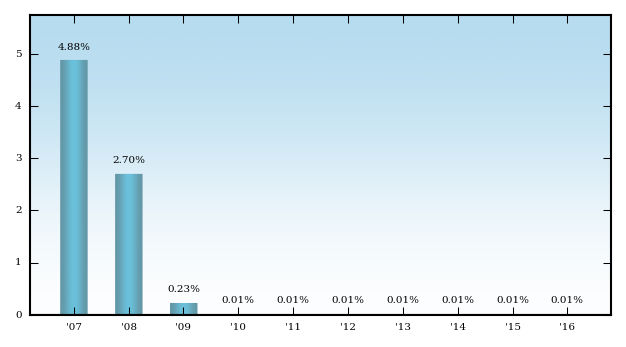
| The bar chart and table below provide some indication of the risks of investing in the Fund by showing changes in the Fund’s performance for Class A Shares from calendar year to calendar year and by showing the Fund’s average annual returns for the periods of time shown in the table. The Fund’s past investment performance is not necessarily an indication of how the Fund will perform in the future. Sales charges and taxes are not reflected in the bar chart and if those charges were included, returns would be less than those shown. Prior to September 28, 2016, the Fund was operated as a prime money market fund. Since September 28, 2016, the Fund has operated as a government money market fund and, as such, must invest at least 99.5% of its total assets in cash, government securities and/or repurchase agreements that are “collateralized fully” (i.e., backed by cash or government securities). More recent performance information is available by calling the toll-free number on the back of this prospectus and on the Fund’s website at: https://www.oppenheimerfunds.com/fund/GovernmentMoneyMarketFund
|
|
| During the period shown, the highest return for a calendar quarter was 1.22% (3rd Qtr 07) and the lowest return for a calendar quarter was 0.00% (3qtr 09, 1qtr 10, 2qtr 10, 3qtr 10, 4qtr 10, 1qtr 11, 2qtr 11, 3qtr 11, 4qtr 11, 1qtr 12, 2qtr 12, 3qtr 12, 1qtr 13, 2qtr 13, 3qtr 13, 4qtr 13, 1qtr 14, 2qtr 14, 3qtr 14, 1qtr 15, 2qtr 15, 3qtr 15, 4qtr 15. 1qtr 16, 2qtr 16, 3qtr 16, 4qtr 16). For the period from January 1, 2017 to June 30, 2017 the return before sales charges and taxes was 0.07%.
|
| Average Annual Total Returns for the periods ending December 31, 2016
|
Average Annual Total Returns - OPPENHEIMER GOVERNMENT MONEY MARKET FUND
|
1 Year |
5 Years |
10 Years |
Inception Date |
| Class A Shares |
0.01%
|
0.01%
|
0.78%
|
Apr. 17, 1974
|
| Class Y Shares |
0.01%
|
0.01%
|
0.82%
|
Aug. 27, 2004
|
|
The Fund’s performance reflects reinvestment of all dividends and capital gains distributions.
The total returns are not the Fund’s current yield. The Fund’s yield more closely reflects the Fund’s current earnings. To obtain the Fund’s current 7-day yield information, please call the Transfer Agent toll-free at 1.800.CALL OPP (225.5677).
|
| Label |
Element |
Value |
| Risk/Return: |
rr_RiskReturnAbstract |
|
| Registrant Name |
dei_EntityRegistrantName |
OPPENHEIMER GOVERNMENT MONEY MARKET FUND
|
| Prospectus Date |
rr_ProspectusDate |
Sep. 28, 2017
|
| OPPENHEIMER GOVERNMENT MONEY MARKET FUND |
|
|
| Risk/Return: |
rr_RiskReturnAbstract |
|
| Risk/Return [Heading] |
rr_RiskReturnHeading |
The Fund Summary
|
| Objective [Heading] |
rr_ObjectiveHeading |
Investment Objective.
|
| Objective, Primary [Text Block] |
rr_ObjectivePrimaryTextBlock |
The Fund seeks income consistent with stability of principal.
|
| Expense [Heading] |
rr_ExpenseHeading |
Fees and Expenses of the Fund.
|
| Expense Narrative [Text Block] |
rr_ExpenseNarrativeTextBlock |
This table describes the fees and expenses that you may pay if you buy and hold or redeem shares of the Fund. You may qualify for sales charge discounts if you (or you and your spouse) invest, or agree to invest in the future, at least $25,000 in certain funds in the Oppenheimer family of funds. More information about these and other discounts and sales charge waivers is available from your financial professional and in the section “About Your Account” beginning on page 11 of the prospectus, in the appendix to the prospectus titled “Special Sales Charge Arrangements and Waivers” and in the section “How to Buy Shares” beginning on page 27 in the Fund’s Statement of Additional Information.
|
| Shareholder Fees Caption [Text] |
rr_ShareholderFeesCaption |
Shareholder Fees.
|
| Shareholder Fees [Table] |
rr_ShareholderFeesTableTextBlock |
The Fund does not charge any initial sales charge to buy shares or to reinvest dividends. There are no exchange fees or redemption fees and no contingent deferred sales charges (unless you buy Fund shares by exchanging Class A shares of other Oppenheimer funds that were purchased subject to a contingent deferred sales charge).
|
| Operating Expenses Caption [Text] |
rr_OperatingExpensesCaption |
Annual Fund Operating Expenses
(expenses that you pay each year as a percentage of the value of your investment)
|
| Expense Breakpoint Discounts [Text] |
rr_ExpenseBreakpointDiscounts |
You may qualify for sales charge discounts if you (or you and your spouse) invest, or agree to invest in the future, at least $25,000 in certain funds in the Oppenheimer family of funds.
|
| Expense Breakpoint, Minimum Investment Required [Amount] |
rr_ExpenseBreakpointMinimumInvestmentRequiredAmount |
$ 25,000
|
| Expense Example [Heading] |
rr_ExpenseExampleHeading |
Example.
|
| Expense Example Narrative [Text Block] |
rr_ExpenseExampleNarrativeTextBlock |
The following Example is intended to help you compare the cost of investing in the Fund with the cost of investing in other mutual funds. The Example assumes that you invest $10,000 in a class of shares of the Fund for the time periods indicated and then redeem all of your shares at the end of those periods. The Example also assumes that your investment has a 5% return each year and that the Fund’s operating expenses remain the same. Any applicable fee waivers and/or expense reimbursements would be reflected in the below examples for the first year only. Although your actual costs may be higher or lower, based on these assumptions your expenses would be as follows:
|
| Strategy [Heading] |
rr_StrategyHeading |
Principal Investment Strategies.
|
| Strategy Narrative [Text Block] |
rr_StrategyNarrativeTextBlock |
The Fund is a money market fund that intends to qualify as a “government money market fund,” in accordance with Rule 2a-7 under the Investment Company Act of 1940, as amended. As a government money market fund, the Fund must invest at least 99.5% of its total assets in cash, government securities and/or repurchase agreements that are “collateralized fully” (i.e., backed by cash or government securities). The securities in which the Fund invests may have fixed, floating or variable interest rates. The Fund may also invest in affiliated and unaffiliated government money market funds. Additionally, as a government money market fund, the Fund is not required to impose a liquidity fee and/or temporary redemption gate if the Fund’s weekly liquid assets fall below 30% of its total assets. While the Fund’s Board may elect to subject the Fund to liquidity fee and gate requirements in the future, it has not elected to do so at this time.
Under normal market conditions, the Fund invests at least 80% of its net assets (plus borrowings, if any, for investment purposes) in government securities and repurchase agreements that are collateralized by government securities. The 80% investment policy is a non-fundamental investment policy and will not be changed without 60 days’ advance notice to shareholders.
|
| Risk [Heading] |
rr_RiskHeading |
Principal Risks.
|
| Risk Narrative [Text Block] |
rr_RiskNarrativeTextBlock |
All investments carry risks to some degree. The Fund’s investments are subject to changes in their value from a number of factors. However, the Fund’s investments must meet the special rules under federal law for money market funds. Those requirements include maintaining high credit quality, a short average maturity and diversification of the Fund’s investments among issuers. Those provisions are designed to help minimize credit risks, to reduce the effects of changes in prevailing interest rates and to reduce the effect on the Fund’s portfolio of a default by any one issuer. Since income on short-term securities tends to be lower than income on longer-term debt securities, the Fund’s yield will likely be lower than the yield on longer-term fixed-income funds.
Even so, there are risks that an issuer of an obligation that the Fund holds might have its credit rating downgraded or might default on its obligations, or that interest rates might rise sharply, causing the value of the Fund’s investments to fall. Also, there is the risk that the value of your investment could be eroded over time by the effects of inflation, or that poor security selection could cause the Fund to underperform other funds that have a similar objective. If there is an unexpectedly high demand for the redemption of Fund shares, the Fund might need to sell portfolio securities prior to their maturity, possibly at a loss. As a result, there is a risk that the Fund’s shares could fall below $1.00 per share.
You could lose money by investing in the Fund. Although the Fund seeks to preserve the value of your investment at $1.00 per share, it cannot guarantee it will do so. An investment in the Fund is not insured or guaranteed by the Federal Deposit Insurance Corporation or any other government agency. The Fund’s sponsor has no legal obligation to provide financial support to the Fund, and you should not expect that the sponsor will provide financial support to the Fund at any time.
Government Securities Risk. The Fund invests in securities issued or guaranteed by the U.S. government or its agencies and instrumentalities (such as securities issued by the Government National Mortgage Association (“Ginnie Mae”), the Federal National Mortgage Association (“Fannie Mae”), the Federal Home Loan Mortgage Corporation (“Freddie Mac”) or other Government Sponsored Enterprises (GSEs)). U.S. government securities are subject to market risk, interest rate risk and credit risk. U.S. government securities include zero coupon securities, which tend to be subject to greater market risk than interest-paying securities of similar maturities.
Risks of Repurchase Agreements. In a repurchase transaction, the Fund buys a security and simultaneously sells it back to the vendor for delivery at a future date. If the seller fails to pay the repurchase price on the delivery date, the Fund may incur costs in disposing of the collateral and may experience losses if there is any delay in its ability to do so. If the default on the part of the seller is due to its bankruptcy, the Fund’s ability to liquidate the collateral may be delayed or limited.
Risks of Money Market Instruments. Money market instruments may be subject to interest rate risk, credit risk, extension risk, reinvestment risk, prepayment risk, and event risk. Interest rate risk is the risk that when prevailing interest rates fall, the values of already-issued debt securities generally rise; and when prevailing interest rates rise, the values of already-issued debt securities generally fall, and they may be worth less than the amount the Fund paid for them. When interest rates change, the values of longer-term debt securities usually change more than the values of shorter-term debt securities. Risks associated with rising interest rates are heightened given that interest rates in the U.S. are at, or near, historic lows. Credit risk is the risk that the issuer of a security might not make interest and principal payments on the security as they become due. If an issuer fails to pay interest or repay principal, the Fund’s income or share value might be reduced. Adverse news about an issuer or a downgrade in an issuer’s credit rating, for any reason, can also reduce the market value of the issuer’s securities. Extension risk is the risk that an increase in interest rates could cause principal payments on a debt security to be repaid at a slower rate than expected. Extension risk is particularly prevalent for a callable security where an increase in interest rates could result in the issuer of that security choosing not to redeem the security as anticipated on the security’s call date. Such a decision by the issuer could have the effect of lengthening the debt security’s expected maturity, making it more vulnerable to interest rate risk and reducing its market value. Reinvestment risk is the risk that when interest rates fall the Fund may be required to reinvest the proceeds from a security’s sale or redemption at a lower interest rate. Callable bonds are generally subject to greater reinvestment risk than non-callable bonds. Prepayment risk is the risk that the issuer may redeem the security prior to the expected maturity or that borrowers may repay the loans that underlie these securities more quickly than expected, thereby causing the issuer of the security to repay the principal prior to the expected maturity. The Fund may need to reinvest the proceeds at a lower interest rate, reducing its income. Event risk is the risk that an issuer could be subject to an event, such as a buyout or debt restructuring, that interferes with its ability to make timely interest and principal payments and cause the value of its debt securities to fall.
Fixed-Income Market Risks. The fixed-income securities market can be susceptible to increases in volatility and decreases in liquidity. Liquidity may decline unpredictably in response to overall economic conditions or credit tightening. During times of reduced market liquidity, the Fund may not be able to readily sell securities at the prices at which they are carried on the Fund’s books and could experience a loss. If the Fund needed to sell large blocks of securities to meet shareholder redemption requests or to raise cash, those sales could further reduce the securities’ prices, particularly for lower-rated and unrated securities. An unexpected increase in redemptions by Fund shareholders, which may be triggered by general market turmoil or an increase in interest rates, as well as other adverse market and economic developments, could cause the Fund to sell its holdings at a loss or at undesirable prices. As of the date of this prospectus, interest rates in the U.S. are near historically low levels, increasing the exposure of bond investors to the risks associated with rising interest rates.
Economic and other market developments can adversely affect fixed-income securities markets in the United States, Europe and elsewhere. At times, participants in debt securities markets may develop concerns about the ability of certain issuers of debt securities to make timely principal and interest payments, or they may develop concerns about the ability of financial institutions that make markets in certain debt securities to facilitate an orderly market. Those concerns may impact the market price or value of those debt securities and may cause increased volatility in those debt securities or debt securities markets. Under some circumstances, as was the case during the latter half of 2008 and early 2009, those concerns could cause reduced liquidity in certain debt securities markets. A lack of liquidity or other adverse credit market conditions may hamper the Fund’s ability to sell the debt securities in which it invests or to find and purchase suitable debt instruments.
Net Asset Value Risk. There is no assurance that the Fund will maintain a net asset value of $1.00 per share on a continuous basis. Additionally, there can be no assurance that the Fund’s affiliates will purchase distressed assets from the Fund, make capital infusions, enter into capital support agreements or take other actions to ensure that the Fund maintains a net asset value of $1.00 per share. The failure of any money market fund to maintain a stable net asset value, could place increased redemption pressure on other money market funds, including the Fund.
Regulatory Risk. Changes to the monetary policy by the Federal Reserve or other regulatory actions could impact the Fund’s operations, universe of potential investment options, and return potential.
Yield Risk. During periods of extremely low short-term interest rates, the Fund may not be able to maintain a positive yield. The rate of the Fund’s income will vary from day to day, generally reflecting changes in short-term interest rates and in the fixed-income securities market. There is no assurance that the Fund will achieve its investment objective.
Cash Risk. As a government money market fund, the Fund will likely hold some of its assets in cash, which may negatively affect the Fund’s performance. Maintaining cash positions may also subject the Fund to additional risks and costs, such as increased exposure to the custodian bank holding the assets and any fees imposed for large cash balances.
Risk of Investing in Floating and Variable Rate Obligations. Some fixed-income securities have variable or floating interest rates that provide for a periodic adjustment in the interest rate paid on the securities. The rate adjustment intervals may be regular and range from daily up to annually, or may be based on an event, such as a change in the stated prevailing market rate. Floating and variable rate securities may be subject to greater liquidity risk than other debt securities, meaning that there may be limitations on the Fund’s ability to sell the securities at any given time. Such securities also may lose value.
Large Shareholder Transactions Risk. Large transactions by shareholders can impact the Fund’s expense ratio, yield and potentially its net asset value. A large redemption of Fund shares by a large shareholder may have a negative effect on the Fund’s net asset value and yield, as the Fund may be forced to sell a large portion of its portfolio holdings at an inopportune time. A large redemption of Fund shares may also result in an increase in the Fund’s expense ratio, since a large redemption may result in the Fund’s current expenses being allocated over a smaller asset base. In order to be able to meet reasonably foreseeable requests for redemptions of Fund shares, the Fund may be required to consider factors that could affect the Fund’s liquidity needs, including characteristics of the Fund’s investors and their likely redemptions. This may require the Fund to maintain sufficiently liquid assets in lower-yielding securities that are easier to sell, which may have a negative impact on the Fund’s yield. Similarly, a large purchase of Fund shares by a large shareholder may have a negative effect on the Fund’s yield, as the Fund may be unable to deploy a larger cash position into new investments as quickly as it could with a smaller cash position. Large transactions may also increase transaction costs.
Who Is The Fund Designed For? The Fund is designed for investors who want to seek income consistent with stability of principal and to maintain easy access to their investment through checkwriting and wire redemption privileges. The Fund will invest in cash, government securities and/or repurchase agreements that are collateralized fully by cash or government securities and try to maintain a stable share price of $1.00. The Fund is not a complete investment program.
You could lose money by investing in the Fund. An investment in the Fund is not a deposit of any bank and is not insured or guaranteed by the Federal Deposit Insurance Corporation or any other government agency. Although the Fund seeks to preserve the value of your investment at $1.00 per share, it is possible to lose money by investing in the Fund. The Fund’s sponsor has no legal obligation to provide financial support to the Fund, and you should not expect that the sponsor will provide financial support to the Fund at any time.
|
| Risk Lose Money [Text] |
rr_RiskLoseMoney |
You could lose money by investing in the Fund.
|
| Risk Money Market Fund [Text] |
rr_RiskMoneyMarketFund |
Although the Fund seeks to preserve the value of your investment at $1.00 per share, it is possible to lose money by investing in the Fund.
|
| Risk Not Insured Depository Institution [Text] |
rr_RiskNotInsuredDepositoryInstitution |
An investment in the Fund is not a deposit of any bank and is not insured or guaranteed by the Federal Deposit Insurance Corporation or any other government agency.
|
| Bar Chart and Performance Table [Heading] |
rr_BarChartAndPerformanceTableHeading |
The Fund’s Past Performance.
|
| Performance Narrative [Text Block] |
rr_PerformanceNarrativeTextBlock |
The bar chart and table below provide some indication of the risks of investing in the Fund by showing changes in the Fund’s performance for Class A Shares from calendar year to calendar year and by showing the Fund’s average annual returns for the periods of time shown in the table. The Fund’s past investment performance is not necessarily an indication of how the Fund will perform in the future. Sales charges and taxes are not reflected in the bar chart and if those charges were included, returns would be less than those shown. Prior to September 28, 2016, the Fund was operated as a prime money market fund. Since September 28, 2016, the Fund has operated as a government money market fund and, as such, must invest at least 99.5% of its total assets in cash, government securities and/or repurchase agreements that are “collateralized fully” (i.e., backed by cash or government securities). More recent performance information is available by calling the toll-free number on the back of this prospectus and on the Fund’s website at: https://www.oppenheimerfunds.com/fund/GovernmentMoneyMarketFund
|
| Performance Information Illustrates Variability of Returns [Text] |
rr_PerformanceInformationIllustratesVariabilityOfReturns |
The bar chart and table below provide some indication of the risks of investing in the Fund by showing changes in the Fund’s performance for Class A Shares from calendar year to calendar year and by showing the Fund’s average annual returns for the periods of time shown in the table.
|
| Performance Availability Website Address [Text] |
rr_PerformanceAvailabilityWebSiteAddress |
https://www.oppenheimerfunds.com/fund/GovernmentMoneyMarketFund
|
| Performance Past Does Not Indicate Future [Text] |
rr_PerformancePastDoesNotIndicateFuture |
The Fund’s past investment performance is not necessarily an indication of how the Fund will perform in the future.
|
| Bar Chart Does Not Reflect Sales Loads [Text] |
rr_BarChartDoesNotReflectSalesLoads |
Sales charges and taxes are not reflected in the bar chart and if those charges were included, returns would be less than those shown.
|
| Bar Chart Closing [Text Block] |
rr_BarChartClosingTextBlock |
During the period shown, the highest return for a calendar quarter was 1.22% (3rd Qtr 07) and the lowest return for a calendar quarter was 0.00% (3qtr 09, 1qtr 10, 2qtr 10, 3qtr 10, 4qtr 10, 1qtr 11, 2qtr 11, 3qtr 11, 4qtr 11, 1qtr 12, 2qtr 12, 3qtr 12, 1qtr 13, 2qtr 13, 3qtr 13, 4qtr 13, 1qtr 14, 2qtr 14, 3qtr 14, 1qtr 15, 2qtr 15, 3qtr 15, 4qtr 15. 1qtr 16, 2qtr 16, 3qtr 16, 4qtr 16). For the period from January 1, 2017 to June 30, 2017 the return before sales charges and taxes was 0.07%.
|
| Performance Table Heading |
rr_PerformanceTableHeading |
Average Annual Total Returns for the periods ending December 31, 2016
|
| Performance Table Closing [Text Block] |
rr_PerformanceTableClosingTextBlock |
The Fund’s performance reflects reinvestment of all dividends and capital gains distributions.
The total returns are not the Fund’s current yield. The Fund’s yield more closely reflects the Fund’s current earnings. To obtain the Fund’s current 7-day yield information, please call the Transfer Agent toll-free at 1.800.CALL OPP (225.5677).
|
| Money Market Seven Day Yield, Caption [Text] |
rr_MoneyMarketSevenDayYieldCaption |
To obtain the Fund’s current 7-day yield information, please call the Transfer Agent toll-free at 1.800.CALL OPP (225.5677).
|
| Money Market Seven Day Yield Phone |
rr_MoneyMarketSevenDayYieldPhone |
1.800.CALL OPP (225.5677)
|
| OPPENHEIMER GOVERNMENT MONEY MARKET FUND | Class A |
|
|
| Risk/Return: |
rr_RiskReturnAbstract |
|
| Management Fees |
rr_ManagementFeesOverAssets |
0.41%
|
| Distribution and/or Service (12b-1) Fees |
rr_DistributionAndService12b1FeesOverAssets |
none
|
| Other Expenses |
rr_OtherExpensesOverAssets |
0.23%
|
| Total Annual Fund Operating Expenses |
rr_ExpensesOverAssets |
0.64%
|
| 1 Year |
rr_ExpenseExampleYear01 |
$ 66
|
| 3 Years |
rr_ExpenseExampleYear03 |
206
|
| 5 Years |
rr_ExpenseExampleYear05 |
358
|
| 10 Years |
rr_ExpenseExampleYear10 |
$ 801
|
| 2007 |
rr_AnnualReturn2007 |
4.88%
|
| 2008 |
rr_AnnualReturn2008 |
2.70%
|
| 2009 |
rr_AnnualReturn2009 |
0.23%
|
| 2010 |
rr_AnnualReturn2010 |
0.01%
|
| 2011 |
rr_AnnualReturn2011 |
0.01%
|
| 2012 |
rr_AnnualReturn2012 |
0.01%
|
| 2013 |
rr_AnnualReturn2013 |
0.01%
|
| 2014 |
rr_AnnualReturn2014 |
0.01%
|
| 2015 |
rr_AnnualReturn2015 |
0.01%
|
| 2016 |
rr_AnnualReturn2016 |
0.01%
|
| Year to Date Return, Label |
rr_YearToDateReturnLabel |
For the period from January 1, 2017 to June 30, 2017
|
| Bar Chart, Year to Date Return, Date |
rr_BarChartYearToDateReturnDate |
Jun. 30, 2017
|
| Bar Chart, Year to Date Return |
rr_BarChartYearToDateReturn |
0.07%
|
| Highest Quarterly Return, Label |
rr_HighestQuarterlyReturnLabel |
highest return
|
| Highest Quarterly Return, Date |
rr_BarChartHighestQuarterlyReturnDate |
Sep. 30, 2007
|
| Highest Quarterly Return |
rr_BarChartHighestQuarterlyReturn |
1.22%
|
| Lowest Quarterly Return, Label |
rr_LowestQuarterlyReturnLabel |
lowest return
|
| Lowest Quarterly Return, Date |
rr_BarChartLowestQuarterlyReturnDate |
Dec. 31, 2016
|
| Lowest Quarterly Return |
rr_BarChartLowestQuarterlyReturn |
none
|
| 1 Year |
rr_AverageAnnualReturnYear01 |
0.01%
|
| 5 Years |
rr_AverageAnnualReturnYear05 |
0.01%
|
| 10 Years |
rr_AverageAnnualReturnYear10 |
0.78%
|
| Inception Date |
rr_AverageAnnualReturnInceptionDate |
Apr. 17, 1974
|
| OPPENHEIMER GOVERNMENT MONEY MARKET FUND | Class Y |
|
|
| Risk/Return: |
rr_RiskReturnAbstract |
|
| Management Fees |
rr_ManagementFeesOverAssets |
0.41%
|
| Distribution and/or Service (12b-1) Fees |
rr_DistributionAndService12b1FeesOverAssets |
none
|
| Other Expenses |
rr_OtherExpensesOverAssets |
0.23%
|
| Total Annual Fund Operating Expenses |
rr_ExpensesOverAssets |
0.64%
|
| 1 Year |
rr_ExpenseExampleYear01 |
$ 66
|
| 3 Years |
rr_ExpenseExampleYear03 |
206
|
| 5 Years |
rr_ExpenseExampleYear05 |
358
|
| 10 Years |
rr_ExpenseExampleYear10 |
$ 801
|
| 1 Year |
rr_AverageAnnualReturnYear01 |
0.01%
|
| 5 Years |
rr_AverageAnnualReturnYear05 |
0.01%
|
| 10 Years |
rr_AverageAnnualReturnYear10 |
0.82%
|
| Inception Date |
rr_AverageAnnualReturnInceptionDate |
Aug. 27, 2004
|